La casa means the house and there’s an entire series of films with that title are just about as confusing as the Demons movies. It starts so simple and then, as it always does in Italy, gets very complicated.
La Casa (1981, directed by Sam Raimi): The American horror film Evil Dead actually did pretty well in Italy. Why it was renamed The House instead of the literal translation I Non Morti is something that no one has been able to answer.
La Casa 2 (1987, directed by Sam Raimi): It stands to reason that Evil Dead 2 should be called La Casa 2 and this will be probably the last time that this list makes any sense.
La Casa 3 (1988, directed by Umberto Lenzi): Otherwise known as Ghosthouse and Evil Dead 3, this film was distributed by Filmirage. It was retitled by Achille Manzotti and someone else who knows something about having more than one name, Aristide Massaccesi, who said in the book Spaghetti Nightmares: “Manzotti’s idea to change the title to La Casa 3 made the film a success. If he’d left the original title Ghosthouse, hardly anyone might have gone to see it.”
In fact, this film played all over the world with titles like The Nightmare House (Canada and France), The Haunted House Enigma (Portugal) and oddly enough, House 3 in Argentina. Yes, that’s right, there is a whole series of American movies with that title, right? Well stay tuned.
As for La Casa 3, it’s a blast, a movie shot in the same house as Fulci’s The House by the Cemeteryand is filled with some of the most ridiculous dialogue and situations I’ve seen in ten movies all sewn together.
La Casa 4 (1988, directed by Fabrizio Laurenti): Filmirage made enough from La Casa 3 to make a sequel, which also goes by Witchcraft, Ghosthouse 2 — yes, this does get very, very confusing — and Evil Dead 4. It was also called Witchcraft: Return of the Exorcist in the Philippines, Encounter with Evil in Spain, Devil’s Return in Turkey and either Witchery or Evil Encounters in the U.S.
It also has the most star power of any of the films on this list thanks to the one-two punch of David Hasselhoff and Linda Blair. It may not have the same energy as its predecessor, but it does have a Sesame Street brand tape recorder in the middle of some demonic madness.
La Casa 5 (1990, directed by Claudio Fragasso): When Severin released a slipcase of this as Evil Dead 5, that was no silly joke. This movie was released with that title, as well as Horror House II (where is the original Horror House, you may ask? Well…), Ghosthouse 6 (stay tuned, we’ll explain where 3-5 went) and House 5 because why not.
Known as Beyond Darkness here in the U.S., it reunites the Troll 2 dream team (and married couple) of Fragrasso and Rossella Drudi with the dining room table pissing child star of that film, Michael Stephenson, and Joe D’Amato himself filming things and Laura Gemser making the costumes. How can it miss?
It’s actually pretty wild! A Satanic child killer goes after a reverend’s family — I have no idea what religion he is and you can’t say that a bunch of Italian filmmakers don’t understand that Roman Catholic priests can’t marry — and all hell, as it does, breaks loose.
La Casa 6 (1987, directed by Ethan Wiley): Wait a second. The American House 2 is the Italian La Casa 6. Why wouldn’t it be? I mean, this movie isn’t even connected to the film that it’s a sequel to, right? It was also called La casa di Helen in Italy.
Chi è Sepolto in Quella Casa, which means Who Is Buried In That House?
La Casa 7 (1989, directed by James Isaac and David Blyth ): Let’s ponder this. Known as House 3 in other countries and The Horror Show in the U.S., this Alan Smithee-written movie made it to Italy and became a La Casa movie.
Now here’s where it gets weird.
This is also Evil Dead 7. The other evil dead films would be:
So what’s Army of Darkness called in Italy? L’armata delle tenebre which literally means The Army of Darkness. And then the reboot? Well, that’s also La Casa in Italy.
So wait…is there a La Casa 8? Nope.
But there is a House 4. And in Italy, it is known as House IV – Presenze Impalpabili in Italy, which means impalpable presences. It’s also known as Chi ha ucciso Roger, which means Who Killed Roger and yes, it completely rips off the font used for Who Framed Roger Rabbit?
UPDATE: Michael Winner’s Scream for Help was released in Italy as La Casa In Hell Street! Thanks to David Assassino for finding this!
Also, to prove that nothing is too trivial, there are only two House movies with William Katt in the lead — and therefore, only one La Casa — and only one that had its set reused for The People Under the Stairs (House and House IV respectively).
It’s literally like an old Abbott and Costello routine.
Joe D’Amato: Well Ash, I’m going to Rome with you. You know Umberto Lenzi, the director of The Rough Ones, is ready to keep making movies for as long as you’re in them.
Ash Williams: Look Joe, if you’re the producer, you must know all the names of the movies.
Joe: I certainly do.
Ash: Well you know I’ve never seen all your movies. So you’ll have to tell me about them and then I’ll know what they’re about.
Joe: Oh, I’ll tell you their names, but you know it seems to me we give these motion pictures now-a-days very peculiar names. So let’s see, up first, we have La Casa and it’s about a man whose friends all die in a cabin in the woods.
Ash: It sounds like Evil Dead.
Joe: No, this is La Casa. It means the house. And this guy named Ash brings his friends and his girlfriend the whole way across Michigan and read some book of the dead.
Ash: That’s Evil Dead. So what’s La Casa?
Joe: It has some POV flying around the woods crazy stuff in it. Nice kid, Sam Raimi, made it real cheap.
Ash: That’s the movie I’m in.
Joe: No it isn’t. You aren’t in the sequel either.
Ash: Evil Dead 2? It’s the same movie.
Joe: I’ve never seen Evil Dead 2. Though a lot of people think La Casa 2 is a lot like La Casa.
Ash: Third base.
Anyways…
Horror House is House 3 which is La Casa 7 which is The Horror Show
Horror House 2 is La Casa 5 which is Evil Dead5 which is Beyond Darkness.
I still have no idea what movie is Evil Dead 6!
And what are they going to call Evil Dead Rise in Italy?
Update
The 1991 Fox made for TV movie The Hauntedwas released in Italy as La Casa delle Anime Perdute (The House of Lost Souls).
Dream Demon was released in Italy as La Casa Al No 13 In Horror Street (The House at No. 13 Horror Street).
Superstitionwas released in Italy as La Casa di Mary.
Buio Omega was re-released as In Quella Casa Buio Omega (In That Dark House Omega), which blows my mind!
A Blade In the Dark was released as La Casa con la scala nel buio (The House With the Dark Scarecase). This is on the list but came out 11 days before La Casa was released in Italy, so I don’t think it belongs on the list. If it did…
The Girl In Room 2A was called La Casa Della Paura (The House of Horror) in Italy.
Mojo Nixon and Skid Roper were right: “Elvis Is Everywhere!” So drop your needle on the Dead Milkmen because, we are “Going to Graceland.” Don’t let the rockabilly sounds of Elvis Hitler bum your trip. (Remember, in our Beatles’ movies tribute, we called out the More Fiends for their cover-hybid of Motorhead and the Beatles on “Yellow Spades”? Well, not to be outdone: Elvis Hitler grafted Hendrix to the theme of TV’s Green Acres . . . and Pittsburgh’s John Russo made their video!)
Okay, uh, let’s get back to The King.
Elvis Presley may have died on August 16, 1977 . . . and transitioned into the rock ‘n’ roll ethers to party alongside Jim Morrison, Jimi Hendrix, Janis Joplin, and Kurt Cobain at “Club 27,” just south of the right foot of God. However, when it comes to the film industry: you can check out anytime you like, but you can never leave . . . in spite of the famous, last words of KWKH’s Horace Lee Logan about Elvis leaving the building.
As you can tell by this latest “Exploring” feature’s title: this isn’t about the movies that starred the “real” Elvis, such as Love Me Tender and Change of Habit, and so on . . . but we did check out all of Elvis’s flicks behind the wheel with a “Drive in Friday: Elvis Racing Nite!” feature. And don’t come-a-knockin’ for any of the wealth of theatrical, television, and direct-to-video documentaries on Elvis.
As with our three-part “The Beatles: Influence on Film” series, this “Exploring” feature on Elvis is concerned with the speculative flicks, the films using the myth and legend of Elvis as plot fodder, and the historical sidebars to his career.
Let’s fire up that VCR . . . and don’t break your pelvis!
Living Legend: The King of Rock ‘n Roll (1980) — 2 Stars Self-made North Carolina filmmaker Earl Owensby (Dark Sunday) co-stars alongside Elvis’s ex-fiancee Ginger Alden in the ersatz tale of Eli Caufield, the King of Rock & Roll. As with the real King: Eli rules supreme on stage, but in private, his life is a mess, as he spirals with declining health issues and an escalating prescription medication addiction.
Roy Orbison stands in for Owensby’s vocals. Director Thom McIntyre also helmed Ginger Alden’s starring role in the country music-centric Lady Grey; he found great success with the Mighty Morphin Power Rangers, U.S. television franchise.
Next up, Elvis receives a fan’s love letter.
To Elvis, with Love, aka Touched by Love (1980) — 3 Stars Sigh. This Elvis flick—alongside A Little Romance—incessantly running on HBO started our lifelong crush with Diane Lane. Deborah Raffin (Hanging on a Star) stars as a young nurse determined to reach an unresponsive teenage cerebral palsy patient by encouraging her to write to her favorite rock singer, Elvis Presley (no, he doesn’t show up).
The film, based on the real-life reminiscences of Lena Canada (from her book To Elvis, with Love), is a very sweet, well-made family-friendly film. The critics: forever running hot and cold. Deborah Raffin was nominated for both, a Golden Globe Award for “Best Actress in a Motion Picture Drama,” as well as a Golden Raspberry for “Worst Actress” for her performance. The film’s second Razzie nod came courtesy of Hesper Anderson’s screenplay. A TV series scribe (Marcus Welby, M.D), Anderson also composed the TV movie The UFO Incident (the world-famous Barney and Bette Hill incident) and fared much better with critics by way of her next theatrical work, Children of a Lesser God.
Director Gus Trikonis . . . yes, the man behind Supercock (the Ross Hagan one about illegal cockfighting, dirty mind), Nashville Girl, The Evil, Moonshine County Express, and Take This Job and Shove It, directed this. No, really. Then he did a “real” Elvis movie with Don Johnson as The King, in the TV Movie, Elvis and the Beauty Queen.
Next up, here come the Elvis weirdos.
Mondo Elvis (1984/documentary) — 2 1/2 Stars Okay, so it’s a “documentary,” but it does deal with the “fantasies” of El’s fans. Do you have a hankerin’ to learn more about the fans who can’t give up the “ghost” . . . to go along with your Peanut Butter and ‘Nana sandwiches? Well, here’s your chance to meet an eclectic bunch who explain how The King touched their lives . . . just a little too deeply.
Next up, Elvis schools two lads on the art of motorcycle racing.
Eat the Peach (1986/drama) — 2 Stars Would you believe Elvis . . . as the inspiration for motorcycle stuntmen? So goes this Irish comedy—with its title derived from the T.S Elliot poem “The Love Song of J. Alfred Prufock”—about two unemployed lads who, after watching Elvis Presley’s 1964 opus Roustabout, hatch a plan to change their fortunes by becoming motorcycle stuntmen. If you’re a fan of Bill Foresyth’s early ’80s comedies Comfort and Joy and Gregory’s Girl from across the pond—both which incessantly spun on HBO back in the day—you’ll enjoy this Elvis-inspired comedy also adopted by the U.S cable channel.
Next up, Elvis is kidnapped!
Heartbreak Hotel (1988/comedy) — 2 Stars First Elvis inspires motorcycle stuntmen in Eat the Peach, now he gets kidnapped . . . in a tale written and directed by a pre-Home Alone Christopher Columbus, in his follow up to Adventures in Babysitting. Charlie Schlatter (of TVs Diagnosis Murder) is Johnny Wolfe; he kidnaps Elvis (David Keith of Officer and a Gentleman) from a 1972 concert in Cleveland with the purpose to take him home to meet his mother (Tuesday Weld; meta-starred with Elvis in 1961’s Wild in the Country), a sickly, obsessed Elvis fan. The always reliable David Keith is fun to watch as he channels Elvis, but TV actor Charlie Schlatter isn’t a marquee actor and no Michael J. Fox (who could have made this really work), thus, this drags to a drab, TV movie-styled production.
Next up, the “ghost” of Elvis appears in a Memphis hotel.
Mystery Train (1989/drama) — 4 Stars This Jim Jarmusch multi-character study takes place in the Arcade, a rundown Memphis hotel. Its occupants are foreigner travelers fascinated with all thing Americana—especially Elvis. The stories include a Japanese couple who visit Graceland, but are split on their fandom of Carl Perkins vs. Elvis. There’s an Italian widow who meets a stranger who tries to sell her a comb—that belonged to a hitchhiking Elvis. Finally, Joe Strummer of the Clash (following his role in Straight to Hell), is an Elvis loving, side-burned crook who goes into hiding after a liquor story robber gone bad. Steve Buscemi (Airheads) shows up (bonus!), along with ’60s rocker Screaming Jay Hawkins following up his appearance in Jaramusch’s Stranger than Paradise.
As for Elvis, he takes up . . . sky diving?
Honeymoon in Vegas (1992) — 2 1/2 Stars Film historian Andrew Bergman, who brought Marlon Brando back to the screen in The Freshman, scores as writer and director—courtesy of James Caan, Nicolas Cage, and Pat Morita (we can so without Sarah Jessica Parker, ugh) bringing their A-games to the tables. When Cage’s private eye loses $65,000 in Las Vegas poker game, he’s quickly mixed up with Caan’s professional gambler and assisted by Pat’s ne’er-do-well taxi driver to beat the debt. When does The King show up? Well, do you not know your classic movie scenes? Cage gets mixed up with—and jumps in full El regalia—the Utah chapter of “The Flying Elvises,” a skydiving team of Elvis impersonators. Cage, needless to say, garnered a well-deserved “Best Actor in a Motion Picture” nod at the Golden Globes. (Did you check out our “Nic Cage Bitch” feature? Well, you should.)
Next up for the King, he leaves Vegas for Providence, Rhode Island.
It’s a Complex World (1992/comedy) — 1 Star Jeff Burgess is the manager of a Providence rock club, The Heartbreak Hotel. A disappointment to his ex-CIA agent father running for the Presidency, Dad feels his son’s rock club will negatively affect the presidential campaign: so he hires revolutionaries to stage a terrorist bombing at the club. As the terrorists close in, a biker gang (headed by Captain Lou Albano!) trashes the club. So, Elvis isn’t going to let his namesake be destroyed; he calls a Beatles tribute band appearing at the club—from beyond the grave, natch—to help Jeff fight off the villains. Blues rockers NRBQ (who appear on the film soundtracks for Tuff TurfandSpring Break) show up at the club for a few tunes, in addition to the New England bands Beat Legend and Stanley Matis and the Young Adults.
As for Elvis, well, his ghost reappears to a comic store clerk.
True Romance (1993/action) — 4 Stars Christian Slater stars in this post-Reservoir Dogs Quentin Tarentino romp (directed by Tony Scott) as a comic book store clerk falling for the wrong girl, which leads him to become a “murderer” pursued by the mob. During those times o’ trouble: Slater turns to the ghost of Elvis (Val Kilmer) for some friendly advice. Yes, Slater, later crosses paths with The King in 3000 Miles to Graceland.
As for Elvis, he’s off to learn a few dance steps from some kid.
Forrest Gump (1994/drama) — 4 Stars Yeah, the ‘60s greatest hits compilation soundtrack is great. Okay, well, maybe it’s a little nostalgia-evoking heavy handed. And we could do without Robin Wright. But hey, at least we, finally, know where The King picked up those dance moves that earned him the name “Elvis the Pelvis.” Peter Dobson turns in a brief, yet fun turn as King El; he brings it back, again, in a larger role as ol’ El in Protecting the King.
Yikes! The King’s mummified remains return.
Frankenstein Sings . . . The Movie (1995/comedy) — 1/2 Star Alec Sokolow and Joel Cohen, the creative team behind this musical comedy, made this in the same year as their Pixar Animation game changer, Toy Story. They’d go on to give us two Garfield movies and Evan Almighty; their earlier work, the 1988 televangelist spoof, Pass the Ammo, became a oft-ran pay cable favorite (pair it with Beth B.’s Salvation!). An amalgamate of Bobby “Boris” Pickett’s early ’60s novelty hit “Monster Mash” and an adaption of late ’60s stage musical, I’m Sorry the Bridge is Out, You’ll Have to Spend the Night, this also stars Pickett himself, as Dr. Frankenstein.
The pedigree is here, but why don’t I like this . . . am I biased to anything with Candace Cameron from TV’s Full House? No. Well, yes. But you know me with movies that feel to need to explain that “it’s a movie” (Hamburger: The Motion Picture will get you started): failure is afoot.
So, what’s this all have to do with Elvis?
Well, a young couple (Cameron) stranded on Halloween Night seeks refuge in the mansion of Dr. Frankenstein. As luck would have it, the good Doctor is throwing a party with his Monster, the Wolfman, and his mother, Mr. and Mrs. Dracula—and a mummified Elvis with his agent (Jimmy “JJ” Walker from TV’s Good Times?) as is invited guests. And the blood of a virgin (Cameron, natch) is needed to fully restore the king to life. Ugh. This Trix is for kids. And not even then.
And it gets worse: Elvis returns as a vampire.
Rockabilly Vampire (1997/comedy) — 1 Star The fact that Troma Studios takes on Elvis should be a warning to you. A writer with an obsession for ‘50s culture goes on a quest to prove that Elvis is still alive and well. When she finds the King: he’s a side-burned vampire that wants to the pretty writer to be his new ‘Cilla. Not even the rockabilly soundtrack, helps.
Next up for Elvis: he’s scarfing snack cakes at rural grocery stores.
Elvis Is Alive! (1998/comedy) — No Stars Subtitled: I Swear I Saw Him Eating Ding Dongs Outside the Piggly Wiggly’s . . . well, if you though Rockabilly Vampire was a rough stream of it. Not even the comedic stylings of Fred Willard as an Elvis impersonator helps this ersatz Saturday Night Live skit that goes on way, way, way . . . did I say “way” . . . too long.
Our raison d’etre is, of course, This is Spinal Tap, as a down-on-his-luck filmmaker has no choice but to write and direct a film about, well, the people who swear they’ve seen Elvis Presley . . . even though he’s been dead since 1977. So our faux-Marty Di Bergi travel’s America’s back roads interviewing an eclectic group of people, searching for the “truth”: Is The King still alive? All that is missing from this film is for it to be titled: Elvis Is Alive: The Movie. Yeah, it’s that bad. Yeah, if it’s all dumber than the “Country Music Spinal Tap” dung that is Dill Scallion, with it’s pseudo-Billy Ray Cyrus clone, it probably is. Look, if you absolutely must have a flick with a director on road trip looking for The King, fast forward to The King.
Next up, Elvis puts down the Ding Dongs . . . to become a federal agent?
Elvis Meets Nixon (1998/comedy) — 3 Stars Allan Arkush. That’s all you have to say and I am all in, as the man behind Rock ‘n Roll High School, as well as so many of the Roger Corman-produced films reviewed at B&S About Movies, directs this satirical rock ‘n’ roll tale making a big “what if” guess as to what happened during the infamous 1970 meeting between The King (looks sort-of-close but a still great n’ over-the-top Rick Peters; more TV work than film) and the President (a very funny Bob Gunton, in an antithesis of his role as the sadistic warden in The Shawshank Redemption; he also portrayed Nixon in a Watergate recreation for ABC-TV’s Nightline).
Elvis, guilt-tripped by an anti-war activist for contributing to the nation’s counterculture upheavals by influencing the Beatles, decides to correct that wrong by writing the President to become a Federal Drug agent. Comic events, as we say, ensues as El makes his way from Memphis to California to Washington as both men realizes they are in the same boat: they’re losing popularity with the people and desperately want to stay on top.
Under Arkush’s hand this tongue-in-cheek bioflick-meets-mockumentary is a lot of fun—and what film wouldn’t be so when TV takler Dick Cavett, musician Graham Nash, and Tony Curtis show up (as themselves)? That’s right: Elvis & Nixon, the later, dry-as-a-bone box office dramatic bomb missed the mark on the absurdity of these two egos being in the same room.
Well, El’s off to drift across American once more, back to Graceland.
Finding Graceland (1998/drama) — 3 Stars Johnathon Schaech (of Tom Hanks’s terrific rock flick, That Thing You Do!, in spite of Liv Tyler’s presence) is an aspiring singer who lost his girlfriend in a car crash: one that he caused, while on his way to Nashville. Harvey Keitel appears as an eccentric drifter—and former Elvis impersonator—who also lost his wife in a tragic accident: on the August 17, 1977, the same day the kind of rock n’ roll died. To cope with his loss, Keitel drifts aimless across the country—believing he is Elvis Presley. While attempting to drive away from the painful memories of the past in his beat up Cadillac, Schaech picks up the hitchhiking Elvis “on his way home” to Graceland. The duo soon ends up in Las Vegas, where Schaech begins a romance with a Marilyn Monroe look-alike and Keitel makes his return to the stage as the King.
How good is this film? Priscilla Presley enjoyed the script so much, she signed on as Executive Producer. Yeah, there’s a lot of heart up on that screen and Keitel is magnetic. Oh, as for Priscilla, if you’re keeping track: she also produced her own bioflick, Elvis and Me, as well as two TV docs: Elvis: The Tribute and Elvis Presley: The Searcher, as well two Elvis TV series: one a full, cancelled series, with the other a mini-series. Parts of this ended up a direct-to-DVD “what if” doc, Elvis Found Alive.
What’s that? The U.S is nuked and Elvis has come the “real” “King of America”?
Six-String Samurai (1998/action) — 4 Stars The year is 1957: America is a laid waste after a Russian nuclear strike. Only Las Vegas survives as Elvis rules the country—with the kids of America adopting El’s rockabilly style and love of the martial arts. The King dies after 40 years of rule . . . and the samurai warrior musicians he begets begin their fight as heir to the King’s throne. Armed with a samurai sword in one hand and a guitar in the other, a Buddy Holly-lookalike appears from the wasteland using his rock ‘n’ roll and martial art skills to save the day.
This combination of kung fu ‘n’ roll—call it a sushi-western meets the Wizard of Oz, if you will—stars real life martial arts expert Jeffrey Falcon, a veteran of numerous Hong Kong action films who also scripted, as the Six String Samurai.
While absolutely entertaining in its bonkers approach to, well, everything it tosses on-screen, the then very-hip Slamdance Festival buzz wasn’t enough: this bombed at the box office with a less than $200,000 take against its meager, $2 million budget.
Anyway, El’s death is short lived, as he’s reanimated, once again.
Rock ‘n’ Roll Frankenstein (1999/comedy) — No Stars Ugh. As if Frankenstein Sings . . . The Moviewasn’t enough to satiate our need for Elvis and Universal monsters cross-pollination. Did Paul Naschy make this? Oh, how we wish. . . .
Bernie Stein (yuk, yuk) is a washed up music agent desperate for a new musical talent to put him back on top. As luck would have it: Bernie’s coroner-employed nephew, Frankie Stein (ugh, ugh) developed a rejuvenation process that reanimates dead body parts. So Bernie decides that, instead of looking for new talent: he’ll create his own “ultimate rock star” by using the remains of rock’s greatest legends. Recruiting Iggy, a burnt out roadie with a fetish for desecrating graves, to acquire the legendary body parts, they construct a rock star with Keith Moon’s legs, Jimi Hendrix’s hands, Elvis’s head, and Jim Morrison’s penis. Unfortunately, a stoned Iggy cultivates the sexual organ of Liberace. Now Bernie’s newest star is confused by his sexual identity—as the “Liberace” side of the monster begins to assert itself and overpower the influence of its other, renowned body parts. Bernie’s monster then goes on a killing spree as a result of its sexual confusion.
Does the fact that the Monster performs the tune “I’m a Manster” and the punk-a-billy outfit Psycho Charger provides the tune, “Lectro Shock,” help? Nope. Everything Six-String Samurai is, this ain’t. This monster mush is just dumb, homophobic, vulgar, well, crap that’s an insult to the Presley estate as it tries to be the next The Rocky Horror Picture Show.
Well, The King is off to rob Las Vegas!
3000 Miles to Graceland(2001/action-comedy) — 1 Star Do you want to see Kurt Russell—who was Elvis in the John Carpenter-made TV movie, Elvis—portray The King, again (well, sort of), alongside Kevin Costner’s interpretation? Well, here it is, as some ex-cons of the Ocean’s 11-variety plan to rob a Vegas casino during an Elvis Convention Week. Not only did this clear less than $19 million against an $87 million budget, it swept the award nods (but won, none) at the Golden Raspberry and Stinkers Bad Movie Awards—as anything with David Arquette and the perpetually-shrill Courteney Cox, should.
Huh? Elvis meets another President of the United States?
Bubba Ho-Tep (2002/horror-comedy) — 4 Stars Leave it to Don Coscarelli of Phantasm fame and Bruce Campbell of The Evil Dead franchise to channel Elvis Presley . . . and a black “JFK” taking residence in a nursing home to battle an Egyptian vampire-mummy that sucks old people’s souls thru their, well, anus.
The source material, a novella of the same name, appears in the pages of the anthology The King Is Dead: Tales of Elvis Post-Mortem written by Joe. R. Lansdale; his life is chronicled in the documentary, All Hail the Popcorn King. As for the sequel, Bubba Nosferatu: Curse of the She-Vampires . . . well, that’s never going to a happen. But look for Dynamite Entertainment’s four-issue crossover-miniseries Army of Darkness/Bubba Ho-Tep that continues the tale with Campbell’s Ash Williams teaming with Elvis.
Next up for Elvis, a female serial killer knocks off Elvis impersonators.
Elvis Has Left the Building (2005/comedy) — 2 Stars Director Joel Zwick and actor John Corbett follow up their hit, My Big Fat Greek Wedding, with this Elvis-inspired comedy that’s not a docudrama about Horace Lee Logan, the disc jockey who first uttered those famous words . . . it’s the comic misadventure of Harmony, the cosmetics saleswoman.
Supernatural forces are at play in the life of Harmony (Kim Basinger), a cosmetics saleswoman who believes her life is eerily entwined with the King—ever since her birth at one of his concerts. So, while on the road selling her lipsticks, she accidentally kills a few Elvis impersonators—and receives the attention of the Feds. Along the way, she falls for an advertising executive (Corbett) on the way to an Elvis convention in Las Vegas, where the real Elvis (Gil McKinney of TV’s ER and Friday Night Lights) shows up alongside Billy Ray Cyrus (ugh) Annie Potts (Pretty In Pink, but TV’s Young Sheldong, these days).
As for Horace Lee Logan, he produced and hosted the country music radio program Louisiana Hayride, in which Elvis debuted in October 1954 on KWKH—a 50,000-watt superstation broadcasting from Shreveport, Louisiana reaching a mind boggling 28 states.
And as for The King: he’s lives via the life of another impersonator.
Eddie Presley (2007/drama) — 2 1/2 Stars We’ve seen the adventures of Elvis impersonators in 1998s Finding Graceland and 3000 Miles to Graceland. This time out, noted horror film director , known for the Pumpkinhead, The Stepfather, Puppet Master, and Texas Chainsaw Massacre franchises, changes genre gears to direct and produce this story about a down-and-out Tempe, Arizona, security guard who moonlights as an Elvis impersonator. Duane Whitaker, he of the redneck rape scene in Quentin Tarantino’s Pulp Fiction, wrote and starred in the original, one-act play written on which the film is based. Is Whitaker the next Billy Boy Thornton or Chazz Palminteri, here? No, but he’s still quite good in the ersatz-Elvis role. This lumbered around the festival circuits and was hard-to-find since 1992, even in a post-Pulp Fiction world, finding wider exposure on DVD in later years.
Next up, we meet The King . . . and his stepbrother.
Protecting the King (2007/docudrama) — 1 Star David Edward Stanley, Elvis’s real life stepbrother, writes and directs this tale about his job protecting The King of Rock & Roll as his bodyguard, starting at the tender age of 16. Peter Dobson (of Frank Stallone’s failed passion project, The Good Life), who also portrayed Elvis in Forrest Gump, stars. Keep those eyes open for the always welcomed Tom Sizemore (who made his debut in A Matter of Degrees) and Dey Young (who broke our hearts in Rock ‘n’ Roll High School), neither helping, here.
As for Elvis, he keeps on truckin’ . . . right to the street near The Heartbreak Hotel.
Lonely Street (2009/drama) — 1 1/2 Stars In a casting twist of fate: Robert Patrick (the liquid metal “Terminator” in Terminator 2) played Elvis’s father Vernon in the U.S. TV mini-series, Elvis: The Early Years (2005). This time, Patrick may or may not be “The King,” living in seclusion under an assumed name, “Mr. Aaron.” Hounded by a tabloid reporter ready to ready to tell the world that “Elvis lives,” Mr. Aaron (remember, Aaron was Elvis’s dead twin brother) hires a bumbling private eye to keep his secret. Yes. Patrick as Elvis: it’s a stretch, but he makes it work, as great actor, should.
Well, actually . . . Elvis has been living in Simi Valley, California, the whole time.
Elvis Found Alive (2012/drama) — 3 Stars Skilled documentary-mockumentarian Joe Gilbert crafts an entertaining “what if” tale that ties up all the loose ends regarding the facts and fictions, myths and legends, theories and conspiracies concerning all things Elvis . . . from the lips of Jon Burrows, aka Elvis Aaron Presley, himself. Is this Spinal Tap version of the King more enjoyable than watching Tom Hanks goin’ all Oscar as Col. Tom Parker? Oh, you bet your grilled Peanut Butter and ‘Nana sandwiches and a bag o’ chips.
Well, after exploits of his stepbrother in Lonely Street, why not the tales of his real brother, Aaron?
The Identical(2014/drama) — 1 Star Did we really need a Christian-based inspiration film based on Elvis . . . if his brother, Aaron, never died? Well, here it is: Twin brothers are unknowingly separated at birth; one of them, Drexel Hemsley, becomes an iconic rock ‘n’ roll star; the other, Ryan Wade, born Dexter Hemsley, struggles in poverty as he battles his adopted preacher-father (Ray Liotta!) in his discovery of music vs. a life in the ministry. Seeing “Elvis,” go ’70 prog-rock, here—since he never died—is an interesting twist, though.
Oh, wait . . . Elvis is alive and well in Kalamazoo!
Elvis Lives! (2015/comedy) — 4 Stars Well, indie actor Jonathan Nation may not look like Elvis—and neither did Harvey Keitel, for that matter—but he shines as a past-his-prime Elvis finding redemption as a secret agent for the FBI. As with Joe Gilbert’s previous mock-document, noted Lifetime and Hallmark scribe and Z Nation staff writer Delondra Mesa speculates as to Elvis’s mob ties, faking his death, and building a new life in Kalamazoo, Michigan.
Is Elvis still alive and well, in Alabama? Well, sort of. . . .
Orion: The Man Who Would Be King (2015/documentary) — 4 Stars The idea of a “phantom” Elvis first birthed in the fictionalized pages of Gail Brewer Giorgio’s novel, Orion. Published prior to Presley’s August 1977 death—with a somewhat analogous storyline to Jim Morrison’s alleged The Bank of America of Louisiana tome (and predating P.F Kluge’s similarly-styled 1980 novel, Eddie and the Cruisers)—Giorgio’s novel concerned an Elvis-styled singer who faked his death to escape fame.
Then Shelby Singleton, the then owner of Sun Records, Elvis Presley’s old recording home, pinched from Giorgio’s book (Giorgio was not complicit in Singleton’s marketing scheme) and created an Elvis doppelganger: Orion, and hired Alabama-born singer Jimmy Ellis to fill those blue suede shoes. The film tells Ellis’s real life story in the music business.
Ugh. Kevin Spacey in an Elvis déjà vu flick?
Elvis & Nixon (2016/comedy-drama) — 1/2 Star Just, no. Rewind the more passionate, Allan Arkush’s Elvis Meets Nixon from 1998. Kevin Spacey is pure Golden Raspberry slicing-ham as Nixon and the always-reliable Michael Shannon as The King? Great in other places, but not here. It’s all just a dumb, major studio boondoggle. Please leave the Elvis flicks to the indie guys. Please.
It was enviable: Elvis’s car has a tale to tell.
The King (2018/documentary) — 4 Stars Okay, we are breaking ranks with this second documentary that takes an inspired approach: Forty years after The King’s death, director Eugene Jarecki sets off across American in Elvis’s 1963 Rolls-Royce Phantom V to explore a life—and how that life affected Americans—via archive footage and interview insights. A really fine, unique work from the filmmaker who gave us insightful, The Trails of Henry Kissinger (2002).
Elvis as a twelve-year-old kid?
Rolling Elvis (2019/comedy) — 4 Stars A delightful, Columbia-imported, coming-of-age comedy that reminds of Bill Forsyth’s quirky, Scottish-made films from the ’80s, such as Gregory’s Girl. Set in 1985, an Elvis aficionado forces her child to enter the school talent show as Elvis Presley—as a punishment and alternative for explusion for his perpetual school truancy.
Okay, then how about the King goes sci-fi?
Elvis from Outer Space (2020/comedy) — 0 Stars Take away everything that made Bubba Ho-Tep—with Elvis saving humanity from an ancient Egyptian mummy—enjoyable and you have this tale that explains Elvis’s 1977 death as a cover up for his abduction by aliens from Alpha Centauri. Homesick, the aliens cut a deal with a double-crossing CIA for Elvis to return to Earth. Now a fugitive on the run, the King searches for his daughter Lisa Marie and lost love Linda Thompson—under the covers of a Las Vegas Elvis convention. If you enjoy bad CGI, awful green-screening, no actual Elvis songs, and comedy that’s not funny . . . of a film that’s actual a CGI-reboot for the Tubi age of a forgotten ditty, Memphis Rising: Elvis Lives (2011), then by all means, stream it.
And it all comes full circle to . . .
Elvis (2022/drama) — 2 Stars Baz Luhrmann, the Australian filmmaker who wowed us with the worldwide hit romantic comedy Strictly Ballroom (1992), along with the Leonardo DiCaprio-starring William Shakespeare’s Romeo + Juliet (1996), and the Golden Globe Award-winning Moulin Rouge! (2001), writes and direct this biographical drama (that’s either 10-star-loved or one-star hated) starring Tom Hanks as Col. Tom Parker and ex-child/teen star Austin Butler (Disney’s Hannah Montana, Nickelodeon’s iCarly and Zoey 101; he was “Tex Watson” in Once Upon a Time in Hollywood) as Elvis (also in the running: Harry Styles of the boy band, One Direction).
The Beatles are also back in theaters with the upcoming Midas Man (a beleaguered production with a projected 2023 release) centered on the Beatles’ relationship with their manager, Brian Epstein. You can enjoy the last of our three-part “Exploring: The Beatles: Influences on Film” series to learn more about the film.
The Rest of the Best with Elvis, Worthy of a Watch on your DVD or Blu:
Elvis: The ’68 Comeback Special (1968/TV Special) Elvis: That’s the Way It Is (1970/documentary) Elvis on Tour (1972/concert film) Elvis (1979/TV docudrama) Yes, with Kurt Russell as The King. Elvis and the Beauty Queen (1981/TV docudrama) This time, it’s Don Johnson. This Is Elvis (1981/documentary) Elvis and Me (1988/TV docudrama) Hey, it’s Dale Midkiff. Elvis: The Miniseries, aka Elvis: The Early Years in its overseas theatrical life, (2005/TV docudrama) Yep. That’s Jonathan Rhys Meyers.
Let’s not forget Elvis’s racing flicks that we rounded up for one of our “Drive-In Friday” features.
A whole night of Elvis on the oval circle!
Additional Elvis Reading: Neal Umphred, a name you know from the internationally-acclaimed “Goldmine Price Guide to Collectable Records” series, has an in-depth blog, Elvis – A Touch of Gold, regarding Elvis’s music and records. The way author and music journalist Jim Cherry knows Jim Morrison? Yeah, it’s like that with Neal and Elvis. Visit Neal on the web at his personal website.
After speaking with Neal, I’ve learned his favorites are Finding Graceland, 3,000 Miles to Graceland, and The Identical. So take his suggestions and do check out those three films for your Elvis fix.
About the Author: You can learn more about the writings of R.D Francis on Facebook.He also writes film reviews for B&S About Moviesand publishes on Medium.
The one and only “Evil Woman Creeping from Dark” available on Shutterstock for indie filmmakers of the direct-to-video realms to clip-art into orb-tedium.
Image credit: Dmytro Konstantynov, by way of Felipe M. Guerra.
Courtesy of the investigative entertainment journalism of Felipe M. Guerra, with his article “When the Overuse of Stock Photos Creates an Unexpected ‘Star System’: Familiar faces keep appearing on cheap movie covers,” we’ve come to know the “Evil Woman Creeping from Dark” photo, seen above, is Ukrainian model Maria Konstantynova. We also know that she’s not an actress, she’s never appeared in a horror movie, and she’s not a professional model. But she is the wife of Dmytro Konstantynov, a photographer working with stock images, posting his wares on Shutterstock since 2007.
So, against our better judgement, we’re taking it upon ourselves — and curse you, Felipe, may the evil woman of the dark haunt your dreams — we’re going to review all of these German/Euro-released movies that feature Maria Konstantynova on the cover. Now, Felipe gave a “special thanks” to his filmmaker friend René Wiesner, whose own Facebook post regarding stock photos on DVD covers inspired the writing of Felipe’s article.
Well, we’re sending you a very special curse, René. You’ve been warned. As if I don’t have enough crap movies to review. . . . Oh, well. Let’s unpack ’em (alphabetically). And this is a bit long of an unpack: so bookmark us and come back as your one-stop Maria Konstantynova movie source!
The Films:
Absentia (2011) Clowntown (2016) The Hillside Stranglings (2004) Horror Cuts (2012) The Levenger Tapes (2013) A Night in the Woods (2011) NightThrist (2004) The Possession of Sophie Love (2013) Return of Killer Shrews (2012) Roadkill (2011)
More Films:
Atomic Shark (2016) Attack of the Killer Ants (2019) Frames of Fear 2 (2018) The Hospital (2013) Martyrs (2015)
Absentia (2011)
Remember Mike Flanagan and his box office hit, Oculus (2013)? Well, he made his writing and directing bones with star Katie Parker, later of Doctor Sleep (2019), in this Euro-clip artfest. However, unlike most of the films on this list featuring Maria Konstantynova on the cover: this is a well-made, Lovecraftian-styled horror of shadows and inferring and little-to-no shock scares.
A widowed woman (Courtney Bell) and her drug-addicted sister (Parker) discover the link between a mysterious subway tunnel to a series of disappearances — including that of her own husband: after seven years, he’s “Dead in Absentia.” Sure, it’s not as great as Oculus, but Flanagan’s class and style — on a meager $75,000 budget, mind you — is shining through, leaving you knowing he’s moving on to something bigger.
As with the recent, pretty decent Clown Fear (2020): The Texas Chainsaw Massacre is the retro-model, here, getting a coat of colorful, facial grease paint, sans any skin masks. Okay, maybe Wes Craven’s The Hills Have Eyes is the mold. Okay, well, maybe these guys grew up with Rob Zombie’s take on the material, aka House of a 1000 Corpses. Anyway, the “guys” in this case are Ohio filmmaker Tom Nagel directing his brother Brian in their feature film debut (next up for the duo was 2018’s The Toybox).
Ugh. Without the prattle of the plethora of other “killer clown” movies, this is a lesson in pure boredom and predictability — rife with awful acting and cheap gore — as a group of friends are stranded in the ubiquitous, deserted small town populated by a gang of psychopaths dressed as clowns.
The Hillside Stranglings, aka The Hillside Strangler (2004)
In the never-ending quest to squeeze every last Euro out of a U.S.-made TV movie in the overseas marketplace: there’s Maria Konstantynova giving new life to a film that deserves not.
Sure, the tutelage of C. Thomas Howell (The Outsiders) and Nicholas Turturro (brother of John and of the currently on-the-air U.S. TV series Chicago P.D) starring as Bianchi and Buono led me to rent The Hillside Strangler (2004). However, regardless of its claims of being “a more accurate portrayal,” in the shadow of the stellar quality of Crenna’s 1989 TV movie The Case of the Hillside Strangers, this direct-to-video leftoverture left me feeling that this Howell-fronted version worked as a fictional piece — not an accrate serial killer biography — plotted around two (dark) historical figures.
So, yeah, don’t be duped by the “Producers of Ed Gein and Bundy” tagline: those films are just as low-budget and dopey-pathetic in their aftermarket tedium. The “Palisades Tartan Extreme” banner that’s not on the U.S. version? Uh, well, the U.S. version isn’t “extreme” in the least, so we’re guessing the overseas cut offers graphic, U.S.-delete scenes? Whatever, eh, it’s still better than most of the U.S. junk Maria’s shilling within the Deutschland borders.
Watch it on Amazon. Yikes, there’s a lot of C.Thomas Howell flicks on Tubi, just not this one. C.Tom’s okay, so make a day of it!
Horror Cuts: Bitches, Satans and Hellraisers (2012)
What “Doctor Death” is presenting here is four overseas, never-issued-in-the-U.S. horror films in a one-pack: Ugly Bitches (could be Crazy Bitches from 2014), Prince of Darkness (we think it’s Amir El Zalam from 2002), Walking the Dead (2010), and Frankenstein (your guess is as good as ours).
It’s not listed on the IMDb, but we found a DVD copy on Amazon, if you dare. But wait . . . the run time is only one hour seventeen minutes? So, it’s none of the films, noted above . . . but four short films cobbled on one DVD. Perhaps one of our German readers can clue us in as to what’s under the Maria Konstantynova cover.
If you find it on streaming platforms, let us know.
The Levenger Tapes (2013)
If the word “tape” doesn’t give it away: we’re dealing with another witch of the Blair variety. As with the later, Roadkill, below: we have three college kids (Johanna Brady of U.S. TV’s Quantico and Lili Mirojnick of Cloverfield, if you care) heading out into the woods — to look for a fabled cemetery — near one of the friend’s parents’ mountain home. Of course, the cameras are rolling, but instead of witch: they run into criminals-on-the-run . . . and vanish.
The always-welcomed Chris Mulkey (going way back to The Killing of Randy Webster and Act of Love) — who always deserves better than direct-to-video drek — is the detective watching the tapes to solve the boring mystery. And is it ever boring. Oh, is it ever.
You can fight the Zzzzzzzz on Tubi or as a PPV on You Tube to avoid the spot-load.
A Night in the Woods (2011)
Ugh, more “found footage” triffle? Yep, this British version of The Blair Witch Project tells the tale of Brody, his gal Kerry, and bud Leo as they go-a-campin’ in the haunted sticks of the legendary Wistman’s Woods outside the village of Dartmoor. Love triangles ensue as the wood’s ancient evil — yes, a witch — shows up to add to the terror.
Four Stars, you say?
Well, I must have watched the wrong movie: this is amateurish and boring with bad-everything. Even more so than the previous Blair-inspired snooze-fest. Oh, our fair Maria, Queen of the Crawling Dark, you deserve a better clip-art’in than this ultra low-budget British horror mess.
Night Thirst is obviously an alternate, Euro-overseas title to another film that doesn’t populate on the IMDb, Letterboxd, or Amazon. Google searches take us back to . . . well, Felipe M. Guerra’s original article that started this streaming torture chamber to hell in the first place.
Eh, it’s all par for the digital greens when chintzy studio shingles pack their wares by way of stock photo-manipulating art departments failing to list actors on the cover to make our research, easier. Again, we defer to our German readers (and as it turns out, French readers) to clear it up. If you find the film on DVD or streaming, let us know.
Update: November 7, 2021: From the “We Again Bow to Felipe M. Guerra’s ResearchDepartment“: Turns out the title of this film is NightThirst, aka NighThrist, — stylized as one word with the “T” capitalized. No wonder we couldn’t track it down. . . . So, as Felipe pointed out: “NightThrist is a movie released, here [France], an SOV production where most of the budget must have been used to buy Maria’s stock photo!” While released in France in 2002, it was released in the U.S. in 2004 . . . and by the way: You know the “shot-on-video” genre is our B&S jam: it’s why it has its own category at the site.
So, anyway: Felipe sends us the IMDb link. We open the link. We scream in glee and bounce off the walls and run outside and swing off the girders of the Monongahela’s Smithfield Street Bridge — it’s a Mark and John Polonia and Brett Piper co-production, who shoot their films in our home state (and throughout the Northeastern U.S., mostly in New Hampshire). Yes!
Well, we have to take into account the Polonia shingle was just starting out nineteen years ago and is only thirteen films into their insane 60-plus SOV-resume. As with the above Horror Cuts: our absolute sweet Maria is swilling another omnibus film of four tales: “Terror,” “Tag,” “Demon Forest,” and “Christmas in July” wrapped-around by a stranded tow-truck driver, “Van Roth” (our director Jon McBride of Cannibal Campout and Woodchipper Massacre; both 1988), who ends up at a remote county home to hear the tales.
Again, we say to the clip-art Art Department: Could you have at least put: “From the director of Cannibal Campout and Woodchipper Massacre” and “Featuring special effects by Brett Piper of Mysterious Planet” on the sleeve? How difficult and costly could adding that bit o’ 12-point courier font, be?
Sorry, streaming masochist: Amazon, FShare, Tubi, and You Tube come up dry. But why am I having a premonition I’ll find this in the cut-out $1.00 DVD bins at Big Lots or Dollar Tree . . . stay tuned.
Okay, were is my lithium to calm my Piper-Polonia OCD . . . oh, shite . . . another episode of compulsion!
Update: November 14, 2021: From the “Maria Konstantynova is the Gift that Keeps on Giving Department“: It turns out our good friends at Wild Eye Entertainment are “the chintzy shingle” (Sorry! The studio did most of the Polonia flicks, noted above) responsible for the NighThirst art. The studio created the art for a French movie they acquired, named Nightshot . . . and the producer felt our sweet Maria (are you nuts?) “did not fit his movie,” (yes she does!), so Wild Eye scrapped the art work. Around that same time, Wild Eye acquired Mark Polonia’s NighThrist for Amazon Digital and needed art, quickly — so the studio temporarily repurposed the rejected Nightshot art work. NighThrist was available on Amazon Digital for about six months. According to Wild Eye, Polonia Entertainment’s horror omnibus NighThrist will be re-released to streaming and DVD with proper artwork in the future.
As for the France-produced Night Shot, aka Nightshot (2018): Sure enough, there it is on the IMDb with 20 user (English) reviews. Knock yourself out. For when you disrespect Maria, your film shall not be reviewed, here. Figure it out for yourself, ye Shakespeare: to stream or not to stream, that is the question.
Thanks to the Wild Eye gang for being good sports. Now, back to the celluloid craptacular.
The Possession of Sophie Love (2013)
Ugh, more Brit direct-to-video junk. Why, Maria? Why do you hate me so?
British low-budget auteur Philip Gardiner has written 57 movies and directed 105 — most are direct-to-video documentaries (on Hitler, Nostradamus, a few on The Bible, and Knights Templar), but there’s some horror and sci-fi in there, with the direct-to-DVD streamer likes of Robot Planet and The Killing Floor.
So, we have Jimmy, interning to become a psychologist, interviewing the teen-but-locked-up-in-a-child’s-home Sophie for his video thesis project at college. Turns out, Sophie had a happy home life, but blacked out, woke up, and found her mum n’ dad — dead. Yeah . . . Sophie soon sprouts a few different voices as the pea soup flies. And in some video quarters: Sophie’s last name is Lee, not Love. So go figure.
There’s no streams on Tubi or Amazon, but yikes . . . the You Tube trailer looks bad, as in awful. So, do you really need to see this? Do ya, huh? Do ya? No, really. Do you?
Return of the Killer Shrews, aka Mega Rats (2012)
Ever wondered where the Syfy Channel got the inspiration for their Sharknado franchise and every other film preceded by “Mega” in the title? Well, you may have never seen 1959’s The Killer Shrews, but here’s the sequel to get you up to speed.
Fifty-three years after being attacked by killer shrews on a remote island, Captain Thorne Sherman (James Best returning from the 1959 original) is hired by a reality television crew to return to the island. Since Ken Curtis (Festus from U.S. TV’s long-running Gunsmoke) passed away in 1991, the always-welcomed Bruce Davison (of the rat-famed original, Willard — yuk, yuk) takes on the role of Sherman’s sidekick, Jerry Farrell. Upping the I-want-to-watch quotient is Best’s Dukes of Hazzard TV-castmates in John Schneider and Rick Hurst.
While the original was good clean, snowy UHF-TV fun — with its coon hounds dressed in fur and fake fangs as giant shrews (a small insectivorous mammal resembling a mouse) — the CGI rats this go-around . . . well, just overlook it all and just enjoy James Best, once again, carrying a film.
Are you a fan of Lake Placid 3, Resident Evil: Afterlife, and I Spit on Your Grave 3? Then you’ll enjoy seeing British actress Kacey Clarke (of the long-running British series Grange Hill and The Inbetweeners) in this Ireland-shot, 24th entry in the “Maneater Series” made by RHI Entertainment for the SyFy Channel. You say you want to see all of the films in the series? Their Wikipage has the full listing.
Actually, Roadkill is not all that bad and the $2 million spent on the film shows on screen, and Stephen Rea (the Brit rock flick, Still Crazy, V for Vendetta, an Oscar-nod for The Crying Game) shows up . . . but didn’t I see this all before with Stephen King’s Thinner?
Let me explain: Kacey and her three friends travel the Irish countryside in an R.V., they steal a small town’s cherish medallion, then hit an old woman; she unleashes a Roc: the mythical bird of the cover (clipped art from who knows where and pasted-in with our sweet Maria), that hunts them down one by one. See? Thinner, only without the weight loss.
Give it a try with a slice of Strawberry pie, on You Tube.
Oh, no! There’s more? Who is she?
Courtesy of Shutterstock by way of Felipe.
Felipe M. Guerra also tracked down the reuse of the above photo. So, curse him, again, as we’re going to review those movies — the celluloid masochists that we are — as well.
Felipe also managed to contact the photographer responsible for the image; this time the photographer didn’t want to comment on the photo’s use. It’s since been removed from Shutterstock’s image bank.
Oy. Let’s unpack this quintet of films.
My eyeballs are toast. My brains are fried.
Atomic Shark, aka Saltwater (2016)
Oy, those Digital Content Managers of the IMDb are on the ball: This chum-epic is listed twice: as the TV movie Saltwater and the direct-to-DVD Atomic Shark. Ah, but the casts are totally different in each film. But wait . . . why is U.S. TV actor David Faustino in both, but Jeff Fahey — who we came to see — only appears in the first one, originally known as Saltwater? The first is directed by A.B Stone (Lake Placid vs. Anaconda, if you care), the latter film is by Lisa Palencia (Isis Rising: Curse of the Lady Mummy).
Argh! What the hell is going on, here, besides this being another IMDb-film rife with fake cast and crew reviews rating their chum with “9s” and “10s” — as we apologize to our fellow German film lovers for its reissue in their Motherland.
Well, as for Saltwater, aka Atomic Shark: When a lifeguard catches wind of a “dangerous anomaly” off the coast of San Diego — a radioactive shark (complete in glowing-red CGI) that causes bathers burst into flames — she commissions a band of unlikely heroes (Fahey and Faustino) to assist her on a suicide mission to save the west coast from total destruction. Now, according to the IMDB’er users: that is only the plot to A.B Stone’s, and not the plot to Lisa Palencia’s chum-opus. And sorry, Lisa. A.B’s was more than I could take. I am not watching your ode to radioactive selachimorpha.
Look, Jeff Fahey and David Faustino are the ne’er-do-well heros, here, okay, so you decide. But be warned: it’s all cheap, poorly written, and overacted to the extreme. Did we learn nothing from Godzilla, folks? Quit atomic testing in the deep ocean waters.
Sorry, no streams, but the You Tube trailer . . . yikes. Why did you make me write about this, Maria? Why? Are you really that hot that I’ll endure bad films for you. Oh, hell yes, and a bag o’ chips.
How I am feeling right about now.
Angriff der Killerameisen, aka Attack of the Killer Ants (2019)
Ah, everything is new again in the overseas markets . . . as the U.S. Texas-made Invicta (Latin for “undefeated”), itself aka’in as Killer Ants in 2009 in some U.S. quarters, returns in Germany under a new title.
Our young couple of Cory and Evan return to their roots in rural Texas to start a family. When Evan accepts a position as an English professor at the local college, the real nightmare begins for him and his entomologist wife: a fire ant plague sweeps across the Longhorn state. The ants, natch, aren’t made by Mother Nature, but by a mad scientist who employs Cory — out for the usual, trope-revenge on the town that scoffed at his research.
Oy! The bad effects. And Bad Sound. And Bad Acting. And Bad plotting. And there’s no budget. But the CGI ants aren’t bad, well, er, they’re not as awful as the rest of this mess. But seriously: Is the German entertainment industry so hard up that, instead of making their own movies, they’re reduced to redressing crappy American streamers?
Aren’t you glad we put in the effort to find a copy on Tubi? Well, are yah? Are yah? No, really? Are you?
Yes. I should have. Too late now. Almost done watching them all.
Brutality, aka Frames of Fear 2 (2018)
Join your host, Festering Frank, as he “returns from the grave” to bring you five more terrifying tales of blood-soaked horror of gory graveyards, mutated mothers, psycho Santas, and killer couples.
Okay, then. Maybe if Maria Konstantynova starred in one of the vignettes?
Eh, you can find out for yourself on Tubi. Hey! We even found “Part 3”: Frames of Fear 3 (2021) on Tubi and Amazon! Nope, sorry. There’s no stream of the first one. That’s all on you to dig up. Watching “Part 2,” which I didn’t finish, was enough for me. Hey, I’m doin’ it all for you, Maria!
I feel sick.
The Hospital (2013)
Okay, so old St. Leopold’s Hospital has many urban legends surrounding it, but the residents of little ‘ol Bridgeport all agree on one thing: tortured souls roam its abandoned halls. Of course, the mystery proves too much for a pretty young student who decides to investigate the legend for her senior class project.
Okay.
Apparently, writer and director Daniel Emery Taylor’s first installment did okay, since he made a sequel in 2015 — and he stars in both as the creepy Stanley Creech who haunts the halls. And they’re both on one German DVD two-pack to enjoy — Boy, Howdy!
Sorry, we can’t find any streams on Tubi or Amazon, but You Tube offers it as a PPV. But I don’t know . . . Oy, that trailer . . . to each his own. Again, do yah? No, really. Do you?
Me: a celluloid martyr for the cause.
Martyrs (2015)
Did you see the well-received French-Canadian original from 2008?
Well, if you did, that film makes this CGI’d American remake mess from the Annabelle and The Conjuring franchises team, even worse.
Yeah, if you witnessed the hopeless, art film darkness of Alexandre Aja’s New French Extreme hit, High Tension (2003), or Ryûhei Kitamura‘s brutal (Am I the only one who liked it?), serial-killer trope-upending, No One Lives (2012), then this remake will really disappoint. Sure, it’s not all awful, but it pales (and the violence is U.S.-lightened, of course) to the original. It’s all just so unnecessary, you know, like the U.S. Ju-On remake and endless sequels and reboots.
Hey, you don’t believe me? Rotten Tomatoes has it at 9% — and that’s nine percents too many, in my opinion.
It’s about a young girl escaping from her kidnapper’s lair, then struggling to fit in at the orphanage where she is sent. There, she makes friends with another abused orphan. Together, they seek out revenge on those who victimized and abused them.
You can watch it on Tubi. But seriously: stream the original, instead.
As Felipe pointed out in his article: Wouldn’t it be great if a filmmaker decides to explore the already popular faces of these stock photo-starlets and put them in a real horror movie — and not just on the cover.
I’d pay to stream that movie.
Speaking of Jon McBride . . . Coming late November 2021: a Jon McBride hootenanny!
* Thanks to Felipe M. Guerra and René Wiesner for tracking down the one-sheets and video box art used in this article. We tip our hats and bow, sirs.
You see: Kind, constructive review-comments and contact-messages from our readers, filmmakers, and distributors creates wonderful content and makes the love of and writing of films, funfor all concerned.
My mother told me at a young age not to fuck with Ouija boards and as a result, I never have. I have, however, watched plenty of movies that feature the spirit board and I figured that since I haven’t seen an all-inclusive list online that I’d start one. If I missed any, please inform me!
Currently owned by Hasbro, Ouija is also known as a spirit board or talking board. It comes with a flat game board marked with the letters of the alphabet, the numbers 0–9 and the words yes, no, hello and goodbye. A heart-shaped piece of plastic is used in the game, which some Spiritualists claim is the real danger of the commercial Ouija, as plastic cannot confine spirits while wood can; this reminds me of my abortive attempt to play competitive Scrabble, which taught me that they play with plastic pieces that are smooth and unmarked to limit cheating.
It’s based on the types of boards that Spiritualists — one of the largest churches for Spiritualism is located right down the street from our old house — used to use in camps within Ohio. In fact, one of the first ads for the game showed up in the Pittsburgh Dispatch in February 1891.
But where did it come from? In an article in the Smithsonian, even researcher and the consultant for several Ouija-based movies Robert Murch, who has been studying the game for 28 years, says “For such an iconic thing that strikes both fear and wonder in American culture, how can no one know where it came from?”
At one point, communicating with the dead was just something that people did for fun. It wasn’t seen as Satanic or dabbling with the unknown. But now we have streaming services to entertain us, so we see these things as dangerous. The jury is out on whether or not they truly are.
In 1890, Charles Kennard, Elijah Bond and Col. Washington Bowie started the Kennard Novelty Company to exclusively make and market what they called Ouija boards. The name came from actually using the board, as a spirit told Bond’s sister-in-law, Helen Peters, to use it and that it meant “good luck.” They even got a patent, which needed as proof that the game worked. A patent officer asked for them to learn his name through the board. When it did, he signed off.
Up until 1973, people saw the game as just that. A game. Sure, there were rumors of murders and all manner of authors — James Merrill even won the National Book Critics Circle Award for his Ouija-assisted poem The Changing Light at Sandover — but nobody was afraid of it. In fact, science even explained it away as the ideometer effect, something that I’ve seen The Amazing Keskin do in person by moving tables around the room with people unaware of how they’re doing it.
Then came The Exorcist. And no scientific explanation would do, as religious groups began denouncing the demon boards and burning them on bonfires. Way to go, Regan.
The Exorcist(1973): How does a nice girl like Regan end up masturbating with a holy object and spitting pea spot in a priest’s face? Blame Ouija. Playing with the game, she learns that she can ask questions of Captain Howdy, who we all know better by his dream name, Pazuzu. As for writer Peter Blatty, he claimed in an interview that the game itself spooked him: “Well, I don’t want to sound like a nut but as I was writing the last chapter and the epilogue I did have a series of bizarre experiences. For the first time in my life I got hung up on a Ouija board for 10 days.
I’d never done it before but I found I couldn’t leave it alone. And I had the most definite feeling that I was communicating with the dead. Yes, I agree an awful lot of it could be auto-suggestion, and I knew all about how Ouija boards worked because I’d researched it so much for the book, but there were certain things which are not susceptible to explanation by the subconscious mind.
I thought it was my father communicating with me, and I got someone in to help validate the experience. She was a girl who could put herself into a self-imposed hypnotic trance and who would operate the planchette on the Ouija board. I didn’t touch it at all, and asked the questions in Arabic, which she didn’t understand a word of, and I got precisely the right answers.
But then I thought well maybe subconsciously I was formulating the answers in English and she was picking them up from me telepathically.
But then there were poltergeist experiences. Doing revision of the book at a friend’s house, the telephone rang and suddenly the receiver leapt off the hook. It happened to him first and then to me. So I asked a friend who did the acoustics for the Kennedy Center what the possibilities were electrically and he said it was impossible. Then telephone engineers in two states confirmed that it was impossible. But we both saw it happen. That was the culmination of several incidents, but it was the one that in no way could be explained.
An electric typewriter wrote a line of gibberish, but what do I know about electricity. Maybe there was a short circuit somewhere. That was possible.”
The Ouija is so tied to The Exorcist that a board even shows up in the 1990 parody Repossessed.
Here’s the rest…
13 Ghosts(1960): This William Castle film has a house packed with ghosts, a family trying to stay and find the fortune hidden there and even the Ghost Viewer gimmick, special glasses that allowed audiences to find hidden spirits. It was remade as Th13teen Ghosts, one of the silliest titles ever (and I blame Se7en for this).
5 A.M. (2016): You have to love the conversational nature of this sales copy: “People say that nobody dares to play it. There’s a game played 5 minutes before midnight, and suddenly something comes up.” That something is the supernatural and that game is, you guessed it, Ouija.
Aleister (2015): Trust me, moving into a new home is scary. Moving into one that had a Satanic cult as its past residents — leaving behind a Ouija board — well, that’s worse.
Alison’s Birthday (1981): Of all the movies on this list, perhaps this one is the most disquieting and well-made. Australian folk horror, outright occult energy and a Ouija-filled start that ends with the death of a teen? You want all of this. It’s on Tubi.
American Ouija (2011): Also known as 19 Doors, this movie finds a screenwriter heading to an abandoned hotel to write her next movie and finding a spirit board. It’s on Tubi.
Amityville 3-D(1983): It’s bad enough that Lori Laughlin and Meg Ryan find themselves in the Amityville house, much less in 3D, when they decide to grab a Ouija board down out of the attic and play with it. They may as well have done drugs and had sex in the woods while they were making mistakes like that. PS: We have watched way too many Amityville movies.
Amityville Emanuelle(2023): How someone could combine Amityville, Emanuelle and Ouija in one movie and still be boring is an incredible accomplishment.
And You Thought Your Parents Were Weird (1991): In this kid-friendly movie, Josh and Max Carson spend their free time building a Newman, a robot that gets their father’s spirit thanks to Josh’s witchy new girlfriend. Is it on Tubi? You know it.
Anomaly (2016): This is not a true story. I kind of admire that someone tried to sell it as one, but you know, “A ripoff of other movies that are maybe based on true stories” is not a great tagline. There is Ouija in it, at least.
Black Devil Doll (2007): I mean this is literally the sales copy from this movie: “What started as a simple child’s game has now become a fight for her life! What is this evil that she has summoned from beyond? And why does it have a fro? What kind of horrific acts will she be subjected to? And what price will her super-hot, half-nude friends have to pay?”
Blood Night: The Legend of Mary Hatchet (2009):Danielle Harris plays Alissa, a girl obsessed with — and perhaps possessed by — the urban legend of a woman who killed an entire insane asylum and beheaded her rapist. If that’s the secret story of your hometown, maybe don’t use a spirit board on her grave.
Charlie Chan’s Secret(1936): The tenth Charlie Chan features two seances, including one that gives away the killer. Yay Ouija!
Deadly Messages (1985): This made-for-TV movie starts with a spirit board revealing a murder and leading TV movie queen Kathleen Beller dealing with murder, unbelieving cops and the ghost of a murdered young man. It’s directed by Jack Bender, who also made another great made-for-TV horror movie, The Midnight Hour.
Death Ouija (2014): In this Yi Wang-directed movie, a group of young people gather together at a deserted old building and, you know it, a spirit board kicks off the shenanigans. Guess what? The same thing happens in the 2017 sequel, Death Ouija 2.
Demon Legacy (2014): As a teenager, I never realized that most sleepovers involve using Ouija to invoke dangerous demons. I thought it was mainly icing bras and talking about boys. Even better, the filmmakers claimed that after burning the prop Ouji board, a series of catastrophic events was unleashed, including a blizzard, a fire, a flood, sets being destroyed, loss of funding and loss of cast members. The producers actually had two spiritual advisers come in to fix everything.
The Devil’s Footprints: It’s a Wrap (2022): A group of friends decides to become members of a Satanic Brotherhood called the Underground Inferno and get hunted by the evil goth Moe. Why am I writing about this at 6 AM?
Don’t Look Under the Bed (2010): In this short film, a Halloween night leads a teenager to a Ouija board and have you figured out the rest yet?
Don’t Move (2013): In this short, a games night unleashes a demon that slices people — and their friendships — apart.
Don’t Panic(1988): Also known A Maldição de Ouija, this movie has a hero who always wears dinosaur pajamas confronting an Ouija board-based villain on his eighteenth birthday. It’s a mix of Saved by the Bell and slasher films; it’s also either the worst or best movie you’ve ever seen. I err on the latter side of that question.
Door in the Woods (2019): The fine folks at Wild Eye were kind enough to remind me that there’s an Ouija moment in this one! You can check it out on Tubi.
Drive Thru (2009): Horny the Clown speaks in all languages: murder, Magic 8 Ball and, for the needs of this list, the Ouija board.
Exorcism: The Possession of Gail Bowers(2006): Based on one of the true incidents that inspired The Exorcist — yeah right — a psychiatrist decides that science and medicine can no longer save his possessed daughter. This is on Tubi.
Exorcist: The Fallen (2014): A young girl and her family go through a horrifying reality while she becomes possessed by demonic forces. That description, I realize, could have been about any of these movies.
Ghost Team One (2013): Never underestimate just how badly men want laid, even if they must convince a gorgeous woman that their house is haunted.
Greetings (2007): It’s Cathy’s party — not her curse — but sboys have found a Ouija board and are out for some harmless fun. Stop me, stop me, stop me, stop me, stop me if you’ve heard this one before.
Haunted Tales(1980): A Shaw Brothers anthology of ghost stories seems like the perfect place to have a Ouija board show up.
Haunter (2013): Abigail Breslin plays a ghost stuck with her family reliving the day that they were all murdered while trying to communicate with other realities.
Holy Terror (2002): Encouraged to experiment with an Ouija board by their sinister landlord, a couple and their guests inadvertently unleash the murderous spirit of a demonic nun whose evil is so powerful that it cannot be contained. Watch it on Tubi.
I Am ZoZo(2012): Released as Are You There?in the UK, this is all about five kids at a Halloween party who end up releasing a demon named ZoZo, who you may better know as Pazuzu. You can check this out on Tubi.
Inherent Vice(2014):The Ouija board does not always have to have horrific scenes built around it. Witness this Paul Thomas Anderson — son of horror host Ghoulardi — film!
Insomnium(2017): How many times do we need to explain the rules of Ouija? You really only need one rule and that’s never play it alone. Add a cocktail of weed and booze to this and you have absolute lunacy.
Is Anybody There?(2002): The film sets up three rules as its players use a spirit board: Rule #1: Never ask a spirit how he or she died. Rule #2: Never ask a spirit how you are going to die. Rule #3: Never stop playing without saying goodbye.
Island of Lost Souls(2007): A young girl dreams of a more magical world while dealing with the darkness inside her new home and the possession of her little brother.
Ju-on: White Ghost (2009): One of the characters in this movie plays Kokkuri — see Ouija Japan— which is a similar spirit divination game.
La trajinera del terror (2005): Yes, between this and Don’t Panic, the spirit board has found its way to Mexico. Two girls use one and then go all slasher all over their friends on an island vacation.
Left In Darkness(2006): A young woman, whose mother died giving birth to her, is facing eternal life in either Heaven or Hell. Turn to that good old spirit board for the answers.
Long Time Dead (2002):Bad idea: a group of college students decide to try their hands at a seance by using a homemade Ouija board. As I will say on and on in this list, in every country — even Britain — this is a bad idea.
Malefic (2003): It’s bad enough when ransomers try to make money off a dead girl. They probably should have left the Ouija alone after that.
Merlin’s Shop of Mystical Wonders(1996): This movie features cursed objects and we can’t think of too many other things that get as bad of a name as the Ouija board. Except monkeys with cymbals. One of them is in this as well.
Mortal Ouija (2019): Seven days after you play Ouija, it goes all Ringu on you. I never heard of that rule before. Also, the theme song to this movie is not the Mortal Kombat song with Ouija substituted.
Mother’s Day (1980): Amongst all the other horrifying behavior in this movie, you may have missed the spirit board. Well, its there.
Necromentia (2009): It’s one thing to own a spirit board. It’s an even bigger commitment to have one tattooed on your back. Also: a movie that theorizes that ketamine use allows you to meet demons.
Only You (1994): Yes, sometimes romcoms also have Ouija boards in them. This time around, one of them inspires Marisa Tomei to keep looking for romantic love. Shout out to my buddy Hoss who was one of the students in Tomei’s classroom when he was but a teen.
Ouija (2014): Hasbro goes Blumhouse, bringing along the writers of The Possession and getting Lin Shaye to show up as teenagers get out of control with a spirit board. Nothing in this movie would sell you on the toy company’s product, which amazes me that they ever let this happen.
Ouija: Deadly Reunion (2021):Also known as Ouija Warehouse, this has that old move that starts so many a spirit board movie: well, we found one at a party and starting using it and…
Ouija: Game Never Ends (2015): I’ve been writing this list for nearly a year and trust me, this title is triggering. A Kannada supernatural horror film shot in Malaysia and Bangalore, this one has a unique concept: some software writers decide to make a movie and make the mistake of having it be about Ouija.
Ouija: Origin of Evil (2016): The sequel to the official Ouija movie was written and directed by Dr. Sleep‘s Mike Flanagan. It’s a definite improvement over the first one, telling the story of a family that has a fake seance business that attracts a real spirit.
Ouija: The Awakening (2013): You have to admire the balls of the makers of this film, who made sure to
Ouija: The Awakening of Evil (2017): Man, awakening and Ouija go together like Bud Spencer and Terrence Hill. This time, a group of teenagers play with a Ouija board and awaken something truly evil and unstoppable. I bet it’s the horrible poster art!
Ouija Blood Ritual (2020): How insidious! A combination of the found footage and Ouija film? Oh man — that poster is making me, coercing me to find and watch this! I’m possessed.
Ouija Board (2004): Also known as Bunshinsaba, this movie finds a group of teen outcasts using their spirit board to curse the popular kids. Man, you can do that? What was I doing in high school?
Ouija Craft (2020): After a member of their coven dies, a group of witches bring her back with the Ouija which is the worst idea amongst the many bad ideas on this list. You can watch this on Tubi.
Ouija Death Trap (2014): A teen reunites with her former school friends and has them visit her haunted job and bring a Ouija board. The poster is bold enough to say, “Based on the chilling urban legend.”
Ouijageist (2018): A single mom finds a board in the backyard that’s already killed six people. You know exactly what happens. Or you can watch this on Tubi.
Ouija House (2018): A graduate project leads to a Ouija-board nightmare. You can watch this on, you guessed it, Tubi. They should just call that streaming service Ouija TV.
Ouija Mummy (2019): What a title! Well, that’s what happens when you play Ouija with your friends. You get possessed by an Egyptian goddess. Hey! It’s on Tubi!
Ouija Possession (2015): After finding a vintage spirit board in their parents’ basement, a group of teens conjure an undead relative, who stalks them from beyond the grave. We get to watch on Tubi.
Ouija Room(2019): This one has an interesting hook: What if an agoraphobic woman with autism needs friends when her caretaker is working during the say, so she starts using a Ouija board? You don’t have to ask the board if this is on Tubi.
Ouija Seance: The Final Game (2000): If you get the opportunity to spend a weekend in a haunted house, maybe don’t play Ouija. That will put you many steps closer to success than anyone else on this list. You can watch this on Tubi.
Ouija Shark (2020): Yeah, it’s on Tubi, but this movie has the best name ever and if you look at this single frame, you can decide whether or not you’re ready for it. There’s also Ouija Shark 2.
Ouija 3: The Charlie Charlie Challenge (2016): An eccentric haunted house owner invites a group of hapless teens over to play the terrifying game known as Charlie Charlie. Guess what? This isn’t a sequel just a retitled movie called Charlie Charlie. Based on the terrifying urban legend and playing on the ad-filled Tubi.
Ouija 4 (2018): Man, the Italians would have loved all these Ouija movies that keep moving country of origin and play fast and loose with the numbers. They’d also have loved Tubi, right?
Paranormal Activity (2009) and Paranormal Activity 2 (2010): I think everyone that reads this site knows how I feel about found footage movies, so I’ll reserve my usual bile and just stick to the facts. This one has a major Ouija scene, where a board catches on fire after reaching whatever is causing all of the hijinks in this movie. If you’re really bored, there’s also a 2013 softcore parody movie called Paranormal Whacktivity.
The Possession Diaries(2019): College student Rebecca Clarkson documents on her webcam how playing with a Ouija board slowly allows for a demon to possess her. On Tubi, where else?
Prison of the Dead(2000): This David DeCoteau-directed film — which also shows up in the Full Moon portmanteau Horrific— is about a group of post-teens playing with an Ouija board in an abandoned witches’ prison. This raises the executioners from the dead and it gets all Shakespearian — everyone pretty much dies.
Repossessed (1990): My vow to never play Ouija can only be broken by one person: Linda Blair. I will scream her dream name at the top of my lungs whenever you want.
Revival of Evil (1980): As a school child in the midst of the Satanic Panic, I was forced to watch movies like this. Decades later, I’m in the middle of writing an article about Ouija boards and can quote Anton Lavey any time you’d like. Maybe all that Dungeons and Dragons was a good thing.
Satan’s Blood(1978): This movie promises Satan, sin and sex and it delivers. I mean, it starts with a bunch of hooded worshippers all over a girl before they stab her with a big ceremonial blade. Some prints even start with a professor warning viewers of the dangers of Satanism! And yes, a Ouija board has to be involved after that.
Satanic (2006):Angus Scrimm and Jeffrey Combs are both in this story of a girl who wakes up from a car accident with no memory of what happened and — even worse — everyone around her dying.
Séance (2006): As five students remain behind at a university over Thanksgiving, they try to use an Ouija board to release the ghost of a girl that haunts them and end up bringing her killer back as well.
Seance: The Summoning (2011): Some friends break into a morgue — a morgue, I tell you! — to play Ouija and are shocked when things go wrong. Hell yeah it’s on Tubi.
Seytan (1974): If you’re going to make a movie that’s the Turkish Exorcist, you need “Tubular Bells” and a Ouija board. That’s the union rules. Thanks for playing along.
Simon Says(2019): After cleaning up from their Halloween party, some friends decide to play Ouija and things work out just as you’d expect. What you may not expect is that this was a 48 hour film made for the Detroit 48 Hour Film Project.
Sinister Circle(2016): A skeptical psychologist was part of a tragedy in the past wager several teens died after playing Ouija. Now, she goes back home and we all know, in a horror movie, you should never go home again.
Sorority House Massacre 2: Nighty Nightmare (1990): You knew that sooner or later, a Jim Wynorski sequel slasher would end up on this list. The sorority sisters in this movie have no excuse for what happens to them after they contact the killer Hockstatter — who is kinda sorta the loose sequel same character as the killer in Sorority House Massacre— and bring him back to reality.
Spirits of the Glass (2004): You know, I hate vacations. I would absolutely scream at you if you started playing Ouija on my hated vacation in this movie and its sequel Spirit of the Glass 2: The Hunted.
Spirit Trap(2005): Nobody ever listens, but if you get the chance to move into a crumbling mansion with a spirit clock inside the walls, just don’t.
Spookies(1984): Oh my most loved movie, Spookies you don’t let us down with your Ouija scene that sets everything off on the path to baffling heck. I mean, a demon girl is running the board. That should tell you all you need to know. If you haven’t seen this movie, your life has been a failure.
Stupid Teenagers Must Die! (2006): At last, a movie that understands that if you go to a haunted house and have a Ouija board, you deserve whatever is coming next.
Tape 13 (2014): More found footage, more dumb explorers into the unknown. You know what happens when you screw with the unknown? Your story ends up on Amazon Prime. But not Tubi. Somehow, this is not on Tubi and that’s the most unsettling fact on this list.
Terror Toons (2002): Much like Evil Toons, this movie has adult stars — former Extreme girl Lizzie Borden and Beverly Lynn (who only acted in non-porn softer films) — playing Strip Ouija, which is a thing.
The Bat Whispers(1930): A Ouija board shows up in this film that was the direct inspiration for the creation of Batman.
The Black Waters of Echo’s Pond(2009): Robert Patrick and Danielle Harris — battling Ouija again — are the names that get you to rent this movie about a house where a family finds the Ouija board that brings out the worst in all of themselves. Directed by Gabriel Bologna, my, my, my, woo, my bologna!
The Blood Stained Shadow(1978): A town full of sinners, a fake medium with a spirit board, a Goblin soundtrack and murders in the tall grass? Yeah, this might be the best Ouija film on this list.
The Chill Factor (1993): If you get snowed in to a deserted summer camp — and you find a Ouija board — don’t play it. That’s my advice.
The Conjuring 2(2016):Somehow, this movie is at once an Ouija movie, a possession movie, an Amityville movie and a movie about situations based on the real-life event Enfield Poltergeist…and a Christmas movie!
The Exorcism of Emily Rose(2005): Based on the story of Anneliese Michel, this tells the story of a priest accused of murder after a possession ends up costing the life of a possessed girl. Of course a spirit board figures in. German director Hans-Christian Schmid made a similar movie called Requiemand there’s another film called Anneliese: The Exorcist Tapesthat you can find on Tubi.
The Ouija Board (1920): As you can see, Ouija boards have been frightening people on film for over a hundred years. This one has animator Max Fleischer drawing his famous Koko character and a haunted house while another animator and a janitor get in Ouija hijinks.
The Ouija Exorcism (2013): Look, if you’re a famous exorcist and capture a demon in a spirit board, maybe keep it away from your kids. Somehow, the artwork in all of these films are so similar I worry at times if I am possessed and just watch them all in a drone-like state waiting to be filled with a demonic spirit myself.
The Ouija Experiment (2013): The title doesn’t lie. A bunch of friends film an experiment with a spirit board. If things went well, we wouldn’t have the sequel The Ouija Experiment 2: Theater of Death, which is also known as The Ouija Resurrection.
The Ouija Summoning (2015): Also known as You Will Kill, this has a woman getting possessed by her board. If you want to make your own Ouija movie, you can use that very same sentence as your pitch.
The Pact (2012): Director Nicholas McCarthy struggled for nearly a decade to break into movies before this success, which features a homemade board that is the catalyst for all Hell breaking loose late in the film.
The Possession Experiment(2016): Movies where people are possessed after using the spirit board are all over this list. This one may be the only movie where the person wants to be taken.
The Power (1984): Four teens research a cursed Aztec idol in a graveyard with the Ouija and wouldn’t you know it, everything goes bad?
The Spirit Board (2016): A seance gone wrong, you say? Who has heard of such a thing!
The Uninvited (1944): 29 years before The Exorcist, this Lewis Allen film became one of the first movies to depict ghosts as legitimate entities rather than illusions or misunderstandings played for comedy. As such, it has a seance scene that features the Ouija board.
The Unleashed (2011): The poster literally says “Space for a quote up here.” That’s how much care when into this tale of…say it with me…a seance gone wrong and a girl with a dark past being possessed. Hey, Caroline Williams is in it!
The White Cat (1950): In this Swedish movie, a man comes to Stockholm and all he knows is his phone number. A waitress tries to help him, which seems like the perfect use for a spirit board.
Twixt (2011): How is no one discussing that Francis Ford Coppola wrote and directed a horror film about how dreams impact our existence and bring us ideas? Beyond the Ouija board, this movie also has a machine that puts stakes into the hearts of vampires and is narrated by Tom Waits.
Two Witches (2021): In this two-part tale of modern witches, the spirit board figures into the first tale of a woman given the evil eye.
Veronica(2017): Based on the 1991 Vallecas case where Estefanía Gutiérrez Lázaro died mysteriously after she used the game, this Spanish film was sold as “the most frightening movie on Netflix.”
You have to love that so many of these movies are sold with that kind of hype. Or say, from one of the producers. Or someone that worked on. These movies are the 2021 versions of the video rental store is closing and you need to grab a movie before you get thrown out, so you look for anything to get your attention.
Ways to Live Forever(2010): Sam loves facts. I mean, not me, but he kid in this movie who is obsessed by all sorts of weird things like horror movies, UFOs and Ouija boards. Hey wait a second…
Weedjies: Halloweed Night(2019): “When a midnight scavenger hunt for a rare bud of weed known as the Golden Nug brings a group of party-hungry stoners to a haunted hotel, it seems like it’ll be the greatest night ever. But when the enigmatic owner, Madam Haze, introduces them to the Weed-G-Board, they open a portal beyond our world, and unleash The Weedjies.” Full Moon, I wish I could quit you.
What Lies Beneath (2000): Along with being one of the few — SPOILER WARNING FOR A TWENTY-YEAR-OLD MOVIE — films that I can think of where Harrison Ford plays the bad guy, there’s a scene where heroine Claire Spencer (Michelle Pfeiffer) and psychic best friend Jody (Diana Scarwid, Christina in Mommie Dearest) uses an Ouija board.
Witchboard (1986): Starting with the Tawny Kitaen-starring original and going across two more films, 1993’s Witchboard 2: The Devil’s Doorway and 1995’s Witchboard III: The Possession, the board that sees all and knows all causes all manner of possessed events to befall its characters. If you’re going to watch these, I’d advise sticking with the first one, which is on Tubi.
Yes, No, Goodbye (2018): A group of filmmakers embark on the road trip of a lifetime to explore the occult, the Bible Belt and all things Ouija.
Aberrations (2012): In this anthology film, a novelist uses a Ouija board to steal ideas from a dead writer.
Ouija Nazi (2014): Also known as Nazi Dawn, this is all about a group of sorority girls who take their new pledge Dawn to a country estate and end up awakening the spirit of her great-grandfather, the Nazi Van Holly, with a Ouija board. I mean, the board is in it for a minute.
Demonoids from Hell(2023): Two young women move into a new apartment, invite over their boyfriends Thomas (and find a Ouija board. You know what they should do, right? Throw that thing away. But instead, they use it and unleash three small demonoids who, from the poster, are definitely an even lower budget version of Ghoulies.
There are tons of Ouija movies, as you can see above, so if you have one that we didn’t find, please let us know and we’ll add it to the list!
You can check our Letterboxd list out and comment there as well.
Neil Merryweather, left, James Newton Howard, right, with the Space Rangers/Neil Merryweather Facebook.
Canadian rock singer, bass player and songwriter Neil Merryweather, born on December 27, 1945, recorded and performed with musicians including Steve Miller, Dave Mason, Lita Ford, Billy Joel, and Rick James.
He passed away on March 29, 2021, in Las Vegas, Nevada, after a short battle with cancer.
Neil Merryweather, influenced by David Bowie with his Ziggy Stardust and the Spiders from Mars project, achieved his low-selling, yet critically acclaimed creative peak of seventies excess with two heavy-psych space-rock albums from his Space Rangers project, released in 1974 and 1975.
Devotees of early-seventies glam-rock and proto-metal obscurities may note the similarities in artwork and sound on the Space Rangers to that of the later, John Entwistle-fronted rock opera of the Flash Fearless vs. the Zorg Women(October 1975) project featuring Detroiter Alice Cooper; the album itself inspired by Bowie’s Ziggy persona.
A Canadian singer and bassist, Neil Merryweather got his professional start with the Just Us, which released 1965’s “I Don’t Love You b/w I Can Tell” on Quality Records (the label had a major Canadian and U.S. chart hit with “Shakin’ All Over” from the Guess Who). Merryweather eventually joined Rick James (later known for his 1981 disco-funk smash, “Superfreak”) in the Mynah Birds (which featured Neil Young and Bruce Palmer, who had already left for Buffalo Springfield) and recorded the August 1967 single, “It’s My Time,” at Detroit’s Motown Studios. Upon the departure of Rick James, Merryweather kept the Mynah Birds active with fellow Canadian Bruce Cockburn (later known to U.S. radio and video audiences for the singles “Wondering Where the Lions Are” from 1980 and 1984’s “If I Had a Rocket Launcher”; Neil and Cockburn also played together in Flying Circus).
Neil’s bandmate in Mama Lion — and its harder-edge version, known as Heavy Cruiser, sans Lynn Carey — keyboardist James Newton Howard, became a go-to Hollywood soundtrack producer. You’re heard his work since the early ’80s — most notably with Wyatt Earp, Batman Begins, The Dark Knight, I Am Legend, and Red Sparrow.
Merryweather then established Mama Lion with lead vocalist Lynn Carey and signed with Ripp’s Family Productions (also the home to Billy Joel). After issuing two Janis Joplin-inspired, psychedelic-blues n’ soul efforts with Preserve Wildlife and Give It Everything I’ve Got (both 1972), Mama Lion — sans Carey — became the harder, blues-rocking Heavy Cruiser. Their critically acclaimed, two album stint with Heavy Cruiser and Lucky Dog (1972) attracted the attention of a more industry-reputable managerial suitor, Shep Gordon (he also attempted to sign Iggy Pop; he lost to Danny Sugerman). Gordon wanted to sign and book Heavy Cruiser as Alice Cooper’s opening act. Sadly, Artie Ripp and Shep Gordon didn’t get along, and the Gordon-Cooper deal soured. Along the way, Merryweather was offered — and turned down — the bassist spot in Crosby, Stills, Nash & Young.
After assisting Billy Joel in the studio on an early demo of “Piano Man,” which led to Joel signing with Columbia Records, Merryweather devised the glam-inspired, proto-metal Space Rangers project around the then high-tech Chamberlin keyboard, also electronically augmenting the band with a then-groundbreaking use of Octivators and Echoplexes. Initially recording with Capitol, Merryweather issued Space Rangers (1974), then Kryptonite (1975), on Mercury.
Billy Joel, with Neil Merryweather and Heavy Cruiser (Rhys Clark and Alan Hurtz) jamming on “Heart of Gold.”
After losing Iggy Pop and Merryweather, Gordon signed Detroit guitarist Dick Wagner, formerly of the Frost, with his new endeavor, Ursa Major, which featured Billy Joel in its embryonic stages.
Ursa Major became Cooper’s opening act and Wagner wrote “Only Women Bleed.”
Tim McGovern, the drummer in Mama Lion and the Space Rangers, would find success as a guitarist. Starting with the L.A new-wave band the Pop, and then with the Motels, McGovern found MTV success with “Belly of the Whale,” as the frontman for the Burning Sensations. They placed their cover of Jonathan Richman and the Modern Lovers’ “Pablo Picasso” on the punk-influenced soundtrack for 1984’s Repo Man.
Merryweather, sensing the changing times, adopted a pop-rock, new-wave sound with Eyes, a Holland-based band featuring ex-members of the Nina Hagen Band* and Herman Brood’s Wild Romance*, which released Radical Genes on RCA Records. However, Merryweather returned to his heavy-metal roots — inventively streamlining and glamming the “old sound” for a wider, commercial appeal — as the manager, bassist, and chief songwriter for the solo career of ex-Runaway Lita Ford on her progenitive hair-metal debut, Out for Blood.
Leaving the industry after the Ford project, but not leaving his creative side behind, Merryweather forged a career as an award-winning painter, sculpture, and photographer and worked in the creative department for the City of Los Angeles Department of Public Works. As the calendar flipped to the 21st century, Merryweather returned to the music business, composing music for teen-oriented television shows and, with ex-Space Rangers Mike Willis and Jamie Herndon, made plans to enter the studio for a new, third Space Rangers album. His other music projects — formed with ex-Space Ranger Jamie Herndon and ex-Lita Ford drummer Dusty Watson were known as Hundred Watt Head and The La La Land Blues Band.
His last project, prior to his passing, was a third album with Janne Stark, formerly the guitarist with Swedish New Wave of British Heavy Metal upstarts Overdrive, which released the classic hard rock albums Metal Attack (1983) and Swords And Axes (1984). You can learn more about the Merryweather Stark band — and their albums Carved in Rock (2018) and Rock Solid (2020) — at their official Facebook page. You may leave condolences at Neil Merryweather’s personal Facebook page, which will continued to be managed by his survivors.
Neill completing one of his many artworks/courtesy of Neil Merryweather Facebook.
And, with that, let’s roll the films — and TV series — of Neil Merryweather!
The Seven Minutes (1971)
Leave it to Russ Meyer — of Beyond the Valley of the Dolls fame — to be the only filmmaker to realize the soundtrack potential of the musical scope that is Neil Merryweather. And the potential behind the well-researched, sexually-charged novels of screenwriter Irving Wallace (his early ’60s books, published by Simon & Schuster — The Chapman Report, The Prize, The Man, and 1976’s The R Document — were all adapted, as was The Seven Minutes, by others).
While Russ Meyer’s name immediately says “sex,” the film carries a deeper meaning on the effects of pornography and its relationship to issues regarding freedom of speech: it’s also a meta-movie: about a book, The Seven Minutes, purported as the “most obscene piece of pornography ever written.” A district attorney on the political fast track for a senatorial seat uses the book’s erotic infamy to indict a college student for a brutal rape and murder, as well as the book store owner who sold the book to the student.
Typical of a Meyer film, while it lacks his usual “tits and ass” (demanded by the studio), the casting is B&S About Movies-crazed: In addition to Meyer’s wife and 20th Century Fox Studios’ contract player Edy Williams, the cast features Yvonne De Carlo, John Carradine (the last decent film he was in), the always-welcomed Charles Napier, a self-playing Wolfman Jack, and in another early role, Tom Selleck (Daughters of Satan).
As for Neil Merrryweather: “Midnight Tricks,” from his pre-Mama Lion joint album with Lynn Carey — Vacuum Cleaner (1971) by the concern Merryweather & Carey — appears in the film. (Neil’s works with Heavy Cruiser and Mama Lion were distributed by the Paramount Studios-imprint, Family Productions.)
The duo’s relationship with Meyer goes back to the smut-auteur recruiting Lynn Carey for the Stu Phillips-produced soundtrack to Beyond the Valley of the Dolls (Battlestar Galactica ’78 is one of his many); Lynn sings (“Find It” and “Once I Had You”) for that film’s character in the faux band, The Carrie Nations, along with Barbara “Sandi” Robison. While Lynn’s voice appears in the film, for legal reasons, she does not appear on the subsequent, original soundtrack album.
As a child actress, Lynn appeared in the ’60s series The Man from U.N.C.L.E and Lassie; in the early ’80s, she had a stint on the U.S. daytime drama, Days of Our Lives. She made her lone film appearances in Lord Love a Duck (1966; with Roddy McDowall) and How Sweet It Is! (1968; with James Gardner). Lynn’s attempt at moving into ’80s AOR (think ’80s glam-bent Heart) led to her songs appearing in I Married a Centerfold (1984), Challenge of a Lifetime (1985), Radioactive Dreams (1985) (“All Talk” appears in the film, but on the soundtrack), Hollywood Harry (1985), and Combat High (1986).
Lita Ford: Out for Blood (1983)
By the mid-70s, Neil resided in the Netherlands, where, through Chrysalis Records in London, he set up an imprint, Clear, in cooperation with the Dutch company, Dureco. While developing new acts out of Chrysalis’ studios in Miami and Los Angeles, he released his 12th album, his three-years later follow up to Kryponite (1975) by the Space Rangers, with the solo album, Differences (1978). He then formed the more timely, new-wave outfit Eyes, which released their lone album, Radical Genes.
Then, with new wave and punk on the downward stroke and glam metal on the rise: a new musical adventure called forth. . . .
You know the story: Lita Ford was a member of the Runaways (duBeat-e-o). Joan Jett was fed up with Cherrie Currie (The Rosebud Beach Hotel) as the frontwoman. Currie was tired of being pushed on back burner. Joan wanted to take the band in a punk vein (which she did: with members of the Clash and the Sex Pistols, which morphed into her solo debut, Bad Reputation). Lita wanted to take the band in a metal direction, which Joan hated.
So, Neil, as he did with Lynn Carey, first with the Vacuum Cleaner duo project, and their two albums with Mama Lion, found a new muse for his next musical direction: a creative detour that returned to his ’70s hard-rock roots first explored in the bands Heavy Cruiser and the Space Rangers.
As the mastermind behind a new, full-metal Lita, Neil served as her manager and producer (Billy Joel’s ex-Svengali, Artie Ripp, co-produced). In addition to playing bass — his career instrument of choice — Neil wrote four of the albums nine cuts: the album’s title cut song (posted above), “Ready, Willing and Able,” “Die for Me Only (Black Widow),” and “On the Run.” If you know Neil’s artistic side: he designed all of his own albums covers, costumes, and stage shows throughout his career: Out for Blood for blood was no exception: he constructed the chain-web, the cover, and the band’s outfits; he also designed the MTV video single.
Sadly, his partnership with Lita Ford was short-lived. The experience was such that Neil retired from the business to work as a graphic artist — his second biggest love — for government agencies in Los Angeles and Las Vegas. He went on to win numerous awards for his paintings and multi-media pieces.
Ash vs. Evil Dead (2016)
What can we say about this Equinox (1970) inspired franchise from Sam Raimi that hasn’t already been said? Well, we finally worked up the courage to say something about the film that started it all, Evil Dead (1981) — at least Sam “the Bossman” Pacino did — of the highly-influential “Midnight Movie” splatter fest.
As for the series, itself: we touched base with the Bruce Campbell-starring series as part of our “Lee Majors Week” tribute blowout — as Lee appeared as Brock Williams, Ash’s pop, in the second and third seasons of Starz’s Ash vs. Evil Dead.
As for the Neil Merryweather connection: “Star Rider,” from the Space Rangers’ 1975 second and final album, Kyrponite, appears in “Home”; the first episode of the series’ second season, it served as the introduction to Lee’s character.
So, wraps up our exploration of Neil’s all-too-brief connection to film.
You can discover and listen to Neil’s catalog on his official You Tube page. There are also numerous uploads of his albums by his many, worldwide fans.
We previously explored the soundtrack work of the late Eddie Van Halen — as well as his lone acting gig — with our “Exploring: Eddie Van Halen” on Film” feature.
* We reviewed Nina Hagen and Herman Brood’s dual-acting roles in the film Cha-Cha (1979).
About the Author: You can learn more about the writings of R.D Francis on Facebook. He also writes for B&S About Movies and publish music reviews and short stories on Medium.
This is the final segment of our three-part series. We’ve discovered 33 films in the series, with 11 films each over the past three days — at 3 PM — as part of our third “Rock ‘n’ Roll Week” installment.
Nowhere Boy (2009) Imagine This: Growing Up With My Brother John Lennon by Lennon’s half-sister Julia Baird fuels this tale. Sam Taylor-Johnson — who earned a Golden Raspberry nod for Worst Director on her sophomore film, Fifty Shades of Grey (2015) — makes her directorial debut with this examination of John Lennon’s (an excellent Aaron Taylor-Johnson) adolescence, his relationships with his aunt Mimi Smith, and his mother Julia Lennon, and the creation of his first band, the Quarrymen, and its evolution into the Beatles.
Lennon Naked (2010) After watching the early years of Lennon in Nowhere Boy, and one’s left wondering what the final year of Lennon’s life was like in the Beatles, this BBC-TV produced TV movie, which ended up on the U.S. pay cable network Showtime as a first-run movie, answers those questions. Christopher Eccleston as Lennon is excellent throughout; chilling, in fact.
George Harrison: Living in the Material World (2011) Look, Hollywood is too busy mucking up the histories of Elton John, Freddie Mercury, and Nikki Sixx to give “The Quiet Beatle” a bioflick or Netflix mini-series proper. Besides, when Martin Scorsese takes a break from the mobster flicks to pay tribute to the life and times of George Harrison, you break editorial rules and include the documentary on the list.
This is buoyed by Paul and Ringo showing up, along with Harrison’s widow Olivia, and his son Dhani, as well as Tom Petty and Eric Clapton. Not only do we learn about George’s time with the Beatles; the seven-years-in-the-making film delves deeply into his solo career, including his work with the Concert for Bangladesh and the delightful Traveling Wilburys project.
An interesting Harrison side-bar to pair with this documentary is Paul McCartney Really Is Dead: The Last Testament of George Harrison (2010), mockumentarian Joel Gilbert’s (Elvis Found Alive!) speculation on the urban legend that — via secret, rare tapes made by George Harrison, himself — Paul did, in fact, die in a 1966 car crash and was was replaced by a double.
Good Ol’ Freda (2013) The subject matter here is such an out-of-left field twist in the history of Beatles flicks, we had to break editorial policy for a third time to mention this fascinating documentary on the life of Fredy Kelly: a fellow Liverpudlian hired by Brian Epstein as the Beatles Fan Club secretary. What makes this all work is the lack of sensationalism, courtesy of Kelly’s humble soul in respecting the privacies of her world-famous friends, but still telling us many things we did not know.
Danny Collins (2015) In 1971, 21-year old Bristol, England, folk musician Steve Tilston released his critically acclaimed debut album, An Acoustic Confusion, and the 1972 sophomore follow up, Collection.
In a 1971 ZigZag magazine interview, Tilston admitted — inspired by the editor/writer’s accolades for Tilson’s work — that he feared wealth and fame might negatively affect his songwriting.
Inspired, John Lennon wrote to Tilston — in care of ZigZag — to offer the upcoming musician encouragement, “. . . Being rich doesn’t change your experience in the way you think,” Lennon wrote. It was signed, “Love, John and Yoko.” It turned out that, upon receipt of the letter, the magazine’s editor, believing Lennon’s letter “had value,” greedily kept the document; it was never turned over to Tilston.
How wicked the Fates: If the Lennon letter had been turned over to Tilston, would he and Lennon have forged a friendship? Would Lennon’s words have encouraged Tilston not to give up on the music business?
Tilston did not become aware of the letter’s existence until 2005, when a collector contacted him to verify the document’s authenticity. When the story was officially reported in the music trades in August 2010, it inspired this 2015 Al Pacino-starring film.
While the movie has it charms, and Pacino is endearing as a non-folkie, but poppy-ersatz Neil Diamond (check out the great original, “Hey, Baby Doll,” which was purposely crafted as a Diamond soundalike to “Sweet Caroline”), the excitement over a movie with such an obscure Beatles connection quickly fades due to us being treated to a film “based on Steve Tilston’s life” and not about Steve Tilston.
No, we don’t see Lennon or Yoko, either.
The Lennon Report (2016) Pair this Beatles flick with either of the Mark David Chapman flicks to learn of the aftermath of Chapman’s motives. It purports to be the “true story” of the moments after John Lennon was shot. Lennon’s murder is seen through eyes of a young news producer poised to break the biggest story of the year, and the emergency room staff of Roosevelt Hospital realizing the true identity of their “John Doe,” and their race against time to save his life, all the while keeping his identity, private.
Eight Days a Week — The Touring Years (2017) Okay, so we’re doing Ron Howard solid by mentioning his documentary because of his rock flick pedigree with the very cool NBC-TV movie Cotton Candy (1978). Howard explores the Beatles’ touring years and answers the questions as to why they stopped touring in 1966 to focus solely on recording in the studio. It’s expertly assembled, as expected with a Ron Howard production, and well worth the watch — even for those who eschew documentaries of any subject.
Paul Is Dead (2018) Paul McCartney didn’t die in a car crash, as commonly rumored, in this comedic “What If . . .” flick. And he wasn’t murdered by Billy Shears, either. Paul simply died from a drug overdose during an experimental, countryside musical retreat — the drugs were George’s — and replaced by the look-alike, local sheep herder, Billy Shears.
You can learn more about the film and free-stream it on the film’s official website, or watch it on Vimeo. There’s also two, wonderful fiction books that play with the myth of Billy Shears: The Memoirs of Billy Shears (2018) by Thomas E. Uharriet, and Billy Shears: The Secret History of the Beatles (2020) by Bruce “Doctor” Lev. Either book would make for a wonderful feature film.
Scrambled Eggs (2019) Produced as part of the U.K.’s SKY Network’s Emmy Award-nominated series Urban Myths, the installments delve into fictionalized stories about the legends of the acting and music industries. Writer Simon Nye (who also wrote the Season 2/Episode 8 installment, “The Sex Pistols vs. Billy Grundy“) weaves this tale (Season 3/Episode 7) based on interviews Paul McCartney has given over the years about how he developed the melody to “Yesterday.” In comical twist: Paul is so dumbfounded that he came up such a mature melody, he drives everyone crazy over his paranoid that he “stole” the melody from another, popular song.
You can learn more about the Urban Myths series at Sky.com. You can also stream it on U.S shores via Showtime and Hulu. You can also stream the full 20-minute film on You Tube and sample the film with its highlights reel.
Yesterday (2019) So, was it worth shelling $10 million dollars for the rights to the Beatles’ catalog in this Richard Curtis-penned romantic comedy (Love Actually and The Boat that Rocked) directed by Danny Boyle (Oscar-winner Slumdog Millionaire, Trainspotting)?
Yes. We said “romantic comedy.” Yes, by Richard Curtis, who gave us Bridget Jones movies and hooked up the likes of Hugh Grant and Julia Roberts in Notting Hill.
And “the Beatles” . . . well, an actor portraying John Lennon (John Lennon scene/You Tube) shows up. But he’s not the “John Lennon” we know: he lives a quite, non-musical life as an artist (at the age of 78) in a beach side cottage sipping tea. Why? Because we’re in an alternate timeline (caused by a bump on the noggin’ during a worldwide blackout) where the Beatles don’t exist . . . but struggling musician Jack Malik, does. And he records a worldwide smash, debut album comprised of Lennon-McCartney compositions, well Jack Malik compositions. (Oh, and SNL’s hamfisted-and-not-funny Kate McKinnon from those annoying and not funny Tostitos and Verizon commercials is in the mix as the trite and troped “manager” of Jack’s career. You’ve been warned.)
The Beatles: Get Back (2021) Yeah, we know we said “no documentaries.” But after breaking policy for Martin Scorsese and Ron Howard with their high-quality theatrical documents, how can we pass up Lord Peter Jackson restoring and reediting Michael Lindsay-Hogg’s Let It Be (1970) for a reissue under its original work title. And, as it turns out, in Jackson’s cut, the Beatles were getting along better than we were lead to believe.
Seriously, which you would want: the Beatles getting the “Freddie Mercury” or “Elton John” treatment, or a Peter Jackson document on the Beatles?
If only George and John were here to experience it with Paul and Ringo.
Because our reviews to go “12,” Nigel.
The Beatles and India (2022) Yes. We are breaking the “no documentary” rule, yet again. But since that promo MVD Blu-ray of the film came in the mail, we might as well.
Filmed across India at all the sites of the Beatles’ visits — Mumbai, New Delhi, Rishikesh and Dehradun — accompanied with an array of unseen photographs, footage and interviews uncovered in India, The Beatles In India tells how George, John, Paul and Ringo took a break from their lives as the biggest band in the world to travel to a remote Himalayan ashram in search of spiritual enlightenment — and ended up unleashing an entirely new level of creativity from the band.
I don’t know about you: but I’d like to see a narrative film about this phase of the Beatles’ career.
The Lost Weekend: A Love Story (2023) Argh! Another Beatles film?
Yes, it’s been 59 years since Beatlemania captured our hearts. And here we are. Dare we ponder what films will be unleashed on the 60th anniversary in 2024?
As with The Beatles and India, I would enjoy this seeing this documentary expanded upon — when thinking of, to name check a recent film, the transition of Marwencol (2010) to Welcome to Marwin (2018) — produced as a narrative film about this long-forgotten time of John Lennon’s life. When is Apple or Netflix going to produce a long-form streaming series on Lennon’s life? I’d subscribe to either service to see that series.
So, the love story goes that, at the request of Yoko Ono, May Pang, John Lennon’s then 19-year-old assistant at Apple Records, had a whirlwind, 18-month romance with John Lennon in the 1970s during a break in his marriage to Ono.
You can watch the official trailer on You Tube, with articles and reviews abound on the web. The film had its debut at the Tribeca Film Festival in 2022, and will hit theaters in April 2023. We’ll save you the aisle seat. But you buy the Clark Bars. And we love Clark bars as our go-to movie nosh: so hit that ATM.
“Brian and the Beatles” image courtesy of Keystone/Getty Images via the New York Times.
Midas Man (202?) In July 2020, industry trades reported Grammy Award-winning, Swedish music video director Jonas Akerlund (Madonna’s “Ray of Light”; the films Lords of Chaos, the drug-epic debut, Spun, with Jason Schwartzman, the Dennis Quaid-starring thriller Horsemen) was hired as the director of this biographical drama on the Beatles’ manager Brian Epstein. Starting his management of the Beatles at the age of 25, Epstein also oversaw the careers of Gerry and the Pacemakers, Cilla Black, and Billy J. Kramer and the Dakotas — until his death at the age of 32.
By November 2021, it was reported filming, which began in October 2021 in London, shut down in mid-production — with Akerlund either fired or quitting the project. Filming, taking place in London, Liverpool, and New York, after a break, restarted in Los Angeles in January 2022. The film was taken over by director Sara Sugarman (Vinyl); she began her career as an actress in Alex Cox’s Sid and Nancy (1986) and a variety of British television series.
Epstein’s life — and his personal relationship with John Lennon — was previously explored in The Hours and Times (1991).
In My Life (202?) In December 2020, industry trades reported actors Wyatt Oleff (Guardians of the Galaxy and It franchises), Kevin Pollak (Outside Ozona), and SNL’s Janeane Garofalo (Lava) would star in this Beatles-inspired comedy-drama that draws from writer-director Mark Rosman’s (Evolver) personal experiences (his father was a Beverly Hills dermatologist) — with a dash narrative license that weaves true events with fiction.
The story follows Evan, a 16-year old John Lennon fan who discovers the Beatles move in next door to his Beverly Hills home prior to their 1965 date at the Hollywood Bowl. While Rosman never met John Lennon, young Evan does — and helps Lennon fulfill his dream of meeting Elvis Presley.
Reported to start production in Vancouver and Los Angeles in May 2021, the COVID pandemic derailed its production. As of this writing — which was written to commemorate the release of Peter Jackson’s The Beatles: Get Back — the film does not appear on Mark Rosman’s IMDb or Wikipedia pages.
Yellow Submarine (1968) All This and World War II (1976) All You Need is Cash (1978) I Wanna Hold Your Hand (1978) Sgt. Pepper’s Lonely Hearts Club Band (1978) Birth of the Beatles (1979) Beatlemania: The Movie (1981) John and Yoko: A Love Story (1985) Concrete Angels (1987) The Hours and Times (1991) Secrets (1992)
Backbeat (1994) That Thing You Do! (1995) The Linda McCartney Story (2000) Paul Is Dead (2000) Two of Us (2000) I Am Sam (2001) The Rutles 2: Can’t Buy Me Lunch (2002) Across the Universe (2007) Chapter 27 (2007) Walk Hard: The Dewey Cox Story (2007) The Killing of John Lennon (2008)
Part 3
Nowhere Boy (2009) Lennon Naked (2010) George Harrison: Living in the Material World (2011) Good Ol’ Freda (2013) Danny Collins (2015) The Lennon Report (2016) Eight Days a Week— The Touring Years (2017) Paul Is Dead (2018) Scrambled Eggs (2019) Yesterday (2019) The Beatles: Get Back (2021) More films The Beatles and India (2022) The Lost Weekend: A Love Story (2023) Upcoming films Midas Man (202?) In My Life (202?)
Oh, yes. There’s a plethora, a cornucopia of films about Elvis that do not star Elvis.
About the Author: You can learn more about the writings of R.D Francis on Facebook.He also writes forB&S About Moviesand publishes short stories and music journalism pieces on Medium.
Everyone knows Don Kirshner as “The Man With the Golden Ear” who conceived the music of the Monkees and the animated the Archies, as well as managing ’70s prog-rockers Kansas. Moving into television production, Kirshner also created the MTV progenitors In Concert for ABC-TV and the weekly syndicated Don Kirshner’s Rock Concert as a counter programming to NBC-TV’s The Midnight Special. His other musical endeavors include providing/consulting music to The Flintstones, the children’s productions of Sid and Marty Kroffts, and TV projects starring the Harlem Globe Trotters (cartoon) and the Hudson Brothers (live action).
While there’s a wealth of online materials regarding Kirshner’s musical accomplishments, little — outside of The Monkees — is said about his accomplishments as a producer in developing a wealth of series and TV movies.
So get ready for monkees, bees, and beauty queens, along with Wild West hippies, a Newton-John, a Victorian musician’s ghost, a hippie magician, a killer virus, and Ol’ Scratch. Let’s get to exploring!
The Reviews
Head (1968) The Kowboys (1970) Toomorrow (1970) The Rock ‘N’ Fun Magic Show (1975) Song of the Succubus (1975) Rock-a-Die Baby (1975) The Kids from C.A.P.E.R (1976) The Savage Bees (1976) Roxy Page (1976) The Night They Took Miss Beautiful (1977) A Year at the Top (1977) Terror Out of the Sky (1978) The Triangle Factory Fire Scandal (1979)
Hey, hey, we need Don Kirshner!/courtesy of the IMBb.
Okay, settle down. Settle. We are well aware Don Kirshner had no involvement in this box office boondoogle. There’s a method to the monkey business, here. Patience, ye fellow primates.
Beginning its production with the title Changes (later the title of the Monkees ninth album — and final contractual album for Colgems — when they were reduced to the duo of Micky Dolenz and Davy Jones), what ultimately became Head made its debut in Los Angeles in the summer of 1968 under the title Movee Untitled. The already confusing and perpetual Andy Warhol-inspired non-sequitur that bombed in that L.A. test screening was cut down from a 110-minute length — to an even more baffling 86-minute cut (not that the lost 24-minutes said much, either) — that premiered in New York City on November 6, 1968.
The kid and tweens who loved the TV series hated the film. The mature hippies that the Monkees wanted to reach hated the film. So much for mixing pot, mellow yellow, and reel-to-reel tapes with a Beatles clone and a script by ol’ Jack, who previously gave us the drug-drama The Trip (1967) directed by Roger Corman.
While Kirshner was the creative force behind the multiple hits-packed The Monkees (1966) and More of The Monkees (1967), Mike Nesmith’s constant power struggles with Kirshner led to the Monkees having complete control over their next album, Headquarters (1967). Only one problem: Nesmith and Peter Tork — the experienced musicians of the group who had the biggest issues in being a “prefabricated band” — couldn’t pull off an album on their own devices. So they ended up resorting to the very Kirshner model of using outside songwriters and studio musicians that pissed them off in the first place.
Headquarters was released on May 22, 1967, and charted at No. 1 in the U.S.
Then the Beatles released Sgt. Pepper’s Lonely Hearts Club Band on May 26.
Sing it, with me!
Bye, bye, the Monkees It was nice having you around We’re busy too listening to the Beatles And watching the Beatles’ television film Magical Mystery Tour And their animated feature film Yellow Submarine You know, the films you ripped off As your model in making Head So people wouldn’t see you as Beatles clones
Unlike the hit-packed Kirshner-produced albums — and even with the TV series still on the air to promote the music — Headquarters produced no hit singles — with only the curiosities of “Shades of Grey” and “Randy Scouse Git” to show for it. In fact, the music from the troublesome third album was barely promoted via the series. The Monkees Top 40 hits during this period touted by the series was the single “A Little Bit Me, A Little Bit You / The Girl I Knew Somewhere,” which reached #2 and #39, respectively; neither were included on the album, as result of being connected to the Kirshner-era.
By the time of the release of the soundtrack to Head, the TV series was over. And without a TV series to promote the music, the album, as did the movie, bombed. Hard. Harder than a day’s night. The album creaked to #45 on the U.S. chart and its lone single, “Porpoise Song (Theme from Head)” was the first Monkees song not to make the Top 40. Both the album and the single quickly dropped from the charts.
As with his perpetual complaining that lead to Kirshner’s firing from The Monkees TV project, Nesmith, initially, wasn’t happy with the behind-the-scenes business dealings with the film production of Head. And now, instead of Tork backing him, as on Headquarters, Dolenz and Jones towed the Nesmith company line over the fact that they — based on their stoned babbling into a tape recorder — wouldn’t received a screenwriting credit. And that Bob Rafelson — the experienced filmmaker that gave them their careers in the first place (and gave us the influential Easy Rider) — would direct, instead of the Monkees themselves.
Disillusioned egos. You gotta love it. How would this saga turned out if the Dave Clark Five or the Lovin’ Spoonful — who were originally wanted as the band for the series — were cast?
So, the band, sans Tork, staged a walkout. To get the film back on track, the studio allowed themselves to be strong-armed into giving the band a higher percentage rate of the film’s net — which was next to nothing, anyway. Now, in addition to alienating Don Kirshner, Bob Rafelson and Bert Schneider (who co-produced with Rafelson and Nicholson) were pissed. Their relationship with the Monkees was over. So the duo, along with Jack Nicholson, went on to make Five Easy Pieces, The King of Marvin Gardens, and a remake of the noir, The Postman Always Rings Twice to critical and box office acceptance. The Monkees made 33 1⁄3 Revolutions per Monkee, the first in a trio of variety specials for NBC-TV in 1969. And the Monkees — especially Mike Nesmith, big shock — didn’t get along with the program’s writer and director, Jack Good (TV’s musical variety show Shindig!).
Bye, bye, the Monkees. It was nice having you around.
As Sam the Bossman notes in his review of Head, Mike Nesmith said, “By the time Head came out the Monkees were a pariah. There was no confusion about this. We were on the cosine of the line of approbation, from acceptance to rejection . . . and it was basically over. Head was a swan song.”
Cosine of the line of approbation? What the hell, Nesmith? Oh, I get it now: it wasn’t your ego that caused the rejection, it was direction cosines of a line.
The Infinite Rider on the Big Dogma rejection principle.
Z = Don Kirshner, O = Mike Nesmith, X = Headquarters
A = Bob Rafelson (Bert Schneider)
y = Micky Dolenz, α = Davy Jones, β = Peter Tork
Y = Head
Meanwhile, after Don Kirshner formulated the Archies and rode them to #1 with the song “Sugar, Sugar” — a song intended for the Monkees as sung by Davy Jones that sent Nesmith off on one of his rants — he teamed with one of the writers behind one of the Monkees hit singles to formulate his next studio band: the Kowboys.
And you thought Head was a movie out of its mind.
Courtesy of the IMDb.
The Kowboys (1970)
Huh?
The flower power ’60s of the 20th century collides with the post-Civil War Wild West of the late 19th century in this hippie-western parody that served as Don Kirshner’s lone screenwriting credit. Produced by the same production team behind The Monkees, Kirshner and gang — foolishly — hoped for a repeat of that series.
Since you’ve more than likely never heard of this TV movie pilot, guess what happened?
Seriously, who wants to see a weekly series with Jesus Christ Superstar-cum-Hair-inspired hippies battling an evil rancher to save a dusty western town . . . peppered with pop tunes? As with the Australian-bred Toomorrow, this film failed in its bid to manufacture a pop band — one that featured cult actress Joy Bang, who we dig around the B&S About Movies’ cubicles courtesy of her starring in her final feature film, 1973’s Messiah of Evil. (You can learn more about Joy’s career with a great retrospective courtesy of Spectacular Optical.)
The Micheal Martin Murphey heading the cast is the same country-pop musician who wrote the Monkees’ Mike Nesmith-sung hit “What Am I Doing Hangin’ ‘Round,” as well as his own ’70s Top 40 solo hit, “Wildfire.” Murphey, along with fellow cast Kowboys’ cast member Boomer Castleman, fronted the Lewis & Clarke Expedition, which recorded one eponymous album for Colgems, the Kirshner-run label that issued the music of the Monkees.
In addition to the Lewis and Clark expedition scoring a minor ’60s chart hit with “I Feel Good (I Feel Bad),” they starred alongside John Saxon in the teen film For Singles Only (1968) to perform “Destination Unknown” (You Tube clip from the film). L&W bassist John London came to be in Mike Nesmith’s post-Monkees First National Band, which had their own minor chart hit with the country-flavored “Joanne.”
Another of Kirshner’s failed, manufactured bands was the band/TV series The Kids from C.A.P.E.R (1976), but first, there’s was his bid to transform Olivia Newton-John into the latest teen sensation.
And you thought Head and The Kowboys were movies out of their minds.
So, what do you get when you put Harry Saltzman, the producer behind the James Bond franchise, and Don Kirshner, the producer of the Monkees, in a room? You get a three-picture deal that barely made it through the production of their first movie — one starring Olivia Newton-John in a hippie-musical about aliens.
Yes. Aliens and music. And you thought Menahem Golan’s The Apple for Cannon Pictures was off the hinges. Toomorrow must be seen to be believed to prove that it actually exists.
Courtesy of its official reissue to DVD, there’s a ripped copy posted to You Tube, as proof.
The IMBb lists this as a “TV Movie,” but in reality — or in its non-reality, as we shall soon see — this was actually an hour-long pilot conceived as an early evening, family-oriented TV series to join the parents and kids in front of the TV set. Yes, a then hot hippie magician — in this case, Doug Henning — and hippie-inspired bubblegum rock, together on one show, so as to as to bridge the generation gap. Not only did Doug Henning get the big TV push by NBC-TV, ABC-TV, as this article by Television Obscurities investigates, laid down their cards on breaking David Copperfield to television audiences with his own musical variety show.
At the time, variety shows hosted by then hot musical acts, such as Donnie and Marie, Sonny and Cher, and even one-hit wonder groups such as the Starland Vocal Band (of the ’70s the #1 Top 40 hit “Afternoon Delight”), were all the rage. So Kirshner got the idea to to meld rock music, magic, and comedy into a weekly series co-hosted by musician Doug Henning and the Hudson Brothers (who starred the the previous year’s Saturday morning kids series The Hudson Brothers Razzle Dazzle Show from the Kirshner brain trust). The pilot also featured the planned, first roster of rotating guest-star comedians with Bill Cosby (Leonard: Part 6) and Avery Schreiber (Galaxina) and rotating musical guests, in this case, ’50s doo-woopers the Tokens. Yes, the Tokens, as in the “o-wim-o-weh” guys from that annoying “The Lion Sleeps Tonight” song. Again, it’s all about “bridging the generation gap” and turning the kids onto their parent’s music, and vice versa.
Yes, you’d need a nice deep toke to digest the psychedelic inanity of it all. Don’t bogart that joint, Nesmith.
Hey, Sam <passing the roach>, dude. How have the mighty B&S QWERTY warriors not reviewed the Hudson’s Brothers in their feature films Zero to Sixty (1978) and Hysterical (1983) — especially when Darren McGavin starred in the first and and Richard “Jaws” Kiel starred in the latter? We need to pencil those in, post-haste.
“Yeah,” Nesmith takes back the roach. “But not until after you do Gymkata. How much longer will that Robert Clouse-Kurt Thomas challenge, stand, R.D?”
From your suitcase to God’s TV tray, Mike. We’re out of weed, bro. Better call Sunset Sam. And tell Lucy and Ramona to come over. Bill Van Ryn is bringing over his ’70s disco albums and we’re firing up the drink blenders.
After the success of the live action The Monkees and the animated The Archies . . . and the failure to bring Toomorrow and the Kowboys to a worldwide audience, Don Kirshner set out to expose ex-Jeff Beck Group vocalist Kim Milford and his real-life band, Moon, to the world with a pair of TV movies. Both aired as part of ABC’s The Wild World of Mystery, a 90-minute late night mystery and suspense anthology series that ran on the network from 1973 to 1978 and aired in the overnights at 12:30 AM—after Kirshner’s In Concert rock program.
Lone before ersatz-rockers Black Roses, Sammy Curr, Billy Eye Harper and Headmistress, Holy Moses, Sacrifyx, and Tritonz possessed our VCRs with their rock ‘n’ horror tales, there was the forgotten, horrific chronicles of Moon, who, after their rearrangement and recording of an old, discovered song, find themselves stalked by the ghost of the Victorian musician who composed the suite. In the sequel, Rock-a-Die Baby, the psychic premonitions of one of Moon’s fans helps the band solve the mystery behind the deaths of their fans that ties back to the Victorian musician.
As result of these two movies airing back-to-back in consecutive weeks during the summer of 1975, many mistook the adventures of Moon as a quickly cancelled weekly TV series. Nope, it was just a pair of movies that may — nor may not — have been intended as series pilots. (You can learn more about Kim Milford’s music and acting endeavors with the Medium article “Rocky Horror, Jeff Beck, Corvettes and Lasers: The Life and Career of Kim Milford.” He was managed by the guy who guided Kiss, Billy Squire, and Billy Idol. True story!)
So, while Kirshner was musically maturing, vying for the now grown up Monkees fans by cultivating Kim Milford’s career . . . there were still a new bunch of kids and tweens to entertain during the daytime hours. . . .
Yeah, we’re breaking from this “Exploring” feature’s theme remembering the films — and the assumed films — of Don Kirshner for a quick mention of his third, faux Monkees creation after his film-based the Kowboys and Toomorrow. Oft confused as a Sid and Marty Krofft production (who Kirshner worked with on their 1973 Hollywood Bowl TV special), the show was launched as part of an hour-long, early-evening special, The Great NBC Smilin’ Saturday Mornin’ Parade (the fellow WordPress blog Tune In Tonight has a great, 2017 spread on that Freddie Prinze-hosted event).
Intended as “pop culture parody” of current shows and events of the day, our ersatz Monkees meets the Bay City Rollers meets Scooby Doo not only fought crime with a pinch of ’60s spy shows between the cheeks, they also had “hit” (awful) songs, such as “When It Hit Me (The Hurricane Song).” The Monkees connection comes from, not only Don Kirshner, but his long-time producing and directing partner Stanley Z. Cherry, who helped developed the Beatles knockoff.
A simple Google search of the show will unearth a wealth of retro blogs, photos, and songs. The most extensive, dedicated site is kidsfromcaper.com. The show’s thirteen episodes have never been released to video and, to date, never reissued on DVD. As with many U.S.-bred TV series — as well at TV movies — Caper may have been cut into an overseas theatrical feature (see Battlestar Galactica, TV’s Captain American and The Amazing Spiderman as examples), but there’s no evidence to suggest such. (We discovered the show’s opening and theme song on You Tube.)
Eh, in a ratings battle between The Kids from C.A.P.E.R . . . I was always a Hot Hero Sandwich kinda kid, anyway. The fans for this are rabid, as this Google Image search for the show, proves.
Courtesy of the IMDb.
The Savage Bees (1976)
Ah, the feared African Bee craze of the ’70: the little buggers were going to advance to U.S. shores and go all “biblical plague” on our Western asses. Yeah, sure . . . there was the Freddie Francis-directed The Deadly Bees (1966), but that was before the bees craze of the ’70s. So, first, there was the Gloria Swanson-starring TV movie The Killer Bees (1974). And there was the Irwin Allen disaster movie flop for Warner Bros. that was The Swarm (1978). Then there’s Roger Corman’s knockoff of that film for New World Pictures with the John Saxon-starring The Bees (1978). In between was this Don Kirshner-produced tale starring Ben Johnson and Michael Parks — as our requisite sheriff and doctor — battling nature in a New Orleans besieged by killer African bees unleashed from a foreign freighter during Mardi Gras. Why, yes, the “Walter Murphy” credited for the score is the same guy who unleashed that annoying disco-inflected “A Fifth of Beethoven” from Saturday Night Fever up on the world.
You know director Bruce Geller primarily as the writer who developed and executive produced the 1966 – 1973 TV series Mission: Impossible (1966 – 1973). He made his first venture to the theatrical world as the producer of the “Fast and Furious” precursor Corky (1973) starring Robert Blake. In addition to fronting the long-running TV series Mannix (1967 – 1975; Kim Milford starred in an episode as a stalked musician, natch), Geller also produced the failed, late ’70s series pilot adaptations of the successful feature films The Supercops (1974) and Mother, Juggs and Speed (1976). While The Savage Bees proved to be his final feature film as a director (it was a TV movie in the U.S., but a feature film in overseas markets), Geller made his feature directorial debut with the box office hit Harry In Your Pocket (1973) starring James Coburn.
Kirshner’s bee epic proved to not only be a U.S. TV ratings blockbuster, but an overseas box office hit. And you know what that means: a sequel, which we will discuss in a few moments. But first, there’s that Mary Tyler Moore, wait, Marlo Thomas, rip off to check out.
Screen cap via You Tube.
Roxy Page (1976)
How obscure is this series and the short-lived anthology series programming block in which it aired? Our crack team of cubicle farmers were unable to track down a TV Guide or newspaper advert. So all we have is this screen cap from the series’ opening throes that we discovered on You Tube. And if it all looks A LOT like the ’60s series That Girl starring Marlo Thomas (about another actress trying to make it in New York), then it probably is. Why Kirshner didn’t have Roxy written as a musician trying to make it in Los Angeles — which is the sure bet with ol’ Golden Ears — is anyone’s guess, but he solves that issue with another failed TV pilot, which we will soon discuss.
Roxy Page is oft-noted as a TV movie in the Don Kirshner canons by fans, but it was actually a half-hour TV pilot aired as of NBC-TV’s Comedy Theatre programming block that first aired in 1976, then and again in 1979. During the 1976 season, there were a total of 12 pilots aired across six episodes between 8 to 9 PM.
Roxy Page starred daytime TV/soap actress Janice Lynde (The Young and the Restless, Another World, One Life to Live) as an actress who wants to be on Broadway, much to the chagrin of her family. The other series pilot aired during the block was Local 306 starring Eugene Roche (The Ghost of Flight 401) as an Archie Bunker-styled head of the local plumber’s union. You can learn more about NBC-TV’s Comedy Theatre block and other unsold TV pilots at site Television Obscurities.
Uh, Sam? How is it that we’ve never reviewed the divine Miss Lynde in Herb Freed’s Beyond Evil, especially when it stars John Saxon and Lynda Day George for cryin’ out loud! But at least we reviewed Freed’s Graduation Day, Tomboy and Haunts, so Freed’s representin’ at B&S. (Don’t worry, Sam. I’m obsessed now. I am on the Beyond Evil case!)
Courtesy of the IMDb.
The Night They Took Miss Beautiful (1977)
When a movie — be it TV or theatrical — stars Chuck Connors (Virus, Tourist Trap) and tosses in Gary Collins (Hangar 18) along with Stella Stevens (Las Vegas Lady), you do not ask questions and just accept the absurdity of it all. The “absurdity,” in this case, is the logic in transporting a top secret biological organism on the same plane as beauty contestant finalists.
Who came up with this insanity?
Well, the reason — beyond having Chuck, Gary, and Stella helping us swallow the baloney — is TV series and telefilm scribe Robert Michael Lewis in the director’s chair. Lewis made his debut with the much-loved The Astronaut, the even better Prey for the Wildcats, and Flight 90: Disaster on the Potomac. In the theatrical realms, Robert gave us the bonkers-trashy S*H*E – Security Hazards Expert. As for writer George Lefferts, he also penned the TV movie oddball we love that is Alien Lover, which aired as part of ABC’s Wide World of Mystery programming block that also aired Kirshner’s two Kim Milford flicks.
Yes. Paul Shaffer, who we came to know as David Letterman’s longtime musical director and comedic sidekick (1982 – 2015) and as part of the Saturday Night Live‘s house band (1975 – 1980) had the lead in television series. While Shaffer occasionally stepped away from the SNL Band to participate in that show’s occasional skits as a Not Ready For Prime Time Players satellite member, this Don Kirshner project served as Shaffer’s official acting debut. We, of course, came to love Shaffer best for his work as clueless music promoter Artie Fufkin in This Is Spinal Tap. And do we have to mention that Greg Evigan eventually hit series pay dirt with the Smokey and the Bandit-inspired B.J. and the Bear (1978 – 1981)? Well, we just did.
As many of Don Kirshner’s fans recall Kim Milford’s two rock films as a lost “TV series,” just as many recall A Year at the Top as a lost “TV movie” — and it was, to a degree.
Conceived by Norman Lear on the story end and Kirshner on the music end, A Year at the Top began as a one-hour pilot special. So, with commercial spots, it’s a 50-minute short film, if you will, that settled into a half-hour sitcom format. Unlike Lear’s other successful TV series, such as the All in the Family and its spinoff Maude, and that series spinoff, Good Times, A Year at the Top aired for five, low-rated episodes from August 5th to September 2nd, 1977, and was quickly cancelled. The chief writer behind the musical fantasy goings-on was ex-Milton Berle and long time Lear cohort Heywood “Woody” Kling. In addition to writing the late ’60s The Beatles cartoon series, he also wrote for the ’70s animated series Josie and the Pussycats, Speed Buggy, and other Lear and Kirshner productions.
The show followed Greg (Greg Evigan) and Paul (Paul Schaffer) as two struggling musicians from Boise, Idaho, who arrive in Hollywood with the hopes of making it big. They come to meet Frederick J. Hanover (Gabriel Dell, an ex-Dead End Kid and The Bowery Boys; ask your dad or granddad about it), the head of the world famous Paragon Records, who has made many a musician famous. The catch: Hanover is the devil’s son. And D. Jr. duped Greg and Paul into signing their souls away to be famous for one year. And they spend the rest of the series being famous and getting out of the contract.
Yes. This is a comedy. Maybe it’s “comedy” in the ’50s with Danny Kaye (again, ask pop or grand-poppa) as the ne’er-do-well musician and Milton Berle (the old crusty dude in those RATT videos) as ol’ Bub, but not in the ’70s with a guy from the SNL house band and a grown-up Dead End Kid.
Keep your eyes open for Mickey Rooney and Robert Alda (Lisa and the Devil) in the cast, as well as Nerda Volz, who was the replacement housekeeper on TV’s Diff’rent Strokes, and Julie Cobb, who was the mom (I think, or replacement mom, but who cares) on TV’s Charles in Charge. You may also remember Gabriel Dell for his work as Sal, the agent for Richard Roundtree’s motorcycle stuntman in the ’70s proto-disaster film, Earthquake.
Outside of the few photos on the show’s IMDb page, all that exists of A Year at the Top is the TV promotional ad we’ve included, and this TV spot promo posted on You Tube.
The bees from The Savage Bees are back! Only with a whole new cast headed by Efrem Zimbalist Jr. and Dan Haggerty (The Chilling). Also appearing are TV series and telefilm mainstay Tovah Fedshuh (The Idolmaker with Ray Sharkey, TV’s Law and Order franchise), and Efrem’s daughter Stephanie (The Babysitter), who also starred in Kirshner’s next project, The Triangle Factory Fire Scandal. Be sure to keep your eyes open for always welcomed TV actors Richard Herd (Hey, Sam, it’s Wilhelm from Seinfeld!) and Charles Hallahan (the guy from John Carpenter’s The Thing whose head sprouted spider legs and ran away).
This time out, Efrem is Dr. David Martin, the head of the National Bee Center (eye roll; was there, is there, such a place) who has discovered a new queen bee that’s repopulated a new, more deadlier strain. Along with his assistant and ex-wife (Tovah), and her new lover (Haggerty), they head off to California for the ultimate man vs. nature battle.
Why does this all sound a lot like Twister from 1996 — only with tornadoes instead of bees?
Courtesy of the IMDb.
The Triangle Factory Fire Scandal (1979)
It’s wild to see a review by a French critic on the IMDb for this American TV film, but that how it was with U.S. TV movies released during the ’70s through the ’90s: what was a television film in the states became a theatrical feature in the overseas markets.
While Kirshner’s previous executive produced films were fiction pieces that bordered on the enjoyable-ridiculous with killer bees and beauty queens battling a deadly virus, this time he drew from the tragic, true story about New York’s first “9-11” embodied in the notorious, 1911 Triangle Shirt Mfg. Co. factory fire. The tragedy saw over a hundred people, most of them young immigrant girls, perish — most by jumping from the building to their deaths. The ensuing investigation revealed the company’s disregard for its worker safety in pursuit of increased production and profits, and resulted in the passage of new worker safety laws and the formation of the International Ladies Garment Workers Union.
As with any TV movie based in fact, those “facts” were skewed for dramatic effect, but this is still one of the best TV movies based in fact produced during the ’70s. And that quality comes courtesy of the always reliable — and familiar faces of — Tom Bosley and Charlotte Rae (Mr. Cunningham! Ms. Babbit!) starring alongside Ted Wass (TV’s Soap in the ’70s, Blossom in the ’80s, and his failed theatrical attempt, Sheena — with Tanya Roberts! — in between) and Stephanie Zimbalist. And it doesn’t hurt having Mel Stuart, of Willy Wonka and the Chocolate Factory fame, in the director’s chair. The daytime soap opera writing team behind the tale is Mel and Ethel Brez, who also developed and penned Roxy Page for Kirshner.
A company by the name of SOFA Entertainment & Historical Films recently acquired the rights to ABC-TV’s Rock Concert from the late-Kirshner’s estate for a box-set release on DVD. Hopefully, SOFA purchased not only Rock Concert, but Kirshner’s entire TV program catalog, which includes The Savage Bees (1976; You Tube film), The Night They Took Miss Beautiful (1977; film), Terror Out of the Sky (1978; film), and The Triangle Factory Fire Scandal (1979; film). As we discussed in this expose on Kirshner’s film production career, each appeared as theatrical features in overseas markets, as well as on the U.S. VHS home-video market and low-powered UHF television replays. As result, you can find those films on a wide variety of imprints — especially as grey market DVD rips of the initial ’80s VHS issues and UHF replays of those films.
About the Author: You can learn more about the writings of R.D Francis on Facebook.He also writes for B&S About Movies.
This is the second installment in our three-part series. We are discovering 33 films in the series, with 11 films each over the next three days— at 3 PM — as part of our third “Rock ‘n’ Roll Week” installment.
The films are listed by year of release.
“Rubber Soul” image with logo courtesy of 60s Girl Deviant Art/banner design by R.D Francis
Backbeat (1994) Ian Softley (Hackers) makes his feature film writing and directing debut in this chronicle on the early days of the Beatles in Hamburg, Germany — the relationship between Stuart Sutcliffe (Stephen Dorff, S.F.W.), John Lennon (Ian Hart, again), and Sutcliffe’s German girlfriend Astrid Kirchherr (Sheryl Lee, U.S. TV’s Twin Peaks), in particular.
While the movie’s production values are stellar and the accents are spot-on (well done, Mr. Dorff) — and it’s based on interviews conducted by screenwriter Stephen Ward with Astrid Kirchherr — the real gem of the film is the Backbeat “alt-rock supergroup” on the soundtrack. The band is comprised of Dave Pirner of the Soul Asylum (as Paul McCartney), Greg Dulli of the Afghan Wigs (as John Lennon), along with Thurston Moore of Sonic Youth and Don Flemming of Gumball on guitars (Moore and Fleming also worked in a “supergroup” capacity on Velvet Goldmine), Mike Mills of R.E.M on bass, Nirvana’s Dave Grohl on drums. On lead vocals for Dorff’s Sutcliffe: Black Flag and the Rollins Band’s Henry Rollins.
Steven Dorff lip syncing Henry Rollins? Awesome.
That Thing You Do! (1995) Okay, so the Beatles’ personas or music doesn’t show up (but they’re mentioned several times) in this writing and directing debut love letter to the Beatles and the Beatlemania-inspiring “one-hit wonder” craze of the 1960s. Our “Fab Four,” here, are Erie, Pennsylvania’s the Wonders — who shoot to the top of the charts with their ersatz-British Invasion rave-up, “That Thing You Do.” The film works its wonders (sorry) courtesy of its spot-on production design in conjunction with a brilliant soundtrack composed by bassist Adam Schlesinger of the alt-rock bands Fountains of Wayne (with their own “one hit wonder’ in 2003’s “Stacy’s Mom”) and Ivy (whose music appears in There’s Something About Mary; they also scored Shallow Hal). Mike Viola of Sony Records’ the Candy Butchers (later of Panic! at The Disco and Fall Out Boy) provides the vocals for the Wonders.
Sadly, we lost Adam Schlesinger on April 1, 2020, due to COVID compilations. Listen to this soundtrack — and anything from Fountains of Wayne — for great, goes-down-like-gumdrops tunes.
The Linda McCartney Story (2000) Armand Mastroianni — yes, the one and the same who made his debut with the ’80s slasher He Knows You’re Alone (yep, the acting debut of Tom Hanks!) — directs this adaptation of the best-selling book Linda McCartney: The Biography that dispels of the Beatles — even Paul’s solo career — instead centering on Linda’s life with Paul.
The soundtrack, featuring the Beatles’ originals “I Wanna Hold Your Hand” and “Please Please Me,” along with the Beatles’ covers “Kansas City,” “Yeh Yeh,” and Willie Dixon’s “Back Door Man,” are interpreted by acclaimed Southern California-based Beatles tribute band, the Fab Four.
Paul Is Dead (2000) The Google rabbit hole that opens for the “Paul Is Dead” legend is twisted and deep, so search with caution — or least do it on your day off, because you’ll be instantly hooked and surfin’ until sunset.
If you know your basic Beatles trivia: The band left “clues” in the 1968 John Lennon-composition “Glass Onion,” on the cover of Abbey Road, and in the backmasked grooves of “Revolution 9,” all which fueled the urban legend that Paul McCartney died on November 9, 1966, in car crash. To spare the public from grief, the Beatles replaced Paul with a lookalike, alternately known as William Campbell and the more widely accepted, Billy Shears. While the rumors got off and running in 1967, it really took off on Detroit radio stations in 1969 (which also birthed the “Jim Is Alive” urban legend in 1974 — and that Morrison recorded albums as “The Circuit Rider” and “The Phantom”), then spread via U.S. college newspapers.
In this German-shot/language film, Tobias, our young Beatles fan in an early 1980s German town, describes (in the scene, below) his conspiracy theory about how Paul McCartney died in the 1960s and was replaced his murderer.
The tale, while with its share of against-the-budget faux pas, is intelligently written and enjoyable, with imaginative plot twists: Paul is not only dead and replaced by Billy Shears, Shears murdered Paul; Shears — still alive — arrives in town driving a yellow, ’60s VW Beetle with the license plate “LMW 281F” — the car from the cover of Abbey Road.
While this impressive movie plays as a mystery-drama, the urban legend returns in a comedic take in 2018.
Two of Us (2000) This Beatles “What If” comes courtesy of MTV’s softer sister station, VH-1, back in the days when the music channel produced original movies to a meandering-shrug effect. (However, their Def Leppard bioflick, Hysteria, is pretty good; Daydream Believers, their take on the Monkees, is also decent enough.) In this, the channel’s third film, the smart bet was placed on hiring Michael Lindsay-Hogg, the director of the Beatle-chronicle Let It Be (1970). What makes this all work: Jared Harris and Aiden Quinn as Lennon and McCartney are excellent in their roles — especially Harris, the son of the great Richard Harris (Ravagers). No, we do not see them sing, well, lip sync, in the film.
As with 1978’s I Wanna Hold Your Hand using the Beatles’ 1964 New York television appearance, and 1987’s Concrete Angels using the historical folklore regarding the Fab Four’s first Toronto concert appearance that same year, this time, the folklore concerns the mid-’70s public demand for a Beatles reunion show. One of those offers came from Saturday Night Live producer Lorne Michaels on April 24, 1976, who made an on-air offer of $3,000.
The script is based on a 1980 interview with John Lennon in the pages of Playboy, in which Paul McCartney, then on the road with his Wings Over America tour (promoting 1975’s Venus and Mars and 1976’s Wings at the Speed of Sound), visited with John Lennon at the Dakota when Michaels made the offer. And they almost took up the offer. . . .
VH-1 was unable to obtain the rights to the Beatles’ catalog, so none of their songs appear in the film. And the ghost of Let It Be is coming back a little later in another film.
I Am Sam (2001) If you’re searching for a primer to help you swallow Across the Universe, the later-produced “film based on the Beatles’ songs,” and if All This and World War II wasn’t enough to send you reeling back to your VHS copies of Sgt. Pepper’s Lonely Hearts Club Band, this overwrought, saccharine hokum, is it.
Sean Penn’s performance (Tell it, Sgt. Osiris!) as a Beatles-obsessed, mentally-challenged man fighting for the custody of his bright, young daughter is outweighed by the Beatles tunes expertly covered by alt-artists such as Nick Cave, Ben Folds (of the Ben Folds Five), Heather Nova, Paul Westerberg (of the Replacements), and Pearl Jam’s Eddie Vedder. Not the same as the original verison-Beatles, but what is?
Writer-director Jessie Nelson, she, the force behind 1994’s incredible Corrina, Corrina (her daughter is Molly Gordon, of Booksmart), later produces a tale based on ’70s folk musician Steve Tilson almost meeting John Lennon. . . .
The Rutles 2: Can’t Buy Me Lunch (2002) Is there such a thing as Rutlemania? Well, not in the U.S. where the 1978 original, All You Need Is Cash, bombed with the lowest ratings of any show on U.S. prime time television that week. However, in the U.K., the film’s intended audience, the mania led to Eric Idle and the Python troupe to embark on tours and recording full-lengths albums as their mock-Beatles.
As with Spinal Tap diluting the brilliant joke with an ABC-TV spoof concert special, The Return of Spinal Tap (1992), this Rutles sequel also dilutes the once brilliant gag — and it’s nothing more than a new edit of All You Need Is Cash, presented in the same chronological order, with a few new interviews, a couple faux celebrity insights (SNL’er Jimmy Fallon and Steve Martin show up; even Tom Hanks of That Thing You Do!), and a couple scenes cut from the first movie, as the Rutles embark on a reunion tour of America.
Across the Universe (2007) As Robert Stigwood’s debacle based on Sgt. Pepper’s Lonely Hearts Club Band wasn’t enough . . . and with Sean Penn’s Oscar-bait still wormed in your brain . . . we get another musical drama written “around the music” of the Beatles. As with the later “alternate universe” romp, Yesterday . . . the Beatles “don’t exist” in this film’s verse: a “jukebox musical” that features 33 Beatles songs to weave the tale of two lovers, Jude and Lucy.
While it had a tumultuous studio vs. creative post-production process over the film’s length (it was intended to be longer), the film none the less won over Paul McCartney, Yoko Ono, and George Harrison’s widow Olivia.
Still no word on what Ringo thinks.
Chapter 27 (2007) Jared Leto gives a bravo performance as Lennon assassin Mark David Chapman in this adaptation of the best-seller Let Me Take You Down (1992). While the book pinches its title from the Beatles’ “Strawberry Fields Forever,” the film’s title references J.D Salinger’s 1951 novel The Catcher in the Rye, which has 26 chapters — with the film’s title suggesting a “continuation” of the book, which was an obsessive favorite of Chapman’s. Another Lennon fan is portrayed by Lindsay Lohan — and she’s actually good, here, for you Lohan detractors.
Chapman’s psyche is also explored in 2006’s The Killing of John Lennon — but we didn’t see it U.S. theaters until after the release of Chapter 27.
Walk Hard: The Dewey Cox Story (2007) “Spinal Tap” does not strike twice in this Judd Apatow-backed mockumentary concerning an ersatz-hybrid of Johnny Cash and Bob Dylan. The film barely cleared $20 million against is $35 million budget.
The Beatles appear in the form of Paul Rudd as John Lennon, Jack Black as Paul McCartney, Justin Long as George Harrison, and Jason Schwartzman as Ringo Starr. Sadly, their time is brief . . . and we wished the producers realized what they had, ditched John C. Reilly (an acquired taste that inspires more passes than watches), and just gave us a “What If” Beatles flick about the band moving on after the death of Paul McCartney . . . of which there is one. . . .
The Killing of John Lennon (2008) While this was completed first, and released first in the U.K. and overseas markets in 2006, it was released in the U.S. in 2008 — after the 2007 release of the (much) better and better known, Chapter 27. Lennon, Harrison, McCartney, and Starr appear as themselves via 1960s archive news footage, but actors Richard Sherman and Tom J. Raider dually portray John Lennon against Jonas Ball’s Mark David Chapman.
This is the first in a three-part series. We are discovering 33 films in the series, with 11 films each over the next three days— at 3 PM — as part of our third “Rock ‘n’ Roll Week” installment.
As we developed this third “Rock ‘n’ Roll Week” in February, the 52nd anniversary of the Beatles’ final live performance in 1969 — shot for Let It Be (1970) — passed on January 30.
As you can tell by this article’s title, this isn’t about the Beatles’ movies, such as A Hard Day’s Night or Help! or Magical Mystery Tour or Yellow Submarine (well . . .) or Let It Be or any of the wealth of theatrical, television, and direct-to-video documentaries on the band.
And we are passing on John Lennon in Richard Lester’s How I Won the War (1967) and his work with the “supergroup” the Dirty Mac in The Rolling Stones Rock and Roll Circus (1968/1996), as well as Paul McCartney’s vanity piece, Give My Regards to Broad Street (1984).
And we are passing on chronicling the works of George Harrison’s Handmade Films, so nothing on Monty Python’s Life of Brian (1979), The Long Good Friday (1980), and Time Bandits (1981), or his production of Shanghai Surprise (1986), in which he appeared and recorded five new songs.
And we are passing on Ringo Starr’s resume with Candy (1968), The Magic Christian (1969), and Blindman (1971), as well as his co-starring roles in That’ll Be the Day (1973) and Son of Dracula (1974), his work as the Pope in Lisztomania (1975), his starring role in Caveman (1981), his appearance as Larry the Dwarf in Frank Zappa’s 200 Motels (1971), and his work on Harry Nilsson’s animated film The Point! (1971). We’re also passing on Ringo’s appearances in Martin Scorsese’s The Last Waltz, his document on the 1976 farewell concert of the Band, and the Who’s The Kids Are Alright (1979). And how can we forget, Ringo (1978), Starr’s made-for-television adaptation of The Prince and the Pauper, and Princess Daisy (1983), with wife Barbara Bach. And Ringo’s appearance in Sextette (1978), and directing debut of the T.Rex concert document, Born to Boogie (1972).
This exploration is concerned with the speculative biographical flicks, the films using the legend of the “Fab Four” as plot fodder, and the historical sidebars to their careers — both as a band and solo artists.
The films are listed by their year of release.
Yellow Submarine (1968) We each have our fond memories of this sort of . . . and it’s not . . . but it is . . . Beatles film. Sam the Bossman remembers watching it on UHF-TV as his dad and grandad fixed the furnace. Me? My sister still doesn’t let me live down my nightmares . . . of the Blue Meanies coming to get me. What did my parents know about LSD trips? It’s those loveable moptops from A Hard Day’s Night, after all . . . and it’s a cartoon. What’s the harm . . . and I am still scarred by it, for life.
Initial press reports stated that the Beatles themselves would provide their own character voices. But all was not well at Apple Corp. and the lads weren’t enthusiastic about working on a new motion picture to fulfill their three-picture deal with United Artists, having been dissatisfied with their second feature film, Help!.
So, the Beatles bailed on project, giving the over 200 artists — who crafted the film across 11 months — all the creative space they needed. John, Paul, George, and Ringo composed and performed the songs (a mere six that comprises 22 minutes of Side One; the other half was comprised of George Martin orchestral compositions). As actors, the “real” Beatles only participated in the film’s closing scene, while their animated doppelgangers were voiced by other actors.
Obscure Beatles cover song hokum: There’s been a LOT of covers of Beatles tunes over the years . . . but one of the coolest covers of “Yellow Submarine” was done by Philadelphia, Pennsylvania’s More Fiends from their album, Toad Lickin’ (1990). Here’s the rub: The song, titled “Yellow Spades,” is actually a cover of Motorhead’s “Ace of Spades” backing Paul McCartney’s lyrics.
I wonder if Paul has ever heard it? Did Micheal?
Micheal Jackson sold Northern Songs, Ltd., the publisher of the Beatles’ catalog, in 1995; the More Fiends, it seems, escaped the Gloved One’s legal wrath. The same can not be said of New York’s SST recording artists Das Damen. On their Marshmellow Conspiracy EP (1988), they recorded “Song for Michael Jackson to $ell,” which was actually an uncredited cover of the Beatles’ “Magical Mystery Tour.” After discovering the unlicensed cover, Jackson’s lawyers assured the track was removed from future editions of the album.
Still, I wonder if Micheal would have unleashed the legal hounds of war on the More Fiends? “Yellow Spades” is still commercially available on Apple Music or Spotify. So, either no one cared or the legalese was settled.
And yes. There is a band called, Blue Meanies, a ska-core band from Illinois, U.S.A. that recorded several albums between 1988 to 2007 — with no illegal Beatles covers from Yellow Submarine.
All This and World War II (1976) So, before the creation of the abyssal Sgt. Pepper’s Lonely Hearts Club Band, the sappy-hokey I Am Sam, and the not-much better Across the Universe — and before Robert Stigwood gave record executives a bad name by ravaging the Beatles — Russ Regan, president of both UNI Records and 20th Century Records, and vice-president of A&R at Motown, came up with the idea to document the horrors of war through newsreels. He wondered, “What if The Beatles provided the soundtrack?”
Uh-oh.
Instead of real Beatles tunes — and in a warm up for their later work with Robert Stigwood — the Bee Gees stand in for the Fab Four, initially contracted for the entire soundtrack. In the end, the Brothers Gibb recorded six songs; three ended up in the film: “Golden Slumbers/Carry That Weight,” “She Came In Through The Bathroom Window” and “Sun King”; their versions of “Lovely Rita,” “Lucy In the Sky With Diamonds,” and “She’s Leaving Home” didn’t make the cut. Elton John, Ambrosia, Rod Stewart, and a host of other chart-topping musicians take care of the rest.
All You Need is Cash, aka The Rutles: All You Need Is Cash (1978) Eric Idle and the Monty Python troop devised rock mockumentary of skits and gags chronicling the fictional tales of Dirk, Stig, Nasty, and Barry, aka the Rutles, a band whose career mimics the Beatles’. Airing as an NBC-TV special, the movie earned the lowest ratings of any show on U.S. prime time television that week.
Are the proceedings are better than that? Yes. On equal with Spinal Tap’s exploits? No. But it’s darn close.
The ersatz Beatles tunes were written by ex-Bonzo Dog Band (friends of the Beatles appearing in Magical Mystery Tour) member Neil Innes, who portrayed John Lennon to Eric Idle’s Paul McCartney. Ex-Beach Boys drummer Rick Fataar portrayed George Harrison; Lou Reed band member John Halsey (1972’s Transformer) parodied Ringo Starr.
Yes . . . as with Spinal Tap, there is a sequel.
I Wanna Hold Your Hand (1978) Robert Zemeckis, later of the Back to the Future franchise and awards-sweeper Forrest Gump (and Used Cars is pretty fine, too), makes his feature film writing and directing debut with this examination of the hysteria of Beatlemania. It’s seen through the eyes of four teenagers (headed by Nancy Allen and the always-great Wendy Jo Sperber) as they try to meet the Beatles during their time in New York to appear on The Ed Sullivan Show on February 8, 1964.
The Beatles show up, as well as Brian Epstein, in archive footage, while William Malone cameos in an uncredited role as George Harrison. And yes, we are taking about the writer and director behind Creature. And we get a “Ringo” in the form of Eddie Deezen’s nicknamed Richard Klaus in the film, so all is well. The soundtrack features seventeen original recordings — covers and originals — by the Beatles.
Sgt. Pepper’s Lonely Hearts Club Band (1978) The Beatles’ cover tunes by the Bee Gees and Peter Frampton, as well as Aerosmith showing up for an “evil” rendition of “Come Together,” for this tale about Billy Shears and the “band” of the title, are quite good; it’s the celluloid wrapped around it that stigs, uh, stinks. Oh, the overwrought Frankie Howerd (as Mr. Mustard) and ham-fisted Steve Martin (murdering “Maxwell’s Silver Hammer”), why?
It’s been 43 years since seeing this in a theater — and never on cable or tape, no way; for once was enough for me. For the memory . . . the horror . . . is still burned into my cerebrum. I need a Beatles lobotomy, Joey. Where’s the Pepperland-invading Blue Meanies to stop the Bee Gees when we need ’em?
Birth of the Beatles (1979) Dick Clark (who also made Copacabana . . . based on the Barry Manilow song) hired ex-Beatles’ drummer Pete Best as a Technical Advisor and Richard Marquand (Star Wars VI: Return of the Jedi) as his director to give us this take on the early history of the Beatles — then known as the Silver Beatles. The film is noted as the first biographical drama on the band, released nine years after the announced break-up of the Beatles themselves, and is the only Beatles biopic to be made while John Lennon was still alive. While it was released as a worldwide theatrical feature, this was issued as a TV movie on ABC-TV in the States.
Courtesy of a publishing loophole — unlike the later and similar early-days-of-the-Beatles Backbeat, which used songs the Beatles recorded as covers — the songs in Birth of the Beatles were written by the Beatles themselves, only interpreted by the Beatles tribute act, RAIN.
The “loophole” of using cover versions of Lennon-McCartney compositions, of course, backfired. As result, Birth of the Beatles has fallen out of print and will more-than-likely never be reissued to DVD or Blu-ray. But there’s a TV rip uploaded to You Tube.
Marquand, who made his made his debut directing Roger Daltry in The Legacy, also directed ’60s folkie Bob Dylan co-starring with ’80s pop singer Fiona (the 1985 Top 15 hit “Talk to Me”) in the pretty awful, Joe Esztherhas-penned flick, Hearts of Fire (1987).
Beatlemania: The Movie (1981) A smash Broadway musical-rockumentary advertised as “Not the Beatles, but an incredible simulation” that ran for 1,006 performances from May 1977 to October 1979 is a sure bet for a theatrical film adaptation.
No, it’s not.
The show — a multimedia production consisting of backdrops and projected images of art and video footage from the Beatles-era, as well as numerous clips of the Beatles — consisted of 29, chronologically-played songs, complete with costume changes.
So — with a Broadway hit on their hands — the managerial impresarios behind the production, Steve Lever and David Krebs (known for their handling of the Rolling Stones, Joan Jett, and Aerosmith; remember “Boston’s Bad Boys” appeared in Sgt. Pepper’s Lonely Hearts Club Band), decided that — Apple Corps. lawsuits, be damned — it was time to take on the albums charts and the silver screen.
The original cast of Joe Pecorino (rhythm guitar, John), Mitch Weissman (bass guitar, Paul), Les Fradkin (lead guitar, George), and Justin McNeill (drums, Ringo), and the second cast of Randy Clark as John, Reed Kailing as Paul, P.M. Howard as George, and Bobby Taylor as Ringo, headed into the studio for a 1978 Arista The Album release — which bombed with record buyers as it scrapped into the lowest regions of the Billboard 200.
Seriously? Who wants to buy a Pickwick (Discogs) budget sound-alike of Beatles tunes?
Okay . . . well, maybe a movie would work, better.
Uh, no it won’t. Remember All This and World War II?
Production began in late 1980 — shortly before John Lennon’s December 8 murder — under the tutelage of TV director Joseph Manduke (Harry O, Hawaii Five-O, Barnaby Jones). The cast featured a mix of musicians from the Broadway production and album, with Mitch Weissman back a third time as Paul, David Leon as John, Tom Teeley as George, and Ralph Castelli as Ringo.
Released in the summer of 1981, Beatlemania: The Movie quickly became a critical and box office bomb. Apple Corps, who launched their first legal volleys regarding publicity rights and trademarks in 1979, finally won in damages in 1986.
And Ringo hated the concept, in whole.
You can learn more on the making of Beatlemania (the Broadway show) with this Chicago news station-produced TV documentary on You Tube.
John and Yoko: A Love Story (1985) This NBC-TV effort chronicles the relationship between John Lennon and Yoko Ono. The movie was made with the co-operation of Yoko Ono, who controlled the song rights. The film begins on August 19, 1966, in the wake of a protest initiated by Lennon’s (misunderstood) comment that the Beatles “were more popular than Jesus” and end with Lennon’s murder in 1980.
In a production twist: Actor Mark Lindsay booked the role of John Lennon. When Ono discovered that was his professional name — and that his birth name was Mark Lindsay Chapman — the similarity gave her “bad karma,” so he was recast with Mark McGann.
In 2007, Mark Lindsay was cast as an “older” Lennon in Chapter 27 (2007) — the tale of Lennon’s assassin, Mark David Chapman.
Concrete Angels (1987) Robert Zemeckis scripted his Fab Four tale, I Wanna Hold Your Hand (1978), around the Beatle’s historic February 8, 1964, appearance on CBS-TV’s Ed Sullivan Show. In that tale, a group of friends schemed to meet the band.
This time, a quartet of ne’er-do-well teens from the wrong side of Toronto’s tracks form the Concrete Angels to enter a radio station’s battle of the bands contest and win the opening act slot for the Beatles’ gig. Will they win and escape their poverty or will they fall back into their juvenile acts of crime?
The Hours and Times (1991) Christopher Munch makes his writing and directing debut with this fictionalized account of “what might have happened” during a real holiday taken by John Lennon and (the homosexual) Beatles’ manager, Brian Epstein, in 1963. Ian Hart, who stars as John Lennon, portrays him one more time, in Backbeat. The film was restored for a 2019 DVD release.
Secrets, aka One Crazy Night (1992) As with the previous Beatles-inspired films I Wanna Hold Your Hand (1978) and Concrete Angels (1987), this Australian production works as a coming-of-age drama — a retro ’80s John Hughes coming-age-drama — backed by Beatles folklore. Now, instead of trying to meet the Beatles at their first New York and Toronto concerts, we have five teens who sneak in, then find themselves trapped in the bowels of a Melbourne concert venue where the Beatles are set the make their June 11, 1964, Down Under debut. Saccharine soul bearing, ensues.
As with most Beatles films, you’re getting covers (most outside of the timeline of the movie) — this time from Dave Dobbyn, of New Zealand’s Th’ Dudes (their hit, “Bliss“) and DD Smash (their hit, “Outlook for Thursday“) (DD Smash would sweep the New Zealand Music Awards in 1982 and 1983, but a Men at Work or Split Enz crossover to America wasn’t meant to be). The Judd Nelson/John Bender of the bunch comes in the form of an antithesis Elvis fan stuck in the ’50s. Another looks like Wolowitz from The Big Bang Theory — only with out the nose (because he’s obsessed with George, not Ringo), who always wears Fab-inspired suits.
Impossible to find on U.S. shores as a VHS or DVD on home video shelves, we found copies on You Tube HERE and HERE.
Why have we spent an entire week on the films of someone who is almost universally critically savaged, who has been called the Italian Ed Wood, who would rather outright steal footage from other movies than shoot them himself?
Because Bruno Mattei understood what he was doing, saying “Movies are supposed to be entertaining. So, they have to be made with that kind of spirit.”
Mattei’s movies may never be art. Or even competent filmmaking. But you cannot deny that they will do everything and anything to entertain you, even if that means upsetting, arousing and shocking you, often within the very same scene.
Bruno Mattei was born in Rome on July 30, 1931 to a father who owned an editing studio. Between the family business and classes at the national film school Centro Sperimentale Centrale, Mattei learned how to write and edit films. In fact, he would claim that he edited nearly a hundred movies, a claim that is difficult to fact check. He did, however, edit at least 56 films, including Revenge of the Black Knight; Desperate Mission; Agent 3S3: Passport to Hell; Goldface, the Fantastic Superman, The French Sex Murders, Black Cobra Woman and Jess Franco’s 99 Women. For that film, he also went behind the camera, shooting the adult inserts that show up in the French cut of this women in prison epic.
Of course, those inserts featured actors and actresses who looked nothing like the people they were supposed to be and there was no continuity at all, with scenes that were in the dark of night suddenly appearing in broad daylight, but these trivial things never seemed to phase Mr. Mattei.
Around this time, Bruno also edited several episodes of Gerry Anderson’s U.F.O. TV series into five feature films that were released by Avofilm.
His first documented experience as a director was Armida, il Dramma di Una Sposaa. He used the name Jordan B. Matthews to make this cover version of the Greek movie* O Lipotaktis (which was released as The Deserter in the U.S.). He went so far to remake the film that he even used the same star, Franca Parisi.
Speaking of Emmanuelle, Matte would also make several films with Laura Gemser, such as Notti Porno nel Mondo (AKA Sexy Night Report and Emanuelle and the Porno Nights) and Emanuelle and the Erotic Nights(a movie in which Mattei would co-direct with Joe D’Amato, perhaps the only director to use more pseudonyms and have less of a filter). This also led to another adult mondo, Libidomania (AKA Sesso Perverso) and its sequel Sesso Perverso, Mondo Violento (Perverted Sex, Violent World), as well as the mainstream film** that Ilona Staller made before she became Italy’s most famous adult star, Cicciolina Amore Mio.
After one outright adult outing — 1980’s La Provinciale a Lezione di Sesso, Mattei began making movies with screenwriter Claudio Fragasso. As mentioned earlier, they often made two films at once — like The True Story of the Nun of Monza and The Other Hell — with each directing scenes. They would work together until 1990’s Three For One.
If you love movie ads like this, check out Groovy Doom on Facebook!
Mattei’s movies started showing up all over the world, such as Hell of the Living Dead(AKA Virus, Night of the Zombies and Zombie CreepingFlesh) and the aforementioned Violence in a Women’s Prison, which I still cannot believe played American multiplexes. What was it like for people who wandered into the wrong screen and were confronted by that absolute assault on decency? The Other Hell even played in the U.S. as Guardian of Hell!
Unlike many Italian exploitation directors who retired or went into adult films, Mattei kept on making movies. When the VHS and cable era started, he was ready to answer with a multitude of Rambo takeoffs like the two StrikeCommando films, Double Target, Cop Game and Born to Fight.
While many knock Mattei for not only stealing ideas but also outright taking footage from other films, my joy in watching his movies lies in just how many movies he can take from sometimes making you wonder what movie you’re really watching. Robowar is Predator yet with rich floral notes of both Robocop and Terminator. And speaking of rkTerminator, Mattei had the absolute bravery to title Shocking Dark — a movie that rips off Aliens throughout — as Terminator 2.
Cruel Jaws may be Mattei’s most amazing case of theft. It starts by stealing the plot of Piranha, then using the Mafia subplot from the novel Jaws was based on before outright using the actual footage of the windsurfing race from The Last Shark and a Regatta stolen from Jaws 2. Is it any wonder that this movie is also known as Jaws 5?
Through the 90s, Mattei found a new partner in producer Giovanni Paolucci and realized that the video and cable industries needed more Basic Instinct remakes. It’s as if Bruno said, “I’ll show those movies that they dare to call American giallo!” This led to a run of movies that includes Legitimate Vendetta, Body and Soul, Belle da Morire: Killing Striptease, Snuff Trapand Dangerous Attraction.
Bruno even found the time to make two giallo efforts of his own — in the 90s no less! There was Madness, a movie that goes so far as to steal two murders from A Blade in the Dark, and Omicidio al Telefon, a story of a killer who is obsessed with phone sex and dressing like a clown that is completely Out of the Dark.
By the point, Mattei was in his mid 70s, but when the rest of the world slowed down and forgot Italian horror, he was a force, heading to the Philippines to make another series of erotic thrillers like A Shudder on the Skin and Secrets of a Woman before reminding the world of his ability to shock, awe and generally lay waste to good taste with a new series of cannibal and zombie films, often starring Yvette Yzon as a 2000s era Laura Gemser.
A master of stock footage and making unofficial sequels on the cheap, there’s not really anyone else quite like Bruno Mattei in the annals of filmmaking. There’s a real sense of fun in his films for me, as you’re watching someone of the rails that is not concerned about focus groups or test scores. He’s only worried about finding something taboo-breaking so his audiences will keep coming to see his movies or renting them from the video store or watching them late at night on cable.
As Mattei was quoted as saying, “Il talento prende in prestito, il genio ruba.” Actually, I’m making that up. No one knows who really said “Talent borrows, genius steals.” But wouldn’t it just like Bruno to outright steal a great line and present it as his own?
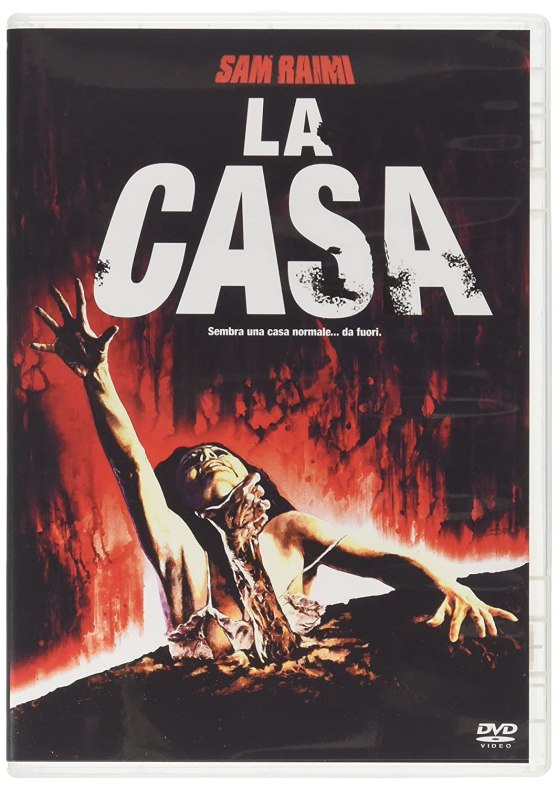


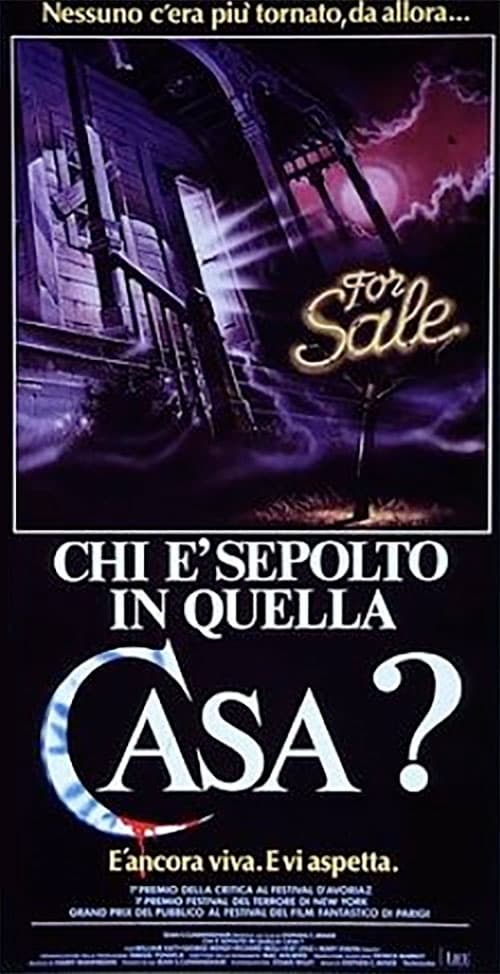


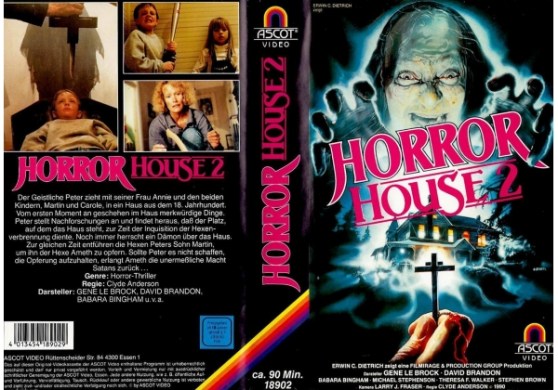

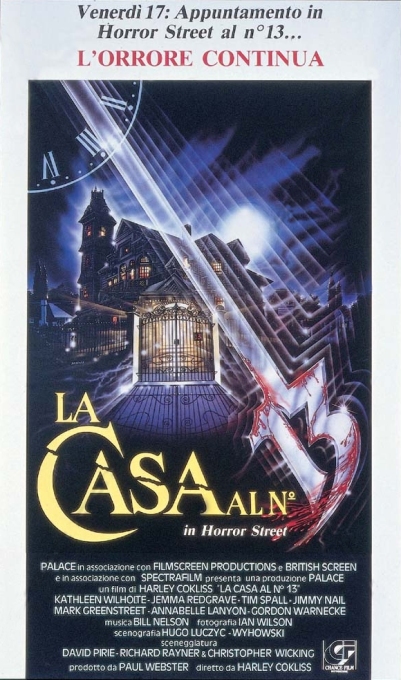


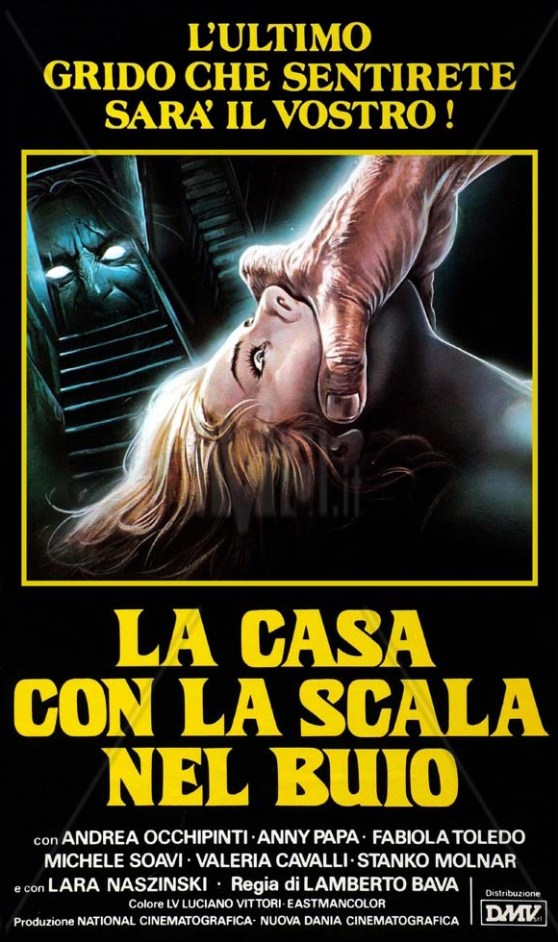





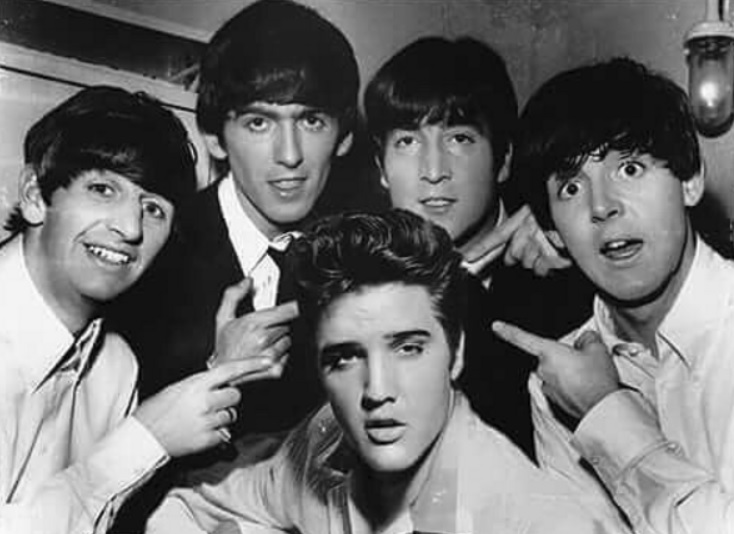


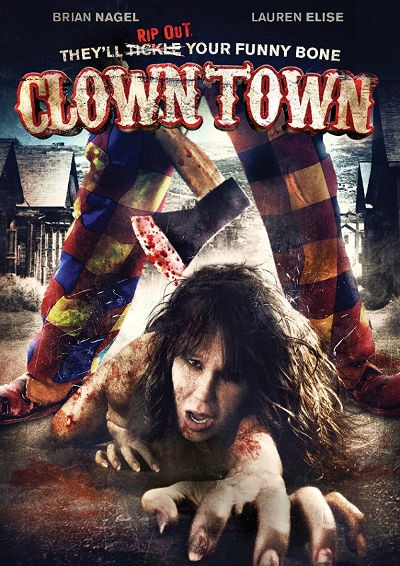


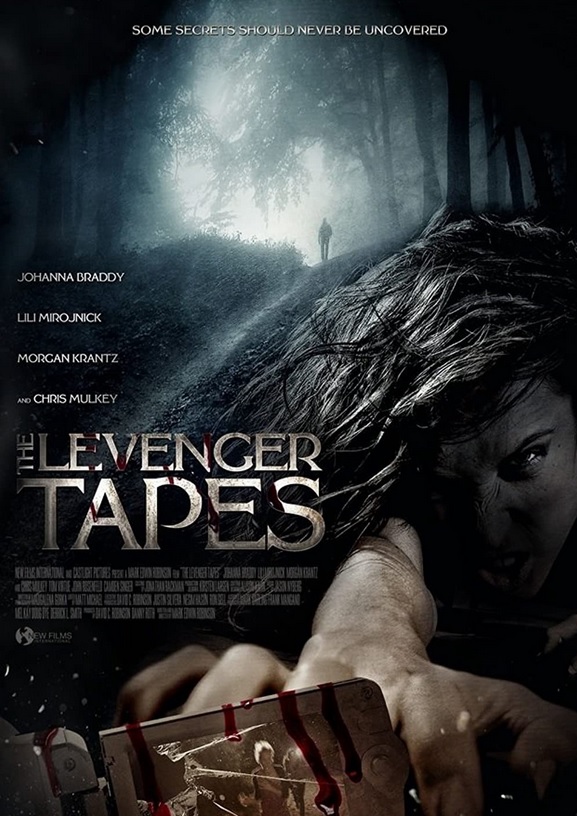

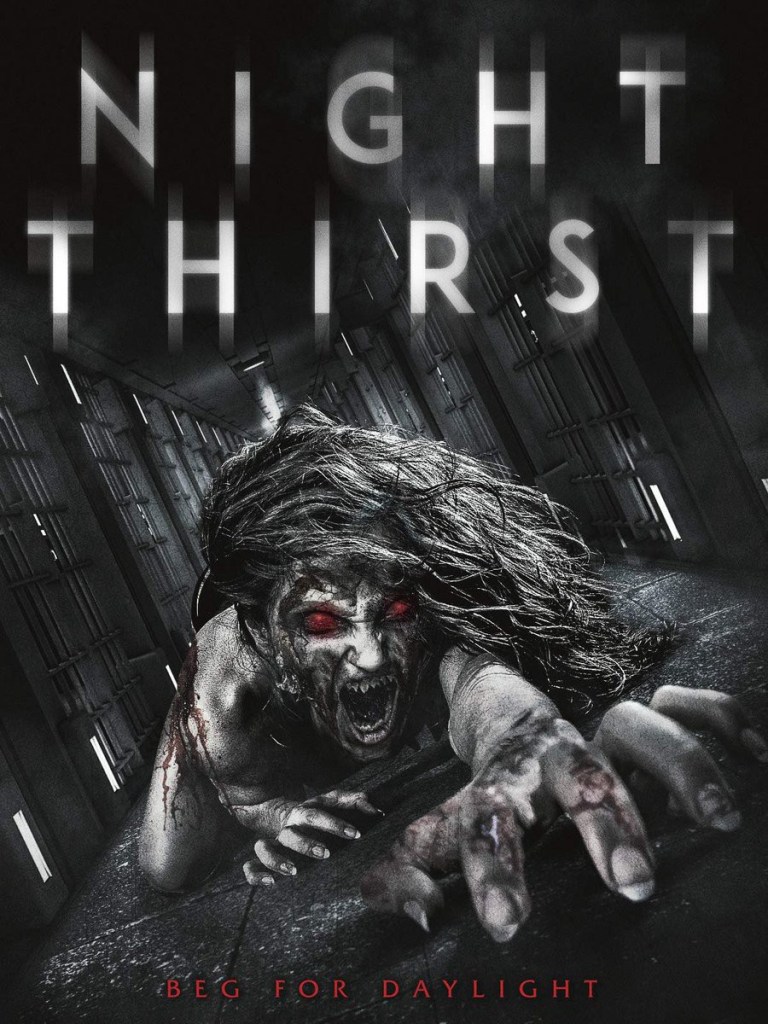

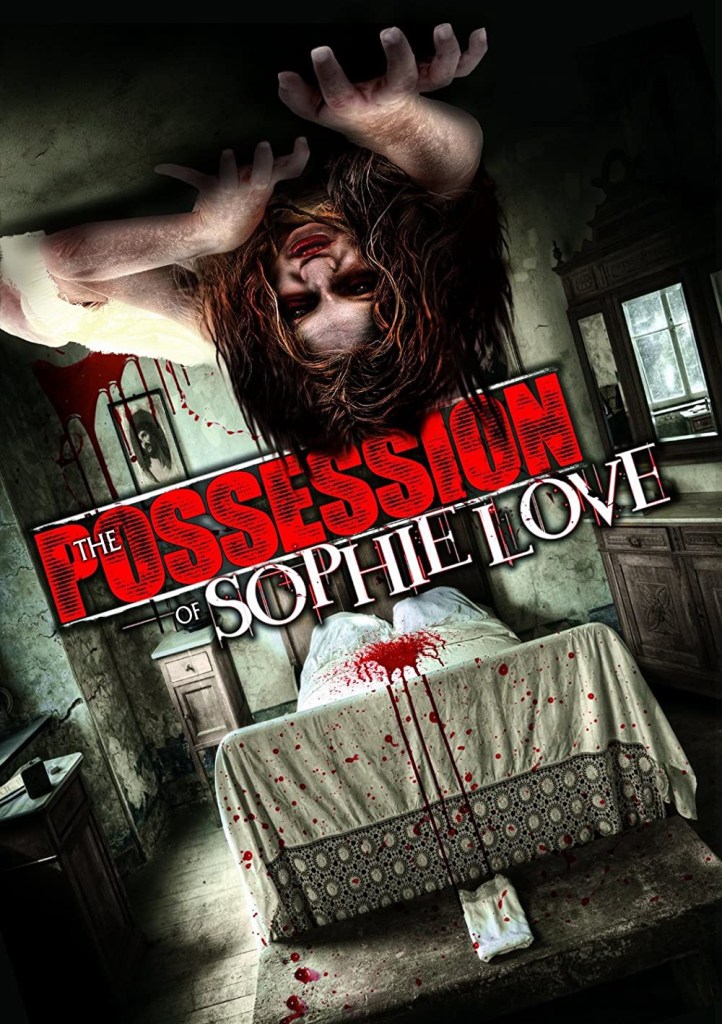





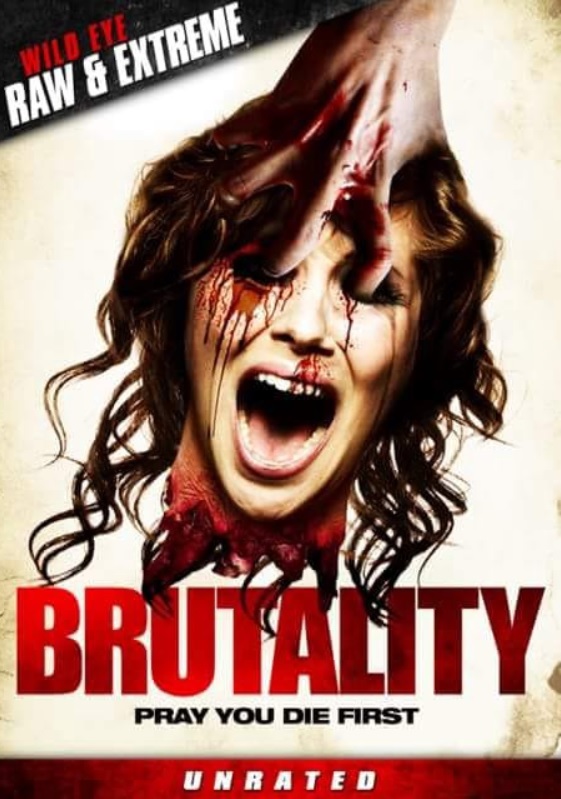


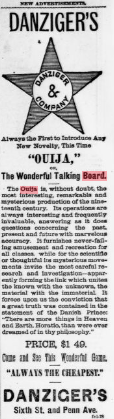


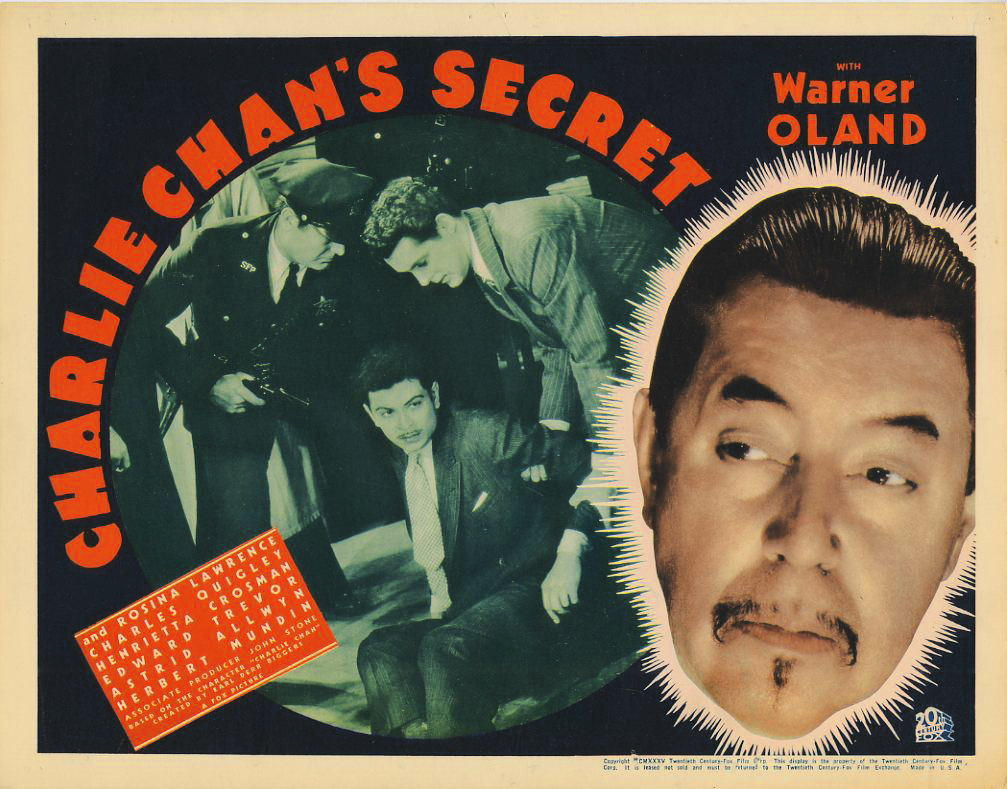


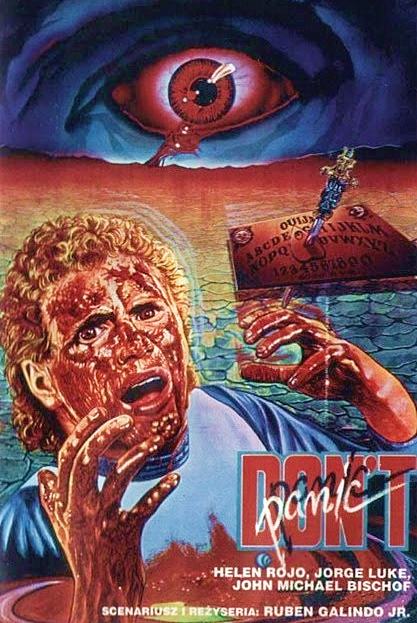


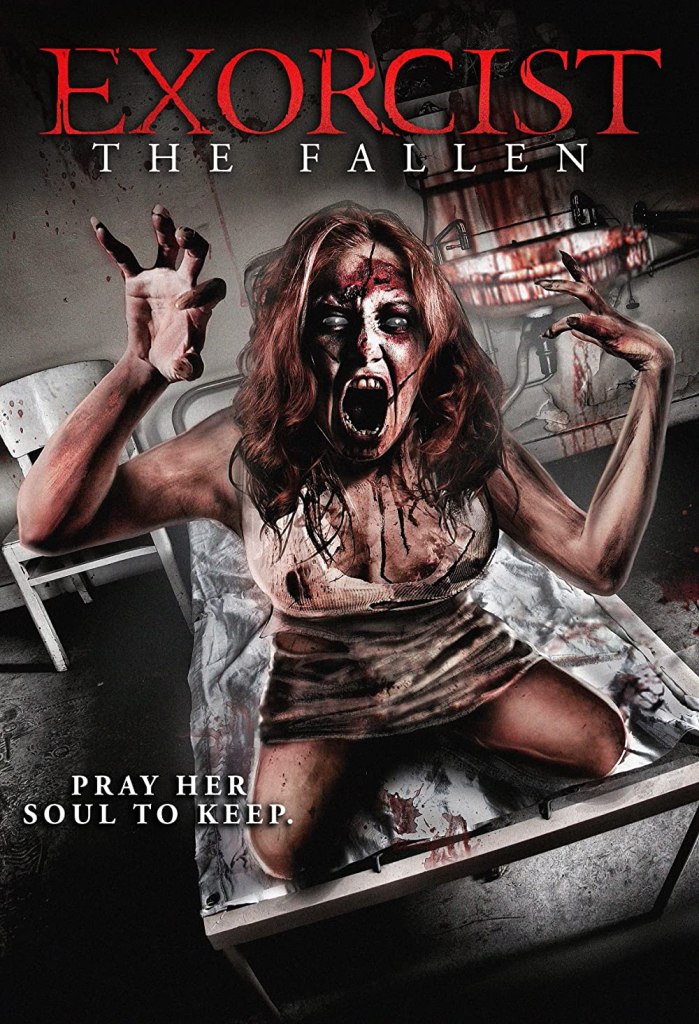
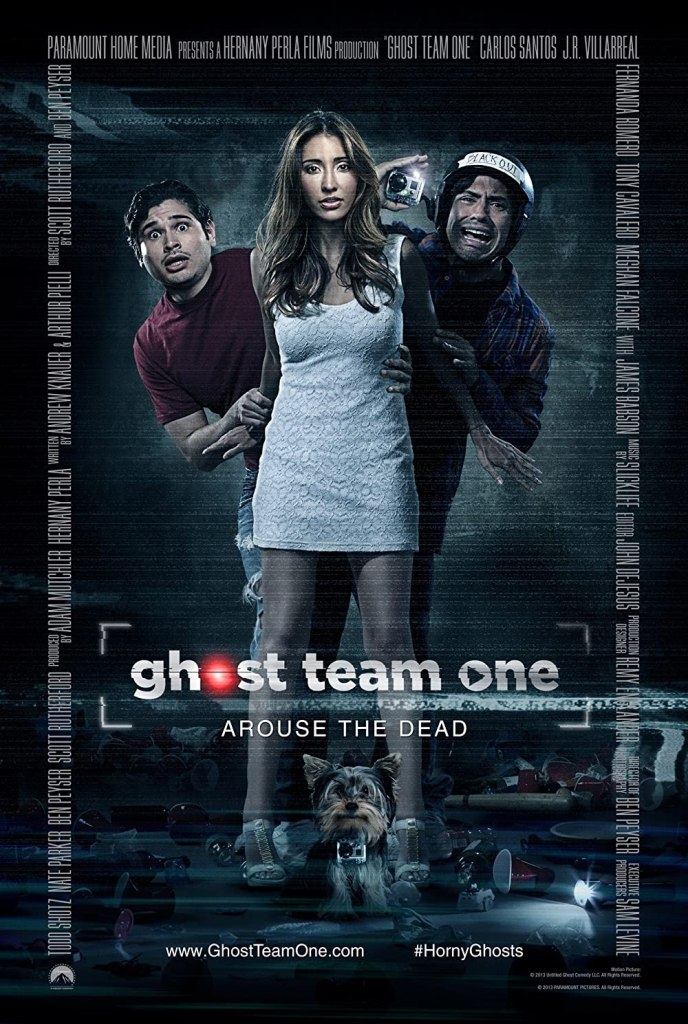
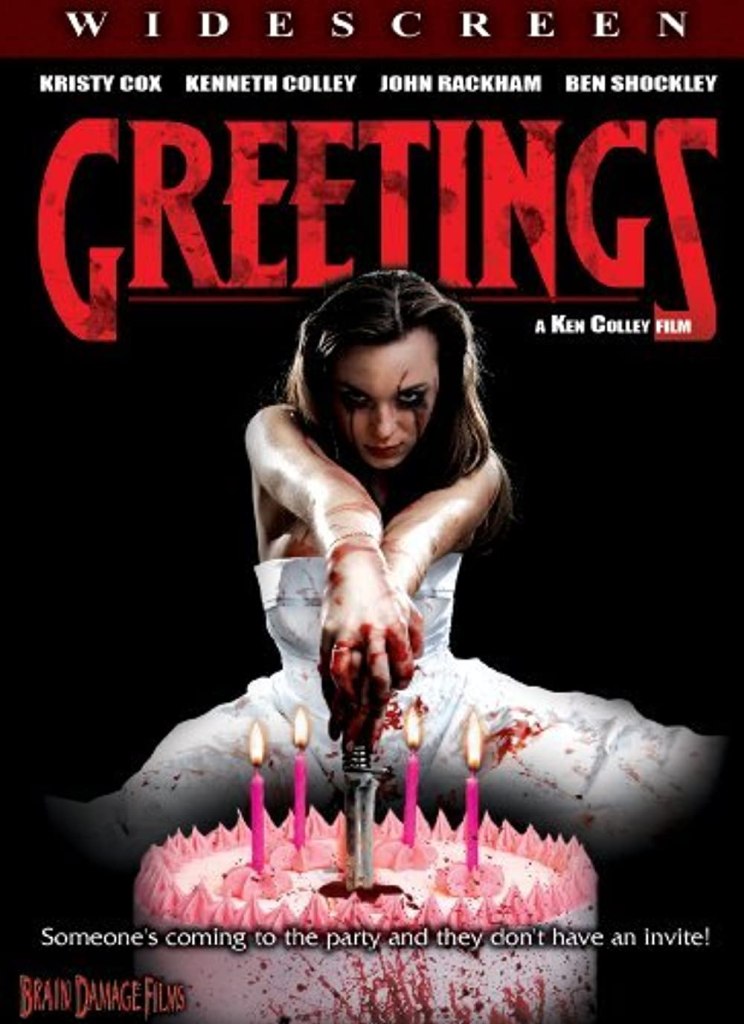
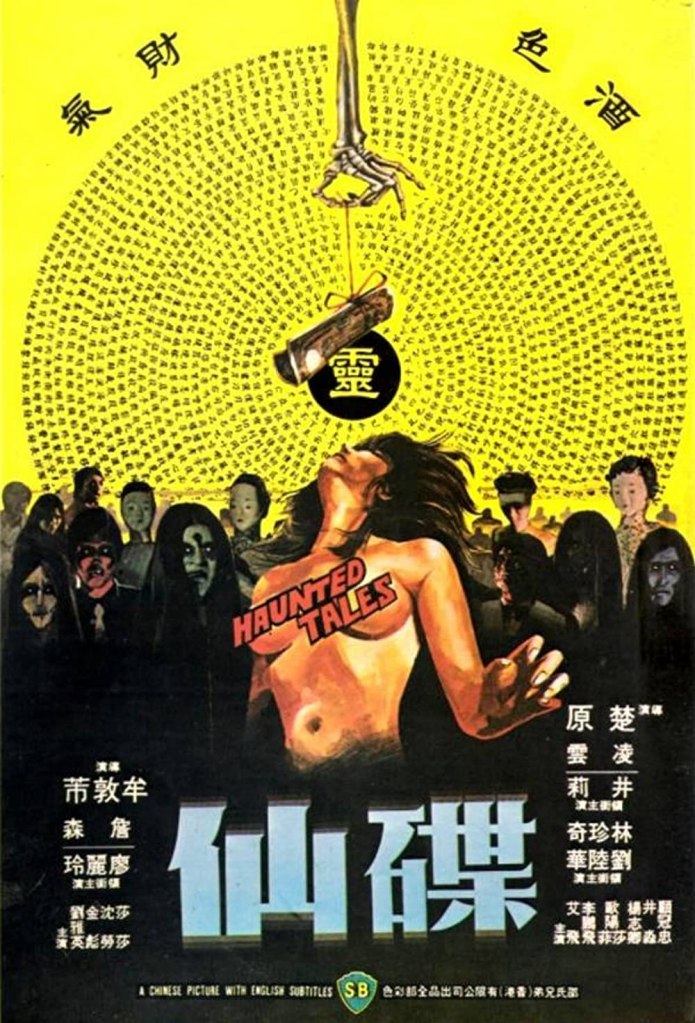

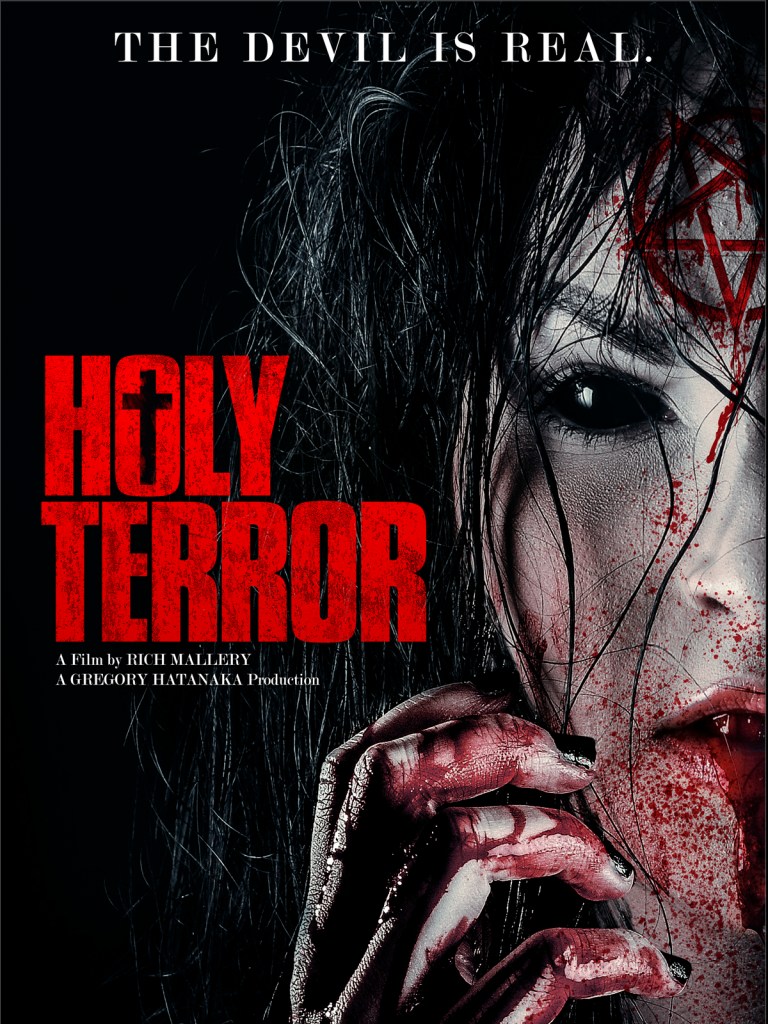
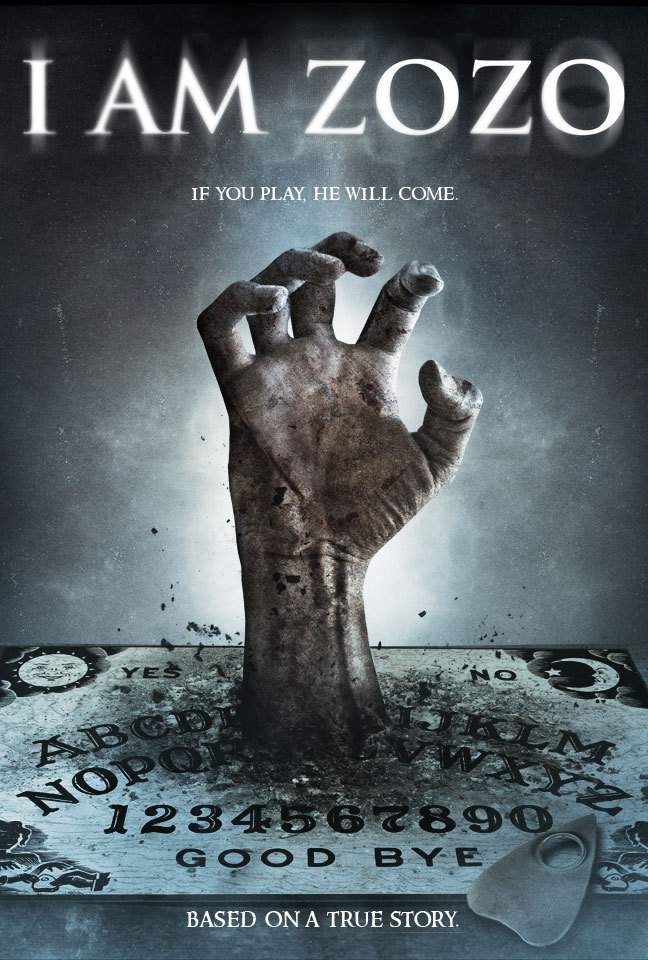
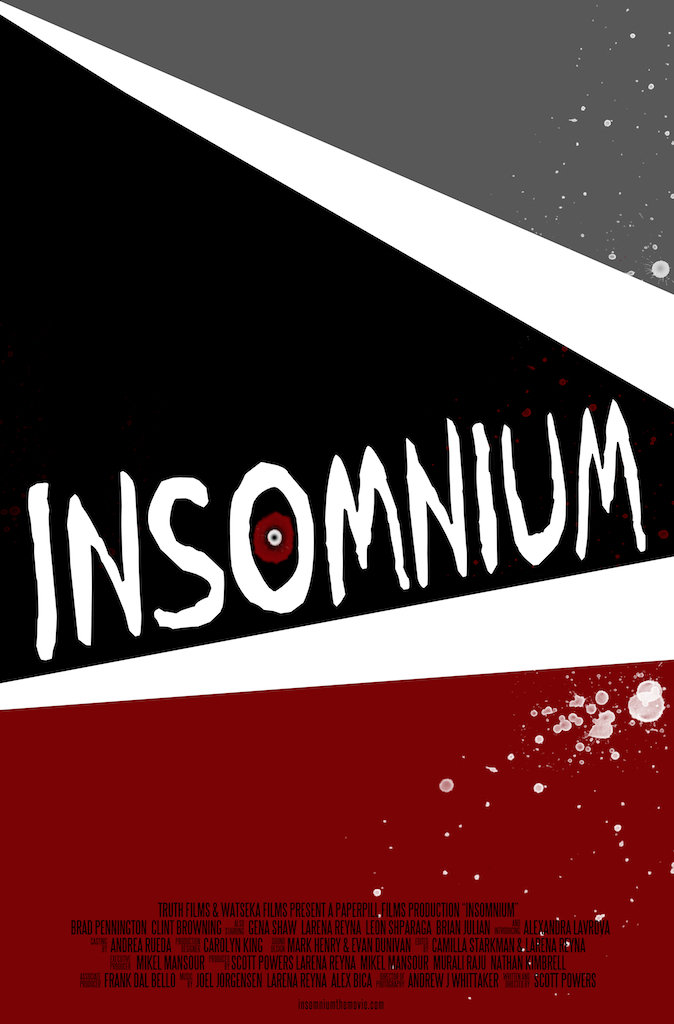
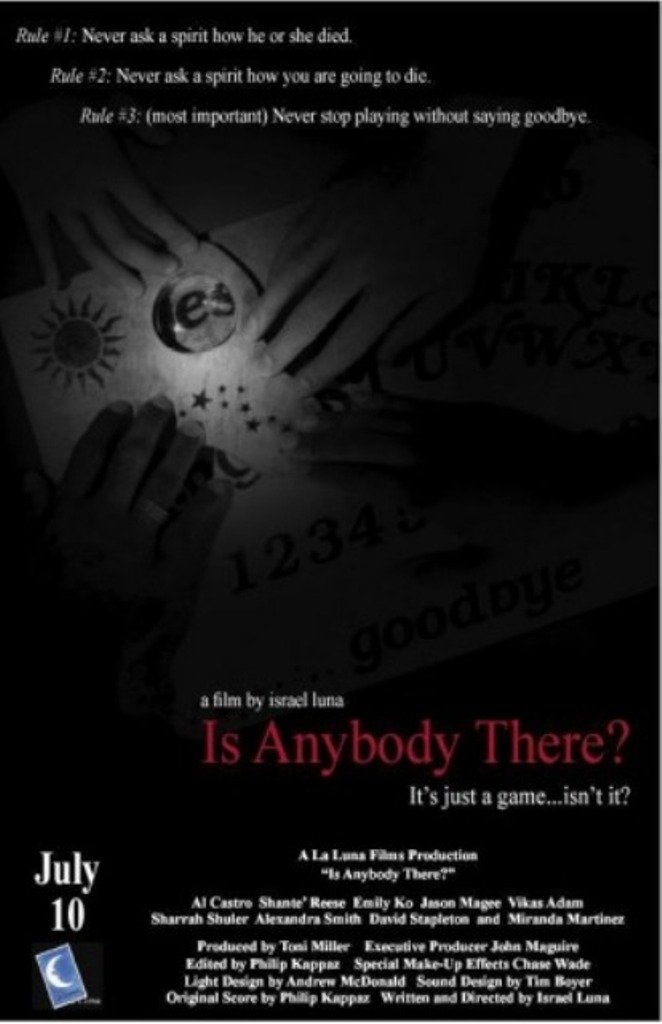
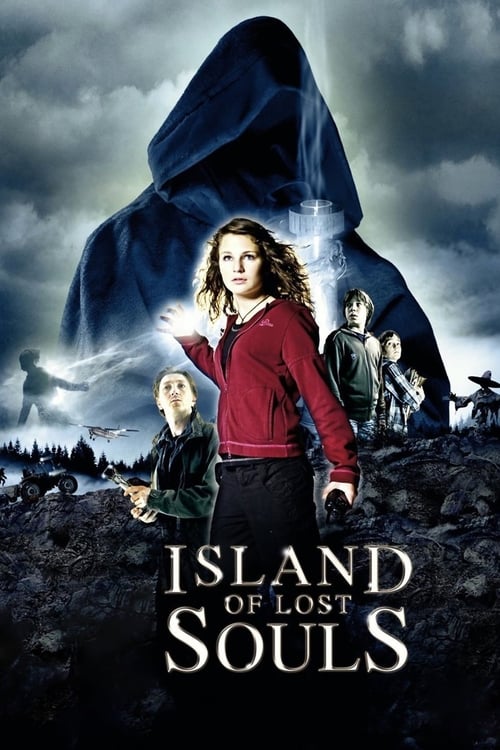



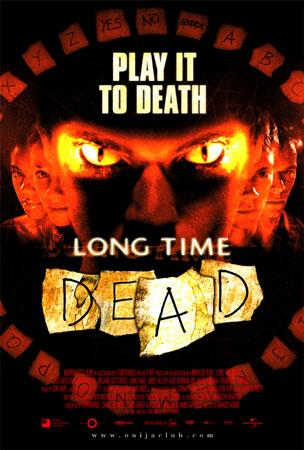




 Only You (1994):
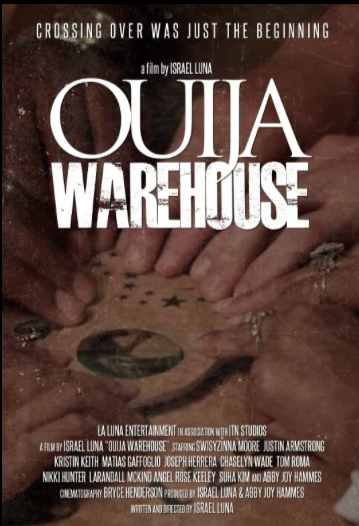

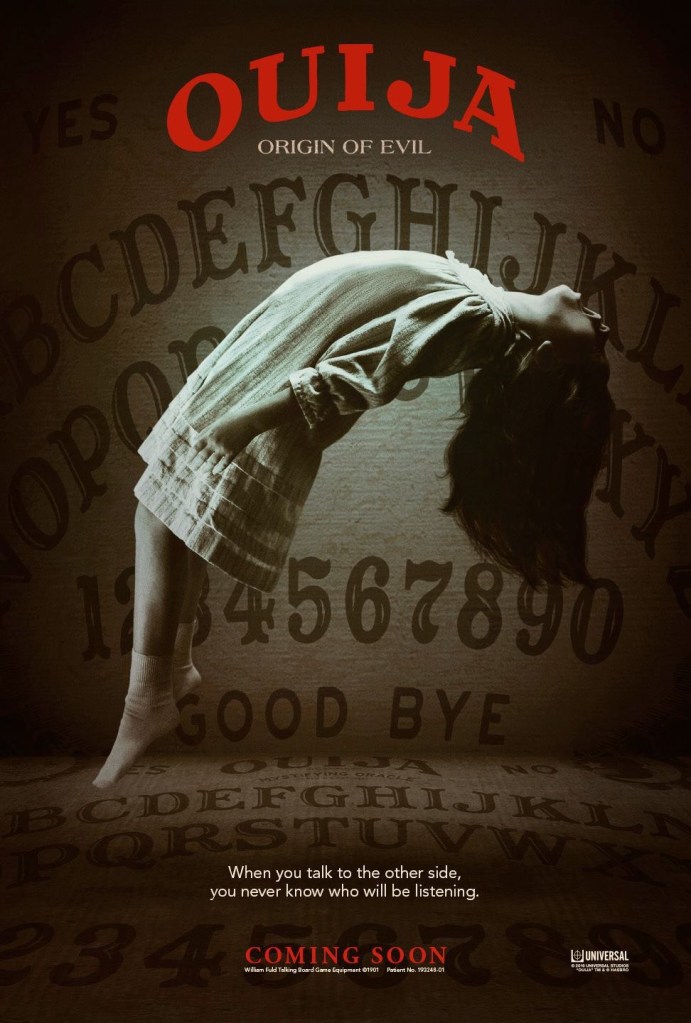
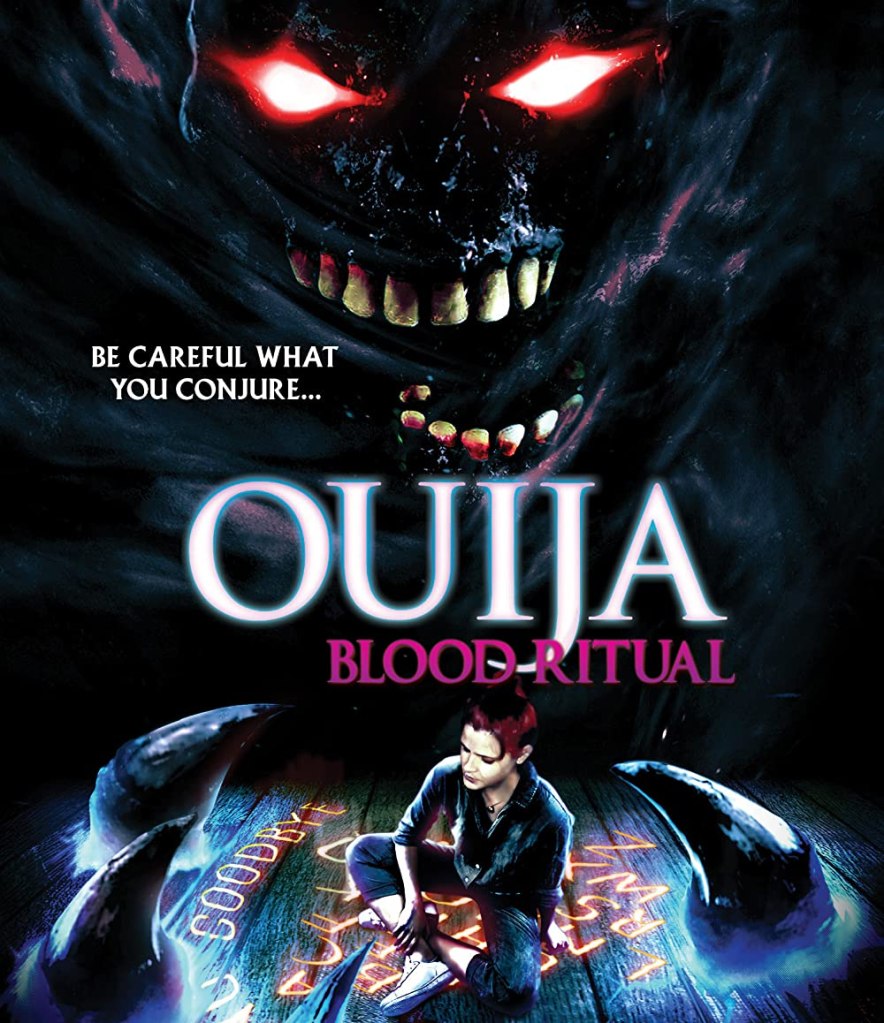
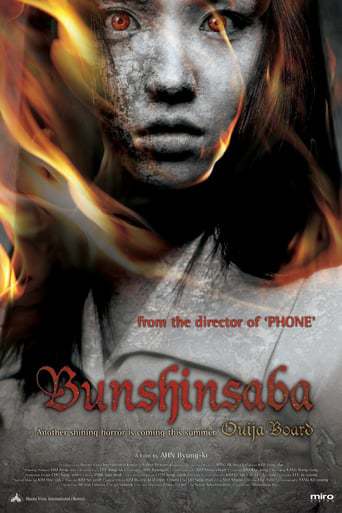

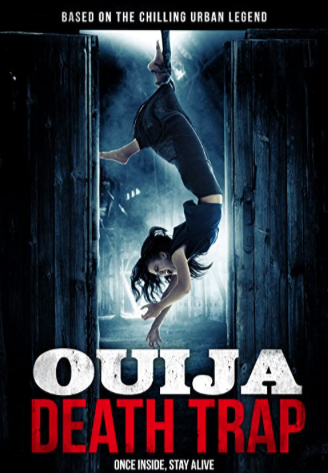


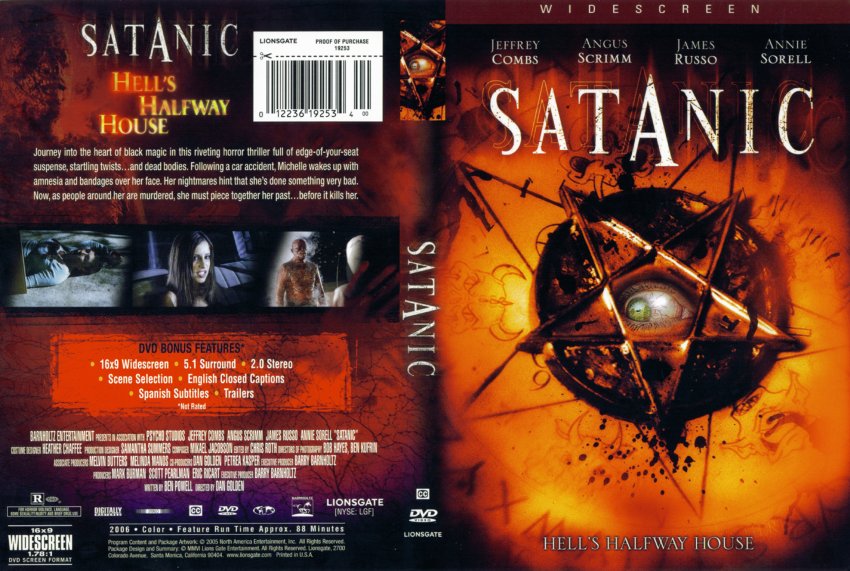


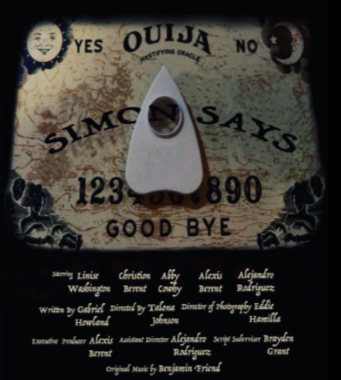


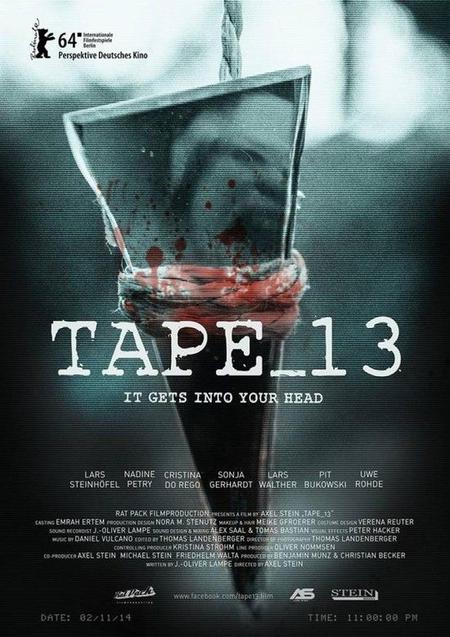
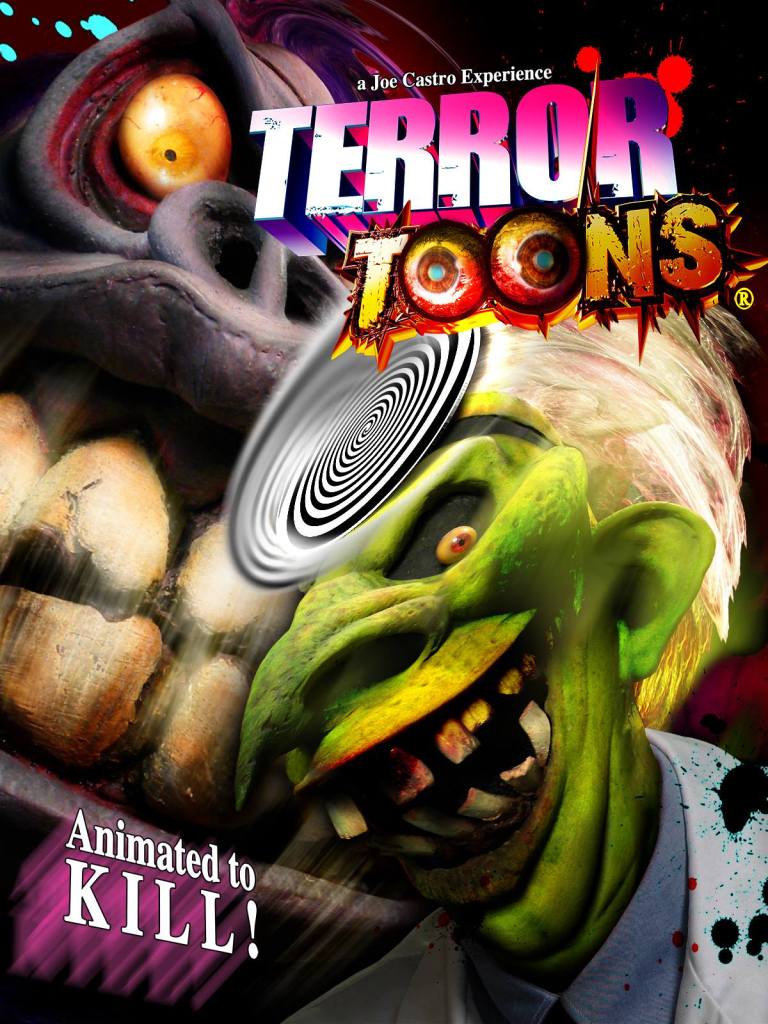

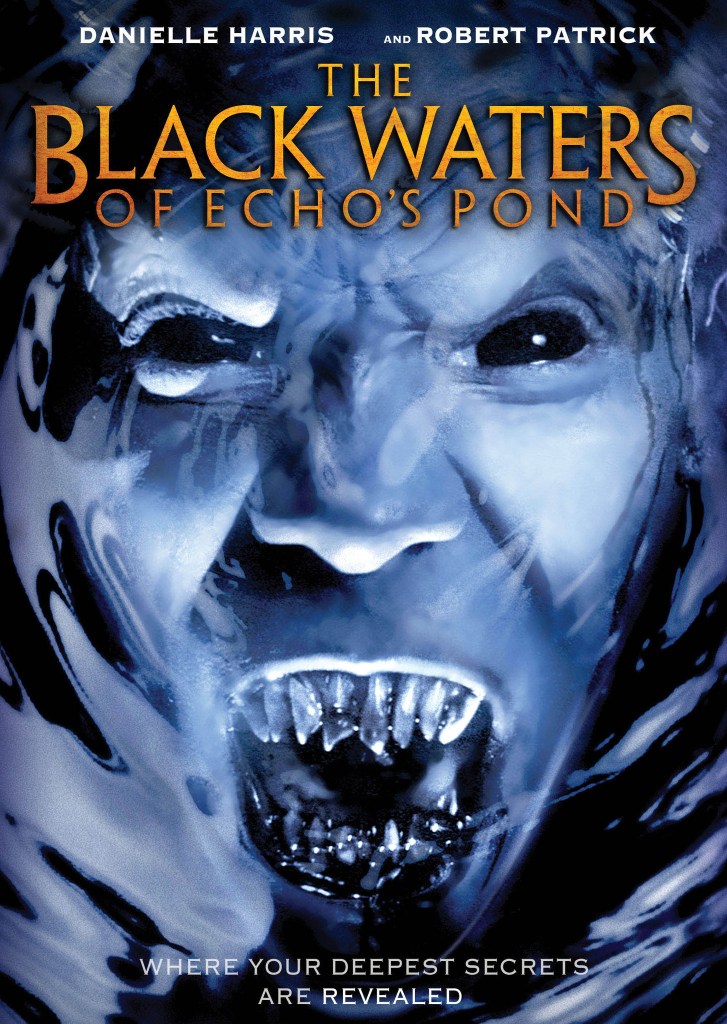
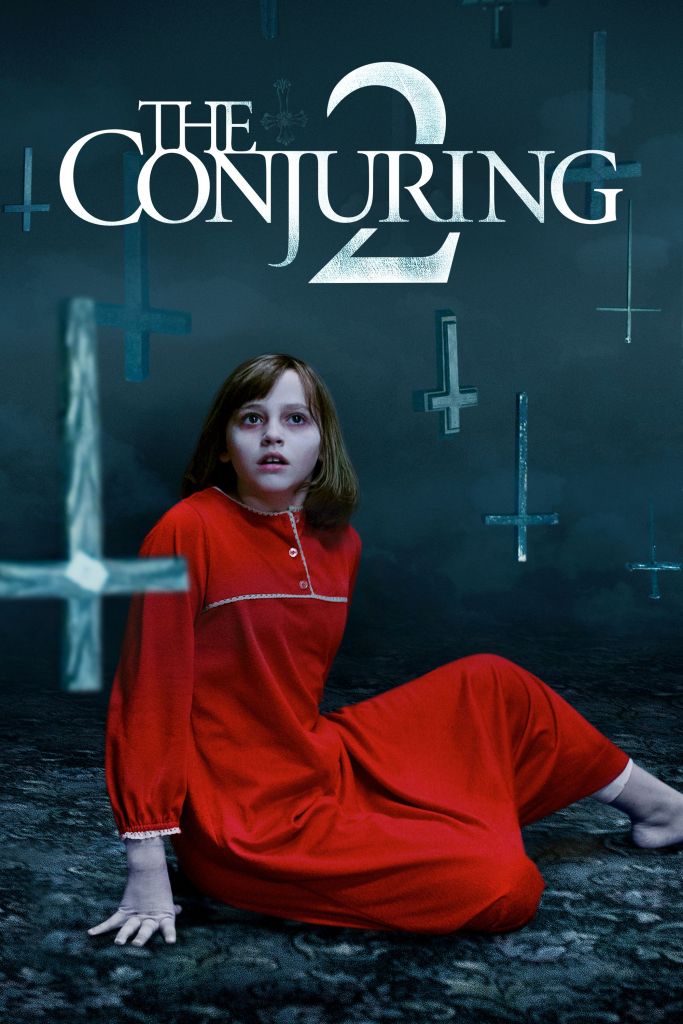



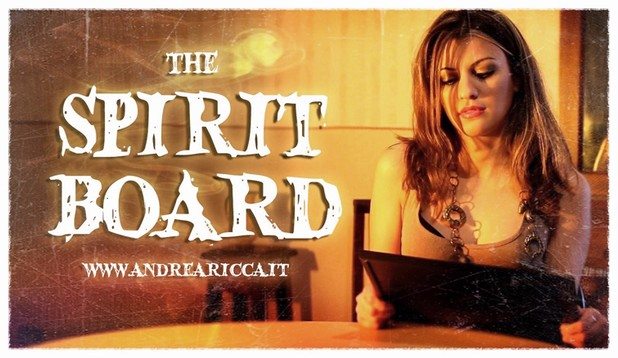


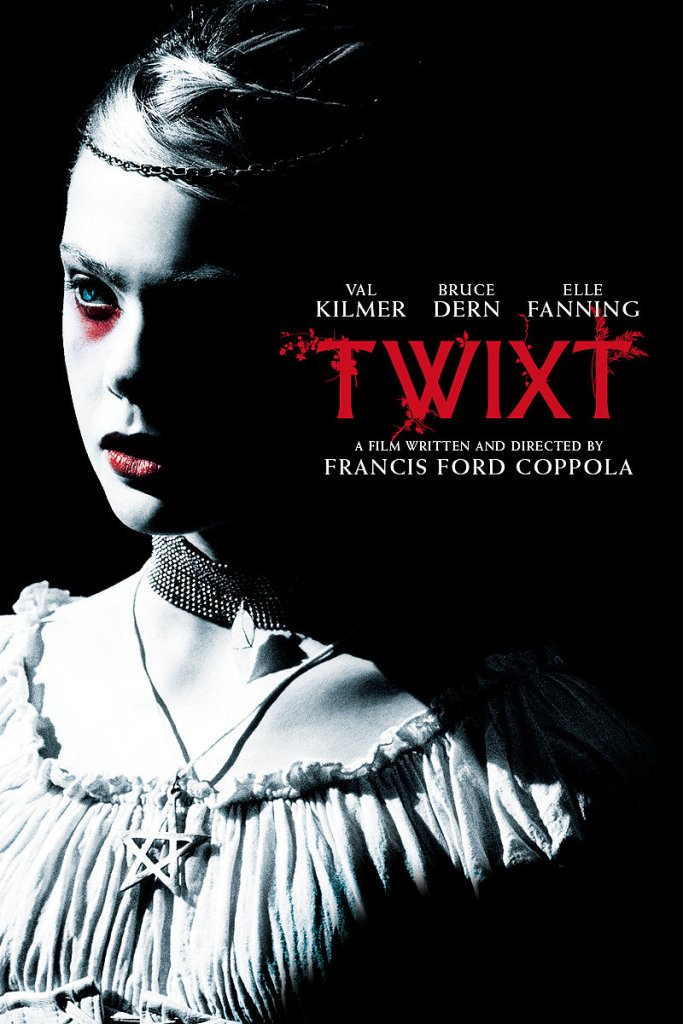
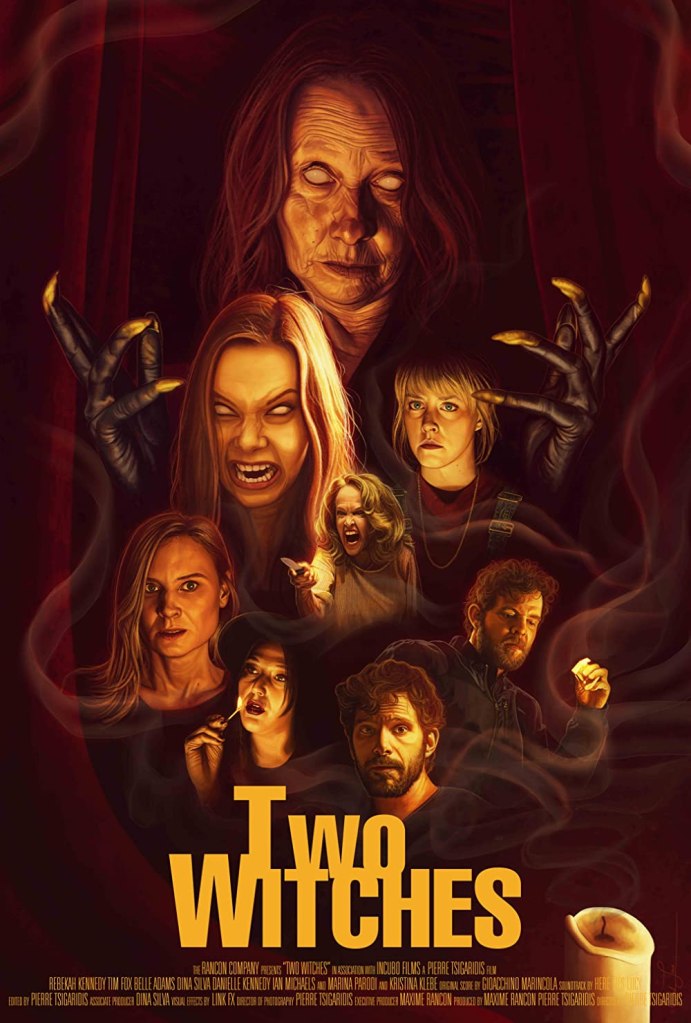

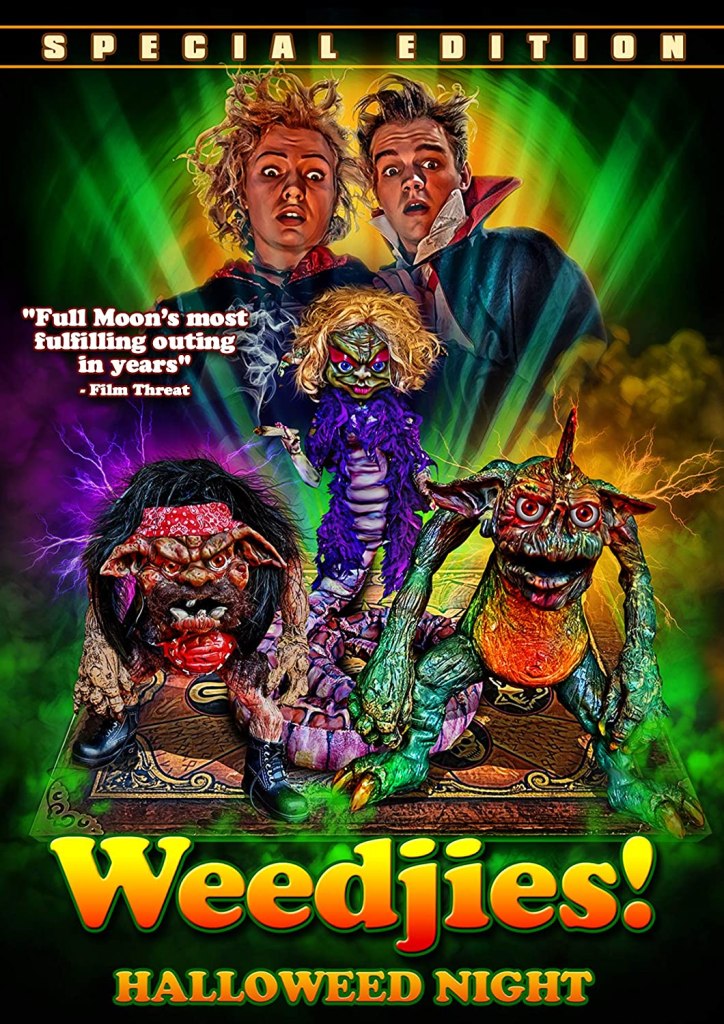

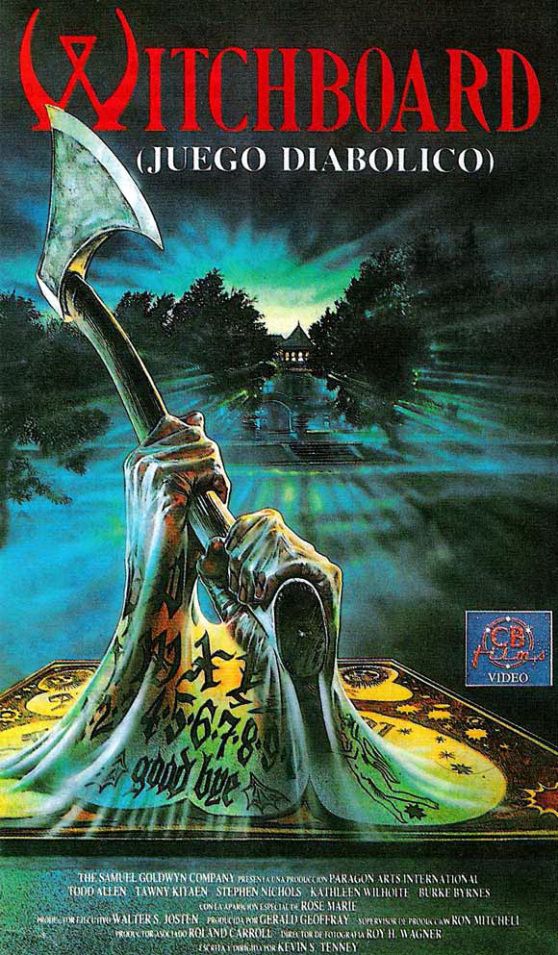


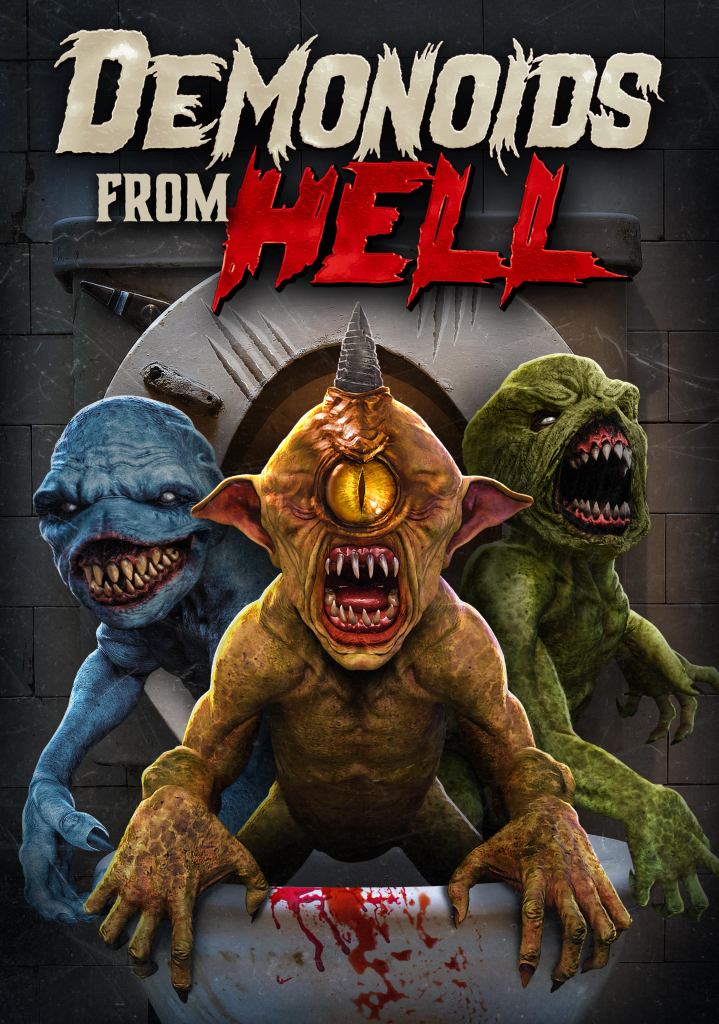



















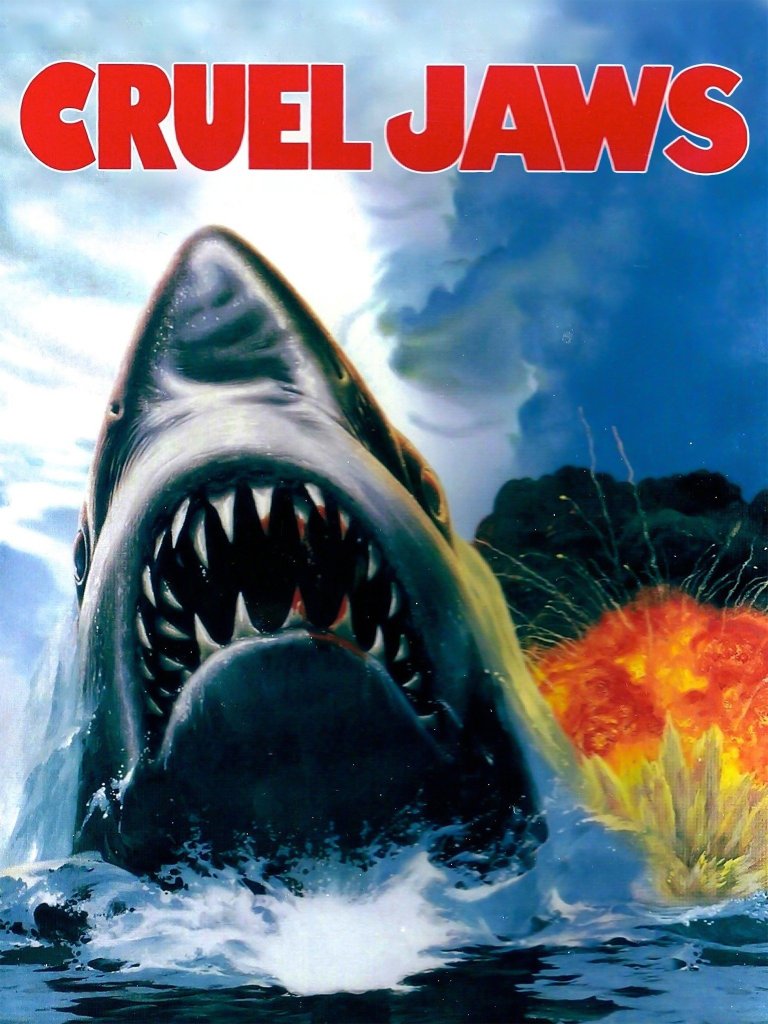

 B&S About Movies

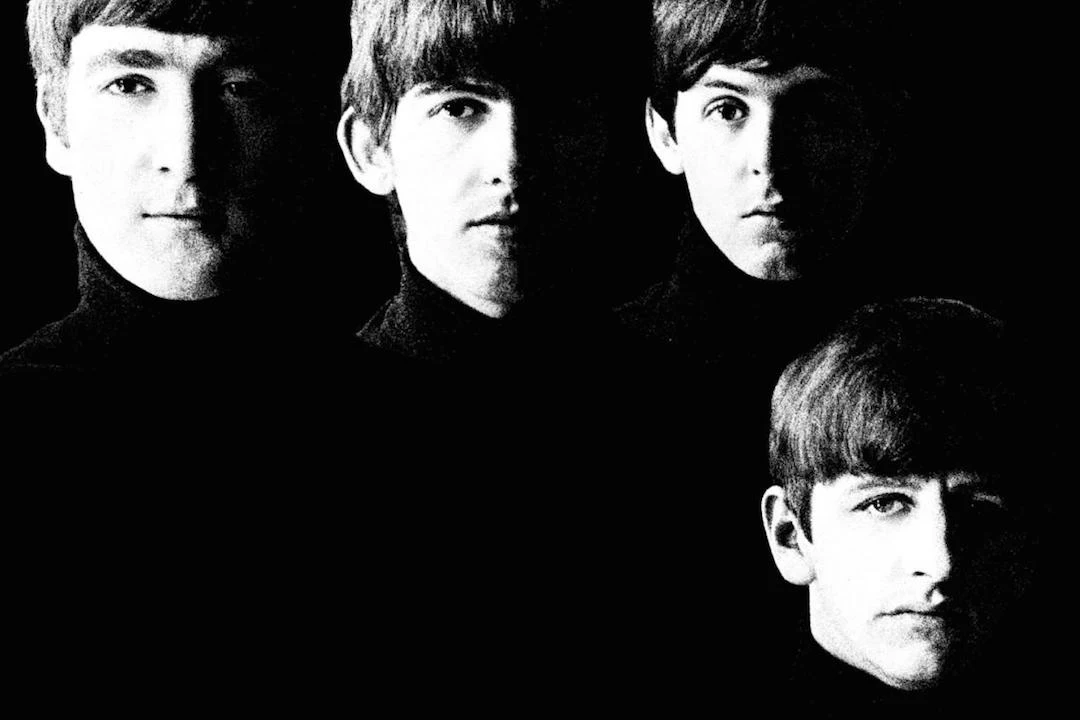
You must be logged in to post a comment.