Day 20 Sunday Dinner: From eating scenes to full on foodie fodder
Author’s Note: You’ll be able to watch the full films of Ed and his Death Mother’s cool ‘n quirky cousins: Bartleby, Ed and Rubin, Trees Lounge, and Twister for free, and Ghost World for a fee. (Links to follow in the article.) And there is eating in all of them—especially Steve Buscemi driving an ice cream truck in Trees Lounge and Edna and Rebecca in Ghost World slinging popcorn and coffee, respectively. So there you go! And now, on with the eats, I mean, show!
The only thing missing from Ed and His Dead Mother is Crispin Glover.
When I look at this film’s cover, I can’t help but think of Twister (1989; full film/You Tube), featuring Crispin’s flaky, new wave rocker, Howdy, crooning in an echo chamber with a phase-connected guitar about how pretty his baby is and how mean his daddy is.
When I watch Ed and his Dead Mother, I can’t help but think of my equally quirky favorite, Ed and Rubin (1991; You Tube/full movie), with Crispin’s Rubin Farr and Howard Hessman’s Ed Tuttle frolicking about like Howdy’s distant cousins, wallowing in a henpecked loneliness, just down the street from Steve Buscemi’s Ed Chilton. And Mr. Chilton, probably, at one time, lived in the same neighborhood of another one of my favorite, quirky loves: the Steve Buscemi-starring and directed Trees Lounge (full movie/TubiTV).
“This movie sucks,” they say. “Come on, you have to hate this movie,” they tell me. In the words of Crispin’s Bartleby, in the awesome Jonathan Parker-version of Herman Melville’s short-fiction piece, “Bartleby, the Scrivener: A Story of Wall Street” (Bartleby, 2001; full movie/You Tube), I say to them: “I would prefer not to.” That’s probably why I have no friends and write all day long. They’s nothing like a steely resolve in your movie preferences to drive away the sane people.
However, I didn’t say I wanted Crispin instead of: I want him in addition to Steve Buscemi. Do I really have to rattle off Steve’s credits for you: Escape from L.A., Fargo, Reservoir Dogs . . . but I will mention his Ed Chilton’s long-lost brother, Seymour, which you might have missed, from another one of my off-beat loves, Ghost World (2001; rental/Vudu).
So I think that little bit of insight to my VHS shelf will give you either fair warning to run—or leave your chops watering with bug-juicy anticipation for this Jonathan Wacks directed, chunky-chunk of weirdness. Hey, Jonathan is the dude who directed the Beatles’ George Harrison-produced Pow Wow Highway (1989) and produced the Monkees’ Michael Nesmith’s Repo Man. He directed porno-shock rockers GWAR (alongside Ethan Hawke from Reality Bites) in Mystery Date (1991). The dude ran, as Vice President of Production, the Samuel Goldwyn Company (of MGM fame). While he only did four feature films: they were awesome, unique original films and I love them all. I wished Jonathan Wacks stayed behind the camera and stayed out the executive suite. I wished fate would have had my own acting endeavors cross his path. I’d love to act in one of his movies. A gig as an under five/day player trading chops with Crispin and Buscemi in some crazy-ass road movie based on the writings of Hunter S. Thompson is in my thespian wheelhouse. I’d even take a part in a sequel to Ice Cream Man (see my Day 20: Option 4 review) just to work with Clint Howard.
“Dude, what the hell does this have to do with the ‘Day 20 Scarecrow Challenge’ regarding movies about or featuring food? While you were yacking about your man-love for Crispin Glover and Steve Buscemi, I went to the IMDB and it says Steve’s character doesn’t even run a restaurant: he owns and operates a hardware store. So, what’s he eating: sandpaper and paint chip sandwiches?”
Well, he’s not eating anything. But his dear, dead mom loves her bugs.
Lost somewhere between the cannibal-comedy shenanigans of Paul Bartel’s Eating Raoul (1982) and Peter Jackson’s gooey zombie-comedy Dead Alive (1993), only not as clumsy as Eating Raoul and not as icky as Dead Alive, lies the cockroach crunch of Ed and his Dead Mother, with its comedic questions on how we deal with death.
Ed lives with his perpetual telescope-peering pervert uncle Benny (Ned Beatty of Deliverance, 1972). Ned’s living the life, now that his domineering nag-of-a-sister, Mabel (omnipresent character actress Miriam Margolyes), is dead; Ed is still moping about it a year later. That makes Ed easy prey for a smarmy, super slick salesman in the form of the white-haired and white-suit clad A.J Pattle (ubiquitous TV and film villain John Glover; Gremlins 2: The New Batch, In the Mouth of Madness) from the Happy People Corporation of Webster City, Iowa. His product: he sells reanimation services (to the recently-insurance loaded loved ones of the dead).
Ed lays down the $1000 bucks—and Pattle shows up at the door step with Mabel. Of course, since this is all an elaborate insurance swindle, the reanimation “runs out.” Now Pattle pitches HPC’s “reanimation kit” (a shrink-wrapped metal tin) for $349.99.
And what’s inside: cockroaches. Why: “Life my, boy. Life,” exclaims Pattle. “But only give her two a day. No more, no less. You don’t want to give her too much ‘life’ at one time. It screws up the reanimation process.” Naturally, Ed and Benny soon realize the now profanity-spewing Mable is not the woman she used to be. Of course, as with any Pandora’s Box: Once it’s opened—and you don’t follow the instructions—and, in this case, if you overdose on “life,” you become a crazed killer. And you develop a taste for dogs and cats and become addicted to lawnmower death—of the furry creatures, not the band.
And that sultry babe teasing Benny through the telescope, the one that Ed would never have shot with, makes a play for Ed. And why not? She’s the Happy People Corporation’s femme fatale secret weapon to bilk Ed of his mother’s inheritance. Creepy Uncle Benny’s into it for the vicarious ride and listens to Ed’s total failure in sealing the deal and suggests, “Maybe I can hide in the kitchen and scream out positions to you in case you get stuck on what to do next.”
And what should you do next? Pop the Orville Redenbacher, throw in a DiGiorno’s, pop a Dos Equis and watch Ed and his Dead Mother for free on TubiTv.
About the Author:You can read the music and film reviews of R.D Francis on Medium and learn about his work on Facebook.
Day 18 Only on VHS: Watch something on the true psychotronic format
Editor’s Desk: Upon the news of his medical hardships, we’ve seen an uptick in our reviews of Tom Sizemore films, which is no way for anyone to discover an actor’s films. Regrettably, Tom—whose credits included the major studio films Natural Born Killers, True Romance, and Black Hawk Down—has died at the age of 61 after having been been hospitalized in a coma for two weeks as result of a brain aneurysm brought on by a stroke.
If not mentioning Tom in passing another review, we’ve reviewed many of Tom’s films, which you can easily discover at B&S About Movies.
Tom Sizemore November 29, 1961 —March 3, 2023
A Little History of Grunge . . .
By 1988, underground “college rock” bands began to bubble under the mainstream and crossed over onto mainstream AOR stations still waste deep in the likes of the hair metal bands Winger, Slaughter, and Poison. And while the audio nimrods didn’t play the newly “major label signed” Husker Du (to Warner Bros.) and The Replacements (Sire), and gave record-industry guru David Geffen of Asylum Records (home of classic rock mainstays, the Eagles) the snub when his new label, DGC, signed New York noise-merchants, Sonic Youth, those spandex bastions did begin to “experiment” with the “more commercial” likes of the Cure, Jane’s Addiction, and Love and Rockets. Yeah, they spun Alice in Chains, but were still not quite ready to pluck Soundgarden from Seattledom.
Then, slowly, while those stations still bowed to the dynasties built by Led Zeppelin and Hendrix, you began to hear less Winger and more of the “false grunge” of Candlebox, Pearl Jam and Stone Temple Pilots, and (B&S Movies’ proprietor Sam’s favorite bands) Creed and Bush. Then, instead of Slaughter ad nauseam, you heard a little trio out of Seattle ad nauseam—and overnight America became a nation of coffee houses with hep-baristas adorned in $50 JC Penny designer flannel shirts and $150 Macy’s faux Doc Martins.
I started my radio career in the early breakers of the Seattle new-wave, working at a small, technically inept, stodgy and dying non-commercial FM that somehow, we, the staffers, convinced our clueless “L7” bosses to give an all-“alternative” format a try and dare rock ‘n’ roll lovers—not interested in blues babbling, folk hootenannies, jazz noodling, plunked banjos, and book reviews—to tune into our audio graveyard left of the dial. And it worked.
And thanks to an indifferent “voice of a generation” who blew his brains out a few years later, the two battling classic (ass-ic) rock stations in town became “rock alternative” outlets overnight and decided the alt-nation wanted to hear the (bane of my existence) Crash Test Dummies and Spin Doctors, and some chick named Torn Anus, I mean, Tori Amos, caterwauling like humping cats on a hot summer night about girls and corkflakes.
So, the tales of WXOX 90.6 Providence, Rhode Island, in the frames of A Matter of Degrees are near and dear to this DJ’s heart. The new film through 20th Century Fox’s specialty arm, Fox Lorber (Independent Magazinearticle), along with its accompanying soundtrack on Atlantic (the track-listing read like the playlist of one of my airshifts), was heavily promoted in all of the alt-rock mags of the day: Alternative Press, B-Side, CMJ, and Option (good reads!). It was probably even in the alt-section of the mainstream radio trades The Hard Report, FMQB, and Rockpool; it’s been so long, I can’t recall.
The staff of my radio station was stoked. The film was directed by W.T Morgan, who directed the alt-essential concert doc,X—The Unheard Music, and X’s John Doe was starring (later of the radio-connected The Red Right Hand). Fred Schneider and Kate Pierson from the B-52s had roles as DJs alongside Doe, and North Carolina’s hottest college-rock band, Fetchin’ Bones, who just got bumped up to Capitol Records, had a role.
And we were eventually crushed. What we thought was going to be a 1990 college rock radio version of the 1978 progressive rock radio chronicle FM—ended up being Friends: The College Campus Years. Then, we got alt-fucked again, by Cameron Crowe, with Friends: The First Year out of College, aka Singles (1993). Yeah, we got more “radio” with Airheads (1994)—but got more caterwauling cats in the “false grunge” screeches of 4 Non Blondes instead of Throwing Muses and the Breeders. At least Christian Slater’s alt-rock pirate in Pump Up the Volume (1990) cleaned out our Eustachian tubes. And I don’t need any Reality Bites (1994) from Lisa Loeb, either.
Well, at the time, courtesy of our Husker Du and Sonic Youth snobbishness, A Matter of Degrees seemed like a mainstream boondoggle produced by the same “suits” who decided to program songs about frolicking princes, chicks into cornflakes, and creepy, long-haired baritone Dean Martins humming stupid Canadian shite that was giving us A Flock of Seagulls when we wanted the Ramones. But as the VHS box patinas and the tape forecasts snow, I have come to love A Matter of Degrees—and its VHS and CD are a prized part of my collection because: it’s a time capsule that I wished never dissolved into the past.
The Review
A Matter of Degrees, written by Brown University alumni Jack Mason and Randall Poster, we come to find out, wasn’t about a radio station: the radio station served as a backdrop-linking device to a clever, ‘90s version The Graduate (1967), only with The Lemonheads (who ironically cut a cover of “Mrs. Robinson” for an early ‘90’s DVD reissue of the Dustin Hoffman hit) instead of Simon and Garfunkel backing the life-undecided, college campus hippiedom tales of Maxwell Glass (Ayre Gross; House II, Minority Report).
For Max, Providence, Rhode Island, isn’t a place: it’s a state of mind and that “mind” has been rattled by his being accepted into law school (he applied only to the hardest schools so he’d be rejected; he gets accepted to Columbia, the hardest of them all). Then he discovers his cherished campus radio station, which employs his friends Welles Dennard (the incredible Wendell Pierce; USA Network’s Suits, HBO’s The Wire, NBC’s Chicago P.D, Nicolas Cage’s It Could Happen to You) and Scuzz (the amazing-in-his-small-role Tom Gilroy; went onto work with R.E.M’s Michael Stipe and taught at Columbia University) is going to be torn down to make way for a research laboratory backed by a corporation that services the military. And when the station is rebuilt: the free-form format is out.
So, with an Abbie Hoffman-tenacity augmented with coursework titled “Interdisciplinary Approaches to Ethnicity,” Max is going to save the radio station—with arguments invoking the name of infamous ‘80s insider trader Ivan Boesky as a verb: Max speaks ill of the boyfriend of his feisty, Jerry and Elaine-styled best friend, Kate Blum (Judith Hoag; April O’Neill in Teenage Ninja Mutant Turtles, pick a U.S TV series), who runs the radio station: “[Roger] Ivan Boeskied it for them.” Not even their college-dropout/car mechanic roommate, Zeno Stefanos (Tom Sizemore, Zyzzyx Road), who has a propensity to lug car bumpers through the house and make sandwiches by slapping undiluted Campbell’s pea soup between two piece of white bread, can’t get Max off his disillusioned, high sparklehorse: “Remember, women and animals hold up two-thirds of the sky,” Zeno zens. (Now I had my share of Ramdan noodles and peanut butter sandwiches for dinner back in the day, but raw soup sandwiches? I’m glad I didn’t get accepted into Brown.)
“Hey, whatever happened to John Doe? I thought he was in the movie?”
Doe is Peter Downs, the founder of the station who “blew five years in San Francisco recycling the hits like a goddamned monkey” (been there, done that) and returned to his job as the program director of WXOX because, “this is paradise.” Oh, and Peter has a bitch-be-crazy girlfriend, Isabella Allen (Christina Haag), who has Max’s nose wide open. (See what I mean about the Friends-relationship dithering and not enough radio station? Get the Aniston out of here!) In the end, the station and sounds of “Peter Downs and WXOX 90.6 Providence” that Max man-love croons from a shark-toyed bubble bath to a toilet-perched Kate, serves as a plot-character linking device (just like Taj Mahal’s Dix Mayal on WKOK in Outside Ozona).
A Matter of Degrees is a case of “you had to be there.” If you never experienced college campus life and being enamored by the left-of-the-dial “hits” crackling over the airwaves of its tin-can station or a local non-com, you’ll have a lukewarm response to the film. The fun Mason and Poster-penned script reminds me of The Graduate; however, it won’t be in the same classic league as The Graduate when it bounces off your retinas. Your gray matter will populate it as a Singles rip-off—only this film came first. It is, in fact, the first Gen-X, well “grunge,” film in our $5.00 cup-of-coffee flannelled landscape (and you can visit with those films in our “Exploring: 50 Gen-X Grunge Films of the Alt-Rock ’90s” overview.).
Chalk it up to nostalgia fogging my sight; with eyes that see all of my friends from the grunge epoch as I flashback to my views from the glass booth (as I cracked open a new album called Bleach by some band called Nirvana) in the spot-on-miscreant Scuzz, the cucumber-cool Welles, and the rest of the WXOX satellites.
“Rock and roll can save you!” urges Peter Downs.
It did, Peter. More than you will ever know.
Where to get and how to hear the CD soundtrack and see the VHS movie:
While A Matter of Degrees tanked as a theatrical feature (the Sundance crowd shrugged), it blossomed on the international home video marketplace, carrying the titles of Louco Por Rock (Crazy for Rock, Brazil), A tutto rock (Too All, Rock Italy), and in Poland, Radio Maxa (Maximum Radio), or, more accurately, “Radio to the Max.”
As with most of the failed films in the pre-DVD era unceremoniously dumped to VHS, A Matter of Degrees has never been released on DVD—not officially nor as a grey market DVD-R—and there are no online VHS rips. There are no CD rips (of the non-vinyl) soundtrack, but you can listen to this re-creation of the soundtrack I patched together on You Tube. You can also see the soundtrack’s liner notes at Discogs. Multiple copies of the CD soundtrack, the even rarer cassette version, and the VHS can be found on numerous seller sites, eBay in particular. Not finding it won’t be a problem.
Caveat Emptor: John Doe’s incredible theme song for the film, “A Matter of Degrees,” which appears on his debut solo album, Meet Joe Doe (1990; DGC) and the promotional EP single, A Matter of Degrees, does not appear on the soundtrack, which is baffling, considering he’s one of the leads of the film. You can watch John Doe perform the single on the study-helper-for-the-late-night college crowd (good times): The Late Show with David Letterman (there is just something “off” seeing John Doe as a “traditional” lead singer clutching a mic-stand and not wearing a bass). Let the video play through to watch David Letterman’s 1983 clueless-awkward interview with X (really, Dave: alphabet jokes?) as they promote “Breathless,” the soundtrack single to the Richard Geer remake of Francois Truffaut’s film (1960) of the same name. X also covered the ‘60s hit “Wild Thing” for Major League (1989).
As with John Doe: Fetchin’ Bones are in the film—performing their MTV 120 Minutes hit, “Love Crushing,” for a “Save WXOX Benefit” (where John F. Kennedy, Jr. shows up and serenades a girl with an acoustic guitar)—but their song doesn’t appear on the soundtrack. Go figure. And the film is dedicated to D.Boon (backed by Doe’s title-cut song in the film only), the late guitarist-singer of the Minutemen. Why does the post-D.Boon outgrowth of the Minutemen, Firehose, appear on the CD soundtrack, and the Minutemen do not? Double go figure. And don’t bother (poi-dog) pondering how the B-52s got soundtrack skunked. Seriously, this film needed to pull a Dazed and Confused (1993) and release an “Even more . . .” Volume 2 to contain all the great “college rock” in the film. (Oh, hey Kris Erikson, Uncle Tupelo made it onto the soundtrack!)
You can also learn more about Randall Poster’s success as a music supervisor, the art behind movie soundtracks, and his longtime collaborations with director Wes Anderson (2014’s Grand Budapest Hotel) courtesy of these print interviews conducted by WIPO Radio, The AVClub and New Music Express. As it seems there will never be a DVD restoration replete with a commentary track, these interviews are the only way to gain insights on how A Matter of Degrees was and came to be made. (Jim Dunbar, who portrayed DJ Frank Dell, also amassed over 60 credits as a music supervisor, some in the company of Poster.)
In Poster’s post-1990 interview with the alternative music trade NME—New Music Express, he had this say on why he gave up on screenwriting and producing to work exclusively as a music supervisor on films (2012’s Skyfall, 2013’s The Wolf of Wall Street; he won a 2011 Grammy for “Best Compilation Soundtrack” for HBO’s Boardwalk Empire):
“I was always a big music lover, a record collector and an avid movie fan. I got through university studying English Literature, and I found myself without any professional direction. I wrote a screenplay with a friend of mine [Jack Mason] about a college radio station. We did a lot of new songs for it, and we did a record and I just felt that that was really what I wanted to focus on. I wanted to work with great directors, so I figured if I made music my focus, and that would enable me to do [work with great directors; like Wes Anderson].”
Poster also tells us that his college radio love letter was not only filmed in Providence: much of it was shot at Brown University. Poster and Mason were inspired by the college’s campus radio station, WBRU, changeover from a free-form to commercial format in 1985. They wrote the screenplay after graduation. It took them five years, but they got it made. And that’s awesome.
How beloved is A Matter of Degrees? This post at the Radio Survivor blog, written by fellow AMOD fan, Jennifer Waits, proves this cherished time capsule of ‘80s college radio has fans that want, and need, a DVD release of the movie (hint to Kino Lorber!).
Then there’s new fans—of this almost 30 year old movie—like General Manager Sharon Scott of the streaming-community station Art x FM. When she put the new, low-powered community FM (LPFM) outlet in Louisville on the air, she was granted the WXOX-LP call letters. According to Sharon, she didn’t know about A Matter of Degrees or its fictional radio station until well after the station received the call letters. Then, she spotted the movie’s promotional sticker on the door at WRFL and was taken aback that it was the same call letters she had chosen.
It looks like Louisville has found its audio salvation! “WXOX Louisville can save you!”
You can learn more about the new WXOX and Sharon Scott’s fight to save WRVU-FM, Vanderbilt College’s radio station, after students lost access to its terrestrial signal. The Radio Survivor article also provides links to learn more about the history of Brown University’s WBRU.
Peter Downs was right: “Rock ‘n’ Roll Can Save You!”
(And don’t believe the Hype! (1996; full movie/TubiTV) they’re selling!)
Editor’s Note: This review re-ran on December 21, 2020 (with updates), as part of our “John Doe Week” of reviews. You can watch the trailer for A Matter of Degrees on You Tube.
About the Author:You can read the music and film reviews of R.D Francis on Medium and learn more about his work on Facebook. He also writes for B&S Movies.
Day 18 Only on VHS: Watch something on the true psychotronic format
Quentin Tarantino goes off into the dusty, deserted Midwest in this sharply written, existential tale that questions how we deal with regret and loneliness, fate and death at the whims of respected Chicago psychiatrist Alan Defaux, aka The Skokie Ripper (David Paymer; 1981’sThis House Possessed, Rob Reiner’s An American President, Sam Raimi’s Drag Me to Hell), a multistate serial killer who celebrates his exploits over the air of a “superstation” that covers five states surrounding Oklahoma: WKOK 98.7 FM, with DJ Dix Mayal who, in a beef with station manager Floyd Bibbs (Meatloaf; 1992’s Wayne’s World, 1999’s Fight Club), flips the station from country to rhythm and blues (an Oscar-caliber portrayal by American blues icon Taj Mahal; 1972’s Sounder, 1991’s Bill and Ted’s Bogus Journey).
Writer and director J.D Cardone (Thunder Alley; a new review for the Scarecrow Challenge, see Day 16) brings us exquisite character development within a creepy-quirky, well-written dark comedy thriller threaded with multi-storylines. At its core Outside Ozona is a cop vs. criminal tale that reminds of Joel and Ethan Coen’s better-known Fargo (1996) — courtesy of the only “unknown” in the cast: Lucy Webb (1980’s Not Necessary the News sketch comedy show; wife of film co-star Kevin Pollack of Tom Cruise’s A Few Good Men). Webb shines just-as-bright as Frances McDormand’s put-upon law officer, Marge Gunderson, as the serial killing-tracking F.B.I agent Ellen Deene.
There’s not one bad performance in Outside Ozona, which also stars Robert Forester (another Oscar caliber performance; also of 1979’s The Black Hole, 1980’s Alligator, 1997’s Jackie Brown) as Odell Parks, a kind-hearted widowed trucker who’s admired afar by a truck stop waitress played by Swoosie Kurtz (U.S TV’s Mike and Molly), but adores a motor-stranded Native America woman taking her mother to the ocean off the Texas coast to die (and his rig plays a major part in the film’s climax that converges all of the storyline into a harrowing conclusion). Sherilyn Fenn (1986’s The Wraith, 1990’s Crime Zone, 2012’s Bigfoot) and her sister become Defaux’s victims (he bludgeons them with a toilet tank lid at a remote rest stop; he poses Fenn’s body, holding her heart); Kevin Pollack and Penelope Ann Miller (Al Pacino’s Carlito’s Way) are an unemployed circus clown and his exotic dancer-hooker girlfriend reduced to robbing a convenience store and giving lap dances in a dive bar to survive.
And all of their lives converge — outside of Ozona, Texas.
In the pungent backwash of “Tarantinoesque” films made in the wake of Pulp Fiction (B&S Movies wanted to, but never got around to, formulating a “Tarantino Copycat/Ripoff” list during our Once Upon a Time in Hollywood tribute week to his films, but Indie Wire and Uproxx beat us to it — and they go deep, but fail to mention J.S Cardone’s contribution to the Tarantino canons), Outside Ozona is the lone, sweet Texas-to-Oklahoma rose. Yeah, I know Oliver Stone brought us the western-noir that was U-Turn (1997) and Stone is god, but it pales in comparison (to my gray matter) to the film-noir leanings from the mind of J.S Cardone. So, if for only to see Taj Mahal in one of his rare acting roles (he dominates the screen as Dix), seek out Outside Ozona as a POV on Vudu and TraktTV. There’s no free VHS rips, sorry. And, while it has never been released on DVD, you can buy the cool road sign-skull poster.
Why Cardone never formulated a neo-noir buddy flick-sequel centered on Meat Loaf’s station manager and Taj’s DJ (their chemistry is magically electric) . . . what organ wouldn’t I sell to see that film?
Outside Ozona received extensive, foreign video and television distribution with the diverse titles of (most of them are great: but keep “Somewhere in America” and “Radio Station”): El crimen no conoce fronteras (Argentina; Crime Knows No Borders), Um Assassinato na Estrada (Brazil; A Murderer on the Road), Synora thanatou (Greek; Border of Death), Valahol Amerikában (Hungary; Somewhere in America), Radio Killer (Italy), Radiostacja (Poland; Radio Station), Смертельный попутчик (Russia; Death Companion), and Camino del infierno (Spain; Hell Road).
While we’re on the subject of Quentin Tarantino and have your attention: In case you missed our Tarantino week, here’s the list of all the remaining films we reviewed, so you can catch up:
Day 17 Evil in Broad Daylight: Scary stories aren’t just for the night time
Tracy Keenan Wynn is the gold standard in screenwriting and teleplays. Look at that resume: The Glass House (1972; TV’s Alan Alda, Vic Morrow of Message from Space and Clu Gulager of Hunter’s Blood), the platinum standard of football—and prison movies—The Longest Yard (1974; Burt Reynolds), The Quest (1976; Kurt Russell and Tim Matheson), The Drowning Pool (1975; Paul Newman), and the Peter Yates-directed ocean adventure, The Deep (1977).
And Wynn wrote a film that—if it had been shot and released as a theatrical feature film in the U.S (it was a theatrical in Europe), it would have swept the floors with Oscar nods (even wins) for David Soul, Michael Gross, and Ronnie Cox. So, do yourself a favor: beg, borrow and steal to watch director Dick Lowry kicking ass with the greatest series of continuing-storyline franchises in TV history. There isn’t a theatrical franchise that holds a candle:
In the Line of Duty: A Cop for the Killing (1990)
In the Line of Duty: Manhunt in the Dakotas (1991)
In the Line of Duty: Street War (1992)
In the Line of Duty: Ambush in Waco (1993)
In the Line of Duty: The Price of Vengeance (1994)
In the Line of Duty: Hunt for Justice (1995)
In the Line of Duty: Blaze of Glory (1997)
And, if you need another great football comedy from the man who knows his pigskins: Search out the TV Movie Pigs vs. Freaks (1984) fronted by the stellar character actor, Eugene Roche. Then there’s the teen drug movie Angel Dusted (1981), with the always reliable John Putch (Jaws III, 1983).
I know, “What the hell R.D? Enough with squeezin’ the Charmin over some screenwriter dude. Get back on the tracks and tell us about the movie already.”
I was living in Dade County, Florida, during the time this movie chronicles, and trust me when I tell you: we were scared shitless in broad light to the point that people were afraid to go inside banks. If you saw an armored car (which the antagonists of this film were hitting) in the front of a bank or strip mall, you kept on driving. Back in the undeveloped days of South Florida, a body turning up in The Everglades with two taps to the head or missing limbs was a once a month occurrence. Ted Bundy dumped his bodies down here. In my misguided punk adventures as a bassist, we wrote the songs “Serial Killer Alligator Alley” and “Serial Killer Express.”
Also putting bodies into the Glades were two ex-Army Rangers by the name of Bill Matix (Michael Gross; TV’s Family Ties, Tremors franchise), and Mike Platt (David Soul; TV’s Starsky and Hutch, Magnum Force). They were blatant, cruel, and just didn’t give a fuck: Matix, to get out of his Ohio-based marriage to marry his girlfriend: he murdered his wife, collected the insurance, and moved to Florida. When Platt’s “payday” of fixing and selling pinball machines goes sour, well, the guy who sold the machines regrets it. And their clueless family believes all the mystery “cash” is the spoils of their (fantasy) joint C.I.A. drug-covert ops. “We take out the dealers and the agency lets us keep the money,” Matix the wife-killer tells his love—and not nicely.
Another harrowing scene (criminally cut from the 2005 DVD reissue): When the agents get a jump on Matix and Platt in a stolen gold Monte Carlo bunkered in the Everglades, Mike Platt causally sighs: “Let’s go to work,” as he mounts up his weapon. They’re going to kill more people, and they are just causally “going to work,” like it’s a normal, sane job.
It was on April 11, 1986, when South Florida’s TV and news radio outlets broke from regular programming with a story regarding a bloody shootout in a quiet Miami neighborhood. The drug wars connected to Castro’s Mariel Boat Lift were so bad at the time; everyone assumed it was rival drug gangs.
The images on the news and in the papers the next day told a different story: Two F.B.I agents were dead. There were multiple wounded. Cars were crashed and scattered everywhere, pockmarked with bullets in a scene lifted from a Cirio H. Santiago post-apocalyptic romp. Madix and Platt were adrenaline-drunk and determined to escape the authorities and went the Bonnie and Clyde route—times 10. They would not go down. And if they did, they were taking everyone with them. Watch it for yourself (spoiler alert!).
As I said: The cast on this is Kiss-double platinum: Ronny Cox (Deliverance, 1972) as Bureau Chief Benjamin Grogan, Bruce Greenwood (Commander Christopher Pike in the Star Trek reboots) as Agent Dove, and the supporting actors portraying the rest of the squad—along with their wives—aren’t superfluous; all are fully-character arc’d and your heart sinks when the shootout goes down. And David Soul and Michael Gross—we know them most intimately from their respective TV series and they completely shed those roles and absorb themselves as, what is best described as two serial killers with a bank robbery fetish.
Yes. When it came to the golden age of “Big Three” TV Movies, NBC never disappointed. Ah, but caveat emptor movie collectors: Watch the online VHS rips of the home-taped original/first-run version of the film. The 2005 DVD from Platinum Disc is criminally edited and missing scenes. Why a reissues company would execute any cuts and shorten an already short TV movie at one hour thirty-two minutes insults Wynn’s painstaking scripting in creating sympathetic characters to heighten the impact of the film’s harrowing conclusion:
— A scene of dialogue during an F.B.I beach party that occurs before they all take a group picture with the greenhorn agents they’ve welcomed into the family: Losing this scene diminishes the impact: you know that’s the last they’ll be together.
— A scene in the shooting gallery where Grogan is asked if he’s good with the gun without wearing glasses: It’s a chilling piece of foreshadowing of Grogan’s fate that we know, but he doesn’t.
— A crucial, seat-gripping scene when an agent loses his revolver after drawing it from the holster during the vehicle chase and placing it between his knees. During the subsequent crash, he loses it out the door and is unable to recover it during the gun battle.
So watch the uncut VHS TV-taped rip on You Tube either HERE or HERE. The DVDs are available at Amazon and Barnes and Noble if you want a digital copy for your permanent, home movie collection. This is one time where I’ll support a grey market DVD-R rip of a VHS recording of Lowery’s original 1988 cut.
It has to be mentioned: David Soul had two #1 singles: 1976’s “Don’t Give Up on Us Baby” in the U.S and “Silver Lady” in the U.K. He’s been on the road for years throughout Europe, where’s he’s a respected, sellout solo artist. Definitely check out David in the excellent U.S TV movies (overseas theatricals) The Fifth Missile (1986; full movie/You Tube) and World War III (1982; full movie/Archive.org). If you pick up Mill Creek Entertainment’s Prime Time Crime: The Stephen J. Cannell Collection, you can watch all eight episodes of David’s excellent and criminally cancelled F.B.I procedural, Unsub (1989; the one Stephen J. Cannell produced-TV series that flopped).
About the Author: You can read the music and film reviews of R.D Francis on Medium and learn more about his work on Facebook. He also writes reviews for B&S Movies.
Day 16 Rock ‘n’ Roll Miscreants: Give some screen time to the punks and/or metal heads(and Lane Caudell gives us a two-fer!)
The horror-centric webzine Bloody Disgusting recently posted a story about a gritty, low-budgeted horror film, Getaway Girls (2020), written and directed by Toran Caudell who, as a teen, found success as an actor on the WB Network and as an animated voice artist for the Disney and Nickelodeon Networks. While this writer never watched any of his TV series, I was intrigued to hear a child actor beat the so called “child actor curse” and continued to flourish in the business as an adult. Upon a further Internet-investigation of the film, it’s discovered that Toran Caudell is the son of actor-musician Lane Caudell, he the star of two of the coolest, fondly remembered films of this writer’s ‘80s UHF-TV and video store, rock ‘n’ roll youth: Goodbye, Franklin High and Hanging on a Star.
Thanks to Lane’s son, it marks the first time that old, familiar face from my youth has acted in front of the camera since eschewing the acting world after the 1982-1983 season of the NBC-TV U.S daytime serial, Days of Our Lives. (I know. I know. Yes, I watched DOOL. For reasons lost in the corners of my mind, somehow my sister negotiated “TV rights” after school, so I was stuck watching DOOL andGeneral Hospital. Well, not really. When Diane, your sister’s very cute friend from school, plants herself in front of your TV to watch soap operas . . . teen hormones must make sacrifices. Then Jill Swanson came along. Have mercy!)
A few days after discovering the Bloody Disgusting article, a couch-grazing binge of a few episodes of A&E’s Hoarders inspired a deep dive into the long-forgotten spare bedroom and hallway closets for a belated (and “adult”), much-needed spring cleaning — closets which also hold a now lazily misfiled vinyl music and video tape collection. That domesticated archeological dig uncovered long-forgotten vinyl copies of Lane’s two MCA albums: Hanging on Star and Midnight Hunter, and (which I didn’t even know I did have in the first place) his lone 1975 album with Skyband for RCA.
Dude, it’s a sign. Toran of Malveel is recruiting you for a quest beyond the sun’s horizon. Sharpen your broadsword. Mount ye steed and ride, R.D!
As with Rick Springfield (of the rock bomb Hard to Hold) and Kim Milford (the obscure TV rocker, Song of the Succubus) before him, with Lane’s musical endeavors not bearing financial or chart fruits, he took up acting as a sideline to make financial ends meet. That’s when he met filmmaker Mike MacFarland who served as the Executive Producer on what was to become an exploitation teen-horror film classic: Satan’s Cheerleaders (1977) and Lane, in a support role, made his acting debut. And while Lane didn’t earn a role on TV’s Battlestar Galactica (Rick Springfield got the role), Lane scored the lead role in the early ‘90s TV/foreign theatrical, Star Wars-cum-Conan the Barbarian sci-fi romper, Archer: Fugitive from the Empire.
Under the managerial wing of Cal-Am Productions — which went out of business in a blaze of glory with the 1978 Drive-In slasher and later UK Section 2 Video Nasty (see the B&S Movies’ Section 2 List), The Toolbox Murders(see B&S Movies Exploring: Slahser Remakes List) — and with Mike MacFarland in the director’s chair, Lane made his debut as a leading man in the baseball comedy-drama, Goodbye, Franklin High, and the rock ‘n’ roll follow up, Hanging on a Star. Both films were backed by the Great Lion of Hollywood: MGM Studios.
On the DVD commentary for Satan’s Cheerleaders, director Greydon Clark stated Mike MacFarland offered an additional $25,000 to the production for a producer credit and if Clark would use Lane Caudell in a role, who he was considering for a lead in a film he would direct, which became Goodbye, Franklin High. The extra money improved the film’s production values, allowing Clark to sign a SAG contract and hire recognized SAG actors in John Carradine (Revenge, the sequel to Blood Cult — part of B&S Movies’ 2019 Halloween “Slasher Month,” look for it — andEvils of the Night), Yvonne deCarlo (The Silent Scream, Sam’s “Slasher” review is on the way!), and John Ireland (Incubus and The House of Seven Corpses), along with Charlie Chaplin’s Tony Award-winning acting son, Sydney, and noted TV character actor, Jack Kruschen.
While there are two songs, “One for All and All for One” and “Who You Gonna Love Tonight,” by a female-fronted disco concern known as Sonoma in Satan’s Cheerleaders, it is unknown if Caudell was involved with the production of those songs. Greydon Clark makes no mention of the songs in his commentary or if Caudell assisted on the soundtrack. And while Caudell provided several songs to Goodbye, Franklin High, no official soundtrack or promotional 45-rpm singles were released to radio or retail.
Sadly, today’s nostalgic film critics lump Goodbye, Franklin High with the glut of teen exploitation flicks (that’s a B&S Movies’ Week unto itself, eh, Sam?) haunting drive-Ins in the ‘70s, such as The Pom Pom Girls (1976), The Van (1977), Malibu Beach (1978), and Swap Meet, Van Nuys Blvd., H.O.T.S, and Gas Pump Girls (all 1979). In reality, Goodbye, Franklin High lacks any of those films’ American Graffiti-inspired T&A foolishness to tell a tale with a softer, ABC Afterschool Special-styled storyline (ah, ‘70s kids’ television!) about a young man facing his future: go to college or play pro-ball? The film actually has more in common with one of Sam Elliot’s earliest dramatic film rolls (Road House, Ghost Rider), Lifeguard (1978; search for that incredible film!), itself a coming-of-age drama of dealing with one’s future, than with any of the T&A brethren released during the same period.
Then, Cal-Am Productions (seriously, The Toolbox Murders guys!) in conjunction with MCA Records and MGM Studios, customized a project that would spotlight not only Lane’s acting chops, but his music abilities as well. That film was later to become a U.S UHF-TV and video store classic, Hanging on a Star, a comedic chronicle of “The Jeff Martin Band,” a hot rock band on their way up the charts. In a teen-idol doppelganger: Leif Garrett also starred in a teen drive-In rock flick of his own, Thunder Alley (an Option 3: 2019 Scarecrow Psychotronic Challenge: Day 16 entry!), which made the rounds on cable, UHF-TV, and video store shelves in the ‘80s. Rick Springfield eventually starred in his own, similar rock flick: the critically lambasted Hard to Hold.
Six years after issuing his first solo single in 1972, Lane finally released his first solo album proper: Hanging on a Star. Although several songs from the album also appeared in its companion film, the album was not marketed as an official soundtrack. Sadly, while a well-devised dual marketing plan, neither the album nor the film lit up the charts or box office. The film did find a subsequent, enthusiastic audience on U.S cable television, which led to Lane’s fans — including this writer — to posthumously purchasing copies of the album in the used record store aftermarket — just like we did with Matt Dillion’s film debut, Over the Edge; it’s how we discovered Cheap Trick, Van Halen, the Cars, and the Ramones (and get that Little Feat crap the hell out of here!).
Lane would go onto receive his first starring TV role alongside Jerry Reed in 1979’s Good ‘Ol Boys, a TV movie that served as a series pilot to capitalize on Reed’s then massive popularity stemming from his work on Smokey and the Bandit — and to catch a little nip of that The Dukes of Hazzard moonshine madness. Lane’s next NBC pilot was starring alongside U.S television mainstay William Conrad, loved by audiences for his work as Detective Joe Cannon in Cannon. A cross between Conrad’s two famed TV characters (the other from his later hit series, Jack and the Fatman), the 1980 series would have starred Conrad as ex-L.A police lieutenant, Bill Battles, who takes a job at Hawaii State University as the head of its Campus Police Unit — and as an assistant football coach. Lane, co-starring as the team’s quarterback, would have been the crime-solving side kick in, Battles.
However, courtesy of the success of Star Wars igniting a renewed interest in science fiction and old fashioned sword ‘n’ sorcery action-fantasies, Universal and NBC-TV developed Archer: Fugitive from the Empire, which starred Lane as a prince on a distant planet accused of murdering his father-king; equipped with a magic ‘n’ deadly crossbow, he teamed up with Belinda Bauer (schwing!) as his Princess Leia/Red Sonja for a series of weekly adventures. Known under several other titles in its overseas theatrical distribution, Archer made it to series, but was too costly to produce to justify against its low ratings in the U.S marketplace.
Continuing his relationship with the NBC-TV family, Lane ended his acting career with a one-season recurring role on the highly-rated U.S daytime drama, The Days of Our Lives. Between his work on U.S daytime television and making his return to the big screen in his son Toran’s horror film, Getaway Girls, he became a mover and shaker as a songwriter, music publisher, and session musician in the country music marketplace.
Sadly, Hanging on Star and Goodbye, Franklin High — like this writer’s two cherished Kim Milford rock movies, Song of the Succubus and Rock-a-Die Baby (a Halloween 2019 “Slasher Month” entry, look for it!), haven’t been in reruns on U.S television UHF stations in close to 40 years.
Hanging on a Star made it to VHS tape. In all the years of this writer haunting video stores and the video cut out bins of libraries and vintage vinyl outlets, an official VHS version of Goodbye, Franklin High has yet to appear — although taped-from-broadcast TV clips of the film have appeared on video sharing sites. This writer once owned two used copies of Hanging on a Star: one tape swelled up from moisture and molded-out; the tape of its replacement shredded into pieces inside the VCR. A home-taped version of Goodbye, Franklin High — sandwiched between Wes Craven’s Chiller (starring Michael Beck of The Warriors), Circle of Iron (starring David Carradine and Jeff Cooper), and Over the Edge (starring Matt Dillon) — burnt out into blue-screen mode.
It’s been almost 20 years since I’ve seen either of Lane’s films. It seems that, unlike The Toolbox Murders, both of Lane’s cherished leading roles for Cal-Am Productions seem to be lost — forever. Will we Lane Caudell fans ever see a DVD release of Goodbye, Franklin High or Hanging on a Star? It seems there is hope: A company by the name of Park Circus/Arts Alliance, a film distribution company that deals a classic back catalog of films from the 1970s and 1980s, shows both of Lane’s films in their catalog. Then, during the course of my off-the-rails insane research for my Lane Caudell thesis over on Medium, I discovered screen caps from Goodbye, Franklin Highwith TV transmission watermarks for THIS-TV, a U.S-based free-to-air cable network launched in 2008 and owned in part by MGM Studios — the studio that originally distributed Lane’s films in 1978. Most of the channel’s on-air product is from the MGM vaults.
So we Lane Caudell fans will cross our fingers in the hope that Park Circus and MGM Studio will reissue both films as a double DVD — complete with in-depth interview vignettes featuring Lane and his co-stars, along with commentary tracks from Lane.
And that’s why B&S Movies exists: Courtesy of those retro-digital reissue companies, such as the fine folks at Arrow Video and guys like Massacre Video’s Louis C. Justin and Vinegar Syndrome’s Joe Rubin, preserving those lost ‘70s drive-In and ‘80s VHS home video classics of our glorious misspent youths. Did I just kiss up, that is to say, suck enough digital ass for you guys release Lane’s films in a DVD tribute pack now? Get to the restoration Bat Cave already, Robin!
You never thought you’d learn about the Roger Wilson (Thunder Alley) and Lane Caudell teen-idol connections to the video nasties The Slayer and The Toolbox Murders during the 2019 Scarecrow Psychotronic Challenge, did you? That’s how B&S About Movies rolls.
Lane Caudell’s Music and Films– Playlist
You need more rock? Then check out our “Rock ‘n’ Roll Week” round up of more rock flicks that we’ve reviewed (Plot spoiler: it’ll lead you to a “Rock ‘n’ Roll Week II”!).
About the Author: You can read the music and film reviews of R.D Francis on Medium and learn about his work on Facebook. He also writes for B&S Movies.
Day 16 Rock ‘n’ Roll Miscreants: Give some screen time to the punks and/or metal heads(and Roger Wilson gave us a two-fer: for it’s all about the watch options)
Confessions of a Fan
Ask any male teenager haunting the racks of video stores in the ‘80s who their two favorite actresses were—this writer included—and the answer inevitably comes back: Diane Franklin and Jill Schoelen. No matter how good or bad the movie: you saw either of their names on the box, you rented the flick.
And the subject of this Scarecrow Challenge review, Roger Wilson, hit casting gold by being cast with both of them in Thunder Alley and Second Time Lucky. It’s been many, many years Roger, and we, the now low testosterone, hair-thinned curmudgeons of the VHS and vinyl epoch, continue to worship you in a Wayne Campbell and Garth Algar-tribute. We bow to you before the altar of the stage of The Palace, the faux-Phoenix, Arizona, rock club where you showed the world your rock ‘n’ roll “balbricks.” You are worthy, for you rawketh our analog, teenaged memories.
The overseas theatrical-versions of Thunder Alley and Second Time Lucky.
Roger Wilson: A Life on Record and Film
Born in New Orleans, on October 8, 1956, actor Wilson came to notice at the age of 25 in his first starring role as “Mickey” in the hugely successful Animal House-inspired comedies Porky’s (1981) and Porky’s II: The Next Day (1983).
As with Lane Caudell (with his own rock flick, Hanging on a Star), Kim Milford (with his rock flick, Song of the Succubus), and Rick Springfield (a rock star in the bomb Hard to Hold) before him, Wilson was an aspiring and accomplished rock ‘n’ roller who fronted a band called Num for several years. It was through his acting endeavors that Wilson was able to get two of his written/performed songs, “This Time” and “Radioactive Tears,” on the soundtrack for the obscure and rare New Zealand-shot Second Time Lucky (1984), an “Adam and Eve” rock musical-comedy in which he co-starred with our teenaged dream queen—Diane Franklin. Then writer-director J.S Cardone gave Roger’s musical skills a spotlight in Thunder Alley, which co-starred the soon-to-be girlfriend of Brad Pitt: Jill Schoelen. (Pitt and Schoelen became engaged after meeting on the set of a pre-stardom Pitt flick, the 1989 slasher romp, Cutting Class. The story of how Jill and Brad split before getting married is epic.)
A reformed rock ‘n’ roller who spent several years touring with rock bands in the early ‘70s, Cardone made a huge splash on the burgeoning home video market with his debut film, the 1982 slasher “video nasty” The Slayer—a film so “nasty” that it was banned from distribution in the land that loves-to-ban anything entertaining: the United Kingdom (see it on B&S Movies Exploring: Video Nasties Section 2 List). Cardone then hit his career peak in the early ‘90s through his association with Charles Band’s Full Moon Pictures. For us reformed teen denizens stumbling through our twenties in the pre-dawn years of the grunge era, we rented everything with a Full Moon logo on it—and with J.S Cardone’s name front and center on Shadowzone and Crash and Burn (both 1990), it was a no brainer: there was entertainment to be had.
After Cardone made a bloody splash in the post-Halloween slasher market and proved he could turn out economical, quality product, he was able to secure financing for his second film—a personal pet-project that drew from his early ‘70s band experiences.
So, in the glut of rock ‘n’ roll films permeating the cable transmission waves and video store shelves, with the likes of such rock ‘n’ roll classics as Eddie & the Cruisers (1980), Ladies and Gentleman: The Fabulous Stains (1981) and Streets of Fire (1984) (a “punk rock” Diane Lane two-fer?!), and Scenes from the Goldmine (1987; Catherine Mary Stewart from Night of the Comet!), there was Cardone’s 1985 rock ‘n’ roll love letter: Thunder Alley. And he cast Roger Wilson as; it seems, to be the onscreen pseudo-version of his younger Cardone-rock ‘n’ roll self.
Sadly, there’s no DVD version of Thunder Alley with an audio commentary to learn the backstory of Cardone’s hungry rock ‘n’ roll years. This writer ventures that Cardone made connections during those times and knew Surgical Steel’s Jim Keeler and Jeff Martin, Canadian hitmaker Gary O’Conner, and Shooting Star’s Gary West and Van McLain—and brought them onto the project to craft the music for the film’s faux band fronted by Roger Wilson: Magic.
Phoenix, Arizona’s Surgical Steel—where the film was shot (using some of the same locations as The Wraith and Harley Davidson and the Marlboro Man)—appear in the film as themselves, as the “biggest band in town” and Magic’s main competition. In real life, they were; but as with their critically acclaimed, hometown brethren, Icon, a Quiet Riot rise-to-stardom wasn’t meant to be for the ‘Steel. The film spotlighted their songs “Surrender” and “Gimme Back My Heart.”
In addition to casting Roger Wilson, Cardone provided ex-bubblegum teen-idol Leif Garrett with his first gritty “adult” roll as the egotistical-insecure “Skip” (we wonder who Cardone’s “model” was). Garrett not only turns in a wonderful performance as an actor—but does a stellar job on lead vocals singing “Do You Feel Alright,” which previously appear on Shooting Star’s third album, III Wishes (July 1982). Other songs expertly done by Garrett (take the overly critical bubblegum out of your ears, Garrett really can sing) are “Just Another Pretty Boy,” written by Gary O’Connor (who provided “Back Where You Belong” to 38 Special), and “Danger, Danger” by Frankie Miller (revered British singer from Jude with Robin Trower).
However, the real star of this show was Roger Wilson. Although Roger is an accomplished guitarist in his own right, and proves those skills with his spot-on playing, he’s actually doubled by Scott Shelly—one of Shelly’s most prominent students was Quiet Riot and Ozzy Osbourne’s Randy Rhoads. There’s no doubt Cardone believed in Roger; to promote Wilson’s career, Cardone released a promotional 7” 45-rpm that was given away in record stores and movie theatres. It seemed Wilson’s dream to make it as a musician was happening.
A Falling Star
Then as quickly as his star rose, it came crashing down in a blaze of thunder, oddly enough, in an alley.
The story starts with Academy Award-winning actor Leonardo DiCaprio when, fresh from his breakout roll in Titanic, partied with friends in the “Wolf Pack,” which is alleged to be a post-stardom euphemism for the group’s original, more nasty (and allegedly a press-generated) moniker of “The Pussy Posse.” The wolf-posse included an HBO-esque Entourage that included magician David Blaine and actors Kevin Connolly (ironically, later a star of Entourage; directed the John Travolta box-office bomb, Gotti), Jay Ferguson (“Stan Rizzo” of Mad Men), actor Lukas Haas, writer/director Harmony Korine, Tobey Maguire of Spider-Man fame, screenwriter Josh Miller (“Tim” in River’s Edge), and Ethan Suplee (TV’s My Name is Earl). Regardless of how the actor-amalgamate referred to themselves: they were notorious for their allegedly misogynistic and rebel rousing behaviors on the “upscale” New York City club scene.
One of those “incidents” that led to the wolf-posse’s ill repute involved actress Elizabeth Berkley, known for her attempt to break away from her squeaky clean teen-idol image cultivated by Saturday morning TV’s Saved by the Bell with a starring role in a “grown up part” in the critically lambasted Showgirls.
According to multiple media reports, Berkley attended the premiere of DiCaprio’s latest film, The Man in the Iron Mask—and visited the film’s VIP area, which was in full party mode courtesy of the Wolf Pack. It’s alleged that through DiCaprio’s L.A publicist, Karen Tenser, Berkley was invited by the actor and Jay Ferguson to party at the club Elaine’s after the premiere. Berkley politely declined, as she was dating Roger Wilson at the time (other media reports say Roger was there at the club by Berkley’s side when the invite was made).
Not taking a “no” for an answer, Berkley alleged that is when the “harassment” started, with an incessant barrage of invites from Tenser and Ferguson for dinners and parties. Wilson, as any chivalrous boyfriend would, intervened on one of those phone calls from actor Jay Ferguson—this time inviting Berkley to party with the pack at New York’s ritzy Asia de Cuba. Ferguson’s incensed response to Wilson’s intrusion was to invite Wilson to the club for a showdown.
Wilson accepted. And the thunder was about the roll in the alley.
Upon arrival at the club, Wilson took Ferguson’s offer to “step outside.” It’s then alleged DiCaprio (who ironically starred in Gangs of New York) interjected, “let’s go kick ass,” and led his wolf-posse into a West Side Story-styled, street-alley rumble. At that point, the recollections are hazy: a member of the posse—allegedly Ferguson—punched Wilson in the throat and damaged his larynx. Of all the body parts to suffer a blow: not his head or face, stomach or back: his throat.
Wilson’s singing career was over.
The unchecked testosterone melee resulted in a Manhattan judge tossing out Wilson’s $45 million lawsuit in 2004 against DiCaprio and “two other men” for the assault. It was determined that DiCaprio not only didn’t throw a punch, he didn’t encourage the fight—and Wilson was cast as the “aggressor.”
After the May 4, 1998, assault, Wilson’s career floundered with a series of little-seen TV movies and haphazardly distributed direct-to-video releases. Another TV series in the wake of Seven Brides for Seven Brothers wasn’t forthcoming. Meanwhile, DiCaprio moved up to the A-List and worked with Martin Scorsese.
Wilson, however, remained in the business behind the scenes. He moved into screenwriting, doing numerous uncredited rewrites (like the highly respected Carrie Fisher of Star Wars) for projects supervised by producer Steve Tisch (who produced Risky Business and Forrest Gump), Penny Marshall, and actress Sharon Stone. After teaching screenwriting at the college level, Roger Wilson forged a career in real estate development, which he still pursues today.
The bottom line, Roger: We love your work then and will love your work now. So clear out the vaults and upload your old material (especially from the hard-to-find Second Time Lucky)—and newer tunes—to a Spotify account for all of us Roger Wilson and Thunder Alley fans to enjoy. For in our analog-beating hearts sustained on digital life support, you are still a rock star. We want to rock with you again. You, my friend, are worthy to rock Thunder Alley.
Overseas “Big Box” VHS Sleeve.
More Roger Wilson?
A “Music of Roger Wilson and Thunder Alley” YouTube Playlist features the studio and video versions of all the songs from Thunder Alley with Roger Wilson and Leif Garrett, along with music by Gary O (and 38 Special), Frankie Miller (and Nazareth), Surgical Steel and Shooting Star. The playlist also includes the trailers and full films for Second Time Lucky and Thunder Alley.
Update, May 18, 2021: We, unfortunately, didn’t delve into the Judas Priest connection sidebar to Thunder Alley, since this film review — and my previous Medium article — was all about showing Roger Wilson the love. But you know the connection now, courtesy of the fine folks at Global Web News for pinging back in our comments section (below) about this incredible article (published May 17) regarding Judas Priests’ Rob Halford’s connection to Phoenix, Arizona’s Surgical Steel — written by Cherry Bomb in the digital pages of Metal Injection.
So there you go! All the Roger Wilson and Surgical Steel ephemera you can handle, and then some.
About the Author: You can read the music and film reviews of R.D Francis on Medium and learn about his work on Facebook. He also writes for B&S Movies.
Day 16 Rock ‘n’ Roll Miscreants: Give some screen time to the punks and/or metal heads
The elusive VHS and Soundtrack.
Strap yourself in. Get ready for the rock ‘n’ roll adventures of film and television visionary Alan Sacks (aka Alan ‘duBeat-e-o’ Shapiro) and the film debut of Joan Jett. (And fair warning: this review is admittedly unhinged . . . before you dive in. You’ve been warned, ye reader: for unhinged movies need like-minded reviews.)
While the pioneering, all-female rock band the Runaways were unable to repeat their explosive, overseas radio and retail chart acceptance (they were huge in Japan and the Pacific Rim countries) in the U.S, the Suzi Quatro-inspired rockers nonetheless became ubiquitous, sexy fodder for the late ‘70s U.S rock press — especially in the teen-oriented pages of Circus, Crawdaddy, Creem, and Hit Parader (dude, do I miss those mags!).
Were those magazines’ Runaways-centerfold posters on this wee-tween’s walls? You better f’in believe it: right alongside the tear-outs of my motocross idol, Roger DeCoster. My Runaways albums spun alongside Frampton Comes Alive and Kiss’ Dressed to Kill.
“Hey, why don’t we make a female version of A Hard Day’s Night to promote the band?” rubbed the greedy little hands of their songwriter-svengali, Kim Fowley. “Frampton did that dumb Sgt. Pepper movie; Kiss did that Phantom of the Park mess, so why can’t we make a disaster-rock flick too? This dumb kid with the DeCoster pictures on his wall will eat it up.”
“Turning the Runaways into the Beatles? You’ve done it again, K.F!” says KROQ disc jockey Rodney Bingenheimer. “It’ll make millions! And to stick it to Capitol Records and the Knack, you should title it: Eight Days a Week.”
So, in a September 22, 1979, issue of the radio & records industry newspaper, Billboard, the marketing-machine genius of Kim Fowley began to grind:
LOS ANGELES—Production has started on the feature motion picture “We’re All Crazy Now,” loosely based on the career of the all-girl rock act the Runaways. The Zane-Helpern independent production stars Arte Johnson, Runaways’ member Joan Jett and former Herman’s Hermits leader Peter Noone. Cheryl Smith, along with Karen and Kathy Fallentine, round out the cast as the remainder of the original Runaways.
Okay, so did you hear the one about the on-the-downward-slide comedic actor from the ‘60s TV variety show, Laugh-In, a washed-up Beatles clone, and Rainbeaux Smith from the infamous women-in-prison flick, Caged Heat (1974), walking into a bar?
Oh, this is going to work out quite well, Mr. Fowley.
And we trip in Doc Brown’s DeLorean to a 1984 where Joan Jett scored a worldwide #1 solo hit with “I Love Rock & Roll” and formed a faux-rock band with Marty McFly and David St. Hubbins from Spinal Tap to sing a Bruce Springsteen-penned song in a film written by the guy who dreamed up Travis Bickle — who inspired Mark David Chapman to assassinate John Lennon so he could impress Jodie Foster — who starred with Cheri Currie of the Runaways in Foxes alongside keyboardist Greg Guiffria and his band, Angel.
My mind is in FUBAR crash mode. I need a Dr. Pepper and Pringles sleeve reboot.
“So, Mr. Du-beat-e-o. How about you make me a movie?” says Uncle Leo from TV’s Seinfeld to Ray Sharkey from The Idolmaker.
And out of the Fowley-chaotic womb, instead of birthing a Beatlesque twin, an acid-infused, bizzaro-Jerry version of the Monkees’ incomprehensible debut film, Head, was born. It turns out Jack Nicholson was right: dropping acid while making a narcissistic rock ‘n’ roll movie without a script and no mainstream commercial appeal, actually works.
“. . . a punk movie that matches it’s style to its music.” — Filmex
“Aesthetically with its heavy doses of callous violence and flashy technique, the film recalls ‘A Clockwork Orange’. . . .” — Variety
Thank you, Uncle Leo, for giving me an f’d-up Stanley Kubrick punk rock movie! I’m all in!
And . . . what the hell is with all these breakaways to porno-smut Polaroids? Why are their pictures of dead animals? Who’s this weird, punk-rock Stevie Nicks chick dancing around in black lace? And where’s Joan Jett? Where’s Malcolm McDowell and the rest of the Droogs? Where’s the Laugh-In dude and the Beatle-wannabe? Why is there so much El Duce of the Mentors in this film? You’re telling me the guy who dreamed up the loveable characters of Vinnie Barbarino and Arnold Horseshack, and paired Jack Albertson from The Poseidon Adventure with Freddy Prinze —
“You made this?” interrupts the unknown actress who supported Johnny Depp in Private Resort (1985), starring as duBeat-e-o’s actress-valley girl-hostage in the editing room.
“Take a flying fuck to paradise, Derf Scratch,” duBeat-e-o barks his ubiquitous quote to anyone who doesn’t understand his “artistic vision” — even the bad ass, take-no-crap-o bassist from the L.A punk band, Fear. duBeat-e-o clutches a gun to the head of Derf, forcing his editor-character of Benny to feverishly splice a psychotic montage of five year old, left over footage of Joan Jett, along with porno-smut Polaroids, religious kitsch images, and El Duce of the Mentors providing voiceovers.
So, Nora Gaye, I think the real question is: Why did you agree to star in this? But I get, Nora. You were duped. But you really should have stuck to the Trapper John, M.D guest spots.
It turns out the guy who really made this sack-o-crap-o was Alan Sacks: Yes, the creator of the hit ‘70s TV sitcoms Welcome Back Kotter and Chico and the Man was given the job of somehow turning the half-of-a-movie celluloid table scraps of We’re All Crazy Now into a functioning, full length feature film. And he gave the cinematic sewing gig to his writing partner, Marc Sheffler, a former actor who starred in Wes Craven’s The Last House on the Left.
“Hey, let’s hire that Sacks kid,” ponders the cigar-chompin’ executive over his desk-perched wing tips. “He did a pretty decent job with that skateboard movie, Thrashin’, the one that starred that kid who grew up to be George W. Bush in that movie directed by that guy who made The Doors movie. He’ll make this steaming pile work. Look what his little Sweathog show did for that kid in the Bees Gees disco movie.”
“I think a more contemporary reference for the younger readers is to reference Josh Brolin’s work in the Deadpool and Avengers universes,” mentions Marc Sheffler to the executive.
“Don’t tell me how to do my job,” kid,” chomps down the leg breaking financier on his stogie.
So, in a typical life-imitating-art fashion, the reimaging of We’re All Crazy Now . . . also ran out of money . . . just like original We’re All Crazy Now did. And when you’re brimming with the über cool, nihilistic I-don’t-give-a-fuck altitude of Alan Sacks, what do you do?
You “F” the bastards by having the art-imitate-your-life: Director Alan “duBeat-e-o” Sharpiro (read: Alan Sacks) is given the job by Hendricks, a greedy, leg breaking producer-financier (read: loan shark; played by Len “Uncle Leo” Lesser) with no film experience, to make a movie about “Joanie Jett.”
That’s it. That’s the plot.
And where in the hell is Joan? So far, all I’ve seen is Ray Sharkey fluttering around on a cheap, one-set stage play environment that would give the makers of Bela Lugosi’s worst cardboard-films pause, screaming at Derf Scratch and Nora Gaye, with an occasional appearance by Uncle Leo in a wheelchair — all backed by a musical accompaniment courtesy of a couple of Social Distortion tunes and some punk band, Even Worse, lamenting “We Suck,” while another band, Dr. Know, sings about giving someone a “Fist Fuck.”
What in the hell did I rent?
That’s right. Squint and look at the monitors on Derf’s editing suite, because that’s how Joan “stars” in this “movie” — via the five year old footage shot in 1979 by Bernard Girard (more on him, later).
“Okay, well, that’s ten minutes of a movie,” says Sheffler to Sacks. “What do we do to fill out the remaining 80 minutes?”
“Here, start spicing-in images of these,” duBeat-e-o suggests with the toss of a stack of Polaroids.
“Smut photos?” says Derf.
“Yeah, I took them during one of my sex-coke binges. And create stills from that stack of porno magazines over there and, uh, yeah, use that shelf of old porn movies over there . . . and I have some random stock newsreel footage around here, somewhere,” creates duBeat-e-o on his stumble-bumble apartment search for the reels. “Oh yeah, and see if you can find or take some pictures of fresh road kill.”
“Road kill? Alan, are you okay?”
“And give El Duce from the Mentors a call. I want him to roll around in the sack with Johanna Went and that Linda Texas Jones chick from Tex and the Horseheads in a nightmare sex scene where El talks about foreskin and uncircumcised appendages.”
“Okay?”
“And Ray will think he’s having sex with Johanna and Linda, but it turns out he’s bangin’ El Duce.”
“And what I am supposed to do for dialog, Alan?” Marc wonders.
“After you splice it all together, we’ll have El invite over some of his friends, we’ll all watch it, and make funny comments. You know, it’ll be a like nihilistic, punk rock version of Mystery Science Theatre 3000.”
“Alan, Joan will sue us if we do this to her. And I don’t think Tomata du Plenty will be happy we stole the Screamers’ Gary Panters-designed band logo,” reasons Marc. “I mean, the Screamers aren’t even on the soundtrack, let alone in the movie. And I might add that Kim’s rights to the Runaways’ songs are so screwed up, we can’t use them on the film’s promotional soundtrack album.”
“Look, Marc. This project was a flea-bitten piece-o-dog crap-o when I got snookered into doing it. So we might as well have some fun and ‘fist fuck’ the producers. As for Joan: She can take a flyin’ fuck to paradise. That’s what she gets for getting involved with Kim Fowley in the first place.”
“Well, you better hope R.D Francis, the reviewer, doesn’t mention duBeat-e-o in the same breath as the Camp Rock and Jonas Brothers: The 3-D Concert Experience movies you’ll make later on. He already reminded the B&S About Movies readers you made Thrashin’.”
“Hey, Thrashin’ was certainly better than Space Mutiny, that Battlestar Galactica rip-off piece-o-crap-o that David Winters has on his directing resume. He should be thankful for the gig I gave him directing that one.”
“This thing is nuts. It played in theatres!” — The Psychotronic Video Guide
And so, there it was, five years later, on this writer’s local video store’s shelf alongside the 1984-released copies of Rocktober Blood and Terror on Tour. It seems the mullet-haired and acne-scarred, video-clerking film dorks of America couldn’t even make head or tails of what the hell was up with duBeat-eo — and filed it in the horror section.
So how did Joan Jett get into this mess, running around Hollywood surrounded by faux-Runaways like it was 1964 Liverpool — sans the Beatles’ touring school bus breaking down at, what seems to be, a woodsy summer camp filled with butch motorcycle-riding lesbians? Are Joan and the rest of the Runaways floating around inside a spaceship? They were abducted by aliens? What in the hell is going on?
Well, it’s no secret the Runaways’ career was a tumultuous one amid the creative differences-brew that was Joan Jett and Lita Ford — with Joan wanting to take the band in a punk direction (she saw that vision through with guys from the Sex Pistols and Blondie backing her eponymous solo debut, also known as Bad Reputation) that conflicted with Lita’s metal urges. They were, however, united in their Cheri Currie-resentment: she sang most of the songs they wrote — at Fowley’s insistence — and his referring to Cheri as the band’s “Cherry Bomb,” didn’t help either.
So, as with Jimmy Page left holding the contractual bag with the Yardbirds and making the best of it . . . Joan Jett stayed with the project. And where’s Fowley? He ran away with the Runaways’ Laurie McAllister to form another all-girl group, the Orchids.
Subsequent Billboard production teasers reported We’re All Crazy Now would be directed by James Roberson, known in the Drive-In exploitation trash universe as the cinematographer who worked on the low-budget portmanteau Encounter with the Unknown (1972), along with Charles B. Pierce’s Winterhawk (1975), The Town that Dreaded Sundown(1976), and Grayeagle (1977), The Great Lester Boggs (1974; aka Redneck Country), and the big kahuna of rock ‘n’ roll trash films: Don Edmonds’ Terror on Tour (1980; not released until 1984 on video).
Then Billboard reported Roberson was out and the industry-respected Bernard Girard — who directed James Coburn in Dead Heat on a Merry Go Round (1966), Burt Reynolds in Hunters Are For Killing (1970), an early Christopher Walken film, The Happiness Cage (1972; The Mind Snatchers), and Robert Culp in A Name for Evil (1973), along with the Sammy Davis, Jr. and James Caan co-starrer, Little Moon & Judd McGraw (1974; aka Gone with the West) — was behind the lens.
And we know how that worked out, don’t we?
“Hey, what’s the deal with the artwork from the Screamers you were talking about earlier that appears on the theatrical one-sheets and video boxes,” you ask. “Who are the Screamers?”
The legendary L.A underground punk band the Screamers began in Seattle grunge country fronted by Tomata du Plenty and some guy named Eldon Hoke — who became El Duce of the Mentors (their 1981 debut single, “Get Up and Die,” appears on the duBeat-e-o soundtrack). El Duce received his infamous “mainstream” recognition as result of his suspicious death via a drunken-stupor-train track-nap two days after completing an interview for Nick Broomfield’s sensationalistic and unauthorized Nirvana documentary, Kurt & Courtney. In the film, El Duce claimed Courtney Love offered to pay him to kill Kurt Cobain — which led rock ‘n’ conspiracy theorists of the Jim Morrison variety to believe the train death was, in fact, a murder set up by Love.
“You watched this and know all of this trivia about the movie?” Nora Gaye scrunches her face at this writer like I’m some kind of loser duBeat-e-o groupie. “Do you, like live in the basement of your mother’s house or something, reading film books all day?”
Yes, Nora, I did, I do, and I am. And I love every continuity-confused and logic-out-the-window minute of duBeat-e-o. Why? Alan Sack is epitome of “punk rock” and understands the ethos like no other writer-director before or since. He’s proof you can sans a guitar and take a camera and screw with the establishment. Sacks did with duBeat-e-o what Nicholson did with Head: he gave us a punk rock Monkees movie.
“. . . duBeat-e-o is destined to become a cult classic.” — L.A Weekly
And with that . . . I’ll go into my Mom’s basement and spin my vinyl copy of the duBeat-e-o soundtrack and pop my VHS copy into the VCR and take a pleasurable, flyin’ ‘you-know-what’ to my trash-cinema paradise. (Add this one to the “10 Movies That Were Never Released on DVD” or soundtracks never released on CD, for that matter.)
Need more Alan Sacks? Here’s a Proudly Presents podcast interview with Alan — who went from creating Welcome Back, Kotter, to going deep into the LA Punk scene, to making Disney Movies. Need to know more about El Duce? Check out this documentary on his life and career with The Mentors: The Kings of Sleaze (2017) and you can watch his insights in Kurt and Courtney (1998), both on TubiTV. He’s also the subject of a new 2019 document, The El Duce Tapes (you can learn more about the film with this review at POV Magazine).
UPDATE, July 2021: Thanks for the social media heads up, my fellow fans! Turns out, Anubisswift, one of the best movie portals on the ‘Tube — and near 9k subscribers-strong — uploaded an age-restricted sign-in copy of the film. And here’s the VHS trailer — courtesy of another great movie portal, MySickThingsofHell — to get you started. Hats off to you both! (Now, someone needs to upload the soundtrack vinyl-rip!)
About the Author: You can read the music and film reviews of R.D Francis on Medium and learn about his work on Facebook. He also writes for B&S About Movies.
Day 14 S.T.D Madness!: Science, Transformations & Dabbling: A cracked scientist’s creative palette
This writer was a wee lad when 1973’s The Neptune Factor played at the neighborhood duplex. Equipped with nothing but the television and print ads we, the grade school-era Ralph McQuarries, feverish drew our Neptune submarine art class recreations, anticipating our parents taking us to see the film that weekend.
An Irwin Allen-styled earthquake? An underwater ocean lab plummets into a deep ocean trench? Lazy scientists that never leave the lab and, when they do, their hysterics unleash the beast? The “Aliens” attacking the crew of the Nostromo in James Cameron’s “Abyss” . . . are giant killer eels?
I’m all in . . . or at least I was: age robs us of our innocent, youthful tastes.
As is the case with the sensationalistic movie posters of ‘70s: the film behind the one-sheet never delivers on the art work promises. There was no “digital water” in the pre-CGI, George Lucas ‘70s; so the special effects endangering The Neptune consisted of fish “optically enlarged” into head butting, growling and howling, blood-thirsty monsters that cavort with Godzilla-style miniatures.
Beware: Giant Seahorse Crossing Ahead!
Forty-five years later, as I embark into the skies of blue and sea of green on my White & Red Submarine to battle the Aqua Meanies of Neptuneland, I’m blown away that The Neptune Factor — at its core it’s just your average sci-fi B-picture, only with a million dollar budget — starred Ernest Borgnine (“Cabbie” from Escape from New York), an Oscar winning actor. His co-star, Ben Gazzara (“Brad Wesley” from Road House), earned multiple Golden Globe and Emmy nods and Broadway accolades. Walter Pidgeon had two Oscar nods in his pocket; Yvette Mimieux worked consistently as one of MGM Studios’ leading contract players throughout the 1960s and made her debut in H.G Wells The Time Machine.
“The Most Fantastic Underwater Odyssey Ever Filmed,” so proclaimed those advertisements that fueled those art class fantasies.
And that was MGM’s goal: to do for the ocean what Kubrick did for space — by placing an Irwin Allen paint-by-numbers disaster plot underwater. And in case we forgot: the closing credits again remind us — with the film’s subtitle — we just experienced “An Undersea Odyssey.”
Uh, did we, really?
To hell with the Blue Meanies that freak me out, still, to this day. Full steam ahead to Pepperland, Ringo: We sail to a land where, instead of a HAL supercomputer jeopardizing the crew and mission, we get an Yvette superbitch disobeying orders, throwing switches, blowing circuits and causing the “Discovery” of the film to tumble ass-over-elbows down an aquatic abyss. Instead of a mind-bending space gate: we get a mind-numbing plethora of giant tropical fish. Instead of an acid-spewing Xenomorph: we get a head-butting Gold Fish.
For a film junkie like me: it’s celluloid déjà vu.
I’m watching the “giant” underwater crabs attack the toy-miniature Space Probe Taurus (1965) — only on a reported $2.5 million budget — all over again. At least the giant rat-spider-bat from Angry Red Planet (1959) was fun. It’s no fun watching 80 minutes of a future, post-apocalyptic New York cab driver feigning awe over a tropical fish tank under a zoom lens.
In the pre-2001: A Space Odyssey epoch, your typical science fiction film of the ‘50s and ‘60s consisted of Shakespearean-trained character actor John Carradine (father to “Snake Charmer” in Kill Bill) slipping into a silver lamé “space suit” to find a cure for the Earth’s vampire plague by way of a horde of bubbling, gurgling vials and beakers strewn across a wooden table in the “science lab.” On the wall was the requisite Bulova industrial-clock hung above a bank of reel-to-reel tape players replete with flashing lights that indicate danger is ahead.
For a film junkie like me: it’s celluloid déjà vu.
Here I am, watching another long-in-the-tooth actor — this time it’s Walter Pidgeon — in the same Carradine lab. And there’s a shot of a Bulova clock on the wall, again, you know, to remind us the stranded sealab’s oxygen is running out and the aquanauts will die.
Oh, Stanley. How did the “underwater you” go so wrong?
Stanley Kubrick, along with special effects artist, Douglas Trumbull, opened the once scoffing eyes of Hollywood’s mainstream studio system to the fact that the once low-budget genre of science fiction could present the same level of quality to the screen as any of their bloated-budget war, western, or bible epics.
The first A-List star to cross Hollywood’s sci-fi picket line was Moses and Ben-Hur himself: Charlton Heston. All three of Chuck’s contributions to the genre — Planet of the Apes (1968), The Omega Man (1971), and Soylent Green (1973) — became critical and box office hits—not just domestically, but internationally. Thanks to Heston setting the stage and proving science fiction could be well-made and generate favorable reviews and box office returns, then the flood gates opened with Yul Brynner, Bruce Dern, James Caan, Nigel Davenport, Sean Connery, Jackie Cooper, Richard Harris, Paul Newman, George Peppard, and Oliver Reed all making science fiction films.
And it was time for Ben Gazzara to jump into the deep end of the pool.
Made by 20th Century Fox and co-released by Fox and MGM Studios, The Neptune Factor (retitled for TV and video as The Neptune Disaster and Undersea Odyssey), essentially, is an underwater, sci-fi reimaging of Ernest Borgnine’s previous hit, the gold standard of ‘70s disaster pics: The Poseidon Adventure. And why is Walter Pidgeon here? For an air of familiarity: he captained The Seaview for Irwin Allen’s 20th Century Fox’s sci-fi sub flick, Voyage to the Bottom of the Sea.
Yes, for a film junkie like me: it’s celluloid déjà vu.
And there I was, six years later, my mind swimming with X-Wing dogfights over the Death Star, anticipating the release of Voyage to the Bottom of the Black Hole, uh, I mean, The Black Hole Disaster, I mean, The U.S.S Cygnus Disaster, uh, The Poseidon In Space, as The Neptune shed its watery space as it shot off into outer space — minus the photo-giant fish tomfoolery — with Borgnine and Mimieux at the helm once again, this time aboard the Palamino, as they entered Disney’s Star Wars-inspired black hole.
And cinema history tells us The Black Hole was initially conceived in 1974 as a Poseidon-inspired sci-fi adventure — to capitalize on the sci-fi craze sparked by Heston’s success — known as Space Station One, aka, Voyage to the Bottom of the Black Hole Abyss as the Aliens Attack the U.S.S Poseidon Neptune Disaster Adventure. Considering the coolness of Trumbull’s post-2001 space opera, Silent Running, Space Station One, if made in 1974, could have worked.
Yes, it all comes back full circle because . . . for a film junkie like me: it’s always celluloid déjà vu.
And yes, I still run crying to my mommy because those Blue Meanies are still coming to get me, for a Beatle is scarier than a fish. Live in fear of the seas of green with the full movie on You Tube and Daily Motion.
Do you need more celluloid déjà vu? Then pull up a Chalmers, uh, I mean, chair, and visit the post-apocalypse world of Bladerunner—before Bladerunner—with 1962’s Creation of the Humanoids. And, it gets worse with 2020’s Underwater.
About the Author:You can read the music and film reviews of R.D Francis on Medium and B&S Movies, and learn more about his work on Facebook.
During the Blood Cult media frenzy splashed across the trash cinema, monster, and underground movie magazines of my youth — such as my cherished issues of Famous Monsters and Fangoria — I can’t recall if the Hollywood movie and rock ‘n’ roll royalty lineage of director Christopher Lewis was reported on, and, if it was, that it meant anything to anyone at the time.
Christopher Lewis one-stop three-in-one shopping.
I doubt it: I was too busy jamming Slayer’s new album, Hell Awaits, and saving my slave wages to see Iron Maiden. I was pissed off I wasted money on tickets to specifically see Saxon open for Triumph — only for Saxon to pull out at the last minute. And I was trying to retrieve my cherished April Wine concert t-shirt from my psycho ex-girlfriend (my nutty, late-cousin, Johnny, made up a parody tribute to her insanity: “Psycho Robyn” — appropriately enough, within the context of this film review — based on the Talking Heads’ hit “Psycho Killer”: Psycho Robyn /She’s a bitch /a ba-ba-ba, ba-ba-ba bi-i-i-tich).
Anyway, it turns out, Christopher’s dad, Tom Lewis, was a noted film and television producer; his mother an award-winning Emmy and Oscar-caliber actress, Loretta Young. His stepdad was Clark Gable of Gone with the Wind (1936) fame. His uncles were Ricardo Montalban (Star Trek II:The Wrath of Kahn) and director Norman Foster (of the “Charlie Chan” series of movies). His rock ‘n’ roll connection came courtesy of his little brother, Peter, who co-founded seminal San Franciscan rockers, Moby Grape. His cousin was noted lap-steel guitarist David Lindley who, in addition to fronting his own psych-rock band, Kaleidoscope, joined the bands of Jackson Brown, Warren Zevon, and Linda Ronstadt (remember his FM “Top 40” hit, “Mercury Blues” from the MTV ’80s?).
Meanwhile . . . cuzzin’ Chris spearheaded the ‘80s SOV home video distribution boom.
In the lost kingdom of ‘80s Big Box VHS/SOV horror (sigh . . . just look at Blood Cult’s beautiful, soft-pak clamshell with the artwork insert), Christopher Lewis was the king of the video fringe that we all survey with his exclusively distributed-by-video store, blockbuster triple threat of Blood Cult, The Ripper (1985), and Revenge (1986; aka Blood Cult 2). For those two gloriously bloody years, you couldn’t open a genre magazine and not see an interview, a film review, or an ad adulating his SOV oeuvre.
Sure the Big Box/SOV horrors Boardinghouse(1982) and Sledgehammer (1983), along with Blődaren (1983), Copperhead (1983), and Black Devil Doll from Hell (1984) — and not taking into account the video-shot-for-television movies canons of the prolific Dan Curtis (‘70s TV Movies!!!!) — were the first of the low-budget, VHS-only issued films. Inspired by the blockbuster success of John Carpenter’s Halloween and Sean S. Cunningham’s Friday the 13th, SOV horror films took advantage of JVC’s VHS tape-format and the cost-effectiveness of shooting with 3/4-inch U-Matic tape via broadcast ENG and Ikegami cameras. But those films, while groundbreaking, were mail-order distributed, with a few gaining convention-based screenings at comic-cons and horror-fests.
So while Blood Cult isn’t the “first” shot-on-video horror film, it is the first SOV to bypass con-fest screenings and Grindhouse theatres and Drive-Ins in one-off showings to be distributed exclusively on the new “screens” created by the home video market. Filmed in nine days on a paltry $27,000 budget that wouldn’t cover the cost of a Roger Corman Philippines-shot schlock fest (we love you, Cirio H. Santiago!!!!), Christopher Lewis revolutionized the video store industry. Courtesy of his success, all other SOVs in his bloody wake spilled upon the retail-rental altars of the brick-and-mortar afterworld.
Courtesy of my craving-nostalgia fueled by the glorious results of my misspent youth, I give Blood Cult a Gene Siskel and Robert Ebert “Two Thumbs Up,” a Time Magazine “5 out of 5 Stars,” and the Rotten Tomatoes couldn’t be juicer and plumper; however, I am not going to sugarcoat. The damsels in Blood Cult, with their unconvincing caterwauling under the threat of rubbery blade makes the sundress-clad and high heels-running from Templar-zombie babes on the Italian and Spanish Gialli fringes (can you hear the Panic Beats?) look like Oscar and Emmy winners. If you’re looking for novelty special effects of the Spirit Halloween or Party City variety — this is your movie. If you don’t want be shocked — as the Big Box claims: “In the tradition of horror legends Psycho, Halloween, and Friday the 13th” — then this is your movie. While Blood Cult is no Necropolis (and what SOV is, thank god), the body-part cult shenanigans are more of the Rocktober Blood variety than any of those films.
You have to give Blood Cult credit though: it wastes no time in getting a kill on the TV screen. As soon as the VHS tape rolls — WACK! — a nubile sorority shower bunny loses an arm. Then, on no — it’s a “tell, don’t show” prologue alert: We’re in a bogus crime story documentary about a serial killer collecting body parts in a small Oklahoma college town. The only clues, beside the lost limbs, are some gumball-machine golden amulets left on the bodies. I guess they couldn’t afford any grey velvet or flies, or Donald Duck heads, or lizard skins. Or call F.B.I agent Jake Malloy from D-Tox.
We are, of course, supposed to care for the cadaverous sheriff (that makes horror icon John Carradine look moist) who, in a modus operandi typical of a politician, is more concerned with his jeopardized run for state senate as result of all the limbless woman piling up around him.
Luckily, his resourceful student-librarian daughter, Tina (local Okie actress Juli Andelman of the Cameron Mitchell slasher, The Silent Scream), picks through some books and discovers the shiny trinkets are the symbol of a Salem Witch Trials-era cult bent on avenging the death of 19 witches. To return balance to the afterworld, they must create a complete body—one body part at a time (“my ears, my nose, and mouth . . . head, shoulders, knees and toes, knees and toes” come on, sing it with me)—and have a midnight body barbeque to celebrate.
Uh-oh. Here comes The Wicker Man. All the major political power players in Hicksville, USA are the cult and want Sheriff Cadaverous out of the senate race; so they spike his coffee and ready him for dismemberment and burning . . . and here go again with the was-it-a-dream-or-was-it-real double-plot twist.
Regardless of its SOV shortcoming and, like with John Howard’s Spine, Christopher Lewis knew what he was doing behind the camera; Blood Cult isn’t a Plan 9-Ed Wood boondoggle. Chris capitalized on its blockbuster rental status with Revenge, which picks up where Blood Cult left off.
Ah, the original VHS cover that feels like home.
In the grand tradition of notable-successful actors hitting hard times and slumming in an SOV romp to pay the rent (and for a producer to get a marketable name on the Big Box), such as Michael J. Pollard in Sleepaway Camp III: Teenage Wasteland (1989), adult-film star Amber Lynn in Things (1989), and Janus Blythe of The Hills Have Eyes in Spine (1986), Revenge stars John Wayne’s son, Patrick — the star of the huge (in our hearts!!!!) mid-‘70s drive-In hits The People That Time Forget and Sinbad and the Eye of the Tiger.
Exhibiting still cheesy, but vastly improved technical skills in front of and behind the camera, star Wayne returns home to investigate the death of his brother from the first film. Rut-ro, Shaggy! He runs afoul of a dog-god cult with a body-part fetish overseen by cadaverous horror icon John Carradine who, even with the dreck he’s been in, deserves better than ending his career with an SOV appearance.
In between those body-part cult romps, Christopher Lewis teamed with famed special effects artist and horror icon Tom Savini on The Ripper (because of Tom, everyone rented it). Starring as Jack the Ripper, Tom (who’s very good) comes to possess a college professor and recreate The White Chapel Murders, courtesy of an antique ring.
As with the “video nasty” status of Spine, here we are, 30 years later, able to type “Blood Cult 1985” into Google and take our pick of Best Buy and Walmart, Amazon or eBay to buy our copies. Blood Cult made its DVD debut via VCI Video (2001) as a standalone disc and as part of its three-disc “The Ripper Blood Pack” featuring The Ripper and Revenge (2006). Mill Creek issued Blood Cult on its 12-disc “Decrepit Crypt of Nightmares: 50 Movie Pack” (2007), and as a double feature “Scream Theatre: Volume 5” with its sequel, Revenge (2012).
You can learn more about the making of Blood Cult and the world of SOV filmmaking with a two-part documentary uploaded to the You Tube page of Christopher Lewis: Part 1 and Part 2. While there’s no VHS or DVD rip online for Blood Cult, you can watch Revenge and The Ripper on You Tube.
About the Author:You can read the music and film reviews of R.D Francis on Medium and B&S Movies, and learn more about his work on Facebook.
What started out as a week of post-apoc reviews — and went off the rails into a month-long tribute — is over. It’s time for B&S Movies to move onto the annual Scarecrow Challenge, then a month-long tribute to Mill Creek’s Pure Terror 50-film box set, as well as a Halloween tribute to ‘80s slasher films.
So, in closing out B&S Movies’ quest to chronicle the “future” for future generations, here’s our Part 2 tribute (here’s Part 1) to the celluloid uranium dust collected in the atomic dustbins.
Prior to Lunar Cop, Boaz Davidson and Cannon Pictures produced this post-nuclear war caper with the usual sterilized population ruled by a “Skynet” run amuck from Arnie’s universe. Of course, one woman was able to give birth; she needs to get the child to a ship, and to safety (as in the previous After the Fall of New York ripped-off, and denied, by Children of Men). Of course, she’s pursued by the ubiquitous Terminator and protected by the obligatory “Kyle” (Joe Lara, excellent as Austin). TrailerVudu/Full Movie
Apocalypse Mercenaries (1987)
Familiar recycled stock footage abounds (Editor Vanio Amici of The Bronx Executioner) in this inert Neapolitan homage to ‘60s Italian war films that ripped-off The Dirty Dozen. So don’t be duped into thinking this is set in a “future” WW III apocalypse — it’s the WW II one (you lousy, marketing bastards). At least the limestone cavern system where it takes place is a nice touch. And don’t be fool by the doppelganger Arnold Schwarznegger Raw Deal art work. Don’t be swindled by the shared Nasty Hero (1987) artwork either, which isn’t an alternate title to this film, but a separate Italian-action stinker. Trailer
The Bronx Executioner (1989)
It’s a sequel . . . but it’s not . . . is it? What it is: A rip-off, of a rip-off, that rips-offs half of its footage from the apoc romp, The Final Executioner. It’s the lone writing/directing effort from Vanio Amici (aka Bobby Collins; the editor behind the “worse sequel ever made,” Troll 2, along with Lucio Fulci’s possession flick, Aenigma) in an all-too-late-to-care hijack of the superior Enzo G. Castellari’s Escape from New York rips (1990: The Bronx Warriors and Escape from the Bronx) with a low-rent Mad Max hunting a Terminator in the baked Big Apple. And no: Umberto Lenzi didn’t direct this: know your Italian Bobby Collins directing-pseudonyms, buddy! Trailer
Crime Zone (1990)
An okay early directing effort by Peruvian Luis Llosa for Roger Coman’s Concorde Productions; Llosa also directed Sniper (1993) starring Tom Berringer, Fire on the Amazon (1993) starring Sandra Bullock, Sylvester Stallone’s The Specialist (1994), and the first/best “big-snake movie,” Anaconda (1997). This Lima-shot contribution to the apocalypse stars David Carradine (who went from Future Force (1989) into the Future Zone (1990) and into the Crime Zone) in a futuristic twist on the ol’ Bonnie and Clyde crime caper. Set in the usual post-WW III, gleaming police state, the wealthy Carradine hires two star-crossed teens (Sherilyn Fenn from The Wraith) to steal a hi-tech computer chip/disc; in exchange: he’ll smuggle them out of the sex-oppressive city. When the heist goes bad, the chase for vengeance is on. How about that artwork that predicts Sly’s Judge Dredd-chin—which doesn’t hit screens until five years later? TrailerFull Movie
This is a case of come-for-the-crazy-rocket-launching-apoc-helmet-then-leave type of a flick where Vancouver doubles for a Mad Maxian “New Idaho.” It’s the usual elite survivors living underground, with the infected above harassed by the usual road warrior tomfoolery and hunted for their white blood cells and bone marrow. And beware of that crazy religion where you’re murdered to be “baptized” into it! Amid the mayhem, one sister—a Mad Maxine—sets out to rescue her kidnapped-for-cultivation sister. This was successful enough (!) on the video fringe to warrant a second the-video-box-art-is-better-than-the-film-inside, Part III sequel. Caveat: Part II is an EOA I repack made to extend its rental-shelf life. It’s all courtesy of Lloyd A. Simandi; he directed murdered Playboy Playmate Dorothy Stratton in her feature film debut, and his first directing effort, Autumn Born (1979). TrailerFull Movie
Also known as L’ Ultimo Guerriero, Escape from New York collides in a beautiful disaster with The Most Dangerous Game (see The 10th Victim and the superior Italian “death sport” flick, Endgame) as an elite group of “clean” survivors holed up in lush mansion in the nuclear aftermath. For sport, they head out into the wastelands to hunt the infected; they pick the wrong victim in . . . Alan Tanner (Alan? Dude! Snake, Stryker, Hunter, Paco, Trash, and Parsifal are going to kick your ass!), played by William Mang who, like Michael Sopkiw before him, looks a lot like Kurt Russell. Half of this film’s footage was recycled in the “it’s not a sequel,” The Bronx Executioner (1989), reviewed above. Full Movie
Writer/director Claudio Fragasso (Monster Dog) pens his third Italian Mad Max-romp (Shocking Dark, Rats: Night of Terror), this one helmed by prolific U.S television-series director Deran Sarafian (Jean-Claude Van Damme’s Death Warrant). It’s Sarafian’s ingenuity against the low budget, along with Bruce Abbott’s (Re-Animator) perpetual likeability, which rises this above the lesser knockoffs. A mercenary, Swan (Abbott), is recruited by psychic monks to protect a mysterious treasure from road warriors, so as to preserve the Interzone: the last fertile place on Earth. And yes, Swan (Hey, wait, uh . . . from Battletruck?) drives Calamity Jane’s repurposed car fromDeath Race 2000. Full Movie
Land of Doom (1986) aka Mad Force, Bad Raiders, Raiders of Death
Taking its cues from the superior, bigger-budgeted Hollywood frolics Metalstorm: The Destruction of Jared-Syn and Spacehunter: Adventures in the Forbidden Zone (both 1983), Star Wars and The Road Warrior ineptly collide in Cappadocia, Turkey for a knockoff of the Italian wastelands filled with plague survivors, Jawa-dwarfs, and way-over-customized ‘70s cars and cycles. The resident Mad Max, a solider-of-fortune named Anderson (Andy? Do you know Alan from The Final Executioner?), and a Mad Maxine, after her village is destroyed by a junior Wez overlord clad in armor n’ leather — with an arrow-shooting robot hand, no less — pursues them in quest of find a rumored paradise. And that end credit theme song. Wow, that’s not Tina Turner. TrailerArchive.org/Full Movie
Steel Frontier (1995)
The always reliable Joe Lara (American Cyborg: Steel Warrior), along with the we-luv-‘em B-movie stalwarts Bo Svenson, Brion James (Blade Runner) and Kane Hodder deliver in this futuristic spaghetti western set in 2019 — Steel Plains Drifter, if you will — with Lara’s Yuma hired by the citizens of New Hope to fight the invading United Regime biker-psychos. Yeah, it has a vibe of Patrick Swayze’s earlier Shane-rip, Steel Dawn (1987), but this is so much more fun. TrailerFull Movie
Urban Warriors (1987)
Unlike Vanio Amici’s previous editing swindle, Apocalypse Mercenaries, this post-apoc frolic — which doesn’t live up to its poster-art — really is a post-apoc adventure as a trio of scientists venture from their underground lab into a nuclear wasteland to search for uncontaminated humans for baby making, against the usual road warriors and cannibal-mutants. TrailerFull Movie
Y2K (1999) (1999)˟ — Yes, there’s two movies! You can visit our “Ancient Future” blowout from April 2021 to discover more computer-plotted films with outdated technologies.
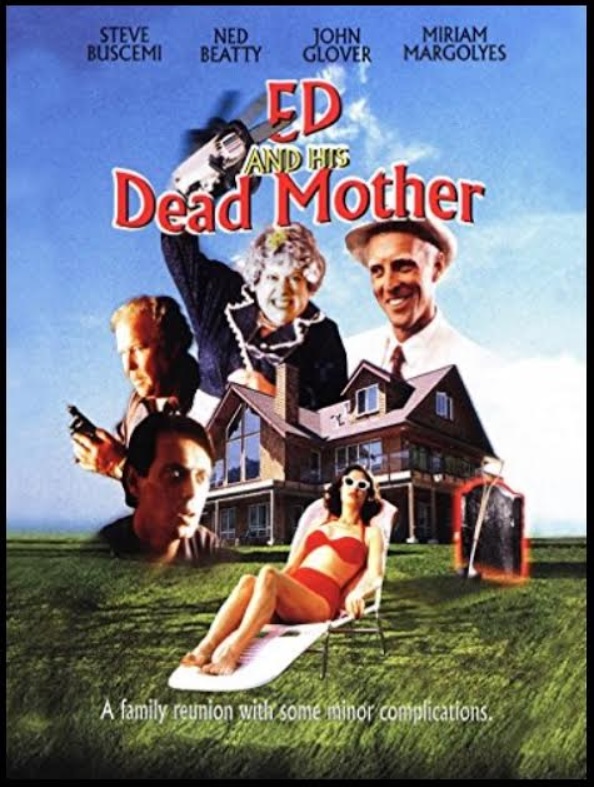
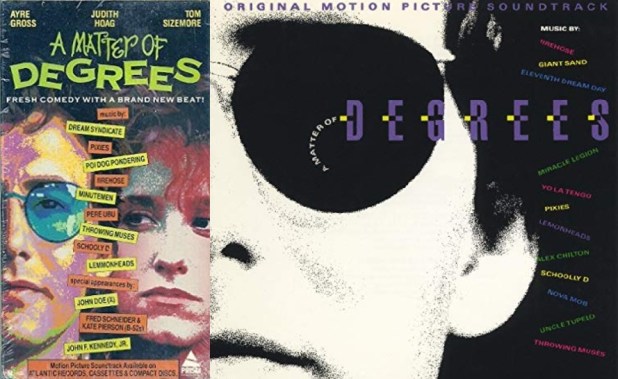


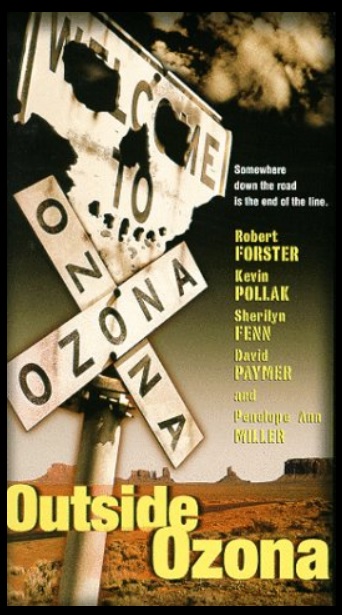

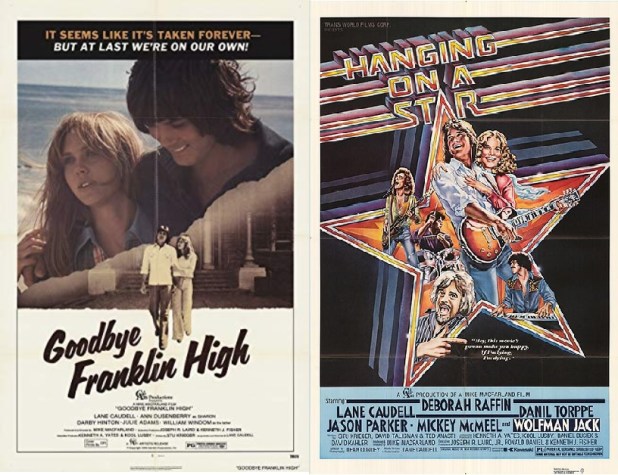
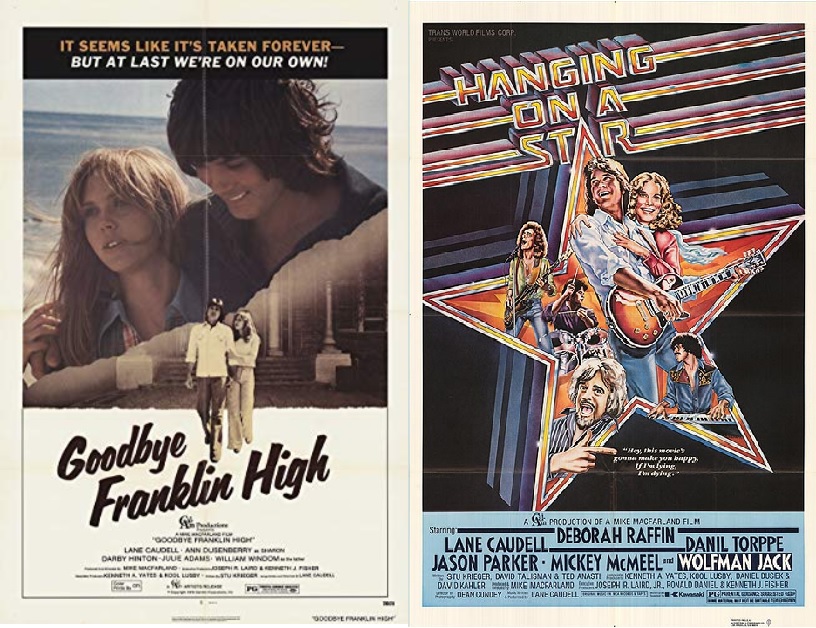

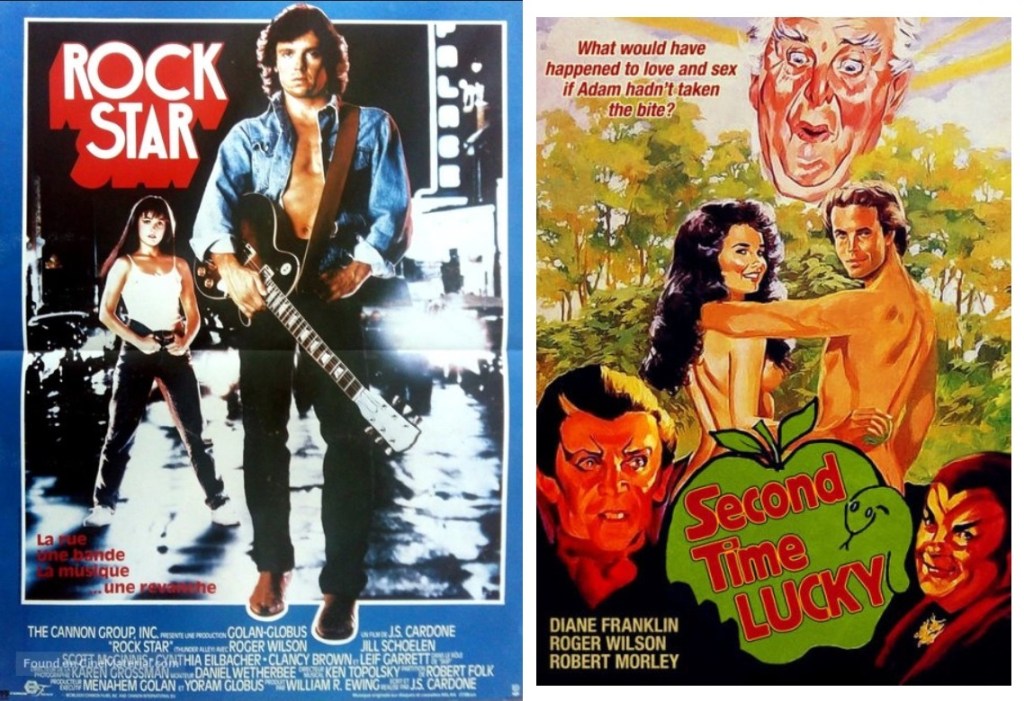
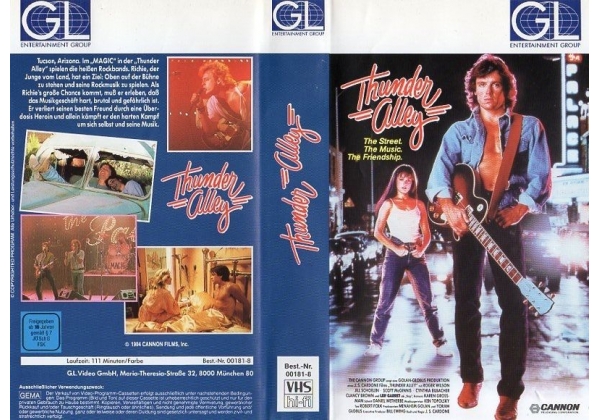


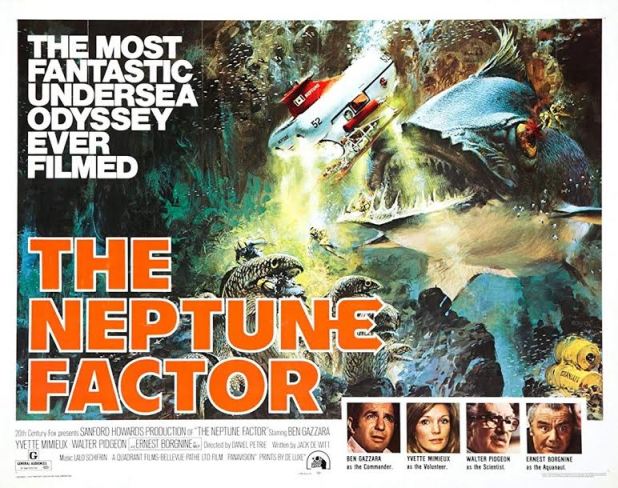


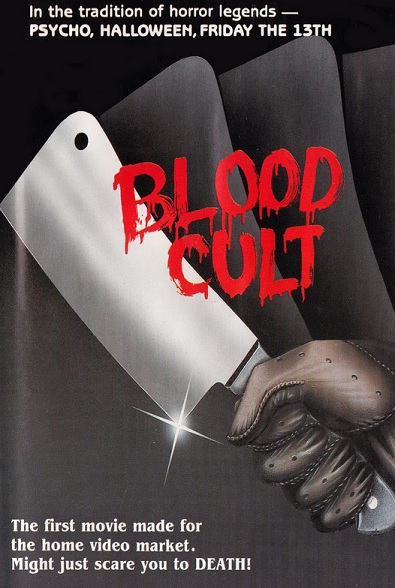



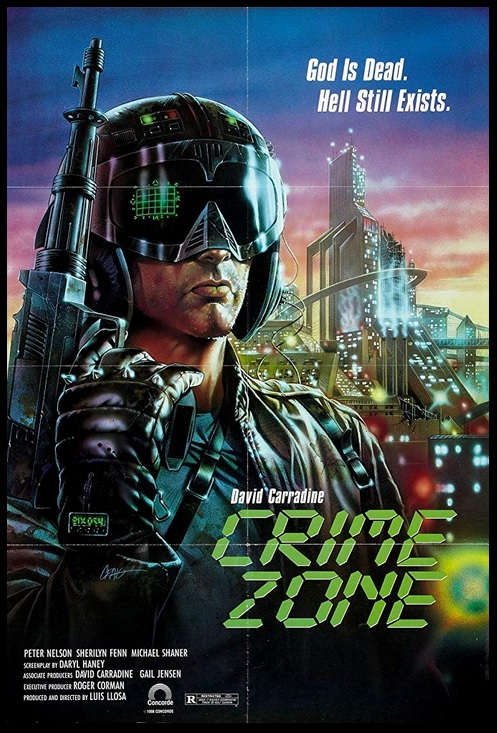


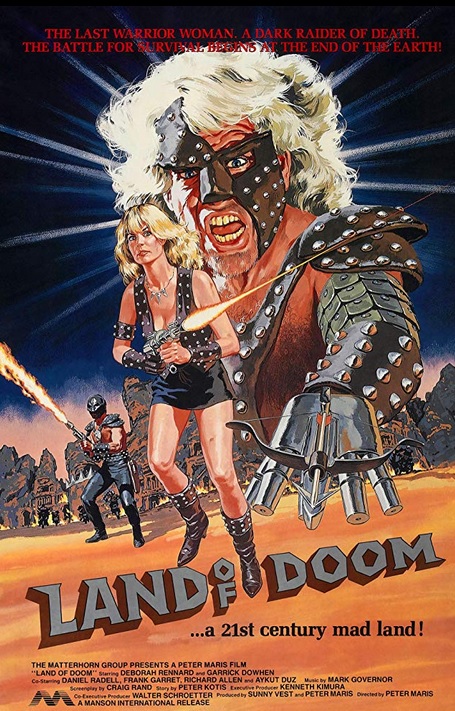
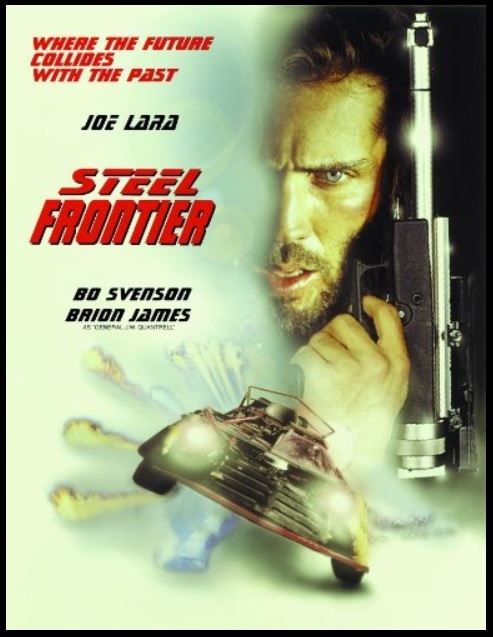

 B&S About Movies
You must be logged in to post a comment.