Day 34 The Gold Watch: One set in a retirement home or elderly community (or elderly Satanic coven)
You’d think I would have learned by now to research a film on B&S Movies before I write a review. Hey, it’s an L.Q Jones project and you can never, ever get enough of the very cool L.Q Jones (1975’s White Line Fever). My only quibble with L.Q: Why didn’t you write and direct more films, bro? The Brotherhood of Satan and 1975’s A Boy and his Dog (see Sam’s 2017 “Fucked Up Futures” review) are finer than any other demon cult-horror or post-apocalyptic film out there.
Before we came to see L.Q on a weekly, weekend basis courtesy of the perpetual TNT cable replays of Martin Scorsese’s Casino (he’s the western-styled Vegas Commissioner Pat Webb; his dweeb nephew was played by Drive-In guru Joe Bob Briggs) and as Sam Peckinpah’s go-to actor (Major Dundee, The Wild Bunch, Pat Garrett & Billy the Kid), the man that Justin Humphreys chronicles in his book, Names You Never Remember, With Faces You Never Forget (2006), L.Q Jones augmented his prosperous television and film acting career — which began in 1955 — with writing and directing assignments.
During the course of his TV acting endeavors, Jones befriended TV western writer Claude Hall to direct (under the Justus McQueen nom de plume) Hall’s western-dramatic feature film, The Devil’s Bedroom (1964). (As far as I can tell: L.Q’s directing debut has never aired on cable television or seen a VHS release. And it seems no one else has seen it either: there’s no reviews posted on the IMDb and other web resources only offer a cut ‘n pasted synopsis that traces to the TV Guide (so, maybe it did air on TV at some point in the pre-cable universe).
Seven years later, Jones sat behind the camera again as a producer, and as a screenwriter, on the Albuquerque, New Mexico-shot (doubling as a small California town), The Brotherhood of Satan, directed by another one his old western TV director-friends, Bernard McEveety. (Bernard’s career goes from Clint Eastwood’s Rawhide to The Dukes of Hazzard. He also co-directed the 1958 cult horror, The Return of Dracula.) And, get this: L.Q’s other TV buddy, Alvy Moore, the ditzy Mr. Kimball from the ‘60s TV series, Green Acres, co-produces and stars.
“Okay, but what’s this got to do with the elderly theme for today’s Scarecrow Challenge? You hinted about an old people’s coven?”
The Brotherhood of Satan begins as most horror tales do: a family on vacation stumbles into the wrong town at the wrong time where the aloof local sheriff (L.Q Jones) and his hick deputy (Alvy Moore) are investigating the murders of several people and multiple child kidnappings.
“I knew I should have taken that left turn at Albuquerque (that small California town).”
. . . Ah, old Doc Duncan (Strother Martin), who may be Satan incognito, is the head of an elderly Satanist coven stripping the children’s bodies of their souls so the crusty curmudgeons are “reborn” in the children’s bodies. And long before Chucky and Charles Band made a career in the creepy toys market, these elderly Satanists can “mobilize” toys to do their will. i.e., a knight-on-horseback wielding a tiny sword becomes a murder weapon.
Caveat: This is a film where evil triumphs. So if you’re not into the souls of innocent children becoming eternal, spiritual fang-chum for Satan, then you best rent something else. But if you do: You’re missing out on one of the creepiest, underrated low-budget horror films of the ‘70s, one of the best made to cash-in on the horror boom ignited by George Romero’s Night of the Living Dead (although BoS’s geriatric-cult is more likely influenced by Roman Polanski’s 1968 signpost, Rosemary’s Baby). Pair The Brotherhood of Satan with Necromancy (1972) and Messiah of Evil (1973, review, review) and you have yourself a night of surreal, creepy viewing.
And . . . pop quiz: Can you name the actress who starred as “Jan Brady” (Eve Plumb’s replacement) in the mid-‘70s variety-show sequel to The Brady Bunchand the splatter classic, I Dismember Mama (1974)? It’s Geri Reischi, who stars as K.T in The Brotherhood of Satan, the kidnapped daughter of the bumbling travelers who fall into the lair of Satan’s Geriatric Rehabilitation and Soul Re-Implantation Clinic of Albuquerque. (One of the cult’s victims is Judith McConnell, later of The Thristy Dead, who was making a career out of being a cult victim until she got smart and started taking roles in U.S daytime soaps.)
As with Rob Zombie utilizing dialog from 1966’s The Undertaker and his Pals (reviewed as part of B&S Movies’ upcoming November “Pure Terror Month” tribute to the Mill Creek 50-film box set namesake), the twenty-something grungers of the Gen-X world came to rent-out The Brotherhood of Satan as result of My Life with the Thrill Kill Cult sampling lines from the film—“Blood, Blood” and “Drown our useless age in blood”—for “Rivers of Blood, Years of Darkness” from their second album, 1990’s Confessions of a Knife.
Oh, and while we are on the subject of movie lines sampled in songs—and I have Strother Martin (1973 snake-horror Sssssss) on the brain—his classic line from 1967’s Cool Hand Luke was used by Guns N’ Roses. You can watch the song-film comparison on the Who Sampled database. (Mr. Zombie? It’s time to sample Strother from his two horror offerings in your own songs.)
L.Q Jones eventually adapted The Brotherhood of Satan into a 1980 paperback, while the VHS found its way into the home video market in 1986 through RCA/Columbia, and on a 2002 Columbia TriStar DVD. If you’d rather a Blu-ray: Mill Creek Entertainment issued a 2013 double-pack with Mr. Sardonicus. You can stream or download The Brotherhood of Satan from Amazon and Vudu. Sorry, there’s no free online VHS rips.
Clint Eastwood, Green Acres, The Brady Bunch, My Life with the Thrill Kill Cult, Guns N’ Roses, Martin Scorsese, and Bugs Bunny? Referenced within the frames of one film?
It can only happen on the Drive-In and video fringe. And it’s only on B&S Movies.
We bow to you, Mr. L.Q Jones. We bow. So much so that, in addition to myself, Sam reviewed it, and Horror and Sons proprietor Dustin’s Fallon took a January 22 take on Brotherhood of Satan as part of B&S About Movies’ “Satan Week” (well, three weeks!). Yes. Three reviews for one flick. That’s how good it is!
Doh! Now it’s four with our review of the new Arrow version review. Yes. It is that good. Watch it.
About the Author: You can read the music and film reviews of R.D Francis on Medium and learn more about his work on Facebook. He also writes for B&S About Movies.
Day 31 The Gold
Watch: One set in a retirement home or elderly community
For next year’s 2020 Scarecrow Psychotronic Challenge, one
of the days should be “H.B.O Exposed: Movies you first saw in the ‘80s on
H.B.O.”
Where would I begin: A Little Romance, Breaking Glass, The Great Santini, Hot Stuff, One Trick Pony, Over the Edge, Zoo Radio. . . . I could go and on with those days of cable television’s infancy as my flesh became one with the shag carpet in front of the TV watching movies on H.B.O and The USA Network. Another one of those never-heard-of-it-and-saw-it-first-on-H.B.O movies was the “geriatric” dark-comedy Homebodies, a film that effectively brews horror with black humor to convey a depressing story regarding the harsh treatment and ignorance the dismissive youthful express to the old. I can’t think of another film that is so cold, yet so warm, in its recognition of the real, heart wrenching problems associated with aging. It’s a case of coming for the horror and leaving with a newfound respect for the elderly.
Homebodies is the tale of quiet, lonely pensioners who have no one to rely on but each other. When they discover their apartment building has been condemned to make way for a new apartment complex, they spring into action to save their “Home, Sweet Home.” Then we’re treated to deliciously devilish, cleverly executed murders as these underestimated, geriatric Jasons hide their grim exploits knocking off real estate agents and developers, social workers, and construction workers for the common good of preserving their dignity of what little time they have left.
I have a deep, nostalgic connection to this movie, as it
reminds me of my late father. We watched Homebodies
as a family on a Friday evening on H.B.O. The scene when construction foreman Kenneth
Tobey (1951’s The Thing from Another
World) is disposed of in a concrete form and encased in cement became a
family “in joke” for many years. When the form is filled and the deed is done,
the “Homebodies” discover part of Tobey’s foot sticks out of a cutaway in the
form. “Well, there’s only one thing left do to,” says Ian Wolfe’s
matter-of-factly character . . . and WACK!
goes the axe and off goes the peeking appendage. And with that . . . any time
something went off-the-rails in the household, my dad would say with a swipe of
hand, “Well, there’s only one thing left to do, WACK!” So, Ian, if you’re up there listening: I love you, man. You
did one hell of a job in your only leading man role. Your delivery of that line
of dialog created a lifetime memory. Oh, and Mr. Tobey? No offense. I’m sorry
you had to lose a foot over it. I watch The
Thing with my dad too, and your movie scared the crap out of me.
While Embassy Pictures issued the poorly distributed and
promoted theatrical in 1974, it found an additional theatrical life in Sweden and
a few other European countries in 1978. And while it found its way into the
overseas home video markets through Embassy Home Entertainment in the early
‘80s in Australia, Europe, and East Asia, the film never appeared in the U.S until
a 1994 VHS issued by Sony Pictures Entertainment. Thus, for U.S audiences,
their first exposure, and only exposure, to Homebodies
was on Home Box Office.
According to a 1974 report in the industry trade Variety, the shot-on-location in
Cincinnati, Ohio-film’s cast was composed of veteran actors and actresses who
appeared in a collective “nine hundred films,” but were receiving their first
top-billing for the first time in their careers.
B&S eyes recognize Ian Wolfe right way from his role in THX 1138 (1971), while we remember Peter
Brocco in One Flew over the Cuckoo’s Nest
(1975). As for William Hansen and Ruth McDivitt: Just wow. Pick a U.S TV Series
from the ‘60s and ‘70s. Paula Trueman, who started her career in the ‘30s (and is
seemingly always mistaken for the great Ruth Gordon), was Grandma Smith
alongside Clint Eastwood in The Outlaw
Josey Wales (1976) and was Mrs. Schumacher alongside Patrick Swayze in Dirty Dancing (1987).
Director Larry Yust made his debut with one of the lesser-known films in the Blaxploitation canons, Trick Baby (1972). After the theatrical failure of Homebodies (it deserved to be a box office hit, it’s so well-made and acted), he reverted into TV work. He eventually returned to film with the rich-man-leaves-his-son-an-interitance-if-he-marries-within-24-hours plot in Say Yes (1986) starring Jonathan Winters. It was Yust’s final film.
Unfortunately, there are no free or PPV online VHS rips available. And caveat emptor those grey market DVD-Rs polluting the marketplace. Buy them if you must, but know your regions before you finalize the cart. Courtesy of this review, hopefully you know what you are in for with this movie; however, let me caveat emptor you once more: Regarding the artwork tomfoolery of those bogus DVD-Rs (one of two of variations) that illustrates a modern, high rise skyscraper surrounded by three, very large and ethereal, elderly heads swathing the building. While you do get a definite Michael Winner’s elderly-Exorcist inversion with his The Sentinel (1977), there is nary a vapor of wraith of the Poltergeist III (1988) supernatural variety in Homebodies. So, if you want to add this to your home movie collection, you are best to wait for the fine folks at Kino Lorber to finalize their upcoming 2020 Blu-ray.
About the Author: You can read the music and film reviews of R.D Francis on Medium and learn more about his work on Facebook.
When the wee pups of the video fringe first watched Spine during its initial release 33 years ago, it was, as was the case with most of the Big Box VHS/SOV horror flicks of the ‘80s, acquired via mail order from an ad in the back of a monster or underground film magazine. Just one look at that very heavy metal, bloody-carved knife font: you had to have it. Spine was supposedly so “nasty” that video stores wouldn’t carry it in their horror section. The fact that these stores were renting out copies of the infamous SOV blockbuster-nasty, Blood Cult (1985), and not Spine — well, telling someone they can’t have it only makes them want it more.
The “Big Box” we love.
On the rare occasion when a store did carry Spine, it was cataloged in a three-ring binder on the counter that you were not even allowed to browse through, with the VHS tucked away behind the green curtain in the “21 and over only” porn section. When the more adventurous (well, clueless) store operators did carry Spine on the main floor in the horror section — alongside the oeuvres of Argento, Bava, Carpenter, Craven, Fulci, and Lenzi — the word-of-mouth marketing kicked in and Spine became a top-rental.
Yeah, those marketing gurus at Xeon, Ltd. knew how to sell a film on the video fringe.
We’ve read the online reviews advising us that Spine is woefully inept and downright boring in parts, with no gratuitous nudity and no on-screen kills. Every time something good is about to happen, the scene cuts away or fades to black (and has way too many clunky fade-edits). We’ve seen more graphic sex and eroticism in Martin Scorcese’s The Wolf of Wall Street and more gratuitous nudity and violence in ’70s Italian and Spanish Gialli. When the actors aren’t overacting, they’re underacting. When actors aren’t staring into the camera, they’re visibly reading their lines from papers on a desk. In an Ed Wood-Tommy Wiseau casting snafu: a bearded actor cast as one of the detectives — who quit in mid-production — is replaced, without explanation, by one of the film’s crewmembers — because he had a similar beard/build, as if no one would notice.
Yes, if Tommy Wiseau wrote a slasher flick, it would be Spine: Do you remember the scene in The Room when we learned Lisa’s (superfluous) mother was “dying from breast cancer” — then it was never mentioned again? Spine has a lot of those “is plot twist” moments. Oh, and most importantly: there are no spine removals.
“Uh, so why would anyone want to see a film that’s that awful?” you ask.
Well, for those wee horror and heavy-metal lovin’ pups of the under-21 variety surfing the ‘80s video fringes, Spine, unlike the films it attempted to mimic, provided those teen renters with their first exposure to . . . a porn movie — and they were masturbating to the film’s extended bondage scenes. Now that sounds crass, but it’s the truth. While masquerading as a slasher flick, Spine is really an adult erotic film — and chickens are choked in the process.
Today, those extended bondage scenes seem mild in a post-James Wan and Eli Roth torture-porn world, but in 1986, for those hormone-infused teen minds that never experienced a porn film: Spine was a sensory overload. Sure, those teens experienced light “damsel in distress” moments on the police procedural TV dramas of their youth — everything from Dragnet to Charlie’s Angels — but nothing like Spine’s “X-Rated” scenes.
As I write this review three decades after its release, we horror geeks are still coveting, talking about, and purchasing copies of Spine. Collectors are shelling out $200 to $400 for the original VHS — and willing to plop down $150 just for the box. The official 2015 DVD reissue by Massacre Video sits on the shelves of your local Best Buy, Barnes and Noble, and Walmart. It’s even available on Amazon and eBay with your PayPal account.
Oh, how the times have changed.
The VHS slip case we remember.
Not bad for a week’s worth of work in the summer of 1984 in Los Angeles — shot on the fly without permits via broadcast-news ENG cameras and 3/4-inch U-Matic videotape using Ikegami cameras on a $20,000 budget*. It’s that S-VHS and U-Matic recording format that lends to the fuzzy, color hazing of the film that leaves it with an almost documentary-like pale. The film came together with financing from porn purveyors 4-Play Video, Inc., and producers Xeon, Ltd. created the SS “Sterling Silver” Video imprint for the sole purpose of distributing Spine without the nasty porn aftertaste. Released with a 70-minute running time, Spine was marketed as a 90-minute feature film, so as to get it out of the back room and into the horror section shelves of the main floor. Plans for Xeon and SS to produce and distribute another horror-porn film never materialized. (*One of the first motion pictures shot electronically-on-videotape, using Norelco PCP-70 portable plumbicon NTSC cameras and portable Ampex VR-3000 2″ VTRs, was the 1973 Glenn Ford-starring western Santee produced by Crown International Pictures; unlike its ’80s SOV offspring: it was transferred to film stock for theatrical release.)
Spine required a set of reshoots when co-director/producer Justin Simonds realized the final edit clocked in at 45 minutes. The film needed more material: so he wrote and shot an expanded detective storyline that was interposed into the existing slasher footage shot by John Howard with actor R. Eric Huxley. Most of the film was shot at a commercial-office complex (doubling as a “medical center”) owned by the same businessman who loaned out his spacious house where the film comes to its harrowing conclusion. The “police station” is actually a computer company where Simonds worked his day job.
When you factor in its production cost-to-box office ratios, Spine, more than likely, has a profit margin percentage analogous to John Carpenter’s Halloween and George Romero’s Night of the Living Dead. In an adult film industry perspective: the ‘70s “Golden Age of Porn” blockbuster-classics Behind the Green Door, Deep Throat, and The Devil in Miss Jones. Spine is, simply put, The Room of ‘80s SOV horror (we go deeper in the genre with our joint review of The Last Victim/Forced Entry). No one is going to be talking about the highbrow, 2019 Oscar winners Green Book and Roma thirty years from now and clamoring for extras-packed DVD reissues on either.
While it was shot-on and edited-on 3/4-inch video like its fellow, lo-res audio-buzzing, Big Box/SOV horror brethren Boarding House (1982), Sledgehammer (1983), Truth or Dare (1986), 555 (1988), Things (1989), and Gorgasm (1990) — Spine is a semi-pro production. It’s obvious that co-directors/writers/producers John Howard and Justin Simonds knew what they’re were doing and, in spite of the budget and time constraints, did their best to emulate John Carpenter’s Halloween (1978) and Brian De Palma’s Dressed to Kill (1980). If the duo had, say, a month-long shooting schedule and a $100,000 budget that allowed them to hire a skilled, student screenwriter from UCLA looking for a break, along with studied, non-porn actors to flesh out their concept of grafting Giallo-inspired plotting into a porn production, it could have, at the very least, elevated Spine to the commercialized sleaziness of The Toolbox Murders (1978) or Pete Walker’s even sleazier The Confessional (1976) and Charles Kaufman’s sick-fest, Mother’s Day (1980). A nudity-loving Paul Naschy-directed version of Spine would have become a Spanish Giallo classic. Why 16mm home-grown filmmaker Andy Milligan failed to make the adult film-to-slasher-hybrid transition — considering his own films, Seeds (1968), which, once after-the-fact sex scenes were edited-in, became the “adult film” Seeds of Sin, and Fleshpot on 42nd Street (1972) starred porn actors Laura Cannon and Harry Reems (both from the aforementioned-linked Forced Entry) and played to the adult grindhouse crowd, is anyone’s guess.
John Howard and Justin Simonds each have long resumes in the adult film industry, producing a successful series of 30 to 70-minute “specialty videos” (i.e. bondage films) for the industry-respected California Star Productions (aka CalStar). As is the case with adult films, their productions didn’t waste time with plot contrivances and concentrated on women being tied up — the more ropes and knots, the better. While their films showed lots of skin, sometimes with the occasional, mild sexual situations, their main objective was to expand upon those very same “damsel in distress” bondage scenes seen on police procedural TV dramas — without any yammering cops or whiny villains getting in the way of the knots and ropes.
According to reviews published at the time of its 1986 release, critics logically — because of the killer’s similar obsession with nurses — believed Spine was inspired by Richard Speck’s July 1966 Chicago murders of eight student nurses. The irony of that Richard Speck analogy is that Speck’s murder spree served as the inspiration behind Charles Bronson’s entry in the ‘80s stalker-slasher blood pool, 10 to Midnight (1983) — which isn’t far off the mark on what Spine failed to accomplish with its “detective vs. serial killer” plot. (Cobra and D-Tox are Sly Stallone’s two solid examples of the genre.)
Go retro!
Courtesy of a Massacre Video interview with Justin Simonds, it turns out that it was Brian De Palma’s Dario Argento homage, Dressed to Kill (1980) — and not Richard Speck’s exploits — that led to John Howard’s idea for Spine. Unfortunately, that slasher-porn concept was compromised at the last minute by the film’s two lead actresses urging the directors to cut-out the nudity and create a more commercially-accessible slasher film. It’s a decision Simonds now regrets: the gratuitous nudity (and sex) would have served as an effective counterbalance against the film’s technical and creative shortcomings.
While the script is an arduous journey through an exposition-burdened hell that grossly violates the “show, don’t tell” edict of screenwriting, along with “plot twists” to nowhere that don’t even come close to the beloved red-herring modus operandi typical of a Giallo, still, there’s actually a very Giallo-sleazy tale lost amid the film’s low-res hums.
Eric Huxley’s creepy and seriously screwed-up mama’s boy — a Norman Bates-styled may-have-had-a-sexual-relationship-with-mama fey who laments on how much he enjoyed “rubbing momma’s back and feet” — successfully carries the film as the hulking, perpetually aviator-shaded, cowboy boots and pink western shirt-clad psycho, Lawrence Aston. (For inside Hux’s chest beats a Tommy Wiseau-committed-to-the-role heart.)
As a successful entrepreneur who runs his family’s business (expositional cop babble), Larry leads a double life terrorizing the nurses of Los Angeles. His modus operandi: First, he binds them ass-up over the backs of chairs and rapes them (camera-angled out of view and not as graphically portrayed as you’d expect; again, you’ve seen worse in the critically-acclaimed, mainstream-porn that is The Wolf of Wall Street). Then he hogties them and, as they struggle, the rope from their feet to their neck tightens and strangles them — in a form of “self punishment” for “hurting mama” (on-camera). Then, after administering a flurry of stabs wounds (camera-angled out of view/cuts away), Larry beheads them, carves out their spines, and with their blood, scrawls “Linda” on the wall (all off-camera exposition via cop talk). And, we’re just sleazy-guessing: Larry-boy goes home, puts on his dear, dead momma’s dresses and masturbates. And probably plays with decapitated Donald Duck heads, like in a Fulci movie. And, like in an Argento movie, obsesses over crystal bird feathers, nine-tailed cats, and grey velvet-fluttering flies.
So, when nurse Carrie Lonigan (Janus Blythe), whose friend becomes Aston’s sixth victim, interrupts the killing of nurse number seven (another one of Carrie’sfriends; it seems all of the victims work at the same medical office?), Carrie becomes the next “Linda” to be relieved of her spinal cord. (And why did Larry pick Carrie’s two friends and what’s Carrie’s connection to the mayhem? Why did Larry pick that medical office? Was his mama treated there? Was Linda employed there? It’s never explained.) That sets up the film’s extended bondage scene third act (that everyone rented for) where Larry-boy ties up and tortures Carrie, along with her recently Kansas City-transplanted friend, Leah Petralla (Lise Romanoff).
Although the execution is clumsy, the Howard-Simonds collective does a commendable job in taking the time to develop Carrie and Leah as real people that viewers can care about: Leah “got into trouble” in Kansas City and had to runaway to Los Angeles; Carrie previously visited Kansas City and met Leah through a mutual acquaintance; Carrie owns a van because she loves swap meets and camping; she house sits a friend’s mansion while they’re vacationing in Europe. Even the bumbling cops are developed as ordinary average guys with everyday problems: dealing with computer issues, job pressures and sports betting pools, bitching about crappy coffee and putting the moves on the hot police dispatcher, and so on. Again, a valiant effort was made to develop the characters and story beyond porn norms.
“Okay, so what’s the deal with Linda and her spine?”
It turns out that poor, lonely Larry developed a crush on his sick momma’s healthcare nurse — Linda. When he made a clumsy, romantic overture (in his mind; he really tried to rape her) she gouged-out his eye with a pair of scissors (we see it for a second; no great shocks). Then, while he’s chilling out in the nuthouse, momma took a tumble down the stairs in her wheelchair — and broke her spine in three places. Now little Larry is convinced that Linda — in an act of revenge to take away his momma from him, forever — “pushed momma down the stairs.” (Again, all of these plot-twisty events are off-camera exposition. And we never meet the “real” Linda, either. And why not stab “Linda” symbolically, three times, say in both eyes and the heart? Hey, don’t over think the plot, my friend!)
Of course, no Italian Giallo-homage is complete without some fucked-up dream within a dream plot twist — complete with Leah discovering she has “psychic abilities” linked to the killer, as all Gialli damsels do. So, Carrie and Leah still have their spines and . . . no, wait! Larry is hiding in the shadows of the garage and Carrie’s going to take out the trash and close the mysteriously opened garage door . . . again. “Carrie, don’t go in the garage, he’s in there!” screams a bug-eyed Leah.
So goes the tale of “The Linda Murders” plaguing Los Angeles during those first two, carefree weeks of Larry-boy’s release from the nuthouse, when he killed nine nurses. Or was it seven nurses? No, five? Argh! Leah’s confounded deus ex machina psychic-dreaming hysteria screwed up the kill count.
While Janus Blythe has done better work, she certainly deserved better than having to take a role in an SOV horror flick — financed by a porn studio, no less — to pay the rent. (Several years ago, a fellow con-freak told me Janus was “in the running” for the Janet-role on ABC-TV’s Three’s Company and, she “lost out” on the part of Lynn Starling in Rocktober Blood? I’ve been unable to confirm those “facts.”) In addition, Lise Romanoff, in her only acting role, does a pretty decent job as well. It would have been nice to see her develop as an actress.
The same can’t be said for the rest of the cast, especially the perpetually changing baseball cap-clad (is it a Tom Selleck-Magnum in-joke?) lead detective on the case, Leo Meadows (Antoine Herzog, the acting alias of director John Howard who, in a pretty decent bit of comedic writing, is constantly mistaken as “Leo Fields” by Blythe’s character). Fairing worse, god bless him, is Simonds’s non-acting father, James, as the precinct’s commanding officer. Considering their castings were the result of the two “professional” actors cast in the rolls dropping out at the last minute, you’re willing to cut them both some slack. Seriously, how many dads do you know — with no acting experience — who would bail out his son’s film by taking a role? And Howard, he was Wiseau-committed: come hell or high water, Spine was going to get made. And, for better or worse, he got his film made. And that’s awesome.
“So, where’s the cast and crew of Spine now?”
Janus Blythe is always etched in our ‘70s drive-In and ‘80s VHS hearts, courtesy of her breakout role as the tough-as-nails Ruby in Wes Craven’s The Hills Have Eyes, along with her turns in Stu Segall’s exploiters C.B Hustlers and Drive-In Massacre, Tobe Hooper’s Eaten Alive, Bob Kelljan’s Black Oak Conspiracy, William Sach’s The Incredible Melting Man, and The Hills Have Eyes Part 2 (just released by Arrow Video and newly reviewed on B&S Movies!). Before retiring from the business, Janus kicked some serious, gun-slinging ass alongside Gil “Buck Rogers” Gerard, Charles Napier, and Dan Haggerty in her final film: the not-so-awful 1991 direct-to-video Rambo knock-off, Soldier’s Fortune (trailer). Yeah, we dig you, Janus!
Also appearing in a small role as one of Spine’s precinct’s detectives (acting under the Ray Hicks nom de plume) is Roger Watkins. In 1973, at 24 years old, with $3,000 bucks in his pocket and a 16-millimeter camera, he produced, wrote, directed, and starred in the well-regarded grindhouse classic — now a highly-coveted VHS — Last House on a Dead End Street (it has an extensiveWikipage). Unable to obtain a foothold in mainstream films, Watkins forged a successful career in the adult film industry — he produced several films for CalStar directed by John Howard — up until his death in March 2007. (Our “spines” are tingling in anticipation as Joe Rubin and the Vinegar Syndrome crew currently works on Last House’s DVD restoration.)
The most successful person to rise from the ranks of the SOV horror ‘80s is Lise Romanoff. After becoming a successful special effects artist (Night of the Creeps is one of her many credits; it’s reviewed, again, on B&S Movies! Yes, we love it that much!), she became a mainstream producer and distributor, eventually incorporating and becoming the CEO of Vision Films. In addition to serving on the board of the IFTA (Independent Film and Television Alliance), she’s a noted industry authority on film copyright and trade laws.
Don Chilcott, the musician responsible for Spine’s scuzzy, slasher-appropriate synth-soundtrack, also scored the SOV horror romp Bits and Pieces (1985). Don never stopped rocking: he became a successful studio musician and a respected guitarist and lead vocalist for several California-based blues bands. An age-restricted VHS rip of Bits and Pieces is available on You Tube and you can learn more about the film on Horror News.
John Howard (Letterboxd) — with R. Eric Huxley as his go-to leading man — stuck with the vision he set forth in Spine, injecting extended bondage scenes into erotic adult films featuring fleshed-out characters and extended out-of-the-norm-for-porn plots. His films starred our beloved exploitation scream queens from the USA Network cable-TV ‘80s: Linnea Quigley (aka Jessie Dalton) and Michelle Bauer in Avenged (with Crystal Breeze of Rollerblade, newly reviewed on B&S Movies!), Scorpion (female agent/spy action; no, not the Tony Tulleners one), Stalked (white slavery adventures), and Flash! (a plucky investigative reporter-photographer runs afoul of drug dealers). So, if you want to see more of John Howard and R. Eric Huxley’s joint-oeuvre, it may be worth it to seek out those films.
Spinewas reissued as a DVD-R rip on the Substance grey-market imprint (2005) and Vultra Video issued a VHS repack in a retro-clamshell case (2012). Alongside Justin Simonds, R. Eric Huxley contributes to Massacre’s audio commentary track and gives an on-screen interview that gets into the nuts and bolts regarding the hardships of low-budget filmmaking — conducted by Massacre Video’s Louis C. Justin and Vinegar Syndrome’s Joe Rubin. In addition to a generous stills gallery, Massacre’s official 2015 DVD reissue (Region: 0 NTSC) comes with high-quality, reversible cover-art that replicates the original’s big box artwork. You can purchase Spine direct from Massacre Video or through Cinema Wasteland and Amazon. There’s an age-restricted VHS rip of Spine to enjoy on You Tube. Will there ever be aremake proper of Spine? As B&S Movies recently points out in “Exploring: Slasher Remakes,” the scuz-classics The Toolbox Murders and Mother’s Day were remade — so why not Spine (with Sly Stallone hunting down a Linda-hating “Spine Killer,” perhaps?).
Nope. Not John Howard’s fault.
Contrary to the web-chatter/caveat emptor John Howard sidebar: The Scorpion (1986) reissued on the Explosive Cinema 12-film pack by Mill Creek (Amazon, Walmart) — starring karate champ Tony Tulleners, the one guy the “invincible” Chuck Norris could never beat — is not the same film as the “specialty video” Scorpion (1986) shot by John and starring Linnea Quigley, noted above. You can watch the VHS rip of Tulleners’s Scorpion and listen to an extensive review by All Natural Reviews on You Tube.
Nope. Again. Not John Howard’s fault.
The John Howard sidebar, Part Deux: The 1985 Hong Kong actioner The Serpent Warriors (Wikipedia) — starring Clint Walker (Killdozer, TV Movie alert!), Eartha Kitt (as a snake bitch!), Christopher Mitchum (Aftershock, SFX Retaliator, double yes!), and Anne Lockhart (Battlestar Galactica: TOS) — is not the same John Howard who directed our beloved Spine. (Don’t forget: Asian-Pacific Rim-produced oddities from the ‘80s VHS fringe are infamous for their untraceable, americanized director-pseudonyms.) While its rare VHS goes for about $40 bucks, beware of those bogus DVD-R grey-market rips (and know your regions before you buy, if you must). Sadly, there’s no video-hosted VHS rip of The Serpent Warriors, but you can watch the trailer on Daily Motion. If you need to know more, you can read an extensive “Snake Week” review at Daily Grind House. Here’s to hoping the fine folks at Vinegar Syndrome or Arrow Video do a reissue of this slithery, beautiful disaster that, somehow, “roped” Catwoman and BSG’s Sheba into starring.
“Dude, you know way too much about John Howard. What kind of a freak are you?”
I know, right? It’s an illness, my addiction to these forgotten VHS’ers of ’80s yore.
Okay, I need to go get my “freak” on. Now, where is that little rabbit? Where’s the chicken? Have a knotty . . . uh, I mean, naughty Halloween, ya’ll!
About the Author:You can read the music and film reviews of R.D Francis on Medium and learn more about his work on Facebook.He also writes for B&S About Movies.
Prior to the advent of cable television and direct-to-video movies, there were the TV Movies of the ‘70s and ‘80s produced by the “Big Three” television networks: ABC, CBS, and NBC. And we love those TV Movies.
However, in spite of those gallant efforts, there’s that one lost TV Movie we missed, such as these two productions from rock ‘n’ roll television guru Don Kirshner. Lone before ersatz-rockers Black Roses, Sammy Curr, Billy Eye Harper and Headmistress, Holy Moses, Sacrifyx, and Tritonz possessed our VCRs with their rock ‘n’ horror tales, there was the forgotten, horrific chronicles of ex-Jeff Beck Group vocalist Kim Milford and his real-life band, Moon, on our TV sets.
After his success with TV’s The Monkees and The Archies, Don Kirshner began working as the creative consultant and executive producer of ABC-TV’s late-night answer to NBC’s better known The Midnight Special. In Concert began airing with two monthly shows in November and December of 1972. The shows not only doubled the ratings of The Dick Cavett Show that previously held the time slot, it also beat NBC’s The Tonight Show Starring Johnny Carson in some markets. At that point, In Concert became a bi-weekly series beginning in January of 1973.
Ever-evolving and innovating, Kirshner left In Concert to start his own syndicated program, Don Kirshner’s Rock Concert, which premiered on U.S. television on September 27, 1973. The final In Concert episode aired in 1981, as MTV, a nascent music video network—created by Michael Nesmith, one of Kirshner’s Monkees—was on the rise and Kirshner’s vision was rendered obsolete.
However, even though Kirshner surrendered In Concert to make his own way in the late-night rock television world with Rock Concert, he kept his production deal with ABC. Based on his past success for the network, ABC provided Kirshner with an opportunity to produce a pair of music-oriented movies.
Those two films—highly-coveted and impossible-to-find rock flicks starring Kim Milford (of the sci-fi romps Laserblast and Wired to Kill )—are 1975’s Song of the Succubus and, its sequel, Rock-a-Die Baby.
Both films aired as part of ABC’s The Wild World of Mystery, a 90-minute late night mystery and suspense anthology series that ran on the network from 1973 to 1978 and aired in the overnights at 12:30 AM—after the rock program Kirshner started: In Concert. Both films, as did all of ABC’s films, also replayed as part of their Mystery of the Week and Wild World of Entertainment movie series, which aired in the weekday overnights into the late seventies (as shown in the image from a Wednesday, July 6, 1977, television listing for Song of the Succubus airing at 12:30 AM). (NBC’s website currently streams the September 1971 Night Gallery episode, “The Flipside of Satan.” Wow. Watch it. It’s a hoot-and-a-half.)
Courtesy of NBC.com.
Song of the Succubus, the first part of the slasher-horror saga of Moon, was concerned with the ghost of a Victorian-era musician stalking the band, which they accidentally conjured through the rearrangement and recording of an old, discovered song. Its sequel, Rock-a-Die Baby, concerns the psychic premonitions of one of Moon’s fans—as the members of the band begin to die at the hands of an unseen force.
Other than that, there’s not much known about the through-line between the two films or any additional plot details. Former teen fans of the films recall Moon was on the road running away from the evil they conjured or they’re chasing the evil released through a song’s incantation. Others recall it was an “evil version” of the late Seventies U.S. television series Highway to Heaven—with demons instead of angels and the Victorian-era musician was a heavy-metal Jack the Ripper. Others recall it was a rock ‘n’ roll, live action version of the animated Saturday morning series, Scooby-Doo, Where are You?, as a rock band investigates evil.
Learn more about the movies of Don Kirshner with our “Exploring” featurette.
According to the IMDb, the last airing of Song of the Succubus occurred through a 1990 Australian broadcast—and the only known surviving print of the film is held at the U.S Library of Congress; the LOC has no copy of Rock-a-Die Baby. Meanwhile, Rock-a-Die Baby was reissued in the U.K and Europe as a TV movie (possibly theatrical) under the title Night of the Full Moon. Sadly, in the midst of the home video boom of ‘80s, with shelves hungry for product, neither of these rock films was reissued as VHS titles. (But someone taped a post-VCR airing of the films, as noted by the two performance film clips included with this review.)
Brooke Adams (of the horror films Dead Zone, Invasion of the Body Snatchers, and Shock Waves) makes her leading-lady debut as two characters in Song of the Succubus: musician Olive Deems, and Gloria Chambers, the “lost love” embodiment of the Victorian musician-antagonist slasher conjured by Moon. Succubus and Rock-a-Die Baby both star Richard Schaal (Kurt Vonnegut’s Slaughterhouse Five) as the band’s manager, along with Kim Milford (Chief Druid and Warlock) and his band Moon, using their real names as character names: Gaille Heidemann (Bewitching Witch; vocals), Stash Wagner (Mystic Magician; bass), Mike Baird (Demon Drummer), and David Foster (Cadaver of the Keyboard). The unseen member of the group, was Don Kirshner’s go-to producer, Jeff Barry.
While not remembered as such, the membership of Moon, aka Full Moon, is, in fact, a “supergroup,” one of the many that proliferated during the 1970s (either formed by Kim Milford or ad-hoc and piecemealed by Kirsher and Barry). At the time, Kim — fresh from his stage work on the rock musicals (see our review of Jonathan Livingstone Seagull that delves into the genre) Hair and The Rocky Horror Show — was briefly the lead singer of the Jeff Beck Group (those live recording come and go from You Tube). Gaille Heidemann was a studio musician working for film studios who dubbed Patty Duke’s vocals in Valley of the Dolls. Stash Wagner came from the Little Feat precursor, Fraternity of Man, a band noted for the pro-pot song, “Don’t Bogart That Joint,” which appeared on the soundtrack to Easy Rider. Mike Baird was not a member of any notable group at the time, but after the demise of Moon, he joined ’70s popsters Daryl Hall and John Oates for their fourth album, appearing on that band’s first Top 40 and Top Ten hit, “Sarah Smile”. David Foster — who appears with the band in performance but does not act in the film — came from the Canadian band Skylark, which had a Top Ten hit in 1973 with “Wildflower”. Jeff Barry’s extensive, previous resume includes work with the Monkees and the Archies (Milford wrote material for the latter) and dates back to his earliest hits “Do Wah Diddy Diddy” and “Da Doo Ron Ron” under the tutelage of Phil Spector.
Prior to Moon, Milford formed the bands Eclipse (whose music appeared in 1974’s UFO: Target Earth), with members of Polydor and Capitol recording artists Ten Wheel Drive, then 7th Heaven with Trace Harrill, formerly with Terry Reid (know you Cheap Trick history) and the solo band of ex-Byrds’ Gene Clark. Heidemann became a much-sought studio vocalist and voice artist for animated and video game projects; when Mary-Kate and Ashley Olsen transitioned into music, she wrote the material. Stash Wagner sessioned, wrote music and toured with the likes of Blues Image, Chicago, Linda Ronstadt, Frank Zappa, and Warren Zevon. Baird’s session, membership and touring gigs led to work with Rick Springfield, Richard Marx, and Journey, just to name a few. David Foster’s later songwriting and production work led to a shelf filled with 16 Grammys by way of albums for The Tubes, Earth Wind and Fire, and Chicago. Foster and Baird also worked together in the band Airplay, which provided “After the Love is Gone” to Earth, Wind and Fire; fans of ’80s AOR (think Night Ranger) will remember the band for their song, “Stranded“.
So, will these two lost TV movies of the ‘70s ever see a release on DVD or Blu-ray through a specialty retro-imprint, like Arrow Video?
A company by the name of SOFA Entertainment & Historical Films recently acquired the rights to ABC-TV’s Rock Concert from the late-Kirshner’s estate for a box-set release on DVD. Hopefully, SOFA purchased not only Rock Concert, but Kirshner’s entire TV program catalog, which included the non-rock telefilms: The Savage Bees (1976; film), The Night They Took Miss Beautiful (1977; film), Terror Out of the Sky (1978; film), and The Triangle Factory Fire Scandal (1979; film). Each appeared as theatrical features in overseas markets, as well as the U.S VHS home-video market and low-powered UHF television station replays. Kirshner made his first theatrical feature film proper with the Olivia Newton-John-starring Toomorrow (1970).
Why Kirshner never rolled out Song of the Succubus and Rock-a-Die Baby beyond their initial TV showings, as with his other films, is anyone’s guess. A legal, educated guess is that it’s an ancillary rights issue regarding Kim Milford’s song catalog, or possibly a legal snafu with the estate of the late of Kiss, Billy Squire, and Billy Idol manager Bill Aucoin, who also managed Kim’s solo career and as a member of the Jeff Beck Group.
Both films are truly, it seems, lost forever. We did, however, discover You clips of Kim performing in the films HEREand HERE. You can listen to two song from the films, below.
If you would like to know more about the music and acting career of Kim Milford—overflowing with pictures and music regarding his work on stage, screen, television, and record—visit his career retrospective on Medium: “Kim Milford: Rocky Horror, Jeff Beck, Corvettes and Lasers.” More of Kim’s music can be found with this You Tubeplaylist.
Do you need more rock ‘n’ roll horror? Then check out B&S Movies’ tribute “No False Metal Movies.” All ye hail the Prince of Darkness, for he rocketh. Oh, and don’t forget our “Rock ‘n’ Roll Week I” and “Rock ‘n’ Roll Week II” tribute weeks, overflowing with rock flicks.
We’ve since reviewed Kim’s second film score: his band Eclipse provides “Between the Ceiling and the Sky” as the theme song to this 1974 film.
Update, December 2021: Stash Wagner, a member of Moon who starred in the film, uploaded full copies of both films — Song of the Succubus and Rock-a-Die Baby — to his You Tube account.
* Screenplay image courtesy of The Movie Wizard/eBay.
About the Author:You can read the music and film reviews of R.D Francis on Medium and B&S Movies, and learn more about his work on Facebook.
Day 27 Special Presentations: Made for TV movies from the ‘70s, classic era of the bronze screen
The writing is so fast n’ furious at B&S Movies for “Slasher Month” and the “Scarecrow Challenge” that Sam and I had a communication snafu and we both ended up writing reviews for this fantastic TV movie. He reviews it for “Day 28: A Loreless Yarn: One based on a true story.” It’s a slasher. It’s a TV Movie. It’s based on a true story. And it’s a friggin’ Richard Crenna movie . . . all rolled into one!
My three-for-one review of Gene Roddenberry’s post-Star Trek series pilots Genesis II, Planet Earth, and Strange New World (1973 to 1975) would have been perfect for “Scarecrow Challenge Day 27,” but I reviewed them for B&S Movies’ “Post-Apocalypse Month” (see our September “Dustbin” roundups Part 1 and Part 2). If you’re a frequent visitor to B&S Movies, you know we’re always jonesin’ for a fix of the “Big Three” over-the-air U.S television network movies from the good ‘ol days before the VHS and cable television boom. B&S Movies’ love for the now network-eschewed format is obsessive to the point that it took three tribute weeks: “Lost TV Week,” “Week of Made for TV Movies,” and “Sons of Made for TV Movies Week,” to contain it.
I’ve chosen a movie for Day 27 that was on my shortlist for “Day 17 Evil in Broad Daylight” (I reviewed 1988’s In the Line of Duty: The F.B.I Murders with David Soul and Michael Gross as serial-killing bank robbers) that, in my opinion, is one of the finest TV movies ever made. And it stars Richard Crenna. And, as with the entire In the Line of Duties series, this was also made by NBC-TV, the undisputed kings of TV Movies. So, double bonus. Now, let’s get on with the show.
As with ex-Army Rangers Bill Matix and Mike Platt terrorizing the streets of Miami, Florida in 1986, with their eventual murder of two F.B.I agents, Angelo Buono (Dennis Farina of TV’s Law and Order) and Kenneth Bianchi (Billy Zane of The Titanic and The Phantom) were blatant, cruel, and just didn’t give a fuck as they cut a swath through Los Angeles between October 1977 to February 1978 with the murders of 10 women. It wasn’t until a disagreement between the two cousins that led Bianchi to go out on his own, that their spree began to unravel.
While I’ve watched this telefilm every time it pops up on TV, the same can’t be said for the two tried-to-be-grittier direct-to-video attempts trying to improve upon what the Richard Crenna-version did to perfection.
It was the tutelage of C. Thomas Howell (The Outsiders) and Nicholas Turturro (brother of John, the current on-the-air U.S TV series Chicago P.D) starring as Bianchi and Buono that led me to rent The Hillside Strangler (2004). Regardless of its claims of being “a more accurate portrayal,” the stellar quality of Crenna’s 1989 TV movie left me feeling this Howell-fronted version worked as a fiction piece plotted around two (dark) historical figures.
The second attempt was the even lower-budgeted Rampage: The Hillside Strangler Murders (2006). It starred the very competent and always deservingly working character actors Tomas Arana (The Dark Knight Rises) and Clifton Collins (Pacific Rim, HBO’s Westworld) as Buono and Bianchi. I’ve seen the DVDs tossed in the $5.00 bins at Walmart, and it’s never been on cable, as far as I can tell; so I’ve never seen it. However, based on its 4.2/10 IMDb rating, it sounds like Rampage’s use of the ‘ol killer-tells-his-story-in-flashback-to-a-prison-psychologist (female, natch) didn’t work out so well.
The scribe behind the Crenna-version: Steve Gethers, writing in television since the mid-‘50s for The Kraft Theatre and The DuPont (Network) variety shows, along with a Jackie Kennedy TV movie and LaVar Burton’s (Star Trek: TNG) Billy: Portrait of a Street Kid (1977) amid his long list of credits.
Gethers intelligently took the high road from the flinching reality depicted in true crime novelist Darcy’ O Brien’s best-selling non-fiction document of the case, Two of a Kind: The Hillside Stranglers (1985), and decided to go for the psychological and not the shocking. It is Gethers character-subjective approach to the material that allows us to see inside the minds of the killers instead of being objectively-bludgeoned to numbness watching their deeds—and that makes Buono and Bianchi ‘s deeds all that more shocking. And it’s accomplished without any blood or actual murder or rape shown.
Also replacing the bloodshed: In addition to seeing into the minds of the killers, we see the affect the killers not only have on the families of the victims, but the personal affect it has on Crenna’s Sgt. Bob Grogan (and that’s a personal touch you don’t see in the big-studio cop vs. serial killer romps Cobra and D-Tox). And that’s what this 1989 telefilm version has that the 2004 and the 2006 direct-to-videos do not: Showing us the “humanity” of those affected by the “inhumanity” of others is what heightens the fear and dread.
Do you need more Richard Crenna TV movies? In addition to his work as Sgt. Bob Grogan, he portrayed Frank Janek in a series of films: Double Take (1985), Internal Affairs (1988), Murder in Black and White (1990), Murder Times Seven (1990), Terror on Track 9 (1992), The Forget Me Not Murders (1994), and Janek: The Silent Betrayal (1994). You can watch The Case of the Hillside Stranglers, which looks like they’re the post-VHS DVD rips issued by MGM, on You Tube HERE and HERE.
Don’t be duped. It’s a completely different movie.Oh, why, Maria? Why?
About the Author: You can read the music and film reviews of R.D Francis on Medium and learn more about his work on Facebook. He also writes for B&S Movies.
DAY 25 Vanishing Cities: One with gentrification or real estate development as the setting, also known as a Slasher Month two-kills-with-one-swipe-of-the-blade-studded-plunger entry
You’re David Mickey Evans: A budding screenwriter that wants to break into the business with two, deeply personal screenplays—Radio Flyer (1990) and The Sandlot (1993)—that enrapture the innocence of your childhood and lifelong love of baseball.
Yeah, right kiddo. It’s time for a Hollyweird reality check.
You’re trying to “make your break” during the slasher ‘80s. And this is the movie business—the operative word being business—and La-La Land stands at the foot of Mount Lee to make money, kid. And they’re not here to give people the warm fuzzies about their lost childhood.
So you come to the realization you’ll have to write “for the marketplace,” which means you end up as a writer-for-hire on a WarGames (1983) knock-off. . . .
“Kids and computers, kid. Kids and computers. Smart-ass teen hackers and kiddie tech nerds sell tickets,” stogie-belches the studio fat cat as he perches his wing-tipped spats on his ostentatious oak desk. “But give me a My Science Project (1985) or The Manhattan Project (1986), kid; not a shit-storm Prime Risk (1985). And none of that personal childhood crap. You want to relive your baseball dreams, go play a pick-up game in Griffith Park and gander at The Hollywood Sign from afar. And I want action with those smart-ass remarks and no introspective statements about man losing his humanity to technology, either. Now get out of here, kid. I have a ‘nooner’ coming in, I mean, I’m casting a part.”
And the executive cheeses that script with a “design” for the poster of what becomes Terminal Entry (1987): Black-clad terrorist dudes superimposed-running across and attacking an IBM PC, complete with a Tom Cruise Risky Business-inspired smart ass wearing a chef’s hat in the background.
“Give me Risky Business with a computer, kid.”
But Terminal Entry worked out reasonably well on cable and home video, so you’re hired to complete uncredited re-writes on a sci-fi clunker, Class of 1999 (1990; sequel to the superior Class of 1984). Again, the end product wasn’t so great, but it did reasonably from a financial, if not critical, standpoint.
So now the wing-tipped fat cats are willing to take a look at those two “personal” screenplays. And you’ve become the toast of Hollywood as one of the highest paid screenwriters of the ‘90s, with sales of over $1 million for each script.
You gotta start somewhere as a screenwriter.
Yes. The million-dollar scribe behind two of the ‘90s highest paid, and most brilliant, fresh screenplays broke into the business with his screenwriting debut: a slasher script, Multiple Listings. And since were talking David Mickey Evans: I’ll roll the benefit-of-the-doubt dice and gamble his screenplay was once an intelligent statement on class struggle inspired by the literary classics The Grapes of Wrath, Great Expectations, and The Great Gatsby: a statement—with horror overtones—regarding the plight of the homeless and their harsh treatment against the materialistic, narcissistic ignorance of L.A’s high society. (A concept that is not that far off the mark of what 1974’s Homebodies—see my upcoming “Scarecrow Challenge Day 31” review—tried to accomplish, only regarding the plight of the elderly vs. real estate greed.)
And if Open House was lensed by John Carpenter and washed in a stylized Dario Argento giallo color palate or went the Umberto Lenzi trashy-scuzzy route of Nightmare Beach and Hitcher in the Dark (both 1989). And maybe if William Lustig of Maniac (1980) fame got a hold of Multiple Listings as a precursor to his home video slasher-classics Relentless and the Maniac Cop series. Maybe then we’d have a stylized-slasher romp that, like Maniac, left such a strong impression on the rental market, it’d be the subject of a remake, like Maniac (2012), and all of the 21st century Halloween inversions.
But alas: Your screenplay falls into the hands of Indian-American exploitation writer-director Jag Mundra. And it becomes his first American feature film résumé bullet in a long list of exploitive horror and erotic thrillers that he churned out for the U.S direct-to-video market: Hack-o-Lantern (1988; aka Halloween Night; ugh, you can’t fool us), The Jigsaw Murders (1990), and Night Eyes (1990; Andrew Stevens and Tanya Roberts—you see where that ditty is going). And Mundra’s soft-core pseudo-porn roster, tailor made for Showtime late-night cable viewing, goes on and on: Last Call, Legal Tender, Wild Cactus, Tropical Heat, Improper Conduct, Irresistible Impulse, etc.
Now Mundra’s propensity for exploitive, late night soft-core pseudo-porn is important to note: While his films had a profitable “niche” and met a market demand, they are none-the-less, poorly (over) lit, cinematographically-flat productions. Yeah, the quality of Mundra’s oeuvre is analogous the porn movies shot by John Howard; himself an innovator of injecting extended bondage scenes into erotic adult films featuring fleshed-out characters and extended out-of-the-norm-for-porn plots. (See Spine, Howard’s ‘80s SOV slasher; newly reviewed for B&S Movies’ “October 2019 Slasher Month,” coming soon.)
Granted, Open House isn’t exactly an SOV frolic, and it’s not a Howard-lensed erotic potboiler or a porn film—but yikes—it is damn close to it. And David Mickey Evans deserved better. And star Joseph Bottoms (The Black Hole, The Intruder Within)—who fell from winning a 1975 Golden Globe Award for New Star of the Year and working with Meryl Streep in the Emmy Award-winning mini-series, Holocaust (1978)—deserved better. And Carpenter’s then ex-wife, Adrienne Barbeau (Creepshow, The Fog; used to full marketing advantage on Open House), deserved better. (According to interviews, she took the film to “pay the bills,” in this case, her son’s tuition fees; god knows what financial straits Joe was in that made him take this real estate slasher.)
I know. I know. R.D, you’re off-the-rails, again. The truth is: This is a case of where the pre-production history of the off-the rails celluloid madness that is Cobra, Tango & Cash, and D-Tox is more interesting than the actual movie itself.
Another truth: The only reason I rented this real estate stinker is because it was set inside a radio station and, because of my career choice, I’m obsessed with radio station depictions in cinema. And I am a stuck up snob in regards to the inaccurate technical depictions of radio stations in film. And outside of A Matter of Degrees, FM, and Outside Ozona (which aren’t technically perfect themselves), most of those radio flicks are epic fails. (Eric Bogosian’s Talk Radio (1988) and Kevin Costner’s The Upside of Anger (2005) are the exceptions to the rule.)
Thankfully, Sam B’s talk radio psychologist, Dr. David Kelley, unlike most movie jocks, wears a set of headphones when he opens a microphone—and doesn’t pick up an actual phone to take on-air calls (it creates a “feedback” loop that’ll squeal-your-ears-to-bleed). It seems the production benefited from some free technical advice, courtesy of the staff of KRTH 101.1 “K-Earth 101” Los Angeles that rented out a spare studio to the shoot—so Open House has its realistic studio depictions going for it. But that technical accuracy isn’t enough to overlook the film’s porno-rate acting. It’s bad. Like pick-an-SOV ‘80s horror film, bad. Like Blood Cult inept. Like Spine awful.
Uh, plot please, R.D?
So, Los Angeles, instead of being plagued by Lawrence Aston’s (of Spine) nurse-hating spine-ripper behind “The Linda Murders,” we have a faceless, scruffy hulk-of-a-homeless man, dubbed “The Open House Killer,” who likes to chow down at the to-be crime scenes on a can of dog food (he leaves the can as a “calling card”) before he gives the agents a taste of his razor blade-adorned plunger-to-the-face. But he’s not against changing up his M.O with an electrocution, a hanging, an axe decapitation, and a good ‘ol fashioned neck snap by bare hand (each utterly lacking in suspense or shock).
And what’s Ms. Barbeau have to do with all of this? She runs the real estate office supplying the bodies—and the “kill list” via a real estate listing callously dumped into the back alley trash. And Harry the Homeless (Darwyn Swalve, who’s actually very good here; he went toe-to-toe with Paco Querak! as Anatola Blanco in Hands of Steel!) calls his kills into Dr. Dave’s show, “Survival Line,” on KDRX radio because Barbeau is Dr. Dave’s squeeze. (Hey, Snake is the one who called her a “squeeze,” first.)
“I got something to say. I want to make a statement, man,” smacks the dog food-caked lips of Harry the Homeless slasher, he of the razor blade-adorned plunger.
Not in this movie, Harry. Not in this movie. Alas, you’re not a slasher-champion for social injustice, a la Tom Joad, Pip Pirrip, or Nick Carraway. And your statement is that, while you were an intriguing David Mickey Evans-penned antagonist-cum-protagonist on paper, you ended up being just another misunderstood, Grade-Z slasher.
Welcome to the house of tedium that you’re dying to get out of. Close the door on this open house. Watch the full film at your own peril.
About the Author:You can read the music and film reviews of R.D Francis on Medium and learn more about his work on Facebook. He also writes for B&S Movies.
Day 24 Short Attention Span Theatre: Watch some shorts or anthology things
This 24th day of Scarecrow Video of Seattle’s Psychotronic October Scarecrow Challenge of 31 movies in 31 days is tailor made for the binge-watchable sci-fi films at DUST (make your own anthology film!). Their portal features science fiction shorts from emerging filmmakers obsessed with aliens, robots, space exploration, technology, and the human experience in space.
There are so many great films that rival the imagination and budgets of most bloated Hollywood productions to be enjoyed on DUST. But I chose to review two films that eschew dialog. Films that successfully use subtext over dialog is an art form not easily mastered. And these two films are magna cum laude.
Writer/directors Colin West, of Pink Plastic Flamingos, and Marko Slavanic, of Project Skyborn, understand the pitfalls of including more dialogue than is necessary to convey a story. They understand that films conveying a tale with images and not words make for a more lasting impact.
Think about the perpetual jaw-drop you experienced with 2001: A Space Odyssey (1968). Or being mesmerized by Albert Lamorisse’s The Red Balloon (1956) and Jean-Jacques Annaud’s Quest for Fire (1981) and The Bear (1988). Or the captivation experienced with Kim Ki-duk’s 3 Iron (2004) and Moebius (2013).
Such are these two films.
Pink Plastic Flamingos
In my September 2019 “Post Apoc Month” reviews for the European dystopian dramas Kamikaze ’89 (1982) and Docteur M (1990), we discussed the detriment of technological controls against humanity.
That human-technological dependence on our phones and its related apps—that we use to complete the mundane tasks of ordering food, deciding what food we need to restock the fridge, or cleaning our floors (an iRobot Roomba makes an appearance in the film)—is addressed with Colin West’s sixth film. West, however, goes deeper with his technological statement: it’s also a satire on the drudgery of the domesticated housewife and the human-emotional disconnect.
Pink Plastic Flamingos is comedic tale about a man, his family . . . and his robot. George (Vince Major) hates daily chores. He hates mowing the lawn. Even making sure his daughter, Emma (Dylan Beam), is safe and secure in the car gets on his nerves. He hates any social obligation, even to his own wife, Marilyn (Sara Gorsky).
And how dare she leave a note for him to do the dishes. Then, with the foot bump of a Roomba (that speaks the film’s only “dialog”: a foretelling, “Caution”), George has an “aha” moment to rid him of these bothersome tasks.
So with a lawn mower, a computer, and car parts from his garage out steps a Futurama-by-way-of-Tony-Stark solution to all of his problems. Now he can relax in a lawn chair with a Styro-cooler and lounge at the pool.
And all is well until the robot takes over his life. And he loses is wife and daughter to the more attentive robot.
Technology: Be careful what you wish for.
Project Skyborn
The purpose of film is to suspend your disbelief and engage your mind. Such a film is the sci-fi actioner, Project Skyborn. As with Anton Doiron’s inventive, sci-fi-on-a-budget space pleasure cruise that is Space Trucker Bruce, Project Skyborn is a case of giving a filmmaker an easily eBay-acquired flight suit, a few feet of 25mm flexible electrical conduit, some hose-band clamps, and two Thermos flasks and you get a film that rivals any Matt Damon or Brad Pitt astroromp.
In this Oblivion meets Hunger Games mind bender, Astronaut 42 (William Buchanan, U.S TV’s NCIS “Devil’s Triad”) wakes up in a snowy, wooded landscape—possibly a moon of a distant planet. He’s been airdropped into a virtual reality game zone, equipped with a technologically-advanced rifle and a photograph. And the rifle’s on-display timer is counting down. And he’s just been acquired in a mysterious opponent’s crosshairs. Then an electronic voice advises how much “breathable oxygen” his suit has left. The first shot rings out. . . .
You can visit with Colin West and Marko Slavanic at their respective websites for more information about their films.
DUST is always looking for content. The future awaits at Facebook, Watch Dust, and DUST You Tube for science fiction filmmakers with fully completed, ready to watch films.
And speaking of anthologies: DUST edited an hour long “anthology” with a collection of recent sci-fi shorts from their library: Time is a Place, Telepathy, Atoms of Uncontrollable Silence, Falling Apart, Again, and The Two of Us.
Cockpit: The Rule of Engagement
Sara Gorsky of Pink Plastic Flamingos will soon star alongside Ronnie Cox (1972’s Deliverance, In the Line of Duty: The F.B.I Murders) in Demon Star, the feature film that grew from the award-winning short, Cockpit: The Rule of Engagement. You can learn more about the films of writer/director Jesse Griffith at Griffith Pictures You Tube.
About the Author:You can read the music and film reviews of R.D Francis on Medium and learn more about his works on Facebook. He also writes for B&S Movies.
Banner Image by R.D Francis. Pink Plastic Flamingos image courtesy of Colin West. Center image courtesy Facebook DUST; manipulated by R.D Francis. Project Skyborn image is not an official poster; manipulation by R.D Francis based from still courtesy of Marko Slavanic; text courtesy of PicFont.
Day 24 Short Attention Span Theatre: Watch some shorts or anthology things(two-fers allowed)
My Dr. Jekyll promised that my celluloid Mr. Hyde would not spree a master thesis portmanteau for this Scarecrow Challenge with an embarrassing display of my obsessions for the British anthology oeuvre of Milton Subtosky and Freddie Francis. And my nostalgia for celluloid with Amicus and Hammer title cards. And of my indifference to most any modern horror omnibus patch-hack jobs lost in the shadows cast by Dead of Night (1945). And that I would not lecture you on the literary-influence minutiae of the Gothic short-fiction and anthologies of Ambrose Bierce, Sherdian Le Fanu, Nikolai Gogol, Gaston LeRoux and Guy de Mausspaunt, along with the psychological-fictions of Johann Wolfgang von Goethe.
Yes, Goethe and Gogol were right: I’ll never be satisfied. I’ll never be satiated by any modern anthology of psychological, slasher, or British horror-cloned short stories patched together with an asthmatic-weak—or eschewing all together, a strong and crucial—linking device to hypnotically float the viewer through five chilling stories. Or short-sell me with three stories. Or arduously torture me with seven stories. We know that it’s cheaper to film three stories instead of five and it’s special effects-economical to shorten your tales and create seven stories. You can’t fool us.
An jidaigeki or “period drama,” this Japanese ghost tale is based Ugetsu Monogatari (Tales of Moonlight and Rain), an Edo-period 1776 collection of nine supernatural tales by the Japanese author Udea Akinari, itself based on supernatural tales from the Ming Dynasty (1300 to 1600s).
Unlike most anthologies working with a patchwork of three to five tales with no colligative narrative outside of a loose wrapping device, director Kenji Mizoguchi (you know his 1941 film The 47 Ronin via the 1994 Japanese and 2013 American remakes) chose to work with two segments from his literary inspiration: “House Amid the Thicket” and “Lust of the White Serpent.” He binds them as one fluid story—not two separate tales lacking a narrative-relationship beyond an antagonistic storyteller serving a comeuppance to the morally defective.
“Lust of the White Serpent,” with its tale about a succubus as an incognito princess who takes advantage of a man’s lustful desires and disloyalty, serves as the tale’s prologue, while “The House Amid the Thicket,” deals with a man who returns after a long absence on his greedy quest, only to meet the ghost of his dead wife. In addition to Udea’s book, Kenji wove Guy de Maupassant’s 1883 short-narrative Décoré!, a tale about a man who greedily sacrifices his family with his obsession to become a great, honored warrior: he does; and in “payment” his neglected wife becomes a prostitute.
Set in the 16th century, Genjūrō, a poor potter with greedy dreams, takes his wares into the city with his friend, Tōbei, who dreams of leaving his humble farming community to become a samurai. A sage warns Miyagi, Genjūrō’s wife, on the dangers of her husband’s greed and that he must work with the village to prepare for an attack. Genjūrō and dismisses the warning and instead works long hours to finish a pottery lot.
As predicted: the army destroys the village. Not even the aftermath of the attack that uprooted Genjūrō and Tōbei’s families squelches Genjūrō’s greed; he continues obsessing over achieving wealth through his wares. This takes the two families on a supernatural journey, as they first encounter a boat-stranded ghost across a fog-shrouded lake that warned them to go back to their homes; instead Genjūrō and Tōbei return their wives to shore and abandon them as they continue onward to sell the pottery. After taking his share of the profits, Tōbei buys samurai wares and becomes part of a clan. Meanwhile, his wife, Ohama, is raped by soldiers.
Not only greed envelops Genjūrō, but lust appears in the personification of a noblewoman and her female servant. They order several pieces of pottery on behalf of Lady Wakasa, as the cursed Kutsuki mansion that was attacked by soldiers that murdered all who live there, is being rebuilt. Lady Wakasa seduces Genjūrō; assuming his wife and child, in the midst of the upheaval in his land, are dead: he marries her. However, Miyagi and her son are, in fact, alive: she too is attacked by starving soldiers on the quest for food and she’s murdered with her son abandoned (and adopted by others).
The cowardly Tōbei, so desperate for fame, steals the severed head of a general to present to his commander. When he returns home to show his wife he achieved his goals, he discovers that, in order to survive in his absence, she became a prostitute.
Genjūrō meets his comeuppance as well. A priest tells him that the noblewoman is a ghost and Genjūrō discovers that his new wife, Lady Wakasa, and her servant are ghosts—and the Kutsuki mansion burned to the ground months prior. A broken man, he returns home to search for his wife, and he finds her, but comes to discover that, she too, is a ghost. She whispers to him, “I am always with you,” and he continues to make his wares, trapped by the outcome of his greed.
Ugetsu became available for the first time as Region 1 DVD in a two-disc DVD through The Criterion Collection (2005). For the horror fans across the pond: Eureka Entertainment issued a Region 2 DVD as part of their Masters of Cinema series (2008; 2012 Blu-ray). There’s a rip of the Criterion version on Daily Motion. VHS purists can search the aftermarket for the subtitled tape issued by Home Vision Entertainment.
Kwaidan
You usually do not hear critics drop the words “beautiful” and “stunning” in the dark realms of horror anthologies (not even for the ’70 Amicus ones), but those other films aren’t Masaki Kobayashi’s hauntingly lush, 160-minute supernatural tale. He breaks away from the omnipresent five-story tales (and the cheap jack three-story tales) with an ingenious “nature” metaphor: he tells four stories set during a different season of the year. This celluloid feast for the senses of Japanese Edo-period horror tales (“Kwaidan” translates as Ghost Tales or Ghost Stories) are adapted from Kwaidan: Stories and Studies of Strange Things (1903) by Greek short-story purveyor Lafacadio Hearn, who has a propensity for writing stories based on his love of the orient and his adopted home of New Orleans, Louisiana.
While many U.S horror fans, as with Ugetsu, have not heard of Kwaidan, Hollywood’s directors sure have: déjà vu is in full effect with these tales of Kobayashi’s masterpiece, which inspired many post-witch and vampire tales in its mists. In particular: Tales from the Darkside: The Movie (1990; the production team is also responsible for the EC Comics omnibus Creepshow 2) lifts Kwaidan’s second story (that’s missing from the 125 minute-chopped DVD reissue) for its own third story, which gooey-trashes Kobayashi’s ethereal vampire tale with a head-tearing incubus-gargoyle.
So caveat emptor ye consumer-shelf stuffers of physical media: While Kwaidan’s two hour forty minute run time grossly violates the Scarecrow Video “short attention span” edict for this 24th day of this Psychotronic Halloween celebration, avoid the 125-minute prints at all costs and stick with the original 160-minute version. Ah, but double caveat: the 1964 original, 183-minute edit is now commercially available.
The seasonal-supernatural linked tales begin—and harkens the earlier fate of Genjūrō and Miyagi in Ugetsu: In “The Black Hair”: A man leaves his faithful wife for his own adulterous pursuits, when he returns to her years later; he discovers she is a ghost.
In the next season, it’s the tale of “The Woman of the Snow” (the story that’s missing from the 125-minute print): A weary traveler who, as did Genjūrō, encounters his own “Lady Wakasa”; he’ll survive his encounter with the alluring vampire if he promises to never speak of her existence.
As the seasons change, we learn of the fate of “Hoichi the Earless”: A traveling madrigal doesn’t get what he expects when he covers his body in magical symbols to protect himself from evil spirits.
Finally, the seasons comes full circle “In a Cup of Tea”: A samurai quenches his thirst, only to discover he’s now possessed by a warrior’s ghost cast inside the teacup.
Janus Film’s The Criterion Collection completed a 2K restoration of Kwaidan (DVD and Blu-ray) of the original, three-hour Japanese version that was initially cut to 160 minutes for its 1965 U.S premiere. It’s the first time the 183-minute version has been commercially available. You can watch this restored version via the official You Tube page of Janus Films VOD and purchase direct from The Criterion Collection.
And while we’re talking Edo-period Japanese ghost-horror stories (but it’s not an anthology): I’d like to suggest Onibaba (1964; Demon Hag) as a companion watch to Ugetsu and Kwaidan. I will give you no plot spoilers on this masterpiece of horror. You can watch the trailer and the subtitled DVD rip on You Tube. Another masterpiece written and directed by Kaneto Shindo is the equally creepy Kuroneko (1968; The Black Cat). There’s no online rip, but you can watch the trailer on You Tube. You can learn more about Shindo and his two films with this 15 minute documentary on You Tube.
* Sadly, the embedded trailers and clips from the films are continuously deleted. Search for them on your preferred video hosting portal.
About the Author:You can read the music and film reviews of R.D Francis on Medium and learn more about his work on Facebook.
Day 20 Sunday Dinner: From eating scenes to full on foodie fodder
Update, May 2023: The long-gestating sequel headed by actor Clint Howard is back on! Information on the new film to follow.
Now, here’s what we had to kibitz back in October 2019 during the annual, 30-Day Scarecrow Video Psychotronic Challenge.
Today, Tommy Wiseau markets his celluloid calling-card, The Room, as an intentional “black comedy.” Opinions vary on that assessment of that successful artistic disaster, but the same can’t be said for the exploits of Clint Howard’s dairy-swirled slasher, Gregory Tudor.
Considering the named-cast that stars David Naughton (An American Werewolf in London), Olivia Hussey (Black Christmas), Sandahl Bergman (Conan the Barbarian and Red Sonja), Jan-Michael Vincent (Damnation Alley) and, holy crap . . . David Warner (From Beyond the Grave), I don’t think any of them signed on the dotted line for an “intentional comedy” done as a “campy” take on the serial killer genre. As with Tommy Wiseau’s The Room: The team behind Ice Cream Man, I believe, were making a serious horror film with dark humor touches—sort of a Motel Hell with cannibalism-confectionery treats instead of human-sausage meats—and it just deliciously careened off the rails and into our home video hearts.
Can you really see David Warner willingly—without being duped—signing on the dotted line for a film where Clint Howard’s dairy slasher is able to stick ice cream scoops into the necks of decapitated heads, and work his thumb on the scoop to make the mouths move for his twisted ventriloquist act? I’ve never dug deep enough into this film to see, although it was made for TV and video, if the proceedings were shot-on-video or actual film; but wow, David Warner is damn near close to John Carradine’s SOV-slumming in Blood Cult. No, I won’t believe it. No way had Gorkon, the chancellor of the Klingon High Council—within four years—fallen willingly from the throne of Paradise City in Star Trek: The Undiscovered Country (1991) to a film with heads-on-ice-cream-scoops. There had to be a nefarious scheme involving bogus tax shelters and a film-production covered drug smuggling ring. Was this pitched as Freddy Kruger as an ice cream man? What the fuck is going on here?
Just look at Clint’s lines when he’s about to give someone “the scoop”:
“You’re Ice Cream.”
“I guess not every day is a happy, happy, happy day!”
“You little turds are gonna learn you can’t run from the ice cream man!”
And, when he kidnaps the local fat kid, a cruelly-named Tuna, he chuckles, “Trolling for Tuna!” as he scoops the kid into his ice cream truck.
No. I won’t believe it. There’s no way Stringfellow Hawke, our bad-ass ‘80s Airwolf, is chasing a psycho ice cream man without producer or managerial misrepresentation on someone’s part. Jan-Michael in a film about chopped up dog and human-spiked Butterbrickel and Rocky Road? What the fuck is going on here? Eh, ah, wait a sec . . . let’s not forget Jan did The Divine Enforcer, so . . . I guess we just gotta believe Jan signed willingly. Yeah, he did because, well, David A. Prior sucked him into doing The Silencer the same year Ice Cream Man was made (at least David A. gave Jan-Micheal some dignity and killed him off a third-of-the-way through). The same goes for David Naughton: he did the abysmal Kidnapped for Howard Avedis . . . and trust us when we tell you Ice Cream Man is a step up for the ol’ Dr. Pepper guy from the ’70s.
Eh, still, while the celluloid proceedings are technically inept (There’s way too many shots of kids’ sneakers; did Converse have a product placement deal? The loopy dream sequences and flashbacks don’t mesh with Jan-Micheal’s heavy-stoic approach to the material; it feels as if his footage is spliced in from another film, entirely), we’re still going along for the whole, heartily-hilarious ride with Gregory Tudor. Turns out: as a child, lil’ Greggy was traumatized by seeing a local ice cream man murdered. So, after his release from the nuthouse, all Tudor wants to do is give children the happiness he never had (again, we learn of his agony via awkward, dark-comedy-slanted dreamy-flashbacks). So he reopens the old ice cream factory and, well . . . you know that ain’t bananas in the Banana Fudge Swirl . . . and that ain’t “fudge” those rats and roaches are scurrying in.
One of the great, off-the-rail moments, amid the ice scream slasher sickness, is that the proceedings spin-out from being a kid’s movie, say like The Goonies (1985), but more like The Monster Squad(1987), with way-to-smart-for-their-age Home Alone-styled brats who’ve given up on the dolt adults and plot to capture the ice cream man on their own. One minute: it’s cute, the next minute: it’s sick, tossing scared kids into the nooks and crannies of a ratty ice cream factory. What the fuck is going on here?
Regardless, I love seeing Clint Howard break from under his brother Ron’s shadow and ditch his second-fiddle status with a lead role. And they don’t come along very often, but when they do, we get Stanley Coopersmith in Evilspeak (1981). Yeah, Clint can screech that fiddle and scare the devil out of Georgia when he has to and is always game for the challenge.
Of course, Clint is forever loved as the Tranya-swillin’ Balok, kicking Enterprise ass with the Fesarius (in 1966 and in 2010), but don’t forget: Clint was the school restroom-based entrepreneur, Eaglebauer, in Rock ‘n Roll High School(1979). He was friggin’ Rughead in the automotive-slasher The Wraith (1986). He was Slinky in Tango & Cash (1989). He was the lead as the adult Ricky in Silent Night, Deadly Night 4: Initiation (1991). And the list goes on and on: Carnosaur, Barb Wire, the penis-spotting radar tech “Johnson” in Austin Powers: The Spy Who Shagged Me. Rob Zombie showed respect by casting Clint in The Lords of Salem and 3 From Hell.
The Screenwriter and DirectorScoop
The completely off-the-reservation script served as the screenwriting debut for Tisch School of the Arts-graduated David Dobkin. You know Double D for his directing Jackie Chan in the martial arts romp, Shanghai Knights, and bringing Peter M. Lenkov’s hit underground comic book, R.I.P.D, to the big screen. He directed the always on-the-spot Owen Wilson in Wedding Crashers and the Tim Allen-fronted Christmas comedy, Fred Claus. Dobkin is still at it with the SyFy series Resident Alien, as well as directing a few recent videos for Maroon 5.
But who directed this film? Uh-oh, it’s a John Howard-directing Spine alert! Yep, we are on the SOV fringes with porn auteurs goin’ mainstream just as I suspected, once you realize although director-producer Paul Norman directed over 100 films (the name of “Norman Apstein” is tossed around as the “director”; the former was his “professional” name)—they were porn movies. Don’t believe us: for a time he was married to adult film star Tori Welles (she cameos in a supermarket scene). Still don’t believe us: one of those films was the popular, behind-the-green-curtain renter, Edward Penishands (1991). So, yeah, give a guy $2 million bucks and he goes from penishands to icecreamscoop hands. Only in American cinema.
So, as you can see, based on David Dobkin’s screenwriting and directing credibility, Ice Cream Man is a case of a (porn) director (in his only commercial film) not connecting with the material he’s tasked committing to film.
Need another porn auteur goin’ mainstream in the VHS ’80s? Then Blood Salvage is your movie.
Wrapping It Up
However . . . I never review a flick that doesn’t warm the ol’ cogs of my VHS-pumping heart cartridge. So, yeah, I love this movie in a Blood Salvage and Baker County, USA trashy kind-a-way because there’s no way anyone—mainstream or porn—can direct a seriously-toned story about a demented ice cream man without instigating squirm-inducing discomforts. The auteur must go for the camp—which Paul Norman has—or the film ends up on a puritanical “video nasty” list, never to be seen again. And Ice Cream Man is full on drag-queen, RuPaul camp—and a bag of chips. Or a bowl of Bloody Cherry . . . and don’t hold the eyes . . . that you want to see again, and again.
Yes. Baskin Robbins marketed TV series and movies: check out our post for more of ’em!
Okay, I am going to have a bewitching scoop with Samantha Stephens—lord have mercy! Elizabeth Montgomery AND Baskin Robbins? A sexy, ’60s TV witch serving up two scoops?? Like ‘ol Diamond Dave opined: All of her flavors are guaranteed to satisfy . . . as will those DVDs issued in 2004, as well as the improved Blu-ray/DVD combo issued in 2017 by Vinegar Syndrome as a 2,500-limited, exclusive Slipcover Edition scanned and restored in 2K from the 35mm original negative (Blu-ray.com gives you the technical low-down on the latter). As result of those digital reboots, you can now easily stream Ice Cream Man on the Pluto, Roku, Tubi, and Vudu platforms. To promote the 2004 release, Joe Bob Briggs hosted that restored version on TNT for its weekly MonsterVision programming block with Clint Howard.
The Swirly Tales of the Sequel
In 2014, Clint Howard devised a Kickstarter campaign to fund a sequel. Uh? What? You’re telling me . . . with all that Howard family fortune from all of his brother’s movies . . . Clint has to “kickstart” a film for himself? Yep. According to these two posts at Dead Central (here and here) the campaign that opened on October 9, 2014, quickly closed on October 30, 2014, when only 70 backers ponied up a little over $4,000. Come on, Ronnie! Give brother Clint two million, shoot in Canada, and write it off as a tax shelter. We want our Ice Cream Man!
And we just may! In May 2023, courtesy of the fine folks at Joblo.com, we’ve come to learn that it’s taken nine years for Clint Howard to make good on his promise that he wasn’t giving up on the sequel. He and director Norman Apstein have collaborated on a new screenplay. You can keep up with the latest on the sequel by following Clint on his official Instagram. Clint’s latest film for 2023 is co-starring with Nicolas Cage in the revisionist western, The Old Way.
About the Author:You can read the music and film reviews of R.D Francis on Medium and learn about his work on Facebook.
Day 20 Sunday Dinner:
From eating scenes to full on foodie fodder
Mike Nichols, who dominated early ‘70s cinema with the box office hits The Graduate (1967) and Catch-22 (1970), and received multiple award nods for Silkwood (1983) and Working Girl (1988), decided to make a comedy, a sci-fi comedy—a 2001: A Not-So-Funny Space Comedythat needed Leslie Nielson. Written and produced by the timely-hysterical Garry Shandling, What Planet Are You From? was a $60 million bomb with a worldwide theatrical gross of less than $15,000. Guess who didn’t write or produce another film, ever again?
The same can’t be said for Madeleine Olnek, an extremely talented, independent American film director, producer, screenwriter, and playwright with 24 plays and three feature films to her credit. Critics universally describe her work as “madcap comedies with absurdist leanings.”
That rule applies to this, her fifth film, and her first feature-film overall, which effectively utilizes its parody of ‘50s sci-fi films—Ed Wood’s in particular—to address the up and downs of lesbian culture.
Three lesbian space aliens come to Earth to have their
hearts broken in order to save their planet’s ozone layer—that’s being depleted
by “too much emotion.” Zoinx, one of the aliens, falls in love with the
greeting-card store employed Jane, who begins a romance with the alien—who looks
(just not-so-pointy headed) and sounds like Dan Aykroyd and Jane Curtain’s
SNL’s Coneheads—and makes “love” by rubbing noses, as is Zoinx’s custom. When
the Men in Black show up, Jane needs to decide: stay on earth and be
miserable—where she’s alienated—or go to a planet where she’ll be the “alien,”
but be happy?
As with the Coneheads, who bypass the Earth’s vast cuisine
and cultural eats for a steady diet of beer and potato chips “for survival” (with
the occasional “Bass-o-Matic’d”
or “Bat-o-Matic’d” fish
or Chiroptera shakes), jokes are abound by the new, strange foods Earth has to
offer, such as alcohol, coffee, and desserts—instead of the need of sex or
chomping down on human flesh, as is the case with most-otherworldly aliens.
Hey, at least Commander Balok admits to his love of alcoholic beverages and isn’t ashamed of his bald head. You know he ain’t wearing no Wookie toupee on his dome when the Fesarius makes the Kessel Run back to the “First Federation.”
So raise your Tranya and toast this film. I hope you relish
it as much as I.
Madeleine Olnek’s latest and second feature film, Wild Nights with Emily (Wikipedia), is a biographical comedy based on the life of poet Emily Dickenson starring Saturday Night Live alumna Molly Shannon. You can learn more about the multiple award-winning film—90% “Certified Fresh” by Rotten Tomatoes—at the film’s official website.
About the Author:You can read the music and film reviews of R.D Francis on Medium and learn about his work on Facebook. He also writes for B&S Movies.


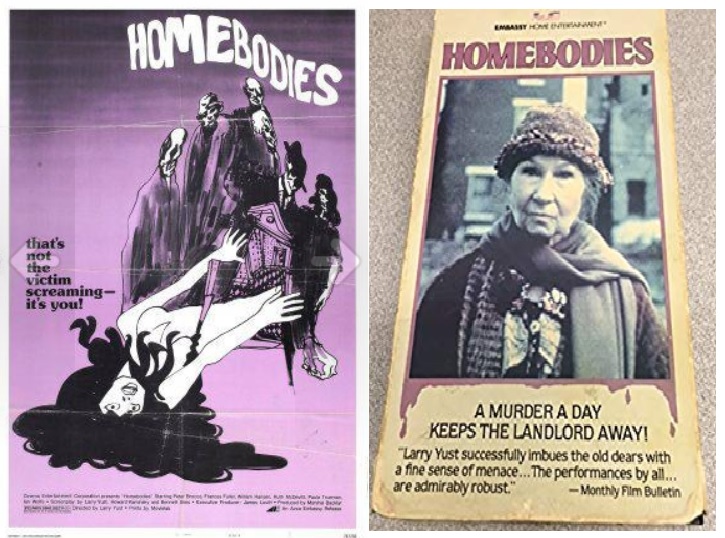
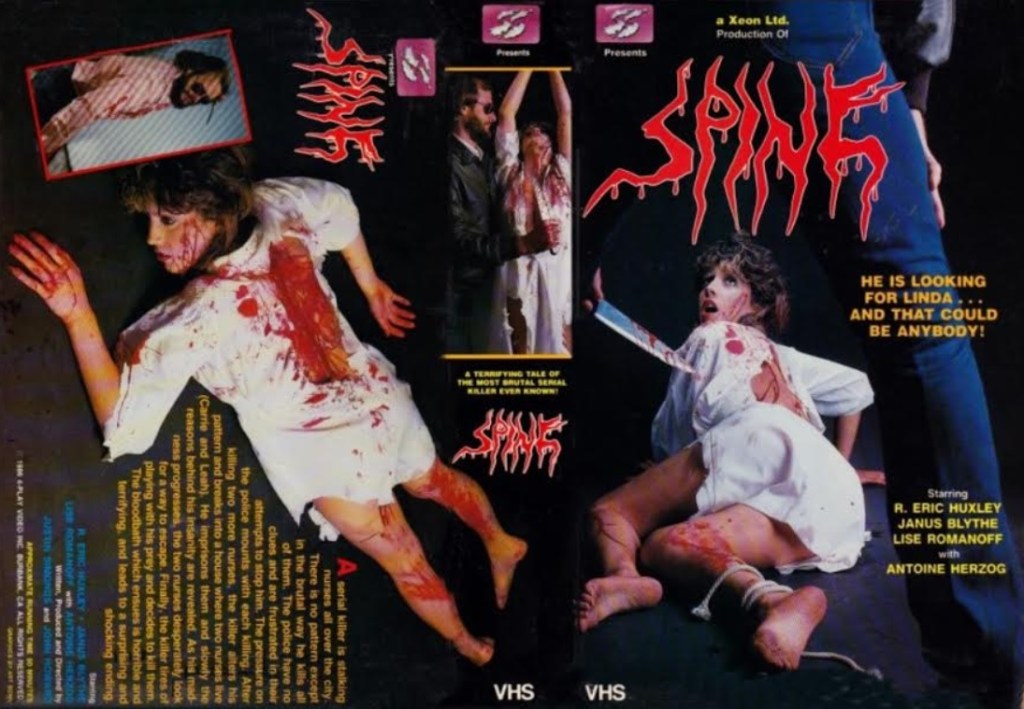
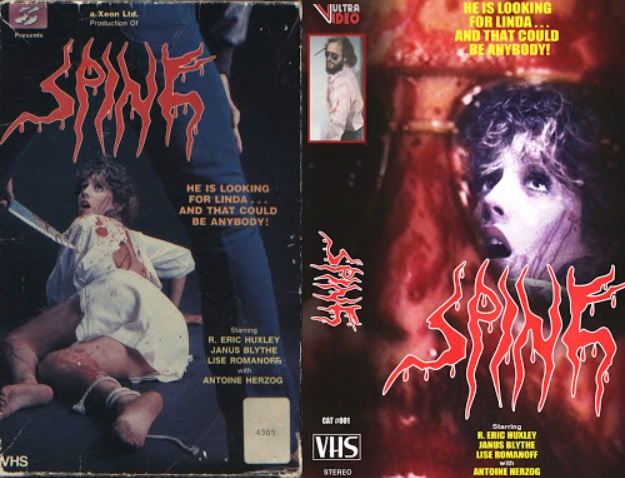

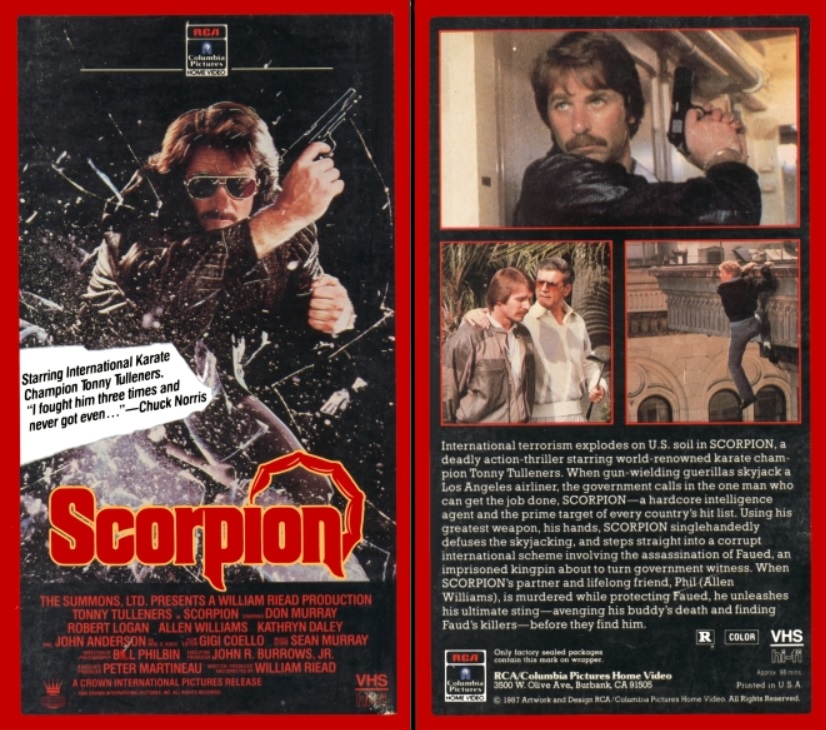
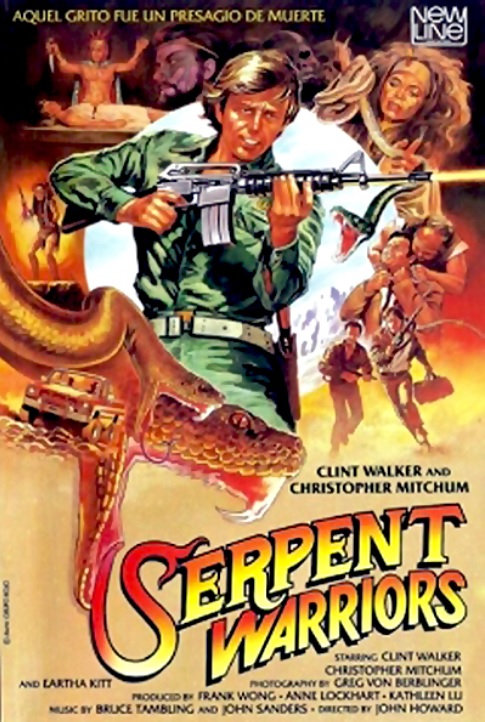
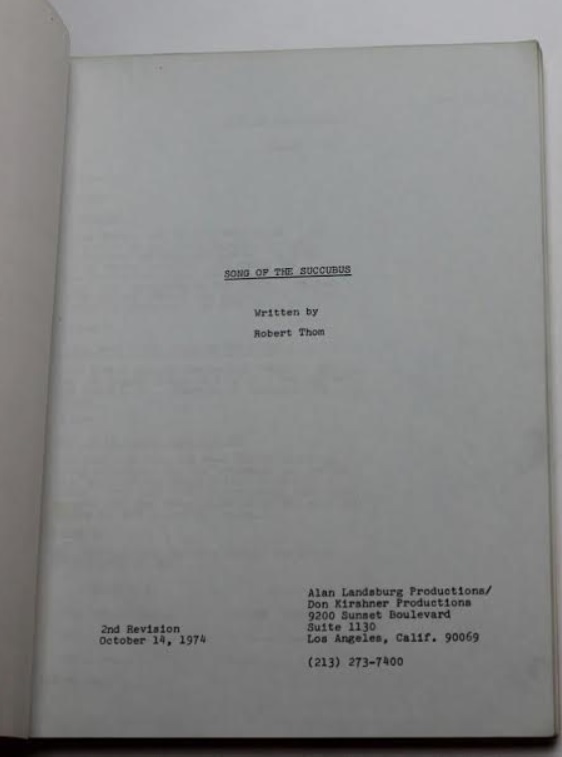
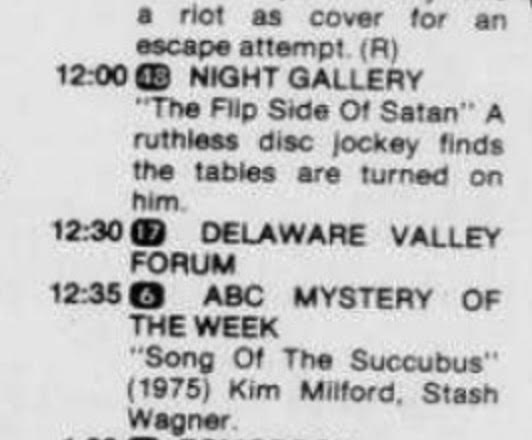

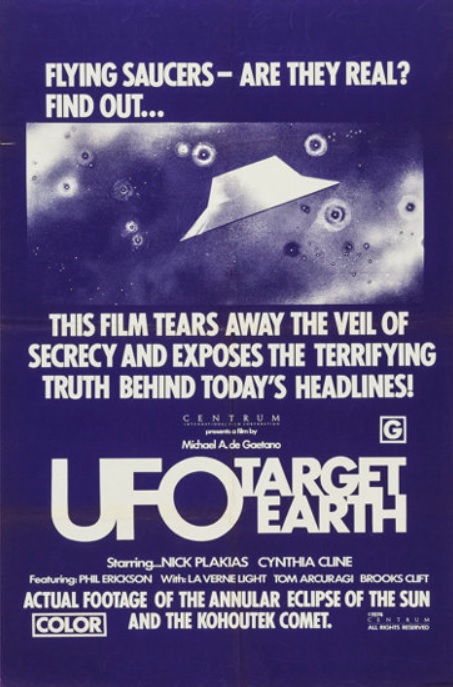





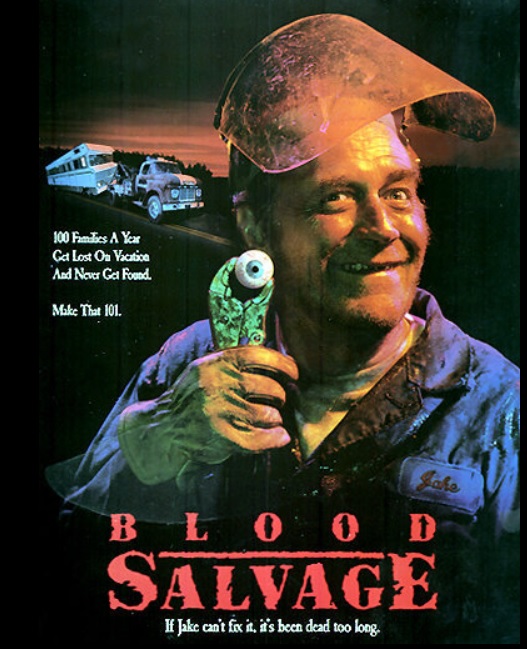

 B&S About Movies
You must be logged in to post a comment.