None of these Italian and Spanish demon-possession soirées compare to the silver screen sleaze that is Magdalena, Possessed by the Devil. And you thought the Germans crossed the boundaries of bad taste with their Hammer Studios witch hunt rip-off, Mark of the Devil (1970)? And you thought The Eerie Midnight Horror Show threw Friedkin’s class and style out the window? Not even Tony Curtis’s pimple-on-the-neck-turns-into-an-Indian-demon-shaman buffoonery of The Manitou (1978) is up to the challenge of this X-Rated demon romp.
“I want to take communion, but not in my mouth, but down in my ‘hoo-hoo,’ you dirty nun ‘boinker,’” Magpie caresses her “triangle of death” before a priest. “When are you going to ‘screw’ your housekeeper,” she rants to Father Ed in an un-synced dub that makes Italian Giallos look in-sync.
Welcome to the X-Rated adventures of Linda Does Berlin, aka Satan’s Full-Frontal Lesbians School for Girls.
Our story beings with a Godspell-cum-Rocky Horror Show cast reject, aka a prostitute, walking down the street on a pleasant Ash Wednesday evening who launches into scenery-chewing hysterics at the discovery of an old man, Joseph Winter, crucified Jesus-style on the gate of her apartment building and . . .
Jump Cut! We’re in a record store with hot German chicks so we can meet ol’ Joe’s niece, Magdalena, who’s off to a party at her boarding school. . . . Now, if you know your Eurotrash cinema, you know the entire student body—even the headmistress and the instructors—at all-female boarding schools are red-herring “lesbians” because, well, all of the girls in Eurotrash-boarding schools are lesbians and up to some nefarious, bitchy deeds to torture the naïve innocent girl who just had a rich uncle kick-the-bucket, aka Joseph Winter.
. . . And cue the swarm of buzzing-house-flies SFX so people know shits-about-to-go-down. Ol’ Uncle Joe is sitting up in the morgue and, for whatever reason, this inspires Maggie to spaz n’ spider-arch and spew some rabies-foam and ruin the Lesbian School for Girls party. But that’s just plot piffle: We got ourselves two red-herring lesbians on the stairs giving us a “triangle of death” rub and a full-frontal rack at the 15-minute mark. What does this have to do with the plot? Nothing, it’s the ubiquitous and unnecessary “de Ossorio” lesbo-scene—so the director has a fantasy to jerk to after the day’s wrap.
Uh-oh. The eerie synth-music backing the buzzing flies . . . here we go. And Magpie is a-kung-fu fighting and trashing a kitchen and wants the school’s headmistress “inside of her.” Yes! Magpie’s gone full-frontal at 20 minutes with some invisible demon sex and Satan is going for some back-door action.
More buzzing flies . . . Mags has another episode and climbs a concrete wall like a spider monkey and takes a nap on top of ol’ Joe’s grave. Do we get a Carrie-style hand pop through the dirt? A Phantasm dwarf? It’s a dream sequence, right? Nope, she really did run away from the school to sleep on ol’ Joe’s grave. And on the way to take a cat nap on Uncle Joe’s grave, Mags hitched a ride and, big surprise, it’s time for the obligatory you-owe-me-for-the-ride rape gag so she can “wishbone” his legs . . . and rape him! Dick Hurtz, indeed.
Meanwhile, lamps and paintings are flying around on wires in the school’s attic. Why? Who cares! We have another full-frontal “triangle of death” rubbing alert at 31 minutes and Magpie’s off on another rabies-Tourette’s rant that puts Ms. Blair to shame.
Okay, I’m getting bored . . . cue the buzzing flies SFX. Now ol’ Magpie is on a McCambridge-PMS magnum opus to a priest and tearing through bibles like Jon-Milk Thor through a phone book. Will Mags kiss the priest and blow ‘em up like a water bottle (it’s a Jon-Mikl Thor thing)? Nope.
Now we’re in Exorcist II: The Heretic territory—even though that hasn’t been released yet to rip off—with the ol’ psychobabble-and-attach-the-electrodes-to-her-head-scene. Is it epilepsy? Tourette’s? Schizophrenia? Split Personality Disorder? Manic Depression? Why is no one listening to the priest? Eh, who cares? What’s up with the staircase lesbians? Are they drugging Magpie to steal Uncle Joe’s inheritance? Nope. Toss that red herring back in the water and just wait for a Paul Naschy-styled, out-of-left-field dues ex machina to appear.
So . . . the electrode-brain-scan hocus pocus tell us Mags needs some time in the county to ride horses and bicycles in a plaid mini-skirt and go-go boots to, you know, pad the film’s short running time. (This clever music video created with the film’s filler scenes—set to Cat Stevens’s “Morning Has Broken”—sums it up nicely.)
There are those flies, again. . . . Yes! Magpie’s going topless and picking up strange men in bars via pressing her nips into a windowpane. . . . Now, if I may interject for a moment: If ever the time comes when I see a woman pressing her ta-tas onto a windowpane and “wants me to give it to her now,” I just naturally assume the chick must have a demon rattling around inside of her—and I get the hell out of there . . . but this dude. . . . Yes! Full-frontal alert at 55 minutes and Magpie’s pitting two rapists against each other and one stabs the other . . . what the hell? She’s vanished into thin air.
La, la, la . . . more romantic bike rides in the countryside . . . friggin’ horses . . . a Table Tennis match with a romantic piano interlude? Okay, wait. Hold on! We may have a full-frontal moment here. . . . Nope. More horseback riding? What happened to the Table Tennis sex scene? Oh, wait! Naked piano playing and autoerotic asphyxia in the parlor. . . . Nope.
Now the cops arrested a burglar at ol’ Uncle Joe’s apartment whose babbling about the “man in black” who killed ol’ Joe. Why? Who? We’ll never know because “Joe” gave creepy-red herring-trench coat-burglar guy a push over a Hitchcockian-Vertigo stair railing at the police station. What does this have to do with the plot? It’s another red-herring tosser for the river.
Okay, so doctor dude at the psycho-chateau can clearly see Magpie is completely unhinged—devil possession de damned. Naturally, he jumps into the sack. I guess he didn’t hear the buzzing flies nesting in her Devil’s Triangle south of the 41st parallel.
Finally! We get to the Mercedes McCambridge-demon-voice-bed-flip-out scene of the movie so we can learn who in the hell this demon is and what this full-frontal lesbians excuse of a mess has to do with Magpie’s uncle and this red-herring burglar.
Welcome to the plot twist: Uncle Joe was frequenting prostitutes and his wife murdered him. So ol’ Uncle Joe, and Auntie Winter’s suicide soul, are inside our Magpie fighting each other and . . . okay, enough of that plot piffle. We have another full-frontal invisible demon rape scene at 1:15 with only seven minutes to go . . . well, whadda ya know . . . ol’ Joe, you sly-pedophile.
Are you following? Uncle Joe is the horny devil, doggy-style rapist. And all of Magpie’s mouthin’ foam moments—that was Auntie Winter. You got that? At least I think that’s what’s going on with this Euro-demon tomfoolery. . . .
Okay, so for a little back story to clear up this mess:
In the beginning of the film, during the initial investigation of Uncle Joe’s Ash Wednesday crucifixion, the headmistress of Magpie’s prep school told the detectives “how excited” Mags would be when it came time for one of her “visits” with Uncle Joe. Where do we file this uncle-niece incest insinuation? Is it a dues ex machina, red-herring, or MacGuffin incest? Someone please cue the random, Paul Naschy errant knight and out-of-left-field zombie attack. Will Mags use her demon-soul to resurrect the dead to attack the psycho-retreat? Nope.
And the flies are back so Magpie can set fire to the psycho-farmhouse and swing an axe and . . . one “Our Father Who Art in Heaven” later and . . . Magpie is spitting up a gummy fishing worm that turns into a baby garden snake. What the hell? Ladies and gentlemen: We have our Ruggero Deodato-denying-he-sliced-up-a-live-turtle-during-Cannibal Holocaust moment! Horny doctor dude just head-stomped a live snake! Call PETA. Alert the ASPCA!
Huh? We can’t file charges. The snake-evidence just vanished into thin air.
“There are things between heaven and hell,” so says horny doctor dude.
Yes, and there are things between one’s ass cheeks and the toilet.
For an alternate, less unhinged perspective on Magdalena, Possessed by the Devil, you can check out Sam’s take on it.
Also be sure to read his reviews of the film that started the whole ‘70s Euro-demon enchilada, The Exorcist, and its sequel, Exorcist II: The Heretic.
And where did all of this demon possession hocus pocus originate: Check out Brunello Rondi’s (Black Emmanuelle, White Emmanuelle) Il Demonio (1963; The Demon) starring Daliah Lavi. Her spider walk exorcism scene (without wires) says it all; you won’t sleep for a week after watching it.
You want another totally inappropriate, blatant rip-off of The Exorcist? Then check out 1975’s The Return of the Exorcist.
About the Author: You can read the music and film criticisms of R.D Francis on Medium and learn more about his rock ‘n’ roll biographies, along with horror and sci-fi novellas, on Facebook.
Vampires, cannibalism, graveyards, nudity, and gore. Oh, my! Vampires, cannibalism, graveyards, nudity, and gore. Oh, my! I’m confused. What’s going on? Who is that? Oh, my! Why is there no apostrophe before the “s” my dear, Dorothy? Because there’s more than one vampire, can’t you see? So, doesn’t the “Night Orgy” belong to the vampires many; There should be an apostrophe after the “s” I do believe. You’re over analyzing the film, R.D; Just turn your neck so I can feed, as Punctuation lessons are not part of my blood cult’s creed. I know, Helga, my dear; You’re sick and tired of my pseudo Dr. Seuss poetry. Yes, R.D, you are a dumbass film dweeb. I’ll shut my mouth; Click your heels, dear Helga; Let’s slop across this bloody brick road. We’re off to see the Blood Countess . . . The wonderful Blood Countess of the Night Orgy Oz!
Now we’re talking. A film with the words “Vampires” and “Orgy” and a Paul Naschy connection! Look at that DVD cover. You got two semi-breast shots. You got one hot vamp-babe carrying a woman and another vamp-babe goin’ down on a guy’s neck!
Is this one of those rare occasions when the cheesy art work lives up to the film? Eh, sort of. It depends on which cut of the film you’re seeing. You know how it goes with American TV and video distributors: they never want us Euro-horror lovin’ horndogs have any fun!
The Naschy connection comes in two forms: First, we have heart-melting Belgian actress Dyanik Zurakowska from his Mark of the Wolfman (1968) and The Hanging Woman (1973) as a vamp-victim (she’s starred in 40 films, so you better get to a-rentin’!). Then we have Naschy’s long-time collaborator, León Klimovsky, who directs this dripping-with-atmosphere tale.
We’ve got two Juan Logar alumni: American expatriate actor Jack Taylor of Autopsia (1973) and Jose Guardiola of Transplant of a Brain (1970).
Then we’ve got Maria Jose Cantudo of Paul Naschy’s Horror Rises from the Tomb (1973), Amando de Ossorio’s “Blind Dead” sequel, The Ghost Galleon (1974), Jess Franco’s Count Dracula (1970; with Christopher Lee, Klaus Kinksi and Herbert Lom), and Klimovsky and Naschy’s Universal tribute, Dr. Jekyll vs. The Wolfman (1972). Maria also went full frontal in Franco’s hardcore-porn vamp-romp, Bare Breasted Countess (1975).
And there’s Luis Ciges of Naschy and Carlos Aured’s Blue Eyes of the Broken Doll(1974) and Horror Rises from the Tomb, along with Klimovsky and Naschy’s Vengeance of the Zombies (1973). Along with Helga Liné, Ciges was also in Klimovsky’s The Dracula Saga (1973).
Rounding out the cast is Manual de Blas of The Ghost Galleon and Paul Naschy’s Hunchback of the Morgue (1973), along with Charo Soriano from The Garden of Delights (1970), and Fernando Bilbao from de Ossorio’s Fangs of the Living Dead (1968) and Franco’s Dracula, Prisoner of Frankenstein (1972).
And . . . sigh! Dear Lord, be still my heart and hold steady my tender loins as the star of this Spanish vamp festival is Helga Liné (Eugenio Martin’s Horror Express; 1972) as the rich bitch blood countess-vampire queen of the hive. (I’m bending my head to expose my neck now, Helga!)
And with this cast—led by Helga—who needs continuity or logic?
As is the case with most Spanish horror films of the period: Two versions of La orgía nocturna de los vampires were shot: one with actors clothed and one with nudity. The clothed version was mostly for Spanish distribution while the nude version played in the rest of Europe—and the clothed ones (with more edit-killing continuity) ended up on U.S TV in the ‘70s and VHS video in the ‘80s—and appears in this Mill Creek cut (and most of the econo-friendly box sets).
Regardless of the “orgy” and the implied “gore,” there isn’t much gore and the nudity is only in three scenes—and the “orgies” are so-so. When the gore comes, it’s effective; but what The Vampires Night Orgy does have, as do all of the what-the-fuck-is-going-on shenanigans of Spanish horror films: lots of atmosphere.
And not a lot of sense: The “churchless” town is deserted, but there plenty of clean beds and the booze flows plentiful at the local tavern. But it’s the “afterworld” and the devil or a connected blood countess can make “things appear,” right? And while there’s booze, there no meat to serve the tourists to keep ‘em fat and happy. So the vamps hospitality-string along any stranded tourists that happen by, suck them dry, serve the leftovers to the survivors, then suck another one, etc., and so one. And Helga gets first choice: always. In one scene: she plugs a horn dog, sucks ‘em, then tosses the meat out the second floor window to the fanged hoards below. (Bitch be crazy! Helga I’m ready for my window toss!)
To place this film into a contemporary context with a film you’ve more likely heard of or seen: 30 Days of Night, only with its vampire town in the Carpathian Mountains run by Helga as a bus load of six tourists take the obligatory “wrong turn” and end up in the uninhabited town of Tonia, Transylvania—where the vamps are more cannibals than vamps and attack in Lucio Fulci-style, zombie wolf packs. And that pack is in full force when Jack Taylor (Luis) and Dyanik Zurakowska (Alma) barley make it out with their blood intact in an escape-by-chased car scenario. When they arrive safely in Bojoni, the town of their original destination before their detour, the superstitious townspeople pull the ‘ol Hershell Gordon LewisTwo Thousand Maniacs dues ex machina on them: there is no such town. Huh? So the vamps weren’t “vamps,” they were the ghost of vamps? Denied! What the fuck is going on here!
Eh, screw continuity. Screw logic. Screw the perpetual stupidity of the tourists. People are vanishing and dying, yet the little daughter of one is allowed to prance in the mountains and run in a graveyard with a ghost boy? Screw it. Screw the dubbing that rivals the worst in Asian cinema. Screw it. Follow the Red Brick Road to Madrid . . . Helga Liné is at the end of the line.
She’s the Wicked Witch of My West and so help me god, trust me, you’ll enjoy every bite. It’s a wonderful Spanish Oz.
About the Author: You can learn more about the work of R.D Francis on Facebook.He also writers for B&S About Movies.
Editor’s Note: We got hornswoggled on this one. Mill Creek’s Pure Terror 50-pack doesn’t carry this Indonesia horror: it programs the British-made Satan’s Slave (1976). No worries, we reviewedthat Norman J. Warren programmer as part of its inclusion on Mill Creek’s Gorehouse Greats 12-pack.You can read it, here.
Now, let’s check out the Indonesian one — with that pesky plural “S” that hung us up.
It’s time for more cheap n’ scary—yet creative—fun with another Indonesian horror film with its roots nourished in the horror films of the West—with Muslim and Hindi religious beliefs substituted for the usual Christianity-based horror themes. However, while American horror films are mostly blood and gore for the sake of blood and gore, Indonesian horror films carry a deeper religious message regarding the folly of abandoning one’s longstanding traditions and beliefs.
How accurate are the various, bargain-DVD imprints marketing Satan’s Slaves as an Indonesian version of Don Coscarelli’s cult horror hit, Phantasm?
If you go into this expecting an Asian-inspired Angus Scrimm-cum-Leàk crypt keeper guiding an army of dwarfs and flying cutlery guarding a dimensional portal with a Lady in Lavender sidekick, you’ll be disappointed. There are, however, moments of visual déjà vu with the film’s teen protagonist riding a motorcycle through a cemetery and there’s a fortune teller that knows more than she’s telling, and . . . that’s about it.
The more expansive similarities are of the narrative persuasion: Phantasm’s Mike and Satan’s Slaves Tommy are both teenagers dealing with the death of a parent and the resulting fears regarding death and dealing with loss and abandonment issues that leave them tangled in a psychological web.
As with its American antecedent, a teenager, Tommy, and his sister (instead of a “Jody”) deal with the death of their mother; their affluent-materialistic family, unable to cope with the loss, completely abandoned their already lackadaisical religious beliefs. As result, Tommy delves into black magic and searches for solace with Darminah, a fortune teller he recognized attending his mother’s funeral. Once Daraminah works her way into the family’s good graces as the family’s maid, Tommy’s friends and family members suffer violent, Omen-styled deaths and the Salem’s Lot-reminiscent shrouded ghosts and reanimated zombie-vampires appear.
Is this Indonesian horror entry worth the watch? It depends on a horror buff’s opinion. Me? I say pair it up with the shot-for-shot The Exorcist clone, Seytan (1974), and The Evil Dead clone that is Mystics in Bali (1981) for a night of fun.
Did Bach Ke Zara (2008) deliver on its reputation as Indonesian remake of Sam Raimi’s The Evil Dead (1981)? What are your feelings about Mystics in Bali (1981; The Leàk), its Taiwanese remake, The Witch with the Flying Head (1982; Fei tou mo nu), and the Chinese-inversion, The Corpse Master (1986; Jiang shi shao ye)—all which are rooted in the 1967 Russian film, Viy, based on the Nikolai Gogol tale?
While this Mill Creek reissue of Satan’s Slaves—as part of their Pure Terror 50 Movie Pack—is a minor curiosity for U.S audiences, it was a major, influential hit in its homeland and Japan. Sources place the domestic release of the film at 1980, but it seems to be more likely released in 1982; international distribution outside of the Pacific Rim countries didn’t occur until 1987.
The film was such a substantial hit that a remake became a pet project for Indonesia’s most successful horror director, Joke Anwar (Ritual, The Forbidden Door), who cited the film (as B&S Movies’ readers cite Phantasm) as his favorite childhood film. He eventually convinced Rapi Films, who released the original, to let him do it. Released in 2017, Anwar’s remake received thirteen nominations—the most for any picture that year—including Best Picture in The Film Festival Indonesia, and became the highest grossing film of 2017 in Indonesia.
If you’re up for other films influenced by Nikolai Gogol’s classic horror tale, search out the Yugoslavian film, A Holy Place (1990), the Russian horror film, The Witch (2006), and Park Jin-seong’s excellent, Evil Spirit (2008).
There’s a non-dubbed and non-subtitled upload of the 1982 original on You Tube. Vudu has the 2017 remake.
About the Author: You can learn more about the writings of R.D Francis on Facebook.He also writes for B&S About Movies.
I’ve seen way too many Dyanne Thorne films . . . and I’m proud of that fact. The only other person I know who’s seen more than I . . . is the freak that runs B&S Movies.
“Who’d the frack is Dyanne Thorne?” you ask.
You’re kidding, right? She’s Don Edmonds’s “She Wolf”!
Oh, dear god. Sit down, kiddo. Ya needs sum ‘80s VHS
schoolin’.
Dyanne was born in Greenwich, Connecticut (the home state of Michael Sopkiw), and got her start alongside Robert De Niro in a lost black-and-white experimental short, Encounter (1965) . . . De Niro received an Oscar nod for Taxi Driver (1976) and won an Oscar for Raging Bull (1981) . . . Dyanne was torturing female prisoners for Nazis and Oil Sheiks for Don Edmonds (Tender Loving Care).
Yes, Hollywood is a cruel bitch.
Dyanne’s starred in four of the ‘70s trashiest Drive-In fests that became ‘80s video rental de rigueur: Ilsa: She Wolf of the SS (1975), Ilsa, Harem Keeper of the Oil Sheiks (1976), Wanda, the Wicked Warden, and Ilsa the Tigress of Siberia (both 1977). (How did she not end up in SOVs like Blood Cult or the pseudo-porn of Spine? I mean, she was half way there with the Ilsa movies.) (Oh, and Dyanne made Wanda and Tigress without Don, so, please: spare the server space with the e-mails.)
Oh, yes Dyanne. You had this wee lad at the first push of the VCR’s start button with these two ditties . . . or is that . . . never mind!
And so . . . with no less than three video store membership cards in hand, this celluloid connoisseur embarked on his obsession with Dyanne Thorne: Love Me Like I Do (1970), the porno-fairy tale (see, told you so!), Pinocchio (1971), her turns as Alotta (!), the Queen of the Witches in Blood Sabbath, and Boo-Boo in The Swinging Barmaids (1972). And who can forget her “mainstream” role working with Ray Sharkey andMarjoe Gortnerand Robert Z’Dar in Hellhole (1982)? And would you believe Dyanne worked alongside John Ritter and Jim Belushi in the spy comedy, Real Men (1987)?
So thank you, Mill Creek. Thank you for including at least one Dyanne Thorne flick on your Pure Terror 50 Film Box Set (the recap list of all the “Pure Terror” films reviewed) so this writer can sigh and swoon over Dyanne all these years later. . . . (Wink, wink: There’s two Dyanne reviews: Jennifer Upton reviewed Blood Sabbath for Pure Terror Month. So life is good.)
The twisted mastermind behind this tale of a nightclub singer’s nightmares becoming reality—or are they?—was California-born thespian Peter Carpenter who, along with fellow actor Chris Marconi, formed a production partnership and secured a distribution deal with the epitome of film exploitation, Crown International Pictures (Orgy of the Dead, Blood of Dracula’s Castle, The Crater Lake Monster, and Galaxina, just to name a few).
Sadly, we never got to know the full potential of Peter
Carpenter’s horror visions.
As the duo began working on their third sexploitation-horror romp, Middle of the Night, Carpenter suffered a cerebral hemorrhage and died* shortly after the release of Point of Terror. He made his acting debut in Russ Meyer’s Vixen! (1968) and, back in the days when X-Rated dramas were “chi-chi to see” and advertised in the movie sections of mainstream-commercial newspapers, costarred with Dyanne in the hit Swedish sex-romp, Love Me Like I Do (1970). After making his screenwriting debut with Blood Mania, Carpenter and Thorne costarred in his second feature, Point of Terror.
Is this a gory blood fest?
Nope. But you get to watch Carpenter on stage and in the
studio singing his soon-to-be “hits” “This Is . . .,” “Lifebeats,” and “Heart
of the Drifter” an awful (awful) lot.
It’s a psychological-sexploitation romp (add graphic kills
and you’d have Spine) concerning a
red pants-suited, fringe-swinging Tom Jones-clone’s descent into madness—with
the occasional burst of (not-so-graphic, off-camera) violence. Do you get-off
seeing an old guy in a wheelchair pushed into a pool? Have you ever wanted to
see a film that was written by Mario Bava and directed by Russ Meyer and produced
by Jean Rollin—who subsequently fires Meyer and hires Jess Franco to finish it because,
well, you know, things worked out okay with Franco’s weirdo, X-Rated erotic-horror
mystery, Venus In Furs?
Then this is your movie. Only, be warned. This isn’t as “good” as a Franco-fest. And there’s no Klaus Kinksi to class-weirdo the proceedings.
Tony Trelos (Peter Carpenter) dreams of stardom as he swings his Elvis-hips for the très chick boozy ‘n sex-starved old broads at the Lobster Lounge, who he subsequently beds (and gives ‘em “the crabs”). Things start looking up when he beds Andrea, the “young,” drunk nympho-squeeze of a wheelchair-bound music industry professional who, if we are to believe Andrea’s best friend, Andrea “put him there” because the sex was that incredible. Daaaamn, Dyanne. Damn.
Do we get to see Dyanne nekked? Yes we do! We even get her
naked on a boulder—or was that her step-daughter? Oh, who cares, it’s a naked
babe on a beach boulder—and her being joyfully “buoyant” in a swimming pool. Wee!
However, ugh, we also get lots of Carpenter backdoor mud-flap
action and many almost-see-his-family-jewels
shots. Where’s Dyanne’s “triangle of death” shot? Oops, there’s those damn
camera angles and edits again. Denied again.
Anyway . . . amid the Hard-R-cum-Soft-X sex rompin’ and
Carpenter’s bag-o-cats caterwauling, it seems he has a “psychological break”
and has dreams of a giallo-styled killer with a butch knife. And you’d think
bangin’ Dyanne Thorne would be the sexual mother lode of “triangle of death”
strikes . . . and he’s got a
recording contract in the bag for
bangin’ the old bag. Nah, Tony Trelos’s
pocket rocket is always at the launch-pad; now he’s bangin’ Dyanne’s step-daughter.
Oh, did we mention that when Dyanne came o’ callin’, Tony
ditched his pregnant girlfriend? Did we mention Dyanne may have killed the
first wife of wheelchair-in-the-pool guy? And the step-daughter sex isn’t just
“sex,” but something else? Is Peter another one of these blackout-and-I-woke-up
psycho murders? Is Dyanne the murderer? Her step-daughter? Tony’s preggo-ex? Who’s
Henry James-screwin’ whom?
And proving everyone—even in Hollywood—has to start
somewhere: Oscar-winning editor Verna Fields—who earned an Academy Award for
her work on Spielberg’s Jaws (1975)
and edited American Graffiti (1973) for
George Lucas—edited this Peter Carpenter tour de force.
Alex Nicol, the man behind the glass eye, closed out his directing career with Point of Terror and made his debut with 1958’s The Screaming Skull.
* It’s a “urban legend” in horror cycles: In reality, Pete didn’t die in the early ’70s. He simply left the movie business, only to pass away at the age of 56 in 1996 in Los Angeles. Or did he. . . .
With a little help from our friends. Peter’s career mystery, solved.
Update: July 21, 2021: We’ve since reviewed Peter Carpenter’s third film — his first as a writer and producer — Blood Mania, contributed to us by guest staff writer Eric Wrazen for our month-long Mill Creek box set blowout back in February, as part of our Gorehouse Greats 12-pack tribute.
So, after discovering our review for Point of Terror — as part of his own research on the life and career of Peter Carpenter — uber fan, librarian Mike Perkins (thus his awesome research on Peter), let us know that Peter Carpenter did, in fact, die in Los Angeles, in the community of Alhambra, on April 2, 1996. Mike also discovered Peter’s birth name was Nathaniel Joseph and, prior to his work in film and music, Peter served in the Air Force.
Mike is a man on a mission: Surf over to his very cool Flickr posting featuring early photos and ephemera on Peter. Mike’s also honored Peter Carpenter by not only having Peter’s IMDb page updated with correct information, he’s also created an all-new Find A Grave entry to honor Peter’s life. Is Mike working on Peter’s well-deserved Wikipage entry? Yes, it’s currently in development.
And, for additional reading, be sure to check out this incredible (two-part) expose on Peter Carpenter’s life and career courtesy of B&S About Movies’ friend Mike Justice, on his The Eerie Midnight Night Detective Agency blog. Strap it on, as both Mikes’ fandom and research are great reads. (Thanks for turning us on, Mike #1, as this article by Mike Justice slipped by us.)
Yeah, we love our readers! Thanks for contributing to B&S About Movies, Mr. Perkins! (Yeah, we love you too, Justice.) And we love it when our readers reinforce and uplift our passions in honoring the actors and filmmakers of our youth — and not tear down our efforts. You gotta fight for the ’cause to preserve films!
About the Author: You can read the music and film criticisms of R.D Francis on Medium and learn more about his rock ‘n’ roll biographies, along with horror and sci-fi novellas, on Facebook.
Oh, yes, ye VHS junkhead: By hook or by crook, Mill Creek will make you watch this, er, ah, “movie,” by golly. It’s not only part of their Pure Terror box set . . . it’s also part of their Sci-Fi Invasion and Nightmare Worlds* box sets.
Let’s unpack this clunker!
Image courtesy of JohnGrit/Unisquare.
“Okay, kid. I want you to make me a film under 80-minutes for $18,000 bucks,” cigar chomps the film executive planting his wing-tips on his desk. “And I got this ratty gorilla suit at an auction . . . they lost the gorilla head, so use this alien mask that I think is left over from 20 Million Miles to Earth . . . and use these reels of NASA stock footage . . . oh, and I can’t afford any lights, so shoot all the night time scenes day-for-night. And you’re using John Agar in the lead.”
“Who’s John Agar?” snivels the fresh-out-of-film-school grad.
“A washed up drunk who boinked Shirley Temple. He comes cheap.”
“Well, sir. Thank you for the opportunity—.”
“Believe me, kid. If I could get Larry Buchanan to shoot this, I would. Now, let’s go to work.”
. . . And so starts this go-go swingin’ adventure: A NASA rocket sent into space filled with test animals flies through a radiation cloud and crashes into the wilds of Cielo, Texas, so a mutated-gorilla monster can munch on a bunch of 18-going-on-30 teenagers in a wooded area known as “Satan’s Hollow.” (Speaking of a “Satan’s Hollow,” check this out.)
“Hey, gang,” head cool kid Chris Jordan calls out. “Let’s go have a swingin’ dance party in the woods! You know, our own ‘private blast’ where that mysterious object crashed!”
“Yeah, and we can do some off-screen shimmy-shammin’ so the Klingon-headed-gorilla space monster can chew us up,” squeals Judy.
“Shit. Let’s go to work, Ben,” says Sheriff Clint Crawford (John Agar) to Deputy Ben Whitfield (Bill Thurman). “It looks like we’re stuck in a movie that’s worse than Robot Monster. Hell, even The Giant Gila Monster.”
“Yeah,” whisky bottle swigs John Agar. “At this rate, we’ll be co-starring in Ed Wood pictures. Damn shame I won’t live long enough to star in an ‘80s SOV stinker. Heck, I would have been great as the detective in Blood Cult.”
“Nah, I’ll do just fine, John. I won’t end up in SOV crap like Spine. Respected directors like Louis Malle, Steven Spielberg, and Lawrence Kasdan will cast me, and I’ll work with Steve McQueen,” chest puffs Bill. “Now go stuff that mannequin with explosives so the dumb space gorilla eats it and we can get the hell out of here and have a beer,” bug neck-smacks Bill Thurman. “And besides, John, don’t you remember? You do that interview in 1986. So it’s not that you died, it’s just that you’ll be so washed up, that the director, Christopher Lewis, wouldn’t want you.”
“Hey, wait a sec . . . Lewis? Loretta’s kid. Yeah, didn’t I bang Loretta Young?”
“Yeah, right, Johnny boy,” says Bill with a back pat. “She married Clark Gable. What would she want with a pug like you? Now, let’s go kill us a space gorilla.”
John Agar was on top of the world. He starred alongside John Wayne in Sands of Iwo Jima, Fort Apache, and She Wore a Yellow Ribbon. He was the toast of tinsel town with his five-year marriage to Shirley Temple. . . . Then the marriage failed and his drinking got worse and he became a stock player for Larry Buchanan at AIP Studios in the low-budget frolics The Mole People and The Brain from Planet Arous.
Me: I always cherish Mr. Agar in my late dad’s John Wayne flicks and I’ll always remember John in the Alien precursor and the UHF double-billed, Journey to the Seventh Planet (alongside The Demon Planet, aka Planet of Vampires).
“I don’t resent being identified with B-science fiction movies at all,” Agar reflected in a 1986 interview chronicled at Monster Shack. “Why should I? Even though they were not considered top of the line, for those people that like sci-fi, I guess they were fun. My whole feeling about working as an actor is, if I give anybody any enjoyment, I’m doing my job, and that’s what counts.”
You did, John Agar. You most certainly did. You are at the center of this writer’s Venn Diagram-Borromean Rings of my “Bad Sci-Fi Battle of Evermore.”
In addition to satisfying my John Agar fix, Night Fright also quenches my Bill Thurman completest-compulsions—and gives me an opportunity to talk about Hollywood fringe-obscurity, Brenda Venus.
Brenda Venus, who stars as Sue, grew up to sprout “white nipples” so Eric Swann (Martin Mull) could boink her on the audio mixing console in FM (1978). Oh, you’ve seen Brenda around. She was in Fred Williamson’s blaxploitation spaghetti western, Joshua (1976) and Jack Hill’s Foxy Brown (1974). She starred with Clint Eastwood in The Eiger Sanction (?!) and she endured the wrath of Ankar Moor in Deathsport (1978). Brenda’s Wikipedia is well worth the visit and it directs you to her very cool, official website.
As for Bill Thurman: It’s like shootin’ fish in a Larry Buchanan-AIP barrel. Bill was in everything calculated inside the UHF Venn Diagram of my youth and went on to become the “go-to actor” when you needed a backwoods sheriff or redneck.
He was Sheriff Brad Crenshaw in Zontar, the Thing from Venus.
And get a load of the ‘80s VHS and ‘90s digital-platform repacks of Night Fright: they really are better than the movie. And don’t be fooled by its alternate titles and confuse it with 1958’s Night of the Blood Beast, which is also available on the Mill Creek Pure Terror 50 Box Set (and my condolences to whomever reviews that stinker. Wait. What? I’m the “whomever” reviewing it? Crap!).
So, yeah, Night Fright sucks. But it’s also one of my cherished UHF snowy memories. Thanks, Mill Creek! Let’s swing, kids!!
* For our annual, November “Mill Creek Month” for 2022, we’ve given Night Fright a new, fresh take as part of our unpacking the Nightmare Worlds box set.
About the Author: You can read the music and film criticisms of R.D Francis on Medium and learn more about his rock ‘n’ roll biographies, along with horror and sci-fi novellas, on Facebook.
“The worms are waiting
are waiting for you, Gladys!”
If I had a nickel every time a fellow film lover told me they hate Italian Gialli and that the films make no sense. . . . It certainly doesn’t help when a skull-faced woman in a curly-red wig and flowing nighty sashays around a crumbly castle. I guess you have to be a video store dork raised on UHF television suffering from a case of the nostalgia-blues to understand the attraction of a skull-faced woman in a curly-red wig and flowing nighty sashaying around a crumbly castle.
Today, with the advent of DVDs released through boutique imprints, horror connoisseurs can watch these Neapolitan thriller-horrors in their pristine state, free of the heartless butchering imposed by American distributors for their ‘70s Drive-In and UHF television and ‘80s VHS distribution. It was those distributors—according to Roberto Curti’s comprehensive Giallipedia, Italian Gothic Horror Films 1970-1979 (2017)—who additionally cheapened the beauty of Evelyn with William Castle-styled camp-servings of “bloodcorn,” actually dyed-red popcorn. I guess dumping red food coloring onto popcorn was cheaper than printing up bogus “insurance policies” (a stunt pulled on Night of Bloody Horror, also available on the Mill Creek Pure Terror 50 Box Set) or “vomit bags.”
Evelyn circulates under a variety of titles on public-domain, bargain DVD box sets (and its early ‘80s VHS reboots), such as The Night She Rose from the Tomb, The Night Evelyn Left the Tomb, Evelyn Raises the Dead, Evelyn’s Back from the Dead, and the really crummy title of Sweet to Be Kissed, Hard to Die. Don’t be fooled: When you come across any of those titles, know you’re seeing a heavily-edited cut—not that the American cuts under the film’s original title are any better. Thankfully, Sinema Diable, Sinister Cinema, and Arrow Video each offer restored, uncut letterbox editions of the film in its full 99-minute format. However, if you’re not a hardcore Giallo fan and can’t afford to purchase boutique DVDs, the version provided on the Mill Creek Pure Terror 50 Box Set is a great introduction to the golden era of Italian horror cinema.
This twisty whodunit-hybrid mixed with British Hammer-Amicus gothic overtones is directed by Emilio P. Miraglia (of the Giallo The Red Queen Kills Seven Times) and tells the tale of a psychologically-troubled British aristocrat recently released from an asylum who’s haunted (read: obsessed) by the death of his “cheating” first wife, the red-headed Evelyn. To assuage the “haunting,” he seduces red-heads in the local taverns that he subsequently tortures and kills in his kinky dungeon. Then he meets and marries Gladys (Marina Malfatti of the Giallo All the Colors of the Dark), which triggers a series of Twitch of the Death Nerve-styled deaths at Lord Cunningham’s crumbly, remote estate. Or is this more Henry James-inspired “turning of the screws” afoot amid the greedy cast of characters?
Arrow’s art department for the win!
One of the Lord’s “conquests” is Erika Blanc of The
Devil’s Nightmare, Mario Bava’s Kill,
Baby, Kill, and the German Hammer Studios-inspired romp, Witches Tortured
Till They Die, aka Mark of the Devil II,
and a slew of Italian spaghetti westerns with the words “Django” and “Fistful”
in the title.
There are two trailers available: The Italian version, while nicely cut and more “stylish,” it looks like it’s promoting an episode of TV’s Columbo—with an occasional splash of a full-frontal and a web-strewn crypt. The American trailer cheeses it up a bit, but at least shows Evelyn isn’t a G-rated American detective romp, but the Giallo-gothic screw turner we know and love.
Ugh! We lost the Italian one. Argh! At the risk of another black box of death: we’ll link instead of embed the American one. We also reviewed this, previously, due to it’s Arrow reissue. Of course, you can get a copy — plus 49 more films — on Mill Creek’s “Pure Terror” box set, which we reviewed, in full.
About the Author: You can read the music and film criticisms of R.D Francis on Medium and learn more about his rock ‘n’ roll biographies, along with horror and sci-fi novellas, on Facebook.
Don’t let the addition of this ‘80s Amsterdam-bred thriller’s inclusion alongside the American, low-brow ‘60s horrors of Night Fright and Night of the Blood Beast in this Mill Creek Pure Terror 50 Movie Pack leave to you believe this movie will be a boring watch. While it doesn’t provide the ‘80s slasher overtones coupled with cliché horror shock-twists in which American audiences are accustomed, those who enjoyed the Dutch art-thrillers The 4th Man (1979) from Paul Verhoeven and The Vanishing (1988) by George Sluizer will be drawn into the film noirish twists of De Prooi (The Proof, aka Death in the Shadows).
As with the previously referenced films, the cinematography of De Prooi is polished; in conjunction with the score, the film maintains a purposefully sullen mood throughout. An added plus: the English dub is excellent. As with any giallo-influenced thriller—regardless of the lack of blood (so we have a film noir here)—red herring characters are afoot and the obligatory “strange things” start happening, i.e., an address book leads to a weird couple who run a garage that want nothing to do with Valerie and say they never heard of her dead mother. Val discovers Ria, her mother’s friend and neighbor—who moonlights as a peep show worker—is suddenly planning a trip to Sri Lanka. When Val finds a regretful long-lost “uncle,” he’s murdered. Then there’s Val’s mother’s red-herring ex-employer, a local lawyer who’s a bit too eager to help Val. And on the night her boyfriend doesn’t pick her up for a party, someone runs Val’s bicycle off the road.
Da. Da. Dun. Another You Tube trailer upload bites the dust.
Written by the husband and wife, editor-and-directing team
of Ton Ruys and Vivian Pieters (she’s the executive producer of the oldest and
longest-running Dutch daytime-series, Goede
tijden, slechte tijden, aka Good Times, Bad Times), De Prooi tells the story of a soon-to-graduate high school student,
Valerie Jaspers, and her mother, Trudy, who live a quiet, middle class life in a
village outside of Amsterdam—with skeletons.
When her mother becomes a victim of what seems to be a
random hit-and run, an autopsy reveals that it wasn’t an “accident”: Trudy was
run over twice. The police investigation reveals that Trudy was never married
and had no children: she’s not Valerie’s mother. So Val sets off to solve the
mystery—of not only who her real mother is, but who murdered the woman she
thought was her mother.
As with any film noir, an Italian Giallo-influenced masked assailant will make sure those skeletons are kept closeted. Remember being disappointed by the forced, homogenized ending tacked onto the 1993 American remake of The Vanishing? As with most Euro-thrillers, there is no warm and fuzzy ending cast in the shadows of this effective, chilling and dreary Dutch thriller.
About the Author: You can read the music and film criticisms of R.D Francis on Medium and learn more about his rock ‘n’ roll biographies, along with horror and sci-fi novellas, on Facebook.
Editor’s Update: April 2022: Now it makes sense! The reason for the recent flurry of hits on this review is the official streaming release of Rocktober Blood on Shudder and its simultaneous, limited-edition VHS reissue by Culture Shock Releasing. Grazie, to the fine folks at Lo-Fi Video for the heads up. There’s also an online event screening — courtesy of Nightmare Junkhead — of Rocktober Blood and Black Roses as a “double featrue” via Shudder on April 30th to enjoy with your fellow “No False Metal” fans.
Update, April 2023: The Sebastian’s National Greyhound Foundation operated by Beverly has the distribution rights to their film library via Panama/HIS Movies — and funding from those films’ reissues has helped the foundation rescue and save the lives of over 15,000 retired racing greyhounds.
Ferd, through his still operating 2JESUS.org healing ministry, has helped reach and save hundreds of thousands of souls worldwide.
Ms. Sebastian is currently writing an auto-biography of her life with Ferd, Living with a Man of God: From Hollywood to Heaven — itself the companion book to Ferd’s own Walk with Jesus memoir. You can now purchase the eBook for free via the link.
Now, here’s what we had to kibitz in November 2019 about the definitive metalsploitation film, Rocktober Blood.
Every Halloween, without fail, I pop in the (VHS, natch) copies of two of my favorite movies from my youth: Phantasm and Rocktober Blood. Then, this past Halloween evening, as I pecked online at information about both films, I was shocked to learn that the voice behind Billy Eye Harper, British-to-L.A. glam vocalist Nigel Benjamin, passed away at the age of 64. (Double shock: Five days later, Nigel’s ex-London bandmate, Lizzie Grey, died on August 5th; you can read up on Lizzie on Wikipedia.)
Back in July 2017, as part of B&S Movies’ “No False Metal Movies Week,” Sam took a look at Rocktober Blood. There’s nothing more that can be said about the plot and acting of the film, so for this remembrance of Nigel, we’ll dig a little bit deeper into where Nigel came from and how he came to be the voice of Billy Eye Harper.
While the glut of video-direct heavy-metal horror films varied in script, acting, and production-value quality, some with greater financial resources than the Sebastians, there is a unique quality to the Sebastians’ vision of Rocktober Blood that the others don’t possess: unlike their celluloid brethren, which grafted the preexisting song catalogs of Michael Angelo Batio (Shock ‘Em Dead), Fastway (Trick or Treat), King Kobra and Lizzy Borden (Black Roses), the Names (Terror on Tour), Thor (Rock ‘n’ Roll Nightmare), and Paul Sabu (Hard Rock Zombies) to double for their film’s faux-rock stars, the soundtrack for Rocktober Blood featured all-original tunes that reflected and drove the film’s plot.
The industry trade ad for the original title and one of its many overseas retitles.
Those fan-worshiped original tunes of “Killer on the Loose,” “Rainbow Eyes,” and “I’m Back” were penned by Sorcery (who also starred in the film as Billy’s band Headmistress), a metal band that cut their teeth on L.A.’s Sunset Strip alongside Mammoth/Wolfgang—the nascent version of Van Halen that opened Sorcery’s earliest shows. Sorcery, with then frontman David Glen Eisley, received their first taste of national recognition with their appearance on an early-‘80s Dick Clark-produced Halloween television special and honed their acting and soundtrack chops in 1978’s Stunt Rock (be sure to check out Sam’s 2019 “Scarecrow Psychotronic Challenge: Day 16: Rock ‘n’ Roll Miscreants” review; Yeah, it’s true: we friggin’ love Sorcery over here at B&S Movies).
However, prior to filming and recording the music for Rocktober Blood, in which Eisley would have appeared as the “vocals” of Billy Eye Harper, Eisley joined ex-Angel keyboardist-founder Greg Guiffria’s eponymous band that scored a 1984 MTV video and U.S Top 40 radio hit with “A Call to Your Heart.”
Stepping in for Eisley was a singer who, to make ends meet as he scratched by with his rock ’n’ roll dreams, took up acting as his “day job.” Like Rick Springfield (for U.S television series), Kim Milford (Song of the Succubus), and Lane Caudell (Hanging on a Star) before him, Nigel Benjamin, while waiting for that big hit record, got his first acting job as Chris, the manager and producer of Billy Eye Harper.
As with Springfield (who recorded and toured with Australia’s Zoot), Kim Milford (who replaced Rod Stewart in the Jeff Beck Group), and Lane Caudell (several singles-only deals as a solo artist; fronted Player precursors Skyband), Nigel Benjamin’s rock ’n’ roll pedigree was his replacing Ian Hunter in Mott the Hoople from 1975 to 1976 for two albums as the truncated Mott and touring the world with Humble Pie, Judas Priest, Kiss, REO Speedwagon, and Thin Lizzy.
Benjamin’s first bands in the early seventies were the London Southend-based glam-groups Grot and Fancy; after issuing their 1973 single “Starlord,” Fancy transformed into the Billion Dollar Band, and then Royce. After Mott’s demise (to become British Lions with Ray Major on lead vocals) Benjamin formed English Assassin; signed to Arista Records, they recorded a still unreleased album. The one English Assassin “album” that did see a release was Just for the Record, a 1978 solo album by famed British motorcycle and film stuntman Eddie Kidd—an album that English Assassin backed and Benjamin produced. (Kidd did his own “Stunt Rock” music n’ stunts movie, 1981’s Riding High (full film/You Tube).
After relocating from England to Los Angeles, the city’s nascent hair-metal scene adopted Benjamin and he fronted the infamous London—a band with an ever-evolving roster that, while never scoring a deal of their own, served as a rock ’n’ roll boot camp for musicians who joined the more commercially successful bands of Cinderella, Guns N’ Roses, and W.A.S.P.
Nikki Sixx and Nigel Benjamin on stage with London.
Then, one day, Nigel Benjamin’s ex-London bandmate, bassist Nikki Sixx (who also went through the ranks of Circus Circus and Sister alongside Blackie Lawless, later of W.A.S.P, and Lizzie Grey), was forming his next band: Mötley Crüe. Benjamin, in interviews over the years, expressed there was no love lost between him and Sixx. So when Sixx asked Nigel to join the “new band” as lead vocalist, Nigel turned him down. Despondent, Sixx and his drummer, Tommy Lee, went to a rock club and saw a cover band, Rock Candy, with a tall lean, blonde-belter named Vince Neil: Mötley Crüe was born.
Nigel Benjamin was then hired for his first acting job as “Chris” in Rocktober Blood for a non-singing role. While some web-Intel indicated Benjamin was reluctantly drafted—after being hired as an actor—to become the “vocals” of Billy Eye Harper, what really happened: Benjamin came onto the film as a production assistant, then stepped in to handle the vocals for Billy Eye, and then was given a part in the film. According to Benjamin, regardless of the band’s onset bragging about their “career,” Benjamin claims he never heard of Sorcery until meeting them on the film set. And while Sorcery believed Benjamin “joined” the band, Benjamin insists he never joined and wanted no part of the band. (Another person Benjamin met for the first time on the Rocktober Blood set was Mötley Crüe’s future drummer, Tommy Lee, brought to the set by a visiting Nikki Sixx. Nigel came to date the sister of Tommy Lee’s future wife, actress Heather Locklear; the Locklear sisters and Benjamin eventually shared a home.)
So, why didn’t Nigel Benjamin change acting roles and portray Billy Eye Harper in the film instead of having another actor lip-sync his vocals?
Well, Sebastian International Pictures was a family affair. While their son, Benjamin, worked behind the scenes on their film’s business and technical aspects and took on occasional, small support roles, their younger son, Tracy, always appeared in the family’s films as a co-star or lead actor. Making his early-teens debut in Flash and the Firecat, Tracy had his first leading man role in the Sebastians’ other rock ’n’ roll flick: On the Air Live with Captain Midnight, a film best known to the over-50 crowd from its incessant early-Eighties airings on the USA Cable Network’s weekend-night rock video programming block, Night Flight. (Other oft repeated rock movies on the program were Rocktober Blood, the Ramones’ Rock ’n’ Roll High School, and Ladies and Gentlemen, The Fabulous Stains; meanwhile, the Sebastians also made the redneck romp, ‘Gator Bait.)
For many years the fans of Rocktober Blood—those unaware of Nigel Benjamin’s musical past—believed Tracy Sebastian, who starred in the film under his stage name of Trey Loren, sang the vocals and the ersatz-Headmistress was a real band. Exasperating the confusion as to who composed and performed the film’s songs: the film’s scant opening titles sequence and end credits failed to properly credit the musicians. The names of Sorcery’s guitarists Richard Taylor and Lou Cohen, bassist Richie King and drummer Perry Morris appear—without a reference to their band; the same holds true for the uncredited vocals for Donna Scoggins’s Lynn Starling character by Susie Rose Major—which fans believe were done by Scoggins. In addition: some minor, incidental tunes heard throughout the film in the background of various scenes (appearing in-full on the subsequent vinyl-only soundtrack) were recorded by Susie’s band Facedown—with Susie and her fellow band members of Paul Bennett, Michael Zionch, and Barry Brandt (ex-Angel drummer) receiving no credits and, as result of the way the credits read in the film, for many years fans were lead to believe the members of Sorcery wrote and performed the tunes that Facedown contributed to the soundtrack.
During an interview with the online publication Full In Bloom, Nigel Benjamin had this to say about his Rocktober Blood experience:
“[There’s] nothing to tell. They [Sorcery] asked me to sing the songs for Tracy Sebastian to lip-sync to, [and] then somehow thought that I had joined them! [Then,] when I got asked to star in the movie, they [Sorcery] wouldn’t pay me to finish singing because I was being paid to act! I stopped singing, [and] they [Sorcery] lost the gig. I finished the soundtrack with Pat Regan, my then keyboard player [which was the band Eyes]. I didn’t know who Sorcery was. Nobody I knew did either. According to [the guys in Sorcery] they were huge . . . go figure. Some of the guys were cool, though.”
And from Just a Buzz, a Mott the Hoople fansite, Benjamin had this to say about the film:
“If it had been a little bit worse, it would have been a cult classic. It was just not quite bad enough to be bad. I’ll tell you something very strange about it, though. I acted in it, I was a production assistant in it, I sang some of the soundtrack, and I wrote some of the music — but I still did not know the story until I went to the screening. I never saw a script for more than twenty minutes before I was supposed to do it, and any script they gave me the night before changed to a completely different scene the next morning. I went to the movie screening and I had no idea what the movie was about until it was all finished!”
(Benjamin’s insights seem to explain how Susie Rose Major’s Las Vegas-based Facedown came to contribute “Watch Me Rock,” “Would You Let Me Touch You,” “You Can’t Kill Rock ’n’ Roll,” and “High School Boys”: Sorcery was fired from the film and the Sebastians needed songs to fill out their proposed—and poorly distributed—film soundtrack.)
So where are the members of Headmistress, now?
Riba Meryl, who co-wrote the faux-rock epic “Rainbow Eyes” with Sorcery’s Richard Taylor, became an actress and portrayed “Janis Joplin” in the speculative 1984 rock ’n’ roll conspiracy flick Down on Us (released to video in 1989 as Beyond the Doors to cash-in on the film’s Jim Morrison connection (full movie/You Tube) and on a 1987 episode of the rock ’n’ roll U.S television series Throb (trailer/You Tube and “Death Be Not Weird” episode/You Tube). After her lone, non-Janis character acting role in 1987’s Banzai Runner (full movie/You Tube), Meryl concentrated on television and film session work and contributed the song “Brand New Start” to a 1989 cop-murder drama, The Jigsaw Murders (full movie/You Tube). Sadly, Riba passed away in 2007 at the age of 52 from breast cancer. (Why didn’t Riba Meryl provide the vocals for the song she wrote? We may never know.)
Donna Scoggins, who made her only acting appearance as Lynn Starling, went onto a highly successful international modeling career, and then became an equally successful copywriter in corporate advertising.
As for the voice behind Lynn Starling: Susie Rose Major is still rocking in 2019. Most recently, Susie provided guest-lead vocals for the cleverly-named Quint (remember 1975’s Jaws?) that recorded the original tunes “Bad Asser,” “Brand New You,” “Great White Skies,” and “Hell on Wheels” for the SyFy Channel’s Sharknado film series. Quint, by the way, is led by Robbie Rist, best known to the over-50 crowd as “Cousin Oliver” from the early-Seventies American TV-comedy series The Brady Bunch. (Suzi’s tunes are on Soundcloud.)
Uh-oh. Shameless Plug Alert: Watch out for B&S Movies’ “Shark Week” coming January 5 – 11, 2020.
After his stint with Mott, Nigel Benjamin formed the band Satyr with bassist Chuck Wright (ex-Rough Cutt, Quiet Riot, Greg Guiffria’s House of Lords), then Eyes (Satyr without Wright; along with Bob Steffan, guitars; John Telsco, bass; Pat Reagan, keyboards; Richard Onri, drums—they appear on the Rocktober Blood soundtrack), and then gave up the rock ’n’ roll dream and retired from the music business. Working behind the scenes as a session musician, Benjamin found success in designing and building recording studios; he came out of hiding in 2003 to appear as an expert car builder and TV personality alongside Jesse James (Sandra Bullock’s ex) on Monster Garage, one of U.S television’s earliest reality series. Benjamin then returned to making music with the digital-only albums (on Soundcloud): Buffalo, In the Absence of God, and Relentless Hammer of Dreams.
As for the members of Sorcery (Facebook): They went onto successful careers as session musicians in the television and film industry; inspired by his band’s newly acquired Internet fan base, drummer Perry King continues to market Sorcery’s music and movie catalog in the digital realm. And while Nigel Benjamin claimed to never hearing of Sorcery before their meeting via Rocktober Blood, it turned out that horror film director Eli Roth did—and was a fan: he used two of Sorcery’s Stunt Rock-era tunes, “Talking to the Devil” and “Sacrifice,” in 2015’s Knock Knock (part of B&S Movies “Exploring: Slasher Remakes” roundup) and 2018’s Death Wish.
In December 2019, Susie Rose Major visited the Heavy Make Up blog to share her memories of working on the film:
“The lasting power of Rocktober Blood never ceases to amaze me! It was such a fun time in my life. It was always a sticking point with me that I was not credited in the movie.
“Side Two of the soundtrack was my old band’s demo, Facedown. Ben Sebastian was working at Warner Bros. Records back then and was interested in shopping us for a deal. So, the Sebastians used our demo as filler, which was never supposed to be in the public ear [part of the film]. I was 17 when I wrote those songs and was hoping for a development deal so I could get around professional writers to hone the craft. It’s a bit embarrassing that those songs got out.
“If anyone is ever interested, I’m still singing and performing. My latest project is an all-female Aerosmith tribute band: RagDolls [which performs in Las Vegas]. My Soundcloud.com/Susie Rose Major page has a few metal and hard rock songs for anyone interested.”
Yeah, heaven’s rockin’ just a little bit harder. We’ll miss you, Nigel. You are the king of the faux rock stars we love at B&S Movies.
Nigel Benjamin Sept 12, 1954 ~ July 31, 2019
Yeah. We love this movie! So much so we investigated — as part of our “Box Office Failures Week” of reviews — the production beleaguered proposed sequel, Rocktober Blood 2: Billy’s Revenge, as well as its Italian Giallo re-imaging for the Euro-marketplace as Seven Notes of Terror.
And don’t forget to check out Sam’s reviews for these great “No False Metal” movies that we love:
And the faux bands just keep on rockin’ with Sam’s Ten Bands Made Up for Movies. And we featured Rocktober Blood as part of our weekly Friday feature “Drive-In Friday” with a “Heavy Metal Horror Night” featuring Monster Dog, Blood Tracks, and Terror on Tour.
Ferd Sebastian July 25, 1933 — March 27, 2022 Obituary
About the Author:You can read the music and film reviews of R.D Francis on Medium and B&S Movies, and learn more about his work on Facebook.
A movie starring a Pittsburgh born-and-bred actress who
starred as Yeoman Tankris in “Wolf in the Fold” on Star Trek, and as Jeanne
Leeds, one of Mr. Drysdale’s secretaries on The
Beverly Hillbillies, and as
Darlene Wheeler, Ebb’s girlfriend on Green
Acres?
Yeah, I know it’s weird that I can “six-degree” Judith
McConnell like that. She’s this Pittsburgh born-and bred-Trekkies dream! To the
transporters, Scotty!
Hold on there, Bones. Stow the pocket rocket.
Before Judith McConnell beamed to the Philippines to quench the blood lust of fellow ‘60s television mainstay, John Considine (who made his film debut as “Doctor Death” in 1973’s Doctor Death: Seeker of Souls), she had to meander through the New Mexico desert so a devil-worshipping cult could maintain their eternity in The Brotherhood of Satan (1971).
. . . And somewhere between being a member of Ted V. Mikels’s The Doll Squad (1973) and finding steady work in the American daytime dramas As the World Turns, Another World (86 shows), One Life to Live, and Santa Barbara (over 1,000 episodes!), she appeared in this Filipino pseudo-vamp potboiler.
Gulp! It’s Brigette Bardot’s doppelganger, Jennifer Billingsley, from Burt Reynolds’s rednecksploitation classic, White Lightning (1973)!
There’s that bucktoothed hottie, Tani Guthrie, from Daughters of Satan (1972) playing another twisty, witchy-bitchy blood priestess!
R.D! We get it! All
of the B-Movie actors you love are in the movie. What’s it about? Is it as
tantalizing as the art work depicts? A film featuring Judith McConnell strapped
to assembly-line style tables under the tagline: They need a special liquid to stay young. It is thick, red and warm,
must be hot n’ sexy!
Yeah, you’d think.
It starts off AWESOME, with Judith McConnell go-go dancing
in a cage for a bunch of horny, on-shore leave U.S sailors . . . that’s
kidnapped by mysterious, crimson-hooded figures. . . . That’s what’s great
about these Filipino horror flicks: there’s never
a shortage bikini-clad, hot white chicks to kidnap and sacrifice.
So, anyway . . . going along for the boat ride to Baru’s
(John Considine) plastic-trees jungle and papier-mâché caves, jungle-cult
island getaway are Fredricka Myers, Chiqui da Rosa and, GULP!, Jennifer
Billingsley who, at first, assume they’re going to shipped to Hong Gong for the
sex trade.
Didn’t you girls read the “plot twist” in the script? You’re
going to be “blood cows” for some eternal youth elixir hocus pocus in the name
of a “God” that is a . . . disembodied talking head in a glass box?
So how does the mayhem end? I bet they’re building a Frankenbabe
with all the “best parts,” like in Blood Cult
(1985), to put the “head” on, right?
Nope.
Baru decides to defy the “Ring of Age” and spend his mortal
life with Jennifer Billingsley. Yep, the little head out thinking big head
screws up yet another evil plan. . . .
What? Huh? Ssork! Is the movie over?
Yeah, this one’s a sleeper that even Judith the babe can’t save.
If this had only been a Star Trek
episode where Kirk and the gang land on a planet with a blood-cult society
tying up all the red mini-dress lassies. . . . Why the hell not? With all the
flowing pastel getups and Considine’s high-collared Dr. Strange wares, it looks
like that Star Trek episode with David “Hutch” Soul feeding that stone-cave
god. (Check out this review of Soul’s In
the Line of Duty: The F.B.I Murders for last month’s Scarecrow
Pyschotronic Challenge.)
It’s not a surprise the film ended up being the first and
last writing-directing features effort for television actor-director Terry Becker,
who directed episodes of Mission:
Impossible and starred as Chief Sharkey on Voyage to the Bottom of the Sea.
After The Thirsty Dead, John Considine returned to TV work; in the ‘80s, you couldn’t not see him on a TV series—mostly notably the daytime drama, Santa Barbara, and multiple episodes of MacGyver.
As for Judith McConnell: She’ still thespin’ in 2019 with roles
on the successful web-soap opera, The Bay,
and truTV’s comedy series, I’m Sorry.
. . .
Oh, by the way: Judith McConnell maintains a “Bacon Rating” of “1”; she co-starred with Kevin Bacon in 2016’s The Darkness. It was produced by Blumhouse Productions, known for the low-budget horrors Paranormal Activity, The Purge, Get Out, Insidious, Happy Death Day, and Halloween.
About the Author: You can read the music and film criticisms of R.D Francis on Medium and learn more about his rock ‘n’ roll biographies, along with horror and sci-fi novellas, on Facebook.
In preparation for my review contribution to B&S Movies’ tribute to Mill Creek’s Pure Terror 50-film box set, which features Paul Naschy’s debut appearance as the devil worshiping knight Alaric de Marnac in Horror Rises from the Tomb, I wrote a June 2019 review of de Marnac’s second film appearance in 1983’s Panic Beats. In that review I pointed out that contemporary horror fans proclaimed: “Naschy is boring.” (You can learn more about Naschy’s oeuvre with his 1975 post-apocalyptic romp, The People Who Own the Dark, which I reviewed for B&S Movies’ September 2019 Apoc Tribute Month. See our “Atomic Dustbins” Part 1 and Part 2 for the complete list of reviewed films.)
(And yes: This “review” is also a Naschy dissertation that goes 18k words off the rails, so pull up a popcorn bag.)
Throughout his catalog, Naschy crafted films with admirable nods to Alfred Hitchcock, but Naschy didn’t craft scenes with a Hitchcockian eye. At the height of his Spain-based cinematic weirdness in the early 1970s, Naschy (and Italy’s Dario Argento) need not be concerned with the ultraconservative American standards and practices that shaped Hitchcock’s visions. Naschy let the tits fly and the colors run red—misogynistic outcries be damned.
Naschy doesn’t do bloodless cut-away murders shadowed on walls. Naschy doesn’t go “Nicolas Roeg” with artsy love-making (read: fucking) jump edits. If Naschy directed Paramount’s mainstream giallo move, Don’t Look Now (based on a Daphne du Maurier story; her story, Rebecca, inspired Naschy’s Panic Beats) . . . oh, what might have been, Julie Christie.
The charm of Naschy’s films, for us lovers of Spanish and Italian Euro-horror, is that logic and reality goes out the window—more so when they’re edited for “offensive content.” So with Horror Rises from the Tomb (aka, El Espanto Surge de la Tumba) it’s more of Naschy’s patented, cursed kitchen-sink mayhem with a vertigo-mixture of fortune tellers, séances, supernatural shenanigans, medieval warlocks, witch finder generals and executions, demon possessions, Satanism, vampires and bisexual vampiras, talismans (in place of crosses), a pinch of lesbianism and a dash a necrophilia, giallo-styled kills, disembodied heads, coffin-based revivals, and errant zombie attacks.
Also in classic Naschy style: exquisite women—the kind that makes Garth Algar feel like he climbed the rope in gym class—are at the forefront. In Euro-trash horror women are ubiquitously attired in graveyard-sensible mini-skirts, dresses, and hot pants. Here, in the snow-swept mountains of this Naschy bizzaro-universe, women sashay through the chilly halls of the estate’s unheated mansion-chalet in the sheerest of negligees.
Horror Rises from the Tomb served as the first of four collaborations between director Carlos Aured and Naschy: the screenwriter and star. Next was their Hammer/Universal tribute, Curse of the Devil (El retorno de Walpurgis; 1973), then their giallo entry, Blue Eyes of the Broken Doll (Los ojos azules de la muñeca rota; 1974), and their Spanish updating of Universal Studios’ The Mummy (1932): The Mummy’s Revenge (La venganza de la momia; 1975). The film also marks the first time Aured took on full directing duties, after serving as an assistant to Leòn Klimovksy, who also directed Naschy penned-and-starring horror romps. It’s always a family affair with Naschy’s company of Grand Guignol players.
Naschy’s cinematic inspiration behind Horror Rises from the Tomb was Universal Pictures’ The Thing that Couldn’t Die, which played on a drive-in double bill with Hammer Studios’ Horror of Dracula during its initial release. In Thing, the resident damsel-in-distress discovers an ancient chest; opening the box with a belief it contained treasures, she unleashes the wrath-head of a 400-year old sorcerer. Seeing the double-bill in his youth, the film had such a profound effect on Naschy that he played a “disembodied head” a second time—instead transferred to a different body—in Crimson: The Color of Blood (1973). Naschy connoisseurs, however, debate whether The Thing that Couldn’t Die inspired Naschy at all: Naschy stated in interviews that the film was in homage to Luis Buruel’s Exterminating Angel (1962)—a tale about a group of narcissists “trapped” while attending an upper class dinner party at a remote chateau (which also fueled the plotting of 1975’s previously mentioned, The People Who Own the Dark).
As for Naschy’s historical Gilles de Rais inspirations: Not only did the serial killer knight appear in Panic Beats, Naschy utilized Rais to create an all-new lead character in his 1974 film, The Devil’s Possessed (El Mariscal del Infierno; full movie/You Tube), and the Rais-influence appears in Naschy’s giallo entry, Blues Eyes of the Broken Doll (1974; trailer/You Tube). (The infamy of de Rais also inspired Thomas Gabriel Fischer, AKA Tom G. Warrior, to write the extreme metal classic, “Into the Crypt of Rays.” Naschy movies and Celtic Frost? I’m in!)
Horror Rises from the Tomb appears in at least three-distributed versions: One is the “clothed version” that ran in its native Spain—but the gore is intact; and the shorter American-version—with both the gore and nudity cut (which appears in the Mill Creek box set), and the uncut international version (which appears as part of Anchor Bay’s “Spanish Horror Collection” series). So while the U.S version loses 8 minutes of sex and gore—to run at 1 hour 20 minutes—the Spanish version runs uncut at 1 hour 28 minutes. There’s also a rumored “unseen” fourth version at 1 hour 45 minutes floating around in the analog-cum-digital ether.
However, if this is your first time with the oeuvre of Paul Naschy, especially if you’re on a tight entertainment budget, then there is no better primer into his world—and the world of Spanish and Italian horror—courtesy of your copy of Mill Creek’s Pure Terror 50-film box set.
Well, okay kiddies. It’s time to grab your microwave popcorn bags and beware of the 7th moonrise—the head of Alaric de Marnac is coming for you!
Warning: The following film review contains multiple cut-through throats, torn out guts, heart rippings, lesbian sex, and decapitations. Well, maybe. . . .
Paul Naschy—who wrote the screenplay under his real nom de plume, Jacinto Molina—stars as a 15th century medieval warlock-knight accused of witchcraft: the aforementioned Alaric de Marnac—based on the real life sexual-deviant French night, Gilles de Rais. In the film’s atmospheric execution-prefix shot in the dead of winter at Naschy’s country estate in the Lozoya Valley outside of Madrid, we meet Lord de Marnac. As is the case with any sociopath in any century or decade: Alaric is innocent. So he curses his witch hunting identical twin brother, Armand, (Naschy) and his executioner-sidekick, Andre Roland (Vic Winner), right before his beheading (edited; damn it). Alaric’s Elizabeth Bathory-inspired squeeze, Mabille de Lancré, (Helga Liné) is also executed—abattoir-style in a tree-by-feet hanging-dissection and burning (edited; double-dog damn it).
So, denied of our cherished tits and gore within the first five minutes, we fast forward to present day France: Naschy is now a skeptical-to-a-fault de Marnac descent, Hugo. Inspired by two swinging (red herring), new-age mysticism friends bragging about their visit to a fortune teller, Hugo decides to have a séance so Alaric’s “head” can tell him the location of the family’s legendary treasure. And the séance works: The cackling ghost-head of Alaric gives Maurice Roland, Armand’s descendant, an “artistic breakthrough” to finish his latest painting of some black-caped Dracula dude that’s been “haunting his mind.” So he paints the decapitated head of his buddy, Hugo, into the picture—and there’s de Marnac’s disembodied head looking down from the ceiling, dripping blood onto the picture.
So, do you cancel the trip to Marnac country? Nope. You pack your Scooby-snacks and load in the Mystery Machine. Going along for the ride is Maurice’s back-in-town-fuck toy, Paula (Christina Suriani), and (one of) Hugo’s squeezes, Silvia (Betsabé Ruiz). On the way to the remote Marnac chalet-estate, a couple of red herring road bandits attack and wreck the car; then a red herring posse of creepy townspeople serves up some on-the-spot vigilante justice with a gool ‘ol fashion tree hanging. Oh, and to show there’s no hard feelings: the creepy-posse sells Hugo a beat up shit-wagon to finish their trip.
Now, at this point: You’re attacked, you wrecked the car, witnessed backwoods vigilante justice by shotgun and rope—and you still got victimized via the posse-car deal for twenty times the vehicle’s Kelly Blue Book value. You’d say: “That’s it, let’s get the fuck out of here.”
Nope. Onward, brave Ulysses.
So the estate’s longtime, creepy red herring of a groundskeeper—complete with two requisite, stunning daughters designer-dressed for crypt-exploring action, Elvira and Chantal (Emma Cohen and Marie Jose Cantudo)—recruits two toothless wonders from town to dig for Marnac’s head-box for clues to the family jewels. And—big surprise—the groundskeeper and the toothless wonders are in cahoots to steal the Marnac head-jack-in-the-box. Dumbass groundskeeper: the dental-illiterates just double crossed you. When they break open the box; Marnac’s head possesses the sullen-skinny Frank Zappa lookalike of the duo, who subsequently performs a bloodless shadow-on-the-wall kill by pruning sickle (damn editing). Finally—we have our first two kills. No, wait. That’s four: the two roadside bandits by the creepy-posse. But Marnac wasn’t responsible. Kill tally: back to two.
Now what in the hell is this red hearing-cupcake in the requisite mini-dress and chunky Giorgio Brutini designer-loafers screaming about in the dead of winter? Oh, that’s Elvira—she found the two bodies. Oh, did you know that she and Hugo had a “thing” in their youth growing up together at the estate? (Jealous lover red herring. Check.) Was there a Hugo, Elvira, and little sis Chantal threesome? (Red herring ménage. Check.)
Now, at this point, you’ve dug up the box, there’s no family fortune, two guys were cut from asshole to elbows with a sickle, and Frank Zappa vanished like a fart in the wind with the jack-in-the-box. What do you do? Jump into the overpriced posse-jalopy and get the hell out of Marnac Country. . . .
“We need to bury the bodies in the swamp,” Hugo convinces Maurice. And cue the film’s repetitive-annoying rearrangement of Johann Sebastian Bach’s “Toccata and Fugue in D Minor,” so as evoke a little of Paramount’s Dr. Jekyll and Mr. Hyde (1931) and Universal’s The Black Cat (1934) into the proceedings.
So, you just covered up two murders and made yourself an accessory-after-the-fact. What do you do? Get in the car and get the fuck out of Marnac Country. . . .
Oh, Marnac, prince of darkness. Please kill these two dumb-fucks and the shitty organist already.
So Frank Zappa de Marnac the mortal-zombie shows up and gives Chantal a (edited; triple dog damn it) sickle-neck chop in the kitchen. Meanwhile, dopey Paula stumbles around in the unheated manor in the dead of winter in a sheer negligee clutching a candle. Hey, Paula, come on down. You’re kill number four on the Marnac Is Right!
Oops, and there goes big-sis Elvira for a header-by-trip wire down the stairs—kill number five denied; she survives. Did Silvia try to get Elvira out of the way? Or did Chantal-zombie do it? Or did Zappa de Marnac take a swing and miss and cause the fall? Can’t tell you; those crappy edits are back.
So, four people are dead (or six, if you’re still weeping for the road bandits), two of which you buried in the swamp, and there’s been one attempted murder. What do you do? Run?
Nope. You bitch about it.
So Freddie and the Mystery Machine gang assess (read: “ass” ess) the situation and Maurice is pissed that, somewhere along the line, the car—that’s been sitting there unused—ran out of gas (?), some off-camera storm knocked down the phone lines (?), and he’s pissed the townspeople won’t come into Marnac country to help them or investigate the murders.
Now, wait a minute Maurice? You walked into town (off camera) and now you’re bitching to Hugo about how “the town mayor wouldn’t even listen to you” and the “kids threw rocks at me.”? Why the fuck didn’t you get a can of gas or get another car? Why didn’t you hire a delivery truck driver to transport the Mystery Machine gang out of there? And why are you bitching about only having enough food for four days? You were in town, why didn’t you pick up some groceries?
So, while Silvia’s in the kitchen doing the dishes in the middle of a murder spree, and the just-fell-down-the-stairs Elvira is recuperating in bed, Hugo’s decided anytime is the right time for some off-camera, puritanical-edited nookie with Elvira. Yep. People are dying and daddy needs a chug-n-clug. What daddy really needs is a sickle-neck chop for being a dickhead. And you have to hand it to Elvira: she rolled down two flights of stairs unscathed and she’s sweet as a peach and fresh as daisy—and ready for a Hugo-deflowering.
“Shit,” says Naschy. “I ran out of bodies and red herrings and I can’t afford to hire another actor. Uh, Emma, can you come back to set? . . . No, you’re not a zombie. . . . No, the fall didn’t kill you.”
“Paula, Paula,” says whiny-bitchy Maurice as he goes off into the swamp to brood over Paula’s disappearance. Then, suddenly, the misty, come-hither voice of Paula beacons.
Okay. So, you’re in Marnac country. There’s a killer on the loose and now Paula’s in the middle of the fucking swamp—in a still Downy-soft negligee—without a scratch on her after missing for two days—and you’re going to have sex with her Marnac-possessed body?
“Damn straight,” brags Maurice. “I’m in the middle of a Paul Naschy movie.”
Pocket the rocket, Morey. Thanks to good ‘ol American editing, you and Paula pose for a Hallmark greeting card moment: with a sun-kissed silhouette embrace.
Well, the off-camera, possessed-ghost sex must have blown Maurice’s mind; now he’s a possessed zombie-mortal and does a punch out-kidnap of Silvia in the kitchen. . . . Again: murder and mayhem is afoot and your friends disappear. Shouldn’t you be cramping on the toilet and IBS-ing your brains out of your ass in fear? Who the fuck makes tea and crumpets and does dishes with a Gilles de Rais-inspired knight on the loose?
So Maurice and negligee-clad-in-the-dead-of-winter Paula deliver Silvia’s mini-dressed “warm body” to the family crypt where, with the help of Zappa de Marnac the zombie-mortal, busts open the tombs and Marnac regurgitates some mystical-babble about the “seventh full moon and propitious heavens.” Then the puritanical editing goes off the rails as the revived Marnac takes a sickle to Silvia and does an off-camera heart ripping and cape flip and, well, it seems he stuffed her heart into Mabille’s boney-coffin remains and she’s back. Kill number five: done.
Well, sorry Mr. Zappa, we don’t need you anymore; Maurice sickles him for kill number six. Now it’s time for Alaric and Mabille to have a night on the town and feast on some Marnac descendants—and for Alaric to flip his cape and spin around in dry ice, you know, to evoke Dracula, even though Mardick’s a warlock and not a vampire. And we get two—one male and one female—townsfolk-edited kills: number seven and eight, done. And we’re moving on. I guess the townspeople freaked out over it. Don’t know: bad editing strikes again.
So while the de Marnac’s are having a feast of off-screen kills at the Golden Corral all-you-can-eat buffet, Elriva suddenly remembers . . . “Hey, Hugo, there’s a talisman—“Thor’s Hammers” (some crossed hammer-coin amulet-trinket)—hidden in the bottom the estate’s deus ex machina well.”
What? You lived on the estate your entire life; know the grounds and legend like the back of your hand—and you’re just now remembering—six kills in—there’s a vampire-killing amulet? Give me an axe; I’ll save Marnac the trouble.
Shit! Too little too late: Naschy cued an out-of-left field zombie siege!
Now we’re in George Romero’s Night of the Living Dead as the groundskeeper and the schlemiel dumped in the swamp—along with Chantal and Frank Zappa—lay siege to the estate as a Plan 9 from Outer Space fighting force. And when daddy calls out to his sweet Elvira, what does she do?
“Hi, Daddy. May I take your coat?”
So, one makeshift table-leg torch and back door furniture bonfire later: zombies defeated. All that’s missing is the Kelly Blue Book crap wagon making a failed run for the gas pumps.
And we cut back to the crypts: Mabille is in full PMS-lesbian vampire bitch mode; she’s “ravenous” and wants Paula’s heart. No, not yet. The seventh moon hasn’t appeared yet, so declares de Marnac. What the fuck ever, Mardick.
Now, Maurice shows up out of the blue—and he’s not possessed anymore? And what’s Hugo’s bright idea? Hand Maurice a shotgun and an axe, and trek to the swamp to dredge the zombies and burn them before they reanimate for a second attack. Oh, shit! Maurice is still possessed—and he blows Hugo away. You’re a real prick, Alaric the Mardick. And I thought the demons in The Evil Dead were assholes to Ash.
And why the fuck is Elvira trusting Maurice all of the sudden? Oh, yeah, she burnt him with the Thor amulet and excised Alaric once and for all . . . or something. Now that Maurice is a dezombied mortal, he discovers a deus ex machina operator’s manual to kill Mr. and Mrs. de Marnac—if they are ever revived.
Elvira. Again, you lived here all your life. Shouldn’t you have studied and memorized the “How to Kill de Marnac” manifesto cover-to-cover? Shouldn’t you be the resident Xena, the Marnac Warrior Princess by now?
“Oh, by the way, Elvira. We have to go back to the swamp (again) and burn those zombie-bodies,” declares Maurice. “You know the ones that I didn’t burn the last time because I gave my best friend a double-dose of buck shot.”
Uh, Maurice, excuse me, but some serious vampire-zombie shit’s been going down for four fucking days. Maybe if you weren’t so bitchy-whiny and wimpy-brooding in the fucking swamp, you would have found the book sooner—like on day one.
Finally, it’s time for the big show down and the D-grade Bach organ-festival is almost over.
So, Mabille finally has her lesbo-heart ripping moment with Paula. Is there a heart ripping? Is there a lesbo-vampire make out session? Yes. Do we see it? Nope. Cut to: Maurice battles de Marnac to the death in the woodshed and dies by an (edited) axe-to-the-chest—but not before “Thor’s Hammers” serious fucks up de Marnac. Cut to: Elvira, using some magic silver needle voodoo, kills Mabille the vamp-bitch. Cut to: Elvira gives de Marnac the Dick a second dose of “Thor’s Hammers”—and his head falls off. Then he bursts into some Christopher Lee-styled flames and his ashes blow away in the wind.
And sweet Elvira, in her still-perfect makeup and untarnished fashion wares, walks off into the snow drizzle along the estate’s lake and . . . tosses the legendary vampire-fighting weapon into the water. Didn’t you just say—upon the death of your dad and sister—that you have nothing and no one? Sell the one-of-kind ancient amulet; you need the cash to rebuild your life.
And that’s it? That’s the end? No! It’s Elvira’s fault that everyone is dead! Zombies should burst out of the cold lake waters and pull her into the depths of hell for a grand finale! What happened to those two red-herring townspeople the de Marnac’s feasted on? Oh, and while floating around the estate, the de Marnac’s performed an (edited) disembowelment on two more crooks hiding in the bushes conspiring to rob the estate. That’s four potential swamp-lake zombies, right there, to take down Elvira. Did those Marnac-infected victims release a zombie plague in the city? Won’t the townspeople need the amulet?
Great job, Xena of the land of Marnac. If you weren’t so friggin’ hot, I’d “Marnac” you myself.
Oh, shit. A drop of blood just fell on my keyboard from the ceiling. . . . It’s the 7th moonrise already? Where my “Thor’s Hammer”? Marnac!!!
You can also see Emma Cohen (Elvira) in Jess Franco’s Count Dracula (1970) and The Other Side of the Mirror (1973), Eloy de la Iglesia’s The Cannibal Man (1972), Leòn Klimovsky’s Night of the Walking Dead, and John Gilling’s Cross of the Devil (both 1975).
In addition to appearing alongside Barbara Steele in Nightmare Castle (1965), Helga Liné (Mabille) worked with Christopher Lee and Peter Cushing in Horror Express(1972), Leòn Klimovsky’s The Vampire’s Night Orgy (1973), and again with Naschy and Aured in The Mummy’s Revenge (1975).
A loyal member of Naschy’s Grand Guignol company of players, Victor Barrera/Vic Winner (Maurice) appeared in Javier Aguirre’s Hunchback of the Morgue and Dracula’s Great Love, and Leòn Klimovsky’s Vengeance of the Zombies—all penned by Naschy—in 1973. He also appears in Eugenio Martin’s It Happened at Nightmare Inn released that same year.
Armando de Ossorio cast Betsabé Ruiz (Silvia) in his Blind Dead sequel, Attack of the Blind Dead (1973). Maria Jose Cantudo (Chantal) made her debut alongside Ruiz in Juan Logar’s Autopsia (1973), and Christina Suraini (Paula), Helga Liné and Betsabé Ruiz worked together again in Leòn Klimovsky’s The Dracula Saga (1973).
“I want my UHF-TV!”
Update: July 2022: During the glory days of local UHF-TV channels, AVCO Embassy distributed Horror Rises from the Tomb as part of their Nightmare Theater television syndication package. Sam Panico, our Editor-in-Chief, explores the history behind the package and breaks down all of the films with his mighty fine “Exploring: Nightmare Theater” feature-homage to those lost UHF-TV days of snowy-analog yore.
Do you need even MORE Paul Naschy? Still? Yikes! Then check out these B&S Reviews to get you started down a Naschy rabbit hole. These reviews, of course, feature links to even more Naschy films.


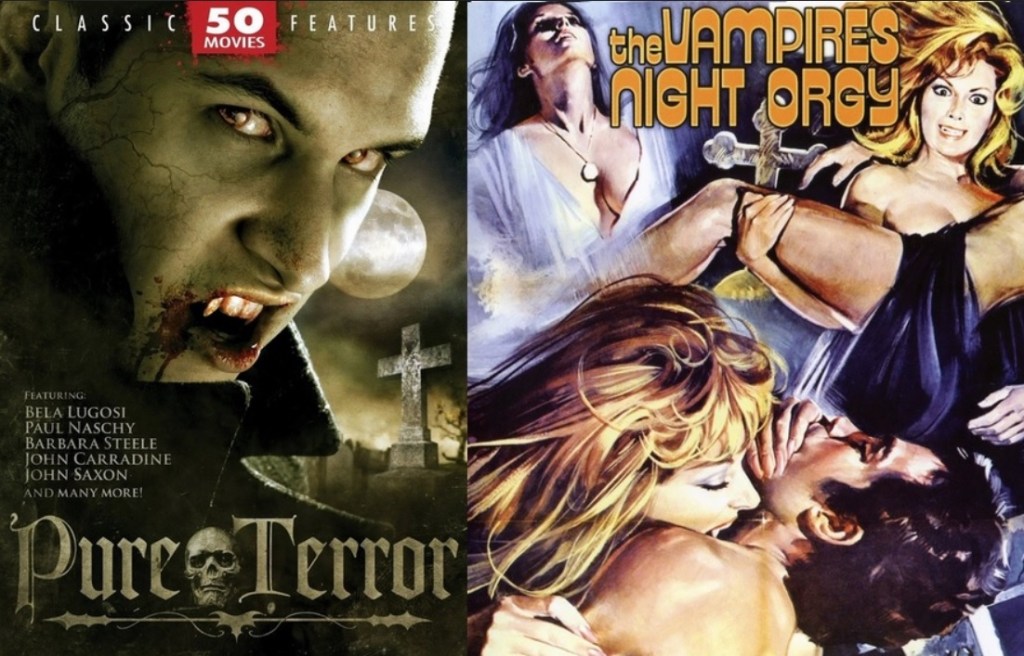
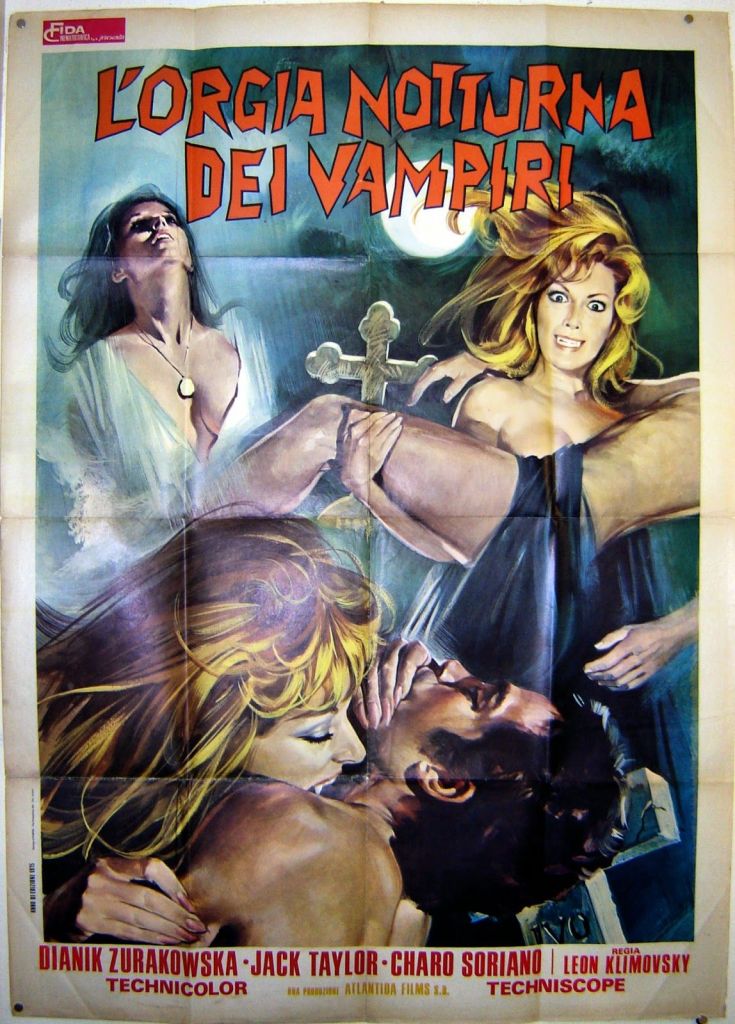
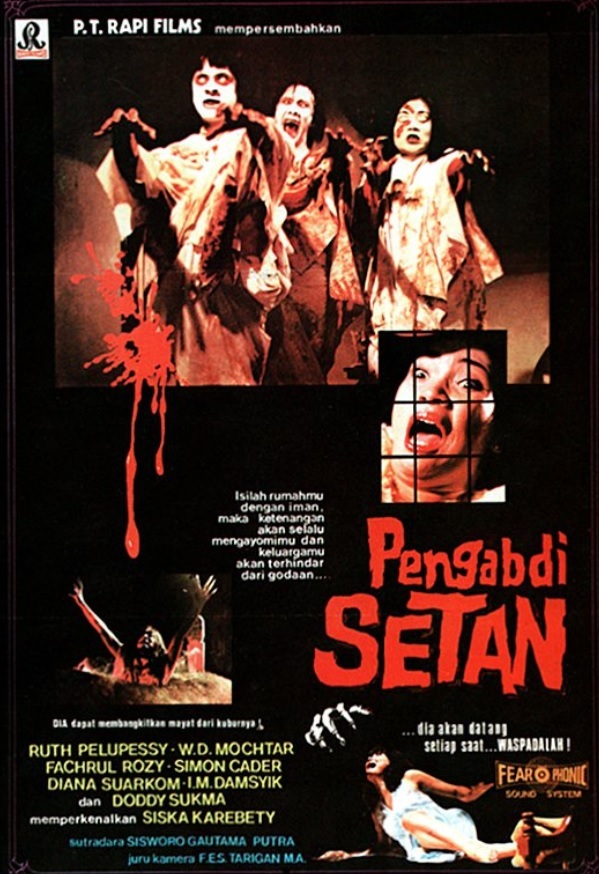


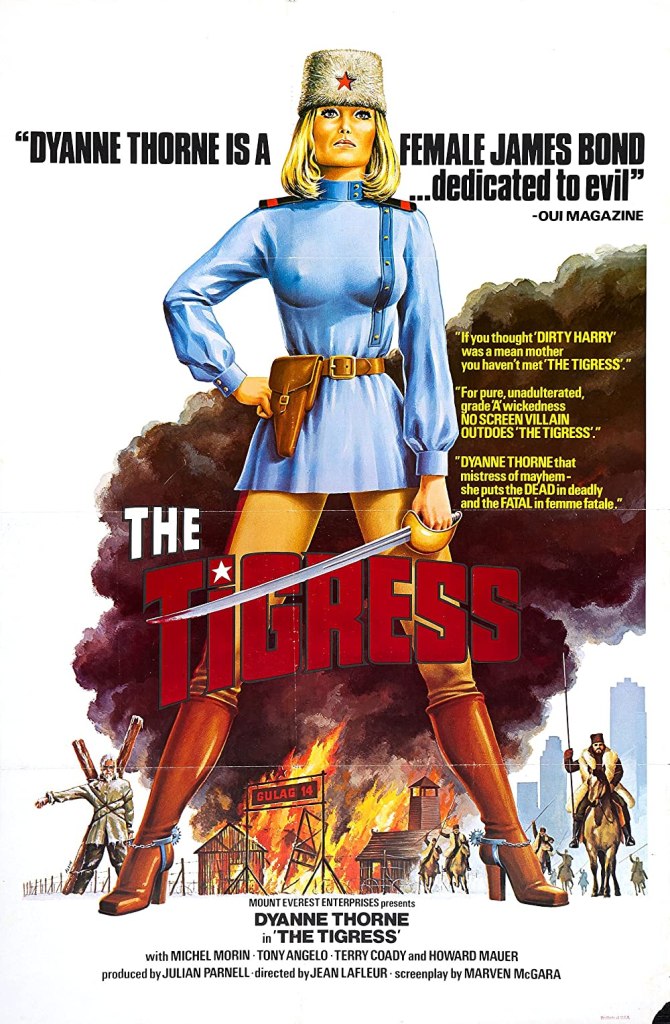
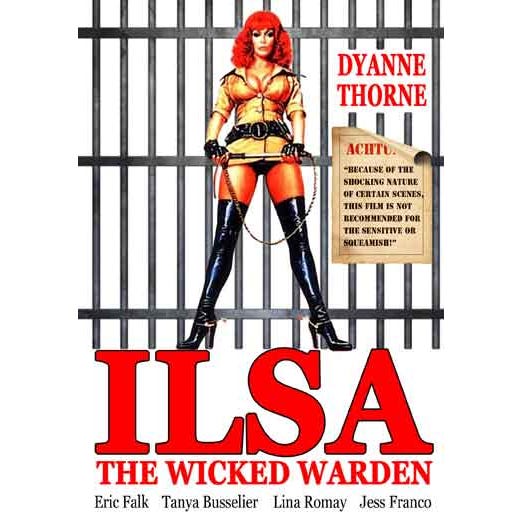
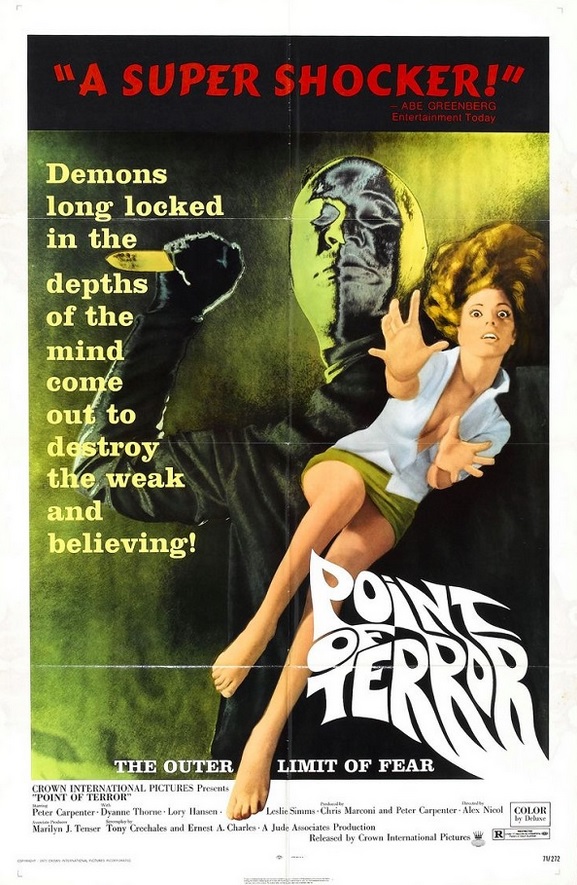
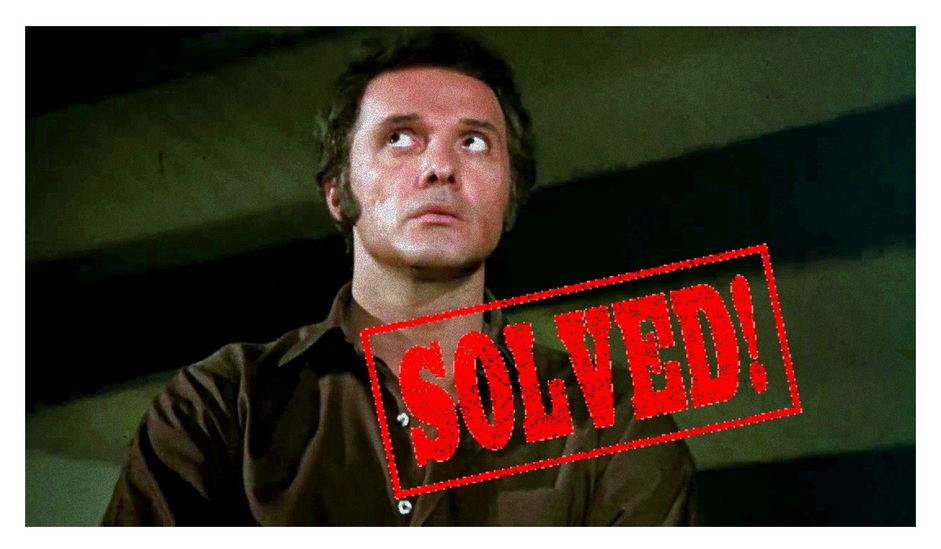





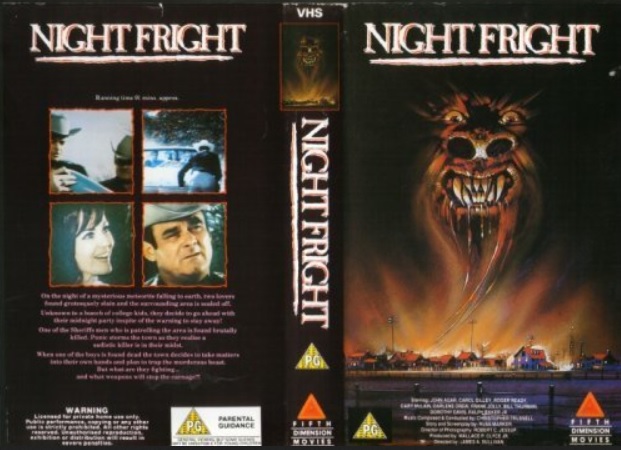

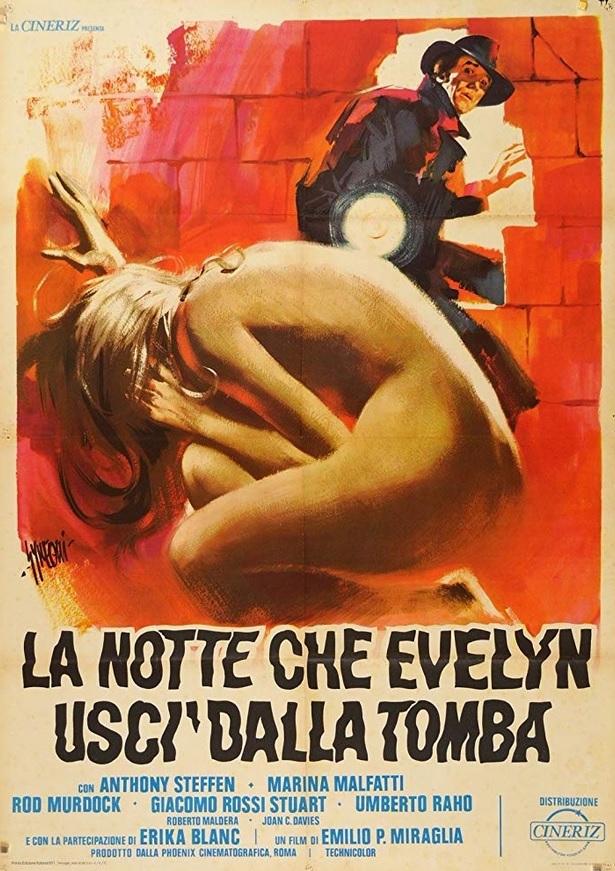

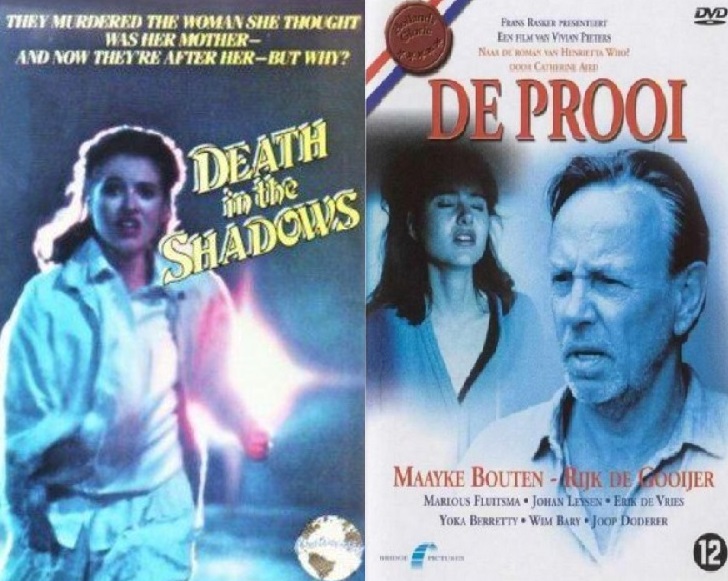
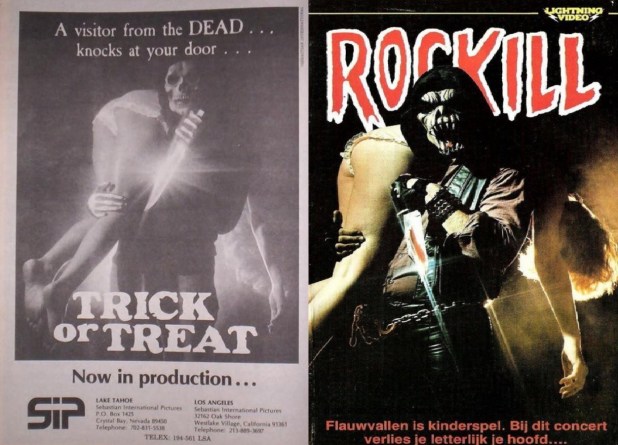


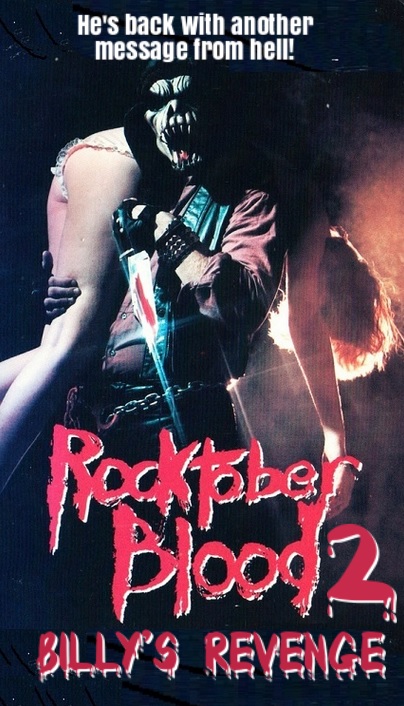




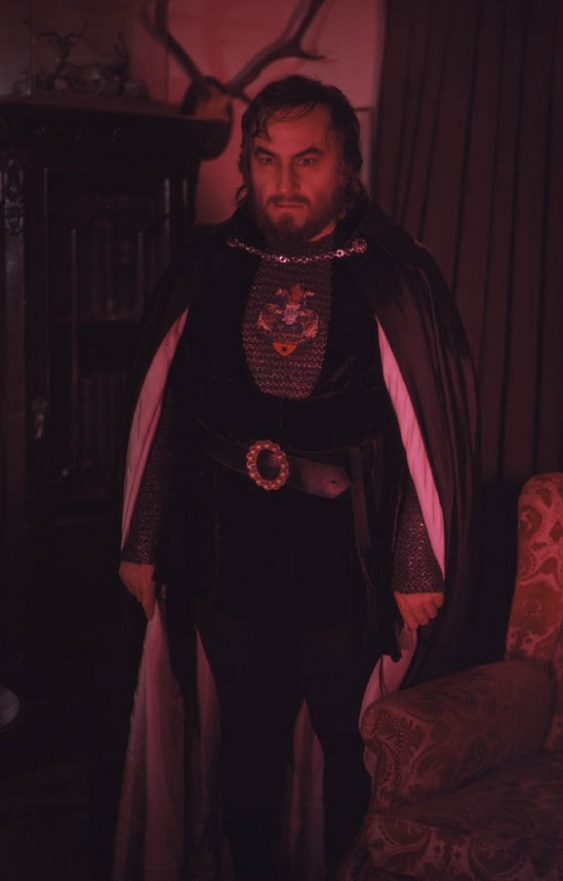
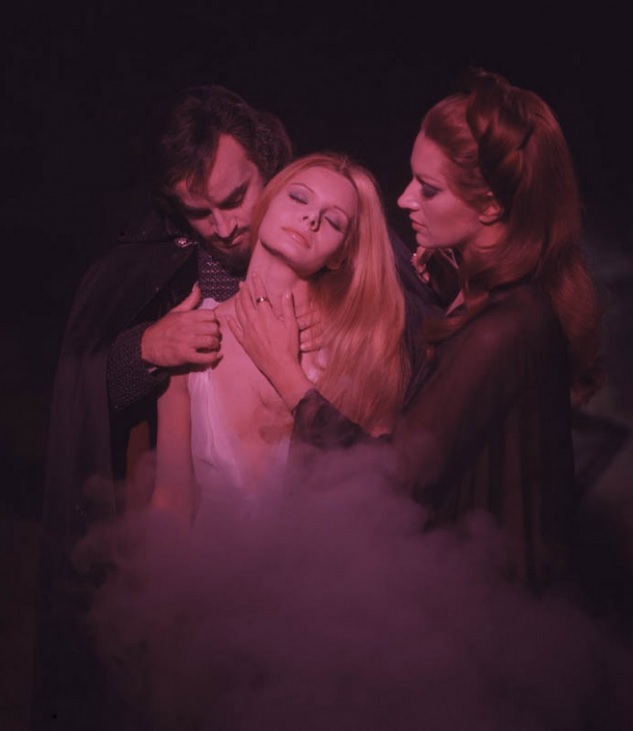
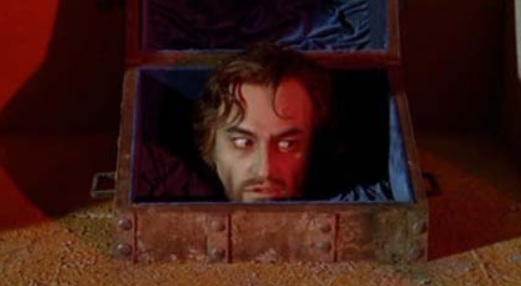



 B&S About Movies
You must be logged in to post a comment.