It’s the start of award season and ahead of its Friday, December 13th nationwide opening, Bombshell, the Jay Roach-directed film about the Fox News-Roger Ailes scandal, walked away with four nominations: one for Outstanding Cast in a Motion Picture, in addition to three individual nominations for Charlize Theron, Nicole Kidman and Margot Robbie.
Transitioning from comedy into drama, Roach collected multiple awards with his political-trilogy cable-films Recount (2008), Game Change (2012), and All the Way (2016). Meanwhile, on the big screen, his biographical drama, Trumbo (2015), starring Brian Cranston (TV’s Breaking Bad and Malcolm in the Middle), garnered twenty nominations for various awards, including an Academy Award Best Actor nod for Cranston.
But before those hits, before the critical kudos and awards, Jay Roach—an Albuquerque, New Mexico-born economics graduate from Stanford University and a fresh-out-of-film-school grad from the University of Southern California—had to start, somewhere.
And that “somewhere” was a low-budget indie comedy produced for $500,000 by the film’s screenwriter, Jessie Wells. Courtesy of post-production tinkering by Wells, without Roach’s input or knowledge, the film that Roach shot isn’t the film that ended up being released—and he disowned the film. (His only film, Wells disappeared from the industry.)
According to the VHS box, Zoo Radio was intended to be the comedy successor to 1978’s Animal House and 1981’s Porky’sas a motley staff operating an underground radio station, “94.5 FM KLST K-Lost,” fight a hostile takeover by their slick, top-rated cross-town rival, KWIN.
The takeover is initiated by the death of an eccentric broadcast tycoon who wills his Los Angeles radio properties to his two sons: one a frowned upon, bumbling idiot, the other a favored success. Under the terms of their father’s will, rival radio station managers Burt and John Powell must compete with each other for their inheritance. Burt’s KLST and John’s KWIN have six months to build their ratings. Whichever station generates the highest ad revenues at the end of six months, that station gains control of the competing station and receives a $60 million dollar estate.
While the concept of dropping the Cain and Abel-influenced Trask brothers from 1955’s East of Eden into the ratings-competitive field of broadcasting—switching out the raunchy frat-house for a bawdy radio station—is inspired, the resulting film is. . . .
Regardless of actor Ron E. Dickinson’s enthused turn as Otto, he the resident John “Bluto” Belushi of the proceedings, producing a few, genuine chuckles, it doesn’t save Zoo Radio from being the most utterly inaccurate portrayal of a radio station ever committed to film, a film rife with a succession of groan-inducing puns (such as feeding burritos and beer to cat so it farts on cue) and even worse amateur acting. While Howard Stern’s Private Parts (1997) and Kevin Costner’s The Upside of Anger (2005) are the gold standards of radio station portrayals on film, Zoo Radio is. . . .
Who wouldn’t queue for a raunchy radio comedy—especially one where 1978’s FM collides with 1994’s Airheads? Sadly, what we ended up with is a bad film, but a film replete with MTV-era youthful nostalgia courtesy of Zoo Radio appearing on USA Network’s weekend Up All Night programming block alongside our beloved T&A trash classics of H.O.T.S, Lunch Wagon, and Sorority Babes in the Slime Bowl-A-Rama.
Yeah, respected, award-winning directors have to start somewhere . . . just ask Paul Feig, who starred as KLST’s blind, stuttering DJ, Chester Drawers. After Feig made his mark in television as the creator of the realistic high school drama, Freaks and Geeks (1999), he directed a series of his own, raunchy comedies: Bridesmaids (2011), Heat (2013), Spy (2015), and Ghostbusters (2016; Hey, we reviewed Ghostbusters ’84, if you care).
Even multi-platinum selling guitarist Richie Sambora of Bon Jovi had to start, somewhere . . . with his band, Shark Frenzy, which posthumously appears on the film’s (never released) soundtrack. And no, that’s not Wall of Voodoo’s Stan Ridgway reimaging his ‘80s hit “Mexican Radio” as the film’s title cut theme song—it’s a shockingly well-done mimic created by an artist (un) known as Cosmo Jimmy.
Zoo Radio has never been officially issued to DVD, so beware of those grey market DVD-Rs . . . and know your regions, if you must. Used VHS copies run from $30 to $40 in the online marketplace.
While Stanley Kubrick’s 2001: A Space Odyssey used Arthur C. Clark’s 1951 short story The Sentinel as its launch point, Kubrick’s true inspirations for his game changing science fiction classic were the pioneering Russian/Eastern Bloc science fiction films released during the late 1950s and early 1960s. Most of these films were adapted directly or inspired indirectly by the acclaimed works of Polish author Stanislaw Lem, the definitive forefather of introspective, psychological and philosophical science fiction films. The great production values and story quality of Russian science fiction films continues today, with 2017’s Salyut-7 and Spacewalk, along with Forsaken (2018), Glavnyj (2015), and Gagarin: First In Space (2013).
All of these films—and their corresponding literary source materials—come highly recommended; they’re listed in chronological, then alphabetical, order by year of release. Among this listing of influential Russian/Eastern Bloc films, you’ll learn about a few influential—well, fan favorites, regardless of their overall quality—American science fiction films that strove for originality and didn’t pilfer their superior Russian/Eastern Bloc counterparts.
Keep looking up to the stars.
1924—Aelita by Yakov Protazanov
Also known as Aelita, Queen of Mars, this black-and-white Russian silent film based on Alexei Tolystoy’s novel of the same name—forgotten as one of the earliest, full-length science fiction films regarding space travel—concerns a totalitarian Mars overthrown by Queen Aelita and her Earth-man lover. This film’s influence over Fritz Lang’s Metropolis (1927)—as well as the set and costume designs of the later American serials Buck Rogers and Flash Gordon—can’t be denied. First released in English-speaking markets in an edited form as Aelita: Revolt of the Robots in 1929, it was Americanized and remade as the ill-remembered Flight to Mars (1951). This film, of course, is not to be confused with L’Atlantide, which itself was Americanized with the similar-sounding title of Antinea, the Queen of Atlantis, aka Mistress of Atlantis (1932).
1935—Gibel sensatsii (Loss of Feeling) by Aleksandr Andriyevsky
All of the robot, genetic-biological engineering exposition we’ve enjoyed in Ridley Scott’s Blade Runner, Gene Roddenberry’s The Questor Tapes, and other sci-fi films begins with one man—who really did “create” the humanoids: Nobel Prize-nominated and award-winning Austrian-Hungarian writer, Karel Čapek. His 1919 play R.U.R. (Rossum’s Universal Robots), first produced for the stage in 1920 and set fifty years in the future of 1969, introduced the word “robot” and many of the concepts used in today’s science fiction, especially the plotlines of robots (and human clones; as in Per Aspera Ad Astra) revolting against their human creators, dehumanization through technology, and the failures of a utopia driven by technology into class warfare. While Andriyevsky’s vision is a stunning achievement and shares striking similarities, it is, none the less, incorrectly credited as an adaptation of R.U.R. and Čapek’s work receives no on-screen credit. Both works are somewhat similar to Wesley Barry’s less-effective, low-rent sci-fi variant on the material, Creation of the Humanoids (1962).
1936—Kosmicheskiy Reys (Cosmic Journey) by Vasily Zhuravlyov
Zhuravlyov raised the bar set by Aelita and set the quality standard for all of the groundbreaking Russian films in this appendix with this futuristic tale of Russia’s first moon shot in 1946 that substitutes the comic book buffoonery of its American counterparts with scientifically accurate depictions of spaceships, spacesuits, and weightlessness in space. While early American film goers were entertained by the toy ray gun mentality of the Buck Rogers and Flash Gordon serials of the 1930s, Aleksandr Filimonov penned this black-and-white silent film based on the novel by Konstantin Tsiolkovsky that stands alongside Metropolis as one of the crowning achievements of pre-Kubrickian science fiction films. It should be as revered as H.G Wells Things to Come released in the same year, but alas, it’s not; outside of its homeland, it’s forgotten.
1952—Sadko by Aleksandr Ptushko
This earthbound Russian tale, adapted from an 1896 opera by Nikolai Rimsky-Korsakov, tells the story of a traveling minstrel who embarks on a quest to bring home a mythical phoenix-bird of happiness to restore order to his corrupt homeland; he comes to discover that happiness is closer to home than one thinks. The fact that Ptushko’s lavish tale impressed at the Venice Film Awards and earned a coveted Silver Lion didn’t stop Roger Corman from reimaging it as a Ray Harryhausen ripoff, The Magic Voyage of Sinbad (1962). The travesties to Ptushko’s visionary works based on Russian folklore continued with Ilya Muromets (1956; Americanized as The Sword and the Dragon in 1963) and Sampo (1959; Americanized as The Day the Earth Froze). If there was ever a need for a box set restoration proper of three films, Ptushko’s films are it.
1957—Doroga k Zvezdam (Road to the Stars) by Pavel Klushantsev
While staid in its educational, documentary-styled first half—which deals in the science “fact” of space travel—the second half becomes a fascinating prediction (with a rotating, wheeled-shaped space station eleven years before Kubrick’s vision appeared on theatre screens) as the film explores the speculative “fiction” of space travel and marks Klushantsev as the grandfather of Russian and Eastern Bloc science fiction films; for without him, there would have been no 2001: A Space Odyssey or Silent Running. Klushantsev’s dreams of the stars began in 1946, with his groundbreaking, 10-minute short, Meteoroid (Meteors), followed by 1951’s Kosmos (Universe). He then broke away from the short-film format with the highly influential, 58-minute long Doroga k Zvezdam; keen eyes will see where Stanley Kubrick found his costume and set design inspirations for his own homage to the Russian space epics of the 1960s—pictures themselves Americanized by Roger Corman and American International Pictures. Doroga k Zvezdam proved to be successful enough that Klushantsev expanded his outer space fantasies into his only feature-length film, Planeta Bur (1962). Sadly, he went back to the short-film format, with the equally majestic Stantsiia Luna (Station Moon; 1965; 50 minutes), Mapc (Mars; 1968; 50 minutes), and I See Earth (1970; 16 minutes). The majestic sights of Kosmos, Stantsiia Luna, and Mapc come courtesy of acclaimed Russian art director Yuri Shvets, which prepared him for his feature-film masterpiece under the eye of Mikhail Karzhukov: Nebo Zovyot.
1959—The Angry Red Planet by Ib Melchoir
Released the same year as the far superior Nebo Zovyot, acclaimed writer Ib Melchoir (noted for the short story Death Race 2000) and producer Sidney Pink (who came up with the story) got the jump on the Russian sci-fi epics produced in the wake of Nebo Zovyot. Dispensing with those pesky psychological and philosophical ramifications of space travel that made the Russian films superior, this journey to Mars goes straight for the (low budget) action with a lone female survivor of the mission (in a curve-fitting jumpsuit and ballet flats; perfect for space travel) who relates in flashback the crew’s terrors in dealing with man-eating plants, towering rat-spiders, and metal-eating sea amoebas—all shot through red filters to make the cardboard-and-rubbery sets “look” like Mars. In the end, Pink’s story is not an antecedent to 2001: A Space Odyssey but to 1979’s Alien—itself a homage/remake to 1958’s It! The Terror from Beyond Space. Melchoir also penned the Alien inspirational-precursors Journey to the Seventh Planet (1962) and Planet of the Vampires (1965).
1959—Nebo Zovyot (The Sky Calls) by Valery Fokin/Mikhail Karzhukov
Also translated as The Heavens Beacon, the story concerns the galactic competition between the United States and Russia to execute the first mission to Mars. When an American spaceship requests repairs from a Russian crew, they come to discover their Russian saviors are on their way to Mars; the Americans set sail to beat the Russians, veer off-course, become lost in space, and the Russians scrub their mission to save the American crew. So great are the Yuri Shvets production designs on Nebo Zovyot, Stanley Kubrick hired Shvets to work on 2001: A Space Odyssey during its pre-production stages. Sadly, that greatness is lost, courtesy of the film’s Roger Corman Americanization as Battle Beyond the Sun (1962), which also features special effects inserts from Karzhukov’s next film, Mechte Navstrechu (1963). You’ve also seen Nebo Zovyot’s special effects shots repurposed in Queen of Blood (1966).
The plot concerns the discovery of an alien artifact: a data-spool thought to be a flight recorder from a crashed ship; an international team of astronauts travels to Venus to discover the spool’s origins. This influential antecedent to Kubrick’s masterpiece, mistakenly coined as a Russian space epic, is actually an East German and Poland co-production based on Stanislaw Lem’s 1951 novel, The Astronaut. (Lem’s novels broke to mainstream American audiences courtesy of the success of the film adaptation of his best know work, Solaris.) While released in Poland as Milczaca Gwiadza, it was released in the United States—relatively intact in 1962—as First Spaceship on Venus. It also received additional viewings through American UHF television syndication as Planet of the Dead, airing back-to-back alongside The Demon Planet (Planet of the Vampires).
1962—Journey to the Seventh Planet by Sidney Pink
A crew investigating Uranus, which turns out to be a world rife in Earth-like vegetation, runs afoul of an alien intelligence capable of manifesting their deepest fantasies (sort of like 1956’s Forbidden Planet); an “intelligence” that seems to be only concerned with the hot Danish pin-up beauties dancing in the chauvinistic Earthmen’s heads. This, Sidney Pink and Ib Melchoir’s collaborative second effort, after The Angry Red Planet, wants to be a psychological Russian science-fiction epic, but is too cheaply made to achieve its potential. However, once you forgive the science gaffes of the day—that failed to realize the planets beyond Mars (expect for Pluto) are gas giants and impossible to land on their “surfaces”—this shot-in-Denmark treat is executed better than most sci-fi films of the day. While this film was released prior to the 1972 film version of Solyaris, which followed a similar theme regarding mind-influencing aliens, Lem’s book was issued in 1961—a year prior to Pink’s film. And if it all feels a bit like Ray Bradbury’s iconic 1948 short story, “Mars Is Heaven”—then it probably is. The Wizard of Mars (1965), based on L. Frank Baum’s The Wonderful Wizard of Oz—complete with an astronaut in silver go-go boots named “Dorothy”—also dabbled in an even lower-budgeted alien mind control plot. Inspired by the success of Alien, J7P served as the inspiration for the Alien cash-in “remake” Galaxy of Terror (1981). Melchoir also lent his pen to 1964’s Robinson Crusoe on Mars.
1962—Planeta Bur (Planet of Storms) by Pavel Klushantsev
The coordinated effort of three Russian spaceships making the first manned trip to Venus is assisted by “John,” a lumbering robot-computer. John served as Kubrick’s original idea for “Hal,” that is until production problems resulted in the sentient being’s redesign to a single, red-eyed monitor. This came to be Klushantsev’s only feature film; after being purchased by Roger Corman and criminally reedited into 1965’s Voyage to the Prehistoric Planet, who can blame him? To add insult to cinematic injury: Planeta Bur was revamped a second time with inserts from Mikhail Karzhukov’s Nebo Zovyot—and added a few bear skinned-clad bikini cavewomen—as Voyage to the Planet of Prehistoric Women (also known on American UHF television as Gill Women of Venus).
1963—Mechte Navstrechu (A Dream Come True) by Mikhail Karzhukov
While Roger Corman repurposed Karzkukov’s Nebo Zovyot as Battle Beyond the Sun (1962), Mechte Navstrechu became the space vampire romp, Queen of Blood (1966). In the plot of the superior Russian original, the inhabitants of a distant planet receive a radio transmission of an Earth-based love song; they send a ship to investigate. When the alien mission crash lands on Phobos, a Mars moon, the Earth receives a distress call to rescue the survivors; technical problems and the harsh landscape threaten the mission.
1963—Oblok Magellana (Magellanic Cloud) by Jindrich Polak
During the exploration of the Alpha Centauri system in the year 2163, a star weary crew encounters a derelict alien craft (read: Alien) and a malfunctioning computer (read: HAL 2000), along with personal and professional tensions among the crew and passengers as the psychological breakdown of one of the crew threatens to destroy the ship (as in Solaris). Another mistaken Russian space epic; this one actually hails from Czechoslovakia (as Ikarie XB 1) and was also issued under the above Polish-language title. As with Der Schweignde Stern, this was also based on the work of Stanislaw Lem: 1951’s Magellanic Cloud. This was also Americanized, somewhat unscathed, as Voyage to the End of the Universe (1964).
Director Bryon Haskins, who directed several of the higher-quality The Outer Limits episodes for American television, scared kids for decades with his version of H.G Wells War of the Worlds (1953). Haskins then dispensed with the Martian-invasion tomfoolery for the first American space movie to delve—abet dryly—in “science fact” with Paramount Pictures’ science fiction entry about a journey to Mars originating from an Earth-based, rotating-wheeled space station in Conquest of Space (1955). Haskins applied that same care for scientific accuracy with Ib Melchoir’s science fiction retelling of Daniel Defoe’s 1719 classic literary tale; he nixed Melchoir’s Angry Red Planet-inspired killer alien monster foolishness to embrace scientific plausibility in the script’s subsequent rewrites. Sadly, more people remember the casting of Batman’s Adam West—as a way-too-soon, quickly-killed off astronaut—than for the film’s superb storytelling or mesmerizing special effects work.
The story and set design influences of this low-budget Italian precursor to Alien (1979), adapted by horror-maestro Mario Bava from Renato Pestriniero’s Italian-language short-story, “One Night in 21 Hours,” which concerns astronauts possessed by the spirits of a dead alien crew while on a rescue mission, can’t be denied. The film remained intact on its Americanized theatrical rounds—with the English-language dialog penned by Ib Melchoir—under the title Planet of the Vampires (and syndicated on American UHF television as The Demon Planet). No actual fangs come out; however, those funky, yellow-piped bondage-leather space suits with the flipped-up collars look vampirific enough to justify the title change.
1967—Tumannost Andromedy (The Andromeda Nebula) by Evgeniy Sherstobitov
Based on the 1957 novel by Ivan Yefremov of the same name, this tale dispenses with the psychological effects of space travel and concentrates on the sociological—within the context of a Marxist society that has united several planetary civilizations. The mission of the starship Tantra to introduce a new alien planet to the union falters when the crew encounters the gravitational forces of an “iron star” that killed off the planet’s inhabitants and threatens to destroy their ship.
1970—Signale: Ein Weltraumabenteuer (Signal: An Outer Space Adventure) by Gottfried Kolditz
When a research ship on an exploration for life in Earth’s solar system disappears in a meteor storm near Jupiter, an astronaut refuses to accept the mission is lost; he sets out on a “metaphysical mission” to find the crew—which includes his wife. This German and Polish co-production, based on an East German novel Asteroidenjager (Asteroid Hunters) by Carlos Rasch, bears some thematic similarities to Solyaris; however, unlike the similarly-minded 2001, Signale offers back stories for its characters. The film is also notable as the first to feature a space ship with a visible, exterior rotating centrifuge (of spokes) to sustain gravity. Gottfried Kolditz returned to the fold with Im Staub der Sterne.
1972— Eolomea by Hermann Zschoche
Based on the book of the same name by acclaimed Bulgarian writer Angel Wagenstein, this East German-Russian-Bulgarian co-production concerns the disappearance of eight cargo ships coinciding with the loss of contact with a distant space station. Earth scientists determine the incidents are the result of a mysterious Cygnus-born transmission, deciphered as “Eolomea,” which is believed to be a planet; it’s soon discovered the planet’s inhabitants stole the Earth-armada to escape an oppressive regime. The film bares similarities to both Signale and Solyaris, as the film explores the psychological and philosophical implications of space travel.
The award-winning Special Effects Supervisor from 2001: A Space Odyssey earned his director’s stripes with this sister film that dispenses with the psychological and spiritual plotting of its Russian antecedents and substitutes an environmental message regarding a fleet of space freighters transporting clusters of geodesic domes containing the last remnants of Earth ecology. When the mission’s resident botanist sees his dreams of Earth’s reforesting scrubbed, he suffers a mental breakdown and steals the last remaining dome. The film is noted for creating a “Saturn sequence” that Kubrick wanted for 2001, but was unable to accomplish as result of time and technical constraints. The screenplay, penned by acclaimed American writer/director Michael Cimino and television producer Steven Bocho, was post-adapted into a rare, highly-coveted 1972 novel by Harlan Thompson. Since this was produced and released by the same studio responsible for 1978’s Battlestar Galactica, Universal repurposed stock footage of the cargo ships and the dome sets for a few episodes of the Star Wars TV hopeful.
1972—Solyaris (Solaris) by Andrei Tarkovsky
Unfairly and incorrectly classified as a 2001: A Space Odyssey rip-off, Solyaris is based on Stanislaw Lem’s highly-acclaimed, 1961 breakthrough novel of the same name. In this epic, metaphysical journey that explores the influence “outer space” has on a man’s “inner space,” a psychologist travels to a space station orbiting a distant, liquid planet to discover what caused the crew—actually an alien force on the planet can that can recreate physical realities from one’s thoughts (like 1962’s Journey to the Seventh Planet)—to suffer hallucinations resulting in several deaths. Tarkovsky continued with these philosophical and psychological themes in 1979’s Stalker, which concerns a ranger guide’s journey into the mysterious Zone, where a sentient being can fulfill one’s inner most desires.
1974—Moskva-Kassiopeya (Moscow: Cassiopeia) by Richard Viktorov
This early directing effort by Viktorov (Per Aspera Ad Astra), also known by the English-language title Children of the Universe, pre-dates Star Wars with a production design that resembles an old TV episode of Star Trek. When Earth receives radio contact from the Cassiopeia constellation, a crew comprised of teenagers is sent on a three decades-long journey to investigate, by which time they’ll reach the age of 40. Upon arrival, they learn their mission is to liberate a planet’s inhabitants from an artificial intelligence and its robot armies. The film was successful enough to warrant a 1975 sequel, Otroki vo vselennoy (Teens in the Universe).
1976—Im Staub der Sterne (In the Dust of Stars) by Gottfried Kolditz
The fourth and final film by the DEFA (Der Schweignde Stern, Signale, Eolomea) this is the only original-scripted film the studio produced that is not an adaptation of a novel. Dispensing with the psychological and philosophical plotting of its Russian counterparts, Euro-science fiction connoisseurs refer to this East German and Romanian co-production as the “German Barbarella”—referring to the production design of Roger Vadim’s 1968 film adaptation of a popular French comic strip; others will see production elements of Space: 1999 and the later ‘80s American television series Battlestar Galactica and Buck Rogers. The plot concerns a team of astronauts dispatched on a six-year journey to respond to a distress call from a distant, desolate planet in the regions of unexplored space. The crew comes to discover their hosts are actually invaders enslaving the indigenous population to mine the planet for corporate profit.
A dystopian-inspired version of an introspective Russian space epic produced for German theatres, this also appeared on German and European television as Heroes: Lost in the Dust of the Stars. The plot concerns a United Nations-sponsored space mission as three Americans, two Europeans, and one Russian deal with the psychological effects of returning to an Earth decimated by a cataclysmic event. The questions are bountiful: Are they back on Earth. Did they die on Ganymede and is this a hellish penance. Is the agency that sent them into space conducting an experiment?
1978—Doznanie pilota Pirksa by Marek Piestrak
The influential writings of Stanislaw Lem returned with this tale based on “The Inquest” from his short-story collection, More Tales of Pirx the Pilot. Also known in Poland as Test pilota Pirxa, the film was also promoted in the Euro-home video market as The Inquest of Pilot Pirx. The plot concerns a mission to evaluate the use of non-linears (robots) as crews on future space flights. In command of a mixed human and non-linear crew that failed in its mission to launch satellites into Saturn’s rings, which resulted in death, Pirx’s career falls into question. An inquest comes to discover it was not human, but non-linear error that caused the mission failure.
1980—Petlya Oriona (Orion Loop) by Vasily Levin
Russian science fiction joyously traveled back to man’s “inner space” as a mixed crew comprised of humans and their androids twins travel to a phenomenon on the solar system’s outskirts approaching Earth—The Orion Loop. The closer the crew comes into contact, the stranger their psychological issues manifest. The script was co-written by Russian cosmonaut Alexey Leonov—the first man to complete an EVA (extravehicular activity) during the Voskhod 2 mission; the mission is the subject of a stellar Russian film, 2017’s Spacewalk.
1980— Zvyozdny inspektor (The Star Inspector) by Vladimir Polin and Mark Kovalyov
Produced in the wake of Star Wars: The Empire Strikes Back, but with the awareness of a somewhat older episode of the pre-Star Wars TV series Space: 1999, the commander of a Russian space police unit investigates the criminal dealings of corporate-capitalist space pirates who commit an unmotivated attack on an International Space Base. He comes to discover the attack was committed by a lost group of scientists led by a famed biologist who created an artificial intelligence that, with a robot army, plans to enslave humanity.
1981—Per Aspera Ad Astra (Through Hardship to the Stars) by Richard Viktorov
Carrying a philosophical message regarding the err of corporate greed and war profiteering, the film’s title is from a familiar Latin phrase utilized in the writings of James Joyce, Hermann Hesse, and Kurt Vonnegut. Scripted by Viktorov (1974’s Moskva-Kassiopeya) from the novel of the same name by Kir Bulychov, this Russian film appeared in English-speaking markets as Through the Thorns to the Stars and on American television as Humanoid Woman, itself a disgracefully edited, exploitative title that diminishes the film’s deeper meanings. The story concerns the 23rd century discovery of a lone, female humanoid-clone survivor of a derelict alien vessel. As the clone adapts to life on Earth, it discovers it has a variety of psychic and physical powers—and learns she was part of an advance-army created by government subversives to overthrown her creator’s home planet.
1983—Lunnaya raduga (Moon Rainbow) by Vladmir Karpichev
After encountering a space phenomenon, a squad of Russian space commandos (think Aliens) develops supernatural powers and the philosophical questions arise: what to do with such powers and how will they affect life on Earth. The film is based on the novel of the same name by Sergei Pavlov and presents itself as an insightful version of Marvel Comics’ The Fantastic Four series—minus the unscientific, childish comic book pretensions.
1984—Vozrashchenie s orbity (Return from Orbit) by Aleksandr Surin
Featuring a production design that reminds of 1978’s Doznanie pilota Pirksa, this dispenses with the Star Wars: Return of the Jedi-inspired sci-fi fantasy of the times for a serious, dramatic approach regarding the daily trials of two cosmonauts adjusting to their new life on Earth after a lengthy mission. When a meteor storm accident occurs on an orbital station, the cosmo-duo must return to space to save their comrades. Unlike most sci-fi films shot on sets, scenes were shot on the Soviet Space Station Salyut 7 and the spacecraft Soyuz T-9 by cosmonauts Vladimir Lyakhov and Aleksandr Aleksandrov. Additional scenes were shot at the Yuri Gagarin Cosmonaut Training Center and inside the RKA Mission Control Center. The film’s stellar, ambient soundtrack is conducted by famed Russian electronic conductor, Edward Artemeyev. Gargin’s life was later chronicled in Gagarin: First In Space (2013).
Thanks for joining us for our “Star Wars Week” tribute, which we wrapped up with our “Exploring: After Star Wars” featurette—complete with links to all of our reviews.
Banner Image by R.D Francis: “Planet Moon Orbit Solar System” no attribution required image courtesy of LoganArt via Pixabay.com and “Neon One” Text courtesy of PicFont.com.
About the Author: You can read the music and film criticisms of R.D Francis on Medium and learn more about his work on Facebook.
The Park Is Mine is a Canadian-American drama based on the 1981 novel of the same name by Stephen Peters and directed by Steven Hilliard Stern. The film focuses on Vietnam War veteran, Mitch (Tommy Lee Jones), who takes forceful control of Central Park to remember those who served and died in the Vietnam War and draw attention to veterans’ issues. As this wonderful book review by Grady Hendrix points out (beware, plot spoilers): You’ll see elements of other “urban blight” dramas, such as Death Wish (1974), Taxi Driver (1976), The Warriors (1979), Al Pacino’s Crusing (1980), and First Blood (1982), which this was obviously made to cash-in on the runaway success of 1985’s Rambo: First Blood Part II.
But make no mistake: ThePark Is Mine is not some cheapjack Rambo rip-off of the Cirio H. Santiago variety (we love you, Cirio!). This Tommy Lee Jones-led film is, quite frankly, one of the best TV Movie of the ’70s and ’80s ever produced, ranking alongside Richard Crenna’s The Case of the Hillside Strangler (Sam review, R.D Francis review) and Michael Gross and David Soul’s In the Line of Duty: The F.B.I Murders.
The soft and hard cover versions of the best-selling source novel.
In addition to featuring New Zealand-born and Canadian-bred singer Gale Garnett (best known to U.S AM radio listeners for her self-penned, 1964 Grammy-winning folk hit, “We’ll Sing in the Sunshine“), the film also features mainstay Canadian actors Lawrence Dane (1976’s The Clown Murders, top-billing with Hal Holbrook in 1977’s Rituals, 1981’s Scanners and Happy Birthday to Me, 1983’s Of Unknown Origin, and 1987’s Rolling Vengeance), as the ulterior motive-driven Commissioner Keller, and Peter Dvorksy (Harlin the cable tech in 1983’s Videodrome and Dardis in The Dead Zone), as Dix, the sniveling Deputy Mayor. Co-starring with Jones are Yaphet Kotto (Alien) and fellow Canux-actor Helen Shaver (the redneck-trucker romp High-Ballin’ and The Amityville Horror).
Mitch attends the funeral of his former war buddy who jumped from the roof of the veteran’s hospital. Returning to his motel room (his wife, played by Gale Garnett, recently kicked him out of their apartment), Mitch discovers that prior to his friend’s suicide, he mailed him a letter containing a key. The key gives Mitch access to a makeshift ammunition dump in a warehouse, then to another ammo dump in an abandoned sewer grate: his friend spent the last year planning to take over Central Park to raise awareness of Veterans’ issues; however, realizing his war-related cancer was too far advanced and he’d be unable to carry out the attack, he killed himself and “recruited” Mitch for the job.
Mitch accepts and an all Rambo-hell breaks loose in New York. If Travis Bickle had access to explosives and the intelligence to wire-up Central Park—and Tommy Lee’s character had driven a cab—you’d have a Michael Bay-styled action film. If Mitch had taken over a bank, you’d have Dog Day Afternoon (1975). One could also say that if John Carpenter directed, you’d have a pseudo-sequel to Assault on Precinct 13 (1976).
Shaver is the persistent, pain-in-the-ass reporter (think Patricia Clarkson’s Samantha Walker from the 1988 Dirty Harry sequel, The Dead Pool) who sneaks into the park for the “exclusive,” regardless of Mitch’s “message,” while Yaphet Kotto’s Eubanks is the sympathetic, ex-war vet S.W.A.T commander who wants to bring Mitch in before two mercenaries sanctioned by the more-concerned-about his-career deputy mayor go into the park to kill Mitch.
Courtesy of Stern’s understated hand, what we do get: a real, humanized version of Rambo that, unlike Rambo, sells its introspective story regarding the plight of America’s Vietnam veterans—and other “voiceless,” forgotten Americans. It’s all about Stern intelligently toning down the Rambo’d cartoon violence and emphasizing the political angle of the story. Thus, we get a Stern-directed story that’s as good as any of those previously mentioned, New York-set “urban blight” tales.
The film was released in 1985 on VHS by Key Video. It had originally been released on DVD overseas, but not in the United States, outside of grey market VHS and DVD imprints. However, on December 13, 2016, Kino Lorber released the first official Blu-ray Disc and DVD. They also released Jones’s Black Moon Rising and The Executioner’s Song, and Stern’s Death Wish-inspired hicksploitation trucker romp, Rolling Vengeance. Prior to entering the world of film restoration and distribution as part of the Kino International family, and their The Criterion Collection series serving film aficionados, Lorber was part of 20th Century Fox Studios. As Fox Lorber Features, the studio shingle released their debut film, A Matter of Degrees, in 1990.
One of — if not the most — popular of our “Exploring” features.
Other works in Stern’s superior TV movie oeuvre (on U.S TV and cable; in Canada, they ran as theatrical features) are the James Brolin-starring The Ambush Murders (1982), the pre-stardom Tom Hanks-starring Mazes and Monsters (1982), and the Ned Beatty-starring (Ed and His Dead Mother) Hostage Flight (1982).
The Park Is Mine is the sixteenth soundtrack album released by Tangerine Dream and their forty-second album overall. As with The Keep, its release came years later after its recording, not seeing release until 1991. All of the tracks were composed by Edgar Froese, Christoph Franke, and Johannes Schmoelling.
As a You Tube-commenter pointed out regarding the soundtrack: “. . . One of the best ‘80s soundtracks I’ve ever heard. These guys will always be the kings of electronic music.”
Indeed.
You can watch the full film on You Tube. As the lead commenter on the video’s comment section declares: “I remember watching this on HBO (and we all do!) back in the ’80s. This has got to be Tommy Lee Jones’s best acting role.”
In addition, Sam and I share a mutual love of Tangerine Dream. Be sure to surf on over to our collaborative reviews of Tangerine Dream’s Top 10 scores with “Exploring: Ten Tangerine Dream Film Soundtracks.” The full soundtrack upload for The Park is Mine comes and goes so, hopefully, this You Tube link still works.
We sadly lost actor Peter Dvorsky in March 2019. Steven Hilliard Stern passed away in June of last year.
About the Author: You can read the music and film reviews of R.D Francis on Medium and learn more about his work on Facebook. He also writes for B&S Movies.
About the Authors: Sam Panico runs B&S Movies. R.D Francis writes for B&S Movies and can be reached on Facebook.
Tangerine Dream, a German electronic band founded in 1967 by Edgar Froese, is justifiably revered as pioneers in electronica, a musical style that incorporated conventional instruments such as electric guitars, acoustic drums and Hammond organs alongside a barrage of Minimoogs and synthesizers (others influenced by TD deploy Telharmoniums, and Theremins), along with drum machines and bass synthesizers and woodwind instruments.
At the height of their popularity during their “Virgin Years” (from Sex Pistols to space planes!), which resulted in their pre-soundtrack, U.K Top 20 albums Phaedra (1974) and Rubycon (1975), Tangerine Dream was cited as a major influence behind ‘70s new age instrumental-music, ‘80s new wave pop, and ‘90s House/EDM “electronic dance music.” Berlin, Duran Duran, The Flying Lizards, Joy Division, M, The Normal, and Spandau Ballet, The Chemical Brothers, My Life with the Thrill Kill Kult, and The Prodigy—even John Carpenter (Halloween and Escape from New York), Barry De Vorzon (The Warriors), and Fred Myrow (Phantasm)—all owe their debt to the tangerine dreams of Edgar Froese. And let’s not forget the Tangerine Dream influence on Giorgio Moroder’s “I Feel Love” recorded by Donna Summer—a song widely credited as “one of the most influential records ever made,” and originating electronic dance music.
Tangerine Dream experienced numerous personnel changes over the years, with Froese as the only continuous member until his January 2015 death. The best know roster of the group (in the U.S.) was its mid-‘70s trio featuring Froese, along with Christopher Franke and Peter Baumann. The band is currently led by its longest-serving member, who joined in the band in 2005, Thorsten Quaeschning. The band recently completed their October and November 2019 “16 Steps—Random & Revision” European tour. You can read up on the latest tour and release news at their official website.
While their catalog—and their soundtrack work—is extensive, these are B&S Movies’ favorite movies backed by Tangerine Dream.
Tangerine Dream’s soundtrack for Sorcerer (1977) was the Krautrocker’s first Hollywood film score and ninth album overall.
While the William Friedkin-directed film the soundtrack supported gained mixed to negative reviews on the critical front with a worldwide box office of $15 million against its $22 million budget, Tangerine Dream’s soundtrack fared better: Sorcerer reached the U.S Top 200, a domestic-retail milestone for the band. In the U.K the album went to #25 on the charts and became their third highest-charting album. The critical and sales plateaus reached by the band with their soundtrack debut so impressed Hollywood, it led to the band’s fruitful career of soundtrack work.
While Friedkin disagrees with the assessment, this second adaptation of Georges Arnaud’s French novel Le Salaire de la peur (1950) carries the majority of critical opinion that Sorcerer is not so much a Friedkin reimaging of the novel than it is a straight remake of Wages of Fear (1953), the first film based on the novel. Initially conceived as a $15 million project, the film’s Dominican Republic shoot went “Heaven’s Gate,” near doubling its budget and required the resources of two studios—Universal and Paramount—to complete it.
Both of the Arnaud-inspired films are concerned with four unfortunate outcasts of varied backgrounds from around the globe running from their individual demons. They come to work together when they find mutual employment transporting cargoes of unstable, aged stocks of “nitroglycerin sweating” dynamite across a treacherous South American jungle (see Werner Herzog’s Aguirre, the Wrath of God and Fitzcaraldo).
Today, while it is critically lauded as one of Freidkin’s finest, and an amicable follow up to his influential hit, The Exorcist(1973), it bombed at the box office as result of Universal and Paramount underestimating the potential of 20th Century Fox’s new science fiction-fantasy: George Lucas’s follow up to his own 1973 hit, American Graffiti: Star Wars.
Thief (1981)
The soundtrack to Thief is a shining example of Tangerine Dream’s musical prolificacy: while it takes a band like Guns and Roses 15 years to release a follow up album, Tangerine Dream—in the short span of five years between the years of 1977 to 1981—released six albums, with Thief serving as their second soundtrack album and fifteenth album overall. As with Sorcerer, the soundtrack became another U.K chart hit, reaching #43 and became their second album to lodge into the U.S Top 200, this time at #150, the first for any electronic-instrumental band.
Noted TV producer Michael Mann, of the worldwide U.S TV hit, Miami Vice, made his feature film debut as a writer, director and producer with his adaptation of John Seybold’s (the nom de plume of real-life jewel thief, Frank Hohimer) novel, The Home Invaders: Confession of a Cat Burglar. James Caan (The Godfather, the highly-influentialRollerball) stars as a businessman who owns a successful bar and car dealership by day; by night: he’s a professional safecracker. When he’s released from prison and tries to set his life straight, the mob pulls him back in . . . and he goes the “scorched earth” route as a final resolution to get his life back.
The film became a critical and box office hit for Mann and Caan; however, the same can’t be said for Mann’s next Tangerine Dream-backed film, The Keep.
This Michael Mann-Tangerine Dream project is proof that not only movies can have troubled productions—so can their related soundtracks.
While Michael Mann’s follow up to Thief —also his second time working with Tangerine Dream—was released in 1983, the soundtrack was adrift in legal limbo for fourteen years. Tangerine Dream’s twenty-third soundtrack, it was their—mindboggling—fifty-eight album overall. Contrary to rumors, The Keep soundtrack was never released as a bootlegged, limited run on 12” vinyl. Also of note: Out of the sixteen tracks the band composed for the film, Michael Mann only used four.
As result of fan demand, Tangerine Dream issued their vanity press—the first “unofficial” release—of the soundtrack in a 150 CD limited run during a 1997 U.K tour. Richard Branson’s U.K-based Virgin Records planned to release the album to the public in 1998, but continuing legal issues with the film studio stopped the release. Tangerine Dream countered with their 300 CD limited run of the European-only tour-sold album, Millennium Booster (1999), which was The Keep—with a different album cover.
Michael Mann’s original, 210-minute cut of his adaptation of F. Paul Wilson’s imaginative, H.P Lovecraftian novel (1981) regarding Nazi stormtroopers colluding with a Jewish historian to kill a vampire released from the crypt of a Transylvanian fortress is, more than likely, a masterpiece of horror. Sadly, Mann was forced to cut ninety minutes out of his three-hour thirty-minute epic and give Paramount a two-hour film (shorter film, more screenings; more screenings, more box office). Obviously losing continuity and lending to confusion in the greed-driven editing process, the film failed in test screenings. Paramount’s solution: more cuts . . . and less box office.
The end result, while visually up to the high-Mann standards, was a plot-holed riddled mess that no one went to see (as result of the scathing reviews) and not even the presence of the perpetually likable Jürgen Prochnow (Operation Ganymed) and Ian McKellan (The Lord of the Rings series) can save it.
If ever a film needed a TV mini-series reboot or, better yet, a DVD restoration of its original 210-minute cut, The Keep is that movie.
Update#1: Courtesy of Mark Edward Heuck of the very cool The Projector Has Been Drinking Blogspot commenting on our “Ten Movies that Were Never Released on DVD” featurette, we’ve come to learn that . . . “While there has been speculation that Mann would like to reedit this for video, since he reedits darn near all his movies, the big issue is that the Tangerine Dream tracks used in the film are not original to the film, but repurposed from older albums, therefore they must be recleared for DVD and the label wants too much money. Since most streaming is classified as “broadcast,” the old contract that covered TV rights is what allows THE KEEP to be available to watch online while still absent on disc.”
Update#2: We’ve since taken a second look at The Keep as part of our May 2023 tribute to Roger Avery and Quentin Tarantino’s weekly podcast tribute to their days at Manhattan Beach’s Video Archives, here’s the link to their take on this Micheal Mann curio.
Wavelength (1983)
Do the members of Tangerine Dream have cots and a hot plate in the back of the recording studio? It seems they never leave. In three years they produced five more albums and punched out their fourteenth soundtrack (after The Keep).
While its aliens-making-contact-with-Earth plot was conceived prior to Close Encounters of the Third Kind, production snafus led to Wavelength being released in Steve Speilberg’s backwash. So, instead of the film being considered as somewhat of an innovator in the Kessel Run to create a Star Wars-inspired hit, it was cast as a CE3K rip-off that everyone remembers as being inept as Charles Band’s Laserblast, but is actually much better than its reputation implies.
Keenan Wynn, ironically, from Laserblast, costars alongside David Carradine’s (Deathsport) brother, Robert (Lewis from Revenge of the Nerds), and ex-The Runaways’ Cherie “Cherry Bomb” Currie (duBeat-e-o, Foxes, Rosebud Beach Hotel). The tale concerns Bobby Sinclair, a washed up California musician who meets a sexy-ditsy psychic, Iris Longarce, who begins to “hear” the childlike voices of aliens. The wayward couple decides to liberate the aliens from their government lab imprisonment.
A box-office flop, it became a hit on HBO and video store shelves, thanks to the curiosity seekers of all things Runaways.
Three O’Clock High (1987)
The creatively-inexhaustible Tangerine Dream produces their ninth soundtrack album—after Tom Cruise’s Legend (1985)—and thirty-second album overall. Caveat: While Tangerine Dream is featured on a majority of the soundtrack, additional, last-minute music needed for some scenes was completed by Sylvester Levay and is included; also featured is the film’s theme song, “Something to Remember Me By,” by Portland, Oregon-based singer/songwriter Jim Walker. (You know Levay as the writer of the mid-’70s Top 40 hits “Fly, Robin Fly” and “Get Up and Boogie” for the German disco group, Silver Convention, as well as the soundtracks for Stallone’s Cobra and the U.S TV series Airwolf.)
In the ‘90s, we were subjected to over-the-head-of-most-audiences teen-comedy inversions of Jane Austen’s works (Clueless, Pride and Prejudice and Zombies, From Prada to Nada) and Shakespeare (10 Things I Hate About You, She’s the Man, Get Over It). However, in the ‘80s, Hollywood was more lowbrow: studios needed to create knock-offs of Tom Cruise’s Risky Business, so they sprayed some American Graffiti on the frames of Cary Grant’s more-familiar western classic, High Noon (1952).
In this teen-driven, black comedy update directed by noted rock video director Phil Jounou in his feature film debut (his 1999 autobiographical film, Entropy, starred blu-cigs spokesman Stephen Dorff alongside U2), a gangly, high school bookworm is intimated into a showdown at three o’clock with the school’s infamous bully.
*Be sure to surf on over to my review of the Tangerine Dream-scored and Tommy Lee Jones-starring Canadian thriller This Park is Mine.
Sam’s Reviews:
Risky Business (1983)
Written and directed by Paul Brickman, this movie dominated 1983, making a young Tom Cruise — dancing in his underwear, no less — into a legit star.
Beyond the Tangerine Dream score, the movie boasts a major scene scored by Phil Collins’ “In the Air Tonight” as well as the aforementioned Bob Segar “Old Time Rock and Roll” tighty whitey dancing number. Plus, it has “Hungry Heart” by Bruce Springsteen, “Every Breath You Take” by The Police, some Journey, Jeff Beck, Prince, Talking Heads and Muddy Waters, too.
Cruise is Joel Goodson, a high schooler dealing with the expectations of perfection and attending Princeton. The teen movie trope of the parents away for the weekend and the parties that ensue are part of it, but so is a very real narrative of what growing up means. Rebecca De Mornay shines here as Lana, again another trope of the hooker with the heart of gold, yet outdoing the expectations that you have for how her story progresses.
Between this film and The Blues Brothers, Ray-Ban’s Wayfarer sunglasses found themselves going from waning sales to being the hottest shades ever. That popularity has really never ceased.
As for Tangerine Dream, most of their score for the film comes from their album Force Majeure, including the title song from that release making up Lana’s theme. They also based another song, “No Future (Get off the Babysitter),” on a past song called “Exit.”
Mark Lester has been on our site plenty of times, thanks to films like Truck Stop Women, Bobbie Jo and the Outlaw and Roller Boogie. He’d graduate to bigger Hollywood films like Commando and this Stephen King adaption, which places Charlie McGee (Drew Barrymore) and her father Andy (David Keith) against the Shop, or the government’s Department of Scientific Intelligence.
That’s because while Andy and Charlie’s mother Vicky (Heather Locklear) were in college, they earned money by getting dosed with LOT-6, a drug that gave him the ability to take over minds and her the talent of reading people’s thoughts. Their daughter can now see into the near future and start fires with a thought.
Martin Sheen and George C. Scott play the government agents trying to turn Charlie into a weapon, Art Carney and Louise Flecther play a farming couple who help our heroes and lots of people get blown up real good.
John Carpenter was the original choice to direct this, but after The Thing failed at the box office, he was replaced by Lester. This is also one of the first firsts shot in Wilmington, North Carolina, starting that town off as a major movie-making destination. It’s also where several other Stephen King adaptions were made, including Silver Bullet and Maximum Overdrive.
This would be the fifth soundtrack that Tangerine Dream would create.
Legend (1985)
This Ridley Scott movie has always stood out from his other work to me, as it’s quite literally a children’s story about the most archetypical battle between the good of Jack (Tom Cruise) and evil of the Lord of Darkness (Tim Curry). Much like how the original fairy tales were incredibly dark, this movie is filled with morbid imagery and a villain that may overwhelm viewers, making them love him more than the protagonist.
The death of the unicorn in this film is a moment that many 1980’s children will remember as quite possibly the end of said childhood.
The true star of this movie remains Curry, who is absolutely incredible (as always). He spent five and a half hours a day just to get into the makeup, which then needed a full hour of bathing to remove all the adhesive. One day, Curry grew impatient and claustrophobic, removing the makeup and some of his own skin. He was off the film for a week to recover.
Interestingly enough, the European and director’s cut of this film don’t use Tangerine Dream, but instead feature music by Jerry Goldsmith. There was also a Bryan Ferry song, “Is Your Love Strong Enough?” that features Pink Floyd guitarist David Gilmour and a music video for that as well.
If you look in n Meg Mucklebones’ swamp and when the unicorn is chained up, you can even stop Pazuzu from The Exorcist.
Much like many of Scott’s early efforts like Blade Runner — and several other films on this list — this movie wasn’t considered a classic when it was released. But today? Today it certainly is.
You never asked me, but if you did wonder, “Hey Sam, what’s your favorite vampire movie?” Near Dark would be the answer.
Caleb Colton (Adrian Pasdar) falls for a drifter named Mae (Jenny Wright, who was the lead in I, Madman, a movie I still need to get to for the site), who bites him on the neck after a night of romance. The next morning, his skin burns in he sun. There’s no ambiguity here — he’s now one of the undead and must join the family that Mae belongs to, led by Jesse Hooker (Lance Henriksen, never better), a 150-year-old Civil War veteran who may have also started the Great Chicago Fire.
There’s also Diamondback (Jenette Goldstein, Private Vasquez from Aliens) and Severen (Bill Paxton, again, never better), a psychotic madman who is probably the best character in this and a hundred other movies all added together. Then there’s Homer (Joshua John Miller, son of The Exorcist star Jason Miller and Faster Pussycat Kill! Kill!‘s Susan Bernard, as well as the half-brother of another 1987 vampire movie actor, Jason Patric from The Lost Boys; he’s also Willie Challis in Halloween 3: Season of the Witch), who yearns to turn Caleb’s sister Sarah into one of the family. Tim Thomerson is also in this movie as Caleb’s dad. As always, he’s incredible.
Platinum Dunes, who remade everything at one point, discussed relensing this cowboy vampire film and I’m so pleased that it never happened. This is a movie that I return to every few years and am so pleased with how it’s held up. Actually, the movie stays pretty tight lipped about whether or not they’re even vampires, never mentioning the word and staying away from much of the traditional mythos and tropes.
Miracle Mile (1988)
Steve De Jarnatt created two apocalyptic movies that have stood the test of time, even if they’ve been somewhat forgotten: Cherry 2000 and this film. He also helped write 1983’s SCTV movie, Strange Brew, a fact which I’d always list first on my resume.
His movie Miracle Mile sat for a decade, one of the best scripts that Hollywood knew about but balked at making, as De Jarnatt refused to change the downbeat ending. It almost started with Nicholas Cage and Kurt Russell as the leads and at one point was going to be the only tale in Twilight Zone: The Movie.
Taking place in real time over a single day and night, this movie is all about Harry (Anthony Edwards, Fast Times at Ridgemont High) and Julie (Mare Winningham, St. Elmo’s Fire), a couple who meet at the La Brea Tar Pits and instantly fall in love. The only problem is that Harry picks up a payphone and learns from Chip — a scientist trying to call his father — that there are only seventy minutes until the world ends.
As Harry tells everyone in a diner about the phone call, one of the diners named Landa (Denise Crosby, Tasha Yar herself), calls a number of politicians in Washington on her wireless phone — a rare thing for 1988 to be honest — and learns that they’re all heading for the extreme Southern Hemisphere. She charters a jet to Antarctica — a place with limited rainfall — and offers to take most of the diner’s customers with her.
Within hours, Los Angeles has descended into chaos, with Harry even inadvertently causing several deaths. The end is a mixture of fulfilled promise and wasted potential and the end of everything. This isn’t a movie full of fun and joy, to be perfectly honest, but it is not free from hope.
Look for John Agar — star of several B films (Night Fright, Revenge of the Creature) and John Wayne movies — as well as Kurt Fuller, who played the sleazy promoter in the Hulk Hogan vehicle No Holds Barred, Brian Thompson (the Night Slasher from Cobra), Robert DoQui (who played Sgt. Warren Reed in RoboCop), Sam Shepherd’s wife O-Lan Jones (who was in Edward Scissorhands), Lucille Bliss (the “Girl with the Thousand Voices” who was Smurfette and Crusader Rabbot), former felon and later screenwriter Edward Bunker (he wrote Straight Time and Runaway Train), Peter Berg (who would go on to direct Friday Night Lights) and Jenette Goldstein (who would go on to appear in Aliens and Near Dark). Fred the Cook was going to be played by Eraserhead star Jack Nance, but the actor decided that he wanted to focus on his job of being a security guard instead.
Ironically, Earl Boen plays a character named Harlan, named for writer Harlan Ellison. Boen is in just about every Terminator movie, which is ironic, as Ellison sued the creators of Terminator for stealing their idea from two of his Outer Limits scripts, Soldier and Demon With a Glass Hand.
In 2017, Tangerine Dream released the version of the score that they delivered to the director. Several of the tracks on this version are simply musical effects that they created for the film. It was the twelfth movie that they did the soundtrack for.
If the payphone from this film still exists, it’s phone number would be 323-254-9411. Feel free to give that number a call.
Tangerine Dream’s Catalog:
There’s more Tangerine Dream music—not only from their soundtracks, but also from their studio albums, such as Cyclone, Exit, Force Majeure, Rubycon, and Stratosfear—to be found on their official You Tube Page provided by the Universal Music Group.
* All banners by R.D Francis. Band logo courtesy of Tangerine Dream. Text by PicFont.com. Album covers courtesy of Discogs.com. Band biography introduction by R.D Francis.
* We do our best to keep the video embeds of trailers and music for this very popular post, current. However, as you know, HMTL is stubborn and links sometimes “break,” as well as You Tube uploads come and go. So, if you see a dead embed or broken link, please let us know in the comments, below, so we can address it. Many thanks to our fellow Tangerine Dreams fans for your support and kind comments.
Editor’s Note: Thank you to our readers for making this one of our most-visited posts. Bookmark it for your one-stop reference for grunge flicks. We’ve since newly reviewed (and hyperlinked) several of the films referenced within each of the reviews to discover.
Before Nirvana, the Spin Doctors, the Red Hot Chilli Peppers and Pearl Jam, no one knew the meaning of grunge, or even cared where Seattle was: flannel was a fashion no-no. Do you remember the days of post-modern and cutting-edge rock, when everyone wore black and they were always depressed? Remember the days when Gen-X’ers were confused, unable to decide if they were “alternative” or “progressive,” so they stumbled through the X-decade, trying to be both? Well those days may be gone but they live on in spirit with these films encompassing documentaries, comedies, and dramas about the ‘90s alt-rock scene—and mostly issued during the ‘90s decade.
1. 1991: The Year Punk Broke (1991 documentary)
Director David Markey (Desperate Teenage Lovedolls starring Redd Kross of Sprit of ‘76) chronicles the 1991 European festival tour of several U.S alternative rock and punk bands, just prior to the Seattle grunge rock explosion of the early ‘90s. Features music and behind the scenes footage of Thurston Moore and Kim Gordon of Sonic Youth, Kurt Cobain with Nirvana, along with Dinosaur Jr., Babes In Toyland, Gumball, and the Ramones. Sonic Youth’s Thurston Moore and Nirvana’s Dave Grohl musically masqueraded as the Beatles in Backbeat, while J.Mascis of Dinosaur Jr. appears in Allison Anders’s (Border Radio starring John Doe of X and Chris D. of the Divine Horsemen) Gas Food, Lodging. Moore and Gordon first worked on camera in ‘89s Weatherman and there’s more Kurt Cobain and Nirvana to be had in Hype!.
Dog Day Afternoon goes (well, it’s not totally grunge: the sounds of alt-rockers D-Generation double for the faux-rock of the Lone Rangers) rock: only this time, instead of a bank, it’s a radio station as three aspiring alt-metal heads (Brandon Fraser, Steve Buscemi and Adam Sandler) launch a desperate attempt to have their music aired on Los Angeles’ KPPX “Rebel Radio.” Michael McKean of This is Spinal Tap and Light Of Day is the station program director, Joe Mantegna (U.S TV’s Criminal Minds) is (excellent as) radio personality “Ian the Shark,” and Judd Nelson is the record executive. MTV’s Kurt Loder, Motorhead’s Lemmy (Down and Out with the Dolls), and Howard Stern’s Stuttering John Melendez (Stuttering John, the band, placed a song in the film) appear in cameos. White Zombie performs while Anthrax and Primus appear on the soundtrack. Director Michael Lehmann returns with the radio station rom-com, The Truth About Cats and Dogs.
3. All Over Me (1997 drama)
Claude and Ellen are best friends making their way through the ‘90s subculture with replete with drug problems, homophobia, and clubbing. That all changes when one of their friends dies a violent and meaningless death (read: The Gits’ Mia Zapata). Claude has a poster of alt-rockers Helium in her room; the band’s Mary Timony appears as the singer of the fictional band Coochie Pop and performs Helium’s “Hole in the Ground.”
This Sundance Festival favorite examines the life of an introverted North Carolina (see Immortal) songwriter who, upon losing his day job, is pressed into service by his best friend to get his music out of the bedroom and into the clubs. After a series of adventures stealing equipment from a loan shark and bombing at frat parties, the band Circus Monkey convinces a legendary band manager to back a cross-country tour.
5. Clerks (1994 comedy)
It’s a day in the life of directionless Generation X’ers Dante Hicks, a New Jersey convenience store clerk, and his best friend, Randal, a clerk in the video store next door. The main goal of the duo: they want to play street hockey, and they do—on the roof of the strip mall itself. Getting in the way is a dead customer in the bathroom, funerals, ex-girlfriends, and the irrepressible Jay and Silent Bob. Jay and Bob turn up in the loose “New Jersey” sequels: Mallrats, Chasing Amy, Dogma, and Jay and Silent Bob Strike Back (we’ve reviewed Reboot). The soundtrack is an alt-rock wet dream spewing the Jesus Lizard, Seaweed, Girls Vs. Boys, and Soul Asylum.
6. Clubland (1999 drama)
Mary Lambert (American Psycho) directs this drama written by record producer Glen Ballard of Aerosmith, No Dobut, and Alanis Morissette (Jagged Little Pill) fame. This gritty account concerns an aspiring singer/songwriter who leaves his small town for a troubled rise in the music business (Kurt Cobain, natch). His success is impeded by his misguided, music-executive alienating manager/brother, a drummer who involves the band with drug dealers, and clubs who book by the rules of pay to play. When a record deal comes down, he must decide to remain loyal to those who got him there, or take the solo deal.
7. Colin Fitz (1997 comedy)
The tragedy of Kurt Cobain’s life and the ongoing vandalism at Jim Morrison’s Paris gravesite inspired this indie flick that questions the effect rock stars have on modern society. The philosophizing is courtesy of two security guards pulling duty to watch over the grave of newly buried rock star Colin Fitz.
8. Dig (2004 documentary)
First, it was the trials, tribulations and personality conflicts of Wilco in I Am Trying to Break Your Heart. Dig takes viewers on another “group therapy session” in this seven-year study on the friendship and eventual meltdown between musicians Courtney Taylor of the Dandy Warhols and Anton Newcombe of the Brain Jonestown Massacre. Dig pays little attention to the music, instead concentrating on the interpersonal relationships between the band members and the resentments created when the Dandy Warhols scored a deal with Capital Records in the grungy ‘90s while BJM imploded at an industry showcase.
9. The Doom Generation (1995 drama)
It’s a “bit of the ultraviolence” with an alternative-era appropriate soundtrack as a gothic club girl Amy (Rose McGowan, Marilyn Manson’s ex) and her boyfriend (James Duval of U.S TV’s Twin Peaks) meet a psychotic bisexual (Jonathon Schaech, That Thing You Do!) who leads them into a murderous crime spree of convenience stores, burger joints and shopping malls. Along the way a gang of punks (alternative-industrial rousers Skinny Puppy) rape Amy—with a religious trinket, no less. The Doom Generation is the second film in Greg Akaki’s “Gen-X trilogy”: the first being 1994’s Totally F***ed Up and 1996’s Nowhere.
10. Down and Out with the Dolls (2001 drama)
If it sounds like writer/director Kurt Voss (Sugar Town with John Doe; Strutter with J. Mascis of Dinosaur, Jr.) is using the life of Kurt and Courtney as plot fodder, he probably is. The grunge scene of the Pacific Northwest serves as a backdrop in the tales of Fauna (Zoe Poledouris), a longtime, infamous fixture on the ‘90s Portland, Oregon, rock scene with her Goth rock outfit, the Snogs. Before her rock ‘n’ roll dreams are realized, she’s kicked out of the band, but rebounds with an all-female band, the Paper Dolls: guitarist Kali, bassist Lavender, and drummer Reggie. Meanwhile, Kali’s boyfriend, Levi (Coyote Shivers of Empire Records), fronts the Suicide Bombers, a band signed to a local indie label that’s ready to go national, courtesy of a major label distribution deal (read: Sub Pop via DGC). Ever the opportunist, Fauna exploits all the angles for that coveted deal. Zoe Poledouris composed the music and contributed to the soundtracks for Bully, Cecil B. Demented, Shadow of a Doubt, and Starship Troopers. Lemmy of Motorhead (as “Joe”) and the Nymphs’ Inger Lorre appear.
This Canadian grunge romp follows a disc jockey who serves as the background for multiple storylines. Lloyd is a disc jockey for an alternative station who’s in love with a bartender at a local punk club, who’s involved with a liquor store clerk. The rest of the Gen X slackers: a rollerblading criminal with a wealthy friend who cares for the homeless, and a shrink with an uncooperative patient.
Allan Moyle (Times Square; featuring Tim Curry as a DJ) moves from the pirate radio station in Pump Up the Volume and into the indie record store as the staff of twenty-somethings thwart their takeover by a nationwide chain (read: Blockbuster Music). Stars Liv Tyler, Rory Cochran (Dazed and Confused, Love and a 45), Renee Zellweger (Love and a 45), Ethan Randall (That Thing You Do!), Maxwell Caulfield (The Boys Next Door) as a washed-up, ‘80s new wave singer, and Sugarhigh’s Coyote Shivers (Down and Out with the Dolls).
13. Encino Man (1992 comedy)
Pauly Shore was an MTV VJ during the rise of the alt-rock nation, so why not? Timothy Hutton’s sci-fi flick The Iceman receives an MTV makeover with Shore and Sean Astin (Lord of the Rings) as a pair of high school geeks unearthing a caveman in a back yard pool. The Suicidal Tendencies’ alt-funk spin-off, Infectious Grooves, featuring Mike Muir (TV’s Miami Vice), perform at the prom climax.
14. Fall and Spring (1996 drama)
Cameron Crowe’s superior Singles inspired this low-budgeted Gen-X flick that’s just down the street from Eldoradoand Flounderingwith its concerns about a destructive but talented rock musician who is at odds with his bandmates (read: Kurt Cobain).
15. Floundering (1994 comedy)
John Boyz (James LeGros, Phantasm II), a Gen-X slacker, is floundering amid the aftermath of the 1992 Los Angeles riots: he can’t find a job, his unemployment ran out, the IRS is harassing him, his brother (Ethan Hawke, Reality Bites) skipped out on a drug rehab, and his girlfriend is sleeping around. Features musician cameos from Dave Alvin (Border Radio), Exene Cervenka (Salvation), Jane’s Addiction’s Dave Navarro, Zander Schloss of the Circle Jerks (Tapeheads), and director Alex Cox (Sid and Nancy). The “actors” of the cast include John Cusack (High Fidelity), Steve Buscemi (Airheads), and Olivia Barash (Repo Man).
16. The Four Corners of Nowhere (1995 comedy/radio)
In A Matter of Degrees, shenanigans at the campus radio station served as the backdrop for a group of misguided college students in Providence, Rhode Island. In Singles, the grunge rock scene of Seattle served as the backdrop. In The Four Corners of Nowhere the romantic comedy takes place in Ann Arbor, Michigan, as a college radio disc jockey uses the lives and relationships of his local coffee shop friends as fodder for his radio program. It’s the usual collection of aspiring musicians, law students and artists searching for the meaning of live.
Jennifer Jason Leigh (Fast Times at Ridgemont High) teams with her screenwriter-mother, Barbara Turner, to star as Sadie, a struggling substance-addicted grunge rocker (read: Hole) living in the shadow of her popular folk-singing sister, Georgia (read: Cowboy Junkies), played by Mare Winningham. John Doe (Sugar Town) and Ted Levine (Silence of the Lambs) appear alongside the cameos of Seattle musicians Marc Olsen and Kevin Stringfellow of the Posies. The soundtrack features tunes sung by Leigh, Winningham and Doe: Doe and Leigh duet on Lou Reed’s “I’ll Be Your Mirror” and “Sally Can’t Dance,” while Jen solos with some Van Morrison and Elvis Costello’s “Almost Blue.”
18. Gigantic: A Tale of Two Johns (2003 documentary)
The 20-year career of the John Flansburgh and John Linnell-fronted, nerd-college rock outfit They Might Be Giants is traced from its beginnings in Lincoln, Massachusetts, and up through their appearance on NBC’s Tonight Show with Johnny Carson.
19. Girl (2000 drama)
The lives of the students of Porter High School are seen through the eyes of an upper class high school girl. Desperate to escape the boring world of jocks, keg parties, and the pressures of impending college, Andrea decides to take advantage of being irresponsible for one last time and discovers her womanhood for the first time. Immersing herself in the loud and dingy-grungy local club scene frequented by her hip pal Sybil, Andrea falls for the handsome, resident Cobain in Todd Sparrow, (Sean Patrick Flanery; The Boondock Saints and the Christian-rock flick Raging Angels).
20. The Gits (2005 documentary)
The Seattle-Portland scene suffered the devastating, too soon deaths of its stars: Mother Love Bone’s Andy Wood, Layne Stanley of Alice in Chains, Elliot Smith of Heatmeiser, and, of course, Kurt Cobain. But it was the senseless murder of the Gits’ Mia Zapata that brought Seattle’s music community together: in a common goal to find her killer. While the shocking, then unsolved murder of the charismatic Zapata was chronicled on several true crime/reenactment TV programs, this document offers a deeper examination into her career that was ready to break onto the national scene: just as major labels expressed interest, Mia was raped and murdered on July 7, 1993. The story follows Matt Dresdner and Zapata forming the band in the fall of 1986 at Ohio’s Antioch College and their relocation to Seattle in 1989—just before the scene exploded across mainstream America. Epic record issued the various artist compilation Home Alive: The Art of Self Defense (1996), a forty artist, two-disc CD featuring unreleased tracks by Nirvana, Pearl Jam, Soundgarden (Singles), 7 Year Bitch (Mad Love), and Evil Stig (“Gits Live”), an impromptu regrouping of the Gits with Joan Jett.
21. Half Japanese: The Band That Would Be King (1993 documentary)
It’s the rise of underground college radio favorites Half Japanese: We travel with Fair brothers, Jad and David, who began their careers with bedroom-recorded and distributed, low-fi songs via mail order cassette tapes. They eventual split: David marries and pursues a mainstream life as Jad’s stature grows in alt-rock circles—without the mainstream success experienced by his contemporaries. The Velvet Underground’s Mo Tucker and Penn Jillette, who produced Hap Jap albums, appear. A companion watch: The Devil and Daniel Johnston (2005), which chronicles their fellow, low-fi cassette colleague, Daniel Johnson.
22. Hype! (1995 documentary)
Beginning in 1992 A.N (After Nirvana) and filmed during a three-year period, this film chronicles the rise of the Seattle scene from its local beginnings in the warehouses and basements of the Pacific Northwest, to its eventual mainstream acceptance. (The scene in which a music fan constructs a web site charting the history of Seattle bands should not be missed.) Interviews and concert clips abound with scene trailblazers: Mudhoney and the Melvins, along with the Fastbacks, the Gits, Hammerbox, Love Battery, the Posies, and Young Fresh Fellows. Pearl Jam’s Eddie Vedder, exclusive Soundgarden footage, and Nirvana appear in their first ever live performance of “Smells Like Teen Spirit.” Soundgarden and Pearl Jam appear in Singles and the Young Fresh Fellows show up in Rock n’ Roll Mobster Girls. Cobain serves as the inspiration in Last Days. Director Doug Pray, explores ‘90s hip hop DJs in Scratch.
23. I Am Trying To Break Your Heart (2002 documentary)
Wilco, the (well-deserved) pride of the college rock era, star in this ‘90s inversion of the Beatles’ Let It Be: Jeff Tweedy and Jay Bennett of the acclaimed country-alt-rockers struggle with the artistic frustrations of recording their fourth album, Yankee Hotel Foxtrot.
24. I Crave Rock n’ Roll (1996 comedy)
Carmen Santa Maria of the band Blue Renegade produced, wrote and directed this rock inversion of The Parent Trap about a burnt-out grunge star that wants to get away for a while: the chance comes in the form of a look-alike slacker with rock ‘n’ roll aspirations. MTV VJ Nina Blackwood and Prescott Niles of the Knack appear.
In this grungy vampire flick, Dex Drags is an aspiring musician on the North Carolina (see Bandwagon) college music scene struggling with an obsessive addiction to blood. To quench his thirst between gigs: Dex munches on groupies, guitar students, and A&R executives (Greg Humphreys of N.C’s Dillon Fence), and his club-managing girlfriend. North Carolina college rockers Archers of Loaf, Reverb-a-Ray, Vertigo Joyride, June, and Squirrel Nut Zippers appear.
26. Instrument (1999 documentary)
Courtesy of music video and filmmaker Jem Cohen (R.E.MW.T Morgan, who directed the alt-essential concert doc, X—The Unheard Music and shooting in “grungy” 16mm—we revisit the heights of the influential Washington D.C. band Fugazi’s popularity during a 10 year period from 1987 until 1996—the year the “punk broke” bubble, burst. Ian MacKaye was also the respected leader of Minor Threat and the founder of Discord records; he continually rejected overtures from major labels for signings and distribution deals for both his band and label.
27. Kurt Cobain: About a Son (2006 documentary)
As with the 2006 American-punk document American Hardcore being inspired by a book, this documentary about the grunge god was inspired by the book Kurt Cobain: About a Son. The book was drawn from twenty-five hours of audio tape interviews gathered for Micheal Azzerrad’s Come as You Are: The Story of Nirvana. This isn’t the first attempt at a Nirvana document: Controversial British documentary filmmaker Nick Broomfield found his “tribute” Kurt & Courtney sabotaged by Ms. Love, thus it became, not a document about “Kurt,” but a chronicle of the sad hangers providing no true insight to the band. About a Son gives Kurt an opportunity to recount his life in his own words, combined with footage of his home: the Washington State cities of Aberdeen, Olympia, and Seattle that provide a new understanding into his life. The film features a score by Ben Gibbard of Death Cab for Cutie, and tunes by some of Cobain’s influences: the Melvins and David Bowie.
28. Kurt & Courtney (1998 documentary)
Controversial British documentary filmmaker Nick Broomfield (Heidi Fleiss: Hollywood Madam and Fetishes) peeks into the dark corners of Kurt’s life: from his Aberdeen childhood and up through his 1992 marriage and 1994 suicide. What starts out as a conventional portrait turns into a document about Broomfield’s efforts to get the film made in spite of Love’s sabotage efforts. The film features no Nirvana tunes or interviews and MTV refused to provide footage or insight, so Bloomfield takes an unapologetic look at the grunge duo’s drug addiction and the various conspiracy theories regarding Cobain’s death: The Mentors’ El Duce claims Love tried to hire him to kill Cobain. As the wrath of Courtney continued with no definitive biographical drama in sight, Gus Van Sant formulated a loose account on Kurt’s final days in Last Days. The controversy and speculations regarding Kurt’s death continue in Soaked in Bleach (2015), while his daughter crafted Montage of Heck (2015). The Mentors: Kings of Sleaze and The El Duce Tapes(2019) chronicle El Duce’s career.
Until Gus Van Sant’s (Good Will Hunting) take on Kurt Cobain’s final days, the only cinematic document on the troubled Nirvana leader was Kurt & Courtney. As with his previous effort, Elephant, which was a thinly-veiled account of the Columbine tragedy, Van Sant crafted this faux-bioflick of Cobain’s “last days.” The narrative dispenses with the usual rise-and-fall tales of the major-studio bios Ray or Walk the Line—with Michael Pitt (Hedwig and the Angry Itch) as the mythical-rocker, Blake, of grunge superstars Pagoda, living his last days in his Pacific Northwest home. Sonic Youth’s Kim Gordon (1991: The Year Punk Broke) makes her dramatic acting debut, while her band mate-husband, Thurston Moore (We Jam Econo), supervised the soundtrack (they also scored France’s Demon Lover, along with Backbeat, Heavy, Made in the USA). Moore’s supervision assisted in the Cobainesque songs “That Day” and “Death to Birth” written and performed by Michael Pitt. The DVD release features an additional song, “Happy Song,” along with a mock video for Blake’s Pagoda, which recreates the Seattle-styled videos that permeated MTV’s airwaves in the 120 Minutes crazed 90’s.
30. Love and a 45 (1994 drama)
The grungy, Tarantinoesque “ultraviolence” of The Doom Generation returns—backed by an expansive alt-rock soundtrack—as Watty, a crook that makes his living robbing convenience stores, makes a run for Mexico with Starlene (Rene Zellweger) after his psycho-partner, Billy Mack (the Indian-Eagle head-tattooed Rory Cochran, Empire Records), murders a clerk. Now they’re on the run from the cops, Mack, and loan sharks to the sounds of the Butthole Surfers, a solo-bound Kim Deal of the Pixies and the Breeders, Mazzy Star, the Flaming Lips, Jesus & Mary Chain, the Meat Puppets, Reverend Horton Heat, and Television’s Tom Verlaine.
Washing up on Seattle’s shores in the backwash of Singles, this grungy take on Romeo and Juliet concerns Matt and Casey (Chris O’Donnell, Drew Barrymore) as they find love, only to have it destroyed by Casey’s clinical depression. Obviously, this script met with the approval of Courtney Love: Nirvana’s “Love Buzz” appears during the opening title cards as Drew (The Wedding Singer) . . . jet skis across a lake? The grunge connection continues with Seattle rockers 7-Year Bitch (The Gits) appearing in a club scene. Selene Vigil of 7YB also thesps-dramatic in The Year of My Japanese Cousin and appears in Hype!. Her spouse, Brad Wilk of Rage Against the Machine and Audioslave, contributed to the score/soundtracks of Collateral, ’98 Godzilla, and The Matrix: Reloaded.
32. Mary Jane’s Not a Virgin Anymore (1997 comedy)
Written, directed, and produced by Sarah Jacobson, we meet a Twin Cities teen, Mary Jane, who’s experiencing a sexual awakening and is on a mission to become one of the cool kids by having sex. The Dead Kennedy’s Jello Biafra (We Jam Econo) appears in this well-received Sundance Film Festival hit that was financed, in part, by Tamra Davis (CB 4, The Punk Singer), the then wife of Mike D. of the Beatsie Boys.
The first flick of the grunge generation that started it all plays as a ’90s update of The Graduate (1967), as directed by W.T Morgan, who directed the alt-essential concert doc, X—The Unheard Music. Ayre Gross stars as the lost, about-to-graduate Max who begins to question his future—and finds solace in WXOX 90.6 FM, his university’s about-to-be-torn down campus station run by Peter Downs (John Doe of X). (Be sure to check out our “John Doe Week” of film reviews.)
34. Pump Up the Volume (1990 drama/radio)
A high school loaner, nicely played by Christian Slater, leads a double life as “Hard Harry,” a sarcastic pirate disc jockey bunkered in his parent’s basement. He soon invites the wrath of the school’s administration as he begins to question the school’s operating methods. Those parents: they just don’t understand. He spins “Titanium Expose” by Sonic Youth and the Pixies’ “Wave of Mutilation,” along with Soundgarden, Peter Murphy, and Henry Rollins fronting the Bad Brains on “Kick out the Jams.” It’s all from the pen of Allan Moyle, who brought you Times Square and Empire Records. Less effective ‘70s radio piracy-by-van is to be had in the USA Network/Night Flight favorite, On the Air Live with Captain Midnight.
35. The Punk Singer (2013 documentary)
An exploration on the life of one of the Pacific Northwest’s take-no-prisoners, take-no-mainstream B.S stars: musician and social activist Kathleen Hanna, the leader of the bands Bikini Kill and Le Tigre and the founder of the ‘90s “riot grrl” movement. Kim Gordon and Joan Jett appear, along with music from the Beastie Boys and Sonic Youth. A companion watch: 2012’s Hit So Hard: The Life and Near Death of Patty Schemel—the equally don’t-give-a-fuck drummer of Hole.
36. Reality Bites (1994 comedy)
Ben Stiller’s directing debut is this Singles without-the-grunge knockoff that stars Winona Ryder as Lelaina, fresh out of college and learning about romance and careers. After she’s fired by an egomaniacal TV host, she’s romanced by Stiller’s pseudo-MTV executive, much to the disgust of Troy (Ethan Hawke), her slacker-musician roommate. Yes, this is the movie that rebooted the Knack’s career via a gas station quickie mart dance. Hawke impresses with a rendition of the Violent Femmes’ “Add It Up” during a coffee house gig. MTV VJ Karen “Duff” Duffy appears as Elaina, the Lemonheads’ Evan Dando (Heavy) as Roy, and Dave Piener of Soul Asylum shows up on a couch. Steve Zahn stars in That Thing You Do! and Jeannie Garofalo stars in The Truth About Cats and Dogs.
Abbe Wool (Sid and Nancy) scripts-directs this ‘90s version of a ‘60s counterculture buddy flick that borrows from Easy Rider to chronicle the motorcycle road trip of Joe (X’s John Doe) transporting the ashes of his fellow biker pal for a Nevada burial. Along the way: Joe meets Sam (The Beastie Boys’ Adam Horovitz of Lost Angels) and the duo, in a similar fashion to Fonda and Hopper, meet eclectic characters.
38. Rock and Roll Mobster Girls (1988 comedy)
While Singlesis the obligatory grunge flick, this film was the original, first grunge flick before “grunge” lexicon-mainstreamed. (Those were the days no knew the meaning of grunge . . . or even cared where Seattle was.) This pseudo-This is Spinal Tap concerns the all-girl Seattle band, Doll Squad, and their brief moment of fame with the song “Psycho Girls.” The film looks back to the early 80’s, as the quintet, lead by Linx Lapaz, can’t find work and are reduced to eating out of garbage dumpsters. Their fortunes changed for the better (and even worse) when they signed with local promoter Bruno Multrock—who just so happens to be the feared psycho killer stalking Seattle. Reminiscent of numerous ‘50s rock films, it haphazardly edits stock footage, band interviews, and performances between segments to pad its non-script and short running time. It’s nice to see Scott McCaughey of Seattle’s college radio/indie-rock darlings, the Young Fresh Fellows, thespin’ on screen. Then, three years later: Seattle’s music scene exploded—punk broke!—and Singles was born.
39. Rude (1995 drama/radio)
A Canadian radio romp similar to Eldorado, only with the on air banter of a pirate radio disc jockey, Rude. He’s the plot-connective between the lives of several people living in Toronto’s tough inner city: an ex-drug dealing mural artist tries to reconnect with his family after being released from prison, an aspiring boxer destroys his career by participating in the assault of a gay man, and a woman faces the outcome of an abortion.
R.E.M’s Michael Stipe produced (Welcome to the Dollhouse, Velvet Goldmine) this loose adaptation of Andrew Wellman’s satiric Generation X novel on the price of fame and reckless tabloid journalism. Stephen Dorff (Blade) is the apathetic-reluctant hero, Cliff Spab, whose catch phases—his stock answer to everything is “So Fucking What”—during his captivity of a televised hostage crisis, transforms him into a media sensation. Australian rockers Mantissa (‘90s hit “Mary, Mary”) appear through a quick video clip, but fail to appear on the soundtrack, which features Soundgarden with “Jesus Christ Pose” and Radiohead with “Creep,” along with Babes in Toyland, GWAR, Hole, and Marilyn Manson.
Cameron Crowe’s pen captured the ‘70s with Almost Famous and the ‘80s with Fast Times at Ridgemont High, so it follows he’d chronicle the ‘90s in this grungy-hybrid of the U.S TV series Friends and Beverly Hills 91210—about a group of friends in a Seattle apartment complex. Resident Matt Dillon (Over the Edge) stars as a grunge hopeful with his band, Citizen Dick. The grunge comes by way of Alice in Chains (“It Ain’t Like That,” “Would”) and Soundgarden (“Birth Ritual”) on film, while Mudhoney, Pearl Jam, Smashing Pumpkins, and Screaming Trees are on the soundtrack.
42. Slaves to the Underground (1997 drama)
The fourth and final northwestern film in the unofficial “grunge flick” cycle, proceeded by Rock N’ Roll Mobster Girls, Singlesand Georgia(and not counting the documentaries Hype! and Kurt & Courtney). Shelly and Suzy are two musicians in the Seattle music scene, in love and leading the band, No Exits. When Shelly decides to get back with her slacker ex-boyfriend/fanzine publisher, the band begins to fall apart under Suzy’s jealousy. If you want more troubled female rock groups, check out Scenes from the Goldmine (1987) and Ladies and Gentlemen: The Fabulous Stains (1982).
43. Suburbia (1997 drama)
Actor/writer Eric Bogosian adapted his stage play Talk Radio for the big screen and repeats the process with this grungy tale of ‘90s angst-ridden teens facing an uncertain future—directed by Richard Linklater of the ‘70s coming-of-age flick, Dazed and Confused. A group of Gen-X’ers deal with life after high school the only way they know how: hanging out in the parking lot of local quickie mart. When their grungy-folk singer buddy returns home as a successful rock star, they realize their aimless lives. The soundtrack: Sonic Youth, Beck, Skinny Puppy (The Doom Generation), Superchunk, Butthole Surfers and Flaming Lips.
44. Velvet Goldmine (1998 drama)
R.E.M’s Michael Stipe producerd (Happiness and Saved) this fictitious tome based on ‘70s rock idols David Bowie and Iggy Pop, as personified by glam rocker Brian Slade and his band Venus in Furs and U.S garage-punk, Kurt Wylde. The New York Doll’s “Personality Crisis” and “20th Century Boy” by T.Rex are reinterpreted by ‘90s alt-rockers Teenage Fanclub and Placebo. Placebo appears as “T.Rex” to perform their soundtrack entry. Grant Lee Buffalo’s “The Whole She-Bang,” Radiohead’s Tom Yorke’s “Sebastian,” and Shutter to Think’s “The Ballad of Maxwell Demon” double for Slade’s “Bowie.” Writing and performing the music for the Kurt Wylde and the Wylde Rats is an alternative supergroup featuring Mudhoney’s Mark Arm, Ron Asherton of the Stooges, Mike Watt of Firehose, Don Fleming of Gumball, along with Thurston Moore and Steve Shelly of Sonic Youth; most of which did the same for the Beatles’ “what if” flick, Backbeat.
45. The Vigil (for Kurt Cobain) (1994 drama)
The fact that the company incorporated to produce this film is called “Come As You Are, Ltd.” should clue you in that this low-budget Canadian film is concerned with a group of Nirvana fans that travel from Lethbridge, Alberta to Seattle for Cobain’s vigil. Caveat emptor: Courtney Love wasn’t on board, so no Nirvana songs appear in the film; however that doesn’t stop the film’s message about the love of music. Caveat #2: The trip to Seattle is merely a backdrop for the emotional decay between two brothers, so if you’re expecting a full-on man-love tribute to Cobain, keep on driving south to Portland. The Canadian alt-rock one-hit wonder by the Pursuit of Happiness (“I’m an Adult Now”) and Bughouse 5, spins.
46. We Jam Econo (2005 documentary)
While major label acts like Guns N’ Roses take 11 years to release an album, the Minutemen—a little rock trio from San Pedro, California—issued an amazing 11 albums during their 5 year existence. Eighteen years after the tragic death of leader D. Boon in a December 1985 van accident, the band receives a justified document of their accomplishments that revisits from its 1979 inception, to its opening tour slot for then hot college radio-to-mainstream darlings, R.E.M. Features appearances from Ian MacKaye of Minor Threat/Fugazi (Another State of Mind, Instrument), Henry Rollins, Thurston Moore (1991: The Year Punk Broke), Jello Biafra (Terminal City Ricochet) of the Dead Kennedys, Mascis of Dinosaur, Jr., Richard Hell of the Voidoids, and John Doe of X.
47. Welcome to the Dollhouse (1995 comedy)
Dawn Wiener is the picked-upon ugly duckling middle child who falls in love with high school hunk, Steve Rogers, the front man of her brother’s garage band, the Quadratics. The ‘60s garage rock-cum-grunge-inspired soundtrack is courtesy of Daniel Ray (producer of Ramones) who wrote the original tunes “Sweet Candy” and “Welcome to the Dollhouse.”
48. Won’t Anybody Listen (2001 documentary)
This feature-length chronicle stared out as a video project for a California rock band to be sold at concerts, but evolved into an in-depth study on the hard truths about the music industry. The film follows the dreams of the Rogala brothers, Frank and Vince, who left Michigan for California, in the hopes they would secure a contract for their band NC-17. What follows is a sad portrait of the fate that befalls musicians: dead-end part time jobs, slick managers, and nothing to show for the hard work.
49. X-Gen (2006 comedy)
And the tales of the Grunge-filled Generation X years continue—a decade after its demise. This time it’s the trials and tribulations of Kirk (read: Kurt, as in Cobain) as he loses his friend to a new suburban, sell-out lifestyle of mini-vans and khakis. All Kirk wants is to sit back with his bud and have a bottle of his favorite beer, “Eddie’s Black Circle” (read: title derived from the singer of Pearl Jam and its hit, “Spin the Black Circle”), and listen to grunge music—but everyone is obsessed with the immensely popular boy band, “Teen Spirit.” As for Kirk’s sell-out friends: they think all Kirk needs is a hit of X-Gen, a new designer drug that helps everyone “deal.”
50. The Year of My Japanese Cousin (1995 comedy)
Stevie is a singer with little talent and lots of attitude as she fronts a Seattle grunge band, Scuba Boy. Her leadership of the band is threatened when Yukari, her musically gifted cousin from Japan, visits and joins as guitarist. The band’s fortunes change when they get a video deal, but at the expense of Stevie possibly losing her boyfriend and guitarist to Yukari. Selene Vigil of 7 Year Bitch (Mad Love) and Kurt Bloch of Seattle’s Fastbacks appear.
Even though they were released—and loved—during the grungy ’90s, and/or had soundtracks that appealed to Gen-X’ers, these films took place outside of the “‘90s,” in most cases, and were not concerned with the “grunge” era: Another State of Mind, The Basketball Diaries, Dazed and Confused, The Decline of Western Civilization, duBeat-e-o, Dudes, High Fidelity, Kids, Mallrats, Scenes from the Goldmine, SLC Punk!, The Stoned Age, Suburbia (‘83), Ten Things I Hate About You, Terminal City Ricochet, and Trainspotting.
You need more rock ‘n’ roll on film? Then check out our musical tributes:
And don’t forget our “Radio Week” and our three-part “Rock ‘n’ Roll Week” blowouts (clickable images).
About the Author: You can read the music and film reviews of R.D Francis on Medium and learn more about his work on Facebook. He also writes for B&S Movies.
Banner by R.D Francis. Overlay courtesy of PineTools.com and text courtesy of PicFont.com. Cobain image available on multiple websites. All “Rock ‘n’ Roll Week” banners credited on those individual pieces.
It’s hard to believe this forgotten—and to be honest, not very good—62-minute Roger Corman quickie shot in 1958 for a mere $68,000 over the course of seven days wound up in WGA arbitration, but it did: Writer Martin Varno disputed the writing credit given to Roger’s brother, Gene. Even harder to believe: Harold Jacob Smith, who worked on the film’s rewrites/dialogue doctoring, won an Academy Award for Best Original Screenplay for The Defiant Ones (1958). But, hey, look at what happened to James Cameron (Galaxy of Terror) and Ron Howard (Grand Theft Auto). (By the way: Don’t forget to read my “October 2019 Scarecrow Challenge” review of Ice Cream Man starring Ron’s brother, Clint.)
Damn this 27th galaxy to hell!
Starting out as a screenplay “Creature from Galaxy 27” and influenced
by the Howard Hawks box-office smash, The Thing from Another World
(1951), Night of the Blood Beast tells the story of the return of the
first deep space astronaut—implanted with an alien embryo. Although astronaut
John Corcoran’s body seems “dead,” it maintains a blood pressure and harbors
strange, alien seahorse-like cells his blood stream that grow into a
lizard-like fetus. Then the film goes off into a weird, homosexual subtext with
the alien and Corcoran “protecting” each other.
Ah, a human male as a walking alien-baby incubator? I’ve seen this
before. Well, besides the homosexual subtext, it does sound familiar, doesn’t
it? Well, doesn’t it Dan O’Bannon?
Sadly, while Night of the Blood Beast is clearly an Alien antecedent, the film—because of its low-budget quality further stymied by the amateurish acting of TV series bit-players—goes unmentioned alongside the more formidable Alien precursors of Forbidden Planet, It! The Terror of Beyond Space, Queen of Blood, and, especially, Mario Bava’s Planet of Vampires. Well, doesn’t it, Dan O’ Bannon?
During its initial success, literary critics noted Alien’s
similarities to the Agatha Christie tale, And Then There Were None (1939),
and the short stories “Discord in Scarlet” and “The Black Destroyer” in A.E van
Vogt’s collection, The Voyage of the Space Beagle (1950), which could
have possibly influenced Martin Varno’s storytelling. It certainly did
influence—although he flat out denied it—O’ Bannon’s storytelling: so much so
that 20th Century Fox settled with van Vogt out of court.
Speaking of familiar: B&S readers are familiar with Corman’s house of recycling: Stunt footage from Eat My Dust and Grand Theft Auto turned up in several of his ‘70s hicksploitation films . . . and how many times did we see Battle Beyond the Stars SFX shots reused? Thus, you’ve seen Night of the Blood Beast’s alien costume before: In Teenage Caveman (1958), which wrapped two weeks before Blood Beast began shooting. Some film reviewers describe it as “a bear crossed with a moldy parrot”—and they’re right! Is the costume as bad as Richard “Jaws” Kiel’s The Solarite—with the light bulb eyes—in Phantom Planet (1961)? Yep. And since when does an alien, only by monitoring Earth’s radio broadcasts, develop a dialect worthy of a Royal Shakespearean Company actor? Book this parrot for the CBS Evening News. He should be holding a skull and crying out for Desdemona. “The parrot is ready for his close-up, Mr. DeMille!”
If you need more fun-filled, Roger Corman sci-fi tomfoolery, check out Night
of the Blood Beast’s John Baer in Attack of the Giant Leeches (1959) and Ed Nelson in Attack of the Crab Monster (1957).
It freaks me out
that I’ve seen all these movies. I
don’t know if that makes me cool or just a very sad excuse for a human being.
About the Author: You can read the music and film criticisms of R.D Francis on Medium and learn more about his rock ‘n’ roll biographies, along with horror and sci-fi novellas, on Facebook.
“Roots of horror” fans that enjoy digging beneath the Italian and Spanish Giallo graves of the late ’60s and ‘70s will enjoy seeing Bela Lugosi in Scared to Death (directed by Christy Cabanne of the first Kharis-the-mummy flick, The Mummy’s Hand; he uses that film’s George Zucco, here) as it is the only opportunity to see horror film’s definitive Count Dracula in the “Photographed in Full Natural Color” process—his only color film. However, for everyone else: Bela fluttering around on the cheap, one-set stage play environment with a sad-recycling of his iconic role as a Dracula-like stage magician (complete with an over-the-top hammy-bad accent) in a we’ve-seen-it-before-filmed-much-later-and-done-better, drive-her-mad-for-greed plot—is a pass.
It’s blue. It’s green. It’s in live, living color!
Quicker than Norma Desmond can say, “I’m ready for my close up, Mr. DeMille,” the film goes all “Sunset Boulevard” on us, with William Holden, I mean Molly Lamont (Laura) “solving” her murder via flashbacks from a morgue slab. And like ‘ol Will, she narrates the whole movie. And even with all the morgue-exposition . . . you still don’t know what the hell is going on.
Turns out Laura’s ne’er do well husband and her loaded father-in-law doctor—who runs the sanitarium where her husband committed her—is pulling a Paul Naschy-style Panic Beats on poor Laura: murder-by-fright (without the blood or violence). Then we’re in a Ten Little Indians-rip with an Agatha Christie-menagerie featuring the requisite, weird maid, and Bela (who is really slicing the bacon—even more so than in The Devil Bat) as Professor Leonide, the requisite kook medical professional. Of course, he has a now PC-offensive-par-for-the-course deaf-mute midget sidekick (Angelo Rossitto of Tod Browning’s Freaks (1932) and in the much better Monogram Studios’ Lugosi vehicle, The Corpse Vanishes (1942)), which are always assigned to doctors in the films of yesteryear.
Oh, what’s that? There’s a twist?
Bela’s professor is the cousin of Laura’s father-in-law doctor and Bela’s pre-Professor gig was working as an illusionist in Europe. But wait, Laura has a phobia about foreigners—and magicians—because she’s the widow and former stage partner of a Paris magician who was assassinated by the Nazis.
What’s that? Oh, another twist?
She fled the country because authorities believed she conspired with the Nazi’s to killer her husband. Oh, but wait . . . is Bela a Nazi agent? Does Bela have a personal beef since he was a competitor of Laura’s husband’s stage act? Are daddy-in-law and Bela in cahoots?
Of course, all porcine-slicing antagonists need a hammy protagonist, and all low-budget murder mysteries needs an Inspector Poirot (place this film on a train and you’d have a Murder on the Orient Express; on a paddle steamer, you’d have Death on the Nile), so in steps the bumbling P.I Bill Raymond (Nat Pendleton) who couldn’t cut himself out of a wet paper bag, let alone solve Laura’s murder. Then there’s the equally inept Lucille Ball clone, courtesy of Joyce Compton and that annoying pillbox hat.
Every Gothic-film noir hybrid needs a MacGuffin, so some weirdo keeps popping up in windows so people can scream about the “ghost in the blue mask” (which would have been a more effective title). However, because this an early ‘40s low budget film shot in color, the mask looks green to us—so it’s really a not-so-red, green herring. And the man-in-the-mask-nonsense has something to do with a mystical death mask of a dead Nazi patriot. Who’s behind the mask?
Well, it sure isn’t Alaric de Marnac from Naschy’s Panic Beats, that’s for sure. Laura’s fretting about being “scared to death”? Me, I am fretting that this film bored me to death. But hey, it’s another George Zucco film to check out! Wow. We’ll rattle off a few: Madame X (1937), The Cat and the Canary (1939), The Mummy’s Hand (1940), of course, The Black Raven (1943), and House of Frankenstein (1944) — great, creaky films all. Yep, I’m a fan of big Georgie!
About the Author: You can read the music and film criticisms of R.D Francis on Medium and learn more about his rock ‘n’ roll biographies, along with horror and sci-fi novellas, on Facebook.
Are you in the mood
for a hammy n’ macabre horror flick of the worst Ed Woodian proportions, rife
with bad puns and pratfalls (“Mort the Mortician” takes a Three Stooges-inspired
tumble on skateboard) punctuated by trombone “Wah-Wah-waaaahhhhhhs” that would
give Benny Hill or Paul Hogan pause? Do you have a hankering for a hokey
Sweeney Todd knockoff?
How about
graphic-rubbery violence via bloody store-mannequin legs—punctuated by
kidnapping, murder and cannibalism that makes the one-take scenes of Night of the Ghouls look like The Exorcist?
Well, how about a film
starring an ex-TV Batman (no, it’s not Adam West)?
Damn, this is hard sell.
“Can I interest you in a nice pine box, my sweet?”
How about a film
starring an ex-husband of Kim Darby (who our young hearts crushed on via the
1973 TV horror, Don’t
Be Afraid of the Dark) who got top billing in an ‘80s Halloween rip, Don’t Answer the Phone, co-starring with
the guy who forced Buttermaker to coach the Bad News Bears (Ben Frank)?
Yes, we have better things to do with 63-minutes of our lives. And it would be longer if not for the original cut of the film being banned and its graphic, sans one scene, stock-footage of real surgeries being removed, resulting in this shorter Mill Creek TV edit. (No print of the unedited version is known to exist . . . and not worth searching for, anyway.)
The Misfits from their 1988 single release, 4 Hits from Hell, which features “Brain Eaters” which we’ll guess is a homage to the 1958 Roger Corman goodie, The Brain Eaters.
The truth is: If The Undertaker and his Pals hadn’t lived far beyond its shelf-life, courtesy of early ‘70s Drive-In double bills with the somewhat similar The Corpse Grinders (people turned into cat food) and Romero’s Night of the Living Dead, which left youthful impressions on the future members of the Misfits and the Gravediggaz, as well as Rob Zombie, no one would have bothered to search out this cinematic tombstone. (For those of you who didn’t know: The Misfits used the movie’s posters in their promotional materials, while the Gravediggaz and Rob Zombie sampled lines from the movie into their songs “Rest in Peace” (6 Feet Deep) and “What Lurks on Channel X” (Hellbilly Duluxe), respectively.)
Ah, the rock ‘n’
roll connection of the film got your attention.
Let’s fire up The Undertaker and his Pals!
Costar-detective, Robert
Lowery, television’s second Batman, burned through a marriage with noted ‘40s
actress Jean Parker (she co-starred with Lon Chaney in the ‘40s film-noir
piece, Dead Man’s Eyes) and
co-starred with future Monkee Mickey Dolenz in the late-‘50s series, Circus Boy. But once the guest TV roles dried
up, and Lowery landed in “The Case of the Cannibal Restaurateur,” he saw the
writing on the wall. After starring in a forgettable western-comedy, 1967’s The Ballad of Josie—he retired from the
biz.
The heartthrob star
and ex of Kim Darby in this horror-parody, James Westmoreland (as Detective
Harry Glass) started out in the biz as “Rad Fulton”—his agent’s answer to Rock
Hudson. Outside of a short-lived ‘60s TV western, The Monroes (when he began using his birth name professionally),
his career never rose beyond bit parts in TV series and films. Don’t Answer the Phone was his biggest—and final movie; he retired
after one-off episodes on T.J Hooker
and The New Mike Hammer.
So who’s
responsible for paring the Batman and the star of Bonanza, I mean The Monroes,
in this Herschell Gordon Lewis laugh (not so funny) fest?
Writer-director T.L.P Swicegood started out promising enough. He adapted Robert Sheckley’s human-smuggling adventure, Escape from Hell Island; a film which everyone forgets in the Sheckley oeuvre. (Sheckley’s books: The Prize of Peril, Immortality, Inc., and The Game of X served as the framework for The Running Man, Freejack, and Condorman, respectively). Then Swicegood got the idea of doing a comedy rip on what’s considered as the first “splatter film”: Hershell Gordon Lewis’s Blood Feast (1963). It was Swicegood’s final film. Oh, and speaking of “final films,” the cinematographer on this one, Andrew Janzack, also never directed another movie . . . after the mess that was Terror in the Jungle (also on Mill Creek’s Pure Terror Box Set; be sure to check out our recap of all the films).
“Are you going to
get to the plot or am I going to have to hit the IMDb?” says the disgruntled
B&S Movies reader.
Okay, so there are
these, three they-aren’t-Alfred Hitchcock-Norman Bates psychos on Fonzi-cycles—courtesy
of, it seems, sepia-toned stock footage clipped from another movie. So The Dork
Angels speed around town for three minutes of padding, you know, so as to get
the film’s running time beyond one hour. What? They’re talking on phones in
wide angel shots? What are they saying? Who are they calling?
Finally! We’re in
color for the shot-footage and have our first kill! The “biker toughs” kill Sally
Lamb, a blonde Marilyn Monroe-clone kewpie doll during a home invasion—and
steal her legs. “Leg of Lamb” is tomorrow’s special. (You see the juvenile “jokes”
of this film?)
So in steps not-so-dirty Harry Glass to solve (Da-duh-Dun) “The Mystery of the Bargain Basement Lucio Fulci Gore Murders,” AKA “Who Keeps Killing My Secretaries and Is Setting Me Up?” And big surprise: Harry ain’t Jim Rockford, so the bodies are going under the cleaver, through the meat grinders, and taking acid baths with frequency.
In steps victim #2:
Harry’s replacement secretary: Ann Poultry. (Ugh.) Oops, Ann threatened Spike,
the cannibal diner’s owner, with the ‘ol “I’m calling the Health Department”
ruse.
“Oh, yeah, Sally
Fei. Well, I may have jerked off to you when you played a sexy robot in Dr. Goldfoot and the Binkini Bombs, but
this (CHOP!) is for taking my money
for Women of the Prehistoric Planet,”
says Spike. Yep, Sally Fei has become tomorrow’s “Fried Chicken Special.” (Insert
trombone, here.)
“Hey, how come you
guys never place any meat on your store order,” says the soon-to-be-meat-cleaved-to-the-head,
ethnic grocery delivery guy. “You’re just a greasy spoon fry cook. Why are you
reading medical text books?”
Thanks ethic grocery
delivery guy: patrons now have a choice between white and dark meat for their chicken
dinner. (The film’s dialog-joke, not mine; insert trombone.)
“Hey, wait a second,
you Jayne Mansfield clone,” says P.I Harry Glass. “You look like that actress
Warrene Ott who—not once, but three times—played Jethro Bodean’s love interest
on the Beverly Hillbillies during a three year period. Couldn’t you get any
other roles?”
“Hey! I did a Bewitched, too. By the way, my character’s
name is Friday. I guess they wanted Tuesday Weld for the role and couldn’t get
her,” says Warrene.
“Did you read the
script, Warrene? It’s a ‘joke,’ because you’ll be ‘Friday’s Special’ at the
cannibal diner down the street.”
“Oh, you’re making
me hungry, Mr. Glass,” Warrene flirts.
“Well, why don’t
you go down to the corner cannibal diner for a Hamburger?” the clueless Harry
Glass suggests.
One chloroform
whiff later: cue the “scary” surgery stock footage as Doc gets his jollies
fondling the internal organs of Jethro’s old squeeze and Spike caulks up “Hamburger
Special” on the menu.
So, besides ripping
off Hershell Gordon Lewis, what in the hell is going on here? Are they building
a Henenlotter-style Frankenhooker in
the kitchen? Reviving an Aztec God? Preparing for an Egyptian ritual? Is Mort
the Mortician a Nazi War Criminal with Hilter’s head in the freezer? (In this
lone paragraph, I just synop’d a better movie that the actual movie I’m
reviewing.)
Nope. It’s a
bilk-the-bereaved funeral scam. Yawn.
Turn out, business is slow and no one is “paying for the extras.” So Mort, the not-so-Tall Man of the Morningside of these proceedings, AKA The Shady Rest Funeral Home (“Free Trading Stamps with each burial,” proclaims the banner over the front door), is one of the motorcycle toughs. His “Burke and Hare” are Spike, who owns the local greasy spoon, AKA The Greasy Spoon Diner (ugh), and Spike’s Jethro “I’m gonna be a surgeon someday with my 6th grade education” dopey brother, Doc. Thus: Doc gets free surgery practice, Spike gets free meat, and Mort gets bodies to embalm—and “sticker shock” on the extras, because, well, you know, it’s harder to embalm someone without arms or legs and it costs more.
“What the hell? Why
did you guys tie me up over this vat with a fog machine inside?” says Spike.
“Didn’t you read
the script? That’s a vat of acid. Just scream as we lower you into it.”
“Oh, okay, and what
happens to you, Doc?”
“Oh, I do a head-on
with a truck on my motorcycle when I botch a kidnapping attempt on Warrene
Ott.”
“Wait,
arrrhgh-aah-ahhhahaha,” screams Spike entering the fog machine’s belch. “You
mean the chick that played Friday? I thought we turned her into Friday’s ‘Hamburger
Special,’ in the last scene.
“No, Warrene plays two
characters in the film,” says Mort the Dork.
And where’s “Clint”
in all this mayhem?
‘Ol Rad Fulton-Westmoreland manages to get himself killed via throwing-a-smoke-bomb-and-metal-crap-through-an-opened-door-crack-and-cue-the-bomb-explosion-sound-effect rigged by the bumbling Mort the Undertaker. Seriously, that’s what happens. Rad walks out the door . . . and he’s gone . . . and I seriously think he quit the film and Swicegood said, “Screw it, he’ll die in a paint can bomb explosion because I can’t afford the pipe to make a pipe bomb.”
And what happens to
that ‘ol horn dog, Mort?
Well, since he’s
the last man standing from the Morningside Marauders, he falls off a building rooftop
trying kidnap Warrene #2, again. But wait, he’s alive?
“Hey, are you going
to need me for anything else? I booked a Gunsmoke,” says Robert Lowery.
“Yeah, Robert. We
need to end this movie and R.D needs to go. So take this knife and stab this
curtained doorway.”
“Huh?”
“Don’t worry, Mort’s behind it, ready to kill you. It’s
called ‘irony,’ it’ll be funny.”
“Wow, I was in Circus Boy, and this fuck fest is all I
can get? I’m retiring,” says Robert Lowery vanishing behind the curtain.
“Wait, Robert,
don’t go. You get Warrene in the funny epilog. She even eats a hamburger as the
credits roll,” says T.L.P Swicegood.
And with that, I’m going to have a Big Ott and and Six Pack of Sally Fei-Nuggets.
Learn more about the music that influenced the Misfits’ catalog with our “Exploring” feature on the subject.
About the Author: You can read the music and film criticisms of R.D Francis on Medium and learn more about his rock ‘n’ roll biographies, along with horror and sci-fi novellas, on Facebook.
Leading lady Wanda Hendrix, a contract player in the ‘40s and ‘50s with Warner Bros. and Paramount, is best known to film historians for her marriage to WWII war hero-turned-actor Audie Murphy. The storybook marriage—on which the ‘50s gossip sheets thrived—was over in seven months; the controversy surrounding the marriage—Audie’s wartime PDST issues caused outbreaks of marital violence—instigated irreparable harm to Hendrix’s career from which she never recovered.
As did ‘40s starlet Veronica Lake, Hendrix made guest appearance on television series during the ‘60s, and then moved into horror films. While Lake made her final bow with Flesh Feast (1970) and Joan Crawford appeared in Trog (1970), Hendrix closed out her career at the age of 44 with this Gothic, Civil War tale originally released as The Oval Portrait.
Based on the Edgar Allen Poe short-story, this minor “old dark house” flick concerns a woman, Lisa Buckingham (Hendrix), who attends the reading of a will at her uncle’s home. She soon becomes “possessed” by the soul her cousin Rebecca, depicted—and trapped—inside an oil portrait.
While this meanders with a slowly unfolding plot awash in muddy cinematography (Are the prints bad or was the director attempting to achieve an “atmosphere”?), this Mexican shot and directed tale by Rogelio A. Gonzàlez has a José Mojica Marins-influence crossed with Mario Bava-styled horrors (Bava’s Lisa and the Devil comes to mind with its aristocrats dealing with the supernatural and necrophilia) as Lisa’s newfound behaviors—such as finding and wearing Rebecca’s old clothes—cause her cousin, Rebecca’s widow, Joseph, to go off the deep end and dig up Rebecca’s crumbly corpse for a little ballroom dance n’ romance.
Is Rebecca back from the dead for revenge? Is Lisa caught in a Let’s Scare Jessica to Death-inspired drive-her-crazy-for-the-money plot? Is the creepy, Paul Naschy-esque red-herring housekeeper giving Joseph the ol’ Henry James screw turn?
Released in the wake George Romero’s Night of the Living Dead—when horror was “hot” again—Wanda Hendrix was hoping for a big horror hit to revitalize her career. It wasn’t meant to be: three times divorced and childless, she died of double pneumonia at the age of 52 in 1981.
About the Author: You can read the music and film criticisms of R.D Francis on Medium and learn more about his rock ‘n’ roll biographies, along with horror and sci-fi novellas, on Facebook. He also writes for B&S About Movies.
Riddle me this, you trash-cinema loving degenerate:
What do you get when you cross Rick Simon from a Magnum, P.I spinoff with a guy who made a movie about a brain machine with Sheriff Rosco P. Coltrane (The Brain Machine, 1977), then one of the too many bigfoot-horror movies with a TV western actor who appeared on Gunsmoke, The Rifleman, and Bonanza (Creature from Black Lake, 1976), then turned a Monkee into a strangler (The Night of the Strangler; 1972), and chopped up an actress who made her debut in an Alfred Hitchcock film (Women and Bloody Terror; 1970)?
(Bloody) Stumped?
Maybe if that creepy dude showed up, then we’d have a movie.
Okay. Well, did you hear the one about the film that had the unmitigated gall to ask audiences: “How much SHOCK (read: yawning) can YOU stand?”, then baited said audiences with a cut-rate William Castle promotional gimmick by offering $1000 “Death by Fright” insurance policies if any relative was unable to stand the “Violent Vision” film process? (No cardboard glasses required.)
Yep. Joy “J.N” Houck, Jr. is right!
Night of Bloody Horror owes its existence to Hitchcock’s Psycho, with Gerald “Major Dad/Rick Simon” MacRaney as Wesley, the resident Norman Bates of New Orleans who’s recuperated from his screwed-up childhood-to-teen traumas and has returned from the loony bin. (Oh, right, you’re most likely younger than me: MacRaney was George Hearst in HBO’s popular series, Deadwood.)
I don’t get it.
I am completely (well, reasonably) sane and a pretty bright light bulb, overall. I have a job, good hygiene, and a great, normal relationship with my mother. Meanwhile, Norman Jr. comes home and hits a bar, gets pissed, and the delicate flowers are falling from the trees for dates. These are the types Alaric de Marnac from the Paul Naschy-universe (Panic Beats) disciplines by morning star. I see a sickle-neck chop in someone’s future.
“Did you hear that creepy Wesley Stuart is back in town?” Susan says to Kay at the local soda fountain.
“Who’s that?” inquires Kay.
“You remember, Wessy-Pissy Pants, the kid whose wacko mother used to beat him all time, so he murdered his little brother, Jonathan, thirteen years ago because he was ‘mommy’s favorite.’”
Kay’s nether regions begin to moisten. “You don’t mean the loser that the members of The Bored—shempin’ as hoods because the film ran out of money—beat up outside the club the other night?”
“Yep.”
“Do you have his number?”
No need to call him, Kay. Wes hangs with the guys from The Bored, the resident (a real-life New Orleans) psych-rock band that caterwauls over fuzz-bass and overdriven organ about “plastic, fantastic dreams” to an LSD-reverse negative lighting effect. The band’s lead singer, “actor” George Spelvin, also shemps: he’s the red-herring Catholic Priest who has some kink-issues of his own.
Oh, shit. Wes is holding his head again. Cue the cheesy-cheap spiral effect to show he’s readying to “Janet Lee” someone. Yep, he’s having another childhood flashback and the chippy he’s doin’ the hop ‘n’ anchor with transforms into . . . his mother! So the cops haul ‘em in, slap ‘em around, give him a James Dean-Rebel Without a Cause acting-showcase moment, and call him a “fag” a couple dozen times. Hey, it was the un-PC ‘60s, after all. . . .
“You’re tearing me apart, Kay!” scenery chews Johnny.
Houck! Why are you doing this to me!
Tommy Wiseau? What the hell are you doing here? Didn’t I already make enough comparative critiques of your oeuvre in my October “Scarecrow Challenge” reviews for Spine and Ice Cream Man?
“Don’t worry, baby face. This real Hollywood movie. Is plot twist. So, you and Sam toss football?Lisa and Becca, and that chick you’re with these days, can make sandwiches. We have picnic.”
Yeah, we broke up. And I can’t right now. I need to finish typing this review for B&S Movies’ Halloween tribute to the Mill Creek Pure Terror 50 Box Set.
“Hahaha. You’re so silly, R.D. What a story. Oh, hi doggie. . . .”
. . . And woosy-Wessie snaps and tosses his plastic water bottle. (Well, glass pop bottle, as there were no plastic bottles—or bottled water—in the ‘60s.)
“I did nawt kill her, I did naaawt. Oh, hi, R.D!”
Tommy, please.
“Oh, hi doggie.”
. . . Anyway . . . Squeeze #1 gets a knife in the eye; nurse-squeeze #2 gets an axe to the chest, then good ‘ol Doc Moss (Captain Skaggs from the short-lived 1977 series with Ernest “apoc-cabbie” Borgnine and James Evans, Sr. from Good Times that no one seems to remember, but me: Future Cop) has his rubber-hand-filled-with-red paint chopped off—followed with a cranium-chop chaser.
Outside of the opening sex and nudity scene featuring actress Lisa Dameron showing her assets and the dues ex machina-red herring combo twist at the end, you’re better off re-watching the Hitchcock original. But we love American psycho-trash cinema pretending to be Italian that can’t even live up to being a Spanish Giallo knockoff, so we’ll stick by you, Major Mac Simon.
The mystery behind the acting lead singer of The Bored: “George Spelvin” is the American stage-theatrical pseudonym equivalent to the use of “Alan Smithee” in the film world—for those who don’t want to be credited (gee, I wonder why?). According to the exhaustive music database maintained at Discogs.com, The Bored never released so much as a regional-obscure 45-rpm 7” single. None of the band members—again, who doubled as “hoods” that beat the snot out of Wesley—appeared in any other bands? I guess pseudonyms work after all; they’re phantoms. (Luckily, a fan extracted one of the band’s nameless songs from the film for your You Tube listening enjoyment.)
A more infamous rock ‘n’ roll connection of the film: The main reason why this film is remembered above all the other knock-offs in the ‘60s Psycho-inspired, Oedipal-slasher sub-genre: the film was released on August 9, 1969, the same day of the infamous Manson “Helter Skelter” murders.
Night of Bloody Horror was the first film for Gerald McRaney and Joy N. Houck, Jr. (sometimes using the acting nom de plume: J.N Houck, Jr.); they worked together a second time on Women and Bloody Terror—which Houck banged out in a back-to-back fever-dream shoot to serve as his own second feature for the family’s 200-plus chain of drive-ins. Prior to making his writing-directing bow, Houck’s Howco Pictures produced an early Roger Corman directing effort: the rock ‘n’ roll flick, Carnival Rock (1957) . . . and you can never get enough John Agar with The Brain from Planet Arous (1957). Oh, speaking of groan-inducing sci-fi cheese (that we love!) from the ’50 and ‘60s: If the score in Night of Bloody Horror is familiar, that’s because it’s pinched from the sci-fi feature, Phantom Planet (1961).
Meanwhile, as Gerald MacRaney deals with his “mommy issues” and dreams of being a sexy-suave detective in an ‘80s hit TV series, Tom Selleck is brooding over a painting of witches, one that may—or may not—be his wife, in Daughters of Satan (1972). Sound like an investigation for Thomas Magnum.
Yes, it was a hard life in the three-network universe for America’s future TV detectives.
About the Author: You can read the music and film criticisms of R.D Francis on Medium and learn more about his rock ‘n’ roll biographies, along with horror and sci-fi novellas, on Facebook. He also writes for B&S Movies.







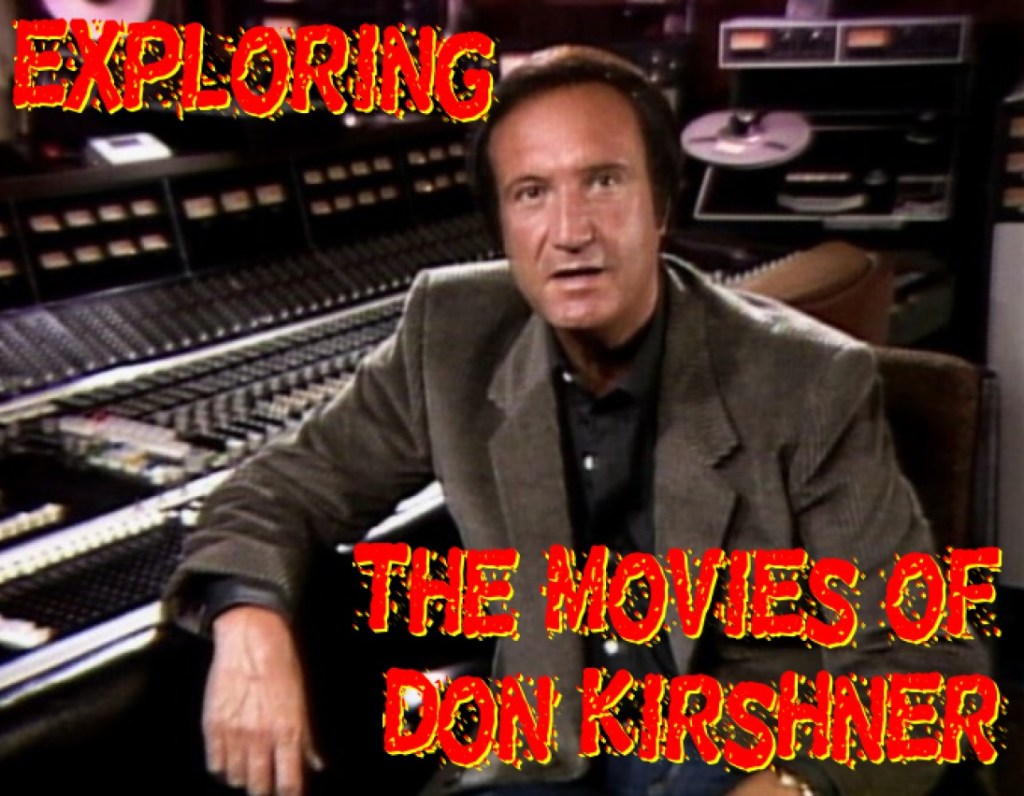



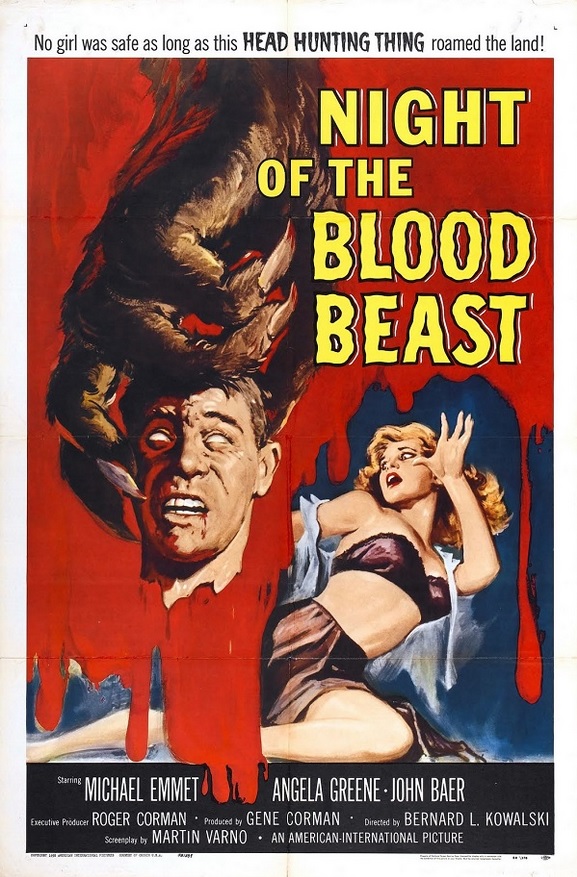
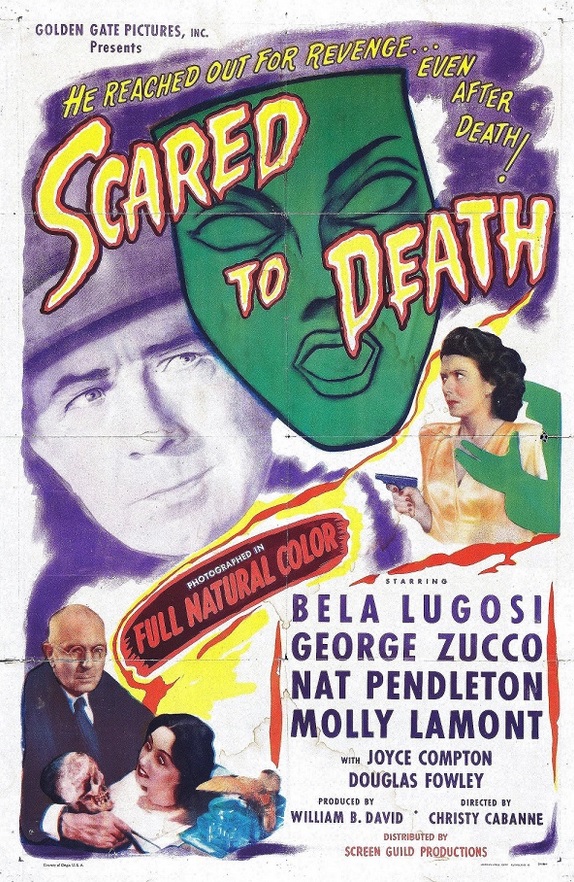


 B&S About Movies
You must be logged in to post a comment.