Fate is you surfing around the various movie-centric pages you’ve “liked” on your social media platforms — and having the cover of Todd Sheets’s ode to sorority babes on Paul Zamarelli’s VHSCollector.com group starring back at you.
Fate also means you have to review that movie of your youth for the future analog generations of snowy n’ white noised video horndogs — regardless of that film’s actual lack of horns, hooters, and dogs.
Sheets is part of the ’80s SOV vanguard inspired by the self-made, 16mm exploits of New Jersey’s Don Dohler who gave us charming, ’70s drive-in schlock such as Fiend. It was the efforts of Dohler that paved the way for the shot-on-video and released straight-to-VHS purveyances of Dennis Devine, Donald Farmer, Jon McBride, Brett Piper, and Mark Polonia — each who we’ve gone on about at the site, to your ad nauseam chagrin.
The resume of “Kansas City’s Prince of Gore” dates back to Blood of the Dead, issued as two, two-part shorts in 1985. The Karo syrup and Spirit Gum mayhem got really interesting with his energetic, sixth production — which became Sheets’s most successful rental — Dead Things (1986). While many SOV’ers are long since done and gone (Justin Simonds of Spine fame, vanished; Farmer and Polonia are still spinnin’ the sprockets) — Sheets is still at it (and on film #51) with his most recent offerings of Hi-Death (2018) and Clownado (2019).
Now, you are most likely questioning our raving about these camcordered efforts and their makers. You must understand that we, the Allegheny cubicle farmers of B&S About Movies — as our buds over at Wild Eye Entertainment complemented us — are doing our part to hold up the old guard of the genre-writing filled zines of the ’80s that first covered this then new sub-genre of shot-on-video films. So we give SOVs a break — a very wide berth (see Nigel the Psychopath, as an example) — that we would never give to the direct-to-streaming horror that gets released today . . . well, unless that 21st century DTS’er is from one of the ’80s old guard, such as Donald Farmer — who got his start with Cannibal Hookers (1987) and most recently released Shark Exorcist (2015) and Bigfoot Exorcist (2021) — and Mark Polonia — who recently released Noah’s Shark (2021) that’s written by fellow, digital SOV-rebooter, John Oak Dalton.
While the video box claims this fifteenth production from Sheets is a “sequel” to David DeCoteau’s USA Network cable-run Sorority Babes in the Slimeball Bowl-O-Rama (1988), in reality — outside of DeCoteau producing the film and the title similarity — it’s not.
DeCoteau, if you’re not familiar with his works, is also part of that ’80s SOV vanguard: only he, unlike his analog brethren, was able to transition out of the shot-on-video realms to produce actual “films” distributed by indie shingles (Wizard Video and Empire Pictures) with the likes of Dreamaniac (1986) and Creepozoids (1987) — both which, like Sorority Babes, not only became top home video rentals but also oft-programmed cable television favorites. And double-D, as with Donald Farmer and Mark Polonia, is still making movies, only more successfully: Decoteau just released his 25th “Wrong” movie for the female-centric Lifetime channel, The Wrong Valentine (2021).
So, with most of the adult film-centric cast from the real “sequel” to Prehistoric Bimbos in Armageddon City (1991), Sheets weaves this tale about five well-endowed bimbos of the down-and-out Kappa Beta sorority given a chance to join the more fashionable and popular Felta Delta house. The “death” comes in the form of their initiation: spending the night in an abandoned and rumored-to-be-haunted college. Complicating matters is that the girls screwed with an antique crystal ball during a seance (between their floor games of Twister) that unleashed a force trapped inside. And the entity is pissed and follows them to the abandoned college. Also along for the ride are two, pizza-delivering frat nerds trying to score and two crusty antique dealers who’ve tracked down the ball and only they can reseal the demon back inside.
Again, we give these camcorder, brick and mortar-released SOV flicks a lot of critical wiggle room, but man: this one really is a mess and it has none of the charms of the cheaper and less skilled Nigel the Psychopath. The frames are perpetually soft focused, the “acting” is non-existent to the point of bimbettes reading off-camera cue cards, the juvenile sex jokes don’t land, the effects are cheap ‘n’ fake (a self eyeball removal; a 2×4 shoved down the throat), and regardless of sleeve’s promise: there’s little-to-none of boobs and blood we came for. Hey, it’s only 70 minutes of your time and a forefather to today’s direct-to-streaming horror films. So view it as a historical, celluloid artifact to file away in your grey-mattered trivia banks to amaze your friends with your film knowledge. You know, like I am doing to you, the three people who read this review (okay, one: namely me).
In the end, this wasn’t bloody and trashy enough for me back then or now during this second go around — not after the joys of renting Sheets’s two-part Blood of the Dead and Dead Things all those snowy n’ white noised years ago. And here I am, all these digital years later, lamenting my Todd memories (to myself) and getting free on-the-job screeners of his latest flick, the aforementioned-linked, Clownado. So, while the circle completes . . . the circle should really be broken because I am too old for this SOV shite. . . .
“Get that motherf**king VHS tape out of my motherf**king VCR!”
You can learn more about and continue to follow the career of Todd Sheets through his Extreme Entertainment website and Facebook. Be sure to check out our exclusive interview with Todd from October 2022 as he talks about his career and his Video Vengeance reissue shingle. During the last two weeks of January 2022 we had another, another “SOV Week” blow out and reviewed another of Todd’s films, Nightmare Asylum (1992). In fact, we’ve reviewed quite a few of his films and this link will populate what we’ve done, thus far.
“This is as pointless and purposeless as Peter Fonda’s Idaho Transfer of 1973. A better soundtrack would help. And throw in A PLOT as well.” — A well-said comment by You Tuber Lee Larson on the film’s upload
So, after Monster a Go-Go in 1965, producer, writer and director Bill Rebane took a decade-long break.
He should have stayed on break.
I have a feeling Bill Van Ryn of Drive-In Asylum and Groovy Doom loves this; movies where “nothing happens” is his groove. Well, groove on, Billy. Groove on. No polyester jackets required.
So there’s no questioning — regardless of the VHS and DVD reissues and box-set repacks — as to when this was made: Yes. this is a real, ’60s to ’70s era radio studio. Yes. That is a (blue) ashtray, to your left, as smoking in radio studios was oh, so 1970s.
Anyway . . . Bill Rebane came back with a vengeance in this, his second feature film, with plot points he later recycled into his follow up non-epics The Giant Spider Invasion (1975) and The Alpha Incident (1978; part of Mill Creek’s Chilling Classics box set) — the former which actually received a wide spread theatrical release and screened at my local duplex because, well, because Alan Hale, Jr. — yes, the Skipper from TV’s Gilligan’s Island — and Barbara Hale — yes, the Della Street, the long-time secretary to TV’s Perry Mason — still had some UHF-TV rerun stank on them to get us, i.e., sucker us, through the doors. We knew enough to avoid The Alpha Incident until it appeared as a late night UHF-TV’er, since a washed up Ralph Meeker (who acted alongside Charlton Heston at Northwestern University) and George “Buck” Flowers didn’t have any iconic TV stank on them to get us into the doors.
No, the proceedings on either of those films got any better nor improved on their earlier Invasion from Inner Earth model. Yes, if you’ve seen The Alpha Incident, you’ve seen this, and vise versa. In fact: the same thing happens in Rebane’s The Capture of Bigfoot (1979; back to nobody-never-heard-of actors, natch), only a bigfoot — not connected to aliens — is responsible for the mystery. Oh, and nothing comes from “in” the Earth; the “it” comes from outer space. So, leave your zombie hopes on the deep woods’ cabin porch, Cletus.
What else should we expect from the guy who decided putting a ukelele-playing Tiny Tim (a huge, but very odd ’60s celebrity, Wiki him) in a slasher film with Blood Harvest (1987) was a good idea. Lest not we forget Rebane’s haunted piano romp with The Demons of Ludlow (1983). Did we forget his Loch Ness mess with Rana: The Legend of Shadow Lake (1981), and his millionaires trap people in a mansion comedy, The Game (1984)?
Yes. On purpose.
Hey, we’ll remember Rebane’s production of The Devonsville Terror (1983) because a film directed by Ulli Lommel starring his wife Suzanna Love, along with Donald “I’ll take anything” Pleasence, along with Robert Walker, Jr. and character-actor extraordinaire Paul Wilson isn’t a film you question: you watch. Oh, and Twister’s Revenge! (1988; part of this month’s Mill Creek Drive-In Classics review blow out) . . . that epic isn’t about killer weather: it’s a comedy about a computerized, Knight Rider-esque monster truck. No really. Do we want to find a copy of his paranormal “trip to the other side” romp that is his final film, Ghostly Obsessions (2004)? Do we, really? Do we? DO YOU?
Uh, no. . . ?
There’s no zombies here. Just aliens. Move along, you Romero vagabond.
Well, there you have it, then. So goes the mind of the pride of Riga, Latvia, in this grafting of The Thing (the original, not the remake) onto Raimi’s later The Evil Dead. Only not as good — not even close — to either, is what is sorta-kinda is happening here. In fact, instead of “The Thing,” this was also called They in some distribution quarters — not to be confused with the James Whitmore-starring Them!, which is about giant ants . . . that actually do come from inner earth.
Look, an Ed Woodian flying saucer arrives at Earth. Then planes crash. Cars stall. The UFO crashes in a swamp, and spews a red gas (fuel?) that infects the town. Wait, was it an alien “bomb” of some sort? (It’s not clear and I don’t care.) Uh, so, people get sick and die . . . the infection spreads and, before you know it: a plague has wiped out the planet and an alien invasion is at hand.
Anyway, since planes can’t fly anymore (a guy steals a plane and tries to escape; it crashes), four Canadian bush pilots hold up in a better-than-Raimi-dump-of-a cabin (but we are actually in Wisconsin, U.S.A. where Rebane shot all of his films) to wait out the invasion . . . or whatever the hell is going on, here.
Really? 100 minutes? I think I watched maybe 10 seconds, let alone ten minutes.
Oh, wait something is going on here. It’s just not all exactly clear, because the-ac-tor-re-ads-in-this-fi-lm-dr-i-ve-yo-u-to-no-t-li-sten-to-the-bug-e-tary move-the-non-plot exposition.
There’s junk science babbling about Mars and the Earth were once closer to each other than the Earth and the moon are now. And something about the planet alignments (oh, no, not more “Jupiter Effect” preambles). And about the Comet Kohoutek (discovered in 1973). And electromagnetic fields. And the inhabitants of Mars escaping their planet’s destruction. And the Holy Bible’s 7th seal. And something about a giant, immense rose. And Florida rising out of the ocean. And a newscast telling us about “worldwide UFO sightings and mass illness.” And an interview with a hick who claims he was “abducted by aliens from Uranus.” And, apparently, the “they” are from Uranus, as a TV broadcast — suddenly — is knocked off the air. “Something is blocking our transmission,” we’re told. Boy Howdy! And I thought the Georgia-made UFO: Target Earth (1974) piled on the Jesus-comet-aligned planets plot absurdities. Well, at least it’s not as inept as the Colorado-made The Spirits of Jupiter (1984). Or is it?
Yeah, for this is just a bunch of people walking around in the snow collecting firewood, riding snow mobiles, making campfires and talking-in-staccato because they-are-acting!
The excessive coffee drinking and cigarette smoking continues in Rebane’s 1978 outer space epic, The Alpha Incident, available on the Nightmare Worlds box set, in addition to their Chilling Classics set.
Oy! The bad acting.
The no-effects — expect for the red smoke bomb in the swamp. An annoying, all-too-loud, bonkers soundtrack stock-stolen from Lord knows where, that goes to-and-fro from electronic nausea, to folk guitar, to ragtime band clarinets. And not once — not once — is there any indication the aliens are, say, Atlantians, rising up from inside the Earth. And when the aliens do show up (or was that their spaceships; don’t know, don’t care), it’s a swatch of red cellophane (rubberbanded) over a flashlight because, well, remember the red smoke bombs? Oh, and radios make sounds, we are told, “that’s not the radio” . . . so, er, that must be the aliens, talking, or something?
You can watch Invasion from Inner Earth for free — don’t you dare pay a dime for this one — on You Tube. However, if you’d like a bargain-priced version for your collection, you can have it as part of Mill Creek’s Nightmare Worlds 50-Film Pack/IMDb alongside UFO: Target Earth and Alien Species — both which we also reviewed this week, so look for ’em!
Scoff we may, but we love Rebane so much, we reviewed this once more as we cracked open the entire box and reviewed all 50 films! Hello, Wisconsin!
Get your copy! Image courtesy of JohnGrit/Unisquare.
Ugh. The You Tube trailers we embed for your enjoyment keep being deleted. We give up! Search for ’em on You Tube.
About the Author: You can learn more about the writings of R.D Francis on Facebook.He also writes for B&S About Movies.
The one and done Jim West and Jim Clarke, in their respective director’s and writer’s chairs (and are probably one and the same), and the leads of Don Watson and Bobby Watson (real life brothers, natch), as our ne’er-do-well anti-Beau and Luke Duke heroes (the bearded longhairs Oosh and Doosh; no, really), smoke up ol’ Hazzard County — with the comedy dispensed for action (but the goofy stock library music cues, in places, are more comedy than action) as we hang from helicopters, demolish motor homes, and drive through houses transported-by-flat beds.
Oosh and Doosh, those dang “Watson boys” — since we’re off the small TV screens of Hazzard and on the big ol’ white screens of the Deep South mosquito emporiums — run pot and coke through the Georgia backwoods for corrupt politicians in the pocket the local Mafia. Of course, the brothers Watson get caught on that backwood, peach tree airfield where all that Cuban and Columbia gold flies in.
Hell, yeah, their employers break them out of prison because Oosh and Doosh are drug-runnin’ cash cows for the criminal cause. But their arrest — and eventual helicopter breakout — cost their bosses a lot of money. Now they’re on the hook to pay it all back. Yep! It’s time for the “biggest heist” of their ersatz pharmaceutical careers: Remember how the Bandit transported Coors from Texarkana to Atlanta? Well, those Watson boys are transporting an 18-wheeler filled with weed (disguised as a bags of potatoes). But the 18-Wheeler was trashed in a dust-up with the cops: now they’re in even deeper to their bosses: it’s time to rob an armored car — an unintentionally kill one of the guards. Once the big chase between the Watson boys’ Camero and a DEA agent’s pursuit Dodge Challenger comes to its eventual conclusion, there is only one thing left to do: the Watson boys steal their bosses’ home safe filled with money, hop the plane, and head for South America.
Get your own copy on Mill Creek’s Drive-In Classics!
Yeah, we know this is all pre-The Dukes of Hazzard and Smokey and the Bandit inspired it all — and this ain’t no Gone In 60 Seconds or even Double Nickles or even Flash and the Firecat — but this sure looks like it was made a lot earlier than 1976 or 1977. But it’s not: it was made post-1975, as we will soon learn.
Sure, the acting is awful, the action (while there’s occasional, momentary flashes of excitement) is inept, the script is beyond flawed-with-no-real-plot (it feels like it was “plotted” as the production plodded along), and the cinematography is a wee-bit muddy. But first-time filmmaker Jim West (we can’t find any background on his film-making past) works the cameras pretty decently. He keeps everything visually engaging with interesting shots and all of the required oners, doubles, reversals, and close-ups are there. West is certainly no Hal Needham, but he’s also not a Larry Buchanan or Bill Rebane, either (compare In Hot Pursuit against their respective films Down on Us and The Alpha Incident and you’ll see what we mean).
Yeah, ol’ Burt, who started it all with the likes of White Lightning and Gator, only to reignite the Hicksploitation genre for the ’80s with Smokey and the Bandit . . . well, the southern drive-in circuit was hungry for those modern-day, good ol’ boy westerns featuring redline revvin’ cars smugglin’ drugs lieu of horses and cattle rustlin’. As I rewatch In Hot Pursuit all these VHS years later, I’m reflecting back on Ulli Lommel’s (BrainWaves, Blank Generation) two-years later Cocaine Cowboys when I watch this. And those Watson brothers sure be do give me a hankerin’ to watch the Young Brothers, Richard and David, flyin’ their pot plane in Stuart Raffill’s High Risk.
Eh, you know what: I love this inept, stupid movie because everyone involved are on the cosine of the Z-List in their professions, but they’re given it their all to make a B-List drive-in flick. In a bonus round: Quentin Tarantino likes this one: he screened it as part of his annual “Grindhouse Film Festival,” so there you go.
And go you shall, to You Tube. Oh, Car Chase Wonderland, what would we do without you to satiate our red neckin’ car chase jonesin’? Ah, but just in case, we have a back-up You Tube copy, here. Meanwhile, the fine folks at the online magazine Condition Critical preserved a copy of the ’80s VHS sleeves, here. So, as you can see, this lone film by Jim West has its fans.
And this tale has a twist. . . .
Polk County Pot Plane is based on a real life incident chronicled on the Tallapoosa Memories Facebook page (the post also offers photos and articles about the 1975 events). The way the Georgia memories of smuggler Marty Raulins reads . . . well, it’s a hell of a lot more interesting than the fictional tale Jim West cooked up.
The story goes: Jim West was involved in all of the real life pot shenanigans of the federal government-confiscated DC-4 and buying the land where the airstrip was located . . . and the opening scene of the film of the plane being flown off the airstrip, and the third-act’s scenes of the heavy-equipment clearing of the airstrip . . . well, that’s the same government confiscated plane, and Jim’s clearing the airstrip to move the plane of its mountain perch. Turns out (and as a radio broadcast in the film tells us), the government made the bust and seized the plane . . . then had “no idea” how to get it off the mountain nor wanted to “pay for the cost” of moving it. So they auctioned the land and the plane to the highest bidder: Jim West won — then made his movie about Georgia’s infamous Polk County Pot Plane of 1975.
Courtesy of Wikimapia.org, who truncated the true story that led to the film:
“Drug smugglers flying a Douglas DC-4 (N67038) landed at a 1000 foot airstrip which had been bulldozed out of the forest only hours beforehand. The DC-4, designed for runways of 3000 feet or longer, managed to stop in less than 500. Numerous bales of marijuana were unloaded from the aircraft, which was then abandoned. As one might expect, a large four engine piston aircraft roaring about the countryside at low level in the dead of night attracted considerable attention from the locals, and law enforcement in particular. Numerous suspects were quickly apprehended in the following days. Charges were dropped against many, including the owner of the DC-4, as it could not be conclusively proven that he was the pilot at the time it landed in Polk County.
“The DC-4 had been seized by authorities as evidence. Various schemes for disposing of the aircraft were proposed. One involved using helicopters to airlift the ship out of the woods to the nearest proper airport. Another was to turn the site into a local tourist attraction. At length though, the aircraft was auctioned off to the highest bidder on the courthouse steps. The new owner lengthened the airstrip out to roughly 3500 feet and flew the aircraft out shortly thereafter [which is our filmmaker: Jim West!].”
You can also read another take of the tale in the August 2019 digital pages of the Rome News-Tribune by Kevin Myrick. The New York Times has also digitized their August 1975 coverage of the bust, “Plane on Mountaintop Perplexes Sheriff.” Do you want a commemorative tee-shirt? Polk Today, through the Poke History Society Museum, has ’em!
Just, wow. This one of the best backstories to a movie, ever. It even out-metas H. B. “Toby” Halicki’s Gone in 60 Seconds trilogy, with his movie-within-movie-within-movie shenanigans of The Junkman and Deadline Auto Theft! A producer needs to read up on this and do a meta-movie about the making of Polk County Pot Plane! I’d pay to see that movie. (And give me a role, will ya’? Even an under-five will do. I sure do need an acting gig.)
Be sure to check out our rundown of hicksploitation and redneck cinema delights from the ’70s and ’80s with our “Top 70 Good Ol’ Boys Film List.”
About the Author: You can learn more about the writings of R.D Francis on Facebook.He also writes for B&S About Movies.
Editor’s Note, May 2022. This film is currently being restored for an official 2023 releasefrom Gila Films.Information on that release, to follow.Now here’s our review from November of last year as result of our annual, November unpacking of a Mill Creek 50-film packbox set.
“And they sung a new song, saying, Thou art worthy to take the book, and to open the seals thereof: for thou wast slain, and hast redeemed us to God by thy blood out of every kindred, and tongue, and people, and nation.” — Revelations 5:9, from the film’s ending title card, because mixing aliens with the bible was a hot ticket in the 1970s
The 1974 theatrical one-sheet.
Ancient Astronauts on Film
It all began with the 1970 film adaptation of the same name of Erich von Däniken’s 1968 worldwide best-seller Chariots of the Gods? — one that grossed $26 million in U.S. box office alone, and received an Academy Award nomination for best documentary feature.
The documentaries, as well as fictional movies — long before Close Encounters of the Third Kind came on the scene — were thou art loosed.
Rod Serling pulled a narration paycheck with In Search of Ancient Astronauts, In Search of Ancient Mysteries, and The Outer Space Connection (all 1973) for Sunn Classics; he also lamented about all sorts of weirdness with Encounter with the Unknown (1973). American National Enterprises gave us Mysteries from Beyond Planet Earth (1975). G. Brook Stanford, one the world’s earliest UFO journalists (or “saucerians” as they preferred), used his own book, Space-Craft from Beyond Three Dimensions (1959) to make his own Schick-Sunn Classics-styled document with Overlords of the U.F.O (1976). Film Ventures International jumped into the fray with The Force Beyond (1978). Then, Jack Palance and William Shatner, respectively, earned paychecks hosting the films The Unknown Force (1977), which tossed in psychics, miracle healers, and Man’s and the Earth’s untapped energies, while Bill got into the ancient-biblical astronauts game with Mysteries of the Gods (1977).
While it didn’t speak of aliens, Sunn Classics jumped in the deep end of the pool with In Search of Noah’s Ark (1976) and the “science” of Christianity with Beyond and Back (1978). Knowing that, if people were into biblical arks, they’d want a movie about the Son of Man, too, so they gave us In Search of Historic Jesus (1979), as well as movies about the alien-infested The Bermuda Triangle (1979), and the predictions of the end of man by Nostradamus with The Man Who Saw Tomorrow (1981).
Of course, when documentary-reenactment films — which, in a way, UFO: Target Earth is — began to fizzle in the Lucasian ripples, out came the-very-on-the-cheap Star Wars ripoffs from Sunn Classics, by way of the VHS-rental cousin Starship Invasions (1977) starring Robert Vaughn battling Christopher Lee: he in a black Gumby suit as the alien leader of an underwater pyramid base in the Bermuda Triangle. Both actors returned in Hangar 18 (1980) and End of the World (1977), respectively, with Lee in the latter as an alien masquerading as a Catholic Priest lording over a convent of alien-nuns (no, really).
Ed Hunt, the man behind Starship Invasions, previous examined the concepts of the Bible, humans and aliens with Point of No Return (1976), another fictional — “based in fact” — sci-fi thriller about an investigator looking into a series of violent deaths, via suicide and murder, which are “somehow” connected to UFOs and nuclear research. Then Hunt was back with a documentary proper: UFO’s Are Real (1979), featuring insights from respected military and science professionals.
Then, there was producer Robert Emenegger, he who gave a documentary with the same title as the book on which it was based, UFOs: Past, Present, and Future (1974); in the midst of Sunn Classics, with their box office rally of documentaries, Emenegger re-released it as a 1976 cash-in. Then, when Close Encounters of the Third Kind broke box office records, Emenegger brought it back, again, as UFOs: It Has Begun (1979). Emenegger, of course, was also in the live-action business and, with Star Wars dominating between 1977 to 1983, he pumped out ripoffs that made Sunn’s Robert Vaughn’s and Christopher Lee’s romps look like a Lucas opera, with The Killings at Outpost Zeta, PSI Factor, Captive, Beyond the Universe, Warp Speed, Time Warp, Escape from DS-3, and Lifepod — which starred the likes of Cameron Mitchell and Adam West, along with plenty of sets, prop, and stock footage recycling.
Who’s the Director?
Maybe, if Michael A. (Alessandro?) De Gaetano — the “power” behind UFO: Target Earth — secured the services of Cameron Mitchell, Adam West, Christopher Lee, and Robert Vaughn. Maybe if he booked Aldo Ray and Virginia Mayo, as he did for his second feature, Haunted (1977), this documentary-meets-reenactment-meets-live action (well, no action) drama amalgamate wouldn’t be so tragic.
Maybe . . . Ah, but guess what? Comic Phil Erickson, the ex-sidekick to Dick Van Dyke, when Dick was an up-and-coming stage comedian, and Montgomery Clift’s older brother (1953’s From Here to Eternity), Brooks, are in the cast. . . .
Yeah . . . Michael A. De Gaetano, aka Alessandro De Gaetano, whose career I do not know, seems to have made his producing, writing and directing debut with this UFO epic. Then, he did two more: Haunted (1977) and Scoring (1979), neither which I’ve seen or feel the need to search for: by titles alone, we’ll guess they are a ghost-horror and a T&A flick.
Then, our ol’ Uncle Mike, aka, Al, vanished . . . and I am of the opinion that’s where his career, ended. And he went of to sell used cars in Atlanta.
Did he return after a decade? No, I don’t think so.
I never trust the digital content mangers at the IMDb, as they’re constantly splitting resumes, due to film artisans using alternate names and aliases during their careers, or they’re database-merging unrelated artists due to similar names. I always look for a second source. But for Mike-Al, there is no second source.
So, no: I don’t believe the Allessandro deGaetano, the one who emerged ten years later to give us Bloodbath in Psycho Town (1989), is one and the same. And no, I do not want to see that film or dig into it any deeper: by title alone, I’ll guess it’s a slasher ripoff.
Then, our crazy Uncle Al (aka Michael?) — not Brescia, but we wish he was Alfonzo Brescia, for at least Star Odyssey was entertaining with its spunky awfulness — vanished, again, for another six years.
Then he came back, to give us . . .
Something called Project: Metalbeast (1995), then Butch Camp (1996), and wrote another one called, Neowolf (2010). The latter is about a band and a werewolf, well, just like — but admittedly better — than Alice Cooper’s Monster Dog. The first two are self-explanatory: yes, the latter is about gay men and lesbian women at a summer camp. And, if not for us diggin’ up obscurities for our latest “Rock ‘n’ Roll Week,” we wouldn’t have broached that wolf rocker, at all.
So, are they all the same “De Gaetano” auteur? Or two. Or three? Magic Google Ball says, “No” to the 8-Ball. I think we have three different Mike-Als IMDb-jumbled . . . then again, I could be wrong, and probably am, and have been before.
Okay, so that’s the mysterious Michael/Alessandro De Gaetano resume in a nutshell to the best of our knowledge. No patented B&S About Movies “Exploring” career featurette is required. Done and done.
A Bad Case of Star Wars-itis
The bogus ’80s theatrical one-sheet reboot on the “Coming Attractions” wall that got me in the door the following week at the ol’ twin-plex/courtesy of Heritage Auctions.
Yes, I know I sound ridiculously pissy over a forgotten, 40-year old film . . . but Mill Creek box sets have that way about them. Yes, I admit I am acting like a dickhead bully kicking the dorky kid of the twin-plex set in the nuts, in this case: Micheal De Gaetano, who l leave wallowing in pain on the playground, as I hit the 7-11 for a Cherry Slurpie and nuked Bean Burrito with a smile on my face for a bully-job well done. You’d think, with enough American International and Crown International sci-fi flicks under my belt, I’d know better.
So, a long time ago, in twin-plex far, far away . . .
I was infected-beyond-cure by Star Wars Fever and the Boogie-Woogie Battlestar Galactica Flu. So, me, the naive movie goer obsessed with all things Lucasian and Grand Larsony, went to see UFO: Target Earth, as well as Star Pilot (1977), aka the decade-old repack of Mission Hydra: 2+5 (1966), at my local twin plex. And both sucked, not only Dianoga ass, but Wompa balls. I even went to see — in its very-limited, one-week U.S. theatrical run — the sequel-Battlestar Galactica film cut from the series, Mission Galactica: The Cylons Attack (1979), and drove 15 miles to do so.
Yes, it was a space-born sickness.
However, I am still pissed off that Michael-Alessandro “stole” my sweated-my-ass-off yard work money for this UFO biblical-aliens boondogglin’ hornswoggle. So yeah, this review is going to hurt, Mike. You know, like those mike booms that keep popping your actors in the head. What’s the deal, Mike? Did you hire the world’s shortest boom man in the history of film? (The more experienced film critic in me now knows: this was shot-on-video, then blown up for theatrical distribution: thus, the boom mike pulled into the frame. So that settles that, 50 years later.)
Under the boom, literally. Left and right, seated together: Our heroes, played by Nick Plakias and Cynthia Cline/courtesy of Just Watch.com.
The Review . . . with Plot Spoilers
“On the afternoon of March 26, 1974, Alan Grimes, a young teaching fellow at the University of Gainesville, attempted to make a telephone call to a colleague to discuss some academic business. It was a call which was to change his life!” — More cost-cutting voice overs, leading us to believe we’re to embark on a docu-reenactment flick of the Sunn Classic variety
So, while this all takes place two years before Steven Spielberg’s Close Encounters of the Third Kind . . . don’t worry. Steve didn’t rip off UFO: Target Earth; the origins of CE3K date to his first full-length indie, Firelight, made in 1964 while still a teenager. However, let’s say we have an ersatz Roy Neary (aka Richard Dreyfuss) in Dr. Alan Grimes (aka the-dryer-than-toast Nick Plakias), and our faux-Jillian Guiler (aka Melinda Dillon) is Vivian, the psychic-abductee (cat-screeched to thespian nauseam by a thankfully one-movie-and-done Cynthia Cline).
Courtesy of poor editing — and the film opening with UFO photographs as its opening title cards role, then cuts into Blair Witch-styled, “eyewitness account” documentary interviews — it may not be perfectly clear to most, so we’ll clear it up. The young boy we meet in the opening of the film — dismissed by his mother when he complains, nightly, about the strange lights in his bedroom (“It was like a big star and it hurt” . . .”Oh, it’s just dreams, dear.”), is our hero-doctor.
Now, about that “strange light”: we don’t see it. Nor any saucers, or aliens, or any special effects: as we shouldn’t, since Michael A. De Gaetano — we come to learn these 50-years later — shoestringed his debut film, sans permits, for $70,000. (But I still won’t cut him a break. I’m celluloid-dicky that way.) So, to that end, and as is the case with any ultra-to-low-budget film, we’re exposition-heavy, as characters spew dialog about what they’ve seen. Yes, instead of seeing saucers that couldn’t escape Earth’s gravity (the “strange lights” in the bedroom) we’re told about them.
So, anyway . . . that kid grew up to become a Dr., or some type of communications specialist at a Georgia University . . . which allows him to accidentally intercept a top-secret government phone call (?) about UFO activity near a power plant that’s near a lake (plot point), with jets scrambled (again, we do not see this event).
So, obsessed with the event (again, young Alan’s been obsessed with UFOs since the bedroom lights, natch), he chats up his old astronomy professor (in an obvious, bad grey wig) — who gives us some exposition-babble via a lecture regarding the appearance of Halley’s Comet in 1066 A.D. coinciding with William the Conqueror’s conquest of England and the rise of the Islamic Empire. Oh, and the comet also caused the Crusades, the Great Black Plague, the Reformation, and the discovery of the New World. Oh, and that, always, after a comet arrives, there’s a flurry of UFO activity.
So the professor leads Doc Al to a UFO skeptic-inclined professor, Dr. Mansfield (another one-and-gone actress in LaVerne Light; her assistant is Tom Arcuragi, from William Girder’s Grizzly), as they discuss the old testament story about Jonah and the whale . . . and that a whale’s throat is too small to swallow a man — so it must have been an underwater UFO. And that leads us to our faux-Melinda Dillon (Cynthia Cline): a UFO abductee left “cursed” with psychic powers that gives her the ability to feel “dimensional energy.” That “feeling,” in a bit that predates Meg Ryan in When Harry Meet Sally: her joke-of-a-psychic-episode-with-the-aliens performance is more “fake orgasm” than alien-psychic episode.
So, with a psychic abductee on his side, Alan now has the “link” to the aliens he needs to track then down — and possibly stop an alien invasion. And he does, since the military officer he met with earlier to discuss linking the university’s and military’s “systems” to research the ongoing UFO sightings plaguing Atlanta, gives him the bum’s rush with a smile and handshake. Meanwhile, the skeptical Dr. Mansfield, who knows a thing or two about psychic abilities, but doesn’t buy Vivian’s gifts, tags along with Alan and Vivian to document the area’s UFO sightings, while also disproving Viv’s abilities, all of which takes them to a mysterious lake that may or may not have an alien craft at its bottom.
So, while at the lake, our trio (well, four, lets not forget Nick’s buddy, Dan Rivers) sets up some electronic equipment . . . and the oscilloscope’s patterns, apparently, indicates “something” is down there — and we know this because Vivian has one of her Meg Ryan faux-orgasms. Only the acting is so awful, it’s more like Elaine Benis, the Seinfeld-ripoff of Meg’s character. You know, the way George Costanza was a ripoff of the great Woody Allen.
Anyway . . . there is something below with “an energy force with a flight pattern,” Alan tells us. . . . So, with that flux of the oscilloscope, Alan is summoned by an alien presence (again, heard, not seen). The alien also calls out “Viv-i-ian” over a walkie talkie, so she can have another Julia Louis-Dreyfuss bad-thespian freakout-moment.
Finally. Plot movement.
The alien tells us the story of his becoming trapped on Earth as “formless energy” over 1000 years ago. And that Alan is one of only four in the history of the human race to “ascend” the human form to understand alien life (it’s not mentioned via dialog, but if you know your bible: the other three would be Enoch, Elijah, and the Virgin Mary). Now, Alan must set aside his fear and die, as a “sacrifice” to give the aliens the energy they need to return home. And while he’s not ripping of CE3K, De Gaetano pinches 2001: A Space Odyssey: for as Alan walks to — and into — the lake, he ages.
As ol’ buddy Dan pulls Alan’s skeletal remains from the lake, Alan’s “energy,” i.e., spirit, departs into space. And we actually do “see” the alien face from the poster: it appears on a TV monitor at the lakeside camp. And yes, we do, finally, get some (not so) special effects: three-minutes worth of a pre-Windows screensaver light show via a TV monitor — which represents Alan’s Dave Bowman-esque “light-spirit” ascending to the stars.
Wrapping It Up
The 1989 VHS: Way to to put forth the effort. Why would anyone rent this marketing slop?
Okay, I’ll give credit to where credit is due.
De Gaetano — as I watch this almost five decades after the twin-cinema fact (he was 36 when he made this) — was certainly Erich von Däniken-ambitious in his debut endeavor. He worked in Halley’s Comet, bible parables, and psychic phenomenon, and is certainly a student of all of those Sunn Classics documentaries we spoke of, earlier. The only thing that is missing are the Pleiadians (but, again, Ed Hunt has you covered with UFO’s Are Real), the Lemurians (the 2007 low-fi document Beyond Lemuria has you covered), and the Shavers (Gene Autry, believe it or not, has you covered with Phantom Empire, aka Men with Steel Faces). No, the Unarius UFO Cult in El Cajon, California, didn’t make this (but they have you covered in 2012’s Children of the Stars): Mr. De Gaetano from Georgia, did. His Spielbergian concept is there: the budget, however, is not.
Sure, now, all these years later, it’s not all that bad, but still: not having any aliens — expect that color-smudgy face that shows up on a TV — or spaceships — all supplanted by awful, exposition-thespians — kills it. The script, however, has its intelligent and insightful moments. The alien(s) abducting Alan as a little boy, for their own, nefarious purposes of getting home, is both creepy and, yet, sad. And some of the locations De Gaetano secured on his $70,000 budget are budget-impressive (the bar scene is well-done), and the outdoor shots are competent, as well. So, it’s not a total Ed Wood-meets-Larry Buchanan loss. No doubt, there’s a lot of volunteer (background) acting and location-donations, afoot, so now: my more knowledgeable film critic-side gives Mike-Al a lot of critical slack that my once film-loving child, did not: I now see this as a more ambitious, intelligent-inversion of a Don Dohler faux-Star Wars joint, such as The Alien Factor.
Where to Watch, Where to Buy, etc.
Why we reviewed this flick:We’ve since unpacked all 50 films from this box set/image courtesy of JohnGrit/Unisquare.
In Print: According to Howard Hughes, in the pages of his book Outer Limits: The Filmgoers’ Guide to Great Science Fiction Films (2014), god bless him: he dug deeper into Alessandro De Gaetano’s film. Double-H tell us the film shot-on-location in and around Atlanta, Georgia, at the Fernbank Science Center (Wikipage), the historic Manuel’s Tavern (they have a Wikipage!), and Stone Mountain Park (website). We also learned UFO: Target Earth made the rounds in Halloween 1974 on a double-bill with the Vincent Price-narrated documentary, The Devil’s Triangle. In addition, Centrum gave the film a full-court press, earning the film cover stories in two Spring-Summer ’74 issues of Box Office Magazine.
The ’70s Progressive Rock Sidebar: In this writer’s quest to chronicle all things Kim Milford (Song of the Succubus, Rock-a-Die, Baby), Kim Milford’s post-Moon band from those two films — which he formed with remnants from Genya Ravan`s Ten Wheel Drive (recorded for Polydor and Capitol) — called Eclipse, provides a song that’s alternately referred by Milford fans, based on the song’s opening verses, as “Between the Ceiling and the Sky” and “Between the Earth and the Moon.” However, per the film’s opening credits, the song is actually titled “Between the Attic and the Moon.”
However, it’s debated that it’s Kim Milford on lead vocals . . . or if Eclipse even features members of Ten Wheel Drive.
The debate is the result of the song in question being produced by Patrick Colecchio — who managed the ’60s California “sunshine pop” outfit the Association (“Cherish,” “Windy,” “Along Comes Mary”) for eight years from 1966 to 1974 (then on and off until the early ’80s) — many believed the song was written/performed by the Association incognito. By then, the band’s best-known vocalist from those chart-topping hits, Terry Kirkman, left the band and was replaced by Association drummer-background vocalist Ted Bluechel, Jr. from 1974 until 1979.
So, is it Kirkman, Bluechel, or Milford — backed by members of the Association — singing lead vocals?
For a period of time, Kim Milford — who cut late ’60s singles for Decca Records with Ron Dante (the Archies/anything Don Kirshner-connected) was plucked from a production of the hippie musical Hair for an ill-fated, short-lived frontman post in Beck, Bogert & Appice — was managed by Bill Acoin, known for his work with Kiss, Starz, as well as creating solo careers for Billy Squire (out of the ashes of A&M’s Piper) and Billy Idol (out of the ashes of Chrysalis’s Generation X). Prior to his Acoin years: Milford, it seems was managed, or the very least produced, by Patrick Colecchio.
But we could be wrong about that.
As for the (too loud) background music heard at the bar: We’ve been unable to track down the uncredited song that we’re guessing is called “Country Love.” And it doesn’t sound — to these ears — anything like the Association or Milford would produce.
Promo Stills: I can’t believe all of the black & white promotional stills for this film available for sale online. You can check them out for yourself: Photo 1, Photo 2, Photo 3, Photo 4, Photo 5, Photo 6.
We also found this Centrum Releasing one-sheet (used for one of the ’74 Box Office Magazine covers) courtesy of Imagenes Espanoles and an KRKE/New Mexico radio print-ad courtesy of imgur.
And we found these two DVD covers:
As if the Lucasian repack of Mission Hyrda 2+5 as Star Pilot wasn’t bad enough . . . they have the NERVE of DVD-pairing it with UFO Target Earth?
Another two-time loser for your DVD decks.The guy who made The Eerie Midnight Horror Show made the latter, if that helps you.
On DVD: As you can tell from the above Star Pilot and Eyes Behind the Stars (unlike UFO: Target Earth, which predates CE3K, Eyes actually is a ripoff of CE3K) two-fer repacks: UFO: Target Earth is easily found on DVD as a standalone film, in multi-packs, and yes, even on Mill Creek Box Sets (in this case, their Nightmare Worlds 50-Film Pack/IMDb track listing). It’s also, very appropriately — if you know your Larry Buchanan’s works — packed with Creature of Destruction (1967) in a two-fer. And beware: all of those presses are copies ripped from either the 1989 VHS (seen above) or grey-marketed off the film’s numerous online rips.
UFO: Target Earth reappears, again, alongside Creature of Destruction, on RetroMedia Entertainment’s Mad Monster Rally 3-disc/box 9-film set issued in 2008 — available both in single discs or one-boxed set. Easily found on Amazon and eBay, the set also features The Blood Seekers (aka 1971’s Blood Thirst), Blood Stalkers (1978), The Cremators (1972), Hobgoblins (1988), House of Blood (aka 1973’s House of Terror), Flying Saucer Mystery (1950; a bogus documentary), and Zombies (aka 1970’s I Eat Your Skin).
Online Streaming: As we go to press, Tubi pulled their upload of the full film — but Mill Creek keeps recycling it on their bargain box sets.
As of Summer 2022, Red Rocket Media returns UFO: Target Earth to Tubi — in an edited form that runs 73 minutes as it cuts the opening credits (we think, via music licensing issues) — to watch on your PC, laptop, or Smart TV. Meanwhile, the Xumo online plaform uploaded an official version of UFO: Target Earth — with its full opening credits — that runs 77 minutes.
In fact, after it’s initial drive-in run that clocked in at 86-minutes, the later Simitar VHS (behind a lot of Jackie Chan and Godzilla films coming to the U.S.) — and copies of those tapes — clock in at 80 and 77 minutes. Over the years, all three versions have come and gone as online rips on various platforms. (You can learn more about that VHS shingle at VHS Collector and Wikipedia.) Two years later (which cut of the film, is unknown), the film made its television debut as a CBS Late Movie on January 9, 1976, then moved to UHF-TV syndication throughout the late ’70s.
The 2023 Restoration: In June 2022, Gila Films announced production began on an authorized, Blu-ray and DVD restoration from original, 1973 camera elements — with the full support of Michael Alessandro de Gaetano. It will include his director’s commentary, as well as a full-color booklet with the full, correct story behind the film . . . which we guessed at via the web-Intel we had at the time of this writing. The release will mark the first time the film’s original aspect ratio has been seen since its theatrical screenings.
Gila is always updating with new info and teasing with various promo materials, so do visit their Facebook page to keep up-to-date with the release.
Bravo to Gila Films, for passionately-made films like UFO: Target Earth by VHS-analog trench warriors like Michael Alessandro de Gaetano deserve that little-extra, special effort-of-affection in preserving them for later film lovers to discover.
It’s with great regret that we’ve learned Michael Alessandro de Gaetano passed away on a Sunday evening, June 11, 2023, in Arizona at the age of 85. You can read his obituary at Horror News.net, rife with new, uncovered trivia about his films and career.
After reviewing the made-in-Georgia Kubrick-Spielberg amalgamate that is UFO: Target Earth (1974), my mind — thanks to their somewhat similar titles (all of these ’70 UFO doc-titles are interchangeable, anyway) — drifted back to this documentary by Canadian filmmaker Ed Hunt.
Yes, the apostrophe is grammatically incorrect.Also repacked as Flying Saucers Are Real on ’80s home video.
Ed Hunt is a guy that carries a lot of respect around the B&S About Movies cubicles. He made eleven films, ten which he wrote. As most writer-directors starting out (Howard Avedis, Norman J. Warren), Ed Hunt made softcore skinflicks, three, in fact: The Freudian Thing, Corrupted, and Diary ofa Sinner between 1969 and 1974.
Sam, the bossman who guides the U.S.S B&S About Movies down the Allegheny confluence, always errs to the side of Ed’s John Carpenterian take on the ’60s crazy-kid romp The Bad Seed by the way of Bloody Birthday (1981). For yours truly, always Ed’s the much-ran USA Network ditty, The Brain (1988), hits my VHS-spot. The twain between Sam and myself then meets with Ed’s utterly bonkers contribution to the Star Wars cycle of films with Starship Invasions (1977) — its tale of an intergalactic “League of Races” secluded in an underwater pyramid lorded by Christopher Lee’s Captain Rameses, adorned in a one-piece, black Gumby suit.
Oh, but Ed Hunt’s love of UFOs and extraterrestrials dates to his first film proper, his fourth film that broke away from his softcore skinners.
The impossible-to-find-on-VHS Point of No Return (1976), which served as the warm-up for Starship Invasions, was also cobbled from “actual UFO accounts.” That pre-Lucasian sci-fi thriller concerns an investigator looking into a series of violent deaths, via suicide and murder, which are “somehow” connected to UFOs and nuclear research — a plot device also repurposed in Starship Invasions.
So, with that bit of Lucasian-Spielbergian-inspired hokum of alien-induced suicides and underwater Egyptians out of the way — and after polishing off a paranoia-world plague piece known as Plague (1979) — it was time for Ed to get serious about his obsession with UFOs and aliens.
Sure, for the many exposed to these same teachings by Giorgio A. Tsoukalos of the long-running Ancient Aliens series on The History Channel or A&E’s Mysteries of the Bible, you’ve heard all of this bibilical-aliens stuff before. However, back in the ’70s, with only three major networks and a smattering of local UHF channels to choose from, the only way you got your documentary download on aliens, the world’s and the universe’s unknowns, was to hit a local drive-in or twin-plex to watch theatrical documentaries.
If you need more UFO documentaries/reenactments — but, be warned, these are pretty dry and overly-repetitive cheapjack cash-ins — there’s the ex-“Midnight Movie” romps UFOs: Past, Present, and Future (1974; You Tube), Overlords of the UFO (1976; You Tube), UFO: Top Secret (1978; You Tube), the most psychedelic-tripping of them all: UFO – Exclusive (1979; You Tube), and the forever-lost UFOs: Are We Alone? (1979).
Oh, yes, it was the height of Star Wars-mania.
So, if distributors weren’t repackaging their pre-Lucasian wares produced in a post-Erich von Däniken/Stanley Kubrick world, they made “new” flicks, which, of course, stock-raided their own films for footage. We, the wee-lads of the ’70s, went to see all of these — and Ed Hunt’s UFO’s Are Real — as “Midnight Movies.” Of course, we had weed, fifths of liquor, and radio station swag as incentive to ease us through them.
Radio stations?
Yep. Radio stations sponsored “Midnight Movies” back in the day. I, myself, won a pair of tickets to see Luigi Cozzi’s Starcrash from a radio station giveaway.
But I digress, again.
The plots of all of these UFOuments are are pretty much the same, with the tale of the world’s most famous abductees of the ’60s, Barney and Betty Hill, the Bermuda Triangle, the missing five Avenger planes of Flight 19 from 1945, the Rosewell crash, Bigfoot tie-ins, and submarine technology based on UFOs, documented, ad nauseam. (The Hills had their own movie proper with 1975’s The UFO Incident; starring James Earl Jones as Barney Hill.)
Where Ed Hunt’s document detracts in quality from all of the low-budget knockoffs of the more-skilled Sunn Classics progenitors — which that studio made in the backwash of their own box-office bonanza with 1970’s Chariots of the Gods? — is that Hunt either filmed or secured fresh material. So we hear from never-before-interviewed air force pilots, army officers, eyewitnesses, as well as from the film’s narrator-producer Brandon Chase’s colleges Ted Phillips and Bruce Maccabee, as well as Wendelle Stevens, Marjorie Fish, and Stanton Friedman (who also contributed as a co-screenwriter to Ed Hunt). Now, those names mean nothing today, but back in the ’70s, these “saucerians” were always popping up on TV anytime the subject of aliens and UFOs needed discussing.
The real highlight — which ties back to Hunt’s Gumby-nauts from the Constellation Orion in Starship Invasions — is the appearance of Billy Meier; the infamous Swiss farmer speaks at length with his ongoing, since childhood friendship with the Pleiadians*, itself an oft-read tale among UFOlogists that fueled Georgian filmmaker Micheal De Gaetano developing the lead character in his film, UFO: Target Earth.
While Ed Hunt obviously created this fact-based passion project to prove UFOs are, in fact, real, on a shoestring, it’s still the best of the low-budget alien documentaries of that bygone era when man was desperate for answers as to our part and place in the universe of our post-Lucasian world.
It’s a Reb Brown joint. He gets kicked to second-lead and replaced by a helicopter. Gene obviously had something to do with it.
Look. It’s a foregone conclusion we’re watching a Jun Gallardo — who is doing his thing as Jim Goldman this time around — Philippines pastiche of a Stallone and Arnie joint. The fact that it stars an ex-TV Captain America and Gene Simmons’s ex-Playmate mate is icing on the Siopao.
As usual, well, not always: sometimes we are in Vietnam in these movies. This time, we are in the Philippine-doubling jungles of Central America where a U.S. military advisor becomes disillusioned by the brutality and corruption of the Central American government which hired him to straighten out the usual sociopolitical gambit. So Reb Brown, aka Mark Hardin, switches sides. When the government learns he sympathizes with the rebels: he’s jailed and tortured. With the help of an imprisoned hot blonde (cue Ms. Tweed), they break out and kick ass . . . and in Shannon’s case: bitch, screech and whine in a torture worse than any corrupt central American government can diabolically deploy.
The “more” meaning Reb Brown. At least Rutger Hauer wasn’t in a movie with Shannon — or Gene would have him box-bumped, too.
On the plus side: we are in a real and not plastic jungle. And there’s real military equipment. And real helicopters. But knowing our Philippine war flicks like we do: we know it’s all cut in from another film and probably one of Godfrey Ho’s, Teddy Page’s, or Cirio H. Santiago’s, let alone one of Mr. Goldman’s own films.
The DVDs of this are easily found in the bins at your local “everything is a dollar” emporium. The reality is that much was spent on the film: one dollar . . . with bad everything across all of the film disciplines. But Reb Brown (Yor Hunter from the Future) was washed up (in Hollywood, not our analog beating hearts) and the Italians weren’t calling . . . and thank god Shannon had Gene’s KISS spoils to live a decent life. Yeah, Shannon, “We’ve had enough of this sh*t,” too. But there’s always Reb tearin’ it up in Robowar.
It’s all part of Mill Creek’s “Drive-In Classic” that’s also available on You Tube.
About the Author: You can learn more about the writings of R.D Francis on Facebook.He also writes for B&S About Movies.
More people have seen this rubbery, sound-studio shot jungle rot by way of Mill Creek box sets in the ’00s than through its UHF-TV broadcasts in the ’60s and ’70s. And boy, did the cheapjack studios of Republic (the biggest), Monogram, and the cheapest-of-the-cheap behind this Buster Crabbe-starrer, PRC, love crankin’ out their Tarzan-ripped exploits from the 1930s through the 1950s. (Eh, I am too lazy to research how many Chesterfield Pictures made.) While we’ve never done an “Exploring” feature on those jungle romps, we did, thanks to Mill Creek’s recycling, break down and review the similarly-themed, Terror in the Jungle (1968).
South of Egypt and west of Ethiopiain the Sudan (aka an L.A. sound studio).
Ray Gorman (Buster Crabbe) is a treasure hunter seeking a downed airplane in the jungles of Africa. While there, he learns one of the survivors, a young girl, has matured (Julie London; Jack Webb’s ex and retiring after a 126-episode run on NBC-TV’s Emergency! as Dixie McCall, R.N. from 1972 to 1978) to become the jungle’s feared, mountain dwelling “White Witch” — complete with a gorilla protector. Hot on Gorman’s trail is Carl Hurst (Barton MacLane, who seen better days in The Maltese Falcon and High Sierra with Humphrey Bogart, then became General Peterson on TV’s I Dream of Jeannie), who also wants the priceless jewels spoils inside that plane.
What “spoils,” you ask?
Well, you see that young girl’s father was an embezzler who, before being caught, escaped in said plane with her on board.
Amid the rubbery brush, there’s plenty of wildlife stock footage — some not native to Africa — and a man in a ratty gorilla suit. It’s easy to get through at a meager 71 minutes . . . once you slop through that 20-plus minutes of stock wildlife. So, with fast forwarding, it’s only 51 minutes for you to see Buster Crabbe in something other than Rocky Jones, I mean, Flash Gordon, I mean Buck Rogers. Wait he was both Flash and Buck. Was he in Beyond the Moon (1954)? No that was Rocky Jones. But Crabbe was Tarzan at one point, so Fred Olen Ray flew him down to Florida for few days to film The Alien Dead (1980). And that, believe it or not, was also a jungle flick — complete with alligators eating zombies . . . or zombies eating gators (it’s been so long). No really.
Speaking of ex-Tarzans: Allan Nixon, who played with the Washington Redskins and was an MGM contract player who almost became Tarzan: he ended up in the same rubbery jungles battling ratty guerillas amid the wild life stock footage in Untamed Mistress (1956). Is the Italian-imported Mill Creeker, Women of Devil’s Island (1962), a “jungle” pick? Eh, 19th century French navy, pirates, sand . . . well, there’s a little bit o’ swampy jungles in there as they pan for gold.
Oh, but poor ol’ Buster: You can check out of the loin cloth, but you can never leave the jungle. Hey, at least Tommy Lee Jones portrayed you, sort of, in The Comeback Trail (2021).
Do you need a few more Monogram and PRC-variety cheapies? We’ve done a few: Scared to Death (1947) with Bela Lugosi, one of my personal favorites, Flight to Mars (1951), and I Accuse My Parents (1944). See? We just don’t do “horror films” at B&S About Movies. We’re well-rounded lads. Not as smart as Fredo Corleone, but we get by.
Shannon Tweed and Buster Crabbe in one box set? Mill Creek, we love you!
You can check out the trailer and full film on You Tube. If it starts to suck, well, there’s always The Alien Dead, also on You Tube.
About the Author: You can learn more about the writings of R.D Francis on Facebook.He also writes for B&S About Movies.
Editor’s Note, July 2022 Update: Thanks to our readers for quickly making this one of our most-visited reviews, with Denveritescontacting us to discuss their memories of this mostly-never seen theatrically, hard-to-find film on grey-VHS. Even the director himself, Russel Kern, discovered our review — and his July 2022 memories of the production now end this review. Yes, the positivity of the Internet is real. Now, let’s sit back with a filling Denver Sandwich and a cold Colorado Bulldog and enjoy the show!
Update: July 2023: The Spirits of Jupiter: Uncut is now available for streaming on Amazon Prime and we have all the details, here.
Okay . . . now here’s what we had to say about the film in November 2021, as part of an “Apoc Films” theme week.
“Jupiter is in the house of Aries . . . the great one will cool his sword in blood.” — The Roman god of Jupiter, or is that the Greek god of Zeus, over the opening credits, warning of man’s end
“Jupiter and Saturn, Oberon, Miranda and Titania. Neptune, Titan, Stars can frighten.” — Syd Barrett
Denver on Film
After enjoying my revisiting with Micheal Krueger’s Denver, Colorado, shot-and-released SOV’ers Mind Killer and NightVision (1987)*, my analog memories drifted back to this comic book shop renter: an unidentified flying oddball if there ever was one. Okay, The Spirits of Jupiter isn’t an official SOV, as it’s analogous to Don Dohler’s Fiend: a drive-in production shot on 16mm and blown up to 35mm. But you know how we feel about the 16 to 35 flicks: they walk and quack like an SOV duck, more so when our first exposure to those films wasn’t in a drive-in, but as a home video renter.
And with a cover like the one on the left, you can’t not rent it on the 5-5-5 or one-day .49 cent plan. As for the bogus cover on the right: it in no way represents the movie under the slipcover. The one on the left, however, ever so sadly, does.
Who’s Russell Kern?
Prior to making his directing debut within The Spirits of Jupiter, self-made Colorado filmmaker Russell Kern, in his scripting debut, cast go-to old codger TV western actor Sunshine Parker** in the G-rated family film, Spittin’ Image (1982). I vaguely remember that film spin spinnin’ on a lazy, UHF-TV afternoon, right around the same time I was first exposed to the likes of the not-really-kid-flicks The Little Dragons, Mystery Mansion, and the old man pedo-alien non-starter, The Force on Thunder Mountain. I have no interest in remembering anymore than that — or give it a review proper, seeing Sunshine Parker in another film, be damned.
At that point, Russell Kern vanished, only to return as the producer and director of the never-heard-of-or-seen drama Pools of Anger (1992), about a man who dedicates his life to suicide prevention. Is it a Christploitation flick? It appears on various lists, based on one’s opinion as such, but there’s no information on the web regarding the plot to verify if it is, in fact, a Christian-slanted tale. (Speaking of which: check out our “Exploring: ’70s Christian Cinema” feature, it’s loaded with films to check out.)
Anyway, let’s pop in a copy of the lone film by Russel Kern that I know all too well: the George Romero rip that is The Spirits of Jupiter . . . but we must emptor our caveats before we get started. . . .
Is this as bad as the Canadian in-the-woods-talking SOV apoc-romp Survival: 1990? Eh, er . . . an on-the-fence “No” to that question. Is it any better than the Gary Lockwood-starring South America-doubling-for-Texas apoc slop that is Survival Zone? Definitely a “No,” to that one, as that movie stinks but Lockwood’s presence makes it watchable. Did this all need a touch of David A. Prior? God help me, but a resounding “Yes!” Where was David A. Prior when we needed him with his fleet of post-apoc Jeep Cherokees from Future Force and Future Zone. Maybe if Cornell Wilde made this back in the ’70s and he had some planetary, gravitational pull junk science bring down the fall of man in his apoc-opus, No Blade of Grass. . . .
Instead, we got the production savvy-common sense of Prior’s celluloid partner-in-crime David Winters’s concrete-blocked wall space ships complete with PCs on folding tables from Space Mutiny.
Yes, for you are about to be Def-Conned, as well as Def-Fucked, 1.
Well, at least the citizens of Denver got to see it.And not the same version we watched for this review! The “plot” thickens. . . .
The Review . . . with Plot Spoilers
If you’re a fan of Cirio H. Santiago’s Equalizer 2000 and Anthony Maharaj’s Return of the Kickboxer (1987), Rex Cutter, Richard Norton’s co-star in both of those films (as Dixon and Col. Ted Ryan, respectively), stars here (and Executive Produces, as this is his vanity affair). Speaking of Kern’s debut film, Spittin’ Image: that film served as Cutter’s feature film debut, after getting his start as a background actor on several episode of Battlestar Galactica — as a Cylon Warrior. As is the case with most self-financed, regional-made flicks: the rest of the cast is one-and-gone, sans one: Chopper Bernet, who makes his acting debut, here. The ‘Chop is still crazy after all these years, with a lot of video game voice work on his resume for the G.I Joe, Marvel, and Star Wars franchises.
Okay, enough with the trivia. Let’s get into the “Romero Connection” of it all.
Hell, forget about the Romero premise. Look at the box: you’ve got a John Wayne lookalike (the hero), a CHiPs motorcycle cop (the villain), a racing Piper Cub, a helicopter, what looks like robed monks on horseback (that never show up in the film), a wayward couple on the run (to be rescued) — and Jupiter aligned with a bunch of planets. So what’s not to rent, here?
This film’s raison d’etre, however, isn’t just George Romero’s The Night of the Living Dead, well, more to the point, The Crazies. This time, instead of an errant chemical spill or crashed space probe, it’s the Jupiter Effect: an effect that fueled many of the speculative documentaries of the 1970s regarding humanity’s demise, as well as various Christploition apoc flicks.
Don’t laugh, ye reader: for the fear — as with the biblical-assured The Rapture — of the scientifically-predicted Jupiter Effect, was real.
Grade school and middle schoolers were chilled to the bone, via the pages of Scholastic magazine in our English classes and the pages of Popular Mechanics in our Industrial Arts classes. When you turned on TBN – The Trinity Broadcasting Network, Hal Lindsay, he of the bible prophecy document The Late Great Planet Earth, had all of the bible passages collated and correlated to “The Jupiter Effect” at the ready: for by March of 1982, the door would be opened for the rise of The Antichrist.
The “fear” began with the worldwide, international best seller, The Jupiter Effect (1974), written by John Gribbin and Stephen Plagemann. They advised that, on March 10, 1982, when Mercury, Venus, Earth, Mars, Jupiter, Saturn, Uranus, Neptune, and Pluto were aligned on the far side of the Sun, a multitude of catastrophes would befall the Earth, including a great quake along the San Andreas Fault; a devastating quake that would “snap” South California off the North American continent and plunge into the Pacific.
Well, er, ah . . . California is still here, so?
The duo wrote a second, lesser-selling (natch) book, The Jupiter Effect Reconsidered. Now, according to their new prediction: The Jupiter Effect actually happened, only two years earlier — and it triggered the eruption of Mount St. Helens in Washington State, on May 18, 1980.
Well, at least we got a movie out of it, with an honorable mention to Hal Lindsay, but a HUGE thanks to George Romero . . . we think. Yeah, let’s blame Georgie Boy.
In George Romero’s Pittsburgh in 1968: an errant military chemical spill triggered a worldwide zombie plague (meanwhile, in Jean Rollin’s La Morte Vivante, U.S aka’in as The Living Dead Girl*˟, a chemical spill over a coffin in a family crypt vamps (or zombifies) a too-soon-dead young woman; she triggers a plague, natch). In Russell Kern’s Denver in 1980: Jupiter’s “increased gravitational pull” affects the human brain (since it’s mostly made of water) — especially people with “certain blood types” — in higher elevations. And since the state of Colorado’s elevation runs between 10,000 to 12,000 feet, residents in the Rocky Mountains (especially in the highest point of the fictional Canon City) start acting irrationally (e.g., the town sheriff airs out the ol’ doggers on his desk — then shoots off his toes; implied, not shown, as we cutaway to Jupiter, again), then transform into flesh-hungry (on-a-budget, of course) zombies (i.e., people running around, growling, sans Fulci guacamole or Mattei grease paints; you know, just like a Rollin Spirit gummed-corn flakes n’ Karo Syrup and Red Dye #5 joint).
However, unlike a Romero joint: the local Denver acting troupe cavorting amid the frames stinks like the rotted, porcine non-thespin’ that it is. The effects — which take a snail’s pace to get to — are a bunch of cutaway-not-gory, clumsy rubber-misses. Our hero looses an eye in a (darkly shot) dog attack: end scene. Next scene: he’s sportin’ an eye patch. A butcher lops-off a customer’s hand (in a cost-effective wide shot): End scene. Next scene: there’s a rubber hand on the counter. A shovel-growling mob take a man to task, again, in a wide shot, for another SFX denial.
So, what about the plot?
That’s just it: we’re 40-plus minutes into this and there still isn’t one. There’s zero gore, for it’s all cost-effectively implied. And there’s not that much crazy. People are just unruly: men smack their wives and hold a knife to the throat, a bar fight breaks out, people rant at invisible people, and a woman threatens suicide — by jumping off a sidewalk. Of course, every time someone has an episode, there’s that pesky cutaway to Jupiter — so we know that Jupiter is at fault, here, and that the people of Denver aren’t just behaving at the usual, human status quo. Too bad we can’t blame all of 2020’s protests and CHOP n’ CHAZ zones shenanigans on gravitational shifts caused by a gas giant. (Oh, Jupiter, ye god of the skies and thunder: Did you organize the Kyrie Irving protest at the Brooklyn Barclay Center? I hope the heavenly collection plates cleaned up on the Nets losing their home opener loss to the Charlotte Hornets.)
Anyway, the lone unaffected here is our faux-John Wayne/Rooster Cogburn, aka Big Jim Diller, aka our fair Rex Cutter. And why isn’t Big Jim going nuts? Oh, you must have fast-forwarded though that plot-point: a midget Indian shaman who runs a desert junkyard warns Big Jim to wear a gold plate under his ten-gallon hat.
Finally, it took us an hour, but we’ve gotten to the apocalypse. And it ain’t all that apoc, natch.
Big Jim’s finally made it back to his hometown from his remote silver mine — now under a klaxon-echoing, car-carass and street fire-strewn apocalypse, complete with law enforcement vs. military machine gun fire (the only action-driven SFX in this borealypse) — to rescue his son and daughter, which he comes to discover, have been kidnapped by the town sheriff.
Ugh. Not this worn out apoc-plot, again.
Remember the apoc-slopper The Survivalist, where Marjoe Gortner makes it his life’s mission to bring Steve Railsback to justice — apoc fallouts, be damned? Well, our infected town Sheriff, who, before the plague broke out, suspected Big Jim of hiring illegal aliens (i.e. “undocumented workers”) to work his silver mine. And our sheriff will bring Big Jim to justice, Jupiter Effect fallouts — and racism — be damned.
Eventually, at the 70-minute mark — and we still have 40, yes 40 minutes to go — Big Jim hooks up with a group of scientists holed up in an abandoned mine that was secret-converted to a bomb shelter during the Cuban Missile Crisis. And be grateful they did: their junk science-babble about the moon, the Earth’s tides, and man’s body is 90% water, the brain is mainly water, etc., really helps along (not) the film’s exposition-heavy plot of all talk and no action. . . .
Now, moi, referring back to our Syd Barrett quote: I’d have scripted a conspiracy that Syd Barrett “Eddie Wilson’d” his own death and he converted the mine into a home (converting missile silos, bunkers, and other abandoned government installations is an architectural reality) and the ex-Pink Floyd leader solves the mystery: for “Astronomy Domine” foretold it all. But alas, Russell Kern, and not your fair R.D Francis, has the funds to fiance his own screenplays. So we end up with Rooster Cogburn, and not a faux-Syd Barrett, saving Denver from an apocalypse.
Yes. The Duke of Denver will save you. Where’s Issac Hayes when we need ’em? Or Sunshine Parker. Or Ernest Borgnine. . . .Hey, know your Escape from New York actors, buddy.
Wrapping It Up. . . with Some Zom-intel
In the end, Russell Kern’s The Spirits of Jupiter isn’t a horror film. It’s a not science fiction film. It is, however, a sometimes (very bad) comedy. It’s not a western, but in a Mad Maxian sense — courtesy of Cutter’s John Wayne-cum-Max Rockatansky — it is. And it takes us one hour fifty minutes to get there. Yes. Not 80. Not 90. But a snooze-inducing 110 minutes. A valiant effort? Sure. No one sets out to make a bad film . . . but this time, for this reviewer, this almost-forty year and forgotten grey-market apoc’er ain’t cutting it in my beloved apoc sweepstakes. No offenses to any of the hard-working cast and crew, intended. And I am not the only reviewer who expressed these same concerns. . . .
Ah, on the upside, let’s give Mr. Kern (some) credit where it is due:
If you know your zombie history: English romantic poet Robert Southy wrote a book, The History of Brazil (1819), and gave us the first use of the word “zombie” in the English language. Ah, but Southy pinched the term from Thomas Lindley, who used the West African-Kongo language term fourteen years earlier, in his Narrative of a Voyage to Brazil (1805). Back then, “zombie” referred to a “soulless corpse revived by witchcraft,” as well as a West African-Haiti voodoo serpent-deity. Then, once W.B Seabrook published his account of his travels in Haiti with The Magic Island (1929) — with a tale of freshly-dug bodies revived by sorcery — all clichéd Hell let let loose in Hollywood. And yes, you watched that book as the Bela Lugosi-starring White Zombie (1932).
Since then, the U.S., Italian and Spanish film industries, once the Tinseltown sprockets tired of the voodoo angle and the “when hell became full” inversion, gave us zombies via space probe crashes, by priest suicide, by secret government chemicals and warfare, and the corker, courtesy of Jorge Grau: by ultrasonic radiation to kill insects: yes, an insect killing machine, in The Living Dead at the Manchester Morgue (1974).
So, to Russell Kern one-upping Grau’s bug-machine zombies with new-and-improved Jupiter Effect-zombies: we thank you . . . well, just a little. . . .
As with Will MacMillan’s vanity SOV’er Cards of Death (which I friggin’ love to death), after a quick-and-gone local release, The Spirits of Jupiter, never seen a full-scale U.S. release and never made it out on video. While MacMillan’s vanity affair made it back to U.S. shores as a grey-market VHS out of Japan, Rex Cutter’s vanity effort crossed the ocean from the ports of the Netherlands and Poland as a U.S. grey marketer. The later, Euro-titled greys as Planet Gone Mad ain’t helping, either, as it leads you believe you’ve been duped with a repack of another apoc-sloppy non-starter, World Gone Wild (1987). And you wish you were duped with that Adam Ant-starring mess. And we thought Steve Barkett’s vanity apoc’er The Aftermath (1982) was a mind-trying watch. Well, Russell Kern topped it, or bottomed out, depending one’s celluloid masochistic perspective.
In the end, that’s what is all about at B&S About Movies: we may rip these old, ’80s VHS’ers now and again, but man: we love these films from the VHS shelves of grey-market yore. In fact, some commenters on the IMDb, Letterbox, and various VHS message boards have mentioned that they got their copies of The Spirits of Jupiter from VSOM, Video Search of Miami’s catalog (this Tap Talk thread will get you get you up to speed on that beloved, catalog-order shingle). That’s how dedicated we ’80s video junkies are to analog trench-warriors like Russell Kern. It’s guys like Kern that made comic book video store renting all-the-sweeter.
So, should you skip The Spirits of Jupiter . . . and stick with the small-town-gone-wild shenanigans of Bud Cardos with Mutant (1984) and Nico Mastorakis’s Nightmare at Noon (1988) for your eh-it’s-not-a-Romero-chemical-spill-joint-but-why-not-I’m-desperate-for-entertainment apoc fix? Opinions vary.
You can watch The Spirits of Jupiter on You Tube . . . then again, this 11 minute highlight reel should be enough to wet your whistle, padre. Eh, that may be too much too belly up to the bar for, Big Hoss. So toss back this two-minute reel of the “madness” scenes to diminish your own snow-drifting, analog madness.
Insights from Director Russell Kern in July 2022
“Well, I did enjoy your review, and little did you know: you reviewed the bootlegged, early version of Spirits of Jupiter. By the way: the equally-stolen Planet Gone Mad (the 2nd DVD cover in your nicely written piece) is a horrid, bootleg dub off the preview VHS [that was] further dubbed down to remove all our hard fought-for action. For instance: the deputies and sheriff blast the miner from the rooftop (our stuntman, Dave Ross, killed so many times in the movie because our 2nd stuntman, John was injured early on in a motorcycle stunt that was unusable in any version of the film). Though many have cited various influences on the story, I had this script [completed] from the late 1970s and never saw [George Romero’s] TheCrazies. It was sold as, originally Zombie Hunters, as just a legalized, zombie extermination-extension from Romero’s idea. But we got a producer on board whose family had recently suffered a terrible tragedy; he was insistent we cut back the really good stuff, that is: the little girl seen earlier in the cemetery was to be drinking the shot fellow’s blood, as it dripped from the roof edge.
“I would argue that early on, in our final 75-minute version [again, we’ve reviewed the 110-minute bootlegged version], you get the ‘Prophesy’ special effects sequence, a headless restaurant customer, the murder of Happy the Miner (shot at least 20 times with dozens of effects squibs); the death by pistol and shotgun (more effects squibs) and subsequent fall of Dave Ross; Chief Switcher shooting off his toe, the airplane duel when the Chief tries to stop him on the runway, and the flight to the mine all in the first reel, roughly 12 to 15 minutes. In the next ten minutes: the miners attack and chop up the wonderful [actor] Walt Jaschek; one gets impaled on a forklift, another by pitchfork, and some good action as Drill gets to the plane of which propeller chops off the head of yet another miner during the escape, then Jaschek gets chopped up by shovels, then Drill kills two more from the air (an excellent shot). By the way, these were some good effects done by Sam Peckinpah’s SFX-guy who kindly came out for the fun of burning down a city on camera, Peter Chesney. Body Count Score: 15 minutes: 8 or 10, dead.
“And then it gets weird. . . .
“Steve Flanigan, my producing partner [who relays the same production issues in a 2013-review and interview of the film at Video Junkie.org], when we ran Producers Group Studios, did a fantastic job shooting Spirits of Jupiter worth mentioning in any review. [He completed] beautiful, wide screen camerawork from one of the two helicopters we [acquired] for the movie, as well as the Piper Cub-hero airplane. I think it wasn’t that the acting that was so bad . . . as the lack of judicious editing, hastily assembled into the version [you’ve reviewed] as we solicited a distributor. I take credit there, I’m afraid.
“Rex told us not to send out anything until it’s ready, but at the same time: he suffered from an urgent need for income, and the early rough cut, which was intended for us to trim down, is what most folks have seen [and you reviewed]. Tragically, the Los Angeles attorney handling the distribution, passed away, and his entire estate went into [legal] limbo. Pieces leaked out years later . . . and have now become the two examples you happen to have seen. That’s the bad part.
“The good part: we worked hard on that movie, put far more into it than we were paid, and shot it in two weeks in some of the most beautiful, as well as a few eerie locations, we have here in Colorado. We continue to enjoy working in Colorado. Thanks so much for looking at Spirits of Jupiter.”
Thanks much to Russell for being a good sport regarding our review and reaching out, contributing to the review. It is much appreciated.One day, hopefully, an official DVD or Blu-ray would be possible of the intended, 75-minute version. To that end, Russ: I’ve been planting seeds at a couple reissue shingles. Fingers crossed!Hey, if Delirium, UFO: Target Earth and Calamity of Snakes can be reissued, why not your movie?
* Other Denver-shot films we’ve reviewed include Curse of the Blue Lights, The Jar, and Manchurian Avenger. Other other, obscure Mile Highers indies we’d like to review, but there’s no copies to be had, are Savage Water (1979), Lansky’s Road (1985), and Back Street Jane (1989). And you thought the Pittsburghese the B&S staff spews is weird: turns out Coloradoans have their own regional colloquialisms. Bone-up before you hit the “303” and fit in. Don’t yinz embarrass us.
You can learn more about the major studio films shot in Colorado at Uncover Denver, 303 Magazine, and Colorado.com. Googling “films made in Colorado” will uncover more articles.
** Sunshine Parker’s career dates to Gunsmoke in the ’60s, with his best-known, recurring TV role in the ’70s on Little House on the Prairie. On the big screen, you know Parker best as Emmet: Dalton’s farm-loft landlord in Road House.
“When you finish watching this, R.D., please let me know if the house ‘vanished,’ and if so, where did it go?” * — Bill Van Ryn, Drive-In Asylum
The Italian theatrical one-sheet.
To start off this review, I’ve opted to use the Italian theatrical one-sheet — the title translates as the effective and logical, The Shadow of the Murderer — that gives this fourth film by Spanish writer and director José Ramón Larraz a decidedly giallo feel, but it’s not. Yeah, we are back to that ol’ “it’s not a giallo” debate that applies to Larraz’s directorial debut, 1970’s Whirlpool, and his 1971 follow up, Deviation — both considered Hitchcockian erotic thrillers (rife with lesbianism, natch) that lean towards the bloodless psychological. That debate continues with what I believe to be the quintessential Larraz production: his more subtle, restrained sixth production, Symptoms (1974). Courtesy of its lesbian subtext, it was Larraz’s seventh film, the Spanish-British co-produced Vampyres (1974), that became his best known, most successful film.
Originally known in its homeland as Violación y…?, aka Rape and?, the eventual title settled on for the English-speaking, overseas international marketplace was the generic Scream and Die. Meanwhile, in the U.S. and the U.K., The House That Vanished title was marketed. However, before that title appeared on U.S. drive-in screens, it went by two other, sexploitive titles: Don’t Go in the Bedroom and Please! Don’t Go in the Bedroom. Four years gone, the film was still barnstormin’ across American drive-ins as a double-biller under the (idiotic) titles Psycho Sex Fiend and Psycho Sex.
Okay, let’s load her up and figure out where the house, went. . . .
Drive-In snack bar lobby card.
Valerie Jennings (Scotish-born British Playboy and Penthouse model Andrea Allan; she previously appeared in several episodes of the U.S.-imported British series UFO and Space: 1999) takes up with Terry, a photographer who sidelines as a petty jewel thief. While on a trip through the countryside, they become lost in a fog-shrouded darkness. For help and shelter they break into a secluded, what seems abandoned country home — and look for jewels. Instead, they find the passports of multiple women. When another couple enters the home, they hide — and witness a woman’s sex-murder-by-switchblade.
Becoming separated from Terry (an in-his-debut Alex Leppard; lots of British TV) and barely escaping with her life, Valerie returns to London — and discovers Terry never returned (well, his-now-trashed car, does; and a photo from her still-in-the-backseat modeling portfolio is missing). Not wanting to implicate herself in the robbery, she doesn’t report Terry’s disappearance (“You know how he’s always ‘off,’ without telling anyone.”), instead choosing — with her friends (a couple who owns a pet monkey for no particular herring-reason) — to try to find the house on her own.
Oh, yes. True to the title: they can’t find the house**. And true to any smudge-proof make-up cutie of the Spanish and Italian variety (see Paul Naschy’s Panic Beats for more on that horror phenomenon): in the wake a loved one’s murder or disappearance, Valerie finds a new love. But our timid sculptor, Paul (Larraz stock player Karl Lanchbury; four films, up to Vampyres), in addition to bedding Val, has an incestuous affair with his aunt (they make ceramic theatre masks, aka death masks “. . . like the ancient Incas used to make.”). And true to any Spanish or Italian Hitchcockian film noir: Valerie’s model-flat mate is raped and murdered (Judy Matheson of 1971’s Lust for a Vampire). Coincidence? That new, floor-below eccentric neighbor who raises pigeons (Peter Forbes-Robertson; 1966’s Island of Terror with Peter Cushing), is he behind the sudden rash of strange goings on in the building? Do all of those strange events lead Valerie back to the “house that vanished”? Do we see giallo-black gloves-in-POV? Does Valerie find Terry’s body, only to discover Paul and his aunt (Maggie Walker; the 1973 British comic strip adaptation, Tiffany Jones, and fellow 1974 sexploiter, Escort Girls) are behind it all?
So, to answer the $1.98 Beauty Pageant question for Bill Van Ryn: Was the house really there in the first place? Was it a “ghost house” that only appears so as to swallow the souls of weary travelers? Where did it go?
My take is that Paul and his incestuous aunt are ghosts. When travelers come by, the house appears, spews a fog, the travelers become disoriented, and the house “takes” them; the masks they make are from their victims. Since Valerie got away, Paul and his aunt came to the city to lure her back to the house. So, the house didn’t so much “vanish,” as it was never really there in the first place. You know, like that Scottish village in Brigadoon (1954) with Gene Kelly and Cyd Charisse that Herschell Gordon Lewis clipped for Two Thousand Maniacs! (1964). Then, when Paul murdered his pedophilic Aunt Susanna to save Valerie, it “killed” the spirit of house (Paul’s grandparents and parents lived there; his father committed suicide in the house because his “mother was too beautiful,” etc.) — and it couldn’t “vanish” anymore, so the cops found it.
I mean, if Wes Craven can steal from Ingmar Bergman . . . does that makes sense? Larraz, well screenwriter Derek Ford, clipped Brigadoon?
“What the fuck, R.D.? I think the simpler version is that the house never actually vanished and Valerie was just an idiot who couldn’t find the house. As for Aunt Suzanna: She’s one of those sociopathic hagsploitation chicks*˟ you dig so much who used Paul to destroy the youth and beauty of the younger women Paul kept falling for, much to her incestuous dismay.”
“Valarie is a dumb bitch?’ You know what, Bill, you’re right. That’s why you run a magazine and I am just some schmuck in Pittsburgh writing movie reviews down in his mother’s basement as I wait for her to bring me my lunch of raw goat livers and a glass of milk.”
A what-the-fuck glaze permeates Bill’s bearded face. A dismissive puff of cigar billows from his lips.
“Don’t worry. It’s just an obscure reference to Brazilian filmmaker Fauzi Mansur’s Ritual of Death. Just being creative, working in those hyperlinks,” I reply to Bill, full knowing he ain’t buying into my shit. For that liver mommy’s serving is not of goat . . . but human.
Is The House That Vanished a little slow? Sure, you can see why American International Pictures trimmed 15 minutes from its original 99-minute runtime for U.S. distribution. The trade off is that the noir-cum-giallo proceedings become confusing (and you lose the extended rape scene, the hetro and incestual sex scenes). Are the yellowed frames as good as my cherished Symptoms and Vampyres? Eh, we’re lost between the two. Larraz, as his celluloid modus operandi: everything is artfully framed and shot, there is plenty of mystery (monkeys, pigeons, death masks, taxidermy heads, car junk yards . . . all that is missing is fellow Spaniard Bigas Luna’s snails from Anguish — which also had pigeons . . . mating with snails), the mood lingers and the atmosphere drips. So, you may say, “Boring. Nothing happens.” I say this is still one of Larraz’s finest. One thing is for sure: this is not “Wes Craven” in the least.
“Wes Craven?”
Yeah. The reason this fourth film from José Ramón Larraz is lost, forgotten, and sometimes, hated: its U.S. marketing — of which he had no control.
The U.S. home video prints issued by Home Media Entertainment (1984) and Video Treasures (1988) under The House That Vanished title run at 84 minutes: the same title and length as the American International Pictures cut (1974) issued to drive-ins. Those home video prints are 15 minutes shorter than the 99-minute drive-in version that first screened under the title of Please! Don’t Go in the Bedroom in December of 1973. Almost a year later, after making the rounds at the same 99-minute length as Scream . . . and Die!, AIP acquired the film in October 1974 for a wider, domestic distribution: they cut the film down to 84 minutes and retitled it as an ersatz Craven clone.
As we discussed in our two-fer review of The Last Victim (1975) and Forced Entry (1973), and Death Weekend (1976): the runaway box office of Wes Craven’s The Last House on the Left (1972) — itself a sloppy n’ scuzzy, grindhouse remake of Ingmar Bergman’s tasteful-superior The Virgin Spring (1960) — inspired a slew of copycats. It was never Larraz’s intent to create a “faux” sequel, as was the case with the worsening, revenge-rape sub-genre entries of Roger Watkin’s Last House on a Dead End Street (1977) and Francesco Prosperi’s The Last House on the Beach (1978).
Larraz was — as Canadian William Fruet — a victim of the American International Pictures marketing department. Freut was on a higher road, in his emulating Sam Peckinpaw’s Straw Dogs (1971) from 20th Century Fox and John Boorman’s Deliverance (1972) from Warner Bros. Death Weekend became more wildly known on the U.S. drive-in circuit as an ersatz Wes Craven sequel, The House by the Lake. That marketing, of course, didn’t work: the movie bombed.
In Larraz’s case, the marketing fared even worse because, not only is The House That Vanishednot a gory, Italian-styled giallo nor a graphic, rape-revenge exploitation film: it’s a psychological, supernatural ghost story, akin to his previous work, Symptoms. But a buck is a buck, so drive-in audiences were duped by a theatrical one-sheet that mocked Wes Craven’s The Last House on the Left — complete with its infamous “It’s Only a Movie” tagline.
It’s only a crappy marketing plan . . . it’s only a crappy marketing plan . . .
At least they give a “psychological” hint with the Hitchcock button.
Oh, yes, the faux “The Last House on the Left” sequels continue . . . with The Horrible House on the Hill, aka The Devil Times Five, which also rips the Last House poster art. Oh, yes. It can happen to you!
A very cool You Tube portal, Belz’s Movies From the Past has done us a solid and uploaded the original, Scream . . . and Die!99-minute print of the film (an age-restricted account sign-in) — and here’s the original trailer. However, we found an alternate upload on You Tube (it’s five minutes shorter . . . but seem to be the same cut). When you visit Drive-In Asylum Facebook, search for “The House That Vanished” and you’ll discover several U.S. drive-in newsprint ads to enjoy from the film.
We’ve since done a week-long tribute to José Ramón Larraz’s works in July 2022 — including an admittedly less unhinged second take on this film. Yeah, we love him!
As for that name of Derek Ford credited as the screenwriter: No, that’s not a nom de plume for Larraz. Ford’s writing credits include the early sexploitive smutter, Secret Rites (1971), the Peter Cushing vehicle Corruption (1968), and the Christmas-based slasher Don’t Open Till Christmas (1984). Amid his fifteen credits as a director, Ford gave us the “No False Metal” classic (well, it is to us), Blood Tracks (1985), as well as the tech-horror, The Urge to Kill (1989), which he also wrote.
Bill? Where are you? Bill? Bill, you fuck. Figures he’d vanish when there’s all of this monkey and pigeon shit to clean up. Why were there even pigeons and monkeys in the movie?
* There really is a tale about “The House That Vanished,” as this BBC Radio Four broadcast, explains.
** Other houses that may or not be there: The Bride (1973), which also Craven-aka’d during its drive-in life as Last House on Massacre Street. Warlock Moon (1973) has one as well, but that was more of a health spa than a house. No alternate “street” title for that one, but Joe Spano, later of TV’s Hill Street Blues, stars.
*˟ Mr. Van Ryn speaks truths: We dove down that hagsploitation rabbit hole with our review of The Night God Screamed.
About the Author: You can learn more about the writings of R.D Francis on Facebook.He also writes for B&S About Movies.
Wow. It’s hard to believe it’s been 45 years since a struggling, unknown actor out of New York City shocked the world on November 21, 1976, with a “sleeper hit” made for $960,000 that would go on to make $225 million in box office receipts — the highest grossing film of 1976 that received ten Academy Award nominations, winning three, including Best Picture.
Sly’s entertained us with a lot of films over those 45 years, since . . . and back in August of 2019, we watched them all. Well, most of them . . . along with a few you’ve never heard of, but you’ll probably take a plunge and watch them now.
Sly, through the celluloid ups and the downs through those sprockets, we’ll always love you, brother. Thanks for the flicks.
About the Author: You can learn more about the writings of R.D Francis on Facebook.He also writes for B&S About Movies. (* Individual reviews by R.D Francis.)





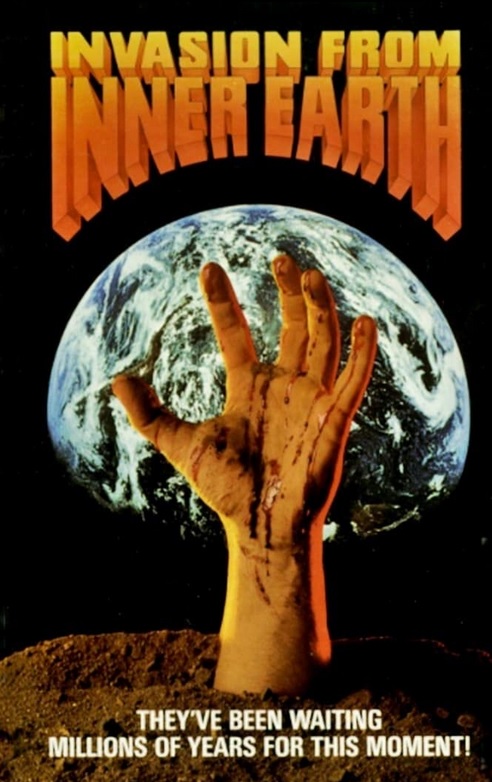
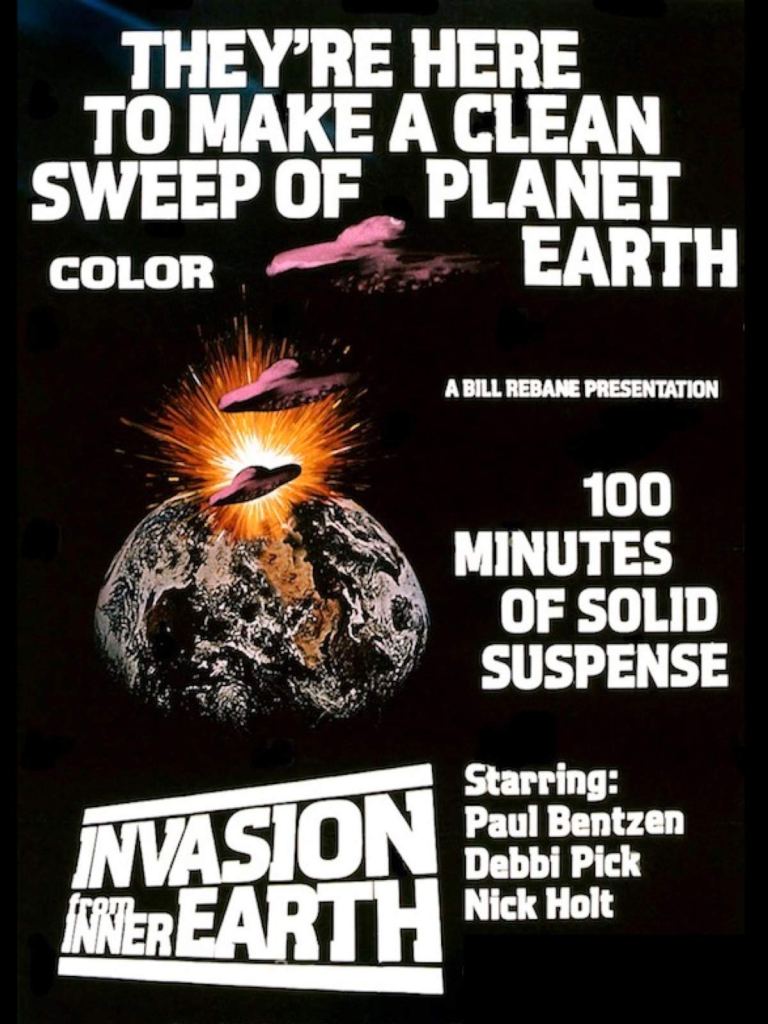
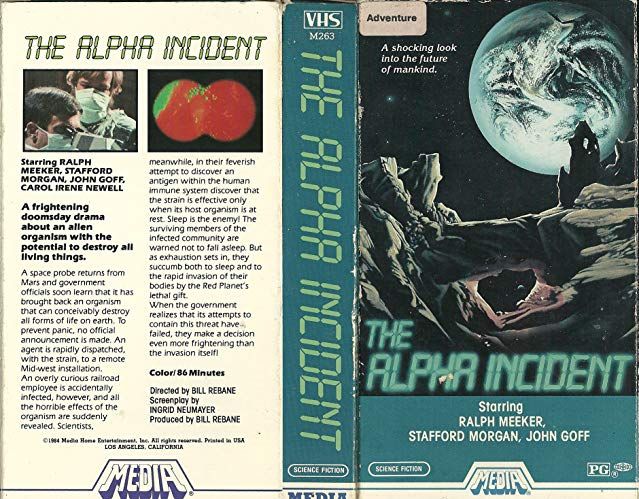


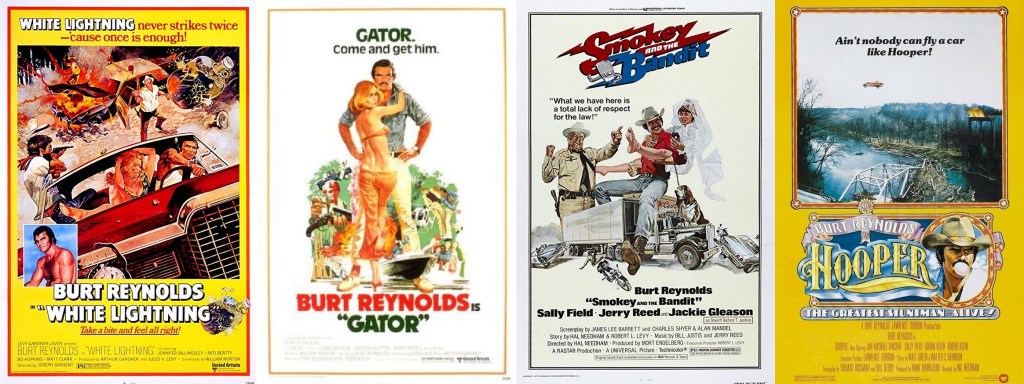

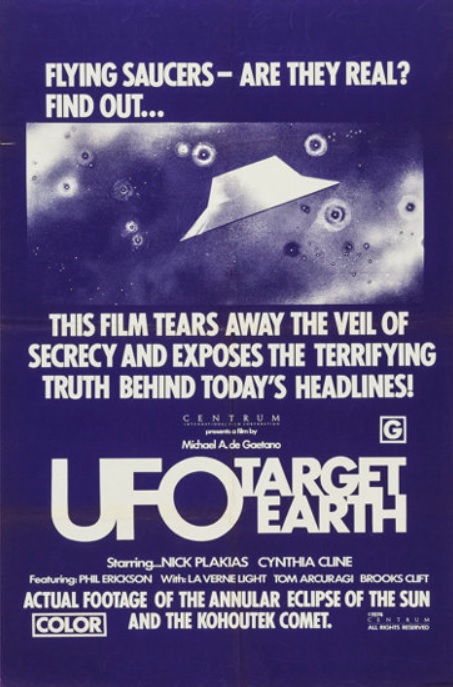



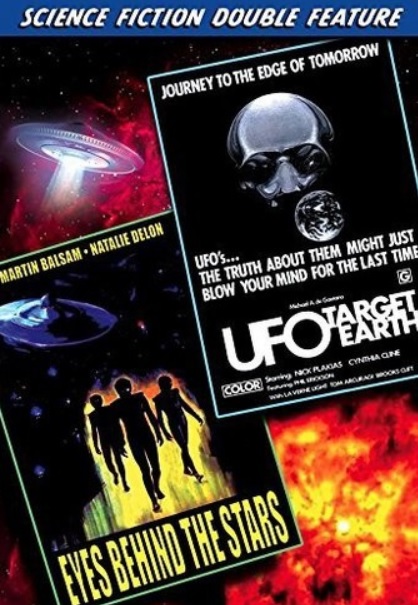
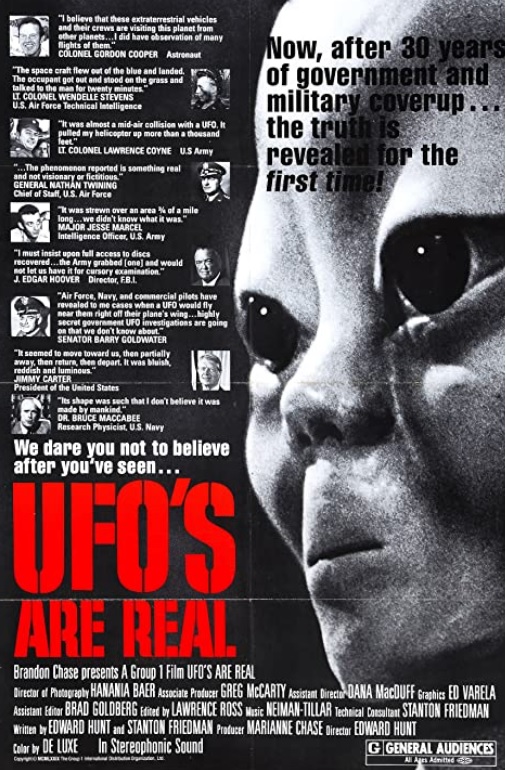


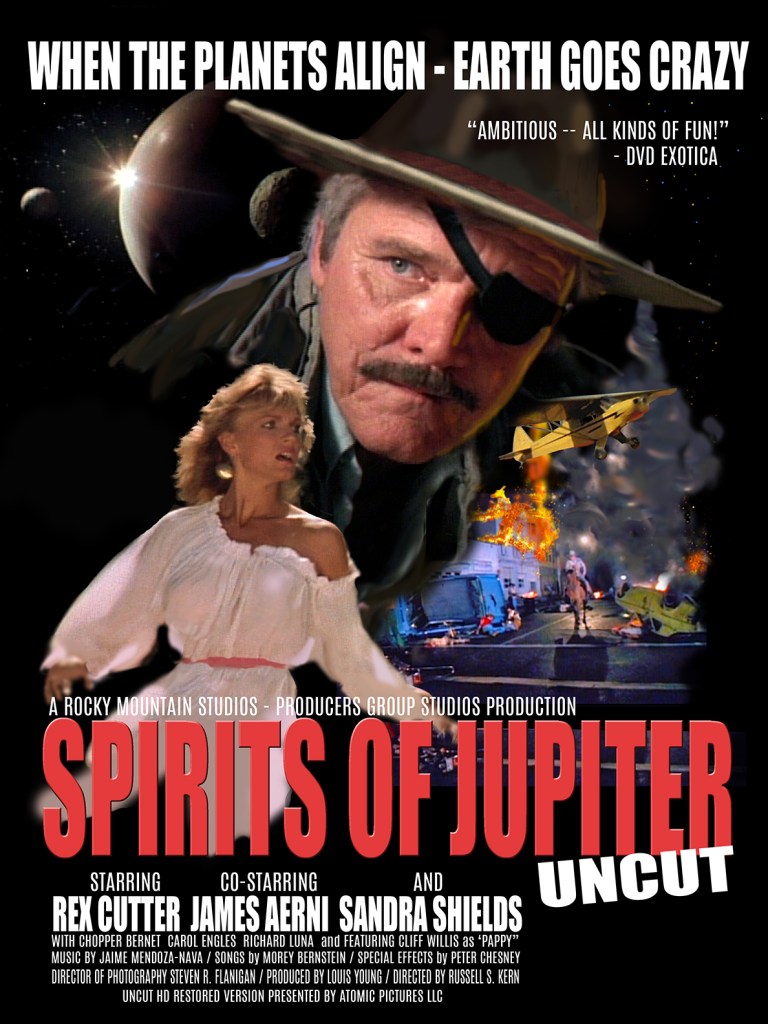
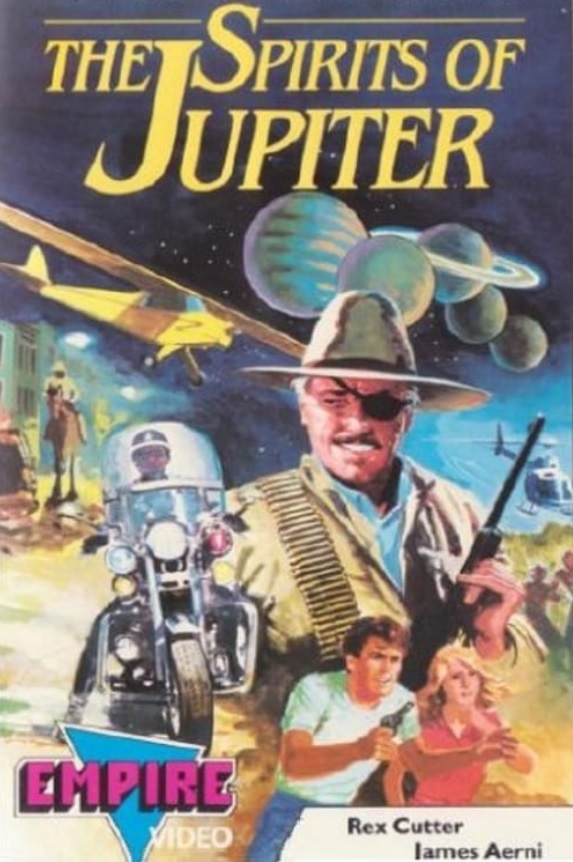
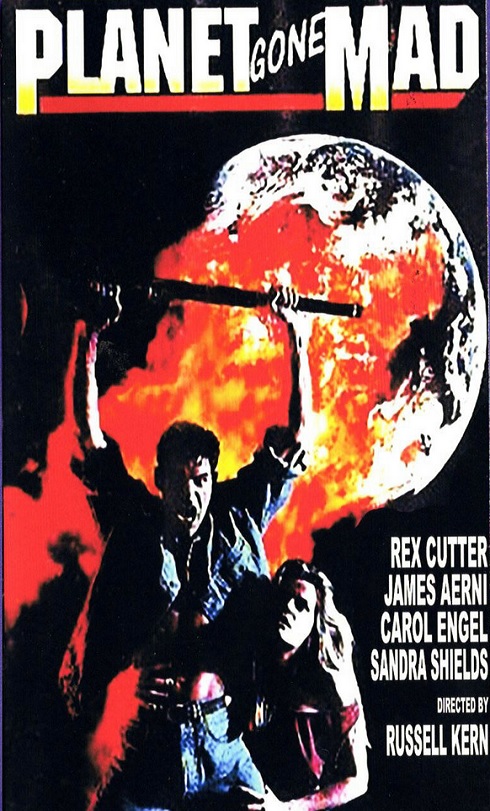
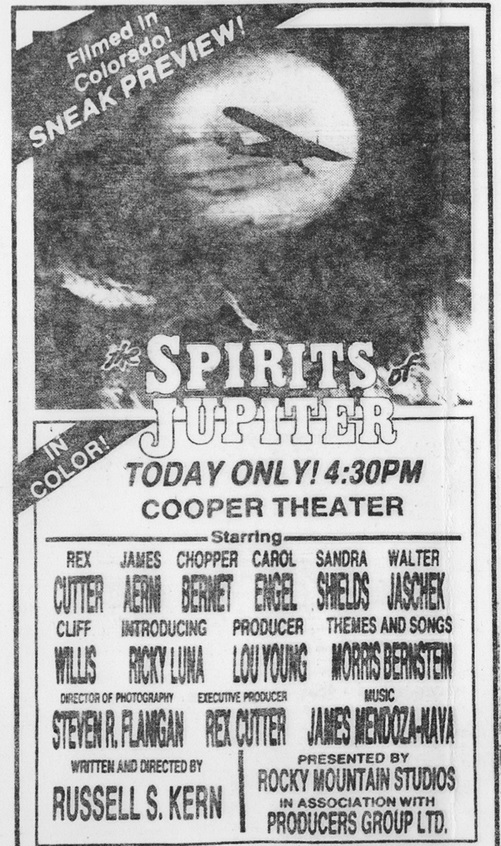





 B&S About Movies


You must be logged in to post a comment.