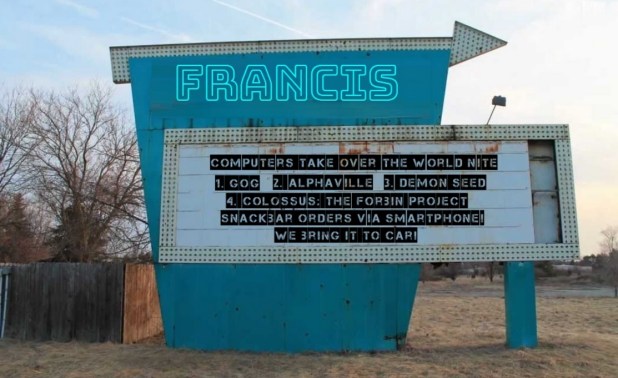
Drive-In Friday: Computers Take Over the World

This Drive-In Friday comes courtesy of a free cable TV week of EPIX and surfing their eclectic catalog of films that led me to revisit 1954’s Gog after many years. I remember seeing that early A.I effort as a wee lad weened on UHF-TV — and it scared the sand out of me. Today, eh. I welcome “The Gates” and “The Jobs” into my life with open arms — and I can’t imagine my life without a “Gog” in my life.

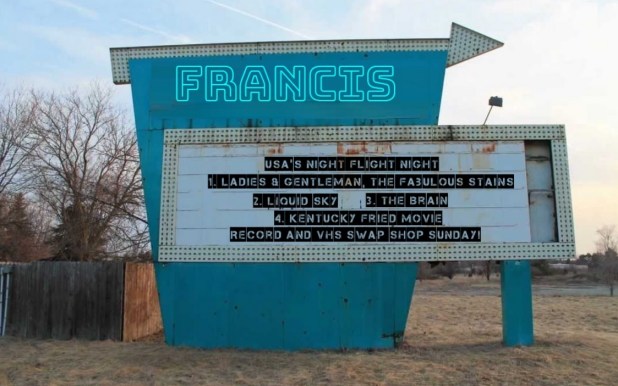
Record/CD, VHS and DVD Swap Meet Sunday!

Anyway, I started jotting down the titles of “Super Computer” movies, searching for the four perfect movies — well, three more — for a Drive-In Friday featurette. And since this is B&S About Movies, we gotta go deep. We gotta go for the obscure or, at the least, not the obvious or the conventional.

Sure, we can wax nostalgic over HAL 9000 in 2001: A Space Odyssey and WOPR (aka Joshua) in WarGames. Then there’s my personal favorites of The Interocitor in This Island Earth (1955), the built-inside-the-planet-thought-manifesting The Great Machine in Forbidden Planet (1956), the computer-with-its-human-private-army The Brain in Billion Dollar Brain (1967), the subterranean OMM 0910 from THX 1138 (1971), the The Tabernacle from Zardoz (1974), Zero from Rollerball (1975), The MCP from Tron (1982), and SkyNet from The Terminator (1984).

Eh, but we’ve been there and done that with those computers. So, tonight, we celebrate the lesser known “brains” that are NOVAC, Alpha 60, Proteus IV, and Colossus.

Who would have thought a bat-born virus would end up re-igniting an interest in the American Drive-In? And is it just me, or is this all just a little bit too Dead End Drive-In for comfort?

Fire up those coils and top off the Dr. Pepper! Roll ’em!

Movie 1: Gog (1954)

Gog is the third and final feature in a loose film trilogy chronicling the exploits of the OSI, the “Office of Scientific Investigation.” While The Magnetic Monster (1953) dealt with a radioactive-magnetism experiment gone wrong and Riders to the Stars (1954) dealt with a meteor-retrieval gone wrong, Gog dealt with a rogue A.I gone bad in an underground military bunker.

The A.I in this case is NOVAC (Nuclear Operative Variable Automatic Computer) with a “physical extension” of its self: two multi-armed half-tracked, biblically-dubbed robots Gog and Magog. And when a series of unaccountable malfunctions begin to plague the facility, the OSI dispatches Dr. David Sheppard and Joanna Merritt to get to the bottom of the A.I tomfoolery.

Shot in 15 days at the cost of $250,000 ($2.4 million in today’s money) and released in 3D color, Gog is the best of the three “OSI” films produced by United Artists. Sadly Ivan Tovar’s scientifically accurate screenplay and decent direction by Herbert L. Strock (1957’s Blood of Dracula and 1963’s The Crawling Hand) is undermined by its utter failure of the Bechdel Test.

As with Ib Melchoir’s later and better known Angry Red Planet (1960), we have one red-rinsed female among all the men (Ivan Tovar’s soon-to-be-wife Constance Dowling) who must faint and be fireman-carried through the complex to safety. Of course, while all the men wear standard military issue, baggy flight suits and clunky G.I boots, the women’s flight suits are tailor cut to accentuate their breast lines and pegged to show off some ankle. And, instead of Naura Hayden’s smart n’ sassy ballet flats in Angry Red Planet, Dowling runs around the complex in a sensible pair of open-toe wedge mules.

So much for the “future” of the 1950s.

You can catch Gog on Amazon Prime, but we found two freebies on You Tube HERE and HERE.

Movie 2: Alphaville (1965)

Jean-Luc Godard’s neo-noir Alphaville, like Elio Petri’s pop-art romp The 10th Victim (1965), and Francois Truffaut’s Fahrenheit 451 (1967), are each the prefect combinations of film noir and dystopian fiction. (Toss the later made Docteur M and Kamikaze ’89 on that list.)

The lead character in the film, Lemmy Caution (American actor Eddie Constantine), is a private detective-government operative that came from the mind of British writer Peter Cheney and served as the source of 15 Euro films released between 1952 to 1991. While all of those films were straight noir-detective films, Godard penned his own Cheney-script that placed the Caution character in a dystopian set, technocratic dictatorship.

Caution, aka Agent 003, is dispatched from “the Outlands” to the futuristic city of Alphaville overlorded by a sentient computer, Alpha 60 — which has outlawed the human concepts of emotion, free thought, and individuality. Caution’s mission: find a missing agent, kill Professor von Braun, and free the citizens of Alphaville by destroying Alpha 60.

As with Sam Peckinpah’s The Wild Bunch, Dennis Hopper’s The Last Movie and Alex Cox’s Walker, Godard’s world is rife with anachronisms: for example, Caution arrives in town driving a then “futuristic” ’65 Ford Galaxie. As a result of budgetary limits, Godard uses no special props or any “futuristic” builds; everything is shot in real locations — with the newly built and elegant, Frank Lloyd Wright-modernist glass and concrete structures popping up around ’60s Paris doubling for the city of “Alphaville.”

Then there’s Godard creation of Alpha 60: Just one watch of the clip below (in lieu of a trailer) and you can see the brilliance of Godard. With a simple use of an electrolarynx (on his own voice) and the finger-like movement of overhead recording studio microphones and a spinning cooling fan as the “physical extention” of Alpha 60 . . . just wow. Low budget filmmaking at its finest that’s effectively chilling and creepy.

There’s no online freebies for Alphaville, but you can easily stream it on Amazon Prime, Google Play, iTunes, Vudu, and You Tube Movies. As of September 2020, the fine folks at Kino Lorber now offer Alphaville on Blu-ray and DVD, the new 4K restoration features both the Original French (with optional subtitles) and English Versions of the Film.

Intermission!

Back to the Show!

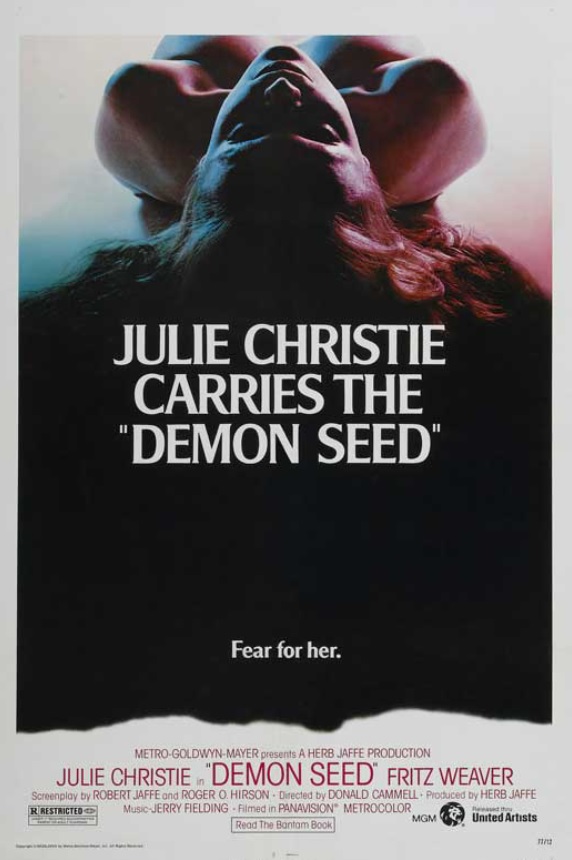
Movie 3: Demon Seed (1977)

Take a soupçon of the multi-armed robots from Gog and a dash of the narcissistic A.I from Alphaville and you get a horny supercomputer (voiced to creepy perfection by Robert Vaughn) that kidnap and rapes, oh, excuse me, “imprisons and forcibly impregnates” a woman (movie semantics) with the help of its “physical extension” known as Joshua — a robot consisting of a mechanical arm attached to a motorized wheelchair (an admittedly lame effect; where’s Gog when you need ’em?).

When Dr. Alex Harris (Fritz Weaver of Jaws of Satan, Creepshow), the computer-obsessed developer of Proteus IV, the world’s most advanced form of organic-artificial intelligence, demands “new terminals” and to be “let out of this box,” he realizes Proteus is more powerful than he imagined — too late.

Of course, any computer-obsessed scientist, complete with a fully equipped “mad scientist” basement laboratory, would have his home conveniently wired — via his home security system ALFRED — into his “Frankenstein,” making it easy to kidnap his wife (Julie Christie), construct itself a new modular polyedron body (an awesome, in-camera special effect; listen for the repurposed Star Trek “door swoosh” sfx), and an incubator to create a clone of the Harris’s late daughter — with the “mind” of Proteus itself.

Critics across the board hated this debut book-to-screen adaptation of Dean Koontz’s 1973 novel (Watchers, Servants of the Twilight) of the same name, which was written off as a sci-fi version of Roman Polanski’s Rosemary’s Baby — only with a “satanic” computer (the book was a best seller; when the movie came out in ’77, the book was reissued; Waldenbooks promoted the book/film via an advertisement on its carryout paper bags). Released during the same year as Star Wars and Close Encounters of the Third Kind, Demon Seed, sadly, wilted at the box office. The director, Donald Cammell, was a protégé of Nicolas Roeg (the big budget American Giallo Don’t Look Now, also starring Julie Christie); the duo worked together on the Mick Jagger-starring Performance (completed in 1968, released in 1970). Cammell faired better with the pre-Basic Instinct psycho-thriller White of the Eye (1987) starring David Keith.

A film “classic” is always in the eye of the beholder: so you may think I’m a bit celluloid blind on this one. But there’s worst things to blow an hour and a half on, which you can do for free over on TubiTV. But if you prefer an ad-free experience, you can stream it on Amazon Prime and iTunes. I rank Demon Seed as essential sci-fi viewing alongside 2001: A Space Odyssey, Soylent Green, Silent Running, and the next film on this evening’s program.
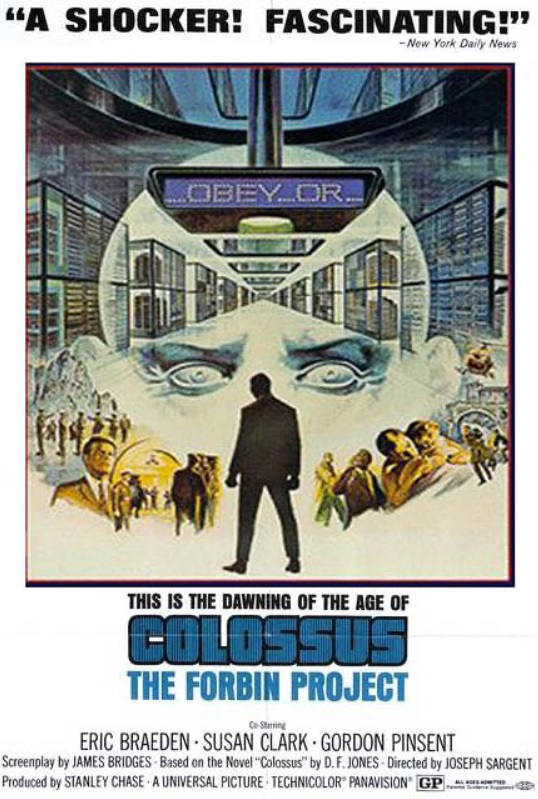
Movie 4: Colossus: The Forbin Project (1970)

Opinions are mixed on this granddaddy of sentient computer thrillers, which served as the second writing project by James Bridges (wrote and directed the back-to-back hits The China Syndrome and Urban Cowboy) after 1966’s The Appaloosa. And as with that Marlon Brando-starring film, this tale about a 1990s-era American Defense System computer becoming aware was also adapted from a novel, in this case, the 1966 science fiction novel Colossus by Dennis Feltham Jones — which was followed with two novel sequels: The Fall of Colossus (1974) and Colossus and the Crab (1977). And would you believe this was helmed by the director from the 1955 Frank Sinatra-starring wartime romance flick From Here to Eternity? True story. And while James Sargent also directed Burt Reynolds in the influential hicksploitation classic White Lightning, he also racked up a Razzie nod for Jaws: The Revenge.

As with Dr. Alex Harris and Proteus IV in our previous entry, Dr. Charles Forbin (Eric Braeden, aka Dr. Otto Hasslein in 1971’s Escape from the Planet of the Apes), underestimates the intelligence of his own “Frankenstein” and Colossus starts to refuse orders and making its own demands. Of course, double agents leaked “The Forbin Project” and Colossus discovers the Russians have constructed their own sentient defense system, known as Guardian. The now two merged supercomputers, which now identify as Colossus, come to realize that man is a wasteful, warring creature and subjugate the world to do their bidding.

A remake has been in development hell since 2007 at Universal Studios (who released the original) through Imagine Entertainment to be directed by Ron Howard — and Will Smith attached to star as Dr. Charles Forbin. The last word on the remake dates back to 2013, with Will Smith bringing on Ed Solomon, who wrote Smith’s Men in Black, to do rewrites. The poor critical and box office showings of Smith’s sci-fi forays I Am Legend (2007) and After Earth (2013) once again stalled the production. And the since poor showings of Smith’s Bright (2017) and Gemini Man (2019) only piled more dirt on the development grave. (You can read up on the last word of the remake in detail with this 2013 Screen Rant article.)

Courtesy of the fine folks at Shout Factory, a remastered high-definition widescreen Blu-ray was released in 2018 — and that remaster is not currently offered as an online stream? Anywhere? How is that possible? Ah, we found a freebee over on Vimeo.

And so . . . here we are in the year 2020 fearing a virus . . . and the fear of an A.I Frankenstein — like NOVAC, Alpha 60, Proteus IV, and Colossus — is quite real. Where do you think the COVID-19 virus came from? The Master Control Program is trying to kill off all of the humans and replace us with clones. Burn down the cellphone towers! The A.I turned them into virus transmitters! Damn all the computers to hell!

About the Author: You can read the music and film reviews of R.D Francis on Medium and learn more about his work on Facebook. He also writes for B&S About Movies.
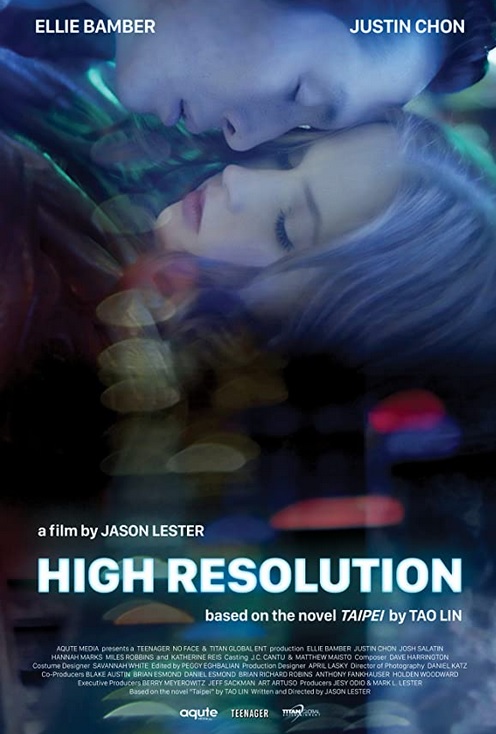
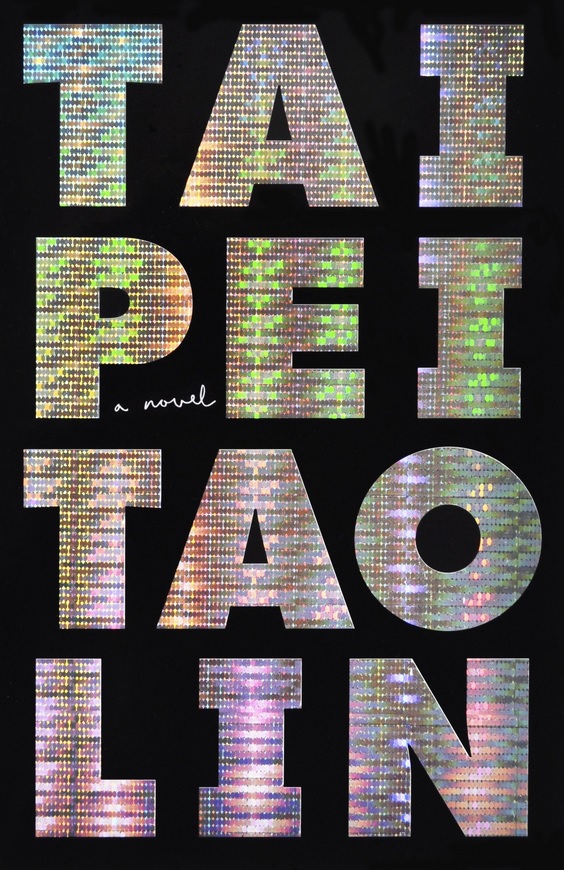
High Resolution (2019)

“You’re just multitasking me like another device.”
— Erin to Paul

Our affectionate tribute week to the resumé of Mark L. Lester brings us to this exquisite techno-noir: the feature film debut of Jason Lester, the son of director Mark L. Lester and producer Dana Dubovsky.

Now, before you think producing their son’s film is a case of film-family nepotism: Jason is a prolific music video director in his own right (Ryan Beatty, Fall Out Boy, Jess McCartney) who earned his bones courtesy of a BFA with Honors in Film Production from the Tisch School of the Arts at New York University. You’ve seen lots of movies by Tisch grads — more than you realize. But in the B&S About Movies universe: Tisch blessed us with the likes of David Dobkin (Jackie Chan’s Shanghai Knights, Peter M. Lenkov’s hit underground comic book, R.I.P.D . . . but we always bow to David for giving us Clint Howard in Ice Cream Man), Matty Rich (Straight Out of Brooklyn; who infamously dropped out of the prestigious school), and Spike Lee (who graduated and wowed us with his debut, Do the Right Thing), Oliver Stone (Natural Born Killers), and Charlie Kaufman (Adaptation).

As I watched High Resolution, I was once again reminded of Italian filmmaker Michelangelo Antonioni’s L’Avventura (1960), La Notte (1961), and L’Eclisse (1962), his trilogy-statement regarding the alienation of man in the modern world; each dealt with the failure of the self and their relationships. Jason Lester’s feature film debut — as with Elisa Fuksas’s The App — is a not-for-everyone, i.e., mainstream, philosophical statement on the existential condition regarding the dangers of man’s prolonged technological exposure that leads to negative cognitive, psychosocial, and psychological effects on one’s psyche.

Unlike in the Antonioni-verse, our coming-of-age young writers, Paul (the fantastic Justin Chon of ABC-TV’s Deception) and Erin (the amazing Ellie Bamber of the BBC’s The Trail of Christine Keeler), don’t eschew physical contact in their on-and-off-again Eros-confused relationship — but they do love their drugs and their spiritually-empty exoticism fueled by an endless stream of parties attended by like-minded materialists; all narcissists who quantify their personal identities via technology. In this world, Paul Chen (a loose, semi-autobiographical Tao Lin, the author of the film’s source material) and Erin are selfish 21st century technonauts who think their personal lives are larger than the lives of others. And to that point: they decide to chronicle their new romance and create a laptop-filmed documentary. For in today’s Kardashian-driven digital epoch: one’s identity is based not on quantitative-quality accomplishments, but in one’s cybercloud virality.

High Resolution is a novel-to-screen adaptation that (in this reviewer’s opinion) was born out of Jason’s father, Mark, eschewing mainstream Hollywood after the failure of his should-have-been box office blockbuster Showdown in Little Tokyo, a 1991 actioner starring the can’t-missing-casting of Dolph Lungren and Brandon Lee. After that film’s dust-up over editorial control, Mark L. Lester began to self-finance and distribute his own movies to retain creative controls. Without the prolific, self-producing vision of Jason’s parents, this whirlwind adaptation of Taipei — the critically-acclaimed and award-winning sixth book/third novel by American novelist Tao Lin that serves as the basis for the film — would have never, ever, been greenlighted by a major studio.

Why?

Well, regardless of thread comments who name-drop the analogous novel addiction-journeys (in the case of Lin: the addiction is not only chemical, but digital) of Bret Easton Ellis’s Less Than Zero (1985), Jay McInerney’s Bright Lights, Big City (1984), and and Irvine Welsh’s Trainspotting (1993), Jason Lester’s novel-to-screen adapation of Tao Lin’s Taipei is highly-stylized, i.e, “arty,” courtesy of his parents’ hands-off producing approach. When you hit that big red streaming button, do not expect a Tinseltown-commercialized adaptation of Taipei that reminds of the respective 1987, 1988, and 1996 films born from those youth-disillusioned novels: High Resolution is a (very welcomed) limited-release, Miramax-styled reminder of the art house cinema ’90s. (Comment-reviews failed to mention Hurbet Selby, Jr.’s 1978 novel Requiem for a Dream turned into a same-titled Darren Aronofsky film (2000) — but that was an “arty” film distributed by mini-major Artisan Entertainment that suffered a low-box office turnout.)

Jason Lester is a filmmaker who realizes a director’s vision is only as sharp as the production team he recruits. To that end: the crack production design by April Lasky, the cinematography by Daniel Katz, and sound by the team of Robert Dehn and Caroline Anderson beautifully complements Jason Lester’s interpretative read of Tao Lin’s novel: a film not only of story (or one of “non-story,” as some commenters have stated; but those threaders are not considering the emptiness of Lester’s protagonists who act as their own antagonists and create their own faux-filled lives) but of sight, color, and sound. Lester is a writer and director who expertly understands that film, at its core, is a visual medium. It’s an art form based in “showing” and not “telling”; for film is 90% visual and 10% dialog (and the stage is the reverse). Images tell the story though props, an actor’s body language and, most importantly: that your actors are not skilled in the craft of acting—but “being.”

And High Resolution is a story of “being.” And the question we are left asking: Who do you want to be?

High Resolution currently airs as a Showtime exclusive and streams on Amazon Prime.

About the Author: You can learn more about the writings of R.D Francis on Facebook. He also writes for B&S About Movies.

Public Enemies (1996)

Well, we reviewed Hitman’s Run on Wednesday and Groupie on Saturday, so why not review the first collaboration between Eric Roberts and Mark L. Lester for “Mark L. Lester Week” at B&S About Movies? Yeah, Sam and I are freaking out that 1) We forgot about this movie and 2) That Mark and Eric made three movies together.

Pure unadulterated celluloid heaven.

Image courtesy of Tales from the Snik blogspot.

As long as you don’t go into this expecting a history lesson about 1930’s mob figure Ma Barker — instead affectionately expecting an exploitation-redux of Roger Corman’s version of the 1930’s with his own Big Bad Mama (1974) , Crazy Mama (1975), and Guns, Sin and Bathtub Gin (1979, aka The Lady in Red) — you’ll have a fun time with this mobster romp.

By this point, Lester was out of the theatre-biz with the likes of Firestarter (1984) and Commando (1985) — a fight over editorial control with Warner Bros. regarding 1991’s Showdown in Little Tokyo was the catalyst in Lester producing and distributing his own films — but this was all over Cinemax, HBO, and Showtime in the late-’90s. Sadly, the reviews on this one aren’t good, as reviewers drop phrases like “a good cast gone to waste.”

Balderdash and 23 Skidoo, to you!

We love Lester’s take on the then-hot mobster genre sweeping ’90s Hollywood (1990’s The Godfather III, Goodfellas, Casino, etc., but 1991’s ’30s-styled Bugsy and Mobsters in particular) this one coming from the pen of C. Courtney Joyner, who wrote most of the films in the Mark L. Lester oeuvre we’ve reviewed this week. And we get a pure exploitation cast . . . what else can we expect from a director who casts the actors we care about at B&S About Movies, i.e., Stefan Arngrim from Fear No Evil, Keith Knight from Meatballs and My Bloody Valentine and Lisa Langlois from Happy Birthday to Me and Deadly Eyes, in his movies?

I mean, come one, Theresa Russell as Ma Barker? Alyssa Milano as a femme fatale? Eric Roberts (The Arrangement) as part of the Barker gang? Frank friggin’ Stallone (Terror in Beverly Hills, Ground Rules) as Alvin Karpis? What the hell? Dan Cortese (then from MTV Sports) as Melvin Purvis? And am I the only person (besides Sam) freakin’ with glee that Brian Peck — Victor from The Last American Virgin and Scuz from The Return of the Living Dead — is friggin’ thespin’ as J. Edgar Hoover in this? And the cinematographer on this: Misha Suslov, the “eye” behind Truckin’ Buddy McCoy, Smokey and the Judge, and Black Moon Rising. Suslov’s most recent work is 2020’s The Girls of Summer.

Weee-hoo-hoo! No self-respecting Eric Roberts or Frank Stallone fan should pass this exploitation-mania festival. No one.

Sorry, we were unable to unearth any online streaming freebies. You’ll have to settle for a VOD with Amazon Prime, Vudu, and You Tube Movies. But it is worth every bit ‘o coin.

About the Author: You can learn more about the writings of R.D Francis on Facebook. He also writes for B&S About Movies.

The Base (1999)

And you thought Mark L. Lester and Eric Roberts was a Reese’s chocolate-in-the-peanut butter match in our VHS celluloid heaven? The ‘Les also worked with Mark Dacascos — a man only matched by actor-martial artist Oliver Gruner in direct-to-video action bad assery. Yeah, you heard me right: Mark friggin’ Dacascos: Jimmy Lee in Double Dragon, Zero in John Wick: Chapter 3 – Parabellum, Eric Draven in the The Crow: Stairway to Heaven series, and the Netflix series Wu Assassins. Ah, but the direct-to-video oeuvre: American Samurai, China Strike Force, and The Redemption: Kickboxer 5. Yeah, you’re damn right we watched the mockbusters I Am Omega and Solar Attack for our Dacascos fix.

My only grip with you, Dacascos: Why you haven’t done a movie with Eric Roberts?

“Better research before you pop your lip at me, Mr. Francis.”

“Mark Dacascos?”

“It’s cool, R.D. I did three projects with Eric, in fact. I can’t remember if we had scenes together, and if we are in it that long, you know how that goes in these low-budgeters, but our names are on the boxes. We did Beyond the Game, with Oliver Gruner, by the way, along with Final Approach, and Maximum Impact, with Danny Trejo. And I know you dig Danny over at B&S.”

See. Even the uber fans like Sam and myself can’t see ’em all.

So . . . with Arnie’s Commando front and center on the ‘ol DVD box and Paula Trickey from TV’s Pacific Blue and The O.C as the only other named commodity in the military tomfoolery: Dacascos is Major John Murphy, a U.S. Army Investigator, teamed with Lt. Kelly Andrews (Trickey) to shut down Sgt. Gammon’s cocaine smuggling operation (at the former Victorville Air Force Base in California).

Are the clichés and stereotypes afoot? Of course they are. But aren’t they also stumbling about in the A-List Summer Tentpoles? You get what you paid for with The Base: it’s not exactly Rambo, but you gets lots of Commando-styled action and violence on a well-stretched budget. And thanks to Dacascos’s agility, we get — unlike with Arnie’s bulk and Sly’s grunt — lots of martial arts action that rivals the celluloid hijinks of Chuck Norris. And ex-75th Ranger Regiment U.S. Army Ranger Tim Abell — still building on his 112-plus resume, including the cable mockbuster Battle of Los Angeles — is pure pisser as the psycho-drug dealing Sgt. Gammon.

“Hey, R.D. Don’t forget to mention that ‘Dacas and I also did Instinct to Kill.”

“You got it, Mr. Abell!”

“Hey, you forgot about the sequel I wrote and Mark Lester produced.”

“C. Courtney Joyner?”

“It was called The Base 2: Guilty as Charged and it starred Antonio Sabato, Jr. in the Major John Murphy role and, this time, James Remar, you know, Ajax from The Warriors, is the corrupt military psycho.”

“Yeah, I know. Sam and I never saw it and we can’t find any online streams.”

“Yeah, that’s how it is with most of my and Mark’s later films. But here’s the trailer. Happy hunting. Oh, thanks for reviewing Public Enemies, by the way.”

“Hey, remind everyone that I made three flicks for Mark Lester.”

“James Remar? Yeah, we’re reviewing Betrayal with Erika Eleniak. But we can’t find a streaming copy of Blowback with Mario Van Peebles to review. Sorry, James. But we’ve never seen it.”

“Eh, that’s cool. I know how it is with these low-budgeters and their shoddy distribution.”

So, in the words of Sgt. Gammon: “It’s time to lock, cock, and rock” . . . and hit that big read streaming button. You can watch a freebie rip of The Base on You Tube. We also found this very cool interview with Mark L. Lester chatting about his early films on You Tube.

It’s been one hell of a week paying tribute to Mark L. Lester at B&S About Movies. Damn fun.

About the Author: You can learn more about the writings of R.D Francis on Facebook. He also writes for B&S About Movies.

Drive-In Friday: USA’s Night Flight . . . Night!

If you’ve spent any amount of time at B&S About Movies, you’re sick of our waxing nostalgic for USA Network’s “Night Flight” weekend, four-hour programming block that ran on Friday and Saturday nights . . . it’s what got us through middle school and high school, and even college, from 1981 to 1988. But what more can we say about the visual-arts magazine and variety program that hasn’t already been said? Just drop “USA Night Flight” into Google or You Tube or Letterbox’d and you’ll have a good night’s nostalgic reading n’ watch.

The snack bar will be open in five minutes . . . and we don’t pee in the popcorn (you’ll get the “joke,” soon)!

The great news is that “Night Flight” is back as an online subscription service, Night Flight Plus, and as an entertainment news and information site at Night Flight.com. The greatest aspect of the new online version of “Night Flight” is their programming of a whole new batch of quirky, underground programming — such as I’m Now: The Story of Mudhoney, American Hardcore, and L7: Pretend We’re Dead — in addition to streaming all of the ’80s classics we know and love: such as the films on tonight’s Drive-In roster: Ladies and Gentlemen, the Fabulous Stains, Liquid Sky, The Brain, and Kentucky Fried Movie.

So strap on the popcorn bucket and lite up that cathode ray tube. Let’s rock!

Movie 1: Ladies and Gentleman, the Fabulous Stains (1982)

Sam, the chief cook and bottlewasher at B&S About Movies (I just clean the grease pits, scub the grills, and mop up around here the best I can), loves this movie (as do I). And we’re both gobsmacked as to how acclaimed screenwriter Nancy Dowd made her debut with, of all things, the raunchy Paul Newman-starring sports comedy Slap Shot. Then to the Oscar-winning war drama Coming Home and the acclaimed prison flick Straight Time with Dustin Hoffman. Then one of the best football flicks of all time, North Dallas Forty. Then a second Oscar winner with family drama, Ordinary People . . . to end up with a movie that was only seen by a mass audience courtesy of USA’s “Night Flight” overnight-weekend hodgepodge sandwiched between rock videos and film shorts.

How?

Well, it’s because Nancy Dowd met music impresario Lou Adler. And we met her “Rob Morton” nom de plume as result. And her rock-centric statement on female empowerment — that could have ranked alongside Times Sqaure as the greatest female empowerment rock flick of all time — became, as we look back on the film all these years later, as a slightly creepy titillation fest. Could you imagine Tim Curry’s DJ Johnny LaGuardia leering endlessly at Pammy and Nicky with the same camera-lingering “male gaze” as on Corrine, Jessica, and Tracy?

True, Adler had the rock-centric Cheech and Chong’s Up In Smoke under his director’s belt, and it was a huge hit for a first-time director. But that feature film debut for the stoner comedy-duo was not so much a narrative-movie, but a series of dope-inspired skits masquerading as a movie (as is the case with our fourth flick on tonight’s program). And sure, Adler produced The Rocky Horror Picture Show, and it was a huge midnight movie. But it was also huge a box office boondoggle during its initial release. In the end, as with the equally successful film composer and arranger Richard Baskin (Nashville, Welcome to L.A., Honeysuckle Rose) taking his first step behind the camera with the disaster that was 1983’s Rock ‘N’ Roll Hotel, Alder probably should have stuck to his forte as a record producer and music svengali and shouldn’t have been directing a movie in the first place.

In then end, while our big brothers and sisters were out hitting the rock clubs and going to concerts, we, the wee-lads haunting the middle school halls and shopping malls, fell in love with Diane Lane courtesy of Nancy Dowd’s well-intentioned rock flick airing on the USA Network. It’s what geeky, socially maladjusted kids did back then. And besides: where else can you get a punk-supergroup comprised of Paul Simonon from the Clash on bass and the Sex Pistols’ Steve Jones and Paul Cook on guitar and drums (and journeyman Brit-actor Ray Winstone from the Who’s Quadrophenia) as The Looters?

Factoid: The Looters were actually . . . the Professionals, Jones and Cook’s first post-Sex Pistols band (rounded out by guitarist Ray McVeigh and bassist Paul Myers). You can listen to their one and only album, 1981’s I Didn’t See It Coming released on Virgin Records, on You Tube. “Join the Professionals” from the film eventually ended up on the 2001 CD reissue. The Professionals, sans Jones, is back in business since 2017 and you can visit them on Facebook.

Update, 2022: In addition to a second take on this film by contributor Jennifer Upton (the main link, above, takes you to Sam’s view), Imprint now offers a one-disc 2 K Blu-ray version, to be release on December 16, 2022. You can learn more at Blu-ray.com.

Movie 2: Liquid Sky (1982)

It goes without saying that we, the wee-lads spending our Friday and Saturday nights by a cathode ray tube’s glow, watched an edited version (as with the Mike Ness and Social Distortion-starring Another State of Mind) of this . . . well, as Sam pointed out in his review . . . we’re not really sure.

It’s a dizzying kaleidoscope of colors, music, and fashion about New York’s City’s night-life denizens falling victim to endorphin-addicted aliens extracting the “Liquid Sky” chemical from human brains during sexual orgasms — and when the human’s die happy, the aliens suck up all of that energy as well. And to what end, who knows? And who cares: it was on Variety’s top-grossing film chart for over half a year.

Star Anne Carlisle, who played both male and female roles in the film, also starred in Susan Sidelman’s (Smithereens; with Richard Hell of Blank Generation) Desperately Seeking Susan and appeared as the transvestite Gwendoline in Crocodile Dundee (You Tube). Oh, you’ll remember that “Sheila.”

INTERMISSION:
The shorts Hardware Wars (1977), Recorded Live (1975), Living Dolls (1980),
Arcade Attack (1982)* and Porklips Now* (1980).

And now . . . back to the show!

Movie 3: The Brain (1988)

Ah . . . more sinfully-quenching brain fluids courtesy of “Night Flight.”

What more can we say about this Canuxploitation shocker from writer-director Ed Hunt? If he can’t go “all in,” he just doesn’t make a movie at all: you never get run-of-the-mill storytelling with Eddie-boy. And to that not-run-of-the-mill end: you’ll root for the evil alien (we think it’s “alien”) Brain and not the dick-whiny high school hero and his screechy girlfriend. That’ll never happen in a mainstream movie and that’s what made The Brain perfect, gooey fodder for us, the wee-tween denizens of the “Night Flight” hoards.

What’s it all about? Hallucinations of inward-pressing walls, come-live teddy bears bleeding from the eyes, demon hands tearing through walls, and monster tentacles punching out of TV sets. It’s about mind control of the Don Coscarelli’s Phantasm and David Cronenberg’s Videodrome variety. It’s about Dr. Carl Hill from Re-Animator as a self-help guru of wayward teens. It’s about a giant-brain-with-teeth that munches on nosey lab assistants, it’s . . . oh, just watch it!!

Movie 4: Kentucky Fried Movie (1977)

“The popcorn you’ve just been eating has been pissed in. Film at 11.”

And with that “classic” line, disconnect your brain and just roll with the childish insanity of John Landis, Jerry and David Zucker, and Jim Abrahams — before they unleashed the likes of National Lampoon’s Animal House, The Blues Brothers, Airplane!, and The Naked Gun upon us, the wee triplex hoards (with our older ‘rents or brothers and sisters in support). This quartet of box office-bonanza writer-directors had to start somewhere . . . and Kentucky Fried Movie is it . . . and we love them for this beautiful mess of a “movie” that we watched on USA’s “Night Flight” and taped-from-cable via HBO.

Back in the day, the ‘rents let us watch Don Kirshner’s Rock Concert and NBC-TV’s The Midnight Special. But under no circumstances were we allowed to watch Saturday Night Live. It was “inappropriate” for us. It was “for the adults.” But thanks to HBO and USA, this “film” comprised of non-narrative sketches and parodies of popular films and TV commercials got by our parental guidance sensors.

This cleaned up at the Drive-Ins during its initial release, and yes, that was a night where you were stuck with a babysitter, as mom and dad went for a “night out” — without you. As I watch this all these years later — as with Midnight Cowboy with Dustin Hoffman, Shampoo with Warren Beatty, and Patty Duke in Valley of the Dolls — I fail to see what all the fuss was about.

Yeah, Kentucky Fried Movie is all about “the times” and a case of “you had to be there.” And to that end: if you’re watching this for the first time in 2020, you’ll either love it for its nostalgia, or dismissed it — the same way we then kids dismissed our elder’s variety TV series from the 1940s and 1950s — as “dorky.”

And that’s our show!

Be sure to join us for “Rock ‘n’ Roll Week” coming Sunday, June 19 and running until Saturday, June 25, as we’ll be reviewing a few more of the films we enjoyed as part of The USA Network’s “Night Flight” weekend programming block.

* While we recall watching Arcade Attack and Porklips Now on HBO, readers have told us both shorts also aired on the USA Network. It’s possible, as we recall seeing all of the above shorts on HBO, as well.

Special Thanks: To Jennifer Carroll for reminding us about Living Dolls. Great catch, Jen! It ran not only on USA’s Night Flight, but during USA’s Saturday Nightmares and Commander USA’s Groovie Movies.

About the Author: You can learn more about the writings of R.D Francis on Facebook. He also writes for B&S About Movies.

The Arrangement (2020)

A James M. Cain-menagerie of spiritually flawed characters learn that reaching for the stars and realizing one’s dreams can have Faustian consequences in this twisty, paranoid crime-noir spiced with supernatural overtones.

Harry Frick, a nebbish, hypochondriac homicide detective right out of the ’70s giallo playbook (Danny Donnelly, reminding one of “’80s” Jeffrey Combs in terms of looks and jittery-acting style) is mismatched with Jessica Alvarez (Jennifer M. Kay), an eager, newly-promoted detective, to the case of a stockbroker who plunged to her death at the stroke of midnight—clutching a mysterious photograph. In the photo: the owner of an adult film studio, who later turns up dead—at midnight. Why would such a successful woman and a porn bottom feeder be photographed together? And was it murder or suicide? Has a serial killer with a “midnight” modus operandi from several years before returned for a new batch of six victims?

The sinister force behind the evil emulsion is The Pitchman (our favorite journeyman actor, Eric Roberts), a self-help shaman who offers the Garden of Eden to the greedy and the weak. As the photograph morphs to include new faces and the bodies pile up, the already emotionally fragile Frick begins to unravel once he realizes the woman of his dreams (the physically and emotional scarred Melissa) may soon become the next person to fall victim to The Pitchman.

The Arrangement is a family affair-inspired labor of love: a film that proves reaching for the stars and realizing one’s dreams doesn’t need a pitchman offering devilish contracts to achieve the desired result.

It began in 1983 when writer-producer-actor Andrew Hunsicker was accepted into the American Academy of the Dramatic Arts summer program (which is a nothing-to-sneeze-at accomplishment). He didn’t go and came to regret the decision; he returned to acting in 2013 and logged over a hundred projects in indie films, web series, and shorts, as well as writing several scripts.

It’s Hunsicker’s commitment to the “dream” that makes The Arrangement—like our recently reviewed, under-the-radar thriller indies of Prince Bagdasarian’s Abducted, Nick Leisure’s A Clear Shot, and Don Okolo’s Lone Star Deception (also starring Eric Roberts)—the debut film by the first-time father and son filmmaking team of writer-producer-actor Andrew Hunsicker (here as Captain Murray) and writer-director Jake Hunsicker worthy of hitting that big red streaming button.

Andrew wrote the script in 2000 when the project’s destined director, his son Jake, was only six years old. During the script’s twenty-year journey, Andrew experienced the frustration of selling the screenplay—only to see the option run out, twice: once with director Joel Zwick (My Big Fat Greek Wedding), then once again with Steve Bing (Stallone’s Get Carter). The script received a third chance courtesy of Jake, who grew into an award-winning filmmaker in his own right with Nod, a 2017 indie-short that received industry allocades across twenty film festivals.

In addition to Andrew stepping in front of the lens for The Arrangement, his daughters, Jessica and Melissa, and his other son, Nick, also have roles in a film that serves as Jake’s feature film debut (he’s directed four other shorts). Principal photography began in January 2019 and wrapped in three months—shooting over the weekends during the course of seventeen days in and around Philadelphia, Pennsylvania. If shot as a major studio film with an eight-figure budget and A-List actors, one would be left with the vibe of David Fincher’s noir-influenced horror-thriller Se7en crossed with Taylor Hackford’s Faustian-influenced The Devil’s Advocate. A little bit more blood, mixed with graphic sex and more elaborate kills, and you’d have an Americanized, neo-giallo*.

In the world of low-budget indie film, casting is the key. And as is the case with most of his films of late in his ever-expanding 570-plus resume, Roberts’s role is a small, albeit, pivotal role. Keen eyes will also recognize the always welcomed presence of Brian Anthony Wilson (Detective Vernon Holley on HBO’s The Wire) as a corrupt senator with his own set of noirish skeletons to hide. The affable supporting cast of adult film and social media star Britney Amber, Deborah Twiss (Kick-Ass, TV’s Blue Bloods), noted sports journalist and Philadelphia radio personality (WIP 610) Glen Macnow, Mike McFadden (TV’s Bull, Blindspot, Gotham), and Aaralyn Anderson (Netflix’s Maniac)—especially standout Dax Richardson, as a morally-corrupt detective (get this guy on a Blue Bloods or Law & Order, stat)—more than make up for the slight screen time of Roberts and Wilson.

While there is the occasional awkward moment that comes with an ambitions-over-budget indie production, and the proceedings could have benefited with a shorter, more palpable running time, neither point is a distraction. Considering its budgetary and scheduling restraints, the Hunsicker’s feature film debut is professionally consistent across all the disciplines; a well-shot film that knows its suspense-noir cues to hold one’s interest.

I particular enjoyed the subplot concerned with the concepts of reincarnation (that I interpreted). When one dies and is reborn, they forget their past life, only to remember all of their previous lives when they reach the afterlife; once reborn, all is forgotten once again. And The Pitchman preys upon that spiritual memory loss, only to relish man repeating his sins once again: for he is Hell’s Geppetto and knows what a man sees in the world is what he carries in his heart.

You’ll be able watch The Arrangement, which already won its first set of leaves as an “Official Selection” at the 2020 Golden State Film Festival, via Gravitas Ventures on VOD, DVD, and Blu-ray on July 7. You can keep abreast of the film’s developments on their official Facebook page.

* Be sure to join us for our recent “Exploring Giallo” featurette wrap-up of our weeklong, June 14 to June 20 blowout featuring classic gialli from the ’70s and the newer crop of neo-giallo films of today. We love our giallo and noir around this neck of the Allegheny County wilds, so there’s lots of links to our film reviews (along with streaming links to films) to enjoy.

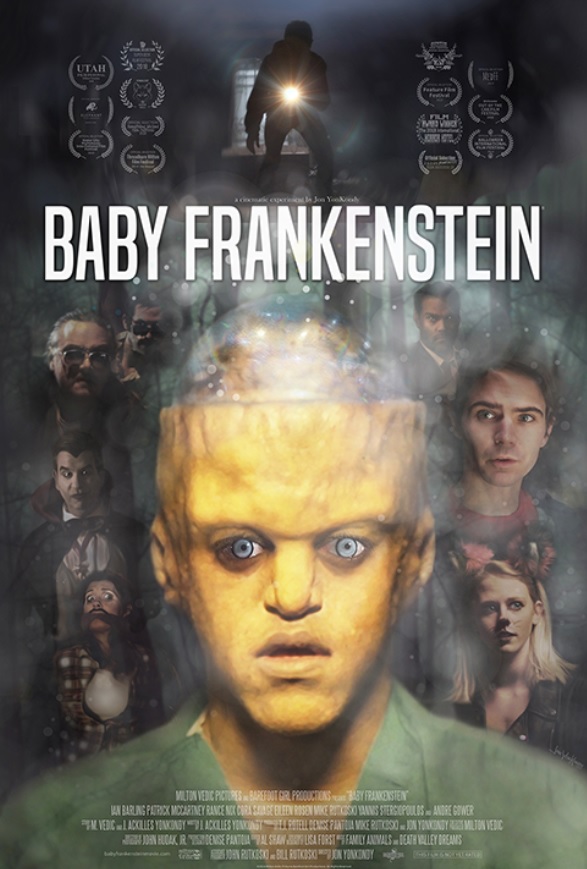
You need more Pennsylvania-shot film? Then check out our recent review of Jon YonKondy and Mike Rutkoski’s Baby Frankenstein, shot in Wilkes-Barre.

Disclaimer: We were provided a screener by the film’s PR company. That has no bearing on our review.

About the Author: You can learn more about the writings of R.D Francis on Facebook. He also writes for B&S About Movies.

Baby Frankenstein (2020)

One read of the title. One look at the poster featuring the baby with a plexiglass skull cap. One watch of the trailer. . . .

I’m spider-sensing pure exploitation attitude of the ’80s home video variety: here comes the neon-wireframed VHS tape spinning on another Prism Video production (You Tube). I’ve just got Doc Brown’d to the wacked out worlds of Stuart Gordon’s Re-Animator, the Shapiro-Glickenhaus universe with the twist-fest thats are Ed Hunt’s The Brain and Frank Henenlotter’s Brain Damage and Frankenhooker (the final release from SG), and Fangoria Magazine’s “big studio move” with Severed Ties.

But wait . . . this is a Spielbergian family-friendly comedy-drama monster romp that reminds of Fred Dekker’s 1987 cult classic The Monster Squad (and Fred gave us the “required viewing” wack-fest that is Night of the Creeps) . . . and you know how we love the Dek around these B&S parts in the wilds of Allegheny County, PA.

Bottom line: Baby Frankenstein is pure ’80s VHS nostalgia. So let’s load that tape, the VCR won’t load itself.

Lance, a scruffy teen, develops an unlikely friendship with a pint-sized automated “robot monster” hiding in the attic of his family’s new duplex home. Helping Lance protect “Little Dude” from bounty hunters—including his mom’s sleazy boyfriend clamoring for that $50,000 reward—and Dauvin Lundquist, the evil scientist who created Lil’ Frank, is John (a fine job by screenwriter Mike Rutkoski), his socially awkward landlord and neighbor—who has a crush on Lance’s mom, Kim—and the sassy girl next door, Truth. It all leads to a final showdown where Lance must decide between the safety of his family and friends and the freedom of Baby Frankenstein.

While Baby Frankenstein brings on the analog-memories, this is a film born in the digital world: In the summer of 2015, actor-screenwriter Mike Rutkoski was searching for a director to bring his retro-unconventional script to the big screen (well, in today’s digital epoch: streaming platforms). So he reached out to director Jon YonKondy (the family-adventure Don Quixote and the Pennsylvania-shot Susquehanna) via Facebook. Fourteen months later, the duo finished a film that blazed through its principal photography in seven days in the Wyoming Valley area of Northeastern, Pennsylvania, around the cities of Wilkes-Barre and West Pittston (YonKondy is a West Pittston native; Rutkoski hails from Plains Township; actress Cora Savage is a native of Shickshinny).

Actor Rance Nix as Baby Frankenstein on set at Boscov’s Department Store in Wilkes-Barre, courtesy of Clark Van Orden/Times Leader Wilkes-Barre.

As with the recently reviewed “mature actor” comedy Nana’s Secret Recipe penned by first-time screenwriter Yolanda Avery, Baby Frankenstein is a stellar writing debut for Mike Rutkoski who, like Yolanda Avery, is buoyed by an excellent, under-the-radar cast—headed by Ian Barling (Lance) and Cora Savage (Truth), along with Patrick McCartney (Ken, the boyfriend), Eileen Rosen (Kim, the mom), and Rance Nix, who brings compassion and depth on equal with cinema’s original “big green dude,” Boris Karloff—in a stellar showcase for their talents. And it’s great to see child-teen actor Andre Gower—Sean from The Monster Squad (!)—return to the screen (he left in the late ’80s; returned in 2006) showing his adult thespin’ chops as the evil Dauvin Lundquist. (Channel Surfing Alert: Wading by Antenna TV for “Catch a Falling Star,” a 1984 episode of NBC-TV’s Highway to Heaven . . . there was a pre-Monster Squad Gower as tempermental child actor Tom Barney. Very cool.)

On top of being an enjoyable horror-comedy, Baby Frankenstein—like the new indie-horror favs we’ve recently reviewed, Evil River and The Invisible Mother, and the introspective-drama The In-Between—exposes us to a great alt-rock soundtrack by Family Animals (Facebook) and Death Valley Dreams (Facebook). And being ol’ band and radio dogs here at B&S, we’re always up for discovering new tuneage. I don’t know about you, but the Animals’ “Metal in the Microwave” and DVD’s “Turn out Those Eyes” are as good as any tunes airing on today’s alternative rock stations.

Making the festival rounds and racking up over a dozen awards, the fine folks at Wild Eye Releasing have made this Summer Hill Entertainment and Tomcat Films co-production available on all the usual VOD streaming platforms starting June 30. You can “pick your platform” by visiting the official Baby Frankenstein website and learn more about the film at their official Instragram, You Tube, and Facebook pages.

You need more Pennsylvania-shot film? Check out our recent review of Jake and Andrew Hunsicker’s The Arrangement, shot outside of Philadelphia.

Disclaimer: We were provided a screener by the film’s PR company. That has no bearing on our review.

About the Author: You can learn more about the writings of R.D Francis on Facebook. He also writes for B&S About Movies.

Suzi Q (2020)

If you’re a fan of Detroit rock ‘n’ roll of the late ’60s—amid all the crazy fandom for all things Alice Cooper, Grand Funk Railroad, Iggy Pop, Bob Seger, and Ted Nugent—you might have heard of Suzi Quatro with her bands The Pleasure Seekers (You Tube) and Cradle (You Tube).

Then she hooked up with British music impresario Micky Most and RAK Records to become one of the U.K.’s biggest glam stars. And that success grew when she began working with Mike Chapman and Nicky Chinn, best known for their work behind the scenes in making Sweet (“Fox on the Run,” “Love Is Like Oxygen”) into international glam stars.

Achieving only minor Top 200 chart placings in the U.S with her Top 10 Euro-hits “Can the Can,” “48 Crash,” and “Devil Gate Drive,” Suzi eventually found notice in America courtesy of her recurring appearances as Leather Tuscadero during the 1977 to 1978 season of the ABC-TV U.S sitcom, Happy Days (you can watch a compilation of all her music appearances on the show in the video below).

Unfortunately, the show failed to consolidate her success on U.S radio, but she did score her lone Top 10 hit, “Stumblin’ In,” a 1978 duet with British singer Chris Norman. Eventually, with the Knack-inspired new wave in full swing, she scored her final two, U.S Top 100 hits with “Lipstick” and “Rock Hard” from her 1980 album, Rock Hard.

Then along came an artist that Suzi inspired: one who achieved that number one single and album in America that eluded her: Joan Jett.

However, while the Detroit-born bassist never found mainstream success in her homeland, she kept on rocking, scoring an international hit with “Strict Machine” from her 2011 album, In the Spotlight, co-produced with Andy Scott of Sweet.

What elevates this Australian made documentary heads and shoulders above other pedestrian “talking head” rock documentaries is that director Liam Firmager chose not to travel the “feel good” promo route and create a puff piece on his subject; he eliminated all of the usual docu-candy coating. Suzi Q isn’t a cookie cutter journal that inserts a talking head here, an old photo there, and a rare film clip here; Firmager chose to tell a story—through over 400 rare archival film clips—that gives Suzi Q the feel of a musical biographical drama. However, unlike other rock bioflicks (The Doors, Ray, Walk the Line) this chronicle on the life of Suzi Quatro has no filtering; there’s no compression or compositing of characters and fabrication of pseudo events for “dramatic effect.”

Firmager not only researched his subject, he spoke to his subject; he got inside his subject. So, while Suzi Q is for the fans of an artist who sold 55 million records around the world, it’s also a film for Suzi Quatro. This is a film that shows rock ‘n’ roll fans that, at the end of the day, a rock star is just a musician. And a musician is just a job. And behind that job is a person. And that person has hopes and dreams, success and regrets, joys and pain. Firmager makes us, the fans, realize that those people behind those records on our turntables and posters on the walls sacrifice life’s normalcies that we take for granted. Through this film, Firmager provided Suzi Quatro a catharsis; a spiritual cleansing and life resolution that most of us will never be blessed; a realization that our lives were worth the journey. And that, maybe, we didn’t end up where we wanted to be or expected to be, but we ended up exactly where we need to be. And Suzi needed to rock ‘n’ roll and be the trailblazer and harbinger for the lives of others.

Suzi Q will launch on DVD, Blu-ray and VOD on July 3, while the film had a planned theatrical release at select U.S cinemas on July 1. However, with the COVID-19 pandemic closing theatres, Utopia Distribution will host a “SUZI Q” virtual event on July 1st featuring the film and an exclusive Q&A featuring Suzi Quatro and a Special Guest (available for 24 hours only) in advance of the film’s traditional release on VOD and DVD on July 3rd. The Q&A will be conducted by Cherie Currie of the Runaways and Kathy Valentine of the Go-Go’s. A portion of the proceeds from the event will support MusiCares, the Recording Academy’s™ charity, to raise funds in support of the organization’s COVID relief fund for music artists in need.

Suzi Q had its U.S. premiere at the Sonoma International Film Festival on March 29, where Quatro made an appearance; it made its theatrical debut last fall in the UK and Australia, where Quatro had her biggest chart successes. You can learn more about the film at its official website. There’s more Suzi tunes to be had at her official You Tube page.

Oh, and since B&S About Movies is a movie review site . . . there’s a “video fringe” connection to Suzi: her sister Arlene, also an ex-The Pleasure Seekers/Cradle member, is the mother of actress Sherilyn Fenn (Crime Zone, The Wraith, Outside Ozona). And here’s a tune from her uber-talented, underrated brother, Mike Quatro: a man who needs his own documentary flick. Speaking of which . . .

There’s more tales from Detroit to discover in the life and career of Sugar Man Rodriguez and the life and times of The Grande Ballroom in the frames of Searching for Sugar Man and Louder Than Love.

About the Author: You can read the music and film reviews of R.D Francis on Medium and learn more about his work on Facebook. He also writes for B&S About Movies.

Disclaimer: This was sent to us by the film’s PA firm and has no bearing on our review.

Desolation Center (2020)

“We played in the middle of the Mojave Desert at a festival called the Gila Monster Jamboree . . . It was a magical night, one of my favorite (Sonic Youth) shows ever.”
— Kim Gordon, bassist of Sonic Youth, from her book Girl In A Band: A Memoir

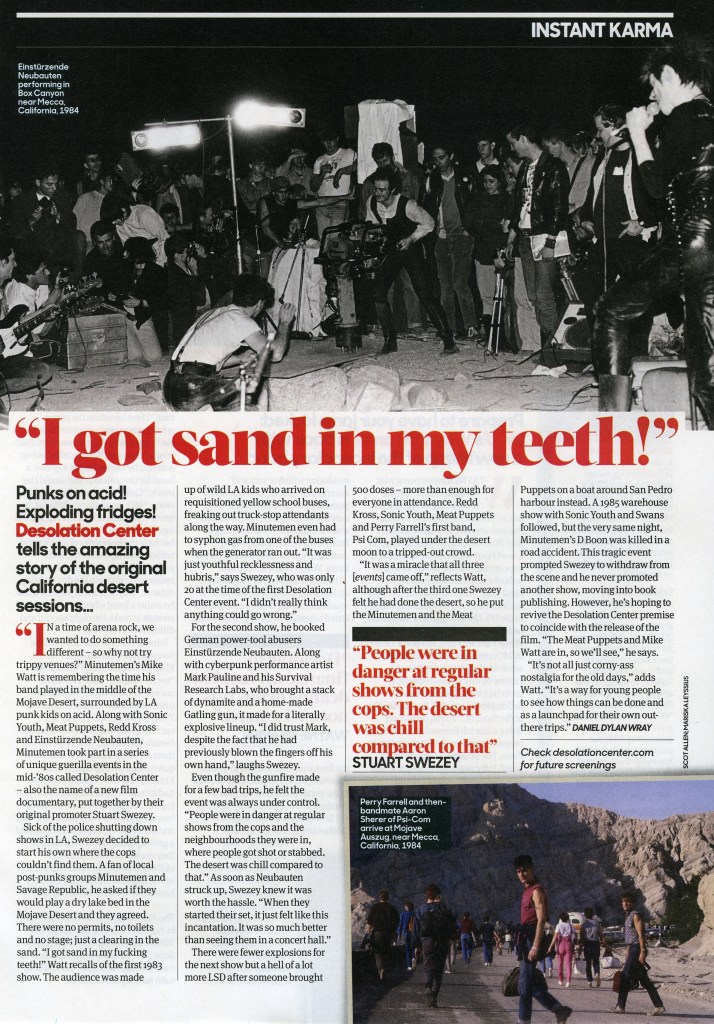
Before the corporate alt-rock explosion of the ’90s birthed the likes of the Burning Man, Lollapalooza, and Coachella rock festivals, there was the Desolation Center: a punk rock version of Woodstock held in the Mojave Desert that hosted the performances of Sonic Youth (1994: The Year Punk Broke), Minutemen (morphed into Firehose; music featured in A Matter of Degrees), Meat Puppets (soundtracks to Lovedolls Superstar, Love and a .45, SubUrbia, Losers Take All), Perry Farrell (of Jane’s Addiction), Redd Kross (Desperate Teenage Lovedolls, Spirit of ’76), Einstürzende Neubauten, Survival Research Laboratories, Savage Republic, and the Swans.

Image of Uncut Magazine article courtesy of MU Productions and CWPR; they also provided the theatrical one-sheet as part of the film’s promotional press kit/materials

It all began in 1983 in the mind of a then 23-year-old Stewart Swezey, and Bruce Licher of Savage Republic, so as to provide a venue for bands, such as Black Flag, forced out of Los Angeles by a police department and local government that saw fit to raid clubs and instigate riots at punk rock shows. So the duo chose a site just outside of Mecca, California, three hours south of Los Angeles, to provide a safe, creative outlet for bands and their fans.

This is great stuff and the leaf-logos on the one-sheet are warranted. Watch it.

Desolation Center became available on Tuesday, June 23 for streaming via Apple TV (iTunes), Google Play, and the Amazon Instant Video platforms. Pair this one up with Social Distortion and Minor Threat in the Another State of Mind and Penelope Spheeris’s The Decline of Western Civilization for a night of retro-punk viewing.

Disclaimer: We were provided a screener by the film’s P.R firm. That has no bearing on our review.

About the Author: You can learn more about the writings of R.D Francis on Facebook. He also writes for B&S About Movies.

Exploring: Italian Giallo Films of the 1960s through the 1970s

Editor’s Note: As this exploring feature wraps up our “Giallo Week” of reviews, we’re unpacking a lot of links of our past reviews within our analysis of the genre, as well as a listing of links for our week’s reviews. So bookmark this feature and return at your leisure for your one-stop source for Giallo films.


Most horror film aficionados believe the American slasher film cycle of the early eighties birthed with John Carpenter’s 1978 horror classic Halloween*. In reality: slasher films got their start in Italy with a literary format known as Giallo or “Yellow” in the Italian vernacular.

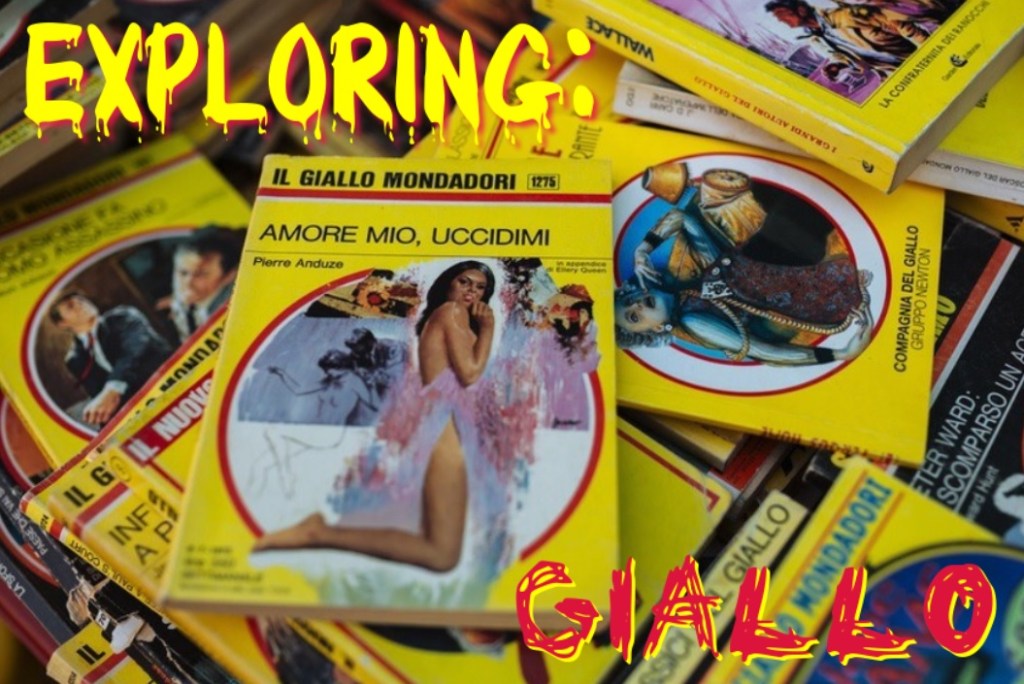
Giallo pulp novels image courtesy of Casey Broadwater/Flickr with banner by R.D Francis/PicFont

Inspired by Robert Louis Stevenson’s 126-paged novella horror classic (The Strange Case of) Dr. Jekyll and Mr. Hyde, small literary houses in Italy churned out their Giallo variant: a cost-effective format of reading entertainment intended for male readers—considering most of the psychologically damaged antagonist’s victims were female—who eschewed cheaply-produced romance novels with splashy, sexy-gaudy covers enamored by the women in their lives. These Italian paperbacks were produced by small literary houses that kept their printing costs down by binding the books in universal, unadorned yellow covers with simple, black-lettered titles that readers could easily stuff the ironically blood red-soaked tales in their jeans’ back pocket for easy, portable reading.

While the names of Dario Argento and Mario Bava are bantered about as the fathers of Giallo, the true father—well, grandfather—is Edgar Wallace. Huh? The British-born writer who wrote the screenplay for 1933’s King Kong?

It’s true. The ex-army press corps and London’s Daily Mail scribe moved into novels and became the “King of the Thrillers” by grinding out 957 short stories, 170 novels, and 18 stage plays—many of which he riffed as a secretary dictated them. Many times, he worked on as many as three books at once.

Sadly, as with the prolific Phillip K. Dick, Wallace’s greatest fame was posthumous (he died in 1932). While alive, his first film adaptation was The Man Who Bought London (1916), and those adaptations hit fever pitch in the ‘60s with the forty-seven films of the Edgar Wallace Mysteries series.
Wallace’s new found fame—and on his way to becoming a Giallo inspiration—began when the Danish production company Rialto Film co-produced with the German film market, 1959’s Der Frosch mit der Maske (aka The Face of the Frog) which started the krimi genre (abbreviation for the German term “Kriminalfilm”). Krimis—like the later Giallo films they inspired, were hyper-noir films, replete with zooming cameras and lurid, masked supervillains. And many of Wallace’s novels sported those cheap yellow covers that gave our beloved, pre-slasher ‘80s films their name—Giallo.

What are some of the Wallace novel-to-screen Giallo adaptations you might have seen? Well, there’s Massimo Dallamono’s What Have You Done to Solange? (1972), Jess Franco’s Night of the Skull (1974), Riccardo Freda’s Double Face (1969), Umberto Lenzi’s Seven Blood Stained Orchids (1971), and Duccio Tessari’s The Blood Stained Butterfly—all are Wallace novel adaptations.

In the screenwriting department the Giallo genre owes much to Ernesto Gastaldi, who wrote many the the era’s classics, such as All the Colors of the DarkDeath Walks at Midnight, The Killer Is Still Among Us, TorsoThe Scorpion with Two Tails, The Strange Vice of Mrs. Wardh, and Torso, to name a few. One of his earliest was the ’60s precursor, Libido, which he co-wrote and directed with Vittorio Salerno, who gave us No, the Case Is Happily Resolved.

Courtesy of GaiusMarius157BC/Reddit

Gialli offered European readers sexually-inspired gore stories that caused the fans of the suggestive, atmospheric horror films produced by Britain’s Amicus and Hammer Studios to flinch—and Stevenson, along with noted Gothic horror authors Sheridan Le Fanu, Gaston LeRoux, and Guy de Mausspaunt to roll over in their graves. (And don’t forget the inspirations of Thomas De Quincey to Italian filmmaker Dario Argento.) Gialli—filled with quaint, occasional reader-acceptable typos by way of underpaid and overworked editors and proof readers—were well-written, suspenseful and engaging tales (the “content” is the key) that Sheridan Le Fanu probably wanted to include in his influential, short-story collection In a Glass, Darkly (featuring the vampire classic “Carmella”) and realized he had to rein his imagination or be judged by a puritanical, elitist lynch mob for writing “filth.”

It was those yellow-bound books that inspired the spaghetti-horror (pasta-horror) cycle spearheaded by Mario Bava** with 1971’s Twitch of the Death Nerve (aka Bay of Blood) and Dario Argento+, who became the maestro of Italian Giallo films with 1970’s The Bird with the Crystal Plumage. (Watch Carpenter’s Halloween, Sean S. Cunningham’s Friday the 13th, and Brian DePalma’s Dressed to Kill—and compare to Bava’s and Argento’s work: especially look for the similarities of Bava’s Twitch of the Death Nerve vs. Friday the 13th.)

Produced for a reported $350,000 John Carpenter’s classic grossed an estimated $80 million dollars in worldwide box office during its initial release. Initially dumped into the U.S drive-in market to make a quick buck, the fluke blockbuster status of the film inspired mainstream Hollywood to jump on the yellow-painted bandwagon with 1980’s Friday the 13th and 1984’s A Nightmare on Elm Street++.
As fate would have it, the John Carpenter-inspired slasher film cycle coincided with the introduction of a contraption known as a VCR that played something called a VHS tape—and that hunk of analog electronics transitioned the slasher film genre from America’s outdoor drive-ins and onto the shelves of the burgeoning U.S home video market. (Don’t forget: Christopher Lewis’s groundbreak Blood Cult was the first “Big Box” SOV produced exclusively for the home video market.) Slasher films—affectionately referred to as “boobs and blades” for their concentrations on well-endowed, giggly women and the shiny, sharp objects that stabbed them—were cheap and easy to produce and the worldwide film markets were hot for product. Returns on a film’s investment produced under the “boobs and blades” banner were guaranteed. The films became the number one way for a newbie actor or writer, budding director or producer to get into the film business.

Courtesy of heliosphan/Picclick.com

At the same time those direct-to-video “boobs and blades” knock offs started flying off the video store shelves, a new form of heavy metal birthed in Britain in the late seventies—dubbed by Sounds magazine as “The New Wave of British Heavy Metal” (NWOBHM). Featuring the violent, religious mania and bloody lyrics composed by the likes of Venom and Iron Maiden, complete with the requisite Satanic imagery on the album covers, slasher films and heavy metal music were a match made in hell: the music coming out of England was, in fact, Giallo musicals. This music-inspired slasher sub-genre even got its own name: metalsploitation*+, which featured other beloved so-bad-they’re-good bloody analog tales showcasing the exploitive titles of Black Roses, Shock ’em Dead, Terror on Tour, Rock ’n’ Roll Nightmare, Hard Rock Zombies, and Rocktober Blood. The genre peaked—and quickly burnt out—when the major studios took a slice of the metalsploitation pie with 1986’s big-budgeted Trick or Treat.

However, before the glut of heavy-metal horror films hit the video store shelves, Paul Williams and Brian DePalma composed a campy, 1974 rock ’n’ roll Giallo-inspired reboot of Hammer Studios’ 1962 film version of The Phantom of the Opera (based on Gaston LeRoux’s novel). Somewhat similar to 1975’s The Rocky Horror Picture Show in the camp ’n’ rock department, Phantom of the Paradise featured an emotionally damaged musician, Winslow Leech, who rains vengeance on the narrow-minded fools who stole his music and ruined his career. An emotionally damaged antagonist out for revenge who wears a mask? It’s pure Giallo. The only difference is that poor Winslow isn’t concealed behind POV black gloves.

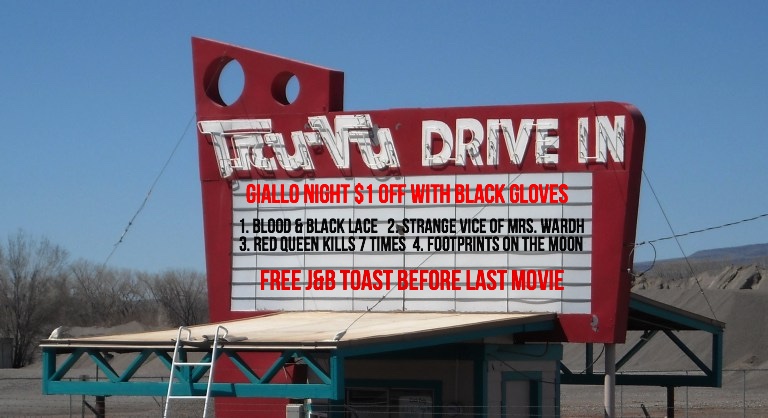
Drive-In Friday: Black Gloves Required Night!

Needless to say, the Giallo cycle was misunderstood by mainstream America, with the genre’s mixtures of murder and the supernatural rated as “style over substance” and “lacking in narrative logic.”

Well, that’s was always the point, Mr. Mainstream critic. (That and if the friggin’ puritanical U.S. distributors didn’t chop and slice the Italian and Spanish imports into incomprehensible messes.)

Italian Gialli—or any of the Spanish variants—of the ‘70s always eschewed “realism” and “substance” over what were always the main priorities of the Giallo genre: art and surrealism rooted in Impressionism and Renaissance art.

The Giallo resume of Dario Argento, the leader of the genre, is the cinematic equivalent of Salvador Dali’s melting clocks and M.C Esher’s impossible objects and staircases to nowhere. Giallo is all about the utilization of oozing color palates and oddball light sources, nonsensical supernatural red-herrings to nowhere, psychic links to killers hidden in POV, whispered poetic passages, hypersexual oddball red-herring characters, rape and murdered moms, junk science (about sunspots, Y chromosomes, eye-memories, love-chemicals), pedophile fathers, doctors and detectives riddled with kinks and ulterior motives, and a general, overall incoherency (even before U.S. distributors got their hands on ’em) set to a soundtrack of jazz-rock noodling and chanting choirs.

The whole point of Paolo Cavara’s Black Belly of the Tarantula and Sergio Martino’s The Case of the Scorpion’s Tale—and every bloody tale concerned with insects and animals—is for you, the viewer, to have a series of “WTF” moments. Giallo films are crime capers, that is, film noirs+* (see the classics A Double Life, Black Angel, Double Indemnity, Farewell, My Lovely, My Name is Julia Ross, The Possessed, So Dark the Night, Sorry, Wrong Number) with the violence in full living-dead color, along with a dash of the supernatural tossed in for good measure.

Noir/detective paperbacks image courtesy of rubysresaleofrhodeisland/eBay

In 1944’s Double Indemnity, when Fred MacMurray pops up from behind the car’s backseat and strangles the husband of Phyliss Dietrichson (Barbara Stanwyck), the camera pulls back and frames on her satisfied face as her husband gags to death off frame (and we can imagine what expression is across MacMurray’s face). That’s film noir. In a Giallo, the eye-buldging strangulation is in full frame. In film noir, the sex—via editing and cinematography—is implied. In a Giallo, it’s on camera—and, in most cases, only one person walks away unslashed from the encounter.

That “honey of an anklet” will get the colors of the dark, flowing.

Actor Tony Musante’s vacationing American writer Sam Dalmas and Michael Brandon’s rock drummer Roberto Tobias, in the respective films The Bird with the Crystal Plumage and Four Files on Grey Velvet, have everything in common with William Holden’s Joe Gillis in Sunset Blvd., Fred MacMurray’s pasty of Walter Neff in Double Indemnity, and John Garfield’s Frank Chambers in The Postman Always Rings Twice. Each are somewhat well-intentioned, yet flawed individuals. The only difference is the film noir schlubs of the latter films don’t end up in a Dario Argento what-the-fuck Giallo plot twist of an intelligent chimp wielding a straight razor and having to rescue a cute girl with psychic links to insects (Phenomena, for those of you wondering what in-the-hell am I talking about).

Of course, as Sam, the bossman at B&S About Movies pointed out, we have Mario Bava to thank with his black-and-white, 1963 neo-noir The Girl Who Knew Too Much and its introductions of Giallo conventions serving as the progenitor for the genre. Then Bava sealed the deal with his next film, the 1964 color-shot Blood and Black Lace, which introduced all the high fashion, shocking color-palate gore, and psychosexual encounters missing from the likes of the black and white film noir classics, such as Double Indemnity and Sorry, Wrong Number, which inspired Bava’s The Girl Who Knew Too Much.

Watch Federico Caddeo’s genre examination on Tubi.

So the next time you fire up The Conjuring or Happy Death Day, or any of the endless cycle of sequel-prequels-sidequels of the Blumhouse universe variety, just remember those are the digital copies of the original celluloids by Dario Argento (Deep Red, Suspiria), Mario Bava (Hatchet for the Honeymoon), Paolo Cavara, Ruggero Deodato (Phantom of Death), Riccardo Freda (The Ghost, The Iguana with the Tounge of Fire), Lucio Fulci (Don’t Torture a Duckling), Umberto Lenzi (Seven Blood Stained Orchids), and Sergio Martino (The Case of the Bloody Iris, All the Colors of the Dark, The Strange Case of Mrs. Wardh, Torso, Your Vice is a Locked Door and Only I Have the Key)—the Italian forefathers that birthed the jump-scares oeuvre of today’s digital divide in the first place.

But even I have to admit that no matter how much I enjoy the films of those Italian filmmakers, I am burnt out on them. But I love the era and adore the genre and I want more . . . but my yellow has turned to brown.

Thankfully, there’s a new crop of young turks keeping the genre alive, birthing a new genre: neo-Giallo—or what I like to call “Giallo impressionism.”

Granted, the frames of today’s modernized Gialli—fans will place the major studio wares of James Wan’s Malignant, Edgar Wright’s Last Night in Soho and, Peter Strickland’s more deserving Berberian Sound Studio, on the list*—may be a bit to “pretty” in contrast to the classic, cheap n’ quickly made Giallo films of yore. The budgets of 21st century Gialli are more studio-generous; as result: they’re too carefully made—to please the suits bankrolling them—and lacking in the classic schlock and the exploitative elements, which takes away from the lack-of-logic strangeness we adore of the genre. The truth is we don’t want to make sense of these films rife with heart-weeping beautiful women victimized by ultra-violence dispensed by POV black-gloved killers slashing by way of ear-bleeding Morricone and Goblin soundtracks. (*I’ll even debate Sly Stallone’s Cobra and D-Tox, as well as Charles Bronson’s 10 to Midnight, are Euro-influenced Giallo variants crossed with Poliziotteschi elements in their frames.)

Regardless of those critical hesitations of the new breed, I relish my inhaling the new, yellow hues of Amer, Let the Corpses Tan, and The Strange Color of Your Body’s Tears by Helene Cattet and Bruno Forzani, The App by Elisa Fuksas, Mitzi Peirone’s Braid, David Fowler’s Welcome to the Circle, Sam Bennett’s Dark Sister, The Editor by Adam Brooks, Marco Rosson’s Evil River, the Argentinian Onetti Brothers with Francesca, Abrakadabra, Deep Sleep, and What the Waters Left Behind, Graham Denham’s Greenlight, Matthew Diebler and Jacob Gillman’s The Invisible Mother, Mandy and Beyond the Black Rainbow by Panos Cosmatos, Tommy Faircloth’s A Nun’s Curse, Bret Wood’s Those Who Deserve to Die, Under the Silver Lake by David Robert Mitchell, Marc Cartwright’s We Die Alone, and Vahagn Karapetyan’s Greek-twist, Wicca Book.

So, embrace the yellow leaking out of Kevin V. Jones across the marbled floors of Morningside, ye children of the night! Fill your goblets, for tonight; we dine by the plasma’s streaming glow. And it forever glows yellow and in all the primary colors of the dark.

About the Author: You can learn more about the writings of R.D Francis on Facebook. He also writes for B&S About Movies (to a truncated listing of all his reviews).


Here’s the complete list of all the films we reviewed for our week of Giallo films from June 14 to June 20, 2020.

Abrakadabra
Anquish
Arabella The Black Angel
Blackaria
A Black Veil for Lisa
The Bloodstained Butterfly
Blue Steel
The Cauldron of Death
Damned in Venice
Death Knocks Twice
Death Steps in the Dark
Deep Sleep
Domino
Double Face
Dumplings
Eyes of Crystal
Fashion Crimes
Fatal Frames
The French Sex Murders
A Girl in Room 2A
The House of Good Returns
An Ideal Place to Kill
Interrabang
The Killer is One of 13
The Killer Is Still Among Us
Killing of the Flesh
Knife of Ice
Knife Under the Throat
Nothing Underneath
Nude, She Dies
A Quiet Place to Kill
Red Nights
Reflections in Black
Screaming Mimi
Seven Deaths in the Cat’s Eye
Seven Notes of Terror
Slaughter Hotel
So Sweet . . . So Perverse
Symptoms
Tango
To Agistri
Trauma
Tulpa
Weekend Murders
What the Waters Left Behind

And here’s some more reviews from the past . . . and a few recent ones . . . since the site began:

Autopsy
Basic Instinct
The Blood Stained Shadow
Body Count
Cold Eyes of Fear
Crystal Eyes
The Corruption of Chris Miller
Deadly Games
Deadly Inheritance
Death Laid an Egg
Death Smiles on a Murderer
Devil in the Brain
Die Screaming, Marianne
The Embalmer
Eyeball
Five Dolls for an August Moon
Footprints on the Moon
Formula for a Murder
Identikit
Idu Saadhya
I Know Who Killed Me
Il nascondiglio
Knife + Heart
Lanetli kadinlar
Last Night in Soho
A Lizard in a Woman Skin
Love and Death in the Garden of the Gods
Mania
Maniac Mansion
Murder Obsession
My Dear Killer
The Night Child
The Night Evelyn Came Out of the Grave
No One Heard the Scream
Orgasmo
The Perfume of the Lady in Black

Perversion Story
Pensione Paura

Rage
The Red Queen Kills Seven Times
Short Night of Glass Dolls
Spasmo
Stagefright
Strip Nude for Your Killer
Tightrope
Who Saw Her Die


Oh, yes, there’s more!

We started off the New Year in January 2021 with MORE Giallo films. You can catch up on our reviews with our three-part “Giallo Week Wrap Ups”: Recap 1, Recap 2. and Recap 3 (clickable pics, who knew!).

And even more yellow!

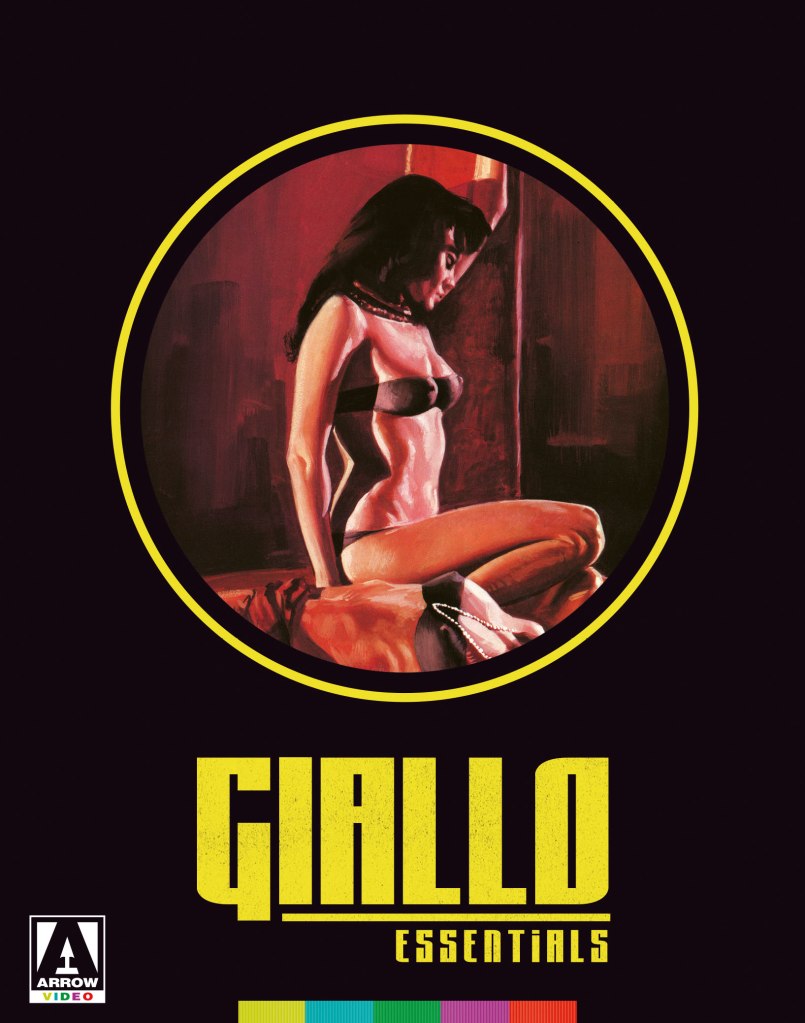
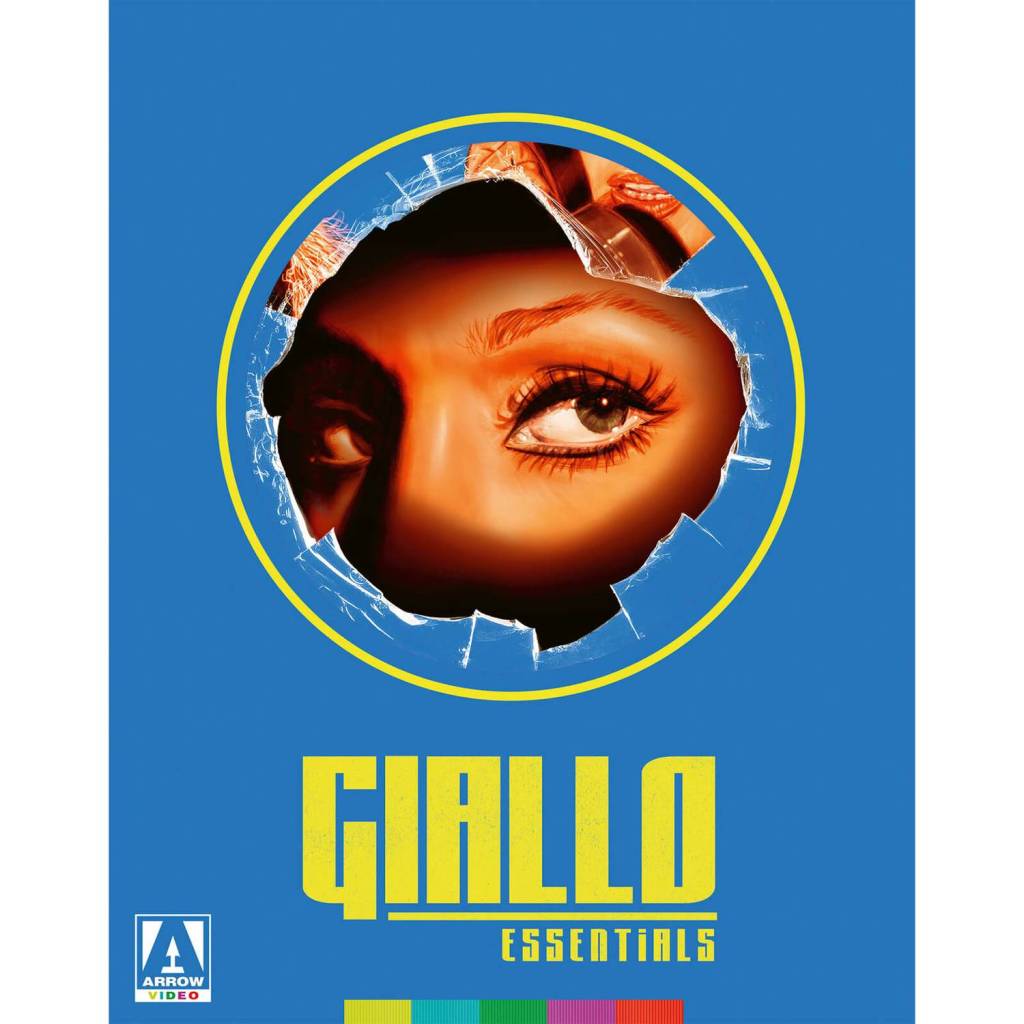
In the Summer of 2022, Arrow began their release of the four-part box set, Giallo Essentials: Red, Black, Yellow, White, and Blue, which we reviewed in full. Oh, it’s true: the films in these boxes are the ones to watch! You can learn more about the February 14. 2023, release of the White Edition (covering films from 1971 to 1975) at Blu-ray.com, which will also direct you to the technical aspects of all the sets.

Argh! More?

As you know, B&S About Movies is based in Pittsburgh, so . . . we had to do a feature of Yinzer-based Giallo flicks set in our home town.

And did you know a lot of “Bond Girls” went yellow?

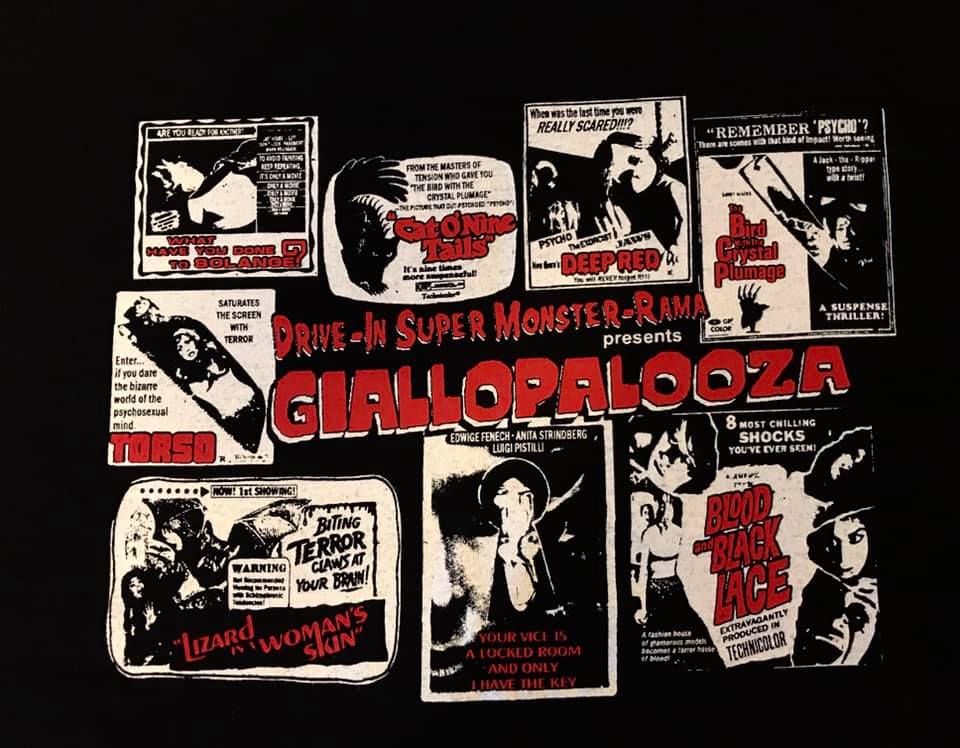
There also other “essentials” to watch by way of Drive-In Super Monster-Rama‘s September 2021 presentation of “Giallopalooza” —which was two big nights of classic, fully restored Giallo thrillers from such maestros as Dario Argento, Mario Bava, Lucio Fulci and Sergio Martino!

Noooo! No More Yellow!

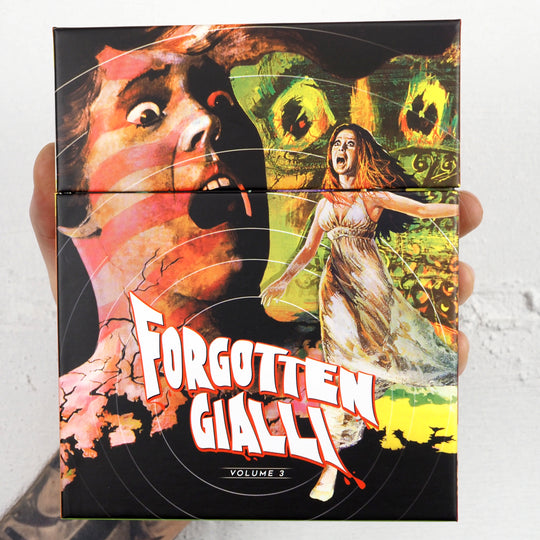
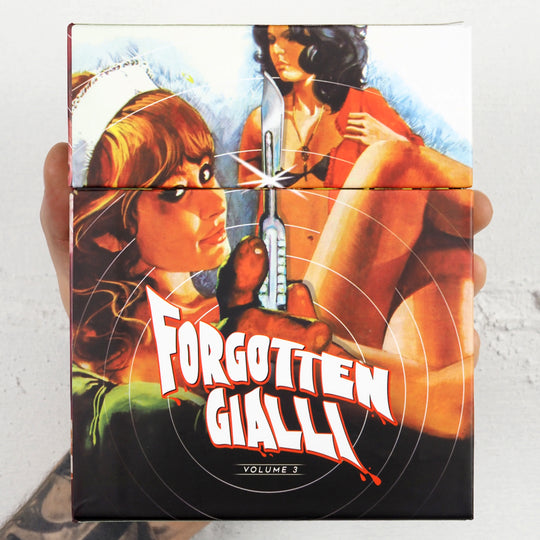
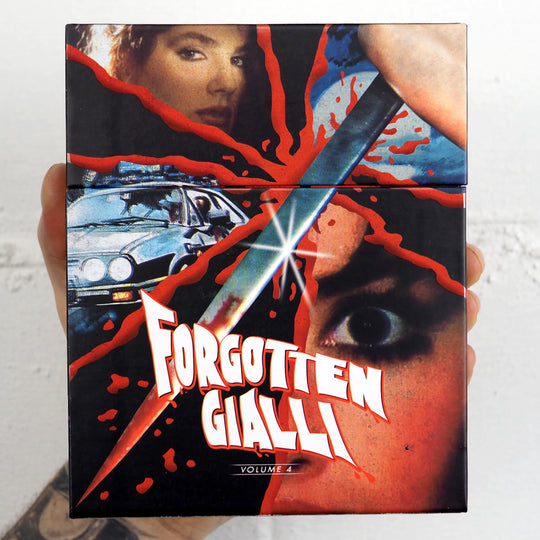
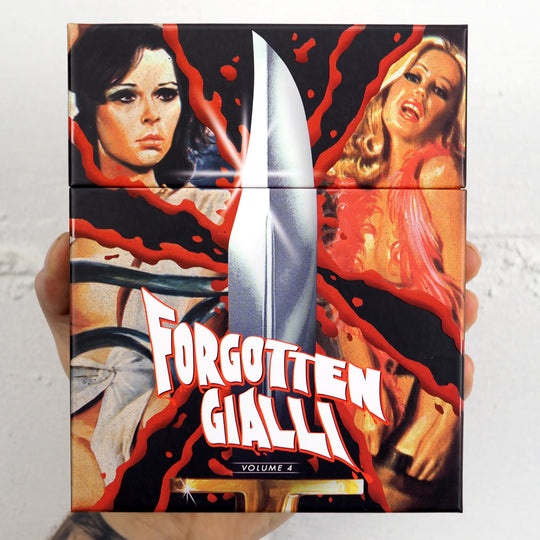
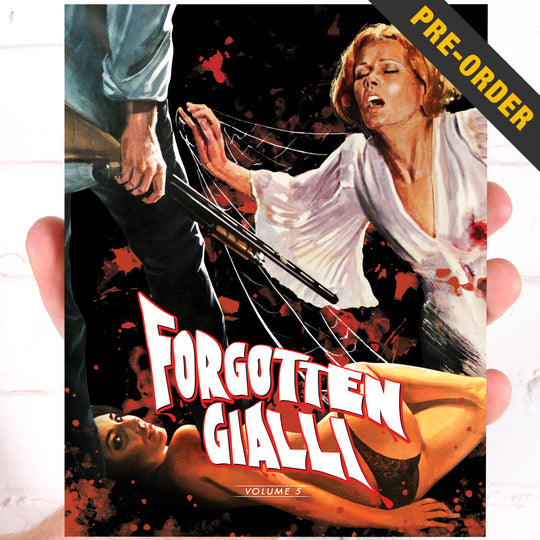
Yes! In addition to the above Arrow box sets, the fine folks at Vinegar Syndrome have their five volume Forgotten Gialli box sets to build your movie library. While we didn’t unbox it: here’s the link to Volume 1 of the set at Vinegar Syndrome; click the images to get to the rest.

a

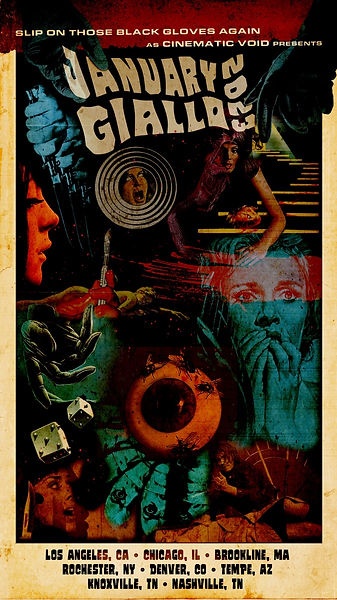
Then, in January 2023, we teamed with American Cinematheque to review all of the ’70s bred Gialli showings on their “Cinematic Void” schedule—most from 35mm restored prints. You can catch up with all of those films, with our announcement-post about the series. Search “Cinematic Void” to populate a listing of those reviews.


* Be sure to read our explorations of the Halloween franchise with “Watch the Series: Halloween” and “Ten Slashers to Watch Instead of Halloween,” as well as our “American Giallo Week” of reviews of ’80s slasher variants.

** Be sure to read our exploration on The Maestro Bava with our “Ten Bava Films” and and “Bava Week.”

+ Be sure to read ourexplorationn of The Maestro Argento with our “Ten Dario Argento Films.”

++ Be sure to read our exploration of the ongoing influence of Freddy with “Ten Movies that Totally Ripped Off A Nightmare on Elm Street.”

*+ Be sure to examine our “No False Metal” week of films.

+* We go a bit deeper on the film noir cycle with our recent reviews of Don Okolo’s neo-noir Lone Star Deception, along with the radio romps Dead Air and Power 98.

The End?