And the Mill Creek sets keep on rockin’ our DVD decks! Another 12 movies put to rest. Previously, we jammed on Mill Creek’s B-Movie Blast 50-Film Pack. And we’re not done yet! We unpacking another 50 films to close out the month with Mill Creek’s The Excellent Eights 50-Film Pack.
Every November — to whet our appetites for Halloween — we tackle a Mill Creek box of fifty movies. We started with the Chilling Classics set in 2018 and also did the Pure Terror set in 2019. For 2020, we jammed on the Sci-Fi Invasionset. And Mill Creek’s 12-Packs always come in handy for our theme weeks, such as our recent “Fast and Furious Week,” when we a lot of films, quickly. To that end: the Savage Cinema set did the job. And, back in March, we were so giddy with glee that we finally got our own copy of 9 Deaths of the Ninja courtesy of the Explosive Cinema 12-pack, we paid it forward to Mill Creek and reviewed all of the films in the pack.
Many thanks to Rob Brown, Herbert P. Caine, Dustin Fallon, Robert Freese, Sean Mitus, Bill Van Ryn, Jennifer Upton, and Melody Vera for chipping in with their reviews for our month-long Mill Creek project!
Phew. We did it! Mill Creek box sets are our jam, as it were, so no sweat in watching 50 movies in 13 days. And, since we’ve dedicated this entire month to our Mill Creek fandom . . . up next is Mill Creek’s Gorehouse Greats 12-Pack.
Every November we tackle a Mill Creek box of fifty movies. We started with the Chilling Classics set in 2018 and also did the Pure Terror set in 2019. For 2020, we jammed on theSci-Fi Invasion set. And Mill Creek’s 12-Packs always come in handy for our theme weeks, such as our recent “Fast and Furious Week,” when we need a lot of films, quickly. To that end: the Savage Cinema set did the job. And, back in March, we were so giddy with glee that we finally got our own copy of 9 Deaths of the Ninja courtesy of the Explosive Cinema 12-pack, we paid it forward to Mill Creek and reviewed all of the films in the pack.
Many thanks to Rob Brown, Herbert P. Caine, Dustin Fallon, Robert Freese, Sean Mitus, Bill Van Ryn, Jennifer Upton, and Melody Vera for chipping in with their reviews for our month-long Mill Creek project!
In the second week of February, we received a screener of the feature film debut by New York-based filmmaker Joshua Reale. Hopefully, you not only read our review for Necropath, but took a chance on Reale’s debut film and streamed it. It’s a stellar debut from a filmmaker to watch.
We recently sat down with Joshua Reale to discuss his journey as a budding filmmaker and seeing his first feature film receiving worldwide distribution on digital streaming platforms. You can also watch the short version of Necropath, as part of Empire State of the Dead, a 2014 anthology film.
B&S: Many of the indie-streaming filmmakers we review at B&S About Movies are born from one of two camps: The first, courtesy of the accessibility of digital filmmaking, they’ve eschewed a traditional, film school educational queue and are self-made filmmakers. In the second camp, they were able to convince their parents to pay to send them to film school. Which one is Joshua Reale?
J.R: For film school-wise, I went to a couple trade schools, but nothing fancy. A lot of my filmmaking I learned — I went to this place in Boston that lasted for a couple of weeks — but most of my filmmaking that I learned was, ironically, from watching (the AMC series) Breaking Bad. And also working with my friend, Geoff Orlowksi, who also produced Necropath, as well; he came to my Halloween attraction and asked to shoot a scene for his independent film, The Vampire (2013). I just stood on the sidelines watching him because that’s something I always wanted to get into. I wrote scripts but never knew how to approach filmmaking. Watching him do his thing, I asked if he’d would like to meet up. So we met at a cafe and starting discussing film stuff and we made Necropath.
B&S: We had a recent sit down with writer-director Eric Eichelberger of Ghoul Scout Zombie Massacre and we came to learn that he made his first movie at 8 years old, out in the cornfields of Indiana. How old were you when you made your first movie and what was that first movie? Did you take photography or film classes in high school or were your film endeavors strictly extracurricular outside of school?
J.R: The first film I made, obviously, we made stuff when we were little kids, but the first stuff that counted was after high school, since my high school didn’t really didn’t offer anything — I graduated in 1999 — to do with filmmaking. Plus, living somewhere where filmmaking isn’t a big deal, like upstate New York; if you lived more on the West Coast they would probably offer stuff [in high school]. So, after high school, I started doing it on my own and just bought a camera and did the most you can do as an 18 year old with a camera.
B&S: But no cornfields — or any country fields, since you were in upstate New York — in your past?
J.R: No, I was in a more of an urban-kind of setting. I created a horror-icon character (Scag) when I got out of high school that I wanted to develop and I’ve been focused on making these short scripts; so we shot one and then we did another one. They were so low-budget; we just kind of winged it to just get into filmmaking, as our kind of practice.
A new horror icon is born: Moe Issac as Scag
B&S: In an interview, music producer Steve Albini, most notable to mainstream audiences for his work with Nirvana, discussed the issues with digital vs. analog recording. He explained, as result of the ever-changing digital realms creating software incompatibilities, he feels it’s best to record in an analog format for archival purposes, and then transfer those reels into a digital editing suite to create the final product. However, it seems the new guard of indie-digital filmmakers can’t work within the constraints of the tight shoots, with days laid out beforehand, working with less coverage, and finding crews that possess the extremely different skill sets to work with film stock vs. digital. What are your impressions and opinions on working in a digital format vs. working in 16 or 35 mm stocks? 35mm is, of course, more difficult to scan, but what about in terms of depth of field and lighting issues? What cameras were used in the making of Necropath?
J.R: We used the DSLR, the Mark III on our shoot. I used 16mm in one of my week-long film courses in New York City that had a 16mm class — and it’s a total pain. There’s a lot of limitations: you didn’t have the view finder, for one. But I guess that’s the beauty of using [a] 16mm [camera]: you get a whole different product in the end and the overall quality of film, after. But with the technology now, you can, basically, shoot something extremely well on a DSLR camera. We shot Necropath [on a DSLR] and I think it came out fantastic.
B&S: For Necropath, you eschewed a tradition music soundtrack for what’s best described, more as a subjective sound pallet of perpetual, atmospheric hums, screeches, buzzes, and distorted, disembodied voices, which, I assume, are to put the viewer inside the head of your chief antagonist, Scag. Then there’s those wailing emergency alert clarions throughout the film. If it was your intention to induce nausea in the viewer, it certainly worked on me. The first thought I had: Joshua O.D’d on New French Extreme films or, at the very least, is a fan of Gaspar Noé’s Irréversible.
J.R: As a far as the style of filmmaking that I did: it’s my first film, making Necropath. I just wanted to make a film the way I felt a movie should be made. It just got put together the way it did, in a very nontraditional way of making a movie, with our shots and style of the audio. You hit it right on the head when you said you felt like you were in the mind of the antagonist and what he feels. We achieved that with the audio and the droning in various scenes and made it more of an entrancing kind of tone throughout the movie. So, with that, and the shots and everything, we made Necropath. It’s a unique kind of film that might catch a lot of people off guard; whether they like it or not like it: it’s just what we did. We wanted to do something different; a different approach on zombie films and I think [Joshua and Geoff] achieved it well.
B&S: Did you conceive Necropath prior to its entry in the 2014 Scare-a-con Film Festival or was your narrative born by the festival’s Empire State of Dead short film contest? What was the purpose of the contest and what were the rules contestants had to adhere to for submission?
J.R: The purpose and rules were that you had to make a zombie film and it has to be short and not over this-many-minutes and it has to be shot in New York, hence the Empire State of the Dead. So, my friend, Geoff, when he came to my Halloween attraction (learn more at Cayo Industrial) and shot [The Vampire] there, he mentioned the contest. We decided we can do the contest together; we met and got an idea for working together, you know, do a short film that’s nothing long and drawn out. And that was Empire State of the Dead. So we ended up working together on each other’s films: I made Necropath and I helped him with his film, Occupied. His won 2nd place and Necropath won 1st place.
B&S: While Necropath — the feature film — isn’t an anthology film, it’s actually three award-winning shorts edited together to create an hour and a half narrative. What were those other two films? Based on the seamless nature of the feature film version Necropath, I’m assuming they’re pseudo-sequels to each other. How much newer footage, if any, was shot as connective material to thread the shorts into a fluid narrative?
J.R: In 2014 we shot the first 15 minutes of the movie; the short that was in Empire State of the Dead. After that success, I couldn’t stop thinking of the idea and the Scag character, the main horror-icon character of the film, and just the different ideas I had. So I decided to make another one. So I wrote the next one, which was the next 30 minutes of the film (aka Necropath II). We shot that one a year later. We shot the third sequence, the third short, which starts when we see the man walking with his family [on a bombed-out city street], two years later. So the whole film was shot over the course of 2014 to 2018. We just complied it all together and the whole film is out of those shorts.
B&S: As I watched Necropath, aside from the New French Extreme, I saw the psychedelic, ambiguous influencesofBigas Luna, Alejandro Jodoroswky, and José Mojica Marins. I know those references are dated for some, but how far am I off the mark with that analysis? The directors of the Italian-zom ’80s in our post-George Romero world is a foregone conclusion.What filmmakers are behind your narrative vision?
J.R: My biggest influence, ironically, has nothing to do with, well, I don’t want to say nothing to do with horror, but James Cameron was a big influence, as I grew up with The Terminator and T2. It was how he emphasized all of his shots, and his action scenes, and the realism; in Terminator he used Stan Winston Studios. But [Cameron] was probably the biggest influence on me. And just growing up, watching random horror movies. I’m more of an ’80s kind of horror guy. I’m not really into new, new horror movies with the CGI ghosts and stuff like that. Those [horror films] also had an influence in my approach to filmmaking.
B&S: Where did you find all of your amazing actors? Moe Isaac and Natalie Colvin are absolutely outstanding in their zombie roles, as you feel Scag’s mental anguish and Crack Hag’s pre-zom longing for a child of her own.I, myself, have worked on a couple shorts where, the child was cast, and in need of an adult actor, the parent rose to the challenge to fill out the cast. Did you cast Lillian first, and then her mother, Natalie, came along, or you got them at the same time as a pair?
J.R: Pretty much the same time. Lillian was actually in a couple of videos that I made for my Halloween attraction. I think she was like 6 years old at time. When she did Necropath, she was 11 or 12. When I was doing the casting, I asked Geoff if we could cast Natalie, too, so they could work together. The other actors in the film: Moe Issac, who played Scag, the main character; he was a friend of Geoff’s when I was helping him out on [Occupied] for Empire State of the Dead. Moe was on set helping me string lights; as I put up a light, the ladder shook. I look down and Moe was holding the ladder. He grabs at his face and ends up pulling his teeth out: I didn’t realize that he had dentures! And I was like, ‘Oh, my god, you want to be Scag, the main character in my film?’ and we ended up casting him right on the spot.
Crack Hag to the set! Natalie Colvin
B&S: How did you manage to get the most notable members of your cast, Nathan Faudree and Cassandra Hayes?
J.R: Yeah, I have to give Geoff Orlowski credit for casting those two actors who act professionally (Faudree has appeared in the Law and Order franchise; Hayes in the low-budget Amityville-verse). They both helped Geoff out with scenes in [The Vampire] that he was shooting. When I was writing Necropath III: I couldn’t help but picture Nathan Faudree as the father-figure. We were trying to cast it with other people [unsuccessfully] and Geoff was telling me that I wasn’t happy with anybody because I wrote this scene specifically for Nathan, which I did: 100%. I was so glad that Nathan came up from New York City to be in [Necropath].
Nice now . . . post-apoc a-hole later. Nathan Faudree, with cast member Brandy Cihocki
B&S: Your newest film as a producer is Planewalker, which is written and directed by Geoffrey Orlowksi, your producer on Necropath. Can you share with our readers the plot of that sci-fi film?
J.R: Yeah, Planewalker is Geoff’s film. That is kind of hard to explain, the concept behind it. We did that shoot in 2017. I’m not entirely sure of [what inspired] the concept behind the film that Geoff wrote.
B&S: Science fiction is not an easy genre to create on an indie low-budget. And since that genre, in most cases, requires CGI work, it’s difficult for the indie guy to create convincing CGI. Since you’re on a budget, are you and Geoffrey eschewing CGI for more traditional, in-camera effects?
J.R: Well, you can do mapping now. Say, if you do a shoot in a warehouse district, you can add all of these different elements to it. I believe Geoff was going to go that route with the various scenes that he has.
B&S: Before we go, how is Necropath doing in the streaming-verse? Are horror fans discovering the film and what are their responses?
J.R: We’ve get a lot of personable people who say they love the film. I know it’s new to a lot of people, for the style of what Necropath is. I know people are looking to see a more traditional kind of movie. We made Necropath, not to pave the way to a new kind of horror style; we just wanted to do to our own thing. Obviously, there’s people who appreciate it and people that don’t appreciate it. And people that are caught of guard and people who are in love with the new look of it.
B&S: Joshua, thanks so much for taking the time to talk with us. And I really enjoyed your film. A lot. It was a real pleasure to review. I wish you the best with Planewalker.Please keep us posted on the film so we can review it at B&S About Movies.
J.R: At the moment, I am not sure if Geoff is on hiatus with that particular film. We set it aside to [concentrate] on Necropath, but we will let you know.
Necropath is currently available on all digital platforms from Gravitas Ventures and Kamikaze Dogfight. You also can learn more about the career of Joshua Reale at Cayo Industrial Horror Realm’s official Facebook page and website. You can also visit the film’s official Facebook and Instagram pages for more photo stills.
You can read our full review of Necropathat B&S About Movies.
Our thanks to Gravitas Ventures and October Coast for their coordination of this interview.
* All images courtesy of Joshua Real/Cayo Industrial.
About the Author: You can learn more about the writings of R.D Francis on Facebook.He also writes for B&S About Moviesand publishes short stories and music reviews on Medium.
Be it the films of yore or films from the new turks on the scene, low-budget and independent cinema is our jam at B&S About Movies. And one of those movies by one of those new turks who tickled our “brains” was writer and director Eric Eichelberger with the comedic horror Ghoul Scout Zombie Massacre. His feature film debut, it paid a dual homage to ’70s grindhouse and exploitation flicks and ’80s Italian zombie flicks.
So it makes sense that Eric’s next feature film would be a documentary to honor the filmmakers and films that lead to the creation of GSZM. And when he announced the kickoff of his Kickstarter crowdsourcing campaign to finance the project, we knew we had to do our part to get the word out to you, the lovers of the same movies we love.
Exploit This! The Complete History of Exploitation Cinema in America is a currently-in-development documentary that will explore the history of the exploitation film from its development with the birth of cinema itself, to its golden age in the 1940s and 1950s, its heyday in the 1960s and 1970s, its death and then makeover in the 1980s, and ultimately, to its revitalization in the present. Exploit This! features interviews with all the major players in the exploitation film business, as well as film experts, Hollywood directors and actors, and those of what is now known as “adult cinema.”
We had the opportunity to sit down with Eric to discuss his latest project — and understand how a nice kid from Northwest Indiana who graduated from Chicago’s Columbia College ended up making movies about zombified girl scouts giving birth to ravenous zombie babies.
B&S: To prepare for the interview, I re-watched Ghoul Scout Zombie Massacre, this afternoon. Eric, you’ve got problems, man. You’re damaged. Just one too many viewings of Basket Caseand Brain Damage.
E.E: I think you’ve understood the movie more than any [reviewer] I’ve seen write about the film. I appreciate that.
B&S: That’s the one thing that perturbs me when I watch a movie: I read the reviews and wonder if the commenter actually watched the movie. I think the issue with streamers today is that they’re younger than you and I, so they don’t have the same reference points that we do. They’ve probably never seen Basket Case and can’t make the connections. Your film requires a deeper set of film references.
E.E: Yeah, the people that have reviewed it, just didn’t understand it [for those reasons], mostly. They’re looking for a more ‘traditional’ horror film.
B&S: So, it all started at the age of 8 in a cornfield? I can hear your mom, ‘What’s Eric doing all day in those cornfields?’I am hoping life didn’t imitate art. Anything you want to clear off your chest, Eric?
E.E: No, no. There’s no bodies out there. There was just nothing to do [as kids], so we just played in the cornfields, you know hide-and-seek, in the cornfields of Indiana. That’s what we’re known for: cornfields, Axl Rose, Kurt Vonnegut, and Larry Bird. Yeah, there wasn’t a lot to do out there, except play in the cornfields.
B&S: But those cornfields inspired your filmmaking, to make movies out there?
E.E: Not so much the cornfields, but I was just attracted to films that were spooky, since I was born on Halloween. So, at age four, I was watching movies like Poltergeist and getting spooked. And I like that: watching scary movies. My parents weren’t concerned, so I could watch what I wanted. By the time I was in my preteens, I watched most of the Jason and Freddy movies, Hellraiser, and all the major horror films. When I got a little older as a teenager, I became interested in [Alejandro Jodorowsky’s] El Topo and those weird art movies, like Peter Jackson’s movies at the time, with Meet the Feebles and Bad Taste.
B&S: And what about the J-Horror cycle?
E.E: Yeah, I liked The Eye, The Ring series, and Takashi Miike with Visitor Q, and Battle Royale. There was a guy I knew — I grew up an hour-and-change from Chicago — that I’d see at Cons and he got me into all of these horror movies; he had a Starlight Video bootleg catalog with everything off Japanese laserdiscs that he duped onto video tapes. So I would find stuff through him and buy it. In fact, I spent all of my paper route money on it.
B&S: You continued to make films in high school. Did you take photography classes in high school or did they have a film program? What were the titles of some of those films?
E.E: When I was in middle school, my friend and I made films; we were making comedic films, shorts really. In freshman year of high school, I made a film in a class called Freshman Seminar. It was a class where you were allowed to explore what you wanted to do for a career: I wanted to make horror films. So I made a little horror short called Flesh and a little horror documentary.
Through a friend, I met someone who had an [Commodore] Amiga 2000 which ran the NewTek Video Toaster, which is a very early film editor before Final Cut. He put together these clips [for the documentary] that I taped-to-tape on video tape, then he allowed me to put my voice-over on them. One of the girls in my class was a very serious Christian and she was so offended by the clips; there were clips from Faces from Death, as there was a whole section on Mondo Films. The teacher gave me an ‘F’ on the assignment. And since the film was the whole purpose of the class, I failed the class. I thought I did something really cool: this little short-form documentary about cult and exploitation movies, sort of what I am doing now [with Exploit This!]. But the grade was based on the [offensive] content and not the work itself. But I went on and made more, anyway, on my own.
B&S: And how did you handle your home-grown gore effects? Back in the day, I learned from the master, Tom Savini: All you needed was Elmer’s Glue, Wheaties, Karo Syrup, and red food coloring. Oh, the memories of Mom banging on the bathroom door, ‘Richard, what are you doing?’ ‘Nothing Mom! Making blood.‘
E.E: Yes. We used Karo Syrup and red food coloring. For the guts we’d use spaghetti. I had a friend back in high school who was a very serious special effects fan; he wanted to get into that for a career, and he helped out with the more complicated stuff.
B&S: Then, at the age of 18, off you went to Chicago’s Columbia College to study film, which led to your first feature film, the shot-on-video Cannibal Teenage Riot. Did you shoot-on-video out of financial necessity or was the format in homage to the SOV format that gave birth to such direct-to-VHS classics such as Blood Cult and Spine?
E.E: I have seen some of those films. I didn’t see Spine until later and I really liked that a lot. But I did see SOV films like Boardinghouse and Gore-met Zombie Chef from Hell, so I knew I could shoot on video. But yeah, it was also out of necessity. We didn’t have a budget, we just had a Hi-8 camera, you know, before Mini-DV, but after Super-8. It was the first, sort of, video format after VHS, you know, the real big, blocky cameras. Hi-8s were a little bit smaller. So we shot on that.
But that inspired me to expand on the six-minute short Flesh I made in freshman year. The idea behind [Cannibal Teenage Riot] is that there’s a town of cannibals. Everyone in this town are cannibals and it’s a known secret. So a family moves into the town and there’s a high-school peer pressure situation for the girl to become part of the cannibals. Initially, I wrote a short story called Dinner Party and adapted that into Flesh. Then, when we made Cannibal Teenage Riot and expanded on that, we made it more funny and sort of campy. Someday, I’d like to make a more serious, a more dark-comedy version of [Cannibal Teenage Riot], that will be more, sort of like The Night of the Living Dead.
B&S: Are there any other ideas or concepts that went unfinished that you may also bring back?
E.E: I have a couple of concepts. I wrote another movie in high school, more of an idea for a movie, based on an urban legend in our town called Old Man Dewey. He goes crazy — like in The Crazies — and kills his family with an axe; then the whole movie is about high school kids, again. They dare each other to spend a night in the Dewey House. But these kids take psychedelics and go to the house to spend the night and things start happening. You’re not quite sure if Old Man Dewey is back or is it a copycat killer or is it hallucinations. But that’s the film, Old Man Dewey.
B&S: Then, after college, you came to work with the author and director of Hellraiserand Nightbreed, Clive Barker, and Stuart Gordon of Re-Animator fame. How did you come to work on Gordon’s King of the Ants (2003), and what was the project that you worked on with Clive Barker?
E.E: I met Clive Barker while I was still in college when I was around 20 or 21. I was a huge fan of his and read all of his comics and his books and saw his movies. I went to this convention in Atlanta called Dragon Con. One year they decided to do a Barker Con. Clive was there for the three-day affair. So I went to that while still in college. I met Clive there and had him sign things, like at a regular convention. There was one night where Clive and Doug Bradley, and a few of us from the convention, went to a nightclub with a BDSM theme. What was funny is that Doug Bradley got really squeamish about the blood, considering he’s Pinhead from Hellraiser.
But I got to know Clive and his producer, at the time, Rob. So, when I took a road trip out to L.A., I went to see The Cult [in concert] with Rob and just got to know the guy a little bit and stayed in touch. When I moved to L.A. from Chicago, I took a meeting with Rob and asked to intern with Clive’s company. So I ended up being Clive’s assistant, going out on photo shoots and production meetings and stuff. I was helping him setting up his paints, anything he needed. Through Clive, I began to make connections with fans within his fan-based community, and got involved in festivals of his work.
That’s how I got in touch with Stuart Gordon: I had a friend from that world who knew Stuart and I requested a showing of Re-Animator. Stuart ended up coming to the festival. The next year, he came back and showed Dagon, which he was promoting at the time. After Dagon, I stayed in touch with Stuart and asked what his next project was and that I would love to work on one of his projects. The next project he had in the pipeline was King of the Ants. It’s a great film, an underrated one. It stars George Wendt, you know, Norm from Cheers and House. It’s a $500,000 movie and Stuart’s wife made sandwiches. Daniel Baldwin (Stealing Candy, Trees Lounge) was in it and he, I think he felt bad we were eating these grilled cheese sandwiches, so he bought Starbucks for the cast and crew.
B&S:In December 2019, when Walt Disney Studios announced director Wes Ball (The Maze Runner trilogy film series) was hired to direct an untitled fourth film in the Planet of the Apes franchise, we did an “Ape Week” blowout reviewing all of the official ape movies and all of the knockoffs and ripoffs. And one of the films we reviewed was Lou Vockell’s Planet of Erotic Ape (2002), where you worked as the Second Unit Director. How did you end up in Cincinnati and come to work with Lou?
E.E: That’s an interesting film, a piece-together. You know how Al Adamson would make these movies where he’s putting in other footage and gives it a new title. There was a guy who I worked for several times, named Mike Roscoe, who ran a company, EI Independent Cinema. Now they’re called Alternative Cinema. I worked for those guys several times making a number of different films. Well, they had a production that was short and they wanted to stretch out the time. So I went to San Francisco and filmed some actors, where we filmed these little vignettes to include in the film. So it was one of those weird ‘Al Adamson’ type of things.
B&S:The great Jim Wynorski is, of course, royalty at the B&S offices — and by working with Lou Vockell, you were one degree away from the man who made Chopping Mall. So cool! How amazing was it to work with Julie Strain (Psycho Cop Returns, Naked Gun 33 1/3, Beverly Hills Cop II, Battle Queen 2020) and Monique Gabrielle (Jim Wynorski’s Transylvania Twist, 976-Evil II, Munchie) on Planet of Erotic Ape?
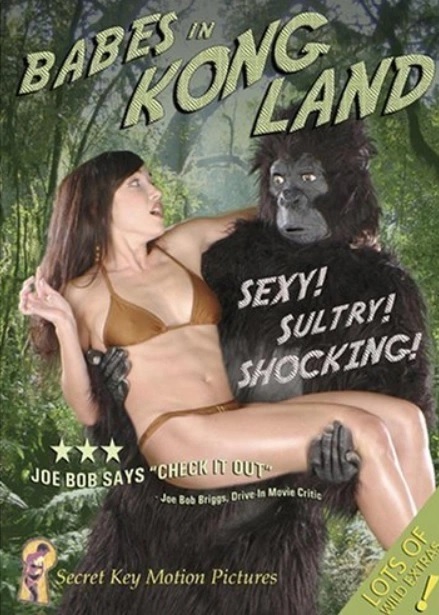
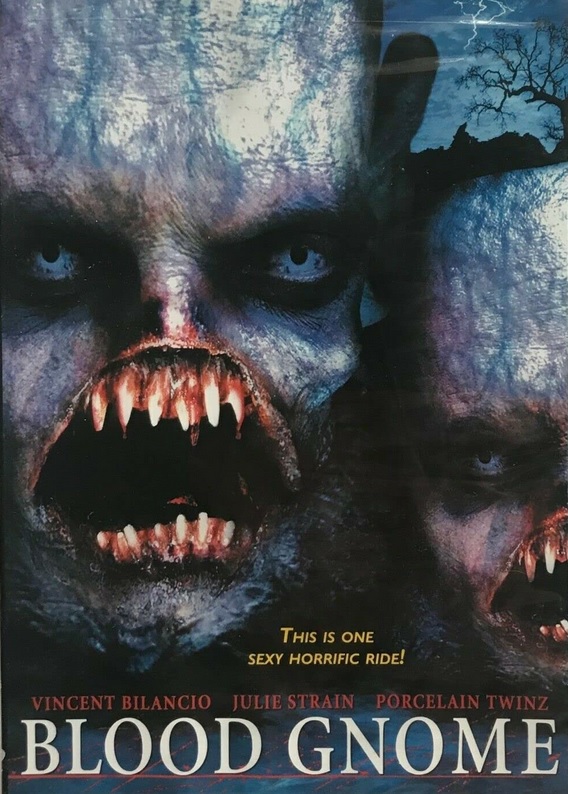
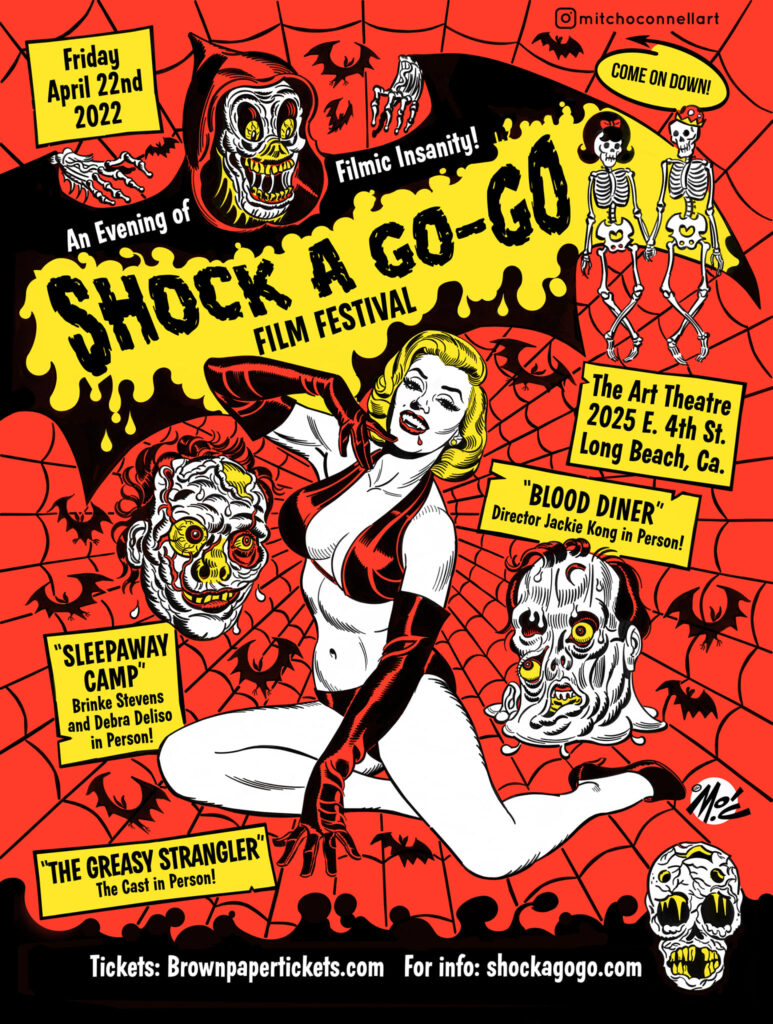
E.E: I worked with Julie Strain, but not on that. I worked on a movie, Blood Gnome (2004), and she was in that movie that was shot in L.A. I also have a scene in the movie with my wife, who was acting at the time. I met Julie for the first time on that production. I was writing for a website at the time, B-Movie Girls.com, where we had different stories and articles each month about a particular Scream Queen. We were going to do a whole spread on her, so I went to her house. She was so nice. She was living at the time with Kevin Eastman who created the Teenage Ninja Mutant Turtles. And he was so nice, as well. So we went into her backyard, I had a professional photographer with me, and she just took her clothes off. I was in shock. Later, recently [for Exploit This!], when I interviewed Debbie Rochon, I mentioned working with Julie Stain and the interview. She told me that Julie just wants to be naked all the time! At the Shock-a-Go Go Festival that I did, we ended up showing Blood Gnome. But, yeah. That’s how I ended up working with Julie. Babes in Kong Land was the title [at the time], but it had alternate titles.
B&S: Then you followed up Cannibal Teenage Riot with your second feature film, Fear of a Limp Planet. What year was that shot and released? Did you shoot on video or 16mm or 35mm?Could you tell our readers about the plot?
E.E: It was shot in 2002 and it had a very small, festival release and played in Indianapolis and L.A. a few times. It was shot on Mini-DV, as we couldn’t afford 16 or 35. It was funded by William Hellfire and his company, Factory 2000. He has several movies, but I met him because I was a huge fan of his movie Caress of the Vampire 2 (1996). I found his contact on an old video tape that I had and called the number and they put me into contact with him. I told him that if he came to Los Angeles I’d love co-directing a movie with him; that I wrote a sequel to his movie. He ended up flying out to work on a different movie; but we worked on [Fear of a Limp Planet], as it was meant to be part of the Caress of the Vampire series. EI Cinema, that is, Alternative Cinema, bought the film. So the film ends up with a distribution deal at Walmart [with other EI titles]. A huge deal. So Walmart made these promises they didn’t keep and returned all of this product and almost bankrupted SRS Cinema, the distributor.
So, I’ve got this movie. And I reached back out to Mike Roscoe, who initially didn’t want the film. So he took the movie and gave it a small release, a self-release. Things went down hill from there, as [the studio] went into hardcore and got away from B-Movies. So [Fear of a Limp Planet] basically sat on the shelf. They bought it and didn’t release it, at least not in a wide release. So that movie is still owned by them, as they bought the rights in perpetuity. Unless they go out of business, I really can’t do anything with the movie.
B&S: Then, starting in 2010, we’re assuming to pay the bills and ‘work’ as a filmmaker, you moved into the world of reality TV, where you worked in the suites as an assistant editor. Two of the series you worked on were Steven Seagal: Lawman and UFC Ultimate Insider. You usually don’t rub elbows with the talent or celebrities in the suites, but did you get lucky and meet any UFC fighters? Is there a Seagal-Eichelberger selfie you Smartphone-sling to impress your friends?
E.E: No, not really. Steven did come, once, to the office. That was a weird show. Steven was accused of human trafficking and they had to shut down the show in the second season — and they had worked up a whole third season. There was a giant scandal. It was huge at the time, with TMZ and all. But, yeah, around the time [my wife and I] had kids. I had been working on sets a lot and I needed to do something in the industry that wasn’t so crazy with the hours; many of the jobs I’ve had, like in the art department, I was working 18 hour days — long days — all the time. It took its toll and I needed something that wasn’t so crazy now that we had a kid. So I got into editing and have done a lot of post-production work in the last ten years. But Steven’s Lawman show was really the first show I worked on in post and I basically learned AVID on that show. It was a fun experience and fun show to work and those people are still my friends. But I didn’t really interact with Steven and there’s no selfies. To tell you the truth: he was kind of a jerk. He’d say some pretty outrageous stuff. And he was mic’d 24/7 and it was my job to go through all of that footage and edit it down.
But I still do editing. I just worked on a pretty fun film, a horror film last year: Dolly Deadly 2: Run, Dolly, Run (read our “Ten Evil Dolls” featurette). It’s about a kid who grows up playing with dolls and becomes a drag queen serial killer. It was a whole lot of fun to edit. I do editing as a day job and I also teach. I’m a film professor, but not a full professor, yet. And I make movies.
B&S: Ghoul Scout Zombie Massacre seems to have taken forever to make and get into the streaming-verse. I am sure your actors, as well as yourself, are ecstatic — and relieved — over the film’s reception.
E.E: Yeah, it took about nine years from the time of the idea, to the script, to the casting, and then raising funds, which we did with a trailer to promote the film. A lot of it was post-issues. We finished principal photography in 2012, so it was a long time in post, it was mainly a post nightmare. And there’s the issue of finding the right distribution and the right fit and festivals. We started releasing the movie to festivals in 2018, so that’s why, on some platforms, you see the date of 2018, because that’s when it played festivals.
Ghoul Scout played in a lot of festivals. There were a couple in India and one in the Amazon Rainforest. There was one in Wisconsin. One in New York. We had a big premiere in New York at a theater in Brooklyn and Lloyd Kaufman came. He never made an offer, but shortly after that premiere, I was contacted by the guy who handled the festival distribution. And that got me in touch with Boobs and Blood, which runs a festival and also a distribution platform. They’ve been really great getting it out on all of the streaming platforms and brick-and-mortar stores with physical media. And they’re going to expand onto pay cable platforms, like Comcast. And iTunes is next, along with Blu-ray. (Another B&B release we’ve recently reviewed is Blood Freaks.)
B&S: Now it’s time to complete the history of exploitation cinema in America through the lens of the people who lived that history. And for the past 13 years, between your various projects, you’ve compiledinterviews with the movers and shakers of exploitation cinema. The cast of filmmakers you’ve secured is impressive: Roger Corman, Hershell Gordon Lewis, Jack Hill, Fred Olen Ray, Joel M. Reed, David F. Freidman, Larry Cohen, Ted V. Mikels. Then there’s the actors: Mary Woronov, Rhonda Shear, Debra De Liso, Brinke Stevens, and Debbie Rochon. How difficult is it to get a sit down with all of those celluloid icons.From the looks of your fundraiser trailer, they all certainly seem welcoming to your vision.
E.E: It really started out with these festivals that I worked on from 2001 to 2004. We filmed Clive Barker back then. I became friends with Joel M. Reed. When we showed Blood Feast 2, I met Hershel Gordon Lewis. When I was in Florida vacationing with my family, I traveled three hours from Orlando to Hershell’s condo to film. David F. Friedman came to the festival when we showed She Freak. We went out to Las Vegas to film Ted V. Mikels. At the time, Ray Dennis Steckler owned a little video store in Vegas and we filmed him.
B&S: So, then you’re looking at a late 2022 release.
E.E: Yeah, with the editing and all, definitely 2022.
B&S: Well, hopefully, when we post this interview — with the Kickstarter link — and with your B-Movie pedigree, I believe readers will say, ‘This guy’s really cool,’ and will want to support the film and make a contribution.
E.E: Yeah, our goal is $12,500. The Kickstarter journey has been a crazy ride. Just yesterday, we had a stranger donate $7000 and then, hours later, retract the donation and disappear. It felt like a roller coaster: one minute, we’re funded, we made it!? And the next minute: it’s back to the drawing board. It’s an emotional journey because this project is all or nothing. So, please if anyone can donate and share our dream. We are almost at $8000 and our goal is $12,500 and we have 6 more days.
I really appreciate how you looked at the [Ghoul Scout Zombie Massacre], R.D. You really understood it and you’re the ‘audience’ of the film, for sure. And I think you’ll be the audience for the documentary, too. I feel it’s going to be the most interesting and most comprehensive documentary on the subject of cult movies and grindhouse movies. I can say that with almost certainty.
Many thanks to Eric Eichelberger for sitting down with us and giving B&S About Movies the opportunity to spread the word about his exciting project. And when Exploit This! hits the streaming-verse, you’ll hear about it first at B&S.
If you love the films that Eric loves, you can help him make the film a reality, with a target release date sometime in 2022. You can learn more on how to pledge to finance the film’s post-production by visiting the film’s official Kickstarter page — which features a preliminary trailer and more information about the production. You can learn more about Exploit This!, Ghoul Scout Zombie Massacre, and Eric’s other works at Anxiety Films. There’s more information about the film — and the gifts you can receive for donating to the production — at the film’s official Facebook page.
We have since spoken to Eric regarding his Shock-A-Go-Go Film Festival happening on April 22, 2022. You can learn more about the festival with this interview and announcement.
During our new interview regarding the festival, Eric also discusses the latest, post-production developments with Exploit This! — which is still on track for a late 2022 to early 2023 release.
About the Author: You can learn more about the writings of R.D Francis on Facebook.He also writes for B&S About Moviesand publishes short stories and music reviews on Medium.
The new episode of New Castle After Dark is more than one of my favorite movies. It also features Bill Van Ryn from Groovy Doom and Drive-In Asylum! I love these guys and love Bill, so this is perfect.
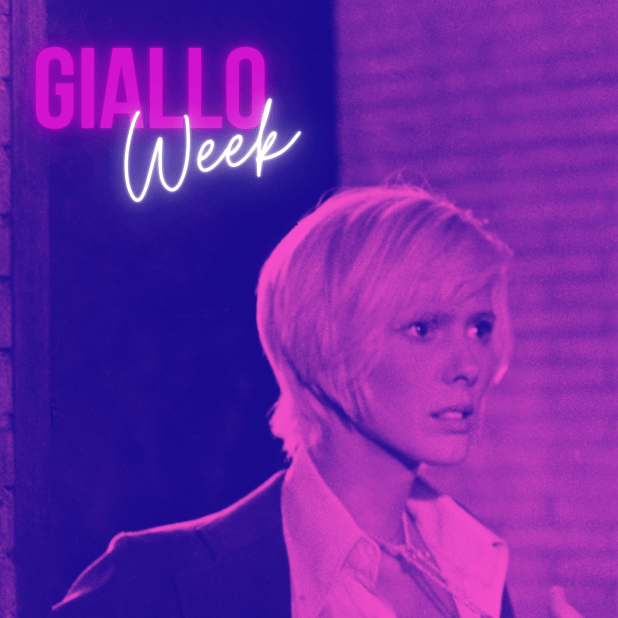
This is our final recap for Giallo Week! If you’re looking to watch some giallo for yourself, here are some places to go:
Giallo Realm: This YouTube page has a ton of giallo and krimi — many of the movies from this week appeared there — and is always updated.
Severin: They’ve released so many great giallo, like The Strange Vice of Mrs. Wardh and the Lenzi/Baker Box Set. You can see all of their giallo offerings right here.
Vinegar Syndrome: This company releases so many astounding VHS era favorites, but they’ve also released two Forgotten Gialli sets — see our updates for Volume 2 here — and are about to unleash a third.
Shudder: In December, Shudder had a giallo Christmas, adding so many classic films to their streaming service. Beyond just getting Joe Bob here, there are so many movies worth watching.
Diabolik DVD: If you’re looking for a giallo from anywhere in the world, this is where to go to get it.
Tubi: Tubi has most of the classics — lots of Argento — and some deep cuts too, all for free with ads.
Here are the movies we covered on the last two days of Giallo Week:
FRIDAY
Scorpion With Two Tails: Sergio Martino returns to the form he helped popularize with a 1980’s TV movie turned theatrical release. We’re sharing two looks at this movie!
The Rain Killer: An American giallo with a surprising cinematographer.
Delitto D’autore: A giallo with pretensions to high class, as a wealthy countess has been warned of the deadly penalty if she gives away a valuable painting.
La Controfigura: After being murdered in a parking garage, a man on the edge of death reflects on the sins of his life.
La Polizia Brancola Nel Buio: With a title like The Police Are Blundering in the Dark, this one summarizes every giallo police force there is.
SATURDAY
Profumo: This has nothing to do with the British sex scandal and may have been the scummiest giallo/erotic thrill I’ve seen…until one of the later films on this list.
Ciak Si Muore: A giallo that takes place on a movie set, the title of this film Clap, You’re Dead, refers to the “clapper” that filmmakers use.
Der Rächer: The Avenger: A killer is slicing the heads off of his or her victims, then sending them right to Scotland Yard.
Mystère: Carole Bouquet is a high class call girl caught up in both a Eurospy and giallo film at the same exact time.
Sekkusu hantâ: Sei kariudo: Sex Hunter was inspired by Suspiria and is the film that I feel takes the title of scummiest giallo. (well, there’s also Giallo In Venice and Play Motel). Actually, it’s a pinky violence movie, but I felt compelled to include it.
The New York Ripper: Herbert P. Caine contributed another look at this rough Lucio Fulci film.
If you would like to request a film or write about it yourself, just reach out! We’ll be having another Giallo Week before the end of the year. You can see all of the giallo we’ve covered at Letterboxd.
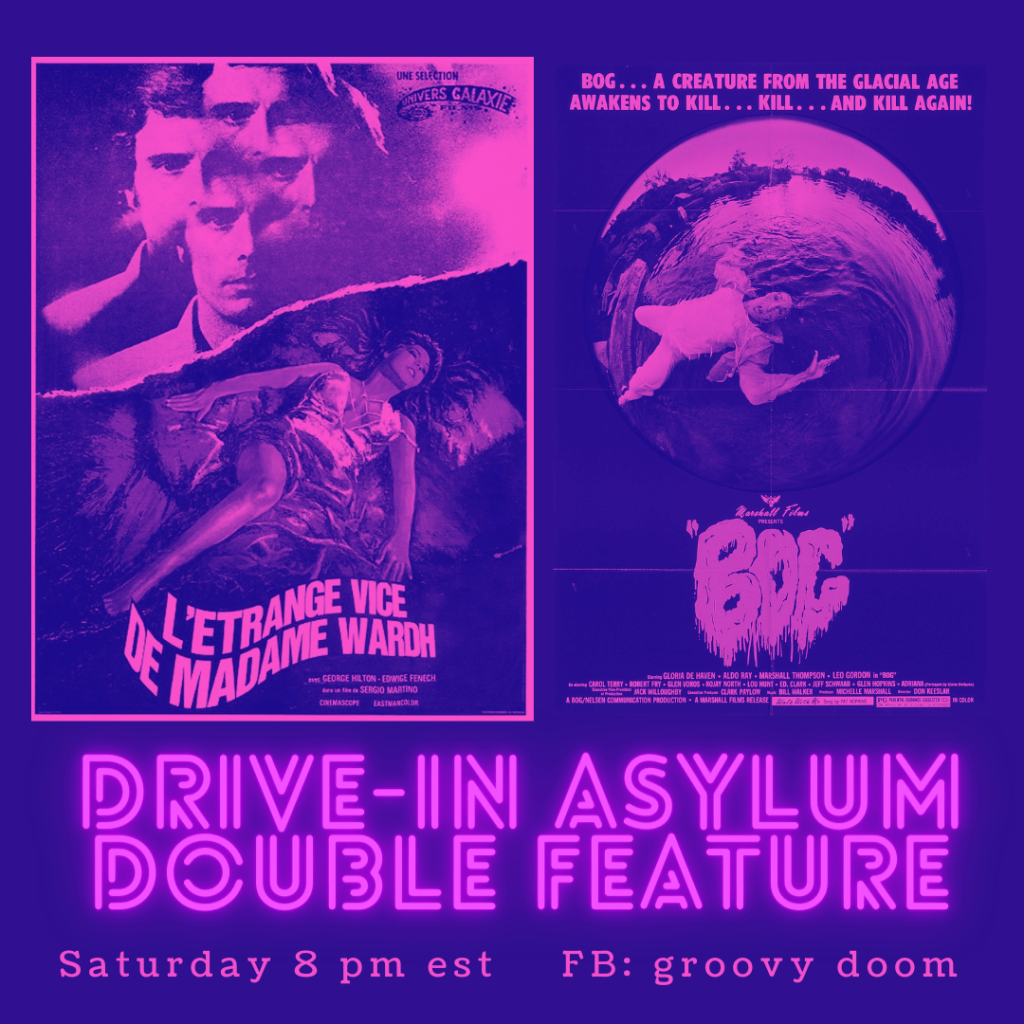
Don’t forget — this Saturday at 8 PM EST, we’ll be watching Bog and The Strange Vice of Mrs. Wardh on the Drive-In Asylum Double Feature on this Groovy DoomFacebook page. If you’re readng this on Saturday, when it’s posting, go watch it now!
This is our second recap of Giallo Week. If you’re as big a fan of these movies as we are, please check out the Gialloholics Facebook group. There’s always great conversation there and fun people.
In the last 48 hours, we’ve watched the following:
WEDNESDAY
Night of Violence: Roberto Mauri directed this early giallo that has a great conceit: a killer who looks like several actors and no one knows who it is.
Circle of Fear: An early 1990’s Aldo Lado/Dardano Sacchetti cop movie.
Il Sorriso Della Iena: If you liked Silvio Amadio’s Amuck!and movies with lots of twists, this one is perfect.
THURSDAY
Im Banne des Unheimlichen: Under the Spell of the Uncanny (or The Zombie Walksand The Hand of Power) is a great Edgar Wallace film with a memorable skull-faced villain.
La Pelle Sotto Gli Artigli: The Skin Under the Claws is a science fiction zombie giallo with Gordon Mitchell in it. That sentence is pretty much why I watch movies.
Abuso di Potere: A great car chase, insurance fraud and a downer ending are all in this film.
Thanks for being with us all week as we cover some of our favorite giallo films.
I’d like to give a shout-out to Giallo of the Month Club, which you can find on Twitter and Instagram, with the episodes available on Spotify (and anywhere else you listen to podcasts). The last show about The Red Queen Kills Seven Times is a must-listen.
So far this week, we’ve covered the following:
SUNDAY
Lipstick and Blood: Lindsay Shonteff stops making Bond ripoff films long enough to make a scummy and shoddy SOV that’s either a satire or he’s swine.
Last Stop on the Night Train: You may only know Macha Méril as the doomed psychic of Deep Red, but here she’s the maniacal woman behind a series of escalating bursts of sadism.
Senza via d’uscita: Marisa Mel in a pre-Argento giallo that feels more krimini than Crystal Plumage.
Al Tropico del Cancro: Anita Strindberg goes on vacation to Haiti and discovers a miracle drug, murder and mondo footage.
Le Seuil Du Vide: Threshold of the Void is about art and a room for rent with an unending abyss within a locked room.
MONDAY
Extrasensorial: Michael Moriarty in an Alberto Martino-directed giallo about twins? You know it.
The Killer Is On the Phone: Telly Savalas is the killer. He never uses a phone. Don’t let that stop you from watching this.
Senza Sapere Niente Di Lei: Without Knowing Anything About Her is an arty pre-Argento take on form, with love and insurance fraud the tale.
L’occhio Dietro La Parete: Eyes Behind the Wall is a sexualized nightmare of voyeurism, loneliness and, well, John Phillip Law full-frontal nudity.
Una Jena In Cassaforte: Some of the wildest fashions you’ll see in a giallo are in this story of a team of bank robbers trying to split up some diamonds.
TUESDAY
Non Aver Paura Della zia Marta: Lucio Fulci presented this Mario Bianchi written and directed movie, also known as Murder Secret.
Marta: This really could be Marisa Mel week. This is the best acting I’ve seen of her. This time, she’s a woman on the run falling in love with a man who may or may not have killed his last wife.
La Orca: A Patty Heart-style kidnapping gone wrong.
If you’d like to see all of the giallo films we’ve covered, check our Letterboxd list.
Don’t forget — this Saturday at 8 PM EST, we’ll be watching Bog and The Strange Vice of Mrs. Wardh on the Drive-In Asylum Double Feature on this Groovy DoomFacebook page.
Here’s our round up of all the network TV, cable, and theatrical airline disaster movies of the ’70s — and beyond — that we’ve reviewed during this end of the year “TV Movie Week.”
Image courtesy of photographer Allen J. Schaben for a May 2020 Los Angeles Times article by Randall Roberts/font overlay by PicFont.
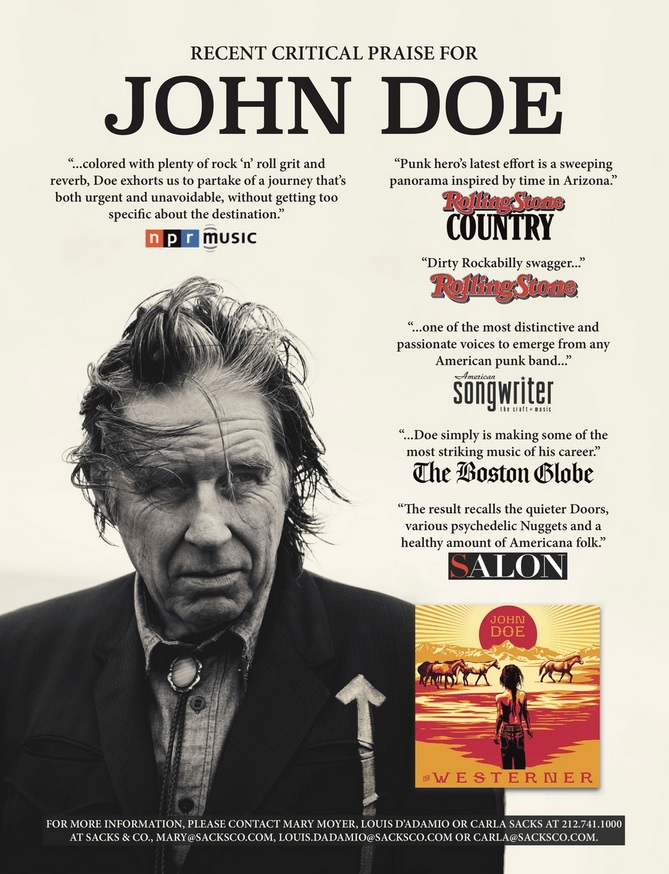
It was long overdue. Everyone reviews the music career of the man born as John Nommensen Duchac in 1953, but few, if any, have examined his acting career. So B&S About Movies took up the challenge because, well, we love John’s acting gigs as much as his music.
That’s right, we love ya’, John! May you have many more films and albums to add to your career. And when you finish your starring role in your currently-in-production 82nd project, D.O.A. – The Movie, B&S About Movies will be the first to review it.
Flicks we wanted to review, but were unable to locate VOD/PPV screeners or DVDs:
Under the Gun (2002) Red Zone (2003) Hated (2012)
The rest we didn’t get to as result of time and/or lack of VOD/PPV screeners:
Scorpion Spring (1995) — trailer The Price of Kissing (1997) Drowning on Dry Land (1999) MTV’s Wuthering Heights (2003) The Sandpiper (2007) Absent Father (2008) All Creatures Here Below (2018) — trailer
Oh, and while we’re on the subject of rock ‘n’ roll, be sure to check out our “Rock ‘n’ Roll Week” tribute round ups from July 2020, September 2020, and September 2021 featuring over 100-plus film reviews. And John’s A Matter of Degrees was also part of our week-long review of radio station flicks, which you can catch up on with our “Exploring: Radio Stations on Film” featurette. Same goes for John’s The Red Right Hand, which was part this year’s October “Slasher Month” of reviews.
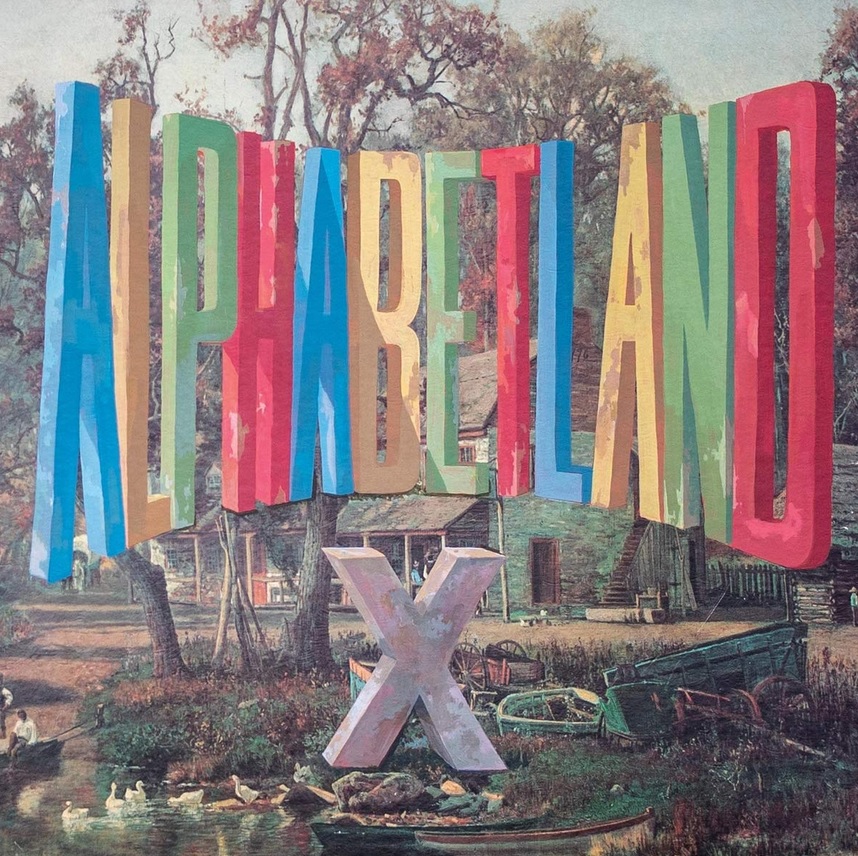
There’s further reading on John’s career with Tim Stegall’s recent, two-part interview at Alternative Press published in October 2021. John also speaks with Daniel Kohn at Spin in April 2020 regarding the release of Alphabetland, the recent album by X.
You can enjoy John in 1991 promoting his solo album and a 1983 national TV appearance with X, both on NBC-TV’s The David Letterman Show.
There’s faux rock stars . . . and there’s Teddy Connor of Wotan.
Courtesy of Gregory Hill Design/NBC-TV/Law & Order.














 B&S About Movies
You must be logged in to post a comment.