“Ah, two peas in a pod and not a pot to piss in.” — Yuri the Knifethrower breaks it down to truth
This tale of two down-and-out, twenty-something losers reminds of Step Brothers (2008) — and a whole bunch of earlier ’80s comedies. Was it screenwriter Cameron Van Hoy’s intention to create a retro-’80s comedy? One thing is for sure: Cameron Van Hoy — who’s the screenwriter — and his fellow up-and-coming co-star Michael Drayer, are certainly as chemistry-talented as Will Ferrell and John C. Reilly.
They star as the broke and busted best buddies Vince Valley (Van Hoy) and Freddy Krebs (Drayer, who’s guest starred on the Law & Order franchise, The Sopranos, and most recently on NCIS: Los Angeles) reduced to living in a tent in the backyard of Freddy’s parents. Vince and Freddy are perpetual dreamers who, instead of getting jobs (Freddy refuses to work for the family’s Bible-publishing business), they’re always looking for the “idea of a lifetime” to strike it rich — without the hard work that goes into becoming wealthy. Their latest, can’t-miss idea: shark-proof wet suits. Of course, no one, including their put-upon parents (Dennis Haskins; Principal Belding from Saved by the Bell, Abstruse, A Bennett Song Holiday, and the we-don’t-see-her-enough Joan Severance of TV’s Wiseguy, and coolest female “Batman” ever in Black Scorpion), will back the idea.
Cue Jon Lovitz.
He’s his usual, droll pisser-self as Max (we first met him as he rants about vaginas), a local L.A. loan shark-cum-nightclub owner who, instead of fronting them the money, becomes infuriated when his crush, Isabella (the new-to-the-scene and very good Kinga Kierzek), the receiving half of a knife-throwing duo performing at the club, takes a liking to the likeable ne’er-do-wells. (You’ll recognize her act-partner, Yuri, as Ken Davitian from his most recent work in the series-streaming Corba Kai and the film Borat. Stick around for his rant about chickens and ducks.) Now Max has sent his goons to get Isabella back and take care of Vince and Freddy. Of course, it doesn’t help that she robbed Max. Will these cool-nerds get their act together to save the girl? (Stick around for the comedic-bent, Reservoir Dogs-warehouse confrontation. Funny stuff.)
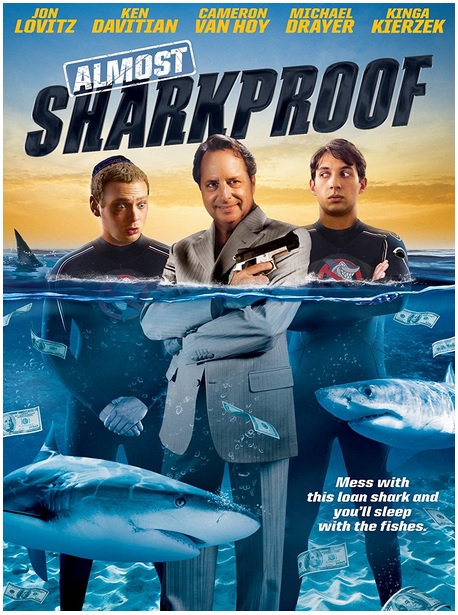
While his name leads on the theatrical one-sheet — this is a Cameron Van Hoy and Michael Drayer showcase, after all (deserving so; they’re both very good, here) — Lovitz isn’t here as much as we’d like, but when he shows up, he nails his small-time gangster role, and Joan Severance reminds us why we miss seeing her on camera, as she oozes the cougar heat for her son’s best friend. (Lovitz was also equally great in his sidekick role to British rockers Status Quo, in our “Rock Week” review 2013’s Bula Quo!.)
Unlike a Judd Apatow flick written by Seth Rogan and starring Ben Stiller with James Franco, Almost Sharkproof is delightfully innocuous, which throws it all back to the comedies of the ’80s — instead of carbon-copying today’s brand of 21st Century raunch. Are the proceedings sometime clichéd? Maybe, but you never once groan, because once you get on the comedic chase through the underbelly of Los Angeles, you enjoy the retro-comedy ride that’s rife with genuine, laugh-out loud moments — all courtesy a great script by Cameron Van Hoy. If the acting thing doesn’t work out (it will; again, he’s very good) for Van Hoy, he will surely make his mark as a screenwriter to complete for the screens with Rogan.
It’s been a long-hard road to distribution for Cameron Van Hoy and his co-directors Simon Chan (his second, next feature film is the horror-western Satan’s Children) and Joe Rubalcaba (who got his start with the iCarly tween-franchise), who completed the film in 2014. And their hard work has paid off as TriCoast Worldwide, in conjunction with Rock Salt Releasing, bring Almost Sharkproof to the worldwide streaming audience on March 5, 2021.
Disclaimer: We received a screener from the distributor. That has no bearing on our review.
About the Author: You can learn more about the writings of R.D Francis on Facebook.He also writes for B&S About Moviesand publishes short stories and music reviews on Medium.
Editor’s Note: So, you say you’re a fan of Amando de Ossorio’s blind Templar Knights? Then you’ve found your one-stop shop for not only his films — but to the homage films and booksbased on the Blind Dead series.
B&S About Movies’ buddy Bill Van Ryn gave it a hard pass. Sam Panico is groaning in anti-anticipation of watching it. And contributing B&S writer Jennifer Upton? She’s still trying to recuperate from the news that her beloved Blood Freak from 1972 got the 2021 remake treatment. The news of this film may push her double helices over the edge and transform her into the crazed turkey-woman of Polish Hill — if not a Xanax-addict — terrorizing the streets of Lawrenceville.
Tinker, Tailor, Drive-In, UHF, VHS, and celluloid thief. Oh, this friggin’ movie.
The very cool, overseas theatrical one-sheet.
The potholes facing film reviewers is that you can not measure movies in the low-budget and indie streaming verses against the major studio films. In most cases, the low-budget and indie productions will pale in comparison. A critic of streaming films from low-budget shingles and indie studios can not view those films with a mainstream filter. In the case of remakes, the critic has to separate themselves from their affections to the source material — no matter how inept or expertly-crafted it may be.
And the source material in this case is the great Spanish horror director Amando de Ossorio* and his “Blind Dead” tetralogy. No lover of horror film is not a true lover of horror film without copies of, not only de Ossorio’s “Blind Dead” films, but his first horror film, Malenka, The Vampire’s Niece (1969) and his utterly bonkers Exorcist clone, Demon Witch Child (1975) (pencil that one into the schedule, Sam).
Of course, between Malenka and Demon Witch Child, de Ossorio wanted a piece of the George Romero zombie action — of course, from 1968’s The Night of the Living Dead. (The second wave of Italian and Spanish zoms would come courtesy of Romero’s 1978’s Dawn of the Dead.) So, with a few drops of the Romero plasma and a couple corpuscles of Gustavo Adolfo Bécquer’s Gothic-horror short story “El monte de las animas” (“The Mount of the Souls”; part of his 1862 short-story collection, Soria), de Ossorio concocted a tale of about a legion of 13th Century knights, known as the Templars, who, in their quest of eternal life, began committing human sacrifices and drinking human blood. And the town’s peasants around the monastery rose up and blinded the knights (who weren’t so much zombies, but mummies-cum-vampires), cursing them to ride skeletal horses . . . and woah the Spanish and Italian designer-clothed models who awoken the knights from their crypts: they were hunted down by the sound of their (out-of-sync) voices and heartbeats.
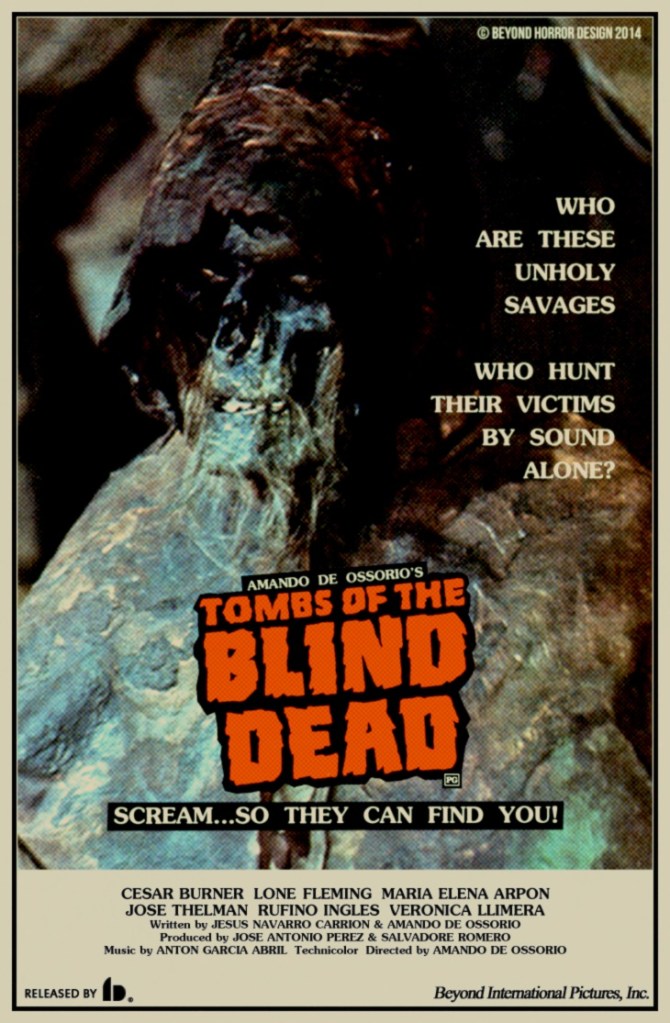
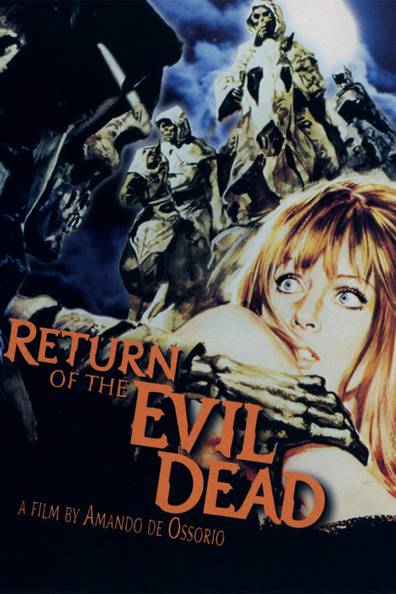
Tombs of the Blind Dead (1972) was an international success that transformed de Ossorio into a full-time horror director — no more political intrigue (1956’s The Black Flag*), and comedies (1967’s A Girl in the Yard*), or dramas (1968’s Escuela de enfermeras, aka School of Nurses) for ol’ Armie. So he churned out three more sequels on the continuing exploits of the Templar Knights: Return of the Blind Dead (1973), The Ghost Galleon (1974), and the fourth and final, Night of the Seagulls (1975). While most of us were not blessed to see them in the Drive-Ins during their initial release, we did get to see the criminally butchered versions during their replays on Friday and Saturday overnight horror blocks on UHF-TV in the ’70s and aka’d-to-death home video VHSs in the ’80s.
Templar Knights!
Now the legend goes that de Ossorio, who was making films to lesser and lesser effect — even moving into erotica with Las Alimañas (1976) and Pasión Prohibida (1980; you’ll never want to shoot a game of pool ever again), and ending his career with an abyssal Jaws knockoff, The Sea Serpent (1984) — that he completed a script in 1993 for a fifth and final “Blind Dead” film, The Necronomicon of the Templars. However, after falling off the horse (sorry), with porn and an inept Jaws rip, no producer — regardless of the classic status of the “Blind Dead” series — was interested in backing the production.
Instead, for the fifth “Blind Dead” film we got a sixth, ersatz Planet of the Apes film with Revenge from Planet Ape (1978). The short of the story: The blinded, burnt-cloaked Templars weren’t Templars: they were 3,000-year-old apes from Battle for the Planet of the Apes (1973) who, it turns out, eventually lost the 20th Century Fox battle. (Now, if you never heard of this Templar-cum-Ape post-apoc flick, hold onto this trivia, because it’s coming back at you, later in the review.)
Hey, it could be worse . . . than this (it’s not).
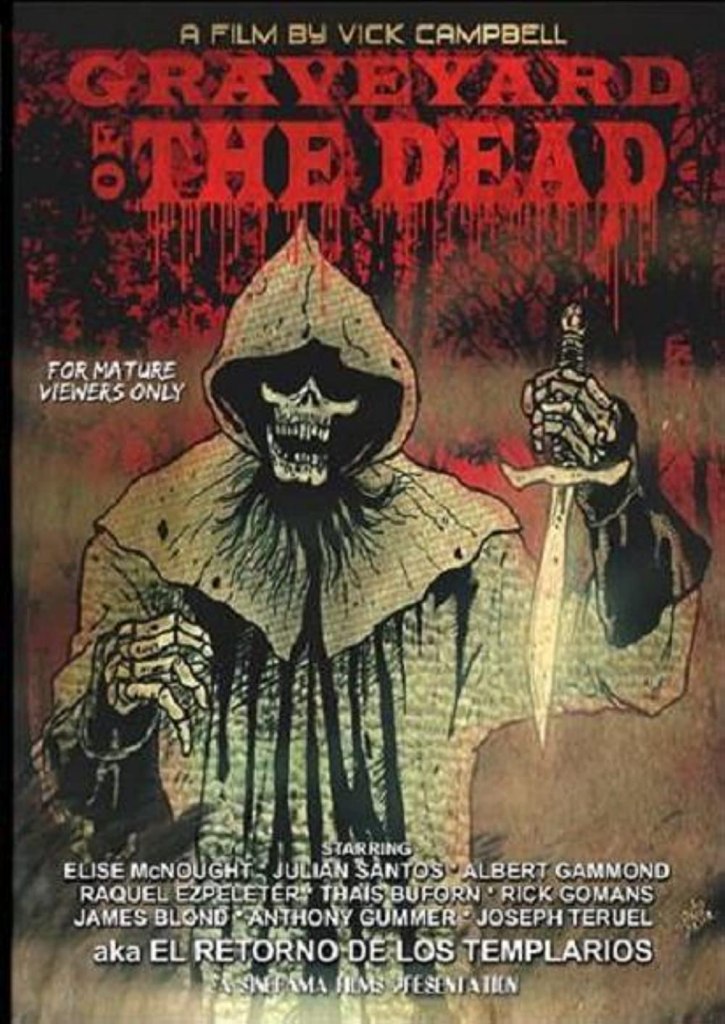
In between Night of the Seagulls and Revenge from Planet Ape, director John Gilling (The Challenge, 1960) — with a screenplay assist from Paul Naschy (more Naschy references to come), as well as borrowing from, again, Gustavo Adolfo Bécquer’s gothic short tales — gave us a loose, unofficial sequel of the blind Templars with La cruz del diablo (1975; aka Cross of the Devil). Then Jess Franco had to ruin the de Ossorio memories (as his usual) with his uber-cheap fest, Mansion of the Living Dead (1982). Then, German director Andreas Schnass brought back the blind knights with his shot-on-video homage-sequel Don’t Wake the Dead (2008), and there’s Vic Campbell’s Graveyard of the Dead (2009; aka Knights of the Blind Dead). In 2015, an unofficial short film version rose up, Island of the Blind Dead that, in a Tarantino-twist, was actually an ersatz trailer for a non-existent, lost, “Blind Dead” movie (You Tube). Then, musician, writer and director Chris Alexander gave us his low-budget-short homage with Scream of the Blind Dead (2021). How much do we love thee Templar Knights; let us count the pages: St. Rooster Books published a 2020 anthology of stories by Tim Murr and William Tea based on the Blind Dead series entitled The Blind Dead Ride Out of Hell (Goodreads).
Bow to the altar of de Ossorio.
And now . . . here we are in 2021 with the latest, feature length “Blind Dead” romp: one that acts as a sequel-cum-homage-cum-reboot to the de Ossorio canons courtesy of Italian horror director Raffaele Picchio, in his fourth directing and sixth writing credit. (His Morituris, The Blind King, and House of Evil have their fans and detractors in equal measure; I’ve seen the first and never sought out the other two; now that I am reminded, I need to.)
Okay, now if you’ve spend any amount of time reading my reviews, you know my jam with Italian and Spanish horror — Paul Naschy in particular. And those films have a very specific, de rigueur checklist for those films to be an Italian and Spanish horror movie:
Twenty-something, curvaceously-nude Italian and Spanish models with perfectly made-up faces that never run, drip, or smudge, hair that never loses its Aqua-Net coif, and French-manicured hands that defy rotted monasteries, the dingiest of cellars, the dankest of crypts, and the darkest of twisted winter woods.
The aforementioned beauties always wear graveyard-appropriate mini dresses and hot pants and they must run on chunky, Nine West loafers.
The arousing, unsynchronized gasps and screams of those crypt-kickin’ hotties rival the worst dubs of Asian cinema.
Fictional, creepy European historical characters and events based on real-life, creepy European historical characters and events.
A horror aficionado’s grab-bag of MGM noir and Universal horror film homages.
Deus ex machinas, red herrings, MacGuffins, and POV shots abound.
The caveat emptor with Curse of the Blind Dead is that this sequel-cum-homage-cum-reboot to the de Ossorio canons fulfills none of these requirements. Where’s the ne’er do well gaslighting? Where’s the affairs? The ailing wife? Where’s the escaped prisoner-cum-roadside bandits? Where’s the crazy-ass kitchen sink mayhem? Where’s the women who sashay through the chilly halls and woods of the estate in the sheerest of negligees? Where’s the fortune tellers and séances? And, most importantly: Where’s the lesbianism with a dash o’ necrophilia?
Ah, because this film isn’t made for the analog-loving Methuselahs, such Billy Van Ryn, Sam Panico, Jennifer Upton, and yours truly: this is made for the Brad Pitt World War Z and Zack Synder’s Dawn of the Dead (2004) crowd enamored with the sexy-cool of Jeffrey Dean Morgan and Norman Reedus in the grunge-trendy U.S. TV series The Walking Dead.
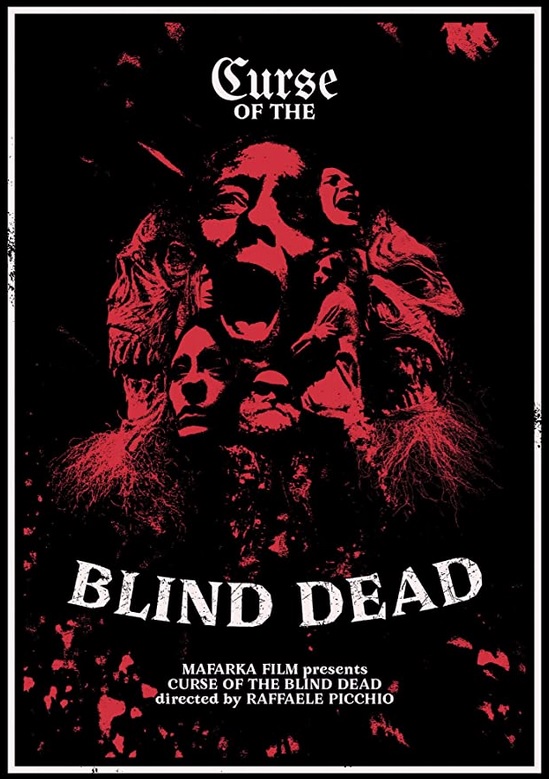
Here we go again: another homogenized streaming one-sheet.
So, as the obligatory, budget-conscious voice over-photo montage opening credits roll with static-ridden radio broadcasts and grainy, red-tinted war footage, we learn that Armageddon arrived and turned Earth into a post-apoc wasteland. And we learn of the tales — in an almost shot-for-shot retelling of Tombs of the Blind Dead (1972) — of the Templars. And the next caveat: these are bigger-budgeted, new and improved Tempies of the rotten-zom variety. Gone are the burnt skull n’ skeletal knights of yore. And while we have a chick ridin’ the ol’ cross of St. Andrews, she’s also doin’ the white-eye possession thang and, graphically, birthing what we think is the anti-christ, but really a sacrificial baby.
Of course, the peasants breakdown the doors, capture the knights, and burn out their eyes. Now, it’s important to point out: the opening credits and the 13th Century-period setting looks really good. The costumes, the sets, the (graphic) effects (I don’t do babies in horror none-to-well), and actors are top-notch. It’s a great preamble. . . .
Then, there’s the rest of the movie that, without the rotten knights . . . and an ergotic plague wiping out the grass-grains family added . . . we’re watching Cornell Wilde’s post-apoc take on the biblical tale of Exodus with No Blade of Grass. But that has has no zombies, just biker gangs. So, since we have zombie-things terrorizing the folks — and remembering that Paul Naschy is in the mix of this review — we have a gooey smidgen from Paul Naschy’s The People Who Own the Dark (1975), his (low-budgeted) updated take on de Ossorio’s “Blind Dead” series — sans the knights, natch — with his post-apoc rework of TheNight of the Living Dead (1968) of eye-bandaged townsfolk hunting down post-Armageddon survivors by sound. Oh, and since we’re frolicking through the bowels of an old, burnt out factory, we got a soupçon Richard Harris and his forgotten apoc-romp, Ravagers.
And remember when I said, “Don’t forget about Revenge from Planet Ape?” Well, in that “Blind Dead” retooling, we had a group of ne’er do wells surviving in a post-apoc world with resurrected zombie apes. . . .
A year later . . .
Micheal (Aaron Stielstra of Landing Lake; ironically reminding me of Jeffrey DeMunn, crossed with Christopher Meloni; if this were a major studio or mini-major U.S.-made film, they probably being starring), encouraged by a radio broadcast urging survivors to “Paradise,” a utopian encampment, treks through the deep woods. Of course, as is the case with any post-apoc film: even in the throes of the end of the world, men be needin’ the nookie because the key to survival is rape. And Lily, (Alice Zanini; in her first international film), his pregnant daughter (incest is insinuated), is purty. So, when they’re ambushed by bandits (bandits? Check!), the members of a religious sect rescue them — via crossbows and shotguns, praise, Jesus!
Templars: Turning man into meat puppets one human at a time.
Then, there’s 30-minutes of religious weirdness and betrayal inside a bombed out factory-sanctuary (that’s not “Paradise”) and some eye-patched Ron L. Hubbard-type who sees Lily’s baby as a prophesied savior. Uh, oh. This is a sect that worships the Templars and needs the baby as a gift to them, for zombie knights, for reasons unknown, can stop the apocalypse. Or something.
Finally, time for Tempies . . . and they, uh . . . just walk out of the darkness of an archway? Where’s the graveyard? Where the slowly, creepy, concrete scraping of sarcophagus lids releasing a fog and the boney arms n’ hands rising up? (Dude, the toy-boat ineptness of The Ghost Galleon is looking better already.)
Then . . . it’s just a bunch of “What are we gonna do now” running around an old factory. And camouflaged pant and combat-booted Lily’s constant wailing is annoying as frack. (Maybe if it was out-of-sync?) Where’s the hot, mini-skirted Spanish model tripping on her heels when we need her?
Finally! The skeletal ghost horses show up, and, uh . . . that’s it? I hope you didn’t go take a piss or get fed up and fast forward through it.
On the gore scale: We get (two) Scleral-contacted possessions of the Linda Blair variety (Why, I don’t know), a black orb next to the sun (I don’t know why; I think it’s a planet that came into Earth’s orbit and fucked up the world-by-eclipse), a freshly-born devil baby ripped in half (again, puking; if a dog showed up, I’d have stopped watching), a self-thumb removal, slithering-to-the-floor innards, a few throat slits, a pretty decent spine removal-by-Templar (Why, I don’t know, the old Tempies could barely break through nailed-to-the-window wood scraps), a disemboweled gut munching (de Ossorio’s never did that), and a backwards head pulled-apart-by-the mouth (again, the boney arms of de Ossorio’s could barley break wood). And I am not down with Lily’s birth-by-a-pipe-blow-to-the-stomach (if not at almost the end of the movie, the stop button would engage right then and there). And again, while the Tempies ain’t the Tempies of old and disappoint because they ain’t de Ossorio Tempies, the effects make-ups are, none-the-less, very well done.
And then the black hole sun does “something,” as it moves over the sun and the Tempies fry and everyone looks up and “something” is happening here, and it ain’t exactly Buffalo Springfield clear.
Da fuck? Why are the credits rolling? Calling Neil deGrasse Tyson: we need an astrophysicist explanation for it all.
1972 vs. 2010.
So . . . is this a severed thumbs up or down?
Well, I’ve watched the “Blind Dead” tetralogy via my four well-worn VHS tapes many, many times over the years. For they’re are my Phantasm or Rocktober Blood. They are my The People Who Own the Dark, my Panic Beats, and my Horror Rises from the Tomb (the last two themselves with “Blind Dead” vibes) celluloid altars perpetually VCR-programmed every Halloween.
However, Curse of the Blind Dead, for me, is a-watched-and-done film, as it has none of the de Ossorio-sphere that makes his four cheapies so special to me. I always err to the filmmaker who makes do with what they’ve got (which is why it’s always Phantasm I over II, Escape from New York over L.A. and the ’77 to ’83, non-CGI Star Wars cuts), so while they’re not exactly the films de Ossorio wanted, he still made an engrossing film. I will not, however, dismiss Raffaele Picchio’s extremely competent effort with the adjective of “sucks.” I believe that the new, young bucks of the streaming verse who are not Ossorio-versed, will watch this film today — and twenty years from now — will watch Picchio with the same wide-eyed nostalgia I watch the de Ossorio originals. What’s the worst case scenario, here? That Picchio inspired streamers to seek out de Ossorio’s “Blind Dead” romps? The more de Ossorio fans, the better, I say.
If you were fortunate (you old bastard) to see the de Ossorio originals during their initial Drive-In runs or could afford the later DVD and Blu-ray restorations (you disposable income rich bastard), you know that while de Ossorio didn’t have the budgetary resources of Picchio, de Ossorio’s films are still — despite those films not achieving “the vision in his head” as result of their budgetary constraints — are an exquisite watch. The grainy, 16mm documentary vibe of the films that most of us experienced during the their UHF-TV and VHS replays were result of those TV prints coming from less-than-stellar, “road showed” Drive-In reels emulsion-scratched to hell and back again. Then, their incessant rental-replays on the ‘80s home video market beat them to hell and back again, and again. The irony, however, is that “to hell and back again” consumer processing — as it did with Romero’s The Night of the Living Dead — only lent, more so, to the film’s documentary-grainy, dream-like qualities (of course, de Ossorio shot through filters and stop-speeds to add to the ghostly qualities as the Templar’s rode their skeletal steeds).
I wonder if Tarantino had made Curse of the Blind Dead, would he — as he did with his Planet Terror/Death Proof project (2007) — have purposely shot the film slightly out of focus and “damaged” the film stock to achieve what he first saw — what we all saw — on VHS?
As I watched Curse of the Blind Dead, I reflected back on the work of Peter Hyams with his efforts to sequel-remake-homage Kubrick’s landmark moment with 2010: The Year We Made Contact. After the completion of the production of 2001: A Space Odyssey, Kubrick had all of the sets — as well as its production ephemera — destroyed. As result, Hyams, with photographs created from the initial film, re-created all of the Discovery’s models, costumes, and interiors. And if Hyams never disclosed that fact, you’d never know it (sometimes, filmmakers should just keep their mouths shut; they keep ruining the wonders of going to the movies). If Hyams or a Hollywood A-Lister remade de Ossorio, I think we would have gotten a Tarantino-cum-Rob Zombie approach. There’s no way, with their meticulous-to-a-fault fanboyitis (they are one of us, after all), the “Q” or the “Z” would fuck with our mutually-beloved Tempies; it would be as if they found the mothballed original knights — with their bony hands that reach through the tiniest cracks of walls and doors — and stallion shrouds buried in a corner of an Italian prop house. . . .
But this all just a bunch of “Who Shot John?” at this point . . . and you just want to get to the trailers, already.
Regardless of the critical left hooks Picchio’s taking to the chin (the comments on the streaming trailers are cruel, but funny), he made a good film that’s on an analogous quality level of everyone’s most recent exposure to the world of zombies and ghouls: The Walking Dead. And we all know — regardless of that series’ detractors — that AMC U.S. TV series is a high-quality product. And if you enjoy the exploits of Jeffrey Dean Morgan swingin’ “Lucille,” then you’ll enjoy Curse of the Blind Dead. And we — yes, including moi — the de Ossorio purists, are a bunch of stubborn, judgmental old bastards who need to live in the now, give up our inner de Ossorio, and give Pocchio a break. (Duck, Pocchio! Another critic is coming in for another “Lucille.”)
The official, overseas theatrical and U.S. streaming trailers. Which is the better cut?
Curse of the Blind Dead will be released March 2, 2021, by Uncork’d Entertaiment and High Octane Pictures. You can enjoy behind-the-scenes and film stills at the film’s official Facebook page. We’ve also recently review another Uncork’d Entertainment Italian-import, the stellar The Funeral Home. We also reviewed High Octane’s Italian-import, Landing Lake.
* Be sure to join us for our December 2022 “Amando de Ossorio Week” of film reviews. If it’s not hyperlinked, cut and paste the title into our search box and see if we watched it. And scroll through the week to find other films we’ve reviewed.
Disclaimer: We were sent a screener by the film’s P.R. firm. That has no bearing on our review.
About the Author: You can learn more about the writings of R.D Francis on Facebook.He also writes for B&S About Moviesand publishes short stories and music reviews on Medium.
If you’ve spent any time surfing around the streaming-verse pages of Amazon Prime and other services, then you’re familiar with the resume of Ithaca, New York-based filmmaker Kevin Hicks, who made his feature film writing and directing debut with the mobster comedy Waiting on Alphie (2005), the horror-thriller Paranormal Proof (2010), the horror-mystery Behind the Door (2014), and his most recent effort, the paranormal horror Doppel (2020).
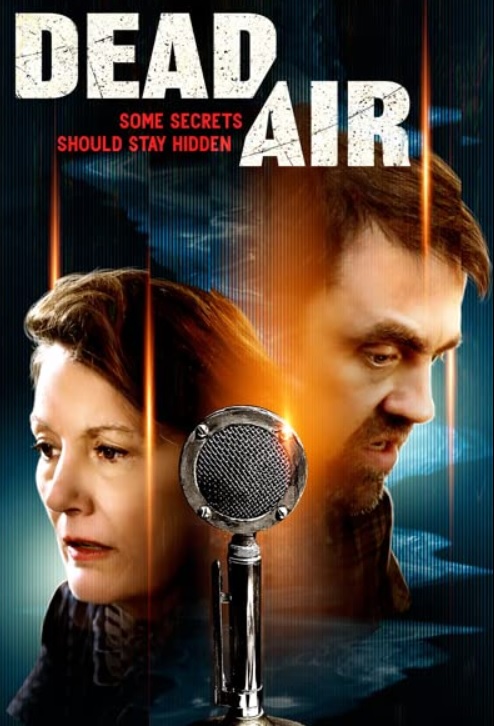
Now Kevin has teamed with his wife Vickie (his writer and co-star; she also wrote Doppel and the currently in-production The Forever Room) for his fifth feature film: one that deals with a haunted, antique ham radio set.
Upon cleaning out the home of his recently deceased mother, William (Kevin Hicks) discovers his late father’s old ham radio set. As he fires up the radio, he begins an over-the-air friendship with Eva (Vicki Hicks). As does William, Eva also deals with dark secrets seeded in a past family trauma. And William comes to discover his connection to Eva goes beyond just an innocent ham radio transmission. And there’s “something” that wants out of that radio set.
As we’ve said many times in our reviews of these up-against-the-budget vanity projects of the streaming-verse that delve into the horror genre: don’t come a knockin’ for an A-24 or Blumhouse horror flick because the shock-scares ain’t a-knockin’. But if you’re into a character-driven supernatural drama that, because of budgetary constraints, goes the dialog route to tell its story, then there’s something here for you to curl up with on Friday evening under your digital device’s glow. So, instead of a mystery novel, why not a mystery movie, for a change?
Kevin and Vickie Hicks are low-budget filmmakers shooting with thin budgets on iPhones and other digital devices; filmmakers that need to be given a wider berth than tmajor and mini-major studio filmmakers — such as TV scribe Gregory Hoblit, with his Dennis Quaid-starring Frequency (2000), to which Dead Air has been compared by streaming-verse commenters. (If you’re not familiar with the Hoblit name: he also gave us the Denzel Washington-starring Fallen (1998) and the 2002 Bruce Willis vehicle, Hart’s War. I’ve seen former in passing on cable; I’ve never seen the latter.)
I’ve watched Frequency in passing on cable several years ago — and a few years after its initial release. So while others opine Dead Air is a “rip off” of that other ham-radio-from-beyond flick, I can’t attest to that fact, as I really don’t recall much of the Dennis Quaid film, other than it also starred Mel Gibson’s “Jesus,” Jim Caviezel, in the controversial Passion of the Christ. Others have cross-referenced the never-heard-of-and-never-seen (at least moi; it was released before B&S About Movies came into being) Canadian thriller The Caller (2011), concerned with an apartment’s “haunted” telephone line. I guess you’d have to be one of that film’s 86 IMDb users to make that critique-connection of The Caller to Dead Air.
Since this is my first Kevin and Vickie Hicks flick, I also can’t attest if Dead Air is an improvement over his earlier works. But as I researched Kevin’s career, I’ve come to learn he’s had a long, successful career in music video and commercial production. And he’s brought those skills to the table, as Dead Air, while not a visually stunning film, is certainly a well-shot film and Kevin and Vicki each bring competent thespian skills to set. The rest of their cast is pretty fine, too, and are certainly above the thespin’ frays of most indie streamers.
Dead Air, a supernatural family-oriented drama, is now available on a number of digital and cable platforms, including Amazon Video and Vudu from Freestyle Digital Media. The studio, run Bryon Allen, who recently launched the black-centric cable network The Grio (it’s airing all of the old ’70s blaxploitation classics), recently picked up an indie-film we really enjoyed, the cat-turns-into-a-human dramedy, Shedding. Another indie we reviewed that was recently picked up for wider distribution by Freestyle is the horror-comedy Hawk & Rev: Vampire Slayers. You can also learn more about the commercial production-to-feature film career of Kevin Hicks at his official website.
Disclaimer: We received a screener from the distributor’s P.R firm. That has no bearing on our review.
About the Author: You can learn more about the writings of R.D Francis on Facebook.He also writes for B&S About Moviesand publishes short stories and music reviews on Medium.
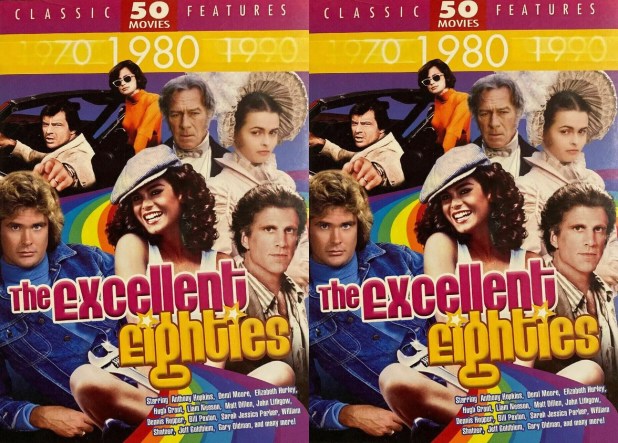
You know the drill, to gear up for Halloween, every November we crack open a Mill Creek box of fifty movies. We started with the Chilling Classics set in 2018 and also did the Pure Terror set in 2019. For 2020, we jammed on the Sci-Fi Invasionset. And Mill Creek’s 12-Packs always come in handy for our theme weeks, such as our recent “Fast and Furious Week,” when we a lot of films, quickly, and the Savage Cinema set did the job. And, back in March, we were so giddy with glee that we finally got our own copy of 9 Deaths of the Ninja courtesy of the Explosive Cinema 12-pack, we paid it forward to Mill Creek and reviewed all of the films in the pack.
And that’s the joy of Mill Creek sets: when there’s that one elusive, lost flick, Mill Creek has it stuffed away, somewhere, one on of their sets. When it comes to entertainment, whether it’s B-Movies, Z-Movies or TV Movies, Mill Creek has you covered.
Many thanks to Rob Brown, Herbert P. Caine, Dustin Fallon, Robert Freese, Sean Mitus, Bill Van Ryn, Jennifer Upton, and Melody Vera for chipping in with their reviews for our month-long Mill Creek project!
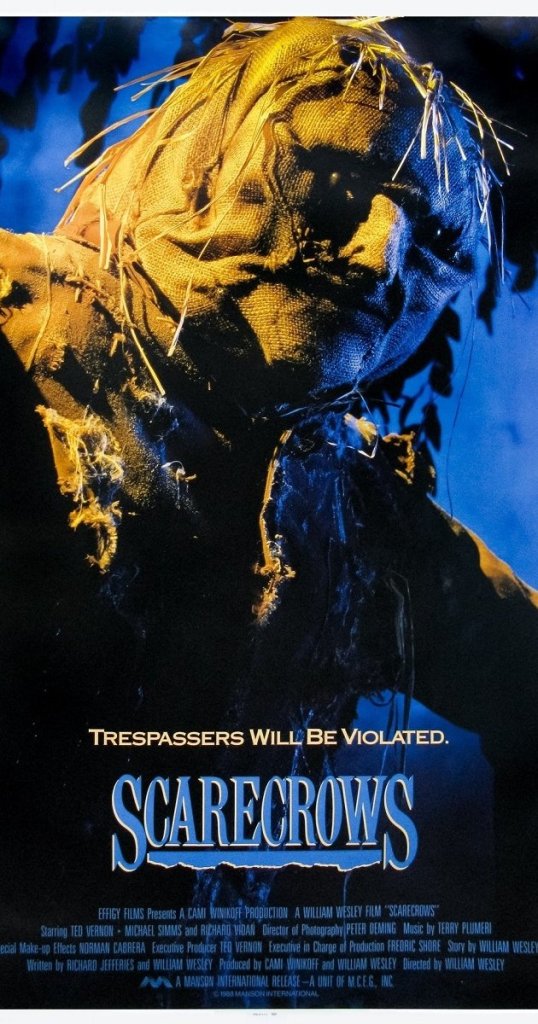
When Shout! Factory restored this popular cable-played and home video renter to disc and offered it as an Amazon stream, we had to review it — back on December 18, 2018. And here it is for its first bow on a Mill Creek set, in this case, their Excellent Eighties 50-film pack that we’re unpacking all this month. If you’ve never seen Scarecrows, this Mill Creek bow is a great way to enjoy it and decide if you want to buy the superior Shout! Factory reissue.
As for moi: I enjoyed this movie (somewhat), which I ended up renting as result of its write-ups in all of the various monster and horror rags of the day. And the video stores I frequented had the promotional posters up; a couple of stores had the film in the wall racks as their “Pick of the Week.”
Sam, in his review, feels Scarecrows is “never boring.” I, on the other hand, was bored by the film back then; this is only the second time I’ve watched it since those VHS rental days of yore. And I still find it to be a “muh, eh” flick. However, I agree with Sam: the splatter is good. But I feel it’s ultimately undone by a rickety script (across four screenwriters, including director William Wesley), “meh” acting, and its low-budget.
As I re-watch this all these years later, I can’t help but think Quintin Tarantino and Robert Rodriquez watched this back in the day — and it bled through into their formulating From Dusk Till Dawn, which flips-its-script from being an action caper into a vampire flick.
Here, we have another unfolding “crime caper,” as five paramilitary types ripped off $3 million dollars from Camp Pendelton — and have taken a pilot and his daughter as hostages. Before their stolen cargo plane can make it out of the country, one of the soldiers — in a move that reminds of Sly Stallone’s robbery-plane caper Cliffhanger — greedily parachutes out of the plane with the loot. Think of D.B Cooper, instead of landing in the wilds of the Pacific Northwest, he lands in a foggy cornfield. And instead of zombies showing up, you get, well, you know.
Welcome to Scarecrows.
At that point, we head off into Romero land, with the soldiers and their hostages banning together in an abandoned farmhouse to ward off the demonic scarecrows in the fields around the home — who intend to add our ne’er-do-wells to their sackcloth and flannel ranks. And, as with Romero’s farmhouse classic: this has its own, downbeat ending.
Scarecrows was a vanity production by South Florida wrestler and amateur boxer Ted “Wolfman” Vernon. (To that end: Scarecrows was filmed in his hometown of Davie, Florida.) He later moved into the world of reality TV with the Discovery Channel and Velocity show South Beach Classics (2017), which spotlighted his classic car business. That reality show unraveled in a whirlwind of his domestic abuse allegations (New Times Miami article). Another of Vernon’s projects was working as one of the executive producer’s on John Carpenter’s nobody-asked-for-it-remake of Village of the Damned (1995). Did anyone see Vernon’s feature film acting debut as the title character in the wrestling drama Hammerhead Jones (1987)? No, us either. And neither has anyone on the IMDb: critic or user.
Scarecrows was the feature film debut of William Wesley, a U.S. Army vet who parlayed his work here into contributing to the syndicated horror anthology Monsters (1991). He followed up with his second — and final feature film — Route 666 (2001), an even low-budgeted and not-as-good-as zombie romp starring the on-their-way-down Lou Diamond Phillips and Lori “Tank Girl” Petty (who’s great in Prey for Rock & Roll). One watch and you’ll wonder if Wesley seen John Hayes’s zombie romp, Garden of the Dead (1972), with its formaldehyde-sniffing prisoners returning from the grave. (Hayes gave us Crash! and the utterly-whacked End of the World.)
While Ted Vernon and William Wesley vanished, cinematographer Peter Deming went onto bigger and better films with Hellraiser and Evil Dead 2.
Now, for the behind the scenes drama:
Although it was shot in South Florida, Ted Vernon, who raised-bankrolled the $300,000 for the film, was the only local actor; the rest were L.A.-based. Vernon and Wesley also came to reportedly hated each other, with Vernon seeing the first-time writer and director as an incompetent that not only squandered the budget halfway through shooting, but wanted more funding. So Vernon ended up physically choking-out Wesley; the father of Wesley’s then girlfriend fronted the rest of the money.
The planned theatrical release of the film fell part when the distributor, Manson International Pictures, went bankrupt; however, the film returned $3 million on the home video market under the well-known Orion Pictures banner. Manson is a name you know, as the studio also gave us Terror at Red Wolf Inn (1972), Star Knight (1985), Brain Damage (1988), and Slaughterhouse Rock (1988), just to name a few of the 80-odd films in their catalog. All of those films — only to go under upon the release of Scarecrows.
As is the case with ultra-low/low-budget SAG-shot films (see the box office failures that are Zyzzyx Road (2006) and Christian Slater’s Playback (2012), as examples), Scarecrows had a one-week theatrical engagement on a single screen in a Des Moines, Iowa theater to contractually satisfy SAG, investors, and video distributors.
A valiant attempt at a case of “what might have been,” indeed.
You can watch Scarecrows on Amazon Prime or buy it from Shout! Factory. There’s also now out-of-print DVDs in the online marketplace issued by MGM and 20th Century Fox. In addition to the embedded trailer above, we found a nine-minute clip to enjoy on You Tube
And how many “scarecrow” movies are there: more than I realized, courtesy of Tubi.
About the Author: You can read the music and film reviews of R.D Francis on Medium and learn more about his work on Facebook.
Oh, yes! The ’80s are excellent when you get an old Sergio Martino war flick from those HBO days of yore, as you binged this alongside High Risk, Tuareg: The Desert Warrior (both reviewed this month via Mill Creek, look for them), and Inglorious Bastards. And don’t let the fact that we have the sons of Sean Connery and Anthony Quinn, Jason and Francesco, as our costarring leading men, deter your watching: they’re very good, here. When it is learned the Nazis are plotting to kidnap Winston Churchill on his way to the 1942 Casablanca Conference also attended by Franklin D. Roosevelt and Joseph Stalin, a crack commando unit is assigned for protection. Let the bullets fly and the explosions mushroom!
This isn’t — based on it being an Italian production headed by Sergio Martino, who gave us 2019: After the Fall of New York and Monster Shark (and too many Giallos* to mention) — a copycat schlock festival of pasta-war madness. Thanks to Glenn Ford and Donald Pleasence (as Maj. General Williams and Col. Bats) classing up the joint as only they know how, this — for moi — goes down as one of the best war movies of the early ’80s cable-era. This is the level of film that Michael Sopkiw deserved to be in. Even though Mike retired from acting by this point, Sergio should have called him in — especially after sticking him with Monster Shark. Mike would have been great in Jason Connery’s role.
* We dive deep into the bloody, yellow mayhem of Sergio Martino’s — and many other’s films — with our “Exploring: Giallo” featurette of 70-plus film reviews.
About the Author: You can learn more about the writings of R.D Francis on Facebook.He also writes for B&S About Movies.
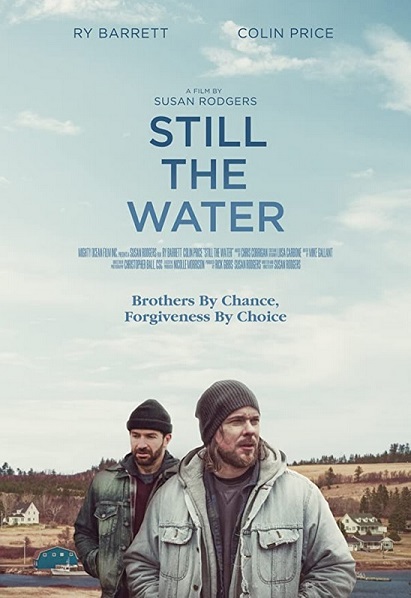
The ecosystems of islands, by nature, are self-sufficient biological communities that, sans the intrusion of man’s foolish nature, can survive and thrive for an eternity. Man, on the other hand, is not an island; man is a social animal that withers and dies in their Don Quixote quest for independence. Autonomy doesn’t grant self-worth, but self-loathing.
And the Brothers McAuley of Prince Edward Island — the eldest Nicky, the troubled middle child Jordie, and the cooler-passionate youngest Noah — are about to learn a geographical lesson in futility.
The not-so-Musketeers are led by the bullish Nicky, a man-child who hasn’t learned the craft of thinking before he lets his tempers flare. Jordie is a semi-pro hockey star who runs from life’s responsibilities for the ice and comes to discover the “lone wolf” approach to life simply doesn’t work. Noah, for the most part, escaped his father Doug’s alcoholism to mature into a somewhat well-adjusted, approachable free spirit. When Jordie’s propensity in taking out his frustrations on the ice result in his being kicked off his team for fighting, he has no place to go other than home. And while forgiveness lingers in the mists, family resentments towards the hell the now-recovered father Doug’s drinking brewed, lies within the fogs of the past.
This powerful, dramatic feature-film debut regarding the trials and tribulations of family from from writer-director Susan Rogers encapsulates her passions for her Malpeque Bay, Prince Edward Island home; an adoration encapsulated by Cinematographer Christopher Ball (Black Swan; second unit on Aquaman, multiple episodes of SyFy’s Haven). Courtesy of Ball’s experienced eye for crafting shots for his first-time director, Roger’s debut film accomplishes what most movies do not: create a character out of a location.
There’s an err in screenwriting where neophyte writers are of the opinion that characters (if properly written, aren’t “characters” with “motivation”; they’re people with emotions) must speak by words; forgetting that we, as people, communicate silently 70 to 93 percent of the time via facial expressions and body language. A character in a screenplay is a person who drives a plot and inspires other characters, in the effort to create drama. Locations — even objects with a close connection to a person — that inspire and influence characters and drive the plot, also work as “characters” (that’s my opinion and I am sticking to it). Susan Rogers, through her usage of the history and beauty of Prince Edward Island, understands this little-used fact of screenwriting to make the island sing its siren song to the McAuley brothers.
A lesser writer would have had the patriarch-father die and, through a will or some type of legal or heirloom McGuffin, put the three brothers into a cross-country road movie-to-catharsis. We’ve been there on that expanse of asphalt and done that white line fever, ad nauseam. Roger’s debut is a road movie without the road trope; a film where man learns to function as part of an island’s ecosystem and learns how self-sufficiency comes from the reliance of the other and each other.
After completing a successful theatrical and streaming-run in its native Canada, Still the Water is fresh off an equally successful series of U.S. festival showings. It is now available as a free-with-ads stream in North American courtesy of Indie Rights Movies on Tubi TV.
About the Author: You can learn more about the writings of R.D Francis on Facebook.He also writes for B&S About Moviesand publishes short stories and music reviews on Medium.
Disclaimer: We did not receive a review request for this film from its director, distributor, or P.R firm. We discovered the trailer on social media, were intrigued by the film, and we truly enjoyed the film.
This is the great thing about Mill Creek box sets: we probably would have never reviewed this TV Movie obscurity for the site. Well . . . maybe we would have . . . you know us and those “Big Three” network TV flicks of the ’70s and ’80s.
Before Michelle Pfeiffer outshined them all and took over the later DVD boxes.
The cheapjack DVDs you pick up from those cardboard-boxed impulse buy end caps at your favorite retail outlets (Dollar Tree, Marshalls, and Bealls; even those Walmart barrels ‘o plenty in the electronics section) woefully credit Michelle “Catwoman” Pfeiffer as the “star” of this TV mini-series that originally ran for two nights in October 1981. The cast is a TV Movie support cast-dream, with just about every actor who ever booked a supporting role on a ’70s TV series or movie (Joy Garrett, John Harkins, Macon McCalman, and James Sloyan, in particular) appearing in a wide array of bit parts. The cast is not headed by Michelle, but by ubiquitous TV actors Lindsay “Bionic Woman” Wagner, along with Jameson “Simon & Simon” Parker, and the-easily-moves-between-TV-and-film actors Dabney Coleman (McKittrick from WarGames; in production on his 178th project!) and Andrew Prine, who shows us just how great of an actor he really is — and if you’ve spent any amount of time at B&S About Movies, you know Prine’s done his share of Drive-In junk, yet always shines in his role. (If you’re new here and not familiar with Prine’s work The Town that Dreaded Sundown, Simon King of the Witches, and Hannah, Queen of the Witches will get you started down your own Prine-rabbit hole.)
Sadly, Prine isn’t here much, only acting as the story-narrating Kimbel Smyth, as the story of Callie Lord (Wagner) unfolds: She’s a 1940’s unwed mother forced to give up her son for black market adoption. Moving from her small Texas town to the big city of Dallas for a new start (to study to become a courtroom stenographer), she comes to meet newspaper editor-in-chief Randall Bordeaux (Coleman) while working as a waitress. They marry. And understanding her pain, he tracks down her once-a-rebel-always-a-rebel son, Randy (Parker). Now a powerful newspaper editor after her husband’s passing, Callie looses it all when her son is up on murder charges over his gold digging, ne’er-do-well wife (a rather pudgy Pfeiffer; not at all the svelte Cat Woman we know).
If you’re a fan of those prime soap operas of the ’80s, with their ongoing tales of secrets, lies, and betrayals committed by the underprivileged behaving very badly, there’s something here for you to spend your two-plus hours on. Just don’t be duped into thinking Michelle Pfeiffer is running the show, but Lindsay Wagner fans will enjoy it. And while Wagner’s southern accent leaves a bit to be desired, Prine thrives in southern-slang roles; even in voice over, he’s excellent.
Director Waris Hussein, whose TV career began in Britain with a dozen episodes of Doctor Who in the mid-’60s and moved into the theatrical realms with the very early Gene Wilder film Quackser Fortune Has a Cousin in the Bronx (1970), serviceably moves the camera about the solid set design that transitions from the 1940s to the late 1970s. We could easily do a week of just Waris Hussein TV movies, but we’ll call out the two we remember best: The Henderson Monster, a 1980 Frankenstein-esque horrror starring Stephen “7th Heaven” Colllins, and the really good John Savage-starring Coming Out of the Ice, a 1982 Cold War bio-drama. Teleplay scribe Thomas Thompson is an old TV western scribe whose career goes back to the days of The Rifleman, Rawhide, Wagon Train, The Virginian, Bonanza, and High Chaparral, but . . . he penned one of the great TV movies, well two: The Death of Richie (1977) and — the one that we really need to re-watch (and review!) after all these years — the two-night mini-series rating winner, A Death in Canaan (1978), which stars the sorely-missed-from-acting Paul Clemens (The Beast Within).
You can, of course, pick this up as one of the 50 movies offered on Mill Creek’s Excellent Eighties box set. There’s also a freebie upload on You Tube.
About the Author: You can learn more about the writings of R.D Francis on Facebook.He also writes for B&S About Movies.
Editor’s Note: Beware of the duplicate titles snafu, for there are two Slipstream movies: The 1973 one by William Fruet of Funeral Home, Baker County, U.S.A., Killer Party, and Blue Monkey fame, which is a Canadian drama about a troubled disc jockey: that’s the Slipstream no one knows. Then there’s the one that everyone knows — and most haven’t seen: the Mark Hamill one that, regardless of its pedigree, fails on all levels. And we wish that Mill Creek would save the 1973 one from obscurity and put it on a box set. You have two choices to pick up a copy of the Mark Hamill Slipstream: we reviewed it on November 5, 2020, as part of their Sci-Fi Invasion set and we’re revisiting it — with this second, alternate take — as part of its inclusion on Mill Creek’s Excellent Eighties 50-film pack, which we are reviewing all this month.
The overseas 25-minute making-of documentary courtesy of Pineapples 101 Movie Memorabilia Emporium blogspot.
This is a movie that many of us encountered, not in theaters as intended (at least not in the U.S.), or on VHS where it ended up: but as an oft-run movie on HBO. And regardless of how many times the pay-channel ran the film, most of us never finished it.
Why? Because it’s boring. But how is that possible?
We have Gary Kurtz who produced the first two Star Wars films with George Lucas at the helm. We have director Steven Lisberger who set the tone for future computer-animated universe films with Tron. And how can we forget Kurtz also gave us The Dark Crystal, and a bit further back, Two-Lane Blacktop and American Graffiti. Behind the camera is Frank Tidy, who got his start working with the Scott brothers, Ridley and Tony, in commercials and came to shoot The Duellists for Ridley, as well as one of the better Star Wars droppings with Spacehunter: Adventures in the Forbidden Zone (a film that’s still eluded a B&S once-over). We’ve got a score by Elmer Bernstein, whose work goes all the way back to Cat-Women of the Moon (you’ve seen, at the very least, ten movies in your lifetime with his composing and/or conducting). Behind the typewriter is, in part, Charles Pogue, who gave us David Cronenberg’s The Fly reboot and the Star Wars-inspired swords-and-sorcery romps Dragonheart and Kull the Conqueror. In the plot department: you’ve got a Mad Mad-cum-The Road Warrior post-apocalyptic vibe about dueling bounty hunters. In front of the camera: you’ve got Mark Hamill from Star Wars and Bil Paxton (who was fantastic) in Aliens, along with support roles by both Ben Kingsley and F. Murray Abraham.
So what went wrong?
Maybe it’s because the film opens with a homage to the “Crop Duster Scene” from Alfred Hitchcock’s North by Northwest (You Tube) that many seemed to miss — and those that “got it,” weren’t wowed by it. Then there’s that kiss of death: the dreaded voiceover that sets up the mythology where “global warming” finally did it: the Harmonic Converge baked the Earth, split the continents and created a “river of wind” that rendered the planet into one big dust bowl. The few who survive are the ones who’ve learned to harness the wind and solar power, just as Al Gore has always hoped for.
Amid this “green new deal” backstory: We meet Will Tasker (Mark Hamill) and Belitski (British actress Kitty Aldridge, who came to marry Mark Knopfler of Dire Straits) who are — as in Mad Max — part of a ragtag not-the-Main Force Patrol law enforcement agency that allows their agents to sideline as bounty hunters. After a run-in with Matt Owens (Bill Paxton) and confiscating his illegal arms contraband, Owens kidnaps Tasker’s bounty (British Shakespearean stalwart Bob Peck) to collect the reward and recoup the cost of his arms shipment. Oh, and Peck is actually a healing-android (he can heal blindness) who perpetually quotes the poems of Lord Byron to communicate his feelings, which leads Owens to call his new solar-wind plane shipmate, Bryon. Before you know it: Owens gets caught up in Bryon’s quest to reach a mystical land beyond the Slipstream where others, like him, live in peace and harmony.
In the end: No one was ready for an off-the-road aviation-version of The Road Warrior (or Kevin Costner’s all-water version, either). And for as many who consider this Mark Hamill’s best role, there are those who say this role — as well as his work (in the even more abysmal) Time Runner (Australian made) and The Guyver (Japanese made) — is why Harrison Ford and not him — became an A-List Hollywood leading man. Yes, there’s a reason why Hamill retreated (abet successfully) into video game and anime voice work: Slipstream is one of those reasons.
Meanwhile, as Hamill kept pumping out one late-’80s clinker after clunker, poor Gary Kurtz didn’t fair much better. After his creative fallout with George Lucas that lead to Kurtz leaving the franchise during the pre-production of Return of the Jedi and still feeling the sting of his first post-Star Wars outing, The Dark Crystal, bombing with critics and audiences, Kurtz was hoping for a box office bonanza that would set up another franchise. Instead, Slipstream — even more so that The Dark Crystal — was a critical and commercial box office bomb that also failed to find a cult audience on home video. The film drove him into bankruptcy that, in turn, lead to his divorce. Worse: he burned though his Lucasian cash windfall to create his fantasy world solely dependent on wind and sun, just like Al Gore always wanted.
So, was it all worth it? The criticism on this British-made sci-fi’er splits down the middle with no middle ground: Star Wars ephemera-oids either love it or hate. And you can decide by checking out Slipstream on Tubi or own a copy as part of its inclusion on Mill Creek’s Sci-Fi Invasion and Excellent Eighties50-film box sets.
About the Author: You can learn more about the writings of R.D Francis on Facebook. He also writes for B&S About Movies and publish music reviews and short stories on Medium.
“Like many immigrant children, I was raised to believe that the prestigiousness of a person’s career directly correlated with how good of a person they were, morally speaking. I was also raised to believe that no such prestigious career would be attainable without first paying for the privilege of a university education. Finally, I was told that my own race and appearance would have no effect on my future prospects in life, or on how people treated me here in Canada. At some point during my life, I realized these were all lies. This film is about my revelation at the bold hypocrisy that pervades throughout the esteemed institution of higher education, and indeed perhaps all western institutions held in high regard.” — Director Li Dong, from the film’s press kit
Any aspiring writer and director who receives an anointing from acclaimed German director Werner Herzog goes to the top of the streaming list of the B&S About Movies’ review stacks. If you read our “Klaus Kinski vs. Werner Herzog Night” Drive-In Friday featurette, you know how we feel about Herzog in these wilds of Allegheny Country.
The creative tales of lawyer-cum-filmmaker Li Dong, who made his feature film debut as a screenwriter with the Canadian feature drama Samanthology (2019), began on the campus of Nova Scotia’s Dalhousie University, where he graduated in 2006 with honours in English and history, and then went on to graduate from Dalhousie Law School. After law school, Li satiated his love of poker as a professional player prior to being selected by Oscar-nominated Werner Herzog for his “Rogue Film School” project. After directing episodes of the Canadian TV drama Model Minority, Li Dong’s now made his feature film debut, as both the writer and director, with this timely exploration of systematic racism — which he experienced growing up in Toronto.
However, despite the suggested heaviness of the material, Stealing School is, instead of a serious drama, an absurdist social satire. It’s a dark comedy that, instead of pointing fingers, offer solutions regarding sociopolitical issues, racial and gender inequalities, and the unilateral powers giving to school administrators of prestigious universities (and the nepotism of our employers in the real world).
Li Dong’s work also questions the value of liberal arts degrees in the real world (April thinks the class, which she’s accused of cheating, is beneath her) — a world now overwhelmed (and ever changing) by globalization and technology — and the resulting anxieties and fears inflicted on the futures of an institution’s students by the world’s archaic social views. As did Italian filmmaker Michelangelo Antonioni’s early ’60s explorations of regarding the alienation of the self in the modern world, Li Dong offers solutions to the development of our neuroses that result from our failure to adapt to our changing environs. While lacking the ubiquitous dead body (but filled with its share of Gogolian dead souls), Stealing School unfolds as a pseudo-film noir rife with analogously James M. Cain-twisted characters driven by ulterior motives and changing allegiances — whose own corruption and egotism becomes their moral and professional undoing.
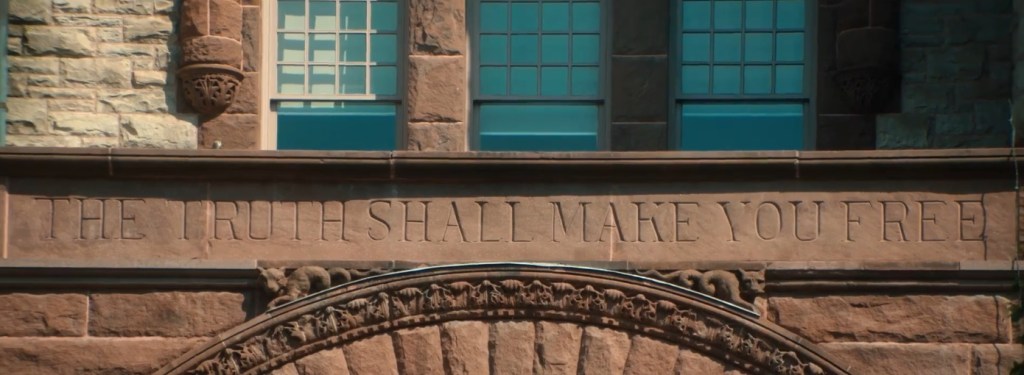
We come to meet April (Celine Tsai; the Canadian TV series Rising Suns and the Hallmark Channel entry Christmas by Chance), an Asian-Canadian tech prodigy (sent to Toronto from China by her parents) accused of plagiarism by Keith, her humanities teaching assistant (Jonathan Keltz; got his start on Degrassi: The Next Generation and starred as Jake Steinberg on HBO’s Entourage), which jeopardizes her graduation from a prestigious Toronto university. Once friends, their relationship is, at best, acrimonious.
Meanwhile, a newly appointed faculty administrator wants to sweep it under the rug, lest the bad publicity derails her career. Another professor deciding April’s fate deals with clouded judgement as result of a personal grudge against April’s professor. And that professor, in turn, fears April’s fate will expose his infidelities with a student. And the student newspaper-journalism student? He’s looking for a resume-building “scoop” to start his career, so he works the racism angle to his advantage, even going as far as leaking information to off-campus publications.
Is April innocent . . . or did she actually cheat and frame others for her cheating scam. Or is she being railroaded — or not — for others’ personal gains. And what secrets about the racial and professional biases of her professors will come to light. What is the true meaning of accusing another of “guilt” and leaving them fighting for their “innocence” when it can expose an accuser’s own skeletons? For on this university campus, the halls of right and wrong are a murky maze of double-standard corridors . . . with the accuser and the accused ending their journey at a bus stop sharing a cigarette. Which is the martyr and which is the saint. Who is the sociopath let loose on the world to destroy more lives in their quest for professional admiration?
Or is it a shackle?
While Li Dong is obviously a writer and director of extinction, he’s still an indie director scratching and surviving in a streaming verse overflowing with other indie filmmakers in need of funding. And when you’re up against the budget: you write what you know around sets you know can secure. As result of his academic endeavors, Li Dong intelligently handles the poignant material in a budget efficient, subtle manner. In more a established director’s hands backed by a major studio, Stealing School, which also works as a courtroom drama (a university tribunal seated by three professors, with a teaching assistant as the prosecutor and student advisor (a law major) as the defense attorney), could have easily turned into a bloated production filled with matured Disney actors — when it doesn’t have to be bloated. Sometimes, simpler is beter, as “simple” can still convey complex subject matter (and it runs a tight 74-minutes).
In the film’s press materials, Li Dong stated that, despite the film’s potentially weighty subject matter, his first and foremost aim was to create a fun and entertaining film.
He did.
Stealing School rises proudly over the usual indie-streaming norms we experience at B&S About Movies. In fact, when considering the film is lead by a strong, female protagonist-cum-her own antagonist, the film would fit nicely into the female-driven programming blocks of the U.S.-based Lifetime Channel — but Stealing School also rises proudly over the quality of that channel’s “damsel-in-distress” telefilms. The cast of unknown actors are skilled in their roles, Li Dong’s non-linear (which turns off the many; but not me) script is followed with ease, and his camera work is engagingly well-shot.
I look forward to what the Werner Herzog-inspired Li Dong can accomplish with a larger budget on his future feature-film projects.
After its successful premiere at the Napa Valley Film Festival in 2019, Stealing School was released by Game Theory in June of 2020 on the iTunes platform in its native Canada. It becomes available across multiple streaming platforms in the U.S. courtesy Vertical Entertainment on February 26, 2021. You can follow the film on Instagram.
We previously reviewed the 2019 Vertical release, Portal.
Disclaimer: We received a screener for this film. That has no bearing on our review. Film still, theatrical one-sheet, and trailer courtesy of Vertical Entertainment.
About the Author: You can learn more about the writings of R.D Francis on Facebook.He also writes for B&S About Moviesand publishes short stories and music reviews on Medium.









 B&S About Movies
You must be logged in to post a comment.