Summer Daydream (2021)

The art of film is to not just toss images on the screen — as so many aspiring indie filmmakers do. The craft of film is to embed your soul on the screen; to allow the audience to connect with your heart. Clark, the young filmmaker of Summer Daydream, comes to learn that lesson: he may not have ended up making the film that he wanted, but he made his film exactly the way it needed to be done. And Mitch Hudson and Stephen Dean, two local Lynchburg, Virginia, filmmakers opted to share their own youthful, filmmaking ambitions with their joint feature film debut — and made their film exactly the way it needed to be done.

As with any young boy, Clark’s greatly influenced by his father; a dad who infused Clark with the love of film courtesy of the purchase of a digital camera. And as any kid with a camera, Clark spends his summers making horror movies with his friends. Upon the loss of his father, and the financial strains that come with such a loss, it’s compounded by his mother recent job loss — that will uproot the family. To save his family’s home, he recruits his two best friends and a couple of first time amateur actors to enter a film contest with a $15,000 cash prize.

Mitch Hudson and Stephen Dean composed an insightful, calculated script; one free of the expected plot tropes. Sure, I could rat-a-tat-tat the story and plot spoil everything. What I will tell you is that I expected “dad” to reappear with helpful advice; he did not. I expected for Clark to discover his first summer crush; he didn’t. And that’s only two of the story’s “change up” examples; two that display the extra though put into the script that’s rises Summer Daydream above the horizons of a neat-little-bow feel-good Hallmark movie or other family-oriented tales. Mitch Hudson and Stephen Dean’s feature film debut is a film that’s impossible to give a bad review. Everything about their film is sheer perfection; from script, to its cast of solid teen and adult actors, to directing, to its cinematography: everything works. I challenge another critic — if they’re foolish enough to try — to find a flaw in it.

As I watched the valiant attempt by Clark and his friends to save his family’s home, as well as the retaining the memories of his father held within the walls of that home, my own heart drifted back to my own summers of youth as I watched the teen-oriented movies of the ’70s that aired weekly via ABC-TV’s Afterschool Special, CBS-TV’s Schoolbreak Special, and NBC-TV’s Special Treat. If you’ve read my reviews for the cream of the crop of those youth-oriented TV movies, such as The Amazing Cosmic Awareness of Duffy Moon, Blind Sunday, Hewitt’s Just Different, New York City Too Far from Tampa Blues, and Portrait of a Teenage Shoplifter then you know how I feel about those films. And that’s the same feeling — of simpler, non-Internet stressed happier times — I had watching Summer Daydream.

I love this movie. It’s a movie that elicits nothing but respect.
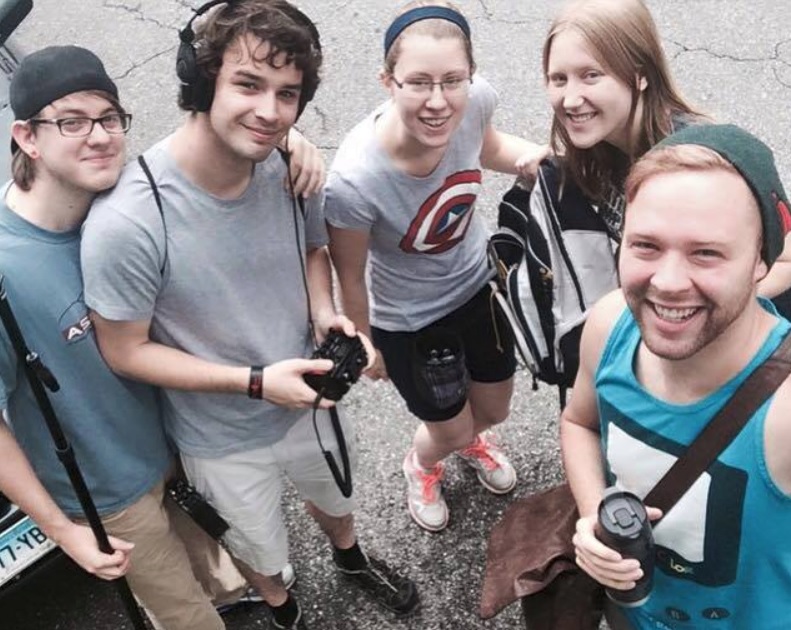
Livin’ the daydream: We are the film crew.

Completed in 2018, Summer Daydream, then known as Technicolour Daydream (copyright issues over the use of “Technicolor,” even with the British-version of the word), traveled the usual festival rounds that all indie filmmakers journey. And the journey was a fruitful one, as Mitch Hudson and Stephen Dean’s feature film debut earned fifteen wins and ten nominations, such as winning the “Grand Jury Prize for Best Feature Film” at the 2019 Southern City Film Festival, “Best Screenplay in a Feature Film” at the 2019 World Music and Independent Film Festival, the “Saints Award for Best Feature” at the 2018 Saints and Sinners Film Festival, and “Best Feature” at the 2018 Southern States Indie Film Fest. Courtesy of Summer Hill Entertainment, U.S. and Canadian audiences finally got to enjoy this touching coming-of-age-story on DVD, Blu-ray, and across all major streaming services in the winter of 2020.

Summer Daydream now makes its March 2021 free-with-ads streaming debut on Tubi. You can learn more about the film on their official Facebook page. Other Summer Hill Entertainment releases we’ve recently enjoyed include Baby Frankenstein, Cicada, and Exorcism at 60,000 Feet.

Disclaimer: We did not receive a screener or a review request from the director or the distributor. We discovered this film on our own and truly enjoyed the movie.

About the Author: You can read the music, film reviews and short stories of R.D Francis on Medium and learn more about his work on Facebook. He also writes for B&S About Movies.

Me Me Lai Bites Back (2021)

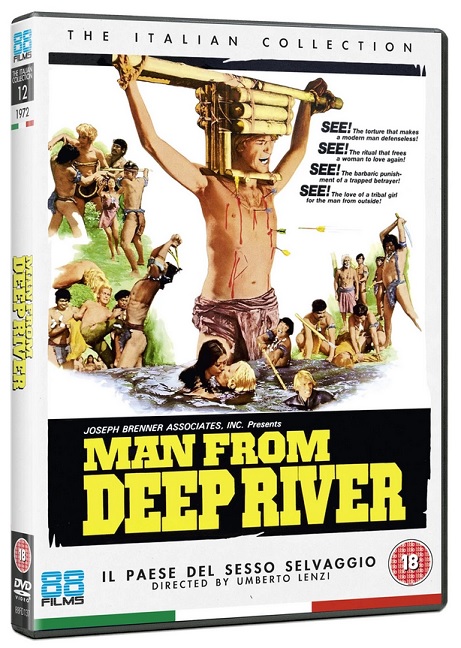
It’s great to see DVD supplementarian Naomi Holwill releasing her works from their DVD addendums as standalone films to online streaming platforms. We previously enjoyed her genre insights with Fascism on a Thread: The Strange Story of Nazisploitation Cinema (2020), which was included on the DVD and Blu-ray restoration for The Beast in Heat. Now Holwill offers us her documentary supplement — the first documentary to do so — on the all-too-short career of seventies sex symbol Me Me Lai, one of the very first British-Asian pin-ups, which is included on the DVD restoration of Umberto Lenzi’s 1972 cannibal exploitation genre-inspirer Man From Deep River, aka Sacrifice!, aka Deep River Savages.

Sure, Lai made her feature film debut in the British sex comedy Passion Potion (1971), as well as working alongside Mike Raven in Ted Hooker’s lone writing and director credit Crucible of Terror (1971) and appearing in another Brit sex-comedy the Au Pair Girls, aka The Young Playmates (1972). But it was her work with Umberto Lenzi in Man from Deep River (1972) and Eaten Alive! (1980) and Ruggero Deodato in Jungle Holocaust (1977) that forever forged Lai in our gooey, horror-loving hearts as the Queen of Italian cannibal films. Then, after her final film, The Element of the Crime (1984) — her others were Blake Edwards’s Revenge of the Pink Panther (1978) and Undercover Lover (1979) — Lai vanished from the business.

Then along came some contraption called “the Internet,” to which Lai’s daughter uploaded a wealth of photos from her mother’s modeling, TV, and cinematic glory days. And it was those social media posts that inspired and enabled film historian Calum Waddell to locate Me Me Lai for this document, not only on her career, but on an offensive genre that shouldn’t have existed*, but made our youthful, teen-Midnight Movie days of the ’80s all the more sweeter . . . and gooier.

The highlight of the documentary is that we hear it all from the source herself and not just a bunch of talking head genre experts. And where else can you hear someone who has worked with both and can tell us the pros and cons of working with the zombie-cannibal maestros of Lenzi and Deodato? Are we at all shocked to learn that Lenzi was the raving lunatic and Deodato was the more chill of the two? And is there too much Eli Roth in the frames — who, depending on opinion, is to horror docs what Metallica’s Lars Ulrich is to metal documentaries? Well, it depends on what you think of Roth and how you receive his films, such as Hostel and his own cannibal exploitation homage, The Green Inferno. As for myself: I bow to Roth’s passion and how he serves as the prefect fodder for Naomi Holwill and Calum Waddell’s passions: to give ’70s genre films their rightful preservation in cinematic history.

You can also enjoy Me Me Lai’s insights as part of Naomi Holwill’s High Rising Productions partner Calum Waddell’s Eaten Alive! The Rise and Fall of the Italian Cannibal Film (2015), which is featured on the Grindhouse Releasing Blu-ray for Cannibal Ferox in the U.S. and the U.K. Blu-ray for Zombi Holocaust by 88 Films. Our much adored Umberto Lenzi, Ruggero Deodato, Sergio Martino also offer their genre insights in that documentary.

I don’t know about you, but I cross my fingers in the hope that From Rollerball to Rome (2020) — Holwill’s document to Norman Jewison’s influential post-apoc film — becomes an independent online stream. I also hope for an eventual DVD/Blu-ray box set restoration of the films of Mark “Trash” Gregory** — including a subsequent Rising High Productions documentary on our beloved post-apoc warrior. And while you’re at it, Naomi, can we have a documentary supplement on Michael “Parsifal” Sopkiw? Of course, the team at Grindhouse Releasing and 88 Films needs to get off their collective duffs and give us a Micheal Sopkiw** four-pack DVD/Blu-ray restoration blowout.

You can enjoy Me Me Lai Bites Back on Tubi. Watch it. Great stuff.

* We dedicated an entire week to cannibal films with our “Mangiati Vivi” featurette. In the coming months, we’re hosting an “SOV Week” and “Video Nasties Week” that will catch us up on the Italian zombie and cannibal flicks we didn’t get to in our “Mangiati Vivi Week.” Bookmark us! As of October 2021, we since wrapped up those two weeks and reviewed Primitives, aka Savage Terror, along with the Jess Franco-trio of White Cannibal Queen, Cannibal Terror, and Devil Hunter.

** Hey, we love Mike and Mark around the B&S About Movies cubicles, as you can tell by our review of 2019: After the Fall of New York, which includes an overview of Michael’s films. And don’t get us started on Mark Gregory, as we dedicated an entire week of reviews to honor his career with our “Who Is Mark Gregory and why is there an entire week all about him?” featurette.

About the Author: You can learn more about the writings of R.D Francis on Facebook. He also writes for B&S About Movies and publishes short stories based on his screenplays, as well as music reviews, on Medium.

KAIJU DAY MARATHON: Godzilla vs. Megalon (1973)

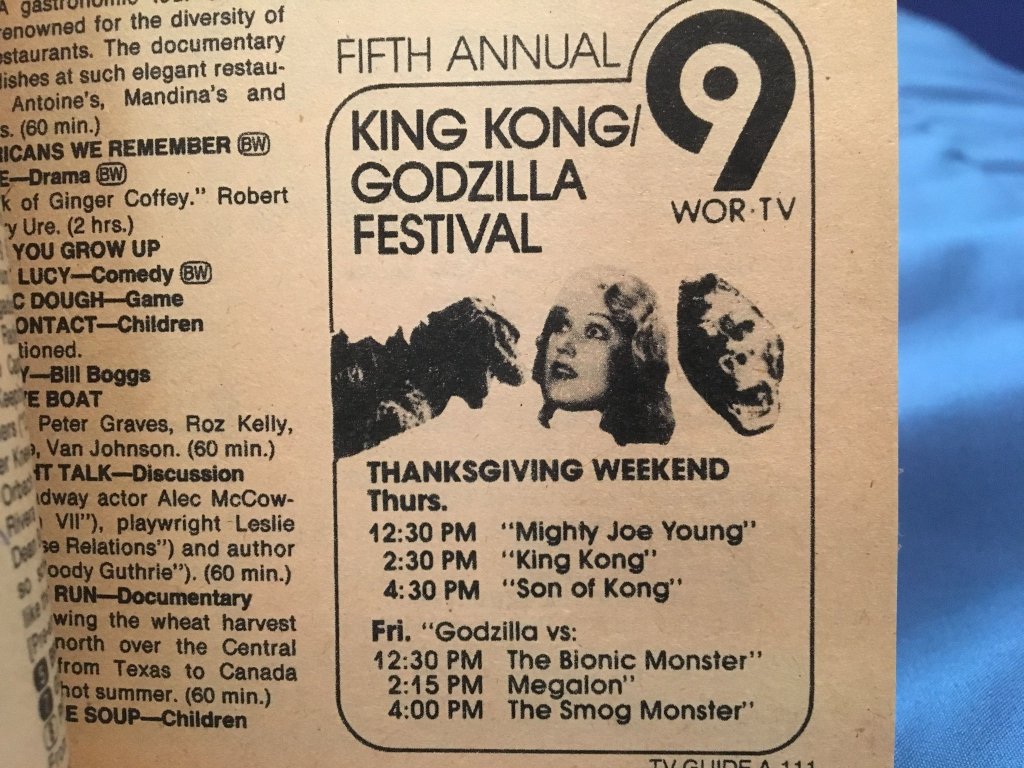
What I loved about the cherished Godzilla movies of the youth: Since I was old enough — and Mom and Dad had no interest — I could be dropped off at the theater and be my own man. That’s a pretty big deal . . . and back then, you could drop a kid off at the theater with no worries. So, there I was, in the summer of 1976 at the local twin cinema, getting my dose of not only Godzilla — but the introduction of the Ultra Man-esque Jet Jaguar. At the time, I was all about Ultra Man, which you could watch on Saturday mornings and watch during the weekdays after school in U.S. syndication.

Can you imagine being a kid and creating a character for a Godzilla film: Toho held a contest for children in mid-to-late 1972. An elementary student submitted a drawing of a mecha-robot called Red Arone, which Toho developed into Jet Jaguar. Awesome.

The 13th film in the franchise, the film also features the battle royale of ol’ Zilla with Megalon and Gigan as, once again, man suffers the err of their nuclear ways when a South Pacific underground nuclear test sends shockwaves across Monster Island that plummets Rodan and Anguirus into the depths of the Earth.

Just as the undersea kingdom of Seatopia call up their civilization’s beetle god, Megalon, to destroy mankind to stop the testing, the Japanese Self Defense Force has completed testing on the humanoid robot, Jet Jaguar.

Then all Kaiju breaks loose.

Megalon is no match for Jet Jaguar and Godzilla, so the Seatopians put out a distress call to their allies in the Space Hunter Nebula M (from 1972’s Godzilla vs. Gigan, which played in the U.S. in 1977 after Godzilla vs. Megalon) to bring in Gigan for the assist. Now, while Godzilla is off fighting Megalon, Jet Jaguar is left to contend with Gigan — and the match evens up as Jet Jaguar develops his own powers and can now enlarge himself to Kaiju size.

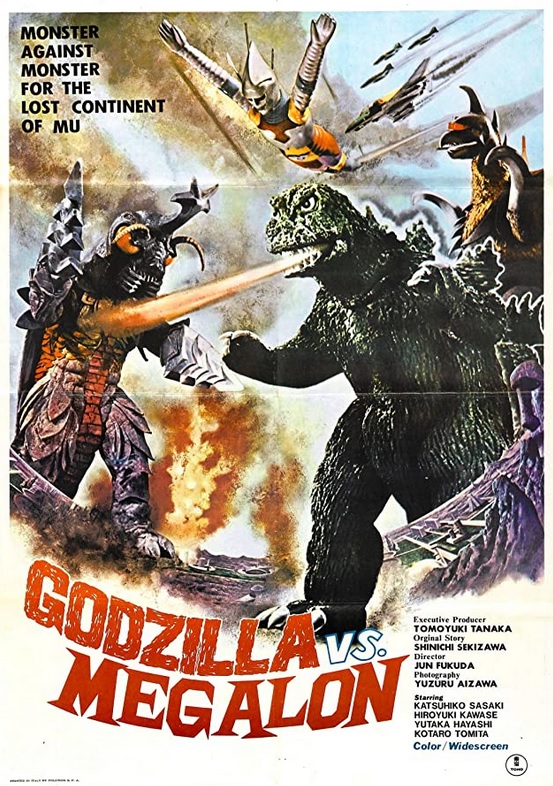
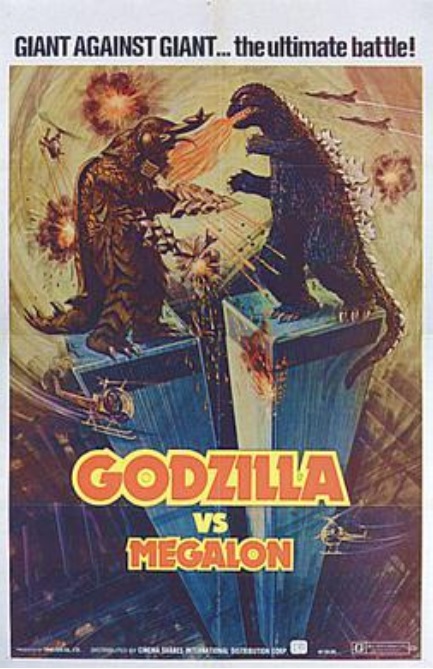
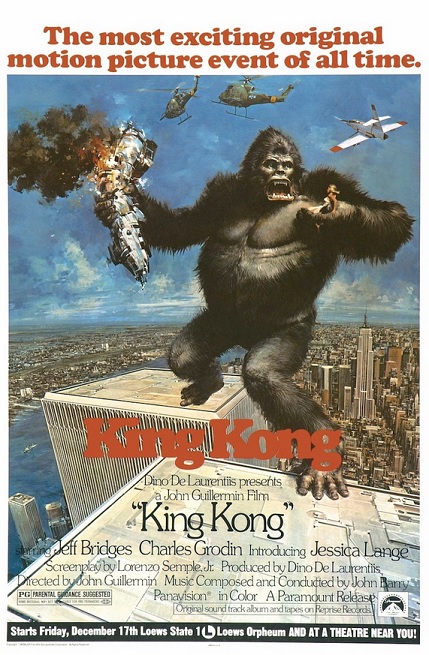
No, Godzilla nor Megalon — as did not King Kong in 1976 — ended up on top of the World Trade Center — at least not like in the theatrical one-sheets. You think I would know better after being bamboozled by the theatrical one-sheets for Yog – Monster from Space (1971) — with a giant space octopus clutching the Earth in its tentacles.

Live and learn, you hoped-up-on-Pixie Sticks-and-Mr. Pibb brat.

. . . the more things stay the same/image from our review of The Asylum’s Shark Encounters of the Third Kind.

Hey, wait! Do you need a little more Godzilla in your Kong?

Then check out our “Kaiju Week” reviews from last March 2020 for Godzilla: Final Wars (2004), Godzilla vs. Mechagodzilla (1974) and Terror of Mechagodzilla (1975), which also ran as a two-fer review from our January 2020 “Ape Week” blow out to celebrate Disney green-lighting their entry in the Planet of the Apes saga.

And that’s why were are here today: To celebrate the release of Godzilla vs. Kong — finally — in theaters on March 25, 2020.

Screw you, COVID!

About the Author: You can read the music and film reviews of R.D Francis on Medium and learn more about his work on Facebook.


Here’s some of the other Kaijus (and sort of Kaiju) that we’ve reviewed. For the rest that we’ve recently reviewed to commemorate the March 2021 release of Godzilla vs. Kong, enter “Kaiju Day Marathon” in our search box to the left to populate that list of films (you may see a few reposted Godzilla reviews, but many new film reviews concerning Godzilla, Kong, and other creatures from the Lands of the Rising Sun).

Gamera
Gamera vs. Barugon
Gamera vs. Gyaos
Gamera: Guaridan of the Universe
Gamera vs. Guiron
Gamera vs. Jiger
Gamera 2: Legion
Gamera 3: The Revenge of Iris
Gamera Super Monster
Gamera vs. Viras
Gamera vs. Zigra

Godzilla: Final Wars
Godzilla vs. Mechagodzilla
Terror of Mechagodzilla

A*P*E
Bakko Yokaiden Kibakichi
The Beast of Hollow Mountain
Cozzila
Daikaiju Mono
Gakidama: The Demon Within
Gappa: The Triphibian Monster
The Iron Superman
The Great Gila Monster
King Dinosaur
Orochi, the Eight-Headed Dragon
Planet of Dinosaurs
War of the Gargantuas
Yokai Monsters: 100 Monsters
Yokai Monsters: Along with Ghosts
Yokai Monsters: Spook Warfare

King Kong Escapes
King Kung Fu
Queen Kong

KAIJU DAY MARATHON: Godzilla vs. King Ghidorah (1991)

Until this 18th film in the Godzilla franchise, which also served as the third film in the franchise’s “Heisei period” (1984 – 1995) — begun with 1984’s The Return of Godzilla — the second film in the period, Godzilla vs. Biollante, was the most expensive Godzilla film produced. While theatrical released in 1991 in the Asian markets, the film made its bow to U.S. audiences on home video and cable television in 1998. Sony released a later Blu-ray version in 2014 with Godzilla vs. Mothra (1992).

Just “wow” on this one, for Toho “showed us the money,” and then some.

On top of all of the usual action we expect in a kaiju film, we also get a film with a stronger fantasy element and outer space science fiction. Upon the box office failure of Godzilla vs. Biollante against the time traveling, blockbuster aspects of the Back to the Future franchise, time travel concepts were incorporated into the story.

In 1944, as Japanese soldiers are under threat by American forces, they’re saved by a mysterious dinosaur; that dinosaur later mutates into Godzilla after nuclear testing on his island home in 1954.

In the year 2204, the Earth-based Futurians travel to back to 1992-present day Earth to warn us that Godzilla has utterly decimated Japan. Teaming with the Futurians, Earthlings travel back to 1944 to stop Godzilla’s development.

Of course, nothing is as it seems: never trust a time traveler.

Prior to returning to 1992, the Futurians deposit three small creatures that, when exposed to the same atomic blast that created Godzilla, creates the three-headed King Ghidorah that they’ll use to subjugate Japan — and thus alter their own future to their liking.

Now, if you know your time snafus of the Back to the Future and The Terminator variety (another one of this film’s inspirations), of course the Big Green Guy comes back. And yes, King Ghidorah dies.

This one has it all: Time-traveling UFOs, alien androids, and alternate-timelines; it’s post-apoc, it’s a WW II epic, and for a bit of the ol’ nostalgia of the Mechagodzilla variety: King Ghidorah returns as Mecha-King Ghidorah. And it’s all topped off with top-notch wirework and puppetry.

Critics — especially the haughty U.S. ones — hated this new and improved, time-traveling ‘Zilla flick. Come one, pseudo-Leonard Maltin, it’s a kaiju flick for Godzilla sakes. It’s supposed to be jammed packed with kitchen-sink gonzo scripting that just keeps on throwing the wild ideas and imagery at the screen not allowing you a moment to take a breath.

Then again, I grew up on these flicks, so I always welcome the sequels that take me back home to my twin cinema youth. But you know how it goes: your own kaiju miles may vary. Films are funny that way.

In addition to the clip below, if you You Tube-search “Godzilla vs. King Ghidorah,” you’ll find a wealth of clips from this popular entry in the Godzilla franchise.

Hey, wait! Do you need a little bit more Godzilla in your Kong?

Then check out our “Kaiju Week” reviews from last March 2020 for Godzilla: Final Wars (2004), Godzilla vs. Mechagodzilla (1974) and Terror of Mechagodzilla (1975), which also ran as a two-fer review during our January 2020 “Ape Week” blow out to celebrate Disney green-lighting their entry in the Planet of the Apes saga.

And that’s why were are here today: To celebrate the release of Godzilla vs. Kong — finally — in theaters on March 25, 2020.

Screw you, COVID!

About the Author: You can learn more about the writings of R.D Francis on Facebook. He also writes for B&S About Movies.


Here’s some of the other Kaijus (and sorta Kaiju flicks) that we’ve reviewed. For the rest that we’ve recently reviewed to commemorate the March 2021 release of Godzilla vs. Kong, click this “Kaiju Day Marathon” link to populate that list of films. You may see a few reposted Godzilla reviews, but many new film reviews concerning Godzilla, Kong, and other creatures from the Lands of the Rising Sun.

Gamera
Gamera vs. Barugon
Gamera vs. Gyaos
Gamera: Guaridan of the Universe
Gamera vs. Guiron
Gamera vs. Jiger
Gamera 2: Legion
Gamera 3: The Revenge of Iris
Gamera Super Monster
Gamera vs. Viras
Gamera vs. Zigra

Godzilla: Final Wars
Godzilla vs. Mechagodzilla
Terror of Mechagodzilla

A*P*E
Bakko Yokaiden Kibakichi
The Beast of Hollow Mountain
Cozzila
Daikaiju Mono
Gakidama: The Demon Within
Gappa: The Triphibian Monster
The Iron Superman
The Great Gila Monster
King Dinosaur
Orochi, the Eight-Headed Dragon
Planet of Dinosaurs
War of the Gargantuas
Yokai Monsters: 100 Monsters
Yokai Monsters: Along with Ghosts
Yokai Monsters: Spook Warfare

King Kong Escapes
King Kung Fu
Queen Kong

KAIJU DAY MARATHON: King Kong Lives (1986)

What do you get when John Guillermin, the director of ’50s and ’60s Tarzan flicks, collides with a screenplay penned by Ronald Shusett from Alien (1979) and Total Recall (1990) fame? You get an ape with an artificial heart transplant. And you get a disaster flick not that far removed from Guillermin’s The Towering Inferno (1974) — with Kong as the destruction d’être. And it helps John G. directed King Kong ’76.

Watch the trailer.

After being shot down from the World Trade Center in the 1976 remake, Kong is still alive — in a 10 year coma at the Atlantic Institute, under the care of Dr. Amy Franklin. In order to save Kong’s life, a computer-monitored artificial heart transplant must be done.

But Kong’s lost too much blood and he needs a transfusion. What do you do? Kidnap another ape, aka “Lady Kong.”

Chaos ensues.

A crazy army colonel wants both apes dead.

Kong knocks up Lady Kong.

Kong dies.

Lady Kong gives birth.

Lady Kong and Kong Jr. go back to the island to live happily ever after.

The end.

But the special effects are pretty good and Brian Kerwin and Linda Hamilton are selling the drama as the pros that they are.

The story goes the “artificial heart and blood transfusion” tomfoolery was after the drafts of “King Kong in Russia” and “King Kong in Outer Space” were rejected.

And the heart and blood one should have been rejected as a sequel to the 1976 remake of King Kong, as well. Everyone hated this movie.

King Kong Lives was released on VHS in 1987 by Lorimar Home Video and on DVD in 2004 by 20th Century Fox. The financial failure of King Kong Lives, along with an adaption of James Clavell’s Tai Pai starring Bryan Brown — after Sean Connery bowed out — led to the bankruptcy of Dino De Laurentiis’s production company.

Yes! You need a little Godzilla in your Kong?

Then check out our “Kaiju Week” reviews from last March 2020 ror Godzilla: Final Wars (2004), Godzilla vs. Mechagodzilla (1974) and Terror of Mechagodzilla (1975), which also ran as two-fer review from our January 2020 “Ape Week” blow out to celebrate Disney green-lighting their entry in the Planet of the Apes saga. And we can’t forget Quentin Tarantino’s fandom of The Mighty Peking Man (1977), made to cash-in on the 1976 King Kong remake.

And that’s why were are here today: To celebrate the release of Godzilla vs. Kong — finally — in theaters on March 25, 2020.

Screw you, COVID!

About the Author: You can learn more about the writings of R.D Francis on Facebook. He also writes for B&S About Movies.


Here’s some of the other Kaijus (and sort of Kaiju) that we’ve reviewed. For the rest that we’ve recently reviewed to commemorate the March 2021 release of Godzilla vs. Kong, enter “Kaiju Day Marathon” in our search box to the left to populate that list of films (you may see a few reposted Godzilla reviews, but many new film reviews concerning Godzilla, Kong, and other creatures from the Lands of the Rising Sun).

Gamera
Gamera vs. Barugon
Gamera vs. Gyaos
Gamera: Guaridan of the Universe
Gamera vs. Guiron
Gamera vs. Jiger
Gamera 2: Legion
Gamera 3: The Revenge of Iris
Gamera Super Monster
Gamera vs. Viras
Gamera vs. Zigra

Godzilla: Final Wars
Godzilla vs. Mechagodzilla
Terror of Mechagodzilla

A*P*E
Bakko Yokaiden Kibakichi
The Beast of Hollow Mountain
Cozzila
Daikaiju Mono
Gakidama: The Demon Within
Gappa: The Triphibian Monster
The Iron Superman
The Great Gila Monster
King Dinosaur
Orochi, the Eight-Headed Dragon
Planet of Dinosaurs
War of the Gargantuas
Yokai Monsters: 100 Monsters
Yokai Monsters: Along with Ghosts
Yokai Monsters: Spook Warfare

King Kong Escapes
King Kung Fu
Queen Kong

KAIJU DAY MARATHON: Godzilla: Final Wars (2004)

Editor’s Note: Back on March 30, 2020, we covered a whole bunch of giant monster movies in preparation for Godzilla vs. Kong. Then COVID showed up. Luckily, we can recycle that work and bring it back to celebrate that monster mash finally coming out with another day of kaiju!

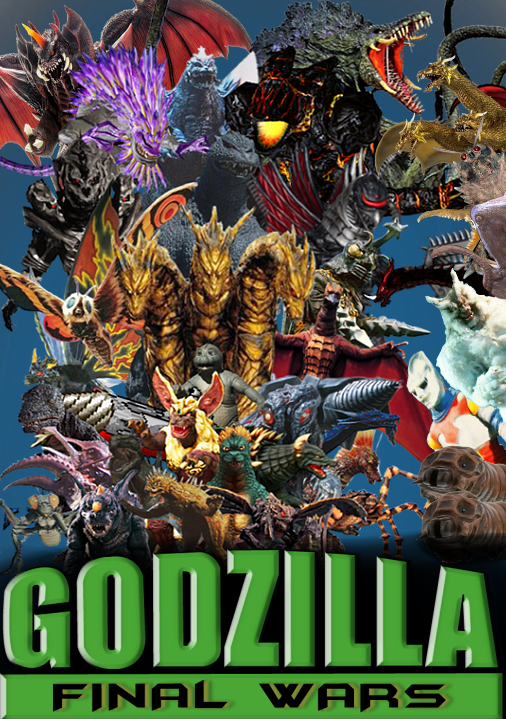
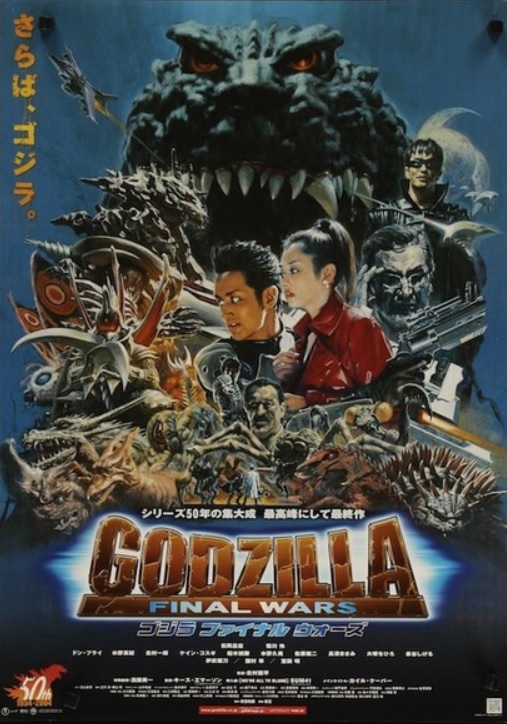
Huh? What, pray tell, does the 29th film in the Godzilla franchise and the sixth and final film in the franchise’s Millennium period, as well as the 28th Godzilla film produced by Toho Studios overall, have to do with Emerson, Lake and Palmer’s fifth album, 1973’s Brain Salad Surgery?

Please, don’t say “who” when I say, “Keith Emerson,” ye youthful movie and music fan. Here’s a link to the full soundtrack, also embedded below.

As result of today’s classic rock FM radio eliminating the ELP catalog from their playlists (come on, even “Lucky Man”?), all you horror hounds most likely know Emerson through his Italian giallo soundtrack work for Dario Argento’s Inferno (1980), Lucio Fulci’s Murder Rock (1984), and Michele Soavi’s The Church (1989). In addition to Sylvester Stallone’s Nighthawks (1981), Emerson also composed the soundtrack for Toho Studios’ Godzilla: Final Wars (2004)—which serves as his final work as a film composer.

And that musician analogy continues as director Ryuhei Kitamura (Clive Barker’s 2008 The Midnight Meat Train starring Bradley Cooper; 2012’s No One Lives) compares his contribution to the Godzilla cycle to that of a musician’s “best of” album; Kitamura picked what he felt were the best elements from the past Godzilla movies that he loved. He chose that approach as result of his being unsatisfied with the Godzilla films of the ’80s, ’90s and 2000s and he wanted to bring back the messages and themes of the times those films reflected in their plots.

And “greatest hits” he gave us . . . and then some!

In addition to the big guy, Kitamura brought back Angurius, Ebriah, Gigan, Hedorah, Kamacuras, King Ceasar, Kumonga, Manda, Minilla, Monster X/Keizer Ghidorah, and Mothra—along with a slew of other monsters via stock footage and toy placements throughout the film. And the alien Shobijin twins—from 1961’s Mothra—and the Xiliens—from 1965’s Invasion of the Astro-Monster—are back. Then there are the ships! Yeeeessss! The Gotengo from 1963’s Atragon (and 1977’s War in Space) is back—along with the all-new kaiju-battling weapons: the Earth Defense Force’s Éclair, the Karya, and the Rumbling. Then there are the new, reversed winged Dogfighter jets, and the good ‘ol Heisei and Millennium-era Type 90 Tanks and Type 90 Maser Cannons are back.

Mada watashi no kokorodearu: I am in Kaiju Tengoku.

So film 29 picks up where the initial attack on Tokyo in 1964’s Godzilla left off: the green guy trapped under the Antarctic ice after losing the fight against the original Gotengo battleship. As the years pass, the Earth’s environmental changes (yes, the “message” is back) results in the mutations of more giant monsters and superhumans, aka “the mutants,” the genetic offspring of humans and the Xiliens.

One of those returning classic monsters, the Manda, from 1963’s Atragon (aka, Destroy All Monsters in the U.S.), goes up against the Gotengo once again, and the drilling battleship, piloted by Captain Doug Gordon (MMA and UFC, and New Japan Pro-Wresting champion Donald Frye!?)—loses the battle and Gordon is stripped of his command.

Helping in the battle are the mutant solider Shinichi Ozaki (Japanese musician Masahiro Matsuoka of top-selling pop-rockers Tokio), who protects U.N biologist Dr. Miyuki Otonashi (Rei Kikukawa, the lead in the awesome action flick, Crazy Gun: 2 Beyond the Law; You Tube clip), as she studies a mummified monster.

And a deus ex machina teleportation device zaps them to Mothra’s planet and the Shobijin twins warn of a coming battle of good and evil. Then the Haisetsu-mono wa fan ni atarimasu and all manner of monsters and aliens attack.

I’m on Kitamura’s side: I’m an Old Milwaukee or Miller Beer guy; get away from me with that fancy imported swill. I want the Godzilla monsters of my youth and not so much the ones from the ‘80s or ‘90s.

So, Keith Emerson brought me here . . . but Ryuhei Kitamura made me stay to see the show. It’s a sushi-splashing kitchen sink of craziness that rivals the hard to beat insanity that was the pseudo Planet of the Apes romps Godzilla vs. Mechagodzilla (1974) and Terror of Mechagodzilla (1975)—my favorites of the franchise (Kitamara cites the first as his favorite of the franchise as well)—that I watched in the darkened duplex all those years ago. The kaiju special effects—all shot in-camera with no CGI assists—combined with the present-day Mission: Impossible and The Matrix-inspired live action sequences, only enhances the film’s awesome retro-throw back qualities . . . and you get a ripping Sum 41 tune, “We’re All to Blame,” too?

Wow! What a way to celebrate the 50th anniversary of the Godzilla franchise!

You can stream the film—and watch the official trailer—on Amazon, Vudu, and You Tube. And, yes! Kitamura’s The Midnight Meat Train and No One Lives are both streaming for free on TubiTv.

Looks like a Kitamura marathon night! Life does not suck.

Hey! Don’t stomp off yet, green guy!

If you jump on Netflix, you can check out the Reiwa-era trio of the latest animated Godzilla flicks: 2017’s Godzilla: Planet of the Monsters, and 2018’s Godzilla: The Planet Eater and Godzilla: City on the Edge of Battle. The first Reiwa-era film, 2016’s live action Shin Godzilla, is available on Amazon Prime and Vudu.

Of course, the whole reason for our March 2020 “Kaiju Week” blowout was to celebrate the release of Warner Bros. Studio’s Godzilla vs. Kong that, if you’re nuts for the green guy and keeping track, is the fourth film in Legendary Studio’s (the studio made their debut with 2005’s Batman Begins and 2006’s Superman Returns) “MonsterVerse” and serves as a sequel to Hollywood’s Godzilla: King of the Monsters (2019) and Kong: Skull Island (2017).

Of course, we finally “kaiju’d” COVID! And that’s why were are here today with this crazy one-day, “Kaiju Marathon” blowout: To celebrate the release of Godzilla vs. Kong — finally — in theaters on March 25, 2020.

Hey, wait! Do you need a little more Godzilla in your Kong?

Then check out our “Kaiju Week” reviews from last March 2020 with Godzilla vs. Mechagodzilla (1974) and Terror of Mechagodzilla (1975), which also ran as a two-fer review from our January 2020 “Ape Week” blow out to celebrate Disney green-lighting their entry in the Planet of the Apes saga.

Screw you, COVID! We win!

About the Author: You can read the music and film reviews of R.D Francis on Medium and learn more about his work on Facebook.


Here’s some of the other Kaijus (and sorta-kinda Kaiju) that we’ve reviewed. For the rest that we’ve recently reviewed to commemorate the March 2021 release of Godzilla vs. Kong, enter “Kaiju Day Marathon” in our search box to the left to populate that list of films (you may see a few reposted Godzilla reviews, but many new film reviews concerning Godzilla, Kong, and other creatures from the Lands of the Rising Sun).

Gamera
Gamera vs. Barugon
Gamera vs. Gyaos
Gamera: Guaridan of the Universe
Gamera vs. Guiron
Gamera vs. Jiger
Gamera 2: Legion
Gamera 3: The Revenge of Iris
Gamera Super Monster
Gamera vs. Viras
Gamera vs. Zigra

Godzilla: Final Wars
Godzilla vs. Mechagodzilla
Terror of Mechagodzilla

A*P*E
Bakko Yokaiden Kibakichi
The Beast of Hollow Mountain
Cozzila
Daikaiju Mono
Gakidama: The Demon Within
Gappa: The Triphibian Monster
The Iron Superman
The Great Gila Monster
King Dinosaur
Orochi, the Eight-Headed Dragon
Planet of Dinosaurs
War of the Gargantuas
Yokai Monsters: 100 Monsters
Yokai Monsters: Along with Ghosts
Yokai Monsters: Spook Warfare

King Kong Escapes
King Kung Fu
Queen Kong

Martha: A Picture Story (2021)

“Marty’s Cooper’s camera captures the corners of life which are often forgotten about.”
— quote from the film

And now: Martha Cooper will not be forgotten . . . thanks to Selina Miles.

Filmmaker Selina Miles — as did her idol and inspiration — began her career as a photojournalist and film documentarian chronicling the works of graffiti writers in her native Brisbane, Australia. Those endeavors lead to an opportunity for Miles to work as an editor for the spray paint brand Ironlak, then as a music video director, for bands such as the Australian hip-hop group The Hilltop Hoods. In 2013 Miles directed Limitless, a successful, short hyper-lapse video released on You Tube. In 2016 she began self-producing a short-series, Portrait of an Artist, a portrait of artist Guido van Helten. Those works led to the creation of The Wanderers, a documentary series on Australian street artists, which premiered on the ABC iView platform in 2017.

And those efforts have culminated in this: Miles’s feature film debut.

“A documentary is a painting. Not a photograph.”
— Selina Miles, Radio Juxtapoz podcast

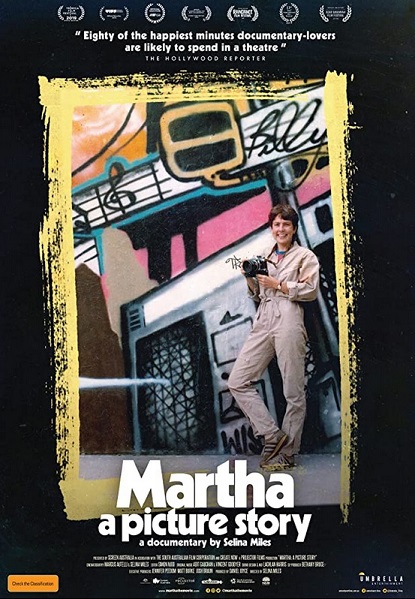
Released in time for Women’s History Month, Martha: A Picture Story is a telling portrait of Martha Cooper, a trailblazing female graffiti artist and subculture street photographer.

A noted American photojournalist, Martha Cooper became the first female staff photographer for the New York Post during the 1970s, but broke out on the international stage with her chronicles of the New York City graffiti scene of the 1970s and 1980s. The film begins with Martha and her camera, snapping shots on a solo motorcycle trip through east Asia in 1963 at the age of 20 and up through her work in providing a voice to unknown street artists and bringing them their own brand of artistic acclaim.

What I enjoyed about this film is that it’s more than just a cold, mechanical biographer-subject relationship studio product. Miles’s admiration and respect — and the friendship between Miles and Cooper — shines through. A telling moment of the film is when Miles digs up lost footage from the ’80s that Cooper forgot about and has never seen. It’s a very touching moment; a joyous moment as you realize you’re watching history being preserved — as it’s being preserved — in real time.

There’s a reason why Martha: A Picture Story earned seven award nominations and won four: it’s very power stuff from a newly discovered filmmaker to watch. After watching Martha: A Picture Story, as well as her previous works (linked above), I look forward, not only to Selina Miles’s next docs-chronicle, but to see what fictional-narrative film she might have up her paint-splattered sleeves.

Martha: A Picture Story, which premiered at the Tribeca Film Festival in 2019 and has screened at festivals around the world to critical acclaim, will be available across all VOD platforms in North America on March 16th — along with a special Blu-ray release to follow in May. The film is bought to you by Utopia Media, a film distribution company co-founded by filmmaker/musician Robert Schwartzman (of the band Rooney). We reviewed his own feature film directing effort, The Argument, last September. We also reviewed Utopia’s release of Liam Firmager’s stellar portrait of Detroit singer-songwriter Suzi Quatro in Suzi Q. You can learn more about the launch of Utopia with this February 19, 2019, article at Deadline.com.

You can learn more about Selina Miles and the making of Martha: A Picture Story courtesy of the Radio Juxtapoz podcast (You Tube audio). You can also visit her official website.

About the Author: You can learn more about the writings of R.D Francis on Facebook. He also writes for B&S About Movies and publishes short stories and music reviews on Medium.

The Parish (2021)

Editor’s Note: As of August 2021, you can watch The Parish on Tubi.

You’re familiar with actor David S. Hogan, as you’ve enjoyed his work on the NBC-TV series Grimm and the Syfy Channel’s Z Nation. Here, with The Parish, he makes his feature film directing debut. For his leading lady, Hogan chose his fellow Grimm and Z Nation actor, Angela DiMarco, whose 80-plus credits include a wealth of indie shorts and features. Screenwriter Todd Downing, who scribed the role specifically for DiMarco, has also rose through the indie-verse as the writer of several shorts and features.

Since all of these indie-streamers are usually headed with a cast of unknowns, the digital frames need name recognition-inspiration for us to hit the big red streaming button. And an against-the-budget filmmaker (this was shot for a very impressive $300,000, but looks much more expensive) can do no better than securing the services of Bill Oberst Jr., who we’ve most recently enjoyed in Devil’s Junction: Handy Dandy’s Revenge (2019) and The Good Things Devil’s Do (2020). Since Hogan and Downing are both residents of Seattle, the remaining cast is, of course, rounded out by local Seattle actors. And, unlike a lot of the indie streamers we watch here at B&S, all of the actors here are very good in their respective roles.

Making its world premiere at the 2019 Seattle Film Summit, The Parish is a supernatural thriller concerned with Liz (DiMarco) who, after the death of her Afghanistan-deployed husband, moves her daughter from the big city lights of San Diego to a Pacific Northwest enclave — and comes to discover that you can’t runaway from your past. And the military-experienced Father Felix (Oberst Jr.) does his best to help Liz discover the reasons for the ghosts and nuns haunting her and her daughter. And Audrey (Sanae Loutsis), as with any malcontent emo-teen of the 21st century, hates everything: the move, her mom, the house, her school, etc. and so on — with the usual, ungrateful kid bickering with mom. Of course, all of that rebellious brooding makes young Aubrey perfect possession fodder — and her befriending by Caleb (Lucas Oktay), the town’s resident local mystery boy. And before you know it, the creepy, antique crucifixes and photos of nuns are discovered at a church, which awakens the evil — and aren’t all nuns — Sister Beatrice (Gin Hammond) to bring on the fear and dread. And Liz’s zomb-burnt husband keeps showing up for a late night smooch.

As you can see from the trailer, The Parish look great — like A24 and Blumhouse great — as the sound and cinematography are of an award-winning level (the film’s colors are rich and deep). However, the story, while philosophically intelligent — as with the likes of most of the Blumhouse house of horrors, such as the recent You Should Have Left — is a plot where you see the twist coming. Like Becca, the “B” in B&S, said in our review of Blumhouse’s Happy Death Day: “I wish this was 1981 and we weren’t having these be our movies. We deserve way better.” And Becca actually enjoyed Happy Death Day.

And that’s The Parish: it’s professional-glossy, but M. Night Shyamalan twisty-familiar. Now that doesn’t mean The Parish is bad, because it’s not. It’s just Becca-miliar, to coin a term. However, David S. Hogan has more than proven to me he can transition from the front to behind the cameras. I look forward to seeing what he and his equally adept writing partner, Todd Downing, come up with next. And I hope they get an even bigger budget, as they both deserve it.

As of March 16, 2021, The Parish will become available across all streaming platforms courtesy of Uncork’d Entertainment. You can learn more at the film’s official Facebook page. Writer Maggie Lovitt of Your Money Geek provides additional insights into the making of The Parish courtesy of her recent interview with director David S. Hogan and actor Angela DiMarco.

Disclaimer: We were provided with a screener for this film. That has no bearing on our review.

About the Author: You can learn more about the writings of R.D Francis on Facebook. He also writes for B&S About Movies and publishes short stories and music reviews on Medium.

Lava (2021)

Lava is an adult animation (no, the kids can’t watch; there’s profanity and mild violence) sci-fi comedy about Deborah (noted Argentina actress Sofía Gala Castiglione in the Spanish version; Janeane Garofalo in the English version), a lonely tattoo artist who takes it upon herself to save her town from an alien invasion — of large kaiju-like cats, cackling witches, and more snakes than is earthly possible. And they’re not your run-of-the-mill earth-type creatures: they know how to use our media to hypnotize us into submission.

Man, the character even looks like Janeane!

Lava is based on the comic by Salvador Sanz and the film received a well-deserved nomination at the Annecy International Animated Film Festival. As with his previous animated feature El sol (2010), animator Ayar Blasco’s worlds are surrealist, apocalyptic lands rife with chaos and paranoia that reminds of Chilean-French filmmaker Alejandro Jodorowsky’s works. Lava is Blasco’s second feature film. His third — soon to see release in the international marketplace in 2021 — is his first live-action feature, the sci-fi film, La Vagancia.

We all know SNL actress & comedian Janeane Garofalo (she was great in the radio-based comedy, The Truth About Cats and Dogs), who’s been down the animation route before with Ratatouille (2007), and she heads the American-voice cast of this imported film’s English dub. The film’s Spanish-language version stars Argentinian actor and playwright Martín Piroyansky, who acted in the notable South American exports XXY (2007) and The Vampire Spider (2012) (get them both, they’re very good).

I love the animation here, and I appreciate the production eschewed the CGI-animation we’re grown accustomed to watching in U.S. theaters for more traditional animation; art that that reminds of MTV’s Beavis and Butthead and FOX-TV’s King of the Hill. In fact, if this were a U.S. production, it probably would have become a live action-meets-animation apoc-comedy in the style of Adam Sandler’s Pixels. Kudos for this Argentinian production for finding an English-speaking audience outside of its native homage. This is freaky stuff that is also great stuff that needs to be enjoyed by a mass audience. Stream it.

TriCoast Worldwide and Rock Salt Releasing will release Lava onto various digital streaming platforms on March 15, 2021, on Amazon, InDemand, iTunes, Google Play, DirecTV, AT&T, Vimeo on Demand, FANDANGO in both English & Spanish. 

About the Author: You can learn more about the writings of R.D Francis on Facebook. He also writes for B&S About Movies and publishes short stories and music reviews on Medium.

Crucified (2021)

The MAJOR selling point on this Italian import from Uncork’d Entertainment is right there, on top of the theatrical one sheet: writer and director Claudio Lattanzi.

Lattanzi worked as an assistant director under Michele Soavi on the 1985 documentary Dario Argento’s World of Horror and made his own directing debut with Zombie 5: Killing Birds (as Claude Milliken). And if you know your celluloid nom de plumes for American consumption, you know Lattanzi’s Assistant Director work under the name of Clay Millicamp on Soavi’s StageFright (1987), Umberto Lenzi’s Ghosthouse (1988), and Claudio Fragasso’s Interzone (1989). Another one of Lattanzi’s gigs was working as an assistant to Soavi on The Church (1989).

It’s been over 30 years since Claudio Lattanzi directed a movie (and if you read our review on the backstory on Zombie 5, you’ll understand why). And we are glad to have him back. And he hasn’t lost his touch.

The original Italian-Euro theatrical one-sheet as Everybloody’s End.

In addition to Lattanzi’s own film linage inspiring us to watch, he brings along the queen of Italian horror cinema (well, one of them), Cinza Monreale (Lucio Fulci’s The Beyond; most recently in the pretty-fine Welsh-import, Dark Signal) and Giovanni Lombardo Radice (City of the Living Dead and House on the Edge of the Park). Italian horror cinemaphiles will also notice Marina Loi (Demons 2 and Zombie 3). And speaking of City of the Living Dead and The Church: the art director from those films, Massimo Antonello Geleng, is on board — and his (original) world destruction set pieces look like they’re clipped out of Will Smith’s (yeah, it looks great, but wow, it’s so utterly awful) I Am Legend.

Boy, Howdy! It’s like I’ve died and I’ve gone to my ’80s local duplex heaven.

Hopefully, you’ve seen The Church, or possibly Paul Naschy’s apoc-romp The People Who Own the Dark, because — to my delight — that’s what we have here: more apocalyptic-trapped ne’er do wells in the bowels of a building. And regardless of that familiarity, Crucified — known by its better (in my opinion) overseas title of Everybloody’s End — is not the least bit clichéd or trope-ridden. However, your own nostalgia mileage may vary. And if you don’t have that nostalgic albatross on your neck, even better, because you’ll enjoy this film — and understand why we, the B&S About Movies cubicle farmers, rant and rave about all of these old Italian and Spanish horrors from the ’70s and ’80s. And, even if you do not know — or care — about Lattanzi’s past, you don’t have to worry about slogging through a two-hour pushing indie streamer. It seems — since Lattanzi’s been out of the game for three decades — he decided to ease himself back into it: Crucified crosses, sans credits, the finish line in just over an hour. So it’s prefect streaming fodder. Padre, figlio e spirito santo. Amen.

Anyway, with all that being said, and as with those Spanish-Italian horror of old, the plot is probably not going to make a lot of sense. And the character’s motivations are dumbfounded and sometimes lacking in any development for you to care about them. But as with those overseas horrors of old, we never came for the plot or the characters in the first place: we came for the atmosphere and what-the-hell-why not pasta-toss to the walls.

The watered down, U.S. theatrical streaming one-sheet.

The “end” begins in the 1700s as a witch finder stalks and crucifies a woman. In the present day, that crucifixion has unleashed an evil entity that serves as a sort of “patient zero” from beyond spreading a vampire outbreak that’s lead to the apocalyptic fall of man. And in the usual burst of Oliver Cromwellian and Matthew Hopikinsan witch hunting — every woman is a vampire — as a group of ex-soldiers, who refer to themselves as “The Exterminators,” crucify any woman in their path to wipe out the vampire plague — with the hopes that she is the dreaded “patient zero.” Of course, our merry band of futuristic Cromwells and Hopkinses made a huge mistake of tracking down the survivors — and the survivors — courtesy of a priest writing a book about the plague — choosing that particular makeshift bunker.

Ugh, we lost the original European trailer.

Originally released on December 9, 2018, in its native Italy and after a rollout across Europe, Crucified is now available to U.S. audiences — in Italian with English subtitles — on all streaming platforms starting March 9, 2021. You can learn more about the film — and brush up on your Italian — on the film’s official Facebook page. You can learn more about Uncork’d Entertainment’s roster of films at their website, Facebook, and You Tube pages. Another really fine Italian import we recently reviewed from Uncork’d was 2021’s Funeral Home.

Disclaimer: We were provided a screener for this film. That has no bearing on our review.

About the Author: You can learn more about the writings of R.D Francis on Facebook. He also writes for B&S About Movies and publishes short stories and music reviews on Medium.