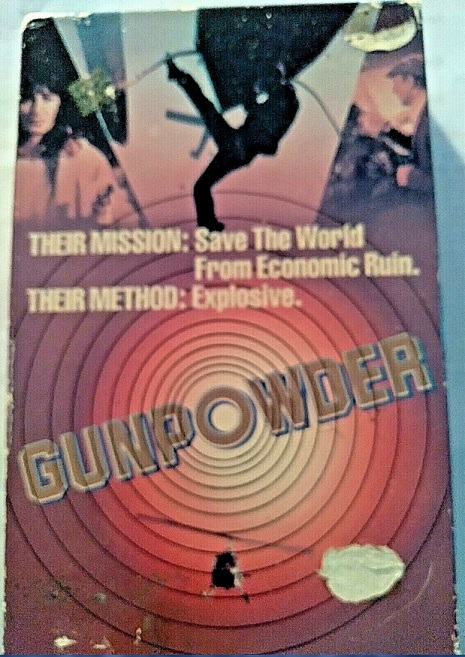
Sometimes you just have to bite the bullet . . . or swallow the gunpowder. This is that one, elusive Norman J. Warren movie that I haven’t seen — and so wanted to. And, in our quest to complete our Norman J. Warren tribute week — and since there’s no online streams of the PPV or free-with-ads stream variety to be found — I bought a beat-to-hell-but-plays VHS copy online. It just arrived in the mail. I watched it. And didn’t disappoint.
Well, it did, pretty much.
Sing it, everyone! He wears a suit and a bow-tie! / He wears jeans and a leather jacket! / One’s prim. One’s scruffy / He’s Gunn. He’s Powder(dah-dum).
Gunpowder is not the action-adventure knockoff of a ’70 Italian Poliziotteschi film that I was expecting: it was the action (bad) comedy I wasn’t expecting. And I can’t believe the guy who made my favorites of Satan’s Slaves, Prey, and Inseminoidmade this. Gunpowder is also known as Explosive Gold (a great title) and Commando Gold Crash (a crappy title that evokes a low-budget Philippines-shot Namploitation flick) in overseas markets, but here, in the U.S., it’s known as Gunpowder — because the two secret agents in this dopey Bond wannabe are named Gunn and Powder. And they’re not named that for the comedy, either.
So, our intrepid Interpol agents (played by David Gillum and Martin Potter; Potter starred in Satan’s Slave, while you’ll recall Gillum from the when-animals-attack classic, Frogs, and the Jaws-rip, Sharks’ Treasure) are assigned by their “M” (which is known as Sir Anthony Phelps, here) to figure out who’s flooding the market with a gold surplus that can ruin the world’s economy. Of course, opposites must attract: Gunn is the dashing, American-bred ladies man and Powder is the proper English gent who files his nails at inopportune times because, well, it’s “funny,” you know, back in the days when insinuating a character was “gay” (for having proper hygiene) was funny.
Uh, dangerous cop? Proper cop? Cue-not Lethal Weapon. And not Austin Powers, either.
But do cue Auric Goldfinger — only not Gert Fröbe, thank you. We’ll take the lower-budgeted Dr. Vanche (David Miller . . . from Attack of the Killer Tomatoes!), who’s discovered the formula to manufacture synthetic gold — and he’s selling it on the open market.
This has it all — and it doesn’t: Two martial arts baddies known as “The Cream Twins” (Alan and Brian Fontaine, if you care) who kidnap a metallurgical (lady) scientist/heiress. A super spy lair that puts Bruce Wayne’s joint to cheesy shame (Adam West would have been PERFECT as the American Spy, here; it’s totally in his wheelhouse). Super spy gadgets. A milk factory used as a front to smuggle liquid gold in milk cartons (ugh), which why the scientist/heiress is kidnapped. Then there’s bad dialog. Failed comedic one-liners. And, instead of bullets: vats of liquid gold death traps. Then there’s the stupid (ugh) costumes the bad doctor Vanche’s minions wear — with a big “V” on their chests. And Dr. V’s bad gold hair. And it goes on and on . . . such as our milk heiress having the first name of “Coffee.” Yuk, yuk.
I guess you (well, moi) have to be British to appreciate this one.
Their Mission: Entertainment. Their Method: Boredom.Me: Re-eBay’in the tape to another sap.
Editor’s Note: We planned this Norman J. Warren week on a whim — as result of our February Mill Creek box set blowout featuring two of his films among the celluloid ruins: Prey and Satan’s Slaves. We just lost him on March 11, 2021. You can read up on Warren’s career with his obituaries at The Irish Examiner and Metro UK News.
After Gunpowder, Warren wrapped his career with the mystery-horror Bloody New Year.
About the Author: You can learn more about the writings of R.D Francis on Facebook.He also writes for B&S About Movies.
For our “Ron Ormond Day” at B&S About Movies, I chose this early hicksploitationer* featuring an early role for Ron’s son, Tim. Tim would grow up to serve as an editor, cinematographer, writer (39 Stripes, The Second Coming), and director (the lost The Second Coming) on several Ormond family productions, which also included wife and mom, June Carr (her 2006 Variety obituary). Tim also acted in Ron’s films — only eight out of forty films — Girl from Tobacco Row, The Exotic Ones,If Footmen Tire You, The Burning Hell, The Grim Reaper, The Believer’s Heaven, and 39 Stripes. So, when in Ormondville, you might as well review White Lightnin’ Road to complete Tim’s acting resume . . . and honor the career of Earl Sinks — also the star of today’s second (non-Ron Ormond) film.
Who?
Read on, B&S surfer!
White Lightin’ Road (1967)
Look at that one-sheet! How can you NOT WATCH this?
This one has it all: Loose n’ tempting femme fatales, red-lining stock cars, driver rivalry, and love triangles between said rivals and femme fatales. So, yeah, the proceedings are just like any red-neckin’ romp with fast cars and faster women. And moonshine. And gangsters. And an illegal auto parts network. And murder. And shotgun weddings. And everything southern fried that we love. (Oh, Tim’s a young lad who hangs around the track that’s befriended by Joe, our ne’er-do-well hero.)
Earl “Snake” Richards — a ’50s rockabilly crooner who also appeared in Ormond’s Girl From Tobacco Row (1966), and a ’50s rock flick, That Tennessee Beat (we’re getting to it), before hanging up the clapboard — stars as Snake Richardson, the rough n’ tumble bad-boy racing rival of Joe (the one and gone Ter’l Bennett): your typical, straight-laced lad who has the need for speed. And, as in other back roadin’, moonshinin’ and asphalt romps, Ruby (the sexy n’ white-trashy, eyeball melting Arline Hunter; Playboy Playmate of the Month for August 1954), the bad guy’s girl, has eyes for the good guy. And she — one not to shriek from a good ol’ girl-on-girl catfight — gets Joe mixed up with Slick (played by Ron Ormond), who cons our lad into being the wheelman for a heist, which results in the death of a nightwatchman.
As you watch the trailer, you’ll take note that, unlike the Elvis (Viva Las Vegas) and Fabian (Fireball 500, Thunder Alley**) racing flicks Ormond emulates, there’s no stock footage: everything is staged and shot in-camera by Ron, himself, which makes White Lightnin’ Road superior to many of the racing flicks of the ’60s.
The new 35-mm trailer!
To say we love Ron Ormond’s films is a trope-laden understatement, as we’ve also reviewed Ron Ormond’s pre-salvation exploiters Mesa of Lost Women and Please Don’t Touch Me. And, if you feel like You Tubin‘ or Googlin’, you’ll discover that, after Buddy Holly went solo and left the Crickets hangin’, Earl Richards, aka Sinks, ended up fronting the Crickets. Oh, and did you know, Earl and the Crickets cut the original version of “I Fought the Law” made famous by the Bobby Fuller Four (and later the Clash; just heard it this week on a classic rock station)? True story.
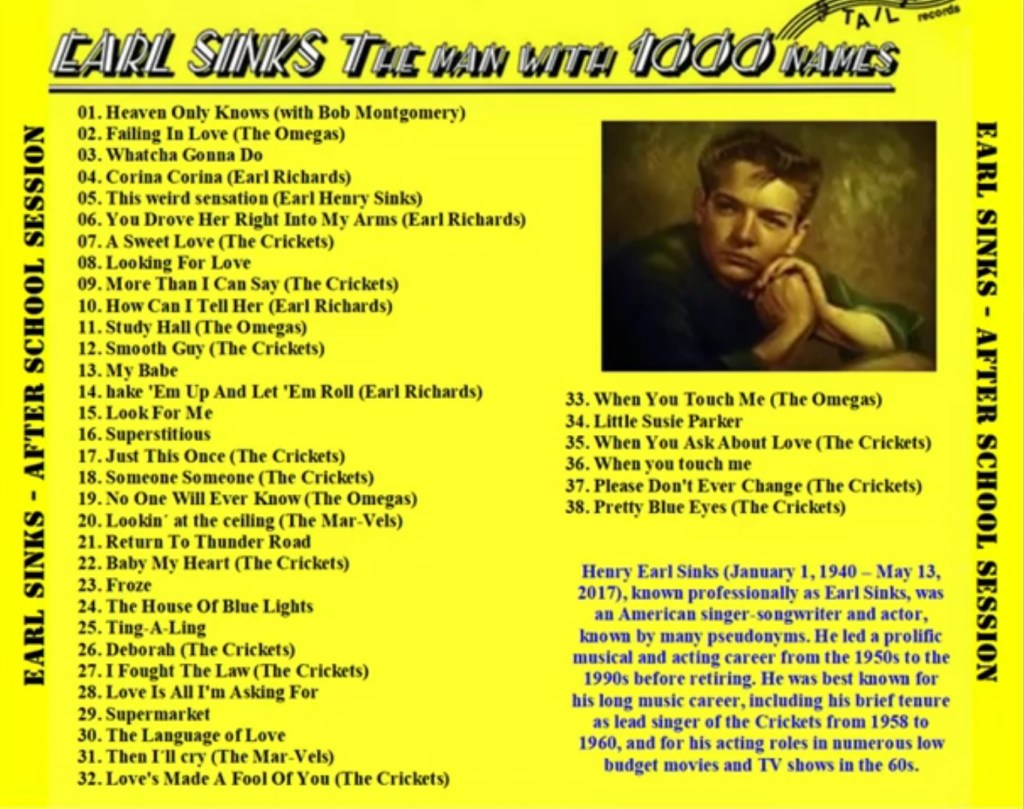
And, in a real treat, there’s a You Tube upload of the Earl Sinks compilation tribute CD The Man with 1000 Names — a super-fine, hour and a half of music featuring his work under the names Sinks, Earl Henry, Sinx Mitchell, and Earl Richards, as well as his work with the Omegas, the Hollidays, the Mar-Vels, and the Crickets. Embedded below, there’s a wonderful slideshow with Earl and the Crickets to the tune of their lost ’50s hit, “Someone, Someone,” to enjoy.
Earl “Snake” Richards in his acting debut for Ron Ormond.
Earl’s complete, career-spanning compilation/read his full biography on Wikipedia.
That Tennessee Beat (1966)
Earl Richards spotlighted on the newspaper ad for That Tennessee Beat.
The big selling point, here (this is B&S About Movies, after all), is American cinema chain owner and producer Robert L. Lippert, who we’ve waxed nostalgic in our reviews for just a few of his 300-plus films: Jungle Goddess, King Dinosaur, Project Moonbase, and Rocketship-XM. And Ron Ormond — the reason for this review — produced and directed several films for Robert L. Lippert, including many westerns with Lash LaRue. (Ormond also used Lash — as a therapist (!) — in the mondo sex-hypnosis romp, Please Don’t Touch Me. Another western star of old, Tex Ritter, worked with Ormond — as a priest (!) — in Girl from Tobacco Row.)
Star Trek: TOS scribe Paul Schneider — who gave two of the series’ best-known, first-season episodes: “Balance of Terror,” which introduced the Romulans, and “The Squire of Gothos” — pens; he also wrote episodes of The Six Million Dollar Man and Buck Rogers in the 25th Century. As for our director, Richard Brill: primarily a producer who worked on the TV series The New Steve Allen Show and Dateline: Hollywood, That Tennessee Beat was his only feature film.
This also proved to be the fifteenth and final film for (hubba-hubba) screen beauty Delores Faith, who wowed us in House of the Black Death (1965) with Lon Chaney and John Carradine, the 1966 Drive-In double-biller of The Human Duplicators and Mutiny in Outer Space, and her debut set in the far-flung future of 1980: The Phantom Planet (1961).
Then there’s our leading-lady, Sharon DeBord: During her slight, fifteen credit-career, she was Darrin Stephens’s secretary on TV’s Bewitched for several episodes. Did anyone one see her work in The Hoax (1972) with the recently passed (June 2021) Frank Bonner of Equinox fame? The Halloween rip Killer’s Delight, aka The Dark Ride (1978)?
Okay. Okay. I know. As Sam the Bossman would say: “Hey, don’t we have a movie to discuss?”
Sink — under his then stage name, Earl “Snake” Richards, is our leading man: Jim “The Nashville Kid” Birdsell. An aspiring country-western music star on the run after stealing money to fund a trip to Nashville, he’s subsequently robbed and left penniless by another road bandit. Luckily, Jim meets a brother and sister with a singing group who take him into the band and help him achieve his rock ‘n’ roll dreams. Jim, of course, falls in love with the sister, Opal Nelson (Sharon DeBord), as she and the Rev. Rose Conley (Minnie Pearl) put him on the straight and narrow.
As you can see from the newsprint ad, this film is packed — as is the case with all ’50s and ’60s rock films (see the similar The Road to Nashville; Mister Rock and Roll starring DJ Alan Freed) — with plenty of musical performances.
No disrespect to the ol’ Snake — and it’s not his fault, as he’s just a musician in an acting role — there’s not much of a story here; but again, as is the case with ’50s and ’60s rock films: the whole point is the performances. Remember, there was no MTV back then. And not everyone could afford a television to watch variety shows to see groups perform. And many couldn’t afford to go to concerts. So, it was movies, like That Tennessee Beat (distributed by 20th Century Fox, of all studios), which, for a mere buck a person (sodas and hamburgers were $.30 each*˟), brought the TV — and concerts — to America’s rural Drive-Ins.
You simply can not see a concert line up featuring Earl “Snake” Richards, Peter Drake, Boots Randolph (best know for the huge sax-driven hit, “Yakkity Yak”), the Statler Brothers, and Merle Travis (the film’s title song), not to mention the comedy stylings of the Grand Ol’ Opry’s grande dame, Minnie Pearl, for one dollar. Well, $4.00, if you toss in the sodas and burgers for you and your sweetie. So goes the genre of the “jukebox musicals” of old before Don Kirshner’s Rock Concert, ABC-TV’s In Concert, and NBC-TV’s The Midnight Special.
Sadly, I only have White Lightin’ Road recorded on an old VHS taped-off UHF TV. I also had That Tennessee Beat on a tape via UHF-TV, but lost that one to the blue screen of death. In all of my grey-market VHS years, I’ve never come across a copy of either film. And there’s no online streams to share of either film.
If there’s ever an actor-musician who deserves a restored, reissue box set of his films — only three, mind you — it’s Earl Sink. Make it happen, Arrow, Kino, and Severin. Yeah, we’re calling you out, our brothers. You can even toss in a restored greatest hits career-spanning CD of Earl’s tunes in the set.
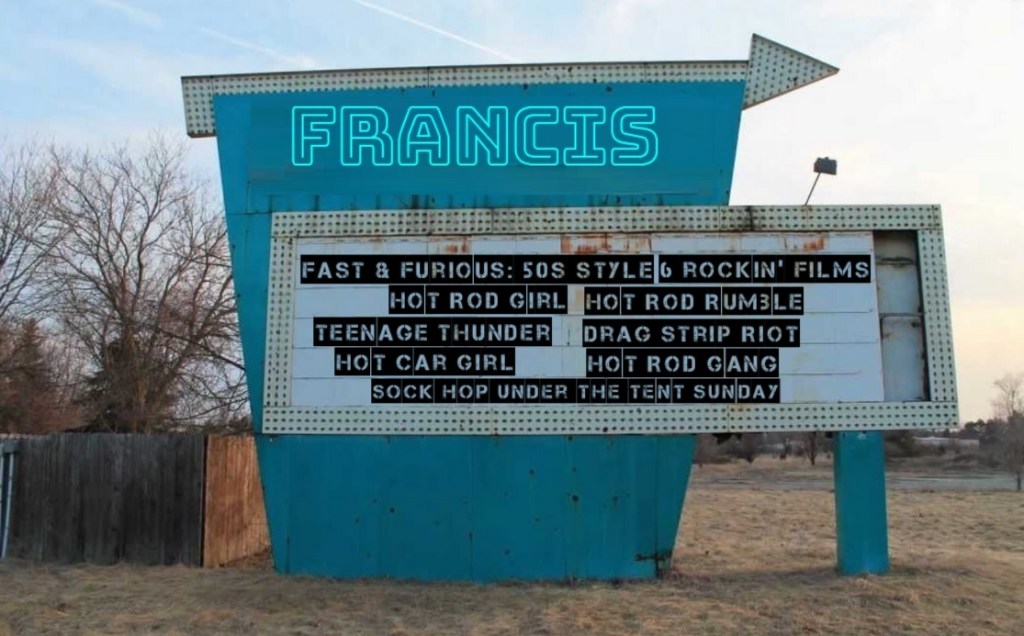
** If you need more films with romance and burnin’ rubber (of the asphalt variety, dirty mind), check out our “Drag Racing Week,” as well as our “Savage Cinema (box set)” and “Fast and Furious Week” tributes, featuring review links to over one hundred films.
*˟ “Here’s How Much a ‘Cheap Date’ Cost Every Decade Since the 1940s” by Morgan Greenwald for Best Life.
For Henry Earl Sinks January 1, 1940 to May 13, 2017 You rocked, it, Snake!
About the Author: You can learn more about the writings of R.D Francis on Facebook. He also writes for B&S About Movies.
What a great, three-day rally of films from Bernard L. Kowalski (thanks for allowing me to free range, Sam) as we wrap it up with a TV movie that pays tribute to a great TV series from the ’70s. To say I am stoked to review this BK entry is an understatement: the development of this tribute week to ol’ Uncle Bernie centers on this flick. And we get Kent McCord, who never got the due he deserves, some props.
Let’s roll it!
By the late ’80s, the cable networks began eschewing their UHF-styled, bread-and-butter reruns format by going for the throat of the “Big Three” over-the-air networks of ABC, CBS, and NBC — with their own, original programming. The national “superstations” TNT and USA each began producing their own TV movies (many of which we’ve reviewed at B&S), so why not the all-new basic cable and satellite network The Nashvillle Network?
You don’t remember that logo? It’s okay, most TV viewers — not county-centric — don’t remember it either.
Put some good ol’ down home twang in your life.
Going on the air in March 1983, the network operated from studios on located on the grounds of the now-defunct theme park Opryland USA in Nashville. But, as with the major movie studios creating competing ripoff films for the marketplace (e.g., Armageddon vs. Deep Impact, White House Down vs. Olympus Has Fallen) The Nashville Network was beat on the air — by two days — by Country Music Television.
After the dust settled: The Nashville Network lost the ratings war.
TNN began its life as a country music alternative to Warner-Amex’s MTV’s rock and VH-1’s contemporary music formats by airing music videos; the programming soon expanded into concerts, game and talk shows, and country-eccentric movies (such as Smokey and the Bandit). By September 2000, the channel dumped their “southern” identity by ditching the “Nashville” moniker for “National” to become The National Network. Then, to the holier-than-thou, law-suitin’ and hissy fittin’ dismay of Spike Lee (“They’re stealing my brand!”), National transformed into the male-centric Spike TV in 2003. Today, you know the channel as the upper-tier cable dumping ground for all things Paramount-produced: The Paramount Network.
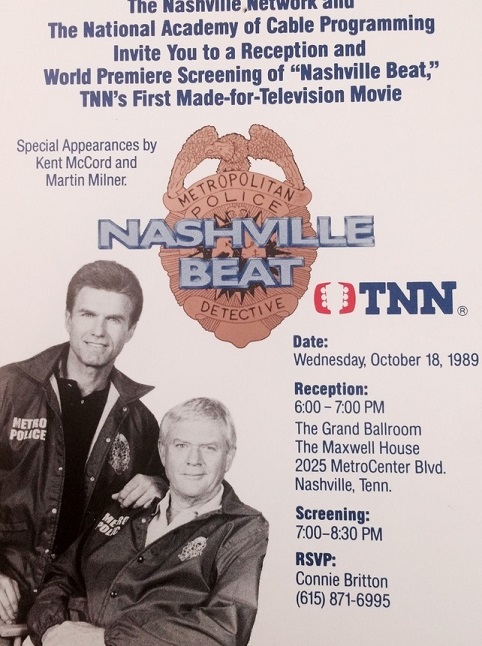
So, with that backstory out of the way . . . let’s polish off our three-day tribute to the films of Bernard L. Kowalksi (that began all the way back in 1956 with Hot Car Girl) and dig in to some slip-smackin’ BBQ with Bernard’s last film — and TNN’s first made-for-television movie — Nashville Beat.
Now, if you’ve been following along the Kowalski beat this week, you’ll know that his last theatrical film was the drive-in horror classic, Sssssss (1973). And, since we love our Six Degrees of Separation of actors and directors in the B&S cubicle farm: that turn-man-into-snakes-mad-scientist romp starred Dirk Benedict, later of Battlestar Galactica . . . and Kent McCord ended up on that failed Star Wars TV series ripoff’s second season, aka Galactica: 1980, as the all-grown up Boxey, aka Troy (we reviewed the overseas theatrical version of the series, Conquest of the Earth; look for it).
Anyway, after Sssssss (Who decided the title only needed six lowercase “S”; why not eight?), Kowalski returned to television — where he got his start — with multiple episodes of Perry Mason and The Untouchables, as well as Banacek starring George Peppard (more “Six Degrees”: he was in the fellow Star Wars dropping, Battle Beyond the Stars), and Columbo. In between, Kowalski developed the MGM Studios/CBS-TV series pilot for the Starsky and Hutch-precursor, The Supercops (1974), which aired on March 21, 1975, and continued the adventures of (real life cops) Dave Greenberg and Bobby Hantz. That series was quickly derailed by the (more powerful, due to Charlie’s Angels) TV production powerhouse of (Aaron) Spelling-Goldberg Productions’ TV movie-to-series pilot for Starsky and Hutch, which aired on the competing ABC-TV network on April 30, 1975. And, since we love our Six Degrees of Separation of actors and directors in the B&S cubicle farm redux: David “Ken ‘Hutch’ Hutchinson” Soul starred with Kent McCord in the CSI TV series-franchise precursor (and, in my opinion, superior), the all-too-short-lived TV Movie-to-series, UNSUB (1989).
While we didn’t get around to reviewing all them (or finding copies of most of them), other post-Sssssss and The Supercops TV movies Bernard Kowalski directed are Flight to Holocaust (1977), The Nativity (1978), TV’s response to Rocky with Marciano (1979), Nick and the Dobermans (1980), Turnover Smith (1980), Nightside (1980; with Doug McClure, from Kowalski’s Terror in the Sky), and Johnny Blue (1983).
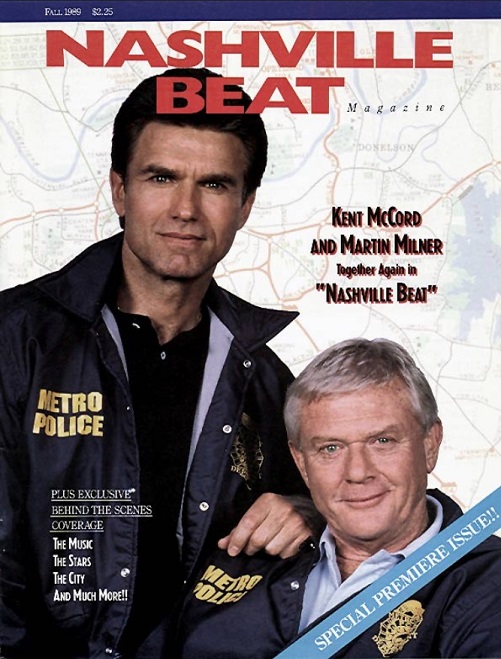
Image courtesy of the Kent McCord Archives (with more pictures and article on the show.)
So, if you know if your ’70s TV: You’ll know Nashville Beat is the 14-years-in-the-making reunion of actors Martin Milner and Kent McCord after their successful, seven-season run on Adam-12 that aired on NBC-TV from 1968 to 1975. The final episode of that series ended in a cliffhanger, somewhat: we never knew what happened with officers Pete Malloy (Milner) and Jim Reed (McCord), as the series closed with Reed’s rookie copy readying to take the detectives exam and leave his seasoned, veteran partner and the streets. . . . Instead of NBC-TV giving us a late ’80s TV movie version of Adam-12, we got the closest thing to an Adam-12 TV movie: Nashville Beat, which was developed, produced, and co-written by McCord with the intention of becoming TNN’s first original drama series.
Milner and McCord — while pretty much the same cops, only older-but-wiser and in plain clothes — are Captain Brian O’Neal and Lieutenant Mike Delaney, both who started out like their Adam-12 counterparts: on the streets of Los Angeles. Even after his old partner left for a job as a detective in Nashville, Delaney and O’Neal remained close friends. Upon become a widower, Delaney heads to Nashville to help his old partner on a case with ties back to Los Angeles. And the case works out well, and Delaney’s heart is ready to love again with the sexy, big-haired owner (it was the ’80s, natch) of the honkytonk where O’Neal and his copy buddies hangout. So the movie ends with Delaney deciding that he just might move the kids out to Nashville to start over . . . which would set off the new series that never happened.
Meanwhile, TNN’s faux Adam-12 reunion got the folks at MCA Television (a division of Universal that supplied NBC-TV programming) to reboot Adam-12 in September 1990 to fill the UHF-TV blocks of the new, weekend syndicated programming crazy (ignited by Star Trek: The Next Generation and Xena: Warrior Princess). The syndicated revival, The New Adam-12 (1990) was cast-headed by John Wayne’s son, Ethan (who made his debut in his dad’s Big Jake). The series, which ran for 52 consecutive episodes, was cancelled after one year. No one (including moi) cared: Milner and McCord were never invited back to appear. But, we did see Milner and McCord share the screen again in a 1997 episode of Diagnosis Murder with Dick Van Dyke, playing, yet again Los Angeles police officers.
And that’s a wrap on our three-day tribute to the career of Bernard Kowalski. Discover his films with our reviews and enjoy!
You can watch a VHS rip of the home video version of Nashville Beat on You Tube. And look for our reviews of Hot Car Girl and Sssssss — this week — as we continue our tribute to Bernard L. Kowalski.
About the Author: You can learn more about the writings of R.D Francis on Facebook.He also writes for B&S About Movies.
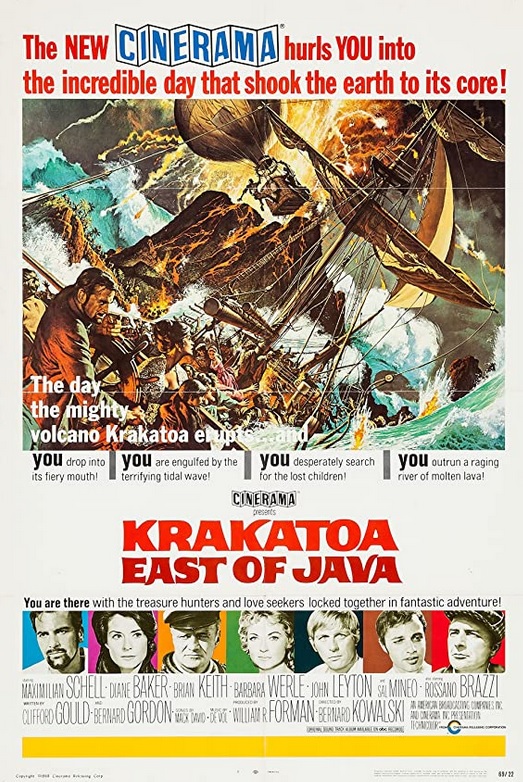
Editor’s Note: We hope you’re enjoying our tribute to the films of director Bernard L. Kowalski. Today, we’re reviewing his first major studio feature film. And in a twist that only a B&S About Movies reader can appreciate: the leads of Maximilian Schell and Brian Keith would later star in their own, respective Star Wars-boondoggles that were The Black Hole and Meteor. Now, if that doesn’t make you want to watch this proto-disaster drama, then we don’t know what will.
Lost somewhere between Arthur Hailey and Irwin Allen igniting the ’70s disaster genre with their respective Airport franchise and the one-two-punch that is The Poseidon Adventure and The Towering Inferno (and not forgetting Mark Robson’s Earthquake for Universal), there was ’50s blacklisted and ex-Poverty Row Monogram Pictures and King Brothers low-budget drive-in scribe Philip Yordan’s return to the Hollywood majors with his proposal of making a film about the 1883 eruption of the island of Krakatoa. Yordan’s “blacklisting” was actually a blackballing, due a script mix up that brought forth a contractual dispute between 20th Century Fox and Warner Bros. Unable to work in Hollywood, Yordan ended up in Spain working for Samuel Bronston, where Yordan incorporated Security Pictures. However, when it comes to “blacklisting”: he did, before his own ouster, front for ’50s blacklisted writers.
Now, back in 1965: Yordan began his “come back” with the man-screws-up-the-Earth disaster epic, Crack in the World. (Yeah, it was made on the cheap in Spain for Yordan’s Security Pictures, but Paramount gave it a U.S. release.) However, for the B&S crowd, Yordan pumps our VHS-lovin’ hearts with his final films, ones that we go on and on about: Cataclysm (1980), The Nightmare Never Ends (1980), Savage Journey (1983), Night Train to Terror (1985), Cry Wilderness (1987), Bloody Wednesday (1987; which we need to review), and the The Unholy (1988). Oh, and how can we forget Marilyn Alive and Behind Bars (1992), aka Scream Your Head Off (sometime in the ’80s).
I know . . . let’s move on from my Yordan geek-dom. Back to the mountains of Krakatoa, we shall go!
So, for dramatic effect — as if people running for their lives from an erupting volcano wasn’t enough drama — ‘ol Phil concocted a subplot about a band of unsavory characters aboard the decrepit steamer Batavia Queen attempting to salvage a sunken cargo of pearls deep in the island’s watery outskirts, with the bragging rights of a $3 million production budget. Initially, the film started out at Columbia Pictures with Rock Hudson (who eventually ended up in a disaster flick of his own with 1978’s Avalanche) as Captain Chris Hanson, the commander of the Batavia Queen. As with most “big” movie plans, the project fell into “development hell,” and came out on the other side under the Cinerama Releasing Corporation shingle, a studio-distributor that did pretty with the John Boorman-directed (Zardoz, The Exorcist II: The Heretic) World War II drama Hell in the Pacific (1968) starring Lee Marvin.
Then, the real disaster erupted.
The then in-camera effects and process shots required to make the volcanic disaster appear convincing on film proved to be difficult; Philip Yordan gave up on his dream project; a new producer, Clifford Newton Gould, commissioned a new script; the film’s runtime ballooned to 130 minutes (two hours and ten minutes); once conceived as a family-friendly adventure, it now had racier, adult-dramatic elements added; the weather, the seas, and animals on the location weren’t cooperating within the budget.
At the time, Bernard L. Kowalski was a young TV director who cut his teeth with Roger Corman on Hot Car Girl, Night of the Blood Beast, and Attack of the Giant Leeches, but he more than proved himself in the more commercial realms of network television directing episodes of westerns (Rawhide, The Wild Wild West, The Virginian, Gunsmoke) and law procedurals (Perry Mason, The Untouchables, Mission: Impossible). There’s no doubt Kowalski was more-than-ready for a major studio, million dollar-plus project. But the “what ifs” abound: If only Columbia had backed the project (with more money). And, no disrespect to our leads of Maximilian Schell and Brian Keith, both are fine actors — if only Rock Hudson had carried the picture. And you didn’t have bickering I-know-better-than-you-do producers revamping a locked script and adding superfluous, saucy adult drama that left us with a confusing plot rife with a constantly changing adventure-to drama-to romance-to-adventure tone augmented with beyond-the-budget, haphazard special effects.
And, of course . . . there’s that pesky Cinerama Releasing Corporation boondoggle with the title: not only did the producers misspell (insist) the island, known as Krakatau; the island is — while technical part of the Indonesian “Far East” — is actually west of the isle and sea of Java. But how many of us dumb ticket buyers back in 1968 knew that fact? Well, the film critics made sure we knew in their reviews. And besides, “East” is sexier, you know, with Japan and all. In the end, the cataclysmic event that killed 36,000 people referenced in the film isn’t a docudrama: it is merely a (wildly, historically in accurate) backdrop for its family adventure-cum-adult dramatic relationships storyline.
So . . . do we need to tell you the movie was a critical and box office bomb? Not every movie with an overture and intermission (as did Fiddler on the Roof and 2001: A Space Odyssey) can be a success. The 130-minute print that ran in theaters in 1969 was later edited-for-television — with scenes shorted or wholly deleted — into a 106-minute print. Vying for the epic sweep of David Lean’s Lawrence of Arabia (1962), which ran near four hours long and cleared $70 million against its $15 million budget to sweep The Golden Globes and Oscars, Philip Yordan’s dream project turned into a box office bomb.
Sadly, as with most directors-for-hire who have no control over the script they’re hired to shoot, nor a voice against those I-know-better-than-you-do producers, Bernard L. Kowalski shouldered the blame. After making two more major studio films for AVCO Embassy Pictures, Stiletto(1969), based on a Harold Robbins paperback best seller (starring Alex Cord and Britt Ekland), and the Civil War western Macho Callahan (1970; stars Gene Shane of The Velvet Vampire and Werewolves on Wheels alongside David Janssen), neither which set the box office on fire, Kowalski made his TV movie debut — and forged a successful TV movie career — with the airline disaster flick, Terror in the Sky(1971).
While Tubi carries the 106-minute TV print, we found the 130-minute theatrical cut on You Tube to enjoy. Moi? Even with its flaws, I stick to the epic — in more ways than one — theatrical print. You can enjoy the trailer on You Tube.
About the Author: You can learn more about the writings of R.D Francis on Facebook.He also writes for B&S About Movies.
Thanks for joining us as we wrap up our second day of our three-day tribute to all things Bernard L. Kowalski!
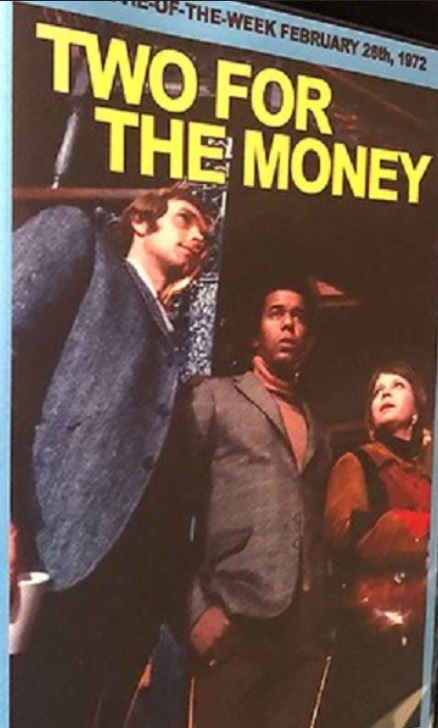
He had to go through Roger Corman with Hot Car Girl, Attack of the Giant Leeches, and Night of the Blood Beast, then do TV series for the rest of the ’60s to get his shot at the major studio brass ring with Krakatoa: East of Java and Stiletto. But both of those films — as well as the David Janssen-starring western Macho Callahan — flopped at the box office, so it was back to TV for Bernard L. Kowalski. However, instead of the TV series of the ’60s, he now was in the TV movie business, in which he gave us Terror in the Sky, Black Noon, and Women in Chains. For his fourth TV movie, Kowalksi directed this script by TV series and TV movie scribeHoward Rodman (best known for the series Route 66 and the later Harry O, also the TV sci-fi flicks Exo-Man and the first Six Million Dollar Man TV movie). Was this a TV movie pilot film? Yep, you bet.
If you spent any time in front of the TV watching reruns of series from the ’60s and ’70s, and even into the ’90s, you’ll notice character actors Robert Hooks and Steven Brooks as our two cops who quit the police department to become private detectives — and come to hunt down a serial killer who has eluded the law for years. And they’re against the clock because notable western character actor Walter Brennan (John Wayne’s Rio Bravo) is out for vigilante justice to avenge the murder of a family member by the killer. And the always welcomed character actor-ness of Neville Brand as a racist, small town sheriff isn’t helping matters.
Yep, that is Richard Dreyfuss (Two Bernard L. Kolwaski flicks with future Jaws stars? Roy Scheider was in Stiletto, remember?) starting out his career. And that is the voice of the devil, Mercedes “Pazuzu” McCambridge, from The Exorcist. (Plot spoiler: she’s the killer and she’s off-the-hinges-great here; not that you don’t see that plot twist coming.) Also be on the lookout for Oscar actors Anne Revere (Supporting Actress winner for National Velvet) and her “sister” Catherine Burns (Supporting Actress nominee for Last Summer). Shelley Fabares, who did her share of car racing and Elvis flicks*, is the town’s pretty librarian girlfriend of Brooks that’s caught the creepy eye of Brand.
You can watch Two for the Money on You Tube. Grey market DVDs are easily available. It’s not that bad of TV movie thriller. Definitely not engaging TV series material in the manner of say, Starsky and Hutch (gotta go watch The Supercops from 1974 with my youth-buddy, Ron Leibman), but a serviceable TV flick, none the less.
* Of course we did all off the King’s — well, all three — racing flicks. What ensuing, trope-laden cliched movie site did you think your were surfing, here? Check out our “Drive-In Friday: Elvis Racing Nite” feature.
About the Author: You can learn more about the writings of R.D Francis on Facebook.He also writes for B&S About Movies.
Our three-day tribute to Bernard L. Kowalski continues!
Well, even after the abject failure of the intended, sweeping epic that wasn’t Krakatoa: East of Java (reviewed this week), Bernard L. Kowalski was still in the game with this AVCO Embassy-backed adaption of a Harold Robbins (a big deal novelist in the ’60s and ’70s) novel produced by Joseph E. Levine, who brought us the successful box office epics of Zulu and A Bridge Too Far.
The then A-List Alex Cord, Britt Ekland, and Patrick O’Neal, and an up-and-coming Roy Scheider, six years away from his huge, influential shark-based horror movie, star in this then de rigueur Bond-inspired flick. We also get the familiar character actor skills of M. Emmett Walsh and Charles Durning. Why, yes, that is Raul Julia (Eyes of Laura Mars and The Addams Family franchise) in his film debut. (For me: It’ll always be Frankenstein Unbound for my Raul fix.) And if you’re a fan of Danger: Diabolik (1968), and aren’t we all, Britt Ekland was a last minute replacement for that film’s Marisa Mell as Cord’s co-star. But that’s okay, since we got Marisa in Seven Blood-Stained Orchids.
Count Cesare Cardinali (Cord, of Genesis II fame) has the perfect cover for his secret life as a profession mob hitman-for-hire: he’s a famed jet-setting playboy. Of course, as with all of those hitmen before and after him, he decides it’s time to retire and enjoy the spoils — but when you know too much, you’ll have to be “eliminated” as well.
Courtesy of the Bondness-meets-The Godfatherness of it all, there’s lots of (stylized) scenes in casinos and on yachts with Cord and Elkand in Speedos and string bikinis in exotic places like Puerto Rico. Then the tux and dripping-with-jewels gowns are taken off the hangers for the usual New York penthouse sets. And while there’s an Italian connection in here, Puerto Rico doubles for Sicily — when it’s not being “Puerto Rico.”
Stiletto certainly isn’t awful, but the cops-chasing-robbers set-up is all very TV movie flat, which is why this received an early appearance on CBS-TV. And don’t forget: this all comes from the while successful, but cheesy, melodramatic pen of Harold Robbins. If you’ve never read one of his books or seen a movie based on his books (The Betsy, The Lonely Lady), then maybe you know Robbins as result of his being named-dropped by the English new-wave band Squeeze in the lyrics — “a Harold Robbins paperback” — in their song “Pulling Mussels (From The Shell).” Or, since we are all Roger Corman fans around here, you know Harold Robbins by way of Corman’s 1970 post-apocalyptic Gas! – Or- It Became Necessary to Destroy the World in Order to Save It, as a young couple uses a public library’s copies of the successful but critically-derided collected works of Jacqueline Susann (her books became the movies Valley of the Dolls, The Love Machine, and Once Is Not Enough) and Harold Robbins as kindling to keep warm.
Sadly, there’s no online streams to share, but DVDs are easily available, the best versions are from Kino Lorber, who also issued Stiletto on Blu-ray.
About the Author: You can learn more about the writings of R.D Francis on Facebook.He also writes for B&S About Movies.
Editor’s Note: Welcome to our first review in our three-day “Bernard Kowalski Week” tribute that takes us from 1959 to 1989. If you don’t know his film work, you know his TV work. Kowalski directed multiple episodes of the hit ’80s series Knight Rider, Magnum, P.I., Jake and the Fatman, and the epic (it was for me), Airwolf. Here’s his first movie for Roger Corman.
Oh, be sure to click that “Bernard L. Kowalksi” tag and the end of all of the reviews this week to popular the reviews in one easy-to-use list.Let’s get day one started, shall we!
“She’s hell on wheels . . . and up for any thrill!”
Seems Mr. Screenwriter dipped the pen into the Shakespearian ink; for this is Othello with hot rods.
Duke (Richard Bakalyan; you’ve seen him across his 150 TV credits into the early ’90s) and Freddie (John Brinkley, who’s traveled this rockin’ road before in Hot Rod Rumble, Teenage Doll, and T-Bird Gang) finance their hot roddin’ lifestyle by stealin’ cars n’ strippin’ auto parts for a fence. When they, along with Duke’s girl, Peg (June Kenney, also of Teenage Doll, but also of 1959’sAttack of the Puppet People and Roger Corman’s Sorority Girl), are goaded into a road race by the resident bad-girl, Janice (Jana Lund, also of High School Hellcats with Yvonne Lime, Elvis Presley’s Loving You, and the rock flick classic, Don’t Knock the Rock . . . but since this B&S About Movies: it’s all about Frankenstein 1970 for our Lundness), a motorcycle cop dies. Let the frames and double crosses, blackmailing and betrayals begin, Desdemona.
Oh, almost forgot: Bruno VeSota is in this as Joe Dobbie (seriously). What ’50s and ’60s film wasn’t the Big V in? Yep, there he is in Attack of the Giant Leeches, A Bucket of Blood, and The Wasp Woman . . . but also of the early rock flicks Daddy-O, Rock All Night, and Carnival Rock. It is actors like you that gives our lives at B&S meaning, Mr. VeSota. We bow to you, sir.
And it’s all brought to you by a man whose directing career we’re tributing this week: Bernard Kowalski, who followed this up with Night of the Blood Beast, then his third film, Attack of the Giant Leeches. Before going into business with Roger Corman, Kowalski got in start in television, directing episodes of the ’50s westerns Frontier and Broken Arrow, along with the David Janssen-starring cop drama, Richard Diamond: Private Detective, and the military drama, The Silent Service. Has anyone ever encountered his lost TV Movie pilot for the Peter Graves-starring Las Vegas Beat (1961)? We’d love to see it. You know us and TV Movies around here.
We previously featured Hot Car Girl as part of our weekly “Drive-In Friday” featurette.
About the Author: You can read the music and film reviews of R.D Francis on Medium and learn more about his work on Facebook. He also writes for B&S Movies.
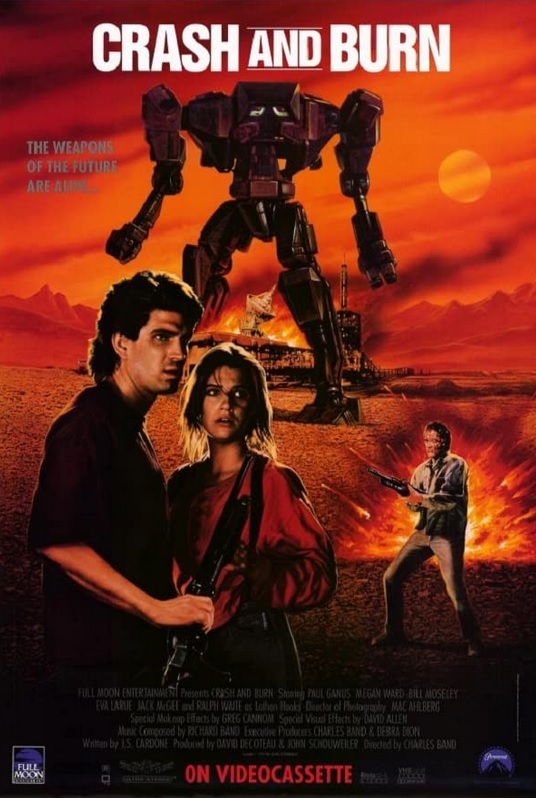
Editor’s Note:Yes, there was, in fact, a (lost) third sequel — and fourth film — in Stuart Gordon’s mecha-verse begun in 1989 with Robot Jox and continued in 1990 with Crash and Burn, then Robot Wars.
Welcome to the world of the Robo Warriors — a review inspired by an anonymous inquiry via our contact form, in response to our reviewing Gordon’s previous robo-flicks. In fact, we also reviewed Future-Kill earlier today, as result of another reader contacting us after our review of Cybernator.
Our readers, God love ’em and the VHS junk they love! See, positive reader vibes via our comments or contact form, works!
Okay, let’s strap on the popcorn buckets and robo jox this mother!
Courtesy of recycledhistory74/eBay
The always-welcomed James Remar, aka Ajax, from, ironically enough, the end-all-be-all of gang films, The Warriors (1987), but you know him for his most recent work as “Peter Gambi” on the CW network’s Black Lightning in the U.S., stars in place of Gary Graham and Don Michael Paul as our troubled, down-and-out mecha-jock.
Paramount British Pictures, the Australian division of American intellectual property holders to the franchise, Paramount Pictures, contracted Australian director Ian Barry (1980’s Chain Reaction starring Steve “Goose” Bisley of Mad Max fame) to helm a script penned by U.S. network TV scribe Michael Berlin (MacGyver, 1985 – 1992) based on Gordon’s films and, as we will come to discover, an old Gordon screenplay.
However, this time, instead of Stuart Gordon or Charles Band behind-the-scenes we have . . . as our executive producer . . . oh, no, not Cirio H. Santiago? Yes, it’s old Uncle C. of so many of the video fringe delights of the apoc variety (The Sisterhood, Stryker, Wheels of Fire) that we love around here amid the B&S About Movies cubicle farm. The web portal Condition Critical, in their never-ending quest to catalog lost, obscure and bizarre VHS and DVDs of the ’80s and ’90s, gathered up all of the video sleeves, god bless ’em, on their Robo Warriors tribute page — and those covers, cover the plot, or lack thereof, in a nutshell, so we don’t have to (and don’t want to). Also known as — ugh, the title-confusing — Robot Jox 3 in some quarters, and released in the overseas markets in 1996, Robo Warriors didn’t hit U.S. home video shelves and cable television platforms until 1998. (This played on the Sci-Fi Channel before the “Ys”? Okay, if you say so.)
As you scrolled our review for Robot Wars, the third film in the series, we discussed Stuart Gordon’s failed plans to follow that 1993 release with Battle Jox — a forth film featuring dinosaur-inspired mechs. Well, as it turns out, that film actually did get made after all, sort of — and this is it. Hey, we are as shocked as you are that this film even exists.
Seriously, did you ever hear of this?
Uno, Dos, Tres . . . Quatro. Well, sort of. . . .
We didn’t, at least not until a reader messaged us about Robo Warriors in the wake of our recent “Apoc Week” reviews for the Gordon-Band mech-verse films. And it seems you, nor anyone in the U.S., did, either. Perhaps we did see this on home video shelves . . . and mistook it as a repack of — or even sequel to — the abysmal Vincent Dawn, aka Bruno Mattei, rip puke-pastiche of Rambo, Robocop, The Terminator, and Predator that is Robowar (1988). Hey, it takes strength to pick up another Mattei film, after having to digest the likes of Shocking Dark, and even more so when it comes to the resume of Reb Brown (Yor, Hunter from the Future, Space Mutiny), so we get it. We really do.
However, from the looks of the film’s IMDb and Letterboxd reviews, Robo Warriors became a popular release in Germany and Russia, with feedback from both users and critics in those countries. Go figure, they love U.S.-based product — even when that U.S. programmer is cheap jack-produced in the Philippines.
So, the dinosaurs, i.e., the lizard angle from Gordon’s Battle Jox concept, carried through into Robo Warriors, as man, in the year 2036 (ugh more timeline confusion, since this takes place before the events in Robot Wars) finds themselves subjugated by the (make-up impressive) Terridax, a humanoid-reptile alien race. And the aliens have their own 120-foot mech — that looks like a exoskeleton dinosaur, natch — to do their dirty work. And James Remar is the last of the Earth’s Robot Jox. And Remar and an (seriously) annoying, tech-savvy kid (aren’t they all in these movies) set off into the jungles — like our ne’er-do-well pilot in Robot Wars, who set off into the desert wastelands with an annoying woman — to find the last battle bot buried in the brush. And come to think of it: Megan Ward’s teen in Crash and Burn was mech-tech savvy, as well. Yeah, so it’s like that: recycle, recycle, recycle . . . and never, ever follow the timeline from the previous film. And pull out the old grandfather-tells-a-story trope (Uh-oh, lazy writing alert! My use of “trope,” not the grandfather plot-device.) to set up the mech-verse.
While the production values, in spite of Uncle Cirio in the mix, are high and it certainly looks like a Dave Allen and Jim Danforth joint, the robots — this time — are by designed by Anna Albrecht (Gremlins, Enemy Mine, later Star Trek: First Contact) and Wanda Peity (Val Kilmer’s Red Planet). Why weren’t the Allen-Danforth bots from the other films repurposed, only Uncle C. knows. The apocalyptic, wasteland scenery comes courtesy of the abandoned Clark Air Base, which served as the U.S. forces’ staging area in the Philippines during World War II and the Vietnam War. James Ramar and his Robo Warriors co-star, James With, aka James Wearing Smith, previously worked together on The Quest (1996), which filmed in Thailand and starred Jean-Claude Van Damme and Roger Moore. Ramar and With also worked together on the Billy Zane-starring The Phantom (1996), which Paramount Studios also produced.
Robo Warriors is a film of a time and place. If you were a kid growing up on the tail end of the fading home video boom in the ’90s and picked this up on VHS, it’ll warm those ol’ VCR cockles — as did Robot Jox, the 1989 original does for myself. And while the dino-robot battle in the jungle opening is pretty impressive and James Remar delivers the thespin’ chops and the SFX are improvement over Robot Wars, but . . . ugh. Credit it to my first-time 2021 eyes watching this, but everything spirals into boredom beyond belief until the last throes of the third act kicks in and the alien vs. human bots start kickin’ some poly-carbon ass. But extra points for going old-school kaiju in ditching the stop-motion or CGI animation or putting two guys in mech-suits swinging, slicing, and blasting each other. Yeah, I dig SFX retro-vibes, but as with the previous two “sequels”: it’s all too little, all too late.
Again, a 10-year old tech-savvy kid hookin’ up with a burnt-out mech-warrior will appeal to the 10-year old kid in you that rented this in 1998, but not to the old bastard (moi) streaming this for the first time in 2021 — in Russian, no less. This is totally meant for kids, but isn’t made for kids, as this is all pretty heavy adult stuff in the frames. And I don’t think seeing this in its original English format will help — not even with my years of Godzilla kaiju experience. And it didn’t: A quick call into my bud, Mikey (whose own vinyl and VHS collection out rivals my own, you bastard), who turns out had a copy in his insane tape collection (“I can’t believe I actually have it,” he says.), solved the problem. So, yeah, I watched Robo Warriors, twice, which was once too many times for me, my Uncle Cirio and Bruno memories, be damned.
So, speaking of the Russian dub I watched: There’s no luck on finding any English VODs or freebie streams for Robo Warriors — and the only upload we could find was a Russian dub (there’s a German dub on the ‘Tube, but without audio and Spanish subtitles), but at least you can check it out for yourself on You Tube. To date, Paramount has never officially released Robo Warriors on DVD. In lieu of a trailer, we found this rip of the film’s opening five minutes (embedded below). Again, it’s impressive. And as the YT poster points out, we’ve not only got Stuart Gordon’s influences here, but pinches from the abysmal Battlefield Earth and the incredible Platoon . . . and I’ll even add Arnold Schwarzenegger’s Predator into the mix. (See, just like Bruno Mattei’s Robowar, get it?) But when it’s a film produced in the Philippines by Cirio H. Santiago, well, would you expect anything more . . . or less . . . than a pseudo-plagiaristic hodgepodge of more successful American films?
Ugh. Multiple trailer embeds biting the dust, again. We give up!Find one on your own!
About the Author: You can learn more about the writings of R.D Francis on Facebook.He also writes for B&S About Movies.
Editor’s Note: As if we don’t have enough movies to review! An anonymous reader confessed their love for this movie and baffled how we never included it as part of our endless apoc-love at B&S About Movies. You know the drill, ye reader: Strap on the popcorn bucket, let’s apoc this mother, Texas-style!
And it just goes to show you: Reviewing VHS junk like Cybernator— a film not reissued on DVD that’s being promoted by a studio shingle, reviewed for the simple passion of the film itself — pays off.In fact, another reader’s suggestion inspired our review of Robo Warriors, posting later today.
When it comes to the ‘80s video fringe, we not only expect the bizarre—we demand the bizarre. Austin, Texas, filmmaker Ronald W. Moore—in his only feature film writing and directing effort—answered that challenge with a sci-fi black-comedic pastiche of the Italian apocalypse rip-offs of John Carpenter’s Escape from New York and the “snob vs. slobs” rip-offs of Animal House. Only the slobs have been replaced by Reagan-era nuclear punks overlorded by Splatter, a plastic-cum-cardboard Robocop on a Terminator tear.
While it looks ’80s Italian apocalyptic, it’s not. This is a Texas-styled apoc, but not as cool as 2020: Texas Gladiators.
If you’ve watched the nondescript, post-apocalyptic ramblings of City Limits, the punk-rock apoc-drivel of Radioactive Dreams and the rad n’ gnarly post-apoc shenanigans of Night of the Comet, then you’ve traveled these low-budget streets before; streets that—outside of a few techno-trinkets to make the proceedings seem like the future—look just like our present-day streets. And when that “present-day” apocalypse arrives, be it via “The Big One” or by plague or by comet or by whatever nuclear deus ex machina falls from above, the “mutants,” depending on the film’s budget, raid the local S&M leather boutique or Reagan-era Mohawk-and-heavy mascara emporium. And at a reported $250,000 budget, Future-Kill raids the latter retailer to give us gangs of disenfranchised punks—punks who got lost on the set of Enzo G. Castellari’s The Bronx Warriors and Escape from the Bronx while on the way to their background acting gigs for Suburbia and Repo Man. And Lord Cyrus help them if they stumbled onto the set of The Warriors (Future-Kill’s most obvious model), for these MTV video punks won’t stand a chance against the Baseball Furies, the Electric Eliminators, the Gramercy Riffs, and Turnbull AC’s*.
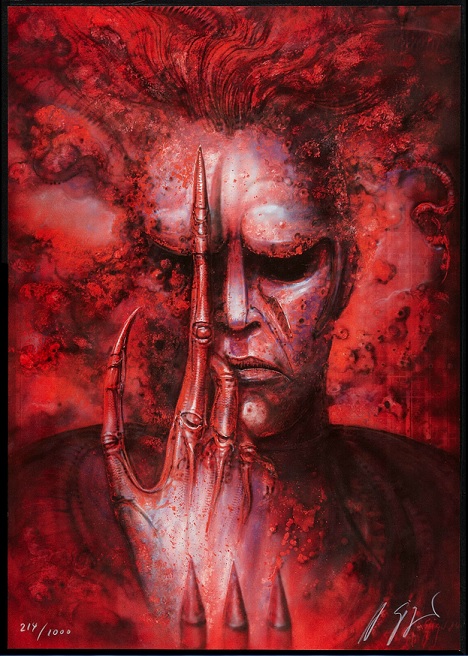
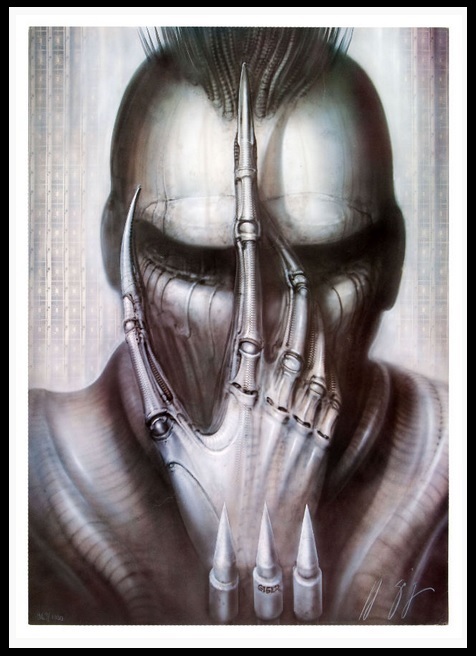
Maybe if Future-Kill were as entertaining as any of those films and not the apoc-swill that is America 3000 and Robot Holocaust (okay, maybe it’s a wee bit better than those two swillers: a wee bit). Maybe if the proceedings were more Wendy O. Williams and the Plasmatics (“Butcher Baby“) and less Dale Bozzio and Missing Persons (“Words“) roamin’ those Austin mean streets and the gangs were more Walter Hill-inspired, Future-Kill could have lived up to its faux H.R Giger packaging. Yeah, at the time, we thought the artwork was a bogus H.R Giger rip-off hawking another R.O.T.O.R artwork-hiding-a-shitty-film scam, so we avoided renting Future-Kill during its VHS heyday.
Then Ronald W. Moore’s apoc-meets-frat comedy boondoggle became connected to Oscar gold.
John Hawkes, one of Future-Kill’s minor support actors, ended up at the 83rd Annual Academy Awards held in 2011 and rubbed elbows with Tom Hanks—who has his own ‘80s VHS debut-acting bone in the closet with He Knows You’re Alone. So, its Texas Chainsaw and H.R Giger faux-connections aside, how can one not want to watch Future-Kill, once learning that one of its actors earned multiple “Best Actor” nominations and awards between 2010 to 2012 for the films Winter’s Bone, Martha Marcy May Marlene, and The Sessions? (Another of John’s early, minor support roles was working with Gregory Hines in the 1994 radio-set thriller, Dead Air.)
However, before the mainstream success of John Hawkes inspiring us to seek out copies of Future-Kill, the truth behind that “bogus” H.R. Giger artwork was finally told in an audio commentary by director/writer Ronald W. Moore and producer/star Edwin Neal—courtesy of a 2006 Subversive Cinema DVD reissue that included reproductions of Giger’s original artwork for the film.
While H.R Giger famously provided production drawings for Alien (as well as 1995’s Species), the Swiss surrealist rebuffed several studio offers to design theatrical one-sheets, including overtures from 20th Century Fox, the studio that brought his work to a mass audience (with an honorable mention to ‘70s prog-rockers Emerson, Lake and Palmer; the band used Giger’s work on their 1973 album Brain Salad Surgery**). So, it’s a shock to discover that the artwork for Future-Kill is, in fact, a real Giger, titled “Future Kill 1,” painted in 1984 specifically for the film.
According to the Alien Explorations, which chronicles the works of Giger, Giger was a fan of Tobe Hooper’s film; since Future-Kill featured two actors from Texas Chainsaw, he agreed to design the poster. At the time, Ronald W. Moore completed filming and was in the editing process when he approached the artist at a Zurich exhibition and begged Giger to design the poster (Giger has stated Moore was in tears at one point)—based on the fact Moore prematurely promised investors a theatrical one-sheet by Giger, so to secure film financing. Now Moore had to pay up, figuratively speaking. Also enticing Giger to design the poster: Giger and Kathy Hogan—the make-up and costume designer who developed Splatter’s bat wing and Mohawk-styled shoulder and helmet armor, which served as the model for Giger’s artwork—came into a sexual relationship.
While Hawkes was only a minor support player, the real “stars” of Future-Kill were Edwin Neal and Marilyn Burns, each who appeared in Texas Chainsaw. However, even with that “star power,” the film still lacked “major stars” and received its limited, regional theatrical release solely based on the fact that “the artist who did Alien” designed the poster (and the film looked nothing like Alien, natch). Also of note: Edwin Neal didn’t “star” in Texas Chainsaw; he had an extended cameo as a self-cutting hitchhiker; meanwhile, Marilyn Burns, who starred in Texas Chainsaw, only has an extended cameo in Future-Kill. The film’s Texas Chainsaw-connection also goes a bit deeper, as Ronald W. Moore got his start in the business as a soundman on Mongrel; the film also served as the lone directing effort by art director Robert A. Burns, who worked in that capacity on The Hills Have Eyes, Don’t Go Near the Park, and The Howling—as well as the The Texas Chainsaw Massacre; Burns was responsible for the “bone furniture” and its related “bone room” scene.
Maybe, if Moore hired Robert A. Burns to work on the set of Future-Kill, we’d have a film that looked as good as those films—and its chief protagonist, Splatter, would have been the Gigeresque biomechanical xenomorph promised and not the low-rent Godfrey Ho wannabe we got; if you’ve seen Ho’s Pacific Rim cyborg romp Robo Vampire (1988), then you understand that analogy to the canons of “Hong Kong’s Ed Wood.” Godfrey Ho, as with ‘60s U.S. drive-in purveyor Al Adamson before him, was infamous for splicing two or three unrelated films into a new product. And, at first watch and without knowing the backstory of Future Kill, it looks as if Ronald W. Moore assembled his own portmanteau poo akin to Night Train to Terror (which is three movies spliced into one) and Evil Town (which is a four-director junkfest rooted in a mid-‘70s horror dumpster-fire called God Bless Dr. Shagetz).
Now, that’s not the case with Future-Kill, but it sure seems like two, unrelated, spliced scripts or unfinished films: one a failed frat-house comedy; the other a failed post-apocalyptic tale. And thanks to the ‘80s frat house hi-jinks and the Philippines-cum-Italian future world we’re watching, we have no idea what the hell is going on or where we are. The “destination,” to paraphrase the lyrics of Missing Persons, is “unknown.”
Oh, Wendy! Are we beyond the valley of 1984? Will extras show up in monkey suits? When does this future-world of Future-Kill take place? What’s the Orwellian masterplan, dag gummit!?
Well, it must be in an alternate universe or timeline or a future stuck in a DeLorean time loop where technology has afforded us the ability to create cyborgs—while everything else looks ‘80s “snobs vs. slobs” comedic. And since we’re on the cheap, our “mutants” aren’t so much nuc-deformed; they’re just a bunch of snotty, Reagan-era punks with an anti-nuclear chip on their shoulders. You know the punk-type: As with my ex, Dawn, she listened to a couple of Black Flag and Dead Kennedy records, went to spoken word concerts by Henry Rollins and Jello Biafra, then raised the flags against Halliburton and rallied about “Blood for Oil” through the puffs of her clove cigarettes, its scented fumes clinging to the fibers of her faded, Hot Topic Clash tee-shirt.
Anyway, in Ronald W. Moore’s future world, those errant punk rock scamps have—in an eerie foreshadow of the sociopolitical upheavals of 2020—formed their own CHOP/CHAZ perimeter in downtown Austin, Texas, as part of an anti-nuclear movement. The most feared of all of the nuc-mutants is Splatter (Texas Chainsaw’s Edwin Neal), the aforementioned Robocop-cum-Terminator, whose radiated mutations have turned him into a metal-and-spiked covered madman.
Okay, so that takes care of the “slobs” portion of the film.
Meanwhile, back on the campus of Faber College in snobby Porkyville, out in the ritzy, unaffected Austin environs, our perpetually partying preppy a-holes live a carefree life of booze, boobs, and pranks where rich parents get them out of their Hunter Bidenesque jams. When one of their pranks risks the shutdown of their frat, our frat-lads are forced to dress “punk” by a rival frat and venture into slobby Punkville to kidnap one of the mutants for an end-all-be-all of all pranks. Of course, they run afoul of the metal-clad n’ spiked Splatter. Oops.
Okay, so begins The Warriors portion of our film.
Once Splatter (our “Luther,” if you will) settles his Alpha-Male dispute (i.e., murder) with Eddie Pain (our “Cyrus,” natch), the anti-nuke movement’s ‘60s-inspired hippie-punk leader (uniting the gangs, natch), our Robonator is off-the-chain with a Termicop chip on his shoulder—and he’s framed our prep-boys (i.e., The Warriors) for Pain’s murder. As our Delta House rejects make their “Escape from Austin,” they save a hot mutant punk chick from pervert cop rape because, well, as usual, when the apocalypse arrives, man’s inner “rape genes” mutate, so as to preserve the species. And preppy boy falls for punky girl. And we hear a few tunes—in the best part of the film—from real life Austin band Max and the Make-Ups (but we wished The Plamastics showed up to do do “Black Leather Monster“) as we (finally) meet Texas Chainsaw’s Marilyn Burns in her under 20-minutes role as Dorothy Grimm, the revenge-seeking girlfriend of Eddie Pain.
Is it a plot-spoiler telling you Splatter dies and the preps Escape from Austin? And it all plays as if Universal ripped this for Judgement Night, their 1993 suburbanites-lost-in-the-underbelly-of-the-mean city starring Emilio Estevez pursued by Denis Leary?
When submitted to the ratings board for its limited, regional theatrical run in and around its native Austin, Future-Kill received an “X” rating for extreme violence. One minor edit was made to secure an “R” rating in the U.S. Meanwhile, across the ocean, while the puritanical purveyors of philth (know your Motorhead) in the U.K. didn’t toss Future-Kill onto their “Video Nasties” list, they forced a title change to Night of the Alien (in other overseas quarters the title Splatter was used) and two-and-half minutes were cut—which eliminated a neck breaking, the killing of Clint (one of the preps), portions of Splatter’s stabbing, a woman’s fondling by Splatter, and Splatter’s sexual encounter with a street girl—all of which were restored on the subsequent DVD released by Subversive Cinema.
You can watch VHS rips of Future-Kill on You Tube HERE and HERE. You can also learn more about the film with this behind the scenes, 30-minute featurette created for the Subversive DVD. The trailers come and go, but we got the TV trailer and the VHS trailer on You Tube.
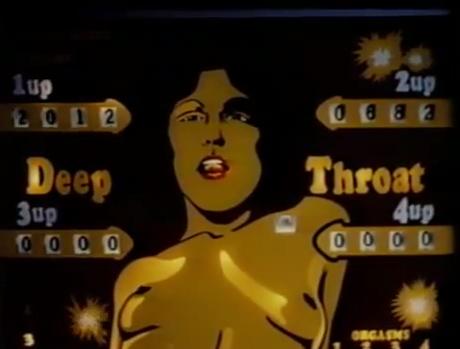
Oh, we almost forgot about the pinball machine!
More imagines of the machine are at pinside.com/multiple sites.
The infamous Deep Throat pinball machine, custom made by Robert A. Burns, which made its debut in Mongrel, also appears in Future Kill. The history of the game is discussed on the pinside.com message boards, your source for all things pinball. After we posted our October 2020 review of Mongrel, Joe ‘O Donnell, feverishly working on his Rondo Hatton documentary Rondo and Bob, let us know he is no longer in possession of the pinball machine. It was sold to help fund the production of Rondo and Bob and is now with a private collector. The good news is that Rondo and Bob, the story of Robert A. Burns’s fandom of Rondo Hatton, is completed and heading to film festival circuit.
* Oh, the mighty QWERTY’in warriors of the Internet, you gotta love ’em. Jennifer M. Wood, over at Mental Floss, took up the challenge to chronicle all of the street gangs in 1978’s The Warriors in her feature “21 Street Gangs Features in The Warriors.” Nice!
** H.R Giger’s work will be incorporated into the currently-in-development film Karn Evil 9 based on the rock-suite of the same name from Emerson, Lake and Palmer’s rock-opera Brain Salad Surgery.
Be sure to check out our Atomic Dustbin blowout tribute to apoc-films of the ’70s and ’80s. Part 1 will get you started.
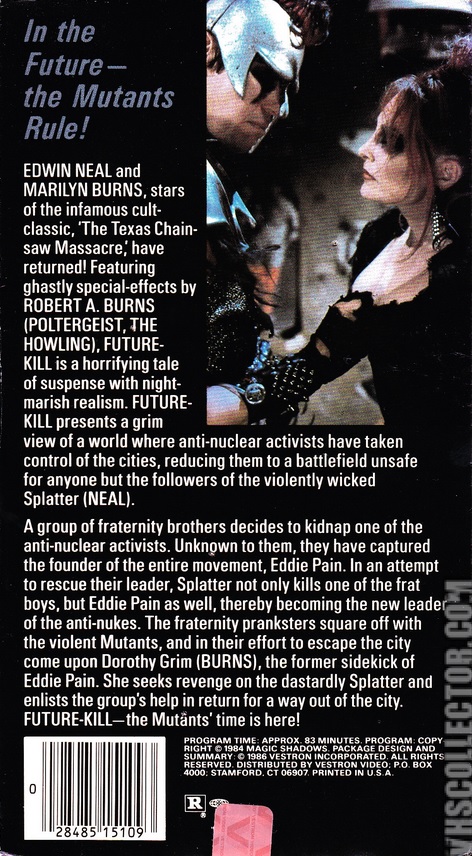
Note 1: As always, thanks to Paul Z. over at VHS Collector.com, once again, for the artwork assist. Be sure to check out his reviews for the latest DVD and Blu-ray reissues of our favorite VHS classics at his Analog Archivist You Tube portal.
Note 2: We’ve since received a copy of and reviewed Rondo and Bob.
Note 3: If you have a favorite film that we’ve missed, you’re welcome to let us know via our contact form. We’re always hearing from our many, ever-growing readers and welcome you to join in the fun. We’re united in film! And thanks for thinking of us to review your favorites. We try our best. Keep those suggestions coming. When you’re nice to us, we return the favor!
About the Author: You can read the music and film reviews of R.D Francis on Medium and learn more about his work on Facebook.
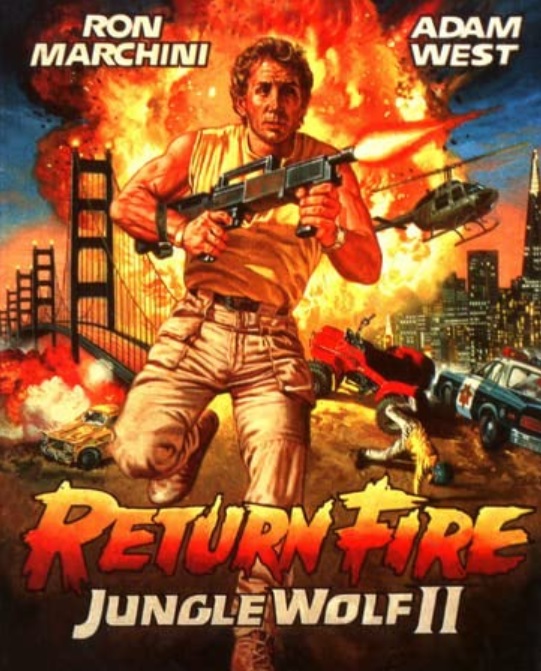
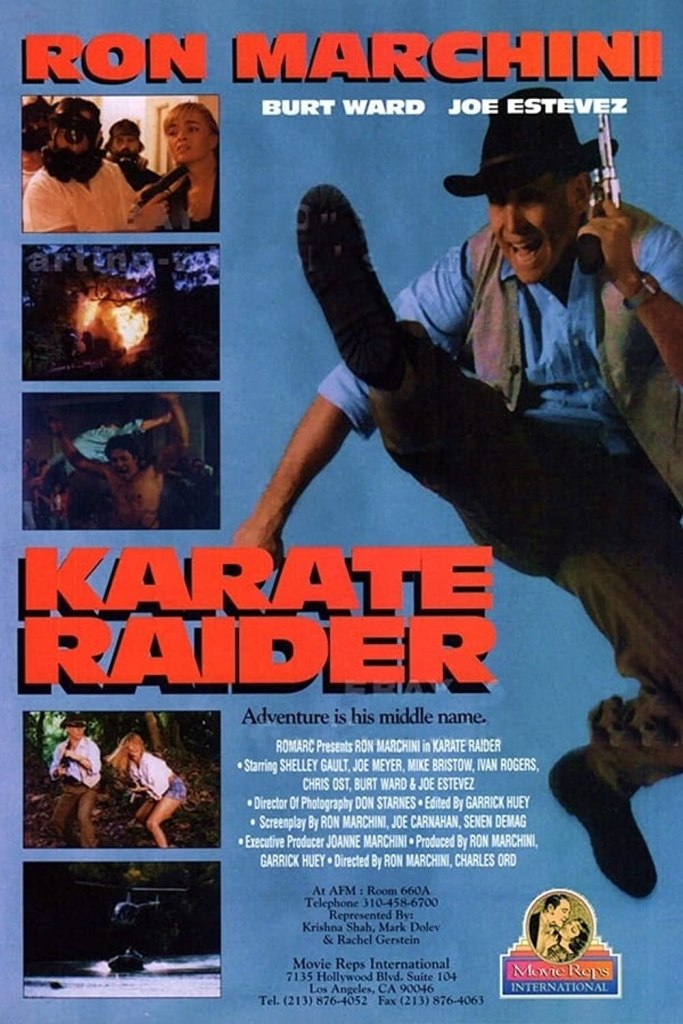
Phew. We did it! Twelve Ron Marchini films in two days. You know the drill! Yee-haw, let’s round ’em up!
Born in California and rising through the U.S. Army’s ranks to become a drill sergeant, in his civilian life, Ron Marchini earned the distinction as the best defensive fighter in the U.S.; by 1972, he was ranked the third best fighter in the country. Upon winning several worldwide tournaments, and with Robert Clouse’s directing success igniting a worldwide martial arts film craze with Enter the Dragon (1973), the South Asian film industry beckoned.
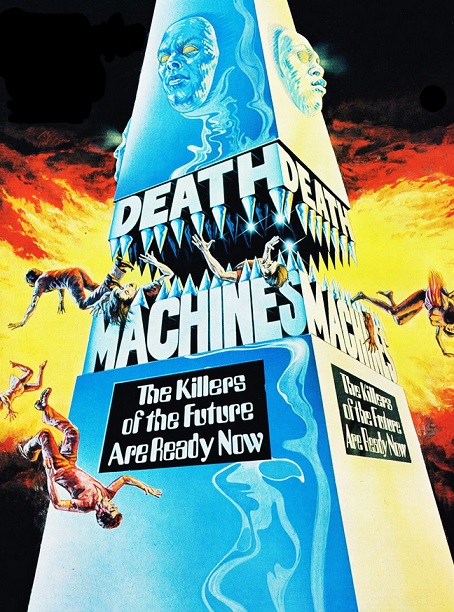
After making his debut in 1974’s Murder in the Orient, Marchini began a long friendship with filmmaker Paul Kyriazi, who directed Ron in his next film, the epic Death Machines, then later, in the first of Ron’s two appearances as post-apoc law officer John Travis, in Omega Cop.
Ron also began a long friendship with Leo Fong (Kill Point) after their co-staring in Murder in the Orient; after his retirement from the film industry — after making eleven dramatic-action films and one documentary — Ron concentrated on training and writing martial arts books with Leo, as well as becoming a go-to arts teacher. Today, he’s a successful California almond farmer.
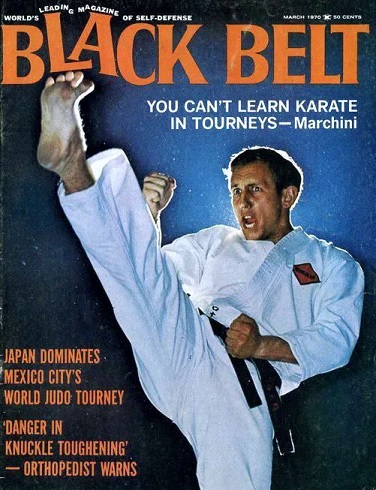
In the annals of martial arts tournaments, Marchini is remembered as Chuck Norris’s first tournament win (The May 1964 Takayuki Kubota’s All-Stars Tournament in Los Angeles, California) by defeating Marchini by a half a point. Another of Chuck’s old opponents, Tony Tullener, who beat Norris in the ring three times, pursued his own acting career with the William Riead-directed Scorpion.
You can learn more about Ron Marchini with his biography at USAdojo.com. An interview at The Action Elite, with Ron’s friend and Death Machines director Paul Kyriazi, also offers deeper insights.
Ron, second from right, with Chuck Norris, shaking hands, 1965. Courtesy of Ken Osbourne/Facebook.
Black tee-shirt image courtesy of Spreadshirt.Art work/text by B&S About Movies.
We love ya, Ron!
About the Review Authors: Sam Panico is the founder, Chief Cook and Bottle Washer, and editor-in-chief of B&S About Movies. You can visit him on Lettebox’d and Twitter. R.D Francis is the grease bit scrubber, dumpster pad technician, and staff writer at B&S About Movies. You canvisit him on Facebook.





















 B&S About Movies
You must be logged in to post a comment.