As Sam put together his “Exploring: Ouija Boards” feature, we came to review screenwriter John Oak Dalton’s directing efforts The Girl in the Crawlspace and Scarecrow Country. Delving into his resume then exposed us to his joint efforts with fellow Ohio-based writer/director Henrique Couto. Making his debut in 2003, Couto finally made a splash in the indie-horror streaming realms with the well-received Babysitter Murders (2013).
Starring the familiar and thespin-just-fine Erin R. Ryan and Joni Durian from that Couto effort, as well as Oak Dalton’s two directing efforts, which also starred John Bradley Hambrick, screenwriter Dan Wilder crafts an intelligent feature film debut that refreshes the overdone “Ouija” genre.
So lets crack open Ouija Room written by Dan Wilder and directed by Henrique Couto.
A perky Joni Durian shines as Sylvia: a lonely, agoraphobic woman who also suffers with autism. To occupy her time, her brother picks up a stack of used board games from an old brick and mortar video store (complete with a wall of ’80s arcade games!): one of the games is a Ouija board. Pining for friends, Sylvia, like Regan MacNeil before her, quickly falls under the spell of the spirits summonsed: a ’60s “rat pack” gangster, an alcoholic, rebellious goth chick (an obvious fan of the Misfits), and a morbid, Shirley Temple-esque little girl.
As usual, the hypercritical streaming hoards come into this expecting an A24 or Blumhouse shock-scare fest. Well, I enjoyed Durian’s realistic portrayal of the psychiatrist in The Girl in the Basement and I equally enjoyed her tempered journey of Sylvia’s child-like innocence into her slowly improving mental state, and deteriorating that innocent side as the spirits make their real intentions, known: they need her and her brother’s blood in a murder-suicide ritual. Equally solid are John Bradley Hambrick and Erin R. Ryan (opposite of her troubled woman in The Girl in the Basement) as the put-upon brother and girlfriend in their dealing with the career and relationship pressures attributed to Sylvia’s spiraling illness.
As with John Oak Dalton’s scripts for his own directorial work, Dan Wilder’s work also eschews CGI special effects and cheap, major studio shock-scares for a psychological tale that allows its fully-arched characters to shine (Hambrick struggles with unemployment and writer’s block; he struggles with placing Sylvia in an assisted care facility). Sure, when Hambrick’s Sammy comes to have a realistic vision of his dead mother warning of the coming danger to Sylvia, it doesn’t have the scope of Lin Shayne battling computer-generated spirits. Then again: these indie-horror streamers are against the budget, so how can they and why are Amazon-to-Tubi streamers expecting such? (Sammy’s bedroom scene, and another bedroom scene with Sylvia, reminds of Dennis Devine’s Dead Girls: so all is streaming-fine, over yonder.)
In the end, guys like John Oak Dalton, Dan Wilder, and Henrique Couto were raised on the same shot-on-tape and released-to-video era of the analog ’80s that we lament and pontificate about at B&S About Movies to your ad nauseam chagrin. Their joint ambitions to raise the bar on the celluloid horrors of the analog old in these digital days gives me the warm, retro-fuzzies with a streamy, hot coco chaser.
Initially making the festival rounds in 2019 as Haunting Inside, the film was picked up for worldwide streaming and DVD through ITN Distribution in 2021. So now, after its initial Amazon stream, you cand enjoy Ouija Room as a free-with-ads stream on Tubi.
An ’80s SOV legend: Jon McBride.Come explore, won’t you?
And be sure to visit our reviews of the SOV-era under our SOV category . . . and we stuck a few 16-to-35 mm drive-in flicks in there, as well, for one delicious, nostalgic home video-shelved stew.
About the Author: You can learn more about the writings of R.D Francis on Facebook. He also writes for B&S About Movies and Medium.
“I made movies I wanted to watch myself. I didn’t care what anyone thought. Instead of writing for somebody else, I happily found [my films] in WalMart and Family Video — finally ending their natural lives in a Dollar Tree, after thinking I would sell them from a card table at a con myself. A lot of people are discovering my Wild Eye films that way, I’ve found, at Dollar Tree.” — Screenwriter John Oak Dalton to B&S About Movies
Muncie, Indiana-born filmmaker John Oak Dalton is a screenwriter and director that’s drifted down the waters, under the girders of the Monongahela’s Smithfield Street Bridge that we don’t mention enough, here, at B&S About Movies. As a screenwriter, we’ve primarily reviewed Dalton’s work with the oft-reviewed Mark Polonia by way of the films Black Mass (2005), Amityville Death House (2015), Amityville Island(2020), Shark Encounters of the Third Kind (2020), and, most recently, the absolutely bonkers, Noah’s Shark (2021).
Oak Dalton’s later travels with Polonia Entertainment began in 1987 when he became the first scriptwriter to win a David Letterman Telecommunications Scholarship from Ball State University. By 1999, Dalton sold his first screenplay to the direct-to-DVD market and numerous screenplays over the next 20 years to various indie-genre directors. He made his screenwriting debut for director Jon McBride (be sure to check out our “Exploring” feature on Jon) with Among Us (2004).
One of those genre-directors Oak Dalton works with often is fellow Dayton, Ohio-based Henrique Couto, noted for directing the well-received Babysitter Massacre (2013). Oak Dalton wrote Couto’s equally well-received horror-indie Haunted House on Sorority Row (2014), as well as the western-drama Calamity Jane’s Revenge (2015). Couto most recently directed Ouija Room (2019; written by Dan Wilder) (both Tubi-linked). Dalton’s also written for Joe Sherlock, who’s been at since 1999 with 28 films of his own. Coming soon from the pair is Things 666 (2022). In our talking with John, we’ve come to learn that Joe Sherlock grew up on a steady diet of Don Dohler (Fiend) and Don Coscarelli (Phantasm), and whatever was on late-night cable, so Sherlock’s films just might be what your streaming platform, ordered (and you may want to check out his 2014 writing-directing effort, Drifter, on Tubi).
After writing twelve screenplays for others, John Oak Dalton decided to make his thirteen writing effort — a twisted, psychological horror set in a small town — his first directing effort. Assisting John — in their seventh overall collaboration — as a producer and cinematographer, is Henrique Couto (which he also accomplishes in Scarecrow Country).
A perfectly-metered, realistic Joni Durian (Babysitter Massacre, Haunted House on Sorority Row, Calamity Jane’s Revenge, Scarecrow Country) is Kristen: the psychiatrist wife of Johnny, a failing screenwriter (an on-the-spot John Bradley Hambrick of Henrique Couto’s Ouija Room). Their marriage failing — due to each other’s infidelity — they’ve returned to Kristen’s rural Indiana roots. While she’s quickly set up a new psychiatry practice, a bitter, L.A.-pining Johnny battles his alcoholism as he argues with his agent on the latest sequel to the popular Sorority Graveyard franchise. As the story unfolds, we come to learn of Kristen’s wanting to return home: she wants to write a book about her hometown’s dark past regarding a local serial killer. When Kristen begins sessions with Jill (a well-tempered Erin R. Ryan, who also appears in several films connected to Oak Dalton), a homeless local teen, they come to discover she’s an escaped victim of an infamous child serial killer.
While I am not privy to have seen all of John Oak Dalton’s twenty-one writing efforts, and while I certainly respect the retro-SOV efforts of his frequent collaborator in Mark Polonia, based on the films I have viewed, I can tell you the reason why (even though each may have the expected, indie-filmmaking shortfalls) a film like John’s most recent effort, Noah’s Shark, works. It is the result of Oak Dalton’s creative, what-the-hell-why-not plotting and clever character exchanges.
Needless to say: As with most of the indie-streamer I’ve reviewed: most reviewers haven’t been kind to John’s directing debut, as streamers seem to be coming into this small town-with-quirky-residents-and-even-dark-secrets tale expecting the Coen’s brothers Fargo. Oh, how many times must I say, “Don’t do that,” as we are dealing with filmmakers up-against-the-budget? (You’re just not “getting it” and never will, so que sera sera, bitch.) Even with the comes-with-the-territory budgetary issues: The Girl in the Crawlspace is above the fray of most of the indie-streamers I’ve watched (via the with-ads Tubi platform) as Henrique Couto has delivered us a well-shot film.
As I mentioned with Oak Dalton’s joint-Polonia resume: the script is the thing. Here, as with the Coen’s ode to small town, Midwestern mayhem: we have an expertly crafted, multi-layered script rife with complex characters. Each have something to communicate beyond a major studio bayos ‘n bayhem romp rife with clunky one-liners and screams of “Look Out!” and urges to “Run!” as the San Andreas cracks and CGI buildings fall. It’s inherently obvious Oak Dalton’s script for Crawlspace comes from a place of erudition: his love of films, fan fiction, and other geek-driven pursuits shines through with the banter of his humorously engaging, community-center D&D-style gaming group that quickly reconnects the writing-unfocused Johnny to his nerdy, fantasy-game loving college days: Johnny is John Oak Dalton. Unlike most small town-dom scripts, ones where everyone comes across as hicks and oafy buffons, Oak Dalton has lived this life; he loves his roots and treats all of his characters with respect.
If The Girl in the Crawlspace was shot as an A-List feature film with center-of-the-radar actors — such as Clint Eastwood’s murder-mystery thrillers Midnight in the Garden of Good and Evil (1997) Mystic River (2003) — you’d be singing the film’s praises courtesy of its story. So take off the snobby indie-streamer glasses and take your time to watch this well-written, multi-layered mystery that comes in at a quick 70 minutes.
John Oak Dalton is back with his second directing effort from his own screenplay about an Amish-populated, Indiana small-town where Winnie (a thespian-solid Chelsi Kern), a librarian, is gifted the diary of Joey Gibbs: gay and bullied, he committed suicide by driving his car into Hour Glass Lake. She comes into possession of the book when his mother passes and her daughter donates her brother’s collection of sci-fi novels. Once opened, the diary revives a blood thirsty scarecrow from the town’s dark past that kills members of Joey’s old basketball team.
As with Oak Dalton’s previous small town opus: the plot is multilayered with fully-arched characters. As in those larger-studio films we’ve cross-referenced: the once-teen-and-now prominent folk on the town’s counsel (one is the lovable town drunk, one runs a classic car dealership, the other a bar-club that once hosted The Dead Milkmen under his dad’s tutelage) were responsible for Joey’s death and cover up. While we may get the familiar plot twists that brings everyone’s sins of the past full circle, we also — refreshingly, unlike most horror indie-streamers — get a tale that’s not about the blood: this is a story about real people, their small town tales, and the quirks and mystery that follow suit.
One of those refreshing elements is the engaging subplot — that more than likely comes from Oak Dalton’s erudition — is Zoe (Rachael Redolfi): the agoraphobic, “old school” underground comic book artist sister of Winnie. Her reluctant fame for creating the Fantomah series leaves her at odds with her agent: she wants Zoe think bigger. Zoe wants to continue self-disturbing as a Xerox’d ‘zine. Oh, and Zoe’s creations “talk” to her and lead to solving the mystery.
Again, there’s those naysayers looking for a John Carpenter joint that moan about the film being “familiar” because the film centers around a revenge-driven scarecrow — stirred to life by a homemade Ouija board (the same one that opened Henrique Couto’s Ouija Room; it’s only a recycled prop and neither film is a sequel-prequel to the other). Speaking of props and set design, again, as with Crawlspace: the production-set design is solid and above-the-fray of most budget-conscious streamers. And it comes in at another tight 70 minutes.
For me, John Oak Dalton’s two directing efforts of Midwestern-bred horror are everything Don Coscarelli’s California-based mayhem (well, we are basing that on the fact the film shot at Oakland’s famed Dunsmuir Mansion) could have been. Think of a Phantasm with rich, character back stories (and flashbacks) of Mike and Jody’s parents, of how Jody, Reggie, and Tommy came to form their high school band, and how Jody ended up on the road with the Rolling Stones. (Say, a scene with Jody backstage at a gig pushing an amp and his Aunt Belle calls to tell of his parents’ car accident. In fact, the novel gets into Tommy’s “suicide”: his body is discovered in a basement: he jammed a knife-in-the-slats of an unfinished wall and thrust himself upon it.)
Well, those Oak Dalton-styled back stories — and scenes — existed, but were ultimately deleted from Coscarell’s final film (either shot, then cut; or cut from the script prior to filming). In the ultra-rare novelization by Don’s mother, romance novelist Kate Coscarelli, we learn such tidbits as the town where The Tall Man began his slave cultivation operation was known as China Grove. (Of course, if you watched the later-issued DVD outtakes to the film, you know there was more to Jody’s and Mike’s lives.) In the novelization, we learn that, after their death, the brothers inherited their parents’ small-town bank. The film-undeveloped sisters of Suzy and Sally (remember, they were kidnapped by The Tallman’s dwarfs) not only owned an antique shop (inherited from their convalescent-homed mother, Mrs. Glunter): Suzy and Jody became a couple as result of her working at the bank. There’s additional family drama with Jody: instead of taking on the family business, he goes on the road with the Rolling Stones and expresses his frustration having to remain in China Grove to take care of Mike.
Remember the one-scene Mrytle the maid: she’s more fleshed out in the novel. The old psychic lady in the wheelchair: her name is Mrs. Starr — and she speaks and discusses her granddaughter’s disappearance (and her name is Sarah; remember she opened the door to the “Space Gate Room,” then screamed). Then there’s the brothers’ doting Aunt Belle — who sees her war-casualty son in Mike. There’s Mr. Norby, the bank’s new manager at odds with Jody’s involvement with the bank. Then there ol’ Sheriff Wade who gave the roustabout Jody, Reggie, and Tommy hard times as teens — but he now leaves Jody alone via a bank loan blackmail gag (thus why the ‘Cuda always races around town without consequence); Jody even cracks a joke about “repossessing” Reggie’s ice cream truck (and Sally works at the ice cream shop). We also learn about the mysterious murder of Charlie Hathaway, the previous owner of Morningside.
Now, imagine a rebooted Phantasm with all of those twisty character elements. That’s what John Oak Dalton brings to the screen with these two films: real people with real lives and real problems that invest your interest. He gives reason beyond the screams.
So, Don, if you’re reading this: reboot Phantasm and give John a crack at the screenplay.
“I made Crawlspace after going a while without being offered any screenplays, or any I wanted to write, so I thought I would write a movie I wanted, make it at my house, and then sell it on a card table at conventions. Nobody was more surprised than me when it got picked up for distribution and ended up in Family Video, WalMart, and more.
“Literally, the day we sent the deliverables on Crawlspace, I was asked what I had next, which was nothing: I had intended on just making [Crawlspace]. So I started writing Scarecrow Country that very day in January 2019, we shot it in March 2019, and it screened October 2019 at a dusk-to-dawn horror festival in Iowa City.” — John Oak Dalton to B&S About Movies about the connection between his two directing efforts
You can follow John Oak Dalton at his official blog — where, in his entry “Talking in Our Bed for a Week,” he goes into detail on his mutual, recent three-picture deal through Wild Eye Entertainment with Mark Polonia. You can also learn more about John’s wares courtesy of his recent August interview with Richard Gary at the Indie Horror Films blogspot.
You can learn more about Henrique Couto and his films at his official website.
You can also delve into the twisted world of Joe Sherlock at his official site, Skullface Astronaut.
If you’re fan of ’80s-era shot-on-video films and you’re burnt out on the genre’s classics (many which we’ve reviewed at B&S About Movies, so check out our SOV tag), John Oak Datlon, Henrique Couto, and Joe Sherlock, as well as Mark Polonia, are doing a great job at keeping the era alive and viable with today’s technology-driven, shot-on-digital streamers.
We’ve since reviewed Henrique Couto and Dan Wilder’s Ouija Room.
About the Author: You can learn more about the writings of R.D Francis on Facebook.He also writes for B&S About Movies.
Yeah, I know . . . Mickey Rooney was a big star in the 1930s and 1940s, and, for most, seeing him in an ersatz, horrified version of the noir classic Sunset Blvd. is considered a fall from grace, but I really like him here. His work as B.J Lang is as memorable to me as was his work as the mentally handicapped Bill Sackter in the CBS-TV movies Bill (1981) and Bill: On His Own (1983). Yeah, I know, this forgotten Rooney resume entry is on a Mill Creek box set, which leads the many to write off the movie as a “stinker” and that the Mick is slumming, and that we’ve seen it done better with Terrance Stamp and Samatha Eggar in The Collector (1965).
Chalk up my affections for the film as result of seeing it for the first time on my first solo drive-in excursion with a few friends on an undercard with Let’s Scare Jessica to Death (1971) . . . and for the life of me, I can’t remember the main feature. . . . Brainworm alert!
In the world of exploitation, you’ve heard the term “hagsploitation” mentioned to describe aging actresses, aka hags, regulated to finding work in horror films, holding on the last vestiges of their once glamorous, contract player-studio system careers.
And we’ve reviewed most, if not all of them.
Edith Atwater was just one of the many, ’40s starlets finding work in the hagploitation, aka psychobiddy, sub-genre: a genre where old, crusty women either terrorized “sinning” young women or are simply jealous of the girl’s youth, so they “gaslight” them into insanity. You know Edith Atwater, best, from Boris Karloff and Bela Lugosi’s The Body Snatcher (1945), which was her third feature film; she also appeared in Strait-Jacket (1964) with Joan Crawford — herself a “hag” actress with the likes of Berserk! and Trog. Edith then fell into a lot of TV work for the remainder of her career into the mid-’80s to pay the bills. In between, she did another hagster with Die Sister, Die!(1971).
In line behind Joan Crawford was Tallulah Bankhead with Die! Die! My Darling!(1965), studio starlet Veronica Lake, who took her final bow with Flesh Feast (1970), Wanda Hendrix closing out her career at the age of 44 with the Gothic, Civil War tale, the really fine The Oval Portrait (1972; another Mill Creek recycler), and ex-20th Century Fox studio-starlet Jeanne Crain attempted an early ’70s comeback with The Night God Screamed (1971).
So, if the women are packed in a “hagsploitation” crate . . . where does that leave the older, male actors, such as Mickey Rooney? Such a film is B.J Lang Presents — a film which falls under the “trollsplotation” tag* used to describe aging actors stuck in horror films — a film that found a new, video ’80s shelf live under the title, The Manipulator.
So, you’ve noticed the name of Luana Anders in the credits?
Yes, that means this Rooney tour de force also fits nicely into the hag-cycle of ’70s horror films. We first enjoyed Anders in the teensploitationer Reform School Girl (1957), but remember her best for the incessant UHF-TV replays of The Pit an the Pendulum (1961) and Dementia 13 (1963). By the late ’60s, with an A-List film career not coming to fruition, Anders, like many actors, transitioned to television, appearing in the likes of That Girl, The Andy Griffith Show, and Hawaii Five-O, just to name a few.
The writer and director behind the madness, as it were, is Yabo Yablonsky, in his debut in both fields. His is a name know you known courtesy of his Sly Stallone connection for writing the WW II soccer-war drama, Victory (1981). In between, Yabo gave us the forgotten TV films — which played as Euro-theatricals — Revenge for a Rape (1976) and Portrait of a Hitman (1979), courtesy of their starring then/still hot Mike Connors (then of TV’s Mannix fame) and Jack Palance (with Rod Steiger, Bo Svenson, Ann Turkel, and Richard Roundtree), respectively. Of course, martial arts junkies know Yabo best for giving Joe Lewis — one of only five men to beat Chuck Norris in the ring — his film debut in Jaguar Lives! (1979)**.
Okay, enough with the backstory. Let’s unpack this film . . . one where Mickey Rooney cuts loose in an amazing performance. (Yes, amazing. This is my review, after all.)
The plot is simple: Rooney is the once respected, Hollywood’s premiere makeup man, B.J Lang, who, ironically, aged out of the business and has been tossed aside by the glitzy-guady Grauman’s Chinese Theatre crowd. So he snaps and kidnaps an actress (Anders), holding her hostage in an abandoned prop house on a forgotten studio backlot to “star” as Roxanne to his Cyrano in his “movie” version of Cyrano De Bergerac — made of his own reality mixed with his hallucinations. To that end: Mick’s talking to mannequins and people who aren’t there, as he longs for the days — as did the off-her-nut Norma Desmond in Sunset Blvd. (1950) — when he had the ear of Cecil B. DeMille.
Yablonsky may be — as you can tell from his continued work as a writer (which included lots of uncredited “doctoring” work) — a decent writer, but he’s no director of distinction. Clearly, he’s influenced by the earliest splatters of Italian Giallo, here, (mixed with a soupçon of Phantom of the Opera; the 1925 version with Lon Chaney, Sr. or Claude Rains 1943 version, take your pick), hence the creepy mannequins — and more so as B.J Lang remembers the gold ol’ days of putting makeup on Marilyn Monroe: so he puts the makeup on himself and struts around like the actress — as an ersatz Norman Bates. Then there’s the zoomin’ n’ swooshin’ experimental camera movements, the shakes, the psycho color palate — and for a little ’60s acid tripping, lots of strobe lights. So, in the directing and cinematography departments, many opine there’s no class nor style. Uh, maybe they’re right: the proceedings are more of an attempt to copy Mario Bava than to bring anything unique to the lens. Name a camera trick. Yabo’s got it jammed in there, somewhere in the frames. As with his actors: he’s going for it and making an impression.
Hags n’ trolls in one box set! And Shannon Tweed. But no Gene.
In the end this is a Rooney and Andres joint (more so for Rooney) — with a slight cameo by Kennan Wynn as wino bum squatting in the theater (who Rooney subsequently ofts) — with the duo going at it with gusto, which, for me, makes it worth the watch.
This pretty much got (very) loosely remade-ripped (more effectively) as Fade to Black (1980) and that film, as with The Manipulator, also has more detractors than fans. You can watch a free-rip of The Manipulator on You Tube. Of course, it’s available on Mill Creek’s Drive-In Movie Classics 50-movie pack, which we are featuring all this month at B&S About Movies.
* You need more trollsploitation flicks with aged-out and down-and-out A-List actors reinventing themselves in a 70s horror film? Then look no further than Tony Curtis in The Manitou and BrainWaves (the latter also with Keir Dullea), Kirk Douglas in Holocaust 2000, Rock Hudson in Embryo, Fritz Weaver in Demon Seed.
** We’ve reviewed the films of two of Chuck’s other opponents: Tonny Tulleners in Scorpion (1986) and Ron Marchini, whose career we dedicated a week of reviews.
About the Author: You can learn more about the writings of R.D Francis on Facebook. He also writes for B&S About Movies.
No one mobbed-up better than you, Ray. We’ll see you on that field of dreams. . . .
What began as one of our “Top 10” lists, which turned into a “Top Ten Best and Worst Mafia Flicks,” ultimately transformed into one of our “Exploring” features examining all of the gangster flicks inspired by the critical and box office successes of Martin Scorsese’s Goodfellas (1990) and Casino (1995), as well as Quentin Tarantino’s Reservoir Dogs (1992) and Pulp Fiction (1994).
Based on the reception of Scorsese’s The Irishman (2019), well, there are probably more films to come in the wake of Capone (2020) and Lansky (2021). In fact, a third film — on top of Goodfellas — dealing with the infamous Lufthansa Heist, is already in pre-production.
Take Note: We’re unpacking 50 films released between 1990 and 2021. Each are listed alphabetically by their year of release. So bookmark us and return to us as your mob flick source.
The American Film Institute presented their “Ten Greatest American Films” lists, which were unveiled on a CBS-TV television special that aired July 2008. The AFI defines the “gangster film” as a genre that centers on organized crime or maverick criminals in a modern setting.
Needless to say, only a few of the films we’re examining — such as Black Mass and The Irishman — make the grade against these ten AFI choices, while most fail at the task. You can use the AFI’s “Gangster Top Ten” of these influential films as a barometer to critique the following films on our list to your own tastes. We hope you enjoy our journey on discovering some mob films you may have missed.
1. Goodfellas (1990) Yes, there are those who offer the Siskel & Ebert “thumbs down” on this modern-day Othello based on the 1985 memoir Wiseguy written by gangster Henry Hill and crime novelist Nicholas Pileggi. Some say, while it’s a great movie, it is still given “too much praise” and The Godfather movies are far superior. Others say that the more Robert De Niro does these “New Yark” movies, (Casino, The Irishman, A Bronx Tale), the more he proves he isn’t a good actor. Then there’s the “long and boring” detractors, those who say the film lacks “suspense and thrills,” and those who see it as a “bunch of guys acting cool and killing people.”
Okay, then. So much for the Oscar, Golden Globe, and BAF nods. But Goodfellas is still better than most of the 45 films on this list that it influenced.
Update, 2022: The Film Vault are set to release their 4K Ultra HD + Blu-ray version of Goodfellas on December 12, 2022. You can learn more about the release at Blu-ray.com. The 4k CollectivE offers an unboxing video on You Tube.
2. King of New York(1990) One of the first post-Goodfellas flicks out of the gate was this fictitious gangland tale concerned with Columbian drug dealers going against the New York Mafia. Tanking at the box office with a less than $3 million take against $5 million, Christopher Walken and Larry Fishburne deliver the goods . . . but then there’s the smarmy-ass thespin’ of David Caruso (Go back to TV, please!) in the miscast Cameron Diaz role (see Gangs of New York).
Abel Ferrara is a director, like Michael Mann, of a classy mood and engaging style (see Ms. 45 and Bad Lieutenant), but this still a one-and-done watch. However, as with Scarface, this has found a strong cult following on home video in the hip-hop realms.
3. Miller’s Crossing (1990) Life Magazine proclaims this Coen Brothers’ production as one of the “100 greatest films made since the inception of the periodical.” Uh-oh, there’s that pesky $5 million box office against its near $15 million budget. Yep, another Coen Brothers par-for-the course: Haughty critics love it. The movie-going public, hates it.
In an overly-complex gangster-noir that clumsily borrows from Akira Kurosawa’s flawless Yojimbo — although the haughty Coens-do-no-wrong press claims it’s taken from the works of Dashielll Hammet, his books The Glass Key (1931) and Red Harvest (1929), in particular.
Sorry Life staffers, we pass. The Coen brothers do make movies that suck, you know? Did you not see Hail, Ceasar! or their remake of True Grit? Toss this limp mob romp on that stack. And don’t get us started on O Brother, Where Art Thou? and The Hudsucker Proxy. But we’ll watch Fargo, again!
Eh, Will Walter Hill fair better with his later, official Yojimbo-cum-gangster remake? Well, er, ah. . . .
4. Bugsy (1991) Barry Levinson (Diner, Rain Man) delivers not so much a mob flick, but a hard-boiled romance flick with this chronicle on the life of Bugsy Siegel. We learn of his tragic romance with Virginia Hill as he begins construction on the Flamingo — the first casino in Las Vegas.
Everything works, here, yes, everything (yes, even the you-can-take-it-or-leave-it Mrs. Beatty, aka Annette Bening), since Warren Beatty as the title Mafioso is pure dynamite. The same goes for Harvey Keitel as Los Angeles mob boss Mickey Cohen, and Ben Kingsley as Jewish “mob accountant” Meyer Lansky.
Bugsy, as with Goodfellas and Casino, is a repeat-watching film. Cue them up for a triple-feature weekend of mob flick mania.
5. Mobsters (1991) When your film is nominated for two Razzies — courtesy of Anthony Quinn and Christian Slater — and the film doesn’t live up to Bugsy (1991), as publicly hoped for by Slater, it’s a foregone conclusion Variety and Roger Ebert weren’t kind in their reviews, either. Yeah, this is yet another mob flick suffering from style-and-ultraviolence over substance (there’s quite a few on this list).
So, we meet the Brat Pack-versions of Lucky Luciano (Slater), Meyer Lansky (Patrick Dempsey), Bugsy Siegel (Richard Grieco), and Frank Costello (Costas Mandylor) during their Prohibition teens as they mature into their eventual creation of the Commission, that is, the organization of the five families that come to rule the New York underworld.
The critical drubbing is well-deserved: The teen heartthrob casting of four serial killers as misunderstood “sex symbols,” is downright offensive. And Grieco is woefully lost amid the thepsin’ to leave no wonder as to why he fell so quickly to the D-List, while Depp, the guy he replaced way back when, moved to the A-List. Then there is the excessive studio tinkering that resulted in a confusing four different versions of the film being distributed in the world marketplace. The film ended Micheal Karbelnikoff’s directing career.
6. Oscar (1991) Sylvester Stallone gets into the post-Goodfellas mob game with this remake of the 1967 French comedy of the same name — updated to Depression-era New York City. This time the “comedy of errors” stars Sly as Angelo “Snaps” Provolone, a mob boss who promises his dying father he’ll become an honest businessman.
What can we tell you: We dig Sly and did a week-long tribute to his films — and passed on reviewing this one, proper: for a Stallone in a retro-“Screwball Comedy” ain’t no William Powell or Clark Gable joint. Maybe if Sly — infamous for his displeasure with the writers and directors he works with — rewrote Jim Mulholland’s (Michael Bay’s 1995 action-comedy Bad Boys) script and took the reins from John Landis (Animal House)? (Remember the Cobra vs. Beverly Hills Cop boondoggle?) Maybe if the “first choice” of Al Pacino, took the role — who passed for a $3 million vs. $2 million payday on Warren Beatty’s live-action mob comic book, Dick Tracy (1990)?
How does this story end? Bad ass John Landis dissed John Rambo by saying Oscar would have been a much better movie with Al.
Stallone’s next mob flick, Avenging Angelo (2002), was a mafia rom-com in the tradition of Prizzi’s Honor (1985, Jack Nicholson) and Married to the Mob (1988, Michelle Pfeiffer). And there’s a reason we mention it as a sidebar, here. Yeah, if you need a “mob romance,” stick to Beatty’s Bugsy.
7. The 10 Million Dollar Getaway (1991) The Goodfellas influence is heavy in this TV movie released within a year of its inspiration — and goes as far to cast Mike Starr in the “Frenchy”-same role. Sure, John Mahoney (TV’s Frasier and the Bruce Willis-starring Striking Distance) is affable as Jimmy Burke, but he still pails to Robert De Niro’s interpretation of Jimmy Conway. Still, watching Mahoney saves this, big time, and it’s nice to see Wendell Pierce (debuted in A Matter of Degrees) as Stack Edwards — who holds his own when compared against Samuel L. Jackson. Not as “Poorfellas” as some opine; it’s more like “Mediocrefellas,” but still worth your streaming efforts.
8. 29th Street (1991) Once upon a time in Italy, Antonio Margheriti cast James Franciscus (of the ’70s Apes franchise) and Frank Pesce as co-stars for his Jaws rip, Killer Fish (1979). The two became friends and came to write a screenplay on based Pesce’s winning $6 million dollars in the New York state lottery. But his dad (mob flick mainstay Danny Aiello of the early mob romps Godfather Part II and Once Upon a Time in America) has some gambling debts to the mob. So, does Frank (Australian actor Anthony LaPaglia nailing the New York accent) give up the ticket to the mob to save his pop?
Sure, there’s no blood or bullets and the mob-angle is all played for comedy, but it’s still a great directorial debut by George Gallo, the writer behind Bad Boys, De Niro’s Midnight Run, and the director of one of the better remakes in recent years, with Harry Hurwitz’s The Comeback Trail.
9. Reservoir Dogs (1992) Remember what we said about the detractors on Goodfellas? Copy and paste that, Mr. Pink. Then add the additional aggravation of non-linear storytelling and the overuse of profanity as character development. Then add the opinions that Tarantino ripped off Ringo Lam’s City on Fire (1987) in his diamond heist gone wrong tale — sans the Stealer’s Wheel ear-lobbing interludes.
Look, Tarantino is the master of the art of layers, as taught by screenwriting guru Robert McKee. Tarantino is the Sensei of pop-culture references. He’s the master of actor casting. And he made a great heist movie and accomplished in his career what worshipers Troy Duffy (Boondock Saints) and Rob Weiss (Amongst Friends), could not.
As for Pulp Fiction: Calling Mr. Pink for the copy-paste assist: Tarantino: you either love ’em or hate ’em.
10. Amongst Friends (1993) Thanks to Tarantino’s creative influences, burgeoning writer and director Rob Weiss cobbled together one million dollars to tell the story of three childhood, drug-dealing friends who graduate to robbing a local mobster; the mobster forces them into a diamond smuggling heist.
Even with the film’s production faux pas in the directing, editing (too many fades-to-black, as I recall), and acting departments, there was still a magic in the frames that caught the eye of the 1993 Sundance Film Festival crowd . . . and ’90s indie guys like me who went to see any movie under the Fine Line Features or Miramax shingles. And I bought the Kevin Smith-inspired, indie alt-rock leaning soundtrack (Lemonheads, Big Audio Dynamite, Dramarama).
Then, like Matty Rich (Straight Out of Brooklyn) before him and Troy Duffy (Boondock Saints) after him: Weiss got bit in the ass by his own ego — and gave Kevin Smith plenty of fodder for his non-fiction books.
Join us as we explore Italian Giallos from the 1960s to the 1970s.
11. A Bronx Tale (1993) In 1989, Chazz Palminteri staged his autobiographical, one-man stage play about his coming-of-age relationships with his hard working, Italian-American father (to be played by Robert De Niro) and the temptations of a better life with a local mafia boss (to be played by Palminteri).
While the film was a minor financial success during its initial release, the critics raved as the film came to find a loyal audience via incessant cable television replays. Everyone agrees it’s a solid directorial debut by De Niro and it gave Palminteri a well-deserved jump start to his always-consistent acting career. However, many aren’t kind to the performances of Francis Capra and Lillo Brancato, Jr. — who play Palminteri at the ages of 9 and 17, respectively.
Eh, I like the lads just fine, De Niro is Scorsese-solid behind the lens, so this is a repeat viewer.
12. Carlito’s Way (1993) Taking his cues from Scorsese using Nicholas Pileggi’s crime biographies for script fodder, Brian De Palma used Edwin Torres’s fictional novels Carlito’s Way (1975), and its sequel, After Hours (1979), for a lukewarm box office tale about Carlito Brigante (Al Pacino): a Puerto Rican criminal who vows to go straight as a legit club owner, but instead becomes a leading coke dealer for the mob.
While the film carries the title of Torres’s debut novel, it’s actually based on the second; the first was years-too-late adapted into a quickly-forgotten, direct-to-video sequel, Carlito’s Way: Rise to Power (2005) — with Jay Hernandez (Hostel, Suicide Squad) channeling a younger Pacino. (There’s a reason that film doesn’t have its own entry, here.)
Sure, Sean Penn and Penelope Ann Miller walked away with (well-deserved) Golden Globe nods, but there’s that faction that feel they are the film’s two weakest links; Pacino took some critical punches, as well. No matter: As with De Palma and Pacino’s previous joint-effort, Scarface (1983), and the first-out-of-the-gate Goodfellas knockoff, King of New York, Al Pacino’s tour de force as Carlito Brigante worked its way up to achieve a herald, hip-hop culture status.
13. Federal Hill (1994) In lieu of New York, we’re on the mob-infested streets of Providence, Rhode Island, as five friends make their bones in the Italian mob by way of counterfeiting, cat burglary, and the usual mob shenanigans. When one, the clichéd dimwit of the group, gets indebted to the mob, the others devise a plan to bail him out.
Sure, we get the always-welcomed Nicholas Turturro and Frank Vincent (How many does this make, Frankie?), but you know what: this budget-conscious mix of Scorsese’s own Mean Streets and Goodfellas serving as Michael Corrente’s writing-directing debut (of the enjoyable American Buffalo and engaging Outside Providence) isn’t great, but it keeps you watching.
14. Getting Gotti (1994) This is a Canadian TV movie alert . . . this is a Cannuck misfire masquerading as a real movie — which aired on CBS-TV in the States. Let that be your first caveat.
The next emptor: Ugh, Lorraine Bracco of Goodfellas fame in the title role of Brooklyn Assistant District Attorney Diane Giacalone: she grew up in the same neighborhood as John Gotti — and comes to take down his empire. Is Anthony John Dennison solid as Gotti? Eh, well, er, he doesn’t look like him at all, but he sells the role. Now, for Bracco: As in Goodfellas, she does nothing but shout and scream and screech and caterwaul her dialog all-the-day long, which is annoying as f**k as it is off-putting as it is exhausting. Thus, the script’s narrative twist of having Gotti’s tale told from Giacalone’s viewpoint is DOA.
So, yeah, we’ll err to the side of the two-years later HBO production of Gotti starring Armand Assante in the title role (he won an Emmy for his work, as well as a Golden Globe nod). Yes, and Double-A for the win over John Travolta’s 2018 “passion project,” as well. But still: even though the Assante-version is well-made, as an HBO production always is, the proceedings are still inaccurate, docudrama-flat, possessing none of the depth, of say, a gangster film like Donnie Brasco.
15. Casino (1995) It’s a “sequel” to Goodfellas . . . and it’s not, as Robert De Niro and Joe Pesci are back with Martin Scorsese directing his second book-to-screen crime drama penned by Nicholas Pileggi. This time, it’s the book, Casino: Love and Honor in Las Vegas, that tells the story of Frank “Lefty” Rosenthal (Sam “Ace” Rothstein in the film), a Jewish American gambling expert handicapper recruited by the Chicago Mafia to run their casino operations in Vegas. The usual Shakespearean chaos and downfalls — with graphic bloodshed — ensues.
As with its New York-based, Scorsese-Pileggi predecessor: Casino is either “underrated cinema” or “overrated schlock”; it’s either “Classic Scorsese” or a failed attempt at a “Goodfellas 2,” one that lacks substance or class that substitutes F-bombs and constant yelling — especially from Sharon Stone, in the opinions of some, in the Lorraine Bracco-caterwauling role. But Stone earned “Best Actress” Golden Globe and Academy Award nods (winning the former), so you know how it goes. Me? This is a repeat viewing film that’s oft-copied by several films on this list, but will never be duplicated.
16. Heat (1995) This is Michael Mann’s first entry on this gangster list — he’s back with Public Enemies in 2009 — one that suffered from way too much hype centered on the fact that the film would offer the first on-screen appearance of Robert De Niro and Al Pacino (both doing it awesome, later, in The Irishman).
Yeah, sorry, Mike: even with the acting royalty — including an equally-great Val Kilmer (err, we can do without the TV-flatness of Amy Brenneman) — this is no Casino. Opinions vary, but err to the side of the proceedings as all too-talky “meh” up to the big bank robbery . . . but when that robbery comes, whoa: it’s a classic Michael Mann set piece that reminds of his 1981 mafia-crime masterpiece, Thief. So, yeah, it’s not a repeat-viewer, but it keeps you watching for at least one viewing.
17. The Usual Suspects (1995) There is a contingent that feels this (overly talky) tale of five criminals on a quest to find a mythical mob boss — Keyser Soze, who no one has ever seen — is overwrought and overrated. Sure, it’s off the major-studio beaten path and the twist is did-not-see-it-coming clever, and it made $35 million against a $6 million budget, and the WGA ranks Christopher McQuarrie’s work as the 35th greatest screenplay of all time, etc., but not everyone is on board with a story that leans towards being, essentially, a gloried stage play that heavily relies on non-linear flashbacks and narration. And a lot of Kevin “Look at what a great thespian, I am” Spacey: the sole reason for the overwroughtness of it all.
Look, your opinions of Brian Singer’s sexual deviations and Kevin the Great’s acting aside: Singer tried to pull a Tarantino — and succeeded. He gave us a film not as violent as Reservoir Dogs or character-engaging as Pulp Fiction, but nonetheless engaging and one that serves as the epitome of word-of-mouth indie film marketing in the Fine Line and Miramax ’90s tradition (such as David Salle’s — which I think is much better — Search and Destroy).
18. Last Man Standing (1996) Sure, we have Walter Hill of The Driver, The Warriors, Streets of Fire, and 48 Hours in the writer’s and director’s chairs, but a remake of a remake is still a remake of a remake as the “man with no name” from Akira Kurosawa’s samurai adventure Yojimbo (1961) — remembering it was rebooted by Sergio Leone as A Fistful of Dollars (1964) — returns. Ah, but Leone’s was an unauthorized, European-litigated remake and Kurosawa supported this American remake. Warning: Akira’s backing means nothing.
So, does Hill’s 1940s-styled film noir updating of Kurosawa’s revenge proceedings to a 1930’s gangster flick set in a dusty, western-styled Texas border town with liquor bootleggin’ afoot — with Bruce Willis in the “Robert Mitchum/Humphrey Bogart” anti-hero role — work?
Nope.
The film’s worldwide gross ($18 million in the U.S.) was less than $50 million against a $40 million budget that ballooned to near $70 million. Sure, the cast is all here, with Bruce Dern as the second lead and (wimpy) town sheriff, along with William Sanderson (Blade Runner), Christopher Walken, R.D. Call (Waterworld), and David Patrick Kelly (Luther in The Warriors, Sully in Commando). So what went wrong?
Eh, it looks good . . . but it’s all boring formula from the Syd Field Aristotle, three-act screenplay book: eight sequences of stock characters doing gangstery-things threaded together by too much sex, splashy violence, and the dreaded sign that nothing is working: droning voice-over narration. Unlike its predecessors: Hill’s version is totally forgettable — and Hill made my beloved The Driver. Go figure.
Oh, ah . . . since this is B&S About Movies: We need to mention our beloved Enzo G. Castellari clipped this all before Hill did, with his post-apoc, Mad Maxian-updating as Warriors of the Wasteland. Are we suggesting an Enzo-epic over a Hill romp? This time, yeah, for Enzo entertains us, makes us yell at the screen, and jump up and down in glee at the absurdity of it all.
19. Public Enemies (1996) No, this isn’t the Johnny Depp one by Micheal Mann: that comes later, in 2006. This is the one by Mark L. Lester starring . . . Frank Stallone. Let that be a warning.
Yes, Mark L. Lester (he of the ’70s hicksploitation classic Bobbie Jo and the Outlaw) took on the then-hot mobster genre sweeping ’90s Hollywood — by clipping Roger Corman’s ’30s-styled Big Bad Mama (1974). Theresa Russell as Ma Barker? Sure. But Alyssa Milano as a femme fatale? No. Eric Roberts as a member of the infamous Barker gang? Oh, yes! But Frank Stallone as Alvin Karpis? Frank Stallone vs. Channing Tatum (in the Mann-version): ponder than celluloid conundrum. And Dan Cortese (then from MTV Sports, later George’s man-crush “Tony” from Seinfeld) as Melvin Purvis? No. No. No.
Yeah, it’s Lester and we did a week-long tribute praising his films and all . . . but against the other films on this list, it’s not as good as it wants to be . . . yet still infinitely better than a few of the more contemporary vanity mobster flicks on our list. If you’re a fan of Lester, you’ll be fine; others will scoff.
20. Donnie Brasco (1997) Director Mike Newell (later of Harry Potter and the Goblet of Fire; he made his debut with the Charlton Heston mummy romp, The Awakening) knocks it out of the park, as Paul Attanasio wins his well-deserved, second “Best Adapted Screenplay” Oscar (the first was for Quiz Show; he also wrote Disclosure) in this tale based on the 1988 non-fiction book, Donnie Brasco: My Undercover Life in the Mafia by Joseph D. Pistone.
Johnny Depp portrays the FBI agent — uncover as a jewel thief — befriended by Al Pacino’s Lefty Ruggiero, an aging hitman in the Bonanno crime family. As for the rest of the cast: Wow. We’ve got Michael Madsen, Bruno Kirby, James Russo, Zeljko Ivanek, and Robert Miano (Exorcism at 60,000 Feet) all bringing their A-games (but I can do without Anne Heche). Depp and Pacino play their characters perfectly: as you watch, you experience the true friendship between Pistone and Ruggiero — and Pistone’s conflict in his work leading to his friend’s ultimate demise. Deep is fantastic, but Pacino: as with his work in Heat, he owns the film.
This movie is dead-solid perfect and a repeat-watching classic: not just for mob films, but films, period. Do it. In fact, I am going to watch it for the umpteenth time as soon as I hit the “enter” key on this sentence.
Join us for our three-part exploration of Beatles-inspired films.
21. The Boondock Saints (1999) Sure, the film bombed — hard — at the box office and Harvey Weinstein buried him, but Troy Duffy’s debut film cleaned up on home video, to the point its fans quote the film verbatim, wear the t-shirts (me), and even have Boondock Saints “double gun” lamps on their end tables in their media rooms (not me).
Sadly, as with Tommy Wiseau (The Room) after him: Troy Duffy’s ego was so driven, he had a cameraman on-set filming everything about his epic film — that would sweep the Oscars. And we wished Rob Weiss had behind-the-scenes cameras rolling on the set of Amongst Friends. Oh, well.
You may have heard the stories about Duffy’s meteoric rise and even quicker fall with his tale of two resourceful Irish lads taking on the Russian mob; your chance to see it all up close and personal can be had with the documentary Overnight. Detract if you must, but Boondocks Saints is still better at the Tarantino’in that most of the low-budget wannabes on this list. Only the most diehard fans should attempt the sequel, The Boondock Saints II: All Saints Day (2009) — Julie Benz is utterly dreadful in the “Willem Dafoe” role that made the first film work better than it should.
“In Nomine Patris, et Fili, et Spiritus Sancti.”
22. Wannabes (2000) Is this a “wannabe” in every aspect of film? Indeed, as the vanity “triple threat” this go-around comes courtesy of William DeMeo of The Sopranos (and a bit role in A Bronx Tale).
Needless to say, casting go-to “mobster” Joe Viterelli (Ruby, The Firm, maybe you remember him in Jack Black’s Shallow Hal) and Joseph D’Orofrio (young Tommy in Goodfellas; Slick in A Bronx Tale), along with a few other familiar “mob” faces — in conjunction with a mind-numbing onslaught of “F-bombs” for the sake of cartoonish character development — can’t help this dead-on-arrival vanity effort. If you care: Vitrelli is the mob boss, D’Orofrio is the clichéd-hotheaded son (pinching off James Caan’s Sonny Corleone), while DeMeo is the other son; to escape their legit waiter jobs, they get into the bookmaking business with the expected, bloody results . . . and expected boredom.
23. The Big Heist (2001) In line after The10 Million Dollar Getaway, this Canadian TV production — jokingly referred to by mob flick fans as “Poorfellas” (again?) — aired in the U.S. on the A&E network, with yet another version of the story behind the Lufthansa Heist. This was justifiably taken to critical task for its historical inaccuracies, such as Jimmy “The Gent” Burke’s crew being connected to the Gambino family, when, in reality, they were part of the Lucchese family, and John Gotti wasn’t involved in the heist. Did these filmmakers not read any of the mob books my ol’ pop bought and I re-read?
Yeah, there’s Rocco Sisto and Nick Sandow as Tommy DeSimone and Henry Hill, but they’re awkward and weak (both in scripting and acting) and totally opposite in their portrayals compared against Goodfellas. Then there’s Donald Sutherland, who chose to go with an (in-and-out-and-in) Irish accent when, in fact: while Jimmy Burke was Irish, he was born and bred in New York and had no accent.
Yeah, for our Lufthansa fix, we’ll err to the side of The 10 Million Dollar Getaway — until the next film. Uh, oh, we spoke too soon: there’s a flick in development based on Henry Hill’s 2015 book, The Lufthansa Heist. Way to go, Hollywood.
24. Knockaround Guys (2001) Brian Koppelman and his writing-directing partner David Levien (later of Ocean’s Thirteen and HBO’s Billions) come off their modest box office hit about high-stakes poker, Rounders (1998), with this mob action-comedy starring Vin Diesel, Barry Pepper, Seth Green, Dennis Hopper, and John Malkovich.
The wannabe sons of mobsters — Pepper is a hitman that can’t pull the trigger; Seth Green can’t handle a simply “package” pick up — head to Billings, Montana, to set up their own shop to show-up their boss-fathers. The action-comedy “buddy film” cliches ensue . . . as the film barely made back its $15 million production cost.
Eh, if you’re fans of the actors, there’s something for you. Mob aficionadoes have seen better and can pass. Vin mobs up a second time in Find Me Guilty — and gets the same response.
25. Deuces Wild (2002) As a favor to writer Paul Kimatian, Martin Scorsese signed to this retro-’50s mob project as an executive producer. Then he eventually removed his name. What does that tell you? Well, Deuces Wild is rated three points over John Travolta’s Gotti opus, which earned a Rotten Tomatoes 0%. What does that tell you?
Well, for those enticed by DVD sleeve copy: don’t fall for that “TheBasketball Diaries . . .” tagline (the connection: rock/rap video director Scott Kalvert helmed both films). That Leonardo DiCaprio-starrer is a repeat viewing film . . . this mob-dress up flick, you’ll barely make it through one viewing. Needless to say: Scott Kalvert and writer/producer Paul Kimatian (he got his start as a First AD on Hot Dog . . . The Movie, executive produced Without Warning, and crewed on Deathsport, but worked as Scorsese’s still photographer on Taxi Driver and New York, New York, thus the connection) haven’t been heard from since. . . .
Leon and Bobby Anthony (the always great Stephen Dorff and Brad Renfo; the latter of the later 10th and Wolf) are two brothers who run the Deuces, a Brooklyn Street gang that protects the neighborhood of Sunset Park. When their younger brother Alphonse dies from a drug overdose by way of drugs pushed by the rival Vipers street gang, the clichéd violence, erupts. The fact that Fairuza Balk is our resident femme fetale from the Vipers’ gang tempting Renfo, isn’t helping matters, either.
In addition to Dorff and Renfo, the cast is all here: we’ve got Fairuza Balk, Matt Dillon (not here enough to matter, as a mob boss), Max Perlich, Balthazar Getty, Norman Reedus (the Vipers’ leader), Frankie Muniz (meh), James Franco — even mob flick mainstay Vicent Pastore (against type as a priest). So what went wrong? Sure John A. Alonzo (Vanishing Point, Chinatown and Scarface) in the cinematographer’s chair captures it all, expertly, but ugh. It’s all just a bunch of too-old-actors-as-teens playing dress up in greasy pompadours on a Hollywood back lot dressed with 1950s cars — sans any of the dance numbers from West Side Story.
So, you decide: Spend the evening with the Sharks and the Jets . . . or the punk ass Vipers and Deuces. Me: I’ll rewatch the far superior battles between the greasers and socs in The Outsiders. Better yet: I’ll rewatch Roger Corman do it better — and with Jim Carroll in the cast and on the soundtrack — in Tuff Turf.
26. Gangs of New York (2002) So, Martin Scorsese is back behind the camera, along with Oscar-winning screenwriter Kenneth Lonergan. We’ve got Daniel Day Lewis and Leonardo DiCarpio in front of the camera. We’ve got ten Academy Award nods. Ugh, but then there’s the miscasting of the woefully-awful Cameron Diaz, along with Daniel Day Lewis going way over the top, as if he’s saying “I shalt win an Oscar by simply breathing your air.”
Whatever, Danny D.
Based on the 1927 book, The Gangs of New York, regarding a long-running feud between Catholics and Protestants in 1860s New York, the end result is just one, big, overwrought fight scene with little-to-no character development. Clocking in at almost three hours and clearing only $193 million against $100 million, well, yeah, it sure looks fantastic, but far from the repeated-watching masterpiece that is Goodfellas and Casino.
If you need another “look at what a great actor I am” work that’s all surface (make-up) and no substance: see Tom Hardy in Capone (2020). Better yet, don’t.
27. Internal Affairs (2002) This is the blockbuster, Hong Kong-produced action-drama about a cop pretending to be a gangster and a gangster pretending to be a cop that everyone word-of-mouth rented on home video. Once the original became Hong Kong’s official entry for “Best Foreign Language Film” for the 76th Academy Awards, Miramax put it into U.S. theaters in 2004. So successful — not only in the Asian, but worldwide marketplace — its two sequels met with the same international acclaim and box office.
Then Scorsese got the remake rights . . . and U.S. audiences ended up with a film, not based on Internal Affairs, but a film (very) loosely based on the relationship between Boston’s Whitey Bulger and rogue FBI agent John Connolly . . . which we got proper — and oh, so much better — with Black Mass (2015).
Sure, The Departed grossed close to $300 million against $90 million, but Internal Affairs grossed $55 million against $6 million. So I’ll err to the Cantonese language original — every time — in lieu of a DiCaprio/Damon joint. Look, Marty, if you’re going to “remake” a film, remake it. Don’t say you’ll remake it, then give us a completely different movie — and stick us with Matt friggin’ Damon.
28. The Departed (2006) Continuing on: Sure, this Scorsese joint won 97 of its 141 worldwide nominations — 4 of which are Oscar wins — and it appeared on many U.S. critics’ “Top Ten” best films of 2006 lists. For me: this is still a bloated, 151 minutes-long Shakespearean-troped gangster opera rife with (bad) Bostonian-accented yelling — none of it comes across as believable — with Matt Damon as the weakest link in the not terrible, but seriously flawed proceedings.
Anyway, Scorsese’s retool follows two newly-graduated officers from the Massachusetts Police Academy: The first, William Costigan (Leonardo Dicaprio) goes undercover to infiltrate the Irish mob run by Frank Costello, aka our ersatz James “Whitey” Bulger mixed with real life Boston mob boss Frank Costello (played great by Jack Nicholson, but he acts as or resembles, neither). The second: Colin Sullivan (Matt Damon) is mentored by Costello from childhood and pressed into law enforcement to act as a mole.
Look, it’s stylishly made, rife with great shots, and nods to Howard Hawks, and “Catholic guilt” subtext, and yada, yada, yada. Just give me copies of the Internal Affairs series and the multi-watch Black Mass and hate on me for not liking this one.
29. Find Me Guilty (2006) You know that long-running screenwriter joke when a crime-driven character says, “I want ______ to play me?” Well, in this case, the real Jackie DiNorscio, the New Jersey Mafia solider for the Lucchese crime family on which this is based, requested Vin Diesel. And the film returned less than $3 million against $13 million. Yeah, those involved blame “the marketing” (it’s a drama, but the poster and trailer make it look like a comedy), but it’s the casting that’s the problem (Alex Rocco and Richard Portnow aren’t here enough; having Ron Silver onboard, helps). That’s not to say Vin isn’t okay, here, he is: but as with Sylvester Stallone before him: the public wasn’t ready for the guy who made his action-bones as Dominic Toretto, Riddick, and Xander Cage to go “dramatic,” as directed by five-time Academy Award-nominated Sidney Lumet.
Sure, Vin is no Pacino, here (but who is, really), and we’re not getting his and Lumet’s Serpico (1973) or Dog Day Afternoon (1975) (or Lumet’s own, 1982 courtroom drama with Paul Newman, The Verdict), in this chronicle of the longest Mafia trial in history, in which DiNorscio represented himself — and won. Eh, there are worst films to sit through on this list.
Speaking of long: two hours of courtroom chatter is about 20 minutes too long; a shorter run time would help. And all of those New York-based, network TV actors turn the proceedings into Law & Order: The Movie — since most of the supporting cast hails from that popular franchise. And that stagnant, lingering wide shot of Vin trying to wedge a cherished, ratty recliner through the prison cell door: it’s uncomfortable and clumsy . . . as you become frustrated for the mediums and close-ups that never come from a great director that knows and has done better. Oh, and that annoying, comedy-inducing clarinet soundtrack: that ONLY works in Woody Allen movies, not mob flicks.
30. 10th and Wolf (2006) Boy, oh, boy, did this “true story” on the Philadelphia Mafia have high hopes . . . only to take one hell of a critical drubbing. Those “high hopes” were based on two factors: Robert Moresco, who writes and directs, here, previously won a 2004 Academy Award for “Best Original Screenplay” for Paul Haggis’s multi-character study, Crash. The other hope: this was based on a “true story” observed/told by Donnie Brasco, aka FBI Agent Joseph Pistone, who infiltrated the mafia in the Johnny Depp flick of the same name.
Tommy (an always fine and underrated James Marsden; Cyclops in the X-Men franchise) is the son of a Mafia hitman, and a dishonorably discharged, Desert Storm-era Marine, who returns to Philadelphia (with Pittsburgh doubling as Philly) — only to be pressed into uncover service by a rogue FBI agent (Brian Dennehy doing what he does, best: be a prick). Then there’s Brad Renfo: sure, he’s great, but his character is so clichéd, you wonder if it’s based on “Fredo Corleone” instead of a real person. Dash Mihok, who’s always great in the Law & Order franchises, is too “Sonny Corleone,” here, to matter much. Meanwhile, Giovanni Ribisi (he mobs-up in the later Public Enemies and Gangster Squad), well . . . at this point: we expect him to be either the over the top thespin’ village idiot or the local sociopath; here, he’s the latter — but, even still, he saves the film from the doldrums.
Sure, the proceedings are well made and Moresco pulls off a few nice shots, but, well . . . maybe you need to have been a Penn State’er who has lived in both Pittsburgh and Philly. They’re two, very distinct cities and one can not be passed off as the other; it’s like trying to pass off Chicago as Los Angeles. In the end, this is all too by-the-numbers with characters and scenarios pinched from superior mob flicks on this list, to invest your time or emotions. It is, however, also better than most of the other, low-budgeted vanity productions on this list — such as #31, #32, and #33.
You can learn more about the rich career of this film’s producer, Suzanne DeLaurentiis, with her July 2021 interview with B&S About Movies. Her most recent offering is the 2022 horror film, Reed’s Point.
Learn more about the movies of Don Kirshner with our exploring feature on his career.
31. This Thing of Ours (2006) Well, we’re all mobbed-up with the familiar gangster faces of Frank Vincent and Vincent Pastore. It’s nice to see Chuck Zito and ‘60s and ‘70s funnyman Pat Cooper (in the Don Rickles role). We’ve got James Caan. Ah, with that cast, it sounds like a name-on-the-box industry calling card.
Yep, it is. This is a Danny Provenzano vanity joint exhibiting his Tarantino-writing, his Scorsese-directing and acting chop-socky (he’s been at it since 1990’s Sgt. Kabukiman, N.Y.P.D), so it’s a whole lot of Danny-the-star and other amateurs — probably his friends — and not enough Caan.
However, bonus spins on the table for intriguing us with a tale on how the old school Mafia (Caan) makes its move into the digital age with his young bucks (Danny P.) attempting to pull off a bank heist that’ll rival the infamous Lufthansa heist. It’s in no way in the Goodfellas-cum-Reservoir Dogs ballpark, but it’s a hell-of-decent swing for the fences.
32. Brooklyn Rules (2007) Well, at least it’s all updated from the 1960s to the 1980s, but it’s still the same, boiled-over, voiced-over flashback-drivel concerning three Italian-Catholics earning their Mafia bones. Do want to hear Scott Caan dropping F-bombs, Freddie Prinze, Jr. in “fudgetaboudit” mode, while watching Alec Baldwin going through the mob motions as a Gambino family captain?
Well, sure . . . the script from Boardwalk Empire and The Sopranos producer and writer Terence Winter, while it feels like a patchwork of castoff writing-room ideas from those two shows, Brooklyn Rules still rises above most of the films on this list. Prinze — who’s no prize in the acting department by any stretch — does turn in a pretty decent performance (Ugh. I still can’t get Wing Commander out of my mind). Nevertheless, this does not rise to the levels of Martin Scorsese’s The Wolf of Wall Street, which Winter also wrote, while director Michael Corrente walked these mean streets before with an early Tarantinoesque knock off, Federal Hill.
33. Chicago Overcoat (2009) Cast mob flick mainstays Frank Vincent, Katherine Narducci, Mike Starr (How many does this make?), and Armand Assante for the box office win!
Nope.
Vincent is an aging hitman, with Stacy Keach as the aging cop looking to bust him, finally. Assante is the mob boss, with Starr as an under/street boss. Ugh, just because the scene switches from New York to Chicago doesn’t make it different. Yeah, it’s all just a tired, clichéd pastiche of everything we’ve seen done much better.
34. Public Enemies (2009) You’d think, in the wake of Scorsese’s Goodfellas and Casino, a major studio biographical drama on bank robber John Dillinger — especially with Johnny Depp in the title role — would be box office and critical gold.
Think again.
As always, Michael Mann’s films (The Keep and Thief) are cinematic sights to behold, but, in the end, this by-the-numbers gangster romp is too clinical and cold. Sure, Giovanni Ribisi and Channing Tatum are fine as infamous gangsters Alvin Karpis and Pretty Boy Floyd . . . but everyone seems too young and wrong for the part, leaving it a bit too mobster “brat packy” — as you wait for Judd Nelson to show up. (Hey, at least Frank Stallone didn’t appear.) And the historical details, for the sake of narrative, are a mess.
Yeah, we’re erring to the side of the Roger Corman-produced The Lady in Red, aka Guns, Sin and Bathtub Gin (1979), starring Robert Conrad as Dillinger and A Bullet for Pretty Boy (1970) starring Fabian as the title hood. I know: I just suggested a Fabian flick over a Mann-Depp flick.
35. Sinatra Club (2010) While ex-Mafiso Salvatore Polisi had his life chronicled in a well-received book, Sins of the Father (2015), by Nick Taylor (also an acclaimed memoir on astronaut John Glenn), Polisi took it upon himself to write his own memoirs: The Sinatra Club (2014): his book was adapted from this, his screenwriter debut.
A familiar Danny Nucci stars as John Gotti in 1972 New York. Amid a Mafia war, our up-and-coming Gotti has a dream: he, along with our faux-Sammy “The Bull” Gravano (Jason Gedrick), will put an end to the conflict by pulling together a heist crew with one member from each of the five families (run by a-barely-here Leo Rossi and Michael Nouri) to steal a cache of silver bullion: the crew comes together in Salvatore Polisi’s gambling den, the Sinatra Club (the real-life Polisi opted to comically narrate the film himself). As with the earlier The Big Heist: all of the characterizations are way off; everyone comes off as weak and dopey buffons with big mouths and littler brains to match.
Critics and mob flick fans were not kind to this “Kiddiefellas” — starring ex-’80s teen actors Danny Nucci (TV’s Family Ties, Falcon Crest; currently on FOX’s 9-1-1), Jason Gedrick (Iron Eagle), and Joey Lawrence (Gimme a Break, Blossom) as a dopey lounge singer — that plays it very loose with the facts. Think of everything that made Scorsese’s and Ford Coppola’s adaptations of “the truth” Oscar-stunning. Think of Ray Liotta’s expert voice over work — courtesy of Scorsese’s writing. Then take all of that away. You have Sinatra Club.
Yeah, everyone dumps on Gedrick and Nucci in “fugetaboutit” mode, but I appreciate seeing them trying ragged, mature rolls; the only reason I stuck with this was their presence. But you kind of see why they’re here (and Gedrick didn’t become “Tom Cruise”) — and not in a Scorsese flick. Then again: look at the material and flat direction they had to work with.
36. For the Love of Money (2012) This female-driven mob flick from director Ellie Kanner-Zuckerman and producer-writer Jenna Mattison brings a refreshing twist to the mob genre. Its purported “true story” (“based on the life” of one of its executive producers moving from Tel Aviv to L.A.) concerns the Jewish mob going against the Italians (run by James Caan, again) and the Columbians (run by always-welcomed Steven Bauer, fantastic in The Beast). As with most of these Tarantino-cum-Scorsese flicks: the expected soundtrack nostalgia runs the (sugary-queasy) gamut from Steppenwolf to Three Dog Night to Billy Squire to A Flock of Seagulls.
Rotten Tomatoes rates this with a Gotti-equal 0%, so take that as you will.
37. The Iceman (2012) We’ve reviewed director Ariel Vromen’s work before with The Angel (2018) and, as with that film, he delivers the goods with this tale about Polish-bred, Italian mob hitman Richard Kuklinski. What makes this work: Michael Shannon in the title role, along with Ray Liotta, now promoted to a mob boss role, as Roy DeMeo. Keep your eyes open for Winona Ryder, Chris Evans as the murderous Robert “Mr. Freezy” Pronge, along with Robert Davi, James Franco, and Stephen Dorff in support roles.
Does it rise to the level of Scorsese: not by a long shot. But having a skilled cast of thespians who let you lose yourself in their work — without showing off — makes all the difference in the world. It’s a shame the Oscars are based on box office performance: Shannon deserved one for his work, even though this bombed at the ticket window.
For a deeper take on Kuklinski’s life: HBO made the 1993 documentary, Kuklinski: Confessions with a Killer.
38. The Gangster Squad (2013) Is this a spoof on gangsters or a real drama? One thing is certain: Sean Penn under make-up as Mickey Cohen is the reason we have “The Razzies” once a year.
Anyway, this lauded Black List “spec script” written by ex-LAPD officer Will Beall (Aquaman) attracted the talents of Josh Brolin, Ryan Gosling, Nick Nolte, Giovanni Ribisi, and Sean Penn . . . then squeaked by with just over $100 million against a $75 million budget. While it’s based on real life individuals, this is actually a fictionalized account (think of James Cameron’s narrative approach on The Titanic) of LAPD’s ‘40s era “Gangster Squad” taking down kingpin Mickey Cohen.
The studio blames the film’s failure on the Aurora, Colorado, theater shooting in July 2012 — considering this film features a submachine gun battle inside Grauman’s Chinese Theatre. The critical reality is that the box office failure is the result of the film’s style-over-substance punctuated by excessive violence rife with historical inaccuracies and been-there-done-that characters. And Penn’s “Look at what a great actor, I am!” emoting makes my teeth hurt and my eyeballs bleed.
39. Momo: The Sam Giancana Story (2013) Until Hollywood feels the inspiration to produce a feature film version, this critically-lambasted documentary that explores gangster Sam Giancana’s connections with the Kennedy family and the (alleged) role he played in the deaths of JFK, Marilyn Monroe, and the St. Valentine’s Massacre will have to do.
In addition to insights from Giancana’s daughters, the film is rife with archive footage-padding (and opined historical inaccuracies and “made up” facts-based on one’s opinions) from all the key players, such as Fidel Castro, Jimmy Hoffa and Jack Ruby. It’s all courtesy of Dimitri Logothetis — the producer behind Hardbodies 2 and the director of Slaughterhouse Rock (no, really). We’re placing our bets on the Flamingo’s green felts that Logothetis probably wanted to make a feature film, but due to finances, opted for the documentary route.
Is anyone else tired of these flicks turning serial killers into misunderstood folk heroes to the hard working Italians that helped build America? It’s an insult to Italians the world over.
40. Once Upon a Time in Brooklyn (2013) The genre tropes of the previous 39 flicks on our list are a flippin’ and-a floppin in Paul Borghese’s vanity affair as he tackles the writing, directing and acting — totally out of his element with genre mainstays Armand Assante (earning a paycheck), Vincent Pastore, William DeMeo (who’s awful again, here), Louis Vanaria (“Crazy Mario” in A Bronx Tale), and Cathy Moriatry (who deserves better). Even rap musician-cum-actors Ja Rule and Ice T (who aren’t Oscar caliber, but always serviceable, nevertheless) make Borghese look even worse at the craft, in this painfully over-acted, tragic Shakespearean mess of a Tarantino-wannabe of intertwined (more like tangled and mangled) story lines concerned with the Italians of old. vs. the new vanguard of urban gangsters.
Just don’t do it. Unless you enjoy being more confused than entertained.
Oh, for the DeMeo completists: he meshes boxing with the mob, Rocky meets Goodfellas, if you will — and brings Michael Madsen and Alec Baldwin along for the ride — as a half Italian-Puerto Rican boxer in 2016’s Back in the Day. It’s supposably the “life story” of Freddy “Anthony” Rodriguez, for you sports enthusiasts. Eh, it’s a low rent A Bronx Tale rip with awful writing, directing, and everything else: just like Once Upon a Time in Brooklyn and DeMeo’s Wannabes.
41. Black Mass (2015) Oh, this movie. Oh, this friggin’ movie! This is how you do a mob flick, Goombah! Capeesh?
Johnny Depp as Bostonian-Irish kingpin James “Whitey” Bulger is pure, bottled lightning, topping his great work in Donnie Brasco. Yeah, there’s some questions as to the accuracy of it all, such as Bulger, according to those who knew him best, never swearing, but wow . . . in between the F-bombs and ultra-violence, Depp is expertly cold and frightening, nevertheless.
The film’s production was inspired by the well-made and well-received documentary Whitey: United States of America vs. James J. Bulger (2014). I personally double-featured both (Black Mass, first) and had a great, entertaining evening. Then I watched the next film on our list. . . . Oh, where have all the good times gone, amico?
42. Brooklyn Banker (2016) Federico Castelluccio, who you know for his 28-episode run as Furio Giunta in HBO’s The Sopranos, goes the vanity production route with his feature film directing debut; he also stars as Zucci, along with the name-on-the-box, gangster flick mainstays Paul Sorvino (Goodfellas) and David Proval (The Sopranos). As with Chazz Palminteri basing A Bronx Tale on his childhood: we have lawyer-turned-first time screenwriter Michael Ricigliano corralling his own, supposed childhood in this tale about (the fictional) Santo Bastucci (Troy Garity, the son of Jane Fonda who appeared in the Barbershop franchise): a straight-laced local banker with a rare gift for memorizing numbers; he’s reluctantly recruited by the mob.
The direction and cinematography are streaming-production flat and uninspired; the same goes for the film’s woeful vanity-mix of out-of-their-league amateurs against skilled thespians. There’s no grit, no depth, no nothing. It’s so awful, well, it can’t be “real life,” as it all plays as if it was made up in Final Draft after reading a stack of screenwriting books. It makes you want to punch Scorsese in the nutsacks for inspiring its production.
43. Gangster Land (2017) Sure, the always-rises-above-the-material-and-delivers Jason Patric (incredible in The Beast), as well as Michael Pare (of my fav, Moon 44), is here, but very little: this is all about Milo Gibson (yeah, the son of Mel) as Al Capone, alongside Sean Faris (ABC-TV’s Life as We Know It) as Capone’s second-in-command, Jack “Machine Gun” McGurn: the alleged mastermind behind the 1929 St. Valentine’s Day Massacre.
Telling the tale from McGurn’s perspective adds nothing to the material that well-deserved its negative Variety review and 0% Rotten Tomatoes rating — the same rating given to Gotti. And this is just as bad — if not worse — than that John Travolta tour de force of a piss puddle. Gangster Land just tosses one violent, Tarantinoseque vignette after another, to lesser and lesser effect, hoping to achieve Tarantinoness, but just creaks and stumbles about with been-there-done-that fatigue.
So, we had Capone (1975) with Ben Gazzara and this. That should be the end of telling the life of Al Capone. Wrong. Another film on the Windy City’s most notorious serial killer is on the way in 2020.
44. First We Take Brooklyn (2018) Also known as Brooklyn Guns, the obvious model in this predictable and flat, Z-grade mobster flick is Al Pacino’s Scarface and Carlito’s Way. Danny A. Abeckaser takes the vanity plunge as the star, screenwriter and director in a tale about an ex-con Israeli immigrant who relocates to New York and finds himself at odds with the Russian mob, à la this film’s other pinch: The Boondock Saints. Sure, that Troy Duffy flick has its detractors, but even that film’s naysayers will agree Duffy’s flick is better than this industry-calling card boondoggle oozing on the riverside docks.
Oh, the Harvey Keitel caveat: he’s only here in a name-on-the-box role; he’s gone as quickly as he appears.
45. Gotti (2018) Okay, so we are three films into committing infamous mob boss John Gotti to film: Getting Gotti (1994) and Gotti (1996). Wait , there’s four: let’s not forget Sinatra Club (2010). Have they finally got it right?
Hahahaha. Whoo-hoo!
Critics pounced on it. Ticket buyers greeted it with a $6 million box office against a $10 million production budget (and the six million tally is in question). The 39th Golden Raspberry Awards greeted John Travolta’s “passion project” with six Razzies, including “Worst Picture,” along with a “Worst Actor” nod for Travolta. And to think this swam in the studio development hell fires since 2010 — with Barry Levinson (Bugsy) in the director’s chair and Al Pacino (Donnie Brasco, Heat) in the title role (even Joe Pesci and Chazz Palminteri when through the casting process, in other roles).
Sure, screenwriter Lem Dobbs — with mob-acting mainstay Leo Rossi — gets the credit, and he gave us the fine British crime romp, The Limey. But who in the hell — after Barry Levinson — decided “E” from HBO’s Entourage, aka Kevin Connolly — with a couple of episodes of Entourage and Crackle’s (the Troma Team of streaming) Snatch under his belt — was the way to go?
The final tally of Dante’s circles: Gotti took four directors and 44 producers — and countless actors (including, ugh, William DeMeo, again; see Wannabes and Once Upon a Time in Brooklyn) — to get to the finished product. Oh, and Connolly got a well-deserved, “Worst Director” Razzie nod.
As Sam the Bossman of B&S About Movies said in his review of the Rotten Tomatoes 0% turd that is John Travolta’s The Fanatic: “I lay the blame for this amazing turd of a film squarely at the feet of one Fred Durst. (Only, now: substitute Connolly’s name.) And that Travolta should know better, as every single decision he makes as an actor in this film is wrong and his [Gotti] is beyond a bad performance in a bad movie.”
How bad is it: Well, it was discovered — back to the bogus box office tallies — MoviePass Ventures, the production company behind the film, knew they had a turkey, well, a Golden Raspberry on their hands: so they bought out the tickets to their own movie to bump the film’s opening weekend.
Argh! This film is utterly offensive in its portrayal of the father and son, serial killer team of John Gotti and John, Jr., again, as misunderstood folk heroes to Italians, with senior as a loving family man and good friend, while junior is misunderstood and a victim of government bullying.
To quote Moose from The Fanatic: “Poppycock!”
Seriously, John, you should have followed the thespian advice of Kirk Lazarus. What a painful movie to watch. “E,” please don’t direct another movie. Please. The public has spoken.
46. The Irishman (2019) Well, Martin Scorsese is back . . . and polarizing as ever.
You’ll either love or you’ll hate this tale based on the 2004 non-fiction book, I Hear You Paint Houses (i.e., kill people; carpentry work is “cleaning up” a problem). Both examine the life of Frank Sheeran (Robert De Niro): a truck driver who becomes a Mafia hitman employed by mob boss Russell Bufalino (Joe Pesci), then rises to work alongside the powerful Teamsters boss, Jimmy Hoffa (Al Pacino).
As with Travolta’s Gotti, and the next film on our list, the unrelated Kill the Irishman, this was a major studio hot property that languished in development hell for over a decade. However, while those two films were whittled down to low-budget affairs with less-than-A-List actors, Scorsese convinced Netflix to front a reported $250 million to create a 209-minute, almost four-hour epic.
So, why the lukewarm-to-hate reception from the streaming crowd?
Well, as you can see from this list, we’ve been plummeted by 40-plus mob flicks since Goodfellas captured our imagination 31 years ago. Then there’s Scorsese embracing the boundless creativity of the streaming format that echews brick and mortar theatrical norms. There’s the eschewing of practical in-camera effects or casting younger actors in flashbacks (see Goodfellas) for a newly-developed computer-assisted “aging process” — that many feel needs more “development” — that leaves, everyone — especially De Niro — looking odd n’ waxy in appearance. (I’ll even admit the gas station scene with the “youthful” De Niro and Pesci first meeting is an awkward watch.) Then there’s the non-linear scripting — the bane of many film goers — who additionally opine the film is “too talky,” “too long,” and “boring.”
Me: I was enthralled to see how Scorsese would attack the new, digital technologies in “make-up effects” and film distribution, as well as how the thespian triumvirate of De Niro, Pesci, and Pacino would work in this new realm of “digital aging make-up.” I think everyone shot — and scored.
So, long-winded, eh, maybe. Overrated, err? Well . . . if anyone is going to knock out the kinks in new film technologies, I say let Marty and his buddies be our cinematic Magellans and de Gamas.
47. Kill the Irishman (2019) In 2011, the documentary, Danny Greene: The Rise and Fall of The Irishman — itself based on the 1998 book, To Kill the Irishman: The War That Crippled the Mafia — became a well-deserved critical favorite that did well enough on streaming platforms.
So, you know what that means: MOVIE SIGN!
Uh, oh. Less than one and a half million in box office against a partly $12 million budget? Too similar too Goodfellas, the critics and film goers say? What went wrong from the documentary-to-docudrama transition?
Well, while this is about the Youngstown/Cleveland/Pittsburgh mafia, it’s filmed in Detroit (Ugh. See the Philly-Steeltown snafu of 10th and Wolf). And it languished in the development hell fires since 2009 (see the Travolta-helmed Gotti). And has a cut-rate “nostalgia” soundtrack (see The Boondock Saints).
For those of unfamiliar with Danny Greene: a Cleveland docks longshoreman, he rose to the Presidency of the International Longshoremen’s Association . . . only to be convicted of embezzling union funds. He then rose through the Irish mob’s ranks in his personal war against the Italian mafia for control of Cleveland.
Ray Stevenson, as Danny Greene (Frank Castle and Volstagg in The Punisher reboot and Thor franchises, respectively), owns his Oscar-caliber role. (Ah, but only popular box office hits receive award nods; box office bombs — no matter how solid the acting — do not. The Oscars ain’t ’bout the “craft,” after all.) Vincent D’Onofrio is his usual, never-awful self as a mob strong-arm, while Christopher Walken is just dandy as Greene’s mob boss. But then there’s the to and fro, non-linear scripting and the narrative voices overs (ugh) from Val Kilmer’s out-to-get-Danny Greene cop stringing it together.
So, sadly, while it is trying, valiantly on-the-cheap, to copy the Scorsese “formula,” the fine cast is still a past-their-primes bargain cast on a $12 million budget, leaving this stuck on the “B-minus” list. And that’s a shame because Ray Stevenson is an “A-Plus” actor, here. It’s not great, but it’s not awful, you know, like 10th and Wolf. So, if you’ve seen neither, you’ll do alright paring them up for a mobster night double-feature of viewing to learn about the Philadelphia and Cleveland mobs — regardless of where each was filmed.
48. Capone (2020) Didn’t we see this all before with Brian De Palma’s box office bonanza The Untouchables in 1987? No matter, for when you need to ride the coattails of Martin Scorese’s The Irishman . . . to box office failure . . . you saddle up the horses. Well, the Caddies and Lincolns.
Josh Trank (yeah, that guy) returned — from his five-year exile after the social media, critical and box office meltdown that was Fantastic Four — for this “Citizen Kane” version of the life of Chicago crime boss Al Capone. Needless to say: Trank utterly fails at reaching an obvious, The Irishman-conclusion, thinking his non-linear screenplay — every film goer’s favorite way to see a film (not) — was the way to go. Meanwhile, Tom Hardy pushes the realms of “Look at how great of an actor I am,” with his incoherent, mush-mouth babbling, Oscar-baited thespin’ that flashes to and fro and to and fro as a dying Capone suffers syphilis, hallucinates, and mumble-mouths us into tedium. Awful. Just awful. It should be the last we see of Trash, I mean, Trank.
So, yeah, we’re erring, yes, again, to the side of Ben Gazzara starring in Roger Corman’s Capone (1975) for our Chicago crime fix. Thank god for you Roger. And to Ben, we bow, yes, even after your doing The Neptune Factor. But you did Road House, so all is kosher and forgiven.
49. Lansky (2021) As in Meyer Lansky, the Polish-born “mob accountant” for Lucky Luciano who rose through the ranks of the Jewish mob and developed the modern casinos in Las Vegas and Cuba. The narrative choice this time: flashbacks, by way of a reporter conducting an interview. Thus, this mob romp ends up being slow, documentary-slow with no class, no style, no reason, no purpose, or point; a dull knife rife with historical inaccuracies, buttered to the tune of $5 million bucks against a little over $100,000 in box office.
Sure, Harvey Keitel in the title role, delivers, but a Keitel in the lead does not a Scorese or Tarantino film, make. Thus, we’ll continue to err to the side of the pen of David Mamet and lens of John McNaughton with Richard Dreyfuss starring in the title role of Lansky (1999) — but there’s still a reason why we’ve opted for a sidebar in lieu of a formal entry for that “meh” Dreyfuss Oscar-baity, tour de force.
Eh, either way you look at it: Lansky wasn’t an American entrepreneur who built casinos and created jobs: he was a mass murderer with just as much, if not more, blood on his hands than his Italian employer-counterparts. This and the aforementioned Capone most likely went into production when Scorsese announced the production of The Irishman . . . both are as weak as a copycat-cash-in can be. Totally forgettable.
50.The Many Saints of Newark (2021) Mob flicks inspired by Martin Scorsese never die: they simply become theatrical prequels to a pay cable TV series — which we’ve named-dropped several times on this list by way of that series’ actors branching out into their own, mob-vanity productions. The prequel in this case takes place during the 1960s and 1970s in Newark, New Jersey, to set up the “rise to power” of Tony Soprano: originated by James Gandolfini, but now played by his real life son, Michael.
As with a Scorsese mob romp, opinions split down the middle: The critics rave. The ticket buyers and streamers call it out as a TV-styled movie amalgam based on a series — just like HBO’s Sex and the City. Sure, it looks great, but . . . well, the proceedings come across as a wannabe gangster flick — see Capone and Lasky, above. Yeah, the acting’s fine in Chaseville, but the plotting is a mob flick pastiche lacking that raison d’être Goodfellas/Casino panache. To quote Patton Oswalt’s opine about Star Wars sequels, Solo: A Star Wars Story, in particular: “I don’t give a s**t where the stuff I love, comes from! I JUST LOVE THE STUFF I LOVE!”
Indeed: this is another Mediocrefellas — one strictly for the series’ fans.
Honorable Mentions American Gangster — 2007; the Harlem mob City of God — 2002; the Brazilian mob Eastern Promises — 2007; the Russian mob Hoffa — 1992; more about Hoffa’s life and less about the mob behind him Lock, Stock and Two Smoking Barrels — 1998; British and Irish mobsters in the U.K. New Jack City — 1991, NYC’s urban mobsters
Well, that wraps up our exploration of Mafia flicks from 1990 to 2021. We think we watched them all . . . did we miss something? Let us know in the comments, below.
“At the time I didn’t think anyone but the people involved were going to see [Cannibal Campout] and when it was actually picked up for distribution I was shocked. The fact that it’s achieved any kind of cult status is totally amazing to me. Even after Cannibal [Campout] was distributed I thought only a handful of people had seen it and it would disappear into video heaven. It wasn’t until the Internet craze took off that I started to hear from tons of people who had seen the movie and even own it! I was incredulous. I still am. It’s all a bit overwhelming.” — Actor, producer, writer and director, Jon McBride with Mike Haberfeiner of Search My Trash
Banner by RDF/screencap from Woodchipper Massacre by Camera Viscera.
Hey, after paying tribute to Brett Piper with a “Drive-In Friday” featurette and reviewing a half dozen Mark and John Polonia flicks*, it was time to show micro-budgeted SOV auteur Jon McBride the love. Look, the dude has that Dennis Devine jam that we love (and gave a “Drive-In Friday” tribute). Did you know that, in addition to his SOV exploits, Jon’s appeared in national commercials for AT&T, Fanta Soda, and Mars Candy? That he acted in roles on the U.S. daytime dramas Days of Our Lives and Young and the Restless? That his absence from the SOV-doms from 1988 to 1996 was result of his producing music videos for MCA Records? True stories, all.
Let’s go exploring across Jon McBride’s twelve directing efforts.
It was Rudyard Kipling who said, “The twain shall never meet, but Top Gun and Nail Gun Massacre, so shall.” So, after one too many showing of Top Gun (1986) and the motorcycle-helmeted slashing featured in Nail Gun Massacre (1985) — .”
In this Jon McBride guilty pleasure debut, four teenagers on a wooded outing are menaced — with cheap, but excessive over-the-top gore — by three mutant cannibals of the Mother’s Day (1980) variety: Joe, of which, likes his flight helmet.
In 1986 Newtown, Connecticut, Richard Crafts dispatched of his wife, Helle Crafts, by the gardening implement of the title. However, before the Coen Brothers pinched the idea, some kid in Connecticut pulled together 400 bucks and weaved an SOV-slasher about three dysfunctional siblings on a murder spree with a woodchipper. Yeah, mom should have let junior have the “Rambo” knife of his dreams . . . and dad shouldn’t have left them latchkeyed over the weekend with a crabby, bible-bangin’ aunt.
After an almost ten-decade break — again, McBride was working for MCA Records — he’s back with his third SOV’er. And it quickly became BlockbusterVideo’s #1 independent rental of the year.
After an acting stint in Blades (1989) by New Jersey SOV’er John P. Finnegan of Girl School Screamers fame, Jon McBride makes his first collaboration with the Polonia Brothers — as a co-director and lead actor. This time: the budget ante ups a hundred bucks to $500.
If the video sleeve and title doesn’t give it away: Two photographers on assignment in Pennsylvania pick up two female hitchhikers — then stumble into some very hungry and vampiric, little grey aliens. The extra hundred must have been for the Macintosh’ed UFO effects . . . and the aliens cloning humans.
Believe it not: All of those camcorder shakes and childish special effects were successful enough as a Blockbuster Video Rental Exclusive that it spawned a sequel: Feeders 2: Slay Bells. And yes: Santa and his elves battle the aliens in the winter’s wood. Yes. Feeders 3: The Final Meal is coming in 2021 though Wild Eye Releasing via Team Polonia.
Courtesy of the Blockbuster connection, both have ended up as free-with-ads steam on Tubi. Now, how can you say “No” to streaming it? It’s friggin’ free, you cheap bastard.
Update: April 2022: The fine folks at Grindhouse Releasing have officially released the long-gestating sequel, Feeders 3. Thanks to frequent Mark Polonia actor Jeff Kirkendall for the heads up. You can follow the latest with Jeff’s films on his Facebook fan page.
Terror House (1998)
This VHS-shot delight — that also made the distribution rounds as The House That Screamed — was done in one, continuous 16-hour shoot as it plays as an early take on Saw (2004).
Three college students, one who is blind, take up the offer to stay in a house haunted-by-murder for a $25,000 reward. Once there, they’re drugged. When they awake: they discover they’re bricked-up in the house . . . and they’re stalked by a mask-adorned, deformed freak of the Michael Myers variety.
My favorite theatrical one-sheet trope of disembodied floating heads — and they’re both human and alien! — above a moon base model that gives Gerry Anderson pause. Dude, I’m all in.
A rogue planetoid in orbit around Mars causes global storms, so the Omega 1 is sent to investigate. When they fail to return, the crew of the Omega 2 discovers an alien force has not only killed the crew of Omega 1, but everyone on the neighboring lunar base.
I really liked this one — in all of its COVID-style masks and tool shed safety goggles glory. Paired with a ’50s-styled Roger Corman monster, it takes me back to Brett Piper’s early ’80s Star Wars-wannbes Mysterious Planet, Galaxy Destroyer, and Mutant War. And that’s not a bad thing: evoking a little bit o’ Piper.
There is an age-restricted sign-in uploaded on You Tube.
Dweller (2001)
While it’s not a sequel, we are back in those same woods as Feeders. Three bank robbers — portrayed by Jon and the Polonia Brothers — hide out in the woods: the same woods where a hungry alien has landed.
This Predator rip has it all: cut-and-paste outer space battles, dopey astronomers, and inept bank robbers who took a wrong turn at the border and bypassed Tarantino’s vamp-strewn The Twitty Twister.
Look, it’s an SOV shot in one long weekend for a cost a total of $50 — and it’s made its budget back many, many, many-fold. So let’s keep the naysaying to a minimum, shall we?
Poltergeistis the model as a team of parapsychologists investigate the six-months passed disappearance of Marty Beck at the mysterious Wingate Road house, in this sequel to the Polonia Brothers-released (without McBride) The House That Screamed (2000).
Is Jon McBride’s Terror House (1998), which was also known as The House That Screamed, a prequel or a repacked/recycled tweak of the 2000 version? Don’t known: I haven’t seen any of them to sort it all out. Apparently, there is a Phantasm “Lady in Lavender” twist with a beautiful woman bringing on the evil manifestations.
Sorry, no streams freebie or with-ads, but Amazon has the DVDs.
Gorilla Warfare: Battle of the Apes (2002)
Apes now rule the galaxy as two warring Simian factions battle for the spoils of the others human cargo. When one of the ships is thrown off course by an errant wormhole (I hate when that happens), two males and one female human escape when their slaveship crash lands. Yes. It’s the Planet of the Apes meets The Most Dangerous Game. Yes. I want to see this, but can’t?
There’s no DVDs or streams as it’s not yet been released. So, we’re hedging our bets anything shot for this ape epic was recycled as the Polonia;s Empire of the Apes (2013), and it’s sequel, Revolt of the Planet of the Apes (2017). Ah, but the actual story, according to Jon McBride with Search My Trash: Gorilla Warfare was shot specifically for the 3D market. Sadly, distribution issues have led to a company owning the masters and they’ve yet to release the film.
The sole reason this Jon McBride tribute came into being was result of the Ukrainian model on the cover of this film’s Euro-DVD sleeve: Maria Konstantynova. Who? Go to the Night Thrist review to learn more about ALL of the films her image, adorns.
As for Jon McBride: he ups the budget once more, but not by much, to take on ’70s Hammer and Amicus anthology flicks. He plays a tow truck driver stranded in the remote countryside. Finding refuge in a home, its occupant weaves four scary tales.
Night Thrist (actually, it is officially stylized as NightThrist and NighThrist) is one of the many French and German-issued DVDs that used the oft Euro-repeated image of Shutterstock modeling-star Maria Konstantynova. Yes, having her on the cover is the film’s highlight. And do click through to read reviews on ALL of the films featuring Maria on the cover. It’s a hootenanny-and-a-half!
Among Us (2004)
Just the cover alone is giving me a warm n’ fuzzy Don Dohler vibe of the Alien Factor (1978) and Nightbeast (1982) variety.
I ain’t hatin’ this $20,000-shot story about washed-up B-movie director Billy D’Amato who, after making Bigfoot and killer alien movies, and, well, the same type of movies Dohler, the Polonia brothers, and Jon McBride have made over the years: Billy D. comes face-to-face with a real Sasquatch while location scouting his latest feature. Inspired, he decides to head back into the deep woods to make retro-’70s-styled documentary about his encounter — and instead ends up with a modern-day The Blair Bigfoot Project.
No streams to share. Oh, and this is the writing debut of another modern-day streamer burning the SOV ’80s flame, John Oak Dalton, who is still at it with the bonkers-we-love-it Noah’s Shark (2021).
Holla If I Kill You (2004)
When Blockbuster Video needs an urban-based horror comedy, team Polonia calls up Def Jam and Comedy Central stars “Brooklyn” Mike Yard, Will Sylvince, Arnold Acevedo, Brad Lowery and Jay Philips. (I’ve heard of Brooklyn Mike; sorry to the rest of you. No offense.)
Once the hottest African-American comic in America, Hollaback, is now a has-been. No one will book him and when he does get a booking, he’s booed off stage. That is until a mysterious figure appears — and begins killing those whose dis ol’ Holla.
Scoff if you will, but the McBride and the Polonia brothers work those contacts and put product on the shelves. In fact, I’ve seen this on the shelves at Walmart. So, there you go.
Micheal Mann’s The Keep is the model as four American GIs, caught behind enemy lines, seek refuge in an old church, deep in the secluded woods. The parish’s old priest tells of the supernatural occurrences in within its walls . . . and that the Nazi have been using such against the Americans. Now, our GIs must defeat the evil to save the Allied Forces.
After looking over the stills from the film featuring the impressive era-correct costuming, as well as an effectively-dressed church set and graveyard, you can see Jon McBride went all-in with money. Shot in Wellsboro, Pennsylvania, it was penned by the prolific John Oak Dalton, who has penned most of the Polonia Brothers’ output — and, if you did more than just skim my hard work, you know that John also wrote Among Us, reviewed above. Later known as the cash-in Da Vinci’s Curse in some quarters (know your Tom Hanks Oscar bait) and Dead Night in others, this ended up as Army of Wolves in Japan — each butchered with scenes taken out and stuff added in from other films, so be sure you get the Black Mass original for your maximum McBride pleasures of the 3/4″ flesh.
Nope. No streams to share. Yeah, I need to see this. And John Oak Dalton, who wrote this, tells me he doesn’t have a copy, either. So, there you have it.
“I think people are going to be surprised how good it is when they see it. We hit a plateau with that movie on so many levels that I almost wonder if we can top it. I’m so anxious for people to see it. It’s definitely our stand out film.” — Jon McBride, in 2008 with Search My Trash
Multi-pack DVDs featuring Jon McBride’s films:
You can get copies of Dweller and Night Thirst as part of the Sleazy Slasher 4-pack on Amazon.
You can get a copy of Blood Red Planet as part of the Galaxy of Terror 4-pack on Amazon.
Jon McBride showed a lot promise with Black Mass, but it became his last directing effort, to date. He’s since settled into composing soundtracks for the Polonia Brothers’ Razor Teeth (2005), Spatter Beach (2007), Wildcat (2007), and Halloween Night (2009). Considering Jon left film for a decade after his late ’80s, two-fer output of Woodchipper Massacre and Cannibal Campout to pursue interests in music videos, rest assure: he’s still out there, creating.
I want to say I’d like to see him return for one more, but there’s scant information online as to his whereabouts. Someone updated his Wikipedia page in January 2020 — with no indication to believe the now 60-something Jon McBride is no longer with us. The only — and last — interview he’s done was in October 2008 with Search My Trash. But in talking with John Oak Dalton, Jon still walks among us and is doing fine.
“I’m just really thankful that people have enjoyed some of my stuff. To be honest I’m still amazed at the number of people who have seen some of my movies and it’s a little overwhelming at times. I never thought that some of them would get the attention they did and I’m grateful for that. Even if I never get to make another movie I’m happy that I was able to make a minuscule offering to the genre [horror and SOV] I’ve loved for so long.” — Jon McBride with Search My Trash
There’s more insights to be had with all of these films by way of the two-part documentary short Mark Polonia: A Life of Monsters, Mayhem, and Movies. You can also remember the late John Polonia (1968 — 2008) with this tribute video. You can also pick up a copy of the recently published biography, Monstervision: The Films of John and Mark Polonia, from Amazon.
Well, for me, this tale of an Italian undercover treasury agent infiltrating an island-based drug smuggling ring that results in the kidnapping of his young daughter isn’t a drive-in classic: it’s a scratchy n’ snowy, UHF-TV classic (well, bore). Those UHF days were the days when a young kid was enamored with all things Boris Karloff. What did my snot-nosed little brat of yore know about Karloff being way past his prime at this point in his career?
Well, with a title like that, well, at least I can warn you this is not a horror film. Leave your memories of The Body Snatcher (1945) and Isle of the Dead (1945) at the porta. Oh, and Boris is barely in it: he shows up in the beginning, vanishes in the second act, then returns to finish off the flick. Plot spoiler: he’s the head clubbing and gun shooting mastermind behind the kidnapping to stop the investigation. His cover story is that he’s a kindly gent who runs a child’s hospice . . . and runs bootleg milk.
Ugh. This flick is cheap and clunky and that smokey ballroom scene looks like they were going for Casablanca — only Karloff is no Bogart — and the production is so cheap the American distributor didn’t make the effort to hire the ex-Frankenstein actor back to dub his own voice in this Italian thriller — a thriller with no action and too much talk (and the high-pitched dub on the kidnapped kid is beyond annoying; somebody gag her, already). Sure, everything you’d expect in a pre-Giallo Italian noir is here: We’ve got a government agent and drug smugglers, cops-in-the-pocket of a criminal mastermind (Karloff), a femme fatale, double-crosses, herrings of red, and chinzy car chases. But again: all done with a lack of action and too much chitty chat.
Director Roberto Bianchi Montero bounced around from genre to genre in the Italian film industry: spaghetti westerns, with Seven Pistols for a Gringo and The Last Tomahawk, to peblum, like Tharus Son of Attila, war movies, like 36 Hours to Hell (with Richard Harrison), Eye of the Spider (with Klaus Kinski), exploitative erotica, like Mondo Balordo (1964), and horror, like So Sweet, So Dead (1972).
Screenwriter Carlo Lombardo sounds like a familiar name with a long resume in many genres (you’re thinking of actor Carlo Lombardi, by the way), but he’s not: amid Lombardo’s work in operas — he’s regarded in Italy as the father of the late 19th and early 20th Century revival in operas — he wrote two more, Italian-only TV movies.
Well . . . after Sam dug up a Halloween-inspired review of Nick Millard’s obscure Satan’s Black Wedding (1976), I decided to answer the challenge with this Fauzi Mansur low-budget obscurity: an awfully-dubbed mess about Fernanda, an underground radio disc jockey who coos her self-composed tales of the macabre — after one to many viewings of Dario Argento’s Tenebre (1982), well, maybe Michele Soavi’s Stage Fright (1987), sans the books or the stage and a radio studio, instead (and a chintzy one, at that). And as with any Italian or Indonesian horror: You need a love interest-detective of the John Saxon variety on the case: we have one, and he has a sexual relationship with our hot, blonde radio jock.
Almost a Venom cover. Don’t sue ’em, Cronos.
Okay, so Fernie’s tales of Satanists to serial killers are either: Based on her dreams. Or premonitions of future events. Or her psychic connection to the killer. Regardless: either she’s in the mind of the killer, or he in hers, as it inspires a rash of killings that duplicate her radio tales. Her current story is a continuing tale about a group of Satanists attempting to sacrifice two teenagers. The brother escapes: he goes on to use ritualistic murder to resurrect his sister, Sara. Hey, who is that creepy blonde girl always showing up around the killings? Who is that witch with the purple guacamole face? You mean it’s not the brother, but the sister all along? Yeah, he has an incestuous, “Satanic Attraction” for his little sis. What’s that, Scooby? Why it’s the radio station owner? Those damn, pesky kids ruining the ritual!
Oy! This movie.
Brazilian filmmaker Fauzi Mansur wrote and directed his first film in 1969 and made a total of 41 films (mostly soap opera-styled sexploitation flicks known as “pornochachada” in its homeland), two of which made it to U.S. shores via home video: Incesto (1976) and Sadismo (1983). The first deals in a Giallo-styled noir concerning a family’s manor on a secluded lagoon; the latter with a rash of sexually perverted murders plaguing a city. Those films were issued on VHS as result of Mansur’s final two, American-inspired slashers making it to U.S. VHS shores: Satanic Attraction, and its loose companion film, Ritual of Death — after one too many viewings of Don Coscarelli’s Phantasm (1979).
Sure, it’s a little bit incomprehensible: Again: Is a killer recreating Fernie’s stories? Are her “dreams” really dreams or a psychic connection to the killer? Are the stories of the past she tells, in fact, the past? Me, as a viewer: I think it has more to do with Mansur crafting a tale of gothic ambiguity (Edgar Allan Poe is name-dropped) than filmmaking incompetence to the incomprehensible. Sure, there’s a little too much chitty chat by soap operaish bad actors . . . and the awful English dub doesn’t help. Unfortunately, the dub doesn’t rise to the ADR-craze of those makes-Italian-Giallos-look-in-sync ditties of: “I want to take communion, but not in my mouth, but down in my ‘hoo-hoo,’ you dirty nun ‘boinker” and “When are you going to ‘screw’ your housekeeper,” from the frames of Germany’s Magdalena, Possessed by the Devil (1974). At least the absurdities are all of the “What the fuck, now?” variety of a Paul Naschy joint, such as Horror Rises from the Tomb. But hey, at least a goat head is used like a bar of soap . . . and razor blades flow like water. . . .
Yeah, the Giallo supernatural-to-American slasher gore is cheap, but when the slice n’ dice comes, it is very gory — in a goofy kind of way: Mansur’s style in Satanic Attraction takes me back to such India and Turkish delights as the shot-for-shot The Exorcist copy, Seytan (1974), the Italian cannibal rip of Savage Terror (1980), the Phantasm rip of Satan’s Slaves (1982), The Evil Dead clone that is Mystics in Bali (1981), and the dual A Nightmare on Elm Street buffets of Khooni Murdaa (1989) and Mahakaal (1993). Hey, its better than a ’60s Herschell Gordon Lewis bloody hell.
To think Phantasm had to make cuts to achieve an R-rating . . . and the sphere was questionable. Here, based on uptight ’80s standards, the clumsy gore of Satanic Attraction would have pulled a theatrical “X” on the big screen. That gore includes a masked killer who comes up under a woman laying face down in a garden hammock: he disembowels-by-sword. Two young lovers on a boat get the ol’ shish kabob — and the killer steals the woman’s body because, well, he needs her blood for that sibling resurrection ritual. Another victim is so high, she doesn’t realize the killer spiked her bar of soap with razor blades. Another girl comes to be kidnapped after discovering a severed pair feet standing in her backyard — and her husband’s body next to them.
Whatever. I’m remembering José Mojica Marins and his Brazilian, pre-Freddy “Coffin Joe” romps and Spain’s Bigas Luna with my VHS joys of Anguish and Ignacio F. Iquino’sBloody Sect. So all is well.
I love this flick in all of its amateur ridiculousness. Trust me. Give this film a chance, as it comes with a nice, little twist. As did Commander Balok: You’ll relish it as much as I.
Low rent art. We love it. Here’s my membership card!
The ridiculousness continues . . . with an even deeper pinch of Soavi’s Stage Fright . . . along with Sam Raimi’s The Evil Dead (1984) . . . and a soupcon of A Nightmare on Elm Street. This time, instead of a radio jock: we have an acting troupe that steals an Egyptian “Book of the Dead” with an intent to adapt it into a stage play. Brad, the auteur of the thespian travelers: he’s already a bit around the bend as he’s into Satanism and weird text that triggers hallucinations (an ancient Indian ritual under the bowls of a theater) as he scarfs on raw goat livers for lunch. So guess who is cast as The Executioner, the lead of the play?
Yeah, Brad’s been possessed by the book.
Now he is The Executioner, in full costume, hacking and slicing the thespian troupes as he unleashes goat heads, frogs, and a disgusting cases of acne (coping the “mirror scene” in Poltergeist (1982): only more puke-inducing). There’s a John Carpenter-styled gutting-by-claw hammer, a slicing-by-errant-train wheel (actually a large, stage-pully gear), a disembowelment-by-wind machine, and an eyeballs-floating-in-the-bathtub gag. Green goop oozes from faces and hands and there’s a nice face ripping. To what end: Well, Brad’s a ghost, you see, and he wants to return to the flesh — and the bad actors from Rio are all part of the reanimation process. Well, maybe it’s that old dude (a fat Tall Man) in the bowler hat triggering all this dreams-reality-hallucinations tomfoolery.
Yeah, there’s a reason for those “X” and “NR” ratings on the VHS slip cover: The blood is everywhere and it’s nice n’ juicy. The women are hot and the nudity is bountiful — even if they all act like hunks of driftwood — and the gore and the lighting is oh-so-’80s Italian Giallo. So all is well . . . even with a dub that’s worse than the one in Satanic Attraction, if you can believe that: Who was in charge of the ADR? Bill Rebane, with his “the-ac-tor-re-ads-in-this-fi-lm-dr-i-ve-yo-u-to-no-t-li-sten” actors’ emoting? And if you’ve seen a Rebane ditty, such as Invasion from Inner Earth (1974), you know what I mean (especially from Brad the Execution’s mom whom, at first, I thought was Diane Ladd!).
However, considering the corners, the disgusting corners the Italians would cut in their ’80s splatter fests: Is that goat head a prop or the real thing procured from a slaughterhouse? If that’s real goat head, kudos to pornochachada vet Vanessa Alves frolicking in that blood-filled bathtub with said head. I can hear Mansur say to Alves, “Not worry, sweetie. Is prop,” when it wasn’t. Remember Ruggero Deodato and the turtle?
As with Spain’s Bigas Luna and Ignacio F. Iquino seeing the U.S. slasher writing splattered on the wall: Fauzi Mansur took his shot and I think he did alright. He does not suck. So I’m campaigning for Arrow or Severin to double-disc these two Fauzi Mansur’s flicks and pull them out of grey market obscurity. In fact, pack all four of his U.S. VHS-distributed flicks in a nice box set with a biographic booklet.
But, hey. I’m the guy who raves about the slight, SOV-based resume of Wim Vink to the dismay of many a (conventional) horror fan. So what do I know? I’m just a schmuck in Pittsburgh writing film reviews in my mother’s basement jonesin’ for some raw livers and a glass of milk. Damn, this half-hood cowl is hot and making me itch. . . .
Author’s Note: Due to the controversial, Christian-religious nature of this film, please note this is a film review that addresses the creative art of filmmaking only, most importantly: what constitutes a “bad film,” why actors pursue “passion projects” (aka “vanity projects”), and the struggles of unknown filmmakers and actors wanting to leave a mark in Hollywood. This review also analogizes similarly-themed films, so as to reach an understanding regarding the creative development of the subject-film and its creator; it also examines the basis as to why streamers give ultra-to-low-budget indie films bad reviews based on said film’s narrative content and not craft in creating the film, itself. This review is not a sociopolitical dissertation intended to incense any reader regarding religious, social or free speech/opinion issues and was written in this site’s ongoing support of independent film.
Thank you for your time and understanding.
After stumbling into-watching the brotherly, Christian apoc sci-fi’er Mayflower II — concerned with a starship ferrying Earth-persecuted Christians to Mars — I decided to give this newly-released (November 2021), Tubi rabbit hole discovery a stream: a stream released, it seems, with no fanfare or promotion (the sign of a true, grass roots, self-produced/distributed indie) as, at the time of this writing: there are no reviews (at least via the popular IMDb and Letterbox’d links) or articles regarding the production or its makers. So we are going into this, so to speak, like the blind man from Bethsaida — with the first (we think) official review of the film, even though it’s been out for a year on pay platforms. (This happens often at B&S with new indies that we strive to support; everyone gets a fair shake, here; thus, we are usually the first reviewer.)
This time, the concern of the anointed sci-fi is the government using a pandemic — in this case, the corona virus — to instill the Revelations-foretold, new world order. Both of these films — Mayflower and 2025 — bring interesting (ultra-to-low-budget) concepts to my streaming platform. Both films — with this one, the debut release by the unknown brothers Joshua and Simon Wesely — are passion-swinging for the fences. As a film reviewer: I’m slipping on the glove to shag the team-Wesely fly at the 410’er inside PNC Park. Since we’ve never heard of them or the film . . . let’s see what this Tubi left-fielder has to offer.
While we discovered 2025 almost a year after its low-key, January 2021 streaming-release, B&S About Movies seems to be the first online critic to review the film proper.
The world is five years into the Corona virus outbreak of 2020 and politicians used the outbreak to instill a new world government. Christianity is outlawed. Constitutions no longer exist. Internet and cellphone communications are strictly monitored. Traveling is illegal. Gathering in social groups is prohibited. And many question if the virus is, in fact, a hoax created to control the masses. Dissident executions are the norm.
In Germany (where this was shot by Deutschlanders), a resistance group of young believers, led by a brother and sister (Joshua Wesely, Antonia Joy Speer), ban to start a revolution: to unite Christians around the world to overthrow the totalitarian regime. Part of the modus operandi is to symbolize the resistance (Does anyone remember the old Timothy Hutton film where he kept spraying “Turk 182” all over New York?) by spraying painting ichthys (Jesus fish) across the German landscape (since it’s on a budget and on-the-sly sans film permits, not effectively; but the viewer gets the “point”; more on that, later). Eventually, as the resistance grows, an ex-Marine helps the resistance fighters escape the authorities. A hacker-savvy government worker also joins the cause. But she may be the unknowing leak — or spy — that brings down the resistance before it begins.
Now, while the brothers’ debut doesn’t possess the scope of, we are reminded of the teen and twenty-somethings “rising up” exploits of the ’80s “Brat Pack” post-apoc’er, Red Dawn, as well as the glut of post-2000-era Young Adult post-apocalyptic films, such as The Hunger Games and Insurgent franchises (and Red Dawn, itself adapted into a box-office failed, Young Adult format in 2012).
Sadly, the many who streamed 2025 back in January were blinded by the mote in their secular, critical eye: the fact that this ultra-to-low-budget science fiction apoc’er is a “Christian” film — one with a deeper, spiritual message regarding faith and how far one will push the envelope preserve one’s faith. So, yeah, this isn’t your usual, A-List summer tent pole filled with Bayos, Bayhems, and perfectly-shed glycerine tears by the doe-eyed offspring of ’70s rock stars pushed to foreground — while narrative content rests in the background: a land where character development and plot logic are of no consequence.
If you’ve surfed around our little ol’ slice of the web for a time, you know us QWERTY-bangin’ farmers of the B&S About Movies cubicle farm in good ol’ Allegheny County love our regional and SOV filmmakers of the ’80s* — of which Dallas and Greg Lammiman (Mayflower II) and Joshua and Simon Wesely are the eventual, digital offspring of that VHS-era.
Scoff as one may at inventive (and secular), against-the-budget indie filmmakers**, such as Philip Cook, who produced Beyond the Rising Moon (1987) for $8,000, and William J. Murray with his shot-in-New Jersey, Blade Runner-cum-Alien-inspired Primal Scream (1988) for 10 Gs, but it’s a fascinating experience to watch young filmmakers tackle the hard-to-tackle-on-nickles-and-dimes science fiction genre. Other passionate, later-day, low-budget auteurs — working equally effectively and passionately — are Robert Goodrich with Ares 11 (2019), Anton Doiron’s $10,000 charming-wonder, Space Trucker Bruce (2014), and Monty Light’s recent, stellar-offering, Space, made from $11,000 in game show winnings.
And I welcome the Wesely brothers to the Salmon P. Chase club: for they made their felicitous feature film debut for a mere $10,000.
Let me say that, again, to the point that was lost on this film’s many negative commenters: this film was shot for $10,000, aka just over 17,700 German Deutsche Marks (since this is a German indie-production).
Ah, but this is a faith-based media endeavor, and disdain for all filmsor books based in religion is the rule. For Christianity = White Supremacy = Christians are inherently racist: all must be Fahrenheit451‘d out of existence — along with any statues, if you got ’em.
Ironically, while streamers call out the film as “Christian persecution paranoia,” those streamers, in turn, justify that very “paranoia” by attacking the Wesely brothers for the very points the auteur duo makes in their film. In addition, those reviewers haven’t advanced beyond their first paragraph of their review to discuss the acting, screenwriter, or cinematography, all the while failing to address the Weselys imaginatively — and quickly — working our today’s pandemic fears into a science fiction film context. Hey, they’re Christians, after all: let’s put on our “racial injustice” blinders and just hate the Weselys for hate’s sake and slag their movie to ensure the ultimate, justified “right” is served.
Makes sense to me.
But that’s okay. For as much I praised the above referenced, ultra-to-low-budgeted sci-fi’ers — so as to give you an idea of the spunk we are dealing with in the frames, here — that’s how much others disliked those films and one, tossed the critical trope: “it was the worst-released film in over 25 years.”
Obviously, those purveyors tripping the cinema light fantastique have never partaken of an Alfonzo Brescia (Star Odyssey, if you’re wondering), Cirio H. Santiago (Stryker, if you care), or Bruno Mattei (Shocking Dark, if you dare) film — films made for considerable more money than any of the other films we’ve talked about in this review. One may not appreciate an uplifting, faith-based message mixed with their sci-fi in the frames, but there’s no denying this film — again, shot for $10,000 — looks great for a film shot for $10,000. This is not a “modern day” Manos: The Hands of Fate — which really is an awful film — by a long shot (and we’ve seen even worse than Manos).
An issue many have taken: the Wesely brothers shot their debut film on Smartphones *˟. (“I can to better on my own phone!” So . . . be like Tommy Wiseau, and “Do It,” then, already.) However, we’re not dealing with a bugged-eyed, saliva-spraying, red-cheeked, apoplectic TikTok-indignancy rant about Corona and Republicans that goes viral for humoresque jabs on a nightly talking heads cable not-news program. The Wesely brothers debut film is well-lit and properly framed: it’s obvious Joshua and Simon Wesely have an understanding of cinematography. That’s evident in the film’s opening car chase sequence — complete with gun fire — when we meet Roy (Joshua Wesely), our revolutionary-protagonist, soon captured by government forces. Again, for a car chase sequence captured on iPhones, it’s extremely impressive. The set-up of that chase, by the way, since we’re navigating a non-linear script, and flashing back, natch, returns at the end of the film, for some more, impressive iPhone-shot action.
That’s not to say there’s not some cinematic faux-pas in the Smartphone’d frames: most of the edits are solid, yet, some are awkward; the same for the camera movement: some shots are solid, even majestic (Roy’s inspirational speech in the middle of farmland, away from listening ears), while other movements are unfocused. The same fauxs apply for some of the acting; either the actors were simply not well-rehearsed or the Weselys painted broad, improv strokes and allowed their actors to free range scenes; so there are those awkward, benefit-of-the-doubt, thespian moments. Of course, when you’re working with only $10,000, everyone is volunteering in front of and back of the cameras the best they can. (And set designing government and military offices the best they can.)
After the initial, promising chase sequence, the action in the film falls flat and becomes expositional-heavy to forward the plot (if I had a nickle for every time an ultra-to-low-budget film shot-on-tape, iPhone, 16-mm, or 35-mm drowned in exposition). Also, at an hour thirty minutes, we experience a bit of narrative drag; a cutting down to a more streaming-acceptable hour twenty minutes (80 minutes), would be appreciated (or, even better: an extended-short format ˟*). There are, however, a couple of nice touches of computer graphics, and the against-the-budget soldiers and military officers decently-outfitted enough.
There’s a lot of great concepts at play, here, but those concepts may have been a bit too lofty to capture on a $10,000 iPhone budget (i.e., the spray painting of Jesus fish symbols that lacks the “scope” to pull the intent). But the brothers Wesely are certainly not incompetent filmmakers. Weak actors, sure, but they’re passion-trying their hearts out — and they’re mighty fine behind the lens (well, phone screen).
So, I’m hopefully the brothers Wesely raise even more funds, so as to allow them to secure the services of more self-assured actors for the next production. And when their next film hits the steaming platforms, I’ll hit that big red streaming button. The Wesely brothers are a pair of passionate filmmakers to watch. Make another film, guys. Like Tommy Wiseau says, “Do it.”*˟*
You can watch 2025: The World Enslaved by a Virus as a free-with-ads stream on Tubi. If you prefer an ad-free streaming experience, you can purchase streams via Amazon Prime, Vimeo, and the Christian Cinema platform via the film’s official website.
Here’s a list of more, inventive, against-the-low-budget science fiction films to enjoy.
* Be sure to surf around our reviews of SOV Films.
** There’s more against-the-low-budget science fiction to enjoy from our recent “Post Apoc” and “Ancient Future” weeks, in addition to these charming spotlights:
Long before Milko Davis made his mainstream debut to worldwide streaming audiences with the fun apoc-when-animals-attack romp, Tsunambee (first released in 2015, but rebooted in 2020 to streaming), he made his micro-budgeted streaming debut with this retro-zom feature starring Richard Grieco of 21 Jump Street fame (Lifepod, Art of the Dead). Sure, this movie is old. But you know the older stuff is our jam at B&S About Movies, especially when it evokes the Italian ’80s apoc’ers and zoms of yore. So, with the news of Milko’s newest flick, Phantom Patrol on the horizon, well, let’s get to reviewin’, padre!
However, before we get started: this review has Six Commandmentsof the Wasteland as told by Lord Humungus. Don’t trip over the burning V-8 carcass on your way to the petrol compound — and obey in fear of the wrath of the Wez:
Thou shalt not speak of Neil Marshall’s walled-up frackslop that is Doomsday . . . besides, that came a year later.
Thou shalt not speak of Luc Besson’s junkhole Lockout . . . besides, that’s not until 2012.
If thou shalt EfNY-evoke, at least err to the side of the cooler, Xavier Declie-starrer, The Survivor, which came before.
All ’80s Spanish-cum-Italian Eurasian George Romero undead knockoffs are permitted.
Okay. Now that you understand the B&S About Movies apoc-headspace . . . on with the show.
World War III, via a nuclear weapon spiked with a biochemical agent known as Agent 9-X, has rendered the Earth a wasteland — with humans reduced to battling the armies of the walking dead. The chemical agent’s side effect: the dead need to consumer human flesh to stop their decaying process. Since there’s no cure: an infected human turns over within a day. While there’s no way to kill the zombies, humans have been successful in quarantining the dead in a Liberty Island-styled perimeter.
The humans outside of the zomrimeters — thanks to Dr. Wells (a one-and-gone Elijah Murphy) and his lab assistant (an also one-and-done Amanda Scheutzow) — have synthesized a Paraquat-type destroying chemical spray to kill the zombies.
During a helicopter run to test the agent, the zombies were able to shoot down the copter via rock catapult (these zoms can also use crossbows and swing swords), leaving Wells and his team the prisoners of the zombified Colonel Crow. Crow, of course, must be stopped: he’s militarized the zombies (some have a nice, ’70s cloaked-skeletal Amando de Ossorio vibe) as an organized army planning an all-out offensive against the survivors.
To get them out, Dr. Lewis (a really hamming-it-for-the-hell-of-it Richard Grieco; caveat: he’s gone after the first 30-minutes) recruits our ersatz Snake Plissken (but we’d rather err to Micheal Sopkiw’s Persifal from, yes, 2019: After the Fall of New York*) in the form of war criminal Captain Dewey “Chopper” Crenshaw (played by Gary Sirchia; kudos for not resorting to the oft-apoc used “Stryker”) to lead a platoon into the quarantine zone. His mission: rescue the doctor and assassinate his ex-superior, Colonel Crow — who put Crenshaw behind bars in the first place. To get them through that wall (thank god for cinematic junk science): the loopy Lewis designed a techno-trinket that opens portals through solid matter.
As with Aliens before it: Crenshaw’s squad has their “Ripleys” in the form of Lieutenant Gena “Razor” Kane (director-in-her-own-right Zoe Quist) and Roxanne “Trigger” Trejo (Laurie Clemens Maier, in her debut; a dozen later, under-the-radar shorts and indies). Crenshaw, of course, has his own, close-to-the-vest plans for Wells and his assistant, Stephanie — as all of the we-love-’em post-apoc fights and Italian zom-peplum, ensues. Yeah, if you want a film with zombies cognizant enough to build catapults, fire cross-bows, and swing swords: this is your movie and a bag o’ chips.
Wow. The critics and streamers of the digital divide are rough on this script by prolific sfx make-up artist Michael Ezell (Raimi’s Drag Me to Hell; most recently for 2021’s Malignant). Look, it was Milko Davis’s first film — and probably made for less-than-under lower-five digits (maybe even less than the mid-four digits). It’s a low-budget zombie movie set in the post-apoc milieu . . . so why are you streaming it expecting The Walking Dead for the sake of the sweet baby of the Nazarene? When you know it’s low-budget: expect the worst-to-the-cheesy and just enjoy the heart and soul put into the work, okay?
Look, Richard Grieco is a righteous thespian in my book; I should be so lucky, as once an actor, myself, to have risen to the levels to be in Grieco’s shoes: a traveling thespian troubadour assisting indie filmmakers. Grieco, as does Eric Roberts these days (and lately, Bruce Willis and Nicolas Cage; see Precious Cargo and Arsenal for examples), lent a helping hand to a new-on-the-scene Milko Davis to get his debut film on the shelves. In the distribution realms: it’s all about that recognizable name on the box and Grieco got Davis started . . . and now the Mik is eight films into the insanity. That’s rad in my book . . . even if the Mik is wondering what the frack has he gotten himself into . . . and he should have went into haberdashery at Nigel Tuffnel’s House of Suits and Colanders, when it was offered to him.
Yeah, I think the zoms, here, look pretty decent and the proceedings far exceed a Bruno Mattei* or Shaun Costello or Jean Rollin or Andrea Bianchi’s zom-joint. And if you’ve seen Hell of the Living Dead, Gamma 639, Zombie Lake, or Burial Ground, with their guacamole-face paint zoms, you know what me mean. (Okay, maybe not Burial Ground. Why do I love that film so much?). I dig the whole John Carpenter Escape from New York-cum-Assault on Precinct13-evoking of it all.
Yes. I’d rather a Milko post-apoc zom joint . . . than that way-too-long, CGI’d McDonald’s zom-fast food disaster that is Zack Synder’s Armyof the Dead. So, yes, Milko’s practical, in-camera effects for the win for his reminds of my beloved Bruno Mattei joints! So, uh, hellah yes: Richard Grieco for the win over Dave Bautista. Why else do you think we’ve also reviewed the Rickster in After Midnight, Clinton Road, The Journey: Absolution, and Impact Event — while reviewing no Dave Bautista’s flicks (no, Sly Stallone is our raison de revoir for Escape Plan 2: Hades and Escape Plan: The Extractors; no, Spectre was a “Bond Week” entry).
I am guilty — as was Sam Panico, the Overdog of B&S About Movies (know your obscure apoc villains), in his review of Plankton (1994) — of probably making this sound way better than it is? Well, I’ve now watched this twice (thanks Walmart cut out bins) and I love it even more because you can see there is a glisten of a rough diamond the frames. So, I was right, right? Milko is on to his sixth film with Phantom Patrol, after all. He also keeps improving his game with each of his subsequent films Tsunambee, Jurassic Thunder and Jurassic Dead.
Okay, that’s enough with the critical prattling. Let’s watch this fan-uploaded trailer — and excuse the low-rez of it all; it’s the upload, not film itself.
You can get used-to-new DVDs of Raiders of the Damned on Ebay (through multiple sellers, natch) and stream it on Amazon (again, I got mine from a Walmart Electronics cut-out barrel o’ fun; I’ve seen ’em at Best Buy, well, back when they carried movies). Eh, sorry, no freebie streams via You Tube or Tubi. Yeah, we need a free-with-ads stream!
Do you want to be a part of a Milko flick?
In November 2021, Team Milko launched a Kickstarter campaign for the production and release of his next film, Phantom Patrol. You can also learn more at the official Facebook page for Armageddon Films and Milko’s IMDb page. (Update: The current campaign has end; however, keep checking back as a new campaign will launch in the coming months to support the production.)
* Hey, we had one hell of an apoc blow out with our two-part “The Atomic Dust Bin: 10 Post-Apocalyptic Films You Never Heard Of” featurette. Join us for the radioactive fun for 20 films — and more! We had Raiders of the Damned on the long-list for it and it got lost in the digital shuffle. Too many films to write about! Hey, it took us a while to get to Future-Kill and Robot Jox, as well. But they all get done, eventually.
** Come . . . explore the works with our “Exploring: Bruno Mattei” featurette, if you dare. You know you want to. Click it, you celluloid masochist of Italian crap.
“C’mon man! Stop reviewing all of these shark movies!” — President Joe Biden
It had to happen: After the flying Nazi sharks of Sky Sharks, what’s left? Jesus and sharks, that’s what. And there’s only one indie studio capable of answering the absurd biblical challenge: Polonia Brothers Entertainment*.
Look, Mark Polonia has our respect. When it comes to low-budget filmmakers, no one has his tenacity: his determined, against-the-budget existence began with his best known film, the SOV legend that is Splatter Farm (1987) — which he revisited with a thirty-years later sequel, Return to Splatter Farm (2020). The insanity, however, began earlier, with Church of the Damned (1985) and Hallucinations (1986).
However, you, the B&S About Movies reader, must realize we wee Allegheny mud puppies sold our souls to the devil long ago: we are crossroads-bound to review all David DeCoteau flicks (The Wrong Valentine is our latest altar tribute) and shark flicks. And, it seems, Mark Polonia flicks: both of the Selachimorpha and non variety. Damn you, ol’ Scratch and your one-sided contracts. I didn’t want to be a film reviewer, this badly.
So, without further ado: let’s spill the chum!
So, okay . . . what if the folks at Sunn Classics, who made the overall, #9 1976 box office hit, In Search of Noah’s Ark . . . went searching for the Ark . . . only to find it . . . protected by an ancient curse that guides a prehistoric great white shark?
Oh, sweet baby Jesus of Nazarene!
We have a witch’s curse, a botched exorcism that ends in pedophile charges (she really was possessed; the Devil lied), Noah in an off-the-rack Spirit Halloween get up, his shipwrights-chosen son Japheth tempted by a talking demon shark that’s pissed it didn’t get a spot on the Ark, a “haunted” hunk of 2×4 from retrieved from Mountain Ararat*˟, and an Ark that makes the Templar’s schooner of Amando de Ossorio’s The Ghost Galleon look positively real.
Oh, yes, Mr. King: this is a real movie. Oh, yes.
May have been in the actual movie: ’70s-era Noah’s Ark Arco Gas Station Premium. Skeletal Templars not included. Sharks sold separately.
Well, that’s what happens in this Christ-c(h)um-sharksploitation tale as a discredited, fame-seeking televangelist/priest (is there any other kind) finds a last-chance gig a with film crew that sets out to find the fabled Noah’s Ark — and the Selachimorpha you-know-what hits the stone tablets.
Oh, wait. Stone tablets: That’s not Noah. That’s Moses.
Oh, no! I just planted a seed for a Polonia-pollination of The Ten Commandments and sharks. What have I done?! Moses and the 10 Sharks . . . no, wait, I got it: Shark Exodus.
Wait. Even better. . . .
The remainder of the Dead Sea Scrolls are sealed in a fabled, jewel-encrusted golden canister at the bottom of the Dead Sea — you know, sort of like when Antonio Margheriti hired Lee Majors and ripped off Piranha (which ripped off the Spielberg film that started our celluloid Selachimorpha obsessions) and made Killer Fish. Let’s call that one: Dead Sea Sharks.
Wait.
Set the next biblical shark in the Red Sea . . . remember when Moses parted the waters . . . then brought those waters down on his enemies? Well, there’s antiques down there to salvage . . . but there’s an anointed shark in the holy waters protecting the holy spoils. Obviously, that one is Jurassic Shark 3: Holy Moses!.
Look, there’s nothing more to say about Noah’s Shark: You’ve seen the streaming one-sheet. You know our Polonia love. You’ve read my ramble-babble about the Polonia biblical madness. Watch the trailer and go for the red button or not: so proclaims the 11th Commandment. Oh, just do it. Let the power of Christ, compel you.
You can stream Noah’s Shark on your favorite VOD platforms beginning November 16, 2021, through Wild Eye Releasing. You can learn more about the prolific madness of the writer behind Noah’s Shark, John Oak Dalton, courtesy of his August 2021 interview with Richard Gary at the Indie Horror Films blogspot and a February 2020 interview with Mike Haberfelner at Search My Trash.
Come explore the mutual, SOV resume of Mark Polonia’s long-time associate, Jon McBride.
* There’s more insights to be had by way of the two-part documentary short Mark Polonia: A Life of Monsters, Mayhem, and Movies. You can also remember the late John Polonia (1968 — 2008) with this tribute video. You can also pick up a copy of the recently published biography, Monstervision: The Films of John and Mark Polonia, from Amazon.
** Obviously, Mr. King doesn’t realize he’s talkin’ smack about another of our favorite SOV’ers: Donald Farmer is also responsible for our ’80s direct-to-video favorites Cannibal Hookers and Scream Dream. Now do you get why we dig Team Polonia?
*˟ In 1993, George Jammal had what he called “sacred wood from the ark that survived The Great Flood,” retrieved from a dramatic mountain expedition. In fact: Jammal and scholar Gerald Larue never went there: they retrieved some railroad tracks and cooked the wood in an oven — along with some blueberry and almond wine, sweet & sour barbecue sauce, and iodine and teriyaki sauce. Poof! 2x4s from Noah’s Ark.


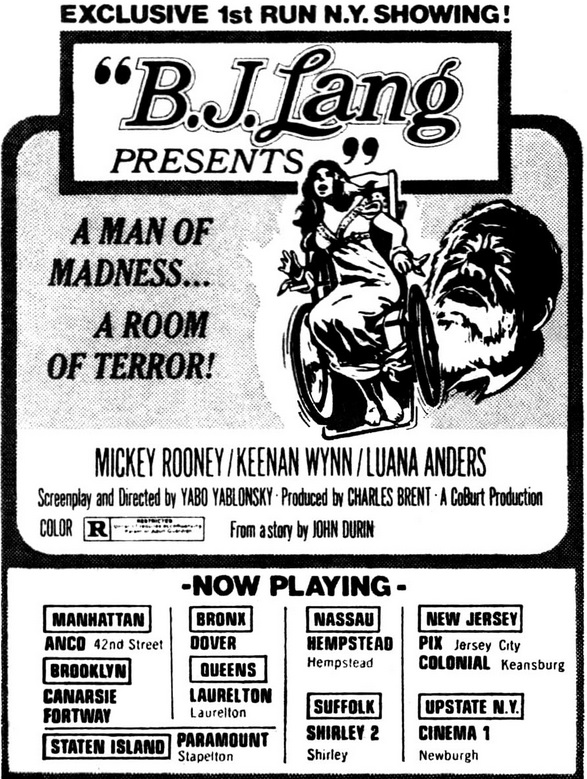








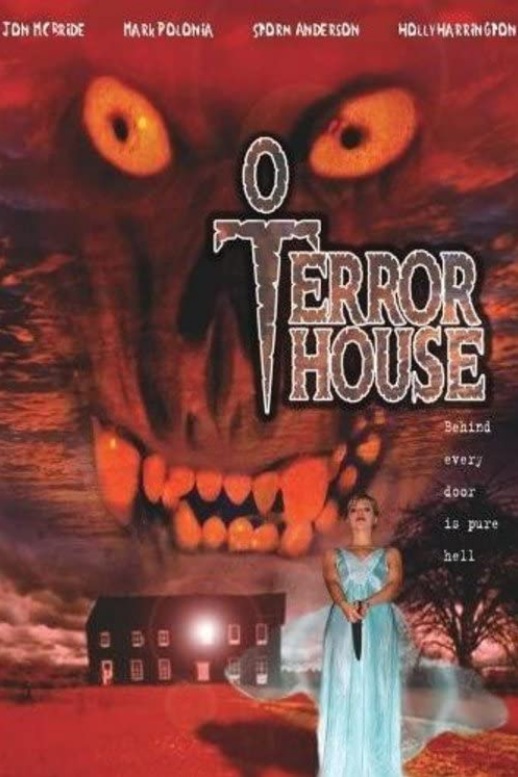




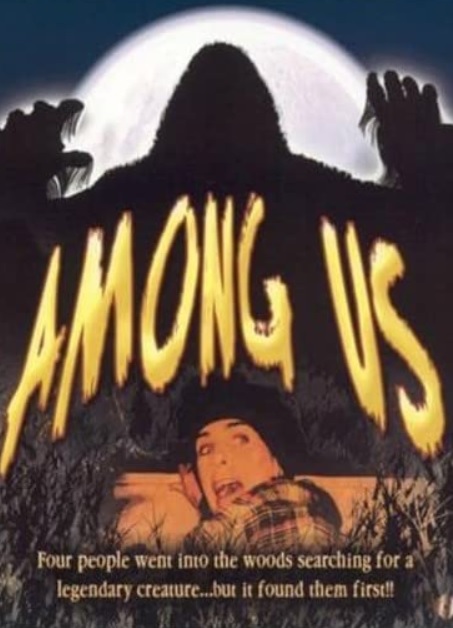

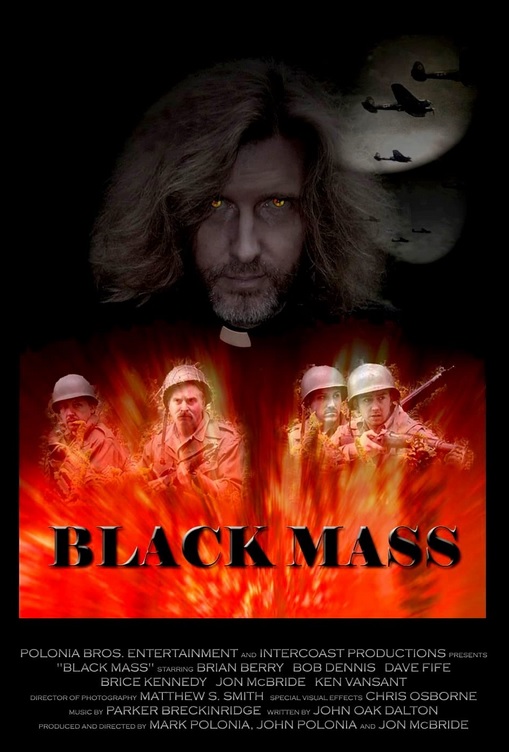

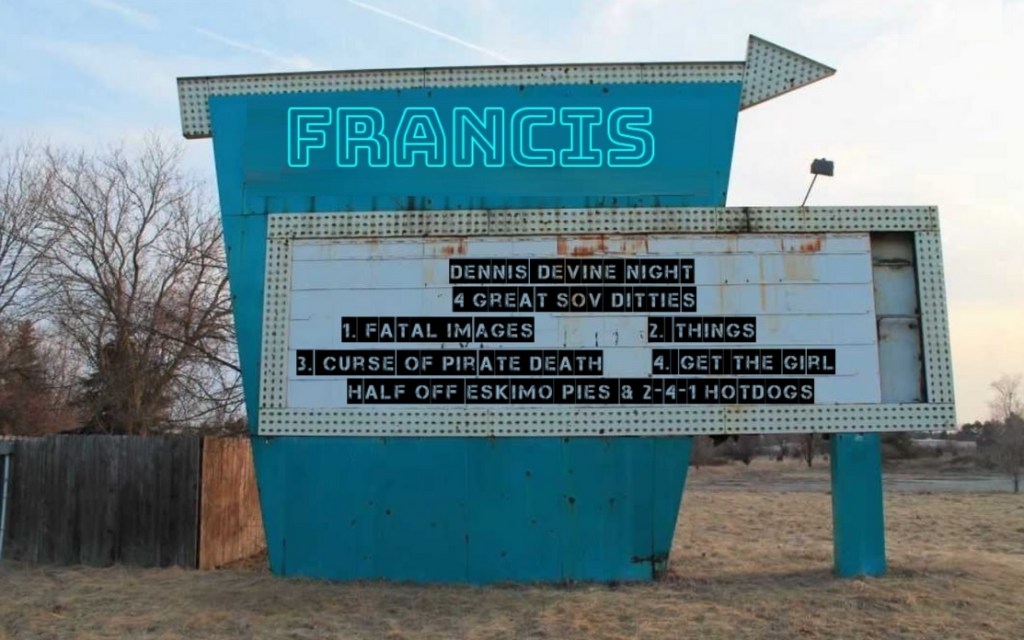






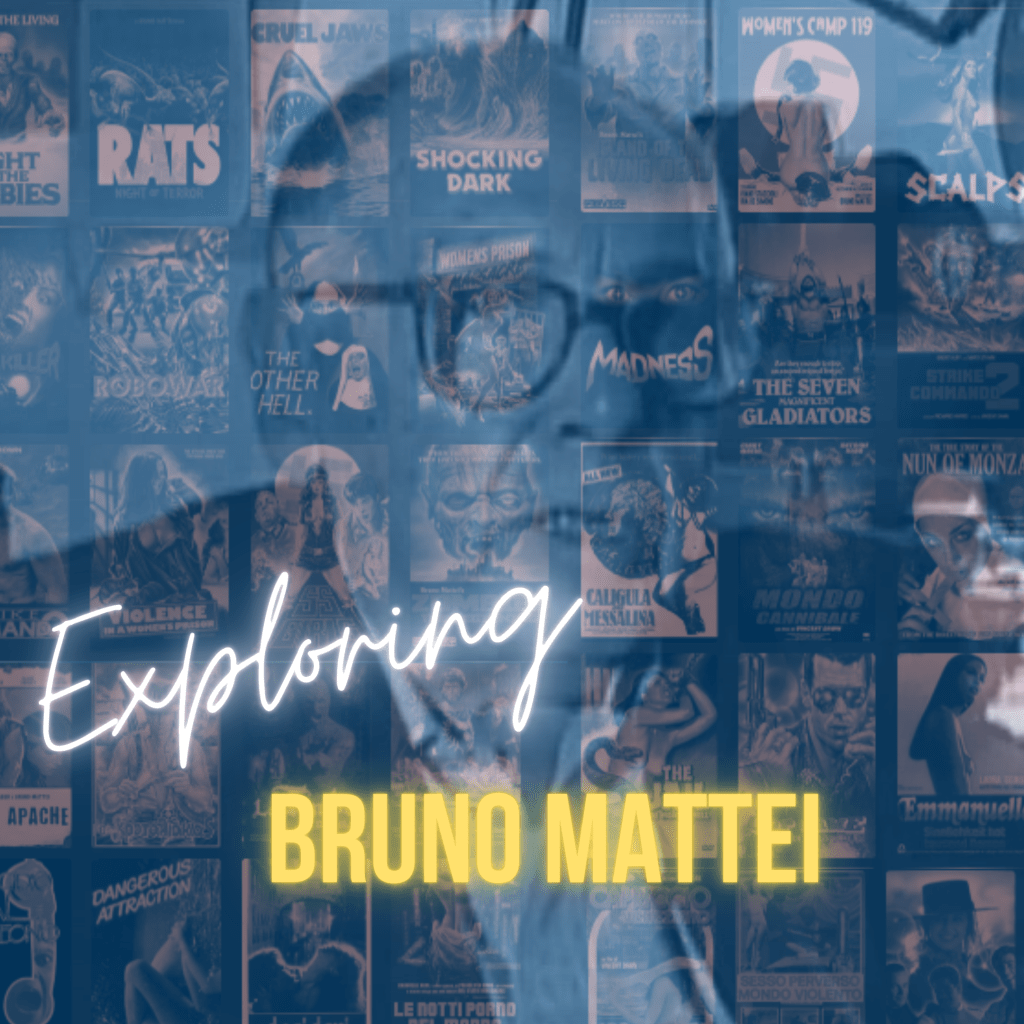


 B&S About Movies

You must be logged in to post a comment.