From Terminal City Ricochet with Jello Biafra to Beverly Hills, 90210 with Luke Perry? From the science fiction/horror musical Big Meat Eater featuring the soft-shoe of “Baghdad Boogie” to the historical drama Samuel Lount? Drag racing through the eyes of David Cronenberg? Children’s programming?
Welcome to the eclectic career of Phil Savath.
Phil Savath, born December 28, 1946, was an American-born Canadian film and television writer and producer. He was most noted as a two-time Genie Award nominee for Best Screenplay, with nominations for Original Screenplay at the 4th Genie Awards in 1983 for Big Meat Eater and Adapted Screenplay at the 10th Genie Awards in 1989 for The Outside Chance of Maximilian Glick. (The Genies are the Academy of Canadian Cinema and Television’s equivalent of the Oscars.)
Savath started his career in television in the late ‘70s as the co-creator and star of the CBC Television children’s comedy series Homemade TV and Range Ryder and the Calgary Kid, and then made his theatrical debut with David Cronenberg’s Fast Company.
Fans of FOX-TV’s Beverly Hills, 90210 know him for the dozen episodes he wrote for that post-Brat Back series, as well as the oft-aired HBO favorite, The Outside Chance of Maximilian Glick, which was turned into a short-lived TV series, Max Glick. He also wrote the Canadian hockey drama Net Worth (1995) and developed the Canadian TV series African Skies (1992) about a bi-racial teen friendship in post-Apartheid South Africa. As a producer, before his death in 2004, he produced the late ‘90s series These Arms of Mine, along with the TV Movies White Lies, Little Criminals, and Liar, Liar: Between Father and Daughter.
The influence of this Phil Savath-penned script on the career of David Cronenberg can’t be denied.
The first of Cronenberg’s feature films for which Cronenberg did not originate the screenplay, he was hired by the producers to direct. It was on Fast Company that Cronenberg developed long-time working relationships with cinematographer Mark Irwin, art director Carol Spier, sound editor Bryan Day, and film editor Ronald Sanders — each worked on Cronenberg’s later films. Actor Nicholas Campbell, who plays William Smith’s young protégé, also went on to appear in Cronenberg’s The Brood, The Dead Zone, and Naked Lunch. Sadly, Fast Company also serves as final release for Claudia Jennings (‘Gator Bait), who died in a car wreck several months after this drag racing drama’s release.
Take one part Ed Wood’s Plan Nine from Outer Space, one part Paul Bartel’s Eating Raoul, and one part Richard O’Brien’s The Rocky Horror Picture Show and vigorously shake in your “intentionally bad cult films” tumbler, and serve: We’ve got a mad butcher, a murdered mayor, and aliens who reanimate the mayor to assist in the harvesting of a rare, radioactive fuel deposit beneath the butcher shop. Oh, and there’s song and dance numbers (which you can enjoy during our intermission).
And those Great White Northeners “got it,” since Phil Savath and his co-writers Laurence Keane and Chris Windsor received Canada’s Oscar equivalent — a Genie Awards’ nod — for Best Original Screenplay in 1983. While Windsor never made another film, Keane and Savath continued onward and upward . . . and what could Phil possibly write as a follow-up feature? It’s not what you’d think.
Intermission! Courtesy of the Phil Savath-penned “Baghdad Boogie.”
Back to the show!
Movie 3: Samuel Lount (1985)
The man who gave us Big Meat Eater . . . wrote this? He did.
A historical drama set during the Upper Canada Rebellion of 1837, the film stars very familiar Canadian TV and film character actor R. H. Thomson (I remember him from the cable-played Escape from Iran: The Canadian Caper and The Terry Fox Story, as well as lots of American TV series) as Samuel Lount, an organizer of the rebellion who was ultimately convicted of treason and executed in 1838.
Receiving a limited theatrical run before debuting on Canadian television, it made its U.S debut on HBO and Showtime. While not winning any awards, it received five 7th Genie Awards’ nods for Best Actor, Best Cinematography, Best Costuming, Best Editing, and Best Sound Editing.
Yes, this powerful, fact-based drama is — in fact — from the pen of the man who gave us a film backed by a soundtrack performed by Alternative Tentancles bands. Yes, that’s right. Phil Savath worked with Jello Biafra. But Phil wrote “Baghdad Boogie” and incorporated “Heat Seeking Missile,” a song that would give Spinal Tap pause, into a movie — so what’s really shocking you at this point?
So, Phil did a pretty good job with the sci-fi horror parody Big Meat Eater, so he took a crack at parodying the post-apoc sci-fi craze of the ’80s with this dystopian-political intrique romp. It’s the story of a media entrepreneur who weasels his way into the mayorship of Terminal City and manipulates the populace through television, with their ensuing addictions to consumerism lining his pockets.
Oh, and the good mayor’s Chief Social Peace Enforcement Officer? Jello Biafra of the Dead Kennedys.
Yeah, it’s a must watch.
About the Author: You can learn more about the writings of R.D Francis on Facebook.He also writes for B&S About Movies.
Day 30: Bring It on Home: Something filmed in Seattle. (AKA we’re cheating with the Pacific Northwest.)
Okay, so why are we reviewing this dark, teen-crime drama in the middle of an all slasher ‘n horror month at B&S About Movies for October — outside of the fact that Slayer, Hallows Eve, and Fates Warning tear up the soundtrack? What more could possibly be said about a such a well-known, respected and positive-reviewed movie by the likes of us old sods and codgers of B&S About Movies?
Well, this review is all about the context.
During this month of October reviews, we took a look at the metal-influenced horrors of Dead Girls (1989), Snuff Kill(1997), Black Circle Boys (1998), and — by the way of the uber-graphic Deadbeat at Dawn (1988) — we poked a stick at Jim Van Bebber’s unforgettable short film, My Sweet Satan (1994). (We’ve also since reviewed Ricky 6.)
But let’s take it back a bit earlier: to the coming-of-age-crime drama Over the Edge (1979), which River’s Edge director Tim Hunter wrote. He based that Jonathan Kaplan-directed (White Line Fever) film on a 1973 San Francisco Examiner article entitled “Mousepacks: Kids on a Crime Spree” about the rampant teen crime and vandalism in an upscale, planned community outside of San Francisco (the film relocated the events to fictitious New Granada, Colorado).
I burnt the cassette back into Scotch Tape and cinnamon roll’d the album — and I taped Iron Maiden’s “Wrathchild” over that Burning Spear crapola. I dug the Wipers and Agent Orange, however; they remained to rock me.
As result of that Tim Hunter association — in conjunction with the film’s similar titles — in many ways, the later River’s Edge serves as a loose sequel/sidequel to the events in the earlier Over the Edge (Van Halen’s film soundtrack debut). True, those Colorado kids of the late ’70s were rocking out to the then burgeoning sounds of Van Halen, Cheap Trick, and the Ramones, while those mid-’80s Pacific Northwest teens were sporting tee-shirts by Motley Crue and Iron Maiden and thrashin’ to the sounds of Slayer, Fates Warning, and Hallows Eve; however, in a weird, metal rip in the space-time continuum and through the phantasmal crystal ball, we can see that while Carl Willat was leading the charge against the establishment at “New Granola,” Sampson Tollet was strangling the life out of his girlfriend Jamie and giving guided tours of the body.
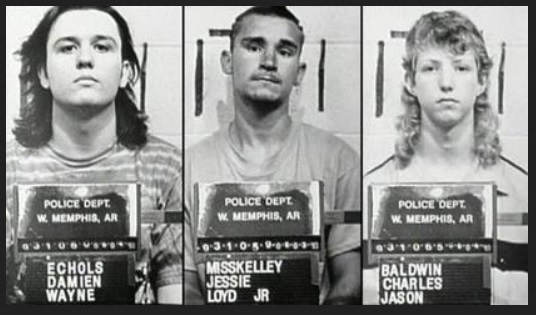
All of those aforementioned, metal-influenced horrors, as well as River’s Edge, are each loosely based on the horrifyingly true story about the 1981 California murder of Marcy Renee Conrad at the hands of Anthony Jacques Broussard outside of San Jose, California, and the 1984 New York murder of Gary Lauwers at the hands of Ricky Kasso. Occurring later and not directly contributing to the development of River’s Edge, but to all of the other metal-influenced films in this review, was the 1994 West Memphis 3 case in which Damien Echols, Jessie Misskelley, Jr., and Jason Balwin, three non-conformist boys, were wrongfully convicted as murderous “Satanists”; their guilt: a shared interest in rock music, horror films, and unconventional art and books. And while there’s no denying the guilt in the 1999 Columbine massacre — the maligning of the music of — and the career damage of Marilyn Manson and the industrial/goth bands KMFDM and Rammstein — as an “underlying cause” of the tragedy — was unconscionable.
Giving metal a bad name.
The legal atrocities of the West Memphis 3 case were, of course, foretold by the 1986 “subliminal message” trial in which British metal band Judas Priest was held responsible for the shotgun suicides of Nevada teens James Vance and Raymond Belknap. Then there’s the parents who sued the “Prince of Darkness” between 1985 and 1990, claiming the song “Suicide Solution” from Ozzy Osbourne’s 1980 debut album, Blizzard of Oz, encouraged their young sons to commit suicide; the best known of those was California teenager John McCollum who perished in 1984. Then there was Canadian, Nova Scotian teen James Jollimore — who killed a woman and her two sons on the “direction” of Osbourne’s then hit song, “Bark at the Moon.”
WM 3 Railroaded: The legal system needs an enema.
Sometimes, the reality of our world, when put to film, is more frightening than anything Stephen King, Wes Craven, or James Wan can dream and we stream in this post-A24 and Blumhouse world.
And there’s a reason why numerous mainstream critics classify River’s Edge a contemporary-day horror film. It’s real and it’s bone chilling. And you can stream it on Amazon Prime, while scene clips abound on You Tube . . . and here’s the trailer.
Jay Wexler, You Rocketh: For ye re-creating the River’s Edge Soundtrack on You Tube. We bow before ye as we rocketh through the the ramble-babbling actor sidebars that is our jam at B&S About Movies.
The Six Degrees of John Carpenter, aka Speaking of Sequels and Sidequels, Sidebar: Three of the cast members from River’s Edge appeared in the Halloween film franchise: The great Leo Rossi (Maniac Cop II), who played the boyfriend of Keanu Reeves’s mom, was Budd the paramedic in Halloween II (1981); Joshua Miller, who played Reeves’s little brother Tim, was one of Tom Atkins’s kids in Halloween III: Season of the Witch; and we’ll-watch-him-in-anything Daniel Roebuck appeared as Lou Martini, the owner of the Rabbitt In Red Lounge in Rob Zombie’s Halloween (2007) and Halloween II (2009).
The Rob Zombie Connection, aka, How I Learned to Stop Worrying and Embrace My Inner Hellbilly, Sidebar: And, to keep with the all-horror theme for this month, Roebuck also appeared in Rob Zombie’s 31 (Pastor Victor), The Lords of Salem (2012), and 3 From Hell (Morris Green) — as well as Don Coscarelli’s John Dies at the End (2012) and Phantasm: Ravager (2016).
The Crispin Is an Acting God, aka How I Learned to Stop Worrying and Embrace that Fact that Crispin Is an Acting God, Sidebar: How can we forget Crispin Glover — incredible here as the loyal, but troubled Layne — starting his career as Jimmy Mortimer in Friday the 13th: The Final Chapter (1984). We nostalgically wax over Crispin’s films Bartleby, Ed and Rubin, and Twister in our review of Steve Buscemi’s Ed and his Dead Mother. (Yes, Steve, ye are an acting god as well, so proclaimed; we even reviewed the majesty that is Trees Lounge.)
We get into Eddie Van Halen’s musical contribution to the River’s Edge spiritual cousin, Over the Edge, with our “Exploring: Eddie Van Halen” featurette. Remember how The Wild Life wasn’t a sequel, but a cousin-film to Fast Times at Ridgemont High? Well, Eddie worked on that Cameron Crowe film, as well. Check it out!
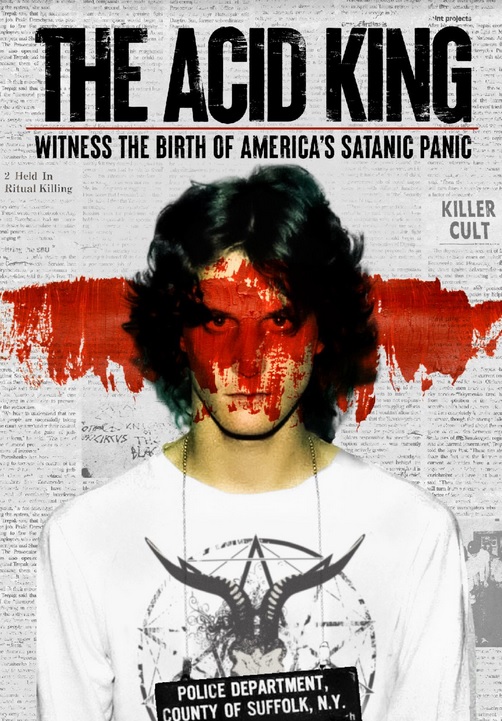
The new 2021 documentary on Ricky Kasso.
The real, well, sort of, Ricky Kasso.
About the Author: You can learn more about the writings of R.D Francis on Facebook.He also writes for B&S About Moviesand publishes on Medium.
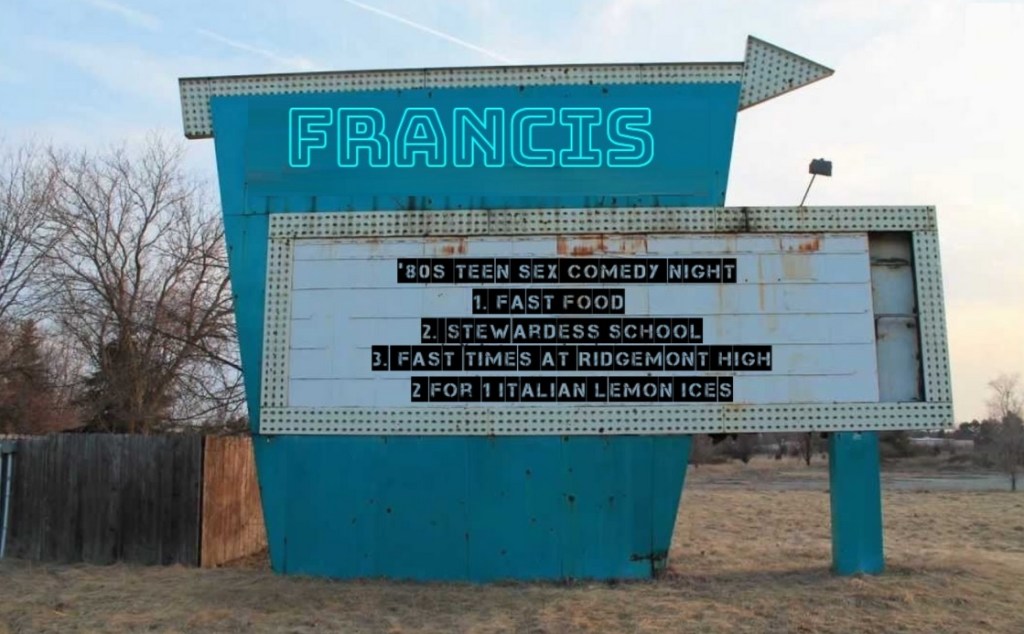
As Robert Freese pointed out in his “Exploring: 80s Comedies” featurette for B&S About Movies, Bob Clark’s Porky’s opened up a cottage industry of teen sex comedies. And boy, did producers scrape the grease pits . . . where’s Pee Wee, Kim Cattral, and Kaki Hunter when you need ’em? Robert Hays! Leslie Nielsen! Where are you, bros?
You a-lookin’ for a-finger lickin’ good burger joint (that’s not) down the road from Faber College . . . one that’s staffed by Melanie Griffith’s half-sister Tracy Griffith (Sleepaway Camp III: Teenage Wasteland) going up against evil burgermeister Jim Varney (yes, Ernest P. Worrell of the “Goes To” movies), along with Kevin McCarthy from Invasion of the Body Snatchers . . . and Michael J. Pollard (Memorial Valley Massacre) . . . and Traci Lords (Shock ‘Em Dead) as an industrial spy?
No?
How about a movie with lame jokes about “date rape drugs” in the special sauce and labs where men suffer from non-stop erections?
No wonder this ended up being the last film by ex-’80s TV teen idol Clark Brandon (My Tutor, TV’s The Fitzpatricks, Out of the Blue, Mr. Merlin, The Facts of Life). And why am I the only one who remembers watching 1977’s The Chicken Chronicles on HBO in the ’80s with Clark mixing it up with Steve Guttenberg and Phil Silvers?
Yeah, it’s as bad as American Drive-In and Hard Rock Zombies, which were both shot back-to-back by Krishna Shah. So thanks for the heads up, Blue Laser Studios. And thank you, You Tubers for uploading it HERE and HERE to enjoy. Eat ’em and smile!
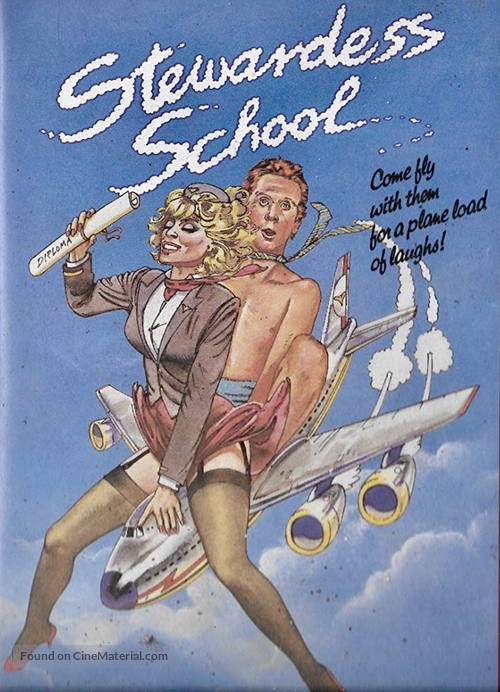
You a-lookin’ for a ripoff of Airplane! starring Donnie “Ralph Malph” Most in a comedy that plays an airline crash in downtown Los Angeles for comedy? How about a ripoff of Police Academy set in a stewardess school?
Well, if Donnie, aka “Don,” Most as a washed-out pilot slummin’ as a steward doesn’t get ya . . . maybe Mary Cadorette — who played Vicky, the girl who finally got Jack Tripper to settle down and go from Three’s Company to Three’s a Crowd — as the hot air hostess, will get ya’. How about Wendie Jo Sperber as a frumpy, overweight air hostess?
No. Didn’t think so. Again, where’s Robert Hays and Leslie Neilsen when you need ’em?
Intermission! You need a Chilli Dilly!And a hotdog!
Of the glut of teen sex comedies, it’s this Cameron Crowe-penned comedy — along with Bob Clark’s Porky’s and, to a lesser extent, Boaz Davidson’s much-adored The Last American Virgin — that major and indie studios desperately tried to imitate but never duplicated.
This one has it all: Phoebe Cates changed our young lives rising out of a pool. The Sherman Oaks Mall is practically a character in itself. Jennifer Jason Leigh is so hot, she breaks up a friendship. We all wanted to be as cool as ticket scalper Damone and wore caps and vests. We wanted to hang out with Jeff Spicoli like his stoner buds Nicholas Cage, Eric Stoltz, and Anthony Edwards. And we begged our parents for a pair of checked vans. And we all wanted jobs at the mall slingin’ fast food and selling movie tickets (and working in the record store). And it came with a pretty cool Sammy Hagar theme song.
An all-out classic. Watch it.
About the Author: You can learn more about the writings of R.D Francis on Facebook.He also writes for B&S About Movies.
I don’t want to hear it Sam. This one’s got a ’69 Chevelle muscle car, vamps, zoms, goo, blood, slashings, lesbian sex with devils, a crazy clown on a motorcycle, a Rob Zombie tie-in, and Satan-influenced rock. So, while it’s not a straight slasher per se, I’m posting it. I mean, shite dude. Every time I think I got one that’s a perfect fit for October’s “Slasher Month,” you’ve already reviewed it. Even grease bit scrubbers need a break at the B&S About Bar n’ Grill.
Anyway, it’s all “Tails, Horns and Rock n’ Roll” according to the multiple-art work DVD covers of this low-budget, hallucinatory joyride crossing Quentin Tarantino’s From Dusk ‘Til Dawn with the film works of alternative rocker Rob Zombie — House of a 1000 Corpses, in particular. The caveat: If you’re not into non-linear storylines with a dreamlike-psychedelic vibe and cackling clowns, you’ll be pissed. But if you have an appreciation for a low-budget filmmakers and actors giving it their all and shooting for something a little bit different, then you’ll enjoy getting lost in this desert purgatory where nothing is as it seems.
After the death of her father, Fay, a small town girl, aimlessly hits the road in her mechanic pop’s cherish ’69 Chevelle, leading an Easy Rider existence (less the existentialism) as she searches for meaning and purpose. One of those “searches” result in a drag race that blows her engine and strands her along the desert asphalts of Route 66. To raise the funds to repair her car, she takes a job stripping in a dusty town’s night club (in a dominatrix outfit, natch). Her life quickly descends a film noir spiral as she raped by a someone in a leather mask, she stalked by a neurotic, drug abusing clown, deals with a creepy motel clerk of the Bates Hotel variety, a skeleton-ratting, bible-thumpin’ preacher with secrets to hid, and a sexy-strippin’, red-skinned lesbian devil (sporting great, head-to-toe red make-up, complete with horns and a pointy tale) who drives a classic T-Bird.
But is it any of this real? Is it all just a recreational drug fantasy? Or has Faye made her last stop in a purgatory stop-over to hell?
What this one has going for it: Awesome, unsigned-cum-indie-cum-pseudo local-cum-underground metal courtesy of the Los Angeles metal band the UV’s—featuring “Blare N. Bitch” of L.A rockers Betty Blowtorch—as the strip club band (again, know your Tarantino). The soundtrack also feature several songs by Scum of the Earth, a band formed by Mike Riggs, who served as a member of Rob Zombie’s solo band for the albums Hellbilly Deluxe and The Sinister Urge, and John Tempesta of Testament (now I know you remember their ‘80s MTV Headbanger’s Ball hit “Over the Wall”).
And, if you’re a radio dork like me, you’ll remember the American TV series WKRP In Cincinnati featured another Scum of the Earth — a fictitious band portrayed by ex-Silverhead leader Michael Des Barres and his band late ‘70s band Detective (Episode 104, if you want to search for it).
Devil Girl is the feature film writing and directing debut for upstate New York filmmaker Howie Askins who, like us kiddies frolicking the wilds of Allegheny Country, likes his comic books, dusk till dawn drive-in movies, and metal music. He’s since released his second feature, Evidence (2012), a POV found-footage romp about a camping trip gone wrong. Based on its 40 critic and 60-plus user reviews on the IMDb and its 3 out of 5 stars review based on 132 Amazon users, the horror-mystery mixed with sci-if received solid distribution, is easy to find, and worth dropping the .99 cents to watch it on Amazon Prime. It definitely has a nice twist beyond the usual POV-Blair Witch norms. Unfortunately, Devil Girl is currently unavailable on Amazon Prime and no other streams are available, but DVDs are easily found in the online marketplace.
I know. I know. Go scrub the grease pit. . . .
About the Author: You can learn more about the writings of R.D Francis on Facebook.He also writes for B&S About Movies.
Day 7: They’re Out to Get You: One with Heavy Paranoia (real or imagined).
“I don’t want to take lessons! I wanna have a fucking band!Fucking be like Deicide! Deicide. Yes, Deicide!” —Shane Carver, loser leader of the Black Circle Boys
Yeah, maybe the guitar is broke, douche-dick.
I won’t say I hate this movie. But I was certainly disappointed by this movie, considering it “starred” John Doe of X and dealt with a misguided ne’er do well finding solace in black metal music. A group of Satan worshiping dopers want to start a band—and kill people—and John Doe? I’m up for that.
Oh, be careful for what ye hail, black metal and horror film buff.
What we ended up with here is an all-male version of—without the supernatural hocus pocus—1996’s much better The Craft, which also gave us a peek into the teenaged occult, as well as 1987’s The Lost Boys. And, oh shite, this film pulls the ‘ol Eric Roberts (Power 98) bait-n-switch on you.
Bastards!
Either John Doe was cast—in typical Eric Roberts fashion—for one scene just to get a brand name on the box/in the credits, or Doe’s work as a police detective investigating the Black Circle Boys Murders, for whatever reason, ended up on the cutting room floor. And sorry, Donnie Wahlberg is cool these days (and excellent) in TV’s Blue Bloods, but he just isn’t an effective consolation prize when we came to see John Doe (but, truth be told, the ex-New Kids on the Block member, in his third acting role, is very good as Greggo, effeminate Satanist who introduced Shane to the Black Arts). Oh, yeah . . . blink and you’ll miss Lisa Loeb (remember her gal-paldom with Ethan Hawke and hitting the U.S. Top 10 in 1994 with “Stay (I Missed You)” from Reality Bites?) as an “angry goth chick” in a club.
As you can see, the casting on this movie is flat out, upside down FUBAR’d. Why would a production (granted, it’s low budget, but still) take known commodities—that inspire us to rent in the first place—such as John Doe and Lisa Loeb—and place them in one scene cameos; each should be in the larger, respective roles of Detective Roy, played by Victor Morris (NBC-TV’s In the Line of Duty film series and Bigger Than the Sky), and the Dead Head-high schooler Chloe, played by Tara Subkoff (The Last Days of Disco; The NotoriousBetty Page).
True, both Morris and Subkoff are affable in the roles, but wouldn’t you, as The Devil’s Advocate (sorry) producer, want to predominately feature Doe and Loeb’s names on the box in smaller type under the leads and copywrite-plug their past, known works on the box’s flipside? Loeb could totally pull off the wiles of a hippy chick high schooler—and you could feature her playing the acoustic guitar and singing a folk song—to the antithesis of the goth kids running the school. And if you’ve seen John Doe’s work in A Matter of Degrees and his co-starring role as Teddy Connor, the leader of the once great Wotan, in the NBC-TV Law & Order: TOS 2003 “Ripped from the Headlines” episode “Blaze” (which took it scripting cues from Great White’s tragic 2003 performance at The Station night club in Rhode Island*), you know that Doe not only carries a film as a lead actor with distinction—he can pull off a goth rocker with class and style. (Sorry, Donnie. No offense. We love Doe ’round these ‘ere Allegheny wilds and crush any actor before him.)
Ye, hail Teddy Connor! Courtesy of Gregory Hill Design/NBC-TV
But alas . . . Black Circle Boys was made in 1998 and not 1988; so the producers decided to appeal to the then nostalgic-maturing New Kids on the Block contingent, instead of the ol’ punk codgers (aka myself and B&S boss Sam) who admire John Doe and rocked out to X in the ’80s via The Decline of Western Civilization and Urgh! A Music War. And yeah, David Newsom (ABC-TV’s Homefront) is a fine actor (and now a successful reality television producer; kudos, Dave!), but the divine Dee Wallace Stone of E.T. the Extra-Terrestrial and The Howling fame is wasted in her “Eric Roberts Casting” as the troubled mom; Wallace would have been more effectively utilized in Newsom’s larger role as the swim coach-physics teacher hybrid—and being the horndogs we are, even get a few scenes of her in a curve-accentuating one piece. And yes . . . that is the pride of Harrisburg, Pennsylvania, Richard “Les Nesman” Sanders of WKPX in Cincinnati (check out our review of FM) also being woefully underutilized in his one (uh, I think it was two?) shot role as Principal Dunkel. (At this point, the producers should have called in Eric Roberts—who we friggin’ love like blood around here. And yes, another major f-up by the producers: not having Killing Joke on the soundtrack, Deicide references be damned.)
Now, that’s how you cast, music consult, and sell tickets, kiddies. But alas, I am a schlub writer and not a casting director or music consultant. . . .
So, anyway . . . We meet Kyle (Scott Bairstow of FOX-TV’s Party of Five), a star high school swimmer wallowing in depression over a personal loss (an idiot friend fell off a bridge/water tower and broke his neck while they were drunk; instead of moving on and taking responsibility, Kyle blames “the world”)—which makes him easy pickings for paranoia-poster child Shane Carver (a very good Eric Mabius; big screen debut in Welcome to the Dollhouse, noticed in Cruel Intentions) and his little goth clique, The Black Circle Boys. Kyle is introduced to hard booze, drugs, devil worship, and frog beheadings-by-mouth in quick succession . . . and murder, by way of drug-dealing Rory (an early Chad Lindberg of The Fast and the Furious), a BCB “slave-trainee” by Shane as a form of sacrifice. Along the way the boys start a band, which is an utter failure. So, out of frustration—and a parnoid belief his goth-clique is betraying him—Shane starts killing off the other members of ‘the Circle.
At least I think that’s what happened. Yeah, they lost me. That’s what happens when you deny me of my John Doe fix, boondoggle me with Donnie Wahlberg, and don’t give us the black metal we came for and stick us with a bunch of never-heard-of bargain bin basement clutter that is neither “black” nor “metal” or anything worthy of woof or a tweet. I mean, come on . . . a movie about “black metal murders” that only uses the word “Satan” once? And what in the Sam Hill (another music consultant f-up: no Glenn Danzig and Samhain**) is this B.S. referring to Satan as “Father” all the time? Get the Anton LeVey (The Devil’s Rain) out of here, Mr. Politically Correct screenwriter. Fuck, dude.
And what the hell, bass player? Learn your root, 3rd, and 5th triads. Fuck me. Even the shittiest of shite bassists know ’em. You deserved Shane slashing your throat and tossin’ your lame ass off a bridge. I’d nut-punch you myself, dick breath. The Relentless from American Satan would dissolve you and your “boys” into a puddle just by pissing on ‘ya. Pusswads.
Ugh. Another great clip — lost — that ruins the point of the previous paragraph.
In the end: What we have here is an ineffective, low-budget variant of 1987’s far superiorRiver’s Edge (starring Crispin Glover and Keanu Reeves), in the Black Circle Boys claims in its promotional materials that it is “Based on a True Story.” And while it’s beneath River’s Edge, Ricky 6 — which is also based on Ricky Kasso’s “Satanic Panic” inspiring crime — is better than Black Circle Boys.
F-You, marketing department. Your “true story” and John Doe bait-n-switch be damned, pisses me off. And you too, Mr. Music Consultant.
That “true story” takes us back to Slayer, whose loud and aggressive music—featuring violent themes that would even scare Tony Iommi of Black Sabbath—went beyond the usual horror-film influenced, satanic lyrical themes to include odes to sadism, necrophilia, serial killers, and Nazi death camps. Not helping Slayer’s reputation in the eyes of the Moral Majority was Slayer’s music being predominately featured in the River’s Edge, the film itself based upon the 1981 California murder of Marcy Renee Conrad and the 1984 New York murder of Gary Lauwers, where their troubled-teen killers bragged about and returned to the murder site of their victims.
The most catastrophic example of this ignorance regarding hard rock and heavy metal music was the highly publicized, 1994 West Memphis 3 case in which questionable “evidence” led to the wrongful conviction of three non-conformist boys as murderous Satanists. Their only guilt: a shared interest in rock music, horror films, and unconventional art and books (you know, guys like myself and Sam, B&S About Movies’ boss. And we’re harmless, really).
A seriously f-up dude giving AC/DC a bad name.
The occult and the America justice system simmered in a cauldron of abhorrence and ignorance once again in the 1999 Columbine massacre, as satanic-panic maligned the music of shocker-rocker Marilyn Manson and, to a lesser extent, the industrial/goth bands KMFDM and Rammstein as underlying causes. The misguided controversy forced Manson to cancel the remaining dates of his 1999 Rock Is Dead world tour and negatively affected the sales of his third album, Mechanical Animals (1998). Additionally slandered as “co-conspirators” were Oliver Stone, by way of the Quentin Tarantino-scripted Natural Born Killers, in addition to the designers behind the video games Doom, Wolfstein 3D, and Duke Nukem. (A 1999 Rolling Stone article: “Columbine: Whose Fault is It?,” in addition to Dave Cullen’s 2009 in-depth tome, Columbine, examine the tragedy.)
Paving the way for the legal atrocities of the West Memphis 3 was the 1986 case regarding the seminal British metal band, Judas Priest. In that judicial miscarriage against the creative arts, the parents of two Reno, Nevada, teenaged boys sued Judas Priest and its label, Columbia Records, for $6.2 million dollars, claiming the band’s 1978 release, Stained Class, contained backward, subliminal messages that drove the boys to suicide (the court dismissed the case in 1990).
F-in railroaded. Man, Don’t even get me started.
Prior to Judas Priest’s slandering by religious zealots, Ozzy Osbourne, the ex-lead singer of Black Sabbath, became the victim of another bogus suicide-by-rock music claim. Three sets of parents sued the “Prince of Darkness” between 1985 and 1990, claiming the song “Suicide Solution” from Ozzy’s 1980 debut album, Blizzard of Oz, encouraged their young sons to commit suicide—all three cases were eventually dismissed. In an archetypal overreaching misconstrue by the Christian Right blinded by satanic-panic to deflect their parental failures and to excuse the “misadventures” of their own children, the clearly anti-alcohol and an anti-suicide song, with lyrics written by bassist Bob Daisley, was a touching tribute to Bon Scott, the then recently deceased lead singer of AC/DC (AC/DC: Let There Be Rock). Other tomes claim it was actually about Daisley’s concerns regarding Ozzy’s health. Whatever Daisley’s lyrical motivation, the song certainly is not a clarion for teenagers to commit suicide.
Anyway, back to Black Circle Boys.
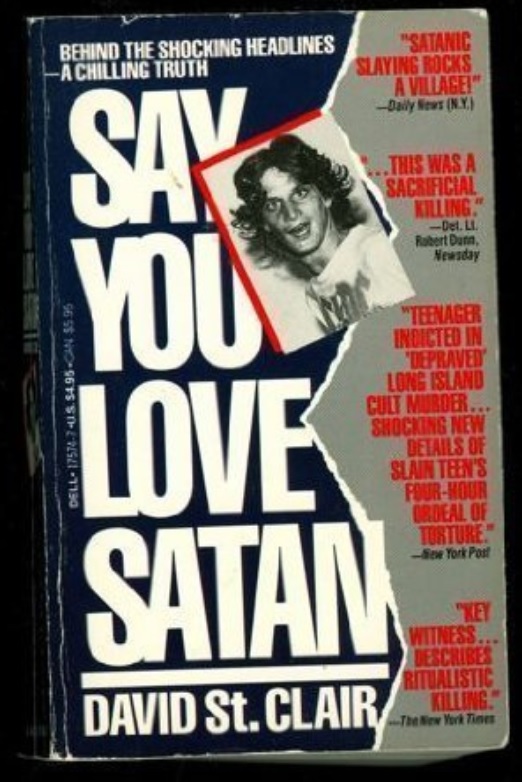
This ain’t no River’s Edge and director Joe Berlinger’s theatrical, three-film documentary series Paradise Lost is more disturbing and far more engrossing (in addition to the non-fiction books Blood of Innocents by Guy Reel and Mara Leveritt’s Devil’s Knot, both which examine the WM3 tragedy at length; the later book itself was adapted into a 2013 film). If the filmmakers behind Black Circle Boys had only adhered to their source material: David St. Clair’s 1987 expose Say You Love Satan, about 17-year-old Ricky Kasso and the murderous exploits of the Knights of the Black Circle (which resulted in the death of the aforementioned Gary Lauwers).
You can stream Black Circle Boys for free on You Tube, as it is not available on any streaming platforms. Used copies of the unnerving Say You Love Satan are readily available in the online marketplace—it’s a highly suggested read. In fact, read the book instead of watching this movie.
Ugh. Another trailer bits the digital dust.
Seriously, though: The appreciation of a film—whether it is good or bad, well-made or poorly made—is based in the age of the viewer; for film appreciation is of a time and place. While I love my horror movies (Phantasm to Rocktober Blood) and my Killing Joke, Samhain, The Misfits, Venom, King Diamond, and Deicide as much as the next guy, I was already ensconced in adulthood (wearing shirts with collars, even ties!) when Black Circle Boys was released. So, if you were in middle school or just starting high school at the time Black Circle Boys was released—as I was when the juvenile delinquency drama Over the Edge was released in 1979—rewatching this film will warm the cockles as your own person “classic” film.
* The Great White tragedy also served as the basis for the Mark L. Lester-directed and Eric Roberts-starring Groupie.
** Glenn Danzig is in the filmmaking biz these days. We recently reviewed his film Verotika. Yeah, we adore auteur projects and movies with rock stars ’round here. Speaking of which . . . you can get all of the rock ‘n’ roll flicks you can handle with our “Rock ‘n’ Roll Week” and “Rock ‘n’ Roll Week II” features from this past July and September with links to over 100 film reviews.
About the Author: You can learn more about the writings of R.D Francis on Facebook.He also writes for B&S About Movies.
Back in the early ’90s, when it came to SOV productions released direct-to-VHS, writer-director Dennis Devine (2020’s Camp Blood 8 and 2019’s The Haunting of La Llorona) was a name you could trust to give you the goods. Problem was, his stuff was impossible to find on video store shelves—surely not at a Blockbuster, but shockingly, not at many, if any, mom ‘n pops. As was the case with most of the ‘80s-’90s SOV canons—even after Christopher Lewis, with Blood Cult, proved you could successfully distribute movies shot direct on 3/4” tape direct to retail-rental outlets—you had to buy Devine’s works via mail order via ads in the back of Famous Monsters. (Well, not Famous Monsters; that was a bit too slick, as I recall. But it was one of those pulpy, black & white horror mags from back in the day.)
Ah, the dot-matrix cover tucked behind the plastic-sleeved clamshell I remember. Our thanks to critcononline.com for preserving it.
So, being a sucker for and a collector of rock ‘n’ roll-oriented films of any genre—including horror—and the fact that all of the pulpy, underground critics raved about Dead Girls—I sent in my little grocery store money order to Something Weird Video (I think it was them; it was one of the those mail-order film studios-distributors). And as is the case with most, if not all, Dennis Devine productions (several of which I picked up over time; to date, he’s directed 31 and wrote 23 films), Dead Girls was a pretty decent flick that lent to replays over succeeding Halloweens. That is, until—as is the case with all mail-order film studios procuring low-grade VHS tapes in multi-packed, shrink-wrapped bricks and churning out copies via high-speed dubbing machines—my copy of Dead Girls caught a bad case of the molds. (And the mold grew . . . and spread to and took out Alice Cooper’s Monster Dog cataloged next to it; why that cataloging? I don’t recall the reasoning that paired the two. I think I was just messy-lazy in my alphabettin’.)
If only Dow came up with a video tape cleaner!
So, why am I waxing nostalgically sad over an admittedly obscure ‘80s (well, ’90s) SOV? Well, we have to blame Sammy P, B&S About Movies Chief Cook and Bottle Washer (again, I am just the fry cook, grease bit scrubber, and dumpster pad cleaner around ‘ere) for reviewing ALL of the Scream movies (in one week; the last week of August/first week of September) and yeath proclaiming all review slots for the month of October be forth dedicated to Slasher Movies—so say we all (moan) from under our cloak and cowls (and fedoras, hee hee). And since fans of the horror blockbuster Scream, which itself is a mock-slasher parody-homage, will recognize the plotline similarity to Dead Girls, which was completed several years prior to the later, 1996 Wes Craven hit, we’re reviewing it. So thanks, Mr. P! (For the uninitiated: Scream had deaths according to horror movies; Dead Girls had kills by songs.)
Yeah, I love it when the analog stars align at B&S About Movies and inspire a review. I wonder if Dennis Devine will drop us a pissy note in our “Feedback” section, decrying us for “how dare” we review their masterpieceshite without “permission” forthwith. . . . Nah, Double D’s not a maniacal, “Oscar bound” auteur. And his stuff isn’t shite. Oops, I’m getting pissy and off point, again. DOWN BOY! Good boy. . . . (Sorry, I’m letting those thin-skinned, self-financed via Kickstarer “next Tarantinos” of the digital age get to me.)
Who da frack are these girls? That’s not Diana, Angela Eads, Kay, and Angela Scaglione . . . wait, is it? Curse you, art department!
The retail-rental slipcase reissue that I don’t remember/courtesy of 112 Video via Paul Zamerelli of VHS Collector.com.
So, anyway . . . the Dead Girls are a female death metal band . . . but their low-grade rock is neither “death” nor “metal” and reminds of the Cycle Sluts from Hell . . . remember CSFH’s freak, ‘90s metal-parody hit “I Wish You Were a Beer” . . . and its members Queen Vixen, She-Fire of Ice, Honey 1%’er, and Venus Penis Crusher . . . only the Dead Girls aren’t that good . . . where’s Gord Kirchin’s gag-studio project Piledriver (music newly featured in Girls Just Want to Have Blood) when you need ‘em?
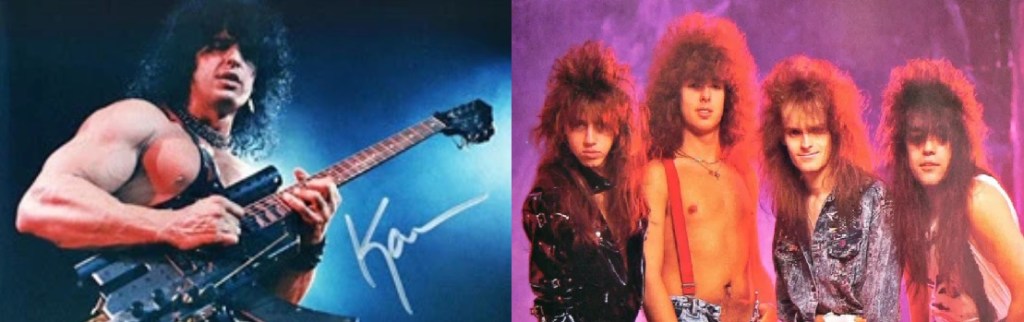
Anyway, I digress . . . the Dead Girls come complete with the “evil aliases” of—an idea that, I bet Brian Warner, aka Marilyn Manson, swiped (just kiddin’ Manson, had to work your aliases-band into the review)—Lucy Lethal, Randy Rot (the male “pussy” of the group on drums; brother of lead singer Ms. Lethal), Bertha Beirut, Nancy Napalm and Cindi Slain. Their collective shticks, which we learn through journalistic expositional babble (ugh): Cindi Slain (aka ex-magician-illusionist Susie Striker) is into self-eviseration, Bertha Beirut likes to strangle herself on stage with the American flag, and Nancy Nepalm is the para-military “Lemmy” of the group; a “weapons expert” who adorns herself in camo and “live” ammo-bullet belts and jaggling explosives as she slings a custom “machine gun guitar” (on loan from mid-’80s Alice Cooper guitarist Kane Roberts).
Of course, “death rock” is “on the way out” (don’t tell that to King Diamond and Cronos of Venom), with their manager urging them into a more “commercial” Into the Pandemonium-to-Cold Lake Celtic Frost fuckover as he sends the girls into the “Cherry Orchards” (no pun intended, I swear!) and be the friggin’ the Go-Go’s with friggin’ Wall of Voodoo covers. Do you remember when the record executives eviscerated Motley Crue’s collective gunny sacks and went from Shout at the Devil bondage leathers to day-glow the Bangles biker pastels, stopped singing about Satan and gave us songs about girls and friggin’ motorcycles and doctors and “going home” ad nauseam, ala Poison? Yeah, like that . . . all the world needs another “Clowns,” by golly! Or maybe we’ll get lucky and Artie the manager (Brian Chin, who became a voice actor then became an animation storyboard artist) will turn them into Vixen and rock us with “Edge of a Broken Heart” or Lita Ford with “Kiss Me Deadly,” perhaps? Nah, Artie’s a dipshite who thinks touring the warzones of Russian-occupied Yugoslavia is a smart career move.
Kane Roberts; courtesy of Floyd Rose.com/Celtic Frost; Metal Addicts.com.
As was the case with the dippy-dopey Champaign, Illinois, new-wave poppers the Names not finding any success until they transformed themselves into a low-rent Kiss-cum-Phantom of the friggin’ Opera (not) “metal” band the Clowns slicing up mannequins in Terror on Tour (Am I the only one who remembers “Lonely” and the Queensryche-ish album Transcendence from the phantom half-masked Crimson Glory hailing from the metal wilds of Tampa, Florida?), the gals of the Dead Girls weren’t finding much success with their dippy-dopey, new-wave synth-droning, so they went (not) death “metal,” complete with images of death that were devised as a marketing gimmick to sell records—no one was supposed to take them seriously, so says lead lyricist, sweet Gina Verilli, aka Bertha Beirut. (Now, I know this is sexist, but I got those boilin’ hormones—actress Diana Karanikas (as Gina) is the most heart weeping, prefect mix of “hot” and “cute” to ever bless the screen. And she friggin’ quit the biz after this film. Heartbreaking. Also quitting, after doing Things II for Devine: Angela Eads as Dana/Lucy Lethal; is it just me, or does she look like the perpetual Lifetime damsel-in-distress Alexandra Paul of Christinefame? Just sayin’.)
Anyway, the (coke) mirror, that is, “image” cracks when a group of teenagers, led by Gina’s sister Brooke (sexy/creepy Ilene B. Singer in her only film role; why did everyone quit the biz after this movie) commit a mass suicide to the soundtrack of the Dead Girls. Uh, oh. Career over? Nay, it’s time to hop into the Mystery Machine, Shaggy! We need recuperate Sam Raimi-style in the not-so Norwegian Wood. (Speaking of the Beatles . . . and death rock, did you ever hear Coroner’s cover of the Beatles’ “I Want You (She’s So Heavy),” well, you just did.)
Hmmmm . . . seems someone in the Dead Girls band camp paid attention to the James Vance and Ray Belknap Judas Priest “subliminal suicides” of 1986 (which became an hour-long PBS segment, Dream Deceivers in 1992) and the three Ozzy Osbourne heavy metal suicide trials of 1985 to 1990. (Dream Deceivers is on You Tube; you can find Ozzy trial clips HERE and HERE.)
Anyway . . . yeppers, it’s more dopey rockers of the Blood Tracks and Monster Dog variety driving right into the mayhem as they head off to a secluded country retreat for rest and relaxation—and for Gina to take care of her sole-surviving sister, much to the chagrin of her bible thumpin’ aunt who cared for them after their parents died in a car crash. (That’s gratitude; Auntie takes you in, gives you room and board; you form a death metal band in spite; while little sis has metal posters on the walls.) Oh, and get this: Gina has E.S.P abilities, so she foresees all this coming . . . but still goes to the wooden retreat (fuck, not Spine, again?) . . . where, in a Friday the 13th twist, a psychotic fan—cloaked in a black cape, fedora, and skull mask (the “Scream” part) goes “Billy Eye Harper” and unfurls the Rocktober Blood, murdering managers, boyfriends, fans, and musicians in short order, using the lyrics as a “how to” guide.
Although the script indicates lyrics to songs such as “Drown Your Sorrows,” “Nail Gun Murders,” “Hangman,” “Angel of Death” and “You’ve Got to Kill Yourself,” none of the songs appear in the film, nor does the band perform on screen. So, while we’re denied the “death metal,” what sets this Devine production heads and shoulders heads above most (well, all other) SOVs is that make-up wizard Gabe Bartolos, who also worked on the Basket Case and Leprechaun film series, handles the special effects and gives us a film that is as fun as—and significantly better than, but not as revered as, the rock ‘n’ horror, “No False Metal” classics that are Rock ‘n’ Roll Nightmare and Shock ‘Em Dead. All in all, Devine’s go-to scribe, Steve Jarvis (Things II and a dozen other Devine productions), gives us decent film noirish twists, double crosses, dream-within-dream fuck yous, floppin’ red herrings (bitchy aunts, pussy-whipped uncles, creepy preachers in need of an eyebrow trim, Christian ex-boyfriends, mentally-challenged caretakers, Yugoslavian reporters, graduates from the Josef Mengele School of Nursing, pseudo-lesbian uber fans, beefcake bodyguards, Ms. Lethal and Mr. Rot are into incest and bondage), and you-didn’t-see-that-coming moments to keep you entertained.
Now, remember in our review of Spine, when I mentioned a fellow con-freak discussion where I “learned” that star Janus Blythe was “in the running” for the Janet-role on ABC-TV’s Three’s Company and “lost out” on the part of Lynn Starling in Rocktober Blood? Well, in a con-conversation about Dead Girls: I also “learned” that the reason you never heard from any of these actresses ever again—sans one, maybe two, Dennis Devine flicks—is that all of these actresses were actually incognito adult film stars, you know, like Michelle Bauer (Beverly Hills Vamp! Witch Academy! Evil Toons! Sorority Babes in the Slime Bowl-o-Rama!), who aka’d as adult star Pia Snow, and Linnea Quigley, who aka’d as adult star Jessie Dalton (Linnea’s out with two new ones: The Good Things Devils Do and Clownado). As with the Janus Blythe rumor: I can’t confirm these assumed adult identities, if any, of the cast of Dead Girls.
And since we’re dredging up all of these old movies, let’s talk The Redeemer (aka The Redeemer: Son of Satan, aka VHS Class Reunion Massacre; You Tube/trailer)*. You’ll recall that masked killer dispatched victims wearing . . . a skull mask under a cape and cowl (sans fedora). So, while horror connoisseurs call out Wes Craven for “pinching” Dead Girls, can we call out the Dennis Devine-Steve Jarvis-Gabe Bartolos collective borrowing the skull mask idea from Constantine S. Gochis (Cochis shot it in ’75 and released it in ’78, so it predates Carpenter’s Halloween)? Just sayin’.
And major kudos to the gang at The VHS Apocalypse over on You Tube for taking the time to rip those faux hard-rock ditties of the SOV-era and uploading them. Here’s the Dead Girls end-credits tune “You’re Gonna Kill Yourself” to enjoy.
And alright! You Tube comes through in the clutch! I haven’t watched Dead Girls in years (f-you, mold.) But I am now with a very nice, clean VHS-rip courtesy of The Burial Ground 5. (BG5’s got 1974’s Corpse Eaters? 1988’s Brainsucker? Yes! Now, that’s a motherf-in’ Halloween double-feature right there!)
And now . . . while we are on the subject of obscure tunes from obscure films—in this case, 1989’s Twister—that no one has heard or seen sidebar: Bless you, William Gibson You Tube, for VHS-ripping Crispin Glover’s “band” the Uncalled Four and their downer-rocker “Dance Etiquette (Daddy’s So Mean)” off the film’s end credits. But here’s the scene where it was featured. (Crispin, what in the hell did your daddy, Bruce, do to you? Just kiddin’. Let’s get a beer!)
The schlub writer sucking up for acting work sidebar: Mr. Devine, I act. And I have a reel. Could I be in one of your movies? (Did you think I wrote this review out of the goodness of my heart? Nope. Pure sucking up for acting work!)
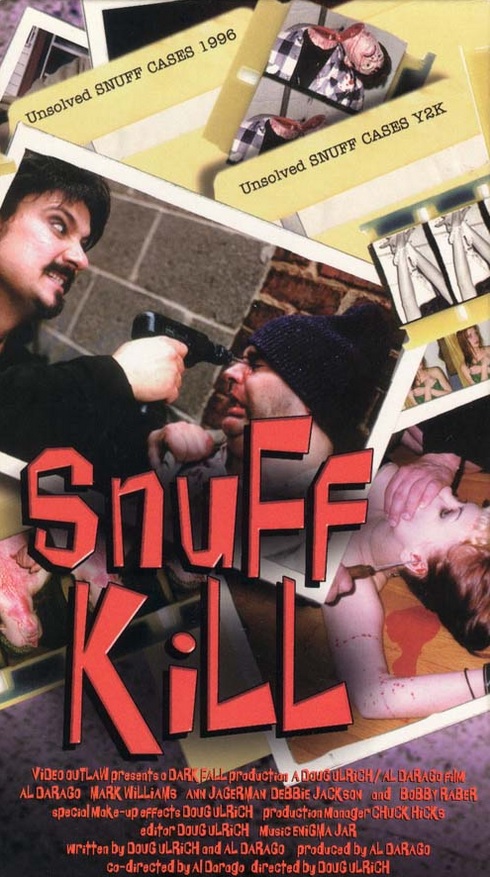
Announcement: On October 20, 2020, SRC Cinema — the reissues studio that gives you “Awesome underground movies you need to see, now!” — announced their acquiring Snuff Kill from Doug Ulrich for a Blu-ray release, complete in an all-new capture from the original SVHS master that’s also filled with new extras. First rolling out in a limited-edition, the Blu went into a wider release in later-2021. You can read the press release on their site.You can also visit the studio on Facebook.
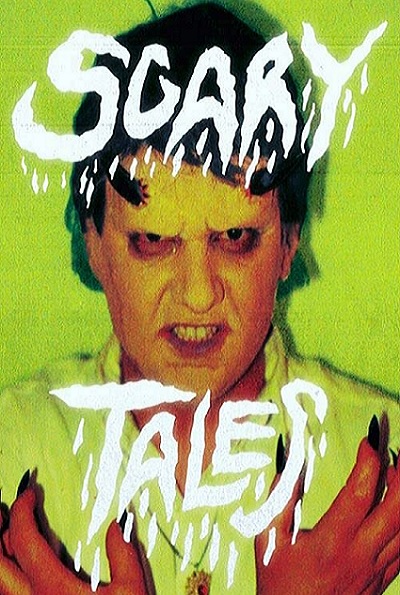
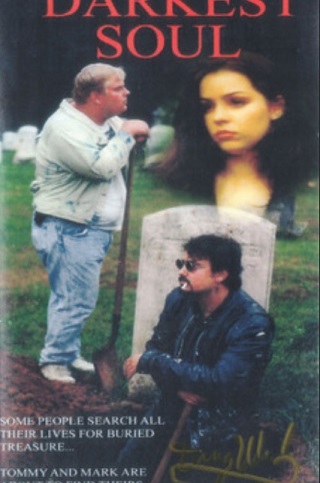
Don’t forget: American Genre Film Archive released Darkest Soul on Blu-ray in 2020 as part of their Blu-ray release of Scary Tales.
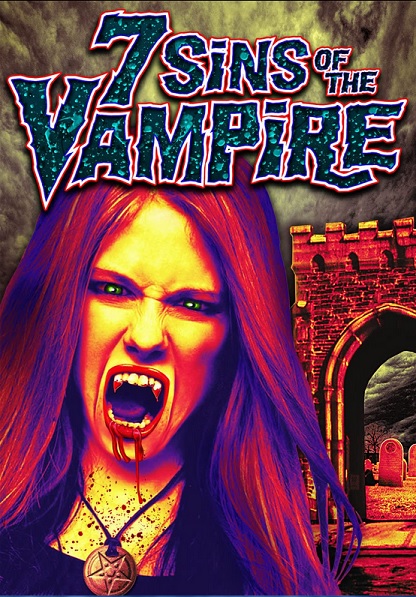
Meanwhile: Vinegar Syndrome issued their own Blu-ray of Scary Tales. There are no Blus — but we are hopeful — for Ulrich’s 7 Sins of the Vampire, but DVDs of that title abound at Amazon and Walmart — yes, at Wallyworld! — for the taking.
So, once again — as with Calamity of Snakes, Delirium, and UFO: Target Earth — we review a bygone and forgotten VHS oddity just for the hell of it — and we come to discover its receiving a hard digital reissue.We really need to keep ourselves in the loop, more.
This is the one time when the grainy, washed-out, 3/4″ tape production values of SOV films works to the advantage of its subject matter, in this case: a grimy, underground snuff film. And this film wastes no time in getting to the “snuff”: a woman tied and blindfolded to a chair has a knife’s tip navigate her body — then she’s repeatly stabbed. And we haven’t even got to the hung-by-the-ankles head explosion, the torso-leg separation by chainsaw, and the not-so-garden variety decapitation. This isn’t a film for the weak: it’s bloody, the nudity is bountiful, and the psychobabble as to the “why” is plot piffle. (And, as I recall, there’s a bit of coprophilia involved; if not in this film, it was one of the Shock-o-Rama banner’s other titles. So, you’ve been warned.)
Yeah, Snuff Kill has already exceeded the sleaze and gore shock content of the Holy Grail of the SOV/Big Box plains, Spine, which was made with the sole purpose of taking John Carpenter’s Halloween to its next grimy, logical step — and failed.
But not Snuff Kill, baby.
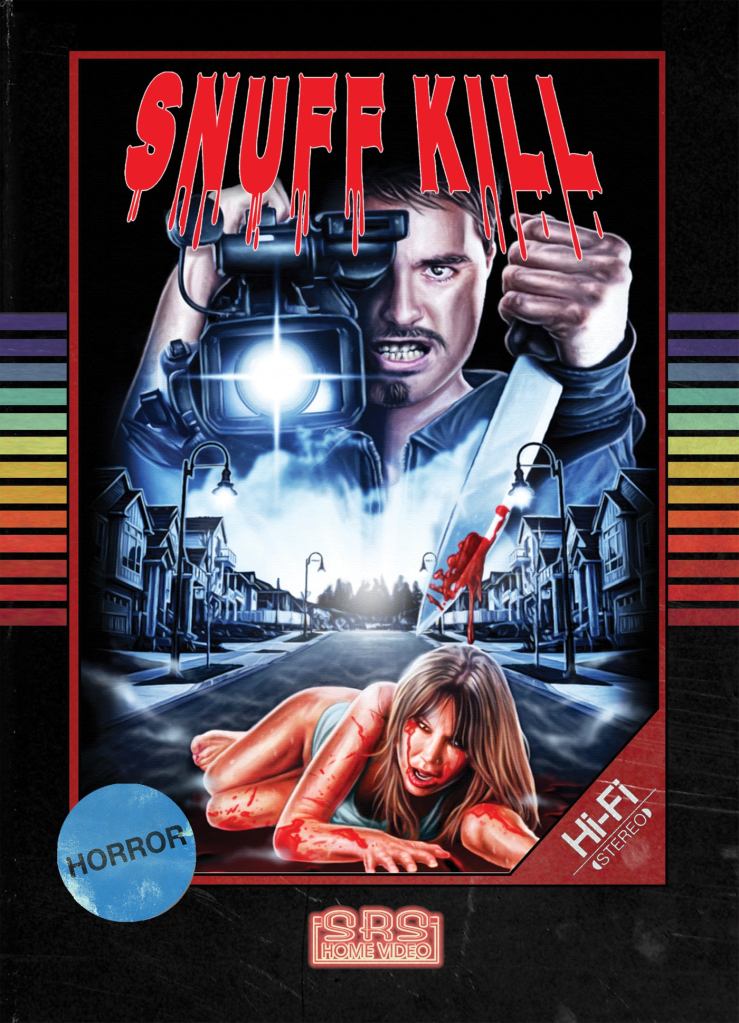
The original VHS cover I remember.
It’s dark. It’s mean. This film tricks you — courtesy of its lack of the usual SOV camp — into believing you’re watching “real kills” and not Karo-n-food colored special effects. Are there acting and production faux pas? Are some of the SFXs a bit off-the-mark? Sure. This is a zero-budgeted SOV, after all. But for what is, essentially, a bunch of high school friends getting together on the weekends to make a movie, it’s a commendable effort.
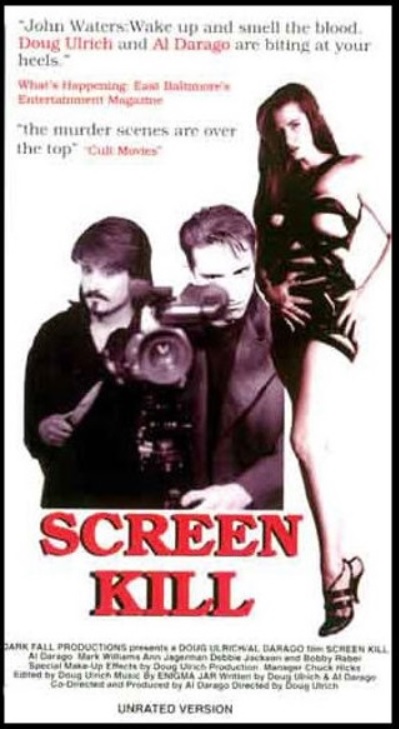
The “uncut” VHS reissue I don’t remember. Kevin Smith’s Clerks, anyone?
The noirish tailspin of Doug, a struggling filmmaker who settles as a struggling wedding videographer, begins when, instead of going to the movies to see a horror flick, his squeeze decides they should go to metal concert. And Doug, loving both horror flicks and metal, does as his lady doth request (you know, just another pussy-whipped, bloody-metal lover like myself and Sam, the B&S Movies boss).
Doug comes to realize that the band he and his wife just watched — its members adorned in monk habits who slit their throats on stage — is fronted by his old high school buddy, Ralis (writer-director Al Dargo). And Ralis enlists his old camera-totin’ friend to make the ultimate gore flick scored with the music of his band. Doug (the not bad Mark Williams in his only film role) is, at first, fascinated by the “realistic” gore that Ralis creates; he soon comes to realize the “kills” are real. Of course, as with any film noir protagonist, Doug is repulsed and fascinated his friend’s exploits and becomes his reluctant, murdering accomplice.
Sigh. Thanks for the memories of the good ‘ol days of hitting the ol’ mom-and-pop video store sandwiched between a quickie market and Punjabi eatery with a gym on the corner bay next door to an insurance agency; a dinky-cheesy outlet stocked with way too many titles under the Shock-O-Rama banner (the owner was stocking the shelves more for himself than his clientele, obviously). The label also distributed Doug Ulrich and Al Dargo’s first two SOV entries: the even harder-to-find (than Snuff Kill) Scary Tales (1993) and Darkest Souls (1994) (as of October 2021, we’ve since reviewed both).The music of the film is provided by (very cool-named) Thee Enigma Jar and Doug and Al’s band Surefire.
Yeah! There’s an age-restricted, sign-in upload on You Tube for Snuff Kill! And bless the analog lords, ye uploader loves their SOV horror! There’s several SOV titles on the Letterboxd Funtime TY page that will interest you, along with Doug Ulrich and Al Dargo’s debut feature, Scary Tales. Yes! This is going to be one awesome October, baby!
Trailers/Clips for Screen Kill: we found two, HERE and HERE.
From the I Did Not Know that Files: Doug and Al returned in 2013 with another SOV blood-boiler, 7 Sins of the Vampire, copies of which you can purchase through Amazon and Best Buy (here’s a clip).
Need more SOVs? During the last two weeks of January 2023, we rolled out another, all “SOV Week” of reviews. Be sure to click through on the SOV tag at the end of this review to populate our ever-growing catalog of SOV films (including a second take on the Screen Kill version). You’ll also discover other SOVs namedropped within our other Ulrich-Dargo reviews via these clickable images, below.
About the Author: You can learn more about the writings of R.D Francis on Facebook.He also writes for B&S About Movies.
As I write this, Boston’s iconic, trendsetting alternative rock station, WFNX 101.7 FM, is no more.
When the station went on the air in 1947 as WLYN, it broadcast a programming palate of simulcasting its sister AM station with the same callsign on AM 1360, then originated its own programming at night after the AM went off the air at sundown (an AM-FM combo broadcast standard until the mid-70s). Upon the convergence-birth of Los Angeles’ alternative rock station KROQ (the home of Rodney Bingenheimer; his career chronicled in The Mayor of the Sunset Strip) and MTV in the early ’80s, the station came to drop its variety-ethnic programming in 1981 and began experimenting with new wave music in the evenings.
By 1982, WLYN became known as “Y-102,” one of the first full-time new-wave rock stations in the country; a station sale in 1983 resulted in the format remaining, but birthing a new set of call letters — WFNX — until another station sale in 2012 to Clear Channel Communications (now iHeartMedia) resulted in an automated format flip to an “Adult Hits” and a new set of call letters: WBWL (a common practice — live to automation — in these digital times).
The first song WFNX played under its new, full-time alt-rock format was the Cure’s “Let’s Go to Bed.” In August of 1991, with buzz on the group in full effect, DJ Kurt St. Thomas gave the then commercially unknown Nirvana their world broadcast premiere of their new album, Nevermind, from start to finish — and we all know how that album turned out.
At that point, WFNX became a trendsetter of the alt-rock community, giving the first national airplay to the top-selling bands The Darkness, Franz Ferdinand, Florence and the Machine, Hawthorne Heights, and Jet, just to name a few. When the station when off the air in 2012, they went off with the song that started it all: the Cure’s “Let’s Go to Bed.” Nirvana’s first major, mainstream concert appearance beyond the college-rock club scene was for WFNX’s annual anniversary party in August 28, 1991.
To call St. Thomas — as do Beatles historians with New York DJ Murray the K as “The Fifth Beatle” — the “fourth Nirvana member” (or fifth, if you count the late addition of Pat Smear of the Germs as a second guitarist during the In Utero years), is no understatement.
VHS image courtesy of sweesus-smasher/Paul Zamerelli of VHS Collector.com
By 1996 Kurt St. Thomas transitioned into filmmaking. Along with fellow WFNX DJ Mike Gioscia, they made the 1999 black and white film noir Captive Audience. The film dealt with the odd, symbiotic relationship between an overnight DJ and a gun-toting intruder at the station. Winning several international and domestic film awards, St. Thomas and Gioscia were encouraged to shoot a more adventurous feature production.
Recruiting John Doe of X (Border Radio) as their star, The Red Right Hand is a horror film that begins in 1963 as it follows five high school friends forced to relive a terrifying secret at their 15th high school reunion in 1978. Also released to video under the titles Above and Below and Jon’s Good Wife, the original title was taken from a Nick Cave song.
As with most of the Troma Entertainment catalog, don’t let the logos from The Asylum deter you from spinning the DVD, as the studio only distributed the film; they were not involved in its production.
Is it “The Creepiest movie since Rosemary Baby!” as the DVD box claims? No. And The Asylum marketing department has a lot of balls making us thing we’re getting a film that matches the majesty of Roman Polanski. However, St. Thomas and Mike Gioscia have crafted a solid mystery drama rife with blackmail, murder, private demons, and rattling bones: all the plot points you expect in a noir.
St. Thomas would later work at the KROQ, the L.A. rock station responsible for birthing WFNX; while there, he came to produce the long-running specialty show “Jonesy Jukebox” for Steve Jones of the Sex Pistols (The Great Rock ‘n’ Roll Swindle). He and John Doe are currently in post-production stages on their latest effort — and St. Thomas third feature film overall — D.O.A: The Movie, with co-star Lucinda Jenney, who we last saw in Rob Zombie’s 3 from Hell. A noir homage, it concerns Frank Bigelow (John Doe), a Florida private detective hired to follow the ne’er-do-well husband of a St. Augustine socialite. The spiraling double-crosses ensue.
Even though The Asylum made the VHS and DVD widely available in the marketplace — I’ve seen it numerous times on rental and retail shelves, cut-out bins and second hand stores — they’ve opted not to offer it as an online stream. There’s not even an online trailer or clips to share. But if you Google it, you’ll readily find VHS and DVD copies in the online marketplace.
About the Author: You can learn more about the writings of R.D Francis on Facebook.He also writes for B&S About Movies.
We’ve since done a “John Doe Week” tribute in December! You can visit this recap/round up for those film reviews.
Back in July, we held our first “Rock ‘n’ Roll Week” with over 50 film reviews. Then we came back, as the rock ‘n’ roll could not be contained in just one week of reviews. So, this past week — from Sunday, September 20th to Saturday the 26th — we rolled out another 50-plus films concerned with all things rock ‘n’ roll on the big screen.
About the Author: You can learn more about the writings of R.D Francis on Facebook.He also writes for B&S About Moviesand publishes short stories and music reviews on Medium.
In 2002, long time L.A. rocker Cheri Lovedog found critical acclaim for her stage play Prey for Rock & Roll which had a successful run at New York’s famed rock club CBGBs. This caught the attention of film producer and music consultant Alex Steyermark (Hedwig and the Angry Itch), who was searching for a film to break him as a first time director. Lovedog’s self-professed “rock n’ roll love letter” to the L.A. club scene stars Gina Gershon (who got her start in Girls Just Want To Have Fun with Helen Hunt, found acclaim in Bound, and while great in it, deserves better than Showgirls) as a 40-year-old tattoo artist and rocker deep in a mid-life crisis, wondering how much longer she can deal with the struggles of keeping her band together.
Starring as the Clam Dandies (since it’s an all-girl band, read into it) are Drea Dematteo (HBO’s TheSapranos) as terminally-stoned bassist Tracy, Laura Petty (Tank Girl) as Faith, and (the awesome; yeah he’s from Pittsburgh, baby) Marc Blucas (TV’s Buffy) as “Animal” the roadie. Shelly Cole (Madeline Lynn from TV’s Gilmore Girls) impresses with her drum skills; she hits all the right notes as one of the best “film” drummers out there. Petty fakes it well, while Dematteo knows her way around the neck and Gershon, who didn’t play a note before the film, blows the doors off with her power chords. The soundtrack composed by Cheri Lovedog — and sung by Gina Gershon — features an alternative-rock super group of the Lunachick’s guitarist Gina Volpe, bassist Sara Lee of Gang of Four, and later of the B-52s, and Hole drummer Samantha Maloney.
To promote the picture on the festival circuit, Gina took to the road with the Washington D.C. punk outfit Girls vs. Boys (aka GvsB, they provided “Kill the Sex Player” to Kevin’s Smith’s Clerks) as her backing band, which was chronicled in the IFC Cable Series Gina Gerhson: Rocked. Cheri Lovedog compiled the feature documentary Hollywood Trash & Tinsel on the making of the film. Musician Stephen Trask, who also worked on Hedwig and the Angry Itch alongside Alex Steyermark, produced the soundtrack.
Astute viewers will notice the footage of X in the film’s opening refrains originates from The Decline of Western Civilization. Fans of the Lunachick’s can watch Gina Volpe’s bandmate Theo Kagan in Live Freaky, Die Freaky (a seriously f’d up animated puppet movie where, in a distant future, a cult forms around the Manson Family and Charles Manson is mistaken as a Jesus-messiah; the film also stars the voices of the members of Green Day and the Go-Gos). Lovedog’s other films include 2010’s All American Gender Outlaw and Go Hard or Go Home, a 2012 document on the indie band Devil Dolls MC. Alex Steyermark made another rock n’ roll flick, the indie ’80s rock tale, Losers Take All, which, despite Kevin Smith’s involvement, failed at the box office and VHS shelves.
During the film’s initial stages, Joan Jett was involved in the soundtrack’s production, but left early on due to the usual “artistic differences”; Linda Perry of Pink and 4 Non Blondes (“What Going On?”; their cover of Van Halen’s “I’m the One” appears in Airheads) stepped in (it is also said Jett was to star in the Gershone role, but had issues with the script). However, as you can see from Gina Gershon’s look and tone, Joan definitely left her mark on the film — in many ways Gershon’s Jacki harkens Jett’s own Patti Rasnick in 1987’s Light of Day.
As with any rock flick that isn’t a splashy, A-List bioflick of the Jim Morrison, Johnny Cash, or Ray Charles variety, the critical — both professional and general movie goer — response was, as with Light of Day, lukewarm. Many reviews, while praising the costuming and set design, and calling out Gershon’s dead-on portrayal of a failed, disillusioned rocker, dropped the word “soap opera” in their reviews in regards to the endless stream of bad luck befallen the band (e.g., a band member’s rape; another’s death by car accident; a recording deal falling through because Jacki didn’t “put out” for the record executive) that came across as “phony.”
As someone who experienced this life as radio jock dealing with local bands, as a roadie for said bands, and bassist myself, I can attest that Alex Steyermark’s directorial debut is a commendable first effort that ranks up there with Paul Schrader’s Light of Day as one of the most accurate portrayals of a struggling rock band; Steyermark pulls back the curtain on a musician’s love of rock ‘n’ roll clashing with their family and relationship obligations. Yes, most struggling musician’s lives are a hot mess — just like in this movie.
The film’s soundtrack has also taken its share of critical hits; many critiqued the music as “awful.” Personally, I enjoyed Lovedog’s music for the film, which serves as a sort of “greatest hits/best of” compilation of her life’s work. Not to say that the music was purposefully composed as “bad” for dramatic effect or that Lovedog can’t write — but isn’t that the point? It is one thing to love music: it’s another thing to be able to write it . . . and yet another to write it successfully. So, if you’re watching the film for the first time, and you think the music “sucks,” it should only lend to your appreciation of the film as a whole and in your understanding of why many, many local bands — no matter how hard they try — never make it.
This film is a must watch. The soundtrack is a must listen. Do it. And stick around for the band flyer-inspired end credits. The film — as well as the soundtrack — is readily and easily available in the online marketplace with VOD streams on a wide variety of platforms. Vignettes from the film and its music abound on You Tube to enjoy.
About the Author: You can learn more about the writings of R.D Francis on Facebook.He also writes for B&S About Movies.













 B&S About Movies
You must be logged in to post a comment.