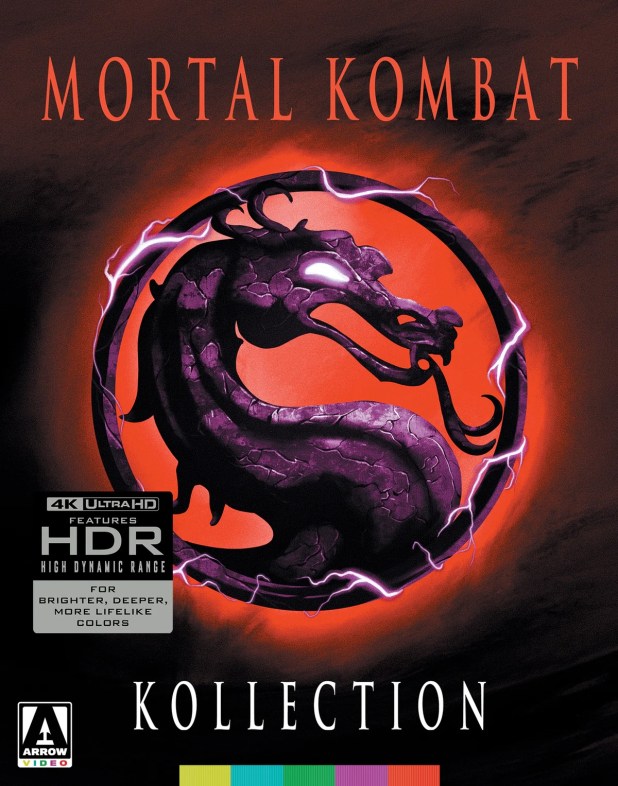
ARROW VIDEO 4K UHD AND BLU-RAY RELEASE: Mortal Kombat Kollection

A high-impact fusion of martial arts mayhem, fantasy spectacle and video game mythology, the Mortal Kombat films brought arcade combat to the big screen with bone-crunching action, iconic characters and pure 90s attitude, helping turn a controversial fighting game into a global pop culture phenomenon. And hey — this set is just in time for the release of Mortal Kombat II!
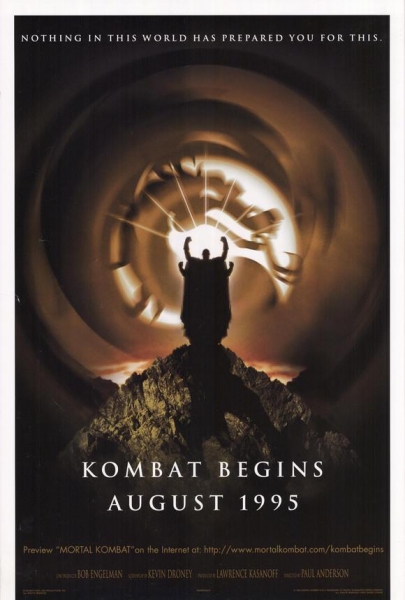
Mortal Kombat (1995): The premise of the original 1992 Mortal Kombat arcade game was essentially Bruce Lee’s Enter the Dragon with a heavy dose of sorcery, severed spines and color-swapped ninjas. So, it stands to reason that the 1995 film adaptation should follow the exact same blueprint: a grueling martial arts tournament to the death with the literal fate of the cosmos hanging in the balance. Against all odds, the movie absolutely delivers the goods.

Director Paul W. S. Anderson (Soldier, the Resident Evil films, the Death Race remakes) was the perfect director for this film — it feels like the ’90s in concentrated form. You’ve got your hard techno beats, your neon colors, green screen early CGI and plenty of quips during the Kombat.

The realms of Earth and Outworld come together for the Mortal Kombat and create a battle to the death, with the provision that if Outworld wins Mortal Kombat ten consecutive times, its Emperor Shao Khan may invade the Earth realm.

Standing in his way are Shaolin monk Liu Kang, Hollywood action star Johnny Cage and a military officer named Sonya Blade (Bridgette Wilson, I Know What You Did Last Summer). Cameron Diaz was originally up for the Sonya role but got hurt during filming. Helping them is Raiden (Christopher Lambert, Highlander), the god of thunder and the defender of the Earth realm.

Along the way, we meet Princess Kitana (Talisa Soto, License to Kill), Kano, Sub-Zero (François Petit, who would go on to be the head trainer for the WWE in the mid-90s), Reptile (who is played by Robin Cooke, who is also in Picasso Trigger and China O’Brien), Goro and Jax. They’re all here to be part of Shang Tsung’s tournament.

The tournament itself delivers a superb rhythm of action, but the plot kicks into overdrive when Johnny Cage pulls off the impossible and defeats the monstrous Goro. Sensing total defeat, Shang Tsung abandons the rules. He kidnaps Sonya Blade—who up until this point had been a fierce, take-charge heroine, only to suddenly succumb to the “helpless girl in distress” trope of 90s cinema—and drags her into the desolate, hellish wasteland of Outworld to force a final confrontation.

Liu Kang and Johnny Cage pursue them into the dark realm. In a climax that heavily leans into the game’s lore, Liu Kang must overcome his inner demons, embrace his destiny as the Chosen One, and face Shang Tsung in a brutal, final duel. With a spectacular bicycle kick and an iconic “Flawless Victory,” Kang sends the sorcerer plummeting onto a bed of spikes. As Shang Tsung dies, the thousands of souls he had consumed over centuries are liberated, including the spirit of Liu Kang’s brother, finally bringing peace to the Shaolin monk.

Everyone goes to the Shaolin temple to celebrate, but the skies turn dark, and Shao Khan appears. With the voice of Frank Welker, he screams, “You weak, pathetic fools! I’ve come for your souls!” All of the good guys show their fighting stances, cue the Mortal Kombat theme, and we’ve set up the sequel.

Where this film truly gets it right is its unwavering respect for the source material. Better yet, it actually expanded the franchise’s lore. The movie introduced and popularized narrative concepts—like the explicit hierarchy of Shao Kahn, the distinct visual identity of Outworld, and the deeper backstories of Kitana and Jax—that the video game developers would actually adopt into the mythology of future games.

It is genuinely baffling that mainstream critics savaged this movie back in 1995. It is fun as hell, unapologetic and completely true to its inspirations. It operates as a video-game version of a classic Hong Kong martial arts flick: a glorious mixture of bastardized pop culture that serves as the ultimate guilty pleasure. Furthermore, it doesn’t look cheap; despite being decades old, the practical sets, rich atmospheres, and intense choreography still hold up remarkably well.

I don’t even want to tell you how many hours I put into the last Mortal Kombat game. Or brag that I know the difference between babalities, fatalities and friendships. The thing is, even if you haven’t played a single game of Mortal Kombat, you can still enjoy the movie. And if you love the game, unlike so many video game adaptations, you won’t feel let down. That’s actually high praise.
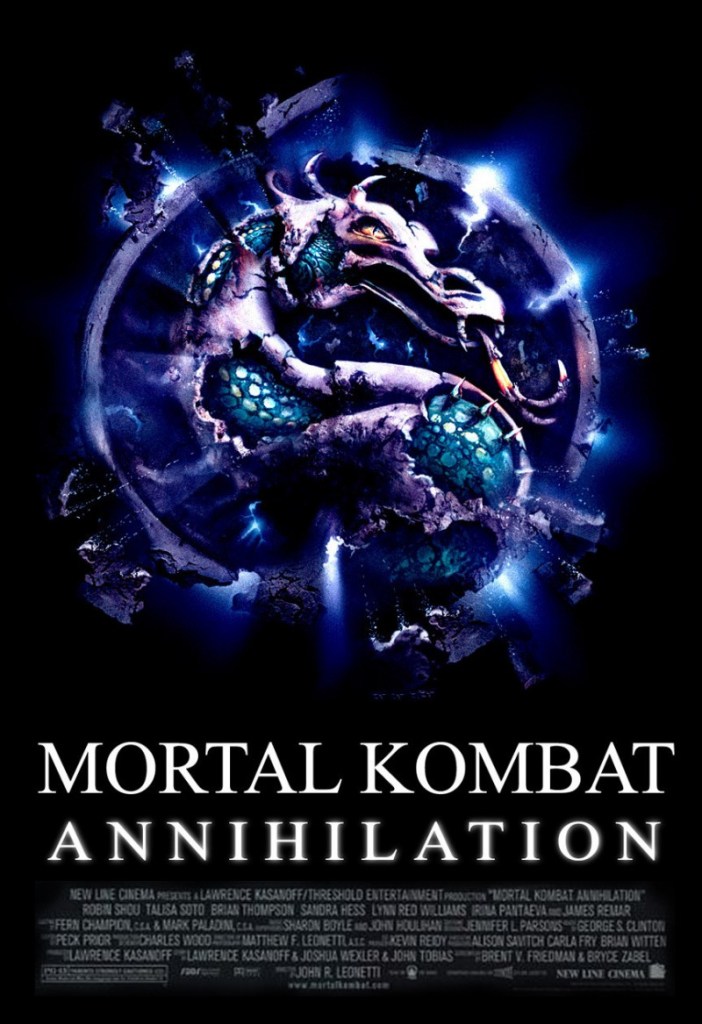
Mortal Kombat Annihilation (1997): Ed Boon, one of the creators of the Mortal Kombat video game, calls this the “worst moment” in the history of the franchise. Coming from someone who loved the original film and has played every game, I agree.

Christopher Lambert was seen as one of the highlights of the last film. He’s gone, replaced by James Remar (The Warriors). I always dislike whitewashing in movies, but Lambert was so game in his scenes and such an integral part of getting the last film made (Lambert’s great attitude calmed director Paul W. S. Anderson as he worked on his first big movie. While he had the highest salary in the film, he paid his own way to Thailand and shot all his own scenes there for basically free, just to ensure the movie looked better. Plus, he paid for the wrap party.) that this feels like a major loss.

In fact, only Liu Kang (Robin Shou) and Kitana (Talisa Soto) are played by the same actors from the previous film. Robin Cooke, who played Reptile, plays Sub-Zero here, with that fighter gaining a much larger role.

Did you like Johnny Cage last time? Lots of people did. Bad news — he’s killed seconds into this new film to get over the new bad guy, Shao Khan. He’s opened a portal from Outrealm to Earth (hey, wait — didn’t we just fight a tournament to stop that from happening?) and has brought back his queen (and Kitana’s mother), Sindel, from the dead.

Sonya Blade (now played by Sandra Hess, who played the cave girl in Encino Man) brings in her partner Jax, and they immediately battle Cyrax and Mileena. Then there’s Nightwolf (played by Litefoot, the Native American who also portrayed Little Bear in The Indian in the Cupboard), a shaman who will guide Liu Kang and Kitana toward defeating Shao Khan. Another fight between Smoke and Scorpion, with the help of Sub-Zero, happens, and Kitana gets kidnapped.

Raiden meets with the Edger Gods, who don’t really give any answers. I have several questions for them. Like, why are we fighting Shao Khan when we won a tournament to stop things like this from happening? And why is there a fight every ten seconds instead of character development like the first film? Or why didn’t you bring back the actors we liked in these roles? And why doesn’t the “Toasty!” guy show up?

Nightwolf makes Liu Kang pass several trials to gain the power of Animality, which allows him to shapeshift into a new form. He must pass the self-esteem and focus trial. The trial of temptation, where Jade tries to get into his karate pants. And there’s a third test, but we never get to it!  One assumes that he passes it, as we’ll see in the finale.

Raiden gives up his immortality to fight for Earth, which means that he needs to cut off his hair. Jade is a double agent, and while the good guys rescue Kitana, they still face tough odds. Raiden reveals that Shao Khan is his brother and their father, Shinook, is favoring his evil sibling. After a big battle, Raiden is killed at the hands of that very same brother.

Another lengthy fight sequence happens, with Motaro, Ermac, Sindel and even Noob Saibot all showing up.

Liu Kang then shows what an Animality is by turning into a poorly rendered dragon, a scene that makes this movie seem even more dated than the 1995 original. Luckily, the Elder Gods discover the shenanigans afoot and declare another round of Mortal Kombat.

Aren’t you glad we have Liu Kang on our side? He defeats Shao Kahn, allowing Raiden to return, as the Earth realm wins again.

Director John R. Leonetti would go on to be the cinematographer for The Scorpion King, I Know Who Killed MeThe Conjuring and the Insidious series before directing Annabelle: Creation and Wish Upon. He’s done great work in those films, but this film feels so much cheaper than the original. It’s weird because that film succeeded by transcending its junk-food origins, while the sequel just piles on way too much.

Originally, Paul W.S. Anderson decided to do Event Horizon instead of this film. He hated the results, and that’s why he’s stayed close to the Resident Evil franchise throughout its sequels.

It’s hard to hate a movie where alien monsters battle ninjas, so if you accept this one as goofy chop socky fun, it’s fine. But compared to the original—and with the rich mythology of the Mortal Kombat video games at its fingertips—this one really suffers. 
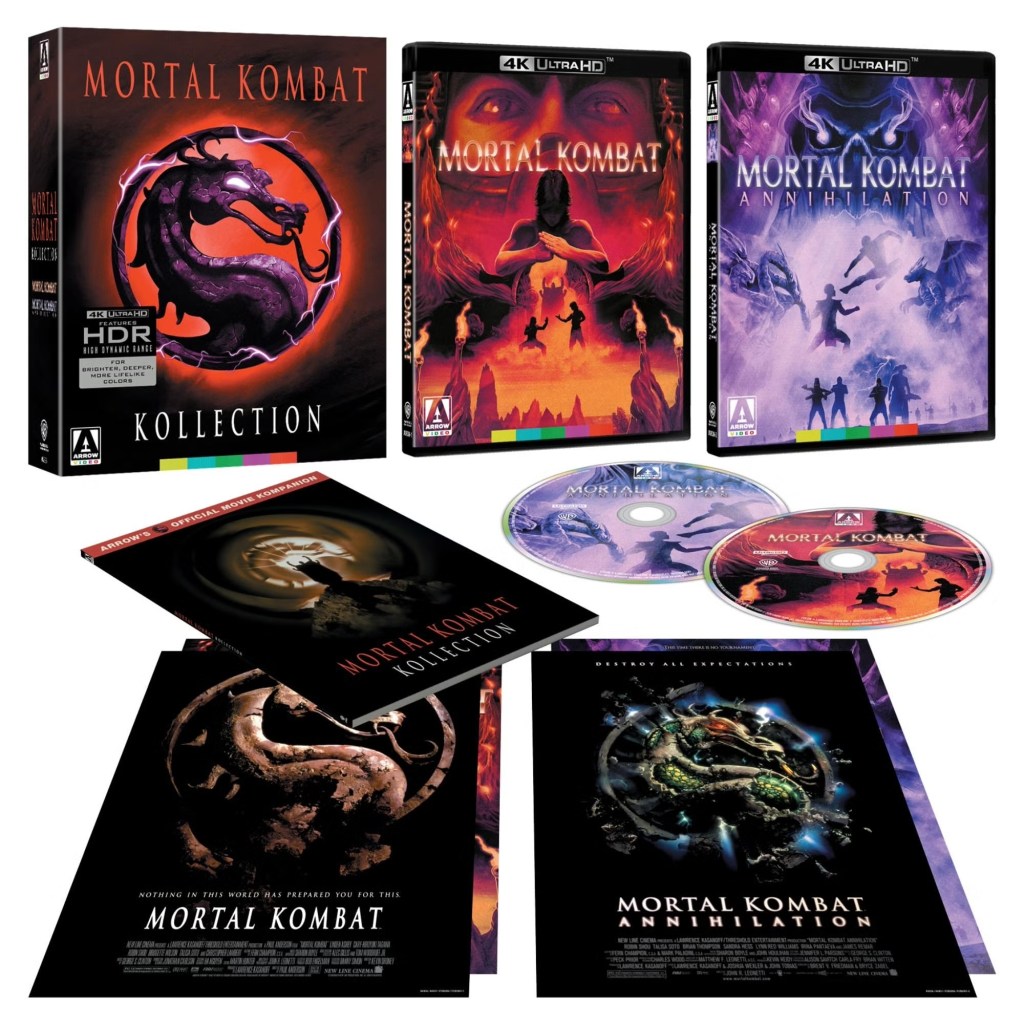
The Arrow Video release of these movies has brand new 4K restorations of the two films by Arrow Films and includes a collectors’ perfect-bound booklet featuring new writing on the films by Simon Ward and John Torrani; reversible sleeves featuring original and newly commissioned artwork by Matt Griffin and two double-sided foldout posters featuring original and newly commissioned artwork by Matt Griffin.

For the first movie, there’s a brand new audio commentary with director Paul W.S. Anderson, as well as another new commentary with comic book expert and podcast host Dave Baxter; interviews with Linden Ashby, cinematographer John R. Leonetti, producer Lawrence Kasanoff and designer and suit performer Tom Woodruff; Mortal Kombat: A Journey Behind the Scenes; on-set interview bites with the cast and director and B-roll footage; trailers and an image gallery.

The second movie extras include a new commentary with director John R. Leonetti moderated by filmmaker Gillian Wallace Horvat and a second commentary with comic book expert and podcast host Dave Baxter; interviews with Musetta Vander, composer George S. Clinton and stunt performer J.J. Perry, who played Cyrax, Scorpion and Noob Saibot; pn-set interview bites with the cast and director and B-roll footage; a trailer and an image gallery.

You can get. the 4K UHD and Blu-ray sets from MVD.
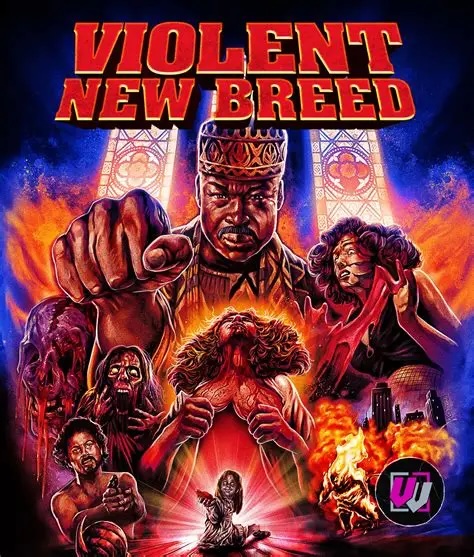
VISUAL VENGEANCE BLU-RAY RELEASE: Violent New Breed (1997)

Todd Sheets doesn’t just make movies; he stages low-budget massacres. While most directors would let a microscopic budget limit their scope, Sheets treats his lack of funds like an invitation to see how much corn syrup and latex he can cram into a single frame. He knows how to make things loud, bloody, and gross, a holy trinity of exploitation that deserves to be etched into the skin of every SOV devotee.

A vicious new street drug called Rapture is flooding New York Cit  and Jack (Mark Glover) is the cop on the case. But the Breeders gang isn’t human. No, they’re demons, cooking up something infernal for the streets, as well as giving birth to the Antichrist. But if Jack can get the young girl who has been impregnanted with the demon child baptized — by Pastor Williams, played by Rudy Ray Moore! — the world can be saved. Also: there’s relationship drama, as Jack’s ex-wife isn’t just sleeping with a drug-dealing demon, she won’t let our cop hero see their daughter Amy (Rebecca Rose). And, of course, strip clubs, demonic gangbangers and cowboys, angels fighting demons, maggots inside heads, worms inside bodies, even more gore galore and plenty of riffs. There’s also a demon who Xtro-style emerges from a woman as a full-grown man. There’s also a switchout of heroes at some point, as Steve (Nick Stodden) meets up with Amy to get this case solved.

Kansas City, Missouri isn’t NYC, but you wouldn’t know it. Sheets has a vision here and delivers with big crowds mixing it up with the in-your-face viscera. This has my highest recommendation.

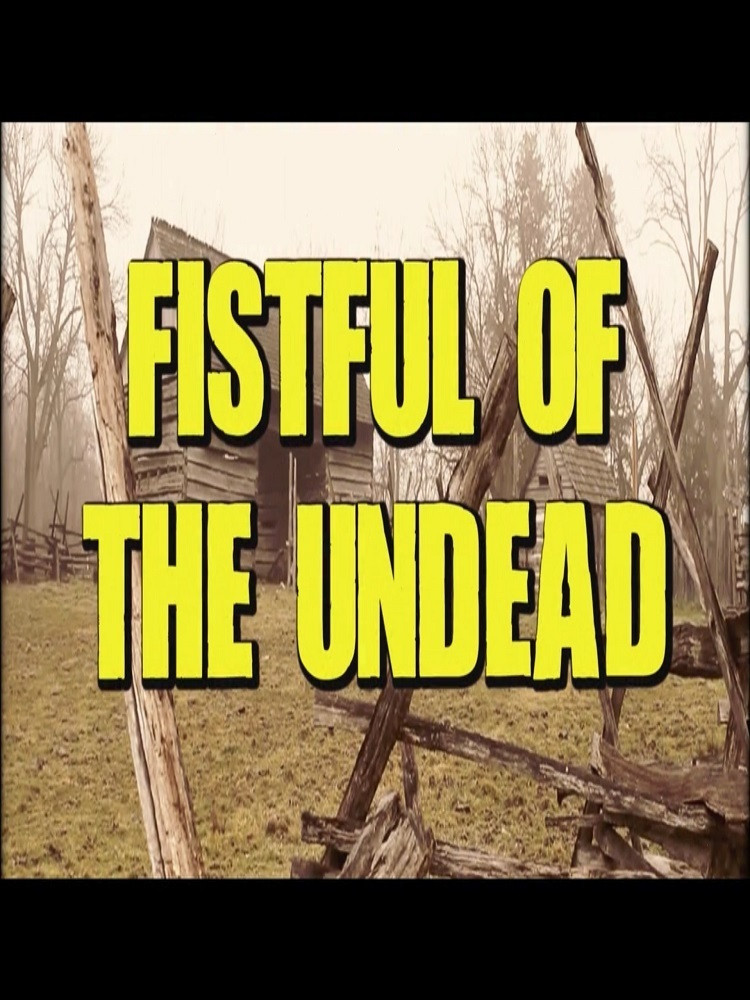
Fistful of the Undead (2014): If Violent New Breed is the main course of glorious filth, Fistful of the Undead is the shot of cheap tequila you take right before the bar fight starts. Included as a standout extra on the Visual Vengeance release, this short is Todd Sheets stripping his style down to its most primal, lizard-brain essentials.

If you’ve ever wondered what would happen if Sergio Leone lost his mind, got on a plane and started filming in a Kansas sCity laughterhouse, this is it. Fistful of the Undead is a micro-budget love letter to the Spaghetti Western, but instead of staring contests and Morricone scores, we get high-velocity splatter and a total disregard for human anatomy, including no small amount of intestines being stretched out as if this were a tug of war or a taffy pull covered with goopy blood.

You should read that as “This is a great short that you totally need to watch.” Not much else happens, but why should it?

This is a new director-approved, remastered SD master version from original tape elements with the plternate original DVD version, an alternate R-rated version as aired on The Movie Channel and an alternate original VHS release version. There are three commentary tracks, interviews, behind the scenes docs, the Q&A from the Nitehawk Cinema showing, news coverage, uncut sequences, a booklet with liner notes by Tony Strauss of Weng’s Chop Magazine, Visual Vengeance trailers, a reversible sleeve featuring original VHS art, a folded mini-poster of original Ghana art by Heavy J, a Ghana poster by legend Heavy J and a birth announcement vintage reproduction. This has 12 hours of extras, so why are you reading this? Buy it now from MVD.

UNSUNG HORRORS HORROR GIVES BACK 2025: Bugged (1997)

Each October, the Unsung Horrors podcast does a month of themed movies. This year, they will once again be setting up a fundraiser to benefit Best Friends, which works to save the lives of cats and dogs across America, giving pets second chances and providing them with happy homes.

Today’s theme: Animal Attack

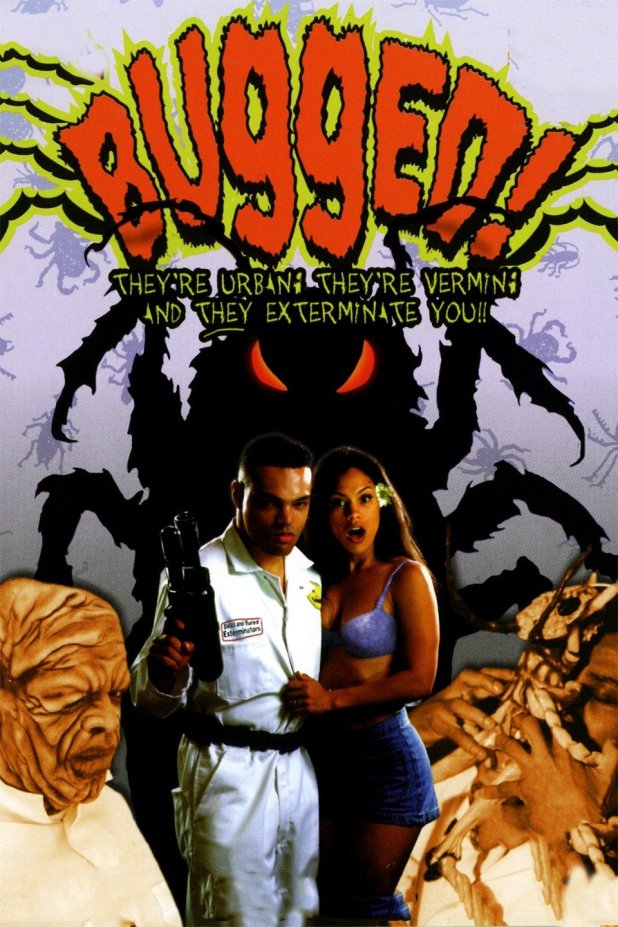
“They’re urban, they’re vermin, and THEY exterminate YOU!”

Ignore the Troma logo at the beginning of Ronald K. Armstrong’s directed, written, produced and starred in insect film and prepare for something great.

Dr. Craig (John Kilgore)’s chemicals have replaced the bug-killing pesticides in the Bugbusters supply room with one that makes the bugs bigger. After all, Dr. Craig did what you never should and pulled a Goldblum. That’s correct — he tested those drugs on himself, turned into a giant bug and then got shot in the face by his lab assistant. Now, bugs are everywhere in the city, and just being an exterminator puts Dave (Armstrong) into danger’s maw — mandible? — as he tries to defest the home and win the heart of Priscilla Basque). Dave’s partner, Steve (Jeff Lee), may screw things up for both his goals before that.

This has an all-black cast, body melting moments, cartoony aspects like how Steve gets flattened at one point, effects that look like they came from the clearance aisle, a rat puppet, evil bugs with human eyes and way more action — and romance! — than this budget would seem to indicate. In fact, every review of this movie — nearly, let’s not get hyperbolic — seemed to make fun of how cheap this looked. Maybe they should look past that and see that this has heart, brains and, well, guts.

ARROW 4K UHD AND BLU-RAY RELEASE: Spawn: Director’s Cut (1997)

There was a time when comic books were not celebrated. When only the disenfranchised cared or knew about them instead of the mainstream. And in those ancient times — let’s call them 1992 — no news was bigger than when Marvel’s biggest creators left en masse to form Image Comics. At the time, these artists were derided as style over substance. Many of them weren’t known for hitting their deadlines. Or even how to draw feet properly. But one of them — Todd McFarlane —  took the opportunities that his new home presented and made the most of them, creating his signature character: Spawn.

Spawn is everything that McFarlane loved to draw: a muscular hero covered in spandex, chains and a cape that seems to be way longer than it should be. It was an instant hit, giving birth to a toyline, an HBO animated series (which still holds up) and finally, this movie.

Al Simmons (Michael Jai White, playing one of the first African-American superhero to be a movie lead, as this movie and Shaw’s Steel came out at the same time) is a black ops soldier assigned to a mission to investigate a North Korean biochemical weapons site. But he’s been set up by his boss, Jason Wynn (Martin Sheen) and is killed by Jessica Priest, Wynn’s new top assassin. After being set on fire, he winds up in Hell, where Malebolgia offers him a deal. If Simmons will lead his armies to Heaven’s gate, he can see his true love, Wanda, one more time.

You know how those deals with demons work. They’re rarely fair. When he returns to Earth, Simmons learns that Wanda is now married to his best friend Terry(D.B. Sweeney, Fire in the SkyThe Cutting Edge), who is raising his daughter, Cyan.

Malebolgia sends one of his demons, Violator (John Leguizamo), to mentor Simmons. But there’s also Cogliostro (Nicol Williamson, The Exorcist III), who also sold his soul to become a Hellspawn but who has found his way to Heaven.

Meanwhile, Simmons becomes Spawn and attacks Wynn, now a powerful arms dealer. He easily defeats his killer, Jessica, and escapes an attack by an army of mercenaries thanks to his new powers.

Violator — who either appears as a clown or an Alien-esque demon — gets Wynn to add a device to his heart that will release Heat 16, a biochemical superweapon, if he dies. Malebolgia wants Simmons to kill Wynn and start the end of the world. But Violator has his own agenda and nearly kills our hero before Cagliostro saves him. As he learns how to use his powers just as he also learns that Wynn plans on killing everyone he loves.

What follows is a battle on our earth and in Hell, where Spawn denies his contract with the Devil, bests Violator and returns to our reality, ready for the sequel which never came.

Spawn is very of its time, a film packed with early CGI (nearly half of its effects were unfinished until two weeks before it was released) and a soundtrack that mixes techno with hard rock and metal (the Atari Teenage Riot/Slayer mashup “No Remorse” is a highlight). It’s a decent enough film but is a sanitized version of the chaos inside every panel of the Spawn comic. It just feels like something is missing. There’s no real heart in the film, nor any real threat to our hero.

After years of talk of a sequel, McFarlane announced a new Spawn adaptation in 2015, with the goal of the creator writing the script and directing. In July of 2024, it was confirmed that this was true, with the film being produced by Blumhouse. Here’s hoping for something great.

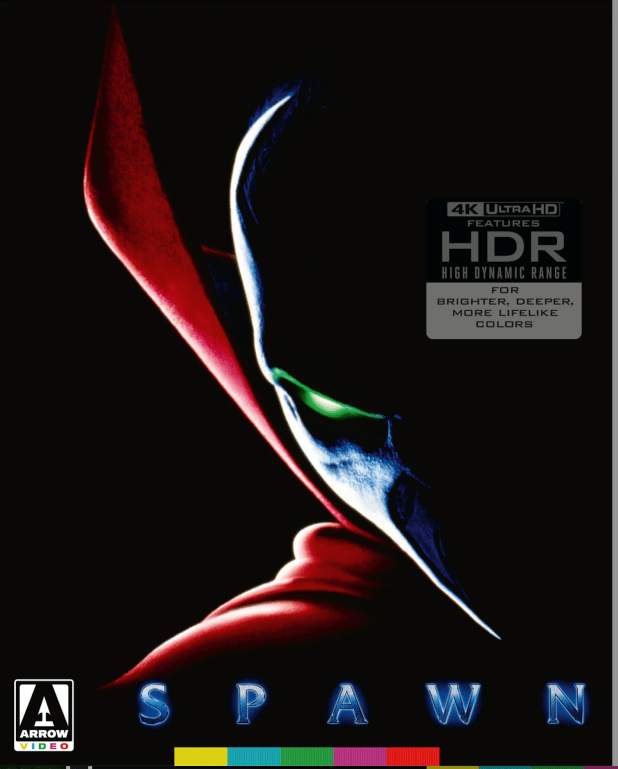
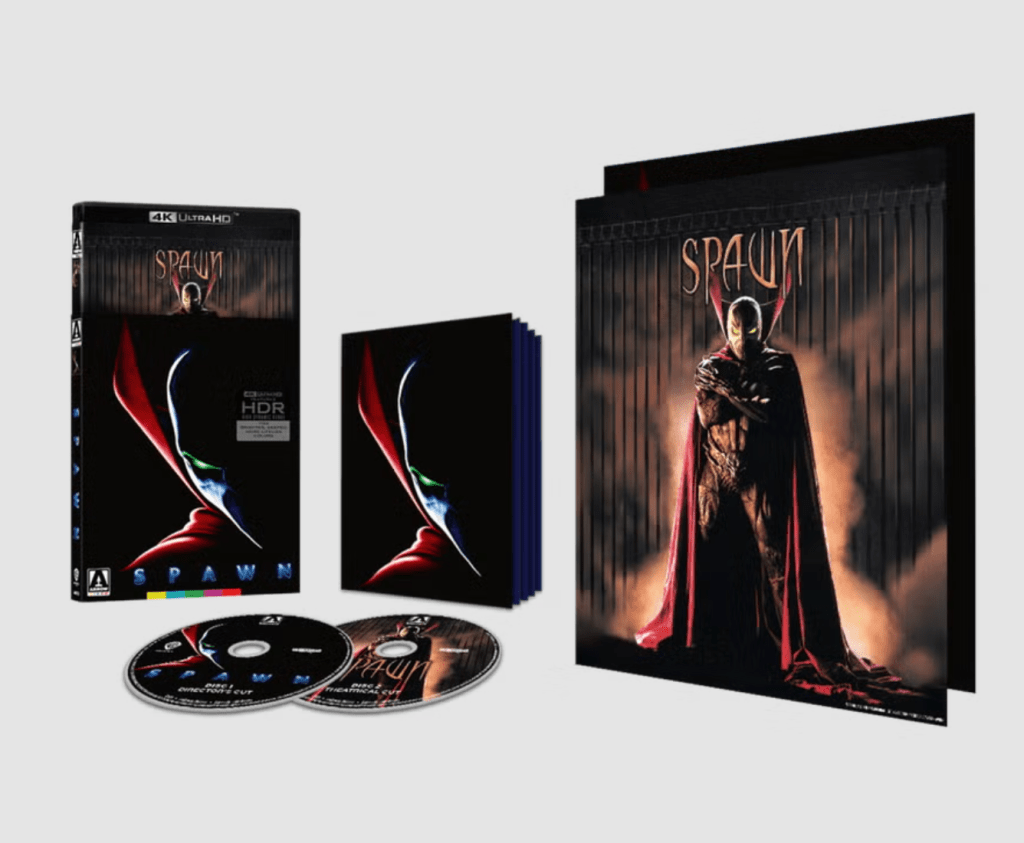
The Arrow 4K UHD and Blu-ray releases of Spawn have 4K restorations of both the Director’s Cut and Theatrical Cut of the film from the original camera negatives by Arrow Films. The reversible sleeve featuring two original artwork options, plus you get an illustrated collector’s booklet featuring new writing on the film by John Torrani and a double-sided foldout poster featuring two original artwork options.
The director’s cut has new audio commentary with comic book expert and podcast host Dave Baxter; archival commentary by Todd McFarlane, Mark A.Z. Dippé, Clint Goldman and Steve Williams; interviews with Michael Jai White, Melinda Clarke, D.B. Sweeney, Howard Berger, Greg Nicotero, Happy Walters and Michael Knue; multiple featurettes; a trailer; scene-to-storyboard comparisons; original Todd McFarlane sketches and a Spawn concept and sketch gallery.

You can order this on 4K UHD or Blu-ray from MVD.

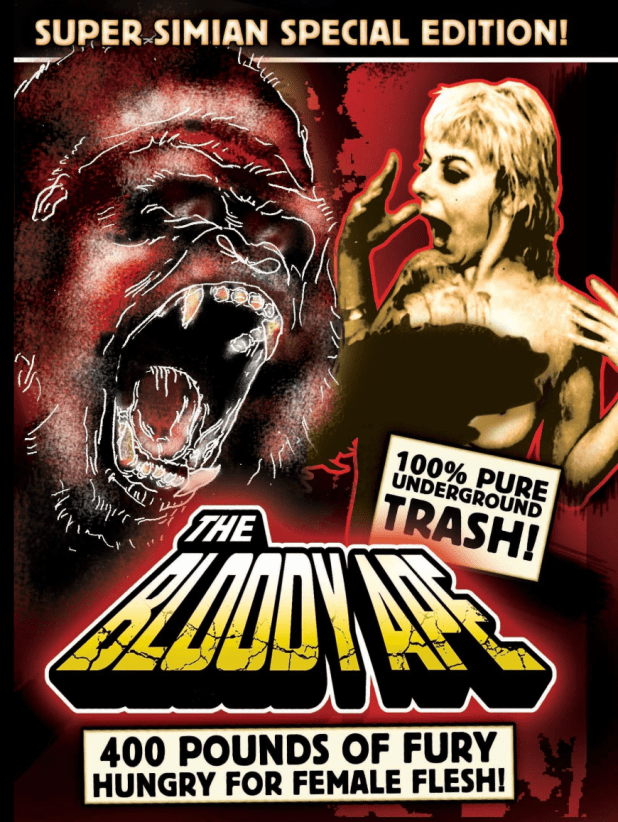
2025 Scarecrow Psychotronic Challenge Day 3: The Bloody Ape (1997)

3. SIMIAN CINEMA: Grab a six-pack of bananas and watch a primate film. Something appeeling.

Directed by Keith J. Crocker, who co-wrote it with George Reis (who organizes the twice-a-year drive-in events), this is also known as Son of Sweetback vs. Kong.

Lampini (Paul Richichi) runs a carnival, and when you do that, you get a gorilla. This one is named Gorto. And when people do you wrong, you send the giant ape out to get revenge. Did you break up with Lampini? An ape is going to kill you. Even if you’re an innocent in this movie, there’s a good chance that a gorilla will kill u and that’s if you’re lucky. If you’re not lucky, you will also get raped by the monster. Then killed. Meanwhile, Detective LoBianco (Reis) is a racist cop (is that a double negative) who suspects black man Duane Jones (Christopher Hoskins) of these killings.

You will believe that an ape can not only drive a car, but rip heads and cocks clean off. Well, not clean. You know what I mean. People used their day jobs as locations, topless dancers from local strip clubs who got paid $100 dollars to get naked and it took five years to finish. That’s a labor of love. Well, as much love as you can make when a murderous ape is scalping people as if he were Joe Zito. And what if someone’s stomach gets torn out? And what if there’s also a castration?

Edgar Allen Poe spun in his grave, screaming, “Is this a loose remake of Murders in the Rue Morgue?” What he should be excited about is that a mayhem-loving gorilla can drive a car, much less drive over a cop’s head. And hey, Joe Zaso shows up. I mean, if you make a shot on video movie — I know, Super 8, I’m a big nerd too, you don’t need to start writing a comment that shows me how much you know — in New York City in the 80s or 90s, he knew you were out there and would show up. He can cook, so he usually brings cookies. Or hot dogs!

Anyway, many people say online that this is total trash. Perhaps this is the first time they’ve encountered actual, absolute trash in their lives. They should shut up and wallow in it.

You can get this from Crocker’s Cinefear Video site.

Perversions of Science E10: The People’s Choice (1997)

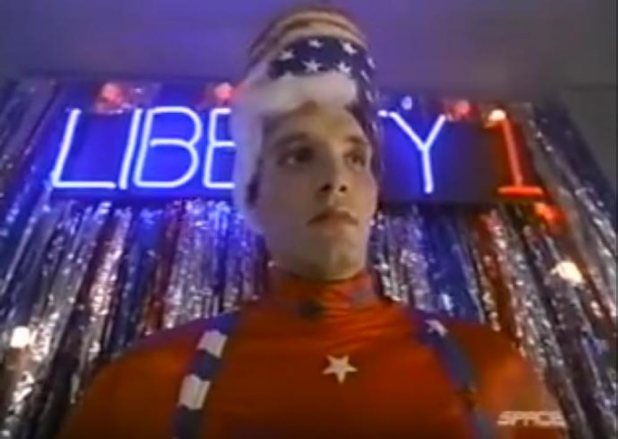
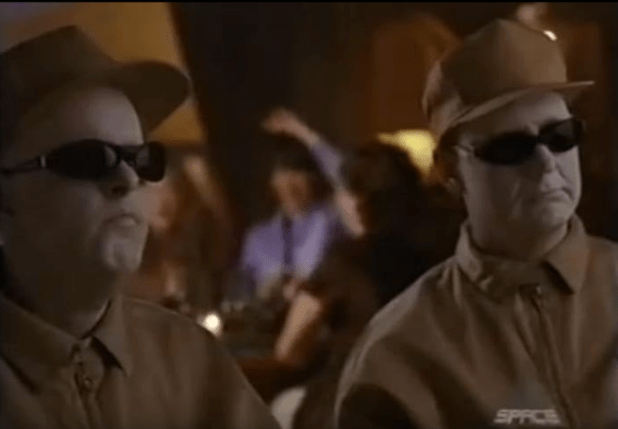
Directed by Russell Mulcahy and written by Scott Nimerfro, this is the last episode of Perversions of Science. Todd and Betty Sorensen (Patrick Cassidy and Maxine Bahns) get caught between warring groups of nanny robots that resemble elderly women. When one of their robots is damaged every night, a robot repairman suggests that they buy a new one: a red, white, and blue patriot by the name of Liberty 1 (Roger W. Morrissey). It’s filled with beehive hairdos and a future that feels like the 1950s. Barry Williams and Richard Riele are in it, too.

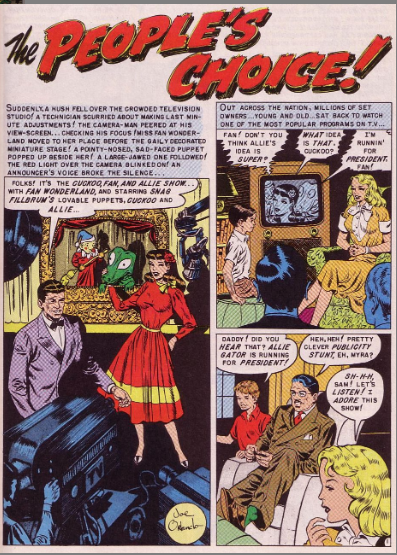
This takes its title from “The People’s Choice” from Weird Science #16, which was written by William Gaines and Al Feldstein and drawn by Joe Orlando. Please read the original comic, which is so much better than this lazy episode. In the comic book, a version of Kukla, Fran and Ollie runs for President and ends up being an alien who takes over the planet. It’s the best kind of EC story: dumb while smart, commenting on politics and the media while ending with the horrific image of a cute alligator controlling a woman through her arm.

You can download all of the episodes here or watch this episode on YouTube.

Perversions of Science E9: Ultimate Weapon (1997)

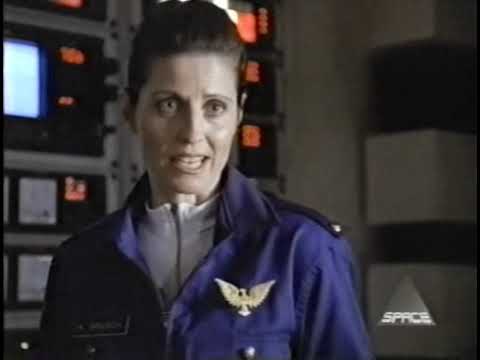
A shapeshifting alien from outer space assumes a human form (Paolo Seganti,  Sotto il vestito niente – L’ultima sfila) in order to mate with Lou Ann Solomon (Heather Langenkamp), a housewife who has enough to put up with. She has an ill-tempered husband, Matt (Mitchell Whitfield), drunk girlfriends Selena and Tess (Kim Myers and Maria Chin) and a visit from her parents (Jennifer Darling and Steve Kahan).

Of course, Langenkamp was Nancy and Kim Myers was Lisa in the Nightmare On Elm Street movies.

This is the only directing credit for Dean Lopata, who is primarily a producer and the story editor on Bones. The story was written by Gilbert Adler and Jeannette Lewis. This is her only script, and most of her career was in minor roles on TV shows.

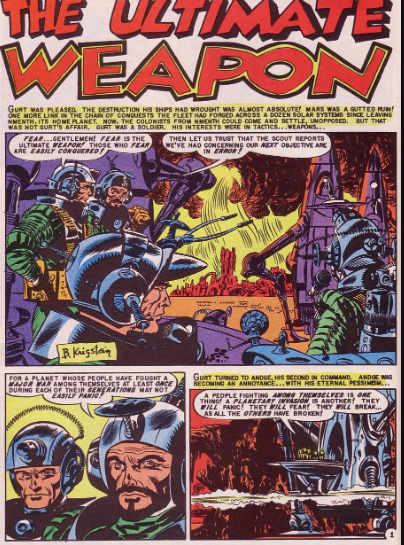
“The Ultimate Weapon” in Incredible Science Fiction #32 is where the title comes from. The comic was written by Jack Oleck and drawn by Bernie Krigstein and Roy Krenkel.

You can download all of the episodes here or watch this episode on YouTube.

Perversions of Science E8: Snap Ending (1997)

On a mission to investigate an uncharted planet, a spaceship captain (Jennifer Hetrick) and her mixed gender crew, Bryan (Wil Wheaton), Taylor (Sean Astin, who directed) and Paula (Kathleen Wilhoite) struggle with anxiety when an extraterrestrial virus puts the ship in lockdown. Then, the self-destruct sequence starts.

This episode was written by Kevin Rock, who was the writer of the Roger Corman Fantastic Four.

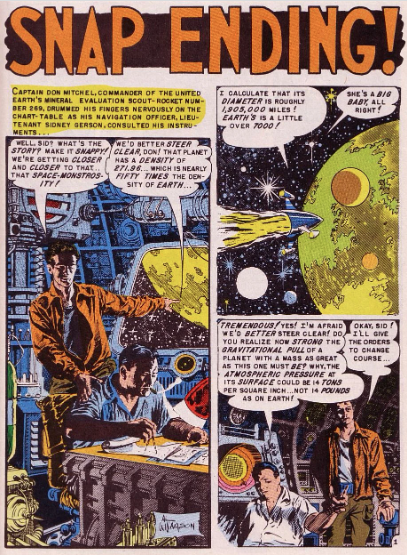
This takes its title from “Snap Ending!” from Weird Science #18. That short — “A gag story about space explorers who land on a giant alien child’s balloon and pop it, much to the consternation of the child.” — was written by Al Feldstein and William Gaines and drawn by Al Williamson. This episode is not close to that story.

You can download all of the episodes here or watch this episode on YouTube.

Perversions of Science E7: Panic (1997)

In the 1930s, Bob (Jason Lee) and John (Jamie Kennedy) are just two guests of a Halloween party where everyone is losing their minds over the Mercury Theatre production of The War of the Worlds. It gets out of hand as people start turning up dead.

What a cast! Harvey Korman, Larraine Newman, Edie McClurg, Kria Reed, Tracey Middendorf, Steve Monroe, Bryce Ingman and the one person you should never trust: Chris Sarandon. He’s the Orson Welles! Tobe Hooper directs! Andrew Kevin Walker, who also wrote Brainscan, 8mm and Se7en, scripted!

Yes, somehow all of these people joined to make an episode where the alien threat isn’t a hoax and Harvey Korman has flown through the stars to sodomize Jason Lee and Jamie Kennedy.

This is taken from the story “Panic!” in Weird Science #15 — numbered issue four — and it was written and drawn by Al Feldstein. In that story, a radio station replays the show years later and no one panics, but when a real invasion happens, no one pays attention when a Jupiter ship lands.

You can download all of the episodes here or watch this episode on YouTube.

Perversions of Science E6: Planely Possible (1997)

When Walter (George Newbern) can’t handle the grief of losing his wife because of an intruder — despite having Dr. Joyce Brothers as a therapist — an ex-NASA scientist, Dr. Kurt Rotwang (Vincent Schiavelli), sends him to other realities where Ruth (Elizabeth Berkley!) could still be alive with his Probability Engine. None of those are what he wants, and if there’s a lesson in this, it’s that sometimes you have to take the hand that the world has dealt you.

Directed by Russel Mulcahy (HighlanderRazorback) and written by Peter Atkins (Hellraiser IIHellraiser IIIFist of the North StarWishmasterPrisoners of the Sun), this is one of the better episodes of this show. Oddly enough, Meadow Soprano is watching this one in The Sopranos episode “I Dream of Jeannie Cusamano.”

This episode is based on “Planely Possible” from Weird Fantasy #21, written by Al Feldstein and William Gaines and drawn by Jack Kamen. Unlike many episodes of this show, this one is actually close to the original story, including the moment when Walter’s alternate reality self is put into an incinerator and tries to assume his place, which sets off a series of events that only worsen from there. You’ll see where this time loop is going, but that’s part of why this works so well.

You can download all of the episodes here or watch this episode on YouTube.