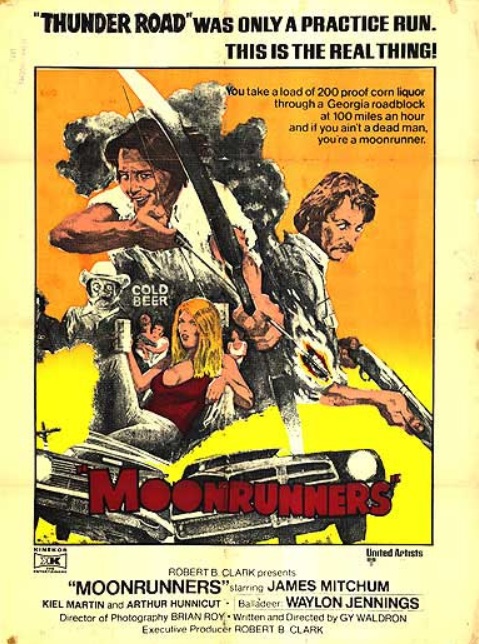
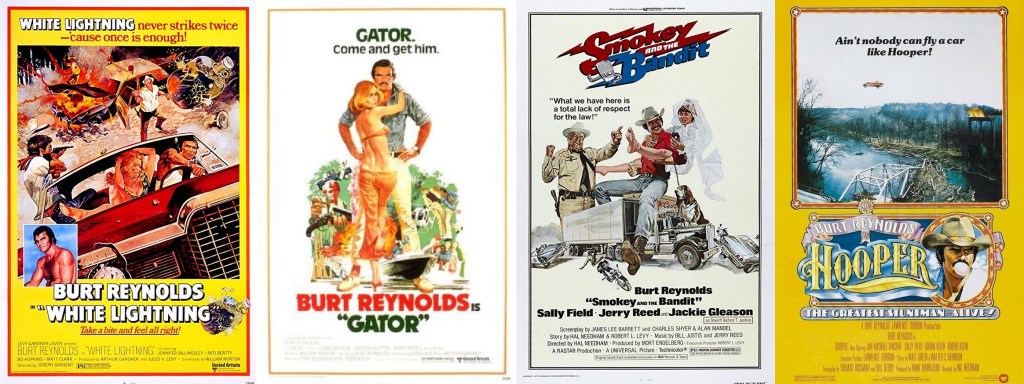
Moonrunners is one of the earliest celluloid responses to the massive box office generated by Burt Reynolds’s White Lightning (1973)—and was filmed in 1973 in the wake of that film. Over the years, Reynolds applauded White Lightning as being one of the best of his career and reasoned White Lightning’s success was the result of it being the first film that celebrated Southerners and didn’t degrade their culture and lifestyle: it was a film made about and for those folks living south of the Mason-Dixie. Burt Reynolds’s Deliverance (1972) and White Lightning—and obviously Gator (1976) and Smokey and the Bandit (1977)—set those stills o’ bubblin’ for every Southern tale thereafter.
So, if you never heard of Moonrunners, but you enjoyed White Lightning or Burt Reynolds’ post-Smokey and the Bandit, “good ol’ boy” films of Stoker Ace and Hooper, then you’re up-to-speed to enjoy the down-home, pre-Dukes of Hazzard action that is Moonshiners—as well as Roger Corman’s copies, Moving Violations (1976) and Thunder and Lightning (1977), both made to catch that Burt Reynolds-lightning in a bottle.
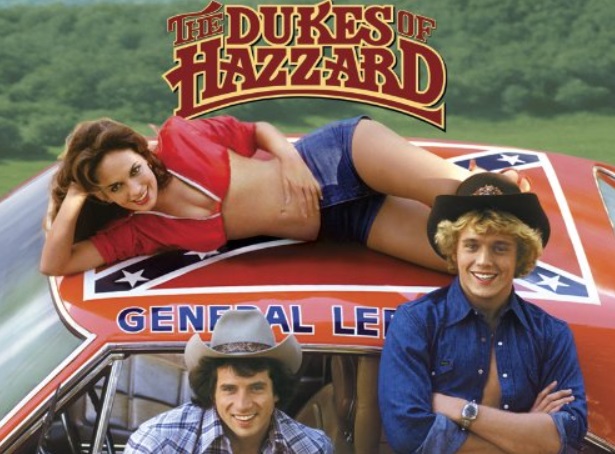
And you’ll recognize the plot and characters of Moonrunners right away: you’ve seen it before—on the successful TV series, The Dukes of Hazzard (1979-1985). While M.A.S.H receives an acknowledgment as the most successful film-to-TV adaptation, with the transition of Alice Doesn’t Live Here Anymore as Alice as a close second, critics have forgotten Moonrunners successfully transitioned to television. More critics “remember” The Super Cops (1974) transitioning to the small screen as Starsky and Hutch and FM (1978) “became” WKRP in Cincinnati; while both drew from analogous source materials, they’re not movie-to-TV projects.
The action-comedy Moonrunners was the feature-film writing and directing debut for ‘60s television scribe Gy Waldron; he convinced the CBS Network to green light The Dukes of Hazzard as result of his writing success on the CBS sitcom, One Day at a Time. The movie and subsequent series is based on real-life bootlegger Jerry Rushing, known for tearin’ up southern roads with his souped-up, 1958 Chrysler 300 D that he affectionately referred to as “The Traveller,” nicknamed after General Robert E. Lee’s favorite horse; the car served as the model for the Duke’s “General Lee”; Rushing was the blueprint for “Bo Duke,” and “Uncle Jesse” was modeled after Rushing’s Uncle Worley.
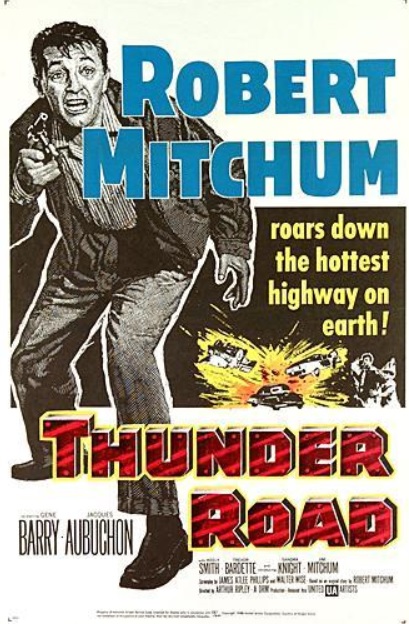
Backed by a requisite Outlaw Country-soundtrack adopted by other films in its wake, Moonrunners stars James Mitchum as a bootlegger behind the wheel of “Traveller”—blazoned with the #54 (in lieu of a #01)—outrunning federal agents on the southern backroads; he co-starred with his father, Robert Mitchum, in the similarly-themed Thunder Road (1958).
As with its TV clone, Waylon Jennings narrates as The Balladeer to move along the story of Grady and Bobby Lee Hagg (read: Bo and Luke Duke) who run moonshine for their Uncle Jesse in the mythical Georgia county of Shiloh (the real city of Shiloh is in Harris (read: Hazzard) County, Georgia). Between running ‘shine, the two hang out at The Boar’s Nest (also featured in the TV namesake) and race stock cars with their buddy, Cooter (another Dukes’ character). Uncle Jesse is at odds with his ol’ bootleggin’ partner, Jake Rainey (read: Boss Hogg) who’s in cahoots with Sheriff Roscoe P. Coltrane to “git them Duke Boys” and put Uncle Jesse’s ‘shine stills out of business. Along the way the Hagg brothers help a daisy-duke wearin’ damsel, Beth Ann Eubanks (read: Daisy Duke).
Of course, as with the adaptational softening of M.A.S.H and Alice Doesn’t Live Here Anymore, the moonshining action was softened to a more family-friend storyline. The “good ol’ boy” style of the series was so successful that Waldron spun off the character of Deputy Enos Strate into a short-lived series, Enos. Waldron also completed a film-to-TV adaptation of Kenny Rogers’s kid-friendly, stock car racing comedy, Six Pack (1983), starring Don Johnson, which failed to be picked up as a series. Jerry Reed of Smokey and the Bandit also tried to get some of that Duke Boys-flavor—as a character named “Traveller”—co-starring with fellow musician-actor Lane Caudell in a failed TV movie pilot, The Good Ol’ Boys (1978). Exploitation guru Roger Corman also attempted to git ‘em some of that Duke Boys-action with his failed TV movie pilot, The Georgia Peaches (1980), starring Dirk “Starbuck” Benedict (of the hicksploitation film Ruckus).
About the Author: You can read the music and film reviews of R.D Francis on Medium and learn more about his work on Facebook. He also writes for B&S Movies.
In the post-Halloween slasher universe, dentists and podiatrists who wanted to become “film producers” realized all you needed to make a movie was a patch of woods, well-endowed amateur females with a good set of pipes for screaming (and racks for gawkin’), and some guys with ironically bad dental work and gnarly bare feet with a penchant for some good ‘ol fashioned, down home rapin’ n’ killin’. Ya’ll don’t be needin’ no stinkin’ script or character development ‘round ‘ere. Cum on, Uncle Jed. We’s be headin’ to the hills to make us Jethro BoDean into a bonerfide movin’ pickture star.
Looking back on the rednecksploitation (you can call it backwoodsploitation or hicksploitation if you like) era that ignited with John Boorman’s Deliverance (1972; based on the James Dickey novel), you begin to realize it was Deliverance—and not Halloween—that served as the jump-off point for Sean S. Cunningham’s Friday the 13th. Outside of F13’s Michael Myers-clone in Jason Voorhees and the accoutrements of Italian Giallo-inspired gore, it’s Boorman’s Deliverance that served as the true antecedent to most of the product from the ‘80s slasher cycle—for the true terror lurks in the woods.
However, while Deliverance has an underlying social statement about America’s class structure and questions who is stronger in a battle of wills between primitive man vs. civilized man (a message also found in Sam Peckinpaw’s Straw Dogs; 1971), all the films produced in its backwash threw away plots (that were cookie cutter n’ boilerplated anyway), character development and underlying themes, and amped the violence—even more so in a post-John Carpenter world. Macon County Line (1974), Death Weekend (1976), Rituals (1977), Just Before Dawn (George Kennedy, The Uninvited) and Walter Hill’s Southern Comfort (both 1981) each own their debt to Boorman’s backwoods-terror vision. In fact, in some overseas markets, Rituals was marketed as Deliverance 2.
At their core, most redneck flicks are just darker versions of the ‘ol fish-out-of-water masterplot where the protagonists—in this case, an obligatory group of four or five dick-swinging intellectuals, with at least one testosterone-jacked jock in tow—look and act differently that the surrounding protagonists—i.e., inbred redneck poachers—and don’t understand their foreign-backwoods environs as well as their citified arrogance leads them to believe. Of course, the additional twist: When the city-fishies are out of water in a thriller-cum-suspense horror environ: they must piss off the locals. Oh, and there has to be at least one stupid woman that wasn’t invited on the woodland adventure who decides to “surprise” her husband, because, well, Cletus and Bocephus ain’t bin wid no whimin’ fer a lerng, lerng time.
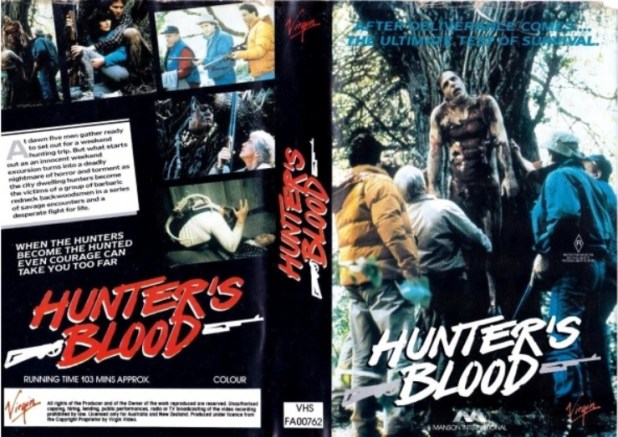
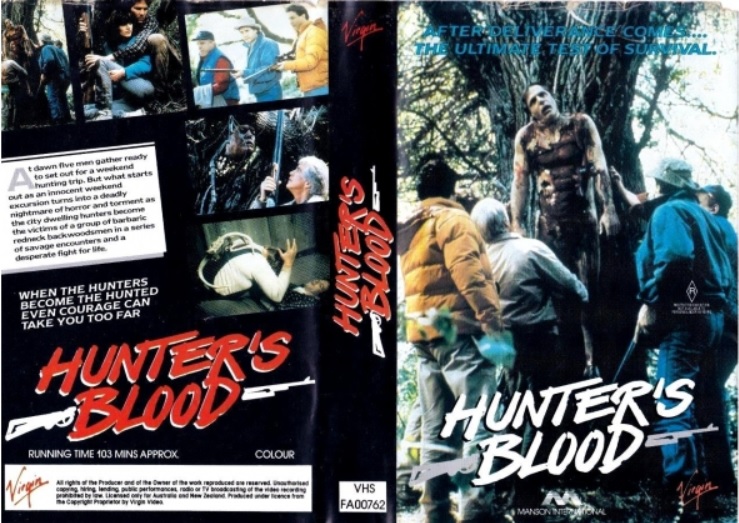
And that’s the plot of Robert C. Hughes’ Hunter’s Blood: Five city slickers go-a deer huntin’ and meet up with Redneck Local Rotary 666 and, well, anyone with a G.E.D would get the fuck out of the woods, go back to suburbia, bang Kim Delaney, and then fire up their copy of Arcadia’s Deer Hunter Skeet Shoot projection video game. And if you got no one to do the shimmy-sham: find yourself a nice, citified wings n’ ribs grill with Big Buck Hunter in the corner by the restrooms, pop a quarter, and call it day. Nope. Not in Hunter’s Blood country.
“Hey, Pop. How come we didn’t buy beer and stock our coolers in the city before we left for inbred country,” ask David (Sam Bottoms, Up from the Depths by the guru of redneck cinema, Charles B. Griffith).
“Shut up, you’re ruining the plot, son,” head smacks Mason (Clu Gulager, Burt from Return of the Living Dead!!!). “Now pull into that general store so we can buy beer and I can kick some redneck ass and unleash their wrath before Kim Delaney shows up to be raped.”
“Tobe’s Gas Stop? Hey, that’s funny. They named it after Tobe Hooper, the director of The Texas Chainsaw Massacre,” says Marty (John Travolta’s less-talented brother, Joey).
“Shut up and quit trying to act, Joey. Just sit over there and wait to be killed,” yells Al (Ken Swofford of Black Roses and a snake-bag load of American TV series). “Look at my IMDb resume, I know what I’m talking about. Now go get a real estate license and quit irritating me, kid.”
All joking aside: What makes Hunter’s Blood the type of hicksploitation classic we love here at B&S Movies is its who’s who of B-movie badassery backing up Clu and Ken (both appear in Terror at London Bridge): You have Lee De Broux as “Red Beard” (Salvage 1andRobocop), Charles Cyphers as “Woody” (Carpenter mainstay; Assault on Precinct 13), Billy Drago as “Snake” (Invasion U.S.A), and Bruce Glover as “One Eye” (Yep, Crispin’s dad!) . . . and Mickey Jones (!) as “Wash Pot” (Slingblade, Total Recall, National Lampoon’s Vacation . . . the dude was Bob Dylan’s and Kenny Rogers’s drummer and earned 17 gold records!).
And wid-a cast like that, ya’ll don’t be needin’ no stinkin’ script or character development. Bend over and squeal like a pig, and enjoy it, son.
Need more Robert C. Hughes-backwoods terror? He returned with Memorial Valley Massacre (1989). The unrated, pseudo-Eurotrash cut of the film, Son of Sleepaway Camp, marketed as a bogus sequel to 1983’s Sleepaway Camp, goes all “Jess Franco” with hardcore sex and amped gore scenes inserted.
About the Author: You can read the music and film reviews of R.D Francis on Medium and learn more about his work on Facebook.
Imagine if Jimmy McNichol’s Roscoe Wilton from Smokey Bites the Dust was a musician in search of a recording contract. . . . Wait, even better. How about Burt Reynolds’s Bo “Bandit” Darville from Smokey and the Bandit having aspirations to make it as a singer on the stage of the Grand Ol’ Opry?
Yuuuuup! Yer now up to speed on this deep-hicksploitation obscurity that’s worth watching solely for Slim Pickens’s hilarious turn as the obligatory Sheriff Buford T. Justice-clone in this octane-fueled BBQ’d adventure. Somewhat reminiscent of Jerry Reed’s later written-produced-directed-acted country music comedy, What Comes Around (1985), ‘60s country singer Jesse Lee Turner serves as the executive producer and screenwriter, composer and star of this entry in the hicksploitation canons concerned with pitfalls and pratfalls of the country music industry—with a few car chases and crashes added for good measure.
Turner, who made it into the Top 20 on the Billboard Hot 100 chart with his 1959 debut single, “Little Space Girl b/w Shake, Baby Shake” (the B-Side is pure Elvis-rockabilly awesomeness), was unable to repeat that initial success with subsequent singles for various labels throughout the remainder of the ‘60s; he finalized his career with a 1975 singles-deal with MCA Records. Turner then incorporated a successful crop-dusting business (he was a long-time certified pilot) and came to own restaurants, a cattle ranch, a small community airport, and a few oil wells.
It was after Robert Altman released his comedic satire on the country music industry, Nashville (1975), that Turner decided to start a new business: a film production company, General Audience Films, to counter the negative light many in the country and gospel music communities felt Altman’s film cast on the industry. In addition to writing the script, Turner wrote four of the eight songs he performs in the film (the rest are written by respected country songsmiths Larry Hart and Ben Peters), including “Make It on My Own, “I’d Like to Be in Nashville,” “Road to Nashville,” and “Made It to Nashville.”
To direct his country-road comedy, Turner hired Alex Grasshoff (of the papier-mâché dinosaur romp—complete with Richard Boone manning a drilling mini-sub!—The Last Dinosaur). As a sidekick to his J.D character, Turner cast veteran television character actor and B-Movie stalwart Dennis Fimple (TV’s B.J and the Bear; the films The Bootleggers, The Creature from Black Lake, Stay Hungry, Truck Stop Women, White House Madness . . . yes, we love Dennis!) as the Salt Flat Kid (which proved to be Fimple’s only leading man role in a feature film). The musician-duo, who end up spending the night in jail after a gig, meet a flim-flamin’ impresario (country-comedian Archie Campbell of TV’s Hee Haw) who claims he can take them all the way to Nashville. Let’s go, boys!
You have to keep stokin’ that Bandit BBQ-smoky flavor, so we have another Sally “Frog” Field bailing out of a wedding to hook up with J.D’s “Bandit,” courtesy of Nashville singer Dianne Sherrill (who appeared in Nashville 99, ashort-lived 1977 TV series starring Jerry Reed and Claude Atkins). And you know the rest of the story: Gailard Sartain (a southern-fried comedic actor best known as the put-a-upon police office in The Hollywood Knights and The Big Bopper in The Buddy Holly Story) is the jilted bridegroom who calls his Texas-hating uncle, Tennessee Sheriff Ledy (Slim Pickens), into action to bring back his lady love.
Hey, there’s Clara Edwards (Hope Summers) from The Andy Griffith Show and Mayberry R.F.D . . . and country music legend Mickey Gilley as a stock car racer . . . and Epic Recording Artist Johnny Paycheck . . . and Polydor’s Johnny Russell . . . and the legendary George Jones showing up for a few tunes. Hey, that’s music agent Eddie Gibbs (Sully Boyar) from The Jazz Singer (1978), and Dog Day Afternoon (1975) and Car Wash (1978).
Yep, this good ol’ boy comedy is a BBQ treat brimming with all the B-Movie and exploitation character actors I love. It’s awesome to see Dennis “Grandpa Hugo” Fimple from Rob Zombie’s House of 1000 Corpses in a leading-man role.
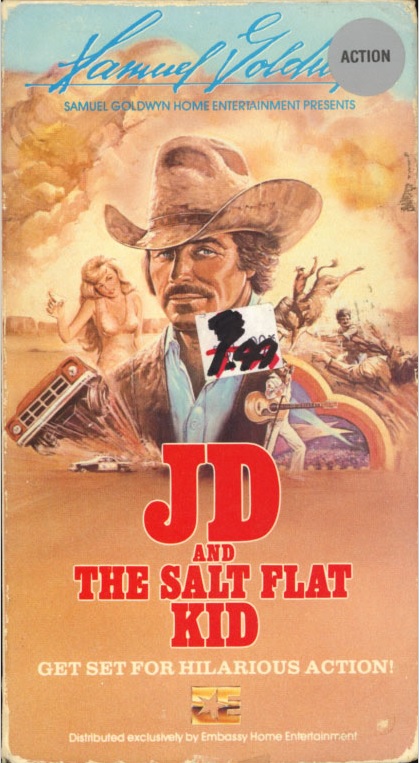
You’ll notice the artwork on the VHS box (below) utilizes the film’s original title: J.D and the Salt Flat Kid. That artwork, as well as the theatrical one-sheets, went to great lengths to illustrate Burt Reynolds and Jerry Reed-styled characters bearing zero resemblance to Jesse Lee Turner and Dennis Fimple.
Another Drive-In reboot one-sheet, left; the “Burt Reynolds” VHS reboot artwork, right.
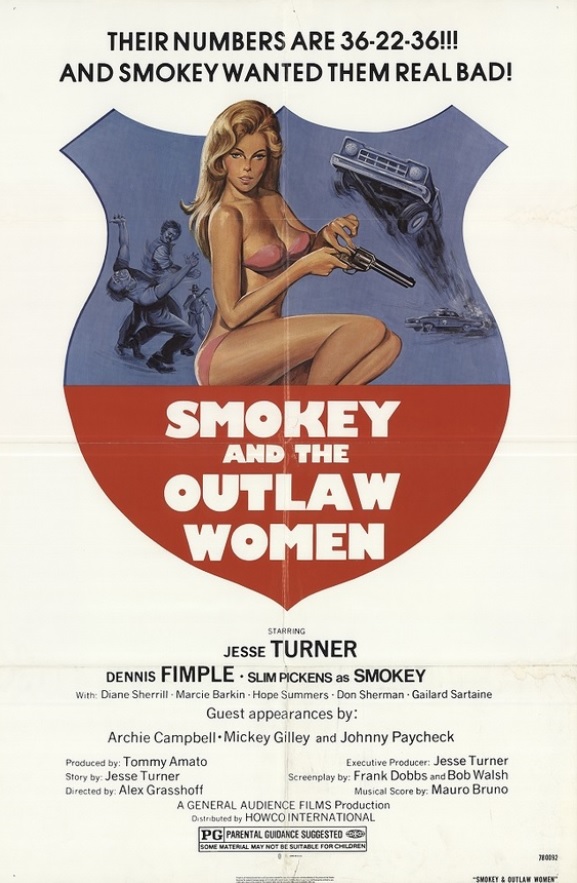
The clever exploitation marketing featuring a pseudo-nude chick loading a gun under the Smokey and the Outlaw Women banner comes courtesy of producer-distributor J.N Houck, Jr., the Drive-In huckster-guru of Howco International Pictures. Howco was the driving force behind numerous exploiters from the ‘50s through ‘70s, including Night of Bloody Horror (reviewed as part of our October unpack of the Mill Creek Pure Terror 50-film box set) and the previously-linked Creature from Black Lake, starring Dennis Fimple alongside Jack Elam and Bill Thurman (‘Gator Bait).
In addition to becoming an ordained evangelist with a Christian-rock music ministry, Jesse Turner worked as a set designer and as a camera and electrical grip in film and television productions.
About the Author: You can read the music and film reviews of R.D Francis on Medium and learn more about his work on Facebook. He also writes for B&S About Movies.
As the reviews begin to roll out for B&S Movies’ “Redneck Week” July spotlight, you’ll notice there’s a lot of fun being made at the expense of a rich, colorful culture that exists south of the Mason-Dixie line—not just by the filmmakers, but by the reviewers as well, especially me: the smarmy, he-thinks-he’s-so-funny, R.D Francis. On the surface, it seems this is a celebration of the racial profiling of Southerners.
The concept of hicksploitation (that is, rednecksploitation and backwoodsploitation) is insane: Everyone south of the Mason-Dixie are uneducated, inbred moonshine running religious zealots (see the Deliverance-inspired subgenre)—and sometimes cannibals (The Texas Chainsaw Massacre subgenre)—who defy authority and society and strand Yankee motorists for car parts—and other “parts”—with a glee in their eye? All of the Sheriffs are incompetent and corrupt with dumb sons and dumber deputies (see Smokey and the Bandit)? It’s ludicrous.
Imagine a film that, for 90 minutes, rolled out one slanderous, stereotype after another on any other racial heritage or culture. It would be offensive. You’d defy the hate. You wouldn’t celebrate the ignorance displayed in those films and there’s not one excuse about your affection for the “video fringe” that would justify the merriment.
The reality for the many of those Southern denizens of the backwoods and deep mountains south of the Mason-Dixie spoofed in the Drive-In exploitation canons of the ‘70s and ‘80s is a life of poverty and hunger that rivals the worst of third-world countries. It’s worse than any reality you and I live in—flesh or celluloid. As my educated, film-reviewing adult self looks back on my clueless, Drive-In attending and video-renting younger self, I type this humbled and ashamed. I wouldn’t make a joke at the expense of those suffering the realities of third-world poverty or inner-city urban hardships. . . .
Then why is it acceptable for Southerners to be cast as the butt of jokes, pigeonholing, and stereotyping in films?
The truth is that we don’t buy into the “reality” of the hicksploitation genre—be it comedy, action, or horror—no more than we buy into the “reality” of the ‘80s endless drove of Die Hard knockoffs. When Dwayne Johnson jumps architectural chasms 1500 hundred feet in the air—on a prosthetic leg, no less—and grips a Skyscraper girder by the fingertips, we cheer.
Why?
Because we live in a non-TV reality “reality” and that reality not only bites, it sucks the very fibers of our being. We don’t want reality in our films. If I want an introspective, politically correct, Tinsel Town drama with award-winning cinematography and Oscar hopes that reminds me of the pain and anguish in this world, I’ll go sit in a dark, air-conditioned cavern for two hours. If you want to spelunk for your celluloid fix and nosh on over-priced popcorn, go for it.
Not me.
I’m exploring the forgotten video fringes and exploitation crevices introduced to me during my UHF-TV and Drive-In upbringing. In the video-store ‘80s of my youth, if I was blowing one of my 5 Videos-5 Days-5 Bucks selections on a film, that film best shatter my realities into dust with an over-the-top hyper reality. I wanted to be shocked. I wanted to flinch. I wanted my brain to be pushed to the point where the only logical response to the analog upload was to laugh out loud or groan out loud at the blatant absurdity of it all.
At their core, film reviews—especially of the long forgotten titles and genres of the past that this writer champions—are historical documents. When you log onto B&S Movies or crack the pages of a hardcover film encyclopedia or any other blog, message board, or vanity site, you’re opening a history book about the craft—good, bad, or indifferent—of filmmaking.
So, with that, this article is a celebration of our ill-informed, 1.0 teenaged version and the films of that past. This historical documentation is meant to chronicle the sheer audacity of exploitation filmmakers and the outrageousness of their Deep South storytelling. . . .
“Shoot, boy. Git to the film list already before I skin yer hide and boil ya’s in possum fat,” Otis points his double-barrel. “Cum on, now. Git to it! Or you wanna taste sum buckshot?”
Gulp!
Here’s the Top 70 Good Ol’ Boys List. The films are organized by year, then alphabetically. Happy viewing! Oh, by the way, it’s a little more than 70 these days, as we’ve been adding more to the list as result of our “Fast and Furious Week“(s) of reviews.
Sam’s Note: I’m glad that Redneck Week will not just be me exploring these movies. R. D Francis has joined me with a review featuring perhaps the most popular actress of the genre, Claudia Jennings.
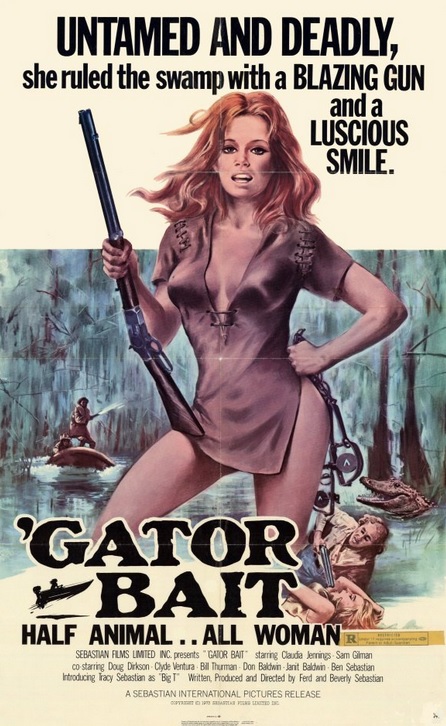
Prior to their mid-‘90s conversion to Christianity and retirement from the industry, Sebastian International Pictures was a family affair run by the husband and wife writing, directing, and cinematography team of Ferd and Beverly Sebastian; their sons Benjamin and Tracy (aka Trey Loren), and daughter, Jan, worked behind the scenes and sometimes stepped in front of the camera on the family’s films.
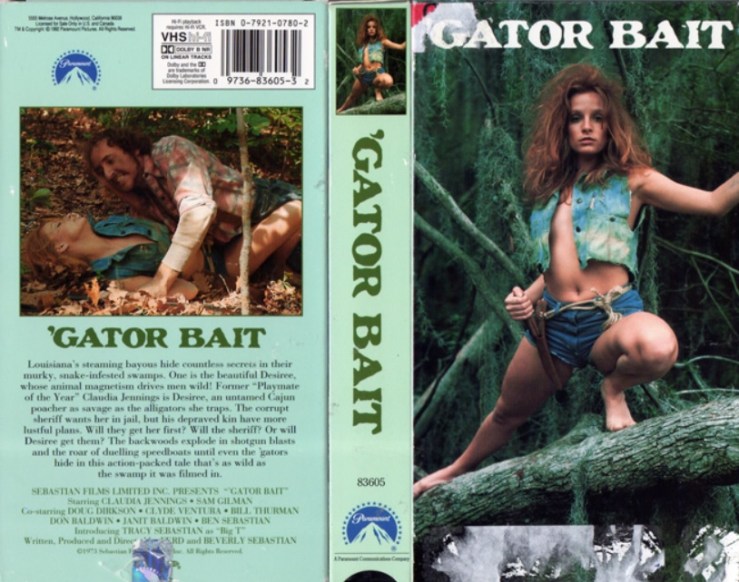
The Sebastians’ company edict mirrored Roger Corman’s: Make ‘em fast, make ‘em cheap and, when opportunity knocks, always produce a knockoff of a then-popular film. So when John Boorman struck box office gold with his redneck-revenge horror, Deliverance (1972), the Sebastians’ response was ‘Gator Bait. Made for a few hundred thousand—less than John Carpenter’s reported $300,000 budget for Halloween, ‘Gator Bait grossed double-digit millions on the drive-in circuit.
The “bait” for this swamp romp is Desiree Thibodaux (Playboy Playmate Claudia Jennings), a barefoot and daisy duke-wearing Cajun huntress carrying on the family’s gator poachin’ business (after the off-camera deaths of her ma and pa) and taking care of her mute, little brother, Big T, and her teen sister.
In steps the dopey-deputy son (Clyde Ventura of Poor Devil) of Sheriff Joe Bob Thomas (B-Movie stalwart Bill Thurman, Creature from Black Lake). Seems sonny boy is decidin’ he wants to git-em-sum of that “wildcat” and tries to arrest Desiree for poachin’. (Take note: In the Louisiana bayous: justice equals rape.) In her escape, Desiree tosses a burlap bag of poached snakes into dopey-deputy’s boat, which he subsequently shoots holes in—to kill the snakes—and shoots his redneck-rapist boat pilot in the process.
Guess what lies sonny boy done be tellin’ his pappy?
“S**t, boy, I just paid $300 for that there boat!” says Sheriff Joe Bob.
Yee-haw! Sheriff Joe Bob is roundin’ up ‘emself a posse with his “buddy,” T.J Bracken (Sam Gillman, an ex-Marvel comic artist who starred alongside Charlton Heston and James Coburn in The Last Hard Men), a daddy who be bull whippin’ his horny son after catchin’ ‘em tryin’ to rape his sister. Oh, and the plot twist: the reckneck-rapist boat pilot was T.J’s third son.
And with that: Joe Bob and his sonny boy, along with T.J and his two horndog sons . . . well they’s be a-goin’ to git Desiree and bring her to “justice.” And when you’re dishin’ out “bayou justice,” you murder-rape Desiree’s teen sister (Janit Baldwin of Humongous and Linda Blair’s Born Innocent), in order to apprehend (read: rape) Desiree.
Hell yeah! Desiree goes “John Rambo” on their asses, drawin’ em deeper n’ deeper into the swamp. As the inbred-bunch turn on each other, T.J lets more of the plot out of the snake sack: Sheriff Joe Bob had a “thing” with Desiree’s Ma, and Desiree’s Pa used Ma as “gator bait” for cheatin’ on ‘em, and the sheriff shot Pa in “self-defense.” Oh, and it turns out T.J is really Desiree’s pappy, so T.J’s three sons have been lustin’ ‘efter their own sister!
Well, it looks like this is the end to the Sheriff and T.J’s own gator poachin’ business and Desiree will have the market cornered.
Claudia’s other flicks in the redneck/hicksploitation cycle are the Bonnie and Clyde-cum-Big Bad Mama rip-off, The Great Texas Dynamite Chase and, for Corman, well ‘ol Rog wasn’t letting Smokey and the Bandit zoom by without producing a cheap knockoff, so Claudia starred alongside Ben Gazarra’s “Bandit” in Moonshine County Express. As part of Claudia’s two-picture deal with the Sebastians (she got a free Caribbean vacation via the film shoot), she starred in The Single Girls (with Greg Mullavey of I Dismember Mama fame).
Prior to their retirement, the Sebastians produced a 1988 sequel: Gator Bait II: Cajun Justice, where Big T—just a kid in the 1973 original—carries on the family business and teaches his wife (Jan MacKenzie; aka Sebastian, their daughter) the ways of the swamp—which she uses to extract Cajun revenge.
The Sebastians have since come to reacquire the rights to most of their Vestron Video and Paramount-distributed catalog, releasing their films on DVD via their Panama Films imprint through various online retailers. You can also learn more about Claudia Jennings at her official tribute site.
Ferd Sebastian July 25, 1933 — March 27, 2022 Obituary
About the Author: You can read the music and film reviews of R.D Francis on Medium and learn more about his work on Facebook.
No. This movie isn’t about an aspiring singer working in an Arizona greasy spoon starring actress Polly Holliday spoutin’ her “kiss my grits” catch phase—that’s the 1976 to 1985 CBS-TV series, Alice. (How did the CBS network not sue the makers of this movie for usurping the title?)
And the Oscar, well Razzie, for worst theatrical one-sheet of 1982 goes to . . .
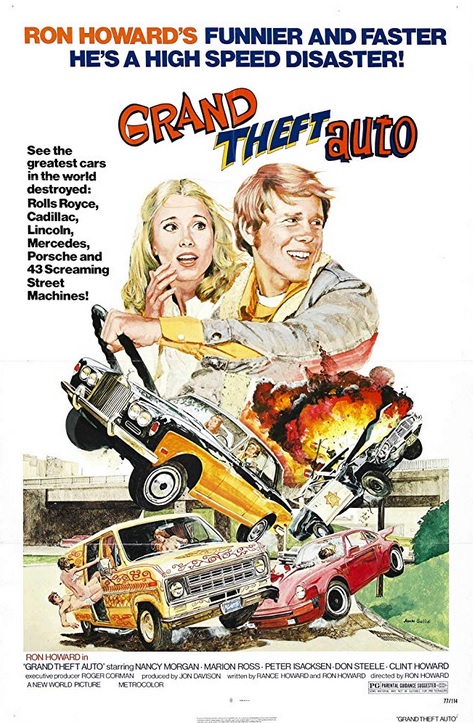
In this hicksploitation tale, the lead actress from Straw Dogs (1971; Susan George) and the lead actor from Willard (1971; Bruce Davison) walk into Mel’s Diner . . . uh, I mean a southern honkytonk—complete with babes mud wraslin’ to watch while ya eats—and meet a ‘70s B-Movie bikersploitation (The Losers, Run, Angel, Run) and blaxploitation (Slaughter, Cleopatra Jones) director (Jack Starrett) and make a Smokey and the Bandit hicksploitation rip-off . . . but what we really have here is a rip-off, of a rip-off, of a rip-off because you’ll recognize this film’s stunt footage—and plot—is recycled from Smokey Bites the Dust, Grand Theft Auto, and Eat My Dust—right down to Bruce Davison’s Dolin T. Pike speeding around in a stolen Rolls Royce, just like Ron Howard in Grand Theft Auto.
And since every good ‘ol boy “Bandit” needs a Sally “Frog” Field to complicate his life, in steps Susan George as the requisite spoiled girlfriend—this time, of a local mobster controlling the town (Anthony Franciosa of Tenebre, Curse of the Black Widow)—who uses her womanly wiles to convince Davison’s down-and-out divorced father and prison parolee into robbing Franciosa so they can live the high life in Mexico. The chase is on.
Oh, let’s not forget our obligatory “Sheriff Buford T. Justice” portrayed by standby hicksploitation actor Pat Corey (The Super Cops, Law and Disorder; you can pick a ‘70s TV series) in hot pursuit to “git ‘dem Duke Boys.” The “Snowman” to Davison’s “Bandit” is the always reliable Bruno Kirby (City Slickers, This Is Spinal Tap).
Susan George and director Jack Starrett (he starred as Deputy Galt in First Blood and as Gabby Johnson, the town drunk in Blazing Saddles) previously worked together in the hicksploitation actioner, A Small Town in Texas (1976), which is a less comedic version of Kiss My Grits featuring Bo Hopkins (White Lightning) as the corrupt sheriff. As a director, Starrett scored a massive Drive-In hit with his Peter Fonda-starring Deliverance rip, Race with the Devil (1975); Susan George starred with Fonda in the redneck Bonnie and Clyde-inspired romp, Dirty Mary, Crazy Larry (1974).
You’ll notice an actor in the credits by the name of Blackie Dammitt (of the Christmas Tree lot bust in Mel Gibson’s Lethal Weapon) portraying the character of Bat Paterson; born John Keidis, he’s the father of Anthony Kiedis of the Red Hot Chilli Peppers. Starrett’s daughter, Jennifer, who had a small part in the film as a waitress, was one of the leads in Norman Thaddeus Vane’s Frightmare (1983) before retiring from the business.
As with the redneck rally that is Ruckus, there’s something for everybody in Kiss My Grits: It was cross-marketed as a comedy under the ‘Grits title, a steamy, adult thriller (Summer Heat, to align it with the hit William Hurt romance crime-drama Body Heat), and as an action flick (Texas Burns at Night). In addition to its VHS distribution on the all-too-familiar Astral and Media Home Entertainment imprints, it ran on CBS late night television in the late ‘80s.
Here’s the trailer, a clip of some good ‘ol mud wraslin’, and another clip spotlighting the lovely Susan George to sample.
About the Author: You can read the music and film reviews of R.D Francis on Medium and learn more about his work on Facebook. He also writes for B&S Movies.
“Shoot, why didn’t they just pud it all in one gosh dang movin’ pickture called ‘Bite My Grand Theft Auto Dust, Smokey’?” — Cletus
“Shoot, Hoke. I thought you said this were’s a sequel to Smokey and the Bandit,” says Cletus with a baseball cap smack to the head of Hoke. “There ain’t no Burt Reynolds in this!” Then Cletus feels a movement in the those demin-stained loins. “Oh, now wait jusda gosh-dang minute. Now who be that little darlin’ in the yellow daisy-duke overalls? She’s purty. That’s be makin’ up for Burt Reynolds not bein’ in it.”
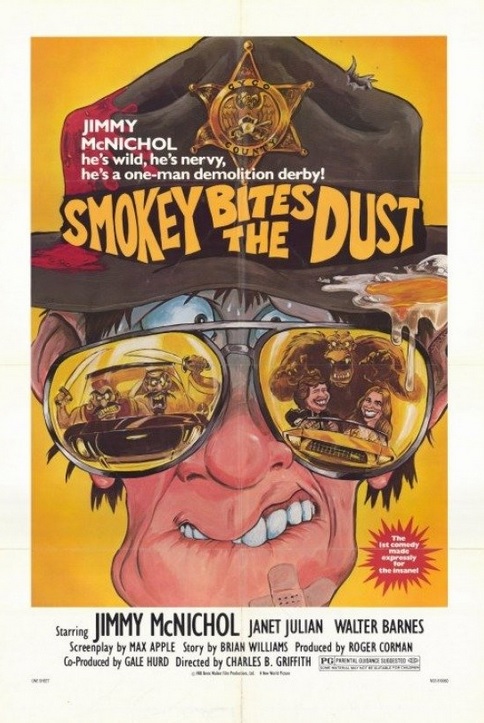
And that’s the plot of Smokey Bites the Dust: Janet Julian in that yellow jumper.
Looks like a Boss Hog and Daisy Duke to me.
And it’s the same exact plot as the Halloween rip-off, Humongous (1982), the Iceman rip-off, Ghost Warrior (1984), and the Rambo rip-off, Choke Canyon (1986): Janet Julian. And they all suck celluloid donkey ass. And the only reason to watch any of them, class . . .
“Janet Julian, Mr. Francis.”
As for the “plots” to Eat My Dust and Grand Theft Auto: It’s the same ol’ Smokey and the Bandit car chases and car crashes tomfoolery caused by another bumbling Sheriff Buford T. Justice-clone chasing another Bandit-clone—both owing their existence to Burt Reynolds’ White Lightning—but without the desperately needed Janet Julian fix. Yeah, Christopher Norris in Eat My Dust is cute and Nancy Morgan in Grand Theft Auto is okay. But they’re all the same Sally “Frog” Field character from Smokey and the Bandit and, again, class . . .
“They’re not Janet Julian in those yellow daisy-duke overalls, Mr. Francis.”
Look, the hicksploitation plot equation is real simple, Bocephus: Ron Howard’s Hoover Neibold in Eat My Dust x his Sam Freedman in Grand Theft Auto ÷ Jimmy McNichol’s Roscoe Wilton in Smokey Bites the Dust = Burt Reynolds’s Bo “Bandit” Darville in Smokey and the Bandit. You got that, son?
Yeah, I know that William Forsythe (Stone Cold), one the best—if not the best—“heavies” in the business, makes an early film appearance as the lovesick football player in pining for Janet Julian’s Peggy Sue Turner. But Big Bad Bill is not yet into his full bad assery-mode that we know and love—and there’s not enough of Bill and way too much teen-idol “Bandit” tomfoolery with Jimmy McNichol getting in the way. Thank God, Janet is there in those, class . . .
“Yellow daisy-duke overalls, Mr. Francis.”
While B-Movie novices may have been buffaloed into thinking they were seeing a sequel to Smokey and the Bandit (a skill in which Roger Corman excelled), Smokey Bites the Dust isn’t a sequel—at least not in the character or plot development departments—to Corman’s Eat My Dust, as commonly reported.
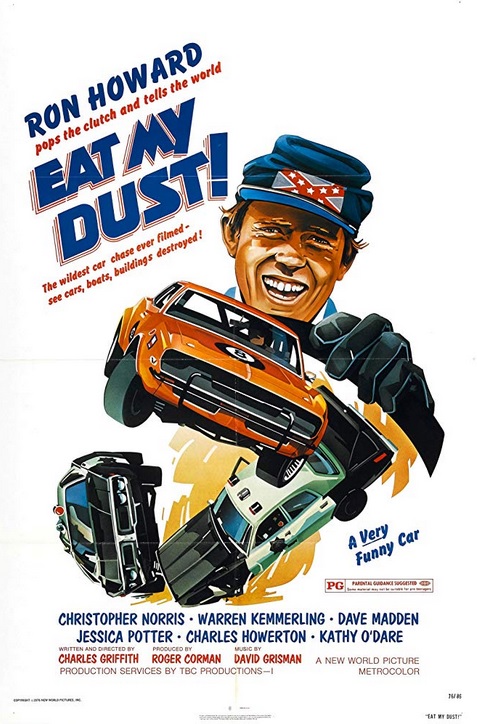
Ron Howard, then hot from his starring role as Richie Cunningham on TV’s Happy Days, was approached by Corman to star in Eat My Dust. Howard wanted to move into directing. So they made a deal: Howard starred in Eat My Dust and Corman financed Howard’s directing debut with Grand Theft Auto—both films stealing the White Lightning blueprints and quickly produced to cash in and beat Smokey and the Bandit into theatres. And they both cleaned up at the box office.
“Shoot, Cletus. You’s sure we ain’t bin seein’ this movie before? All these car chases and crashes sure du-be lookin’ fermilar,” head scratches Hoke with an oil can spout.
“Gud God, Hoke. Yer sures is dumb. Don’t ya know ya-be watchin’ a film produced by the king of stock footage recycling?” baseball cap smacks Cletus.
In the wake of Star Wars (?), Corman came up with an idea for a “sequel” to Eat My Dust called Car Wars—based around the stunt footage from Corman’s five previous “hicksploitation” productions: Eat My Dust, Moving Violations (starring Kay Lenz), Fighting Mad (starring Peter Fonda) (both 1976), Thunder and Lightning (starring David Carradine), and Grand Theft Auto (both 1977). In fact, Corman had Allan Arkush and Joe Dante use the same celluloid bricklaying concept to create Hollywood Boulevard. (1976). And how many times have we seen the special effects footage from Corman’s Battle Beyond the Stars?
Of course director Charles B. Griffith had the nerve to inject a plot and character development into Smokey Bites the Dust—which took away from the car chases and crashes—so Corman cut out all that character and plot crap getting in the way. And that’s how we ended up with a plot that revolves around, everyone . . .
“Janet Julian in those yellow daisy-duke overalls, Mr. Francis.”
As for the hicktastic Sheriff Buford T. Justice-clones of Bite My Grand Theft Auto Dust, Smokey:
Charles Howerton, who stars as Sheriff Sherman “Sherm” Bleed in Eat My Dust, dubbed voices for the Italian Gialli Confessions of a Police Captain, Four Flies on Grey Velvet, and What Have You Done to Solange?, and is best known to trash cinema connoisseurs for his work in 1975’s Nazi-blaxploitation hybrid, The Black Gestapo. In addition to Charles B. Griffith’s Jaws rip, Up from the Depths, Howerton played another redneck sheriff in another hicksploitationer, Joyride to Nowhere (1977).
Barry Cahill plays a pseudo-sheriff as Bigby Powers, the corrupt Governor-father of Nancy Morgan in Grand Theft Auto. He also appeared in Daddy’s Gone A-Hunting (1969), Coffy, and The Stone Killer (both 1973), and had a fruitful career on American soap operas.
In addition to his role as Sheriff Hugh Turner in Smokey Bites the Dust, former NFL Philadelphia Eagle guard-turned-actor Walter Lee Barnes became a stock player in Clint Eastwood’s oeuvre, most notably as Tank Murdock in Every Which Way but Loose, along with roles in Bronco Billy and High Plains Drifter. In addition to working alongside John Wayne in Cahill U.S Marshall, trash cinema lovers may remember Barnes in Pigs (1972; aka Daddy’s Deadly Darling), The Christian Licorice Store (1971), and Day of the Animals (1977).
Class dismissed. Study your films. Work on your Janet Julian dissertations. See you on Monday! Have a good weekend!
And thank you, Burt. For without you: we would have NEVER gotten Janet Julian in that yellow jumper. God bless your redneck heart.
An update from the “What Makes B&S About Movies So Cool: Our Readers” Department: This little piece ‘o film trivia—that you won’t find on a Trivial Pursuit card—slipped by us. Doh! And we pride ourselves on our oddball “Amaze your friends with obscure film trivia” OCD.
So, it turns out Walter Lee Barnes played a variation of his Sheriff Hugh Turner, here, in the original version of Disney’s Escape to Witch Mountain (1975) as Sheriff Purdey: a sheriff bribed by the evil Aristotle Bolt (Ray Milland). We did two takes on the film, first in December 2019, then in July 2021. How did we miss this?
Seriously, a connection—a just beyond an actor’s resume—between a Corman and Disney film? Who knew? Our awesome, uplifting readers, that’s who. In fact, that reader, Phantom 309, came in with the assist on another Smokey-inspired hicksploitation romp, Double Nickels (1977). You rock, Phantom! Any fan of the classic Plymouth Satellite is okay in our book!
About the Author: You can read the music and film reviews of R.D Francis on Medium and learn more about his work on Facebook. He also writes for B&S Movies.
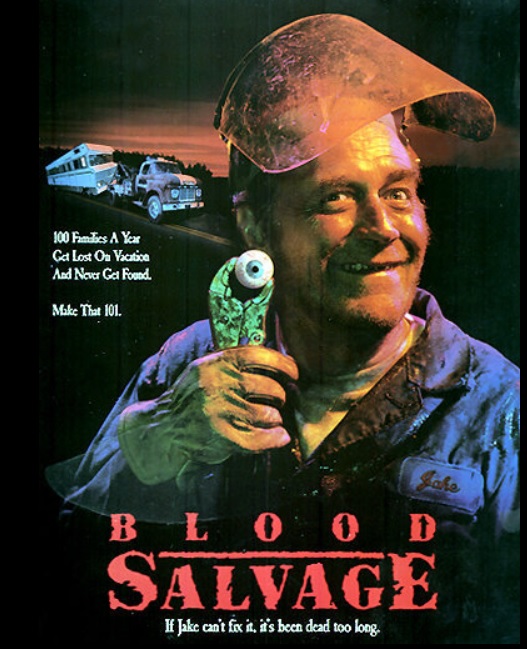
No, wait! Don’t put it back on the shelf! This film has an interesting twist: Instead of running a hicksploitation sausage factory or black market auto LLC, our merry band of religious zealots is-be runnin’ demselfs a little sideline business. Nope, ain’t be no deer likes in Hunter’s Blood or alligator poachin’ biznass needer, likes inGator Bait.
That’s right! Fire up that grill, Hoke, it’s time fer sum human organ poachin’! Yep, Euclid! Gud eats be-a comin’ as Daddy John Saxon (Cannibal Apocalypse, A Nightmare on Elm Street) be-a leadin’ another unsympathetic shoal of unschooled fishies-out-of-the-city-waters for some family bonding . . . uh, oh.
Oh, no. Not this shit, again, Ethel.
Why in the fuck do these dummkopfs insist on vacationing in the land of human sausage factories and black market human organ graveyards? This isn’t the jolly Green Acres outside of Petticoat Junction in Hooterville, you suburbian jackasses. Jed Clampett’s “oil” in these ‘ere parts is a “blood” strike. Sam Drucker’s general store is a front for a black market operating room, Mr. Haney brokers the parts, Fred Ziffel is grinding the scraps into sausage, and Hank Kimble is wheelin’ and dealin’ the cars. . . .
Memories of Family Vacays
. . . When I was a kid in Pittsburgh—and my dad had an urge for “family bonding”—Dad loaded us into the Ford LTD station wagon and we’d head off to the Buhl Planetarium at Allegheny Center in Northside. We went ice skating at the Ice Palace near J.C Penny inside the Monroeville Mall. We went to his sister’s place in Penn Hills and slid down the hill with our older cousins on hunks of cardboard. If we needed some stuffy n’ uptight culture, we’d visit our relatives in Squirrel Hill or Bethel Park. We’d spend the day at Kennywood to ride The Jacket Rabbit, the Racer, and the Thunderbolt. Or we’d go to West View Park to ride The Dips and Racing Whippet where, we’d scream our asses off, we retained our internal organs, the hotdogs weren’t human dogs, the cotton candy wasn’t sugar-coated human hair, and the snow cones weren’t stone cold ground bones with a squirt of “blood” cherry.
To “get back to nature,” Dad drove out to the Highland Park Reservoir in Morningside and we’d fly my (Ho, Ho, Ho) Green Giant kite. We ride our bikes through Lawrenceville’s “Central Park”: The Allegheny Cemetery off Butler Street. We went to my uncle’s farm in Mars or Great Grandpop’s farm in Zelienople. Each and every time: My mom and dad made it home with their spine and eyes intact and my sisters and I didn’t end up in a child sex-farm slavery ring making sausages. . . .
Shoot, Cletus! Gits Back to the Movie!
. . . So the Local Redneck Rotary 666 is disabling cars (see Eliza Dushku’s Wrong Turn), salvaging the cars, salvaging live body parts, and BBQ’in’ the rest. If you want to see a family locked up in chicken wire waiting rooms on their way to an operating room equipped with car part-constructed blood transfusion machines—and watch John Saxon stumbling around without his eyes—this is your movie.
But wait! There’s a greater good to this hillbilly mayhem: Seems Daddy Jake Pruitt (Danny Nelson) has the pedophile shakes for April (Lori Birdsong, Munchies and High Desert Kill), John’s bitchy-witch and wheelchair-bound beauty queen daughter and . . . with the help of some human-mechanical anatomy surgery, Jake’ll be-a-gettin’ her to walk again and make ‘er his wife.
Is this entry in the hicksploitation oeuvre well made? Yep. Is it sick? You bet, Jed. And its moments of black humor—with cameos by the King of Rock ‘n’ Roll himself, Elvis (Mike Witfield in his only acting role), and ex-boxer Evander Holyfield (who produced?!) as early victims—break up the monotonous, perpetual dishing of very bad taste. But John and his little louts are so friggin’ sour and Birdsong’s perpetual bitch-on-wheels shtick is so annoying, it leaves you rootin’ for the cameo-appearing Ray Walston (Mr. Hand from Fast Times at Ridgemont High) as the resident black market organ broker who’s just tryin’ to make a livin’.
And that’s what this “Redneck Week” at B&S Movies is all about: rootin’ for the rednecks!
So We’d They All Be Now, Jed?
Blood Salvage—the film’s original title was “Mad Jake” before the more exploitive change for U.S. shores, and retained that title in some overseas markets, which released the film to home video, uncut—was the only film Tucker Johnson wrote and directed. In 1994 he wrote a soft core porn flick for Cinemax, Secret Games 3, and then vanished. . . . It’s said that Johnson worked in the adult film industry prior to making a “commercial move” with Blood Salvage. Who knows?
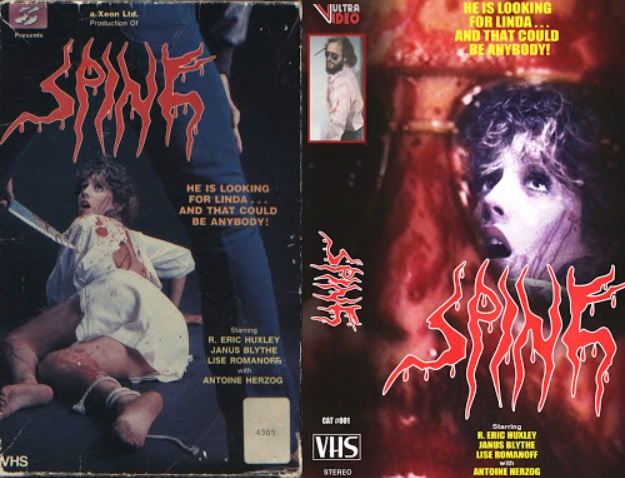
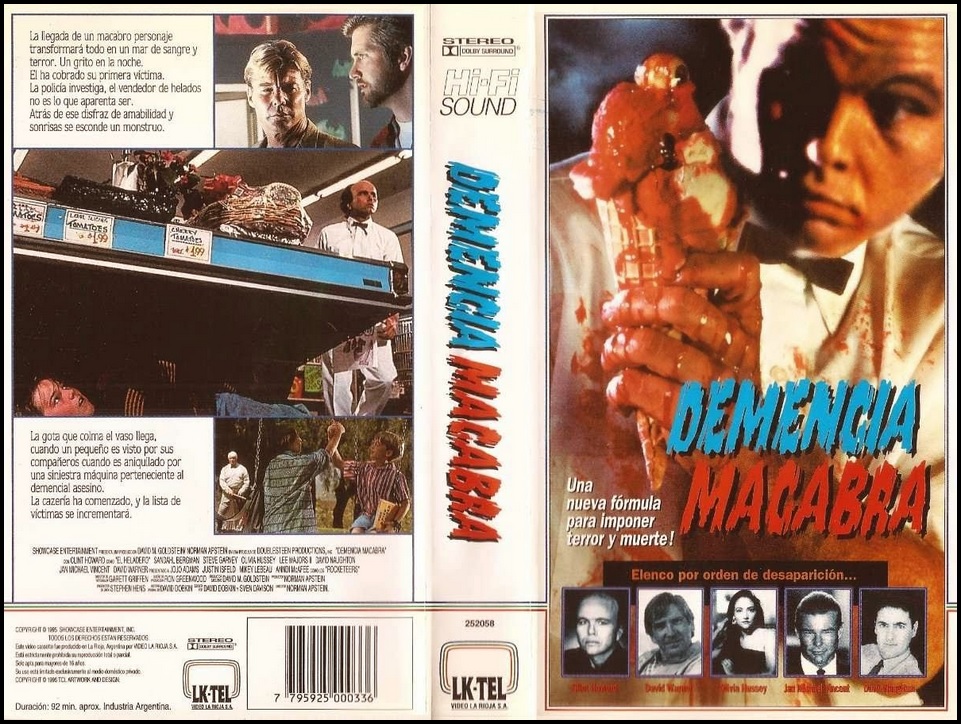
Need more porn dudes goin’ mainstream? Spine and Ice Cream Man are your movies.
Danny Nelson as daddy Jake, along with Christian Hesler and Ralph Pruitt Vaughn as his bumpkin’ sons, Hiram and Roy, are excellent and they give those lovable rednecks Ike and Addley (Holden McGuire and Billy Ray McQuade) from Charles Kaufman’s Mother’s Day a good ‘ol butt warmin’ switch-wippin’.
While Hesler’s and Vaughn’s acting careers ended (sadly) after Blood Salvage, Danny Nelson’s career became as prolific as John Saxon’s and Ray Walston’s: Nelson made his debut in Greased Lightning (1977) alongside Richard Pryor, then went onto work as a character actor in such mainstream films as Fried Green Tomatoes (1991), Clint Eastwood’s Midnight in the Garden of Good and Evil (1997), Will Smith’s The Legend of Bagger Vance (2000), and Brad Pitt’s The Curious Case of Benjamin Button (2008). (None of my dates knew what the hell I was talking about when I’d watch these movies in a dark theatre and called out, “Hey, Daddy Jake Pruitt!”. So goes life on the video fringe. ‘Ol Sam at B&S Movies knows wad-isa be-terkin’ about.)
And it seems Lori Birdsong—who debuted as herself in 1985’s Pumping Iron II: The Women, a sequel 1977’s Pumping Iron (bodybuilding for less than a year, Lori was a 22-year-old model from Dallas chosen for the film for her “wholesome All-American persona”)—is back in the acting game with a role as “April Evans” (the same character-name she played in Blood Salvage; a movie “in-joke” perhaps?) in The Stalkers Club (2017), a Lifetime damsel-in-distress TV movie. The trailer is on You Tube. Welcome back, Lori. We missed you.
About the Author: You can read the music and film reviews of R.D Francis on Medium and learn more about his work on Facebook.
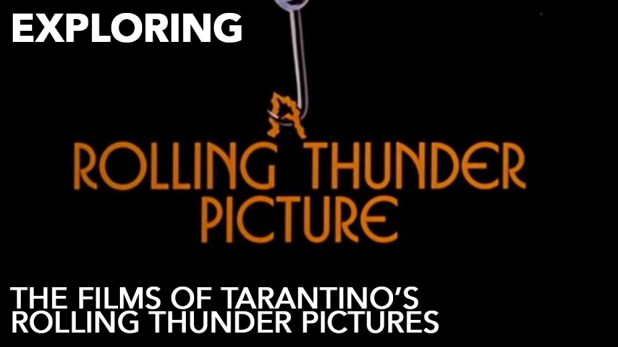
Once Quentin Tarantino gained an industry foothold as a new, unique voice in cinema, he set forth to pay tribute to his celluloid senseis—beyond the homage-plethoras within his own films—and the video store candy that served as his “film school” and shaped his cinematic philosophies. Courtesy of the enthusiastic backing of the Brothers Weinstein, Tarantino created the Miramax-distributed specialty imprint, Rolling Thunder. He named the newly-minted company after his favorite film (well, one of them) and one of the ‘70s hicksploitation’s finest films: Rolling Thunder, penned by Paul Schrader (Taxi Driver) and directed by John Flynn (Brainscan).
The company’s edict: To create a new theatrical experience for films that fellow film buffs knew only through their VHS incarnations—or maybe not at all. The initial plan: Release four films a year; those plans were stymied when Miramax began taking on losses as the films released by Rolling Thunder were not generating enough critical or box office interest.
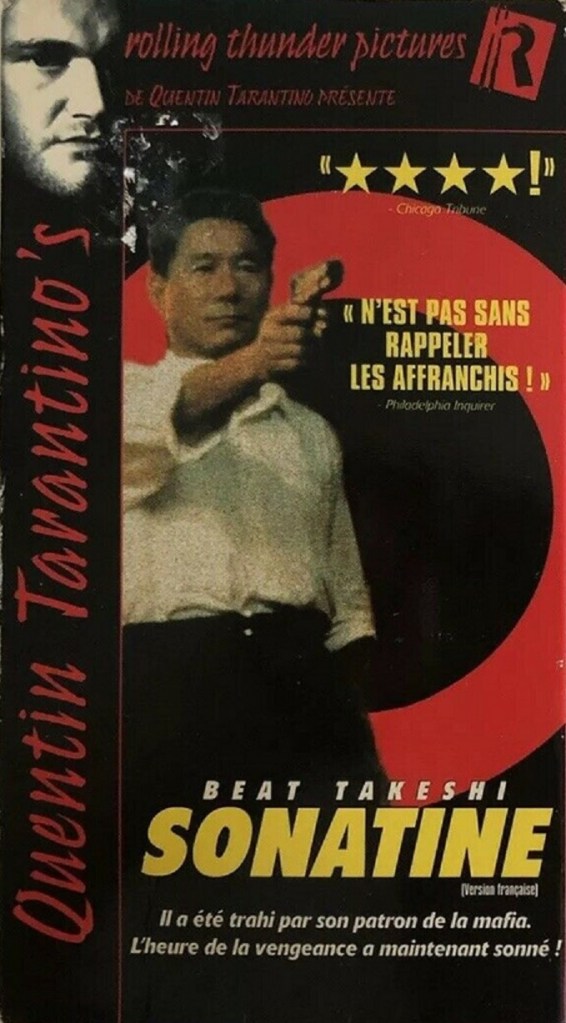
During their 1995 to 1998 existence, Rolling Thunder reissued six films: Lucio Fulci’s stomach churner, The Beyond, Wong Kar-wai’s introspective crime drama, Chunking Express, Arthur Mark’s Blaxploitation romp, Detroit 9000, the Shaw Brother’s King Kong rip, The Mighty Peking Man, Takeshi’s Kitano’s yakuza drama, Sonatine, and Jack Hill’s juvenile delinquent potboiler, Switchblade Sisters.
In addition to reissuing those favorites from his video store youth, Rolling Thunder branched into original works featuring scripts Tarantino felt had unique qualities and deserved to be seen: Hard Core Logo, a Spinal Tap-influenced, mock-docudrama concerning a once-popular Canadian punk band, and Curdled, about a female crime scene cleanup worker tracking a serial killer (starring Pittsburgh native Angela Jones, who played the same character in Pulp Fiction, but drove a cab with Bruce Willis in the back seat). Keeping with Tarantino’s kung-fu roots, Rolling Thunder also supported Jet Li’s 1994 remake of Bruce Lee’s 1972 classic, Fist of Fury, known as Fist of Legend.
So, for B&S Movies “Tarantino Week,” let’s take a look at the films Quentin jockeyed as a video clerk and emulated with his later films.
The Beyond—much cooler in its Italian-vernacular title of E Tu Vivrai Nel Terrore! L’aldilà (And You Will Live In Terror! The Afterlife)—is a 1981 supernatural horror film released in the U.S (and criminally edited) as 7 Doors of Death; the film serves as the second film in Lucio Fulci’s “Gates of Hell” trilogy and it’s bookended by City of the Living Dead and The House by the Cemetery. The 1995 reissue to the silver screen and DVD served as Rolling Thunder’s christening.
If you need a deeper explanation to this film’s insane craziness, as well Fulci’s eye-injury fetishism (Fulci likes eyes, Tarantino likes feet), then read the full B&S Movies’ review of the film.
Chungking Express, while released in 1994 in its native Hong Kong, received a limited theatrical run in North America in 1996—courtesy of Rolling Thunder. The imprint’s subsequent DVD features bookmark-commentary vignettes by Tarantino discussing Wong Kar-wai’s body of work. Criterion Collection reissued the film to DVD in 2008, but the Tarantino accouterments are not included.
The story concerns the love and loss of two Hong Kong Policemen: “Cop 223” (Takeshi Kaneshiro) and “Cop 663” (Tony Leung). In the first tale, Kaneshiro’s obsession over his recent breakup leads to his romantic involvement with a drug smuggler. In the second tale, Leung deals with the breakup of his flight attendant girlfriend and he begins to travel the wrong path. Both are linked by their mutual relationship with Faye (played by the “Heavenly Queen” of Chinese/Canto-pop, Faye Wong) who works at the Midnight Express food stand.
Detroit 9000 is a 1973 blaxploitation response to the likes of the successful crime dramas Magnum Force and Bullit. The film stars the gravely-voiced Alex Rocco, best known for his portrayal of Moe Greene in The Godfather, who teams with an educated, yet streetwise black detective to investigate the half-million-dollar theft from a black candidate’s political fundraiser. Are there lots of car chases and shootouts? You bet—with a final, bullet-strewn confrontation in Detroit’s Elmwood Cemetery.
Rolling Thunder reissued the film to theatres in 1998, then to video in 1999. In 2013 the film was reissued by Lionsgate as part of their “Rolling Thunder Triple-Pack” tribute with Switchblade Sisters and The Mighty Peking Man.
The Mighty Peking Manis a 1977 monster film whose Mandarin title, Xingxing Wang, translates as “Gorilla King” in English. Yep, you guessed it: made to cash in on the 1976 King Kong remake. While Rolling Thunder reissued the film in 1998, it initially rolled out as a second-biller on the U.S Drive-In circuit in 1980. It’s the same old story featuring greedy explorers who exploit a very large Himalayan Yeti—with a twist: Peking Man raised a beautiful, Tarzaneque woman orphaned in a plane crash who pals around the jungle with a pet leopard. The climax: The Peking Man takes a header off Hong Kong’s Jardine Tower in a hail of helicopter gunfire and jet bombers.
In a production twist only a B&S Movies reader can love: Koichi Kawaktia, the film’s assistant director, later worked on Yonggary, the 1999 South Korean remake by Hyung-rae Shims of Yongary, Monster from the Deep (1967). The film’s co-scripter is Marty Poole, who wrote the 1997 Richard Lynch-fronted Rollerball homage, Ground Rules.
Sonatineis a 1993 Japanese yakuza gangster-noir written, directed, and edited by Takeshi Kitano and inspired by Martin Scorsese’s Goodfellas. Kitano stars as a burnt-out yakuza enforcer who discovers his newfound, lackadaisical attitude towards his profession has led to his bosses wanting to get rid of him.
The film found its way to U.S screens in 1998 and video in 2000 through Rolling Thunder.
Switchblade Sistersis a 1975 teen exploitation film concerning an all-female high school gang, the Dagger Debs; the film also made the rounds on video and television as The Jezebels. The usual street brawls and lesbian prison warden hijinks ensue.
How wild is this movie? According to the accompanying Rolling Thunder-issued commentary tracks, Jack Hill states William Shakespeare’s Othello served as the film’s framework and Patch, played by the eye-patched Monica Gaye (Nashville Girl: part of the ’70s hicksploitation cycle), is modeled after the play’s main protagonist, Iago. Hill even incorporated elements of Ayn Rand’s The Fountainhead as narrative inspiration. So give Quentin’s Kill Bill another watch and you’ll see the analogous qualities between his Elle Driver and Beatrix Kiddo and Hill’s Patch and Maggie characters.
Sadly, Hill’s bad girls romp served as Rolling Thunder’s final reissue.
If not for the Miramax-Rolling Thunder fallout, who knows what films Tarantino would have released? Well, B&S Movies has a pretty good idea. Check out our “The 37 Films that Make Up Kill Bill” and “Exploring: Movies that Influenced Quentin Tarantino” features. There’s not a doubt that more than one of these films—surely from our “Kill Bill” list—would have ended up on the Rolling Thunder release schedule.
So, if Quentin holds true to his recent decree of not making any more films after his 10th film, you still have several years of “film archives” to enjoy—all thanks to a fellow movie dork behind the counter slingin’ the VHS at Video Archives in Manhattan Beach, California. And what other films would he have made? Read our “Exploring: The Films of Rick Dalton” feature and ponder. . . .
And our obsession with all things Tarantino continues with our “Video Archives Week,” well, maybe even two, running from Sunday, May 14, 2023, to who knows when, as we pay tribute to Roger Avery and Quentin Tarantino’s weekly Video Archives podcast. Definitely check out the site as you can “select” actual VHS tapes from the (virtual) shelf to learn more about the film, where to watch it online, and hear the podcast about the film. You’re an aspiring filmmaker wanting to learn more about film? Then this is the premiere website to school you.
“If you like my stuff, you can look at it as, this is where mine came from.” — Quentin Tarantino
Here’s the rest of the films we reviewed for “Quentin Tarantino Week” in commemoration of the release of Once Upon a Time in Hollywood:
* “Hollywood” Banner by R.D Francis/courtesy of Font Meme.com
Update: February 2021: Many thanks to Andrew Quinn and Darren Mooney, the hosts of the award-winning, Dublin-based podcast The Movie Blog, for mentioning B&S About Movies (using our site as a research reference) by way our “Exploring” feature on Quentin Tarantino’s Rolling Thunder Films. It’s in the context of their discussion of Wong Kar-War’s In the Mood for Love. It’s been a while since I’ve watched it and it needs to be reviewed at the site. You know Kar-War by way of Tarantino’s fandom of Chungking Express.
Additional thanks to the readers who sent their appreciation via Facebook regarding this overview on Quentin’s old shingle. It’s always a pleasure to chat about film, with you. And I drop a “shingle” if Quentin popped me a message. . . .
Roger Avery and The Q podcastin’ it.
About the Author: You can read the music and film reviews of R.D Francis on Medium and learn more about his work on Facebook. He also writes for B&S Movies, as well as the sites Garage Hangover, It’s Psychedelic Baby, Magazine, and the music print publication, Ugly Things.
If you’ve dove deep into the B&S Movies’ blood pool, you’re acquainted with this site’s affections for the Amicus and Hammer anthology films of the ‘70s—call them an omnibus film or portmanteau if you like. For the uninitiated: It’s a subgenre of films where the finished product is comprised of three to five short films threaded into a single narrative by a theme or premise or place—but mostly by a centralized character.
The finest example of this method of cinematic storytelling is Freddie Francis and Milton Subtotsky’s Tales from the Crypt (1972)—produced by Amicus and filmed at Shepperton Studios (Psychomania, Alien, and Saturn 3 were produced at Shepperton, just to name a few)—starring Sir Ralph Richardson as a mysterious crypt keeper.
I must admit, when you say “anthology,” I think of a horror film. I certainly don’t think of a romance or comedy. There are some who may cite Richard Curtis’s Love Actually (2003) (worth it for Billy Nighy’s burned out rocker, Billy Mac), but that’s really just an ensemble cast dangling on twisted narratives.
However, when you say “anthology” in the same breath as “Tarantino,” you’ve got my attention. And since he’s scared off the chicks with a Steelers Wheel chair-torture scene and balaclava-clad gimps in boxes—I’m on a cinematic lone wolf quest. The fact that Four Rooms is based on the macabre storytelling of Roald Dahl’s adult fiction writings—well that’s just icing. (At least it is for me; I wrote a high school English composition on Charlie and the Chocolate Factory.) Do not let Dahl’s name—known for the children’s stories/films Willie Wonka & the Chocolate Factory, Matilda, and James and the Giant Peach—fool you. This is for the moms and the dads.
Quentin Tarantino, along with longtime partner, Lawrence Bender, produce the segments directed by Allison Anders, Alexandre Rockwell, Robert Rodriquez—and Quentin. The “crypt keeper,” if you will, framing this tale in The Q Continuum is Tim Roth (Reservoir Dogs’ Mr. Orange), a bellhop in Los Angeles’ fictional Hotel Mon Signor on a fateful New Year’s Eve.
So, let’s get to the Quentin part!
He directs the film’s most faithful of the Dahl adaptations, “The Man from Hollywood,” which serves as the film’s final segment. High on the penthouse perch of the Mon Signor is world-famous director Chester Rush (Tarantino) and his hanger-on friends who’ve become empty, narcissistic shells void of the concepts of need or want. Think of Jerry’s Seinfeld-gang bored and flush with cash driven to the point of making outrageous concierge demands—such as wanting a block of wood, one donut, a ball of twine, three nails, a club sandwich, and bucket of ice, and . . . a hatchet?
What the fuck is going on, you ask? Hey, you’re not a frog and I’m not a bunny. Let’s not jump ahead. Just accept the fact that you are in the Tarantino universe. There will be appendage dismemberment and blood.
And how empty are these people? Rush freaks over champagne cork. As if he can’t afford to replace flat champagne—considering The Wacky Detective had a domestic gross of $72 million dollars.
. . . And before you know it, Rush and company are playing, well, I guess you can call it “Spin the Lighter”—a challenge issued to successfully light a cigarette lighter ten times in a row. The winner wins a car. The loser gets his pinky cut off. What happens to the pinky? It’s a Tarantino segment. What do you think happens to the pinky?
The film’s total box office gross equaled the film’s $4 million dollar production cost and became one of 1995’s worse-reviewed movies and biggest flops. Madonna, who floats through the four films as a connective-character named Elspeth, won another Razzie for the shelf.
Four Rooms is one of those films with no grey area. It’s either loved or it’s hated. Those that love it praise Tim Roth—who’s excellent in anything and everything—and suggested the film is for Rodriquez and Tarantino fans only. So, with that said, if you dig Roth, Rod and the Tar, this film is for you.
Suffice to say: The duo fared better with their next collaborative endeavor: 1996’s action-horror hybrid: From Dusk Till Dawn.
If you’re in the mood to venture out on two more branches of the Tarantino tree carrying his production seal of approval, you can check out 1994’s Killing Zoe, written and directed by Tarantino’s longtime celluloid compatriot, Roger Avery, and the 1996 black comedy, Curdled.
About the Author: You can read the music and film reviews of R.D Francis on Medium and learn more about his work on Facebook.














 B&S About Movies
You must be logged in to post a comment.