True Romance (1993)

So here I am . . . sitting in a theatre watching Professor Q’s ninth directing effort, Once Upon a Time in Hollywood, 25 years after the release of a movie that proved Quentin Tarantino’s Reservoir Dogs wasn’t a fluke: Pulp Fiction, a film which served as his third film overall—and his second directorial effort.

While us Tinoheads awaited for Pulp Fiction to drop—and courtesy of Reservoir Dogs success—Quentin sold two of his pre-Reservoir Dogs screenplays that came to be directed by others: Tony Scott’s True Romance (based, in part, on Tarantino’s unreleased 1987 short film, My Best Friend’s Birthday), and Oliver Stone’s Natural Born Killers. Sadly, when discussing Tarantino’s oeuvre, Tony Scott’s True Romance is brushed aside in favor of Stone’s Natural Born Killers.

Why?

Is it because Tony Scott—the younger brother of Ridley Scott (Blade Runner, Alien)—started his career on the “A-List” backed by producer-action guru Jerry Bruckheimer and directed Tom Cruise (Top Gun and Days of Thunder), Kevin Costner (Revenge), and Eddie Murphy (Beverly Hills Cop II) in flashy, MTV-kinetic brain freezes, while Stone’s writing and directing debut was the trashy, VHS-freak out, Seizure (1974)—featuring a balaclava-and-bondage-geared axe killer under the thumb of an ex-Bond girl adorned in Mortica Addams garb with a knife-wielding Hervé “Tattoo” Villechaize as her side kick?

Yeah, we know how it is with you Iron City-swillin’ (oh, you’re not from Pittsburgh; okay, Old Milwaukee then) snobs who troll B&S Movies: Sir Michael Caine’s hand going “Hands of Orlac” across Canada courtesy of Stan Winston’s make up work (The Hand; 1981) is “the shit” while Bruckheimer’s MTV dive-bombing F-14s is “shit”. Hey, this reviewer gets it: When given a choice, the stench of the undergroundsploitation route gets my Scooby-Doo a doin’ a cinematic shoe-scrape too.

Regardless of the then newly-formed Tinohead-contingent rejecting True Romance—because Tarantino didn’t direct it, it lacked his obscure, 45-rpm singles-romance, and was it was devoid of the characteristic, non-linear plotting of Reservoir Dogs and Pulp Fiction—the film none the less received a 1993 Saturn Award (The Academy of Science Fiction, Fantasy and Horror Awards) nod for best screenplay.

In a June 2009 interview for Cinema Blend, Scott reflected that all six of his films with Bruckheimer received bad press and, after his debut feature, The Hunger, he stopped reading his reviews. While he completed True Romance at the Tinsel Town bargain-basement price of 13 million dollars, which one would think would ensure a guaranteed box office success, the film grossed less than its production budget and is considered a box office failure. Today, critics review the film in high regard, with the British film magazine Empire ranking it at # 83 on its Top 500 list. Indie Wire lists the Tarantino-Scott collaboration as one of the essential Top 5 films of Tony Scott—in a consortium with his debut, The Hunger (1983), Crimson Tide (1993; a sub-suspenser that Tarantino script-doctored), Brad Pitt’s Spy Game (2001), and the runaway-train romp, Unstoppable (2010).

While the film noir element of Reservoir Dogs remains for the what-is-now-customary, hypnotic cocaine hit with a Red Bull chaser that is Tarantino, this time Professor Q dips into the obscure world of Cold War-era Romance comic books from the ‘50s with their soap-operatic, love-dysfunctional plots. (Remember, in addition to being a film and music freak like you and me, The Q loves comic books.)

Drawing from his life experiences as a video store clerk, Tarantino crafted a tale about an Elvis Presley-obsessed, kung-fu loving comic book store clerk, Quentin Tarantino . . . uh, I mean, Clarence Worley (Christian Slater), who “scores” with a fellow kung-fu flick lover, Alabama Whitman (Patricia Arquette).

Now wait just a dang-gum minute, Tarantino. Not in all my years of trolling vintage vinyl outlets, comic book and video stores, and their related conventions and swap meets. . . . Seriously. Call John de Lancie. This shit only happens in the Q Continuum. . . . Oh, shit . . . we just entered the hicksploitation zone: It’s another wimpy-reluctant miscreant and social malcontent not gutsy enough to run ‘shine or long-haul contraband who meets a badass Sally “Frog” Field packing a shitload of shit-storm baggage.

Yep, Zed! Cue the Gimp! We’re off on one of Tarantino’s celluloid-pastiche mind fucks layered with fast-on-their-feet characters zinging each other with pop-culture dialog twisted on multiple narrative threads. After a Violent Femmes-styled “just one fuck,” Alabama and Clarence get hitched . . . with Val Kilmer’s Elvis-apparition (The K-Man portrayed The King of Rock ‘n’ Roll and progressive rock’s piped piper, Jim Morrison? You rock, Val. Batman need not apply.) convincing Clarence to murder Drexl (Gary Oldman!), Alabama’s pimp—and unknowingly steals a suitcase of cocaine. The chase is on.

As with any Tarantino film, there’s that one iconic (hell, two or more!) scenes: In Pulp Fiction: It’s Christopher Walken in “The Gold Watch” and Zed and Maynard being scamps in a pawn shop’s basement. In Reservoir Dogs: It’s Michael Madsen’s soft-shoe mutilation to an old Steelers Wheel tune . . . and in True Romance: It’s “The Sicilian Scene” with Dennis Hopper and Christopher Walken.

So how does this romance between Tarantino’s “substance and style” colliding with Tony Scott’s-cum-Jerry Bruckheimer’s “style over content,” popcorn-tent pole oeuvre end? As all fine wines and champagnes do: That bottle of Dom Tony Scott aged gracefully.

Tarantino claims that after his 10th written and directed film—possibly a Star Trek sequel (Kirk MUST have a soft-core porno fling with a green-skinned alien babe)—he’s retiring. I don’t believe Quentin Tarantino will ever tranquilize the pop-culture driven, dialog synapses firing in his analog-celluloid inebriated brain. He has to tell stories. I want him to keep telling stories. We all do.

And if he does—fingers crossed—True Romance is proof that any script—starting with #11—will be in capable hands to quench our romance with Professor Q.

Oh, don’t forget: While spending the week with Quentin on this B&S Movies’ spotlight on his career, please surf over for a video store ‘80s history lesson with “The 37 Movies that Make Up Kill Bill.” It’s Sam’s—our illustrious proprietor of the video orphans you love—master thesis of Quentin’s love of the films we love. As for my own master thesis, I unpack Q with my “Exploring” feature on his Rolling Thunder reissues shingle. For Quentin is us, and we are he, and he’s is the Walrus, and we’re the pigs from the gun sitting on a cornflake waiting for his next film.

Do you more from The Slate? Oh, hell yes you do! He rules! Check out our review and a Slate career round up for his 2012 outing, Playback.

In July 2022, Arrow reissued True Romance as an 4k Ultra HD, Blu-ray and Steelbook, which we’ve spotlighted.

About the Author: You can read the music and film reviews of R.D Francis on Medium and learn more about his work on Facebook.
Reservoir Dogs (1992)

While a formally educated and cinematically well-rounded film critic viewing Tarantino’s oeuvre will level accusations of plagiarism, schleps like me, who attended the Community College of Film Criticism with Quentin Tarantino, i.e., the local video store, realize Quentin crafts youth-inspired homage. He, like this writer and most of the B&S Movies’ readers, are graduates of the Video Fringe Educational System and our former classmate made it to the top of Mount Lee.

It was during my first Friday night class with Professor Q at my local triplex—in an empty theatre with less than a dozen-filled seats—when I pledged to always buy a ticket to a Tarantino film seminar: The minute I heard the color-aliases (Mr. Pink, White, etc.) assigned by Lawrence Tierney to his diamond heist crew, my brain’s film centers crossed referenced the awesome 1974 crime thriller by Joseph Sargent: The Taking of Pelham One Two Three—a film I went to see at the Drive-In with my parents as a wee lad (and watched every UHF-TV replay). For me, Joseph Sargent is the man: He’s the director of two of my all-time favorite films: Colossus: The Forbin Project and Burt Reynolds’s White Lightning (part of B&S Movies’ upcoming Redneck Week).

“I can’t believe you made me sit out in the lobby all alone and you finished watching the movie!” my soon-to-be-ex-girlfriend screeched. Yep, Tarantino drove her, and four other people, out of the theatre during the Steelers Wheel chair-torture scene.

Yep, Tarantino is the Walrus. He’s one of us and we are he and, when I sit in the theatre with one of his films, we, the video store geeks of ‘80s, are all together.

Once I learned Tarantino “plagiarized” Stanley Kubrick’s film noir, The Killing, 1952’s Kansas City Confidential, 1955’s The Big Combo, 1966’s Django (Italian Spaghetti Westerns? Where’s my plate!), and Ringo Lam’s City on Fire (1987) in the frames of Reservoir Dogs—I sought out those films. And that’s where the Tarantino-cool comes in: Outside of Pelham, how many of us seen or heard of these other films? How many of us rented those movies after their alignment with Tarantino? How many of us sought out more Lawrence Tierney film noirs?

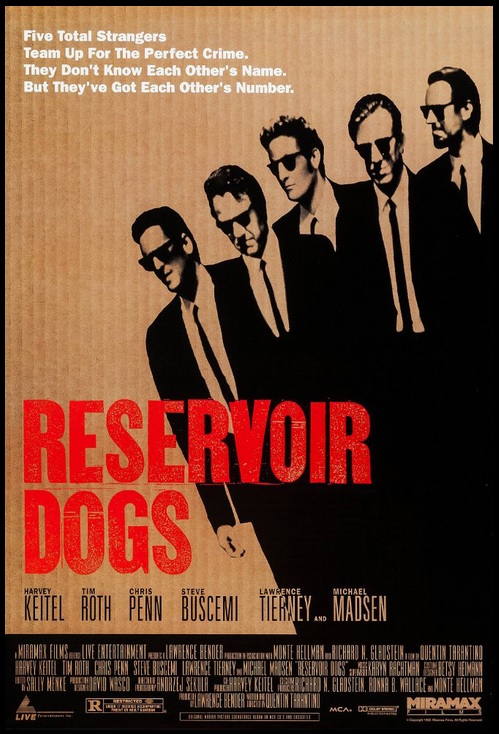
The tale of the Reservoir Dogs is fairly simple and familiar: Eight men meet at a diner for breakfast before a big diamond heist. The heist goes bad and the ‘Dogs rendezvous at a warehouse. Paranoia reigns supreme until there’s one man left standing.

In the hands of any other director, confined in a one-set scene that plays out for the remaining 80-plus minutes, we’d be heading to the concession stand for a popcorn refill and reaching for fast forward button. Ah, but this is a Tarantino picture. Instead of cardboard characters in a cardboard situation on a cardboard set of the Ed Wood-Bela Lugosi variety, we get:

— Characters debating the philosophical meaning of Madonna’s song catalog

— A lesson on the art of tipping waitresses

— The characters readying for their heist to the sounds of an obscure and forgotten Norwegian band, the George Baker Selection

— A maudlin-monotone DJ on an all-‘70s radio station expounding on the career of Scottish musicians Joe Egan and Gerry Rafferty as Michael Madsen does a soft shoe and mutilates a chair duct-taped cop

— Lawrence Tierney, and Harvey Keitel from Taxi Driver, and Steve Buscemi

And that’s the art of Tarantino: he’s the master of the art of layers, as taught by screenwriting guru Robert McKee. Tarantino is the Sensei of pop-culture references; the master of actor casting; the definitive faux-radio station program director.

Think of all of the films produced across the decades with the same master plots churned over and over again by the Tinsel Town sausage machines. Tarantino knows us; he knows his fellow movie goers and video renters have been done’d-there-and-done’d-that to death. He knows we’ve seen those heist movies where “Murphy’s Law” reigns supreme. So he accessed his brain’s film databanks to create Reservoir Dogs, as well as other films, that, according to the ubiquitous film snob, may not be wholly original stories with original elements—but fail to realize Tarantino excels at creating the air of uniqueness with his end product. Tarantino is like oxygen: If you get too much, you get to high. Not enough, and you’re gonna die. It’s the sweet air I breathe.

It is my sincere hope this Tarantino ass-kiss week at B&S Movies convinces Quentin to do for our Italian post-Apocalyptic heroes, Mark Gregory and Michael Sopkiw, as he did for John Travolta: Cast them in a “comeback film,” as they both deserve to be Tarantino’d to the big screen—in a snow-drizzled, bloody fight scene against a hoard of black-suited Ninjas, backed by the music catalog of Sweet.

“And that was Brian Connolly and the Sweet on the station where the ‘70s survived, K-B-i-l-l-y, the Home of Rock,” speaker-croaks the maudlin-monotone DJ.

“Turn off the fucking radio, will you?” says Mark ‘Trash’ Gregory wiping the spoils of Asian blood from his brow. “That ‘70s bullshit gets on my fucking nerves.”

“Let’s get a taco,” says Michael ‘Parsifal’ Sopkiw clicking off the sounds of KBI radio as he peels away a blood-stained yellow jumpsuit.

In November 2022: Lionsgate reissued Reservoir Dogs for its 30th anniversary as a 4K UHD release, which we’ve reviewed. You can pick up your copy at Amazon, Best Buy, eBay, Mercari, Walmart, and Target.

One stop Tarantino shopping by way of our week-long tribute.

About the Author: You can read the music and film reviews of R.D Francis on Medium and learn more about his work on Facebook. He also writes for B&S Movies.

Daughters of Satan (1972)

John Hollingsworth Morse was a noted film and television director responsible for an eclectic variety of U.S. television series from the 1950s through 1980s, starting with the Star Wars precursor, Rock Jones: Space Ranger, and the still-in-runs Adam-12, The Dukes of Hazzard, and McHale’s Navy. Whenever you watch old World War II film clips—especially the Battle of Normandy—chances are Morse was on the film crew that captured those images.

It was during his time working in U.S. television that Morse met a young actor who recently broke into the business and had a few small roles in a few films and since forgotten U.S. television series. And he saw something special in that actor.

By the late ‘60s, screenwriter John C. Higgins was in the business almost 40 years and ready to retire. He quickly became a go-to talent in the film noir and murder mystery genre (precursors to Italian Giallo), most notably the Spencer Tracy vehicle Murder Man (1935) and The Black Sheep (1956), starring noted Sherlock Holmes actor, Basil Rathbone. Moving into science fiction, Higgins worked on the reimaging-rewrites of Daniel Defoe’s 1719 classic literary tale as Robinson Crusoe on Mars (1964), and an early, shot-in-Philippines Burt Reynolds action film, Impasse (1969).

So, you’ve been cast in your first leading-man role crafted by two respected filmmakers backed by one of the biggest film studios in the world—responsible for The Defiant Ones, High Noon, and 12 Angry Men—United Artists. This film is going to be a box-office smash. Your film is going to be a bigger hit than the film it’s emulating, one that reignited the horror genre: Roman Polanski’s Rosemary’s Baby (1969). You’ll even predate The Exorcist and The Omen. . . .

Not when you’ve stepped into The Twilight Zone. In the plot-twisty Rod Sterling universe, the studio is unimpressed with the lackluster end result of the film.

“What in the hell is this crap?” chomps the film executive on his cigar. “I wanted Rosemary Baby and I got Ed Wood with an oil painting,” storms the executive out of the theatre with Louise, his gum-snapping “secretary” in hip-sashaying pursuit. “I’m going to lunch. And put all of my calls on hold for the rest of the day.”

“Yes, Mr. Weinstein,” high-pitches Louise.

“Kid, you’ve got a lot of nerve pulling that crap, making jokes about me,” Mr. Weinstein snaps at this burgeoning screenwriter. “Your never-was writing career is finished.”

“Gulp,” goes my throat.

“So, Mr. Weinstein, what about—.”

“Thank god we shot on the cheap for slave wages in the Philippines,” the executive grumbles to himself. “Just have them dump it into the Drive-Ins, Louise.”

And with the stroke of a pen, the studio works up some garish artwork and dumps the film into the American Drive-In circuit on a double-bill with another shot-in-Philippines masterpiece: Superbeast (1972).

“What the hell?” shouts Tom Selleck at the first sight of the poster. “This isn’t what . . . the script was . . . but I. . . .”

I know Tom, ain’t it a kick in the head?

What was intended as a Tom Selleck-starring vehicle instead becomes a showcase for Vic Dias, the requisite evil-jolly fat man of Filipino cinema who starred in over 100 films, most notably: the female-in-prison flicks The Big Bird Cage (1972) and Black Mama, White Mama (1973). So with Daughters of Satan and Superbeast, Vic got his first unintended double billing.

So, while Magnum’s future partner and spin-off sidekick, Gerald MacRaney, aped Norman Bates in his first leading-man role in Night of Bloody Horror, ‘ol Tom found himself in what is best described as an extended episode of The Twilight Zone. And to keep things interesting: the filmmakers stunk-up the joint with red herrings by ripping off an Amicus Studio picture, which were rip-offs of Hammer Gothic-mystery tales. And to annoy us: they’ve added a screeching déjà vu soundtrack. Oh, no. This is Night of Bloody Horror all over again; they stole the soundtrack from another sci-fi/horror film. And to really piss us off: they made their pseudo-Spanish Giallo picture in Manila because they were too cheap to shoot in Madrid and let the maestro, Paul Naschy, shoot it.

“Bla, bla, bla. I’m going to the IMDb for a synopsis,” you scoff.

Tom Selleck stars as James Robertson, a Manila-based antiquities dealer who specializes in unusual and unique art works and can’t explain his fascination with an old, gory oil painting depicting a trio of witches being burned at the stake.

“So, can I see the ‘ancient tapestry’ that you think you have?” smarmy Tom says to piss off the curator of Treasures of the Orient and release the curse.

“Oh, most honorable Magnum, let me show you this painting.” 

“What? You’re joking. This is a really shitty knock off of Spanish colonial-era art . . . but that one witch looks like my wife, Chris, who looks like Barra Grant who appeared on episodes of TV’s Gunsmoke and Barnaby Jones,” ponders Tom.

So what do you do, Tom? Get the hell out of the creepy shop and hop the first plane out of Manila?

Yeah, right.

These people are more clueless than the cast of a Paul Naschy movie.

So Chris stops wearing the crucifix Tom gave her for her birthday and, if she’s smart, she’s contemplating divorce because, well, Tom’s “eye” for art obviously ain’t paying the bills. I mean, what’s with the Marsha Brady wardrobe fashioned from of ugly curtains and wallpaper? No wonder Chris is stressed and hallucinating wispy, disembodied voices calling “Damien” to her in bed.

No, wait. That’s The Omen, and it wasn’t even made yet. That’s right; these ghosts are calling out “Christina” to her. So Tom takes down the painting and . . . yeah, right.

“Why are you being so bitchy, more than usual, Chris?” scowls Tom. “And why did you stop wearing the crucifix?”

“Your mother sucks cock in hell,” spews Chris.

“Wow, should I go to the drugstore and get you something for your PMS?” whimpers Tom, wiping away the pea soup from his face. “And sweetie, quit auditioning for that role in The Exorcist. I love you, but it’s not going to happen. You’re not as good Anissa Jones from Family Affair and she didn’t get it. And this film ain’t that good, either.”

“. . . Hey, what’s that fish smell? Tom’s face scrunches. “Who are all these random strangers that suddenly seem to know me? Why are they chasing me in the streets? Who killed the shop keeper that sold me the painting? Who killed my shrink that was well-versed in Filipino folk lore?”

Screenwriters call them “red herrings,” Tom. It has something to do with the painting. Get rid of it.

“Hey, that new friend of my wife’s, she looks like Tani Guthrie from TV’s Adam 12, Cannon, Dragnet, and Emergency who also got kidnapped by a demon-slave cult in The Thirsty Dead that shot down the street from our set—and she looks like one of the witches in the painting.”

Tom, buddy. She is of the witches. Get rid of the painting. Screw Chris. Take it out back and burn the damned thing. Save yourself. She’s not “Chris.”

“No, I like it. It’s kitschy. The fact that the painting’s images mystically change and it seems as if the invisible hand of Satan is ‘painting’ it doesn’t bother me.”

“Tom, your wife, who’s not a dog person, befriended a random dog; the dog hates you—and the very same dog that was in the painting disappeared from the painting,” I yell at the TV. “You’re a friggin’ idiot, Magnum!”

Did Paul Naschy write this movie? Someone call Alaric de Marnac and “morning star” Tom out of his misery.

So, for those of you keeping track: we got two pissed off witches in the revenge-queue. We got the dog. We need one more witch to complete the painting. I wonder who the executioner will be. . . .

“Hey, how come the new housekeeper my wife just hired looks like one of the women in the painting?” says the deserves-a-Gerald MacRaney-cranium-chop victim.

Oh, look she’s brandishing the ostentatious ceremonial dagger—the same prop from the very promising Amando de Ossorio-boob-fest-sacrifice-over-a-bed-of-spikes prologue.

You’re hired. No windows required. Start in the bathrooms.

Then Tom goes outside to check on some strange noises—only to be attacked. Or was he? Oh, shit. It’s that dues ex machina, dream-within-dream-enigma-wrapped-in-a-riddle screenwriter crap again. Hey, be thankful Tom didn’t have a cheap Gerald MacRaney, swirly-spiral optical-effect backdrop to show us he’s going off the deep end. What? No Paul Naschy-cum-George Romero out-of-left-field zombies just for the hell of it?

Come on, Magnum. Get your shit together. Do we need to call Michael Knight to program it into KITT and solve this case? I mean, come on, dude. Look at that painting over there. You’re a dead ringer for the infamous Spanish Inquisition witch hunter, Sir Diego Roberson. Don’t you remember that he gave the ‘ol “Alaric de Marnac”-curse to you and your descendants before you struck the match?

And that, boys and girls, is the story of the painting of the three witches from the infamous 16th century Duarte Coven, who, along with their dog, Nicodemus, the Hound of Hell, were burned at the stake in 1592 in Spain. Why were we in Manila in South East Asia: again, because it was cheaper than shooting in Spain.

“And what’s the moral of the story?” Gabe Kaplan asks the Sweathogs.

“What? Where?” Big Surprise. Bud from Urban Cowboy is stumped. The true sign of an idiot: dump Madolyn Smith for Sissy.

“Ooh! Ooh! Mr. Kotter!” calls out Horseshack, “The moral of the story is that stupid Americans shouldn’t be moving into creepy houses in Manila like some half-assed American-not-yet-made-remake of a J-Horror film shot in an Asian-less Japan with blue eyed-blonde hair American TV actresses.”

“Wow, there, Mr. Kaw-ter. Life sure was rough for future ‘80s TV detectives,” says Freddy “Boom Boom” Washington.

Indeed.

Case solved and class dismissed. Now get the hell out of here and go bother Mr. Woodman. I have more narcissistic articles that I must attend.

About the Author: You can read the music and film reviews of R.D Francis on Medium and learn more about his work on Facebook. He also writes for B&S Movies.

Space Trucker Bruce (2014)

Sam’s note: R.D Francis is back with another movie I’ve never seen. Imagine what that entails. Please enjoy!

In the space of one of my favorite sci-fi movies, a breakthrough in gravity control allowed mankind to colonize the solar system . . . and someone has to haul the 20,000 pounds of Texco’s Iowa-bred hogfat-fuel from Earth to Titan Station outside Saturn’s rings. The year is 2067. And the name of one of those fat-haulers is Bruce.

A computer programmer for the State of Alaska by day, writer-director Anton Doiron’s Hitchhiker’s Guide to the Galaxy-meets-Tom Baker era Doctor Who-meets-Red Dwarf space opera was shot on a $10,000 budget over six years in Juneau.

“Did you say, ‘$10,000’?”

Yep.

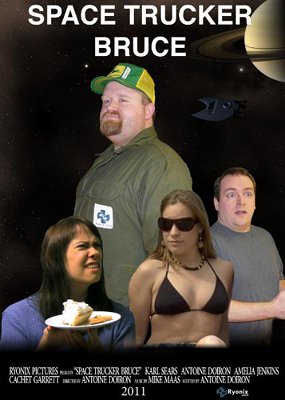
And when your film’s total budget wouldn’t cover the catering on a day’s shooting of the latest Disney-produced Star Wars glutton fest, what you do: You gather all the grocery-store cardboard in Juneau you can dumpster dive and build the film’s sets in your home and backyard; your son’s bedroom becomes one of the compartments of a space ship (one of the film’s impressive eight sets; including space suits!) and a 2001-inspired, 35-foot long cardboard and 2×4-lattice hallway rises in your backyard. On your daily film “budget” of $35, your film’s impressive rival-the-Colorforms-CGI-pasted-effects-of-a-SyFy Channel extravaganza materializes courtesy of Blender, a 3D freeware program.

Space Trucker Bruce is a road movie set in space as a bored and lonely space trucker (the perfectly droll-for-the-lead-role Karl Sears) captains the Nessus (operated by his “Hal” in a cardboard box: Nessy, the sexy-female computer) and rescues Max (Anton Doiron), a bored and lonely pseudo-hitchhiker adrift Aliens Ripley-style in an escape pod.

Now they’re bored in space: together.

Here we are, the kiddie version of our 1.0 brain awash in dreams of Death Star dogfights and light saber battles, and it turns out space travel is analogous to being stuck in an Escher infinity mirror. Be careful what you wish for, Armstrong: space travel is boring. And watching someone equally boring traveling in “boring space” eating Mostly Meat! snack cakes is boring—even with the comic relief of your cardboard, beer-delivering P-13 robot (played by Anton’s son, Max) and the chatty, digital face of your RJ-7 engineer-computer.

So, what do you do when those porn issues of Galactic Buns, you know, in between your reading the books of noted Catholic historian Gary Willis, don’t do it for you anymore: you crack up and talk to Mr. Sour Cream, a potty-mouth (no F-bombs) container of Daisy brand sour cream with craft store stick-on jiggle eyes. (Don’t worry: he finds his Mrs. Sour Cream along the way.)

Hey, wait a minute. Space isn’t boring. It has surprises. Pressure destabilization of the cardboard hull is repaired with a futuristic-caulking squirt and a slap of duct tape. Then a 2001-strange transmission alters their course and The Dark Object behind the message is on a collision course. And there’s Jane Doe the frozen woman—in a cardboard hypersleep chamber—they thawed along the way.

When 48 percent of 105 Amazon customers give a film more than a 3-star-out-of-5-star rating and post 7-and-9 ratings on the IMDb, you know you’re about to watch a quaint labor of love overflowing with a heart and soul that’s devoid from most of Hollywood’s bloated CGI festivals.

So give Space Trucker Bruce a watch on You Tube or Amazon Prime while you learn more about the film on the official SpaceTruckerBruce.com website. Anton Doiron is currently working on his anticipated second indie feature, Girl, Yeti, and a Spaceship, which he video diaries on You Tube. You can also follow the production — since updated with new production stills for 2022 — at the film’s official Facebook page.

Danger! Danger, Will Robinson!

This movie is not to be confused with Stuart Gordon’s (Re-Animator) Space Truckers (1996), which users on the IMDb rank no higher than a 5.2 and as low as a 0.1—despite a bigger, major studio budget and having a cast of established actors: Stephen Dorff (The Gate) and Dennis Hopper (Queen of Blood) as the space-truckin’ buddies, and the villainous Charles Dance (Clemens in Alien 3 and as Tywin Lannister in Game of Thones).

Oh, speaking of aliens . . . check out our feature wrap-up of all of those films.

About the Author: You can read the music and film reviews of R.D Francis on Medium and learn more about his work on Facebook. He also writes for B&S Movies.

Ground Rules (1997)

While the cover art suggests it, Ground Rules isn’t a post-nuke flick: it’s a present-day Rollerball-cum-Deathsport-cum-2072: The New Gladiators rip (without the budget) that reminds of the Rollerball 2002 remake — only this came first. It also reminds of George Romero’s Knightriders (1981) with its present-day, medieval-jousting knights on motorcycles, and that cable movie-inversion of Rollerball on hover-skateboards cooked up by Wesley Snipes: Futuresport.

Watch the trailer.

Rocky’s brother, Frank Stallone* (“Far from Over,” his U.S Top 10 radio hit from the Sly-directed Staying Alive), stars as a champion Battle Ball player—a San Francisco-based underground sport where motocross teams equipped with metal claw-jai alai scoops and bike/hockey armor shoot a “silver metal ball” into a roll-caged dune buggy used as a “moving goal.” (Holy almost-nude-basketball-with-a-silver-soccer-ball-and-hockey-cod-pieces Triad match flashback aboard the Battlestar Galactica, Batman!)

Real life movie stuntman Sean P. Donahue (the brother of the film’s co-writer-director-stuntman, Patrick G.), is “Jack,” Frank Stallone’s bike mechanic, who has his own dreams of getting on the Battle Ball field. When Jack discovers Stallone and the team’s owner, Case, are in cahoots with a corrupt senator manipulating the game so players are killed on the field to increase ratings and gambling revenues (as in the later Rollerball 2002 remake), Jack revolts (like Jonathan E.) and hits the dirt for a rival team. In a Rollerball 1975 plot-point: Jack knows too much and needs to be eliminated—during the game. So for the final Battle Ball championship game: there are no rules.

“Jack’s Dead . . . uh, we mean, Jonathan’s Dead,” chants the red, white and blue-clad warriors of the New York team as their bikes roar into the arena.

The somewhat family-friendly, profanity-free script—considering the violent action flicks it’s pseudo-emulating—leaves the proceedings feel like a Christian action flick, if there even is such a thing. In addition, the film’s inadequate budget hampers what is actually a pretty decent plot-concept with imaginative, well-choreographed action sequences—when one considers the sports-reality programs American Gladiators from the ‘90s and today’s American Ninja Warriors. Let’s rev up the bikes—a Battle Ball reality TV series sounds good to me!

While the discriminating apoc-fan will pass on Ground Rules, Richard Lynch fans—such as yours truly—are on board. The movie’s most burning question: How much of Case’s character is in the original script and how much of it was developed through Richard Lynch’s theatre and New York’s The Actors Studio training?

What could have been a dry, boilerplate cackling-villain in another actor’s hands, Lynch developed a white-suited underworld-criminal Howard Hughes; a Kleenex and latex fetishist germ-a-phobic who rides a rodeo mechanical bull in his office as he chastises people for getting too close, urges them not to touch him, and constantly puts a mask over his face to protect himself “from their stink.”

How’s that for subtext? (You go, Wolfe! You go, Xavier! Sorry, more obscure Battlestar Galactica references are afoot.)

God love Alan Rickman and his haughty, university-educated terrorist Hans Gruber, but Hollywood missed the casting boat by not pitting a Richard Lynch-brewed antagonist against the smarmy John McClane. . . .

“Bring me back some tissues (a line from Ground Rules),” sniffs Case after sending one of his henchmen to shoot that son-of-a-bitch McClane.

That’s right. Simon says Ankar Moor from Deathsport will kick your ass.

How quickly we forget Richard Lynch kicked Chuck Norris’s ass in Invasion U.S.A and took Al Pacino’s to task in Scarecrow. Damn, Richard Lynch. You and Klaus Kinski are my acting heroes: you make everything enjoyable.

As for the multi-talented Brothers Donahue: Before moving into the studio and picture development business with their New Gold Pictures, the siblings started as stunt coordinators on a slew of successful cable and video action movies. While Patrick moved behind the camera, his brother, Sean, move to the front of the lens.

Sean’s other roles include the popular video rentals Diamond Run (1996; a Rambo-rip), Starhunter (1996; a Predator-rip with Roddy McDowall), Omega Cop (1990; an Escape from New York-rip with Adam West), and Big Trouble in Little China’s James Hong’s writing and directing debut, The Vineyard (1989).

Writer Derrick Costa—who also got his start in the business as a stunt man—doubled for Bruce “Ash” Campbell in the SyFy Channel movie Assault on Dome 4 (1996), and for Lou Diamond Phillips in Alien Express (2005). Co-writer Marty Poole scripted the Hyung-rae Shims remake/homage to Yongary, Monster from the Deep (1967) known as Reptile: 2001 (aka, Yonggary), and a neat Elvis “what if” rock ‘n’ roll flick, Protecting the King (1999).

You can now direct-purchase DVDs of Ground Rules, along with the Donahue Brothers’ Andy Sidaris-styled action favorites, including: Kill Squad (1982), They Call Me Macho Woman (1991), and Parole Violators (1994) through their New Gold Studios imprint.

* We’ve since reviewed several films from Frank Stallone’s resume on B&S About Movies (and that link to the list will get you there).

Our two-part apoc blow out . . . with a few “future sports” to boot!

About the Author: You can read the music and film reviews of R.D Francis on Medium and learn more about his work on Facebook. He also writes for B&S Movies.

American Satan (2017)

Disguised as a slovenly-attired Hollywood Map to the Stars Tour Guide, Mr. Capricorn greets Hollywood’s two newest and soon-to-be rotted, Eve-bitten rock ‘n’ roll apples with a quote from the Holy Bible’s book of John 7:24: “Judge not according to the appearance, but judge righteous judgment.”

Mr. Capricorn’s lesson on the ignorance of relying more on your perceptions than your feelings falls upon the narcissistic heart and deaf ears of the religious-hating Johnny Faust. . . .

Hi. My name is R.D Francis and I am a rock ‘n’ roll film addict.

And when that rock-flick injects a hot-shot of Malcolm McDowell (rocker Reggie Wanker in Get Crazy; more contemporary: Halloween 2007 and Mozart in the Jungle) as the Prince of Darkness and a snort of Bill Duke (Predator; TV’s Black Lightning) as God’s right-hand angel: I do a “Johnny Squares” in a trailer behind the slaughterhouse where they shot Peter Swan’s Hotel Satan.

Someone tell the A.D to call Slash and Guns N’ Roses to the set for my funeral. I danced my last with Mr. Brownstone thanks to the McDowell and the Duke.

I’m no longer hurtin’ for a Drake Bell (Nickelodeon’s Drake and Josh) kidnap-and-van-torch of his dickhead-character Damien Collins, the leader of Damien’s Inferno, who promotes a bogus-impromptu Metallica club date to fuck over the new band of Lilly, his bisexual, ex-bass player girlfriend that he raped (off camera). I’m no longer jonesing for a “Hard-R” lesbian motel-soirée of underage sex, nor do I have the shakes for a scene of naked, coke-fueled brothel-sex. No lesbian giving a racist-sexist redneck a well-deserved garnished-boot groin puncture is required. For I got my McDowell-Duke fix and it’s a very mellow vibe.

Now hold on there, Ragman. Stop back-spinning the Sammy Curr albums and stow the pocket-rocket. You’ll get a zipper injury.

While American Satan coke-dishes some horror elements, it’s not a horror flick. So don’t come-a-rockin’ because the Queen of the Damned and The Crow ain’t knockin’. Imagine Rockstar as a horror flick that’s heavier on the sex, features an extended Jennifer Aniston nipple shot, and goes light on the gore. There are no obligatory demon possessions or cliché demon transformations; there’s no backmask-conjurings; forget about the non-linear Heather Langencamp-cum-Jennifer Rubin dream-within-dream warriors questioning their sanity in this higher road morality tale. Malcolm McDowell’s smarmy-philosophizing Devil doesn’t go “Freddy Krueger” on any wee-rocker’s ass, either.

There’ s no Sal Viviano belting King Kobra and Lizzy Borden tunes as Black Roses crisscrosses the ‘80s countryside in the name of Satan. There’s no Jon Mikl Thor in a Spinal Tap-meets-Ed Wood (thank you, Cliff!) Rock ‘N Roll Nightmare. Terry Chandler—in his requisite Killer Dwarf-patched denim vest—isn’t showing up with his copy of Sacrifyx’s The Dark Book to stop the demon-spew from The Gate (but he’d certainly vest-fly the Pentagram-red-and-black bars of The Relentless’ American Satan-logo).

“Schwing!” thrusts Garth Algar’s hips. “Denise Richards (as Ms. Faust) from my VHS tapes of Wild Things and Starship Troopers starring as a smokin’ hot rocker mom (who has her breast cancer “cured” by the Devil to “finalize his contract” with her rocker son) makes me feel like I watched a female-Bugs Bunny cartoon and climbed the rope in gym class.”

Oh, yeah, baby. This daddy’s rock-drug supplier of the week is Comcast, courtesy of a non-subscription promotional week of Showtime, which gave me my much-needed American Satan fix—and the faux-rock of the Relentless is a major score. Most faux-rocker actor-musician amalgamates—such as Tony Fields lip-synching to Fastway’s Dave King for Sammy Curr in Trick or Treat and Tracey Sebastian channeling Mott’s Nigel Benjamin as Billy “Eye” Harper in Rocktober Blood—dance a Mr. Brownstone along my veins.

While many musicians, such as David Bowie, transitioned successfully from microphone to camera in non-musician-character dramatic pieces, there are those cases of musicians acting as “musicians” where the results muster critical yawns—with Neil Diamond’s turn in The Jazz Singer (a film better than the critical bashes claim) as the worst-case example. Then there’s the Jim Carrey-Axl Rose Frankenstein that is Johnny Squares, leaving us wanting more Brownstone and less “make my day” and “do you feel lucky, punk” edicts. Then Johnny Squares O.D’d and the dirty spoon passed to Tom Cruise—in the ultimate faux-rock transformation—belting his own versions of Guns N’ Roses and Def Leppard tunes, leaving us salivating for an alt-reality Stacy Jaxx-Arsenal world tour.

Another one of my cinematic fascination-addictions is applauding the offspring of the writer-directors behind the celluloid milestones of my duplex-theatre youth who keep the shingle swinging over the front door of the family business.

Panos, the son of George G. Cosmatos (Cobra and Rambo: First Blood II), blew me away with his Nicolas Cage rock ‘n’ roll fever dream, Mandy (2018)—with the Cage laying waste to sinners with a Celtic Frost logo-inspired broadsword. Now Ash, the son of John G. Avildsen (Rocky and The Karate Kid), who incorporated his own film and music production company, Sumerian (Ash? Sumerian? Get me Bruce Campbell!), brings his label’s roster of progressive metal, metalcore, and deathcore to the fore with his rock ‘n’ roll letter: American Satan. (Ash also tosses in a score by Korn’s Jonathan Davis and places the Relentless in context with Deftones, the Pretty Reckless, Slaughter, and Skid Row on the soundtrack; Skid Row’s Sebastian Bach, who can act (Gilmore Girls; my ex-forced me to watch it, ugh) and would be welcomed on-screen—is not in the movie, despite what the IMDB tells you.)

In Todd Farmer’s action-packed morality tale, Drive Angry (2011), John Milton’s epic, philosophical poem, “Paradise Lost,” which pondered man’s use of free will and his place in heaven and hell—and, to a lesser extent, Stephen’s Benét’s moral-fable short story, “The Devil and Daniel Webster”—fueled his screenwriting vision. Taking Farmer’s literary cues, Ash Avildsen constructed his screenplay on the foundations of German literature’s finest moment: Johann Wolfgang von Goethe’s epic poem, Faust. And just as Goethe had his “proclivities,” so do his modern-day, cinematic namesakes.

On screen—holding his own against the McDowell and the Duke in his leading man debut—is Andy Beirsack (of the bands Black Veil Brides and Andy Black) as the aspiring rocker, Johnny Faust. A freshly-minted high-school diploma (contract) in hand, he leaves his Ohio-girlfriend, Gretchen (a Goethe-Faust character) for Los Angeles with fellow school-guitarist, Vic Lakota (Booboo Stewart from Twilight; he shines with his meandering, philosophical acid-tripping edict during a live TV interview), to hook up with drummer Dylan James (Sebastian Gregory of Australian TV’s longest-running daytime drama, Neighbours), and Leo Donovan (Benjamin Paul Bruce of metalcore stars Asking Alexandria), a U.K guitarist who they’ve written songs with through online networking.

Relentless

Taking a similar approach to the rock comedy Airheads, where the New York alt-metal band D-Generation served as the “sound” of the faux-Lone Rangers, Sumerians Records’ Palaye Royal—a Toronto trio with the Modern Rock hits “Get Higher” and “You’ll Be Fine,” featuring the vocals of Remington Leith—provide the “sound” of the Relentless.

Providing a dose of Jack Blackesque comic relief is Leo Donovan’s “manager,” the portly Ricky Rollins (John “Sam” Bradley from Game of Thrones). We’ve seen rock-flick managers like this before (and in real life) . . . and I always want to bean them with a Gibson SG and give them some backside drum stick action: a live-vicariously dork devoid of any music or business acumen, “in the biz” with the hopes—and a rat’s chance in hell—of getting any sex, drugs or rock ‘n’ roll sloppy seconds . . . or fourths.

When the singular-monikered “Hawk” (professional wrestler Bill Goldberg) appears to Sam’s chagrin as the “new” tour manager and tells him, “You’re the band manager. I’m the road manager. You belong behind the desk,” then explains the services that portly Ricky can’t provide: “When the shit hits the fan, I’m the fan,” you kind of wish Goldberg would just get rid of Sam via a suplex pink slip and be done. Wait . . . What? What the hell? Sam is having a coke-binged, Fifty Shades of Grey ménage in a lesbian brothel’s Eyes Wide Shut-inspired V.I.P room? Cue Eddie Wilson; the rats are having a Rimbaud season in hell with the Cruisers.

Along the way, the Relentless fill out their roster with Lilly Mayflower (Jesse Sullivan; killing it in her feature film debut), a red herring L.A. lesbian-bassist who may or not be in league with the Devil. In a refreshing twist: Lilly—and not the ubiquitous male band member—is the one who creates career-controversy—and endures the hot-mom wrath of Lt. Tasha Yar from Star Trek:TNG (Denise Crosby)—for having underage sex with her teen daughter in a Topeka, Kansas motel room. (Am I spider-sensing The Wizard of Oz with Dorothy and her “band” following the Yellow Brick Road?)

. . . And down at the Daniel Johnson crossroads of Vineland Avenue and Burbank Boulevard, delineated by North Hollywood’s famous 32-foot neon clown at Clown Liquors, the burgeoning clown-rock god meets Mr. Capricorn, aka The Devil (McDowell), and the apple-bearing Gabriel, the Arc Angel (Duke), who both appear as an eclectic variety of “disguised,” philosophical-quoting characters during the band’s Homer-Iliad quest through the underbelly of Los Angeles. And in the land of Hollyweird, the world famous Rainbow Room Bar and Grill on the Sunset Strip serves as Mr. Capricorn’s Faustian Auerbachs Keller. (Now I’m spider-sensing a way-less-psychologically twisty Under the Silver Lake (2018).)

References to The Divine Comedy by Dante Alighieri are also morally-afoot as the band’s “Virgil” appears in the form of Akkadian Records’ (cue the Sumarian-Akkadian Empire hero-journey text, the “Epic of Gilgamesh”) owner Elias Collins (the awesome Mark Boone Junior from Sons of Anarchy and Batman Begins), a rock ‘n’ roll philosophizing, not-so-wise man that may not be who he seems to be. . . .

  • Being a rock star is the intersection of who you are and who you want to be. So, do you want to be a rock star?
  • How far will you go for that fame and fortune?
  • Will you surrender your free will and indulge in narcissism—even murder—to achieve it?
  • Are you ready for the consequences of the resulting fame and fortune?
  • Religion separates humanity. Music brings them together. Are you ready to join those masses—while tearing them away them from the rest of the world?
  • Are we real? Are you and I symbolic figments of our inner self?

My mind in is FUBAR crash-mode. I need a Dr. Pepper and Pringles-sleeve reboot.

Produced in part by Hit Parader magazine, the film features plot-appropriate title cards of musician published-insights regarding the “crossroads” of music and religion and the “influences” over their creativity—courtesy of Ozzy Osbourne, David Bowie, and Neil Young, Judas Priest’s Glenn Tipton, AC/DC’s Angus Young, Jimmy Page, and Carlos Santana.

A repetitive consumer-criticism of the film: the music . . . and not with Ash Avildsen’s intelligent scripting or the film’s crisp color palate (the V.I.P brothel scene and concert sequences are exquisite) by cinematographer Andrew Strahorn (of TV’s Lethal Weapon). And that critique isn’t a quality issue: it’s one’s personal taste issue.

Today’s alt-leaning metalcore practiced by the Black Veil Brides, Andy Black, the Crosses, and Palaye Royal (there are Deftones deriders out there as well) isn’t forever one—especially if raised on the sounds of Richie Blackmore’s Rainbow (Rainbow Rising appears on the Rainbow Bar’s wall) or the name-checked Led Zeppelin’s amplified-blues rock (. . . and Van Halen’s “Running with the Devil,” Iron Maiden’s “Number of the Beast,” the Rolling Stones’ “Sympathy for the Devil” and Their Satanic Majesties Request, and the Beatles’ Sgt. Pepper, along with the music of the Gene Simmons-christened new “heavy-metal stars” in the form of rappers Jay-Z and Kayne West).

Comparing the Relentless (soundtrack) to the output of the cool-to-hate grunge-metal hybrids Nickelback and Chevelle or that the film needs less “Marilyn Manson” and more “Metallica,” is harsh. I love pre-Cold Lake Celtic Frost (and pre-CF Hellhammer) and Morbid Angel just as much as the next “Ragman”—and nothing beats the sounds of my beloved ‘80s VHS-era heavy metal horror films—but those über-awesome bands are no longer contemporaneous in today’s youthful, analog-scoffing and digital-drunk epoch. Ash Avildsen didn’t make a retro-metal flick; he’s in the business of making films that make money. The digital celluloid has to rock with the times and not the yesterdays of the aged-out, demographically unwanted rocker.

Another critical misstep—result of the film’s unappreciated and misunderstood framework of Goethe’s Faust—is to rationalize the film as a steamier-version of a Lifetime cable flick crossed with a church-commissioned Alex Kendrick movie (writer-director of the actually commendable Flywheel and Facing the Giants) to “scare straight” Christian kids on the dangers of sex and drugs and that Satan and music go hand-in-hand.

“Perception is not reality. It’s what you feel, not what you see,” says Gabriel, the Arc Angel, disguised as the homeless Reverend Jasper Williams. He tosses Johnny Faust an apple. . . .

Hi, my name is R.D Francis and I am a rock ‘n’ roll film addict. And I feel pretty good about American Satan as my new fix.

Like Reverend Duke said: It’s all about perception.


American Satan and The Relentless merchandise is available at their official site. The film’s success has resulted in an upcoming TV spinoff film and subsequent series. The film is available across all VOD and PPV platforms, as well as DVD and pay cable channels.

What? You’re still jonesing for more ersatz rock bands in movies? Well, you can get your fix with the “Ten Bands Made Up for Movies List (and more),” right here on B&S Movies.

About the Author: You can read the music and film reviews of R.D Francis on Medium and learn more about his work on Facebook. He also writes for B&S Movies.
 

Panic Beats (1983)

Sam’s note: I’m really excited that R.D Francis has written something for our site. We met through him listening to our podcast and bonded over our mutual love of Italian films and obscure 80’s metal. This is his first — and I hope not the last — article for us.


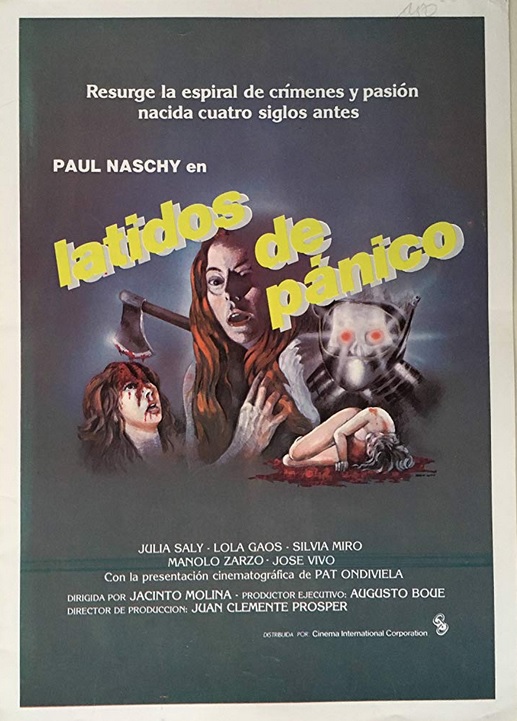
When it comes to the opinions of contemporary horror movies fans—those of The Conjuring and Insidious universe jump-scares variety (The Haunted, Annabelle: Creation, The Nun, The Curse of La Llorna, Insidious: The Last Key)—there’s no fog-shrouded middle ground with the films of the professional-anglicized Paul Naschy (from his sometimes professionally-used birth name, Jacinto Molina). And it’s not a matter of love versus hate—but love versus boring.

Panic Beats poster


And I’ll admit to this truth: When you edit out the sex, nudity, and gore from Naschy—which happens often with the U.S English-language cuts of his works—his films do have a tendency to lose their pace and logic—but not their powerful, cinematic atmosphere or imaginative story telling. Time and again, when I attempted to turn a fellow horror fan onto Naschy, their summation comes back: This is boring. This is slow. This makes no sense.

But for the Naschy fan (and Spanish and Italian horror fan)—such as yours truly—his films give me everything I need in a horror film:

1. Twenty-something, curvaceously-nude Italian and Spanish models with perfectly made-up faces that never run, drip, or smudge, hair that never loses its Aqua-Net coif, and French-manicured hands that defy rotted monasteries, the dingiest of cellars, the dankest of crypts, and the darkest of twisted winter woods. Check.

2. The aforementioned beauties always wear graveyard-appropriate mini dresses and hot pants. Check.

3. The arousing, unsynchronized gasps and screams of those crypt-kickin’ hotties rival the worst dubs of Asian cinema. Check.

4. Fictional, creepy European historical characters and events based on real-life, creepy European historical characters and events. Check.

5. A horror aficionado’s grab-bag of MGM noir and Universal homages. Check.

6. Nods to Alfred Hitchcock, William Castle, Dario Argento, and Mario Bava. Check.

7. Deus ex machinas, red herrings, MacGuffins, and POV shots abound. Check.

Dump those seven ingredients into a gothic horror strongbox (decapitated head included), wrap it in giallo paper, and tie it off with a film noir bow—and you got yourself a Paul Naschy movie (and an Armando de Ossorio, flick for that matter).

It’s interesting to note that my fellow, so-called “horror fans” who proclaim “Naschy is boring,” also said that about Don Coscarelli’s
Phantasm. I love Phantasm beyond words, but let’s face facts: If Reggie discovered Sally and Susie full-frontal naked being groped by dwarfs in the bowels of Morningside, and the Tall Man was going all “Dr. Carl Hill” on the fortune teller’s granddaughter, strung upside down A Bell from Hell abattoir-style—and some zombies showed up—wouldn’t it have made for an even better film? Think Hitchcock’s Psycho with an over-the-top, gut-spilling graphic shower scene, Norman’s mother fully reanimated, along with all of his female victims back from the grave for revenge—and you got yourself a plot-twisty Paul Naschy bloody fest.

In October, I’ll be contributing a review to B&S Movies’ commemoration of Mill Creek’s Pure Terror 50-film box set—with a review of Naschy’s classic,
Horror Rises from the Tomb. The 1973 film introduces the character Alaric de Marnac—based upon Gilles de Rais, a not-so-noble medieval French Knight who mixed his sexual kinks for young boys with witchcraft. (The Swiss metal band Celtic Frost also paid homage to Rais’s exploits with “Into the Crypts of Rays” from their 1984 album, Morbid Tales.)

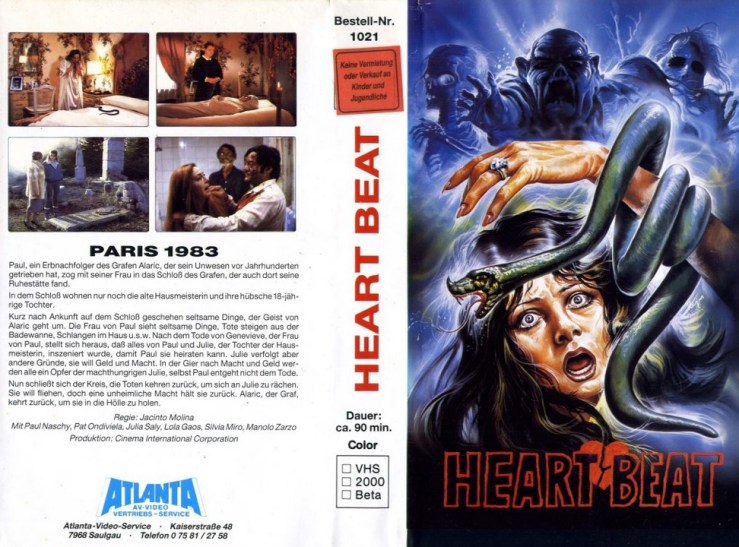
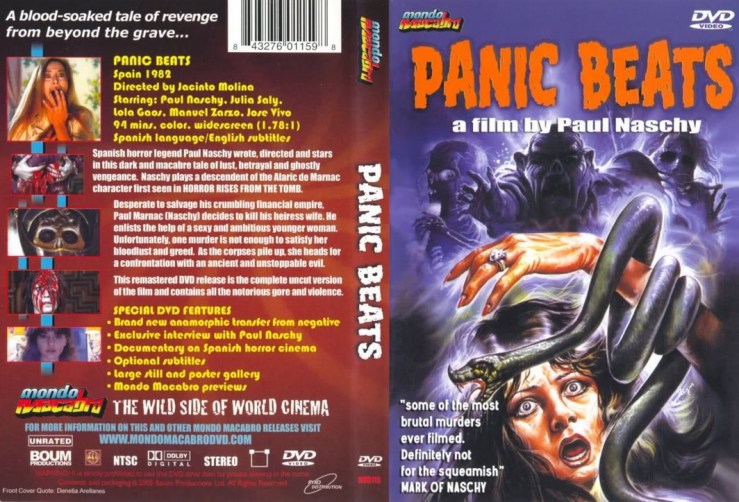
So to gear up for that review, it’s time to fire up its sequel: Panic Beats.

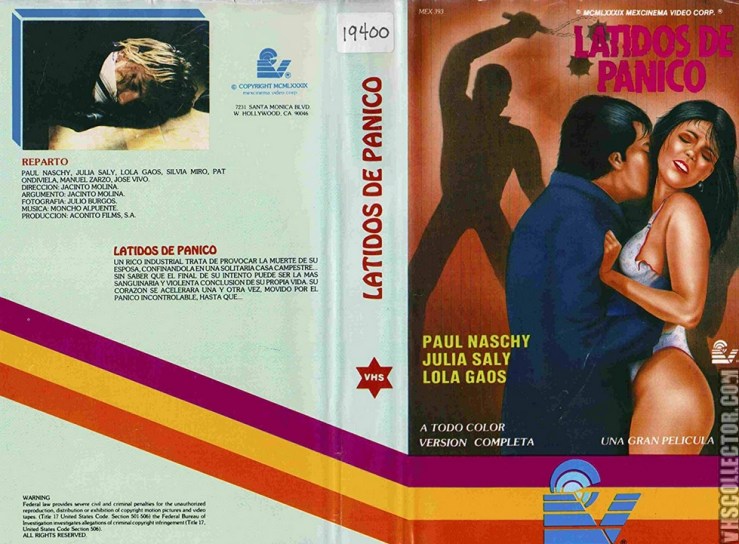
Also known as The Haunted House in the Fog (sound better in the German vernacular), Cries of Terror (lousy), Nightmare House (meh), Heartbeat and Frantic Heartbeat—each with “boring” edits depending on its country of distribution—Panic Beats is the second and final appearance of de Marnac. Naschy would, however, utilize Rais to create an all-new lead character in his 1974 film, The Devil’s Possessed (El Mariscal del Infierno). It would be Naschy’s only other returning film character—one that his fans wished returned more often; the other was his beloved werewolf-cursed Count Waldemar Daninsky—who appeared in twelve films.

As is the case with most sequels—see Sam Raimi’s The Evil Dead and The Evil Dead II and Don Coscarelli’s Phantasm and Phantasm IIPanic Beats isn’t so much a sequel as it is a reimaging—with a little bit more money and behind-the-camera-experience. Panic Beats ditches the traditional Universal and Hammer gothic horror touches of its predecessor for a film noir-meets-giallo swirl of supernatural horror-meets-murder-mystery rife with scheming lovers, twisted nightmare/dream sequences, and blood and gore mixed with sex and nudity.

While connoisseurs of Naschy cite Universal Pictures’ 1958 Draculaesque horror feature, The Thing that Couldn’t Die, as the inspiration behind Naschy’s Horror Rises from the Tomb, Panic Beats takes the film noir route by way of MGM’s Gaslight (1944), with its drive-the-wife-crazy-for-the-money plot. While some have cited other inspirational film noir-horror hybrids—such as Diabolique (1955), House on Haunted Hill (1958), and The Spiral Staircase (1946) (and I’ll toss in elements of 1948’s Sorry, Wrong Number, 1963’s The Ghost, 1971’s Let’s Scare Jessica to Death and Twitch of the Death Nerve), where every character is plotting against someone or being plotted against for the love of money—the more accurate antecedent would be Alfred Hitchcock’s forgotten classic, Rebecca (1940). In fact, that film’s 1938 multi-million selling literary inspiration—a gothic horror novel written by Daphne du Mauier—is name-checked by the characters as they bedroom-analogize the similarities between their manor’s creepy housekeeper and the monstrous-housekeeper Mrs. Danvers of Rebecca. (Red herring house keeper. Check.)

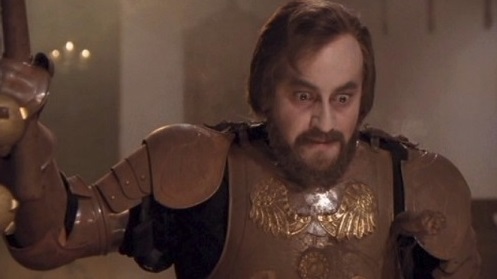
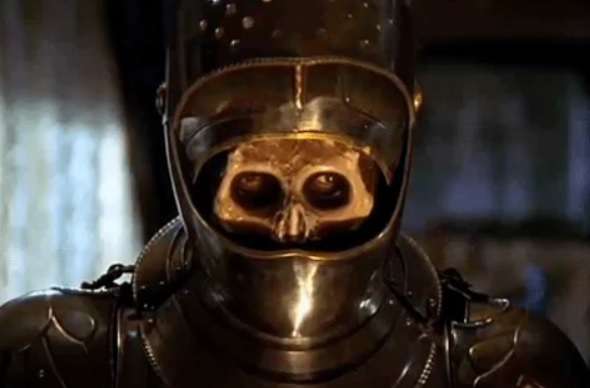
Panic Beats, at first, loosely mirrors its precursor: In less than five minutes, before the title credits role, you have a horse-mounted knight in full armor—swinging a morning star overhead—pursuing a curvaceous, fully naked woman through the misty-shrouded woods. In typical Marnac fashion: his wife is a whore and the bitch must die. (First kill: done. Cue title card. Check.)

Marnac


Fast forward to present day France: We meet long-suffering architect Paul (Naschy) who cares for his heart-ailed wife, the soon-to-be-gaslighted Genevieve (Julia Saly of Armando de Ossorio’s 4th in his Blind Dead oeuvre, Night of the Seagulls (1974), León Klimovsky’s The People Who Own the Dark (1976), and as Countess Elizabeth Bathory in Naschy’s 1981 feature, Night of the Werewolf ). Meanwhile, Paul’s carrying on affairs with two other women: Mireille (Silva Miro), a hooker who is putting the blackmail screws to Paul to hurry up with the wife-murder plan already, and Julie (the heart-melting Pat “Frances” Ondiviela who, after Panic Beats, disappeared into Euro-television work), who is in on Paul’s plot—or so she thinks . . . and so he thinks. . . .

On the advice of his doctor, Paul decides take Genevieve for bed rest at his family’s remote ancestral country estate—which rests on the site of a castle that belonged to Paul’s ancestor, the infamous Alaric de Marnac, a 16th century knight who murdered his unfaithful wife and their three children before turning to devil-worshiping and a healthy human-blood diet. Helping Paul care for Genevieve is the estate’s creepy, elderly maid, Maville (Lola Goas of 1971’s Academy Award Best Foreign Language Film nominee,
Tristana, and Jorge Grau’s 1973 opus, The Legend of Blood Castle), who has “been like a mother to Paul” over the years, along with Maville’s troubled niece—and Paul’s second mistress, Julie.

Another plot similarity to
Horror Rises from the Tomb is the ol’ roadside bandits/escaped prisoners-honey-we’re-out-of-gas ploy. The “new” twist: Paul recruited the two bandits into his scare-her-to-death plot, which includes Paul taking advantage of his family’s gruesome folk-tale history. Before you can say “Alaric de Marnac,” Genevieve’s heart stops before Marnac can give her a crack of the morning star, the creepy housekeeper goes down the stairs tripwire-style after she turns the screws on Paul, and Julia, after choking-out her aunt Maville when the stair fall didn’t kill her, takes a (very graphic) axe to Mireille, and Paul “settles up” with the road bandits. Then, when Paul discovers Julie’s love letter to her own piece-on-the-side action, Maurice, he plots to kill her . . . but not before she proclaims, “I’m more evil than you,” and tosses a space heater into Paul’s bubblebath. You go, girl!

But, what the hell?  Where’s Alaric in all of this bloody mayhem?  I came for the “every 100 years” gory revenge of a Gilles de Rais-inspired Knight and all I got was William Castle and Alfred Hitchcock film fuckery. Did Alaric de Marnac “possess” everyone to do his bidding? Was Paul, Alaric all along? Did Paul really die in the tub?

. . . So, Julie is the last backstabbing bastard standing and, thanks to her quickie marriage to Paul, she got the family fortune. Until . . . oh, shit. The screws are turning again. Now Paul’s photo falls to the floor and bleeds, there’s blood flowing out of shower heads, eyeballs and entrails are in the soap dish, snakes are in the bed—and zombies are knocking at the door. It turns out the Alaric de Marnac legends are true! Julie’s “evil” resurrected Alaric—and he beats her to a (graphic) pulp in bloody blaze of morning star glory in the estate’s chapel. (Deus ex machina knight. Check.)

While the film debut of Marnac (who comes across as a hairy Marlon Brando-Jim Belushi-Jack Black hybrid), Horror Rises from the Tomb, appeared on U.S UHF-TV and cable superstations and VHS in the ‘70s and ‘80s, Panic Beats wasn’t seen by Naschy fans outside of Europe until its 2005 DVD restoration by Mondo Macabro. In fact, Panic Beats never made it out of Naschy’s native Spain—outside of muddy VHS bootlegs (which I got to see many moons ago via an old grey market mail order, VSOM: Video Search of Miami-analog print).

In fact, you rarely found a Naschy movie on a video shelf or seen them on American television. Before the advent of widely-distributed retro-DVD reissues (by companies such as Mill Creek, Shout Factory, and Mondo Macabro), wee horror buffs such as this writer had to rely on reading about Paul Naschy’s celluloid exploits in books and magazines about horror cinema—and hope for that errant UHF-TV showing or VHS Tape appearance of Horror Rises from the Tomb, Fury of the Wolfman, and The Mummy’s Revenge.

But why? Well, the American serial-killer-on-the-loose-in-the-woods genre—derived from Italian Giallo—was in full swing. And here’s Naschy with a homage-throwback, granted, a very bloody one, but a throwback to Universal and Hammer horrors. American audiences wanted non-character developed Jason Vorhees, Michael Myers, and Freddy Krueger child and babysitter-killing knockoffs—not a murderous Knight based on a sociopathic Knight from European history that actually killed children.

As an added bonus: The Mondo Macabro DVD presentation of Panic Beats offers a Spanish horror primer with two scholastic vignettes: Blood and Sand, a 28-minute documentary that features interviews with Jorge Grau (1973’s The Living Dead at Manchester Morgue), Jose-Ramon Larraz (1973’s The House that Vanished and 1974’s Symptoms), and Armando de Ossorio (1969’s Malenka and 1975’s Demon Witch Child), and a 28-minute interview with the maestro himself, Paul Naschy On . . . , as he takes fans through his life and career.

So, if you’ve never seen any of Paul Naschy’s films—and I still haven’t seen them all (120 plus!)—this beautifully restored, uncut version of Panic Beats presented by Mondo Macabro is a great place to start your bloody education into the giallo-soaked and noir-twisted world of Spanish Euro-horror.

Update: February 2021: You can now order the all-region Blu-ray of Panic Beats from Mondo Macabro or through Diabolik DVD. As result, Sam the Bossman gave it a fresh take.

If there’s ever a Paul Naschy biopic, Jack Black is the man for the job.

About the Author: You can read the music and film reviews of R.D Francis on Medium and learn more about his work on Facebook.