Kamikaze ’89 (1982)

The single most difficult hurtle in bringing speculative fiction portrayals of future societies to the big screen is financial: without the backing of a major studio, it’s difficult to create a new world off the racks, whether its clothing, technology, vehicles, or architecture. So while major and mid-level studios can dazzle filmgoers with a future built from scratch in films such Blade Runner (1982) and Escape from New York (1981), the little guy has to make do with what’s available and compromises with a simplified version of the future that pretty much resembles our present—with a few splashes of “futuristic” accoutrements. Jean-Luc Godard’s neo-noir Alphaville, Elio Petri’s pop-art romp The 10th Victim (both 1965), Francois Truffaut’s Fahrenheit 451 (1967), and the American PBS-TV adaptation of Ursula K. LeGuin’s A Lathe of Heaven (1980) are each fine examples of this celluloid ingenuity. Another is Claude Chabrol’s futuristic updating of Germany’s famed “Dr. Mabuse” in Docteur M (1990).
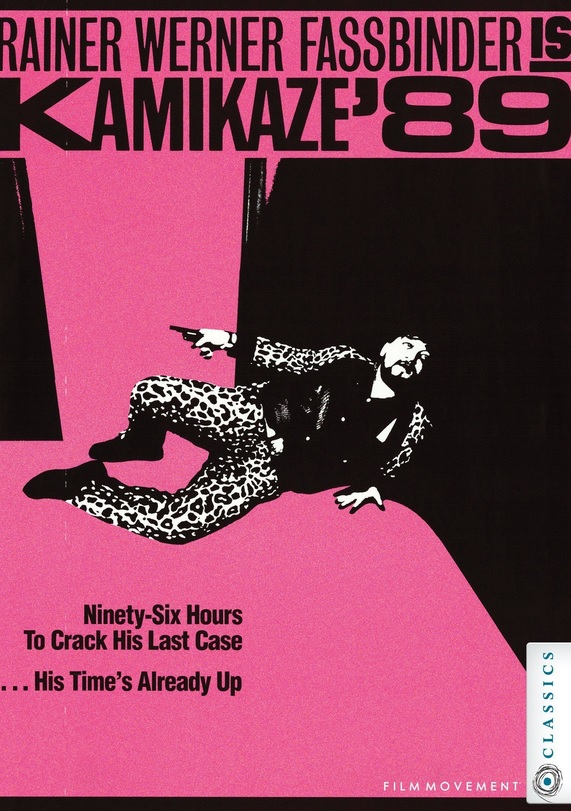
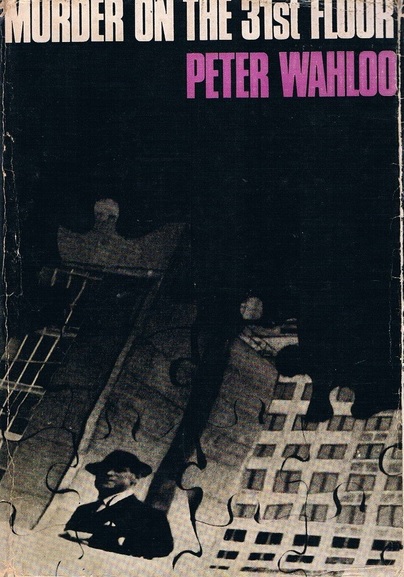
It’s important to understand these economic restraints to the creative process when watching Kamikaze ’89 as the reason for German director (and Fassbinder confidant) Wolf Gremm eschewing the serious-dramatic approaches of the three previous adaptations of Per Wahlöö’s 1964 best-selling, futurist neo-noir novel, Murder on the 31st Floor (twice for Russian TV as a mini-series and TV movie; then as a Hungarian TV movie), instead taking a black comedic, social satire approach that detracts from the novel’s serious sociopolitical and technocratic statements and bears little resemblance to those previous adaptations.
Regardless of its unorthodox approach with its garish character development and set design, Kamikaze ’89 garnered nominations and awards at the 1983 Fantasporto International Film Festival held in Portugal—which honors sci-fi, fantasy and horror films. As result of those festival honors, the film was marketed for an American release; the film subsequently flopped on the U.S art house circuit, grossing less than $25,000 in its initial release (but became a popular U.S VHS rental among sci-fi buffs and Fassbinder disciples).

In the “future” of 1989, Communism has fallen and the happy days of the good ol’ 1940’s—when the Federal Republic of Germany was the world’s dominate economic superpower—has returned. But since this is the “future” on a budget, the country has become a day glow, neon soaked, new-wave dystopia filled with Billy Idols, Boy Georges, and Madonnas prancing around in a low-budget Clockwork Orange-styled society. This is a world where male (female?) assassins dress in black lingerie and matching go-go boots—complete with ski masks and goggles. Women swim wearing leg warmers. Everyone mimics the police force’s logo seen throughout the film—a “thumbs up”—as some type of pseudo “Heil Hitler” salute in greeting each other. This is a world where citizens tool around on three-wheeled choppers, cops wear green crushed-velvet and peppermint-striped blazers, ambulances have six wheels, nurses wear gleaming-white lamé uniforms, and corporation executives make phone calls from Superman telephones (the handset cradles into his cape).

Meandering through this brain dead police-welfare state of citizens blinded by an endless stream of propaganda that proclaims “everything is perfect” is acclaimed German director Rainer Werner Fassbinder. He stars as Jansen, a rogue police lieutenant whose proclivities include a penchant for leopard-print suits and a revolver with a matching leopard-skinned grip. (Why? The film never tells us.) He works out in a gym—in leopard work out sweats—playing a solitary form of badminton-racket ball. He perpetually gulps down bicarbonate soda and relaxes on his lunch breaks in a dentist chair next to a ‘60s jukebox inside his rundown, paint-peeling “Bat Cave,” so to speak. And what’s the message behind the larger-than-life poster of Neil Armstrong on the Moon in his office, and the voice-over moon-transmission chatter between Armstrong and President Richard Nixon that Jensen listens to as he masturbates hip-thrusts into the poster, you ask?

Well, can you tell me the meaning behind the cackling villain-assassin dressed in a dinosaur costume (I think?) behind the driving wheel trying to run Jansen off the road with a car adorned bumper-to-bumper with the pages of comic books—complete with a full-sized Spider-Man plastered on the hood and a Captain America image stuck on the rear window? And what’s the deal with the Reality TV series watched by 99.3% of the population where contestants try to win prizes based on who laughs the longest—and the shows been going on for four days?

Yep. This film is way out there . . . and is only for those who enjoy the terminally weird and are brimming with patience to fulfill their Fassbinder fix—and decipher the hidden meanings, such as Gremm’s endless comic book references. All others are better off watching a Mark Gregory or Michael Sopkiw Italian-future world romp. Or, if you can handle the tomfoolery of Paul Bartel’s Death Race 2000 (1975), perhaps you’ll be able to stick with Kamikaze ’89’s black comedy slant to the bitter end. (It’s interesting to note that Ridley Scott’s similarly themed neo-noir sci-fi romp, Blade Runner, was issued a month prior to Kamikaze ‘89’s release.)

As in the future world of 1975’s Rollerball, Germany’s new totalitarian government-corporation has pacified and dehumanized the citizens through the legalized use of barbiturates and resolved all of the country’s social and political ills. There’s no more pollution. There’s no more murder or suicide (only “accidental death”). Alcohol and gardening (because the seeds are poisoned) are outlawed. But everyone is so miserable, they get drunk anyway . . . and they get locked up and fined . . . and get plastered again. And the wheel goes round and round and it all goes into the corporate coffers. And the rest that don’t get tanked, they garden the illegal seeds and eat the spoils in an act of suicide . . . oh, “accidental death,” so says the corporate edict. Everything is fine. Everyone is laughing on TV, after all.

Yep, you guessed it. Everyone is ignorant to the unhappiness perpetuated by this Soylent Green-inspired government-corporate . . . because the corporate also controls the broadcast and print media and perpetuates a “Group Think” mentality through a nascent forefather to the Internet via a media-soaked culture controlled by the few to manipulate the many. Things have gotten so out of control that Konzernchef, the Trumpian-Rupert Murdock leader of the family-run corporate concern, is immortalized as a villainous superhero, “The Blue Panther,” in a line of comic books published in protest against corporate regime . . . and he loves the attention. (Ack! No “Orange Panther” comments, wise guy!)

It turns out the underground protest comic is the product of a handful of intellectuals that ran the corporation’s Orwellian “cultural department” from the perch of the corporate headquarter’s hidden “31st floor.” Reasoning the corporate is evil, the corporate rogues work for a phantom terrorist group, “Krysmopompas,” to liberate the citizens. When their activities to overthrow the government crescendos with a fake bomb threat that results in the first “real” suicide-murder (of a corporate executive ready to spill the beans that takes a header off the “31st Floor”) in four years, they call in the world’s foremost and successful detective—Jansen—to solve the case. But the family-run corporate—and the in-the-pocket police department—doesn’t want the case solved . . . the world can’t know what going on up on the mysterious “31st Floor.”

Sweden-based crime novelist Per Wahlöö is best known for his series of ten best-selling novels regarding the exploits of Stockholm police detective Martin Beck published between 1965 and 1975. In 1971, one of those books, The Laughing Policeman (an English translation of Den skrattande polisen originally published in 1968) was adapted into the Walter Matthau and Bruce Dern starring film, The Laughing Policeman (1973).

Film Movement Classics honored Kamikaze ’89 with a 2016, 4K restoration issued to Blu-ray. You can watch the full movie for free on TubiTV and enjoy the Edgar Froese (of Tangerine Dream; Thief, Risky Business, and Grand Theft Auto V) soundtrack on You Tube. The 1980 Russian film version—for comparison—is also on You Tube.

The sad post-script to the film: Fassbinder died six weeks before the film was released. As you watch, you can clearly see the heavy and bloated Fassbinder was in poor health and looks much older that his 37 years. The professional momentum Gremm gained from his previous feature, Fabian (1980), being chosen as West Germany’s official submission to the 53rd Academy Awards for Best Foreign Language Film (it wasn’t nominated) was lost. While critically lauded, the box office failure of Kamikaze ’89 on the European circuit lead to it being Wolf Gremm’s last feature film; he then worked strictly in German television.

There are more, budget-inventive German dystopian visions to enjoy in the celluloid frames of the somewhat similar, previously mentioned Docteur M, and the Jupiter-to-Earth psychological adventure, Operation Ganymed.

About the Author: You can read the music and film reviews of R.D Francis on Medium and learn more about his work on Facebook. He also writes for B&S Movies.
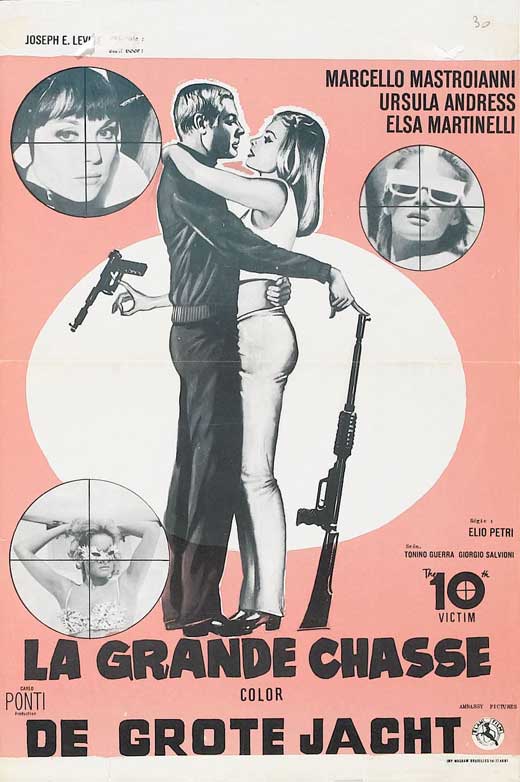
The 10th Victim (1965)

In light of B&S Movies Post-Apoc Week coinciding with the recent controversy surrounding the Hillary Swank-fronted post-apoc flick The Hunt (Wikipedia link),* it’s time to take another look at Elio Petri’s influential sci-fi/pop-art “human death sport” romp. (The film was previous reviewed by Sam as part of B&S Movies “Deadly Game Shows week**).

While the first wheat grains of the ’80s spaghetti apocalypse were planted with 1979’s Mad Max out of Australia, those stalks blossomed in 1981 with the cinematic one-two-punch of John Carpenter’s Escape from New York and George Miller’s Mad Max sequel, The Road Warrior.

However, the inspiration for several Italian-Euro apocalyptic films began with a film based on a 1924 short-story by Richard Connell: 1932’s The Most Dangerous Gamea story that inspired novelist Robert Sheckley to compose his sci-fi variations of “human death sports” that, in turn, begat the American-made Rollerball (1975), Death Race 2000 (1975), Deathsport (1978), and the later (excellent!) pasta variants of Endgame (1983) and Rome 2072 (1984). Even Ground Rules (1997), the kinda sorta post-apocalyptic romp with a bit of fake sport and some generous helpings of Richard Lynch thrown in, applies. Another variant of Connell’s novel is 1994’s Surviving the Game, a present-day variant starring Ice-T as a kidnapped homeless man hunted on preserve by Gary Busey and the late Rutger Hauer. One can also consider Eli Roth’s 2005’s Hostel as a “death vacation” horror variant of the material.

Sheckley’s grandfather of sci-fi “death sport” films came courtesy of the Italian-made The 10th Victim (1965) based on his 1953 short story, The Seventh Victim. Sheckley’s literary inspirations about humanity’s future psych-condition continued with the 1958 short story, The Prize of Peril, first adapted as the German television film, Das Millionenspeil (The Millions Game; 1970), then as the French film, Le Prix du Danger (The Price of Danger; 1983). Both films’ predictions of today’s reality television programs so influenced Arnold Schwarzenegger’s The Running Man (1987) that it resulted in a (well justified) copyright infringement lawsuit.

So the next time you pop in a copy of Kinji and Kenta Fukasaku’s Battle Royal (2000; 2010 in the U.S when Anchor Bay issued it direct-to-video; the film is based on the 1999 novel by Koushun Takami), Suzanne Collins’s teen-dystopia Hunger Games series (that ripped off Battle Royal), and the dark satire twist on the Reality TV genre with Series 7: The Contenders (2001), and (maybe?) the eventual DVD/VOD release of the controversial “political satire” variant, The Huntjust remember that it all comes courtesy of the mind of Robert Sheckley.

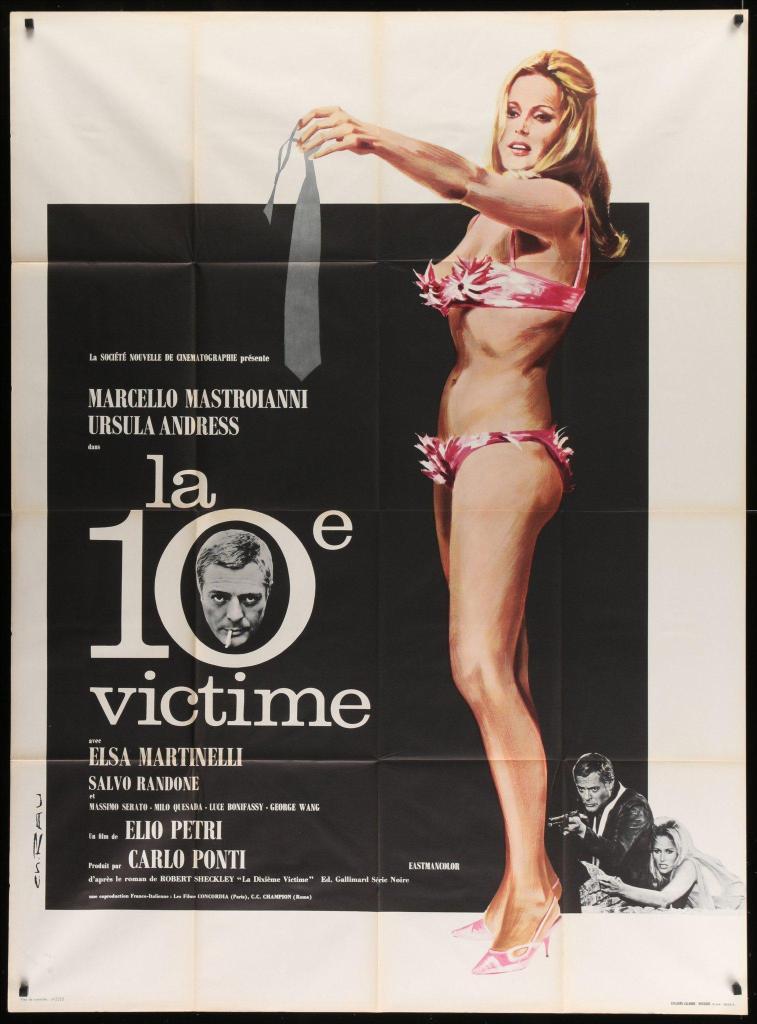
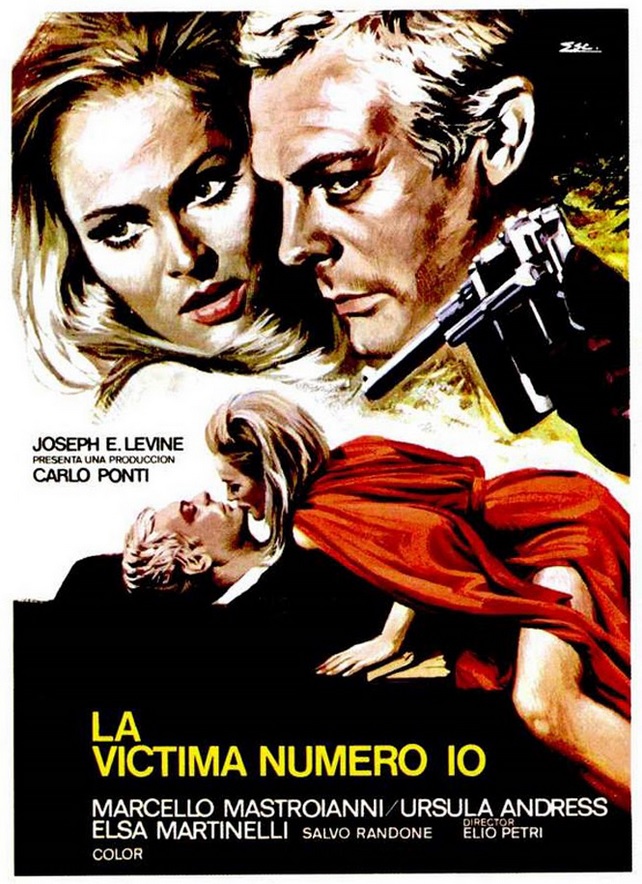
The eventual 1965 film born from Sheckley’s 1953 short story was directed by Italian politician-psychologist-film maker Elio Petri. The film stars Marcello Mastroianni (La Dolce Vita, 8 1/2) as Marcello Polletti and Ursula Andress (Honey Rider in Dr. No) as Caroline Meredithboth are the top assassins-contestants who have scored the most kills in a government-sanctioned reality television series. As with William Harrison’s 1973 short story, Roller Ball Murder, and its eventual 1975 film adaptation, in Sheckley and Petri’s future, wars are avoided and tendencies for aggression are channeled through a violent sport—The Big Hunt. As with Rollerball, it’s the most popular form of entertainment in the world (just like 1987’s The Running Man; born from Stephen King’s 1982 Richard Bachman pseudonym-novel of the same name).

Unlike in Universal’s controversial The Hunt (rumored—and denied—as originally being titled Red State vs. Blue State), where the “red state deplorable” contestants are kidnapped, or in The Running Man, where desirable “contestants” that are “good for ratings” are framed into playing the game, the contestants in The Big Huntas in Rollerballare willing participants who desire fame and fortune by surviving the game.

You’ve got to love a film where two civilians are running through the city shooting at each other . . . and a police officer stops “The Hunter” to check his “credentials” before he allows him continue his pursuit. The rules are simple: Five Hunters and Five Victims play ten rounds. As you kill (as in Death Race 2000), you win “points” in the form of financial gains. The sole survivor of the ten rounds wins and retires to a life of wealth and luxury. Of course, there is something more deadly afoot than bullets: love.

Mastroianni’s Poletti enters the game to get himself out of debt: he’s on the hook with a mistress and ex-wife who’s already spent the winnings from his six kills. Then he falls in love with Andress’s Meredith who’s just killed her ninth victim and she intends to make Poletti her tenth victimand his “perfect kill” in front of the camera will maximize her royalties via her sponsorship by the Ming Tea Company. Meanwhile, Poletti gets wise to Meredith’s scheme and arranges for her spectacular death with a competing television network: death by crocodile. The cat and mouse game between the two lover-assassins (Brad Pitt and Angelina Jolie’s 2005 film Mr. & Mrs. Smith, anyone?) is onwith one double-crossing the other.

While Petri incorporated Italian satire and Totalitarianism and fascism symbolism into his film version with the two assassins escaping the game and getting married, Sheckley’s original short story was much darker: the Meredith character’s “love” was nothing more than a ploy: she kills Poletti and wins the game. (I’ve been there and done that . . . without the death part . . . more than a few times!)

While The 10th Victim is gaining renewed interest in the wake of the controversy surrounding The Hunt, many have not heard of the film or seen it. But you have seen it, indirectly, via the patronage of Mike Myers. He paid homage to the film (such as Ursula Andress’s bullet-spraying bra and his faux-band Ming Tea) with his Austin Powers series of films. You can watch the full Italian, subtitled version of The 10th Victim on You Tube and TubiTv.

You can catch up on the wide array of post-apocalyptic adventures with B&S Movies’ “Atomic Dust Bins” Part 1 and Part 2 featuring 20 mini-reviews of movies you never heard of, along with a “hit list” featuring all of the apoc-flicks we watched for September 2019’s Apoc Month.

About the Author: You can read the music and film reviews of R.D Francis on Medium and learn more about his work on Facebook.


* Sam finally got around to reviewing the controversial The Hunt and, while he was waiting for its DVD release, he review the direct-to-DVD-PPV knockoff, American Hunt.

** Here’s the full list of films from our September 2018 “Deadly Game Shows” week.

Battle Royal (2000)
Death Race 2000 (1975)
Death Row Gameshow (1987)
The Final Executioner (1984) (part of our Apoc Month of reviews)
Gamer (2000)
The Gong Show Movie (1980)
Turkey Shoot (1982) — The Hunt is closer to this Brian Trenchard-Smith film, more so than any other of the post-apoc human death sport romps.

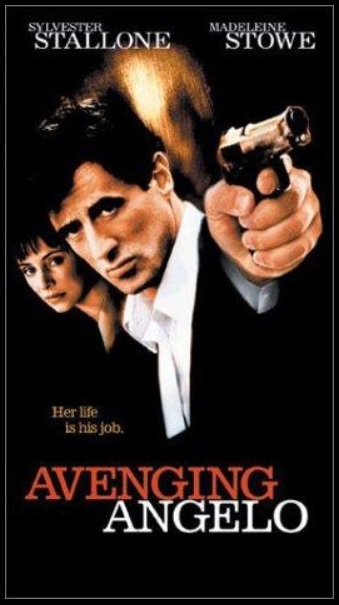
Avenging Angelo (2002)

Editor’s Note: This is part of our week-long tribute to the films of Sylvester Stallone. You’ll find links to several more reviews of his films, within. If you don’t see your favorite mentioned, enter the title into the search box to your left; chances are, we reviewed it.

Mention “Sylvester Stallone” in the same breath as “mafia” and your mind dreams up a hitman-action flick in the tradition of The Transporter. You might even flash back to his own F.I.S.T, his first post-Rocky film.

If it was ‘80s Stallone, yes. But this is 21st century Stallone 2.0.

Avenging Angelo is a mafia rom-com in the tradition of Prizzi’s Honor (1985, Jack Nicholson), Married to the Mob (1988, Michelle Pfeiffer), Stallone’s own film, Oscar (1991), and director Billy Wilder’s hit starring Marilyn Monroe and Tony Curtis, Some Like It Hot (1959). Opinions vary on this Stallone-fronted parody of The Godfather and Goodfellas having an analogous chemistry to those earlier mob comedies, but the one absolute truth of the film: Stallone once again shows he’s a skilled actor who deserved to have a breakout hit with one of the dramas, thrillers, and comedies he attempted in the early 2000s.

Avenging Angelo was one of six films released between Cop Land (1997) and Shade (2003) when Sly valiantly—and skillfully—attempted to shed his he-man action image with more insightful and introspective characters. Sadly, all of those attempts failed at the box office and Sly saw his career sliding into direct-to-DVD territory alongside the careers of Bruce Willis, Eric Roberts, and Nicolas Cage (see Precious Cargo, Lone Star Deception, and Arsenal, respectively). So when Avenging Angelo became the second straight-to-video U.S release for Sly after D-Tox, the writing was on the wall: he returned to the action films that made him famous: Rocky Balboa, Rambo, The Expendables, Bullet to the Head, and Escape Plan.

Avenging Angelo, which returned Stallone to his previous action-comedy attempts of Stop! Or My Mom Will Shoot (1992) and Tango & Cash (1989), received a limited theatrical release in Italy and Greece—thanks to it starring Anthony Quinn, who’s highly revered throughout Europe (his career went from an Academy Award for Best Supporting Actor in 1956’s Lust for Life to a Golden Raspberry for Supporting Actor in 1992’s Mobsters). Sadly, Quinn was dying of terminal throat cancer while Avenging Angelo was being filmed—and died before it was released. So when Quinn utters the line “Everybody’s going somewhere” in the film’s initial restaurant scene, it becomes one of the saddest scenes in cinema—on par with Edward G. Robinson’s turn in Soylent Green, in which Robinson hid his terminal bladder cancer during filming and died shortly after the influential apocalyptic flick was completed.

Stallone is the kindhearted (remember, this is a comedy) Frankie Delano who takes offense at being called a bodyguard: he’s a “watcher” who fails in his duties protecting mob boss Angelo Allieghieri (Anthony Quinn) against a hitman named Bruno (Pittsburgh’s (!) Billy Cardell of CBS-TV’s Mike and Molly . . . getting the drop on Sly Stallone? No way, Sly!). Guilt ridden over Angelo’s death, Frankie comes to protect Angelo’s screwball daughter, Jennifer, who now has a contract put out on her by the same people who wanted her father dead. The comedic chase—with a smattering of blood n’ bullets . . . and kisses n’ babies—is on.

And as another example of a film being whatever a distributor wants it to be, the overseas trailer markets Avenging Angelo as a Terence Hill-styled (see 1980’s Super Fuzz) screwball Italian comedy, while the U.S version markets the film—because of Stallone’s presence—as an action film. And speaking of its domestic distribution: DEJ Productions, who saved Stallone’s D-Tox from the Universal vaults, distributed the DVD version in Blockbuster stores, along with additional airings on the Starz and Showtime cable channels (I got my DVD copy from my local library’s annual Book Fair for a buck).

So what is the film, really?

Some have said, because of Madeleine Stowe’s comedic tour-de-force, Avenging Angelo is a chick-flick bordering on the sometimes groan-inducing slapstick (which plays better in Europe than America), more so than a male-appealing action flick, which plays better in America.

How far does the zany and madcap tomfoolery go?

Sly blames a fart on “bloated squirrels suck in the walls” (CLIP) and Madeleine Stowe gets revenge on a mob boss by stripping out of a tight red dress (no nudity, natch) and gives the old dude a heart attack (CLIP), complete with a rising-beeping heart monitor. So, if you liked Stallone’s celluloid nemesis Arnold Schwarzenegger in Kindergarden Cop, and your mobsters mixed with comedy, then Avenging Angelo is for you. It’s not an award winner . . . and it’s not a Razzie winner, either. Stallone fans won’t feel cheated.

Film geeks, especially budding screenwriters and directors, who supplement their film school studies with DVD commentaries, will enjoy the passionate, entertaining and education commentary track provided by director Martyn Burke, which really gets into the nuts and bolts of the film. Digging even deeper is the unproduced, raw footage vignettes that go behind the scenes of the shoot (Part 1 and Part 2). Yes . . . we are talking about the same Martyn Burke who gave us the abysmal, Canadian early-slasher The Clown Murders (1976) starring John Candy , in addition the Lee Majors post-apoc bomb, The Last Chase.

Considering the studio and producers behind the project lost faith in the film and eschewed a U.S. domestic theatrical release or Euro-theatre plays beyond Greece and Italy, instead selling the film to DEJ Productions for non-theatrical distribution, the DVD is exceptionally well packaged beyond just burning the film to disc and calling it a day, as is the case with most low-budget films dumped into the home video marketplace. If anything, Avenging Angelo is worth watching for Anthony Quinn’s final screen performance.

You can reminisce with Anthony Quinn as he wins The Golden Globes’ 1987 Cecil B. DeMille Award, along with his interview with Jay Leno in 1991 and Johnny Carson in 1983, and Eileen Prose for Good Day!, Boston’s long-running morning show on WCVB-TV.

Be sure to look for my reviews of Cobra, Cop Land, D-Tox, F.I.S.T, and Paradise Alley.

About the Author: You can read the music and film reviews of R.D Francis on Medium and learn more about his work on Facebook.

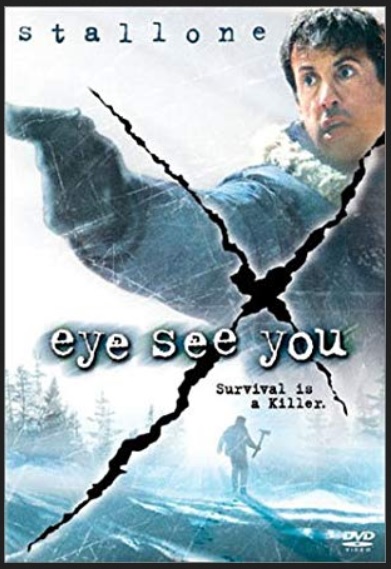
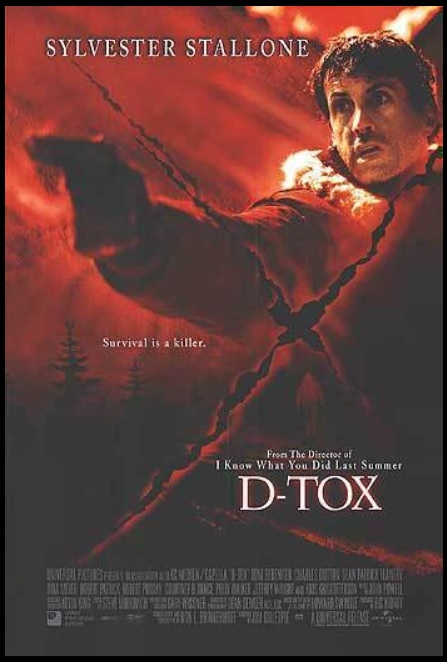
D-Tox, aka Eye See You (2002)

Editor’s Note: This is part of our week-long tribute to the films of Sylvester Stallone. You’ll find links to several more reviews of his films, within. If you don’t see your favorite mentioned, enter the title into the search box to your left; chances are, we reviewed it.

If you had a Blockbuster Video membership during the home video market’s conversion from VHS tapes to DVD discs in the late ‘90s, chances are you saw—and passed over—this psychological-slasher romp starring Sylvester Stallone under its DVD reimaging as Eye See You, distributed exclusively on the nationwide chain’s shelves. If you had an extended cable TV package and channel-surfed the Starz and Showtime cable networks, you also saw the film—and probably passed on it as well. It seems everyone passed on it. I passed on it, eventually watching the film a few years after its release as result of the $1.00 DVD cut out bin at my local Dollar Tree.

D-Tox is the least known film of the Stallone canons—and it’s completely unknown as part of Ron Howard’s production oeuvre. For me, as with Cobra (1986), the production history behind this failed, joint venture between Universal Pictures and Ron Howard’s Imagine Entertainment is more interesting than the actual film itself. But it’s not as interesting as the off-the rails celluloid madness that is Tango & Cash (1989) . . . now that’s a production tale!

At the time of the newly-founded DEJ Productions acquiring the three years shelved D-Tox from Universal Pictures, DEJ was under the same corporate umbrella as the Viacom-owned (then part of the CBS-TV Network; as of this writing, Viacom and CBS have re-merged) Blockbuster Video, Starz and Showtime networks. DEJ was, in fact, formed by Blockbuster executives for the purpose of acquiring low-budget films for exclusive distribution through Blockbuster Video, so as to take advantage of the home video market’s resurgence via the DVD format. Courtesy of their corporate synergy, DEJ could also sell the films they acquired for exclusive Viacom cable television distribution in the U.S.

However, prior to DEJ acquiring the film, Universal Pictures, in a venture with Paramount Studios under their joint UIP corporate umbrella, unceremonious dumped the film into the overseas’ markets under the title D-Tox, with the hopes the film would find an audience. It ended up grossing less than $7,000 in foreign box office receipts. Ouch.

The film that eventually became known as Eye See You on U.S shores is based on Jitter Joint, an obscure (my local library system doesn’t carry a copy of the book or the DVD) 1999 published-novel written by Dallas Times Herald reporter Howard Swindle. Optioned by Sylvester Stallone with assistance from Ron Howard and Brian Grazer’s Imagine Entertainment for Universal Studios before its publication, the film version—then known under the title Detox—was completed that same year. The end product, shot-on-the-cheap in the economical-advantageous lands of Vancouver, Canada, for $50 million (how much would it have cost if it was shot within U.S borders?), the film failed in its initial test screenings; Universal lost faith in the project and shelved it. As with Stallone’s First Blood using David Morrell’s 1972 novel First Blood and Cobra using Paula Gosling’s 1985 novel Fair Game as its source materials, D-Tox deviates wildly from its source materials and barely resembles the tale of Jeb Quinlan, the Dallas homicide detective in the pages of Jitter Joint solving killings in a rehab center, as this Kirkus book review shows.

A year after the D-Tox overseas failure, Universal authorized a series of rewrites, reshoots, and title changes—there are screener copies of the film that tested as The Outpost in 2000—and it failed, again, in theater test screenings. By that point, with the film’s budget ballooned to $55 million, and with the director and studio still arguing over creative control of the project, Ron Howard stepped in to personally oversee the film in post-production in the hopes of salvaging it. The end result: Universal permanently shelved the film—and it sat in the vaults for three years. Adding insult to injury: Ron Howard had Imagine Entertainment’s name removed from the film, then Universal removed its logos and references from the film. Then, along with DEJ, Blumhouse Productions (Insidious, Happy Death Day, The Purge) hung its production shingle on the film for its unceremonious DVD release. Once you factor in the film’s P&A against its budget, the film hasn’t come close to, and most likely never will, break even.

So how did Sylvester Stallone end up in this mess?

Stallone planned the Jitter Joint project as his follow up to Cop Land (1997), his second attempt to transition out of the boilerplate, action-driven films of his early career and move into more character-driven, insightful works. The film was the first in a three-picture deal between Stallone and Universal in which the studio would pay him $60 million for the three proposed films. When the Jitter JointD-Tox project failed and landed on the shelf, Universal pulled out of the deal, gave Stallone his $20 million for services rendered, and set him on his way.

Then, in the wake of the failure of D-Tox in the overseas markets, Stallone’s follow ups of Get Carter (2000) and Driven (2001), both which managed to receive international theatrical distribution, also failed at the box office. The end result was that his next two films—again, character-driven pieces that eschewed his he-man action persona for distraught, tragic heroes—Avenging Angelo (2002) and Shade (2003)—ended up being dumped into the DVD and VOD markets. Nine years after Cop Land, with his valiant six attempts at reinventing his cinematic image deemed a failure (he’s actually very good in all of them), Sly returned with sequels of the films that made him: Rocky Balboa (2006) and Rambo (2008). Then he created his star-studded and action-packed, ‘80s retro-romp The Expendables, which he followed with sequels in 2012 and 2014.

As result of the film’s themes of isolation and its claustrophobic settings, reviews for D-Tox compared the film to Aliens (1986)—with a human killer in lieu of an alien one—crossed with David Fincher’s pseudo-Giallo detective thriller, Seven (1995). As result of D-Tox’s snow-bound setting, other reviewers tipped their hats to John Carpenter’s The Thing. Of course, D-Tox is a murder mystery rather than a sci-fi or action film and, to be honest, doesn’t have any of those film’s unique plot twists or on-the-edge-of-your-seat moments. A more accurate description of D-Tox—courtesy of its murder mystery vibe—is that it plays as out as a graphic version of Agatha Christie’s 1939 novel Ten Little Indians (made into films in 1965, 1974, and 1989). While some critics may disagree, Christie’s novel and John Wood Campbell Jr.’s Who Goes There (1938; source material for The Thing) share a similar master plot—regarding a grouping of paranoid and backbiting protagonists stranded in a remote location perused by an unseen antagonist—and it’s not far removed from the master plotting of David Fincher’s Aliens 3.

Now, if you’re feeling I Know What You Did Last Summer vibe in the frames of D-Tox—where a group of paranoid and backbiting friends are picked off one-by-one by an unseen killer—that’s because Jim Gillespie directed both films. If you’re an older fan of Klaus Kinski (Nosferatu the Vampyre) and a veteran of the video ‘80s, you’ll reference Schizoid (1980), where members of Kinski’s therapy group (without the snowy setting) are murdered by an unknown assailant. Newer film goers might reference Dennis Quaid’s little-seen serial killer romp, Horsemen (2009) with its trouble cop adrift in giallo-inspired, snowy set pieces. Sadly, regardless of its strong giallo-inspired start, D-Tox quickly disintegrates into what many found to be a predictable and pedestrian stalking-slasher pace that, if you removed the gore, you’ll find yourself in an episode of Law and Order: SVU with Olivia Benson being sent to a rehab center and stalked by one of her old collars on a revenge binge.

While D-Tox is not a classic that lends itself to repeat viewings—it has its share of plot gaps, losses of tension, and annoying boilerplate characters doing stupid things (such as looking into door peepholes when a serial killer is on loose and has already killed nine people by drilling out their eyes through door peepholes)—it certainly doesn’t deserve its crushing reviews. Stallone, as he was in Cop Land, is excellent throughout as the alcoholic and failed-suicide attempting F.B.I agent, with his downbeat acting chops matching the film’s mysterious, atmospheric and creepy pace.

Stallone is Jake Malloy, a not-invincible ex-cop who joined the F.B.I as result of his work on a case with a serial killer targeting prostitutes. According to the harassing phone calls made by the serial to authorities to find the bodies, it seems Jack made the serial’s life “difficult” in cleaning up the “prostitution filth” and he cackles: “I see you, but you can’t see me” throughout the film. So, in revenge, the killer changes things up and start targeting cops—and racked up nine kills in six months. Malloy can’t catch him because the serial keeps changing his M.O by picking cops from different precincts with no rhyme or reason. There is, however, one consistent—and very giallo—modus operandi: when he initially claims a victim, the serial rings a victim’s doorbell and, as they look through the door’s peephole, he drills his victim in the eye. Then after drilling out their other eye, he tortures them—he sees them, they can’t see him—and graphically displays their bodies. So, for example, when Malloy’s ex-beat partner ends up with two drill-out sockets, the serial shoves a nightstick down his throat and leaves him swinging in a very Argento-like suspension hogtie from the ceiling for Malloy to see. Then, with the ol’ I’m-calling-you-from-your-house gag, the “Eye Killer” murders Malloy’s just-proposed-to girlfriend—complete with drilled out eye sockets and hanging from the ceiling like a slab of punched up Rocky-meat.

Three months later: Malloy is in an alcoholic tailspin and attempts a slit-wrists suicide with the ol’ if-she-didn’t-meet-me-she’d-still-be-alive, shtick. This leads Malloy’s old F.B.I commander, Chuck Hendricks (Charles Dutton, Aliens 3, natch), to ship him off to a remote rehabilitation clinic “run by ex-police officers for police officers” inside an old Air Force radar outpost that became a military psychiatric hospital before “doctor” Kris Kristofferson bought the abandoned property and turned it into a rehab clinic and named it The Overlook Hotel. Oh, wait, that’s The Shining . . . but let’s cue that freak snowstorm anyway; you know, the one that conveniently downs all the phone lines and strands the ubiquitous, arrogant and paranoid menagerie of double-Y chromosome syndrome-stricken inmates on Fiorina 161 . . . oh, wait, that’s Alien 3 . . . but let’s set loose the unseen killer in the creepy, makeshift military complex anyway; you know, the one that “sees” Malloy’s every move and tracks him to Overlook 161 so, while everyone is detoxing, they start to commit “suicides.” Then Scatman Crothers has a “Shining” moment . . . I mean, Charles Dutton has a “Shining” moment . . . and goes back to the rehab center to see what the hell is going on up there.

At that point, D-Tox degrades into standard chase-action clichés with Malloy running around the underground complex trying to kill the Xenomorph, uh, serial killer, as the bodies pile up (actors Jeffrey Wright, Tom Berenger, Stephen Lang, Robert Prosky, Robert Patrick, Sean Patrick Flanery). It was Malloy’s dispatching crescendo of the killer that was one of the film’s many reshoots; the studio felt the original killing/ending wasn’t a “spectacular enough.” The Eye See You DVD-version of D-Tox includes a bonus vignette package that features eight deleted scenes—but not the original ending. The initial theatrical trailers for D-Tox also include some scenes that were eventually excised from the film’s reimaging as Eye See You.

Regardless of its mix of serial killers and stalk n’ slash plotting missing the John Carpenter Halloween signpost that that it seems the film was going for, if you’re a Stallone fan, you’ll enjoy his work on either version of the film. You can watch the Eye See You trailer from DEJ Productions and the D-Tox trailer from Universal on You Tube—and compare. You can also “see” D-Tox (full movie) on You Tube—with commercials—for free.

Be sure to look for my reviews of Avenging Angelo, Cobra, Cop Land, F.I.S.T, and Paradise Alley.

All the Italian-made giallo film of the ’60s and ’70s you can handle, with a dive into its literary noir roots of the ’30s and 40s.

About the Author: You can read the music and film reviews of R.D Francis on Medium and learn more about his work on Facebook. He also writes film reviews for B&S About Movies (the link populates a text-only reference list of his reviews).

Cop Land (1997)

Editor’s Note: This is part of our week-long tribute to the films of Sylvester Stallone. You’ll find links to several more reviews of his films, within. If you don’t see your favorite mentioned, enter the title into the search box to your left; chances are, we reviewed it.

As with Stallone’s Rhinestone, in which he starred as a country-singing New York cabbie (1984), Oscar (1991), a remake of a French crime comedy, and Stop! Or My Mom Will Shoot, a buddy cop comedy that he cites as one of the films he wished he’d never done, Cop Land was Stallone’s fourth attempt to expand his resume beyond the one-dimensional action films of his past, such as Cobra, Cliffhanger, and Demolition Man, with a film that offered more character-driven content.

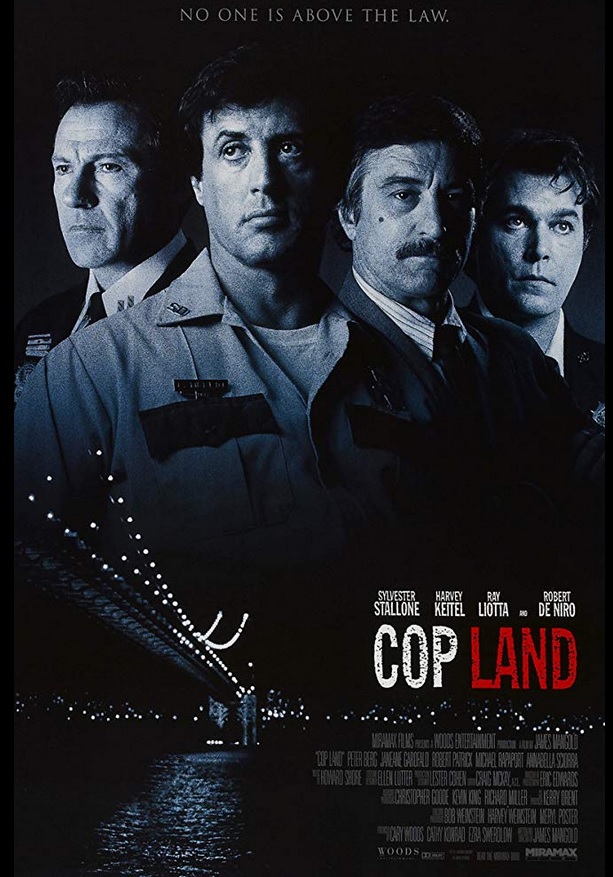
Written and directed by James Mangold (he made his writing and directing debut with the excellent 1995 grunge-era drama, Heavy, directed 2013’s The Wolverine, and received an Oscar nod for Best Adapted Screenplay for the 2017 Marvel Universe entry, Logan), Cop Land is an “urban western” that tells the story of a small town sheriff, Freddy Helflin (Stallone), who fights corruption in the town of Garrison, New Jersey, at the hands of a gang of corrupt New York City cops that live in the town led by Ray Donian (Harvey Keitel) and Gary Figgs (Ray Liotta). To battle the corruption, Internal Affairs Office Moe Tidlen (Robert De Niro) presses Helflin into service.

While the film cleared just under $65 million at the box office on a $15 million budget, the film was considered a flop that Stallone felt hurt his career as an action star. While the film was an attempt to show his acting skills and initiate a career change into dramatic acting, he ended up being critically derided by the fans of his action films—just as they had rejected his attempts at comedy—who felt he failed to equal the chops of the acting dynasties that are Robert De Niro and Harvey Keitel.

Looking back at the fact that Ray Liotta did Goodfellas seven years earlier alongside De Niro, this was obviously meant to be Stallone’s “Goodfellas,” with corrupt cops instead of mobsters. Is Cop Land as good as Goodfellas? Well, while Cop Land wasn’t graced with what seems around-the-clock cable TV replays, Stallone’s Freddy Helfin is the most real person he’s portrayed on film since 1976’s Rocky and 1974’s The Lords of Flatbush.

So if your only exposure to Sylvester Stallone’s oeuvre is his action work and you’ve avoided Cop Land and F.I.S.T. because of the film’s mixed reviews, do make a point of popping in a DVD (or log onto whatever digital platform) and watch both films as double feature to see the true depth and skill of Stallone’s thespian abilities and know that he’s not just a “personality based actor” who rattles off dialog.

Sylvester Stallone is an Oscar caliber actor that, hopefully, as he ages out of his abilities to do action pictures such as The Expendables, he’ll be given an opportunity to shine in more character-driven pieces. It’s all a matter of box office. If Cop Land had been a critical and box office smash analogous to Goodfellas, I believe Stallone would have received a Best Actor nod. Cop Land is a highly underrated film and Stallone’s greatest moment in front of the camera.

Be sure to look for my reviews of Avenging Angelo, Cobra, D-Tox, F.I.S.T, and Paradise Alley.

About the Author: You can read the music and film reviews of R.D Francis on Medium and learn more about his work on Facebook. He also writes for B&S Movies.
F.I.S.T. (1978)

Editor’s Note: This is part of our week-long tribute to the films of Sylvester Stallone. You’ll find links to several more reviews of his films, within. If you don’t see your favorite mentioned, enter the title into the search box to your left; chances are, we reviewed it.

Okay. Let’s get this out of the way: F.I.S.T is not a boxing film and the title is an acronym for a fictional, blue-collar labor union based on the International Brotherhood of Teamsters (stylized as “Teamsters Union”), known as the “Federation of Interstate Truckers.” Stallone’s eventually casting as the Jimmy Hoffa-inspired Johnny Kovak was purely coincidental and not intended to dovetail the film’s marketing into Stallone’s previous, leading man debut of Rocky.

Kovak is a regular blue-collar guy working the loading docks for a trucking company who, fed up with the abusive treatment of his fellow workers, becomes a social activist whose organization of protests and riots transforms into a full-fledged labor union. As the labor union’s membership and influence grows, along with gaining political power, Kovak’s initially honorable intentions are corrupted by organized crime influences. When he tries to break the union free from its mafia ties, he and his family lose their lives.

Written by Joe Eszterhas (Flashdance and Basic Instinct), Stallone, as is his custom for most of the films he acts in, rewrote the script alongside Norman Jewison (Fiddler on the Roof and Rollerball). The film is produced by the younger brother of Roger Corman (Night of the Blood Beast; part of B&S About Movies upcoming reviews of Mill Creek’s Pure Terror 50 Film Box Set) and shot by Laszlo Kovacs (Hells Angels on Wheels, The Savage Seven, Psych-Out, Blood of Dracula’s Castle, and Easy Rider. I can go on and on with Mr. Kovacs’s resume).

Outside of Stallone, the names of Gene Corman, Joe Eszterhas, and Laszlo Kovacs may mean nothing to you. But for this film geek, I see it as one of the oddest quartets in film that you don’t see very often collaborating on a film. And it worked. They made one hell of an entertaining film.

If you’ve seen the Danny DeVito-directed biographical crime drama Hoffa starring Jack Nicholson, then you’re up to speed on what to expect from F.I.S.T with its homage to one of America’s most infamous organized crime figures. And while it all seems a bit The Godfather-familiar, only with trucks and loading docks instead of mobsters and gambling, many will say that analogy stretches the threads of story and characterization.

While F.I.S.T may not be on the shortlist alongside The Godfather, Goodfellas and Scarface—the cream of the gangster film crop—F.I.S.T is certainly better than the MTV-styled mobster tropes Carlito’s Way (1993) and Mobsters (2001)—and is just as good as Hoffa. In the Hoffa-portrayal sweepstakes, Stallone matches Jack Nicholson toe-to-toe and blow-by-blow. Sadly, the film received a lukewarm critical and box office reception. Then, Sly’s follow-up, Paradise Alley, stalled at the box office . . . so he made another Rocky and First Blood and moved into action films and sequel work.

If F.I.S.T and Paradise Alley had achieved critical and box office success on par with Rocky, it’s possible Stallone’s career would have taken a different path—a dramatic path. Perhaps he would have starred as Jimmy Hoffa instead of Nicholson in Hoffa? What might have been.

Be sure to look for my reviews of Avenging Angelo, Cobra, Cop Land, D-Tox, and Paradise Alley.


About the Author: You can read the music and film reviews of R.D Francis on Medium and learn more about his work on Facebook.

Paradise Alley (1978)

Editor’s Note: This is part of our week-long tribute to the films of Sylvester Stallone. You’ll find links to several more reviews of his films, within. If you don’t see your favorite mentioned, enter the title into the search box to your left; chances are, we reviewed it.

Sylvester Stallone has made a lot of movies—59 in fact. Okay, 57—if we forget about the two movies he’d rather forget: The Party at Kitty and Stud’s (1970) and No Place to Hide (1973). (Well, even less if we cross off his recent forays into animation voice work.)

Sorry Sly. This is your week and B&S Movies champions the underground, the obscure and the trashy. We can’t resist taking a peek in your celluloid closet.

In the wake of Rocky’s success, The Party at Kitty and Stud’s—Sly’s feature film debut—was reimaged using his faux-boxing nom de plume, Italian Stallion, for its grindhouse and Drive-In reissue, and eventually, its VHS “backroom” release.

Budgeted at $5,000 and clocking at a measly 71 minutes, it’s a plotless, soft-core sex romp about a “free-spirited woman,” Kitty, and her rough-edged boyfriend, Stud (Stallone) who throws a “sex party” and . . . that’s it for the plot and character development. According to reviews over the years, the film—just as we now look back on Midnight Cowboy and Shampoo and wonder what all the fuss was about—was rated with an “X” upon release, but would pass as a PG-13 by today’s social standards. You’ve seen worse in a Lifetime channel damsel-in-distress flick.

Stallone, however, fared better with this second film, No Place to Hide. As with Kitty, his post-Rocky stardom triggered a re-release under the title, Rebel. While some critics tagged the film as a soft-core flick, it’s actually one of the many lackluster, counterculture-hippy thrillers concerned with politically-driven students of the ‘60s engaged in propaganda and violence to promote their political beliefs.

Okay. That takes care of the pre-Rocky backstory on Sly.

When you’re dealing with an iconic actor’s career chronicled by a 40-plus year IMBb page, everyone has their favorite films by that actor. When it comes to Stallone, some will tip their hat to Tango & Cash (which tried—and failed—to repeat that Lethal Weapon buddy-cop vibe), others will cite the late Rutger Hauer’s American film debut as a terrorist alongside Stallone in Nighthawks. Others believe, rightfully so, that Sly’s Rocky series of films are the best boxing films ever made. Sam, the proprietor of B&S About Movies, swears by the Sammy Hagar themed-song-fronted arm wrestling flick, Over the Top. We both love The Expendables series. And while I never cared much for either, my cousin loves Demolition Man and Judge Dredd.

As for me: I always come back to Sly’s second post-Rocky film—after F.I.S.T (his “Godfather” if you will)—Paradise Alley, which he wrote; the film also served as his directing debut.

Where Rocky was about a down-and-out pug trying to escape a bleak, early ‘70s Philadelphia, Paradise Alley is a 1940s period piece about the three Carboni brothers: Cosmo (Stallone), a fast-on-his-feet street hustler, and Lenny (the always reliable Armand Assante in his leading man role; he starred in Prophecy, next), a bitter war hero. Out of greed and desperation, they bully their less-street wise, dumb-hulk of a younger brother, Victor (Lee Canalito, who vanished from acting after a bit role in a Magnum P.I episode), into becoming a professional wrestler—dubbed Kid Salami. Those plans to use wrestling as a way out of Hell’s Kitchen begin to unravel as Cosmo and Victor enter into a battle of wills over guilt vs. greed in their manipulating—and possibly permanently injuring—Victor.

Ironically, Stallone didn’t write Paradise Alley in the wake of Rocky—and traded wrestling for boxing as many critically derided. He wrote Paradise Alley, first, as a novel, and then adapted it into a screenplay. During the course of auditioning for Rocky’s producer, Irwin Winkler (some say the audition was for a role in Winkler’s Breakout starring Charles Bronson), Stallone pitched Paradise Alley, but was unable to sell the work due to legal issues with another producer. So with Winkler and his partner, Robert Chartoff, willing to read his work, Stallone banged out Rocky. The rest is history.

Paradise Alley is one of the few instances where you’re better off finding and watching the TV version of the film, which is slightly closer to Stallone’s original vision. He stated his initial theatrical cut of the film was almost two and a half-hours long; Universal Studios forced almost 50 scenes to be cut; 10 of which Stallone added back for the extended television version that offers greater atmosphere and character development.

If you read critical and fan reviews for Paradise Alley, it’s derided as a “self-indulgent mess” and that Stallone was in way over his head and made his move to the director’s chair too soon. I’ve watched the film several times over the years (both the theatrical/VHS and the TV version) and I fail to see any quality issues with the film. Perhaps my youthful nostalgia for Paradise Alley blinds me to Stallone’s critically-implied ineptitude as a first time director. Regardless, it’s obvious Stallone was paying attention on the sets of his pre-Rocky films The Lords of Flatbush (1974), Capone, Death Race 2000 (as Joe “Machine Gun” Viterbo!) and Farewell, My Lovely (all 1975), and picked up tips on the set of F.I.S.T from director Norman Jewish (Rollerball).

Also adding to my love of Paradise Alley was that all of my wrestling heroes from my weekend, late night ‘70s wrestling binges on WIIC-TV Pittsburgh and WOR-TV out of New York appeared in the film: Terry Funk, Ted DiBiase, Dory Funk, Jr. and Dick Murdoch. Yes! Badass Dick Murdoch and Dusty Rhodes “The American Dream” as The Texas Outlaws, and Murdoch’s tag team years with The Junkyard Dog. Awesome times! The only thing missing from Paradise Alley was Adrian Adonis and The Tonga Kid.

Yeah, Paradise Alley is my paradise in the Stallone canons.

Be sure to look for my reviews of Avenging Angelo, Cobra, Cop Land, D-Tox, F.I.S.T.

About the Author: You can read the music and film reviews of R.D Francis on Medium and learn more about his work on Facebook.

Cobra (1986)

Editor’s Note: This is part of our week-long tribute to the films of Sylvester Stallone. You’ll find links to several more reviews of his films, within. If you don’t see your favorite mentioned, enter the title into the search box to your left; chances are, we reviewed it.

What do Cindy Crawford, Eddie Murphy, and Sylvester Stallone have in common? This movie, by way of a 1978 novel, Fair Game, initially published in 1974 as A Running Duck, written by Detroit born-and-bred writer, Paula Gosling. As result of Stallone’s screenplay rewrite, he wanted a Cobra novel published in 1986 that listed him as a co-author with Gosling. She passed on the offer.

The truth is that the pre-production history on Cobra—and how Gosling’s best seller became part of Stallone’s celluloid catalog—is more interesting than the actual movie itself.

The story goes: When he signed on the dotted line for Beverly Hills Cop, Stallone—as he does in most cases with the films he acts in—rewrote the film, which was initially conceived as a fish-out-of-water action comedy about a cop from the hard streets of East Lost Angeles who transfers to the pampered streets of the Beverly Hills Division.

Before Eddie Murphy and Stallone were attached, Mickey Rourke (The Wrestler, Iron Man 2) signed on for the Alex Foley role, after plans with Al Pacino, Richard Pryor, and James Caan failed. Then, when production problems held up the film, Rourke dropped out due to another film commitment. So Stallone came onboard and renamed the lead character as Axel Cobretti—so he could be nicknamed “Cobra”—and reimaged the film as a straight action piece. And . . . somewhere amid all of this Beverly Hills Cop pre-production hocus pocus, Gosling’s book was brought into the mix to serve as the “source material” for another Stallone Cobra rewrite—with most of the rejected action set-pieces deemed “too violent” and “too expensive to shoot,” such as Cobra playing chicken in his souped-up Mercury with a speeding train, being reused.

So what was the end result?

Beverly Hills Cop became one of the best reviewed and biggest box office successes of 1984; Cobra, in spite of its box office success, was one of worst reviewed films of 1986. Today, while considered a “cult classic,” Cobra is the least remembered film in the Stallone canons. In addition to its nod for Worst Screenplay, Stallone’s “Beverly Hills Cop” was nominated for a total of six Razzie Awards, including Worst Picture, Worst Actor for Sylvester Stallone, along with Worst Actress for Brigitte Nielsen, and Worst Supporting Actor and Worst New Star for (the very cool!) Brian Thompson’s menacing leader of “The New Order”: The Night Slasher.

I remember iconic film reviewers Gene Siskel and Roger Ebert, during an episode of their syndicated At the Movies, really tearing into Cobra. They absolutely hated it. Ebert’s biggest issue was that Stallone’s idea of “character development” was his character picking up a slice of three-day old pizza from a messy kitchen crawling with bugs and cutting the slice with a pair of scissors.

“Okay, but what does this all have to do with model-turned-skin cream magnate Cindy Crawford?” you ask.

Oh, yeah, Cindy. I forgot.

So screenwriter Charlie Fletcher, who scribed a European reimaging of the 1974 Burt Reynolds football comedy-drama, The Longest Yard, as Mean Machine (2001), completed a more faithful-to-the-source-material adaptation of Gosling’s book, with the film, in one of the very rare book-to-screen transition, retained the book’s title.

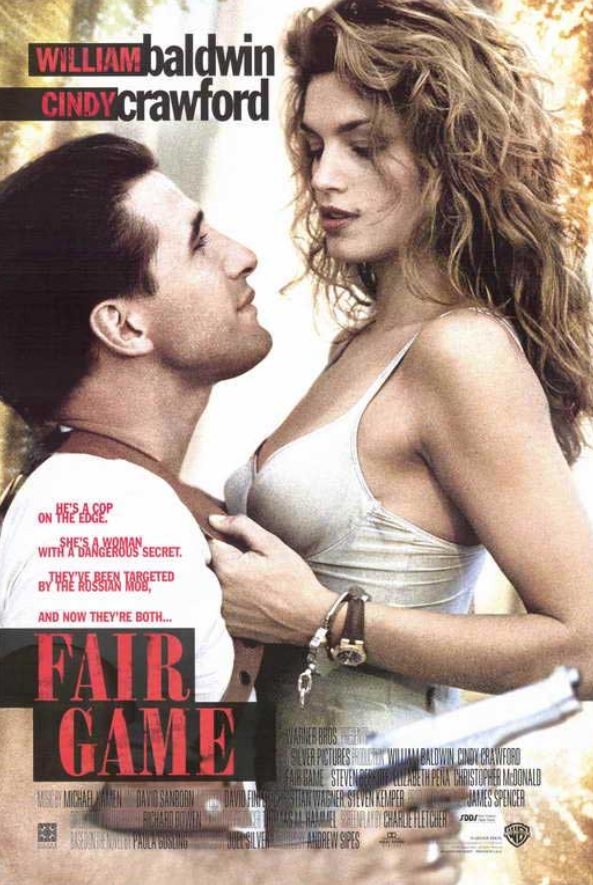
The eventual 1995 film, unlike Cobra, was a box office bomb with a pitiful $12 million gross against a $50 million budget. It was the beginning—and end—of Cindy Crawford’s career who, if you read the press on the film, didn’t want the role in the first place. And it shows. You think Cobra is bad? Be grateful that Cobra at least had a cool car to hold our interest. And to think Gina Davis, Julianne Moore and Brooke Shields were in the running for the lead. I don’t think even Gina Davis, with her Thelma and Louise wiles, could save it.

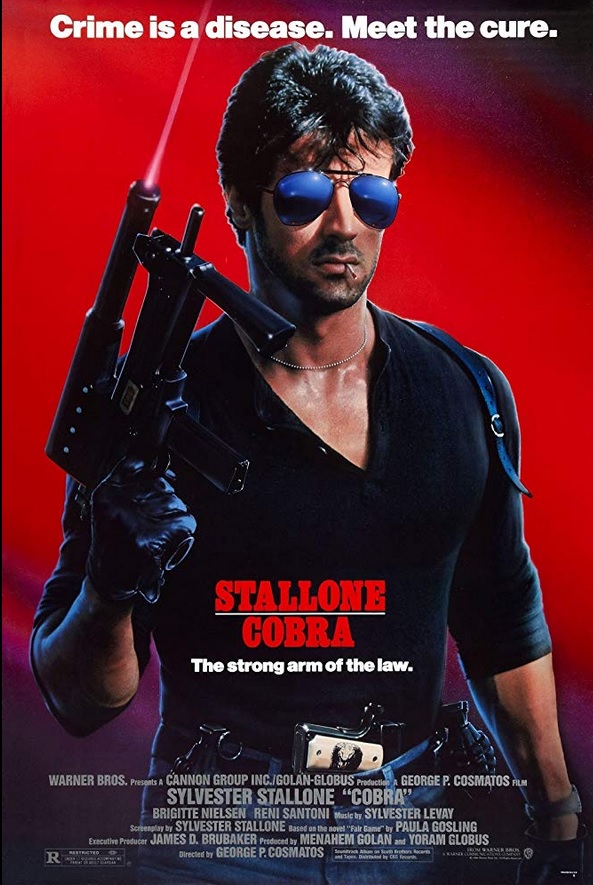
Can you imagine a novel producing two movies as diverse: one starring Sly Stallone, while the other stars Cindy Crawford? Wait, actually Cindy is the “Brigitte Nielson” damsel-on-the-run and William Baldwin is the “Cobra” who battles the KGB operatives. And William Baldwin isn’t perpetually adorned in aviator shades expounding cool lines through tooth-picked clenched lips like, “You’re the disease, I’m the cure” and “This is where the law stops, and I start,” either.

The difference between the two films—outside of the amped-up ultraviolence in Stallone’s vision—is his substituting the damsel-in-distress divorce attorney mixed up in KGB-Cuban political intrigue of the Fair Game novel with a runway model on the run from a white supremacist group. (I guess Sly thought his then real-life wife, Brigitte Neilson, wouldn’t pass as divorce attorney?) Oh, and William Baldwin doesn’t drive a bad ass, 1950 Mercury Monterey Coupe with a blower-outfitted Chevy 350 that did zero to sixty in four seconds.

“Okay, so that takes care of Beverly Hills Cop and Fair Game. What’s Cobra about?”

Stallone is Marion Cobretti (I know, from Axel to Marion? It’s a John Wayne nod that everyone missed), a member of “The Zombie Squad,” a rules-don’t-apply-to-us elite division of the LAPD that handles the toughest of cases and criminals, who goes all “Dirty Harry” with a shoot-first-ask-questions later Charles Bronson approach to law enforcement. After foiling a bloody grocery store hostage standoff, he uncovers the beginnings of a plan by a Darwinist-practicing, white supremacist group, “The New World,” that sets out to kill off the weak, leaving the strong to survive and rule a society. And in there, somewhere—most likely amid the reported 40 minutes of cut footage—is a deeper message about our disintegrating society weakened by the media and our rising fascination with violence. According to legend, there is a 130 minute cut of Cobra that initially pulled an X-rating for graphic violence—featuring gory throat slashings, severed hands, beheadings, graphic axe swings, and meat hook hangings.

All these years later, with my expanded knowledge of the Italian Poliziotteschi and Giallo films of the ‘70s, I believe Stallone was going for a hybrid-homage of the two genres that would have likely played well to Euro-audiences. Or at the very least: a ‘70s Bronson-styled Death Wish protagonist clashing with a John Carpenter-inspired ‘80s slasher (see Chuck Norris’s Silent Rage). If that was, in fact, Stallone’s original vision, I’d pay to see that movie. Hopefully, one day Stallone would be encouraged—provided that excised footage still exists—to restore the film to its 130 minute, X-rated format which, in today’s post-Saw universe world, would pull an R.

Sadly, in the end, making movies is about making money—not creating “art” or “genre homages”—Siskel and Ebert be damned. And Cobra did make money. It debuted at #1 at the American box office and several other countries to clear $160 million against its $25 million dollar budget.

And besides: William Baldwin can’t brag about a Commodore 64 video game based on his character from Fair Game.


Be sure to look for my reviews of Avenging Angelo, Cop Land, D-Tox, F.I.S.T., and Paradise Alley.

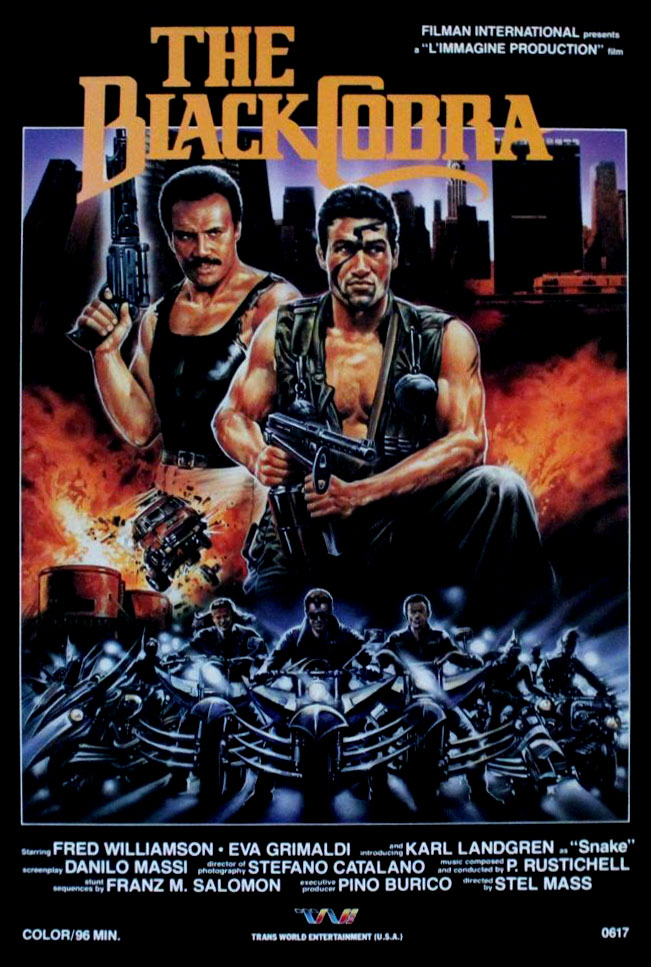
We also took another look at Cobra as result of our “Cannon Month” of film reviews. You can read more about Cannon’s catalog with our five-part interview with Austin Trunick about his film guide on the studio. In fact: Did you ever want that sequel to Cobra that you never got? Well, how’s about a blatant Euro-made ripoff of Cobra? You got one with Black Cobrawhich we rolled out as part of our “April Moviethon II” (2023).

It’s different . . . but the same . . . (and we know we’ve seen those apoc-lookin’ trikes on another Italian swill-fest, but can’t place it)

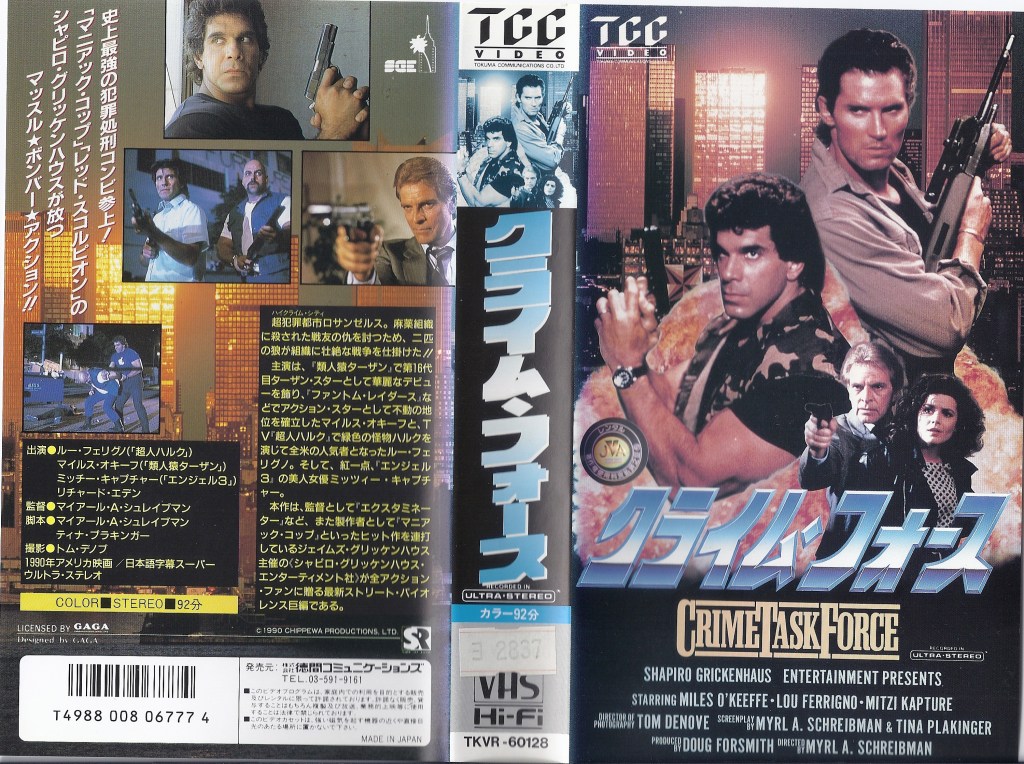
. . . just like this ripoff of Stallone’s Tango and Cash, aka Crime Task Force, aka Liberty and Bash . . .

. . . but not like Clash of the Ninjas from 1986 that Godfrey Ho wished Sly starred, but did not . . . just like Sly did not in . . .

. . . this Godfrey Ho clip joint — Cobra Against Ninja — from 1987 that hoped you’d fall for a faux-Sly battling Ninjas. But you do get more Richard Harrison in the Ho-ripoffery.

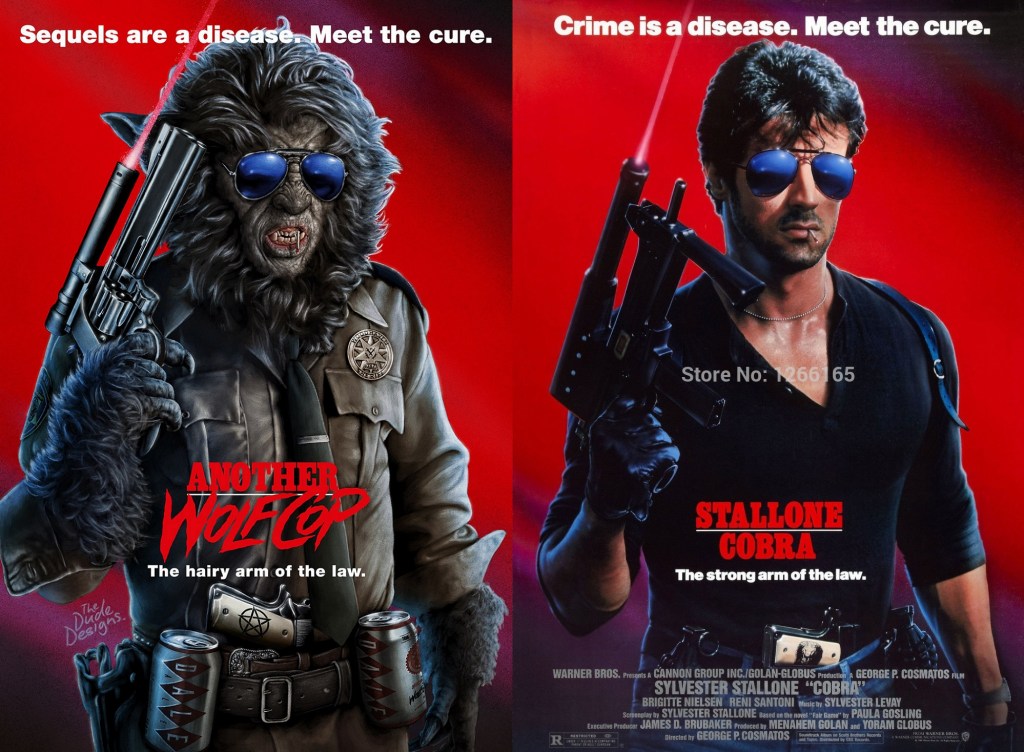
Oh, yes! Our Cobra obsession, continues: 2017’s Another Wolfcop.

Yo!, we dig our Stallone flicks ’round ‘ere.

About the Author: You can read the music and film reviews of R.D Francis on Medium and learn more about his work on Facebook. He also writes for B&S Movies.
Truckin’ Buddy McCoy (1982)

All actors have to start somewhere and that “somewhere,” for some actors, is a hicksploitation flick. So, before he gained mainstream recognition as Dr. Peter White on the early ‘80s TV series St. Elsewhere, and the late ‘80s series Tour of Duty as Sgt. Zeke Anderson, Terrance Knox made his leading man debut as the country truckin’ good ‘ol boy, Buddy McCoy.

Buddy is an unemployed man-child who loves to party hard and raise ‘emself sum good ‘ol boy hell, much to the chagrin of his loyal model-photographer girlfriend. He suddenly finds his preferred, irresponsible lifestyle financed by a streak of good luck: he enters a trucker’s magazine contest and wins a shiny new, 1981 Mack Super-Liner and $50,000 in cash. So what’s the right thing to do? Do you marry your longtime girlfriend and build a stable life? Or do you go all “Easy Rider” in a big rig?

Yep. Buddy chooses a Two Lane Blacktop existence crossed with some Smokey and the Bandit shenanigans as he sets off on a cross-country, L.A to Oklahoma road trip. As is the case with these hick romps: Buddy meets the usual array of country-eclectic bumpkins; however, there’s no corrupt sheriffs, no car chases n’ crashes, no bar fights, no falsely-accused-of-a-crime inciting incidents to start the manhunt, and no Sally “Frog” Field to bring on the trouble. So, if you’re looking for some White Line Fever or Rolling Thunder* action, this isn’t the film to watch. It’s just Buddy having good times on the road with some harmless PG-rated sexcapades.

If this all sounds familiar, then it’ll be no shock to you that during the course of the film, when Buddy picks up a rider by the name of “B.J,” Buddy makes a joke about where his “bear” is. Yep, it’s an in-joke to the 1978 to 1981 trucker-themed TV series, BJ and the Bear, which is the same “road” our Buddy McCoy travels.

Truckin’ Buddy McCoy was marketed overseas as Convoy 3—as a sequel to Kris Kristofferson’s 1978 trucker flick, Convoy. Only one problem: Convoy is a straight action film and Truckin’ Buddy McCoy is a pseudo-Smokey and the Bandit comedy romp. Which post-1978 trucksploitation flick was marketed as Convoy 2? Your guess is as good as ours. The B&S Movies research team came up empty.

While Truckin’ Buddy McCoy served as the only directing credit for Richard Demarco, writer Rick Blumenthal’s work as a producer goes back to an early Sylvester Stallone flick, No Place to Hide (1973, aka Rebel), and into the early ‘90s with the portmanteau Grim Prairie Tales, and the kickboxing flick, Bloodmatch.

The cinematographer behind John Carpenter’s Black Moon Rising, Russian-born Misha Suslov, lensed this hicksploitation classic (yes, they are classics in the analog hearts of the B&S crew!), as well as Smokey and the Judge and the “dark” Christmas romp, Prancer. While we lost our inner Suslov-ness over the years, we were happy to discover Suslov is still keepin’ the eye-in-the-glass with the 2020 country-romance The Girls of Summer.

There’s no trailer available, but you can watch the full movie on You Tube.

* Check out our “The 8 Films of Quentin Tarantino’s Rolling Thunder Films“—a company he named after the film.

About the Author: You can read the music and film reviews of R.D Francis on Medium and learn more about his work on Facebook.

Baker County, U.S.A (1982)

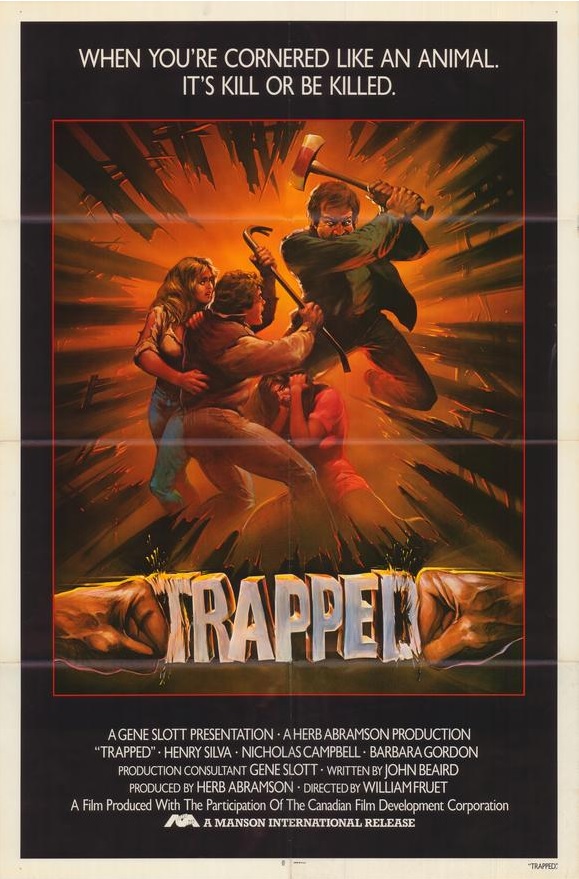
Here’s another one of those hicksploitation romps, like Ruckus and Kiss My Grits, that can be whatever a distributor wants it to be: a Smokey and the Bandit good ‘ol boy potboiler (Baker County, U.S.A), a Deliverance-styled suspense thriller (Trapped), or a straight up slasher flick (The Killer Instinct). Call it whatever you want, the film, shot for $2 million by William Fruet, the “Roger Corman of Canada,” is basically the canuxploitation-version of the later-shot Hunter’s Blood (1986), itself a retread of John Boorman’s 1972 hicksploitation trendsetter, Deliverance. So this movie is a two-in-one: a canux and hicks exploitation flick!

Watch the trailer.

The real jewel of this entertaining and well-shot, yet familiar rural-revenge retread is the always awesome-in-everything-he-does Henry Silva (1983’s Escape from the Bronx) who goes off the rails as Henry Chatwill, the overseer of a backwood-inbred Tennessee enclave. Henry’s the type of good ‘ol boy who can shimmy-sham in the woods with any woman he wants when he goes trap settin’, but heavens to betsy his young wife cheats on him with a citified county inspector. (Beware of that perpetually-boiling hot tar vat, you dumb city varmint!)

So . . . when the obligatory school of out-of-water college fishies searching for a backwoods cave for a school research project—led by Nicholas Campbell (2017’s Neverknock, HBO’s The Hitchhiker), along with Joy Thompson (1980’s Prom Night) and Gina Dick (1981’s My Bloody Valentine) in tow—stumbles into Silva torturing his wife’s lover via a good ‘ol fashion tar and featherin’, Silva goes into Jason Vorhees-mode to distribute some redneck justice to those snoopin’ city kids. And don’t ya’ll be botherin’ the town sheriff for help—this here be Blood Salvage country and the sheriff, well he be “kinfolk” who covers up the killin’.

If all of this backwoods shenanigans sounds the same (but offers a unique hick-impaled-by-TV antenna scene and an unstoppable Silva doused in hot tar) that’s because it’s penned by ‘80s slasher-scribe John Beaird, who penned the entertaining My Bloody Valentine and Happy Birthday to Me. The director’s chair is filled by the man who also brought you the UK Section 3 backwoods-rape video nasty Death Weekend (1976, aka House by the Lake), the Alien-inspired AIDS cautionary tale, Blue Monkey (1987), and one my personal, oft-run HBO favorites: Search and Destroy (1979) starring the one-two punch of Perry King and Don Stroud.

B&S Movies will be reviewing more fully, UK Section 3 Video Nasties in the upcoming weeks. In the meantime, be sure to catch up on B&S Movies’ exploration of the films on the UK’s Video Nasties Section 1 and Section 2 rosters. You can also visit B&S Movies to catch up on more North of the Border Horror, aka canuxploitation.

Here’s the link to our listing-reviews of the UK Section 3 flicks.

About the Author: You can read the music and film reviews of R.D Francis on Medium and learn more about his work on Facebook.