If any movie has earned being on the video nasty list — this one is on the Section 3 group of films, which couldn’t be prosecuted for obscenity but were liable to be seized and confiscated under a less obscene charge — it’s this movie.
This is the scummiest movie I’ve ever seen outside of films like Waterpower and Bloodsucking Freaks. Every single character is a horrible person, even the protagonists. It feels like you could take a Silkwood shower after this and it wouldn’t be enough. You’d still feel dirty.
Former paratrooper and powerlifter — who would later become a born-again Christian — Nicholas Worth plays Kirk Smith, who is also a veteran and bodybuilder. He has talent — well, when it comes to the lighting and composition of his pornographic photos, which have the ability to offend everyone, even scumbags like, well, everyone else in this movie. When he’s not grunting and lifting weights, he’s calling the talk show of Dr. Lindsay Gale (Flo Lawrence, who is also in Schizoid, Over the Top and The Lords of Salem). When he gets on the air, he speaks in fake accents and complains that he has migraines and blackouts.
Dr. Gale on the air. While there is no radio station thanked in the end credits, it’s obvious this isn’t a set build and the film was shot in an unused production studio inside a real Los Angeles radio station. Bonus.
All of that would be fine if he wasn’t stalking and killing women right and left, not unlike the Hillside Stranglers of real life. That makes sense, as this movie was shot under the working title of The Hollywood Strangler. None of this was shot with permits, either.
It gets worse. He not only kills women, he has, well, intimate relations with their dead bodies before conducting religious ceremonies, trying to talk with his dead father and crying
Two detectives — Hatcher (Ben Frank, Death Wish 2) and McCabe (James Westmoreland, who was in Stacey and was married to Kim Darby; also in The Undertaker and His Pals) — are on the case, but it feels like they’re just as horrible as anyone else in this movie, overworked and on the edge.
There’s also a porn dealer named Sam Gluckman, played by Chuck Mitchell, who would one day be Porky himself from Porky’s, a role that is packed with more class than this movie. The sheer amount of salaciousness and scum in his scenes nearly fills the scene with bile.
Dr. Gale and McCabe quickly go from love to hate. Neither actor liked one another much, so Lawrence — who played Gale — ate a bunch of onions and Westmoreland — who was McCabe — didn’t shave on the day that their tender and romantic scene was shot.
Of course, it ends with Smith attacking Dr. Gale and McCabe saving her, shooting the strangler many, many times before he falls into a swimming pool, upon which the hero — such as this movie is — says, “Adios, creep!”
Director Robert Hammer is a one and done wonder. Sure, he made documentaries on Crosby, Stills, Nash & Young and The Steve Miller Band, but that’s it. Otherwise, he became a CFO for several companies.
Keep an eye out for April 1978 Playboy Playmate of the Month Pamela Jean Bryant as Sue Ellen. She’s also in all manner of late 70’s and early 80’s films that probably only I care about like H.O.T.S. and Lunch Wagon. Dale Kalberg, who was in scumtastic flicks like Mistress of the Apes and SexWorld, is another victim. And Susanne Severeid, who was a former model, plays yet another prostitute who ends up in Kirk Smith’s list of crimes. Interestingly enough, her husband was a WWII Dutch resistance fighter who was hired by the Simon Weisenthal Center to hunt Dr. Josef Mengele in real life.
Gail Jensen is another victim in this movie. She also performed the song “Sweater Girl” from the movie of the same name, as well as two songs on the Maniac Cop soundtrack. It gets crazier — she wrote “The Unknown Stuntman,” the theme from Lee Majors’ TV series The Fall Guy, along with being married to David Carradine, who she starred alingside in Future Zone.
If you don’t have the Pure Terror box set, you can get this from Vinegar Syndrome.
Despite my warnings of the sleaze quotient of this movie, you should know that I loved early single moment of it. I’m ashamed, but isn’t that part of the fun of lurid movies like this? If you’re of a similar mind — let’s say you’re a maniac — you will probably feel the same way.
* This review originally ran on November 27 as part of our Mill Creek Pure Terror box set of reviews. If you missed any of those 50 films, you can catch up with our Pure Terror Recap.
On the distant planet of Ganton 9, the annual Karn Evil—a societal rite of passage—is a young person’s final opportunity to experience the unbridled freedom of the decadent world before subjugating themselves to the order of the dictatorial-technocratic ruling class. When attendees of the Karn Evil right-of-passage ceremonies fail to return from their rebirthing experience, fear sweeps across the lands of Ganton as its citizens rise up in revolution to topple what is discovered to be an artificial intelligence that’s drained humanity of its will.
In other words: look down at the Smartphone in your hands, kiddies. Welcome to Karn Evil 9.
Michael Napoliello and Maria Frisk for Radar Pictures, the producers behind Vin Diesel’s Riddick franchise and Sony’s Jumanji franchise reboot, are currently working with New York Times best-selling author Daniel H. Wilson on a screenplay adaptation of the 30-minute futuristic rock suite featured on British prog-rock legends Emerson, Lake & Palmer’s 1973 album Brain Salad Surgery. Wilson, also the author of The Andromeda Evolution, most recently adapted his novel Robopocalypse for a co-production by Michael Bay and Dreamworks.
While the world came to know the artwork of Swiss surrealist H.R Giger through his 1977 book Necronomicon, which showcased his futuristic images of man meshed with machines, and became the inspiration behind Ridley’s Scott’s 1979 film Alien (check out our “Alien Ripoffs Week“), it was Emerson, Lake & Palmer who first brought Giger’s work to a worldwide audience when they commissioned the artist to design the cover for Brain Salad Surgery.
You’ve come to know Keith Emerson through his Italian giallo soundtrack work for Dario Argento’s Inferno (1980), Lucio Fulci’s Murder Rock (1984), and Michele Soavi’s The Church (1989). In addition to Sylvester Stallone’s Nighthawks (1981), Emerson also composed the soundtrack for Toho Studios’ 28th Godzilla film, Godzilla: Final Wars (2004). Here’s to hoping the production design of Karn Evil 9 will be infused with H.R Giger’s visions and the soundtrack will replicate Emerson’s use of Hammonds, pipe organs, harpsichords, and Clavinets from the album.
One thing’s for sure: Karn Evil 9 isn’t going to be no Alice’s Restaurant, a Harper Valley PTA, or an Ode to Billy Joe—but will probably freak us out with some crazy, surrealistic nightmare akin to the Beatles’ Yellow Submarine. Heaven only knows how long it’ll take before Rush sells the film rights to their 1976 epic, 2112.
In a twist of technology: Emerson, Lake and Palmer—via new technologies—will return to the road in 2025! The tour announcement at the band’s official Facebook page will get you where you need to be.
You can listen to ELP’s four-movement “Karn Evil 9” suite in its entirety on You Tube while you read the full lyrics at Genius.com and fan through the pages of Giger’s Necronomicon at Google Images. And be sure to visit our “Exploring: Movies Based on Songs” featurette, as well as our three-part “Rock n’ Roll Week” tributes. They’re all whoppers—with links o’ plenty—so grab a cup ‘o joe and join us, won’t you?
* Mock movie one-sheet by R.D Francis based on Giger’s Brain Salad Surgery. Typefaces courtesy of Picfont.com.
About the Author: You can read the music and film criticisms of R.D Francis on Medium and learn more about his work on Facebook.
Author’s Note: Due to the controversial nature of this film, please note this is a film review that addresses the creative art of filmmaking only, most importantly, what constitutes a “bad film,” why actors pursue “passion projects” (aka “vanity projects”), and the struggles of unknown actors wanting to a make a mark in Hollywood; it also analogizes similarly-themed films, so as to reach an understanding regarding the creative development of the subject-film and its creator. This review is not a political or racial dissertation intended to incense any reader regarding social or free speech/opinion issues and was written as part of an affectionate “Radio Week” exploration in tribute of movies set inside radio stations.
Thank you for your time and understanding.
Once again, the stars align. It’s a two-in-one! A box office failure and a movie set inside a radio station. And it fits perfectly into our review schedule of rolling out a week of box office failures* and rolling out a week of reviews regarding movies set inside radio stations (“Radio Week” runs March 15 to 21). Oh, the joy. But I must admit that if not for the radio broadcasting angle, I wouldn’t have watched this one at all.
And maybe you shouldn’t either.
Welcome to the most polarizing film of 2019.
This debut film from Jeremy Saville—which has a lot more going on than it just being a radio station-set comedy—has no middle ground. It’s either loved or it’s hated. Over on Amazon Prime it’s pulling a three-out-of-five star review based on 142 users—that either rates it with one star, or ten stars. And over on the IMDb (where users are purposely sabotaging the page with bogus production “trivia” and plot keywords): it earns one star, or ten. How’s that for polarizing? The popular You Tube stop for film buffs, WatchMojo, ranked Loqueesha as the #1 Worst Movie of 2019, #5 on the Worst Movies of the Last Decade, and #7 of the Worst Comedy Movies of the Last Decade. And it has 0% approval rating on Rotten Tomatoes (based on five users).
And while The Hunt (2019)**, Universal Studios’ overtly liberal-slanted take on Richard Connell’s novel The Most Dangerous Game (where the liberal ruling-class kidnaps republican sympathizers, aka Walmart-shopping deplorables, dumps them into a rural game zone, and hunts them for sport) was pulled from release after poor test screenings and an acidic online response that deemed the film’s political content “offensive,” Jeremy Saville decided to press on and “quietly” released Loqueesha as an Amazon Prime stream. The film had, as most films do, a promotional website at one point: now, when you click the Wikipedia link for, or Google that page, it goes to a 404 prompt and advises you the “account is suspended.”
Now, does that “suspension” mean that Saville simply took down the site˟ , or was it removed by the Internet Service provider? The latter seems probable because, as result of the film’s critical backlash and cries of the film being “racist” and “sexist,” Loqueesha was abruptly pulled from a few festival screenings where it was previously accepted—and the festivals issuing apologies stating that they’re “reviewing their screening-entry processes” and that they’ll “try better.”
Okay, so. This is the part of the review, where, after watching the trailer below, you will probably stop reading . . . after I tell you that this is a movie about (and what so many inaccurately critique): a white man pretending to be a black woman. (By “voice” only; he does not don a “blackface” or “tan” his skin, as in a couple of acceptable movies that we’ll discuss later in this review. And, we’ll check out a movie where a black character dons a “white voice,” as well.)
However, the plot is a bit more complex than that: Loqueesha is about a white man who pretends to be a black female talk radio host. Needless to say, even based on that simplistic IMDb logline (which doesn’t accurately describe the film in whole: it’s poorly written; a logline, like any storyline, must have a beginning, middle, and end . . . and that logline has no “ending”) and watching a two-minute trailer—everyone immediately attacked the film. (It’s important to note: When the film reaches the third act, the heartfelt wisdom of Joe’s on-air alter-ego stops a woman from committing suicide and Renee (Mara Hall), who started out as the “fake” Loqueesha, becomes the “real” on-air Loqueesha. Of course, one will have to actually watch the film to know those plot twists.)
How the page’s logline should read: Faced with a financial crisis, Joe, a divorced, quick-witted bartender, applies for a job at a failing Detroit radio station—as a black female disc jockey.
And the page’s search keywords should be: comedy, controversial, bartender, desperation, Detroit, disc-jockey, divorced, education, financial, money, radio, radio station, unemployment, and vanity-project. Clandestine, smart aleck-classifying the Loqueesha as a “horror” film and entering the terms “bloviating,” “fraud,” “patriarchy,” and “psychosis” as keyword searches isn’t helping anyone or proving one’s disagreements with the film.
Hopefully, you’ll heed the words of actor/comedian Dwayne Perkins (who portrays Mason, the radio engineer), one of several black actors in the film. (In a bit of irony for those “offended” by the choice of the film’s title: Perkins does a bit in his stand up act about “made up ethnic names” as well, shown below.) Perkins clarified the film in a May 2019 interview with the BET Channel: “[Louqeesha] is a comedy about a guy who does the wrong thing for the right reasons, and the movie really gets into all of it more than the trailer does. I think you have to withhold judgment until you see the movie.”
Now that’s a familiar plot device. We’ve seen lots of characters do the wrong thing for the right reasons before, on film. And that character always learns a valuable life lesson in the process and finds love (interracial, in the case of Loqueesha’s romantic sub-plot) and a new-found respect for themselves and others—which is how the third act in every story arc ever written, ends.
In the context of Jeremy Saville’s feature film debut: There’s Dustin Hoffman’s out-of-work actor, Michael Dorsey, who needs money to finance his friend’s play, so he becomes “actress” Dorothy Michaels in Tootsie (1982). C. Thomas Howell’s pampered Mark Watson, with the threat of having to drop out college when his family cuts him off, masquerades as an African-American student to apply for the last student loan available in Soul Man (1986). Robin Williams’s Daniel Hillard transforms into the (stereotypical) British nanny, Mrs. Doubtfire, to circumnavigate his wife’s legalese to keep him from his children in Mrs. Doubtfire (1993). Meanwhile, in Louqeesha, the sole-goal of Saville’s Joe is to make enough money to place his gifted child—and his wife constantly puts him down in front of their son—into a private academy; so Joe’s struggle is no different that the Dorsey, Watson, and Hillard characters.
Then there’s Martin Lawrence’s Big Momma’s House franchise, which rolls out the stereotypical tropes of loud, large black women with his FBI Agent Malcolm Turner going undercover as Hattie Mae Pierce to crack a crime ring. And there’s Martin’s exaggerated “ghetto girl” stereotyping of Shenenheh Jenkins from his eponymous 1992 to 1997 Fox series. And there Tyler Perry rolling out the “vindictive, angry black woman” trope as Medea Simmons in a series of eleven films from 2005 to 2019—which Spike Lee criticized in interviews as “coonery buffoonery” and that if a white director made a movie depicting black people in such a manner he would be ostracized.
And Spike was right: for that director’s name is Jeremy Saville—and Saville’s film doesn’t remotely approach the “Lee Level” of Perry’s films.
But is Lee also guilty of his own accusations with 2000’s Bamboozled? It’s another film that has no middle ground: movie goers that hate the film, hate it (and refer to Lee as a “racist”); the ones who love it, defend Lee as “brilliant.” (Personally, I dig Spike’s films (but not your remake of Oldboy, sorry, Spike) and enjoyed Bamboozled; it’s unfortunate it didn’t connected with a mass audience, as there’s a powerful, eye-opening message and unique voice to be had.)
Lee laid a box office bomb (2.5 million against a 10 million budget) with his tale about a black TV executive bullied by an outrageously stereotyped, white-racist boss who denigrates his black employees in black vernacular and can’t make it through a sentence with dropping the N-word. In frustration, the executive creates a modern-day minstrel show that features an all-black cast in blackface—that his boss approves, and it becomes a hit with audiences.
Those who discovered this film—many years after-the-fact on You Tube and Facebook—are quick to denounce this entry on Ron Ormond’s resume. Unfortunately, they don’t know the man behind the lens: hopefully, our review will enhance one’s perspective.
While Lee defended his over-the-top satirical attack against the “white-controlled” media and its misuse of African American images as a modern-day parody on the minstrel shows of old with Bamboozled, critics called him out for misrepresenting those same African American images himself. Ironically, when Saville repeated Lee’s logic, that Loqueesha was a “modern-day satire on the minstrel shows of old,” critics . . . well, you know what the critics think of Saville at this point.
White Chicks and Bamboozled. Both considered as “racist” and “eye-opening social parody.”
And finally: 2004’s White Chicks was referenced more than any of the above mentioned films when reviewing (read: eviscerating) Loqueesha—and was staunchly defended by critics in the same breath as Loqueesha was scorched-earthed. White Chicks takes a page from the Big Momma’s House playbook with Shawn and Marlon Wayans starring as F.B.I agent-brothers Kevin and Marcus Copeland; they don “undercover” whiteface as two (outrageously stereotyped) spoiled, privileged white girls to solve a crime.
And while we are on the subject of “whiteface”: Back in 2014, comedian and R&B artist Nick Cannon (TV’s America’s Got Talent) donned a self-admitted, purposefully controversial “whiteface” as a “humorous character satire” and “character impression” to promote his then album White People Party Music (then, when called out on the gimmick, Cannon stated that “blackface is racist and whiteface is a mountain snow bank in New York”—which, in itself, is a racist comment).
Now, let’s assume Nick Cannon was the lead actor in a dramedy about a black radio DJ who, as result of his station’s format change from hip-hop to “white” classic rock (based on ratings and ad revenue, not racism) , was laid off. And he can’t find a new gig—without moving across the country. And his ex-wife berates him in front of their son and hounds him about their son’s tuition. He’s desperate. He loves his son. So he does what anyone would do: the wrong thing for the right reasons. So, to get back on the air and stay in town, he dons whiteface and cops a “white voice”—as in Boots Riley’s Sorry to Bother You (2018)—to get back on the air. What would the public response be: Would the film be pulled, like The Hunt, or praised, like Sorry to Bother You? (Watch Danny Glover explain “white voice” to Boots Riley’s co-worker in the clip below.)
Nick Cannon . . . whiteface and white voice. Robert Downey Jr. . . . blackface and blackvoice.Both socially and critically accepted.
And what was the consensus on the portrayal of Staff Sergeant Lincoln Osiris by Robert Downey Jr. in 2008’s Tropic Thunder? It was regarded as a “biting satire” and “subversive humor” and “an unforgettable turn.” The Rotten Tomatoes and Metacritic crowd that hated Loqueesha loved Tropic Thunder. Meanwhile, Entertainment Weekly cited Tropic Thunder on their “25 Great Comedies From the Past 25 Years.” Along with Newsweek magazine, The New York Daily, Premiere magazine, the San Francisco Chronicle, and even author Stephen King, Entertainment Weekly also placed the film on their “Top 10 Films of the Year” lists.
As it turns out, the ensuing social protests and critical backlash against Tropic Thunder’s “social parody” weren’t about the black characterizations of Staff Sergeant Lincoln Osiris by Robert Downey Jr., but about Ben Stiller’s portrayal of his actor/character Tug Speedman’s portrayal of the mentally challenged Simple Jack character.
Sadly, as with Jeremy Saville’s portrayal of the radio host Loqueesha, those shouting the loudest (and didn’t take the time to see Tropic Thunder beyond the trailers or marketing materials) missed the point of Ben Stiller’s and his co-writer, Etan Cohen’s, intentions: they weren’t making fun of handicapped people (nor Saville of black people), but were making fun of the actors who use the material as fodder for acting accolades. (And in an ironic twist: Robert Downey Jr. received a Best Supporting Actor nomination at the 81st Academy Awards.)
Jimmy Fallon and his recently controversial impression of Chris Rock was acceptable in 2000 and applauded; he apologized twenty years later.
So how did we get here? Why did Jeremy Saville make this film?
Loqueesha is, first and foremost, a vanity project, which are projects that are produced, written, and directed by its lead actor (sometimes, they’ll even serve as the cinematographer). At first, a film fan’s mainstream celluloid indexes will load up copies of Dennis Hooper’s The Last Movie (1971), Sly Stallone’s Paradise Alley (1978), Paul McCartney’s Give My Regards to Broadstreet (1984), Prince’s Under the Cherry Moon (1986), Steven Seagal’s On Deadly Ground (1994), Kevin Costner’s The Postman (1997), and the Tom Green disaster, Freddy Got Fingered (2001) (I liked it; Green’s a nutbag and I dig ’em).
But those mainstream films are more “passion projects” than vanity projects—although they reek of vanity’s stench nonetheless.
The true vanity project is a film reserved for the frustrated and unknown actor; some of them can “act,” most of them can’t; some can work well with directors, while most others can’t take direction (six weeks in a Konstantin Stanislavski method-acting class held in the back of a public library’s conference room, while folding baskets of laundry to “find their inner self,” and suddenly, they’re Oscar ready and don’t need “direction”). So those “actors” craft their own calling cards to the industry. Have you ever taken the time to read the credits on Hallmark, Lifetime, or Up movies? All three channels overflow with those actors on the “can’t” list. And they drag in so many family members, well; they could school Will Smith on the art of nepotism. And let’s not mention the rest of those “Oscar Winners” on TubiTv.
Ah, but when it works—usually with the ones on the “can” list, it breaks the actor into the big time: Billy Bob Thornton’s Sling Blade (1996), Jon Faveau’s Swingers (1996), Matt Damon and Ben Affleck with Good Will Hunting (1997), and Zach Braff with Garden State (2004) are the best case examples.
And while Edward Burns did okay for himself after The Brothers McMullen (1995) and Vincent Gallo forged a career after the tour de forces that are Buffalo ’66 (1998) and The Brown Bunny (2003), on the other side of the reel is Monster’s Ball (2001). Written as a modestly-budgeted drama by Will Rokos and Milo Addica as their “Good Will Hunting” to showcase their acting and writing talents, they didn’t end up starring, plans with Robert DeNiro fell through, and Halle Berry’s Oscar for the role that they wrote didn’t rub off on them. And Miss March (2009) didn’t work out for actors Zach Creggar and Trevor Moore. Neither did Hedwig and the Angry Itch (2001) for John Cameron Mitchell, Just One Time (2001) for Lane Janger, and there’s Fay Ann Lee with Falling for Grace (2006). But Brit Marling seems to be doing alright after Another Earth (2011). And while it was eviscerated by critics, we all know how Tommy Wiseau’s The Room (2003) turned out (it’s still playing in theatres worldwide).
And we could go on and on. The list of unknown actors, who’ve made unheard of films that we’ve channel surfed by many times on our TV’s VOD menus or bypassed on the lower-tier cable channels, like Movieplex, rife with obscure fillers, are many. Even TubiTv needs a digital Drain-O to clean the stream of crappy vanity films clogging our screens before we get to the watchable stuff.
And if not for his debut film’s May 2019 You Tube-posted trailer resulting in a social media backlash for the film’s perceived, overt racism, sexism, stereotyping, and cultural appropriation, we may have never heard of comedian and aspiring actor Jeremy Saville’s calling card to the industry. But make no mistake: Saville did not purposely make an “offensive” film to create controversy and be recognized. He wasn’t out to “get” anyone or “appropriate” their culture.
ComedianLouie C.K.—with the full support of Leslie Jones, who later turned a much-publicized cold shoulder to Louie over his 2017 sexual misconduct allegations—receives audience-acceptable laughter for his skit, “This Is How I Talk”/image courtesy of Saturday Night Live You Tube.
I get it, Jeremy. All of those comedy one-nighters off the circuit, endless rounds of acting auditions that accomplish nothing but draining your gas tank and sapping your will to live, and the ouroboros existence of sending out aircheck after aircheck to radio stations wears you down and pisses you off. So, like many actors before you, you decided to take your destiny into your own hands.
Sadly, Jeremy, while your attempt to raise questions regarding various societal tropes was a noble one (just like Spike Lee), it seems, unlike Billy Bob Thornton before you, Loqueesha had a reserve effect: it killed your career. For we live in a world where Internet Warriors roam in digital wolf packs with keyboard-scorching branding irons, ready to burn scarlet letters into another’s social media account: for our society is a society that loves to kick a man when he’s down. And if they have a chance to kick you before you get up, even the better. The digital wolves drip drool as they sharpen their utensils, readying their “bytes” with a smart phone’s screen-gleam in their eye.
In the initial and many non-reviews of the film, I was expecting a cinematic trainwreck; an ineptitude from Jeremy Saville that made Tommy Wiseau’s The Roomreally look like Orson Wells’s Citizen Kane (and not just the “Citizen Kane” of bad movies). Critics tossing around the terms “worst film of the year,” “worst film of the decade,” ” . . . of all time,” “. . . ever made,” and namedropping Ed Wood and his film Plan Nine from Outerspace. Going on and on about Loqueesha‘s “poor cinematography,” “editing,” “audio,” etc. No film discipline was left uncritiqued as “poor” or “bad.”
Really now, Mr. Critic?
Have you ever seen an Al Adamson film (Carnival Magic is your primer)? Have you ever experienced an Eddie Romero (Mad Doctor of Blood Island is your primer) or Willy Milan (W is War is your primer) or Cirio H. Santiago (The Sisterhood is your primer) Philippines-shot film? Did you ever see Dünyayi Kurtaran Adam (1982) or Alfonso Brescia Italian Star Wars oeuvre? Do you know the filmographies of the Polonia brothers (Empire of the Apes), Brett Piper (Arachnia), or Neal Breen (this “scene” says it all)? Have you ever loaded up a Sergio Martino film (our “Ten Sergio Martino Films” overview is your primer)? Or experienced a Crown International Pictures romp (Point of Terror will get you started)? Perhaps a Fred Olen Ray boobs, blood and babes opus (our review of Alienatorwill serve as your introduction Ray’s oeuvre)? Have you ever experienced the societal tropes of a hicksploitation film˟ from the 1970’s?
Trust me, I’ve seen itall—and then some—and I know a “bad film” when I see one. And Loqueesha doesn’t even rise to the level of these “worst of _______” crtiques. Dwayne Perkins was right: Did anyone that attacked the film look past the trailer? (No, because many reviewers admit they never made it past the trailer.) But alas, the world loves Tommy Wiseau, and Hollywood even made a biographical film about his dreams, The Disaster Artist (2017). Meanwhile, Saville is a marked man with a scarlet “R” on his chest.
Film screencap courtesy of The Best Movie/Saville Productions.
While Loqueesha, admittedly, has its share of flaws, for a first-time, self-produced effort, it’s a commendable start. Does some of the non-racial humor fall flat and illicit groans? Yes. However, some of that humor lands and brings on a chuckle. Sure, Loqueesha is no Slingblade by any means, but it’s not The Room either. It’s obvious Saville (as Joe/Loqueesha) is schooled, somewhat, in the film arts—according to the IMDb, he’s been at it at least since 1997—and knows, to a degree, what he’s doing behind and in front of the camera.
As an actor, he doesn’t suck as badly as the Internet reviews on Loqueesha will lead you to believe. There’s no reason why Saville can’t carry bit parts on a U.S comedy series, like The Connors, or pull off an under five role on a drama like Law and Order: SVU. And while the rest of the lead cast—Susan Diol (Joe’s ex-wife), Tiara Parker (as Rachel, the love interest; yes, she’s black), and Dwayne Perkins (Mason, the engineer)—aren’t award winners, they’re not cardboard-stunned driftwood-line readers. Each come across as natural—and are certainly better at the craft than the strained acting we witnessed in Wiseau’s The Room. And an honorable mention goes out to the scene-stealing Mara Hall as Renee, the “fake” Louqeesha (who’s funny; and not a bit racist). A testament to her talents: she worked her way up from short films to co-starring roles on ABC-TV’s hit Scandal and multiple episodes of ABC-TV Grey’s Anatomy, along with starring roles on Bounce TV’s highest-rated series Saints & Sinners and OWN’s Ambitions.
While there’s no official numbers on Loqueesha‘s production cost and P&A against its box office receipts (which entails the purchase of Amazon streams), it’s a sure bet that Jeremy Saville is drowning in red ink with his debut film.
Sure, you’ve seen better. But you’ve also seen worse. I surely have seen way worse.
Meanwhile, the worldwide gross on White Chicks was $113 million against an almost $40 million budget (not its counting P&A), so it wasn’t exactly a “hit,” either. And it, like Loqueesha, got its share of “worst of” suffixes: White Chicks was nominated for five Razzies, including Worst Picture, Worst Actress (for the Wayans brothers in drag), Worst Director (for their brother, Keenan), Worst Screenplay, and Worst Screen Couple (it lost in all categories). At the 2004 Stinkers Bad Movie Awards, White Chicks received five more nominations for Worst Picture, Worst Actor (Keenan Ivory Wayans), Most Painfully Unfunny Comedy, Worst On-Screen Couple (Shawn and Marlon Wayans), and Least “Special” Special Effects (its only win was for Most Painfully Unfunny Comedy). Film critic Richard Roeper placed the film at #1 on his list of the worst films of 2004, calling out its unconvincing (white) prosthetics and racism. In Roger Ebert’s review he said it took an “act of will” to keep him in the theater. (In a bit of irony: White Chicks 2 is currently in development.) (I’ve watched White Chicks on a free HBO weekend and it was alright; I wasn’t “offended” by it. For me: it was no different than watching a raunchy Judd Aptow comedy: it’s not great, but it’s not awful; it’s competently made. I got a couple chuckles, a few groans and “they didn’t just do that?” moments.)
And there’s Boots Riley’s vanity project, Sorry to Bother You, about a young black telemarketer who adopts a “white accent” to succeed at his sales job. His debut film received across-the-board critical praise for its “concept as an absurdist dark comedy.” It even won a Best First Feature award at the Independent Spirit Awards. Critics waxed Riley’s debut as a “fearless dissection of identity politics,” as a “brilliant satire,” and a “story of a man dealing with social injustice.”
Huh? Isn’t that what Jeremy Saville did with Loqueesha?
Jimmy Kimmel dons blackface and black voice. He’s still on the air at ABC-TV. And everyone with problems over Loqueesha are okay with Kimmel. He also skated on his skit where he asked women to touch his crotch, as well as his most recent “bit” regarding LGBTQ spokesperson Caitlyn Jenner, demeaning the transgendered woman’s right-to-choice as a man wearing a wig.
However, when it comes to the everyday, run-of-the mill movie goers like you and I, as with Saville’s first feature, Riley’s Sorry to Bother You also has no middle ground: reviews who hate it, hate it (the words “dumpster fire” and “racist” are used), and others who love it call out “the haters for hatin’”—without giving any reasons as to why criticizing Riley’s work as “racist” is wrong. But Riley didn’t endure (nor does he deserve) the attacks Saville did—for basically making the same movie. Make Saville’s character a telemarketer and Riley’s an out-of-work DJ and, content wise, you basically have the same “absurdist dark comedy that satires identity politics and socioeconomical injustice.” (I watched Riley’s film and found it relevant and not at all racist. It’s not great, but it’s not awful, either. It’s a commendable first feature and I’ll check out his next film.)
So, does Loqueesha deserve to be the blockbuster of the year? No. Does it deserve to be the box office bust of the year? No. Does it deserve at least the same 15% Rotten Tomatoes rating given to White Chicks? Yes. Does it deserve its current 3.5 out of 5.0 Amazon Prime review? Yes. For a first time, self-produced effort, that rating is perfect. Loqueesha certainly doesn’t deserve a 0% Rotten Tomatoes rating and WatchMojo’s “worst of” ranks.
So, instead of forming judgments of Saville’s film from the trailer alone, take a moment to discover that Loqueesha, while utilizing an admittedly wild and controversial way to get its message across (like Spike Lee’s Bamboozled), is a movie cleverly communicating that, above all else, we each must be true to ourselves and each other (again, like Spike Lee’s Bamboozled).
Jeremy Saville’s taken a hell of beating for giving his best. So do ‘em a solid and try to watch his debut movie, won’t you? After its “quiet” Amazon Prime roll-out, Loqueesha recently debuted in the beginning of 2020—for free, with limited commercial interruptions—on TubiTV, courtesy of Indie Rights Movies.
On the air at Detroit’s WCRW 92.1 FM (Screencap courtesy of The Best Movie/Saville Productions).
Ah! Finally! The radio technical stuff! After all: this is a “radio week”film review: Unlike most low-budget films set inside radio stations, the broadcasting jargon—regarding ratings, competing with podcasting and music streaming services, and ad revenue—shared between the father-and-son owner and program director is industry accurate. And while there’s no end credit thanks given, it’s obvious that “WCRW 92.1 Detroit” isn’t some makeshift build: the production rented out the facilities of a real radio station. In addition, Saville knew that, unlike most of the low-budget radio films, radio station frequencies never end in even numbers (always the odds 1, 3, 5, 7, 9) and never use prefix letter other than W or K in the United States. Saville did his research and that attention to detail is appreciated.
— END —
* Join us for our “Box Office Failures” week featuring well-known, big-budgeted studio movies and lesser-known low-budget films. In addition: We also examine Jimmy Saville’s self-made filmmaking brethren with our “Drive-In Friday: First Time Directors & Actors Night” feature. Speaking of “first time”: Our recent reviews for The App by Elisa Fuksas, Allison Powell’s Banging Lanie, Bethany Brooke Anderson’s Burning Kentucky, The Girls of Summer by Tori Titmas, Mindy Bledsoe’s The In-Between, and Joston Theney’s Wanton Want (well, sort of “first”) are more, fine examples of first time writer-director-actor projects.
** As you read this review, The Hunt finally made a theatrical release on March 13, 2020. If you’d like to know more about the creative roots behind the “Human Death Sport” concept of the film, join us in our review of 1965’s The 10th Victim. While we did not review The Hunt, we reviewed its low-budget “mockbuster” variant, American Hunt.
˟˟ Be sure to visit “The Top 70 Good ‘Ol Boys Film List,” which is a roundup of our month-long (September 2019) reviews of hicksploitation films, where we also get into the same societal tropes issues in film—only regarding white “southerners.”
And don’t forget: You can review all of the radio station-based films we reviewed from Sunday, March 15, to Saturday, March 27, with our “Exploring: Radio Stations on Film” featurette.
About the Author: You can read the music and film reviews of R.D Francis on Medium and learn more about his work on Facebook. He also writes for B&S About Movies (links to a truncated teaser-listing of his reviews).
Quentin Tarantino screened this hicksploitation “radio on film” obscurity during a three-night festival (on a “Redneck Night” that featured 1974’s Hot Summer in Barefoot County and 1977’s Polk County Pot Plane) to mark the May 2007 closing of the iconic Alamo Drafthouse Cinema Downtown, Austin, Texas.
I once owned a copy of this redneck radio romp on VHS from a TV (edited) taping, which I think was purchased through the VHS grey market dealer VSOM: Video Search of Miami. Or was it Sinister Cinema? Something Weird Video? It was a while back from one of those greys that advertised in the back pages of either Psychotronic Video or Cult Cinema magazines.
Anyway, I lost my copy of Redneck Miller, along with The Dirty Mind of Young Sally (an X-Rated sex-bore about a radio station secretary who ran a pirate radio station from the back of her pimp’s 18-wheeler) and Dennis Devine’s Scream precursor, Dead Girls (1990; a rock flick; not a radio flick), to a bad case of mold—which happens from time-to-time with low-grade VHS tapes from bargain-imprints. Live and learn.
I had always hoped the Q would release Redneck Miller as part of his Rolling Thunder Pictures imprint, but Miramax shut down the specialty label before we got a restored VHS copy. And since this has never been released on VHS home video, there’s no online VHS rips. Not even a copy of the trailer or any photo stills.
Shot in Charlotte, North Carolina, and making the rounds on the Southeastern U.S Drive-In Circuit via numerous double and triple bills in throughout 1976 and 1977, Redneck Miller stars Al Adamson stock player Geoffrey Land as DJ “Redneck” Miller, a disc jockey on a decrepit, small-town radio station. He finds himself on the wrong side of the local thug-pimp when he beds Pearl, Supermac’s (Lou Walker) squeeze. So while Red is bedding his best friend’s wife, Rachel, Supermac’s gang kidnaps her. And when Red thwarts the kidnapping, they steal Miller’s beloved chopper in retaliation and use it to transport drugs—and set up Red as a drug mule. Between all of the sex and fighting, Red works to clear his name.
Geoffrey Land’s career mostly consists of Al Adamson’s (Brain of Blood, Satan’s Sadists) Drive-In/Grindhouse trash-fests The Female Bunch (1971), Jessi’s Girls (1975; western “Death Wish” with a female), Black Heat (1976), and Doctor Dracula (1978). His best known works are two of Adamson’s most successful films: 1975’s Blazing Stewardesses and the Exorcist knockoff, 1978’s Nurse Sherri.
The bit part, B-Movie career of familiar black actor Lou Walker culminated with roles support roles in Mississippi Burning (1988) with Gene Hackman, My Cousin Vinny with Joe Pesci (1992), and The Firm (1993) alongside Tom Cruise.
Screenwriters Joseph Alvarez and W. Henry Smith knew their backwoods: they also collectively wrote 1974’s aforementioned Hot Summer in Barefoot County and 1975’s Trucker’s Women for producer Will Zens and the General Film Distributors-Preacherman Corporation brain trust. Personally, I’ve never heard of or seen their early ‘70s precursors Preacherman and Preacherman Meets Widderwoman on the VHS shelves—and good luck finding those two obscurities (yeah, it figures Sam heard of it!). The same goes for director John Clayton’s Summerdog (1977) and Duncan’s World—never seen them on VHS or UHF-TV. Another of Will Zens’s hick romps is the musical, The Road to Nashville.
Say what? You need more redneck flicks? Then check out our “Top 70 Good ‘Ol Boys Film List” that round-ups our month-long reviews of downhome, hicksploitation obscurities released from 1972 to 1986. And you can learn more about Quentin Tarantino’s love of film with “Exploring: The 8 Films of Tarantino’s Rolling Thunder Pictures.” And we’re reviewing movies set inside radio stations all this week, which we will round up with another one of our patented “Exploring” featurettes his coming Saturday at 6 PM with even more radio flicks.
About the Author:You can read the music and film reviews of R.D Francis on Medium and B&S Movies, and learn more about his work on Facebook.
Sometimes, those stars on the Hollywood Walk of Fame align.
Courtesy of B&S About Movies’ recent obsession with Christmas movies written and directed by David DeCoteau and Fred Olen Ray—some of which starred Eric Roberts—colliding with our recent flurry of reviewing radio broadcasting-set films—one of which starred Eric Roberts (Power 98)—careening off our recent “Ape Week” homage to the Planet of the Apes franchise, it brings us to this moment: a review of the debut screenplay by Mark Bomback, the producer and screenwriter behind Dawn of the Planet of the Apes and War for the Planet of the Apes.
Like David Mickey Evans before him: every screenwriter has to start somewhere. Before Evans got to Radio Flyer (1990) and The Sandlot (1993), he had to write, yes, the radio-psycho romp, Open House (1987). For Mark Bomback, his start in the business was writing a direct-to-video damsel-in-distress vanity flick produced by American television actress Shanna Reed (CBS-TV’s Major Dad).
Needless to say, one’s first impression of The Night Caller is that it’s a variant of Clint Eastwood’s Play Misty for Me—only with Tracy Nelson (NBC-TV’s Father Dowling Mysteries, the “female” Jerry Seinfeld in the “The Cartoon” episode) in the role played by Jessica Walter. Only Nelson’s Beth Needham isn’t a spurned one night stand who transforms into a flat-out crazy bitch; the character is a bit more twisted and prone to psycho-visions and voices and suffers with an unhealthy co-dependency on her mother, so she’s more like Norman Bates.
However, as I re-watch The Night Caller all these years later, I can’t help but think that Stephen King’s Misery (1990) served as an influence, with James Cann’s famed novelist Paul Sheldon traded out for Shanna Reed’s Dr. Drew-inspired radio psychologist. Once you hear Nelson’s wholesome rants-mixture of horror and dark comedy with the epithets of “baboon butt, “snoopy poopy,” and “bossy the cow,” and her singing goofy, nonsequential songs about “peanuts up your nose,” you’ll understand the connection.
Do not, however, let the fact that this radio-psycho variant went straight-to-video and aired on Showtime leaving you to think The Night Caller is inferior to the bigger-budgeted, theatrically released Psycho, Play Misty for Me, Misery, or Hand that Rocks the Cradle. Tracy Nelson tears this movie up, giving us an amazing performance that equals and exceeds the psycho interpretations of Anthony Perkins, Jessica Walter, Kathy Bates, and Rebecca De Mornay. Nelson single-handedly saves what would have otherwise been just another run-of-the-mill Lifetime-inspired damsel-in-distress romp.
Nelson’s Beth Needham is a childish, socially-repressed and friendless, thirty-something convenience store nightshift clerk who spends the days taking care of her bed-ridden, verbally abusive mother (TV actress Eve Sigall in a bravo performance) who blames Beth for her own sexual abuse at the hands of her late father. Beth finds solace in the late night musings of Dr. Lindsay Roland on the air of San Diego’s KBEX radio—her obsession brimming with lesbian tendencies. (If this was produced as an R-rated theatrical, that sexual dynamic may have been more deeply explored; so here, it’s just insinuated.) So deep is Beth’s obsession—in bed she fawns over Dr. Roland’s picture in the newspaper—she’s prone to seeing visions of the radio shrink as a glowing, white-adorned advice-granting angel.
One night, when Beth musters the courage to call into the show to tell of her plight, Beth takes the good doctor’s encouragement to “make changes” and to “plant the seeds” of friendship, literally.
Before you know it, Beth threatens her boss with a knife, quits her job, and murders her mother—and “pickles” her hands in mason jars. But those angelic visions and advice aren’t enough: it’s time to “plant the seeds.” Beth’s stalking leads her to apply for a job with the answering service used by the radio station—and Beth’s kills the woman who got the job. Then Beth’s knocking off babysitters, answering service coworkers, and radio station employees—with it culminating in her kidnapping Dr. Roland and taking her on a motorhome road trip to their “new shiny, start” so they can live like “Thelma and Louise.”
As far as the problems with the technical accuracy of radio stations in film, “KBEX San Diego” gets a pass.
That’s because The Night Caller isn’t about Shanna Reed’s good doctor: it’s all about Tracy Nelson’s tour-de-force and her psyche. As result, there’s no need for any scenes of Dr. Roland’s day-to-day toiling at the radio station or any broadcasting expositional dialog with station managers, etc. And since there’s no “thank you” in the credits to any particular radio station or technical credits, the “radio studio” is a cost-effective build (set design) with a microphone boom screwed into a table top; slap a set of headphones on Shanna Reed and have her punch a couple buttons on a wired-up Telos phone board—and “shoot it tight” and in the shadows—and POOF, you have a radio studio on a budget.
While The Night Caller was released in 1998 on both VHS and DVD in the overseas-international marketplace, it was never released on DVD in the United States. So be wary of those online DVDs and know your regions, and watch out for those grey market DVD-Rs before you buy. None of the online content delivery services, such as TubiTV or Vudu, are streaming The Night Caller. Amazon Prime had it, but lost their rights to it. So you’ll have to settle for a really clean VHS upload on You Tube.
About the Author: You can read the music and film reviews of R.D Francis on Medium and learn more about his work on Facebook. He also writes for B&S Movies.
“If God didn’t want us to masturbate, he would’ve made our arms shorter.” —Karlin Pickett, KRZY “Power 98” Radio
Chances are—even if you are a diehard fan—you missed this neo-noir erotic thriller from Eric Roberts’s direct-to-video and direct-to-cable twilight years, one of his—to date—prolific 562 film and television roles. Even his most diehard fans wouldn’t be able watch each and every one of the 74 projects he filmed in 2017 alone. But we sure as hell try.
Why?
Because we, the fans of the video fringe, praise Eric Roberts with the same high regard we bestow to David DeCoteau (A Christmas Cruise) and Fred Olen Ray (A Christmas Princess). Yes, we will sit through a Lifetime damsel-in-distress movie—their Stalked by My Doctor franchise, now up to part 3—for our Eric Roberts fix. Yes, we sat through two Hallmark holiday movies—A Husband for Christmas and The Great Halloween Puppy Adventure—that Eric Roberts shot for David DeCoteau. Yes, we streamed Fred Olen Ray’s Boggy Creek: The Series on series on Amazon Prime just to listen to Eric Roberts’s voiceover narration. Yes, we watched David DeCoteau’s A Talking Cat just to hear Eric Roberts be . . . well, a cat.
Eric Roberts—as well as Nicolas Cage and John Cusack (Arsenal)—is either a down-on-his-luck and past-his-prime desperate thespian taking any job that comes his way to pay the bills—or he’s a brilliantly prolific actor who turns celluloid lead into ribbons of gold. For us, Eric Roberts is always the latter and never the former. When a project needs a slimy scumbag that, regardless of the slime, remains charismatic and likeable, Eric Roberts is the man who never disappoints his audience.
Such is the case with Power 98, the lone fictional writing and directing credit of Jaime Hellman, an equally prolific, Emmy Award-winning TV documentarian director (CBS, Oxygen, CNN) who delivers a script that’s not only well-versed in the film noir genre, but in the radio broadcasting industry as well. Courtesy of Hellman’s well-researched script rife with spot-on expositional broadcast terminology, Roberts’s—as well as Jason Gedrick’s and Steven Tobolowsky’s—radio broadcasting professional characters sound like—unlike most TV series or films set inside radio stations (see Zoo Radio as the worst case example)—real radio broadcasting professionals. Also lending to the film’s credibility: it was filmed, after hours, inside a real radio station: KPHX 1480 AM located Phoenix, Arizona (which doubles as L.A in the film). The sharp cinematography is courtesy of commercial director Kent Wakeford, who got his start behind the lens on Martin Scorsese’s Mean Streets (1973) and Alice Doesn’t Live Here Anymore (1974), along with the Blaxploitation classic Black Belt Jones (1973).
Unfortunately, Power 98’s direct-to-video low budget format stymied the more-than-competent Hellman and Wakeford celluloid tag team. If this radio-set neo-noir had been backed with a mid-double digit millions budget that would have lent to expanding its 89-minute cable movie length to a 120-minute theatrical length, Power 98 could have achieved the blockbuster erotic thrills of Adrian Lyne’s Fatal Attraction (1987) and Paul Verhoeven’s Basic Instinct (1992) or, at the very least, the backstabbing betrayal highs of John Dahl’s indie film noir homage, The Last Seduction (1994). Thus, we’re left with a film that stagnates as being too racy to qualify as a Lifetime damsel-in-distress flick and not racy enough to qualify as an Andrew Stevens and Shannon Tweed erotic soft-core fest for the late night Showtime cable crowd.
Yes, Power 98 could have been so much more. But it could have been much less. And that’s why we love Eric Roberts: he balances the scales of cinematic injustice for the low-budget film maker.
Think back to Clint Eastwood’s directorial debut, the definitive radio psycho romp, Play Misty for Me (1971) (which Fatal Attraction later ripped off, only ditching the radio angle), with the disc jockey—and not the fan—as the psycho. Instead of Barbet Schroeder’s Single White Female (1992), think Single White Disc Jockey. Now you’ve descended into the twisted and paranoid, murder and revenge-filled neo-noir that is Power 98.
Eric Roberts is Karlin Pickett, a successful shock jock on the air in Phoenix with lots of fans—female fans in particular. After one his (many) one-night stands goes bad—with his date taking a seven story header—Karlin covers up her death and heads to Los Angeles. Rick Harris (Stephen Tobolowsky; Ned Ryerson in Groundhog Day and Commissioner Hugo Jarry in HBO’s Deadwood), the owner of a dying classical music station in L.A isn’t fond of Karlin’s brand of humor concerned with penises, testicles, and masturbation, but he does “love the numbers,” so women judging male butt contests and strip poker tournaments on the air, it is.
But this is a film noir and Karlin’s “big plans” for his show needs a patsy, so he picks Jon Price (Jason Gedrick; 1986’s Iron Eagle, 1991’s Backdraft), an ambitious producer at the station with dreams of getting his big break. The screws begin to turn when Jon discovers a creepy call from “Eddie,” in which he confessed to a murdering a woman, was faked—so says Karlin; he set it up “for ratings.” That is until two detectives (Larry Drake of Darkman and Dark Night of the Scarecrow and James Pickens Jr. of TV’s Grey’s Anatomy and The X-Files) inform Jon that the caller wasn’t a crank. Then another dead woman shows up—and this time, all evidence points to Jon. And, with that, it’s a cat and mouse game of turning screws, bitchy women, and smoking guns as the cyanide-laced bourbon flows. And guess who “Eddie” turns out to be?
Courtesy of the film’s distribution through Warner Home Video and Curb Records’ distribution relationship with Warner, be sure to stick around for the end credits, which feature the track “Sea of Love” by Lonesome Romeos. Signed to Curb Records, the Los Angeles-based alt-rock/roots-rock power trio also placed two songs, “U.S Male” and “Oh, You Angel,” on the soundtrack for the baseball comedy, Major League (1989). If you’re into Bruce Springsteen, John Cougar Mellencamp, and Tom Petty (Heartbreakers’ drummer Stan Lynch and keyboardist Bentmont Tench backed the Romeos in the studio on their 1989 and 1996 albums), then you’ll dig the Lonesome Romeos—one of the many forgotten bands that drowned in the grunge wave that swept in from the Pacific Northwest and wiped out the Los Angeles music scene.
You can watch pristine uploads of Power 98 for a small fee on Amazon Prime, Vudu, and You Tube. Or you can watch a pretty clean Finnish-subtitled version on You Tube for free. And be sure to check out Eric’s Vanity Fair career retrospective, it’s a great read.
Yeah, we love Eric Roberts. And always will.
If you have a You Tube account — and don’t we all — you can watch the unlisted and non-embed, age-restricted sign-in only trailer, here.
There’s more radio flicks to be had on B&S About Movies with the comedies A Matter of Degrees and FM, and, the slasher flick Open House, and the suspense-thriller Outside Ozona. In fact, this is the first review of our weeklong blowout of movies set inside radio stations. Stay tuned to B&S About Movies on your radio dial!
About the Author: You can read the music and film reviews of R.D Francis on Medium and learn more about his work on Facebook. He also writes for B&S Movies.
It’s the start of award season and ahead of its Friday, December 13th nationwide opening, Bombshell, the Jay Roach-directed film about the Fox News-Roger Ailes scandal, walked away with four nominations: one for Outstanding Cast in a Motion Picture, in addition to three individual nominations for Charlize Theron, Nicole Kidman and Margot Robbie.
Transitioning from comedy into drama, Roach collected multiple awards with his political-trilogy cable-films Recount (2008), Game Change (2012), and All the Way (2016). Meanwhile, on the big screen, his biographical drama, Trumbo (2015), starring Brian Cranston (TV’s Breaking Bad and Malcolm in the Middle), garnered twenty nominations for various awards, including an Academy Award Best Actor nod for Cranston.
But before those hits, before the critical kudos and awards, Jay Roach—an Albuquerque, New Mexico-born economics graduate from Stanford University and a fresh-out-of-film-school grad from the University of Southern California—had to start, somewhere.
And that “somewhere” was a low-budget indie comedy produced for $500,000 by the film’s screenwriter, Jessie Wells. Courtesy of post-production tinkering by Wells, without Roach’s input or knowledge, the film that Roach shot isn’t the film that ended up being released—and he disowned the film. (His only film, Wells disappeared from the industry.)
According to the VHS box, Zoo Radio was intended to be the comedy successor to 1978’s Animal House and 1981’s Porky’sas a motley staff operating an underground radio station, “94.5 FM KLST K-Lost,” fight a hostile takeover by their slick, top-rated cross-town rival, KWIN.
The takeover is initiated by the death of an eccentric broadcast tycoon who wills his Los Angeles radio properties to his two sons: one a frowned upon, bumbling idiot, the other a favored success. Under the terms of their father’s will, rival radio station managers Burt and John Powell must compete with each other for their inheritance. Burt’s KLST and John’s KWIN have six months to build their ratings. Whichever station generates the highest ad revenues at the end of six months, that station gains control of the competing station and receives a $60 million dollar estate.
While the concept of dropping the Cain and Abel-influenced Trask brothers from 1955’s East of Eden into the ratings-competitive field of broadcasting—switching out the raunchy frat-house for a bawdy radio station—is inspired, the resulting film is. . . .
Regardless of actor Ron E. Dickinson’s enthused turn as Otto, he the resident John “Bluto” Belushi of the proceedings, producing a few, genuine chuckles, it doesn’t save Zoo Radio from being the most utterly inaccurate portrayal of a radio station ever committed to film, a film rife with a succession of groan-inducing puns (such as feeding burritos and beer to cat so it farts on cue) and even worse amateur acting. While Howard Stern’s Private Parts (1997) and Kevin Costner’s The Upside of Anger (2005) are the gold standards of radio station portrayals on film, Zoo Radio is. . . .
Who wouldn’t queue for a raunchy radio comedy—especially one where 1978’s FM collides with 1994’s Airheads? Sadly, what we ended up with is a bad film, but a film replete with MTV-era youthful nostalgia courtesy of Zoo Radio appearing on USA Network’s weekend Up All Night programming block alongside our beloved T&A trash classics of H.O.T.S, Lunch Wagon, and Sorority Babes in the Slime Bowl-A-Rama.
Yeah, respected, award-winning directors have to start somewhere . . . just ask Paul Feig, who starred as KLST’s blind, stuttering DJ, Chester Drawers. After Feig made his mark in television as the creator of the realistic high school drama, Freaks and Geeks (1999), he directed a series of his own, raunchy comedies: Bridesmaids (2011), Heat (2013), Spy (2015), and Ghostbusters (2016; Hey, we reviewed Ghostbusters ’84, if you care).
Even multi-platinum selling guitarist Richie Sambora of Bon Jovi had to start, somewhere . . . with his band, Shark Frenzy, which posthumously appears on the film’s (never released) soundtrack. And no, that’s not Wall of Voodoo’s Stan Ridgway reimaging his ‘80s hit “Mexican Radio” as the film’s title cut theme song—it’s a shockingly well-done mimic created by an artist (un) known as Cosmo Jimmy.
Zoo Radio has never been officially issued to DVD, so beware of those grey market DVD-Rs . . . and know your regions, if you must. Used VHS copies run from $30 to $40 in the online marketplace.
Editor’s Note: Thank you to our readers for making this one of our most-visited posts. Bookmark it for your one-stop reference for grunge flicks. We’ve since newly reviewed (and hyperlinked) several of the films referenced within each of the reviews to discover.
Before Nirvana, the Spin Doctors, the Red Hot Chilli Peppers and Pearl Jam, no one knew the meaning of grunge, or even cared where Seattle was: flannel was a fashion no-no. Do you remember the days of post-modern and cutting-edge rock, when everyone wore black and they were always depressed? Remember the days when Gen-X’ers were confused, unable to decide if they were “alternative” or “progressive,” so they stumbled through the X-decade, trying to be both? Well those days may be gone but they live on in spirit with these films encompassing documentaries, comedies, and dramas about the ‘90s alt-rock scene—and mostly issued during the ‘90s decade.
1. 1991: The Year Punk Broke (1991 documentary)
Director David Markey (Desperate Teenage Lovedolls starring Redd Kross of Sprit of ‘76) chronicles the 1991 European festival tour of several U.S alternative rock and punk bands, just prior to the Seattle grunge rock explosion of the early ‘90s. Features music and behind the scenes footage of Thurston Moore and Kim Gordon of Sonic Youth, Kurt Cobain with Nirvana, along with Dinosaur Jr., Babes In Toyland, Gumball, and the Ramones. Sonic Youth’s Thurston Moore and Nirvana’s Dave Grohl musically masqueraded as the Beatles in Backbeat, while J.Mascis of Dinosaur Jr. appears in Allison Anders’s (Border Radio starring John Doe of X and Chris D. of the Divine Horsemen) Gas Food, Lodging. Moore and Gordon first worked on camera in ‘89s Weatherman and there’s more Kurt Cobain and Nirvana to be had in Hype!.
Dog Day Afternoon goes (well, it’s not totally grunge: the sounds of alt-rockers D-Generation double for the faux-rock of the Lone Rangers) rock: only this time, instead of a bank, it’s a radio station as three aspiring alt-metal heads (Brandon Fraser, Steve Buscemi and Adam Sandler) launch a desperate attempt to have their music aired on Los Angeles’ KPPX “Rebel Radio.” Michael McKean of This is Spinal Tap and Light Of Day is the station program director, Joe Mantegna (U.S TV’s Criminal Minds) is (excellent as) radio personality “Ian the Shark,” and Judd Nelson is the record executive. MTV’s Kurt Loder, Motorhead’s Lemmy (Down and Out with the Dolls), and Howard Stern’s Stuttering John Melendez (Stuttering John, the band, placed a song in the film) appear in cameos. White Zombie performs while Anthrax and Primus appear on the soundtrack. Director Michael Lehmann returns with the radio station rom-com, The Truth About Cats and Dogs.
3. All Over Me (1997 drama)
Claude and Ellen are best friends making their way through the ‘90s subculture with replete with drug problems, homophobia, and clubbing. That all changes when one of their friends dies a violent and meaningless death (read: The Gits’ Mia Zapata). Claude has a poster of alt-rockers Helium in her room; the band’s Mary Timony appears as the singer of the fictional band Coochie Pop and performs Helium’s “Hole in the Ground.”
This Sundance Festival favorite examines the life of an introverted North Carolina (see Immortal) songwriter who, upon losing his day job, is pressed into service by his best friend to get his music out of the bedroom and into the clubs. After a series of adventures stealing equipment from a loan shark and bombing at frat parties, the band Circus Monkey convinces a legendary band manager to back a cross-country tour.
5. Clerks (1994 comedy)
It’s a day in the life of directionless Generation X’ers Dante Hicks, a New Jersey convenience store clerk, and his best friend, Randal, a clerk in the video store next door. The main goal of the duo: they want to play street hockey, and they do—on the roof of the strip mall itself. Getting in the way is a dead customer in the bathroom, funerals, ex-girlfriends, and the irrepressible Jay and Silent Bob. Jay and Bob turn up in the loose “New Jersey” sequels: Mallrats, Chasing Amy, Dogma, and Jay and Silent Bob Strike Back (we’ve reviewed Reboot). The soundtrack is an alt-rock wet dream spewing the Jesus Lizard, Seaweed, Girls Vs. Boys, and Soul Asylum.
6. Clubland (1999 drama)
Mary Lambert (American Psycho) directs this drama written by record producer Glen Ballard of Aerosmith, No Dobut, and Alanis Morissette (Jagged Little Pill) fame. This gritty account concerns an aspiring singer/songwriter who leaves his small town for a troubled rise in the music business (Kurt Cobain, natch). His success is impeded by his misguided, music-executive alienating manager/brother, a drummer who involves the band with drug dealers, and clubs who book by the rules of pay to play. When a record deal comes down, he must decide to remain loyal to those who got him there, or take the solo deal.
7. Colin Fitz (1997 comedy)
The tragedy of Kurt Cobain’s life and the ongoing vandalism at Jim Morrison’s Paris gravesite inspired this indie flick that questions the effect rock stars have on modern society. The philosophizing is courtesy of two security guards pulling duty to watch over the grave of newly buried rock star Colin Fitz.
8. Dig (2004 documentary)
First, it was the trials, tribulations and personality conflicts of Wilco in I Am Trying to Break Your Heart. Dig takes viewers on another “group therapy session” in this seven-year study on the friendship and eventual meltdown between musicians Courtney Taylor of the Dandy Warhols and Anton Newcombe of the Brain Jonestown Massacre. Dig pays little attention to the music, instead concentrating on the interpersonal relationships between the band members and the resentments created when the Dandy Warhols scored a deal with Capital Records in the grungy ‘90s while BJM imploded at an industry showcase.
9. The Doom Generation (1995 drama)
It’s a “bit of the ultraviolence” with an alternative-era appropriate soundtrack as a gothic club girl Amy (Rose McGowan, Marilyn Manson’s ex) and her boyfriend (James Duval of U.S TV’s Twin Peaks) meet a psychotic bisexual (Jonathon Schaech, That Thing You Do!) who leads them into a murderous crime spree of convenience stores, burger joints and shopping malls. Along the way a gang of punks (alternative-industrial rousers Skinny Puppy) rape Amy—with a religious trinket, no less. The Doom Generation is the second film in Greg Akaki’s “Gen-X trilogy”: the first being 1994’s Totally F***ed Up and 1996’s Nowhere.
10. Down and Out with the Dolls (2001 drama)
If it sounds like writer/director Kurt Voss (Sugar Town with John Doe; Strutter with J. Mascis of Dinosaur, Jr.) is using the life of Kurt and Courtney as plot fodder, he probably is. The grunge scene of the Pacific Northwest serves as a backdrop in the tales of Fauna (Zoe Poledouris), a longtime, infamous fixture on the ‘90s Portland, Oregon, rock scene with her Goth rock outfit, the Snogs. Before her rock ‘n’ roll dreams are realized, she’s kicked out of the band, but rebounds with an all-female band, the Paper Dolls: guitarist Kali, bassist Lavender, and drummer Reggie. Meanwhile, Kali’s boyfriend, Levi (Coyote Shivers of Empire Records), fronts the Suicide Bombers, a band signed to a local indie label that’s ready to go national, courtesy of a major label distribution deal (read: Sub Pop via DGC). Ever the opportunist, Fauna exploits all the angles for that coveted deal. Zoe Poledouris composed the music and contributed to the soundtracks for Bully, Cecil B. Demented, Shadow of a Doubt, and Starship Troopers. Lemmy of Motorhead (as “Joe”) and the Nymphs’ Inger Lorre appear.
This Canadian grunge romp follows a disc jockey who serves as the background for multiple storylines. Lloyd is a disc jockey for an alternative station who’s in love with a bartender at a local punk club, who’s involved with a liquor store clerk. The rest of the Gen X slackers: a rollerblading criminal with a wealthy friend who cares for the homeless, and a shrink with an uncooperative patient.
Allan Moyle (Times Square; featuring Tim Curry as a DJ) moves from the pirate radio station in Pump Up the Volume and into the indie record store as the staff of twenty-somethings thwart their takeover by a nationwide chain (read: Blockbuster Music). Stars Liv Tyler, Rory Cochran (Dazed and Confused, Love and a 45), Renee Zellweger (Love and a 45), Ethan Randall (That Thing You Do!), Maxwell Caulfield (The Boys Next Door) as a washed-up, ‘80s new wave singer, and Sugarhigh’s Coyote Shivers (Down and Out with the Dolls).
13. Encino Man (1992 comedy)
Pauly Shore was an MTV VJ during the rise of the alt-rock nation, so why not? Timothy Hutton’s sci-fi flick The Iceman receives an MTV makeover with Shore and Sean Astin (Lord of the Rings) as a pair of high school geeks unearthing a caveman in a back yard pool. The Suicidal Tendencies’ alt-funk spin-off, Infectious Grooves, featuring Mike Muir (TV’s Miami Vice), perform at the prom climax.
14. Fall and Spring (1996 drama)
Cameron Crowe’s superior Singles inspired this low-budgeted Gen-X flick that’s just down the street from Eldoradoand Flounderingwith its concerns about a destructive but talented rock musician who is at odds with his bandmates (read: Kurt Cobain).
15. Floundering (1994 comedy)
John Boyz (James LeGros, Phantasm II), a Gen-X slacker, is floundering amid the aftermath of the 1992 Los Angeles riots: he can’t find a job, his unemployment ran out, the IRS is harassing him, his brother (Ethan Hawke, Reality Bites) skipped out on a drug rehab, and his girlfriend is sleeping around. Features musician cameos from Dave Alvin (Border Radio), Exene Cervenka (Salvation), Jane’s Addiction’s Dave Navarro, Zander Schloss of the Circle Jerks (Tapeheads), and director Alex Cox (Sid and Nancy). The “actors” of the cast include John Cusack (High Fidelity), Steve Buscemi (Airheads), and Olivia Barash (Repo Man).
16. The Four Corners of Nowhere (1995 comedy/radio)
In A Matter of Degrees, shenanigans at the campus radio station served as the backdrop for a group of misguided college students in Providence, Rhode Island. In Singles, the grunge rock scene of Seattle served as the backdrop. In The Four Corners of Nowhere the romantic comedy takes place in Ann Arbor, Michigan, as a college radio disc jockey uses the lives and relationships of his local coffee shop friends as fodder for his radio program. It’s the usual collection of aspiring musicians, law students and artists searching for the meaning of live.
Jennifer Jason Leigh (Fast Times at Ridgemont High) teams with her screenwriter-mother, Barbara Turner, to star as Sadie, a struggling substance-addicted grunge rocker (read: Hole) living in the shadow of her popular folk-singing sister, Georgia (read: Cowboy Junkies), played by Mare Winningham. John Doe (Sugar Town) and Ted Levine (Silence of the Lambs) appear alongside the cameos of Seattle musicians Marc Olsen and Kevin Stringfellow of the Posies. The soundtrack features tunes sung by Leigh, Winningham and Doe: Doe and Leigh duet on Lou Reed’s “I’ll Be Your Mirror” and “Sally Can’t Dance,” while Jen solos with some Van Morrison and Elvis Costello’s “Almost Blue.”
18. Gigantic: A Tale of Two Johns (2003 documentary)
The 20-year career of the John Flansburgh and John Linnell-fronted, nerd-college rock outfit They Might Be Giants is traced from its beginnings in Lincoln, Massachusetts, and up through their appearance on NBC’s Tonight Show with Johnny Carson.
19. Girl (2000 drama)
The lives of the students of Porter High School are seen through the eyes of an upper class high school girl. Desperate to escape the boring world of jocks, keg parties, and the pressures of impending college, Andrea decides to take advantage of being irresponsible for one last time and discovers her womanhood for the first time. Immersing herself in the loud and dingy-grungy local club scene frequented by her hip pal Sybil, Andrea falls for the handsome, resident Cobain in Todd Sparrow, (Sean Patrick Flanery; The Boondock Saints and the Christian-rock flick Raging Angels).
20. The Gits (2005 documentary)
The Seattle-Portland scene suffered the devastating, too soon deaths of its stars: Mother Love Bone’s Andy Wood, Layne Stanley of Alice in Chains, Elliot Smith of Heatmeiser, and, of course, Kurt Cobain. But it was the senseless murder of the Gits’ Mia Zapata that brought Seattle’s music community together: in a common goal to find her killer. While the shocking, then unsolved murder of the charismatic Zapata was chronicled on several true crime/reenactment TV programs, this document offers a deeper examination into her career that was ready to break onto the national scene: just as major labels expressed interest, Mia was raped and murdered on July 7, 1993. The story follows Matt Dresdner and Zapata forming the band in the fall of 1986 at Ohio’s Antioch College and their relocation to Seattle in 1989—just before the scene exploded across mainstream America. Epic record issued the various artist compilation Home Alive: The Art of Self Defense (1996), a forty artist, two-disc CD featuring unreleased tracks by Nirvana, Pearl Jam, Soundgarden (Singles), 7 Year Bitch (Mad Love), and Evil Stig (“Gits Live”), an impromptu regrouping of the Gits with Joan Jett.
21. Half Japanese: The Band That Would Be King (1993 documentary)
It’s the rise of underground college radio favorites Half Japanese: We travel with Fair brothers, Jad and David, who began their careers with bedroom-recorded and distributed, low-fi songs via mail order cassette tapes. They eventual split: David marries and pursues a mainstream life as Jad’s stature grows in alt-rock circles—without the mainstream success experienced by his contemporaries. The Velvet Underground’s Mo Tucker and Penn Jillette, who produced Hap Jap albums, appear. A companion watch: The Devil and Daniel Johnston (2005), which chronicles their fellow, low-fi cassette colleague, Daniel Johnson.
22. Hype! (1995 documentary)
Beginning in 1992 A.N (After Nirvana) and filmed during a three-year period, this film chronicles the rise of the Seattle scene from its local beginnings in the warehouses and basements of the Pacific Northwest, to its eventual mainstream acceptance. (The scene in which a music fan constructs a web site charting the history of Seattle bands should not be missed.) Interviews and concert clips abound with scene trailblazers: Mudhoney and the Melvins, along with the Fastbacks, the Gits, Hammerbox, Love Battery, the Posies, and Young Fresh Fellows. Pearl Jam’s Eddie Vedder, exclusive Soundgarden footage, and Nirvana appear in their first ever live performance of “Smells Like Teen Spirit.” Soundgarden and Pearl Jam appear in Singles and the Young Fresh Fellows show up in Rock n’ Roll Mobster Girls. Cobain serves as the inspiration in Last Days. Director Doug Pray, explores ‘90s hip hop DJs in Scratch.
23. I Am Trying To Break Your Heart (2002 documentary)
Wilco, the (well-deserved) pride of the college rock era, star in this ‘90s inversion of the Beatles’ Let It Be: Jeff Tweedy and Jay Bennett of the acclaimed country-alt-rockers struggle with the artistic frustrations of recording their fourth album, Yankee Hotel Foxtrot.
24. I Crave Rock n’ Roll (1996 comedy)
Carmen Santa Maria of the band Blue Renegade produced, wrote and directed this rock inversion of The Parent Trap about a burnt-out grunge star that wants to get away for a while: the chance comes in the form of a look-alike slacker with rock ‘n’ roll aspirations. MTV VJ Nina Blackwood and Prescott Niles of the Knack appear.
In this grungy vampire flick, Dex Drags is an aspiring musician on the North Carolina (see Bandwagon) college music scene struggling with an obsessive addiction to blood. To quench his thirst between gigs: Dex munches on groupies, guitar students, and A&R executives (Greg Humphreys of N.C’s Dillon Fence), and his club-managing girlfriend. North Carolina college rockers Archers of Loaf, Reverb-a-Ray, Vertigo Joyride, June, and Squirrel Nut Zippers appear.
26. Instrument (1999 documentary)
Courtesy of music video and filmmaker Jem Cohen (R.E.MW.T Morgan, who directed the alt-essential concert doc, X—The Unheard Music and shooting in “grungy” 16mm—we revisit the heights of the influential Washington D.C. band Fugazi’s popularity during a 10 year period from 1987 until 1996—the year the “punk broke” bubble, burst. Ian MacKaye was also the respected leader of Minor Threat and the founder of Discord records; he continually rejected overtures from major labels for signings and distribution deals for both his band and label.
27. Kurt Cobain: About a Son (2006 documentary)
As with the 2006 American-punk document American Hardcore being inspired by a book, this documentary about the grunge god was inspired by the book Kurt Cobain: About a Son. The book was drawn from twenty-five hours of audio tape interviews gathered for Micheal Azzerrad’s Come as You Are: The Story of Nirvana. This isn’t the first attempt at a Nirvana document: Controversial British documentary filmmaker Nick Broomfield found his “tribute” Kurt & Courtney sabotaged by Ms. Love, thus it became, not a document about “Kurt,” but a chronicle of the sad hangers providing no true insight to the band. About a Son gives Kurt an opportunity to recount his life in his own words, combined with footage of his home: the Washington State cities of Aberdeen, Olympia, and Seattle that provide a new understanding into his life. The film features a score by Ben Gibbard of Death Cab for Cutie, and tunes by some of Cobain’s influences: the Melvins and David Bowie.
28. Kurt & Courtney (1998 documentary)
Controversial British documentary filmmaker Nick Broomfield (Heidi Fleiss: Hollywood Madam and Fetishes) peeks into the dark corners of Kurt’s life: from his Aberdeen childhood and up through his 1992 marriage and 1994 suicide. What starts out as a conventional portrait turns into a document about Broomfield’s efforts to get the film made in spite of Love’s sabotage efforts. The film features no Nirvana tunes or interviews and MTV refused to provide footage or insight, so Bloomfield takes an unapologetic look at the grunge duo’s drug addiction and the various conspiracy theories regarding Cobain’s death: The Mentors’ El Duce claims Love tried to hire him to kill Cobain. As the wrath of Courtney continued with no definitive biographical drama in sight, Gus Van Sant formulated a loose account on Kurt’s final days in Last Days. The controversy and speculations regarding Kurt’s death continue in Soaked in Bleach (2015), while his daughter crafted Montage of Heck (2015). The Mentors: Kings of Sleaze and The El Duce Tapes(2019) chronicle El Duce’s career.
Until Gus Van Sant’s (Good Will Hunting) take on Kurt Cobain’s final days, the only cinematic document on the troubled Nirvana leader was Kurt & Courtney. As with his previous effort, Elephant, which was a thinly-veiled account of the Columbine tragedy, Van Sant crafted this faux-bioflick of Cobain’s “last days.” The narrative dispenses with the usual rise-and-fall tales of the major-studio bios Ray or Walk the Line—with Michael Pitt (Hedwig and the Angry Itch) as the mythical-rocker, Blake, of grunge superstars Pagoda, living his last days in his Pacific Northwest home. Sonic Youth’s Kim Gordon (1991: The Year Punk Broke) makes her dramatic acting debut, while her band mate-husband, Thurston Moore (We Jam Econo), supervised the soundtrack (they also scored France’s Demon Lover, along with Backbeat, Heavy, Made in the USA). Moore’s supervision assisted in the Cobainesque songs “That Day” and “Death to Birth” written and performed by Michael Pitt. The DVD release features an additional song, “Happy Song,” along with a mock video for Blake’s Pagoda, which recreates the Seattle-styled videos that permeated MTV’s airwaves in the 120 Minutes crazed 90’s.
30. Love and a 45 (1994 drama)
The grungy, Tarantinoesque “ultraviolence” of The Doom Generation returns—backed by an expansive alt-rock soundtrack—as Watty, a crook that makes his living robbing convenience stores, makes a run for Mexico with Starlene (Rene Zellweger) after his psycho-partner, Billy Mack (the Indian-Eagle head-tattooed Rory Cochran, Empire Records), murders a clerk. Now they’re on the run from the cops, Mack, and loan sharks to the sounds of the Butthole Surfers, a solo-bound Kim Deal of the Pixies and the Breeders, Mazzy Star, the Flaming Lips, Jesus & Mary Chain, the Meat Puppets, Reverend Horton Heat, and Television’s Tom Verlaine.
Washing up on Seattle’s shores in the backwash of Singles, this grungy take on Romeo and Juliet concerns Matt and Casey (Chris O’Donnell, Drew Barrymore) as they find love, only to have it destroyed by Casey’s clinical depression. Obviously, this script met with the approval of Courtney Love: Nirvana’s “Love Buzz” appears during the opening title cards as Drew (The Wedding Singer) . . . jet skis across a lake? The grunge connection continues with Seattle rockers 7-Year Bitch (The Gits) appearing in a club scene. Selene Vigil of 7YB also thesps-dramatic in The Year of My Japanese Cousin and appears in Hype!. Her spouse, Brad Wilk of Rage Against the Machine and Audioslave, contributed to the score/soundtracks of Collateral, ’98 Godzilla, and The Matrix: Reloaded.
32. Mary Jane’s Not a Virgin Anymore (1997 comedy)
Written, directed, and produced by Sarah Jacobson, we meet a Twin Cities teen, Mary Jane, who’s experiencing a sexual awakening and is on a mission to become one of the cool kids by having sex. The Dead Kennedy’s Jello Biafra (We Jam Econo) appears in this well-received Sundance Film Festival hit that was financed, in part, by Tamra Davis (CB 4, The Punk Singer), the then wife of Mike D. of the Beatsie Boys.
The first flick of the grunge generation that started it all plays as a ’90s update of The Graduate (1967), as directed by W.T Morgan, who directed the alt-essential concert doc, X—The Unheard Music. Ayre Gross stars as the lost, about-to-graduate Max who begins to question his future—and finds solace in WXOX 90.6 FM, his university’s about-to-be-torn down campus station run by Peter Downs (John Doe of X). (Be sure to check out our “John Doe Week” of film reviews.)
34. Pump Up the Volume (1990 drama/radio)
A high school loaner, nicely played by Christian Slater, leads a double life as “Hard Harry,” a sarcastic pirate disc jockey bunkered in his parent’s basement. He soon invites the wrath of the school’s administration as he begins to question the school’s operating methods. Those parents: they just don’t understand. He spins “Titanium Expose” by Sonic Youth and the Pixies’ “Wave of Mutilation,” along with Soundgarden, Peter Murphy, and Henry Rollins fronting the Bad Brains on “Kick out the Jams.” It’s all from the pen of Allan Moyle, who brought you Times Square and Empire Records. Less effective ‘70s radio piracy-by-van is to be had in the USA Network/Night Flight favorite, On the Air Live with Captain Midnight.
35. The Punk Singer (2013 documentary)
An exploration on the life of one of the Pacific Northwest’s take-no-prisoners, take-no-mainstream B.S stars: musician and social activist Kathleen Hanna, the leader of the bands Bikini Kill and Le Tigre and the founder of the ‘90s “riot grrl” movement. Kim Gordon and Joan Jett appear, along with music from the Beastie Boys and Sonic Youth. A companion watch: 2012’s Hit So Hard: The Life and Near Death of Patty Schemel—the equally don’t-give-a-fuck drummer of Hole.
36. Reality Bites (1994 comedy)
Ben Stiller’s directing debut is this Singles without-the-grunge knockoff that stars Winona Ryder as Lelaina, fresh out of college and learning about romance and careers. After she’s fired by an egomaniacal TV host, she’s romanced by Stiller’s pseudo-MTV executive, much to the disgust of Troy (Ethan Hawke), her slacker-musician roommate. Yes, this is the movie that rebooted the Knack’s career via a gas station quickie mart dance. Hawke impresses with a rendition of the Violent Femmes’ “Add It Up” during a coffee house gig. MTV VJ Karen “Duff” Duffy appears as Elaina, the Lemonheads’ Evan Dando (Heavy) as Roy, and Dave Piener of Soul Asylum shows up on a couch. Steve Zahn stars in That Thing You Do! and Jeannie Garofalo stars in The Truth About Cats and Dogs.
Abbe Wool (Sid and Nancy) scripts-directs this ‘90s version of a ‘60s counterculture buddy flick that borrows from Easy Rider to chronicle the motorcycle road trip of Joe (X’s John Doe) transporting the ashes of his fellow biker pal for a Nevada burial. Along the way: Joe meets Sam (The Beastie Boys’ Adam Horovitz of Lost Angels) and the duo, in a similar fashion to Fonda and Hopper, meet eclectic characters.
38. Rock and Roll Mobster Girls (1988 comedy)
While Singlesis the obligatory grunge flick, this film was the original, first grunge flick before “grunge” lexicon-mainstreamed. (Those were the days no knew the meaning of grunge . . . or even cared where Seattle was.) This pseudo-This is Spinal Tap concerns the all-girl Seattle band, Doll Squad, and their brief moment of fame with the song “Psycho Girls.” The film looks back to the early 80’s, as the quintet, lead by Linx Lapaz, can’t find work and are reduced to eating out of garbage dumpsters. Their fortunes changed for the better (and even worse) when they signed with local promoter Bruno Multrock—who just so happens to be the feared psycho killer stalking Seattle. Reminiscent of numerous ‘50s rock films, it haphazardly edits stock footage, band interviews, and performances between segments to pad its non-script and short running time. It’s nice to see Scott McCaughey of Seattle’s college radio/indie-rock darlings, the Young Fresh Fellows, thespin’ on screen. Then, three years later: Seattle’s music scene exploded—punk broke!—and Singles was born.
39. Rude (1995 drama/radio)
A Canadian radio romp similar to Eldorado, only with the on air banter of a pirate radio disc jockey, Rude. He’s the plot-connective between the lives of several people living in Toronto’s tough inner city: an ex-drug dealing mural artist tries to reconnect with his family after being released from prison, an aspiring boxer destroys his career by participating in the assault of a gay man, and a woman faces the outcome of an abortion.
R.E.M’s Michael Stipe produced (Welcome to the Dollhouse, Velvet Goldmine) this loose adaptation of Andrew Wellman’s satiric Generation X novel on the price of fame and reckless tabloid journalism. Stephen Dorff (Blade) is the apathetic-reluctant hero, Cliff Spab, whose catch phases—his stock answer to everything is “So Fucking What”—during his captivity of a televised hostage crisis, transforms him into a media sensation. Australian rockers Mantissa (‘90s hit “Mary, Mary”) appear through a quick video clip, but fail to appear on the soundtrack, which features Soundgarden with “Jesus Christ Pose” and Radiohead with “Creep,” along with Babes in Toyland, GWAR, Hole, and Marilyn Manson.
Cameron Crowe’s pen captured the ‘70s with Almost Famous and the ‘80s with Fast Times at Ridgemont High, so it follows he’d chronicle the ‘90s in this grungy-hybrid of the U.S TV series Friends and Beverly Hills 91210—about a group of friends in a Seattle apartment complex. Resident Matt Dillon (Over the Edge) stars as a grunge hopeful with his band, Citizen Dick. The grunge comes by way of Alice in Chains (“It Ain’t Like That,” “Would”) and Soundgarden (“Birth Ritual”) on film, while Mudhoney, Pearl Jam, Smashing Pumpkins, and Screaming Trees are on the soundtrack.
42. Slaves to the Underground (1997 drama)
The fourth and final northwestern film in the unofficial “grunge flick” cycle, proceeded by Rock N’ Roll Mobster Girls, Singlesand Georgia(and not counting the documentaries Hype! and Kurt & Courtney). Shelly and Suzy are two musicians in the Seattle music scene, in love and leading the band, No Exits. When Shelly decides to get back with her slacker ex-boyfriend/fanzine publisher, the band begins to fall apart under Suzy’s jealousy. If you want more troubled female rock groups, check out Scenes from the Goldmine (1987) and Ladies and Gentlemen: The Fabulous Stains (1982).
43. Suburbia (1997 drama)
Actor/writer Eric Bogosian adapted his stage play Talk Radio for the big screen and repeats the process with this grungy tale of ‘90s angst-ridden teens facing an uncertain future—directed by Richard Linklater of the ‘70s coming-of-age flick, Dazed and Confused. A group of Gen-X’ers deal with life after high school the only way they know how: hanging out in the parking lot of local quickie mart. When their grungy-folk singer buddy returns home as a successful rock star, they realize their aimless lives. The soundtrack: Sonic Youth, Beck, Skinny Puppy (The Doom Generation), Superchunk, Butthole Surfers and Flaming Lips.
44. Velvet Goldmine (1998 drama)
R.E.M’s Michael Stipe producerd (Happiness and Saved) this fictitious tome based on ‘70s rock idols David Bowie and Iggy Pop, as personified by glam rocker Brian Slade and his band Venus in Furs and U.S garage-punk, Kurt Wylde. The New York Doll’s “Personality Crisis” and “20th Century Boy” by T.Rex are reinterpreted by ‘90s alt-rockers Teenage Fanclub and Placebo. Placebo appears as “T.Rex” to perform their soundtrack entry. Grant Lee Buffalo’s “The Whole She-Bang,” Radiohead’s Tom Yorke’s “Sebastian,” and Shutter to Think’s “The Ballad of Maxwell Demon” double for Slade’s “Bowie.” Writing and performing the music for the Kurt Wylde and the Wylde Rats is an alternative supergroup featuring Mudhoney’s Mark Arm, Ron Asherton of the Stooges, Mike Watt of Firehose, Don Fleming of Gumball, along with Thurston Moore and Steve Shelly of Sonic Youth; most of which did the same for the Beatles’ “what if” flick, Backbeat.
45. The Vigil (for Kurt Cobain) (1994 drama)
The fact that the company incorporated to produce this film is called “Come As You Are, Ltd.” should clue you in that this low-budget Canadian film is concerned with a group of Nirvana fans that travel from Lethbridge, Alberta to Seattle for Cobain’s vigil. Caveat emptor: Courtney Love wasn’t on board, so no Nirvana songs appear in the film; however that doesn’t stop the film’s message about the love of music. Caveat #2: The trip to Seattle is merely a backdrop for the emotional decay between two brothers, so if you’re expecting a full-on man-love tribute to Cobain, keep on driving south to Portland. The Canadian alt-rock one-hit wonder by the Pursuit of Happiness (“I’m an Adult Now”) and Bughouse 5, spins.
46. We Jam Econo (2005 documentary)
While major label acts like Guns N’ Roses take 11 years to release an album, the Minutemen—a little rock trio from San Pedro, California—issued an amazing 11 albums during their 5 year existence. Eighteen years after the tragic death of leader D. Boon in a December 1985 van accident, the band receives a justified document of their accomplishments that revisits from its 1979 inception, to its opening tour slot for then hot college radio-to-mainstream darlings, R.E.M. Features appearances from Ian MacKaye of Minor Threat/Fugazi (Another State of Mind, Instrument), Henry Rollins, Thurston Moore (1991: The Year Punk Broke), Jello Biafra (Terminal City Ricochet) of the Dead Kennedys, Mascis of Dinosaur, Jr., Richard Hell of the Voidoids, and John Doe of X.
47. Welcome to the Dollhouse (1995 comedy)
Dawn Wiener is the picked-upon ugly duckling middle child who falls in love with high school hunk, Steve Rogers, the front man of her brother’s garage band, the Quadratics. The ‘60s garage rock-cum-grunge-inspired soundtrack is courtesy of Daniel Ray (producer of Ramones) who wrote the original tunes “Sweet Candy” and “Welcome to the Dollhouse.”
48. Won’t Anybody Listen (2001 documentary)
This feature-length chronicle stared out as a video project for a California rock band to be sold at concerts, but evolved into an in-depth study on the hard truths about the music industry. The film follows the dreams of the Rogala brothers, Frank and Vince, who left Michigan for California, in the hopes they would secure a contract for their band NC-17. What follows is a sad portrait of the fate that befalls musicians: dead-end part time jobs, slick managers, and nothing to show for the hard work.
49. X-Gen (2006 comedy)
And the tales of the Grunge-filled Generation X years continue—a decade after its demise. This time it’s the trials and tribulations of Kirk (read: Kurt, as in Cobain) as he loses his friend to a new suburban, sell-out lifestyle of mini-vans and khakis. All Kirk wants is to sit back with his bud and have a bottle of his favorite beer, “Eddie’s Black Circle” (read: title derived from the singer of Pearl Jam and its hit, “Spin the Black Circle”), and listen to grunge music—but everyone is obsessed with the immensely popular boy band, “Teen Spirit.” As for Kirk’s sell-out friends: they think all Kirk needs is a hit of X-Gen, a new designer drug that helps everyone “deal.”
50. The Year of My Japanese Cousin (1995 comedy)
Stevie is a singer with little talent and lots of attitude as she fronts a Seattle grunge band, Scuba Boy. Her leadership of the band is threatened when Yukari, her musically gifted cousin from Japan, visits and joins as guitarist. The band’s fortunes change when they get a video deal, but at the expense of Stevie possibly losing her boyfriend and guitarist to Yukari. Selene Vigil of 7 Year Bitch (Mad Love) and Kurt Bloch of Seattle’s Fastbacks appear.
Even though they were released—and loved—during the grungy ’90s, and/or had soundtracks that appealed to Gen-X’ers, these films took place outside of the “‘90s,” in most cases, and were not concerned with the “grunge” era: Another State of Mind, The Basketball Diaries, Dazed and Confused, The Decline of Western Civilization, duBeat-e-o, Dudes, High Fidelity, Kids, Mallrats, Scenes from the Goldmine, SLC Punk!, The Stoned Age, Suburbia (‘83), Ten Things I Hate About You, Terminal City Ricochet, and Trainspotting.
You need more rock ‘n’ roll on film? Then check out our musical tributes:
And don’t forget our “Radio Week” and our three-part “Rock ‘n’ Roll Week” blowouts (clickable images).
About the Author: You can read the music and film reviews of R.D Francis on Medium and learn more about his work on Facebook. He also writes for B&S Movies.
Banner by R.D Francis. Overlay courtesy of PineTools.com and text courtesy of PicFont.com. Cobain image available on multiple websites. All “Rock ‘n’ Roll Week” banners credited on those individual pieces.
Day 18 Only on VHS: Watch something on the true psychotronic format
Editor’s Desk: Upon the news of his medical hardships, we’ve seen an uptick in our reviews of Tom Sizemore films, which is no way for anyone to discover an actor’s films. Regrettably, Tom—whose credits included the major studio films Natural Born Killers, True Romance, and Black Hawk Down—has died at the age of 61 after having been been hospitalized in a coma for two weeks as result of a brain aneurysm brought on by a stroke.
If not mentioning Tom in passing another review, we’ve reviewed many of Tom’s films, which you can easily discover at B&S About Movies.
Tom Sizemore November 29, 1961 —March 3, 2023
A Little History of Grunge . . .
By 1988, underground “college rock” bands began to bubble under the mainstream and crossed over onto mainstream AOR stations still waste deep in the likes of the hair metal bands Winger, Slaughter, and Poison. And while the audio nimrods didn’t play the newly “major label signed” Husker Du (to Warner Bros.) and The Replacements (Sire), and gave record-industry guru David Geffen of Asylum Records (home of classic rock mainstays, the Eagles) the snub when his new label, DGC, signed New York noise-merchants, Sonic Youth, those spandex bastions did begin to “experiment” with the “more commercial” likes of the Cure, Jane’s Addiction, and Love and Rockets. Yeah, they spun Alice in Chains, but were still not quite ready to pluck Soundgarden from Seattledom.
Then, slowly, while those stations still bowed to the dynasties built by Led Zeppelin and Hendrix, you began to hear less Winger and more of the “false grunge” of Candlebox, Pearl Jam and Stone Temple Pilots, and (B&S Movies’ proprietor Sam’s favorite bands) Creed and Bush. Then, instead of Slaughter ad nauseam, you heard a little trio out of Seattle ad nauseam—and overnight America became a nation of coffee houses with hep-baristas adorned in $50 JC Penny designer flannel shirts and $150 Macy’s faux Doc Martins.
I started my radio career in the early breakers of the Seattle new-wave, working at a small, technically inept, stodgy and dying non-commercial FM that somehow, we, the staffers, convinced our clueless “L7” bosses to give an all-“alternative” format a try and dare rock ‘n’ roll lovers—not interested in blues babbling, folk hootenannies, jazz noodling, plunked banjos, and book reviews—to tune into our audio graveyard left of the dial. And it worked.
And thanks to an indifferent “voice of a generation” who blew his brains out a few years later, the two battling classic (ass-ic) rock stations in town became “rock alternative” outlets overnight and decided the alt-nation wanted to hear the (bane of my existence) Crash Test Dummies and Spin Doctors, and some chick named Torn Anus, I mean, Tori Amos, caterwauling like humping cats on a hot summer night about girls and corkflakes.
So, the tales of WXOX 90.6 Providence, Rhode Island, in the frames of A Matter of Degrees are near and dear to this DJ’s heart. The new film through 20th Century Fox’s specialty arm, Fox Lorber (Independent Magazinearticle), along with its accompanying soundtrack on Atlantic (the track-listing read like the playlist of one of my airshifts), was heavily promoted in all of the alt-rock mags of the day: Alternative Press, B-Side, CMJ, and Option (good reads!). It was probably even in the alt-section of the mainstream radio trades The Hard Report, FMQB, and Rockpool; it’s been so long, I can’t recall.
The staff of my radio station was stoked. The film was directed by W.T Morgan, who directed the alt-essential concert doc,X—The Unheard Music, and X’s John Doe was starring (later of the radio-connected The Red Right Hand). Fred Schneider and Kate Pierson from the B-52s had roles as DJs alongside Doe, and North Carolina’s hottest college-rock band, Fetchin’ Bones, who just got bumped up to Capitol Records, had a role.
And we were eventually crushed. What we thought was going to be a 1990 college rock radio version of the 1978 progressive rock radio chronicle FM—ended up being Friends: The College Campus Years. Then, we got alt-fucked again, by Cameron Crowe, with Friends: The First Year out of College, aka Singles (1993). Yeah, we got more “radio” with Airheads (1994)—but got more caterwauling cats in the “false grunge” screeches of 4 Non Blondes instead of Throwing Muses and the Breeders. At least Christian Slater’s alt-rock pirate in Pump Up the Volume (1990) cleaned out our Eustachian tubes. And I don’t need any Reality Bites (1994) from Lisa Loeb, either.
Well, at the time, courtesy of our Husker Du and Sonic Youth snobbishness, A Matter of Degrees seemed like a mainstream boondoggle produced by the same “suits” who decided to program songs about frolicking princes, chicks into cornflakes, and creepy, long-haired baritone Dean Martins humming stupid Canadian shite that was giving us A Flock of Seagulls when we wanted the Ramones. But as the VHS box patinas and the tape forecasts snow, I have come to love A Matter of Degrees—and its VHS and CD are a prized part of my collection because: it’s a time capsule that I wished never dissolved into the past.
The Review
A Matter of Degrees, written by Brown University alumni Jack Mason and Randall Poster, we come to find out, wasn’t about a radio station: the radio station served as a backdrop-linking device to a clever, ‘90s version The Graduate (1967), only with The Lemonheads (who ironically cut a cover of “Mrs. Robinson” for an early ‘90’s DVD reissue of the Dustin Hoffman hit) instead of Simon and Garfunkel backing the life-undecided, college campus hippiedom tales of Maxwell Glass (Ayre Gross; House II, Minority Report).
For Max, Providence, Rhode Island, isn’t a place: it’s a state of mind and that “mind” has been rattled by his being accepted into law school (he applied only to the hardest schools so he’d be rejected; he gets accepted to Columbia, the hardest of them all). Then he discovers his cherished campus radio station, which employs his friends Welles Dennard (the incredible Wendell Pierce; USA Network’s Suits, HBO’s The Wire, NBC’s Chicago P.D, Nicolas Cage’s It Could Happen to You) and Scuzz (the amazing-in-his-small-role Tom Gilroy; went onto work with R.E.M’s Michael Stipe and taught at Columbia University) is going to be torn down to make way for a research laboratory backed by a corporation that services the military. And when the station is rebuilt: the free-form format is out.
So, with an Abbie Hoffman-tenacity augmented with coursework titled “Interdisciplinary Approaches to Ethnicity,” Max is going to save the radio station—with arguments invoking the name of infamous ‘80s insider trader Ivan Boesky as a verb: Max speaks ill of the boyfriend of his feisty, Jerry and Elaine-styled best friend, Kate Blum (Judith Hoag; April O’Neill in Teenage Ninja Mutant Turtles, pick a U.S TV series), who runs the radio station: “[Roger] Ivan Boeskied it for them.” Not even their college-dropout/car mechanic roommate, Zeno Stefanos (Tom Sizemore, Zyzzyx Road), who has a propensity to lug car bumpers through the house and make sandwiches by slapping undiluted Campbell’s pea soup between two piece of white bread, can’t get Max off his disillusioned, high sparklehorse: “Remember, women and animals hold up two-thirds of the sky,” Zeno zens. (Now I had my share of Ramdan noodles and peanut butter sandwiches for dinner back in the day, but raw soup sandwiches? I’m glad I didn’t get accepted into Brown.)
“Hey, whatever happened to John Doe? I thought he was in the movie?”
Doe is Peter Downs, the founder of the station who “blew five years in San Francisco recycling the hits like a goddamned monkey” (been there, done that) and returned to his job as the program director of WXOX because, “this is paradise.” Oh, and Peter has a bitch-be-crazy girlfriend, Isabella Allen (Christina Haag), who has Max’s nose wide open. (See what I mean about the Friends-relationship dithering and not enough radio station? Get the Aniston out of here!) In the end, the station and sounds of “Peter Downs and WXOX 90.6 Providence” that Max man-love croons from a shark-toyed bubble bath to a toilet-perched Kate, serves as a plot-character linking device (just like Taj Mahal’s Dix Mayal on WKOK in Outside Ozona).
A Matter of Degrees is a case of “you had to be there.” If you never experienced college campus life and being enamored by the left-of-the-dial “hits” crackling over the airwaves of its tin-can station or a local non-com, you’ll have a lukewarm response to the film. The fun Mason and Poster-penned script reminds me of The Graduate; however, it won’t be in the same classic league as The Graduate when it bounces off your retinas. Your gray matter will populate it as a Singles rip-off—only this film came first. It is, in fact, the first Gen-X, well “grunge,” film in our $5.00 cup-of-coffee flannelled landscape (and you can visit with those films in our “Exploring: 50 Gen-X Grunge Films of the Alt-Rock ’90s” overview.).
Chalk it up to nostalgia fogging my sight; with eyes that see all of my friends from the grunge epoch as I flashback to my views from the glass booth (as I cracked open a new album called Bleach by some band called Nirvana) in the spot-on-miscreant Scuzz, the cucumber-cool Welles, and the rest of the WXOX satellites.
“Rock and roll can save you!” urges Peter Downs.
It did, Peter. More than you will ever know.
Where to get and how to hear the CD soundtrack and see the VHS movie:
While A Matter of Degrees tanked as a theatrical feature (the Sundance crowd shrugged), it blossomed on the international home video marketplace, carrying the titles of Louco Por Rock (Crazy for Rock, Brazil), A tutto rock (Too All, Rock Italy), and in Poland, Radio Maxa (Maximum Radio), or, more accurately, “Radio to the Max.”
As with most of the failed films in the pre-DVD era unceremoniously dumped to VHS, A Matter of Degrees has never been released on DVD—not officially nor as a grey market DVD-R—and there are no online VHS rips. There are no CD rips (of the non-vinyl) soundtrack, but you can listen to this re-creation of the soundtrack I patched together on You Tube. You can also see the soundtrack’s liner notes at Discogs. Multiple copies of the CD soundtrack, the even rarer cassette version, and the VHS can be found on numerous seller sites, eBay in particular. Not finding it won’t be a problem.
Caveat Emptor: John Doe’s incredible theme song for the film, “A Matter of Degrees,” which appears on his debut solo album, Meet Joe Doe (1990; DGC) and the promotional EP single, A Matter of Degrees, does not appear on the soundtrack, which is baffling, considering he’s one of the leads of the film. You can watch John Doe perform the single on the study-helper-for-the-late-night college crowd (good times): The Late Show with David Letterman (there is just something “off” seeing John Doe as a “traditional” lead singer clutching a mic-stand and not wearing a bass). Let the video play through to watch David Letterman’s 1983 clueless-awkward interview with X (really, Dave: alphabet jokes?) as they promote “Breathless,” the soundtrack single to the Richard Geer remake of Francois Truffaut’s film (1960) of the same name. X also covered the ‘60s hit “Wild Thing” for Major League (1989).
As with John Doe: Fetchin’ Bones are in the film—performing their MTV 120 Minutes hit, “Love Crushing,” for a “Save WXOX Benefit” (where John F. Kennedy, Jr. shows up and serenades a girl with an acoustic guitar)—but their song doesn’t appear on the soundtrack. Go figure. And the film is dedicated to D.Boon (backed by Doe’s title-cut song in the film only), the late guitarist-singer of the Minutemen. Why does the post-D.Boon outgrowth of the Minutemen, Firehose, appear on the CD soundtrack, and the Minutemen do not? Double go figure. And don’t bother (poi-dog) pondering how the B-52s got soundtrack skunked. Seriously, this film needed to pull a Dazed and Confused (1993) and release an “Even more . . .” Volume 2 to contain all the great “college rock” in the film. (Oh, hey Kris Erikson, Uncle Tupelo made it onto the soundtrack!)
You can also learn more about Randall Poster’s success as a music supervisor, the art behind movie soundtracks, and his longtime collaborations with director Wes Anderson (2014’s Grand Budapest Hotel) courtesy of these print interviews conducted by WIPO Radio, The AVClub and New Music Express. As it seems there will never be a DVD restoration replete with a commentary track, these interviews are the only way to gain insights on how A Matter of Degrees was and came to be made. (Jim Dunbar, who portrayed DJ Frank Dell, also amassed over 60 credits as a music supervisor, some in the company of Poster.)
In Poster’s post-1990 interview with the alternative music trade NME—New Music Express, he had this say on why he gave up on screenwriting and producing to work exclusively as a music supervisor on films (2012’s Skyfall, 2013’s The Wolf of Wall Street; he won a 2011 Grammy for “Best Compilation Soundtrack” for HBO’s Boardwalk Empire):
“I was always a big music lover, a record collector and an avid movie fan. I got through university studying English Literature, and I found myself without any professional direction. I wrote a screenplay with a friend of mine [Jack Mason] about a college radio station. We did a lot of new songs for it, and we did a record and I just felt that that was really what I wanted to focus on. I wanted to work with great directors, so I figured if I made music my focus, and that would enable me to do [work with great directors; like Wes Anderson].”
Poster also tells us that his college radio love letter was not only filmed in Providence: much of it was shot at Brown University. Poster and Mason were inspired by the college’s campus radio station, WBRU, changeover from a free-form to commercial format in 1985. They wrote the screenplay after graduation. It took them five years, but they got it made. And that’s awesome.
How beloved is A Matter of Degrees? This post at the Radio Survivor blog, written by fellow AMOD fan, Jennifer Waits, proves this cherished time capsule of ‘80s college radio has fans that want, and need, a DVD release of the movie (hint to Kino Lorber!).
Then there’s new fans—of this almost 30 year old movie—like General Manager Sharon Scott of the streaming-community station Art x FM. When she put the new, low-powered community FM (LPFM) outlet in Louisville on the air, she was granted the WXOX-LP call letters. According to Sharon, she didn’t know about A Matter of Degrees or its fictional radio station until well after the station received the call letters. Then, she spotted the movie’s promotional sticker on the door at WRFL and was taken aback that it was the same call letters she had chosen.
It looks like Louisville has found its audio salvation! “WXOX Louisville can save you!”
You can learn more about the new WXOX and Sharon Scott’s fight to save WRVU-FM, Vanderbilt College’s radio station, after students lost access to its terrestrial signal. The Radio Survivor article also provides links to learn more about the history of Brown University’s WBRU.
Peter Downs was right: “Rock ‘n’ Roll Can Save You!”
(And don’t believe the Hype! (1996; full movie/TubiTV) they’re selling!)
Editor’s Note: This review re-ran on December 21, 2020 (with updates), as part of our “John Doe Week” of reviews. You can watch the trailer for A Matter of Degrees on You Tube.
About the Author:You can read the music and film reviews of R.D Francis on Medium and learn more about his work on Facebook. He also writes for B&S Movies.
Day 18 Only on VHS: Watch something on the true psychotronic format
Quentin Tarantino goes off into the dusty, deserted Midwest in this sharply written, existential tale that questions how we deal with regret and loneliness, fate and death at the whims of respected Chicago psychiatrist Alan Defaux, aka The Skokie Ripper (David Paymer; 1981’sThis House Possessed, Rob Reiner’s An American President, Sam Raimi’s Drag Me to Hell), a multistate serial killer who celebrates his exploits over the air of a “superstation” that covers five states surrounding Oklahoma: WKOK 98.7 FM, with DJ Dix Mayal who, in a beef with station manager Floyd Bibbs (Meatloaf; 1992’s Wayne’s World, 1999’s Fight Club), flips the station from country to rhythm and blues (an Oscar-caliber portrayal by American blues icon Taj Mahal; 1972’s Sounder, 1991’s Bill and Ted’s Bogus Journey).
Writer and director J.D Cardone (Thunder Alley; a new review for the Scarecrow Challenge, see Day 16) brings us exquisite character development within a creepy-quirky, well-written dark comedy thriller threaded with multi-storylines. At its core Outside Ozona is a cop vs. criminal tale that reminds of Joel and Ethan Coen’s better-known Fargo (1996) — courtesy of the only “unknown” in the cast: Lucy Webb (1980’s Not Necessary the News sketch comedy show; wife of film co-star Kevin Pollack of Tom Cruise’s A Few Good Men). Webb shines just-as-bright as Frances McDormand’s put-upon law officer, Marge Gunderson, as the serial killing-tracking F.B.I agent Ellen Deene.
There’s not one bad performance in Outside Ozona, which also stars Robert Forester (another Oscar caliber performance; also of 1979’s The Black Hole, 1980’s Alligator, 1997’s Jackie Brown) as Odell Parks, a kind-hearted widowed trucker who’s admired afar by a truck stop waitress played by Swoosie Kurtz (U.S TV’s Mike and Molly), but adores a motor-stranded Native America woman taking her mother to the ocean off the Texas coast to die (and his rig plays a major part in the film’s climax that converges all of the storyline into a harrowing conclusion). Sherilyn Fenn (1986’s The Wraith, 1990’s Crime Zone, 2012’s Bigfoot) and her sister become Defaux’s victims (he bludgeons them with a toilet tank lid at a remote rest stop; he poses Fenn’s body, holding her heart); Kevin Pollack and Penelope Ann Miller (Al Pacino’s Carlito’s Way) are an unemployed circus clown and his exotic dancer-hooker girlfriend reduced to robbing a convenience store and giving lap dances in a dive bar to survive.
And all of their lives converge — outside of Ozona, Texas.
In the pungent backwash of “Tarantinoesque” films made in the wake of Pulp Fiction (B&S Movies wanted to, but never got around to, formulating a “Tarantino Copycat/Ripoff” list during our Once Upon a Time in Hollywood tribute week to his films, but Indie Wire and Uproxx beat us to it — and they go deep, but fail to mention J.S Cardone’s contribution to the Tarantino canons), Outside Ozona is the lone, sweet Texas-to-Oklahoma rose. Yeah, I know Oliver Stone brought us the western-noir that was U-Turn (1997) and Stone is god, but it pales in comparison (to my gray matter) to the film-noir leanings from the mind of J.S Cardone. So, if for only to see Taj Mahal in one of his rare acting roles (he dominates the screen as Dix), seek out Outside Ozona as a POV on Vudu and TraktTV. There’s no free VHS rips, sorry. And, while it has never been released on DVD, you can buy the cool road sign-skull poster.
Why Cardone never formulated a neo-noir buddy flick-sequel centered on Meat Loaf’s station manager and Taj’s DJ (their chemistry is magically electric) . . . what organ wouldn’t I sell to see that film?
Outside Ozona received extensive, foreign video and television distribution with the diverse titles of (most of them are great: but keep “Somewhere in America” and “Radio Station”): El crimen no conoce fronteras (Argentina; Crime Knows No Borders), Um Assassinato na Estrada (Brazil; A Murderer on the Road), Synora thanatou (Greek; Border of Death), Valahol Amerikában (Hungary; Somewhere in America), Radio Killer (Italy), Radiostacja (Poland; Radio Station), Смертельный попутчик (Russia; Death Companion), and Camino del infierno (Spain; Hell Road).
While we’re on the subject of Quentin Tarantino and have your attention: In case you missed our Tarantino week, here’s the list of all the remaining films we reviewed, so you can catch up:

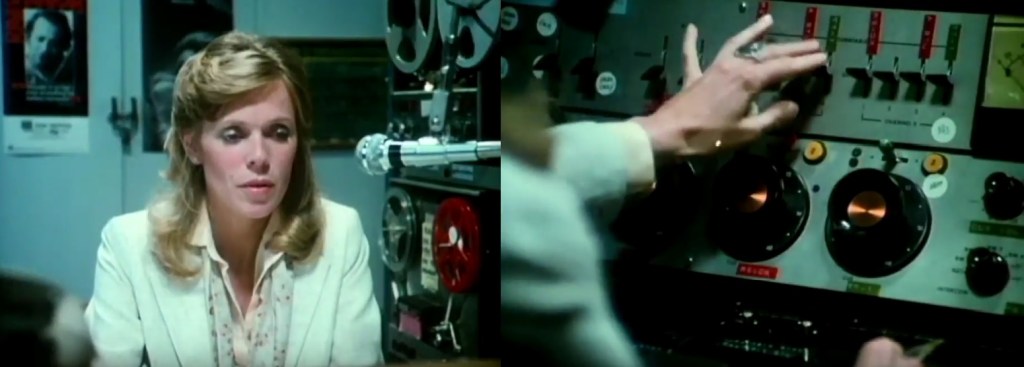
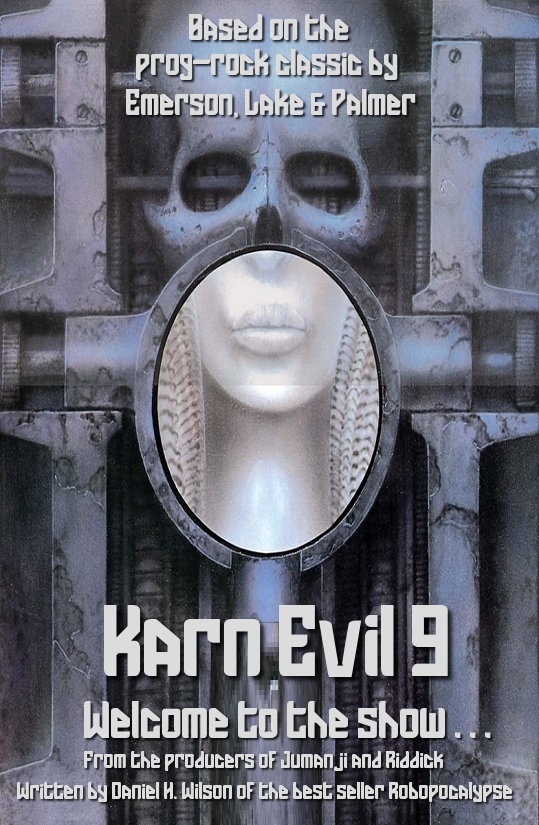


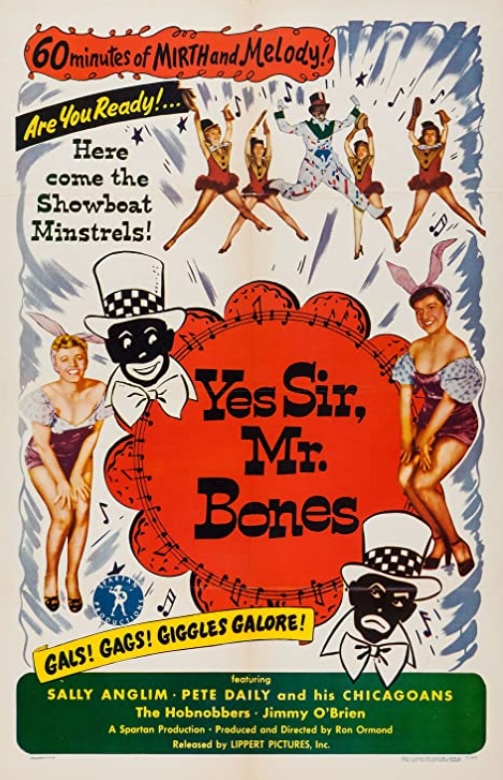

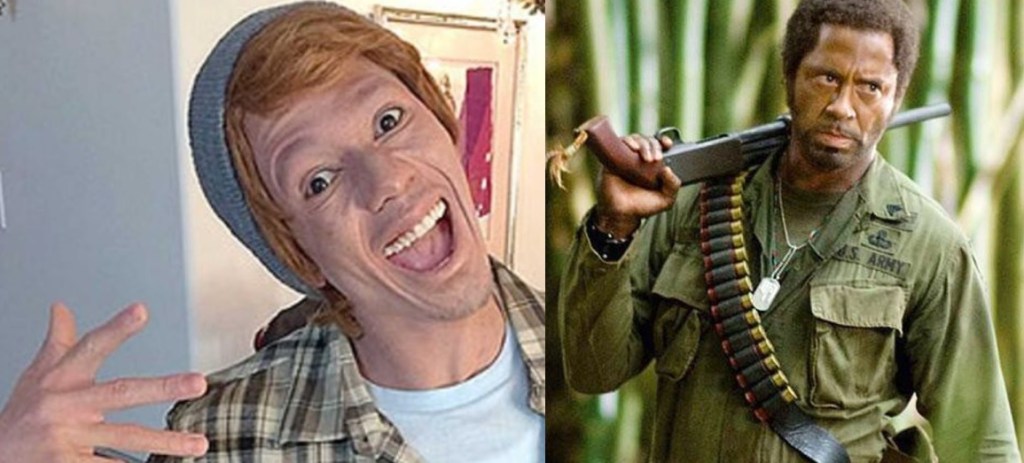


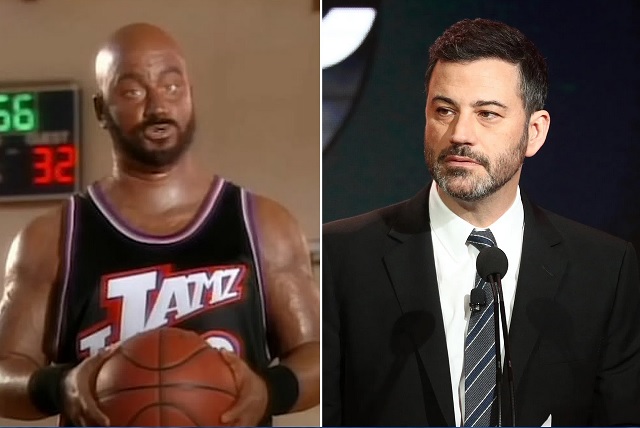
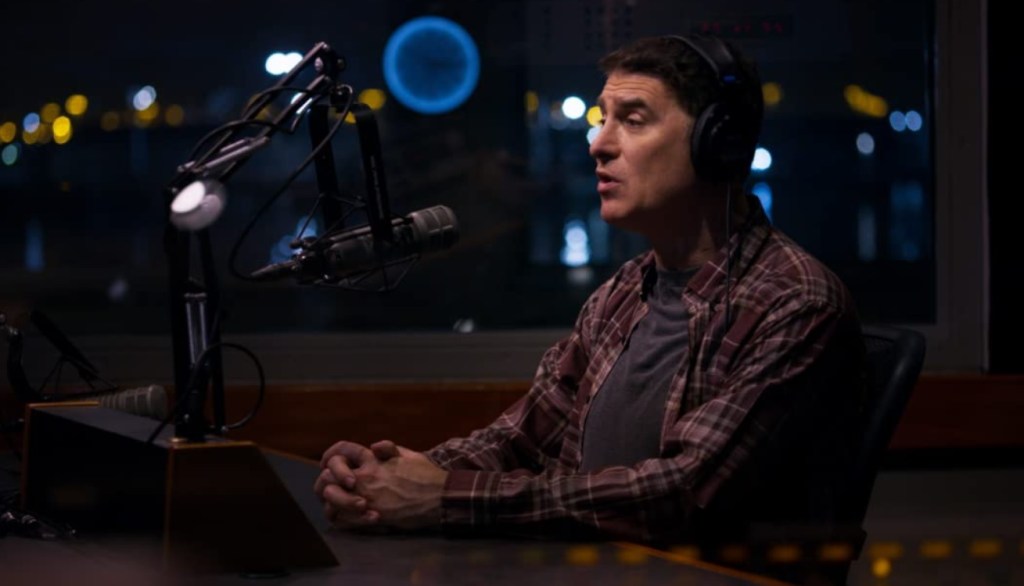

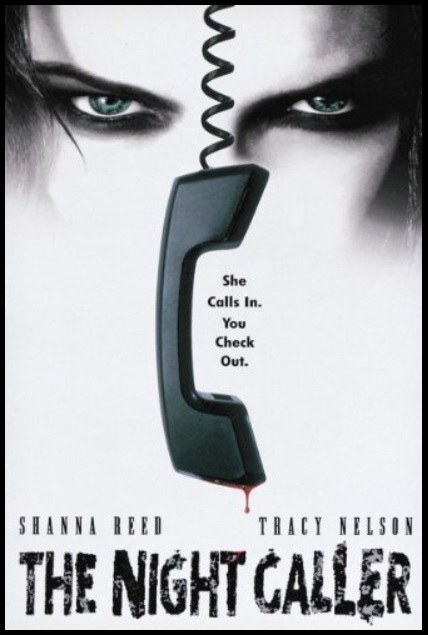
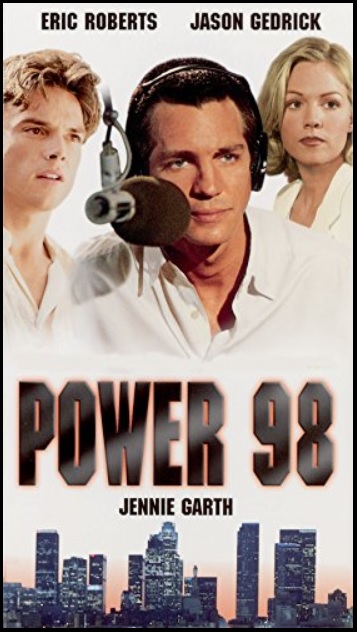





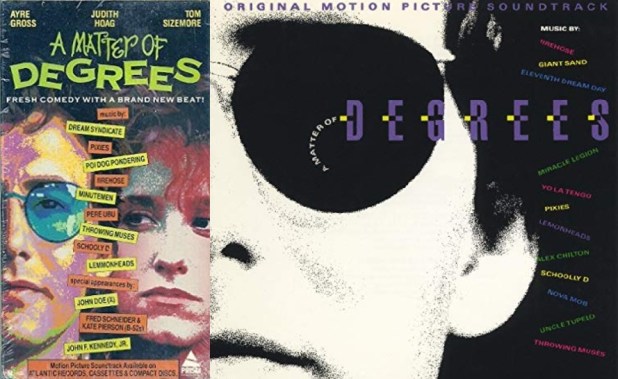


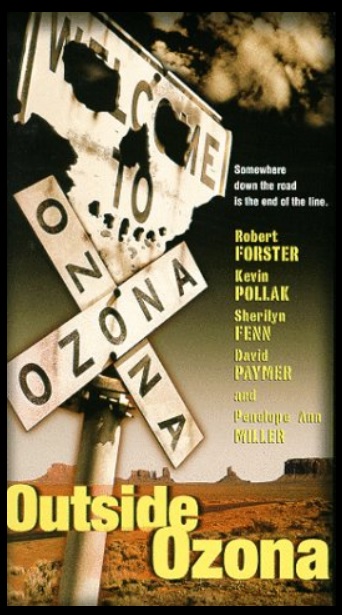
 B&S About Movies
You must be logged in to post a comment.