Emily is a recovering cancer survivor of three years. To celebrate completing her treatments, her best friend Nina plans a weekend getaway at a remote country house with four of their closest friends.
Yep. It is party time—complete with drugs and booze, and . . .
. . . And it goes from bad to worse pretty quickly for the sextet—as it normally does for (unsympathetic) spoiled, life-is-a-perpetual-party city kids who “vacation” out in those parts where they don’t belong in the first place—especially when a biker gang shows up. And you act like shites at the local roadside diner. And smart mouth the local law enforcement. And the owners of your cabin rental don’t like you. And your friend stole a briefcase of blow for the occasion—and the gangster-owner wants it back. Oh, and there’s a serial killer, aka The Faceless Man, on the loose. And the cabin is haunted (maybe) and ties into the murderous nom de plume (who may be bogus). Oh, (there’s a lot of “ohs” in this movie) and Emily’s having treatment withdrawals and puking bile—accompanied by hallucinations of a spindly-fingered creature leaving blood-scrawled messages on mirrors. And the hallucinations and who-done-it murders-and-kidnappings of the others follow in quick succession.
Do the devil-may-care city kids deserve to have the collective Devil after them: the townsfolk, the bikers, the gangsters, their own drug-induced mind-fucks, and the serial killer? Yeah, even Emily the cancer survivor. This is a film where (because of great writing and acting) you end up identifying with the villain-antagonists (but the “good” city kids are their own worst antagonists).
Thanks for plugging B&S About Movies in your digital marketing campaign.
You wouldn’t expect a film that markets itself as a horror film—with a protagonist that’s a cancer survivor—to run the gauntlet from slasher to comedy, fork off into a crime drama, and veer into the new-giallo supernatural. But, thick Down Under accents aside: it all works in a Tarantino-pulpy meets a (lighter touch) Shawn of the Dead-kind of way where the detailed set design reminds of Kubrick’s The Shining meets the color palate of a Dario Argento giallo. And keep your eyes open for the Tarantino “diner scene” and “interrogation scene” from Reservoir Dogs, along with the “basement bondage scene” from Pulp Fiction, and your ears open for the Carpenteresque scoring.
In the acting department (the entire cast is good) the two standout performances (among the affable, oddball-arced characters) (for me) come from actor Daniel Reader as the local redneck thug Barry the C*** (he’s so cool-feared, he has his own logo-coffee mug) and Roger Ward (yes, Fifi from Mad Max) as the gangster King Dougie. (Reader is relatively new the screen; he’s amassed twenty-plus credits in ten year across shorts and support roles in Aussie features; but I’d like to see him cross the pond and find work in larger, better-distributed American films.) All in all, The Faceless Man is an effectively-directed and expertly-shot feature film writing and directing debut by James Di Martino. We look forward to seeing more of his work in the streamingverse. And you’ll read those reviews first, on B&S About Movies.
This is the third, great film from Down Under we’ve watched since these COVID times; the others are the U.S. reboot of the neo-giallo Sororal, under its domestic title of Dark Sister, and the quality, fun horror romp Two Heads Creek. Both, along with The Faceless Man, are worth-the-coin-and-time streamers.
The Faceless Man was released as a DVD, PPV and VOD from Chapter 5 Studios and Freedom Cinema on August 28. Look for it on all digital platforms.
Disclaimer: We were provided a screener by the film’s P.R firm. That has no bearing on our review.
About the Author: You can learn more about the writings of R.D Francis on Facebook.He also writes for B&S About Moviesand publishes on Medium.
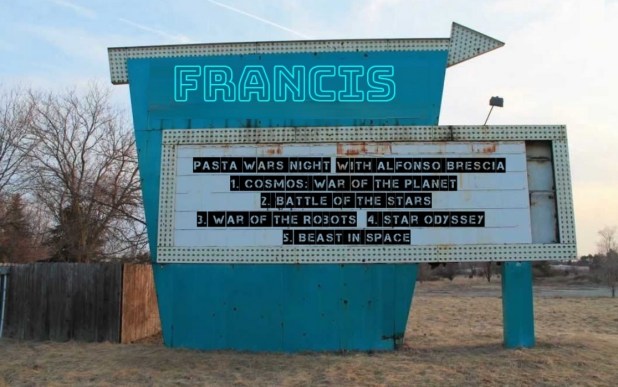
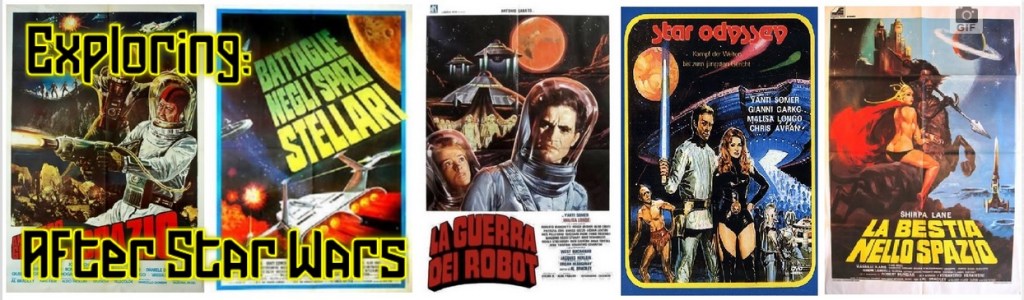
Editor’s Note: Due to their plot, costume, and SFX common denominator recycling, we are reviewing five films in this exploration of Alfonzo Brescia’s “Star Wars” films: Cosmos: War the the Planets, Battle of the Stars, War of the Robots, Star Odyssey, and Beast in Space—so, yes: it’s a five-in-one review. And we toss in a little backstory on Brescia as a bonus!
It all began with the 1964 sand n’ sandal flicks The Revolt of the Pretorians and The Magnificent Gladiator, along with an array of Poliziotteschi flicks. In between was an X-rated romp with 1969’s The Labyrinth of Sex and 1974’s seen-to-be-believed Super Stooges vs the Wonder Women. And it all pretty much ended when Uncle Al decided to take on George Lucas. We never saw him again on U.S. screens—big or small.
Be warned, young warrior: Uncle Al’s space romps make Glen “larceny” Larson’s Battlestar Galactica look like the Lucasian epic it wanted to be (and was not). Space: 1999 isn’t so dorky to you now, is it, space cowboy? Oh, but Uncle Al’s flicks are oh, so much more fun than the plastic-verse Star Wars dropping that is Buck Rogers in the 25th Century.
So, have you ever met two guys debating the content of Alfonso Brescia’s “Star Wars” rips? Welcome to mine and Sam’s world: a bizarro-universe where he mixes colorful, alcohol concoctions based on movies and we destroy our livers debating superfluous movie facts, much to the chagrin of poor Becca. Not even a Bill Van Ryn smack-on-the-side-of-the-head cures our Bresciamania.
Sam is of the critics who believe Uncle Al’s “Pasta Wars” is comprised of only four films: Cosmos: War of the Planets (aka Year Zero War in Space), Battle of the Stars, (aka Battle in Interstellar Space), War of the Robots (aka Reactor), and finally, Star Odyssey (aka Seven Gold Men in Space, Space Odyssey, Metallica and Captive Planet).
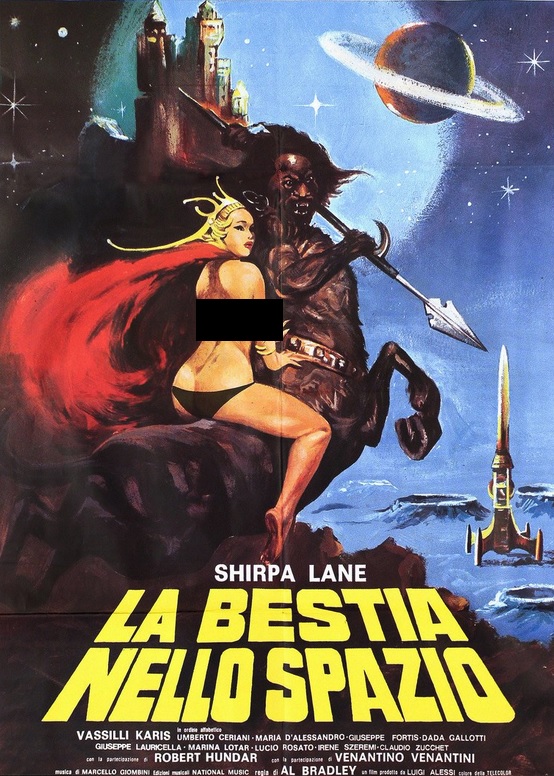
I’m on the side that there was actually five films in the series, which completed with 1980’s La Bestia nello Spazio, aka Beast in Space in English venacular, aka “Star Wars V,” aka “Porn Wars,” because, well . . . it’s a porn movie.
Four!
Five!
Four!
Five! Arrrgh! Let’s break ’em down! But first, this 2012 trailer remix for the best known of Uncle Al’s “Pasta Wars” flicks: Star Odyssey.
Many sci-fi connoisseurs believe Brescia’s “Star Wars” debut isn’t so much a rip-off of Star Wars: they opine it’s a homage to another Italian space epic, one that was produced amid all of those Antonio Margheriti-spaghetti space operas: Mario’s Bava’s Terrore nello Spazio, aka Terror in Space (known in American theatres as Planet of the Vampires; then in its U.S. TV syndication as Demon Planet).
On this point, Sam and I concure: Look at the costuming and alien-possession subplots of Bava’s and Brescia’s films for comparison. Adding to the celluloid confusion: Cosmos had similarly-influenced—if not the very same-recycled—costumes and sets as Margheriti’s films. In addition: Cosmos was also distributed as War of the Planets—which was the title of the 1966 second film of Margheriti’s Gamma One series.
Amid Cosmos’ self-recycled stock footage and shot-through-sheets-of-sepia-paper-and-cheese-cloth special effects, Cosmos also ineptly-lifted whole scenes from 2001: A Space Odyssey (an astronaut completes an upside-down communication device repair-in-space) and Barbarella (sex via touching a “blue orb of light” between beds). The “plot” for those who fell asleep: Our heroes journey to a planet where a green-skinned race is subjugated by an evil computer . . . and the Earth’s Italian “Hal 9000,” “The Wiz,” is possessed by the evil alien computer. . . .
Is this plotline picked up in the next movie? Nope. But all the sets, props, and costumes sure do redux.
Believe it or not, with everyone tricked into believing they were seeing another “Star Wars,” Cosmos: War of the Planets turned a profit in theatres (while I didn’t catch it at the local duplex, my coin was taken by Lou Cozzi’s Starcrash, Michael A. De Gaetano ’74-to ’80 reissue of UFO: Target Earth, Pietro Francisci’s ’66-to-’77 opus, Star Pilot, and George B. Lewis’s, aka Aldo Lado’s The Humanoid). Everyone in the U.S., pretty much, watched Cosmos on TV, as it aired forever during the ’80s on Friday and Saturday night and Saturday afternoon UHF-TV.
You can watch one of the many uploads on You Tube.
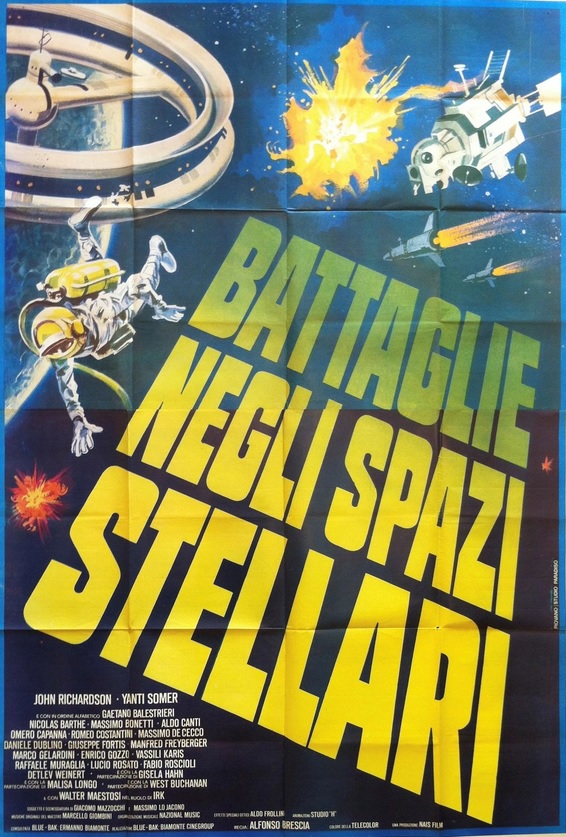
Movie 2:Battle of the Stars (1978)
. . . And Uncle Al returned with his “Empire Strikes Back” in the form of Battaglie negli spazi stellar (aka Battle in Interstellar Space), but it was given a new U.S. title because it sounds suspiciously like “Battlestar Galactica.” And since that was Glen Larson’s cheap-jack Lucas rip, that makes this a Star Wars rip twice removed.
You never heard of it because Uncle Al’s “Star Wars II” suffered from poor theatrical distribution and a weak reissue via home video and TV syndication. Then, with all the alternate titling that plagues European films as they’re distributed to the international markets, spacesploitation buffs believed the almost-impossible-to-find Battle of the Stars was Cosmos—with a new title. It’s not helping when the main cast of familiar Italian actors Gianno Garko, Malisa Longo, Antonio Sabato, Yanti Somer, and John Richardson—with most of their supporting cast—appear in subsequent films as different characters (well, they’re the same, but with different names), adding to the continuity confusion.
Regardless, it’s not the same film.
Battle of the Stars is an entirely new film that cannibalizes Cosmos for stock footage—and all the costumes and sets return. As is the case with most “sequels” (Alien vs. Aliens and Mad Max vs. The Road Warrior being the exceptions to the rule), Battle is a just remake/reimage of Cosmos—with a little script tweak: Instead of Earthlings traveling to the planet-home of the evil computer, this time: the rogue planet (or was it an asteroid; don’t care) without-an-orbit-and-pissed-off-sentient-being running it comes to Earth (from the orbit of Ganymed, Jupiter’s moon) which . . . was the plot of Margheriti’s Battle of the Planets from his “Gamma One” series. Hey, er, uh . . . what happened to the ship with its computer, “The Wiz,” possessed by the alien computer in Cosmos? Is that cleared up in Part III? Nope, that plotline is done and gone. . .. .
Look, as someone who has seen Cosmos: War of the Planets a few times: there is no “sport fishing on Earth” scene and there’s no androgynous, platinum blonde 12-year-old alien decked out in a silver chain mail spacesuit helping the Earthlings with an ersatz Marksman-H training remote Jedi-ball. But there is in Battle of the Stars.
So, yeah, it’s the same effect shots, same sets, same actors, even the same situations (that 2001-inspired space station repair and that sentient alien computer set, for example, again) . . . but it’s a different film. It’s not up for debate: it’s two different films, space ace.
Notice the Gerry Anderson’s S.I.D sentient satellite from his TV series UFO, in the upper-right cornerof the one-sheet.
The snack bar is open . . .
Intermission with Jason of Star Command, Space Academy, and Ark II!
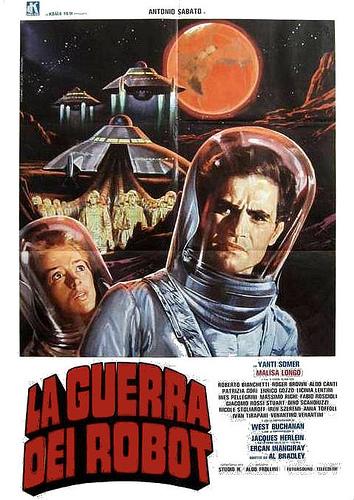
Yes, Jason of Star Command, Space Academy, and Ark II from CBS-TV are the far superior productions . . . and all of Uncle Al’s one-piece spandex suits and pull-over headpieces were back for a third sequel . . . with a society of gold-painted skin people pinch-hitting for the green folks from Cosmos.
Why?
On this point Sam and I agree: There’s no “artistic” meaning behind it. Uncle Al simply ran out of the five-gallon buckets of green grease paint and he found some gold paint in the stock room. Ah, but all of the stock SFX footage, costumes, and sets—and whole scenes lifted from the previous two films—are back.
The “plot,” such as it is: Gold Aryan robots with Dutch-boy haircuts are on the brink of extinction. And the solution is to kidnap a couple of Earth scientists to save their planet. So a crack team of space marines (see Aliens; which wasn’t made yet!) are sent in for a rescue.
What makes “Pasta Wars III” so utterly confusing: All of the same actors from the last two films come back—as different characters. So, it’s a “sequel” . . . then it’s not. Will the fourth film tie up the loose end regarding the possessed Wiz from part one. . . .
You can watch this one of the many uploads of War of the Robots on You Tube.
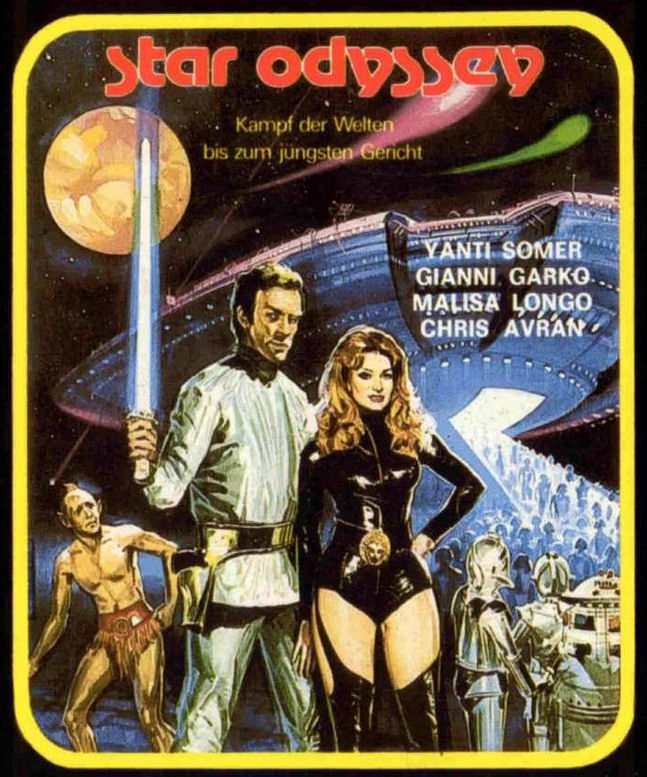
So . . . George Lucas was still in production with the second Star Wars movie, The Empire Strikes Back (1980)—and Brescia is already on his 4th sequel with 1979’s “The Gold Ayran Dutch Boy Robots” (as I like to call it) . . . but they really were back in Sette Uomini d’oro nello Spazi, aka Seven Gold Men in Space which, if you’re able to keep up with the alternate-titling of Italian films, became Star Odyssey for English-speaking audiences.
And you thought Roger Corman was the king of set, prop, and wardrobe recycling? Uncle Al’s recycling makes Glen Larson’s cheap n’ shameless footage, prop, and costume recycling from the Battlestar Galactica and Buck Rogers franchise-axis seem inspired.
The plot: In the year 2312 the Earth is referred to by evil aliens as “Sol 3.” “Darth Vader” is some guy in a (quite impressive) lizard skin mask (but it’s topped with a Farrah Fawcett-’70s feathered hair cut) that “buys” Earth in some inter-galactic auction to cultivate Earthlings as slaves to sell on the open market. And his army is the gold Dutch Boy robots . . . but didn’t we save them in War of the Robots? Welcome to the Brescia-verse. . . .
“Han Solo” is some guy in a shiny-silver Porsche racing jacket and a funky, disco-inspired spider web tee-shirt contracted for a The Magnificent Seven-inspired recruitment of a rescue team of rogues . . . thus ripping off Roger Corman’s Battle Beyond the Stars (and Corman ripped himself in the later productions of Space Raiders, Forbidden World, and Dead Space; yes, sets from Galaxy of Terror are in the mix amid all of those films, as well; he even lent them out to Fred Olin Ray for Star Slammer). Part of the “seven” are Uncle Al’s R2D2 and C3PO: a bickering male-female robot couple (the female has eyelashes and red lips) dealing with “sexual dysfunction” and “relationship issues.” And there’s a scrawny n’ skinny Han Solo-replicant acrobat who backflips and summersaults into battles—and makes a living fighting in boxing rings with Rock ’em Sock ’em Robots (know your ’70s toys). And what’s up with the “Luke Skywalker” of this space opera: Lt. Oliver ‘Hollywood’ Carrera? What’s with the obviously drawn-on mustache? Why is he hunching his back and arching his shoulders? Is it a parody of some Italian comedy actor we Americans don’t know about?
As result of Star Odyssey never playing in U.S. theatres or airing on U.S. UHF-TV in-syndication (at least not to mine and Sam’s recollections), the only way we watched this fourth “Pasta Wars” sequel was on numerous public domain DVD multi-packs. And regardless of the distributor, the “cut” of the film is always the same: somewhere along the way, the scissors were taken to the film and there’s several scenes out of sequence. Remember in Space Mutiny, when Lt. Lemont is dramatically killed off in a scene . . . and she shows up just fine in the very next scene? It’s like that, only it happens several times in Star Odyssey.
I keep promising myself that I’ll rip Star Odyssey and do a proper “fan cut” and put it back into its proper sequence in homage to Uncle Al. . . . Don’t hold you breath waiting for that You Tube upload.
You can watch Star Odyssey in all its continuity-screwed glory on You Tube.
Movie 5: Beast in Space (1980)
And now for the movie that’s come dangerously close to destroying a friendship. Alfonso Brescia’s oeuvre has that effect on people . . . well, just me and ‘ol Sam.
Anyway . . . remember the infamous, 1972 X-rated Flash Gordon porn-flick, Flesh Gordon (itself sequeled with Flesh Gordon Meets the Cosmic Cheerleaders)? Did you ever wonder if Reece and Ripley (and we know they did, off-script and off camera) “got it on” in Aliens? Ever ponder if Han threw Leia across the Dejarik Chess Table and undid her cinnabons?
Well, welcome to Porn Wars.
There’s George Lucas, killing the box office with The Empire Strikes Back, and Brescia responds with his “Star Wars V”: 1980’s La Bestia nello Spazio, aka Beast in Space. The interesting twist to this “sequel” is that it not only occurs in the same Brescia Pasta-verse (courtesy of footage, costumes, props, sets, and actors recycling) continued from Star Odyssey, it’s also a “sequel” to Walerian Borowcyk’s infamously popular, 1975 French erotic-horror/exploitation movie, La Bête, aka The Beast. The “connection” between both films: erotica-exploitation actress Sirpa Lane sports a pair of Brescia-space tights and headpiece.
So how did they come up with the title Beast in Space, you ask? As result of her erotic/exotic films—especially The Beast—Sirpa Lane was a major star (and marketed as the “next Brigitte Bardot”) in Europe and christened with the affectionate stage name by the Euro-press: “The Beast.” (We also reviewed her work Joe D’Amato’s Papaya: Love Goddess of the Cannibals, if you’re interested.)
Issued in “PG,” “R” and “X”-rated formats, the “plot” concerns the Earth’s search of the cosmos for a rare element: Antallum, the key ingredient for bomb construction to basically kill off everyone in the universe. But wait . . . Earth already possessed that wonder-metal to accomplish space travel in the first film . . . so is this a prequel?
Eh, that’s plot piffle in the Brescia-verse.
The real story: The crew is “horny,” with chauvinistic men and slutty women astronauts seducing each other on their way to the planet Lorigon to plunder the planet of its Antallum honey hole. Well, the planet’s sentient super-computer (not again!) isn’t having any of that nonsense. That’s his Antallum. So “Hal 9000” sidetracks the Earthlings . . . by inciting them to indulge in their deepest, darkest sexual desires. Oh, did we mention the gold Aryan Dutch Boy robots are back as well? And the well-hung minotaur from Lane’s sexual dreams is real and lives on Lorigon?
The English language upload is gone. All we have is this Spanish-language upload on You Tube for you to sample.
DVD Copies of Beast in Space
The fine folks at Severin (thanks, again for the Delirium pull-quote) discovered an obscure hardcore cut of the film: it adds a few minutes of unsimulated, aka real, grinding (from bodies doubles) and a nice and long (sorry) five minutes with The Beast’s monstrous penis—and his “climax.” That footage is said to have been shot after the fact and spliced-in; that cut was distributed throughout Europe.
As result of that discovery: Severin has two DVD versions in the market: An Unrated Version at 92 minutes and a XXX version at 91 minutes (the one with the body doubles footage). The footage variations are those hardcore shots of Onaf (Robert Hundar; 1977’s La bella e la bestia) raping Sondra (Sirpa Lane) and his penis in action, along with a sex scene between Capt. Larry Madison (Vassili Karis of 1979’s Giallo in Venice) and Sondra. The Unrated Version comes from the original film lab negative utilized for the Region 1 (North and Central America) DVD release by Severin, which they acquired from a Rome, Italy, bankruptcy auction. The XXX version was discovered in the basement of a condemned Bologna, Italy, porn theater.
Both Severin versions come with Bonus Features: The Unrated Version comes with a vignette from actor Venantino Venantini (Juan Cardoso in the film) who speaks at length about his career, working on Black Emmanuel (we’ve since reviewed Emmanuel IV because of its Cannon connection) and with Brescia. The XXX Version, again, offers the newer hardcore footage-inserts—along with a trailer.
While both versions are out-of-print and no longer available at Severin Films, used and aftermarket copies are available on Amazon and eBay; but emptor the caveats, ye buyer. You can get the technical rundown on the releases at DVDTalk. And if you’re a Brescia completists, like moi, you’ll get both for the collection.
So be it Star Odyssey or Beast in Space—or four or five films—Uncle Al’s “Pasta Wars” was over. After turning out his “Star Wars” films in a short four years, Brescia turned over the keys to the Millennium Falcon. But let’s cut Uncle Al a break: he was saddled with the cheapest budgets and pressure-shoot schedules that no filmmaker should endure in their careers.
Brescia continued to make non-science fiction films for the remainder of his career—14 more films for the next 15 years. At the time of his retirement in 1995, Brescia completed a career total of 51 films.
Most of Brescia’s post-1980 work was primarily restricted to Italy-only distribution. His career took a financially-positive turn in the late ‘80s with the worldwide-distributed Iron Warrior (1987; the third in the hugely successful, Ator Italian rip-off series of Conan the Barbarian) and Miami Cops (1989; violent Miami Vice-inspired buddy-cop flick starring Richard Roundtree). Sadly, even with the success of Iron Warrior and Miami Cops, Brescia was unable to secure distribution for his self-financed final film, the 1995 action-comedy, Club Vacanze.
Alfonso Brescia, the king of the Star Wars-inspired spaghetti-space opera died, ironically, in 2001.
And that’s the story behind tonight’s “Drive-In Friday” salute to Uncle Al.
Oh, yes! There are so many more post-Star Wars films to partake, young warrior.
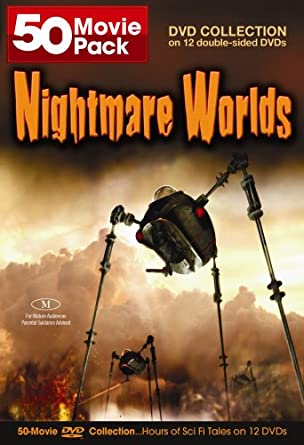
While Battle of the Stars and Beast In Space — to our knowledge — haven’t made a Mill Creek appearance, you can easily find Cosmos: War of the Planets (“Sci-Fi Classics”), War of the Robots (“Chilling Classics”), and Star Odyssey (“Nightmare Worlds”) on a variety of Mill Creek sets, these one in particular (clickable images for the full list of films).
About the Author: You can learn more about the writings of R.D Francis on Facebook. He also writes for B&S Movies.
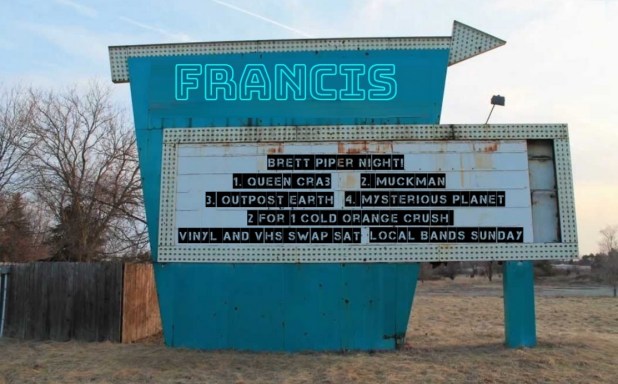
New Hampshire’s Brett Piper is a self-made screenwriter, director, and special effects artist who shoots most of his films in Pennsylvania, most notably in the western and northwestern counties of Cambria and Tioga County. He’s also a self-professed purveyor of “schlock” who eschews modern CGI for “old school” special effects, such as matte paintings, miniatures, and stop-motion animation.
And we, the staff of B&S About Movies, love Piper for it: For if Piper had been around during the regional era of Drive-in exploitation, we’d be warmed by the crackle of a speaker hanging on our car window. We’d rent every one of his VHS ditties from the ‘80s home video shelves, warmed by the cathode ray tube’s glow.
Piper’s resume is extensive, there’s a lot to watch: he’s directed 18 films, wrote 19, and created special effects for 22 films—for his own films as well as the films of his frequent brothers-in-arms collaborator, Mark Polonia (Empire of the Apes).
So if you’re nostalgic for the works of Ray Harryhausen, but burnt out on repeat viewings of that stop-motion master’s works; if you’re burnt out on today’s green-motion tracking and After Effects computer-animated extravaganzas; if you want aliens cast well-made masks and full-body suits and actors emoting alongside in-camera effects, then the films of Brett Piper are just what the VOD streaming doctor ordered.
Movie 1: Queen Crab (2015)
We’ll start off our Friday Brett Piper festival with my favorite of his films: one with best character development, acting, and special effects—and one that we have not yet reviewed at B&S About Movies. While there’s a soupçon of Ray Harryhausen in the crab pot (ugh, sorry!), this is a full-on Bert I. Gordon homage to his (very loose) 1976 H.G Wells adaptation of Food of the Gods (with an honorable mention to the Robert Lansing-starring Island Claw from 1980).
What causes the crab to go “gigantic”? A little girl brings home Pee-wee, a baby pet crab from the lake behind her house—and feeds it grapes infused with her daddy-scientist’s plant growth hormone. After her parents die in a freak lab explosion and she’s adopted by her uncle-sheriff, Melissa grows up into a tough-as-nails teenager, aka Queen Crab, who serves as protector to Pee-wee and her clan of babies—complete with a psychic link. Shotguns n’ rednecks, tanks n’ planes (well, one of each) ensues as the misunderstood crustacean who, like King Kong before her, didn’t ask for any of this sci-fi ruckus.
And speaking of misunderstood: There’s poor little Melissa, stuck in the middle of the sticks of Crabbe County with no friends and parents that constantly bicker and ignore her. She’s practically a latchkey kid with only a crab as her friend. So, do we root for the crab? Damn straight. Kick ass, Pee-wee, for Melissa is Queen in this neck of the Pennsylvanian countryside.
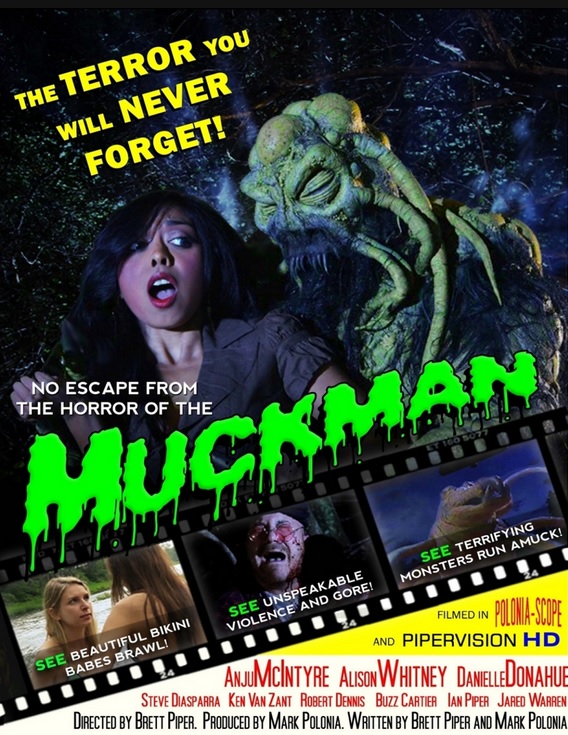
When a TV producer’s (Piper acting-mainstay, ‘80s metal drummer-cum-actor Steve Diasparra; also of Amityville Death House, Amityville Exorcism, and Amityville Island*) career disintegrates on live TV when his report on a legendary backwoods demon haunting Pennsylvania’s Pine Creek Gorge is exposed as a fraud, he’s hell bent on redemption. When he convinces a cable TV mogul to back his quest, Mickey O’Hara heads back into the swamps with a sexy TV personality. Only, this time, there’s no need to “fake it” as the gooey, tentacled Muckman shows up—and he’s not only got the love jones for film crew member Billie Mulligan, Mucky’s brought along a tentacle sidekick of the Queen Crab variety.
Just a good ‘ol fashioned, campy monster romp from the analog days of old.
You can watch this as a free-with-ads stream on TubiTV.
The snack bar is open . . .Intermission!
Thank you, Vinegar Syndrome for honoring the works of Brett Piper! Now back to the show!
Have you ever wondered what would happen if Bert I. Gordon produced a Ray Harryhausen-directed mockbuster of Independence Day? Well, wonder no more with Brett Piper’s most recent, eighteenth and best-produced film of his resume. And, bonus: we also get a throwback to all of our beloved ‘80s Italian apocalypse flicks** in the bargin!
Blake is the resident Trash-cum-Parsifal (known your ‘80s apoc heroes!) who teams with Kay, a radiant, supermodel bow-hunter, to help a crusty elder scientist discover the key to save the Earth from the invading alien hoards and their otherworldly “hunting dogs” in the form of giant, stout lizards.
A fun, something fresh and new watch filled with the nostalgia that we love in our films.
You can watch Outpost Earth as a with-ads-stream on You Tube.
We confessed our perpetual love for this debut feature film from Brett Piper during our two-week December Star Wars blowout*ˣ in commemoration of the release of Star Wars: Episode IX – The Rise of Skywalker.
Pipers’s Star Wars-inspired take-off of Jules Verne’s Mysterious Island—by way of Ray Harryhausen’s classic 1961 film of the same name—concerns a “wretched hive of scum and villainy” band of mercenaries crash landing on an uncharted planet after a space battle. Adopting a jungle girl into their fold, they battle prehistoric snails and dragons as they make their way into a final showdown with the planet’s ancient ruler: a super-intelligent computer ˣ*.
The bottom line: Brett Piper overflows with that same Tommy Wiseau-heart (The Room) and John Howard-tenacity (Spine) as he gives us a special, endearing quality with his films that’s absent from most—if not all—major studio offerings.
So strap on the popcorn bucket and ice up the Dr. Pepper and Doc Brown back to the Drive-In ‘70s with one of the greats of the retro-cinema. Keep ’em coming, Brett. We love ’em!
* We went nuts on Amityville and all of its sequels, rip-offs, and sidequels, etc. back in February with our “Exploring: Amityville” featurette. Uh, Sam? You’re the resident Amityville authority in this neck of Allegheny County. Time to get crackin’ on the newest, latest entry in the series: Amityville Island . . . and Amityville Hex, Witches of Amityville Academy, Amityville 1974, and Amityville Vibrator.
** Be sure to join us for our two-part September blowout as we explored the Italian and Philippine apocalypse of the ‘80s with our “Atomic Dust Bin” featurettes.
ˣ* Sentient computers? Don’t forget to visit with four of sci-fi’s most-infamous artificial brains with our “Drive-In Friday: Computers Taking Over the World” featurette that posted on July 17th.
About the Author: You can learn more about the writings of R.D Francis on Facebook.He also writes forB&S About Movies.
A series of gruesome (neo-Giallo-styled) murders occur in a serene Southern town (modern, yet “gothic”; a community where people roam the streets in a Carpenteresque-Spielbergian innocence as folks gather at the community center—and put the ol’ Shakespearian finger to the lips regarding the village’s “past”) committed by a cape and cowled figure accompanied by a young girl (Alice Lewis): the “shape” serves as her “murder weapon.” Thrust into the horror is Jonathan Wyndham (Joe Sykes), an injured war veteran returning to college. Sexual tensions ensue with Margaret Merrill, a county social worker whose mother is a State Supreme Court Judge (Lynn Lowry). Margaret’s life faces grave danger as she discovers Jonathan’s connection to the murders and that the bloodshed is somehow seeded in her own mother’s political corruption.
The familiar, welcomed horror mainstays of John Sykes (V/H/S) and Lynn Lowry (George Romero’s The Crazies, David Cronenberg’s Shivers*, and Paul Schrader’s Cat People**) star in this revenge thriller that also serves as the screen debut of Atlanta-based teen-cosplay model Alice Lewis; you may know her digital oeuvre through the social media-based “Malice of Alice” portfolio where, in conjunction with her mother-photographer Kelly Lewis, they recreate famous pop culture icons (e.g., Mathilda Lando from Leon: The Professional, David Bowie’s Ziggy Stardust persona, Hit-Girl from Kick Ass, Taylor Swift).
J. Sheridan Le Fanu’s iconic and influential lesbian vampire tale, “Carmilla,”*˟ from his short story collection In a Glass Darkly, returned to the streamingverse in 2014 with Bret Wood’s adaptation, The Unwanted. Wood now returns to the streamingverse with another novella adaptation: this time it is Thomas De Quincey’s The Avenger (spoiler alert: read the public domain Wikisource version here). And if you know your Giallo trivia: Dario Argento used De Quincey’s Suspiria, the short story “Levana and Our Ladies of Sorrow” in particular, as an inspiration for his “Three Mothers” trilogy of films: Suspiria, Inferno and The Mother of Tears. And, to that end: Wood splatters a ’70s Giallo stain on Those Who Deserve to Die.
Everything de rigueur in our Gialli of old and attendu in our yellow-syndromed Gialli of new spatters across Wood’s fantastique palate: style over ambiguous substance, eccentric characters of the ulterior and outright evil variety; each slopping their own baskets of red herrings, oozing colors, oddball lighting, enraptured set design—all of the symptoms cataloged by our cherished medical maestros Argento and Bava.
Yeah, you know all about us horror-loving lads frocking about the wilds of Allegheny County: we love our Giallo around here. In fact, we recently did a week-long tribute the genre, which we recapped and reviewed with our “Exploring: Giallo” round-up. And to that end: Bret Wood is the latest of the new crop of Young Turks (most recently; Matthew Diebler and Jacob Gillman’s The Invisible Mother and Marc Cartwright’s We Die Alone)—overflowing with skill, class and style—keeping the Giallo genre alive for a new generation—and birthing a new genre: Neo-Giallo, or what I like to call “Giallo Impressionism.”
And Bret Wood’s neoism is impressive. So strap on the popcorn bucket, hit the big red streaming button (Amazon Prime/Google Play) and let the rivers ooze yellow. As of August 18 you can also pick up Blus and DVDs: both contain Bonus Features of deleted scenes, along with the promotional vignette “Malice of Alice: a Mother/Daughter Portrait” and Security, a 2007 short film by Bret Wood. You can learn more at Kino Lorber and on their Facebook page, along with the film’s official Facebook page. You can also read these Atlanta Journal-Constitution interviews with Bret Wood and Alice Lewis to learn more about their respective careers.
Disclaimer: We were provided a screener by the film’s P.R firm. That has no bearing on our review.
About the Author: You can learn more about the works of R.D Francis on Facebook.He also writes for B&S About Moviesand publishes on Medium.
** We’re reviewing Cat People as part of our “Werewolf Week” running Sunday, September 23 to Saturday, September 29.
*˟ We’re reviewing And Die of Pleasure, Roger Vadim’s 1960 adaptation of “Carmilla,” as part of our upcoming “Vampire Week” running Sunday, September 6 to Saturday, September 12.
March 2022 Announcement: Severin Films has released a Blu-ray of Nosferatu in Venice — scanned in 2k from the original negative — which serves as the unofficial sequel to Werner Herzog’s Nosferatu. In addition to cast and crew interviews, the Blu also features the 80-minute documentary, Creation is Violent – Anecdotes From Kinski’s Final Years.
Severin has since released the documentary as an independent stream on the free-with-ads Tubi service.
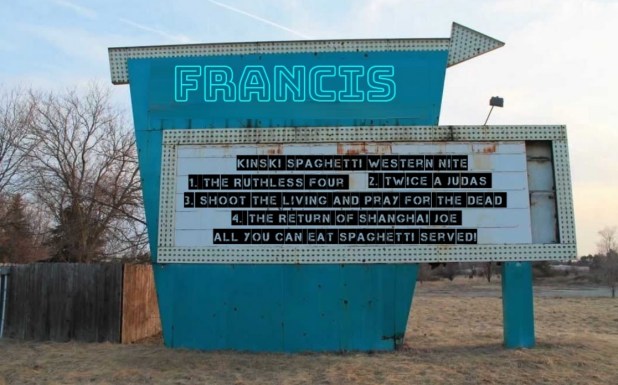
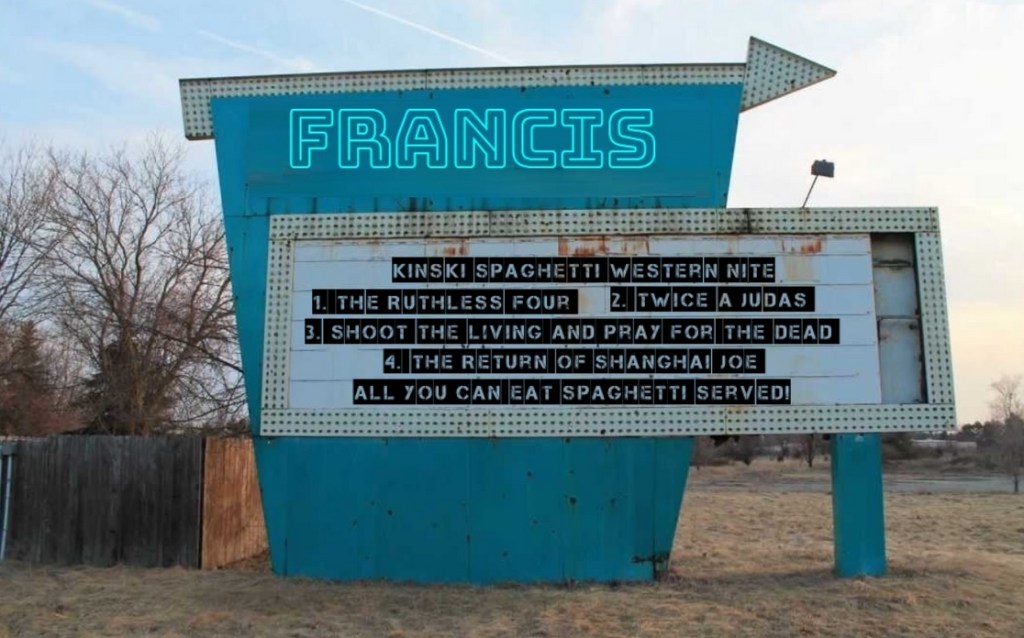
So Sam came up with a “Spaghetti Westerns Week” (running from Sunday, August 16 to Saturday, August 22) . . . and me, with my Klaus Kinski-mania . . . well, it’s time for another “Drive-In Friday” salute to Klaus as we follow up our June “Drive In-Friday” tribute to the five-film oeuvre of Kinski with Werner Herzog.
Yes, we’ll supply the Parmesan.
Klaus made his first jump into the Western-pasta pot in 1965 as Juan Wild, the hunchback member of El Indio’s (Gian Maria Volonte) in Sergio Leone’s For a Few Dollars More. Kinski then appeared in A Bullet for the General (1967; also starring Gian Maria Volonte), and Man, Pride & Vengeance (1967; starring Franco Nero).
As with Kinski’s oeuvre in other genres: I’ve seen some of Kinski’s westerns (the ones featured tonight), but not all of them (and probably never will), but seen most of them courtesy of the long since gone VHS grey market purveyor VSOM: Video Search of Miami, which excelled in making overseas films available in the U.S.
When it comes to these films, in terms of quality in cinematography . . . well, each try but none succeed in exceeding — or even matching — Sergio Leone’s filmmaking style displayed in the Dollars Trilogy of A Fistful of Dollars (1964), For a Few Dollars More (1965), and The Good, the Bad and the Ugly (1966). So, if you know those Clint Eastwood-starring films, well, there’s really not much critical analysis to be had with Klaus Kinski’s inversion of the genre. Just know you’re getting serviceable copies of Clint’s films and if you’re a Kinski fan — such as myself — you’ll want to spend your time watching them. All others will probably pass because, if you’ve seen one spaghetti western, you’ve seen ’em all. Between the one-sheets, my gibber-jabber about the films, and the trailers, you’ll figure it all out. The main goal, here, is to make you aware of and guide you through Mr. Kinski’s “spaghetti years” before he became a go-to actor for Werner Herzog.
Alrighty then! Let’s pop those RC Colas and ride, meho!The riches of the lands South of the Border await us!
Movie 1: The Ruthless Four (1968)
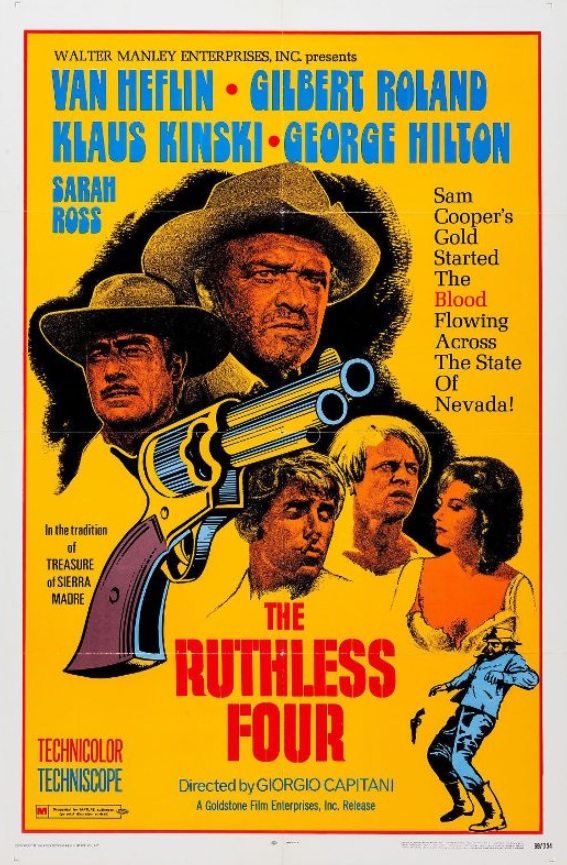
Known in its homeland as Ognuno per sé (aka, Everyone for Himself) — and in West Germany as Das Gold von Sam Cooper (aka, The Gold from Sam Cooper) — Kinski co-stars with Best Supporting Actor Oscar winner Van Heflin (1942’s Johnny Eager), who wowed then little tykes (like myself) roasting under the black & white’s cathode ray glow of Pittsburgh’s WIIC Channel 11 with his roles in the iconic westerns Shane (1953), 3:10 to Yuma (1957), and Gunman’s Walk (1958).
By the turn of the ’60s, Heflin’s star — along with his Gunman’s Walk co-star, Tab Hunter (1988’s Grotesque with Linda Blair) — had fallen, but there was a huge market for American actors in Italian cinema. So Heflin made his first film there, Tempest (1959) and, along with Tab, was billed under Gary Cooper and Rita Hayworth in They Came to Cordura (1959).
The title — and alternate titles — of this one pretty much says it all: Four men embark on a suicide mission for a fortune in gold from a mine owned by Nevada prospector Sam Cooper (Van Heflin). Always the heavy, Kinski is one of the greedy four, Brent the Blonde, a faux-preacher with blood on his hands . . . and one more body means nothing to him.
Up next for Kinski: 1968’s If You Meet Sartana . . . Pray for Your Death. He also worked on the sequel, I Am Sartana, Your Angel of Death (1969). (Sartana was, of course, Gianni Garko, that ‘ol space scoundrel Dirk Laramie from Star Odyssey.)
You can watch The Ruthless Four on You Tube. There’s also a stream on TubiTV.
Movie 2: They Were Called Graveyard, aka Twice a Judas (1968)
Antonio Sabato (Escape from the Bronx and War of the Robots) stars in this film noir-inspired Spaghetti Western as Luke Barrett, a cowboy who regains consciousness with bullet-grazed head wound in the middle of the desert . . . next to a dead man — and a lone rifle with the word “Dingus” carved in its stock. Sabato gathers clues along the way to discover that a hired gunman is out to get him . . . and that he himself was a gun hired to kill Dingus. Yep: You guessed it: Kinski is Dingus and he’s out for blood.
Kinski also worked on Sergio Corbucci’s pasta-western, The Great Silence in the same year.
You can watch They Were Called Graveyard on You Tube.
After working with Antonio Margheriti (1966’s Lightning Bolt) on the western And God Said to Cain (1970), Klaus Kinski received top-billing in this desert noir that Quentin Tarantino* ranked as his 16th personal “Top 20 favorite Spaghetti Westerns.”
Kinksi stars as Dan Hogan, an ex-Ku Klux Klan member leading a gang of bank robbers on the run with $100,000 in gold bars. Hogan’s dark past comes back to haunt him in the form of John Webb (Paolo Casella, who also co-starred with Kinski in the 1970 western, The Beast, and the next film on tonight’s program: 1975’s The Return of Shanghai Joe), a stranger who killed the gang’s guide into Mexico and wants half of their gold for safe passage. And all of their blood. So he really wants all of the gold.
Klaus also starred in the westerns Adios Compañeros, Black Killer, Coffin Full of Dollars, His Name was King, and Vengeance Is a Dish Served Cold that same year. Next up for Kinski: 1972’s A Noose is Waiting for You Trinity.
You can watch Shoot the Living and Pray for the Dying on You Tube.
The film noir-influence of Kinski’s previous pasta-westerns takes a turn into the then hot Kung-Fu genre — courtesy of Japanese-born martial artist Chen Lee (aka, Cheen Lie, playing a Chinese man here). As result of its martial arts plot, this also appeared on several ’70s Drive-In double and triple-bills, alongside more traditional Asian-action imports, as The Dragon Strikes Back (to trick you into thinking you’re seeing a Bruce Lee movie).
In the first film, 1973’s (My Name is) Shanghai Joe (aka, The Fighting Fists Of Shanghai Joe), Kinski was Scalper Jack. In the sequel, Kinski is his usual, sinister self as new character, Pat Barnes: a town boss whose stranglehold over a dusty, desert town runs afoul of Shanghai Joe (actually an uncover U.S. Federal Marshal), who’s assisted by a smooth-talking traveling medicine show man he saved from Barnes’s bully boys.
* Back in July 2019, we had a “Quentin Tarantino Week” of reviews to celebrate the release of Once Upon a Time in Hollywood. Be sure to visit our “Exploring: The 8 Films of Quentin Tarantino’s Rolling Thunder Pictures” featurette that includes the links to all of our week’s reviews and examinations of the films that influenced Quentin’s work.
We’ve reviewed a LOT of Kinski’s films — and we run ’em all down with our second drive-in feature spotlighting his career. Check ’em out!
Based on the title, you might be expecting a scathing documentary about child actors and singers. And, in a way, you do. But just not in the way you expected. And that’s what makes this film so amazing.
What we get is a very welcomed reminder of Superstar: The Karen Carpenter Story, a 1987, 45-minute documentary-short by Todd Hayes chronicling the last years of ’70s pop singer Karen Carpenter’s life — via Barbie dolls-as-actors, along with artistic footage. (Hayes also made the 1998 Iggy Pop-David Bowie “what if” rocker, Velvet Goldmine.)
Reviewers and thread comments accurately drop the word “disturbing” and “entertaining” when describing this feature film debut by Nicole Brending that chronicles the rise and fall — with dolls and puppets (that affectionately reminds of Gerry and Sylvia Anderson’s Supermarionation ’60s TV series) — of fictional child pop star Junie Spoons (i.e., Britney Spears and Lindsay Lohan) in a ’90s VH-1 Behind the Music-styled format.
There’s no way a studio would greenlight a live-action comedy film with this much feminist power — without mucking it up into a groan-inducing rise-and-fall-and-back-again comedy ala Bucky Larson: Born to be a Star or Dickie Roberts: Former Child Star. This one has it all: faux-Britney Spears bubble gum pop, loss of virginity, sex tapes, 24-hour over-and-done-marriages, drugs, booze, a Patty Hearst-styled kidnapping, bank robbery, bankruptcy, and murder.
But there’s more to Dollhouse than just being an animated comedy.
This isn’t a film of chuckles, groans, or guffaws. This is a comedy of intelligence told from the perspective of — not the invasive paparazzi and the media meat grinder to which we are accustomed — but by Junie Spoons herself (voice to perfection by Nicole Brending), as she reveals the hypocrisies of an opportunistic society that preys on the talents and contributions of women.
Powerful stuff that’s worth the streaming price.
Now, we have a rare treat with this review . . .
Between the theme weeks and the new releases coming into B&S About Movies, there’s that occasional review/scheduling snafu when one of the new releases is reviewed twice (ugh, we did it again with Immortal). So, in the spirit of a little ’80s Siskel & Ebert tomfoolery in the B&S About Movies’ offices out in the back wilds of Allegheny County, it seems Sam and I are fighting for aisle seat (and the drink blender).
Who’s the “Siskel” and who’s the “Ebert” in this collaborative review with Sam? Only the movies gods in the analog ethers shall know. . . . (I’m the “Siskel,” dadgummit it!)
Sam’s Take:
Dollhouse is the feature debut of director Nicole Brending. Subtitled The Eradicationof Female Subjectivity from American Popular Culture, she also created all of the dolls, props, and sets, wrote and performed much of the music, and did many of the voices herself.
Fictional child pop star Junie Spoons lost her virginity in a sex tape, had a 24-hour marriage, was kidnapped like Patty Hearst and was even involved in the murder of her mother. While this starts as a Britney-esque tale, it spirals out of control.
Quite honestly, I can see the talent behind this and the ability that it took to create it, but it just went on a bit too long for me. I hate saying that knowing the work that it took to make it. But often, so many of the satirical elements feel too sledgehammer. There’s Superstar: The Karen Carpenter Story as a high watermark for films like this. And while moments of it caused fleeting enjoyment, others made me cringe.
Perhaps I’m not the audience for this, so let me say that you may enjoy it much more than me, as R.D did.
Rock Salt Releasing via TriCoast Releasing will begin streaming Dollhouse: The Eradication of Female Subjectivity from American Popular Culture onto various digital platforms (Amazon, inDemand, Fandango, FlixFling, and Vimeo on Demand) on August 11.
Disclaimer: We were sent a screener by the film’s PR company. That has no bearing on our review.
About the Authors: You can learn more about the writings of R.D Francis on Facebook. He also writes for B&S About Movies. Sam Panico is the curator of B&S About Movies.
We mentioned this feature film screenwriter debut by actress Tori Titmas in passing during our review of the indie time travel fantasy Making Time, in which Titmas stars. We had The Girls of Summer on our longlist for our “Rock ‘n’ Roll Week” of film reviews (ran from Sunday, July 19th, to Saturday, July 25), but even with six reviews a day (over our usual four) across seven days, we still couldn’t fit all of the rock movies we wanted into the schedule. So goes the B&S About Movies’ folly: too many movies and so little time on the calendar. Damn those day jobs and need to sleep.
Now, if you haven’t read our review for Making Time (and you should, it’s a wonderful indie film), then good: you’ll appreciate the B&S About Movies twist on this country music-centric romantic tale. One of the most enjoyable aspects of being a reformed UHF cathode ray tube warrior and VHS-renting savant that now uploads movie reviews into the digital ethers, is recognizing the obscure-to-most-but-stars-in-our-eyes names of actors and directors from that UHF and VHF, and even drive-in past. And in the case of The Girls of Summer, the name of the man in the director’s chair stood out. (No, it can’t be the same guy?)
Now, in reviews on various social media and VOD platforms, the threaders mentioned director John D. Hancock’s work with Robert DeNiro in one of the greatest sports dramas committed to film, Bang the Drum Slowly (1973). Others mention Hancock’s work with Nick Nolte in the memorable cult cable flick, Weeds (1987). But those threaders failed to mention that Hancock made of one of the most unconventional, ambiguous Christmas movies of all time, Prancer(1989) (He killed the reindeer! Well, we think he did?). And when HBO went on the air in the early ’80s, two of Hancock’s movies became cult classics courtesy of their incessant replays due to HBO’s then limited library: the very good, but theatrically-buried Baby Blue Marine (1976; starring Jan-Michael Vincent) and California Dreaming (1979; starring Dennis Christopher). (Both aired alongside Matt Dillon’s debut in the juvenile delinquency drama Over the Edge, Hazel O’Connor’s punk romp Breaking Glass, and the punk-doc Urgh! A Music War. Ah, the HBO days. . . .)
However, before Nolte. Before DeNiro. Before his HBO cult status, Hancock, inspired by George Romero’s success with Night of the Living Dead on the drive-in circuit — along with Shirley Jackson’s The Haunting of HillHouse (that became 1963’s The Haunting) — he decided to make his feature film debut with his own drive-in centric horror movie. But instead of just giving us another run-of-the-mill, low-budget monster romp or zombie soiree, he gave us one of the ’70s creepiest (without the gore) drive-in horrors that explores the psychology of a main character that may or may not be stalked by a vampire — 1973’s Let’s Scare Jessica to Death. (You don’t think so? Well, tell it to my childhood-self sitting in the back of the family Ford LTD station wagon. I slept with a quilt around my neck for the next two weeks because of Jessica’s folly. So thanks for the memories, Mr. Hancock.) Then we lost track of John D. Hancock. (It seems Prancer’s unconventional approach to the Christmas spirit was too much for Hollywood to handle.) But no matter. He’s back and we couldn’t be happier. And we have Tori Titmas to thank for bringing one of our favorite directors from our snowy n’ static analog childhood back into our lives.
“Dude, you’re doing it, again.”
“What?”
“Going off the rails with the squeezin’ the Charmin love for old movies and their directors and actors. Just live in “the now” and review the movie already.And please, don’t tie this back into Seinfeld. That’s really getting annoying.”
“Hey, I can’t make any promises. It’s my slice of web and I’ll go off the rails if I want to. . . .“
As we mentioned earlier, country music (actually, it’s more of an Americana-genre vibe) plays a part in this well-scripted, metaphorical tale about Maren Taylor (Tori Titmas), a Michigan-Midwest sod farmer who experiences a metamorphosis as she learns how to adapt to the environments around her.
After her two younger sisters leave home, for college and a big city job in advertising on the west coast, Maren’s left alone to tend to the family’s sod business and care of her clinically depressed, narcotic-abusing father, which was triggered by her musician-mother’s untimely death. The one thing that kept Maren afloat was The Girls of Summer, the local country band in which she serves as drummer and that she put together with her guitarist-singing sister Grace. And now that life preserver is gone.
A chance visit from Luke Thomas (Dr. Lewis Rand on a story-arc of Chicago P.D.), a down-and-out country star trying to claw his way back to the top, to the bar where Maren’s resigned as being her last gig, offers a ray of hope: his band needs a new drummer and he’s impressed by the original songs she wrote for her sister. Once Maren’s father realizes his “loss of color” and her having to be “his parent” is robbing his daughter of her colors, he urges her to follow her dreams and take the gig with Luke’s band (even if it is just a tour of local watering holes, state fairs, and retirement communities). And she finds true love for the first time as result of her writing what turns out to be a sort-of-comeback hit for Luke — in a duet. But she also discovers the hurt of his unrequited love. And she discovers the gift of how the baggage of the past — if not let go — can destroy one’s future. As with the grass she spent her life cultivating, Maren learns she needs to keep looking to the sun. And growing.
If you’re looking for the dramatic bombast of TV’s Nashville or the acting hysterics of A Star Is Born (2018), keep in mind: this a low-budget movie that takes a quiet, under-played delicateness to its musician-on-the-rise story (which, if you haven’t figured it out, isn’t the “point” of the story). Courtesy of Titmas creating an effectively-arced character infused with verve and wide-eyed innocence, and expected, solid direction by John D. Hancock, along with expertly-executed cinematography by Misha Suslov (who, like Hancock, has a long career that stretches back to the hicksploitation romps Smokey and the Judge* and Trucking Buddy McCoy*, along with John Carpenter’s forgotten, big-engine actioner Black Moon Rising**), The Girls of Summer rises over the horizons of many of the similar, low-budget romance flicks airing on the Hallmark Channel.
Yeah, the B&S About Movies staff is pretty happy to see the director of Let’s Scare Jessica to Death and the cinematographer of Trucking Buddy McCoy back together again. So kudos to Tori Titmas for penning a compelling script that inspired them both and brought them together — and back to our (streaming) screens. And shame on us for losing our inner-John D. Hancock and Misha Suslov after Prancer. So it looks like we got some catch-up movie watching to do, as team Hancock-Suslov have four other films on their dual resume that swept under our VCR radar: the Top Gun-centric Steal the Sky (1988; with Ben Cross), the rom-com A Piece of Eden (2000), the horror-thriller Suspended Animation (2001), and the musical-drama The Looking Glass (2015).
Other cult cable TV favorites in the Misha Suslov canons are the teen delinquent drama 3:15 the Moment of Truth (1986; with Adam “My Bodyguard” Baldwin and Deborah “Valley Girl” Foreman) . . . and you know how we are about Eric Roberts (Power 98) around here: Suslov shot the 1986 Roberts-Rosanna Arquette comedy Nobody’s Fool. And, what the . . . he shot a Mark L. Lester movie . . . with Eric Roberts? Yep, 1996’s Public Enemies*ˣ. And does anyone remember the action-horror The Runestone (1991; with Peter Reigert of Animal House)? I do! (As if we don’t have enough movies to watch n’ review around here. Thanks a lot for opening that film canister of worms, Tori!)
Making its VOD premiere on Amazon Prime, The Girls of Summer recently made its free-with-ads stream debut on TubiTv. You can learn more about the film on its official Facebook page and website. And be sure to visit Indie Rights Movies and check out the trailers for their current roster of films, most of which, as with The Girls of Summer, are available on TubiTv.
** We reviewed Black Moon Rising as part of our week-long tribute to the Fast & Furious franchise, which we round-up with our Mill Creek “Savage Cinema” box set of reviews.
*ˣ We reviewed Public Enemies as part of our week-long tribute to the filmography of Mark L. Lester (just plug in “Mark Lester/Mark L. Lester” into the site’s search box and you’ll find cinema gold!).
Disclaimer: We weren’t provided with a screener nor received a review request from the filmmakers. We discovered this film on our own and truly enjoyed the movie.
About the Author: You can learn more about the writings of R.D Francis on Facebook. He also writes for B&S About Movies and publishes on Medium.
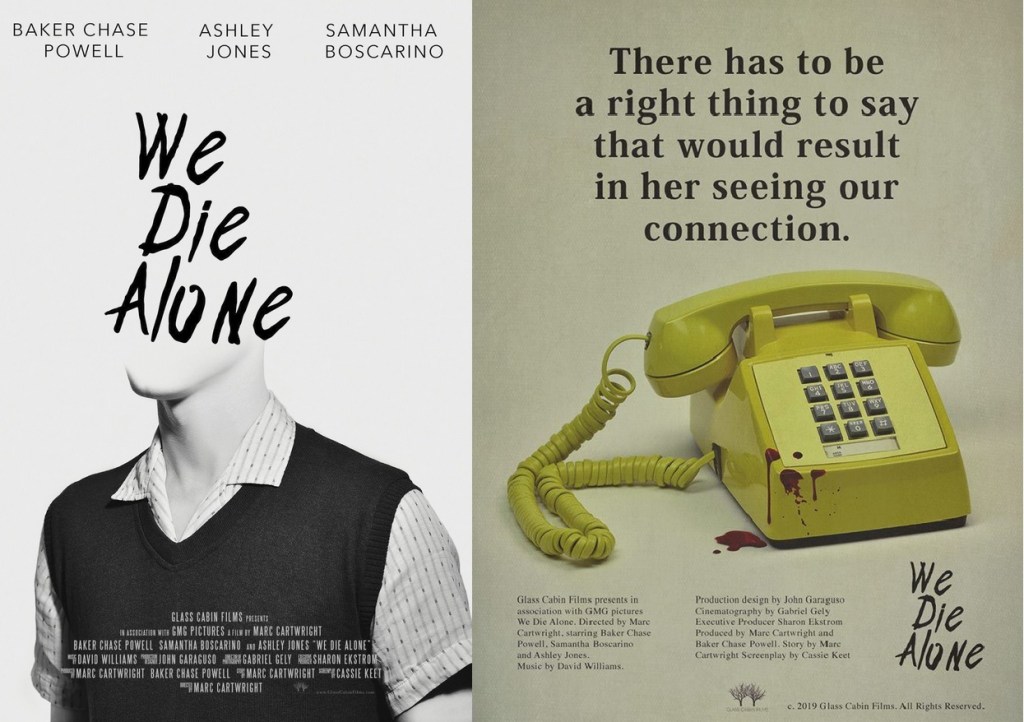
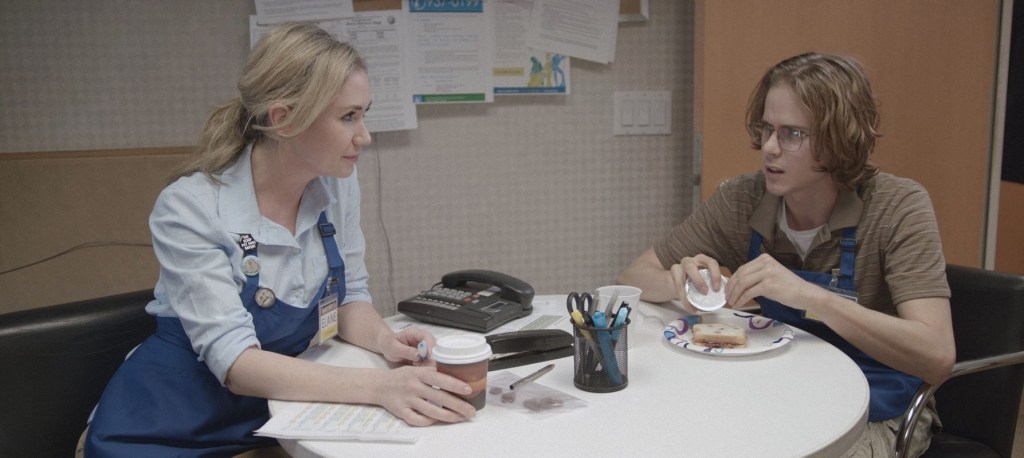
Aiden (Baker Chase Powell), a socially-inept thrift store clerk, wants to find true love (“true love” is a girl who likes jigsaw puzzles), but his courage-defying insecurities lead to social media ghosting of any connections he makes on dating apps (and his “agoraphobic-dating” a dumpster-dived mannequin). Also looking for — and fearful of love — is his co-worker, Elaine (Ashley Jones), whose own generosity with advice and to-a-fault kindness crossed with shyness perpetuates her own loneliness. And Aiden’s inability to pick up on another’s social cues makes him oblivious to Elaine’s feelings for him.
Aiden comes to find the courage through Chelsea (Samantha Boscarino), his new, beautiful — an ulterior-motive driven — apartment-across-the-hall neighbor (who digs the puzzle on his coffee table and his “vintage” ’70s-era phone). And she, like Aiden, has a failure adapting to and connecting with others through social (media) norms. And that common — real life and social media — awkwardness sends Aiden and Chelsea into a noirish decline of dangerous infatuation and obsession.
Sigmund Freud just called. Mommy’s womb wants you back; you’re not ready to be around people.
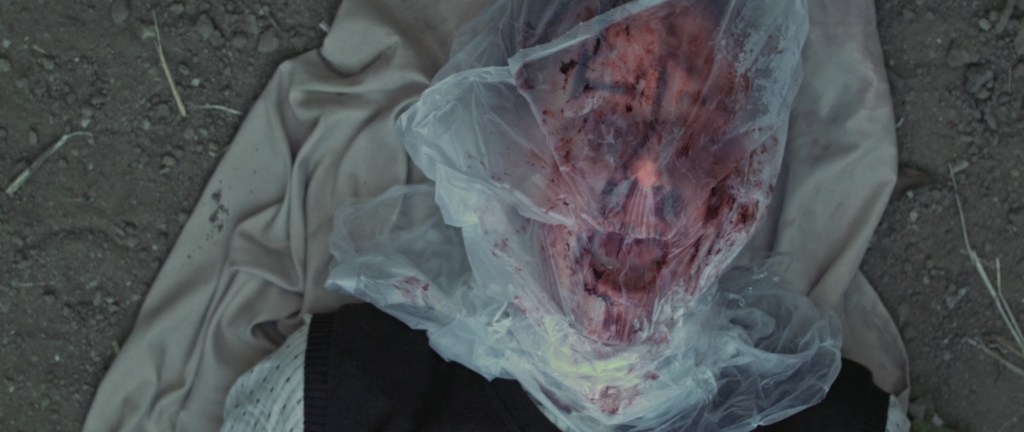
This creepy thriller effectively updates the twisty, black & white tales of Dashiell Hammett and James M. Cain for a digital world. And when the “harmless” Aiden locks his stare on his mannequin and he starts stealing dainties . . . and the friendly Elaine comments, “. . . you think you know people. . . .” Chills (courtesy of the-just-nails-it Powell). You know this isn’t going to end well. And Cassie Keet’s script (written with director Marc Cartwright) of well-crafted herrings and Cartwright’s taste for the (Dario) Argento hits all the noir-giallo cues: when that dainty, red slip hits the Laundromat floor — well, poor Aiden just found Ms. Dietrichson’s “honey of an anklet” (Double Indemnity) and triggered a femme fatale chain-of-events.
Courtesy of Glass Cabin Films
If you’ve hung out with B&S About Movies for a time, then you know how we feel (but we’re nice) about indie films by unknown filmmakers meandering with an unfocused narrative structure towards a patience-trying two-hour mark that’s crying for a 30-minute celluloid sushi in Final Cut Pro. Then there are those films that run extensive end credits to pad their too-short running time to a home-distribution acceptable 80-minutes.
What’s makes this 22-minute fifth short by writer-director Marc Cartwright so refreshing is that you’re left wanting more. And that doesn’t happen often (the recent The Invisible Mother is an example of that “wanting”). You feel denied by not getting that other hour of film with We Die Alone. If there’s ever a short film that deserves expanding into a feature film (Fruit Chan’s cringey masterpiece Dumplings comes to mind), then it’s We Die Alone.
Ashley Jones and Baker Chase Powell/courtesy of Glass Cabin Films
If Baker Chase Powell is familiar, that’s because he co-starred as Steve Dodd in Dolemite Is My Name, Eddie Murphy’s multiple-award winning biopic on ’70s exploitation filmmaker Rudy Ray Moore. Daytime TV fans have watched the Emmy-nominated Ashley Jones on The Young and the Restless and The Bold and the Beautiful; HBO surfers know her from her recurring role as Daphne on True Blood. You’ve recently watch Samantha Boscarino on FOX-TV’s The Resident, but our younger readers will remember her recurring role on Disney Channel’s Good Luck Charlie; Lifetime fans enjoyed her as the lead in 2016’s The Cheerleader Murders (and she’s very good there, and here).
We Die Alone made its premiere at the Oscar-qualifying festivals LA Shorts and The Newport Beach Film Festival. It also picked up award wreaths at the Indie Memphis Film Festival (“Best After Dark Short”), iHorror Film Festival (“Best Director”), Shriekfest (“Best Thriller Short” and “Best Actor” for Baker Chase Powell), Filmquest (“Best Horror Short” and “Best Supporting Actress” for Ashley Jones), Crimson Screen Film Festival (“Best Actor” for Powell), Nightmares Film Fest (Powell, “Best Actor,” natch), and finally, GenreBlast (“Best Short Film”). Most recently, the Deep in the Heart Film Festival in Waco, Texas, granted three award nods to the film: Best Horror/Thriller Short, Best United States Short, and Best Performance for Baker Chase Powell. That festival streams from Waco on September 25 through 27 and October 2 through 4. Tickets are now on sale now at www.deepintheheartff.com.
You’ll be able to stream this multi-award festival winner beginning August 21 through Amazon Prime, with other services to follow. You can stay abreast of those developments with We Die Alone — as well as the other projects of Glass Cabin Films — on You Tube and Facebook and their official website.
Disclaimer: We were provided a screener by the film’s P.R firm. That has no bearing on our review.
About the Author: You can learn more about the writings of R.D Francis on Facebook. He also writes for B&S About Movies and publishes on Medium.
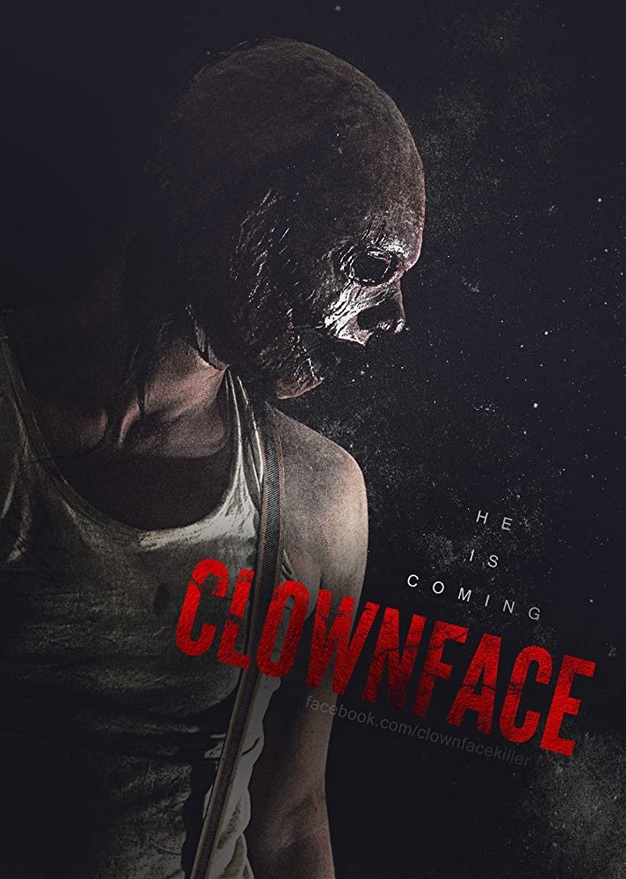
Alex Bourne is a British filmmaker that indie-horror fans and streamers have spent time with before, courtesy of his multi-nominated-winning debut feature film The House of Screaming Death (2017), which served as his homage to the British Gothic Horror anthologies of the ‘60s and ‘70s. His welcomed return to the streaming-verse is this homage to American ‘80s slashers — with a touch of Italian giallo — about a legendary, deranged serial killer known as “Clownface” (British stuntman Philip John Bailey) terrorizing a small town.
As with the past “urban legends” surrounding ‘80s slashers: no one speaks of Clownface, as the deaths and disappearance by his hand are written off as run-of-mill disappearances, disenchanted runaways, and accidents. Yes, the townsfolk scoff at and chase off anyone who comes to town asking questions.
The story starts a year after the abduction of Zoe, with her friend, Jenna, teaming up with Owen, a survivor of a Clownface attack ten years earlier. Both are convinced that, not only is Clownface real, but Zoe is alive and held captive — as Clownface searches for the “perfect flesh” to construct real-life masks to cover his disfigured face.
While Clownface wants to be a British Halloween and is affable in its homages, what it lacks in Carpenter-finesse or Argento-tact is effectively compensated by well-executed in-camera effects (and a very creepy mask) and the cinematography is sharp and solid above the usual horror-streaming norms. So what we end up with is more like Tobe Hooper’s slasher cop-in, The Funhouse, which was a well-done film that’s respected in some quarters, but certainly not revered as an ’80s “slasher classic.”
As with most unknown, new-to-thespin’ actors in these streamers, the acting is a bit strained in spots; they’re not great, but not awful either. But kudos to Bourne for his killer going the Leatherface-route and making his mask from victims, as opposed to just painting on a crazy clown face (like the recent, lot-of-fun Clown Fear) or wearing a crazy-clown Halloween mask (like The Funhouse).
And Clownface brings on the rock ‘n’ roll with the ’80s-esque appropriate song “Video Nasty”* by Lesbian Bed Death as its theme song; the band briefly appears in the film — with one of its members meeting a graphic end courtesy of Clownface. And you know how we dig being turned onto new, indie tuneage via an indie film. Clownface is a worthy streamer, indeed.
Clownface hits streaming platforms on August 18 courtesy of Wild Eye Releasing. *And be sure to join us for our three part series of reviews of the films released during the early 1980’s U.K. video scare “Exploring: Video Nasties.” (Part 1, Part 2, Part 3).
Disclaimer: We were provided a screener by the film’s P.R firm. That has no bearing on our review.
About the Author: You can learn more about the writings of R.D Francis on Facebook.He also writes for B&S About Moviesand publishes on Medium.
Yeah, you know the drill . . . it’s all about those Mill Creek box sets and this Savage Cinema 12 Movie Collection pack served as the perfect fodder in supplying us with a nifty batch of obscure and off-beat, rubber-burning drive-in epics for our “Fast and Furious” tribute week to Universal Studios’ Fast and Furious franchise created Gary Scott Thompson.
So, with Universal’s March announcement that the ninth Fast & Furious movie in the “Fast Saga,” officially titled F9, would be pushed back from its May 22, 2020, North American premiere to April 2, 2021, which pushes Fast & Furious X beyond its planned April 2021 premiere, you can get fast and furious with these films. Well, just a little. Maybe.
Burnin’ rubber, hot asphalt, and smokin’ babes!
Here’s the links to the reviews on the Savage Cinema set:




















 B&S About Movies
You must be logged in to post a comment.