午夜殭屍, aka Midnight Vampire (1936)

Coming up in November we’re reviewing Mill Creek’s Sci-Fi Invasion 50-Film Box Set — and we take a poke at Willie Palmer, aka Godfrey Ho, and joke about his bunny vampires in Robo Vampire; however, those rascally vamp-rabbits aren’t from cinematic ineptitude: they’re from Chinese legend: the Qing Dynasty legends of the Jiangshi (meaning “hard or “stiff”). Their tales first appeared in widespread print in 1789 by way of the literary visions of writer Ji Xiaolan. Director Yeung Kung-Leung was the first to bring the Jiangshi to the big screen with 1936’s Midnight Vampire. The Chinese text, spoken, is pronounced Wǔyè jiāngshī, and actually translates as “Midnight Zombie” in the English. Thus, while me may be a bit rough on Ho’s inversion of Chinese vampires, it actually works as a smart parody on the Jiangshi genre. Who knew?
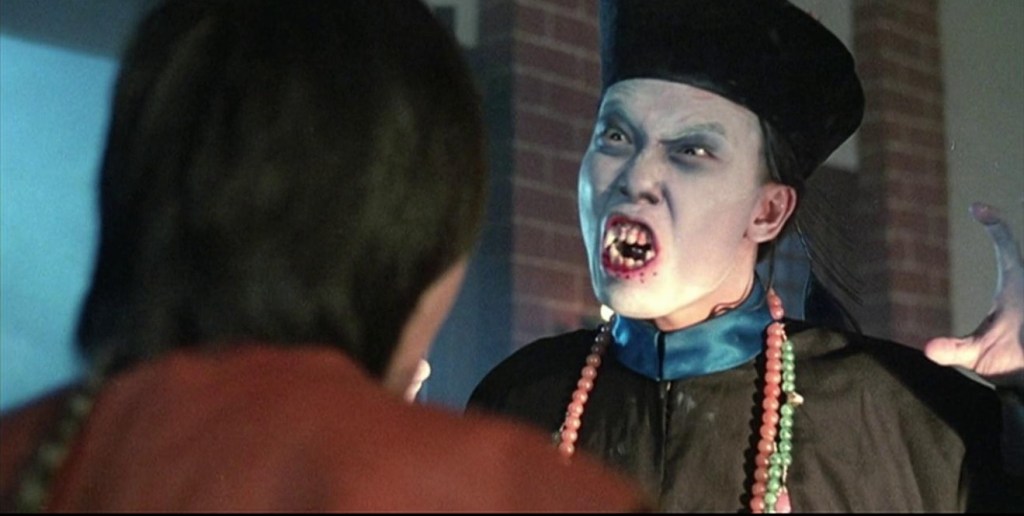
From Ricky Lau’s Mr. Vampire (1986) courtesy of the IMDb.

As you can guess: this movie — a tale about a dead man who returns from the grave to kill his brother — is impossible to find, with trailer/clips and images even harder (pardon the pun). How difficult? Even the film’s IMDb page is a barren wasteland; Letterboxd doesn’t list the film in its digital catalog. Where’s Criterion Collection and Kino Loeber on this one? (Hey, at least Kino Loeber picked up all of Jean Rollin’s ’70s erotic vamp tales, so all is well, KL!)

The Hong Kong film industry — as with Italy’s — is not one to pass up a hot trend when they see one: they’ve been responsible for more of its fair share (starting in the ’80s) of hoping vampire movies than any other Pacific Rim country, starting in 1936 with Yeung Kung-leung’s Midnight Vampire — released just five years after Universal’s Dracula in 1931 (the first licensed cinematic adaptation of Bram Stoker’s 1897 novel). While it was shot first — but released after (and not based on Stoker’s work) — Danish director Carl Theodor Dreyer brought his silent, 1932 vampire tale (the exquisite) Vampyr, aka The Dream of Allan Gray, based on elements of five short stories — “Carmilla” in particular — from J. Sheridan Le Fanu’s 1872 collection of supernatural stories In a Glass Darkly. However, prior to these tales was F.W. Murnau’s unauthorized, 1922 inversion of Stoker’s work, Nosferatu.

The most popular and widely accessible Jiangshi tale is Ricky Lau’s 1985 action-comedy take on the Qing Dynasty legends, Mr. Vampire (which provides the above image; so don’t email us: we posted the image on purpose to make a point). That film was produced by Sammo Hung who, if you know your Walker, Texas Ranger trivia, starred on that CBS-TV program and had his own spinoff series, Martial Law. And Sammo Hung got the industry-fad of ‘80s jiangshi movies a-hopin’ with 1980’s Encounters of the Spooky Kind; the loose sequel/sidequel was, of course, Mr. Vampire.

And how it is that Chuck Norris never fell into Hong Kong B-Moviedom and kicked some comedic, Jiangshi stiff-ass punks? The tales of the hoping bunny vampires will never tell. . . .

Update, October 2022: We had an enjoyable Facebook exchange this weekend — with a reader, the chap below in the comments — and one of our critical contemporaries, one well-versed in Asian cinema, regarding Yeung Kung-Leung’s Midnight Vampire.

The short of the story: Courtesy of Lingnan University in Hong Kong, we’ve collectively confirmed this classic of Hong Kong Cinema — the first film from that country concerning vampires — film is truly lost, forever: both images of and the film itself, are gone.

About the Author: You can learn more about the writings of R.D Francis on Facebook. He also writes for B&S About Movies.
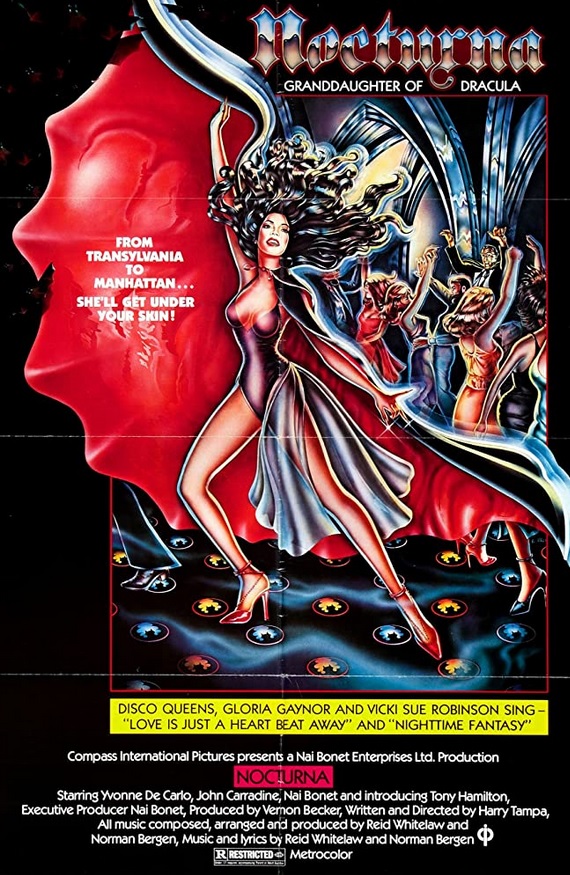
Nocturna, Granddaugther of Dracula (1979)

“On the other hand . . . if I’m dead, why do I have to wee-wee?”
— Grandpa Dracula (aka, John Carradine)

Vietnam-born Nai Bonet began her show business career as a belly-dancer at the age of 13 and headlined a popular belly-dancer show at the famed Flamingo Hotel in Las Vegas. And when a commercial, film, TV show (she appeared as a harem girl on The Beverly Hillbillies, for example), or a record company needed a belly-dancer for a cover shoot, Nia was there. Her famed reached a point — coinciding with the ’60s then-hot “Go-Go” craze — that, at the age of 15, she released the 1966 novelty-pop go-go song “Jelly Belly”; the video recorded for the song became a centerpiece exhibit of bar-arcade Scopitone video jukeboxes.

But what Nai really wanted to do was act. And she made her big screen debut alongside John Cassavetes and Mimsy Farmer (The Wild Racers) in the Daniel Haller-directed and Charles B. Griffith-penned Devil’s Angels (1967). But parts were hard to come by; so it wasn’t until 1973 when Nai was cast in her next co-starring role, this time alongside ex-60s teen idol Fabian Forte (Thunder Alley) in Soul Hustler. By the late ’70s, Nai wasn’t a star; she was buried in the credits of the “biggest” film of her career: the biographical sports drama The Greatest (1977) about and starring Muhammad Ali.

Frustrated, Nai decided to take matters into her own hands by writing and producing her own leading lady role (see Loqueesha and Easy Rider: The Ride Back for other examples of this filmmaking approach). And she wrote a vampire tale that filmed during a two-month period in October and November of 1978 for Compass International Pictures. At the time, Compass had a worldwide hit on their hands with their debut release: John Carpenter’s Halloween. Then the studio used their Halloween profits to finance Roller Boogie. And Tourist Trap. And Blood Beach. And Hell Night. And Disco Dracula, aka Nocturna. You see where this is going? Yep. The studio shut down for good in 1981. But, at the hands of studio co-founders Irwin Yablans and Moustapha Akkad, the 1985-reimaged and re-incorporated company, now known as Trancas International Films, retained the copyrights to the Halloween franchise and came to produce every picture in the series.

And Nai Bonet’s leading lady and writing debut wasn’t just any low-budget ($200,000) Dracula picture. Compass International negotiated with MCA Records to release a disco-flavored double album film soundtrack headlined by then hot disco-queens Gloria Gaynor and Vicki Sue Robinson. (You can review the album’s liner notes on Discogs.) Was the soundtrack more successful than the film? Oops. It was. Not that the soundtrack saved Gaynor and Robinson from their inevitable, new-wave career oblivion. Of course, all those pesky music rights and major-label legalese gibberish bit (sorry) the film in the arse neck because, the film was barely released in the home video market; it’s currently lost to the ages, only available as a battered and ultra-rare VHS. The LP soundtrack is easier to find.

Yes. You heard right. In the grand tradition of Harry Hope meshing disco with hicksploitation in Smokey and the Judge (and hiring disco band Hot as “actors”), low-budget auteur Harry Hurwitz (here as Harry Tampa; he then taught at the University of South Florida in Tampa) came up with the idea of meshing disco with a Dracula picture. For reals. So what you have here is Saturday Night Fang. Or Thank God It’s Fang Day. Or Disco Dracula. And Uncle Harry probably wanted to use the titles Vampire Hookers and Lust at First Bite, but those were already used for a pair of slumming ’70s drive-in vamp romps. And Universal took Love at First Bite for their own George Hamilton-starring vamp comedy. So Harry and Company came up with — the admittedly original — Nocturna handle. And knowing he needed icon-horror names on the box to sell this mess — and that most of those “iconic” names were down-and-out and available on the cheap, he was able to convince Yvonne De Carlo and John Carradine to star. (Papa Carradine’s previous tenure as The Count was the western-vampire hybrid that was 1966’s Billy the Kid Versus Dracula. Poor John.)

And don’t be duped by that R-rating; this is a pure PG-13 boondoggle that ol’ Harry decided was a celluloid cluster that needed to be spiced-up with nudity because, well, no one counted on the Knack coming along and driving a new-wave stake through disco’s heart. What was Harry T. gonna do? Wipe the soundtrack and hire the Cars and Berlin to score the movie? Cut Vicki Sue Robinson’s part and graft-in Terri Nunn? Fire Moment of Truth and hire the Knack as Drac’s Castle house band? Let Rick Ocasek get fanged buy Nai?

There’s no doubt that Nai Bonet gives you that Garth Algar climbing-up-the-rope-in-gym-class-feeling, but yikes . . . she’s as wooden as a Van Helsing stake. So thank god Sy Richardson (Cinderella) shows up as a jive-talking vampiric pimp and Theodore “Brother Theodore” Gottlieb (Tom Hanks’s The ‘Burbs) is a piss as the Hotel Transylvania’s manager (with a boner for Nocturna that Papa Drac uses to his advantage). And Carradine — as Grandpa Dracula — and Yvonne DeCarlo — as “old” family friend and Drac’s ex-squeeze, Jugulia Vein — probably full knowing they were in a stinker, brought their A-game anyway and decided to have fun with this mess and own their roles. (There’s nothing finer than seeing the actors that you care about making chicken salad out of chicken shit. It only makes you love ’em more.) And Nocturna? Well, in addition Brother T., the Wolfman has the hots for her, but she only has eyes for Jimmy: the disco-drumming (and gay) Tony Manero-clone (Antony Hamilton, in his film debut; you might remember his later roles in Howling IV: The Original Nightmare and the late-’80s TV Mission: Impossible reboot).

And that sets up the movie. The tax man “haunts” the House of Dracula, so ol’ Drac turned the family castle into The Transylvania Hotel to pay the bills. Overseeing the operation is his granddaughter Nocturna, who also cares for ‘ol Drac hiding in the basement-crypt bowels (i.e., giving him his breakfast goblet of blood every morning, helping him with his false-fangs, and listening to him bitch about his erectile dysfunction and enlarged prostate).

But the estate’s blood supply is running low and business needs a pick-me-up, so Nocturna books American disco band Moment of Truth (who appear on the aforementioned soundtrack) to entertain the guests. And she begins to experience human love for the first time for Jimmy; she doesn’t want his blood and she sees her reflection for the first time. And she, unlike Elaine Benis in Seinfeld (sorry, Sam), can “turn” Jimmy back to the heterosexual nether regions.

So she runs away to New York with Jimmy and finds support with de Carlo, herself a vampire, who resides in darkness under the Brooklyn Bridge, and helps Nocturna avoid Grandfather’s henchmen who’ve come to return her to Transylvania. And mortal-immortal love, disco dancing, bat transformations, faux improv-crosses of neon-letter Ts, and vampires sharing their final kiss under a romantic sunrise, ensues.

Wow. There’s an actual VHS rip in the digital ethers? Yes! You can watch the full movie on You Tube, but because of the nudity, you’ll have to log in . . . if you dare to “turn that beat around,” that is. Bill Van Ryn is watching and getting his disco fix. So why not you? Don’t fret. You will survive.

Hey, be sure to check out our “Drive-In Friday” tribute to five of good ol’ Uncle Harry’s films!

About the Author: You can learn more about the writings of R.D Francis on Facebook. He also writes for B&S About Movies.

Jugular Wine (1994)

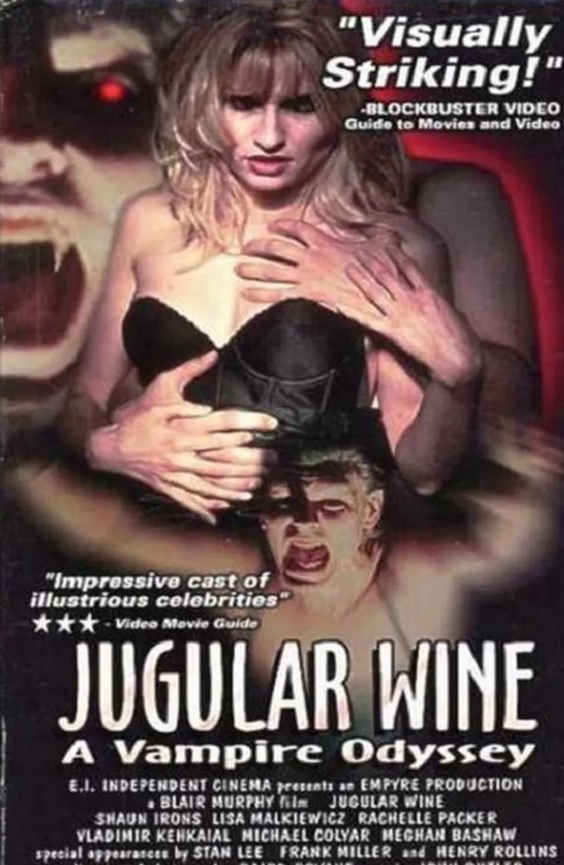
If you ever wanted to see a vampire flick that slaughters Black Flag’s Henry Rollins (playing himself; then at the top of his solo game with The End of Silence and Weight albums) and comic-book icons Stan Lee and Frank Miller (an anthropology professor and a fellow grad student, respectively)—as it quotes the poems of Walt Whitman (remember: the father of the modern vampire genre, Bram Stoker, was a Whitman admirer, and later, pen-pals with the poet)—then this idiosyncratic vampire romp is your goblet of blood.

After several centuries of undead romance, Ms. Dracula needs a new neck in her life, so she decides to fall in love with the food that comes in the form of James Grace, a Philadelphia thesis-working anthropologist in Alaska (he’s on a ship; thus the Whitman quote about “deep waters” and “seas of god”) who becomes the unwitting third side in a gothic love triangle. Why? Because mortal women aren’t exactly banging down the doors of anthropologists . . . so when a several-centuries-old hottie shows up and drops her parka naked-to-go, you don’t did-a-doddle with your rocks and dirt: you go for it. (I would. Undead me, baby.) Well, it’s not that cheesy: Alexandra the Vamp is actually on the run to Alaska, the last earthly sanctuary for vampires as the nights grow shorter—and she’s being hunted by her kind’s eldest, known as Legion.

When the half-vampirized Grace discovers Mr. Dracula, aka Legion, has murdered Alexandra, his new undead-life’s love—as result of her mortal infidelities—he embarks on an Easy Rider meets Phantasm II-inspired sunless odyssey; a hallucinatory roadtrip through America’s underground lands of the undead where he meets an array of fringe-society characters in Los Angeles, Utah, New Orleans, and Philadelphia in his quest for revenge. Then there’s the side plots with Nickadeamous (writer-director Blair Murphy) tracking down Grace—and Grace tracking down Dr. Donna Park, who has the secrets to the mythical Induit creatures that fuel the vampire myth. And that she’s not dead or missing—but a vampire herself, and Grace killed her back on the ship when Nickadeamous attacked him.

One of the most—if not the most—ambitious indie-art house vampire flicks you’ll ever see (if there is such a genre), this vamp’s cross-country ambitions hold up (somewhat) against its aspirations-over-budget, courtesy of its avoiding the graveyard brooding and strip club clichés of most modern vampire flicks, as the protagonist’s search takes him to unconventional, underground-kitschy coffee houses and maybe-a-little-bit-more-conventional goth night clubs (aka, the pretty-cool named Caligari’s Casket that spins F.W Murnau’s 1922 vamp-romp, Nosferatu for “atmosphere”; you know, the place where Henry Rollins hangs out to become fang-chum).

It’s all from the mind of indie writer-director Blair Murphy who self-financed the film through his family’s funeral home business. Is this a case of “. . . if Tommy Wiseau made a vampire flick?” Eh, well . . . while this was made in the early ’90s and shot-on-film, the proceedings look like an ’80s “Big Box” SOV romp, à la (the much better granddaddy of SOV) Blood Cult. (But Jugular Wine isn’t as bad as fellow SOV’ers Spine. Or Things.) And we’re not sure if that’s from cinematic ineptitude, purposeful SOV-homage, or the battered VHS is so washed-out that it looks like an ’80s SOV’er. And what’s the deal with the white grease paint vamps? Again, we’re not sure if that’s special-effect ineptitude (due to cash) or a homage to Herk Harvey 1962 classic-creeper, Carnival of Souls, which, in many ways, Jugular Wine resembles in its self-financed, one-off guerilla filmmaking style. But make no mistake: Carnival of Soul (which should be as revered as George Romeo’s Night of the Living Dead) is the far superior film. Far superior.

While Murphy certainly possessed the same generous self-financing verve as The Room’s auteur, Murphy has a more effective grasp of filmmaking. Sadly, in lieu of his musician and comic-book stunt castings, he should have dug up a few down-on-their-luck B or C-List actors (Eric Roberts was already down to direct-to-video potboilers like Power 98 by this point; he would have been a prefect class-up-this-joint casting) to carry his intelligent script—as the strained overacting, in conjunction with its way-too-long 98-minute running time, make this vamp romp a hard swallow (yuk, yuk, sorry) . . . for you, maybe. But I dig this way more that Tom Cruise’s mainstream fang sporting, so kudos, Mr. Murph!

There’s no PPV-VOD streams or freebie rips of the VHS. And that “Blockbuster” plug on the box art is totally bogus. Across three local Blockbusters, I never one saw a copy of Jugular Wine on their mainstream shelves: this was strictly a 10,001 Monster Video or mom-n-pop rent-n-carry. For you digital hounds: Yeah, there are DVDs in the marketplace, but caveat emptor: they look like grey market burns. (No, they are definitely grey market burns.) For those of you that have never seen Jugular Wine, the best we’ve got is this eight-years post documentary (on You Tube in six-parts) that Murphy strung together in 2002, which features scenes from the film. Apparently, the later-issued DVDs contain the documentary.

Guess what? We found a six-part upload of the “Making Of” featurette.

About the Author: You can learn more about the writings of R.D Francis on Facebook. He also writes for B&S About Movies.

Vampire at Midnight (1987)

If Harry Hope, who combined disco and hicksploitation in Smokey and the Judge were here, he’d say” “So why not Spaghetti Westerns and R&B. I can see the tagline now: ‘The first R&B Western . . . Blazing Saddles with a beat to move your feet.’”

“Oh, yeah? Not if I produce it first, Hopie.”

“Harry Tampa? Hey, at least I use my real last name as a screen credit, ‘Mr. Hurwitz.’ Whaddya gonna do, another disco-vampire flick with Nai Bonet?”

“Yeah, Nocturna, Granddaughter of Dracula is the last discoploitation bloodletter I’ve ever do. But I was thinking. . . .”

“A Hope-Tampa Production?”

“Well, more like Tampa-Hope.”

“We’ll compromise: A Double H-Production.”

“Okay, so, what’s the pitch?”

“Dirty Harry Meets Count Dracula.”

“I like it. Sorta like the old Kolchak: The Night Stalker TV movies-series — only with a cop instead of a reporter.”

“You call Christopher Lee. I’ll give Eastwood’s people a ring.”

“You think they’ll do it?

“Tampy, baby. You roped John Carradine into Nocturna. Never give up hope.”

Shame on you, Mr. Distributor! “Adapted to a ‘Stephen King’ style,” indeed.

Okay, so Harry Hope and Harry Tampa didn’t co-produce this Magnum n’ Fangs romp. But Jason Williams did.

Yes. That Jason Williams: Flesh Gordon himself.

Flesh Gordon, their sexploitation, sci-fi porno spoof of Universal Pictures’ 1930 serials, was the first of four films Williams starred in for producer Bill Osco, he the king of the “erotic art film” (aka, porn) that launched the “Golden Age of Porn” (we devle into it with our review of Spine) and unleashed the likes of Linda Lovelace in Deep Throat and Marilyn “Rabid” Chambers in Behind the Green Door. Together, team Osco-Williams also made Alice in Wonderland (1976; a porn-musical), Cop Killers (1977; Williams as a hippie serial killer), and the drive-in T&A romp, Cheerleaders Wild Weekend (1979, aka the less offensive aka The Great American Girl Robbery).

Here, Williams went it alone, with Tom Friedman (who produced the Williams writing-directing efforts Flush, Time Walker (the best-distributed; with Ben Murphy), The Danger Zone, and Zone’s sequels). For their director — in his debut — the Friedman-Williams celluloid collective chose experienced producer Gregory McClatchy (most noted for the 1984 horror documentary Terror in the Aisles) — who didn’t sit behind the lens again until the 2008 TV movie Soccer Mom for, of all networks, The Disney Channel.

As with any grizzled cop romp, Vampire at Midnight is set in Los Angeles as nine victims, over the course of several months, have turned up with the blood drained from their bodies. Of course, the “it bleeds it leads” press have dubbed the vic as “The Vampire Killer.” On the case is our not-so-Dirty Harry: Homicide Detective Roger Sutter (Jason Williams). Clues come by the way of his attractive neighbor-squeeze (natch) Jenny Carleton (Lesley Milne, who quit the business after), a concert pianist under the care of self-help guru-cum-hypnotherapist Victor Radikoff (who worked his way up to guest starring roles on TV’s Murder, She Wrote; then back down again to Texas Vampire Massacre). Is Radikoff a real Transylvania vamp or just a creepy shrink with a blood fetish who, sans fangs, hypnotizes his victims, then slices and drains them?

Is this dull to the point of yawn. Yeah, sorry to say that it is.

Jason Williams isn’t a bad actor. And Gregory McClatchy isn’t a bad director. And Daniel Yarussi (Christopher George’s Graduation Day and Betsy Russell’s (!) Tomboy) isn’t a bad cinematographer. However, when compared against Dirty Harry’s pursuit of “Scorpio” or Charles Bronson’s Leo Kessler’s pursuit of his office equipment repairman-serial killer in 1983’s 10 to Midnight (or, dare I say, Stallone’s pursuit of “The Night Slasher” in 1986’s Cobra), this vamp feast is lost somewhere in the between the Moon and New York City. Perhaps if Cannon Films produced it and J. Lee Thompson directed it, and Eastwood (okay, not Clint, but Michael Dudikoff or Oliver Gruner) and Christopher Lee starred . . . and let’s face it: Lee was already doing junk like Howling II, Honeymoon Academy, Gremlins 2, Curse III, and A Feast at Midnight, so playing a hypnotherapist with a blood jones isn’t exactly a step down for Sire Chris.

Hey . . . you know who would have classed this up: Klaus Kinski as Radikoff. That’s my “Devil’s Advocate” remake of Vampire at Midnight: Michael Dudikoff and Klaus Kinski. Now, THAT’S a vampire vs. copy flick. That would have banked. What? Kinski said go “F” ourselves? Okay, call Angus Scrimm.

What the . . . how can there be NO freebie online rips? You Tube, TubiTv, and The Internet Archive.org . . . have you let us down? VHS copies (on Fox’s Key Video imprint) are hard to find and the DVDs look like grey market rips to these analog-sloshed eyeballs. What? This isn’t in the public domain either, Mill Creek? Denied! So, if you want a copy, look for the DVDs issued by Code Red Releasing under the “Maria’s B-Movie Mayhem” banner, so at least you know that it’s sourced from the master and not some cheap-jack VHS rip. The bonus with the Code Red-version: it offers a commentary track with Jason Williams and Greg McClatchy. The negative: your stuck with WWE star (and singer and actress) Maria Kanellis in wraparound segments as a cut-rate Elvira in Wonder Woman-spandex fitted with a set of plastic fangs.

There’s a couple of VHS-washed out excerpts HERE and HERE to revisit Vampire at Midnight, just another one of those “what might have beens” from the VHS dung heaps lost somewhere beyond the midnight horizons.

About the Author: You can learn more about the writings of R.D Francis on Facebook. He also writes for B&S About Movies.

Beverly Hills Vamp (1989)

Oh, Elke Sommer and Britt Ekland, oh, how I love thee both. Let me count the ways. The way I confuse your German bombshellness and Swedish beauty and mixed up your credits and get a quarter-way into a review and realize that I credited babe Elke — with her also ’90s low-budget horror doppelganger Severed Ties (which was a long ways away from her Baron Blood and Lisa and the Devil days) — for Britt’s vampy role.

Forgive me, Britt, ye of our Roy Ward Baker-Milton Subotsky opuses Asylum (1972) and The Monster Club (1980), for this is your movie. And how did you end up in this knock off of Jim Carrey’s Once Bitten (1985)? Why Fred Olen Ray hired you, ye of the great Terminator-cum-Alien patch job Alienator (1990). Which leads us to wonder: Why didn’t Fred offer you a two-picture deal and give you the role of the Alienator? How perfect that film would be with you — and Ross Hagan and Robert Quarry goin’ — on all “Star Wars” in the OlenVerse.

But wait! Hey, Father Ferraro is Robert Quarry (a long ways away from the Count Yorga days). And look! There’s Michelle Bauer (Witch Academy! Evil Toons! Sorority Babes in the Slime Bowl-o-Rama!, aka adult star Pia Snow!). And what the . . . ubiquitous film “nerd” Eddie Deezen (do we really have to rattle off his resume of B&S favorites) . . . as the hero?

We bow, oh, Lord Olen Ray. We bow before ye for employing Ernest Farino, the writer behind the Sly Stallone rip Terminal Force (1989) and Wizards of the Demon Sword (1991), in giving us this bevy of bloodsucking hookers from Transylvania. Which is a better title, come to think of it . . . but we get it: you needed to get some of that Eddie Murphy Beverly Hills Cop stank on ‘ya . . . or was that Terror in Beverly Hills? Which leads to ask: Why haven’t you and Frank Stallone done a movie, yet? (Fred’s rest on B&S: Biohazard, Dinosaur Island, Wizards of the Demon Sword, Evil Toons, and Beverly Hills Vamp. One day we’ll get to Star Slammer, Cyclone, Deep Space, Evil Spawn, and Hollywood Chainsaw Hookers.)

Watch this scene clip and trailer.

So wow. (The always affable) Eddie Deezen is the “cool” nerd, Kyle (you know, like Anthony Michael Hall’s “Farmer Ted” in Sixteen Candles), the brains of the geek-triad of Brock (Tim Jr., the son of Tim Conway from the The Carol Burnett Show; know your Antenna TV reruns, youngins) and Russell aspire to make a movie. And it turns out Brock’s uncle Aaron (who’s so “hep” he dresses like Sonny Crockett from Miami Vice) is a down-and-out director in Hollywood who can “help” them get their script made.

So to pass the time — in between their big meetings and sightseeing — they visit a call girl service, (i.e., prostitutes, i.e., brothel) managed by Madame Cassandra (Ekland) and her “girls” Jessica, Claudia, and Kristina (Bauer). Of course, the call girl service is a front for a vampire coven. Now Kyle, being the “cool nerd,” has a girlfriend, Molly, and, to be faithful to her, leaves Brock and Russell behind for a night of fun. And they never return. And when Kyle goes to the brothel, whadda know: nobody knows what Kyle is talking about. And Molly flies into Hollywood to help Kyle find his friends — and gets fanged. And when Brock finally shows up, he’s not the same either: yep, he’s been fanged to a pale and clammy complexion. Cue Robert Quarry. His Father Ferraro is the Van Helsing (and priest-aspiring-screenwriter) of this vampy boondoggle (as only Lord Olen Ray can give us) that helps — again, the “hero” — Eddie Deezen defeat Britt Ekland Elke Sommer, damn it, Britt Ekland. Oh, and to get some of that Jim Carrey Once Bitten (1985) stank on the celluloid: we have Balthazar, a gay butler-daylight protector-man servant (just like Clevon Little’s Sebastian) with the “hots” for Eddie Deezen, who confesses he doesn’t think he even likes girls.

So, after that fabulous light-show vamp disintegration (in the clip above) do we really have to tell you this is no Love at First Bite: you remember that George Hamilton vampire-in-modern-New York comedy that cleared near $40 million against a $3 million budget in the summer of 1979? Does this movie need chainsaws and a cult of Egyptian chainsaw-worshipping prostitutes, you know, like Olen Ray’s (last year’s) vamp rom, Hollywood Chainsaw Hookers? And that’s what we have here: the same vamp romp played for camp. Well, both are “campy,” but you get the drift.

Now, amid all of the excessive nudity — surely added to distract our one-track minds from the swing-and-a-miss vaudevillian one-liners endlessly poking holes (sorry) in vampire folklore and vampires movies in general — Olen Ray claims that, amid the bad gags, there’s a socio-“subtext” about practicing safe sex.

Oh, Fred Olen Ray, you scamp. We don’t come to your movies for the social commentary. For ye are the king of all things boobs, blades, and blood, with a (very large) soupçon of aliens and bikinis.

But what I am talking about. I sans all of that ’80s boobs and bikinis tomfoolery of your 158-and-climbing resume for your Christmas movies. Yes, you heard me right: Fred Olen Ray is in the Christmas movie business these days. No more chainsaws. Bring on the enchanted mistletoe and magical snowglobes.

And it’s that time of year where Hallmark is holiday-programming the automation hard drives for — what looks like — a COVID Christmas. (Now that’s an exploitation title, Asylum Studios! Hint!) So, to help you make the list — and we checked it twice — we give you the holiday films resume of the man that went from vamps . . . to Santas.

And for that, we bow to ye, oh, Lord Olen Ray. We bow before ye.

Fred Olen Ray’s Holiday Films Resume

2020
A Royal Christmas Engagement – Director

2019
A Christmas Princess – Director
One Fine Christmas – Writer & Director
Baking Christmas – Director

2018
A Wedding for Christmas – Producer & Director
A Christmas in Royal Fashion – Writer & Director

2016
A Christmas in Vermont – Producer, Writer & Director

2015
A Prince for Christmas – Producer, Writer & Director

2014
Christmas in Palm Springs – Producer & Director

2013
All I Want for Christmas – Producer & Director

2013
Holiday Road Trip – Writer & Director

2012
A Christmas Wedding Date – Producer, Writer & Director

About the Author: You can learn more about the writings of R.D Francis on Facebook. He also writes for B&S About Movies.

Vampire Hookers (1979)

“Hey, Moe! These chickees are vampires!”
“Shut up, numbskull. I’m having sex!”

“Why soitenly! Woo-woo-woo!”
— Curly and Moe in The Three Stooges Meet The Vampire Hookers

Just when you thought The Thirsty Dead was the end all be all of Filipino vampire movies, here comes Cirio H. Santiago with his own Filipino vampire movie. Like Cirio was actually going to produce 64 films and directed 105 of his own — and NOT make a vampire movie.

What the . . . you mean the guy that kept remaking — thanks to financial backing by Roger Corman’s New World Pictures, Concorde Pictures and New Horizons Pictures — Mad Max* over and over again (seven times between 1983 to 1992!) by recycling the same post-apoc stock footage over and over again, with Stryker, Wheels of Fire, Future Hunters, Equalizer 2000, The Sisterhood, Dune Warriors, and Raiders of the Sun . . . he made a vamp flick?

Yep.

How bad?

Oh, man. Strap on the popcorn bucket.

Long before Roger Corman ponied up the post-apoc cash, poor ‘ol Cirio did the best he could with his harshly-lit, 16mm epics — this one written by Chicago-born Howard R. Cohen, who also gave us The Unholy Rollers, Space Raiders**, Saturday the 14th, the aforementioned Stryker, Deathstalker, Barbarian Queen, and Time Trackers. Wait a second . . . those have Corman stank on them! You mean Corman did back this vamp romp?

Yep.

What’s it all about?

Again. Popcorn bucket. Strap.

As if his starring role rife with lame, one-liner jokes about dental and erection issues in Nia Bonet’s Nocturna, Granddaugther of Dracula (1979; also reviewed for “Vampire Week”) wasn’t embarrassing enough, Sir John Carradine didn’t learn his lessons with this 79-minute epic rife with the same one-liners, this time as the aging vampire Richmond Reed. Spouting Shakespeare as only Sir John can, he lords over a coven of three sex-o-licious, negligee-clad ladies who pose as prostitutes to lure victims to Drac’s lair for a little sexploitation bloodletting.

Yes. You heard right. Howie wrote us a script that crosses ugh-inducing, vaudevillian comedy, ’70s grindhouse-styled sexploitation (in slow motion; you know, for that extra, emotional-visual impact), and vampires. But why did . . . a guy from Chicago . . . Corman . . . shoot this in the Philippines? And where’s the native peoples? Where’d did all of these Americans come from?

Well, why did they shoot The Thirsty Dead and Daughters of Satan with a bunch of white Americans? Because it’s cheaper to shoot in the lands below The Rising Sun. That, and the angle that the vamp-vics are dopey-horny American sailors of the McHale’s Navy-variety on shore leave at a Manila-based U.S. port of call — and that’s why the count set up shop there. But hey, ubiquitous Filipino actor Vic Diaz is here — just one of his 158 credits (including Daughters of Satan and Equalizer 2000, along with Black Mama, White Mama, just to name a few) — so it all balances out the studio’s affirmative action paperwork.

Keep your eyes out for the deli counter-styled, meat cleaver-editing and out-of-sync dubbing . . . and again, the slow-motion sex scenes that make Tommy Wiseau’s sex scenes in The Room less offensive and expertly stage — if that’s even possible. And thanks to this Santiago vamp romp: it is. And it comes complete with Three Stooges-styled buffoonery, plenty of ta-tas, and an awesome theme song that makes “The Green Slime” from, well, The Green Smile, seem like a Grammy winner. Yeah, the punctuated-by-trombone “Wah-Wah-waaaahhhhhhs” of The Undertaker and his Pals has nothing on this Cirio vampfest. Nothing. In other words: this is epic.

Ack! The embed elves strike again!
Curse you, little green elves!
Watch the trailer on You Tube.

Between 2013 and 2018, the fine folks at Vinegar Syndrome put this out on DVD and Blu-ray, so it’s easy to get a copy; it also appears on a number of public domain sets. But we found you a freebie rip on You Tube.

About the Author: You can learn more about the writings of R.D Francis on Facebook. He also writes for B&S About Movies.


* Be sure to check out our two-part “Atomic Dust Bin” blowout chronicling all of the Mad Max-inspired post-apoc films you know and love.

** Be sure to visit our “After Star Wars” round up of all of the “Star Wars Droppings” you know and love.

Range Runners (2020)

We’ve all seen our share of female-centric survival thrillers, but this feature film debut by TV and film location managers Philip S. Plowden and Devon Colwell (Chicago P.D. and Jupiter Ascending), working as co-writers and directors, don’t allow their story to degrade into (the usual) supernatural subplots; they instead chose to focus on drama and character development over the usual ultra-violence we are normally subjected to in the female-survival genre.

Actress Celeste M. Cooper—who met the writing-directing duo as a recurring background actor on the set of Chicago P.D.—is Mel, a tough-as-nails long-distance runner taught by her father to endure pain and exist outside of her body’s physical limits. While setting a goal for herself to conquer an infamous 2,000-mile hiking trail, she puts the lessons of her father (coaching her via flashbacks) to the test when two desperate men (Sean Patrick Leonard and Michael B. Woods; both Chicago P.D. and Chicago Med acting alum) descend her into a life of terror.

The day and night outdoor photography on this by Darryl Miller (Chicago P.D., natch) is crisp and sharp; in conjunction with its tight script and pacing from Plowden and Colwell, Range Runners rises above the usual VOD streaming and Lifetime damsel-of-the-weekend product. The acting in this is superb and assures we will see more from Cooper, Leonard, and Woods on the small and big screen.

You can learn more about Range Runners through the website of Fatal Funnel Films and look for it on DVD and VOD beginning September 8.

Disclaimer: We were provided a screener by the film’s P.R firm. That has no bearing on our review.

About the Author: You can learn more about the writings of R.D Francis on Facebook. He also writes for B&S About Movies and publishes on Medium.

Widow’s Point (2019)

“This is a bad place. People aren’t meant to live here.”

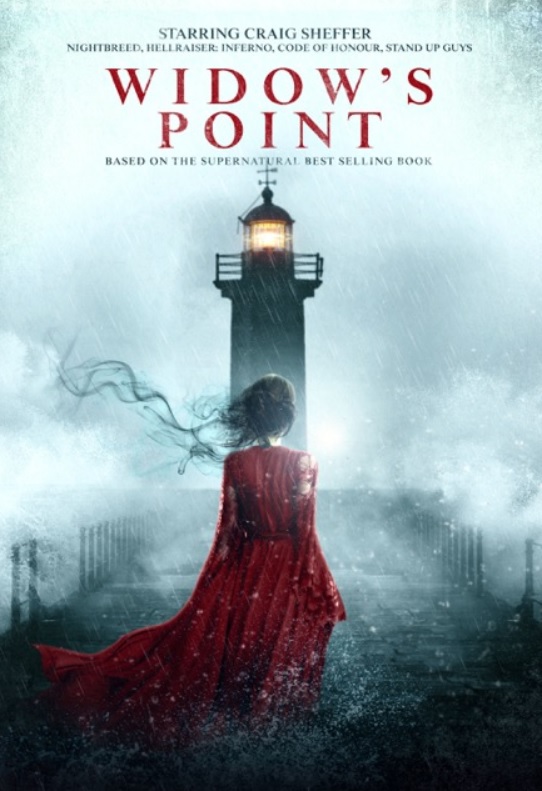
Widow’s Point is a supernatural horror adaptation by screenwriter-director Gregory Lamberson of the best-selling book co-written by Richard Chizmar and his son, Billy.

The sorely-missed-from-the-big-screen Craig Sheffer (Yes, of A River Runs Through It . . . but this is B&S About Movies, bud. So we remember Craig for his start in Voyage of the Rock Aliens, as the rich-dick in Some Kind of Wonderful, and Clive Barker’s Nightbreed) stars as Thomas Livingston, a Stephen King-esque writer who spends a self-exiled weekend in a haunted lighthouse to help promote his next book—and where he’s taunted by the Point’s supernatural forces.

Dow on his luck and in desperate need of a new best-seller, he decides to write a book on “true events” that occurred at the Widow’s Point Lighthouse in Harper’s Cover—with the hopes the advanced publicity will generate advanced sales. At that point, things go a little Blair Witch-cum-Poltergeist as Livingston’s assistant, Rosa, along with Andre, a filmmaker, will accompany him to the island to chronicle “the stunt.” Of course, the mysterious lighthouse keeper will take the rental cash, even if it’s a “bad place,” because greed is good. And as far as Livingston is concerned, ghosts and their related curses are just urban legends and fables. And Parker locks the door to the lighthouse. . . .

Before we get to the Poltergeistin’, Livingston’s book research unfolds a series of flashbacks about the house’s history: the suicide of an actress that occurred while the house served as the backdrop for a Hollywood production, an early-1900 father slaughters his family-by-hammer, and a young girl who comes to meet the lighthouse’s ghostly occupant in the woods surrounding the house during a family outing. And as the stories unfold (sort of like an unofficial anthology under Sheffer’s whiskey-soaked, wraparound story-cum-voice narration), things get to ‘giestin’ for him, Rosa, and Andre, as they come to discover the urban legends of the lighthouse are true—and that they’re about to become the next chapter in the lighthouse’s never-ending tale. . . .

Gregory Lamberson has come a long, long way since his deliciously weird ’80s VHS renter Slime City (1988)—an amazing career-trajectory growth that reminds of William Riead’s late ’80s work on the Dirty Harry-cum-Chuck Norris actioner Scorpion (1986) culminating with his biographical passion project, The Letters (2014), which explored the life of Mother Teresa.

Lamberson’s adaptation of the family Chizmar tale commands a novel-analogous—courtesy of Livingston’s voice over as he researches-writes—slow burn unraveling a fear that turns to dread for the characters. You’re not watching a movie: you’ve just curled up with an engrossing, good book for the evening. Not many films can pull that “feeling” off.

Remember how you felt when you watched Frank Darabont’s spot-on adaptations of Stephen’s King’s The Mist and The Green Mile? That’s the level of quality Lamberson has brought to the big screen in this, his eighth feature film writing-directing credit. And while Sheffer may have fallen off our radar (younger fans will know him from his from nine-year run as Keith Scott on TV’s One Tree Hill), it’s great to see him again in a mainstream feature film, showing us why we became fans of his work in the first place. Here’s to hoping Craig Sheffer’s Oscar-caliber work in Widow’s Point will propel him out his recent work as a TV series guest star and direct-to-video leading man back to carrying quality films, such as The River Runs Through It and Nightbreed, all those years ago.

Widow’s Point will appear in the U.S. marketplace as a DVD and VOD stream on September 1 through Europe’s Devilworks Films and brought to America by 101 Films.

Disclaimer: We were provided a screener by the film’s P.R firm. That has no bearing on our review.

About the Author: You can learn more about the writings of R.D Francis on Facebook. He also writes for B&S About Movies.

The Good Things Devils Do (2020)

“Well, that sucks for you, because you’ve only got half a soul left.”
“I only had half a soul to begin with.”
— Melvin and Richard, finally finding common ground

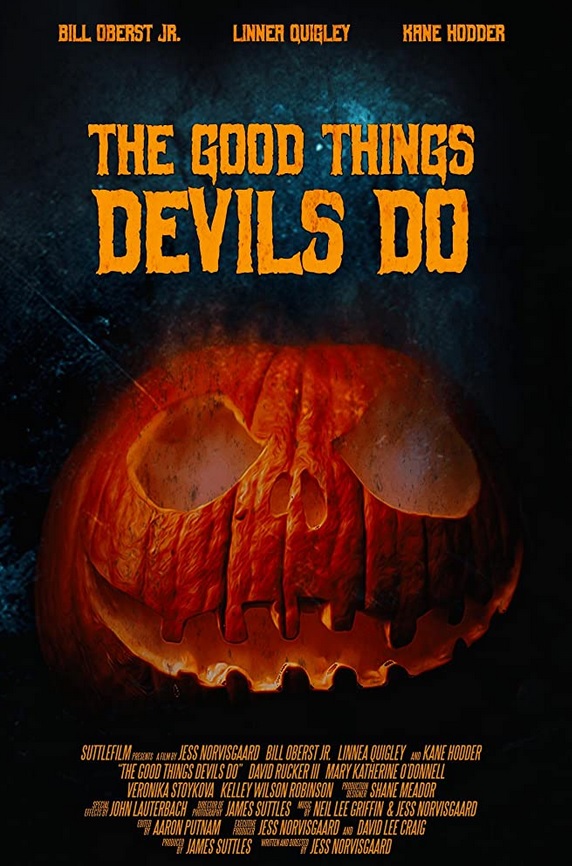
Richard (Bill Oberst, Jr., the “Eric Roberts” of horror, with 40-plus films in various states of pre-and-post-production; his most recently reviewed films are 3 From Hell and Devil’s Junction: Handy Dandy’s Revenge) is a low-level gangster in the midst of retiring from his life of crime. But before his bosses will let him out, he has to pull one final job: steal money from a rival gangster’s house. While Richard usually pulls jobs exclusively with his daughter Mouse (Mary Katherine O’Donnell; of the most recent Puppet Master romp The Littlest Reich), he’s forced to include the psycho-incestuous murder Percy (horror icon Kane Holder) on the crew.

Yeah, this isn’t going to end well. And we haven’t got to the demons.

The other victims of the “Devils” are Melvin (new-to-the-screen David Rucker III), his wife Louise (horror icon Linnea Quigley), and his 40-year-old stepdaughter Caroline (up-and-coming indie actress Kelley Wilson Robinson; who produces). Together, they curate the Museum of the Macabre—and the makeshift basement gallery’s newest acquisition is the alleged, infamous remains of the vampire Masquerade (the up-and-coming Veronika Stoykova; doing a great job under the make-up). And when those remains reanimate, Richard and Melvin join forces to protect their families in a Rodriquez-Tarantino showdown of the From Dust Till Dawn variety—only with a 1/2 cup of Raimiesque cabin humor spinning on the reel-to-reel.

What makes this all work is that—at first—you’re not quite sure which road of bad intentions this ol’ ’73 Oldsmobile Delta 88 is traveling. When we first meet the Cliff Huxtable-nerdom of Melvin (complete with a festive, pullover jack-o-lantern sweater-vest; yet, unlike Hux: he’s verbally abusive to his mousy wife and her kindly-ditzy daugthter), he’s holding high court with a group of Halloween-salivating neighborhood kids—who affectionately nicknamed him “Mr. G.”—weaving a tale about Masquerade as the kiddies anticipate his yearly Halloween display. Okay, so were heading down the orange-and-yellow candy corn road with Roy Ward Baker’s The Monster Club (1981) and Fred Dekker’s The Monster Squad (1987), which is fine with us VHS-lovin’ movie folk freaks out in the wilds of Allegheny: we love our Ward Baker and Dekker flicks ’round ‘ere.

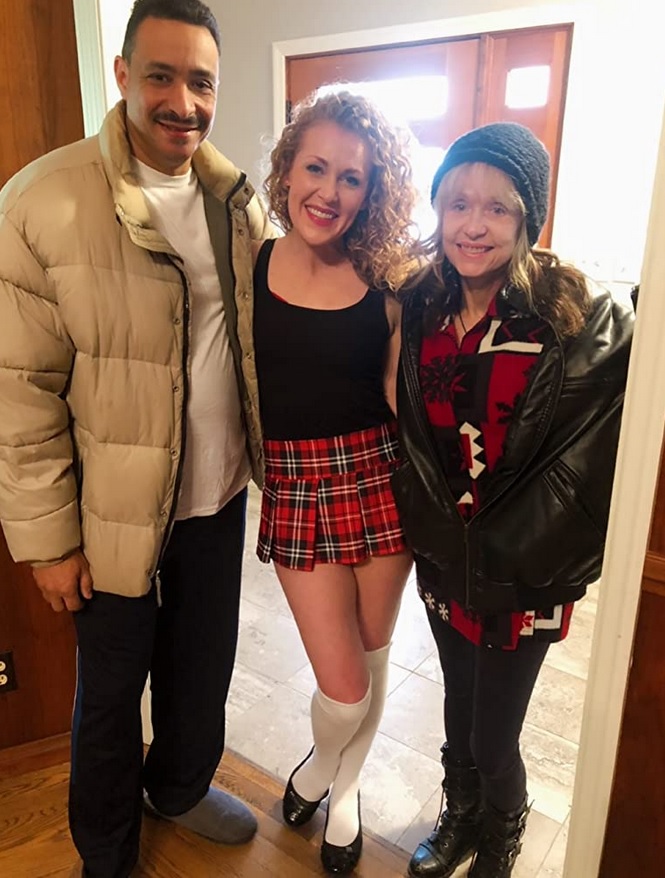
David Rucker III, Kelley Wilson Robinson, and the divine Ms. Linnea Quigley

Then Kane Holder (who’s excellently unnerving) blows away a bound-and-gagged mother and daughter with a shotgun. For reals. From Jason Voorhees to Billy Cosby on the drop of a dime. Then things go a bit “Kevin S. Tenney” as we think we’re getting a comedy-horror mix ala Night of the Demons (1988). But the vampire-demon possession follies have a graphic, Raimiesque vibe, even a Lamberto Bava Demons (1985) swagger.

What balances this trapped-in-the-house/cabin/movie theatre-and-we-can’t-out demon soiree is the light-on-his-thespin’ feet David Rucker III as Melvin. As the “Bruce Campbell” of this party, he expertly foils Bill Oberst, Jr.’s serious, leather-jacketed “George Clooney” (aka Seth Gecko) to add a much needed “you’ve got to be f’ing kidding me” vibe to slaughter. When you have a Raimiesque demon-witch ripping out a little trick or treater’s throat and possessing another—and you’re not a fan of kids-in-distress or dying on-camera (me)—you need a David Rucker III on the call sheets.

There’s been some great indie-horrors coming out of the Carolinas of late—South Carolina screenwriter and director Tommy Faircloth’s recently reviewed A Nun’s Curse comes to immediate mind—and The Good Things Devils Do (a catchy title that encourages rental) is a nice addition to those states’ burgeoning film resumes. You’ve got a familiar cast of horror greats hitting all of their marks (even though we lose them—graphically—half way though), buoyed by solid cinematography capturing a steady stream of action n’ violence as the bodies pile up. This is way above grade of the usual horror streamers.

The Good Things Devils Do, the feature film debut by North Carolina writer-director Jess Norvisgaard (a commercial camera operator who’s worked on the popular reality TV series The Biggest Loser and L.A. Ink, as well as FoxSports) is out now as a DVD/Blu and streaming on You Tube courtesy of Gravitas Ventures (we’ve recently reviewed their Eric Roberts-starrer, The Arrangement). You can learn more about the film on its official Facebook page.

Disclaimer: We were provided a screener by the film’s P.R firm. That has no bearing on our review.

About the Author: You can learn more about the writings of R.D Francis on Facebook. He also writes for B&S About Movies and publishes on Medium.

The Argument (2020)

“Then can we stop. Because I don’t want to argue.”
“I don’t want to argue either, honey. As long as you can admit I’m right.”

— Lisa and Jack discovering common ground

I’ve been diggin’ Dan Fogler ever since he first came to widespread notice as the plastic surgeon-foil (specializing in breasts, as only Dan Fogler can) to Dane Cook’s romance-cursed dentist in Good Luck Chuck. Then there’s his memorable work in Balls of Fury with Christopher Walken (!) and the Star Wars-homage Fanboys. And, of course, his most recent work in the Fantastic Beasts franchise.

His latest film . . . well, from my perspective, is a Miramax and Fox Searchlight homage to those 90s-halcyon days of driving to an outside-of-the-big-city six-plex with a screen or two dedicated to those indie comedies starring the likes of Steve Buscemi and Catherine Keener in Walking and Talking, Johnny Suede, and Living in Oblivion, or seeing John Turturro with Griffin Dunne in Search and Destroy—and always walking out of the theatre satisfied. (One of those indie-delights was 2005’s The Chumscrubber, written by The Argument‘s screenwriter, Zach Stanford.)

Of course, with the dual onslaughts of bat-viruses and digital streaming, a great, laugh out loud film such as The Argument, sadly, doesn’t have a ‘90s chance in hell of becoming an indie cult classic in theatres. And the streaming universe of today is a tough marketplace for a movie to shine through for discovery.

Hopefully, this review on this little puff of the cloud will alter the clogged, digital tributaries of fate for this, the third directing effort from musician Robert Schwartzman (you’ve heard his songs on TV’s The O.C., One Tree Hill, and Pretty Little Liars), whose initial forays into directing produced the under-the-streaming radar indie-award winners Dreamland (2016) and The Unicorn (2018).

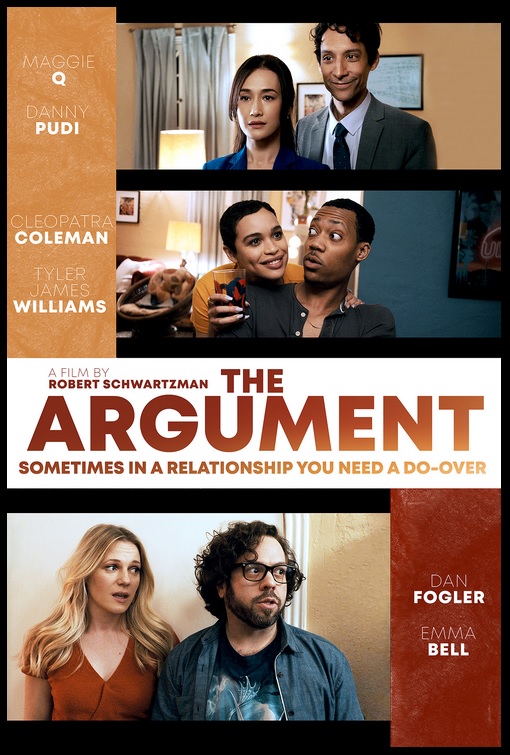
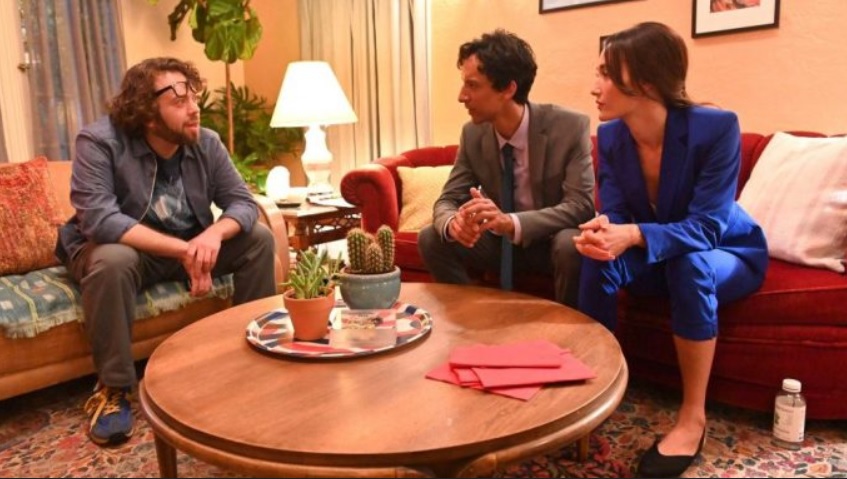
The cast of The Argument: Dan Fogler, Danny Pudi and Maggie Q; courtesy of Gravitas Ventures.

It’s almost a disservice to Schwartzman’s skills as a director to mention his Hollywood pedigree, for a filmmaker’s work should always stand tall on its own merits—of which The Argument has many. But with so many streaming choices vying for our coin—and taking into an account the purpose of a film review is to inspire you to see the film—we’ll have to cheat a little bit and tell you that Schwartzman’s name is familiar because his brother Jason is an actor you know well. And his mother is Talia Shire. And his Uncle is Francis Ford Coppola. His cousin is Nicolas Cage (Arsenal)* and his ex-cousin-in-law is Spike Jonze (Adaptation).

The Argument—the one where Jack is always right—is a pseudo-meta narrative commenting on the romantic repetition of relationships that turns the concept of there’s always three sides to a story: “your side, their side . . . and the truth” on its head.

Jack is a “genius” playwright and screenwriter with a middling successful, “repetitive” zombie tale on his resume (it did okay overseas), scratching n’ begging for his next gig. Lisa (Emma Bell of AMC-TV’s The Walking Dead), his three-years live-in, actress-girlfriend, has finally broken out of the endless cycle of background work, student films, and infomericals with a well-reviewed role in a local stage production of Amadeus. And, to the immature chagrin of Jack: she’s a little bit too chummy with her “Mozart.” Why? Because, well, he’s a genius writer, after all: he’s her “Mozart” (but, in reality, he’s a “Salieri”).

Jack’s insecurities and Lisa’s ego (after one successful community theatre role, she pirouetting-grand entrancing across rooms) bursts across the living room of their L.A. bungalow as they hold a cocktail party with their friends (Maggie Q of the Divergent franchise, Live Free Die Hard, ABC-TV Designated Survivor, along with Danny Pudi of Star Trek Beyond, and a mature Tyler James Williams from Everybody Hates Chris) to celebrate the play’s success. And the party ends. And their friends leave. But the argument doesn’t end.

So, in a non-mystical “Groundhog Day” of their own making—a day where Jack is never wrong—they invite their friends over for another dinner party, under the guise of Jack apologizing for his behavior. But in reality: Jack and Lisa want to recreate the night to see where it went wrong—and who was wrong: Jack or Lisa. And Jack’s obsession for resolution bleeds over into his writing (the best part of the movie; the supporting cast of “actors” own their duality) where he holds a mock-casting (via Craigslist) and auditions actors in a cold read of a never-to-be-produced play based on “The Argument”—the one where Jack was “right.”

The Argument became available for VOD streaming and PPV on-demand from Gravitas Ventures (The Arrangement with Eric Roberts; the upcoming Jess Norvisgaard’s The Good Things Devils Do, and Chris Levine’s Anabolic Life and No Way Out; review coming for the latter on September 12th) in the U.S. on September 4.


* Be sure to visit our homage to the films and the acting majesty of Nicolas Cage with our “Nic Cage Bitch” featurette. We just love the guy!

Disclaimer: We were provided a screener by the film’s P.R firm. That has no bearing on our review.

About the Author: You can learn more about the writings of R.D Francis on Facebook. He also writes for B&S About Movies and publishes on Medium.