Cold Feet (2020)

Editor’s Note: We first reviewed this indie horror-comedy during its run as a festival entry. We’re pleased to announce Allen C. Gardner has finalized a worldwide streaming distribution deal with Indie Rights Movies. You can visit their platform on Facebook. You can start streaming Cold Feet as a PPV on September 26, 2021, via IRM’s Amazon Prime page, along with a later, free-with-ads stream to come on IRM’s You Tube portal.

As of 2022, Cold Feet is now appearing on various Smart TV digital platforms — with limited commercials; as of January, The Roku Channel users can watch the film.

You can watch several of Allen’s earlier efforts with easy via in his LinkTree that will direct you the Amazon, Tubi, Vudu, and You Tube streaming platforms.


At a Memphis, Tennessee, rented house (where the film was shot), Eddie (writer, director, actor, producer, editor Allen C. Gardner), a sensible high school English teacher, is having that ubiquitous attack of the ol’ “cold feet” with his impending marriage to Jenny. And you know what that means: first comes love, then comes marriage . . . then mortgages, kids, and, most likely divorce. So it’s time for one last blow out with the guys before Eddie becomes a soccer dad and mini-van pilot, and overall pompatus-prisoner of love. And, with that, his motley crew of best friends rent a home from an affable gent named Oscar (the familiar and welcomed John Speredakos, who got his start with Kevin Smith in Jersey Girl and multiple appearances in the Law & Order franchise; you know me and my L & O fetish!).

Watch the trailer.

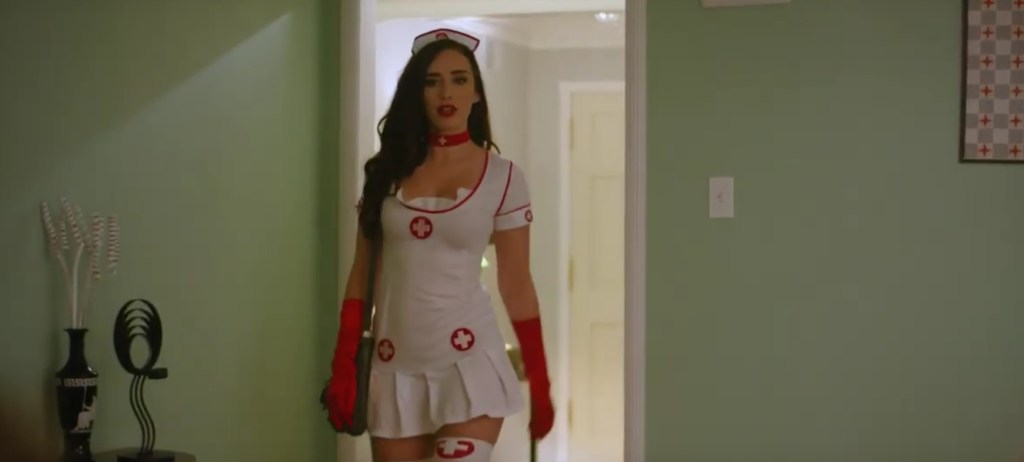
Now, Eddie’s a good boy. He loves his to-be wife (well . . .). And that means, to the chagrin of his buddies: no strippers. But a slutty nurse-uniformed Courtney shows up — that none of Eddie’s buddies invited. And guess who’s hooking up (emotionally, natch) with the stripper: Eddie. And Eddie confides to Courtney that, while he loves Jenny, he’s hot for his friend Kim, a fellow teacher.

Uh, Eddie, a piece of advice: never confide in hookers. This isn’t Milk Money or Pretty Woman. You’re a character in Cold Feet, bro. Didn’t you read the screenplay you’re in? There’s no kind-hearted hookers here. . . .

Yep! The mystery-hired Courtney the Nurse texts Kim, steals all of the smart devices and laptops in the house — and stabs herself in the heart. (Da-frack? Okay, Oscar, what’s your game?) And Eddie and the guys can’t call the cops. And when they try to leave the house to go to the police — a sniper fires a warning shot. Then, when they hunker down in the house to avoid the sniper, a pissed off ghost shows up. (Oops, sorry Oscar . . . well, maybe not.)

Yeah, there’s nothing quite like a dead hooker, a sniper, and a ghost to chill one’s debauched heels and test those delusional, “tight” bounds of friendship. For when that ship starts to sink, be prepared to be the only rodent (Or is that red herring?) left on deck.

Oh, yeah. This night is going to work out just fine. . . .

Cold Feet ended up being a well-written not-sure-where-this-is-going surprise. If Judd Apatow and Sam Raimi got into a room and clashed their propensities for raunch and cabins — and peeled the fishy-oily newspapers off a few of Dario Argento’s red herrings — you’d be inside the cabin environs of this, the seventh writing-directing effort of Allan C. Gardner. (Gardner co-directed with his friend Brad Ellis; their mutual friend Laura Jean Hocking served as editor.) Only not as tasteless-funny as an Apatow flick. And not as bloody-campy as a Raimi flick. We’ve been there and are not “noseblind” to those frames of sun-rotting, scaly aquatic celluloid.

Now, that’s a good thing, because that’s what you expect to happen in Cold Feet, but Gardner’s adept at the Final Draft change-up to give us the unexpected. And in the competitive, stream-clogged world of the VOD environs in the digital ethers, we need the unexpected to assure us those credit card charges for our VOD movie fixes isn’t money flushed down the digital drain. Gardner may or may not have used Apatow, Raimi, and Argento (just my smarmy, critical cortex a-sparkin’) as a jump-off point, but he checked the expiration dates on his influences to give us a Febreze-fresh flick.

Cold Feet was recently nominated for “Best Feature Film” and “Best Writing for a Feature Film” at the 2019 NOLA Horror Film Fest — so if that doesn’t tell you this is a quality film, then nothing will. Old School Pictures and Open Dialogue Productions is currently in the film markets seeking distribution and you can stay abreast of when it will debut on various PPV and VOD platforms via the Cold Feet Facebook page. Until then, you can watch Allen C. Gardner’s other films over on Amazon Prime.

And Allen isn’t a guy who sits around and lets his heels cool. He’s currently in post-production on the comedy/drama Baby, Come Home, and in the pre-production stages on the country music-fueled drama Breaker Breaker (no, there’s no Chuck Norris arse-kicking . . . at least we don’t think there is!), the serial killer thriller (say that three-times fast) Burn It Down, the horror-thriller Sold (vacation-white slavery or a haunted trinket/home?), and the dating app-themed dramedy Data Date Soul Mate. Of course, when those films are completed, you’ll read those reviews first, right here on B&S About Movies, where we not only coddle the obscure and the forgotten films of the VHS, UHF, and Drive-In yesteryears, but we dole out the emoji hugs for unsung, indie films, as well.

And we emoji-love Cold Feet. But not like Quentin Tarantino. That would be, like weird.

Again, as of September 26, 2021, you can stream Cold Feet on Amazon Prime via Indie Rights Movies’ Amazon portal.

Disclaimer: We were provided a screener for the film by October Coast, the film’s P.R firm. That has no bearing on our review.

About the Author: You can learn more about the writings of R.D Francis on Facebook. He also writes for B&S About Movies and publishes on Medium.

Legend of the Muse (2020)

The inspirational goddesses of literature, science, and the arts, a Muse, a female deity who infuses man with the gift of poetry and song, began as a source of myth and legend in Greek culture, then spread to Roman culture. That Greco-Roman concept of supernatural inspiration inspired Irish poet W.B Yeats to expose the modern world to the leannán sídhe, aka “Fairy-Love,” a beautiful, vampiric female who seeks out creative souls, i.e., painters or poets, musicians or writers, to be her lover; in exchange for the artist’s devotion, the muse will bless them with artistic inspiration — as the artist spirals into a love of madness and, eventually, death.

Thrust into this supernatural vortex is the socially-awkward Adam (which returns us to the biblical story of Eve, The Garden, Adam’s first wife, and the first “muse,” if you will: Lilith), an artist with technical talents to spare, but he lacks the heart to transform into an artist of distinction. Desperate for cash (another rent increase on his cavernous studio hovel), he drives his seedy neighbor into the woods to do a drug deal (and scores $300 bucks). It’s there he hears the whispers of and meets an entrancing, silent blonde muse — who’s already killed two men fixing a flat tire near her wooded domain. And now that Adam’s laid his eyes on her, she’s latched onto his soul.

Back at the studio, where the muse now lives, Adam begins to feverishly sketch and paint images of her; his drug-dealing neighbor sees her as a “loose end.” She quickly begins dispatching those who threaten her and come between her and Adam. Even when she’s caked in blood, Adam embraces her — and cleans up after the mayhem. And he soon begins to ensnare others to “feed” her.

In the world of indie film, horror is the most popular of genres among aspiring filmmakers, since the format lends itself to be shot cost-effectively without splashy practical effects (e.g., the works of Eli Roth, such as Hostel), instead relying on light and shadows, and a slow burn of darkness and suspense. Such is this ninth film and second feature film overall (the first was 1999’s The Beast; Legends of the Muse is the first to receive widespread distribution) by director John Burr.

The level of quality of this psychological, atmospheric tale — pushed beyond the limits of beauty by cinematographer Damian Horan — mesmerizes in the same way that Nicolas Roeg brought a level of class and style to the Italian Giallo genre with his 1973 masterpiece, Don’t Look Now. (If you’re familiar with Roeg’s classic editing style employed in that that film during its “sexually graphic” love-making scene between Julie Christie and Donald Sutherland, you’ll understand my comparison of this film to Roeg’s work.)

And it’s not just Burr’s eye and Horan’s lens: all of the film disciplines are at their finest the in frames of Legends of the Muse — but we must single out the performance of Elle Evans (the wife of Matthew Bellamy of, ironically, the band Muse; you may have previously seen her in Scouts Guide to the Zombie Apocalypse). A true standout in the acting department as The Muse, she captivates without a syllable of dialog, employing only facial expressions and body language.

This is a beautiful film and certainly not the last we’ll hear from writer and director John Burr.

Legend of the Muse is currently streaming on Amazon Prime — with other platforms to follow — courtesy of TriCoast Pictures/Rock Salt Releasing. The joint-studios also recently brought us the equally engaging horrors of The Soul Collector and Case 347, along with the Michael Polish-directed drama Nona, the Eric Roberts-starring political potboiler Lone Star Deception, and the return of Alex Cox to U.S. cinemas with Tombstone Rashomon.

Update 2022: In addition to making its debut as a free-with-ads stream on Tubi, you can watch Legend of the Muse on several Smart TV On Demand streaming-with-ads platforms.

Here’s the rest of the great films released under the Rock Salt Releasing/TriCoast Worldwide co-banner we’ve reviewed:

Agatha Christine: Spy Next Door
Blood Hunters: Rise of the Hybrids
Bombshells and Dollies
Dollhouse
It All Begins with a Song
My Hindu Friend
Revival

Disclaimer: We were provided a screener by the film’s P.R firm. That has no bearing on our review.

About the Author: You can learn more about the writings of R.D Francis on Facebook. He also writes for B&S About Movies and publishes on Medium.

Immortal (2019)

“Surely God would not have created such a being as man, with an ability to grasp the infinite, to exist only for a day! No, no, man was made for immortality.”
— Abraham Lincoln
16th President of the United States

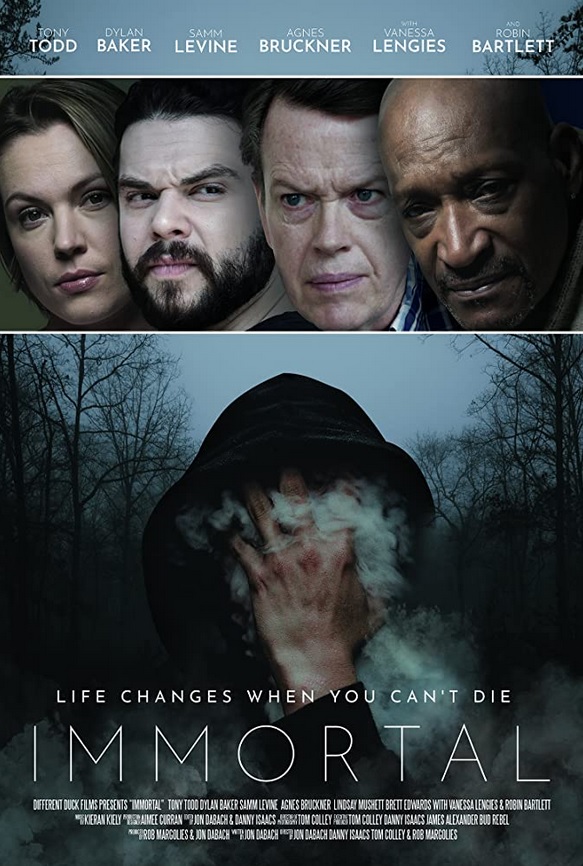
As we’ve said — many times — in our reviews of new films in the streaming realms: casting is what makes us hit the big red streaming button. And Immortal, from the competent co-writing and directing teams of Tom Colley and Jon Dabach, and Danny Isaacs and Rob Marqolies, is no exception.

Regardless of how big or small the part of the superfluous-or-pivotal Eric Roberts-kind (the recently reviewed The Evil Inside Her), all we need to know is that we’re getting a dose of the actors we care about: Tony Todd (of Candyman fame), the great Dylan Baker (excellent in the recently reviewed Nightfire), and Mario Van Peebles (nailing it in the recently reviewed A Clear Shot). That acting trio-de jour is in support of a cast that features a grown up Neal Schweiber from Freaks and Geeks (Samm Levine, a solid actor in Eric Roberts-mode with an already 120-credit strong resume) and Vanessa Lengies (Sugar Motta from TV’s Glee), along with Agnes Bruckner (effectively transformed herself into Kris Kardashian in The Murder of Nicole Brown Simpson) and she’s-everywhere actress Robin Bartlett (gal-pal Debbie Buchman on TV’s Mad About You, along with effective support roles in Shutter Island and Lean on Me).

Immortal gets right into the what-the-hell-where-is-this-going story in fewer than 15 minutes: We have a quote about man’s immortality by Abraham Lincoln. We have slutty school girls heading to class in strappy-spiked heels (only happens in “movie” high schools, natch), creepy-lech track coaches, dorky, kindly-lech teachers clad in short-sleeve plaid shirts, and a blonde track star’s kidnapping-by-poisoned dart.

So what in the hell does a zip-tied girl with a sack over her head have to do with the 16th president of the United States? Oh, no. . . . Not another undisclosed killer via camouflage and combat boots. . . .

“Jinkies!” Shaggy! It’s the kindly, self-professed “normal old guy” Dylan Baker citing Lord of the Flies as his reasoning for kidnapping high school girls. And what’s ol’ Mr. Shagis’s kink: he likes to hunt people in the cellphone-dead, deep neck of the booby-trapped woods that he refers to as “The Labyrinth.”

Okay, so what’s all this have to do with President Lincoln and immortality? Turns out the tweaked literary and history buff Mr. Shagis has discovered the secrets of immortality—so we think. And instead of sharing his secret with the world, lo’ Shags has decided to shed all of his inhibitions and indulge in his dark desires. . . .

And what we think is going to be another low-budget retread of The Hunt (aka American Hunt) with Dylan Baker’s character kidnapping and hunting people as a deranged savior of the wayward, well, you’d be wrong (although, you can’t get enough Dylan Baker, so we’d stream that film). What we have here is a modernized, anthology throwback to the twisty Amicus films of old as unscrupulous people face brutal deaths—and are revived as a form of punishment from an unseen-beyond force. This is a world where the one you think is evil, is not . . . and the “pure in heart,” is evil.

Kudos to teams Colley-Dabach and Isaacs-Marqolies scoring their named-cast of actors; for if this low-budgeter had gone with an unknown cast-for-cost, we would have ended up with just another run-of-the-mill horror-streamer with a cast of dedicated-but-strained performances buoyed by Roberts-styled walk-on-the-box credits to inspire us stream the movie. However, the cast-mix of solid commodities, character actor undercards, and unknowns is effective—with Baker and Todd owning (but, of course) their ulterior-motive driven characters.

The only caveat is that regardless of Tony Todd’s voice-over driving the trailer, he is not a Candyman-styled protagonist in a wraparound story jelling the tales as he deals out the supernatural comeuppance Peter Cushing-style. But that’s a good thing, because that’s what we were expecting. And in today’s world of so many accessible movies—especially in a COVID lockdown—we need the unexpected in our movies to keep our minds sharp.

All in all, Immortal is a smart, insightful (drama, not horror) script by Jon Dabach with nicely-done anthology segments buoyed by solid cinematography from Tom Colley, who has worked on a bevy of reality TV series and streaming series. So the skill set is there. And you’ll do alright by hitting the big red streaming button.

MOVIE SIGN! Siskel and Ebert in the house!

Doh! Every now and then, Sam and I, through scheduling snafus and our giddy, celluloid drunkenness over our recent “Rock ‘n’ Roll” and “Fast and Furious” Weeks, and our upcoming “Wolfman,” “Dracula,” and “Rock ‘n’ Roll II” Weeks . . . plus our annual November tribute to another Mill Creek 50-films box set (this year: Sci-Fi Invasion), we sometimes review the same, new indie release — twice (Doh, again! Check out our unplanned, B&S-cum-S&E review of Dollhouse).

And just to be clear: I’m the “Siskel” and Sam is the “Ebert.” Yeah, that aisle seat ain’t big enough for the both of us. And, Samuel, no more cracks about me being “Gypsy” and you and Bill Van Ryn are Tom Servo and Crow. That’s not cool — even if you are the Chief Cook and Bottlewasher of B&S and I am just the dumpster pad and grease pit scrubber ’round ‘ere.

Sam’s Take:

Written, directed and produced by Rob Margolies (although IMDB lists three other directors and a different writer), this anthology follows the lives of several people who suddenly discover that they can’t die.

Chelsea (Lindsay Mushett, Blue Bloods) is a high school track star who confesses abuse by a teacher too late. Gary and Vanessa (Agnes Bruckner, who was Kris Jenner in The Murder of Nicole Brown Simpson and Anna Nicole in the 2013 Anna Nicole cable film) are a couple who figure that death can solve their money woes. Ted (Tony Todd!) has to deal with euthanizing his wife Mary. Warren (Freaks and Geeks) discovers new gifts after he dies. And hey — is that Mario Van Peebles I see? It is!

This is an interesting way to approach an anthology film. It’s more drama than horror, but you still may discover something interesting in it.


Currently rolling out on the festival circuit, Immortal will premiere as a DVD and VOD in September via Stonecutter Films and Different Duck Films through Wild Eye Releasing.

Disclaimer: We were provided a screener by the film’s P.R firm. That has no bearing on our review.

About the Authors: You can learn more about the writings of R.D Francis on Facebook. He also writes for B&S About Movies. Sam Panico is the curator of B&S About Movies.

The Lair of the White Worm (1988)

When Ken Russell gives you the likes of Sir Oliver Reed as a psychosexual priest lusted after by a nun in The Devils (1971), an LSD-induced adaptation of the rock opera Tommy (1975), and an Earthbound Kubrickian mind trip with Altered States (1980), is it any wonder he gives you a vampish sociopolitical satire on British class struggle, along with his opinions on the medical profession, law enforcement, and examinations on human sexual behaviors?

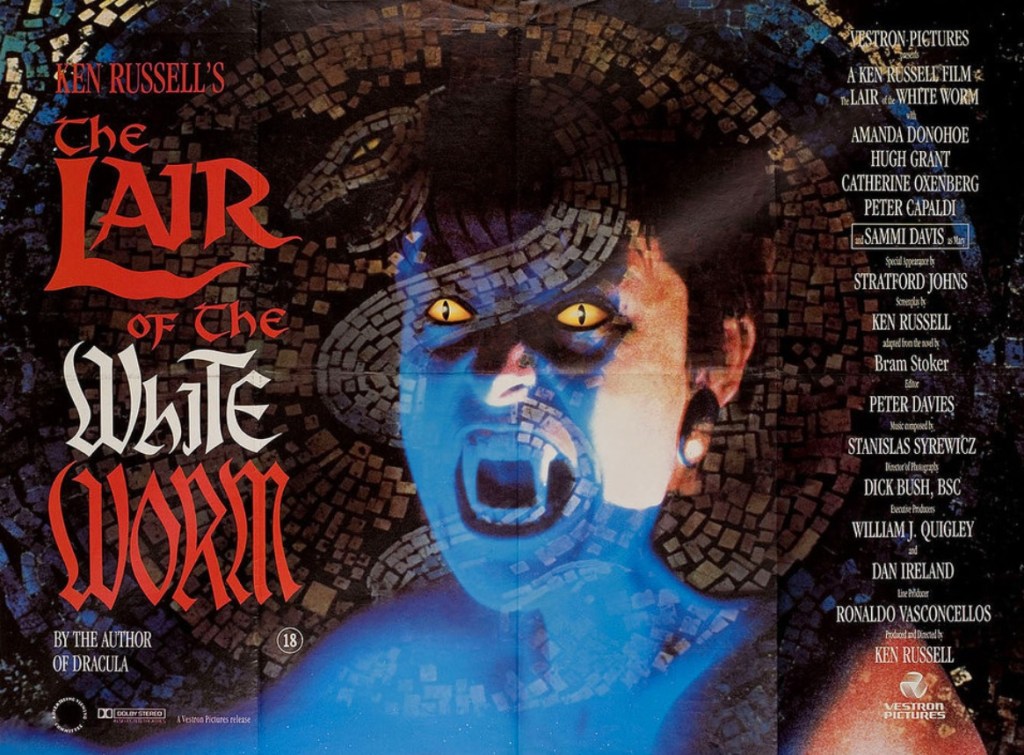
British lobby one-sheet, multiple sites.

If this is how Russell rattles Stoker’s bones . . . well, Sherdian Le Fanu (And Die of Pleasure) would rattle an eternal cacophony for his work being given an analogous, cheeky treatment.

So do go into this vamp soiree knowing that when Russell took his keystrokes to an obscure Bram Stoker vampire tale first published in 1911 (based on the Northern England folklore-legend The Lambton Worm), he’s not giving you the dark, brooding vampires of Herzog-Kinski’s (Nosferatu the Vampire) interpretation of F.W. Murnau’s plagarism (Shadow of the Vampire) of Bram Stoker’s Dracula: he’s giving you the-no-other-woman-in-the-history-of-cinema-or-the-real-world-rocks-a-boy’s cut-sexier-than-her Amanda Donohoe (in place of Hammer oh là là-vamp Ingrid Pitt) as the lesbian-starved Lady Sylvia Marsh. And for the innkeeper’s kidnapped daughters-in-distress you’re getting Catherine Oxenberg and Sammi Davis (double oh là làs). And for the dashing Lord James you get . . . Hugh Grant?

Yeah, you get Oxenberg in ropes . . . and a worm . . . but you also get Hugh Grant.

Yikes! Shades of Stuart Gordon’s Dagon.

And that’s this movie’s kicker for most horror hounds: Hugh Grant. Women love him. Men hate him.

“He’s a rom-com guy! What in the hell is he doing in a vampire movie?” the detracting cries of Dracula’s minions echoed across the Carpathian’s Borgo Pass (aka Tihuța Pass).

Damn, that’s hot. I’ll go blue!

But Grant—detractors be damned—is a great comedic actor who, along with the equally affable Donohoe, Oxenberg, and Davis, as well as co-star Peter Capaldi (as Grant’s sidekick Angus Flint) deliver Russell’s cheeky, sometimes groan-inducing black humor with self-confidence. It’s that Brit-thespin’ that gives us a vamp-com not as silly as the vamp-coms Love at First Bite (1979) and Dracula: Dead and Loving It (1995), or as inept (sorry, Mr. Olen Ray; love ‘ya, but in this context, it is) as Beverly Hills Vamp. Courtesy of A-List special effects and make-up (as you can see: Donahoe’s blue-skinned work is a show stopper), Russell’s created a pumped-up version of Dan Curtis’s TV serial Dark Shadows, one that serves as a great double-feature companion to the de jour of vamp-coms, Fright Night (1985), which, in itself, was more silly than scary—and fun and loving it. As is this Stoker-Russell collaboration.

You can watch Lair of the White Worm as a free-with-ads stream on TubiTv.

So, “Two Thumbs Up,” right Sam? And I’ve decided: You’re the “Ebert” here. And instead of a “Dog of the Week” hailing a bad movie, we’ll have a “Blender of the Week” to hail a good movie. I’ll bring the fruit concentrate. You bring the vodka. Bill Van Ryn, bring the chips and dips. “Nostrovia, podrooga! Let the movie-themed drinks pour until sunrise!”

About the Author: You can learn more about the writings of R.D Francis on Facebook. He also writes for B&S About Movies.

And Die of Pleasure (1960)

You have to hand it to French director and screenwriter Roger Vadim: he had a way with the ladies. Unfortunately, he always cast those wives and girlfriends in his movies. His wife Marie-Christine Barrault starred in four of his French TV movies, Bridget Bardot starred in And God Created Woman, and Jane Fonda in Barbarella. And when he opted for a longtime affair in lieu of marrying Catherine Deneuve (Fréquence Meurtre, aka Frequency Death), she starred in Vice and Virtue. And Annette Stroyberg (credited here as Vadim) starred in this “art house” lesbian vampire romp.

Watch the trailer.

If you’ve never experienced Vadim’s work, one must take into consideration that he got his start in the visual arts as a fashion photographer; for his films he employed famous French cinematographer Claude Renoir. So Vadim’s version (French title: Et Mourir de Plaisir; aka And Die of Pleasure; Americanized titles: Blood and Roses/To Die With Pleasure) of Sheridan Le Fanu’s influential short story “Carmilla” (part of his 1872 collection In a Glass Darkly) forgoes the adaptation conventionality of Hammer Studios’ early ‘70s “fleshy” trilogy variations of (the highly-suggested watches) The Vampire Lovers, Lust for a Vampire, and Twins of Evil, aka “The Karnstein Trilogy” (and Hammer’s other effective vamper, Captain Kronos: Vampire Hunter, acts as sidequel). Others lurking in the La Fanu catacombs are the more straightforward, third adaptation, Terror in the Crypt starring Christopher Lee (1964); the first was Carl Theodor Dreyer’s equally-dreamy Vampyr (1932). The creepiest and most atmospheric of them all (unofficially) is Mario Bava’s looser-read of Black Sunday (1964) (which also pinches from Nikolai Gogol’s 1835 Russian vampire tale “Viy” contained in his collection Mirgorod) that stars the heart-weeping Barbara Steele as a vampire-witch hybrid (one of the film’s alternate-titles was, in fact, Revenge of the Vampire).

If you’re raised on cinema’s modernized, CGI-blood suckers—ones that blatantly swish through screenwriter-guru Syd Field’s Paradigm, coughing and wheezing under a rising sun on the run to the medi-script offices of Golden, Towne & Truby—then Vadim’s vamps aren’t your goblet of corpuscles. For this ain’t no fanged fiend of the Al Adamson Blood on Dracula’s Castle variety. This is a vampire of class and style: a Nantucket vampire; not a Bowery bloodsucker.

Vadim is all about impressions. He gives you rich set designs and stunning cinematography awash in colors enveloping dreamy visuals; he fills your eyes with pleasure (a singular drop of blood across flesh of breast; a dreamscape view through a set of French Doors of Carmilla swimming a water-filled room); he fills your cortex with the psychological and the ambiguous.

Is it real? Is it a dream? Is a stunning female vampire thou art loose on the lush Euro-estate of young Carmilla’s family? Or is she experiencing a mental breakdown as result of suppressing her homosexuality for her bisexual girlfriend Georgia (Elsa Martinella of Elio Petri’s “art house” take on Richard Cornell’s The Most Dangerous Game: The 10th Victim) who’s rejected her for marriage to a young squire? As Carmilla ran off to wallow in self-pity, did she stumble into the tomb of vampire? And is that vampire in control and causing Carmilla to commit acts of murder?

Two “Thumb Up,” right Sam? So, have we decided: Am I the “Siskel” here?

About the Author: You can learn more about the writings of R.D Francis on Facebook. He also writes for B&S About Movies.

Shadow of the Vampire (2000)

Long before “meta” became 21st-century digital filmmaking de rigueur, there was this film-within-a-film account of German filmmaker F.W. Murnau’s unauthorized adaptation of Bram Stroker’s Dracula.

Watch the trailer.

While the vampire Count Orlok of Murnau’s 1922 silent masterpiece, Nosferatu: A Symphony of Horror, was portrayed by German actor Max Schreck, the film plays up Schreck’s unorthodox Method Acting techniques. (By the way, Nicolas Cage produced this: and we all know about his unorthodox methods to get into character.) Schreck would only appear amongst the cast and crew in makeup, would only be filmed at night, and would never break character on set. All of which lead the crew and actors under Murnau’s (John Malkovich) direction to believe Schreck is a real vampire.

No surprise: Willem Dafoe’s portrayal of Schreck as Orlok was nominated for a “Best Supporting Actor” Oscar. (And he also astounds in the recently-released My Hindu Friend.)

And the meta on this gets even freakier—if you watch this alongside Werner Herzog’s Klaus Kinski-starring remake of Murnau’s film, 1979’s Nosferatu the Vampyre. Then Kinski took it one step further: he played the character one more time in the 1988 Italian-made Nosferatu in Venice, which co-stars Donald Pleasence and Christopher Plummer.

I’ve binged all four of these “Nosferatufilms back-to-back several times over the years—and it does screw with your mind. And it’s a chick repellent. And all four films come highly recommended, chicks be damned. (One day, I’ll meet a woman who can embrace silent film and Double K.)

You can stream Shadow of the Vampire on Shudder.

About the Author: You can learn more about the writings of R.D Francis on Facebook. He also writes for B&S About Movies.



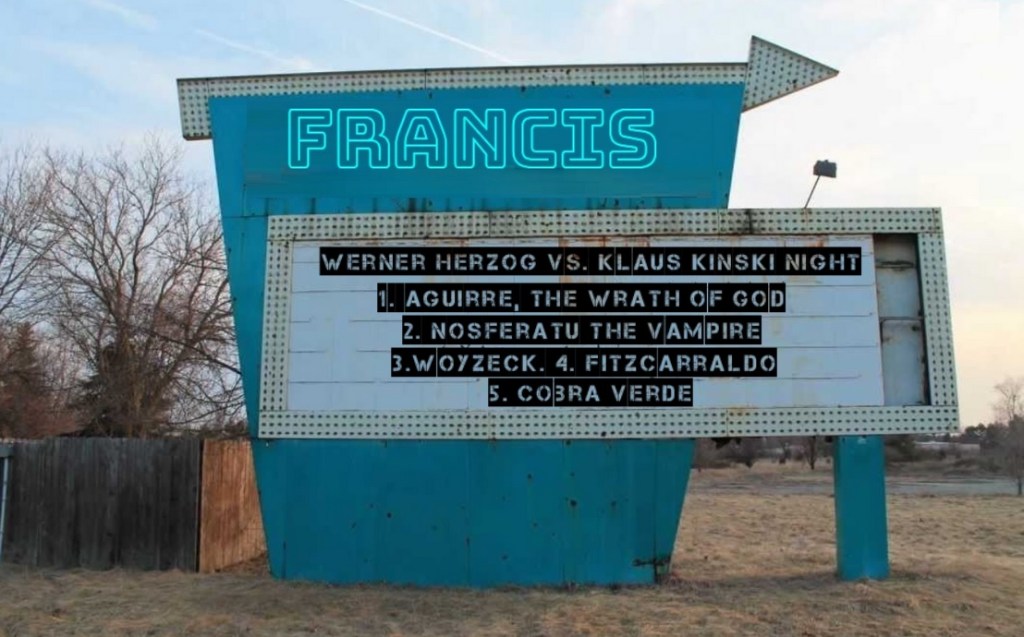
Don’t forget! There’s more movies about movies to be had with our “Drive-In Friday: Movies About Movies” featurette, where we also review Shadow, The Disaster Artist, Adaptation, and Dolemite Is My Name.

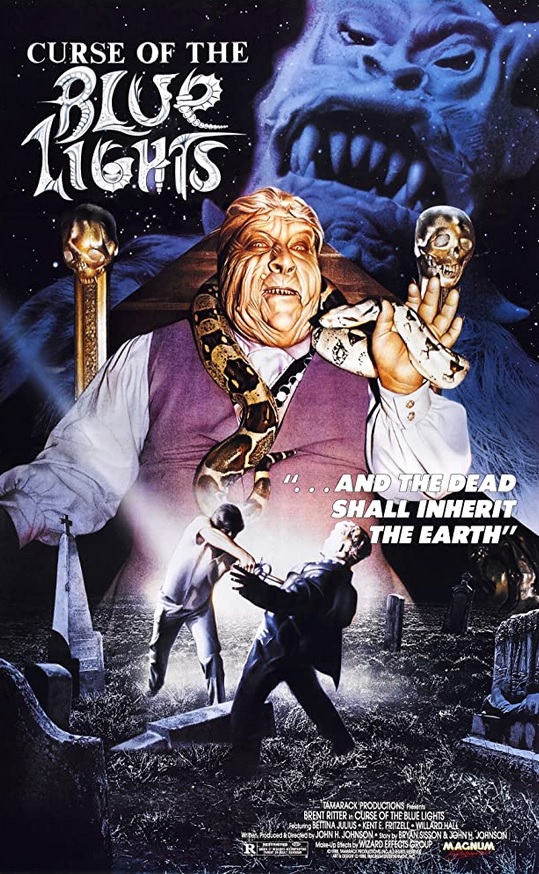
Curse of the Blue Lights (1988)

Editor’s Note: Starting in 2021, we’ve since reviewed several more regional Colorado-shot films. We’ll get to those films, later, in this review.


Okay. I know I’m stretching the “Vampire Week” theme with this SOV ghoul bash, but after reviewing the fellow SOV, “legit” vampire flicks Jugular Wine (1994) and Tainted (1998) . . . for me, these three films just go together, as result of them appearing alongside each other on the shelves of my local 10,001 Monster Video—the one regional mini-chain brave enough to carry Larry Buchanan’s Doors boondoggle Down on Us, the GG Allin document Hated, and the entire line of ’80s mail-order SOVs.

Other SOVs to Enjoy

Say what you will about the production values and thespin’ skills of those shot-on and edited-on 3/4-inch video ditties of the ’80s, but dear lord, my analog nostalgia for those lo-res n’ audio-buzzing, Big Box/SOV celluloid tragedies—from Boardinghouse (1982) to Sledgehammer (1983), from Truth or Dare and Spine (1986) to 555 (1988), from Things (1989) to Gorgasm (1990)—and the granddaddy of the first SOV distributed exclusively via home video shelves (in lieu of mail order, as were the other SOVs noted), Blood Cult (1985)—is unbound. Oh, and we can’t forget Blődaren (1983), Copperhead (1983), and Black Devil Doll from Hell (1984). What’s that? Yeah, we have reviews coming up in October for Evil in the Woods (1986), Dead Girls (1989) and Snuff Kill (1997). Yeah, one day we’ll get to Addicted to Murder (1995), Bloodletting (1997), and The Vicious Sweet (1997). No, we already did Spookies (1986), as you will read, below. The twist to SOV films: Not all were shot-on-video. Some that are critically lumped in the SOV category were shot on 16 mm and released on video, and if it’s released in a direct-to-video format for exclusive, off-the-beaten Blockbuster Video distribution at mom ‘n pop video stores, then it’s an SOV. Got it?

I love them! So, yeah. We are throwin’ the B&S About Movies management binder into the office alley dumpster out back. Screw you, Sam, and your Sheldon Cooper-clauses and subsections tomfoolery. I hear ye dub these graveyard ghouls—vampires! And this an SOV!

Loadin’ Up Curse of the Blue Lights

Over the years SOV fans have dropped the word “Lovecraftian,” and there’s surely a Cthulhuian vibe in these analog proceedings. But don’t mistake this third and final directing effort by John Henry Johnson and the lone writing effort for Bryan Sisson for the premier H.P. Lovecraft “adaptations” by Stewart Gordon of Re-Animator (1985) and From Beyond (1986). And, more accurately, in relation to Curse of the Blue Lights, Gordon’s Dagon (2001)—if you know your Lovecraft flicks, you’ll pick up on that critical analogy.

I’ve had discussions with fellow VHS-heads who draw a throughline from Blue Lights to Eugenie Joseph’s 1986 tale about a sorcerer sacrificing young travels to sustain his dead wife, (in the aforementioned-linked) Spookies. In a past discussion with Sam about this movie, he mentioned, more timely-accurate, one of his personal favs, Neon Maniacs (1986). And while I don’t totally disagree with either assessment: I still say that Spookies, while a weaker (but a fun film), is of a higher quality—and Neon Maniacs even higher than Spookies. (Others mention the even-harder-to-find The Vineyard, but that actually dates two years later, from 1989.)

Me? In terms of filmmaking quality, I liken Blue Lights to Ed Wood’s surreal Orgy of the Dead (1965), with its horror-erotica tale about a young couple stranded-trapped in a ghoul-infected cemetery after a car accident. My analog cortex also loads up VHS-cells of León Klimovsky’s dripping-with-atmosphere The Vampires Night Orgy (1972), concerned with a busload of Spanish tourists stranded in an off-the-map, churchless town. But again, Paul Naschy protégé Klimovsky is by far the superior film.

Now, the Lovecraft is certainly there, but did Ed Wood’s or Klimovsky’s tales inspire John Henry Johnson and Bryan Sisson, as well? I’ll say yes, because, it’s obvious team Johnson-Sisson is cut from the same spindle of 3/4-inch tape as you and I: they known their horror films. I see traces of One Dark Night (1982) in the living dead-zoms, and Sam Raimi’s The Evil Dead courtesy of all the face n’ head meltings. And there’s a definite attempt at a some Dan O’Bannon celluloid stank of the Return of the Living Dead variety.

But something is missing. It doesn’t have that Raimi spark or Don Coscarelli charm. Why did Phantasm, itself a self-financed film employing amateurs and aspiring professionals, rage across the duplexs in the summer of 1979 to gross $12 million on a $300,000 budget, while Curse of the Blue Lights, with the same self-financing and employment ethics, floundered into home video obscurity? If Coscarelli helmed it . . . if Clu Gulager and James Karen were there to help The Mystery Machine gang . . . would this story—complete with Michael Spatola’s snazzy SFXs still in place. . . .

What if, indeed.

Instead we have a higher-budgeted Al Adamson flick, think 1967’s Blood of Dracula’s Castle, crossed with Bob Clark’s pre-Porky’s, pretty fun Romero-knockoff, Children Shouldn’t Play with Dead Things. And that’s not a bad thing. . . .

The Review

So . . . the glow of “blue light” is discovered in the wooded distance near the “Blue Light” necking point on the outskirts of podunk Dudley (not another road sign with a cow skull, ugh) by a group of (annoying) teens (who deserve to be squeezed into ghoul juice for being pains in my VHS-viewing ass). Oh, and the lights and something called the Muldoon Man are part of the town’s local color, because, well, all towns in Hicksville, U.S.A. need to have a local legend for adolescent scoffing.

The lights lead our Ed Woodian 90210-brats to a (shot in Pueblo) Colorado cemetery where underground-dwelling ghouls are pullin’ a Tall Man and Phantasm-robbing the graves above in a plot to create a serum (see, they need “fluids” like vampires!) that will resurrect the Muldoon Man: a giant lizard-man missing link (a very impressive, full-suited in-camera effect). Resurrected scarecrows (the best part of film, as if it was spliced in from another film), disappearing body-statues, disembodied-petrified hands, hysterical-histrionic thespin’, cursed trinket medallions, sheriffs that don’t act like proper law enforcement officers, overacting-folklore Blair witches, time-lasped melting candles, Al Adamson-chained-to-wall crypt chickee-dees, sword vs. axe battles, lots of backgroud-zoms tearin’ up the joint, and (lots) of melting ghouls, ensues.

Are the Gothic sets of the Spirit Halloween variety? Would Konstantin Stanislavski pull a Karl Raymarseivich Raymar (know your acting history and One Dark Night trivia, buddy) and slaughter the cast for soiling the art form he invented? Are the up-against-the-budget special effects (by Michael Spatola; his later credits include HBO’s Tales from the Crypt, Stargate, and Terminator 2: Judgment Day; his earlier work was featured in Hunter’s Blood) impressive? Is the film too long at an hour and a half? An 80-minute home-video appropriate cut would have helped making this a bit more zippy and palpable?

Yes, to all questions.

But, as long as you keep in mind this is a self-financed backyarder of the fun Don Dohler variety (Nightbeast) (well, actully better than a Dohler flick) and appreciate that everyone behind and, especially, in front of the camera is trying, you’ll have fun with this lesser-known baller in the SOV-’80s canons. (Yeah, we know it was shot on 16 mm, but it feels oh-so-SOV . . . and we love it. But, if it was shot on 35 mm . . . oh, shut the hell up, Devil’s Advocate.)

Yes! The Legends are Real!

As it turns out, Curse of the Blue Lights isn’t just the goofy, screenwriting imaginations of regional filmmaker John Henry Johnson. For his freshman and sophomore projects, Johnson mined Colorado/Southwestern history: Damon’s Runyon’s Pueblo (1981), a semi-documentary based on the famed writer’s life in Colorado, while Burgess Meredith narrated the same with Zebulon Pike and the Blue Mountain (1984) about the army Lieutenant known for his Southwest expeditions: it’s how Pike’s Peak got its name.

Yes. Johnson’s horror opus is also based upon Colorado rural folklore: In Pueblo, there really is, well, we’ll let John Henry Johnson tell you (from his website):

“I know quite a lot about Colorado history and Southern Colorado lore in particular. I used two elements as [the film’s] basis: In the late 1800s, the so called ‘missing link’ [of man] was said to have been found and was pitched as such by P.T Barnum. Found near Muldoon Hill, southwest of Pueblo, it was the so called ‘Muldoon Man.’ Secondly, west of Pueblo, [there] was a teenage parking area known as ‘Blue Lights’ where kids parking would supposedly see mysterious, unexplained blue lights in the nearby river bottom.

“[So], I combined these elements into what would become a feature film [first and only]. Teenagers as they are bound to do in such films, accidentally become involved with the underworld when they interrupt the ghoul king Loath and his henchmen as he attempts to bring Muldoon Man back to life.”

As for the Muldoon Man: The legend is real. The “man” is a hoax. The creature was said to be a prehistoric petrified human body—a “missing link”—discovered in 1877 by skilled huckster William Conant at a spot now known as Muldoon Hill, near Beulah, Colorado. Cotant successfully toured his find across the United States before it was revealed to be a hoax: an early SFX amalgam of clay, plaster, mortar, and rock dust, along with animal bones, blood and meat. You’d think that after Conant duped everyone with his “Cardiff Giant” hoax from several years earlier, carnival goers would have known better.

Beware! The Curse of the Digital Caveats:

Those who want this in their physical media collection, take note. The original VHS tapes are the uncut R-version. The Magnum-Code Red DVDs, while a HiDef master created from the original 16mm film elements (that includes an audio commentary track with director John Henry Johnson and actor Brett Ritter), the DVD is not the “original uncensored version.” The DVD is the cut R-rated version missing about three-minutes (a graphic scene where the Muldoon betrays and crushes the demon-snake lord’s face, in particular). The overall quality is grainy (that’s how the original film was shot-processed), but the digital transfer is clearer than the VHS original. (Besides, the occasional emulsion scratch lends to the film’s early ’70s drive-in charm). So, to see the uncut film: you’ll need to watch the VHS. Got it?

However, in any form, do watch this: it’s a nostalgic-retro monster mash.

So, You Wanna Join the Analog “Mile High” Club?

There’s more Colorado-shot films to enjoy with The Jar, Manchurian Avenger, Mind Killer, Night Vision, and The Spirits of Jupiter.

You can catch up with John Henry Johnson at his official website. Yes, as with Russell Kern, who reached out to us regarding our review of The Spirits of Jupiter: Johnson is still in the business as an academic in art and film in Colorado. In May 2022, he sat down with James Bartolo of The Pueblo Chieftain to discuss his career. There’s also more local legends to be had—the Lights of the Sliver Cliff Cemetery, in particular—at Colorado Urban Legends.com.

You can watch the trailer on You Tube, then watch a pretty clean rip of Curse of the Blue Lights on You Tube . . . and not a VHS rip, but a DVD one. Bonus: We found the Polish-Hungarian version on You Tube—which retains some of the Muldoon head squeezing. Geeze. In the midst of all the head meltings . . . what’s the problem with the head crushing and cutting that particular scene from the film, Mr. Distributors?

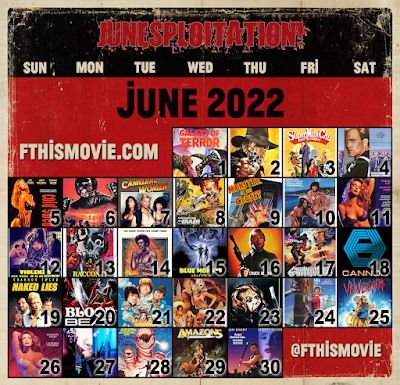
We be-bopped through the rural blue lights, again, with a new take in June 2022 as part of our annual “Junesploitation Month” of reviews. Yes. By hook, crook, or Muldoon Man: we will make YOU watch this F-in movie!

About the Author: You can learn more about the writings of R.D Francis on Facebook. He also writes for B&S About Movies.
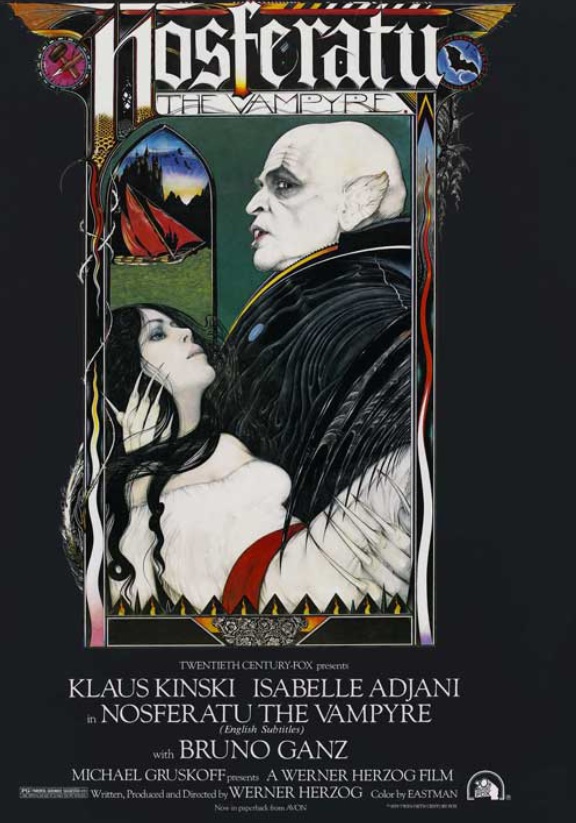
Nosferatu the Vampyre (1979)

This second of five Herzog-Kinski romps* is an impressionist-stylized remake of F.W. Murnau’s unauthorized, 1922 black-and-white silent adaptation of Bram Stoker’s Dracula (loosely chronicled in the drama Shadow of the Vampire). But how did Herzog manage to make this film without the same copyright issues that plagued Murnau’s version? Simple. The day the copyright expired on Stoker’s novel and entered the public domain, Herzog began his adaptation.

As with all of Herzog’s films, this is scored by the West German progressive rock group Popol Vuh who, when it comes to soundtracks, are that country’s greatest musical export, next to the commercially better known Tangerine Dream**. And as with Tangerine Dream, Popol Vuh released both independent studio albums and soundtracks. Seriously. The soundtrack is incredible. (I played the album until it split apart like a cinnamon roll.)

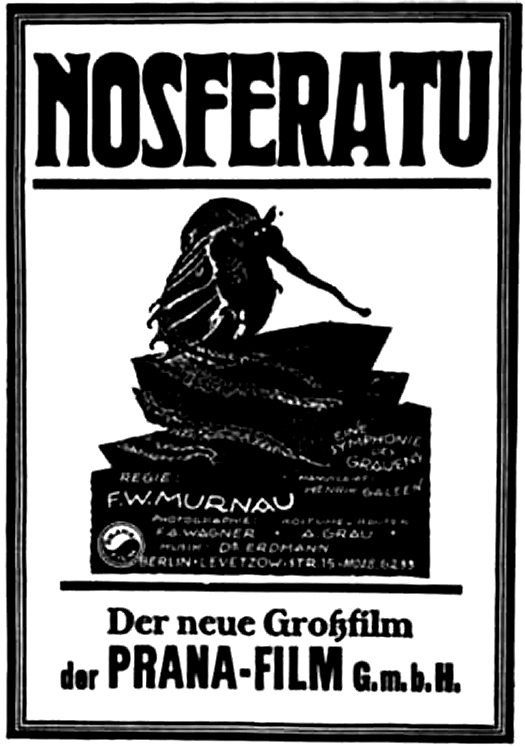
The original Murnau film.

And we’ll leave it at that, as Sammy P, the bossman at B&S About Movies, did a commendable job at reviewing this masterpiece of horror. No disrespect to Max Schreck who scared the sand out of me, but Kinski giving a “voice” to the character really ups the game. A highly recommended horror watch if there ever was one. You know me and Kinski.

You can watch this as a free-with-ads stream on TubiTv. And Kinski made a pseudo-sequel with Christopher Plummer and Donald Pleasence in Italy—1988’s Nosferatu in Venice, which you can also stream for free on TubiTV. You can see Sam’s take on the film from 2019, HERE.

* Be sure to check out our exploration of the Herzog-Kinski oeuvre with our “Drive-In Friday: Kinski vs. Herzog” featurette.

**And don’t forget our review of all the films Tangerine Dream scored, with our “Exploring: 10 Tangerine Dream Film Soundtracks” featurette.

About the Author: You can learn more about the writings of R.D Francis on Facebook. He also writes for B&S About Movies.
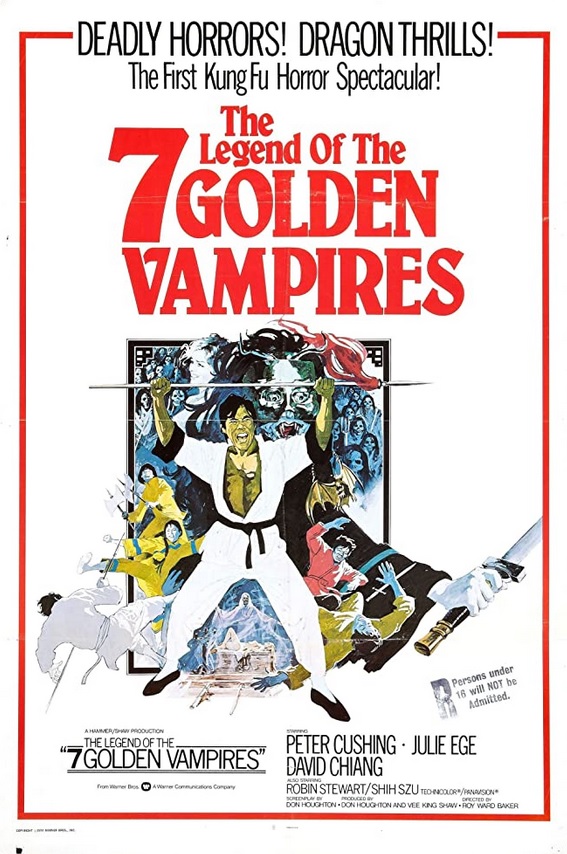
The Legend of the 7 Golden Vampires (1974)

Okay. So we told you about the celluloid hodgepodges of two the Harrys, aka Hope and Tampa, with their respective films Smokey and the Judge (from our “Fast and Furious Week”) and Nocturna (from our now showing “Vampire Week”).

Now, if you enjoyed (I sure did!), but thought Hope’s grafting hicksploitation into disco was nuts, and that Tampa’s splicing vampires into disco was insane, then you’ll go bonkers for this intercontinental boondoggle of a co-production between Britain’s horrormeisters Hammer Studios and Hong Kong martial arts purveyors Shaw Brothers:

In 1804 seven vampires clad in gold masks were resurrected by Count Dracula. 100 years later, in 1904, Professor Van Helsing is hired to kill the fanged hoards.

We’re not kidding. That’s the plot: A mix of ancient Chinese legends with Bram Stoker-inspired vampires—who just happen to be martial arts masters—and experienced Hammer vampire hunter extraordinaire Peter Cushing. The ensuing 75-minutes of karate bloodsucking mayhem became one of the biggest bombs in cinema history and shut the doors on Hammer Studios. And caveat those alternate titles of The Seven Brothers Meet Dracula and Dracula and the Seven Golden Vampires. In the end, is this as bad as the bunny-hopping vampires in the Mill Creek public domain ditty Robo Vampire (1988)? No. Did this need, not backflipping vamps, but Qing Dynasty Jiangshi-inspired vamps of the Midnight Vampire variety? Yes. . . but this Roy Ward Baker-directed fangsocky is way, way better than Nocturna, that’s for sure. (We’re blowing out Robo Vampires as part of our tribute to the 50-Film Mill Creek set, Sci-Fi Invasions, in November; sorry, shameless plug.)

So . . . do we blame Roy Ward Baker for this? Hah, he gave us Quartermass and the Pit (1967), the Hammer-Warner Bros. piece of the Kubrick pie with the “space western” Moon Zero Two (1969) (a childhood favorite, but another Hammer film-hybrid flop that contributed to their demise), The Vampire Lovers (1970; Ingrid Pitt! Schwing!), and Sam’s favorite, The Monster Squad (1989). So all is well, Mr. Ward Baker.

Hi-yah! Sensei Ward!

You can watch this on You Tube or pick up the Shout! Factory DVD restoration that’s wildly available at traditional and online retailers.

About the Author: You can learn more about the writings of R.D Francis on Facebook. He also writes for B&S About Movies.

Tainted (1998)

What if Kevin Smith introduced vampires into his 1994 debut breakthrough film, Clerks? Well, courtesy of that spare $35,000 in actor-writer Sean Farley’s pocket, we have our answer. Oh, and don’t be distributor duped: Troma didn’t bankroll or produce this: they only gave it a national release (beyond the film’s initial, self-distributed Midwest boarders) via the Tainted Vampire Collection, a DVD three-pack with the SOV-analogous Sucker the Vampire and Rockabilly Vampire. But this Michigan-lensed slacker vs. vamp fest is definitely more Lloyd Kaufman than Richard Linklater. It’s more Andy Milligan that Quentin Tarantino. It makes Don Dohler look like John Carpenter. And check the Sam Raimi comedy-horror mix at the door of the Evil Dead cabin, Sumerian demons be damned.

So. Is this a ripoff or homage to Smith?

Well, Clerks had a convenience store. Tainted has a video store. Clerks had the customer-abusing smart assery of video clerk Randal Graves and the less verbally-sharp convenience store jockey Dante Hicks. Tainted has the customer-abusing smart assery of video clerk J.T. (actor-writer Sean Farley) and the less verbally-sharp clerkin’ sidekick with Ryan. All Randal and Dante wanted to do was play hockey on the roof. All J.T. and Ryan want to do is go to a midnight-moving screening of Bladerunner*. And like Randal and Dante, J.T. and Ryan slack off and yakity-yak riff on each other all day long. Smith had $7,500 less-in-his-pocket than Farley. And Clerks was shot on an Arri SR camera running 16mm black and white. Farley shot in color on video.

Yeah, uh, we’re not in the View Askewiverse anymore, Antie Em. For this ain’t Blade. This ain’t Near Dark. For you’ve just clicked your heels into the Ed Wood Plan Niniverse, Dorothy.

You ever have one of those co-workers who rat-a-tat bulldozers their way through conversations with a faux-poignancy, so impressed with themselves and opinions and, with each jaw-hinging, you’re hit with their pretentious-tainted and substance-void breaths? And you just want to punch them in their trite-spewing face, then cram a Tic-Tac down their throat — in lieu of doing them the “favor” they just asked for?

That’s J.T.

And J.T. and his he-makes-me-seem-more-important sidekick Ryan are stranded after hours at The Video Zone (actually Detroit’s Thomas Video) when their ride punks out — and there’s nothing of more importance in this world than making that Bladerunner showing. So, as any self-centered I-could-give-a-shite-about-you personality would do: the slacker-duo beg a ride from the new clerk, Alex (Dean Chekvala). Oh, and unbeknownst to our two Clerks-clone: Alex is a vampire. And so is Aida, Alex’s girlfriend. And when Alex’s car breaks down (natch), they hoof it to Aida’s house — and find her staked by local sociopath vampire Slain, who’s intent on tainting the local plasma supply and hoarding all the clean corpuscles for his own fangs. And, with that, Alex recruits Randal and Dante J.T. and Ryan on a low-budget, hallucinogenic journey across the “D” to foil Slain’s insane plan. And J.T. and Ryan, for once, have to care for something bigger than their Seinfeld-nothingness selves (sorry, Sam!).

Granted, Tainted is surely an interesting, fresh take on the played-out vampire vs. vampire genre, but if this had only nixed the vampires and stuck to being a low-budget tale about two (or three) carless losers on a Homeresque odyssey across Detroit (say, like Adam Rifkin’s pretty-darn-cool coming of age get-to-the-Kiss-concert-at-any-costs teen comedy Detroit Rock City) to get to that Bladeunner midnight movie showing, we’d be onto something. But $35,000 does not a (good) vampire flick make. And Farley is off the vanity calling-card rails with his purposeful, spotlight dialog-diatribes. Yeah, it’s intelligent at times, but the “snappiness” simply runs-on (and on) way too long — like some of the shots in the film (including “shakey cams”!) — and quickly transitions from a cut-’em-some-slack-because-it’s-an-SOV-and-they’re-trying quaint blood sucker to being just plain annoying. And in a closing twist that would send Sam on a Shirley Doe-killing spree across Lawrenceville, we have the longest-running set of end credits (to pad that running time) in horror film history.

In a cool, ironic twist: Dean Chekvala kept on thespin’ away (he’s actually very good here) and worked his way up to guest-starring roles on TV’s Num3bers, the NCIS franchise, and Without a Trace to a recurring role on HBO’s True Blood. Sam Raimi junkies may recognize Sean Farley from his work on Raimi’s failed post-Evil Dead work, Crimewave (1985), but he’s since retired from the biz. Director Brian Evans hasn’t directed, lensed, or edited a film since, but he’s carved (sorry) himself a commendable, behind-the-scenes career on a wide variety of direct-to-video flicks, feature films, and network television series.

There’s no trailer or clips available, but you can watch the full film on You Tube.

About the Author: You can learn more about the writings of R.D Francis on Facebook. He also writes for B&S About Movies.

* We had a post-apoc blowout back in September 2019, so do check out our two-part “Atomic Dustbin” catch-all overview of the genre that also features links to all of our film reviews.