Editor’s Note: Sam Panico previously reviewed this Christian-leaning extensional film as part of our February 2020 “Box Office Failures” theme week of reviews. As we fill out our ever-expanding database of reviews of “Christian Cinema” films from the ’70s that we’ve missed, we brought this film back for another look.
Sam and I are split on this film. But he hasn’t outcast me, as was Jonathan, from the B&S flock. For we are still united in our love of Godfrey Ho and Bruno Mattei films.And there will always be The Astrologer, right Sam?
And what does this all have to do with the “Jesus Rock” movement of the late ’60s and early ’70s? Read on, brother.
The September 17, 1981, cover of Rolling Stone #352, with a picture of Jim Morrison emblazoned on the cover, proclaimed: He’s Hot, He’s Sexy and Dead. In the early ’70s, the same could be said about Jesus Christ, for the Son of God ruled the airwaves and theater screens.
To set up the “why” of this tale of existential seagulls (as well as the “hippie Jesus” romps Godspell and Jesus Christ Superstar), we need to look back to the positive message of the “Jesus Rock” movement born out of the disillusioned “Summer of Love” of the late ’60s.
At the time, as Sam Pacino pointed out in his review of the Christian apoc-documentary The Late Great Planet Earth*, the hippie occult generation’s dreams flamed out at Altamont and was annihilated on Cielo Drive. I have to add that, the hippies, whether they accepted it or not, were long since assimilated by Madison Avenue. There was still money to be made at the expense of the “Summer of Love,” for it was no longer an ideal, but a marketing campaign.
Enter Brother J. to breath new life into a down-the-tubes advertising crusade.
The short-lived “Jesus Rock” genre (for a contemporary context: think of the 36-month run of the Nirvana-driven Grunge era) hit its peak in 1972 when the Doobie Brothers scored a Top 40 hit with “Jesus Is Just Alright.” Other bands topping the Billboard charts were the Stephen Stills-led “supergroup” Manassass (with Chris Hillman of the Byrds) and “Jesus Gave Love Away For Free” (1972) (remembering the Byrds started the genre with their 1969-version of the Doobies’ later hit), the folk-rocking “Now Be Thankful” by Fairport Convention (1970), “Jesus is a Soul Man” by Lawrence Reynolds (1970), Norman Greenbaum’s “Spirit in the the Sky” (1970), Charlie Allen and his band Pacific Gas & Electric with “Are You Ready” (1971), Sweathog with “Hallelujah,” “Put Your Hand in the Hand” (1971) by the Canadian band Ocean, “Joy to the World” (1971) by Three Dog Night, and “If You Wanna Get to Heaven” by Ozark Mountain Daredevils (1974). Pop music fans forget that Top 40-meister Tommy James of the Shondells followed up his early, playful hits of “Hanky Panky,” “I Think We’re Alone Now,” and “Mony, Mony” with an album that professed his faith, his second album, Christian of the World (1971); that “Jesus Rock” entry scored two U.S. Top 40 hits with the songs “Draggin’ the Line” and “I’m Coming Home.” (No, the prior song isn’t about cocaine use (“doing lines”), but about the futility of man’s efforts under God.)
Myrrh Records, a leading Christian music label, had their catalog distributed via A&M Records, which brought Petra (a Southern/Country Rock concern) to a national stage. Ohio’s Glass Harp (friends with the Eagles’ Joe Walsh, then of the James Gang), signed with Decca, and the Resurrection Band broke new ground with their Zeppelin/Sabbath “heavy blues” take on the genre. The smash hit, Broadway “Rock Operas” Jesus Christ Superstar and Godspell were adapted into films; their respective cast albums and soundtracks topped the charts, with singles from each becoming Top 40 hits for Murray Head, Yvonne Elliman, Helen Ready, and even Deep Purple’s Ian Gillan.
So, with Columbia and Universal releasing their competing films versions of Godspell and Jesus Christ Superstar in 1973 (in March and August, respectively), the odd-studio out, Paramount, wasn’t missing the “Jesus Rock” boat. So they optioned writer Richard Bach’s 1970 best-selling novella, Jonathan Livingston Seagull. And since the book — as did the two stage-to-films that inspired its production — didn’t come with a soundtrack, Paramount, through Columbia Records (his label), contracted Neil Diamond to write a companion piece to the book/film. Yes, Neil Diamond, the bane of many’s musical existence (not me), made a “Jesus Rock” album — and topped the album and singles charts.
Jonathan (aka Jesus Christ, voiced by James Francisus) tires of the boring life in his sea-gull clan. So he experiments with new, always more daring flying techniques (putting way the flesh and finding his spiritual side). Since his spiritual quest goes against the communal grains, the flock’s elders (Hal Holbrook) expel him from the clan (as was, if you know your Bible, Jesus). So Jonathan sets out upon the Earth to discover wisdom, find disciples, and a higher reason for being.
Needless to say, the general public had a hard enough time comprehending spiritually conflicted, sentient computers and alien interpretations of heaven as an all white-luxury hotel suite, as an astronaut traveled his “inner space” in 2001: A Space Odyssey. So, most — film critic Roger Ebert infamously walked out of the film — weren’t going for intelligent seagulls backed by a Neil Diamond soundtrack.
The seagulls, of course, do not actually talk; you’re hearing their “thoughts,” as it were, courtesy of a voice cast rounded out by Juliet Mills and Richard Crenna. You have to give Hall Bartlett credit, who, without the benefits of CGI or animation, somehow managed to film seagulls and frame it with dialog to give us an impression the gulls, in fact, talk.
If Roma Downey and her husband/producing cohort Mark Burnett (who found great success with their The Bible miniseries and 2014’s Son of God) remade this, courtesy of technology, the gulls — as do all of the animals in today’s films and television commercials, would actually, “talk.”
But let’s let this one be.
If you enjoyed the book — which many (criminally) dismissed as metaphysical drivel and thus, hated the movie — you’ll love the movie, a movie that is of its time and place: a time when seagulls could talk and Jesus was, in fact, “hot, sexy and dead.”
You can enjoy the soundtrack, in its entirety, on You Tube. The film is easily found on multiple PPV streaming platforms.
There is no better film to start off our “Christian Cinema/Christploitation Week” of film reviews than this faith-based trailblazer distributed, in part, by 20th Century Fox. Its success resulted in a shift for Christian and faith-based films that took their battered, film-canistered reels off the roadshow circuit, out of church auditoriums and revival tents, and into mainstream, secular theaters*. The gambit paid off, as the once beleaguered production was not only a box-office success in the states, but a hit in over 150 countries where the film was translated into 30 languages.
The original theatrical one-sheet. The film was produced by Billy Graham associate Rick Ross and written and directed by actor Don Murray.
Not bad for a paperback copy of a book catching the corner of Pat Boone’s eye at an airport newsstand on the way to Mexico City. In interviews, Boone stated he was immediately engrossed in the life story of Pentecostal pastor David Wilkerson, which he called “a modern day sequel to the New Testament’s Acts of the Apostles.” So he optioned the book to transform it into a movie. . . .
Easier said than done.
Less than a dollar for a best-selling book that sold four million copies by 1968; by 1975, adapted into 30 languages, the sales blossomed to six million.
Boone said in interviews at the time of the film’s release that all the major studios passed, with the opinion that “religion is poison at the box office.”** So began Pat Boone’s five-year journey to get the film made.
Luckily, Rick Ross, who made films for fifteen years with the Billy Graham Organization, and with the help of the Pennsylvania-based American Baptist Convention, production began on location in Harlem in October 1969. The script was penned and directed by actor Don Murray. Murray had already penned two, long forgotten, faith-based films: The Hoodlum Priest (1961), in which he starred in the true story of street minister Friar Charles Clark, and Confessions of Tom Harris (1969), in which he starred with Linda Evans in the true story of Tom Harris, an alcoholic ex-GI and loan shark debt collector who experienced a religious conversion and became a drug counselor (Harris was also a Golden Gloves boxer and future Hollywood stuntman).
Image left: Murray penned as screenwriter Don Deer. Image right: Also known under the titles Tale of the Cock and Childish Things.
Christian and secular audiences responded positively to The Cross and the Switchblade, making it a modest box office hit against its slight budget. The film’s detractors, of course, didn’t take the film’s production values to task nor its script or directing by actor Don Murray: their main rub was that Pat Boone starred — and was “unconvincing” in the role.
Ugh. Whatever, you uppity-degree, English literature critics who failed as screenwriters. Hey, are you by any chance related to the studio executives that said the film would never be a hit?
Also adapted into a comic book by iconic artist Al Hartley, the story begins as Assemblies of God pastor David Wilkerson reads a 1958 issue of Life magazine about the lives of seven Brooklyn teenagers who are members of a criminal gang. From that, Wilkerson receives a calling to minister to the city’s gangs — and steps into the middle of a gang war between the Mau Maus — led by Nicky Cruz (a fine Eric Estrada, forget the critics) — and the Bishops. And both gangs scoff at the pastor’s plans to hold a youth rally to invite all of the gangs and drug addicts in New York.
At first, Cruz conspires to get “rid of the preacher man” by using Rosa, his heroin-addicted girlfriend in his plans. In time, the pastor, though Christ, melts the gang leader’s heart — and he brings a truce among the gangs. Nicky Cruz then becomes an ordained minister and, with David Wilkerson, they start a teen center, Teen Challenge, to help other, trouble youths.
Sound hokey? Well it’s all true. It happened. Sometimes, real life — and the best things in life — are corny.
Al Hartley, who worked for Stan Lee and Marvel comics drawing Spiderman, The Hulk and Ironman, received Christ as His Lord and Savior in 1967.
Al Hartley now has many of his secular and faith-based titles — including his Archie-verse — available as Kindle Digitals through Amazon.
A sequel, which concentrated on the post-salvation life of Nicky Cruz and his own ministry, was to be produced by the team behind Erik Estrada’s second Christian-based film, The Ballad of Billie Blue (1972). Sadly, that film was never realized, and Estrada’s chance to have his name, alone, on the top of a marquee, was lost. He’d go on to co-star with George C. Scott and Stacy Keach in The New Centurions (1973), Airport 1975 (1974), and Midway (1976). He then booked his iconic role on NBC-TV’s CHiPs (1977 – 1983): a blessing that made him a star, but derailed his theatrical potential.
You can enjoy this simply wonderful movie courtesy of the Vision Video You Tube portal; it’s an ad-supported steam with the ability to skip through the ads. The studio shingle also offers the film as a 50th anniversary DVD via their website. You can also watch it on Christian Cinema auteur David A.R. White’s (whose name you’ll see mentioned, often, this week) PureFlix platform. You can sample the trailer on You Tube.
The Cross and the Switchblade is a stellar, inspirational film filled with a lot of heart. Boone and Estrada are fine, and Don Murray’s script and direction — considering the budget and the long journey to the get the film made — is an engaging, entertaining watch.
So watch it.
* One of those later, well-received, mainstreamed faith films was 1978’s Born Again, Frank Capra, Jr.’s biographical film on the life of Richard M. Nixon’s Special Counsel and Watergate co-conspirator, Charles Colson. Colson converted to Christianity while in prison and came to incorporate the Prison Fellowship Ministries.
** In 1955, screenwriter and director Henry Koster, who achieved critical and box office acclaim with his 1953 biblical epic, The Robe, met with equal acclaim for A Man Called Peter. A chronicle on the life of preacher Peter Marshall, who came to serve as Chaplain of the United States Senate, was adapted from a 1951 best-selling biography written by his wife, Catherine. Another of Catherine Marshall’s best sellers, 1967’s Christy, based on the life of her mother, a school teacher who taught impoverished Appalachian children, was adapted into a 1994 CBS-TV movie and television series.
About the Author: You can learn more about the writings of R.D Francis on Facebook.He also writes forB&S About Movies.
Director Milko Davis’s most recent effort was 2019’s Jurassic Thunder; his latest, Phantom Patrol, is in post-production. He was four films into his self-made indie career (his first was 2007’s Raiders of the Damned) with this tale about a researcher (Davis mainstay Elvis Sharp) cursed by his encounter with a mermaid-like creature deep in the Amazon jungles. He comes to realize that, in order to reverse the prehistoric, aquatic metamorphosis of his own body, he must return to the jungles for a cure.
In addition to Elvis Sharp, you’ll also recognize Rick Haak, aka General Hicks, as well as actor Leon Mayfield, from Milko’s fun Jurassic Thunder. You’ll also see cast crossovers in the frames from Milko’s other films Tsunambee and Jurassic Dead. The B&S staff appreciated actor Rick Haak taking the time to comment on our review of Jurassic Thunder, telling us “. . . the movie was fun to make and Milko does a lot with such a low budget.” That “lot” shows in Milko’s work, as his serviceable casts always confidently sells the outlandish drama of his pen and/or lens. We dig the dude.
Yikes. Creepy long-haired women!
For an against-the-budget film made four under $50,000, Curse of the Black Lagoon certainly looks like an ambitious, well-made film — with the cast slopping around in the woods and waters with gusto — as these stills from the film, show (here and here). Originally known as Merwitches, then retitled for its eventual DVD and streaming relaunch, the film unfortunately ran into production issues and, it seems, will not see release. Too bad, as the production stills, seen above, are intriguing: you can see everyone is enjoying the work and making the best picture they can make with the resources they have. Respect.
You can enjoy the .mp3 soundtrack from Curse of the Black Lagoon by Daniel E. Wakefield on Amazon.
So, if you’re wondering of the connection between a ’50s monster homage and a ’90s cyber thriller: the common denominator is the husband and wife filmmaking team of Johnathan Aguero and actress Julie Crisante. Curse of the Black Lagoon was co-written and co-produced by the duo — with Milko Davis on as the director. Aguero produced and Crisante acted in Davis’s Jurassic Dead.
Unfollower, a Lifetime cable channel-styled thriller, represents as the couple’s third joint project: one that serves as Aguero’s third producing, second writing effort, and directing debut. In addition to starring Julie Crisante, Unfollower also co-stars a new-to-the-scene Erin Felton, who starred in Curse from the Black Lagoon.
Drawing from her real life, past-personal experiences of abuse, Crisante stars as Jo Kelly: a self-conscious, up-and-and-coming on-line fitness instructor who becomes a cyber-stalking victim. When the digital stalker enters the real world, she uses her fitness skills and fighting instincts to stay alive.
Is it one of her 100-plus student-followers? Sure, her cheating, now ex-boyfriend, who runs his own high-tech firm, offers to help when the cops, won’t: but is it him? Or her enamored co-worker? Or a jealous competitor?
While this hasn’t bowed (at least not yet) on the female-centric Lifetime cable channel in the U.S., instead going straight to the free-with-ads stream Tubi platform, this “damsel in distress” cyberstalker has decent enough, against-the-micro budget production values and acting; there’s no reason why Julie Crisante can’t become the next romantic lead in a seasonal, cable romance or a MarVista-Canadian produced thriller for Lifetime. The proceedings of Unfollower are deserving to be a part of that channel’s serviceable rotation of thrillers that get the job done when you’re numb from the AMC and TNT repeats and need something new to watch. And thanks to our ’80s home video gods of Fred Olen Ray (A Christmas Princess) and David DeCoteau (The Wrong Valentine) writing and directing — and getting us hooked on — Hallmark and Lifetime movies, we should know.
Another interesting twist — well at least to those B&S About Movies fans of all things ’80s SOV — Unfollower is one of the many films produced and shot in Denver, Colorado. During our “SOV Week” deep dive back in September, we discussed the Centennial State productions of Curse of the Blue Lights, The Jar, Manchurian Avenger, Mind Killer, Night Vision, and The Spirits of Jupiter. Yeah, one day, some day, we’ll get to fellow-obscure, direct-to-video Mile Highers such as Savage Water (1979), Lansky’s Road (1985), and Back Street Jane (1989) . . . that is, if we ever find errant VHS copies or fan-ripped streams. If you’ve seen an online copy of them, let us know.
You can learn more about all of the films produced in Colorado at Colorado Film.com.
About the Author: You can read the music and film reviews of R.D Francis on Medium and learn more about his work on Facebook.
One look at the theatrical one-sheet and you’re thinking of the Larry Cohen-penned and directed The Ambulance (1990) starring Eric Roberts. Of course you are: it’s Larry friggin’ Cohen! Hmmm . . . an “Exploring: Ambulance Movies” featurette covering flicks like the Harvey Keitel-fronted comedy Mother, Jugs & Speed (1976), the Playboy “Playmate of the Month”-fronted comedy Paramedics (1988), and Martin Scorsese’s Bringing Out the Dead (1999)?
Ugh. Sidetracked: back to the film at lopped-off hand.
The cult thriller based on the best-selling novel of the same name.
A respected filmmaker in his homeland and across Europe, German writer and director Rainer Erler is a filmmaker you’ve only seen — courtesy of ’80s U.S. UHF-TV syndication and home video — four times on English-language shores: the debut, Operation Ganymed (1977), Plutonium (1978), Spare Parts, and Sugar (1989). Prior to the English-language release of Operation Ganymed, Erler made 30-plus German-language films and a smattering of television series since making his debut in 1961.
As for his four, English-dubbed distributed films: I’ve only found and watched two of them: the great, Star Wars-era sci-fi’er on a tight budget, Operation Ganymed, and this desert-based horror romp known in its homeland — by what I think is a much more effective, ’80s slashy-titled — as Fleisch, aka Meat. I’ve given up my search for VHS copies of Plutonium and Sugar — films I’ve always wanted to see — long ago.
As much as Operation Ganymed atmosphere-drips with its desert-based, yet claustrophobic, psychological dread, so does Spare Parts: a noirish tale of a honeymooning couple’s spiraling stay at a not-so-quaint, run-down hotel in Albuquerque, New Mexico (where this was shot; not doubled, say, in the Spaghetti Western wilds of Italy).
The newlyweds’ love fest is cut short when an ambulance takes the Princeton-educated husband away . . . never to be seen, again (the innkeeper is overly friendly . . . then claims to not know what you are talking about and who you are). Monica, Mike’s (TV-prolific Herbert Herrmann) kidnapping-escaped, fish-out-of-water German exchange-student wife (prolific and a very good Jutta Spiedel) comes to team with a Texas truck driver (Wolf Roth) to discover the hotel’s dark secret . . . and its connection to the cryptic ambulance service: a black market organ-harvesting service run by a shady doctor (a perfectly-evil Charlotte Kerr).
One-stop shopping for movies from all over the world!
Spare Parts is a film of solid cinematography and well-scripted suspense complemented by a downbeat-creepy, mood-inducing score: one undone only by it needing a tighter edit (this runs a little long at an hour fifty minutes) and that Mill Creek’s print is a little rough. But I liked the Amsterdam-bred noir De Prooi, aka Death in the Shadows (1985), discovered on Mill Creek’s Pure Terror set that we unpacked in November 2019, so what in the hell do I know?
Sure, Michael Crichton’s Coma (1978) starring Micheal Douglas did the whole illegal organs scam a lot better, while the illegal organ shenanigans (and ripping Coma) of Cardiac Arrest (1979), an early attempt to turn Max Gail of TV’s Barney Miller into a film actor, did it worse (and it reminds of me of TV’s Mike Conners stumbling about in 1984’s Too Scared to Scream). The much-better-than-both Breakdown (1997) starring Kurt Russell (although that has no ambulance or organ theft, but kidnapping and ransom on the New Mexico back roads) also comes to mind. Oh, now I am remembering Body Parts (1991) with Jeff Fahey . . . but that was arm transplant surgery.
Hmmm . . . sounds like an “Exploring: Organ Harvesting” featurette to me. Never say never.
There’s a trailer to sample and the full film to enjoy, on You Tube.
About the Author: You can learn more about the writings of R.D Francis on Facebook.He also writes for B&S About Movies.
“The beauty of [a] Mill Creek box set is discovering a movie that you would otherwise never find.” — Sam Panico, in his review of fellow the “Drive-In Classics” entry, Throw Out the Anchor
Sure, by way of his string of hits with Robocop (1987), Total Recall (1990), and Basic Instinct (1992), we’re all fans of Dutch writer and director Paul Verhoeven. Then there’s the box office flop that is Showgirls (1995; Golden Raspberry for “Worst Director”) and his (I felt, misguided) fascism-in-space romp, Starship Troopers (1997). While he had a career in the Netherlands dating to the early 1960s, Verhoeven didn’t make his feature film-debut proper until a decade later with the comedy Business Is Business (1971) and the romantic “erotic drama,” Turkish Delight (1973; Oscar-nominated as “Best Foreign Language Film”). Katie Tippel, aka Keetje Tippel, was Verhoeven’s third film prior to his critically-acclaimed, international breakthrough with the romance-thriller Solider of Orange (1977), which introduced the world to Jeroen Krabbé and Rutger Hauer. Both actors came to star in two of Verhoeven’s later international hits, the murder-mystery, The Fourth Man (1983), and the historical adventure, Flesh + Blood (1985), respectively.
It tells the story of Katie (Monique van de Ven, the wife of cinematographer and director Jan de Bont of Speed and Die Hard fame; she made her debut in Turkish Delight), a young girl led into a life of prostitution to help support her impoverished family in 1881 Amsterdam. Based on the memoirs (it’s debated if the story is, in fact, real, made-up, or a patch work of the lives of others) of Dutch-born, Belgium-bred and French-writing Cornelia Hubertina “Neel” Doff, she is remembered as one of the Netherlands’ most important authors. Then noted as that country’s most expensive production, the film became the Netherlands’ number one box office draw of the year. Paul Verhoeven has said that, of all of his films, this is the one that he wants to remake and, in fact, he pulled elements of Katie Tippel into the Joe Eszterhas-penned disaster, Showgirls.
He should remake this film . . . or at least see this though a restoration (well, he did, as we’ll discover). The Mill Creek version does nothing to enhance your appreciation of the film as the version, here, is muddy and the dubbing, awkward. However, as Sam stated: this is a unique, bargain-based introduction to exposing yourself to Paul Verhoeven’s Dutch-language works; a film you would not see, otherwise.
In addition to Mill Creek, Anchor Bay offers a higher-quality, single-disc version — complete with an audio commentary track by Paul Verhoeven. For a deeper dive into that Anchor Bay version, this November 2002 examination by Dale Dobson at Digitally Obsessed will get you there. For another take — in addition to insights on four more of Verhoeven’s Dutch-language works, there’s no review finer than James Newman’s for Images Journal. Of course, Anchor Bay is no more, but used DVDs abound in the online marketplace.
You Tube offers a very clean, subtitled rip from the Anchor Bay version. I never heard of or seen this film (I’ve only gone back as far as Solider of Orange at Roger Ebert’s urging, as I recall) and I enjoyed it. It is, however, a dark, depressing film . . . and hardly a film you’ll snuggle up next to your honey near a crackling speaker and burning mosquito coil. It is also classic Paul Verhoeven: a film rich set design, costuming, and exquisite cinematography.
About the Author: You can learn more about the writings of R.D Francis on Facebook.He also writes for B&S About Movies.
In the tradition of Curse of the Blue Lights, Manchurian Avenger, Mind Killer, Night Vision, and The Spirits of Jupiter, here’s another, early ’80s homegrown effort from the wilds of Denver, Colorado. Sure, there are other, obscure Mile Highers to review, such as Savage Water (1979), Lansky’s Road (1985), and Back Street Jane (1989), but good luck locating vintage VHS copies of those Rocky Mountain low budgeters, and there are no — unlike The Jar — freebie or with-ads online streams of those home growners to share.
Yeah, there’s nothing like a reputation among horror fans as “being the worst film ever made” to have a film transition — not by a reissues imprint (Arrow, Severin, Kino), mind you, but by the film’s fans — out of the analog snow drifts of the brick and mortar old to the digital streams of today. And when those same fans shout for a DVD/Blu restore . . . well, there must be something in those frames, right?
Outside of a brief, local theatrical release on April 16, 1984, The Jar is purely a direct-to-video effort (a genre lumped-in with shot-on-video films intended for direct-to-video release) that received its first, widespread distribution in 1987 via the Magnum Entertainment imprint. As result, we have a film that passes the James Whitcomb Riley SOV-duck test — and lands as a buckshot-filled mallard on our SOV stacks.
Well, eh, maybe.
While the proceedings aren’t exactly blowing off the lid off any canisters, The Jar is not that bad.
The debut, 1987 U.S. issue by Magnum Entertainment.
It’s hard to believe this lone effort by screenwriter George Bradley and director Bruce Toscano — an effort clearly influenced by Frank Henenlotter’s Basket Case (1982), with a soupçon of Sam Raimi’s The Evil Dead (1981), and a dash of Don Coscarelli’s Phantasm (1979) — was shot in Techniscope Anamorphic at a 2.35:1 aspect ratio (if we are to believe the IMDb). Sure, video tapes uploaded to video sharing sites suffer from repetitive, brick and mortar wear n’ tear renting and, regardless of what format a film is shot in, you’ll experience a VHS-wash out, but shot in 35mm? This film? The fuzzy, color-hazing duck a l’orange aromas of the S-VHS and U-Matic recording format of broadcast-news ENG cameras and 3/4-inch U-Matic videotape using Ikegami cameras, permeates the nostrils.
Regardless of the film’s rumored $200,000 price tag — keeping in mind the “Midnight Movie” and VHS rental classics of The Evil Dead shot for $375,000, Phantasm for $300,000, and Basket Case for $35,000 — The Jar comes across as a much cheaper production. In fact, while The Jar more closely resembles a Don Dohler 16mm-to-35mm backyard effort (his debut, The Alien Factor, shot for $3,500; his sophmore effort, Fiend, shot for $6,000), Bruce Toscano’s efforts — however valiant — are void of the against-the-budget Dohler charms we’ve come to adore. The Jar is a perpetually grainy and dark film where the framing is non-existent and the dubbing out-of-sync. It simply does not look like — regardless of its impressive-against-the-budget “Vietnam flashback,” complete with a helicopter; a rental which probably chewed up much of the budget — a $200,000 movie.
The Jar is a film with no middle critical ground: Those who love it, love it. And the haters are as cunning as they are cruel. There is, however, a sliver of middle ground when it comes to the film’s score: everyone agrees the ambient, Goblinesque keyboards by a one-and-done artist, Obscure Sighs (actually director Bruce Toscano and cinematographer Cameron MacLeod), is better than the film deserves. It’s those cherish, Italian-giallo Goblin memories that lend the few to name drop Dario Argento. True, Argento may drift into bizarre, disjointed narratives with out-of-nowhere twists in his works, but a soundtrack alone does not an Argento film, make. What everyone on both sides of the critical fence agree on: all of the respective film disciplines — in front and behind the cameras — took one hell of swing for fences, but instead, struck out.
This critic concurs.
The soundtrack is engaging. The film — in its technical aspects of cinematography, lighting, editing, and sound — is not. There is, however, something to appreciate in writer George Bradley’s insightful and inventive, religious-inspired chronicle. This reviewer sees an influence from The Holy Bible’s synoptic gospels narrative of the Temptation of Christ: the film’s lead character of Paul, our faux-Jesus, is sent off into “the wilderness” to be tempted by the jar’s inhabitant, our faux Satan.
“What the hell, R.D? Are you nuts? Did you watch the same film we did?” Bill Van Ryn bewilderingly drags his cigar. “First, it’s Ingmar Bergman, Brigadoon, Inca death masks and incestuous ghosts with The House That Vanished. Now you’re turning a best-forgotten, SOV piece of junk into a Jesus parable? Sam,” Bill chair swivels. “What the fuck is it with this guy? And tell him to stop featuring me in his rambling, half-assed reviews.”
“I know, Bill. I know. I’ll talk to him. Just leave him be for the moment. He’s quiet and happy in his corner. Besides, we have a Groovy Doom double feature to plan,” dismisses Sam the Bossman.
“Fuck those bastards,” R.D leans into and frantically fingers his laptop. “Here’s some Fellini and Ambrose Bierce references to frost your ass.”
When the final frame of the film’s end credits rolled, a single world appeared: Carrion, which was the film’s shooting title. From the Latin, caro, meaning “meat,” it refers to dead, rotting flesh — animal and human. Another of the film’s alternates titles — if we believe the IMDb — is Charon, the ferryman of Hades who carries souls of the newly dead across the river Styx.
You’ll recall that the powers at New Line Cinema retitled Sam Raimi’s Book of the Dead as The Evil Dead, due to reasoning that “you don’t want movie goers thinking they’ll have to read when seeing a movie.” If one takes a viewing of the script for The Jar — originally released in 1984 as Carrion — in that context, it seems screenwriter George Bradley brought a much more profound narrative, one that expands beyond our assumed, previously mentioned, VHS-horror rental inspirations.
In addition to a definite, Fellini’s Juliet of the Spirits (1965) inspiration, there’s also an Ambrose Bierce An Occurrence at Owl Creek Bridge (1890) vibe in Bradley’s pages. It is that Bierce connection — as result of our protagonist’s war flashbacks — that led some fans to opine The Jar reminds of the later-released Jacob’s Ladder (1990). That exquisite, Bruce Joel Rubin work is, itself, an afterlife amalgamation of the Genesis parable of Jacob’s Ladder, Dante Alighieri’s Inferno, tales from the Tibetan Book of the Dead, and Bierce’s short story.
Yes, I’ll debate you on this fact: That level of intelligence, as well as impressionistic ambiguity, is in the frames of The Jar.
Is the jar’s occupant, in fact, Charon itself? Is it a coincidence that many a Greek lekythos, that is, a vessel or canister, used to carry anointing oils for funerary rites, are decorated with artistic Charons and found in tombs? Is the jar of our film, in fact, a lekythos meant to anoint the dead? Is Paul, our protagonist, already dead, going through a series of tribulations on his trip through purgatory before reaching Heaven?
The visual craftsmanship of that intelligence, however, as we’ll come to discover, is not in the frames. The Jar is case of — well, a jar of — a film where noble ambitions, it seems, exceeded the skill sets involved. However, director Bruce Bradley and his cinematographer, Cameron MacLoed, are not two morons running around with a camera making a movie. The Jar certainly has its WTF moments of Euro-cinema ambiguity — which is my personal, celluloid jam — pitter-pattering afoot.
The most enjoyable aspect of reviewing lost tapes from the VHS fringes in our now, digital age is that the actors involved with the film are able to offer their experiences on social media, in this case, the IMDb: Gary Wallace, who portrayed the lead, Paul, confirmed the “amateur” aspects of the film.
Wallace tells us the film was shot for $200,000, in two stretches of two weeks: the first was shot in the fall, while the second shot in the spring, with pickup shots in the summer. No only were rehearsals non-existent during the shoot: all of the dialog was dubbed. The cast would shoot from 5 to 6 am until dark. Then return to the studio and dub until 1 to 2 am that morning. The process then repeated the next day, etc. Wallace also tells us that director Bruce Toscano — a photographer by trade — decided he “didn’t want the 60 Hz” signal so he could sync the recorded voices to the film. Toscano and his assistant [sound recording Ronnie Cramer, we assume] ended up cutting little pieces of tape and splicing them together to at least try to make the sound match the movie.
European VHS on Antoniana Video out of Spain.
“I think he [Bruce Toscano] and the script writer [George Bradley] had a vision of what they wanted the movie to be,” recalls actor Gary Wallace. “If I remember correctly, they were trying to portray various incidents of inhumanity and how [that] inhumanity could pass from one person to the next.”
That’s what the Jar — or at least the occupant of the Jar, is: a mystical, otherworldly canister/creature that tests the humanity of its possessor and, it seems, in order to save their own “humanity,” they have to pass the canister and its (forget the VHS cover) blue, demonic occupant (that looks a Ghoulies (1985) outcast) to another person. Or the Jar, after if finishes draining a soul, and prior to its host’s death, inspires its passing to another soul.
Now, here’s were the dark photography and poor framing we previously spoke of, comes in: but since we are low-budget cheating, here, it makes — from a creative standpoint — sense. Just not from a narrative one. Did Paul hit another car? Did a car hit him? Did he hit the old man? Did he just run off into a ditch and find the old man? Was the old man hitchhiking or just laying on the roadside? Did the Occupant of the Jar set a trap and make Paul drive off the road to find the old man, so the Jar could be passed on? (I personally think it’s the latter. It’s also obvious: The “accident” was shot — as with the nighttime car scenes for The Evil Dead, as well as Reggie’s ice cream truck wreck in Phantasm — on a darkened soundstage, well, an ad-hoc’d warehouse.)
Anyway, after an “automotive accident,” Paul picks up a crazed, old “hitchhiker” (as some critics have stated) obsessed with a jar he carries in a crumpled paper bag. After taking the man to his apartment — instead of the hospital (so goes the Jar’s power to do its will, IMO) — the man disappears (goes to Heaven or some afterlife, IMO): but leaves behind the Jar. Paul opens the Jar. And no matter how many times Paul gets rid of the Jar, it — with its fetus-like occupant (that never actually comes out of the jar to crawl around) — returns.
Another Felliniesque hallucination.
So starts off the film’s Coscarelliesque surrealism meets David Lynch symbolism (think Eraserhead) — only with none of either filmmaker’s level of non-linear style or viewer engagement. Paul’s disjointed hallucinations and/or dreams where reality meshes with illusion take him from watching his own birth in a blood-filled bathtub (my interpretation of who the teen in the bathtub, is), seeing himself crucified (as he looks down, deep inside a back alley dumpster), a black & white flashback when he interacts with his younger self (again, my interpretation), and a creepy little, Stephen King-type girl walking with a balloon in a park (Is it his dead daughter or little sister? I’m lost . . .), as well as a group of cloaked monks out in the rocky desert (carrying the cross to Paul’s crucifixion).
So — at the risk of plot spoiling — does Paul kill his pretty, romantically-inclined neighbor when she appears to him . . . as the old man who cursed him with the Jar? Does Paul eventually pass off the Jar to his boss to rid himself of the evil? Should we directly pass “Go” on the celluloid Monopoly board and go straight to the Aylmer in Frank Henenlotter’s Brain Damage (1988) to suck our brains dry? Have we gazed deeper, down inside The Jar than it probably deserved to be? Is it really better than most critics have opined?
No matter.
We know you’ll open The Jar because, you, like us, enjoy out-trashing the last trashy mess we just watched. Take comfort in knowing there’s at least a contingent that enjoy The Jar (including moi). The same can’t be said for the abysmal remake of Jacob’s Ladder. Yes, there was a remake released in 2019: everyone hated it. (Ditto for the 2019 remake swipe at David Cronenberg’s Rabid. Just why? Why? Oh, why!)
You can watch The Jar on You Tube (the Magnum version) and You Tube (the Antoniana version). The soundtrack also has its fans, as you’ll listen from the You Tube clips HERE, HERE and HERE. The second two are fan remixes that make it sound more Tangerine Dream than Goblin, however. But that’s not a bad thing.
Perhaps those remixes could be used in a remake? The story for a great film, is there.
About the Author: You can learn more about the writings of R.D Francis on Facebook.He also writes forB&S About Movies.
“Five miles below the surface of planet Earth, a new fear is born.” — Most boring tagline, ever
“I feel like I am in a bad episode of The X-Files.” — Dialog from the film that should have been the tagline for the film
Well, forget the tagline snafu. Look at that box art!
Made NOT by American International Pictures, but American INTERACTIVE Pictures.
No, Alien Species isn’t a lost film from the ’70s or ’80s repacked for the ’90s DVD market. Alien Species is, in fact, a sad, very sad, present-day ripoff of Independence Day and Species — all released in 1996 — made as a quickie-cash-in on those films. And to fill that 12th and 50th slot on one of Mill Creek’s many bargain box sets.
Yep! That’s Charles Napier (from another film, we’re almost sure of it) as the military officer — only, ugh, budget: they could only afford a Sheriff’s uniform.
Hey! That’s ’70s character actor extraordinaire Hoke Howell as the professor — of too many to mention Fred Olen Ray flicks!
Hey! Oh, ugh . . . that’s Jodi Seronick — the totally cute, but worst-ever, one-and-done actress committed to a Mill Creek box set — thepsin’ alongside Izzy from Shock Em’ Dead. (Plot spoiler alert: he’s one of the prisoners, and he dies.)
David Homb asIzzy, rocking’ the ’88s for Spastic Colon.
Wait . . . what the hell? The dude that gave us the ’80s apoc-romp Land of Doom — the movie with the cross-bow glove?!?! Hey, he’s also the producer of the Christian apoc-rocker Raging Angels with Eddie Wilson! You rock, Peter Maris! Wait, what . . . Maris made his debut in 1979 with the U.K. “Video Nasty” Delirium?
Load. The. Tape. I’m celluloid delirious.
LOAD THE TAPE!
When everyone bowed to the altar of John Carpenter.
From an Independence Day ripto a Road Warrior clone: it’s the B&S About Movies way.
STOP! Hit the fast forward button. No, just hit the stop button. Eject! Eject!
What the hell? The guy who made my cherished Delirium, made this? What went off the rails, here?
The awful cinematography. The insipid scripting (one of its golden lines: “We’re not in Kansas, anymore!”). A worse soundtrack. Poorly staged action sequences. CGI that’s an embarrassment to CGI. Charles I-love-him-in-everything Napier sleepwalking it — again, from what seems an unrelated film.
So . . . as with this film’s raison d’être: aliens show up circling the Earth, but with none of the dramatic or effects impact of a Roland Emmerich production. Er, uh, because this is more like an Ed Wood production — as two astronomers peck at keyboards at a desk in an office building tracking an object.
Then a fleet of ersatz Cylon Raiders appear in the sky.
Invasion over.
So one of the scientists from behind the desk — racing (or was it Hoke, don’t care) to somewhere to warn about the invasion (since there are no phones, cell or hardline, in 1996; an embarrassing plot gag that didn’t jive in the two-years later asteroid slopper Deep Impact) — ends up in a fender bender with a prison transport bus. Now, said scientist is part of a ragtag band of humans (both deputies and criminals), led by the Sheriff (cue Charles Napier to the set) because, well, the production couldn’t afford a piper cub and a cargo plane to do a Con-Air meets Independence Day ripoff. Uh, er, wait a sec . . . Napier isn’t in this part of the film, because he’s actually in “the other film” that’s cut into this film — we think.
Anyway, our human revolutionaries — not led by Will Smith and Jeff Goldblum — stumble around the woods and hide out in cave . . . the very cave that leads to the aliens invading Earth. Then errant cows and backwoods rubes sucked yonder by a transporter beam, found just-when-we-need-’em bazookas, shotguns that never require reloading, compatible alien-to-human computer software interfaces, saucers with no force fields, green force-field prison cells, the worst day-for-night/night-for-night cinematography, ever, and educated, Polyanna female leads hooking up for grungy, prisoner romance, ensues.
Ugh.
This ain’t an on-purpose nostalgia piece to honor Bill Rebane: Alien Species is just an incompetent, just-like-a-Bill Rebane alien invasion flick of old (see Invasion from Inner Earth and The Alpha Incident for more information), where we have people running around the woods and stumble-bumbling through caves (but not drinking a lot of coffee or smoking, as in a Bill Rebane flick) as they hurl insults at each other, that is . . . when we don’t have ol’ Hoke Howell (or whomever) pecking at keyboards (his niece, his daughter, or whatever-she-is, is the thepsy-screechy Jodi Seronick; Hoke’s students are the two behind-the-desk nerds; Jodi is friends with the unrequited-crushing male nerd that takes out saucers with a laptop, just like Jeff Goldblum).
“So, do any, actual aliens show up?”
Well, a couple guys in rubber-zipper suits appear in a darkly lit cave — if you haven’t already fast-forwarded through that part.
“Do we ever get a peek inside the mothership or a saucer cockpit?”
No.
“Why do the aliens attack a small town instead of say, New York City — besides budget issues?”
The cave.
“The cave?”
Yeah, it’s all always been about that backwoods cave. Weren’t you following along with the plot: the aliens started their Earth colony, down there — which was teased in Bill Rebane’s Invasion from Inner Earth, but never delivered. So, at least Alien Species lived up to its tagline in that regards.
You know what?
I’m not even sure if my “plot” description is accurate. But it’s damn close. Not that my review is steering your wrong. Not in the least.
Hey, when I’m stuck reviewing a film that looks like pieces-parts of three films cut together (the two desk dorks, Napier’s sheriff in town shenanigans, the prison bus crash out in the sticks), I’m wishing I was watching the piecemeal efforts Evil Town or Night Train to Terror. Or Spookies. Or Fright House.
At least Peter Maris has the sense to put Jodi Seronick in sensible, flat shoes and not have her running around in designer heels like some Paul Naschy Spanish-cum-Italian zombie flick.
Yeah . . . why am I watching this instead of a Naschy or Amando de Ossorio flick? Boy, some robed monks with Omega Man eyes sure would have helped, here.
Anyway, there’s no trailer to share . . . but, if you must watch Alien Species, in full, you must. We found a copy on You Tube. And don’t go surfing for the end credits-announced Alien Species 2: The Invasion. It was — for all the obvious reasons — never produced. If you’d like a bargain-priced version of Alien Species for your collection, you can have it as part of Mill Creek’s Nightmare Worlds 50-Film Pack/IMDb alongside UFO: Target Earth and Invasion from Inner Earth — both which we also reviewed this week.
At least his review isn’t a total loss: your movie knowledge has expanded by knowing of not only one — but two — films each, of Peter Maris and David Homb. Well, three for Maris, as we suggest your checking out Delirium (which you can, on You Tube).
You can check out the trailers for Delirium and Land of Doom on You Tube, as well as this new-and-condensed review of Alien Species for our November 2022 “Mill Creek Month” of reviews for the Nightmare Worlds box set.
Ugh. If I would have know Peter Maris would reappear 40 years after the fact via the new, January 2022 Blu-ray reissue of Delirium, I would have been nicer to Alien Species and not funned Peter so much in this review. Eh, you live and learn in the digital age. I should have known better. Don’t hate me, Pete! Blame Mill Creek and their confounded box sets for the review inspiration!
Get your copy! Image courtesy of JohnGrit/Unisquare.
About the Author: You can learn more about the writings of R.D Francis on Facebook.He also writes forB&S About Movies.
When in Denver (well, Fairplay, Colorado), you might as well review another of that city’s homegrown films: more so when you review The Spirits of Jupiter and that film’s James Aerni, who got a VHS marquee position as that film’s crazed sheriff , appears, in his second and final film.
Explosive? Thrills? Not the film I watched.
First, before we get to the Charles Bronson lookalike on the cover, let’s clear up the title: It’s not a rip on the Frank Sinatra-starring Manchurian Candidate (1962), a film which deals with a person, especially a politician, used as a puppet (aka assassin) by an enemy power. The title refers to a geographically overlap of Russia and Northeast China — the homeland of our hero, here.
Okay. That’s settled. Now for the Charles Bronson question: that’s Asian lookalike Bobby Kim.
So, uh, what’s an Asian like Kim doing in a place like Colorado? Well, if you’ve ever enjoyed a Denver Omelette or Denver Sandwich, you know that Chinese railroad cooks served up those egg foo yung-styled dishes for their fellow rail workers that helped built the great Centennial State.
Yes, Kim — and not the Centennial State or James Aerni, both which brought us here in the first place — is the real selling point: for we loved Kim for years from his work in his best known and U.S. successful film, Kill the Ninja (1984). And we also get Bill “Superfoot” Wallace — who debuted in A Force of One (1979) with Chuck Norris, as well as Killpoint (1984) with Leo Fong. As for the rest of the cast: So it goes with most of the SOV and 16-to-35mm blow ups out of Denver: we’re dealing with a gaggle of one-and-gone thespian and auteurs: this time with director Ed Warnick and QWERTY warrior Timothy Stephenson. Eh, what else would you expect from a film first screened locally in 1982 . . . that finally received mass (well, not that mass) distribution via VHS, two years after the fact.
So, when you have the world’s premier Tae Kwon Do master in Kim, and a full-contact world champion in Wallace, what’s not to likey, here?
Well, everything: for it all stinks like those rotted, wet market pangolin carasses that caused the COVID outbreak.
Yeah, this ain’t no Killpoint or a Ron Marchini-Leo Fong joint like Murder in the Orient (1974). But the proceedings sure to have that “kung-fu western” déjà vu stank of the Jackie Chan two-fer of Shanghai Noon and Shanghai Knights — only with none of the charms . . . or acting . . . or action . . . or everything else. And there’s nothing here to warrant an R-rating.
So Joe (Bobby Kim) returns to Colorado after many years to help the man who raised him. That upbringing is the result of the gang murder of Joe’s father, years ago: a murder tied to a lost cache of gold. Now, with his step-dad/guardian murdered, Joe teams with his sister and his fellow, ass-kicking brother to bring the gang to justice — and find the gold. Diego, the main villain’s henchman, of course, joins forces with Joe (hey, just like in Murder in the Orient), after Joe throwing-star decapitates a snake ready to strike Diego.
On the upside, regardless of the film’s discipline failures: Bobby Kim freaks us out with the moves that we came to see. And the supernatural villainy is pretty decent: because, as in any Asian arts films, humans from the Far East have the ability to control the wind and summon after-world warriors (hey, like in John Carpenter’s Big Trouble in Little China).
Ugh, but it’s not enough.
There’s way too many budgetary wide-shots with no reverses, mediums, close ups, etc., which is utterly frustrating. The dubbing is out-of-sync. The racism is out-of-another-time ugly-offensive — even if we are in the old Colorado Wild West. The Mexican accents are worse than the Asian-to-English dubbing. And outside of Kim and Wallace, the thespin’ is tragic and the action is clumsy. So, yes, you’re hitting the big red fast forward button, and backing up, when you see a hit of ass-kicking, a(super)foot.
I dig Bobby Kim. And Kill the Ninja is my ’80s nostalgia, martial arts classic. But this Rocky Mountain Low is a gulch you need to pass as you head on up to Chen Lee’s spaghetti western/kung-fu hybrid with The Fighting Fists of Shanghai Joe (1973) and The Return of Shanghai Joe (1975). At least both of those films have a real — and not a faux — Klaus Kinski thespin’ up the joint with class and style.
Man, that’s enough of this. This is more digital ink than this deserves.
There’s no freebie streams, but this has been remastered-restored (?) to DVD, so Google on, brave QWERTY warrior, if ye must. There’s clips to sample HERE and HERE. You need more low-budget films made in Colorado? Then check out Mind Killer and Night Vision.
About the Author: You can learn more about the writings of R.D Francis on Facebook. He also writes for B&S About Movies.
A Harlequin for my heart:Image courtesy of Sherry E. DeBoer via her IMDb page from a “Teen” magazine photo shoot.
Well, you know how the VCRs roll at B&S About Movies . . . where a review of Peter Carpenter’s Point of Terror, as well as Blood Mania, leads to a reader inquiry and discussion on whatever happened ever happened to Pete . . . which inspires a two-fer review of Vixen! and Love Me Like I Do to finish off his all-too-slight resume. And those discussion about Pete left us wondering . . . “What ever happened to Gene Shane from Werewolves on Wheels and The Velvet Vampire?”
Well, as you know, we solved “The Case of Peter Carpenter” with that said, two-fer review, and we peeled away at the onion that is “The Mystery of Gene Shane” watering our eyes with our review of The Velvet Vampire. Luckily — because we are so exhausted from those two crazed investigations of our favorite actors of yore — “The Case of Sherry Miles,” now known as DeBoer, is more easier slice and diced, thanks to her involvement in her own IMDb page, along with the many, loyal websites* dedicated to all things Hee Haw (an old “Kornfield Kountry” TV series that aired on CBS in the ’60s).
So, let’s pay tribute to one of our favorite — and missed — actress of the ’60s and ’70s.
What might have been: Sherry won — then lost — the role of Bobbie to Ann-Margret in Mike Nichols’s Carnal Knowledge (1971) — which also starred the equally burgeoning Jack Nicholson and Candace Bergen. Image courtesy of the Sherry E. DeBoer Archives, via IMDb.
That Teen modeling spread we used for our banner, above, soon transitioned Sherry into an acting career, which began with the pre-Gilligan’s Island Bob Denver series The Good Guys (1969), an early Aaron Spelling series, the counterculture sci-fi drama, The New People (1969), and Medical Center (1969) starring Chad Everett (The Intruder Within). Sherry’s other, early ’70s appearances included the popular series Mod Squad, Nanny and the Professor, Pat Paulsen’sHalf a Comedy Hour, The Name of the Game, The High Chaparral, The Beverly Hillbillies, Adam 12, Love American Style, and The Partridge Family (Sherry over Susan Dey, every day of the week — and twice on Sundays!). As we crossed the nation’s bicentennial, Sherry appeared on the popular series Baretta with Robert Blake (Corky), Police Woman with Angie Dickinson (Big Bad Mama), Richie Brockelman, Private Eye with future director Dennis Dugan (Love, Weddings & Other Disasters), and Wonder Woman with Lynda Carter (Bobbi Joe and the Outlaw). And let’s not forget Sherry’s 26-episode run as part of the comedy ensemble on the homegrown variety show Hee Haw* during its 1971 to 1972 season.
A one-time heiress to the Hawaii-based Long’s Drug Store chain (now owned and operated by CVS since 2008; I’m in there, often), Sherry Miles got married, became a DeBoer, and retired from the business after her final, on-camera appearance during the third season of Wonder Woman. Since her retirement, she’s become a long-respected animal rights activist.
Adorable. Sherry in 1969 on Pat Paulsen’s Half a Comedy Hour/Walt Disney Television.
Some of Sherry’s films you may not know. Others you have seen. And, hopefully, after this “Exploring” feature, you’ll search out the others. But you’ll surely revisit with Sherry in everyone’s favorite film of her career: The Velvet Vampire, a film so gosh-darn fine that, no offense to Sherry, intended: even if she weren’t in it . . . basically, we’re telling you to put The Velvet Vampire on your must-watch list, unintended insults to Sherry, be damned.
Okay, let’s unpack Sherry’s all-too-brief, big screen career, shall we?
Cry For Poor Wally (1969)
Everything . . . ended up on VHS in the ’80s. Everything.
Russell Johnson (the Professor of Gilligan’s Island fame) stars as the small town sheriff in this “based on a true story” crime-drama filmed in Dallas, Texas. Johnson confronts Wally (a very good Keith Rothschild in his only film role; Johnson is equally fine): a fugitive on the run who takes a woman hostage in a diner with the goal of staying out of prison — no matter the cost. As Johnson tries to talk down Wally, the story flashes back as to the “why” it all happened: upon the death of his mother, his father leaves (abandons) him for greener pastures; his girlfriend (Sherry Miles) also contributes to his psychotic break.
Keep your eyes open for another slight-resume actress in Barbara Hancock, who we enjoyed in her fourth and final film, the “GP” horror film, The Night God Screamed (1972). In addition to Russell and Sherry, this is packed with a great cast of familiar character actors of the you-know-them-when-you-see-them variety of Elisha Cook, Jr., Bill Thurman (!) ,Gene Ross, and Paul Lambert.
Cry for Poor Wally proved to be the only producing and directing effort by Marty Young. Screenwriter Marshall Riggan followed with the Christian apocalypse drama Six-Hundred & Sixty Six (1972) and completed his features career with the lost, psychological horror, So Sad About Gloria (1973).
There’s a copy on the Internet Archive to stream. There’s also a ten-minute highlight reel — of its opening diner scene — courtesy of our friends at Scarecrow Video on You Tube, who also contributed the film’s full-digitized upload to the IA.
To say Sam and I love this movie — Sherry’s presence, aside — is a well-worn trope.
The Phynx are a manufactured band — kind of like the Monkees meets Stripes — made up of A. “Michael” Miller, Ray Chipperway, Dennis Larden and Lonny Stevens. They’re trained in all manner of espionage, as well as rock ‘n roll, including meeting Dick Clark, record industry-emissary James Brown, and being taught how to have some “soul” by Richard Pryor. Hey, wait a sec . . . didn’t Cliff Richards and the Shadows do the “spy rock” thing in Finders Keepers (1966)?
At once an indictment of the system and the product of the very hand that it is biting, The Phynx occupies the same weird space as Skidoo, i.e., big-budget Hollywood films trying desperately — and failing — to reach the long-haired hippy audience — like the Monkees with Head — yet failing to understand them at any level. Sort of like the next film on today’s program.
Since this is locked up in the Warner Archive, there’s no streams to share, but here’s a clip on You Tube.
Making It (1971)
Ugh. The marketing of movies.
Based on the theatrical one-sheet and the R-rating, you’re expecting a soft-core sexploitationer: you actually end up with a not-so-bad, smart “coming of age” teen dramedy. As it should be: it’s written by Peter Bart (for 20th Century Fox), who you known best as the co-host, with film executive Peter Guber, of AMC’s film talk and interview programs Shootout and Storymakers, as well as Encore’s In the House. True movieheads known, that, after his screenwriting career, Bart was a writer at the New York Times, an Editor-In Chief at Variety, and later a Vice President of Production at Paramount Studios. While serving as the screenwriting debut for Bart, Making It was also the feature film debut for longtime TV director John Erman (Outer Limits, My Favorite Martian, Star Trek: TOS); continuing with TV series, Erman directed numerous TV movies into the early-2000s.
While Sherry Miles is what brought us here: we’re also captivated by a cast that features early roles for the familiar Bob Balaban (made his debut in in the iconic Midnight Cowboy), David Doyle (yep, Bosley from TV’s Charlie’s Angels), character actor extraordinaire John Fiedler, Denny Miller, Lawrence Pressman, and Tom Troupe, along with the brother-sister thespian duo of Dick and Joyce Van Patten.
Based on the ’60s best-seller, What Can You Do?, a very young Kristoffer Tabori (later of Brave New World and a Star Wars video game voice artist) stars as Phil Fuller: a 17-year-old ne’er-do-well clone of David Cassidy (who would have been perfect in the “grown up” role) living with his widowed mother (Joyce Van Patten). He quenches his self-centered needs by using the girls in his school (prom queen, Sherry Miles), his nerdy best friend (a very young Bob Balaban), and his basketball coach (Denny Miller) — by taking up with his wife (Marlyn Mason). Meanwhile, Joyce Van has or own sexual issues: she’s facing the thoughts of an abortion after shacking up with an insurance agent (played by her brother!). Then Phil, himself, deals with the issues of abortion when he gets one of his high school-conquests, pregnant.
In the end, what you get in the frames of Making It is not a sexploitation comedy, or even a “coming of age” dramedy, but an insightful examination of a pre-Roe vs. Wade world regarding the legalities surrounding abortions (then illegal in California, where this takes place, but legal in New York, where a Patten’s character considers going to get one).
It’s pretty heavy stuff of a time and place, but without the favorable atmosphere of Fast Times of Ridgemont High — if that film centered soley on Mike Damone knocking up Stacy Hamilton. My youthful nostalgia for movies like this slide in nicely next to an early Sam Elliot in Lifeguard, Dennis Christopher in California Dreaming, and the genre change-up with Cathy Lee Crosby in Coach. Your own nostalgia mileage — and for all films Sherry Miles — may vary.
My enjoyment of this movie, which serves as the suffix-title to this retrospective on Sherry Miles, is unbound. Sherry is not only stellar in it: so is the cast, under the pen and lens of Stephanie Rothman. Simply put: this is a beautiful, creepy film.
Swinging Lee Ritter and his vapid, but pretty wife, Susan (Sherry Miles), make the mistake of accepting the art gallery invitation of a mysterious, red-dressed vixen, Diane LeFanu (Celeste Yarnall), to visit her secluded, desert estate. The couple soon discover Diane is a centuries-old vampire — and both are objects of her bisexual thirsts.
The Todd Killings (1971)
Also known as Maniac in the VHS ’80s.
Fans of the based-in-fact teen murder tale of River’s Edge (marketed on the later VHS “slasher” reissues as Maniac; it’s why we rented it) will enjoy Sherry Miles’s second — after Cry for Poor Wally — true crime drama, this one based on the true story of ’60s thrill-killer Charles Schmid, known as “The Pied Piper of Tuscon.”
The film was inspired by a March 1966 Life magazine article about the killings, which, in turn, inspired the 1966 short anthology story “Where Are You Going, Where Have You Been?” Schmid’s exploits were also loosely adapted into the Treat Williams-starring Smooth Talk (1985), as well as the (woefully inferior) films Dead Beat (1994) and The Lost (2005).
Skipper Todd (an outstanding Robert F. Lyons, a much-seen ’60s TV actor in his fourth feature film, but first starring role) is a charismatic, 23-year old ne’er-do-well who charms his way into the lives of out-of-his-age-bracket high school kids in a small California town. The girls, of course, fall instantly for him and head out to the desert for some romantic fun — only never to return. As in the true crimes that inspired River’s Edge, Todd, aka Schmid, was assisted by his girlfriend and best friend in luring, killing, and burying the victims. Shocking for its time, Belinda J. Montgomery and Richard Thomas are frontal nude; Montgomery’s is cut from the later VHS versions.
As with Cry for Poor Wally, this is another one of those lost, underrated gems — it’s heartbreaking for all concerned, even the beyond salvation Skipper Todd — of the Drive-In era rediscovered, not during the UHF-TV ’70s, but the home video ’80s. The quality comes courtesy of its familiar cast of a just-starting-out Richard Thomas (as Skipper’s loyal hanger-on buddy), along with Edward Asner, Barbara Bel Geddes, James Broderick, Michael Conrad (remember the gruff commander on Hill Street Blues?) Gloria Grahame, and Fay Spain. Also keep your eyes open for musician-actress Holly Near in her third role; she made her debut in the critically lambasted Angel, Angel Down WeGo (1969).
There’s no trailers or streams to share — well, there’s a You Tube Italian-dub to skim — but the DVDs abound in the online marketplace. This is a great film. It’s also a nihilistic, downbeat one, but still worthy of a watch.
Calliope (1971)
The new and improved Calliope.
“Spoofs today’s sex films (i.e., porn) the way Batman spoofed Super Heroes!” — tagline for the original, first release of Calliope
I just can’t see my dearest Sherry signing on the dotted line for a goofy, post-Russ Meyer wannabe skinflick that proclaims: “It spreads, and spreads, and spreads,” only to equate its comedy to a beloved Adam West TV series. Obviously, what was presented during negotiations to Sherry, and what was distributed to theaters, differed. Wildly. But what else should we have expected from writer-director Matt Climber, he who gave us The Black Six (1973), Pia Zadora in Butterfly (1981), and a sex-bent take on Indiana Jones with Yellow Hair and the Fortress of Gold (1984)?
Well, this movie. That’s what. And this one is truly a lost film.
So much for producing an Americanized remake of the significant and cinematically-respected La Ronde (1950), a 1900s-era, spicy-romantic, French-language comedy by German-born director Max Ophüls, which earned a 1952 “Best Screenplay” Oscar nod. He also repeated that Oscar feat with his next film, Le Plaisir (1952), which earned a 1955 nod for its Art Direction, done by Max, himself. So loved was La Ronde in its homeland, as well as across Europe, Roger Vadim (Barbarella) updated the film as Circle of Love (1964), with his soon-to-be lover, Jane Fonda. As for the Ophüls original: it took four years before U.S. film sensors approved the film, sans cuts, for theater showings in 1954.
As for the U.S. remake, originally released under the title, Calliope, what could go wrong: everything. Didn’t you hear the sound of two-time Oscar-nominated Max Ophüls turning over in his grave?
Both films are concerned with ten people “in various episodes in the endless waltz of love” (they go “round and round,” thus the titles), as they each hop from encounter to encounter . . . and that’s were it all stops. Dead.
Since Americans were still swingin’ from the free-loving, Summer of Love ’60s, and Mike Nichols answered the “sex revolution” charge with the aforementioned Carnal Knowledge (1971) (and Paul Mazursky’s 1969 effort, Bob & Carol & Ted & Alice), Allied Artists (an outgrowth of Monogram Pictures, a library now owned-split among Warner Bros., Metro-Goldwyn-Mayor, and Paramount; Warner owns Calliope) decided that, instead of the main protagonist (now a hippie musician instead of soldier-on-leave) eventually finding love with the partner he started off with (Sherry Miles, now a band groupie, instead of the original’s prostitute) . . . he receives “the gift that goes on giving”: a sexually transmitted disease, i.e., venereal disease, since this was the ’70s and not the AIDS ’80s.
Yuk Yuk.
Calliope (no theatrical one-sheets exist, at least online), needless to say, bombed. Ah, but the “Golden Age of Porn” was in full swing, so Allied Artists didn’t give up: a year later, in 1972, the reimaged Love Is Catching hit the circuit; it opened in, of all places, the home base of B&S About Movies: Pittsburgh. It bombed, again, and harder than a Richard Harrison Philippine film he was edited-into and never signed on to do.
This soft-sexploitation romp causes me to reflex on poor Gerald McRaney and Tom Selleck, each scoring their first major roles in Night of Bloody Horror and Daughters of Satan, respectively. The scripts are pretty good . . . and work is work . . . and they thesp’d up a sweat to make it all work . . . then J.N Houck, Jr., and worse, in Tom Selleck’s case, since U.S. major, United Artists, backed it, cheesed the films with exploitative ad campaigns. Just like Calliope. And Skidoo. And Myra Breckinridge.
Sherry, six films in to her career, and just missing out on a co-starring role with Jack Nicholson in one of Mike Nichols best films — a frank, adult-discussion of modern-day sexual issues — was deserving of a better, leading lady role than this STD sex farce.
Sure, it’s a well-shot picture, and the acting is pretty decent (we have great character actors Marjorie Bennett and Stan Rose, on board). And it’s not all that bad; sure, modernizing from the early 1900s to the late 1960s is inspired. And it’s not at all porny, since the sex scenes are implied, more than shown . . . but I still have this need to go back in time and kick someone . . . for having my sweet Sherry transmitting VD in a movie.
But things are looking up, nicely, with our next feature.
The Ballad of Billie Blue (1972)
Also known as Starcrossed Road on ’80s VHS shelves.
From a sexploitation flick to a Christian cinema obscurity: only in Tinseltown, baby. And while his name is nixed from the one-sheet (whatever, Plekker, nice n’ cheesy paste-up work): the writer-director here is Ken Osborne, the man behind the pen and lens on the biker flick Wild Wheels (1969). He also appeared in our Uncle Al Adamson’s Blood of Dracula’s Castle (1969), Five Bloody Graves (1969), and Hell’s Bloody Devils (1970).
And there’s more!
In addition to Sherry Miles, we have Marty Allen and Eric Estrada? Ray Danton (too many ’60s to ’70s TV series to mention)? Bruce Kimball (Rollercoaster)? Where’s the VCR. Load the tape. LOAD THE TAPE!
The pedigree is the thing in this imperiled-musician-in-a-spiritual-crisis tale, not only with our director, Ken Osborne: the scribe behind this Christploitationer, Ralph Luce, also wrote Wild Wheels. Why, yes, that’s Robert Dix and William Kerwin from Satan’s Sadists, and Herschell Gordon Lewis’s Blood Feast, respectively, in the cast, as well as, again, a very youthful, pre-CHiPs Erik Estrada. And we mention Erik a second time, since this second film in his career was also his second Christploiter. The first was The Cross and the Switchblade, which starred ’60s crooner Pat Boone, as directed by Don Murray (Conquest of the Planet of the Apes).
The Ballad of Billie Blue is the tale of a drug-and-boozed out country music star — our faux-message “Jesus Christ” of the proceedings — sent to prison, aka Hell, on a bum murder rap; he finds God by way of a prison preacher and a Christ-following country music star.
Regardless of its secular, exploitative pedigree, this was Rated-G — and it ran as a “Special Church Benefit” in rural theaters, as well as in churches and tent revivals. Granted it’s no country-cautionary tale in the vein of A Star Is Born (1976) with Kris Kristofferson, but it’s not a total disaster.
I still say the Oscar-winning dramedy Sideways (2004) starring Paul Giamatti (in the Beau Bridges role) and Thomas Haden Church (in the Rob Liebman role) stole this movie lock, stock, and wine bottle. But I digress. . . .
So . . . the ’70s and their slew of ne’er-do-well “buddy films” were entertaining times, with the likes of Midnight Cowboy (1969), starring Jon Voight and Dustin Hoffman, Busting (1974), with Elliott Gould and Robert Blake, Freebie and the Bean (1974), starring Alan Arkin and James Caan, and Let’s Do It Again (1975), with Bill Cosby and Sidney Poitier.
My old Pop loved his “buddy films,” so you didn’t have to sell us twice — especially when the buddies are Beau Bridges and Ron Liebman. And we ain’t hatin’ Janet Margolin in the frames, either. Mom and Pop dumped me at the sitter to see this back when; I watched it later, amid the ultra-high frequency haze of my pre-cable TV youth. All, of course, were rented, again, when they hit home video.
Oh, and speaking of Sideways: this isn’t just a buddy film. You know all of those Judd Apatow, gross-out “road movies” you love: this is where that road, began. Only without any of the Paul Rudd or Seth Rogen annoyance aftertaste.
Charlie (a perfectly cast Beau Bridges) is a henpecked office drone-doormat at a dead-end job, engaged to harping woman (Janet Margolin, Planet Earth). The lone spark in his life is his “idol,” Mike (an even more perfectly cast Rob Liebman), a narcissistic and misogynistic, well, dickhead, of a buddy. So, to get Charlie out from under his soon-to-be-loveless marriage — and his own, mounting debts and his recently cut-off unemployment benefits — the pair hits the roads of the California coast on Mike’s last two, usable credit cards, subsidized by a little bit of larceny. Along the way, the pick up two, nubile hippie chicks (in the expertly cast) June Fairchild (Up In Smoke) and Sherry Miles.
So, somewhere in the frames is a message about America’s newfound “liberation” forged in the ’60s (more effectively done with Beau’s brother, Jeff, in 1974’s Thunderbolt and Lightfoot), but while this warms the ol’ UHF-TV cockles of watching it with ol’ Pop all those years ago, Your Three Minutes Are Up is an erratic, rambling TV movie-flat messadventure that could have easily went the bloody-serial killer route — if not for its purposeful, comedic slant. Think Easy Rider sans the drugs and bikes, or Five Easy Pieces with Liebman as our ersatz Jack Nicholson, and you’re on the right road in this still, effectively cast and well-acted adventure.
Look, Steven Hilliard Stern (The Park Is Mine) is directing . . . so what’s not to like, here?
Well, uh, not much, in this woefully dated “sex revolution” tale that sequels the box office hit, The Harrad Experiment (1973), which grossed $3 million against $400,000.
So, why did this sure-fire hit, flop?
Well, the character of James Whitmore (Brooks Hatlen in The Shawshank Redemption) doesn’t return. Tippi Hedren’s does, but is replaced by a lookalike in Emmaline Henry (Ms Amanda Bellows from TV’s I Dream of Jeannie). And Don Johnson and Bruno Kirby bowed out. Sure, Laurie Walters (Warlock Moon; later TV’s Eight Is Enough), who made her acting debut in the original, is back, and so is bit TV actress Victoria Thompson, but who is coming to see either? And we want more Sherry Miles, thank you.
Note to executives: When you loose three quarters of your cast, don’t make the sequel.
Anyway, the premise is that faux-Stanley and Harry, along with real-Sheila and Beth, are out on summer break from their first year at Harrad College: it’s time to test their new found sexual freedom in the real world. Or something. Like going back and re-watching Bob & Ted & Carol & Alice and Carnal Knowledge.
Hey, I champion Stern’s TV work just as much as my fellow fan of the VHS obscure, but this is simply yawn-inducing . . . .the total opposite of The Harrad Experiment, which has Don and Bruno — especially Bruno — going for it. Robert Reiser and Richard Doran in their places, well . . . they’re not awful: they just don’t have the same spunk to make the hippie proceedings, hep.
No streams, but the DVDs are out there; here’s the trailer.
Okay. So, the heart breaker and dream maker of my wee-lad years, Sherry Miles, closes out her career by running around an island with Joe Don Baker to escape a pack of wild dogs . . . get this: under the lens of Robert Clouse of Enter the Dragon, Black Belt Jones, and Golden Needles fame?
Load. The. Tape. Now.
Sure, this beat Stephen’s King’s Cujoto theaters and was all about a literal army of dogs biting everyone on Seal Island — which has nothing on Dog Island from Humongous. So, was Robert Clouse inspired by the 1976 film starring David McCallum that you don’t want to confuse with The Pack, aka Dogs? Probably. No, not Devil Dog: Hound of Hell (1978), as that one starred Richard Crenna. Get your horror dog movies, straight, buddy! Did Clouse’s dog romp inspire Earl Owensby’s (Dark Sunday) backwater sheriff fighting off government-bred mutts in Dogs of Hell (1983)? Probably.
What else can we say: it’s a killer dog movie. Not even Sherry’s presence can save it. But horror was hot and, as an actor, you jump the trend and hope for a hit. Well, it is to us, at B&S About Movies. We’re weird that way.
There’s no freebie streams, but the PPVs are out there; here’s the trailer.
The blue eyes and crooked smile that launched a thousand ships: Sherry, in her final role for an episode of TV’s Wonder Woman.Imagine Sherry going “Scream Queen” and dominating the Slasher ’80s . . . what might have been.
So wraps this latest “Exploring” featuring, this one on (sigh . . . skyrockets . . . rainbows . . . fields of flowers . . . hearts with angel wings) Sherry Miles. Be sure to click the “Exploring” tag below to read the full list of all of our “Exploring” features on the lost, forgotten and awesome actors and directors, as well as genres, of the Drive-In ’60s, the UHF-TV ’70s, and VHS ’80s eras.
Yeah, we’re doin’ it for the celluloid love. And because we’re just crazy that way. This is B&S About Movies, after all.
* Learn more about Hee Haw at this Alchetron.com fan site.
Some of our other actor and director career explorations include:
Stanley Kubrick, in conjunction with MGM Studios, may have opened the door with with 2001: A Space Odyssey, but Sunn Classics kicked the door down with their Oscar-nominated (Best Documentary Feature), box-office bonanza, Chariots of the Gods? (1970).
Now, U.S. indie studios and Drive-In distributors saw the sci-fi possibilities. Cash-strapped shingles didn’t have to create later, MST3K-lambasted muck jobs like Hammer’s “space western” Moon Zero Two nor meet Roger Ebert-indifference with films such as Universal’s Silent Running. There’s was no sense in trying to create copycat non-starters such as Mission: Mars in Kubrick’s backwash. The pre-Kubrickian productions The Angry Red Planet, Mutiny in Outer Space, Project Moonbase — even the really fine Planet of the Vampires — weren’t cutting it, anymore, for everyone was over the old Martians and space monsters jig.
Now audiences wanted “ancient astronauts”; films that connected UFOs to the Earth’s architectural structures of old. There’s no sense of pulling a Bill Rebane-on-a-shoestring to give audiences the-people-talking-and-drinking-coffee-epics Invasion from Inner Earth, The Alpha Incident or, worse, UFO: Target Earth. We had to wait until Glen “Larceny” Larson gave us his Lucasian-biblical answer to it all with Battlestar Galactica.
Mayan statue? A galaxy? Ticket sold!
Documentaries. That was a genre the cheapjack studios could pull off with self-confidence: insert a talking head here, a fuzzy photo there, a film clip here, some stock footage of Egyptian and Mayan structures there . . . create a poster that oversells the film . . . we have ourselves a science fiction movie on the cheap . . . with profits a guarantee. Cha-ching!
Thou loose the floodgates through Roland Emmerich Stargate.
So came forth the box-office mop ups Encounter with the Unknown (1973) and Mysteries from Beyond Planet Earth (1975). And G. Brook Stanford’s own Schick-Sunn Classics-styled document with Overlords of the U.F.O (1976). Film Ventures International jumped into the frey with The Force Beyond (1978). We got docutales about the alien-infested The Bermuda Triangle (1979). Jack Palance and William Shatner, respectively, earned paychecks hosting the films The Unknown Force (1977), which tossed in psychics, miracle healers, and Man’s and the Earth’s untapped energies, while Bill got into the ancient-biblical astronauts game with Mysteries of the Gods (1977). Then there were the even chintzier UFOs: Past, Present, and Future (1974; You Tube), UFO: Top Secret (1978; You Tube), the most psychedelic-tripping of them all: UFO – Exclusive (1979; You Tube), and the forever-lost UFOs: Are We Alone? (1979). However, in the fictitious UFO sweepstakes, there’s the Ezekielian ancient astronaut romps — and Mill Creek box set losers — Escape from Galaxy 3 (1980) and Star Knight (1985) to ponder. . . .
Typical 1970s poster overselling a documentary. Who’s not going to see this? Especially when it’s re-released in a post-Spielberg world.
Amid that rash of films was this superior flick that served as the third project between prolific television producer Alan Landsburg (Terror Out of the Sky, The Savage Bees are two of his many, classic TV movies) and Rod Serling for Sunn Classics. Their other two were In Search of Ancient Astronauts and In Search of Ancient Mysteries, both issued in 1973.
If that pre-Roland Emmerich, upselling theatrical one-sheet connecting Mayan structures to distant galaxies doesn’t tell you: we’re on a speculative journey regarding the “ancient astronauts” theory begun with Chariots of the Gods?. Those were tales that aliens visited Earth in ancient times to built structures to which they will return at a future date. Why and for what reasons are their return? To save man? And, if so, from what catastrophe?
Yeah, this one has it all: All the theories and speculations you’ve since seen many times on A&E, Discovery, and The History Channel with their endless series on the subject. Sure, it’s old news today, but back in the ’70s, woe, baby: this was “groundbreaking” insights that connected the Bimini Wall to Atlantis (build by the same aliens who built the Mayan and Egyptian civilizations), that connected Macchu Picu in Peru as an alien space port, and that a pyramid — larger than the Great Pyramid of Giza, in the deep waters of the Bermuda Triangle — with an “energy stone” in its apex, was responsible for the disappearance of Flight 19. (Remember went Spielberg’s aliens “found” them — and they gave us back the planes?)
The book that lead to the film.One of its many covers.
If there’s any of the many ancient astronauts/UFO docs you need to watch, always err to the side of the ones narrated by the engaging voices of Jack Palance, William Shatner, Rod Serling, and Orson Wells — and surely watch the Landsburg-Serling trilogy. But definitely double-feature Harald Reinl’s Chariots of the Gods? with The Outer Space Connection. In a race against filmmakers with a UFO fetish, do you go with Alan Landsburg or Ed Hunt (with UFO’s Are Real). Eh, it’s a close one, but Landsburg for the win. And Alan Landsburg kept on going with Secrets of the Bermuda Triangle and a Bigfoot/Yeti exploration known as Manbeast! Myth or Monster? (both 1978).
Yeah, the documentary ’70s were good times. My pop loved these movies and read the books that inspired the films. Good times. And great times to revisit and write reviews on them.
You can watch The Outer Space Connection on You Tube.
About the Author: You can learn more about the writings of R.D Francis on Facebook. He also writes for B&S About Movies.


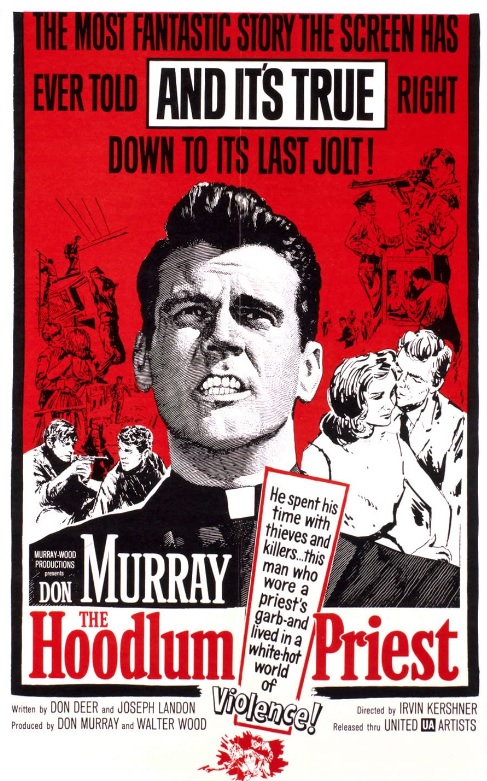
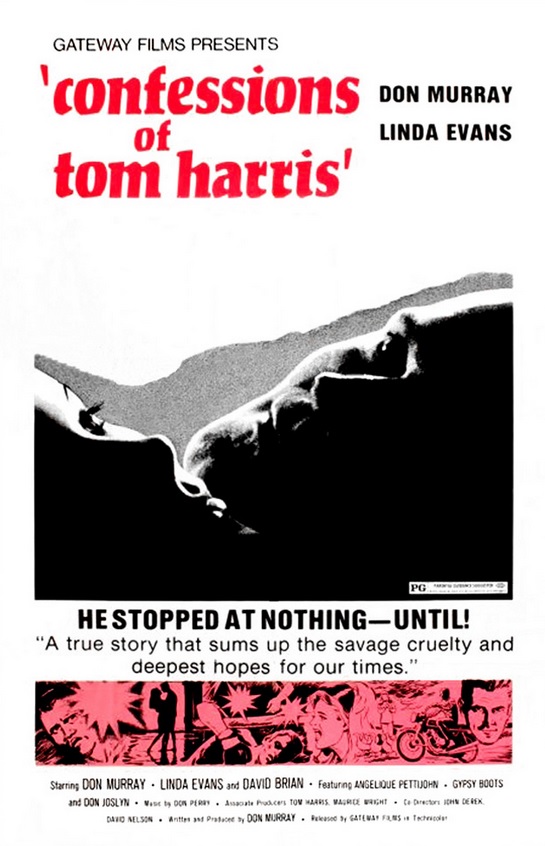





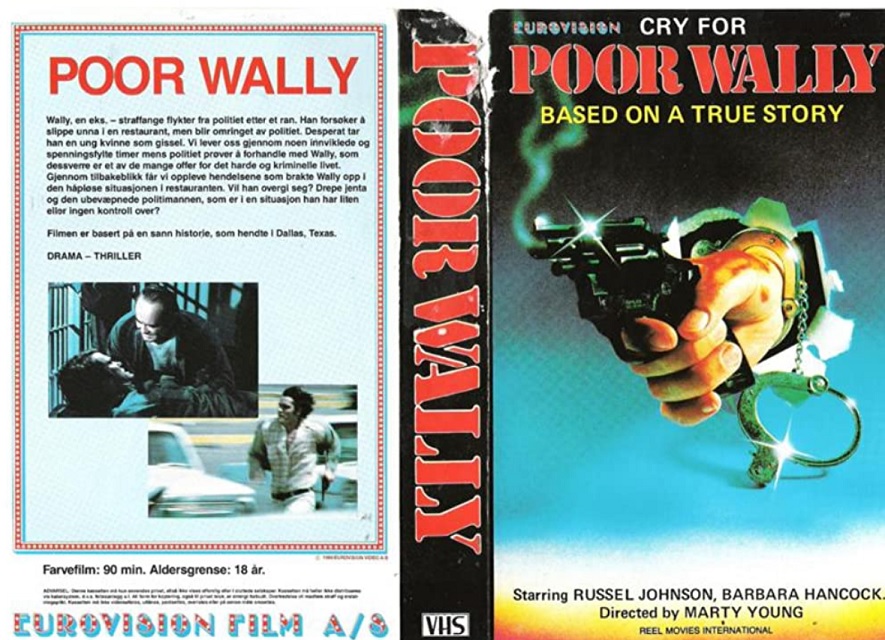

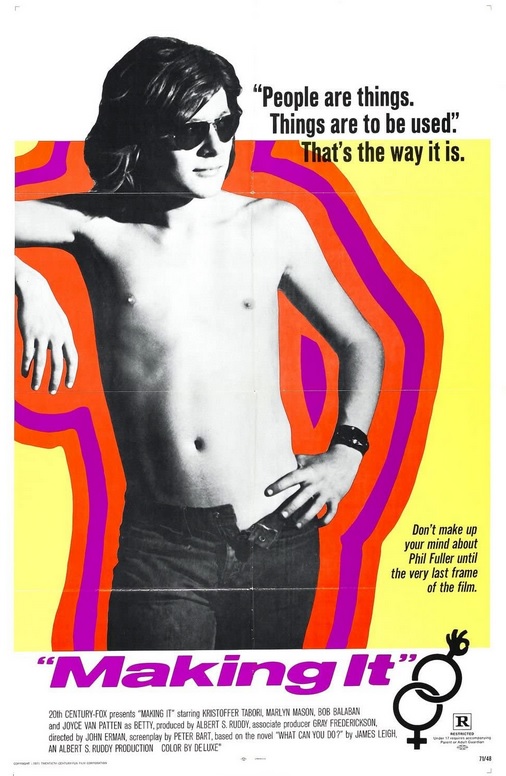
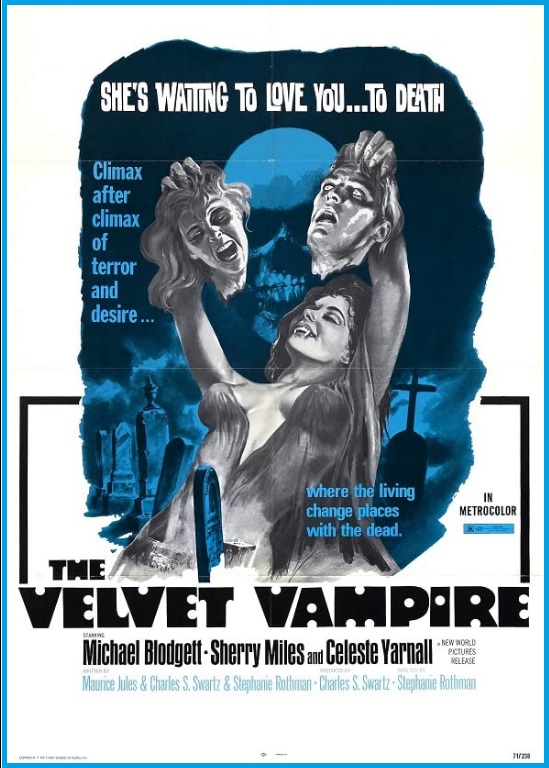
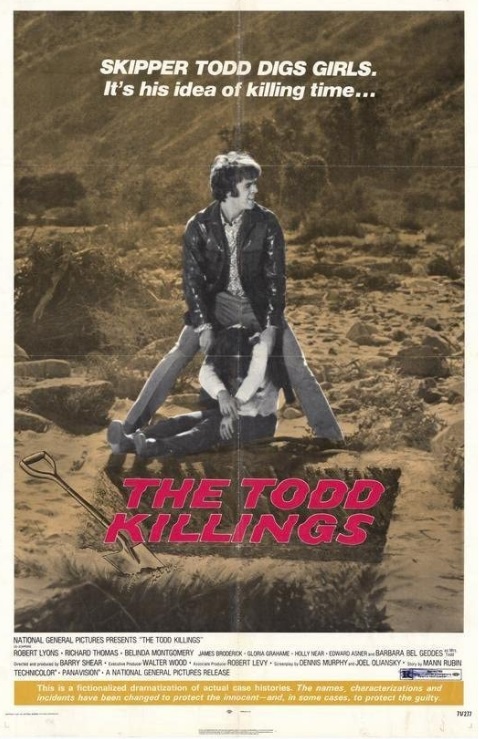


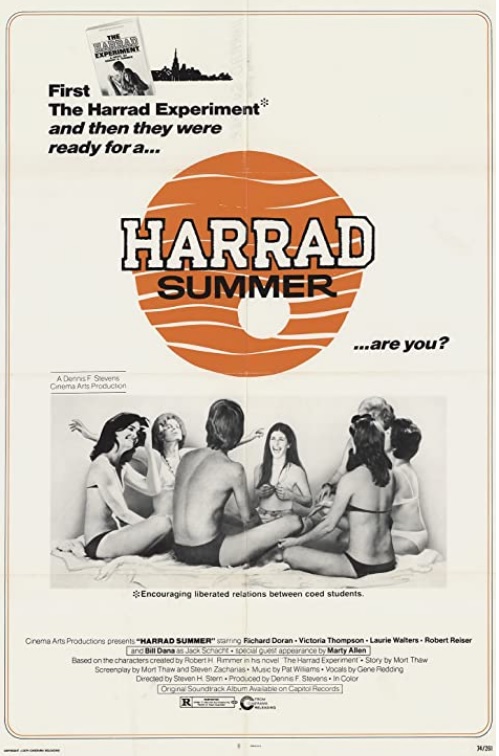
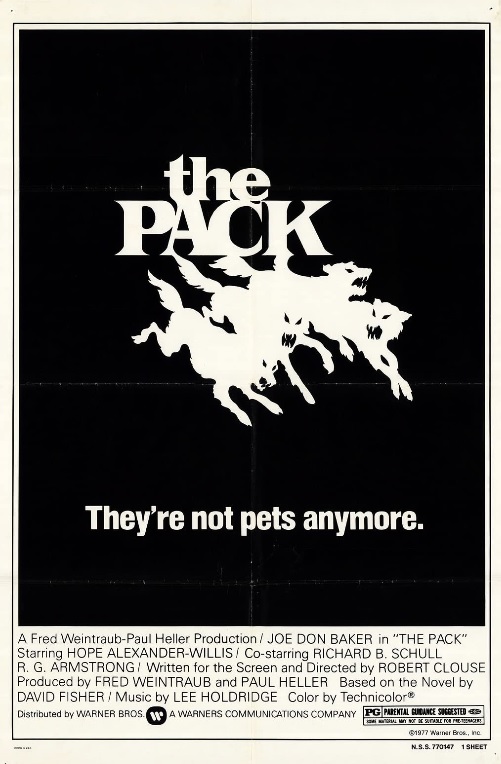
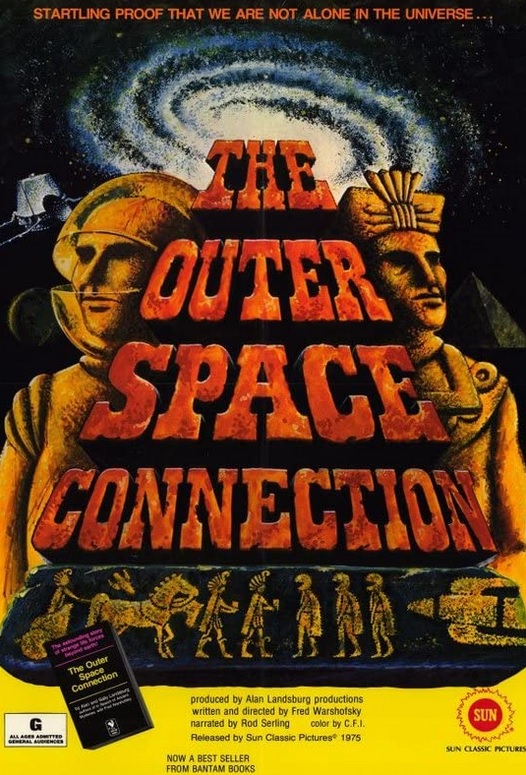
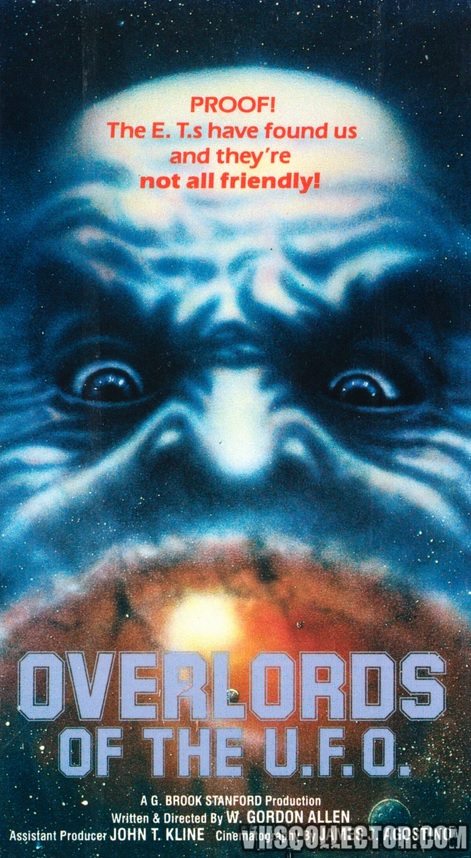
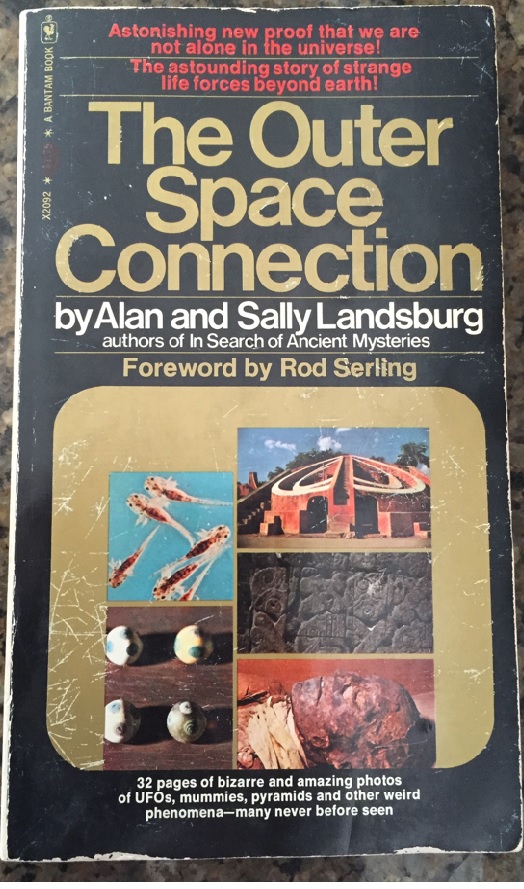
 B&S About Movies
You must be logged in to post a comment.