DAY 24. AT THE GIG: Something with live band scenes.
Man, I have so many movies with live band scenes that I’ve already used for this challenge, but I decided to look for something that has a band appearance that doesn’t fit into the actual narrative of the film, which is one of my favorite things in film.
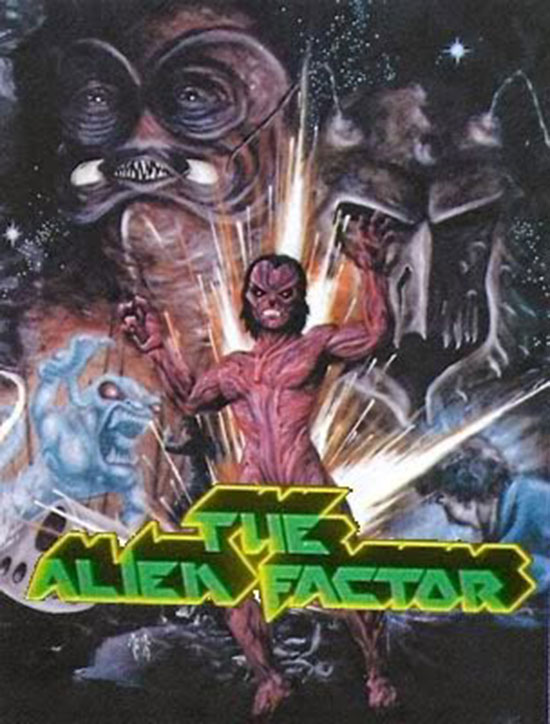
I went with this Don Dohler made in Baltimore alien epic — that word may be stretching it — all about a spaceship containing specimens for an intergalactic zoo crashes on Earth, with the creatures escaping in killing all manner of small town folks.
What can you say about a movie where an astronomer doesn’t know the difference between a meteor and a meteorite? Oh well — it was Dohler’s first film and he certainly had no shortage of ideas and a definite finite cash supply. There are also moments of low tech effects glee here, like when the aliens make dotted fuzz patterns that possess people. Sure, they could have paid for a much better effect, but when it works this good, why worry?
The best reason to watch this — beyond the awesome monsters, which are really creative — is a trip to the AnIr Lounge, which promises discount liquors and has a bartender whose bottle blonde beehive would make my wife jealous. The band Atlantis is on stage, featuring Dohler’s brother on bass, and they look and sound like a band that was around at least a decade before when this movie was made in 1978. The movie completely stops so that they can play the song in its entirety when, let’s face it, deadly aliens should be on everyone’s’ minds at this point.
Isn’t it amazing that two underground voices rose from Baltimore? On one hand, you have the anarchy and boundary-breaking films of John Waters and then, there are the rubber-suited alien invaders of Dohler. What a magical place you are, Charm City.
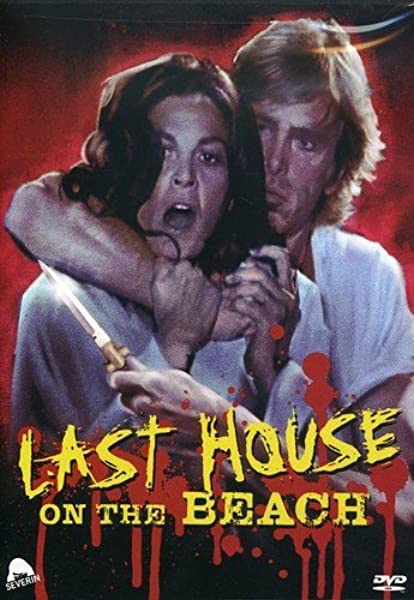
Also known as La Settima Donna, Terror and Terror andThe Seventh Woman, this is what happens when filmmakers dare ask, “What would happen if we mixed up The Last House on the Left with nunsploitation?”
In Roberto Curti’s Italian Crime Filmography, 1968-1980, he writes that this film was filled with “a succession of grim, misogynist and exploitative scenes: adolescent nudes, slow-motion sodomizations, vicious wounds, assorted killings.” I list this in case you are wondering why I decided to watch it.
Sister Cristina (Florinda Balkan, A Lizard in a Woman’s Skin, Don’t Torture a Duckling) and the girls in her care (Sherry Buchanan from Tentacles and What Have They Done to Your Daughters?, Laura Tanziani, Laura Trotter from Nightmare City, Karina Verlier from Emanuelle In America, Luisa Maneri from Demons 6) are rehearsing A Midsummer Night’s Dream when three thugs, led by Ray Lovelock, show up to hide out from the cops. Of course, they also decide to terrorize everyone and probably kill several of the girls along the way. Can Sister Cristina renounce her Holy Vows and help the girls to escape?
Of course she can.
A movie that takes a disco scene from Eyes Behind the Wall and has a brutal murder occur in full view of a Scrooge McDuck poster, this is the Italian exploitation film in its most undiluted form. Lovelock is a complete scumbag — and sings on the soundtrack — while there’s no way that Tarantino didn’t rip off the ending of this movie for Death Proof.
Francesco Prosperi — who wrote Hercules In the Haunted World — would go on to the next big craze, barbarian movies, making one of the better ones, The Throne of Fire. He also had his hand in a few cannibal films, like The Green Inferno and White Cannibal Queen. He should also not be confused with Mondo Cane director Franco Prosperi.
You can watch this on YouTube or you can try and hunt down the out of print Severin DVD.
ABOUT THE AUTHOR: Jim Rex grew up in Texas then moved to Georgia when he was in his mid-20s. (He has remained in the south ever since.) He is not a movie reviewer or film journalist, just a guy who loves movies who keeps his wife up all night with the screams from chainsaw massacres and psycho madness coming from the TV. He misses video stores and believes the world would be a better place if we all slowed down and watched Tourist Trap once in a while. He appreciates Sam and B&S About Movies for giving him an opportunity to talk crazy about flicks he loves.
2018 marked the 40th anniversary of probably the greatest story of teen chum in the suburbs ever told, the original, the classic, Halloween. The night HE came home, big, crazy Michael The Shape Myers. On Halloween night 1963 he stabbed up his sister Judith after she engaged in the fastest sex in the history of horny teenagers and then he did a stint in the juvie clink for terminally psychotic delinquents where he met a doctor crazier than he was and then he showed back up in Haddonfield fifteen years later on Halloween night 1978 to do the stick-and-stab boogie on a bunch of dumb disco teens who reminded him of his sister.
The flick was sort of a rite of passage back in the day. Kids were going to watch it to see if they could survive it. We were hearing reports of kids turning into puddles of Jell-O and having to be scraped off theater floors it was so dang scary.
I was twelve when Halloween came out and mama refused to let me see it. She’d heard on the local Leo McNab radio news program that films like Halloween and KISS albums was steering teenagers towards hellfire and damnation. I reasoned that at twelve I’d be okay if it was just affecting teenagers, turning them into upside-down cross worshipping Satan-freaks. Mama wasn’t buying what I was selling, and daddy said he’d long learned to pick his fights with mama carefully, and he didn’t see any point throwing into the ring on this losing battle.
It killed me I couldn’t go see it but secretly I was kind of relieved. When word came down that a kid from Hill County Middle School was rushed to the hospital after he had a massive heart-attack at a 7:15 show Friday night show, I knew I shouldn’t push my luck. Up to that point in my life the scariest thing I ever faced was a long hot summer weekend at my grandma’s and she didn’t have air conditioning. I guess I could have sneaked in or got my uncle Tim to take me, but I tended to still listen to what mama said back then.
The next year they still hadn’t made a horror flick scarier than Halloween so they re-released it in theaters and you would have thought it was the first time. I don’t know what happened, but I missed it again.
Summer of 1980 hit and I had a lot more freedom in going to see movies, freedom in that I didn’t feel I had to ask mama about going to see what I wanted to see and she never asked so it worked out. A film “inspired by the true events of Halloweenmaking a ton of dirty money” came out and it was amazing. Of course, I’m talking about the teen chum in the woods flick Friday the 13th. Gore and blood and boobs- whoa! It was a 90-minute blast of the cheapest of cheap thrills and I loved it.
This and a couple others like Terror Train, Prom Night and Silent Scream and I was hooked. I was now a full-fledged, frothing at the mouth teenage slasher movie fanatic. But there were all kinds of other great horror flicks coming out then, stuff like The Howling, Death Ship, The Fog, Scanners. It was a great time and I was at the theater almost every weekend seeing something.
Somehow, though, fate kept conspiring against me, and I never could catch up with Halloween. As far as cable, my daddy was always saying, “I pay to have the garbage picked up from the house, not dropped off,” so we didn’t have cable and we didn’t get our first VCR until 1983. (It was a glorious beast, big as an ocean liner, a top loader with wired remote.) So, there weren’t many options to catch up with it. Plus, honestly, with so many new horror flicks always coming out, there was always something playing to go see.
1981 come up on us and there was some buzz from my horror flick loving friends about Michael The Shape Myers returning to the big screen. I was out of the loop. Then Fangoria #15 came out with the grinning Halloween II pumpkin-skull on the cover and I was that 12-year-old kid again, dying to see the original.
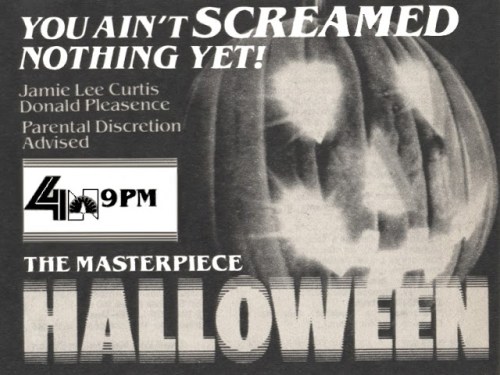
As it happened, there was a big to-do about Halloween playing on broadcast TV, which coincided with the weekend release of Halloween II. I was determined to see Halloween II no matter what, so I was darn sure to have my butt parked in front of the TV on Friday night for the world premiere broadcast of the original.
I remember the night it filled up the screen of our 27” Curtis Mathes console TV like it was last night. It was Friday, October 30th, 1981 and it was a perfect night. There was a cool breeze blowing through the curtains, a little scrape across the windowpanes from the Live Oak just outside. It added just the right touch of creepy.
Me and my sister settled in with a big bowl of Jiffy Pop and ice-cold Big Reds for the flick.
Again, this wasn’t my first rodeo in Slasher City, but I knew Halloweenwas something different. It didn’t have a bunch of disgust-o Tom Savini blood effects, but it was definitely something that none of them other slasher flicks were, that being this was a bona fide scary dang movie. And when I say scary, I mean them little hairs on the back of your neck standing straight up shivering and ice water running through your veins.
We kept jumping in our seats and at one point, when that rusted length of gutter attacks Dr. Loomis in the Myers’ house,I was so startled I let loose a popcorn fart that got us giggling through a block of commercials for Black Flag Roach Motel, Dr. Pepper and Frontier Motor Company’s used cars. I knocked over my Big Red and it left a stain on the carpet that remains to this day at my parents’ house.
The following night, Halloween, I went to see Halloween IIwith friends and with the original so fresh in my head I cheered as Michael The Shape Myers went after teens who not only reminded him of his sister Judith, but Laurie The Nerd Strode turned out to actually be his baby sister! (That’s what that business in the original was about when Loomis saw Michael had scratched the word “sister” onto the back of his asylum bedroom door.) Halloween II proved to be one of the best dead teenager flicks ever made.
When 1983 was showing up on calendars we had a VCR and I had a part-time job flipping burgers at Dirty Martins, so I went over to Palace Video, paid my membership fee and started renting little black boxes with movies in them.
I finally got around to renting Halloween. In fact, I rented the first three Halloween flicks for my own little movie marathon. Right away, though, about fifteen minutes into the original, I felt something was amiss.
The scene of the stuffy doctor talking to Loomis, saying Michael The Shape’s real middle name is Audrey, was missing! Immediately following that, the entire dang scene that totally explained what Michael The Shape Audrey Myers was doing was gone, the whole scene that set up the entire sequel and tied the two movies together so beautifully was M.I.A. gone, vanished and that was Loomis seeing the word “sister” scratched onto the door. The absence of these two scenes were too distracting for the longest, but then the movie seemed to be finished messing with me and I just got caught up in its magic.
I popped in Part II, but I didn’t think it worked as well with the original now. I don’t know. It was like two puzzle pieces from different puzzles that sort of fit together okay enough to go on to the next piece, but they really didn’t fit.
For weeks it haunted me. My friends were split. The ones remembered watching it on TV said I wasn’t cracking up, that those scenes were in the original. My friends who saw it in the theater said we were all crazy, that those scenes never were in it. I was perplexed, but I was a teenager and life went on.
Years went by and I fought being an adult, but I lost, and it happened anyway. At some point in the ’90s I’m picking up some favorite movies on VHS because, well, tape is forever, and I picked up Halloween. It didn’t look any different than it ever did as far as the box was concerned but after I popped it into the player, it was actually the version I’d seen all them years back on TV!
I had no idea why those scenes were put back in but there’s the stuffy doctor talking about crazy little Michael The Shape Audrey Myers and “sister” is scratched onto his bedroom door and then a scene I’d forgotten where Laurie The Nerd Strode agrees to loan Linda The Tramp her sweater for her date with Bob The Drinking Horndog. (You probably remember Bob The Drinking Horndog pulling and tugging at that sweater, trying to get to Linda The Tramp’s perky pups, and Linda The Tramp totally telling him to cool his jets and not to stretch out the sweater.)
Well, over time I came to learn this version of Halloween I got on video was the TV version specially put together for that world premiere television broadcast on the same weekend Halloween II opened in theaters in 1981. As for why it was released on tape, supposedly it was an “accident” where the wrong version was duplicated but considering Halloween had been around on videotape as long as there were movies on videotape, I never believed that story. That release caused quite a stir with horror fiends and everyone bought up that “accidental” release to have the different version with all those extra scenes.
At the time of the broadcast Johnny Carpenter and Debbie Hill said these scenes were necessary to make up for the running time of all the “rough scenes” that had to be cut out for the broadcast. Now, Halloween was never some gore epic and there wasn’t enough gratuitous sex and boobage to make a real dent in the running time once removed. All this got me thinking and thinking hard.
With how perfect and precise those extra scenes added to the TV version were, and how perfectly they played with Part II, it dawned on me like a sinner in church that a greater power was at work here, and that was the power of the almighty opportunity to make dirty money.
Yup, the classic teen chum in the suburbs fright flick Halloween had been pulled and pressed and kneaded and stretched like pizza dough until it was transformed into nothing more than a two hour long commercial for the release of the sequel, Halloween II!
This gave Halloween II a knife’s edge over the competition of every other gut-stabber being released at the time in that it had a two hour infomercial on TV for free that set up the entire plot of the second one, disguised as a NBC Friday Night at the Movies broadcast. (To drive this point like a crooked nail a little further, making the original film nothing more than a commercial was an in-joke in Halloween III. When our alcoholic hero with zero Halloween spirit sees a commercial for the original film on TV in a bar, here the original film is being used in a commercial to help promote the “big giveaway” where the 2,000 year old warlock villain wants all the kids to watch so he can melt all their noggins down into a torrential rainstorm of crickets, chiggers and rattlesnakes. Halloween was acting as a shill for another sequel once again!)
Like Ralphie in A Christmas Story realizing his Little Orphan Annie secret decoder ring only worked for deciphering Ovaltine radio ads, this TV version was only altered, and its entire plot shifted, so as to sell tickets to Halloween II.
Honestly, in the world of crazy cinema marketing techniques, this is probably one of the greatest marketing gimmicks ever perpetrated, if not the greatest, if only for the fact that nobody seemed to notice or even care. Carpenter and Hill altered their classic to help hedge their bets on folks wandering into a theater to see Part II on opening weekend and they were correct. Halloween II was the number one flick that weekend, taking in seven and a half million dirty bucks, which was some considerable folding money in 1981.
And, if we’re still being honest, the TV version of Halloween didn’t take anything away from it forever being a classic. Heck, if anything, it adds another interesting layer of history on the flick which very few flicks have. It’s not like when all them man-babies were crying in their mama’s basements that their childhoods had been suddenly rendered null and void after George Lucas started tinkering with the Star Wars flicks. Or when Paul Feig dared to change up the sausage fest of the original and cast his version of Ghostbusters with ladies, it had the same man-babies crying that their childhoods were based on lies all because something in a remake for a movie they saw when they were kids was changed around.
Whenever I hear that kind of nonsense I can’t help but smile and think, “Heck, Johnny Carpenter and Debbie Hill did that first, and no one even batted an eye that time they took Halloween and turned it into a commercial for Halloween II.”
DAY 3. STOCKED UP: When you’re in it for the long haul, you’re gonna need supplies. Watch something with a supply run in it.
As we entered the dumbest and most boring apocalypse ever this year, I discovered that every plan, every zombie escape strategy I had, none of it mattered. Instead, I would sit in my living room and watch moronic leaders fight over whether or not we would wear a mask, people willing to die to eat at TGI Friday’s and actual liberty get booed by people who shouldn’t even be allowed to sit in the stands at a football game.
If George Romero was around, he wouldn’t be surprised, other than the fact that our end is so bloodless, so pointless, so vanilla.
I watched Dawn of the Dead so many times that I could recite it at will in high school. Obviously, my goal was not to get laid. It was to study this movie over and over.
While the rest of the world had to wait until now for the end times, Pittsburgh knew it was real long before, when our church of commerce was taken over in the middle of the night by a bunch of maniacs and filmed evidence would confirm every one of our greatest fears. Like Pogo told us we met the enemy and it was us. It still is.
Where Night of the Living Dead took place inside a cramped farmhouse, Dawn would take place in Monroeville Mall, a place that now has a bust of Romero and a photo of Dario Argento that refers to him as a “castmember.” The humor of this caption makes me overjoyed.
Romero knew one of the mall’s developers, who showed him the secret areas behind the mall, and told the director that people could survive a disaster inside the mall. He now had an idea for the movie, but he couldn’t find anyone in America to help make it. That’s how Dario Argento came in and made his way to Pittsburgh.
Shooting from 11 PM to 7 AM, when the holiday music would come on and couldn’t be stopped, the filmmakers — joined by a creative cast and crew, including special FX maniac Tom Savini*, made a movie that influenced the whole world and every horror film that would follow in its wake.
Where the zombie plague was confined to Evans City before, now the end of the world has expanded and much like how no one can agree on how to fix a simple plague these days, no one can agree on how to properly battle the newly dead getting up and killing those that they once loved.
Stephen “Flyboy” Andrews (David Emge, Hellmaster) and Francine Parker (Gaylen Ross, Creepshow) are planning on stealing the traffic helicopter from the TV station they work at and escaping Philadelphia. They’re joined by SWAT officers Roger DiMarco (Scott Reiniger, Knightriders) and Peter Washington (Ken Foree, who is in so many horror movies, but let’s go with Death Spa) and land in Monroeville, hiding inside the mall and clearing it of the undead.
All the consumerism is too much. The living dead want to get into the mall, remembering their past lives, which were simply consuming. Now that money doesn’t matter, nothing that was worthwhile in the mall does either. The foursome decides to leave, but Roger has grown too reckless and is bitten. And one night, a gang of motorcyclists break in and allow the zombies to crash through the barricades. Stephen, angry at his loss of home, flips out and kills several bikers before he is bit.
As he turns and follows his former friends into their hiding place, the urge to give up is too much. Originally, Peter would shoot himself and Francine would walk headfirst into the helicopter blades. But in the small window of happiness here, the pregnant heroine lives as the black cop decides to stay alive and save her. We see them fly away to an uncertain future.
While the American version of this film is 127 minutes and features a mix of library music and the Goblin soundtrack, Dario Argento’s Italian cut, known as Zombi, features more of Goblin and cuts out any of the film’s comic book humor, concentrating on providing more action. It would lead to a revolution in Italian horror, of course.
I’ve debated featuring this movie on our site for some time. It means so much to me, but I didn’t know what else I could say about it that hadn’t been said. Yet today, as I sit here and wonder just how bad the world is going to get by the end of this year, I see that the zombie apocalypse that I spent my life preparing for — influenced by this movie — is almost preferable to the Fourth Reich or Civil War that we seem to be heading toward. I can only hope that a few years from now, I’ll read this and laugh at all the hyperbole. Or maybe I’ll be fortifying the Exchange on Miracle Mile, surrounding my wife and myself with guns, DVDs and all the supplies we need to survive. Because after all, when there’s no more room in hell, the dead will walk the Earth.
*Nearly every stunt in this movie was done by Savini and Taso N. Stavrakis, including a dive over a rail that led to the effects master nearly breaking his legs when he missed his mark.
“Necessity or chance approach not me; and what I will is fate.” — poet-philosopher John Milton
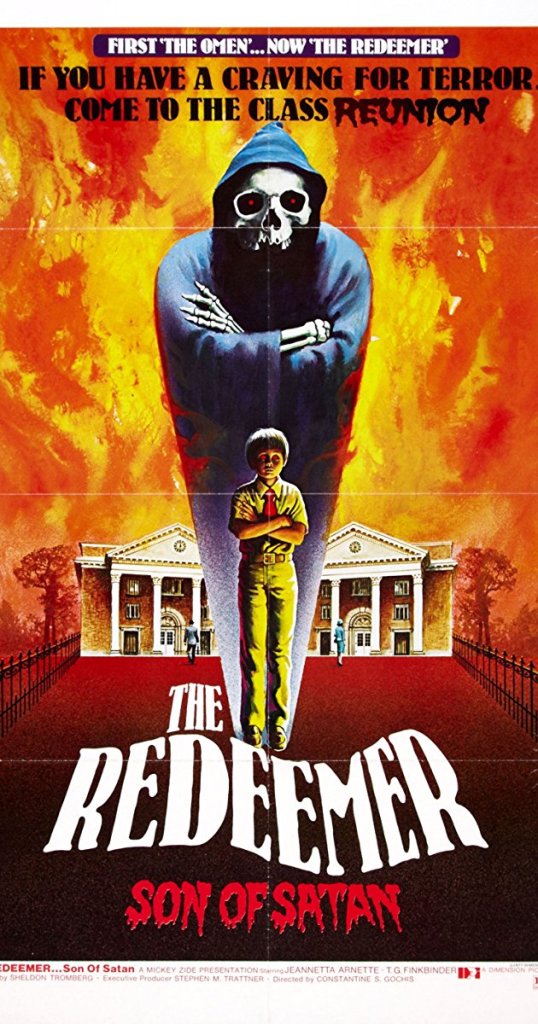
A “classic” is in ye eye of the beholder; it’s a subjective adjective that’s slash n’ swung much around these ‘ere wilds of Allegheny County with these old, emulsion-scratched outdoor ditties we hail under the big white screen’s twilight’s last gleaming. And, as with most of those “classics” reviewed at B&S About Movies—such as Eyes of Fire, Brotherhood of Satan, and Messiah of Evil—those films, even after B&S About Movies’ Chief Cook and Bottle Washer, Samuel, spins the reels and fingers the keys to ’em, they’re so f-in’ friggin’ good that they need to be reviewed a second time (Sam’s The Redeemer review) to implore upon ye, the B&S surfer-reader, of the majesty of the work.
Make no mistake, ye B&S’er: This lone directing effort by Constantine S. Gochis and lone writing effort by William Vernick is a ‘70s horror classic that (for this lowly reviewer) ranks right alongside Herk Harvey’s Carnival of Souls, John Hancock’s* Let’s Scare Jessica to Death, and Don Coscarelli’s Phantasm. And while Harvey’s lone opus discovered its posthumous popularity among horror aficionados in the digital wilds of the public domain, and Coscarelli scored one of the biggest drive-in and theatre horror hits of 1979, Gochis-Vernick’s equally phantasmagoric feast of the senses found itself lost somewhere between the space gate and the red planet of the dwarfs.
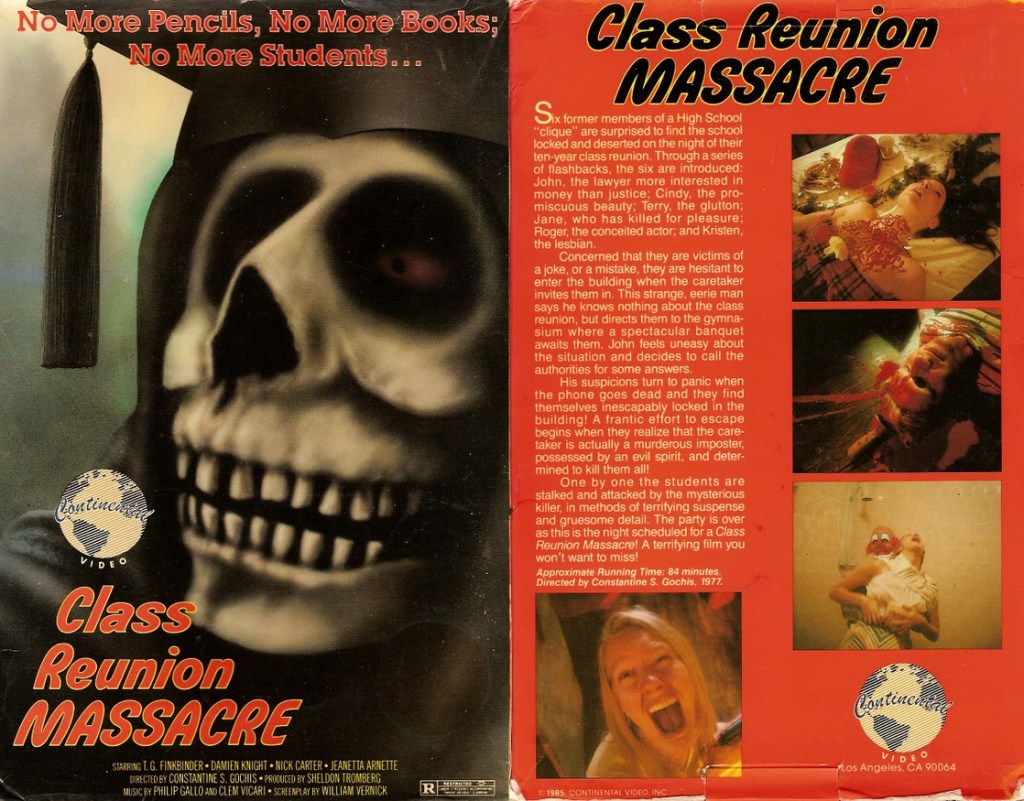
I’ve watched this film several times over the years: it was one of those go-to films you rented every October from the local mom-and-pop VHS repository—under its mid-‘80s shelf life as Class Reunion Massacre. Oh, how I remember those pulpy, black and white ads and newsprint reviews in my cherished movie mags of yore that featured that skull and cowl-faced grim reaper pressed against the diamond pattern of a wrought-iron gate. I can’t recall an October that I didn’t watch The Redeemer, Phantasm, Sam Raimi’s Evil Dead (sorry, forget part deux; the original does it for me), and Rocktober Blood in a same-day marathon or within the same Hollows’ Eve week; they just warm the ol’ VCR’s electronics so well!
Sadly, while the analogously weird Phantasm was blessed with a well-financed advertising campaign that came complete with radio and TV ads (that I remember hearing and seeing on my local rock stations and UHF stations), The Redeemer, aka The Redeemer, Son of Satan, didn’t become known to a mass audience as result of its poor drive-in and (select) theatre distribution—and I envy those who had the opportunity to encounter The Redeemer in 1978 on the big screen. (These ‘ol bastard who claim that they did, you’d fill a 50 K football stadium; so I doubt they did. It’s like all of those people who “saw” U2 at the Hope and Anchor in Islington, England, in December 1979—when only nine people were in attendance (about the same number of people at The Crucifixion). It’s like all of these fire n’ brimstone preachers hawkin’ splinters of Christ’s Cross as your donation “gift”—there’d be enough wood spinters to manufacture a thousand crosses. So, how that’s tap “holy water” vial workin’ for ye? Have thou been “redeemed,” dear child?)
Anyway . . . when we look back at all of the mindless, post-John Carpenter Giallos**-twice-removed body parts n’ plasma slop making bank in the slasher ‘80s, how in the Sam Hill did this intelligently-written WTF*˟-is-going-on slice of brilliance die on the overgrown crypt vines?
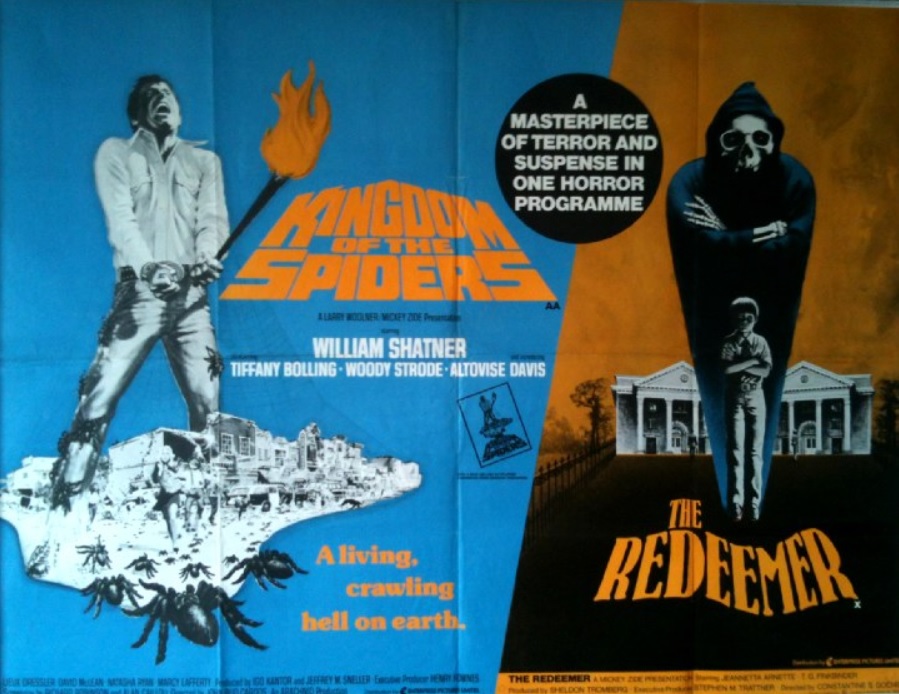
Double-billed with John “Bud” Cardos’s Kingdom of the Spiders.
Ah, but ye must not be duped by Continental Video’s seven-years later 1985 VHS release under the title Class Reunion Massacre—for this Virginia-shot slasher we-don’t-know-what-the-f-it-is, is not a post-In the Year of Our Carpenter, A.D. production: The Redeemer began production in 1975, filmed for six weeks in the summer of 1976, completed reshoots in January 1977, and completed its three-month post-production between April 1977 and July 1977.
And here’s the film noir-cum-giallo plot twist: Halloween completed its twenty-day shoot over a four-week period in May 1978—The Redeemer was in the can, first. And the yellowed-cover turns again: expectations were low for John Carpenter’s˟* follow up to Assault on Precinct13; aimed primarily at secondary markets (duplex theatres) and drive-ins, it quietly opened in Kansas City October 25, 1978. Meanwhile, halfway across the country in Los Angeles, The Redeemer opened—on October 25, 1978. During its drive-in run, ironically, The Redeemer played on the bottom half of double bills with Damien: Omen II (1978). (Phantasm premiered June 1, 1979.)
“Thy is the common fate of all; Into each life some rain must fall.” — Henry Wadsworth Longfellow
Sadly, everyone remembers the madcap hijinks of ol’ Crospy in The Burning(1981) and Madman Marz in Madman (1982), (sorry, both are craptastica slices of crapola, even though they’re based on the Cropsey urban legend; Sam delves into the NYC legend in his reviews)—and no one remembers the lake-unleashed exploits of “The Redeemer” (a very good T.G. Finkbinder in his only acting role). It wasn’t until Johnny C. reinvented the admittedly dying horror genre with Halloween (ol’ Carps was the “Nirvana” of horror world, if you will)—and some confounded contraption called the VCR appeared on retail shelves—did the (retitled) The Redeemer finally find an audience courtesy of the hungry-for-product home video market.
So, what gives with that lame title VHS title?
Ah, the “Big Box” slip cover I remember.
Well, retro-peruse those brick-and-mortar VHS shelves, ye dear reader—look at all of those films with the word “Class,” “Reunion,” and “Massacre” in the title—and all of the horror films centered around a bunch of dopey high school kids-cum-asshole adults meeting their comeuppance years later. New title x new shelf life √ new audience = we can finally make bank on our cursed movie.
This is one of those films where—and we’ve discussed this several times in the reviews of truly oddball movies (such as Harry Hope’s Smokey and the Judge and Harry Hurwitz’s Nocturna, Granddaughter of Dracula)—it seems, the producers didn’t have a locked script and made it up as they went along. Or they had a couple of unfinished scripts and/or movies and spliced them together into a feature. (God Bless, Dr. Shagetz from 1974 becomes 1977’s Evil Town, aka also a 1985/1987 VHS; the unfinished films Scream Your Head Off and The Dark Side to Love (1984), and Cataclysm (1980), becomes the 1985 John Phillip Law-starring Night Train to Terror, comes to immediate mind.) Or they just went “female” and changed their minds for no godly-earthly, logical reason. (Wow, now that’s really sexist; Sam, pencil that transgression alongside my file’s other faux pas. I’ll see you at the bi-annual review.)
Seriously . . . how else can we explain the majesty of this Felliniesque, surrealistic horror?
First, we have a fully-clothed kid, his fist-raised in some sort of afterworld Heil Hitler-salute rising from the primordial stew of a rocky cliff-locked lake. And he hops a ride on church bus. Okay, so . . . we’re getting a crazy kid of The Omen variety, you know, like theatrical one-sheet tease. But wait . . . the kid’s fellow church choir mates are picking on him. Okay, so we’re getting a Prom Night knock off with a little kid extracting adult hood revenge. But wait . . . what’s the deal-e-o with this fire and brimstone preacher with two thumbs on one hand? Okay, so we have a troubled priest of the Jason Miller from The Exorcist variety, and the priest sidelines as child molester . . . and he goes “Jason Vorhees” after services have concluded . . . is he a clerical collared Freddy Kruger? And who’s the building inspector that kills the abandoned high school’s caretaker and makes a mask of his face to masquerade as the caretaker? And how did he decorate that basketball auditorium—complete with catering—all by his lonesome? Not to mention the gothic, “death trap” stage production complete with a graveyard and a giant clown marionette that’s hosted by a stovepipe-hatted magician spouting gothic poetry? Who is the poetry-quoting, camping duck hunter who just blew away one of the ne’er-do-well adults who escaped into the woods? Why the clowns? Why the masks? Why a different costume change of the The Abominable Dr. Phibes-inspired variety for each of the deadly sins-themed death trap-kills that reminds of David Fincher’s later SE7EN (1995)? Why this school? Why are these six, unrelated people sucked into this FUBAR’d version of Agatha Christie’s And Then There Were None, aka The Little Indians (see Stallone’s D-Tox)? And there’s seven deadly sins, so is the Priest suffering one of the sins? Is the kid Satan himself, who contracted the Priest to kill these people to atone for his own sin—and his occult-driven double-thumb deformed hand is his retribution, and it “vanished” because he was “atoned” for his sins?
What in the Lords of Kobol frack is going on here?
Who’s the kid and what’s his relation to the priest? Who’s “The Redeemer,” the kid or the priest? Is priest the adult version of kid and we’re in a twisted afterlife where the past and present exist as one? Was the priest part of the same graduating class as The Redeemer’s victims? Is this his revenge? Why did his double-thumb suddenly vanish and appear on the kid’s hand! We need to know!
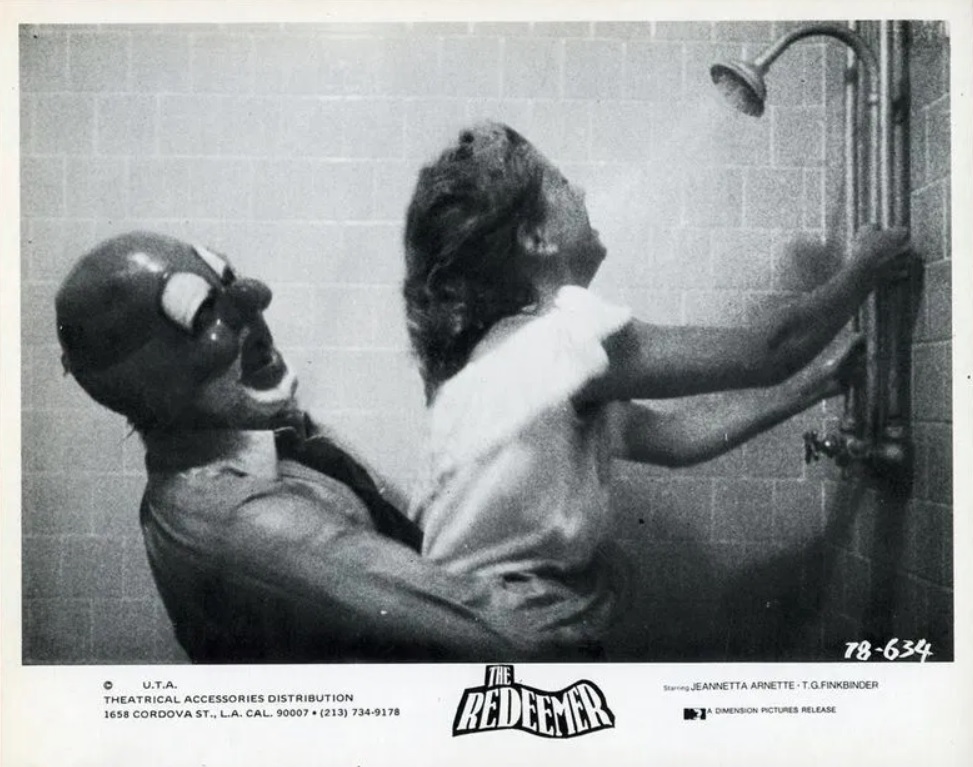
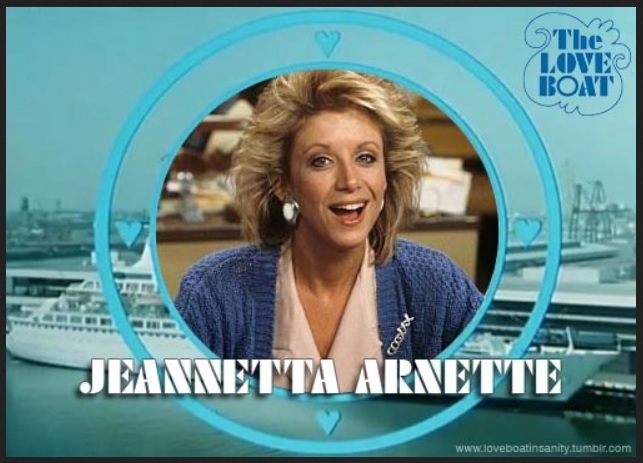
Now, do you see why the Phantasm analogy; for this more Coscarelli than Carpenter. Like J.H Hood from Ghoul Inc Productions—who once swore to himself that he’d never, ever watch The Redeemer again (for Bill Van Ryn of Drive-In Asylum is the true “Redeemer”)—pointed out during the September 5 Drive-In Asylum Double Feature Watch Party (Beyond the Door and The Redeemer): You go into this thinking . . . okay, this is another pseudo-slasher, light parody like Slaughter High (1986) . . . and you end up with a flame thrower totin’ clown roasting a guy’s meat and two veggies, and, as Sammy Panico pointed out: a sink drowning (that couldn’t have been Jeannetta Arnette; it had to be a body double-stunt actress) that goes on way, way, way too long. In the end, you can’t get a handle on where it’s all is going—and there’s not even a space gate or Tallman morphing into the Lady in Lavender or flying Chinese cuisinart harmony balls to leave you scratching your head.
My Kobol Lords, this movie is Galactica-tastic!
So graphic a scene, you’ll flinch.
You can watch it with-ads on Tubi Tv or ad-free on You Tube. If you want it in the library: Copies of the 1985 VHS original released by Continental Video and the VHS re-issues via Victory Media in 1995 are can be found in the online marketplace. There are two versions of the DVD out there: Code Red’s October 2010 release (also as a Blu) as The Redeemer and Desert Island Films put it back into the marketplace under the old VHS Class Reunion Massacre title in 2012.
The Where Are They Now Post-Script: The Redeemer is one of those movie where, not only the writer and director dropped off the face of the earth, all of the actors disappeared from the business, sans one: Washington D.C.-born Jeannetta Arnette, who made her acting debut in producers Sheldon Tromberg and Stephen M. Trattner’s feature film debut, 1977’s Washington, D.C.-shot Teenage Graffiti (VHS image via Paul Zamarelli’s VHS Collector site; theatrical one-sheet image via IMDb; trailer via You Tube). Marketed as a soft core porn movie to get those speakers hangin’ off the car windows, it’s really just another one of those light-weight, drive-in T&A’ers about a Midwestern teenager dealing with the problems of growing up and deciding what he wants to do with his life (you know, like American Graffiti, only pseudo-pornier). Stephen Trattner actually gives some insight to the film via the You Tube’d trailer’s comment threads—and, good luck finding a copy: he doesn’t even have one. Screenwriter William Vernick, who got his start as a film editor for TV, transitioned into the unheralded world of script doctoring, for both horror and mainstream films, which he does to this day.
Makin’ it! Whow, whow, whow! (Do I have to explain the David Naughton in-joke?)
As for Jeannetta Arnette, she became a go-to guest star in the network TV series Three’s Company, Laverne and Shirley, St. Elsewhere, and The Fall Guy, which culminated with her 114 episode co-starring role as Bernadette Meara in the 1986 to 1991 run of Head of the Class. You want to see real acting: seek out her role as Sarah Jean Dawes in “Ride the Lightning,” a 2006 episode of CBS-TV Criminal Minds (outstanding, Jennetta!). You also know her theatrical co-starring roles alongside Rodney Dangerfield in Ladybugs (1992), the Oscar-winning Boys Don’t Cry (1999), Snow Angels with Sam Rockwell (2007), and James Franco’s˟˟ PineappleExpress (2008). Her latest work, Walking Up Dead, is currently in production.
** We had a huge Giallo blowout in June 2019, which we recapped and explored with our “Exploring: Giallo” featurette. So, get to hyperlink-a-clickin’, ye have lots of reviews to read!
*˟ There’s more WTF flicks to be had with our “Ten WTF Movies” featurette.
Floy Mutrux wrote the musical theater productions Million Dollar Quartet, Baby It’s You! and Heartbreak Hotel after a career in films, including directing Aloha Bobby and Rose and The Hollywood Knights. He’s also written scripts for movies like Freebie and the Bean and Two-Lane Blacktop.
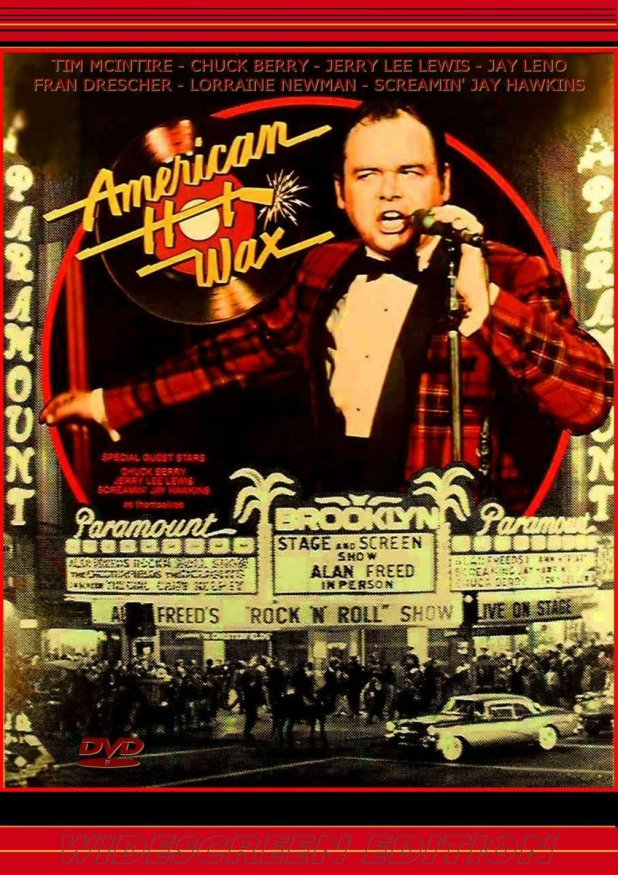
The strange thing is, this movie failed at the box office while its soundtrack went to #31 on the Billboard charts with no pr. And the movie itself is packed with the real artists of the era playing themselves, like Chuck Berry, Jerry Lee Lewis, Frankie Ford and Screamin’ Jay Hawkins.
This movie was well-reviewed — notorious haters Gene Siskel and Pauline Kael spoke well of it — and yet it died nearly unseen.
Tim McIntire — Blood’s voice in A Boy and His Dog — plays Alan Freed, the first DJ to get black artists on mainstream radio (or at least the first to be recognized for such a brave act). He’s also George Jones in Stand By Your Man, if you want to do a music movie double feature.
It’s also a romance, with Freed’s Freed’s secretary Sheryl (Fran Drescher) getting hit by Cupid’s arrow for chauffeur Mookie (Jay Leno). Jeff Altman, who for some reason has shown up in numerous rock and roll movies this week, plays a record exec. And hey — Larraine Newman is here, on break from SNL, as a young songwriter whose parents don’t approve of her being around black people (Carole King but not in name, basically).
NOTE: Thanks to Keith Morris for pointing out that it should be Carole King, not Caroline.
Planet Records owner Richard Perry — the man who produced Nilsson Schmilsson — is a record producer. There’s also plenty of great music and this film takes a more glowing look at Alan Freed than other films. It’s a shame more people don’t know about this movie.
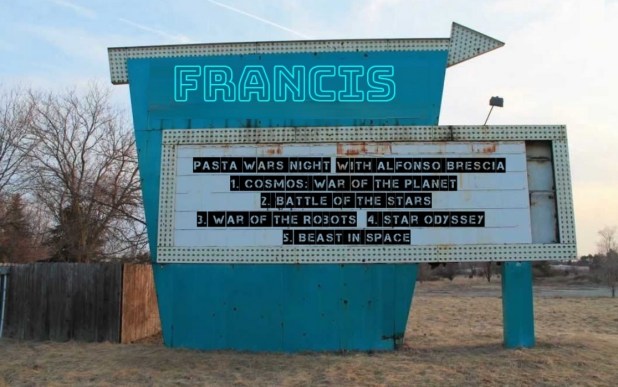
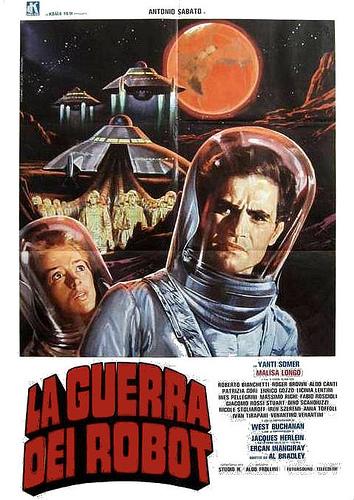
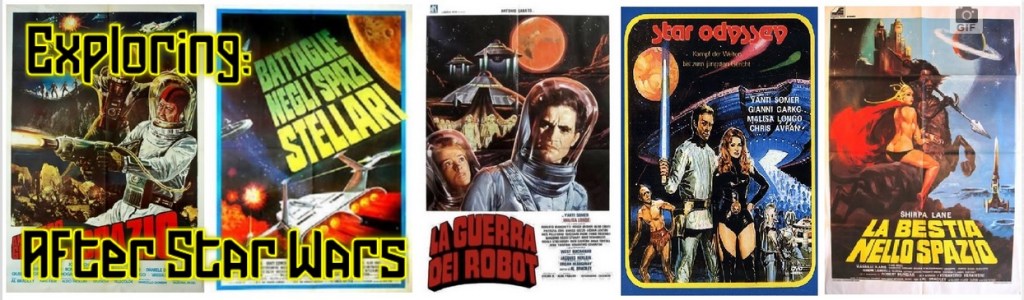
Editor’s Note: Due to their plot, costume, and SFX common denominator recycling, we are reviewing five films in this exploration of Alfonzo Brescia’s “Star Wars” films: Cosmos: War the the Planets, Battle of the Stars, War of the Robots, Star Odyssey, and Beast in Space—so, yes: it’s a five-in-one review. And we toss in a little backstory on Brescia as a bonus!
It all began with the 1964 sand n’ sandal flicks The Revolt of the Pretorians and The Magnificent Gladiator, along with an array of Poliziotteschi flicks. In between was an X-rated romp with 1969’s The Labyrinth of Sex and 1974’s seen-to-be-believed Super Stooges vs the Wonder Women. And it all pretty much ended when Uncle Al decided to take on George Lucas. We never saw him again on U.S. screens—big or small.
Be warned, young warrior: Uncle Al’s space romps make Glen “larceny” Larson’s Battlestar Galactica look like the Lucasian epic it wanted to be (and was not). Space: 1999 isn’t so dorky to you now, is it, space cowboy? Oh, but Uncle Al’s flicks are oh, so much more fun than the plastic-verse Star Wars dropping that is Buck Rogers in the 25th Century.
So, have you ever met two guys debating the content of Alfonso Brescia’s “Star Wars” rips? Welcome to mine and Sam’s world: a bizarro-universe where he mixes colorful, alcohol concoctions based on movies and we destroy our livers debating superfluous movie facts, much to the chagrin of poor Becca. Not even a Bill Van Ryn smack-on-the-side-of-the-head cures our Bresciamania.
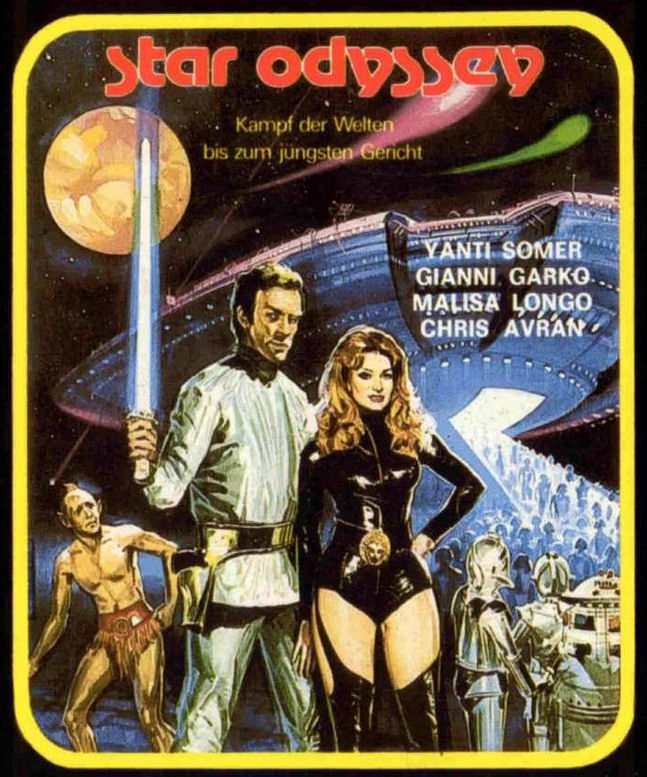
Sam is of the critics who believe Uncle Al’s “Pasta Wars” is comprised of only four films: Cosmos: War of the Planets (aka Year Zero War in Space), Battle of the Stars, (aka Battle in Interstellar Space), War of the Robots (aka Reactor), and finally, Star Odyssey (aka Seven Gold Men in Space, Space Odyssey, Metallica and Captive Planet).
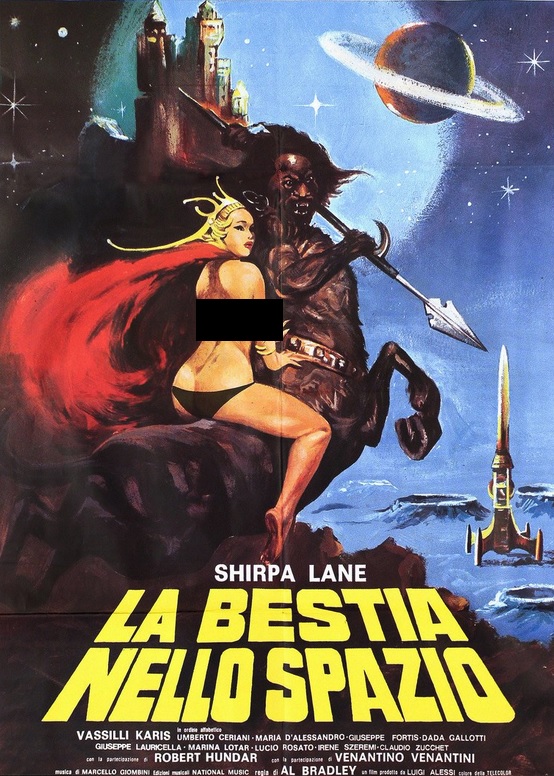
I’m on the side that there was actually five films in the series, which completed with 1980’s La Bestia nello Spazio, aka Beast in Space in English venacular, aka “Star Wars V,” aka “Porn Wars,” because, well . . . it’s a porn movie.
Four!
Five!
Four!
Five! Arrrgh! Let’s break ’em down! But first, this 2012 trailer remix for the best known of Uncle Al’s “Pasta Wars” flicks: Star Odyssey.
Many sci-fi connoisseurs believe Brescia’s “Star Wars” debut isn’t so much a rip-off of Star Wars: they opine it’s a homage to another Italian space epic, one that was produced amid all of those Antonio Margheriti-spaghetti space operas: Mario’s Bava’s Terrore nello Spazio, aka Terror in Space (known in American theatres as Planet of the Vampires; then in its U.S. TV syndication as Demon Planet).
On this point, Sam and I concure: Look at the costuming and alien-possession subplots of Bava’s and Brescia’s films for comparison. Adding to the celluloid confusion: Cosmos had similarly-influenced—if not the very same-recycled—costumes and sets as Margheriti’s films. In addition: Cosmos was also distributed as War of the Planets—which was the title of the 1966 second film of Margheriti’s Gamma One series.
Amid Cosmos’ self-recycled stock footage and shot-through-sheets-of-sepia-paper-and-cheese-cloth special effects, Cosmos also ineptly-lifted whole scenes from 2001: A Space Odyssey (an astronaut completes an upside-down communication device repair-in-space) and Barbarella (sex via touching a “blue orb of light” between beds). The “plot” for those who fell asleep: Our heroes journey to a planet where a green-skinned race is subjugated by an evil computer . . . and the Earth’s Italian “Hal 9000,” “The Wiz,” is possessed by the evil alien computer. . . .
Is this plotline picked up in the next movie? Nope. But all the sets, props, and costumes sure do redux.
Believe it or not, with everyone tricked into believing they were seeing another “Star Wars,” Cosmos: War of the Planets turned a profit in theatres (while I didn’t catch it at the local duplex, my coin was taken by Lou Cozzi’s Starcrash, Michael A. De Gaetano ’74-to ’80 reissue of UFO: Target Earth, Pietro Francisci’s ’66-to-’77 opus, Star Pilot, and George B. Lewis’s, aka Aldo Lado’s The Humanoid). Everyone in the U.S., pretty much, watched Cosmos on TV, as it aired forever during the ’80s on Friday and Saturday night and Saturday afternoon UHF-TV.
You can watch one of the many uploads on You Tube.
Movie 2:Battle of the Stars (1978)
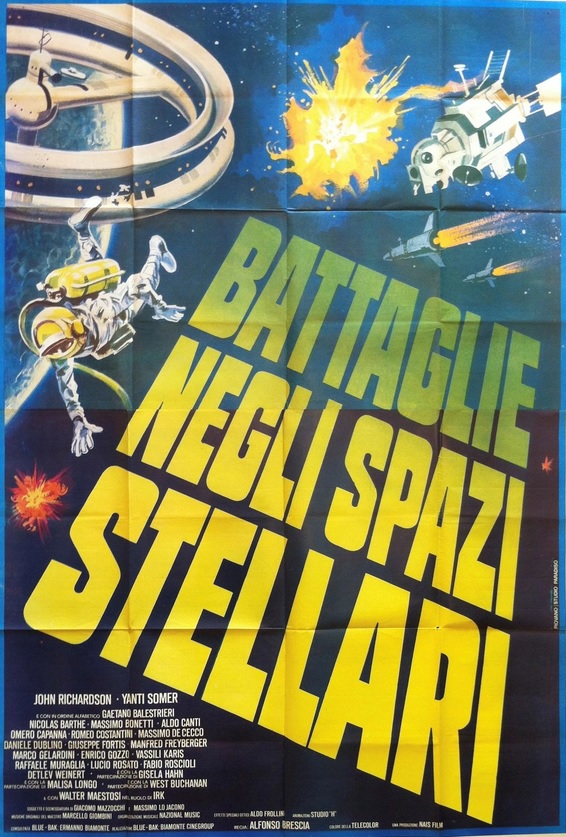
. . . And Uncle Al returned with his “Empire Strikes Back” in the form of Battaglie negli spazi stellar (aka Battle in Interstellar Space), but it was given a new U.S. title because it sounds suspiciously like “Battlestar Galactica.” And since that was Glen Larson’s cheap-jack Lucas rip, that makes this a Star Wars rip twice removed.
You never heard of it because Uncle Al’s “Star Wars II” suffered from poor theatrical distribution and a weak reissue via home video and TV syndication. Then, with all the alternate titling that plagues European films as they’re distributed to the international markets, spacesploitation buffs believed the almost-impossible-to-find Battle of the Stars was Cosmos—with a new title. It’s not helping when the main cast of familiar Italian actors Gianno Garko, Malisa Longo, Antonio Sabato, Yanti Somer, and John Richardson—with most of their supporting cast—appear in subsequent films as different characters (well, they’re the same, but with different names), adding to the continuity confusion.
Regardless, it’s not the same film.
Battle of the Stars is an entirely new film that cannibalizes Cosmos for stock footage—and all the costumes and sets return. As is the case with most “sequels” (Alien vs. Aliens and Mad Max vs. The Road Warrior being the exceptions to the rule), Battle is a just remake/reimage of Cosmos—with a little script tweak: Instead of Earthlings traveling to the planet-home of the evil computer, this time: the rogue planet (or was it an asteroid; don’t care) without-an-orbit-and-pissed-off-sentient-being running it comes to Earth (from the orbit of Ganymed, Jupiter’s moon) which . . . was the plot of Margheriti’s Battle of the Planets from his “Gamma One” series. Hey, er, uh . . . what happened to the ship with its computer, “The Wiz,” possessed by the alien computer in Cosmos? Is that cleared up in Part III? Nope, that plotline is done and gone. . .. .
Look, as someone who has seen Cosmos: War of the Planets a few times: there is no “sport fishing on Earth” scene and there’s no androgynous, platinum blonde 12-year-old alien decked out in a silver chain mail spacesuit helping the Earthlings with an ersatz Marksman-H training remote Jedi-ball. But there is in Battle of the Stars.
So, yeah, it’s the same effect shots, same sets, same actors, even the same situations (that 2001-inspired space station repair and that sentient alien computer set, for example, again) . . . but it’s a different film. It’s not up for debate: it’s two different films, space ace.
Notice the Gerry Anderson’s S.I.D sentient satellite from his TV series UFO, in the upper-right cornerof the one-sheet.
The snack bar is open . . .
Intermission with Jason of Star Command, Space Academy, and Ark II!
Yes, Jason of Star Command, Space Academy, and Ark II from CBS-TV are the far superior productions . . . and all of Uncle Al’s one-piece spandex suits and pull-over headpieces were back for a third sequel . . . with a society of gold-painted skin people pinch-hitting for the green folks from Cosmos.
Why?
On this point Sam and I agree: There’s no “artistic” meaning behind it. Uncle Al simply ran out of the five-gallon buckets of green grease paint and he found some gold paint in the stock room. Ah, but all of the stock SFX footage, costumes, and sets—and whole scenes lifted from the previous two films—are back.
The “plot,” such as it is: Gold Aryan robots with Dutch-boy haircuts are on the brink of extinction. And the solution is to kidnap a couple of Earth scientists to save their planet. So a crack team of space marines (see Aliens; which wasn’t made yet!) are sent in for a rescue.
What makes “Pasta Wars III” so utterly confusing: All of the same actors from the last two films come back—as different characters. So, it’s a “sequel” . . . then it’s not. Will the fourth film tie up the loose end regarding the possessed Wiz from part one. . . .
You can watch this one of the many uploads of War of the Robots on You Tube.
So . . . George Lucas was still in production with the second Star Wars movie, The Empire Strikes Back (1980)—and Brescia is already on his 4th sequel with 1979’s “The Gold Ayran Dutch Boy Robots” (as I like to call it) . . . but they really were back in Sette Uomini d’oro nello Spazi, aka Seven Gold Men in Space which, if you’re able to keep up with the alternate-titling of Italian films, became Star Odyssey for English-speaking audiences.
And you thought Roger Corman was the king of set, prop, and wardrobe recycling? Uncle Al’s recycling makes Glen Larson’s cheap n’ shameless footage, prop, and costume recycling from the Battlestar Galactica and Buck Rogers franchise-axis seem inspired.
The plot: In the year 2312 the Earth is referred to by evil aliens as “Sol 3.” “Darth Vader” is some guy in a (quite impressive) lizard skin mask (but it’s topped with a Farrah Fawcett-’70s feathered hair cut) that “buys” Earth in some inter-galactic auction to cultivate Earthlings as slaves to sell on the open market. And his army is the gold Dutch Boy robots . . . but didn’t we save them in War of the Robots? Welcome to the Brescia-verse. . . .
“Han Solo” is some guy in a shiny-silver Porsche racing jacket and a funky, disco-inspired spider web tee-shirt contracted for a The Magnificent Seven-inspired recruitment of a rescue team of rogues . . . thus ripping off Roger Corman’s Battle Beyond the Stars (and Corman ripped himself in the later productions of Space Raiders, Forbidden World, and Dead Space; yes, sets from Galaxy of Terror are in the mix amid all of those films, as well; he even lent them out to Fred Olin Ray for Star Slammer). Part of the “seven” are Uncle Al’s R2D2 and C3PO: a bickering male-female robot couple (the female has eyelashes and red lips) dealing with “sexual dysfunction” and “relationship issues.” And there’s a scrawny n’ skinny Han Solo-replicant acrobat who backflips and summersaults into battles—and makes a living fighting in boxing rings with Rock ’em Sock ’em Robots (know your ’70s toys). And what’s up with the “Luke Skywalker” of this space opera: Lt. Oliver ‘Hollywood’ Carrera? What’s with the obviously drawn-on mustache? Why is he hunching his back and arching his shoulders? Is it a parody of some Italian comedy actor we Americans don’t know about?
As result of Star Odyssey never playing in U.S. theatres or airing on U.S. UHF-TV in-syndication (at least not to mine and Sam’s recollections), the only way we watched this fourth “Pasta Wars” sequel was on numerous public domain DVD multi-packs. And regardless of the distributor, the “cut” of the film is always the same: somewhere along the way, the scissors were taken to the film and there’s several scenes out of sequence. Remember in Space Mutiny, when Lt. Lemont is dramatically killed off in a scene . . . and she shows up just fine in the very next scene? It’s like that, only it happens several times in Star Odyssey.
I keep promising myself that I’ll rip Star Odyssey and do a proper “fan cut” and put it back into its proper sequence in homage to Uncle Al. . . . Don’t hold you breath waiting for that You Tube upload.
You can watch Star Odyssey in all its continuity-screwed glory on You Tube.
Movie 5: Beast in Space (1980)
And now for the movie that’s come dangerously close to destroying a friendship. Alfonso Brescia’s oeuvre has that effect on people . . . well, just me and ‘ol Sam.
Anyway . . . remember the infamous, 1972 X-rated Flash Gordon porn-flick, Flesh Gordon (itself sequeled with Flesh Gordon Meets the Cosmic Cheerleaders)? Did you ever wonder if Reece and Ripley (and we know they did, off-script and off camera) “got it on” in Aliens? Ever ponder if Han threw Leia across the Dejarik Chess Table and undid her cinnabons?
Well, welcome to Porn Wars.
There’s George Lucas, killing the box office with The Empire Strikes Back, and Brescia responds with his “Star Wars V”: 1980’s La Bestia nello Spazio, aka Beast in Space. The interesting twist to this “sequel” is that it not only occurs in the same Brescia Pasta-verse (courtesy of footage, costumes, props, sets, and actors recycling) continued from Star Odyssey, it’s also a “sequel” to Walerian Borowcyk’s infamously popular, 1975 French erotic-horror/exploitation movie, La Bête, aka The Beast. The “connection” between both films: erotica-exploitation actress Sirpa Lane sports a pair of Brescia-space tights and headpiece.
So how did they come up with the title Beast in Space, you ask? As result of her erotic/exotic films—especially The Beast—Sirpa Lane was a major star (and marketed as the “next Brigitte Bardot”) in Europe and christened with the affectionate stage name by the Euro-press: “The Beast.” (We also reviewed her work Joe D’Amato’s Papaya: Love Goddess of the Cannibals, if you’re interested.)
Issued in “PG,” “R” and “X”-rated formats, the “plot” concerns the Earth’s search of the cosmos for a rare element: Antallum, the key ingredient for bomb construction to basically kill off everyone in the universe. But wait . . . Earth already possessed that wonder-metal to accomplish space travel in the first film . . . so is this a prequel?
Eh, that’s plot piffle in the Brescia-verse.
The real story: The crew is “horny,” with chauvinistic men and slutty women astronauts seducing each other on their way to the planet Lorigon to plunder the planet of its Antallum honey hole. Well, the planet’s sentient super-computer (not again!) isn’t having any of that nonsense. That’s his Antallum. So “Hal 9000” sidetracks the Earthlings . . . by inciting them to indulge in their deepest, darkest sexual desires. Oh, did we mention the gold Aryan Dutch Boy robots are back as well? And the well-hung minotaur from Lane’s sexual dreams is real and lives on Lorigon?
The English language upload is gone. All we have is this Spanish-language upload on You Tube for you to sample.
DVD Copies of Beast in Space
The fine folks at Severin (thanks, again for the Delirium pull-quote) discovered an obscure hardcore cut of the film: it adds a few minutes of unsimulated, aka real, grinding (from bodies doubles) and a nice and long (sorry) five minutes with The Beast’s monstrous penis—and his “climax.” That footage is said to have been shot after the fact and spliced-in; that cut was distributed throughout Europe.
As result of that discovery: Severin has two DVD versions in the market: An Unrated Version at 92 minutes and a XXX version at 91 minutes (the one with the body doubles footage). The footage variations are those hardcore shots of Onaf (Robert Hundar; 1977’s La bella e la bestia) raping Sondra (Sirpa Lane) and his penis in action, along with a sex scene between Capt. Larry Madison (Vassili Karis of 1979’s Giallo in Venice) and Sondra. The Unrated Version comes from the original film lab negative utilized for the Region 1 (North and Central America) DVD release by Severin, which they acquired from a Rome, Italy, bankruptcy auction. The XXX version was discovered in the basement of a condemned Bologna, Italy, porn theater.
Both Severin versions come with Bonus Features: The Unrated Version comes with a vignette from actor Venantino Venantini (Juan Cardoso in the film) who speaks at length about his career, working on Black Emmanuel (we’ve since reviewed Emmanuel IV because of its Cannon connection) and with Brescia. The XXX Version, again, offers the newer hardcore footage-inserts—along with a trailer.
While both versions are out-of-print and no longer available at Severin Films, used and aftermarket copies are available on Amazon and eBay; but emptor the caveats, ye buyer. You can get the technical rundown on the releases at DVDTalk. And if you’re a Brescia completists, like moi, you’ll get both for the collection.
So be it Star Odyssey or Beast in Space—or four or five films—Uncle Al’s “Pasta Wars” was over. After turning out his “Star Wars” films in a short four years, Brescia turned over the keys to the Millennium Falcon. But let’s cut Uncle Al a break: he was saddled with the cheapest budgets and pressure-shoot schedules that no filmmaker should endure in their careers.
Brescia continued to make non-science fiction films for the remainder of his career—14 more films for the next 15 years. At the time of his retirement in 1995, Brescia completed a career total of 51 films.
Most of Brescia’s post-1980 work was primarily restricted to Italy-only distribution. His career took a financially-positive turn in the late ‘80s with the worldwide-distributed Iron Warrior (1987; the third in the hugely successful, Ator Italian rip-off series of Conan the Barbarian) and Miami Cops (1989; violent Miami Vice-inspired buddy-cop flick starring Richard Roundtree). Sadly, even with the success of Iron Warrior and Miami Cops, Brescia was unable to secure distribution for his self-financed final film, the 1995 action-comedy, Club Vacanze.
Alfonso Brescia, the king of the Star Wars-inspired spaghetti-space opera died, ironically, in 2001.
And that’s the story behind tonight’s “Drive-In Friday” salute to Uncle Al.
Oh, yes! There are so many more post-Star Wars films to partake, young warrior.
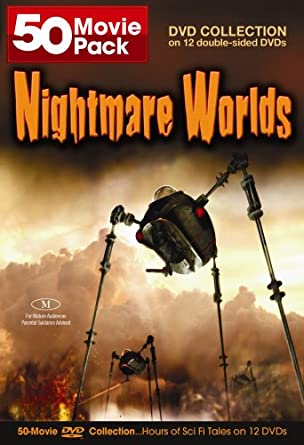
While Battle of the Stars and Beast In Space — to our knowledge — haven’t made a Mill Creek appearance, you can easily find Cosmos: War of the Planets (“Sci-Fi Classics”), War of the Robots (“Chilling Classics”), and Star Odyssey (“Nightmare Worlds”) on a variety of Mill Creek sets, these one in particular (clickable images for the full list of films).
About the Author: You can learn more about the writings of R.D Francis on Facebook. He also writes for B&S Movies.
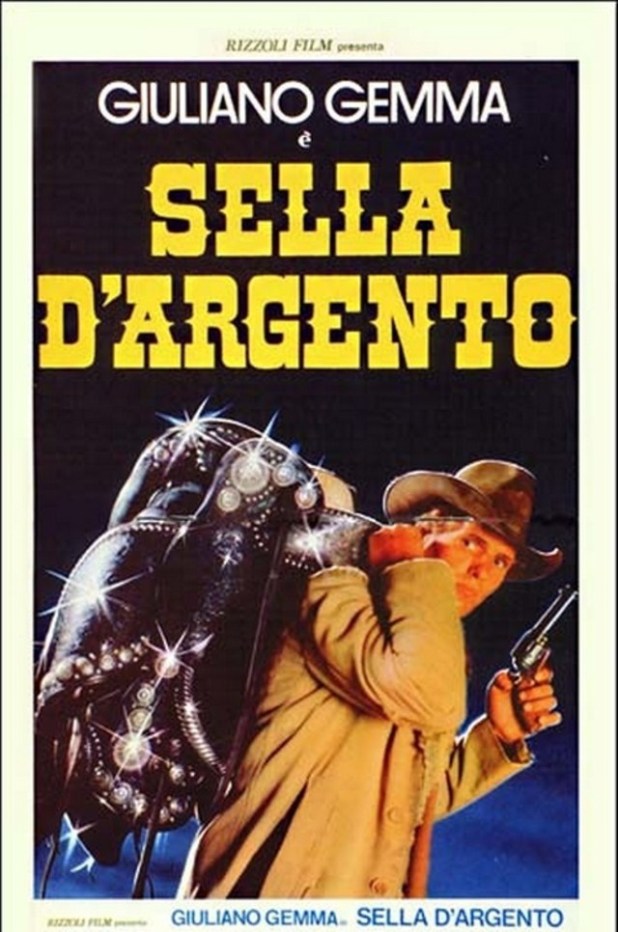
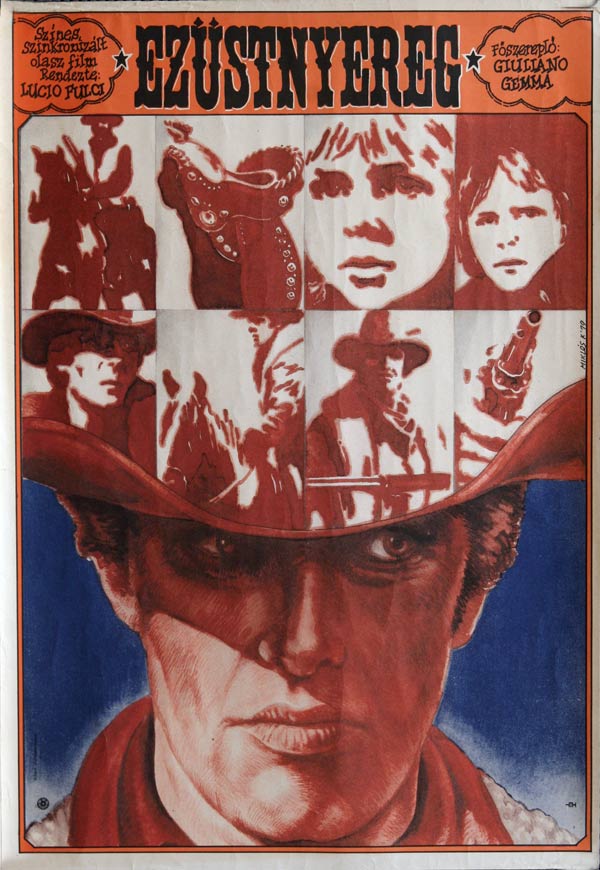
Silver Saddle, also known as The Man in the Silver Saddle and They Died With Their Boots On, marks the end of an era in several ways. It’s the last of three Westerns that Lucio Fulci would direct (the others are Massacre Timeand The Four of the Apocalypse), as well as one of the last Italian Westerns of the so-called “Spaghetti Western” period. Only China 9, Liberty 37,La Ciudad Maldita and Zanna Bianca e il Grande Kid played theaters after.
NOTE: I challenge this fact, which was in the Silver Saddle Wikipedia entry, as you could consider Fulci’s Zanna Bianca (White Fang) and Il Ritorno di Zanna Bianca (Challenge to White Fang) to be Western films, despite them not necessarily fitting the themes of the Italian version of the genre.
This is also the final western role for Giuliano Gemma, who broke out after acting in 1965’s A Pistol for Ringo. Here, he plays Roy Blood, a bounty hunter eternally seeking the man who murdered his father.
Silver Saddle begins with the moment that put Roy on the trail of Richard Barrett, a landowner whose henchman kills the young boy’s father. Barely a man, Roy picks up a gun, kills the man and takes his horse, silver saddle and all.
Decades later and he’s grown into a fearsome killer himself, followed by an old man named Two-Strike Snake (Geoffrey Lewis) who tells the tale of Roy Blood while picking the pockets of the men he’s shot along the way.
Blood takes a contract to kill a man named Barrett and discovers that instead, it is the young son of his enemy, who has died before he can get revenge. He saves Thomas Barrett Jr. from several other killers, but leaves the boy in the wilderness. However, he will soon learn that the son of his enemy will become the closest thing he will get to recapturing his lost childhood.
Speaking of all that change…
Fulci made this movie in between 1977’s The Psychic, where he explored the giallo once more in the waning years of that cycle and 1979’s Zombi 2, a movie which would take his career further than perhaps it had ever been before.
Gemma, who played Arizona Colt and the aforementioned Ringo, would appear in crime films, in Argento’s late model giallo masterpiece Tenebre and even appear in a very late Italian western, 1985’s comic book-inspired Tex and the Lord of the Deep.
Despite this being made at the very end of the “spaghetti” days, there are plenty of faces you’ll recognize from these sun drenched films, like Ettore Manni (Johnny Oro, I Am Sartana Your Angel of Death and Django and Sartana Are Coming… It’s the End), Aldo Sambrell (For a Few Dollars More), Lewis (My Name Is Nobody) and Donald O’Brien (Keoma).
Fulci would work with several of his regular collaborators, such as cinematographer Sergio Salvati, editor Ornella Micheli and composer Fabio Frizzi. It was written by Adriano Bolzoni (A Fistful of Dollars, Your Vice Is a Locked Room and Only I Have the Key, The Humanoid). and
And what of the future?
Cinzia Monreale had only been in a few movies before this. She would go on to be memorably cast as Emily in Fulci’s The Beyond and in the dual roles of Anna and Elena in Joe D’Amato’s Beyond the Darkness.
Licinia Lentini made this her first major film role and would also be part of a movie that would herald the short return of the Italian Western nearly a decade later, the finally authorized sequel Django Strikes Again.
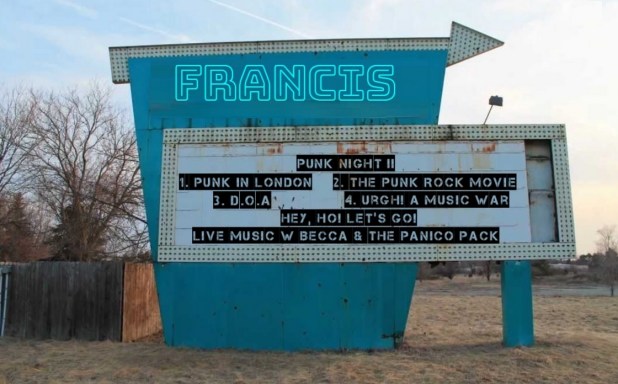
Rock ‘n’ Roll Week at B&S About Movies was a smashing success . . . one that can’t be contained in just one Drive In Friday* featurette! So, for this week only, we’ve opened up the Drive In for a special Saturday edition for you old punk codgers n’ sods. You know who you are . . . you were in middle school or high school during the advent of the cable TV boom and a fan of the USA Network’s “Night Flight” Friday night video programming block, channel surfing HBO and, later on, haunting the shelves of your local video store . . . so you’ll remember seeing these four punkumentaries. It’s been years since I’ve watched these gems myself, so this’ll be a fun night for all.
Oi! Hey, ho! Let’s go! All Aboardfor Punk Night!
1. Punk In London (1977)
Director Wolfgang Büld bounced around the Germany film and TV industry since the early ’70s and made his English language debut with this German-produced documentary that accompanied the release of a coffee table book of the same name. The film features live performances — some of the footage and sound is of questionable quality — from some of the scene’s top bands, such as the Adverts, the Boomtown Rats, the Clash, the Lurkers, the Jam, Killjoys, the Sex Pistols, Sham 69, the Stranglers, and X-Ray Spex.
Büld followed up this document on the rise of punk rock with a sequel on “the fall” of punk rock, 1980’s Punk and Its Aftershocks, which featured the rise of the new, more commercial crop of ska, new wave, and mod bands that pushed out the punks, such as Madness, Secret Affair, Selector, and the Specials. As with any old VHS reissued to DVD, the reissues company had to tinker with the sequel and give it a new title (the lame “British Rock”) and edit out some footage from the original cut. Ugh!
The restored DVD digital rip of Punk in London currently streams on a variety of VOD platforms, but you can watch it for free on Flick Vaults’ You Tube channel. You can view a complete track listing of the bands and songs that appear in the film on Discogs.
Büld’s other punk documents include the hour-long 1980 TV document Women in Rock (leftovers not used in Punk In London), which centers on the German tours of British metalers Girlschool, along with Brit punkers the Slits, Siouxsie and the Banshees, and Nina Hagen (Cha Cha), along 1978’s with Reggae in Babylon centered on the career of English reggae pioneers Steel Pulse. Büld made his narrative, dramatic debut with the German language (dubbed into English) film debut of Nena (of “99 Luftballoons” fame) in Gib Gas – Ich will Spaß! (Hangin’ Out).
2. The Punk Rock Movie (1978)
And you thought the footage featured in Punk In London was rough . . . the grainy, shaky images and muddy sound of this debut film by British punk scenester and club DJ Don Letts makes Büld’s works look like award winners . . . but we thank Letts for gearing up that Super-8 camera to chronicle those 100 glorious days in 1977 when Neal Street’s fashionable disco The Roxy booked punk bands in the venue where Letts spun records.
The live acts and backstage interviews include Alternative TV, the Clash, Generation X (Billy Idol), Eater, Johnny Thunders and the Heartbreakers, the Sex Pistols, Siouxsie and the Banshees, Slaughter and the Dogs, the Slits, Subway Sect, and X-Ray Spex. So, regardless of its home movie quality, the film serves as a vital document of London’s then burgeoning punk rock scene.
Letts went onto form Big Audio Dynamite with Mick Jones (after his firing from the Clash) and directed a number of short-form music videos (the Clash’s “Rock the Casbah”) and long-form TV and DVD documentaries, such as 2005’s Punk: Attitude (Euro TV/U.S. DVD) and Westway to the World, his 2003 Grammy Award-winning documentary on the Clash.
The Punk Rock Movie is available on a few VOD streaming platforms, such as Amazon Prime (region dependent), but there’s a VHS rip available on You Tube. You can review the film’s full track listing on Discogs.
Intermission: Punktoons!
. . . And Back to the Show!
3. D.O.A (1980)
London-born Polish documentarian Lech Kowalski’s feature film debut (he made a few shorts and TV films) centers around the 16-mm footage he shot during the Sex Pistols’ 1978 seven-city club ‘n’ bars tour of the United States — their only U.S tour — that ended with the band’s demise. The behind-the-scenes interview footage features the now infamous “John and Yoko” bed-inspired interview of Sid Vicious and Nancy Spungen (You Tube). To fill out the short running time, Kowalski cut in performances and interviews with Iggy Pop, along with the Clash, the Dead Boys, Generation X, the Rich Kids (featuring ex-Pistols bassist Glen Matlock), Sham 69, and X-Ray Spex.
Lech’s other rock documents are 2002’s Hey! Is Dee Dee Home, about the life and times of Ramones bassist Dee Dee Ramone (1952-2002), and 1999’s Born to Loose: The Last Rock ‘n Roll Movie, concerned with the life and career of Johnny Thunders (1952-1991) of the New York Dolls and the Heartbreakers (the second, at one time featured, Richard Hell from Blank Generation). Meanwhile, footage from D.O.A appeared in Julien Temple’s 2000 Sex Pistols document The Filth and the Fury (which I went to see in a U.S art house theatre setting).
This one’s not streaming as VOD, but we found two VHS rips on You Tube HERE and HERE to enjoy. You can view the full track listing of the film on Discogs.
4. Urgh! A Music War (1981)
. . . And we saved the best-produced documentary for last: this one dispenses with the backstage tomfoolery and goes right to the stage with professionally-shot footage compiled from a variety of 1980-era shows held in England, France, and the United States. And there’s a couple of reasons why the Police spearhead Urgh! A Music War: Not only were they the most commercially radio-successful “new wave” band of the groups featured; Derek Burbidge, the director, helmed several videos (the famous “Roxanne”) for the Police (he also did Gary Numan’s “Cars”), while Miles Copeland, the brother of the Police’s drummer, Stewart Copeland, managed the Police and operated IRS Records, which produced the film. The film briefly appeared in U.S. theatres via Filmways Pictures (seen it in an art house theatre, natch), but gained its cult status due to its frequent airings on HBO and the USA Network’s “Night Flight” video block.
Beginning in 2009, Warner Archive (the successor-in-interest to Lorimar Pictures, who co-produced with IRS) released an official DVD-R of the movie — burned on a made-to-order basis. As result, this one’s not available as a cable PPV or VOD online stream and the freebie You Tube and Vimeo rips don’t last long. However, searching “Urgh! A Music War” on You Tube populates numerous concert clips from the film. The bands you know in those clips are the mainstream MTV video bands the Police, Devo, Echo & the Bunnymen, the Go-Go’s, Joan Jett, Gary Numan, Oingo Boingo, Wall of Voodoo, X, and XTC. The lesser known bands featured — that some know and most don’t — include L.A.’s the Alley Cats, the Dead Kennedys (Terminal City Ricochet), Magazine (off-shoot of the Buzzcocks), the Fleshtones (Peter Zaremba hosted IRS: The Cutting Edge for MTV), Orchestral Maneuvers in the Dark, 999, Pere Ubu, the Surf Punks, and Toyah Wilcox (Breaking Glass).
You can view the film’s full track listing on Discogs while you listen to the soundtrack in its entirety on You Tube: Side A/B and Side C/D.
All images of the ’80s original issue VHS covers — the cover arts I remember when I rented them — are courtesy of Discogs.
“That’s part of the problem with being a kid actor. When your show’s over, nobody informs you that your career’s over, too.” — Luke Halpin, aka Sandy Ricks on TV’s Flipper (1964 – 1968)
To become a child actor; a kid star, to paraphrase British modernist poet David Jones: it is both a blessing and a curse.
And for every Leonardo DiCaprio, who got his start as a kid actor on TV’s Growing Pains, receiving the industry’s blessing to transition into adult roles, there’s a Dustin Diamond, from TV’s Saved by the Bell, who’s destined to experience a fateful, Longfellowian rain fall.
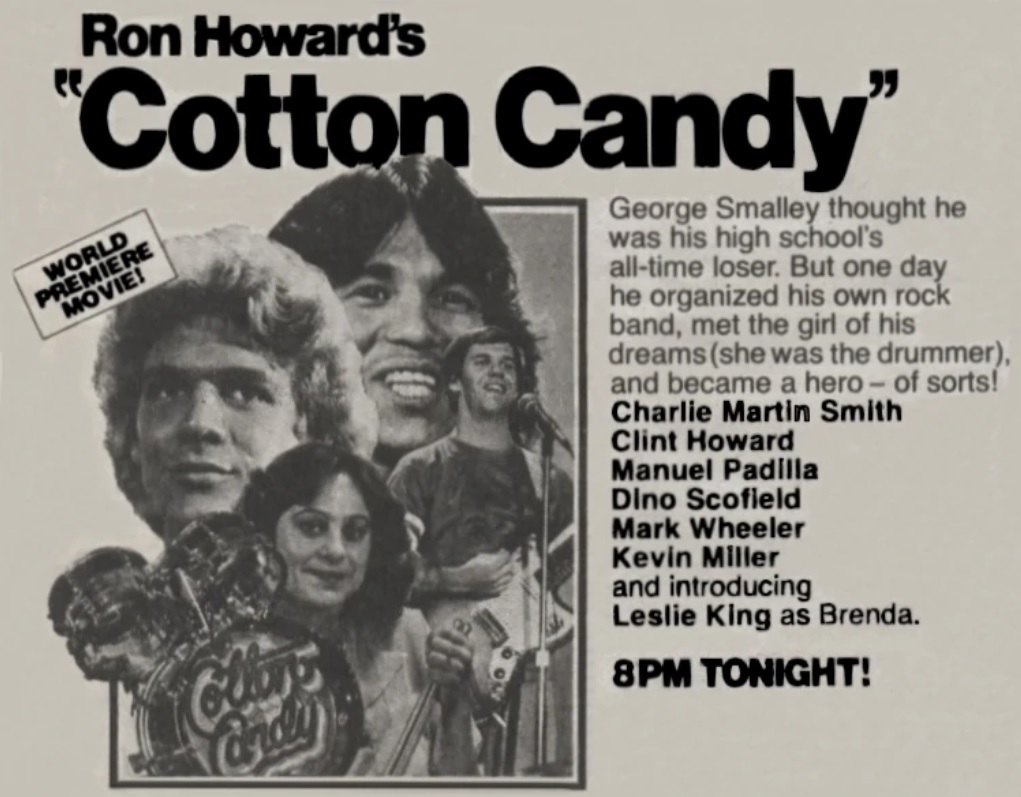
Courtesy of Made for TV Movie Fandom Wiki/You Tube trailer.
And in the case of Luke Halpin (Shock Waves), his successful ‘60s doppelganger would be Ron Howard who, as a kid actor, got his start as Opie Taylor on The Andy Griffith Show (1960 -1968). If only Luke Halpin had been noticed by George Lucas and cast in one of the most profitable films in history, American Graffiti (1973; we’re reviewed the sequel, More American Graffiti), or booked a part on ABC-TV’s Happy Days . . . damn the cackling Clotho, Lachesis, Atropos, that trio of witches weaving the looms of fate.
And the witches saw fit to weave Roger Corman into Ron Howard’s tapestry. And the B-Movie King and the strawberry-mop topped sitcom star made a deal: If Howard would star in New World’s hicksploitation romp Eat My Dust (1975), he would give Howard the opportunity pursue his dream of directing a feature film, which became Grand Theft Auto (1977; its theatrical one-sheet appears in Cotton Candy as George and Brenda go on a date to a movie theater). Both films duplicated the insane box office of American Graffiti: Eat My Dust grossed $5 million against $300,000 and Howard’s directing debut grossed $15 million against $600,000.
So with three box office bonanzas and a hit TV series on his resume, NBC-TV wanted a piece of the Howard action. So they gave Ron an opportunity to direct his second film—his first TV movie (the others were 1980’s Skyward, 1981’s Through the Magic Pyramid, and 1983’s Little Shots)—for his newly formed Major H Productions with his father Rance and brother Clint (Ice Cream Man!!!). The idea that Ron and Clint came up with was Cotton Candy: a TV movie-length pilot for a weekly series concerning the rock ‘n’ romance adventures between the rival high school bands (starring 30-year-old teenagers, as is the case with all teen comedies of the ’70s) Cotton Candy (the underdogs) and Rapid Fire (the chick magnets) making the race for stardom in Dallas, Texas. (The high school in the film was called-out-by-name Lake Highlands High School.)
Tad Painter, Morgan Ferguson, actor Mark Wheeler, Mark Ridlen (also a Dallas radio jock), and John Painter, collectively known as Rapid Fire, aka Dallas local band Quad Pi, formerly known as Lithum X-Mas/image courtesy of Clint Howard via Robert Wilonsky and The Dallas Morning News.
For his leading man, Howard cast his old buddy Charles Martin Smith (Toad from American Graffiti; he later directed the “No False Metal” classic, Trick or Treat!!!). Smith is George Smalley: a geeky high school senior who’s dogged by his mother about dating and girls and a dad (Alvy “Hank Kimble” Moore from Green Acres . . . Ack! Stop right there. This is B&S About Movies, buddy! We remember Alvy from Smokey and the Hotwire Gang, The Witchmaker . . . and The Brotherhood of Satan!!) who wants him to stop wasting his time with the guitar (oh, do I relate). So to get chicks and get dad off his back, he joins the school’s football team, but is quickly cut from the squad.
No matter. George hated football and was only doing it to please dad. What he really wants to do is music. So when one of the guitarists of the school’s hottest band (they do all of the school’s dances, mall concerts, hot parties, and get paid gigs!), Rapid Fire, leaves the group as result of a family move, George decides to ask for an audition after a show. And Torbin Bequette (an excellently dickish Mark Wheeler; portrayed Neil Armstrong for Ron in Apollo 13), the band’s popular singer and big man on campus, humiliates George in front of everyone.
So, together with his best friend (ugh, not another clueless, talentless dork with no musical or legal skills “managing” a band, riding his talented friend’s coattails: this is Ricky from American Satan all over again), Corky MacPherson (Clint Howard), they resolve to form a rock band to perform George’s original tunes and take down Rapid Fire at the big “Battle of the Bands” (Oh, the “Battles” at the local skating rink and the city park’s outdoor stage of the ’70s and ’80s!) competition at the real life, Town East Mall (Oh, those teen years of living at the mall! Orange Julius and Spencer Gifts!!) in East Dallas. Together, George and Corky recruit a set of brothers who play keyboards and guitar, a former gang member on bass guitar (Manuel Padilla, Jr., aka Jai from ‘60s TV Tarzan), and a very cute female drummer (Leslie King, she of the 1979 Drive-In T&A classics Gas Pump Girls and The Great American Girl Robbery; as a screenwriter she penned 1988’s To Die For for Deran Sarafin, yes, he of Jean-Claude Van Damme’s Death Warrant!).
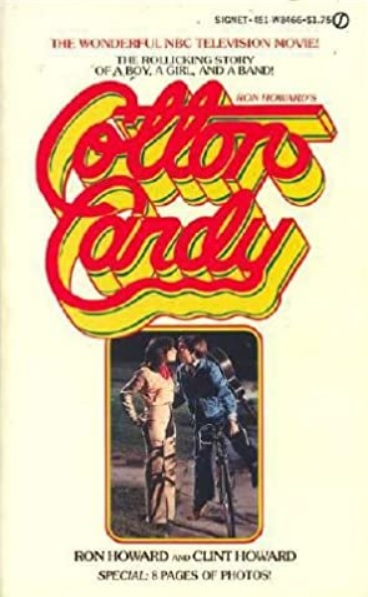
The out-of-print paperback tie-in/courtesy of Amazon (this was the best available image).
So, what about the music, you ask?
It is pure ’70s pop bubblegum. But Cotton Candy ain’t the Knack or Sweet. So instead of “Frustrated” or “Good Girls Don’t,” or “Fox on the Run” and “Love Is Like Oxygen,” we get a rocky-upbeat version of the safe n’ sweet sounds of the Carpenters (girl drummer, hatch), with the George Smalley originals “She Rolls,” “Born Rich,” and “Starship” (damn it: not uploaded to You Tube).
As for Rapid Fire’s catalog: And you thought the Sebastians (of Rocktober Blood fame) securing the right to Rod Stewart’s “Maggie May” and Ted Nugent’s “Sweet Sally” for their pirate radio romp On the Air Live with Captain Midnight (1979) was a rock ‘n’ boondoggle? How in the hell did Ron Howard get the rights to Bob Marley’s “I Shot the Sheriff” via Eric Clapton? How did he get the rights to Billy Preston’s (Hammond organist on the Beatles’ albums) “You are So Beautiful” via Joe Cocker?
Clearly, Cotton Candy, while a bunch of clueless dorks who decide playing strip poker with their female drummer is the mature thing to do, is the more talented band. Sure, Rapid Fire has the slick, silk windbreakers, smoldering good looks and feathered hair . . . and can afford snazzy, three-piece suits and fedoras, you know, to carry through that “gangster” theme to go along with that awesome “Tommy Gun” band logo.
“Rapid Fire’s got to reload . . . we’ll be back in five.”
But Torbin and the boys can’t write music; they can only can butcher jukebox-from-hell covers that ’70s sound-alike budget album distributor Pickwick International would reject for release.
Yeah, it’s all very “Pickwick International” with Rapid Fire. If you went on a Sunday “Swap Swap” excursion with the family at the local Drive-In, you know the label. I got burned by Pickwick’s version of Tommy (You Tube) thinking I was buying the Who’s rock opera. Well, that’s Torbin Bequette and Rapid Fire: all the girls, none of the talent, and it ain’t Clapton or Cocker.
Yeah, this is taking me back to those bag-o-dicks from Mad Sire in their silk band jackets and platform shoes and flared jeans churnin’ out their covers of Rick Derringer’s “Rock ‘n’ Roll Hoochie Coo” and Styx “Renegade” at the school dances . . . and taunting Hot Rats, the underdog Ramones-inspired stalwarts as “Hot Rats . . . more like cold crap,” as we ripped out the originals “Rock ‘n’ Roll Stereo Kids” and “Scene Queen” (which later became “Bitch Queen” as we, pathetically, went “metal”) to a garage audience of five fellow lost souls that were a lot like Sam, my boss at B&S About Movies.
Ack! Tagents and non-sequiturs! Back to the movie. . . .
Because Howard’s TV movie debut tanked in the ratings, and both Ron and Clint expressed embarrassment over the years regarding the project, Ron has publically stated the film will never, ever see (a hard or digital) release. And once Ron’s career took off with the likes of the theatrical features Night Shift, Splash, and Cocoon, he didn’t want anyone to remember Cotton Candy; when the ‘80s video boom hit and stores were hungry for product, the film was never released to VHS.
So how bad is it?
Well, in our review of It’s a Complex World, we spoke of how revered it is among the movers and shakers of Providence, Rhode Island, where it was filmed—ditto for Richmond, Virginia’s denizens who remember the making of the failed Rock N’ Roll Hotel. And the rock denizens of Dallas, rightfully, feel the same way about Cotton Candy. It’s all about nostalgia on this one. If you were in middle or high school in 1978 when Cotton Candy aired, you’ll love it. If you never seen it before and, compare it against Howard’s later works, such as Apollo 13 . . . let’s put it this way: it’s not as bad as Sgt. Pepper’s Lonely Hearts Club Band (is any rock movie?), but the proceedings will not be as cool as Eddie and the Cruisers, and not as awesome as Rock Star with Mark Wahlberg (” . . . stand up and shooout!”). Those who love it (moi): we are loading up our TV-to-VHS-ripped copies of Cotton Candy alongside Ladies and Gentleman: The Fabulous Stains and the Dennis Hopper Elvis-Johnny Rotton punk-tale oddity that is Out of the Blue (we’ve got to review that one!).
Cotton Candy recently had an 40th anniversary screening at the Lake Highland Alamo Drafthouse outside of Dallas, put together by Mark Ridlen of the faux Rapid Fire. But do not let that fool you into thinking a DVD restoration is forthcoming. . . .
The bootlegged VHS-ripped-from-TV (regardless of the flashy slip cases) on this one are impossible to find. Cotton Candy has never been officially released on DVD (by Howard or NBC-TV’s corporate parent, Universal) and hasn’t re-aired on TV since the mid ’80s—so watch out for those grey market TV-to-VHS-to-DVD rips in the marketplace. Yes, there are 1985-dated foreign VHS tapes in the marketplace (an image of the Swedish version recently, post-this-review, posted on the IMDb), but it’s doubtful those are from the original negative. Well, perhaps a PPV or VOD stream, Ron? How about a with-ads stream on TubiTV? That’s unlikely. After Howard’s Imagine Entertainment was acquired by Disney, the negative to Cotton Candy has been buried in their vaults ever since. . . .
So the best we’ve got to enjoy Cotton Candy are ’70s UHF-TV rips uploaded to You Tube. And it seems Ron Howard doesn’t mind, since they’ve been there a while. You have three uploads to choose from HERE, HERE, and HERE. Sadly, the ending of the film sticks on all of them before we can see the songwriting credits behind Cotton Candy’s tunes. Ah, but there’s nothing like a B&S About Movies review obscurity (see Arctic Warriors) to inspire those IMDb page updates. Courtesy of those updates, we now know that Joe Renzetti wrote those nifty Cotton Candy tunes with Charles Martin Smith. The Philadelphia-born Renzetti got his start as a film composer and soundtrack consultant alongside Smith in The Buddy Holly Story, teaching Smith and the rest of the cast to sing and play their instruments—live on camera—the first for a theatrical film. Another of Renzetti’s film gigs was instructing Kurt Russell as “The King of Rock ‘n’ Roll” on John Carpenter’s 1979 TV movie, Elvis.
* Our thanks to Advocate Mag and The Dallas News for preserving this beloved rock flick obscurity with interesting trivia bits in the preparation of this review.
About the Author: You can learn more about the writings of R.D Francis on Facebook.He also writes for B&S About Movies.











 B&S About Movies
You must be logged in to post a comment.