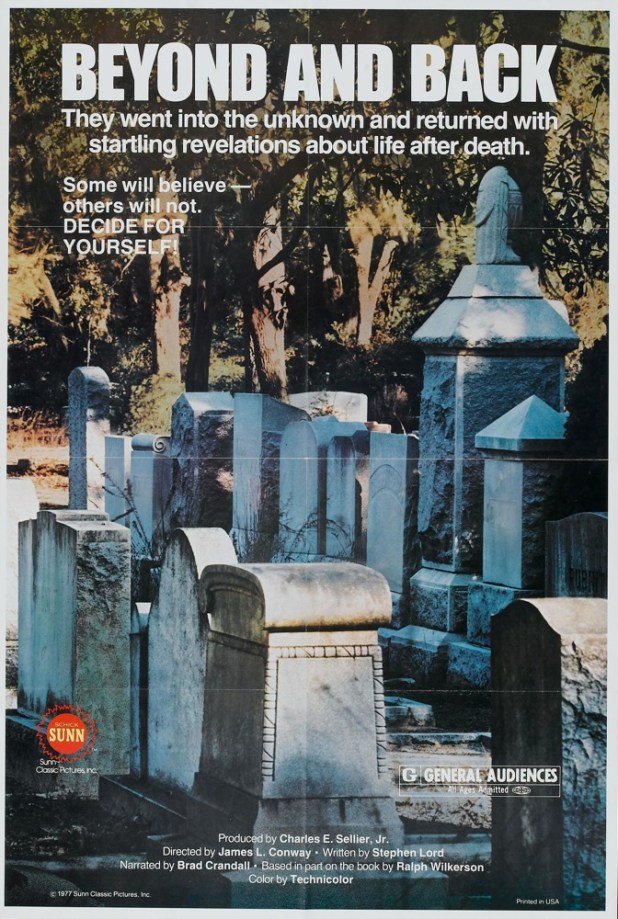
This Sunn Classics Pictures release isn’t just a movie Roger Ebert hated. He said, “Gives turkeys a bad name. It exists on about the same cinematic level as an Army training film or one of those junior high chemistry movies in which the experiments never quite worked.” He had it on his list of most hated movies on his site and it’s one of the entries in his book I Hated, Hated, Hated This Movie.
Sunn didn’t care. They four-walled — bought their own theaters and sold their own tickets — this movie or played it in drive-ins. It mostly played in smaller towns and non-urban areas, away from critics for the most part.
Just likeIn Search of Noah’s Ark and In Search of Historic Jesus, this is one of the Sunn films that tries to present the science behind Christian belief. Producer Charles E. Sellier Jr., the man who also made Grizzly Adams and Silent Night Deadly Night, said of the juxtaposition between revival house and grindhouse that he “believes God wants me to do the films I do, otherwise He wouldn’t have made me a success.”
Directed by James L. Conway, who also did Sunn’s The Lincoln Conspiracy and shot by Henning Schellerup, who did adult under his other name Hans Christian, Beyond and Back is a Utah shot blast of hyperbole that goes right to your brain.
As with most films from these guys, Brad Crandall provides the narration that will either comfort you or make the hairs on the back of your neck stand up. There’s nowhere in between.
This is a movie filled with near death experiences and mentions of how much the soul weighs, which is for some all the explanation they need that it exists. You may scoff at the material presented as fact, you may see it as gospel or you may be like me, someone that loves the carny nature of it all.
But just remember: “The events you have just seen have been taken from actual accounts, but the names of the persons involved have been changed to preserve their anonymity. All such persons have been portrayed by professional actors and actresses.”
You can watch this on YouTube. You can also download it from the Internet Archive.
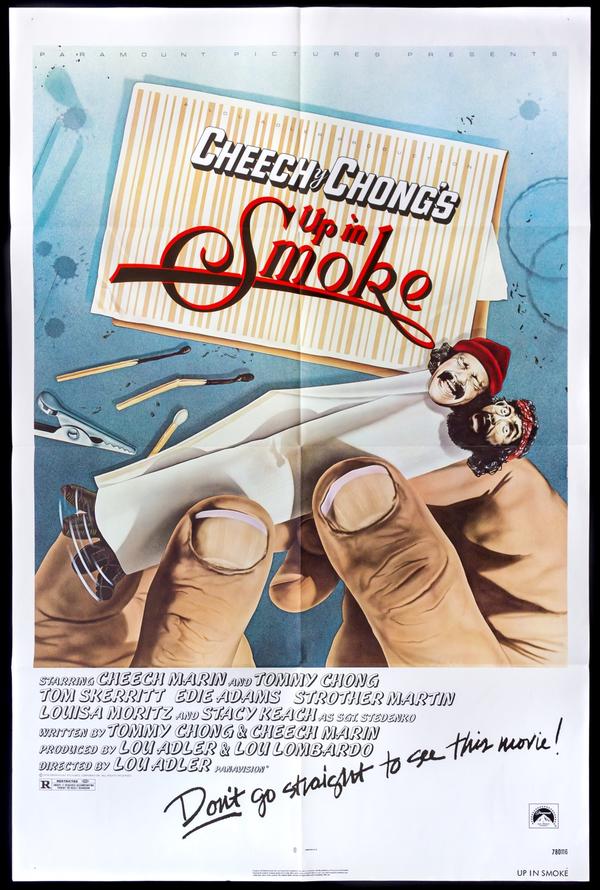
Lou Adler only directed one other movie other than this, Ladies and Gentlemen, The Fabulous Stains. Even if he wasn’t a legend in the world of music, that would be enough to make him a success. He believed so much in this movie that he put up $800,000 of his own money to finish it after Paramount president Michael Eisner saw a rough cut and refused to give up any more cash. The joke was on Eisner. Prior to its official release, the film had already made back its budget and would go on to make $104 million worldwide.
Anthony “Man” Stoner (Thomas Chong) is an unemployed, marijuana-smoking drummer who is told by his rich parents (Strother Martin and Edie Adams!) that if he doesn’t get a job by the end of the day, he’s going to military school. He’s picked up while hitchhiking by Pedro de Pacas (Cheech). Their first joint leads to them being arrested and nearly going to jail before the judge on their case gets busted drinking.
A police bust on Pedro’s cousin Strawberry’s (Tom Skerritt!) houses ends with our heroes being sent to Tijuana because Pedro’s relatives called the INS on themselves so they could get a free trip home for a wedding. On the way back, they get caught in a conspiracy to smuggle a van made out of weed back into the U.S., running afoul of Sgt. Stedenko (Stacy Keach) and leading to the police constantly hounding them.
Like all the Cheech and Chong movies, this can be best summed up by the hijinks ensue rule. State the story: two stoners meet and…hijinks ensue.
June Fairchild shows up. She was one of the Gazzarri Dancers on the syndicated variety show Hollywood A Go-Go and the co-inventor of the Statue Dance. She also lived with Danny Hutton and came up with the name for his band, Three Dog Night. She plays the Ajax Lady, a woman who wants to get high so badly that she’ll sniff Ajax. This is her final role, because sadly, life imitated art. And Harry Dean Stanton was originally in this as a prison guard, but he was cut from the final movie.
Also, the craziest thing about this movie is when the dog takes a burrito right out of Chong’s hand. That really happened and was not a trained dog.
Cheech and Chong had been a comedy duo for a decade at the time they made this. It shows, as this has a rambling energy that stays fun for the entire film. This is the movie that I watch whenever life gets me down.
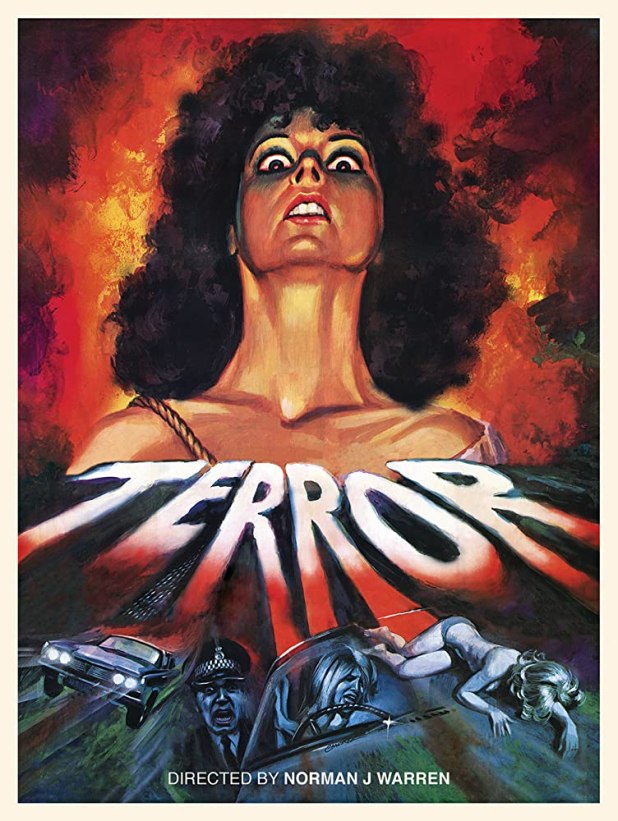
Norman J. Warren is the kind of director that knows exactly what you want. You aren’t coming to one of his movies to learn some kind of life lesson or to go out to a salon and debate afterward. No, you’re here for all the reasons that you watch horror and exploitation movies. You want to be shocked, scared and stimulated.
What makes this one even better is that the script comes from David McGillivray, who also wrote Satan’s Slave for Warren and Frightmare, House of Whipcord, House of Mortal Sin and Schizo for Pete Walker. He is, to quote British writer Matthew Sweet, “the Truffaut of Smut.”
Also, if you’re watching this and are thinking, “Hey, Warren must have just seen Suspiria when he made this,” then yes, that’s exactly what happened.
The movie starts three hundred years ago, as we watch a witch named Mad Dolly about to be burned at the stake under the orders of Lord Garrick. She then calls on Satan to free her, setting an executioner on fire, a disembodied arm to kill Garrick and for her to rush through the Garrick house with a sword, which she uses to chop the head off his wife before cursing their descendants.
Like I said, Warren knows exactly what you want. That beginning pretty much has everything I watch movies for.
What we’ve just seen is a movie made by director James Garrick — yes, a descendent who lives in the very same house that we’ve seen and for some reason has decided to own the sword of Mad Dolly — and he’s previewing it for his friends and his cousin, Ann. Of course, he also has a mesmerist put her under a spell and she nearly kills him.
This being a Warren movie, of course Ann works at a strip club. And certainly she’s going to be stalked by all manner of ruffians, including Peter Mayhem outside of his Chewbacca costume.
This unleashes a wave of artful violence, including panes of glass chopping off heads, stabbings in the woods, perverts dropped onto spikes, lamps crushing directors and so much more. And the end, well, it’s absolutely bonkers, with levitating cars, more impalings and Mad Dolly’s sword getting used to its fullest power.
As for the Argento inspiration, Warren has claimed that he saw that movie as something freeing, telling Sense of Cinema, “It was just liberating in that you could suddenly get away with doing whatever you liked.”
Since making Bloody New Year, Warren has been promising a sequel to this movie that would be about music and dancers. I hope it happens, because I kind of love this ridiculous movie.
ABOUT THE AUTHOR: Jennifer Upton is an American (non-werewolf) writer/editor in London. She currently works as a ghostwriter of personal memoirs for Story Terrace London and writes for several blogs on topics as diverse as film history, punk rock, women’s issues, and international politics. For links to her work, please visit https://www.jennuptonwriter.com or send her a Tweet @Jennxldn
I knew very little about this film when I chose to write about it. I knew even less about director Norman J. Warren. Terror, was produced and released independently in the United Kingdom. It starts out as a standard witch’s revenge film, with an opening sequence set 300 years in the past.
In the present, the witch returns in spirit to take revenge on the ancestors of her executioners. Not a new premise at all. Until the stalk-and-slash sequences begin. “Okay,” I thought, “So, it’s a witch movie that’s also a slasher movie.” Then I began to notice small clues both within the story and visually as to the creative intentions of Mr. Warren. The red herring eccentric characters (both male and female) that might or might not be the killer. The soft purple and green gel lights that draw the eye away from the primary action. The close-ups of mascara-clad eyeballs and gory murders where the victims bleed a hue of red patented by the Crayola corporation. The electronic musical score. A torrential downpour with drenched characters bathed in blue and white light. POV shots of the killer’s knife moving relentless towards its prey. A finale that comes out of nowhere and leaves no closure for the audience. Sound familiar?
Released in 1978 at the beginning of the American slasher craze ushered in by the success of John Carpenter’s Halloween, Terror owes more to the Italian Giallo thrillers than any stalk-and-slash offering. A quick search on internet confirmed my suspicions. Warren was a big fan of Dario Argento’s Suspiria, released one year prior to Terror.
While not a complete rip-off by any means, Warren manages to inject his own style into what is ultimately a wildly entertaining film. It’s much more grounded in terms of acting and story than anything Argento or Bava ever made, making it much more “British” in tone. While the Italians are much more given to fits of artistic abandon, with very little attention paid to story, most British directors – even the most creative ones like Ken Russell or Michael Reeves – never stray too far outside the bleak reality of Great Britain as a backdrop and generally adhere to a three-act structure. The acting is solid and the story engaging. Terror gets the point quite quickly in terms of action. There’s never a dull moment. Eagle-eyed genre-fans will likely feel the same warm fuzzies I got when I noticed posters for both Warren’s own Satan’s Slave (1976) and Bo Arne Vibenius’s Thriller: A Cruel Picture (1973) in the background of one scene. A scene very clearly shot in the film’s actual production office.
By combining elements of classic British period horror and Italian Giallo, Warren has done what no British director had done before or possibly since. Terror could be considered the first and only true British Giallo. The fact that it was all shot in real locations (including a BDSM strip club) on a shoestring budget makes it all the more impressive. I look forward to exploring more of Mr. Warren’s work. Anyone who apes the Italian masters while still managing to make a movie that feels fresh deserves further scrutiny.
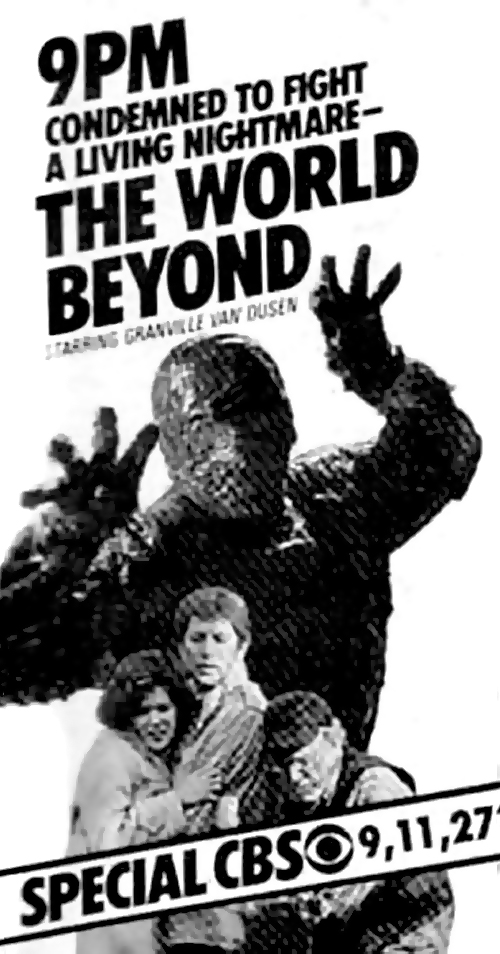
If you don’t get your pilot greenlit the first time — I’m looking at you, The World of Darkness— try again with another take at sports writer Paul Taylor (Granville Van Dusen), who died for 2 minutes and 37 seconds, which gives him the power to hear the voices of ghosts.
This has brought him to New England, where a golem has been attacking people. A golem of all things!
JoBeth Williams is somehow in this, but try as they may, CBS could not get anyone to want this to be a full-time series. If they had, it would have aired on Friday or Saturday and died a quick death. Such was the way of pre-The X-Files series. I can name so many — The Man From Atlantis, Misfits of Science, Automan, Manimal, The Powers of Matthew Star, The Phoenix, Battlestar Galactica, Galactica ’80, The Highwayman, Gemini Man and many, many more. I watched them all and would bemoan the fact that they never could last.
This was created and written by Art Wallace, who developed Dark Shadows with Dan Curtis. He also wrote the TV movie She Waits and episodes of the Planet of the Apes series that were made into the European films Forgotten City of the Planet of the Apes and Back to the Planet of the Apes.It was directed by Noel Black, who made Pretty Poison and Private School, yet mostly directed television programs.
Speaking of TV Guide, Barnard Hughes — grandpa from The Lost Boys — is in this!
We’re reviewing both of these TV movies side-by-side as result of their basis in the December 1972 crash in the Florida Everglades near the Miami International Airport of Eastern Flight 401 scheduled from New York JFK to Miami. The flight ended with 101 fatalities: the pilots and flight engineer, two of the 10 flight attendants, and 96 of 163 passengers; 75 passengers and crew survived. The crash was documented in the national best-selling paperback Crash (1977) by Rob and Sarah Elder. The supernatural aftermath of the crash was documented in the equally popular The Ghost of Flight 401 (1976) by John G. Fuller.
Paramount and Universal Studios quickly adapted the properties into TV movies: Paramount Television produced Crash (1978), aka The Crash of Flight 401 in its video shelf life, for ABC-TV. Universal Studios optioned the supernatural tales and retained Fuller’s book title for their NBC-TV movie.
Barry Shear (Madam Sin) directs The Crash of Flight 401 with William Shatner starring as National Transportation Safety Board Investigator Carl Tobias (purely narrative; not a factual character), under pressure to exonerate Lockheed, the manufacturer of the wide-body L-1011. Eddie Albert (TV’s Green Acres, the POTUS in Dreamscape) and Lane Smith (District Attorney Jim Trotter in My Cousin Vinnie) star as the surviving Eastern Airlines’ captain and flight engineer under investigation for causing the crash. The passengers and FAA personnel read as a who’s who of ’70s television: Adrienne Barbeau (who returned to the passenger cabin in the 2020 horror-parody Exorcism at 60,000 Feet), Lorraine Gary (Jaws), Christopher Connelly (Raiders of Atlantis), Ron Glass (TV’s Barney Miller), Ed Nelson (Roger Corman’s Rock All Night and Night of the Blood Beast), and Joe Silver (Rabid).
The late Steven Hilliard Stern (This Park is Mine) directs The Ghost of Flight 401, a tale concerned with the ethereal sightings of pilots Robert Loft and Don Repo on other planes that had salvage parts from the wreckage. Ernest Borgnine stars as flight engineer Dom Cimoli alongside Russell Johnson (TV’s Gilligan’s Island) as Captain Loft; Gary Lockwood (of the TV Movie Earth II) is the FAA investigator on the case. The rest of the cast features a young Kim Basinger with a when-you-see-’em-you-know-’em TV and feature-film character actor feast of Robert F. Lyons, Allan Miller, Alan Oppehheimer (a quickly gone-and-replaced Six Million Dollar Man TV movie cast member), Eugene Roche, and Hal Holbrook’s then wife, Carol Eve Rosen.
As is the case with all TV movies of the ’70s, while they’re up against the budget, the production values are high and — according to the comments of IMBb users involved in and experienced both incidents as airline industry workers — are technically accurate. The acting, of course, is excellent across all quarters.
Barry Shears’s 80-plus credits, which began in the early ’50s, were mostly in episodic TV, Tarzan and Police Woman in particular. His dozen-plus TV Movies include Power (1980; Joe Don Baker as Jimmy Hoffa), Undercover with the KKK (1979; a true story about an FBI infiltrator), and Strike Force (1975; with an early Richard Gere in a cop vs. drug dealer drama).
Other works in Stern’s superior TV movie oeuvre (on U.S. TV and cable; in Canada, they ran as theatrical features) are the James Brolin-starring The Ambush Murders (1982), the pre-stardom Tom Hanks-starring Mazes and Monsters (1982), and the Ned Beatty-starring (Ed and His Dead Mother) Hostage Flight (1982).
You can watch The Crash of Flight 401 and The Ghost of Flight 401 courtesy of You Tube. In addition to ABC and NBC airing both of these fact-based airline movies, ABC also broadcast the adventure-drama SST Death Flight, while NBC took the subject matter into a sci-fi turn with The Disappearance of Flight 412; CBS-TV broadcast the horror-fantasy The Horror at 37.000 Feet, which also starred William Shatner. We’ve also reviewed all of the theatrical forefathers that inspired the “Big Three” TV Networks’ airline telefilms with our “Airport: Watch the Series” featurette.
We reviewed a gaggle of airline disaster TV movies this week, so be sure to check out our “Airline Disasters TV Movie Round Up” feature with links to all of the reviews.
About the Author: You can learn more about the writings of R.D Francis on Facebook.He also writes for B&S About Movies.
You know how we root for the self-made filmmaker at B&S About Movies, with backyard guys like Andy Milligan and Don Dohler. (Without their 16-to-35mm drive-in romps, there’d be no SOV ’80s*, so I always lump them into that brick and mortar store era, especially when the first time most seen Dohler’s work — or Milligan’s for that matter — was on home video.) So while stuffy Leonard Maltin-styled critics catalog their filmpedia scoffs at Dohler’s “gripping sci-fi terror from beyond,” we, the staff of B&S About Movies appreciate Dohler’s debut film for what it is: a fun retro-romp from the ’50s “Golden Age of Horror.”
Considering Dohler began as an underground magazine publisher in the early ’60s at the age of 15 with the Mad Magazine-inspired WILD and the mid-60s filmmaking magazine Cinemagic (that was bought out by Starlog in 1979), his transitioning into producing his own films was a logical, natural progression.
Upon first watching the opening scene of two people in car in a remote, rural area being attacked by an alien creature, it’s obvious George Romero’s Night of the Living Dead is a sign post in Dohler’s creation. However, with only $3,500 to spend, Dohler couldn’t afford to shoot in graveyards and create zombie hoards: so he gave us a tale inspired by ’50s sci-fi films, such as The Thing from Another World.
If you’ve seen — or read our previous reviews for Dohler’s third and fourth films (the zombie-slasher hybrid Fiend from 1980 was his second) — Nightbeast and The Galaxy Invader, you know that an insect-esque monster is on the loose in “Perry Hill” (natch). The mayhem is triggered when a (character expositional) spaceship containing specimens for an intergalactic zoo crashes on Earth and lets loose its galactic menagerie: an Inferbyce (the aforementioned insect alien), a Zagatile (a giant furry beast with funky legs) and a Lemmoid (a ghostly like lizard that sucks energy from other creatures).
Baltimore’s’ favorite alien is back in the 2001 sequel.
And I ask you: Did Speilberg watch this? I wonder, because we have a local sheriff besieged by the backwood (in lieu of sandy Amity Island) town mayor to find what’s causing the killings (not a shark) and to “keep a lid on it” because it’ll jeopardize the nearby construction of a multimillion-dollar amusement park that’ll boost the local economy.
The reference to Romero’s zombie classic — and our calling out a minor influence of Jack H. Harris’s Equinox — isn’t a critical misnomer (especially when you watch the ending and recall Duane Jones’s sad fate in Romero’s tale). While this Dohler debut received a widespread theatrical released in the post-Alien/Star Wars/Close Encounters of the Third Kind marketplace in May 1978, The Alien Factor was completed in 1972 — and had a slight, regional drive-in release around the Baltimore area in 1976.
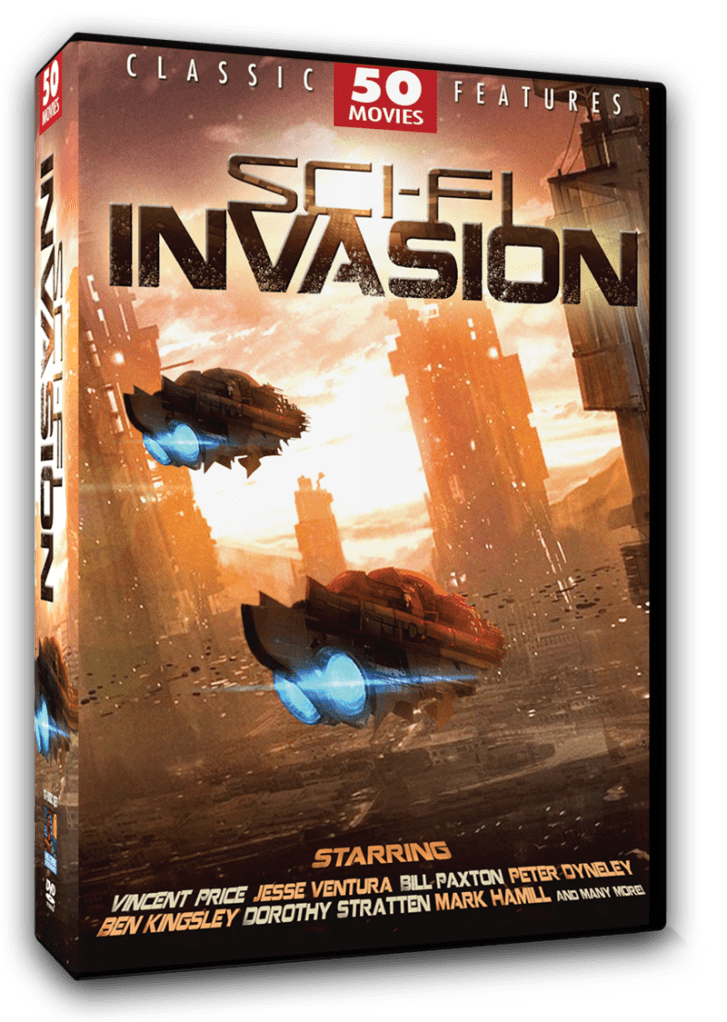
For a film shot for under $4,000 bucks with local talent, a limited crew, backyard without-permit locales, and admittedly pretty decent process shots and practical in-camera effect, this — as with any Dohler flick — is worth the watch. You can watch The Alien Factor on You Tube and enjoy it as part of the Mill Creek Sci-Fi Invasion Box Set.
And did you know there’s a rock ‘n’ roll connection to this Dohler bit o’ nostalgia? Yep! Be sure to check out Sam’s take as he reviewed the film for the 24th “At the Gig” day of the 2020 Scarecrow Psychotronic Challenge.
* Click through to our SOV tag to populate our ever-growing list of shot-on-video movies.
About the Author: You can learn more about the writings of R.D Francis on Facebook.He also writes for B&S About Movies.
Paul Andolina, whose writes the site Wrestling with Film, is in charge today. Beyond loving wrestling, he also knows a ton about Russian and lucha films (and he even speaks pretty good Spanish, so we hear!).
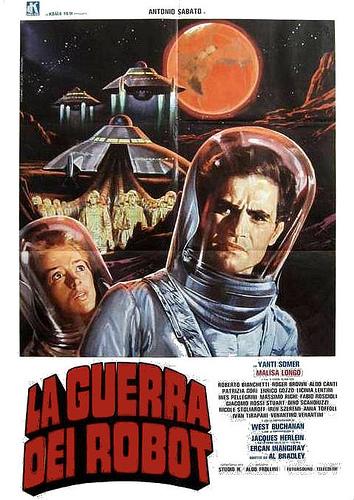
War of the Robots — originally titled La Guerra dei Robot — is an Italian science fiction film released in 1978 most likely to cash in on the franchises of both Star Trek and Star Wars. I’d like to imagine this film came about when Alfonso Brecia and Aldo Crudo were as high as cucuzzi (Italian squash) are long which just so happens to be extremely.
I could not ask for a more crazy colored sci-fi romp than what this film offers. Female scientist Lois and male professor Carr are on the cusp of something extraordinary; they soon will be able to create any creature they want and make the first immortal man! However, their plans are cut short when a mysterious group of gold-clad humanoids attack and abduct them. It’s up to Lois’ lover Captain Boyd and crew to rescue them from their captors.
War of the Robots has a lot of twists and turns during its hour and thirty-nine minute runtime. There also is a cut of the film that is four minutes longer but the cut included on the Chilling Classics set is the shorter one.
When the crew finally gets to Lois and Dr. Carr it turns out nothing is what it seems at all. Louis is now an empress and Carr is mad with power over the gold-clad humanoids who turn out to be androids.The inhabitants of the planet Louis and Carr are taken to also happen to be wrinkly old monster folks. The latter half of the movie turns into a whole scale war. Battle is waged in caves, palaces, command decks and even in starship space battles.
This movie has a bit of everything; it’s got phasers, it’s got laser swords, it’s got mutants who live on irradiated asteroids but most importantly it has West Buchanan! West Buchanan is an American actor who starred in his fair share of Italian genre films. It just so happens that West Buchanan looks like he could be Harley Race’s twin brother. Harley Race is a wrestler who has worked for NWA, WWE, and WCW. I was really surprised how similar they look. Now the reason I bring that up is that I’m a collector and avid watcher of films that star professional wrestlers. That’s not the sole reason I enjoy this film so much it’s not the greatest film by any means but those who like campy science fiction films should find plenty to enjoy. I think most folks will especially like the scenes where androids are sliced in half by laser swords.
I must also point out the amazing score is by Marcello Giombini who also scored some of the Emmanuelle films, Sabata and even Antropophagus. If you have the chance to watch this I do recommend it. Apparently it is part of a series of science fiction films by director Alfonso Brecia, The films that precede it are War of the Planets, Battle of the Stars and it is followed by Star Odyssey. I hope I stumble across the other films as I truly did enjoy this film.
You can watch this one of the many uploads of War of the Robots on You Tube.
They might say that this was directed by Roy Garrett, but that’s really the Americanized name for Mario Gariazzo, who directed Enter the Devil, AKA The Sexorcist, AKA The Eerie Midnight Horror Show, which is perhaps the scummiest of all Italian sexualized ripoffs of The Exorcist (and also the most awesome). He also made Play Motel, which is a giallo complete with hardcore inserts.
If you’re reading this and suddenly got a little flush, you’re my kind of people. I feel the same way about as I am about to watch Gariazzo make the first of two Close Encounters of the Third Kind cash-in films that he’d direct in 1978 (the other is Very Close Encounters of the Fourth Kind, in which three nerds dress up like bondage-loving aliens to get their astronomy teacher into bed.
Peter Collins (Franco Garofalo, The Return of the Exorcist) is a photographer who cuts a session short with model Karin Hale (Sherry Buchanan, who was Emanuelle in Emanuelle and Joanna and is also in The Last House on the Beach, Dr. Butcher M.D. and played Belle Starr in Escape from Galaxy 3) after they both start to feel like they were being watched. When he develops the photos, he discovers evidence of alien creatures, which puts them both into a nascent X-Files conspiracy plot.
This being an Italian film, you need some more star power, so Monica Stiles is played by Nathalie Delon (A Whisper In the Dark, Bluebeard; she was considered one of the most beautiful women in the world at one point and dated Richard Burton and Eddie Fisher after both divorced Elizabeth Taylor, which is pretty odd when you think about it), Robert Hoffman (Naked Girl Killed in the Park, Death Carries a Cane) is in this as Tony Harris and Martin Balsam appears as Inspector Jim Grant. And The Silencers, a government organization, soon are on his trail, led by Sergio Rossi, who was the narrator of Africa Blood and Guts, who has Mario Novelli (the engineer from Beyond the Door III/Amok Train and Tango from Fulci’s Warriors of the Year 2072) and George Ardisson (Theseus from Hercules In the Haunted World) under his command.
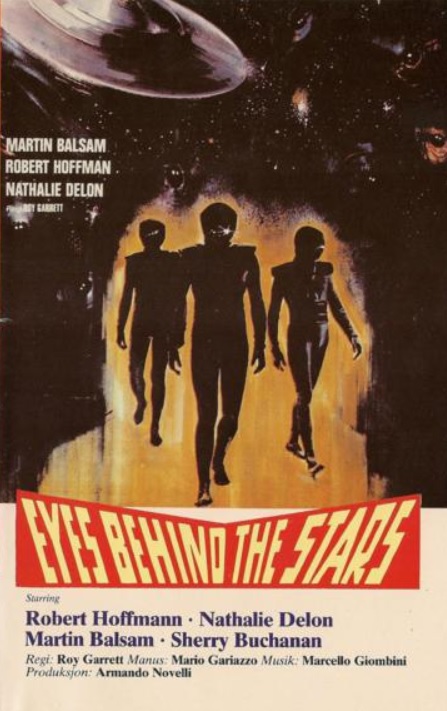
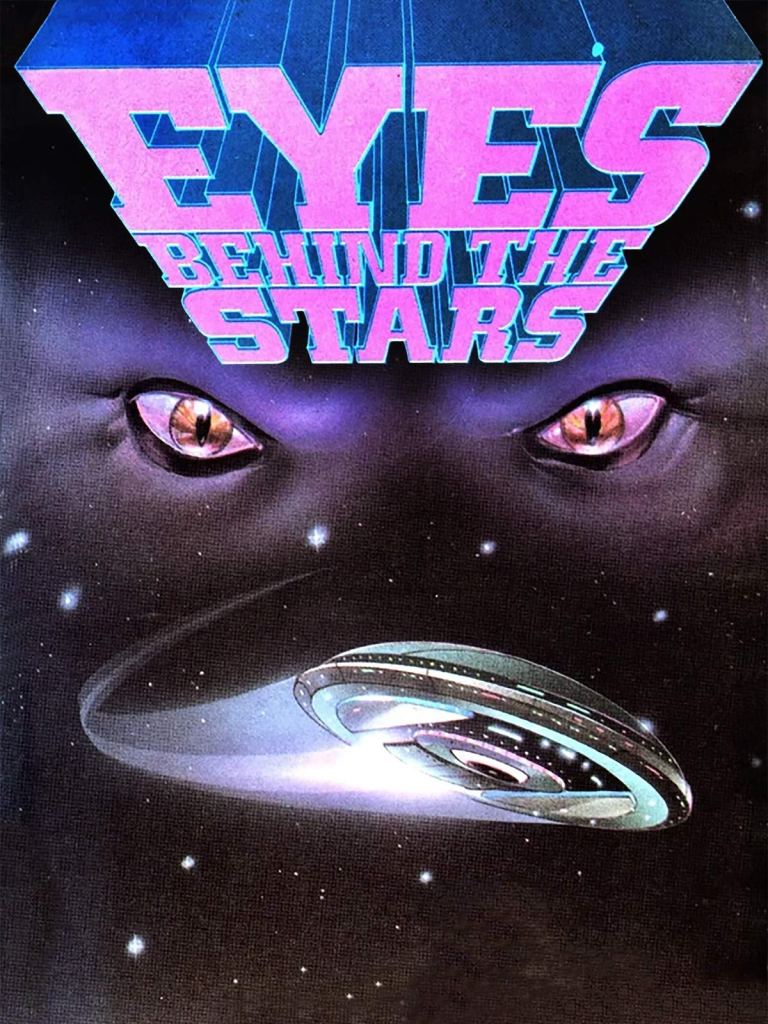
The poster and giallo sounding title of this movie have always placed it on my watchlist and that’s why I love Mill Creek month. It’s an opportunity to finally get to watch movies that I keep saying, “I need to get to that” and then for some reason always overlook.
It has aliens that wear full-body suits with mylar faces and the cleanest space ship you’ve ever seen and the ability to blind dogs, as well as Hoffman and Stiles pretty much playing Mulder and Scully* 15 years before the show even existed while also ripping off Gerry Anderson’s UFO, a soundtrack of drones and buzzes, plenty of alien point of view shots and a movie that switches protagonists midway through, which is ironic when you consider that Martin Balsam is in this.**
This movie has more twists and turns than any giallo and isn’t afraid to change gears quickly, going from alien movie to conspiracy tale to bringing in psychic and then remembering that it was made in the 1970’s and the rule that all seventies science fiction must have a downer ending.
Plenty of the reviews that I’ve read for this movie hate it. Perhaps they haven’t watched hundreds of Italian genre cinema and want everything to be paced normally and make sense. For those of you who have given up on movies that are sane and are thrilled by warming up leftovers from another era that don’t always taste as good as they once did, you’re going to really love this one.
Everybody smokes. Everybody punches one another in the face. The aliens are barely in it. The soundtrack is atonal and annoying. These are things that would chase off the hardiest of film watchers. To me, it’s the bread and butter that I dip into the sauce after devouring the cinematic pasta.
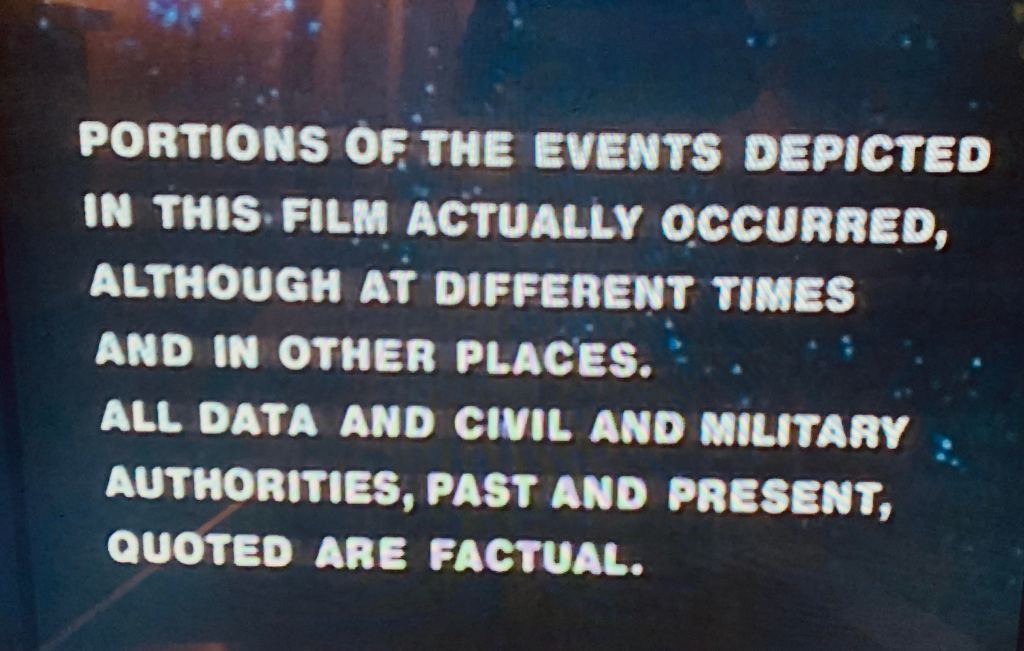
To make things that much better, it ends with a “this really happened” title card. I didn’t know I could be so happy.
*Ardisson is pretty much playing the Cigarette Smoking Man, when you come to think of it.
**Sometimes when you explain the joke it is no longer funny. However, for the non-watchers of ten movies a day, this is the exact same thing that happens in the movie that Balsam is best known for, Alfred Hitchcock’s Psycho.
31. I REMEMBER HALLOWEEN: Something from the Halloween franchise or anything with trick or treating in it. You did it! Another successful challenge achieved. Now you can stuff yourself with candy and listen to The Misfits.
Last night, Becca and I headed out to the Riverside Drive-In to see a double feature of The Thing and the original Halloween. While it’s impossible to see it as if you’re seeing the movie for the first time — it’s so pervasive in nearly every facet of my life — I wanted to watch it and wonder, “Why does it continue to work so well?”
For me, the biggest reason why it works is that we actually care about the girls. Beyond just Laurie Strode, Annie Brackett and Lynda Van Der Klok feel like people we actually know. When the moments that The Shape menaces them occurs, we’re been with them for the good part of an hour. The film doesn’t rush into the murder and even takes its time — despite a spartan running time of 91 minutes that feels way shorter — to get there, doing everything in its power to tell us that whomever Michael Myers once was, now he has become an inhuman killing machine that everyone should fear.
Credit for that is due to not just Carpenter and Deborah Hill’s script, but for getting Donald Pleasence on board as Dr. Loomis. When he becomes frightened of the killer, speaking in hushed tones of “the blackest eyes; the devil’s eyes” we know that there’s not going to be any stopping this killing machine.
The moments that have become tropes today, like Michael sitting back up when he should be dead, the ending that isn’t really an ending, the teens getting slaughtered by a killing machine — they weren’t necessarily invented here. But they were perfected and commercialized by this film. I’d site films like A Bay of Blood, Peeping Tom, Psycho and Black Christmas* as proto-slashers** that set up the form. But this is where every studio in Hollywood — and around the world — saw that you can take a concept, throw some effects at it and make a lot of money. The results vary, of course.
Not many of them have the mind and soundtrack wizardry of Carpenter on hand, nor the eye of Dean Cundy guiding the camera.
The little moments of this movie are why I love it so much. The moments where a hedge of bushes holds more menace than every horror movie that will come out for the next five years. The usage of “Don’t Fear the Reaper,” which is in itself a strange song, one of the few pop songs that I can think of that outwardly worships death. The casual way that Annie smokes a joint versus the difficulty Laurie has with it. The perfect ending, as the body of The Shape is gone but his presence hangs upon every street of Haddonfield. And the knowledge that every time leaves blow across the screen, Carpenter and his crew had to gather them up in plastic bags, not wanting to waste the rare fall foliage that they’d brought to make this midwestern movie in the middle of California.
Watching this again for what has to be a hundredth or more time on a drive-in screen under a full moon, the night before Halloween itself, it just felt right. How odd that a grubby little movie that was untraditionally released would find itself a tradition, something that people like me turn to for comfort in uncertain times? Halloween has gone from a movie I feared — it kept my father awake all night it unsettled him so much — to a film my wife uses to chill out and relax to.
* Indeed, in a 2005 interview, Black Christmas director Bob Clark stated that Carpenter had asked, “Well what would you do if you did do a sequel?” Clarks’s answer? “I said it would be the next year and the guy would have actually been caught, escape from a mental institution, go back to the house and they would start all over again. And I would call it Halloween. The truth is John didn’t copy Black Christmas, he wrote a script, directed the script, did the casting. Halloween is his movie and besides, the script came to him already titled anyway. He liked Black Christmas and may have been influenced by it, but in no way did John Carpenter copy the idea. Fifteen other people at that time had thought to do a movie called Halloween but the script came to John with that title on it.”
**I realize that The Texas Chainsaw Massacre also pre-dates this film, but that thing is a force of nature all its own. Nobody can even come close to making a movie like it, not even Tobe Hooper. It was lightning in a bottle, shot in an abattior smelling shack in the dead heat of the Texas sun, as close to a perfect horror film as you can find.







 B&S About Movies
You must be logged in to post a comment.