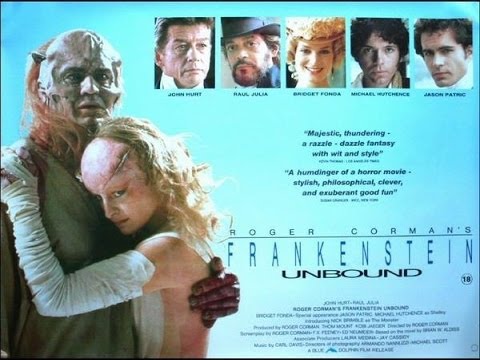
Three Brian Aldis novels have been made into movies. Brothers of the Head, AI (yes, the Kubrick started and Spielberg ended movie) and this one, which was the first movie that Roger Corman had directed for two decades.
This is probably the best cast that Corman ever had, with John Hurt as the future scientist, Raul Julia as Dr. Frankenstein, Bridget Fonda as Mary Shelley, INXS singer Michael Hutchence as Percy Shelley, Nick Brimble as Frankenstein’s Monster and Jason Patric as Lord Byron.
So it stands to reason that he should make a movie where a man goes back in time — thanks to a military weapon and a computer car — to the time of the Shelleys and the real monster. Or monsters.
This is also the last movie Corman directed. It’s also the only movie where a future man faxes Mary Shelley her novel that she’s written before she writes it.
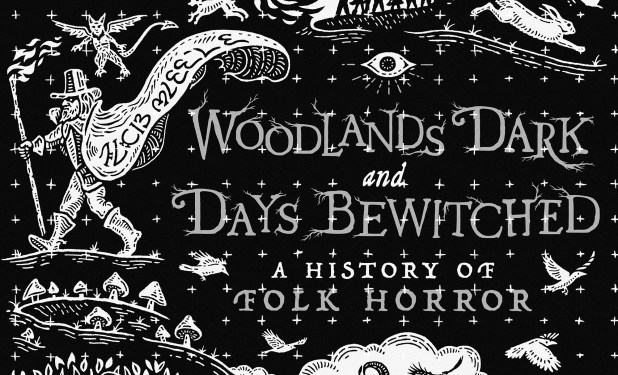
If you have even a passing interest in the world of folk horror, Kier-La Janisse’s exhaustive exploration — which clocks in at 3 hours and 14 minutes and could have been a thousand more if I had my way — is the film of a lifetime. The ‘unholy trinity’ that launched this trend on to screens — Michael Reeves’ Witchfinder General, Piers Haggard’s Blood on Satan’s Claw and Robin Hardy’s The Wicker Man — are not just names, but significant milestones in the history of folk horror. This movie is quite literally the last word in what folk horror is, what it means and how it’s still part of the world of cinema today, perhaps more than ever before.
With more than fifty significant names in the world of horror and horror writing — everyone from Amanda Reyes, Piers Haggard, Adam Scovell, Jeremy Dyson Samm Deighan, Kat Ellinger, Robert Eggars, Ian Oglivy, Kevin Kölsch, Dennis Widmyer and around forty more voices appear with great insights — there’s never been a more well-rounded approach to tackling a movie genre within a genre. This feels like the kind of film that I’ll be coming back to again and again.
Beyond the expected anchors of the genre, I was so excited to see lesser-known films get their due, like Alison’s Birthday (which is on the gigantic All the Haunts Be Ours box set that Severin is releasing), beDevil, Dark August, Eyes of Fire (also being released by Severin), Grim Prarie Tales, Lemora (which seemingly has footage from the mysterious blu ray of the film that never materialized) and Zeder.
This is the kind of material you want to pause, write down, make notes on, and keep updating your Letterboxd while watching it. This isn’t just a movie about films. This is a true celebration of the magical wonder hidden within the flickering image, an exploration of a genre of all the dark old things and a journey through how each country documents the unknown through their media.
There aren’t enough stars in the firmament out of ten to rate this one. You can preorder this film from Severin now or watch it on Shudder. You can also visit the film’s official site.
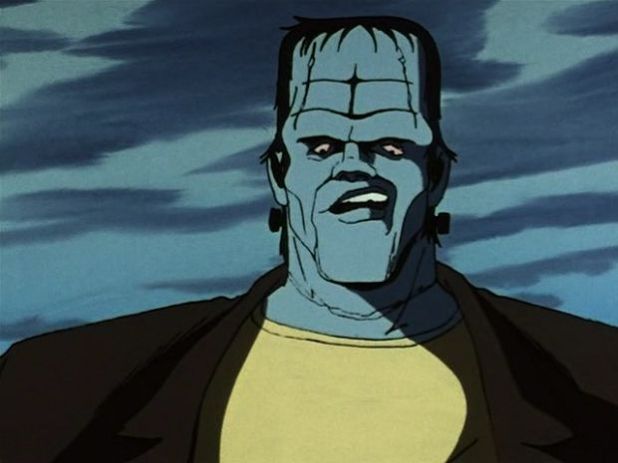
Along with Dracula: Sovereign of the Damned, Toei made two animated movies for Marvel and of all the properties they could have used, they made Dracula and Frankenstein’s Monsters movies. Released here as Monster of Frankenstein and Frankenstein Legend of Terror in 1984, this was based on the Marvel Comic Monster of Frankenstein, which ran 18 issues. In case you wondered, that monster is now in SHIELD’s monstrous version of the Howling Commandos.
Much like so many Japanese cartoons made for kids, this is totally way more violent than our country would be ready for. It starts with the monster falling off a cliff and Dr. Frankenstein trying to keep his family ahead of his crimes and dealing with a blackmail attempt by his assistant, making the doctor paranoid and having non-stop nightmares about the pure evil he has created.
Meanwhile, the blind man from the Universal movies is recast as Dr. Frankenstein’s father, who adopts the creature along with his granddaughter Emily and names him Franken. As for Victor, he wants to shoot the monster at the same time the monster is learning about God, which ends pretty quickly when her mother dies in a fire and Emily blames him.
Have you ever seen a movie — much less an animated movie — where Frankenstein’s Monster has a hole in his hand and related to Jesus, who also has one? Or one that ends with the creature committing suicide at the same time as his creator? And again, let me state, this is a cartoon.
Charles B. Griffith — the Quentin Tarantino-named “Father of Redneck Cinema” — is credited with 29 movies but he probably wrote plenty more. From 1955 to 1961, he was Roger Corman’s main screenwriter, starting with two unfilmed Westerns (Three Bright Bannersand Hangtown) and moving on to an uncredited rewrite on It Conquered the World and his first credit Gunslinger. He went on to make Not of This Earth, The Flesh and the Spur, The Undead, Teenage Doll, Naked Paradise, Attack of the Crab Monsters and Rock All Night before making two movies — Ghost of the China Sea and Forbidden Island — for Columbia (which didn’t go well).
Griffith reunited with Corman after and really went into the prime of his career of making movies, writing stuff like Beast from the Haunted Cave, Ski Troop Attack, The Little Shop of Horrors, A Bucket of Blood, Creature from the Haunted Sea and many, many more.
His films rank among some of my favorites of all time — The Wild Angels, Death Race 2000, rewrites on Barbarella — and he went on to direct, act and — as all must in the 80s — work for Cannon Films.
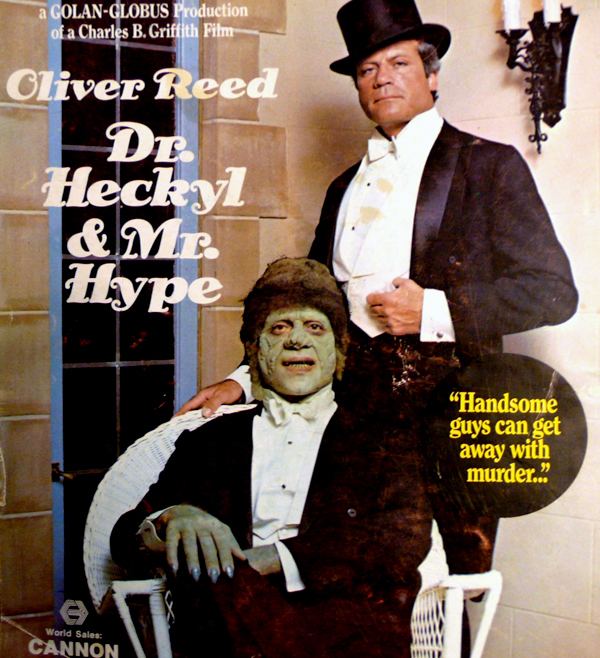
Beyond a script Cannon tried for years to get made — Oy Vey, My Son Is Gay — Griffith made this movie, which started as part of a series of joke movie titles that he shared with Francis Ford Coppola at a Christmas party. He showed them to Menahem Golan — half of all things Cannon — and after writing The Happy Hooker Goes to Washington didn’t work out, Griffith made up a story to go with the title, all about a hippie who creates a drug that makes anyone that takes it into an ad exec. Golan bought it, as long as the ugly guy became the good guy.
In typical Cannon fashion, Griffith had three weeks to write and do preproduction, four weeks to shoot and two weeks to edit. Then, as always, the rug was pulled out Cannon style: They wanted Oliver Reed. Great actor. Maybe not a comedic actor.
Griffith told Sense of Cinema, “Heckyl and Hype could have been a very good picture. Oliver was great as Heckyl. Wonderful. He played the part with a kind of New York accent and everything, but when he was Hype, he didn’t know how to do it… Reed played Hype as Oliver Reed, slow and ponderous.”
It’s a good looking movie, but man, it’s a movie that has no idea what it wants to be. Kind of like Cannon at the time, which had just been bought by two Israeli madmen who were about to take the small New York studio and make it into something so much bigger than it was supposed to be. But that’s a story for another time. Check back in March.
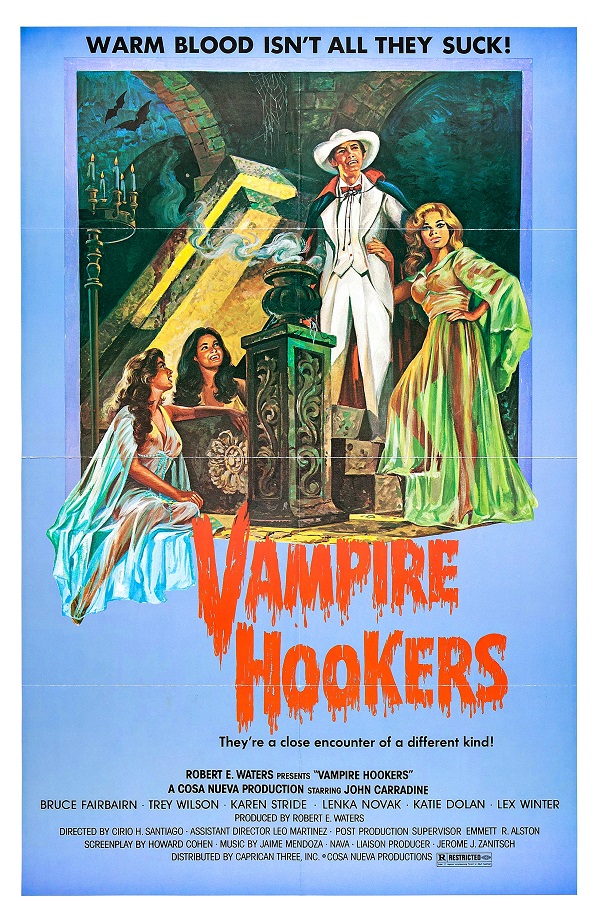
Cemetery Girls, Vampire Hookers of Horror, Night of the Bloodsuckers, Sensuous Vampires and Twice Bitten. Whatever name we give this co-production of the Philippines and the United States — directed by the infamous Cirio H. Santiago — we can all appreciate that John Carradine plays the vampire Richmond Reed, who has hired a gang of women to draw in new blood for his veins.
Suzy (Lenka Novak, who made her first living as a nude model in Europe, appeared in Mayfair and had a brief career in films like Moonshine County Expressand as one of the naked women in “Catholic High School Girls in Trouble” in The Kentucky Fried Movie), Cherish (Karen Stride, Three-Way Weekend) and Marcy (Katie Dolan, one and done with this movie) are the girls and yeah, you can see that Richmond Reed is a man with a great plan.
But how many Canadian vampires do you know? I mean, outside of the post-modern ones sex organs in their armpits or living in strange apartment complexes?
Then again, thanks to Rabid and Marilyn Chambers, the erotic and the vampiric and the Canadian have gone hand in gland before, correct?
A woman and her boyfriend find an old diary at the mansion home of her family and read about how Dr. Fallatingstein created Frank, the man from a lab to satisfy all of her womanly needs but ended up with an impotent monster. So she calls up her cousin Countess Sexcula to try and Emanuelle that sewn together lab man and transform him into the lover she needs.
Nothing works. Romance, hypnotism, strippers, nothing. So Sexcula has to harvest some sex cells — look, this movie isn’t based on science and don’t expect it to be — and then finally he gets his mojo because the movie is about to end, just as Secula is chased by Orgie the lab assistance and the ape that they keep in the lab.
That whole chapel sex scene at the end feels like an insert from another movie and is some of the lone sex in the film, if that’s what you’re looking for. I mean, you’re not going to find anything scary. Strangely enough, the 1985 movie Overnight is about a Czech director named Vladmir Jezda making a porn that has a sex robot unable to get it up for Countess Sexcula.
Sexcua was lost for awhile, it was found and perhaps it should have stayed buried. But how many movies combine porno chic with gothic Universal horror? Not enough.
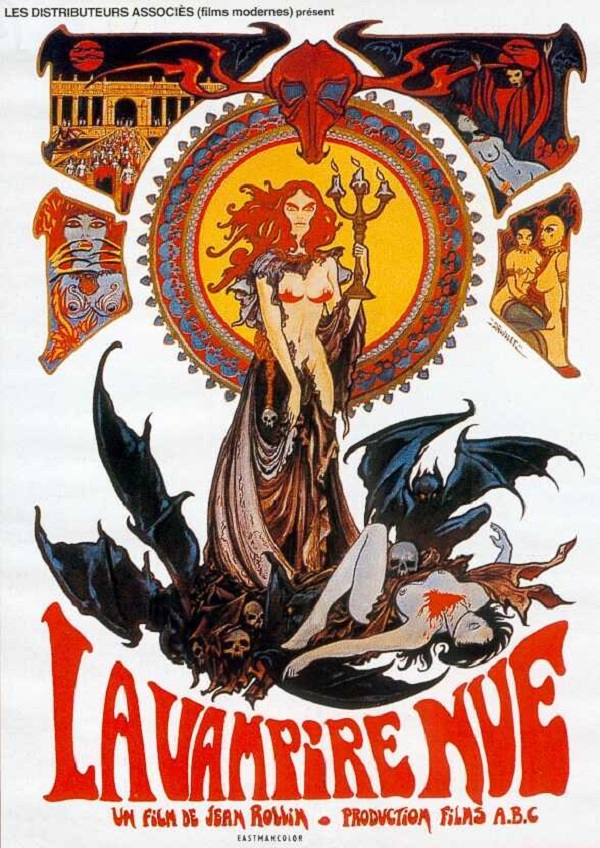
Either you get into the druggy vibe of Jean Rollin or you think it’s the most boring filmmaking ever. But me, well, I’m nodding off and living inside the languid pace of his films and looking for those moments when masked maniacs wander the streets and indiscriminately murder people and the film doesn’t really feel like cluing you into what’s going on because why should it? You have to earn it.
I mean, what if you went to a party where a woman’s photo is projected on a screen and she kills herself in front of the guests so that a strange woman in an orange nightgown can drink her blood and then your photo comes up next?
None of these things will ever happen to any of us. We’ll never have days where we don’t see the sunlight and realize we’re the first humans to be immortal. At least I don’t think we will. I mean, wouldn’t it be great? But then I wonder, would my acid reflux get bothered by certain types of blood?
I mean, the basic description of this movie says: “Wealthy and decadent industrialist Georges Radamante rules over a strange secret suicide cult and wants to achieve immortality by figuring out a way to share the biochemistry of a young mute orphaned vampire woman.”
If you don’t want to watch that, well, I don’t know what hope there is for you to experience magic.
Director Jim Wynorski made Roger Corman a bet: he could remake the 1957 film with the same budget and schedule thirty years later.
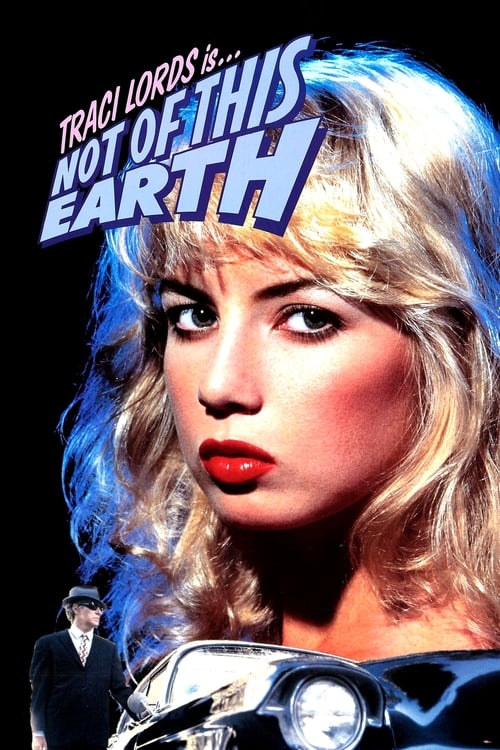
Luckily, he had a not-so-secret weapon. Let’s be honest: Traci Lords being in a Merchant-Ivory movie about malaria would make me watch that movie ten times in a row. Wyrnorski is a smart guy. After all, he told John McCarty in The Sleaze Merchants: Adventures in Exploitation Filmmaking from the ’50s to the ’90s, “While we were at an optical house doing some effects work for Big Bad Mama II, I came across an original print of the old Corman film. Kelli Maroney was there, and Raven, and we had a big hoot watching it. So I said “I think we could have a blast remaking this picture.” And they said “Well, who are you going to get to play the Beverly Garland part?” There were some newspapers lying around, and I saw a story in one of them about Traci Lords. So I said, “Let’s get Traci Lords!” She even looks a little bit like Beverly Garland.”
Lords, however, didn’t want to be found in the wake of the scandalous idea that she made adult films underage. But he convinced her to be in it and was surprised that she improved as an actress as the filming went on.
Traci plays Nadine Story, a nurse who soon gets hired to be the personal blood transfusion person for Mr. Johnson, who is really an alien from the planet Davanna. So yeah, it’s a vampire movie — and fits into the “Not-So-Classic Monsters” theme this week — while also being an alien movie.
To get the movie under budget, some scenes are directly lifted from other Corman movies, like a stalker from Hollywood Boulevardand a foggy scene of a woman being followed from Humanoids from the Deep.
This being a Wynorski movie, he filled it with plenty of gorgeous women. So look out for Rebecca Perle (Savage Streets), Becky LeBeau (Bubbles in the hot tub from Back to School; her voice is dubbed by Michelle Bauer), Roxanne Kernohan (Critters 2), Monique Gabrielle (61 magical films to choose from and I’ll pick Young Lady Chatterley II), Ava Cadell (Ava from the world of Andy Sidaris), Cynthia Thompson (Body Count), Kelli Maroney (Night of the Comet) and Kim Sill (AKA Kimberly Dawn, AKA Kim Dawson, star of a ton of movies you snuck watch on Cinemax in your puberty).
If you think there’s censorship in America today, well, let me tell you…after the comic book trials of the 1950s, in which Dr. Fredric Wertham’s book Seduction of the Innocent led to Congress having trials amidst the belief that comic books caused juvenile delinquency, the Comics Code Authority was born. Every comic needed the code and in order to keep offending comics like E.C. Comics’ Tales from the Crypt from ever rearing their ugly head again, vampires, werewolves, ghouls and zombies were banned. Comics couldn’t even use the words horror or terror in their titles. Even comic book writer Marv Wolfman’s last name was challenged!
It got so ridiculous that when Marvel used zombies in The Avengers, they had to call them zuvembies. They were still undead, they still acted like zombies, yet that spelled got them past the outdated Comics Code.
However, a 1971 provision to the Code stated the following: “Vampires, ghouls and werewolves are allowed when handled in the classic tradition such as Frankenstein, Dracula, and other high calibre literary works written by Edgar Allan Poe, Saki, Conan Doyle and other respected authors whose works are read in schools around the world.”
After the last appearances of Dracula, Frankenstein’s Monster and a werewolf as superheroes in a short-lived line of Dell Comics, comic publishers realized that they could make monster books and as the characters were in the public domain, they could create their own versions of some already beloved characters.
Marvel already had a “living vampire” in Morbius — yes, the same character who is getting his own movie — but the Dracula comic floundered at first with several different writers (Gerry Conway, who went from a Universal-inspired take with major input from editors Roy Thomas and Stan Lee to a Hammer take on the character in the two issues he wrote, followed by two issues by Archie Goodwin and two by Gardener Fox before the aforementioned Marv Wolfman came on board) before gaining traction. Gene Colan was the artist along with Tom Palmer on inks for most of the run, basing his Dracula on Jack Palance, who would end up getting the role in the Dan Curtis TV movie Dracula a year after Colan prophetically started drawing him as the King of the Vampires.
At its height, Tomb of Dracula also had two black and white titles, Dracula Lives! and Tomb of Dracula. Yet even after the series ended in August of 1979, the character would return to battle the X-Men.
Strangely enough, Marvel’s Dracula comic book has more of an honor than just being one of the first Marvel movies. It also introduced the character of Blade, who would be one of the first Marvel film successes in 1998.
In 1980, soon after the end of the series, Marvel’s deal with Toei led to this movie.
The Toei deal began when the CBS Spider-Man series — which only had 13 episodes in America and a few TV movies — became a big success in Japan. Toei, the makers of Kamen Rider, would be the partner to create Marvel-inspired series such as their own Japanese Spider-Man show that gave Japan their own webslinger in Takuya Yamashiro and his giant robot Leopardon.
Marvel also produced the Sentai — think Power Rangers shows Battle Fever J (with characters from multiple countries much like Captain America; Miss America on the show inspired American Chavez — according to this article on Inverse— and the crew even battled a Dracula robot), Denshi Sentai Denziman and Taiyo Sentai Sun Vulcan, which Stan Lee tried and failed to bring to America. Ironically, former Marvel producer Margaret Loesch ran Fox Kids in the 90s, which led to Marvel shows appearing on Fox, as well as a much later Super Sentai series, which was rebranded exactly as Lee had suggested by Saban Entertainment and called Mighty Morphin Power Rangers.
As part of the deal with Toei, two more movies got made: Kyoufu Densetsu Kaiki! Frankenstein and Yami no Teiō: Kyūketsuki Dorakyura orThe Emperor of Darkness: The Vampire Dracula.
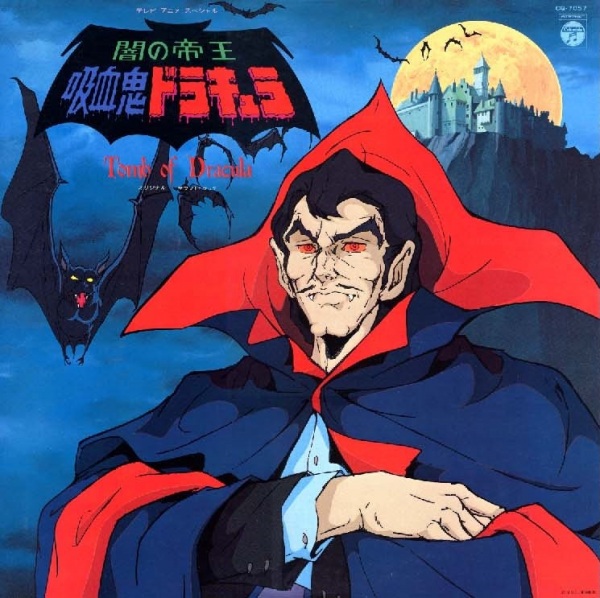
In 1983, Harmony Gold released this to American cable as Dracula Sovereign of the Damned. And wow, it’s something else.
The movie starts with no less gravitas than to show us how the universe was formed and the nature of juxtaposition — life and death, heat and cold, light and dark — began. Nowhere is that juxtaposition more felt than in the form of Dracula, who is both alive and dead.
Now making his home in Boston, after being hounded by multiple vampire hunters, Dracula soon interrupts a wedding between a virginal bride and Lucifer, stealing Dolores for his own, yet conflicted as to whether or not he should drink her blood. They end up having a son, Janus, who is killed by the cultists and Satan, but comes back as a being of pure light that also wants to kill his father. Meanwhile, Frank Drake, Hans Harker and Rachel Van Helsing are hunting down the vampire, wanting to end his life for good.
Can you fit more than 40 issues of a comic book into 90 minutes? Well, the makers of this movie sure gave it a try. At one point, Dracula even becomes human and walks the streets of Boston still wearing his cloak, but goes to get a hamburger. It’s also amazing just how much violence, Satanic moments and even nudity that this movie has. It’s also hilariously dubbed and the source material isn’t understood by the people making it, so it’s exactly everything that I want and need it to be.
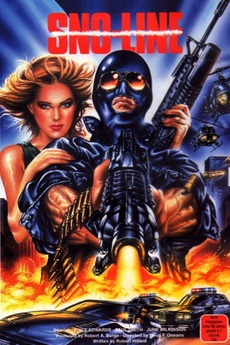
Also known as Cocaine Connection, Texas Snow-Line, Texas Godfather and The Milkman, this movie comes straight out of Beaumont, Texas. Sure, some talent has been imported, like Vince Edwards (Dr. Ben Casey!) who plays the kind of, sort of hero Steve King (nobody in this is the good guy), Paul Smith (Pieces, Bluto from Popeye) as a local crime boss, Phil Foster (Frank DeFazio from Laverne and Shirley) and June “The Bosom” Wilkinson (The Private Lives of Adam and Eve, Macumba Love) in her first movie in 25 years.
A snow line is a connection for cocaine between multiple cities, here Houston to El Paso, and King is a New York lawyer who has spent a year growing his business in the Lone Star state. All the coke gets moved through a dairy, so when you get milk, you get snow. But the whole story is super slow and there’s nobody to root for. But yeah, director Douglas F. O’Neons did his one and done movie here, working from a script by Robert Hilliard, who also wrote Valentine Magic on Love Island, Vasectomy: A Delicate Matter and shows up as an actor in Keaton’s Cop.
I mean, the poster is a million times better than the movie, but Paul Smith does go nuts and kill a gator, which is pretty much the high point of like ten movies, right?

 B&S About Movies