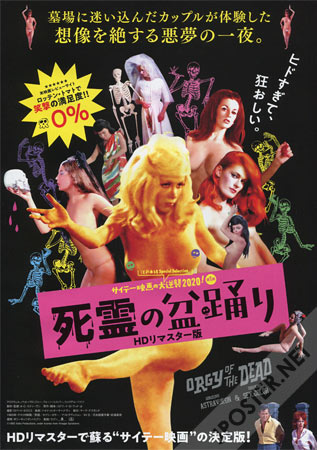
Orgy of the Dead (1965)

In addition to making 17 exploitation movies filled with sexual content, Stephen C. Apostolof was so religioys that he and several other Bulgarian immigrants founded St. George, the first Bulgarian Orthodox church in Los Angeles. The church had strong ties to Simeon II, the Bulgarian king in exile, and soon became a safe haven for Bulgarian anti-Communists and monarchists that came to settle in Los Angeles.

Yes, the same guy who made Suburbia Confidential

As for Orgy of the Dead, it’s not even a movie. I mean, it’s a movie, but by that I mean it’s just a series of scenes, like someone is throwing a bunch of reels on in the back of a smoke-filled Elk’s Club, but whatever collection of mid-60s sin films we’re watching have all been touched by the left hand path.

Then again, this movie could just stop after two men in loincloths open a coffin to reveal Criswell, who does what Criswell does best, saying “I am Criswell. For years, I have told the almost unbelievable, related the unreal and showed it to be more than a fact. Now I tell a tale of the threshold people, so astounding that some of you may faint. This is a story of those in the twilight time. Once human, now monsters, in a void between the living and the dead. Monsters to be pitied, monsters to be despised. A night with the ghouls, the ghouls reborn from the innermost depths of the world.”

This opening is similar to Ed Wood’s then-unreleased 1958 film Night of the Ghouls, which was the original name of this movie, as Wood didn’t think that movie would ever play anywhere. Criswell’s female companion, Ghoulita the Black Ghoul, was supposed to be Vampira, but ended up being played by Fawn Silver. Also, you may notice Criswell straining as he says his lines, as he needed glasses and was reading them from cue cards that he couldn’t see. At least he’s wearing the cape that Bela Lugosi wore in Abbott and Costello Meet Frankenstein.

Hey, why not some more Criswell facts? Like how his family owned he coffin that he emerges from and that he napped in it between takes? This would be his last role, after appearing in Plan 9 from Outer Space and Night of the Ghouls, so as always, he went for it.

Wood wrote this, as well as being the production manager, casting agent and the person holding the cue cards. He got paid $600 and by all accounts was continually passing out from being so drunk after stealing money and going to buy some cheap liquor.

What a story, I guess, as Bob and Shirley (Pat Barrington, who worked with Wood, Russ Meyer and Harry Novak, as well as dancing at several mob-owned gentlemen’s clubs and dating serial killer Melvin Rees) are looking for a cemetery, drive off a cliff and end up in some kind of netherworld where various women dance — not well, the dance coordinator was fired — with monsters.

First, we watch a street walker dance, played by Colleen O’Brien (Mondo Freudo). Stay tuned, because you have nine more dances to go, like a Native American woman (Bunny Glaser, Motel Confidential) who cuts a rug. A golden woman dances the night away (also Barrinton). Then, a cat woman (Lorali Hart AKA Texas Starr) puts on her dancing paws. A mummy discusses all the snakes in Egypt as he has a scene with a werewolf. A slave girl ( Bulgarian-born Nadejda Klein, who still acts to this day) is whipped to the delight of Criswell. A Day of the Dead dance by Stephanie Jones (Uncle Tomcat’s House of Kittens) follows. Then, a Polynesian dance from Mickey Jines (The Secret Sex Lives of Romeo and Juliet), followed by a woman (Barbara Nordin, The Girls on F Street) strutting her stuff with the skeleton of her husband. A zombie (Dene Starnes, Down and Dirty) has two left zombie feet. And then a woman (Rene de Beau, Mondo Keyhole) who died for fashion, fur and fluff.

What is this, a mondo movie?

Then, and only then, can the Black Ghoul take Shirley for her own before the sun comes up and the monsters are destroyed, leaving writer Bob probably as inspired as he wanted to be and Shirley very confused.

How amazing is it that we live in a world where you can get this movie in the cleanest and most perfect form ever? Vinegar Syndrome, you kill my wallet but as always win my heart.

WATCH THE SERIES: Mr. Vampire

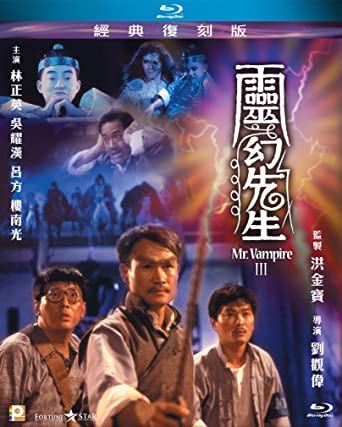
There are five Ricky Lau-directed Mr. Vampire movies — Mr. VampireMr. Vampire II, Mr. Vampire III, Mr. Vampire IV and Mr. Vampire 1992 (the only direct sequel) followed by several connected movies by other directors, such as Billy Chan and Leung Chung’s New Mr. Vampire (these first six movies will be the ones that we’ll be covering), Lam Ching-ying’s Vampire vs Vampire and Magic Cop (AKA Mr. Vampire 5), Chan’s Crazy Safari (also known as The Gods Must Be Crazy II), Andrew Lau’s The Ultimate Vampire, Wilson Tong’s The Musical Vampire, Wu Ma’s Exorcist Master, Wellson Chin’s The Era of Vampires and Juno Mak’s tribute to this series, Rigor Mortis. There are also two TV series: Vampire Expert and My Date with a Vampire.

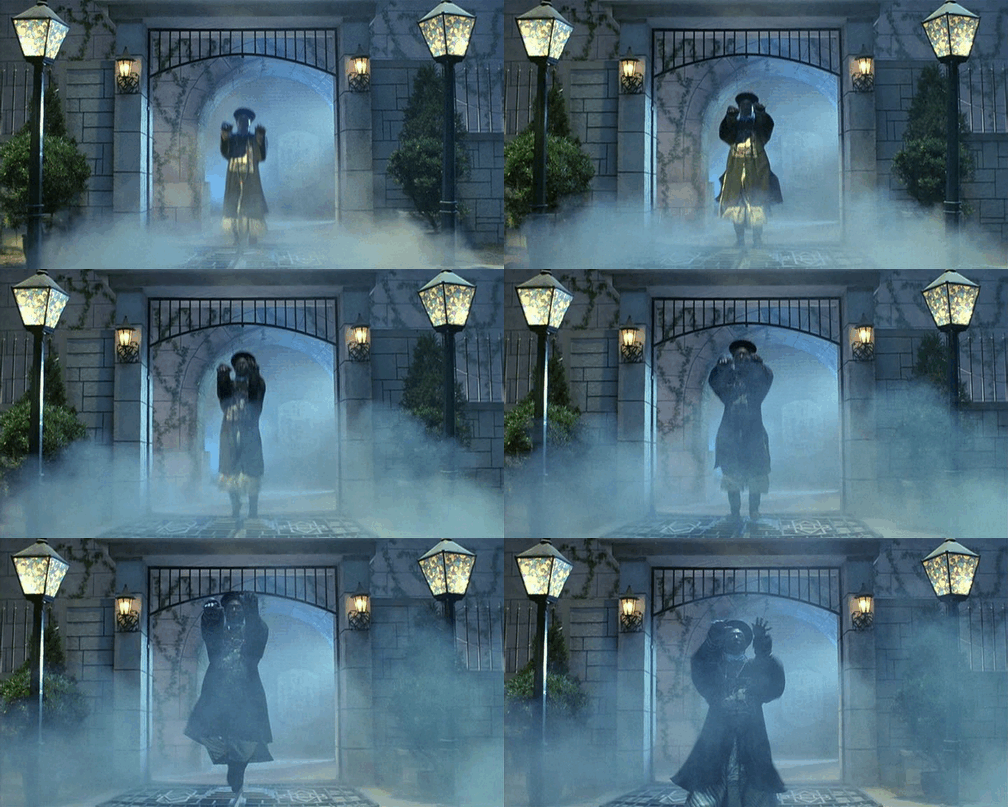
All of these movies have the Chinese vampire in common. Called the jiangshi, these hopping corpses of Chinese folklore are as much zombies as they are vampires. They first appeared in Hong Kong cinema in Sammo Hung’s Encounters of the Spooky Kind.

Mr. Vampire (1985)

Master Kau (Lam Ching-ying) is pretty much Dr. Strange by way of Taoist priesthood, as he keeps control over the spirits and vampires of China from his large home, which is protected by many talismans and amulets, staffed by his students Man-Choi (Ricky Hui) and Chau-sang (Chin Siu-ho).

Master Yam hires Kau to move the burial site of his father to ensure prosperity for his family. However, the body looks near perfect, showing that it may be a vampire. Taking it home, Kau instructs his students to write all over the coffin with enchanted ink. They forget to do the bottom of the coffin, which means that the vampire escapes and murders his rich son, turning him into a jiangshi.

Wai (Billy Lau) is a policeman who is sure that Kau is responsible (he also has a grudge because a girl (Moon Lee) he likes has eyes for Kau), so he arrests him even as the vampire begins killing others. Kau’s students are tested by a vampire’s boat and also a seductive spirit, but when Master Yam becomes a fully vampiric demon, only the help of another Taoist priest named Four-Eyes (Anthony Chan) can save the day.

Based on stories producer Hung heard from his mother, this movie nearly tripled its budget at the box office. Just a warning — not just Italian movies have real animal violence. There’s a moment where a real snake is sliced apart instead of a fake one due to budget. The snake was used to make soup, but there’s no report on whether the chicken whose throat was cut on screen was used as stock after.

Golden Harvest tried to make an American version — Demon Hunters — with Yuen Wah playing Master Kau and American actors Jack Scalia and Michele Phillips (taking over from Tonya Roberts) were in Hong Kong to film scenes, but the movie was stopped after just a few weeks.

Mr. Vampire 2 (1986)

This film is more about a vampire family than continuing the story of the first movie, despite being directed by Ricky Lau and bringing back female star Moon Lee and Lam Ching-ying.

Archaeologist Kwok Tun-Wong (Chung Fat) and his students have found not just one jiangshi but a mother, father and their son, all kept still because of the magical talismans on their foreheads. Intending to sell the boy on the black market — who would want a child hopping vampire is a question we may not be able to answer — the talismans are removed and Dr. Lam Ching-ying (yes, Lam Ching-ying used his real name for the role), his potential son-in-law Yen (Yuen Biao) and his daughter Gigi (Lee) must stop the plague of the vampires.

Mr. Vampire 3 (1987)

Uncle Ming (Richard Ng) isn’t a great Tao priest like Uncle Nine (Lam Ching-ying), but like an HK version of The Frighteners, he has help from two ghosts. Big and Small Pai. He comes to a small town where supernatural bandits are ruling the night, all led by the evil — I mean, with a name like this, she should be malificent — Devil Lady (Wong Yuk Waan).

This movie has a first for me — evil spirits trapped in wine jars and then friend in hot oil. This is definitely closer to the spirit of the original film, which made fans pretty happy. Also, a witch with a skull inside her hair and a Sammo Hung cameo as a waiter!

If you’re used to the pace of American movies, you may want to drink plenty of Red Bull or Bang before starting this one.

Mr. Vampire 4 (1988)

Four-eyed Taoist (Anthony Chan) and Buddhist Master Yat-yau (Wu Ma) are neighbors, but engaged in a sort of humorous war of words, pranks and ideologies with each other. As a convoy passes their homes — including a vampire that is soon hit with lightning and becomes super powerful — they must put aside their dislike and work together.

You may miss Lam Ching Ying, who for the first time isn’t the lead in a Mr. Vampire sequel. There’s nearly an hour, however, where the two leads try to destroy one another with not a hopping bloodsucker in sight. So while the stereotypical gay character isn’t fun at all, there’s still the knowledge you’ll gain, like eating garlic to defeat a curse.

Mr. Vampire 1992 (1992)

After three sequels, it’s finally time to make an actual sequel to Mr. Vampire, with Master Kau (Lam Ching-ying), Man-choi (Ricky Hui) and Chau-sang (Chin Siu-ho) all coming back.   What a wild story they’ve been brought back for, as the soul of an aborted fetus lives within a statue before seeking to take over the fetus that is growing within Mai Kei-lin (Wuki Kwan), the one-time love of Master Kau.

There’s also The General (Billy Lau), Mai Kei-lin’s husband, who is bit by his vampire father and seeks to escape his curse with the help of Kau.

Also — this is a comedy.

What’s most amazing — to me — is that I found my copy of this in my small Western Pennsylvania hometown, in the literal sticks, an all-region DVD that I can only assume came from a foreign exchange student at one of the local small colleges, as there were several other similar films. $1 later and my movie room has hopping vampires on the shelves.

New Mr. Vampire (1987)

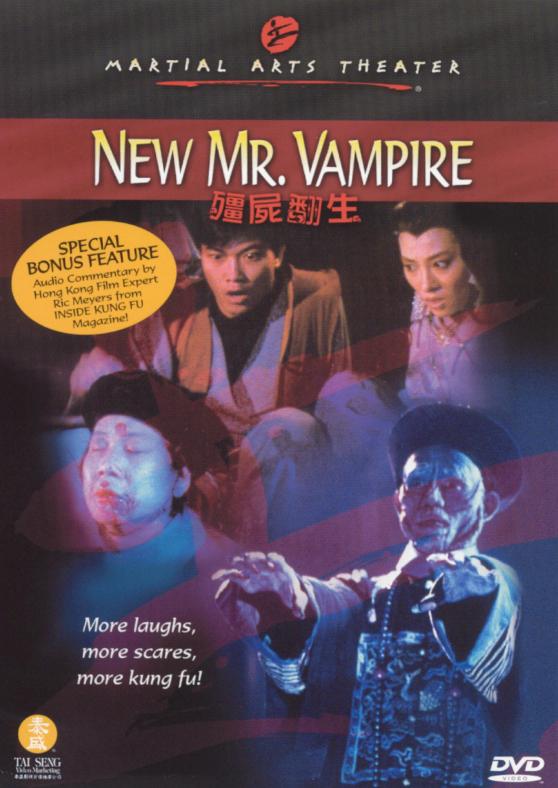
Don’t confuse this New Mr Vampire with Mr. Vampire 1992. This installment was directed by Billy Chan and has Chung Fat and Huang Ha as rival brothers Master Chin and Master Wu, with Chin Siu-ho (playing Hsiao Hau Chien) and Lu Fang (known as Tai-Fa) as their disciples.

This is my least favorite of the jiangshi movies I’ve seen, except for the fact that the filmmakers seem intent on making John Carpenter pay for taking so many Hong Kong movie mythos for Big Trouble in Little China by outright stealing music from Halloween and Escape from New York.

Are you willing to take a journey into the world of Chinese vampires? Let us know what you find. Remember, if you get bit, just take a bath in rice milk, then grind down their fangs or drink their blood to heal yourself.

Genuine: The Tragedy of a Vampire (1920)

Genuine, die Tragödie eines seltsamen Hauses (Genuine, the Tragedy of a Strange House) was Robert Wiene’s follow-up to The Cabinet of Dr. Caligari, with writer Carl Mayer, cinematographer Willy Hameister and production designer Cesar Klein returned to work on this vampiric film.

Genuine is not a true vampire, but instead a succubus that drains the souls of men, even destroying the life of the man who has painted her as this movie begins. Before the movie ends, she will cause men to murder one another and drive others to nearly kill themselves with her charms.

Genuine was played by Fern Andra, an acrobat whose physical acting is incredible. She’s a mystery of a woman who destroys men simply because she enjoys doing so. At first a savage captured from a tribe and kept by a rich old man, she soon takes over the man’s home and earns the ire of everyone in the surrounding area.

Is Genuine real? Is she an idea? Is she art? Is the story in the film a dream? While Dr. Caligari was a success, this film was seen as too much art for art’s sake. I think even back in 1920, popular audiences could often be quite dumb.

You can watch this on YouTube.

Blood and Roses (1960)

Carmilla has been made so many times — VampyrDracula’s Daughter, Crypt of the VampireThe Vampire LoversThe Blood Spattered Bride — but the Roger Vadim-directed movie moves the setting to Italy in the 20th century.

Carmilla (Annette Stroyberg, Vadim’s wife at the time) is torn apart by the engagement of her friend Georgia (Elsa Martinelli, The Tenth Victim) to her cousin Leopoldo (Mel Ferrer, Nightmare CityThe Visitor, both versions of Eaten Alive (with and without the exclamation mark), The Antichrist and dude, Mel Ferrer has been in so many movies I love, even The Norseman) and she has no idea who she loves more. Yet she’s also found a dress that belonged to a vampiric forebearer and gone into her grave and nothing good is going to come of that.

And yes, Leopoldo is Count Karnstein, which would make him from the same family as the vampire in Twins of Evil and the rest of Hammer’s Karnstein Trilogy (we already mentioned the other two films, the third is Lust for a Vampire). The role was originally intended for Christopher Lee, which makes sense.

This is the artier side of vampire films when so much of this week has been wallowing in the mire and muck. See, sometimes we can be classy when we share a lesbian vampire movie.

ARROW UK BLU RAY RELEASE: The Mangler (1995)

EDITOR’S NOTE: When I first took a look at this film on September 14, 2017, I didn’t seem to like it so much. Maybe I was having a bad day, as my thoughts have grown more rose-colored in the time that has passed. 

If you’d like to see it for yourself, Arrow Video has released a UK blu ray of this film, which includes a 2K restoration of the movie, three sets of commentary (critics Alexandra Heller-Nicholas and Josh Nelson; “Manglophiles” Matty Budrewicz and Dave Wain and co-writer Stephen David Brooks), Nature Builds No Machines (a brand new visual essay by Scout Tafoya, author of Cinemaphagy: the Films of Tobe HooperThis Machine Just Called Me an Asshole! (a visual essay by author and critic Guy Adams on the monstrous life of inanimate objects in the work of Stephen King), an interview with star Robert Englund, behind the scenes footage and a trailer. 

If you have an all region player, you can get this in the U.S. from Diabolik DVD.

What happens when you put together three of horror’s biggest stars — Robert Englund, Stephen King and Tobe Hooper? That’s the question posed by this film, based on a King/Harry Allan Towers short story that first appeared in the men’s magazine Cavalier before appearing in King’s 1978 collection Night Shift, which also spawned the movies Children of the CornCat’s EyeMaximum OverdriveGraveyard ShiftThe Lawnmower ManSometimes They Come BackTrucks (yes, I know it’s the same story as Maximum Overdrive) and Battleground.

Bill Gartley (Robert England) owns the Blue Ribbon Laundry service, which is based around a laundry press that everyone calls The Mangler. His niece, Sherry cuts herself and gets blood all over the machine, which leads to the machine coming to life. It starts to eat anyone who gets too close to it, like Mrs. Frawley, by folding them just like a sheet.

Drunken police detective John Hunton (Ted Levine, Buffalo Bill from The Silence of the Lambs) and his ex-brother-in-law Mark — who just happens to study demonology — investigate the many deaths that follow. It turns out the Tha Mangler is how Gartley runs the town — when their virgin daughters turn 16, the town’s most powerful men and women sacrifice them to the machine. Sherry is next.

Sherry is next, but she helps the two men take out the demon — even if it kills Gartley, his lover Lin Sue and Stanner, the foreman. They throw holy water on it and the machine nearly beats them, but they succeed in taking it out. That is — until John talks about the antacids he’d been taking, which once belonged to the now dead Mrs. Frawley. One of the ingredients is deadly nightshade, also called “The Hand of Glory.”

Here’s where the movie descends into bullshittery. It only follows some of King’s story — which was a novella, so we can cut them some slack. It takes passages from Sir James George Frazier’s The Golden Bough: A Study in Magic and Religion. But the “Hand of Glory” is usually the hand of a murderer who has been put to death or part of the root of the mandrake plant. That said — the endings of the book and movie are totally different, so I shouldn’t expect anyone to do actual research or make the occult make sense within their film.

The Mangler comes back to life, killing Mark and chasing John and Sherry. She tries to give herself to it to save him, but he stops her. They fall through a manhole cover and escape, with him taking her to the hospital, as he’s fallen in love.

Oh yeah — Mark is friends with an old photographer named J.J.J. Pictureman, who tells him the hidden history of the town before he dies. As John waits for news on Sherry’s condition, he gets a letter from the dead man. He warns him not to trust anyone in town with a missing body part, as they may have sacrificed it to the Mangler.

When John goes to see Sherry, flowers in hand, the machine is back in place and she has replaced her uncle, looking like a female version of him. She waves to him and he notices that her finger is missing. Throwing away the flowers, he leaves.

I worry that my description of this movie makes it sound better than it really is and that people will watch it. Hooper may not have even finished the film, as some say he was replaced by the producer, Anant Singh. It actually played in around 800 theaters, but was considered a failure. Hooper would go back to directing for TV after this.

When I first looked at this a few years ago, I looked down on it. Maybe it’s the years of worse movies in between or perhaps a reappraisal — more likely I miss the time when I could just go to the video store to rent stuff like this — but my memories of The Mangler have grown more fond since then.

Die Hard Dracula (1998)

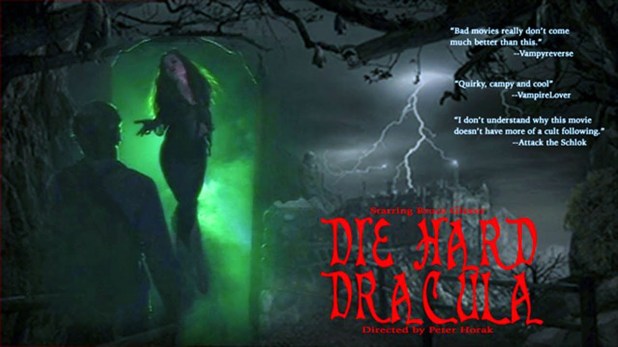
Director and writer Peter Horak may have shot this in Prague and California, but it looks like the kind of movies that Cabellero and VCA put out in 1998 without you know, all the ejaculate. It also has a lead who loses his girl in a rowboat accident, which sends him to Europe, and into the orbit of — you knew it — Dracula (played by three actors, Ernest M. Garcia, Chaba Hrotko and Tom McGowan).

Who can battle Dracula? How about Bruce Glover? Yes, Crispin’s dad.

Horak did stunts on Viva Knievel!Throw Mama from the Train and more than twenty other films. I have no idea what made him write, produce and direct a comedy Dracula movie that is beyond brutally unfunny. I mean, I have no limit when it comes to evil — I mean bad movies — and this one really pushed me even worse than any other film has.

Which means I loved the experience and I’d totally force you to watch it while screaming about why they made the choices they did.

But why Die Hard Dracula?

You can watch this on YouTube.

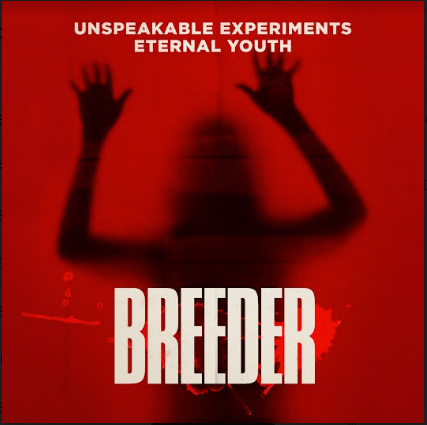
Breeder (2020)

A renowned health supplement company is abducting young women as part of an experiment to impregnate them and then bio-hacking their embryo’s DNA to reverse the aging process. Mia investigates, but soon she finds herself trapped, branded and tortured in a grim underground facility. Trust me — things get dark.

Dr. Isabel Ruben is able to bring men back to youth, but is driven to continue her research in the hopes that she can also erase her age. She’s doing her science in an unhygenic concentration camp lorded over by two men — the Dog and the Pig — who are in it merely to abuse women.

She’s also blackmailing Thomas, whose faciities she is using and whose wife is Mia, who is soon branded — and man, this movie has a lot of urine in it, as the burning mark is soon pissed on — and although there are hints that she enjoys BDSM, she is definitely not enjoying the hell that she soon goes through.

Director Jens Dahl co-wrote Nicolas Winding Refn’s Pusher, so that should tell you what you’re getting into. Writer Sissel Dalsgaard Thomsen has mainly done shorts and while this film could use a slight bit of trimming to its running time, the ending catharis is wild and filled with moments that completely shocked me.

Trust me — there are some moments in here that are rough. Real rough. But it also surprised me with its quality and storytelling.

Breeder is available on digital from Uncork’d.

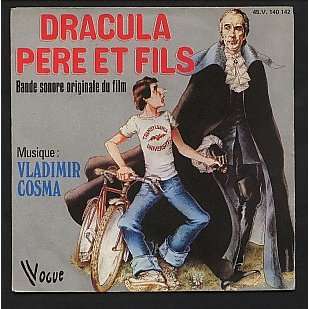
Dracula Pere Et Fils (1976)

This French movie — whose title means Dracula and Son — brings Christopher Lee back to the role he may be most famous for in his tenth* and final screen appearance as Dracula. It was directed and written by Édouard Molinaro, who made the original La Cage aux Folles.

That arch nemesis of all Universal and Hammer villains, villagers with torches, have finally pushed Dracula and his son Ferdinand out of their home and to England. Actually, they’re torch bearing villagers who have found that they prefer Communism to living under a vampiric dictator.

With all the monster movies being made, the Count finds work playing himself and his son becomes a night watchman. But when they both fall for the same woman, played by Marie-Helene Breillat. Her sister Catherine plays Ferdinand in the beginning.

The American version has lots of reshoots and different jokes. It didn’t come out until 1979 in the U.S., but I don’t remember it causing much noise. Then again, they got a vocieover for Ferdinand that sounds like Don Adams on Get Smart, so go figure.

*The other Lee Dracula films are:

  1. The Horror of Dracula
  2. Dracula Prince of Darkness
  3. Dracula Has Risen From His Grave
  4. Taste the Blood of Dracula
  5. Scars of Dracula
  6. Dracula A.D. 1972
  7. Satanic Rites of Dracula
  8. Jess Franco’s Count Dracula
  9. In Search of Dracula

Day Dream (1964)

Hakujitsumu is based on a 1926 short story by Junichiro Tanizaki that plays with the nature of reality.

An artist and a young woman are in a dentist’s waiting room and the man is too shy to even connect with her. In the same examining room, they’re both giving anesthetic as he imagines that she is being abused and tortured and even chased by a vampire. The uncut Dutch version even has a sexually explicit scene during which the woman is digitally attacked by the dentist.

A big budget example of a pinky violence movie, this film even dared to show female pubic hair, a major cultural crime in Japan. Most instances — even in the most hardcore of films — are digitally fogged or have a mosaic over them.

Director and writer Tetsuji Takechi was nearly 70 when this was made. He’d already filmed Day Dream once before in 1964, after starting his career in kabuki theater and having his own TV show, The Tetsuji Takechi Hour, during which he reinterpreted Japanese stage classics. His next film, 1965’s Black Snow, saw him arrested on indecency charges and fighting a public battle over censorship between the intellectuals of Japan and the country’s government. Takechi won the lawsuit, which opened the way for the pinky films of the 60s and 70s.

Black Snow may be more controversial for its themes than its sex: its protagonist is a young Japanese man whose mother serves the U.S. military at Yokota Air Base as a prostitute. He’s impotent unless making love with a loaded gun in his hand and before long, he’s killed a black soldier before being cut down by several Americans. The film is also fiercely nationalist with Americans — most pointedly the black man who is killed — shown to be nothing but sex-wild animals.

In the journal Eiga Geinjutsu, Takechi said, “The censors are getting tough about Black Snow. I admit there are many nude scenes in the film, but they are psychological nude scenes symbolizing the defencelessness of the Japanese people in the face of the American invasion. Prompted by the CIA and the U.S. Army they say my film is immoral. This is of course an old story that has been going on for centuries. When they suppressed Kabuki plays during the Edo period, forbidding women to act, because of prostitution, and young actors, because of homosexuality, they said it was to preserve public morals. In fact it was a matter of rank political suppression.”

The remake of Day Dream comes a full decade after newspapers would not advertise his movies and the director was only writing. That film is literally Japan’s first hardcore pornographic movie and it was a big budget movie played on big screens.

Yet while Westerners see his influence, in Japan, Takechi was an outsider in the mainstream and pinky world, so he’s forgotten. His right wing politics clash with the protest ethos within other pinky films, so all in all, he’s lost in many ways.

Female star Kyoko Aizome — who plays Chieko– would gain notoriety from this film and become a star in the worlds of feature dancing (being arrested for indecency for her on-stage behavior) and hard and soft AV (adult video) movies. According to an article on The Bloody Pit of Horror, she had her hymen surgically repaired so she could lose her virginity again on camera and also had her own King Kong vs. Godzilla moment when she starred in Traci Takes Tokyo opposite an underage Traci Lords.

As for the vampires, the dentist’s assistants (Saeda Kawaguchi and Yuri Yaio) have fangs and the dentist himself is Kwaidan actor Kei Sato, a mainstream talent appearing in a movie that is anything but. Even after Chieko runs over the dentist and decapitates him, he comes back as a traditional film vampire.

After the original movie was made, South Korean director Yu Hyun-mok remade it as Chunmong (Empty Dream) and was arrested because there was a rumored nude scene. There were also rumors that actress Park Su-jeong had been humiliated by appearing nude on the set. The truth was that she wore a body stocking. Supposedly, the Korean film, which was kept off screens until 2004, is a superior piece of surrealist art.

Ismail Yzassin Meets Frankenstein (1954)

The world of strange film is, well, strange.

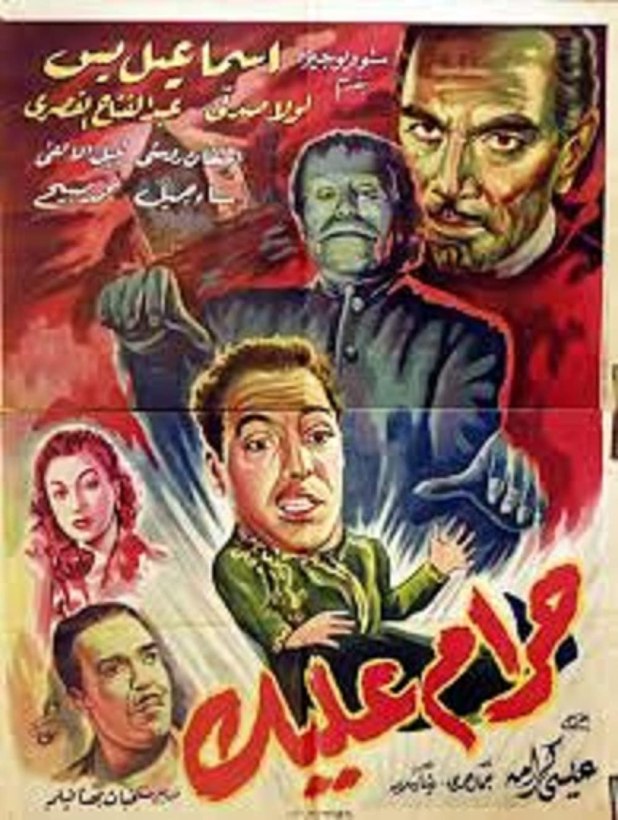
Just as Mexican director Benito Alazraki remade Abbott and Costello Meet Frankenstein for his own country as Frankenstein el Vampiro y Compañía, Isa Karamah made it for Egyptian audiences as Haram alek, which was also released as Pitié! (Pity!) in France, Ismail Yassin Meets Frankenstein in the UK, Ismail and Abdel Meet Frankenstein and Have Mercy in the U.S. and Shame on You in the rest of the world.

It’s the same kind of cross-cultural remixing that happened when you look at El Planeta De Las Mujeres Invasoras from Mexico, the Turkish Uçan Daireler Istanbul and another film by the comedy duo, Abbott and Costello Go to Mars.

Were Bud and Lou so influential? Were they just playing with easily remade archetypes like comedic men meeting the once frightening Universal monsters and aliens? Is it the collective unconsciousness at work?

The difference is that both Ismail Yassin and Abdel Fattah El Kasri can’t play a straight man — in the comedic sense — to save both their lives. So they both end up playing Lou Costello when this remake needs a Bud Abbott.

Yet the monsters are all translated to be Egyptian in nature, with Professor Assem stepping in for Dracula as some kind of never dying ancient Egyptian who can turn into a bat and wants the secret in a box, which is Frankenstein’s Monster by way of a mummy. But they’re not really twins for who they should be, making this anything but a true ripoff.

As for Dr. Morad, the werewolf, he has his curse because he planned on telling the truth about the professor, so he’s just as heroic — more so, to be truthful — than our bumbling antique store employee leads.

The end, instead of Vincent Price as the Invisible Man, has an Angel of Death show up to frighten our heroes.

It’s not an essential watch, but it’s certainly an interesting one.

You can download this from the Internet Archive.