ABOUT THE AUTHOR: When we asked people what their top ten slasher movies were, we got plenty of great responses. Kris is one of my oldest friends and if you ever have a question about Japanese pro wrestling, the band Wilco or Earth-2, he definitely knows the answer. If you want to follow him, he’s on Twitter,Facebook and Instagram.
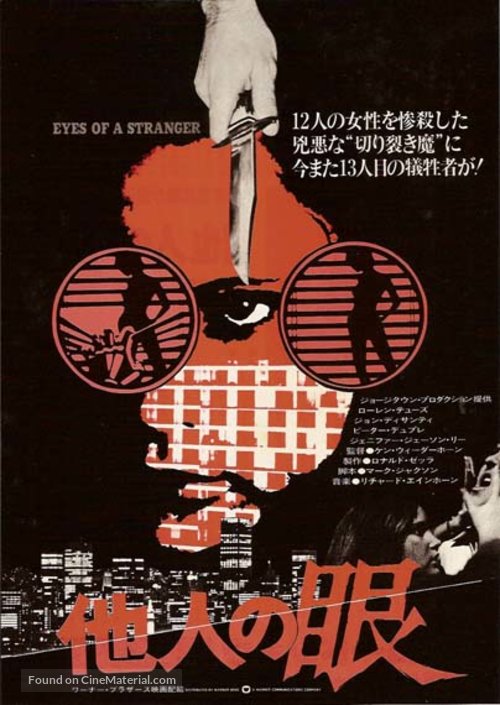
I read a review of this movie that really talked down on it, describing it as a “sleazy TV movie-of-the-week punctuated with gory murder scenes.” That’s positive ink in my neck of the woods, so of course I hunted this down. It’s the first movie that Jennifer Jason Lee — the daughter of Vic Morrow — was ever in.
It’s also a Ken Wiederhorn film, the guy who brought you stand-outs like Shock Waves, Return of the Living Dead Part II and Meatballs II, not to mention the never on DVD movie Dark Tower.
A rapist and murderer has the modus operati of stalking and calling his victims before he takes them out. Now, TV reporter Jane is on the case, feeling like the killer could be a next-door neighbor. She’s played by Braddock, PA’s (the adoptive home of Martin, of course) Lauren Tewes, who was Julie McCoy on The Love Boat.
The film was planned as a straight-forward mystery before the slasher boom took off. So to get to the blood and gore quotient required, they hired Tom Savini to do the special effects. However, the grisly visions he conjured could never get an R rating, so most of his work was exorcised from the film. That said — the 2007 DVD release of the film has an uncut version.
While it’s never explained, Jennifer Jason Leigh’s character is deaf, blind and mute, perhaps the result of a past assault. When the killer targets her in the last ten minutes, the film really picks up the pace.
DAY 17. EVIL IN BROAD DAYLIGHT: Scary stories aren’t just for the night time.
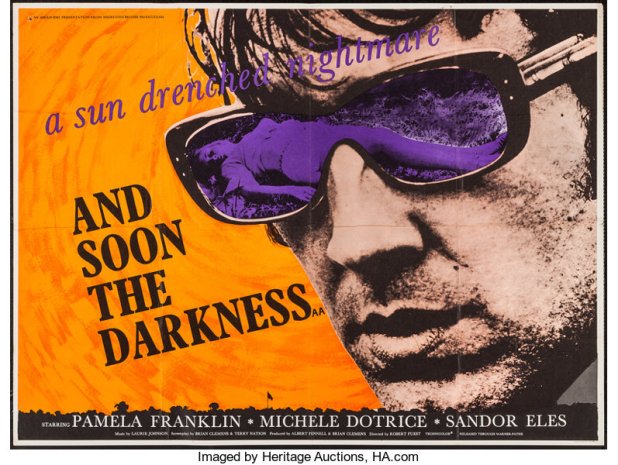
A movie that’s referred to as “a sun-drenched nightmare” on its poster, Robert Fuest’s And Soon the Darkness is nearly forgotten today, which is a real shame. Fuest is probably better remembered for The Abominable Dr. Phibes and Dr. Phibes Rises Again than he is for any other movie, but he also made plenty more, like The Final Programme, The Devil’s Rain! and Revenge of the Stepford Wives to name but a few.
And Soon the Darkness is about a day gone wrong, about being a tourist in a strange land and about how trust isn’t an easy thing to come by. It’s also an incredible film worthy of rediscovery.
Jane (Pamela Franklin, Necromancy, The Legend of Hell House) and Cathy (Michele Dotrice, the wife of The Wicker Man star Edward Woodward who was also in The Blood on Satan’s Claw) are two young nurses from Nottingham. They’ve decided to take a cycling holiday in France.
Jane’s been planning each and every stop on the route while Cathy is more interested in letting life happen. Life ends up being Paul (Sandor Else, Countess Dracula), a handsome man riding a scooter who catches her eye. The girls soon come to an argument and go their separate ways, with Cathy staying behind to sunbathe and perhaps catch up with Paul.
As Jane moves on to the next town, a cafe owner struggles to tell her that she’s in a dangerous area where young girls are often murdered. She decides to go back and find her friend, but she’s gone. A policeman is on the case, but Jane instantly believes that Paul is the murderer, despite him saying that he’s a plain-clothes detective who has taken an interest in the missing girls from this region.
What follows is the sun slowing setting on Jane’s hopes of ever finding her friend again, as she believes that Paul is closing in on her, ready to add her to his list of victims. But was there even a murder? Or is this all in her head?
There are no easy answers in And Soon the Darkness. It was written by Brian Clemens (who wrote See No Evil and Dr. Jekyll and Sister Hyde, as well as writing and directing Captain Kronos – Vampire Hunter) and Terry Nation (The House in Nightmare Park as well as the creator of Dr. Who’s Daleks), who had worked with Fuest on the game-changing British crime show The Avengers.
This was remade in 2010 as And Soon the Darkness with Karl Urban, Amber Heard and Odette Annable. I’ve never seen it, but talk about a lot to live up to. Just the end shot of this movie, cast in a rain that isn’t about to wash away anyone’s pain, is brutal in its quiet intensity.
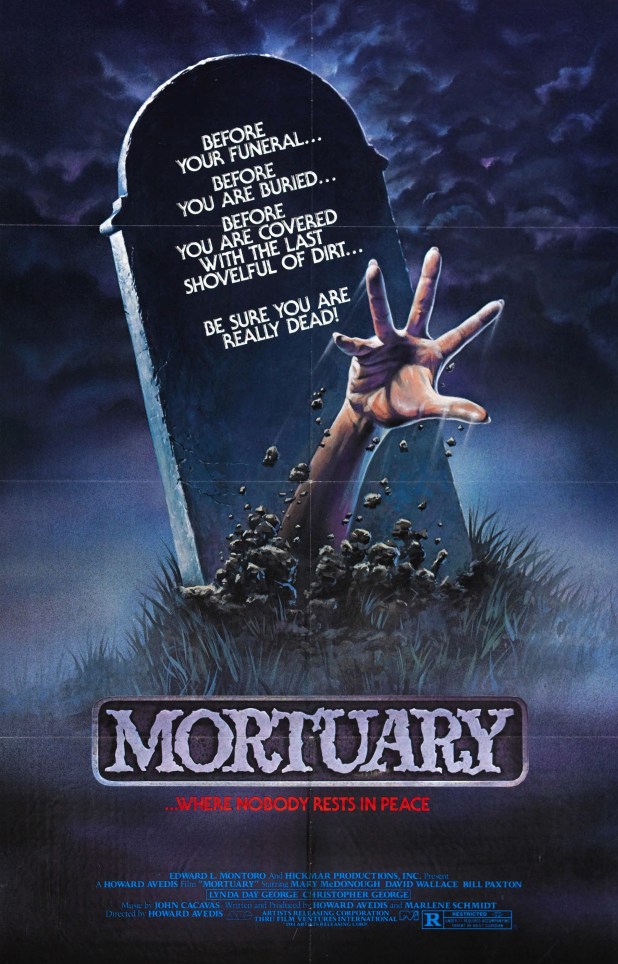
Hikmet (or Howard) Avedis studied at the University of Southern California and won the George Cukor Award, which totally prepared him for a lifetime of working in exploitation fare. With titles like The Stepmother, The Teacher (consider it the grindhouse version of The Graduate), The Specialist (where Adam West fights against the water company), the Connie Stevens’ classic Scorchy and the utterly baffling sex comedy/giallo They’re Playing With Fire, Avedis may not have made Oscar-worthy pictures, but he certainly knew how to entertain. He also wrote this movie along with his wife Marlene Schmidt, who also acted in this movie (as she did in nearly every movie he made).
Known internationally as Embalmed and Hall of Death, this film has shown up on a few of the top ten slasher lists that we’re putting together for later this month. It’s a great example of what happens when a slasher strays from the form somewhat and you get the idea that this movie is kind of like a carny haunted house, ready to scare you at every turn.
Wealthy psychiatrist Dr. Parson has died and only his daughter Christie (Mary Elizabeth McDonough, Erin Walton from The Waltons and one of the stars of the abysmal Funland) believes that there was foul play. The official word is that he drowned and that’s good enough for her mother Eve (Lynda Day George!), who doesn’t believe the dream her daughter had where dad was bludgeoned with a baseball bat. Oh yeah — she also sleepwalks all the time.
But let’s forget about all that. Let’s get to the mortuary, where Christie’s boyfriend Greg Stevens (David Wallace, who was also in Humongous) is stealing tires with his friend Josh. After all, if Hank Andrews (Christopher George, never far from his wife, in one of his last roles) isn’t going to pay Josh fairly, they may as well take what they want.
While they’re in the midst of this larceny, an occult ritual just happens to happen, with Hank leading a bevy of gorgeous women in what is called a seance. Josh is unfazed, as he claims that this kind of thing happens all the time. He goes off to get the tires and gets stabbed for his efforts. Greg can only watch as someone drives off in his van.
Greg and Christie search everywhere for Josh, including the local roller skating rink because it’s 1983. There’s some insanely great roller skating footage here, if you like that kind of thing. You know that I do.
As Christie drives to her family’s mansion the next day, a car starts to follow her. Soon after her arrival, a hooded figure begins to follow her around the pool where her father died. Her mother claims its all a dream.
The next day, Greg tells Christie that her mother was one of the women in the ritual he watched. That makes sense to her, because now Eve and Hank are shacking up and her dad’s corpse is barely cold. If things couldn’t get weirder for our heroes, Paul (Bill Paxton, who shows up in so many great films of this era), the son of Hank, begins getting hot and bothered for his soon-to-be stepsister. He’s even weirder than his dad, but that’s probably because his mom killed herself.
Greg and Christie try to hook up, but her entire house goes wild, with lights flashing on and off, music playing by itself and even the film seeming to stop and start. It’s a great sequence and really sets up the gaslighting — or supernatural attacks — that Christie is forced to endure.
Greg and Christie decide to follow her mother, who heads right to the mortuary. Stranger and stranger? It gets even more so, as a cloaked figure who looks like Paul attacks Christie that night and in a shot that looks similar to Suspiria, almost pulls her out of a glass window.
While Eve again says it was all a dream, she does have one oddball theory: Paul used to be a patient of her dead husband and he was obsessed with Christie, talking about her the entire time. This is soon followed by Paul, clad in a latex mask, appearing and stabbing Eve in her bed. He attacks Christie and brings her to the mortuary, claiming that he intends to embalm her alive.
Hank arrives to stop him and we get the villain moment where he explains his actions: he had to punish everyone, like Eve for telling Christie he was insane and Dr. Parson for putting him in jail. He then goes one step beyond by stabbing his father just in time for Greg to try to save her. A battle leads to Greg getting locked in the embalming chamber while Paul arranges all the bodies of his victims for a wedding ceremony.
You know how weddings go — you spend much of the the time conducting a symphony. Paul does exactly that while we see all of his victims, including his mother who was in a coma and not dead. What follows is a battle between Paul and his scalpel and Greg with an axe, ending with Christie sleepwalking her way into killing the villain with one hack of the axe into his back. Our heroes embrace, just in time for Paul’s mom to awaken from her coma and attack them with a knife, probably because she saw the end of Carrie and knew this needed one more jump scare.
We’ve talked about Gary Graver and his work for Orson Welles, in the adult film industry and within films like Texas Lightning, Sorceress and Trick or Treats, amongst other films. His cinematography makes this movie a cut above ordinary slasher fare.
Day 16 Rock ‘n’ Roll Miscreants: Give some screen time to the punks and/or metal heads(and Lane Caudell gives us a two-fer!)
The horror-centric webzine Bloody Disgusting recently posted a story about a gritty, low-budgeted horror film, Getaway Girls (2020), written and directed by Toran Caudell who, as a teen, found success as an actor on the WB Network and as an animated voice artist for the Disney and Nickelodeon Networks. While this writer never watched any of his TV series, I was intrigued to hear a child actor beat the so called “child actor curse” and continued to flourish in the business as an adult. Upon a further Internet-investigation of the film, it’s discovered that Toran Caudell is the son of actor-musician Lane Caudell, he the star of two of the coolest, fondly remembered films of this writer’s ‘80s UHF-TV and video store, rock ‘n’ roll youth: Goodbye, Franklin High and Hanging on a Star.
Thanks to Lane’s son, it marks the first time that old, familiar face from my youth has acted in front of the camera since eschewing the acting world after the 1982-1983 season of the NBC-TV U.S daytime serial, Days of Our Lives. (I know. I know. Yes, I watched DOOL. For reasons lost in the corners of my mind, somehow my sister negotiated “TV rights” after school, so I was stuck watching DOOL andGeneral Hospital. Well, not really. When Diane, your sister’s very cute friend from school, plants herself in front of your TV to watch soap operas . . . teen hormones must make sacrifices. Then Jill Swanson came along. Have mercy!)
A few days after discovering the Bloody Disgusting article, a couch-grazing binge of a few episodes of A&E’s Hoarders inspired a deep dive into the long-forgotten spare bedroom and hallway closets for a belated (and “adult”), much-needed spring cleaning — closets which also hold a now lazily misfiled vinyl music and video tape collection. That domesticated archeological dig uncovered long-forgotten vinyl copies of Lane’s two MCA albums: Hanging on Star and Midnight Hunter, and (which I didn’t even know I did have in the first place) his lone 1975 album with Skyband for RCA.
Dude, it’s a sign. Toran of Malveel is recruiting you for a quest beyond the sun’s horizon. Sharpen your broadsword. Mount ye steed and ride, R.D!
As with Rick Springfield (of the rock bomb Hard to Hold) and Kim Milford (the obscure TV rocker, Song of the Succubus) before him, with Lane’s musical endeavors not bearing financial or chart fruits, he took up acting as a sideline to make financial ends meet. That’s when he met filmmaker Mike MacFarland who served as the Executive Producer on what was to become an exploitation teen-horror film classic: Satan’s Cheerleaders (1977) and Lane, in a support role, made his acting debut. And while Lane didn’t earn a role on TV’s Battlestar Galactica (Rick Springfield got the role), Lane scored the lead role in the early ‘90s TV/foreign theatrical, Star Wars-cum-Conan the Barbarian sci-fi romper, Archer: Fugitive from the Empire.
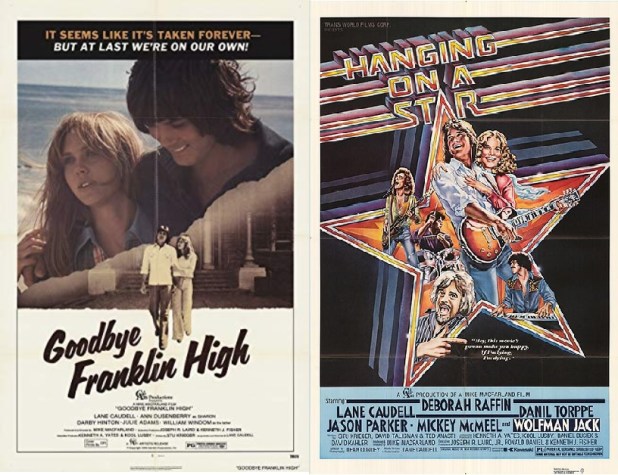
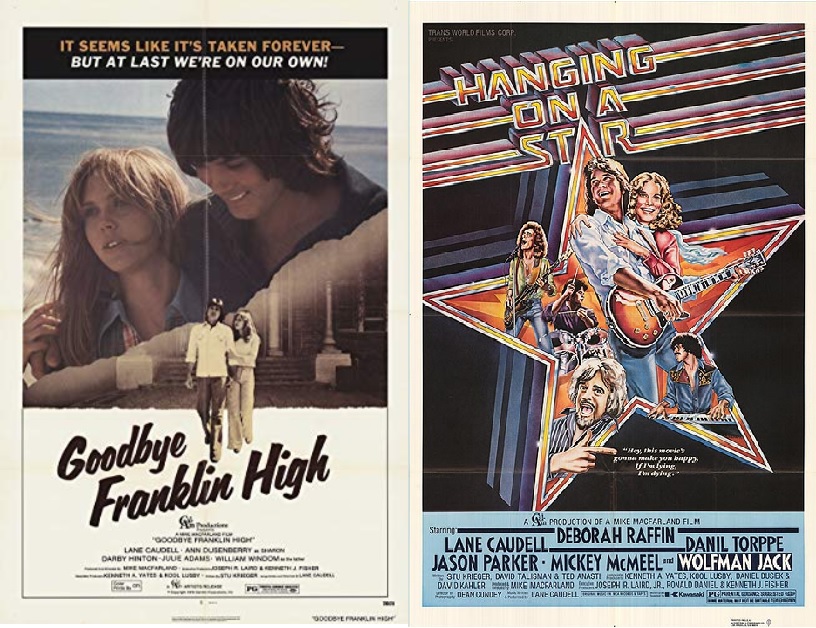
Under the managerial wing of Cal-Am Productions — which went out of business in a blaze of glory with the 1978 Drive-In slasher and later UK Section 2 Video Nasty (see the B&S Movies’ Section 2 List), The Toolbox Murders(see B&S Movies Exploring: Slahser Remakes List) — and with Mike MacFarland in the director’s chair, Lane made his debut as a leading man in the baseball comedy-drama, Goodbye, Franklin High, and the rock ‘n’ roll follow up, Hanging on a Star. Both films were backed by the Great Lion of Hollywood: MGM Studios.
On the DVD commentary for Satan’s Cheerleaders, director Greydon Clark stated Mike MacFarland offered an additional $25,000 to the production for a producer credit and if Clark would use Lane Caudell in a role, who he was considering for a lead in a film he would direct, which became Goodbye, Franklin High. The extra money improved the film’s production values, allowing Clark to sign a SAG contract and hire recognized SAG actors in John Carradine (Revenge, the sequel to Blood Cult — part of B&S Movies’ 2019 Halloween “Slasher Month,” look for it — andEvils of the Night), Yvonne deCarlo (The Silent Scream, Sam’s “Slasher” review is on the way!), and John Ireland (Incubus and The House of Seven Corpses), along with Charlie Chaplin’s Tony Award-winning acting son, Sydney, and noted TV character actor, Jack Kruschen.
While there are two songs, “One for All and All for One” and “Who You Gonna Love Tonight,” by a female-fronted disco concern known as Sonoma in Satan’s Cheerleaders, it is unknown if Caudell was involved with the production of those songs. Greydon Clark makes no mention of the songs in his commentary or if Caudell assisted on the soundtrack. And while Caudell provided several songs to Goodbye, Franklin High, no official soundtrack or promotional 45-rpm singles were released to radio or retail.
Sadly, today’s nostalgic film critics lump Goodbye, Franklin High with the glut of teen exploitation flicks (that’s a B&S Movies’ Week unto itself, eh, Sam?) haunting drive-Ins in the ‘70s, such as The Pom Pom Girls (1976), The Van (1977), Malibu Beach (1978), and Swap Meet, Van Nuys Blvd., H.O.T.S, and Gas Pump Girls (all 1979). In reality, Goodbye, Franklin High lacks any of those films’ American Graffiti-inspired T&A foolishness to tell a tale with a softer, ABC Afterschool Special-styled storyline (ah, ‘70s kids’ television!) about a young man facing his future: go to college or play pro-ball? The film actually has more in common with one of Sam Elliot’s earliest dramatic film rolls (Road House, Ghost Rider), Lifeguard (1978; search for that incredible film!), itself a coming-of-age drama of dealing with one’s future, than with any of the T&A brethren released during the same period.
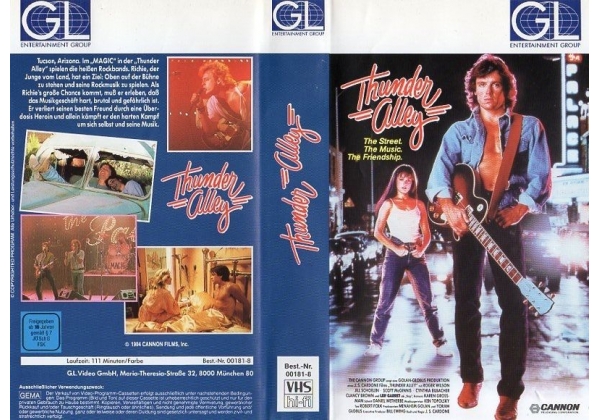
Then, Cal-Am Productions (seriously, The Toolbox Murders guys!) in conjunction with MCA Records and MGM Studios, customized a project that would spotlight not only Lane’s acting chops, but his music abilities as well. That film was later to become a U.S UHF-TV and video store classic, Hanging on a Star, a comedic chronicle of “The Jeff Martin Band,” a hot rock band on their way up the charts. In a teen-idol doppelganger: Leif Garrett also starred in a teen drive-In rock flick of his own, Thunder Alley (an Option 3: 2019 Scarecrow Psychotronic Challenge: Day 16 entry!), which made the rounds on cable, UHF-TV, and video store shelves in the ‘80s. Rick Springfield eventually starred in his own, similar rock flick: the critically lambasted Hard to Hold.
Six years after issuing his first solo single in 1972, Lane finally released his first solo album proper: Hanging on a Star. Although several songs from the album also appeared in its companion film, the album was not marketed as an official soundtrack. Sadly, while a well-devised dual marketing plan, neither the album nor the film lit up the charts or box office. The film did find a subsequent, enthusiastic audience on U.S cable television, which led to Lane’s fans — including this writer — to posthumously purchasing copies of the album in the used record store aftermarket — just like we did with Matt Dillion’s film debut, Over the Edge; it’s how we discovered Cheap Trick, Van Halen, the Cars, and the Ramones (and get that Little Feat crap the hell out of here!).
Lane would go onto receive his first starring TV role alongside Jerry Reed in 1979’s Good ‘Ol Boys, a TV movie that served as a series pilot to capitalize on Reed’s then massive popularity stemming from his work on Smokey and the Bandit — and to catch a little nip of that The Dukes of Hazzard moonshine madness. Lane’s next NBC pilot was starring alongside U.S television mainstay William Conrad, loved by audiences for his work as Detective Joe Cannon in Cannon. A cross between Conrad’s two famed TV characters (the other from his later hit series, Jack and the Fatman), the 1980 series would have starred Conrad as ex-L.A police lieutenant, Bill Battles, who takes a job at Hawaii State University as the head of its Campus Police Unit — and as an assistant football coach. Lane, co-starring as the team’s quarterback, would have been the crime-solving side kick in, Battles.
However, courtesy of the success of Star Wars igniting a renewed interest in science fiction and old fashioned sword ‘n’ sorcery action-fantasies, Universal and NBC-TV developed Archer: Fugitive from the Empire, which starred Lane as a prince on a distant planet accused of murdering his father-king; equipped with a magic ‘n’ deadly crossbow, he teamed up with Belinda Bauer (schwing!) as his Princess Leia/Red Sonja for a series of weekly adventures. Known under several other titles in its overseas theatrical distribution, Archer made it to series, but was too costly to produce to justify against its low ratings in the U.S marketplace.
Continuing his relationship with the NBC-TV family, Lane ended his acting career with a one-season recurring role on the highly-rated U.S daytime drama, The Days of Our Lives. Between his work on U.S daytime television and making his return to the big screen in his son Toran’s horror film, Getaway Girls, he became a mover and shaker as a songwriter, music publisher, and session musician in the country music marketplace.
Sadly, Hanging on Star and Goodbye, Franklin High — like this writer’s two cherished Kim Milford rock movies, Song of the Succubus and Rock-a-Die Baby (a Halloween 2019 “Slasher Month” entry, look for it!), haven’t been in reruns on U.S television UHF stations in close to 40 years.
Hanging on a Star made it to VHS tape. In all the years of this writer haunting video stores and the video cut out bins of libraries and vintage vinyl outlets, an official VHS version of Goodbye, Franklin High has yet to appear — although taped-from-broadcast TV clips of the film have appeared on video sharing sites. This writer once owned two used copies of Hanging on a Star: one tape swelled up from moisture and molded-out; the tape of its replacement shredded into pieces inside the VCR. A home-taped version of Goodbye, Franklin High — sandwiched between Wes Craven’s Chiller (starring Michael Beck of The Warriors), Circle of Iron (starring David Carradine and Jeff Cooper), and Over the Edge (starring Matt Dillon) — burnt out into blue-screen mode.
It’s been almost 20 years since I’ve seen either of Lane’s films. It seems that, unlike The Toolbox Murders, both of Lane’s cherished leading roles for Cal-Am Productions seem to be lost — forever. Will we Lane Caudell fans ever see a DVD release of Goodbye, Franklin High or Hanging on a Star? It seems there is hope: A company by the name of Park Circus/Arts Alliance, a film distribution company that deals a classic back catalog of films from the 1970s and 1980s, shows both of Lane’s films in their catalog. Then, during the course of my off-the-rails insane research for my Lane Caudell thesis over on Medium, I discovered screen caps from Goodbye, Franklin Highwith TV transmission watermarks for THIS-TV, a U.S-based free-to-air cable network launched in 2008 and owned in part by MGM Studios — the studio that originally distributed Lane’s films in 1978. Most of the channel’s on-air product is from the MGM vaults.
So we Lane Caudell fans will cross our fingers in the hope that Park Circus and MGM Studio will reissue both films as a double DVD — complete with in-depth interview vignettes featuring Lane and his co-stars, along with commentary tracks from Lane.
And that’s why B&S Movies exists: Courtesy of those retro-digital reissue companies, such as the fine folks at Arrow Video and guys like Massacre Video’s Louis C. Justin and Vinegar Syndrome’s Joe Rubin, preserving those lost ‘70s drive-In and ‘80s VHS home video classics of our glorious misspent youths. Did I just kiss up, that is to say, suck enough digital ass for you guys release Lane’s films in a DVD tribute pack now? Get to the restoration Bat Cave already, Robin!
You never thought you’d learn about the Roger Wilson (Thunder Alley) and Lane Caudell teen-idol connections to the video nasties The Slayer and The Toolbox Murders during the 2019 Scarecrow Psychotronic Challenge, did you? That’s how B&S About Movies rolls.
Lane Caudell’s Music and Films– Playlist
You need more rock? Then check out our “Rock ‘n’ Roll Week” round up of more rock flicks that we’ve reviewed (Plot spoiler: it’ll lead you to a “Rock ‘n’ Roll Week II”!).
About the Author: You can read the music and film reviews of R.D Francis on Medium and learn about his work on Facebook. He also writes for B&S Movies.
Day 16 Rock ‘n’ Roll Miscreants: Give some screen time to the punks and/or metal heads(and Roger Wilson gave us a two-fer: for it’s all about the watch options)
Confessions of a Fan
Ask any male teenager haunting the racks of video stores in the ‘80s who their two favorite actresses were—this writer included—and the answer inevitably comes back: Diane Franklin and Jill Schoelen. No matter how good or bad the movie: you saw either of their names on the box, you rented the flick.
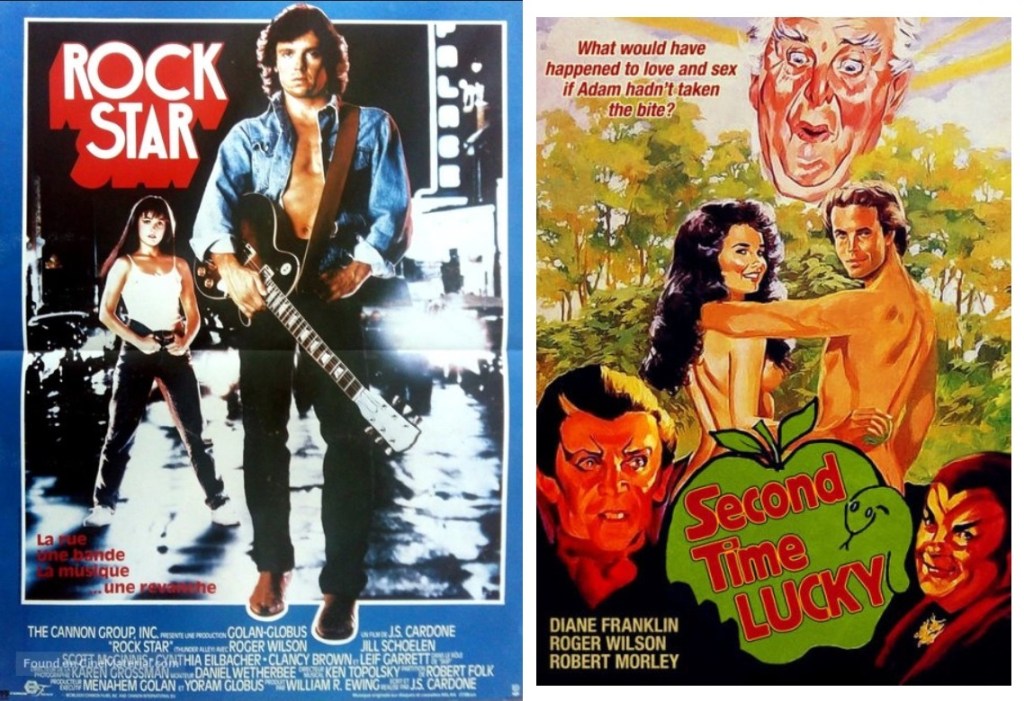
And the subject of this Scarecrow Challenge review, Roger Wilson, hit casting gold by being cast with both of them in Thunder Alley and Second Time Lucky. It’s been many, many years Roger, and we, the now low testosterone, hair-thinned curmudgeons of the VHS and vinyl epoch, continue to worship you in a Wayne Campbell and Garth Algar-tribute. We bow to you before the altar of the stage of The Palace, the faux-Phoenix, Arizona, rock club where you showed the world your rock ‘n’ roll “balbricks.” You are worthy, for you rawketh our analog, teenaged memories.
The overseas theatrical-versions of Thunder Alley and Second Time Lucky.
Roger Wilson: A Life on Record and Film
Born in New Orleans, on October 8, 1956, actor Wilson came to notice at the age of 25 in his first starring role as “Mickey” in the hugely successful Animal House-inspired comedies Porky’s (1981) and Porky’s II: The Next Day (1983).
As with Lane Caudell (with his own rock flick, Hanging on a Star), Kim Milford (with his rock flick, Song of the Succubus), and Rick Springfield (a rock star in the bomb Hard to Hold) before him, Wilson was an aspiring and accomplished rock ‘n’ roller who fronted a band called Num for several years. It was through his acting endeavors that Wilson was able to get two of his written/performed songs, “This Time” and “Radioactive Tears,” on the soundtrack for the obscure and rare New Zealand-shot Second Time Lucky (1984), an “Adam and Eve” rock musical-comedy in which he co-starred with our teenaged dream queen—Diane Franklin. Then writer-director J.S Cardone gave Roger’s musical skills a spotlight in Thunder Alley, which co-starred the soon-to-be girlfriend of Brad Pitt: Jill Schoelen. (Pitt and Schoelen became engaged after meeting on the set of a pre-stardom Pitt flick, the 1989 slasher romp, Cutting Class. The story of how Jill and Brad split before getting married is epic.)
A reformed rock ‘n’ roller who spent several years touring with rock bands in the early ‘70s, Cardone made a huge splash on the burgeoning home video market with his debut film, the 1982 slasher “video nasty” The Slayer—a film so “nasty” that it was banned from distribution in the land that loves-to-ban anything entertaining: the United Kingdom (see it on B&S Movies Exploring: Video Nasties Section 2 List). Cardone then hit his career peak in the early ‘90s through his association with Charles Band’s Full Moon Pictures. For us reformed teen denizens stumbling through our twenties in the pre-dawn years of the grunge era, we rented everything with a Full Moon logo on it—and with J.S Cardone’s name front and center on Shadowzone and Crash and Burn (both 1990), it was a no brainer: there was entertainment to be had.
After Cardone made a bloody splash in the post-Halloween slasher market and proved he could turn out economical, quality product, he was able to secure financing for his second film—a personal pet-project that drew from his early ‘70s band experiences.
So, in the glut of rock ‘n’ roll films permeating the cable transmission waves and video store shelves, with the likes of such rock ‘n’ roll classics as Eddie & the Cruisers (1980), Ladies and Gentleman: The Fabulous Stains (1981) and Streets of Fire (1984) (a “punk rock” Diane Lane two-fer?!), and Scenes from the Goldmine (1987; Catherine Mary Stewart from Night of the Comet!), there was Cardone’s 1985 rock ‘n’ roll love letter: Thunder Alley. And he cast Roger Wilson as; it seems, to be the onscreen pseudo-version of his younger Cardone-rock ‘n’ roll self.
Sadly, there’s no DVD version of Thunder Alley with an audio commentary to learn the backstory of Cardone’s hungry rock ‘n’ roll years. This writer ventures that Cardone made connections during those times and knew Surgical Steel’s Jim Keeler and Jeff Martin, Canadian hitmaker Gary O’Conner, and Shooting Star’s Gary West and Van McLain—and brought them onto the project to craft the music for the film’s faux band fronted by Roger Wilson: Magic.
Phoenix, Arizona’s Surgical Steel—where the film was shot (using some of the same locations as The Wraith and Harley Davidson and the Marlboro Man)—appear in the film as themselves, as the “biggest band in town” and Magic’s main competition. In real life, they were; but as with their critically acclaimed, hometown brethren, Icon, a Quiet Riot rise-to-stardom wasn’t meant to be for the ‘Steel. The film spotlighted their songs “Surrender” and “Gimme Back My Heart.”
In addition to casting Roger Wilson, Cardone provided ex-bubblegum teen-idol Leif Garrett with his first gritty “adult” roll as the egotistical-insecure “Skip” (we wonder who Cardone’s “model” was). Garrett not only turns in a wonderful performance as an actor—but does a stellar job on lead vocals singing “Do You Feel Alright,” which previously appear on Shooting Star’s third album, III Wishes (July 1982). Other songs expertly done by Garrett (take the overly critical bubblegum out of your ears, Garrett really can sing) are “Just Another Pretty Boy,” written by Gary O’Connor (who provided “Back Where You Belong” to 38 Special), and “Danger, Danger” by Frankie Miller (revered British singer from Jude with Robin Trower).
However, the real star of this show was Roger Wilson. Although Roger is an accomplished guitarist in his own right, and proves those skills with his spot-on playing, he’s actually doubled by Scott Shelly—one of Shelly’s most prominent students was Quiet Riot and Ozzy Osbourne’s Randy Rhoads. There’s no doubt Cardone believed in Roger; to promote Wilson’s career, Cardone released a promotional 7” 45-rpm that was given away in record stores and movie theatres. It seemed Wilson’s dream to make it as a musician was happening.
A Falling Star
Then as quickly as his star rose, it came crashing down in a blaze of thunder, oddly enough, in an alley.
The story starts with Academy Award-winning actor Leonardo DiCaprio when, fresh from his breakout roll in Titanic, partied with friends in the “Wolf Pack,” which is alleged to be a post-stardom euphemism for the group’s original, more nasty (and allegedly a press-generated) moniker of “The Pussy Posse.” The wolf-posse included an HBO-esque Entourage that included magician David Blaine and actors Kevin Connolly (ironically, later a star of Entourage; directed the John Travolta box-office bomb, Gotti), Jay Ferguson (“Stan Rizzo” of Mad Men), actor Lukas Haas, writer/director Harmony Korine, Tobey Maguire of Spider-Man fame, screenwriter Josh Miller (“Tim” in River’s Edge), and Ethan Suplee (TV’s My Name is Earl). Regardless of how the actor-amalgamate referred to themselves: they were notorious for their allegedly misogynistic and rebel rousing behaviors on the “upscale” New York City club scene.
One of those “incidents” that led to the wolf-posse’s ill repute involved actress Elizabeth Berkley, known for her attempt to break away from her squeaky clean teen-idol image cultivated by Saturday morning TV’s Saved by the Bell with a starring role in a “grown up part” in the critically lambasted Showgirls.
According to multiple media reports, Berkley attended the premiere of DiCaprio’s latest film, The Man in the Iron Mask—and visited the film’s VIP area, which was in full party mode courtesy of the Wolf Pack. It’s alleged that through DiCaprio’s L.A publicist, Karen Tenser, Berkley was invited by the actor and Jay Ferguson to party at the club Elaine’s after the premiere. Berkley politely declined, as she was dating Roger Wilson at the time (other media reports say Roger was there at the club by Berkley’s side when the invite was made).
Not taking a “no” for an answer, Berkley alleged that is when the “harassment” started, with an incessant barrage of invites from Tenser and Ferguson for dinners and parties. Wilson, as any chivalrous boyfriend would, intervened on one of those phone calls from actor Jay Ferguson—this time inviting Berkley to party with the pack at New York’s ritzy Asia de Cuba. Ferguson’s incensed response to Wilson’s intrusion was to invite Wilson to the club for a showdown.
Wilson accepted. And the thunder was about the roll in the alley.
Upon arrival at the club, Wilson took Ferguson’s offer to “step outside.” It’s then alleged DiCaprio (who ironically starred in Gangs of New York) interjected, “let’s go kick ass,” and led his wolf-posse into a West Side Story-styled, street-alley rumble. At that point, the recollections are hazy: a member of the posse—allegedly Ferguson—punched Wilson in the throat and damaged his larynx. Of all the body parts to suffer a blow: not his head or face, stomach or back: his throat.
Wilson’s singing career was over.
The unchecked testosterone melee resulted in a Manhattan judge tossing out Wilson’s $45 million lawsuit in 2004 against DiCaprio and “two other men” for the assault. It was determined that DiCaprio not only didn’t throw a punch, he didn’t encourage the fight—and Wilson was cast as the “aggressor.”
After the May 4, 1998, assault, Wilson’s career floundered with a series of little-seen TV movies and haphazardly distributed direct-to-video releases. Another TV series in the wake of Seven Brides for Seven Brothers wasn’t forthcoming. Meanwhile, DiCaprio moved up to the A-List and worked with Martin Scorsese.
Wilson, however, remained in the business behind the scenes. He moved into screenwriting, doing numerous uncredited rewrites (like the highly respected Carrie Fisher of Star Wars) for projects supervised by producer Steve Tisch (who produced Risky Business and Forrest Gump), Penny Marshall, and actress Sharon Stone. After teaching screenwriting at the college level, Roger Wilson forged a career in real estate development, which he still pursues today.
The bottom line, Roger: We love your work then and will love your work now. So clear out the vaults and upload your old material (especially from the hard-to-find Second Time Lucky)—and newer tunes—to a Spotify account for all of us Roger Wilson and Thunder Alley fans to enjoy. For in our analog-beating hearts sustained on digital life support, you are still a rock star. We want to rock with you again. You, my friend, are worthy to rock Thunder Alley.
Overseas “Big Box” VHS Sleeve.
More Roger Wilson?
A “Music of Roger Wilson and Thunder Alley” YouTube Playlist features the studio and video versions of all the songs from Thunder Alley with Roger Wilson and Leif Garrett, along with music by Gary O (and 38 Special), Frankie Miller (and Nazareth), Surgical Steel and Shooting Star. The playlist also includes the trailers and full films for Second Time Lucky and Thunder Alley.
Update, May 18, 2021: We, unfortunately, didn’t delve into the Judas Priest connection sidebar to Thunder Alley, since this film review — and my previous Medium article — was all about showing Roger Wilson the love. But you know the connection now, courtesy of the fine folks at Global Web News for pinging back in our comments section (below) about this incredible article (published May 17) regarding Judas Priests’ Rob Halford’s connection to Phoenix, Arizona’s Surgical Steel — written by Cherry Bomb in the digital pages of Metal Injection.
So there you go! All the Roger Wilson and Surgical Steel ephemera you can handle, and then some.
About the Author: You can read the music and film reviews of R.D Francis on Medium and learn about his work on Facebook. He also writes for B&S Movies.
I have made it clear on my show Wake Up Heavy that Slashers were not my “thing” when I was younger. I gravitated more toward possession (The Evil Dead) and cult (Rosemary’s Baby) films and the weird and surreal like Tourist Trap* and Phantasm. I don’t think I saw any of the Friday the 13thfilms until 1985 when I watched The Final Chapter on VHS at a sleepover. As a teenager my favorite of the first three Halloween films was Halloween III: The Season of the Witch, which is probably the most telling thing I can say about my relationship with the sub-genre. When I saw the original A Nightmare on Elm Street it was the surreal dream imagery, not Freddy Kreuger, that appealed to me. I avoided, or wasn’t interested in, the massive glut of Slashers (and their sequels) from the “Golden Age” but in the last five or six years I have been trying to fill in this personal horror blind spot.
That’s why I had to chuckle to myself when Sam asked if I would do a Top Ten Slasher Films list for his site. Because of my history, I told him, it’ll be a strange list. And it won’t be a THESE ARE THE BEST SLASHER films list. This is simply MY Top Ten based on my weird predilections.
I found it helpful to set some boundaries for myself for fear of falling down a very deep slasher rabbit hole. I avoided gialli, and other foreign copy-cats, as well as most of the proto-slashers (Peeping Tom, Psycho, Bay of Blood, TCSM, et al). I found this loose guideline from PasteMagazine helpful (Slasher villains are human, Slasher films have a body count, and Home Invasion films are not Slashers), and, except for a few instances, I followed these boundaries and guidelines.
Without further ado here’s My Top Ten Slasher Films List…
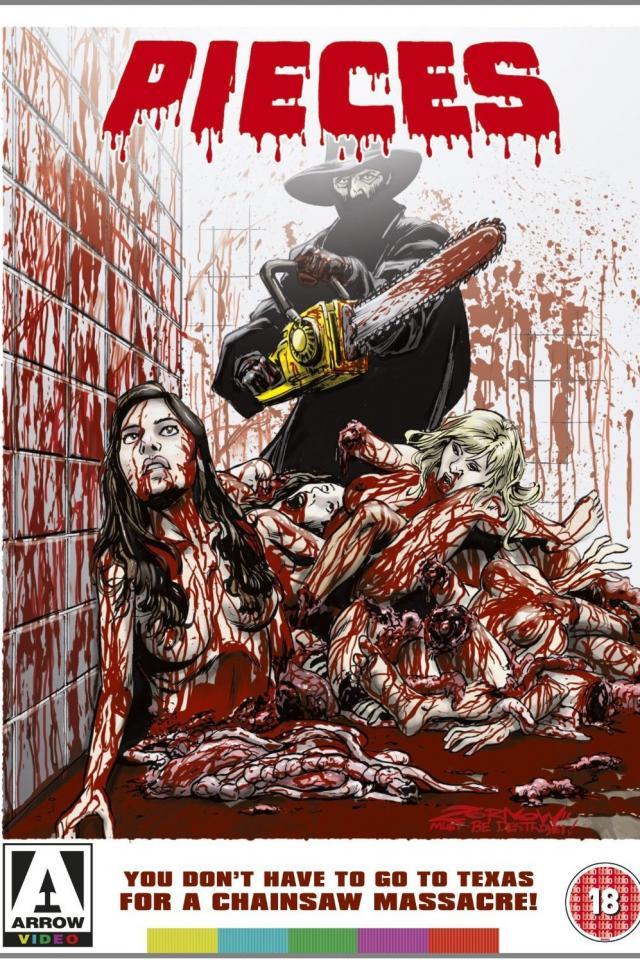
10. Pieces (1982): Anything that compared itself to TCSMwas NOT in my wheelhouse. Hell, I didn’t watch Hooper’s classic until I was in my late 20s! And here I am already abandoning one of my own guidelines with the first movie, but hey, it’s supposed to take place in Boston, so it gets a pass. These are just a few of the amazing things Pieces features: one of the best movie taglines, horror mainstays Christopher and Linda Day George, a random Kung Fu attack, a pig carcass substituting for a showering co-ed, and a surprise ending to rival that of Sleepaway Camp’s.
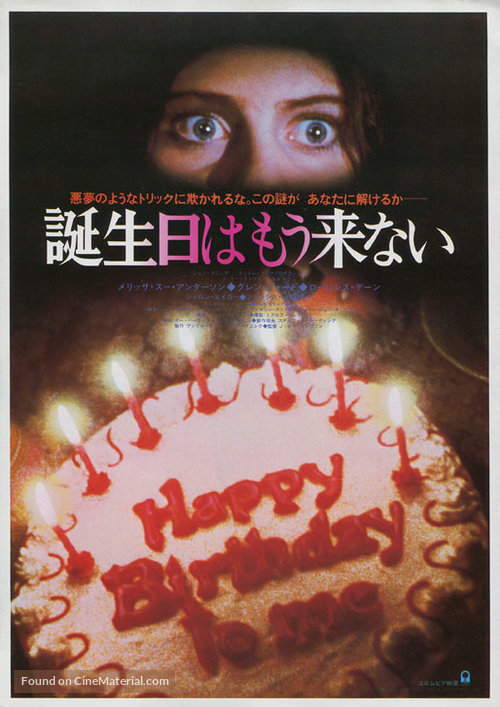
9. Happy Birthday to Me (1981): A lot of Slasher fans don’t like this one, but I dig it. Directed by J. Lee Thompson (most known, to me at least, for his sleazy flicks with Charles Bronson) and starring Glen Ford, Susan Acker, and Melissa Sue Anderson this one is kind of a mess. The ending was changed at the last minute and makes no sense, but for me that’s part of the charm. The set-piece kills are fun, there’s an SFX obsessed character, and it’s Canadian! A lot of the characters are assholes though, which keeps it further down this list.
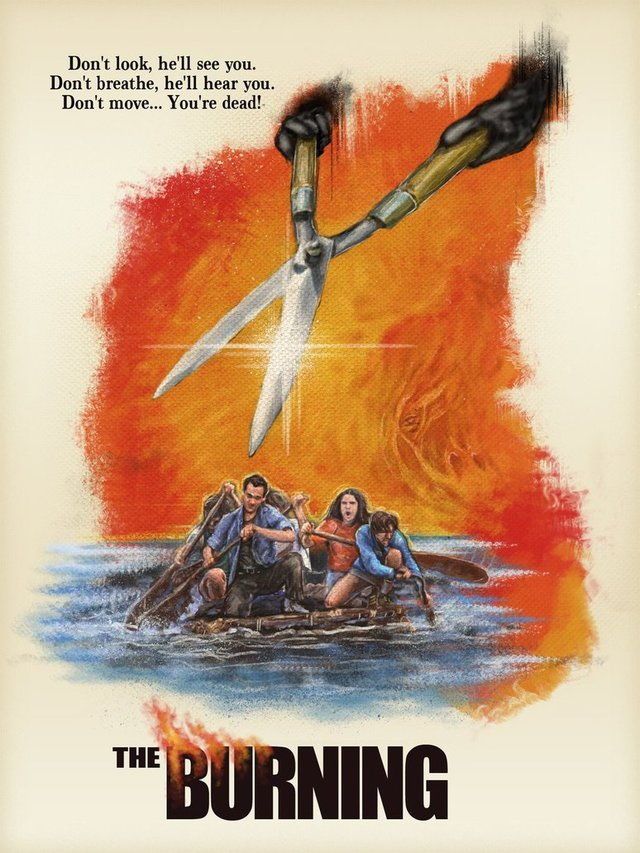
8. The Burning(1981): One of a BAJILLION campground Slashers from the early ‘80s The Burning is most famous for ONE scene that features some stellar Savini wet works. What stands out for me is the great cast: Jason Alexander (with HAIR), Fisher Stevens, Brian Backer, and a blink-and-you’ll-miss-her Holly Hunter. It’s also one of the few Summer Camp films that shows the counselors and kids actually doing Summer Camp stuff!
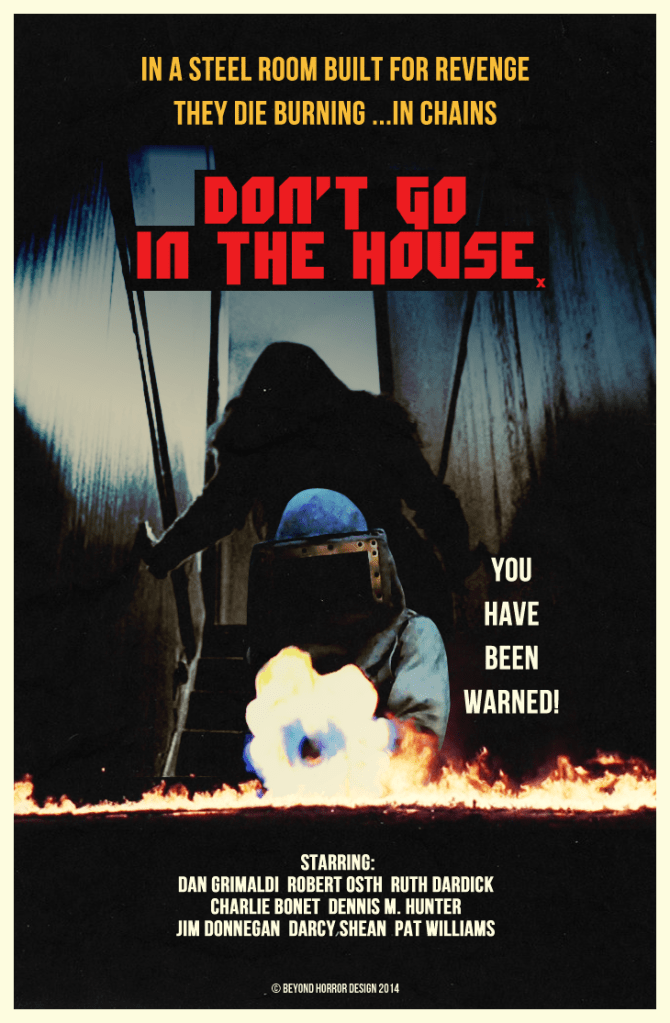
7. Don’t Go in the House (1979): Gotta admit, this one is pretty ugly. The violence towards women, a staple of the sub-genre overall, is particularly nasty here. In my initial viewing notes for this I described it as a cross between Psycho (mommy issues) and Taxi Driver (psychologically damaged anti-hero) with Dan Grimaldi’s offbeat performance front-and-center. It might be a stretch to call this one a Slasher, but it does hit the guidelines. Not for the easily offended.
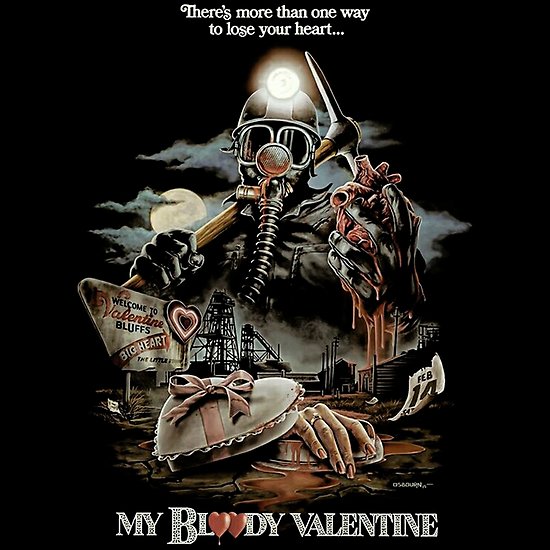
6. My Bloody Valentine(1981): Another Canadian joint (you can really hear the accents in this one) and the first Holiday Horror (still waiting for a Flag Day Slasher) on my list.We’ve got all the staples of an ‘80s Slasher—a masked killer, decent amounts of gore, misdirection, humor—but instead of teenage babysitters or camp counselors we’ve got 20-something coal miners, and I like that divergence from the norm. I also enjoy the sequel if for Tom Atkins alone.
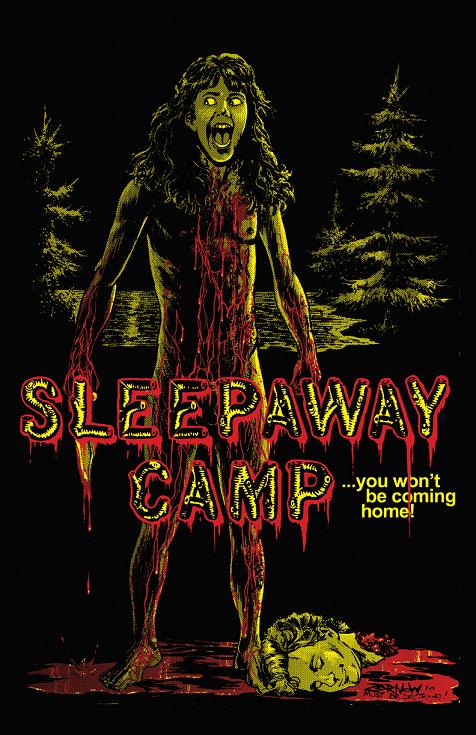
5. Sleepaway Camp (1983): What could I possibly say about this one that hasn’t been said a hundred times before? It’s mean-spirited, progressive yet transgressive and a tad perverted, the characters are foul-mouthed and ooze New Jersey charm, and it has the most bat-shit insane twist ending ever. Plus, a character has a black-tape-mustache in one scene. ‘Nuff said. Bonus points for offing the littlest of campers in one of its more disturbing scenes.
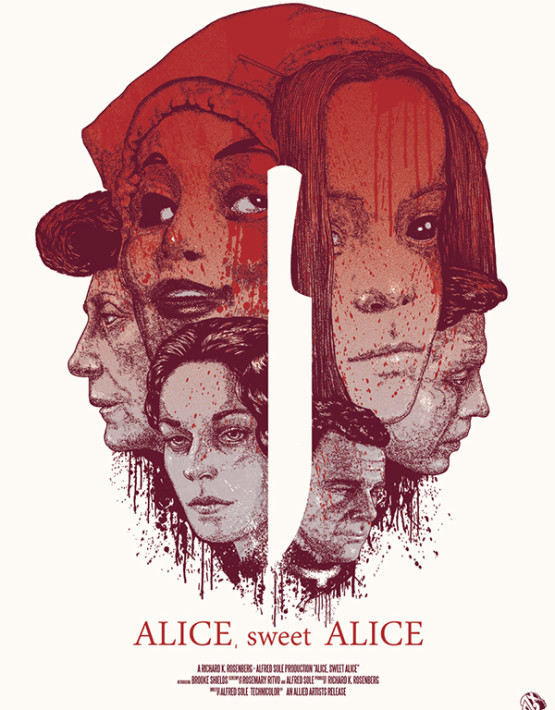
4. Alice, Sweet Alice (1976): I did a WDIRT episode on this one, which is a series for my podcast based on movies I have seen as an adult and wondered Why Didn’t I Rent This as a youngster. Alice is one of the exceptions to my proto-slasher (and possibly the giallo) rule, but it’s such an amazing little oddball film I had to include it. It’s staunchly anti-Catholic (which got it condemned by the Catholic church), stars an itty-bitty Brooke Shields, and was directed by one-time porno director Alfred Sole. The mask the killer(s) wear in this one will give you nightmares.
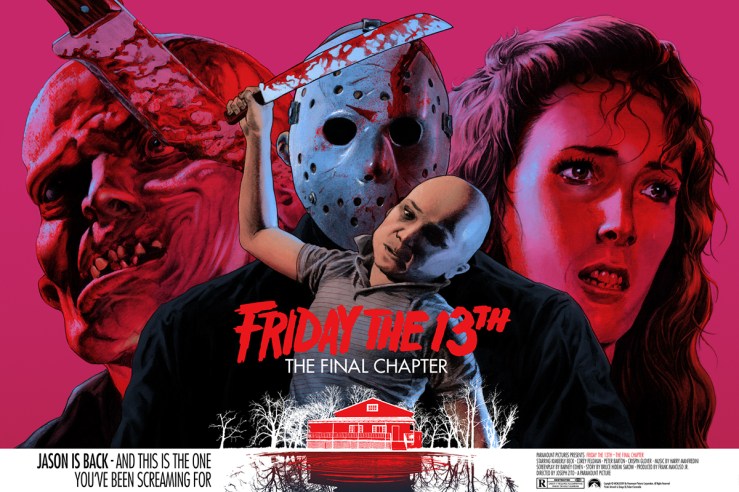
3. Friday the 13th: The Final Chapter (1984): I consider this my introduction to Slashers and rank it as my absolute favorite of the F13 franchise. It’s meta without the obnoxious wink-winking at the audience, has some emotional depth (Rob’s search for his sister), a great cast, Crispin Glover ripping up the dance floor, some of the best effects of the series, my favorite Jason, likeable characters, and boobies! What more could you ask for?
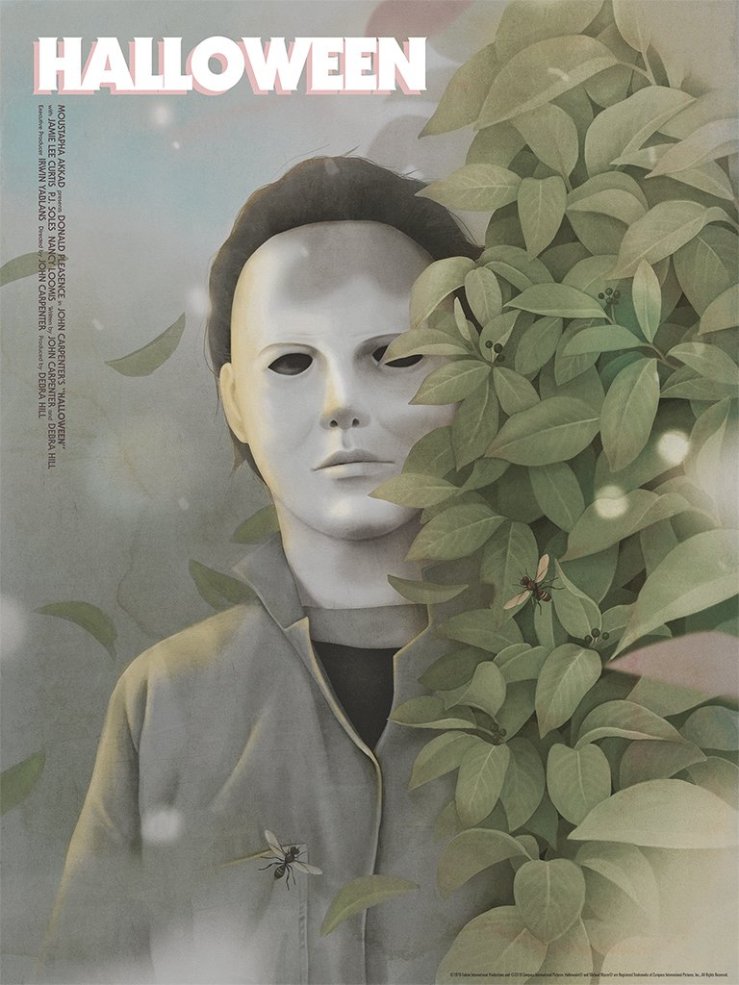
2. Halloween (1978): John Carpenter’s film is a stone-cold classic, it simply isn’t my top Slasher. Why isn’t it number one on my list? Because Black Christmas is.
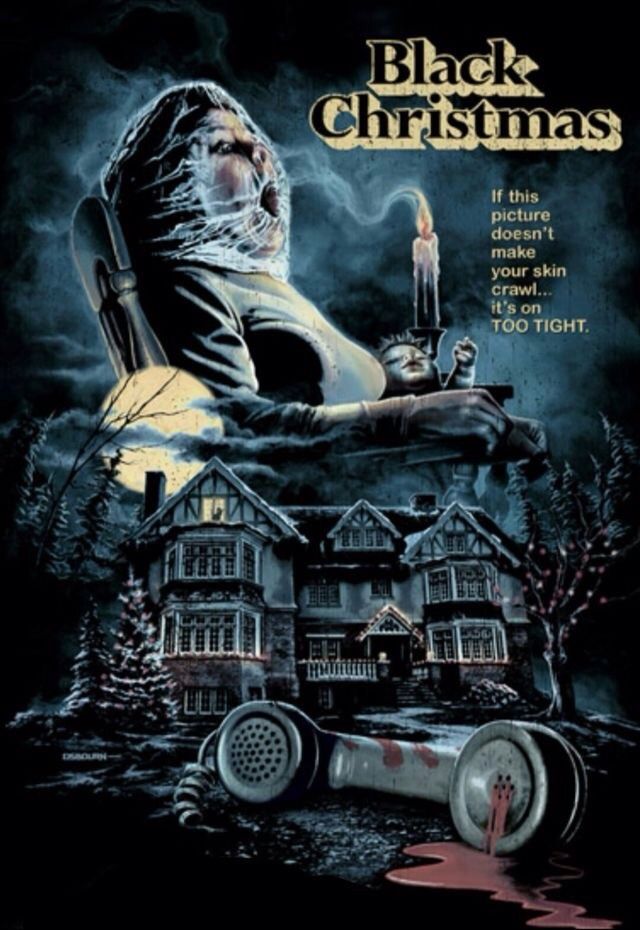
1. Black Christmas (1974): I did an episode on Bob Clark’s other Christmas classic even though I’d never seen it as a kid. It has quickly become one of my favorite horror films in general, and my number one favorite Holiday Horror ever. Heck, one of the last times I watched it it gave this old man a nightmare! Black Christmas has earned the number one position over Halloween because, a) I think Halloween owes a lot to it, and b) BC has just a bit more going on. A bit more emotion, a bit more depth, better acting, more well-rounded characters, and a touch of the strange (Billy and those phone calls are creepy as all get out). Some people call BC a proto-slasher, but I like to think of it as the original Slasher. Also, it’s another Canadian classic!
*Tourist Trap is one of my favorite horror films, but I do not consider it a slasher per se. However, on S1E2 of Wake Up Heavy I did refer to it as a pseudo-slasher. It shares some similarities with The Texas Chain Saw Massacre which also feels different than most Slashers. More like a reverse home invasion scenario? But that may be splitting hairs. They certainly fit the guidelines I have referred to.
So there you have a novice Slasher fan’s Top Ten Slasher list. When Sam does a cult or folk-horror Top Ten I’ll be much better equipped for that!
Day 16 Rock ‘n’ Roll Miscreants: Give some screen time to the punks and/or metal heads
The elusive VHS and Soundtrack.
Strap yourself in. Get ready for the rock ‘n’ roll adventures of film and television visionary Alan Sacks (aka Alan ‘duBeat-e-o’ Shapiro) and the film debut of Joan Jett. (And fair warning: this review is admittedly unhinged . . . before you dive in. You’ve been warned, ye reader: for unhinged movies need like-minded reviews.)
While the pioneering, all-female rock band the Runaways were unable to repeat their explosive, overseas radio and retail chart acceptance (they were huge in Japan and the Pacific Rim countries) in the U.S, the Suzi Quatro-inspired rockers nonetheless became ubiquitous, sexy fodder for the late ‘70s U.S rock press — especially in the teen-oriented pages of Circus, Crawdaddy, Creem, and Hit Parader (dude, do I miss those mags!).
Were those magazines’ Runaways-centerfold posters on this wee-tween’s walls? You better f’in believe it: right alongside the tear-outs of my motocross idol, Roger DeCoster. My Runaways albums spun alongside Frampton Comes Alive and Kiss’ Dressed to Kill.
“Hey, why don’t we make a female version of A Hard Day’s Night to promote the band?” rubbed the greedy little hands of their songwriter-svengali, Kim Fowley. “Frampton did that dumb Sgt. Pepper movie; Kiss did that Phantom of the Park mess, so why can’t we make a disaster-rock flick too? This dumb kid with the DeCoster pictures on his wall will eat it up.”
“Turning the Runaways into the Beatles? You’ve done it again, K.F!” says KROQ disc jockey Rodney Bingenheimer. “It’ll make millions! And to stick it to Capitol Records and the Knack, you should title it: Eight Days a Week.”
So, in a September 22, 1979, issue of the radio & records industry newspaper, Billboard, the marketing-machine genius of Kim Fowley began to grind:
LOS ANGELES—Production has started on the feature motion picture “We’re All Crazy Now,” loosely based on the career of the all-girl rock act the Runaways. The Zane-Helpern independent production stars Arte Johnson, Runaways’ member Joan Jett and former Herman’s Hermits leader Peter Noone. Cheryl Smith, along with Karen and Kathy Fallentine, round out the cast as the remainder of the original Runaways.
Okay, so did you hear the one about the on-the-downward-slide comedic actor from the ‘60s TV variety show, Laugh-In, a washed-up Beatles clone, and Rainbeaux Smith from the infamous women-in-prison flick, Caged Heat (1974), walking into a bar?
Oh, this is going to work out quite well, Mr. Fowley.
And we trip in Doc Brown’s DeLorean to a 1984 where Joan Jett scored a worldwide #1 solo hit with “I Love Rock & Roll” and formed a faux-rock band with Marty McFly and David St. Hubbins from Spinal Tap to sing a Bruce Springsteen-penned song in a film written by the guy who dreamed up Travis Bickle — who inspired Mark David Chapman to assassinate John Lennon so he could impress Jodie Foster — who starred with Cheri Currie of the Runaways in Foxes alongside keyboardist Greg Guiffria and his band, Angel.
My mind is in FUBAR crash mode. I need a Dr. Pepper and Pringles sleeve reboot.
“So, Mr. Du-beat-e-o. How about you make me a movie?” says Uncle Leo from TV’s Seinfeld to Ray Sharkey from The Idolmaker.
And out of the Fowley-chaotic womb, instead of birthing a Beatlesque twin, an acid-infused, bizzaro-Jerry version of the Monkees’ incomprehensible debut film, Head, was born. It turns out Jack Nicholson was right: dropping acid while making a narcissistic rock ‘n’ roll movie without a script and no mainstream commercial appeal, actually works.
“. . . a punk movie that matches it’s style to its music.” — Filmex
“Aesthetically with its heavy doses of callous violence and flashy technique, the film recalls ‘A Clockwork Orange’. . . .” — Variety
Thank you, Uncle Leo, for giving me an f’d-up Stanley Kubrick punk rock movie! I’m all in!
And . . . what the hell is with all these breakaways to porno-smut Polaroids? Why are their pictures of dead animals? Who’s this weird, punk-rock Stevie Nicks chick dancing around in black lace? And where’s Joan Jett? Where’s Malcolm McDowell and the rest of the Droogs? Where’s the Laugh-In dude and the Beatle-wannabe? Why is there so much El Duce of the Mentors in this film? You’re telling me the guy who dreamed up the loveable characters of Vinnie Barbarino and Arnold Horseshack, and paired Jack Albertson from The Poseidon Adventure with Freddy Prinze —
“You made this?” interrupts the unknown actress who supported Johnny Depp in Private Resort (1985), starring as duBeat-e-o’s actress-valley girl-hostage in the editing room.
“Take a flying fuck to paradise, Derf Scratch,” duBeat-e-o barks his ubiquitous quote to anyone who doesn’t understand his “artistic vision” — even the bad ass, take-no-crap-o bassist from the L.A punk band, Fear. duBeat-e-o clutches a gun to the head of Derf, forcing his editor-character of Benny to feverishly splice a psychotic montage of five year old, left over footage of Joan Jett, along with porno-smut Polaroids, religious kitsch images, and El Duce of the Mentors providing voiceovers.
So, Nora Gaye, I think the real question is: Why did you agree to star in this? But I get, Nora. You were duped. But you really should have stuck to the Trapper John, M.D guest spots.
It turns out the guy who really made this sack-o-crap-o was Alan Sacks: Yes, the creator of the hit ‘70s TV sitcoms Welcome Back Kotter and Chico and the Man was given the job of somehow turning the half-of-a-movie celluloid table scraps of We’re All Crazy Now into a functioning, full length feature film. And he gave the cinematic sewing gig to his writing partner, Marc Sheffler, a former actor who starred in Wes Craven’s The Last House on the Left.
“Hey, let’s hire that Sacks kid,” ponders the cigar-chompin’ executive over his desk-perched wing tips. “He did a pretty decent job with that skateboard movie, Thrashin’, the one that starred that kid who grew up to be George W. Bush in that movie directed by that guy who made The Doors movie. He’ll make this steaming pile work. Look what his little Sweathog show did for that kid in the Bees Gees disco movie.”
“I think a more contemporary reference for the younger readers is to reference Josh Brolin’s work in the Deadpool and Avengers universes,” mentions Marc Sheffler to the executive.
“Don’t tell me how to do my job,” kid,” chomps down the leg breaking financier on his stogie.
So, in a typical life-imitating-art fashion, the reimaging of We’re All Crazy Now . . . also ran out of money . . . just like original We’re All Crazy Now did. And when you’re brimming with the über cool, nihilistic I-don’t-give-a-fuck altitude of Alan Sacks, what do you do?
You “F” the bastards by having the art-imitate-your-life: Director Alan “duBeat-e-o” Sharpiro (read: Alan Sacks) is given the job by Hendricks, a greedy, leg breaking producer-financier (read: loan shark; played by Len “Uncle Leo” Lesser) with no film experience, to make a movie about “Joanie Jett.”
That’s it. That’s the plot.
And where in the hell is Joan? So far, all I’ve seen is Ray Sharkey fluttering around on a cheap, one-set stage play environment that would give the makers of Bela Lugosi’s worst cardboard-films pause, screaming at Derf Scratch and Nora Gaye, with an occasional appearance by Uncle Leo in a wheelchair — all backed by a musical accompaniment courtesy of a couple of Social Distortion tunes and some punk band, Even Worse, lamenting “We Suck,” while another band, Dr. Know, sings about giving someone a “Fist Fuck.”
What in the hell did I rent?
That’s right. Squint and look at the monitors on Derf’s editing suite, because that’s how Joan “stars” in this “movie” — via the five year old footage shot in 1979 by Bernard Girard (more on him, later).
“Okay, well, that’s ten minutes of a movie,” says Sheffler to Sacks. “What do we do to fill out the remaining 80 minutes?”
“Here, start spicing-in images of these,” duBeat-e-o suggests with the toss of a stack of Polaroids.
“Smut photos?” says Derf.
“Yeah, I took them during one of my sex-coke binges. And create stills from that stack of porno magazines over there and, uh, yeah, use that shelf of old porn movies over there . . . and I have some random stock newsreel footage around here, somewhere,” creates duBeat-e-o on his stumble-bumble apartment search for the reels. “Oh yeah, and see if you can find or take some pictures of fresh road kill.”
“Road kill? Alan, are you okay?”
“And give El Duce from the Mentors a call. I want him to roll around in the sack with Johanna Went and that Linda Texas Jones chick from Tex and the Horseheads in a nightmare sex scene where El talks about foreskin and uncircumcised appendages.”
“Okay?”
“And Ray will think he’s having sex with Johanna and Linda, but it turns out he’s bangin’ El Duce.”
“And what I am supposed to do for dialog, Alan?” Marc wonders.
“After you splice it all together, we’ll have El invite over some of his friends, we’ll all watch it, and make funny comments. You know, it’ll be a like nihilistic, punk rock version of Mystery Science Theatre 3000.”
“Alan, Joan will sue us if we do this to her. And I don’t think Tomata du Plenty will be happy we stole the Screamers’ Gary Panters-designed band logo,” reasons Marc. “I mean, the Screamers aren’t even on the soundtrack, let alone in the movie. And I might add that Kim’s rights to the Runaways’ songs are so screwed up, we can’t use them on the film’s promotional soundtrack album.”
“Look, Marc. This project was a flea-bitten piece-o-dog crap-o when I got snookered into doing it. So we might as well have some fun and ‘fist fuck’ the producers. As for Joan: She can take a flyin’ fuck to paradise. That’s what she gets for getting involved with Kim Fowley in the first place.”
“Well, you better hope R.D Francis, the reviewer, doesn’t mention duBeat-e-o in the same breath as the Camp Rock and Jonas Brothers: The 3-D Concert Experience movies you’ll make later on. He already reminded the B&S About Movies readers you made Thrashin’.”
“Hey, Thrashin’ was certainly better than Space Mutiny, that Battlestar Galactica rip-off piece-o-crap-o that David Winters has on his directing resume. He should be thankful for the gig I gave him directing that one.”
“This thing is nuts. It played in theatres!” — The Psychotronic Video Guide
And so, there it was, five years later, on this writer’s local video store’s shelf alongside the 1984-released copies of Rocktober Blood and Terror on Tour. It seems the mullet-haired and acne-scarred, video-clerking film dorks of America couldn’t even make head or tails of what the hell was up with duBeat-eo — and filed it in the horror section.
So how did Joan Jett get into this mess, running around Hollywood surrounded by faux-Runaways like it was 1964 Liverpool — sans the Beatles’ touring school bus breaking down at, what seems to be, a woodsy summer camp filled with butch motorcycle-riding lesbians? Are Joan and the rest of the Runaways floating around inside a spaceship? They were abducted by aliens? What in the hell is going on?
Well, it’s no secret the Runaways’ career was a tumultuous one amid the creative differences-brew that was Joan Jett and Lita Ford — with Joan wanting to take the band in a punk direction (she saw that vision through with guys from the Sex Pistols and Blondie backing her eponymous solo debut, also known as Bad Reputation) that conflicted with Lita’s metal urges. They were, however, united in their Cheri Currie-resentment: she sang most of the songs they wrote — at Fowley’s insistence — and his referring to Cheri as the band’s “Cherry Bomb,” didn’t help either.
So, as with Jimmy Page left holding the contractual bag with the Yardbirds and making the best of it . . . Joan Jett stayed with the project. And where’s Fowley? He ran away with the Runaways’ Laurie McAllister to form another all-girl group, the Orchids.
Subsequent Billboard production teasers reported We’re All Crazy Now would be directed by James Roberson, known in the Drive-In exploitation trash universe as the cinematographer who worked on the low-budget portmanteau Encounter with the Unknown (1972), along with Charles B. Pierce’s Winterhawk (1975), The Town that Dreaded Sundown(1976), and Grayeagle (1977), The Great Lester Boggs (1974; aka Redneck Country), and the big kahuna of rock ‘n’ roll trash films: Don Edmonds’ Terror on Tour (1980; not released until 1984 on video).
Then Billboard reported Roberson was out and the industry-respected Bernard Girard — who directed James Coburn in Dead Heat on a Merry Go Round (1966), Burt Reynolds in Hunters Are For Killing (1970), an early Christopher Walken film, The Happiness Cage (1972; The Mind Snatchers), and Robert Culp in A Name for Evil (1973), along with the Sammy Davis, Jr. and James Caan co-starrer, Little Moon & Judd McGraw (1974; aka Gone with the West) — was behind the lens.
And we know how that worked out, don’t we?
“Hey, what’s the deal with the artwork from the Screamers you were talking about earlier that appears on the theatrical one-sheets and video boxes,” you ask. “Who are the Screamers?”
The legendary L.A underground punk band the Screamers began in Seattle grunge country fronted by Tomata du Plenty and some guy named Eldon Hoke — who became El Duce of the Mentors (their 1981 debut single, “Get Up and Die,” appears on the duBeat-e-o soundtrack). El Duce received his infamous “mainstream” recognition as result of his suspicious death via a drunken-stupor-train track-nap two days after completing an interview for Nick Broomfield’s sensationalistic and unauthorized Nirvana documentary, Kurt & Courtney. In the film, El Duce claimed Courtney Love offered to pay him to kill Kurt Cobain — which led rock ‘n’ conspiracy theorists of the Jim Morrison variety to believe the train death was, in fact, a murder set up by Love.
“You watched this and know all of this trivia about the movie?” Nora Gaye scrunches her face at this writer like I’m some kind of loser duBeat-e-o groupie. “Do you, like live in the basement of your mother’s house or something, reading film books all day?”
Yes, Nora, I did, I do, and I am. And I love every continuity-confused and logic-out-the-window minute of duBeat-e-o. Why? Alan Sack is epitome of “punk rock” and understands the ethos like no other writer-director before or since. He’s proof you can sans a guitar and take a camera and screw with the establishment. Sacks did with duBeat-e-o what Nicholson did with Head: he gave us a punk rock Monkees movie.
“. . . duBeat-e-o is destined to become a cult classic.” — L.A Weekly
And with that . . . I’ll go into my Mom’s basement and spin my vinyl copy of the duBeat-e-o soundtrack and pop my VHS copy into the VCR and take a pleasurable, flyin’ ‘you-know-what’ to my trash-cinema paradise. (Add this one to the “10 Movies That Were Never Released on DVD” or soundtracks never released on CD, for that matter.)
Need more Alan Sacks? Here’s a Proudly Presents podcast interview with Alan — who went from creating Welcome Back, Kotter, to going deep into the LA Punk scene, to making Disney Movies. Need to know more about El Duce? Check out this documentary on his life and career with The Mentors: The Kings of Sleaze (2017) and you can watch his insights in Kurt and Courtney (1998), both on TubiTV. He’s also the subject of a new 2019 document, The El Duce Tapes (you can learn more about the film with this review at POV Magazine).
UPDATE, July 2021: Thanks for the social media heads up, my fellow fans! Turns out, Anubisswift, one of the best movie portals on the ‘Tube — and near 9k subscribers-strong — uploaded an age-restricted sign-in copy of the film. And here’s the VHS trailer — courtesy of another great movie portal, MySickThingsofHell — to get you started. Hats off to you both! (Now, someone needs to upload the soundtrack vinyl-rip!)
About the Author: You can read the music and film reviews of R.D Francis on Medium and learn about his work on Facebook. He also writes for B&S About Movies.
Wait — am I finally stooping to reviewing the film that single-handledly led to every bastardized MTV slasher wanna-be that littered the shelves of video stores as they died a sad death and even now enraged me as I scan past them on my streaming services?
No. Nope. Not at all.
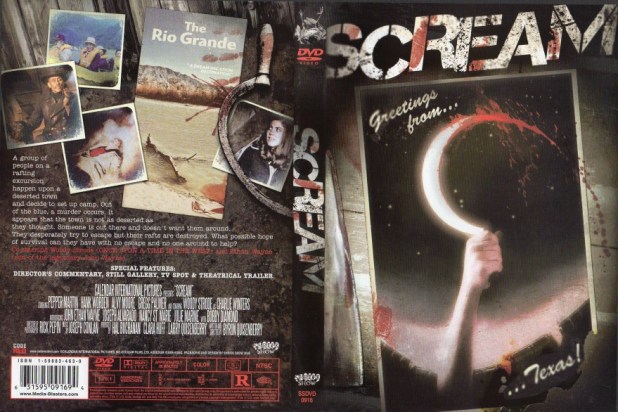
Instead, we’re talking about 1981’s Scream, also released as The Outing.
It was the auteur project for Byron Quisenberry, which sounds like the name of one of the suitors for the Little Women, but he was also the director of 2004’s Hollywood, It’s a Dog’s Life and did stunts for movies like 1972’s Enter the Devil, Mannequin on the Move and Return of the Living Dead.
Beyond writing, producing, directing and doing stunts for this movie, his wife C.L. Huff was the costume designer, nurse, caterer and make-up artist.
I’ll tell you the story of Scream short and sweet: twelve people go camping on the Rio Grande, make the dumb decision to spend the night in an old ghost town, then have to deal with an unseen killer that takes them all out one by one.
To wit: Allen is hung, Rod and John are hacked with a cleaver, Andy gets hit in the face with an axe, would-be leader Bob gets his head chopped off, throws a bunch of dirt bike kids through a door, and Jerry is just found dead.
In between all that, a mysterious cowboy named Charlie Winters (Woody Strode, in addition to being in Spartacus, Jaguar Lives!, Keoma and many more films, was also a pro wrestler from 1949 to 1962) arrives and claims to have been hunting the killer — the ghost of an old sea captain — for forty years.
Woody Strode wasn’t the only pro wrestler in this movie. Pepper Martin plays Bob and he had a long career mainly in the Pacific Northwest. At one point in his career, Strode invited Pepper to Hollywood where they and Lee Marvin ended up screaming in director John Ford’s lawn at 3 in the morning. Somehow, he became friends with the legendary Ford after this.
Another John Ford regular, Hank Worden, also shows up here. You may know him as a senile waiter from the Twin Peaks series or from being in The Searchers. And another actor from that film — John Wayne’s son Ethan — is in this film, too.
Alvy Moore — Hank Kimball from Green Acres — also shows up, making this the fourth slasher I’ve seen him in (for those playing trivia, the others would be Intruder, Mortuary and The Horror Show).
Quisenberry was influenced by Agatha Christie’s Ten Little Indians and was really loose with the story while shooting, not even telling the cast who the killer was.
The results are a movie that isn’t well-considered thanks to its plodding pace, lack of good kills, bad acting and a killer that never shows up, not to mention a hero who runs away after he shoots the villain.
If you can say anything nice about the movie, it’s that the location — the Paramount Movie Ranch — looks great. It’s also where the original Westworld and parts of Bone Tomahawk were also shot there.
Day 16. Rock ‘n’ Roll Miscreants: Give some screen time to the punks and/or metal heads.
“It’s super human, super music, super magic and super amazing! You’ll be compelled over the edge of sight and sound and under the spell of mind-boggling action and music! Pushed to the danger zone! It’s a death wish at 120 decibels! Stunt Rock! The ultimate rush!”
If there was ever a movie that can’t live up to its trailer, it’s Stunt Rock. Upon witnessing it on the Alamo Drafthouse’s Trailer War compilation, I fell in love with whatever this movie could be. I even ordered the official DVD of the film but never unwrapped it. Why? Because nothing could be as great as this trailer.
I’m so happy to have been proven wrong.
Stunt Rock — directed by Brian Trenchard-Smith (Dead-End Drive-In, Night of the Demons 2, Turkey Shootand so many more) — is exactly the type of movie I love: Take a basic concept and let hijinks ensue.
As Trenchard-Smith sais himself, the concept was “Famous stuntman meets famous rock group. Much stunt, much rock. The kids will go bananas.” He’s also referred to it as “a largely plotless, pseudo-documentary, rocumentary and basically a 90-minute trailer for Grant Page.”
Grant Page is an Australian stuntman who pretty much defied death on a daily basis throughout the 70’s and 80’s, transforming his weekend hobby into a career that would give him international exposure thanks to films like The Man From Hong Kong, Mad Max, Death Cheaters, Mad Dog Morgan, Death Ship and so many more, as well as starring in Road Games and having his own TV series, Danger Freaks.
Basically, Grant comes to America, talks about stunts, does stunts, gets the girl — Trenchard-Smith’s future wife Margaret Gerard — and hangs out with a band that combines rock and roll and magic. Monique van den Ven (Amstersdamned, the 1982 version of Breathless, Paul Verhoeven’s Turkish Delight) also shows up.
There’s also the subplot of a movie being filmed and the ways directors and agents treat their talent. The agent in this film is played by Richard Blackburn, whose career is the kind that draws the laser focus of this website. Would it just be enough if he played Dr. Zaius on the Return to the Planet of the Apes cartoon series? Let me add that he also co-wrote Eating Raoul and appears in that film as James from the Valley. But perhaps what he’s most celebrated for — at least around these parts — are for writing, directing and appearing as the Reverend in the absolutely transcendent 1973 film Lemora: A Child’s Tale of the Supernatural.
This is less of a film and more of a movie that you can shut off your brain and just savor the stuntwork while hearing Page discuss how and why he did it, interlayed with Sorcery in concert.
While Trenchard-Smith wanted Foreigner for the film, they were on tour and wouldn’t be back in time. That’s fortunate — no band other than Sorcery could have been in this movie.
A theatrical metal band formed in Los Angeles in 1976, Sorcery’s gimmick was that two master magicians would dress as Merlin (Paul Haynes) and Satan (Curtis James Hyde), join them on stage and battle one another in what their press bio referred to as “The King of the Wizards against the Prince of Darkness.”
The band was made up of Richard “Smokey” Taylor on guitar, Richie King on bass, Greg MaGie on vocals, Perry Morris on drums and the masked Doug Loch on keys. They’d later play Dick Clark’s 1982 A Rockin Halloween and 1983 A Magical Musical Halloween.
But if you really love metal, you probably know them best for a completely different film.
In 1984, Morris, Taylor and King became Headmistress, the band for the seminal metal/horror film Rocktober Blood, a film in which Billy “Eye” Harper wipes out most of his band before they reform a year after his killing spree has been halted.
That’s pretty much the movie. It doesn’t demand that you invest much more of your brain into it, instead relying on a magical blend of 1978 L.A., behind the scenes movie-making and wizards launching fire across a stage while a masked dude plays keyboards and dudes wail and shred. If this doesn’t sound like the most amazing film ever committed to celluloid to you, you’re invited to leave this site now and never come back.
The frequent use of split-screen seen in this movie was a necessary editing tool. That’s because many of the stunts from Australian films like The Dragon Files, Mad Dog Morgan and Death Cheaters was filmed on 16 mm and needed to be fixed to fit the wide frame. That said, I love how each frame has a different angle. It’s MTV three years before that little moon man ever launched.
I’m not the only lover of this film. Quentin Tarantino’s Death Proof owes the way it presents stunts — much less a New Zealand stunt icon in Zoe Bell in a starring role — to this film. And Eli Roth wore a shirt of the film while filing Hostel 2 and has featured the Sorcery songs “Talking to the Devil” in Knock Knock and “Sacrifice” in his remake of Death Wish.
Perhaps Stunt Rock has even greater cultural significance. After all, it’s Phl Hartman’s first movie. And editor Robert Leighton — who was billed as Robery Money as this was a non-union film — would go on to be the supervising editor of This Is Spinal Tap. Hmm — now it’s all making sense.
While Trenchard-Smith would at one point state that this was the worst movie he ever made, he’s softened on the film in later years. What do you expect from a movie that went from an idea in the shower to in theaters in under 5 months?
Sadly, three months prior to Allied Artists distributing the film, they went bankrupt. The film was sold to Film Ventures International. And then…the movie disappeared for decades until it was rediscovered.
You can order this movie — and lots of other amazing stuff — from the band Sorcery. Do so right now. This is a movie begging to be experienced.
BONUS: The amazing Trailers from Hell has posted Trenchard-Smith discussing the film over the trailer and it’s everything you want it to be.










 B&S About Movies
You must be logged in to post a comment.