LOST TV WEEK: Spectre (1977)

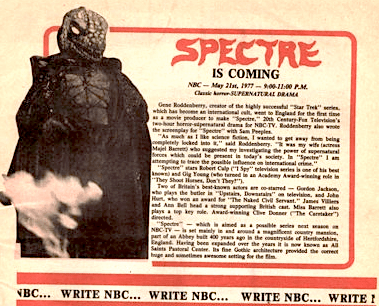
Originally airing on May 21, 1977, this show was co-written by Gene Roddenberry and Star Trek writer Samuel A. Peebles and directed by Clive Donner (What’s New Pussycat, the Get Smart reboot The Nude Bomb (which had Sylvia Kristel in it!) and the 1981 Charlie Chan reboot Charlie Chan and the Curse of the Dragon Queen).

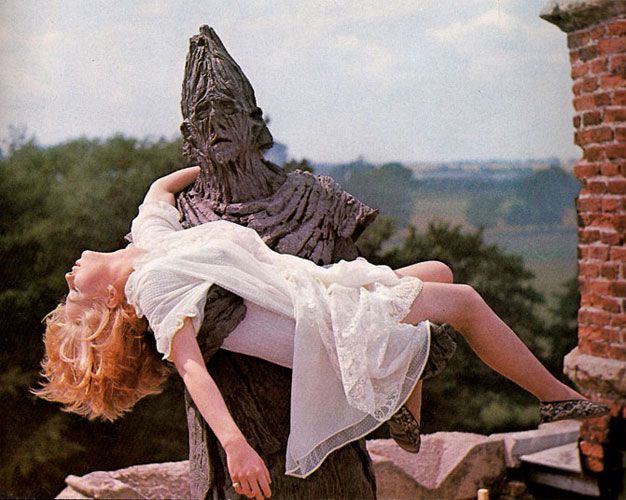
I solemnly swear that I am not The Gorn.

William Sebastian (Robert Culp, I SpyThe Greatest American Hero) used to be a criminologist but now he studies the occult so that he can explain why humanity is evil. On one of his past adventures, the demon of lust Asmodeus cursed him, leaving him with a heart in need of constant medical attention from his live-in nurse and housekeeper Lilith (Majel Barrett, Nurse Chapel from Star Trek and Roddenberry’s wife). He asks an old colleague, Dr. “Ham” Hamilton (Gig Young, They Shoot Horses, Don’t They?) for help with a case.

A woman claiming to be Anitra Cyon comes to tell Sebastian that her family no longer requires his services. It turns out that she’s a succubus, or a demon who basically sexually devours men to death, and he defeats her using the Apocryphal Book of Tobit. Then, Mitri Cyon (John Hurt, The Elephant ManHellboy) takes them to London, but not before their plane almost gets taken out of the sky.

In London, they discover that Dr. Qualus, one of Sebastian’s associates, has already been killed. His house was on fire, he was mauled by wild animals and his body was found partially inside a pentagram. Then, they are rebuffed by Sir Geoffrey Cyon (James Villiers, Asylum), who has turned Cyon Manor into place of sex, drugs and devil worship.

Mitri gets attacked by dogs and when our heroes go to investigate the Manor, they come to believe that Asmodeus has taken over Geoffrey’s form. The truth is that Mitri is really the monster and that Geoffrey is his pawn who will sacrifice his sister. Of course, Sebastian stops the ritual and the curse is removed.

The Cyon family gives Sebastian a painting as a way of saying thank you, but the symbol of Asmodeus shows up in the corner of the piece, proving that his fight against evil is not finished.

But sadly, it was. This was intended as a pilot for a TV series. However, an extended theatrical version was released in the UK with additional footage that includes nudity during the Black Mass finale. There was also a novelization published in 1979.

Much like Ed Sanders’ book The Family, Sebastian believed that Charles Manson, Richard Speck and the Boston Strangler were all connected by invisible forces. Plus, every occult reference you can think of gets crammed into this. Also, there’s a lot of exploitation in here, as two demon women (one a dominatrix and the other a schoolgirl) call Ham daddy and try to hump him to death on a waterbed!

I would have liked to have seen what would have happened had this become a series. Within five years, Satanic panic would descend on America and movies and shows that took the 1970’s view of the occult would be passé. This is kind of a time capsule of that era.

Spectre isn’t available outside of YouTube and the grey market. That said, you should hunt it down. How else will you ever see John Hurt, one of the most talented actors of any generation, turn into a giant lizard man?
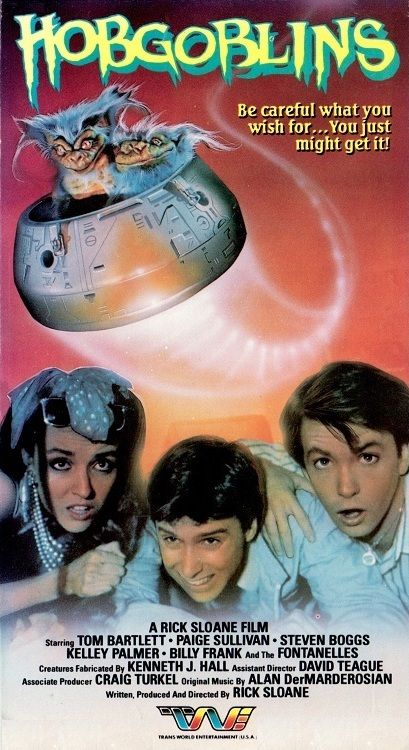
Hobgoblins (1988)

Directed, written, and produced by Rick Sloane, Hobgoblins rises above expectations — I was thinking this was just another Gremlins rip-off — to be about diminutive furry wish-granting beasts that look a lot like my cat Norris. I think that’s a compliment.

Security guards are working at an old movie studio which has a vault of old films and a secret. Dreams come true there, but cost people their lives, like a young guard named Dennis who gets to be a rock star, yet dies on stage.

Kevin takes the job to impress his girlfriend Amy, who soon visits along with their friends Kyle, Daphne and Nick. After an extremely long rake battle — yes, you read that — Amy makes fun of her man with Daphne has sex with Nick in his van. Ah, the 80’s!

The next night, Kevin chases a burglar into the film vault where he releases the hobgoblins, which his boss reveals are aliens that crash landed years ago that he’s guarded from people for decades. They have the power to make people’s greatest fantasies come true, but then they kill them.

Of course, following exploitation film logic, the hobgoblins head to Kevin’s house where his friends are already partying. His girlfriend Amy really is the worst girlfriend for Kevin, as there’s no way he can handle her fantasy of being a stripper. Everyone heads to Club Scum to rescue her, but the furry little guys soon attack, turning the rub and tug club into chaos.

Soon, everyone has to battle their fantasies and the beasts themselves, but of course, everyone makes it out happily, even Nick who seemed to have been blown up earlier. The movie studio gets blown up real good and everyone has sex, except for the dork, who calls a girl for phone sex.

This is a movie that has a woman newly released from a mental hospital operating the puppets and a budget so low that they couldn’t even get John Carradine to be in the film! There’s also a lover’s lane called Reputation Road, which has some crazy signs on it. That’s enough to make me enjoy this one.

Want to see this for yourself? Vinegar Syndrome has treated this goofball 80’s movie with all the attention that the Criterion Collection would give to a French new wave art film. God bless them. You can also watch it on Amazon Prime with your subscription.

Ten movie crossovers

The best part of comic books as a kid was when one character would meet another. Before it got overdone, it was unexpected and a lot of fun. Movies can be the same way. The criteria for these films was that the crossovers had to take you by surprise and not just be a character from one film graduating to their own sequel, such as Evan Baxter graduating to the lead between Bruce Almighty and Even Almighty or Tommy Lee Jones’ Samuel Gerard character getting his own U.S. Marshalls spin-off. Also, if we listed all the crossovers in Pixar films or Ready Player One, it would just get overwhelming. This criteria belongs to no one but us. Don’t like it? Cool — make your own list!

1. Jay and Silent Bob from Clerks showing up in Scream 3: Your favorite — or maybe not — New Jersey stoners show up to watch the filming of Stab 3 in Scream 3. Yes, things were getting pretty meta in the year 2000.

2. Mortimer and Randolph Duke from Trading Places showing up in Coming to America: Ralph Bellamy and Don Ameche’s rich villains may have lost everything — including that $1 they bet — in the first film, but when Prince Akeem gets them back on their feet with an incredibly generous gift.

3. Billy Cutshaw from The Exorcist being a patient in the insane asylum castle in The Ninth Configuration/Twinkle, Twinkle “Killer” Kane: I know that I said above that character spin-offs aren’t going to be on this list, but this one comes from a movie everyone knows and ends up with one that hardly anybody knows. After being told that “You’re gonna die up there,” by Regan in the first film,  this astronaut loses his mind in the second. He’s played by Dick Callinan in former and Scott Wilson in the latter.

4. Paul and Mary Bland from Eating Raoul show up in Chopping MallPaul Bartel and Mary Woronov are big favorites here, so when they unexpectedly show up and nearly derail this movie about killer security robots, it’s enough to make me want to stand on my couch and cheer. Actually, that’s exactly what I did. This one also features a cameo from Dick Miller replaying his Walter Paisley character from Bucket of Blood.

5. Lots of people in She’s Having a BabyDuring the end credits, as different real people discuss having a child, Ferris Bueller, characters from TV’s Cheers and Roman Craig and Chet Ripley (Dan Aykroyd and John Candy) from The Great Outdoors all show up in character, connecting all of their various films into one shared timeline (and this movie to the giant wormhole that is the Tommy Westphall Universe).

6. T1000 from Terminator 2: Judgement Day in Wayne’s World: Yep. The knife handed shapeshifting evil cop from Skynet shows up to menace Wayne Campbell and Garth Algar. T1000 also shows up again in Arnold’s Last Action Hero.

7. Michael Keaton playing FBI Agent Ray Nicolette in both Out of Sight and Quentin Tarantino’s Jackie Brown: First, Tarantino asked Keaton to play an FBI agent. Then, when he was asked by Steven Soderbergh to play another FBI agent, Keaton agreed — but only if he could play the same character!

8. Captain Benjamin Willard from Apocalypse Now in Hot Shots! Part Deux: This is about as meta as it gets. Captain Willard is played by Martin Sheen, whose son Charlie Sheen is playing Topper Harley, going through a similar character moment as he enters the “heart of darkness.” The characters’ boats pass one another and they point to each other and mention how much they loved one another in Wall Street, obliterating your reality.

9. Ray Stantz from Ghostbusters shows up in Casper: Sure, he may have a mustache now, but that’s definitely Ray, even if he can’t deal with the Friendly Ghost’s mischief-making. There was also a scene filmed with Zelda Rubenstein reprising her role from Poltergeist which was cut, but hey — Father Guido Sarducci from Saturday Night Live shows up to perform an exorcism and Dr. Harvey turns into the Cryptkeeper from the Tales from the Crypt TV series!

10. Freddy Krueger shows up in the surprise ending of Jason Goes to Hell: At the end of this sequel, Freddy’s claw grabs Jason’s mask, which led to a ten-year wait (!) before these two horror icons finally went claw to machete.

Honorable mentions go to…

Doc Brown from Back to the Future in A Million Ways to Die in the West

Jason Statham’s Frank Martin Transporter character showing up at the beginning of Collateral

Brendan Fraser playing his Encino Man character Link in Paul Shore’s Son In Law and In the Army Now

Gilbert Kane from Alien showing up in Spaceballs

Matt Hooper from Jaws showing up in Piranha 3D

Thanks to Kris Erickson, Jim Sloss, Dan Ayer, Becca and Bill Van Ryn for their help with this list!

MILL CREEK CHILLING CLASSICS MONTH — epilogue

Whew — we made it through CHILLING CLASSICS MONTH! I thought nobody would care at all, but we actually gained readers and site traffic. Thank you to everyone that contributed, read, liked and shared our articles.

I’m debating doing the PURE TERROR box next. Hopefully, we can get all of these writers and more to come back!

Here’s a recap of all of the articles by author:

B&S About Movies

Jennifer Upton from Womany.com

Bill Van Ryn from Groovy Doom and Drive-In Asylum

John S. Berry

Paul Andolina from Wrestling with Film

Roger Braden from Valley Nightmares

Blake Lynch

Doc from Camera Viscera

Dustin Fallon from Horror & Sons

Melody Vera

JH Rood from Ghoul Inc. Productions

Emily Fear

Links

0826831070186


UPDATE

In August of 2023, Letterboxd user Matthew Hale called to our attention that there are several versions of this Mill Creek set. Here are the movies that were missing:

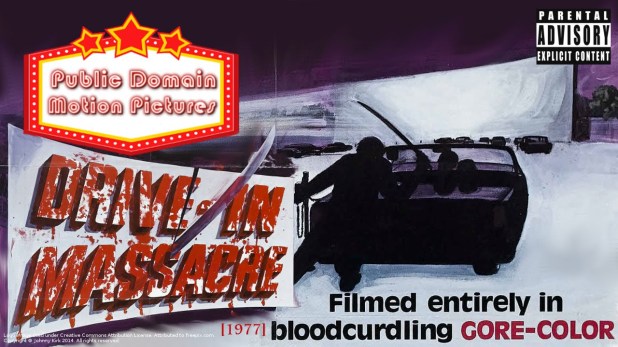
CHILLING CLASSICS MONTH: Drive-In Massacre (1976)

I love the drive-in more than anywhere else in the world. A night at the drive-in is one of promise, wonder, drinking in public, movies that I love and Chilly Dilly pickles. This movie tries to make the drive-in a scary place. But is it an entertaining one?

Starting off with a double murder at a California drive-in, police detective Mike Leary and Jon Koch are on the trail of a killer who keeps attacking the same theater. There are plenty of suspects, like the manager, Austin Johnson, an unnamed voyeur and the creepy janitor, Germy.

The killer kills again and again, using a sword. There is also red herring after red herring, with none of the leads adding up. It turns out that Austin and Germy were once sword swallowers and the swords may have come from their collections, but they’re both killed by the end and the killer is never caught. 

The film closes with an on-screen warning about drive-ins all over the country being attacked by the killer, then a fake public address that makes it seem like the maniac is loose in the very drive-in where you are watching the film. Oh no!

The poster for this movie said, “Drive-In Massacre has been deemed by an independent film board to be too terrifying for viewing by the average theatre patron. For this reason, it is suggested that those of you with severe emotional disorders or chronic coronary dysfunction NOT see this movie. The risk is entirely yours.” You’ll be fine. Trust me.

This movie defines the term meandering. It seems to go on and on. And on. But hey, if you have to experience it for yourself, it’s on Amazon Prime. And, of course, you can always order the Chilling Classics box set!

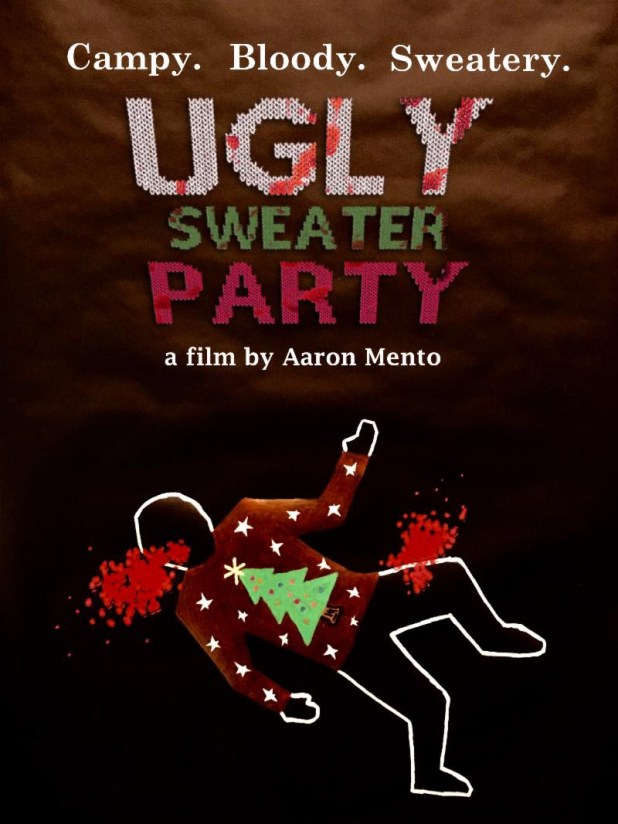
Ugly Sweater Party (2018)

Christmas Ever. Deep in the woods. A campsite. That’s where you’ll find an ugly sweater party. Cliff and Jody were lured here by two sexy twins — fraternal twins, but twins nonetheless. However, they soon discovered that those twins have found God and that this is a Bible Camp. Potentially more troublesome is the fact that Cliff has found the possessed holiday sweater of seasonal serial killer Declan Rains.

Sean Whalen (The People Under the Stairs) plays Rains, who now commands Cliff to do his bidding. That’s because on the way to the party, he beat up the now homeless Detective Brolin, who had killed Declan years ago.

Meanwhile, his best friend Jody (Hunter Johnson, who loves Sleepaway Camp 2 so much that he has a tattoo on his foot that reads “Oh, I’m a happy camper!”) is trying to score with either of the twins Susan and Samantha — or even their mother Mrs. Mandix, the co-owner of the camp (who is played by Felissa Rose, Angela from Sleepaway Camp).

Everyone in the camp is either a promiscuous person who is trying to give up giving it up or a closeted person who is trying to pray the gay away, just like the other co-owner, Counselor Mandix.

Then there’s Hanna (Lara Jean, 2 JenniferLilith), whose parents put her in the camp because they think that she’s a witch. Well — they’re kinda right. She keeps getting visions of the hell that is coming on Christmas Eve. There’s also a metal band that has possessed the camp’s groundskeeper and a muscular wife murderer, who Counselor Mandix is very concerned about.

I’ve seen a lot of gore in my days, but this is the first one I’ve seen where a man rips another’s genitals off, then drops to his knees and drinks the blood that is spraying out of his crotch. That’s saying something.

There’s also a nun named Sister Nipps, so if you’re expecting refined humor, you may wish to look elsewhere. This has the look of early Raimi with the sensibilities of Troma, but I liked it way better than most of their efforts. Also, if you like old Slayer, you’re going to enjoy the soundtrack.

This is director/writer/editor/producer Aaron Mento and he’s succeeded in delivering something strange on a budget. I really liked the way his rapid editing and sound design keeps this from looking, feeling or sounding like the expected. I mean, how many movies have you seen that are all about a cursed Christmas sweater? Also: if you are looking for a movie that is generous with its dong shots as it is female nudity, Ugly Sweater Party has you covered.

Between laser beams and a bad guy named Sweaterface — love that he has tendrils of fabric that come out of his back — that forces everyone in the camp to accept Satan, there’s plenty to experience here. Trust me, this isn’t for everybody.

The Christmas carnage and comedy of Ugly Sweater Party is available exclusively on Amazon Instant Video starting November 23rd.

Disclaimer: I was sent this film by its PR team, but that has no bearing on this review.

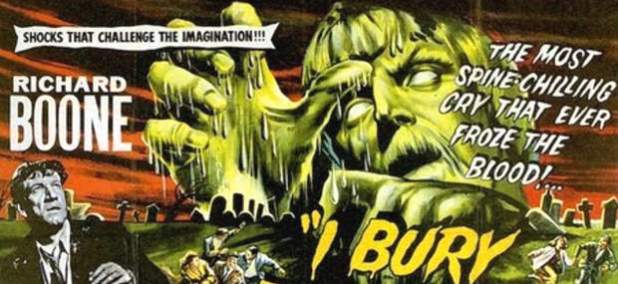
CHILLING CLASSICS MONTH: I Bury the Living (1958)

John S Berry says that he’s a pretty low key guy. He has a few articles on the Rupert Pupkin Speaks site. I asked him to tell me a little more about himself and he replied that he loves bargain bin horror movies, his cat Walter, Terry Gordy and most people.

A few years ago I saw a great movie called The Canal. In the opening scene a man gets an auditorium of noisy kids to pipe down asking them if they want to see ghosts. The “ghosts” he is referring to are the people in the film and how none of them are alive today.

I often think of these “ghosts” when I watch older movies. How odd (and wonderful)it must be to get to see relatives long gone. Not just the visual but also their mannerisms and hearing their voices. I Bury the Living has that feeling for me. I am seeing ghosts pleading, going mad and caring that have been gone for some time.

I Bury the Living was released in 1958 and I am not sure how well it was received. Most of the reviews and articles I read about it compared it to a longer episode of the Twilight Zone. It runs an efficient 77 minutes and was made by Albert Band father of Charles. Looking up his career I found the sweet support of a father who served as a producer for many of his son’s projects including one of my favorites Castle Freak. I wonder what he thought of his son’s films then I realized he was the director of Dracula’s Dog and Ghoulies 2. Their Thanksgivings must have been a lot of fun.

Stephen King is a huge fan of this film but hates the ending. That is a fact steeped in irony since I often find the endings of his books to be lacking (throw rotten tomatoes at me here). I am not going to spoil the ending, but I have watched this several times and am still undecided. I don’t hate it but after some viewings I think they could have done more with it. But I am not sure how or what (no not a giant spider).

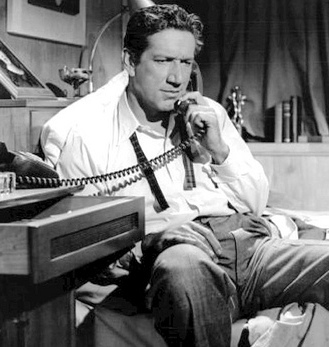
I Bury the Living is very atmospheric and you can feel the coldness of the main set of an office at a cemetery. Richard Boone is kind of a grumpy 50s businessman that has to take his turn in being the chairman for the cemetery. When he is sworn in they tell him it is not a tough job but slowly it possesses him and he goes from a confident and well-groomed man to a confused, flustered and downright scared man.

Andy is the caretaker who does the real day to running of the cemetery. There is something charming and sweet about him and he is a man who truly loves his job. It was a sign of the times and a sad reminder of how people used to have pride in their work no matter how lowly or menial the job was. Andy didn’t have nice suits and slick hair like Mr. Kraft but he appreciated the scenic views at the cemetery and the comfort and peace.

Mr. Kraft imposes his values on Andy and thinks he is doing him a favor when he tells him it is time for him to retire and to find his replacement. Kraft being the typical businessman asshole pats himself on the back not realizing work and this place provides Andy with most of his purpose. And a man can be truly lost when he has lost his purpose.

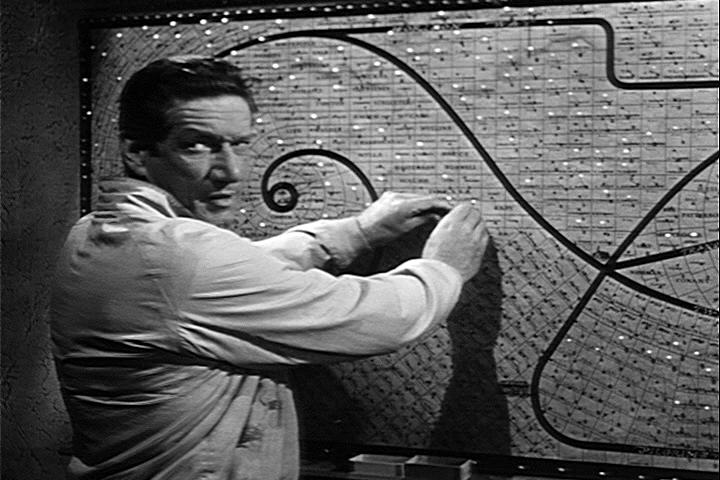
The giant map has a great look to it. In it are white pins for unoccupied spots that have been sold and black ones are for the ones that have bodies in them. Kraft makes a mistake and puts the wrong color of pin into the map and starts a chain reaction of doom (or does he?)

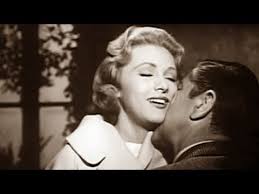
Kraft’s lady Ann comes to visit and she seems a bit younger than Kraft. I like the fact that the leads are older. It seems like films these days never cast older people (they consider mid 30s old now)and I think it adds to how Kraft actually wear all the bad things that start happening around him. He even questions his sanity and wonders if he is truly to blame which is what we often do as we age. Much more meaningful then Archie trying to spend time with his best gal no matter what is going on around him.

No one seems to believe Kraft and he in a sense is doing the math. They seem to think he is buckling from all the pressure of being a modern businessman. A few costly experiments are done and Kraft really starts to go off the rails. The music used is top notch and eery and Band does some very interesting visuals for Kraft’s descent into possible madness.

It is hard to write without spoiling the film. But it is definitely worth a watch. Sure it could be a supernatural force at work or a who done it. I feel it is a film about the upper class not truly understanding how the working class feel about life and their jobs and that is all you are going to get out of me. I am still not sure how I feel about the ending, but really I love the room to speculate and wonder about the ending of a film.

It! (1967)

This movie is one crazy mix-up of a bunch of other movies that you may love, all in one easy to gulp down cocktail. Take some Hammer mood, squeeze in some modern gothic, a pinch of Psycho, rip off the motorcycle scene from The Great Escape, throw in some nukes and boom — you have It!

After a London museum warehouse burns down leaving behind the Golem of Judah Loew and the dead body of the museum’s curator. His assistant, Arthur Pimm (Roddy McDowall), takes a big interest in the golem, figuring out that it’s the key to getting what he wants out of life.

That Arthur — what a character. He keeps his mom’s dead body in his apartment and steals jewels from the museum for her to wear. And he learns how to use the golem for murder, when all it wants to do is defend its Jewish community.

After the catastrophic destruction of Hammersmith Bridge, which Pimm has already told his love interest, Ellen Grove, that he could do, he tries to destroy the golem. Guess he didn’t read any of the fine print inscribed into the clay monster that says that it can’t be destroyed by fire, water, force or anything man has created.

Ellen eventually falls for another man, Jim Perkins of the New York Museum, who also wants to take the golem away. He turns in Pimm to the police, who then commit him to a sanitarium. He breaks out with the help of the golem and kidnaps Ellen. Luckily, the hero saves the day just before a nuclear explosion wipes Pimm out of existence (let’s be fair, everybody within a few thousand miles is going to get radiation poisoning, but this was the 1960’s and horror movie science). The golem? He’s fine. He just walks into the sea to go away from awhile, Godzilla style.

Man, I love the way the golem looks in this movie. Pre-CGI monsters are always awesome. Just look at this guy! He looks scary as heck!

Even though it was shot in color, the U.S. version is in black and white! Say what? It’s also the screen debut of Ian McCulloch, who always pleases the couch audience in our house in films like Zombie and Contamination.

Want to watch this for yourself? The guys from New Castle After Dark posted it to YouTube!

CHILLING CLASSICS MONTH: House of the Dead (1980)

I’m so glad that I got Bill Van Ryn to write about this movie! If you like what he has to say, check out his other projects like the website Groovy Doom and the zine Drive-In Asylum. Thanks again for your multiple articles and sharing everything else out, Bill!

Ultra low budget films really turn me on sometimes, and House of the Dead has another sexy thing going for it: it’s a horror anthology. It’s one of those obscurities that received a very limited theatrical release, and was then relegated to cruising the backwaters of VHS. A recent blu ray resurrection by Vinegar Syndrome is a welcome chance to get acquainted with one of the more imaginative films of its type.

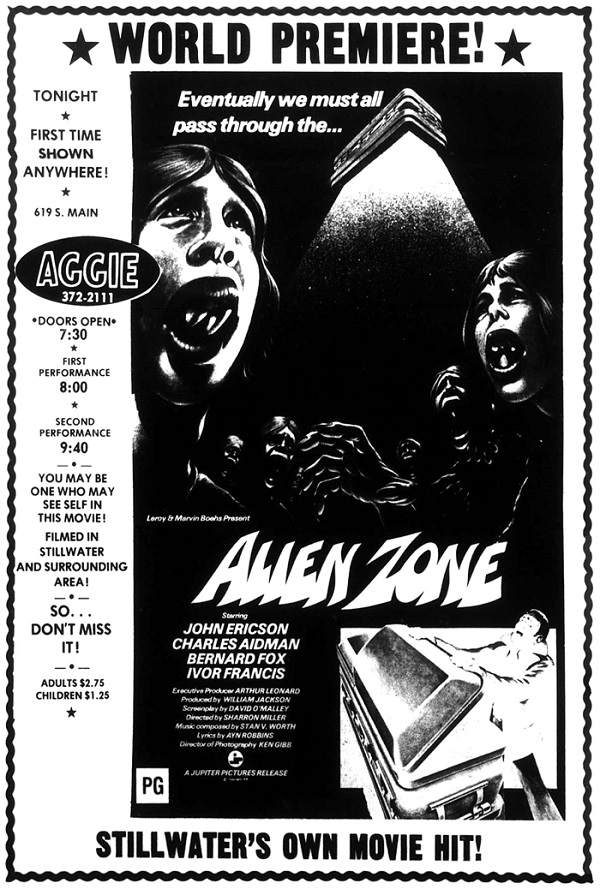
For some reason, the film was packaged theatrically under the misleading title Alien Zone, which says nothing about the actual content of the movie. It’s actually a supernatural film that deals with a man who finds himself lost in a rainstorm. He’s just come from seeing his mistress, and takes a taxi back to his hotel in order to phone his wife. The cab leaves him off in an area that isn’t familiar to him, and it drives off, leaving him stranded down a dark alley. A strange, older man emerges from the darkness and offers our protagonist a chance to get out of the rain, taking him inside the building and giving him coffee. The protagonist soon realizes his host is a mortician, and the old man insists on giving him a tour of the facility. The individual stories emerge as the mortician opens each casket and letting the protagonist look at the bodies.

House of the Dead gives you some bang for your buck, because it has four stories — five if you count the wraparound segment. The tone is definitely that of an old EC comic book, with nasty people doing horrible things and then suffering some kind of karmic justice. The first is about a schoolteacher with a disdain for children who is confronted by monsters, the second deals with a serial killer who lures women to their doom inside of his apartment, the third is about two dueling detectives who set out to murder each other, and the fourth shows an arrogant businessman’s rapid transformation into a derelict after he is trapped and tormented inside a warehouse of torture.

The stories are intriguing, although a few of them are awkwardly realized. Most disappointing is the story about the serial killer, because it starts out so damn good. It’s a found footage short, a collection of private films shot by the killer on a hidden camera. Each one shows him inviting a different woman to the apartment and finding ways to lure them into perfect position so he can murder them in front of the camera. It becomes increasingly disturbing, and you wonder where the story will go, and then suddenly it is over and it went nowhere. It had such an interesting setup, too, with a non-linear timeline and intercut news footage of the subject being attacked by camera-wielding reporters while being arraigned.  

The best of the four stories by far is the fourth, which is a damn near brilliant piece of film. Most of it is performed solo by actor Richard Gates, who portrays a cocky businessman with a serious lack of empathy for others. He is confronted by a derelict outside of what he thinks is his office building, and he dismisses the man rudely, yelling after him “Why don’t you get a job?” Once inside the building though, he realizes he has walked into an unfamiliar storefront, with a vacant office space inside. Lured to an open elevator shaft by noises from below, he leans inside too far and falls down into the shaft, landing on his face. It’s a brutal moment that looks terrifyingly real, even though it’s just clever editing. This begins a gradual erosion of his humanity by some unseen antagonist; he is now in a Saw-like chamber of horrors, where he is wordlessly tormented by a falling elevator, a room where a wall of blades threatens him, and ultimately a prison cell where he is fed only bottles of alcohol. A door automatically opens some undetermined length of time later and he emerges into daylight, himself now a drunken man in a dirty suit approaching passersby for help and being rejected.

The film has a distinct visual look, which is often difficult when shooting a low budget movie. It’s not exactly striking, but it does creep into your brain a little by what it *doesn’t* show you. This movie does “anonymous and vacant” extremely well. Alleys are dark and vague, with strategically lit doorways and dark alcoves. That abandoned building is both ordinary looking and totally sinister, with simple but effective traps for its victim, almost like anybody could have set it up. Even the “house” of the title, which is purported to be a funeral home with a mortician’s workshop, is rendered onscreen only as a series of vague hallways and dim areas lit only by carefully directed lamps and bulbs, leaving most of the rooms in shadows.

A lot of the wraparound story is clunky, to say the least, like the awkward way the mortician narrator abruptly disengages from several of the stories, especially the ones with protagonists who don’t end up dead on screen (after all, he’s explaining to someone how these people ended up corpses in a funeral parlor). But the runtime is short (79 minutes), and it contains a few moments that are effectively creepy. It’s exactly the kind of thing you’d hope to find in a budget DVD collection.

CHILLING CLASSICS MONTH: The Bloody Brood (1959)

Emily Fear is a librarian by day, professional wrestling lover and accordion player in the band Bitter Whiskers by night. You can catch her as the co-host of Talking Honor on PWTorch and read her new blog all about intergender wrestling, Boy Girl Party.

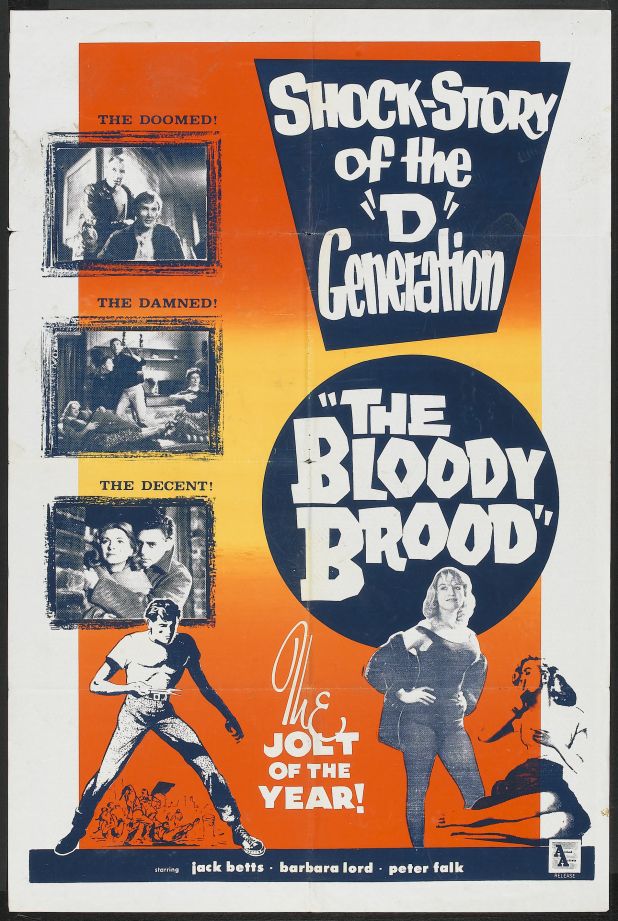
Like the straight-laced, grim-faced cousin of Roger Corman’s A Bucket of Blood, The Bloody Brood (1959) grounds its tale of murder and suspense in the hypocrisies and nihilism of the Beat Generation. While Beatnik caricatures steal scenes with bad improvised poetry and arhythmic, wide-armed dancing to spare bongo beats, the movie is dedicated to a more realistic portrayal of the majority of its hipster coffeehouse denizens – who may talk the talk of the culture, but are definitely working day jobs to support their nighttime wanderings.

That is, except for Nico (Peter Falk), whose business is those same too-jaded truth-seekers. While they flock to his wisdom – “They spend millions developing toothpaste to stop cavities, then they spend billions on bigger and better ways to blow us to bits” – they also partake of the drugs that he is selling, without even realizing that he is the one selling them. While Nico may be about the “truth,” he is happily raking in the profit of the drug deals without the shame or scrutiny, which is left to his rougher mules.

Early in the film, Nico, advertising director Francis and a few Beatnik cronies witness the death of an old newspaper man. What might be a traumatizing event for most warm-blooded civilians is a source of twisted inspiration for Nico: “What do we do? Watch. Gentlemen, this is the greatest show on earth. Spontaneous, unrehearsed, only one performance.”

Turned on by this ultimate kick, Nico ropes Francis into a plan to create more of these “spontaneous” moments and before you know it, they’re bringing a messenger boy into a party to feed him a hamburger laced with ground up glass.

The boy dies and it’s up to his brother, Cliff (Jack Betts), to solve the mystery of who killed him, aided by a sympathetic detective – who honestly doesn’t seem very good at his job – and Ellie (Barbara Lord).

If Cliff inching closer and closer to the truth wasn’t enough trouble, Nico’s also got mule problems, as Studs and Weasel demand a larger cut of the drug money, considering that they’re taking all the risk. Meanwhile, the drug-dealing powers that be above Nico are concerned that he is becoming a bit too immeshed with the scene in which he is profiting from.

What The Bloody Brood lacks in the entertainment factor of A Bucket of Blood, it makes up for with a certain earnestness – and that creates characters that are more effective than even needed for pulp like this. For every Dave, with his straight-out-of-costuming beatnik uniform and slang nonsense, there’s an Ellie, whose fear of wasting away her life blinds her to the snobbish contradictions of her hipster peers, or even Francis, an effete posturing jerk whose pompousness is second only to his cowardice.

The nuance, however, ends with the main characters. Cliff is a fairly bland hero who is also not particularly good at masking his covert operations. And while Falk tries to give Nico complexities, many of his actions, particularly later in the film, seem to be against his own self-preservation. The whole “murder for kicks” idea overall doesn’t seem to gibe with a guy whose just trying to profit off the self-important obliviousness of the subculture he’s infiltrated.

But perhaps that is the point. Nico’s boss is concerned that he is getting too close with his customers. While others might exhibit that over-closeness with feelings of love and affection toward their peers, thus inhibiting their ability to sell them drugs, for Nico, the effect is that he buys all the bullshit that the others drink down like cheap table wine. He may have started off as conning them, but he became the biggest mark of all.

Despite its technical flaws and a few glaring holes in the storyline, as far as low budget pulp thrillers, you can do a lot worse than The Bloody Brood.