Gorehouse Greats: Brain Twisters (1991)

We get it, Mill Creek! You’re a “green” company! You recycle and waste not. We originally reviewed Brain Twisters on November 1, 2020, as part of our reviews for Mill Creek’s Sci-Fi Invasion set. We re-ran that review February 1, 2021, as part of its inclusion on their B-Movie Blast 50-Pack. So, in the grand tradition of movies that do not deserve a second, alternate look (we’re talkin’ at you Cavegirl), Mill Creek beat us into submission once again . . . so let’s give Brain Twisters a new spin — as part of its inclusion on Mill Creek’s Gorehouse Greats 12-pack.

Is it possible that this lone feature film from Jerry Sangiuliano appears on all Mill Creek box sets? We just discovered it also appears on their Drive-In Cult Classics Volume 4 set and their Drive-In Cult Cinema Classics 200-pack. So, it seems, whether you want to watch it or not, by hook or by crook, you will, so says Mill Creek. So, let’s crack open our first film on the Gorehouse Greats set.

Gorehouse Greats Mill Creek

No, we can’t blame Albert Pyun directing Charles Band’s Arcade, as that 1993 evil video game romp wasn’t made yet. Possibly William Shatner explaining the new Microworld to us wee school kids? No, but we can blame “The Bishop of Battle,” the segment from the 1983 portmanteau Nightmares, you know, the segment: Emilo Estevez’s video-game obsessed ne’er-do-well was sucked into an evil video game, which itself, ripped off 1982’s Tron.

And here comes Jerry Sangiuliano — a decade late and several dollars short — as his 1991-era computer graphics make 1992’s The Lawnmower Man — this film’s sole raison d’être — look good. And we all know how god awful that’s-not-a-Stephen King-adaptation is. And to prove you can’t keep a god awful movie down: Sangiuliano tried to pass this off in the DVD age as a “new” film, Fractals, in 2013 — with the same out-of-date graphics that were out-of-date in 1991. But where the superior Circuitry Man from 1990 succeeds, this one fails. Utterly. Yeah, this one is lost between order and chaos and heaven and hell, alright.

So what’s it all about?

A sci-fi thriller without thrills.

Mind control with CRT monitors . . . complete with poor pixel resolution. And beeps. And boops. And wires. And conduits. And horny teens. And dumb cops. And cops who take victims to dinner (and he’s not Ponch nor is this a CHiPs episode about a video game-obsessed ne’er-do-well teen). And touchy-feely college professors manipulating weak teen girls (Hello, Dr. Carl Hill of Re-Animator). And a college professor of neuroscience who lectures students on medical quackery who is, himself, a quack: instead of screwing the medieval devices he displays in his classroom to human skulls, he plugs his students into a Commodore 64. And we wished, instead of tinkering with video games, our resident digital deviant developed the mind-control “Light Guns” in Looker.

So, our faux-digital Dr. Frankenstein, Dr. Philip Rothman (dry-as-toast Terry Londeree in his only film role), sidelines his professorship with a gig at a software company developing a software platform that taps into the human brain. And he’s using his unknowing students as lab rats. And somewhere along the way, it’s discovered the software has a mind control side effect (I think), so the head of the company decides to integrate the discovery into video games. Is he evil already or does the discovery make him evil? (I don’t know and I don’t care.) What’s the purpose of turning video-game obsessed teens into killers? What’s the end game, if you will? (You got me.) Why kill off the users who dump in the quarters?

Of course, every slasher film — even the most pseudo ones, such as this tech slop — needs a “final girl,” so we have Laurie Strode Stevens (Farrah Forke, in her acting debut; she was Alex Lambert for a three year, 35-episode run on NBC-TV’s Wings; Hitman’s Run for you direct-to-video fans) as one of several college students who’ve volunteered for Rothman’s experiments to improve video game designs — only to be programmed-cum-hypnotized to kill. Or commit suicide from the second floor of a Chili’s (Or was that an Applebees?). Hey, this was filmed in Scranton, PA., so if you lived there, maybe you recognize the eatery.

Man, nobody wants to go to Scranton. Not even, Archie. “Scranton?!”

So, does this all sound a bit like Conal Cochran’s nonsensical masterplot to take over the world with Halloween masks fitted with computer chips made from stone-flakes of Stonehenge? Or Dr. Anthony Blakely’s plan to take over the world by growing a giant brain the basement of his psychiatric institute for wayward teens?

Yeah, it does. And then some.

Yeah, the body count is building. Boringly so.

Ah, but Halloween III: The Season of the Witch and Ed Hunt’s The Brain had, if not a lot of sense, finesse and charm as it huskered its bananas-as-fuck junk science, along with R-level gore and sex to buoy our interest. Maybe if a Stuart Gordon-esque brain worm-thingy popped out of a student’s reprogrammed head, à la Dr. Edward Pretorius via his Sonic Resonator in From Beyond, we’d have a “bang,” here, instead of a whimper.

In the end, this is all just a bunch of PG-level shenanigans in dire need of a David Warner-embodied Master Control Program and a Cindy Morgan as our cyber-hero babe and a crazed Darryl Revok “sucking brains dry” via video games. But alas: Jerry Sangiuliano ain’t no David Cronenberg and this ain’t no Scanners joint. And the acting just stinks across the board, which is probably why Forke never capitalized on her support role in Heat with Al Pacino and Robert De Niro or scored another notable network TV series, and we never heard from male leads Terry Londeree and Joe Lombardo — ever again. If only we had Dan O’Herlihy as the evil software engineer and David Gale as the megalomaniac professor to prop this up, maybe we’d have . . . something.

Should we give Jerry Sangiuliano credit for being ahead of the urban legend curve? Nope. Should we be watching the HBO-oft run short film, Arcade Attack*, instead? Yes. Or the PBS television broadcast The Colors of Infinity, which aka’d as Fractals: The Colors of Infinity? Yes. Or the PBS rip on WarGames known as Hide and Seek. Yes.

Eh, maybe — one day — they’ll make a real movie based on the Polybius urban legend**, with (speaking of Dan O’Herlihy), a touch of the charm that made the video game as-a-combat-training-tool tomfoolery from 1984’s The Last Starfighter so much fun. The same can be said about screenwriter Andrew Kevin Walker’s ten-years-later retrofitting of the Polybius legend — for the now outdated, grunge-era CD-ROM age — with 1994’s Brainscan. The best of (possible, maybe a stretch) the Polybius-inspired RAM-romps was, of course, David Cronenberg’s 1983 offering, Videodrome; the film’s deleted scenes explained the funky headgear of the film as intended for”combat training,” until its beneficial, “brainwashing” side effects were discovered (like in Looker). Polybius, for the tech-uninitiated, first “appeared” inside a Portland, Oregon, arcade in 1981; while word-of-mouthed prior by arcade aficionados since, the legend first seeded on the web in 1994, about a year after the web went online*˟ on April 30, 1993. It was one of the first “viral” posts, if you you will, before such a term was, er, coined (yuk, yuk).

So . . . until that official Polybius flick happens, the curious and the masochist can free-stream Brain Twisters on You Tube.

Uploading 40-plus more films on the digital junk sciences.

* It’s a double feature! You can watch the fun Arcade Attack on You Tube.

** Sure there’s a Wikipage, but why read when you can watch: This hour-long documentary on the legend will upload your Polybius fix.

*˟ Ugh, more reading? This Popular Mechanics piece, published on April 30, 2018, to commemorate the 25th anniversary of the web, explains it all.

About the Author: You can learn more about the writings of R.D Francis on Facebook. He also writes for B&S About Movies.
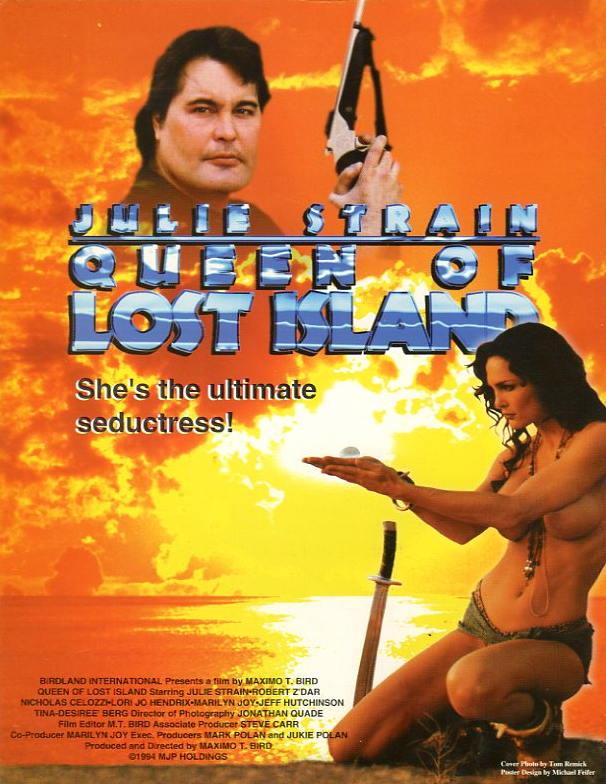
Queen of Lost Island (1994)

I’ve watched many a bad movie for this site, but this has to be the new basement when it comes to films, a Shot On Video piece of flaccid garbage that wants so very badly to be pornography but stops short, providing all of the downsides of 1990’s VCA crap you had to rent from the back of the video store with none of the upside, like actual pornography or the lunacy of the Dark Brothers or Rinse Dream.

I really wanted it to fit into this week’s theme of matriarchal societies, as it seemed like from the description that Strain’s character was She. But no. No, not at all.

This all became more crustal clear when I saw who made it: Donald G. Jackson, the director of more than three Roller Blade themed movies who has one lone success, Hell Comes to Frogtown.

A whole bunch of women has been invited to an island that takes over their minds — or so they say — while Julie Strain waits for them, naked and swinging around a sword. Do you know how boring a movie has to be to not be good while featuring Julie Strain topless? This movie will give you the answer.

Literally, during this movie, I yelled out loud, “Robert Z’Dar, don’t you have something better to do?”

Also known as The Devil’s Pet and Elixir — the name it finally came out in 2004 on home video under — this movie also has Tina-Desiree Berg (Legend of the Roller Blade Seven), Lori Jo Hendrix (Bikini Summer) and Jeff Hutchinson (who shows up in many of Jackson’s films, like Lingerie Kickboxer and Roller Blade).

Fans of bad movies — this is quite literally as bad as it gets.

Ghoul Scout Zombie Massacre (2020)

So, after stream-stumbling into Omar Jacobo’s enjoyable, Mexican-made horror FUBAR that is Blood Freaks, I began picking through distributor Rising Sun Media’s Facebook page — and this feature film debut from writer/director Eric Eichelberger caught my eye (and dislodged from its socket). And from what I can see, while GSZM was released to VOD streaming in 2018; it’s now offered as a new, free-with-ads stream on Tubi in 2021 (or at least the tail end of 2020): I should know, as I am constantly farming the Tubi platform for films to watch — especially new and off-the-reservation flicks — and this film never populated on my previous digital excavations. Ah, wait . . . the film, in fact, hit the festival circuit in 2018 and debuted on streaming platforms in October 2020. So there you go. Roll ’em, Dano!

Here’s the plot synopsis from the Rising Sun Media marketing department:

Four girls find themselves in a reform school run by an evil woman that joins forces with her equally demented scientist brother who creates a serum to turn attractive rocker guys into lobotomized slaves for his underground movie business. The scientist brother laces Girl Scout cookies with the serum while his sister offers full pardons to the girls to sell them. They are aware that they aren’t your average cookies and agree. The evil plan backfires and the rocker guys turn into flesh-eating zombies and terrorize the town. It’s up to the girls to clean up the mess and restore peace before it’s too late!

Now, with a synopsis like that, what’s not to watch? Plus, more drug-laced cookies and zombies, like in Blood Freaks? And reform school girls in girl scout uniforms. Lobotomized sex slaves. A scientist running an underground porn business. A zombified rock band. This sounds like a John Waters Pink Flamingos joint.

Of course, I’m all in. And it’s the latest film from the guy who rebooted Death Race back to its campy-beginnings with Death Race 2050! Oops, wait. That’s G.J. Echternkamp who wrote and directed that cheezy-campy-crazy fest. This cheezy-campy-crazy fest is the feature film debut by Eric Eichelberger. (Hey, I’m the guy, despite how much how I adore them both, perpetually confuses the German bombshellness and Swedish schwingness of Elke Sommer and Brit Elkland in reviews, so cut me a break!)

Eichelberger’s debut feature film (he’s worked primarily as a reality television editor; he was an art director on Stuart Gordon’s King of the Ants (2003), if that’s a film you’ve seen; I haven’t) is all about perspective: If you’re a 20-something digital streamer that never experienced the analog SOV-VHS ’80s (e.g, pick up a Don Dohler flick, watch films like Spine; or, in a horror perspective, Curse of the Blue Lights) and the celluloid La Brea tar pits’ ass jawbone-dislodging of ’70s grindhouse and exploitation flicks onto brick-and-mortar home video rental shelves (check out Bloodsucking Freaks), or woke up late-nites on Fridays and Saturdays to watch Cinemax’s “After Dark” programming blocks rife with sexed-up Basic Instinct-clones (Harry Tampa’s Fleshtone is an example) and X’d-up T&A comedies of the Porky’s variety (we did a “Drive-In Friday” tribute to those ’80s teen-sex comedies), then of course — you’ll hit your favorite streaming platform or review site and christen GSZM as the “worst movie you’ve ever seen.”

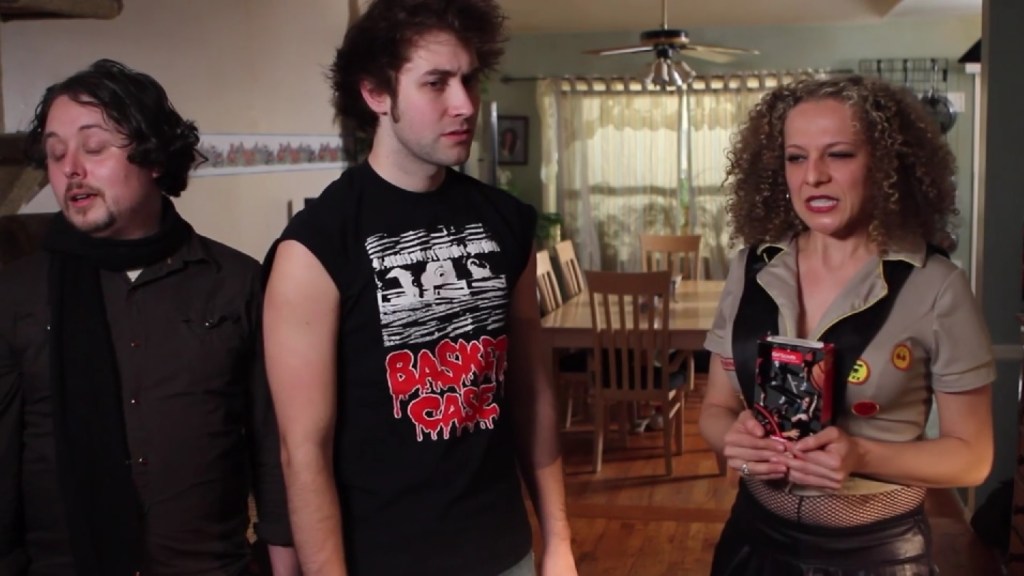
If the tee-shirt of Frank Henenlotter’s Basket Case doesn’t clue you in, all hope is lost.

Ha! Then ye digital reviewer, thou has never tossed back a sour ale of the Eddie Romero or Godfrey Ho variety, or noshed on Hard Rock Zombies (which is GSZM’s closest celluloid relative for this reviewer) and other (awful) ’80s heavy metal horror ditties of the Blood Tracks variety.

Eichelberger is one of us: he’s watched way to many Italian zombie movies (your poor mom!). He’s probably watched Lucio Fulci’s Zombie (1979) more than myself and Sam the Boss, combined. And it’s a foregone conclusion the ‘Eich also partakes of the zombie cheap-slop, such as Jess Franco’s Oasis of the Zombie (1981), Jean Rollin’s guacamole-smeared living-dead romp Zombie Lake (1981), and (ugh) Bruno Mattei’s Hell of the Living Dead (please, Bruno, just stop it already). Did the ‘Eich watch Wendy O. Williams in Reform School Girls (1986)? You bet he did.

All of those film come to play in the frames of GSZM. And like those films, this one is also strictly for adults only: it’s lewd, it’s lascivious, it’s gratuitous, and nudity is at forefront (and back!) for extended periods. (You’ve been warned.) However, unlike most of those films, which were not homages to anything other than cinematic ineptitude-by-low budget, Eichelberger’s debut, while admittedly production-bad with tragic thespin’, is supposed to be “bad” to mimic the bad films in which it’s tipping its hat. (And a couple truths: This is actually a well-shot film, void of any of that annoying, fish-eyed handheld lensing of the i-Phone variety cloggin’ up Amazon and Tubi. And that Eric Eichelberger is on his way to being the new David DeCoteau (who we worship at B&S, so know your Ellen Cabot, ye reader). And that the most experienced actors on board, leads Vance Clemente (makes me think he’s Crispin Clover’s brother) and Jessica Mazo, are actually quite skilled; here’s to hoping they move onto larger roles or nail a guest-starring network series gig. Oh, and adding to the meta: GSZM features the last ever screen performance from the late Bloodsucking Freaks director, Joel M. Reed, who we lost this past April.)

No, Girls Scout Zombie Massacre is not a 10-star film by any means. It’s also not a 1-star film, either, you IMDb’ing Amazon scamps. It’s also not Shaun of the Dead or Return of the Living Death nor Re-Animator or Severed Ties, either (and what films are, as they’re zombie-horror-comedy gold standards). GSZM is what it is: an intentionally bad, campy-comedy-horror movie — and it’s inherently preposterous to give Eichelberger’s film a bad review. Look, if you’ve sat through any Troma Team film (shite, don’t get Sam started on a Troma tear) and you’re into Charles Band’s direct to video oeuvres, with their soupçons of gore, a dashes of comedy, and smidgens of T&A, then there’s something for you to watch. The only thing that’s missing is Eddie Deezen (Beverly Hills Vamp) as our mad scientist and, along with Michelle Bauer, Linnea Quigley (The Good Things Devils Do), and Brinke Stevens co-starring, we’d have ourselves another USA’s Up All Night romp with back-to-back showings of Hollywood Chainsaw Hookers, Sorority Babes in the Slime-Bowl-O-Rama, and Nightmare Sisters.

The only downside to the film — IMO, so take it as you may — is that the film is a bit too long and would have been better served by a cut to a more first-time-director-streaming-friendly 80-minutes. But this is a self-financed and produced film with none of those “no, thou can not do that on film” pesky studio suits or distributors to rein it all in. But that’s par for the streaming course in the digital lawless wastelands of the 21st Century VOD-tundras. A couple reviewers mentioned a 70-minute running time, which would be one hour eleven minutes. So, we’re assuming, what we are able to currently free-stream on Tubi must be a “director’s cut,” because that cut runs 111-minutes, that is, a one hour fifty-one minute running time. But it’s the steaming verse, so we give the widest of wide berths to the new kids sailing the seven seas of the Amazon-fed oceans.

All in all: A job well done, Eric, we look forward to your next film; definitely make another one. And you’ve inspired us to watch — finally, the one Gordon film I haven’t watched — King of the Ants, on Tubi. Of course, the whole reason for this review is for you, dear B&S reader, to check out Ghoul Scout Zombie Massacre on Tubi courtesy of Rising Sun Media. You can learn more about the film on GSZM’s official website.

And be sure to check out our recent interview with director Eric Eichelberger.

Disclaimer: No, we do not know the filmmaker. And we didn’t receive a review request, either. We discovered this film on our own and genuinely enjoyed the film.

About the Author: You can read the music and film reviews of R.D Francis on Medium and learn more about his work on Facebook.

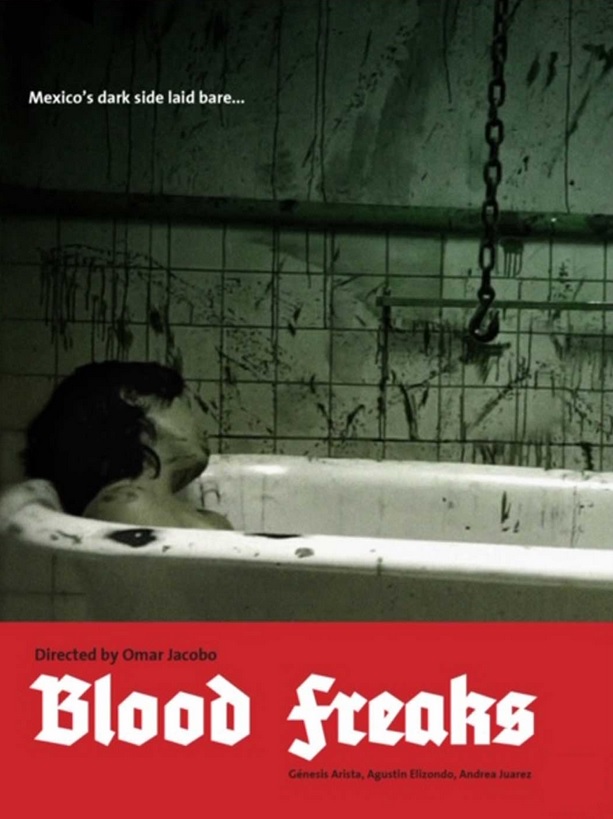
Blood Freaks (2021)

Upon discovering the streaming one-sheets for this experimental art-horror film on Tubi, I assumed I stumbled into a new Asian extreme horror film. Just look at the images for yourself: The first films the VHS centers of my celluloid cortex loaded was the J-Horror static of Takashi Miike’s Audition and Gozu, Bigas Luna’s narrative corkscrews of Anguish and Reborn, Fruit Chan’s testament to man’s sexual obsession with youth and beauty in Dumplings, and Alejandro Jodoroswky’s unholy trio of El Topo, Holy Mountain, and Santa Sangre. But, as I learned Blood Freaks was an arthouse-import from Mexico, I soon understood the one-of-kind voice behind the film is a student of the supernatural phantasmagoria of José Mojica Marins with his Coffin Joe romps At Midnight I’ll Take Your Soul and This Night I’ll Possess Your Corpse.

As Blood Freaks (aka La Puta Es Ciega, aka The Whore is Blind)—a homage to those forbidden, lurid clamshell and plastic-trayed Big-Box VHS/SOV bottom-of-the-barrel delights from our ‘80s youth—unspooled, I began to realize that writer and director Omar Jacobo is one of us: a freaky denizen who, when turning 18, delighted at being allowed to fan through the adult film section’s gigantic binders; who gleefully frolicked amid the horror-section shelves for the Fangoria-inept and the Famous Monsters-obscure. As one of the copy taglines for the film reads: “sleaze, gore, and more,” which is exactly what we wanted. We wanted mind-bending. We wanted backstreet scuzzy. We wanted our characters to be eclectic-crossed-with-freaky and a soupçon of crazy.

In the apartments of a low-rent Mexican walk-up, its misfit tenants are just that: They’re Andy Warhol perverse; they’re David Lynch oneiric; they’re John Waters hyperbolic. They’d fit right into the plotting of Flesh for Frankenstein, The Elephant Man, and Pink Flamingos: for I have no doubt that Omar Jacobo is a student of those films, and of the French New Wave impressionism of Claude Chabrol with La Femme infidel, Jean-Luc Godard with Breathless, and Francois Truffaut with The 400 Blows.

However, somewhere along the way, Jacobo’s celluloid schooling in the art of French-inspired subjectivity, ambiguity, and existentialism careened off the rails, drunkenly swaggering down a seedy, Mexican backstreet with a ratty, washed-out VHS rental of Bloodsucking Freaks in his hands—not realizing it wasn’t a product of the SOV ‘80s, but a low-rent and long-forgotten, inept drive-in homage to France’s Grand Guignol theater; a scuz-fest that sloshed the fecund streets of New York City’s grindhouse circuit in 1976, only for its asinine jawbone to be dislodged from the La Brea Celluloid Tar Pits onto home video store shelves for multiple-additional, muddy washouts from its perpetual rental-play. What was damaged to-the-point-of-blue-screen-of-death tape wasn’t artistic license: it was consumer-rabid wear-and-tear mistaken as artistic license.

Blood Freaks is a Dante’s Inferno of a retro-horror fantasy with a narrative structure created through an inventive use of music, camera work, and occasional still-image jump-cutting to imply movement through the dark underside of Mexico. It’s there that we meet the lives of the physically grotesque and spiritually sordid, violent tenants of a dingy apartment building: a blind, schoolgirl-clad lesbian prostitute who entices Janes/girlfriends (and if an unwanted John happens to attack her; well, just watch out for what she’s packing in the shaft of her cane) for her once overweight, cooking-obsessed Madam-girlfriend, and that Madam’s lesbian-dominatrix sister—and the “girlfriends” end up being her (temporary) submissives. Together, with the dominatrix’s male-dwarf partner (not forgetting Ralphus, the demented dwarf from Bloodsucking Freaks, and Jodorowsky’s dwarfs in his unholy trio), the sisters run a bathroom-based taxidermy and black market organ lab supplied with their girlfriend-subs. Their milkman-neighbor also has his kink: he’s a pornographer that tapes the sister’s sex-slave exploits to sell on the black market. Additional monies are made with the skins of the Janes: the dwarf treats the epidermal hides for use on his mannequin sculptures. Oh, as for the obsession with cooking: the ingredient-drugged foods are fed to the Janes who end up in the makeshift taxidermy-cum-art studio. Eventually, the sisters tire of their milkman-porn partner—and make him the bathlab’s newest specimen; he returns as an out-for-revenge zombie.

And cue the music for the Happiness of the Katakuris-inspired punk-rock house party. . . .

As the credits rolled on Blood Freaks—a surreal delight of incoherent symbolism, philosophy and weirdness just like Jodorowsky and Marins used to make—the feature film debut of writer-director Omar Jacobo shot on an $80,000 shoestring, I sighed; filled with the same adulation the first time I watched the opening 16-mm celluloid salvos of Robert Rodriquez with El Mariachi and Kevin Smith with Clerks. For Jacobo’s debut is a film of erudition: while a more commercial horror consumer, at first, may see “inept” filmmaking afoot with Jacobo’s arthouse-centric style, he is not part of the new, iPhone-shot digital ignorance proliferating the digital corners of Amazon Prime and Tubi, a net-realm where any John, Dick, or Jane—packing a handheld-device and a modicum of an idea—are (not) making movies.

At first glance, it’s easy to slag Jacobo’s homage to ’80s SOV horror (that analog genre of VHS-taped films, such as John Howard’s Spine and Christopher Lewis’s Blood Cult, which we hold in high regard amid the B&S About Movies cubicle farm) as an unfocused and incoherent, amateur film school project. (I worked as an actor on film school projects: I know incoherent amateurism: Jacobo is far from it.) Unlike many of those ‘80s Big Box SOV purveyors of old (we love you, Don Dohler, but still) and more so with the iPhone digitalmongers of the new, Jacobo comes to his chosen profession with a clear skillset. He, while in an admittedly unconventional way, understands the concepts of framing, shot composition, and editing. And he also understands (as does Jake Thomas with his absolutely stunning, just released film, Shedding) that dialog is the death of narrative; that images and an actor’s non-verbal language can carry a film. Jacobo also understands (as does Matthew Diebler and Jacob Gillman with their also recently-released and equally amazing The Invisible Mother) that film is a visual medium and that the devil—quite literally with Blood Freaks—is in the ambiguity-open-to-your-interpretation details: an enigma of pet chickens picking among the skins of peeled potatoes on the floor and five-minute dream-steria shots of a sordid, lesbian Madam making drug-filled meatballs and soups, a dwarf taxidermist who enjoys sculpting mannequins, and a dominatrix who specializes in baking jelly-centered drugged cookies.

Yeah, I love this movie, just in case if you’re wondering.

Then again, I ballyhooed from the rooftops for Michael Reich’s equally VHS-centric She’s Allergic to Cats, David Fowler’s modern psych-giallo Welcome to the Circle, and David Robert Mitchell’s ambiguity stunner Under the Silver Lake (well, Sam ballyhooed that one for the site) to deaf ear and blind eye; for I’m the guy who likes-everyone-hates the low-rent scuzziness of duBeat-e-o by Alan Sacks and Marc Sheffler. So what do I know? I’m just some guy writing film reviews in a cubicle farm somewhere in the backwaters of Allegheny County, where the vast majority of the world—as Sam, my boss, always points out—hates most of the films we love. And while that world flocks to Wonder Woman 1984 and fawns over Patty Jenkins, we, the B&S minions, flock to films like Blood Freaks and filmmakers like Omar Jacobo—who has the common sense to not use a timeline-skewed Cro-Mags shirt in his movie two years before the album it promotes was released.

And life couldn’t be any more sweeter for it: Blood Freaks is the type of film that makes me glad to wake up and write film reviews. You know, for the chicks. And for the fun. But mostly for the chicks.


You can learn more about Blood Freaks and Madre Foca! Producciones on Facebook. You can also visit distributor Rising Sun Media on Facebook and stream their catalog of Mexican-bred, full-length indie films on their Vimeo channel. After making a low-key, U.S.-streaming debut on Vimeo Online in May 2020, Blood Freaks is now widely available as of January 2021 as a free-with-ads stream on Tubi. The trailer is on You Tube.

Be sure to surf by B&S About Movies, daily—from Sunday, January 17 to Saturday, January 23—as we’ll feature the classics of Mexican action and horror cinema all this week.

Disclaimer: We did not receive a review request or screener from the film’s director, producer, or P.R firm. We discovered this film all on our own and truly enjoyed the movie.

About the Author: You can learn more about the writings of R.D Francis on Facebook. He also writes for B&S About Movies and publish music reviews and short stories on Medium.

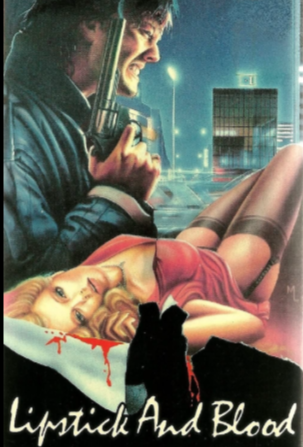
Lipstick and Blood (1984)

Don’t ask me why, but in 1984, Lindsay Shonteff, who spent most of his career making spy spoofs like The 2nd Best Secret Agent in the Whole Wide World decided to make a Shot On Video* giallo.

Is it any good? No.

Is it weird? Yes.

Is that why we watched it? You know it.

Starring Jane Linter — who never made another movie — and Joseph Peters, who played a Hooded Ghost in two of The Adventures of Justine films, which are very similar to Gwendoline, this is all about a man stalking an exotic dancer who is only dancing to raise money for her wedding.

The stalker, Jay Preston, lives in a world of Mayfair-esque lad mags, call girls and yes, a blow-up doll to sate his strange passions. But soon, when he watches Jennie on stage, he knows that he has found the woman who can satisfy him. Sure, she has a fiancee, but fantasies don’t take into account the real world.

This, of course, means killing her fiancee, murdering multiple people to earn enough money to keep moving from motel to motel, then forcing her to dance for him and him alone when he isn’t assaulting her or killing her parents. You may ask yourself, “Really, who is all this depravity for?” Then you realize that the 1980’s had a burgeoning video nasty market in the UK and see where Shonteff was trying to make some much-needed cash in the economic crunch of 1984.

Sadly, the director already made a much better version of this kind of story back in 1969 with Night, After Night, After Night, but hey, you’re looking for giallo that no one else has and you need to get your kicks somewhere, right? And look who has the skinny on some scummy VHS era hackwork that only two other maniacs on IMDB have reviewed? Me. I’m not proud of it either, but here we are.

Despite having a lead character who blames a woman for his inability to even make a complete bowel movement — a first! — this is one of those movies where the lead character is an exotic dancer that somehow never gets naked, which really seems to challenge this movie’s goal of being repellant filth. Imagine if David Hess said poopy in his rants. It just doesn’t work. If you’re going to be a cesspool dwelling movie that upsets people enough to get on the cover of tabloids, go for it. Instead, other than its ranting leading man, a final act turn toward proto-American Psycho satire and a shotgun blast of an ending, this is a rather tame affair. You know, except for that blow-up doll.

*He also made another SOV movie, a post-apocalyptic film called The Killing Edge.

Drive-In Friday: Dennis Devine Night

We’ve already taken a look at Double D’s best-promoted and best-known film — via the back of pulpy, ’80s monster mags — Dead Girls, and his latest, 30th film, Camp Blood 8 — each part of our respective “Rock ‘n’ Roll Week II” and October “All Slasher Month” tributes. And, the best part: Dennis is a D-Town brother: he was born and raised in Detroit and graduated from Eastern Michigan University before heading to Los Angeles, graduating from Loyola Marymount University’s film school, and forming DJD Productions.

So, for this Drive-In Friday, lets load the projector with four more of Dennis Devine films. And not all of them are the horror films you expect them to be.

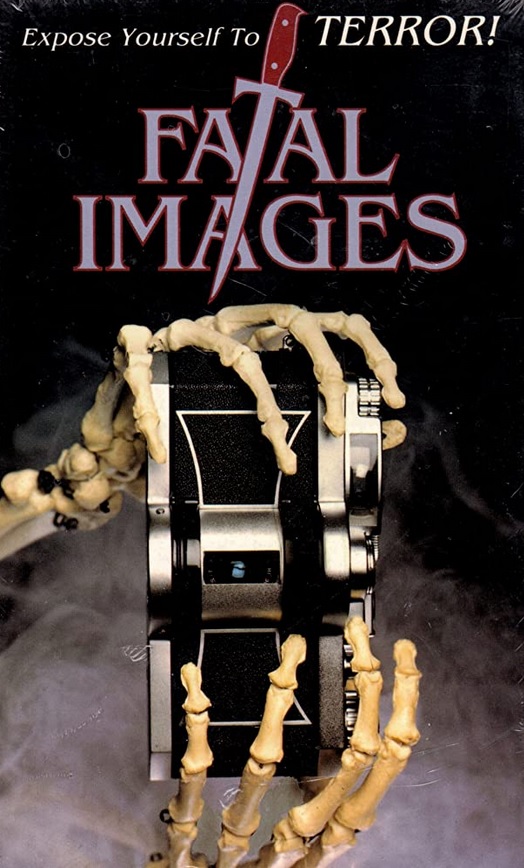
Movie 1: Fatal Images (1989)

Next to Dear Girls, this debut feature — produced for $10,000 and shot-on-Beta with Dead Girls’ Steve Jarvis — is my favorite of the Devine canons and the Cinematrix imprint.

Starring Kay Schaber, Angela Eads, and Brian Chin from the later Dead Girls, they’re three of several people victimized by a Satanist-worshipping photographer-cum-serial killer who — instead of sealing his body in a doll, ala Chucky in Child’s Play (1988; 2019), Devine’s writing cohort, Mike Bowler (Hell Spa, Things, Things II, Club Dead, Amazon Warrior, Chain of Souls, Haunted), who spins an inventive change-up to the spiritual hocus pocus — commits suicide before the police can catch him, and seals his body inside a camera.

Years later, Amy Stuart (Lane Coyle who, in typical Devine fashion, never appeared in another film), an aspiring photographer who works for the town’s newspaper, purchases the vintage camera from a pawn shop staffed with a creepy, ulterior motive shopkeep — and everyone she photographs is tracked down and murdered by the killer’s spirit.

What helps this along is the effects that come courtesy of the iconic Gabe Bartalos, who worked on Dead Girls, as well as Frankenhooker, Spookies, Brain Damage, and the Fright Night, Basket Case, Leprechaun, and Texas Chainsaw Massacre, Gremlins and Watchers series. And don’t forget: Gabe’s in the directing business with Skinned Deep (2004) and Saint Bernard (2013).

You can watch Fatal Images as a free stream on You Tube. Do you need a more expansive, second look? Then check out Sam’s review of Fatal Images. It’s true! We love this film and Mr. Devine.

Movie 2: Things (1993)

“A horrific and sexy romp in the dark.”
— Joe Bob Briggs

Now, if that tag from the guru of Drive-In fodder on the VHS “big-box” doesn’t make you want to mail order this third effort from Dennis Devine, then nothing will. And yes . . . multiple titles alert . . . here are two movies carrying the “Things” title: the first is the infamous Canuxploitation-North of the Border Horror, Things (1989). And the three sequels from 1998 and 2017 to Devine’s film have nothing to do with the Canux one — or with each other — for that matter.

This “Things” is an anthology-portmanteau film in three parts: “The Box” directed and written by Devine,” “Thing in a Jar” written by Steve Jarvis and directed by Jay Woelfel, and the wrap-around/linking segment written by Mike Bowler and directed by Eugene James. All are film school friends and DJD cohorts, natch.

The segments come together as a woman kidnaps her husband’s mistress and tells the mistress two horror stories involving “evil things” — that’s all converged in a related, twist ending. And unlike the classic Amicus and Hammer omnibus flicks it homages, Things dispenses with the atmospheric-gothic angle of its Brit forefathers and goes straight for — the bountiful — guts n’ gore. The first tale concerns hookers who meet their fate to a cursed creature kept in a box; the second is about a woman haunted by is-it-real-or-nightmares “things” concerning her abusive husband.

You can watch Things on TubiTV. There’s no online copies of 2 or 3 (aka Deadly Tales, aka, Old Things) currently streaming online, but you can watch Things 4 on TubiTV. And again, DO NOT confuse this with the “North of the Border Horror” Things from 1989 . . . as that is a whole other “thing” to watch.

Uh, oh. As we rolled out another “SOV Week,” well, two, during the last two weeks of January 2023, we reviewed Dennis’s sequel, Things II.

INTERMISSION: Short Film Time!

The Things about Things Sidebar: Battlestar Galactica fans know Jay Woelfel as the director of Richard Hatch’s failed 1999 BSG theatrical reboot with the short “pitch film” Battlestar Galactica: The Second Coming that Universal rejected in lieu of the eventual SyFy Channel series. You can watch Hatch and Woelfel’s vision on You Tube. As you’ll see the, concept of “evolved Cylons” and the new Raiders design for the series was pinched from this version — and the most popular characters and actors returned. Woelfel is still at it: he recently edited Art of the Dead (2019). We also reviewed his debut effort, Beyond Death’s Door, as part of our “Regional Horror Week.”

And back to the show . . .

Movie 3: Curse of Pirate Death (2006)

It’s more goofy, ne’er-do-well college kids of the Scooby Doo variety heading off — not into the Norwegian Slasher Wood (as in Camp Blood 8) — but the ocean, Pirate’s Point in particular, as they research the myth of a centuries old killer, Abraham LeVoy, aka Pirate Death. And if they find his legendary treasure along the way, all the better for Shaggy and the Mystery Machine gang.

You’ve got — even though some are cut-a-ways or off-camera (ugh, damn budget) — a high kill count and lots of zombie-ghost pirate fighting that reminds of the great Amando de Ossorio’s third entry in his “Blind Dead” series, The Ghost Galleon (1974; the one with the living corpses of the Satan-worshiping Knights Templar hunting for human victims trapped on a 16th century galleon), but it’s definitely not as good as a de Ossorio flick (and what film is). Yeah, this one’s suffering from its ultra-low-budget that lends to sketchy cinematography and strained acting in places, but this has the usual Devine heart n’ soul with a mix of dark humor and horror that lends to its fun, snappy pace. Bottom line: If you want to see porn-provocateur Ron Jeremy (Boondock Saints/Overnight; also of Devine’s Night of the Dead from 2012) get a (cut-a-way) sword in the gut, this is your movie. If you want to see girls dressed as a sexy cop and German Beer Wench (Get that Bud Light chick outta ‘ere, I want a St. Pauli Girl!) stranded on an island dispatched by a dead pirate with guacamole smeared on his face, this is you movie.

One of the few Devine movies available through the service, you can rental-stream Curse of Pirate Death for a $1.99 on Amazon Prime. The DVD has a director-actor commentary track, along with a making of, gag reel, and meet the cast vignettes. The Amazon Prime stream offers a clip sample and You Tube offers a trailer via the film’s distributor, Brain Damage Films.

Movie 4: Get the Girl (2009)

Dennis Devine makes the jump from the pulpy lands of back-of-a-monster magazine-mail order SOVs to the streaming world of Netflix in this pretty obvious Judd Apatow-influencer. It concerns a geek (Adam Salandra of Devine’s Don’t Look in the Cellar) who masters Guitar Master (aka a chintzy Guitar Hero knock-off) to impress a sexy-brainless co-worker, much to the chagrin of his dowdy, co-worker gal pal. Guess which girl he gets. (Yeah, I’d want to “get the girl” with the ponytail and eye glasses, too.)

You can watch Get the Girl as a free-with-ads stream on TubiTV. Other films in the Devine comedy canons include Kid Racer (2010; yep, go-carts), Dewitt & Maria (2010; a rom-com), Fat Planet (2013; aliens into food), and Baker & Dunn (2017; that also works as mystery thriller).


For you Devineites (Or is that Devineheads?) check out his TubiTV page to watch the horrors Don’t Look in the Cellar (2008), The Haunting of La Llorona (2019), and the comedy Fat Planet (2013).

We wanted to do Devine’s Vampires of Sorority Row (1999), Vampires on Sorority Row II (2000), and his campy-vamp comedy Vamps in the City (2010) for our recent “Vampire Week,” but were unable to locate online streaming copies for you to enjoy — free or otherwise. The same goes for the Reggie “Phantasm” Bannister-starring Sawblade (2010) for our “Rock ‘n’ Roll Week II,” about an extreme-metal band a trapped-in-a-haunted house-for-a-video shoot tale (i.e., Blood Tracks and Monster Dog).

You need more Dennis Devine? Check out this Spotify podcast (that streams on all apps, and browser PCs and Laps) courtesy of Inside Movies Galore in promotion of Devine’s latest film, Camp Blood 8. You can also catch the podcast on streaming provider, Anchor.

About the Author: You can learn more about the writings of R.D Francis on Facebook. He also writes for B&S About Movies and publishes on Medium.

Mill Creek Sci-Fi Invasion: The Alien Factor (1978)

You know how we root for the self-made filmmaker at B&S About Movies, with backyard guys like Andy Milligan and Don Dohler. (Without their 16-to-35mm drive-in romps, there’d be no SOV ’80s*, so I always lump them into that brick and mortar store era, especially when the first time most seen Dohler’s work — or Milligan’s for that matter — was on home video.) So while stuffy Leonard Maltin-styled critics catalog their filmpedia scoffs at Dohler’s “gripping sci-fi terror from beyond,” we, the staff of B&S About Movies appreciate Dohler’s debut film for what it is: a fun retro-romp from the ’50s “Golden Age of Horror.”

Considering Dohler began as an underground magazine publisher in the early ’60s at the age of 15 with the Mad Magazine-inspired WILD and the mid-60s filmmaking magazine Cinemagic (that was bought out by Starlog in 1979), his transitioning into producing his own films was a logical, natural progression.

Upon first watching the opening scene of two people in car in a remote, rural area being attacked by an alien creature, it’s obvious George Romero’s Night of the Living Dead is a sign post in Dohler’s creation. However, with only $3,500 to spend, Dohler couldn’t afford to shoot in graveyards and create zombie hoards: so he gave us a tale inspired by ’50s sci-fi films, such as The Thing from Another World.

If you’ve seen — or read our previous reviews for Dohler’s third and fourth films (the zombie-slasher hybrid Fiend from 1980 was his second) — Nightbeast and The Galaxy Invader, you know that an insect-esque monster is on the loose in “Perry Hill” (natch). The mayhem is triggered when a (character expositional) spaceship containing specimens for an intergalactic zoo crashes on Earth and lets loose its galactic menagerie: an Inferbyce (the aforementioned insect alien), a Zagatile (a giant furry beast with funky legs) and a Lemmoid (a ghostly like lizard that sucks energy from other creatures).

Baltimore’s’ favorite alien is back in the 2001 sequel.

And I ask you: Did Speilberg watch this? I wonder, because we have a local sheriff besieged by the backwood (in lieu of sandy Amity Island) town mayor to find what’s causing the killings (not a shark) and to “keep a lid on it” because it’ll jeopardize the nearby construction of a multimillion-dollar amusement park that’ll boost the local economy.

The reference to Romero’s zombie classic — and our calling out a minor influence of Jack H. Harris’s Equinox — isn’t a critical misnomer (especially when you watch the ending and recall Duane Jones’s sad fate in Romero’s tale). While this Dohler debut received a widespread theatrical released in the post-Alien/Star Wars/Close Encounters of the Third Kind marketplace in May 1978, The Alien Factor was completed in 1972 — and had a slight, regional drive-in release around the Baltimore area in 1976.

For a film shot for under $4,000 bucks with local talent, a limited crew, backyard without-permit locales, and admittedly pretty decent process shots and practical in-camera effect, this — as with any Dohler flick — is worth the watch. You can watch The Alien Factor on You Tube and enjoy it as part of the Mill Creek Sci-Fi Invasion Box Set.

And did you know there’s a rock ‘n’ roll connection to this Dohler bit o’ nostalgia? Yep! Be sure to check out Sam’s take as he reviewed the film for the 24th “At the Gig” day of the 2020 Scarecrow Psychotronic Challenge.

* Click through to our SOV tag to populate our ever-growing list of shot-on-video movies.

About the Author: You can learn more about the writings of R.D Francis on Facebook. He also writes for B&S About Movies.
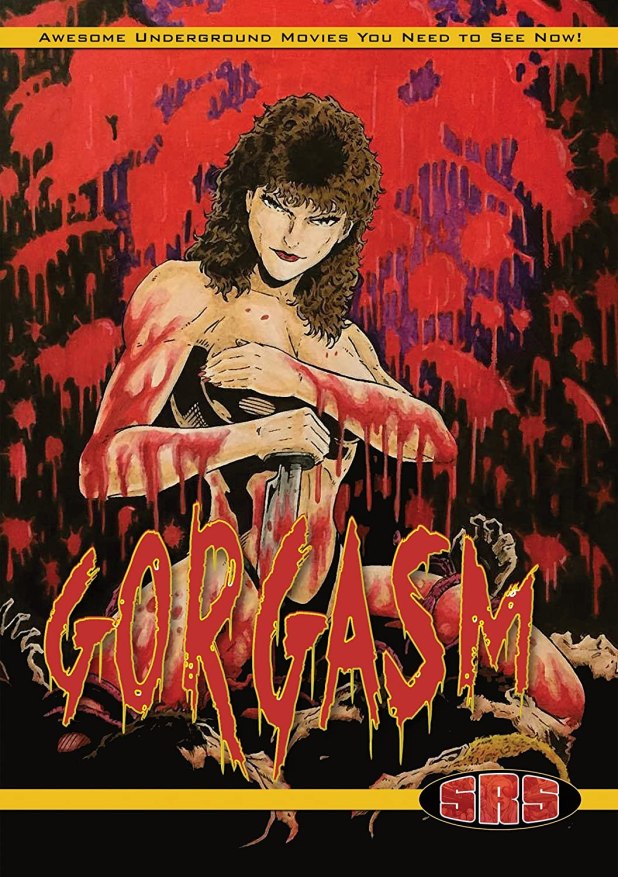
SLASHER MONTH: Gorgasm (1990)

This is a movie that somehow combines rambling dialogues, Xeroxed zines, the kind of music that you’d hear on a pay to play night at Gazzarri’s in 1990, BDSM pornography, slasher movies and the scuzzy black and white detective magazines that would get ink all over your hands, shoots it all on video and lets it get moldy inside the plastic VHS so that it barely plays on your TV, a warped, distorted and fuzzy time capsule of the past that somehow has survived into our digital time.

It pits a man named Chase (Rik Billock, who is from Vandergrift, PA, the same place we regularly attend the Drive-In Monster-Rama; he was also in KnightridersThe Dark Half and is even a zombie in Dawn of the Dead) against a call girl named Tara (adult film actress Gabriela) who promises “the ultimate climax” to the men and women that pay her all of their money to, well, kill them with knives and weedwhips.

Director Hugh Gallagher also made two more movies related to this called Gorotica and Gore Whore. He also shows up in Mail Order Murder: The Story Of W.A.V.E. Productions, a movie that tells the story of the pre-internet company that created damsel in distress and exploitation movies on demand for those that wanted to see attractive women get tied up, menaced and murdered on videotape. Gallagher also published Draculina Magazine and has written Playgore, a book all about the making of this movie.

If you didn’t grow up in the shot on video era, you may be put off by the dingy feelings of this movie, which mostly takes place in the backrooms of video stores. It feels like the days of self-stapling zines, trading cassettes and the ads in the back of Hustler. It’s completely socially and artistically irredeemable,  but even in the lowest levels of culture, sometimes there are moments that can become enjoyable. Or maybe this movie would have run on Videodrome and caused your brain to swell up. Either way, you’ll be somewhat entertained, if you can make it through the cue card reading, bad acting and oh yeah, pretty much a lack of gore in a movie called Gorgasm. Obviously, the title Lots of Breasts and a Bit of Blood and a Weedwhip didn’t fit on the clamshell case.

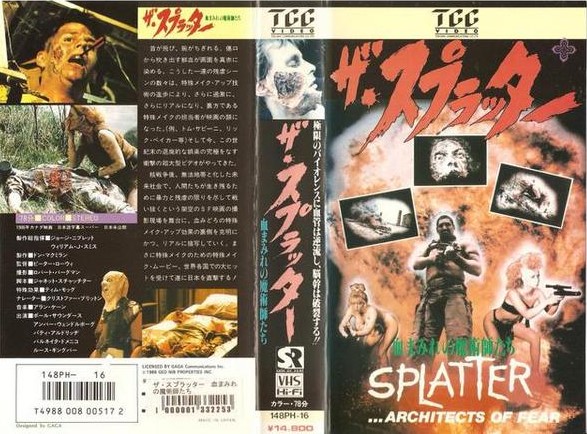
SLASHER MONTH: Splatter: The Architects of Fear (1986)

In the year 2002, amazons and mutants battle one another, which mainly consists of women lying in beds and being butchered or alternatively screwing out the brains — literally — of said mutants.

But no, really, we’re just watching a movie being made by special effects experts — a phrase I should have written as “experts” — while a voiceover* explains to us why this is all so important.

Toronto’s finest exotic dancers — I assume all have worked the Brass Rail on Younge Street — have consented to be made up by these maniacs, who include a man named Fang, in a movie that only exists inside this movie, which seems to be a making of for a movie that was never made.

You with me? For full enjoyment of this film, I advise checking out Rick Trembles’ cartoon of the movie at Canuxpolitation!

The crew of Gory Philms is ready to show you each effect three times in a row with no real story, so if you’re ready for the kind of shot on video fun that teenagers like me enjoyed around 1986, you can watch this on YouTube.

*The narration comes from Chris Britton, who has showed up in minor roles in everything from ScannersThe Brood and The Shack to voiceover work, with roles as Mr. Sinister on the 90’s X-Men cartoon and the drive-thru in Maximum Overdrive.

The trailer and film comes and goes from You Tube, but we found the latest age-restricted sign-in copies, just click the links

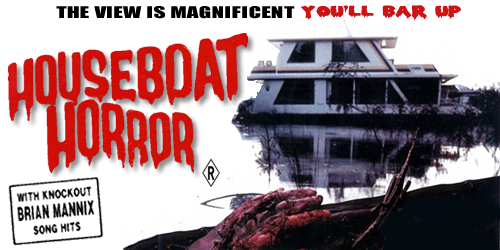
SLASHER MONTH: Houseboat Horror (1989)

Directed by Kendall Flanagan and Ollie Martin, the whole campaign for this movie pretty much seems to revolve around how bad it is. That said, I’ve seen plenty worse slashers, but I’m also someone who likes to eat the fruit out of the bottom of the broiler at the Melting Pot, as it were.

A rock band is making a movie on Lake Infinity and — as the title suggests — have a houseboat to live and work on. What follows is what you expect — red herrings as to the identity of the killer and what you don’t — a large portion of the movie is given to a hunt for mushrooms in the forest.

This is also pretty much Jason Vorhees down under, complete with a protective mom and harpooning lovers together just to make Mario Bava fans cry foul. It also uses plenty of music cues that sound exactly like they came from Crystal Lake. What it has that those movies don’t is a band that sounds like an Australian version of The Replacements at times and a killer named Acid Head.

What’s your tolerance for shot on video slashers? For movies where everyone has a mullet? Where continuity and lighting change within the very same scene? Allow this to determine whether or not you want to waste your time and watch this on YouTube.