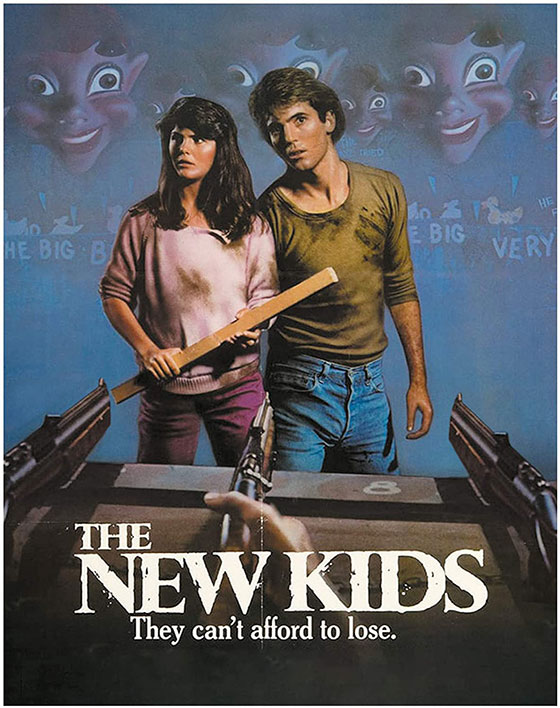
MILL CREEK DVD RELEASE: Through the Decades: 1980s Collection: The New Kids (1985)

EDITOR’S NOTE: This movie originally appeared on the site on December 12, 2018 when Mill Creek released it as part of their retro VHS box line. 

Have you ever said to yourself, “I’d like to watch a super young James Spader with weird looking bleach blonde hair menace a super young looking Lori Loughlin to the point that I worry for her safety?” If so, you’re a maniac. But hey, you’re on our site, so we have to be nice and tell you that this movie exists. It’s Sean Cunningham’s (Friday the 13th) 1985 opus, The New Kids.

No offense to our friends from Horror and Sons, but Florida is the most frightening state in the nation. Just ask Abby (Loughlin, years before she became Aunt Becky or a convicted felon) and Loren McWilliams (Shannon Presby, who quit acting soon after this movie and became a lawyer). Their parents (Tom Atkins is their military hero dad!) have been killed in an accident and they’ve moved to Glenby, a small town that seems way more like hell — and not the happiest place — on Earth. Their Uncle Charlie (Eddie Jones, C.H.U.D.Q the Winged Serpent and Johnathan Kent on TV’s Lois & Clark: The New Adventures of Superman) and Aunt Fay (who did American voices for Gamera the Invincible and Godzilla vs. Hedorah) take them in, getting them to help them operate a gas station and amusement park, which is based on Santa Claus. If you’re willing to accept this entire paragraph and still say, “I’d watch that movie,” congratulations. You’re as goofy as me.

The kids do pretty well in their new life, with Loren instantly hitting it off with Karen, the vivacious daughter of the local sheriff. And Abby starts seeing Mark, who is played by Eric Stoltz, who also made Mask and lasted five weeks as Marty McFly in Back to the Future the same year that this movie was made.

What gives us the dramatic reason for watching this movie? Eddie Dutra (Spader) and his gang suddenly intrude and remind us that Flordia may be the home of Disney, but it’s also the nexus for American death metal. These boys just randomly do coke and make bets as to who will have nonconsensual sex with Abby first.

Dutra and his gang gradually grow more and more vicious, keying cars and even throwing Abby’s beloved pet rabbit’s bloody corpse at her while she attempts to take a shower — a scene that reminds you that Cunningham may be working for a major studio here, but he has roots in exploitation.

Finally, there’s a showdown at the amusement park that the kids call home, with Dutra covering Abby in lighter fluid and throwing lit matches at her (!) while his gang holds her down and fights over who gets to molest her.

It all ends with the bad guys attacked by dogs, thrown from the Ferris wheel, electrocuted and beheaded by bumper cars, and finally, Dutra lit ablaze by a gas pump that he has turned into a flamethrower. No, I don’t think that gas pumps work that way, either.

Becca woke up and came downstairs to watch some of my late night viewing of The New Kids and said, “This is one of those movies where they just show you stuff that happens to people and it’s all horrible. In fact, this movie is horrible. Who would even like this kind of movie?”

This is when my wife learned that I’m the kind of person who would like this kind of movie, which confirmed my theory: no one can be that good at being a lunatic without being a lunatic. There’s some dark stuff in Spader’s closet, right? Well, according to this Movie Web article, every year Spader and Stoltz get together to watch The New Kids together.

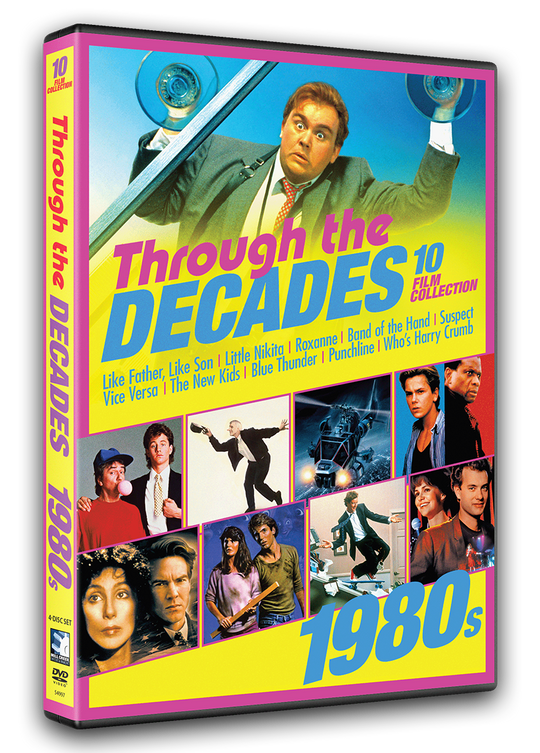
The Mill Creek Through the Decades: 1980s Collection has a ton of great movies at an affordable price. It also has Like Father, Like Son, Vice Versa, Little Nikita, Roxanne, PunchlineWho’s Harry Crumb?Blue ThunderSuspect and Band of the Hand. You can get this set from Deep Discount.

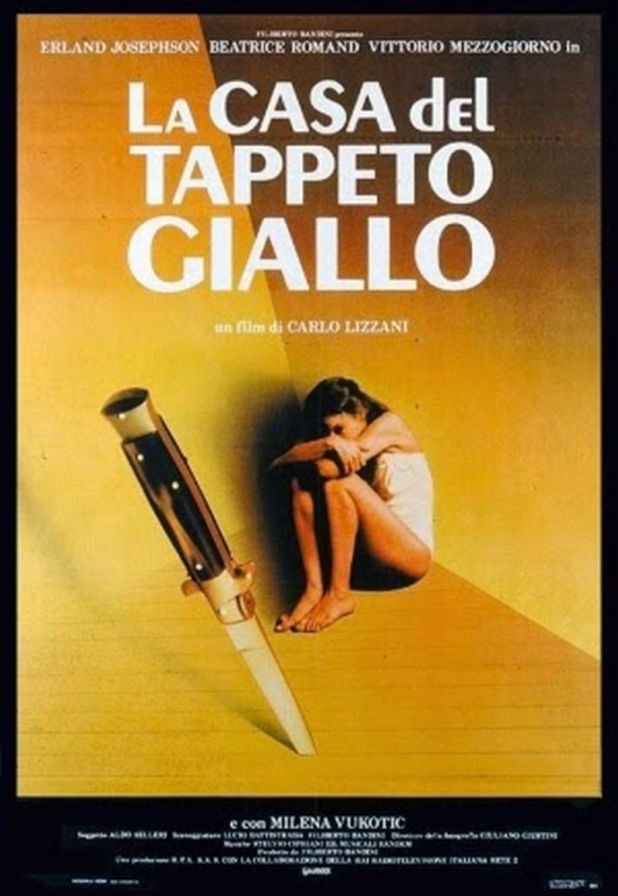
La casa del tappeto giallo (1983)

You know, Becca sells a lot of things on Facebook Marketplace and this movie is why I get worried every time that someone comes here to buy something, because in The House of the Yellow Carpet, Franca (Béatrice Romand) and Antonio (Vittorio Mezzogiorno, Car CrashLa Orca) sell the yellow carpet in the title to a man known as The Professor (Erland Josephson, Fanny and Alexander), who reveals that he killed his wife on that very same tapestry many, many years ago. Even stranger, he claims to know secrets about her family, as the carpet was a gift from her stepfather.

Director Carlo Lizanni also made Crazy JoeThe Last Four Days and The Violent Four. In this film, he turns a single location into a suspense-filled setting and also has a good turn from Milena Vukotic as a psychiatrist. It was based on a stage play, Theatre at Home, which was written by Aldo Selleri. It was adapted by Filiberto Bandini (the two Indio movies) and Lucio Battistrada (AutopsyThe Dead Are Alive!).

For a very late in the game giallo, The House of the Yellow Carpet has something new to say. And it also boasts a strong score by Stelvio Cipriani, who also did the music for The Lickerish QuartetA Bay of BloodHighway RacerDeported Women of the SS Special Section and Piranha II: The Spawning.

Il prato macchiato di rosso (1973)

The Red-Stained Lawn or The Bloodstained Lawn was originally called Vampiro 2000 and infuses science fiction, Gothic horror and giallo all in one wacky package with a bloodsucking robotic cherry on top.

The film takes place in Emilia-Romagna, Italy. There, a United Nations Educational, Scientific and Cultural Organization agent find a bottle of wine with blood in it. How could this happen to such a well-known vintage from Michelino Croci? What if the winery is a front for a blood smuggling scheme? And how would blood stay good in bottles? So many mysteries!

Dr. Antonio Genovese (Enzo Tarascio), his wife Nina (Marina Malfatti, All the Colors of the Dark, The Red Queen Kills Seven Times, Seven Blood-Stained Orchids) and her brother Alfiero (Claudio Biava) look for people with no ties — hippies, drifters, prostitutes and literally gypsies, tramps and thieves — to lure to an all expenses paid getaway at their castle. Folks like freewheeling musician Max (George Willing, Who Saw Her Die?) and his lover (Daniela Caroli), who have accepted an invitation to spend some time in the Genovese estate, along with the alcoholic tramp (Lucio Dalla, who would become a major singing star in the 80s), a gypsy (Barbara Marzano, The Bloodsucker Leads the Dance) and a sex worker (Dominique Boschero, Argoman the Fantastic Superman).

The bloodsucking machine is literally right out in the open, treated like a piece of pop art. You have to admire that level of out in the open when it comes to an Italian film killer. You also have to love that the killers have a shower that sprays wine and this doesn’t bother Max nor his never named girlfriend, nor does the hall of mirrors bedroom seem strange to anyone else. There’s also a curtain between rooms that totally looks like female anatomy and even more so a scene taking right out of The Laughing Woman.

Director and writer Riccardo Ghione only made four movies: this one, a documentary called Il Limbo, the hippy drama A cuore freddo and La rivoluzione sessuale, a movie in which 7 men and 7 women perform an experiment inspired by the sexual orgone energy theories of Wilhelm Reich. If that was crazy enough, it was co-written by Dario Argento. He would go on to write several other films, including the Joe D’Amato film Delizia.

I love that this movie stands on the line between arthouse and grindhouse with every decision it makes leaning away from the artistic and toward the prurient and bloody. Sure, there’s a message about how the rich subjugate the lower classes, but it’s also a film where Malfatti gives speeches about Wagner and how meaningless her victims are, all while a gigantic cartoony machine literally sucks young blood.

Come una crisalide (2010)

Symphony In Blood Red was directed by Luigi Pastore, best known for Violent Shit: The Movie, and written by Antonio Tentori, who worked on A Cat In the Brain and Demonia for Fulci; Frankenstein 2000 for D’Amato; Segreti di donnaThe Jail: The Women’s HellIsland of the Living Dead and Zombies: The Beginning for Mattei; Dracula 3D for Argento and wrote modern Italian horror like CatacombaVirus: Extreme Contamination and Flesh Contagium.

Not only do you get a Claudio Simonetti score, you also get him on stage with his band Daemonia. And you get to watch a serial killer unleash his hatred on men and women alike as they have a rampage fueled by the effects of Sergio Stivaletti. While so much has been made of its Argento inspiration, it feels more like a slasher film than an arty psychosexual thriller.

Then again — it does start with a quote right out of Tenebre.

When a patient is told that they must go back to a clinic instead of being allowed to be free, they murder their therapist and start killing anyone and everyone they can. We hear from the killer throughout the movie as they narrate the killings and explain the reasons why they kill. One of the issues I have with newer giallo is that they attempt to claim the influence, have a few shots that reference the old films and then forget the elements that make the finest examples work: a protagonist forced to investigate the killings, a murderer motivated by past trauma, artistic death scenes, gorgeous people and high fashion.

I dug the Greek chorus priest puppets and the film’s grubbiness, but I’d say this is for giallo obsessives only. And that’s fine — we always find what we’re looking for.

Exploring Ruggero Deodato

Plenty of directors have made extreme cinema. However, only a few have been arrested for murder and owned the title Monsieur Cannibal.

Ruggero Deodato started life as a music prodigy, directing an orchestra by the age of seven before quitting once his teacher sent him away for playing by ear. Through his friendship with Renzo Rossellini, he started working with Renzo’s father Roberto and Sergio Corbucci, who he worked with as the assistant director for Django.

Deodato also made three movies of his own, Hercules, Prisoner of Evil; Phenomenal and the Treasure of TutankhamenGungala, the Black Panther GirlDonne… botte e bersaglieriVacanze sulla Costa SmeraldaI quattro del pater nosterZenabel and the TV series Il triangolo rosso and All’ultimo minuto before leaving to work in advertising.

It was during this period that he met his first wife, Silvia Dionisio, who you may recognize from Blood for Dracula and the two films that brought Deodato back to directing, Waves of Lust and the astounding Live Like a CopDie Like a Man.

It was in 1977 that Deodato would plant his flag in the genre that he is best known for: the cannibal film. While these movies have their roots in the jungle adventure genre, they really took root when Umberto Lenzi made The Man from Deep River in 1972. Released as Sacrifice! in the U.S., it was basically a remix of A Man Called Horse yet set in the Green Inferno. Deodato would take that film and push it with a series of cannibal-themed movies like Jungle Holocaust (aka Last Cannibal World) and Cannibal Holocaust, the watershed of all cannibal and found footage films.

Lenzi claims that the only reason Deodato got to make Jungle Holocaust was because he was busy making Almost Human and wasn’t offered enough money by the producers; this could just be part of the somewhat feud between the two directors, as when Lenzi made Cannibal Ferox (aka Make Them Die Slowly) in 1980, Deodato said, “I think the forefather of the cannibal genre was me. I had not seen Umberto Lenzi’s movie Man from Deep River. So my film, Last Cannibal World, really originated, and was written to start this whole cannibal trend. I studied a lot of books on the subject and documented some of it from National Geographic magazine as well. I also looked closely at the ritualism of cannibalism and I don’t believe Lenzi did that with his film. Maybe Lenzi did it after I made Last Cannibal World. You know, when he went on to do Cannibal Ferox. He didn’t do it first, that’s for sure. When I finally saw his film, it was more of a copy of A Man Called Horse.”
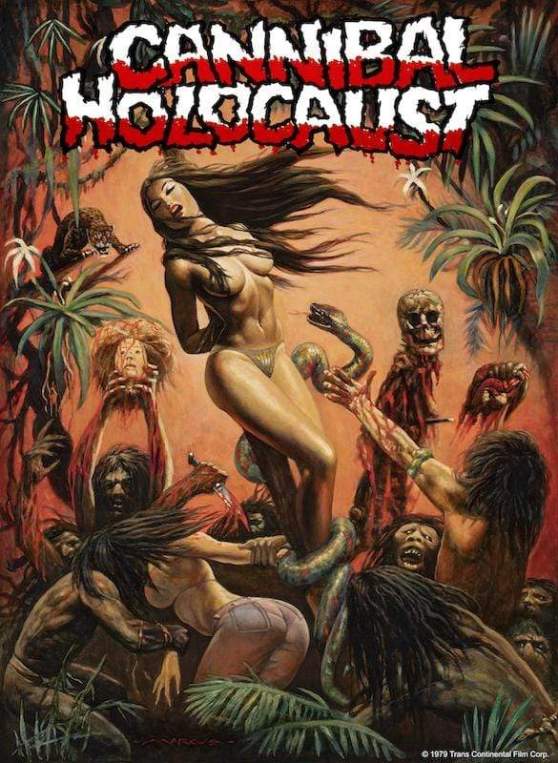
Maybe Luigi Cozzi is the arbitrator of this argument. He said, “To me, the real beginning of the cannibal genre is Cannibal Holocaust. It was a legitimate success at the box office, but not in Italy as it was banned, blocked and withheld. They distributed it at a later date, but it was dead by then. However, it did astonishing business abroad.”

Cannibal Holocaust is either a work of exploitation junk madness or an art film inspired by the political unrest of Italy at the time. Can it — perhaps by accident — be both? How strange is it when the filmmakers — particularly Deodato if interviews by the cast are any indication — are just as bad if not worse than the characters on screen?

Ten days after the movie’s premiere, it was confiscated under the orders of a local magistrate and Deodato was charged with obscenity, which if you’ve watched any Italian films is incredible with the sheer outrages one sees in these films. And then, in one of those no news is bad news PR moments, the charges against Deodato soon included murder, as some believed the actors who portrayed the missing film crew and the impaled actress were actually murdered. This could be the ultimate kayfabe press story, but the actors — who some claim were told to hide for some months to get across the idea that this was a real snuff film — and special effects crew were called to court to prove Deodato’s innocence. That said, he received a four-month suspended sentence for obscenity and animal cruelty as eight real animals were murdered during the making of the movie. The film didn’t play Italy uncut until 1984.

It’s also on the list of films distributed on video cassette that were criticized for their violent content by the UK press and various organizations such as the National Viewers’ and Listeners’ Association. You can read more about the Video Nasties in our three-part article. Start with part one, which has Deodato’s cannibal film, right here.

The director also made Last Feelings and Concorde Affaire ’79 during this period as he fought to retain his directing license.

As groundbreaking as Deodato was before 1980, I believe that he made movies just as interesting and wild after, starting with his Last House on the Left-influenced House on the Edge of the Park, a movie so indebted to Craven’s movie that it even has star David Hess in the cast. As I wrote in my initial review of the film, “Deodato makes a film that continually assaults not just the characters” and again, it found one of his movies on the section 1 Video Nasty list.

Billed in the U.S. as Richard Franklin, Deodato’s next film would be the improbable Raiders of the Lost Ark/Road Warrior mix and match that is Atlantis Interceptors (aka Raiders of Atlantis), which has an all-star — well, Italian exploitation all-star — cast including Christopher Connelly, George Hilton, Ivan Rassimov and a young Michele Soavi.

The slasher boom in the U.S. led to two larger budget films for Deodato.

Cut and Run was intended as a Wes Craven film and had an R-rated and international cut packed with more of the wildness that Deodato was known for. Fran Hudson (Lisa Blount, Prince of Darkness) is investigating a war in the jungles of South America between drug cartels and the army of Colonel Brian Horne (Richard Lynch), who has a gigantic assassin named Quencho (Michael Berryman) on his side. Plus, you get Willie Aames in a Mickey Mouse shirt, Karen Black, Eriq La Salle, Gabriele Tinti, John Steiner and Barbara Magnolfi. It’s as if the big world of Hollywood has met the Italian industry for this one, which features bodies torn in half and crucified, as well as references to Jonestown.

The second larger budget film Deodato worked on was Body Count, which has Charles Napier, Ivan Rassimov, John Steiner, Cynthia Thompson, David Hess and Mimsy Farmer in a movie that combines the stalk and slash camp action of Crystal Lake with the haunted burial ground of Cuesta Verde. It also has an RV, dirt bikes and a blaring synth score from Claudio Simonetti. It’s also the kind of movie that claims to be in Colorado yet was shot in the Cascate di Monte Gelato forest park.

Like most Italian exploitation directors, Deodato tried nearly any genre that was hot at the time. The Lone Runner is the next example. This post-apocalyptic film stars Italian mainstay Miles O’Keefe (the Ator series), Raiders of the Lost Ark bad guy Ronald Lacey, John Steiner, Hal Yamanouchi and Yugoslavian actress Savina Gersak, who ends up in all manner of movies I obsess over, including Iron WarriorAfghanistan – The Last War BusCurse II: The BiteBeyond the Door III and Midnight Ride.

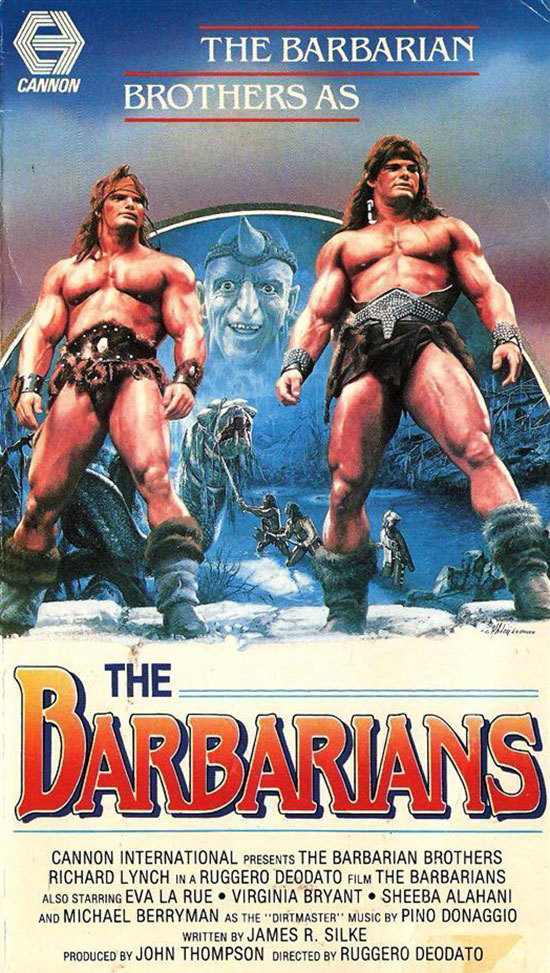
Deodato’s next film, The Barbarians, moves into another Italian-beloved genre, the peplum film by way of Conan the Barbarian pastiche. This was a well-trod genre for the director, as the first movie he made was Hercules, Prisoner of Evil.

What would be better than one barbarian? How about two? Twin brothers — The Barbarian Brothers! Made for Cannon Films, with a script by James R. Silke (Ninja 3: The DominationRevenge of the Ninja), this takes the best of the venerable Cannon and throws in Italian stars with America talent, so Richard Lynch and Michael Berryman appear in the same movie as George Eastman and Virginia Bryant.

A movie that is almost the entire Conan movie redone with double the brawny beefcake swordsmen, this movie is fun from start to finish, with an episodic story that takes the brothers from young members of a circus to battle gigantic monsters.

The next film that Deodato would direct was Phantom of Death, a way late in the cycle giallo with horror elements that boasts Michael York as a man aging prematurely, Donald Pleasence as an inspector and Edwige Fenech as the love interest. This is one of the few films in which you can hear Fenech’s voice undubbed.

Dial:Help is one of the strangest films in Deodato’s career, a mix of horror, giallo and telephones acting as both protector and antagonist for Charlotte Lewis. Working from a script by Franco Ferrini (PhenomenaSleepless, Opera), this is probably the most gorgeous of all the movies Deodato would direct, including a wild scene that shows the reason behind these murderous phones: an abandoned phone line for people who had their hearts broken, an office where all of the operators are dead and can reach out from the other side. It’s a crime that this movie isn’t yet available on blu ray.

Deodato also worked in Italian TV, making two episodes of Il Racatto, the mini-series Ocean (which features David Hess, Michael Berryman and Martin Balsam), eight episodes of I ragazzi del muretto, six episodes of We Are Angels (featuring the wild team of Bud Spencer and Philip Michael Thomas as criminals hiding out as monks; it also has appearances by Hess, Berryman,  Richard Lynch and Erik Estrada), ten of the Carol Alt-starring Thinking About Africa, an episode of Incantesimo 8 and the TV movie Padre Speranza (Father Hope), which stars Spencer.
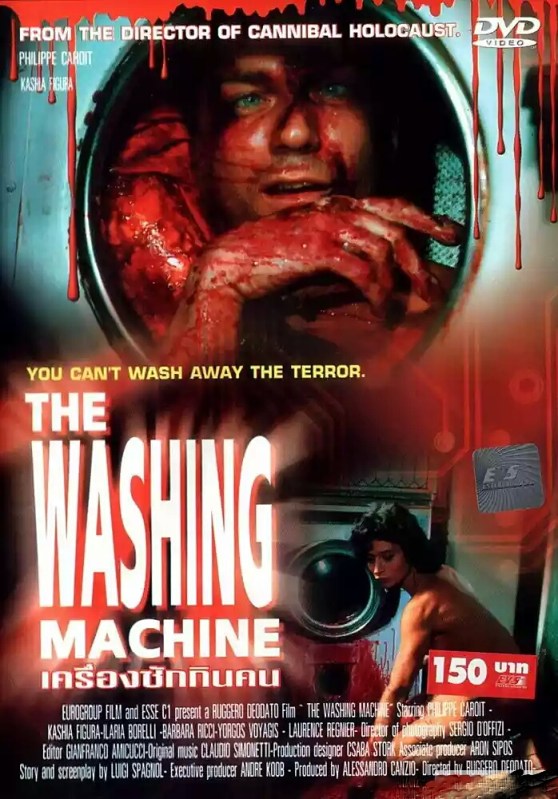
Deodato also made two theatrical films in the early 90s, the child-friendly drama Mom I Can Do It, starring American actors Chistopher Mattheson and Elisabeth Kemp (He Knows You’re Alone) and The Washing Machine, a sex-packed giallo tale of three sisters, murder and dead bodies found inside washing machines. Again, sadly, this has not yet been reissued in the U.S. so it hasn’t found an appreciative audience.

An appearance by Deodato in big fan Eli Roth’s film Hostel: Part II — which also has a cameos by Fenech as an art class professor — led to the director appearing in films like The Museum of WondersEndless DarkPhantasmagoria and the Italian horror history-referencing Lilith’s Hell in which he plays himself.

After an eight year break, Deodato would direct a segment in The Profane Exhibit, the short Io e mia figlia and a segment in Deathcember. He also would make Ballad In Blood, his first full-length movie in a quarter century. Based on the Meredith Kercher murder case, it retains much of the headline chasing, boundary pushing blood and sleaze that Deodato has traded in for his entire career. Recently available from Severin in the U.S., one can only hope that the label finds a way to bring official releases of his other films to American collectors.

Deodato has also found his way into numerous documentaries — Shudder devoted an entire episode of Cursed Films to his most notorious movie and he’s one of the main interviews in The Found Footage Phenomenon — and has even been the subject of several himself, including Deodato Holocaust.

While Deodato’s films aren’t for everyone, they are important movies to study and enjoy for those willing to take the journey. He’s certainly one of the more interesting Italian filmmakers and one of the last surviving links to the heyday of 70s and 80s darkness that emerged from the country.

Sadly, died on December 29, 2022 at the age of 83. He leaves behind not just a cannibal that changed movies forever, but a rich career filled with movies worth exploring.
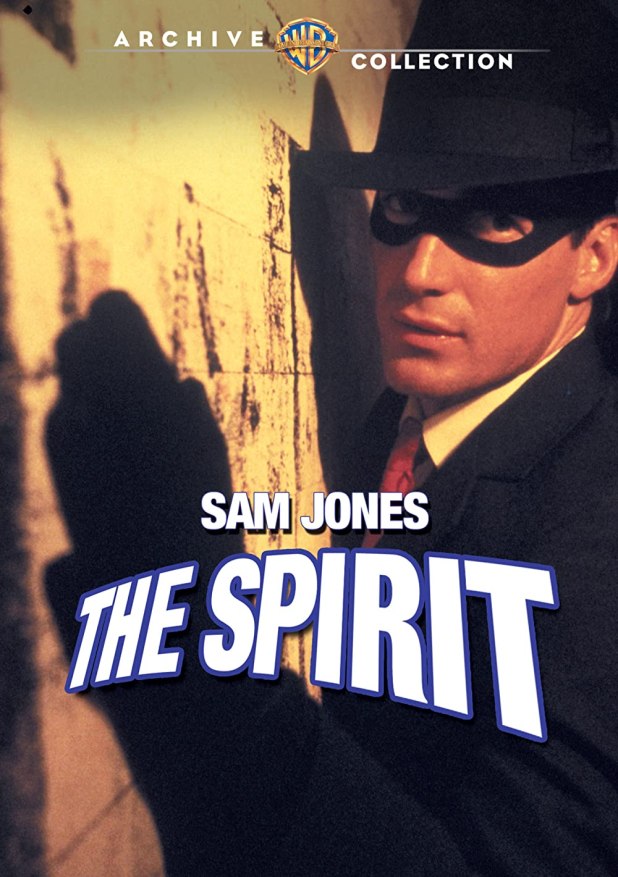
The Spirit (1987)

Written as a series pilot by Steven E. de Sousa (Die HardCommandoBad DreamsThe Running ManThe Return of Captain InvincibleStreet Fighter) and directed by Michael Schultz (Cooley HighCar WashSgt. Pepper’s Lonely Heart’s Club Band, The Last DragonKrush GrooveDisorderlies) this was a try at turning the Will Eisner newspaper strip into something viewers could see every week.

This has been released by the Warner Archive, but for years it was on convention tables and a lost film of sorts. It aired at a time when comic books weren’t in movies and on TV all the time. Batman was still years away.

The show looks great! It’s as close as a low budget TV show can get to capturing Eisner. de Sousa told Den of Geek, “We did this three or four years before Dick Tracy, but we made some of the same exact choices — only first! Whenever we designed things like costumes and locations, they would be your basic Crayola box of colors. So there’s one blue, one red, and one green.”

The look of the comic showing up was no accident, as he also related “Will Eisner was one of the first artists to approach comics with a conscious cinematic look, starting with The Spirit. So, wherever it was possible, we totally did panel for panel some famous moments from the comic. When the Spirit first meets Dolan, that sequence was shot almost exactly like the scene in the original Eisner comic.”

Sam J. Jones makes a terrific Spirit and Nana Visitor feels like she is Ellen Dolan stepping out of the comic page. Despite its $2.5 million or less budget, it somehow works better — and is so much more fun — than the Frank Miller The Spirit movie.

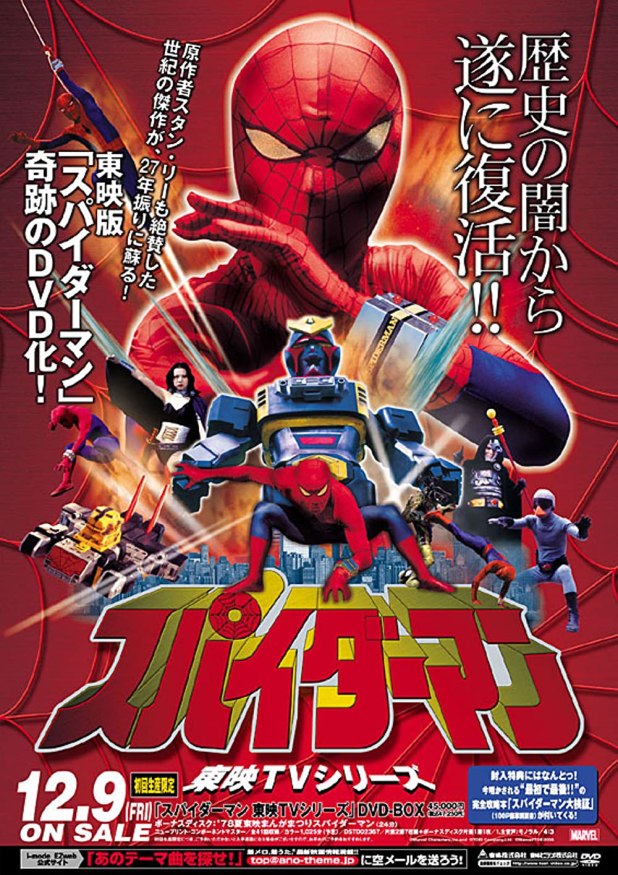
Supaidāman (1978)

At the end of the 70s, Marvel and Toei made a three-year licensing agreement. Each could use the other’s properties in any way they wanted.

Marvel would use the main robots from two of Toei’s anime, Wakusei Robo Danguard Ace and Chōdenji Robo Combattler V, as part of the Mattel licensed Shogun Warriors comic book and, sadly, not much else. That’s right, Marvel could have had a Kamen Rider comic.

Toei was inspired by Captain America to make Battle Fever J* and also made animated movies of Tomb of Dracula and Frankenstein.

And, of course, their version of Spider-Man.

Across 41 episodes and one movie made for the Toei Manga Matsuri, this story took the costume of Spider-Man and then went absolutely insane.

Motorcycle racer Takuya Yamashiro sees the Marveller — a UFO — fall to Earth just as his father Dr. Hiroshi Yamashiro — a space archaeologist! — investigates. He’s killed by Professor Monster and his evil Iron Cross Army, who were being opposed by the alien Garia, the last surviving warrior of Planet Spider. He injects Takuya with his blood and gives him a car named the Spider Machine GP-7 as well as a bracelet that allows him to control the ship and the robot form — Leopardon — to protect Earth.

Obviously, this series is a blast. Of course Spider-Man needs a car and a giant robot and is bothered by cold. I might even prefer it to nearly every other live-action version of the character.

*The popularity of this show and Battle Fever J led to a new interest in sentai shows, which of course how we got Power Rangers here. Toei’s next two sentai series, Denshi Sentai Denziman  and Taiyo Sentai Sun Vulcan featured Marvel Comics Group in the credits yet had no characters from the company.

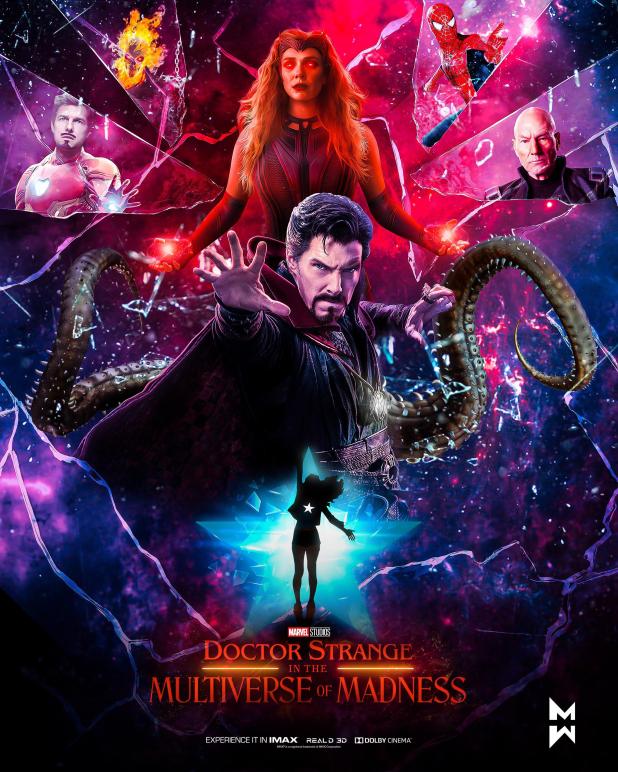
Doctor Strange in the Multiverse of Madness (2022)

SPOILER WARNING: I’m going to do my best to be as spoiler-free as possible, but I also want people going to see this movie to be, you know, surprised.

It seems like the majority of people posting negatively about this movie hit the Venn Diagram just right of those that enjoy negatively posting on holidays as well. Now, I may be one of the most cynical people you’ll ever meet, but it turns out that I actually want movies to entertain me. And when they entertain people other than me, I can accept their audience, move on and enjoy the movies that entertain me without dwelling.

So yes: this is a superhero movie. It’s a blockbuster. It’s the 28th movie in the Marvel Cinematic Universe. You also have had to have some cursory knowledge of Wandavision — there’s this great thing called YouTube that has these things called recaps, you know — and What If? yet you can enjoy this without that. And yes, this has Sam Raimi coming back to direct a superhero movie.

Even more importantly, this is the return of Sam Raimi to movies about cursed books.

Doctor Strange director and co-writer Scott Derrickson left over creative differences — his movie The Black Phone is coming out someday, right? — and that left Raimi and Michael Waldron (HeelsLoki) to start over.

From the original trailers, I was worried that this would cover the same ground as Loki, with Strange being called on the carpet for his abuse of the multiverse. Yet the movie does an early rug pull and places — there’s that spoiler reminder one more time — Wanda Maximoff, the Scarlet Witch — into the role of big bad.

Some backstory: Wanda was born in Eastern Europe, where her parents were killed by a Stark Industries missile, and she and her brother Pietro (Quicksilver) survived and were augmented by Hydra’s Baron Wolfgang von Strucker. Working with Ultron, she tried to destroy Stark and the Avengers before learning that the robot’s real goal was destroying the human race. This led to her, the Vision (a clone of Ultron turned to the side of good) and the Avengers stopping Ultron and then her joining the team. She and Vision become a couple, join Steve Rogers’ side during the Civil War event and then she must destroy Vision to protect the Mind Stone from Thanos, which means nothing, as he uses the Time Stone to undo her and Vision’s sacrifice. After a five year-plus battle with Thanos, she and the Avengers win, but her grief at losing Vision causes her to basically abduct the entire town of Westview and create her own sitcom reality — she learned English as a child from watching American TV — and raising sons Tommy and Billy with the Vision before her illusion is shattered by Agatha Harkness. The truth is that she’s destined to be the Scarlet Witch — the MCU version of Dark Phoenix, the Harbinger of Chaos more powerful than the Sorcerer Supreme — at which point Wanda traps Harkness in the town and leaves to study a book called the Darkhold, the Book of the Damned,  created by the Elder God Chthon, written in blood on flesh pages (hey Sam Raimi) and bound into book form by Morgan Le Faye, not so coincidentally the villain of the first Dr. Strange movie on TV in 1978, long before the MCU was even a thing.

Yet Wanda’s quest isn’t predicated on evil. She learns that there is more than one reality and that in each of these — you can glimpse these realities in your dreams — her children still exist and haven’t gone away when the spells she cast at Westview were negated. All she wants is her children, but to get them, she’ll destroy entire realities.

Meanwhile…take a breath…there’s America Chavez (Xochitl Gomez), who was born outside the multiverse and has the power to open doors between worlds. The first use of her powers pushed her parents into another reality and sent her running from the Scarlet Witch, who wants to absorb her power — killing her — so that she can find a world with her children and be a mother again.

We return to the central MCU reality — Earth-616 also the same number as the comic universe — where Dr. Strange (Benedict Cumberbatch) is attending the wedding of the love of his life, Christine Palmer (Rachel McAdams) when a giant monster — which can’t legally be called Shuma-Gorath and is called Gargantos — attempts to take America, who is saved by Strange and Sorcerer Supreme Wong (Benedict Wong). Of course, our hero has no idea that Wanda is the Scarlet Witch, but soon figures it out. The entire magical training world of Kamar-Taj attempts to protect America, who must escape with Strange through the multiverse.

And that’s where I really feel like the spoilers would be too much, right?

So let’s just discuss the merits of the film.

I can’t lie. I walked out of the movie with a huge smile on my face, but any film that combines the bull alien Rintrah and a cameo of the Living Tribunal with the look and feel of a Raimi film — multiple dissolves of faces and objects like a comic book panel, wild POV shots, heroes getting slapped repeatedly and comedy mixed in with horror. Now, it’s not full-on Evil Dead, despite the idea that this is the scariest MCU movie ever. I’ve seen a lot of folks upset about that, but what did you expect? Did Raimi make the Spider-Man films gore-filled epics?

I also do like the idea that Dr. Strange continues to evolve from the self-possessed braggart he started as and the man who said to Spider-Man “In the grand calculus of the multiverse, their sacrifice means far more than their deaths.” Whereas in Spider-Man: No Way Home, that line showed that Strange would do anything to protect the multiverse, when Defender Stranger says it in the beginning, it’s to prove that Strange believes that he alone can save the say, when by the end, he realizes that he’s not the only hero. When he said to Starlord in Avengers: Infinity War that there was only one way to win, now he realizes that just as there are so many realities, there can also be so many solutions. He’s also learned from each different version of himself — Defender Strange, Earth-838 Strange and Sinister Strange — the same one from What If? — that he must make personal growth in addition to protecting the Earth. I loved the scene where he fixed his watch and bowed to Wong, showing that he understands his place.

That’s some pretty astounding character growth for a character in a blockbuster.

Also, for Raimi fans, the 1973 Oldsmobile Delta 88 shows up. Bruce Campbell shows up — twice. Even a Grindhouse Releasing logo shows up. Throughout, I didn’t feel like he was compromised. The music fight alone is incredibly inventive, as is how Strange makes his way back to Earth despite being trapped on a ruined world.

Perhaps most moving is a line that a certain wheelchair-bound hero says in the film: “Just because someone stumbles and loses their way, doesn’t mean they are lost forever.” That’s an important message to understand. So is the fact that America has two mothers, a fact directly from the comic book and presented as such: it’s just an ordinary way of life. As for America, her look and powers have emerged directly from the comics and work perfectly within the film, as she shows by the end that she may be smarter than any of the adults locked in this battle.

I’d hope that even non-comic fans give this a chance. It’s a visual-filled odyssey through worlds of magic and I had so much fun throughout. It did what all good films should: it made me forget life for a fleeting moment — something needed more than ever — and gave me joy.

You can’t ask for more than that, even if you rarely get it.

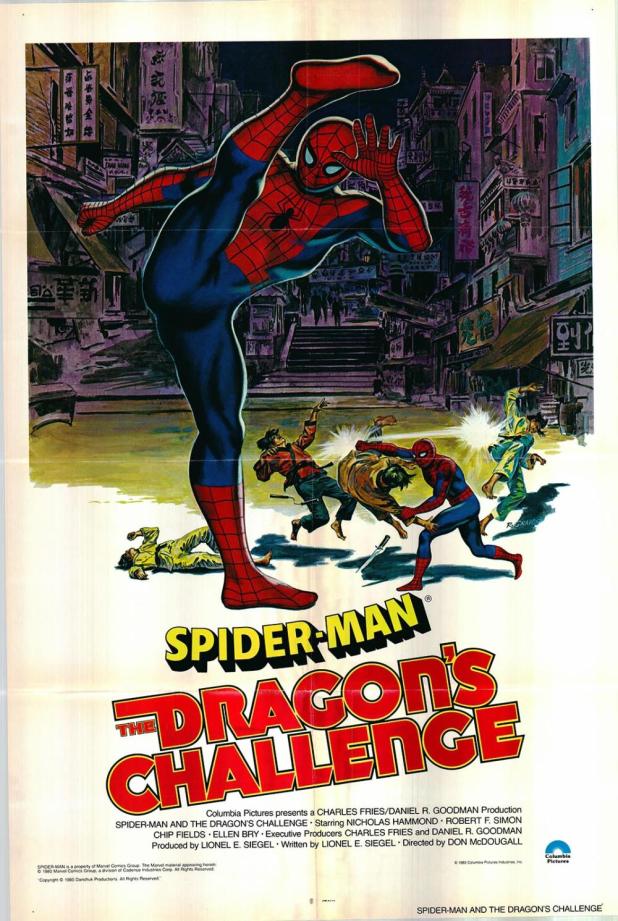
Spider-Man: The Dragon’s Challenge (1981)

Released in Europe as a theatrical film, this 1979 TV movie is really episodes 12 and 13 of the show, “The Chinese Web.”

Director Don McDougall had the same experience when episodes of the Planet of the Apes TV series that he directed were re-released as the foreign theatrical films Farewell to the Planet of the Apes and Forgotten City of the Planet of the Apes.

Min Lo Chan, who is the former Chinese Minister of Industrial Development, has defected to the U.S. under suspicion of being a spy. An old friend of J. Jonah Jameson, he is staying with his niece Emily while he tries to prove his innocence. Spider-Man comes in to the story when Jameson asks Peter Parker to help and the journey to save Min Lo Chan will take our friendly neighborhood web swinger all the way to Hong Kong.

While the costume looks great — except for the web shooter — the show as always drags. That said, I would have been excited by the show coming back for more, as Nicholas Hammond claimed that there were plans to do an Amazing Spider-Man/Incredible Hulk TV crossover/comeback movie. Even better — Spidey would have appeared in the new black costume. Supposedly, Universal canceled the film, saying that Lou Ferrigno wasn’t available as he was filming Hercules, a fact that Ferrigno says is not true.

I always felt that this show would have done better if CBS hadn’t aired it as a ratings spoiler throughout 1978 and 1979, programming it against other shows instead of airing it regularly.

This would be the final theatrical film of Spider-Man released until Columbia Pictures acquired the rights in 1999. That said, I would have loved to have seen whatever Cannon would have made.

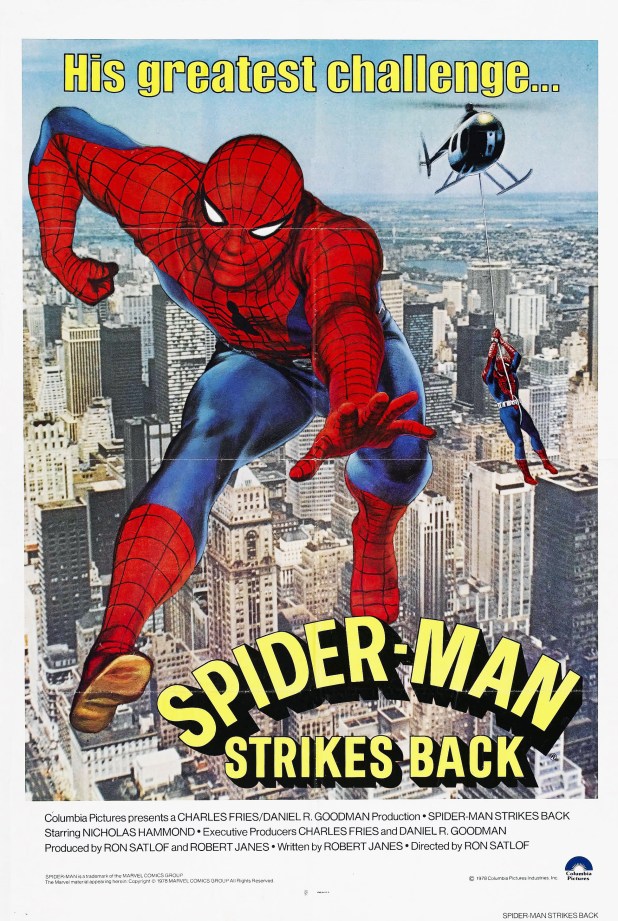
Spider-Man Strikes Back (1978)

Despite its high ratings, the CBS Amazing Spider-Man series only lasted 13 episodes. There are a lot of reasons why it didn’t last — Marvel Comics publisher and co-creator of the character Stan Lee fought with producer Daniel R. Goodman (even telling Marvel house magazine Pizzazz that the show was “too juvenile”), it was expensive to make, it didn’t get the demographics that the network wanted and they no longer wanted to be the superhero network.

Columbia Pictures helped recoup those costs by releasing two movies in UK, Argentina, Australia and New Zealand, taking the “Deadly Dust” episodes — season 1, episodes 1 and 2 — and turning them into a feature-length movie.

Upset that their professor has brought a small amount of plutonium onto campus, three students decide to steal it and build a bomb in order to protest the dangers of nuclear power. They didn’t figure on international businessmen and arms dealer Mr. White (Robert Alda) taking their bomb and trying to detonate it in Los Angeles as an attempt to kill the President of the United States.

Meanwhile, Captain Barbera (Michael Pataki!) suspects Peter Parker (Nicholas Hammond) of the crime. He’s also pursued by Rita Conway (Chip Fields), a reporter who wants an interview with his alter ego, Spider-Man.

The great thing about the UK — well, maybe not great — is that nunchucks are illegal, so they get censored from every movie. Like this one. It played on U.S. broadcast TV but couldn’t play UK theaters.