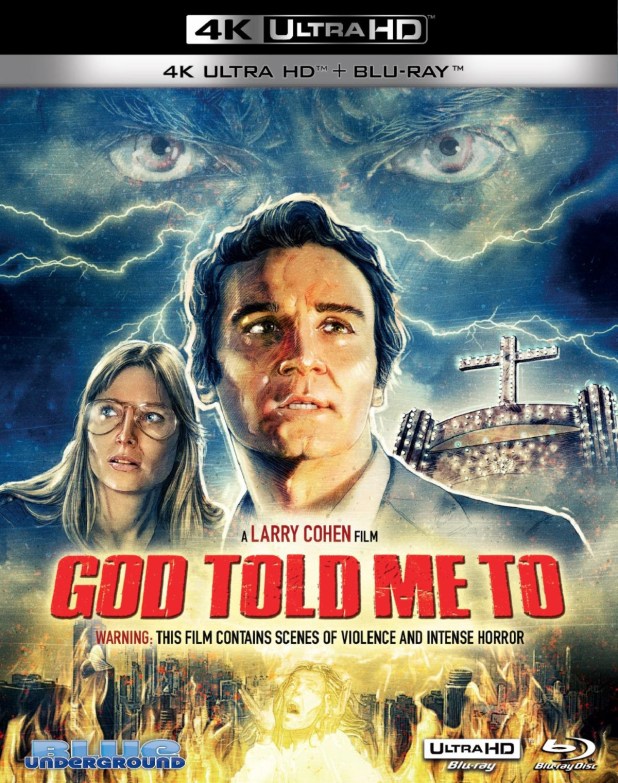
BLUE UNDERGROUND 4K ULTRA HD RELEASE: God Told Me To (1976)

EDITOR’S NOTE: This movie first appeared on the site on March 20, 2018. Thanks to the incredible Blue Underground 4K Ultra HD release — which has two sets of commentary (Larry Cohen; Steve Mitchell and Troy Howarth), interviws with Tony Lo Bianco and Steve Neill; two interviews with Cohen (one at the New Beverly; another at the Lincoln Center); trailers an TV sports —  I’ve updated this article and thought a lot more about this film which obsesses me. You can get it from MVD.

According to Larry Cohen, God is one of the most violent characters in literature. Take that insight, toss in some Chariots of the Gods, a little police procedural and a gradually involving drama that ends up taking over the life of the hero and you have God Told Me To.

New York City in the 1970s. It’s a horrible place to be. And now, with a gunman atop a water tower shooting into a crowd below, it’s a deadly place. 15 pedestrians are already dead before Detective Peter Nicholas (Tony Lo Bianco, The French Connection, TV’s Law & Order) climbs the tower to speak with him. Tony’s skilled at getting crazy people to back down and his technique is to communicate with them. He tells the killer everything — his age, what he’s doing, even the fact that he’s a devout Catholic — in the hopes that he can stop his rampage. Then, the killer looks Tony in the eye and says, “God told me to,” before he leaps to his death.

Attack after attack follows, all seemingly unconnected except for those words: “God told me to.”

There’s a stabbing in a supermarket. A cop (Andy Kaufman!) shooting into the St. Patrick’s Day crowd (there were no permits for this scene, which blows my mind. Also, while Cohen was organizing the crew to set up the shot, Kaufman antagonized the crowd by making faces, leading to people jumping the barricades to fight him, requiring Cohen to get in between the actor/comedian/force of nature and angry New Yorkers). And a man who kills his wife and children because God has always asked people to sacrifice their children since Abraham. This sends Tony over the edge and he attacks the man.

One of the killers says that his orders came from Bernard Phillips. Tony visits the address but is attacked by Phillips’ knife-wielding mother. She falls down the stairs as Tony dodges her attack and before she dies, she tells him that she was a virgin who was taken by aliens and given a pregnancy without taking her virginity, much like the conception of Jesus.

When Tony brings this information to his superiors, they tell him to put a lid on it. There’s no need for more religious panic. He leaks the story to the press anyway with the expected results.

That’s when Tony meets Bernard Phillips’ cult, who he contacts and controls with his psychic powers. He tells them when each murder will happen and now wants Tony to join them. Instead, Tony asks about Phillips’ mother, which causes a follower to drop dead. Another tries to kill him by pushing him in front of a subway train, but Tony defeats him and uses the man to come to Phillips’ underground lair. That follower — upset that he has come so close to his god — decapitates himself.

Upon meeting the glowing, ethereal and hermaphroditic Phillips, Tony realizes that the self-styled god cannot and will not kill him. Therefore, Tony realizes that he is special and has a purpose. Tony’s girlfriend and wife (look, it was the 70’s) come together to try and save him, but numerous revelations come out — Tony’s estranged wife had numerous pregnancies that her husband seemed to will into stillbirth, afraid of what his children would become.

Tony finds his adoption records, finally meeting his birth mother, who gave up her child — another divine birth — after being impregnated by an orb of light at the 1941 Worlds Fair. The footage accompanying this scene is digital manipulated stock footage from Space:1999! This meeting nearly gives both a nervous breakdown and ruins Tony’s sense of self.

Tony decides to meet his brother/sister one more time and learns the truth: they are alien messiahs, children of an entity of light. Tony’s human side is dominant while Phillips is more like the alien that gave them life. Phillips reveals his true sex — a mixture of sex organs on his side and asks his brother to impregnate him so that they can create new life. Tony refuses and attacks his sibling, who retaliates by bringing the building down on both of them.

Only Tony survives and he is arrested for the murder of Phillips. As the police lead him away, a reporter asks him why he committed the crime. He answers simply, “God told me to.”

God Told Me To did not do well upon original release, but time has proven to be quite kind. Watching it forty plus years later, I was amazed by how prescient it is, with killers opening fire for no reason, with the schism between sexes being seen as divine and by a public and leaders who are ill-equipped to deal with a true crisis of faith in their midst. It’s a brutal little film and a real triumph in the way that it starts as a simple police story and unravels not just the plot but the way the main character perceives himself. Even his multiple times a day shows of Catholic worship cannot protect him from the knowledge that he very well could be the Messiah — but not in the way that anyone expected.
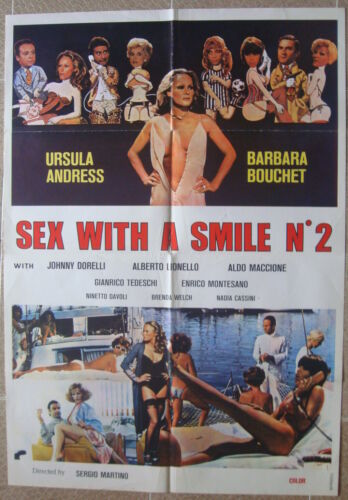
Spogliamoci così, senza pudor (1976)

The title may translate as Let’s undress like this, without shame, but this movie is Sex With a Smile II and it’s directed by Sergio Martino and directed by Sandro Continenza (The Living Dead At Manchester Morgue) and Italian comedian Raimondo Vianello.

Unlike the first film, there’s no Marty Feldman or Edwige Fenech, but there are Ursula Andress and Barbara Bouchet. So that’s a pretty nice trade, I guess.

In “The Detective,” a private detective and his assistant (Aldo Maccione and Alvaro Vitali) try to make money off of a jealous husband (Benito Artesi) who is sure that his wife (Ria De Simone) is cheating on him.

“The Football Team” has Dante Zatteroni (Enrico Montesano), a soccer player kicked out for his rough style, plays for a female team with some success.

“The Trojan Wardrobe” is about film producer Giangi Busacca (Alberto Lionello) and his marriage to the rich Violante (Barbara Bouchet) and in an affair with Françoise (Nadia Cassini). He has a plan to keep getting money from his wife and sex from his mistress, but it doesn’t work out.

Finally, in “One Step to Paradise,” Marco (Johnny Dorelli) and Marina (Ursula Andress) are trying to sleep together while her husband won’t just leave and let them consummate their affair.

While I prefer Martino’s giallo and horror films, this is a goofy and fun Italian sex comedy. Andress is really good in it and there are plenty of ridiculous comedic situations.

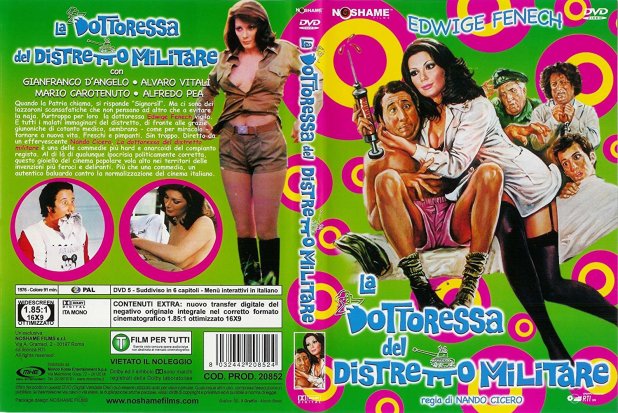
La dottoressa del distretto militare (1976)

Usually in a movie when someone wrecks a car staring at someone I usually think, “Well, that’s pretty ridiculous.” Then again, if it’s Edwige Fenech, that makes more sense to me.

In this film, she plays Dottoressa Elena Dogliozzi, a doctor busty doctor who believes that all of the sick men in her military hospital are just trying to postpone being sent off to war.

Director Nando Cicero also made Due volte Giuda and isn’t someone whose films I’ve sought out. It’s hard to judge someone’s abilities within the commedia sexy all’italiana genre. Cicero wrote the script with Franco Milizia and Marino Onorati who wrote a movie with one of my favorite titles of all time, Metti lo diavolo tuo ne lo mio inferno (Put Your Devil Into My Hell).

This would be followed by several sequels and connected movies, including the Karin Shubert-starring La dottoressa sotto il lenzuolo (Under the Sheets); the Fenech-starring La soldatessa alla visita militare (The Soldier On the MIlitary Visit) and La soldatessa alle grandi manovre (The Solder With Great Maneuvers); Nadia Cassini in L’infermiera nella corsia dei militari (The Nurse In the Military Madhouse) and La dottoressa ci sta col colonnello (The Doctor Is There with the Colonel); and Paola Senatore in La dottoressa preferisce i marinai (The Doctor Prefers Sailors). There’s also Che dottoressa ragazzi! (What a Doctor You Guys!) which is pretty much this same movie with Femi Benussi, Gloria Guida in L’infermiera di notte (Night Nurse) and Laura Gemser in Messo comunale praticamente spione (Communal Messenger Practically a Spy). Seeing as how that last film is also known as Emanuelle In the Country you can bet that I’ve already seen it.

Junesploitation 2022: JDs Revenge (1976)

June 14: Junesploitation’s topic of the day — as suggested by F This Movie— is blacksploitation! We’re excited to tackle a different genre every day, so check back and see what’s next.

Much like the Italian western, after so many years and so many movies, the blacksploitation film needed to not simply be comedy or crime. Horror — witness BlaculaSugar Hill and Abby, as well as Ganja and HessScream Blacula Scream and Dr. Black and Mr. White — could also be made for black audiences.

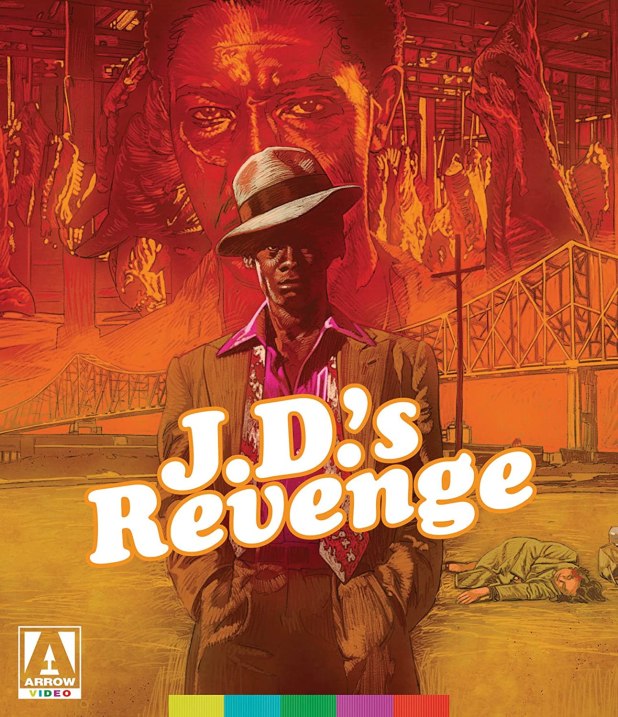
Isaac “Ike” Hendrix (Glynn Turman, who is absolutely incredible in this movie) is a hard-working taxi driver and law student in New Orleans who takes a break studying for the bar and heads out with his girlfriend Joan Pringle (Christella Morgan) for an evening. He’s hypnotized at a show and immediately after, everything is different. That’s because he’s become the host for the spirit of murdered hustler J.D. Walker, changing completely from a quiet man struggling to change his life to a love machine ready to slay on the dance floor, in the bedroom and on the killing floor. The transformation is astounding as is the back story, as J.D. was once tied in with Elijah Bliss (Louis Gossett Jr.), who is now a preacher, his older brother Theotis (Fred Pinkard) and the woman they all loved.

There’s a powerful scene at the end as brother battles brother and J.D. — fully owning Ike — dances and laughs like a demon who has taken this proud holy man and city leader back to their roots as simple criminals, a microcosm of the black experience of attempting to climb out of the horrors of poverty reduced to falling back down the chasm of violence. It’s really something else.

Director Arthur Marks also made Detroit 9000, Friday FosterBonnie’s Kids and Bucktown. The script is by Jaison Starks, who also wrote The Fish Who Saved Pittsburgh. It also has a doctor who tells his patient that he’d probably get better if he smoked some weed, which is quite forward thinking for 1976.

There’s also the absolutely wild scene where J.D. picks up a woman at a bar — this is after he’s dominated Joan, who Ike had such a sweet and mutually giving relationship, having rough sex with her, saying “Daddy’s doing you good baby” and then beating her just to show who is in charge — and gives her “the best fucking she ever had” before her boyfriend gets home. She’s in a panic. J.D. simply says, “You better go talk to him then” before grabbing a straight razor and slashing the man’s throat with no effort at all.

Everything wraps up way too neat and clean, but who cares? Getting there has some great performances and an interesting story that had to have been an influence on later black horror like Bones.

GRINDHOUSE RELEASING BLU RAY RELEASE: The Tough Ones (1976)

Poliziotteschi is but one of the many waves of Italian exploitation and one that takes American inspiration — Dirty HarryThe GodfatherDeath Wish — and uses it to explore the Years of Lead, a time of social unrest, political upheaval, political and terrorism, rising crime and outfight mob warfare from the 1960s to 1980s. Much like the vigilante films that followed in the path of Paul Kersey, many of these movies exploit conservative fears of crime and protests.

Umberto Lenzi is a maniac, as we all know and potentially adore. From his Eurospy (008: Operation ExterminateKriminal, Super Seven Calling CairoThe Spy Who Loved Flowers) and giallo films (I recommend anything he did with Carroll Baker, such as Orgasmo, Knife of IceSo Sweet…So Perverse, A Quiet Place to Kill and Spasmo as well as non-Baker giallo such as Seven Blood-Stained Orchids and Oasis of Fear) to inventing the cannibal film with The Man from Deep River and expanding on it with Eaten Alive! and Cannibal Ferox, as well as wild later films like Ghosthouse, Nightmare City, Hitcher in the Dark and Nightmare Beach, I’m a big fan. I even love his TV movies House of Lost Souls and House of Witchcraft.

As with most Italian exploitation filmmakers — as you can tell — Lenzi jumped genre often. He also made a ton of poliziotteschi like Gang War In MilanAlmost HumanManhunt In the CitySyndicate SadistsFree Hand for a Tough CopViolent NaplesBrothers Until We DieFrom Corleone to Brooklyn and The Cynic, The Rat and the Fist.

What sets his take on the form apart is apparent in a review from Variety that says that this film contains “…little idealism and much violence for the sake of violence.”

You say that like it’s a bad thing.

Lenzi had been sent a spy script for Roma ha un segreto (Rome Has a Secret) that he felt was boring and made no sense. He wanted a movie that was about the violence that Rome was living through and wrote the script for this movie — Roma a mano armata (Rome at Gunpoint) — in a week.

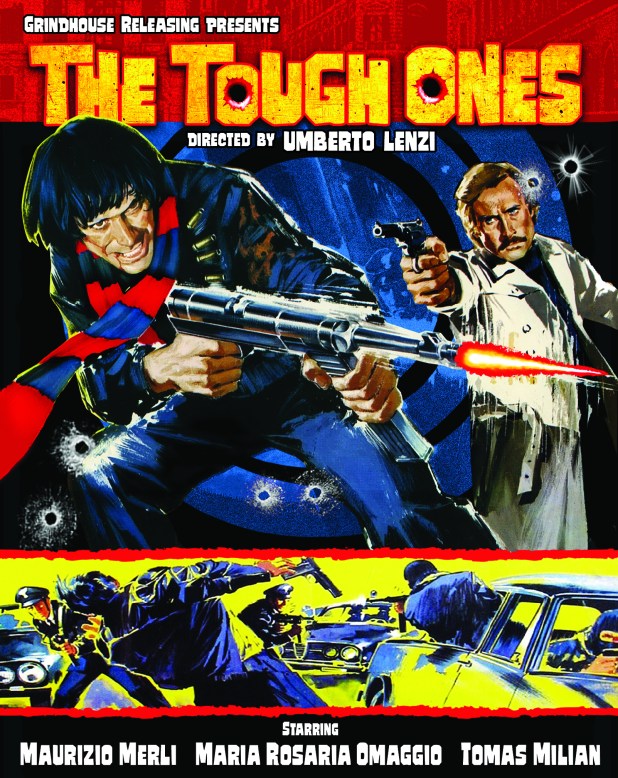
Inspector Leonardo Tanzi (Maurizio Merli) looks exhausted. And if you were him, you would be as well. He’s dealing with gangsters operating in his beloved Rome and he’s just one man against an onslaught of criminal activity that doesn’t operate under the same rules that he’s forced to obey.

His latest case has him tracking a French criminal and even when he arrests one of his henchmen, the one-armed Savelli, he’s forced to release him without charge. Hours later, he kills a guard during a daring bank robbery. To track him down, they try to question his hunchbacked Savelli’s hunchbacked brother-in-law Vincenzo Moretto (Tomas Millian, who pretty much runs away with this movie), a slaughterhouse worker who refuses to even speak to the cops, even after they plant drugs on him. He’s smarter than them, as he uses his watch to slice his own wrists and promises to tell the newspapers that the police did it. Fearing a scandal, he’s released and Tanzi gets demoted by Vice-Commissioner Ruini (Arthur Kennedy, who after The Living Dead at Manchester Morgue I always see as a gruff and overbearing bad cop) to a desk job writing licenses and permits.

Three of the hunchbacked maniac’s associates kidnap Tanzi’s girlfriend Anna (Maria Rosaria Omaggio) and threaten her in a junkyard, showing her how they plan on crushing her in the wreckage of a junked car. She’s so traumatized that she can’t even recognize them; Tanzi replies by tracking down Moretto and making him swallow a bullet. By attacking his manhood in that way, now Moretto plans to kill the cop one on one by using the very bullet Tanzi made him eat.

Any time Tanzi thinks he’s getting ahead of the case and getting close to finding French gangster Ferrender or Savelli, Moretto is there to kill witnesses like heroin dealer Tony Parenzo (Ivan Rassimov). He also stages a bank robbery, which Tanzi interrupts by emerging from the air conditioning ducts a decade or so before Die Hard and wipes out most of the Hunchback’s gang, leading to the criminal stealing an ambulance and killing numerous innocent bystanders.

The game between Tanzi and Moretto only increases in ferocity until by the end of the film, there’s no alive in dead or alive.

When Aquarius Releasing distributed this film in the U.S., they changed the title to Brutal Justice and replaced establishing shots with American locations in an attempt to make it seem more like a domestic film, which only makes the resulting remix an example of surrealism. They also recut the movie for video release as Assault with a Deadly Weapon, creating a new title sequence with a skull-faced police officer and adding credits for cast and crew members who do not appear and did not make this film.

This movie was a huge deal in Italy, as the character of Tanzi would return in The Cynic, The Rat and the Fist and also appear in nine more films in this genre. And despite the way this movie ends, Millian would play Moretto again in Lenzi’s Brothers Till We Die, a film that has him play a dual role and also bring back his character of Sergio Marazzi from Free Hand for a Tough Cop. This movie is like the Italian crime cinematic universe, as we learn that Moretto and Marazzi are twin brothers. Millian would go on to play Marazzi in Stelvio Massi’s Destruction Force, Bruno Corbucci’s Uno contro l’altro, praticamente amici and Francesco Massaro’s Il lupo e l’agnello. By those last two movies, the character had moved past its crime origins and began to be the protagonist of more comedic films.

The Grindhouse Releasing blu ray of The Tough Ones is the best way to watch this film. It has the original unrated and uncensored director’s cut in 4K. The extras — as always from Grindhouse — go way beyond, such as audio commentary by Mike Malloy, director of Eurocrime!; in-depth interviews with director Umberto Lenzi, actors Tomas Milian, Maria Rosaria Omaggio, Sandra Cardini, Maria Rosaria Riuzzi and Corrado Solari, screenwriter Dardano Sacchetti and composer Franco Micalizzi; a special tribute to Maurizio Merli with appearances by Enzo Castellari and Ruggero Deodato; a vintage VHS intro by cult movie superstar Sybil Danning that was on the Adventure Video VHS release; the original international theatrical trailer; liner notes by Italian crime film expert Roberto Curti; a deluxe embossed slip cover and an original soundtrack album by Franco Micalizzi.

You can get it from Grindhouse Releasing with my highest recommendation.

The Blazing Temple (1976)

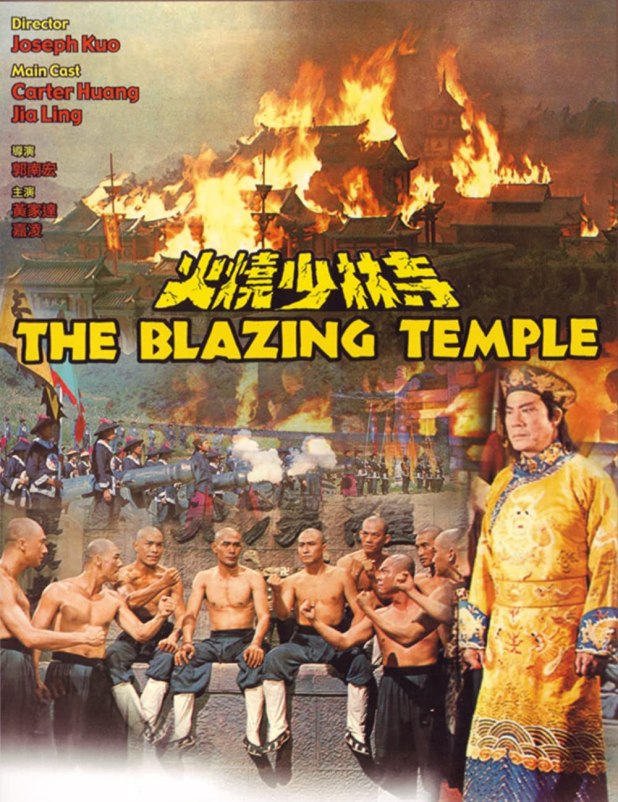
Part of the same cinematic universe as The 18 Bronzemen and Return of the 18 BronzemenThe Blazing Temple finds the temple, well, burning. Set ablaze by Emperor Yong Zheng, the 106 surviving Shaolin make a vow to enter the imperial palace and get their revenge.

Despite the fact that General Kim is firing cannons into the temple, the same rules apply: no one can leave unless they face the 18 Bronzemen. One abbott realizes that he’s dooming his students, so he opens another way to escape and gives abbot gives the 18 styles of kung fu to Siu (Carter Wong), then dies.

The burning of the temple is often discussed in these movies but now you get to see it. While not the best martial arts movie I’ve seen, Joseph Kuo is a fine director and this is worth watching to see Wong in a lead role.

You can watch this on Tubi.

Haunts (1976)

Director Herb Freed (Beyond Evil, TomboyGraduation Day) wrote this movie with his wife Anne Marisse. They were inspired by the repressed memories he experienced after she saw a car accident.

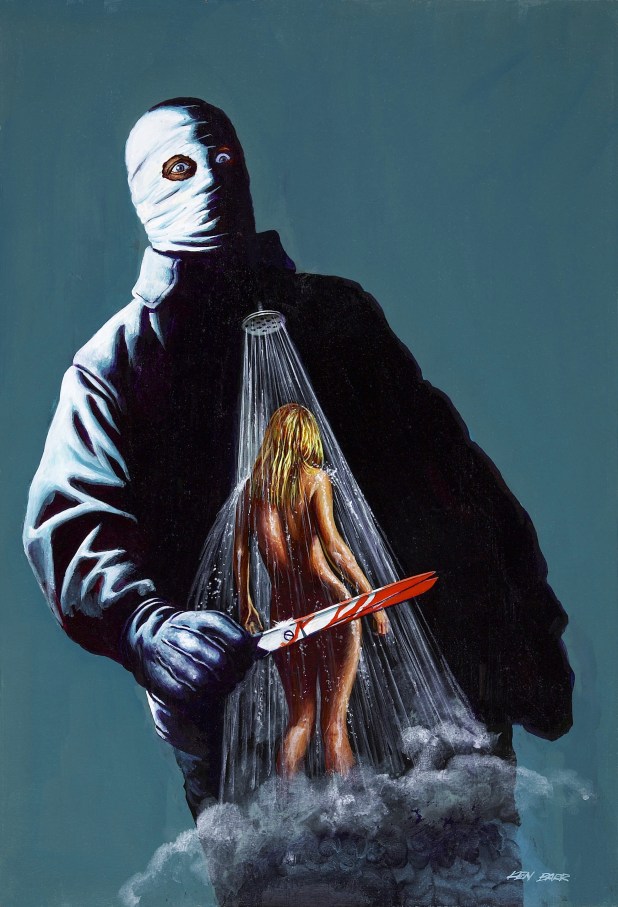
It starts May Britt, who had stopped acting when she married Sammy Davis, Jr. After their divorce in 1968, she struggled to work her way back in to acting. She plays Ingrid Svensen, a Swedish farm girl — Britt was 42 when this was made — living with her uncle Carl (Cameron Mitchell) and trying to get past the memories of being molested by her father and the suicide of her mother. There’s also a masked killer stalking the small Northern California town she lives in, using scissors to mutilate its victims. Even worse, the town butcher continually assaults her, bringing back the horrific memories of her past abuse.

Yet this is not a straight giallo. It might even be an F-giallo. It’s definitely one strange film, one with no easy answers and even Mitchell said that it was “very strange” and he had no idea of the director’s vision. By the end, we’re left wondering if any interaction that Ingrid had was ever real. In fact, was she ever real?

I should mention right now that Aldo Ray is in this. I know some people that would be upset if I didn’t. You should read Bill’s review.

How this hasn’t been released by a botique label kind of freaks me out. It’s a slice of weirdness, one that completely has the bottom fall out by the end, then find itself with a haunting closing scene, filled with steam and entropy.

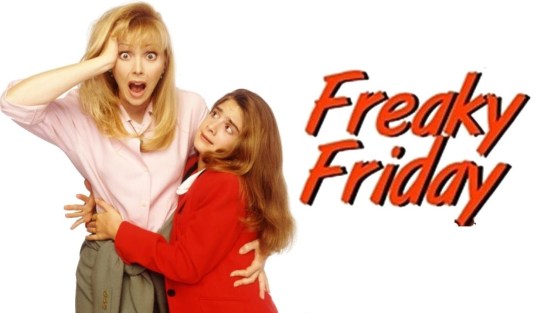
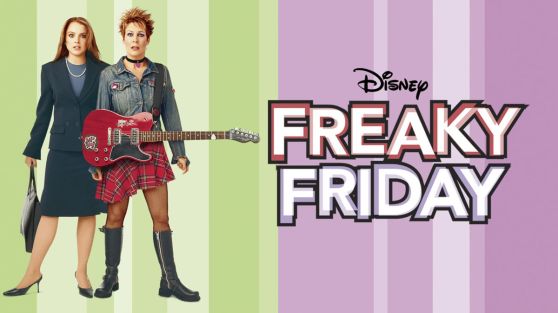
APRIL MOVIE THON DAY 29: Watch the series: Freaky Friday (1975, 1996, 2003, 2018, 2020)

Freaky Friday started as a novel written by Mary Rodgers, based on Vice Versa: A Lesson to Fathers by F. Anstey, a story in which the protagonists are father and son. In Rodgers’ book, 13-year-old Annabel Andrews and her mother spend time in each other’s bodies. The novel was so popular that Disney as made it four times an Rodgers also mae several sequels herself, such as A Billion for Boris/ESPTV and Summer Switch (which ABC made into TV movies). The major difference between the novel and the films is that an outside influence switches the mother and daughter against their wills.

Freaky Friday (1976): “I wish I could switch places with her for just one day.” That’s all it takes to start off this crazy adventure for Ellen Harris (Barbara Harris) and her daughter Annabel (Jodie Foster).

Based on the 1972 novel by Mary Rodgers — who also wrote the screenplay — the magic that switches the mother and daughter in this movie is quite simple. In Friday the 13th, all you have to do is say, “I wish I could switch places with her for just one day” and it happens.

Actually, this whole thing reminds me of Goofy Minds the House, a 1977 Disney Wonderful World of Reading storybook that features the character Goofy and his wife switching jobs for one day and learning that they both have rough lives. That story was based on a Norwegian folktale and taught me that women were much stronger than men. Also — Goofy once had a wife named Mrs. Geef and Mrs. Goof, but now he’s thought to be dating Clarabelle the Cow, so something happened at some point. Perhaps even odder, Goofy was once called Dippy Dawg.

But I digress.

Just as much as that story is part of my childhood, so is Freaky Friday, a movie that I know for a fact that I saw at the Spotlite 88 Drive-In in Beaver Falls, PA.

Ellen Andrews and her daughter Annabel are constantly battling with one another until they switch places, which enables each of them to see life from the other side, connect better with other people and, of course, water ski.

The cast of this movie is made up of people that a five year old me would see as big stars, like John Astin, Dick Can Patten, Charlene Tilton, Marc McClure and, of course, Boss Hogg. Strangely enough, George Lucas wanted Foster for the role of Princess Leia, but her mother wanted her to complete her contract to Disney.

Disney can’t seem to stop remaking this movie. And really, no one else can either, because it’s the mother of body switch comedies, including 18 Again!All of Me, Dream a Little DreamVice Versa and Freaky, a film which combines the Friday the 13th of this story with the slasher side of the holiday.

Freaky Friday (1995): This made-for-TV movie has Shelly Long as Ellen and Gaby Hoffman (the daughter of Warhol superstar Viva) as Annabelle. A pair of magical amulets causes the two of them to switch bodies in this version and waterskiing has been replaced with diving.

Ellen is also a single mother dating Bill (Alan Rosenberg) and designing clothing, which is the 90s version of being a housewife. What livens this up is a great cast with Drew Carey, Sandra Bernhard, Carol Kane and the much-missed Taylor Negron.

Writer Stu Krieger wrote The Parent Trap IIA Troll in Central ParkZenon: Girlof the 21st Century and Phantom of the Megaplex while director Melanie Mayron is probably best known for playing Melissa Steadman on Thirtysomething even though she has more than sixty directing credits on her resume.

The other big change is that when Annabelle is in Ellen’s body, she tells Bill exactly how much she dislikes him, thinking it will push him away. Instead, he proposes.

Forgive me for being weird, but…do these characters ever have to make love in these bodies? Because, well, that could be awkward.

Freaky Friday (2003): I spoke too soon about the sexual side of Freaky Friday, as this movie, while chaste, does not shy away from the fact that Jake (Chad Michael Murray) has feelings for Anna (Lindsay Lohan) no matter if she’s in her body or the body of her mother, Tess (Jamie Lee Curtis). The attraction that Jake feels, while mental, is way hotter than the way Marc McClure reacted to Barbara Harris.

Written by Heather Hach (Legally Blonde: The MusicalWhat To Expect When You’re Expecting and a gym teacher in this movie) and Leslie Dixon (OverboardLoverboy, the 2007 Hairspray) and directed by Mark Walters (who worked with Dixon again on Just Like Heaven; he also directed Mean GirlsGhosts of Girlfriends Past, the gender-swapped He’s All That and Mr. Popper’s Penguins), this take on the story retains the single mother idea from the 1995 TV movie and has Mark Harmon play Ryan, the potential new father in Anna’s life.

Lohan’s character was originally written as a goth girl and she didn’t think anyone would relate to that, so she showed up dressed like a preppie. Somehow, she was convinced to play a grunge girl instead. I mean, she has a band called Pink Slip and plays guitar instead of water skiing or driving.

The McGuffin that drives this film is a pair of fortune cookies mixed with an earthquake switches bodies for Anna and Tess, which leads to Anna lecturing teachers and Tess being more loud and wild.

As for the casting, it really works. The original idea was for Jodie Foster to play Tess, but she didn’t like the stunt casting. Then, Annette Bening and Kelly Osbourne were going to be the leads — with Tom Selleck as Ryan — but Bening dropped out and Osbourne’s mother got cancer.

Probably the only downside is that this movie falls back on that Hollywood cliche of Asian people being able to magically change lives.

Is it weird that I know that the band Orgy taught Jamie Lee how to play guitar? Why do I have these facts inside my head? And how weird is it to hear “Flight Test” by the Flaming Lips in a Disney movie? Or Joey Ramone covering “What A Wonderful World?”

Freaky Friday (2018): It’s wild that Steve Carr made Next Friday and a Freaky Friday sequel. And this time, I had no idea I was getting into a musical. Cozi Zuehlsdorff from the Dolphin Tale movies is Ellie Blake and her mother Katherine is played by Heidi Blickenstaff, who played the role on stage. Seriously, this is a full-blown bing singing musical and also a version of the story that leans in on Ellie being a total slob with a filthy room, a girl who always wears the same clothes every day and who would totally be the kind of arty disaffected young girl who I’d be too shy to talk to and leave mixtapes in her locker. Or maybe text her Spotify links now, I guess, right?

A magical hourglass — given to Ellie by her late father, a Freaky Friday story beat retained from the last few versions — is the storytelling device that switches the daughter and mother. There’s also a scavenger hunt that an entire school is absolutely obsessed by, making this also an updating of Midnight Madness.

This was the first Disney movie made from one of their stage plays and it didn’t get great ratings. It’s fine — obviously there are a ton of different versions of Freaky Friday for you to watch. I’d place it slightly ahead of the Shelley Long version, but way behind everything else.

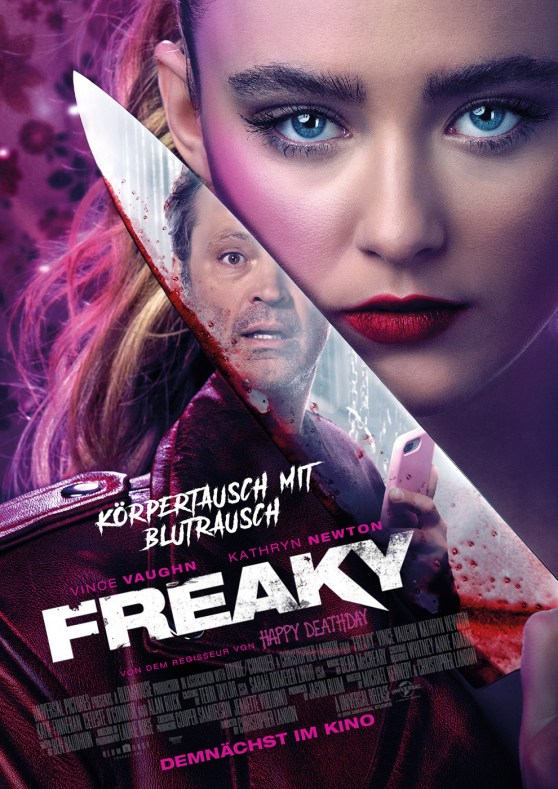
Freaky (2020): By all rights, I should hate this movie, a semi-remake of Freaky Friday that instead subverts the source material by turning it into a slasher. But you know, it ended up hitting me the right way and I was behind it pretty much all the way.

Directed by Christopher Beau Landon — yes, the son of Michael — who wrote Disturbia — that’s not even a word — and several of the Paranormal Activitymovies before directing the Happy Death Day films. If you liked those, well, this will definitely give you more of what those movies offered, this is set in the same universe — Landon said that, “They definitely share the same DNA and there’s a good chance Millie and Tree will bump into each other someday” — and was originally titled Freaky Friday the 13th.

Millie Kessler (Kathryn Newton, Big Little Lies) is a teenager who has been tormented by bullies, both of the teenager and teacher* varieties. Meanwhile, the urban legend of the Blissfield Butcher continues, as he keeps killing her classmates. Now that he possesses a McGuffin called La Dola — an ancient Mayan sacrificial dagger — he looks to gain even more power. But when he runs into our heroine — her mother (Katie Finneran, who is great in this) has left her behind at a football game where all she gets to do is wear a beaver mascot costume — she battles the Butcher and when he stabs her, they end up switching bodies.

So yeah — this turns into a body swap comedy and you’d think, after the gory as hell open, this is where they lose you. But no — if anything, this gets way more fun.

Millie’s friends make for some of the best scenes in the film. Nyla (Celeste O’Connor) and Josh (Misha Osherovich) have been with her through the worst parts of high school, so having their best friend in the body of a killing machine is just another trial to be endured.

Speaking of that killer, Vince Vaughn shines in this. There’s plenty of silly physical comedy, but also some really nice scenes like when he admits to the love interest that she left the note he treasures (body swap pronouns are a little hard) or when he has a moment with her mother while hiding in a changing room.

Landon — who wrote the movie along with Michael Kennedy — said that the film was influenced by the Scream series, along with Cherry FallsFright NightJennifer’s BodyThe Blob and Urban Legend. There’s also a fair bit of Halloween in here, particularly the opening series of murders, and references to Heathers, Child’s Play, Creepshow, Galaxy Quest, Carrie, The Faculty, The Craft and Supernatural. There’s also a bottle down the throat kill that came directly from the 2009 slasher remake Sorority Row.

I had fun with this. Here’s hoping you do the same.

*The funny thing is that the teacher that is the worst to her is Alan Ruck, who knows a thing about bring bullied, what with playing Cameron in Ferris Bueller’s Day Off.

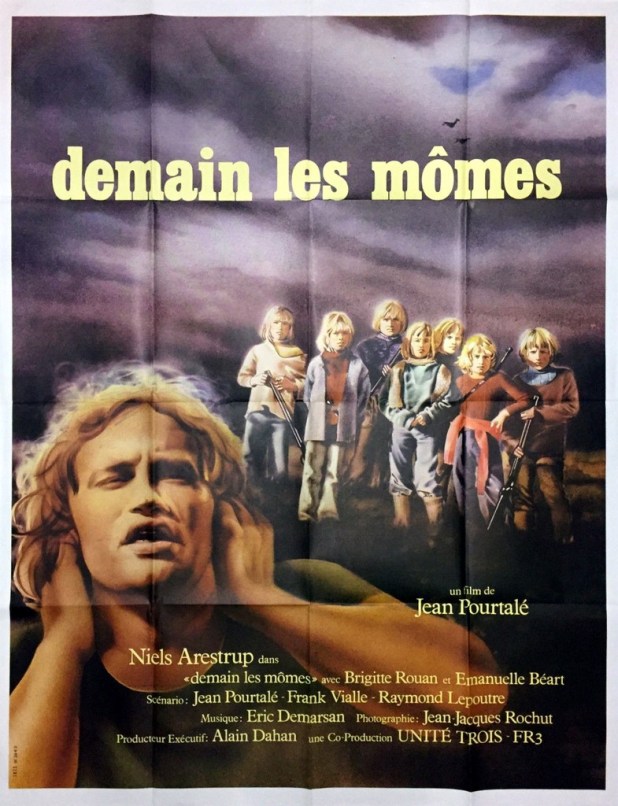
APRIL MOVIE THON DAY 22: Demain les mômes (1976)

Yvette and Philippe (Niels Arestrup) somehow escaped the end of the world, which was mainly caused by really loud noises, and have tried to start over again. Then she gets murdered and he tries to find humans anywhere, only to discover a group of small children. He believes that he can teach them everything they know how to survive as well as how to bring back civilization. They have ideas of their own.

Tomorrow’s Children was directed by Jean Pourtalé and you know, I don’t think I’ve seen a French post-nuke movie. You can spot a young Emmanuelle Béart in the cast, too.

If you’ve seen Late August at The Hotel Ozone, you may see a fair bit of that movie in this one. For some reason, before Mad Max, movies about the end of humanity were depressing affairs. I mean, in those movies, kids do madcap things like throw weapons that cut off the heads of bad guys and not kills wives and eat dogs.

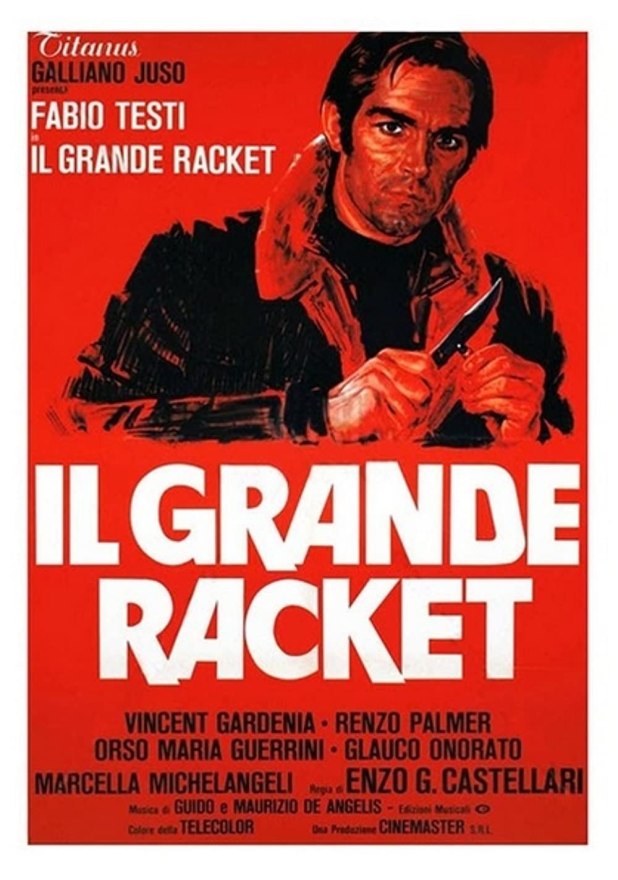
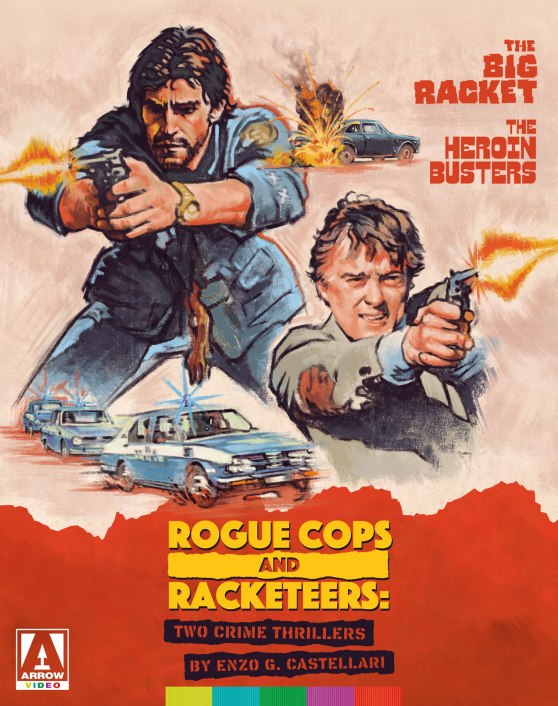
Rogue Cops and Racketeers: Two Crime Thrillers: The Big Racket (1976)

Both of the Enzo G. Castellari movies on Rogue Cops and Racketeers: Two Crime Thrillers push action further than anything we’ll see on screens this year, both films backed with brutality and danger both in the film and in making it, as there are no computers to make these stunts look like they’re spitting in death’s face. They’re all real, all true, pure guts and balls and power.

Nico Palmieri (Fabio Testi) is one man against a crime syndicate that starts with robbing a small town and charging them protection money, but has aims much higher. Nico’s hands are tied by the system so he forms his own squad of vigilantes who have each been damaged by the mob: a criminal named Pepe (Vincent Gardenia); Piero Mazzarelli (Glauco Onorato), who has been crippled by the gang; Luigi Giulti (Renzo Palmer), whose daughter was raped by the gang and who then committed suicide (this scene is Death Wish brutal and it’s even worse when you realize that it’s Castellari’s daughter Stefania playing the role), Gianna Rossetti (Orso Maria Guerrini), an Olympic marksman whose wife Anna was assaulted and killed by the mob — after they urinate all over her and set his house on fire, making them beyond Death Wish 3 goons — and the mercenary Doringo (Romano Puppo).

Nico’s lost his badge to take down crime. Will his gang be able to stop the crimewave?

There’s a scene where Testi is in a car that goes down a hill. We watch it slowly fall apart and glass flies directly at the actor and it looks truly harrowing because, well, it was. When you don’t have budgets and you don’t have time and all you have is guts, you shoot the movie.

The end of this movie is apocalyptic. Bullets fly, cars explode, fire is everywhere and by the end, even the shotgun that Testi grips can’t solve everything. His rage closes the movie, as crime doesn’t go away just because you’re a good man trying to save the world.

The Arrow Video limited edition of Rogue Cops and Racketeers: Two Crime Thrillers has this movie and The Heroin Busters. Both films have brand new 2K restorations from the original 35mm camera negatives by Arrow Films, with restored original lossless mono Italian and English soundtracks and newly translated English subtitles for the Italian soundtracks. Both movies aso have new audio commentaries on both films by critics Adrian J. Smith and David Flint and the limited edition packaging has reversible sleeves featuring original and newly commissioned artwork by Colin Murdoch, as well as an illustrated collector’s booklet featuring new writing on the films by Roberto Curti and Barry Forshaw. If that’s not enough, you also get twelve double-sided, postcard-sized lobby card reproduction artcards.

The Big Racket also has new video interviews with co-writer/director Enzo G. Castellari, Fabio Testi, Massimo Vanni and editor Gianfranco Amicucci. There’s also a new appreciation and career retrospective of composers Guido and Maurizio De Angelis by musician and disc collector Lovely Jon, a trailer and image gallery.

You can get Rogue Cops and Racketeers: Two Crime Thrillers from MVD and Diabolik DVD.