NEW WORLD PICTURES MONTH: The Arena (1974)

EDITOR’S NOTE: This has been on the site before — it’s a Joe D’Amato movie, so just expect that — and the last time was on December 12, 2021.

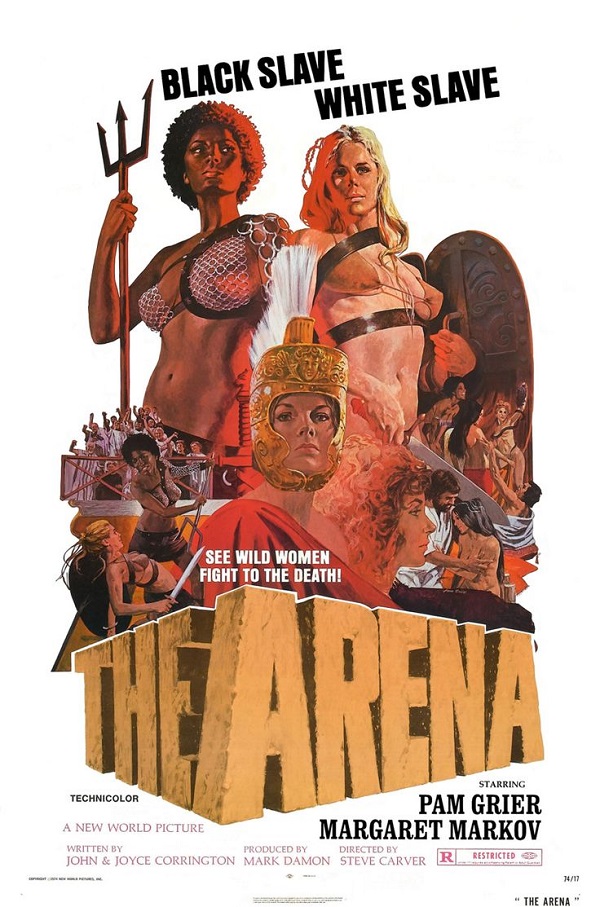
The assistant director of Johnny Got His Gun, as well as the director of Big Bad MamaLone Wolf McQuaid and Eye for an Eye, Steve Carver directed this exploitation roughie, where slave girls become gladiators and rise against their masters. But hey — it has Pam Grier in it! And you know why it’s probably so sleazy? I blame the director of cinematography — Joe D’Amato!

Actually, in Italy, they said that this movie was made by Michael Wotruba. You know who that is? That’s right, the same man who is Joe D’Amato, Aristide Massaccesi. In the book Erotismo, orrore e pornografia secondo Joe D’Amato, the man of many names said that Italian producer Franco Gaudenzi didn’t trust Carver, who was sent by Roger Corman, so he sent D’Amato to help as needed. Carver did the talking, D’Amato did the action and we have a movie.

Speaking of Corman, he offered this movie to Martin Scorsese after Boxcar Bertha. Let that rest in your brain for a bit. Instead of making Mean Streets, Scorsese would have been working with Raf Donato. Or David Hills. Or maybe Boy Tan Bien.

In the time after Spartacus, in the ancient Roman town of Brundusium, a group of slave girls is sold to Timarchus (Daniele Vargas, Eyeball), a promoter who puts together the fights in the Colosseum. After the girls engage in a fight, she gets a big idea: make them fight to the death.

That’s when Mamawi (Pam Grier) and Bodicia (Margaret Markov) — who had just teamed up in Black Mama, White Mama — decide to team up again and get out alive. Rosalba Neri (Lady Frankenstein herself!, as well as Lucifera: Demon Lover and Amuck!) is in this too!

Markov met her husband, producer Mark Damon, while making this movie, but couldn’t date until production was over, as director Steve Carver had made a rule regarding cast and crew intermingling.

Your enjoyment of this will depend on how much you enjoy watching women battle as gladiators. I wrote that a while ago and come on, everybody loves that. They didn’ call this movie Naked Warriors for nothing.

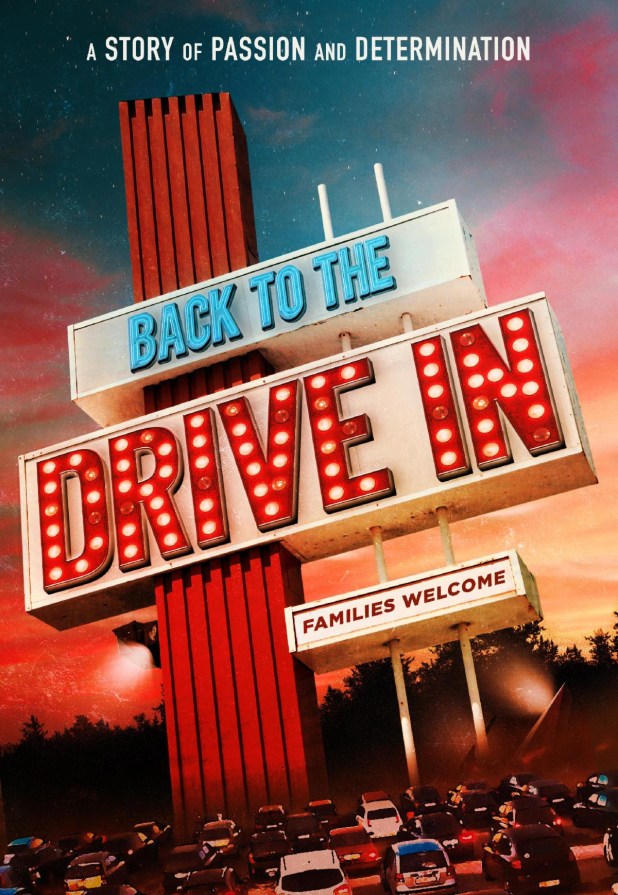
Back to the Drive-In (2022)

Director and writer April Wright visited eleven family-owned drive-ins across the country to see how they keep their dream of playing movies in the open air alive. The pandemic allowed people to come back to this seemingly lost way to see movies — well, for some us, we never stopped going — and now that people can travel freely, the drive-ins still struggle.

Drive-ins include The Wellfleet in Wellfleet, Massachusetts; Quasar in Valley, Nebraska; Field of Dreams Drive-In in Liberty City, Ohio; Brazos Drive-In in Granbury, Texas; Coyote Drive-In in Fort Worth, Texas; Harvest Moon Drive-In in Gibson City, Illinois; Galaxy Drive-In in Ennis, Texas; Transit Drive-In in Lockport, New York; the sadly closed Mission Tiki in Montclair, California and the Bengies Drive-In in Middle River, Maryland. Each has a different size, geography and history, which is both happy and sad. I get wistful every time I leave the drive-in, thinking of all the places in my past — the Blue Sky, Spotlight 88, Super 51, Parkstown Corners — that have been closed and I can never go back to.

This film made me feel the same way, as we know how important these places are to our pop culture and yet as soon as COVID-19 — which really hasn’t gone away — was out of everyone’s brains, people went back to the movies instead of the magic of watching films in their cars.

It’s funny because some reviewers have commented on the too many drone shots of this film and that was my favorite part. I just want to fly over these movie heavens, drink them in, savor each and every part of them while they are still here. This film allows us to do that.

In the Pittsburgh area, we are lucky to have the ever, well, dependable Dependable Drive-In, the Evergreen Drive-In (the cleanest drive-in I’ve ever been to), the three-screen Brownsville Drive-In, the Comet Drive-In, the Starlight in Butler and the magical Riverside Drive-In, the home of all night horror drive-in weekends called the April Ghouls Drive-In Monster Rama and the Super Monster-Rama every April and September.

You should watch this movie and you should attend every one of these drive-ins as often as you can.

Back to the Drive-In is now available from Uncork’d Entertainment.

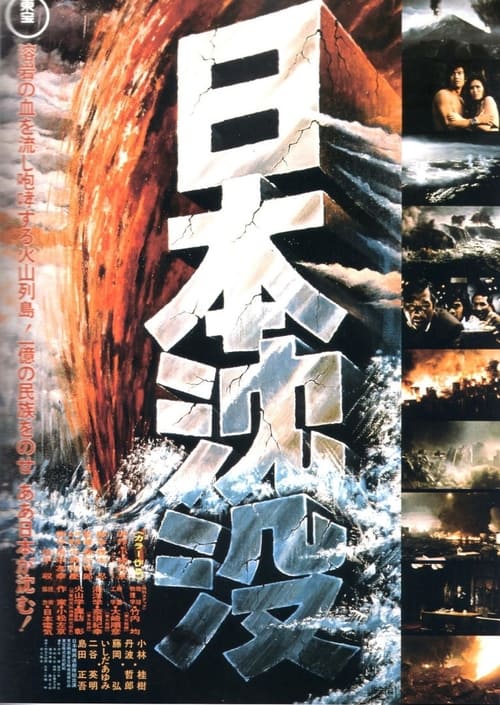
NEW WORLD PICTURES MONTH: Submersion of Japan (1974)

EDITOR’S NOTE: This was originally on the site on April 20, 2022.

The highest grossing film in Japan in 1973 and 1974, Submersion of Japan or Japan Sinks! was also a big deal in the U.S. Roger Corman bought the rights as part of New World Pictures and made a remix where he cut out lots of footage, added new sequences directed by Andrew Meyer (Night of the Cobra Woman) and added Lorne Greene as an ambassador at the United Nations as well as appearances by Rhonda Leigh Hopkins (Summer School Teachers), John Fujioka (Shinyuki from American Ninja), Marvin Miller (who was a narrator in several movies), Susan Sennett (Candy from The Candy Snatchers), Ralph James (Sixpack Annie), Phil Roth, Cliff Pellow and Joe Dante.

Now called Tidal Wave, it came out in May of 1975, while New World also released an uncut subtitled version called Submersion of Japan in America.

If you remember when we discussed Nosutoradamusu no daiyogen, Japan was in disaster mania, predicting the end of the world at every turn. This movie was inspired by Nippon chinbotsu by Sakyô Komatsu, the same author of Virus: The EndBye Bye JupiterDisappearance of the Capital and Time of the Apes. Of all his work, Komatsu’s sinking story was so popular that it became a TV series in 1974 and was remade in 2006 as Doomsday: The Sinking of Japan, then remade again as the 2020 TV mini-series Japan Sinks 2020, which was so big that it played theaters and spun off another series, Japan Sinks: People of Hope.

There was even a 2006 parody, Nihon igai zenbu chinbotsu, which means The World Sinks Except Japan.

This was no cheap picture. Director Shirô Moritani has been second unit on Yojimbo while writer Shinobu Hashimoto was behind RashomonSeven SamuraiThe Hidden Fortress and Throne of Blood amongst many other movies, as well as the director of Lake of Illusions, Minami no kaze to nami and I Want to Be a Shellfish.

Two hundred million years ago, what we know as the Earth was a single continent that split up over the years. At one point, Japan was part of the continent of Asia. But now? If you read the title, spoiler, Japan is going to sink. The first people to find out are geophysicist Dr. Tadokoro (Keiju Kobayashi, whose roles in comedies defined what post-war Japan saw as the ideal salaryman) and Onodera Toshio (Hiroshi Fujioka, the original Kamen Rider) take their submarine Wadatsumi-1 to the Ogasawara Islands. How bad is it? Well, the land mass that makes up the islands of Japan itself are about to collapse into a trench.

While Onodera is falling for Abe Reiko (Ayumi Ishida), volcanos start to erupt and earthquakes break out with more frequency. A rich businessman named Mr. Watari (Shōgo Shimada) pays for a series of expeditions to discover if Japan can be saved. But just like our climate, it’s already too late. Unlike our crisis, Japan has three choices: form a new country, seek a home in other countries or accept the end of the country and die.

They only have ten months to decide and as many countries offer to help, I’m reminded that as much as I love Japan, it’s an incredibly racist country. Even in a fictional story, South Korea, China and Taiwan refuse to help them. By the end, as the country sinks into the sea, more than half the population remains to go down with the ship. And our hero and heroine? They’re separated a world away from one another.

You know who is in this? Turkish born actor Andrew Hughes, a businessman based in Tokyo as an import-export businessman who shows up in so many Japanese films from the late 1950s to the mid-1980s, usually in minor roles but even playing Hitler in The Crazy Adventure. The Japanese prime minister is played by Nobuo Nakamura, who was in Kurosawa’s films, but the really interesting actor is the man playing the driver of the Japanese leader. He’s played by Haruo Nakajima, who played Godzilla from 1954’s original film to 1972’s Godzilla vs. Gigan. After this role, he went to work in Toho’s bowling alley. I wish I was making that up.

This movie has some amazing alternate titles, such as Panic Over Tokyo (West Germany and I’m shocked that Frankenstein was not involved, as his name was on every Toho Godzilla movie released there), The Fall of Japan (Belgium), Death in the Rising Sun (Portugal knows how to name a movie), The Sun Does Not Rise Over the Island (Czechoslovakia), Planet Earth Year Zero (Italy), S.O.S. The Earth Is Sinking (Sweden) and The End of the World (Turkey).

Roger Ebert nominated this movie for The 50 Worst Films of All Time–and How They Got That Way by Harry Medved and Randy Dreyfuss. He said, “The movie never ends, but if you wait long enough it gets to a point where it’s over.”

As for the Japanese version of the film — which lends its special effects to the aforementioned Toho Nostradamus movie — I really liked that unlike so many disaster films, the actual socioeconomic problems that the world would face get explained and shown. There’s no shortage of waves crushing everything in their way, but at least we learn something.

You can watch the original Japanese version of this movie at the Internet Archive.
BIG MVD SALE!

MVD just informed me that they’re having a sale on select Unearthe, Visual Vengeance and Wild Eyes movies with over 350 titles to choose from with 75+ titles starting at just 99 cents! Shipping to the U.S. only, but it’s $6.99 per order.

Go to MVDsale.com to get your movies!

Here are a few picks. Click any link to read our review and to order.

Don’t forget! You can hear me and Bill Van Ryn from Drive-In Asylum on the commentary track for Suburban Sasquatch!

Amityville In SpaceBUY IT

Amityville In the HoodBUY IT

Black HollerBUY IT

Blood of the Chupacabras: BUY IT

Bloody Muscle Body Builder In HellBUY IT

Death to MetalBUY IT

Final CallerBUY IT

Francesca: BUY IT

Heartland of DarknessBUY IT

MoonchildBUY IT

Suburban SasquatchBUY IT

The Necro FilesBUY IT

The VelocipastorBUY IT


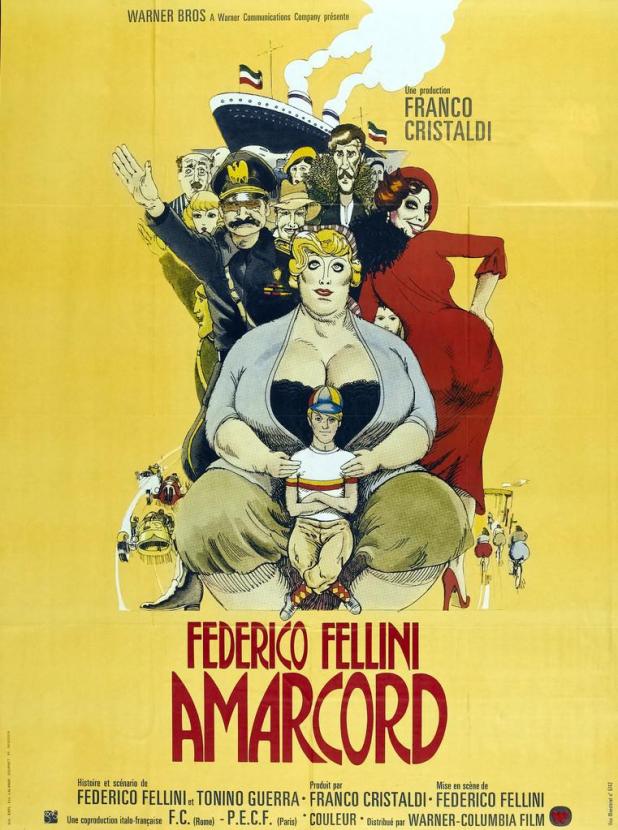
NEW WORLD PICTURES WEEK: Amarcord (1973)

In Italian, a m’arcord means I remember and this is what Federico Fellini does in this film which recounts his childhood and the life of his childhood best friend, Luigi Titta Benzi, who is the inspiration for Titta, the main character. Fellini took efforts to say that this was not an autobiographical film, but thoughts of his past.

What’s amazing to me is this Oscar-winning film — Best Foreign Language Film and nominations for Best Director and Best Original Screenplay — was brought to the U.S. by Roger Corman.

Titta (Bruno Zanin) and his friends would rather be involved with pranks and attempt to lose their virginity than studying under fascism. This film has a scene where four of them masturbate in a car while discussing women like Bardot that may shock U.S. audiences, not because there’s any nudity, but the frankness and idea of boys exploring their sexuality in the same confined space is something that Americans would deny ever doing.

Many of Titta’s fantasies revolve around Gradisca (Magali Noël), the most beautiful woman in town who is due to be married to a fascist officer, as well as an encounter with a well-endowed tobacconist (Maria Antonietta Beluzzi) who nearly overwhelms him with her bosom.

This is an episodic film, filled with moments like Titta’s institutionalized uncle climbing a tree and screaming, “I want a woman!” as well as his father’s past as an anarchist, a winter family tragedy, the town coming together for a festival and an ocean liner passing by and everyone meeting it by boat. It’s charming and perhaps the most accessible of Fellini’s films, even if the Italian sexuality of it all may be too much for American puritanical eyes.

How important of a movie is this? It was the first film released in the letterboxed format when it came out on a RCA SelectaVision CED videodisc.

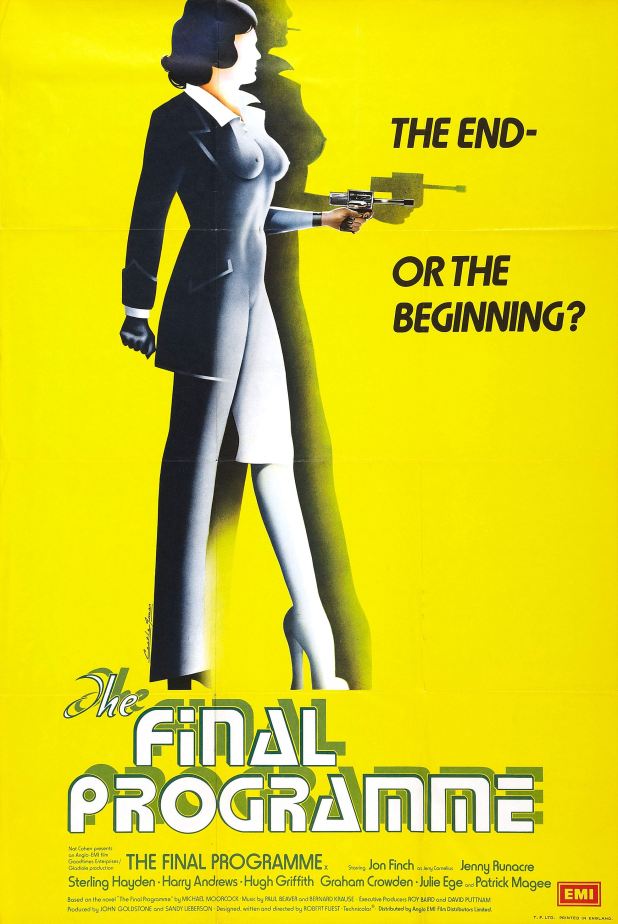
NEW WORLD PICTURES MONTH: The Final Programme (1973)

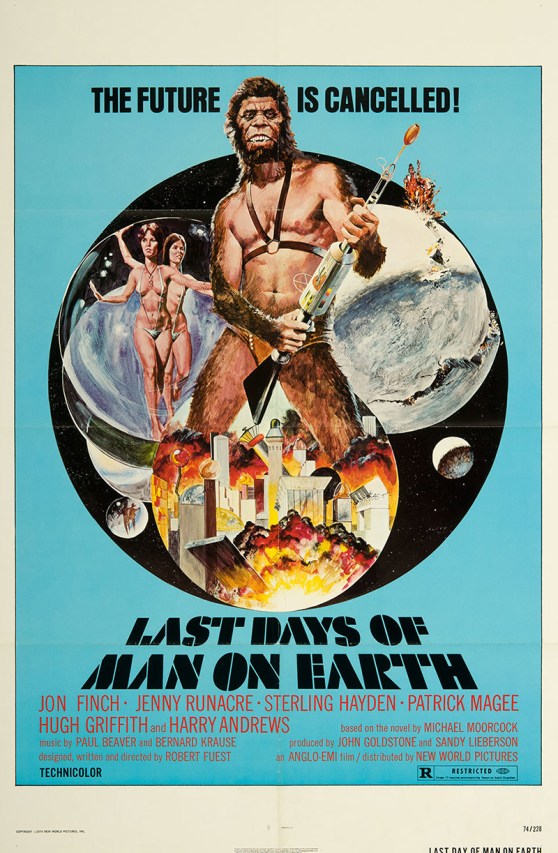
I have no idea what American audiences thought when confronted by the Robert Fuest directed and written The Final Programme, released here as The Last Days of Man on Earth.

Based on the novel of the same name by Michael Moorcock, this is the story of physicist, secret agent and dandy Jerry Cornelius (Jon Finch, Frenzy, who replaced Timothy Dalton at the last minute), who first attends the funeral burning of his father, a man who created the titular Final Programme, which will create the ultimate self-replicating immortal human. The world is ending, but a series of scientists and government types want this to come to pass while all Jerry wants to do is rescue his sister — and quite possibly lover — Catharine (Sarah Douglas) from his drugged-out brother Frank (Derrick O’Connor), all the while avoiding the man devouring secret agent Miss Brunner (Jenny Runacre, Jubilee).

Let me put this out there: this is a film that is all about its look more than caring if you understand the story. Either you’re going to love the ideas and Cornelius or you’re going to quit before its over. If you stick around, you’ll get a gigantic arcade filled with nuns playing slot machines for fruit (look for Moorcock and Hawkwind hanging out), needlegun battles, a hero addicted to drinking and biscuits, and an ending that really defies a conclusion, something that had to infuriate anyone not familiar with the source novel, which would be less than a handful, I believe.

Plus, you get Sterling Hayden as military man Major Wrongway Lindberg; Graham Crowden, Basil Henson and George Coulouris as the doctors; a Patrick Magee cameo; Fuest going wild creating sets and scenes that don’t always work (but who cares) and a strange feel that really makes this unlike any other movie I’ve seen.

It would be two years until Fuest got to make another movie — The Devil’s Rain! — and that didn’t work out so well either, sending him back to where he began, directing episodes of The New Avengers. He’d spend the rest of his career in TV, making ABC Afterschool Specials (Make-Believe MarriageA Movie Star’s DaughterA Family of Stranges and My Mother Was Never a Kid), The Big Stuffed DogRevenge of the Stepford Wives and episodes of Worlds BeyondC.A.T.S. Eyes and The Optimist. He also made Aphrodite, a film that had both softcore and hardcore cuts.

In a perfect world, Fuest would have had great success, but who knows? Maybe he was happy that after two Dr. Phibes movies he wasn’t typecast as a horror director. Perhaps he was even happier than the failure of The Devil’s Rain! put a nail in that coffin. His movies are challenges, with sets her decorated himself, films that never tell the audience all — or often any — of what’s happening, that are anything but wallpaper to have in the background.

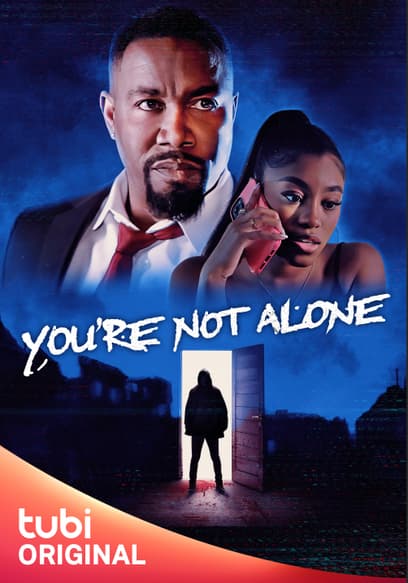
TUBI ORIGINAL: You’re Not Alone (2023)

Director Chris Stokes and co-writer Marques Houston have taken better advantage of Tubi than most filmmakers, having several movies on the streaming platform like The StepmotherThe Stepmother 2Best FriendThe Assistant and Howard High. They also have No Way Out coming at the end of March.

Now, they’ve created a slasher-style movie in which Keith Mitchell (Michael Jai White, who has been in everything from Spawn and Universal Soldier to Dragged Across ConcreteMortal Kombat Annihilation and Why Did I Get Married?) loses his wife Sam (Robinne Lee) to a black-robed and masked killer — the opening attack is quite horrific — and then has to watch as a similar murderer stalks his daughter Alexis (Precious Way).

The difference is that due to a flight delay, he’s trapped on an airplane 30,000 feet above the Earth while Alexis, who is on house arrest, is left all alone. When the WiFi signal keeps cutting out, getting messages and help from Keith to his daughter becomes nearly impossible. But even when you think the story is over, the danger isn’t.

This film has a moment that makes cell phones works in the age of the new slasher. Keith asks his daughter to send him a photo so he can see her while he’s in the air. As he studies it, he horrifically sees the killer in the window behind her. I loved how he loses his mind in the aisles of the plane while normal passengers wonder why this man is flipping out. This is moments after the stewardess tries to ask Keith out!

My other favorite part of this is that they somehow got a song on this soundtrack that sounds exactly like “Fantasy” but just one small note or two off. I was wondering how Footage Films swung that kind of budget! It does have Justin Sweat — and his dad Keith in a small role — in the cast though.

The more I watch movies like this, the closer I am to inventing a new genre for them. I’ve brought it up before, but I really am wondering if there can be urban giallo, a world that has hip hop instead of Morricone, Ciroc instead of J&B and club scenes instead of wild parties where women show up in paper dresses.

You can watch this on Tubi.

NEW WORLD PICTURES MONTH: The Clones (1973)

Dr. Gerald Appleby (Michael Greene) finds himself in a perplexing situation and believes he’s been cloned. His conviction stems from a near-fatal escape from his lab’s explosion and the unsettling reports of his sightings in places he’s never been. This sets the stage for a gripping narrative as he goes on the run, pursued not only by the deranged scientist Carl Swafford (Stanley Adams, Cyrano Jones from the original Star Trek) but also by the ruthless thugs Sawyer (Otis Young, Blood Beach) and Nemo (Gregory Sierra, a stark contrast to his usual role as the virtuous Det. Sgt. Chano Amenguale on Barney Miller).

Directed by Paul Hunt (he also directed Twisted Nightmare and produced Demon Wind) and Lamar Card (who directed Supervan and Jukebox AKA Disco Fever, as well as the producer of Nashville GirlSavage Harvest and Project: Metalbeast), who co-wrote the film with Steve Fisher, who started writing movies back in 1938 with Nurse from Brooklyn. He also wrote the novel and screenplay for I Wake Up ScreamingHell’s Half AcreJohnny Angel and episodes of Peter GunnMcMillan & WifeCannon and Fantasy Island.

Most people will watch this movie and see a slow-moving film that goes nowhere, filled with fish-eye lens-addled drug scenes and an overwhelming sense of conspiracy doom. As for me, I read that sentence and only see the positives. Young and Sierra are having a blast; the ending is as cynical as it gets, and a lot of the ending takes place inside an amusement park that runs itself. It’s a movie that came out on VHS, has had no major DVD release and has never come out on Blu-ray.

You can watch this on Tubi.

NEW WORLD PICTURES MONTH: Fantastic Planet (1973)

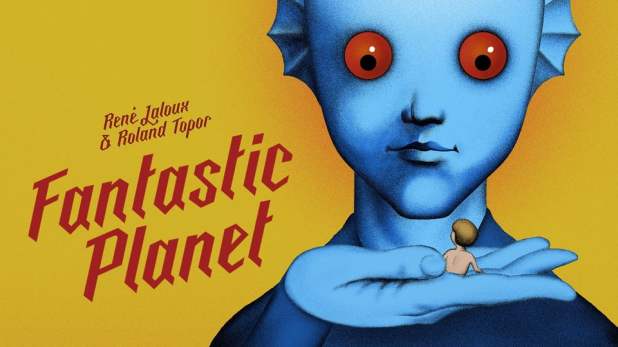
I’ve seen La Planète sauvage so many times, starting in the 80s thanks to Night Flight, and all the way up to now and honestly, I don’t have the slightest idea of what it’s all about and love it all the same.

An international co-production between France and Czechoslovakia based on Stefan Wul’s Oms en série, this movie is about the relationship between the gigantic blue Traags, who have kidnapped humans, renamed them as Oms and take them to their home planet of Ygam to help maintain their society, whether that means hard labor, serving as pets or being hunted.

Three Traag children torture a female human and kill her, orphaning her child Terr, who becomes the pet of Tiwa, who soon begins a symbiotic relationship of sorts with him, even taking her to meditation classes where Tiwa learns more about the Traag than any human before. By using these meditation techniques, Terr is able to learn how the Traag reproduce and of a moon that they call the Fantastic Planet, a place where they are able to finally find peace between the two races.

Fantastic Planet could be about that or it could be about whatever you want it to be, such as pets and humans, human rights or just something to trip out to, including the Pink Floyd-referencing soundtrack. It’s gorgeous — it took five years to animate — and still a movie I put on from time to time, even if — as I mentioned before — I have never decided what it’s all about.

NEW WORLD PICTURES MONTH: Savage! (1973)

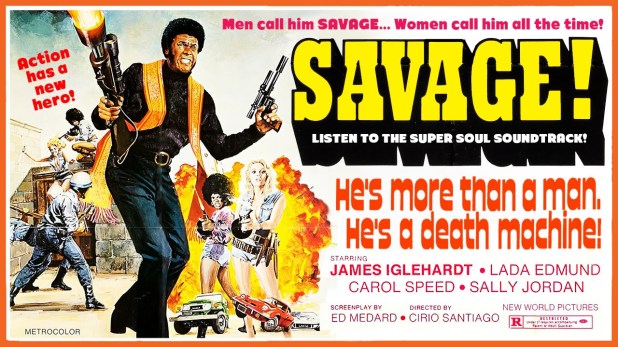
Between 1973 and 2008, Cirio H. Santiago partnered with Roger Corman on more than forty Philippines-filmed exploitation movies. The cost was low, the stuntmen willing to die, the locations gorgeous. And here’s Savage!, directed by Santiago and written by one time only screenwriter Ed Medard.

Savage (James Iglehart, Beyond the Valley of the Dolls) goes from a criminal evading the law to a leader overthrowing a dictatorship in just over eighty minutes. Working with Vicki (Lada St. Edmund, who went from go-go dancer on Hullabaloo to being the highest paid stunt woman in Hollywood) and Amanda (Carol Speed, always Abby), he goes from fighting the rebels to becoming one of them. I mean, Vicki is a knife thrower and Amanda is an acrobat and they know how to transform those circus skills into deadly arts.

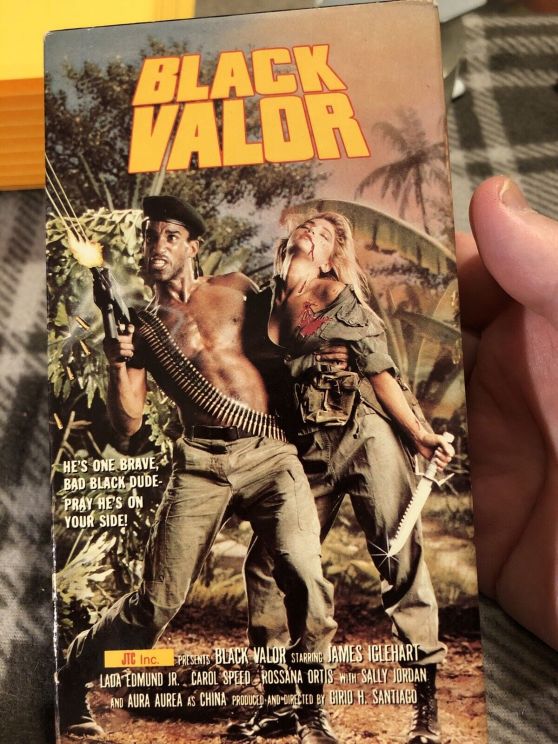
As you can imagine, Vic Diaz is in this and maybe bamboo buildings blow up real good. It’s also called Black Valor, which really isn’t a better title than Savage! but is possibly a better blacksploitation movie name.

Iglehart is also in a much better film in this same genre, Fighting Mad. Aura Aurea, who plays China, was known as the Brigitte Bardot of the Philippines, which is a great name to be awarded, right?