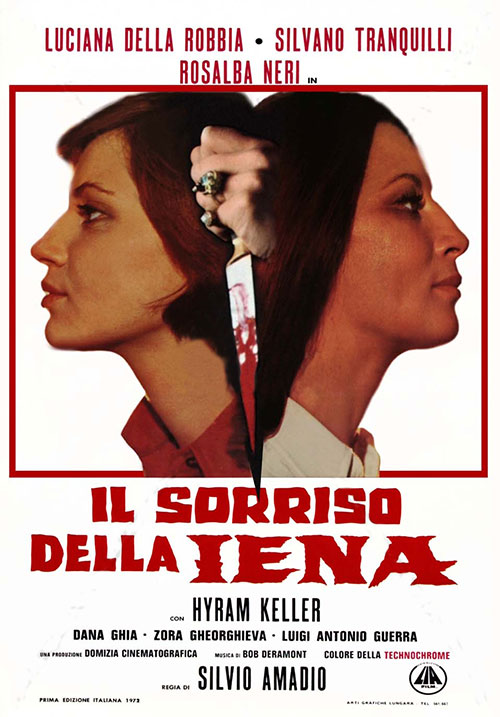
Smile Before Death* was a revelation to me. I came in expecting nothing and was rewarded with a film that has multiple antagonists and a continually twisting close, a near race to the finish to see who will end up on top.
Is it any surprise that Dorothy gets killed and it looks like a suicide and that Marco did it? Soon, he’s in charge of her estate until her daughter Nancy (Jenny Tamburi**, The Psychic, The Suspicious Death of a Minor) turns twenty. So Marco retires and lives a life of leisure with his mistress until Nancy returns home.
That’s when everyone starts playing each other, with Gianna trying to get Marco to kill his stepdaughter, Nancy seducing him and — spoiler warning — Gianna falling for her as well.
Silvio Amadio also made Amuck! Much like that film, this one also proves that Silvio was perhaps more interested in filming gorgeous women misbehaving as he was showing the kills when it came to giallo. No matter. This movie has plenty of plot to go around and I was genuinely surprised by the conclusion of this caper.
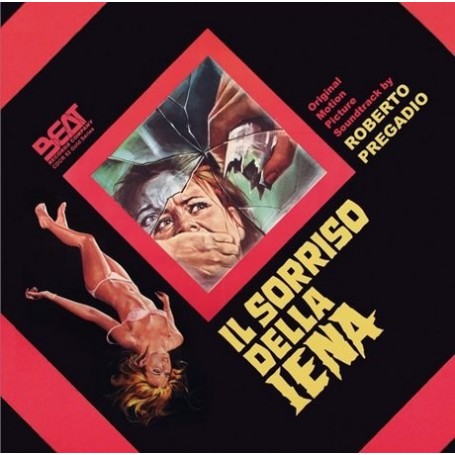
Roberto Predagio’s theme song — with plenty of scat singing by Edda Dell’Orso — will be burned into your mind by the end of this.
I’d be shocked if this didn’t end up on Forgotten Gialli Volume 3.
*The translation for the Italian title is The Smile of the Hyena. I have no idea what that means in relation to the film’s story and blame the animal-themed demand for post-The Bird with the Crystal Plumagegiallo titles.
**Tamburi won the femme fatale role of Graziella in La Seduzione because Ornella Muti, the original actress, was considered too attractive.
Aldo Lado made some pretty dark-themed giallo, like Short Night of Glass Dollsand Who Saw Her Die?, as well as a slicker version of Last House on the Left with Last Stop on the Night Train and one of the stranger Stars Wars cover movies, The Humanoid. This may not be a full-on giallo — it’s closer to a poliziotteschi — but that doesn’t mean that it’s not a good watch.
Tony Giordani (Michael Woods, brother of James) is a narcotics agent whose ex-wife is killed while he’s in the hospital. Is it a mafia hit? Or does an empty house that his wife had been shooting photos of hold the answers? Once Tony checks it out, he discovers a burned body and some clues that lead to the Full Moon Killer, a man who has been beheading prostitutes. And even crazier, the owner of the home is a countess who has been locked in a mental ward, but has now escaped. Also — Tony quickly gets over his ex-wife getting killed and starts aardvarking with his partner Lisa, but you know, when you’re targeted by a serial killer, stuff happens.
The supporting cast for this movie is pretty darn great, with Burt Young as a drug smuggler, Philippe Leroy as the police chief and Bobby Rhodes as a pathologist.
To be honest, this whole movie feels like a 1990’s cop movie that could have been made by anyone and is surprisingly from the maker of two of my favorite giallos and written by Dardano Sacchetti. I expected more, you know?
You can watch this on YouTube and see what you think. Let me know.
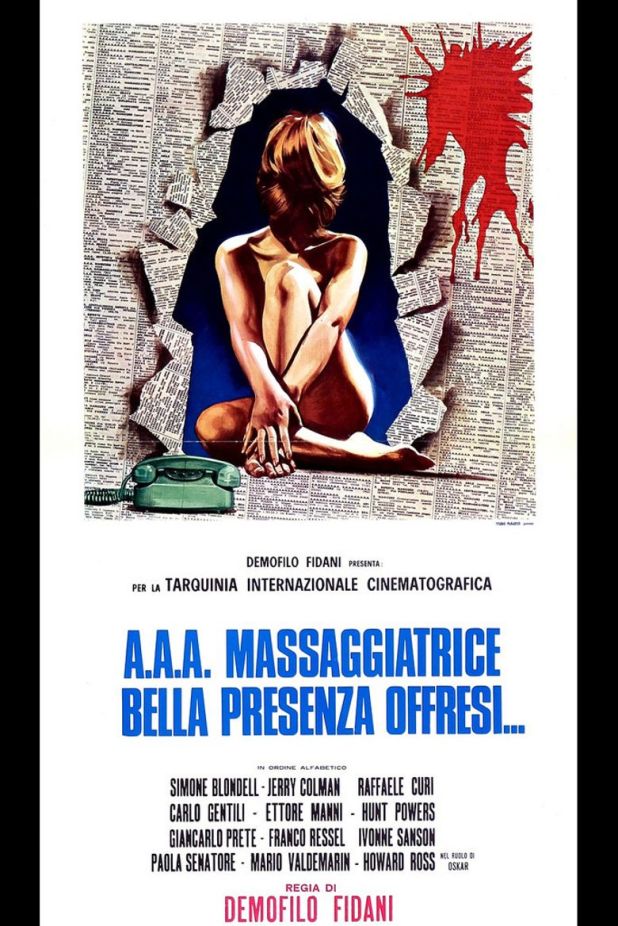
Cristina (Paola Senatore*, Emanuelle in America, Ricco the Mean Machine) is a call girl and for that, every man that has ever partaken of her services must pay, in some sort of role reversal for every other giallo and slasher.
Much like how his leading lady was known for westerns, so was director Demofilo Fidani, who made movies like Coffin Full of Dollars (how’s that for a title?), Django and Sartana Are Coming… It’s the End, One Damned Day at Dawn…Django Meets Sartana!, His Name Was Pot… But They Called Him Allegria and His Name Was Sam Walbash, But They Call Him Amen. As you can tell, many of his films were titled and treated like either sequels or — let’s be fair — ripoffs of better-known characters and movies.
So when everyone else started making giallo, Fidani was sure to follow.
You know how people on Twitter like to use the term problematic? Well, they’d lose their brains all over those, which presents leaving home to enter the sex industry to be a loveable lark, even when your clients get their throats slit the minute they leave her flat. It’s also a film that wants its cake — Vitelli is gorgeous and frequently involved in increasingly kinkier situations — and eat it too, as the whole moral of the story is that the world is falling into decay because of all this sex. So let’s show some more sex! And violence!
Also known as Caresses à domicile (Caresses at Home), the funny thing is that her life gets better when she leaves her father’s house — well, despite the fact that her daddy gave her everything that she ever wanted — to live with a friend, Paola (Simonetta Vitelli, who is the daughter of the director). So there’s not really any drama here, other than you know, all the murder.
*Sadly, she became addicted to heroin late in her career. After making two softcore films for Joe D’Amato, she made her one and only hardcore film, Non stop… sempre buio in sala. She was then arrested for drug smuggling, went to prison and disappeared.
Roberto Mauri started as an actor before directing became his main calling card. You may have seen some of his Italian Westerns, like Sartana in the Valley of Death and He Was Called Holy Ghost or his oddball jungle film King of Kong Island or Slaughter of the Vampires. Oh yeah — he also wrote the giallo Clap, You’re Dead and came back in 1980 to make The Porno Killers.
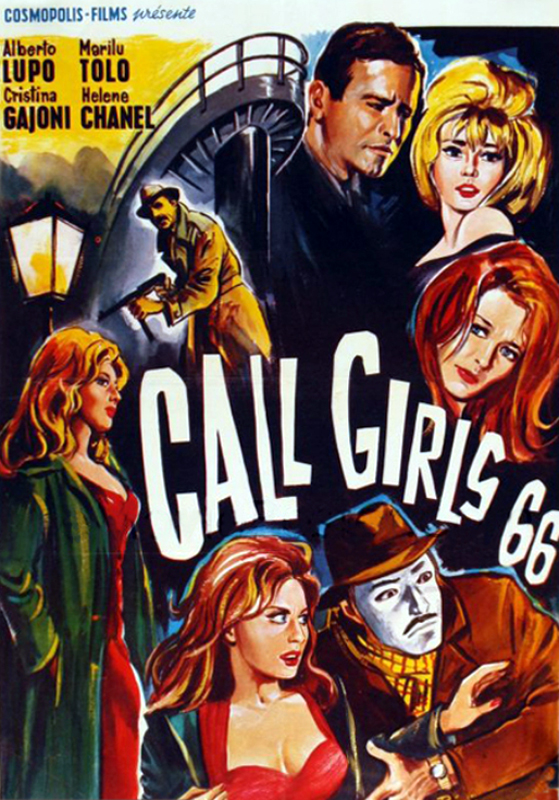
Prefiguring the giallo craze that would happen in around five years, thanks to Argento, this movie has a masked killer who preys only on prostitutes, hence its alt title Call Girls 66.
When a prostitute is killed and several others are nearly snuffed out, that girl’s sister decides to investigate on her own, learning that not just one, but several famous actors seem to be behind the killers.
This movie has such a great payoff that I’m shocked that more giallo didn’t steal it. The killer is a man whose features were destroyed in the Hiroshima bomb blast and no woman will go near him, much less have sex with him. So he makes masks of famous actors and uses them to get close to the women, who he soon kills. Crazy, right?
Thanks for being with us all week as we cover some of our favorite giallo films.
I’d like to give a shout-out to Giallo of the Month Club, which you can find on Twitter and Instagram, with the episodes available on Spotify (and anywhere else you listen to podcasts). The last show about The Red Queen Kills Seven Times is a must-listen.
So far this week, we’ve covered the following:
SUNDAY
Lipstick and Blood: Lindsay Shonteff stops making Bond ripoff films long enough to make a scummy and shoddy SOV that’s either a satire or he’s swine.
Last Stop on the Night Train: You may only know Macha Méril as the doomed psychic of Deep Red, but here she’s the maniacal woman behind a series of escalating bursts of sadism.
Senza via d’uscita: Marisa Mel in a pre-Argento giallo that feels more krimini than Crystal Plumage.
Al Tropico del Cancro: Anita Strindberg goes on vacation to Haiti and discovers a miracle drug, murder and mondo footage.
Le Seuil Du Vide: Threshold of the Void is about art and a room for rent with an unending abyss within a locked room.
MONDAY
Extrasensorial: Michael Moriarty in an Alberto Martino-directed giallo about twins? You know it.
The Killer Is On the Phone: Telly Savalas is the killer. He never uses a phone. Don’t let that stop you from watching this.
Senza Sapere Niente Di Lei: Without Knowing Anything About Her is an arty pre-Argento take on form, with love and insurance fraud the tale.
L’occhio Dietro La Parete: Eyes Behind the Wall is a sexualized nightmare of voyeurism, loneliness and, well, John Phillip Law full-frontal nudity.
Una Jena In Cassaforte: Some of the wildest fashions you’ll see in a giallo are in this story of a team of bank robbers trying to split up some diamonds.
TUESDAY
Non Aver Paura Della zia Marta: Lucio Fulci presented this Mario Bianchi written and directed movie, also known as Murder Secret.
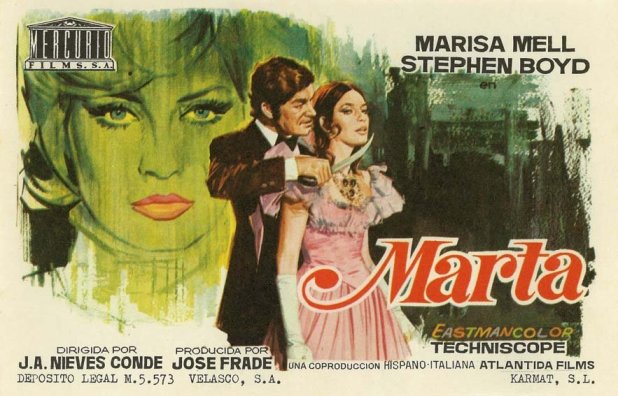
Marta: This really could be Marisa Mel week. This is the best acting I’ve seen of her. This time, she’s a woman on the run falling in love with a man who may or may not have killed his last wife.
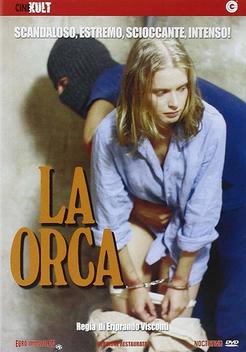
La Orca: A Patty Heart-style kidnapping gone wrong.
If you’d like to see all of the giallo films we’ve covered, check our Letterboxd list.
Don’t forget — this Saturday at 8 PM EST, we’ll be watching Bog and The Strange Vice of Mrs. Wardh on the Drive-In Asylum Double Feature on this Groovy DoomFacebook page.
Author’s Note: Due to the controversial subject matter of this film, please note this is a film review that addresses the creative art of filmmaking only. This review is not a political dissertation in support of or in contradiction of any sociopolitical belief system and is not intended to incense any reader regarding social or free speech/opinion issues. This review was written to expose a documentary film that attempts to help the viewer reach an understanding regarding the creative development of its subject-film genre.
Filmmaker Naomi Holwill is one of us. She’s a film dork at heart and, like most of us, isn’t content with just watching a film; her fascination runs deeper. She read all of the film books and watched all of the DVD supplements and listened to the commentary tracks, like us. She needed to know what made Spanish filmmaker Jorge Grau and Italian purveyors Luigi Cozzi, Lucio Fulci, and Sergio Martino tick. She wanted to know why the Emmanuelle franchise became a phenomenon.
And she became a filmmaker that is everywhere . . . and nowhere. She’s the dark lady of cinema.
If you’re a cult cinema aficionado of all things Spanish and Italian and horror and sci-fi — chances are you’ve watched more than several of her 150-plus feature-length documentaries and featurettes (as a producer, editor, and director) from her Scotland-based High Rising Productions that, since 2009, is responsible for producing a wide array of supplements for internationally-released Blu-ray and DVD reissues of most of your favorite films from the ’60s through the ’80s.
You want to know more about the influences of Norman Jewison’s Rollerball*? She’s gave us the feature-length documentary supplement From Rollerball to Rome (2020) (which needs its own, separate release). You want to know more about seventies sex symbol Me Me Lai, one of the very first British-Asian pin-ups? Naomi Holwill was the first filmmaker to tell Lai’s story with the acclaimed Me Me Lai Bites Back (2018). And the list goes on and on: Norman J. Warren’s directing career**, Cannibal films, Giallo films, Blaxsploitation, Roger Corman, Jack Hill, George Romero, Slashers, Italian Zombies, and Italian Exorcism films. Since 2009, Naomi Holwill, along with her High Rising partner Calum Waddell, have left no filmmaker, actor, director, or genre stone from our beloved Drive-In ’70s and VHS ’80s unturned.
It was only a matter of time until High Rising Productions — with Waddell as writer and Holwill as director — would tackle the taboo sub-genre of exploitation and sexploitation films (and women-in-prison flicks) known as Nazisploitation: films dealing with World War II-era Nazi’s — both men and women — behaving very, very badly in concentration camps; films churned out in quick succession in the 1970s upon the box-office success of Don Edmonds (Terror on Tour) Ilsa: She Wolf of the SS (1975) starring Dyanne Thorne (Point of Terror).
Courtesy of the documentary’s inclusion on The Beast in Heat, the Blu-ray serves Dyanne Thorne’s final on-camera appearance.
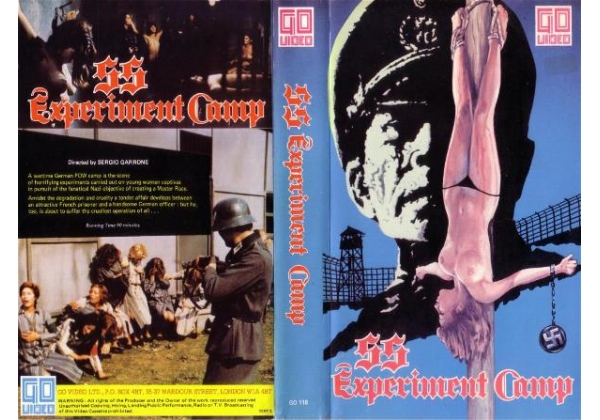
Severin Films contracted Rising High to produce Fascism on a Thread, a feature-length documentary on the genre for inclusion on its May 2019 Blu-ray edition of Paolo Solvay’s The Beast in Heat (aka La Bestia in Calore, aka SS Hell Camp). Included are interviews with genre stars Dyanne “Ilsa” Thorne and Malissa “Elsa” Longo, along with the genre filmmakers Mariano Caiano (Nazi Love Camp 27), Liliana Cavani (The Night Porter), Sergio Garrone (SS Experiment Love Camp, SS Camp 5: Women’s Hell), Bruno Mattei (Private House of the SS, Women’s Camp 119) and Rino Di Silvestro (Deported Women on the SS Special Section). Other filmmakers and films examined are Tinto Brass’s Salon Kitty, Last Orgy of the Third Reich by Cesare Canevari, Alain Payet’s Love Train for the SS, and the more serious and better-made (but the most grotesque-watch of them all), Salo, or the 120 Days of Sodom by Pier Paolo’s Pasolini.
Granted, most Nazisploitation films are admittedly more sensationalistic, but when it comes to Pasolini’s inclusion in the genre, you’re dealing with a film that isn’t using Nazism or Fascism as window dressing. Salo, the 120 Days of Sodom is a masterwork in the horrifying lessons of the absolute corruption of power in the same vein that Otakar Vavra’s Witchhammer (1970) controversially addressed the issue, a film that, itself, was bastardized with a quick succession of scandalous “Witch Trail” films, such as the West German-produced Mark of the Devil, aka Witches Tortured til They Bleed (1970), its sequel Mark of the Devil II, aka Witches Are Violated and Tortured to Death (1973), and the more reserved, Gothic-slanted AIP film that inspired the production of those films: Michael Reeves’s Witchfinder General, aka The Conqueror Worm (1968). Paul Naschy’s “theme” on the corruption of wealthy libertines, in his pseudo-zombie film, The People Who Own the Dark (1975), also has a connection to Pasolini’s art-horror film statement regarding Italy’s fascist state — and their complicity in the rise of Nazism.
While brutally squeamish — but not gratuitous: there’s a point to it all, really — Salo and these works are inspired by the infamous, power mad, pre-Nazisploitation exploits of the Marquis de Sade; which was the question asked by Naschy: “What if the Marquis de Sade existed in the nuclear, Cold War-era of the 1970s?” And that theme — which also adds a message about man’s obsession with beauty and youth — prevails in Fruit Chan’s nerve-inducing masterpiece, Dumplings (2004). These films may not be for the puritanical or faint of heart, but they are statements on how far one will steep into the Seven Deadly Sin for their own personal gain that need to be told. However, that message — and any sociopolitical connotations — is lost in most Nazisploitation films (the worst offenders being Lee Frost’s 1969 knockoff, Love Camp 7, and Garrone’s 1976 romp, SS Experiment Love Camp), so you’ve been forewarned.
When it comes to a quintessential encapsulation of the derided ’70s Drive-In genre that later became an ’80s VHS-based “video nasty” genre, Fascism on a Thread is it. If you’re a film dork that needs to know more and, as with our friend Mike “McBeardo” McPadden*˟, you’re on a quest to consume every Nazisploitation and Italian cannibal film ever made, Naomi Holwill’s directorial effort is a perfect introduction to exploring the genre as you wrap your head around “why” it ever existed in the first place.
After being offered on Amazon Prime as a separate-from-the-Blu stream from The Beast in Heat, you can now watch Fascism on a Thread for the first time as a free-with-ads stream courtesy of TubiTV. We’ve also since reviewed Naomi Holwill’s exploration of the Italian cannibal genre with Me Me Lai Bites Back (2021).
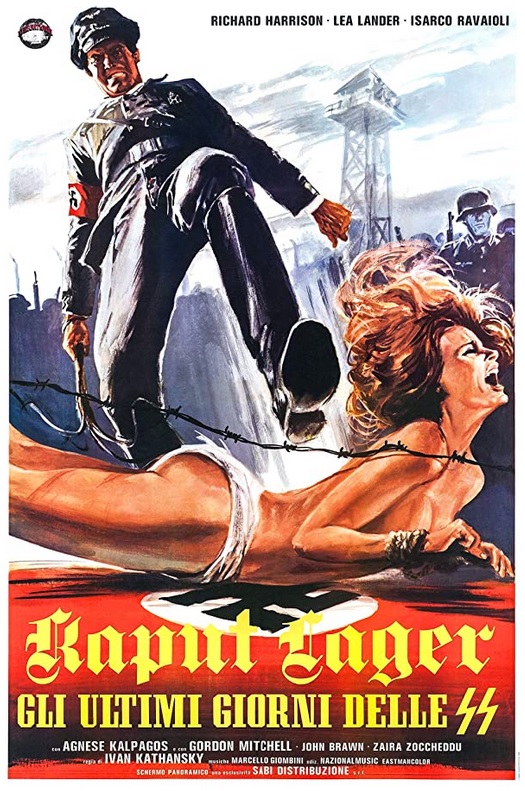
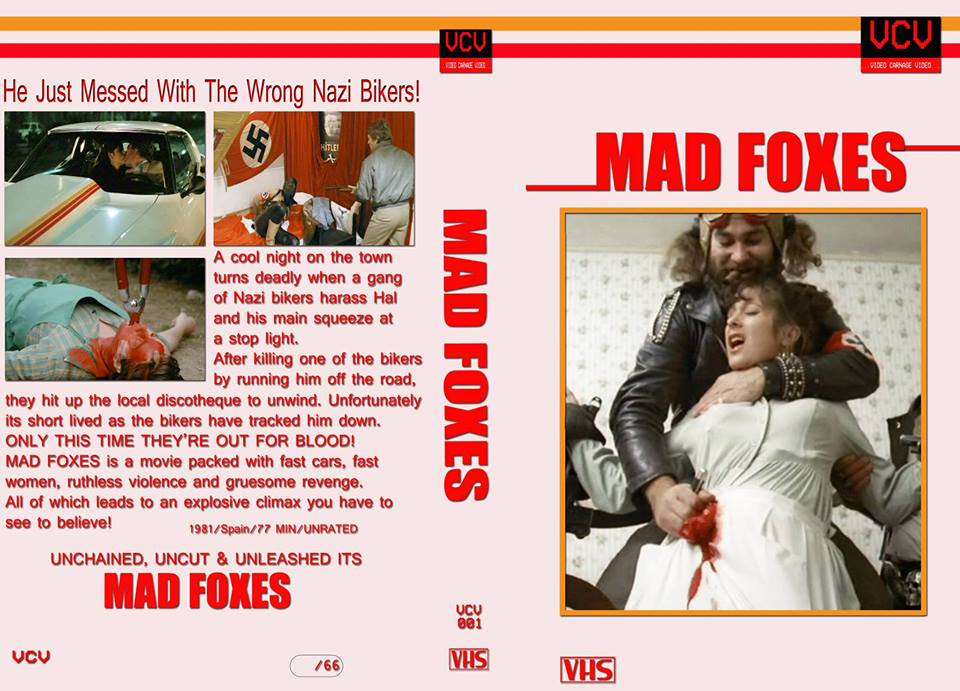
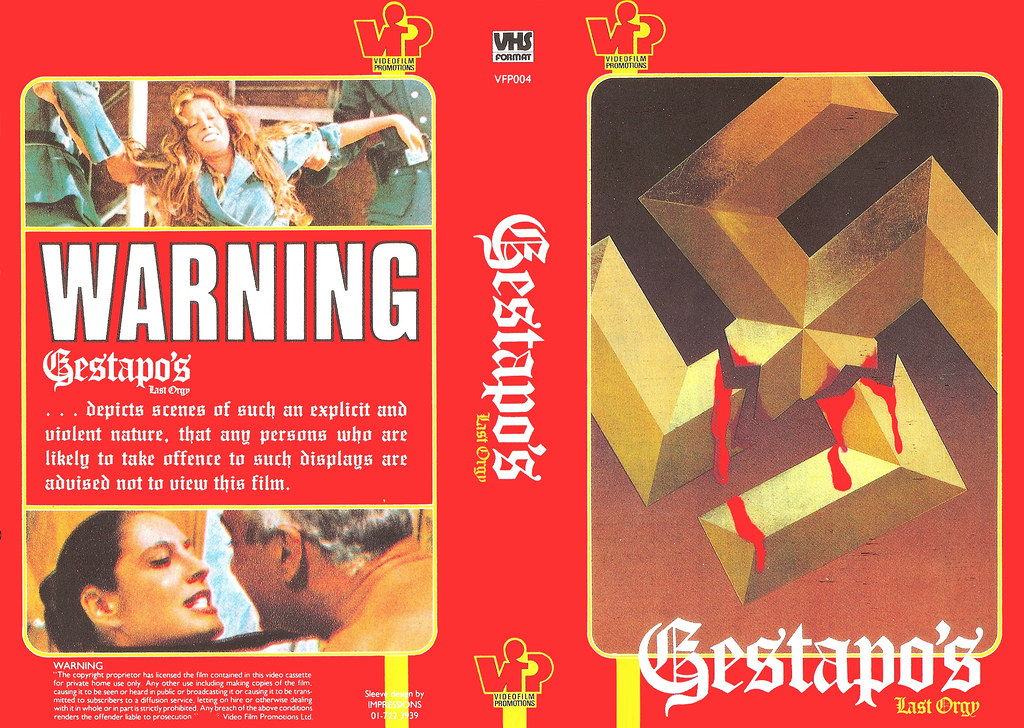
There’s also several fan-complied compilation lists to help you navigate through the genre’s films on the IMDb and Letterboxd. Other films of the genre we’ve reviewed are Achtung! The Desert Tigers (1977) and Gestapo’s Last Orgy (1977), along with the ’80s zombie variants of Shock Waves (1977), Gamma 693 (1981), and Zombie Lake (1981). Then there’s the rape-revenge inversion of Mad Foxes (1981). If you’re in a NaziZom binge-mood and want to see a few of the genre’s predecessors, you can check out They Saved Hitler’s Brain (1964) and its fellow Nazi scientist-cum-world-conquest villains in She Demons (1958), The Flesh Eaters (1964), and Flesh Feast (1970). To a lesser extent, there’s the Nazi we-never-see ghosts of Death Ship (1980).
Click through the images for the reviews.
* We did our own month-long examination of all of those post-apoc Rollerball offsprings with our two-part “Atomic Dustin” and our three-part “Fucked Up Futures” examinations — both features offer review links to over 100 films of every Italian and Philippine end-of-the-world romp you can imagine — and beyond.
*˟ We had the pleasure of interviewing Mike “McBeardo” McPadden in April 2019, upon the release of Teen Movie Hell: A Crucible of Coming-of-Age Comedies from Animal House to Zapped!, his latest filmpedia follow up to Heavy Metal Movies.
Disclaimer: We did not receive a review request from the director or a P.R firm. We discovered this film on our own and we truly enjoyed the film. And thanks for making this one of our most-successful posts with over 650-hits since January! We hope you enjoyed the film as much as we did!
About the Author: You can learn more about the writings of R.D Francis on Facebook. He also writes for B&S About Movies and publish music reviews and short stories on Medium.
In 2420, after aliens and powerful space wizards enslave humans, rebels organize a rebellion* in this effects-heavy film that comes from six directors — Andrew Jaksch, Lukas Kendall, Toby Rawal, Scott Robson, Sanjay F. Sharma and Luis Tinoco — and five writers — Josh Guttman, Jaksch, Kendall, Sharma and Tinoco.
That’s because this is really a collection of shorts with a wraparound story that puts them into one narrative that has Doug Jones (Hellboy, The Shape of Water) as an alien overlord.
From a street cop looking for his daughter** to a hunt for a crystal***, a trip to a planet gone awry****, a human bonding with an alien***** and a story that cross-cuts between a space battle and a child in the hospital******, each of these stories tell us more about this new world. Or that would be the goal, but these are all previously produced shorts that weren’t originally made to go together. That said, some of these — particularly Sky Fighter and Caronte, have some really great special effects going for them.
*This was in the sales copy and never really happens. It would have been interesting to see more of how these stories all worked.
**2017’s The Boogeys.
***2019’s The Dark Following.
****2018’s Thalamos.
*****2019’s Sky Fighter.
******2017’s Caronte.
Battle in Space: The Armada Attacks will be available on demand and on DVD January 12 from Uncork’d Entertainment.
After Patty Hearst — and The Last House on the Left — movies where young women were kidnapped kind of became a thing. This adjacent giallo tells the story of one such girl named Alice (Rena Niehaus, who could really pick them, between this movie, its sequel, Angel: Black Angel and Damned In Venice) who is taken against her will by three men, kept in an abandoned house and forced to write a ransom letter. One of the men, Michele (Michele Placido, Tulpa) falls in love with her and she’s able to use that to stay alive.
The other two are played by Flavio Bucci (Daniel the piano player from Suspiria) and Bruno Corazzari (Live Like a Cop, Die Like a Man). It’s director, Eriprando Visconti, would go from great commercial successes to major flops, all while funding his own films. He was married to a princess, so maybe that had something to do with it.
For a movie that is sold on sex, this has some of the most unerotic scenes ever filmed. That was Visconti’s idea, as he didn’t want to glamorize the act. But then, you know, he made an exploitation movie about it…and then made the sequel, Oedipus Orca, which shows what happens after this ordeal, including Alice trying to seduce her mother’s ex-lover who is really her father. And that man is played by Visconti.
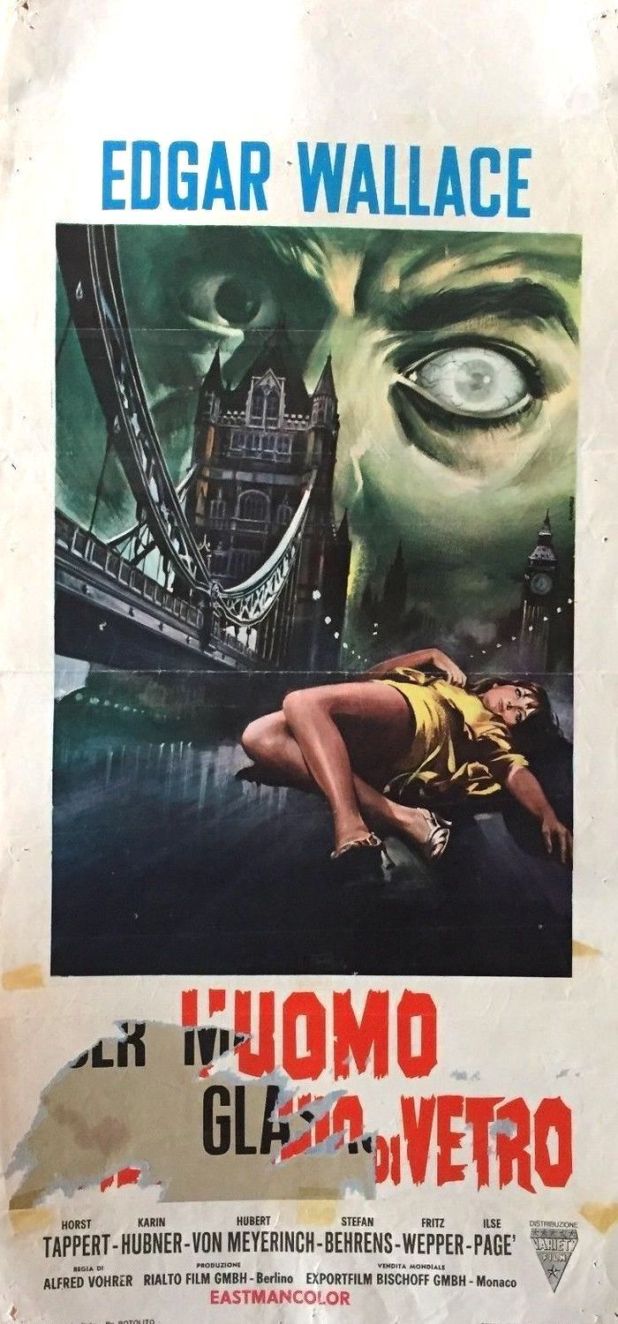
One of Rialto Film’s long-running series of Edgar Wallace films — one of the fathers of the giallo — this Alfred Vohrer (Dead Eyes of London, Creature with the Blue Hand) film predates Argento reimagining the form and instead feels very visually like Bava’s Blood and Black Lace without Bava’s camera gymnastics.
In the English dubbed version, the film starts with Wallace’s name appearing on the screen and a voice saying, “Good evening. This is Edgar Wallace speaking.” That’s a real scary moment, because at this point, Wallace had been dead for 37 years.
There’s a poisoned cat mask — I know, right!?! — and a pool hall turning into a battle royal, as well as a woman menaced by a blowtorch — yeah, that kind of stuff didn’t just start in the 1980’s, Siskel and Ebert — and a maniacal dummy named Snookie. Plus, it’s all set to some bouncy jazz!
I wouldn’t trust any single person in this movie. It’s literally all a pit of vipers. Well, maybe you can trust Scotland Yard. But every actor, carnie, gangster and moll in this — I thought you knew what a wretched hive of scum and villany was, but then I watched this movie!
Marisa Mell is the female George Eastman. No, she doesn’t act like a wide eyed gigantic maniac in every movie. It’s just that no matter what movie she appears in, just her name being in the credits guarantees that I will watch the film.
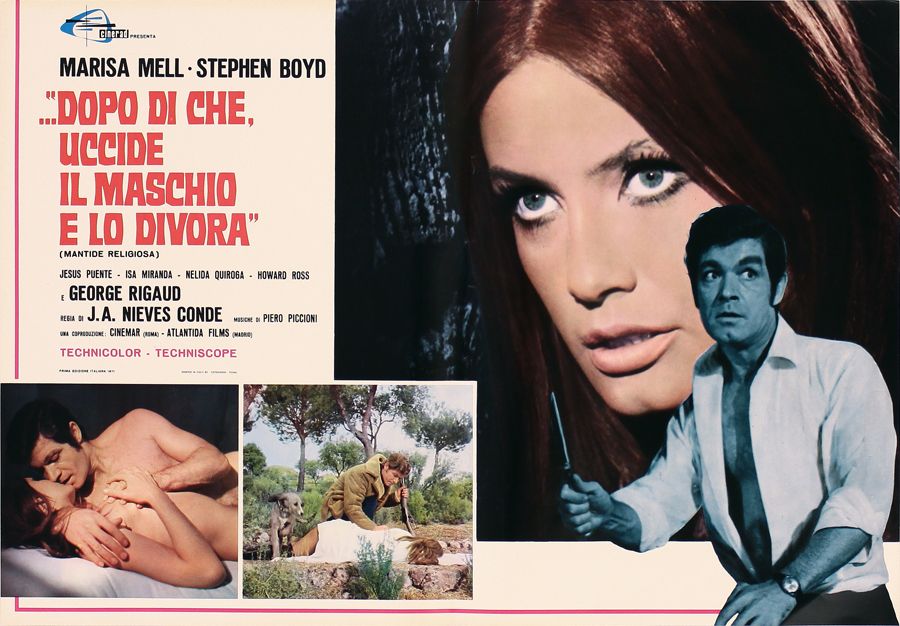
Also known as …dopo di che, uccide il maschio e lo divora (…After That, It Kills the Male and Devours It), which is one of the best titles ever.
A wealthy landowner named Don Miguel (Stephen Boyd, who was in Ben-Hur) is haunted by his dead mother and missing wife, who may have been murdered, when he meets a gorgeous runaway named Marta (Mell), who may have killed the man who she was running from.
I haven’t seen any of José Antonio Nieves Conde’s films before, but this movie makes me want to watch every single one of them.
The strange thing is that this movie pretty much became true in a way, as Boyd and Mell fell in love, as they made this and The Great Swindle one on top of the other*. Despite Boyd not wanting anything to do with Mell at first — was the man made of stone? — he eventually fell for her and they married in a gypsy ceremony near Madrid, cutting their wrists and sealing their blood. The couple was so possessed buy the mystical and sexual desire they felt for one another than they even went to have it exorcized in another ritual.
Boyd had to run from her, as the relationship physically and mentally exhausted him. As for Mell, she’d tell the Akron Beacon Journal that “We both believe in reincarnation, and we realized we’ve already been lovers in three different lifetimes, and in each one I made him suffer terribly.”
In the same year that all this happened, Mell was also dating Pier Luigi Torri, an aristocratic nightclub owner who fled the country after a cocaine scandal. Arrested in London after it was discovered he had a $300 million dollar gold mine and had also scammed a bank, he somehow escaped his jail cell and ran from the police across rooftops, escaping to America for 18 months. Evidently, Mell dated Diabolik in art and in life.
So let’s talk about the Mell relationship in the film instead of reality. She has come to live with Miguel, who collects insects and has two servants who keep things tidy. She enters his life by claiming that she is on the run for a self-defense murder. Miguel decides to protect her from the police because she looks like his wife Pilar (also played by Mell) who has left him or was killed. He’s also tormented by the death of his sainted mother while she may not be who she says that she is.
Oh yeah — and now Marta is acting as Pillar to throw the police off the scent of the man who she either wants to marry or destroy.
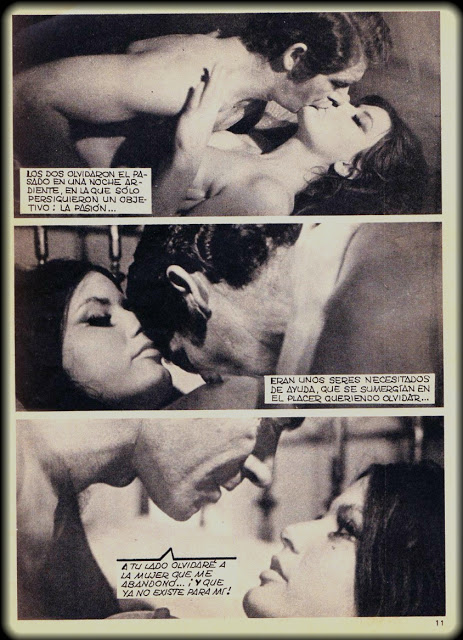
Marta is a gothic-style giallo but is also dreamlike throughout. There’s a continual obsession with placing Mell in front of mirrors. And for someone who was rarely used outside of her sex appeal in films, she’s absolutely haunting here. Somehow, Spain put this movie forward for Oscar consideration and if I ran those popcorn fart boring awards, I would have given this every single award.










 B&S About Movies
You must be logged in to post a comment.