EDITOR’S NOTE: Thanks to Matthew Hale on Letterboxd, I’ve learned that there are alternate versions of this Mill Creek box set. For the sake of completeness and my obsessive compulsive disorder, here’s this missing movie.
Also known as Isle of the Snake People, the original title of this movie translates as Living Death. It was directed by Juan Ibanez, who also directed star Boris Karloff in The Incredible Invasion, House of Evil and The Fear Chamber.
Karloff’s box office value led to these movies being financed by Columbia Pictures, which would then distribute them. Karloff received $100,000 per film, which is about $641,000 in today’s money. He rejected the scripts for all four movies, but agreed to make them when Jack Hill — yes, the maker of Spider Baby — rewrote the stories.
Filming was to take place in Mexico City, but Karloff’s emphysema (as well as the fact that he’d already lost a lung to cancer and had pneumonia in the other) would not allow him to work in the city’s altitude. He shot his scenes — with Hill directing — at the Dored Studios in Los Angeles, with additional scenes shot in Mexico with a Karloff stand-in named Jerry Petty.
Captain Labesch has arrived at a far-flung island to stop the voodoo rites being carried out by Damballah (Karloff). He’s warned by local rich white man Carl van Molder (also Karloff) to leave well enough alone. There’s a temperance subplot too, but who cares when Kalea the snake dancer is turning women into zombies that eat policemen?
She is played by Yolanda Montes, who used the stage name Tongolele and was known as The Queen of Tahitian Dances. A vedette in the Mexican cabaret, Tongolele is a potent mix of Swedish and Spanish who was born in Spokane, Washington and continues to be a star in Mexico to this day. She even released an album at one point. I have to say, she looks like she stepped straight out of 2020, with her shaved head and fierce makeup. She’s seriously volcanic, taking over the film from the moment she appears,
Human sacrifice. Dance numbers. Near-psychedelic images. Zombies. Well, as to that latter part of this movie, Night of the Living Dead came out in the years between when this movie was made and when it was released. By that point, this seemed dated. No matter. Watching it today, I was beyond entertained by it.
EDITOR’S NOTE: Thanks to Matthew Hale on Letterboxd, I’ve learned that there are alternate versions of this Mill Creek box set. For the sake of completeness and my obsessive compulsive disorder, here’s this missing movie.
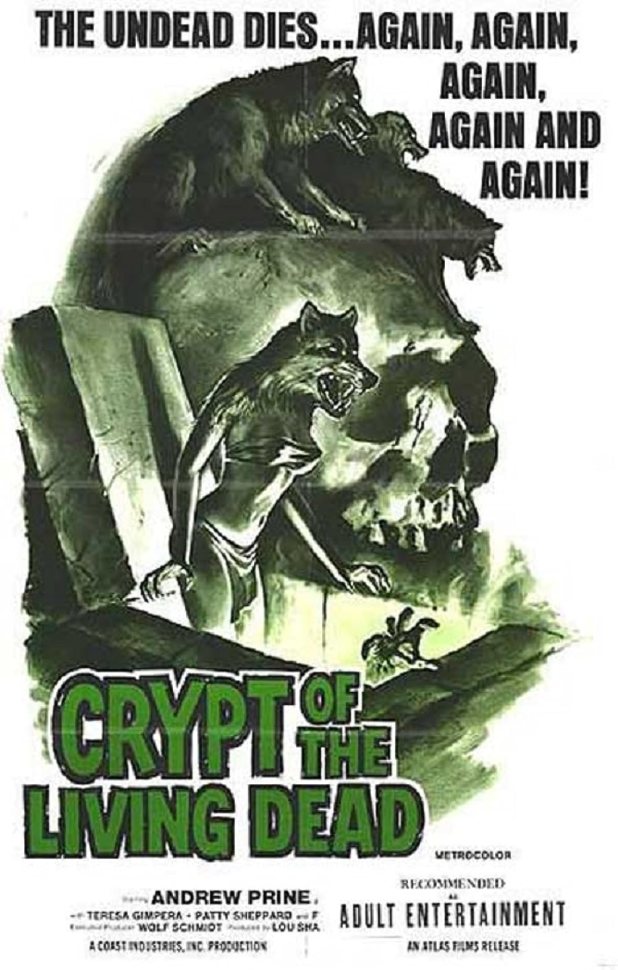
Also known as La Tumba de la Isla Maldita (The Tomb of the Cursed Island); Young Hanna, Queen Of The Vampires; Crypt of the Living Dead and Vampire Woman, this Spanish film was originally directed by Julio Salvador with new footage added by Ray Denton (Deathmaster, Psycho Killer). TV western-bred scribe Lou Shaw, who wrote The Bat People, tweaked the Spanish dialog for the less-gory U.S.-version.
Andrew Prine (Simon King of the Witches) stars as Chris Bolton, a man who has traveled with his sister Mary (Patty Shepherd, The Werewolf Versus the Vampire Woman) to attempt to remove his father’s body from where he died. It turns out that there was a heavy sarcophagus that he found inside a hidden tomb but now his body lies smashed under it. The townspeople refused to help, as inside that coffin lies Hannah (Teresa Gimpera, Lucky the Intrepid) and they don’t want her ever coming back.
The 70’s were filled with female vampires of all shapes and sizes, from the Hammer lesbian-tinged vampires of The Vampire Lovers, the Satanic Twins of Evil, Jean Rollins’ sexually starved bloodsuckers, Daughters of Darkness, the fairy tale world of Lemora, Lina Romay as Jess Franco’s Female Vampire and the future vampires of Thirst. Every one of these films makes me happy despite the darkness and gloom of these days.
EDITOR’S NOTE: Thanks to Matthew Hale on Letterboxd, I’ve learned that there are alternate versions of this Mill Creek box set. For the sake of completeness and my obsessive compulsive disorder, here’s this missing movie.
Sometimes, the right movie comes along at just the right time. This would be that movie. Today would be that day.
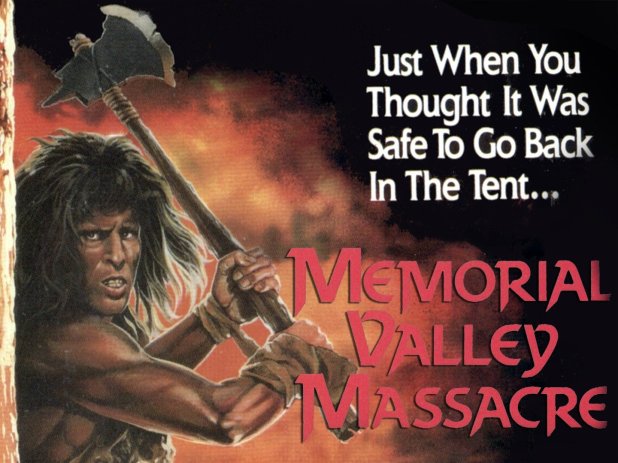
Memorial Valley Massacre — also known as Valley of Death, also known as Son of Sleepaway Camp (complete with the music cues from Sleepaway Camp and hardcore penetration footage) — was released beyond the golden years of the slasher, but damn if it doesn’t make me just as happy as if it had been released between 1979 and 1982.
Evil land developer Allen Sangster (Cameron Mitchell!) has just broken ground on the Memorial Valley Campground and wants some teenagers to build it for him. Nothing happens at all for the first hour, with just one murder — that said, it’s the murder of an obese rich kid on a quad that I was hoping would die painfully and oh yes, he did — but by the end, all manner of slashtastic violence is unleashed.
Did I mention this movie has a cave boy? Yes, much like Encino Man but with death, this wolf child lives in the woods and doesn’t like all these rich folks knocking down his trees.
Beyond Mitchell, this is a junk film fan’s dream, with John Kerry (Dolemite), William Smith (Red Dawn, Terror in Beverly Hills, so many more) and Karen Russell (Hellbent). It’s directed by Robert Hughes, who would go on to make Zadar! Cow from Hell, Hunter’s Blood and Lusty Liaisons II before directing episodes of Mighty Morphing Power Rangers.
Seriously, outside of Don’t Go Near the Park, this is probably my favorite prehistoric people in public lands killing people movie. That said, I only know two of movies of this genre and I love them both.
Order the Vinegar Syndrome reissue, which is packed with extras, including a 4K reconstruction of the film and interviews with actor John Kerry and director Robert C. Hughes. Or watch it on YouTube and be assaulted by its soundtrack, which seems way too chipper for the carnage that unspools over the last twenty minutes of running time!
I’ll admit it. I cheated. Instead of watching this movie in its original form, I found a version that had Joe Bob Briggs do commentary. Unlike modern commentary tracks where bloggers and magazine writers try in vain to impress you with how cool and smart they are, Joe Bob just hangs back and blows your mind with his limitless info. It made this movie way better than it deserves.
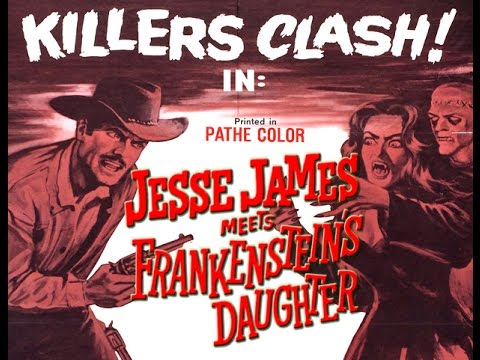
Paired with director William Beaudine’s other cowboys against the supernatural film Billy the Kid Versus Dracula, this film supposes what would happen if Dr. Frankenstein’s daughter Maria would come to the American wild west along with her brother Rudolph to use prairie lightning to turn immigrant children into slaves that will help continue their father’s experiments.
Meanwhile, Mañuel and Nina Lopez are leaving town before their daughter Juanita (Estelita Rodriguez, Rio Bravo) is killed. And here comes Jesse James (John Lupton, Airport 1975), Hank Tracy and Butch Curry, the leader of the Wild Bunch (no, not the Peckinpah film), who are here to steal $100,000 from a stagecoach. Yep, Jesse James did not die on April 3, 1882.
The crime gets foiled when Butch’s brother Lonny tips off Marshall MacPhee (Jim Davis, Jock Ewing the patriarch of the Ewings of TV’s Dallas) in exchange for becoming his deputy and getting reward money for Jesse James. Everyone but Jesse is shot, with Hank barely surviving. They hide in the Lopez family’s camp and Juanita takes them to the Frankensteins in the hope that Hank’s mortal wound can be healed.
Maria, of course, is in love with Jesse instantly, even faking suicide to get in his heart. She’s goth before goth was goth, basically. Jesse manages to escape another trap and kills Lonny, who has tried to bring him back in. Maria Frankenstein has transformed Hank into Igor, her new servant, and killed off her brother. She then orders him to kill Juanita, but he turns on his mistress. In a final scuffle with Jesse, Juanita kills the monster with Jesse’s revolver. She begs the famous outlaw to stay with her, but he goes off into the sunset, arrested by the sheriff.
I fear that I’ve made this movie sound way more interesting than it really is. The one good thing I can say is that the lab equipment was provided by Ken Strickfaden, who loaned out his gadgets for all of the Universal films, as well as Mel Brooks’ Young Frankenstein, Al Adamson’s Dracula vs. Frankenstein and Blackenstein.
That said, William Beaudine started his career as an assistant to D.W. Griffith on The Birth of a Nation and Intolerance. His directing career stretched from 1922 to 1966, with this being his final film. Harry Medved’s book, The Fifty Worst Films of All Time, gave Beaudine the nickname “One-Shot” because everything ended up being in his films, like actors screwing up their lines or special effects not working properly.
The truth is that he actually had some talent and worked with plenty of talented films, including Mary Pickford, Mack Sennett and W.C. Fields. However, bad judgment and worse luck ruined his career.
Beaudine was brought to England in the 1930’s to work with their top stars. He directed there and expected to come back to the United States with his A-list status intact. Sadly, studios no longer wanted to pay his salary. And even worse, he lost his personal fortune when a bank he bought an interest failed. It got worse. Most of his UK income was then seized by the British government in taxes.
Then, publicist-turned-producer Jed Buell and Dixie National Pictures offered Beaudine $500 to direct a one week job: an all black picture. The director realized that if he took this job, he’d never return to the limelight. But at that point, he was near destitute and needed the work.
William Beaudine reinvented himself as the master of low budget films, forgoing art for survival. He recouped his finances through the amount of work he turned in, working in all genres and with stars like Bela Lugosi in the absolutely bonkers film Bela Lugosi Meets a Brooklyn Gorilla, the East Side Kids and nearly half of Monogram Pictures’ series of Bowery Boys comedies. In fact, he became the master of sequel series films, also working on films with characters like Torchy Blane, Jiggs and Maggie, The Shadow and Charlie Chan.
He also directed Mom and Dad, the film that pretty much set up the exploitation movie pipeline until the death of grindhouses. Produced by Kroger Babb, this film was distributed by a loose knot organization that called themselves the Forty Thieves. You had guys like S.S. “Steamship” Millard, who produced Is Your Daughter Safe?, Samuel Cummins whose Public Welfare Pictures and Jewel Productions brought the public 10 Days in a Nudist Camp, J.D. Kendis who produced Gambling with Souls, Dwain Esper who brought one of the original serial killer movies Maniac to the public (as well as buying Freaks from MGM for just $50,000 and re-distributing films like Reefer Madness), Willis Kent who had The Wages of Sin, Louis Sonney who owned the West Coast with films like Hell-a-Vision and Howard “Pappy” Golden, who was known for stealing prints from the other thieves. They weren’t a studio as much as an informal trade association, kind of like the old National Wrestling Association, that used something they called the “states rights” system. Truly, Mon and Dad is an exploitation landmark and we wouldn’t have so many of the films we love without it.
Beaudine became so well known for his efficient directing that Walt Disney himself used him for several films (he directed the special Disneyland After Dark, whose title was appropriated by the Danish rock band D-A-D). TV was tailor-made for the director, as he worked on shows like Lassie. He was even the director of Plan 9 from Outer Space alum Criswell’s TV series, Criswell Predicts!
This Western horror mix would be his last film, although after Bruce Lee became famous, several episodes of The Green Hornet that he directed would be packaged as feature films — 1974’s The Green Hornet and 1976’s Fury of the Dragon.
Look, this isn’t a great movie. But it’s fun. And it’ll lead you to learning a lot about exploitation films and Old Hollywood, if you want to learn more.
Don’t have the Chilling Classics box set? You can watch this for free on the Internet Archive.
This article originally appeared in Drive-In Asylum #12, which you can buy right here. It’s the second — and probably not the last — time I’ve talked about Cathy’s Curse, a movie that will own your very will to live.
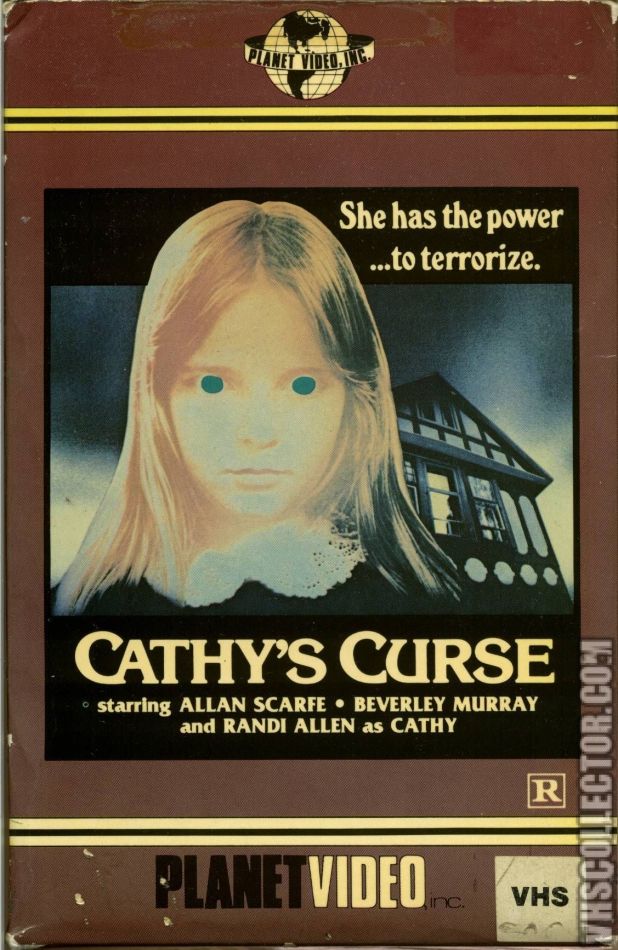
There has never before or since been a movie where pure evil finds its origin in a rabbit crossing the road that’s narrowly missed by a misogynistic father, who then smashes his car into a ditch where it goes up like a tinderbox. It’s movies like this that made me run on foot from my first fender bender, diving into a snowbank, waiting for my car to blow up real good. Spoiler warning: It sure didn’t.
Cathy’s Curse finds its true origins in many places. First, the Canadian Film Development Corporation was formed to encourage more movie making north of the border. According to Canuxploitation.com, “thanks to $10 million dollars of allocated funds in 1971 and the added incentive of tax shelter laws that increased the Capital Cost Allowance (CCA) for money used in the production of a Canadian feature film from 30% to 100%, Canada experienced an unprecedented explosion of moviemaking.” That money gave birth to filmmakers like Bob Clark and David Cronenberg, as well as the maniacs behind this film.
Secondly, Canadian horror is strange to American eyes. Again, Canuxploitation.com claims that’s because these films “are distinctive in the way they present concepts of individuality, community, and even morality. Our films tend to be more story and character focused than their American counterparts, and when at all possible, the “wild” Canadian landscape is used to full effect.” In particular, films from Quebec stand out as even stranger than the rest of the country, with Possession of Virginia and The Pyx coming immediately to mind.
Finally, the third father (I should set them up with Argento’s Three Mothers) to Cathy’s Curse is a preponderance of occult based films in the mid-1970’s. Thanks to the one-two Satanic punch of The Omen and The Exorcist, filmmakers saw child possession as a rich source of appropriation.
So why do I love this movie so much? Because I believe that it was made by aliens who have no understanding of how human beings truly behave or act. It’s like John Keel’s stories of how the Men in Black were often confused by everyday objects like pens and had no idea how to eat food properly. Characters make asides that seem to be important plot points that ultimately go nowhere while glossing over things that end up being essential.
In my exhaustive research of Canadian possession movies, which was done with several cans of Molson as a control group, I have learned that when kids get taken over in a Canadian film, instead of the pure bile and meanness of say, Regan MacNeil, they just end up becoming impolite and swearing a lot more. Cathy Gimble, our heroine in this film, immediately picks this up. From forcing a group of children to repeat that all women are bitches to stabbing kids with needles, she goes from polite North of the Border pre-teen to Rhoda Penmark in no time flat.
Why else do I love Cathy and her film so very much? Because there are so many lessons to be learned. For example, if your daughter finds a frightening looking doll in the attic — much less an attic that has a giant cast iron frog that no one ever comments on in the film — don’t let her keep it. And if you want to make sure your psychokinetic problem child is being properly taken care of, don’t entrust her daycare to a handyman that’s had lifelong issues with the sauce.
I adore Cathy’s Curse for its inconsistencies. Cathy’s powers are never really explained. They can do everything from blow-up knick-knacks to making snakes and rats appear out of nowhere to pulling maids out of windows like a Helen Reddy loving Damien Thorn, Cathy has the power she needs when she needs that power. How does one use the power to make food rot and get covered with bugs properly? You can’t very well join Alpha Flight (Canada’s Avengers) with that one.
I celebrate this movies for its actors, blessed with limited abilities, hilarious pronunciations and magical leather coats complete with wooly fur. A scream or an overreaction happens in nearly every scene.
You know how most horror movies start with an opening sequence showing how nice and happy everyone’s life is to juxtapose how horrible everything gets when the supernatural invades the real world? This movie will have none of that. Every single frame is packed with goofball weirdness. People wear dresses in the coldest of snow. Every wall is covered with pictures of animals. Next door neighbors just happen to be mediums connected to the spirit world. Strange music cues and cuts in the middle of dialogue happen for no reason whatsoever.
Unlike draconian films that have a point of view or an actual plot, this is a movie with no real point of view. Instead, it’s less a narrative and more scenes of Cathy destroying lives. You won’t learn a pesky moral or meaningless lesson. Instead, you will watch a young girl repeatedly tell off old women, including the immortal line where she refers to a medium as an “extra large piece of shit.”
In short, Cathy’s Curse is the kind of film that I put on and people say to me. “Why would you show me that?” and I never invite them to my house ever again. It’s a good litmus test to weed out boring people who have no idea how to enjoy the magic of film. You didn’t need them anyways! You have Cathy!
Whew — we made it through CHILLING CLASSICS MONTH! I thought nobody would care at all, but we actually gained readers and site traffic. Thank you to everyone that contributed, read, liked and shared our articles.
I’m debating doing the PURE TERROR box next. Hopefully, we can get all of these writers and more to come back!
In August of 2023, Letterboxd user Matthew Hale called to our attention that there are several versions of this Mill Creek set. Here are the movies that were missing:
I love the drive-in more than anywhere else in the world. A night at the drive-in is one of promise, wonder, drinking in public, movies that I love and Chilly Dilly pickles. This movie tries to make the drive-in a scary place. But is it an entertaining one?
Starting off with a double murder at a California drive-in, police detective Mike Leary and Jon Koch are on the trail of a killer who keeps attacking the same theater. There are plenty of suspects, like the manager, Austin Johnson, an unnamed voyeur and the creepy janitor, Germy.
The killer kills again and again, using a sword. There is also red herring after red herring, with none of the leads adding up. It turns out that Austin and Germy were once sword swallowers and the swords may have come from their collections, but they’re both killed by the end and the killer is never caught.
The film closes with an on-screen warning about drive-ins all over the country being attacked by the killer, then a fake public address that makes it seem like the maniac is loose in the very drive-in where you are watching the film. Oh no!
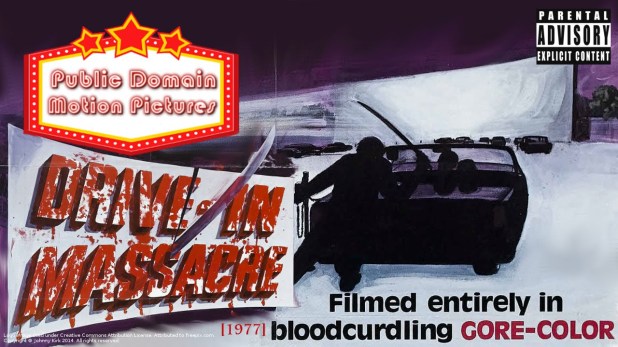
The poster for this movie said, “Drive-In Massacre has been deemed by an independent film board to be too terrifying for viewing by the average theatre patron. For this reason, it is suggested that those of you with severe emotional disorders or chronic coronary dysfunction NOT see this movie. The risk is entirely yours.” You’ll be fine. Trust me.
This movie defines the term meandering. It seems to go on and on. And on. But hey, if you have to experience it for yourself, it’s on Amazon Prime. And, of course, you can always order the Chilling Classics box set!
John S Berry says that he’s a pretty low key guy. He has a few articles on the Rupert Pupkin Speaks site. I asked him to tell me a little more about himself and he replied that he loves bargain bin horror movies, his cat Walter, Terry Gordy and most people.
A few years ago I saw a great movie called The Canal. In the opening scene a man gets an auditorium of noisy kids to pipe down asking them if they want to see ghosts. The “ghosts” he is referring to are the people in the film and how none of them are alive today.
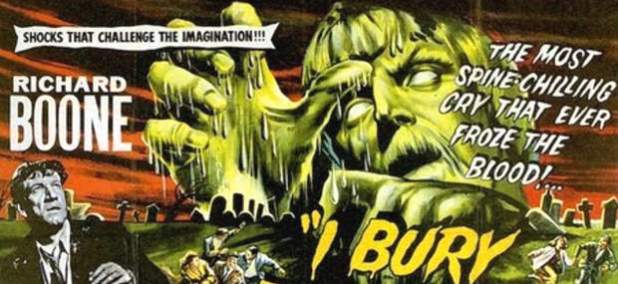
I often think of these “ghosts” when I watch older movies. How odd (and wonderful)it must be to get to see relatives long gone. Not just the visual but also their mannerisms and hearing their voices. I Bury the Living has that feeling for me. I am seeing ghosts pleading, going mad and caring that have been gone for some time.
I Bury the Living was released in 1958 and I am not sure how well it was received. Most of the reviews and articles I read about it compared it to a longer episode of the Twilight Zone. It runs an efficient 77 minutes and was made by Albert Band father of Charles. Looking up his career I found the sweet support of a father who served as a producer for many of his son’s projects including one of my favorites Castle Freak. I wonder what he thought of his son’s films then I realized he was the director of Dracula’s Dog and Ghoulies 2. Their Thanksgivings must have been a lot of fun.
Stephen King is a huge fan of this film but hates the ending. That is a fact steeped in irony since I often find the endings of his books to be lacking (throw rotten tomatoes at me here). I am not going to spoil the ending, but I have watched this several times and am still undecided. I don’t hate it but after some viewings I think they could have done more with it. But I am not sure how or what (no not a giant spider).
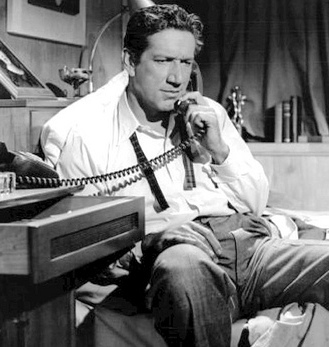
I Bury the Living is very atmospheric and you can feel the coldness of the main set of an office at a cemetery. Richard Boone is kind of a grumpy 50s businessman that has to take his turn in being the chairman for the cemetery. When he is sworn in they tell him it is not a tough job but slowly it possesses him and he goes from a confident and well-groomed man to a confused, flustered and downright scared man.
Andy is the caretaker who does the real day to running of the cemetery. There is something charming and sweet about him and he is a man who truly loves his job. It was a sign of the times and a sad reminder of how people used to have pride in their work no matter how lowly or menial the job was. Andy didn’t have nice suits and slick hair like Mr. Kraft but he appreciated the scenic views at the cemetery and the comfort and peace.
Mr. Kraft imposes his values on Andy and thinks he is doing him a favor when he tells him it is time for him to retire and to find his replacement. Kraft being the typical businessman asshole pats himself on the back not realizing work and this place provides Andy with most of his purpose. And a man can be truly lost when he has lost his purpose.
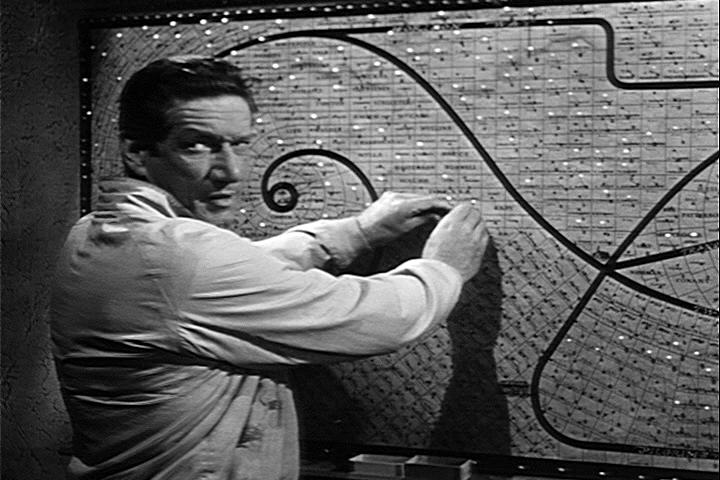
The giant map has a great look to it. In it are white pins for unoccupied spots that have been sold and black ones are for the ones that have bodies in them. Kraft makes a mistake and puts the wrong color of pin into the map and starts a chain reaction of doom (or does he?)
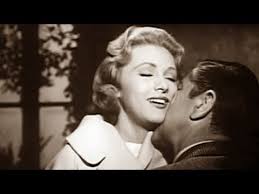
Kraft’s lady Ann comes to visit and she seems a bit younger than Kraft. I like the fact that the leads are older. It seems like films these days never cast older people (they consider mid 30s old now)and I think it adds to how Kraft actually wear all the bad things that start happening around him. He even questions his sanity and wonders if he is truly to blame which is what we often do as we age. Much more meaningful then Archie trying to spend time with his best gal no matter what is going on around him.
No one seems to believe Kraft and he in a sense is doing the math. They seem to think he is buckling from all the pressure of being a modern businessman. A few costly experiments are done and Kraft really starts to go off the rails. The music used is top notch and eery and Band does some very interesting visuals for Kraft’s descent into possible madness.
It is hard to write without spoiling the film. But it is definitely worth a watch. Sure it could be a supernatural force at work or a who done it. I feel it is a film about the upper class not truly understanding how the working class feel about life and their jobs and that is all you are going to get out of me. I am still not sure how I feel about the ending, but really I love the room to speculate and wonder about the ending of a film.
I’m so glad that I got Bill Van Ryn to write about this movie! If you like what he has to say, check out his other projects like the website Groovy Doom and the zine Drive-In Asylum. Thanks again for your multiple articles and sharing everything else out, Bill!
Ultra low budget films really turn me on sometimes, and House of the Dead has another sexy thing going for it: it’s a horror anthology. It’s one of those obscurities that received a very limited theatrical release, and was then relegated to cruising the backwaters of VHS. A recent blu ray resurrection by Vinegar Syndrome is a welcome chance to get acquainted with one of the more imaginative films of its type.
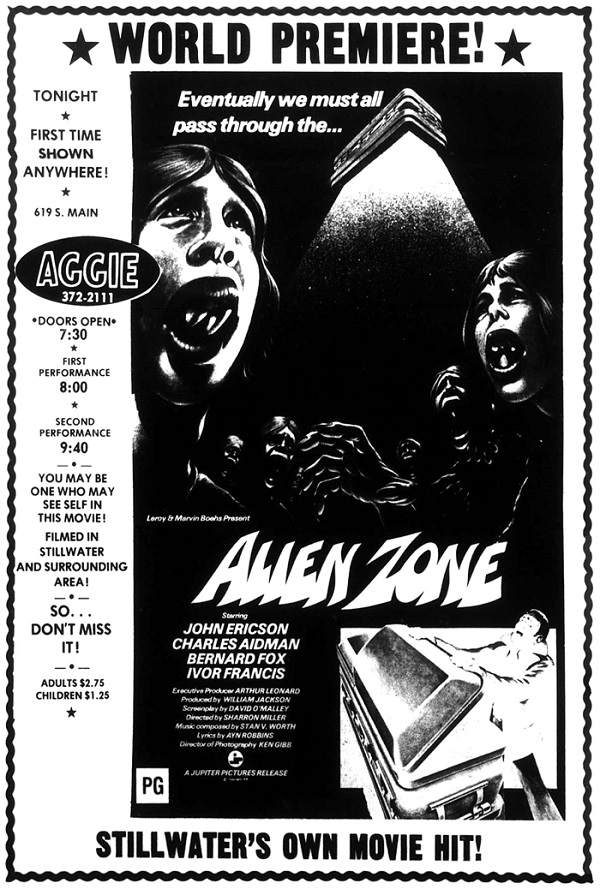
For some reason, the film was packaged theatrically under the misleading title Alien Zone, which says nothing about the actual content of the movie. It’s actually a supernatural film that deals with a man who finds himself lost in a rainstorm. He’s just come from seeing his mistress, and takes a taxi back to his hotel in order to phone his wife. The cab leaves him off in an area that isn’t familiar to him, and it drives off, leaving him stranded down a dark alley. A strange, older man emerges from the darkness and offers our protagonist a chance to get out of the rain, taking him inside the building and giving him coffee. The protagonist soon realizes his host is a mortician, and the old man insists on giving him a tour of the facility. The individual stories emerge as the mortician opens each casket and letting the protagonist look at the bodies.
House of the Dead gives you some bang for your buck, because it has four stories — five if you count the wraparound segment. The tone is definitely that of an old EC comic book, with nasty people doing horrible things and then suffering some kind of karmic justice. The first is about a schoolteacher with a disdain for children who is confronted by monsters, the second deals with a serial killer who lures women to their doom inside of his apartment, the third is about two dueling detectives who set out to murder each other, and the fourth shows an arrogant businessman’s rapid transformation into a derelict after he is trapped and tormented inside a warehouse of torture.
The stories are intriguing, although a few of them are awkwardly realized. Most disappointing is the story about the serial killer, because it starts out so damn good. It’s a found footage short, a collection of private films shot by the killer on a hidden camera. Each one shows him inviting a different woman to the apartment and finding ways to lure them into perfect position so he can murder them in front of the camera. It becomes increasingly disturbing, and you wonder where the story will go, and then suddenly it is over and it went nowhere. It had such an interesting setup, too, with a non-linear timeline and intercut news footage of the subject being attacked by camera-wielding reporters while being arraigned.
The best of the four stories by far is the fourth, which is a damn near brilliant piece of film. Most of it is performed solo by actor Richard Gates, who portrays a cocky businessman with a serious lack of empathy for others. He is confronted by a derelict outside of what he thinks is his office building, and he dismisses the man rudely, yelling after him “Why don’t you get a job?” Once inside the building though, he realizes he has walked into an unfamiliar storefront, with a vacant office space inside. Lured to an open elevator shaft by noises from below, he leans inside too far and falls down into the shaft, landing on his face. It’s a brutal moment that looks terrifyingly real, even though it’s just clever editing. This begins a gradual erosion of his humanity by some unseen antagonist; he is now in a Saw-like chamber of horrors, where he is wordlessly tormented by a falling elevator, a room where a wall of blades threatens him, and ultimately a prison cell where he is fed only bottles of alcohol. A door automatically opens some undetermined length of time later and he emerges into daylight, himself now a drunken man in a dirty suit approaching passersby for help and being rejected.
The film has a distinct visual look, which is often difficult when shooting a low budget movie. It’s not exactly striking, but it does creep into your brain a little by what it *doesn’t* show you. This movie does “anonymous and vacant” extremely well. Alleys are dark and vague, with strategically lit doorways and dark alcoves. That abandoned building is both ordinary looking and totally sinister, with simple but effective traps for its victim, almost like anybody could have set it up. Even the “house” of the title, which is purported to be a funeral home with a mortician’s workshop, is rendered onscreen only as a series of vague hallways and dim areas lit only by carefully directed lamps and bulbs, leaving most of the rooms in shadows.
A lot of the wraparound story is clunky, to say the least, like the awkward way the mortician narrator abruptly disengages from several of the stories, especially the ones with protagonists who don’t end up dead on screen (after all, he’s explaining to someone how these people ended up corpses in a funeral parlor). But the runtime is short (79 minutes), and it contains a few moments that are effectively creepy. It’s exactly the kind of thing you’d hope to find in a budget DVD collection.
Emily Fear is a librarian by day, professional wrestling lover and accordion player in the band Bitter Whiskers by night. You can catch her as the co-host of Talking Honor on PWTorch and read her new blog all about intergender wrestling, Boy Girl Party.
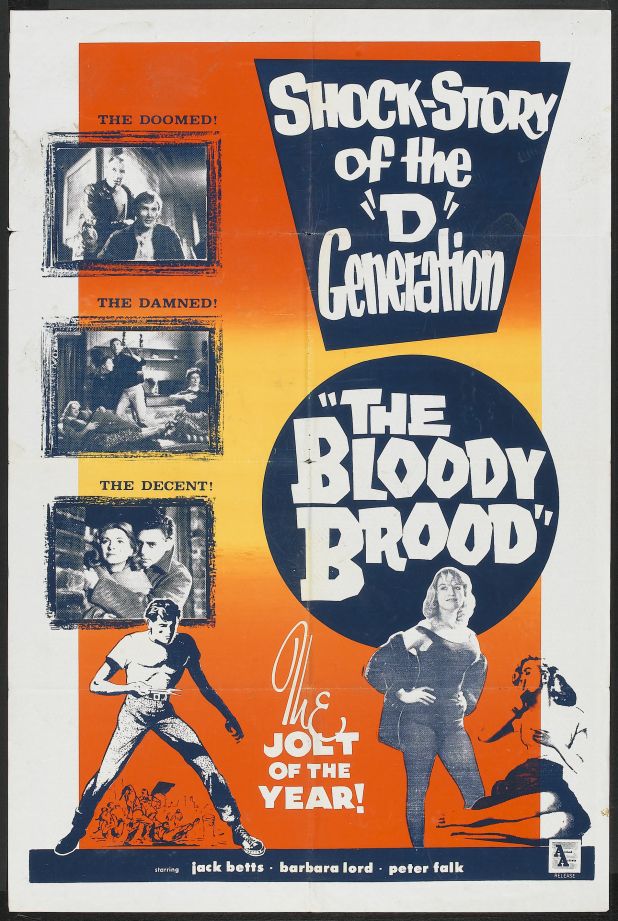
Like the straight-laced, grim-faced cousin of Roger Corman’s A Bucket of Blood, The Bloody Brood (1959) grounds its tale of murder and suspense in the hypocrisies and nihilism of the Beat Generation. While Beatnik caricatures steal scenes with bad improvised poetry and arhythmic, wide-armed dancing to spare bongo beats, the movie is dedicated to a more realistic portrayal of the majority of its hipster coffeehouse denizens – who may talk the talk of the culture, but are definitely working day jobs to support their nighttime wanderings.
That is, except for Nico (Peter Falk), whose business is those same too-jaded truth-seekers. While they flock to his wisdom – “They spend millions developing toothpaste to stop cavities, then they spend billions on bigger and better ways to blow us to bits” – they also partake of the drugs that he is selling, without even realizing that he is the one selling them. While Nico may be about the “truth,” he is happily raking in the profit of the drug deals without the shame or scrutiny, which is left to his rougher mules.
Early in the film, Nico, advertising director Francis and a few Beatnik cronies witness the death of an old newspaper man. What might be a traumatizing event for most warm-blooded civilians is a source of twisted inspiration for Nico: “What do we do? Watch. Gentlemen, this is the greatest show on earth. Spontaneous, unrehearsed, only one performance.”
Turned on by this ultimate kick, Nico ropes Francis into a plan to create more of these “spontaneous” moments and before you know it, they’re bringing a messenger boy into a party to feed him a hamburger laced with ground up glass.
The boy dies and it’s up to his brother, Cliff (Jack Betts), to solve the mystery of who killed him, aided by a sympathetic detective – who honestly doesn’t seem very good at his job – and Ellie (Barbara Lord).
If Cliff inching closer and closer to the truth wasn’t enough trouble, Nico’s also got mule problems, as Studs and Weasel demand a larger cut of the drug money, considering that they’re taking all the risk. Meanwhile, the drug-dealing powers that be above Nico are concerned that he is becoming a bit too immeshed with the scene in which he is profiting from.
What The Bloody Brood lacks in the entertainment factor of A Bucket of Blood, it makes up for with a certain earnestness – and that creates characters that are more effective than even needed for pulp like this. For every Dave, with his straight-out-of-costuming beatnik uniform and slang nonsense, there’s an Ellie, whose fear of wasting away her life blinds her to the snobbish contradictions of her hipster peers, or even Francis, an effete posturing jerk whose pompousness is second only to his cowardice.
The nuance, however, ends with the main characters. Cliff is a fairly bland hero who is also not particularly good at masking his covert operations. And while Falk tries to give Nico complexities, many of his actions, particularly later in the film, seem to be against his own self-preservation. The whole “murder for kicks” idea overall doesn’t seem to gibe with a guy whose just trying to profit off the self-important obliviousness of the subculture he’s infiltrated.
But perhaps that is the point. Nico’s boss is concerned that he is getting too close with his customers. While others might exhibit that over-closeness with feelings of love and affection toward their peers, thus inhibiting their ability to sell them drugs, for Nico, the effect is that he buys all the bullshit that the others drink down like cheap table wine. He may have started off as conning them, but he became the biggest mark of all.
Despite its technical flaws and a few glaring holes in the storyline, as far as low budget pulp thrillers, you can do a lot worse than The Bloody Brood.



 B&S About Movies
You must be logged in to post a comment.