Banging Lanie (2020)

“Oh, come on, robot girl, embrace the technology.”
— Lanie Burroughs being schooled on the fine art of vibrators

In our review of the radio comedy Loqueesha, we discussed the creative art of filmmaking and, as result of those artistic frustrations, the passion projects, aka vanity projects, developed by unknown, burgeoning actors as their calling card to the industry.

And as with Brit Marling and Another Earth (2011) and Fay Ann Lee with Falling for Grace (2006) — and the recently reviewed The App by Elisa Fuksas, Bethany Brooke Anderson’s Burning Kentucky, The Girls of Summer by Tori Titmas, and Mindy Bledsoe’s The In-Between — before her, North Carolina-to-Los Angeles actress Allison Powell has spent most of her adult life in the world of community theater, following the star-embossed sidewalks of her adopted hometown. As she consistently scored roles in indie shorts and features she, as all working actors do, toiled on the audition circuit and hoped for that “big break” on a major film or TV series. (Been there, done that. And it ain’t an easy life, trust me.)

Making It!

So Allison decided the time had come to “make it happen” and show ol’ Tinseltown she had the chops to make it in la-la land. So, working as her own producer, screenwriter, and director* — and inspired by Seth Rogan and Evan Goldberg — she decided to make a female-centric version of their 2007 hit, Superbad, only with a twist.

Instead of crossing a “chick flick” with an Apatow-raunch and giving us just another flick with women out prove the “weaker sex” can equal men in the lust and vulgarity, and sexual frankness and insecurity departments (Bridesmaids, Trainwreck, Bachelorette), Allison Powell aspired for something higher. She knew should could do better than just churn out a female-driven version of The Hangover. No, she wasn’t going to Bechdel test audiences into submission to notice her work.

Streamers evoke Booksmart — the directorial debut of The O.C actress Olivia Wilde — in their feedback on Banging Lanie. And the comparison makes sense, as those same streamers liken Wilde’s debut as a female-empowered Superbad (which also makes sense, as Beanie Feldstein, the lead in Booksmart, is the sister of Jonah Hill, who starred in Superbad).

But why must we, when discussing gender portrayals in film, critique a female-made film against another female-created film? Is not that, in fact, going against the grains of the inequality issues raised by the Bechdel test?

Allison Powell has certainly crafted a tarty-written film that is nasty and funny, but with warmth substituted for over the top, bawdy humor. So, as I watched Powell’s overly logical and socially-disconnected Lanie Burroughs take an MIT-Amy Farrah Fowler approach to the “societal tropes” of sex and dating — and unintentionally coming off as abrasive and rude to everyone around her in the process — I’m reminded of the misguided exploits of Enid, the graphic novel creation of Daniel Clowes in the pages of Ghost World, which Terry Zwigoff (Bad Santa) brought to the screen two decades earlier.

Math, science, history, unraveling the mysteries!

“Oh, no, no. Are you taking notes?”
“Mm-mm, I need specific tips, area, pressure, style.”

— Lanie Burroughs, the girl who leaves nothing to chance, not even vibrator usage

As with Feldstein’s Molly (from Booksmart), Amy Farrah Fowler, and Enid, Lanie is a virgin. She’s never been in love. Or had a crush. Or been kissed. Or had an awkward dance with a guy. Then, a guy — an Adonis with a brain — transfers to her sex education class. And, as with Allison Powell’s real life motto of “making it happen,” Lanie decides to get her head out of the books — somewhat — and develops a theory to quickly cram four years of high school romance before she graduates and heads off to college. And in her relentless pursuit to be in control of everything, she catalogs everything in a notebook. And her new boyfriend finds the notebook. And while Lanie may not be ready to write a sequel to David Reuben’s 1969 best-seller Everything You Always Wanted to Know About Sex* (*But Were Afraid to Ask), she’s finally learned the art of human connections — and that we are not just a bunch of lusting, biomechanical engines.

“When sexuality fails as a means of communication and provides only physical relief, then Eros is sick.”
— Michelangelo Antonioni

You can watch Banging Lanie courtesy of Indie Rights Films as a newly-issued, free-with-ads stream on Tubi TV. You can learn more about the film on its official Facebook page. Other Indie Rights releases we’ve reviewed include Double Riddle, Edge of Extinction, and Making Time.

From the “Film trivia that you won’t find on a Trivial Pursuit card Department“: Lola Noh, Allison Powell’s producer on Banging Lanie, got her start in the business as an actress (as result of her gymnastics skills) portraying the lovable gorilla Amy in Congo. Hey, it’s all about the trivia and hyperlinks here at B&S About Movies.

* For other L.A.-transplanted actors working as their own producers, screenwriters and directors, please visit our recent reviews for the film-festival winners Cold Feet by Allen C. Gardner and Chris Levine’s No Way Out. For a couple of self-financed, indie writer-directors successfully taking on L.A. by way of the festival circuit, check out our reviews of The Invisible Mother and Shedding.


Disclaimer: We did not receive a review request from the film’s director, distributor, or P.R firm. We discovered the film on our own and truly enjoyed the movie.

About the Author: You can learn more about the writings of R.D Francis on Facebook. He also writes for B&S About Movies and publish music reviews and short stories on Medium.
Burning Kentucky (2020)

“I’ll tell you man, people watch you like a hawk in this town.”
“Really?” You think having a drunk sheriff daddy, a dead mama, and a junkie brother keeps my name out of people’s mouths?”

— Wyatt West comes to grips with his reality

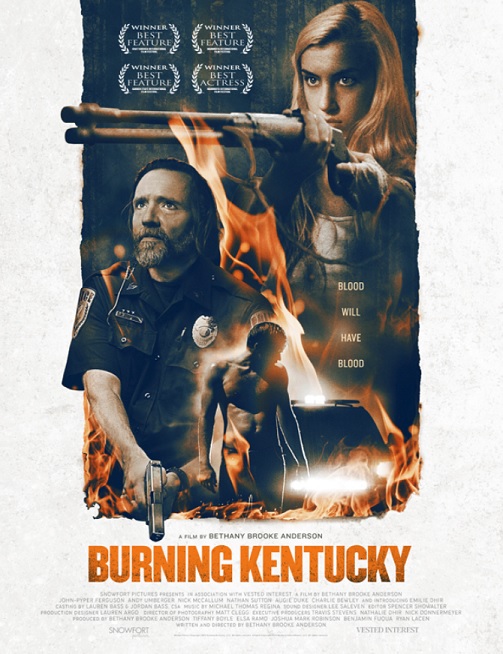
This effective indie-thriller by actress Bethany Brooke Anderson, in her feature film writing and directing debut, is now currently available as a free-with-ads stream on Tubi TV; it premiered on VOD platforms in February 2019.

Working with a cast of mostly Kentucky-based community theater actors, Anderson’s cast is lead by the familiar face of John Pyper-Ferguson, who we know from his leading roles on TV’s Suits, The Last Ship, and The 100, and his recurring guest roles on Burn Notice and Agents of S.H.I.E.L.D. You know his The Last Ship co-star Nathan Sutton from his recurring guest roles on TV’s Justified and Fear of the Walking Dead. Amid Andy Umberger’s 100-plus indie film and TV credits, you’ve seen him on 9-1-1, How to Get Away with Murder, NCIS: Los Angeles, and American Horror Story. And you’ve seen Nick McCallum on TV’s CSI: NY and Cold Case.

So, if you haven’t guessed: the acting here is top notch.

While on the film festival circuit, Burning Kentucky won “Best Feature” awards at the Chattanooga, Con Nooga, Garden State, and Mammoth Film Festivals, while cinematographer Matt Clegg won well-deserved nods for his exquisite cinematography. His extensive credits across 40-plus films are in the indie realms; hopefully, after his work here, we’ll see his resume expand into larger-budgeted features.

Yeah, if you haven’t guess: this film is a beauty to watch.

A solidly paced, unraveling film noir increasing its suspense as the screws turn deeper and deeper — with a heart and tone that reminds of Clint Eastwood’s 2003 masterpiece Mystic RiverBurning Kentucky spins the tale of two families in the hills of Harlan County, Kentucky. The first family is an indigenous clan that still practices the craft of brewing moonshine and nourishing themselves off the land. The other’s patriarch (Pyper-Ferguson) is Harlan County’s alcoholic sheriff — and his sons (Nathan Sutton and Nick McCallum) are barely keeping it together themselves; his son Rule (Sutton) is a junkie and the town’s drug dealer. Rule’s girlfriend, Aria (Emilie Dhir, in her acting debut), is a drug-addicted, aspiring country singer.

As with most film noirs, the narrative here is non-linear, and with each flashback, we learn how the lives of these two resentful families are linked amid Aria’s insights and memories as she searches for the reasons behind her family’s death years earlier.

So what is more important? The love of family . . . or bloody revenge?

About the Author: You can learn more about the writings of R.D Francis on Facebook. He also writes for B&S About Movies and publishes on Medium.
Disclaimer: We did not receive a review request for this film. We discovered it on our own and truly enjoyed the work.

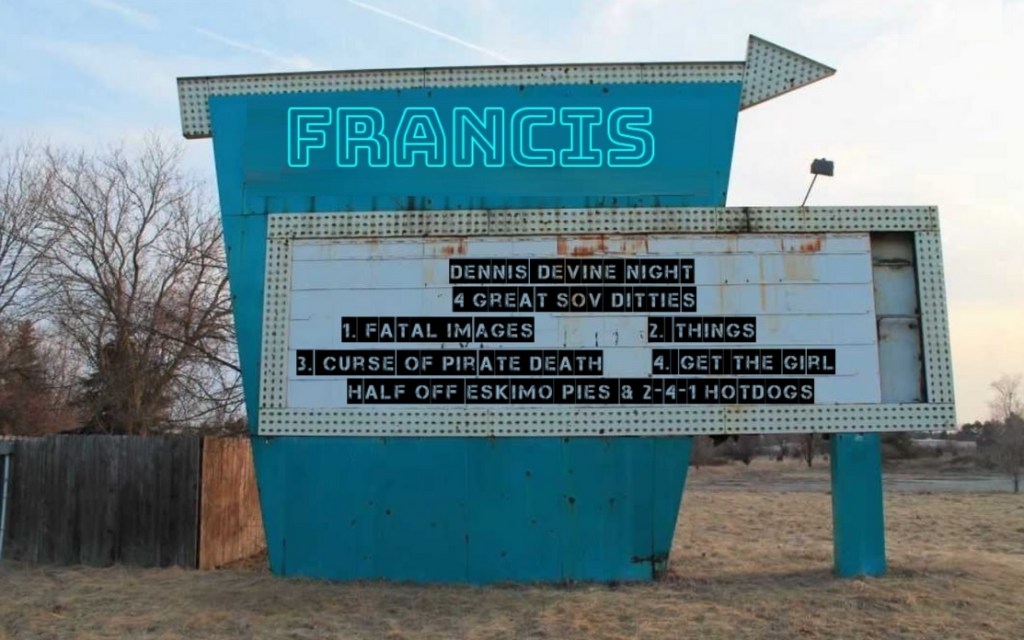
Drive-In Friday: Dennis Devine Night

We’ve already taken a look at Double D’s best-promoted and best-known film — via the back of pulpy, ’80s monster mags — Dead Girls, and his latest, 30th film, Camp Blood 8 — each part of our respective “Rock ‘n’ Roll Week II” and October “All Slasher Month” tributes. And, the best part: Dennis is a D-Town brother: he was born and raised in Detroit and graduated from Eastern Michigan University before heading to Los Angeles, graduating from Loyola Marymount University’s film school, and forming DJD Productions.

So, for this Drive-In Friday, lets load the projector with four more of Dennis Devine films. And not all of them are the horror films you expect them to be.

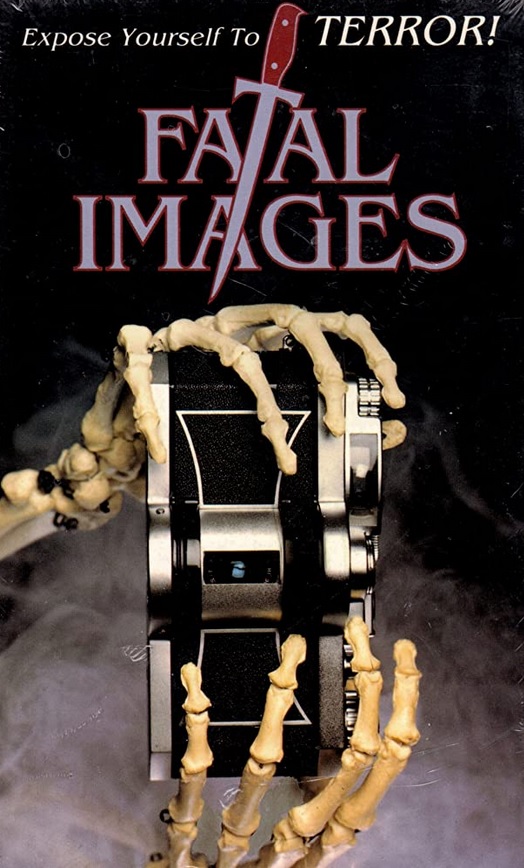
Movie 1: Fatal Images (1989)

Next to Dear Girls, this debut feature — produced for $10,000 and shot-on-Beta with Dead Girls’ Steve Jarvis — is my favorite of the Devine canons and the Cinematrix imprint.

Starring Kay Schaber, Angela Eads, and Brian Chin from the later Dead Girls, they’re three of several people victimized by a Satanist-worshipping photographer-cum-serial killer who — instead of sealing his body in a doll, ala Chucky in Child’s Play (1988; 2019), Devine’s writing cohort, Mike Bowler (Hell Spa, Things, Things II, Club Dead, Amazon Warrior, Chain of Souls, Haunted), who spins an inventive change-up to the spiritual hocus pocus — commits suicide before the police can catch him, and seals his body inside a camera.

Years later, Amy Stuart (Lane Coyle who, in typical Devine fashion, never appeared in another film), an aspiring photographer who works for the town’s newspaper, purchases the vintage camera from a pawn shop staffed with a creepy, ulterior motive shopkeep — and everyone she photographs is tracked down and murdered by the killer’s spirit.

What helps this along is the effects that come courtesy of the iconic Gabe Bartalos, who worked on Dead Girls, as well as Frankenhooker, Spookies, Brain Damage, and the Fright Night, Basket Case, Leprechaun, and Texas Chainsaw Massacre, Gremlins and Watchers series. And don’t forget: Gabe’s in the directing business with Skinned Deep (2004) and Saint Bernard (2013).

You can watch Fatal Images as a free stream on You Tube. Do you need a more expansive, second look? Then check out Sam’s review of Fatal Images. It’s true! We love this film and Mr. Devine.

Movie 2: Things (1993)

“A horrific and sexy romp in the dark.”
— Joe Bob Briggs

Now, if that tag from the guru of Drive-In fodder on the VHS “big-box” doesn’t make you want to mail order this third effort from Dennis Devine, then nothing will. And yes . . . multiple titles alert . . . here are two movies carrying the “Things” title: the first is the infamous Canuxploitation-North of the Border Horror, Things (1989). And the three sequels from 1998 and 2017 to Devine’s film have nothing to do with the Canux one — or with each other — for that matter.

This “Things” is an anthology-portmanteau film in three parts: “The Box” directed and written by Devine,” “Thing in a Jar” written by Steve Jarvis and directed by Jay Woelfel, and the wrap-around/linking segment written by Mike Bowler and directed by Eugene James. All are film school friends and DJD cohorts, natch.

The segments come together as a woman kidnaps her husband’s mistress and tells the mistress two horror stories involving “evil things” — that’s all converged in a related, twist ending. And unlike the classic Amicus and Hammer omnibus flicks it homages, Things dispenses with the atmospheric-gothic angle of its Brit forefathers and goes straight for — the bountiful — guts n’ gore. The first tale concerns hookers who meet their fate to a cursed creature kept in a box; the second is about a woman haunted by is-it-real-or-nightmares “things” concerning her abusive husband.

You can watch Things on TubiTV. There’s no online copies of 2 or 3 (aka Deadly Tales, aka, Old Things) currently streaming online, but you can watch Things 4 on TubiTV. And again, DO NOT confuse this with the “North of the Border Horror” Things from 1989 . . . as that is a whole other “thing” to watch.

Uh, oh. As we rolled out another “SOV Week,” well, two, during the last two weeks of January 2023, we reviewed Dennis’s sequel, Things II.

INTERMISSION: Short Film Time!

The Things about Things Sidebar: Battlestar Galactica fans know Jay Woelfel as the director of Richard Hatch’s failed 1999 BSG theatrical reboot with the short “pitch film” Battlestar Galactica: The Second Coming that Universal rejected in lieu of the eventual SyFy Channel series. You can watch Hatch and Woelfel’s vision on You Tube. As you’ll see the, concept of “evolved Cylons” and the new Raiders design for the series was pinched from this version — and the most popular characters and actors returned. Woelfel is still at it: he recently edited Art of the Dead (2019). We also reviewed his debut effort, Beyond Death’s Door, as part of our “Regional Horror Week.”

And back to the show . . .

Movie 3: Curse of Pirate Death (2006)

It’s more goofy, ne’er-do-well college kids of the Scooby Doo variety heading off — not into the Norwegian Slasher Wood (as in Camp Blood 8) — but the ocean, Pirate’s Point in particular, as they research the myth of a centuries old killer, Abraham LeVoy, aka Pirate Death. And if they find his legendary treasure along the way, all the better for Shaggy and the Mystery Machine gang.

You’ve got — even though some are cut-a-ways or off-camera (ugh, damn budget) — a high kill count and lots of zombie-ghost pirate fighting that reminds of the great Amando de Ossorio’s third entry in his “Blind Dead” series, The Ghost Galleon (1974; the one with the living corpses of the Satan-worshiping Knights Templar hunting for human victims trapped on a 16th century galleon), but it’s definitely not as good as a de Ossorio flick (and what film is). Yeah, this one’s suffering from its ultra-low-budget that lends to sketchy cinematography and strained acting in places, but this has the usual Devine heart n’ soul with a mix of dark humor and horror that lends to its fun, snappy pace. Bottom line: If you want to see porn-provocateur Ron Jeremy (Boondock Saints/Overnight; also of Devine’s Night of the Dead from 2012) get a (cut-a-way) sword in the gut, this is your movie. If you want to see girls dressed as a sexy cop and German Beer Wench (Get that Bud Light chick outta ‘ere, I want a St. Pauli Girl!) stranded on an island dispatched by a dead pirate with guacamole smeared on his face, this is you movie.

One of the few Devine movies available through the service, you can rental-stream Curse of Pirate Death for a $1.99 on Amazon Prime. The DVD has a director-actor commentary track, along with a making of, gag reel, and meet the cast vignettes. The Amazon Prime stream offers a clip sample and You Tube offers a trailer via the film’s distributor, Brain Damage Films.

Movie 4: Get the Girl (2009)

Dennis Devine makes the jump from the pulpy lands of back-of-a-monster magazine-mail order SOVs to the streaming world of Netflix in this pretty obvious Judd Apatow-influencer. It concerns a geek (Adam Salandra of Devine’s Don’t Look in the Cellar) who masters Guitar Master (aka a chintzy Guitar Hero knock-off) to impress a sexy-brainless co-worker, much to the chagrin of his dowdy, co-worker gal pal. Guess which girl he gets. (Yeah, I’d want to “get the girl” with the ponytail and eye glasses, too.)

You can watch Get the Girl as a free-with-ads stream on TubiTV. Other films in the Devine comedy canons include Kid Racer (2010; yep, go-carts), Dewitt & Maria (2010; a rom-com), Fat Planet (2013; aliens into food), and Baker & Dunn (2017; that also works as mystery thriller).


For you Devineites (Or is that Devineheads?) check out his TubiTV page to watch the horrors Don’t Look in the Cellar (2008), The Haunting of La Llorona (2019), and the comedy Fat Planet (2013).

We wanted to do Devine’s Vampires of Sorority Row (1999), Vampires on Sorority Row II (2000), and his campy-vamp comedy Vamps in the City (2010) for our recent “Vampire Week,” but were unable to locate online streaming copies for you to enjoy — free or otherwise. The same goes for the Reggie “Phantasm” Bannister-starring Sawblade (2010) for our “Rock ‘n’ Roll Week II,” about an extreme-metal band a trapped-in-a-haunted house-for-a-video shoot tale (i.e., Blood Tracks and Monster Dog).

You need more Dennis Devine? Check out this Spotify podcast (that streams on all apps, and browser PCs and Laps) courtesy of Inside Movies Galore in promotion of Devine’s latest film, Camp Blood 8. You can also catch the podcast on streaming provider, Anchor.

About the Author: You can learn more about the writings of R.D Francis on Facebook. He also writes for B&S About Movies and publishes on Medium.
The Capture (2018)

Science Fiction is one of the hardest genres to accomplish — convincingly — on a budget, but it can be done: our recent reviews for Ares 11, Double Riddle, Space, and Space Trucker Bruce are proof of that point. And if you appreciated the recent, effective against-the-budget tales regarding the complex subject matter of time travel spun in Same Boat and Making Time (both rom-com oriented), then you’ll appreciate this tale (a thriller) regarding a group of scientists whose experiments with the human soul, in an effort to bend space and time, jeopardize the very fabric of the universe.

Every time I come to appreciate one of these inventive-style-on-a-budget sci-fi’ers, I can’t help but recall the intelligence of Shane Carruth’s low-budget time travel drama Primer from 2004. This time, we have Jim Agnew weaving an analogous thinking-man’s journey in the realms of theoretical physics.

For us giallo fans, ex-Film Threat Magazine scribe and rock video director Jim Agnew (The Mars Volta) is name we known from Giallo, his 2009 screenwriting debut directed by Dario Argento. His other Final Draft works include the Wesley Snipes-starring Game of Death (2011), Nicolas Cage’s Rage (2014), and the always enjoyable Wes Bentley in Broken Vows (2016). As a producer, Agnew also brought us the Cage in Between World (2018). In this, his fifth screenwriting effort, Agnew makes his feature film directing debut — one that won “Best Feature Film” at the 2017 Berlin Sci-Fi Filmfest.

Since we’re in the low-budget realms, don’t expect the flashy “body horror” romps of Ken Russel’s Altered States (1980), the Brat Packery of Joel Schumacher’s Flatliners (1990), or David Cronenberg’s The Fly (1986). And while Jim Agnew has brought some interesting metaphysical concepts to the table — spiritual theories that would have greatly benefited from the budget and set designs afforded those major studio productions — the fact that we’re inside a minimally set-dressed, dreary warehouse for most of the film, one equipped with lots of wires and laptops — with our test subjects lying on cots with attached electrodes — doesn’t detract from the story.

God Bless America: Turning the human essence into a weapon, one soul at time.

Louis (a very good Jordan Tisdale in his feature film and leading man debut; he had a support role in a 2020 episode of FOX-TV’s recently cancelled Deputy) is a theoretical physicist who believes he can break the First Law of Thermodynamics by channeling the human body’s energy and heat into the afterlife via the human soul: he believes dark matter, which comprises over 80% of the matter is the universe, is composed of “human souls.”

While Louis’s — and his assistant Alex ‘s (Irish television actress Nora-Jane Noone from 2005’s The Descent and 2008’s Doomsday) spiritual questions are noble inquiries, their ethics come into question as they secure payments of two-million dollars from each from four terminally-ill test subjects (Amanda Wyss from Fast Times at Ridgemont High and A Nightmare on Elm Street ’84) who volunteer to be euthanized in the hopes their “dark matter” can be returned to, and renew, their physical world — with no guarantee the theory will even work.

But it does work. And Louis and Alex have “captured” — instead of resurrecting one their four test subjects — a “soul guide” from the afterlife. And their inability to send the possessive entity back into the dark matter from which it came will destroy the spiritual and physical realms.

As of November 2020 The Capture is now available for the first time as a free-with-ads stream from Freestyle Digital Media on Tubi TV. Other indie films from the studio on the Tubi platform include Ayla, Cut Shoot Kill, and Sick for Toys. Coming up on November 29th, we’re reviewing another recent, Freestyle release: the equally inventive-on-a-budget sci-fi’er The Control. Freestyle has also recently acquired the previously reviewed film festival winner Shedding, which will be released on December 8th across all digital platforms. You can watch the trailers for these films — and more — on Freestyle’s official You Tube page.

Disclaimer: We did not receive a review request from the studio or its P.R firm. We discovered this film on our own and truly enjoyed the work.

About the Author: You can learn more about the writings of R.D Francis on Facebook. He also writes for B&S About Movies and publishes short stories and music reviews on Medium.
The Comeback Trail (2021)

Argh! COVID strikes again . . .

The Comeback Trail, which made its world premiere at the 43rd Mill Valley Film Festival on October 12, 2020, was initially scheduled to be theatrically released in the United States on November 13, 2020. However, due to the affects of COVID on theaters, Cloudburst Entertainment has — instead of going the streaming-premiere route of the recently COVID-derailed Run and Tom Hanks’s Greyhound — pushed the release date to sometime in 2021. Then there’s the case of Christopher Nolan’s Tenet: Warner Bros. decided to eschew a VOD-only release and tough-out COVID with a theatrical release, only to see diminished box office returns.

We glossed over the The Comeback Trail with a recent “Drive-In Friday” tribute to Harry “Tampa” Hurwitz, the writer and director of the shot-in-1974-released-in-1982 original*, so let’s take a deeper look into this remake from the pen n’ lens of George Gallo of Bad Boys fame.

Learn more about Harry Hurwitz with our Drive-In Friday tribute to his career.

The original film concerned the low-budget, down-on-their-luck exploits of two independent film producers, E. Eddie Eastman (Hurwitz’s longtime producing partner and actor, Robert Statts) and Enrico Kodac (the always welcomed Chuck McCann, who the B&S About Movies crowd knows from Hamburger: The Motion Picture** and Sid and Marty Krofts’s CBS-TV kids series Far Out Space Nuts), in a somewhat semi-autobiographical Hurwitz tale about an against-the-odds poverty row film production starring washed-up cowboy star Duke Montana (Buster Crabbe*˟, in his final feature film).

During their celluloid adventures (played as broad slapstick, with a side of sexploitation spicing the reels), Eastman and Kodac (yuk-yuk) meets “Professor” Irwin Corey (The Mad Bomber in 1976’s Car Wash), the “King of the One-Liners,” Henny Youngman (Mel Brooks’s Silent Movie and History of the World: Part 1), publisher Hugh Hefner, and New York TV and radio icon Joe Franklin as themselves; the keen eyes of B&S About Movies’ readers will also notice our beloved Sy Richardson (Shattered Illusions, 5th of July, and Petey Wheatstraw) in the cast.

Now Petey Wheatstraw, courtesy of Blaxploitation purveyor Rudy Ray Moore, is worth mentioning since The Comeback Trail (the 2021 version) is another “Hollywood story about Hollywood,” in this case Dolemite Is My Name, which chronicled Moore’s career. And speaking of washed up actors: you’ll also see a touch of Quentin Tarantino’s Once Upon a Time . . . in Hollywood in the frames of this Gallo remake. Me? I also see a bit of Elmore Leonard’s 1990 novel Get Shorty, which Barry Sonnenfeld turned into a 1995 film. Sharper B&S surfers will remember Allan Arkush and Joe Dante’s 1976 romp Hollywood Boulevard and Mel Brooke’s The Producers from 1967 in the frames of the 1982 Hurwitz original.

“You’ve got 72 hours. After that . . . I choke you to death.”
— Reggie Fontaine

This time out — sans Hurwitz’s slapstick and sexploitation propensities — we met uncle Max Barber (Robert De Niro) and his ne’er do well nephew Walter Creason (Zach Braff), two incompetent movie producers who had their latest “epic” about gun-toting Nuns derailed by the Catholic Church. And local mobster Reggie Fontaine (Morgan Freeman) — in a bit that reminds of Alan Sacks’s duBeat-e-o — wants a return on his $350,000 investment in the film. So, after watching a news report in which big time producer James “Jimmy” Moore (Emile Hirsch) nets a large insurance settlement after the on-set death of action-star Frank Pierce (Patrick Muldoon of American Satan), Max’s dopey nephew concocts a scam: hire the alcoholic, retirement-home bound western actor Duke Montana (Tommy Lee Jones), insurance him to the hilt, set up an on-set “accident” to kill him — and pay off Fontaine with the insurance windfall. Only one problem: Montana proves to be as tough-as-nails in real life as he was on camera all those years ago.

If you haven’t figured it out, this ’70s retro-romp is rife with black comedy and insider showbiz satire, and old pros De Niro and Jones are more than up to the challenge. And kudos to George Gallo for seeing the major studio potential in an old Harry Hurwitz film.

And again, Mr. Gallo, we dare you to do a remake of Safari 3000.

We dare you.

But please, don’t CGI the baboons.

* You can learn more about the 1982 Hurwitz original with these digitized reviews at Shock Cinema (from 2017; along with film stills) and The New York Times (from 1982).

** Be sure to check our Drive-In Friday: Slobs vs. Snobs Comedy Night featurette.

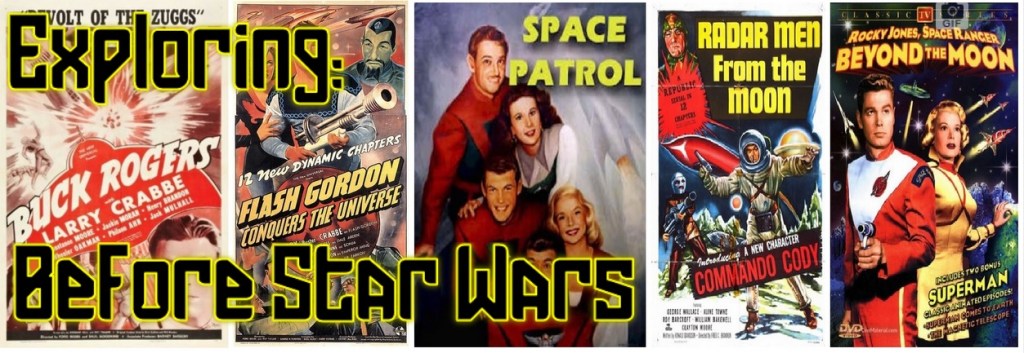
*˟ Be sure to check out our review of Buster Crabbe’s contributions to the Star Wars cycle of films with his roles as Flash Gordon and Buck Rogers, courtesy of our Exploring: Before Star Wars featurette.

Disclaimer: We weren’t provided with a screener nor received a review request from the film’s P.R firm. That has no bearing on our review.

Update: June 18, 2021: The reviews are rolling in as The Comeback Trail is now officially released in the U.K. on the Sky Cinema streaming platform. U.S. audiences can enjoy the film in theaters and on streaming platforms starting July 23, 2021. Check with your favorite platforms for more information. Please attend your local theater safe and smart and support you local economy. And don’t forget to thank those theater workers for working.


About the Author: You can learn more about the writings of R.D Francis on Facebook. He also writes for B&S About Movies and publishes short stories based on his novellas and screenplays, as well and music reviews, on Medium.

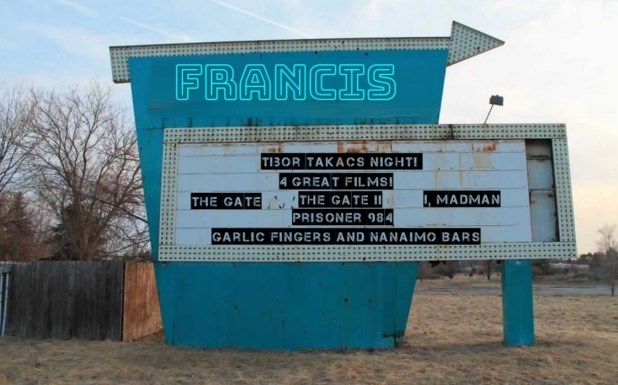
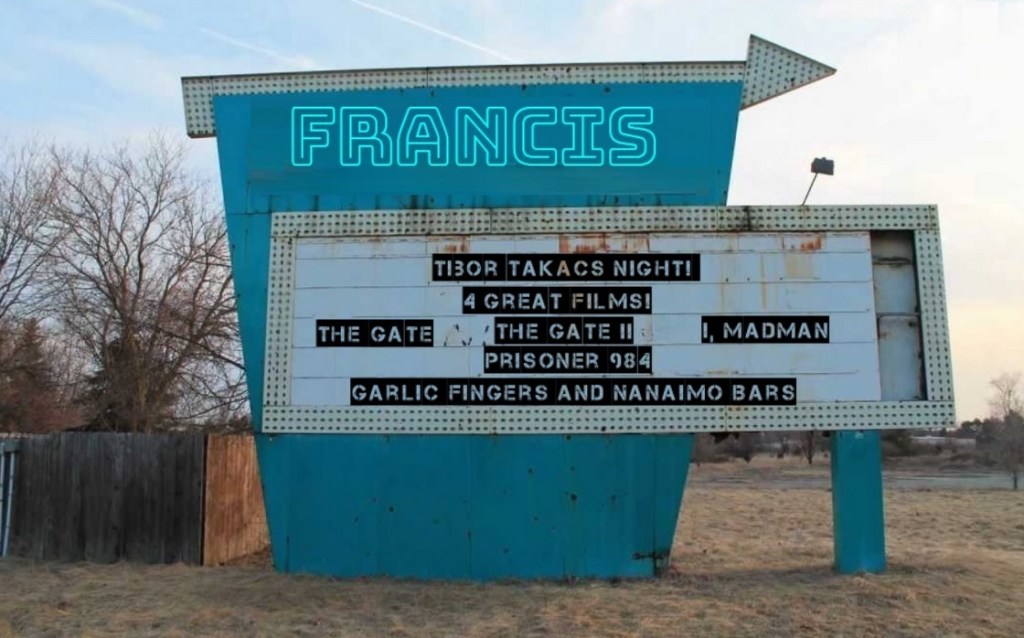
Drive-In Friday: Tibor Takács Night

Primarily known as a talent manager, studio producer and engineer, Hungarian born director Tibor Takács worked behind the boards for the Canadian bands the Viletones and the Cardboard Brains before he became a director. His first feature film project was the self-produced Metal Messiah (1978), a long-form rock opera/video which starred two bands from his stable: Kickback and the Cardboard Brains.

Best known for the internationally-distributed “No False Metal” classic, The Gate (1987), he made his feature film debut with the 1978-shot-and-1982 released CBC-TV movie 984: Prisoner of the Future, which has long since fallen into the public domain and is easily found on a wide variety of bargin-basement sci-fi DVD sets. After the cult VHS and cable status of The Gate, he was poised to direct A Nightmare on Elm Street 4: The Dream Master, but passed on the project . . . and he gave us The Gate 2: The Trespassers and the pilot movie for the original Sabrina the Teenage Witch.

These days, he’s churning out the mockbuster hoards of Ice Spiders, Mega Snake, and Destruction: Los Angeles, as well as other films concerning all manner of meteors, tornadoes, mosquitoes, black holes, and rats for the SyFy Channel . . . and he got into the Hallmark Christmas movie business alongside our equally beloved Fred Olen Ray and David DeCoteau.

Oh, and Hallmark romance flicks.

Did Sam and I watch The Secret Ingredient for its February 2020 premiere — making our significant others cringe in the process — as we chomped on our popcorn and gulped our A&W Root Beers with glee? Damn right, we did. And you know how B&S About Movies is about our Christmas movies . . . so yes, we did binge the Takacs X-Mas oeuvre of Once Upon A Christmas (2000), Twice Upon a Christmas (2001), Rocky Mountain Christmas (2017), It’s Christmas, Eve (2018), Memories of Christmas (2018), and A Christmas Miracle (2019). And when Tibor finishes off his currently-in-production Lifetime damsel-in-distress thriller Roadkill — his 48th directing effort — we’ll watch that one, as well.

But what we really want to know: Tibor, when in the hell are you and Eric Roberts going to do a movie together? It’s de rigueur for guys like you, Olen Ray, and DeCoteau. Make it happen, Tibor! Remember when you wrote and directed Redline, aka Deathline, that bionic-man-out-for-revenge actioner back in 1997 with Rutger Hauer and Mark Dacascos? Or Bad Blood, aka Viper, from 1994 with Lorenzo Lamas as a bad-ass trucker taking down the mob? Something like those flicks . . . just cut Eric Roberts loose to kick mercenary and mobster ass as an “aging action hero” thespin’ his little heart out . . . as a rogue C.I.A black-ops agent, like Mack Dacascos in 1998’s Sanctuary. Make it happen, buddy!

Movie 1: The Gate (1987)

Come on, you know this movie, ye wee metal pup.

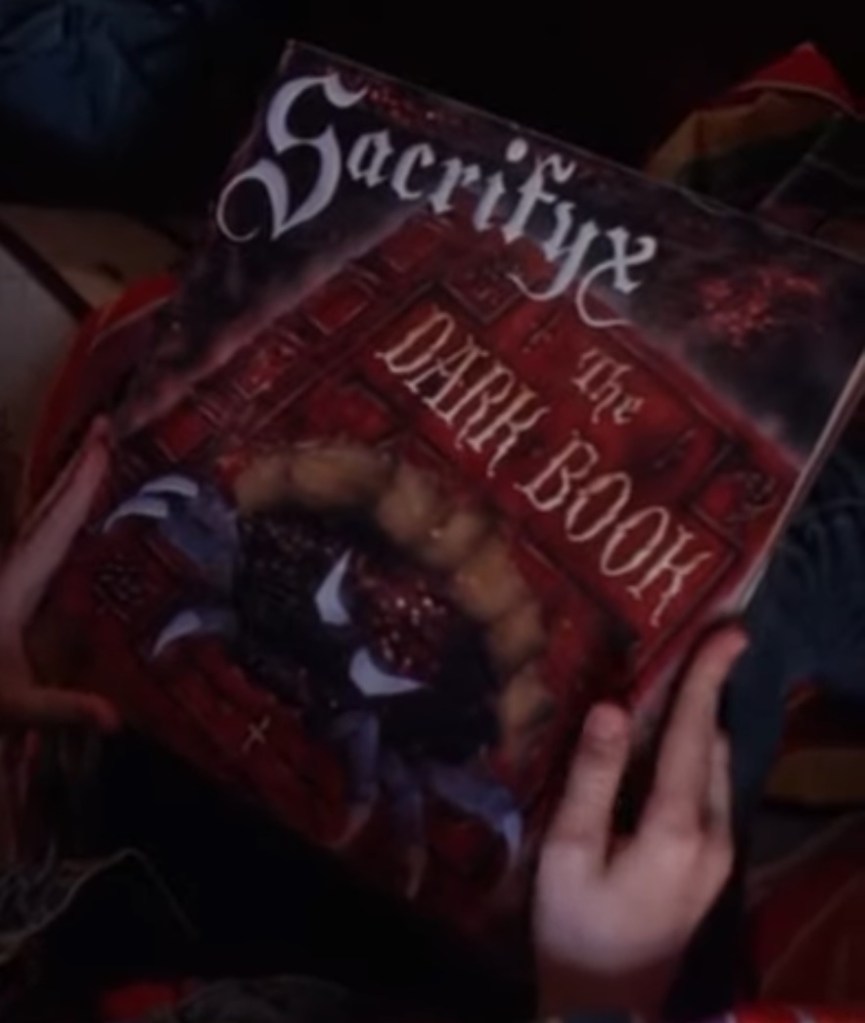
This is — non-CGI, mind you — a tale of an album known as The Dark Book by Sacrifyx — a band who died in a horrific accident after its recording — that serves as “the key” to opening a gate to hell . . . that just so happened to be under the roots of a lightning-stuck tree in the backyard of future Blu Cigs spokesman Stephen Dorff (he was 12 at the time).

How loved is this movie? You can buy Sacrifyx “The Dark Book” T-shirts on esty. Fans have compiled “Top 10” lists about the film. Sacrifyx is noted as one of the best “fake bands” on film. And . . .

There’s a (baffling, but awesome) Sacrifyx website, and . . .

An equally eerie album by a band called Sacrifyx listed on Discogs that recorded an album at Dunwich Analog Studios in Detroit, Michigan, in 1983 — with a song “The Gate.” But wait, the movie didn’t come out until 1987? Shivers. And guess what . . . the album is real. It’s on You Tube.

Which Old God is F’in with us, here? Love this movie, ye must!

Movie 2: The Gate II: Trespassers (1990)

Dude . . . imagine a Tibor-made Freddy Krueger movie? How awesome could that have been? Instead, we got a sequel to The Gate — both written by Michael Nankin, who made his debut with the David Naughton-starring (yes, the Dr. Pepper “Making It” Meatballs werewolf in London guy), Animal House-rip Midnight Madness in 1980.

The upside to this movie: Terry shoots and scores! He bags a babe. So, you see, it pays to worship Satan and dabble in the black arts. Do it! Chant Natas three times and the babes will come crawlin’ out the ground for ya!

Is The Gate II as good as the original? Nope. But it’s a lot of fun with great non-CGI effects, once again, from Randall William Cook, who also handles the SFX for the next feature on this evening’s program.

Intermission! Spin the dark circle, if you dare . . .

Back to the Show!

Movie 3: I, Madman (1989)

Long before meta-fiction became shot-on-iPhone de rigueur for the digital auteur crowd (For Jennifer), Julio Cortázar wrote a short story — La Continuidad de Los Parques (The Continuity of the Parks) — a tale that is three stories; each aware of one another in a universe where fiction collides with meta-fiction.

The much-missed Jenny Wright of Near Dark fame (I recall reading her interview in Shock Cinema Issues #45 that went into detail about the abuses she suffered and caused her exit from the business) is Virginia, a bookish girl obsessed with writer Malcolm Brand’s I, Madman. In the pages of that tale, the deformed Dr. Kessler attempts to win over an actress by killing people and adding their faces to his own. And she comes face to face, literally, with Dr. Kessler as he’s entered the real world.

Should this follow up to The Gate be as revered and remembered as The Gate. Yes. Is it? No. Love this movie, you must. It’s awesomeness and a bag ‘o garlic fingers.

P.S. You need more “film within a film” tomfoolery? Check out Anguish (1987).

Movie 4: 984: Prisoner of the Future (1982)

Tibor’s first commercial film project was this failed Canadian TV series pilot programmer in 1978. Courtesy of the Star Wars-infused sci-fi market, it was shook loose from the analog dustbins onto home video shelves in 1982.

Also circulating on DVD bargain comps as The Tomorrow Man, it’s a surreal psychological drama concerned with the imprisonment of an intelligence agent in an Orwellian future. Don’t let the Dr. Who-esque TV production designs deter you from watching this well-written and acted sci-fi’er — a commendable start to the awesome career of Tibor Takács. We found a trailer upload on You Tube.

About the Author: You can learn more about the writings of R.D Francis on Facebook. He also writes for B&S About Movies and publishes on Medium.

Mill Creek Sci-Fi Invasion: Robo Vampire (1988)

Have you ever wondered what a hybrid of John Carpenter’s Big Trouble in Little China (1986; a bigger hit in the Pacific Rim territories than in the U.S.) and Paul Verhoeven’s Robocop (1987) would look like?

Welcome to this Pacific Rim exploitation oddity that out-cheaps the crowned King we hail that is Cirio H. Santiago (Demon of Paradise, Fighting Mad, Firecracker, The Sisterhood, Stryker, Wheels of Fire) and his crowned prince, Jun Gallardo (Desert Warrior).

Robo Vampire is one of the 150 films from the joint ouvre of director Joe Livingstone and screenwriter Willie Palmer, aka Godfrey Ho; he, the master of B-movie Hong Kong action disasters, he, the master of the “cut-and-paste” technique with a finesse and skill that leads one to wonder how in the hell he got a job teaching filmmaking — to others — at Hong Kong Polytech. But, as with Roger Corman, during his 25 years of making genre films in Hong Kong, Taiwan, and the Philippines, Ho’s mostly Z-grade movies never lost a dime.

And like Corman and Santiago before him, Ho was a stock footage recycling fetishist that not only cannibalized his own films, but the films of others. Not content with endlessly patching one of his own movies into another to create a “new” movie (or two or three), he’d purchase unfinished and unreleased Asian, Chinese, Filipino, and Thai films, then add Caucasian actors to appeal to the Euro and American home video markets, and, through dubbing and voice-overs, assemble a “plot” with the barest of coherence — you know, like when Niels Rasmussen took William Chang’s Calamity of Snakes and churned out The Serpent Warriors as “John Howard” (nope, again: not the John Howard of Spine fame).

In the case of Robo Vampire, it all begins with Ho’s 1987 action film, Devil’s Dynamite, which, after the “success” of Robo Vampire, became, Robo Vampire 2: Devil’s Dynamite (1990). But, if you’re keeping track, Robo Vampire itself features footage from Devil’s Dynamite. So it’s the same film . . . but it’s a sequel . . . and it’s not. And it’s confusing as hell to figure which is the chicken and which is the friggin’ egg . . . or if we have three films or two films — with one film simply retitled to make it look like three films.

Anyway, Devil’s Dynamite is a straight forward good guys vs. bad drug gang movie that owes it debt to John Carpenter: It concerns a top secret agent, aka “The Shadow Warrior,” sent to stop a drug smuggling operation in The Golden Triangle. But a drug lord burnt a voodoo doll and chanted a spell in a crypt that revived a hoard of bloodthirsty, hoping vampires (yes, they hop like bunny rabbits)* that shoot flesh-eating smoke n’ sparks from their hands to defend the operation. And apparently, the once long-sleeping vampires are the stuff of legend, as kids at a birthday party play a sick version of pin-the-tail-on-the-donkey — with the blindfolded birthday girl being chased by a kid pretending he’s one of the hoping vampires.

Then Verhoeven had to go and make Robocop.

So Devil’s Dynamite is recut into a story about Tom Wilde, a murdered narcotics agent given a second chance via an experiment that transforms him into a cyborg. His mission: rescue Sophie, a beautiful undercover agent (from the first film) kidnapped by the evil drug lord, Mr. Young, and his hoard of hoping, somersaulting-and-back flipping vampires.

Then Robo Vampire had to go and make bank.

So, Robo Vampire and Devil’s Dynamite are recut again — with a whole new “Robo Cop” costume (because the other, cardboard cheapo suit probably fell apart in the first film) — as Robo Vampire 2: Devil’s Dynamite. At least that’s what we think is going on here. So it goes in the world of the cheap-jack Indonesian cinema we love at B&S About Movies.

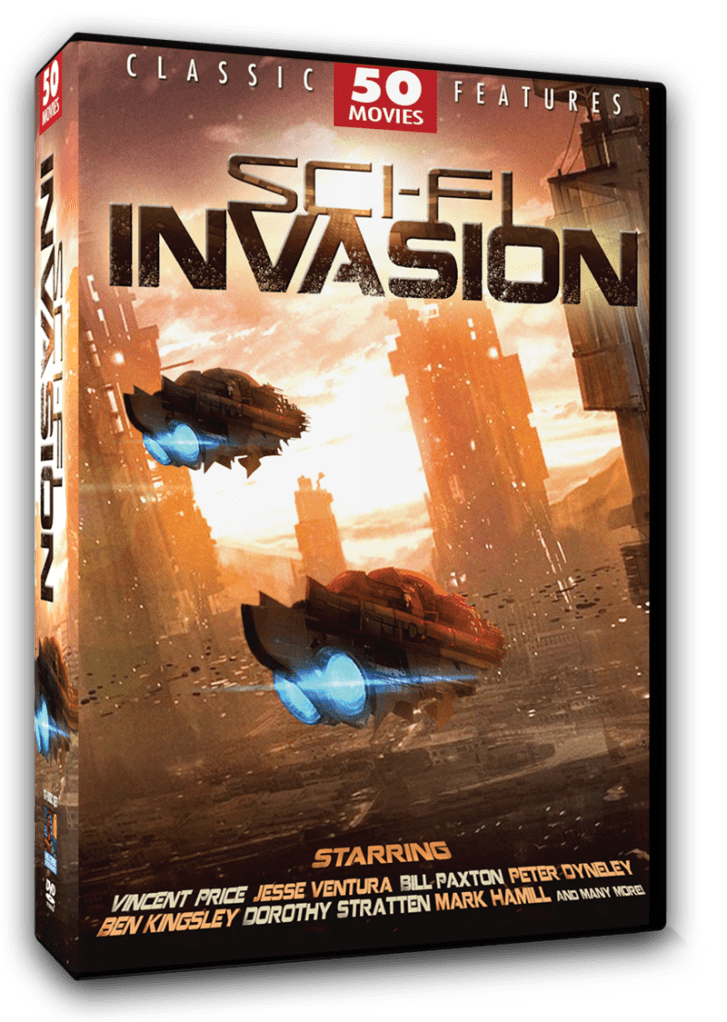
You can watch Robo Vampire and Robo Vampire 2: Devil’s Dynamite on You Tube and have your own copy of Robo Vampire as part of the Mill Creek Sci-Fi Invasion Box Set. Here’s clips of the “epic” fight scenes and our “Robo Cop” in action.

And, er, ah . . . wait . . . what’s this? Godfrey’s oeuvre — well, 36 of them, including Robo Vampire — have been digitized for TubiTV? How many films can you watch with the words “Ninja,” “Snake,” “Dragon,” and “Thunderbolt” in them? When it’s Godfrey Ho . . A LOT!

* We can take a poke at Willie Palmer, aka Godfrey Ho, and joke about bunny vampires; however, those vamp-rabbits aren’t from cinematic ineptitude: they’re from Chinese legend: the Qing Dynasty legends of the Jiangshi (meaning “hard or “stiff”), which first appeared in print 1789 through the literary visions of writer Ji Xiaolan. Director Yeung Kung-Leung was the first to bring the Jiangshi to the big screen with 1936’s Midnight Vampire.

About the Author: You can learn more about the writings of R.D Francis on Facebook. He also writes for B&S About Movies.

Mill Creek Sci-Fi Invasion: Beyond the Moon (1954)

When it comes to Mill Creek box sets, I have a feeling there are flicks that are hard passes; ones that even the awesome guest writing staff of B&S About Movies will skip over, assuming Beyond the Moon is just an old, craggy cardboardian TV knockoff (as it usually is in public domaindom) of the more popular Flash Gordon and Buck Rogers theatrical serials.

Me? I see beyond the corrugated knockoff as I gravitate to the blackholian fact that Beyond the Moon is a “John” Hollingsworth Morse production. Now that name may not mean anything to the younger, average n’ casual Mill Creek consumer, but to grill scrapers and grease pit scrubbers like myself, and Chief Cook, Bottlewasher, and Masters of Vodka Ceremonies like Sam, Beyond the Moon is a “Facebook Care” moment.

Imagine the “heart” is a John Hollingsworth Morse film on DVD.

Hollingsworth Morse is one of those old Hollywood guys, like Stanley Donen (who went from 1954’s Singin’ in the Rain with Gene Kelly . . . to Saturn 3 with Kirk Douglas!) that ended up working in then “hot” space opera realm after kickin’ out the TV westerns Sky King and, more importantly, The Lone Ranger. Morse would eventually become a prolific film and television director responsible for an eclectic variety of U.S. television series from the 1950s through 1980s, with the still-in-reruns favorites of Adam-12 and McHale’s Navy, as well as your childhood favs of The Dukes of Hazzard and The Fall Guy.

Oh, and Morse helmed Lassie. Now, come on, youngin’. You must have heard about the show with Timmy and his collie? It’s Seinfeldian (sorry, Samuel) friggin’ iconic and led to the now lost, ’70s pop culture lexicon of “What’s wrong boy, Timmy fell down a well?” anytime anyone had a “dumb” moment.

Oh, and did you know that Morse did a crazed Filipino horror flick — his only foray into feature films — with Tom Selleck (yes, youngins: that old, craggy guy with a mustache on TV’s Blue Bloods that you now watch in reruns on ION and WGN) known as Daughters of Satan. Yeah. That’s right. Only in the B&S About Movies Universe: from border collies rescuing boys in wells to three Filipino witches cursed by a medieval-era Spanish oil painting.

Cashing in on Buck Rogers and Flash Gordon: Buzz Corey and the Space Patrol, Commander Cody, and Rocky Jones, Space Ranger.

So, to set up who TV’s Rocky Jones is: Remember when Glen Larson produced his television Star Wars knockoff of Battlestar Galactica? Well, it’s like that: this was Roland Reed Productions’ TV response to Buzz and Flash, and Republic’s movie serial knockoff of Buzz and Flash: Commander Cody: Sky Marshall of the Universe.

The fifteen episodes of Rocky Jones, Space Ranger ran from February to November 1954 for two television seasons. Much in the same fashion that the later, and somewhat similar, Space: 1999 and Battlestar Galactica were cut into domestic television and foreign theatricals films, Rocky Jones was cut into eleven, one hour eighteen minute-long movies that aired as domestic first runs up through 1956. Those films — some which are available on Mill Creek 50-film packs — are:

Beyond the Moon — Mill Creek’s Sci-Fi Invasion
Gypsy Moon
Silver Needle in the Sky
Crash of the Moons — Mill Creek’s Sci-Fi Classics
Robot of Regalio
The Magnetic Moon
The Cold Sun
Renegade Satellite
Menace from Outer Space — Mill Creek’s Nightmare Worlds and Sci-Fi Classics
Forbidden Moon
Blast Off

The then groundbreaking film-recording of the show — as opposed to airing live as did most television shows of the era — not only allowed for these films to be cut (and preserved on DVDs in the digital age), but also permitted the production of then “superior” special effects and sets that, if the viewer considers the “time” and just rolls with the adventures of The Space Rangers — Earth-based space policemen patrolling the United Worlds of the Solar System in their Orbit Jet XV-2s and Silver Moon XV-3s — you’ll have a lot of fun watching what a young George Lucas watched — then referenced when he created his own, iconic space opera.

These Rocky Jones telefilms continued to air in U.S. UHF-TV syndication until the late ’60s — until Gene Roddenberry’s Star Trek (and his failed TV movie pilot for Genesis II) rendered the Space Rangers’ adventures obsolete.

Hopefully, you won’t think of Rocky Jones as “obsolete” and you won’t skip over the inclusion of Beyond the Moon on this Mill Creek box set (since Beyond the Moon was the first of the Rocky Jones films, it’s the one that most-oft appears on public domain sets) and you’ll “pop an emoji” for the ’50s sci-fi insights of John Hollingsworth Morse.


The show was sponsored by Silvercup Bread, which wheeled around a promotional rocket from the show. Learn more about the company’s history at Historical Detroit.org.

You can watch the full version of Beyond the Moon on You Tube, as well as Menace from Outer Space on You Tube. All of the other, above noted Jones adventures are searchable on the popular video sharing platform. We’ve reviewed Menace from Outer Space as part of our Mill Creek’s Nightmare Worlds 50-film pack set of reviews.

Rocky’s competition, Flash Gordon, also appears on Mill Creek’s box sets: The theatrical serial Flash Gordon Conquers the Universe was edited as a syndicated television film, Purple Death from Outer Space, and appears on the Nightmare Worlds set. Make a night of it, young Jedi!

Other bargain reissues shingles, such Alpha Video and Timeless Media, offer multiple DVD packs of all the Rocky Jones films on Amazon. Surf around Amazon and discover which package best serves your viewing needs.


Last December, we had a month-long Star Wars blow out to commemorate the release of Solo: A Star Wars Story, with reviews of pre-and-post Star Warsian films. You can catch up on those reviews with our “Exploring: Before Star Wars” and “Exploring: After Star Wars” featurettes that feature a links library. And the exploration goes deeper with R.D Francis’s retrospective of Italy’s Star Wars-inspired film industry and the inspirations of George Lucas with the Medium article: “In Space No One Can Hear the Pasta Over-Boiling: Alfonso Brescia and the ’80s Italian Spacesploitation Invasion.”

About the Author: You can learn more about the writings of R.D Francis on Facebook. He also writes for B&S About Movies.

Mill Creek Sci-Fi Invasion: Fugitive Alien (1987)

Who would think that Tsuburaya Productions, a Japanese television production company on the other side of the world, would be responsible for most of my fondest childhood memories. . . .

Courtesy of VideoCollector.co.uk

Every morning, before heading off to school, I watched back-to-back episodes of the animes Marine Boy and Speed Racer — and Tsuburaya’s live action Ultra Man. Then, on the weekends: it was adventures of the “Mighty-Go” flying submarine on Tsuburaya’s Mighty Jack.

So obsessed was I with the adventures of the SSSP (Science Special Search-Party) crew on Ultraman, my dad rigged two transistor radios to the sides of my plastic Baltimore Colts football helmet and, with a dyed-orange tee-shirt courtesy of mom, I ran around the backyard like a madman, zapping away with my battery-operated ray gun. Mom even made me a Marine Boy wristcom. I even recorded “mission logs” on a table top reel-to-reel deck that looked like the computers on Ultraman. Awesome times.

So, it goes without saying: If I had the opportunity to meet television producer and distributor Sandy Frank (Time of the Apes), I’d blabber incomprehensible, tear-filled “thank yous” for those memories — for he was the man responsible for bringing Tsuburaya’s catalog to U.S. UHF-TV stations.

And even when I became “too old” to watch Frank-imported cartoons with my bowl of Fruity Pebbles, I stuck by Sandy Frank during my Star Wars-driven teen years when he brought us the anime-series Battle of the Planets (1978), which was an American retooling of the 1972 Japanese anime Science Ninja Team Gatchaman. And when Frank brought Tsuburaya’s 1978 series Sutā Urufu, aka Star Wolf, to American UHF-TV stations as the 1988 TV movie Fugitive Alien, I was all in . . . with a box Coco Puffs and a half-gallon of chocolate milk at my side.

Once more unto the breach! Death to the Wolf Raiders!

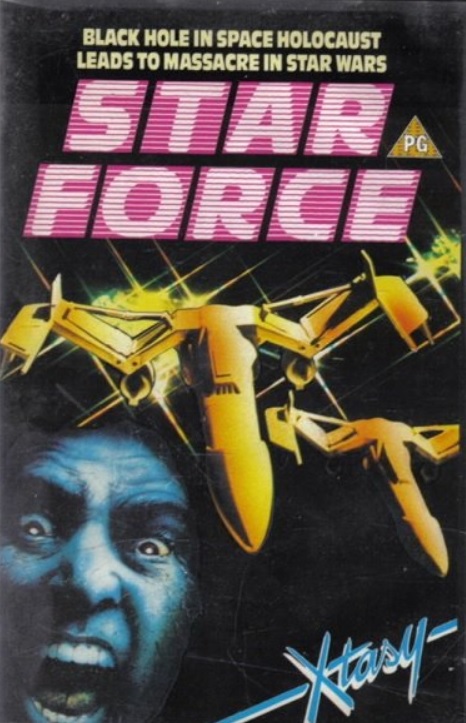
Later recycled in the public domain aftermarkets as Star Wolf and the Raiders and Star Force — with sets, costumes, and plotting that reminds of my beloved Ultra ManFugitive Alien follows the Star Wars-cum-Battlestar Galactica-inspired adventures of Ken, a soldier in the mighty Wolf Raiders from the planet Valnastar.

During the Wolf Raiders attack on the Earth, Ken’s refusal to kill a woman and child that stumbled into their mission to sabotage an Earth installation, results in his killing a fellow Raider — and he comes a space fugitive. Rescued and finding refuge with Captain Joe and the crew of battleship Bacchus III, Ken — infused with super-human strength and reflexes due to low Earth gravity — allies with the Earthmen against the Wolf Raiders.

The effects in this may be competent-to-the-side-of-cheap, but wow, they’re awesome — courtesy of the blatant “kit bashing” of the oh-so-familiar model kits from the Star Wars and Battlestar Galactica franchises* (ships look like X-Wings; the Millennium Falcon’s cockpit windows are all over the place) used to construct the show’s miniatures.

Courtesy of the IMDb

While not part of this particular Mill Creek set, Sandy Frank edited two more series episode into a UHF-TV sequel: Star Force: Fugitive Alien 2, which continues the adventures of Captain Joe and Ken with the crew of the Bacchus III as they journey to the planet Calnastar to destroy a super-weapon aimed at the Earth.

You can enjoy Fugitive Alien and Star Force: Fugitive Alien II on You Tube and own a copy of Fugitive Alien as part of the Mill Creek Sci-Fi Invasion Box Set. Fruity Pebbles and/or Coco Puffs — which are required — are not included in your purchase.

About the Author: You can learn more about the writings of R.D Francis on Facebook. He also writes for B&S About Movies.

* Don’t forget to check our “Star Wars Droppings” blowout as we look at a wide array of post-Lucas-inspired films.

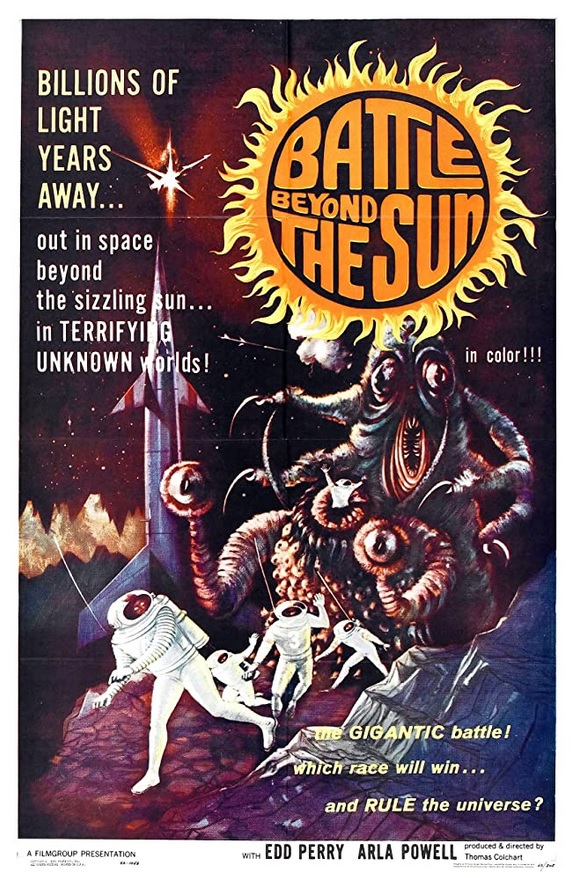
Mill Creek Sci-Fi Invasion: Battle Beyond the Sun (1962)

I’m taking a hardline on this review: this movie sucks the stars out of the deepest black hole in the deepest regions of the universe and deserves to be forever public domain-buried on DVD box sets. I know, shocking. I am not usually that rough on a film — new or classic — and I’ll always find the positive in a film.

Sorry, but I get cranky when the celluloid snake oil salesmen and analog hucksters take scissors (yes, and I mean Roger Corman and then film-school student Francis Ford Coppola) to my beloved Russian sci-fi forefathers to Stanley Kubrick’s 2001: A Space Odyssey.

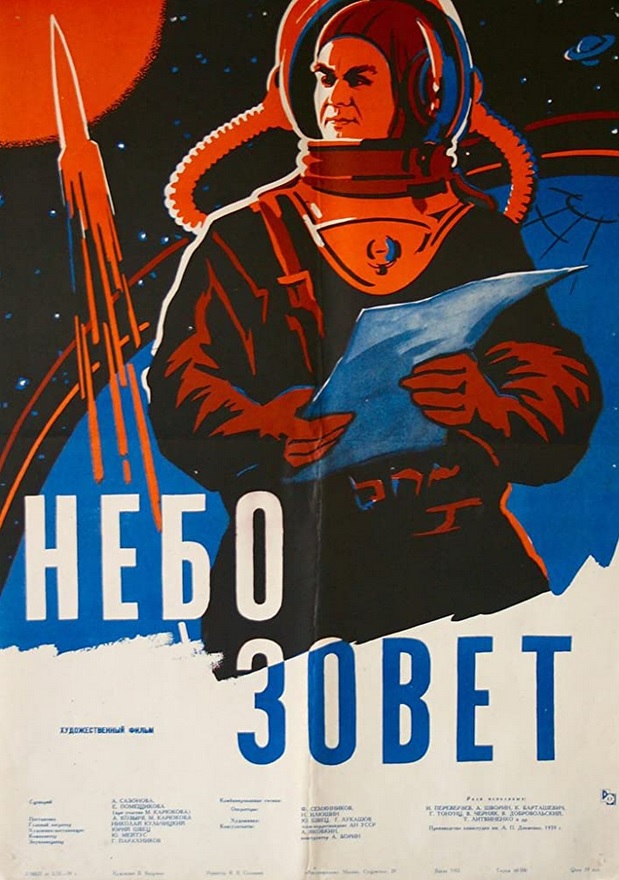
Hiding behind this Roger Corman hack job is a beautiful film known as 1959’s Nebo Zovyot, aka The Sky Calls, by Valery Fokin and Mikhail Karzhukov. Also translated as The Heavens Beacon, the story concerns the galactic competition between the United States and Russia to execute the first mission to Mars. When an American spaceship requests repairs from a Russian crew, they come to discover their Russian saviors are on their way to Mars; the Americans set sail to beat the Russians, veer off-course, become lost in space, and the Russians scrub their mission to save the American crew.

So great are the Yuri Shvets production designs on Nebo Zovyot, Stanley Kubrick hired Shvets to work on 2001: A Space Odyssey during its pre-production stages. Sadly, Shevts’s greatness is lost, courtesy of Corman’s Americanization (read: bastardization) as Battle Beyond the Sun — which also features unrelated special effects inserts from Mikhail Karzhukov’s next film, Mechte Navstrechu, aka A Dream Come True (1963).

You’ve also seen special effects shots from Nebo Zovyot repurposed in the John Saxon*-starring space vampire romp Queen of Blood (1966), which is actually the Americanized version of Mechte Navstrechu.

And since we’re on the subject — and although Queen of Blood is not on this particular Mill Creek box set: In the plot of Mechte Navstrechu, the inhabitants of a distant planet receive a radio transmission of an Earth-based love song; they send a ship to investigate. When the alien mission crash lands on Phobos, a Mars moon, the Earth receives a distress call to rescue the survivors; technical problems and the harsh landscape threaten the mission. See? There’s no space vampires.

And the pillaging of frames from Nebo Zovyot gets worse.

Instead of leaving Pavel Klushantsev’s 1962 masterpiece Planeta Bur, aka Planet of Storms, intact, Corman snake oil-it into 1965’s Voyage to the Prehistoric Planet. Then he revamped it a second time, with with inserts from Nebo Zovyot — and added a few bear skinned-clad bikini cavewomen (courtesy of Peter Bogdanovich, aka Derek Thomas) — as Voyage to the Planet of Prehistoric Women (also known on American UHF television as Gill Women of Venus).

You can watch Nebo Zovyot with English subtitles on You Tube and an even better, pristine non-subtitled copy on You Tube — so you can sample the film’s superior quality, in lieu of the washed-out, dubbed-from-VHS prints of Battle Beyond the Sun that appear on public domain DVDs. Sorry, I can’t in good conscious provide a link to a rip of Battle Beyond the Sun. You’ll have do it yourself.

We get into Nebo Zovot, Planeta Bur and other Russian sci-fi films dating from 1924 to the early ’80s with our “Exploring: The Russian Antecedents of 2001: A Space Odyssey” featurette during our month-long Star Wars tribute last December. However, until we get a Russian Sci-Fi box set of all those great films uncut, you can have your own copy of Battle Beyond the Sun on the uber-cool Mill Creek Sci-Fi Box Set.

Stratten! Ventura! Hamill! Whoa, baby!

* Don’t forget to check out our “Exploring: John Saxon” tribute.

About the Author: You can learn more about the writings of R.D Francis on Facebook. He also writes for B&S About Movies.