The first Ultraman was introduced to our world — as well as the universe of this movie in 1966. As children, Daigo Madoka, Shin Asuka and Gamu Takayama were inspired by the show and never forgot about their hero, even after they grew up. Nor did they forget the strange girl they met the first day they saw Ultraman, who asked them to make wishes for their futures, with Shin wanting to be a baseball player and Gamu thinking of his scientist future in which he builds the ship that Daigo will fly to M78, Ultraman’s planet.
Decades pass and one day, Daigo has a vision of a battle between Alien Nackle and Alien Guts versus four of the Ultraman Brothers. Strangely enough, Daigo knows that the Ultras that are losing the battle are his friends Hayata, Dan, Go and Hokuto. No one believes him, but soon, he finds his way into another world where he helps Ultraman Mebius defeat Monster Gesura. That’s when he realizes that he must rally his friends to bring back Ultraman, Ultraseven, Ultraman Jack, Ultraman Tiga, Ultraman Dyna, Ultraman Gaia, Ultraman Mebius and Ultraman Ace.
After all, anyone who believes in Ultraman can achieve victory.
I loved this movie, which brings together so many Ultraman characters into one great film. It’s filled with so much joy and was the perfect antidote for the darkness I keep feeling creeping into the edges of life. It made me remember when I was a young kid, screaming every time Ultraman started losing power and wondering if he had enough to save the day.
You can get Superior 8 Ultra Brothers on blu ray from Mill Creek. The official page has all the information you need and you can order it directly from Deep Discount.
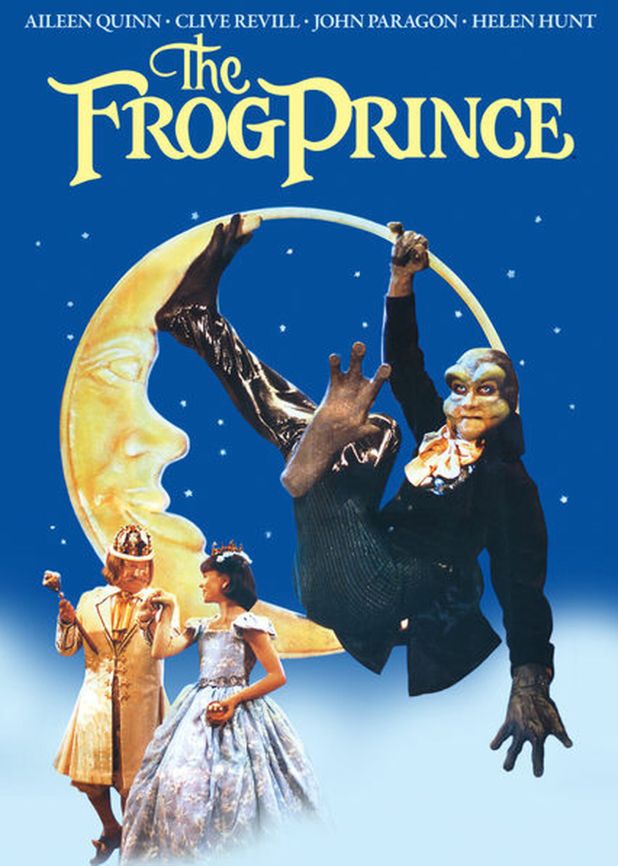
Cannon Movie Tales was a huge project for the studio, a series of 16 live action children’s movies from Cannon Group producers Menahem Golan and Yoram Globus, associate producer Patricia Ruben and executive producer Itzik Kol. Filmed in Israel, these movies feature major stars as the leads supported by an Israeli cast and they had a $50 million dollar budget.
While sixteen films were announced, only nine were made: The Frog Prince, Sleeping Beauty, The Emperor’s New Clothes, Rumpelstiltskin, Snow White, Beauty and the Beast, Hansel and Gretel, Puss In Boots and Red Riding Hood.
Aileen Quinn from Annie plays Princess Zora, Helen Hunt plays her sister Henrietta and Clive Revill plays his second king in one of these Cannon kids movies (he’s also the villainous ruler in Rumpelstiltskin*), but the real reason I was excited about this movie was to see John Paragon play Ribbit, the frog prince. Whether it’s his collaborations with Pee-Wee Herman (he’s Jambi and Pterri) or Elvira, I’m always overjoyed to see Paragon’s name in the credits.
This was directed and written by Jackson Hunsicker, who also made Oddball Hall and wrote the 1989 version of Ten Little Indians.
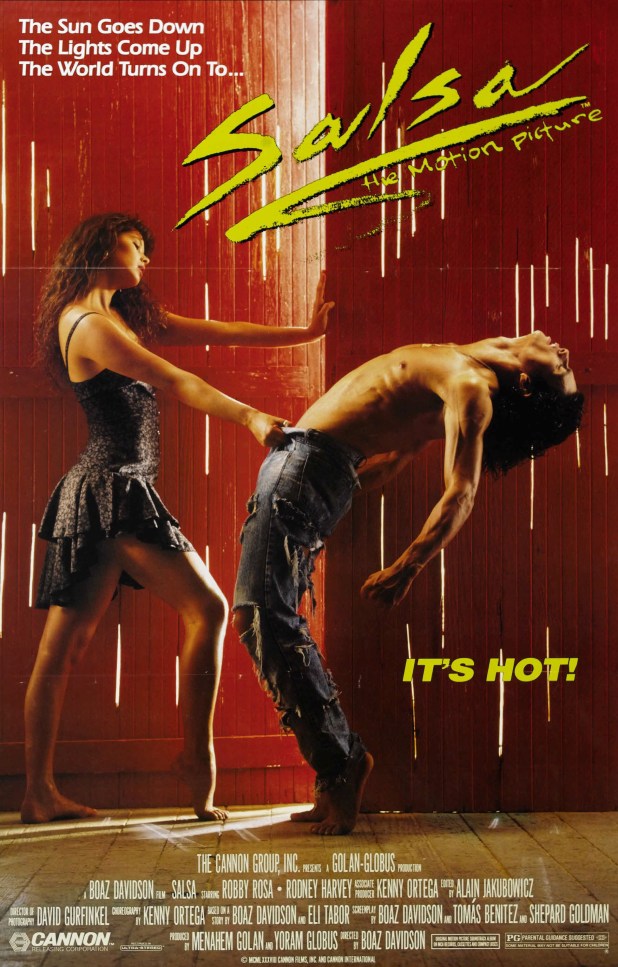
Cannon made more than a few dance craze cash-ins. We already covered Breakin’ and Breakin’ 2: Electric Boogaloo. In our next Cannon Month, we’ll get to the split of Goram and Globus and the same day release of Lambada and The Forbidden Dance.
Today, we salsa.
Former Menudo member Robby Rosa is Rico, a mechanic by day and a dancer at La Luna in East Los Angeles by night. He dreams of he and Vicky (Angela Alvarado, Judgement Night; she and Rosa met on this movie and remain married to this day) becoming the king and queen of salsa when they win La Luna’s Grand Salsa Competition. Yet what will happen when Luna(Miranda Garrison, Vivian from Dirty Dancing), the club’s owner, wants him for her very own?
Directed by Boaz Davidson and choreographed by Kenny Ortega, this movie is wonderfully 80s and as lightweight as a colorful sugary cocktail and may leave you with the same sugar rush and crash. Or you’ll love it like I did, because I yearn for the dance.
Also: Rico is absolutely the worst person and beyond not the hero of this movie, despite being set up to be the lead. All he cares about is Rico and salsa.
A nominee for the 1987 Cannes Film Festival Golden Palm and the movie that won Barbara Hershey best actress at that year’s festival, Shy People features the eleventh official soundtrack by the band Tangerine Dream. Want to know more about them? Check out a past article we featured on the site, Exploring: 10 Tangerine Dream Film Soundtracks.
Diana Sullivan (Jill Clayburgh) may be a successful New York journalist, but she has no idea just how bad her daughter Grace (Martha Plimpton) has spiraled out of control or how bad her cocaine habit is. Meanwhile, a new assignment takes her back home and into Louisiana, where they come into the orbit of Diana’s distant cousin, Ruth (Hershey) and her brood of boys who have been taught that everything that comes from the cities is wrong.
Director Andrei Konchalovsky also made Duet for One, Maria’s Lovers and Runaway Train for Cannon. Somehow, he soon followed this with Tango & Cash which still makes me think over his choices, as that film is so alien from the rest of what I know of his work.
Roger Ebert said that Shy People is “one of the great visionary films of recent years, a film that shakes off the petty distractions of safe Hollywood entertainments and develops a large vision.”
After all the success at Cannes and such a strong review, why is Shy People nearly forgotten? Every explained it as “a great film that slipped through the cracks of an idiotic distribution deal,” as “when a major distributor made a substantial offer for it, it developed that a Cannon executive already had booked it into 300 Southwestern theaters in a quick-cash deal. The major distributor pulled out, the movie never received a proper launching..,” and that was, sadly, that.
Luckily, we live in a time when movies are as close as the push of a button. Shy People is on Tubi and you can watch it right now.
All week long, Ed Glaser, the author of How the World Remade Hollywood, has been discussing just why remake and remix cinema is great. Here’s our final segment.
B&S: Are there any movies that didn’t make it into the book?
Ed: I wanted to cap it at 75, so there were definitely some I couldn’t fit. In many cases it was a matter of not wanting to do too many “duplicate” movies. I did three takes on Superman and Star Wars, but generally I tried to limit the number of remakes of a particular film to one, maybe two. So there are several other Rambos and James Bonds and Batmen that had to sit this one out.
There were also some I would like to have covered that I simply couldn’t dig up enough information about — and didn’t have the contacts where I could reach out to the people involved, as I did with other movies. For example, there’s the Alain Delon Zorro film, which would have gone in the “Capes, Conquerors, and Comic Books” section. And there’s a Thai Charlie’s Angels remix called Chai Lai Angels. Another time!
B&S: You could do a whole book on Italian Conan remixes.
Ed: It’s like you said, had already made the peplum movies, so your Ators or your Thors the Conqueror are basically just redressed sword-and-sandal flicks.
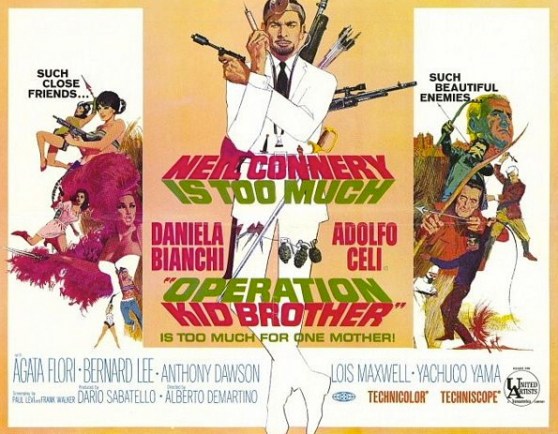
Ed: It’s the most “all-in” Eurospy film ever made! Sean Connery’s brother plus five stars from the official Bond series! Producer Dario Sabatello was willing to throw a lot of money around to make it happen. The Bond supporting cast weren’t paid a lot in the UK for their roles. So Bernard Lee and Lois Maxwell and so on were happy to do it because they were paid more for OK Connery than they were for the actual Bond films. And that movie is an enormous amount of fun.
Ed: So, interesting thing. There’s a Turkish Snow White film Pamuk Prenses ve 7 Cüceler that’s a complete live action remake of the Disney movie. And what really surprised me was that it includes scenes that were planned for the Disney version but never actually animated. That had me absolutely baffled for a while until I discovered that those sequences were in the tie-in children’s books — both here in the States and in Turkey (some of which were bootlegs). So it’s pretty clear that the filmmakers saw at least one of those books and incorporated the “missing” material based on that. Before the days of VHS and DVD, it would have been handy to have a book version of the film to work off of. So I wouldn’t be surprised if tie-in photonovels were occasionally used when shooting international remakes.
B&S: With the advent of digital filmmaking, is it easier or harder for these movies to be made?
Ed: The world is more connected now so it’s very difficult. Certainly it’s no longer the Wild West it once was. What’s happening more is that Hollywood has discovered that there’s money to be made overseas with their existing IP and so they’ll partner with — or license that IP to — filmmakers in other markets. Thus the kind of stuff that you’re seeing in Bollywood now tends to be more officially licensed than it used to be. (I’m sure that’s not the case 100 percent of the time.) But there are major instances of that happening. There was a remake of the movie Knight and Day, and there’s been a Rambo film in the works for a number of years that I think is still in pre-production. There are specific deals between Fox and studios in India to make these kinds of films, and similar things happening in China, leading to movies like High School Musical China.
B&S: Does it feel different now because there’s less of a hunt for these films?
Ed: I appreciate their newfound availability. While I was writing my book bothRobowar and Shocking Dark came out on Blu-ray. That was wild, because at the time I had Shocking Dark on a Japanese VHS tape and Robowar was just digital, because you couldn’t get a physical copy for love or money — at least an original one. The availability is fantastic. I think the main difference is that it’s now a lot easier to go from one film immediately to another, rather than digging around and waiting to see if another one will turn up from a grey market VHS dealer. But there’s still a lot of history behind these movies that remains untold. And a film being available on YouTube doesn’t necessarily alter that.
B&S: I think now we can share them more easily. It reminds me of what Guillermo Del Toro said when he first saw Zombie that none of his friends believed it was a real movie. Now you can show people these movies.
Ed: There is something to that. And there’s also a certain amount of good-natured one-upmanship that can happen with friends who enjoy similar kinds of movies — “Yeah, but have you seen this?” That can be a fun way to kind of exchange movies but it’s great that the material is available and is more shareable than it once was.
B&S: Where should someone start with remakesploitation?
Ed: I think The Last Shark may be a good start. It depends on how comfortably you want to ease in and what your favorite genres are. If you want to be delighted, Vinni-Pukh, the Russian Winnie the Pooh is probably the most wonderful thing that I cover in my book.
You can get Ed’s book, How the World Remade Hollywood, from McFarland Books. Here are the films that he covers (to see our thoughts on movies we’ve watched, just click the hyperlink):
Indian Hindi Fatal Attraction: Pyaar Tune Kya Kiya… (Love… What Have You Done)
Bollywood Silence of the Lambs: Sangharsh (Conflict)
India The Godfather: Sarkar (Overlord)
Japanese The Unforgiven: Yurusarezaru mono (Unforgiven)
I hope that this article allows you to discover the world beyond our borders and how other filmmakers reinterpret pop culture. To see some of these movies and hear from Ed, check out Deja View: Remakes and Rip-Offs of Your Favorite Films.
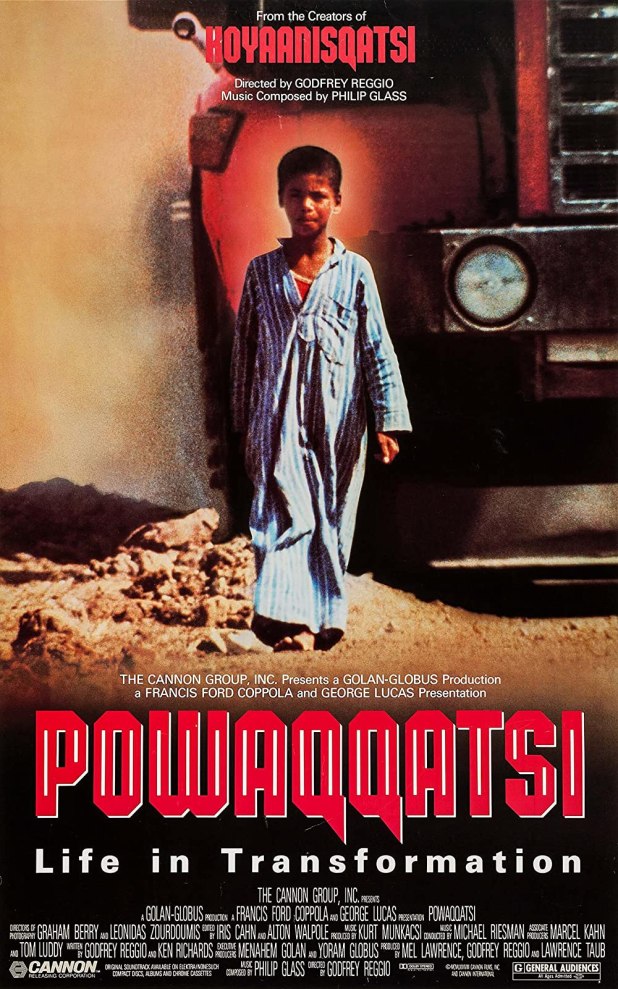
Directed by Godfrey Reggio, Powaqqatsi is the sequel to Reggio’s Koyaanisqatsi and the second film in the Qatsi trilogy. This is one of the few, if only, Cannon movies in the Criterion Collection. It’s also the only Golan and Globus released film with a Phillip Glass soundtrack. In fact, Glass also traveled to the locations with Reggio so that he could get a feel for the music that the movie needed.
The name of this movie comes from a term Reggio came up with that means “parasitic way of life” or “life in transition.” While the original film had a focus on modern life in industrial countries, the sequel focuses on the conflict in Third World countries between the old ways and how life has changed after the spread o industrialization.
From men carrying gold up and down a mountain in Brazil to images of villages, islands, religion, people in motion, traffic and the intrusion of advertising, you get the feeling that man is just taking up space on a planet that doesn’t need us, or as Roger Ebert wrote, “Reggio seemed to think that man himself is some kind of virus infecting the planet — that we would enjoy Earth more, in other words, if we weren’t here.”
Reggio wasn’t fully on board with using the latest in movie technology considering that his theme for the film is finding a way to return to basic life. However, he realized that technology was ingrained into our way of life and that it would allow him the best format for sharing his philosophy.
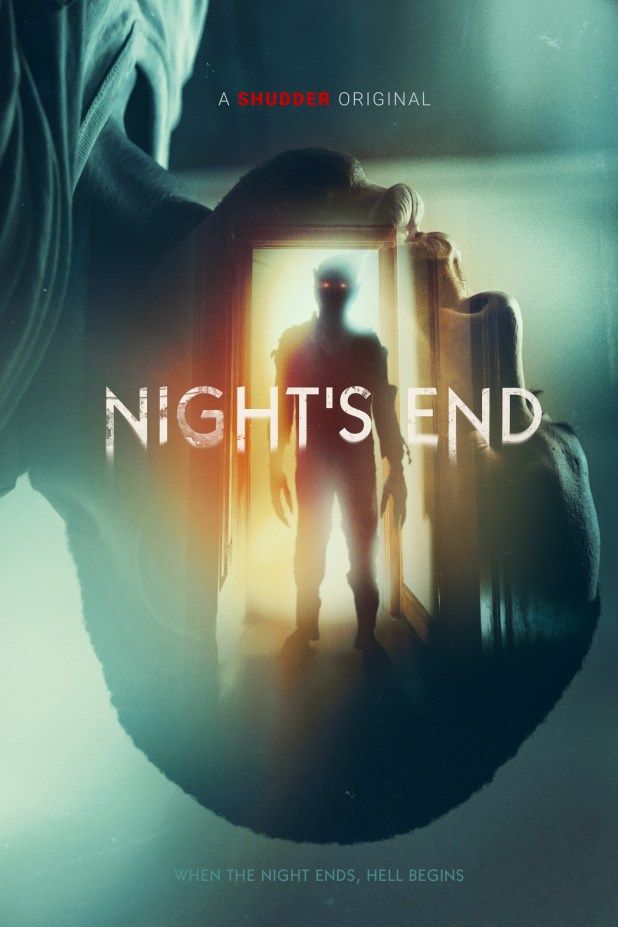
Ken Barber (Geno Walker, who is great in this movie) is recovering from a breakdown, alone in a new apartment where he’s pushing his personal physical improvement while obsessively recording YouTube self-help videos that have viewers in the single digits. His apartment is filled with dead and stuffe birds, dying plants and newspapers lining the windows, further cutting himself off from the world outside his walls, his only connection being his ex-wife Kelly (Kate Arrington) and her new husband Isaac (Michael Shannon, who is seemingly loving every minute of being in this movie) and his best friend since they were kids Terry Gilson (Felonious Monk).
And then Ken gets into the occult.
Ken’s new apartment may be haunted by the ghost of Roberta Wellwood (Morgan S. Reesh) and after watching numerous episodes of Dark Corners, a paranormal webcast hosted by Dark Corners (yes, that’s his name and he’s played by Daniel Kyrie). With the help of a supernatural expert named Colin Albertson (Lawrence Grimm) and a spirit jar, he hopes to clean the spirits away from his new home and his life, starting anew, except that fate doesn’t always have a way of working out perfectly.
Directed by Jennifer Reeder, who made Knives and Skin as well as the “Holy Hell” section in V/H/S 94, and written by Brett Neveu, Night’s End is best when presenting the loneliness and disassociation of its protagonist instead of the poor effects near the ending.
Reeder said, in her director’s statement, that “Night’s End is a proper genre film with some aesthetic and narrative connections to The Tenant and vintage John Carpenter.” I personally don’t see the latter, but folks today sure do love to throw around Carpenter’s name.
That said, there are some good moments here. It’s just frustrating that the end seemingly comes out of nowhere with all the slow build, seemingly like almost a dream sequence within the story and not the actual build to the close of the film.
The 20th entry in Tsuburaya Productions’ long-running Ultra Series, Ultraseven X is a revival of the 1967 series Ultraseven and the first Ultra show to be made exclusively for an adult audience.
In a world where all war has been eliminated, Jin deals with amnesia and a new life, as he’s given a mission by a secret group called DEUS that wants his help in the fight against aliens that have infiltrated humanity. Along with agents K and S, plus glasses that transform him into Ultraseven X, he fights for both our world and to discover his past.
The true secret? The world that Jin, K and S think they know is actually a simulation, run by an alien race that has enslaved mankind by tricking them into the illusion of utopia. It’s a far cry from the colorful monster battles you may remember from the original Ultra shows.
This was totally unexpected, as I had no idea that there was a dark Ultra series. It’s close to Dark City and The Matrix, but doesn’t forget that monsters, aliens and battles are also important. It’s definitely different and dark, but I still loved the look of the show and the slowly unfolding overall story.
You can learn more about the Mill Creek release of Ultraseven X on the official site and order the blu ray set from Deep Discount.
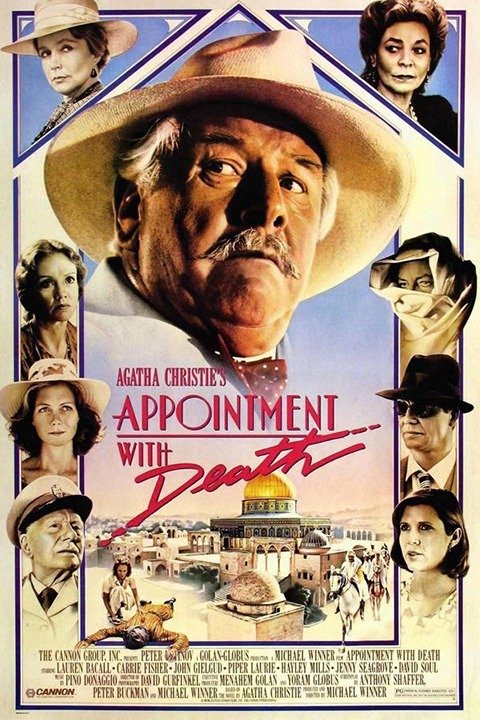
After numerous other theatrical and made-for-television adaptions where Peter Ustinov played Hercule Poirot, including Murder On The Orient-Express, this would be the actor’s last time playing the role.
This time, he was directed by Michael Winner, who you probably wouldn’t consider for the restrained world of Agatha Christie. He spoke to this by saying, “You won’t see Lauren Bacall walking around machine-gunning everyone. In fact, it’s my first picture in years that was under budget on blood.”
Bacall plays Lady Westholme, an American become British high society lady and a member of Parliament for the Conservative Party as the result of marriage. She’s on her way to Jerusalem along with her secretary Miss Quinton (Hayley Mills!) and lawyer Jefferson Cope (David Soul) by sea, the same voyage that also has the troubled Boynton family — Lennox (Nicholas Guest), Raymond (John Terlesky — what!?! Deathstalker!?!), Carol (Valerie Richards) and Ginerva (Amber Bezer) — who she shares the law services of Cope with, as the Boynton children are pretty much slaves to their stepmother Emily (Piper Laurie), unless the new will goes through.
Poirot also meets up with an old friend, Dr. Sarah King (Jenny Seagrove), who falls for Raymond, all as Cope is having an affair with Lennox’s wife Nadine (Carrie Fisher), which really seems to be so many coincidences that all gathered these people all on the same boat. And oh yeah, John Gielgud is on board to play Colonel Carbury. He described leaving to in this movie as such: “Leaving for Israel to do a rather absurd part in an Agatha Christie… Peter Ustinov and Betty Bacall are to be in it and possibly Michael York, so it might be fun, even with that vulgar, but quite funny director, Michael Winner.”
In late Cannon fashion, the budget was cut from $9 million to $7.5 million and then to $6 million. When they wanted to cut it further to $5.5 million, Ustinov threatened to quit and if he left, so would the rest of the cast. Most of the cast — particularly Bacall — were shocked that this was filmed in Israel in the hot summer instead of a sound stage or in England.
Jean-Claude Van Damme — the Muscles from Brussels — first appeared in a film in 1979, where he had an uncredited role in André Delvaux’s Woman Between Wolf and Dog. After moving to the United States with his childhood friend Michel Qissi, who plays Suan Paredes in this film and would go on to appear in several JCVD movies. Their first appearance was in Breakin’, which has gone on to be a memorable meme.
After becoming a friend and sparring partner with Chuck Norris — he even bounced at the action hero’s bar Woody’s Wharf — Van Damme would go on to be part of the stunt team for Missing In Action. Then, he achieved a sizeable role in No Retreat, No Surrender, playing the Russian bad guy Ivan Kraschinsky that Kurt McKinney must train — with the ghost of Bruce Lee no less — to defeat.
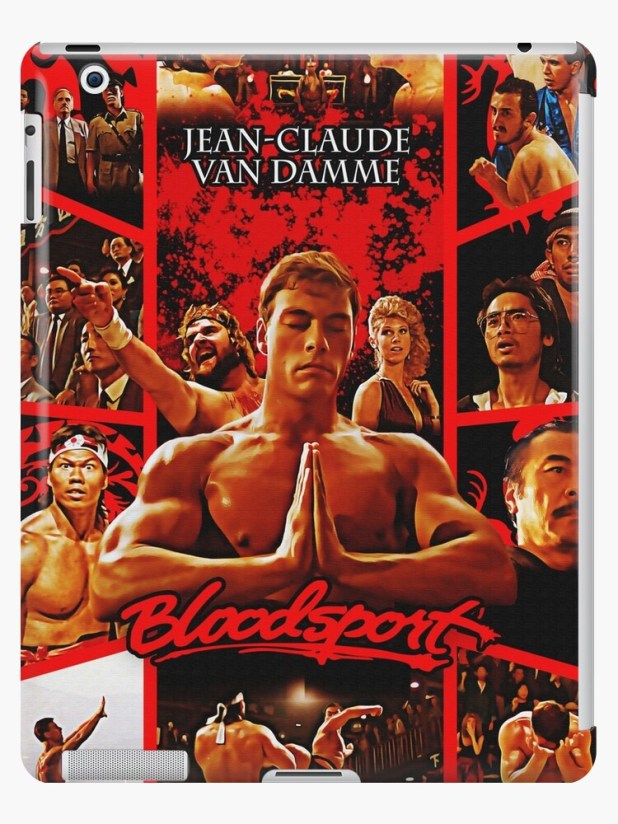
After an abortive attempt at playing the lead villain in Predator, it was time for Van Damme to star in his own film. Bloodsport — based on the maybe real life of Frank Dux — would be that movie, making $65 million on a $2.3 million dollar budget.
U.S. Army Captain Frank Dux (Van Damme) once trained in the ways of ninja under sensei Senzo Tanaka (Roy Chiao, who appeared in Game of Death, Enter the Dragon and Indiana Jones and the Temple of Doom) after he tried to steal a katana from the master as a child. he was trained alongside Senzo’s son Shingo, who has died in a martial arts tournament. Frank goes AWOL to be part of the Kumite, an illegal martial arts battle to the death, for revenge.
That puts Rawlins (Forest Whitaker) and Helmer (Norman Burton, who played Felix Leiter in Diamonds Are Forever and the boss in Fade to Black), two Criminal Investigation Command officers, on his trail.
Once Dux makes it to Hong Kong, he becomes fast friends with American fighter Ray Jackson (Donald Gibb, Ogre from Revenge of the Nerds), which is good, because they’re the only gaijin in this tournament. However, once they learn Dux represents the Tanaka clan and how he has the ”death touch” — and Jackson breaks bricks with his forehead — they’re accepted.
After several rounds of awesome fights — this movie is pretty much all fights, making it one of the most fun movies ever made — Frank, Ray and the evil champion Chong Li (Bolo Yeung) remain. Li hates Frank for beating his fastest knockout record, but our hero is more interested in Janice Kent, a reporter.
During day two, Ray has Chong beat, but pauses to do his taunt move and gets his butt handed to him, landing in the hospital. Dux vows to get revenge for his friend, but his new lady, who he has only known 24 hours, argues that he should just leave. This woman will never understand Kumite!
The police and officers chase and catch Frank, who agrees to go back if he can finish the final battle. Chong kills his opponent and the crowd turns on him. They hate him even more when he cheats, throwing a pill packed with dust into Frank’s eyes. Frank rises above all that nonsense and wins, sparing the life of his enemy while getting revenge.
So how true is Bloodsport? According to Sheldon Lettich, who wrote the film, told Asian Movie Pulse:
“I had known Frank Dux for a number of months before I came up with the idea for Bloodsport. Frank told me a lot of tall tales, most of which turned out to be BS.” One of those tall tales were about his military history: “Frank also used to tell me, and just about everyone he spoke to, that he had participated in secret missions for the C.I.A. and the U.S. military, and that he had won the Medal Of Honor for his heroism. He even showed me the Medal, which he had supposedly been awarded by the President. Years afterwards, when numerous people began questioning his stories, he stopped claiming that he won the Medal, and then began claiming that he’d never told anyone he won it.”
That said, somewhere in all those stories, there was the idea for a movie. And Dux had a backup that could prove he had actually been in a Kumite tournament: “There was one guy who he introduced me to, named Richard Bender, who claimed to have actually been at the Kumite event and who swore everything Frank told me was true. A few years later this guy had a falling-out with Frank, and confessed to me that everything he told me about the Kumite was a lie; Frank had coached him in what to say.”
Another article in the LA Timestakes the story even further, showing how Dux claimed that a rival ninja teacher was conspiring against him and that he’d been reinventing his past for decades. I’ve also read on Pro MMA Now that if you do the math, for Frank Dux to win 56 consecutive knockouts in a row in one tournament would mean that 72 quadrillion fighters were in it. That’s only around ten times more people that are alive right now.
Whether or not this movie is based on a true story, Van Damme does seven splits in it. It also features an eleven minute-long flashback, which kind of tests the limits of just how long a flashback could, should and can be. And any movie where JCVD makes this face is a winner in my book.





 B&S About Movies
You must be logged in to post a comment.