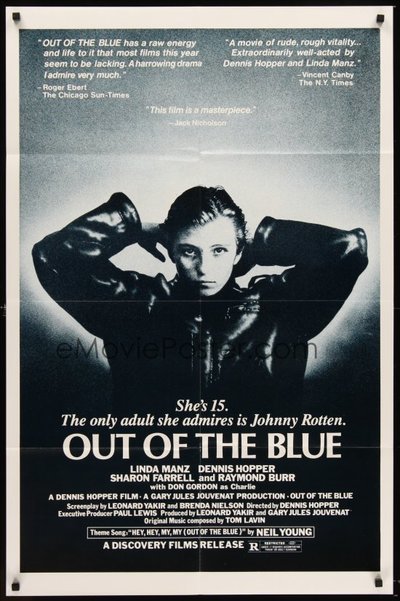
According to Roger Ebert, when Out of the Blue “premiered at the 1980 Cannes Film Festival, it caused a considerable sensation, and Linda Manz was mentioned as a front-runner for the best actress award. But back in North America, the film’s Canadian backers had difficulties in making a distribution deal, and the film slipped through the cracks.”
What a shame.
One of only seven movies directed by Hopper — there’s also Colors, Chasers, Catchfire, The Hot Spot, Easy Rider and The Last Movie — this time in the director’s chair wasn’t planned. Originally hired just to act, the film nearly was canceled when he asked for the opportunity to rewrite it over a weekend.
What a joy.
Out of the Blue isn’t about Hopper’s character — an alcoholic truck driver who kills a bus full of children in an accident that’s repeated numerous times, growing more violent with each remembrance — but it’s about his daughter, played by Manz, who is full of bile toward everyone and everything, loving only Elvis, her father and punk rock.
Hopper considered this movie a follow-up to Easy Rider and tells what would have likely happened to the characters from that film ten years later. And it really is ten years (actually eleven) later, a time past the New Hollywood, as Hopper was just struggling to re-enter the world of acting after getting noticed all over again in Apocalypse Now.
After this movie, Hopper would pull off one of his most out there moments — and that’s saying something — blowing himself up in a coffin using 17 sticks of dynamite during an “art happening” at the Rice University Media Center before disappearing into the Mexican desert and finally entering drug rehabilitation. After Rumble Fish, The Osterman Weekend and Blue Velvet, Hopper finally was accepted back.
At this point, he was still lost in the wilderness but making astounding art while there. Linda Manz is all punk rock swagger, even if she isn’t sure what it all means. And the ending is violent and pointless and exactly how it should all end. Along the way, you get great performances from Sharon Farrell and Raymond Burr to compliment Manz and Hopper.
Man, this movie.
Working from the original 35mm negative restored by Discovery in 2010, John Alan Simon and Elizabeth Karr’s Discovery Productions undertook the digital scan and mastering of Out of the Blue to premiere as an official selection at the Venice Film Festival in 2019, preserving Hopper’s landmark film to make it available to new audiences.
Not that many saw it in the past. Luckily, John Alan Simon, then a film critic/journalist, rescued the film from the shelf, secured distribution rights and took it on the road with Dennis Hopper back in 1982 to art house theaters across the U.S. including a 17-week record-breaking run at the Coolidge Corner Cinema in Boston and then NYC and Los Angeles theatrical releases.
“It’s incredibly important to us that Out of the Blue be preserved for future generations to experience its emotional impact and as the artistic achievement that helped re-establish Dennis Hopper as an important American director,” commented Elizabeth Karr on behalf of Discovery Productions.
“For me, this restoration project was pay-back for all I learned from Dennis Hopper when we originally took Out of the Blue on the road in 1982 after I rescued it from the shelf. He was an amazing artist and friend and Out of the Blue remains as unforgettable as he was and serves as an indelible tribute to the talents of Linda Manz,” John Alan Simon from Discovery Productions concluded.
You can learn more about Out of the Blue at the official site and order it from Severin.
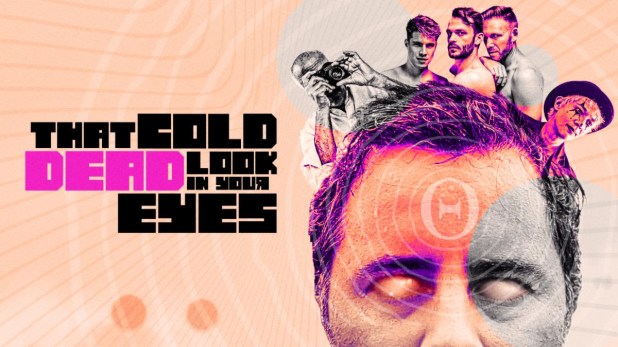
Leonard has already lost his girlfriend, despite them still living together and her attacking him with a knife. But as he spirals downward in his job — nobody has a single nice thing to say about his abilities as a chef — he starts to hallucinate. Is he going crazy from the stress? Or are those theta-waves real?
Meanwhile, Leonard’s girlfriend’s father has been clogging the toilet and unleashing a steady stream of naked male models on the apartment, all while people start becoming theta-driven killers.
Directed and written by Onur Tukel and in black and white and all confusing, this certainly won’t be for everyone. I watched it once and it left me cold, so I watched it again a few days later, and I got the same feeling. But hey — movies are for everyone, so perhaps you’ll discover something better than I did.
That Cold Dead Look In Your Eyes is now available from Dark Star Pictures.
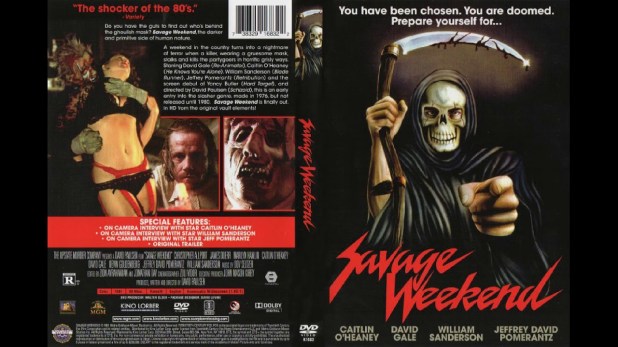
While it wasn’t released until 1979, the movie that became Savage Weekend — also The Killer Behind the Mask — started as The Upstate Murders. That means that it predates most of the commonly accepted “first” slashers like Halloween and Friday the 13th.
This is a slasher with the most ridiculous of conceits — everyone comes to upstate New York to see a new schooner — but it also has a heroic gay character (Nicky, played by Christopher Allport, who was in both Jack Frost movies and ironically killed in real life by an avalanche) and a woman escaping a bad marriage which seemingly has followed her. Also, since the aspect ratio got screwed up, the boom mic is a frequent co-star.
That said, it has a sewing needle through the head, someone accidentally killed by a bandsaw when the wrong light switch gets turned on, a hanging and an Upstate New York Chainsaw Massacre. It’s not perfect — it’s barely even worthwhile — but at least director/writer got to go on and make the much more interesting Schizoid, which has hot tub therapy sessions, scissor murders, Donna Wilkes being in love with her father Klaus Kinski and a love scene where Kinski has sex with a stripper against a hot water heater.
NBC’s Saturday NightLive, initially known as NBC’s Saturday Night, premiered with its debut host, George Carlin, on October 11, 1975. The show’s taboo, National Lampoon-inspired comedy sketches that parodied contemporary culture and politics, was a late-night ratings blockbuster. So it was inevitable it would inspire a series of low-budget, “sketch anthology” drive-in knock offs.
The best known — and box office successful — of the faux-Not Ready for Prime Time Players ensembles was the The Kentucky Fried Movie (1977) directed by John Landis and written by the ZAZ team of David Zucker, Jim Abrahams and Jerry Zucker (later of Airplane! and The Naked Gun). Prior to SNL making it to air was the equally successful, X-rated The Groove Tube (1974). The writing and directing debut by Ken Shapiro, he would later do the same for the early, Chevy Chase comedy bomb, Modern Problems. You may also remember the better, late-to-the-game Amazon Women on the Moon (1987) featuring segments directed by Joe Dante.
Lost in between the success of those comedic omnibuses are Herschell Gordon Lewis’s trailblazer Miss Nymphet’s Zap-In (1970), The Boob Tube (1975), American Tickler (1978), Coming Attractions, aka Loose Shoes (1978; starring experienced improv-comics Bill Murray and Howard Hesseman), and National Lampoon’s hour-long cable special Disco Beaver from Outer Space (1979).
Then there’s this forgotten knockoff directed by Bradley R. Swirnoff and written by the BFS team of John Baskin, Stephen Feinberg, and Roger Shulman. Another similar, forgotten project from the comedic think tank was Tunnel Vision (1976).
As with their previous Tunnel Vision, Prime Time also deals with the nation’s first uncensored television network. This time — instead of the new network being part of a legitimate business venture in the future year of 1985 — all world television transmissions have been interrupted by an “unknown source” broadcasting a lineup of tasteless programs and commercials. Warner Bros. — who got involved hoping to appeal to the “hep” National Lampoon-reading college crowd weened on SNL — bankrolled the film for a mere $30,000 and intended to release it. When they saw the end product and deemed it “unreleasable,” they sold it to Cannon Films, which released it as American Raspberry in 1979. In fact, MGM was also burned (to the tune of $3 million) by Not Ready for Prime Time Players-connected material: the studio pulled SNL’s short film auteur Tom Schiller’s science fiction comedy (also working as a pseudo-anthology comedy), Nothing Last Forever (1984), from release and never screened it, anywhere (it’s now in the copyright vaults of Warners and part of the TCM library; Warners owns the pre-1986 MGM library).
Okay, back to the movie. . . .
As the President of the United States tries to get to bottom of who is responsible the tasteless transmissions, we’re subjected to a series of programs and commercials, aka skits, for 75-minutes of politically incorrect spoofs that would give today’s hashtag warriors a brain aneurysms as set they off on a quest to cancel-culture everyone connected to the project from existence.
There’s abortions and gynecologists. Catholic and midgets. Tampons and (fat) Charlie’s Angels (the series “Manny’s Nymphs”). There’s commercials calling out the tobacco industry and non-profit organizations like Save the Children. There’s spoofs on the then popular, yet annoying, commercials for car batteries (for an Execution organization promoting their “Die Tough Batteries”) and credit cards (“American Excess”). The capper is a commercial — that plays during the sitcom The Shitheads — for Trans Puerto Rico Airlines: its plane filled with goats and chickens as flies buzz around a pot of chili. Oh, wait: that’s topped by “sports coverage” of the Charles Whitman Invitational — as hunters sniper people and animals from a tower perch. And it goes on with a telethon raising funds for transvestites. Adolf Hitler pitching audio cassettes. Erection prevention sprays. Dog food commercials spoofing that funny topic of cannibalism.
And none of it is funny. None.
Well, at least not to me. Eh, the road to Judd Apatow had to start, somewhere. But why here? Oy, this was a chore to sit though. And to think my kid and teen self coveted these “adult comedies” back in the day. Yeah, sure . . . The Kentucky Fried Movie and The Groove Tube are okay, but this is, well, Plfffffffft!
The B&S About Movies crowd will notice the familiar character actors of Harris Yulin and Royce D. Applegate, along with Harry Shearer (This Is Spinal Tap), Warren Oates (Two-Lane Blacktop), Stephen Furst (Animal House), and an early Joanne Cassidy. And yes, that is Twink Caplan (Bloodspell), who became a successful producer in her own right with the ’90s comedies Curly Sue and Clueless. So, if you’re curious in seeing where those actors of VHS yore got their start, there’s something here to see. All others: hit that button and skip to the next Mill Creek selection.
It’s hard to believe the brains behind it all moved onto bigger and bigger things. But they did.
While Swirnoff and Freinberg left film and returned to the stage work from the improv lands which they came, we were unknowingly entertained by John Baskin and Stephen Feinberg into the late ’80s. The duo became a sought-after writing team for television, with multiple episodes of the hit series Love, American Style, All in the Family, Good Times, The Jeffersons, and Three’s Company, as well as developing the Jack Warden-starring series Crazy Like a Fox.
We’ve since given this film a second look, as part of our two-month “Cannon Month” blow out reviewing and re-reviewing all of the films carrying that iconic logo of ’80s VHS yore.
Oh, and speaking of National Lampoon . . . we’ve been chipping away at those reviews, as well:
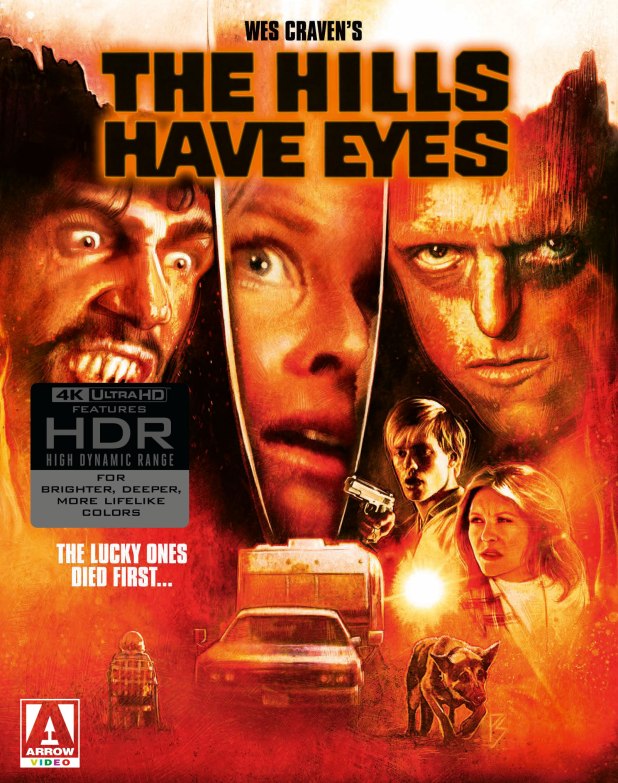
EDITOR’S NOTE: We first wrote about this movie on November 24, 2018, but as Arrow is releasing a UHD of this film, we thought it’d be a great time to remind you about it and let you know that you can now add a near-perfect version of this film to your collection.
Wes Craven’s second full-length film — if we don’t include the porn film The Fireworks Woman that he directed as Abe Snake — is a trip through the Nevada desert that he wrote, produced and directed. You can see it as straight-forward narrative or you can choose to see it as a parable on how man will always be inhuman to other men.
The Carter family really gets it in this one. After being targeted by a family of cannibal savages in the Nevada desert, the family’s leader Big Bob is crucified to a tree, the daughter Brenda is raped, numerous members are shot and stabbed and also killed, one of the family dogs is killed and even the baby is threatened with being a meal.
But they retaliate with just as much inhumanity as they battle back against the desert clan of Papa Jupiter, Pluto (Michael Berryman!) and Jupiter. Even the second family dog joins in and takes out his rage on the mutant clan.
The idea of an irradiated gang in the desert is intriguing and was inspired by the Sawney Bean clan in 1600’s Scotland, which claimed the lives of nearly 1,000 people.
Additionally, Craven was inspired by The Texas Chainsaw Massacreand ended up making a film that — in my opinion — lives in its shadow. Interestingly enough, the films share product design from Robert Burns, as well as some of the exact same animal parts that decorate the homes of each film’s cannibal lairs.
There’s a sequel, a remake and a sequel to that as well. In the late 1980’s, Craven even debated a third movie that was to be set in space, while his 1995 film produced for HBO, Mind Ripper, was originally intended as the third film in the series.
The Arrow UHD release of this movie offers a brand new 4K restoration of the film, viewable with both original and alternate endings. It also comes with six postcards, a reversible fold-out poster and a limited edition 40-page booklet featuring writing on the film by critic Brad Stevens and a consideration of the Hills franchise by Arrow producer Ewan Cant, illustrated with original archive stills and posters. Plus, there’s three different audio commentary tracks: actors Michael Berryman, Janus Blythe, Susan Lanier and Martin Speer; academic Mikel J. Koven; and Wes Craven and Peter Locke. Plus, there are interviews, a making-of documentary, outtakes, trailers, TV spots, the original script and so much more, all inside beautiful packaging featuring both the original and newly commissioned artwork by Paul Shipper.
You can get The Hills Have Eyes UHD from MVD and Diabolik DVD.
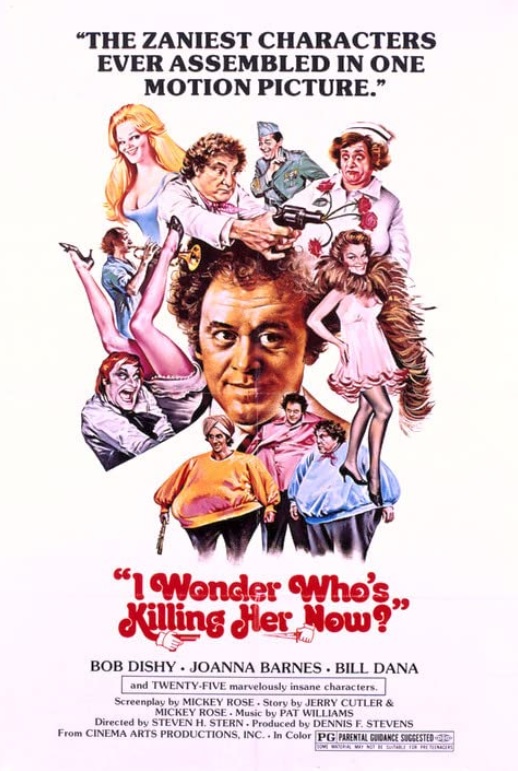
You’ve heard Sam and myself rave — as result of his incessant, ’70s and ’80s TV movie work — the wares of Canadian filmmaker Steven Hilliard Stern. From his work with Portrait of a Showgirl (Tony Curtis and Rita Moreno!) The Ghost of Flight 401 (Ernest Borgnine!) and This Park Is Mine (Tommy Lee Jones!), Mr. Hilliard rocked our television sets. Then, in one of his rare, later theatrical works, Rolling Vengeance, well . . . a movie where a man reacts to the death of his wife and children by making a monster truck and killing everyone responsible . . . that’s our kinda movie!
Other entries in Stern’s superior TV movie oeuvre (on U.S. TV and cable; in Canada, they ran as theatrical features) are the James Brolin-starring The Ambush Murders (1982), the pre-stardom Tom Hanks-starring Mazes and Monsters (1982), and the Ned Beatty-starring Hostage Flight (1982).
I know. I know. Stop squeezing the Hilliard Stern toiletries. Get on with the review. . . .
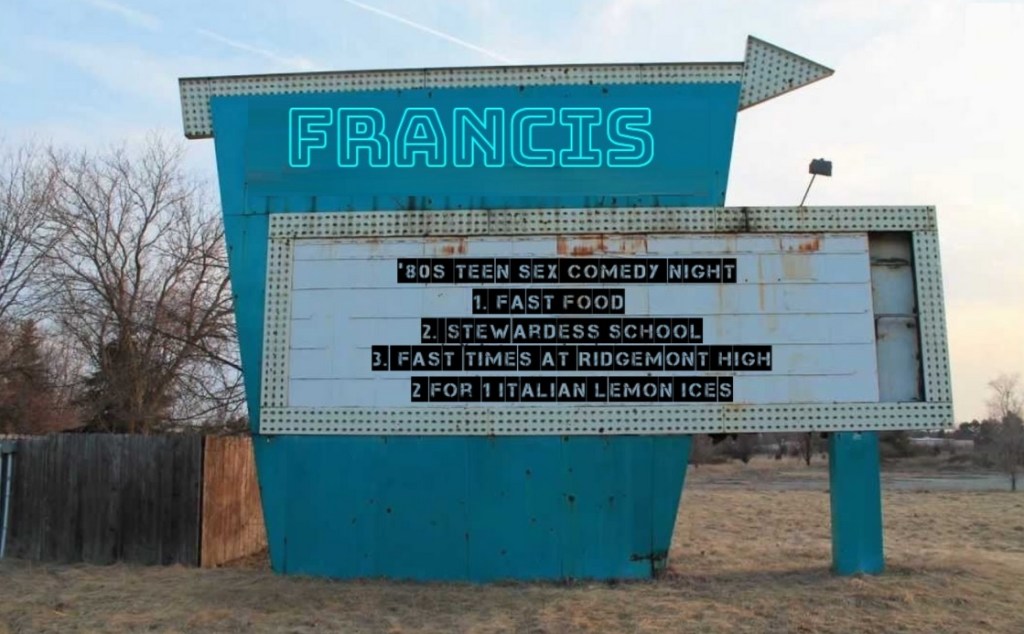
Well, by the time of this not-so-comedy featuring second and third tier comedians, Stern was four films into theatrical features: B.S. I Love You (1971; a sexual revolution comedy starring JoAnna “Isis” Cameron), Neither by Day Nor by Night (1972; a war drama starring Zalman “Red Shoe Diaries” King), and Harrad Summer (1974; more “sexual revolution drama” starring Laurie “Eight Is Enough” Walters) — only Harrad Summer was a box office hit (and also a flop, when compared against the hit status/box office of the previous The Harrad Experiment). So off to TV Steven went, with U.S. series such as McCloud, Quincy M.E., and Hawaii Five-O. Remember when they tried to make Al Pacino’s hit cop flick, Serpico, and Logan’s Run, into TV series: Stern helmed them both.
“Ugh, R.D. The movie at hand, please.!”
Get your own copy as part of Mill Creek’s Drive-In Classics box set.
Okay, well, we have to remember Hilliard’s career is still in its infancy, but he did have a sort-of-hit on his hands with Harrad Summer leading to this . . . maybe if Steven was given a cast of better actors and comedians? And if this — being a “sex comedy” — had some actual (implied) sex or nudity? Ugh, Bob Dishy and Bill Dana (name a ’60s TV comedy), and Vito Scotti (name a ’60s comedy series that needed a Bela Lugosi-ham job), and a young Pat Morita just aren’t funny. No, the gag of Severn Darden’s (the Apes franchise) art collector walking around on his knees isn’t funny.
So, do we blame our TV movie god Steven Hilliard Stern for the out-dated, behind-the-times humor?
Nope.
Blame Mickey Rose, the brains behind the early ’60s Sid Caesar Show, as responsible for the comedic faux pas. And let us not forget the abysmal failures to spin off Tim Conway, Dean Martin, and Jonathan Winters into their own, out-of-date-before-they-made-it-to-air, one-season variety series. But wait . . . this is the same Mickey Rose who gave an assist to Woody Allen with What’s Up, Tiger Lily?, Take the Money and Run, and Allen’s first, runaway hit, Bananas (1971)? It is the same Mickey Rose!
So, what happened with Rose’s spoof of ’40s mafia films: one that plays, not as a film of the ’70s, but as a zany, madcap ’60s comedy, à la 1963’s It’s a Mad, Mad, Mad, Mad World? But perhaps that was Rose’s scripting — and Stern’s — retro-intent? But who — in the post Vietnam ’70s — wants a zany, madcap ’60s throwback?
Was nothing learned from the failed Conway, Martin, and Winters TV series? Well, this sure as hell ain’t a Mel Brooks joint by any stretch of imaginary hopes. Maybe if Peter Sellers — who had to bow out due to a medical issue with his heart — remained as our hen-pecked, embezzler-cum-assassin?
So . . . Jordon Oliver (the awful Bob Dishy in the planned Sellers role) has been fired from his job for embezzlement. His wife wants a divorce. Now, Jordon decides on a insurance scam: take out a million dollar policy and bump off his rich wife (the never-hard-to-gaze-at Joanna Barnes of Spartacus and The Parent Trap). But that means she needs a medical examine — on the q.t. — so Jordon contracts a shady (and offensively-troped) doctor (a young Pat Morita) on the scam. Then, Jordon hires a hitman (Bill “Jose Jimenez” Dana, who, as with Tim Conway, leaves no wonder as to why he was stuck on TV for the remainder of his career). The comedy ensues as our lazy, inept hitman contracted another hitman. And its just goes on and on . . . and it gets sillier and sillier . . . and more groan-inducing with, what seems, the ad-libbed dopiness of desperate, no-longer-relevant comedians calling attention to themselves in an attempt to outdo the other . . . as the celluloid frames creak through the analog sprockets.
I mean, come on: one assassination attempt is by a-shark-in-the-swimming pool — complete with an “Acme Shark Rentals” truck at the curbside. And that’s after Dishy wears a chicken suit. And that’s after Dishy’s fakes a piano recital by way of a backstage dwarf (disguised as a daisy) on a mini-piano peckin’ off the classics. And Dishy’s awful, ongoing “Bogart” impression jokes. And on and on and on it goes . . . where it stops, nobody knows. Even at a meager one hour twenty-seven minutes, it’s still too long. No way Peter Sellers could have made this work. Never.
Ugh. Argh! What I do for you, Steven. What I do for you.
So, yeah. Cue the T.L.P Swicegood “Wah-Wah-waaaahhhhhhs” trombones from The Undertaker and his Pals, then file this madcap farce on the not-funny-words-on-a-dusty-shelf next to the analogous box office failures of Angel, Angel Down We Go, Myra Breckinridge, and Skidoo — as a celluloid curiosity to pick at on a lazy Sunday afternoon.
Eh, well . . . at least Mickey Rose wrote and directed the original slasher spoof, Student Bodies. So, without ol’ Mickey, we’d have no ’90s Scream spoofs, so there’s that to ponder. And you can ponder it all — for free — on You Tube. Sure, it’s over on Amazon Prime, EPIX, and Paramount +, but do you really want to waste your hard-earned dollars on this? Do ya’ really? No, do you?
About the Author: You can learn more about the writings of R.D Francis on Facebook.He also writes for B&S About Movies.
Phantom Patrol is a nostalgic story about two security guards who inadvertently release ghosts, goblins, and other phantasms into New York City from a secret, underground facility. With the help of two kids, the ragtag team becomes the only hope to stop the paranormal breakout.
Self-made, indie filmmaker Milko Davis is part of that new digital streaming vanguard we jam on here at B&S About Movies: Davis has that Dennis Devine and Brett Piper thing goin’ on that we love amid the cubicle farms along the muddy river waters of the ol’ Allegheny. If you’ve read the two “Drive-In Friday” features we’ve done on Dennis and Brett (and our reviews of several Polonia Brothers and Brett Kelly flicks along the way), well, then, you’ll have a good idea on how we feel about Team Milko.
That “team” is already ten films deep — with two shorts and eight features — of which we reviewed their three best-distributed films: Tsunambee, Jurassic Dead and Jurassic Thunder. He made his debut in 2007 with the Richard Grieco-starring Raiders of the Damned.
The Old . . .
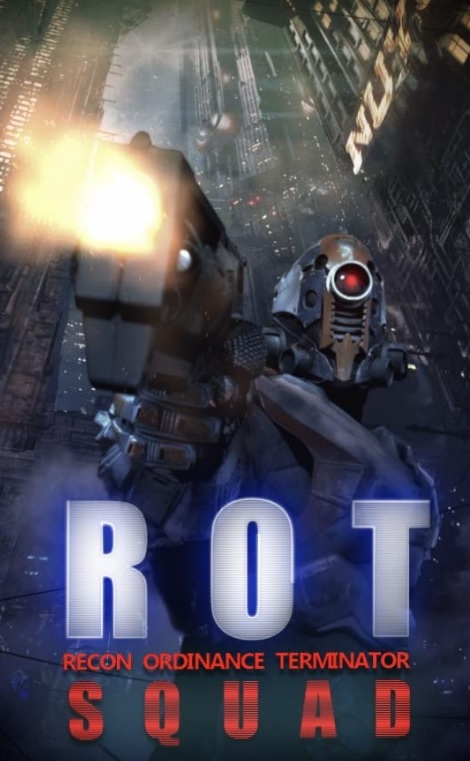
Well, we are pleased to announce that, in addition to going into pre-production on films nine and ten: the oozing ’80s VHS retro-romps Killer Witches from Outer Space and ROT Squad — both expected by October of next year, Milko Davis has just completed film number eight: Phantom Patrol. And Milko Davis is asking indie horror and sci-fi fans for help to get the film out to the masses.
Milko’s Armageddon Films is self-distributing Phantom Patrol straight to Bluray and Vimeo On Demand (via your Desktop Browser, iOS, Android, Apple TV, Roku, and Chromecast). You can learn more about the production and how you can contribute to the film at the film’s official Kickstarter page. (Update: The current campaign has closed, but stayed tuned for another funding drive in the near future. You can still visit the page for film information.)
You can also learn more at the official Facebook page for Armageddon Films.
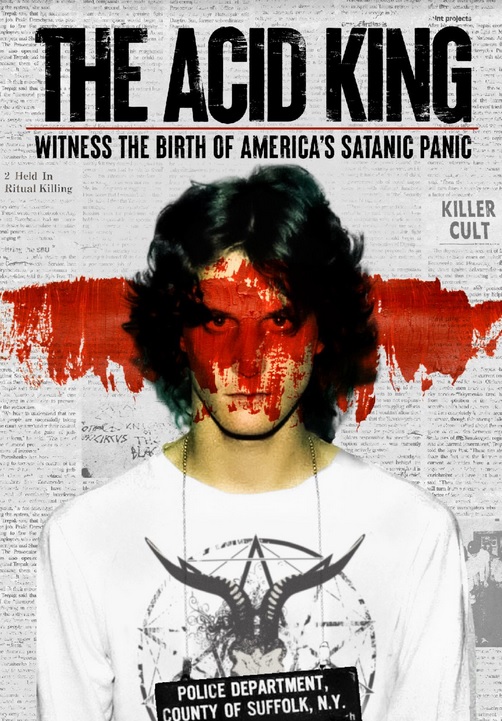
Ricky Kasso, an American teenager who murdered his friend, Gary Lauwers, in an alleged (it wasn’t) “Satanic sacrifice” during the summer of 1984, is a name we’ve oft-spoken on the digitized pages of B&S About Movies. We’ve examined his giving-metal-a-bad-name exploits (but, as we come to learn through the frames of The Acid King: it was actually the media’s fault, not Kasso’s) in our reviews of the Keanu Reeves-starring River’s Edge (1986), Jim Van Bebber’s Deadbeat at Dawn (1988) (by way of his short film, My Sweet Satan (1994), based on Kasso’s exploits; he opines extensively, here), and a rather weak attempt at dramatizing the horrors as Black Circle Boys (1998). Other films based on David St. Clair’s (since discredit) book, Say You Love Satan (1987), are the better, Canadian-produced Ricky 6 (2000) (written and directed by Peter Filardi; he wrote The Craft in 1996), and the even weaker, fictionally-based Under Surveillance (2006) (aka Dark Chamber, starring underground horror queen Felissa Rose). Prior to these films, there was the gritty, B&W short (thirty-minutes) that fictionalized the myth: Where Evil Dwells (1985).
In the release-wake of The Acid King, we can also look forward to that film’s producer, Chandler Thistle, soon-to-be-released, ’70s drive-in styled throwback on the life of Ricky Kasso: Lucifer’s Satanic Daughter (2022), a film which plays it loose with the tale: after sacrificing his best friend, Ricky really does summon a witch.
The final, accurate word.
While the aforementioned David St. Clair’s book was the first document on Ricky Kasso’s life — one that quickly became a best-selling paperback (a “bible” we carried in our back pockets, as we did with the Jim Morrison paperback tale, No One Here Gets out Alive*) — that Dell Books’ paperback was left to fall out-of-print when it was discovered St. Clair’s work was not only heavily fictionalized: it also plagiarized several portions of “Kids in the Dark,” a November 1984 exposé on Kasso written by David Breskin for Rolling Stone.
However, the discredited David St. Clair was simply hoping the “Christian Scare” bandwagon. The since discredited best seller wholly responsible for the “Satanic Panic” craze of the ’80s was Lawrence Pazder’s Michelle Remembers (November 1980) where Michelle Smith alleges she was a “victim of Satanic ritual abuse led by her own mother.” Then there’s Laurel Rose Wilson’s equally discredited best seller — under the name of Lauren Stratford — of her own “ritualistic abuse” in the pages of Satan’s Underground (July 1991). The “panic” reached it apogee with “The Devil Worshipers,” ABC-TV’s irresponsible, 30-minute segment on a May 16, 1985, edition of their highly-rated, hour-long news magazine, 20/20 — which leads off with the exploits of the “Acid King” himself, Ricky Kasso. (Smith’s and Wilson’s exploits have since been chronicled with their own film: 2023’s Satan Wants You.)
As for The Acid King: the film is not based on St. Clair’s discredited work, but Jesse P. Pollack’s own, well-received Simon Schuster book of the same name: a responsibly-written, nonfiction account of Ricky Kasso’s life; one that contains, not speculations or plagiarisms, but first-hand interviews with Ricky Kasso’s friends, family, and the investigators who worked the case. Pollack also takes it one step further: he examines the irresponsible, sensationalist journalism, noted above, that led to the creation of St. Clair’s work and its inspiration in the creation of the above noted films (and as we learn from the film: bands and their song catalogues).
The ongoing influence of Ricky Kasso.
Pollack is a writer of distinction when it come to New Jersey-New York-bred crimes. His first book, Death on the Devil’s Teeth (2015), investigated the somewhat similar, 1972 murder (occult sacrifice) on the cold case of Jeannette DePalma. Born and raised in the garden state of New Jersey, Pollack serves as a contributing writer for Weird NJ magazine, since 2001. As an accomplished musician, his soundtrack work appears in Driving Jersey, an Emmy-nominated PBS documentary series. (The soundtrack to The Acid King, not so much a “soundtrack,” but a montage of queasy-inducing, Blair Witch-styled noises, is an excellent complement to its subject matter that needs its own release.)
While I enjoy film documentaries (especially true-crime documents, then music docs; since The Acid King is amalgamate, it’s a win-win) I know the documentary-storytelling format isn’t for everyone. So, while I do not mind this insightful investigation’s one hour fifty-minute running time (a limited-edition “work print” briefly streamed on Amazon in October 2019 at two hours twenty-three minutes), that length — mostly narrated by talking heads — may discourage others to stream it. That’s my only reservation towards the film: the length, for the work, as result of its honest desire to finally set the story, straight, encourages (an engaging) steaming. As we’ve discussed many times at B&S About Movies: We are no longer in the lands of ’90s indie theatrical features distributed by the likes of Fine Line Features, Fox Searchlight, and Miramax, and 80-minute home video DVDs. Today’s distribution platform is all about digital streaming and the new distribution model allows filmmakers to break the rules when it comes to the art of storytelling. Filmmakers, today, can bypass studios, self-distribute and go straight the consumer — while indulging and not commercially compromise their vision.
The 30-plus minutes edited out of the 2019 work print-version for this 2021 streaming-relaunch are the film’s sidebars to other “Satanic Panic” cases from the ’80s in the wake of the Ricky Kasso case (we discuss those cases in our reviews of Black Circle Boys and River’s Edge); the new-distributed version concentrates on Ricky’s case, as it was the “Satanic Panic” harbinger. Other superfluous, irrelevant interviews (too much talking-headin’ from Jim Van Beeber and musicians who weren’t there; too much Amityville Horror tangents**) have been excised. Still, even with that earlier version’s narrative and production faux-pas (mostly in sound): the film is still real; its honesty in documenting the unfiltered truth is to be commended.
Oh, Geraldo. First the failure at Al Capone’s vault, now this.*˟
In reviewing the previous coverage of Ricky Kasso’s crimes, until The Acid King, the only U.S.-made examinations as to the “whys” behind Kasso’s crimes was, again, ABC-TV’s 20-20 segment, “The Devil Worshipers” (1985), the later “Devil Worship: Exposing Satan’s Underground” (1988), a prime-time episode of the syndicated Geraldo series hosted by Geraldo Rivera, and “Occult Killers” (2012), an episode of The Biography Channel’s (later to airing on LMN) Killer Kids series (S1:E1). Another is a critically-derided, hour-length Australian news magazine television document, “Satan in the Suburbs” (2000), which opted to enhance its insights with superfluous, A&E-styled “reenactments” of the events (some of which came from the movie, Ricky 6).
The system failed him: the system blamed Satan.
Considering those are hour-long programs, once you add in commercials, the actual running-time of those programs is about 40 to 45 minutes. I’ve read both, Say You Love Satan and The Acid King, and those episodic TV documents are greatly truncated, merely scratching the investigative surfaces: they’re also irresponsible, “Satanic Panic” agenda-driven pieces. The irresponsibility of those television, as well as magazine and newspaper, journalists (sans the responsible work of Rolling Stone‘s David Breskin) were exasperated by David St. Clair’s wreckless, religious-driven journalistic mania for the Paul and Jan Couch TBN crowd (Clip 1 and Clip 2 of their son Paul’s “Backmasking Special”; their minion, Pastor Gary, and his show, “The Eagle’s Next”: Clip 1, Clip 2, and Clip 3).
Jesse P. Pollack’s book is not only vastly superior to St. Clair’s (regardless of the controversies surrounding the book — which we did not know at the time of its release — it is still a well-written, entertaining read), his film is a superior, accurate account against those TV episodic documentaries. Where all other accounts stop, and inaccurately dismissed Ricky Kasso as the leader of a rock music-driven Satanic cult, Pollack’s film takes the necessary steps to examine the media’s irresponsible, “Satanic Panic” aftermath that came to influence (by way of duping, we learn) filmmakers and musicians. As The Acid King points out: Ricky’s crime is not to be excused; however, it was not a case of his being a “perfect kid” who started smoking joints, discovered Ozzy Osbourne’s music, then fell under Satan’s influence and decided to “sacrifice” someone.
Speaking of ’80s metal mixed with Satan: Visit our “No False Metal Movies” week of Satanic Panic-inspired film reviews.
While Jesse P. Pollack’s work is not as visually engaging as Tom O’Dell’s stellar, final documentary word on Charles Manson’s life with Manson: Music From an Unsound Mind (2019)**, or Joe Berlinger’s three-part Paradise Lost film franchise (1996/200/2011) on the tragic West Memphis 3 case, Pollack’s film is, nonetheless, an accurately-crafted, against-the-budget final word on the life and ongoing influence of Ricky Kasso. The Acid King also serves as a lesson to organized religion and big media: get the facts straight and enough with the self-serving sensationalism. And the fact that Ozzy Osbourne wasn’t on a recruiting drive for Satan, AC/DC doesn’t mean “Anti-Christ Devil Child,” KISS doesn’t mean “Kids in Satan’s Service,” W.A.S.P doesn’t mean “We Are Sexual Perverts” (or, insert your eyeroll: “We Are Satan’s Pawns”), and Tipper Gore was simply a woman with too much time on her hands who created the “Satanic Panic” industry.
The Acid King is a film that needs to exist about a man who shouldn’t have existed and a myth that should not have been created by an insatiable media and delusional religious fervor in the first place (but let’s not transform Kasso into a modern-day, Masonesque anti-folk hero for t-shirts and posters; he’s a murderer, after all). It’s a past that needs to be chronicled . . . so we do not repeat it.
But we always do, don’t we? We are human, after all.
And some of us are more human than others. And the less human do end up on tee-shirts and become infamous. . . .
The Acid King premieres-on-demand on November 9, 2021, through Wild Eye Releasing. You can learn more about the best-selling and acclaimed paperback that serves as the film’s basis at Goodreads, as well as sample several pages at Amazon Prime. You can learn more about the film and Jesse P. Pollack’s wares on Twitter, Instagram, and Simon and Schuster. Pollack also speaks at length with Micheal Whelan on his Unresolved podcast (45 minutes).
Update, March 2022: You can now watch The Acid King as a free-with-ads stream on Tubi.
Update, October 2022: Wild Eye Releasing issued the Blu-ray version. In addition to the HD-version of the film, the extras include a commentary track from co-writer/co-directors Jesse P. Pollack and Dan Jones, and Executive Producer Chandler Thistle, along with behind and deleted scenes features, extended interviews not appearing in the film, behind-the-scenes and crime scene photos image galleries, and two, full Unresolved podcast recordings regarding the Ricky Kasso case.
* We get down and dirty with Jim Morrison in our review of Larry Buchanan’s “What If” tale, Down on Us. We also discuss AC/DC’s lone feature film that broke them in the U.S., Let There Be Rock — a production ironically connected to the “No False Metal” classic, Rocktober Blood.
** We discuss the earlier influences Charles Manson had on filmmakers of the ’70s with our review of Lee Madden’s The Night God Screamed. We also discuss the religious and journalistic mania surrounding Ricky Kasso’s ’70s doppelganger: Ronald DeFeo, Jr., in our “Exploring: Amityville” featurette.
It’s rare for Becca to get as upset about a movie as Plankton, but I’ve heard about this movie repeatedly since she watched it with me and with good reason. It’s the kind of movie so bad that it circles the sun like Christopher Reeve Superman and comes back twice as horrible as it was before.
In short, this is the kind of movie I get on here and write a thousand words about.
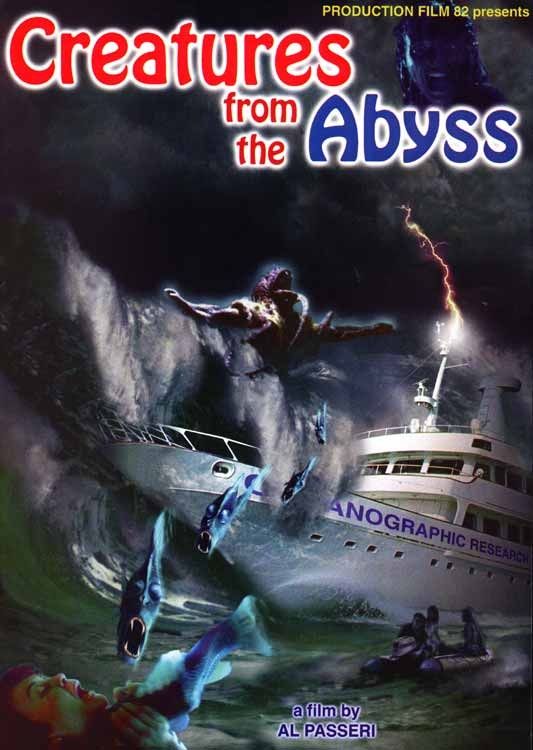
Alvaro Passeri made The Mummy Theme Park and for that he gets a lifetime pass to make movies this horrifically rough. The editing gets so frenetic at one point that I was waiting for Çetin İnanç to fly over from Turkey and tell him to settle down.
Also known as Creatures from the Abyss, this film has the absolute nadir of special effects within it, as radioactive fish mutate and then take over humans and you ant everyone to die, particularly Bobby, who makes some of the worst jokes in the history of jokes. In fact, this movie is pushing me to look up new synonyms for worst, awful, bad and poor.
But how can I hate a movie that has a cyclopean mermaid clock that talks to everyone and says cute things and comments on the film? Why is there an anthropomorphic clock in an aquatic slasher film? There’s an extra long vomit scene and an even more intense fish stomping scene and I nearly had a seizure several times in this movie from laughing and the strobing editing. And then some woman started growing crab claws out of her head that were basically crab claws tied to her head, perhaps via the magic of sweat band. And I nearly forgot that the shower has an artificial intelligence that just wants to see people have sex with each other or themselves while it watches.
I owe my wife an apology and you one as well, because as always, I’ve probably made this sound way better than it is. I’ll probably watch it at least ten more times and fall in love with it even more, because it is obviously made by someone who has no idea that it is approaching John Waters levels of upsetting moments when all he wanted to do was make a silly little horror movie.
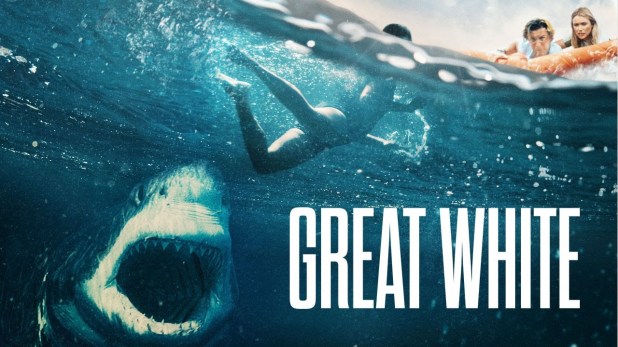
A blissful tourist trip turns into a nightmare! Yes, five seaplane passengers have been stranded miles from shore and, living up to the promise of this film’s title, there’s a hungry shark just waiting for them.
Charlie is a retired marine biologist and shark-bite survivor who, along with his girlfriend Kaz and friend Benny, have started flying their seaplane for tourists. As they take Joji and his wife Michelle around the islands, particualrly to a place that’s central to Michelle’s family history called…Hell’s Reef.
Before you can say Jaws: The Revenge, they’re trapped in a leaky lifeboat, the great white has their scent and will not stop until everyone is chum in the water. Sure, you’ve seen it before, but have you seen it on the Shudder streaming service?
This Australian film from director Martin Wilson stars Katrina Bowden from 30 Rock and was written by Michael Boughen, who produced The Loved Ones.
Hey, I can’t stop you from watching shark movies any more than I can stop myself.










 B&S About Movies
You must be logged in to post a comment.