ABOUT THE AUTHOR: Herbert P. Caine is the pseudonym of a frustrated academic and genre movie fan in Pennsylvania. You can read his blog at https://imaginaryuniverseshpc.blogspot.com.
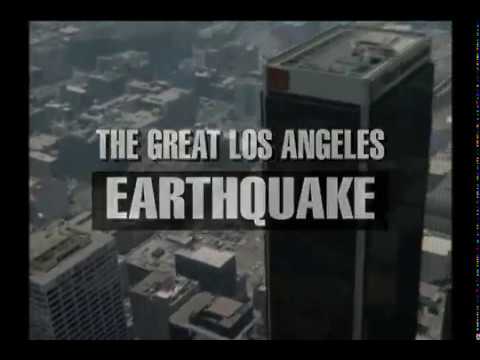
The Great Los Angeles Earthquake is essentially a TV miniseries version of the 1974 disaster movie Earthquake. It makes no attempt to hide this fact, as within the first ten minutes of the movie, we see a clip of the Universal Studios Theme Park ride based off the original movie. Both films use the same sets, according to Wikipedia. The film also starts the same way, with ominous music playing over a helicopter shot of the Los Angeles skyline. The theme music is a weak imitation of John Williams’s original disaster movie score, much as the movie is a weak imitation of the original theatrical release.
The Great Los Angeles Earthquake has the default plot for this genre: an intrepid seismologist, played by Joanna Kerns, has discovered a foolproof method of predicting earthquakes, and all the indications are that Los Angeles is about to be hit with a massive earthquake. However, her attempts to warn the populace are hindered by the machinations of a sleazy real estate developer, played by Robert Ginty from The Exterminator and The Paper Chase, who fears her predictions will cause housing prices to crash. Will she be able to warn the population in time?
One of the main problems facing this disaster film is that it is overloaded with too many supporting characters and subplots and not enough disaster. The earthquake only happens nearly two-thirds of the way through the film. In the meantime, we are treated to a variety of unnecessary and not particularly interesting sub-plots, ranging from the tense relationship between our hero’s sister and her mother to a plot to assassinate a South African trade minister who might become the country’s first black prime minister. The filmmakers would have been better off cutting one or two sub-plots to focus more on the destruction of the city.
However, this issue is mitigated by the quality of the supporting cast. Although Kerns and the other leads are not especially impressive, the supporting players include a number of talented character actors. Robert Ginty is suitably unctuous as the film’s antagonist, playing a more subtle version of Donald Trump. (The film even lampshades this, referring to the character as a wannabe “Donald Trump of the West Coast.”) Richard Herd is also good in a small role as Kerns’s superior at the U.S. Geological Survey, conveying authority and trustworthiness despite having little character development. Ed Begley Jr. does well as Kerns’s subordinate who leaks the story to the press. (Be warned, though: although Begley is prominently featured on the film’s cover, he is only in the film for 10-15 minutes.) Ultimately, the cast stand out is Richard Masur (Clark from The Thing), who plays a sleazy, hard-driving reporter whose efforts to exploit Kern’s warnings for ratings only succeed in making things worse. The reporter goes through a decent character arc as he confronts the destruction wrecked by the earthquake, with Masur conveying his emotional breakdown. Although none of these performers manage to surpass the awesomeness of Marjoe Gortner in Earthquake, they make the film worth watching.
The Great Los Angeles Earthquake also boasts impressive special effects for a TV movie. The film’s practical effects are far more convincing than the cheap CGI that too many televised disaster movies now resort to, with sets that actually shake and collapse and the actors interacting with actual flames. The way the disaster is shot is also effective, conveying the disorientation and chaos such a massive earthquake would actually cause. After the quake, the city looks dark and foreboding as it is engulfed with fire and smoke darkens the sky. Moreover, the last hour of the film is suitably downbeat as people struggle to find their friends and relatives amid the carnage.
Perhaps the most disturbing aspect of the film is how it illustrates the incapacitation of emergency and rescue services in the face of an 8.1 earthquake. Police, fire fighters, and EMS are hindered by the scale of the destruction and the blocking of roads and highways. This unsettles on a far deeper level than any special effect. In a better film, this could be used to show the total breakdown of society in the face of catastrophe, as in the beginning of the original Dawn of the Dead where we see the uselessness of the Emergency Broadcast System in the face of the zombie outbreak. Scenes like this hold real-world resonance, especially in the wake of the pandemic. When I first saw a late-night broadcast of this movie as a kid on the Million Dollar Movie, these elements disturbed me, but now they are arguably the most effective aspects of the film.
The Great Los Angeles Earthquake can be found on YouTube here.
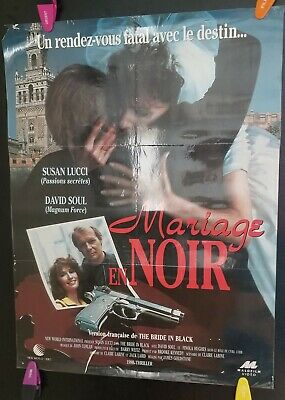
You know, I never watched soap operas, but Susan Lucci knew how to make a TV movie. Yeah, she may have been nominated for an Emmy every year for All My Children, but she made some awesome stuff like Invitation to Hell, Haunted by Her Pastand Lady Mobster.
Yet this tale of Lucci’s Italian shopgirl falling for David Soul and watching him get gunned down on her wedding day before following his past life has a twist that I feel that only I could appreciate. It was made in Pittsburgh!
It also has Reginald VelJohnson as a boxer who teaches Lucci how to take care of herself, Finola Hughes as an old flame of Soul’s and Tony Todd. Tony Todd in a TV movie!
Director James Goldstein also made Rollercoaster, Jigsaw and Cry Panic. Either fate has made me watch these movies for the reason that they are connected by this director or I just watch way too many movies. Perhaps both.
This also has Ronald V. Garcia as cinematographer. He was the director of The Toy Box and shot Fire Walk with Me.
This was written by soap scribe Claire Labine and Jack Laird, the man who wrote all the silly parts of Night Gallery. But yeah — at one point, Lucci was in the City of Champions, making a movie where she undergoes the journey of introspection that comes from having one’s life violently destroyed before one’s eyes. I can only imagine that she went to Images to dance after filming wrapped.
The ’80s were the comeback decade, for both William Shatner and Lee Majors returned to our small screens with T.J Hooker (1982 – 1986) and The Fall Guy (1981 – 1986)*, respectively. And both were shows good ol’ dad and I could enjoy together. And we were both equally perturbed when they were simultaneously cancelled.
Now you would think, with a second hit TV series, that Lee would have been back in mainstream Hollywood’s good graces and return to his stalled theatrical career from the early ’80s. But it seemed the contractual dust-up during the last year of The Six Million Dollar Man back in 1977 wasn’t forgotten. There’s two sides to the story: Majors either caught a case of the Tinseltown Flu to force Universal into accepting his Fawcett-Majors Productions as a series co-producer or he held out for a pay raise. Either way, the executive suites in la-la land don’t take kindly to their actors pulling a creative coup.
So after saddling up in the late ’80s as Mountain Dan alongside Dolly Parton (with Henry “The Fonz” Winkler directing!) in A Smoky Mountain Christmas and two Six Million Dollar Man-Bionic Woman telefilms, Majors made it back to the big screen . . . well, it was only a matter of time until Menahem Golan and Yoram Globus wrangled Lee Majors into one of their deadbeat, direct-to-video productions.
Granted, we love Cannon Films around the B&S About Movies offices, for their imprint was ’80s VHS-rental de rigueur, with all of the Death Wish sequels and Chuck Norris flicks, such as Invasion U.S.A. and The Delta Force series. And all of the Ninja-suffixed films. And all of our beloved Micheal Dudikoff flicks. In fact, by 1986, Cannon reached a production milestone of distributing 43 films in one year, as the studio broke away from their usual direct-to-videoesque potboilers to big-budgeted theatrical features such as (the less than stellar) Lifeforceand Masters of the Universe, (and the cheesily awesome) Cobraand Over the Top.
Sadly, by the time the Israeli cousins of the celluloid frontiers roped the services of Lee Majors, Cannon was in financial and creative ruins . . . and four years away from its inevitable demise. So, instead of putting Majors in a halfway decent flick sidekickin’ with Chuck Norris in something like Firewalker or slipping him into Roy Scheider’s role in (a pretty decent Elmore Leonard film adaptation) 52 Pick Up, our ex-Bionic stunt man ended up in Keaton’s Cop.
You know, the48 HoursLethal Weapon buddy-cop rip-off film that paired Lee Majors with Don Rickles. Yes. You heard me right. Mr. Warmth from all of those The Johnny Carson Show reruns on Antenna TV. The guy who did all of those goofy “beach party” movies with Frankie and Annette back in the ’60s. The guy who you’ve seen many a-cable-replay times as casino manager Billy Sherbet in Martin Scorsese’s Casino. But the younger kiddies ’round these wilds of Allegheny country probably remember Don Rickles best as the acidic Mr. Potato Head in Toy Story. Oh, and if you’re a horror hound like most of B&S’s readers: Don was Manny Bergman in the (pretty cool) mobster-vamp hybrid Innocent Blood by John Landis.
But here’s ol’ Don . . . twenty-years later, following up his last big screen role in 1970’s Kelly Heroes with Clint Eastwood, in the Danny Glover role as Jake Barber: the aged detective sidekick paired with Mike Gable, a burnt-out, on-the-edge veteran cop with a penchant for throwing suspects out windows — and losing partners, via death. Oh, and speaking of Cobra . . . guess who their boss is . . . hey, it’s Art LaFleur rippin’ through a Xerox redux of his role from that Stallone flick. (Plot spoiler: we lose Don early in the movie, natch, and he’s not funny here; he plays it straight, as he did in Innocent Blood and Casino.) Oh, and speaking of Cobra, again: Remember the big “character development” scene when Marion Cobretti cut off a slice of three-day-old pizza with a pair of scissors? Well, Keaton’s Cop has one: Mike Gable brushes his teeth with beer. (Remember when Brian “Boz” Bosworth mixed that “health drink” in a blender during the “establishing scene” in Stone Cold (1991) and we wondered, “how can he drink that” . . . and it ended up being gruel for his bet iguana? Hey, all of these action flicks needed one of those “character development” moments, natch.)
So, I see you noticed the name of Abe Vigoda on the box. Yes, he from those endless AMC and TNT reruns of The Godfather and those old Barney Miller episodes you’ve Antenna TV-channel grazed as you surfed the couch after a long Saturday night of partying. Eh, maybe you remember Abe in The Cannonball Run II, The Stuff, or the oddest Christmas flick of them all, Prancer.
Anyway, Ol’ Abe is Louis Keaton, an aged-out mobster living his days incognito in a Galveston, Texas, nursing home. When Gable is dispatched to the nursing home to investigate a shooting, he comes to discover the intended target was Keaton and the shooter was a mob hitman. And since Barber and Vigoda go “way back,” Barber convinces the guff n’ grizzled Gable to take part of the action-comedy-romance (with a home nurse that is way too young for him) that ensues.
Truth be told: Even though this a pinch-o-rama rip off, Majors is solid here, the comedy is funny (both of the sometimes-intentional and non-intentional variety), and it’s nice to see a then 69-year-old Abe Vigoda digging in his heels and getting banged around with film’s promoted “hard-edged action.” But still. Lee Majors deserved better. Way better. Like the very similar Martin Brest-directed and Robert DeNiro-starring Midnight Run from 1988-better (which Majors’s old bosses, Universal, backed). But that’s how the dice in Hollywood roll across the green felts of fate.
No freebie streams? What the hell, You Tube uploaders? What gives, ye executives at Tubi TV? Ah, but we found a rental-stream on Amazon Prime. Keaton’s Cop has never been officially reissued on DVD, so watch out for those bogus-cum-defective grey market rips out there, kiddies.
About the Author: You can learn more about the writings of R.D Francis on Facebook. He also writes for B&S About Movies.
* Stock footage alert: Action scenes from our “Fast and Furious Week II” review of Flash and the Firecat ended up in The Fall Guy (the clip is included in the review).
Wow! Finally! Yeeeees! When Blender Master Sam stirred up an “Ancient Future” theme week, I jumped with glee! Finally, a reason to review one of my favorite home video rentals that oft-played on HBO. It was the first movie that my analog cortex correlated to “ancient futures,” aka “future history,” if you will, when Sam published this month’s schedule. Eh, yeah, it has a some post-apoc stank on it from our last week’s “Post-Apoc Week,” but since this has a lot of pre-Matrix tech tomfoolery, we’re reviewing it this week.
As with the Sam Raimi The Evil Dead precursor Equinox (1970), and, in a sci-fi vein, John Carpenter’s Dark Star (1974), Circuitry Man got its start as a UCLA student film by Steven Loy and his brother, Robert. IRS Media, the home video arm of IRS Records, backed the expansion of the project into a feature-length film. The burgeoning cyberpunk effort was successful enough on the retail rental circuit that it inspired one of the earliest direct-to-video sequels (eh, still cool, but not as good), Circuitry Man II, aka Plughead Rewired: Circuitry Man II (1994), in which Vernon Wells, Jim Metzler, and Dennis Christopher return from the first film. Both films are highly recommended as a great, first time doorway into ’80s VHS-era sci-fi (but always one over two, for me). (Remember how Escape from New York always rules over Escape from L.A., and it’s always Phantasm the original over II? Yeah, it’s like that. Sometimes, we don’t want the ball to come back.)
Of course, the major studios put out the likes of the similar cyberpunk-cum-tech noirs Hardware (the very cool debut feature by South African writer-director Richard Stanley) and Total Recall (eh, Dick’s book We Can Remember It for You Wholesale is better) that same year, but neither are quite as distinctive and fun. To that end, and considering Total Recall, there’s a definite Phillip K. Dick-vibe with the Loy brothers against-the-budget post-apoc world forced, by pollution, to live in underground in parking garage-like bunker-environs. Lori (Dana Wheeler-Nicholson), a female body guard, is pressed into service by a drug smuggler for a major microchip deal; when the exchange goes bad, Lori’s on the lam, aided by Danner (a really great Jim Metzler), a pleasure android (read: male prostitute). Together, they’re now “drug smugglers” of virtual reality computer chips, chased from Los Angeles to New York City and aided by a fellow fringe-denizen, Leech (an also great Dennis Christopher). Not only are they pursued by the police, but by gangsters, led by the villainous, VR narcotic-addicted Plughead (an incredible Vernon Wells . . . yes, Wez from post-apoc influencer, The Road Warrior*).
I love to plug!
Released five years before Kathryn Bigelow and James Cameron’s not-so-memorable tale of black market VR smuggling with Strange Days (1995), Circuitry Man, as far as direct-to-video movies go at the height of the VHS tape market, is right up there alongside Charles Band’s Trancers in the imagination-against-the-budget sweepstakes. And the Loy brothers were smart to forgo the cheezy, low-budget computer graphics and just sticking to the noirish caper. (Ugh, remember how great Christopher Walken was, but how awful the big screen, dream-VR romp Brainstorm (1980) was for that very reason?) Another plus: the genre switching of the roles, with a woman as the noir-spiraling P.I (if you will) and making her sidekick the male “prostitute” who helps the jammed-up detective. And, as I rewatch Circuitry Man all these years later (on VHS, natch), the Windows 3.1 software is a lot of fun . . . dated, but fun to watch. At least our reluctant protagonists aren’t running around with “mission critical,” ’80s-era Kmart Kraco (or Radio Shack’s Realistic) audio cassette tapes in 1997, à la Snake Plissken. (Truth: As cool as Escape from New York always will be; the cassette tape bit still sucks; so, a major ball drop there, John. Couldn’t you make-up a some faux-techo doo-dad?)
Circuity Man is definitely — in terms of low-budget indie sci-fi’ers that began their life as student film, such as Dark Star and George Lucas’s space opera precursor, THX-1138 — required viewing and worthy of an entry in any sci-fi fan’s home video library. How, and why, Carpenter and Lucas (and Raimi) hit such career highs from such similar beginnings, but the Loy brothers dissipated into the analog snows after Circuitry Man II, is crime against cinema. I, for one, would have loved to have seen what they would have come up with courtesy of a major studio’s backing.
If you search “Circuitry Man” on You Tube, you’ll find many-a-fan favorite clips uploaded. While there’s no streams — freebie or official — online for Circuitry Man II, you can stream the original Circuitry Man at Amazon Prime and Vudu. We found the You Tube trailers (get ’em while they’re still there, if they are . . .) for Part 1 and Part 2.
Be sure to look for our review of the “ancient future” of Brainstorm, this week. And check our interview with Vernon Wells!
About the Author: You can read the music and film reviews of R.D Francis on Medium and learn more about his work on Facebook. He also writes for B&S Movies.
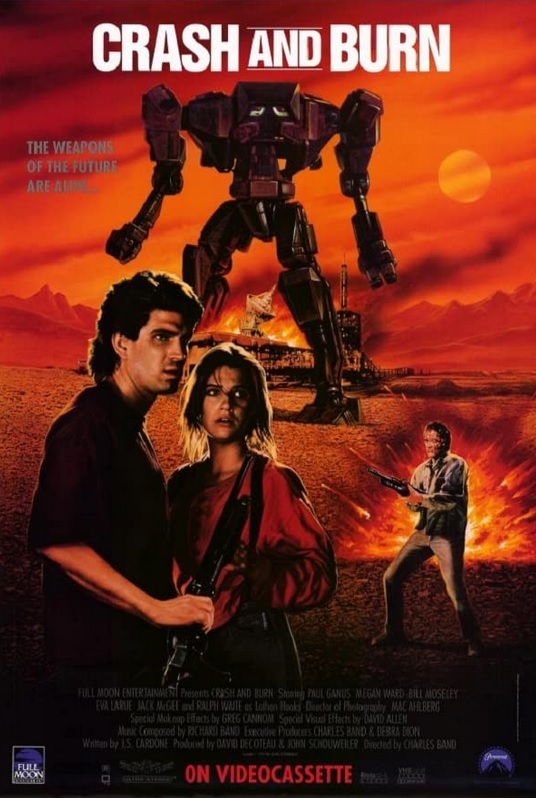
This sequel-but-its-not-a-sequel to Robot Jox — marketed in the overseas markets as Robot Jox 2: Crash and Burn — unlike its predecessor, foregone a U.S. theatrical release and went straight-to-video. As with Roger Corman creating Forbidden World and Space Raiders for the sole purpose of not so much to tell a compelling story, but to maximize his $5 million dollar investment in Battle Beyond the Starsby recycling that dopey Star Wars cash-in’s sets and special effects, Crash and Burn recycles the impressive Dave Allen and Ron Cobb stop-motion animated robots from Robot Jox. Just don’t hit the big red streaming button with the expectations of another anime-mech battle of the robots: at its core, Crash and Burn slaps a sci-fi coat of paint on the plot of Friday the 13th, with that film’s supernatural, woodsy killer, replaced by a James Cameron-inspired, unstoppable, synthetic desert killer.
Why is the tagline “The Weapons of the Future are Alive” in grey-against-red: you can’t read it. Why not go with a black typeset-against-orange?
To make sense of this new, its-not-a-sequel Band-verse: Let’s assume that the post-fifty years-after-the-nuclear war new order created by the two, new world superpowers from the Robot Jox timeline — the Common Market and the Confederation — suffered an economic collapse. That, coupled with the world ravaged by the greenhouse effect and an out-of-control sun creating “Thermal Storms,” allowed for the rise of the powerful Unicom Corporation controlling the world’s marketplace. Blaming the economic instability and collapse on the world’s technological dependency, Unicom banned all human usage of computers and robots. (In this new-verse, the mech-robots were develop for mining operations.)
While we have a pinch of The Terminator here, you’ll also notice an Orwellian pinch of the influential, “ancient future” novel, 1984, with scattered pockets of citizenry operating the “Independent Liberty Union,” a loose resistance movement in authoritarian opposition. One of the last free-speech strongholds against the corporate rule is a battered, over-the-air Public Access television station housed in an abandoned industrial facility, operated by Union sympathizer Lathan Hooks (Ralph Waite of TV’s The Waltons), a one time media executive who moonlights as a revolutionary. And, in a pinch from Alien — if you remember that the Weyland-Yutani Corporation infiltrated the Nostromo’s human crew with a cyborg to harvest alien eggs — Unicom manages to plant Quinn (a great Bill Mosley of Dead Air), a Sythnoid-cyborg operative (he’s the station’s Chief Engineer) among the station’s staff to kill Hooks and shutdown the station.
Keep your eyes open for the great work by a familiar cast of characters actors: John David Chandler of Drag Racer is a scruffy-creepy gas station owner; ubiquitous TV and film character actor Jack McGee (Brad Pitt’s Moneyball) is a slobbering talk show host; Megan Ward of Encino Man is Waite’s granddaughter and studio engineer; a perfectly-stoic-for-the-role Paul Ganus is very good in an early role (and one of his few leading-man roles) as Tyson Keen, a Unicom fuel courier who takes up the with TV station-based rebels after his departure is waylaid by a thermal storm.
For a Charles Band production-edict patched together by producer David DeCoteau (Sorority Babes in the Slimeball Bowl-O-Rama) with a script by J.S Cardone (The Slayer, Outside Ozona), the production quality is high (courtesy of Band’s inventive repurposing of a rusted processing plant that reminds of Ravagerssimilar against-the-budget architectural redeployment). In addition, the acting on all quarters is solid, Band’s direction is tight and suspenseful, and Cardone crafted an interesting “ancient future” by way of convincing techno-speak and a well-fleshed sociopolitical backstory for a nicely-layered twist to its Alien-cum-Terminator-cum-Friday the 13th plotting. And while the Dave Allen 120-foot robot we came for doesn’t show up until the last throes of the third act, Cardone and Band earn bonus points for — instead of putting the words “July 2030” on the screen to advance the plot, they made a sensible, creative choice to have John Davis Chandler’s character swat a fly that lands on a dated calendar. And, instead of a text scroll or voiceovers (the bane of my screenwriting existence), they have Ganus’s Unicom courier watch Waite’s newscast on a television in the gas station to get us up-to-speed as to “the future” of Crash and Burn. (And since this is all in the Full Moon family: Ted Nicolaou, the director of the studio’s Bad Channels, The Dungeonmaster, Subspecies, TerrorVision and The Dungeonmaster, serves as the editor, here.)
All in all, Crash and Burn isn’t a bad Full Moon flick; it’s one that rates right up there with their vampire variant Subspecies as one of the studio’s best. Well, okay the sci-fi’ers Arena and, especially, the space westerns Oblivion and its even better sequel, Oblivion 2: Backlash, are pretty cool shots from the Full Moon canons, too.
There’s a couple alternatives to owning your own copy of Crash and Burn. Of course, used VHS tapes are bountiful in the online marketplace, with the first DVD version released in 2000 by Full Moon. Then, under the “Charles Band DVD Collection” box set, it was reissued in 2006 with other Full Moon titles. The most recent reissue is a 2011 double-feature DVD with the third, loose sequel, Robot Wars.
You can enjoy Crash and Burn as a free with-ads-stream on Tubi. And look for our reviews of Robot Jox and Robot Wars, this week.
About the Author: You can learn more about the writings of R.D Francis on Facebook.He also writes for B&S About Movies.
We love David A. Prior around here. Of course, you know that already, as we drop his name a lot around the digitized pages of B&S About Movies. And we like to kid David A. Prior a lot around here, too. But it’s out of respect. Which is why, even though Sam the Boss already took a crack at Future Force and Future Zone during our past post-apoc excursions, we’re reviewing them both with a second, fresh take, for this new apoc week.
In the coming months, we’re rolling out a week-long tribute to ’80s SOV films, and David A. Prior is on the list with his infamous film debut, Sledgehammer (1983), which starred his bodybuilding and ex-Chippendale’s dancing brother, Ted. And from that humble, shot-on-video beginning, David A. came to incorporate AIP — Action International Pictures — with David Winters and Peter Yuval. Winters’s own humble beginnings began with Thrashin’; after being overruled on a casting decision (Josh Brolin instead of Johnny Depp; we reviewed Brolin’s Jonah Hex, by the way), Winters vowed to make movies on his own, without studio interference. Then he gave us Space Mutiny . . . so, maybe it pays to have studio interference.
Ah, but we’re here to praise the ’90s-VHS resume of David A. Prior, a resume that would require two tribute weeks to review the joint Prior brothers’ resume. What we have reviewed is the spa ‘n blades romp Killer Workout and the Filipino actioners Firehead, The Final Sanction, and Silencer. Then there’s his female Rambo ramblings with Relentless Justice. And while Prior didn’t direct them, his Action International Pictures, which later rebranded as West Side Studios after David Winters bought out his partners, also gave us the holiday horror Elves, the apoc-slop of Phoenix the Warrior, and the exploitation zombie mess Zombie Death House.
Mr. Prior dipped his toes in the post-apoc pool again — and Brigette Nielsen in tow — with Hostile Environment, aka Watership Warrior (1999), concerned with the ol’ rebels and tainted water supply gag. We’re wondering if Dave A. brought back the flyin’ robot forearm we’ll soon discuss? We wanted to review it this week because, well, another David A. Prior flick on the site is a good thing — really. Sadly, there’s no online streams — or trailer, not even clips — for us to review and share with you.
The Reviews
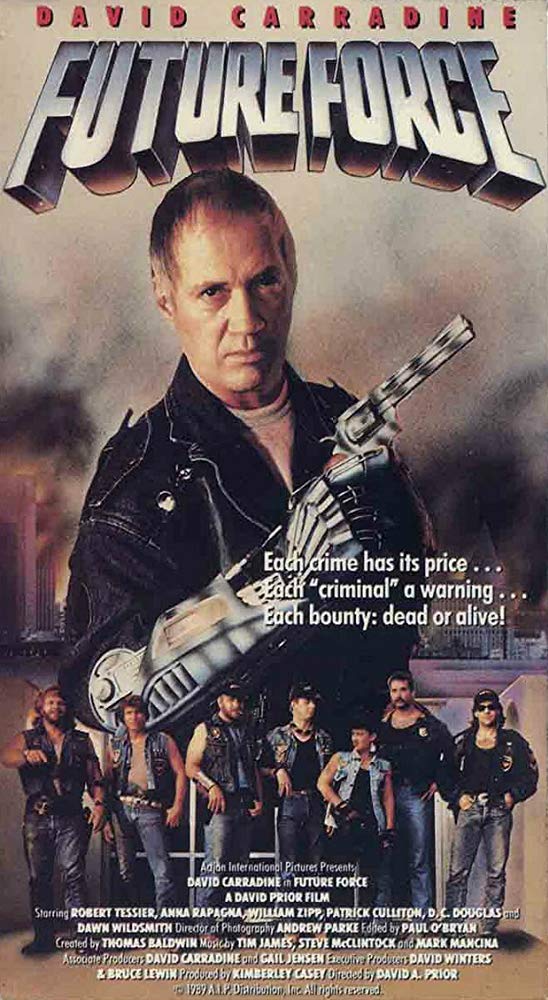
And that brings us to the Mad Maxian one-two punch of the post-apoc adventures of John Tucker — he of the flying, remote controlled robot arm-cum-glove. Seriously. John can either slip on the glove to kick apoc-ass . . . or use a remote control on his belt to fly said robo-glove out of its toolbox home to zip around and punch out the bad guys. Oh, and it can shoot lasers and take out an errant helicopter. So there’s that.
Anyway — one year earlier, in the far-flung year of 2020 — things haven’t got so bad to be Mad Maxian, but bad enough to be Robocopian. But, since this is a low-budget apocalypse, the world of John Tucker is just down the street from the also not-the-Main Force Patrol apoc-shenanigans of Ron Marchini’s John Travis in Omega Cop (1990) and Karate Cop (1991). (And, to add to the confusion, David Carradine cameos in Karate Cop.) And since we don’t have the budget for full-blown Robocopbody armor or Road Warrior body leathers, our cops wear sleeveless denim vests with “Special Police” and “COPS” patches on their chest.
And if it all sounds like the same movie . . . it probably is. And none of it — regardless of the vests — is very heavy metal.
You’ve got the right to rock alongside Ron Keel, Mr. Carradine. Flash those horns, Mr. Marchini.
This time, our merry band of law officers are a civilian bounty hunter-based organization known as C.O.P.S, aka Civilian Operated Police Systems. Our intrepid John Tucker (David Carradine) is a bitter, washed up drunk roamin’ the mean streets of Los Angeles who’s more interested in dispatching justice — like Judge Dredd — than collecting bounties in his pocket. Of course, as in Robocop, the police force is corrupt and a reporter — a female reporter, natch — has the proof. (So, yeah, we’re pinchin’ Stallone’s Cobra, too.) And now the C.O.P.S are out to stop the duo from exposing the corruption. Oh, and Tucker’s only ally is Billy (the 260-plus credits strong D.C Douglas; six new films in production), a computer genius with a spiffy wheelchair. Oh, and the chief baddy that gets his ass robo-gloved kicked is Robert Tessier from Burt Reynolds’s The Longest Yard — but since this is B&S: The Glory Stompers, The Velvet Vampire, and Chief Thor in Starcrash, just to name a few of Robert’s B-Movie delights.
So, we’ve ripped off Mad Max and mixed it with Robocop. And tossed in some Cobra and Ron Keel. What’s left to rip: The Terminator . . . or more like Charles Band’s Trancers— didn’t that have time travel and see an overseas release as Future Cop? — since there’s no way this movie can afford a James Cameron cyborg, well, at least not a borg that extends beyond the right forearm. And John Tucker ain’t no Jack Deth. And neither is a Snake Plissken. But Plissken was packing a 1998-era, mission-critical Kraco audio cassette tape and a laser-sighted revolver. And Tucker has a robo-arm. So who is kicking whose ass around Los Angeles: David A. Prior, for at least he came up with a techno-trinket and didn’t have Tucker packing Carpenter’s “future” audio cassettes.
Anyway, this time, the C.O.P.S will stop John Tucker . . . so they think. Tucker’s son, Billy (Ted Prior) — and not the same Billy from Future Force — travels back in time to 1990 to stop his dad’s murder. Oh, and save Tucker’s wife — and Billy’s mom — from kidnappers. And that’s pretty much it. The glove kicks ass. There’s explosions. Turned over cars. Oh, and requisite baddie soldier-cop Charles Napier (best known in the mainstream, celluloid throes as CIA officer Marshall Murdock in Rambo: First Blood Part II) and Jackson Bostwick, the original Captain Marvel from the ’70s Saturday morning TV series Shazam!, beef up the cast (well, this is a step up from the Gold Key Entertainment-verse with Killing at Outpost Zeta and Escape from DS-3, after all, right Jackson? Uh, is it?).
So, which is better and which is worse? Opinions vary. Can you make it through both and figure it out for yourself? Well, what do you expect from a law enforcement agency that spends their money on a fleet of un-Mad Maxian Jeep Cherokees with remote control doors — then blows their remaining operational budget on robo-gloves that flash an “OK” and Devil’s Horn” signs after its remote ass-kickings?
Exactly.
For no one thought to rent the repurposed Death Race 2000 Calamity Jane from Claudio Fragasso used in Interzone or Scorpion’s bubble-topped Camaro from Enzo G. Castellari’s Warriors of the Wasteland. And speaking of Trancers and cars . . . Band’s future cop romp repurposed the Spinner from Bladerunner, which was also repurposed in Solar Crisis (1990) and Soldier (1998). Come on, Mr. Prior, a fleet of Jeep Cherokees will save our future? Could you be more cheapjack? Okay, so don’t rent out the Spinner. Could you have at least attempted a flashy, MFP-styled paint job on the jeeps? And . . . hey . . . wait a sec . . . are those the same Jeep Cherokees from the earlier adventures of John Travis in Omega Cop(y) and Karate Cop(y)?
Where to Watch
You’ve got four chances to tough out the John Tucker-verse: Tubi offers the RiffTrax’s versions of Future Force and Future Zone. If you’re a purist — like moi — you can watch the un-riffed VHS rips on You Tube for Future Force and Future Zone. And no, while David Carradine stars in the similarly-titled Crime Zone, that’s a whole other zone unto itself — courtesy of Roger Corman’s Concorde Productions. The same goes for Carradine’s brush with Cirio H. Santiago in Kill Zone from 1993.
And since we mentioned Ron Keel and are in a musical mood: The resident damsel-in-distress in Future Zone, aka Ms. and Ma Tucker, is Gail Jensen, aka, Ms. David Carradine. The Carradines married in Rome in 1988 during the filming of the Italian-British co-production of the Terence Young-directed sports drama, Run for Your Life, aka, Marathon. Now, if the name Terence Young is familiar to you spy flick junkies . . . yes, Young is the director behind the early Bond classics Dr. No (1962), From Russia with Love (1963), and Thunderball(1965). (We could do a theme week on Young’s resume; we haven’t reviewed many of his films, but we did take a look at his box office bomb, Inchon.)
Anyway, back to Gail Jensen.
While Jensen acted (she made her debut in a 1974 episode of TV’s popular cop-procedural, McCloud, and had a support role in the ’80s slasher Don’t Answer the Phone) and helped co-produce David’s later films, she was primary known as a musician and songwriter. Her credits include the songs “Walk the Floor” and “Hello Heartbreak” — both sung by David — and “History Hall” and “Shot Full of You Love” — both sung by Gail — for Larry Cohen’s Maniac Cop. Her biggest success as a songwriter was the Lee Majors-sung “Unknown Stuntman,” which she co-wrote with Glen Larson and Dave Somerville (Larson were both members of — but not at the same time — The Four Preps; Somerville went onto greater fame with the ’50s vocal quartet, The Diamonds). Jensen also wrote the 1977 single “Prairie Dog Blues” for McCloud actor Dennis Weaver. (You can also check out David Carradine’s songwriting and singing with “Divining Rod” featured in Roadside Prophets.)
Unfortunately, when you Google Gail Jensen to learn more about her music career, all links lead to her disclosure of David Carradine’s kinky sex proclivities, which led to his death. For the curiosity seekers of the dark side of Hollywood, you can learn more about the legal fallout of David’s — and eventually Gail’s — deaths via the IMDb’s news section on Gail Jensen (and that page with the press links has now been wiped; you’re on your own with Google).
Personally, I much rather know more about Gail’s music career — which Hollywood seems to have swept under the rug.
About the Author: You can learn more about the writings of R.D Francis on Facebook.He also writes for B&S About Movies.
We originally reviewed this film on March 10, 2020, as part of Mill Creek’s Explosive Cinema set. But since Mill Creek is a recycling-green DVD distributor, we’re going to review it one more time. Which is two more reviews than this Z-grade Lethal Weapon rip (I’d even blame some Road House inspiration) from Crown International, deserves. No wonder the studio imprint went under, right? And the award for “Worst Poster Art of a Crown Flick” goes to . . . they just stopped trying. And we just kept on renting this junk because, well, the cover is so bad. So, we wondered, “How bad is the film inside?”
Worst cut-n-paste clip art . . . ever. You can do better Crown and Rondo . . . well, not really.
It’s ALWAYS worse . . . and it looks like it was shot in the Drive-In ’70s during Crown’s heydays and not in a post-cable TV world . . . regardless of Leonard Maltin claiming that Top Cop was the “best erotic thriller of 1990.”
Surely, you jest, Lenny.
Lenny-boy must have confused this with another movie. Perhaps Arnie’s Kindergarten Cop. More than likely one of Len’s many ghost writers and editors behind the film compendiums he “writes” got sick of Len’s ego-shite and decided to screw with him. An “erotic thriller” is well, the pinnacle of those would be Basic Instinct . . . and Top Cop isn’t even CLOSE to that level in its filmmaking or “erotica.” Or Kindergarden Cop. Or Raw Deal. Or Commando. Maybe if Top Cop was made in L.A. by any studio other than Crown? Well, we can’t blame Crown, as it seems they only distributed it and didn’t bank it. And Rondo placed this on our home video shelves. Oh, the joy . . . and the pain.
So, our intrepid Vic Malone, the “Top Cop” of the title, loses his partner to a drug kingpin. And Malone goes “scorched earth” on said kingpin and his minions. And if the cover doesn’t give it away: our “Top Cop” is top heavy — with a case of Type-2 diabetes for desert. For Malone has none of Dr. James Dalton’s rips and none of that Martin Riggs swagger: he’s almost a Mike Biggs from Mike and Molly. (In real life, the actor behind Vic Malone is an ex-Marine. But I forget if that fact was worked into the plot. Not that it matters to the story. Oh, and Mike Bass, who plays one of said drug kinpin’s heavies, played ball for the Washington Redskins.)
Anyway . . . Malone risks his life. He’s saves women. He blows up stuff and rattles off rounds of bullets — and in the usual “ensues” rat-a-tat-tat you’d expect from a low-budget action flick from Crown International. And one set in Arkansas, on top of that.
This was the first directing effort from Mark L. Maness who got his start at 10 years old with an 8mm movie camera he received for Christmas; he then moved on to work for ESPN and Fox Sports Net network. And those Walmart commercials from back in the day: Mark made those.
So, has anyone seen Mark’s films Birthrite (2008) or It Knows (2018)? Neither have we, especially It Knows, which is a low-budget horror (with a decent poster; that he wrote and directed) and we usually get screeners o’ plenty for that genre sent to the B&S cubicle farm. And Maness is still rockin’ the Canon Red, as he has a new flick in production, Ohio (2021). Yeah, we’re interested in seeing that, as it is cool to see these under-the-radar low-budget purveyors still pumpin’ the tiger blood and winning at the foot of Mount Lee.
However, is the writer on this, Helen P. Pollins, still “winning” the tiger blood sweepstakes? Huh? A woman wrote this? Yeah, we thinks that be an alias of the Ellen Cabot-is-really-David DeCoteau variety. Now, apparently, per the credits, there’s a Mr. Pollins, aka Frank, co-producing . . . but again, we think that’s a nom de plume for someone else. If the Pollinses are, in fact, a husband and wife writing-production team, the abysmal state of affairs displayed in Top Cop was enough to make them quit the business.
Our star — and stunt coordinator, associate producer and special effects artist, here — Stephen P. Sides, well, this is his show. So we are guessing he’s the “Helen” of these proceedings. He also produced the vanity flicks Blood Forest (2009) and Step Away from the Stone (2010). There’s another one — that he didn’t act in, but produced and did all the stunts — called Too Scared to Laugh (1989). One of the common denominator actors across those films is Todd Tongen, who went on to become an ABC-TV news anchor affiliate for WPLG/Miami. So, if you’re from South Florida and only knew Todd as news anchor, here’s your chance to see him effectively thespin’ it up as the dopey brother of a drug kingpin.
Look, a self-financed, shoestring run to be the next “Bruce Willis” isn’t going to be good. But one thing Top Cop isn’t: boring (well, it is, but, uh . . .), as the serviceable, cliched action just keeps on comin’ at ya. But does it “come at ya” as good as The Patriot and the Leo Fong two-fer of Low Blow and Killpoint (which also all appear on the Explosive Cinema set; the Patriot also pops up on B-Movie Blast)? Oh, hell no, but it’s as good as The Silencer, which has its own issues, but also keeps the Z-gradeness of the Lethal Weapon-Die Hard variety comin’ at yah.
Eh, it’s something different that you’ve never seen before to watch to burn off some downtime. And you’ll never see this on the all-reality-and-repeats of cable, right? So stream it on You Tube. Be sure to check out our B-Movie Blast Round Up for all of the films on the set.
Eh, better you watch the other “set in Arkansas” (or was it Georgia) Michael Sopkiw action fest that is Blastfighter. For the ‘Sop is god here at B&S.
About the Author: You can read the music and film reviews of R.D Francis on Medium and learn more about his work on Facebook.
Ron Underwood has had a pretty good directing career, with this as his first film, although he was an AD on Tourist Trap. His career is all over the place genre-wise, with City Slickers, Hearts and Souls and Mighty Joe Young doing well before The Adventures of Pluto Nash failed. He’s since done well in TV, directing episodes of Agents of S.H.I.E.L.D., Boston Legal and Fear the Walking Dead. And, like nearly every horror director from the 80’s, he’s put out several holiday movies such as Santa Baby, The Year Without a Santa Claus and Holiday In Handcuffs.
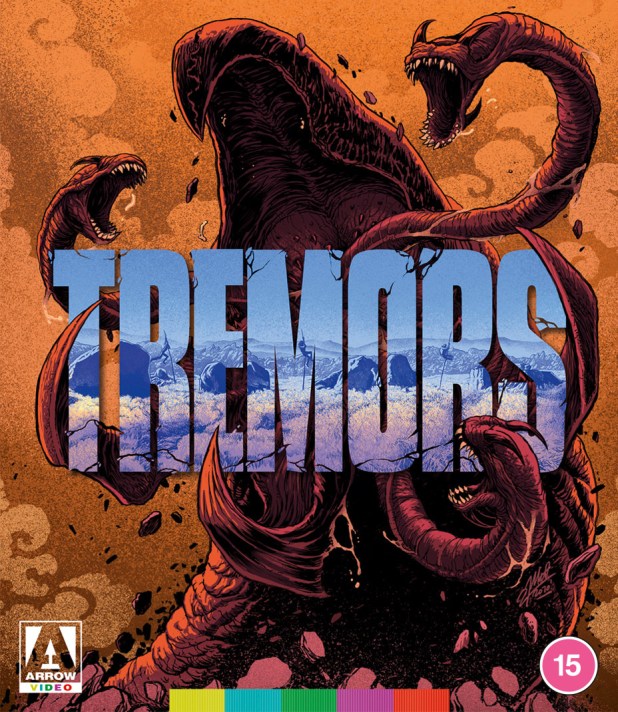
Valentine “Val” McKee (Kevin Bacon) and Earl Bassett (Fred Ward) are sick of life in Perfection, Nevada. They decide to leave town for Bixby, the closest big city, but are stopped when they find the body of Edgar Deems up in a tower, dead from dehydration. Before you know it, they’re under assault by gigantic worms called Graboids and working with seismology student Rhonda LeBeck (Finn Carter, How I Got Into College) and survivalists Burt and Heather (Michael Gross and Reba McEntire) to figure out how to survive.
There’s a great supporting cast on hand, like John Carpenter stock actor Victor Wong as a general store owner, Bobby Jacoby, Ariana Richards (who battled even bigger creatures in two Jurassic Park movies and the third sequel to this series, too), Charlotte Stewart (Mary X in Eraserhead and Bettie Briggs on Twin Peaks) and Bibi Besch (The Pack, Star Trek II: The Wrath of Khan).
This movie did just OK in theaters before becoming a rental and cable success. It was such a big deal that it has since become an entire series of films, including 1996’s Tremors 2: Aftershocks (Fred Ward came back, as does Michael Gross), 2001’s Tremors 3: Back to Perfection (Gross stays on and Ariana Richards comes back) and the 2004 prequel Tremors 4: The Legend Begins, which is set in 1889 and has Gross playing the role of Hiram Gummer, Burt’s great grandfather. These films were all made by the original creative team of Underwood, Brent Maddock and S. S. Wilson.
Eleven years later, Universal made Tremors 5: Bloodlines with an all-new cast and crew, save Gross. That movie was followed by Tremors: A Cold Day in Hell, which brought back Jamie Kennedy as Burt’s son Travis and Gross and last year’s Tremors: Shrieker Island, which closes out Burt’s battles against the Graboids, Dirt Dragons, Ass-Dragons and Shriekers. There was also a TV series as well that aired on SyFy and a pilot for a new series was made in 2017 but wasn’t bought.
Before making this movie, Kevin Bacon really thought his career was over. He screamed to his pregnant wife Kyra Sedgwick, “I can’t believe I’m doing a movie about underground worms!'” But by the end of the movie, he’d admit that making Tremors was the most fun he’d had in his entire career. As for Gross, he basically walked off the set of the last episode of Family Ties and on to the desert location for this movie.
Now you can see the best version of this movie ever thanks to Arrow Video. There’s a new 4K restoration from the original negative, approved by director Ron Underwood and director of photography Alexander Gruszynski, on blu ray and UHD. There’s also new audio commentary with Underwood, Maddock and Wilson as well as a second version with notes from Jonathan Melville, author of Seeking Perfection: The Unofficial Guide to Tremors.
There’s also a new documentary about the history of the film series, several interviews with key cast and crew members, a feature on the overdubs to remove profanity for the TV version and an entire disc full of extended interviews, outtakes and three early shorts from the film’s makers. Plus, you get a 60-page perfect-bound book, several posters and a set of postcards.
If you love this series — and seeing how they made so many of them it stands to reason that many of us do — this is absoutely the most perfect version you’re going to get of this, unless you go out and find a Graboid for yourself.
American giallo? Why, it seems like a few years ago, we did an entire week of those movies. Well, we missed this one, directed by Ken Stein (who only directed one other movie, Mad Dog Coll) and written by Ray Cunneff (who wrote a movie called A State of Emergency about nuclear testing and visions of the Blessed Mother, so looks like I’ll be tracking that one down).
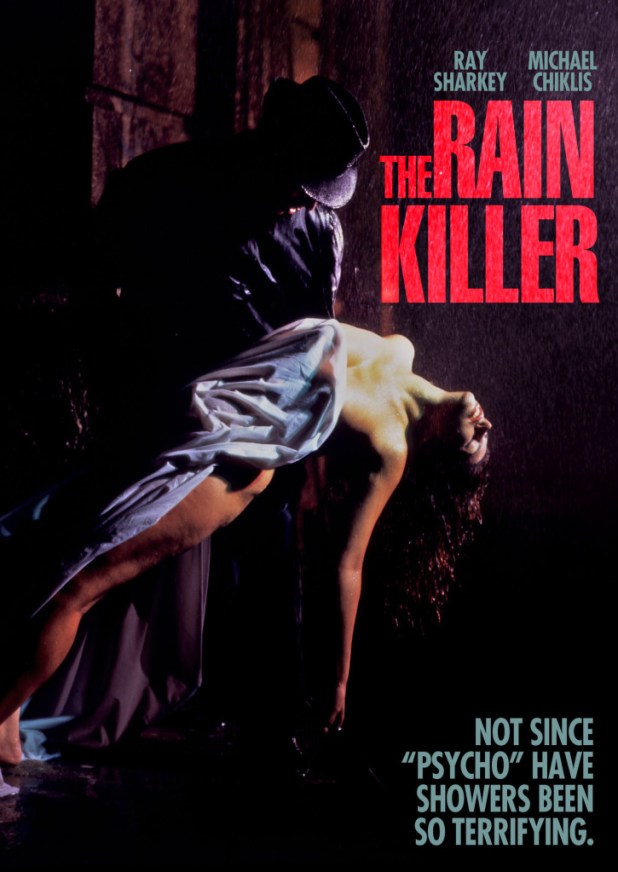
Welcome to a Los Angeles where it’s always raining, neon is everywhere, all you can hear and sax solos and Michael Chiklis wears a different baseball hat in every scene. Ray Sharkey (Du-beat-e-o in Du-beat-e-o and, of course, Wiseguy) is the burned out cop, David Beecroft (Creepshow 2) is the FBI agent and a scene where Sharkey and his police chief share a bottle of Wild Turkey in a bathroom stall.
In the midst of all this darkness and swearing and rampant sex — my favorite IMDB review of this basically takes a puritanical take on all this filth, which made me want to watch it over again — is a great looking film thanks to cinematographer Janusz Kamiński. What did the man who shot Schindler’s List have to do with this grubby movie? Well, he got his start shooting stuff like The Terror Within II, Grim Prarie Tales and even Cool As Ice — let that set in, two years before he won an Oscar, Kamiński was filming Vanilla Ice — before Steven Spielberg started using him.
Maria Ford plays an exotic dancer who gets killed. You’ll recognize her as she’s been in a ton of things — everything from Slumber Party Massacre III and Deathstalker IV: Match of Titans to the remake of The Wasp Woman, Night Calls: The Movie, Part 2 and kid movies like Beethoven’s Big Break and Casper Meets Wendy.
This really starts like a giallo, as The Rain Killer — named for his m.o. of killing women in the pouring rain — knifes three women in under five minutes while wearing a black overcoat, leather gloves and a hat. Sadly, this is an American film, so there are times where it decides to tell a story that somewhat makes sense. It turns out that all of the victims are members of a support group called The Sewing Circle and the FBI agent just so happens to be divorcing one of its members, his wife Adele (Tania Coleridge, who was in George Michael’s “Father Figure” video and played the drill model in Van Halen’s video for “Poundcake”). So you know — Sharkey hooks up with her because, well, that’s how movies work.
For a movie that is so influenced by giallo, isn’t it odd that Argento’s Trauma uses the same m.o.* — killer who murders in the rain — three years later?
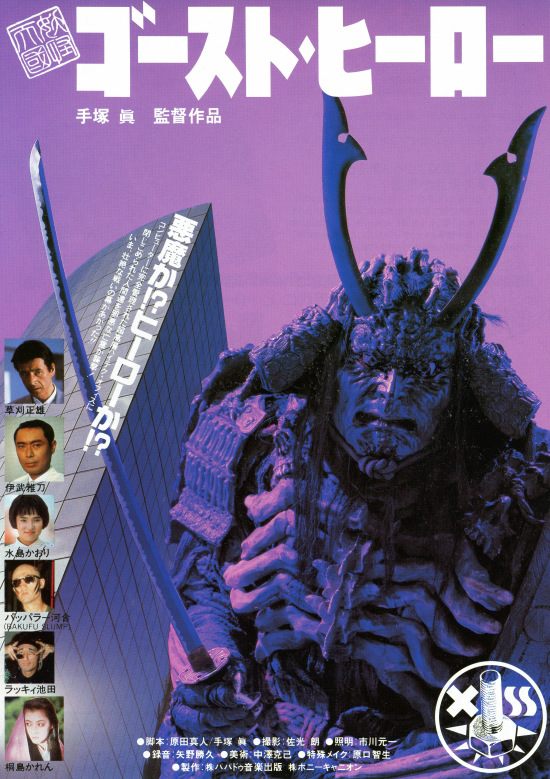
Monster Heaven: Ghost Hero has a lot going on. First off, it’s about a virtual reality company that has learned how to make software that can be physically handled, which means that of course, they’ve already made a sexual application because all technology is sexuality-based (which is why VHS beat beta and streaming video exists). Then it’s about the building that the tech company is in, which sits above an ancient and sacred land, with spirits and monsters that have existed in harmony with the company for decades (what are they, Nintendo and did they once make playing cards?). And then there’s the new owner that could care less when someone tells him that that stone gargoyle up front should never get virgin blood on it.
Oh yeah and there’s also a punk band called Monster Heaven who claim that they are all monsters from Japan’s past, including a human raccoon, a cat girl and a dude with four arms and six eyes.
The company’s fired Operations Manager also comes back, kills a virgin with a sword, gets that blood everywhere and, you knew it, because a gigantic monstrous samurai that can only be defeated by a VR sexy girl.
If you’re wondering, “How can all this insanity be in one movie?” The answer is that it was co-written (along with Masato Harada) and directed by Macoto Tezuka, who made Legend of the Stardust Brothers, one of the oddest and most wonderful movies I’ve ever watched.
This has way too many ideas, which is how I like my movies. Tezuka also made Monster Heaven, an anthology film about yokai, a few years before this. I’ll be hunting that one down now! You can watch it on YouTube.










 B&S About Movies
You must be logged in to post a comment.