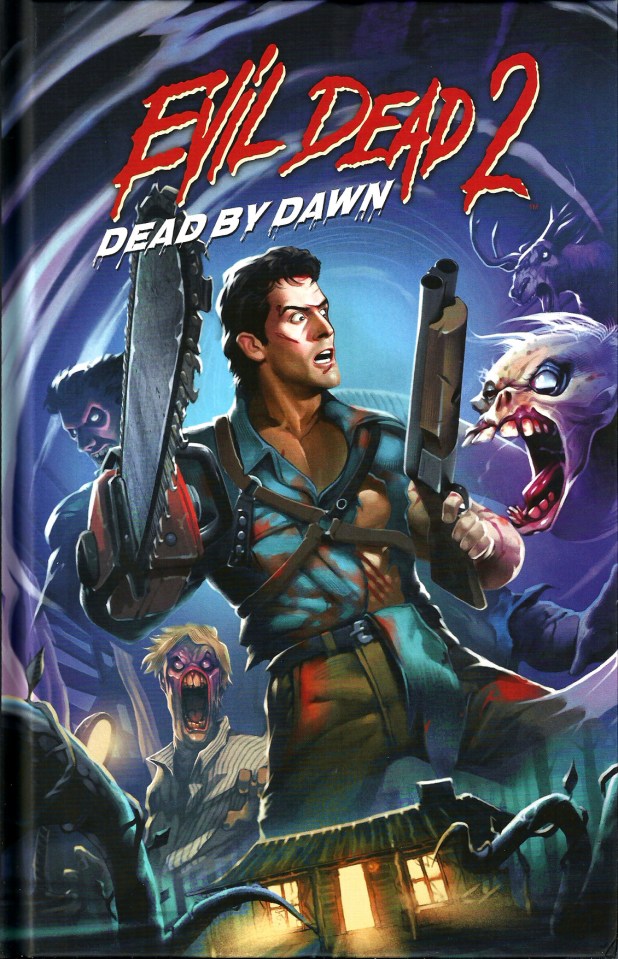
April Ghouls Drive-In Monster-Rama Primer: Evil Dead II (1987)

April Ghouls Drive-In Monster-Rama is back at The Riverside Drive-In Theatre in Vandergrift, PA on April 29 and 30, 2022.

This Back to the 80s Weekend is going to be amazing!

The features for Friday, April 29 are Halloween 2Terror TrainMidnight and Effects.

Saturday, April 30 has Evil Dead 2Re-AnimatorDr. Butcher MD and Zombie 3.

Admission is still only $10 per person each night (children 12 and under free with adult) and overnight camping is available (breakfast included) for an additional $10 per person.

You can buy tickets at the show or use these links:

There is also a limited edition shirt available at the event.

To whoever owned Prime Time Video, I am sorry that I bootlegged this VHS from your store in 1989 or so, because I was renting it so much that I wanted to watch it every single day. It was years until I saw Evil Dead and this movie formed so much of what I wanted out of movies. A camera that flew through walls, actors willing to destroy themselves to entertain you and geysers of bottomless buckets of gore.

Dino De Laurentiis put up the money and asked that the film be similar to its predecessor. Director Sam Raimi and writer Scott Spiegel must have thought, “We’ll show him,” and totally remade the first movie but whereas that one had no budget and felt like some maniacs in the woods near Detroit, this had a budget and felt like, yeah, some maniacs in the woods near Detroit.

This one replays the first one in like five minutes: Ash Williams (the returning Bruce Campbell) and his girlfriend Linda head to a cabin for the weekend, but instead of romance, they find the tapes of archaeologist Raymond Knowby and the words from Necronomicon Ex-Mortis that bring demons to their little lovers’ log cabin. Linda gets possessed, Ash decapitates her with a shovel and then proceeds to go bonkers for most of the movie.

Most of the movie is Campbell battling himself, his own hand — and later body — turning against him. It’s the kind of movie where a man can chainsaw off his on hand and then make a chainsaw appendage, say “Groovy” and it’s somehow — even years and years later — cool.

Spiegel and Raimi wrote most of the film in a house in Silver Lake that they shared with the Coen brothers, Frances McDormand, Kathy Bates and Holly Hunter, who the character of Bobby Jo is inspired by.

I’m looking forward to seeing this at the drive-in this weekend if only to feel the sheer joy I once had watching this. I’ve never seen it surrounded by others and can’t wait to see how others react to it. I know that it’s gone from a small movie to an accepted classic in the years since I watched it every day, but it’s still that movie I copied all those many, many years ago.

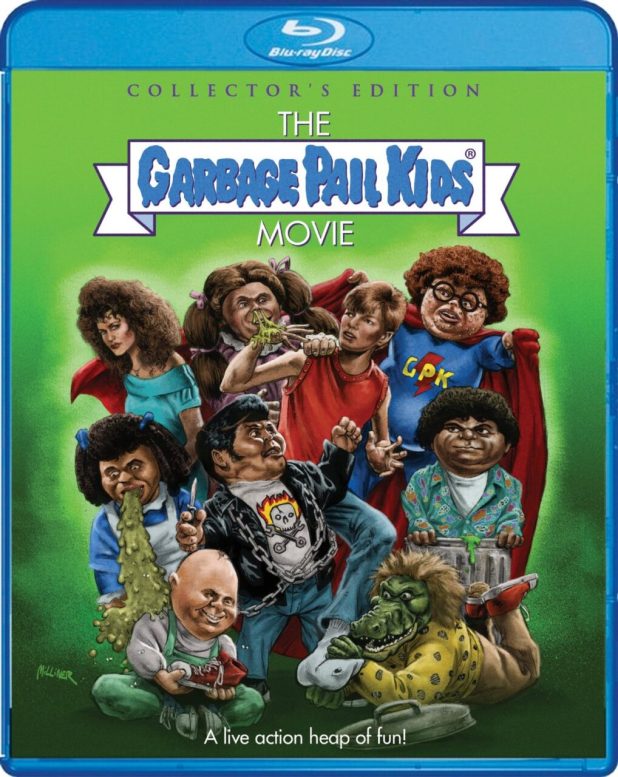
APRIL MOVIE THON DAY 25: The Garbage Pail Kids Movie (1987)

The Garbage Pail Kids came out in 1985 from Topps and were created by Art Spiegelman. Yes, the same cartoonist who made Maus. He and Mark Newgarden worked together as the editors and art directors of the project, with Len Brown — the same person who Wally Wood named T.H.U.N.D.E.R. Agent Dynamo after and one of the creators of Wacky Packages and Mars Attacks — as the manager and art by John Poundart for the first series, then Jay Lynch, Tom Bunk, James Warhola — the nephew of Andy Warhol — and more.

These cards were a huge success and sold worldwide (they’re called Mr. Creepy in Japan, Totally Broken Kids in Germany, The Filthies in France, Snotlings in Italy and The Garbage Gang elsewhere). They were quite controversial and banned in many schools. And then Original Appalachian Artworks — the same Xavier Roberts who stole the look of Martha Nelson Thomas’ soft sculptured dolls that came with a birth certificate — sued and they had to change the logo. But by 1988, the kids were gone. yet they came back in 2003 and never went away. You can even get blockchain backed high-end versions of them now.

Look, I’m someone who doesn’t believe that there’s “so bad it’s good” and has found the light in the darkness within so many so-called bad films. This one challenged my will to live, but there are times during it when the overwhelming badness of the film approaches surrealist art and I laughed so hard that my head began to throb and I was sure this was the stroke that would wipe out my lifelong hard-earned knowledge of Mattei, D’Amato and lesser scumbag directors.

Dodger (Mackenzie Astin) works in the junk store of magician Captain Manzini (Anthony Newley) and is also the target of a gang of toughs led by Juice (Ron MacLachlan) while loving that bad dude’s girl Tangerine (Katie Barberi) from afar.

To break up all that preteen angst, a garbage can falls from the sky containing green ooze and the Garbage Pail Kids: the always snotty Messy Tessie; the Hawaiian shirt-wearing flatulent Windy Winston; the throw up on command Valerie Vomit (played by Debbie Lee Carrington, memorable as the small-statured Martian rebel in Total Recall); the whining baby Foul Phil; the acne-scarred superhero Nat Nerd and the toe eating reptilian hybrid nightmare called Ali Gator.  None of these characters are in any way endearing or cute ugly. They’re borderline upsetting and the more I think about it, the more I love this movie for being so dead and vacant.

After having our protagonist covered with sewage and abused by the gang, only to be saved by the Kids, it still has Dodger in love with Tangerine, who wants to be a fashion designer and puts the GPK into service as pretty much slaves. The kids steal a Pepsi truck — I can’t imagine Pepsi would have loved how they’re presented in this — and then go to a Three Stooges festival which makes them so insane that they drink beer with bikers and Ali Gator gets to eat some toes. Despite being babies and children, the GPK get drunk on beer, which is encouraged by the film, and sing songs so inane that I again started to laugh the kind of frenzied guffaws that only happen when I endure serious physical pain.

Despite the kids being put into the State Home for the Ugly, a place where Gandhi and Santa Claus are executed because this is a movie for children, they escape, ruin a fashion show and refuse to go away, not even following the rules of Mr. Mxyzptlk.

If it seems like Dodger and Tangerine seem on again, off again and ill-matched, well — Astin and Barberi dated and broke up mid-movie. That wasn’t Austin’s only issue. He got the movie without telling his father, John Astin, who tried to get his son out of this film.

Rod Amateau directed and co-wrote this and his career was, well, something. He started his career doing stunts in movies like Rebel Without a Cause and Mighty Joe Young (he was also a stunt driver for Butcher, Baker, Nightmare Maker and Thunder Run after this directing career took off) and then wrote and directed episodes of The Many Loves of Dobie Gillis, produced and directed 78 episodes of The George Burns and Gracie Allen Show, produced and directed The New Phil Silvers Show, directed nearly every episode of My Mother the Car and also made  The Statue, one of the few movies Roger Ebert ever walked out on, as well as High School U.S.A., the movie that convinced Joel Robinson to leave Hollywood, Son of Hitler, a Peter Cushing movie that never played outside of Germany and wrote Sunset, one of the many Blake Edwards films — and mistakes — that a nascent Bruce Willis would make.

I can’t even imagine the horror movie that John Carl Buechler — who did the effects for this as well as TerrorVisionDollsHard Rock ZombiesHalloween 4: The Return of Michael Myers and many, many more, as well as directing Cellar DwellerWatchers 4 and Friday the 13th Part VII: The New Blood — had planned.

The Garbage Pail Kids Movie made just $661,512 during its opening weekend and eventually $1.6 million on a million dollar budget, but was still seen as a major disappointment. Astin told Mental Floss, “The heroes of the entire experience are the seven little people actors in costumes every day in triple-digit heat in the San Fernando Valley. They couldn’t see or hear. There was only so much time they could have the heads on before they ran out of oxygen.”

Effects artist William Butler went even further: “I think it was a stupid idea of a stupid screenplay, with stupid designs, that made for a cacophony of stupidity.”

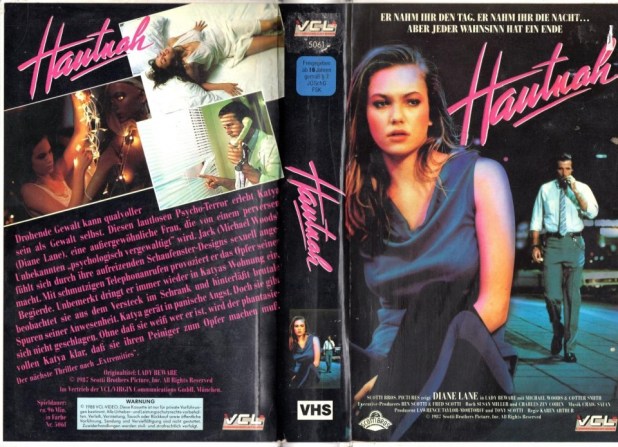
APRIL MOVIE THON DAY 12: Lady Beware (1987)

ABOUT THE AUTHOR: A.C. Nicholas, who has a sketchy background and hails from parts unknown in Western Pennsylvania, was once a drive-in theater projectionist and disk jockey, Currently, in addition to being a writer, editor, podcaster, and voice-over artist, he contributes to Drive-In Asylum. His first article, “Grindhouse Memories Across the U.S.A.,” was published in issue #23. He’s also written “I Was a Teenage Drive-in Projectionist” and “Emanuelle in Disney World and Other Weird Tales of a Trash Film Lover” for upcoming issues.

The explosion of the horror genre in the 80s gave us lots of slasher films and films loaded to the brim with gore. Every once and a while though, there was something different, something special, a small gem. Lady Beware (1987) sports a title that sounds like a Lifetime movie of the week and a visual aesthetic that sometimes looks good, but mostly looks like a TV movie. But it’s an endlessly fascinating film that straddles the line between art film and exploitation film. It’s not your typical woman-in-peril film. Director Karen Arthur with this, her passion project, is much too intelligent and sophisticated to make a simple young woman vs. stalker thriller. Instead, she gives us a smart, though flawed, film with a nice feminist slant that doesn’t beat you over the head with its gender politics, like so many current arthouse horror films.

Katya, played by a young Diane Lane, rides the bus from boondocks Pennsylvania to the big city–Pittsburgh, that is–to seek a career as a window dresser at Joseph Horne’s, one of Pittsburgh’s once-iconic department stores (the other was Kaufmann’s). She’s ambitious and aggressively convinces the store manager to hire her. Then she makes friends with co-workers, including dated 80s movie token gay guy and black woman, and designs some windows with lots of sexual content. (Arthur’s a good director, so you suspend your disbelief about these store windows that feature partially clad mannequins posed in “interesting” positions—and then there’s that use of aerosol-can whipped cream to top things off.) Soon, she’s attracted not only the attention of Cotter Smith, a Pittsburgh magazine reporter, but also a radiology technician from a building across the street, who has a family and is a closet stalker. He’s played by Michael Woods in a low-keyed, creepy performance.

Soon the expected stalking starts. Woods makes obscene phone calls, leaves messages, steals Lane’s mail, and even rappels down the side of her locked building in broad daylight to break into her apartment. (More suspension of disbelief on that scene.) Once inside, he does as many awful things as you can imagine from taking a bath in her tub, to writhing around naked on her bed, to using her toothbrush (Yuck!). This unhinges Lane to the point of a near nervous breakdown, but in the end. she finds her inner feminist strength, plays mind games with Woods, and eventually turns the tables on him. This leads to a memorable final shot, where the stalker symbolically becomes trapped in his own perverted fantasy. 

Unfortunately, the Scotti Brothers, successful record producers who had recently moved into movie production, took the final cut away from director Arthur and drastically reduced the film’s running time. Viveca Lindfors’ part as Lane’s mother was eliminated, and Smith’s ineffectual boyfriend was watered down even more. (I’m not sure either of those decisions was a bad thing; they strengthen Lane’s lone stand against her stalker.) Also, to make the movie more exploitable, the producers added repeated shots of a naked, nubile Lane, defeating the point of the film by objectifying its lead character. Arthur was unhappy and thought about taking her name off the film. She didn’t, and I’m glad she didn’t. Even in its bastardized form, it’s a film to be proud of. In addition to being a solid thriller with good ideas, it’s a beautiful travelogue of Pittsburgh in the late 80s. And those of us from the area who grew up during that era will enjoy spotting local actors in small parts, such as Don Brockett from Mister Rogers’ Neighborhood; Bingo O’Malley, who was in just about everything filmed in the city from Dominick and Eugene to Creepshow, Two Evil Eyes and Bob Roberts; and even Ray Laine, the star of George Romero’s There’s Always Vanilla.

Lady Beware was clearly made on a low budget with an eye on home video. It didn’t have much theatrical play but became a staple of pay-cable in the late 80s. Then after a VHS release, it disappeared. It has never had an official DVD release in the U.S., and you can find a soft-looking rip of the VHS tape on the Internet Archive, where the poster noted that the film is in the public domain. I don’t know about that, but I do know that this film doesn’t deserve its obscurity. It’s striking in tone with an atypical handling of some fairly pat material. I liked it a lot. And I think you will too.

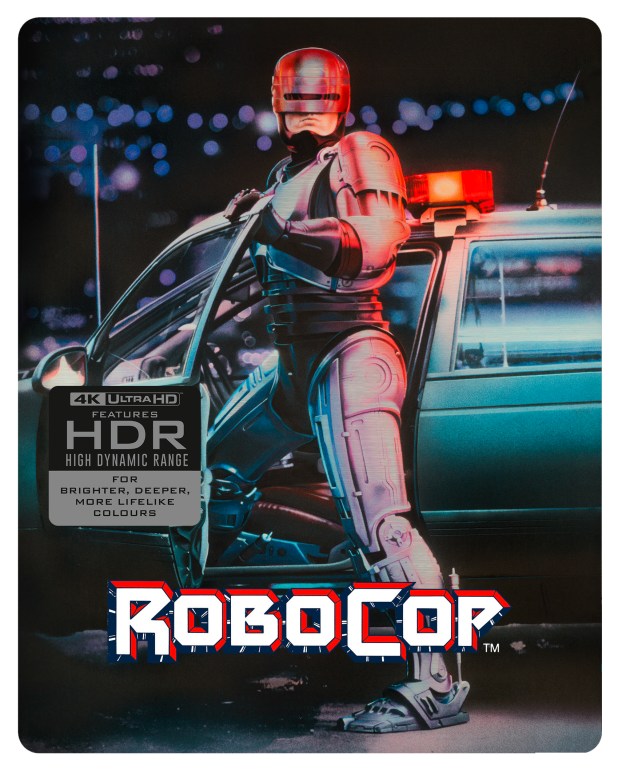
ARROW UHD RELEASE: RoboCop (1987)

EDITOR’S NOTE: RoboCop is one of my all-time most loved films. I’m so excited to have the Arrow UHD! This originally was on the site on January 12, 2020 and has been updated for the new release.

RoboCop was written by Edward Neumeier and Michael Miner, inspired by a poster for the Blade Runner. Neumeier asked a friend what the film was about and was told, “It’s about a cop hunting robots.”

Neumeier was stranded at an airport with a high-ranking film exec and was able to sell him on the project, which took half a decade or more to reach the screen. The first draft, in 1981, was about a robot cop who slowly became human. That script got rejected.

In 1984, Neumeier and Miner met. Miner had been working on a script that he called SuperCop, about a police officer who has been seriously injured and becomes a donor for an experiment to create a cybernetic police officer.

Paul Verhoeven had already made his first American movie, Flesh & Blood, in 1985. The first time he read the script, he threw it away. His wife saved it from the garbage and told him it could be so much more. Other directors who showed interest included Repo Man director Alex Cox and Kenneth Johnson, creator of the television series V.

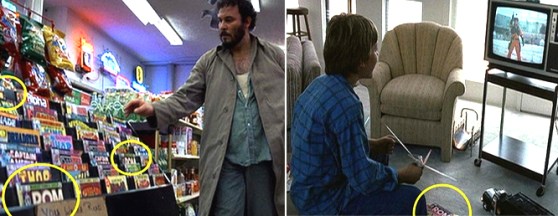
The character of RoboCop itself was inspired by — let’s try and not say directly lifted from —  British comic book hero Judge Dredd, as well as the Japanese series Space Sheriff Gavan and the Marvel Comics toy-based superhero Rom the Spaceknight, whose comic shows up throughout the film.

UPDATE: Shout out to Ed Piskor, who reminded me just how much this movie is influenced by Howard Chaykin’s American Flagg!

Honestly, this film is a great mix of individuals who all needed to come together to create something that could only exist by the combination of their strengths. In anyone else’s hands other than Verhoeven, it could have been just an action film. With any other actor other than Peter Weller playing the lead, it wouldn’t have the drama that it evokes. With any other artists than Rob Bottin, The Chiodo Brothers, Craig Hayes and Phil Tippett, the look of the film would be basic.

Its a perfect action movie, though one that’s also an indictment on fascism and the growing disparity between the rich and the lower castes in the United States. In fact, much like Starship Troopers, it’s satire is often lost on some audiences, who believe that it has to be absolutely serious.

RoboCop was rated X eleven different times. That’s how brutal the original versions were. Keep that in mind — the movie remains one of the most anarchic of 1987 and hell, I couldn’t see half this stuff being shown in a movie in 2020.

Detroit is worse in the future than it was in the past, if that’s possible. The cops want to strike. Omni Consumer Products (OCP) runs Detroit’s police department in exchange for letting the company rebuild run-down sections of the city into a high-end utopia. Now, they want to replace flesh and blood cops with robotic peace operatives, like ED-209, which ends up killing nearly everyone in the board room in his initial test.

That’s when the RoboCop plan comes in. It’s going to take a real cop’s brain and put it in a near-indestructible body to protect the city. That cop ends up being Alex Murphy (Weller), who gets killed on pretty much his first few days on the job by Clarence Boddicker (Kurtwood Smith) and his gang, leaving his partner Anne Lewis (Nancy Allen) alone again.

Soon, Murphy’s brains have been retrofitted into a sleek mechanical shell ready to dispense justice by any means necessary, including shooting muggers right in the meat. Before long, he’s recovered his humanity and realizes that OCP, the company that saved him, may have more in common with the criminals that he busts than the public he’s programmed to protect.

It’s a pretty basic tale, enlivened by the way and style in which it is told. Plus, you get some great actors — beyond Weller, Allen and Smith, who are all at the top of their game here. There’s Dan O’Herlihy as the OCP chairman known as only “The Old Man;” Miguel Ferrer as Bob Morton, the exec who gets RoboCop funded before Boddicker offs him during a coke binge (perhaps the most quoted scene in the film); and a gang of baddies that include Ray Wise (Leland Palmer from Twin Peaks), Paul McCrane (Guard Trout from The Shawshank Redemption) and Jesse Goins (Up the Creek). And wow, as always, Ronny Cox plays the best of bad guys, here as OCP exec Dick Jones.

Perhaps the best parts of this movie are the video screens and fake commercials that break it all up. Leeza Gibbons and Mario Machado appear as anchorpeople who take us through the news of the day, allowing for fast exposition and recaps. This technique feels right out of Frank Miller’s 1986 graphic novel The Dark Knight Returns. Plus, the “I’d but that for a dollar” guy is perfect.

In 2013, Neumeier reflected on the fact that his script was quite prophetic, saying “We are now living in the world that I was proposing in RoboCop…how big corporations will take care of us and…how they won’t.”

For what it’s worth, Verhoeven and Bottin fought throughout the production over harsh light revealing too much of the makeup on screen. Once Verhoeven won the argument, the two didn’t speak until the premiere, where they were so impressed by how the film turned out that they forgave one another. Despite vowing to never again work with the director, Bottin worked on the very next film Verhoeven made, Total Recall.

My favorite story about the film is that when he was in full costume, Weller would remain in character between takes, only responding to Verhoeven’s instructions when properly addressed as “Robo.” Verhoeven never took this seriously and refused to do so after just a few weeks. That’s second only to the fact that the producers paid President Richard Nixon $25,000 to promote the VHS release of RoboCop.

Arrow Video’s new UHD steel book release of RoboCop is packed with so many features. It starts with a 4K restoration of the film from the original camera negative by MGM, transferred in 2013 and approved by director Paul Verhoeven. There’s also the Director’s Cut and Theatrical Cut of the film on two 4K UHD Blu-ray discs with Dolby Vision. And you also get a 44-page limited edition collector’s booklet featuring new writing on the film by Omar Ahmed, Christopher Griffiths and Henry Blyth.

The director’s cut disk has archive commentary by director Paul Verhoeven, executive producer Jon Davison and co-writer Ed Neumeier (originally recorded for the Theatrical Cut and re-edited in 2014 for the Director’s Cut). Plus, you get two new commentary tracks, one by film historian Paul M. Sammon and the other by fans Christopher Griffiths, Gary Smart and Eastwood Allen.

Like all Arrow releases, this set is packed with documentaries, like The Future of Law Enforcement: Creating RoboCop, a newly filmed interview with co-writer Michael Miner and RoboTalk, a newly filmed conversation between co-writer Ed Neumeier and filmmakers David Birke (writer of Elle) and Nick McCarthy (director of Orion Pictures’ The Prodigy), as well as interviews with Nancy Allen — in which she glowingly refers to the town we live in with a very profanity-laced comment that made me laught out loud, casting director Julie Selzer and second unit director Mark Goldblatt. Plus, there’s also a tribute to composer Basil Poledouris featuring film music experts Jeff Bond, Lukas Kendall, Daniel Schweiger and Robert Townson, a tour of Julien Dumont’s collection of original props and memorabilia, three archive features from the 2007 release and a 2012 Q&A with the cast and crew. Plus there’s even more — four deleted scenes, trailers, TV spots, Director’s Cut production footage and raw dailies, and even an Easter Egg!

Is there more? Yes, this is Arrow! There’s an edited-for-television version of the film, featuring alternate dubs, takes and edits of several scenes, a compilation of these alternate scenes and a split-screen comparison of the Theatrical and Director’s Cuts.

You can get this from MVD.
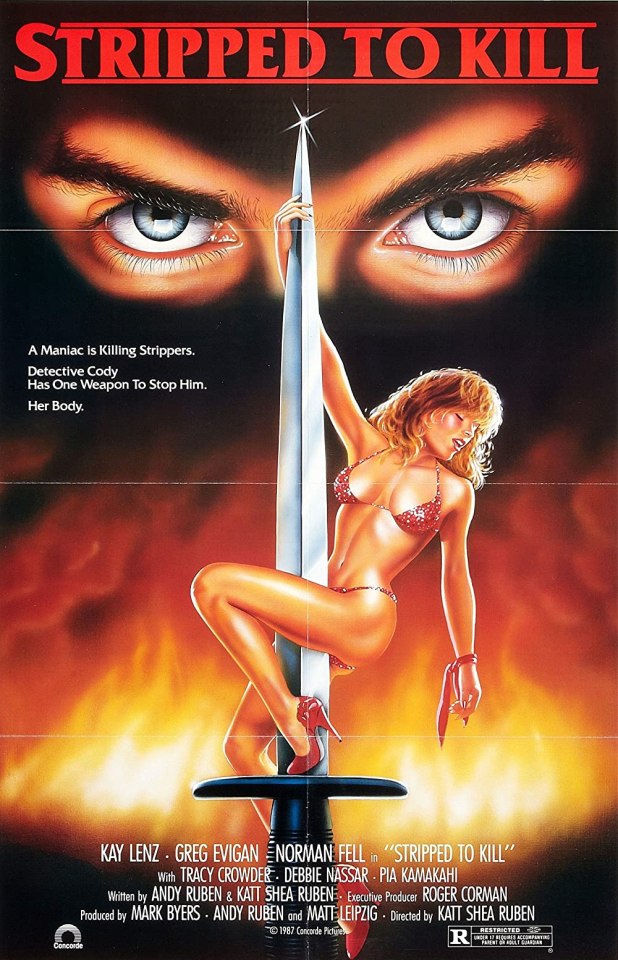
APRIL MOVIE THON APRIL 8: Stripped to Kill (1987)

Katt Shea was in My Tutor, Preppies, Hollywood Hot Tubs and Barbarian Queen before working with Andy Ruben to make The Patriot for Roger Corman. She’d go on to direct several films and even earn a four-day retrospective at the Museum of Modern Art, where Poison Ivy debuted. You can check out her movies Dance of the Damned, Stripped to Kill II: Live Girls, Streets, Last Exit to Earth, The Rage: Carrie 2, Nancy Drew and the Hidden Staircase and Rescued by Ruby.

While working undercover, Cody (Kay Lenz) and her partner Sergeant Heineman (Greg Evigan) are too late to save Angel (Michelle Foreman), a dancer who has been thrown off a bridge and set on fire. Of course, this means that Cody must become Sunny, dancing at the Rock Bottom for its owner Ray (Norman Fell).

As she gains the trust of the dancers, they’re all being killed one by one. Cody keeps dancing at the club, defying the orders of her superiors, sure she can catch the killer. Is it Pocket, the one handed creep? Is it Angel’s lover Roxanne (Pia Kamakahi)? And how does Roxanne’s brother Eric fit in?

In a New York Times article, Shea explained how she was inspired by a trip to a strip club: “I didn’t want to go because I felt it was humiliating to women. But I finally got myself there. I sat down and began watching these acts and they’re performing as if they really cared.”

So — spoiler: Roxanne is dead. Eric is Roxanne, taking over her life as he was sure Angel would take his sister away. You can imagine that this is incredibly problematic, as they say, but it’s also a Roger Corman movie. In fact, Corman was convinced that only a woman could be a convincing woman on stage. Shea surprised him and showed him up by fooling him. She would later explain: “He [Corman] turned every shade. He was purple by the end.”

Also, as this is a Corman movie, all the songs that are danced to in this film were added in post-production. They had been filmed with popular songs, but those songs had to be replaced in post, because clearing licensing would be too expensive.

Shea worked with real exotic dancers, teaching them to act. Debra Lamb was one of them and she has been in plenty of movies since this, including Deathrow GameshowAll Strippers Must Die! and Point Break, often displaying her fire-eating skills. Shea works as an acting teacher to this day, with students including Christina Applegate, Alison Lohman, Sophia Lillis and Drew Barrymore.

She also claims that this was the first movie to show pole dancing.

It would not be the last.

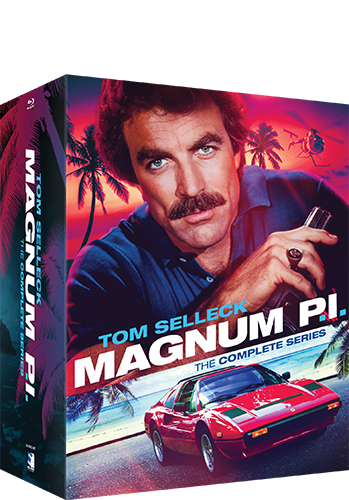
MILL CREEK BLU RAY RELEASE: Magnum PI (1980-1988)

Magnum P.I. was a constant in my life through a tumultuous time, starting when I was just 8 and ending when I was 16, seeing me through the most chaotic years of young life. Thomas Sullivan Magnum IV’s (Tom Selleck) adventures in Hawaii were a center, a Thursday night oasis — Wednesday from series 7 onward — that always knew would be there.

Magnum lives in the guest house of an opulent 200-acre beachfront estate known as Robin’s Nest. At some point, he provided services for its owner, world-famous novelist Robin Masters (voiced by Orson Welles for all but the final time when Red Crandell spoke for the character) and he’s been allowed full run of the estate and use of the author’s Ferrari 308 GTB/GTS in exchange for some nebulous security detail. In between, he takes on cases that rarely pay and often put his life in danger.

His archnemisis is Jonathan Quayle Higgins III (John Hillerman). Like Magnum, he’s also ex-army, but he’s by the book while our hero is laid back. He’s in charge of Robin’s estate, patrolling it with his twin Doberman, Zeus and Apollo. The relationship grows and changes as the series progresses, going from antagonistic to near friendship by the close, as well as the suspicion that Higgins is Robin Masters.

Magnum has a near-perfect storytelling engine as it has the perfect setting (all manner of people come to Hawaii for vacation or to escape), the perfect characters (Magnum can be just as much a film noir hero as he can be a military man or a romantic leading man; he’s a comedic figure without losing his coolness) and the perfect job (being a detective is a reliable TV profession for this reason). Add in his friends Theodore “T.C.” Calvin (Roger E. Mosley) — whose Island Hoppers helicopter can take Magnum anywhere — and Orville Wilbur Richard “Rick” Wright (Larry Manetti), whose King Kamehameha Club can be the origin for all manner of intrigue — and you can see why this series ran for so many years.

While T.C. and Rick are former Marines and Magnum is a former Navy SEAL — all served in Vietnam — none of them are shell-shocked zombies. They’re normal human beings who deal with their war experiences in their own way, which was a refreshing change for audiences — especially veterans — when the show started.

Magnum was such a big show that even other big shows crossed over with it, establishing a CBS detective show universe. In the episode “Ki’is Don’t Lie,” Magnum works with Simon & Simon to recover a cursed artifact, a mystery which had its conclusion in their show with the episode “Emeralds Are Not a Girl’s Best Friend.” Yet most famously, in “Novel Connection,” novelist Jessica Fletcher came to Hawaii — along with Jessica Walter and Dorothy Loudon — and then solved the case on her show, Murder, She Wrote, in the episode “Magnum on Ice.”

Speaking of guest stars, all manner of genre favorites appeared on this show, including Jenny Agutter, Talia Balsam, Ernest Borgnine, Candy Clark, Samantha Eggar, Robert Forster, Pat Hingle, Mako, Patrick Macness, Cameron Mitchell, Vic Morrow, John Saxon and many more.

Another reason why this show is so beloved is due to Selleck. He told producers, “I’m tired of playing what I look like.” His suggestion? He remembered having fun with James Garner on The Rockford Files and suggested making Magnum more of blue collar guy. This made him more identifiable with men, not just women.

One of the things that struck me as I caught up on the series was that the theme is different at the start! The original theme was written by Ian Freebairn-Smith and only lasted eleven episodes before being replaced with the iconic Mike Post and Pete Carpenter song that I hum all of the time.

At the end of the seventh season, Magnum died in a shoot out. I can’t even explain how upset everyone was. The letters page in TV Guide was aghast. Imagine if Twitter existed in the late 80s! Luckily, he came back for one shorter season.

Series creator Donald P. Bellisario — who created this show with Glen A. Larson — was born in North Charleroi, PA. I can probably see his house from mine. After fifteen years in advertising, he went to Hollywood, where he worked on the series Black Sheep Squadron and Battlestar Galactica before creating series like Tales of the Golden MonkeyAirwolfQuantum LeapJAG and NCIS. He was joined by writers like Richard Yalem (who made Delirium), Reuben A. Leder (A*P*E*Badlands 2005), Jay Huguely (Jason Goes to Hell), Andrew Schneider (the “Stop Susan Williams” and “Ther Secret Empire” chapters of Cliffhangers!), Stephen A. Miller (My Bloody Valentine), J. Miyoko Hensley (who wrote the Remo Williams: The Prophecy pilot) and even notorious celebrity fixer and detective Anthony Pellicano, as well as directors like David Hemmings (yes, from Deep Red), John Llewellyn Moxey, Jackie Cooper and Robert Loggia, amongst so many others.

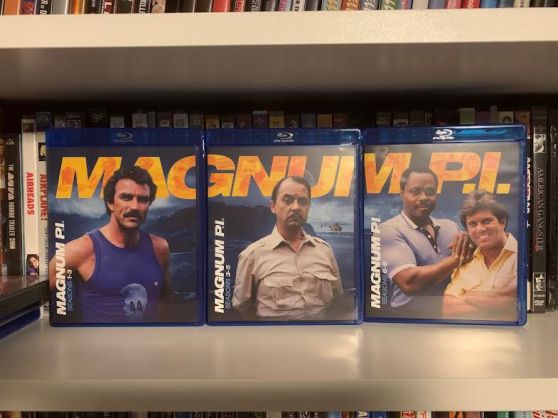
The Mill Creek blu ray box set of Magnum P.I. has all 158 episodes of the show, as well as new interviews with composer Mike Post, writer/producer Chris Abbott, author C. Courtney Joyner on the sixty year career of director Virgil Vogel and actress/writer Deborah Pratt (who was the voice of the narrator and Ziggy on Quantum Leap). Plus, you also get two Tom Selleck guest star roles on The Rockford Files, featurettes on The Great 80’s TV Flashback and Inside the Ultimate Crime Crossover (Magnum P.I. and Murder, She Wrote) and audio commentary on three season 8 episodes.

Much like how Magnum was a calming part of my young life, having this set on my shelf during these turbulent times is just as warm of a feeling. Get this set and let the 80s wash over you like the beaches of Waikiki.

You can get this set from Deep Discount.

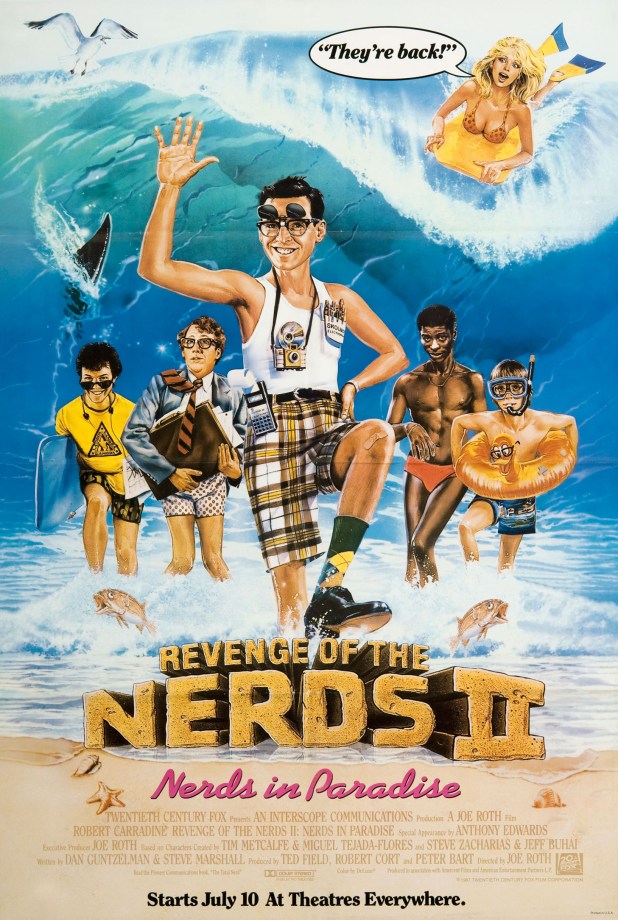
APRIL MOVIE THON DAY 2: Revenge of the Nerds II: Nerds in Paradise (1987)

At the thirtieth anniversary of Revenge of the NerdsJulia Montgomery (Betty) revealed that she originally had a scene in this movie, but turned it down, as it had her cheating on Lewis (Robert Carradine) with a jock. She felt that after her character fell in love at the end of the first movie — never mind that whole weird assault thing — it just didn’t feel right to cheat on her nerdy man.

She was right and understood her character better than the filmmakers.

This was also the last time that Anthony Edwards would play Gilbert, as he shot all of his scenes in one day.

As for the rest of the Lambda Lambda Lambdas, they’re headed to Fort Lauderdale for the national fraternity convention. Yet even amongst their own brothers, the Lambdas of Adams College are attacked at every turn.

Now, they’re up against Bradley Whitford as Roger Latimer — finally Ted McGinley is the one getting replaced — and Ed Lauter, who has stopped bothering Charles Bronson to ruin the hijinks for our geektastic protagonists. And how did James Cromwell get cast in this?

That said, I do love that Ogre (Donald Gibb) joins the Lambdas, as well as James Hong playing Booger’s mentor, Edgar Poe “Snotty” Wong.

I guess you can’t expect the sequel to teen sex comedies to live up to the dream of the original. Then they made two more of these, including one where inevitably the nerds win and become the bullies they once hated.

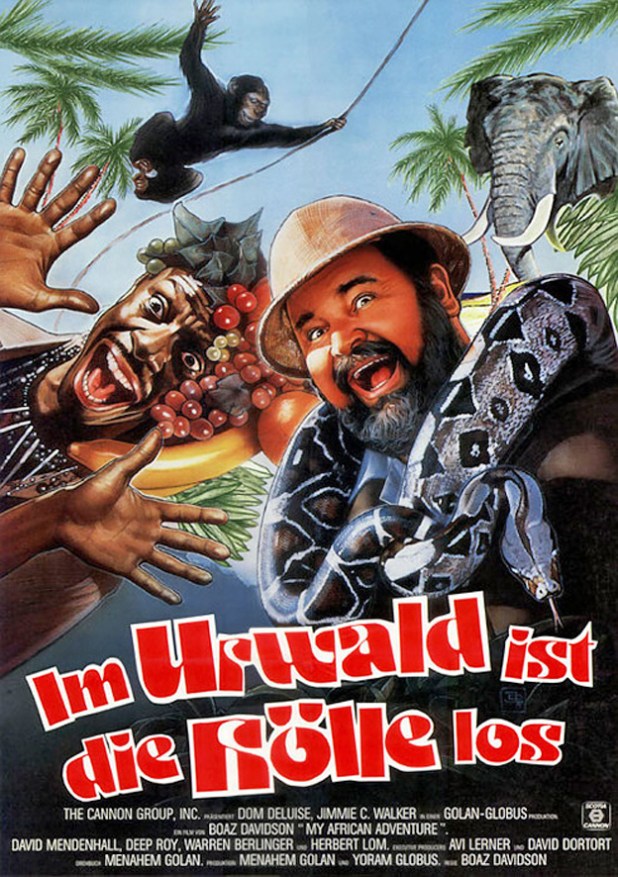
CANNON MONTH: Going Bananas (1987)

This movie sure had some changes before it got to the screen. Bonzo was going to be a real ape* before Deep Roy was cast, while Big Bad Joe Hopkins was going to be played by Bud Spencer — on the 1986 Cannon reel of upcoming films this was called Ben, Bonzo and Big Bad Joe — and Menahem Golan — who wrote the script, based on the Kofiko books by Tamar Bornstein-Lazar — and Sam Firstenberg were going to direct until Boaz Davidson was picked.

What emerges is pure Cannon.

Benjamin (David Menden-Hall, who if he annoyed you in Over the Top is ready to destroy your mind and play with it) is on an adventure with his guardian Joe (Dom DeLuise) and friend Mozambo (Jimmie Walker) in Africa. Specifically Momba-Zomba Land.

There, he meets Bonzo, a talking monkey who can not only fly a plane, but can practically fly — or if we follow the old TSR Marvel Super Hero rules, he’s like The Hulk who has Class 5000  Hyper-Leaping — and the whole story is about Herbert Lom as a cop stealing the monkey and putting him in a circus and that never works out whether it’s King Kong or Conquest of the Planet of the Apes. Or Going Bananas.

A lot of people debate, “What’s your favorite Cannon movie?”

No one has picked this one.

*Clyde the Organgatan from Every Which Way but Loose and Any Which Way You Can has a meeting at Menahem Golan’s office and there was an attempt to sign him as a Cannon actor, if you can believe that. When it fell through, Golan introduced Deep Roy to Davidson and said, “Meet your new monkey!” This story seems like it isn’t true, but it’s Cannon, so it probably is.

Also, according to Electric Boogaloo: The Wild, Untold Story of Cannon Films, Golan asked a publicist of Clyde, “Would you fuck this monkey?”

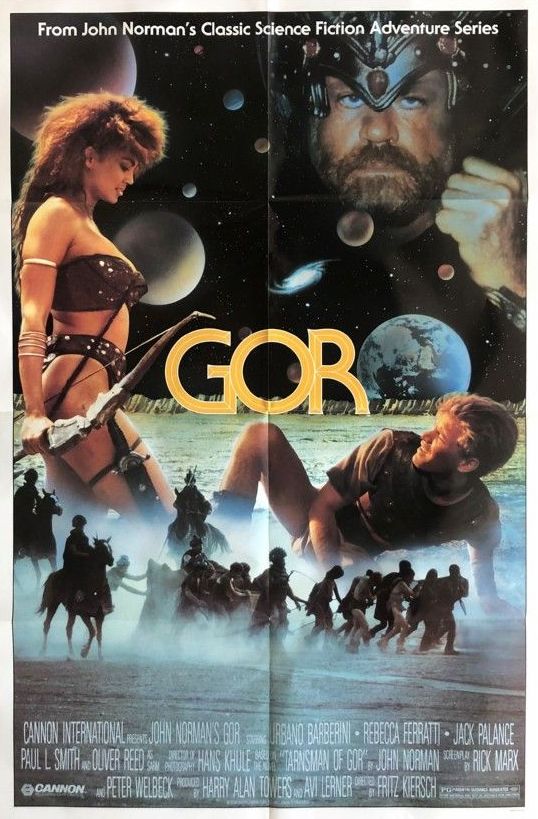
CANNON MONTH: Gor (1987)

EDITOR’S NOTE: We originally wrote about this on March 6, 2020. Now it’s back for Cannon Month.

John Norman is a professor of philosophy and the creator of the Gor series of books, which are basically male-dominated bondage science fiction fantasies that also feature critiques of modern society and the exploration of philosophical themes from a Nietzschean view. And you thought incels were a brand new thing, huh?

The series began in 1966 with Tarnsman of Gor — which this movie is based on — and was put on hold when DAW refused to publish the twenty-fifth installment, Magicians of Gor in 1988. The series returned in 2001 with Witness of Gor. There’s also an entire subculture called Gorean flourishes online, as you can only imagine that it would.

So yeah. Somehow, this got made. And so did a sequel, Outlaw of Gor.

Professor of physics Tarl Cabot (Urbano Barberini, DemonsOpera) is pretty much a loser with the ladies until he gets a magical ring that sends him to the world of Gor. Think Den from Heavy Metal and you have the picture.

He also comes into conflict with Oliver Reed, playing the priest-king known as Sarm, who is looking for the Home Stone to create more paths to Earth. Our hero accidentally kills Sarm’s son before he’s knocked out and left for the buzzards. Luckily, he’s saved by Talena (Playboy Playmate of the Month for June 1986 Rebecca Ferratti, who is also in Cheerleader Camp and Embrace of the Vampire), the barbarian princess of Ko-ro-ba.

Of course, while Cabot strikes out at home, he somehow scores with this vision of womanhood because on Gor, men are the rulers. But he’s still a moron and activates the Home Stone, sending him home to, one assumes, spill his seed, hack the carrot and sail the seas of mayonnaise all by himself.

Gor at least has some great character actors like Jack Palance, Paul Smith (Bluto from Popeye and the landscaper in Pieces) and a young Arnold Vosloo.

Norman almost didn’t get the movie made, as his publisher wanted nothing to do with it. He told the fanzine The Gorean Voice, “Ballantine Books refused to do movie tie-ins to either film; they failed even to answer my letters. My attorney finessed his way around Ballantine’s rights department and contacted the legal department at Random House. The movies were made by going over the heads of the censors.”

It was produced by Harry Alan Towers (who you may remember ran a vice ring that implicated the United Nations, JFK, Peter Lawford and several others when he wasn’t producing Jess Franco movies) and action film impresario Avi Lerner. Direction was provided by Fritz Kiersch, who also brought us Children of the Corn and Tuff Turf.

If you ever played lots of D&D and wondered why the popular girls liked jerks and figured, “I’m going to treat them badly, too!” Good news. You are the target audience for this movie.

You can listen to The Cannon Canon episode about Gor here.

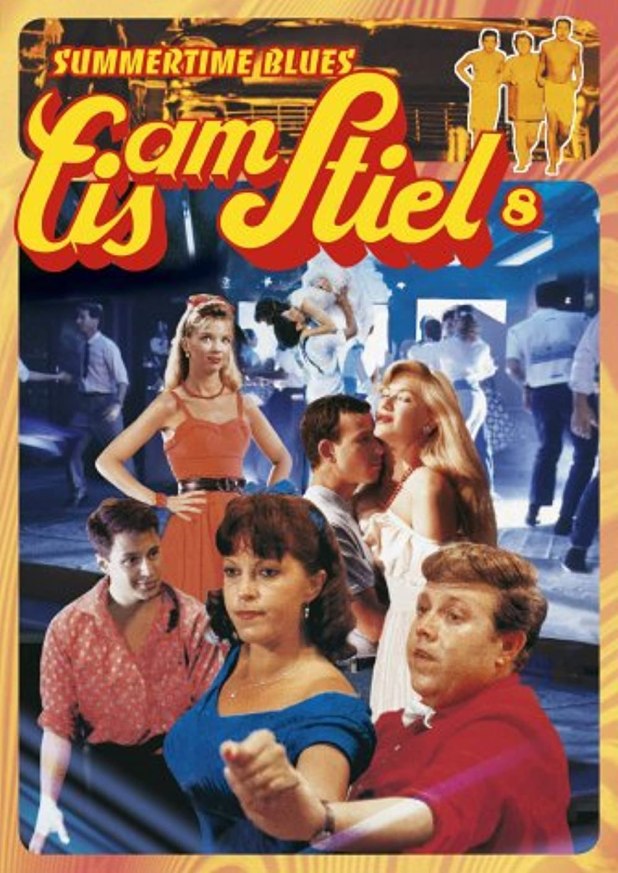
CANNON MONTH: Summetime Blues (1987)

Director Reinhard Schwabenitzky’s 1988’s Summertime Blues: Lemon Popsicle VIII is not director Yaky Yosha’s 1984 movie Summertime Blues, but wow, they’re really close. 50s soundtrack? Goofball jokes? Lots of sex? Yes, Lemon Popsicle movies have somewhat dominated my life over Cannon Month, so I often wonder if they have caused me to lose what’s left of my mind after a month of Jess Franco and now this.

But hey! It’s summer and Hughie (Zachi Noy), Benzi (Yftach Katzur) and Bobby (Jonathan Sagall) want to start their own bar, but they need money. The landlord, however, has a daughter named Polly (Elfi Eschke) who is the kind of girl the boys would never be interested in and yet her affection could cause them to get the party place of their dirtiest dreams, which inevitably include Sibylle Rauch. Are you surprised?

This movie exists in limbo. I’ve finally figured it out, as everyone is in the place between Heaven and Hell, a timeless void where 1950s cars exist alongside mentions of Kennedy and John Travolta.

I only have one of these movies left. I will not be sad when I finish it.