G.B.H (1983) and G.B.H 2: Lethal Impact (1991)

“Bleeding women. No wonder there are so many queers.”
— Steve “the Mancunian” Donovan

I’ll forever program this British-made ’80s SOV’er (titled with and without the periods) alongside the American-made Spine as result their analogous porn roots. It’s even possible that the porn-backed production of G.B.H influenced the later, 1984-begun and 1986-released production of Spine. Produced, written, and directed by John Howard and Justin Simonds, the horror/slasher-based Spine came together with financing from porn purveyors 4-Play Video, Inc. and producers Xeon, Ltd., who created the SS “Sterling Silver” Video imprint for the sole purpose of distributing Spine — and other planned horror flicks that were, sadly, never made — without the nasty porn aftertaste.

Ah, the ol’ big-box, paper-thin sleeve slid under the ol’ plastic cover. Sweet VHS delights.

Meanwhile, over in England, pornographer David Grant jumped on the stag film bandwagon along the yellow brick road to the “Golden Age of Porn” halcyon days initiated by Gerard Damiano’s box office bonanza known as Deep Throat (1972). Grant’s first film — Love Variations (1969) — masqueraded as a “sex education” film. So successful, Grant’s first film lead to his porn-pire expanding to include the incorporation of a chain of adult cinemas — the first being The Pigalle (named after the rue Pigalle section of Paris where Oscar Méténier’s famed horror-based Grand Guignol theatre was located) — and a film distribution company, Oppidan (read: Oedipus complex) — to distribute, not only foreign sex film acquisitions, but his own feature-length “sex comedies,” such as Girls Come First, The Office Party, and Under the Bed. He rose through the Golden Age-ranks to rake in the green with Snow White and the Seven Perverts (1973) and Pussy Talk (1975). Using a British taxation loophole, his films became wildly known for their inclusion as the undercard on numerous drive-in and grindhouse theater double bills. He also came to distribute the films of others — and break box office records — such as his 1977 reissue of Emmanuelle (1974).

Then the home video market exploded and grinded the grindhouse circuit into dust: it was time to break into the VHS-based marketplace. His new company, World Video 2000, started with the production and distribution of “soft sex” films in 1981. And it was a racket, to say the least. You may recall our Mill Creek “Pure Terror” box set review of Night Fright (1967) and its later home video title of E.T.N – The Extra Terrestrial Nastie (1983). Well, that’s was all Grant’s idea — to capitalize on the fact that Steven Spielberg’s E.T the Extra Terrestrial had not yet been released in the U.K. on home video.

As we say here often at B&S About Movies: the lawsuits from Universal, ensued.

Marketing: David Grant style.

Then — prior to GBH earning an entry on the U.K.’s Section 3 “video nasty” list, Grant’s World Video 2000 ended up on the Section 1 list with their “mainstream” follow up to their Spielberg boondoggle, Nightmares in a Damaged Brain, aka Nightmare. Again, more legal troubles, ensued (insert your “eye roll,” here). Only, this time, instead of just a pesky ol’ cease and desist lawsuit, he was imprisoned in the U.K. for distributing the film.

And, with that, Grant’s attempts to “go legit/mainstream” with the World of Video 2000 imprint was over: the company — and his parent company, April Electronics — were liquidated. Upon his release and those legal issues resolved, Grant issued one more film: Who Bears Sins (1987), which, if you know your Al Adamson schlock, was a piecemeal effort made from clips of Grant’s previous productions: Girls Come First, You’re Driving Me Crazy, Pink Orgasm, Miss Deep Fantasy, and A Woman’s Best Friend. Some of his other, 24 box office hits — which he either produced, wrote, or directed during the ’70s “porn chic” era — were the notable Au Pair Girls (1972), Secrets of a Door-to-Door Salesman (1973), The Over-Amorous Artist (1974), and The Great McGonagall (1974). Grant’s 50-plus distributed titles — in addition to the usual porn titles — included legit-mainstream films you’ve seen: Last House on the Left (1974), Ilsa, She Wolf of the SS (1975), Cathy’s Curse (1977), John Water’s Desperate Living (1977), John Carpenter and Dan O’Bannon’s Dark Star (1978), and the Peter Cushing-starring Nazi-Zom’er, Shock Waves (1978).

Retiring to the Turkish island of Cyprus — then being kicked out of that country for an array of alleged, questionable social and relationship issues — he returned to England, only to end up in a hot mess of (more) love triangles and violence, (unproven) drug-distribution accusations, as well as being suspected of — but never charged — with producing child pornography. So the fact that Grant was allegedly murdered — but never proven — as result of a “contract killing” in 1991, really doesn’t come as much of a shock.

If there was ever a life that deserves a hard cover biography or dramatic film, it’s the life of David Grant. (And yes, I have seen most of Grant’s notable adult titles listed this article. (More so than Twemlow’s!) That doesn’t make me weird. It just means I am SOV-VHS inquisitive.)

So, anyway . . . back to GBH . . . one and two.

At least there’s a bio on Cliff’s works. It’s a great read . . . and out of print and harder to find than his movies.

“When they put teeth in your mouth they ruined a good arse.”
— Steve “the Mancunian” Donovan

The Reviews

So, you’ll notice Grant took it upon himself to name-drop The Long Good Friday, a critically acclaimed 1980 British gangster film starring Bob Hoskins and Helen Mirren that appears at #19 on the BFI – British Film Institute’s “Top 100 British Films.”

Grant — no pun intended — had a set of them, and then some.

Shot-on-Video with amateur actors — and like Spine before it — GBH is shaky across all of its respective disciplines as it tells its definitely, more brutal story than its mainstream, runyonesque inspiration (but fails). The man issuing the Jason Vorhees-without-the-mask grievous bodily arm is Steve Donovan, aka “The Mancunian” (a native or resident of Manchester/played by writer/director Cliff Twemlow): a gangster released from prison hired as a bouncer-body guard to stand down the brutal Keller (Jerry Harris), nightclub-owning mobster hellbent on controlling the city’s criminal enterprises — local gangster Murray in particular, who becomes Donovan’s new boss.

GBH is everything you expect in an SOV: it’s scuzzy, it’s brutal, it’s sexually gratuitous and stupidly lurid. After watching, you’ll know where Jim Van Bebber found his inspiration for this Death Wish-inspired street violence in his overly brutal SOV’er, Deadbeat at Dawn (1988). Van Bebber’s film may be — slightly — better made, but GBH, for moi, is still the more gritty, brutal of the pair. And it has all of the car chases and beat downs, and heartless brutal kills, white Bond-ish sportcoats splattered in blood, and strippers. And Donovan, like a low-budget Schwarzenegger, simply will not stop until no one is left standing.

Played by Cliff Twemlow — in the only notable film of his eleven-film acting career — he wrote eight films, including GBH (which is co-directed with David Kent-Watson). Known primarily as a music composer, his mostly notable film scores are Deathdream (1974) and Dawn of the Dead (1978), along with the long-running British TV series, Crown Court. His other, hard-to-find written/directed films (with David Kent-Watson) are his debut, Tuxedo Warrior (1982), The Ibiza Connection (1984), Predator: The Queitus (1988), Firestar (1991), and The Eye of Satan (1992). If you Google around, you’ll find uploaded clips and beat-to-hell VHS tapes for most of them (I’ve seen Firestar and Eye of Satan, but not the others).

“The booze tastes almost as bad as you look, Keller.”
— Steve “the Mancunian” Donovan

The elusive sequel.

In 1991 Cliff Twemlow and Jerry Harris returned as Donovan and Keller in a sequel: Lethal Impact, aka GBH 2: Lethal Impact, aka GBH 2: Beyond Vengeance, which was also written and directed by Twemlow. Sadly, Lethal Impact, as did the rest of his SOV resume of action and horror films, did not live up to the infamy of the original. But Lethal Impact is even more of everything than the first film, with Donovan cutting a swath across Manchester as a low-budget Paul Kersey to avenge the forced-into-porn death of his schoolgirl niece.

Courtesy of You Tube uploader VoicesInMyHead (Wow, what a page!), you can watch GBH and GBH 2: Lethal Impact in all their static-shimmering and low-rez hummin’ glory. And we found the trailers for GBH and GBH 2.

About the Author: You can learn more about the writings of R.D Francis on Facebook. He also writes for B&S About Movies.
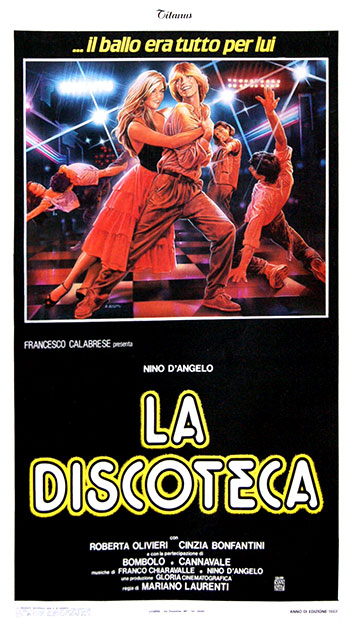
La Discoteca (1983)

Yes, this movie came out six years after Saturday Night Fever. Well, you know, disco didn’t die everywhere. It only died in the places where straight white people thought it was.

Also: Yes, I totally watched this because the poster is amazing.

Mariano Laurenti also directed The Inconsolable Widow Thanks All Those Who Consoled Her, a movie that I’ve told is such an ineffectual commedia sexy all’italiana that even the goddess Edwige cannot save it. He also made another Fenech film, Beautiful Antonia, First a Nun Then a Demon, which is the kind of title that makes me hunt down a movie.

This was written by Piero Regnoli, who is not made for normal films and is much better suited to scripted aberrant madness like Maciste in King Solomon’s Mines — how did Cannon not remake this genre mashup? — as well as Cry of a ProstituteA Black Ribbon for Deborah (with Gig Young, Bradford Dillman and Marina Malfatti trying to look like she’s been reading All of Them Witches), Like Rabid DogsPatrick Still LivesNightmare City and Gunan, King of the Barbarians. All of these movies would be better choices for you or you could just stare at this poster and listen to some Chic or Giorgio Moroder and have a much better evening.

If you liked Laurenti’s Un jeans e una maglietta but wanted it to be a disco movie with someone who looks like a German leader of ill standing running a hotel, well, this is for you. I mean, the dude’s name is Ghitler. That’s an example of the level of hilarity we’re dealing with here.

Nino D’Angelo, who stars in this, also sang a few songs, including one called “My Song.” He’s also obviously dance doubled by someone much shorter than he is. I mean, he needed extra money so he went to the Swiss Alps to make pizza and gets mad when people call him pizza. He is certainly not setting the floor of 2001 Odyssey ablaze any time soon.

Laurenti and D’Angelo also teamed for Uno scugnizzo a New YorkPop corn and chipsFotoromanzo and Attenti a noi due. Now that I have written this sentence, my need to complete things means that I must now endure all of these.

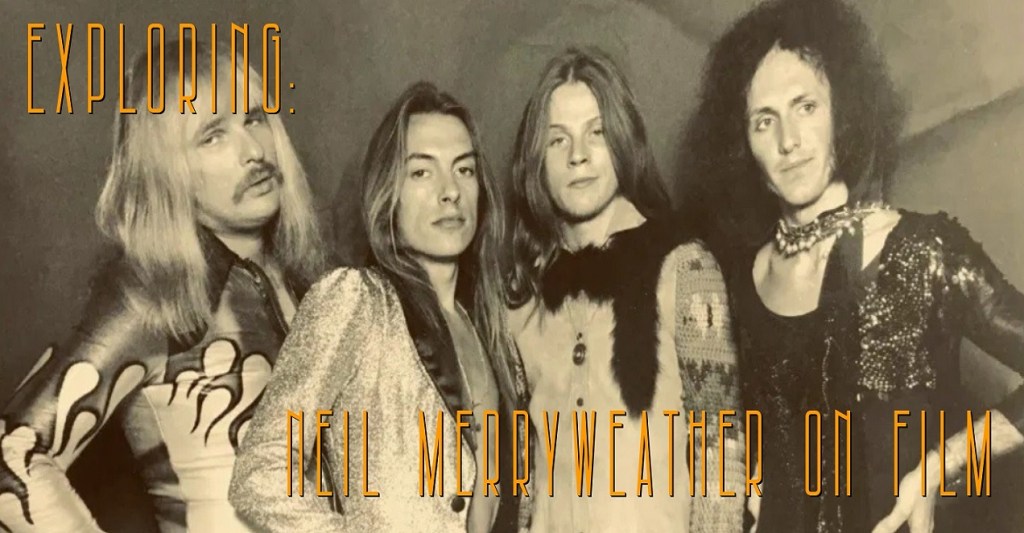
Exploring: Neil Merryweather on Film

Neil Merryweather, left, James Newton Howard, right, with the Space Rangers/Neil Merryweather Facebook.

Canadian rock singer, bass player and songwriter Neil Merryweather, born on December 27, 1945, recorded and performed with musicians including Steve Miller, Dave Mason, Lita Ford, Billy Joel, and Rick James.

He passed away on March 29, 2021, in Las Vegas, Nevada, after a short battle with cancer.


Neil Merryweather, influenced by David Bowie with his Ziggy Stardust and the Spiders from Mars project, achieved his low-selling, yet critically acclaimed creative peak of seventies excess with two heavy-psych space-rock albums from his Space Rangers project, released in 1974 and 1975.

Devotees of early-seventies glam-rock and proto-metal obscurities may note the similarities in artwork and sound on the Space Rangers to that of the later, John Entwistle-fronted rock opera of the Flash Fearless vs. the Zorg Women (October 1975) project featuring Detroiter Alice Cooper; the album itself inspired by Bowie’s Ziggy persona.

A Canadian singer and bassist, Neil Merryweather got his professional start with the Just Us, which released 1965’s “I Don’t Love You b/w I Can Tell” on Quality Records (the label had a major Canadian and U.S. chart hit with “Shakin’ All Over” from the Guess Who). Merryweather eventually joined Rick James (later known for his 1981 disco-funk smash, “Superfreak”) in the Mynah Birds (which featured Neil Young and Bruce Palmer, who had already left for Buffalo Springfield) and recorded the August 1967 single, “It’s My Time,” at Detroit’s Motown Studios. Upon the departure of Rick James, Merryweather kept the Mynah Birds active with fellow Canadian Bruce Cockburn (later known to U.S. radio and video audiences for the singles “Wondering Where the Lions Are” from 1980 and 1984’s “If I Had a Rocket Launcher”; Neil and Cockburn also played together in Flying Circus).

Neil’s bandmate in Mama Lion — and its harder-edge version, known as Heavy Cruiser, sans Lynn Carey — keyboardist James Newton Howard, became a go-to Hollywood soundtrack producer. You’re heard his work since the early ’80s — most notably with Wyatt Earp, Batman Begins, The Dark Knight, I Am Legend, and Red Sparrow.

Merryweather then established Mama Lion with lead vocalist Lynn Carey and signed with Ripp’s Family Productions (also the home to Billy Joel). After issuing two Janis Joplin-inspired, psychedelic-blues n’ soul efforts with Preserve Wildlife and Give It Everything I’ve Got (both 1972), Mama Lion — sans Carey — became the harder, blues-rocking Heavy Cruiser. Their critically acclaimed, two album stint with Heavy Cruiser and Lucky Dog (1972) attracted the attention of a more industry-reputable managerial suitor, Shep Gordon (he also attempted to sign Iggy Pop; he lost to Danny Sugerman). Gordon wanted to sign and book Heavy Cruiser as Alice Cooper’s opening act. Sadly, Artie Ripp and Shep Gordon didn’t get along, and the Gordon-Cooper deal soured. Along the way, Merryweather was offered — and turned down — the bassist spot in Crosby, Stills, Nash & Young.

After assisting Billy Joel in the studio on an early demo of “Piano Man,” which led to Joel signing with Columbia Records, Merryweather devised the glam-inspired, proto-metal Space Rangers project around the then high-tech Chamberlin keyboard, also electronically augmenting the band with a then-groundbreaking use of Octivators and Echoplexes. Initially recording with Capitol, Merryweather issued Space Rangers (1974), then Kryptonite (1975), on Mercury.

Billy Joel, with Neil Merryweather and Heavy Cruiser (Rhys Clark and Alan Hurtz) jamming on “Heart of Gold.”

After losing Iggy Pop and Merryweather, Gordon signed Detroit guitarist Dick Wagner, formerly of the Frost, with his new endeavor, Ursa Major, which featured Billy Joel in its embryonic stages.

Ursa Major became Cooper’s opening act and Wagner wrote “Only Women Bleed.”

Tim McGovern, the drummer in Mama Lion and the Space Rangers, would find success as a guitarist. Starting with the L.A new-wave band the Pop, and then with the Motels, McGovern found MTV success with “Belly of the Whale,” as the frontman for the Burning Sensations. They placed their cover of Jonathan Richman and the Modern Lovers’ “Pablo Picasso” on the punk-influenced soundtrack for 1984’s Repo Man.

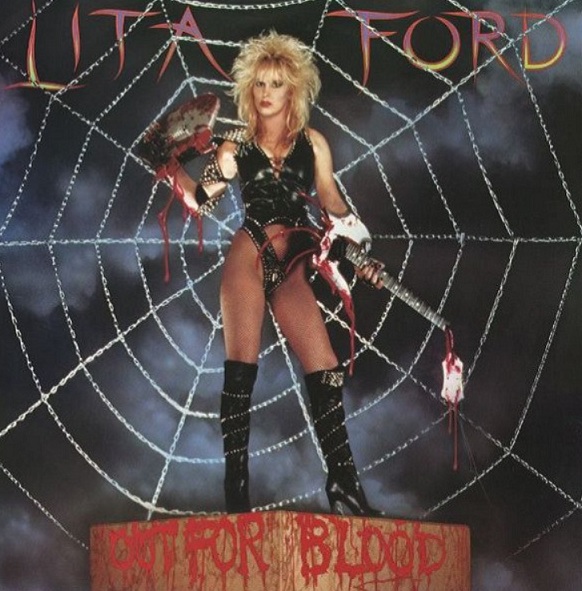
Merryweather, sensing the changing times, adopted a pop-rock, new-wave sound with Eyes, a Holland-based band featuring ex-members of the Nina Hagen Band* and Herman Brood’s Wild Romance*, which released Radical Genes on RCA Records. However, Merryweather returned to his heavy-metal roots — inventively streamlining and glamming the “old sound” for a wider, commercial appeal — as the manager, bassist, and chief songwriter for the solo career of ex-Runaway Lita Ford on her progenitive hair-metal debut, Out for Blood.

Leaving the industry after the Ford project, but not leaving his creative side behind, Merryweather forged a career as an award-winning painter, sculpture, and photographer and worked in the creative department for the City of Los Angeles Department of Public Works. As the calendar flipped to the 21st century, Merryweather returned to the music business, composing music for teen-oriented television shows and, with ex-Space Rangers Mike Willis and Jamie Herndon, made plans to enter the studio for a new, third Space Rangers album. His other music projects — formed with ex-Space Ranger Jamie Herndon and ex-Lita Ford drummer Dusty Watson were known as Hundred Watt Head and The La La Land Blues Band.

His last project, prior to his passing, was a third album with Janne Stark, formerly the guitarist with Swedish New Wave of British Heavy Metal upstarts Overdrive, which released the classic hard rock albums Metal Attack (1983) and Swords And Axes (1984). You can learn more about the Merryweather Stark band — and their albums Carved in Rock (2018) and Rock Solid (2020) — at their official Facebook page. You may leave condolences at Neil Merryweather’s personal Facebook page, which will continued to be managed by his survivors.

Neill completing one of his many artworks/courtesy of Neil Merryweather Facebook.

And, with that, let’s roll the films — and TV series — of Neil Merryweather!


The Seven Minutes (1971)

Leave it to Russ Meyer — of Beyond the Valley of the Dolls fame — to be the only filmmaker to realize the soundtrack potential of the musical scope that is Neil Merryweather. And the potential behind the well-researched, sexually-charged novels of screenwriter Irving Wallace (his early ’60s books, published by Simon & Schuster — The Chapman Report, The Prize, The Man, and 1976’s The R Document — were all adapted, as was The Seven Minutes, by others).

While Russ Meyer’s name immediately says “sex,” the film carries a deeper meaning on the effects of pornography and its relationship to issues regarding freedom of speech: it’s also a meta-movie: about a book, The Seven Minutes, purported as the “most obscene piece of pornography ever written.” A district attorney on the political fast track for a senatorial seat uses the book’s erotic infamy to indict a college student for a brutal rape and murder, as well as the book store owner who sold the book to the student.

Typical of a Meyer film, while it lacks his usual “tits and ass” (demanded by the studio), the casting is B&S About Movies-crazed: In addition to Meyer’s wife and 20th Century Fox Studios’ contract player Edy Williams, the cast features Yvonne De Carlo, John Carradine (the last decent film he was in), the always-welcomed Charles Napier, a self-playing Wolfman Jack, and in another early role, Tom Selleck (Daughters of Satan).

As for Neil Merrryweather: “Midnight Tricks,” from his pre-Mama Lion joint album with Lynn Carey — Vacuum Cleaner (1971) by the concern Merryweather & Carey — appears in the film. (Neil’s works with Heavy Cruiser and Mama Lion were distributed by the Paramount Studios-imprint, Family Productions.)

The duo’s relationship with Meyer goes back to the smut-auteur recruiting Lynn Carey for the Stu Phillips-produced soundtrack to Beyond the Valley of the Dolls (Battlestar Galactica ’78 is one of his many); Lynn sings (“Find It” and “Once I Had You”) for that film’s character in the faux band, The Carrie Nations, along with Barbara “Sandi” Robison. While Lynn’s voice appears in the film, for legal reasons, she does not appear on the subsequent, original soundtrack album.

As a child actress, Lynn appeared in the ’60s series The Man from U.N.C.L.E and Lassie; in the early ’80s, she had a stint on the U.S. daytime drama, Days of Our Lives. She made her lone film appearances in Lord Love a Duck (1966; with Roddy McDowall) and How Sweet It Is! (1968; with James Gardner). Lynn’s attempt at moving into ’80s AOR (think ’80s glam-bent Heart) led to her songs appearing in I Married a Centerfold (1984), Challenge of a Lifetime (1985), Radioactive Dreams (1985) (“All Talk” appears in the film, but on the soundtrack), Hollywood Harry (1985), and Combat High (1986).

Lita Ford: Out for Blood (1983)

By the mid-70s, Neil resided in the Netherlands, where, through Chrysalis Records in London, he set up an imprint, Clear, in cooperation with the Dutch company, Dureco. While developing new acts out of Chrysalis’ studios in Miami and Los Angeles, he released his 12th album, his three-years later follow up to Kryponite (1975) by the Space Rangers, with the solo album, Differences (1978). He then formed the more timely, new-wave outfit Eyes, which released their lone album, Radical Genes.

Then, with new wave and punk on the downward stroke and glam metal on the rise: a new musical adventure called forth. . . .

You know the story: Lita Ford was a member of the Runaways (duBeat-e-o). Joan Jett was fed up with Cherrie Currie (The Rosebud Beach Hotel) as the frontwoman. Currie was tired of being pushed on back burner. Joan wanted to take the band in a punk vein (which she did: with members of the Clash and the Sex Pistols, which morphed into her solo debut, Bad Reputation). Lita wanted to take the band in a metal direction, which Joan hated.

So, Neil, as he did with Lynn Carey, first with the Vacuum Cleaner duo project, and their two albums with Mama Lion, found a new muse for his next musical direction: a creative detour that returned to his ’70s hard-rock roots first explored in the bands Heavy Cruiser and the Space Rangers.

As the mastermind behind a new, full-metal Lita, Neil served as her manager and producer (Billy Joel’s ex-Svengali, Artie Ripp, co-produced). In addition to playing bass — his career instrument of choice — Neil wrote four of the albums nine cuts: the album’s title cut song (posted above), “Ready, Willing and Able,” “Die for Me Only (Black Widow),” and “On the Run.” If you know Neil’s artistic side: he designed all of his own albums covers, costumes, and stage shows throughout his career: Out for Blood for blood was no exception: he constructed the chain-web, the cover, and the band’s outfits; he also designed the MTV video single.

Sadly, his partnership with Lita Ford was short-lived. The experience was such that Neil retired from the business to work as a graphic artist — his second biggest love — for government agencies in Los Angeles and Las Vegas. He went on to win numerous awards for his paintings and multi-media pieces.

Ash vs. Evil Dead (2016)

What can we say about this Equinox (1970) inspired franchise from Sam Raimi that hasn’t already been said? Well, we finally worked up the courage to say something about the film that started it all, Evil Dead (1981) — at least Sam “the Bossman” Pacino did — of the highly-influential “Midnight Movie” splatter fest.

As for the series, itself: we touched base with the Bruce Campbell-starring series as part of our “Lee Majors Week” tribute blowout — as Lee appeared as Brock Williams, Ash’s pop, in the second and third seasons of Starz’s Ash vs. Evil Dead.

As for the Neil Merryweather connection: “Star Rider,” from the Space Rangers’ 1975 second and final album, Kyrponite, appears in “Home”; the first episode of the series’ second season, it served as the introduction to Lee’s character.


So, wraps up our exploration of Neil’s all-too-brief connection to film.

This feature’s intro-obituary originally appeared in the Medium pages of R.D. Francis: “Neil Merryweather: Rock’s Rock ‘n’ Roll Space Ranger, Dies.” Portions also appeared in the article “Other Musical Phantoms: Neil Merryweather and Jim Gustafson. Who? (Then You Don’t Know William Kyle Eidson II or Lori Lieberman, Either).”

You can discover and listen to Neil’s catalog on his official You Tube page. There are also numerous uploads of his albums by his many, worldwide fans.


We previously explored the soundtrack work of the late Eddie Van Halen — as well as his lone acting gig — with our “Exploring: Eddie Van Halen” on Film” feature.

* We reviewed Nina Hagen and Herman Brood’s dual-acting roles in the film Cha-Cha (1979).

About the Author: You can learn more about the writings of R.D Francis on Facebook. He also writes for B&S About Movies and publish music reviews and short stories on Medium.

California Girls: The Motion Picture (1983)

Courtesy of Marian Green/Pinterest.

So, yeah . . . courtesy of all of the stock footage — and its resulting documentary feel — some are inclined to call this bee-boppin’ lesson in tedium a “mondo movie.”

Well, yeah, if “mondo boring” is a thing.

Any film that feels the need to suffix their film title with “The Motion Picture” — see Hamburger: The Motion Picture and Hot Dog: The Movie, as an examples — you know the film has an array of problems, and then some — obviously of the production variety, but, in the case of this movie, mostly of the legal variety. In fact, the only time the suffix worked was when Star Trek: The Motion Picture was released . . . and even then (with its bald alien chick V’ger non-sense). Bottom Line: “The Motion Picture” movies that feel the need to explain to us what it is, will suck ass steaks — studios and budgets of the mega and non variety, be damned. And California Girls sucks the peroxide right out of the bleach-bottle blonde hair shafts and the decals off the bumpers of the VW hippie-surfer bus.

Look, I get it. Every budding producer and aspiring writer and director has to start somewhere, but this inept radio comedy . . . just wow . . . and I thought Zoo Radio, (Young Hot ‘n Nasty) Teenage Cruisers, and On the Air Live with Captain Midnight (by the Rocktober Blood team) were inept radio comedies. Out of his 16 producer credits, eight of which he directed and four of which he wrote, you, more than likely — courtesy of its connection to all things Battlestar Galactica — known William Webb for one film: Party Line (1988), as result of your celluloid schadenfreude to see how far Richard Hatch had fallen and Leif Garrett (done a few for Webb’s production shingle) will desperately keep trying. Then again, if you’re a fan of Richard Roundtree chompin’ cigars and yelling from behind a desk, that was probably your incentive to watch that bit o’ sleaze noir.

As for California Girls: my incentive of plucking it off the home video shelf was result of its being set inside a radio station. However, if your celluloid schadenfreude runs analog waters deep — like whatever happened to Leigh McCloskey, Robbie Rist, Martin Landau, Robert Forester, Jeff Fahey, Yancy Butler, James Coburn, and Stephen Baldwin deep — perhaps you’ve seen Webb’s mid-’80s to mid-’90s direct-to-video potboilers Dirty Laundry, Delta Fever, The Banker, The Hit List, and Target. Maybe you’re a completist and need to see the past-their-heyday works of Zach Galligan, Catherine Mary Stewart, Michael Nouri, James Brolin, and Meg Foster, so you rented The Psychic and Back Stab.

Hey, at least Webb employs all of the actors we get jazzed about at B&S About Movies. That’s right: Jennifer Aniston and Melissa McCarthy fans need to just keep on surfin’, for there is nothing here for you to see.

And, there’s nothing here for YOU, the loyal B&S About Movies frequent surfer to see, either.

“Extra, Extra!” you’ve been warned.

Extra! Extra! Read all about our cinematic rip off!

But . . . if you want to revisit the glory years of late ’70s and early ’80s T&A drive-in flicks, you’re celluloid schadenfreude mileage, may vary. But hey, when a movie gives you full nude skydiving and topless mud wrestling scenes — that had to be cut by 3 1/2 minutes — for its subsequent video distribution, well, you just gotta pull out the Kleenex and the coco butter hand cream, and believe in the plot.

Well, there is no plot.

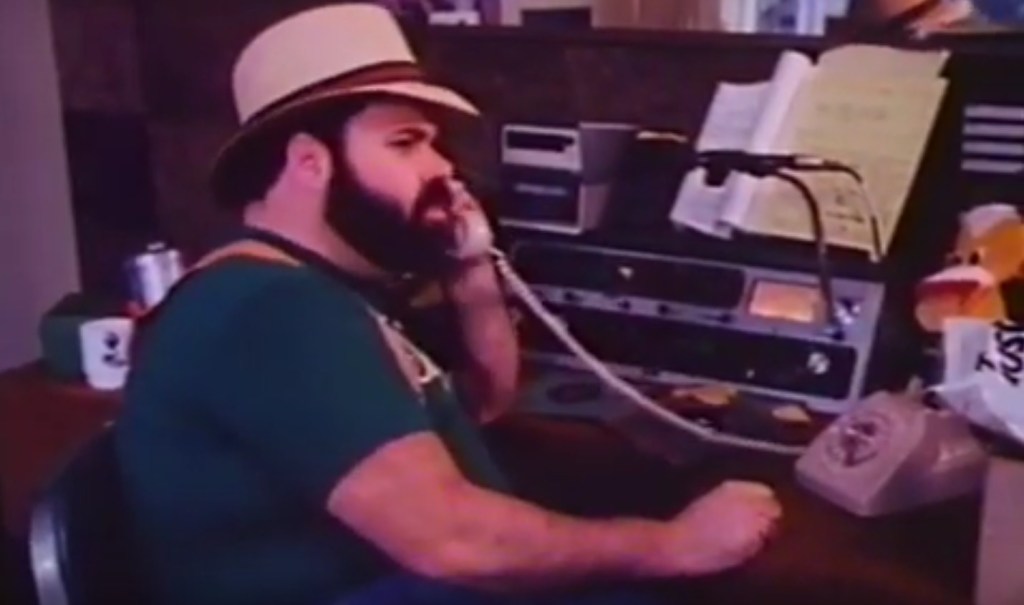
Eh, well, if you count the about 10 minutes of “Mad Man Jack,” an L.A disc jockey trapped in the booth of KRZY (they’re “crazy”), a decrepit L.A radio station with sagging ratings that decides to boost their numbers by finding “The Most Exciting California Girl” and award the winner with a $10,000 prize. And you thought the Zoo Radio gang at “94.5 FM KLST K-Lost” were a bunch of this ain’t Animal House or Porky’s losers*.

Wait, if the joint is a dump and the ratings are in the tank, where did they get the prize money? Oh, well, the “stunt” will perk up the potential advertisers’ ears (see the newspaper, above) and they’ll buy spots. Okay, the “mountain comes to Mohamed” approach is not how radio advertising and programming works, but, whatever.

You need more flicks set inside radio stations? Then check out our “Exploring: Radio Stations on Film” featurette.

Meanwhile, on the other end of the radio . . .

Three spandex-clad girls (one being 1976 Penthouse pet Lindsay Freeman; who also starred in the groundbreaking SOV’er Boardinghouse as the aka’d Alexandra Day, along with Mary McKinley, who is another one of our spandex babes, here) in a cramped apartment decide going fully nude while riding horses, roller skating, and skydiving should be exciting enough to win the prize. And yes, things go full frontal. But don’t go for popcorn during the skydiving stunt or you’ll miss the quickie “triangle of death” shots. (Again, this is the “nasty” 3 1/2-minutes excised from some video prints; the You Tube upload of the film, provided below, is the uncut version.)

And, with that, we spend the next 80-minutes of watching on-the-sly, Los Angeles travelog stock footage — backed by a hip, new wave soundtrack (yes, the music by the bands listed on the poster really appears in the movie) — of girls . . . rolling skating, wind surfing, doing karate, playing softball, navigating water slides, lifting weights, riding mechanical bulls, disco dancing, shopping on Rodeo Drive, pumping gas (and pressing their breasts into the windshield), mud wrestling, riding dolphins, soaking in hot tubs, competing in roller derby tournaments, and (it’s highly unlikely with the NFL authorization) ogling the L.A Rams cheerleader squad on the sidelines. Then our three ne’er-do-well chickies naked skydive-land on the radio station’s roof and net the prize. Then they all hop into Mad Man Jack’s ’65 Ford Mustang and head off to the beach (and he’s fat, hairy, giggling, and disgusting) to frolic in the waters.

Then end.

No. Seriously. That’s the movie. Pick up your empty soda and popcorn containers as you leave. And put away your coco butter.

If you’re looking for a movie with three-plus minutes of endless hang gliding to the tune of 10 CC’s “I’m Not in Love” . . . if you want three minutes of wet tee-shirt bikini boxing to the tune of Kool & the Gang’s “Ladies Night” . . . you’ve found your movie. That’s how this whole movies goes down: DJ mentions ladies “doing something” (e.g., racing dirt bikes) and it cues a song — that plays out in full (in the case of the dirt bikes, it’s Foreigner with “Urgent”), and so on.

Of course, that bit runs thin pretty quick, so Man Man Jack sends out his studio assistant to conduct “man on the street” interviews to ask listeners that burning question: “Who do you consider the most exciting girl?” Then we’re treated to an endless stream of . . . well, it looks like a bunch of down-and-out acting hopefuls auditioning, making clips for their actor’s reels. One even appears as ex-President Richard M. Nixon. And yes, it’s as awful as you think and you hope the hang gliding footage returns.

Now, if duping the NFL by shooting on-the-sly at a football game wasn’t enough . . . how in the world did William Webb afford the rights to the music of Blondie, Devo, the Go-Go’s, Foreigner, Kool & the Gang, Queen, the Pretenders, the Police, Sister Sledge, Rod Stewart, Donna Summer, and 10 CC?

Magic 8-Ball says, no way, Jose. Call the lawyers. And we say that because Rod Stewart is not credited on the theatrical one-sheets, the VHS sleeves, nor credited in the film. Ah, but Hot Rod’s song, “Passion,” does legitimately appear in the Corinne Alphen-starring softcore anthology, New York Nights, aka Shackin’ Up (1984), for those of you needing film with A) a Rod Stewart tune, B) another Penthouse Playmate acting, C) Willem Dafoe making his acting debut, and D) a film to settle the bet that Marilyn Chambers doesn’t star in the movie, but in the 1994 softcore flick New York Nights with fellow softcore actresses Susan Napoli and Julia Parton, which Cinemax’d as Bedtime Stories.**

Hey, at least the radio studio (uncredited in the film) is legit. Too bad the rest of the movie, is not.

And it’s not just B-Sides and studio leftovers, as is the case with most budgetary soundtracks on low-budget films. We are talking about the aforementioned bands’ major hits with the likes of “Heart of Glass” and “Rapture,” “Our Lips Are Sealed,” “Celebration” and “Ladies Night,” “Another Bites the Dust,” “Brass in Pocket,” “De Do Do Do, De Da Da Da,” “Passion,” “All American Girls,” and “Hot Stuff.” Yeah, the California Girls: The Movie soundtrack is almost as cool as the new wave delight that is The Last American Virgin . . . but thank the celluloid overloads there’s no pretentious Bono crooning over a teenage abortion scene amid the Mad Man Jack pattering . . . and you don’t have your nostalgic teen heart ripped out at the end. Hey, back in the day, before you easily accessed porn on the Internet, or were old enough to get behind the beaded curtain of your local video store, or were allowed to pick skin mags off the high racks, you had titillating movies such as California Girls to sooth your tween savage beast.

Not that it helps in watching this mess: The real life Maggie Parker, who has her new wave concert broadcast on the air of KRZY (with the song “My Baby”), is better known as Maggie Mayall, the wife of British blues-rock legend John Mayall (know your Eric Clapton trivia). Their son, Jason, worked as a production assistant on the film.

The doppelganger caveat: Don’t confuse this long-form T&A rock video mess with the year-later released Tawny Kitaen comedy California Girls. As for this California Girls, this movie — and we use the term in the loosest form possible — must be seen to be believed. You can see it (for now, so watch it quick) on You Tube, because, with that soundtrack, this is surely to be pulled and it’s never coming out on a DVD or Blu — and least not in a non-grey variety. The VHS tapes are out there, and they ain’t cheap. Hey, we found this clip “Barney’s Girls” to sample, and here’s the soundtrack (hopefully, by the time you read this, they’ll still uploaded.)

* Hey, don’t forget that we discuss Animal House and Porky’s — as well as all of their knockoffs — courtesy of our “Exploring: ’80s Comedies” featurette.

** Update: We since conversed with the film’s uploader and learned they overlaid the Rod Stewart song as result of copyright issues over Blondie preventing the upload. You fooled me, as the Stewart tune fits in perfectly. But still . . . how did this cheapjack flick afford all of those songs? So you still gotta call the lawyers . . . you know, the kinda lawyer that cops a table at Barney’s Beanery and uses the payphone on the corner as the “office” phone.

About the Author: You can read the music and film reviews of R.D Francis on Medium and learn more about his work on Facebook.

Filmgore (1983)

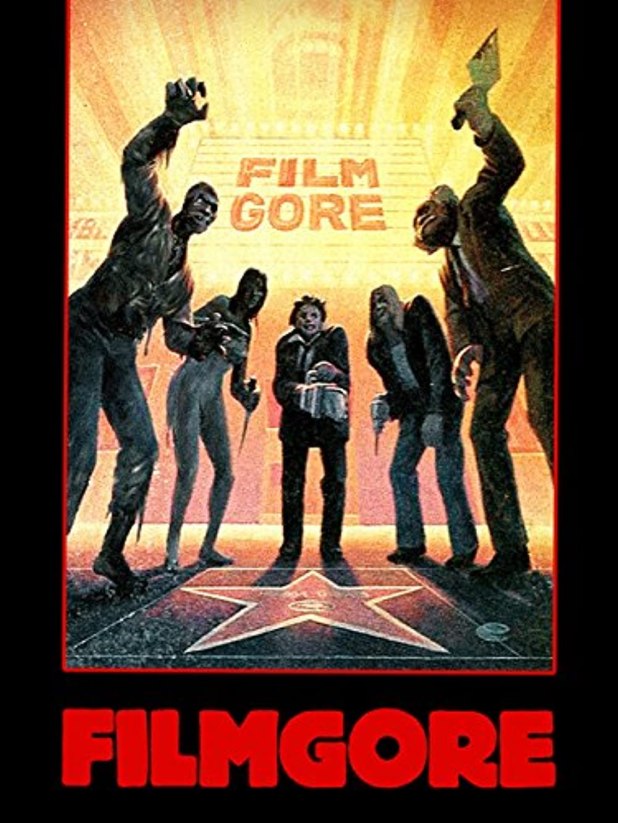
Before Full Moon was endlessly re-releasing and remixing their own movies, they were taking other films, getting Forrest J. Ackerman and Ken Dixon (who directed and was behind the other Full Moon-related remix movies ZombiethonFamous T&A and the Best of Sex and Violence) to write a whole bunch of labored puns and having the good sense of hiring Elvira to voice the horrendous writing, which she gives one great try at making better than this deserves to be.

If you didn’t feel like watching Blood FeastTwo Thousand Maniacs!The Astro-ZombiesCarnival of BloodThe Texas Chainsaw MassacreDrive-In MassacreSnuffThe Driller KillerFiend and Dr. Jekyll’s Dungeon of Death, you can just watch these quick clips of only the kills and brief plot points.

That said, if I saw this as a kid and saw scenes within Astro-Zombies that had Tura Satana cut into moments of Elvira making jokes, my puberty would have started much sooner than it did.

The way these are edited, as well as the horrible quality of the prints that were used, just makes me want to watch the original films and not this on the cheap cash-in.

You can watch this on Tubi.

Screamtime (1983)

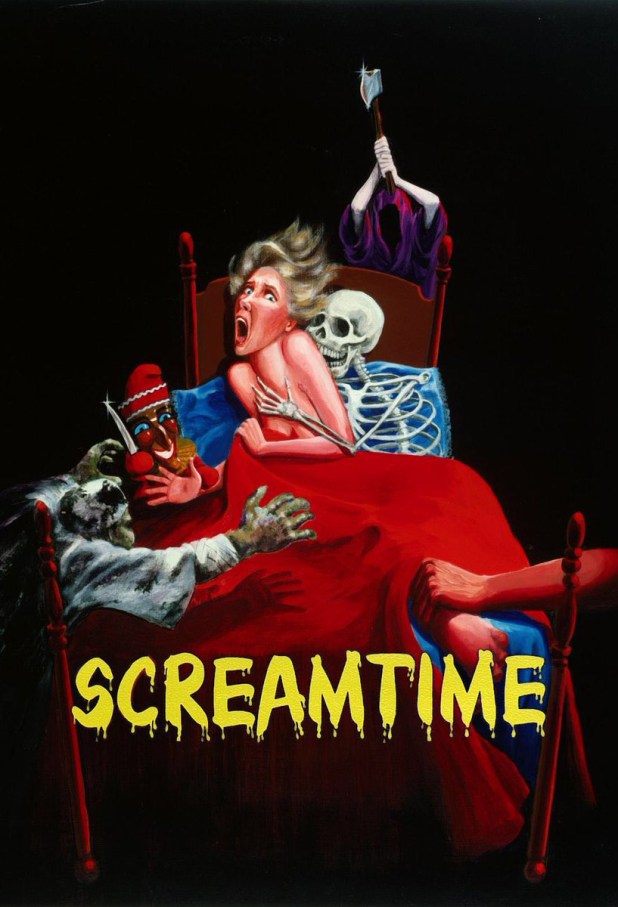
Screamtime goes from New York City — the wrapround story is about two guys stealing the videos that we’re about to watch — to London, which is kind of jarring, as the stories play out.

“That’s the Way to Do It” is about the personal pain of a Punch and Judy puppeteer whose stage and puppets have been set ablaze as those around him are killed.

“Dreamhouse” is so much a retelling of The Shining that the kid is named Danny. It’s about seeing dead people in a new house and those dead people are planning on creating even more death. This sequence has a really decent slasher feel.

Do You Believe in Fairies?” is about two older women being robbed — by Dollar vocalist David Van Day — yet their house is under the protection of fairies and gnomes.

This has two directors: Stanley Long is best known for making a few of the Adventures of… sex comedies, Sex Through the Ages and the STD education movie It Could Happen to You. He’s joined by another director you may know better, Michael Armstrong, who wrote Horror HouseHouse of the Long Shadows and Mark of the Devil, which he also directed.

You can watch this on YouTube.

Chanoc y el hijo del Santo contra los Vampiros Asesinos (1983)

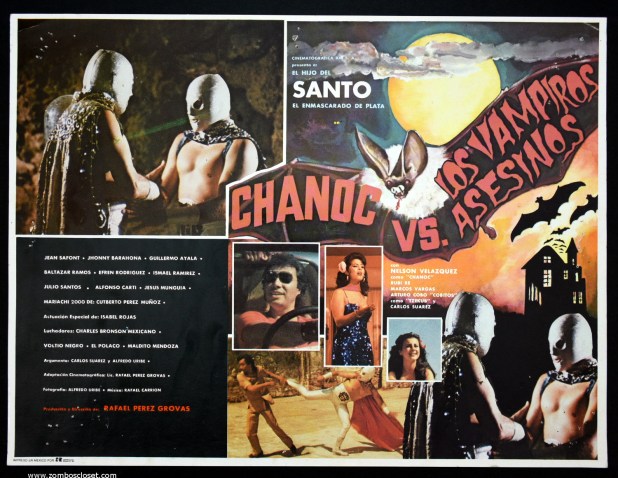
Just over a year after his retirement in late January 1984, Santo removed his mask just enough to expose his face on national television. This was the only time that he had shown his face in public and is considered him saying goodbye to the public, as he died only one week later. He was buried in his mask and ten thousand people gathered to say goodbye.

This film was made a year before and features El Santo sitting inside a cave where we can see the famous silver mask in a glass case. He asks a young man in sunglasses if he is ready to accept the family’s tradition of fighting for the common man and serving justice*. Santo tosses a smoke capsule at the young man, who emerges as El Hijo del Santo and embraces his father, who walks away from the rest of the film.

Chanoc** (Nelson Velazquez) and his sidekick Tzekub (Arturo Cobo) have been tossed into the ocean by smugglers and are rescued by El Hijo del Santo (who only appears in his mask three times and instead wears those shades to hide his identity) and his sidekick Carlitos (Carlos Suarez). As for the vampires in the title, the gang members are merely dressing as them to scare people away.

I wanted to enjoy this movie but I realize the further from reality lucha films stray, the more I tend to love them. This is not one that transcends our day to day drudgery.

You can watch this on YouTube.

*Thanks to Cult Faction, I can share that speech: ““My son, you have been preparing to take my place. I’ve taught you to love the poor and the weak, and now you are ready to help them and defend them, to fight for justice and the law. And above all, to be the friend of the people. I am going to present you with this mask, which has been my pride and my emblem. When you put it on, you will have to honour it always, even when your own existence is endangered. If you feel capable of consecrating your life, swear to it as I did. But first, you have to know one thing: once you put it on, you can never go back. Now tell me, are you willing?”

**Chanoc is an adventurer and fisherman who comes from the comics and has appeared in Chanoc,  Chano en las garras de las fierasChanoc contra el tigre y el vampiroChanoc en las tarántulasChanoc en el foso de las serpientesChanoc en la isla de los muertos and Chanoc en el circo union.

Of Unknown Origin (1983)

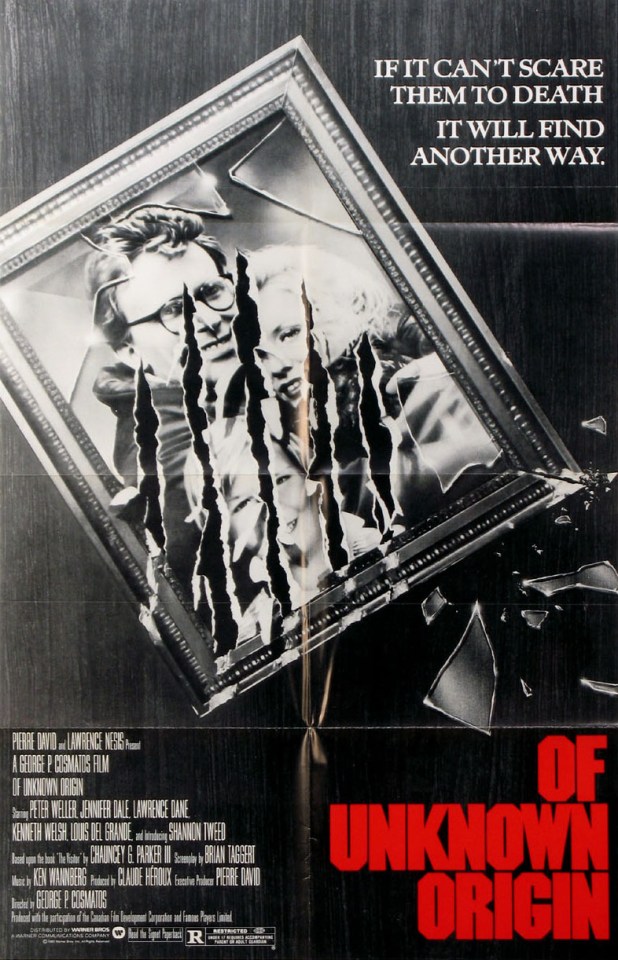
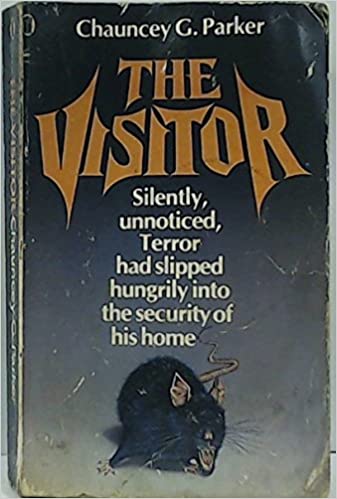
Based on The Visitor by Chauncey G. Parker III, this movie is totally worth watching just to see Peter Weller pretty much be in a movie by himself for long stretches, going absolutely ful nutzoid at the premise of having a rat in his walls. If you’ve said, “I want a movie where rats attack people while they’re arrdvarking and children at birthday parties,” Of Unknown Origin is your movie. I mean, there was one point where I had to stop this movie and just catch my breath and be amazed that it exists.

George P. Cosmatos may be known today as the father of Beyond the Black Rainbow and Mandy director Panos Cosmatos, but he was a more than dependable director, turning out blockbuster fare like Rambo: First Blood Part II, Cobra, Leviathan and Tombstone.

Bart Hughes (Weller) stays behind to work on the job that will get him a promotion while his wife (Shannon Tweed) and child go away on vacation. He just redid their brownstone, so this should be a great weekend for him, but no, a rat shows up and that’s the story. Ninety minutes or so of a rat and Peter Weller descends into destructive dementia and screams stuff like, “Watch and weep, you furry f**ker” and “Keep it up. Just keep it up. I’ve got friends in Jersey.”

There’s also a moment where he tells everyone at a dinner party that no one knows where rats come from — Of Unknown Origin — and no one corrects him and calls BS and explains that they come from Asia, but then again, no one had Wikipedia in 1983 and they had to figure out how to get the title into the movie.

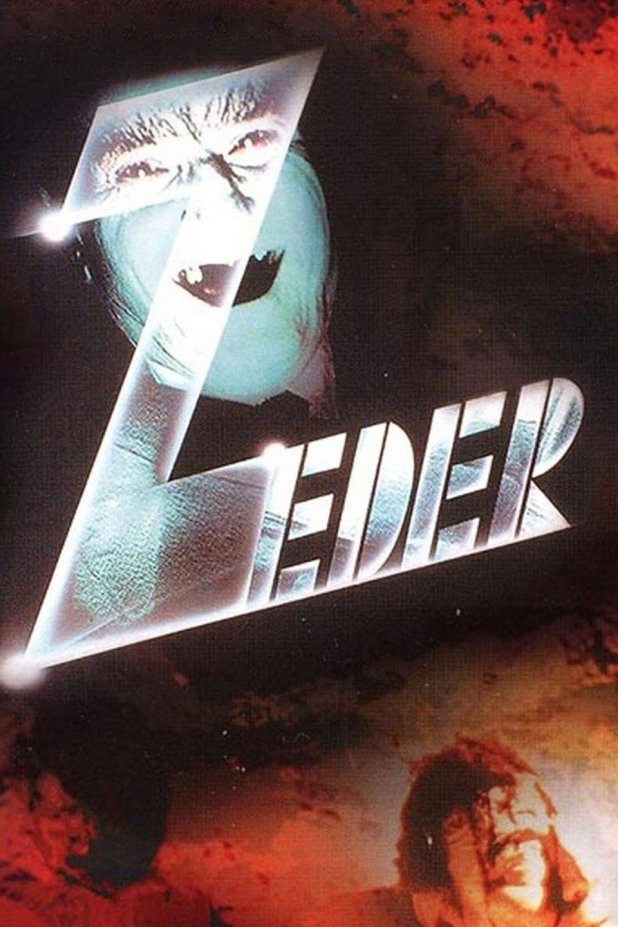
Junesplotation 2021: Zeder (1983)

June 22: Junesploitation’s topic of the day — as suggested by F This Movie — is zombies.

Zombies are boring. Let’s face it — the best things that had to be said about them really didn’t escape the 80s. And outside of perhaps Train to Busan, how can you improve upon movies like Dawn of the DeadZombi and Return of the Living Dead? People try and well, you have to give them credit for it. But I was really trying to stretch during Junesploitation and find a zombie movie that no one would choose, as well as one that might rekindle my love for these movies.

Released in the U.S. as Revenge of the DeadZeder doesn’t go for the Fulci throat — or eyeball — like nearly every zombie movie made in the wake of the Godfather of Gore’s tribute to the living dead.

The film begins in 1956, as a psychic girl named Gabriella is brought to the French mansion of Dr. Meyer. As a test of her abilities, he takes her into his basement where she immediately begins to claw and dig into the dirt, searching for something. Soon, she’s attacked and taken to the hospital and a corpse is discovered that is identified as Paolo Zeder.

Fast forward three decades and change and we meet Stefano (Gabriele Lavia, InfernoDeep Red, Sleepless), a novelist who has been given the gift of a typewriter by his wife. He starts to investigate the ribbon of the ancient machine and finds a series of letters from Zeder that detail phenomena he called K-Zones, which are places where death does not exist and even those deceased may be reborn.

Our hero soon loses everything — his wife, any semblance of normalcy, his mind — to penetrate the web of conspiracy that surrounds Zeder and the K-Zones. His wife is even murdered by those who want to keep the existence of the undead world a secret, so the film closes with Stefano attempting to bring her back.

Beyond the dependable as always score by Riz Ortolani, there’s a great scene near the end where a tower of video monitors replays the rebirth of the supposedly dead priest Don Luigi Costa arise in grainy glory.

This was written and directed by Pupi Avati, who is still making movies to this day, but is probably best known for House with the Laughing Windows.

The American VHS art for this — when it was released by Lightning Video — made it seem like this was going to be everything you expect from a zombie film. I’m happy to report that it is not. Instead, it’s a dark mediation on secrets and death.

You can watch this on YouTube.

Dragon’s Quest (1983) and Ninja Warriors (1985)

After making his debut in Murder in the Orient (1974) with Leo Fong (Kill Point) and finding a home in our public domain hearts with Death Machines (1976), Ron Marchini retreated from the film industry to concentrate on training and writing martial arts books with Leo Fong, as well as becoming a go-to arts teacher. He returned to our drive-in screens for his third film, Dragon’s Quest (1983). Sadly, as with Arctic Warriors (1989), Ron’s third film is a Marchini title lost to the analog ages. There’s no VHS tape images on the web and the blogs dedicated to Ron’s career make no mention of the film.

So, in desperation . . . and in the grand tradition of low-budget studios recycling artwork (know your Michael Sopkiw vs. Mark Gregory movies), we made our own (it must be cheesy) Dragon’s Quest VHS sleeve with the Mexican-distributed artwork from Ninja Warriors. Oh, what might have been. . . .

Image courtesy of Todo Coleccion Online books, art, and collectibles/design R.D Francis/text PicFont.

Courtesy of the digital catalogers at the IMDb, all we know about Dragon’s Quest is that the film was shot in the native Filipino and Tagalog languages of the Philippines and that Ron portrayed a character named Dragon. Director Celso Ad. Castillo has 65 directing credits and 50 writing credits (he only directs Dragon’s Quest). His career led to his winning the “Cinema Original Award” at the 6th Cinema One Originals Digital Film Festival 2010 for the horror film 666.

As with much of the East and South Asian films cataloged at the IMDb, most of Castillo’s resume entries, as with Dragon’s Quest and his award-winner 666, are barren, dead pages. While most of Castillo’s films were Philippine-only distributed, several have English-language titles, so, most likely, they received distribution outside of his homeland: Dr. Yes (1965), Zebra (1965), The Tall, Dark, and the Handsome (1968), Dirty Face Max (1968), Inside Job (1970), The Virgin (1971), Isabel of the Islands (1975), Virgin People (1984), Snake Sisters (1984), Isla (1985), Paradise Inn (1985), and Virgin People 2 (1996). Unless your willing to explore the Filipino online marketplace for any possible VHS issues or grey DVDs, we’ll just have to let Castillo’s Dragon’s Quest go and live in the now.

The VHS I remember. It feels like home.

AKA Ninja Commandos and American Ninja
— Distributor hornswoggling to convince us Arnie or Michael Dudikoff will appear as a ninja warrior

That brings us to Ron’s fourth film — and his first of four appearance as Steve Parrish: Ninja Warriors. At the time, Cannon was swimming in cash with their initiating a new wave of martial arts films in the ’80s with the likes of Michael Dudikoff in every derivative of “American” and “Ninja” and “Warrior” in the title — and with Ron’s old tournament mate, Chuck Norris. As with most of the Ninja-cum-Kung fu flicks of the Filipino variety, you’re getting lots of action adrift in the seas of no plot: but who watches these movies for their plots or character development? And the acting stinks, but the fights are great: but who watches these films for their acting; we came for the fights, the acrobatics, and the stunts. Look, let’s be honest: it’s action porn. We watch porn for the porn and ninja movies for ninjas. And President Reagan — via photographs — is all over the place, just so we know that, while this was shot in the Philippines, the action takes place in America — although nothing in this film looks like America.

So . . . this film rolls out the old “secret formula” trope (this time: mind control) that can either save or destroy the world — depending on who possesses said formula. Baddie Ninja Kurado (Ken Watanabe; not that one, the other one) and his evil scientist boss, Dr. Anderson (Mike Cohen), want the formula. So Kurado’s seven-man, cartwheeling gas-masked paramilitary ninja unit storms the government lab (“Top Secret” stenciled on the cover, natch) and dispatches the ubiquitously feeble security guards by fire, throwing stars, grappling hooks, swords, and ball bearings/marbles; attack-by-trees is their forte. The ninjas, led by Kurado’s best warrior (Romano Kristoff), have succeed. But they only secured half of the formula.

Now, for their next mission: storm a country mansion to kidnap the tennis pro daughter of a wealthy scientist (the ‘ol chloroform n’ burlap sack trope; I was going to use the word “gag,” but I like trope, better, for its reader-irritation levels and to display my thesaurus-ignorance in finding non-repetitive words in my writing) as leverage to secure the second half of the formula. And the ground’s guards, as well as the cops, are, once again, dispatched in quick succession, but a policewoman is kidnapped; in a prisoner exchange gone bad with a captured ninja, the ninjas murder their cop hostage. To paraphase Tommy Wiseau: Is plot twist . . . of no consequence.

Well, it’s time to call in Steve Parrish: Ninja Warrior. And, while Steve has no last name here, in interviews over the years, Marchini has stated — as well as MarchiniHeads more fanboy-manic than I — that Ninja Warriors is the first Steve Parrish adventure. Of course, there’s no character development regarding Steve’s past to confirm his Parrishness. For he just is: a lone wolf wrapped in a puzzle sandwiched in an even-fewer-dollars spaghetti, uh, noodles western, enigma. (How’s that for a non-trope laden sentence? R.D has mad skills.)

Anyway, Lt. Kevin Washington (Paul Vance), lost amid this ninja tomfoolery, knows Steve better than anybody; he calls in his old buddy for schoolin’ of his Japan-based martial arts knowledge in the ways the ninja. But Parrish soon realizes “knowing” the ninja ways isn’t enough: to defeat them, he must become . . . a Ninja Warrior.

Romano Kristoff pops up often in our Marchini reviews this week. Amid his 30 films, he worked with Mark “Trash” Gregory in Just a Damned Soldier (1988) and Tan Zan: Ultimate Mission (1988). Ken Watanabe, who also penned Ninja Warriors, also stars in our favorite Brent Huff film of all time (Hey, Sho Kosugi, we love you too.): Nine Deaths of the Ninja (1985).

Paul Vance made his acting debut as Praxis in the batshite-all-over-the-place wonder that is W Is War (1983) and Mad Warrior (1984) for Willy Milan, and Slash Exterminator (1984, with Romano Kristoff) for Jun Gallardo. In addition, Vance wrote Slash Exterminator and SFX Retailator for Gallardo. Romano Kristoff, starring here for director Teddy Chiu/Teddy Page, also worked on two of Page’s best: Black Fire (1985) and Jungle Rats (1988) (that we seriously need to rewatch and review . . . for a “Philippine War Week” blowout).

If you’re a frequent visitor to the Pasta and Philippine Apocalypses and Vietnam war zones, you’ll recognize the support cast of Mike Cohen, Mike Monty, and Nick Nicholas, each who could easily have a month-long B&S About Movies tribute month based on their respective resumes.

So . . . yeah, Ninja Warriors is bad. But it’s awesome bad because it’s better made than most Rambo and Arnie Commando pasta and noodle rips. Director Teddy Page, averaging a Woody Allen-inspired one film a year across 30-plus credits, ranks right up their with Cirio H. Santiago (Equalizer 2000) in terms of quality-against-the-budget and could teach a thing or two, or three, to Godfrey Ho (Devil’s Dynamite) and Jun Gallardo (Desert Warrior).

You can stream the majesty of Ninja Warriors on You Tube. It’s a kick!’

About the Author: You can learn more about the writings of R.D Francis on Facebook. He also writes for B&S Movies