“WITCH is like the Beatles of Zambia.” — from the film
In the ’70s, Anglo-American-bred heavy-psychedelic progressive rock flourished, not only in the U.S., the U.K, and on the European mainland — but all over the world. The bands were everywhere: even in Japan (Food Brain) and Israel (Atmosphera), to name a few. Even in the landlocked country of the Republic of Zambia in Southeastern Africa. And the nation’s most famous band was the Rolling Stones-influenced, psych-rock flavored (recalling the band’s 1968 to 1974 Beggars Banquet to It’s Only Rock ‘n Roll era), WITCH, the first Zambian band to record and release a commercial album.
Jagari, WITCH’s founding and sole original member, sets out on the road to rediscovery/Utopia Media.
As with Malik Bendjelloul — a Stockholm, Sweden, documentary filmmaker who, upon hearing the music from the two-album career of forgotten Detroit musician Sixto “Sugar Man” Rodriguez for the first time in a Cape Town, South Africa, record shop, became obsessed with discovering what became of the mysterious “Bob Dylan of Detroit” to create the film Searching for Sugar Man — Gio Arlotta — a Milan, Italy-based journalist who, upon hearing WITCH for the first time in 2012, became obsessed with discovering what became of the country’s original-influential “Zamrock” band. So Gio Arlotta, along with fellow fan, Jacco Gardner, a Dutch musician, they set out to Zambia to find their idols.
Their search led to finding the band’s sole surviving member, vocalist Emanyeo “Jagari” Chanda (an Africanisation of Mick Jaggar) (the filmmakers also find the band’s original engineer at the still-in-existence studio where they recorded/pressed their albums). As with the Sugar Man before him, Jagari experienced a career resurgence with his first-ever European tour — by a revived WITCH featuring an international cast of fan-musicians (the Netherlands, Germany, and Switzerland). The keyboardist in the band is Patrick Mwondela, who joined in 1980 — long after Jagari’s departure — and remained with the band until their 1984 demise (he appears on their final two albums; 1980’s Movin’ On and and 1984’s Kuomboka).
The golden-era of the band, in my opinion, are the Jagari years from 1973 to 1976, as the later parts of the band’s catalog transformed from ’70s-styled progressive rock — inspired by the Rolling Stones, Jimi Hendrix, and U.S. funk, James Brown, in particular (and, I feel, to critical disagreements: a pinch of Miles Davis and a soupçon of Santana) — into disco and more traditional Zambian material; bass-oriented Kalindula music, in particular. (You can learn more about the traditional African instruments incorporated by the band at the Atlas of Plucked Instruments.)
In addition to his noted work as a journalist, Gio Arlotta is also a video artist. To that end: Arlotta effectively frames his shots and works as a fluid editor; the film’s animations are equally intriguing with a stellar opening credits sequence (assisted by his co-producer and writer, and cinematographer, Tim Spreng; Spreng made his feature film debut with the Czech Republic romantic-drama, 2013’s All the Lost Souls). Arlotta — as with documentarian Liam Firmager in his earlier celluloid tribute to Suzi Quatro — provides WITCH: We Intend to Cause Havoc with a not just a run-of-the-mill rock documentary or artist preservation quality: it’s a tale about dreams; a tale of how hard work and never giving up hope, eventually, will return bountiful spoils. And that the gift of music is an eternal one.
As with the absolutely stellar The Changin’ Times of Ike White from last year reigniting a rediscovery of the genius of ’70s soul-fusion musician Ike White, this is another time when you drop your hesitations on watching a documentary for your evening’s entertainment — and watch it, as you learn how political upheavals can affect one’s pursuit of music. You also learn that, regardless of borders, musicians experience the same unrealized careers — and are reduced to giving up music for day jobs to support their family; in Jagari’s case: spending long days digging the African wilds for precious stones.
My only reservations with the film is that the African-accent English (remembering Zambia was once a British territory) is difficult to understand. Hopefully, the theatrical and streaming version — unlike the promotional screener I watched — will provide viewers with captioning; captions which will obviously be available on the film’s eventual hard media release. I also feel the film would have benefited from a tighter edit, even at 80 minutes, the proceedings dragged slightly against the hard-to-follow Zambian English. Those personal opinions, of course, vary from viewer to viewer and in no way detract from the power of witnessing a once lost artist rediscovering his past — and experience his forgotten, creative past becoming commercially accepted by the world stage for the first time.
You can enjoy WITCH: We Intend to Cause Havoc on July 13, 2021, available as a world premiere, pre-order rent-to-own at Altavod. After its premiere on that platform, as well as Apple TV, the film will be available on other streaming platforms and hard media.
The film was acquired for international distribution by Utopia Media, which also brought the British rock document on Suzi Quatro, Suzi Q, to the international marketplace. Another of Utopia’s award-winning documents is Martha: A Picture Story, concerned with Martha Cooper, a New York-based, trailblazing female graffiti artist and street photographer.
Utopia is headed by Robert Schwartzman — of the band, Rooney, and a writer and director in his own right — who made his feature film directing debut with the really fine comedy, The Argument, released last September. You can learn more about the launch of Utopia Media with this February 19, 2019, article at Deadline.com.
An essential part of a prog-rock collection/Utopia Media.
You can find the full WITCH discography on You Tube:
* Released as a two-fer CD in 2014 on Now-Again Records. The label — as well as reissuing the remainder of the WITCH catalog in 2011 and 2012 in digital and vinyl formats — also released the 2012 career-spanning compilation We Intend to Cause Havoc.
You can learn more about Emanyeo “Jagari” Chanda and WITCH with “We’re a Zambian Band,” a highly-recommended expose written by Chris A. Smith for the Austin, Texas, publication, The Appendix.
WITCH – Live in London, September 2017
About the Author: You can learn more about the writings of R.D Francis on Facebook.He also writes film reviews for B&S About Moviesand publishes music journalism pieces and short stories based on his screenplays, on Medium.
For our “Ron Ormond Day” at B&S About Movies, I chose this early hicksploitationer* featuring an early role for Ron’s son, Tim. Tim would grow up to serve as an editor, cinematographer, writer (39 Stripes, The Second Coming), and director (the lost The Second Coming) on several Ormond family productions, which also included wife and mom, June Carr (her 2006 Variety obituary). Tim also acted in Ron’s films — only eight out of forty films — Girl from Tobacco Row, The Exotic Ones,If Footmen Tire You, The Burning Hell, The Grim Reaper, The Believer’s Heaven, and 39 Stripes. So, when in Ormondville, you might as well review White Lightnin’ Road to complete Tim’s acting resume . . . and honor the career of Earl Sinks — also the star of today’s second (non-Ron Ormond) film.
Who?
Read on, B&S surfer!
White Lightin’ Road (1967)
Look at that one-sheet! How can you NOT WATCH this?
This one has it all: Loose n’ tempting femme fatales, red-lining stock cars, driver rivalry, and love triangles between said rivals and femme fatales. So, yeah, the proceedings are just like any red-neckin’ romp with fast cars and faster women. And moonshine. And gangsters. And an illegal auto parts network. And murder. And shotgun weddings. And everything southern fried that we love. (Oh, Tim’s a young lad who hangs around the track that’s befriended by Joe, our ne’er-do-well hero.)
Earl “Snake” Richards — a ’50s rockabilly crooner who also appeared in Ormond’s Girl From Tobacco Row (1966), and a ’50s rock flick, That Tennessee Beat (we’re getting to it), before hanging up the clapboard — stars as Snake Richardson, the rough n’ tumble bad-boy racing rival of Joe (the one and gone Ter’l Bennett): your typical, straight-laced lad who has the need for speed. And, as in other back roadin’, moonshinin’ and asphalt romps, Ruby (the sexy n’ white-trashy, eyeball melting Arline Hunter; Playboy Playmate of the Month for August 1954), the bad guy’s girl, has eyes for the good guy. And she — one not to shriek from a good ol’ girl-on-girl catfight — gets Joe mixed up with Slick (played by Ron Ormond), who cons our lad into being the wheelman for a heist, which results in the death of a nightwatchman.
As you watch the trailer, you’ll take note that, unlike the Elvis (Viva Las Vegas) and Fabian (Fireball 500, Thunder Alley**) racing flicks Ormond emulates, there’s no stock footage: everything is staged and shot in-camera by Ron, himself, which makes White Lightnin’ Road superior to many of the racing flicks of the ’60s.
The new 35-mm trailer!
To say we love Ron Ormond’s films is a trope-laden understatement, as we’ve also reviewed Ron Ormond’s pre-salvation exploiters Mesa of Lost Women and Please Don’t Touch Me. And, if you feel like You Tubin‘ or Googlin’, you’ll discover that, after Buddy Holly went solo and left the Crickets hangin’, Earl Richards, aka Sinks, ended up fronting the Crickets. Oh, and did you know, Earl and the Crickets cut the original version of “I Fought the Law” made famous by the Bobby Fuller Four (and later the Clash; just heard it this week on a classic rock station)? True story.
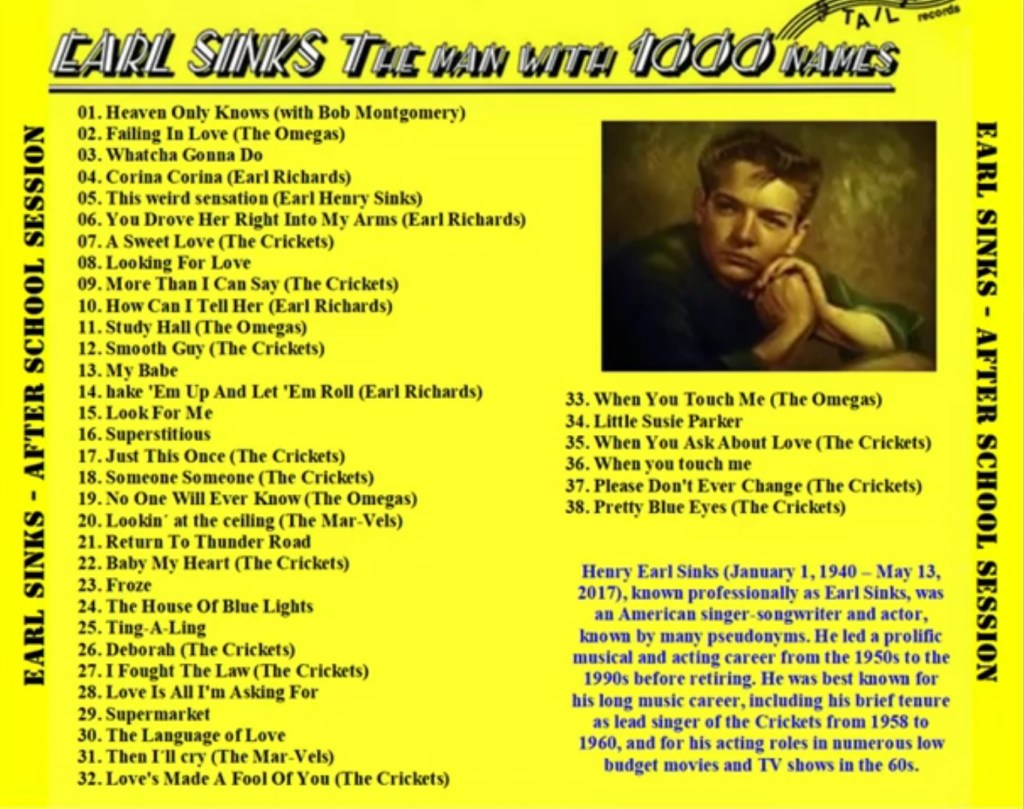
And, in a real treat, there’s a You Tube upload of the Earl Sinks compilation tribute CD The Man with 1000 Names — a super-fine, hour and a half of music featuring his work under the names Sinks, Earl Henry, Sinx Mitchell, and Earl Richards, as well as his work with the Omegas, the Hollidays, the Mar-Vels, and the Crickets. Embedded below, there’s a wonderful slideshow with Earl and the Crickets to the tune of their lost ’50s hit, “Someone, Someone,” to enjoy.
Earl “Snake” Richards in his acting debut for Ron Ormond.
Earl’s complete, career-spanning compilation/read his full biography on Wikipedia.
That Tennessee Beat (1966)
Earl Richards spotlighted on the newspaper ad for That Tennessee Beat.
The big selling point, here (this is B&S About Movies, after all), is American cinema chain owner and producer Robert L. Lippert, who we’ve waxed nostalgic in our reviews for just a few of his 300-plus films: Jungle Goddess, King Dinosaur, Project Moonbase, and Rocketship-XM. And Ron Ormond — the reason for this review — produced and directed several films for Robert L. Lippert, including many westerns with Lash LaRue. (Ormond also used Lash — as a therapist (!) — in the mondo sex-hypnosis romp, Please Don’t Touch Me. Another western star of old, Tex Ritter, worked with Ormond — as a priest (!) — in Girl from Tobacco Row.)
Star Trek: TOS scribe Paul Schneider — who gave two of the series’ best-known, first-season episodes: “Balance of Terror,” which introduced the Romulans, and “The Squire of Gothos” — pens; he also wrote episodes of The Six Million Dollar Man and Buck Rogers in the 25th Century. As for our director, Richard Brill: primarily a producer who worked on the TV series The New Steve Allen Show and Dateline: Hollywood, That Tennessee Beat was his only feature film.
This also proved to be the fifteenth and final film for (hubba-hubba) screen beauty Delores Faith, who wowed us in House of the Black Death (1965) with Lon Chaney and John Carradine, the 1966 Drive-In double-biller of The Human Duplicators and Mutiny in Outer Space, and her debut set in the far-flung future of 1980: The Phantom Planet (1961).
Then there’s our leading-lady, Sharon DeBord: During her slight, fifteen credit-career, she was Darrin Stephens’s secretary on TV’s Bewitched for several episodes. Did anyone one see her work in The Hoax (1972) with the recently passed (June 2021) Frank Bonner of Equinox fame? The Halloween rip Killer’s Delight, aka The Dark Ride (1978)?
Okay. Okay. I know. As Sam the Bossman would say: “Hey, don’t we have a movie to discuss?”
Sink — under his then stage name, Earl “Snake” Richards, is our leading man: Jim “The Nashville Kid” Birdsell. An aspiring country-western music star on the run after stealing money to fund a trip to Nashville, he’s subsequently robbed and left penniless by another road bandit. Luckily, Jim meets a brother and sister with a singing group who take him into the band and help him achieve his rock ‘n’ roll dreams. Jim, of course, falls in love with the sister, Opal Nelson (Sharon DeBord), as she and the Rev. Rose Conley (Minnie Pearl) put him on the straight and narrow.
As you can see from the newsprint ad, this film is packed — as is the case with all ’50s and ’60s rock films (see the similar The Road to Nashville; Mister Rock and Roll starring DJ Alan Freed) — with plenty of musical performances.
No disrespect to the ol’ Snake — and it’s not his fault, as he’s just a musician in an acting role — there’s not much of a story here; but again, as is the case with ’50s and ’60s rock films: the whole point is the performances. Remember, there was no MTV back then. And not everyone could afford a television to watch variety shows to see groups perform. And many couldn’t afford to go to concerts. So, it was movies, like That Tennessee Beat (distributed by 20th Century Fox, of all studios), which, for a mere buck a person (sodas and hamburgers were $.30 each*˟), brought the TV — and concerts — to America’s rural Drive-Ins.
You simply can not see a concert line up featuring Earl “Snake” Richards, Peter Drake, Boots Randolph (best know for the huge sax-driven hit, “Yakkity Yak”), the Statler Brothers, and Merle Travis (the film’s title song), not to mention the comedy stylings of the Grand Ol’ Opry’s grande dame, Minnie Pearl, for one dollar. Well, $4.00, if you toss in the sodas and burgers for you and your sweetie. So goes the genre of the “jukebox musicals” of old before Don Kirshner’s Rock Concert, ABC-TV’s In Concert, and NBC-TV’s The Midnight Special.
Sadly, I only have White Lightin’ Road recorded on an old VHS taped-off UHF TV. I also had That Tennessee Beat on a tape via UHF-TV, but lost that one to the blue screen of death. In all of my grey-market VHS years, I’ve never come across a copy of either film. And there’s no online streams to share of either film.
If there’s ever an actor-musician who deserves a restored, reissue box set of his films — only three, mind you — it’s Earl Sink. Make it happen, Arrow, Kino, and Severin. Yeah, we’re calling you out, our brothers. You can even toss in a restored greatest hits career-spanning CD of Earl’s tunes in the set.
** If you need more films with romance and burnin’ rubber (of the asphalt variety, dirty mind), check out our “Drag Racing Week,” as well as our “Savage Cinema (box set)” and “Fast and Furious Week” tributes, featuring review links to over one hundred films.
*˟ “Here’s How Much a ‘Cheap Date’ Cost Every Decade Since the 1940s” by Morgan Greenwald for Best Life.
For Henry Earl Sinks January 1, 1940 to May 13, 2017 You rocked, it, Snake!
About the Author: You can learn more about the writings of R.D Francis on Facebook. He also writes for B&S About Movies.
Editor’s Note: As if we don’t have enough movies to review! An anonymous reader confessed their love for this movie and baffled how we never included it as part of our endless apoc-love at B&S About Movies. You know the drill, ye reader: Strap on the popcorn bucket, let’s apoc this mother, Texas-style!
And it just goes to show you: Reviewing VHS junk like Cybernator— a film not reissued on DVD that’s being promoted by a studio shingle, reviewed for the simple passion of the film itself — pays off.In fact, another reader’s suggestion inspired our review of Robo Warriors, posting later today.
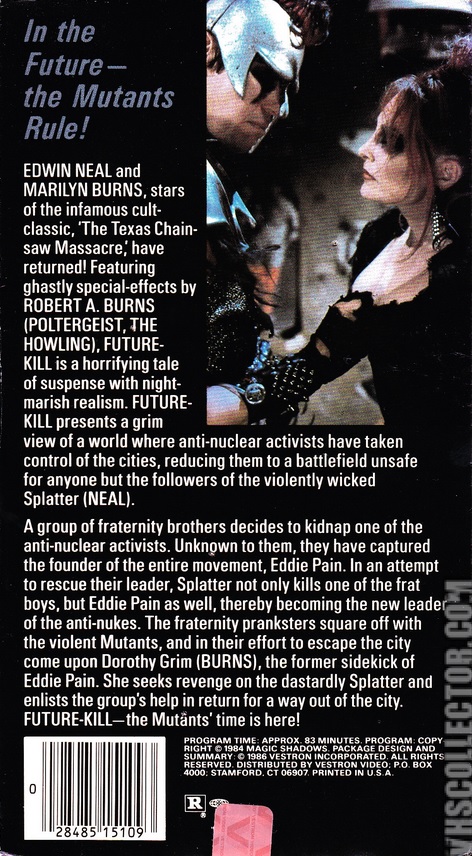
When it comes to the ‘80s video fringe, we not only expect the bizarre—we demand the bizarre. Austin, Texas, filmmaker Ronald W. Moore—in his only feature film writing and directing effort—answered that challenge with a sci-fi black-comedic pastiche of the Italian apocalypse rip-offs of John Carpenter’s Escape from New York and the “snob vs. slobs” rip-offs of Animal House. Only the slobs have been replaced by Reagan-era nuclear punks overlorded by Splatter, a plastic-cum-cardboard Robocop on a Terminator tear.
While it looks ’80s Italian apocalyptic, it’s not. This is a Texas-styled apoc, but not as cool as 2020: Texas Gladiators.
If you’ve watched the nondescript, post-apocalyptic ramblings of City Limits, the punk-rock apoc-drivel of Radioactive Dreams and the rad n’ gnarly post-apoc shenanigans of Night of the Comet, then you’ve traveled these low-budget streets before; streets that—outside of a few techno-trinkets to make the proceedings seem like the future—look just like our present-day streets. And when that “present-day” apocalypse arrives, be it via “The Big One” or by plague or by comet or by whatever nuclear deus ex machina falls from above, the “mutants,” depending on the film’s budget, raid the local S&M leather boutique or Reagan-era Mohawk-and-heavy mascara emporium. And at a reported $250,000 budget, Future-Kill raids the latter retailer to give us gangs of disenfranchised punks—punks who got lost on the set of Enzo G. Castellari’s The Bronx Warriors and Escape from the Bronx while on the way to their background acting gigs for Suburbia and Repo Man. And Lord Cyrus help them if they stumbled onto the set of The Warriors (Future-Kill’s most obvious model), for these MTV video punks won’t stand a chance against the Baseball Furies, the Electric Eliminators, the Gramercy Riffs, and Turnbull AC’s*.
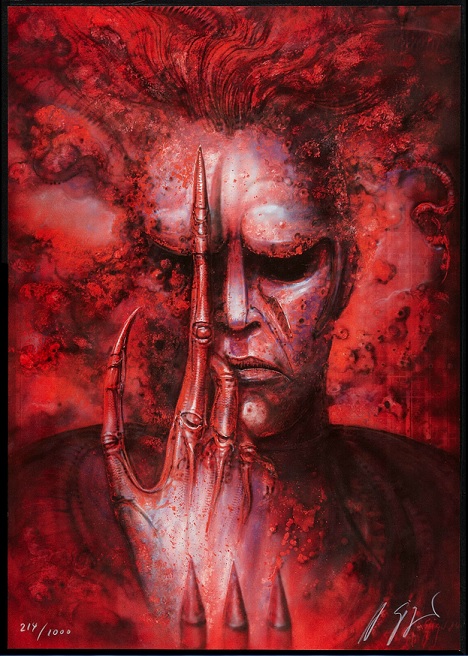
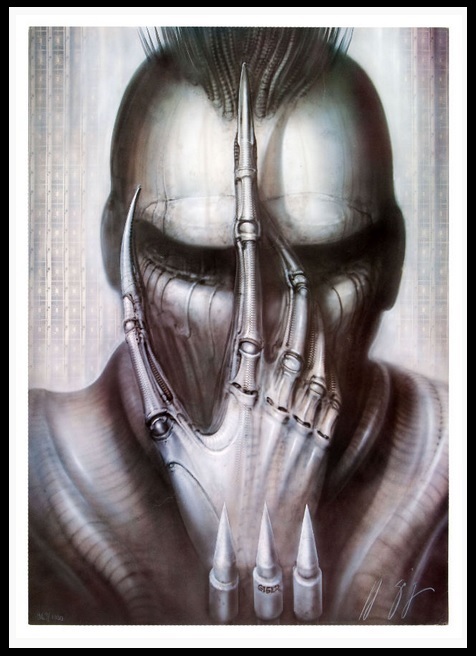
Maybe if Future-Kill were as entertaining as any of those films and not the apoc-swill that is America 3000 and Robot Holocaust (okay, maybe it’s a wee bit better than those two swillers: a wee bit). Maybe if the proceedings were more Wendy O. Williams and the Plasmatics (“Butcher Baby“) and less Dale Bozzio and Missing Persons (“Words“) roamin’ those Austin mean streets and the gangs were more Walter Hill-inspired, Future-Kill could have lived up to its faux H.R Giger packaging. Yeah, at the time, we thought the artwork was a bogus H.R Giger rip-off hawking another R.O.T.O.R artwork-hiding-a-shitty-film scam, so we avoided renting Future-Kill during its VHS heyday.
Then Ronald W. Moore’s apoc-meets-frat comedy boondoggle became connected to Oscar gold.
John Hawkes, one of Future-Kill’s minor support actors, ended up at the 83rd Annual Academy Awards held in 2011 and rubbed elbows with Tom Hanks—who has his own ‘80s VHS debut-acting bone in the closet with He Knows You’re Alone. So, its Texas Chainsaw and H.R Giger faux-connections aside, how can one not want to watch Future-Kill, once learning that one of its actors earned multiple “Best Actor” nominations and awards between 2010 to 2012 for the films Winter’s Bone, Martha Marcy May Marlene, and The Sessions? (Another of John’s early, minor support roles was working with Gregory Hines in the 1994 radio-set thriller, Dead Air.)
However, before the mainstream success of John Hawkes inspiring us to seek out copies of Future-Kill, the truth behind that “bogus” H.R. Giger artwork was finally told in an audio commentary by director/writer Ronald W. Moore and producer/star Edwin Neal—courtesy of a 2006 Subversive Cinema DVD reissue that included reproductions of Giger’s original artwork for the film.
While H.R Giger famously provided production drawings for Alien (as well as 1995’s Species), the Swiss surrealist rebuffed several studio offers to design theatrical one-sheets, including overtures from 20th Century Fox, the studio that brought his work to a mass audience (with an honorable mention to ‘70s prog-rockers Emerson, Lake and Palmer; the band used Giger’s work on their 1973 album Brain Salad Surgery**). So, it’s a shock to discover that the artwork for Future-Kill is, in fact, a real Giger, titled “Future Kill 1,” painted in 1984 specifically for the film.
According to the Alien Explorations, which chronicles the works of Giger, Giger was a fan of Tobe Hooper’s film; since Future-Kill featured two actors from Texas Chainsaw, he agreed to design the poster. At the time, Ronald W. Moore completed filming and was in the editing process when he approached the artist at a Zurich exhibition and begged Giger to design the poster (Giger has stated Moore was in tears at one point)—based on the fact Moore prematurely promised investors a theatrical one-sheet by Giger, so to secure film financing. Now Moore had to pay up, figuratively speaking. Also enticing Giger to design the poster: Giger and Kathy Hogan—the make-up and costume designer who developed Splatter’s bat wing and Mohawk-styled shoulder and helmet armor, which served as the model for Giger’s artwork—came into a sexual relationship.
While Hawkes was only a minor support player, the real “stars” of Future-Kill were Edwin Neal and Marilyn Burns, each who appeared in Texas Chainsaw. However, even with that “star power,” the film still lacked “major stars” and received its limited, regional theatrical release solely based on the fact that “the artist who did Alien” designed the poster (and the film looked nothing like Alien, natch). Also of note: Edwin Neal didn’t “star” in Texas Chainsaw; he had an extended cameo as a self-cutting hitchhiker; meanwhile, Marilyn Burns, who starred in Texas Chainsaw, only has an extended cameo in Future-Kill. The film’s Texas Chainsaw-connection also goes a bit deeper, as Ronald W. Moore got his start in the business as a soundman on Mongrel; the film also served as the lone directing effort by art director Robert A. Burns, who worked in that capacity on The Hills Have Eyes, Don’t Go Near the Park, and The Howling—as well as the The Texas Chainsaw Massacre; Burns was responsible for the “bone furniture” and its related “bone room” scene.
Maybe, if Moore hired Robert A. Burns to work on the set of Future-Kill, we’d have a film that looked as good as those films—and its chief protagonist, Splatter, would have been the Gigeresque biomechanical xenomorph promised and not the low-rent Godfrey Ho wannabe we got; if you’ve seen Ho’s Pacific Rim cyborg romp Robo Vampire (1988), then you understand that analogy to the canons of “Hong Kong’s Ed Wood.” Godfrey Ho, as with ‘60s U.S. drive-in purveyor Al Adamson before him, was infamous for splicing two or three unrelated films into a new product. And, at first watch and without knowing the backstory of Future Kill, it looks as if Ronald W. Moore assembled his own portmanteau poo akin to Night Train to Terror (which is three movies spliced into one) and Evil Town (which is a four-director junkfest rooted in a mid-‘70s horror dumpster-fire called God Bless Dr. Shagetz).
Now, that’s not the case with Future-Kill, but it sure seems like two, unrelated, spliced scripts or unfinished films: one a failed frat-house comedy; the other a failed post-apocalyptic tale. And thanks to the ‘80s frat house hi-jinks and the Philippines-cum-Italian future world we’re watching, we have no idea what the hell is going on or where we are. The “destination,” to paraphrase the lyrics of Missing Persons, is “unknown.”
Oh, Wendy! Are we beyond the valley of 1984? Will extras show up in monkey suits? When does this future-world of Future-Kill take place? What’s the Orwellian masterplan, dag gummit!?
Well, it must be in an alternate universe or timeline or a future stuck in a DeLorean time loop where technology has afforded us the ability to create cyborgs—while everything else looks ‘80s “snobs vs. slobs” comedic. And since we’re on the cheap, our “mutants” aren’t so much nuc-deformed; they’re just a bunch of snotty, Reagan-era punks with an anti-nuclear chip on their shoulders. You know the punk-type: As with my ex, Dawn, she listened to a couple of Black Flag and Dead Kennedy records, went to spoken word concerts by Henry Rollins and Jello Biafra, then raised the flags against Halliburton and rallied about “Blood for Oil” through the puffs of her clove cigarettes, its scented fumes clinging to the fibers of her faded, Hot Topic Clash tee-shirt.
Anyway, in Ronald W. Moore’s future world, those errant punk rock scamps have—in an eerie foreshadow of the sociopolitical upheavals of 2020—formed their own CHOP/CHAZ perimeter in downtown Austin, Texas, as part of an anti-nuclear movement. The most feared of all of the nuc-mutants is Splatter (Texas Chainsaw’s Edwin Neal), the aforementioned Robocop-cum-Terminator, whose radiated mutations have turned him into a metal-and-spiked covered madman.
Okay, so that takes care of the “slobs” portion of the film.
Meanwhile, back on the campus of Faber College in snobby Porkyville, out in the ritzy, unaffected Austin environs, our perpetually partying preppy a-holes live a carefree life of booze, boobs, and pranks where rich parents get them out of their Hunter Bidenesque jams. When one of their pranks risks the shutdown of their frat, our frat-lads are forced to dress “punk” by a rival frat and venture into slobby Punkville to kidnap one of the mutants for an end-all-be-all of all pranks. Of course, they run afoul of the metal-clad n’ spiked Splatter. Oops.
Okay, so begins The Warriors portion of our film.
Once Splatter (our “Luther,” if you will) settles his Alpha-Male dispute (i.e., murder) with Eddie Pain (our “Cyrus,” natch), the anti-nuke movement’s ‘60s-inspired hippie-punk leader (uniting the gangs, natch), our Robonator is off-the-chain with a Termicop chip on his shoulder—and he’s framed our prep-boys (i.e., The Warriors) for Pain’s murder. As our Delta House rejects make their “Escape from Austin,” they save a hot mutant punk chick from pervert cop rape because, well, as usual, when the apocalypse arrives, man’s inner “rape genes” mutate, so as to preserve the species. And preppy boy falls for punky girl. And we hear a few tunes—in the best part of the film—from real life Austin band Max and the Make-Ups (but we wished The Plamastics showed up to do do “Black Leather Monster“) as we (finally) meet Texas Chainsaw’s Marilyn Burns in her under 20-minutes role as Dorothy Grimm, the revenge-seeking girlfriend of Eddie Pain.
Is it a plot-spoiler telling you Splatter dies and the preps Escape from Austin? And it all plays as if Universal ripped this for Judgement Night, their 1993 suburbanites-lost-in-the-underbelly-of-the-mean city starring Emilio Estevez pursued by Denis Leary?
When submitted to the ratings board for its limited, regional theatrical run in and around its native Austin, Future-Kill received an “X” rating for extreme violence. One minor edit was made to secure an “R” rating in the U.S. Meanwhile, across the ocean, while the puritanical purveyors of philth (know your Motorhead) in the U.K. didn’t toss Future-Kill onto their “Video Nasties” list, they forced a title change to Night of the Alien (in other overseas quarters the title Splatter was used) and two-and-half minutes were cut—which eliminated a neck breaking, the killing of Clint (one of the preps), portions of Splatter’s stabbing, a woman’s fondling by Splatter, and Splatter’s sexual encounter with a street girl—all of which were restored on the subsequent DVD released by Subversive Cinema.
You can watch VHS rips of Future-Kill on You Tube HERE and HERE. You can also learn more about the film with this behind the scenes, 30-minute featurette created for the Subversive DVD. The trailers come and go, but we got the TV trailer and the VHS trailer on You Tube.
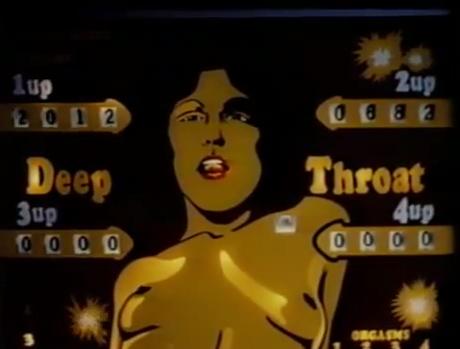
Oh, we almost forgot about the pinball machine!
More imagines of the machine are at pinside.com/multiple sites.
The infamous Deep Throat pinball machine, custom made by Robert A. Burns, which made its debut in Mongrel, also appears in Future Kill. The history of the game is discussed on the pinside.com message boards, your source for all things pinball. After we posted our October 2020 review of Mongrel, Joe ‘O Donnell, feverishly working on his Rondo Hatton documentary Rondo and Bob, let us know he is no longer in possession of the pinball machine. It was sold to help fund the production of Rondo and Bob and is now with a private collector. The good news is that Rondo and Bob, the story of Robert A. Burns’s fandom of Rondo Hatton, is completed and heading to film festival circuit.
* Oh, the mighty QWERTY’in warriors of the Internet, you gotta love ’em. Jennifer M. Wood, over at Mental Floss, took up the challenge to chronicle all of the street gangs in 1978’s The Warriors in her feature “21 Street Gangs Features in The Warriors.” Nice!
** H.R Giger’s work will be incorporated into the currently-in-development film Karn Evil 9 based on the rock-suite of the same name from Emerson, Lake and Palmer’s rock-opera Brain Salad Surgery.
Be sure to check out our Atomic Dustbin blowout tribute to apoc-films of the ’70s and ’80s. Part 1 will get you started.
Note 1: As always, thanks to Paul Z. over at VHS Collector.com, once again, for the artwork assist. Be sure to check out his reviews for the latest DVD and Blu-ray reissues of our favorite VHS classics at his Analog Archivist You Tube portal.
Note 2: We’ve since received a copy of and reviewed Rondo and Bob.
Note 3: If you have a favorite film that we’ve missed, you’re welcome to let us know via our contact form. We’re always hearing from our many, ever-growing readers and welcome you to join in the fun. We’re united in film! And thanks for thinking of us to review your favorites. We try our best. Keep those suggestions coming. When you’re nice to us, we return the favor!
About the Author: You can read the music and film reviews of R.D Francis on Medium and learn more about his work on Facebook.
New Queer Cinema (see Gregg Araki and his “Teen Apocalypse Trilogy”) director, writer, and producer Todd Stephens used his youth-raised years in Sandusky, Ohio (yep, the same town in Chris Farley’s Tommy Boy from 1995), to his advantage: most of his auto-to-semi-autobiographical films are set in that Buckeye State enclave.
While he turned the directorial reigns over to David Moreton (currently in production with his fourth film, Big America), Stephens made his screenwriting debut with the alternative, coming of age rom-com Edge of Seventeen, which was concerned with a Eurythmics-obsessed teenager coming to terms with his sexuality. And as with Stevie Nicks inspiring the title of his debut film, the “Welsh Witch” influence returned for Stephens’s second writing effort, which also served as his directorial debut. While mainstream critics applauded the film — and it found acceptance on the art house circuit (I made the drive to see it) — the film only managed to score award nods and wins in the LGBT film festival community.
To propel this coming-of-age road trip filled with the usual eclectic characters (a sexually-confused Amish teen runaway; Karen Black as a washed-up retired singer), Stephens used the then de rigueur Stevie Nicks Festivals where fans celebrated her music. Gypsy Vale (Sara Rue of CBS-TV Rules of Engagement and The Big Band Theory) and Clive Webb (Kett Turton; Vampire Steve on CW’s iZombie) are early-twentysomething goths who travel to the 1983 Stevie Nicks Festival, aka Night of a Thousand Stevies, in New York for Gypsy to realize her dream to become a famous singer, like her idol, Stevie Nicks. Fueling and supporting her musical dreams is her ex-musician father, Ray (John Doe of X; Border Radio), who deals with the loss of Gypsy’s mom and his musician-wife, Velvet.
Gypsy 83 served as one the earliest art house entries from Palisades Pictures. The studio would come to acquire the catalog of the shuttered, UK-based Tartan Films, which distributed East Asian films under the Tartan Asia Extreme imprint between 1992 to 2003 (Battle Royale, A Tale of Two Sisters, Oldboy). Comic book aficionados with take notice of Andersen Gabrych in the cast (also of Stephens’s Edge of Seventeen and Another Gay Movie) as a writer for several issues of Batman, Batgirl, and Detective Comics.
There’s no free-with-ads or VOD streams in the online marketplace, but we found a You Tube rip for you to enjoy.
About the Author: You can learn more about the writings of R.D Francis on Facebook.He also writes for B&S About Movies.
Allison Anders and Kurt Voss wanted to re-team on another rock ‘n’ roll film since their 1983-begun, four-year shot Border Radio released in 1987, and the critical and box-office success of her Brill Building and Beach Boys “what if” rock flick Grace of My Heart (1996).
The film’s second genesis was their friend, bassist John Taylor, who aspired to begin an acting career; so Anders and Voss manned the typewriters to create an acting showcase for the ex-Duran Duran’er. To lend to the film’s realism, Anders and Voss opted to cast musicians in lieu of actors: the rest of the cast stars former Spandau Ballet bassist Martin Kemp (who found acclaim in the 1990 British mobster flick The Krays; however, he worked as an actor since the early ’70s, you can see him in Fleshtone), Michael Des Barres (of Silverhead, Detective, and Power Station; as an actor, you know him as Murdoc from the original ’80s MacGyver), and John Doe of X (A Matter of Degrees). Also acting in the film — and providing the film’s musical direction — is Larry Klein, the ex-husband of ’70s folkie Joni Mitchell.
The plot concerns the exploits of Clive, Jonesey, and Nick (Taylor, Kemp, and Des Barres), three washed-up L.A. rock superstars who attempt to formulate a supergroup from their career ashes. They, of course, think they’ll return to the top of the charts with the outrageously sexist tune, “Gravy Stain Girl.” Their fellow washed-up L.A. rocker cohort, Carl (John Doe), is at odds with his pregnant wife over his recent hire as a lead guitarist for an up-and-coming singer. Roseanna Arquette stars as Eva, Clive’s equally washed-up and age-out actress wife, struggling to stay on top in Hollywood. Beverly D’Angelo is an older, rich woman who will back Clive’s musical endeavors — provided he sleeps with her.
Keep your ears open for John Doe’s post-X work in The John Doe Thing with “Tragedy by Definition.” The grungy alt-rock crowd will notice the sounds of PJ Harvey, Thalia Zedek’s Come, and Seattle’s Sup Pop’ers Combustible Edison on the soundtrack. J. Mascis of Dinosaur, Jr. (he recently appeared in I’ll Be Around), who scored Gas Food Lodging for Anders, provides the film score.
Made for a measly, budget conscious quarter of a million dollars, the film barely broke $170,000 in U.S. box office. So, don’t go into this expecting a mainstream Ray or Walk the Line; however, if you enjoy seeing rockers on film and enjoyed ’90s indie flicks courtesy of the October Films and Miramax imprints, then there’s something here for you to enjoy.
And for the Allison Anders and John Doe collaboration completists and Johnny Cash fans hankering for another cinematic beyond Walk the Line: Doe stars as the father of June Carter Cash (played by Jewel Kilcher instead of Reese Witherspoon) in Ring of Fire (2013), a cable TV adaption of the book Anchored in Love: An Intimate Portrait of June Carter Cash.
From the “Trivia to Impress Your Friends at Parties Department”: John’s daughter Elena Nommensen, who has a bit part here (and in John’s 2007 film, The Sandpiper), became a wardrobe and art director. In addition to working on the upcoming Venom: Let There Be Carnage, she also worked (didn’t realize it then) on the recently reviewed short The Devil’s Passengers (discovered on a You Tube dive), and worked alongside her dad in his upcoming, 82nd acting project, D.O.A: The Movie.
About the Author: You can learn more about the writings of R.D Francis on Facebook.He also writes for B&S About Movies.
This is a rock-documentary-cum-concert flick that dispenses with the backstage tomfoolery and goes right to the stage with professionally-shot footage compiled from a variety of 1980-era shows held in England, France, and the United States.
And there’s a couple of reasons why the Police spearhead Urgh! A Music War: Not only were they the most commercially radio-successful “new wave” band of the groups featured; Derek Burbidge, the director, helmed several videos (the famous “Roxanne”) for the Police (he also did Gary Numan’s “Cars”), while Miles Copeland, the brother of the Police’s drummer, Stewart Copeland, managed the Police and operated IRS Records, which produced the film. The film briefly appeared in U.S. theaters via Filmways Pictures (seen it in an art house theater, natch), but gained its cult status due to its frequent airings on HBO and the USA Network’s “Night Flight” video block.
Beginning in 2009, Warner Archive (the successor-in-interest to Lorimar Pictures, who co-produced with IRS) released an official DVD-R of the movie — burned on a made-to-order basis. As result, this one’s not available as a cable PPV or VOD online stream and the freebie You Tube and Vimeo rips don’t last long. However, searching “Urgh! A Music War” on You Tube populates numerous concert clips from the film. The bands you know in those clips are the mainstream MTV video bands the Police, Devo, Echo & the Bunnymen, the Go-Go’s, Joan Jett, Gary Numan, Oingo Boingo, Wall of Voodoo, X, and XTC. The lesser known bands featured — that some know and most don’t — include L.A.’s the Alley Cats, the Dead Kennedys (Terminal City Ricochet), Magazine (off-shoot of the Buzzcocks), the Fleshtones (Peter Zaremba hosted IRS: The Cutting Edge for MTV), Orchestral Maneuvers in the Dark, 999, Pere Ubu, the Surf Punks, and Toyah Wilcox (Breaking Glass).
You can view the film’s full track listing on Discogs while you listen to the soundtrack in its entirety on You Tube: Side A/B and Side C/D. If you need more punk documents, be sure to check out our “Drive-In Friday (Saturday!): Punk Night II” featurette where we not only took a look at Urgh!, but Punk in London, The Punk Rock Movie, and D.O.A.
About the Author: You can learn more about the writings of R.D Francis on Facebook.He also writes for B&S About Movies.
Editor’s Desk: This review originally ran on October 7, 2020, as part of our October 2020 Scarecrow Psychotronic Challenge. We’ve brought it back for John Doe Week.
“I don’t want to take lessons! I wanna have a fucking band!Fucking be like Deicide! Deicide. Yes, Deicide!” —Shane Carver, loser leader of the Black Circle Boys
Yeah, maybe the guitar is broke, douche-dick.
I won’t say I hate this movie. But I was certainly disappointed by this movie, considering it “starred” John Doe of X and dealt with a misguided ne’er do well finding solace in black metal music. A group of Satan worshiping dopers want to start a band—and kill people—and John Doe? I’m up for that.
Oh, be careful for what ye hail, black metal and horror film buff.
What we ended up with here is an all-male version of—without the supernatural hocus pocus—1996’s much better The Craft, which also gave us a peek into the teenaged occult, as well as 1987’s The Lost Boys. And, oh shite, this film pulls the ‘ol Eric Roberts (Power 98) bait-n-switch on you.
Bastards!
Either John Doe was cast—in typical Eric Roberts fashion—for one scene just to get a brand name on the box/in the credits, or Doe’s work as a police detective investigating the Black Circle Boys Murders, for whatever reason, ended up on the cutting room floor. And sorry, Donnie Wahlberg is cool these days (and excellent) in TV’s Blue Bloods, but he just isn’t an effective consolation prize when we came to see John Doe (but, truth be told, the ex-New Kids on the Block member, in his third acting role, is very good as Greggo, effeminate Satanist who introduced Shane to the Black Arts). Oh, yeah . . . blink and you’ll miss Lisa Loeb (remember her gal-paldom with Ethan Hawke and hitting the U.S. Top 10 in 1994 with “Stay (I Missed You)”from Reality Bites?) as an “angry goth chick” in a club.
As you can see, the casting on this movie is flat out, upside down FUBAR’d. Why would a production (granted, it’s low budget, but still) take known commodities—that inspire us to rent in the first place—such as John Doe and Lisa Loeb—and place them in one scene cameos; each should be in the larger, respective roles of Detective Roy, played by Victor Morris (NBC-TV’s In the Line of Duty film series and Bigger Than the Sky), and the Dead Head-high schooler Chloe, played by Tara Subkoff (The Last Days of Disco; The NotoriousBetty Page).
True, both Morris and Subkoff are affable in the roles, but wouldn’t you, as The Devil’s Advocate (sorry) producer, want to predominately feature Doe and Loeb’s names on the box in smaller type under the leads and copywrite-plug their past, known works on the box’s flipside? Loeb could totally pull off the wiles of a hippy chick high schooler—and you could feature her playing the acoustic guitar and singing a folk song—to the antithesis of the goth kids running the school. And if you’ve seen John Doe’s work in A Matter of Degrees and his co-starring role as Teddy Connor, the leader of the once great Wotan, in the NBC-TV Law & Order: TOS 2003 “Ripped from the Headlines” episode “Blaze” (which took it scripting cues from Great White’s tragic 2003 performance at The Station night club in Rhode Island*), you know that Doe not only carries a film as a lead actor with distinction—he can pull off a goth rocker with class and style. (Sorry, Donnie. No offense. We love Doe ’round these ‘ere Allegheny wilds and crush any actor before him.)
Ye, hail Teddy Connor! Courtesy of Gregory Hill Design/NBC-TV
But alas . . . Black Circle Boys was made in 1998 and not 1988; so the producers decided to appeal to the then nostalgic-maturing New Kids on the Block contingent, instead of the ol’ punk codgers (aka myself and B&S boss Sam) who admire John Doe and rocked out to X in the ’80s via The Decline of Western Civilization and Urgh! A Music War. And yeah, David Newsom (ABC-TV’s Homefront) is a fine actor (and now a successful reality television producer; kudos, Dave!), but the divine Dee Wallace Stone of E.T. the Extra-Terrestrial and The Howling fame is wasted in her “Eric Roberts Casting” as the troubled mom; Wallace would have been more effectively utilized in Newsom’s larger role as the swim coach-physics teacher hybrid—and being the horndogs we are, even get a few scenes of her in a curve-accentuating one piece. And yes . . . that is the pride of Harrisburg, Pennsylvania, Richard “Les Nesman” Sanders of WKPX in Cincinnati (check out our review of FM) also being woefully underutilized in his one (uh, I think it was two?) shot role as Principal Dunkel. (At this point, the producers should have called in Eric Roberts—who we friggin’ love like blood around here. And yes, another major f-up by the producers: not having Killing Joke on the soundtrack, Deicide references be damned.)
Now, that’s how you cast, music consult, and sell tickets, kiddies. But alas, I am a schlub writer and not a casting director or music consultant. . . .
So, anyway . . . We meet Kyle (Scott Bairstow of FOX-TV’s Party of Five), a star high school swimmer wallowing in depression over a personal loss (an idiot friend fell off a bridge/water tower and broke his neck while they were drunk; instead of moving on and taking responsibility, Kyle blames “the world”)—which makes him easy pickings for paranoia-poster child Shane Carver (a very good Eric Mabius; big screen debut in Welcome to the Dollhouse, noticed in Cruel Intentions) and his little goth clique, The Black Circle Boys. Kyle is introduced to hard booze, drugs, devil worship, and frog beheadings-by-mouth in quick succession . . . and murder, by way of drug-dealing Rory (an early Chad Lindberg of The Fast and the Furious), a BCB “slave-trainee” by Shane as a form of sacrifice. Along the way the boys start a band, which is an utter failure. So, out of frustration—and a parnoid belief his goth-clique is betraying him—Shane starts killing off the other members of ‘the Circle.
At least I think that’s what happened. Yeah, they lost me. That’s what happens when you deny me of my John Doe fix, boondoggle me with Donnie Wahlberg, and don’t give us the black metal we came for and stick us with a bunch of never-heard-of bargain bin basement clutter that is neither “black” nor “metal” or anything worthy of woof or a tweet. I mean, come on . . . a movie about “black metal murders” that only uses the word “Satan” once? And what in the Sam Hill (another music consultant f-up: no Glenn Danzig and Samhain**) is this B.S. referring to Satan as “Father” all the time? Get the Anton LeVey (The Devil’s Rain) out of here, Mr. Politically Correct screenwriter. Fuck, dude.
And what the hell, bass player? Learn your root, 3rd, and 5th triads. Fuck me. Even the shittiest of shite bassists know ’em. You deserved Shane slashing your throat and tossin’ your lame ass off a bridge. I’d nut-punch you myself, dick breath. The Relentless from American Satan would dissolve you and your “boys” into a puddle just by pissing on ‘ya. Pusswads.
Another great scene — lost — that ruins the point of the previous paragraph.
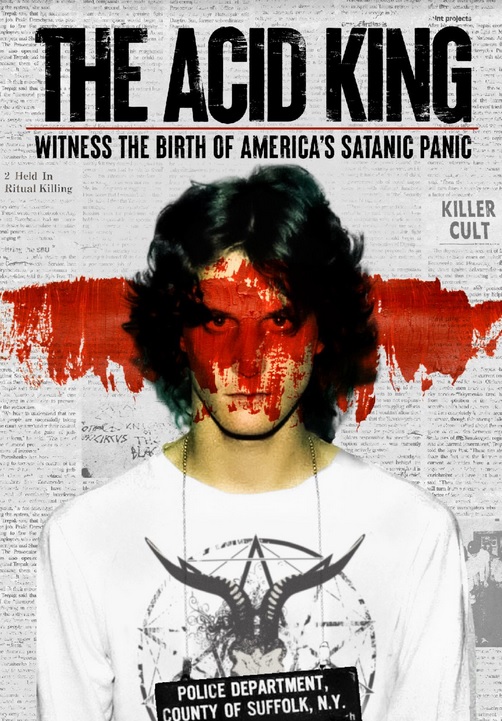
In the end: What we have here is an ineffective, low-budget variant of 1987’s far superiorRiver’s Edge (starring Crispin Glover and Keanu Reeves), in the Black Circle Boys claims in its promotional materials that it is “Based on a True Story.” And while it’s beneath River’s Edge, Ricky 6 — which is also based on Ricky Kasso’s “Satanic Panic” inspiring crime — is better than Black Circle Boys.
F-You, marketing department. Your “true story” and John Doe bait-n-switch be damned, pisses me off. And you too, Mr. Music Consultant.
That “true story” takes us back to Slayer, whose loud and aggressive music—featuring violent themes that would even scare Tony Iommi of Black Sabbath—went beyond the usual horror-film influenced, satanic lyrical themes to include odes to sadism, necrophilia, serial killers, and Nazi death camps. Not helping Slayer’s reputation in the eyes of the Moral Majority was Slayer’s music being predominately featured in the River’s Edge, the film itself based upon the 1981 California murder of Marcy Renee Conrad and the 1984 New York murder of Gary Lauwers, where their troubled-teen killers bragged about and returned to the murder site of their victims.
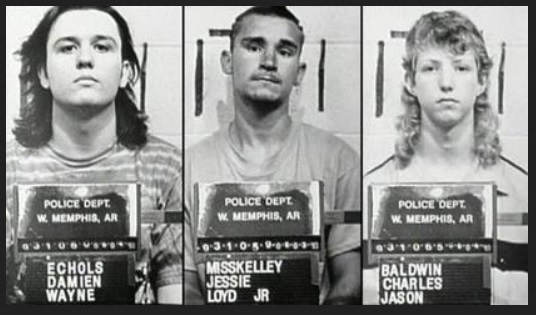
The most catastrophic example of this ignorance regarding hard rock and heavy metal music was the highly publicized, 1994 West Memphis 3 case in which questionable “evidence” led to the wrongful conviction of three non-conformist boys as murderous Satanists. Their only guilt: a shared interest in rock music, horror films, and unconventional art and books (you know, guys like myself and Sam, B&S About Movies’ boss. And we’re harmless, really).
A seriously f-up dude giving AC/DC a bad name.
The occult and the America justice system simmered in a cauldron of abhorrence and ignorance once again in the 1999 Columbine massacre, as satanic-panic maligned the music of shocker-rocker Marilyn Manson and, to a lesser extent, the industrial/goth bands KMFDM and Rammstein as underlying causes. The misguided controversy forced Manson to cancel the remaining dates of his 1999 Rock Is Dead world tour and negatively affected the sales of his third album, Mechanical Animals (1998). Additionally slandered as “co-conspirators” were Oliver Stone, by way of the Quentin Tarantino-scripted Natural Born Killers, in addition to the designers behind the video games Doom, Wolfstein 3D, and Duke Nukem. (A 1999 Rolling Stone article: “Columbine: Whose Fault is It?,” in addition to Dave Cullen’s 2009 in-depth tome, Columbine, examine the tragedy.)
Paving the way for the legal atrocities of the West Memphis 3 was the 1986 case regarding the seminal British metal band, Judas Priest. In that judicial miscarriage against the creative arts, the parents of two Reno, Nevada, teenaged boys sued Judas Priest and its label, Columbia Records, for $6.2 million dollars, claiming the band’s 1978 release, Stained Class, contained backward, subliminal messages that drove the boys to suicide (the court dismissed the case in 1990).
F-in railroaded. Man, Don’t even get me started.
Prior to Judas Priest’s slandering by religious zealots, Ozzy Osbourne, the ex-lead singer of Black Sabbath, became the victim of another bogus suicide-by-rock music claim. Three sets of parents sued the “Prince of Darkness” between 1985 and 1990, claiming the song “Suicide Solution” from Ozzy’s 1980 debut album, Blizzard of Oz, encouraged their young sons to commit suicide—all three cases were eventually dismissed. In an archetypal overreaching misconstrue by the Christian Right blinded by satanic-panic to deflect their parental failures and to excuse the “misadventures” of their own children, the clearly anti-alcohol and an anti-suicide song, with lyrics written by bassist Bob Daisley, was a touching tribute to Bon Scott, the then recently deceased lead singer of AC/DC (AC/DC: Let There Be Rock). Other tomes claim it was actually about Daisley’s concerns regarding Ozzy’s health. Whatever Daisley’s lyrical motivation, the song certainly is not a clarion for teenagers to commit suicide.
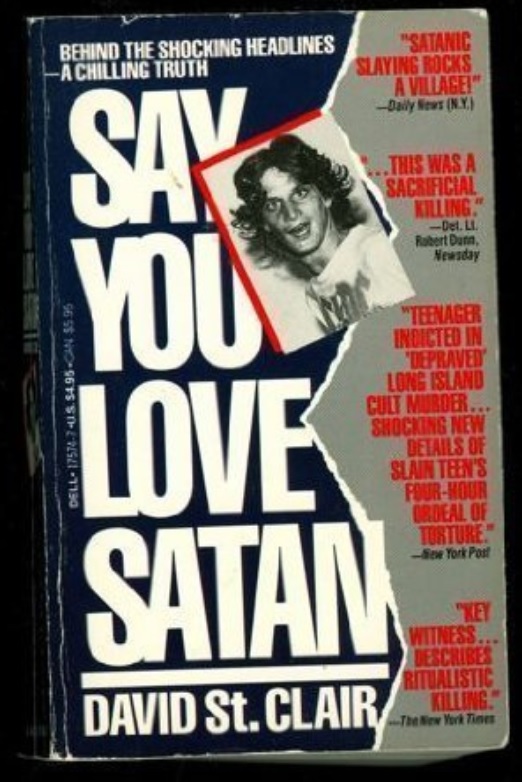
This ain’t no River’s Edge and director Joe Berlinger’s theatrical, three-film documentary series Paradise Lost is more disturbing and far more engrossing (in addition to the non-fiction books Blood of Innocents by Guy Reel and Mara Leveritt’s Devil’s Knot, both which examine the WM3 tragedy at length; the later book itself was adapted into a 2013 film). If the filmmakers behind Black Circle Boys had only adhered to their source material: David St. Clair’s 1987 expose Say You Love Satan, about 17-year-old Ricky Kasso and the murderous exploits of the Knights of the Black Circle (which resulted in the death of the aforementioned Gary Lauwers).
Ugh. Again. Another trailer-clip lost.
You can stream Black Circle Boys for free on You Tube, as it is not available on any streaming platforms. Used copies of the unnerving Say You Love Satan are readily available in the online marketplace—it’s a highly suggested read. In fact, read the book instead of watching this movie.
Seriously, though: The appreciation of a film—whether it is good or bad, well-made or poorly made—is based in the age of the viewer; for film appreciation is of a time and place. While I love my horror movies (Phantasm to Rocktober Blood) and my Killing Joke, Samhain, The Misfits, Venom, King Diamond, and Deicide as much as the next guy, I was already ensconced in adulthood (wearing shirts with collars, even ties!) when Black Circle Boys was released. So, if you were in middle school or just starting high school at the time Black Circle Boys was released—as I was when the juvenile delinquency drama Over the Edge was released in 1979—rewatching this film will warm the cockles as your own person “classic” film.
* The Great White tragedy also served as the basis for the Mark L. Lester-directed and Eric Roberts-starring Groupie.
** Glenn Danzig is in the film biz these days. We recently reviewed his film Verotika and Death Rider in the House of Vampires. Yeah, we adore auteur projects and movies with rock stars ’round here. Speaking of which . . . you can get all of the rock ‘n’ roll flicks you can handle with our “Rock ‘n’ Roll Week,” “Rock ‘n’ Roll Week II,” and “Rock ‘n’ Roll Week 3” features from this past July and September, and September 2021, with links to over 100 films reviews.
About the Author: You can learn more about the writings of R.D Francis on Facebook.He also writes for B&S About Movies.
Okay, so we’re cheating with this review. It doesn’t star John Doe, the subject of our week-long film tribute.
This parody on organized religion and the mass communication medium of television directed by New York No Wave artist Beth B stars Doe’s ex-wife Exene Cervenka, who meet her second husband Viggo Mortensen on the set of this, her only acting role. Beth B made her feature film debut with the 16-mm black & white film Vortex (1981) starring Lydia Lunch (Blank Generation, Mondo New York) and a young James Russo (later a go-to heavy in films such as Beverly Hills Cop and Donnie Brasco).
Stepthen McHattie (Theodore Rex) stars in this black comedic statement on the televangelist craze of the ’80s (think Jim and Tammy Bakker) as Reverend Randall, a flock-bilking preacher who likes to compose and rehearse his sermons while watching pornography. His religious empire begins to crumble when the unemployed Jerome Stample (Viggo Mortensen), who grows tired his wife Rhonda (Cervenka) donating to Randall’s church, devises a blackmail plot with his sister-in-law (the singular Dominique) to ensnare the reverend in a sex scandal.
Surprisingly, the film’s soundtrack doesn’t feature the music of Cervenka or director Beth B’s frequent collaborator Lydia Lunch; it instead spins the popular college radio and new wave club hits “Sputnik,” “Touched by the Hand of God,” and “Skullcrusher” by New Order, and “Jesus Saves” and “Twanky Party” by Cabaret Voltaire — along with a few tunes by co-star Dominique (Davalos), who would form the Delphines with former Go-Go Kathy Valentine in the late ’90s.
While it was released on VHS and appeared on HBO, Salvation! has never been released on DVD; however, we’ve learned the vinyl soundtrack was, in fact, released on CD in 1988 (thanks, Fabio, for pointing that out!). The film was previously offered as a VOD stream on Amazon Prime, but has since been pulled from release. You can, however, watch the film through a series of clips uploaded to a playlist by a You Tuber known as “McHattie Fan.”
About the Author: You can learn more about the writings of R.D Francis on Facebook.He also writes for B&S About Moviesand publishes on Medium.
No, this isn’t a docudrama about the creative, sad soul that was Roky Erickson and his band the 13th Floor Elevators (although there’s a 2007 documentary about Roky with the title). This is a dramedy written and produced by Eric Brooks (who’s eight films deep in the TV movie realms, including two Hallmark Christmas flicks*) that’s co-produced by his pops, country-legend Kix Brooks (who appears here as Uncle Elmer, Colt’s brother).
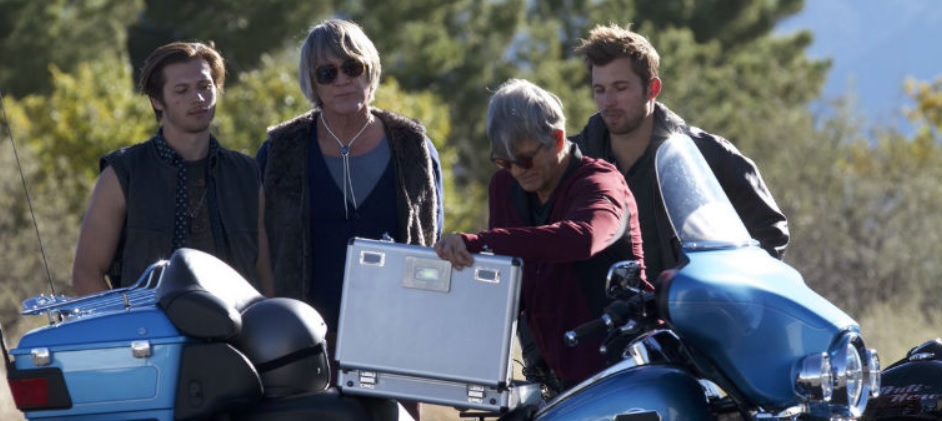
A modern-day western with motorcycles instead of horses, You’re Gonna Miss Me tells the story of the unexpected death of country music legend Colt Montana (John Schneider who, while top-billed, isn’t here much), which serves as a catalyst in reuniting his two estranged sons. Before they can claim their large family inheritance, they have to fulfill their father’s final wish: take a motorcycle-based scavenger hunt through the American Southwest. And they agree to “the ride,” as both have their own demons and motives for needing the financial windfall — but they discover so much more.
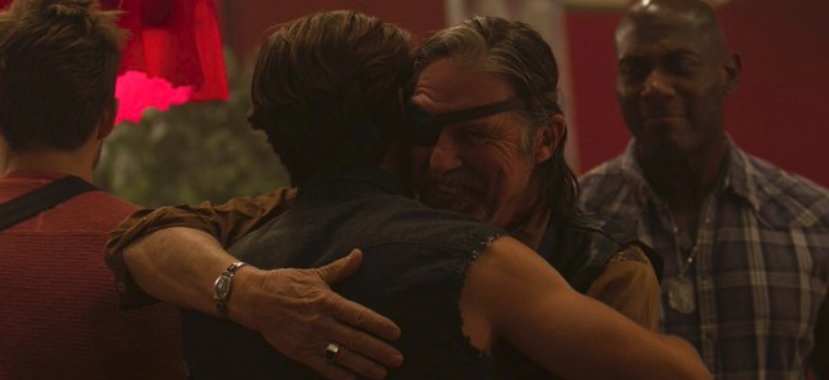
As you can see from the one-sheet, there’s a large ensemble cast headed by Leo Howard (who got his start as the “younger versions” of Snakes Eyes and Conan in G.I Joe: The Rise of Cobra and Conan the Barbarian ’11, respectively) and Justin Deeley (Mike Trimbol from Fear of the Walking Dead). We also have the-never-ages Morgan Fairchild (Shattered Illusions) and William Shockley (a noted country music radio host who got his start in Howling V: The Rebirth and a five-year run on TV’s Dr. Quinn, Medicine Woman), along with our beloved Eric Roberts (who, like Schneider, isn’t here much, natch). And for the wrestling fans (yeah, we’re talkin’ to you, Paul Andolina of Wrestling With Film, who also writes for B&S About Movies), there’s WWE’s John Hennigan, aka John Morrison. And for the John Doe fans (moi), there’s a helping of John Doe (sportin’ a Plissken eye patch), but he’s here about as much as Eric Roberts. (I want an Eric Roberts-John Doe marquee co-starring film . . . with them as out-of-retirement mercenaries . . . or two ex-rock stars making amends, now!)
If you haven’t also guessed from the one-sheet, there’s an Easy Rider vibe to the proceedings helped by another country-cum-western (and Christmas flicks!) TV movie stalwart, Dustin Rikert, who — despite the film’s bad reviews — made Phil Pitzer’s sequel-passion project, Easy Rider: The Ride Back, work (seriously, it’s not that bad).
Sadly, even with the name of Kix Brooks on the package, this “John Doe Week” entry couldn’t be more obscure and hard to find. There’s no online trailers, no streams, and Vudu — who had it as an exclusive — no longer offers the film in their catalog. But if you’re into The Dukes of Hazzard** ephemera, or need to complete your collection of John Doe flicks, or satisfy your watch-everything-with-Eric Roberts fetishism, you can find (pricey) DVD’s on Amazon Prime that are also currently “out of stock” at Walmart.com. So, Kix, buddy. If you’re reading this, get You’re Gonna Miss Me uploaded as a free-with-ads stream on Tubi TV. We, the fans of Eric Roberts and John Doe, demand it!
* Eric Roberts has made eight Christmas flicks (we’ve reviewed A Husband for Christmas), so how is it that Eric Brooks or Dustin Rikert haven’t made one with Roberts? We want an Eric Roberts X-Mas flick from each of you, stat!
** So you want more The Dukes of Hazzard ephemera, Hoke? Then check out that CBS-TV series’ theatrical precursor from 1975, Moonrunners, which we reviewed as part of our August 2019 “Redneck Week” tribute to Hickplotation cinema.
About the Author: You can learn more about the writings of R.D Francis on Facebook.He also writes for B&S About Moviesand publishes short stories and music reviews on Medium.
Editor’s Note: This review originally ran on June 21, 2020, as part of our “Rock ‘n’ Roll Week.” We’ve brought it back for our “John Doe Week of Films.”
Penelope Spheeris may be best known for Wayne’s World, but her life and films are more than just one movie.
Until the age of seven, Spheeris grew up in a traveling carnival until her father was stabbed after intervening in a racial dispute. After his death, she grew up in California trailer parks with a succession of stepfathers, yet still graduated high school voted “most likely to succeed.”
Working at Denny’s and IHOP in Los Angeles — one wonders if she even encountered David Lynch — she put herself through UCLA and started her career producing short films with Albert Brooks, several of which aired during the first few seasons of Saturday Night Live.
Between Dudes, Suburbia and two of the Decline films, Spheeris has shown her understanding of punk even as she lays bare some of the sillier moments of the kids caught up in its wake. The decline of Western civilization could mean many things here. It could be a reference to Lester Bangs’ review of The Stooges’ Fun House, where a friend remarked that this album had to be the signal of the end of it all. Or it could be a reference to Germs singer Darby Crash Darby reading Oswald Spengler’s Der Untergang des Abendlandes (The Decline of the West).
The bands within this movie — as well as the punk rock fans — gave Spheeris some amazing access to their lives, warts and all. While some bands like Alice Bag Band and Catholic Discipline may not be well known, X, the aforementioned Germs, Fear, the Circle Jerks and Black Flag should be recognized by anyone, not just punk fans.
After the film was screened in Los Angeles, punk music fans got into so many fights and caused so much chaos that L.A. Police Chief Daryl Gates wrote the filmmakers a letter asking them not to screen the film again.
This series of movies was only available in bootleg form for years. This was because of licensing issues for all the songs and Spheeris not wanting to go back and relive them. She didn’t need the money, but then she decide that she’d rather be remembered for these films than her more commercial work.
You can watch this on Amazon Prime and Tubi. There’s also the official site which has press clippings and more info on the films.













 B&S About Movies
You must be logged in to post a comment.