Before Star Wars: Invasion: UFO (1970) (1980)

A long time ago, on a future Earth far, far away . . .

In the year 1980 Earth is visited by a race of liquid-breathing aliens from a dying planet who abducts human beings to harvest organs for their own bodies. Believing a full-scale invasion is forthcoming, an international, top-secret and high-tech military agency, SHADO (Supreme Headquarters Alien Defense Organization), is established to defend Earth. . . .

As with the Canadian-produced The Starlost, the British-produced UFO was intended to ride the sci-fi coattails created by Star Trek; as with its Canadian counterpart, the sci-fi fans that embraced Gene Roddenberry’s vision—even going as far as starting a write-in campaign to save the voyages of the starship Enterprise from cancellation, and earned it a third season—rejected the prophecies of Gerry and Sylvia Anderson.

The Anderson’s Century 21 Productions, in conjunction with Sir Lew Grade’s ITC Entertainment (Saturn 3), previously found great success in worldwide syndication with the children’s science fiction programs—using marionettes—Supercar, Fireball XL5, Stringray, Thunderbirds (the most successful of the lot), and Captain Scarlet and the Mysterons.

The Anderson’s then decided to take the children’s show concept one step further by eliminating the puppets, in a quest to appeal to teens and adults, while retaining the show’s SFX—and using live actors. The end result was Doppelgänger, a 1969 theatrical feature film starring Ray Thinnes (of TV’s The Invaders); the film became better known outside the U.K by its alternate title: Journey to the Far Side of the Sun.

(Although it’s not Anderson-production related, the Doppelgänger concept of an astronaut trapped on mirror-Earth on the far side of the Sun was repurposed for The Stranger, a 1973 The Fugitive-styled U.S TV series pilot.)

Doppelgänger was successful enough in U.K theatres and U.S Drive-Ins, so the Anderson’s decided to expand the concept once more, which lead to the creation of their first live-action TV series, UFO, which utilized the same actors, props, costumes, and locations from the film.

While the 26-episode series, which ran from late 1970 to early 1973—set in the “future” of 1980—was able to expand its reach beyond the U.K into U.S syndication, the show’s U.S broadcast failed to appeal to Star Trek fans and live up to its U.K rating success. With the hopes of increasing the show’s appeal, a subsequent retooling of the show—taking it off the Earth and concentrating more on “moon-based action” as UFO: 1999—eventually morphed into Space: 1999. (Once Star Wars-mania was in full effect, Anderson also has that precursor cut into overseas theatricals, beginning with Destination Moonbase Alpha.)

. . . Then some guy named George Lucas with a crazy space opera called Star Wars came along.

So while Canada’s CTV and 20th Century Fox Television were slicing up episodes of The Starlost into a theatrical features, ITC edited six of the twenty-six episodes of UFO—Ep. 1: “Identified”; Ep. 6: “E.S.P”; Ep. 16: “The Man Who Came Back”; Ep. 21: “Computer Affair”; Ep. 22: “Confetti Check A-Ok”; and Ep. 24: “Reflections in the Water”—into a Star Wars-inspired theatrical feature film for syndicated television and foreign theatrical distribution.

Italy’s KENT and INDIEF Productions took ITC’s theatrical film concept one step further and took the series’ remaining episodes and created five more films: UFO: Red Alert . . . Attack on Earth, UFO: Destroy Moonbase, UFO: Catch them Alive, UFO: Contact . . . They are Landing, and UFO: Annihilate. And in the midst of Star Wars-mania in Japan, the Anderson’s version, Invasion: UFO, met with great success in 1984.

As far back as 1995, and since 2009, there’s been several attempts to reboot the series into a theatrical film, headed by producer Robert Evans (The Godfather, Chinatown, Rosemary’s Baby) with American actors Ali Larter (the Final Destination film series, the Resident Evil video game series) as Col. Virginia Lake, and Joshua Jackson (Dawson’s Creek, the 2008-2013 sci-fi series Fringe), as Paul Foster (originally played by almost-James Bond, actor Michael Billington), attached. Subsequent rumors had Matthew Lillard (Wing Commander, Scream) and Neal McDonough (Star Trek: First Contact, Minority Report) attached for the role of Col. Edward Straker (originally portrayed by Ed Bishop; the only actor to appear in all 26 episodes).

The rebooted film was to be set in the year 2020. And here we are, coming up on the year 2020. The year 2040 is looking pretty good to me now.

* * *

Star Wars: Episode IX – The Rise of Skywalker is currently in theatres and was released theatrically on December 20 in the United States.

About the Author: You can read the music and film criticisms of R.D Francis on Medium and learn more about his work on Facebook. He also writes for B&S Movies.

Before Star Wars: The Starlost (1973) (1980)

A long time ago on a Canadian TV set (and a few U.S ones) far, far away . . . lost somewhere in a galaxy between Star Trek and Star Wars. . . .

Over 400 years ago, upon the destruction of Earth, humanity launched Earthship Ark, a 50 miles wide by 200 miles long, multi-generational starship consisting of a community of biospheres—each containing a different Earth society. Then, in the year 2790, before the Earth’s orphans could reach their new world at a distant star, an accident sends the ship off course and seals off the biospheres . . . and the survivors are unaware of the others . . . and that they are on a spaceship. . . .

(And if this all sounds a lot like 2008’s Pandorum and 2016’s Passengers, it probably is.)

Watch the opening credits sequence.

Robert Kline, a 20th Century Fox television producer, wanted to capture some Star Trek thunder, which was breaking ratings records during its initial, early ‘70s syndicated run. So he approached sci-if scribe Harlan Ellison, who wrote one of Star Trek’s best-remembered episodes, “The City on the Edge of Forever.”

The initial concept of The Starlost—which bears striking resemblances to the “lost moon base” concept of the later, British-produced Space: 1999—was an eight-episode television mini-series to be co-produced with the BBC. When the British broadcaster rejected the pitch, and with no American network keen on the idea, the show’s budget was revamped as a low-budget indie production for syndication. The Canadian CTV network, along with 50 NBC affiliates, bought the idea, which was now expanded to an eighteen-episode arc. And they bought the idea, in part, courtesy of the star power of noted Canadian actor Keir Dullea, from 2001: A Space Odyssey. (The series also featured later Battlestar Galactica actors Lloyd Bochner and John Colicos, along with Barry Morse from Space: 1999.)

So what could go wrong? Everything that Murphy’s Law and Catch-22 had to offer.

In addition to securing Ellison (who we all know for his infamous lawsuit regarding the “similarities” to James Cameron’s The Terminator to Ellison’s The Outer Limits episodes “The Soldier” and “Demon with a Glass Hand”), six-time Hugo Award winner and Analog Magazine editor Ben Bova was hired as the show’s science advisor.

As with screenwriter Martin Amis expressing his dissatisfaction with the changes to Saturn 3 in the pages of his acclaimed 1984 novel, Money: A Suicide Note, Ben Bova expressed his dissatisfaction in the 1975 novel, The Starcrossed, which depicts a noted scientist’s dealings as a science advisor for an awful science fiction television series.

Harlan Ellison, in turn, penned a lengthy diatribe-forward to the novelization of his original pilot script, Phoenix Without Ashes, by Edward Bryant, a script which was revamped (“dumbed down” according to Ellison) as “Voyage of Discovery.”

Then problems arose with the special effects headed by Douglas Trumbull (2001: A Space Odyssey and Silent Running), which resulted in addition budgetary cuts.

So, when you have three of science fiction’s top disciplinarians—Harlan Ellison, Ben Bova and Douglas Trumbull—turn on you, you know you have problems. And Keir Dullea, who’s had his share of career clinkers—and wasn’t shy in expressing his disdain for his past projects, such as the sci-fi Jesus romp, The Next One, and the Futureworld rip-off, Welcome to Blood City—wasn’t a happy camper, either.

And, with that, 20th Century Fox Television saw the writing on the wall and cancelled The Starlost after 16 episodes—and shelved the never-filmed episodes “The Gods That Died” and “People in the Dark.”

Then, somebody by the name of George Lucas came along with a crazy idea of updating Flash Gordon with Douglas Trumbull’s special effects wizardry from 2001: A Space Odyssey. . . .

So, with a renewed interest in science fiction properties, the studio pulled the mothballed The Starlost for rebroadcast in 1978. Then, in the throes of the cable television boom with “Superstations” hungry for product, 20th Century Fox stitched together several episodes into five TV movies, which played as foreign theatrical features, in 1980.

Those feature-length films were:

The Starlost: The Beginning
The first feature created from episodes 1, 2, and 3: “Voyage of Discovery,” “Lazarus from the Mist,” and “The Goddess Calabra.”

The Starlost: The Deception
The second feature created from episodes 9 and 10: “Gallery of Fear” and “Mr. Smith of Manchester.”

The Starlost: The Invasion
The third feature created from episodes 11 and 12: “Astro-Medics” and “The Implant People.”

The Starlost: The Return
The fourth film created from episodes 4 and 14: “The Pisces” and “Farthing’s Comet.”

The Starlost: The Alien Oro
The fifth film created from episodes 7 and 13: “The Alien Oro” and “Return of Oro.”

The remaining of the 16 episodes not utilized in the films was: Ep. 5: “Children of Methuselah”; Ep. 6: “And Only Man Is Vile”: Ep. 8: “Circuit of Death”; and Ep. 15 and 16: “The Beehive” and “Space Precinct.”

During the video store boom of the ‘80s, all 16 episodes were released in a VHS boxed set, while the five feature-length films were released to DVD—each individually, and as a box-set. In 2008 VCI Entertainment reissued the full series to DVD. Early this year, Roku began replaying the episodes.

In the end, a project that was hoped to build on the syndicated enthusiasm for Star Trek, earned not the respect of that show, but appears on critical lists with “The Worst Science Fiction Shows of All Time,” which include Irwin Allen’s Lost in Space and the plastic Star Wars knockoff, Buck Rogers in the 25th Century.

You can watch various scenes and full episodes on the official, You Tube Starlost TV portal.

* * *

Star Wars: Episode IX – The Rise of Skywalker is currently in theatres, released theatrically on December 20 in the United States. Click through with “Before Star Wars, “Exploring: After Star Wars,” and “Star Wars Droppings” to see all of our reviews for the week to celebrate the release. And there’s MORE with our feature . . .

50-plus more movies!

About the Author: You can read the music and film criticisms of R.D Francis on Medium and learn more about his work on Facebook. He also writes for B&S Movies.

Japan Does Star Wars: The War in Space (1977)

When you mention the country of Japan in the same breath as Star Wars, nostalgic Jedi hearts reminisce about American actor Vic Morrow setting sail on a solar sailboat to save the world from Ninja-suited space battalions in 1978’s Message from Space.

As with Bye, Bye Jupiter, Toho Studios’ later tokusatsu science fiction film, the majestic fun of The War in Space (known as Great Planet War, aka Wakusei Daisensō, in its homeland) was also unknown on U.S shores (outside of comic book store-distributed grey market VHS rentals)—until a 2006 DVD release. (Featuring both English and Japanese language tracks, special effects director Teruyoshi Nakano appears in a subtitled interview vignette on the DVD.)

As with Disney’s bid for some Star Wars box-office returns, they took no chances and went with what they knew—and simply retooled their underwater adventure 20,000 Leagues Under the Sea (1954) into a space opera. And not let’s forget that George Lucas retooled the Asian cinema classic, The Hidden Fortress, to create the framework that he then covered with pieces of The Dam Builders, Casablanca, and The Seven Samurai (read our “Ten Star Wars Ripoffs” investigation for more on those roots).

So, keep those influences in mind when watching Toho Studios’ debut entry in The Kessel Run that is, like The Black Hole, an outer space reboot of Toho’s old 20,000 Leagues Under the Sea rip-off, 1963’s Atragon. (That’s the film’s poster side-by-side with The War in Space; above, right. Notice the similarities, not only between the one-sheets’ graphics, but the design-homage to Atragon’s “Gotengo” vessel vs. the “UNSF Gohten” in WiS.) Sci-fi and Asian cinema aficionados will also notice plot and design similarities to the worldwide popular, groundbreaking anime Space Battleship Yamato (itself treated to an excellent, big-budgeted live-action version in 2010; the full movie is on You Tube!).

Initially announced as a sequel to Toho’s 1959’s alien-invasion epic, Battle in Outer Space (which The War in Space plot-mirrors in places), it’s more alien invasion mayhem triggered by a worldwide electromagnetic inference by way of a comet’s close call with Earth.

Of course, as with the much later Lifeforce (1985), the comet served as a cover for a fleet of UFOs that destroy the UN’s orbiting Space Station Terra. This leads the UN to complete the financially-plagued Gohten project, an intergalactic warship.

And with that, the Earth’s space marines jet off to Venus, where the alien forces have established a base of operations . . . and the George Lucas space battles ensue against the alien’s mothership: a baroque, oar-spouting, sea faring space galleon—that we became acquainted with a year later courtesy of 1978’s Message from Space.

When it comes to Star Wars rips, no one does it better than Toho Studios.


Star Wars: Episode IX – The Rise of Skywalker is currently in theaters and was released theatrically on December 20 in the United States.

About the Author: You can read the music and film criticisms of R.D Francis on Medium and learn more about his work on Facebook. He also writes for B&S Movies.
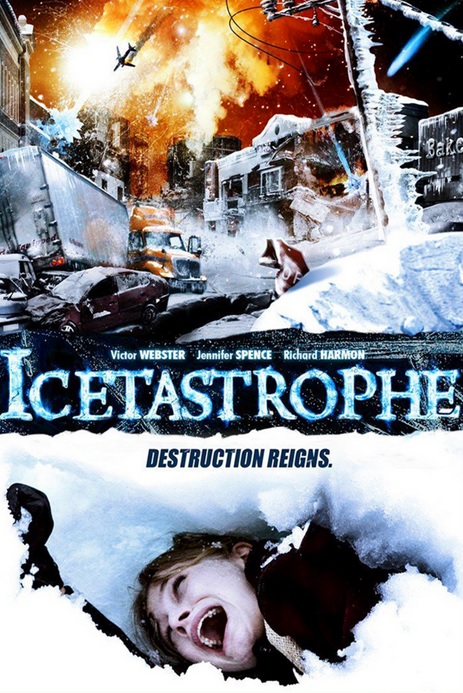
Christmas Icetastrophe (2014)*

This disaster mockbuster that affectionately borrows from 2015’s San Andreas (trading out a meteor-cum-volcano induced ice storm for an earthquake induced flood) had me in the first act before the first commercial break.

That’s where we meet the Beavis-son of a heavy construction company owner (Victor Webster, Coop the Cupid on TV’s Charmed, plays the owner; he reminds me of Josh Brolin) blowing up a snowman with his Butthead buddy. At first, the way it’s shot, we think it’s the first sign of the devastation—the first bit of a meteor taking out a snowman.

“Dynamite is for avalanche control, it’s not a toy,” chastises Webster’s Charlie Ratchet to his son, Tim Rachet.

Now that’s screenwriting! They made me laugh out loud.

Oh, and Charlie Rachet’s jagoff (Pittsburghese for dickhead) boss’s name? Ben Crooge (Mike Dopud, the 2001 Rollerball remake and 2005’s White Noise with an ex-Batman). Oh, and not only does Charlie’s work life suck: he has an ex-wife (Boti Bliss, TV’s CSI: Miami). And now he has an icemageddon frosting his ass. Yeah, this is turning into the worst Christmas, ever.

Now how can you pass up a disaster romp that pinches a Dwayne “The Rock” Johnson disaster flick and Charles Dickens’s 1843 novella A Christmas Carol? I’m all in, Santa baby!

Olympia College grad student Alex Novak (Jennifer Spence, Dr. Lisa Park from Stargate Universe) tracks a meteor that splits in two and lands in the quaint town—of the Hallmark holiday movie variety—of Lennox, Washington (fictional; there’s a Mountain, but not an actual town by that name), outside of Olympia (although Seattle is actually closer to Lennox Mountain, but that’s picky plot piffle. Now who’s being the jagoff, here!).

Anyway, while the “red half” of the space rock hits Lennox and “flash freezes” the town during a Christmas celebration (where the town’s loveably gruff St. Nick shatters into pieces . . . they killed Santa!), the “blue half” hits the mountain and starts spewing, well, what I’ll call ice lava.

Oh, and about that “San Andreas”: It comes in with Mike Dopud’s Ben Crooge fleeing like a bitch at every turn, choosing flight over fight and letting Santa die and locking people out of rooms and letting them flash freeze (just like Ioan Gruffudd’s David Riddick character).

The Roger Corman-cultivated director behind this mindlessly fun, hokey ride (hey, so were the major studio romps Armageddon, The Day After Tomorrow, Deep Impact, San Andreas, 2012, and The Mist, a flick which this ice romp also pinches) is Jonathan Winfrey, a craftsman that’s no stranger to the video fringes and to the schlock hearts of the B&S Movies’ crew.

Winfrey’s long list of producer and assistant director credits include Lords of the Deep, Saturday the 14th Strikes Back, Sorority House Massacre II, The Terror Within, The Terror Within II, and his most high profile and most successful film: The Marine starring WWF star John Cena. So, with that street cred, Winfrey knows what we need and he delivers against the low-budgets. Mr. Corman taught him well.

The scribe behind this holiday romp is the prolific David Sanderson, a screenwriter and assistant director who specializes in SyFy Channel disaster mockbusters (e.g., Independence Daysaster, Collision Earth) and worked on the similarly holiday-themed disaster flicks Snowmageddon and The 12 Disasters of Christmas. (I haven’t seen them, but I’ll search them out and give the Sanderson globe a shake.)

But wait . . . what’s this, pray tell?

From Starcrash to this? God Bless, you Hoff. God bless, ya!

David Sanderson also worked on a David Hasselhoff Christmas movie? How is David DeCoteau or Fred Olen Ray (A Christmas Princess) not involved in a film where The Hoff is a . . . Christmas Consultant? What the . . . yes! It’s on TubiTV for free! Dang right Sam and I are watching that one! (UPDATE 4:00 pm: Sam took the Christmas gauntlet thrown down like a man and reviewed The Christmas Consultant. Read at your own peril.)

Oh, yeah. Phew. The Hoff scambled my mind. You can also watch Christmas Icetastrophe on TubiTV for free.

Merry Christmas and Happy New Year! Enjoy the coal!

*No actual jetliners were destroyed in the making of this movie. Don’t be poster-duped.

About the Author: You can learn more about the writings of R.D Francis on Facebook. He also writes for B&S About Movies.

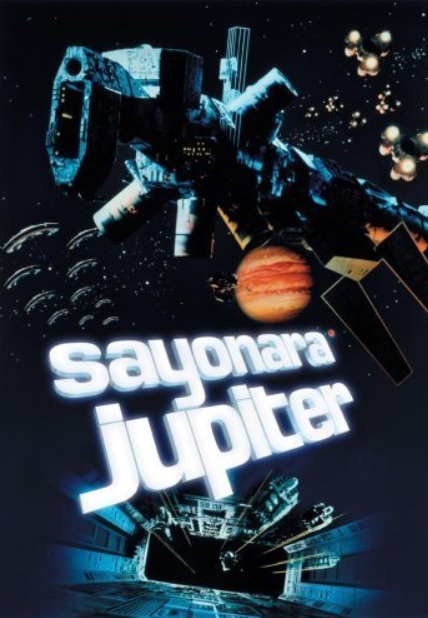
Japan Does Star Wars: Bye, Bye Jupiter (1984)

A long time ago, on a Japanese theatre screen far, far away . . .

20th Fox Studios broke Japanese box-office records with Star Wars and its sequel, The Empire Strikes Back.

. . . And Japan’s leading purveyor of kaiju (aka “strange beast” or monster movies), Toho, struck back with Bye, Bye Jupiter. Their second foray into the tokusatsu (aka “special filming” or sci-fi/adventure epics) genre, the film is also known as Sayonara, Jupiter in its homeland and Operation: Jupiter in other quarters. Toho’s first light saber swing was 1977’s Great Planet War (aka The War in Space; also reviewed in this week’s Star Wars feeding frenzy).

Unlike the better known Japanese-export, Message from Space (1978), this Asian box-office breaking favorite, while released in Japan and the Pacific Rim countries in March of 1984, was never released theatrically in the United States. And that’s a shame because, while . . . well, let’s face it: most quarters believe Bye, Bye Jupiter is a bad movie (but, cheesy so-bad-it’s-good bad). Granted, while it’s not exactly Star Wars as it strove to be, it’s not as technically inept as Luigi Cozzi’s Starcrash, and it’s a whole lot better than Roger Corman’s Battle Beyond the Stars starring the ultra-bland Richard “John-Boy” Thomas. Bye, Bye Jupiter is, in fact, it’s just as pleasurable—even more so—as the more popular Message from Space.

Anyway, back in the days when comic book stores collided with the home video rental market, select comic book stores began carrying small rental sections stocked with grey-market VHS copies (with laser-copy covers, natch) of overseas kaiju, tokusatsu, jidaigeki (“period drama,” such as Ugetsu) and onryō (“vengeful sprit”; ghost stories such as Ju-On and Ringu). That meant that crusty, old geeks (like Sam and myself) were able enjoy this George Lucas-inspired romp (subtitled, not dubbed) in the mid-80s. Star Wars fans of the less-comic book obsessed variety came to enjoy Bye, Bye Jupiter much later, courtesy of Discotek Media’s official DVD released in 2007 (with its original Japanese and English-dubbed format on one disc; this disc is now, sadly, out of print).

Seriously, how can you not want to watch a movie where the guy who wrote and directed Godzilla films for Toho Studios, enters the Kessel Run?

Set the computers for light speed, Chewie.

Noted kaiju purveyor Koji Hashimoto revitalized Godzilla for a new generation of fans with the worldwide hits The Return of Godzilla (1984) and Godzilla 1985; but his work as a Second Unit Director on kaiju flicks dates back to 1962’s King Kong vs. Godzilla, 1964’s Ghidorah, the Three-Headed Monster, and 1965’s Frankenstein Conquers the World and Godzilla vs. Monster Zero.

As with Great Planet War—with its homage recycling of Toho’s own Asian sci-fi favorites Battle in Outer Space (1959) and Atragon (1963), and the ‘70s anime Space Battleship Yamato—Toho Studio took no chances with their second George Lucas cash-in. Keen sci-fi fans with notice the plotting somewhat resembles Peter Hyams’s (1978’s Capricorn One, 1981’s Outland) 2010: The Year We Make Contact—and that it’s filled with homages to not only Star Wars, but also Disney’s The Black Hole, Star Trek: TOS, and Dr. Who.

(As Bye, Bye Jupiter unfolds; you also come to notice similarities to China’s much-later, exquisite blockbuster, 2018’s The Wandering Earth.)

By the 22nd Century, in the year 2125, Earth’s population has grown far beyond its “carrying capacity,” and humans live throughout the solar system. However, as previously with Earth, the solar system’s 18 billion-strong population has created an energy crisis. To solve the problem: Dr Eiji Honda develops the Jupiter Solarization Project, which will transform Jupiter into a second Sun to support deeper space colonization.

By the year 2140, during a water-extracting expedition in the Martian polar ice caps, an archeological team discovers ancient carvings that describe an alien spacecraft crashed into Jupiter and there’s a “Ghost of Jupiter” city. Believing there may have been survivors—and an alien population could possibly be endangered, Honda’s project is postponed.

Other complications to initiating the project are rogue members from a radical environmentalist group, The Jupiter Church, who want to sabotage Honda’s efforts. And Honda discovers his ex-lover, Maria, is one of the terroristic space hippies under the spell of its obese, Al Gore-like troubadour leader who sings songs about how wonderful the Earth is and how incredible nature is (yes, right out of the Star Trek: TOS episode, “The Way to Eden”). The second problem comes in the form a black hole (Hi, Mickey!) that’s entered the solar system and swallowed a manned space station—and it’s on course to collide with the Sun. To save the solar system, Honda redesigns the project: now they’ll “shoot” Jupiter into and explode the planet inside the black hole, which will, theoretically, alter the black hole’s path . . . maybe.

And that problem is solved by. . . .

Alas! Dear sci-fi fans. No space opera is complete without some annoying Battlestar Galactica-inspired Boxey character getting in the way. Thus, we have a screeching 11-year-old tooling around like Davros in a hi-tech wheelchair (yes, from another one of this film’s pinches—Dr. Who). Yes, the kid—not the bevy of scientists with advanced degrees and decades of experience—saves the world. Hey! Know your Godzilla movies! Kids ALWAYS penetrate the monster’s heart and save the world. And that’s how Asian cinema, rolls.

Give me Bye, Bye Jupiter over the later, American-made Armageddon and Deep Impact any day of the week—Davros Boxey, be damned.


Star Wars: Episode IX – The Rise of Skywalker is currently in theaters and was released theatrically on December 20 in the United States.

About the Author: You can read the music and film criticisms of R.D Francis on Medium and learn more about his work on Facebook. He also writes for B&S Movies.

A Christmas Princess (2019)

I couldn’t write the text quick enough!

“Sam, dude. Did you know Fred Olen Ray made a Christmas movie? It’s premiering on the ION channel, right now! The dude that made Biohazard and The Alien Dead is in the X-Mas movie business? I’m upset to my stomach.”

“Dude, I just did two David DeCoteau Christmas movies (Christmas Spirit, Santa’s Summer House) for the site next week. You think you know pain? Hey, you know what, you should really write that one up for the site.”

Did someone spike the Eggnog? When did David DeCoteau start doing Christmas movies? Where am I? Pinch me, somebody! (And when he’s not doing Christmas flicks, he’s doing “Wrong” movies for Lifetime: his latest is The Wrong Valentine.)

I knew those (pot) Christmas cookies Becca sent me didn’t taste right. They weren’t sprinkled with powdered sugar . . . that had to be Angel Dust . . . and I think Sam sprinkled it. There’s no other explanation to account for the fact that not only B-Movie stalwart David DeCoteau . . . but Fred Olen Ray is in the X-Mas movie business, too?

Fred Olen Ray producing, writing, and directing Christmas movies filled with love and romance? No, it can’t be. Fred Olen Ray is all about boobs, blades, and blood. He’s about aliens, bikinis, world disasters and Jean-Claude Van Damme knockoffs. You’re telling me that the guy who lent Quentin Tarantino his first camera to make My Best Friend’s Birthday is messing around with snow globes?

Oh, say it isn’t so, oh, mighty King of my video store youth!

Not ye of the VHS-rental favorites The Brain Leeches (1978), The Alien Dead (1980), and Biohazard (1985)? Not the guy who put scantily-clad women in a space prison with Star Slammer (1986) and plopped Heather Locklear from T.J Hooker on a high-tech motorcycle in Cyclone (1987)? Not the guy who wrangled my beloved Ann Turkel into starring in Deep Space (1988)? Not the guy who made Evil Spawn, Hollywood Chainsaw Hookers, Alienator, and Dinosaur Island? No, Fred Olen Ray, no! You made Wizards of the Demon Sword (1991) and Evil Toons (1992)!

But alas, it’s true.

Fred Olen Ray is in the Christmas movie business. In recent years he’s produced, written and/or directed eleven films since 2012 that aired on the cable channels Hallmark, ION, Lifetime, and Up.

So there I was, on a lazy Sunday evening, channel surfing as I stumbled into the ION channel and, as I begin to watch the credits role, I see the opening title card of:

Directed by Fred Olen Ray

No, it can’t be. It has to be his kid, Fred, Jr., right?

Nope. It’s the Fred Olen Ray. And you’re damn right, I watched it. While most Christmas movie fans don’t know how epic Mr. Ray is, I do.

So even though this is a Fred Olen Ray Christmas movie, it’s still an ION Christmas movie. (Do I have to tell you this isn’t one of Fred’s patented skin flicks or one of his straight-to-video schlock fests?) And we all know how these Christmas movies, roll: even a Fred Olen Ray Christmas movie.

They’re all mostly knockoffs of successful theatrical films (e.g., 1995’s While You Were Sleeping becomes Hallmark’s 2013 offering, A Very Merry Mix-Up; actually, it’s a well-done flick). And the guys are always prettier than the girls (a problem that myself and Sam do not suffer). And the girls are pretty, yet, in most cases, bitchy (a fate that Sam and I, in our younger years, once suffered). And the girl is fiercely independent, brimming with self-righteous indignation, yet angers when the guy of her dreams doesn’t believe in her and “shatters her confidence.” Or the girl is a whirlwind of white-teethed effervesce and the guy is a greedy, clueless dolt. And the guy always screws up and the girl gets pissed. Or she’s engaged, but not “in love,” and a new “dream” guy drifts into her life and she sort of “cheats” on her fiancé. And she dumps the dolt. And in the end there’s a kiss under some mistletoe, or a first Christmas snowfall, or they find a magic Christmas globe, or find the perfect tree and they live happily ever after.

Such is the case with Mr. Ray’s most recent film and his newest holiday offering, A Christmas Princess, inspired by the recent Meghan Markle and Prince Harry romance. However, in keeping with the tradition of knocking off major studio theatrical films, this X-Mas offering pinches Paramount and Martha Coolidge’s (Valley Girl, Real Genius) The Prince and Me (2004).

A Christmas Princess tells the tale of an icy ‘n’ feisty African American Chef-cum-caterer with a failing, down-home diner who bonds with a European (?) prince that speaks with an (annoying) Australian accent. The “bonding experience” is a slice of “meatloaf made with chicken stock, not milk” that leads the prince to decide she’s the one to cater his $1K per plate, Royal Christmas Charity Banquet in New York City. Of course, the prince’s royal family, particularly Queen Alice (Erin Grey from TV’s B.J and the Bear, Buck Rogers, and Silver Spoons), doesn’t approve of her son frocking with “a commoner from Brooklyn.”

And yada, yada, yada . . . they pull off the dinner and fall in love. The End.

. . . And as I warmly snuggle and patiently wait, my mouth waters for the soon-to-arrive Christmas (pot-laced) meatloaf from the Pacinos. And to all a good night.

Fred Olen Ray’s Holiday Films Resume

2022
Dognapped: Hound for the Holidays – Producer & Director
A Royal Christmas on Ice – Producer, Writer & Director

2021
A Royal Christmas Engagement – Director

2019
A Christmas Princess – Director
One Fine Christmas – Writer & Director
Baking Christmas – Director

2018
A Wedding for Christmas – Producer & Director
A Christmas in Royal Fashion – Writer & Director

2016
A Christmas in Vermont – Producer, Writer & Director

2015
A Prince for Christmas – Producer, Writer & Director

2014
Christmas in Palm Springs – Producer & Director

2013
All I Want for Christmas – Producer & Director

2013
Holiday Road Trip – Writer & Director

2012
A Christmas Wedding Date – Producer, Writer & Director

David DeCoteau’s Holiday Films Resume

2020
Christmas Together
A Christmas for Mary

2019
Christmas Matchmakers
Carole’s Christmas

2017
A Christmas Cruise*
My Christmas Grandpa (short)
A Royal Christmas Ball
Runway Christmas Bride
Delivering Christmas (short)

2016
A Husband for Christmas*

2012
Santa’s Summer House*

2011
Christmas Spirit*

*Sam’s loves his David DeCoteau!


UPDATE: November 2021

If you’re reading this, you’re probably here from the IMDb after seeing this Christmas flick pop up on Hallmark and came for some insights . . . and could care less about Fred Olen Ray directing the film. Well, in the oft chance you are a Fred Olen Ray fan, you can now buy DVDs and Blu-rays of several of Fred’s older, horror and sci-fi titles from his RetroMedia Entertainment Group shingle through Makeflix Entertainment.

All of David DeCoteau’s non “Wrong” and Christmas flicks — with things such as Bloody Blacksmith and Swamp Freak — can be found on his VOD RapidHeart.TV platform on Vimeo. You can learn more about his recent, direct-to-streaming offerings of Knock ’em Dead and Immortal Kiss at Rapid Heart Pictures. Fellow WordPress blogger Will Sloan sat down for an interview with David in July 2021.


About the Author: You can read the music and film reviews of R.D Francis on Medium and learn more about his work on Facebook. He also writes for B&S Movies.
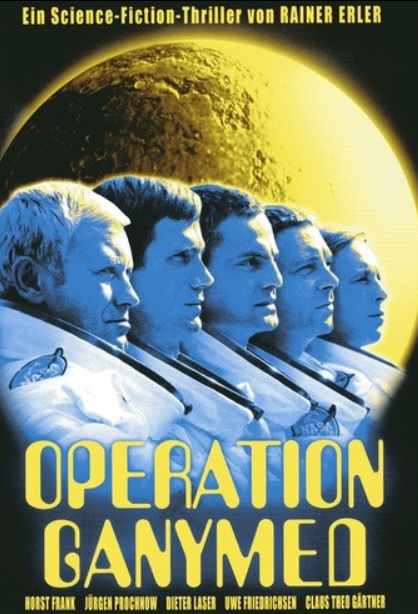
Star Wars German Style: Operation Ganymed (1977)

This dystopian-inspired version of a psychological Russian space epic (1970’s Signale, 1972’s Eolomea, 1980’s The Orion Loop, 1983’s Moon Rainbow) produced for German theatres in the wake of the ‘70s Star Wars-inspired production boom also appeared on German and European television as Heroes: Lost in the Dust of the Stars. Courtesy of the burgeoning home video market, Operation Ganymed appeared a few years later on U.S shores in a limited/low-key, admittedly patience-trying and poorly-executed English dub under its theatrical title on defunct Marathon Video (Atlantis in the U.K).

The now ultra-rare tape sought by VHS/Beta collectors doesn’t even appear in U.S tape guides. (How rare is the tape? A VHS is currently for sale on eBay for $78.00 . . . sigh, that’s the copy/version I rented from Tapes n’ More so many years ago!) The film was popular enough in Europe to warrant DVD reissues dubbed or subtitled for various markets—but are barebones VHS rips. And beware: most of those are DVD-Rs (but don’t complain and just be happy the film is at least digitally preserved).

Recognized as a winner of a few Euro-science fiction film festivals, the film earned a domestic stateside-release when star Jürgen Prochow impressed U.S audiences with his break out rolls in Das Boot (1981) and Dune (1984). Astute post-apocalypse fans will instantly notice those U.S-issued VHS tapes were most-likely plundered by the producers of the less intelligent Canadian exploiter Def-Con 4 (1985) and the South African gimp-clone Survivor (1987). If there’s ever a film that deserves a full-blown digital restoration from its original 35MM print—which was bestowed this year by Arrow Video to Def-Con 4—then Operation Ganymed is the film.

The long-awaited, inferior DVD currently in the marketplace came as result of respected German actor Deiter Laser (who I remember from the obscure and equally rare VHS The Elixirs of the Devil, a 1976 German take on the ‘70s Euro-horror nasties The Devils and Mark of the Devil) achieving his first taste of worldwide fame with his turn as the mad Dr. Heiter in Tom Six’s art house stomach churner, The Human Centipede (2009).

The remainder of us video and genre fringe geeks will recognize the third-billed Horst Frank, who became a go-to bad guy for spaghetti westerns (1968’s Django, Prepare a Coffin; with George Eastman and Terence Hill), Euro war epics (1964’s Mission to Hell), and Italian Gialli (1971’s Cat o’ Nine Tails for Dario Argento). The other two explorers, portrayed by Claus Theo Gardener and Uwe Friedrichsen, built extensive German-based resumes, with the late Friedrichsen in 121 projects and Gardener moving into directing.

As with the Russian you-either-love-it-or-hate-it epic-mindbender Solaris (1972), Operation Ganymed is an introspective, metaphysical journey concerning a United Nations-sponsored team of three Americans, two European, and one Russian who return from their four-year (left in 1985 and returned in 1989, according to the video box description; in the film it’s 1991) catastrophic mission to Jupiter’s moon in which, while they discovered rudimentary, primitive life (they pontificate on the foolishness of spending $38 billion for one tube of green slime), it was at the cost of 21 crew members, including two that perished on Ganymede’s surface.

What’s unknown to the crew: Earth lost contact with them 900 days ago (just over 2 1/2 years)and considered Ganymed 2 lost. No one is waiting for them; no Earth-orbit rendezvous is prepared. Unable to establish radio contact, and with 21 hours of oxygen left and no mission control to guide them, the astroquintet decides to make an emergency ocean landing off a rocky desert coastline that may be Earthpossibly Mexicoor a strange, new planet.

As they begin their trek across the desert towards what they hope is the U.S, they come to believe the Earth was decimated by a mysterious, cataclysmic ecological event or nuclear war. Their lines of reality begin to blur as hunger, dehydration, possible radiation sickness, and long-stewing inter-ethnic tensions lead them to madness, murder, and cannibalismreal or imagined.

The film’s first 30 minutes are impressive in adapting Apollo-era technology, suits, and tech-jargon for a Jupiter mission (that’ll leave a sci-fi buff pining for another watch of the 1978 Apollo-Mars pot-boiler Capricorn One), and the later, frequent flashbacks to the crew’s spacecamp-training sessions on Earth, and the sequences on Ganymede, which details how the two crew members died, also exceed the film’s budgetary constraints—limitations not experience by the likes of Star Wars and Capricorn One, even the cheesy Italian pasta-space opera, Star Crash. So if you’re looking for a big-budget production with flashy models, blinding laser beams and drooling, human-crunching aliens, this film isn’t for you.

Regardless of those reservations, let it be known that respected and successful German film and TV director Rainer Erler delivers a product far more engrossing that most post-2000 CGI failed-mission-discovers-life-on-a-distant-planet romps, such as the fellow Euro-produced Stranded, Europa Report, and Last Days on Mars.

Since this is a psychological, post-apocalyptic journey through man’s “inner space,” be warned: Operation Ganymed takes its time and you’ll be left with more questions than answers: Were the astronauts crazy. Were they on Earth. Did they warp to another planet. Does the Earth even exist. Were they even in Mexico. Did their fellow crew members really die on Ganymede. Did they all die on Ganymede—and this is all a hellish penance. Are they guinea pigs in a test set up by the corporation that sent them into space?

Find out for yourself by watching the full movie for free In English (at 1:33:00) and the uncut German version (at 1:53:00; with no subtitles) on You Tube. The DVD is available as part of a German-issued Rainer Erler Kultfilme (Cultfilm) 6-pack. There are more current, professionally-packaged, non-USA Playback Region 2 DVDs at Amazon (Caveat: know your regions!), along with the older DVD-issues at Amazon (you can sample those DVD images with the two video-clip trailers provided in this review).

* * *

You can catch up on the wide array of post-apocalyptic adventures with B&S Movies’ “Atomic Dust Bins” Part 1 and Part 2 featuring 20 mini-reviews of movies you never heard of, along with a “hit list” featuring all of the apoc-flicks we watched for September 2019’s Apoc Month.

You can learn more about Russian/Eastern Bloc science fiction films released from the 1950s to 1980ssuch as 1970’s Signale, 1972’s Eolomea, 1980’s The Orion Loop, and 1983’s Moon Rainbowby visiting: “Exploring (Before “Star Wars”): The Russian Antecedents of 2001: A Space Odyssey.”

And finally, this review was previously posted on September 28, 2019, as part of our September Post-Apocalypse Month.

* * *

Star Wars: Episode IX – The Rise of Skywalker is currently in theaters and was released theatrically on December 20 in the United States.

About the Author: You can read the music and film reviews of R.D Francis on Medium and learn more about his work on Facebook. He also writes for B&S Movies.

The Star Wars TV Movies: The Ewok Adventure (1984) and Ewoks: The Battle for Endor (1985)

It’s a two-fer! It’s Star Wars and it’s a holiday movie! Okay, it’s technically a Thanksgiving holiday movie, but close enough.

I totally forgot about these two Star Wars TV movies. The Christmas special; yeah, that I remember (do we ever!). But not the Ewok movies. As I was relaxing, thumbing through one of my movie guides—one on sci-fi—the pages just fell open into the middle of the “E” section. And there they were. It’s fate.

Or torture, depending on your memories of the ‘80s holiday TV movies canons of Star Wars. Me. My tween-self loved them.

While the Star Wars Holiday Special followed the timeline of Star Wars: Episode IV: A New Hope, these two Ewok adventures continue the storyline from Star Wars: Episode VI: Return of the Jedi. This time, there’s no Luke, Leia, Han, or Chewie . . . or Art Carney (!), but we do get Warrick Davis continuing his role as Wicket from Return.

The Ewok Adventure: Caravan of Courage

George Lucas produced this ABC-TV Thanksgiving holiday teleplay by childrens animator-writer Bob Carrau, who would go on to script all fourteen episodes of the 1985 to 1987, two-season run of the Saturday morning animated series, Ewoks.

Taking its cues from Johann David Wyss’s 1812 novel Swiss Family Robinson: the Towani family’s shuttlecraft crashes on the forest moon of Endor. The four Towanis are separated. While their mother and father are captured by the giant Gorax, Mace and Cindel befriend the Ewok Deej and they go on an adventure to find their parents.

Kwoks: The Battle for Endor

The Endor Family Towani continues their Thanksgiving holiday adventures. This time, Lucas chose the Wheat Brothers, Jim and Ken (who got their start with 1979’s The Silent Scream, penned a Freddie Krueger sequel, and the Pitch Black-Riddick series), to direct this tale with the always likable Wilford Brimley (Remo Williams: The Adventure Begins) as a crusty hermit, Noa.

For a family holiday special, this Ewok adventure is a bit grusome. The army of the Marauders, led by King Terak and the witch Charal, attack the Ewok’s village . . . and Cindel’s parents and brother die in the attack. As Cindel and Wicket escape the carnage, they meet Teek. Then, along with Noa, who also crashed on Endor long ago, they team up with the Ewoks to fight Terak and Charal. The Ewoks Strike Back, if you will.

The children-oriented adventures of the Star Wars universe continued with the 1985 to 1986, fourteen episode two-season run with Star Wars: Droids. Featuring the voice of Anthony Daniels, the series followed the pre-Rebel Alliance adventures of R2-D2 and C-3PO.

As Sam points out in his review for the Star Wars Holiday Special: If you truly love Star Wars and the holidays, you have so many other ways to spend your time. Don’t give in to the forbidden fruit (the Dark Side of The Force) that is the Ewok movies.

However, if I may add: If you were once that wide-eyed tween from 1977 whose Star Wars viewings were in the high double-digits, you, by now, probably have grandkids into the new batch of Disney Star Wars movies. So don’t be a scruffy nerf herder: take a nostalgic cruise to Endor with those new Star Wars fans and share in their wonder.

You’ll be glad you did.

About the Author: You can read the music and film reviews of R.D Francis on Medium and learn more about his work on Facebook. He also writes for B&S Movies.
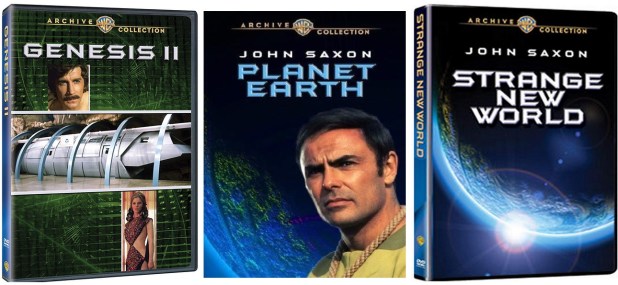
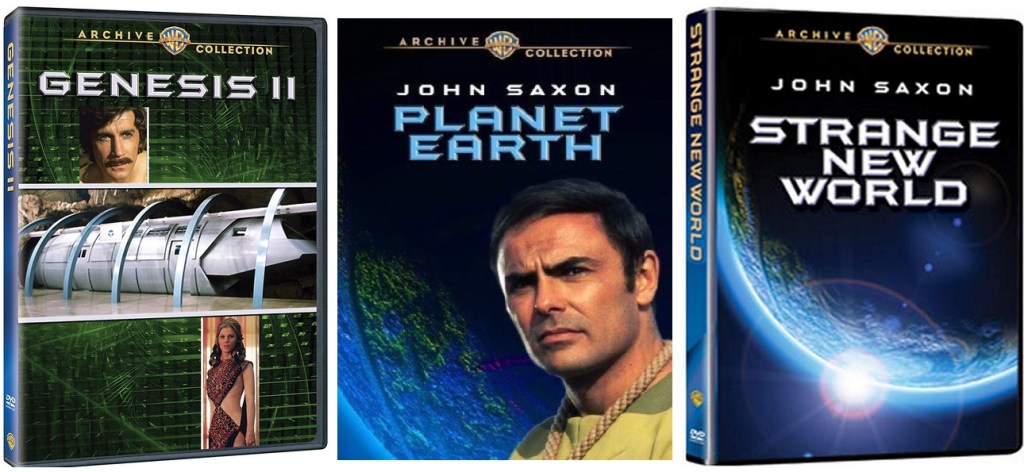
Before Star Wars: Genesis II (1973), Planet Earth (1974), and Strange New World (1975)

Author Note: This review was previously posted on September 28, 2019, as part of our September Post-Apocalypse Month. You can catch up with all of those reviews by visiting our Atomic Dustbin recap. We’re bringing it back to pay tribute to the work of George Lucas.


Okay. Let’s get this out of the way: This is the movie were you video fringe horndogs lose it over Mariette Hartley (as Lyra-A) in a two-piece bikini sporting two belly buttons (a dual circulatory system with two hearts) as a (network censored) “dominatrix” who breeds men for an oppressive, feminist regime.

Gulp.

Yes. Mariette Hartley: We’re talking Zarabeth in the Star Trek: TOS episode “All Our Yesterdays” where she cracked Spock’s emotionless Vulcan shell. She mixed it up with Gary Lockwood as Lisa Karger in Earth II (another failed TV movie pilot-to-series). She tempted Charlton Heston as Harriet Stevens in Skyjacked. She gave Dr. David Bruce Banner butterflies as Dr. Carolyn Fields in The Incredible Hulk. Yes. Mariette Hartley, with a resume of too many popular TV series to mention, all the way out to Fox TV’s 2018 hit series 9-1-1 as Patricia Clark.

Just one look at Mariette in Genesis II and you’ll forget all about the über-cool Sub-Shuttle that we all came for (and not a bogus CGI model . . . but a non-operational, full-sized prop pulled on a long-cable by an off-camera semi-truck) that pulls into a carved-out-of-the mountain sub-station (which Elon Musk has since pinched for his next millionaire-toy project). Oh, and did you notice the sterile, ultramodern-styled city looks suspiciously like the city in Conquest of the Planet of the Apes (20th Century Fox’s “Century City”)? And did you notice how many times the Sub-Shuttle footage was recycled in ‘70s sci-fi television?

Anyway . . . times were hard for ex-Star Trek creators.

In 1974, after the go-to-series failure with Genesis II, Gene Roddenberry developed another TV movie/series pilot with The Questor Tapes (1974). A thinly veiled reworking of the Gary Seven character and plot from the Star Trek: TOS episode “Assignment: Earth,” it was intended as a vehicle for Leonard Nemoy’s return to weekly television. The end product starred Robert Reed-doppelganger Robert Foxworth (1979’s Prophecy) who portrayed an android with incomplete memory tapes — in a pseudo The Fugitive storyline — searching for its creator and purpose (that also sounds like V’ger from Star Trek: TMP).

Then, after the additional go-to-series failures of the Genesis II reboots Planet Earth and Strange New World produced in the wake of The Questor Tapes, Roddenberry tried again — by jumping on the ‘70s “occult detective” sub-genre with 1977’s Spectre — by reworking another Star Trek element: the contemptuous friendship between Spock and Dr. Leonard McCoy, itself a homage to the relationship between Sherlock Holmes and Dr. Watson. Spectre starred Robert Culp (The Gladiator) as William Sebastian, a criminologist and occult expert assisted by Gig Young (1978’s Game of Death with Bruce Lee) as Dr. Hamilton.

(If you care: Other shows in the ‘70s occult TV movie-to-series subgenre include The Sixth Sense with Gary Collins of Hanger 18 and Killer Fish, Roy Thinnes of Satan’s School for Girls in The Norliss Tapes, and the most-successful of the pack: Darren McGavin of Dead Heat and the post-apoc dropping Firebird 2015 A.D in Kolchak: The Night Stalker.)

Genesis II stars Alex Cord (who also journeyed into a “fucked up future” in Chosen Survivors) in the “future world” of 1979 as NASA scientist Dylan Hunt. Of course, he opens the post-apocalyptic proceedings with that all-too-familiar apocalypse (or psychological horror) cliché: “My name is Dylan Hunt. My story begins the day on which I died.” So goes the story a “20th Century Boy” (T Rex, anyone?) thrown forward in time by a suspended-animation earthquake-accident that damages his New Mexico/Carlsbad Caverns-housed “Project Ganymede” system for astronauts on long-duration spaceflights.

And we flash forward to the year 2133.

An archeological team of PAX (Latin for “peace”) descendants from the NASA personnel that lived-worked-were trapped in the Carlsbad installation when World War III (aka “The Great Conflict” because, well, the docile hoards of all post-apoc futures never seem to be able to preserve or retain a basic semblance of American history) broke out, discover Hunt’s buried chamber. And while they can’t seem to “remember” World War III, the PAX are smart enough to construct a subterranean rapid transit system utilizing a magnetic levitation rail operated inside a “vactrain-tunnel network” that spans the globe and saves the masses from air transportation attacks.

Anyway, here’s where Mariette Hartley comes in.

Lyra-A oversees the all-female totalitarian regime known as the mutated (natch) Tyranians that rule the lands once known as Arizona and New Mexico. In addition to their increased physical abilities, you can always spot a Tyran by their nifty, dual navels — that they seem to love to show off. (Schwing! Thank you, Gene!) Not that the wussy PAX-rats would do anything when they spot a Tyran: they let themselves be enslaved.

Lyra-A, in a grand alien fashion of the Star Trek variety, is enraptured by Roddenberry’s “Buck Rogers” and wants to harness Hunt’s knowledge of (among other things) nuclear power systems to fix the Tyranians’ dead power plant. But apoc-bitch Lyra-A double crossed him: it’s a ploy to reactivate a nuclear missile system to destroy the PAX. As a result, Hunt goes into Moses-mode (see the apoc-romps No Blade of Grass, Ravagers) and leads a revolt of the enslaved, sabotages the nuclear device, and destroys the reactor.

Sound pretty cool, right?

Airing to high ratings in March 1973 and encouraged by the network brass, Roddenberry worked up a 20-episode first season on the adventures of Alex Cord’s post-nuc Moses. Then CBS-TV dropped the bomb: they passed over Genesis II and gave the timeslot to another competing post-apoc series: the short-lived and low-rated Planet of the Apes.

Those mothballed Genesis II episodes featured recycled ideas from Star Trek: TOS and fueled the later Star Trek movies — with stories about suspended animation soldiers from the past (“Khan!!!”), a London ruled by King Charles X; NASA “evolved” computers and equipment left on Jupiter’s Ganymede returning to Earth in search of their “God” (“The Changeling” and the annoying Persis Khambatta-V’ger non-sense from Star Trek: TMP); men turned into breeders and domesticated pets (reworked for the second pilot, Planet Earth); the ol’ catapulted-through-a-time-continuum back to 1975 gaffe (“Tomorrow and the Stars,” an episode from Star Trek: Phase II, the proposed-failed post-Star Wars reboot), and a creepy priesthood who enslaves the masses via electricity used as a “God” (“Return of the Archons” from ST: TOS).

The reason the network passed on Genesis II: The series was “too philosophical” and Alex Cord’s portrayal was “too dark and brooding.” They wanted another handsome and charmingly arrogant Captain James T. Kirk. So Roddenberry and Warner Bros. rebooted Dylan Hunt into an action-driven and conflict seeking Kirk-like character embodied by John Saxon.

Cue for Planet Earth.

Now Dylan was one of three cryogenically-frozen astronauts who return to Earth to reestablish the PAX organization that sent them into space. And while we lost Mariette Hartley, we gained the equally fetching Diana Muldaur (again, from Cord’s Chosen Survivors), who rules the Amazonian, male-enslaving “Confederacy of Ruth,” along with cherished character actors Bill McKinney (Deliverance, Cannonball) and Gerritt Graham (Phantom of the Paradise, Used Cars) as “impotent males” in recurring roles.

This time, instead of CBS, ABC aired the Warner Bros. produced program in April 1974.

The network passed.

Cue a Strange New World.

To creative and legal reasons lost to the test of time, Warner Bros., who now owned the intellectual rights, reworked the premise a third time as Strange New World (pinching the title from Star Trek’s opening monologue) — sans Roddenberry’s involvement — dumped the PAX and Tyranians, and retained John Saxon as the same Kirk-like character, now known as Captain Anthony Vico, who returns from a suspended animation space trip with two other astronauts (as in Planet of the Apes TV series that screwed Genesis II in the first place).

The movie aired in July 1975.

The network passed.

And with that, between Roddenberry’s vision, and the failure of the Planet of the Apes TV series (episodes were cut into overseas theatrical and telefilms), the small screen’s attempt to jump on the major Hollywood studios’ post-apocalyptic bandwagon was over. Thus, us wee lads and lassies gathered around the TV on Saturday mornings and settled for Filmation’s Ark II, whose 15 episodes (it seems it had more episode and was on much longer), aired in 1976, then reran in 1977, then again in 1978. And that kiddie-apoc series stopped production because the network “wanted Star Wars” (and not a TV knockoff of 1977’s Damnation Alley). So Ark II was reworked and repurposed (the same “universe,” so to speak) as Space Academy and Jason of Star Command (Sid Haig, rules!).

There was also another, similar attempt at the Genesis II concept with, ironically, another Star Trek: TOS alum: Glenn Corbett (warp-drive creator Zefram Cochrane in 1967’s “Metamorphosis”). As with Roddenberry’s The Questor Tapes, The Stranger (1973) was another failed TV movie-to-series sci-fi twist on the ‘60s runaway TV hit, The Fugitive. This time, instead of returning to a post-apocalyptic society, our astronaut (Hey, Sam . . . he’s named “Stryker”!) returns to a totalitarian “twin” Earth run by the “The Perfect Order.” (And if it all sounds a bit like 1969’s Journey to the Far Side of the Sun by Gerry and Sylvia Anderson of the fellow-failed, post-Star Trek series UFO and Space: 1999 . . . then it probably is: both series were movie-rebooted in the post-Star Wars universe as the telefilm/foreigner theatricals Invasion: UFO and Destination Moonbase Alpha, respectively.)

But wait . . . all was not lost with Genesis II.

Roddenberry’s widow, Majel Barrett (Nurse Christine Chapel in Star Trek: TOS and Lwaxana Troi on Star Trek: TNG and DSN) produced one of Roddenberry’s old pre/post-Star Trek dystopian-apocalyptic concepts, Andromeda (itself recycling from Genesis II and Planet Earth), a Canadian series that ran from 2000 to 2005 and aired in syndication on U.S television.

VHS rips of Genesis II and Strange New World can be enjoyed for free on You Tube, while Vudu has official, affordable streams of Genesis II and Planet Earth. For whatever “legal” reasons, no streaming platform offers Strange New World. However, copies of all three are widely available on DVD courtesy of Warner Home Video’s Warner Archive Collection.

You say you’re still jonesin’ for a fix of the “Big Three”-over-the-air U.S television network movies from the good ol’ days before the VHS and cable television boom? Then check out B&S Movies’ tributes of “Lost TV Week,” “Week of Made for TV Movies,” “Sons of Made for TV Movies Week,” and “Grandson of Made for TV Movie Week.


Star Wars: Episode IX – The Rise of Skywalker is currently in theaters and was released theatrically on December 20 in the United States.

About the Author: You can read the music and film reviews of R.D Francis on Medium and learn more about his work on Facebook. He also writes for B&S Movies.

Christmas on Mars (2008)

“Dude, ya gotta do another Christmas movie for the site,” texts the portly proprietor of B&S About Movies, not realizing the proverbial stocking of worms he’s unleashing from this writer’s fingertips.

Just to be clear: I don’t do spunky elves, mystical reindeer, or magic snow globes. I go for the coal. Well, unless it’s a Fred Olin Ray holiday fest or a David DeCoteau Christmas movie. Other than that: If you want a Christmas movie review from me; you get the Wayne Coyne version of a Christmas movie . . . and one that stars the guy who once a cavorted with a talking blue dog.

You heard me right: And Steven Burns, the Daytime Emmy Winning actor-host of Nickelodeon’s Blue’s Clues drops “F-Bombs” in this movie . . . and he co-stars with The Flaming Lips—you know, the alternative rock band you saw performing their U.S Top 100 hit about a girl who preferred using Vaseline over Jelly, live at The Peach Pit in the 90210 zip code.

This is a world where Quentin Tarantino’s first film, My Best Friend’s Birthday, collides with David Lynch’s Eraserhead. If Kevin Smith’s debut film, Clerks, had been about two slacker cafeteria workers in the Death Star Canteen . . .

“You will still need a tray.”

. . . but Dante and Randal can’t handle the pressures of slinging Empire hash, so they smoke hash behind the trash compactor and trip-out into Andrei Tarkovsky’s Solaris territory (as Christmas on Mars pays tribute to the cycle of Eastern Bloc-Russian psychological sci-fi films), this is that movie.

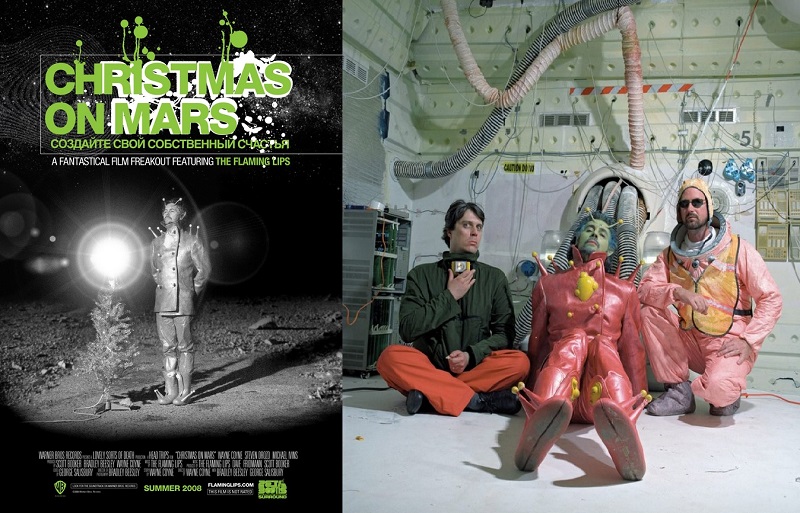
Christmas on Mars is a performance piece comprised of a 16mm feature-length film and a concept album that tells the story of Major Syrtis (the Lips’ Steven Drozd), the commander of the first colony on Mars—that’s celebrating its first Christmas . . . and the birth of its first child. As Sytris suffers a breakdown resulting from his obsessive planning of a holiday pageant to celebrate the birth, he finds an unlikely party planner: a Martian (the Lips’ Wanye Coyne)—or is he a colonist who flipped out and painted himself green—who agrees to become a de facto Santa Claus for the colonists.

Rounding out the cast of astro-colonists are fellow Lips’ members Scott Booker, Michael Ivins, and Kliph Scurlock, along with SNL’s Fred Armisen (TV’s Portlandia) and the always appreciated jittery-paranoid Adam Goldberg (Dazed and Confused, The Hebrew Hammer).

Never released theatrically—outside of unconventional, non-theatrical venues, such as social clubs and film and music festivals—the film was released in three formats: a single DVD available at commercial retailers, a deluxe edition DVD-CD soundtrack combo, and a collectible DVD-CD “Mega Deluxe Edition” packed with movie-related Lips’ paraphernalia and swag.

About the Author: You can read the music and film reviews of R.D Francis on Medium and learn more about his work on Facebook.