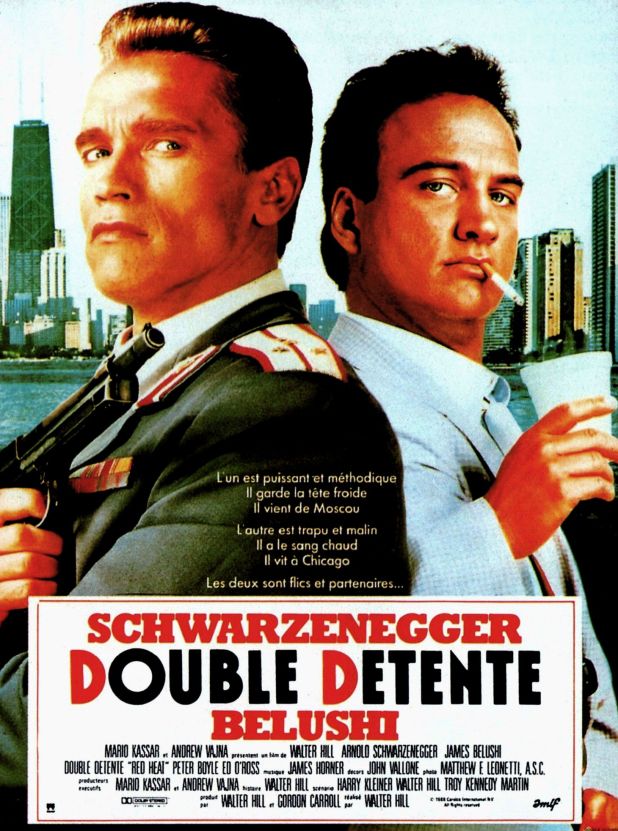
Walter Hill and Arnold Schwarzenegger had wanted to work together for some time and Hill kept playing with concepts, saying “I didn’t want to do sci-fi and it’s tough to use Arnold credibly in an American context with his accent. I thought it would be interesting if he could play a Russian cop in the US. I wanted to do a traditional John Wayne/Clint Eastwood larger-than-life movie. You then ask the question: Will the American audience accept an unapologetic Soviet hero, someone who will not defect at the end of the movie?”
It was a success, but not as much as expected. Arnold would later say, “It wasn’t the smash I’d expected. Why is hard to guess. It could be that audiences were not ready for Russia, or that my and Jim Belushi’s performances were not funny enough, or that the director didn’t do a good enough job. For whatever reason, it just didn’t quite close the deal.”
At the time, I saw it as a step down for Arnold from Predator and The Running Man. Of course, he’d follow this up with Twins, which was a huge success that showed Hollywood that he was more than action.
Captain Ivan Danko (Schwarzenegger) has lost his partner to crime boss Viktor Rostavili (Ed O’Ross), who has come to the U.S. and been arrested for a traffic violation. Danko is sent to bring him back to Russia and meets Sergeant Art Ridzik (James Belushi) and Detective Max Gallagher (Richard Bright), but when they transport the villain to the airport, they’re ambushed and Rostavili gets away.
Both Danko and Ridzik have lost a partner and want revenge, as well as to stop the crime boss from working with Chicago street gangs to smuggle uncut cocaine into the Soviet Union.
It’s a buddy cop movie with two men from different countries who are ultimately very much the same. It also has Gina Gershon as Rostavili’s American wife, Larry Fishburne as the lieutenant and Brion James as a henchman.
Belushi and Arnold would work together again in Jingle All the Way and Last Action Hero. They work pretty well together. A sequel that would have had Ridzik come to Russia was planned and never happened.
It’s funny that Arnold was forty when he made this and had not yet ascended to being the biggest star in the world.
EDITOR’S NOTE: This was originally on the site on August 15, 2017.
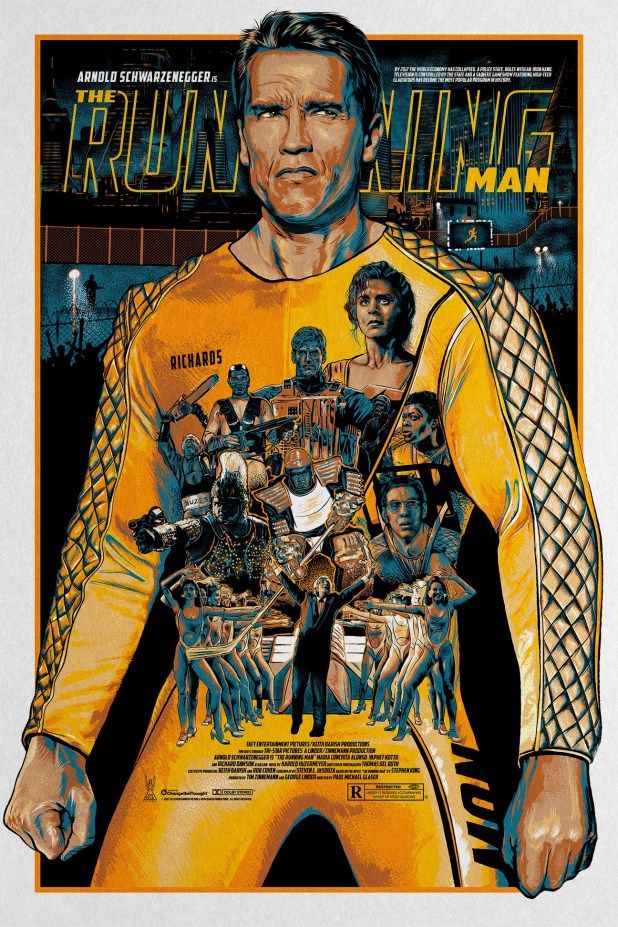
There are three things I want to immediately say that I’ve learned upon rewatching this film: Mick Fleetwood is playing himself, it’s aged worse than movies with a much smaller budget, and most importantly, so much of the dystopian future of this movie isn’t as bad as the world we live in right now.
Wait — what, what and what the fuck?
Let’s back up a bit. The Running Man was a troubled production, with original director Andrew Davis (Under Siege, The Fugitive) being replaced a week into filming by former Starsky and Hutch actor, Paul Michael Glaser (he’s gone back to acting, but not before giving us the magic that is Kazaam). In his book, Total Recall, Arnold wrote that this was a horrible decision, as the director “shot the movie like it was a television show, losing all the deeper themes. In fairness, Glaser just didn’t have time to research or think through what the movie had to say about where entertainment and government were heading and what it meant to get to the point where we actually kill people on screen. In TV they hire you and the next week you shoot and that’s all he was able to do.”
Written by Steven E. de Souza (who had a hell of a run, writing Commando, 48 Hrs. and the first two Die Hard films, while also adapting Mark Schultz’s Xenozoic Tales for TV as Cadillacs and Dinosaurs) from the Richard Bachman book (Bachman was and is, of course, Stephen King, who was using a pseudonym to see if his success was due to talent or luck. A Washinton, D.C. book clerk named Steve Brown discovered the truth before an answer could be found. In fact, Bachman’s next book was to be Misery, which ended up becoming a King novel. The Dark Half, which became a George Romero movie, is based on this experience.). In the original book, hero Ben Richards is anything like the physical description of Arnold, who is near super-heroic.
The film starts that in 2017 — a time that we’re all sadly too familiar with — the U.S. has become a police state post worldwide economic collapse — perhaps not as close to home, but uncomfortably nearby. Actually, it’s way too fucking close to reality, as the opening text tells us that the “great freedoms of the United States are no longer, as the once great nation has sealed off its borders and become a militarized police state, censoring all film, art, literature, and communications.”
Within two years, the only thing that keeps the populace under control is The Running Man, a game show where convicted felons battle for their lives against the Stalkers, who are presented as pro wrestling/American Gladiators style stars. Damon Killian (Richard Dawson of TV’s Family Feud and Hogan’s Heroes, as well as one of the first people in the U.S. to own a VCR) hosts the proceedings and remains one of the enduring reasons to enjoy this film. One gets the idea that Dawson was keen to parody his years of hosting game shows and he cuts through this film, making his role so much better than it deserves to be, whether it’s his ads for Cadre Cola or the way he shits on everyone in his path, even lowly custodians. IMDB states that plenty of folks who worked with Dawson on Family Feud claim that he was exactly like this character, but that seems like the sour grapes of hearsay. Anyways, worried that ratings may slip, Killian pushes for Ben Richards, the “Butcher of Bakersfield,” (actually, it was all a setup and he was wrongly convicted of killing citizens during a food riot) to be the next runner.
Ben gets caught because instead of staying at a resistance camp — post-prison break where people’s heads get blown up real good — with fellow escapees Weiss (Yaphet Kotto from Alien and Live and Let Die) and Laughlin, he decides to find his brother. Instead, his brother has been taken in for re-education. In his place is Amber Mendez (Maria Conchita Alonzo, Predator 2, The Lords of Salem), the composer of the music for The Running Man.
Richards takes Amber hostage, but she knees him in the little Arnold and he’s caught with a big net. Oh yeah — we also meet Mick Fleetwood as a resistance leader here. Remember how I said he played himself? Here’s my evidence. He states that the government has “burned my music” and his second-in-command is named Stevie, after Fleetwood Mac band member and former flame Stevie Nicks (but is played by Dweezil Zappa, who is also in Pretty in Pink and Jack Frost). In exchange for Killian not putting his friends into the game, Richards enters the contest, only to learn that it’s all a lie and they’ll all be part of The Running Man.
The game begins and immediately, Richards does something that’s never been done. No Runner has ever killed a Stalker, but he bests and kills Subzero (former pro wrestler Professor Tory Tanaka, who played just about every Asian henchman ever. He’s the butler in Pee Wee’s Big Adventure, he’s one of the heavies in The Last Action Hero, he’s Rushmore in 3 Ninjas and his IMDB filmography has many roles that simply list him as “sumo wrestler” or “bodyguard.”).
Meanwhile, Amber learns from the news that the media’s presented truth does not line up with her memories — Richards is accused of killing numerous people that she did not see him murder. Her detective work gets her caught and now, she’s on the show.
Buzzsaw (Gus Rethwisch, Arnold the Barbarian from House 2) kills Laughlin before Richards dispatches him. Dynamo (played by Erland van Lidth, a classically trained baritone opera singer, who is actually singing the aria that introduces himself), another Stalker, kills Weiss before Richards flips his buggy, trapping him. However, Richards refuses to kill him, which increases his popularity. As the downtrodden people of the U.S. regularly bet on the game, they suddenly stop betting on the Stalkers and bet on a Runner for the first time — to the anger of Killian.
Killian offers Richards a Stalker role, but gets turned down. In retaliation, he sends Fireball, one of the most famous Stalkers, after Ben and Amber. He’s played by Jim Brown, who knows about the world of blood and circuses, seeing as how he is a former NFL football star. Plus. he was also in The Dirty Dozen and Mars Attacks! Fireball’s pursuit takes them into an abandoned factory where they find the charred remains of past winners — all lies, as they were really killed by Fireball, who is killed by his own weapon.
Totally losing his mind, Killian wants to send the game’s biggest star, Captain Freedom (Jesse “The Body” Ventura from Predator) to take on Richards. Freedom refuses, so the show creates a CGI version of reality where Captain Freedom wins by killing off Richards and Amber.
Meanwhile, Mick Fleetwood finds our stars and helps them get into the control room, where Amber kills Dynamo and Richards reveals the truth. Killian begs for his life, as all he was doing was giving the people what they want — death and chaos. Ben refuses, sending Killian into the game zone, where his rocket sled hits a Cadre Cola billboard and explodes. Boom — a happy ending, as Ben and Amber romantically walk into the sunset, until you realize that their victory has changed absolutely nothing and society will just keep on being the same exact way.
Remember when I said this movie hasn’t aged well? I’d argue that it looks worse than the much smaller-budgeted Warriors of the Year 2072. The costumes look cheap, the video screens look sadly composited and everything feels woefully low budget for a film that cost $27 million dollars to make.
And what of the claim that this film’s post-apocalyptic future is better than our own? One only has to watch the scene where Richards is caught at the airport. Today’s post 9/11 security checkpoints are way worse than anything the hero of this film encounters — he’s never frisked and the tourists freely walk onto the tarmac of the airport, just like folks once could.
Honestly, director Glaser was in well over his head. If a director like Paul Verhoeven was at the helm — like Arnold’s Total Recall — the sheer ridiculous nature of a game show controlling the world could have really been a winner. As it stands here, this is a fun film that makes you wish that it could be so much more — kind of like eating Buffalo wing flavored chips and wishing that they were really Buffalo wings.
In truth, life imitated art in this film, as it inspired the aforementioned American Gladiators and the dance routines were choreographed by future reality game show hostess Paula Abdul. And the Adidas sponsored costumes of the Runners hints at the days when everything would have a branded logo.
Other films like Death Row Gameshow, Gamer, Battle Royale and The Hunger Games would play in the same game zone as The Running Man. Of all the 80’s remakes, this one feels like the best case for a new, better version. Sadly, I think we’re going to see it in real life before we see it on the screen.
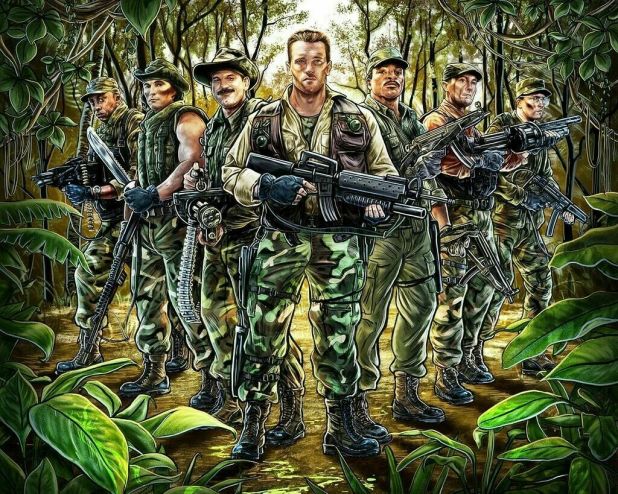
As Little Richard’s “Long Tall Sally” blares, helicopters carrying Dutch (Arnold Schwarzenegger), Poncho (Richard Chaves), Billy (Sonny Landham), Mac (Bill Duke), Hawkins (Shane Black), Blain (Jesse Ventura) and Dillon (Carl Weathers) lands in Central America to free a foreign cabinet minister and his aide.
On their way to the target, Dutch discovers a destroyed helicopter and three skinned bodies of a failed rescue attempt. After Dutch’s team decimates the enemy, including some Soviet officers, they learn that it was all a set-up by Dillon to get information from the enemy. Only one is left alive — Anna (Elpidia Carrillo) — so the team takes her to the extraction zone.
And this is where Predator flips the script.
Written by Jim and John Thomas (Mission to Mars, Executive Decision) and directed by John McTiernan (DieHard, Last Action Hero), this film starts as a testosterone-laced ode to American firepower and then becomes a slasher, as the team is followed by an invisible, nearly-unstoppable alien hunter (Kevin Peter Hall) who has come from space just for the sport of hunting these soldiers.
The inspiration for the film came from a joke that after Rocky IV, Stallone had run out of opponents on Earth. If they made another film, he’d have to fight an alien. Jim and John Thomas were inspired by that and wrote Hunter, which became Predator. One could argue that they had seen Without Warning, which is nearly the same idea, with an alien — armed with futuristic weaponry and also played by Kevin Peter Hall — on Earth to hunt humans.
There are so many stories about how JCVD was once the Predator. Why that ended is up for debate. Maybe it’s because Van Damme was only 5’9″. Or it could have been because all Jean Claude did was complain about the suit being so hot that he kept passing out. Or maybe the original design just didn’t work. The Stan Winston redesign? It’s as iconic as the xenomorphs of Alien, which the Predator would get to battling soon enough.
Predator just works. I’m a fan of Predator 2 as well, but the first film is absolutely perfect. The ultimate hunter against the ultimate soldier? Yeah, this is what an action movie should be.
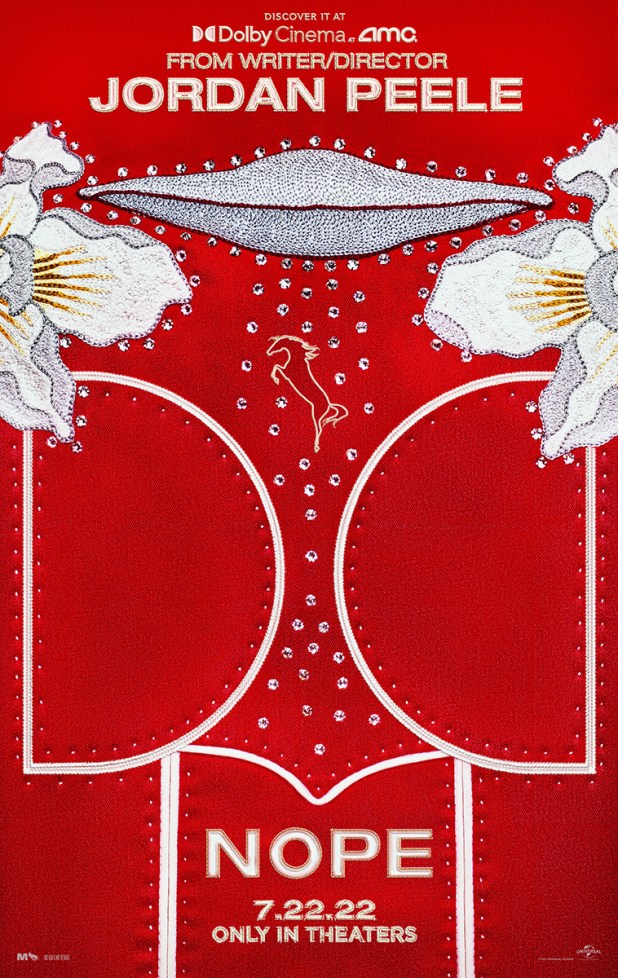
There was a time, however briefly, when blockbusters were made by the same directors of the New Hollywood and weren’t just product placement intended to get toys into Target for a 6 week cycle, but actual movies that stirred up emotions and made us look into the unknown with wonder or terror. With just three films — Get Out and Us precede this — Jordan Peele has started to take the journey that others before him — M. Night Shyamalan is just one example — have tried and failed to navigate. Can filmmakers create challenging movies that appeal to audiences while having sometimes difficult to follow narratives and not underline and telegraph every single point they are trying to get across?
In case you’re wondering, “Just how big is this movie going to get?” the answer comes with a Biblical verse that fills the screen: “I will cast abominable filth upon you, make you vile and make you a spectacle.” — Nahum 3:6.
The seventh in order of the minor prophets, Nahum was known as the “comforter,” despite his words mainly concerning the downfall of Assyria. They’re strong words; indeed, translator Rev. John Owen said that “No one of the minor Prophets seems to equal the sublimity, the vehemence and the boldness of Nahum.” His main message was that God will protect his faithful people and by doing so, will also destroy all of the violent human empires. You can consider his words a stiff rebuke against militarism and arrogance.
From here on our…spoilers abound.
After this, we see our first glimpse of Gordy’sHome, a 1998 sitcom about a chimp living with a human family. If the first message of Nope is right out there in writing before the movie even begins — spectacle is what human beings crave and they’ll destroy themselves for it — the second message takes time to come to light. It’s also quite simple: you can’t make deals with a predator. You can only change your behavior and slightly influence their own to survive alongside them, which is basically how animal training works.
Predators can’t be tamed. At all.
But before we get to the tragedy of Gordy the chimp, we need to get to the tragedy at the heart — tragedies — of Nope.
Ranch owner Otis Haywood Sr. (Keith David) is the owner of Haywood’s Hollywood Horses Ranch, which has provided live horses to Hollywood productions since, well, before movies even existed. The Haywoods claim that the jockey in Eadweard Muybridge’s The Horse in Motion was their great-great (maybe just great) grandfather, a black man whose identity is lost in time while the white man who made the movie is remembered forever. As Otis and his son OJ (Otis Jr., played by Daniel Kaluuya) ready horses for a shoot, a rain of metal falls to the Earth with a nickel hitting the elder Haywood directly in the eye, killing him.
The next time we see OJ, he’s becoming withdrawn, taking a horse to the set of a commercial that will be shot by cinematographer Antlers Holst (Michael Wincott, Top Dollar from The Crow; he’s also in Curtains, Robin Hood: Prince of Thieves and Strange Days amongst many other great roles) and directed by an Flynn Bachman, played by Osgood Perkins (Norman’s son and the director of I Am the Pretty Thing That Lives in the House).
OJ’s sister Emerald (one-time Nickelodeon star Keke Palmer) arrives late and she’s his opposite; while he’s hard-working he has no idea how to act around human beings. She’s able to get an entire room of hardened Hollywood industry vets — look for Donna Mills, she of The Eyes Have It and seeing as how important vision becomes later, that can’t be an accident — on her side near instantly. Then, one of the horses freaks out when a crew member doesn’t listen to how important the boundaries of an animal are. The Haywoods are fired; they’ll just replace the animal with CGI, just like Gordy is throughout the film.
Emerald catches a ride with OJ, as she has things back at the house that she wants. She’s a free-spirit where OJ often remarks on all of the mouths that he has to feed. Emerald has inherited the show business side of their father (right before the final plan comes together, she watches a video of him giving his pitch; this speech is word for word what she said on the commercial shoot) while OJ has the quiet put in the work side. As for their mother, it seems as if she died young and the kids ended up raising one another as much as their father raised them.
On the way back to the ranch, Em encourages OJ to stop selling horses one at a time and to sell the entire ranch to their neighbor Ricky “Jupe” Park (Steven Yuen), who by no small twist of fate he’s the former star of Gordy’s Home who has taken his fame in some strange pathways. His new ranch, Jupiter’s Claim, is based on the movie Kid Sheriff that he made after Gordy’s rampage. Now the star of reality TV with his family, he has a hidden room filled with mementos of the show, including the bloody shoe that somehow stands perfectly upright after Gordy maims and kills his TV family, the Houstons (played by Sophia Coto as Mary Jo Elliott, Andrew Patrick Ralston as Tom Bogan and Jennifer Lafleur as Phyllis Mayberry). This part of the movie gets to the spectacle; in our world, I doubt very much that Saturday Night Live and Mad Magazine would outright make such satire of such a tragedy during which at least two people died. Yet Jupe repeats the sketch and keeps laughing about just how great Chris Kattan was in it (it’s to the credit of Peele’s love of comedy that everyone in this sketch is period accurate). However, throughout the film, we see young Jupe terrorized by Gordy, who had been frightened by a popping balloon, and now is covered in blood, demanding a fist bump and signing, “Where is family?” He’s gotten over it in the way that only a Hollywood person can, by exploiting the tragedy. And he’s not done yet.
By the way — in a cool twist of real life fate, the land of Jupiter’s Claim once belonged to civil engineer William Mulholland and the farmhouse land was at one point owned by director Howard Hawks.
Why would Emerald want to sell her past? She feels no connection since her father broke his promise to teach her how to train her own horse — Jean Jacket — and spent that time with OJ instead.
And now, a significant period of time into the film, we get our first ideas of what the plot is all about: there’s something in the sky eating organic material and spitting out the metal. OJ and Emerald decide to capture footage of it — thereby creating something on film — an “Oprah shot” — that their name can be remembered by, unlike their great-great grandfather, and this takes them to Fry’s Electronics, where Angel (Brandon Perea) installs their surveillance equipment and near-immediately figures out that they’re looking for a UFO. After all, he saw them on TV.
They’re also no longer UFOs. They’re Unidentified Aerial Phenomena, a name the government has given to them once everybody figures it all out. Interestingly, the idea of organic UAP or animals in the sky is not new; tentacles creatures, strange lines and even thunderbirds — according to History Daily, the Tombstone Epitaph newspaper dated April 26, 1890 reported that two local ranchers killed an enormous and mysterious winged monster with a body nearly 90 feet long with a wingspan of 160 feet — have been reported as aerial phenomena for decades.
At the same time, Jupe has been planning a show called the Star Lasso Experience and it proves that he learned nothing from the night that Gordy went wild. He has been feeding the Haywood horses he’d bought — horses trained over many years with specialized skills that are fed like they mean nothing — to the alien that he calls “The Visitor.” He’s planned a special show — there are many empty seats as for now — and even invited Mary Jo, his fellow survivor and forever scarred first crush, to see the aliens in action. Well, everyone gets more than a front row seat.
The deaths during this show finally convince the cinematographer Holst to visit the ranch and use his handcranked camera, tube man props and a wild plan to get the best imagery of a UFO ever taken. Hoist is seeking an impossible shot, one that he’s looked for his entire life, one that will cost him his life, but not before he intones a scratch-throated, eerie version of Sheb Wooley’s “The Purple People Eater.”
Angel, OJ and Emerald barely survive the return of the creature — sitting inside a never moving cloud, ready to reduce man’s electronic innovations to dead machines — but they still get off luckier than the TMZ journalist — and Akira motorcycle rider — named Ryder Muybridge (Devon Graye, the writer of I See You and the Trickster on The Flash). They do learn that the creature — which now looks like another anime reference, one of the angels from Neon Genesis Evangelion — can be harmed when it eats inorganic matter that appears organic. OJ also learns that he must use what he always had — his convictions, his ability to protect others, knowing not to look a predator in the eye or deal with it in human terms — to save everyone.
He also runs the track in the same way that the black jockey in Muybridge’s film once did, but now he’s not just a man on a horse. He’s a strong black man with agency, a heroic figure played by someone whose name — Daniel Kaluuya — we won’t forget. It’s no accident that one of the posters on the walls in the Haywood home is for Sidney Poitier’s directorial debut Buck and the Preacher, one of the first movies to show black cowboys, even if a quarter of all real life cowboys were black.
Also, Jupe and Mary Jo — mostly Mary Jo, what with her ruined face and prosthetic hand — have been eaten up and spit back up by Hollywood. And yet here they are, demanding another time through the spectacle, even if they have to make a deal with potentially a devil to engender one of those bad miracles.
Jupe grew up around an animal and his life was defined by how he distanced himself from the tragedy in his life only to make money from it and propegated the suffering of the horses and the audience that he near willingly fed into a meat grinder. He didn’t learn the lessons that OJ did — you must respect that animal while never looking it right in the eye, never thinking you’re on the same level that it is.
Kind of like, you know, Hollywood.
And isn’t it a nice bow that gets wrapped up as the balloon that caused Gordy’s meltdown is echoed by Jupe’s Kid Sheriff balloon being what blows up the big bad?
Beyond all that, this movie looks incredible, with cinematographer Hoyte van Hoytema shooting this with large-format IMAX cameras that deliver colors, tones and images we haven’t seen on big screens in years. It looks like a blockbuster should because, well, it is one. Hoytema has made the sky as menacing as the ocean was in Jaws, all while being able to use Kaluuya’s weary eyes to even bigger effect within much smaller shots.
There are so many moments to love in this film — one of my favorites is when the brother and sister quickly touch on his job as being the only important one and she remarks that his life is just her side hustle — and you can read so much into it. For the last few years, we’ve watched the spectacle of reality hosts becoming leaders, of horrific moments that we can only process by describing them with ideas cribbed from TV shows, trapped inside while the world rains blood down on our homes — not as literally as it happens in this film, using an oil-based blood solution originally created for There Will Be Blood and oh boy, there sure is. Isn’t it strange that it takes a summertime blockbuster on the big screen to help us process it?
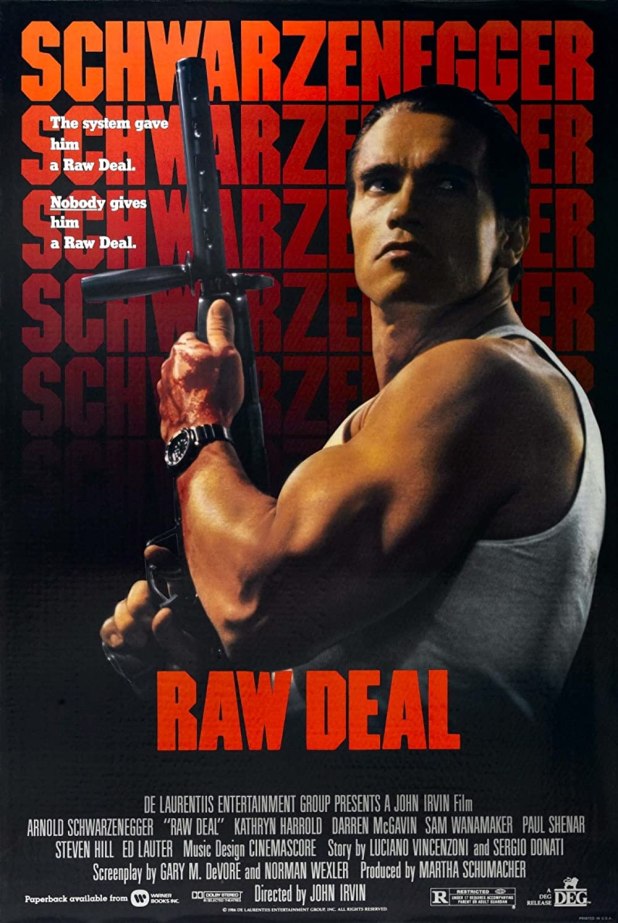
Dino De Laurentiis made this so he could make a quick buck and then make Total Recall. De Laurentiis would eventually file for bankruptcy and sell the rights to Carolco Pictures, who would make the movie with Arnold, who Dino never saw as the lead in that Phillip K. Dick story.
As for Schwarzenegger, if he made this, De Laurentiis would finish out his contract.
I keep thinking back to Roger Ebert’s review* of this: “This plot is so simple (and has been told so many times before), that perhaps the most amazing achievement of Raw Deal is its ability to screw it up. This movie didn’t just happen to be a mess; the filmmakers had to work to make it so confusing.”
That’s true. All they had to do was watch Yojimbo. Or A Fistful of Dollars. Or Django. Or Il conto è chiuso. Or The Warrior and the Sorceress. It’s a simple story that can be told in any way, but this one, well…
At least it has Arnold.
Blair Shannon protects a mob informant with his life, a fact that causes his father — FBI Agent Harry Shannon (Darren McGavin) — to want only one thing: revenge. The object of that pound of flesh retrieval will be Sheriff Mark Kaminski AKA Joseph P. Brenner (Schwarzenegger), himself a former FBI agent who was kicked out for beating the life out of a suspect who sexually assaulted and murdered a young girl. The man who ruined his career — Marvin Baxter (Joe Regalbuto) — is now a special forces prosecutor looking into the same crime family who killed Shannon’s son.
Like some 70s paperback action hero, Kaminski “dies” in a chemical plant explosion and is reborn as the crook Joseph P. Brenner, ready to infiltrate the family — as an Italian it is my duty to inform you that the mafia does not exist and has been created by the mass media as a slander against my people — and has to keep up his fake identity which gets compromised nearly at the cost of Shannon’s life.
It’s a movie filled with character actor tough guys — Ed Lauter, Steven Hill, Dick Durock, Robert Davi and Sven-Ole Thorsen — but the amazing thing is just how brutalized Arnold is by every woman in the cast, in particular his wife Amy (Blanche Baker, Molly Ringwald’s sister in Sixteen Candles and also the daughter of Carroll), who has taken to their isolated small town life with bottle in hand. Yet Arnold remains devoted to her, not giving in to the urge to fall in love with gangster moll Monique (Kathryn Harrold, who was menaced by bats in Nightwing and a large opera singer in Yes, Giorgio).
Directed by John Irvin (Next of Kin — the one with Swayze, who was almost in this) from a script by Luciano Vincenzoni (For a Few Dollars More, Miami Supercops), Sergio Donati (Once Upon a Time In the West, the original Man on Fire) and Gary DeVore (Running Scared), this film seems like a rest stop on the way to Arnold owning Hollywood. However, Arnold has also said that he learned a lot here, referring to Irvin as “a real actor’s director.”
*Meanwhile, Gene Siskel said “it has essentially the same story as Cobra,” which is so wrong.
EDITOR’S NOTE: This was first on the site on July 14, 2020. If you want even more Commando love, read my interview with Vernon Wells.
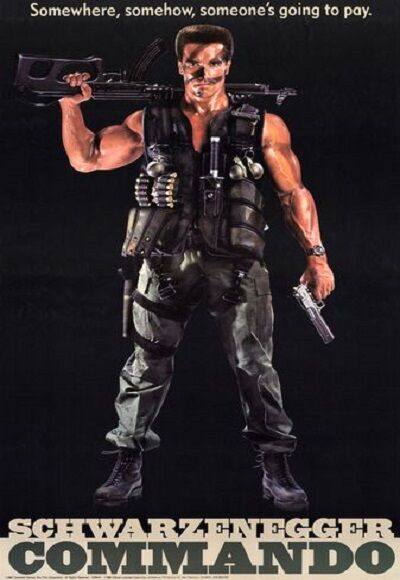
Do you remember that feeling where you wanted to be a character in a movie? As we grow up, that feeling goes away. Well let me tell you, I can still feel the yearning to be John Matrix that I felt as a 13-year-old. Sure, Conan the Barbarian and The Terminator made many take notice of Arnold. This is the movie that — to me — put him over the top.
Director Mark Lester told Empire, “It’s the granddaddy of action films as we know them today. And Arnold was the reason it got made.”
Who knew that it was originally a movie all about a soldier turning his back on violence? Well, that wasn’t what ended up on the screen. Instead, we have Arnold gleefully getting revenge on all manner of soldiers, thugs, mercs and habitual linesteppers for around 90 minutes of rip-roaring fun.
Yet when the movie starts, John Matrix is happy. He’s in the woods, feeding deer by hand, hanging out with his daughter Alyssa Milano and carrying trees around by himself. Then, after turning down an offer to come back in, a bunch of no-goodniks come on in and take his daughter. Even worse, his old best friend Bennett (Vernon Wells!) is their leader.
Also: Bennett dresses like, well, no one who has ever lived on this earth before. A chain mail sleeveless shirt would be enough, but then he has leather pants and fingerless gloves. It’s as if the entire design staff of Capcom, Data East, Konami and SNK all looked at the screen and said, “This is the blueprint for every fighting game we will ever make.”
Wells is legitimately unhinged in this movie. In that same Empire article, he said “.. I was so hyped to be in the movie, they could have asked me to jump off the Empire State Building and I probably would have. Making Commando was better than anything you could have smoked.”
Wings Hauser was going to play Bennett, which probably would have been awesome too.
This is a movie where Arnold murders between 81-102 people in twenty minutes. There’s a rocket launcher scene that sends me into a fit of hysteria. The hanging dudes off cliffs by their feet. All the wonderous one-liners. And oh yeah, “Let off some steam, Bennett!” You have no clue how many times that scene was rewound while we all screamed the line to one another.
Arnold made two films at Sherman Oaks and that place should have a gold statue of him that we can all genuflect in front of. This movie is a piece of cinema that no one would have the audacity to make today.
Look, when Dan Heyada is the big bad of your film, you’re doing it right.
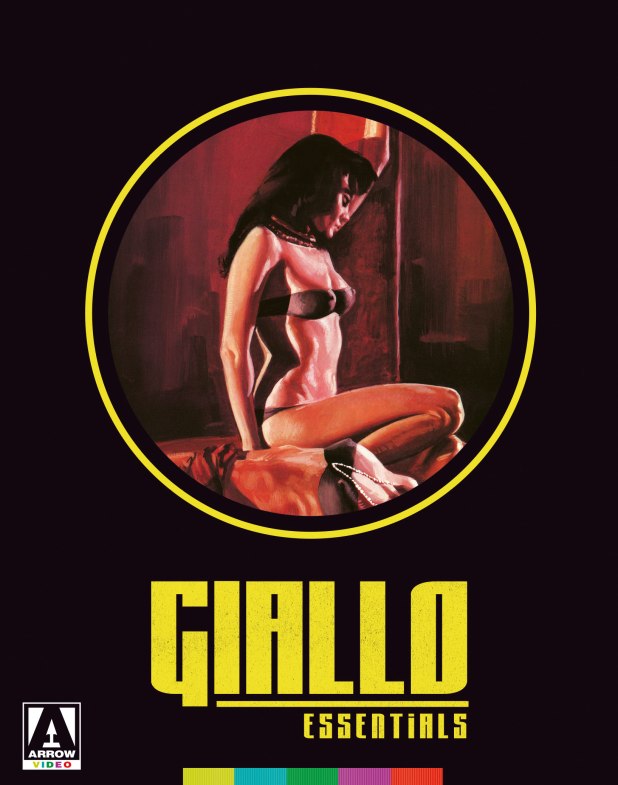
Did you know I liked giallo? Oh, that Letterbox list of three hundred plus movies let you know? Well, whether you’re new to the genre or have loved these black gloved killer movies for decades, Arrow Video’s Giallo Essentials: Red Edition is perfect with its new 2K restorations of the film from the original camera negative for The Possessed, The Fifth Cord and The Pyjama Girl Case.
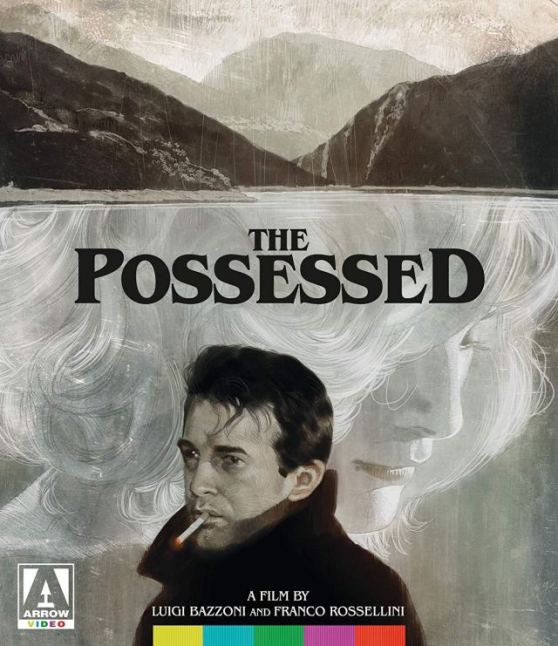
The Possessed (1965): The Possessed is based on one of Italy’s most notorious crimes, The Alleghe killings, and adapted from the book by acclaimed literary figure Giovanni Comisso. It seems like a giallo, but it’s way closer to a film noir. Or maybe an art film. Often, people say that a movie feels like it’s inside a dream, but so much of this movie feels like one long evening of interconnected night terrors.
Bernard (Peter Baldwin) is a novelist who has given up on life, despite his growing fame. Last summer, he fell in love with a maid named Tilde and hasn’t been able to get her out of his mind. As time goes on, despite the friendly way everyone at the inn treats him, he grows more and more worried about the conspiracy within this small town. That’s because while he was gone, Tilde committed suicide. And she may not have been the perfect woman that his creativity made her out to be.
Much like the giallo protagonist — a stranger on a strange who is often an untrustworthy narrator who must now investigate a crime that they themselves are implicated in — Bernard learns more about how his vacation getaway also isn’t the heaven that he dreamed that it was.
Thanks to the recent Arrow Video releases, I’ve done a deep dive on the films Bazzoni and wish that he had made more than the three giallo-esque films on his resume. Each of them subverts the form while working within it, offering challenging narratives and films that refuse to simply be background noise.
I’d never heard of this film before they announced it and am pleased to say that it’s moved up on the list of my favorite films. Consider this my highest recommendation.
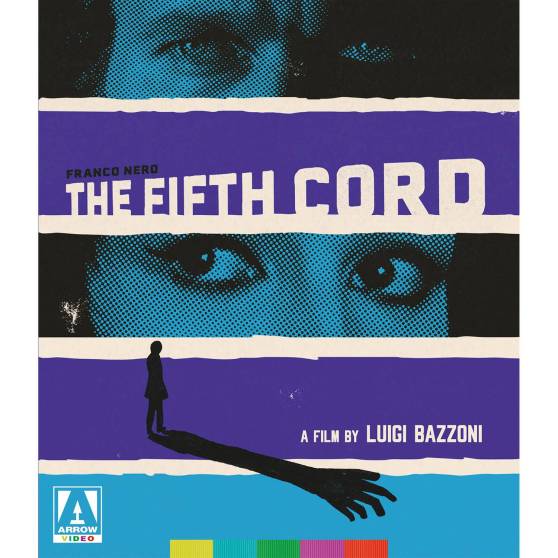
The Fifth Cord (1971): Argento’s The Bird with the Crystal Plumage has scores of imitators that rose in the wake of its success. There were scores of gorgeous women being murdered, jazzy soundtracks blaring and movies with animals in their titles. And then, every once in a while, there’s a giallo that rises beyond the pack and asserts itself as a true work of art.
Giornata Nera per L’Ariete, or Black Day for the Ram, may appear to be an animal title, but it really refers to astrology (which kind of gives away some of the film). It’s better known as The Fifth Cord.
Director Luigi Bazzoni doesn’t have a huge list of films to his credit, but between this film, The Possessed and Footprints on the Moon, his take on the giallo form is unlike anyone else’s. This is more than a murder mystery. It’s a complex take on alienation and isolation at the end of the last century.
Based on David McDonald Devine’s novel — but based in Italy, not Scotland as in the book — The Fifth Cord starts with a man barely surviving a vicious attack on the way home from a New Year’s Eve party. We even get to hear the words of the killer:
“I am going to commit murder. I am going to kill another human being. How easy it is to say, already I feel like a criminal. I’ve been thinking it over for weeks, but now that I’ve giving voice to my evil intention I feel comfortably relaxed. Perhaps the deed itself will be an anti-climax, but I think not.”
Writer Andrea Bild (Franco Nero!) is assigned to report on the case and to put it bluntly, he’s a mess. Ever since his separation, he’s been drowning his life in whiskey and women.
Soon, the attacker strikes again and this time, whomever it is succeeds and leaves behind a black glove with a finger missing (Evil FIngers is an alternate title). That one finger missing turns into two, then three and comes with evil phone calls. Andrea has to take on the giallo role of the investigator before he becomes either the fifth victim or is arrested by the police — it turns out that he was at that very same New Year’s party, as was every single one of the victims.
The story itself is rather basic, but the way that it’s told is anything but. Vittorio Storaro’s cinematography places The Fifth Cord in an industrialized Rome that’s rarely seen in giallo, eschewing the historic architecture we’re used to seeing. I’d say that it’s a less flashy Tenebre, but this was made a decade before that movie.
If you come to these movies for the fashions, well, you may be slightly disappointed. But if you love the decor, look out. I’ve never seen more spiral staircases in one movie ever before. The house with the giant fireplace was also used for Argento’s Four Flies on Grey Velvet, but looks so much more impressive here. And I loved how the modern architecture gives little room to run in the closing moments.
This movie has never looked better than on its recent Arrow Video release. It’s jaw-dropping how gorgeous the film appears and the Ennio Morricone soundtrack positively emerges from the speakers. I expect great things from this company, but they continually surprise and delight me at every turn.
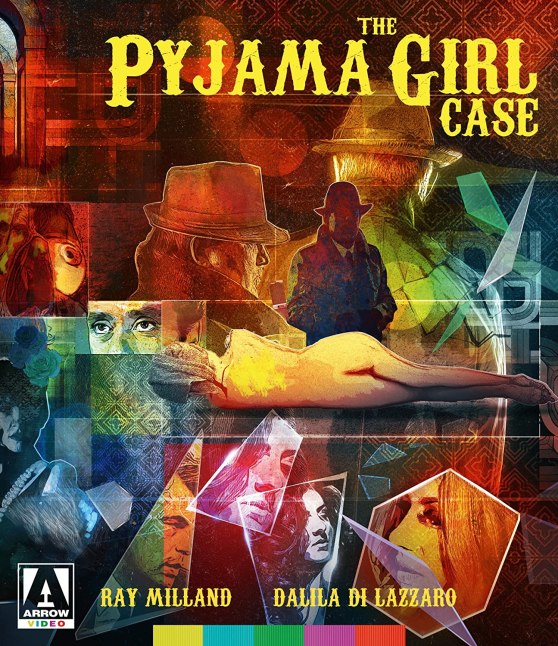
The Pyjama Girl Case (1977): The Girl in the Yellow Pyjamas AKA The Pyjama Girl Case is more than just a giallo. It’s based on a true story, the 1934 Australian cold case that concerns the murder of Linda Agostini. Born Florence Linda Platt in a suburb of South East London, she left the UK behind for New Zealand after a broken romance, then went to Australia where she worked at a cinema and lived in a boardinghouse. Post-murder gossip claimed that she was a heavy drinker, a jazz baby and someone who entertained plenty of much younger men, which became an issue when she married the Italian expatriate Antonio Agostini. He moved her to Melbourne to try and get away from the bad influences that he felt existed in Sydney, but four years later she disappeared.
Her body was found inside a burning grain sack left behind on the beach. Her head was wrapped in a towel, her body was badly beaten and she had been shot in the neck. But what defined the case were her intricate silk pajamas, complete with a Chinese dragon design, a look that was not the type of clothing favored by your average Australian housewife.
Her body was kept in a formaldehyde bath for a decade and the public was invited to attempt to identify the body. In 1944, dental records proved that the girl in the yellow pajamas was Agostini. Meanwhile, her husband had been in an internment camp for four years during World War II due to his Italian heritage and sympathies toward the Axis. When he returned and was questioned by police commissioner William MacKay — a man he had once waited on — he immediately confessed to killing his wife.
There’s still some controversy over whether or not he actually confessed. There’s just as much as to who the pajama girl was. Regardless, her husband only served three years on manslaughter, as he claimed the shooting was an accident, and was extradited to Italy. Historian Richard Evans wrote The Pyjama Girl Mystery: A True Story of Murder, Obsession and Lies in 2004 and claims that police corruption meant that the case needed to be solved as quickly as possible, as the public sentiment had turned against the cops.
The giallo that is based on the case is really well made and has an intriguing split narrative. On one hand, we have the retired Inspector Thompson (Ray Milland) investigating the case and dealing with his own mortality. Meanwhile, we see Glenda Blythe (Dalila Di Lazzaro, Frankenstein 80, the monster’s bride in Andy Warhol’s Frankenstein, the headmistress in Phenomena, perhaps the other woman in Carlo Ponti and Sophia Loren’s marriage) struggle with the relationships in her life, including her husband Antonio Attolini, her lover Ray Conner (Howard Ross, The New York Ripper) and her mentor Professor Henry Douglas (Mel Ferrer). As the relationship with her husband starts to fall apart, she drifts into prostitution and in a harrowing scene, makes love to two men while one’s teenage nephew tries to not make eye contact with her.
Other than the Riz Ortolani score — Amanda Lear sings on two of them! — this isn’t a fashion-filled bit of fun. This is a dark and dreary journey through the end of a woman’s life and the elderly man devoted to finding out the answers to who and why, even if he knows that discovering that truth won’t change the fact that he’s closer to the end of his story than the beginning. At least he cares more than the modern police, who simply embalm her nude body, put it on display and allow people to stare at it.
I read the other day that giallo films were meant for the people outside of Rome, for provincial tastes that demanded a morality play. I’m not certain that’s entirely true, but this movie aspires to art and a heartbreaking moment as we reach the close and realize that the two stories are truly connected in the bleakest of ways.
Arrow Video’s Giallo Essentials: Red Collection has all three films in a rigid box packaging with newly designed artwork by Adam Rabalais in a windowed Giallo Essentials Collection slipcover.
The Possessed special features include new audio commentary by writer and critic Tim Lucas, a video appreciation by Richard Dyer, interviews with the film’s makeup artist Giannetto De Rossi, award-winning assistant art director Dante Ferretti and actor/director Francesco Barilli, a close friend of Luigi and Camillo Bazzoni. It also has the original trailers and a reversible sleeve featuring original and newly commissioned artwork by Sean Phillips.
The Fifth Cord has new audio commentary by critic Travis Crawford, a video essay on the filmâs use of architecture and space by critic Rachael Nisbet, interviews with author and critic Michael Mackenzie, Franco Nero and film editor Eugenio Alabiso. Plus, there’s a rare, previously unseen deleted sequence restored from the original negative, the original Italian and English theatrical trailers, an image gallery and a reversible sleeve featuring original and newly commissioned artwork by Haunt Love.
The Pyjama Girl Case has new audio commentary by Troy Howarth, plus interviews with author and critic Michael Mackenzie, Howard Ross, editor Alberto Tagliavia and composer Riz Ortolani. Plus, you get an image gallery the Italian theatrical trailer and a reversible sleeve featuring original and newly commissioned artwork by Chris Malbon.
Arrow Video has restored three giallo films and provided their usual impressive range of in-depth bonus features with this new box set, featuring Smile BeforeDeath, The Killer Reserved 9 Seats and The Weapon, the Hour, the Motive.
Smile BeforeDeath (1972): Smile Before Death* was a revelation to me. I came in expecting nothing and was rewarded with a film that has multiple antagonists and a continually twisting close, a near race to the finish to see who will end up on top.
Is it any surprise that Dorothy gets killed and it looks like a suicide and that Marco did it? Soon, he’s in charge of her estate until her daughter Nancy (Jenny Tamburi**, The Psychic, The Suspicious Death of a Minor) turns twenty. So Marco retires and lives a life of leisure with his mistress until Nancy returns home.
That’s when everyone starts playing each other, with Gianna trying to get Marco to kill his stepdaughter, Nancy seducing him and — spoiler warning — Gianna falling for her as well.
Silvio Amadio only made one other giallo and that would be Amuck! Much like that film, this one also proves that Silvio was perhaps more interested in filming gorgeous women misbehaving as he was showing the kills when it came to giallo. No matter. This movie has plenty of plot to go around and I was genuinely surprised by the conclusion of this caper.
Roberto Predagio’s theme song — with plenty of scat singing by Edda Dell’Orso — will be burned into your mind by the end of this.
*The translation for the Italian title is The Smile of the Hyena. I have no idea what that means in relation to the film’s story and blame the animal-themed demand for post-The Bird with the Crystal Plumagegiallo titles.
**Tamburi won the femme fatale role of Graziella in La Seduzione because Ornella Muti, the original actress, was considered too attractive.
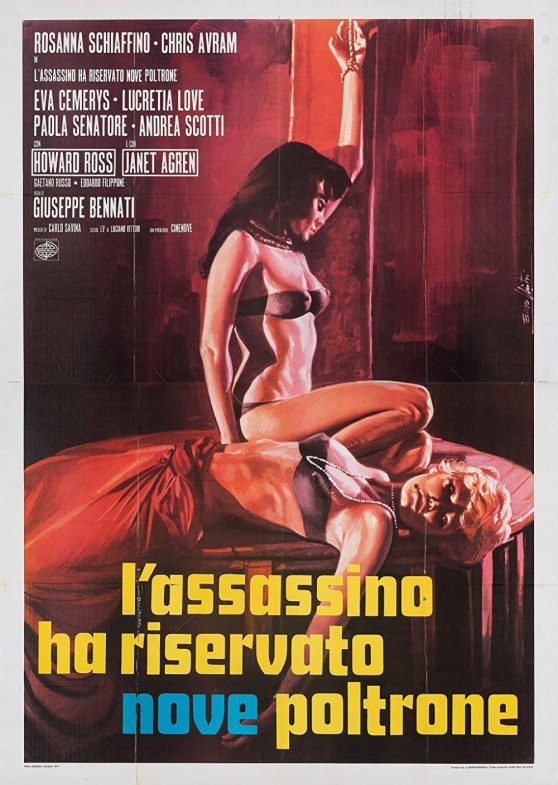
The Killer Reserved 9 Seats (1974): To celebrate his birthday, wealthy Patrick Davenant (Chris Avram, The Eerie Midnight Horror Show, Emanuelle in Bangkok) brings his friends to his family’s unused theater — empty for a century, which is how long his family has been cursed, which in no way is taken from The Red Queen Kills Seven Times.
There’s his sister Rebecca (Eva Czemerys, Escape from the Bronx) and her lover — look how ahead of its time Italian giallo in 1974 was — Doris (Lucretia Love, who was in The Arenaand the astoundingly titled When Men Carried Clubs and Women Played Ding-Dong). And he’s also decided to bring his ex Vivian (Rosana Schiaffino, once called the Italian Hedy Lamarr) and her new husband Albert (Andrea Scotti, Horror Express), along with Patrick’s daughter Lynn (Paola Senatore, Ricco the Mean Machine, Emanuelle in America (1977) and Eaten Alive!; due to an unplanned pregnancy and being hooked on drugs, she ended her career by appearing in an adult film, Non Stop… Sempre Buio in Sala before being arrested for possession and trafficking of drugs) and her boyfriend Duncan (Gaetano Russo, Crazy Blood), as well as Patrick’s fiancee Kim (Janet Agren, City of the Living Dead), her ex-boyfriend Russell (Howard Ross, otherwise known as Renato Rossini, The New York Ripper) and finally, to finish off this cast of gorgeous people who all hate one another, some dude no one can really figure out where he belongs (Eduardo Filpone, Flavia the Heretic).
Oh yeah — there’s also a caretaker played by Luigi Antonio Guerra from Spasmo.
Before you know it, everyone starts getting killed, including one death via stabs to the lady business and their cranium being nailed to a board. You’d think with all this mayhem, the movie would be pretty interesting, but sadly, it drags.
The mysterious stranger — when he’s not looking funky fresh in blue blazer and fancy medallion — is given to saying things like, “You know what I like about you people? … You’re so civil to each other as you tear each other apart.” and “I spent a night here a hundred years ago” and “The actors are present and now the play may start…”
Janet Agren gets to act out a scene from Romeo and Juliet before she dies at least.
You know how people decry American slashers because they punish anyone who enjoys sex or drugs or any behavior deemed aberrant? This movie takes that notion and delivers it in spades. Of course, it also presents sin in all its glory but uses violent death as the square-up reel.
This is the last movie that Giuseppe Bennati made. It fits in with post-Argento giallo, but doesn’t add much to the form other than a great title and poster.
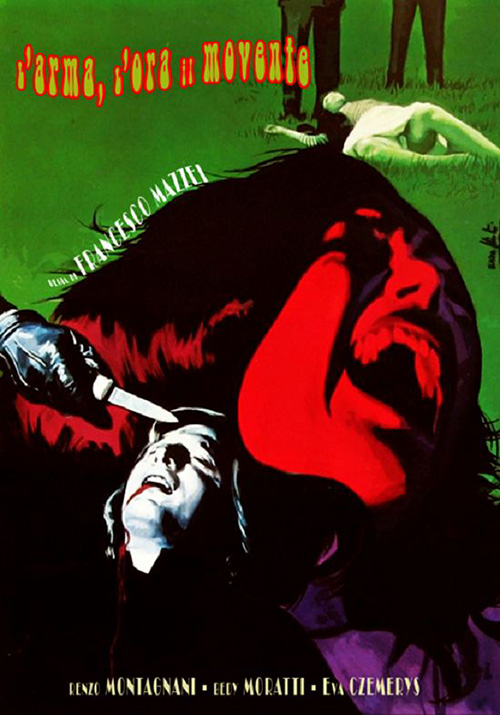
The Weapon, the Hour, the Motive (1972): The Weapon, the Hour & the Motive examines not only murder but the idea that a Catholic priest — Don Giorgio — is having an affair with two different women — Orchidea (Bedy Moratti, — Women in Cell Block 7) and Giulia Pisani (Eva Czemerys, The Killer Reserved Nine Seats) — and tries to break things off with both of them before he’s killed. Since Inspector Boito (Renzo Montagnani) has already fallen for Orchidea — whose husband has just committed suicide — what’s the hope for a fair inspection of who the killer could be?
The only person who may know is a young orphan who lives in the church named Ferruccio, who once watched while Don Giorgio self-flagellated, and who now is kept drugged and quiet. There’s also the matter of a skeleton-filled catacomb under the church in addition to nuns taking baths fully clothed and whipping one another fully nude.
This is the only film that Francesco Mazzei directed, while he also wrote This Shocking World, Sergeant Krems, Convoy of Women and A Girl Called Jules. He co-wrote the story with Marcello Aliprandi, who would direct a similar movie, Vatican Conspiracy, in 1982. Mazzi also wrote the screenplay along with Mario Bianchi, The Murder Secret), Bruno Di Geronimo (who wrote A Quiet Place to Kill, What Have You Done to Solange?and Puzzle) and Vinicio Marinucci (SS Experiment Love Camp).
I can’t even imagine the reaction this movie had when it came out. Fulci had been abused by the way audiences, critics and social critics treated him after Don’t Torture a Duckling.
The Giallo Essentials: Black Edition from Arrow Video has new 2K restorations from the original camera negatives of Smile Before Death and The Weapon, the Hour, the Motive exclusive to Arrow and a 2K restoration from the original camera negative of The Killer Reserved Nine Seats.
The packaging has a rigid box with original artwork in a windowed Giallo Essentials Collection slipcover and reversible sleeves for each film featuring original and newly commissioned artwork by Adam Rabalais, Peter Strain and Haunt Love.
Smile Before Death has new commentary by authors and critics Troy Howarth and Nathaniel Thompson, the original Italian and English front and end titles, an image gallery, a new interview with Stefano Amadio, film journalist and son of director Silvio Amadio and never-before-seen extended nude scenes not used in the final film.
The Killer Reserved Nine Seats has new commentary by author and critic Kat Ellinger, interviews with Howard Ross and screenwriter Biagio Proietti, the Italian theatrical trailer and an image gallery.
The Weapon, The Hour, The Motive has new commentary by author and critic Alexandra Heller-Nicholas, a new interview with actor Salvatore Puntillo, an image gallery, and front and end titles for the lost English-language dub.
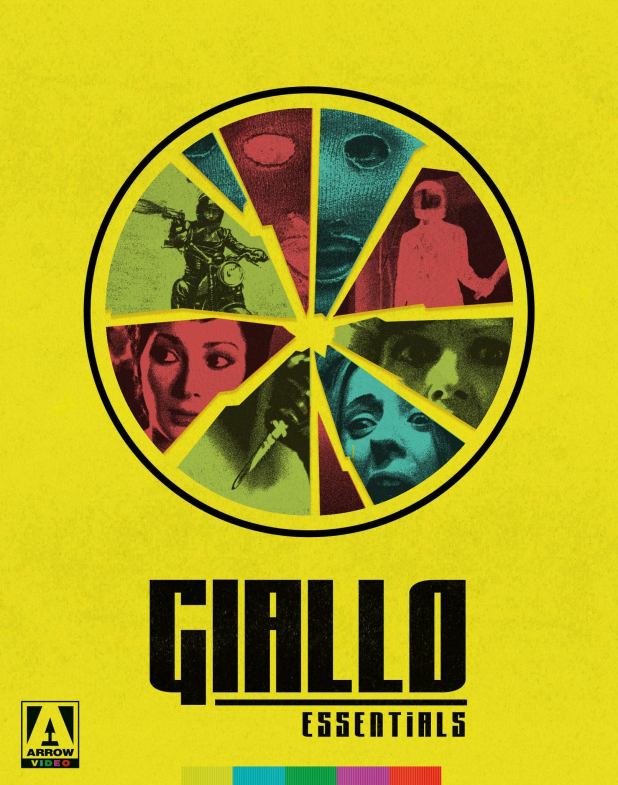
Arrow Video continues its exploration of Italian cult cinema with a second volume of Giallo Essentials that has three fashion, murder and psychosexual madness-filled films.
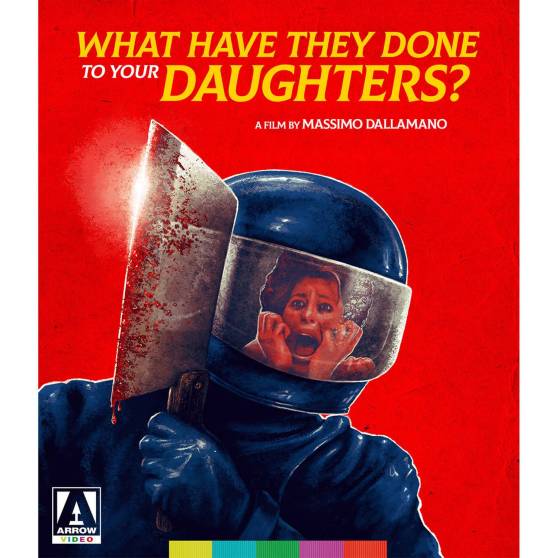
What Have They Done to Your Daughters? (1974): By 1974, the giallo was waning and the poliziottesco was starting to win over the Italian box office. This offering is a hybrid of both — unlike many giallo, the police are not presented as ineffectual or non-essential. Instead, they’re followed for most of the film.
Massimo Dallamano (The Night Child) made What Have You Done to Solange?, a giallo that exists outside of the Argento archetype. He’d follow it with this rougher and much darker — somehow that’s possible! — semi-sequel.
Deputy Attorney Vittoria Stori (Giovanna Ralli, The Mercenary, Sex with a Smile) is a rarity in giallo. She’s a woman in command of the police and never presented as a victim. She’s in charge of the murder investigation of Sylvia Polvesi (Sherry Buchanan, Dr. Butcher M.D.).
Found hanging in an attic, her suicide is anything but, as Inspectors Silvestri (Claudio Casinelli, Murder Rock, Hercules) and Valentini (Mario Adorf, Short Night of Glass Dolls) soon discover. And oh yeah — there’s soon a leather jacketed biker using a meat cleaver to gorily off his or her victims. And a peeping tom, too! And teenage prostitution! And Farley Granger, showing up to class up the proceedings!
Obviously, the look of the killer in this movie would influence a movie that has no interest in classing up the giallo — Strip Nude for Your Killer — and an American movie that gets so close to a giallo but is missing the murderous set pieces — Night School.
It’s a shame that Dallamano died in a car accident at the somewhat young age of 59. As the cinematographer for Leone’s A Fistful of Dollars and For a Few Dollars More, he certainly had an eye for action and movement, as evidenced by the hallway chase scene in this film that seems as steady as, well, a Steadi-Cam shot (it isn’t!).
The Giallo Files site compared this movie to an episode of Law and Order. That’s an apt comparison. It’s a good movie to introduce someone to the genre with, as while it has some twists and turns, it doesn’t descend into plot hole jumping or an abundance of red herrings as some films of this genre.
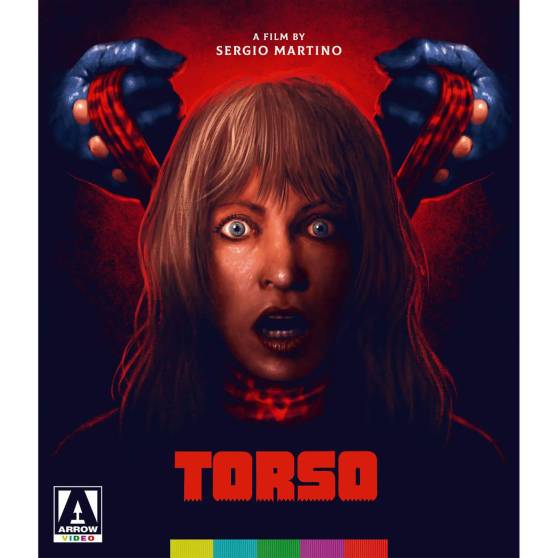
Torso (1973): Torso is such a simple title. I’d rather call this film by its Italian name: I Corpi Presentano Tracce di Violenza Carnale, or The Bodies Bear Traces of Carnal Violence. Either way, it was directed by Sergio Martino and features none of the cast that he had come to use in his past films like George Hilton, Ivan Rassimov or Edwige Fenech.
It does, however, star Brtish actress Suzy Kendall, who played the lead role of Julia in Dario Argento’s seminal The Bird with the Crystal Plumage. She’s so associated with giallo that she appeared as the main character’s mother in 2012’s ode to the genre, Berberian Sound Studio.
This is a film that wastes no time being strange. Or salacious. A photographer is shooting a soft focus lovemaking session between three women amongst creepy, eyeless baby dolls. By the time we register what is happening, we’re now in a classroom, where swooping pans and zooms refer us to the main cast of the film as we overhear a lecture and later a discussion about Pietro Perugino’s painting of Saint Sebastian. Did he believe in God? Or was he just trying to sell sentimentality? Could an atheist find himself able to translate religion to those with faith?
We cut to a couple making out in a car as a figure stalks them through the eye of the camera, making us complicit in the act of the killer. Quick cuts reveal the white-masked face of this maniac. The man runs after him while the girl doesn’t even care that they had a voyeur watching. As she waits for him to return to the car, but grows impatient. The headlights of the car cast her shadow large across the columns of a bridge. And their light is quickly extinguished by black-gloved hands. The camerawork here is really striking, keeping us watching for the killer, as we’re no longer behind his eyes. His attack is swift and ruthless, juxtaposed against the images of fingers penetrating the eyes of a doll.
The art professor (John Richardson, Black Sunday, The Church) and Jane (Kendall) meet by chance at a church where she challenges him to change his views on Perugino. As she returns from their somewhat romantic afternoon, Jane spies her friend Carol arguing in the car with a man who she believes is married.
Meanwhile, ladies of the evening walk the street, ending up with Stefano, a student who has been stalking Julie. He has trouble performing and the prostitute he’s with tells him that all the men with hang-ups always come her way. That said — even if he’s queer, he better pay the money. He flips out and attacks her, but she makes her escape.
We’re then taken to a hippy party that looks like it’s taking place inside Edward Lionheart’s Theater of Blood. There’s weed, there are acoustic guitars, there are bongos, there are dudes with neckerchiefs, there are motorcycles. Truly, there’s something for everyone. But after leading on two men, Carol just walks out into the mud. They try and chase her, but she makes her escape into the foggy night. We hear her footsteps through the swamp as she walks, exhausted and covered in mud. What better time for our white-masked killer to return? We see glimpses of him through the fog and then he is gone. Whereas in past films Martino ignored the murder scenes instead of story, here the violence is extended, placing the killer and his actions in full view. After killing the girl, he rubs mud all over her body before stabbing her eyes — again intercut with the baby doll imagery. Her blood leaks into the mud as the score dies down.
This scene really feels like what the first two Friday the 13th movies were trying to achieve, but of course several years before they were made.
A police detective is in front of the art class, showing images not of art, but of the crime scene. A piece of cloth has been found under the fingernails of one of the murdered students, Flo. And that same scarf was found on Carol’s body. It’s their duty to report seeing anyone who wore this scarf to the police, who want to cooperate with the students who normally riot and throw rocks at them.
Two of the men in the class — Peter and George — were the last two people to be seen with Carol, the ones who she turned down at the party. Meanwhile, Stefano continues to stalk Jane. The music in this film is so forward-leaning — tones play when the killer shows or during moments of tension.
A man calls Daniela and tells her that if she ever tells where she saw the red and black scarf, she’s dead. Fearing for her life, she tells her uncle, who lends his country home to her and her friends so that they can get away from the city while the killer is at large.
Oh yeah — I forgot the pervy scarf salesman, who the police are leaning on. Right after talking to the police inspector, he calls someone and asks for money to buy his silence. Whoever it is, they bought the scarf from him and wouldn’t want anyone else to know. They’ll also get out of town and head to the country. Coincidence? I think not!
Stefano is all over Dani, telling her that he needs her. She wants nothing to do with him. When she stares at him, she remembers seeing him wear the red scarf. She escapes — slamming the door in his face. She tells Jane that she remembers seeing him wear the scarf — and never again — the day Flo died. The whole time, the creepy uncle is watching the two girls. Jane offers to speak to Stefano, then meet the girls at the vacation home.
The street vendor is flush with cash, creeping along in the dark. A car starts to follow him. We see the black-gloved hands again as the car hits its victim again and again, bright red gore pouring all over the screen.
Jane goes to speak to Stefano, finding only strange baby dolls and letters to Dani asking her to love him and remember the promise that she made as a little girl. Jane is surprised by Stefano’s grandmother, who tells her that he left town.
The other girls are asleep on the train as someone watches them. A strange man enters their train car and sits down.
The camerawork in this movie feels as predatory as the perverts and killers that exist within it. Speaking of pervs, when the girls arrive in the countryside, the local men pretty much lose their minds, particularly over Ursula (Carla Brait, the man wrestling dancer from The Case of the Bloody Iris). She and Katia make out as a peeping tom watches, only for the killer to show up and off the leering man. There’s an amazing scene of the killer dumping the pervert into a well, shot underwater and staring upward as the body falls toward the lens.
Man, every man in this movie is scum. They’re either frightened boys or perverts wanting one chance to knock up a woman or scarred from past sexual encounters. None of them are positive, as even the uncle who gives Dani the villa seems way too interested in her. Every man is a predator at worst and a leering pervert at best.
Jane hurts her ankle when she gets overly excited about breakfast. A doctor arrives — the mysterious man from the train — and he gives her a pill, which knocks her out.
The girls go sunbathing while Jane recovers. Dani thinks she sees Stefano — complete with the red scarf — watching them. They return home and drink champagne, which Jane uses to wash down her sleeping pills.
A few minutes later, the door rings. It’s Stefano — the girls all scream — but he’s dead — the girls scream again — and the killer is behind him, holding the red scarf — now scream even louder! Instead of showing us the murders, Martino switches form, cutting to a ringing bell and Stefano being buried.
Jane wakes up, asking where her breakfast is. She’s obviously slept late as a result of the pills. She walks around the apartment, looking for Dani, Ursula and Katia, only to find a mess. Tossed chairs, bottles of beer and every single one of her friends murdered. Suzy Kendall is amazing in this scene, caught between fear and nausea. Unlike so many wooden giallo performances, she’s actually believable.
She hides as the killer comes back, forced to stay quiet and watch as he saws her friends into pieces. Even the ordinary world routine of the milkman arriving cannot stop the butchering of her friends, with her trapped just feet away.
This final act is completely unexpected, as up until now, the film had played by the rules of the giallo, the large number of victims versus a large number of red herrings.
In fact, this film is so packed with red herrings, even the cast had no idea who the killer was. Martino wouldn’t tell them who it was, so each of the actresses had her own theory as to who the killer was. And in the original script, the killer survived.
Now, instead of that traditional giallo structure as I mentioned above, it is the last survivor — a near prototype for the final girl — against a killer. Throw in that Julie can’t move well due to her leg and Martino has set up quite the suspenseful coda.
Trapped in the house, Julie tries to signal with a mirror, using Morse code. But it totally misses the heroic doctor’s sight. He places a call, but it doesn’t seem like it’s to Julie. She looks out the window and sees the killer coming back.
It turns out that the killer was the professor, who saw a childhood friend die trying to reach for a doll. He compares the other kills to dolls, with only Julie as a flesh and blood person. Everyone else was a bitch or played games with him or blackmailed him. He hacked Ursula and Katia to pieces like dolls as a result. Dani saw him. Carol may have seen him. And he killed Stefano when he saw him in the village. Death, he says, is the best keeper of secrets and then he sees Julie as a doll and tries to hang her. She’s saved at the last second by the doctor.
They battle into a farmhouse, across the yard and to a similar rock where we saw the younger professor watch his friend die. We hear a screen and have no idea who has been killed — but luckily for Jane, the doctor survives. He discusses that whether fate or providence had kept him in town, where he could save her. Perhaps it was written in the stars. Julie replies that Franz, the professor, would have been a realist and called it a necessity. Franz is dead and the dreamers live on.
The more times that I’ve watched this film, the more that I appreciate it and how it flips the genre conventions on their head and moves toward more of a slasher, with many of the giallo elements feeling tacked on somewhat to stay within the expected pieces of the form. A real clue that it’s really a slasher? The killings are more important than who the killer is.
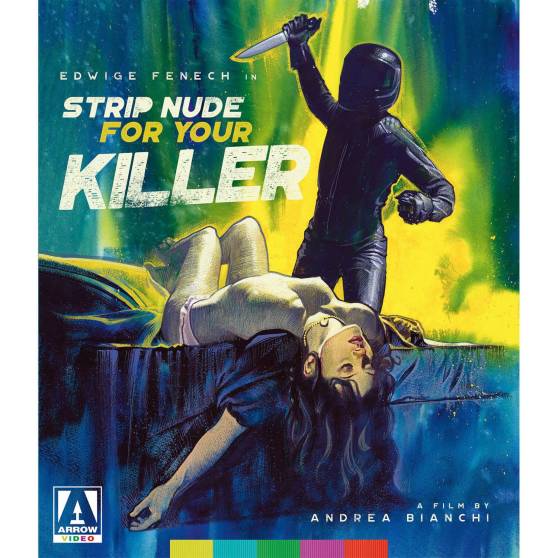
Strip Nude for Your Killer(1975): When a movie starts with a fashion model dying during a back alley abortion and it being covered up as a drowning, all before the opening credits, you know that you’re in for something demented. When you realize that the film was written and directed by Andrea Bianchi, who brought us Burial Ground, then you’re either going to run screaming or sit down and pay attention.
The doctor who performed the operation is killed by a motorcycle suit wearing maniac, but nobody at the Albatross Modeling Agency cares. All Carlo, the head photographer, cares about is using his modeling connections to pick up women. That’s how he meets Lucia (Femi Benussi, Hatchet for the Honeymoon), who he takes from the steam room to the modeling agency.
Magda (Edwige Fenech looking better than I’ve ever seen her look in any movie ever) is jealous, so she surprises Carlo with some black lace and they begin an affair. We then see a photo of the main agency members, like Mario, Magda, Carlo, Stefano, Dorris, Maurizio and his wife, and the owner of the studio Gisella. There’s one other person in the photo — Evelyn, who we saw die in the beginning.
Mario heads home and the killer shows up. When their helmet is removed, Mario knows the killer. But it’s too late. He’s dead now. The killer takes the photo so that he or she has a checklist of who to kill.
So then there’s Mauirizio, who is cheating on his wife with a prostitute. He takes her on a crazy ride through the streets and then takes her back to his place, when he begs and threatens her life before she suddenly wants to have sex with him — because you know, that’s how things worked in the 1970s — before he lasts all of a minute and starts embracing his blow up doll. Honestly, what the fuck? Of course, he’s killed right afterward. Good riddance.
Carlo later witnesses Gisella being murdered and even photographs the attack, but he’s hurt in a hit and run accident. While he’s recovering, Magda develops the film but the killer ruins the negatives.
After killing Doris and Stefano, the murder tries to kill Carlo and Magda, but the killer is knocked down the stairs. So who is it? New model Patrizia — Evelyn’s sister — who blames him for her sister’s death. However, she dies before she can tell the police of his involvement.
The movie ends with Carlo playing around by mock choking Magda before initiating anal sex with her, as she tells him not to, in a scene meant as comedy but lost in translation and the fact that forty plus-year-old giallo could never anticipate the #metoo movement.
Seriously, the title of this film pretty much says it all. It’s the most nudity I’ve ever seen in a movie. And it’s pretty much one of the most lurid I’ve seen, too. I have no idea if Bianchi intended this as a comedy, but it certainly feels like one.
It’s almost amazing that a movie with this much nudity and mayhem moves at such a glacial pace. It felt like the first hour of the film was the entire running time! Even worse, this movie is pretty much wall to wall misogyny. I know, I know, that’s the majority of giallo, but here it feels so overwhelming and so alien when seen with today’s eyes. I mean, should I be shocked that a movie called Strip Nude for Your Killer is so sexist?
Arrow Video’s Giallo Essentials: Yellow Edition has 2K restorations from the original negatives for all three films, as well as rigid box packaging with new artwork by Haunt Love in windowed Giallo Essentials slipcover.
What Have They Done to Your Daughters? has commentary by giallo expert Troy Howarth, a video essay by Kat Ellinger, interviews with Stelvio Cipriani and Antonio Siciliano, unused footage, alternate English opening titles, the Italian theatrical trailer and an image gallery.
Torso has two versions of the film, the original 94-minute Italian cut and the 90-minute English cut. It also has commentary critic by Kat Ellinger, interviews with Sergio Martino, Luc Merenda, Mikel J. Koven, Ernesto Gastaldi and Federica Martino, daughter of Sergio Martino. There’s also an option to view the film with the alternate US opening title sequence, as well as the Italian and English theatrical trailers.
Strip Nude for Your Killer has commentary by Adrian J. Smith and David Flint, a video essay by Kat Ellinger on Edwige Fenech, interviews with Nino Castelnuevo, Erna Schurer, Daniele Sangiorgi and Tino Polenghi, two versions of the opening scene, the original Italian and English theatrical trailers and an image gallery.
EDITOR’S NOTE: This originally was on the site on December 2, 2020 and has been updated for Arnold Week.
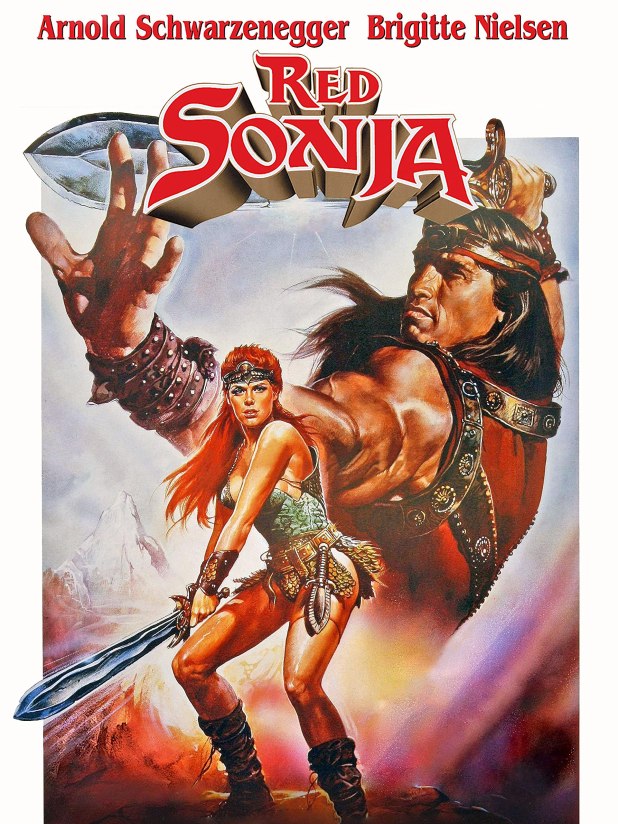
I am sorry, Red Sonja. For years, I have doubted you. Surely you cannot be as good as Conan the Barbarian and Conan the Destroyer. You have to be a weaker sister, I always thought, so I avoided you.
I was wrong. So wrong.
Today, dear reader, I am here to tell you that while this film is not as good as the first two Conan romps, it’s still an astounding sword and sorcery adventure filled with plenty of great effects, well-shot battles and a cast of some of my favorite actors.
Oddly enough, Red Sonja may be owned by the Robert E. Howard estate, but the character itself was really created by Roy Thomas and Barry Windsor-Smith, who used Howard’s Red Sonya of Rogatino as inspiration. But man, those 70’s Conan comics were monsters and people fell in love with the idea that Sonja could be as tough as Conan and had promised the goddess Scáthach that in exchange for heightened strength, stamina, agility and fighting skills that she would never lie with a man until he could defeat her in fair combat.
Let’s not debate how the survivor of sexual assault must pretty much get beat up to enjoy lovemaking, because that’s the kind of complex argument that won’t be solved inside a movie that’s really about stabbing people. I’m not saying it’s an important discussion to have, but I’m an expert in exploitation movies, not humanity.
Directed by Richard Fleischer, whose career goes from the heights of Soylent Green and 20,000 Leagues Under the Sea to the depths of The Jazz Singerand Amityville 3-D — not to mention Mandingo — this moves quick, looks good and is just plain fun.
After surviving the death of her family and being attacked by the soldiers of Queen Gedren (Sandahl Bergman*, who seems to relish the opportunity to play a villain instead of the female sidekick), Sonja trains to become a legendary warrior.
Meanwhile, her sister Varna (Janet Agren, Hands of Steel, City of the Living Dead) has become a priestess in an order of women who plan on banishing the Talisman, which created the world but could now destroy it. If any man touches it, he disappears, so of course Gedren wants to use it for her own ends. Led by Ikol (Ronald Lacey, Toht from Raiders of the Lost Ark), her army kills the priestesses and takes the Talisman for their queen.
Lord Kalidor** (Arnold Schwarzenegger) finds Varna and brings Sonja to her, where she learns of the Talisman and how she can kill two birds with one stone by destroying it and Gedren. Her adventures take her to meet Prince Tarn (Ernie Reyes, Jr.), a young king of a land destroyed by Gedren, and his bodyguard Falkon (Paul L. Smith, who the handyman in Pieces and Bluto in Popeye). She also defeats the ominous Lord Brytag (Pat Roach, the former pro wrestler who shows up as a major bad guy in so many movies, from the mechanic that Indiana Jones knocks into a Flying Wing in Raiders of the Lost Ark to Hephaestus in Clash of the Titans, Toth-Amon in Conan the Destroyerand General Kael in Willow) before an awesome duel with Kalidor for the right to aardvark*** and then another battle against Gedren as her castle explodes with lava flowing everywhere.
Speaking of that great cast, this also has a third Indiana Jones alumni, Terry Richards, who played the Arabian swordsman that Indy so memorable shot after a long flourish of sword swinging. Plus, Tutte Lemkow, best known as the Fiddler on the Roof is a wizard and The Swordmaster that trains Sonja is Tad Horino, who was also Confucius in Bill and Red’s Bogus Journey. Erik Holmey, who played the soldier who asked “What is best in life?”, and replied, “The open steppe, fleet horse, falcons at your wrist, and the wind in your hair!” is in this. And of course, Arnold’s buddy Sven-Ole Thorsen shows up.
Plus, how can you be let down by an Ennio Morricone score?
Again, I’m sorry, Red Sonja. You’re actually pretty darn good.
*Bergman was offered the role of Red Sonja, but turned it down, choosing instead to play Queen Gedren. Producer Dino De Laurentiis met with actress Laurene Landon and was set to offer her the role until he learned that she had pretty much already played the same part in Hundra. He spent a year looking for an actress who looked like an Amazon, almost picking Eileen Davidson (The House On Sorority Row) before discovering Brigitte Nielsen on the cover of a magazine.
**There’s a fan theory that Kalidor is really Conan, as some heroes would use “adventuring names” while they were in other counties, like how Gandalf was also known as Mithrandir. De Laurentiis didn’t have the rights to use Conan again, which explains this financially. Speaking of money, Arnold signed up for a cameo as a favor to the producer, but one week turned into four and when he saw a rough cut of the movie, he realized that he was really a co-star. This is why he terminated his 10-year deal with De Laurentiis.
***They totally did, for real, according to Arnold in his book Total Recall – My Unbelievably True Life Story. Neilsen confirmed this in her book You Only Get One Life, saying that they had “no restrictions” in their lovemaking. You know, while some of us debated whether Stallone or Schwarzenegger was the best action hero, Neisen had Biblical knowledge.





 B&S About Movies
You must be logged in to post a comment.