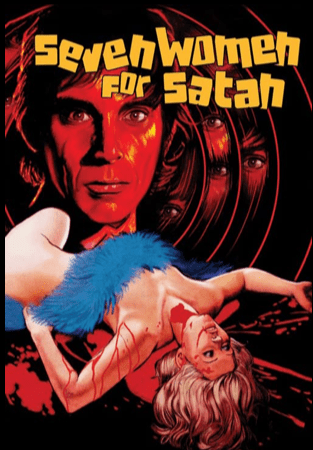
By day a mild-mannered businessman, Boris Zaroff chases women across his country estate. Often, they are naked. Then, they get killed. Just like his father before him, he becomes legendary for his cruelty, which leads a young girl to his estate where she asks to see the famous Zaroff torture chamber. Can this be love? Well, when your father was Count Zaroff and they wrote The Most Dangerous Game about you, anything can happen.
Oh yeah — there’s also a ghost of a dead countess who calls to our — well, he’s not the hero, I guess — and beckons him to follow her.
I’d say that this movie has a ton of dream sequences, but then again, maybe the whole thing is a dream sequence. It looks beautiful. It was written, directed and stars Michel Lemoine (Threshold of the Void, Castle of the Creeping Flesh) and if you’re going to have a passion project, make it one where you freak out amidst gorgeous estates while seventies disco jazz blares and ridiculously attractive European women drop their clothes at the rate that I post about Lucio Fulci movies.
Howard Vernon — yes, Dr. Orloff — shows up to play the butler who must instruct the young Master Zaroff in the matters of trapping and killing women. Yes, this is a movie that Jess Franco probably could have made, but it looks like one of his films when he actually cares about the images on screen and not just the sheer amount of pubic hair he can display.
There’s a scene where Zaroff tells a woman to give in to the magic mirror and refers to her as a skylark, which is probably how French noblemen picked up women in 1976. That and lots of cocaine and giant rooms filled with mirrors, feathers, giant beds and statues of satyrs. There’s also a statue that comes to life and a trap called the lover’s bed, which impales whoever chooses to make love within it.
This movie was banned in France in the 1970s, then censored, then forgotten about. Luckily, the people at Mondo Macabro have worked with Lemoine to bring not only an extended version of the film to maniacs like me, they’ve put together an hour interview with cast member and assistant director Robert de Laroche, as well as half an hour of deleted, unused or alternate scenes.
In our previous review of Pleased To Meet Me (2013), we discussed the analogous career travels of musician-actor John Doe and Sam Raimi-bred Bruce Campbell. Campbell resigned himself to being an actor that would never book a leading man role in major studio picture; that his career would consist of smaller support roles in A-List pictures, while maintaining a leading man status in B-Movies.
And as result of his iconic status from The Evil Dead, one day, Bruce got a call to star in La Patinoire, aka The Ice Rink (1998), a French rom-com about an inexperienced film crew producing a hockey film — with Campbell starring as Sylvester, a fish-out-of-water American actor cast as the team’s goalie, who falls in love on-screen and off-screen with his leading lady.
And so it goes with this Swiss-French co-production casting John Doe in a minor support role as a musician scratching out a living in a dusty Arizona casino. Thus John, like Bruce (thanks to The Evil Dead), is cast as the lead in self-produced indies like Pleased to Meet Me, or he’s cast in an overseas, major studio film as a support player — courtesy of his iconic tenure with his Los Angeles punk band, X. And in the U.S., John trades chops with such A-Listers as James Woods, Jennifer Aniston, and Ben Affleck in Salvador, The Good Girl, and Forces of Nature, respectively.
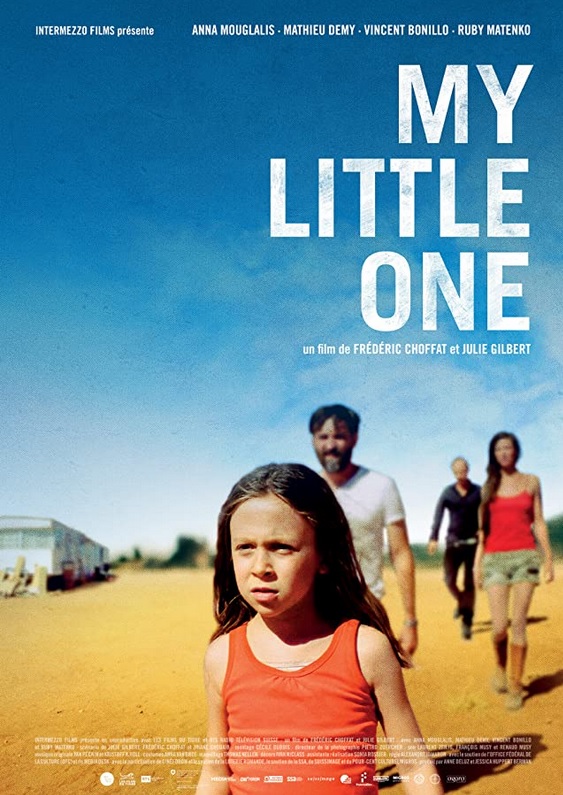
And, because of the Chin that Kills, I rented The Ice Rink. And because of Doe, I sought out this road movie (during its festival release) set in the Navajo Nation of the American Southwest that stars renowned French art house actors Vincent Bonillo, Mathieu Demy, and Anna Mouglalis.
“Never wait for something to happen.” — Jade
A decade ago, the now estranged brothers Alex and Bernardo (Bonillo and Demy) lived on the coast of Mexico in a menage-a-trois, spiritual existence with Jade (Mouglalis), until a tornado destroyed their mutual business — and Jade disappeared. And while the still dreaming, 40-something Alex drifts in the memories of his youth, Bernardo became a responsible husband, father, and architect in Geneva, Switzerland.
The brothers are forced to reconcile as strangers-in-a-strange-land when they discover Jade now resides in Arizona. Dying from cancer, she wants the brothers to take care of Frieda (who is possibly either of their daughters), her now 10-year old, half-Sioux, half-American and half-Swiss daughter (well played by Disney series actress Ruby Matenko, who’s also appeared in the U.S. cable series Baskets and Veep). Jade makes a living as a singer known as “The Frenchie” in a slot machine casino with fellow musician Matt (John Doe). The film also stars local Navajo actors Zoël Zohnnie (as a medicine man who practices white-man medicine) and Kody Dayish (as a youthful hashish dealer).
My Little One comes from a place of erudition, with co-writers/directors Frédéric Choffat and Julie Gilbert drawing on their connections to the Navajo desert and its indigenous peoples as result of Choffat growing up in the Moroccan desert, while Gilbert, as result of her mother’s career as an ethnologist (a branch concerned with sociocultural anthropology), spent her youth among the indigenous peoples of Canada, Mexico, and U.S.
The indigenous aspect of the film — both of the peoples and landscapes — beautifully captured by cinematographer Pietro Zuercher, is maintained with Navajo native tongues (not subtitled) amid the English and French (subtitled) speaking cast. While I’d would have enjoyed watching Doe in a larger role in such an exquisitely-made film (he’s a fine actor deserving of such a casting), this tale of the lost and confused fear and loathing in an exotic land is still a joy to watch.
As with the unfurled existentialism in the dusty, lost landscapes of Border Radio — John Doe’s acting debut from all those years ago — a film that pinched from the ’70s cult films Easy Rider, Vanishing Point (John starred in the ’90s remake) and Two-Lane Blacktop, My Little One harkens the French New Wave films of old to remind us of Michelangelo Antonioni‘s The Passenger (1975), as well as the ’80s American independents Stranger Than Paradise (1984), Down by Law (1986), and Mystery Train (1989) by writer-director Jim Jarmusch.
A hit on the festival circuit — where it was nominated as “Best Foreign Independent” at the 2019 Golden Trailer Awards — in France, Germany, and Switzerland before its European theatrical release, Los Angeles-based Cinema Libre Studios acquired the rights to distribute the film in the U.S. in the wake of its U.S. premiere at the Miami Film Festival. Other films on the studio’s roster include Imprisoned starring Lawrence Fishburne, the rock-doc Creating Woodstock, and the recently U.S.-released historical import from China, Enter the Forbidden City.
About the Author: You can learn more about the writings of R.D Francis on Facebook.He also writes for B&S About Moviesand publishes on Medium.
When it comes to musicians as actors, John Doe is the “Bruce Campbell” of the profession. Campbell has stated in interviews that he accepted his lot as an actor, in that he’d never be a leading man (after losing out to Billy Zane for The Phantom), instead getting smaller support roles in A-List pictures and leading man roles in B-Movies.
And this seems to be the lot rolled by John Doe. Not that John cares: he’s always a musician first and an actor second. So, like Ash, we’ll see John in the supporting cast of a bloated Hollywood project mixing it up with the likes of Ryan Reynolds Ben Affleck and Sandra Bullock (Forces of Nature*) and Patrick Swayze (Road House*), then see him as a leading man in an indie project (his upcoming, 82nd film, D.O.A.: The Movie, and the-2002-still-can’t-find-a-copy Under the Gun co-starring Christopher Atkins).
In this Kickstarter-financed, shot-in-two-week-mostly-on-the-first-take film named after an old album from ‘80s college radio darlings the Replacements, John Doe leads a pleasurable cast of veteran musicians thespin’ for the cameras. In his support are Aimee Mann (yes, the Til’ Tuesday “Voices Carry” girl),’70s folk singer Loudon Wainwright III (of the 1972 novelty hit “Dead Skunk (in the Middle of the Road)”), and ’80s college rock folkie Joe Henry. More current indie-rock fans will recognize Whispertown’s Morgan Nagler, Over the Rhine’s Karin Berquist, and the Broken Spurs’ Adam Kramer in the cast.
Doe is somewhat playing himself: Pete Jones, a legendary rocker at a personal and professional crossroads. The muse has left him. He can’t seem to get his long-in-the-studio album finished. He’s dodging bankruptcy, foreclosures, and lawsuits from his record label. He needs help.
That help comes in the form of his ex-wife and former producer Laura Klein (Aimee Mann) who now works as a National Public Radio reporter. Referencing her inner, old studio producer, she believes Pete’s artistic rut is the result of losing his “musical purity.” So, for an episode of her syndicated radio program “World Café, she devises a 24-Hour experiment where she’ll place an online classified ad to form a one-day eclectic band of six random musicians to record a new Pete Jones tune.
This mostly ad-libbed, improvisational comedy project that comes off as a more serious, Spinal Tapish mockumentary is based on a 2002 episode of the National Public Radio program “This American Life.” In that program, a group of strangers were recruited from classified ads to enter the studio for one day to craft a cover of Elton John’s “Rocket Man.”
If you’re a fan of Louisville Kentucky’s indie-rock and folk scene (where this was shot) and hep to obscure references to early ‘90s college rock bands like Sleater-Kinney and Pussy Riot—along with Loudon Wainwright III as a socially maladjusted Theremin player and seeing John Doe in a leading-man role (check all those boxes for moi)—then there’s something here for you to watch.
This one is hard to find and is only available for streaming on the Vudu platform. Sorry, Amazon Prime users: there was a streaming copy, but it’s no longer available. But keeping checking back to see if it returns.
About the Author: You can learn more about the writings of R.D Francis on Facebook.He also writes for B&S About Movies.
This entry in our week of John Doe film reviews is a personal, family-affair project for its star Jennifer Jason Leigh (who made her debut in Eyes of a Stranger and captured young male hearts as Stacy Hamilton in Fast Times at Ridgemont High). Leigh produced the screenplay written by her mother, screenwriter Barbara Turner.
Courtesy of timberroseway/PicClick
As an actress, Turner got her start in 1955’s Blackboard Jungle and 1958’s Monster from Green Hell; she came into her own as a screenwriter with 1966’s Deathwatch starring her then husband — and Jennifer’s dad — Vic Morrow (Message from Space, Escape from the Bronx). Her other notable writing efforts include Cujo (which she nom de plume’d as Lauren Currie) and the Academy Award-winning Pollock.
As her co-star, Leigh chose her long-time friend Mare Winningham (St. Elmo’s Fire), whom she known since she was thirteen years old. The choice proved effective, as it provided Winningham with her lone Academy Award-nod — for Best Supporting Actress. For their director, Leigh and Turner chose long-time family friend Ulu Grosbard. A well-regarded theater director (The Subject Was Roses, A View from the Bridge), he worked extensively as a second unit director on the box office hits Splendor in the Grass, West Side Story, The Hustler, and The Miracle Worker; he counts Dustin Hoffman and Robert De Niro as his close friends.
As is the case with fictional rock n’ roll films that are not biographical (Ray, Walk the Line, What’s Love Got to Do With It), while critically acclaimed, it failed at the box office and failed to find a cult audience on video (see Prey for Rock & Roll; Paul Simon’s One Trick Pony comes to mind). The story concerns the artistic sibling rivalry of the Flood sisters. Leigh is the jealous and less talented, punky bar room howler of the Janis Joplin variety continually at odds with Georgia, her critically-acclaimed country-singing sister.
John Doe serves as a member of Sadie’s band; he assisted the cast in the recording of the film’s thirteen-song soundtrack featuring covers of tunes by Lou Reed (“I’ll Be Your Mirror,” “Sally Can’t Dance,” “There She Goes Again”), Elvis Costello (“Almost Blue”), and Van Morrison (“Take Me Back”). If you You Tube “Georgia 1995,” you’ll populate several clips from the film featuring Leigh’s vocals.
It’s powerful stuff on both the acting and musical fronts. Watch it. You can stream it as a VOD on Amazon and You Tube.
We love our rock ‘n’ roll chocolate in our movie peanut butter at B&S, so be sure to check out our “Rock ‘n’ Roll Week” Round Ups, Part 1, Part 2, and Part 3, offering over 100 links to rockin’ reviews. We also rounded up our John Doe film reviews, here.
About the Author: You can learn more about the writings of R.D Francis on Facebook.He also writes for B&S About Movies.
In 1998: It was the battle of the Earth-destroyed-by-asteroid epics Deep Impact vs. Armageddon.
In 2013: It was the battle of the terrorist-attack-on-the-White House epics Olympus Has Fallen vs. White House Down.
And back in the early ’90s: It was the battle of the Gunfight at the O.K Corral flicks that were 1993’s Tombstone and 1994’s Wyatt Earp.
Welcome to the O.K Octagon for the Wyatt Earp showdown that Kevin Costner built.
In “The Western Godfather,” an October 2006 article published in True West Magazine, it’s learned that Costner was originally involved in Hollywood/Buena Vista Pictures’ (part of Walt Disney Studios) production of Tombstone — starring as Wyatt Earp. As is the case with the clout of A-List stars, they’re given control over their scripts. Costner was, of course, unhappy with screenwriter Kevin Jarre’s (an expert history scribe courtesy of his 1989 Civil War epic, Glory — but you know Jarre’s work in Rambo: First Blood Part II) version that focused more on all of those involved in the epic Wild West gunfight, than Wyatt Earp.
So Costner turned in his spurs to Uncle Walt and signed on the dotted line with Bugs to make his own version Wyatt Earp’s tale for Warner Bros. with Lawrence Kasdan (of Star Wars* fame) who helmed Costner’s previous western, 1985’s Silverado. And Costner used his considerable clout to convince most of the major studios to refuse to distribute Tombstone.
So, what was the end result?
Tombstone — released first, in December 1993 — was a box office success, becoming the 16th high-grossing western released since 1979.
Wyatt Earp — released in June 1994 — was a critical and box office bomb.
So, how bad was it?
Wyatt Earp earned five Razzie nods for Worst Picture, Director, and Screen Couple (Earp and his three wives), while walking away with the awards for the Remake or Sequel and Actor categories. In addition, Costner’s version ended up on several major, national publications’ “Year End Worst Of” lists, including Rolling Stone, which ranked it the 2nd worse film of the year.
And good ‘ol Pops, a western freak who never appreciated my love for all things Spaghetti Western — or Klaus Kinski** — beyond Clint Eastwood’s forays, hated Wyatt Earp. But he loved Tombstone. So there you go. (And he, like I, loved Costner’s Waterworld and The Postman, and Costner’s early film Fandango is still one of my VHS-rental favorites.)
And why are we reviewing the Costner one and not the Kurt Russell and Val Kilmer-starring one? Have you not been paying attention at all this week, ye B&S About Movies reader?
This one stars the perfect-for-the-western-genre-and-we-wished-he-did-more-of-them John Doe of X as Tommy “Behind-the-Deuce” O’ Rourke — a character based on the real life professional gambler and gunslinger Michael “Mike” O’Rourke, aka “Johnny O’Rourke,” aka “Johnny-Behind-the-Deuce.”
About the Author: You can learn more about the writings of R.D Francis on Facebook. He also writes for B&S About Movies and publish music reviews and short stories on Medium.
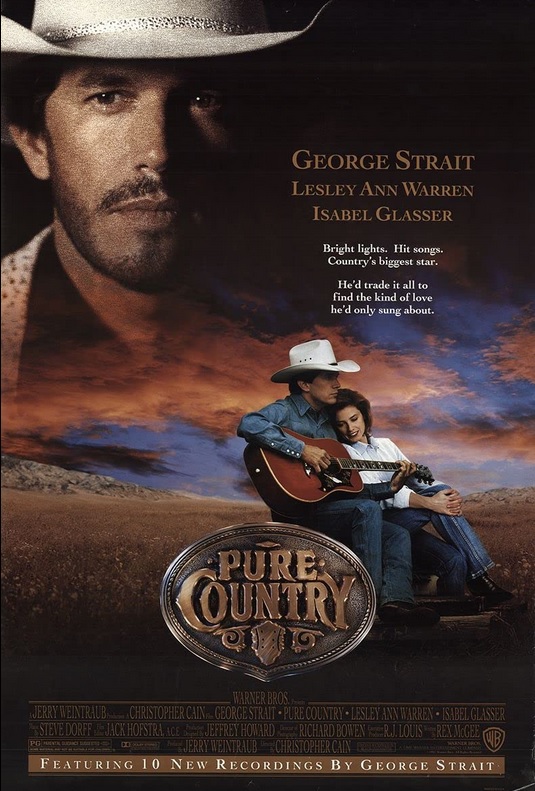
This attempt to transform country superstar George Strait into a chiseled-chin leading man is the feature film debut — and lone feature film — written by Rex McGee, through he returned with Where There’s a Will (2006), a cable movie directed by John Putch (who made his acting debut in the 1981 NBC-TV movie Angel Dusted and appeared as a grown-up Sean Brody in Jaws 3-D).
The film’s director, Christopher Cain, previous helmed 1987’s The Principal starring Jim Belushi (who, in a meta-WTF of of all time, had his character, Rick Latimer from that film, re-appear in the 1991 sci-fi flick Abraxas). Cain also gave us the Brat Pack western — and that overplayed and annoying Bon Jovi song — Young Guns (1988). He followed up Pure County with The Next Karate Kid (1994) starring Hilary Swank from the recent, controversial box office bomb The Hunt. Of course, we are all about the Big Three and cable network TV movies of the ’70s through the ’90s, so we remember Cain at B&S About Movies for Wheels of Terror, which aired on the USA Network (you know, back in the days before USA ditched original content to become an aftermarket shill for NBC-TV series).
While Pure Country barely made back its $10 million budget, the accompanying soundtrack became George Strait’s biggest, best-selling album. And on a sadder note: the film marked Rory Calhoun’s (Motel Hell) last film appearance; he died in April 1999. Calhoun is the wise father of Strait’s love interest played by Isabel Glasser. Retreating into TV work and indie films soon after, she co-starred with Robert Patrick and Rutger Hauer in the 1998 Top Gun ripoff Tactical Assault.
Strait is a character not far removed from his real self: he’s world-renowned country star Wyatt “Dusty” Chandler. However, unlike Strait, Dusty’s a trouble soul: he’s tired of the lights and smoke and the sets. And he’s none to fond of a new song called “Overnight Male” written by Buddy Jackson (Kyle Chandler), his manager Lulu’s (Lesley Ann Warren) boyfriend, being forced on him.
So, in a plot twist analogous to Neil Diamond’s 1980 remake-bomb of The Jazz Singer — Dusty cuts off his trademark beard and ponytail and splits for the open road. And does this sound a lot like when Rick Springfield made his play for the silver screen — and bombed, just like Neil Diamond before him — in 1984’s Hard to Hold?
Yep. It’s the same old he-has-everything-but-really-has-nothing story. And love is always the answer to get back on top.
Just how many of these musician-vanity projects — where the soundtrack always performs better on the Billboard charts than the film on the Variety charts — will Hollywood make before they realize their attempts to transform “then hot” musicians into A-List leading-actors (well, outside of David Bowie, Willie Nelson, and Kris Kristofferson) doesn’t work?
Billie Eilish? Hollywood is calling. And for your own sake, don’t pick up the iPhone.
While the story is a simple, hokey story, truth be told: Strait is a pretty decent actor and he would have been better served by breaking into the business with a non-musical role, you know, as with Trace Atkins, Dwight Yoakham, Tim McGraw, Randy Travis, and Tobey Keith.
Oops! I stand corrected. There are musicians that can act. Open mouth. Insert crow.
Hey, wait! Where’s John Doe?
While Johnny D. didn’t make the marquee as a co-star, he — as he always does, and as he did in Great Balls of Fire (also reviewed this week) alongside Dennis Quaid — is excellent in his support role as Dusty’s longtime friend and drummer, Earl Blackstock.
And did you know that director Christopher Cain’s adopted son is Dean “Superman” Cain? And did you know Dean co-wrote — with the Roger Corman-bred George Armitage (Private Duty Nurses, Night Call Nurses, Darktown Strutters, Gas-s-s-s, and the 1979 TV movie Hot Rod) — a female-driven sequel directed by his dad in 2010, Pure Country: The Gift, that starred country star Katrina Elam?
It’s okay. No one did.
And that there was a third sequel: 2017’s Pure Country: Pure Heart?
But we did see the original, thanks to John Doe.
About the Author: You can learn more about the writings of R.D Francis on Facebook.He also writes for B&S About Moviesand publishes on Medium.
We covered the second season of Etheria a while ago — you can catch season one and two for free with your Amazon Prime subscription — and now, the third season is available to download.
2016 was the third year of Etheria, a film festival for the best new horror, science fiction, action, fantasy, and thriller films directed by women. All the shorts in this season are official selections that played at the AeroTheater in Santa Monica, California to a live audience on June 11, 2016.
This season promises to transport its viewers to strange new worlds, all with women-directed shorts that feature killer hairstylists, medieval warlords and magicians, musical androids, apocalyptic western gunslingers, time loops, dead bodies, slashers and lots of extra body parts.
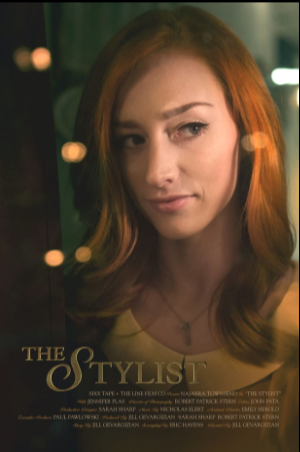
2016’s The Stylist is the first film. Directed by Jill “Sixx” Gevargizian — who spent a decade working as a hairstylist herself — it’s all about Claire, a lonely hairstylist who years to escape from her boring life. When her final appointment asks for perfection, Claire delivers with plans all her own. This short was made into a full film in 2020 that we’ll have to track down, because what is here is really interesting. Najarra Townsend stars in both this version and the full movie.
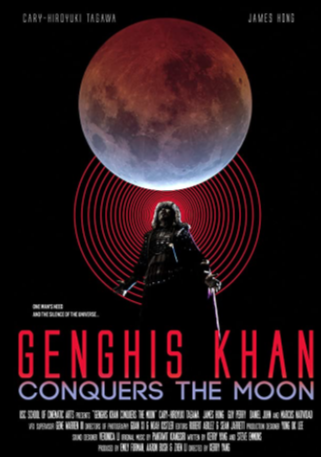
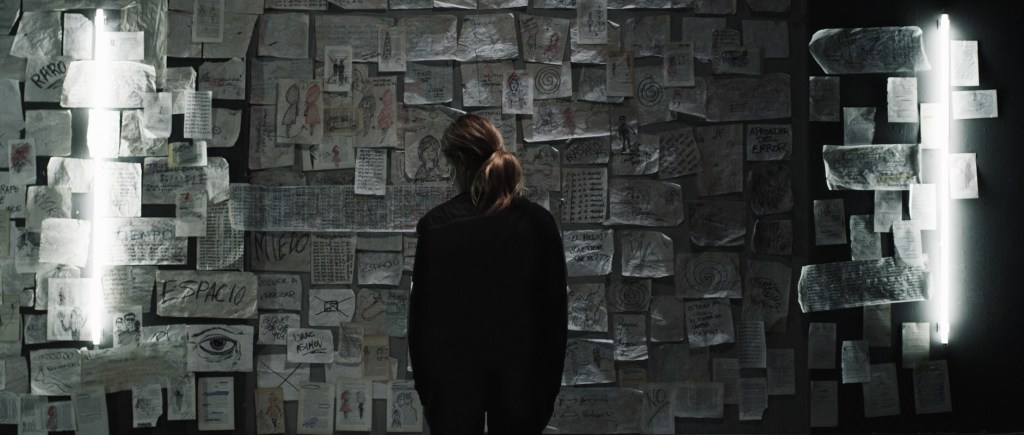
Genghis Khan Conquers The Moon (2015) is next and it’s all about the great warrior’s last days, as a magician sends him to the moon, where he must confront a spiritual quest and the silence of the Universe. This was a USC thesis film directed by Kerry Yang, who works in visual effects, and boasts a cast with Cary-Hiroyuki Tagawa (Shang Tsung!) as Khan and James Hong (Lo Pan!) as the wizard. This looks way better than you’d expect from the runtime and origins of this film and is a really interesting tale, as well. You can learn more at the official site and Facebook pages for this movie.
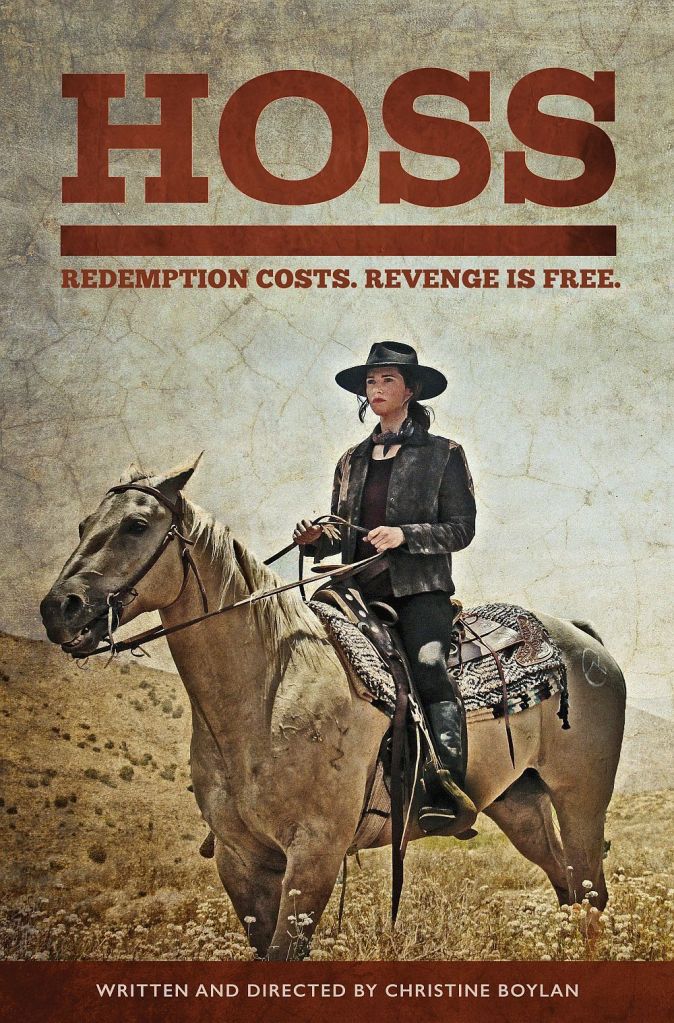
Hoss (2015) takes place after an ecological disaster has crippled the sea-level areas of the West Coast, turning the hills of Los Angeles into a lawless land much like the Wild West. Directed by Christine Boylan, this stars Lyndsy Fonseca (the Kick-Ass movies, the Nikita TV series) as Sam Burke, who cares for horses to mask the mental scars she earned in the military. You can learn more on the official site for this movie.
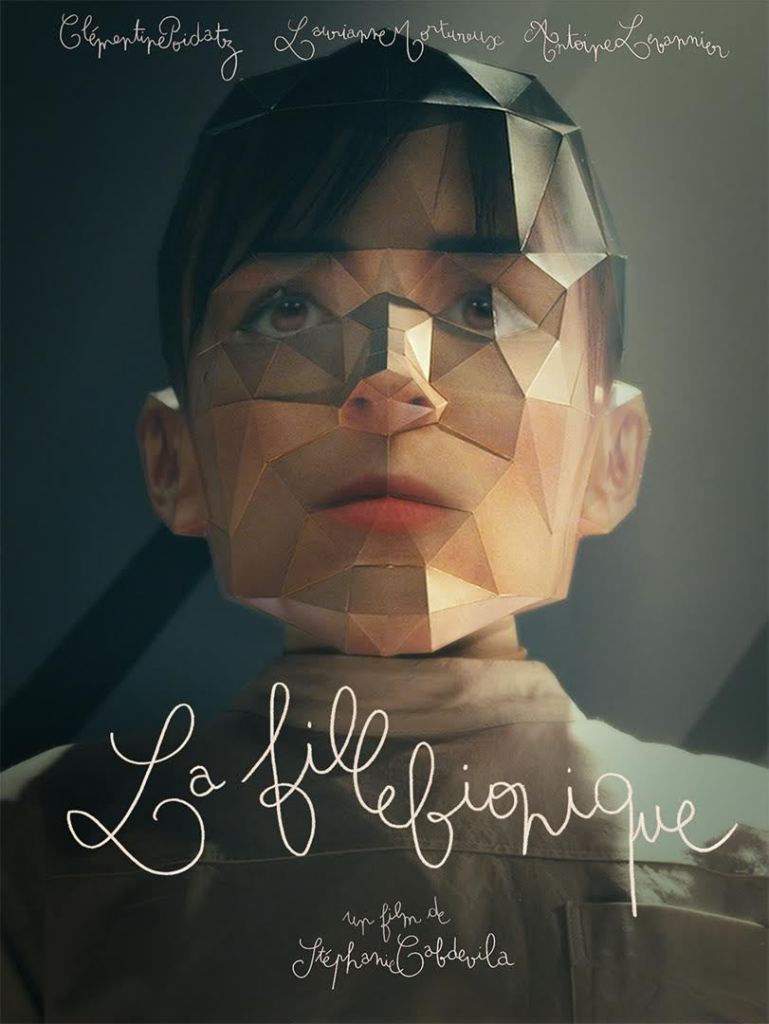
Bionic Girl (2015) is a French surrealist musical about a scientist who has made a clone of herself so that she no longer has to face the outside world. It’s directed by Stéphanie Cabdevila and has an incredibly strong visual style that must be experienced. The look of the android looks like a painting come to life and this is probably my favorite film of the season, as it has a style, look and story all its own. It’s absolutely astounding and a welcome surprise on every single level. Wow.
In Boxer (2016), a middle-aged contract killer must reconcile her life of murder with the son who thinks that she is just a boxer. Toy Lei, who made this movie, is a multiple threat creative, working as an actor, director, fight choreographer and swordswoman. While a very short entry, this one is absolutely filled with pure action. You can learn more at the official Facebook page.
ReStart (2015) comes from Spain’s Olga Osorio and tells the story of Andrea (Marta Larraldean), who is trapped in an inescapable time loop. While a short story, the look of this segment nearly begs for a full length version of this tale.
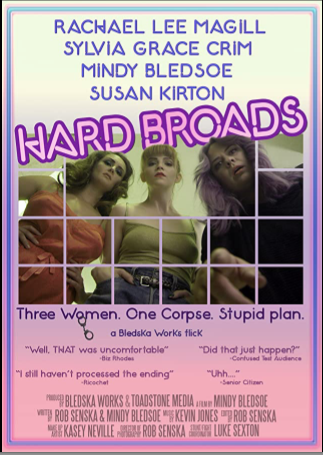
With the tagline “Three Women. One Corpse. Stupid Plan.” husband and wife duo Mindy Bledsoe and Rob Senska put together a script that Mindy directed and stars in called Hard Broads. It’s a much darker and more female Weekend at Bernie’s, if that makes any sense. You can learn more at the director’s official site.
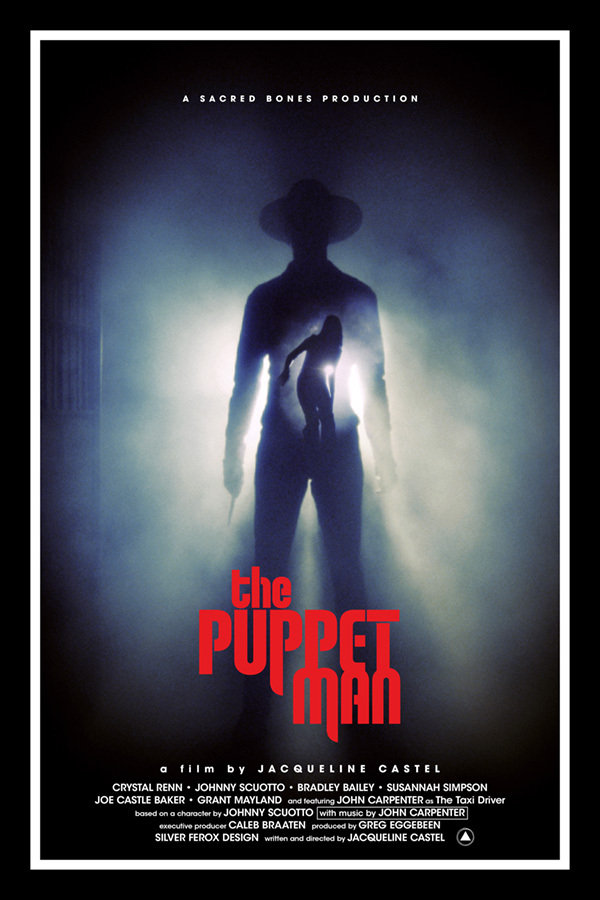
2016’s The Puppet Man has been on Shudder for a while and stands out because not only does it tell the story of a killer stalking several people at a bar, it also features a soundtrack and an appearance by John Carpenter. Directed and co-written by Jacqueline Castel, it feels like an expensive proof of concept for a much larger film. It plays with the red and blue tones of Bava while fitting in somewhere between Freddy-style slasher and giallo while not feeling that it understands the latter, outside of the imagery of the form. That said, it’s hard to tell where this could go with a short running time. There’s more at the official site, including an amazing press book that really tells the story behind the making of this film.
In Used Body Parts, Venita Ozols-Graham — whose credits go back to second unit work on Prophecy and Xanadu, as well as work on tons of TV from The Dukes of Hazzard and Alien Nation to The X-Files, The Shield and Veronica Mars, tells the story of two women who encounter a gas station in the middle of nowhere that deals in more than mechanical problems.
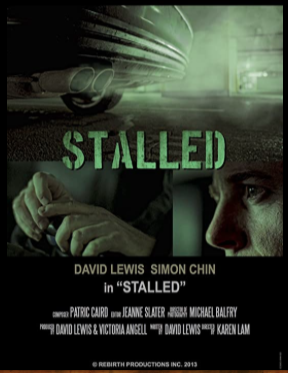
Karen Lam’s Stalled is another strong entry, one of the darkest short films that I’ve seen in some time, nearly perfectly told. The description states that “Alex Macey is getting divorced. In an underground parking garage, an emotional call to his wife cuts out. Returning to his car he confronts a would-be carjacker. With violent results.” That is a very simple way of telling what is a much more complicated story with a punch to the gut ending. David Lewis wrote and stars in this and has a perfect expression as the story comes to a close. Lam has released The Curse of Willow Song this year and is working on the anthology Thomas Tessier’s World of Hurt and I will definitely be tracking both of those down.
Finally, Victoria Angell’s Summoned, the abuse Amanda suffers leads her to call a demon for help. David Lewis, who was also in Stalled, plays the father. This is a very quick burst of a story with strong visuals and would truly make a great longer movie.
Thanks to The Horror Collective for sending us this entire series early. Make sure to check out every Etheria season on Amazon Prime with the links above.
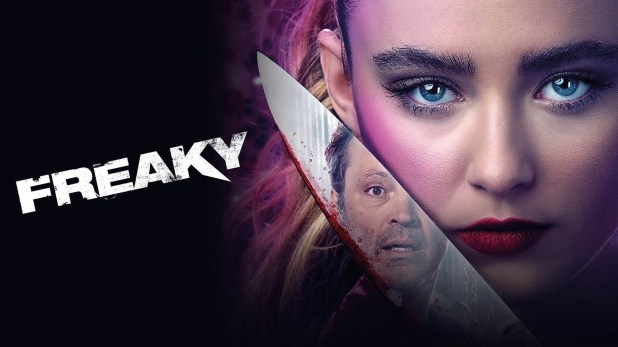
By all rights, I should hate this movie, a semi-remake of Freaky Friday that instead subverts the source material by turning it into a slasher. But you know, it ended up hitting me the right way and I was behind it pretty much all the way.
Directed by Christopher Beau Landon — yes, the son of Michael — who wrote Disturbia — that’s not even a word — and several of the Paranormal Activity movies before directing the Happy Death Day films. If you liked those, well, this will definitely give you more of what those movies offered, this is set in the same universe — Landon said that, “They definitely share the same DNA and there’s a good chance Millie and Tree will bump into each other someday” — and was originally titled Freaky Friday the 13th.
Millie Kessler (Kathryn Newton, Big Little Lies) is a teenager who has been tormented by bullies, both of the teenager and teacher* varieties. Meanwhile, the urban legend of the Blissfield Butcher continues, as he keeps killing her classmates. Now that he possesses a McGuffin called La Dola — an ancient Mayan sacrificial dagger — he looks to gain even more power. But when he runs into our heroine — her mother (Katie Finneran, who is great in this) has left her behind at a football game where all she gets to do is wear a beaver mascot costume — she battles the Butcher and when he stabs her, they end up switching bodies.
So yeah — this turns into a body swap comedy and you’d think, after the gory as hell open, this is where they lose you. But no — if anything, this gets way more fun.
Millie’s friends make for some of the best scenes in the film. Nyla (Celeste O’Connor) and Josh (Misha Osherovich) have been with her through the worst parts of high school, so having their best friend in the body of a killing machine is just another trial to be endured.
Speaking of that killer, Vince Vaughn shines in this. There’s plenty of silly physical comedy, but also some really nice scenes like when he admits to the love interest that she left the note he treasures (body swap pronouns are a little hard) or when he has a moment with her mother while hiding in a changing room.
Landon — who wrote the movie along with Michael Kennedy — said that the film was influenced by the Screamseries, along with Cherry Falls, Fright Night, Jennifer’s Body, The Bloband Urban Legend. There’s also a fair bit of Halloween in here, particularly the opening series of murders, and references to Heathers, Child’s Play, Creepshow, Galaxy Quest, Carrie, The Faculty, The Craft and Supernatural. There’s also a bottle down the throat kill that came directly from the 2009 slasher remake Sorority Row.
I had fun with this. Here’s hoping you do the same.
*The funny thing is that the teacher that is the worst to her is Alan Ruck, who knows a thing about bring bullied, what with playing Cameron in Ferris Bueller’s Day Off.
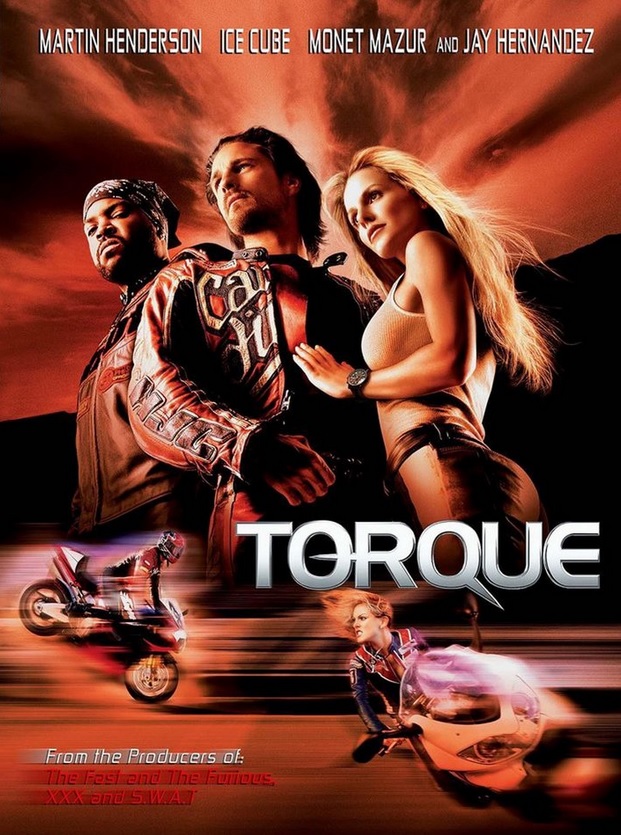
We gleaned over this biker flick as part of our “Exploring: The Clones of the Fast & the Furious” featurette during our first “Fast & Furious Week” back in August. And since John Doe shows up as tough-ass sheriff, we decided to bring it back with a review proper for our “John Doe Week.”
That’s right. If you have a hankering for a movie that stars one of the guys from N.W.A and one of the guys from the Los Angeles punk band X — then this is your movie.
That’s not your rods n’ cones, that’s the copy. The guys who made the Fast and the Furious, XXX, and S.W.A.T made this.
Now, if this Ice Cube-fronted two-wheeler sounds a lot like the Laurence Fishburne-fronted Biker Boyz, you’re probably right, as both films went into production at the same time. But the better known Ice Cube John Doe one was concocted by the production team of the Fast & Furious franchise. And Dreamworks wanted some of that Warners Bros. F&F stank on the screen, so they came up with their quickie mockbuster knockoff, got it? The trailer says it all, really.
So, is this The Fast and the Furious . . . only on motorcycles? Well, do you see any Torque sequels on your streaming service? No, you don’t. And that’s what happens when you get a $45 million box-office return on your $40 million investment: for Torque is one of those films where its performances, writing, and direction are slagged across the board . . . but everyone praises the stunts — so much so that it was nominated for several Taurus Awards.
Taking its cues from those juvenile delinquency films of the ‘50s and ’60s, the Sharks and the Jets the Hellions and the Reapers are illegal street racing-cum-biker gangs that compete on the two-lane blacktop and in the crystal meth business. And one of those members of makes the mistake of returning from Thailand to set things straight with his estranged girlfriend. Is any one woman worth it? Apparently so: for when she’s kidnapped for leverage, her ransom is the delivery of two bikes filled with crystal meth because, well, illegal racers always deal meth to finance their bike builds. Complicating problems is yet another gang member who wants our on-the-run biker wusspud from Thailand for the murder of his brother.
Damn right our favorite punk bassist steals his scene/courtesy of backgroundartist.tumblr.com.
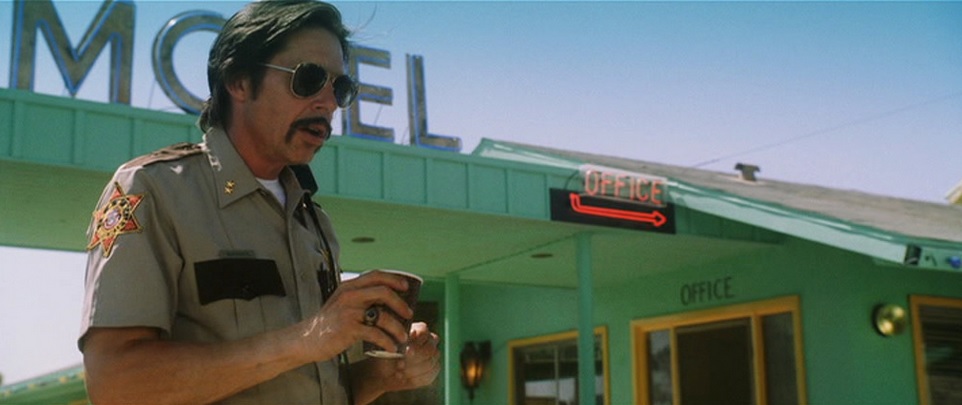
Along the way, Joe Doe shows up as the bad ass Sheriff Barner. Oh, and the always badass Dave Wyndorf and Monster Magnet appear in a club scene to perform “Monster of Light” from their sixth album Monolithic Baby! (2004) — which did nothing to place the song on Top 40 Active Rock charts. So, we’ll give Torque bonus points, not only for quenching our John Doe jonesin’, but for giving Wyndorf a line and letting him kick a little ass, and for ripping off George Romero’s Knightriderswith a sword-jousting scene that inspired us to watch Knightriders, again.
About the Author: You can learn more about the writings of R.D Francis on Facebook.He also writes for B&S About Movies.
Editor’s Desk: Upon the news of his medical hardships, we’ve seen an uptick in our reviews of Tom Sizemore films, which is no way for anyone to discover an actor’s films. Regrettably, Tom—whose credits included the major studio films Natural Born Killers, True Romance, and Black Hawk Down—has died at the age of 61 after having been been hospitalized in a coma for two weeks as result of a brain aneurysm brought on by a stroke.
If not mentioning Tom in passing another review, we’ve reviewed many of Tom’s films, which you can easily discover at B&S About Movies.
Tom Sizemore November 29, 1961 —March 3, 2023
A Little History of Grunge . . .
By 1988, underground “college rock” bands began to bubble under the mainstream and crossed over onto mainstream AOR stations still waste deep in the likes of the hair metal bands Winger, Slaughter, and Poison. And while the audio nimrods didn’t play the newly “major label signed” Husker Du (to Warner Bros.) and The Replacements (Sire), and gave record-industry guru David Geffen of Asylum Records (home of classic rock mainstays, the Eagles) the snub when his new label, DGC, signed New York noise-merchants, Sonic Youth, those spandex bastions did begin to “experiment” with the “more commercial” likes of the Cure, Jane’s Addiction, and Love and Rockets. Yeah, they spun Alice in Chains, but were still not quite ready to pluck Soundgarden from Seattledom.
Then, slowly, while those stations still bowed to the dynasties built by Led Zeppelin and Hendrix, you began to hear less Winger and more of the “false grunge” of Candlebox, Pearl Jam and Stone Temple Pilots, and (B&S Movies’ proprietor Sam’s favorite bands) Creed and Bush. Then, instead of Slaughter ad nauseam, you heard a little trio out of Seattle ad nauseam—and overnight America became a nation of coffee houses with hep-baristas adorned in $50 JC Penny designer flannel shirts and $150 Macy’s faux Doc Martins.
1991: The Year Punk Broke, indeed. Flux Capacitor me to 1985, Doc Brown. I need to be sedated, Joey.
Image created by R.D Francis.
A DJ’s Journey . . .
I started my radio career in the early breakers of the Seattle new-wave, working at a small, technically inept, stodgy and dying non-commercial FM that somehow, we, the staffers, convinced our clueless “L7” bosses to give an all-“alternative” format a try and dare rock ‘n’ roll lovers—not interested in blues babbling, folk hootenannies, jazz noodling, plunked banjos, and book reviews—to tune into our audio graveyard left of the dial. And it worked.
And thanks to an indifferent “voice of a generation” who blew his brains out a few years later, the two battling classic (ass-ic) rock stations in town became “rock alternative” outlets overnight and decided the alt-nation wanted to hear the (bane of my existence) Crash Test Dummies and Spin Doctors, and some chick named Torn Anus, I mean, Tori Amos, caterwauling like humping cats on a hot summer night about girls and corkflakes.
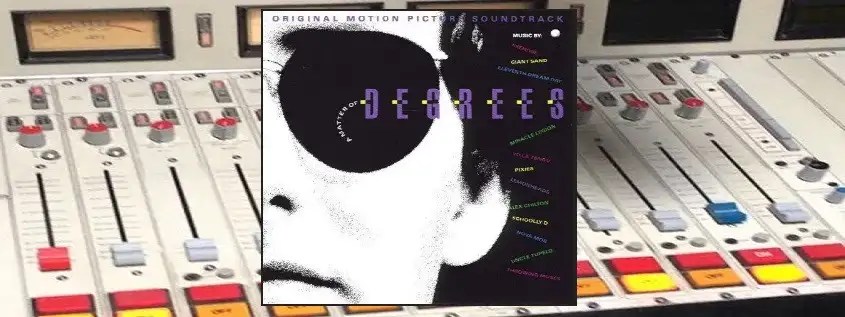
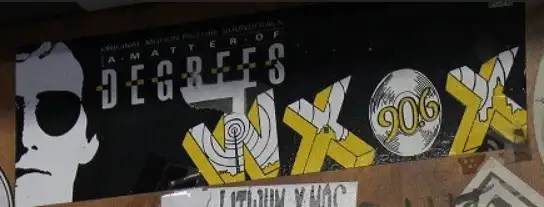
So, the tales of WXOX 90.6 Providence, Rhode Island, in the frames of A Matter of Degrees are near and dear to this DJ’s heart. The new film through 20th Century Fox’s specialty arm, Fox Lorber (Independent Magazinearticle), along with its accompanying soundtrack on Atlantic (the track-listing read like the playlist of one of my airshifts), was heavily promoted in all of the alt-rock mags of the day: Alternative Press, B-Side, CMJ, and Option (good reads!). It was probably even in the alt-section of the mainstream radio trades The Hard Report, FMQB, and Rockpool; it’s been so long, I can’t recall.
The staff of my radio station was stoked. The film was directed by W.T Morgan, who directed the alt-essential concert doc, X—The Unheard Music, and X’s John Doe was starring (later of the radio-connected The Red Right Hand). Fred Schneider and Kate Pierson from the B-52s had roles as DJs alongside Doe, and North Carolina’s hottest college-rock band, Fetchin’ Bones, who just got bumped up to Capitol Records, had a role.
And we were eventually crushed. What we thought was going to be a 1990 college rock radio version of the 1978 progressive rock radio chronicle FM—ended up being Friends: The College Campus Years. Then, we got alt-fucked again, by Cameron Crowe, with Friends: The First Year out of College, aka Singles (1993). Yeah, we got more “radio” with Airheads (1994)—but got more caterwauling cats in the “false grunge” screeches of 4 Non Blondes instead of Throwing Muses and the Breeders. At least Christian Slater’s alt-rock pirate in Pump Up the Volume (1990) cleaned out our Eustachian tubes. And I don’t need any Reality Bites (1994) from Lisa Loeb, either.
Well, at the time, courtesy of our Husker Du and Sonic Youth snobbishness, A Matter of Degrees seemed like a mainstream boondoggle produced by the same “suits” who decided to program songs about frolicking princes, chicks into cornflakes, and creepy, long-haired baritone Dean Martins humming stupid Canadian shite that was giving us A Flock of Seagulls when we wanted the Ramones. But as the VHS box patinas and the tape forecasts snow, I have come to love A Matter of Degrees—and its VHS and CD are a prized part of my collection because: it’s a time capsule that I wished never dissolved into the past.
A Matter of Degrees, written by Brown University alumni Jack Mason and Randall Poster, we come to find out, wasn’t about a radio station: the radio station served as a backdrop-linking device to a clever, ‘90s version The Graduate (1967), only with The Lemonheads (who ironically cut a cover of “Mrs. Robinson” for an early ‘90’s DVD reissue of the Dustin Hoffman hit) instead of Simon and Garfunkel backing the life-undecided, college campus hippiedom tales of Maxwell Glass (Ayre Gross; House II, Minority Report).
For Max, Providence, Rhode Island, isn’t a place: it’s a state of mind and that “mind” has been rattled by his being accepted into law school (he applied only to the hardest schools so he’d be rejected; he gets accepted to Columbia, the hardest of them all). Then he discovers his cherished campus radio station, which employs his friends Welles Dennard (the incredible Wendell Pierce; USA Network’s Suits, HBO’s The Wire, NBC’s Chicago P.D, Nicolas Cage’s It Could Happen to You) and Scuzz (the amazing-in-his-small-role Tom Gilroy; went onto work with R.E.M’s Michael Stipe and taught at Columbia University) is going to be torn down to make way for a research laboratory backed by a corporation that services the military. And when the station is rebuilt: the free-form format is out.
So, with an Abbie Hoffman-tenacity augmented with coursework titled “Interdisciplinary Approaches to Ethnicity,” Max is going to save the radio station—with arguments invoking the name of infamous ‘80s insider trader Ivan Boesky as a verb: Max speaks ill of the boyfriend of his feisty, Jerry and Elaine-styled best friend, Kate Blum (Judith Hoag; April O’Neill in Teenage Ninja Mutant Turtles, pick a U.S TV series), who runs the radio station: “[Roger] Ivan Boeskied it for them.” Not even their college-dropout/car mechanic roommate, Zeno Stefanos (Tom Sizemore, Zyzzyx Road), who has a propensity to lug car bumpers through the house and make sandwiches by slapping undiluted Campbell’s pea soup between two piece of white bread, can’t get Max off his disillusioned, high sparklehorse: “Remember, women and animals hold up two-thirds of the sky,” Zeno zens. (Now I had my share of Ramdan noodles and peanut butter sandwiches for dinner back in the day, but raw soup sandwiches? I’m glad I didn’t get accepted into Brown.)
“Hey, whatever happened to John Doe? I thought he was in the movie?”
Doe is Peter Downs, the founder of the station who “blew five years in San Francisco recycling the hits like a goddamned monkey” (been there, done that) and returned to his job as the program director of WXOX because, “this is paradise.” Oh, and Peter has a bitch-be-crazy girlfriend, Isabella Allen (Christina Haag), who has Max’s nose wide open. (See what I mean about the Friends-relationship dithering and not enough radio station? Get the Aniston out of here!) In the end, the station and sounds of “Peter Downs and WXOX 90.6 Providence” that Max man-love croons from a shark-toyed bubble bath to a toilet-perched Kate, serves as a plot-character linking device (just like Taj Mahal’s Dix Mayal on WKOK in Outside Ozona).
A Matter of Degrees is a case of “you had to be there.” If you never experienced college campus life and being enamored by the left-of-the-dial “hits” crackling over the airwaves of its tin-can station or a local non-com, you’ll have a lukewarm response to the film. The fun Mason and Poster-penned script reminds me of The Graduate; however, it won’t be in the same classic league as The Graduate when it bounces off your retinas. Your gray matter will populate it as a Singles rip-off—only this film came first. It is, in fact, the first Gen-X, well “grunge,” film in our $5.00 cup-of-coffee flannelled landscape (and you can visit with those films in our “Exploring: 50 Gen-X Grunge Films of the Alt-Rock ’90s” overview.).
Chalk it up to nostalgia fogging my sight; with eyes that see all of my friends from the grunge epoch as I flashback to my views from the glass booth (as I cracked open a new album called Bleach by some band called Nirvana) in the spot-on-miscreant Scuzz, the cucumber-cool Welles, and the rest of the WXOX satellites.
“Rock and roll can save you!” urges Peter Downs.
It did, Peter. More than you will ever know.
It smells like celluloid. Sounds like analog.
Where to get and how to hear the CD soundtrack and see the VHS movie:
While A Matter of Degrees tanked as a theatrical feature (the Sundance crowd shrugged), it blossomed on the international home video marketplace, carrying the titles of Louco Por Rock (Crazy for Rock, Brazil), A tutto rock (Too All, Rock Italy), and in Poland, Radio Maxa (Maximum Radio), or, more accurately, “Radio to the Max.”
As with most of the failed films in the pre-DVD era unceremoniously dumped to VHS, A Matter of Degrees has never been released on DVD—not officially nor as a grey market DVD-R—and there are no online VHS rips. There are no CD rips (of the non-vinyl) soundtrack, but you can listen to this re-creation of the soundtrack I patched together on You Tube. You can also see the soundtrack’s liner notes at Discogs. Multiple copies of the CD soundtrack, the even rarer cassette version, and the VHS can be found on numerous seller sites, eBay in particular. Not finding it won’t be a problem.
Caveat Emptor: John Doe’s incredible theme song for the film, “A Matter of Degrees,” which appears on his debut solo album, Meet Joe Doe (1990; DGC) and the promotional EP single, A Matter of Degrees, does not appear on the soundtrack, which is baffling, considering he’s one of the leads of the film. You can watch John Doe perform the single on the study-helper-for-the-late-night college crowd (good times): The Late Show with David Letterman (there is just something “off” seeing John Doe as a “traditional” lead singer clutching a mic-stand and not wearing a bass). Let the video play through to watch David Letterman’s 1983 clueless-awkward interview with X (really, Dave: alphabet jokes?) as they promote “Breathless,” the soundtrack single to the Richard Geer remake of Francois Truffaut’s film (1960) of the same name. X also covered the ‘60s hit “Wild Thing” for Major League (1989).
As with John Doe: Fetchin’ Bones are in the film—performing their MTV 120 Minutes hit, “Love Crushing,” for a “Save WXOX Benefit” (where John F. Kennedy, Jr. shows up and serenades a girl with an acoustic guitar)—but their song doesn’t appear on the soundtrack. Go figure. And the film is dedicated to D.Boon (backed by Doe’s title-cut song in the film only), the late guitarist-singer of the Minutemen. Why does the post-D.Boon outgrowth of the Minutemen, Firehose, appear on the CD soundtrack, and the Minutemen do not? Double go figure. And don’t bother (poi-dog) pondering how the B-52s got soundtrack skunked. Seriously, this film needed to pull a Dazed and Confused (1993) and release an “Even more . . .” Volume 2 to contain all the great “college rock” in the film. (Oh, hey Kris Erikson, Uncle Tupelo made it onto the soundtrack!)
You can also learn more about Randall Poster’s success as a music supervisor, the art behind movie soundtracks, and his longtime collaborations with director Wes Anderson (2014’s Grand Budapest Hotel) courtesy of these print interviews conducted by WIPO Radio, The AVClub and New Music Express. As it seems there will never be a DVD restoration replete with a commentary track, these interviews are the only way to gain insights on how A Matter of Degrees was and came to be made. (Jim Dunbar, who portrayed DJ Frank Dell, also amassed over 60 credits as a music supervisor, some in the company of Poster.)
In Poster’s post-1990 interview with the alternative music trade NME—New Music Express, he had this say on why he gave up on screenwriting and producing to work exclusively as a music supervisor on films (2012’s Skyfall, 2013’s The Wolf of Wall Street; he won a 2011 Grammy for “Best Compilation Soundtrack” for HBO’s Boardwalk Empire):
“I was always a big music lover, a record collector and an avid movie fan. I got through university studying English Literature, and I found myself without any professional direction. I wrote a screenplay with a friend of mine [Jack Mason] about a college radio station. We did a lot of new songs for it, and we did a record and I just felt that that was really what I wanted to focus on. I wanted to work with great directors, so I figured if I made music my focus, and that would enable me to do [work with great directors; like Wes Anderson].”
Poster also tells us that his college radio love letter was not only filmed in Providence: much of it was shot at Brown University. Poster and Mason were inspired by the college’s campus radio station, WBRU, changeover from a free-form to commercial format in 1985. They wrote the screenplay after graduation. It took them five years, but they got it made. And that’s awesome.
How beloved is A Matter of Degrees?
A post at the Radio Survivor blog, written by fellow AMOD fan, Jennifer Waits, proves this cherished time capsule of ‘80s college radio has fans that want, and need, a DVD release of the movie (hint to Kino Lorber!).
Then there’s new fans—of this almost 30 year old movie—like General Manager Sharon Scott of the streaming-community station Art x FM. When she put the new, low-powered community FM (LPFM) outlet in Louisville on the air, she was granted the WXOX-LP call letters. According to Sharon, she didn’t know about A Matter of Degrees or its fictional radio station until well after the station received the call letters. Then, she spotted the movie’s promotional sticker on the door at WRFL and was taken aback that it was the same call letters she had chosen.
It looks like Louisville has found its audio salvation! “WXOX Louisville can save you!”
You can learn more about the new WXOX and Sharon Scott’s fight to save WRVU-FM, Vanderbilt College’s radio station, after students lost access to its terrestrial signal. The Radio Survivor article also provides links to learn more about the history of Brown University’s WBRU.
Peter Downs was right: “Rock ‘n’ Roll Can Save You!” And don’t believe the hype the mainstream is selling.
Fool me once, trailer embed elves . . . you can watch the trailer for A Matter of Degrees on You Tube.
About the Author:You can read the music and film reviews of R.D Francis on Medium and learn more about his work on Facebook. He also writes for B&S Movies(the link populates a text-only listing of his reviews).
Image courtesy of photographer Allen J. Schaben for a May 2020 Los Angeles Times article by Randall Roberts/font overlay by PicFont.







 B&S About Movies
You must be logged in to post a comment.