George Hickenlooper was a director who excelled at telling peoples’ stories. Edie Sedwick in Factory Girl. Jack Abramoff in Casino Jack. And documentaries on Dennis Hopper, Apocalypse Now, Peter Bogdanovich, Monte Hellman and this take of Rodney Bingenheimer, Rodney on the ROQ, the Mayor of the Sunset Strip, the man who launched so many bands into American consciouness.
When Rodney was 16, his mother dropped him off at Connie Stevens’ house, told him to get her autograph and abandoned him. He ended up as a stand-in for Davy Jones, as the live-in publicist for Sonny & Cher, opened a club, brought glam to the U.S. and took to the air on Los Angeles’ KROQ.
The list of bands that Rodney broke on his show includes The Runaways, Blondie, the Ramones, Social Distortion, Van Halen, Duran Duran, Oasis,The Donnas, No Doubt, The Offspring, The Go-Go’s, The B-52’s, X, The Smiths, Suicidal Tendencies, Dramarama and Nena.
In fact, I always wondered how a song like “99 Luft Balloons” broke in our country. It was because Nina Hagen and Christiane Felscherinow liked the song and asked Rodney to play it. The rest was 80’s video history. And in the same way he brought glam to the U.S., he’d bring Britpop here as well.
This movie took six years to produce and presents Rodney as a Zelig, a person that was there for the biggest moments in rock ‘n roll. He got Bowie his record contract, but he lives in a small apartment and until 2017, was happy playing music on Sundays from midnight to 3 AM on KROQ. But no more.
Rodney wasn’t the only Mayor of the Sunset Strip. There was also Bobby Jameson, who released Songs of Protest and Anti-Protest under the name Chris Lucey. He appears in Mondo Hollywood and his role in the Sunset Strip riots earned him the title.
Then, there was the shadowy cult figure Kim Fowley, who held sway over the Runaways (duBeat-e-o), recorded the song “Alley Oop,” wrote “They’re Coming to Take Me Away Ha-Haaa!,” co-wrote “King of the NIght Time World” for KISS, produced the demos for Gilby Clarke’s band Cherry, started another version of the Runaways and even had the time to make a mess of underground films.
Rodney comes from a time when celebrity actually mattered, when rock and roll felt like something and when one play of a song could make you rich and get you laid. We’ll never know that era again.
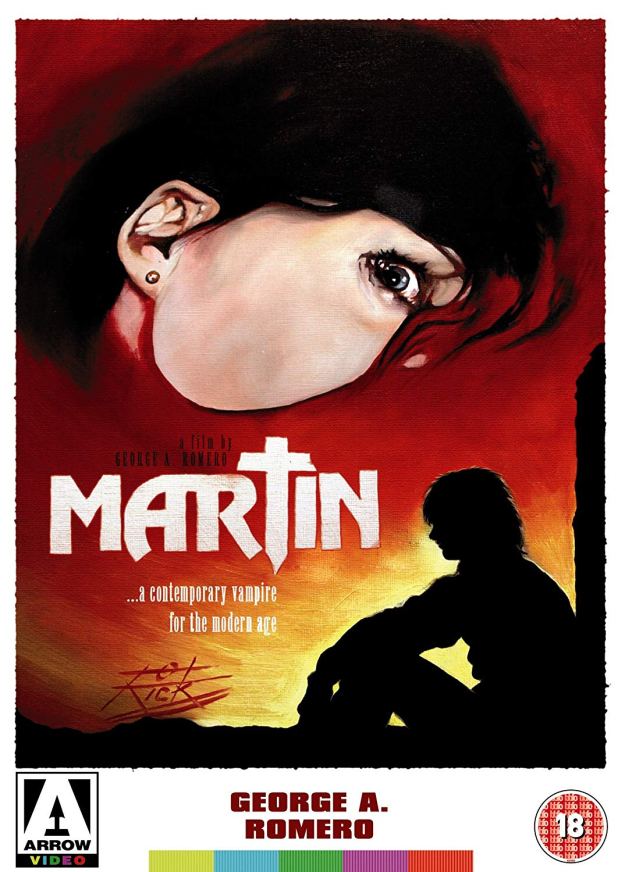
In the five years between The Crazies and Martin, much had changed, both in the life of George Romero and his adopted hometown of Pittsburgh.
After the post-World War II economic boom, an outdated manufacturing base — that had already been overextended for the past two decades — was further taxed by hostile relationships between management and labor. And Pittsburgh had even worse issues than the rest of the country, as the raw coke and iron ore materials to create steel were depleted, raising costs. The giant Pittsburgh mills also faced competition from non-union mills with lower labor costs.
As a result, layoffs began happening throughout the region. For example, Youngstown, OH — about an hour and a little more from the Steel City — never recovered from the Black Monday of September 19, 1977 and the closing of Youngstown Sheet and Tube.
According to a 2012 story in the Pittsburgh Post-Gazette, by January 1983, the regional economy officially bottomed out. Unemployment in Allegheny County (where most of the Pittsburgh metro calls home) hit between 14 and 18% with 212,000 jobless individuals. It’s never been that high before or since. And in areas like Beaver County (close to where your author grew up and also where my grandfather worked in the furnaces for forty years), home to industry giants Jones & Laughlin Steel Corp. and Babcock & Wilcox Co., the unemployment hit a staggering 27%. That’s higher than the Great Depression. And for many of the 300,000 manufacturing workers impacted by these changes — before this, you went to high school, you worked in the mill, you had kids, you died — Pittsburgh was dying.
George Romero found himself in similar straits. He was nearly a million dollars in debt thanks to the failure of every film after Night of the Living Dead. He’d taken to working on sports documentaries like his Pittsburgh-centric series The Winners and even directed The Juice is Loose, the story of football hero OJ Simpson — albeit years before his reversal in fortune — and Magic at the Roxy, a TV magic special. He confided in producer Richard P. Rubinstein that he was nearly out of cash. While the producer counseled Romero and explained that bankruptcy was an option, Romero didn’t want to screw over the people who helped him make his films. This action gave Rubinstein plenty of respect for the director and led to their partnership. While this, their first film together, didn’t pay back those investors, Dawn of the Dead would.
Deciding on Braddock — one of the hardest hit mill towns — and utilizing family and friends, Romero started to film what he would later call his favorite film.
In the film’s first script, Martin was an older man who is definitely a vampire, struggling to live (unlive?) in the modern world. But after seeing John Amplas in a Pittsburgh Playhouse production of Philemon, Romero rewrote the film to make Martin younger and more innocent.
Martin’s family has all died in Indianapolis, so he’s on his way to Pittsburgh — but not before shooting a woman up full of drugs and drinking her blood. He’s met at the train station by his uncle, Tateh Cuda, and taken to his new home. Even today, Braddock is one of the most run-down sections of Pittsburgh — the decay evident in the movie got a lot worse before John Fetterman was elected and numerous civic campaigns have brought new business in. That said — it’s still a great setting for a horror film.
Cuda and his niece Christine share a home and have allowed Martin to stay. The old man gives Martin several rules, including one that if ever kills anyone in Braddock, he’ll stake him through the heart. He keeps crucifixes and garlic all over the house, continually telling Martin that first, he’ll save his soul, and then, kill him. Martin yells at Cuda, showing him that he can touch the crucifixes and eat the garlic and bitterly exclaims, “There’s no real magic…ever.”
This is in direct contrast to Martin’s fantasies, shot in black and white (there’s supposedly a 2 hour and 45 minute cut of this film that’s only in black and white) like a romantic vampire movie, where women willingly give up their throats to him. The truth — he barely defeats the women in battle, needs drugs to sedate them and with no fangs, he must use a razor blade to kill them.
Despite Cuda’s continual threat of death, he hires Martin to work in his butcher shop as a delivery man. This allows him to meet several women, including Mrs. Santini, who tries to seduce him. Unlike his dreams of control over these women, he can’t even control his own feelings and runs away.
Pittsburgh has always been a talk radio town — local powerhouse KDKA boasts a 50,000-watt antenna that can be heard throughout most of the continental US in the evening — and Martin takes advantage of this, calling a local DJ (Michael Gornick, director of Creepshow 2) to try and figure out life. He becomes known as “The Count” and is one more lonely voice seeking comfort until the sun comes up — again, in marked contrast to the way vampires traditionally fear daytime. The DJ segments hit close to home — I was a long-time listener (1989-2005) of Bob Logue’s Undercover Club. Pittsburgh has a long history — as stated above — of radio shows like Party Line. We’re slow to give up on technology, so AM radio still remains strong here.
Martin tries to keep his thirst under control, but finally sneaks out to the big city — Pittsburgh is very much a bridge and tunnel town where folks stay within one of the ninety small neighborhoods that make up the overall town — and attacks a woman he’d seen at Cuda’s market. But she isn’t alone — she already has an extramarital lover over — and Martin barely overcomes them both before he drugs and rapes the woman. Martin gives in to another hunger after this — a yearning for sex based on love — that he finds with Mrs. Santini.
Meanwhile, Christine, Martin’s sole advocate in the home, finally gives up on living with the uultra-religiousCuda and leaves, despite her unfulfilling relationship with her boyfriend (played by an incredibly young Tom Savini). She is slapped across the face by Cuda and shocks him by not registering the blow, instead telling that his time is over and that she doesn’t care what he or the church says.
Martin loses control once he realizes that Christine won’t come back, so he goes into the city and attacks two homeless men, but is almost killed in a battle between the police and drug dealers. He returns to Mrs. Santini’s house to try and escape with her, but she has already killed herself.
In a quick, shocking scene, Cuda dispatches Martin — who he blames for Mrs. Santini’s death — with a stake. During the credits, Cuda buries him as radio callers ask what happened to The Count. The answer? He’s freshly buried, with a crucifix over his grave.
Martin is not only Romero’s most personal films, but it’s also one of his most technically polished. The scenes where the talk radio dialogue plays against Martin’s actions allow for exposition without sacrificing pace. And the black and white versus color sequences — particularly the exorcism scene — play out as a grisly counter to the expected Wizard of Oz dichotomy.
Most strikingly, Martin presents a sympathetic hero versus a snarling monster. The true vampires in the film are the city of Pittsburgh itself, losing the vital blood of young men that once were pumped through its mills and mines and now would go elsewhere, abandoning the city for jobs and lives elsewhere. It would not be until the early 2000s that the city would rise, more phoenix than vampire, and become the tech and gourmet destination that it is today. To go from the Braddock of 1978 to a five-time most livable city in the country has been quite the journey.
The second — and perhaps main — monster of the tale is Tateh Cuda. Whereas we have been traditionally taught to see Dracula as the villain and Van Helsing as the hero, this is a man who will not break from the ways of old, the days when the word of men and church stood above all. He is not to be defied — and when he is and his manhood is decimated by Christine’s departure and final words — all he can do is reassert said manhood in the most phallic way possible: a wooden stake through the heart of the other child he has lost. More than Martin — who questions if he truly is a vampire or not and if he can escape the family cruse — Cuda is trapped in his ways and will never leave them.
When faced with the change of guard at his church, Cuda cannot understand why so many are abandoning not only their faith but the city itself. When faced with the retirement of a priest he has known his whole life, he yells at Father Howard (Romero, in a small role) “Retired? Huh! Father Carelli is younger than I am. He asked to leave. He left like the rest of them. He thinks this town is finished!” Then, he learns that Carelli left only because cancer has taken him. Father Howard stands in contrast to the pre-Vatican 2 Catholic faith, a new style priest who laughs at The Exorcist without realizing that to someone like Cuda, those rites are very real.
Note: Lincoln Maazel, father of well-known orchestra conductor Lorin Maazel, played Tateh Cuda and lived to be 106 years old — he was already 75 when Martin was filmed.
Martin is not often said in the same breath as Romero’s zombie films and that’s a shame. It remains my favorite of his works, as there are so many ways to analyze the film. It’s not light watching or escapism, but the questions that it poses will stay with you long past the end of the film.
PS – Martin is not an easy film to find. I was satisfied knowing that I could get it at the Carnegie Library until I found my copy at VHSPS.com (sadly, it’s no longer available on their online store, so I’m glad I got my copy).
If you’re a voracious reader of mystery novels, especially if you grew up in the ‘80s, chances are you may have read at least one of the prolific Stuart M. Kaminsky’s 60-plus novels concerning the adventures of the ‘40s film noir-styled gumshoe Toby Peters, Moscow Police Inspector Rostnikov, and grizzled Chicago police officer Abe Lieberman.
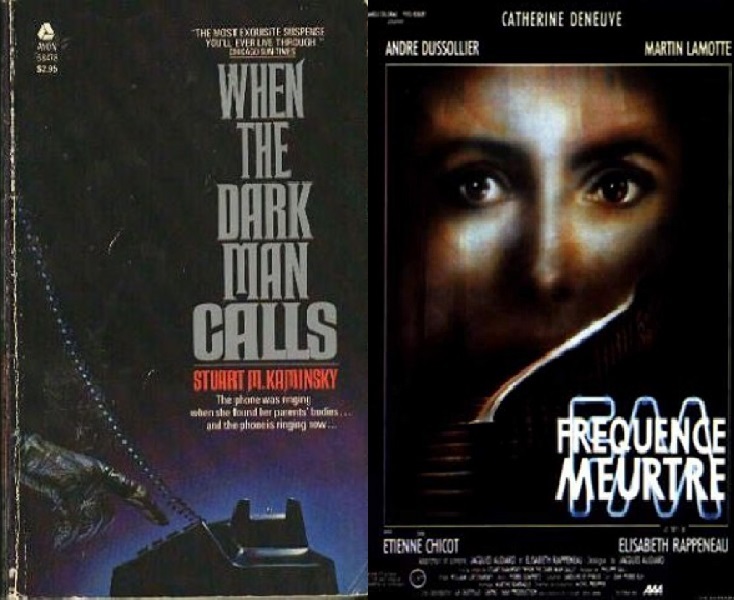
However, when it came time to adapt Kaminsky’s best sellers to the big screen, it was his two standalone non-series novels, 1983’s When the Dark Man Calls and 1985’s Exercise in Terror, which made the transition. While Exercise in Terror became the 1993 USA Network TV movie Hidden Fears starring Meg Foster (John Carpenter’s They Live, Stepfather 2, Deep Family Secrets) and Frederic Forrest (Apocalypse Now, The Rose,One from the Heart), When the Dark Man Calls was first adapted into the 1988 French thriller Fréquence Meurtre (aka Frequency Death, Frequent Death) starring Catherine Deneuve.
Kaminsky’s New York Times–and European–best seller and the 1988 French language film adaptation.
In this inferior, homogenized English language version shot on-the-cheap in Toronto as a USA Network original movie (in the days before the channel was usurped by the NBC Network to run all-day Law and Order marathons), TV actress Joan Van Ark—who’s no Catherine Deneuve in the thespian department—stars as Julianne Kaiser, the stalked Chicago talk radio psychologist.
Yes, you guess it: As with any stalked radio psychologist, Julianne has her own closet of repressed memories and tormented skeletons: Twenty-five years ago, when she was a ten, she discovered her parents murdered in their bed. It was her testimony that put away the killer, Mr. Parmenter (Tango & Cash; Clint Eastwood stock player Geoffrey Lewis), a border who lived in the back room of their home—and he always claimed his innocence. Now that Parmenter has been released, he begins making threatening calls to her show. Then, when he turns up dead and the calls don’t stop, the whodunit red herrings start flipping and flopping.
Who killed Julianne’s parents? Who killed Parmenter? Who’s stalking her and harassing her 14-year-old daughter?
Is it her vengeful, soon-to-be ex-husband Max (familiar TV actor Barry Flatman; The Dead Zone with Christopher Walken; still acting on ION Network’s Private Eyes)? Is it her doting, construction company-owning brother Lloyd (Chris Sarandon from Fright Night) with his own closet of secrets? And there’s Michael (genial TV actor James Read; ‘80s TV series Remington Steele; still acting on the U.S soaps Days of Our Lives and General Hospital), her ex-boyfriend cop bumbling about, still carrying a torch for Julianne.
While the quality in casting, acting, and direction in a ‘90s-era USA Network original movie is certainly a step above a present-day Lifetime original flick and raises the violence bar (just a smidgen), When the Dark Man Calls is still a thriller with no thrills or suspense—ironically, just like a Lifetime movie. And that’s a shame when considering the great critical reviews for Kaminsky’s 1983 novel. (Because of the radio angle, I read it back in the ‘80s and it is a page turner. Kaminsky’s works should not only be better known, but subject to more film adaptations.)
Yes, Joan Van Ark is certainly gorgeous and she looks fantastic on screen (and still acting on a wide array of films and series). But so is Catherine Deneuve. While Ark is affable enough in an ensemble cast of a hit nighttime TV drama, in her case, Dallas and Knots Landing, carrying an entire picture as the put upon damsel-in-distress isn’t her forte; under her tutelage the on-the-edge-of-your-seat plot twists of Kaminsky’s novel fall flatter than a dead herring.
Sure, we get the always awesome Geoffrey Lewis as the revengeful convict and Chris Sarandon’s harboring-dark-secrets brother as part of the bargain (if not for them both, I wouldn’t have stuck with this one to the end) and they deliver the goods, but they’re not in the film long enough to make a lasting impact.
On the plus side: The set design is solid and the radio station looks pretty legit for a low-budget set build. But who built it, Irwin Allen? Yep, it’s more budget conscious, ambiguous dark voids to nowhere. (In all my years in the business I never, ever worked in a studio so dark.) And those dumbbell faux call letters of WRAP (talk, “rap,” really?). And the total lack of a 7-second audio delay in the studio. And the fact that no radio station would ever risk FCC fines or license loss by putting live calls on the air from a serial stalker—even with an audio delay—for the sake of “ratings” or to “catch a killer.” Another problem: Joan’s age. If we abide by the flashbacks and flash forwards, Julianne Kaiser is 35—a very hard 35: Van Ark was already in her 50s—again, she looks great—when she shot this flick. All of it stretches the limits of screenwriting credulity.
Unfortunately, the Catherine Deneuve version isn’t available online for a comparison—and it was never released on stateside video. However, When the Dark Man Calls was released by Paramount as a VHS in the states and overseas. There are no official online streams available, so you’ll have to settle for this VHS rip posted on You Tube.
If you’d like to watch Kaminsky’s Hidden Fears, it is also available on You Tube.
About the Author: You can read the music and film reviews of R.D Francis on Medium and learn more about his work on Facebook.
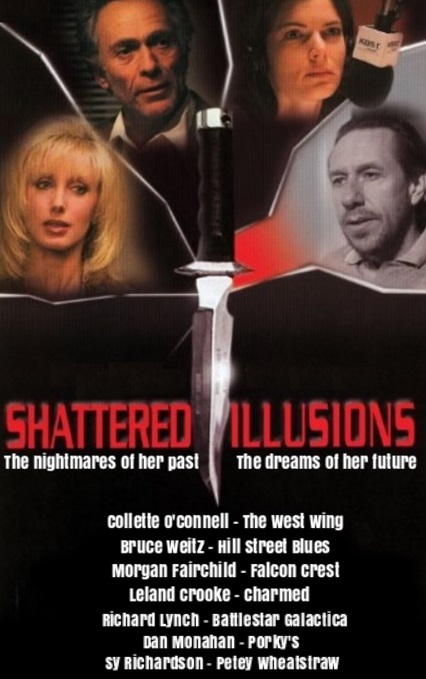
Lynn Richards (Collette O’Connell, guest roles on TV’s Law and Order: Criminal Intent and CSI: Crime Scene Investigations) is an (expositional) small town Christian radio psychologist (who babbles about “conquering life’s illusions,” thus the title) who lands the gig of a lifetime: a drive time airshift on KBST “K-Best 98 FM” Los Angeles.
Of course, all radio stations in the “radio psycho” universe suffer from low ratings and ad revenues. And we know this, thanks to station manager Richard Lynch—yes, Ankar Moor from friggin’ Deathsport—telling us “K-Best” is getting killed in the ratings by its main competitor. “We just lost five more shares to KTLL!” Ankar Moor snipes at Pee Wee—yes, it’s Dan Monahan from the Porky’s franchise, as the station’s program director.
Oh, yeah. This movie had me at “Ankar Moor.” Richard Lynch as a working stiff running a radio station? He’s not kicking someone’s ass or shedding any blood? I’m all in.
“But he’s at least the serial killing stalker, right?”
Nope.
“Is he at least a ‘red herring’ and we think he’s the serial killer?”
Nope.
“Oh, then Pee Wee, the ‘80s version of McLovin from Superbad, is the serial killer?”
Nope.
“Is he a ‘red herring’?”
Nope.
Of course, as with any female radio psychologist of the Lifetime cable channel variety, Lynn’s harboring her own personal demons and could use a shrink of her own. But wait, she’s already been through psychiatric treatment as result of her attempted teenaged suicide—a suicide that resulted from the depression of her alcoholic father Henry (Bruce Weitz of TV’s Hill Street Blues, Judging Amy, ER) causing a car wreck (tightly shot “flashbacks” of grimacing faces amid few shards of glass) that killed a family, killed her mother, mentally damaged her little sister (now a teen that she takes care of), and sent her father to jail for 12 years.
Hey, maybe Dr. Angie (Morgan Fairchild!), the obligatory “bitchy” psychologist (I guess the producers settled when Joan Collins didn’t return their calls) can help Lynn? Nah, Dr. A’s got a bone to pick with Lynn: Pee Wee promised the drive time shift to her.
“Oh, so Morgan Fairchild goes psycho!”
Nope.
“Is she a ‘red herring’?”
Nope.
“Dude, this movie sounds like it sucks.
Yeah, this psycho pool has a bad case of red algae that killed off all of the herrings and not even a dose of Richard Lynch, a pinch of Pee Wee, and the familiar face of ‘80s TV actor Sy Richardson from Rudy Ray Moore’s Petey Wheatstraw (and Bad Dreams, Repo Man, Sid and Nancy, the list goes on and on) as the detective can change the pH balance and stop the aquatic carnage.
It’s not that this first time—and only—effort by the female writing and directing team of Toni Callas and Becky Best is incompetent. Sure, we’ve seen better, and there are films are that far worse—way worse (the somewhat similar “radio psycho” romp Open House comes to mind). All of the “parts” are there for Shattered Illusions to be an edge of your seat neo-noir of the Basic Instinct variety (a radio talk host instead of novelist). But there’s no mystery, suspense, or thrills—as is the case with the low-budget stalked-female-radio host romps of the Lifetime variety. And outside of Lynch and Sy Richardson, the acting is dreadful. If you ever wondered why you never saw Pee Wee in anything after Porky’s, this movie answers that question.
“So why do they keep having their ‘meetings’ in the restroom? Why is The Lynch looking up under stalls at Pee Wee? Is it a Porky’s homage?”
Uh, I guess so.
“Okay, so who’s the serial stalker? Is it her father who just got released from prison?”
Nope.
“Is it the no-name actor that plays the school teacher who rehabilitated Lynn’s sister, the one with whom Lynn’s now having a torrid love affair?”
Nope.
When Lynn was locked up in the nuthouse, Adam (familiar TV actor Leland Crooke from Charmed and Angel), one of the inmates from her group therapy sessions, fell in love with her—and he was heartbroken when she was released. Then, he heard the voice of his lost love return on the radio. So he goes “Michael Myers” and breaks out. And he kills his doctor and house squats—and builds a doll house, complete with little paper doll replicas of him and Lynn. And he collects portable radios and has them all tuned to KBST. And he kills a dog that Lynn complains about on the air. And he kidnaps her brutish neighbor (Michael Horse of TNT’s Claws and the 2017 Twin Peaks series reboot) that she complained about on the air. If Lynn complains about it, like the car repair guy that screwed her, Adam “fixes it” and calls into the show with an update.
Now, Ankar Moor was never on board with hiring a Christian radio host in the first place, and the station’s board of directors is on his ass: “It’s been two weeks and her numbers aren’t up!” so Ankar wants to fire her. But Pee Wee is the type of program director who thinks that animals and people dying at the hands of a serial killer obsessed with one of their hosts is “publicity that money can’t buy.”
At least they shot inside a real (and uncredited) Los Angeles radio station. And Ankar Moor, Pee Wee, and Morgan all “sound” like real radio people.
My suggestion: Don’t buy any ad time on KBST and change the frequency so the ratings tank and Ankoor Moor can flip the format and get his ad rates up. Better yet: he’s gets fired and washes out of the radio industry. Then he’ll fall headfirst into a wicked gambling addiction, develop a severe case of germaphobia, and create a bogus knock off of Rollerball in Ground Rules.
To say Shattered Illusions is an out-of-print obscurity is an understatement; there are DVDs out there in the online marketplace, but be wary: they look like grey-market rips to me. There was a copy on a Tubi-like site known as Echelon First Run Films; however that site no longer exists.
About the Author: You can read the music and film reviews of R.D Francis on Medium and learn more about his work on Facebook.
ABOUT THE AUTHOR: An American living in London, Jennifer Upton is a freelance writer for International publishers Story Terrace and others. In addition, she has a blog where she frequently writes about horror and sci-fi called Womanycom.
A cult classic about teenage rebellion, the medium of radio (and the importance of rock music) features throughout Times Square (1980.) In the plot, it’s the vehicle through which the two protagonists connect. Initially, to each other and eventually to the greater adolescent female population of 1980 New York City.
Two girls, Nicky Marotta (Robin Johnson) and Pamela Pearl (Trini Alvarado) come from divergent backgrounds. One is a street kid with no family bounced from home to home and the other the motherless daughter of a wealthy politician gaining notoriety for cleaning up the area where Nicky lives. Times Square. The two meet in the hospital where each is being examined for perceived mental illness.
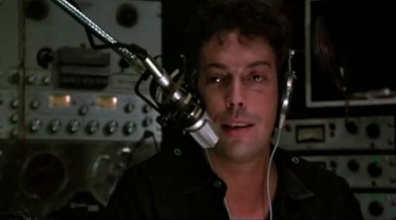
Despite their apparent differences, both are misunderstood by the adult establishment. The girls connect through their love of music their shared fandom of an all-night radio show hosted by Johnny LaGuardia played by the velvety-voiced Tim Curry, who is excellent as always. Pam admires Nicky’s free spirit, and Nicky admires Pam’s intellect. The casting of the two leads is perfect.
Following her discharge, Nicky goes back to break Pam out, wandering the hospital corridors, blasting The Ramones’ classic “I Wanna Be Sedated” on her boombox to entice her new friend to defiance. Together, they escape in a stolen ambulance and hole up in an abandoned warehouse by the east river.
DJ Johnny picks up on the story and uses it to start a movement against Pam’s father, whom he despises for trying to gentrify his neighborhood. He puts the girls on the air and makes them famous. They become Icons for other disaffected young ladies itching to rebel against the “banality” and “boredom” of their everyday lives. They start a band called The Sleeze Sisters and begin spreading their message through their music all over the airwaves in graffiti throughout the city. Even when the girls engage in potentially dangerous hijinks–they throw televisions off of high-rise buildings onto busy sidewalks as a symbolic gesture against societal brainwashing–Johnny supports and protects them.
Eventually Pam, who has been building up her self-confidence working as a stripper who “won’t dance nude” tires of Nicky’s high jinx and develops a crush on Johnny. Although it never explicitly says the two are lovers, their sleeping arrangements and Nicky’s jealous reaction to Pam’s wandering eye says it all. Nicky sets up an interview situation designed to prove to Pamela that Johnny is only in it for himself. He’s tired of his job on the night shift and sees this movement to boost his own brand and his show’s ratings. She suffers a mental breakdown and throws herself into the East River only to climb out asking herself, “What the fuck am I doing?” Johnny calls a doctor, who sedates her. Upon seeing this, Pam confronts Johnny angrily. She hates seeing her friend devoid of her usual fighting energy and inspires her to perform one last act of ultimate provocation. An illegal concert in Times Square.
Full soundtrack recreated on You Tube.
Pam calls all the news outlets and announces the free gig to take place on top of a theatre marquee smack in the middle of Times Square. Johnny’s message on the radio brings girls from all over the five boroughs to see their hero perform, dressed for the occasion with their eyes blacked out “like a criminal.” The cops show up to shut them down, leaving Nicky one last chance to grand stand “about life” and to thank Pam for changing hers for the better. She knows Pam must go home. Her Dad is watching from below. As a duo, the girls have taken things as far as they can and now it’s time for them to walk their own individual paths, each armed with the determination and confidence inspired by the other.
As a final farewell, Nicky salutes the police and Pam and jumps into the crowd. They catch her and disappears into a sea of look-alikes. Pamela reunites with her Dad and the credits roll. Over a Bee Gee’s song. An odd, preternatural choice made by producer Robert Stigwood, who managed them at the time. They have no business being on a soundtrack with Patti Smith, The Ruts, David Johansen, Lou Reed, XTC, and the Ramones. Moyle and star Johnson discuss this at length on the commentary track for Anchor Bay’s 2000 release.
Along with being a fun ride, the film is also a beautiful snapshot of what Times Square was like in 1980. The real one. Before it became boring and banal. It’s magnificent in its corruption. You can almost smell the dried semen in the 42nd Street porn theatre the girls run through dodging law enforcement in the second act. It might be odd to say that I miss that time in New York’s history. As Nicky says in the film, “No sense makes sense.”
If any movie has earned being on the video nasty list — this one is on the Section 3 group of films, which couldn’t be prosecuted for obscenity but were liable to be seized and confiscated under a less obscene charge — it’s this movie.
This is the scummiest movie I’ve ever seen outside of films like Waterpower and Bloodsucking Freaks. Every single character is a horrible person, even the protagonists. It feels like you could take a Silkwood shower after this and it wouldn’t be enough. You’d still feel dirty.
Former paratrooper and powerlifter — who would later become a born-again Christian — Nicholas Worth plays Kirk Smith, who is also a veteran and bodybuilder. He has talent — well, when it comes to the lighting and composition of his pornographic photos, which have the ability to offend everyone, even scumbags like, well, everyone else in this movie. When he’s not grunting and lifting weights, he’s calling the talk show of Dr. Lindsay Gale (Flo Lawrence, who is also in Schizoid, Over the Top and The Lords of Salem). When he gets on the air, he speaks in fake accents and complains that he has migraines and blackouts.
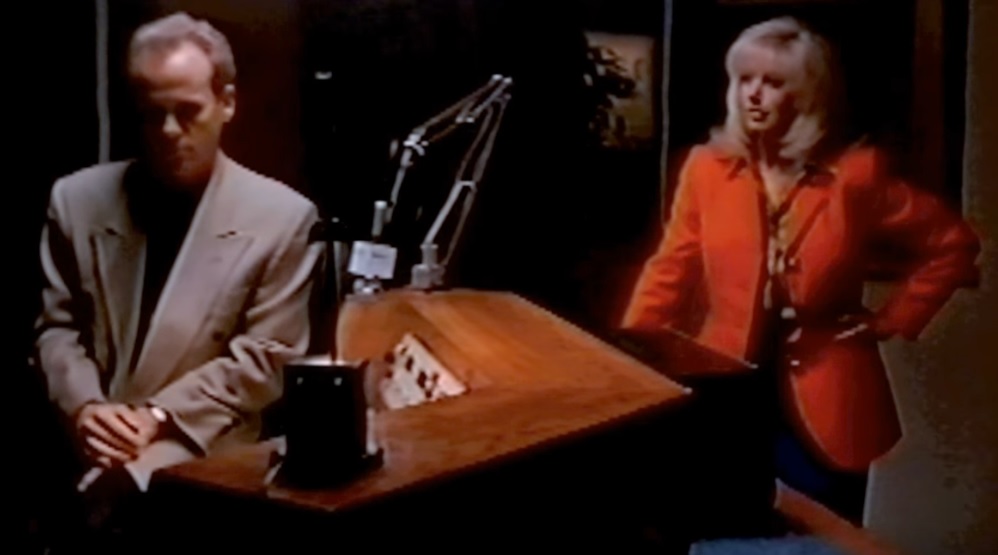
Dr. Gale on the air. While there is no radio station thanked in the end credits, it’s obvious this isn’t a set build and the film was shot in an unused production studio inside a real Los Angeles radio station. Bonus.
All of that would be fine if he wasn’t stalking and killing women right and left, not unlike the Hillside Stranglers of real life. That makes sense, as this movie was shot under the working title of The Hollywood Strangler. None of this was shot with permits, either.
It gets worse. He not only kills women, he has, well, intimate relations with their dead bodies before conducting religious ceremonies, trying to talk with his dead father and crying
Two detectives — Hatcher (Ben Frank, Death Wish 2) and McCabe (James Westmoreland, who was in Stacey and was married to Kim Darby; also in The Undertaker and His Pals) — are on the case, but it feels like they’re just as horrible as anyone else in this movie, overworked and on the edge.
There’s also a porn dealer named Sam Gluckman, played by Chuck Mitchell, who would one day be Porky himself from Porky’s, a role that is packed with more class than this movie. The sheer amount of salaciousness and scum in his scenes nearly fills the scene with bile.
Dr. Gale and McCabe quickly go from love to hate. Neither actor liked one another much, so Lawrence — who played Gale — ate a bunch of onions and Westmoreland — who was McCabe — didn’t shave on the day that their tender and romantic scene was shot.
Of course, it ends with Smith attacking Dr. Gale and McCabe saving her, shooting the strangler many, many times before he falls into a swimming pool, upon which the hero — such as this movie is — says, “Adios, creep!”
Director Robert Hammer is a one and done wonder. Sure, he made documentaries on Crosby, Stills, Nash & Young and The Steve Miller Band, but that’s it. Otherwise, he became a CFO for several companies.
Keep an eye out for April 1978 Playboy Playmate of the Month Pamela Jean Bryant as Sue Ellen. She’s also in all manner of late 70’s and early 80’s films that probably only I care about like H.O.T.S. and Lunch Wagon. Dale Kalberg, who was in scumtastic flicks like Mistress of the Apes and SexWorld, is another victim. And Susanne Severeid, who was a former model, plays yet another prostitute who ends up in Kirk Smith’s list of crimes. Interestingly enough, her husband was a WWII Dutch resistance fighter who was hired by the Simon Weisenthal Center to hunt Dr. Josef Mengele in real life.
Gail Jensen is another victim in this movie. She also performed the song “Sweater Girl” from the movie of the same name, as well as two songs on the Maniac Cop soundtrack. It gets crazier — she wrote “The Unknown Stuntman,” the theme from Lee Majors’ TV series The Fall Guy, along with being married to David Carradine, who she starred alingside in Future Zone.
If you don’t have the Pure Terror box set, you can get this from Vinegar Syndrome.
Despite my warnings of the sleaze quotient of this movie, you should know that I loved early single moment of it. I’m ashamed, but isn’t that part of the fun of lurid movies like this? If you’re of a similar mind — let’s say you’re a maniac — you will probably feel the same way.
* This review originally ran on November 27 as part of our Mill Creek Pure Terror box set of reviews. If you missed any of those 50 films, you can catch up with our Pure Terror Recap.
On the distant planet of Ganton 9, the annual Karn Evil—a societal rite of passage—is a young person’s final opportunity to experience the unbridled freedom of the decadent world before subjugating themselves to the order of the dictatorial-technocratic ruling class. When attendees of the Karn Evil right-of-passage ceremonies fail to return from their rebirthing experience, fear sweeps across the lands of Ganton as its citizens rise up in revolution to topple what is discovered to be an artificial intelligence that’s drained humanity of its will.
In other words: look down at the Smartphone in your hands, kiddies. Welcome to Karn Evil 9.
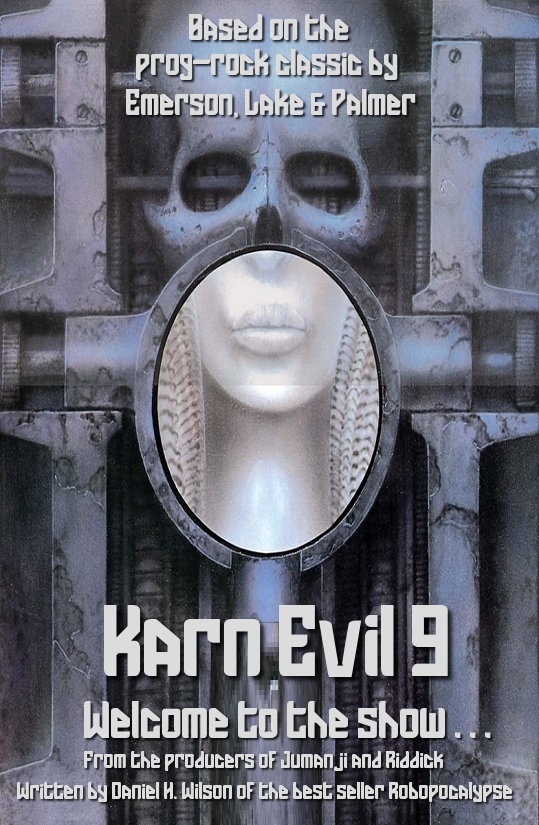
Michael Napoliello and Maria Frisk for Radar Pictures, the producers behind Vin Diesel’s Riddick franchise and Sony’s Jumanji franchise reboot, are currently working with New York Times best-selling author Daniel H. Wilson on a screenplay adaptation of the 30-minute futuristic rock suite featured on British prog-rock legends Emerson, Lake & Palmer’s 1973 album Brain Salad Surgery. Wilson, also the author of The Andromeda Evolution, most recently adapted his novel Robopocalypse for a co-production by Michael Bay and Dreamworks.
While the world came to know the artwork of Swiss surrealist H.R Giger through his 1977 book Necronomicon, which showcased his futuristic images of man meshed with machines, and became the inspiration behind Ridley’s Scott’s 1979 film Alien (check out our “Alien Ripoffs Week“), it was Emerson, Lake & Palmer who first brought Giger’s work to a worldwide audience when they commissioned the artist to design the cover for Brain Salad Surgery.
You’ve come to know Keith Emerson through his Italian giallo soundtrack work for Dario Argento’s Inferno (1980), Lucio Fulci’s Murder Rock (1984), and Michele Soavi’s The Church (1989). In addition to Sylvester Stallone’s Nighthawks (1981), Emerson also composed the soundtrack for Toho Studios’ 28th Godzilla film, Godzilla: Final Wars (2004). Here’s to hoping the production design of Karn Evil 9 will be infused with H.R Giger’s visions and the soundtrack will replicate Emerson’s use of Hammonds, pipe organs, harpsichords, and Clavinets from the album.
One thing’s for sure: Karn Evil 9 isn’t going to be no Alice’s Restaurant, a Harper Valley PTA, or an Ode to Billy Joe—but will probably freak us out with some crazy, surrealistic nightmare akin to the Beatles’ Yellow Submarine. Heaven only knows how long it’ll take before Rush sells the film rights to their 1976 epic, 2112.
In a twist of technology: Emerson, Lake and Palmer—via new technologies—will return to the road in 2025! The tour announcement at the band’s official Facebook page will get you where you need to be.
You can listen to ELP’s four-movement “Karn Evil 9” suite in its entirety on You Tube while you read the full lyrics at Genius.com and fan through the pages of Giger’s Necronomicon at Google Images. And be sure to visit our “Exploring: Movies Based on Songs” featurette, as well as our three-part “Rock n’ Roll Week” tributes. They’re all whoppers—with links o’ plenty—so grab a cup ‘o joe and join us, won’t you?
* Mock movie one-sheet by R.D Francis based on Giger’s Brain Salad Surgery. Typefaces courtesy of Picfont.com.
About the Author: You can read the music and film criticisms of R.D Francis on Medium and learn more about his work on Facebook.
Quentin Tarantino screened this hicksploitation “radio on film” obscurity during a three-night festival (on a “Redneck Night” that featured 1974’s Hot Summer in Barefoot County and 1977’s Polk County Pot Plane) to mark the May 2007 closing of the iconic Alamo Drafthouse Cinema Downtown, Austin, Texas.
I once owned a copy of this redneck radio romp on VHS from a TV (edited) taping, which I think was purchased through the VHS grey market dealer VSOM: Video Search of Miami. Or was it Sinister Cinema? Something Weird Video? It was a while back from one of those greys that advertised in the back pages of either Psychotronic Video or Cult Cinema magazines.
Anyway, I lost my copy of Redneck Miller, along with The Dirty Mind of Young Sally (an X-Rated sex-bore about a radio station secretary who ran a pirate radio station from the back of her pimp’s 18-wheeler) and Dennis Devine’s Scream precursor, Dead Girls (1990; a rock flick; not a radio flick), to a bad case of mold—which happens from time-to-time with low-grade VHS tapes from bargain-imprints. Live and learn.
I had always hoped the Q would release Redneck Miller as part of his Rolling Thunder Pictures imprint, but Miramax shut down the specialty label before we got a restored VHS copy. And since this has never been released on VHS home video, there’s no online VHS rips. Not even a copy of the trailer or any photo stills.
Shot in Charlotte, North Carolina, and making the rounds on the Southeastern U.S Drive-In Circuit via numerous double and triple bills in throughout 1976 and 1977, Redneck Miller stars Al Adamson stock player Geoffrey Land as DJ “Redneck” Miller, a disc jockey on a decrepit, small-town radio station. He finds himself on the wrong side of the local thug-pimp when he beds Pearl, Supermac’s (Lou Walker) squeeze. So while Red is bedding his best friend’s wife, Rachel, Supermac’s gang kidnaps her. And when Red thwarts the kidnapping, they steal Miller’s beloved chopper in retaliation and use it to transport drugs—and set up Red as a drug mule. Between all of the sex and fighting, Red works to clear his name.
Geoffrey Land’s career mostly consists of Al Adamson’s (Brain of Blood, Satan’s Sadists) Drive-In/Grindhouse trash-fests The Female Bunch (1971), Jessi’s Girls (1975; western “Death Wish” with a female), Black Heat (1976), and Doctor Dracula (1978). His best known works are two of Adamson’s most successful films: 1975’s Blazing Stewardesses and the Exorcist knockoff, 1978’s Nurse Sherri.
The bit part, B-Movie career of familiar black actor Lou Walker culminated with roles support roles in Mississippi Burning (1988) with Gene Hackman, My Cousin Vinny with Joe Pesci (1992), and The Firm (1993) alongside Tom Cruise.
Screenwriters Joseph Alvarez and W. Henry Smith knew their backwoods: they also collectively wrote 1974’s aforementioned Hot Summer in Barefoot County and 1975’s Trucker’s Women for producer Will Zens and the General Film Distributors-Preacherman Corporation brain trust. Personally, I’ve never heard of or seen their early ‘70s precursors Preacherman and Preacherman Meets Widderwoman on the VHS shelves—and good luck finding those two obscurities (yeah, it figures Sam heard of it!). The same goes for director John Clayton’s Summerdog (1977) and Duncan’s World—never seen them on VHS or UHF-TV. Another of Will Zens’s hick romps is the musical, The Road to Nashville.
Say what? You need more redneck flicks? Then check out our “Top 70 Good ‘Ol Boys Film List” that round-ups our month-long reviews of downhome, hicksploitation obscurities released from 1972 to 1986. And you can learn more about Quentin Tarantino’s love of film with “Exploring: The 8 Films of Tarantino’s Rolling Thunder Pictures.” And we’re reviewing movies set inside radio stations all this week, which we will round up with another one of our patented “Exploring” featurettes his coming Saturday at 6 PM with even more radio flicks.
About the Author:You can read the music and film reviews of R.D Francis on Medium and B&S Movies, and learn more about his work on Facebook.
Sometimes, those stars on the Hollywood Walk of Fame align.
Courtesy of B&S About Movies’ recent obsession with Christmas movies written and directed by David DeCoteau and Fred Olen Ray—some of which starred Eric Roberts—colliding with our recent flurry of reviewing radio broadcasting-set films—one of which starred Eric Roberts (Power 98)—careening off our recent “Ape Week” homage to the Planet of the Apes franchise, it brings us to this moment: a review of the debut screenplay by Mark Bomback, the producer and screenwriter behind Dawn of the Planet of the Apes and War for the Planet of the Apes.
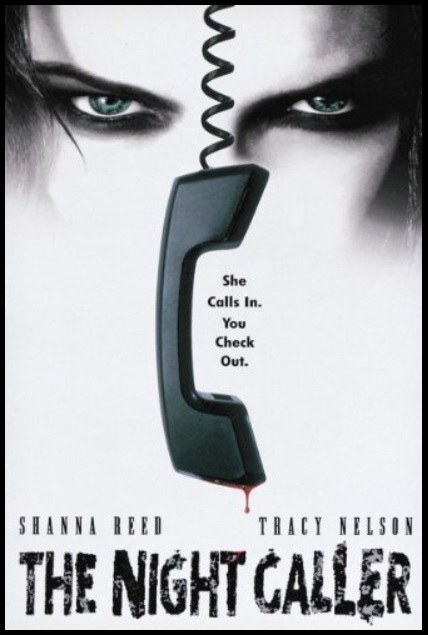
Like David Mickey Evans before him: every screenwriter has to start somewhere. Before Evans got to Radio Flyer (1990) and The Sandlot (1993), he had to write, yes, the radio-psycho romp, Open House (1987). For Mark Bomback, his start in the business was writing a direct-to-video damsel-in-distress vanity flick produced by American television actress Shanna Reed (CBS-TV’s Major Dad).
Needless to say, one’s first impression of The Night Caller is that it’s a variant of Clint Eastwood’s Play Misty for Me—only with Tracy Nelson (NBC-TV’s Father Dowling Mysteries, the “female” Jerry Seinfeld in the “The Cartoon” episode) in the role played by Jessica Walter. Only Nelson’s Beth Needham isn’t a spurned one night stand who transforms into a flat-out crazy bitch; the character is a bit more twisted and prone to psycho-visions and voices and suffers with an unhealthy co-dependency on her mother, so she’s more like Norman Bates.
However, as I re-watch The Night Caller all these years later, I can’t help but think that Stephen King’s Misery (1990) served as an influence, with James Cann’s famed novelist Paul Sheldon traded out for Shanna Reed’s Dr. Drew-inspired radio psychologist. Once you hear Nelson’s wholesome rants-mixture of horror and dark comedy with the epithets of “baboon butt, “snoopy poopy,” and “bossy the cow,” and her singing goofy, nonsequential songs about “peanuts up your nose,” you’ll understand the connection.
Do not, however, let the fact that this radio-psycho variant went straight-to-video and aired on Showtime leaving you to think The Night Caller is inferior to the bigger-budgeted, theatrically released Psycho, Play Misty for Me, Misery, or Hand that Rocks the Cradle. Tracy Nelson tears this movie up, giving us an amazing performance that equals and exceeds the psycho interpretations of Anthony Perkins, Jessica Walter, Kathy Bates, and Rebecca De Mornay. Nelson single-handedly saves what would have otherwise been just another run-of-the-mill Lifetime-inspired damsel-in-distress romp.
Nelson’s Beth Needham is a childish, socially-repressed and friendless, thirty-something convenience store nightshift clerk who spends the days taking care of her bed-ridden, verbally abusive mother (TV actress Eve Sigall in a bravo performance) who blames Beth for her own sexual abuse at the hands of her late father. Beth finds solace in the late night musings of Dr. Lindsay Roland on the air of San Diego’s KBEX radio—her obsession brimming with lesbian tendencies. (If this was produced as an R-rated theatrical, that sexual dynamic may have been more deeply explored; so here, it’s just insinuated.) So deep is Beth’s obsession—in bed she fawns over Dr. Roland’s picture in the newspaper—she’s prone to seeing visions of the radio shrink as a glowing, white-adorned advice-granting angel.
One night, when Beth musters the courage to call into the show to tell of her plight, Beth takes the good doctor’s encouragement to “make changes” and to “plant the seeds” of friendship, literally.
Before you know it, Beth threatens her boss with a knife, quits her job, and murders her mother—and “pickles” her hands in mason jars. But those angelic visions and advice aren’t enough: it’s time to “plant the seeds.” Beth’s stalking leads her to apply for a job with the answering service used by the radio station—and Beth’s kills the woman who got the job. Then Beth’s knocking off babysitters, answering service coworkers, and radio station employees—with it culminating in her kidnapping Dr. Roland and taking her on a motorhome road trip to their “new shiny, start” so they can live like “Thelma and Louise.”
As far as the problems with the technical accuracy of radio stations in film, “KBEX San Diego” gets a pass.
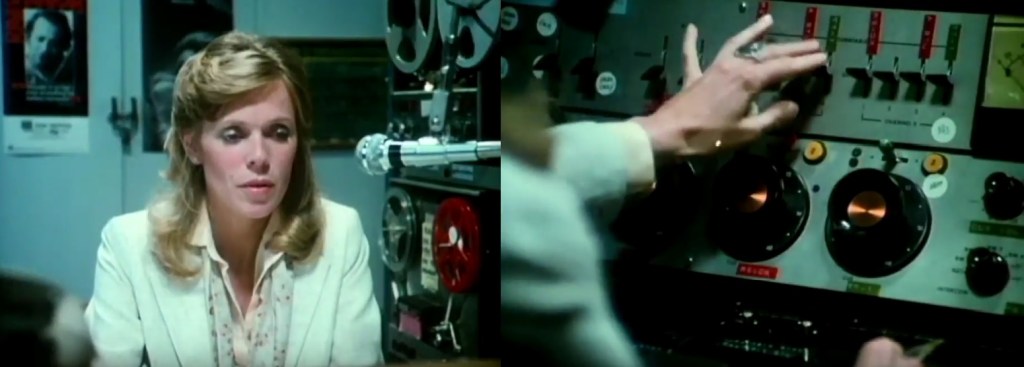
That’s because The Night Caller isn’t about Shanna Reed’s good doctor: it’s all about Tracy Nelson’s tour-de-force and her psyche. As result, there’s no need for any scenes of Dr. Roland’s day-to-day toiling at the radio station or any broadcasting expositional dialog with station managers, etc. And since there’s no “thank you” in the credits to any particular radio station or technical credits, the “radio studio” is a cost-effective build (set design) with a microphone boom screwed into a table top; slap a set of headphones on Shanna Reed and have her punch a couple buttons on a wired-up Telos phone board—and “shoot it tight” and in the shadows—and POOF, you have a radio studio on a budget.
While The Night Caller was released in 1998 on both VHS and DVD in the overseas-international marketplace, it was never released on DVD in the United States. So be wary of those online DVDs and know your regions, and watch out for those grey market DVD-Rs before you buy. None of the online content delivery services, such as TubiTV or Vudu, are streaming The Night Caller. Amazon Prime had it, but lost their rights to it. So you’ll have to settle for a really clean VHS upload on You Tube.
About the Author: You can read the music and film reviews of R.D Francis on Medium and learn more about his work on Facebook. He also writes for B&S Movies.
“If God didn’t want us to masturbate, he would’ve made our arms shorter.” —Karlin Pickett, KRZY “Power 98” Radio
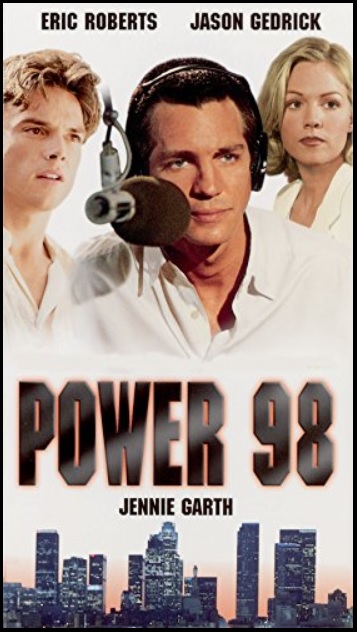
Chances are—even if you are a diehard fan—you missed this neo-noir erotic thriller from Eric Roberts’s direct-to-video and direct-to-cable twilight years, one of his—to date—prolific 562 film and television roles. Even his most diehard fans wouldn’t be able watch each and every one of the 74 projects he filmed in 2017 alone. But we sure as hell try.
Why?
Because we, the fans of the video fringe, praise Eric Roberts with the same high regard we bestow to David DeCoteau (A Christmas Cruise) and Fred Olen Ray (A Christmas Princess). Yes, we will sit through a Lifetime damsel-in-distress movie—their Stalked by My Doctor franchise, now up to part 3—for our Eric Roberts fix. Yes, we sat through two Hallmark holiday movies—A Husband for Christmas and The Great Halloween Puppy Adventure—that Eric Roberts shot for David DeCoteau. Yes, we streamed Fred Olen Ray’s Boggy Creek: The Series on series on Amazon Prime just to listen to Eric Roberts’s voiceover narration. Yes, we watched David DeCoteau’s A Talking Cat just to hear Eric Roberts be . . . well, a cat.
Eric Roberts—as well as Nicolas Cage and John Cusack (Arsenal)—is either a down-on-his-luck and past-his-prime desperate thespian taking any job that comes his way to pay the bills—or he’s a brilliantly prolific actor who turns celluloid lead into ribbons of gold. For us, Eric Roberts is always the latter and never the former. When a project needs a slimy scumbag that, regardless of the slime, remains charismatic and likeable, Eric Roberts is the man who never disappoints his audience.
Such is the case with Power 98, the lone fictional writing and directing credit of Jaime Hellman, an equally prolific, Emmy Award-winning TV documentarian director (CBS, Oxygen, CNN) who delivers a script that’s not only well-versed in the film noir genre, but in the radio broadcasting industry as well. Courtesy of Hellman’s well-researched script rife with spot-on expositional broadcast terminology, Roberts’s—as well as Jason Gedrick’s and Steven Tobolowsky’s—radio broadcasting professional characters sound like—unlike most TV series or films set inside radio stations (see Zoo Radio as the worst case example)—real radio broadcasting professionals. Also lending to the film’s credibility: it was filmed, after hours, inside a real radio station: KPHX 1480 AM located Phoenix, Arizona (which doubles as L.A in the film). The sharp cinematography is courtesy of commercial director Kent Wakeford, who got his start behind the lens on Martin Scorsese’s Mean Streets (1973) and Alice Doesn’t Live Here Anymore (1974), along with the Blaxploitation classic Black Belt Jones (1973).
Unfortunately, Power 98’s direct-to-video low budget format stymied the more-than-competent Hellman and Wakeford celluloid tag team. If this radio-set neo-noir had been backed with a mid-double digit millions budget that would have lent to expanding its 89-minute cable movie length to a 120-minute theatrical length, Power 98 could have achieved the blockbuster erotic thrills of Adrian Lyne’s Fatal Attraction (1987) and Paul Verhoeven’s Basic Instinct (1992) or, at the very least, the backstabbing betrayal highs of John Dahl’s indie film noir homage, The Last Seduction (1994). Thus, we’re left with a film that stagnates as being too racy to qualify as a Lifetime damsel-in-distress flick and not racy enough to qualify as an Andrew Stevens and Shannon Tweed erotic soft-core fest for the late night Showtime cable crowd.
Yes, Power 98 could have been so much more. But it could have been much less. And that’s why we love Eric Roberts: he balances the scales of cinematic injustice for the low-budget film maker.
Think back to Clint Eastwood’s directorial debut, the definitive radio psycho romp, Play Misty for Me (1971) (which Fatal Attraction later ripped off, only ditching the radio angle), with the disc jockey—and not the fan—as the psycho. Instead of Barbet Schroeder’s Single White Female (1992), think Single White Disc Jockey. Now you’ve descended into the twisted and paranoid, murder and revenge-filled neo-noir that is Power 98.
Eric Roberts is Karlin Pickett, a successful shock jock on the air in Phoenix with lots of fans—female fans in particular. After one his (many) one-night stands goes bad—with his date taking a seven story header—Karlin covers up her death and heads to Los Angeles. Rick Harris (Stephen Tobolowsky; Ned Ryerson in Groundhog Day and Commissioner Hugo Jarry in HBO’s Deadwood), the owner of a dying classical music station in L.A isn’t fond of Karlin’s brand of humor concerned with penises, testicles, and masturbation, but he does “love the numbers,” so women judging male butt contests and strip poker tournaments on the air, it is.
But this is a film noir and Karlin’s “big plans” for his show needs a patsy, so he picks Jon Price (Jason Gedrick; 1986’s Iron Eagle, 1991’s Backdraft), an ambitious producer at the station with dreams of getting his big break. The screws begin to turn when Jon discovers a creepy call from “Eddie,” in which he confessed to a murdering a woman, was faked—so says Karlin; he set it up “for ratings.” That is until two detectives (Larry Drake of Darkman and Dark Night of the Scarecrow and James Pickens Jr. of TV’s Grey’s Anatomy and The X-Files) inform Jon that the caller wasn’t a crank. Then another dead woman shows up—and this time, all evidence points to Jon. And, with that, it’s a cat and mouse game of turning screws, bitchy women, and smoking guns as the cyanide-laced bourbon flows. And guess who “Eddie” turns out to be?
Courtesy of the film’s distribution through Warner Home Video and Curb Records’ distribution relationship with Warner, be sure to stick around for the end credits, which feature the track “Sea of Love” by Lonesome Romeos. Signed to Curb Records, the Los Angeles-based alt-rock/roots-rock power trio also placed two songs, “U.S Male” and “Oh, You Angel,” on the soundtrack for the baseball comedy, Major League (1989). If you’re into Bruce Springsteen, John Cougar Mellencamp, and Tom Petty (Heartbreakers’ drummer Stan Lynch and keyboardist Bentmont Tench backed the Romeos in the studio on their 1989 and 1996 albums), then you’ll dig the Lonesome Romeos—one of the many forgotten bands that drowned in the grunge wave that swept in from the Pacific Northwest and wiped out the Los Angeles music scene.
You can watch pristine uploads of Power 98 for a small fee on Amazon Prime, Vudu, and You Tube. Or you can watch a pretty clean Finnish-subtitled version on You Tube for free. And be sure to check out Eric’s Vanity Fair career retrospective, it’s a great read.
Yeah, we love Eric Roberts. And always will.
If you have a You Tube account — and don’t we all — you can watch the unlisted and non-embed, age-restricted sign-in only trailer, here.
There’s more radio flicks to be had on B&S About Movies with the comedies A Matter of Degrees and FM, and, the slasher flick Open House, and the suspense-thriller Outside Ozona. In fact, this is the first review of our weeklong blowout of movies set inside radio stations. Stay tuned to B&S About Movies on your radio dial!
About the Author: You can read the music and film reviews of R.D Francis on Medium and learn more about his work on Facebook. He also writes for B&S Movies.









 B&S About Movies
You must be logged in to post a comment.