Half Past Midnight (1988) and Heaven is Only in Hell (1994)

Editor’s Note: We’re also discussing the writer and director’s earlier works Pandora (1984) and Dance Macabre (1986) within this review.

The original VHSs/courtesy of mattressparty/picuki.

Thanks to the digital realms, with horror fans willing to rip VHS tapes into DVD-rs for their retro-retail portals and video-sharing sites, the once-lost, extremely-hard-to-find resume of Wim Vink — which has all of the earmarks of the ’80s SOVs we adore at B&S About Movies (thus our joint “SOV” and upcoming “Video Nasties” tribute-review weeks) — is easier to discover.

Well, unless you live in the Netherlands, where these films were shot-on-film stocks and distributed exclusively on VHS tapes, independently, by Wim Vink.

Vink’s was an oeuvre you didn’t hear about during the height of the video ’80s in the U.S. You may have picked up on the films in some of the more, offbeat, pulpy underground mags n’ ragzines of the day; possibly you back-page ordered (Spine and Blood Cult) or back-page tape-traded a grey copy. However, we, the many, had their first exposures via the Internet, as horror aficionados began praising the work on blogs, genre message boards, and websites. Maybe, as I did with Pandora — my first exposure to and the only film of Vink’s I’ve seen pre-Internet — many years ago, you picked up a grey copy (along with the U.S. made but Japan-distributed Cards of Death) at your local comic book store.

Vink’s works are intelligent films rife in scene details, but with very little dialog. They’re films that wear a Romero and Argento influence on their bloody sleeves, only with more of an art house film vibe. Some say the films are “boring and repetitive” — and more so with the only full-length film in the Vink catalog, Heaven is Only in Hell. However, that is the whole point of a Vink joint: the devil, if you will, is in the details: the mundane details. For the mundane is, in fact, our reality. Sure, a “good” or “professional” filmmaker knows how to edit out those moments for “narrative flow,” etc. and so on. Well, you know what: when I want that in my film, I’ll load up an A24 or Blumhouse “shock-scare” set piece.

Me, I’m the guy who watched Don Coscarelli’s Phantasm at the local duplex in 1979 and was jaw-dropped. Sam Raimi’s The Evil Dead dislocated my mandibles as a “Midnight Movie.” (And, along the muddy water banks of the Waal, bordering the south-central city of Tiel, it seems Vink lost his own, lower jawbone.) And I’ve rewatched the ‘Cos’s and ‘Ram’s debuts more than I’ve watched Star Wars — and I’ve watched them every Halloween, since. Look, I’m a Dennis Devine SOV-type of guy; the one who has watched Fatal Images and Dead Girls more than the average VHS purist. I can go on and on . . . and on — and I have during this “SOV Week” — about the films of Doug Ulrich and Al Darago (Snuff Kill). I adore the heart and inventiveness of each and every one of these filmmakers.

My only beef: Wim Vink is, unlike Coscarelli, Raimi, and Devine, an utter mystery — at least here, in the U.S. (Well, not so much, anymore, as we’ll discuss, later.) Even the Ulrich-Darago collective under the shadow of Vink, is easier to uncover in our Google world. Vink’s career is a series of fan-blogged and message board bits n’ pieces — and we’re doing our best to pull it all together, for a one-stop, Wim Vink shopping experience, right here, at B&S About Movies, in little ‘ol Pittsburgh, U.S.A. (along the muddy river waters of the Allegheny).

In fact, while many believe Vink’s resume of pro-super-8 and 16mm films consists of only four films — it’s actually a resume of eight films. The others — it seems, are forever elusive in the U.S. — are ZombieHorror (1981), Surrealism (1982), Porror (1988), and the Star Wars homage Luke Skywalker Meets the Horror of Darth Vader (1989).

Yes, Wim Vink’s career demands a box set — complete with a color booklet, commentary tracks, and other various vignettes. Make it happen, Severin. Yeah, we know about the music cues “borrowed,” and it’s a music copyright licensing nightmare. However, Wim Vink’s films must be digitally preserved: he is a Dutch filmmaker of historical importance and deserves to have his oeuvre contained in a luxurious box set. So make it happen, ahem, Arrow Films.

Alas . . . until then, and every now and then, we’ll just have to keep plugging “Wim Vink” into search engines and video hosting sites — with the hope that the remainder of Wim Vink’s resume surfaces, somewhere. . . . I want to set up a theater in Pittsburgh, fly in Vink, and have an all-day retrospective — complete with a question and answer event, then have fans line up to buy DVDs and posters for a signing session. Hell, we’ll invite Quentin Tarantino and Nicolas Winding Refn.

Calm down, R.D. Settle. . . .

The reality is: Wim Vink’s films are, in fact — regardless of the “depth of field” issues that appear from time to time (but that’s more of a VHS tape wear n’ tear issue) — “good” and “professional,” properly-edited films. Vink’s films are not just some U.S., 16mm-blown-to-35mm “backyarder” from the Drive-In ’70s (say, like the pretty fine works of Maryland master Don Dohler), nor an ’80s SOV’er start-n-stop-start shot over months of weekends on the non-thespian “friends and family plan,” on-the-sly, sans permits. Vink’s works consistently hit all of the engaging, cinematography touchstones of well-framed singles and doubles, wides, reverses, cutaways, and even “POV” and “God Shots” in the frames.

The films are also — especially Heaven is Only in Hell — packed with background actors, aka extras: and they’re real, trained actors (some say they’re friends and acquaintances; if so, they so a stellar job). And we know this because of the natural approach of the acting exhibited. No one in Vink’s films are deer-in-the-headlights-I’m-in-a-movie! acting for the cameras. And while Vink’s films are practically void of dialog, the leads are effective — in conjunction with Vink “professionally” setting a scene — in “selling the drama” at hand through staging and body language.

There’s a great scene — sans dialog (as with all of the films; the only audio present is soundtrack music) — in Half Past Midnight where one of the bullies leans over the nurse’s desk-station to speak with her mother: a character whom we’ve already met, earlier, in the film. So, we know they’re “conspiring” to hide the daughter’s behavior that put our tortured protagonist in the hospital, in the first place. In the next scene: mom’s injecting poison — with the purpose of murder.

Vink’s work with that hospital scene takes me back to Francis Ford Coppola’s work in The Godfather, which I rewatched in the same week as Vink’s slight resume. (Settle, hear me out.)

Al Pacino’s Michael Corleone goes to the hospital to visit his father, Don Corleone, to discover the police officers assigned to protect his father — as well as hospital workers — are missing. Then, footsteps. The assassin is coming . . . revealed to be a bouquet-bearing Enzo, the neighborhood baker, only wanting to pay his respects. Michael — without dialog, his mind working — sees Enzo in his fedora and overcoat: he looks like one of pop’s men. So Michael asks Enzo for a favor: stand outside, in front of the hospital. The “presence” will stave off the assassin until the “family members” arrive to protect the Don. No dialog: just staging and actor body-language.

Then there’s the Corleone wedding scene: Today, that extensive scene would be studio-cut to shreds. But it’s a scene with all these, wonderful, engaging little details and events — moments that add nothing to the narrative at hand (the grandfather sings a dirty song in Italian, for example) — but it’s details that need to be there.

Vink’s work is filled with those same, non-dialog and, what seems, superfluous details. Yes, even though Vink is working in the SOV-horror realms, those works, while admittedly rough in spots, are competently produced works (unlike, say, 1985’s abysmal Blue Murder) and probably the best-produced works in the annals of ’80s SOV-to-retail and ’70s 16-to-35mm-to-Drive-In distribution (something like 1967’s abysmal Night Fright comes to mind as the worst-produced 16-to-35mm romp).

While there may be music-cheats (but really “homage”) afoot in a Vink joint, in terms of staging, there’s no “cheat” in a Vink film: we get a staging, prop, and set design competence not prevalent in most other, SOV or 8 and 16mm horrors.

During Vink’s lone feature-length production, Heaven is Only in Hell, that’s a real fire truck and real ambulance in the scene — a scene packed with voyeur extras (voyeurism is one of the film’s subtexts) — and real first responder personnel amid a well-stocked, engaging crowd. We’re inside a real hospital, not some errant room with a bogus, unconvincing dressing. And a real school campus, both interior and exterior. A character is a car mechanic: we’re inside a real garage, and a real hair salon, a real record store, and so on. So, yeah, a Vink production is not your typical SOV or single-digit-mm joint: somehow, all of the locations — regardless of the budget — are booked, and up the overall production values.

Vink’s earliest was Pandora (1984), a shot-on-8mm tale-to-video of Romero-styled zombies, shot-in-Dutch (the only one), concerned with an Evil Dead-styled box with the power to raise the dead. Eh, who needs the English language when you can listen to zombies (loudly) munching. Then there’s Dance Macabre (1986), with more Romero-undead mayhem by a cult that raises a female’s skeletal remains who then attacks people and starts a zombie plague (more munching) in an apartment complex. Both are short in content, but, oh, so long — as all of Vink’s films are — on style: a Lucio Fulci fever dream, if you will.

Pandora and Dance Macabre are extremely hard to find on VHS (again, at least in the U.S.). Today, we’ll review the two easiest-to-find films: the main subjects of this two-fer review, and then we’ll ease into those first two films.

Half Past Midnight (1988)

Courtesy of the IMDb.

Dutch writer-director-make up artist Wim Vink’s next SOV’er concerns a shy, sweet girl bullied at school by her fellow classmates: your typical, ’80s big-haired and mascara-type bitches, and boyfriends. Debbie loves computers and electronics and solders circuit boards (which comes in handy for the later mayhem). She loves photography. She has great relationship with her mom. She rides a bike, everywhere.

Why do her classmates hate her so?

They’re bullies. There is no reason.

Since Vink is a director of details, one of surrealistic-slanted cinematography, there’s little to no dialog to tell us why: for Vink is about the actors selling the story — which they do, both lead and background. Sure, the “story” all seems mundane, at first watch (you can’t watch it just once), but that’s only to heighten the shock of when Debbie gets her revenge by killing her tormentors one by one, in extremely gruesome, bloody ways — and OTE gory and bloody, in the best of ways.

Half Past Midnight is a great example of ultra-low-budget horror. It’s absurd. It’s raw. It’s awesome. And it was shot in Tiel, Gelderland, Vink’s hometown. So it is truly homegrown, which makes us love it, even more.

Half Past Midnight is also, only half an hour long (and in English) — the prefect length, due to its brutality — with its tale of Debbie (Angelique Viesee), an attractive-awkward student, relentlessly bullied by her dickish classmates. One is a voyeur always taking pictures of Debbie’s misfortunes. Her teacher (Ad Kleingeld) takes pity, but with an ulterior motive: he rapes her.

While it’s not established if we are in a high school or college, everyone looks to be beyond their teen years. And that office building looks more “college campus” than “high school” to these eyes. So, that takes the creep-factor off the fact Debbie’s, obviously older, teacher asks her on a date. Now, mind you, without dialog, Vink’s made a statement on how easy it is for a sexual predator to chose and manipulate an insecure victim; the simplest act of kindness to a put upon person can open the door to a graphic event. Again, it’s about the “reality” in a Vink production.

As we mentioned: voyeurism is part of the — non-verbal — subtext. Everyone stands by and watches Debbie being assaulted, brutally, and does nothing. And when one does, such as her lecherous teacher (helps her pick up dumped books and papers; has her collect the student’s papers after class), it’s only as a backdoor for his own assault. Then, the bully who photographs Debbie’s assaults — in an eerie foreshadow of today’s smartphone-viral media sickness — develops the film in a dark room, with a glean in her eye.

So . . . the bullies are back: with a teacher now in their corner. The students ambush-spray an aerosol can in Debbie’s face and blind her. She stumbles into traffic and is hit by a car. She survives, barely. But a nurse at the hospital — the mother of one of the bullies — injects poison into Debbie’s eye.

Debbie dies. (We think.)

Debbie returns from the dead — whatever was injected in her eye, reanimates her (we think) — so she lays waste to the lot of them, going “Ash” on their asses, if you will. Using her electronics skills, Debbie solders herself a belted-power pack, complete with knife sheath, to run an electric chainsaw. And said chainsaw POVs into chests, as butcher knifes go through-and-through necks, as well as sawed off arms, and torso dismemberment, and intestinal flow, ensues, in one of the bloodiest, seven minutes ever committed to film. The only thing missing is a penis detachment by hedge clippers.

So, you thought Deadbeat at Dawn was the ultra-low-budget throwdown. Eh, piffle. Jim Van Bebber is a pussy compared to Wim Vink. Debbie ain’t no Carrie (a definite influence, here, alongside The Evil Dead) that’s for damn sure, for no ESP is required. Just a chainsaw, please. Oh, and lots of loud, screamin’ guitars by Rob Orlemans!

Half Past Midnight is simply fucking amazing. Period. Exclamation point.

Heaven is Only in Hell (1994)
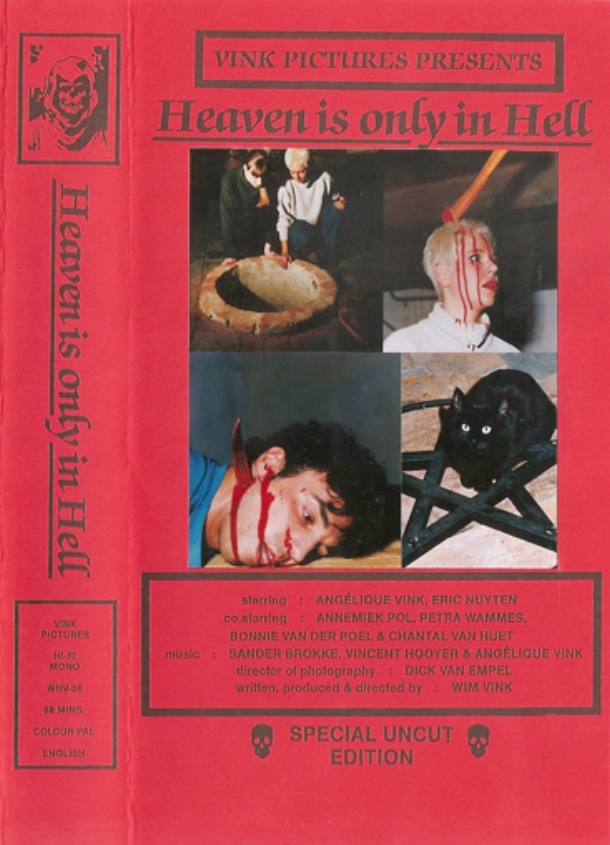
Courtesy of VHS Wastleland.

The joy of a Wim Vink film is, not only recognizing the musical-homage cues, but the plot and visual cues. In the case of Vink’s only feature-length film, fans cite Michele Soavi’s classic The Church (1989). And if you’re familiar with that film — of course you are — the film unbalances you with its “what the hell is going on” plotting. Soavi’s works (the early ’90s pieces of StageFright, The Sect, and Cemetery Man) are less about fixed, narrative flow and more about image collages; loosely connected nightmares. And as with Vink’s other works: the characters are connected, somehow, then they’re not. The Vink modus operandi: ambiguity.

Here, we meet Mike and Sharon; he works as a garage mechanic, while Sharon works as a bookkeeper at stereo store. (Were they once related; now reincarnated in a future, apart, now searching for one another?) A local house for sale — where someone previously died (when, who knows/or is Mike seeing his future) — begins to haunt his mind, to the point his work suffers. Sharon, likewise, is disturbed by the same visions: the result of her psychic abilities.

Of course, as with the characters in each of Wim Wink’s films: the characters don’t live fast, they slowly exist in boring, mundane lives: going to work, then home, work, home. And it’s the drudgery that make them susceptible to the supernatural, in this case: the ghostly chants urging them to open a well’s portal.

Their dreams/visions concern a centuries old pagan coven, led by a witch and her young daughter (?), and a cursed, ancient well that, as result of progress, is now in the basement of the empty home Mike purchases. Meanwhile, Sharon’s visions overwhelm her to the point that she breaks into the house to find the “Hell Well” in its cellar — set in the middle of a finished, wooden floor, covered by an iron pentagram. And Sharon brings a “sacrifice” from her aerobics class; with fresh blood, she can now descent into the well. Mike? He hesitates and rejects his mistress: he’s strung up “Evil Dead” style by ghostly ropes from the home’s attic’s rafters — and slaughtered.

This time, the soundtrack’s all-original, composed by Angelique Vink (who also plays Sharon), as well as synth-numbers by Sander Brokke and Vincent Hooyer. And, again: sparse dialog, with only the repetitive looping of the film’s opening chant-narration for an unsettling, moody work of horror impressionism (think F.W. Murnau’s Nosferatu from 1922, better yet: Carl Theodor Dreyer’s stellar, Vampyr, from 1932). Again, detractors may say the film is overly repetitive and padded; that maybe so. However, I see it as a purposeful, artistic-narrative choice: Mike and Sharon’s lives are so, utterly empty, their aural and mental visions consume their lives to the point of an obsessive-compulsive disorder.

So, with that, as mysteriously (well, at least outside of the Netherlands) as Wim Vink drifted into the VCR-driven snows of the SOV ’80s . . . he dissipated into the developing, nickle-collated, laser-spinning ethers. For Wim Vink’s visions were not meant for a digital world, only the analog tapes of the past. . . .

Image courtesy Letterboxd. Both are available as a two-fer PAL-VHS in overseas markets.

Pandora (1984)

Oh, Hail Satan and the hell with this being in Dutch with no subtitles. All I know is I’m nostalgia waxing an Amando de Ossorio-meets-Paul Naschy Spanish zombie joint, à la Tombs of the Blind Dead and The People Who Own the Dark. (Hey, did you see the 2020 homage-sequel, Curse of the Blind Dead, yet? Do it!)

Now, when you see the word “Pandora,” you think “box,” but what we have here is a book . . . well, there’s a box, too . . . as well as music cues lifted from Suspiria, The Exorcist, and even some Tangerine Dream*. Of course, the music is gone . . . so we can hear the zombie munching n’ licking n’ slurpin’.

What’s great about Vink’s work is that it’s a body of work that understands film is an art form based in “showing” and not “telling”; for film is 90% visual and 10% dialog (and the stage is the reverse). A film’s images tell the story though props, an actor’s body language and, most importantly: that your actors are not skilled in the craft of acting—but “being.” This was a fatal mistake made by James Glickenhaus (The Exterminator, producer of Maniac Cop) with his debut film, The Astrologer (1975, aka Suicide Cult): he didn’t have a complete grasp of — as does Wim Vink — of cinematography; so his otherwise intriguing film, bogs down with 60 minutes of ponderous dialog against its 79-minute running time. This is a “mistake” not experienced in a Vink film.

So, regardless of language, we have a young woman who requests information on a book; the librarian directs her. Why would a book that can open a doorway for the dead to rise be in the library? Why was the woman looking for the book?

I don’t care.

All I know is, she — we think — has been “possessed” by the book, and having visions of a white-robed witch. And a leaf-covered sarcophagus slides open and four, Bob Clark/Alan Ormsby,’60s era Children Shouldn’t Play with Dead Things zoms are now the white-cloaked witch’s army of the dead. And they need to retrieve a box — from a businessman who possessed the box.

Fog starts pouring out of the box. One witch stabbing later: lunchtime for zombies — and it’s better than anything dished in Bruno Mattei’s Hell of the Living Dead.

Then, the woman who checked out the book, buys that errant “Pandora” box from an antiques shop . . . and the witch and her zombie quartet are back, for the box. And we get a little bit of time displacement, a sudden transport into a cavernous crypt, and an even larger zombie army. . . .

Dutch language, be damned, this film rocks my rocks offs.

Dance Macabre (1986)

In 1978, Sam Raimi, Bruce Campbell, Rob Talpert and Scott Spiegel released their their proof-of-concept short Into the Woods: a tale about a group of friends who desecrate an Indian burial ground while staying at a cabin. Around that same time, Don Coscarelli began filming Phantasm: his tale about two brothers running afoul of a cryptic mortician. Romero released Dawn of the Dead that same year. Dance Macabre is a homage to those films, right down to a music-pinch from Phantasm’s funeral scene, as well as synth-cues from Romero’s, as well as Argento’s and Fulci’s zom-romps (you’ll know ’em when you hear them). And I love the hat tip to Coscarelli, courtesy of a reenactment of Jody first meeting The Tallman, right down to the bone chilling, “Sir.”

Oh, my beautiful Vink surrealism. My only complaint is that the film isn’t longer than 22 minutes. My greatest love: there’s never one moment of silence. Outside of a character’s ritual chant, no one speaks, but the ripped music cues never stop, throbbing, trapping us in a black-metal disco on the cusp of a Dante circle. Well, except for the flesh munching. . . .

We first meet a trio of necromancers digging up a coffin of skeletal remains.

Why? Who cares.

Then we’re traveling down a modern-day road in a 19th Century-styled, horse drawn carriage. In the back: a kidnapped girl, then carried up to the attic of an apartment building. One throat slit and blood flow later: we have a white-eyed, big-haired blonde demon reanimated and on-the-loose (with a knife-licking fetish), impaling knifes into foreheads and ripping across throats of the building’s tenants.

Of course, the dead rise as a plague breaks out in the building. A SWAT team is called in for a little Pittsburgh-inspired cops vs. zombies battle. . . .

Who were the necromancers? Were they in the past? Who’s the blonde? Sure, she’s a witch, but from when and whom?

I don’t care. . . .

I just watched a film with more fun packed into 22 minutes than any 90 minute VHS slopfest I’ve watched in my analog lifetime. Dance Macabre is everything I want in an SOV horror — even though this was shot on 16mm. And it only gets better with Half Past Midnight, and even better-better with the full-length opus, Heaven is Only in Hell.

Why didn’t Argento, Fulci, or Romero see the magic in Wim Vink and bankroll a 35mm feature proper? What a fucking tragic, missed opportunity.


The VHS reissues/courtesy of onorato73/picuki.

Were to Watch

  • You can watch Heaven is Only In Hell on You Tube courtesy of BurialGround5 — what would we do on Saturday nights without BG5?
  • Someone by the name of Jurgen Telkamp saved Half Past Midnight for the digital realms — god bless you, brother — on You Tube. Devilman666 comes with the back-up assist on another You Tube copy, as well.
  • You can watch Dance Macabre on You Tube, thanks to Hipster Pobre.
  • You can watch Pandora on You Tube courtesy of altohippiegabber. Just wow. The memories. Thank you!

Vim Wink’s Complete Resume (Thanks, Alto!)

1981 — ZombieHorror (30 mins)
1982 — Surrealism (25 mins)
1984 — Pandora (30 mins)
1986 — Dance Macabre (22 mins)
1988 — Porror (6 mins)
1988 — Half Past Midnight (32 mins)
1989 — Luke Skywalker Meets the Horror of Darth Vader (5 mins)
1994 — Heaven is Only in Hell (86 mins)

Our thanks to the Dutch-language Schokkend Nieuws Film Magazine for permitting us to translate and post their July 2013 interview with Vim Wink. Visit “Shockkend Nieuws Film Magazine: An Interview with Dutch Filmmaker Wim Vink by Hans Minkesto learn more about the filmmaker, right here, at B&S About Movies.

* Be sure to visit our “Exploring: 10 Tangerine Dream Film Soundtracks” featurette. Yeah, we love Tangerine Dream as much as we love Wim Vink flicks.

Starting on Sunday, January 15, 2023, we rolled out another “SOV Week” and took another look at the insanity that is Half Past Midnight.

About the Author: You can learn more about the writings of R.D Francis on Facebook. He also writes for B&S About Movies.
Night Feeder (1988)

“Slit your wrists, you f**kin’ b**ch.”
— The oh, so snotty and so punk DSZ, who, after the show, got their poseur arses tag-teamed by Jello Biafra and Henry Rollins in the back alley where Johnny Rotton urinates on them while Sid Vicious gives ’em a Doc Martin to the ribs.


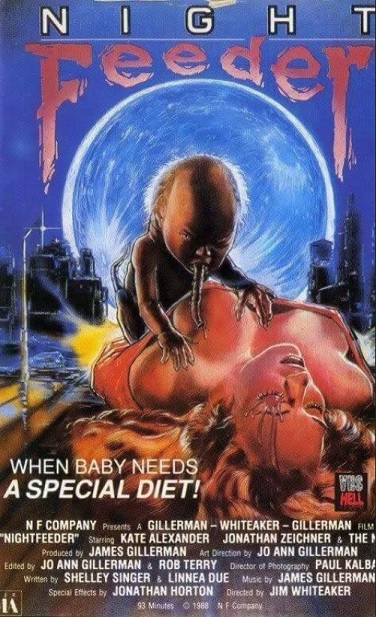
A brain-eating monster-mutant baby and the San Francisco band the Nuns . . . together in a shot-on-video and direct-to-tape horror film. Here. Punch my VHS home video membership card. And toss one of those Clark Bars on the bill.

Okay, so let’s get the demon baby stuff out the way: Larry Cohen’s It’s Alive (1974) is afoot here, but not Lucio Fulci’s Manhattan Baby (1982), which seems like it’d be a demon baby movie, but really it’s an Egyptian tomb possession movie. But Night Feeder is a more expensive (and most SOV’ers are) kin to the Canux’er Things (1989), which, if you’re keepin’ SOV notes, was the first Canadian shot-on-Super 8 gore issued to VHS — and has its own monster-mutant baby. Sadly, with that cover and that fetal promise . . . this doesn’t deliver the over the top gore we anticipated.

Now, the baby, here, looks like George Constanza’s boss, Mr. Kruger, from Kruger Industrial Smoothing . . . with no offense to the awesome, and late, actor Daniel von Bargen, intended. But all offense intended to Sam, my boss, who keeps telling me to stop with the embedded Seinfeld references in my reviews.

If only the scene from the cover was in the film.

As for the rest: There’s boobs. Lots of skin. There’s bad acting, really bad acting. And stillborn dialog with too much of that honey hush yakity-yak and not enough blades and blood to go with the boobs. And too much watered punk-to-new wave music and not enough blood. Where the frackin’ feldercarb is the mutant baby that’s sucking human skulls brain-dry and fillin’ up the slabs in the morgue where our cop gets to overact and underact and scenery chew (but the gore is decent).

So, what does San Francisco’s the Nuns have to do with this?

Well, they’re not the Nuns: they’re the band DZS, aka Disease (not to be confused with DMZ, who recorded for an album for Sire and are located in New York). And the DZS’ers are also a violent street gang. And the ubiquitous keystone coppers think the incognito Nuns are a sicko brain removal cult — or something. Well, their groupies have been either OD’in or found brain-drained around ‘Frisco, so they’re on top of the suspect list.

Oh, and there’s an ex-Vietnam vet street guy known as “the Creeper” dithering around that’s also on the suspect list. Why not toss Michael Moriarty and Christopher Connelly on the suspect list while you’re at it, SFPD? Where’s Harry Callahan when we need ’em? Oh, okay, we got that nosey (hot female) writer lookin’ for that “big break” on the case . . . as the “case” splatters across San Francisco’s new wave scene (shot on location in the actual clubs with actual fans and was shot by ‘Frisco artists and scensters).

Yawn. Okay. Where’s the gore?

Well, there some gouged eyes. Well, one eye, on each head, as that’s how the brains are removed. We got gooey zombie corpses. Dream sequence shock scares. We could have done without the female journalist and male cop romantic subplot . . . yes, just like that other San Francisco cop movie — with Harry Callahan — The Dead Pool (1988), you know, the one where Jim Carrey was “Axl Rose.” Oh, and our reporter: she’s roommates with the leader (the actor of) of DSZ, which is, again, actually the Nuns — but we wished this was a sequel with a subplot about Johnny Squares as an on-the-way up local, unsigned artist right before Peter Swann cast him in Hotel Satan, so Johnny’s record label got a bargain on a rock video shoot.

And that’s pretty much what this is: a police procedural without the Harry. And the Nuns ain’t the Gunners or a faux-Axl. And this ain’t a slasher. Or a horror. It’s a cop figuring out stuff with a reporter helping . . . and instead of it being a mobster or a vampire — as in the really awesome Robert Loggia mobster-vamp flick Innocent Blood (1992) from John Landis — we end up with a killer baby. And the baby takes almost to the end of the film to “birth.”

Cue the baby, finally!

While Night Feeder is an SOV, it is also a “regional horror” (we did a tribute week to regional horrors back in March) that played out in and around San Francisco. Then, the story goes: after its premiere, the film vanished from U.S. shores — only to rear its ugly VHS tape in Poland, of all places. Stateside audiences — well, everyone outside of Poland — finally got to see this uber-obscurity of the SOV terra firmas courtesy of a 2017 DVD reissue through Bleeding Skull and Mondo Video. Nope. Sorry, kids. No trailer or online streams of the freebie or PPV variety to be shared.

However . . . the things you discover when you “right click” IMDb hyperlinks to pump up the word count on a review — and create one-stop review shopping by going film trivia gonzos.

Anyway, unlike most SOVs, the filmmakers behind the scenes on Night Feeder moved on to bigger and better things. Well, the co-writers and director vanished in short order, but special effects artist Jonathan Horton, had quite the career. He got his start on the Dennis Quaid sci-fi’er Enemy Mine (1985) and worked on David Cronenberg’s The Fly (1986), then moved onto Anaconda (1997). So, when the baby finally show up (and not for that long), that’s why it’s the BEST part of the movie.

Now, as you pick through the credits, you’ll discover that Night Feeder was made by women. Sure, Jim Whiteaker is a man, but at this point, since he never did anything else, could “Jim” possibly be a creative alias — for fear that a movie about a brain-sucking baby by a feminine creative team wouldn’t be accepted? (Check your David DeCoteau vs. Ellen Cabot credits.) However, our writers are Linnea Due and Shelley Singer. The producer — as well as the art director and editor — is Jo Ann Gillerman (and that’s her husband, James, on the score; he also co-produced).

The star here — amid all the men, be it cops or musicians — is Kate Alexander, as Jenna, our fearless “Lois Lane” reporter. Kate was a local ‘Frisco actor and also fronted two other SF-shot films: The Method (1987) and the comedy-horror, Kamillions (1990); the later has the same creative team as Night Feeder. Oh, and Kate was in something called From a Whisper to a Scream,which isn’t the Vincent Price-fronted omnibus we know; it’s a Yaphet Kotto-starring action film, aka Love You To Death (1989), that looks like USA Network “Up All Night” and Showtime “After Dark” programming plate fodder (I wasn’t aware of the film — until writing this review).

Speaking of which, Jonathan Zeichner, our detective, also did a soft-core “erotic” cop thriller, Deadly Desire (1991), with Kathyn Harold and Jack Scalia in the Sharon Stone vs. Micheal Douglas roles of the Basic Instinct variety. Support player Cinta Wilson (Victoria, here) worked her way up to So I Married an Axe Murderer (1993). And this SOV’er could have used an errant axe murder or a nail gunner of the Nail Gun Massacre variety . . . it’s cheaper than a latex mutant baby!

About the Author: You can learn more about the writings of R.D Francis on Facebook. He also writes for B&S About Movies.

Mirror of Death (1987) and Bloodspell (1988)

Oh, R.D, you’re a real pain in the posterior and a kick in the lower abdominal area this week with your ‘squeezin’ the Charmin’, SOV fanboydom. Yes, I am a self-aware man: a man that fights his life of monotony on the highway to mediocrity by binge-watching SOV films.

So, I’ve pretty much — with the other camcorder SOVs, as well as the 16mm-blown-to-35mm-backyard’ers-that-walk-and-quack-like-an-SOV that I’ve dovetailed into our “SOV Week” tribute — name dropped all the essential films and ramble-babbled as to the SOV “about” of it all. (If you click the SOV tag at the end of this review — and all of this week’s reviews — you’ll populate all of our past and present reviews and chit-chat on the SOV/direct-to-video genre.) So, we’ll skip the SOV genre “plot points” and get right into the dual, shot-on-video careers of our camcorder auteurs behind these two flicks: writer Gerry Daly and director Deryn Warren.


Mirror of Death, aka Dead of Night in some quarters, was their joint direct-to-video feature debut. Bloodspell, aka The Boy From Hell, was their second film. Then came Black Magic Woman (1991), which was Deryn’s lone writing credit (and stars Mark Hamill and Apollonia, if that inspires a stream). Then Jerry Daly came to write Crystal Force (1990) (although it looks like one, it isn’t a repack of the Alien-rip, Star Crystal) and Witchcraft III: The Kiss of Death (1991)* — all of which fall under the SOV banner and populate-in-memory on many o’ fans SOV-genre lists. Apparently team Warren-Daly returned with the PG-13 comedy Sweet Tessie and Bags (2008), which is a barren IMDb page and Google quest to nowhere . . . with images of handbags and a child eating an Eggo waffle (which isn’t a film still, by the way).

Today, Deryn Warren is a noted L.A.-based acting coach and publisher on the film arts. As with my previous Google excursion: it’s another digital tundra quest to nowhere, with pictures of Tim and Tyne Daly — and an image of a guy that’s not our Jerry — noshin’ a Smuckers pastry.

Waffles, Smuckers, and damn Jerry’s too-common-of-a-name, oh, my! Where will this yellow-tainted, SOV road take me, now?

Mirror of Death

What’s a bitchy-boss chick like you doin’ in a mirror like this?

So, if the cover doesn’t sell it: this is a backyard possession opus. Hold the pea soup and the Lisa and the Devil thrown-up frogs, as we meet Sara. Sara is another one of those bullied mousy-to-hotties that goes from mousy-to-hottie after lighting a few candles and ramblin’ a voodoo incantation. But like Stanley Coopersmith in Evilspeak and those “no false metal” horndogs, Holy Moses, in Hard Rock Zombies: when you mess with Luciferette, you get the hornettes — wrong chants and mirrors cracked, be damned.

What the . . . hey, is this the same red-optical possession effect from Doh Dohler’s regional drive-in’er Fiend (1980; also reviewed this week, look for it)? So that answers all the questions of that film: our poor violin teacher in that film was possessed by Empress Sura from Egypt?

So, our fire from Cairo rises from the looking glass and makes Sarah beautiful, so as to more effectively cruise all the local bars and hotspots Sarah could never go to before. But like Angel Martin in Shock ’em Dead, who went from dorky pizza boy to buff rock star, Sarah — now Sura — needs to pick up men and feed off their souls. (So, just like the fat red worm, two-tentacled octopus-thingy in Dohler’s movie.) Throat rips, heart rips, and the ol’ ancient dagger-in-eye gag, ensues, but are cheaply done and not the least bit overly, well, gag-inducing — which is what we want in our SOVs: to gag. (Then puke our mirco’d-burrito and slightly micro’d Ben and Jerry’s Phish Food: Remember, you have to soften those Fudge Fish into the gooey marshmallow swirls and improve the mallow-to-caramel swirl ratio content in our stomachs.)

And that’s all I am gonna say about that, Forrest. Except that every time I watch Striking Distance, I wait for Bruce Willis to say, “Hey, Lt. Dan! I’m a shrimp boat captain on the mighty Three Rivers.”

This is where the trailer for Mirror of Death was embedded . . . until You Tube cancelled the uploader’s account.

Bloodspell

Uh, it’s not the Dunsmuir Mansion, but wants to be, again. Hold the Burnt Offerings. Order up for the Silver Sphere, table two!

And team Daly-Warren are back with another ne’er-do-well SOV demon and a put-upon yoot (know your Joe Pesci references) by a dickhead of a dad who’s a dicksicle of a dad because a dickhead of a demon possessed dad, you got that? But, etc., and so on, in a tale that doesn’t not ensue in the “tradition” of The Fury or The Shining, no matter what the copywriters at Marketing Media Corporation and Vista Street Productions tell you. So the demon ditches dad and nestles into junior, so our resident supernatural terror may knock off the student body of the Ed Wood School of Non-Thespin’, aka the St. Boniface Group Home for Bullies.

Yeah, it’s the ol’ Stanley Coopersmith-hold-the-Tranya (know your Star Trek; don’t make us go all-Corbomite on your ass) bit as one too many practical jokes on ol’ Danny boy has sounded the pipes to summon our demon. And, once Danny-not-Torrence turns 18th, the demon will be cast inside not-the-son-of-Jack-and-Wendy, forever.

Is Bloodspell an improvement over Mirror of Death? Yep. Is it still a gore-deprived backyard’er? Yep, and more so than the prior. But at least we have a demon with a woodchipper fetish (but sadly, not for corkscrews, as in our this-week-reviewed SOV’er, The Brainsucker). Then there’s the errant, mind-controlled pigeon into the window that cuts up a bully’s face and a spontaneous-burnt-to-crisp stunt by-mind. And a showstopping (sarcasm) dad-gets-a-metal-pipe-impaling-so-lighting-can-strike gag lifted out of one of the Friday the 13th sequels (it was VI, but Jason was revived and didn’t die from the gag). Oh, and Danny, well, the demon, kidnaps Jenny (Theodora Louise), the girlfriend of Charlie, Danny’s only and now-not friend. Why? Well, to celebrate his birthday because, Danny the Demon is 18 and he likes it. And we wished Alice Cooper came up with another “The Man Behind the Mask” Friday the 13th theme song (again, Part VI: Jason Lives) to make blood worth spillin’ . . . and spellin’.

In the end: Bloodspell isn’t just a film with not-special-special effects: there are no special effects. And no blood of the kill-by-E.S.P variety. And acting so inept-inert that, if Larry “Seinfeld the Soup Nazi” Thomas starred in Bloodspell (or Mirror of Death), he’d apologize for it, as he did with his involvement in Terror on Tour — but, amazing, not for his involvement in an even worse SOV, known as Night Ripper!, so what gives, Lawrence? But hey, Bloodspell — but not Mirror of Death — filled out a programming block on USA’s Saturday Nightmares** — which is how most of us saw it, in lieu of VHS.

This is where the trailer for Bloodspell was embedded . . . until You Tube cancelled the uploader’s account.


Now, why did I make that earlier, off-the-cuff Bruce Willis/Pittsburgh reference?

Well, as is the case with most of these backyard’ers of the 16mm (or 8mm formats, even) or SOV variety, the film’s IMDb pages aren’t complete — with blank actor profiles of thesp’ers who never appeared in another film. However, our resident damsel-in-distress at St. Boniface is Pittsburgh, Pennsylvania-born and bred Twink Caplan, aka Theodora Louise back then, who does have a profile — because she’s still in the business.

Remember when Jim Belushi was a comedy-thing? Well, Caplan produced Curly Sue (1991), as well as the Gen-X comedy Clueless (1995) and its related TV series, as well as Amy Heckerling’s follow up, Loser (2000). Acting wise, before Bloodspell, Caplan co-starred in Underground Aces (a pretty awful, 1981 comedy that I only watched because of its Dirk Benedict-Battlestar Galactica connection; it’s not “Animal House in a car parking garage,” trust me), as well as guest-starring on such ’80s series as L.A. Law, Who’s the Boss, and Valerie (aka The Hogan Family). Caplan still picks up parts in indie films and cable-streaming series.

Meanwhile, Ray Quiroga, the producer of Dead of Night, Bloodspell, and Black Magic Woman, continues to produce indie films.

* Witchcraft III (1991) was preceded by Witchcraft II: The Kiss of Death (1989). It all began with the Italian-produced but shot in Massachusetts Witchcraft (1988), aka Witchery, aka La casa 4, aka Ghosthouse II.

** Check out our “Drive-In Friday” featurette honoring USA’s Night Flight programming blocks. And speaking of Animal House and ’80s comedies: we examine those films with our “Drive-In Friday” Slobs. vs. Snobs and Teen Sex Comedy Nights.

Our thanks to Paul Zamarelli of VHS Collector.com.
What would we do without his preservation efforts of all things analog —
be it SOV or 16mm backyard?
Seriously, Paul is the king of clean .jepg images of the lost classics of the home video-era.

About the Author: You can learn more about the writings of R.D Francis on Facebook. He also writes for B&S About Movies.

Phantom Brother (1988)

Five years ago, a fiery car wreck wipes out a family and orphans young Abel Evans. Then, like Billy Eye Harper before him, Abel’s dead brother is back from the dead and taking his revenge. Of course, as the copy on the box gives it away . . . Abel’s brother isn’t a zombie: he’s a ghost. And, if the tagline of “It kin (can) happen to you” doesn’t give it away: this is a horror comedy (although some will debate on the “comedy”). But “Cain” on the cover looks like a hardcore Halloween-inspired slasher.

Starting out as Blood Brother, the film shot in Mamaroneck, New York, at a house that was owned by director Jeffrey Delman; the home also appears in his film, Deadtime Stories (1986). Another location that appeared in another film was the “hillybilly house,” aka the grandparent’s home of Gabriel Bronsztein, a film crew member; it was used in Frank Henenlotter’s beloved home video renter, Frankenhooker (1989).

Phantom Brother is one of those movies we love for the fact that the individuals who worked on the film drop their two-cents worth on social media (sometimes You Tube; in this case, the IMDb) about their experience. Right off the bat, Gabriel Bronsztein, who was the film’s camera assistant, key grip, and gaffer (holding multiple jobs on-set is par for the SOV course), lets it be known that the film “was not his fault” — which only succeeds in us wanting to watch Phantom Brother, even more. Bronsztein also appears as the director of “Vampires on Valium on Valentines Day” within the film. Phantom Brother was his first job fresh out of film school; he worked for director William Szarka as an assistant editor at a film distribution company.

Like Dead Girls . . . before Scream there was the . . .

Bronsztein speaks about how most [backyard] filmmakers [like Don Dohler] would opt to shoot on 16mm. Of course, as we have discussed all this week (and we still have a couple of more days of reviews and SOV analysis on deck), the ’80s home video revolution hit and the likes of Boardinghouse* and Blood Cult revolutionized the low-budget film industry. Because of video tape, filmmakers could eschew expensive film stocks, fiddling with “short ends,” and bypass regional drive-ins and go straight for national home video distribution — either via brick-and-mortar outlets or via mail order. (Blood Cult, while not the first SOV, it was the first SOV to eschew drive-in premieres or festivals and go straight to the stores while “four-walling” pulpy, genre movie mags.) In the case of Phantom Brother, they broke out the camcorder: a Betacam. Gabriel’s brother, David, who was the DP (Director of Photography) and owner of the camera, chipped in funding. Another actor who wanted to be in the movie, Patrick Malloy, who played Dr. Van Dam, also funded the production. Others involved with the film also held dual jobs: Art Director and set designer Nora Maher, appeared as the pasty-face “Killer Girl Scout.”

So, if you haven’t been in these woods before . . .

Not the Phantom Brother. Hold the Tranya.

We have a two “Totally ’80s” couples who run afoul of a crazy family at a secluded county house, complete with a masked brother and his perpetually, Girl Scout uniform-clad sister and their fat mother — of course, they’re all dead from the car crash, remember? Now, why did the couple end up at this house of horrors? Well, to work on that movie shooting there that we mentioned earlier. So we get a little meta here — and a shiny implement here and there — with a horror movie concerned with murders while real murders are being committed. And Able tends to, aka hides, the real murder committed by his family, got that?

Ack, no we don’t.

The four MTV-rocker dopes ventured into the woods to find the head of Abel’s dad and cash-in on the “buried treasure” urban legend. Oh, and get a little of the rock ‘n’ roll hoochy-coo. You know the teen-type: Pentgrams and “666” on the walls, and the little creepy doll (that resembles our killer) are of little concern when you’re a horny, 30-year-old high school teenager. To that end: Yes, we do get breast shots. And undie bottoms. And bad ’80s synth-ballad augmentation. And Able’s not telling everything.

Okay, so the plot is settled.

Hey, this is an SOV, so that means the special effects are so special, but what SOV throat slash n’ dismembered body part fest of the Karo Syrup variety is, right? We give these Tiger Bloodin’ Charlie Sheen’ers credit for tryin’ at “winning,” as they give us a decent body count, just like a good SOV should (but this should have gone full-on Fatal Exposure in the gore department; we’ve also reviewed that fellow SOV’er, this week).

And this is good. Okay, decent-to-fair (so spare us the smart-fuckery in the comments below that “we’re hipster douche bags” and this is the worst movie you’ve seen in 25 years). The parody aspect actually works here, with the hammy scenery-chews of Dr. Van Dam, in particular. Yeah, the film itself is grainy (leave the Ed Wood and “Citizen Kane of bad movies” comments at the B&S About Movies’ smoke post/ash can out back) — as it was shot on a camcorder, after all — but the shots are well-framed. I could, however, done without the voice over narration (the lazy deathknell of screenwriting). But the sub-plots are all over the place, so there’s a bit o’ skill here in the thought-process department, and there’s a decent twist that improves on the we-seen-it-coming twist in Rocktober Blood. Well, a double twist: once the “brother” angle is exposed.

Nope. Not the Phantom Brother: The before-Scream dude from Dennis Devine’s Dead Girls (1989).

I always thought screenwriter Joseph Santi and director William Szarka (who got his start cutting “coming attractions” promos for a distribution company) did alright with this late ’80s addition to the SOV canons, as each displayed sparks of potential. While Phantom Brother (which sounds like an ’80s “Brat Pack” mystery-thriller starring James Spader) is not as horror-comedy effective as the black laughter (a county-hicks connection in both) of Charles Kaufman’s Mother Day (and what horror-comedy is), this masked slasher romp is not as much of an epic fail as the comedic-horror boondogglin’ tomfoolery of Hard Rock Zombies (dopey teens and a remote house of crazies) — and that was shot on film by a “more experienced” filmmaker in Krishna Shah. Phantom Brother is not incompetent on the behind-the-lens end, but is a wee-bit clumsy in the comedy and even more so, as well as awkward, in the thespin’ departments.

And, with that, Santi and Szarka punched out after Phantom Brother. But Szarka made two prior films: South Bronx Heroes (1985) and Plutonium Baby (1987). I never came across his debut on VHS (it was shot on film). Plutonium Baby is another story. I have seen that on the shelf under a different title: The Mutant Kid. For whatever reasons, even after seeing it a couple of times on different shelves, I never rented it. Phantom Brother was the pure camcorder-shot film that I wanted and rented. It’s also Szarka’s best-known film — and one of the better SOV’ers of the era.

There’s no trailer to share . . . but BurialGround5 comes through again with the SOV-VHS memories assist (and spares us coin). You can watch Phantom Brother via their You Tube page.

* That review on Boardinghouse is coming. You know it! So search for it.

About the Author: You can read the music and film reviews of R.D Francis on Medium and learn more about his work on Facebook.

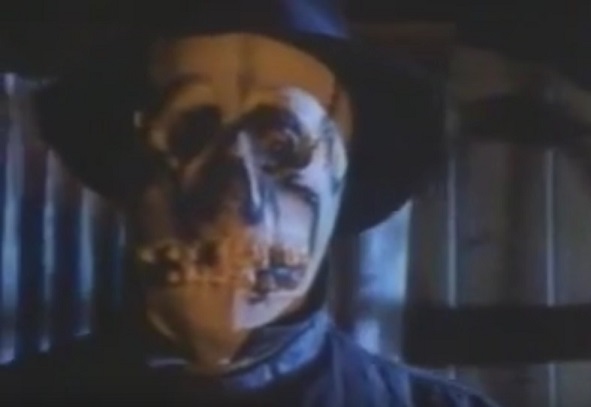
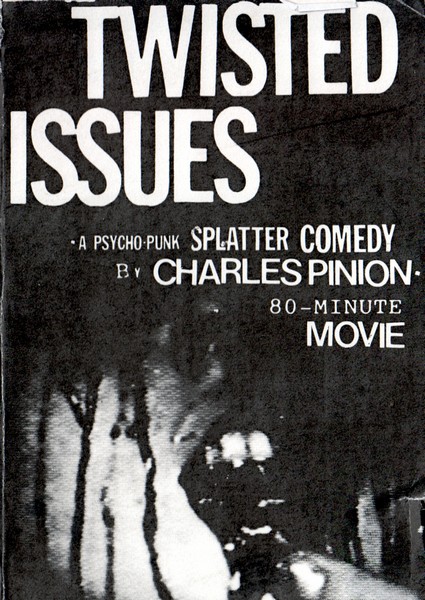
Twisted Issues (1988)

Man, talk about a movie I was not prepared for!

Originally intended to be a documentary of the Gainesville, FL punk/skate/thrash scenes, this somehow became a horror movie just as much as the opportunity to document bands like Psychic Violents, Young Pioneers, Mutley Chix, Doldrums, Just Demigods, Cindy Brady’s Lisp, Officer Friendly, the Smegmas, Hellwitch and the Bill Perry Orchestra.

Yet it can also be the story of the Death Skater, influenced by — according to director Charles Pinion in Underground Film Journal The Incredibly Strange Creatures Who Stopped Living and Became Mixed-Up ZombiesPolyester, Psych-Out, The 5,000 Fingers of Dr. T and Return of the Living Dead.

The moment where a girl sees a killer in her own house on her television before being killed by him and him enacting what he did on the TV afterward messes with time and scene and place and image better than most movies with way more of a budget. It also has tons of filler and moments of nothingness, but you know, we didn’t have jump to chapter buttons back in the days of VCRs.

Also: there’s an extended sequence inside a 1988 7-11 and for someone that hates advertising — and juxtaposition crazy has worked in it his entire life — I absolutely love everything about 7-11. The first thing I do in any new city — our new hometown has two of them — is find the 7-11 and grab a drink. In every fancy city my ad career has ever taken me, I’ve dined at more of these places and “thanked heaven” for them because they’re always there, even if my hometown didn’t get one until a year before I graduated high school. So the opportunity to drink in a time capsule of the store with the older branding and just live that world, man, that’s why I love movies.

If you die on a skateboard and a doctor brings you back to life, I hope that you have the festering brains that it takes to screw your board to your foot, wrap your face in bandages and then hunt down everyone who has ever wronged you.

You can get a handmade bootleg of this from the man who made it, Charles Pinion, on his official site. Sometimes they are sold out, but hey — again, it’s good to be made to wait.

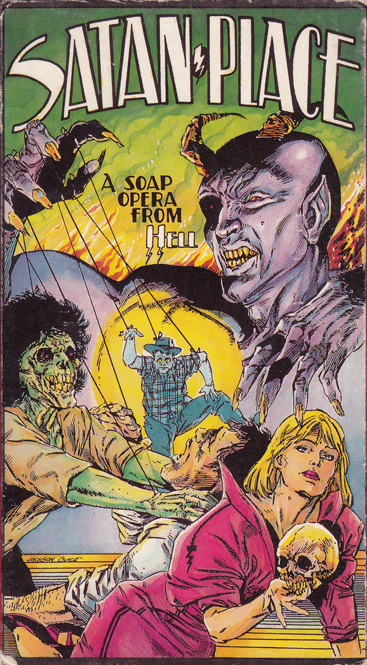
Satan Place: A Soap Opera from Hell (1988)

The SOV format is pretty much made for horror anthologies. There’s a great story in here about a girl who watches a horror movie host all day long and tries to figure out how to murder her mother. This has more of a brain than you’d expect it to — I would assume that the feminine edge came from Melanie Johnson, who wrote this with Scott Aschbrenner and Alfred Ramirez. I mean, there’s still a story where a man kills his wife and puts her down the garbage disposal — he gets his, stay tuned — but it’s not the typical gore for the sake of gore that most SOV is all about.

There are also some great trailers for movies that never happened, like Bathroom BulliesPretty Girl FloydMissouri Mop MassacreNursing Home Revenge and Don’t Go Into the Kitchen.

There’s also a Satanic wraparound, which is always appreciated.

It’s not perfect, but this feels like the kind of movie that — were it on the shelf of one of the two rental stores in my hometown — I would have gone back and rented again and again. I mean, drunk drivers dealing with zombies is always something that I seem to enjoy in an anthology.


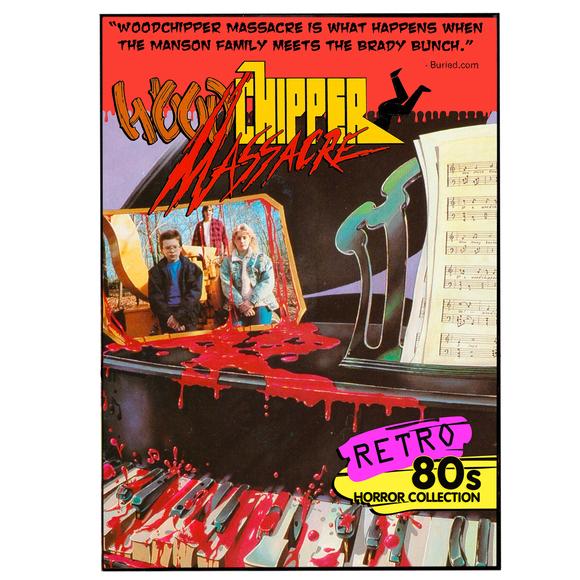
Woodchipper Massacre (1988)

Jon McBride acted, wrote, directed, edited, and composed this movie for $400. I kind of wonder why he didn’t name it The Connecticut Woodchipper Massacre. That may be because it’s way closer to Don’t Tell Mom the Babysitter Is Dead, but that movie never had a kid accidentally stab his aunt with a Rambo knife that she wouldn’t let him have. Let me tell you, I wanted one of those knives too, so I completely get it.

I also completely get the worry of having the yard raked before your father gets home when you told him it’d be done. That said, again, I’ve never used my cousin as compost spread all over the yard. I guess I lived a pretty sheltered life.

This film was based on the 1986 Newtown, CT murder of Helle Crafts by her husband Richard, which also was where Fargo got the idea. I would guess that the Coen Brothers didn’t have to shoot all of their woodchipper scenes in one weekend because they only had money to rent it once.

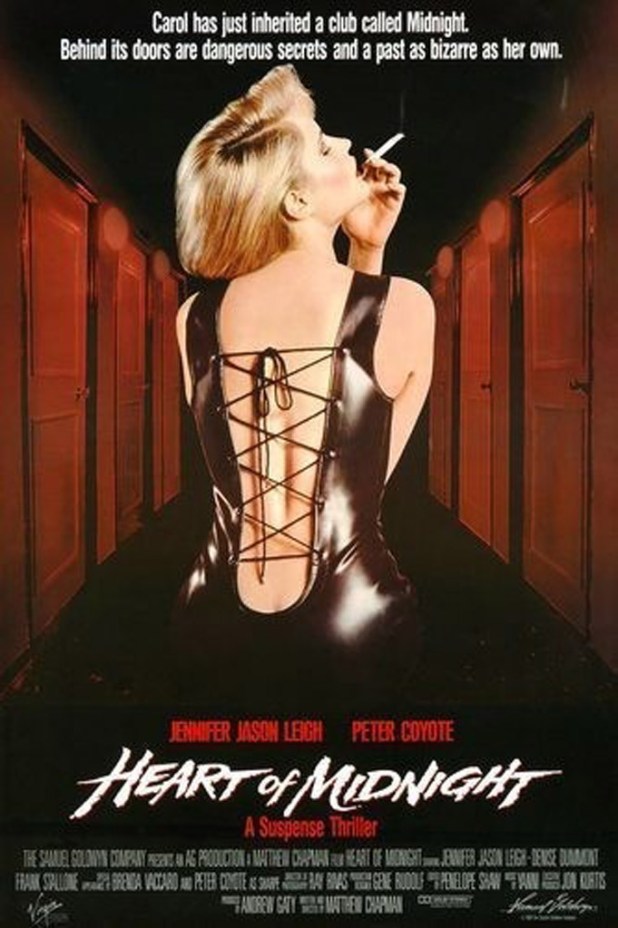
Heart of Midnight (1988)

Carol (Jennifer Jason Leigh) has had more than one nervous breakdown, which immediately qualifies for her to be the heroine of a female-centric giallo. Now, she’s inherited the Midnight — a broken-down club that for some reason is continually being remodelled despite the fact that the neighborhood that it’s located in is shady at best — from an uncle that she doesn’t remember.

Her mother (Brenda Vaccaro!?!) just wants her to sell the place, but Carol doesn’t just decide to reopen the place, she moves in and discovers that the Midnight was once the kind of club that people visit to take care of some very special needs.

On the first night that she stays at the Midnight, three men break in thinking that she wants them to. While the two white men assault her — including Steve Buscemi — the black man amongst them tries to stop them, which means that the cops shoot him, making this the sole moment of reality in a movie that exists in another plane.

The cops learn of her mental illness and start to not believe her, yet promise to send Lieutenant Sharpe, who she thinks is Peter Coyote, but he’s perhaps a ghost inside the club? Who can say — all we know is that the real cop is soon killed by something inside the haunted bar.

By the end of this, Carol starts to realize that what she is seeing are the past memories and things that happened inside this club, moments trapped inside these walls that she must move back to heal herself.

Also — Frank Stallone shows up!

Writer and director Matthew Chapman should make more movies. He hasn’t directed since 2011’s The Ledge but he has written a few scripts. That said, the great-great grandson of Charles Darwin seems busy writing books and being the founder and president of ScienceDebate.org, which advocates that presidential candidates hold a live debate solely dedicated to science and technology issues.

I love that so many reviews complain about how odd and how hard to understand this movie is. When viewed when wearing black gloves and through a glass of J&B, it perfectly adds up.

Screwball Hotel (1988)

Once upon an ’80s VHS time . . . there was a Canadian exploitation tax shelter film franchise known as “Screwballs” that was created to cash-in on Porky’s and the Police Academy series. Courtesy of your HBO subscription back in the ’80s, the Screwballs films were oft-run T&A favorites on that early pay-cable service, as well as perfect programming fodder for the USA Network’s “Up All Night” weekend programming blocks.

It all began with Screwballs (1983). Then along came Loose Screws, which aka’d on HBO and the USA Network as Screwball Academy, and home video as Screwballs II (1985/1986). Then there’s this third and final entry — sometimes appended with a “3” in home video quarters — which has less to do with the first film as the second film has to do with the first film. The overall gist of the first Screwball film isn’t so much Police Academy as it is Porky’s, courtesy of the resident screwballs as a gaggle of horny, 1960s high school students trying to get laid.

AKA, Screwballs 3 . . . notice that while the legs look real, the dippy bellhop is an artist rendering? Way to go, art department!

The only real through line between the first and second films (well, there is one more connection, for all three films, but we will get to that, later) is that Rafal Zeilinski directed both screenplays written by actress/director Linda Shayne (she wrote her own directing debut Purple People Eater; Screwballs (I) served as her screenwriting debut; she also wrote Crystal Heart). The original plan for what became best known as Screwball Academy to the cable television masses was to bring back the four leads from the first film; instead, all new actors were cast in a re-write of the original story. Only now, our horny students covet their new, sexy French teacher at . . . Cockswell Academy (yes, that’s the level of comedy you’re getting); the original lads attended Taft and Adams High School and coveted the school’s “hottest, pure girl,” Purity Bush (again, comedy . . . you gotta love it).

So that’s the Screwball-back story . . . and brings us up to speed — somewhat — for Screwball Hotel, a film whose only connection to the “franchise” is that Rafal Zielinski directed all three films. And you know what: while each have their detractors, each also has their fans: ones who fondly recall either watching them on cable TV via HBO or The USA Network or as a $.49 cent Friday Night rental (I fall in that grey area-between the two of not loving but not hating them. But as you get older . . . nah, nostalgia wins, again).

The Review

Yeah, it’s the same ‘ol song and song and dance in the pants as horny ne’er-do-wells kicked out of a military academy take jobs at a dying Miami Beach hotel (while a Canadian production, this shot in Miami). To save the hotel, our lustful lads organize the “Miss Purity Pageant” — with the hotel’s prudish female guests (boilerplate-reminding of Purity Bush from the first Screwballs) as contestants. Of course, as with the first film, and despite the material’s intent, there’s no nudity or sex scenes to trip the triggers; just lots of T&A innuendos, but no actual nudity or sex. Pour Porky’s, Police Academy and the teen-flick cycle of John Hughes into your National Lampoon logo-tumbler and serve up a film that’s . . . not so much of a plot, but SNL-styled vignettes and sight-gags that run from the outrageous to the raunchy to the ugh-enduring stupid.

The character boilerplating continues with . . . remember the tubby, food-loving Larry “Fink” Finkelstein from Meatballs (1979)? Well, Screwball Hotel has a Finkelstein. Remember the “Spanish Fly in the food” scene in Screwballs? Well, we have one of those — only with cocaine. Then there’s offensive Arab stereotypes, a dominatrix trope shows up, a Australian guest into sheep-bestiality appears, along with women’s oil wrestling, more nympho women, more horny men, and hot-but-ditzy women everywhere.

If this sounds a lot like Johnny Depp’s marquee-leading man debut in Private Resort (1985), then it probably is. Adding to the six degrees of celluloid separation is the fact that actor Michael Bendetti, who replaced Johnny Depp’s replacement of Richard Grieco on FOX-TV’s 21 Jump Street, as Anthony “Mac” McCann in that series’ fifth and final season, makes his feature film debut, here (his dual acting and leading man debut), as Mike, the ne’er-do-well leader of the hospitality shenanigans. The only other actor worth mentioning is two-time Penthouse “Pet of the Month” and “Pet of the Year” Corrine Alphen Wahl, who we’ve enjoyed in BrainWaves (1982), Spring Break (1983), and Equalizer 2000 (1987). (Wait, there’s another Penthouse Pet, here, more on that later.)

The ’80s comedy déjà vu caveats: Don’t confuse any of this Cannuck tax shelter tomfoolery with Oddballs (1984), which Miklos Lente, the cinematographer of Screwballs, directed . . . and it’s pretty much a rip of Meatballs, which, if you haven’t figured out, is ripped ‘n’ pinched by Screwballs, natch. Of course, Golfballs! (1999) — which is no way connected to the Screwball franchise — is as much like Oddballs as Oddballs is like Meatballs, which is, in turn, is like Caddyshack. And the beat, well, ball, bounces on . . . to Daniel “Paco Querak” Green, who made his big screen acting debut in the same ol’ “dying hotel on Miami Beach” plot in Rosebud Beach Hotel (1988).

Thanks to Paul and his efforts at VHSCollector.com — and to Archive AusVhs for the very rare trailer.

So, this time — for Screwball Hotel — in lieu of Linda Shayne, we get the pen of Charles Wiener. After his writing and directing debut with a Canadian TV movie slasher ripoff, known as Blue Murder (1985; Starring Britney Spear’s dad? Nah. Uh, maybe?), he wrote a Canadian not-Police Academy ripoff, known as Recruits (1986), as well as writing and directing the-Police Academy-set-inside-a-fire station-ripoff, Fireballs (1989) — which was shot back-to-back with Screwball Hotel. If you’re a martial arts completionist and need a Canadian not-starring Jean-Claude Van Damme rip, there’s Wiener’s third and final directing effort, Dragon Hunt (1990), for your shelf.

Rafal Zeilinski made his directing debut with Screwballs; his fifth directing effort, Valet Girls (1987), copies the template of the Screwball movies and Recruits — but changes it up with an all-female valet car service; it’s a film as blatant in its copying Deborah Foreman’s better-remembered My Chauffeur (1986) as it is Porky’s. And Zeilinski repeated the Screwball Hotel premise one more time in Last Resort (1994), which was backed by National Lampoon and starred the “Two Coreys” Feldman and Haim (another Corey two-fer is Dream a Little Dream) . . . but don’t confuse that film with the better (but not by much) Charles Grodin-starrer Last Resort (1986). And let’s not forget Zeilinski remade it all over again with State Park (1988), which ditches the schools, academies, and hotels for, well, a state park. By the early aughts: Zeilinski moved into Christian Cinema — yes, the guy who made T&A Screwball movies made Jesus movies — with The Hangman’s Curse (2003).

The Soundtrack

We had this penciled in for our “Rock ‘n’ Roll Week III” review series at the end of August (and we master listed Screwball Hotel in our round up of that week), but we bumped it back to our one of our “free range” weeks, when we just review anything that tickles the fancy. Just because.

So, Taiwan’s Golden Horse Film Festival nominee and China’s Changchun Film Festival winner, songwriter and composer Nathan Wang made his soundtrack debut with the songs “Check In, Check It Out,” “Making Money,” and “Punk Song” on Screwball Hotel, which he also scored. You may also have heard his tune “You Are the One” in Jackie Chan’s Rumble in the Bronx. He’s since scored over 160 international films and TV series. The songs on Screwball Hotel were sung by Terrea Oster, who provides the vocals for our ersatz rocker chick of the film — portrayed by Penthouse Pet Lisa Bradford-Aiton, in her only mainstream film role. The fruitful career of Oster’s son, Canadian Douglas Smith, led to roles in Terminator Genisys (2015), as well as starring in the Bill Paxton-fronted HBO series, Big Love.

Terrea Oster, who acted under the name Foster, as well, appears in the aforementioned, original Screwballs (1983), Oddballs (1984), and Screwball Academy. In addition to providing her singing voice to their soundtracks, she also worked in both disciplines on Flesh Gordon Meets the Cosmic Cheerleaders. Her husband, British producer Maurice Smith, has a resume that goes all the way back to classic counterculture biker romps The Glory Stompers (1967), The Cycle Savages (1969), and Scream Free!, aka Free Grass (1969). Yep, in addition to backing Flesh Gordon, he gave us Linda Blair’s Grotesque (1988) — and ALL of the Screwball/Oddballs films.

So, there’s the final through line we teased earlier, as well as the music portion (and Penthouse connection) of the film — for what that’s worth in your wanting to watch Screwball Hotel. Hey, sometimes you just gotta — even if you’re not a smarmy online film critic navigating the Three Rivers of cinematic fate in Steeltown.

You can check out more snobs vs. slobs comedies with our “Drive-In Friday: Slobs vs. Snobs Comedy Night” featurette.

About the Author: You can read the music and film reviews of R.D Francis on Medium and learn more about his work on Facebook. He also writes for B&S About Movies.

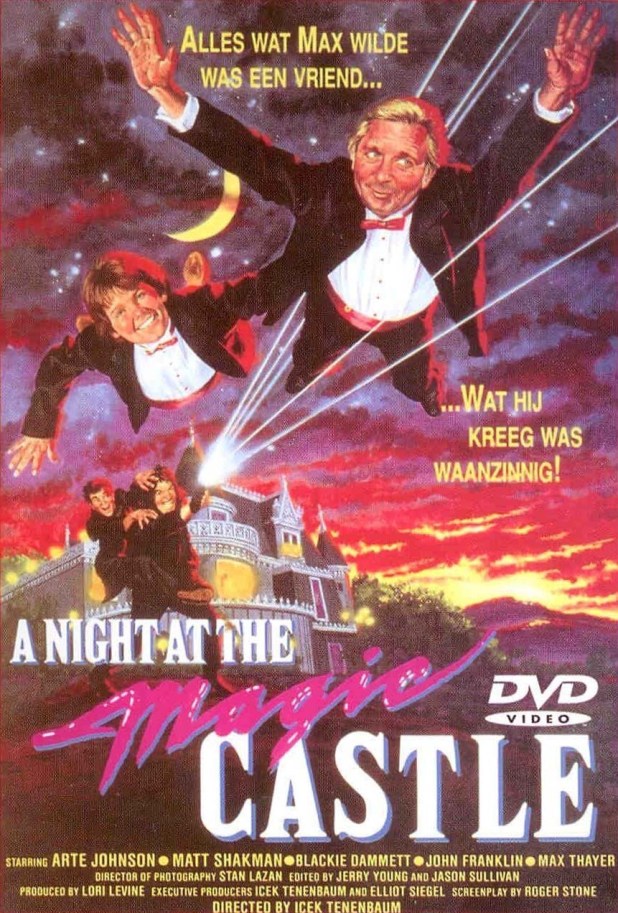
A Night at the Magic Castle (1988)

Oh man, The Magic Castle, the place where Dai Vernon performed all the time. It’s an invite-only place where strict dress code and the ways of classic Hollywood still remain, a clubhouse for magicians and magic enthusiasts and the home of the Academy of Magical Arts. “The most unusual private club in the world,” visitors must say a secret phrase to a sculpture of an owl to even see the entrance to the club.

This is the first movie ever made inside the walls of The Magic Castle, with many of its illusionists and magicians performing within the film.

Producer and director Icek Tenenbaum only made one other movie, a vacation gone wrong movie called The American Scream. He co-wrote this with Roger Stone — no, not the Penguin-looking Republican heel — who also wrote Goin’ All the WayLethal Pursuit and “Get Even” from the soundtrack of Gymkata. Also, his songs “Sparks” and “Dirty Talk” were in the adult films Bodies In Heat and Talk Dirty to Me Part 2.

Arte Johnson palys Harry Houdini, so between my mania about the master magician and my love of Laugh-In, you knew I’d have to watch this one of these days. A young kid in this learns all about losing his imaginary friend and the power of magic and the evil of Blackstar, who is played by Anthony Kiedis’ dad Blackie Dammit, who am I convinced may have George Eastman and William Smith powers, because he has rescued many a movie that I was iffy about the second he walks on screen.

Oh yeah — Isaac from Children of the Corn shows up!

This movie is ridiculously cheesy and yet endearing, kind of like magic on stage itself. Plus, how else are you gonna go back in time and go inside The Magic Castle?

Check this out on YouTube.