APRIL MOVIE THON 4: Interzone (1987)

April 16: Filmirage — Give in to the sleaze and write about a Joe D’Amato produced movie. There’s a list here.

Panasonic (Kiro Wehara, Thong from The Blade Master) has been sent by his master, General Electric, on a mission to protect the last place left on Earth that can create life, the Interzone. He soon meets Swan (Bruce Abbott, Re-Animator), the Max Rockatansky of this rip-off, and a slave girl named Tera (Beatrice Ring, Zombi 3). But this wouldn’t be an end of the world pastarmageddon movie without bad guys, who are led by Mantis (Teagan Clive, another obsession of mine, the bodybuilding blonde star who was also in Vice Academy Part 2AlienatorSinbad, Mob Boss, Obsession: A Taste for FearJumpin’ Jack Flash and Armed and Dangerous. She also wrote the “Power Café” articles in Iron Man magazine, as well as episodes of Acapulco H.E.A.T. and Conan the Adventurer, plus she’s in the video for “California Girls” by David Lee Roth) and Balzaka (John Armstead, Error Fatale).

Is there a treasure to be found? Will it explain to Panasonic the truth of his name? You know it.

This was directed by Deran Sarafian, who also made The Falling, To Die ForDeath WarrantGunmen and Terminal Velocity. A year after this, he’d be in Zombi 3. It was written by James L. Anderson and Clyde Anderson, so you may think this is an American movie. But then, there it was, produced by David Hills, who is Joe D’Amato, who is Aristide Massaccesi. And who is Clyde Anderson? Claudio Fragasso and Rossella Drudi. And is that Laura Gemser as Panasonic’s sister-in-law?

Shot outside of Rome, I learned from Matty at The Shlock Pit that Sarafian and Ring were engaged, which explains them being in Zombi 3.

This is not the best Road Warrior movie you’ll see, but you know, Teagen Clive’s interpretative dancing is all I need. I’m so easy.

Cinematic Void January Giallo 2025: Opera (1987)

EDITOR’S NOTE: Cinematic Void will be playing this on Saturday, Jan. 25 at midnight at the Coolidge Theater in Brookline, MA (tickets here). For more information, visit Cinematic Void

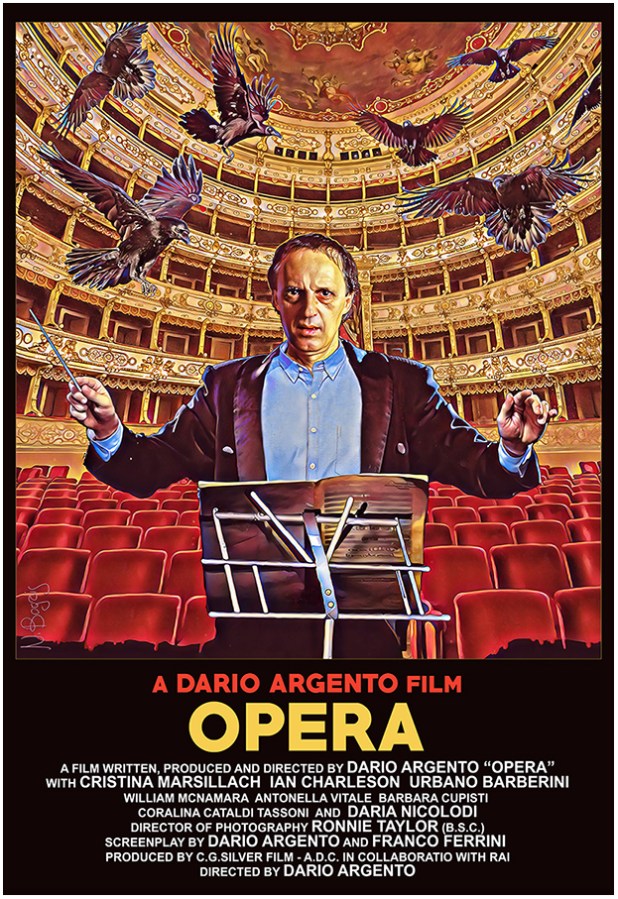
Mara Cecova is a diva and the star of a new way of performing Verdi’s Macbeth. But when she’s hit by a car as she argues with the director in the middle of the street, her role goes to her understudy, Betty. Ironically, in his book Profondo Argento, director Dario Argento claimed that the person playing the role of Betty, Cristina Marsillach, was the most challenging actress he would ever work with.

Despite her initial worries, Betty succeeds instantly on her opening night. At the same time, a black-gloved killer sneaks into one of the boxes to watch before murdering a stagehand with a coathanger. Everyone, grab your barf bags and motion sickness pills; Argento is behind the camera!

Of all the powerful shocks in Opera, perhaps the one that means the most to the viewer is that we share Betty’s torture — she’s repeatedly gagged, tied up and forced to watch the killer at work again and again as he tapes needles under her eyes. They’ll be shredded if she blinks too long or shuts her eyes. It’s like Fulci’s wettest dream ever. In the same way, we are nearly complicit with the crimes we are forced to watch, mainly because they get more and more artfully composed.

Throw in the fact that Betty believes that the hooded killer is the same person who murdered her mother; she follows the Giallo path for a protagonist and confides in someone else rather than the police. Her reason? The killer may know who she is.

Inspector Alan Santini (Urbano Barberini, Demons) is on the case because there are so many clues, like the fact that the producer’s pet ravens were found dead after the show. As for Betty, she runs from the police and calls her agent Mira (Daria Nicolodi, Argento’s former wife and the writer of Suspiria and star of Shock) for advice.

Betty’s costume gets cut to ribbons, so she asks the wardrobe girl for help. While she works on the dress, they find a gold bracelet they can almost read. But here comes the killer and his needles again, forcing her to watch him kill one more time. The wardrobe girl accidentally swallows the bracelet, so of course, we watch as the murderer slices her throat open to get it back.

Betty runs back to her apartment, where Santini is waiting. He promises to send a detective named Soavi to watch over her (yep, The Church director Michele Soavi), but she doesn’t trust the man and leaves her apartment. That’s when her agent answers the next knock on the door by looking through the peephole. What follows is the grandest kill in the entire film — which is saying something — as we follow the bullet POV-style out of the gun and directly through her eyeball. Again, Fulci is somewhere wringing his hands.

Nicolodi had just ended a long relationship with Argento and did not want to be in this film. However, the shocking and complicated murder of her character changed her mind, even if she had to deal with an explosive device being put on the back of her head to achieve the final shot.

Betty escapes the killer again and runs to the opera house, convinced there is a connection between the murderer and her long-dead and abusive mother. The next night, as she performs, the producer unleashes what is left of his ravens, hoping they’ll find the killer. Oh, they do alright — tearing his eyeball out of his head — FULCI ARE YOU THERE, IT’S ME DARIO — and rewarding you, the viewer, with POV shots that threaten you with vertigo. I’m getting dizzy even typing this.

I don’t want to give away the killer or even the second ending where the killer isn’t dead. I want to talk about the sheer Argento-ness of the final scene, where Betty wanders into a field and releases a lizard, giving him his freedom. Argento claims that Thomas Harris’s Red Dragon inspired this ending. Of interest is that the director does NOT like the Michael Mann movie Manhunter. Me? Well, I love that movie. But I’d love to see Argento’s take. There was also a thought to another ending where Betty would fall in love with the killer.

Your enjoyment of this film comes down to how much you like shocking bloodshed and Argento’s arty side. He based the movie on his own failed staging of Macbeth, basing the role of the nervous producer on himself. And the idea of pins under the eyes? It comes from a joke about how Argento hated it when people looked away during the death scenes in his films.

Believe it or not, Orion Pictures planned on releasing an R-rated version of this in the US called Terror at the Opera with eleven minutes of mayhem removed and the Swiss Alps epilogue. Argento refused, and Orion lost money at a fast clip, so the movie only saw a limited video release.

Opera is something else — filled with style and brutality. I loved it, but remember my warning about how much you can handle.

Once a Hero (1987)

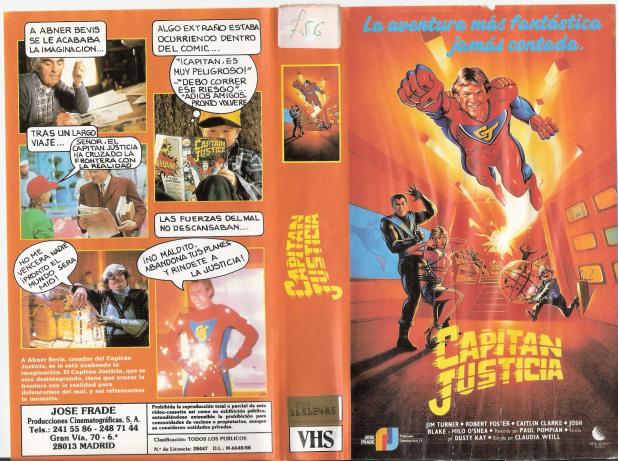
Premiering on ABC on September 19, 1987 and then lasting just three episodes, this series — created by Dusty Kay — has comic book creator Abner Bevis (Milo O’Shea) have a confidence crisis when kids tell him that his comic book hero, Captain Justice (Jeff Lester), should get with the times and start killing people. As for Captain Justice, much like the theories of Gardner Fox and how different realities would read the comics of other Earths — the Silver Age Flash knew who the Golden Age Flash was through reading and named himself for that hero — Pleasantville is a real place where things keep repeating, as Bevis is starting to lose it.

The Captain crosses over into our world to fight crime without his powers, which brings attention to him through reporter Emma Greely (Caitlin Clarke), whose son Woody (Josh Blake) is one of the kids who is part of Bevis’ focus group that wanted his heroes to get more with the times.

Why was I so excited about this? Another hero followed through the Forbidden Zone and it’s Gumshoe, played by Robert Forster! Yes, Robert Forster in a superhero sitcom! And how about when the main villain appears — Victor Lazarus — it’s Richard Lynch! There’s even an episode where the man who played the character on TV is no longer allowed to do publicity appearances and he’s played by Adam West.

This show failed before launch, as many ABC stations played Star Trek: The Next Generation instead. Marvel had planned a tie-in comic with the team of J.M. DeMatteis and Steve Leialoha, but it only made it two issues. The show was long over before that.

There were some interesting ideas, like how if people forget the heroes, they fade away forever; that the men who fought at the Alamo have become legends and live in the same world as superheroes and that Captain Justice’s girlfriend looks exactly like Bevis’ long dead wife. Yet only three episodes would air in America and there was a DVD release in Brazil, of all places, with all of the unaired episodes. A meta superhero feels a bit before its time here, but it’s quite the concept. I’d never heard about it until doing research on comic book shows I had never heard of. I was in my prime of buying comics at this point, so I have no idea how this show missed me. It would have been yet another comic TV show that I got excited about and would watch disappear.

You can watch this on YouTube.

The Wizard of Space and Time (1979, 1987)

Mike Jittlov was a math major at UCLA, but taking an animation course to satisfy his art requirement led to two movies, The Leap and Good Grief, which made it into the professional finals for Academy Award nomination.  With a 16mm camera and a multiplane animation system he built for $200, he became an animator.

By 1978, Jittlov was part of Disney’s Mickey’s 50, with his short film Mouse Mania. It was the first stop-motion Mickey Mouse cartoon, as Jittlov created more than a thousand Disney toys marching around a psychiatrist’s office. His short The Wizard of Speed and Time was shown on another Disney special, Major Effects.

When I was a kid in the early 80s, Jittlov’s ads in Starlog for The Wizard of Speed and Time were in every issue. This was before the internet, in a time and place where I wouldn’t be able to see them. Today, years later, I’m old and I can see them at any time.

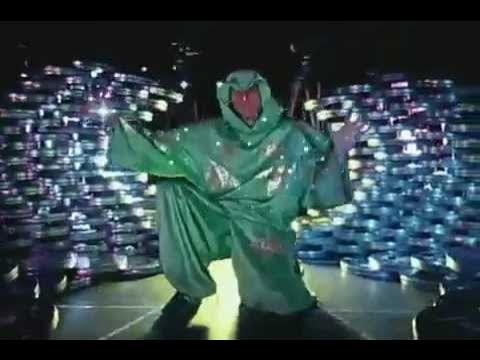
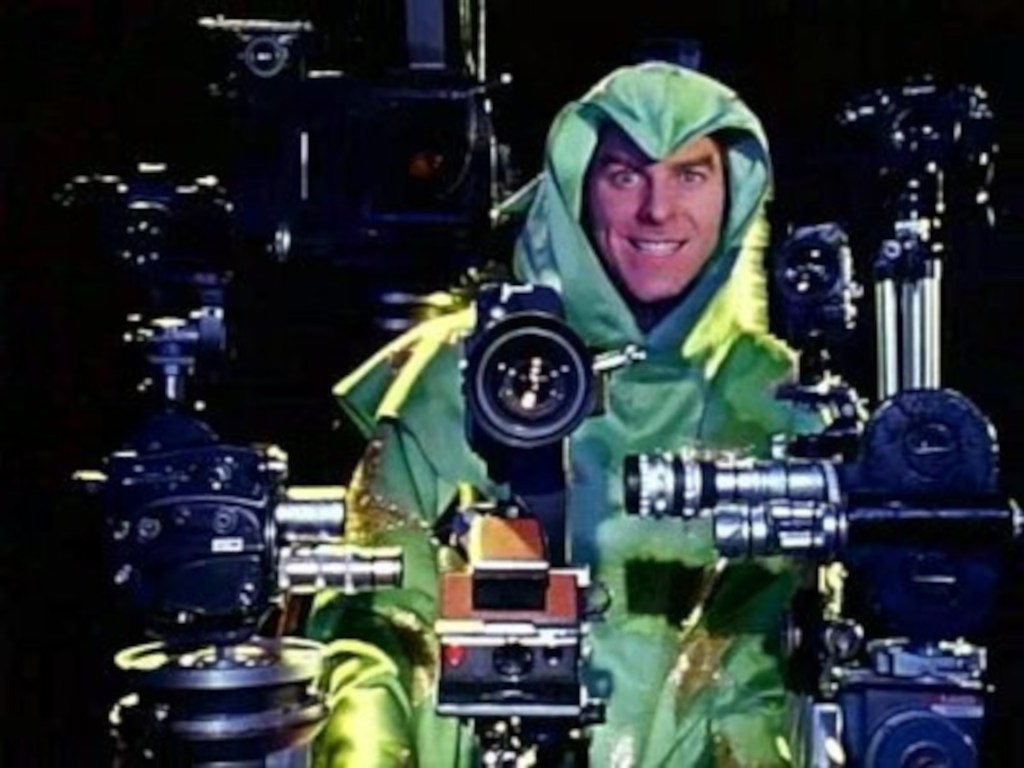
The Wizard of Speed and Time (1979): In just over two minutes, The Wizard of Speed and Time (Mike Jittlov) runs through Hollywood — running at high speed, The Wizard gives a hitchhiking woman (Toni Handcock) a ride, then gives golden stars to others — before crash landing into a studio that comes to life with walking cameras and dancing clapboards. This is pretty amazing because so much of it is stop motion and other sections use zooms and simple camera tricks to give the illusion of movement. Even though this is a short, just watching this you can tell that it took forever to make. This is pre-CGI, all magic and something that I have waited to see for decades.

This was $110 when I was a kid if I wanted to buy it. I kept trying to save up and never made it. Now I wish that I had.

The Wizard of Speed and Time (1988): Combining the original short, along with Time Tripper and Animato, two other early movies he made, Mike Jittlov took the story of The Wizard to new heights with this, a movie he spent fourteen years trying to make and three years filming.

Director Lucky Straeker (Steve Brodie) and  producer Harvey Bookman (Richard Kaye) make a bet if special effects artist Jittlov can actually complete his first effects assignment. Bookman does everything in his power to thwart Jittlov, even firing his friends. The script by Jittlov, Kaye and Deven Chierighino is filled with so many jokes, even including thousands of subliminal messages in the effects and poster.

It’s also overstuffed with cameos from Forrest J. Ackerman, Angelique Pettyjohn, Ward Kimball and Will Ryan, plus cops named Mickey (Philip Michael Thomas) and Minnie (Lynda Aldon), as well as their dog Pluto, who in some shops is just Jittlov covered by a brown jacket and using puppeting himself.

Why doesn’t Jittlov shake hands? He’s telepathic.

I waited too long to see this. Don’t make the same mistake that I did.

You can watch this on YouTube.

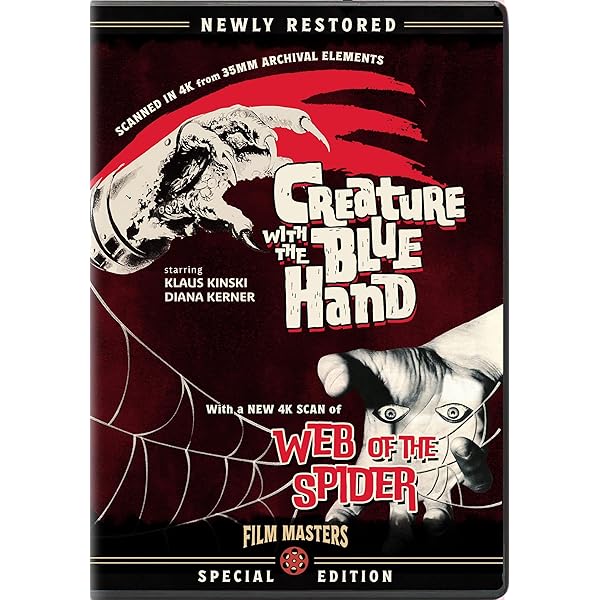
FILM MASTERS BLU RAY RELEASE: Creature With the Blue Hand (1967), Web of the Spider (1971), The Bloody Dead (1987)

Film Masters has put together an exciting blu ray with Creature of the Blue Hand, scanned in 4K from 35 mm archival elements, a new 4K scan of Web of the Spider and The Bloody Dead. Bonus features include commentaries on both movies by Stephen Jones and Kim Newman; reimagined trailers for Creature of the Blue Hand and Web of the Spider; a trailer for Castle of Blood; new documentaries on Edgar Wallace and Klaus Kinski’s acting in the Rialto krimi movies; an archival commentary for The Bloody Dead by Sam Sherman; raw and behind the scenes footage for The Bloody Dead and a booklet with essays by Christopher Stewardson and Nick Clarke.

You can get it from MVD.

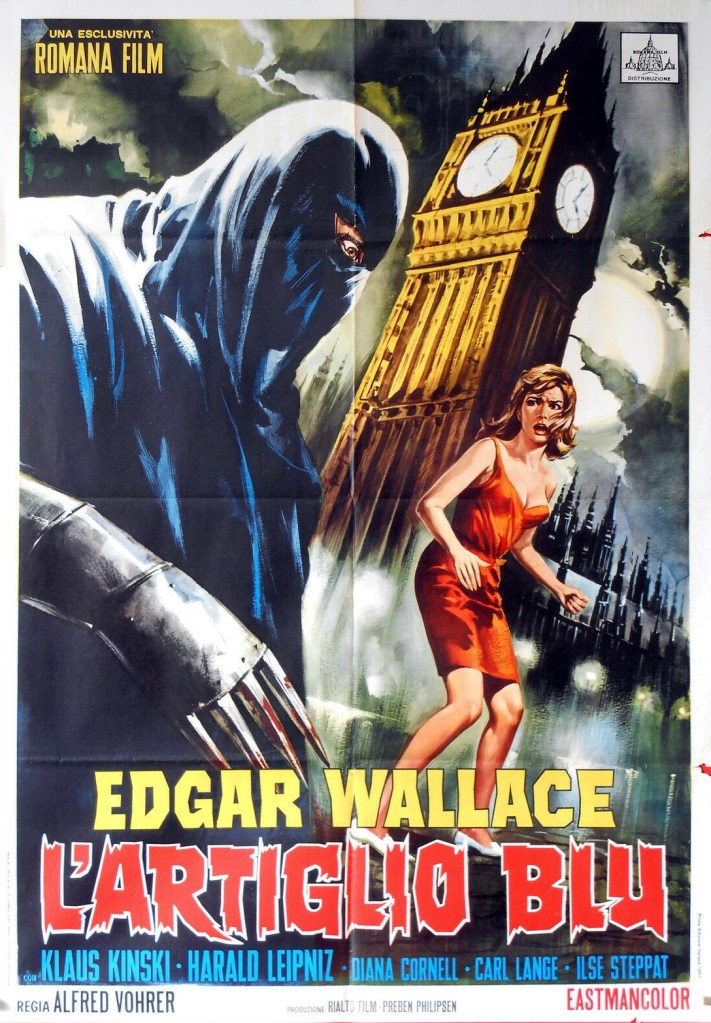
Creature With the Blue Hand (1967): Based on the Edgar Wallace novel The Blue Hand and part of a long-running series of krimi adaptations by Rialto Film, this was bought by New World Pictures and issued as a double feature in the U.S. with Beast of the Yellow Night. Man, how good was life then?

Klaus Kinski plays Dave Emerson, who chokes out a nurse and escapes from a mental hospital before running to the castle of his twin brother Richard — also Kinski — as a black robed killer roams the grounds and kills people with his astounding blue claw with razorblades on the fingers, like something out of a giallo. For example, oh, Death Walks at Midnight. Or A Nightmare On Elm Street, which came 17 years after this.

Director Alfred Vohrer keeps things moving and it all looks gorgeous if indebted to Mario Bava. That said, aren’t all movies made after him? There’s also an incredible insane asylum sequence, featuring rooms filled with mice, rats and one female patient who just strips all day and night. This is the kind of movie world where you just want to live inside it, except that, yeah, there’s a killer on the loose and the cops are as always ineffectual.

Coming out just three years before giallo would surpass the krimi while using many of the same ideas from Edgar Wallace, this film reminds me that I need to get deeper into watching these German detective movies.

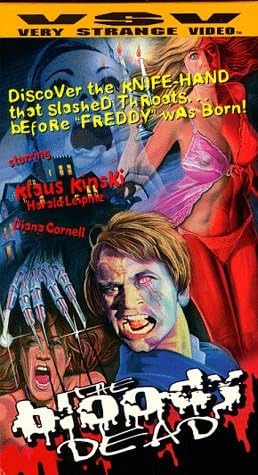
Creature With the Blue Hand later re-edited in 1987 with new gore inserts by producer Sam Sherman for his company Independent International — wow, I love that so much — and released to home video as The Bloody Dead. The extra scenes — almost ten minutes of new footage — were directed by Warren F. Disbrow and his father Warren Disbrow Sr.  You can learn more about that movie below.

Web of the Spider (1971): After Castle of Blood‘s disappointing box office, Antonio Margheriti felt he could remake the film in color and have it be more successful.

Edgar Allan Poe (Klaus Kinski) is our narrator and Kinski shows up for the beginning and the ending of the movie. He’s interviewed by Alan Foster (Anthony Franciosa), who challenges him as to the truth of his stories. This leads to a bed with Lord Blackwood (Enrico Osterman) about spending a night in his castle, a place where he soon meets Elisabeth (Michèle Mercier, Black Sabbath) and quickly falls into love — and bed — with her before she announces that she’s no longer alive.

There’s also Julia (Karin Field), William Perkins (Silvano Tranquilli) and Elisabeth’s husband,Dr. Carmus (Peter Carsten). The ghosts need his blood to come back to life, but Elisabeth helps him to escape, only for him to impale himself on the gate, dying just as Poe gets there.

I adore that the tagline of this is “Based on Edgar Allan Poe’s Night of the Living Dead.” He did write a poem “Spirits of the Dead” and the 1932 movie The Living Dead was based on Poe’s “The Black Cat” and “The System of Doctor Tarr and Professor Fether” as well as Robert Louis Stevenson’s The Suicide Club. But no, he has nothing to do with Romero’s movie.

I really like the soundtrack by Riz Ortolani but this can’t compare to the black and white — and yes, Barbara Steele appearance — in the original. That said, Kinski is awesome in every second he’s on screen, looking like a complete madman.

The Bloody Dead (1987): Warren F. Disbrow Jr. met Sam Sherman when he shot the interview footage for Drive-In Madness. That led to him being called to shoot new footage — 15 minutes worth — with Gene Reynolds and Tony Annunziata on remade asylum sets to make it appear that Creature With the Blue Hand wasn’t a movie made twenty years before as this was going to be released on VHS by Very Strange Video.

When this came out on DVD from Image Entertainment, Jim Arena wrote “”Sam needed to punch up the film with some gore to make the picture more appealing to modern-day audiences. That meant new scenes would have to be filmed. With a lucrative video distribution deal already on the table, Sam went to work and brought in associate Warren Disbrow to re-create the German asylum sets at his facilities in New Jersey. Hannibal Lector’s Silence of the Lambs institution cell recreation for 2002’s Red Dragon has been hailed for its precision, but Sherman and Disbrow’s attempt at duplicating Dr.Mangrove’s asylum, where most of the newly shot footage was intended to expand upon, is no less impressive. It is actually difficult to tell the difference between the two sets.”

Disbrow Sr. made a new version of the claw hand that the killer used and Ed French did the special effects. Other than the 15 minutes or so of new footage, this is almost the same exact movie, just with the added gore that late 80s audiences expected.

MOVIES THAT PLAYED SCALA: Bad Taste (1987)

Thanks to the British Film Institute, there’s a list of films that played Scala. To celebrate the release of Severin’s new documentary, I’ll share a few of these movies every day. You can see the whole list on Letterboxd.

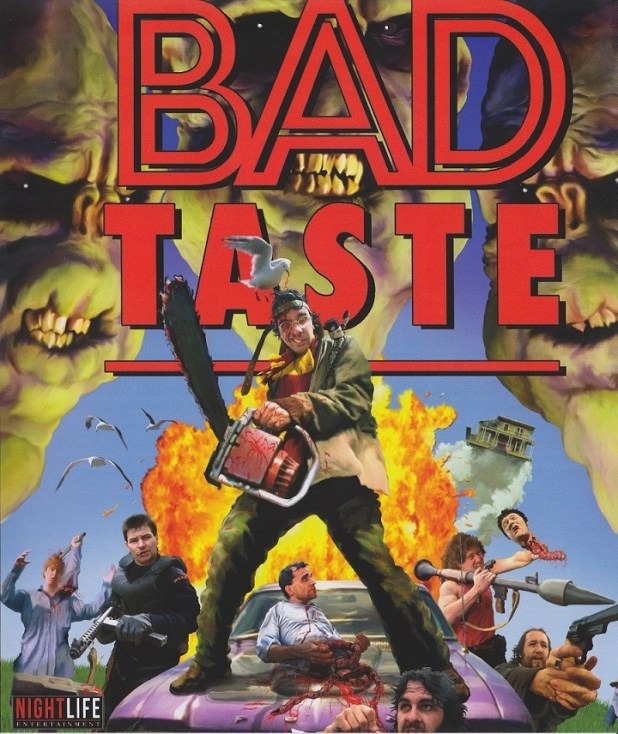
Before he made gigantic budgeted movies, Peter Jackson directed, wrote, shot, produced and co-starred in this movie that sees aliens using our planet for fast food.

After the New Zealand town of Kaihoro disappears, Astro Investigation and Defence Service (AIDS) agents Derek (Peter Jackson), Frank (Mike Minett), Ozzy (Terry Potter) and Barry (Pete O’Herne) are assigned to see what happened, finding aliens that love to eat humans. A battle breaks out and Derek falls off a cliff, but survives with his brain leaking out, covered by a hat.

An insurance adjuster named Giles Copeland (Craig Smith) is taken by the aliens and put in a bathtub stew before being saved by the men. What follows is non-stop violence, as Derek’s brain keeps pouring out of the hole in his head, leading to him grabbing a chainsaw and killing the space monsters, including boarding their ship to home, replacing his brains with an alien one and sawing their leader Lord Crumb (Doug Wren in the suit, Dean Lawrie as the double and Peter Vere-Jones as the voice, as Wren died during the four years this took to make) to bits as he flies directly at the alien homeworld, ready for war.

Using a 25-year-old 16mm Bolex camera, inspired by Tom Savini and wild enough to shoot a scene where he fights himself in two different roles, Jackson went wild on this, even baking the alien masks in his mother’s oven. He’d follow this with Meet the Feebles and Brain Dead, two more movies that are out of control compared to the rest of his movies. He wouldn’t have to invent his own steadicam for the movies that followed after this.

When this came out, it was a hard to find film and you know, it still is — at least in the U.S. — today. While there’s almost no budget, this movie is incredibly inventive and still worth watching today, so long after it was originally made. These aliens don’t have a glowing finger, as the movie says, but in the U.S., the VHS box came with an extra finger sticker so that people wouldn’t be upset that the alien was flipping them off.

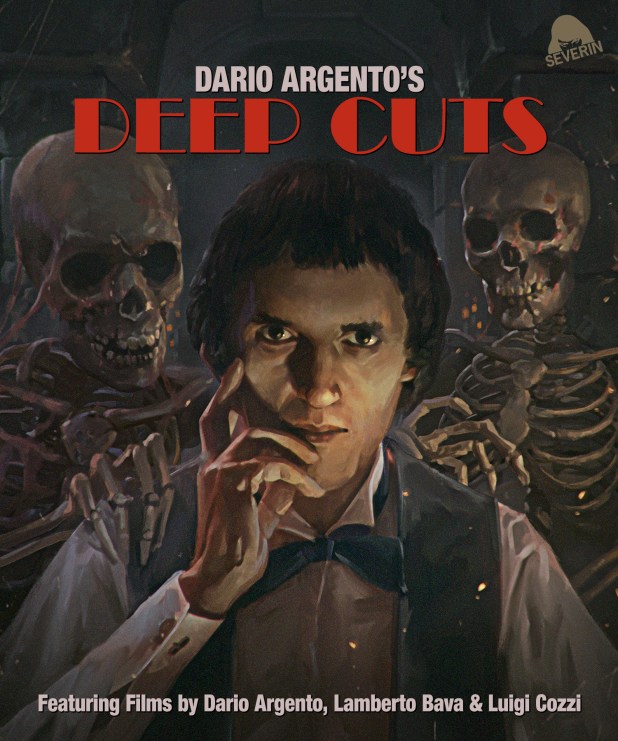
SEVERIN BLU RAY RELEASE: Dario Argento’s Deep Cuts (1973, 1987)

Severin is releasing this to retail on November 26, 2024. Until now, it has only been available on their site.

At the peak of his cinematic triumphs, horror legend Dario Argento created projects for RAI TV that broadcast his singular vision of terror into millions of Italian homes: Door Into Darkness was the top-rated 1973 anthology series produced and hosted by Argento. This set has three of the four episodes sourced for the first time from the original 16mm negatives. Argento’s popular 1987 variety/talk show Giallo has stories directed by Argento, Luigi Cozzi and Lamberto Bava, as well as behind-the-scenes tours from Tenebrae, Phenomena and Opera, and guests that include Anthony Perkins, David Gilmour, Nick Mason, and Fiore Argento newly digitized from broadcast masters.

This Severin set also has over 8 hours of new and archival special features, including commentary by Nathaniel Thompson and Troy Howarth, Dario Argento: My CinemaDario Argento: Master of Horror and interviews with Argento, Cozzi, Bava, Dardano Sacchetti and Antonella Vitale. 

You can order this from Severin.

Here’s an overview of what you’ll find:

In 1973, Dario Argento was invited to RAI television and delivered Door Into Darkness, a show that he would host and even guide some of the episodes. Argento says, at the start of one of the episodes (translated into English) “As for Door Into Darkness, which is the title of the series, you will wonder what it means. Well, it means many things: opening a door to the unknown, to what we don’t know and which therefore disturbs us, scares us. But for me it also means other things. It can happen, and it has happened once, even just once in a person’s life, to close a door behind them and find themselves in a dark room… looking for the light switch and not finding it… trying to open the door and not being able to Do. And having to stay there, in the dark… alone… forever. Well, some of the protagonists of our stories have closed this fatal door behind them.”

The first episode, Il vicino de casa (The Neighbor) was the second directing job for Luigi Cozzi, who had debuted with Il tunnel sotto il mondo (The Tunnel Under the World). It’s the tale of a young couple by the names of Luca (Aldo Reggiani) and Stefania (Laura Belli). They arrive at their new home late at night with their infant child and barely meet anyone, other than knowing they have a neighbor (Mimmo Palmara) but otherwise, they live in a very isolated neighborhood.

On one of the first evenings they are there, as they watch Abbott and Costello Meet Frankenstein, they start to see a stain in the corner of the ceiling that starts to leak from upstairs. What is it? And should they tell the neighbor they have never met? When they go up there, no one is home. However, they soon find the dead body of their neighbor’s wife just in time for him to come back and tie them up.

This story was also written by Cozzi and it has plenty of tension, such as the couple hiding in the dark and then realizing that the husband has dropped his lighter in the killer’s room. It also has a dark non-ending that doesn’t give you much hope, as well as an Argento cameo as a hitchhiker.
For the second episode of Doorway to Darkness, Dario Argento himself would direct and write. Il Tram (The Train) under the name Sirio Bernadotte (thanks to the incredible Italo Cinema).

A young woman is murdered on a train in the seconds that the lights go out and before they return. The murder baffles everyone except for Commisario Giordani (Enzo Cerusico) who seeks to solve it. He thinks that it has to be ticket taker Roberto Magli (Pierluigi Aprà), except that he’s never satisfied. It seems too simple. That’s when he brings his girlfriend Giulia (Paola Tedesco) to ride the train and try to lure out the true murderer.

A very Hitchcock-influenced story, this moment was originally going to be part of The Bird With the Crystal Plumage but it took away from the story. Argento would return to the dark mystery of a train and how frightening it can be in probably the best sequence of his post-Opera films in Sleepless. This may not have the insane energy and madness of his usual style, but the story is well-told and I loved how the hero must overcome his own shortcomings — he’s too cocky, which may be because of his youth — if he wants to save his lover and solve the mystery.

There’s also a striking scene where the killer chases Giulia through the train and into a station and down an immense hallway, all POV, all with her staring back at us. It’s incredible.
The third episode of Doorway to Darkness was directed by Mario Foglietti (who wrote the original story for Four Flies On Grey Velvet) and Luigi Cozzi and was written by Foglietti and Marcella Elsberger.

Argento informs us, in his introduction, that someone has escaped from a sanitarium, saying “…a sick mind wandering a small town, apparently normal, in matter of fact incandescent… Its aim: to kill.” That sick mind may be Robert Hoffman, who has checked into a hotel with an attache case before wandering the streets. One redhead is already killed when he meets Daniela Moreschi (Mara Venier) and follows her back home.

This feels like ten minutes of story shoved into an hour and sadly doesn’t work. But hey — Erika Blanc is in it and if the worst thing you do is watch a giallo with her in it, your day isn’t all that bad. Foglietti gets the look of Argento but doesn’t have the same ability to make art out of a flawed script.

Directed by Roberto Pariante (who was the assistant director for Argento on The Bird With the Crystal PlumageThe Cat o’Nine Tails and Four Flies On Grey Velvet) and Dario Argento, who wrote the script with Luigi Cozzi, Testimone oculare is my favor episode of Doorway to Darkness. It’s so simple and yet succeeds as an example of giallo.

Roberta Leoni (Marilù Tolo, Las trompetas del apocalipsis) is driving on a dark and rainy night when she sees a woman dive in front of her. She doesn’t hit her, but does find her dead body. She’s been shot in the back. That’s when she sees the glint of a gun and runs through the storm to a diner where she breaks down. The police, led by Inspector Rocchi (Glauco Onorato), take her back to the crime scene but there’s no body and no blood.

Everyone treats Roberta like a hysterical woman, including her husband Guido (Riccardo Salvino), even after someone breaks into their house while they’re out for their anniversary and the next day when someone tries to shove his wife into traffic. Then the phone calls start and never seem to stop.

One night, while all alone, the killer calls and says that they will finally kill Roberta. Guido comes home just in time and says that instead of leaving — the killer cut the phone line — they are going to wait for them and he will shoot whoever is after her. As you can imagine, this isn’t the way things end up happening.

Sometimes, a simply told mystery is exactly what you need. That’s what this episode gave me. Supposedly Argento disliked the work that Pariante did and went back and filmed a lot of this himself — the tracking of the killer by footsteps is definitely him — and then not putting his name on it.

Gli incubi di Dario Argento (Dario Argento’s Nightmares) was a TV series created and directed by Dario Argento that was part of the RAI TV show Giallo by Enzo Tortora. He’s probably most famous for the show Portabello that had viewers call in to buy or sell things, present ideas or try and look for love. And if they could get the parrot who was the show’s namesake to say his name, they would win a prize. He was also arrested in 1983 and jailed for 7 months as it was thought he was a member of an organized crime family, the Nuova Camorra Organizzata. It was a case of mistaken identity and he got out of ten years in jail thanks to the Radical Party. They offered him a candidacy to the European Parliament, which he won in a landslide. He was cleared of all charges the year this show ran and brought this show — on which he discussed unsolved murder cases — and Portabella to RAI.

The main draw of these episodes are nine new mini-movies made by Argento. They’re three-minute shorts shot on 35mm that show off some wild effects but one of them, Nostalgia Punk, so upset viewers that it has rarely been shown since. The stories are:

La finestra sul cortile (The Window on the Court): This is Argento’s tribute to Alfred Hitchcock and Rear Window. After watching the film, a man named Massimo watches his neighbors fight. He runs down with a knife to stop them, but falls on his own weapon and is blamed by the police for killing the woman. If you recognize the music, it’s part of the Simon Boswell score from Phenomena.

Riti notturni (Night Rituals): This is also missing from some online versions of the film, but has a maid conspire with a voodoo coven to murder and devour the couple that she works for.

Il Verme (The Worm): A woman who goes by the name of Bettina is reading Dylan Dog (the comic book that Cemetery Man comes from) when she overhears a story about parasites that go from cats to humans. As she explores her nearly nude body in a mirror, she notices a worm has grown out of her eye, which she stabs out.

Amare e morire (Loving and Dying): Set to Michael Jackson’s “Bad,” this story has Gloria assaulted and left for dead. As she recovers, she believes that the man who raped her is one of three neighbors. She sleeps with each in an attempt to learn who it is and get her bloody revenge.

Nostalgia punk: The most controversial segment, this has a woman’s water become poisoned. She begins to vomit multicolored liquids and then parts of her body before she finally tears her own body to pieces and her organs rain out of her destroyed carcass. It got so many complaints that Argento was told to settle down in future segments.

La Strega (The witch): Using Morricone’s score from The Bird With the Crystal Plumage, this has Cinzia’s party guests playing a game called “The Witch” that ends with children screaming and holding a bloody head.

Addormentarsi (Falling asleep): A man is possessed by a demon just before he falls asleep and then devours his dog. This uses “Anarchy in the UK” by the Sex Pistols.

Sammy: Sammy is a young girl who is frightened when Santa enters her room. Then Santa removes his face and reveals a monster. It’s simple but it really works.

L’incubo di chi voleva interpretare l’incubo di Dario Argento (The Nightmare of the One Who Wished to Explain Dario Argento’s Nightmare): A young man comes to REI to be part of this series and when he stays at a hotel, he soon learns he’s in a room with foreigners who steal everything he has and then threaten to kill him. It turns out that it’s all a set-up by Argento.

At the beginning of every episode, Argento appears, often with Coralina Cataldi-Tassoni (Demons 2Il Bosco 1Opera) all gothed out and acting as his starry-eyed assistant.

Argento also created another segment for GialloTurno di notte (Night Shift), which was about what happens to cab drivers at night. Episodes were also directed by Lamberto Bava and Luigi Cozzi. He also shared how he filmed several big moments in his most famous movies, such as the Loma camera sequence in Tenebrae; the bird attack in Opera, the transformation scenes in Demons 2 and how he directed Goblin to create the score for Suspiria. These scenes are worth watching and also appear in the Luigi Cozzi-directed Dario Argento: Master of Horror.

While this is by no means necessary watching for those with a passing interest in Italian horror, for devotees of the form and Argento, it is required viewing. It’s the chance to basically get nine new stories even if they are very short.
CALULDRON FILMS BOX SET RELEASE: Brivido Giallo

The Brivido Giallo Collection collects the four film series directed by Lamberto Bava. Each film in this set is a standalone fully featured production that was completed between 1987 – 1989. The films stories are not connected, but were collected together for Italian television near the end of the 80s. 

Cauldron Films is collecting all four movies — Until Death, Graveyard Disturbance, Dinner with a Vampire, and The Ogre — on blu ray for the first time in a limited edition five disc set with each movie fully uncut and restored from 4K scans of the 35mm film negatives, loaded with brand new cast and crew featurettes by Eugenio Ercolani (including 4 with Lamberto Bava himself) and an exclusive new interview with composer Simon Boswell, all housed in a rigid outer box with four folded posters featuring new artwork by Eric Adrian Lee.

You can get this set from Cauldron Films and Diabolik DVD.

Here’s an overview of what’s in the set:

Graveyard Disturbance (1987): I used to have a complicated relationship with Lamberto Bava. And by that, I mean that for every Demons, there’s a Devilfish. But then I realize that I kind of like Blastfighter, love Macabre and even kind of dig Delirium. I always giae him another chance and finally, one day, I came around to liking what Lamberto directed.

In July of 1986, Lamberto was hired to create five TV movies under the title Brivido Giallo (Yellow Thrill). Of course, none of these were giallo and only four got made: Until DeathThe OgreDinner with a Vampire and this film.

Originally titled Dentro il cimitero (Inside the Cemetery), this spoof of Italian horror is about five twentysomething teenagers who make a bet with an entire town — which is literally referred to as the kind of place from An American Werewolf In London — to see if they can survive one evening inside a series of catacombs. Not only are there zombies and vampires in there, there’s also death itself.

It all starts off with plenty of promise, as our gang of young punks has the most 80s van ever, complete with an image from Heavy Metal, U2 and Madonna. After the crew shoplifts, they go on the run and straight into supernatural trouble.

The person they’re stealing from? Lamberto. Which is only fair, as he uses this movie to rip off everything from — sorry, spoof or pay homage to — Carnival of Souls and Phenomena to his father’s Black Sunday and any number of zombie movies.

So where does the eating come in? Well, there’s one great scene in here where an entire family of multiple eyed creatures all dine on rotten food. This moment had to have inspired Pan’s Labyrinth.

The Cauldron release of Graveyard Disturbance includes commentary by Eugenio Ercolani and Nanni Cobretti; interviews with Bava, Gianlorenzo Battaglia, Karl Zinny, Massimo Antonello Geleng and Roberto Ricci; a trailer; a poster with artwork by Eric Adrian Lee and a reverse blu ray wrap with the original artwork.

Until Death (1988): As I mentioned above, I felt like I had never given Lamberto a fair chance. Then again, whenever I say that, people always remark that I’m always mentioning that I like his movies. Demons is a near-perfect movie but I’ve always qualified that by saying that he had Argento, Franco Ferrin and Dardano Sacchetti on board along with Michele Soavi as assistant director. And then I think, well, you know, I kind of really like Macabre and it has some really grimy stuff in it. A Blade In the DarkBlastfighterDinner with a Vampire, Graveyard Disturbance, The OgreDemons 2 and Midnight Ripper all have charms. I’ve even come around to liking Delirium e foto di Gioia, Maybe not Monster Shark. But the more I think about it, I really do like Lamberto Bava.

This is the movie that put me over the edge into perhaps even love.

In July of 1986, Lamberto was hired to create five TV movies under the title Brivido Giallo (Yellow Thrill). Of course, none of these were giallo and only four got made: The Ogre, Dinner with a Vampire, Graveyard Disturbance and Until Death.

There were some hurt feelings about this movie when it was made. It was based on an older script by Dardano Sacchetti, but Lucio Fulci went on record saying that he was planning on making an adaption of The Postman Always Rings Twice with the title Evil Comes Back. Fulci said that Sacchetti wrote it up and sent it to several producers and later found out that when Luciano Martino bought it, his name wasn’t on it. Fulci said, “…because of our friendship I decided not to sue Sacchetti, but I did break off all relations with him.” Sacchetti responded, “The producer of Evil Comes Back didn’t have the budget required, and he gave up to do the film. That’s it. Years later, as the screenplay was mine, I sold it to another producer who used it for a b-movie with Lamberto Bava.”

Gioia Scola really could have been a remembered giallo queen if she’d come along 15 years early. As it is, she was in some of my favorite late 80s films in the genre, including Obsession: A Taste for FearToo Beautiful to DieSuggestionata and Evil Senses.

In this film, she plays Linda, a woman whose husband Luca (Roberto Pedicini) left her eight years ago. All the men of the small village wondered why he’d leave behind such a stunning woman. In fact, this movie could have been called Ogni uomo vuole scopare Linda. She gave birth to Luca’s son and unknown to the town, has since become the wife of the man who helped kill her husband, Carlo (David Brandon).

Together, they run a small hotel near the lake. During one rainy night, Marco (Urbano Barberini) arrives to stay. And it seems like he knows way too much about what’s going on. Her son Alex (Marco Vivio) may as well, as he wakes up every night screaming, dreaming of his father clawing his way out of a muddy grave. She hires Marco as the handyman, but Carlo thinks they’re sleeping together. In no way can this turn out well.

How does Marco know where all the old clothes are kept? How does he already know the family recipes? And why is he so close so quickly with Alex?

What’s intriguing is how close this is in story and tone, yet goes off on its own path, to Bava’s father’s film Shock. The difference is where the father would use camera tricks and tone to create a mood of dread, his son will put you directly into the middle of the muck and grue with comic book lighting and great looking effects from Angelo Mattei. And keeping the family tradition going, Lamberto’s son Fabrizio was the assistant director. How wild that Mario’s grandson was AD on movies like Zoolander 2 and Argento’s Giallo and The Card Player, using the name Roy Bava for those last two movies.

My favorite fact about this movie is that it was released on VHS as The Changeling 2: The Revenge. Trust me, it has nothing to do with The Changeling.

The Cauldron release of Until Death includes commentary by Eugenio Ercolani and Troy Howarth; interviews with Bava, Battaglia, David Brandon and Massimo Antonello Geleng; a trailer; a poster with artwork by Eric Adrian Lee and a reverse blu ray wrap with the original artwork.

The Ogre (1989): Following the success of the film Demons and Demons 2, this film was announced as part of Bava’s TV movie series. The script, written by Dardano Sacchetti, is pretty much the original script for The House By the Cemetery before Lucio Fulci added to the tale. Seeing as how it was a TV movie, there was some self-censorship, as Bava said that were this a real movie, the ogre would have eaten children.

Cheryl (Virginia Bryant, Demons 2The Barbarians) is a sexually confused American writer of horror novels who traves to Italy with her husband Tom (Paolo Malco, The New York RipperThunder) and son Bobby — yep, little Bob, but not Giovanni Frezza — to work on her next book.

She begins to have nightmares of childhood memories of being stalked by an ogre and becomes convinced that the house has a curse on it that is bringing her past memories into our reality.

Alex Serra, who was the blind man from the original Demons, also shows up. Speaking of Demons, this movie was released outside of Italy as the third film in that series. As you’ll soon learn from the Demoni sequels, it has nothing to do with the first two films. Even more confusing, this was released on DVD in Germany as Ghosthouse II, the sequel to the Umberto Lenzi’s Ghosthouse/La Casa 3. That movie is confusing, too, as it’s the third movie in the La Casa series, which translates to house in Italian, but has nothing to do with the movie House. Instead, Evil Dead is known as La Casa in Italy.

Want more info on how all that works? Check this article out on La Casa and this article about the Demons movies.

The Cauldron release of The Ogre includes commentary by Rachel Nisbet; interviews with Bava, Geleng and Ricci; a trailer; a poster with artwork by Eric Adrian Lee and a reverse blu ray wrap with the original artwork.

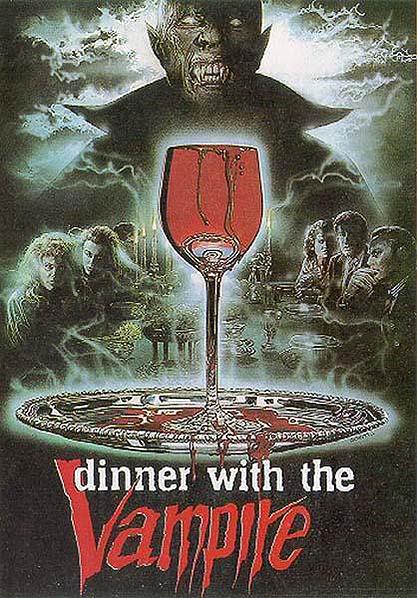
Dinner With a Vampire (1989): Four actors — Gianni (Riccardo Rossi, the Italian voice of Simba in The Lion King), Rita (Patrizia Pellegrino), Monica (Yvonne Sciò, who was in the Tal Bachman video for “She’s So High”) and Sasha (Valeria Milillo) have won their audition to appear in a new horror movie. As they’re on the way to meet Jurek the director (George Hilton, All the Colors of the DarkThe Case of the Bloody Iris) — who lives in a large castle — they learn that he’s a vampire and has a challenge: he believes that they can kill him.

There are movies within a movie. There’s a hunchbacked assistant named Giles (Daniele Aldrovandi). And there’s lots of gore, particularly at the end. Written by Bava with Dardano Sacchetti, this comedy isn’t going to change your world, but it will entertain you unless you have a major issue with goofy humor.

The Cauldron release of Dinner With a Vampire includes commentary by Eugenio Ercolani, Nathaniel Thompson and Troy Howarth; interviews with Bava, George Hilton, Geleng and Boswell; a trailer; a poster with artwork by Eric Adrian Lee and a reverse blu ray wrap with the original artwork.

The set also comes with a soundtrack compilation CD featuring tracks from each Brivido Giallo film curated and supplied by composer Simon Boswell.

This is an incredibly exciting set! Here’s to more Italian TV movies making their way here.

SEVERIN BLACK FRIDAY: Thong Girls (1987)

This 1983 production from writer/director Jess Franco can finally be experienced as one of his most surprising and heartfelt offerings of the decade. It’s summer’s end in the resort city of Benidorm, where seductive foreigners, conniving hustlers, gullible tourists and insatiable celebrities all come together in a barbed confection that’s part sunny comedy, part Nashville-style satire and totally, unmistakably, sexy Franco fun. It’s scanned in 2K from the original camera negative with over 2 hours of new special features, such as Francomania’s John Dixon and William Morris and more of Stephen Thrower’s journeys in the land of Franco.

The sale will take place from 12:01am EST on 11/29 to 11:59pm PST on 12/2 at Severin’s site.

Lina Romay directed 13 movies in between starring in 123 films, most of them with the man for whom she became a muse, Jess Franco.

Surprisingly, this film — despite the title Las chicas del tanga that means The Girls In Thong — is nowhere near as racy as the other movies Franco made at this end of his career, feeling more like a comedy than anything else.

The men are stupid, the women are attractive, there’s no translation — well, until the Severin re-release, which I can’t wait for — and no awkward anatomy zoom lenses. That said, this is quite obviously for people that have created their own Letterboxd lists to track how many Franco movies they’ve watched.

Maybe it’s so chaste — well, for Franco — because Antonio Mayans had his wife Juana de la Morena and both of his daughters, Ivana and Flavia, in the cast (actually, that’s BS because Flavia was also in Emanuelle Exposed and Bahía blanca).

Speaking of that Emanuelle Franco movie, its lead Muriel Montossé is also in this, as are Eva León (Voodoo Black Exorcist, Blue Eyes of the Broken Doll) and Analía Ivars (Gold Temple Amazons, Lust for Frankenstein).

SEVERIN BOX SET RELEASE: All the Haunts Be Ours: A Compendium Of Folk Horror Vol. 2: Born of Fire (1987)

I’ve often discussed waiting to see a movie until the time is perfect.

That’s what I had done with this film, a movie in which musician Paul Bergson (Peter Firth) searches for the Master Flautist (Orla Pederson), a supernatural creature who is planning to destroy our planet.

Directed by Jamil Dehlavi, this was amazingly released on home video by Vidmark, and I can’t even imagine people who just picked it up at the video store making their way through it without preparation.

During a concert, Peter has visions of the end of the world. At the time, an astronomer (Suzan Crowley) discovers patterns on the surface of the sun caused by a volcano in Turkey, which is where Peter came from. He goes back and discovers that his mother was stoned when he was a child and that he has a mute, deformed brother (Nabil Shaban) who is still alive, and is brought to civility by the woman, just in time for the fire breathing djinn who is the Master Flautist to possess her and have her sexually assault Peter. And oh yeah, she goes and spawns in a hot spring, spewing forth blood and fish eggs. Later, she buries a moth and as it is born, she dies in Paul’s brother’s arms as he breaks his silence and screams.

The brothers do what they must: they perform a flute and baritone concert that floods the caves and kills the Master Flautist.

Can you imagine the folks who rented this five movies for five nights for five dollars? Blood in the water, a skull eclipsing the moon, Islamic demons, full frontal male and female nudity, passages from the Koran…I don’t know if I’ve ever seen a movie like this, a nearly wordless film with images that break your mind and one of the heroes has osteogenesis imperfecta and would go on to play Sil on Doctor Who.

It starts with this quote from Jelaleddin Rumi: “In the rhythm of music a secret is hidden; If I were to divulge it, it would overturn the world.” Rumi also wrote, “Do not feel lonely, the entire universe is inside you.” and “Yesterday I was clever, so I wanted to change the world. Today I am wise, so I am changing myself.”

Allow this movie into your life sooner than I did.

Born of Fire is part of the new Severin box set, All the Haunts Be Ours Volume 2. It has extras including an interview with director Jamil Dehlavi, an archival interview with Nabil Shaban, a lecture on the cinematic world of Jamil Dehlavi by Dr. Ali Nobil Ahmad, director Dalia Al Kury examining the role of the djinn in contemporary Arabic culture, an interview with Syeda Momina Masood on the roots of Pakistani horror and a trailer. There are also two short films, Towers of Silence and Qâf.

You can order this set from Severin.