Admission is still only $10 per person each night (children 12 and under free with adult) and overnight camping is available (breakfast included) for an additional $10 per person.You can buy tickets at the show or use these links:
There is also a limited edition shirt available at the event.
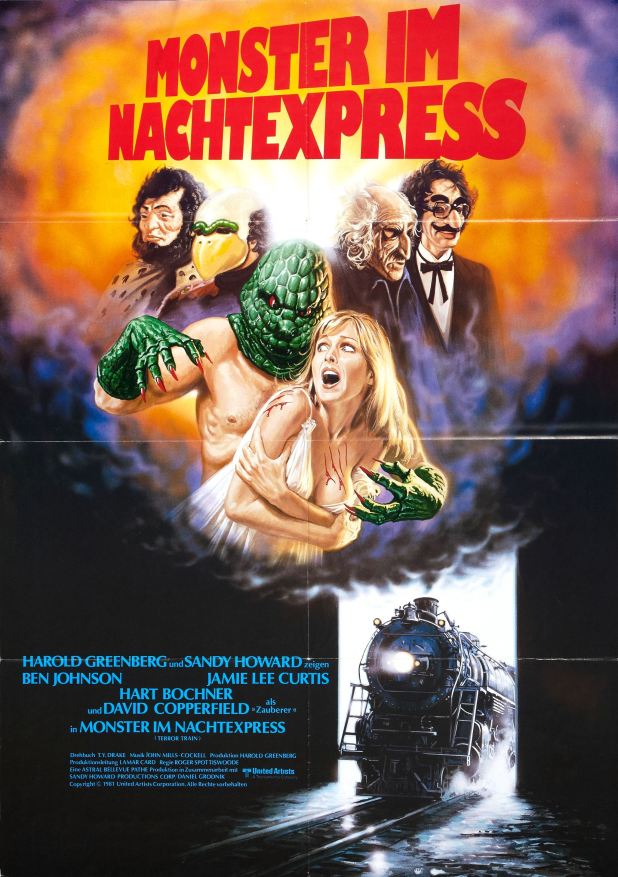
Jamie Lee Curtis. A train. A murderous slasher. And David Copperfield. Yes, Terror Train is unlike any other slasher that ever came before or since.
Directed by Roger Spottiswoode, who was also in the chair for Stop! Or My Mom Will Shoot, this movie was totally conceived as Halloween on a train. Jamie Lee had just finished filming Prom Night, so she jumped back on the slasher, err, train one more time.
Much like Slaughter High, a prank puts all of this in motion, as Alana (Jamie Lee) is coerced into pulling a joke on frat pledge Kenny Hampson that uses a female corpse, because you know, humor. Kenny doesn’t get the joke, goes nuts, gets put in a mental asylum and then, of course, breaks out and kills nearly everyone.
But what about David Copperfield, you may ask. Well, he’s all over this movie, both doing illusions and being a red herring. His scenes with Jamie Lee make the screen smolder with pure sex. I’m totally lying to see if you’re paying attention.
Ben Johnson, Captain Morales from the original The Town That Dreaded Sundownshows up as a train conduction. And hey! There’s Vanity (credited as D.D. Winters) years before she’d meet up with Prince, star in Action Jacksonand Tanya’s Island, then got heavy into drugs and dating Rick James, Adam Ant (who wrote the song “Vanity” about her on the Strip album), Nikki Sixx and Billy Idol. After that, she went into renal failure, found God and later died because her body had endured a lifetime of drug abuse.
I really like the killer’s gimmick of continually switching masks. It’s pretty effective and leads you to wonder who really is behind things, even if the opening totally gives the identity away.
Here’s a drink to enjoy while you watch this movie:
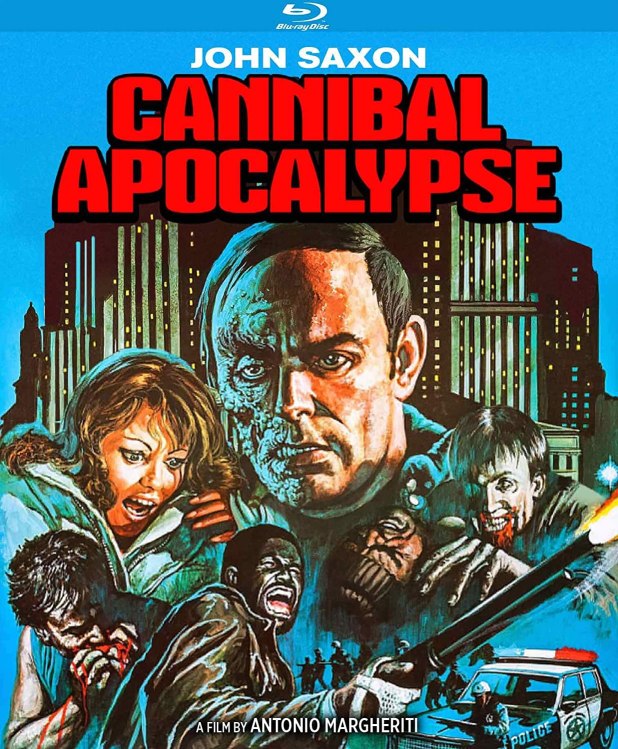
Whether you call it Apocalypse domani, Cannibals In the Streets, Invasion of the Fleshhunters or another of the many titles this movie has been given, you have to respect the vision of Antonio Margheriti who continually brings something amazing to each of his movie, no matter if they’re in science fiction (Assignment: Outer Space, The War of the Planets, The Wild, Wild Planet, Battle of the Worlds), horror (The Long Hair of Death), giallo (Seven Deaths in the Cat’s Eyes), westerns (And God Said to Cain), war (Jungle Raiders, Code Name: Wild Geese) and whatever magical genre Yor Hunter from the Future is from.
In an interview with The Flashback Files, star John Saxon said, “It was talking about the Vietnam war like it was a virus you could bring home. I thought it was a great metaphor for a psychological condition.”
But then he started making the movie.
“At one point we were shooting a scene and a guy brings in this tray of meat. I asked what it was for and they explained to me it was supposed to be body parts, even genitals, and we were supposed to gnaw on them. I asked Margheriti to take me out of the scene and I went to my hotel room. Once I found out what the true nature of the film was I got so depressed.”
Yet no matter how wild this movie gets, Saxon is the glue that holds it together, adding energy and emotion to every scene he’s in.
Saxon plays Norman Hopper, a man haunted by his experiences in Vietnam, remembering one night when he was bitten by Charlie Bukowski (John Morghen AKA Giovanni Lombardo Radice, who had quite the year, also appearing in 1980s City of the Living Dead and The House on the Edge of the Park), a POV that he rescued.
He hears from Bukowski, who wants to meet him for a drink, but he’s late as he’s giving in to the charms of his young next door neighbor Mary (Cindy Hamilton AKA Cinzia De Carolis, Lori from The Cat O’Nine Tails). In the middle of them starting to make love, he bites her. And she likes it, because yes, this is an Italian horror movie.
Just then, Norman discovers that Charlie has barricaded himself in the mall and is threatening to kill civilians. Norman convinces him to surrender, but as they’re taking him away, he bites a cop. When he returns home, he confesses to giving in to his sexual impulses and feeling the need to bite Mary. His wife Jane (Elizabeth Turner, Beyond the Door, The Psychic) struggles to understand. Meanwhile, Bukowski and another vet named Tom (Tony King, who is now Malik Farrakhan and the head of security for Public Enemy; he’s also in The Last Hunter, The Toy, Atlantis Interceptors and Hell Up In Harlem) battle guards; Bukowski tops that by biting a nurse named Helen (May Heatherly, Pieces, Edge of the Axe).
No one is innocent, as Jane has been making time with Dr. Mendez (Ray Williams AKA Ramiro Oliveros, The Swamp of the Ravens, The Pyjama Girl Case), who takes her on a date to a piano bar where he tells her that the virus causes a mutation that causes human beings to crave flesh. Norman goes to get tested by the doctor, but he really wants to find out what the man’s intentions are with his wife.
Everything gets bad fast. Nurse Helen bites a doctor’s tongue clean off, just as the infected cop goes wild, tearing through several of his fellow officers. Captain McCoy (Wallace Wilkinson, Invasion U.S.A., The Visitor) resolves to end the outbreak and sends his men into the sewers to stop the outbreak, which finds Norman, Helen, Bukowski and Tony battling a biker gang and slicing a man apart with a disc grinder. Despite battling cops armed with a flamethrower and being shot, Norman survives and makes his way back to his home just in time to save his wife from an infected Mendez. As he expires in his dress uniform, she kills herself. As for the disease, perhaps Mary and her brother might know something as well.
It would take several websites to contain everything that Dardano Sacchetti wrote. I love that this film is a cannibal movie and a zombie film together, yet the infected retain their intelligence. It looks gorgeous as well, as the Italian film crew uses Atlanta — and De Paolis Studios back in Italy — to its fullest. It definitely earns being a video nasty, making its way to the section 1 list of prosecuted movies.
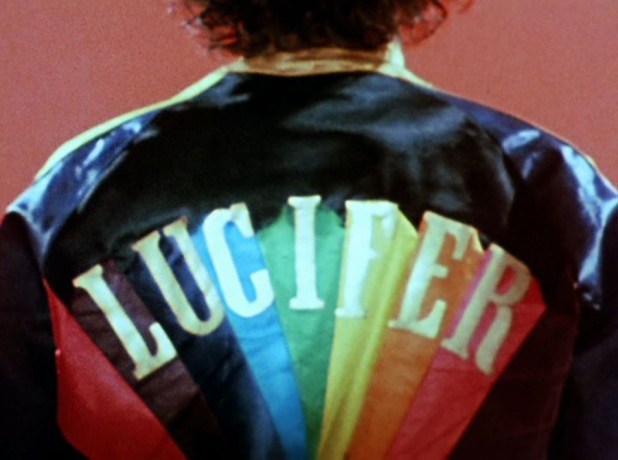
Kenneth Anger’s Lucifer Rising is as much a ritual as it is a document of the counterculture of the mid 60s in California. He was influenced by — as always — Aleister Crowley and his poem “Hymn to Lucifer.”
Ware,
nor of good nor ill, what aim hath act?
Without its climax, death, what
savour hath
Life?
an impeccable
machine, exact
He
paces an inane and pointless path
To glut brute appetites, his sole
content
How tedious were he fit to comprehend
Himself! More, this
our noble element
Of fire in nature, love in spirit, unkenned
Life hath no
spring, no axle, and no end.
His body a bloody-ruby radiant
With noble
passion, sun-souled
Lucifer
Swept through the dawn colossal, swift aslant
On Eden’s imbecile
perimeter.
He blessed nonentity with every curse
And spiced with
sorrow the dull soul of sense,
Breathed life into the sterile universe,
With Love and Knowledge drove out innocence
The Key of Joy is disobedience.
Crowley referred to life as a near-boring machine that must be enlivened by the Lucifer the lightbringer, not a devil, but a near-mythic hero that represents the spirit of art and inspiration.
Anger began to search for a young man who could personify Lucifer for his planned film and seemed to find him in 1966 in the form of a musician named Bobby Beausoleil, who has said: “Before we really got into a discussion of what Lucifer Rising was to be about Kenneth showed me his films. I had heard of Scorpio Rising, but I hadn’t seen any of his films. The idea for Lucifer was to be the antithesis of Scorpio, which was kind of a death-image type of thing. The concept was that I would be representing the coming of the new age. In a mythological sense, we have come through matriarchy, we have come through the mother goddess. We have come to patriarchy where the goddess is male. And the Aquarian Age is supposed to represent the age of the child. This was the character I was supposed to play.”
Beausoleil served as Anger’s chauffeur but as Beausoleil was strictly heterosexual — opposite of Anger — there would be growing resentment and bad blood, as instead of a personal relationship their friendship was more business. For starring in the film and be allowed to score the movie with his band Magick Powerhouse of Oz, Beausoleil would not be paid but could live in Anger’s home for free.
Anger talked about the film more than he made it, according to the actor, but he was also making private films for collectors and also Invocation of My Demon Brother, which also features Beausoleil. After a September 1967 Equinox of the Gods didn’t go to plan, Beausoleil left Anger’s home. Anger then placed an ad in the Village Voice in which he declared his own death — IN MEMORIAM. KENNETH ANGER. FILMMAKER 1947–1967 — before burning several of his films.
Leaving for London in 1968, Anger came into the orbit of John Paul Getty Jr. — who would be a key patron of his art — and the Rolling Stones, whose Mick Jagger would score Invocation of My DemonBrother. After an attempt to make. Crowley biopic, he came back to Lucifer Rising and cast Chris Jagger as Lucifer, Performance director Donald Cammell as Osiris, Marianne Faithfull as Lilith and her brother Chris and the Rolling Stones’ personal photographer Michael Cooper signed on to help, with fashion designer Laura Jameson designing the costumes.
Eight minutes were filmed in Anger’s apartment with directors Cammell Dennis Hopper and Alejandro Jodorowsky in attendance before scenes were lensed in Germany and Egypt, then firing Chris Jagger.
Then the film stalled again.
Jimmy Page and Crowley became friends briefly and he nearly scored the film before Anger got into an argument with Page’s wife Charlotte, who threw him out of their London home.
Meanwhile…
Bobby Beausoleil had joined a whole different group, the family of Charles Manson. After kidnapping Gary Hinman and cutting off his ear before eventually murdering him set up to look like black revolutionaries did it. In 1970, a Superior Court jury in Los Angeles found the 22-year-old Beausoleil guilty of first-degree murder and sentenced him to death, mostly due to the testimony of his pregnant girlfriend Kathryn “Kitty” Lutesinger.
By 1979, he wrote Anger from prison and all was forgiven. With help from a prison teacher, Beausoleil received musical instruments and recording equipment, formed the Freedom Orchestra and recorded a 44-minute soundtrack. As for the Page soundtrack, it was released in 2012 as Lucifer Rising and Other Sound Tracks and is also on the Sound Tracks box set.
This is Anger’s last work and the purest surrealism that I feel he’d create. Sure, the origins are rough, it took a long time to make and it caused no small manner of mental anguish — Faithful taking tons of drugs with her to Egypt nearly got everyone jailed — but the results are true art. And that UFO? A real one buzzed the crew and no one could film it in time and it needed to be recreated.
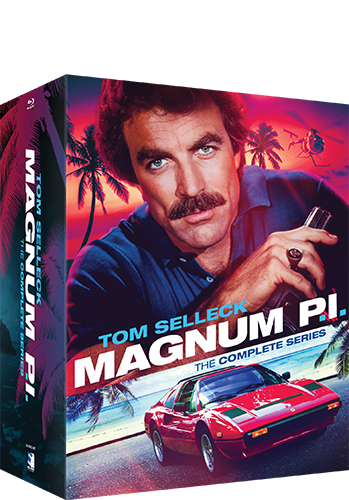
Magnum P.I. was a constant in my life through a tumultuous time, starting when I was just 8 and ending when I was 16, seeing me through the most chaotic years of young life. Thomas Sullivan Magnum IV’s (Tom Selleck) adventures in Hawaii were a center, a Thursday night oasis — Wednesday from series 7 onward — that always knew would be there.
Magnum lives in the guest house of an opulent 200-acre beachfront estate known as Robin’s Nest. At some point, he provided services for its owner, world-famous novelist Robin Masters (voiced by Orson Welles for all but the final time when Red Crandell spoke for the character) and he’s been allowed full run of the estate and use of the author’s Ferrari 308 GTB/GTS in exchange for some nebulous security detail. In between, he takes on cases that rarely pay and often put his life in danger.
His archnemisis is Jonathan Quayle Higgins III (John Hillerman). Like Magnum, he’s also ex-army, but he’s by the book while our hero is laid back. He’s in charge of Robin’s estate, patrolling it with his twin Doberman, Zeus and Apollo. The relationship grows and changes as the series progresses, going from antagonistic to near friendship by the close, as well as the suspicion that Higgins is Robin Masters.
Magnum has a near-perfect storytelling engine as it has the perfect setting (all manner of people come to Hawaii for vacation or to escape), the perfect characters (Magnum can be just as much a film noir hero as he can be a military man or a romantic leading man; he’s a comedic figure without losing his coolness) and the perfect job (being a detective is a reliable TV profession for this reason). Add in his friends Theodore “T.C.” Calvin (Roger E. Mosley) — whose Island Hoppers helicopter can take Magnum anywhere — and Orville Wilbur Richard “Rick” Wright (Larry Manetti), whose King Kamehameha Club can be the origin for all manner of intrigue — and you can see why this series ran for so many years.
While T.C. and Rick are former Marines and Magnum is a former Navy SEAL — all served in Vietnam — none of them are shell-shocked zombies. They’re normal human beings who deal with their war experiences in their own way, which was a refreshing change for audiences — especially veterans — when the show started.
Magnum was such a big show that even other big shows crossed over with it, establishing a CBS detective show universe. In the episode “Ki’is Don’t Lie,” Magnum works with Simon & Simon to recover a cursed artifact, a mystery which had its conclusion in their show with the episode “Emeralds Are Not a Girl’s Best Friend.” Yet most famously, in “Novel Connection,” novelist Jessica Fletcher came to Hawaii — along with Jessica Walter and Dorothy Loudon — and then solved the case on her show, Murder, She Wrote, in the episode “Magnum on Ice.”
Speaking of guest stars, all manner of genre favorites appeared on this show, including Jenny Agutter, Talia Balsam, Ernest Borgnine, Candy Clark, Samantha Eggar, Robert Forster, Pat Hingle, Mako, Patrick Macness, Cameron Mitchell, Vic Morrow, John Saxon and many more.
Another reason why this show is so beloved is due to Selleck. He told producers, “I’m tired of playing what I look like.” His suggestion? He remembered having fun with James Garner on The Rockford Files and suggested making Magnum more of blue collar guy. This made him more identifiable with men, not just women.
One of the things that struck me as I caught up on the series was that the theme is different at the start! The original theme was written by Ian Freebairn-Smith and only lasted eleven episodes before being replaced with the iconic Mike Post and Pete Carpenter song that I hum all of the time.
At the end of the seventh season, Magnum died in a shoot out. I can’t even explain how upset everyone was. The letters page in TV Guide was aghast. Imagine if Twitter existed in the late 80s! Luckily, he came back for one shorter season.
Series creator Donald P. Bellisario — who created this show with Glen A. Larson — was born in North Charleroi, PA. I can probably see his house from mine. After fifteen years in advertising, he went to Hollywood, where he worked on the series Black Sheep Squadron and Battlestar Galactica before creating series like Tales of the Golden Monkey, Airwolf, Quantum Leap, JAG and NCIS. He was joined by writers like Richard Yalem (who made Delirium), Reuben A. Leder (A*P*E*, Badlands 2005), Jay Huguely (Jason Goes to Hell), Andrew Schneider (the “Stop Susan Williams” and “Ther Secret Empire” chapters of Cliffhangers!), Stephen A. Miller (My Bloody Valentine), J. Miyoko Hensley (who wrote the Remo Williams: The Prophecy pilot) and even notorious celebrity fixer and detective Anthony Pellicano, as well as directors like David Hemmings (yes, from Deep Red), John Llewellyn Moxey, Jackie Cooper and Robert Loggia, amongst so many others.
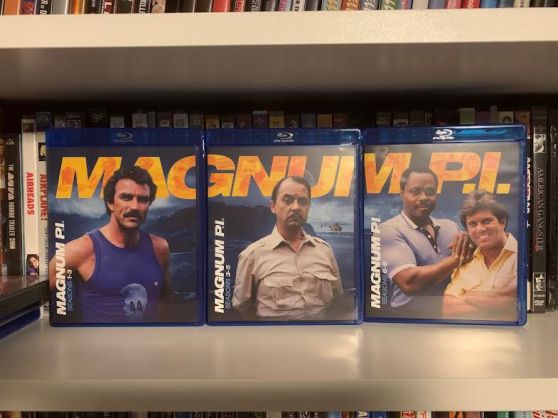
The Mill Creek blu ray box set of Magnum P.I. has all 158 episodes of the show, as well as new interviews with composer Mike Post, writer/producer Chris Abbott, author C. Courtney Joyner on the sixty year career of director Virgil Vogel and actress/writer Deborah Pratt (who was the voice of the narrator and Ziggy on Quantum Leap). Plus, you also get two Tom Selleck guest star roles on The Rockford Files, featurettes on The Great 80’s TV Flashback and Inside the Ultimate Crime Crossover (Magnum P.I. and Murder, She Wrote) and audio commentary on three season 8 episodes.
Much like how Magnum was a calming part of my young life, having this set on my shelf during these turbulent times is just as warm of a feeling. Get this set and let the 80s wash over you like the beaches of Waikiki.
When the master of the Iron Flag Clan and the rival Eagles group’s leader have been killed by the mysterious Spearman. The secret is that he has been hired by Iron Tiger (Feng Lu, Centipede from Five Deadly Venoms), who has allowed Iron Panther (Phillip Chung-Fung Kwok, Lizard from Five Deadly Venoms) to take the rap — even though the Iron Flag are known for being virtuous protectors of decency. Iron Tiger promises to send him money so he can be released, but the money never comes. What does happen is that multiple assassins are seeking to kill Iron Panther and in a surprise, the Spearman saves him.
The Spearman did kill the master, but was tricked into doing so. And now, Chow Feng leads not only the Iron Flag Clan, but their mortal enemies the Eagles. No, not with Don Henley and Timothy B. Schmit.
Now, Iron Panther and his brother Iron Monkey (Sheng Chiang, Crippled Avengers) are about to get revenge. Yet to battle the Ten Killers of the Underworld, they’re going to have to team with the Spearman.
Chang Cheh also directed Chinatown Kid, The Legend of the 7 Golden Vampires, Shaolin Temple and so many other incredible martial arts films. Here, he introduces flag fighting to the form and wow, the battles in this are fascinating. They’re also quite gory with blood spraying everywhere and flags piercing evildoers.
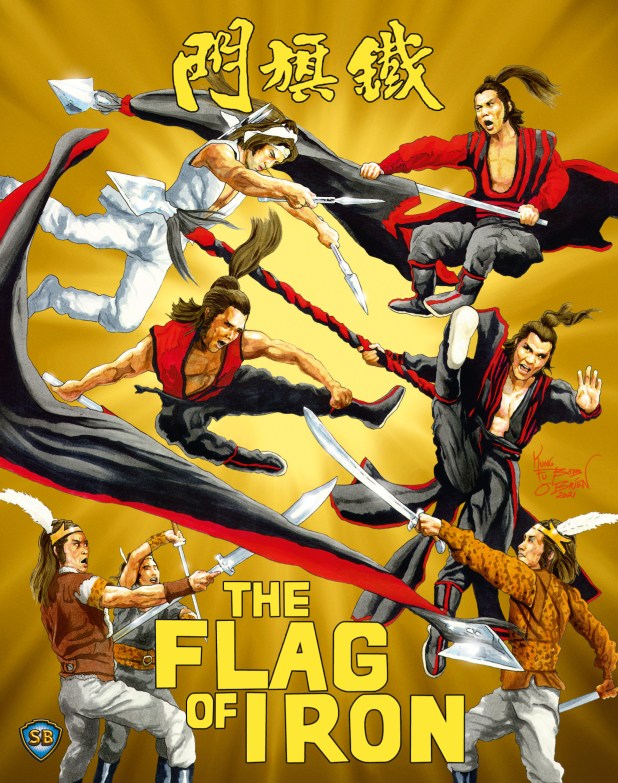
The 88 Films blu ray release of Flag of Iron looks so great and comes in a package that I keep taking off my shelf and staring at, so excited that I own such a dynamic piece of art and a film that I’m sure I’ll come back to several times. It features a high definition 1080p presentation of the film with English and Mandarin (newly translated English subtitles) dialogue, as well as audio commentary by Mike Leeder and Arne Venema. The first run slipcase has art by Robert “Kung Fu Bob” O’Brien and comes with a booklet and poster. You can order it from MVD or Diabolik DVD.
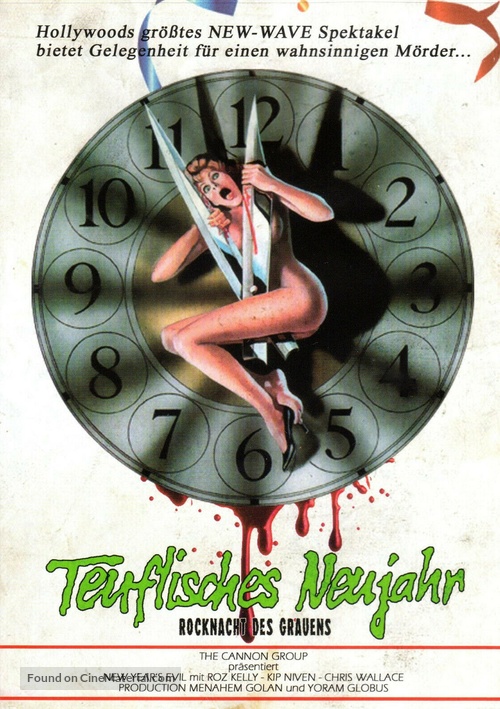
EDITOR’S NOTE: We originally watched this movie way back on December 31, 2018, which is a pretty appropriate date to cover this early Cannon film. PS — what came first, the poster for Midnight or the German poster for this movie?
By 1980, every holiday was taken. All writer and director Emmett Alston had left was New Year’s Evil. It would have to do.
TV’s most beloved punk, Diane “Blaze” Sullivan (“Pinky” Tuscadero from TV’s Happy Days) is getting ready to count the night down from a Hollywood hotel. Things are great until Evil himself call, saying that in each timezone, he’ll be killing a naughty girl, with Diane being the last to die.
In an insane asylum nearby, a nurse is the first victim, with the killer audiotaping each kill and replaying them. Who is he? A crazy fan? A religious nut? Her son? Her husband?
Whomever it is — I won’t tell — he dies by jumping off the roof of the hotel. But as Diane is loaded into the ambulance, her son (Grant Cramer, Killer Klowns from Outer Space) is at the wheel, wearing the mask of the killer.
The big selling point of this movie for me? Fake 1980’s punks. There is nothing like the Hollywood mainstream ideal of what punk rockers are like, because it is always far from the truth and always awesome.
This is fine, I guess. I wanted it to be something more, but maybe I demand too much from 1980’s slashers.
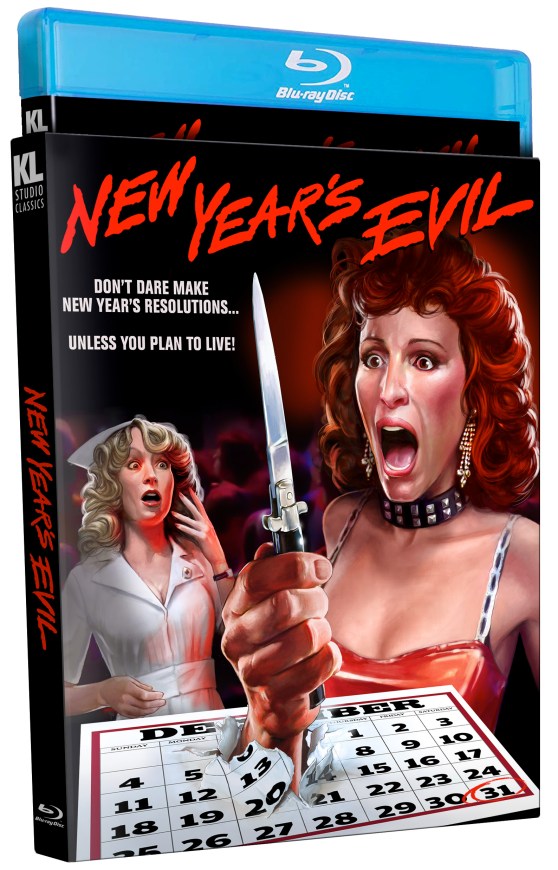
You can get this on blu ray from Kino Lorber, who have released it a new 2K version of this movie on blu ray with lots of extras, including audio commentary by director Emmett Alston, moderated by Code Red’s Bill Olsen, The Making of New Year’s Evil, a trailer and new art by Vince Evans.
You can listen to The Cannon Canon review and watchalong here.
EDITOR’S NOTE: The first time I saw The Apple, I was in the throes of losing my job and starting a new company and feeling lost. This is the movie that not only made me feel like I could go on, but inspired me to start writing more about films and why they mattered to me. It originally appeared on the site on May 31, 2019. Hey, hey, hey, BIMs on the way.
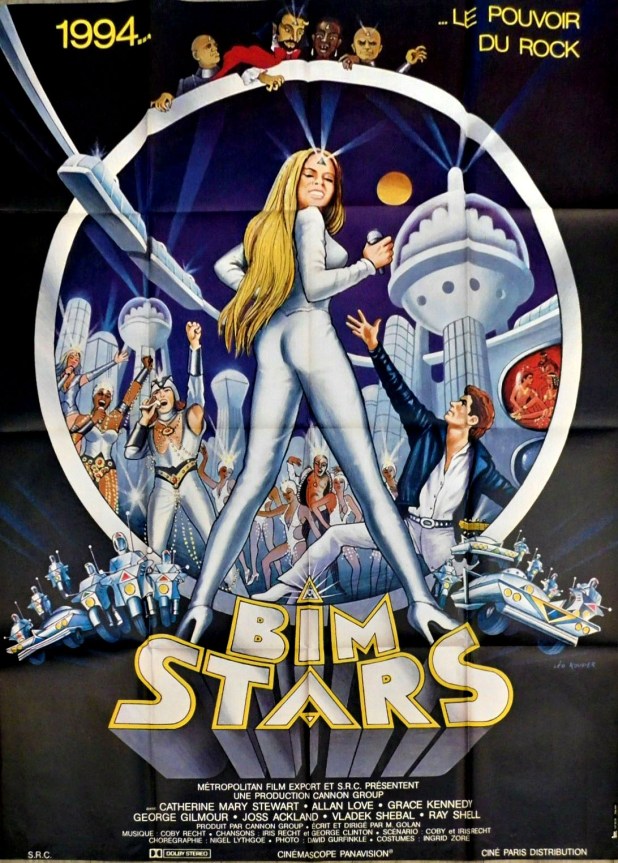
You know how everyone thinks Cannon put out some completely crazy movies? If you haven’t seen The Apple (also known as Star Rock), you haven’t seen their full power. Directed by Menahem Golan, this slice of sheer madness is a movie I use to test the resolve of anyone brave enough to watch movies with me.
The genesis of this film begins in 1975. Israeli rock producer Coby Recht was signed to Barclay Records and began to feel distrustful of show business. He worked it into a story with his wife Iris Yotvat and brought it to the attention of his longtime friend Menahem. After hearing the demos for the songs, the producer/director instructed Recht to go to Los Angeles immediately. They were making the movie.
Yotvat said, “That was marvelous. That was just fantastic to think that it was going to be a movie all of the sudden. It was just amazing.”
It wasn’t going to stay that way.
Recht and Yotvat lived in a villa that Menahem provided, writing six screenplay drafts in three weeks. As those drafts progressed, the story became more comical and less Orwellian. Soon, things were getting corny, out of touch and out of date. If you’ve seen any of the movies that Golan was involved in, you can see how that might be true.
After auditioning thousands of hopefuls, Recht settled on Catherine Marie Stewart for the lead role of Bibi. Who is a singer. Not a dancer, like Stewart. He figured she could learn, but the producers decided to have her voice dubbed.
Tensions only got worse once filming began, as what started as a $4 million dollar movie turned into $10 million and then more. Editor Alain Jakubowicz claimed that Golan shot around a million feet of footage, with six cameras of coverage for every dance number, ending up with a four-hour rough cut.
The movie got way bigger than its scriptwriters intended. Shooting in West Berlin lasted forever, with a five-day shoot for the opening number, the song “Speed” being filmed at the Metropol nightclub (which held the world record for biggest indoor laser show) and some scenes were actually shot inside a gas chamber that had killed people during World War II.
Nigel Lythgoe, who later was a big part of American Idol, choreographed the film, saying that some days were “really, really depressing” and others “very, very stressful.” The cast and crew hated the script, but here they were, making the film.
Menahem and Recht’s battles soon got worse. The writer felt he should be in London mixing the songs (the sessions had more than 200 artists involved), but Menahem demanded that he show up at the shoot. The first day he was there, he witnessed the uncut version “Paradise Day” which featured fifteen dinosaurs and a tiger that broke free and escaped. This scene also contained elephants getting their trunks stuck in the set, actors collapsing while wearing a too hot brontosaurus costume and a set that made it near impossible for people to dance on and cameras to move around. Removing this scene makes the Biblical end of the movie come out of nowhere. That’s right. None of this is in the film.
Catherine Marie Stewart has stated that none of this rattled Menahem. In fact, he was convinced that The Apple was going to be embraced: “Menahem was very passionate about what he was doing. He had very lofty ideas about the project. He thought this was going to break him into the American film industry. It had, you know, all the elements that he thought were necessary at that time. It was the early eighties and there were a lot of musicals. And Menahem thought that was his ticket into the American film industry.”
So what happened?
The plot is basically Adam and Eve meets Faust. Bibi (Stewart) and Alphie (George Gilmour) are contestants in the 1994 Worldvision Song Festival. They’re talented but easily defeated by the machinations of Mr. Boogalow (Vladek Sheybal, Kronsteen in From Russian With Love) and BIM (Boogalow International Music).
The evil leader soon signs the duo but they soon fall victim to the darkness of show business. Bibi is caught up in the drugs and sex and glamour, while Alphie is beaten by cops and nearly dies to save her. He also lives with a woman who is either his mother or lover or landlady and no one ever explains it to us.
Eventually, they escape and live as hippies, having a child. Mr. Boogalow finds them and claims that Bibi owes him $10 million dollars, but soon God, known here as Mr. Topps (Joss Ackland, The House That Dripped Blood, Bill & Ted’s Bogus Journey) takes them away in his Rolls Royce and the Rapture occurs.
There are numerous scenes where people put stickers, called BIM Marks, all over their faces. Everyone has camel toe. And the movie is nearly 100% disco.
The movie premiered at the 1980 Montreal World Film Festival. To say it did not go well is an understatement.
Attendees hated the film so much that they launched giveaway records of the soundtrack at the screen. Menahem was so devastated that he almost jumped off his hotel balcony before being saved by his business partner, Yoram Globus. A similar scene happened at its second premiere at the Paramount Theater in Hollywood.
The director said, “It’s impossible that I’m so wrong about it. I cannot be that wrong about the movie. They just don’t understand what I was trying to do.”
I get it, Menahem. You were just trying to get people to understand the power of love and music and being hippies a full decade after any of that mattered. You didn’t care if anyone else got it. You had a vision. And we’re not talking about any of those critics today. No, we’re talking about you. We’re talking about The Apple.
This is a movie that wears its heart messily all over its spandex crotch. The songs are ridiculous. The dancing is, at times, poor. The story makes no sense at all. You’re lucky to sit and witness it. I can’t even tell you how many times I’ve watched it!
You can get the Scorpion Releasing blu ray of this film on Diabolik DVD or watch it for free on Tubi.
BONUS! You can hear Becca and me talk all about The Apple on our podcast.
You can listen to The Cannon Canon episode with The Applehere.
EDITOR’S NOTE: We originally watched this movie as part of our Not So Classic Monsters week on January 10, 2022. Thanks for checking out another appearance of this early Cannon movie.
Charles B. Griffith — the Quentin Tarantino-named “Father of Redneck Cinema” — is credited with 29 movies but he probably wrote plenty more. From 1955 to 1961, he was Roger Corman’s main screenwriter, starting with two unfilmed Westerns (Three Bright Bannersand Hangtown) and moving on to an uncredited rewrite on It Conquered the World and his first credit Gunslinger. He went on to make Not of This Earth, The Flesh and the Spur, The Undead, Teenage Doll, Naked Paradise, Attack of the Crab Monsters and Rock All Night before making two movies — Ghost of the China Sea and Forbidden Island — for Columbia (which didn’t go well).
Griffith reunited with Corman after and really went into the prime of his career of making movies, writing stuff like Beast from the Haunted Cave, Ski Troop Attack, The Little Shop of Horrors, A Bucket of Blood, Creature from the Haunted Sea and many, many more.
His films rank among some of my favorites of all time — The Wild Angels, Death Race 2000, rewrites on Barbarella — and he went on to direct, act and — as all must in the 80s — work for Cannon Films.
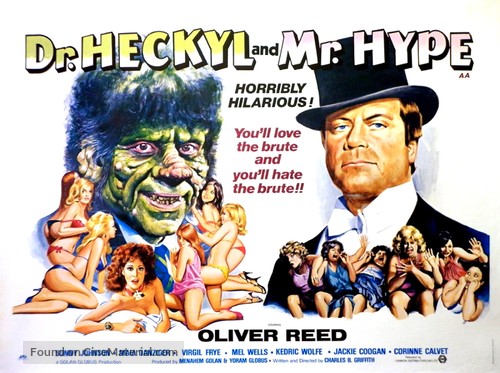
Beyond a script Cannon tried for years to get made — Oy Vey, My Son Is Gay — Griffith made this movie, which started as part of a series of joke movie titles that he shared with Francis Ford Coppola at a Christmas party. He showed them to Menahem Golan — half of all things Cannon — and after writing The Happy Hooker Goes to Washington didn’t work out, Griffith made up a story to go with the title, all about a hippie who creates a drug that makes anyone that takes it into an ad exec. Golan bought it, as long as the ugly guy became the good guy.
In typical Cannon fashion, Griffith had three weeks to write and do preproduction, four weeks to shoot and two weeks to edit. Then, as always, the rug was pulled out Cannon style: They wanted Oliver Reed. Great actor. Maybe not a comedic actor.
Griffith told Sense of Cinema, “Heckyl and Hype could have been a very good picture. Oliver was great as Heckyl. Wonderful. He played the part with a kind of New York accent and everything, but when he was Hype, he didn’t know how to do it… Reed played Hype as Oliver Reed, slow and ponderous.”
It’s a good looking movie, but man, it’s a movie that has no idea what it wants to be. Kind of like Cannon at the time, which had just been bought by two Israeli madmen who were about to take the small New York studio and make it into something so much bigger than it was supposed to be.
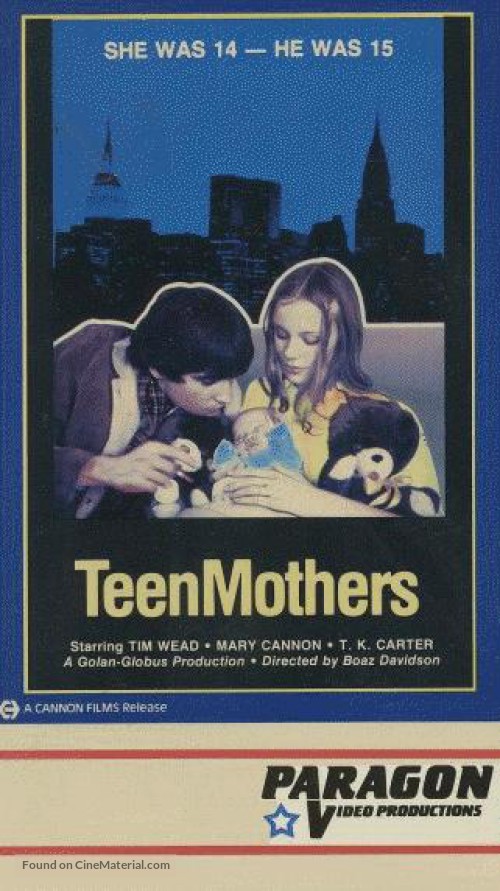
Boaz Davidson, the man who brought us Lemon Popsicle, the American remix The Last American Virgin and The Expendables, directed this early Cannon film, which is all about two kids who fall in love (Danny and Alice, played by Timothy Wead and Mary Cannon), move to New York City and watch it all fall apart.
There’s a good supporting cast — there’s nothing that I ever disliked Vincent Schiavelli , T.K. Carter and William Sanderson in — and hey look there’s Shirley Stolen from The Honeymoon Killers.
The kids fight, they reconcile, they work hard, they hit a wall, they nearly break up and almost lose their kid, but the end brings it all back together in a joyous courtroom moment that had me say, “You know, they’re still going to lose that kid to CPS, right?”
This really seems like an afterschool special made by maniacs that don’t really feel like giving you a moral or a lesson, which really seems to be a description of so many Cannon films when you get right down to it.
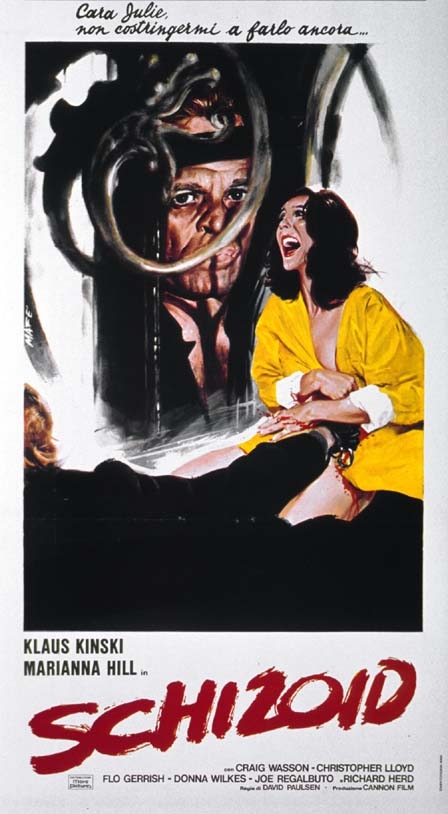
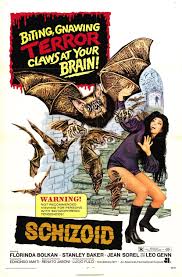
Julie (Marianna Hill, Messiah of Evil, The Baby) writes the lonely hearts column for a newspaper, but she’s suddenly getting more than letters from the lovelorn. An anonymous person is sending her letters threatening to murder people. And at the very same time, members of her group therapy session are getting stabbed and killed, one by one. Is there a connection?
Schizoid has all the markings of a giallo — the main character is in the middle of a murder investigation and has no idea who is behind it, while many of the killings are from the murderer’s POV. And let’s not forget the black leather gloves!
It’s missing the insane devotion to fashion and interior design, but we can’t hold that against it, as at least Dr. Pieter (Klaus Kinski, a legit real life maniac who always plays maniacs on screen) has an interesting home.
Right from the beginning, when the ladies of Dr. Pieter’s encounter group luxuriate in a hot tub, we get the idea that someone is watching. When one of them leaves, she is run off the road, chased into a farmhouse and repeatedly stabbed with a pair of scissors. Several days later, a couple that’s trying to have sex is surprised by the body.
Are the letters connected? Why do they mention a gun when the murders are done with a knife? Who is the killer? Is it Gilbert (Christopher Lloyd, The Adventures of Buckaroo Banzai: Across the Eighth Dimension), the weirdest person in her therapy group? Is it her ex-husband, Doug (Craig Wasson, Body Double) who argues with her every day because they work in the same place? Or how about Dr. Pieter, because he’s Klaus Kinski? Beyond that, he’s having sex with every single one of his patients, including a stripper named Pat (Flo Gerrish, Don’t Answer the Phone) who he takes against a hot water heater! And hey — his relationship with Alison, (Donna Wilkes, Jaws 2, Angel) his daughter, feels super incestual. Maybe that’s who the killer is!
This film also follows the giallo tradition by having police officers that are so ineffectual that they depend on the heroine to do her own investigation with no protection and only a special phone line to help her.
Alison and Dr. Pieter argue repeatedly, especially after he grows closer to Julie, bringing her home to dinner. She begins to dress in her mother’s clothes or as a little girl and even steals her father’s gun.
The police put in the phone line, but every single call seems to be cranky readers who are angry about Julie’s column. Then, Alison calls her from a payphone, gun in hand. Julie gets Alison to come visit her at her house, where her husband (she doesn’t call him ex-husband) is doing some repair work. Alison throws out a whole bunch of the letters and brandishes her gun, but it’s unloaded. Then, the phone rings.
It’s Dr. Pieter, who demands to know where this number reaches Julie. He comes to visit, but someone takes a shot at him. We don’t see who, but he assumes that it is Alison. The lights go out and we have no idea who is in the room with him. The phone rings again, but it’s not Alison or Julie on the line. They’re both tied up and a man is on the other line — but who!
Should I reveal it here? I won’t. But I will say that this movie is truly a giallo because it’s the person that is the least likely suspect and the police come running at the last moment. And by that, I mean just in time for the credits.
Director David Paulsen also brought Savage Weekend to the screen, but is more well known for his primetime soap opera work on shows like Knots Landing, Dallas and Dynasty.
Want to see this one for yourself? Vinegar Syndrome has just released this on 4K with X-Ray.
You can also listen to The Cannon Canon episode that discusses this movie here.



 B&S About Movies
You must be logged in to post a comment.