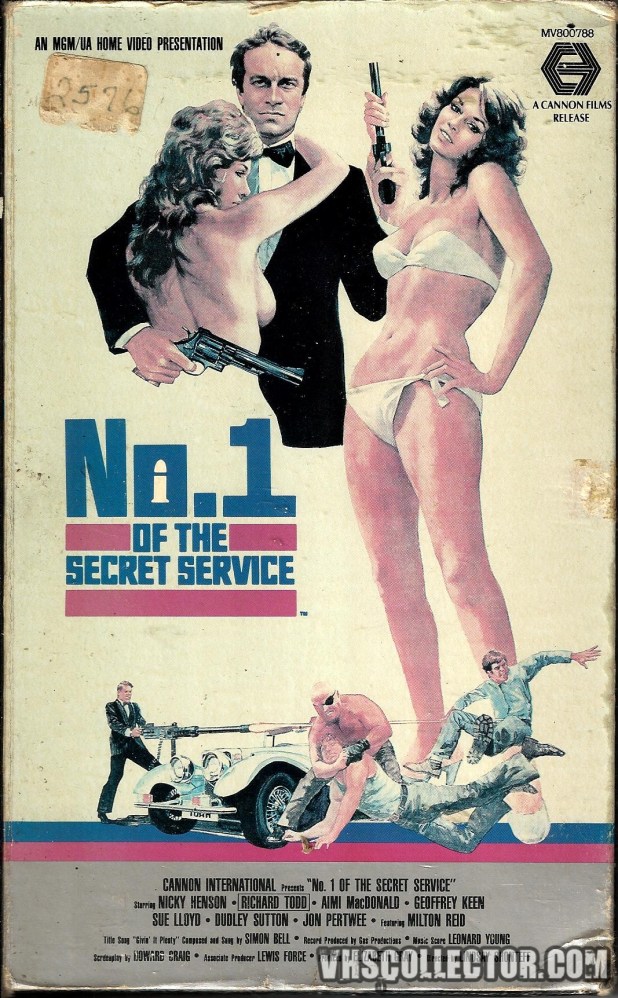
EDITOR’S NOTE: This was on the site for the first time on April 9, 2020. No. 1 of the Secret Service was not produced by Cannon but was released on video by Cannon / MGM/UA Home Video.
In 1977, there hadn’t been a James Bond film since 1974’s The Man with the Golden Gun. After the film’s release, producers Saltzman and Broccoli dissolved their relationship, with Saltzman selling his stake in Eon Productions’s parent company, Danjaq, LLC, to United Artists.
There was also the possibility that there would be two different Bond franchises, with Broccoli’s 1977 effort being The Spy Who Loved Me and Kevin McClory using his lawsuit to perhaps make James Bond of the Secret Service.
Lindsay Shonteff decided to fill the void.
Sure, he’d made The 2nd Best Secret Agent in the Whole Wide World, The Million Eyes of Sumuru and Spy Story, but now he was going to make his very own Bold movie.
Instead of James Bond, Charles Bind (Nickey Henson, Psychomania) has the license to kill.
He’s up against K.R.A.S.H. (Killing Rape Arson Slaughter and Hit), their leader and a weirdo named Arthur Loveday (Richard Todd, Asylum) who is killing off rich financiers.
If you think the Roger Moore-era films are too silly, you’d best avoid this movie. I mean, what did you expect? The name Charles Bind comes from Carry On Spying, after all.
This was followed by two sequels that had different actors play 008: Licensed to Love and Kill with Gareth Hunt and Number One Gun, which has Michael Howe in the lead role.
If the theme song “Givin’ It Plenty” is familiar, well, you may have seen Tintoreraas many times as I have. It’s in that movie too.
People to keep an eye out for former Dr. Who Jon Pertwee, Katya Wyeth (Hands of the Ripper), Geoffrey Keen (Minister of Defence Frederick Gray in six Bond films), former pro wrestler Milton Reed (who is in all manner of spy films, from Dr. No and Casino Royale to The Spy Who Loved Me and Deadlier Than the Male) and Oliver MacGreevy (The Ipcress File).
Bond never would use a .357 Magnum Smith & Wesson Model 66 revolver, much less the 50 calibre Browning machine gun.
This is where the Cannon of the 60s and 70s would meet the Cannon of the 80s.
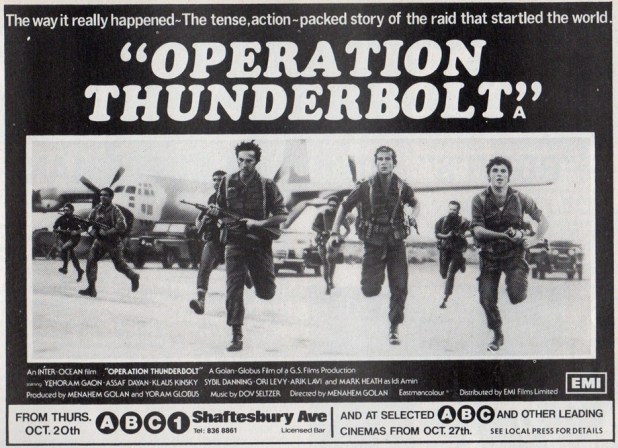
Distributed by the Dewey-Friedland Cannon, this film was directed and produced by the men who would take Cannon into our hearts: Menahem Golan and Yoram Globus. Based on the hijacking of a flight by terrorists and the mission that freed the hostages known as Operation Entebbe, this movie nearly feels like a documentary.
Originally intended to be a larger budget Hollywood to be made shortly after the actual events with Steve McQueen in the main role, that project died and that’s when the Cannon boys of the 80s came in. They recreated Uganda’s Entebbe Airport and acquired several realistic scale models of the Ugandan Air Force MiG-17 and MiG-21 fighters. Even better, because this wa sproduced with the co-operation of the Israeli Air Force and the Israeli government, three of the four Hercules transports from the actual event are in this movie. The footage is so realistic that Cannon sold te rights to several documentaries to use it.
Anyone in the movie spoke their native langauge, while an international cut was made with just English being spoken.
This same story was turned into two TV movies: the Irving Krischner-directed Raid on Entebbe — with Charles Bronson as Brigadier General Dan Shomron, Yaphet Kotto as Idi Amin, John Saxon as Major General Benny Peled and Robert Loggia as Yigal Allon and Marvin J. Chomsky’s Victory at Entebbe, which had Helmut Berger as Wilfried Böse, Linda Blair as Chana Vilnofsky, Kirk Douglas as Hershel Vilnofsky, Richard Dreyfuss as Colonel Yoni Netanyahu, Helen Hayes as Etta Grossman Wise, Anthony Hopkins as Yitzhak Rabin, Burt Lancaster as Shimon Peres and Elizabeth Taylor as Edra Vilnofsky. Man — look at those casts!
Golan’s film has a pretty awesome list of talent, though. There’s Klaus Kinski as terorrist Wilfried Bose, Sybil Danning as one of his followers and Yitzchak Rabin, Shimon Peres, Yigal Allon and Gad Yaakobi — all Israeli government officials — as themselves.
This movie was actually a pretty big success at the box officer and with critics, as Golan was nominated for an Academy Award for Best Foreign Language Film.
I love Menahem stories and they may not be true all the time, but this one, well…when one of the cargo pilots told him that he was too tired to do another taken, Golan grabbed a prop Uzi and put it to the man’s temple and forced him to go back into the cockpit.
EDITOR’S NOTE: For another take on this film, click here.
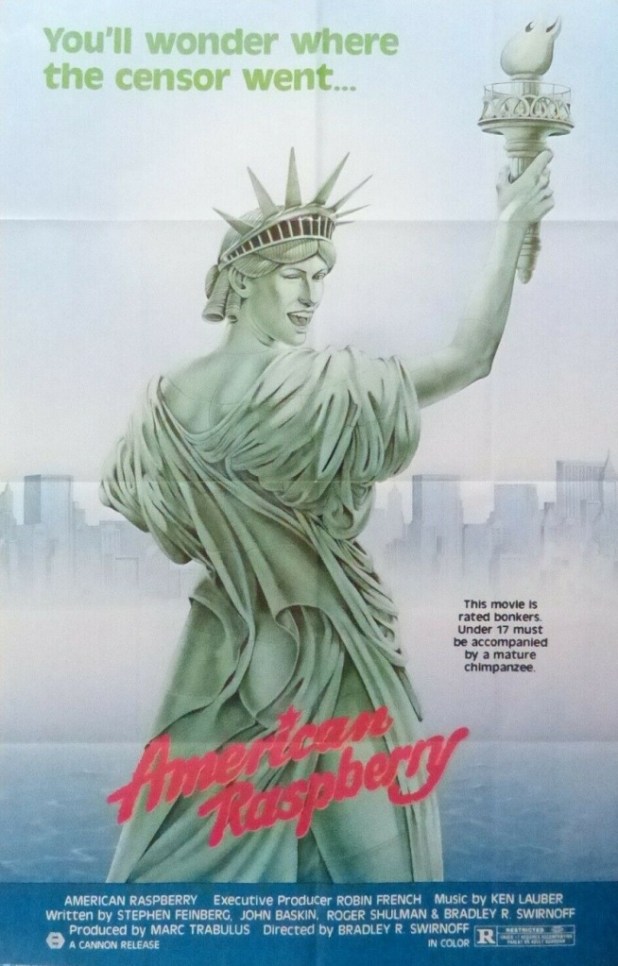
A strange unknown source — just like the Max Headroom signal hijacking in Chicago on the night of November 22, 1987 — takes over America’s airwaves and replaces them with even more sexual shows — in the middle of jiggle TV? — and the President demands that it be fixed.
Directed by Bradley R. Swirnoff (who also directed the similar Tunnel Vision) and written by Swirnoff with John Baskin (who actually wrote some jiggle TV with Three’s Company), Stephen Feinberg (the proctologist from Tunnel Vision) and Roger Shulman (who created the series Crazy Like a Fox), it includes fake shows like Celebrity Sportsman Presents: The Charles WhitmanInvitational, in which celebrities like Warren Oates get to shoot at real people from a tower just like the Texas Tower Sniper; Manny’s Nymphs, a Charlie’s Angels show with heavy set women and a Mamorax commercial that does the “Is it real or is it Memorex” idea with a speech from Hitler.
As you can see, there’s no filter in this movie, as it sees where the line is and steps it over and over again. After all, one of the shows is called The Shitheads and people on the street get buckets of waste put on their heads, as well as American Excess instead of American Express and a frontier gynecologist who performs horseback exams. That should reveal to you the level of sophistication that you’re about to get into.
The cast includes Joanna Cassidy, Fred Dryer, Kinky Friedman, Dick O’Neill, Stephen Furst, Harry Shearer, Art Fleming, vaudevillian Paul “Mousie” Garner and many, many more.
Warner Bros. was the original distributor but found it unreleasable. Cannon Films took over, changed the title from Prime Time and released it as American Raspberry.
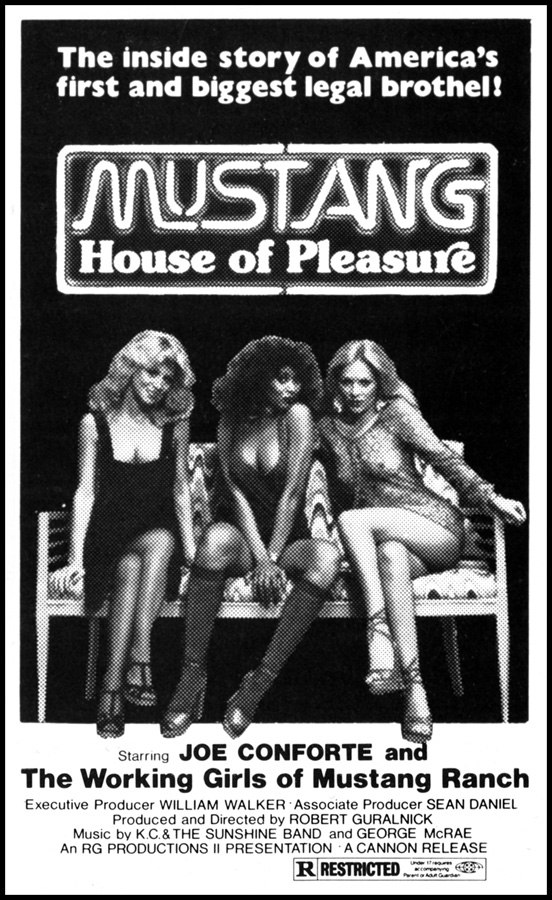
Robert Guralnick directed, wrote, produced and edited this documentary about the Mustang Ranch, which became Nevada’s first licensed brothel in 1971 under the ownership of Joe Conforte.
Just 20 miles east of Reno, the ranch was basically a trailer park, but if you wanted legal lovemaking, well, it was the place to be in the U.S. Guralnick spent months there before filming — certainly for research purposes only — so the owners and the girls would be comfortable with him as he used his handheld camera to shoot this movie.
Conforte left the U.S to go to Brazil and escape tax evasion charges a few years after this, leaving behind his prison yard-esque paradise, which is still open today after being sold by the U.S. government which is pretty wild when you think about it. He also was involved in the 1976 murder of Oscar Bonavena, a former friend who may have had an affair with his wife. He was shot dead at the ranch by Conforte’s bodyguard.
It seems like literally the unsexiest and saddest place on Earth, so here’s to the maniacs that can go there and still get it up. Then again, I feel that legal sex work would solve a lot of our nation’s mental issues.
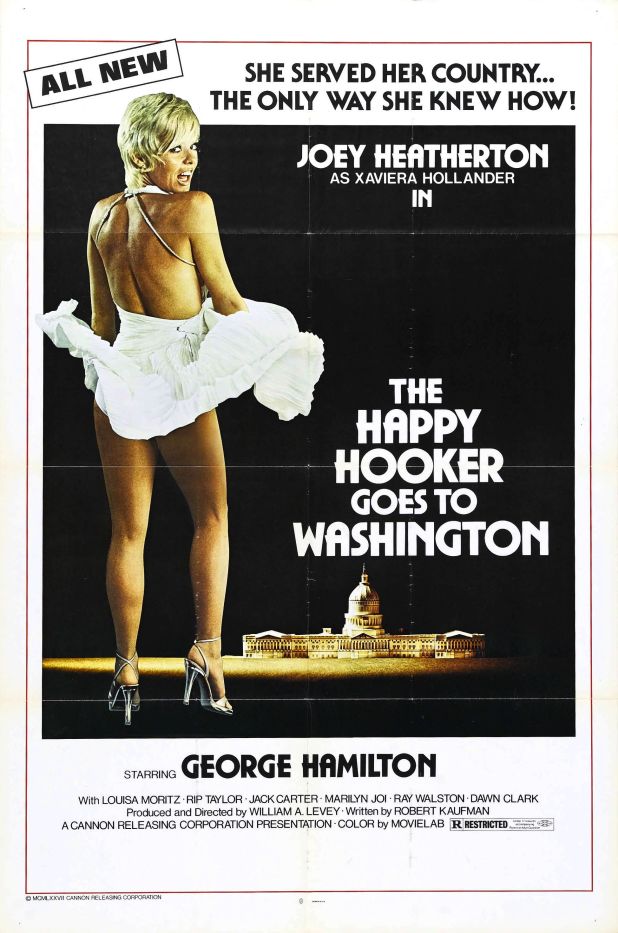
“She served her country… the only way she knew how!”
Lynn Redgrave? Out.
Joey Heatherton? In.
World-famous prostitute Xaviera Hollander is called to testify in front of the United States Congress for an indecency trial, which means that we’re about to get tons of cameos as senators, like Phil Foster from Laverne and Shirley as Senator Krause, David White from Bewitched as Senator Rawlings, Ray Walston as Senator Sturges and Jack Carter as Senator Caruso. Really, this movie was cast by the 70s, as Billy Barty, George Hamilton, Rip Taylor, Joe E. Ross, Harold “Oddjob” Sakata, Edy Williams and Larry Storch are all in the cast. So is Cisse Cameron, the wife of Reb Brown!
What are we to say to Sydney Lassick and Louisa Moritz, who just two years before were both in the Best Picture, One Flew Over the Cuckoo’s Nest and now were together again in a softcore sex comedy? That’s Hollywood?
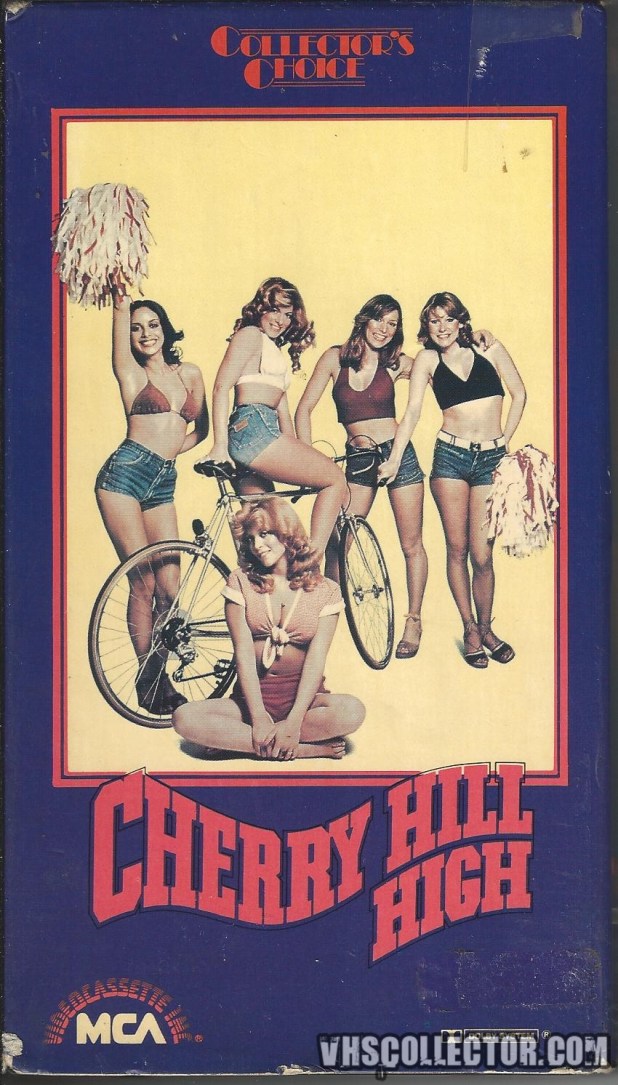
Director Alex E. Goitein made two movies: this one and Cheerleaders Beach Party. Well, he knew what worked for him, you know? Writers William Shears and Wylie White only wrote this one movie. And that was it — a small space in history when these three men came together and made a softcore sex comedy and Cannon got it into drive-ins and grindhouses.
Just like Cannon’s Slumber Party ’57, this movie is all about girls losing their virginity. Except in this movie, Kippy, Sarah (Nina Carson), Michelle, Peaches (Gloria Upson, also in Goitein’s other film) and Alison (Stephanie Lawlor, Hot T-Shirts) do it over a two-week bicycle vacation. One of the men they meet, Vintner, is played by Richard Young, the man who gave Indiana Jones his fedora in Indiana Jones and the Last Crusade. Molly Malone, using the name Joan Summer, did plenty of adult (and, again, the other film Goitein directed). And Mary Mendum, often using the stage name Rebecca Brooke, did tons of adult including several movies for Joe Sarno.
There’s a shark named Hustler, a game show where sex happens and a haunted house. I have no idea why Vinegar Syndrome hasn’t released this in a multiple slipcase blu ray set yet.
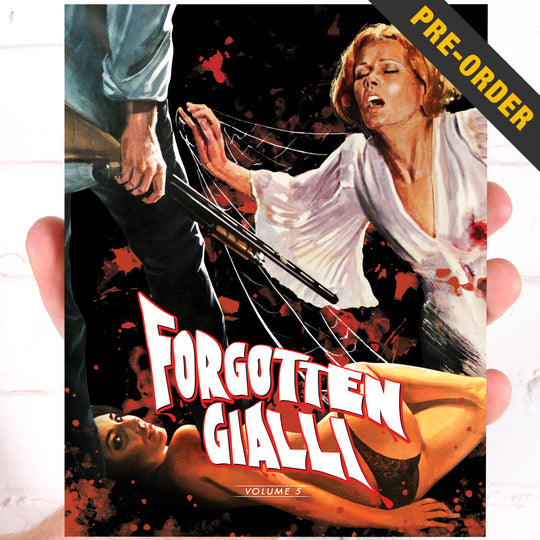
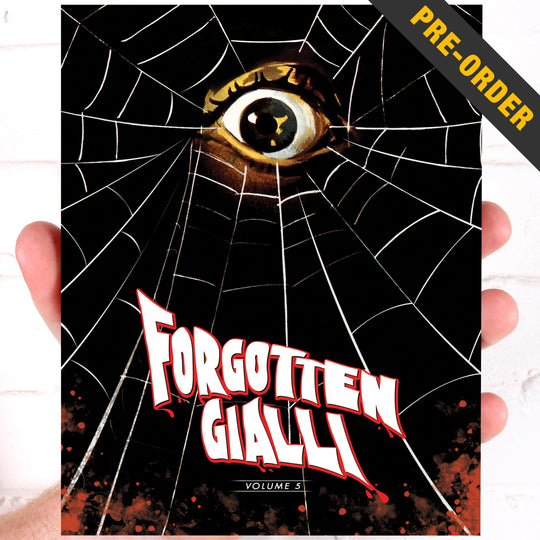
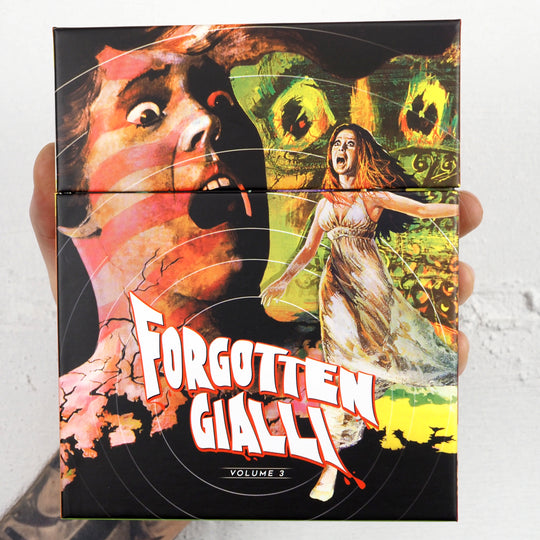
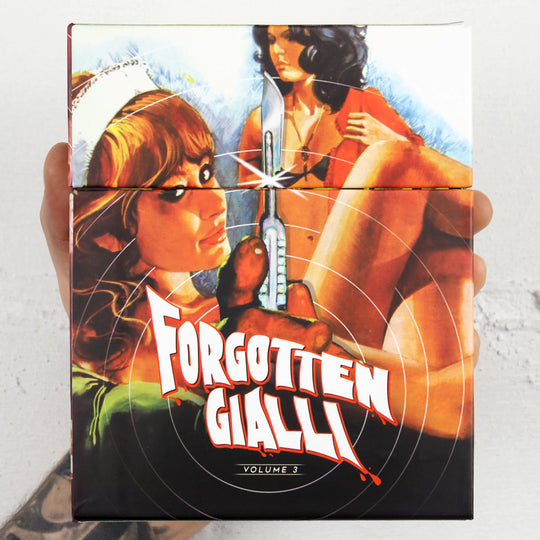
Vinegar Syndrome has a few Forgotten Gialli set out and each of these keeps adding some great movies to my collection in the best possible format with so many extras. Here’s what’s in the new one, which is now available for order.
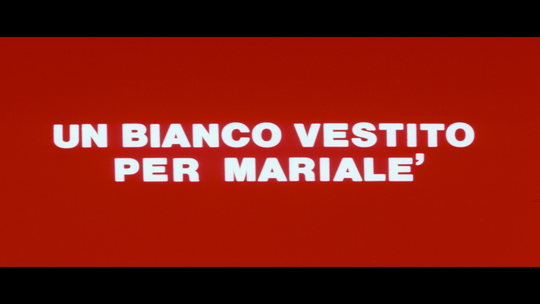
A White Dress for Marialé (1972): Going by the names Un bianco vestito per Marialé, Spirits of Death and Exorcisme Tragique (Tragic Exorcism), this giallo was directed by Romano Scavolini, who would one day make Nightmares in a Damaged Brain.
When she was quite young, Marialè (Ida Galli) watched as her father killed her mother, her lover and himself. She’s grown up a depressive recluse married to the controlling Paolo (Luigi Pistilli) who keeps her sedated. But she still has enough friends to invite over to her mansion for a costume party orgy, which goes well until this film remembers that it’s not an art film but instead a giallo and people start dying.
Let’s take a look at the guest list.
There’s her ex-lover Massimo (Ivan Rassimov) and when we see Rassimov in a giallo, he is never up to any good.
If you’re having a wild 70s sex party, always invite a love triangle. That’s how Mercedes (Pilar Velasquez), Joe (Giancarlo Bonuglia) and Sebastiano (Ezio Marano) all got to the party.
There’s also Semy (Shawn Robinson, who sang the theme for Two Males for Alexa; this is her only acting role) and her husband Gustavo (Edilio Kim).
Just about every one of them are horrible people given to attacking — for good or bad — one another, while Marialè stays in her bedroom and wears the same dress that her mother was in when she died, bullet holes over the heart, covered in blood.
A gothic and stylish film, this made me reconsider Scavolini and see him as much better than a hack who was making a slasher when that was how people made money. I wish that he’d stayed more experimental like this movie. Then again, in the book Spaghetti Nightmares, he said that was a movie “which only deserves to be forgotten.”
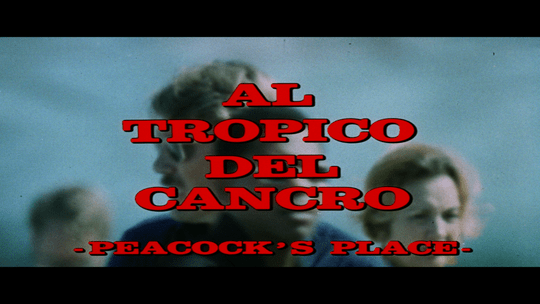
In this film, she plays Grace, the wife of Fred (Gabriele Tinti, Endgame) and their vacation has led them to Haiti and Dr. Williams (Anthony Steffen, who mostly is known for Italian westerns, but also appeared in The Night Evelyn Came Out of Her Grave, Evil Eye and An Angel for Satan), who has invented a new drug that can change the world. It’s so astounding that everyone from drug cartels to drug companies — which are really close to one another, when you really think about it — will kill for its formula.
There’s also a scene where the doctor takes our heroes to watch a voodoo ritual, all so this movie can have a bit of mondo* within it. Because it’s an Italian film, that means we’re about to watch a real bull really get killed and then lose its scrotum in gorgeous living color. The film then tops this with actual cows being slaughtered, so if you’re upset by the side of Italian cinema that doesn’t shy away from putting animal butchery right in your face, make a mark to avoid.
This movie leaves me with so many questions. What kind of doctor is Williams? He says he’s a veterinarian, then he makes a magical anti-venom drug and oh yeah, he’s also a meat packing inspector. And just what kind of wonder drug has he made? And did the filmmakers realize that the Tropic of Cancer is nowhere near Haiti?**
So yeah — most of the movie is spent wondering whether or not Grace is going to succumb to the lure of the native men***. And the best character in it is Peacock (Alfio Nicolosi, who was also in Goodbye Uncle Tom), who pretty much runs the island. Also, the murders in this go from high tech to voodoo-based death and faces getting melted right off, which is different for a giallo****.
And hey — that Piero Umiliani (Orgasmo, Baba Yaga) score is perfect!
It’s not a great giallo, but it certainly is weird, and sometimes, that’s good enough.
*One of the directors of this film, Giampaolo Lomi, was the production manager for perhaps one of the most notorious mondo films, Goodbye Uncle Tom. The other, Edoardo Mulargia, directed Escape from Hell, which was edited into the Linda Blair movie Savage Island. So with backgrounds like those, the scummy mondo nature of this film makes a bit more sense.
*Of course, we can assume that with the Henry Miller novel being such a big deal getting banned and causing controversy that the title itself seemed like a good idea to get curious folks into the theater. Better than Death In Haiti, Peacock’s Place or Inferno Under the Hot Sun.
***The flower that poisons her takes her on an insane erotic fever dream that we all get to watch and the movie is better for this scene.
****There’s just as much — if not more — male than female nudity, too.
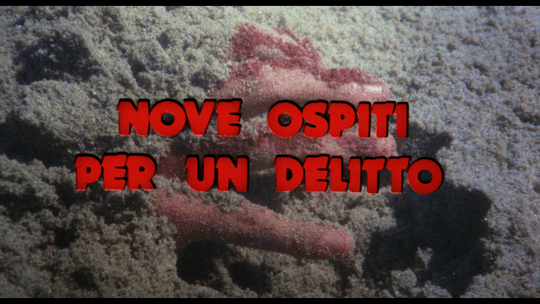
Nine Deaths for a Crime (1977): I get it — 1977 is late for the category and Ferdinando Baldi is better known for making weird westerns — like Get Mean and Blindman with Tony Anthony, not to mention two 3D movies with the very same actor, Comin’ At Ya!and Treasure of the Four Crowns — than giallo. But hey. when you’re trying to watch every one of them made, you watch them all.
Known in Italy as A Scream in theNight, in Spain as Death Comes From the Pastand Nine Guests for a Crime in other markets, this movie follows the Agatha Christie model of nine people — wow the title actually is logical — showing up on an island that has a killer stalking about.
Well, get this. There are thirteen murders in a movie with nine guests, so how about that?
A wealthy family has departed for a two-week break at their private island estate, which primarily involves plenty of balling, as The Pink Angels trailer would say. Ubaldo (Arthur Kennedy, who won a Best Supporting Actor Tony for Death of a Salesman and was nominated for five Oscars before making movies like The Humanoid, The Sentinel, Cyclone and being one of the worst cops ever in The Living Dead at Manchester Morgue) has taken his new wife Giulia (Caroline Laurente, who played three different roles in Emmanuelle2, 3 and 7) along with his sister Elizabeth (Dania Ghia, Seven Deaths in the Cat’s Eye), his sons Michele (Massimo Foschi, Holocaust 2000) and his wife Carla (Sofia Dionisio, Live Like a Cop, Die Like a Man), Walter (Venantino Venantini, Beast in Space) and his bride Patrizia (Loretta Persichetti) and Lorenzo (John Richardson, Black Sunday) and Greta (Rita Silva, Gunan, King of the Barbarians).
Michele has been doing two-person pushups with his stepmother. Walter has been threading the needle with Greta. But then Baldi goes from ripping off Bava’s Five Dolls for an August Moon — which yes, is also a Christie pastiche — into full A Bay of Blood and even the supernatural theory that Elizabeth’s dead lover Carlo is back from the dead (and the Tarot reading sequence, which gets stolen even better in Antropophagus).
This movie has reminded me that I want nothing to do with rich people or island vacations. Nothing ever works out and I’d rather stay alive and undramatic for the short period I do have left in this dimension.
This set features all three movies, newly scanned & restored in 4K from their 35mm original camera negative. You get so much more — interviews with directors Romano Scavolini, writer/director Giampaolo Lomi, actress Ida Galli and actor Massimo Foschi; audio essays by Rachael Nisbet, deleted scenes, trailers, image galleries and so much more. Order it now from Vinegar Syndrome.
Autopsy (1975): Armando Crispino really only did two horror films, 1972’s The Dead Are Aliveand this 1975 giallo, which is a shame, as this is a pretty decent entry in the genre. Known in Italy as Macchie Solari (Sunspots), it does indeed feature sunspot footage from space before we see any major murders. And if you’re looking for a movie packed with autopsy footage, good news. It totally lives up to its title.
Simona Sana (Mimsy Farmer, who is also in Argento’s Four Flies on Grey Velvet and The Perfume of the Lady in Black) is a pathology student who is trying to work on a theory about suicides, one that’s disputed by a young priest, Father Paul, whose sister — Simona’s dad’s latest fling — has recently killed herself. It turns out there’s been a whole series of self-killings which are being blamed on, you guessed it, sunspots.
I mean, what can you say about a movie that starts with several of said suicides, like sliced wrists, a self-induced car explosion and a man machine gunning his kids before turning the gun on himself? Obviously, this is a rather grisly affair, with real corpse photos spread — quite literally — throughout the film.
In between all of the gore, corpse penises, two bodies falling to their deaths and crime museums, there’s also Ray Lovelock (The Living Dead at Manchester Morgue) as Simona’s boyfriend, an out there Morricone score and a heroine who hallucinates that the dead are coming back to life.
The plot gets pretty convoluted, but if you’re on this site, you obviously appreciate films like this and will get past it. This is an Italian 70’s murder movie, though, so if you get easily upset about the way men behave, well, be forewarned.
Murder Mansion (1972): Originally released as La Mansion de la Niebla (The Mansion in the Fog) and also known as Murder Mansion, this Spanish/Italian film fuses old school haunted house horror with the then new school form of the giallo.
The plot concerns a variety of people drawn to a house in the fog, so the original title was pretty much correct. There are plenty of European stars to enjoy, like Ida Galli, who also uses the name Evelyn Stewart and appeared in Fulci’s The Psychic as well as The Sweet Body of Deborah. And hey, there’s Analía Gadé from The Fox with the Velvet Tail. Hello, George Rigaud, from All the Colors of the Dark and The Case of the Bloody Iris! They’re all here in a movie that seems to make little or no sense and then gets even more bonkers as time goes on.
There’s a history of vampires in the house, the previous owner was a witch and hey — this is starting to feel like an adult version of Scooby Doo with better-looking ladies. That’s not a bad thing. But if you’ve never watched a badly dubbed giallo-esque film before, don’t expect any of this to make a lick of sense.
Crazy Desires of a Murderer (1977): Sure, that’s a pretty lurid title — the Italian title I vizi morbosi di una governante translates as Morbid Vices of a Housekeeper — and trust me, this lives up to it, what with an older woman using a mentally challenged man and a teenager sexually — not at the same time! — and then a game of charades which is mostly people yelling out the names of films while everyone else gropes one another.
There are more than a lot of camera zooms in here, as well as bad sartorial choices and even worse life ones. When Ileana and her bunch of hip friends — their words not mine — gather at a gothic castle owned by a wheelchair-bound older relative of one of the girls, things get pervy, weird and murder, just as you’d expect.
If you are a hip friend or have hip friends (at which point that makes you a hip friend), then you should take this warning: do not go to hang out in gothic castles. Nothing, in my movie — not life — experience says that things will go well.
Meanwhile, two of these with it pals are using Chinese treasures to smuggle heroin — as you do — while Elsa the party girl ends up with both of her eyes torn out, just like Ileana’s mother had done to her by a relative who has lost his mind and is possibly prowling the catacombs of the castle.
This would be the last film that Filippo Walter Ratti would direct. You may have seen his other movies, including Mondo Erotico, Operation White Shark and Night of the Damned. Screenwriter Ambrogio Molteni also wrote the two Black Emanuelle movies, as well as Yellow Emanuelle, Sister Emanuelle and Violence in a Women’s Prison.
All of the movies in this set have been newly scanned and restored in 2k from their 35mm original camera negative. Plus, you get extras like a theatrical introduction with director Armando Crispino and a feature on his career, as well as interviews with actresses Ida Galli and actor Giuseppe Colombo. As always, there are also trailers and image galleries. Get it from Vinegar Syndrome.
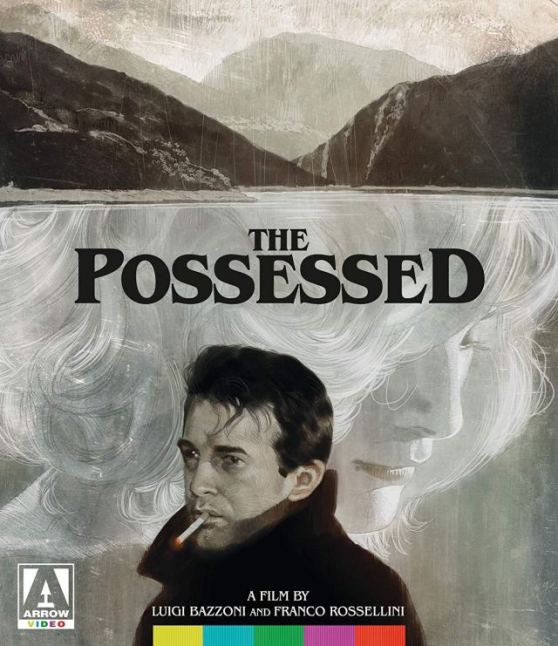
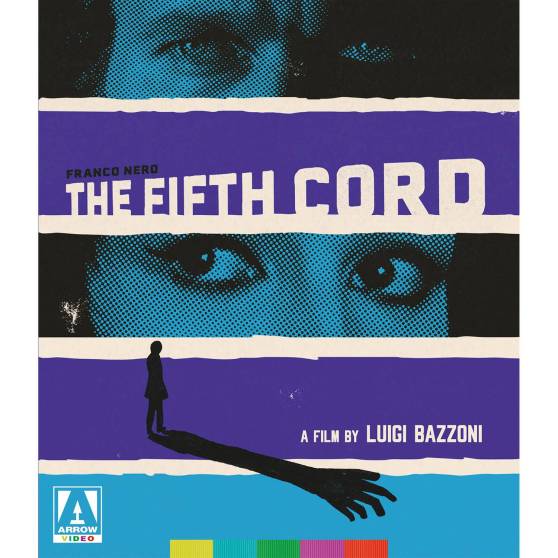
Did you know I liked giallo? Oh, that Letterbox list of three hundred plus movies let you know? Well, whether you’re new to the genre or have loved these black gloved killer movies for decades, Arrow Video’s Giallo Essentials: Red Edition is perfect with its new 2K restorations of the film from the original camera negative for The Possessed, The Fifth Cord and The Pyjama Girl Case.
The Possessed (1965): The Possessed is based on one of Italy’s most notorious crimes, The Alleghe killings, and adapted from the book by acclaimed literary figure Giovanni Comisso. It seems like a giallo, but it’s way closer to a film noir. Or maybe an art film. Often, people say that a movie feels like it’s inside a dream, but so much of this movie feels like one long evening of interconnected night terrors.
Bernard (Peter Baldwin) is a novelist who has given up on life, despite his growing fame. Last summer, he fell in love with a maid named Tilde and hasn’t been able to get her out of his mind. As time goes on, despite the friendly way everyone at the inn treats him, he grows more and more worried about the conspiracy within this small town. That’s because while he was gone, Tilde committed suicide. And she may not have been the perfect woman that his creativity made her out to be.
Much like the giallo protagonist — a stranger on a strange who is often an untrustworthy narrator who must now investigate a crime that they themselves are implicated in — Bernard learns more about how his vacation getaway also isn’t the heaven that he dreamed that it was.
Thanks to the recent Arrow Video releases, I’ve done a deep dive on the films Bazzoni and wish that he had made more than the three giallo-esque films on his resume. Each of them subverts the form while working within it, offering challenging narratives and films that refuse to simply be background noise.
I’d never heard of this film before they announced it and am pleased to say that it’s moved up on the list of my favorite films. Consider this my highest recommendation.
The Fifth Cord (1971): Argento’s The Bird with the Crystal Plumage has scores of imitators that rose in the wake of its success. There were scores of gorgeous women being murdered, jazzy soundtracks blaring and movies with animals in their titles. And then, every once in a while, there’s a giallo that rises beyond the pack and asserts itself as a true work of art.
Giornata Nera per L’Ariete, or Black Day for the Ram, may appear to be an animal title, but it really refers to astrology (which kind of gives away some of the film). It’s better known as The Fifth Cord.
Director Luigi Bazzoni doesn’t have a huge list of films to his credit, but between this film, The Possessed and Footprints on the Moon, his take on the giallo form is unlike anyone else’s. This is more than a murder mystery. It’s a complex take on alienation and isolation at the end of the last century.
Based on David McDonald Devine’s novel — but based in Italy, not Scotland as in the book — The Fifth Cord starts with a man barely surviving a vicious attack on the way home from a New Year’s Eve party. We even get to hear the words of the killer:
“I am going to commit murder. I am going to kill another human being. How easy it is to say, already I feel like a criminal. I’ve been thinking it over for weeks, but now that I’ve giving voice to my evil intention I feel comfortably relaxed. Perhaps the deed itself will be an anti-climax, but I think not.”
Writer Andrea Bild (Franco Nero!) is assigned to report on the case and to put it bluntly, he’s a mess. Ever since his separation, he’s been drowning his life in whiskey and women.
Soon, the attacker strikes again and this time, whomever it is succeeds and leaves behind a black glove with a finger missing (Evil FIngers is an alternate title). That one finger missing turns into two, then three and comes with evil phone calls. Andrea has to take on the giallo role of the investigator before he becomes either the fifth victim or is arrested by the police — it turns out that he was at that very same New Year’s party, as was every single one of the victims.
The story itself is rather basic, but the way that it’s told is anything but. Vittorio Storaro’s cinematography places The Fifth Cord in an industrialized Rome that’s rarely seen in giallo, eschewing the historic architecture we’re used to seeing. I’d say that it’s a less flashy Tenebre, but this was made a decade before that movie.
If you come to these movies for the fashions, well, you may be slightly disappointed. But if you love the decor, look out. I’ve never seen more spiral staircases in one movie ever before. The house with the giant fireplace was also used for Argento’s Four Flies on Grey Velvet, but looks so much more impressive here. And I loved how the modern architecture gives little room to run in the closing moments.
This movie has never looked better than on its recent Arrow Video release. It’s jaw-dropping how gorgeous the film appears and the Ennio Morricone soundtrack positively emerges from the speakers. I expect great things from this company, but they continually surprise and delight me at every turn.
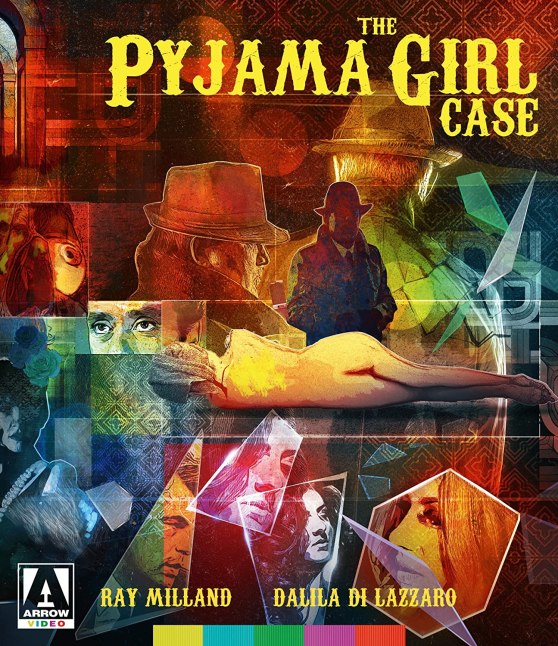
The Pyjama Girl Case (1977): The Girl in the Yellow Pyjamas AKA The Pyjama Girl Case is more than just a giallo. It’s based on a true story, the 1934 Australian cold case that concerns the murder of Linda Agostini. Born Florence Linda Platt in a suburb of South East London, she left the UK behind for New Zealand after a broken romance, then went to Australia where she worked at a cinema and lived in a boardinghouse. Post-murder gossip claimed that she was a heavy drinker, a jazz baby and someone who entertained plenty of much younger men, which became an issue when she married the Italian expatriate Antonio Agostini. He moved her to Melbourne to try and get away from the bad influences that he felt existed in Sydney, but four years later she disappeared.
Her body was found inside a burning grain sack left behind on the beach. Her head was wrapped in a towel, her body was badly beaten and she had been shot in the neck. But what defined the case were her intricate silk pajamas, complete with a Chinese dragon design, a look that was not the type of clothing favored by your average Australian housewife.
Her body was kept in a formaldehyde bath for a decade and the public was invited to attempt to identify the body. In 1944, dental records proved that the girl in the yellow pajamas was Agostini. Meanwhile, her husband had been in an internment camp for four years during World War II due to his Italian heritage and sympathies toward the Axis. When he returned and was questioned by police commissioner William MacKay — a man he had once waited on — he immediately confessed to killing his wife.
There’s still some controversy over whether or not he actually confessed. There’s just as much as to who the pajama girl was. Regardless, her husband only served three years on manslaughter, as he claimed the shooting was an accident, and was extradited to Italy. Historian Richard Evans wrote The Pyjama Girl Mystery: A True Story of Murder, Obsession and Lies in 2004 and claims that police corruption meant that the case needed to be solved as quickly as possible, as the public sentiment had turned against the cops.
The giallo that is based on the case is really well made and has an intriguing split narrative. On one hand, we have the retired Inspector Thompson (Ray Milland) investigating the case and dealing with his own mortality. Meanwhile, we see Glenda Blythe (Dalila Di Lazzaro, Frankenstein 80, the monster’s bride in Andy Warhol’s Frankenstein, the headmistress in Phenomena, perhaps the other woman in Carlo Ponti and Sophia Loren’s marriage) struggle with the relationships in her life, including her husband Antonio Attolini, her lover Ray Conner (Howard Ross, The New York Ripper) and her mentor Professor Henry Douglas (Mel Ferrer). As the relationship with her husband starts to fall apart, she drifts into prostitution and in a harrowing scene, makes love to two men while one’s teenage nephew tries to not make eye contact with her.
Other than the Riz Ortolani score — Amanda Lear sings on two of them! — this isn’t a fashion-filled bit of fun. This is a dark and dreary journey through the end of a woman’s life and the elderly man devoted to finding out the answers to who and why, even if he knows that discovering that truth won’t change the fact that he’s closer to the end of his story than the beginning. At least he cares more than the modern police, who simply embalm her nude body, put it on display and allow people to stare at it.
I read the other day that giallo films were meant for the people outside of Rome, for provincial tastes that demanded a morality play. I’m not certain that’s entirely true, but this movie aspires to art and a heartbreaking moment as we reach the close and realize that the two stories are truly connected in the bleakest of ways.
Arrow Video’s Giallo Essentials: Red Collection has all three films in a rigid box packaging with newly designed artwork by Adam Rabalais in a windowed Giallo Essentials Collection slipcover.
The Possessed special features include new audio commentary by writer and critic Tim Lucas, a video appreciation by Richard Dyer, interviews with the film’s makeup artist Giannetto De Rossi, award-winning assistant art director Dante Ferretti and actor/director Francesco Barilli, a close friend of Luigi and Camillo Bazzoni. It also has the original trailers and a reversible sleeve featuring original and newly commissioned artwork by Sean Phillips.
The Fifth Cord has new audio commentary by critic Travis Crawford, a video essay on the filmâs use of architecture and space by critic Rachael Nisbet, interviews with author and critic Michael Mackenzie, Franco Nero and film editor Eugenio Alabiso. Plus, there’s a rare, previously unseen deleted sequence restored from the original negative, the original Italian and English theatrical trailers, an image gallery and a reversible sleeve featuring original and newly commissioned artwork by Haunt Love.
The Pyjama Girl Case has new audio commentary by Troy Howarth, plus interviews with author and critic Michael Mackenzie, Howard Ross, editor Alberto Tagliavia and composer Riz Ortolani. Plus, you get an image gallery the Italian theatrical trailer and a reversible sleeve featuring original and newly commissioned artwork by Chris Malbon.
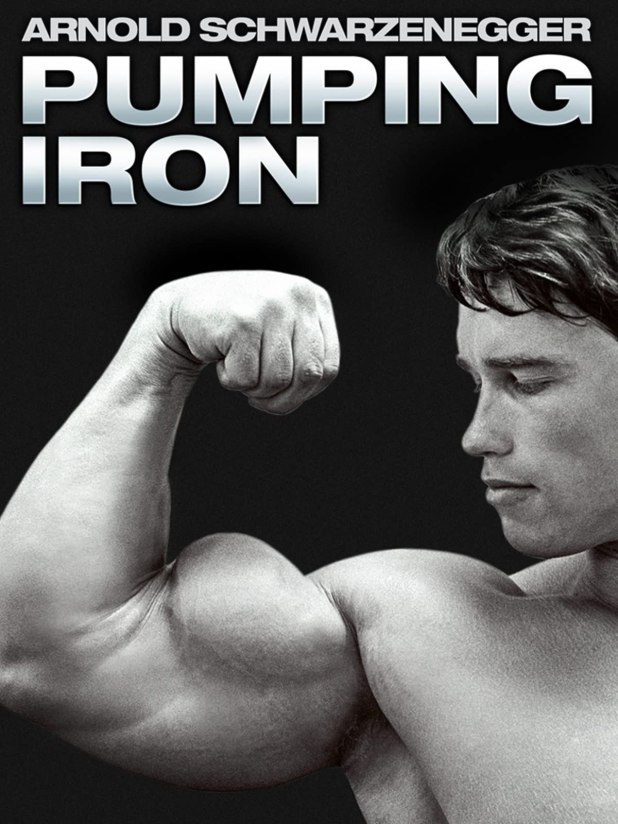
After a 1972 photo assignment to cover the Mr. Universe Championship for Life magazine, George Butler wanted to make a documentary about what he’d experienced. It took forever to convince investors to come on board, because who wanted to watch muscleheads pose and listen to a heavily accented man speak?
The original plan was to take actor Bud Cort and have Arnold Schwarzenegger train him, but it just didn’t work. Instead, the documentary started to focus on the bodybuilders — who at that time were seen as a freak sow — training at Gold’s Gym.
Like all documentaries, an angle was decided on: Schwarzenegger would become the charismatic villain and Lou Ferrigno the underdog trying to beat him. The problem is, Arnold ends up being so likable, no matter what he said, that people ended up loving him. Well, it’s not really a problem per se…
Anyways, the other battle was between Mike Katz and Ken Waller, lifelong friends who were simply pranking one another. Waller stealing Katz’s shirt ended up getting him booed at contests for the rest of his life.
After finishing the Mr. Olympia contest, the film was in development hell for two years. To raise funds, Butler had Butler an exhibit at the Whitney Museum of American Art in New York City where the bodybuilders — including Arnold — acted as living sculptures. This got the movie made.
The film follows the lives and workout routines of these bodybuilders. Its main narrative is the difference between Arnold and Lou: Schwarzenegger works out in public at Gold’s Gym and Muscle Beach while Ferrigno trains with his father in a dark basement. Arnold is always with women, Lou is with his family. Arnold brags non-stop; Lou is quiet and reserved. Arnold uses psychological warfare while Lou just believes in hard work.
We also meet Arnold’s training partner Franco Columbu and see several of the other competitions within Mr. Universe, as well as Arnold outright mentally terrorizing Lou during a friendly breakfast and backstage. And you know, we should be kind to everyone and not be bullies but damn it if I don’t love Arnold the most of any actor and would let him punch me repeatedly in the stomach if he asked. He wouldn’t even have to ask nicely.
Co-directed with Robert Fiore, Butler’s co-writer Charles Gaines — also the narrator of the film — wrote the book where Pumping Iron gets its name. A writer of outdoor sports, an active believer in the conservation movement and the inventor of paintball, Gaines has led a fascinating life.
The movie that pretty much cemented the fact that Arnold was going to one day rule Hollywood — even if he made up the story about skipping his father’s funeral — this movie remains quotable and always because of Arnold: “Can you believe how much I am in heaven? I am getting the feeling of coming in a gym, I’m getting the feeling of coming at home, I’m getting the feeling of coming backstage when I pump up, when I pose in front of 5,000 people, I get the same feeling, so I am coming day and night. I mean, it’s terrific. Right? So you know, I am in heaven.”
The film ends with Arnold smoking a joint and eating fried chicken after winning Mr. Olympia. Does it get any better than that without crushing your enemies, seeing them driven before you, and hearing the lamentations of their women?
One more line from Arnold: “Milk is for babies. When you grow up you have to drink beer.”




 B&S About Movies
You must be logged in to post a comment.