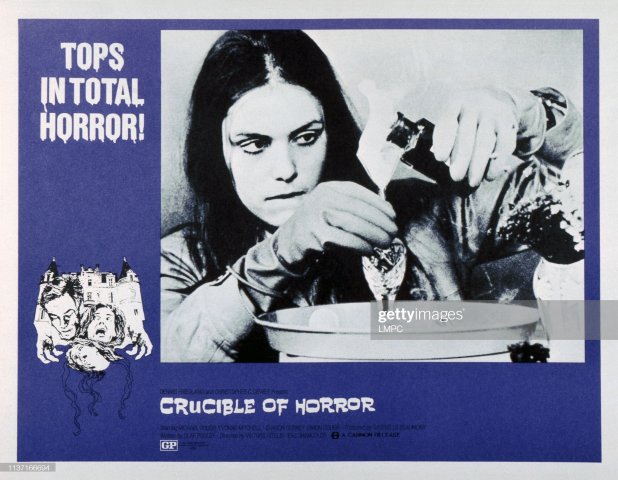
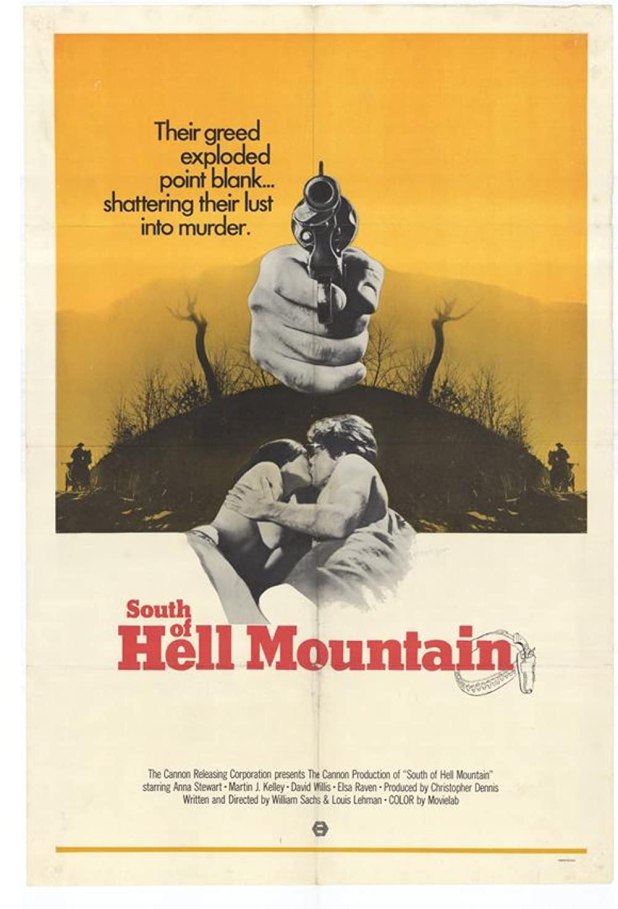
William Sachs told Hidden Films — an incredible site devoted to obscure/rare movies not available for streaming — of this movie: “They fired the director (Louis Leahman). They didn’t know what to do with the footage. It was a meandering thing, there were so many things missing, nothing made sense. So I came up with a spine (for the movie), where the girl is in a mental hospital, and the guy comes to try to get her memory back, and that’s what I shot. I used flashbacks out of what was already shot. I shot it at Welfare Island — it’s now Roosevelt Island — at an old mental hospital. There were labs there with jars of fetuses and body parts that were 100 years old. They put my name on as co-director, though I really didn’t want them to.”
Yes, a movie originally about an outlaw and his two sons massacring the men working at a gold mine and then stopping at a cabin in the woods where a woman (Elsa Raven, Mrs. Townsend from The Amityville Horror) and her stepdaughter Sally (Anna Stuart, who was Donna Love for 976 episodes of Another World) live now became one told through the flashbacks of Sally as she attempts to come back to sanity.
And if you’re pondering why Helen looks familiar, that’s because she’s played by an uncredited Candace Hilligoss from Carnival of Souls.
That said — this movie is impossible to find and has even eluded me.
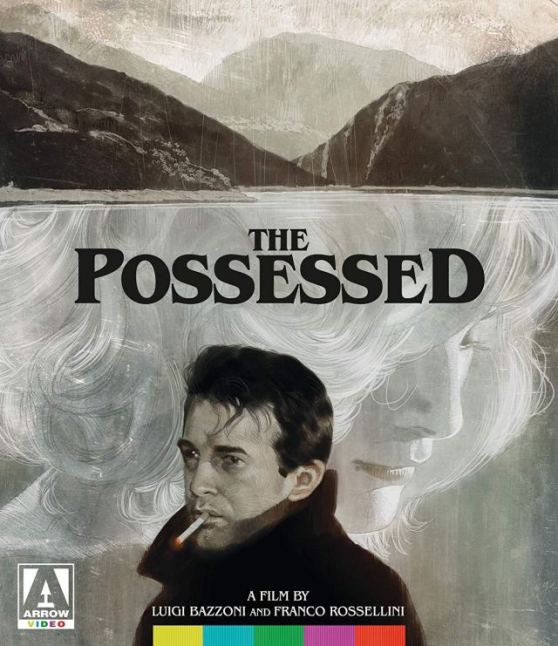
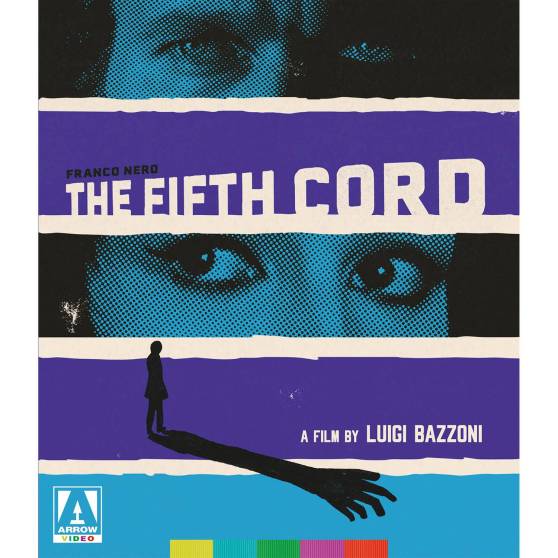
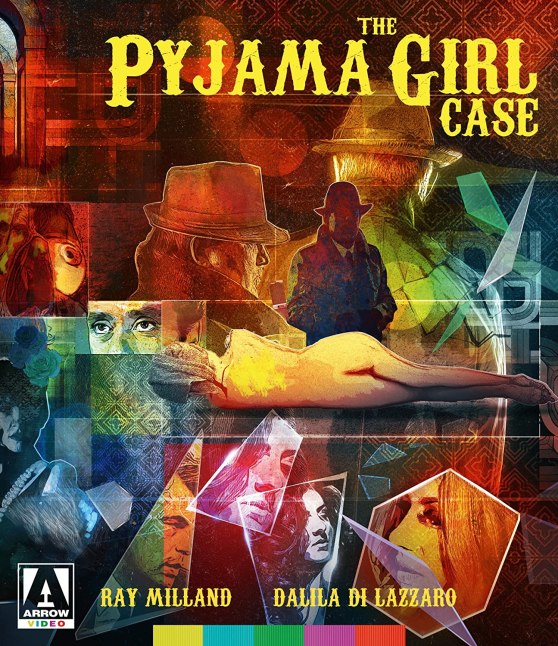
Did you know I liked giallo? Oh, that Letterbox list of three hundred plus movies let you know? Well, whether you’re new to the genre or have loved these black gloved killer movies for decades, Arrow Video’s Giallo Essentials: Red Edition is perfect with its new 2K restorations of the film from the original camera negative for The Possessed, The Fifth Cord and The Pyjama Girl Case.
The Possessed (1965): The Possessed is based on one of Italy’s most notorious crimes, The Alleghe killings, and adapted from the book by acclaimed literary figure Giovanni Comisso. It seems like a giallo, but it’s way closer to a film noir. Or maybe an art film. Often, people say that a movie feels like it’s inside a dream, but so much of this movie feels like one long evening of interconnected night terrors.
Bernard (Peter Baldwin) is a novelist who has given up on life, despite his growing fame. Last summer, he fell in love with a maid named Tilde and hasn’t been able to get her out of his mind. As time goes on, despite the friendly way everyone at the inn treats him, he grows more and more worried about the conspiracy within this small town. That’s because while he was gone, Tilde committed suicide. And she may not have been the perfect woman that his creativity made her out to be.
Much like the giallo protagonist — a stranger on a strange who is often an untrustworthy narrator who must now investigate a crime that they themselves are implicated in — Bernard learns more about how his vacation getaway also isn’t the heaven that he dreamed that it was.
Thanks to the recent Arrow Video releases, I’ve done a deep dive on the films Bazzoni and wish that he had made more than the three giallo-esque films on his resume. Each of them subverts the form while working within it, offering challenging narratives and films that refuse to simply be background noise.
I’d never heard of this film before they announced it and am pleased to say that it’s moved up on the list of my favorite films. Consider this my highest recommendation.
The Fifth Cord (1971): Argento’s The Bird with the Crystal Plumage has scores of imitators that rose in the wake of its success. There were scores of gorgeous women being murdered, jazzy soundtracks blaring and movies with animals in their titles. And then, every once in a while, there’s a giallo that rises beyond the pack and asserts itself as a true work of art.
Giornata Nera per L’Ariete, or Black Day for the Ram, may appear to be an animal title, but it really refers to astrology (which kind of gives away some of the film). It’s better known as The Fifth Cord.
Director Luigi Bazzoni doesn’t have a huge list of films to his credit, but between this film, The Possessed and Footprints on the Moon, his take on the giallo form is unlike anyone else’s. This is more than a murder mystery. It’s a complex take on alienation and isolation at the end of the last century.
Based on David McDonald Devine’s novel — but based in Italy, not Scotland as in the book — The Fifth Cord starts with a man barely surviving a vicious attack on the way home from a New Year’s Eve party. We even get to hear the words of the killer:
“I am going to commit murder. I am going to kill another human being. How easy it is to say, already I feel like a criminal. I’ve been thinking it over for weeks, but now that I’ve giving voice to my evil intention I feel comfortably relaxed. Perhaps the deed itself will be an anti-climax, but I think not.”
Writer Andrea Bild (Franco Nero!) is assigned to report on the case and to put it bluntly, he’s a mess. Ever since his separation, he’s been drowning his life in whiskey and women.
Soon, the attacker strikes again and this time, whomever it is succeeds and leaves behind a black glove with a finger missing (Evil FIngers is an alternate title). That one finger missing turns into two, then three and comes with evil phone calls. Andrea has to take on the giallo role of the investigator before he becomes either the fifth victim or is arrested by the police — it turns out that he was at that very same New Year’s party, as was every single one of the victims.
The story itself is rather basic, but the way that it’s told is anything but. Vittorio Storaro’s cinematography places The Fifth Cord in an industrialized Rome that’s rarely seen in giallo, eschewing the historic architecture we’re used to seeing. I’d say that it’s a less flashy Tenebre, but this was made a decade before that movie.
If you come to these movies for the fashions, well, you may be slightly disappointed. But if you love the decor, look out. I’ve never seen more spiral staircases in one movie ever before. The house with the giant fireplace was also used for Argento’s Four Flies on Grey Velvet, but looks so much more impressive here. And I loved how the modern architecture gives little room to run in the closing moments.
This movie has never looked better than on its recent Arrow Video release. It’s jaw-dropping how gorgeous the film appears and the Ennio Morricone soundtrack positively emerges from the speakers. I expect great things from this company, but they continually surprise and delight me at every turn.
The Pyjama Girl Case (1977): The Girl in the Yellow Pyjamas AKA The Pyjama Girl Case is more than just a giallo. It’s based on a true story, the 1934 Australian cold case that concerns the murder of Linda Agostini. Born Florence Linda Platt in a suburb of South East London, she left the UK behind for New Zealand after a broken romance, then went to Australia where she worked at a cinema and lived in a boardinghouse. Post-murder gossip claimed that she was a heavy drinker, a jazz baby and someone who entertained plenty of much younger men, which became an issue when she married the Italian expatriate Antonio Agostini. He moved her to Melbourne to try and get away from the bad influences that he felt existed in Sydney, but four years later she disappeared.
Her body was found inside a burning grain sack left behind on the beach. Her head was wrapped in a towel, her body was badly beaten and she had been shot in the neck. But what defined the case were her intricate silk pajamas, complete with a Chinese dragon design, a look that was not the type of clothing favored by your average Australian housewife.
Her body was kept in a formaldehyde bath for a decade and the public was invited to attempt to identify the body. In 1944, dental records proved that the girl in the yellow pajamas was Agostini. Meanwhile, her husband had been in an internment camp for four years during World War II due to his Italian heritage and sympathies toward the Axis. When he returned and was questioned by police commissioner William MacKay — a man he had once waited on — he immediately confessed to killing his wife.
There’s still some controversy over whether or not he actually confessed. There’s just as much as to who the pajama girl was. Regardless, her husband only served three years on manslaughter, as he claimed the shooting was an accident, and was extradited to Italy. Historian Richard Evans wrote The Pyjama Girl Mystery: A True Story of Murder, Obsession and Lies in 2004 and claims that police corruption meant that the case needed to be solved as quickly as possible, as the public sentiment had turned against the cops.
The giallo that is based on the case is really well made and has an intriguing split narrative. On one hand, we have the retired Inspector Thompson (Ray Milland) investigating the case and dealing with his own mortality. Meanwhile, we see Glenda Blythe (Dalila Di Lazzaro, Frankenstein 80, the monster’s bride in Andy Warhol’s Frankenstein, the headmistress in Phenomena, perhaps the other woman in Carlo Ponti and Sophia Loren’s marriage) struggle with the relationships in her life, including her husband Antonio Attolini, her lover Ray Conner (Howard Ross, The New York Ripper) and her mentor Professor Henry Douglas (Mel Ferrer). As the relationship with her husband starts to fall apart, she drifts into prostitution and in a harrowing scene, makes love to two men while one’s teenage nephew tries to not make eye contact with her.
Other than the Riz Ortolani score — Amanda Lear sings on two of them! — this isn’t a fashion-filled bit of fun. This is a dark and dreary journey through the end of a woman’s life and the elderly man devoted to finding out the answers to who and why, even if he knows that discovering that truth won’t change the fact that he’s closer to the end of his story than the beginning. At least he cares more than the modern police, who simply embalm her nude body, put it on display and allow people to stare at it.
I read the other day that giallo films were meant for the people outside of Rome, for provincial tastes that demanded a morality play. I’m not certain that’s entirely true, but this movie aspires to art and a heartbreaking moment as we reach the close and realize that the two stories are truly connected in the bleakest of ways.
Arrow Video’s Giallo Essentials: Red Collection has all three films in a rigid box packaging with newly designed artwork by Adam Rabalais in a windowed Giallo Essentials Collection slipcover.
The Possessed special features include new audio commentary by writer and critic Tim Lucas, a video appreciation by Richard Dyer, interviews with the film’s makeup artist Giannetto De Rossi, award-winning assistant art director Dante Ferretti and actor/director Francesco Barilli, a close friend of Luigi and Camillo Bazzoni. It also has the original trailers and a reversible sleeve featuring original and newly commissioned artwork by Sean Phillips.
The Fifth Cord has new audio commentary by critic Travis Crawford, a video essay on the filmâs use of architecture and space by critic Rachael Nisbet, interviews with author and critic Michael Mackenzie, Franco Nero and film editor Eugenio Alabiso. Plus, there’s a rare, previously unseen deleted sequence restored from the original negative, the original Italian and English theatrical trailers, an image gallery and a reversible sleeve featuring original and newly commissioned artwork by Haunt Love.
The Pyjama Girl Case has new audio commentary by Troy Howarth, plus interviews with author and critic Michael Mackenzie, Howard Ross, editor Alberto Tagliavia and composer Riz Ortolani. Plus, you get an image gallery the Italian theatrical trailer and a reversible sleeve featuring original and newly commissioned artwork by Chris Malbon.
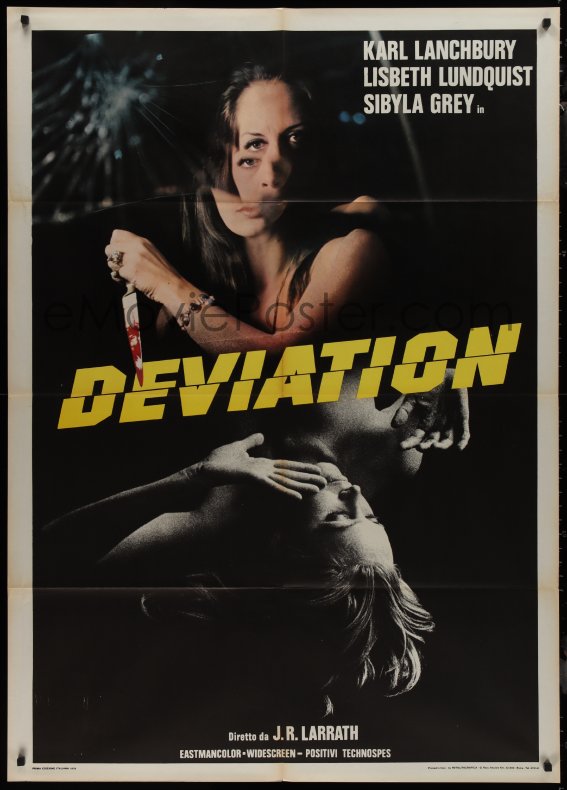
José Ramón Larraz loves the London countryside, a mood that can best be described as oppressive and the near-constant threat of psychosexual violence.
Paul (Malcolm Terris) and his mistress Olivia (Sibyla Grey, also from Whirlpool) break down outside the home of taxidermy enthusiast Julian (Karl Lanchbury, keeping up his maniacal streak of Larraz villains after Whirlpool) and his sister Rebecca (Lisbet Lundquist, who was also…yes, you get it now).
If you break down in the middle of the night in the foggy woods of England, let me give you some advice. Don’t go in the house.
Olivia quickly passes out and Paul decides to snoop around and becomes part of the orgy happening in the house before he’s quickly dispatched after daring to get aroused around Rebecca after she forces him to have sex with one of her female followers at gunpoint.
Yes, there are some true issues in this house.
Then, despite being warned that everyone in that house will try to kill her, Olivia doesn’t even worry about where her lover has gone. She smokes some weed and then gets hooked on heroin after the brother and sister keep trying to seduce her.
Rebecca scoring some heroin and then decimating an old pharmacist who becomes attracted to her is just one of the many strange things that happens, but Olivia says that being hooked on smack is better than the boredom of dating Paul. And then she sees one of his tattoos framed up on the wall, she learns that she better escape.
You want another reason to love this? Stelvio Cipriani rips off Black Sabbath in the main theme for the movie.
Larraz made some wild movies that haven’t been seen enough. Let’s fix that now.
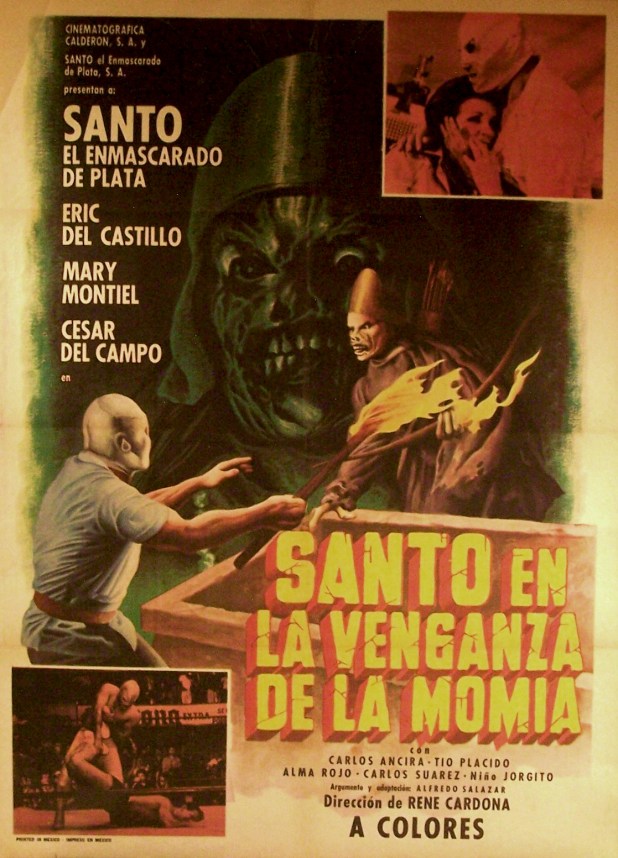
Only in a Santo movie can you find a masked wrestler go from a match in Arena Mexico to being part of Professor Romero’s journey to explore some ancient ruins. Yes, imagine you are a famous learned man and you say, “My mummy expedition needs a chef, a doddering professor, a manly hunter, his grandson Agapito (shh…that’s El Hijo del Santo without his mask) for comic relief, two attractive ladies and oh yeah — Santo.”
The professor is looking for the body of Nonoca, an Apache prince who had a forbidden affair with the intended sacrifice Lua, making her impure before she is killed for the gods. Both are killed and mummified and the Universal Monster gods are pleased. Like morons, the archaeological party ignores the curse and takes the necklace off the mummy and this soon becomes a slasher as the back from the dead Nonoca shoots nearly everyone with arrows, but only after Santo has a match against a panther.
Within this movie, someone states that fear is a bitch and Santo tells the grieving Agapito that men don’t cry. He also dresses in a safari outfit when it’s blazing hot out and never takes off his mask and wears a belt over his safari shirt. I would honestly kill a human being if Santo asked me to.
Santo’s battle against the mummified form of Nonoca was his 31st movie, directed by the dependable René Cardona Sr. who made one of the best Santo movies, Santo en el Tesoro de Drácula.
There’s a twist ending and I’m fine with it, as sometimes the supernatural exists in Santo’s world and sometimes it doesn’t. No matter what, Santo gets back to Arena Mexico and back to tapping out rudos like Goliat Ayala with his La de a Caballo.
An interesting note: Santo’s tag partner in the opening match against Gori Casanova (who lost his hair twice to El Enmascarado de Plata) and Dik Angelo (who lost his mask to Santo), El Rebelde, did many of his stunts in 17 films. He would go on to lose his mask to Ultraman and achieve even greater fame as Charles Bronson Mexicano due to, you guessed it, his resemblance to Charles Bronson.
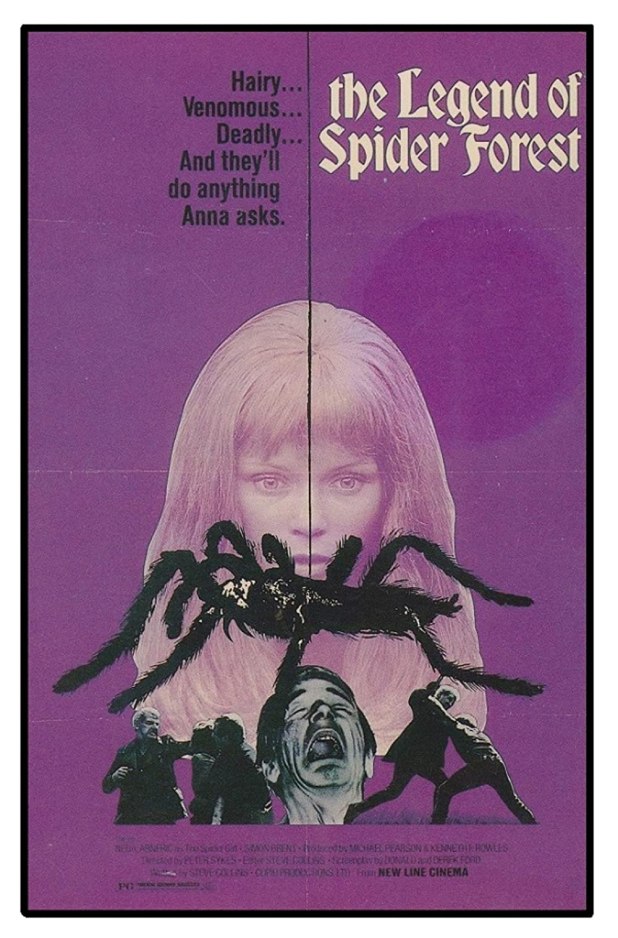
The debut film of director Peter Sykes (Demons of the Mind, To the Devil a Daughter), Venom is quite frankly nuts.
Also known as The Legend of Spider Forest and Spider’s Venom, it tells the story of Paul (Simon Brent), a young man who visits a small German town to paint the scenery and ends up getting involved with Anna (Neda Arneric) and Ellen (Sheila Allen), the former a spider goddess with a germ lab in her home run by crossdressing Nazis and the other a woman who frequently whips Paul.
Decisions, decisions.
Donald and Derek Ford wrote this and their career is filled with sexploitation like Groupie Girl, The Wife Swappers and Commuter Husbands. Derek was also removed as the director of Don’t Open Till Christmas and made Blood Tracks.
He also wrote the book The Casting Couch with agent Alan Selwyn under the name Selwyn Ford, who is also a character in the book, so the book appears to be a true story that tells us about Joan Crawford starring in a stag film and how Marilyn Monroe was murdered as a result of her affair with Robert F. Kennedy. Supposedly, this was learned when Ford was making a movie called Bloody Mary in which an actress is abducted and forced to have an abortion during her affair with a powerful and married man. Peter Lawford was supposed to star in this movie and said, “Are you crazy? Do you want to get us all f****** killed?” before he quit, so Ford believed that Lawford was involved. This has been substantiated by filmmaker Philippe Mora and he should know because he directed The Howling II.
Anyways, the brothers also wrote the movie that dared make Peter Cushing go to London nightclubs and act like a swinger, Corruption, so I will watch anything they are involved in.
Even if it’s about spider women, spiders and none of it makes any sense.
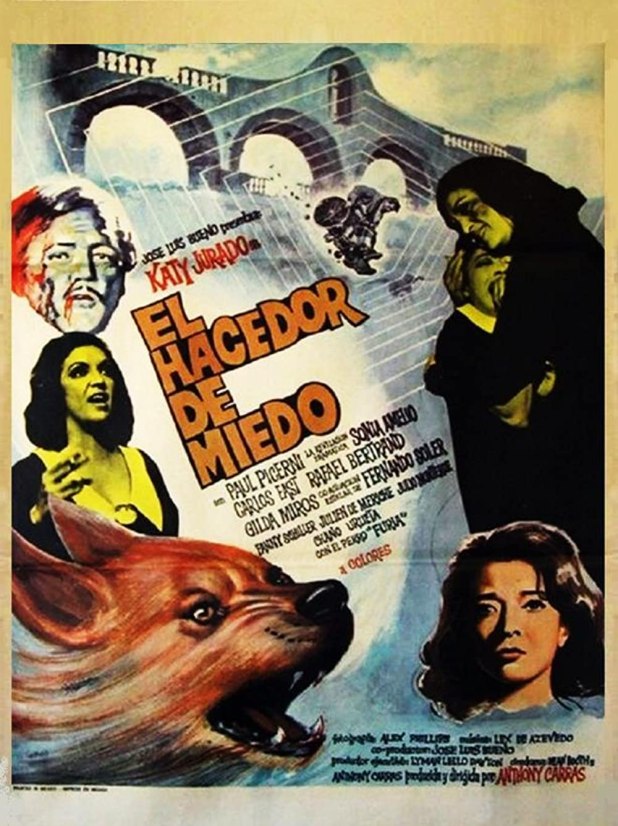
Released in the U.S. as The Fearmaker, this movie finds opera singer Sarita Verdugo returning home to claim her inheritance after the death of her father. Yet when she gets back, everyone is against her and she has to deal with a near-maniacal level of greed as money — and the hint of supernatural menace — has made everyone an enemy.
Director Anthony Carras — I’m assuming IMDB lists the American reedit team instead of José Luis Bueno, who many Mexican sources list as the director yet he mainly served as a producer — only directed one other movie, Operation Bikini, while editing plenty of Roger Corman movies.
It’s like the filmmakers wanted to make a giallo, decided on a soap opera, and then remembered that they needed a giallo twist to end things. It’s not great or maybe even good, but there aren’t many Mexican giallo movies, which should maybe be referred to as amarillo.
With one arm tied behind his back, Jimmy Wang Yu had already played the One-Armed Swordsman in two films for Shaw Brothers, One-Armed Swordsman and Return of the One-Armed Swordsman. He also became incredibly popular after The Chinese Boxer, the movie that kickstarted the unarmed combat genre. Then, he broke his contract with Shaw Brothers and lost the lawsuit that resulted, which meant he needed to go somewhere other than Hong Kong to work.
That’s where former Shaw Brothers executive Raymond Chow comes in. He started the rival studio Golden Harvest in 1970 and Wang Yu became his star, writing, directing and playing the main role in One-Armed Boxer.
Yu Tian Long (Wang) is the best fighter to come out of his local martial arts school. However, when he stops the Hook Gang from roughing up customers in a restaurant. The evildoers are part of the Ching Te school, which is the most prominent martial arts academy in town. Yet more than that, they run all sorts of businesses, legal and illegal.
After being defeated in combat twice, the Hook Gang return to their master Chao Liu (Yeh Tien) and tell him that Tien and others from the Ching Te school attacked them for no reason and insulted their group. Chao heads off to the school and is easily defeated by Master Han Tu (Ma Kei).
Chao has no honor and uses his money to get revenge, hiring a group of martial artists from Shanghai that includes Okinawa karate expert Erh Ku Da Leung (Wong Fei-lung) and his students Chang Ku Chua and Pan Tien-Ching, two lamas from Tibet (Ko Fu and Cho Lung, who are the disciples of the Fung Sheng Wu Chi from Master of the Flying Guillotine, which is about him trying to get revenge for his students against Yu Tian Long), Muat Thai fighters Mi Tsu (Blackie Ko, who went on to be a car stunt expert) and Ni Tsai, judo master Kao Chiao, Taekwondo master Chin Chi Yung and yoga fighter Mura Singh. They murder every single student in the Ching Te school, as well as the Master, leaving only Tien Lung alive yet only with one arm after Erh Ku Da Leung chops his arm clean off.
Hsiao Yu, a nurse, and her father bring our hero back to health and explain a special sklill that could help him get revenge, a method that will make his fighter super powerful even with just one arm. He only has to destroy all the nerves in his arm so he places his arm into an open flame in an incredible scene that shows just how devoted he is to avenging his master.
The end of the film is an example of why I love martial arts movies. Tien Lung fights every single one of the killers in a quarry while the Hook Gang throw bombs at him. There’s blood spraying everywhere and non-stop kicking, punching and violence.
When this was released in the U.S. by National General Pictures, it was called The Violent Professionals and used the theme from The Big Boss, a Bruce Lee film that was also made by Golden Harvest. As for the original film score, it outright takes the theme from Shaft — minus the talking about Shaft — over the opening credits, which is pretty much as outlandish an act of theft as it gets.
This movie is just magical. I was on the edge of my seat throughout and was astounded by how intense the fights were and I was beyond on the side of the hero, despite how brutal and cool Erh Ku Da Leung is, a man who takes an arm when someone breaks an arm. If you haven’t gotten into kung fu yet, this is a great place to get started.
Consider this movie highly recommended.
The Arrow blu ray of One-Armed Boxer has a 2K restoration from the original elements by Fortune Star. Extras include commentary by Frank Djeng from the NY Asian Film Festival, a never released career retrospective interview with Wang Yu, a trailer gallery that includes the Hong Kong theatrical trailer, The Chinese Professionals U.S. version and over half an hour of trailers for other Wang Yu classics including One-Armed Swordsman and Master of the Flying Guillotine, a gallery of images from the movie, a reversible sleeve featuring original and newly commissioned artwork by Ilan Sheady and an illustrated collector’s booklet featuring new writing on the film by Simon Abrams. You can get this movie from MVD.
A Perfect Murder Under the Law is also known as Cross Current here in America. It’s directed by Tonino Ricci, who you may know from Rush, Panic or Encounters In the Deep. Story writer Aldo Crudo also was behind War of the Robotsand the ensuing script was written by José María Forqué and Arpad DeRiso (Death Steps In the Dark).
Marco (Phillipe Leroy, The Possessed, The Laughing Woman) is a rich man injured in a speedboat accident so rough that he needs brain surgery, which wipes his memory clean and makes him depend on his wife Monica (Elge Andersen, who retired from acting to explore the Andrea Doria wreck with her rich husband Peter R. Gimbel, who was the first diver to explore that doomed ship; together they made two documentaries The Mystery of the Andrea Doria and Andrea Doria: The Final Chapter; their ashes are now interred in the ship’s wreckage), business partner Tommy (Franco Ressel) and a girl named Terry (Rosanna Yanni, Count Dracula’s Great Love, Frankenstein’s Bloody Terror).
You know what happens next. Marco falls for Terry, Monica gets shot, Terry talks him into dumping her body but then he becomes convinced that he’s also killed his partner, the gardener and the gardener’s mother. Now they can be alone, right? Well, that’s when Monica shows up, back from the dead, which makes Terry drive his car right off a cliff.
We should have been clued in that something bad is about to happen because Marco’s business manager is played by Ivan Rassimov. He’s been behind the whole scheme, working with Monica to make the money while sleeping with Terry. This revelation upsets Monica, who kills them both.
See? A perfectly serviceable giallo. But wait…
Who is the black gloved person now following Monica?
Something Weird has made out lives so much richer, saving the strange, the smutty, the scary and everything in between. Working with the American Genre Film Archives, they created this mixtape of sheer lunacy which adds up the scare films of the past. You’ll never do drugs again until the next time to do drugs.
This blu ray has the following movies, all uncut and in 2K:
Beyond LSD (1967): This movie astounded me because instead of telling parents that their kids are maniacs, it tells them to listen to them because they’re going through some things. How is this even real?
Director Paul Burnford mainly made shorts and documentary films, like 1944’s Nostradamus IV and the 1943 blood transfusion ten-minute epic Brothers in Blood. He also directed the first movie in the Rusty series and an entry in the A Crime Does Not Pay series, Dark Shadows, which is about a psychiatrist matching wits with a killer.
In short — it’s less about drugs and more about how to treat your kids. It’s still relevant today.
The Bottle and the Throttle (1961, 1968): Narrated by Timothy Farrell, who was one of the two narrators and the psychiatrist in Glen or Glenda, as well Girl Gang,Pin-Down Girl, Dance Hall Racket, Test Tube Babies, The Violent Years, Jail Bait and many more. He was also a bailiff for the Los Angeles Marshal’s Department when he was acting in movies like Paris AfterMidnight, which was raided by the Los Angeles Vice Squad during filming.
A bunch of kids a drinking beach beers — Budweiser, Schlitz and Hamm’s — and Bill has had one too many. He ends up driving home and killing a child and breaking the back of her mother. Was it worth it?
Do you remember that wheel of how many drinks you had and how long until you sober up back in driver’s ed or health class? Man, I used to think of that all the time and here I am, now trying to gauge edibles which are magical and unpredictable lunacy when compared to whiskey.
The major difference between the 1961 and 1968 films is that the former is made with the help of the Culver City Police Department and the Culver City Unified School District while the latter is made with the West Covina Police Department. I’d like to think these organizations were scammed and paid twice for one movie.
“The little girl died on the way to the hospital and the mother will probably never walk again. No matter how your trial comes out, you’ll always have to live with those facts, won’t you Bill. A child dead. A mother crippled. Not a pleasant future to face at the age of 18.”
Pure nihilism.
Sidney Davis Productions also made The Dropout, Boys Beware (an anti-homosexual scare movie), the Ib Melchior-directed — yes, the guy who wrote Death Race 2000 and directed The Angry Red Planet — Keep Off the Grass, Skateboard Sense and LSD: Trip or Trap!
Curious Alice (1971): Dave Dixon, the Culture Czar, was the lead DJ of the legendary “Air Aces” on Detroit’s rock station WABX and the first person to play Sabbath, The Doors, Led Zeppelin and The Doors in the Motor City. Beyond co-writing Peter, Paul and Mary’s “I Dig Rock & Roll Music,” he co-wrote this animated film that explains drugs through Alice In Wonderland which is totally right on with the kids and four years after Jefferson Airplane did the same thing in “White Rabbit.”
The art in this movie is mind-boggling, however, and you’ll be entranced as Alice learns about LSD from the Mad Hatter, speed from the March Hare, heroin from the King of Hearts and barbituates from the Dormouse.
Made by the National Institute of Mental Health in 1971 and meant for use with ten-year-old students, if I had seen this before my teen years I would have done all the drugs in high school. The National Coordinating Council on Drug Education agreed, writing that viewers “may be intrigued by the fantasy world of drugs” after watching it.
The Distant Drummer (1970): A short-lived series of four 22-minute American documentary films that warned the kids about drugs, these were all directed by William Templeton (The Fallen Idol) and written by Don Peterson.
The first two movies in this series, A Movable Scene and A Movable Feast, were narrated by Robert Mitchum, who served 43 days at a California prison farm for possession of marijuana in 1948, a conviction that was overturned in 1951.
Here’s just a sample of Mitchum’s speech: “Thousands of snapshots on police station walls remain the only link between many of America’s most affluent families and the children who embodied their great expectations. Nearly everyone in the hippie community smokes marijuana — whether they call it pot, grass, hemp, gage, joint or mary jane — the marijuana is the basic background for the shared drug experience. The experience is shared to such an extent that roach pipes are always in demand — a roach is a marijuana butt and it requires some form of holder for those last few drags. The new generation, whether they are runaways or rebels-in-residence, use marijuana as a symbol of discontent with the basic values of the establishment. For some, there exists a social imperative beyond flaunting society’s rules — for these adventurers the mind-expanding drugs open a window on a whole new frontier…”
The other two parts, Bridge from No Place and Flowers ofDarkness, were narrated by Rod Steiger and Paul Newman.
Drugs, Drinking and Driving (1971): Herbert Moskowitz is now here to explain why you should never mix the three things in the title. I love that this movie has no issues with using the Mission: Impossible theme over and over and over, flaunting copyright law with each successive refrain.
This also seems pre-Jackass with a stunt where two drivers are each given drugs, one amphetamine and one barbituates, and then told to drive for 36 hours straight until they either pass out or wreck their cars.
LSD: Insight or Insanity (1967): “Now, everybody who takes it admits that there’s always the risk of a bad trip, a bummer, a freak-out, even a flip-out. But, why be lame, baby? Give yourself a real kick. Yes, a kick in the head!”
That’s Sal Mineo talking in this Max Miller-directed (the same dude who made the Sonny Bono anti-drug movie Marijuana) film which explains what LSD is, how it’s made and when people take it they jump in front of cars and take leaps off cliffs like Diane Linkletter out of the windows of the Shoreham Towers, blamed on LSD even if the last person who saw her alive — Edward Dunston — may have also was the last person to see actress Carol Wayne alive. Then again, both Dunstons could be different people and for some other reason, people seem to confuse them with David E. Durston, the man who taught us that Satan was an acidhead in I Drink Your Blood.
See, I may make some detours, but I always get you back on the road.
This ends with a Russian Roulette freakout and Mineo singing over the closing credits, which inform us that everyone in this movie was not an actor. You won’t be surprised.
LSD 25 (1967): Directed by David Parker and written by Hank Harrison — the father of Courtney Love — this movie is narrated by an LSD tab which proves that the creators of this may very well be getting high on their own supply.
“Today, you’re high. Tomorrow, you’re dead.”
Yes, LSD starts all happy explaining all the good things it does and by the end, your fingerprints can’t get out of any police database.
So go ahead and take that sugar cube. You’ll learn all the secrets of the infinite and then, you know, you won’t be able to tell anyone.
Because you’ll be dead.
Narcotics the Decision: Goofballs and Tea (1958): Written by Pittsburgh native Roger Emerson Garris, who was the story editor for the Sherlock Holmes TV series, this police training film is all about barbituates and marijuana. Yes, people once called drugs these words.
Narrated by Art Gilmore, who was on Dragnet and voiced the radio announcer on The Waltons, this movie lets kids know that it starts with sneaking their parent’s booze and ends up with you in jail, dead or worse. Avoid weed, avoid malt shops, avoid everything.
None for the Road (1957): Margaret Travis wrote 83 shorts that we know of, movies like The Other Fellow’s Feelings, Health: Your Clothing and Rowan and Martin on the Driveway One Fine Day, an industrial film for Phillips 66 Petroleum where the future Laugh-In stars run a gas station. This movie, too.
But the director? That’s Herk Harvey, who made around four hundred or more industrial films like Shake Hands with Danger. And one very important movie, Carnival of Souls.
Three men all use alcohol in different ways: not at all, a little and too much. They’re like the lab rats that we later see injected with alcohol, which sounds like a good way to spend a weekend. But wow, we’ve been warning people about drunk driving for 65 years and not everyone listens.
The Trip Back (1970): It’s no accident that an episode of Strangers With Candy was titled “The Trip Back.” Jerri Blank on that show is literally the star of this movie, Florrie Fisher, played for comic effect.
Fisher was married four times by the time she filmed this speech, first an arranged marriage, then to a pimp, then another drug addict and finally to a man she met via the mail. She credited her recovery to Synanon, which was originally established as a drug rehabilitation program and became one of the most dangerous and violent cults America had ever seen.
Wait, what?
Founded by Charles E. “Chuck” Dederich Sr., Synanon — a mix of togetherness (“syn”) with the unknown (“anon”) — was an alternative community centered on group truth-telling sessions called the “Synanon Game”, a form of attack therapy during which participants humiliated one another and exposed each other’s innermost weaknesses. There are theories that Dedereich was given LSD by Dr. Keith S. Dittman and Dr. Sidney Cohen, as well as encouraged to start Synanon as part of the CIA MK Ultra program.
Headquarted in a former beachfront hotel in Santa Monica called the Club Casa del Mar, women who joined Synanon had to shave their heads. Men were given forced vasectomies. Pregnant women were forced to abort their babies. Married couples were broken up and had to take new partners as the group became the Church of Synanon.
After Synanon’s transition into an alternate society in 1968, the game became a 72-hour ordeal for most members. The program of rehabilitation went from two years to a lifetime rehabilitation program, as they now preached that addicts would never truly be well enough to return to society.
Throughout this period, San Francisco area media covered the adult and child abuse caused by the church, but were often sued for libel by Synanon’s lawyers. If all of this sounds like Scientology, well…there was a group within the group called the Imperial Marines authorized to beat members into oblivion.
When NBC started reporting on the church in the late 70s, executives received hundreds of threats and Paul Morantz, a lawyer who had helped members escape, had a de-rattled rattlesnake placed in his mailbox. It bit him and put him in the hospital. A police search found a tape of Dederich speaking about Morantz, saying: “We’re not going to mess with the old-time, turn-the-other-cheek religious postures. Our religious posture is: Don’t mess with us. You can get killed dead, literally dead/ These are real threats. They are draining life’s blood from us, and expecting us to play by their silly rules. We will make the rules. I see nothing frightening about it. I am quite willing to break some lawyer’s legs, and next break his wife’s legs, and threaten to cut their child’s arm off. That is the end of that lawyer. That is a very satisfactory, humane way of transmitting information. I really do want an ear in a glass of alcohol on my desk.”
The teachings of Synanon influenced groups like CEDU, Daytop Village (the very place Nancy Reagan visited and became aware of the drug problem, which led to Just Say No), Phoenix House and those boot camps that always show up on daytime talk shows.
Back to Florrie Fisher.
An interview with David Susskind led to her appearing on The Mike Douglas Show, speaking at schools and an autobiography, The Lonely Trip Back. This film captures her speaking at a New York City high school, barraging the audience with a rambling dissertation on turning tricks, six of her marijuana friends all dying in the chair, jailhouse sapphic antics and shouting things like “I now know that I can’t smoke one stick of pot! I can’t take one snort of horse! I can’t take one needle of cocaine because I am an addictive personality! And that’s all I need is one of anything. Ya know I need one dress. If I happen to like this dress in tan, I buy the same dress in green and black and pink. This is the type of personality I am!”
Despite how horrible Synanon was for some, it worked for Florrie. Sadly, she died during the lecture tour she’s on in this movie due to liver cancer and kidney failure.
This movie is totally worth the price of this entire blu ray.
Users Are Losers (1971): Think drugs are for teens? This kid is saving up his milk money to pay for his habit, doing odd jobs and being incredibly thrifty just to get some marijuana. It made me think, parents are always on kids for throwing their money away, but this kid knows what he wants, works hard for it and then is selfless and shares what he gets with his friends.
Some kids also find one of their friends dead on a mattress and some young narc says, “If you blow pot, you’re blowing your future.” Get off my TV, kid.
Plus, you also get DRUG STORIES! NARCOTIC NIGHTMARES AND HALLUCINOGENIC HELLRIDES, a full-length mixtape from the AGFA team.
Now if you’ll excuse me, I must go blow some pot. Get toasty toast. Go clambaking. Fly Mexican Airlines. Run within an endless field. Walk the green ducks. Roll into the Backwoods. Be a ninja. Do some chiefing at the Rooney statue.
EDITOR’S NOTE: These articles originally were on the site on March 31, 2019 and April 1, 2019. These are two of my favorite movies and I’m so excited that Kino Lorber has released them on a double blu ray along with commentary tracks by director Robert Fuest, The Dr. Phibes Companion author Justin Humphreys and film historian Tim Lucas, as well as radio ads and trailers. You can get it from Kino Lorber. Honestly, this is a must buy.
The Abdominable Dr. Phibes (1971): Church of Satan founder Anton Szandor LaVey claimed that the main character in this Vincent Price film was based on him. Well, his name is Dr. Anton Phibes and he’s an organist, researcher, medical doctor, biblical scholar and ex-vaudevillian who has created a clockwork band of robot musicians to play old standards at his whim. Seeing as how nearly all of these things match up with LaVey, I can kind of see his point.
Director Robert Fuest started by designing sets. While working on the TV show The Avengers, he got excited about directing and ended up working on seven episodes of the original series and two of The New Avengers. Soon, he’d be working in film more and more, starting with 1967’s Just Like a Woman. Between the two Phibes films, And Soon the Darkness, The Final Programme and The Devil’s Rain!, he became known for dark-humored fantasy and inventive sets, several of which he designed himself.
This movie is one I can’t be quiet about. It’s one of the strangest and most delightful films I’ve ever seen.
Dr. Anton Phibes died in Switzerland, racing back home upon hearing the news that his beloved bridge Victoria (an uncredited Caroline Munro) had died during surgery. The truth is that Phibes has survived, scarred beyond belief and unable to speak, but alive. He uses all of the skills that he’s mastered to rebuild his face and approximate a human voice. Also, he may or may not be insane.
Phibes believes that the doctors who operated on his wife were incompetent and therefore must pay for their insolence. So he does what anyone else would do: visit the Biblical ten plagues of Egypt on every single one of them.
Phibes is, of course, played by Vincent Price. No one else could handle this role. Or this movie. There’s hardly any dialogue for the first ten minutes of the movie. Instead, there are long musical numbers of Phibes and his clockwork band playing old standards. In fact, Phibes doesn’t speak for the first 32 minutes of the movie. Anyone who asks questions like “Why?” and says things like “This movie makes no sense” will be dealt with accordingly.
After the first few murders, Inspector Trout gets on the case. He becomes Phibes’ main antagonist for this and the following film, trying to prove that all of these murders — the doctors and nurse who had been on the team of Dr. Vesalius (Joseph Cotten!) — are connected. Phibes then stays one step ahead of the police, murdering everyone with bees, snow, a unicorn statue, locusts and rats, sometimes even right next to where the cops have staked him out.
Dr. Phibes is assisted by the lovely Vulnavia. We’re never informed that she’s a robot, but in my opinion, she totally is. Both she and the doctor are the most fashion-forward of all revenge killers I’ve seen outside of Meiko Kaji and Christina Lindberg.
Writer William Goldstein wrote Vulnavia as another clockwork robot with a wind-up key in her neck. Fuest thought that Phibes demanded a more mobile assistant, so he made her human, yet one with a blank face and mechanical body movements. I still like to think that she’s a machine, particularly because she returns in the next film after her demise here. Also — Fuest rewrote nearly the entire script.
After killing off everyone else — sorry Terry-Thomas! — Phibes kidnaps Dr. Vesalius’ son and implants a key inside his heart that will unlock the boy. However, if the doctor doesn’t finish the surgery on his son in six minutes — the same amount of time he had spent trying to save Phibes’ wife — acid will rain down and kill both he and his boy.
Against all odds, Vesalius is successful. Vulnavia, in the middle of destroying Phibes’ clockwork orchestra, is sprayed by the acid and killed while the doctor himself replaces his blood with a special fluid and lies down to eternal sleep with his wife, happy that he has had his revenge.
If you’re interested, the ten plagues Phibes unleashes are:
1. Blood: He drains all of Dr. Longstreet’s blood
2. Frogs: He uses a mechanical frog mask to kill Dr. Hargreaves at a costume party
3. Bats: A more cinematic plague than lice from the Biblical plagues, Phibes uses these airborne rodents to kill Dr. Dunwoody
4. Rats: Again, better than flies, rats overwhelm Dr. Kitaj and cause his plane to crash
5. Pestilence: This one is a leap, but the unicorn head that kills Dr. Whitcombe qualifies
6: Boils: Professor Thornton is stung to death by bees
7. Hail: Dr. Hedgepath is frozen by an ice machine
8. Locusts: The nurse is devoured by them thanks to an ingenious trap
9. Darkness: Phibes joins his wife in eternal rest during a solar eclipse
10. Death of the firstborn: Phibes kidnaps and the son of Dr. Vesalius
I love that this movie appears lost in time. While set in the 1920’s, many of the songs weren’t released until the 1940’s. Also, Phibes has working robots and high technology, despite the era the film is set in.
There’s nothing quite like this movie. I encourage you to take the rest of the day off and savor it.
How does Phibes live up to being a Satanic film? In my opinion, Phibes embodies one of the nine Satanic statements to its utmost: Satan represents vengeance instead of turning the other cheek. The men and woman whose negligence led to the loss of Phibes’ wife were never punished. Phibes had to become their judge, jury and yes, destroyer.
On the other hand — or hoof, as it were — Phibes is the exact antithesis of the ninth Satanic sin, Lack of Aesthetics, which states that “an eye for beauty, for balance, is an essential Satanic tool and must be applied for greatest magical effectiveness. It’s not what’s supposed to be pleasing—it’s what is. Aesthetics is a personal thing, reflective of one’s own nature, but there are universally pleasing and harmonious configurations that should not be denied.” So much of what makes this film is that Phibes’ musical art is just as essential as his demented nature and abilities. Music is the core of his soul, not just revenge.
Another point of view comes from Draconis Blackthorne of the Sinister Screen: “This is an aesthetically-beauteous film, replete with Satanic architecture as well as ideology. Those who know will recognize these subtle and sometimes rather blatant displays. Obviously, to those familiar with the life of our Founder, there are several parallels between the Dr. Anton Phibes character and that of Dr. Anton LaVey – they even share the same first name, and certain propensities.”
Dr. Phibes Rises Again! (1972): The fact that this movie exists gives me hope. There are moments when life gets me down, when I wonder about my place in this world and if humanity is essentially horrible. Then I remember that great films like this exist and it makes me feel a lot better. You should do the same thing if you’re ever in an existential crisis.
Dr. Phibes is back, three years after he laid down in the darkness next to the corpse of his beloved wife. Now, however, he has learned that the secret of eternal life — held by a centuries-old man — is in Egypt. I don’t care why he’s back. I’d watch Dr. Phibes go grocery shopping!
Dr. Anton Phibes (Vincent Price) has in suspended animation in a sarcophagus alongside his wife Victoria Regina Phibes (Caroline Munro). When the moon aligns with the planets in a way not seen for two millennia, he returns, summoning the silent Vulnavia (thus confirming to me, at least, that she’s really one of his robots as she died in the last film; furthermore, she’s played by Valli Kemp, who took over for the pregnant Virginia North) to his side.
Phibes plans on taking his wife’s body with him to Egypt, where the River of Life promises her resurrection. As he emerges from his tomb, his house has been demolished and the safe that contained the map to the river lies empty. That’s because the map has been stolen by Darius Biederbeck, a man who is hundreds of years old thanks to a special elixir. He may also be every bit Phibes’ equal.
Darius is played by Robert Quarry, who American International Pictures was grooming to be Price’s replacement. There were tensions between the two on set, including a moment where Quarry was singing in his dressing room and challenged Price by saying, “You didn’t know I could sing did you?” Ever the wit, Vincent Price replied, “Well, I knew you couldn’t act.” Quarry would had already played Count Yorga in two films for AIP and would go on to be in The Deathmaster, where he played hippie vampire Khorda, but the AIP style had already fallen out of style. He’s also in tons of Fred Olen Ray films, like Evil Toons where he’s the uncredited voice of the demon.
Biederbeck wants eternal life for himself and his lover Diana (Fiona Lewis, Tintorera…Tiger Shark). Phibes and Vulnavia are on his trail, immediately entering his home, murdering his butler and stealing back the map. Everyone connected with Biederbeck comes to an ill end — Phibes places one inside a giant bottle and throws him overboard. That murder brings Inspector Trout back on the case, as he instantly recognizes that only one man could do something like that.
The rest of the film’s murders are based on Egyptian mythology versus Biblical plagues. Hawks and scorpions become his weapons, along with gusts of wind and bursts of sand. Phibes has also brought an army of clockwork men with him the desert to do his bidding.
Phibes finally exchanges Diana’s life for the key to the River of Life. As he floats the coffin containing his wife down the water, he beckons Vulnavia to join them. As his lover tries to comfort him, Biederbeck begs Phibes to take him with them. He begins to rapidly age and dies as Phibes loudly sings “Over the Rainbow,” which might be the best ending of any movie ever made.
There were plans for a whole bunch more of these films and the fact that they were never made saddens me to this day. I’ve heard that a third film would Phibes fighting Nazis. I’ve also heard that it’d be about the key to Olympus. Or Phibes going up against Dr. Vesalius’ son. Or Victoria Phibes herself coming back, just as sinister as her husband. There have been titles thrown around like Phibes Resurrectus, The Seven Fates of Dr. Phibes and The Brides of Dr. Phibes. There was even thought of Count Yorga facing off with Dr. Phibes, a fact which delights me to no end.
There was also a pitch for a TV series and what looked like an animated version, with Jack Kirby himself providing the pitch artwork!
Other ideas included Dr. Phibes in the Holy Land, The Son of Dr. Phibes (which would have pitted the doctor and his son against ecological terrorists), Phibes Resurrectus (which would have David Carradine as Phibes battling against Paul Williams, Orson Welles, Roddy McDowall, John Carradine and Donald Pleasence. The mind boggles at the thought, let me tell you!), a 1981 Dr. Phibes film where the WormwooInstitutete would have destroyed his wife’s body and then their strange members, including transvestite twins obsessed with economics and nuclear weaponry, fail to match wits with Phibes) and finally, Phibes was almost a role for Peter Sellers in a Pink Panther film where hed also play Clouseau and Fu Manchu. You can learn more about these at the Vincent Price Exhibit site.
There was also a story in 2013 that Johnny Depp was going to star in a Tim Burton directed remake. That obviously didn’t happen.
So much of this film fits into the same Satanic themes as the original. However, you can add in a few new wrinkles. One of the Eleven Satanic Rules of the Earth states “When walking in open territory, bother no one. If someone bothers you, ask him to stop. If he does not stop, destroy him.” All Phibes wished to do was take his wife to Egypt and bring her back to life. Once Biederbeck stole from him, his fate was sealed.
You must be logged in to post a comment.